The Day of the Trivet

More snow last night. Getting a little tiresome, eh? Most of the nation is probably getting tired of the Winter of ’14 and its polar vortices and cancelled flights and icy Southland.

But spring is nigh. I know that because in the mail today I got the first circular of the season advertising better lawns through chemistry. Maxi-Green Lawn Service, or something, promising a lawn as green and monocultured and uninteresting as the surface of a billiard table. It’s a little hard to imagine any kind of lawn under those feet of snow, but I know it’s down there. As usual this year, I’m going to promote biodiversity in my lawn and survival of the fittest for the flora.

Here’s a word you don’t see all that much: trivet. I’m thinking of it because I also got a MoMA catalog in the mail today, as always full of artful bric-a-brac that I don’t order. In includes the Bakus Trivet, by Brazilian designer Tati Guimarães.

“An ideal way to collect and repurpose corks from special occasions,” the catalog says. “This stainless-steel frame becomes a trivet when you add bottle corks atop the 36 bent spikes. (Corks not included.) Made in Spain… $48  MEMBERS  $43.20”

Some cork-collecting friends of mine in college could have used one of these trivets, provided it wasn’t that expensive. They collected corks for some years, and wrote on each cork who was with them when the bottle was opened, and when. As I participated in wine drinking with these lads, my name too ended up on some of the corks, which were kept in a wooden box.

These days it would take a long time for me to accumulate 36 wine-bottle corks. And we don’t need any more trivets, since we have two cast-iron objects that serve that purpose. Still, it seems like a clever little item.

Somebody’s Lying

At 5:12 on Tuesday (my answering machine tells me), we got our first robocall of the election season. Since it’s an off-year election, the volume probably won’t be as high as in ’12, nor as entertainingly daft.

Still, I’m recording it here. The candidate is in the Republican primary. Regardless of who wins that primary in the Eighth Congressional District of Illinois, incumbent Rep. Tammy Duckworth, a Democrat, is odds-on favorite to win the general election.

Anyway, the call went as follows: “This is Hugo Z. Hackenbush, and I’d like a few seconds of your time to set the record straight. Over the last few weeks, my opponent for Congress has smeared my good name, and has lied about my residency in Illinois.

“The truth is, I was born and raised in the Eighth District, and the only time I left was to serve my country in the United States Marine Corps, which included five tours in Iraq and Afghanistan.

“It’s clear that my opponent’s attack on me and the military aren’t just wrong, they’re unpatriotic. Please send a message for freedom, and vote for me, Hugo Z. Hackenbush on March 18. Thanks for your time.”

Ice, Ice, Ice

Here’s an arresting picture: a false-colored image the Great Lakes from space, taken on February 19 by a satellite called Aqua, which studies the Earth’s hydrosphere. Worth every bit of the tax money it took to put it into space, and then some.

The notes for the image say that “according to the National Oceanic and Atmospheric Administration (NOAA) Great Lakes Environmental Research Laboratory (GLERL), ice cover on North America’s Great Lakes peaked at 88.42% on February 12-13 – a percentage not recorded since 1994. The ice extent has surpassed 80% just five times in four decades. The average maximum ice extent since 1973 is just over 50%.

“On the day this image was captured, according to NOAA GLERL, the ice concentration covering the great lakes were as follows: Superior, 91.76%; Michigan, 60.35%, Huron 94.63%, Erie, 92.79%, Ontario 20.78% and Lake Saint Claire, 98.78%, making for a total ice concentration of 80.29%.

“The extreme freezing of the lakes is an unusual sight for residents, and has brought tourists flocking to certain locations, such as the Apostle Islands National Lakeshore, where Lake Superior’s thick ice has thousands trekking about 1 mile across the lake to visit spectacular frozen ice caves.”

I’d read elsewhere about the ice caves on Lake Superior. If driving up to northern Wisconsin weren’t such an ordeal in February, it’d be worth going that far to see.

The thought of something as mighty as Lake Superior freezing over boggles the mind. Even in warmer months, at 3 quadrillion gallons that lake is awe-inspiring.

March Enters Like a Dirty Snowball

March arrived with more snow. Only three or four new inches, enough to whiten up the ugly grey mounts near the streets, but not enough to impede anyone’s forward motion. I thought about taking a picture from my back door, but what’s the point? It still looks exactly like this.

If it still looks like that around April 1, or especially May 1, we’d do well to worry that another Year Without a Summer is in the offing. But no really large volcanoes anywhere have blown recently, so it doesn’t seem likely.

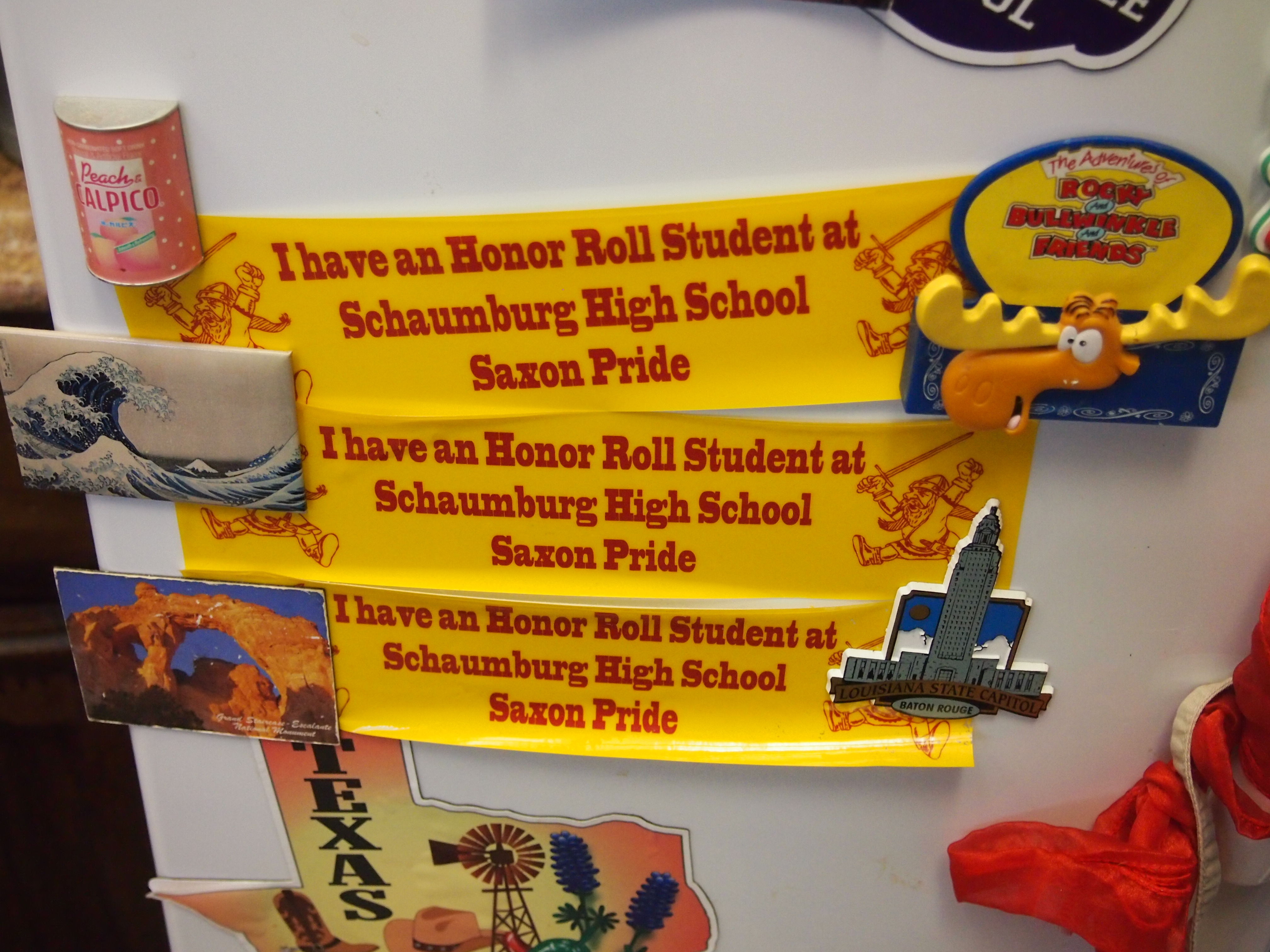
Lilly got another one of these in the mail on Saturday.

OLYMPUS DIGITAL CAMERA

I don’t want to put them on my car bumper, so they go on the refrigerator.

Desk Debris

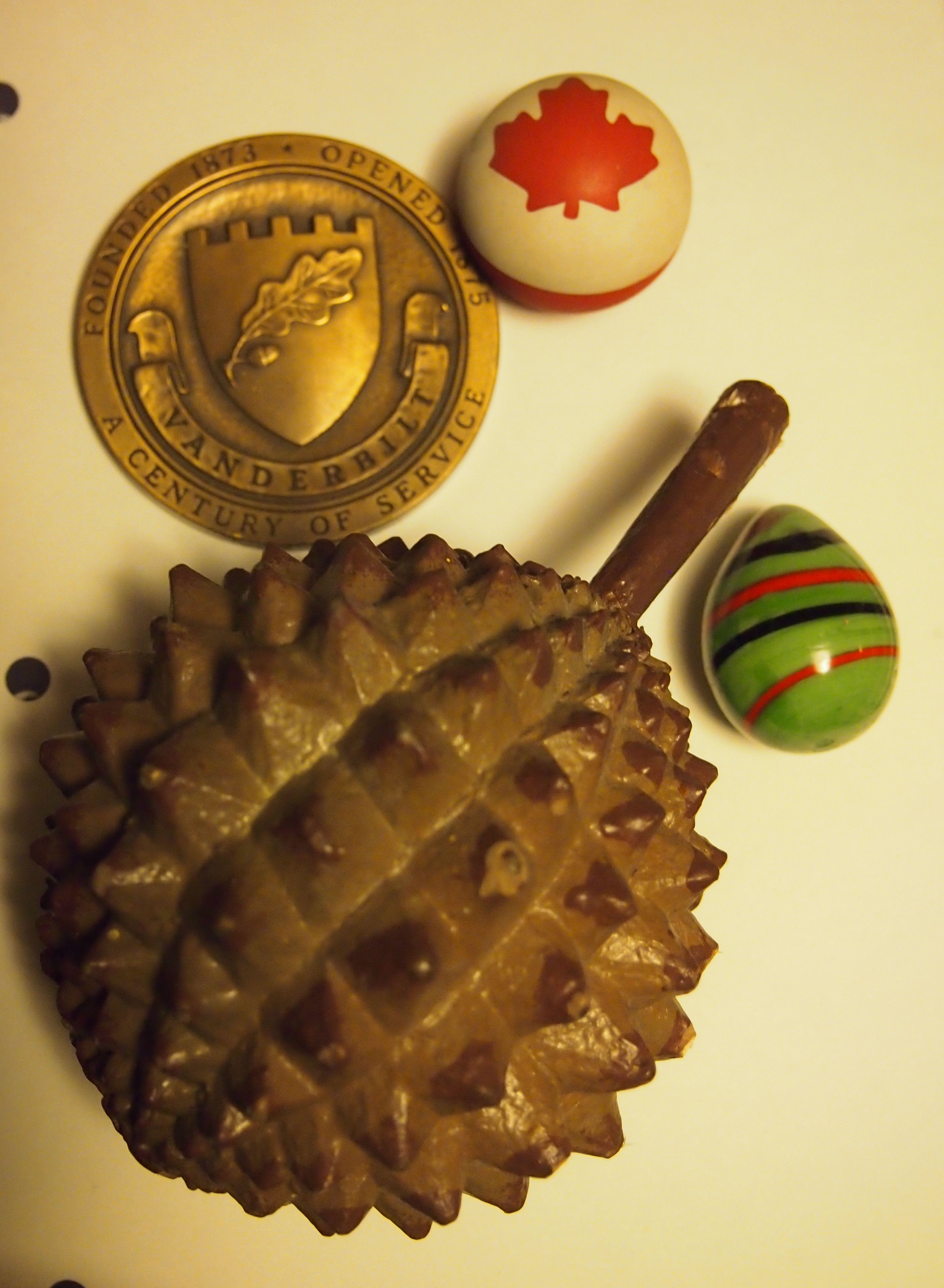
The other day, an old friend mentioned a paperweight she has on her desk, one that she acquired when we worked together in Nashville in the mid-80s. I didn’t remember the item, but it did inspire me to take a look at some of the debris on my desk even now.

Desk Debris

The largest item is a plastic durian. A contributing editor at a magazine I once worked for, a woman who lived in Singapore for a while, gave it to me. I think because it came up in conversation that I knew what a durian was. The dog chewed on the stem not long ago, but I got it away from her.

The medallion is a Vanderbilt souvenir. Not sure when I got it, but it wasn’t when I attended school there. It’s a sturdy bronze object, weighing 9 oz., with Cornelius Vanderbilt on the obverse. Made by Medallic Art Co. of New York, according to the rim of the medallion. Maybe the company was once HQ’d in New York, but according to the web site, it’s now a division of Northwest Territorial Mint, which is headquartered in Federal Way, Washington, and has no facilities in New York.

I got the Maple Leaf bouncy ball at a store in Canmore, Alberta, in 2006. It was just after Canada Day, and Canada-themed items were at a discount.

The green item is a glass egg I bought at the Bergstrom-Mahler Museum in Neenah, Wisconsin, last year. A pretty piece of glass, but also inexpensive and hard to break.

The Horde

Subzero again, at least overnight. Seems like the Polar Vortex is back. Which sounds like an enemy of Dick Tracy.

In case you ever wonder just who that’s been over the years, there’s this list. (What would we do without Wiki?) But I don’t plan to look at it very closely. Dick Tracy is something that could vanish in its entirety, and the world would be exactly the same without it.

Now this is an interesting story. Millions in buried treasure. How often does that happen? Just about never. Less likely than winning a multistate lottery.

But every now and then, there’s word of a horde of one kind or another. The psychology’s fascinating. Who buried a fortune in gold in cans on a stray piece of land in rural California and, more importantly, why didn’t they come back for them?

The Almondmilk Carton

Sunny day today, but that just means that a little snow melts on top of the snow mounds near the streets, then refreezes on the streets, forming hazardous ice sheets. I saw one wide sheet today at the corner of a large street and a side street. Right-turning cars onto the side street risk skidding out of control on the turn – and maybe into a car waiting to make a turn onto the large street.

We’ve gone through a half-gallon (1.89l) of almond milk in a couple of days. A little expensive, but it’s tasty stuff, and probably healthful. But it’s not enough to market it as merely healthful. The container, which is exactly like a milk carton, goes to considerable length to assure buyers of its virtues as a food. It also assures us of its ritual purity.

Or at least the modern equivalent. It is:

FREE OF [caps in the original] dairy, soy, lactose, cholesterol, peanuts, casein, gluten, eggs, saturated fat, and MSG.

All Natural with added Vitamins & Minerals [caps again – though English is not, last time I checked, German].

Made from REAL Almonds.

Vegan.

Made in a Peanut Free Facility [I really want to add a hyphen].

and

This Almondmilk [sic] is made from Almonds that were not genetically modified.

That last one piqued my interest. By golly, I’ll sleep better tonight knowing that no Frankenalmonds have crept into my diet. I checked a little further, and found that the almonds used to make my almond milk are from California.

From there, I looked up the Almond Board of California. A handy Almond Board pdf tells me that there are no fewer than 30 varieties of almonds raised in California, 10 of which account for 70 percent of production.

Always nice to learn something new. The pdf also says, “All California Almonds are developed using traditional methods; genetically modified almond varieties are not planted or available in California.”

The carton, then, was making a virtue of necessity. Strictly speaking, though, “traditional methods” must involve breeding almonds for desirable characteristics over a good many years. A kind of genetic modification, in other words, just as agriculture has done for centuries. Just not the boogeyman kind from modern labs.
Untimely Demises

Woke up from a dream this morning with the notion that Ed Asner had died. That was a little odd, considering that I seldom dream about well-known people. For a moment I wondered, did that happen? No, I dreamed it. I wish Mr. Asner well, and hope he has more years yet.

Guess it would have been really strange if I’d dreamed about Harold Ramis, whose passing made me wonder, for a moment, what his colleague – co-conspirator – Douglas Kenney would have done if he’d lived as long. Probably not too much on-camera work, though he had a single, memorable line in Animal House, which he co-wrote.

Speaking of untimely death, not long ago I got around to seeing a Smithsonian Channel documentary, The Day Kennedy Died, which first aired in November. Narrated by Kevin Spacey and directed by British documentary filmmaker Leslie Woodhead, it’s a first-rate bit of work. A lot of the material’s familiar, of course, but it also included less-familiar aspects of the story, along with lesser-known images, deftly woven into a strong narrative that eschews the conspiracy speculation that’s encrusted the event.

Also worth watching: a short documentary about the eruption of Mt. St. Helens, vintage 1984 and posted on a YouTube channel called Rare Educational and Entertaining Videos. Until I watched the video about the eruption the other day, I hadn’t realized that there’s a children’s song about Mt. St. Helens. But I knew about stubborn old Harry Truman and some of the intrepid scientists who died trying to gather information about the volcano.

Recent Februaries

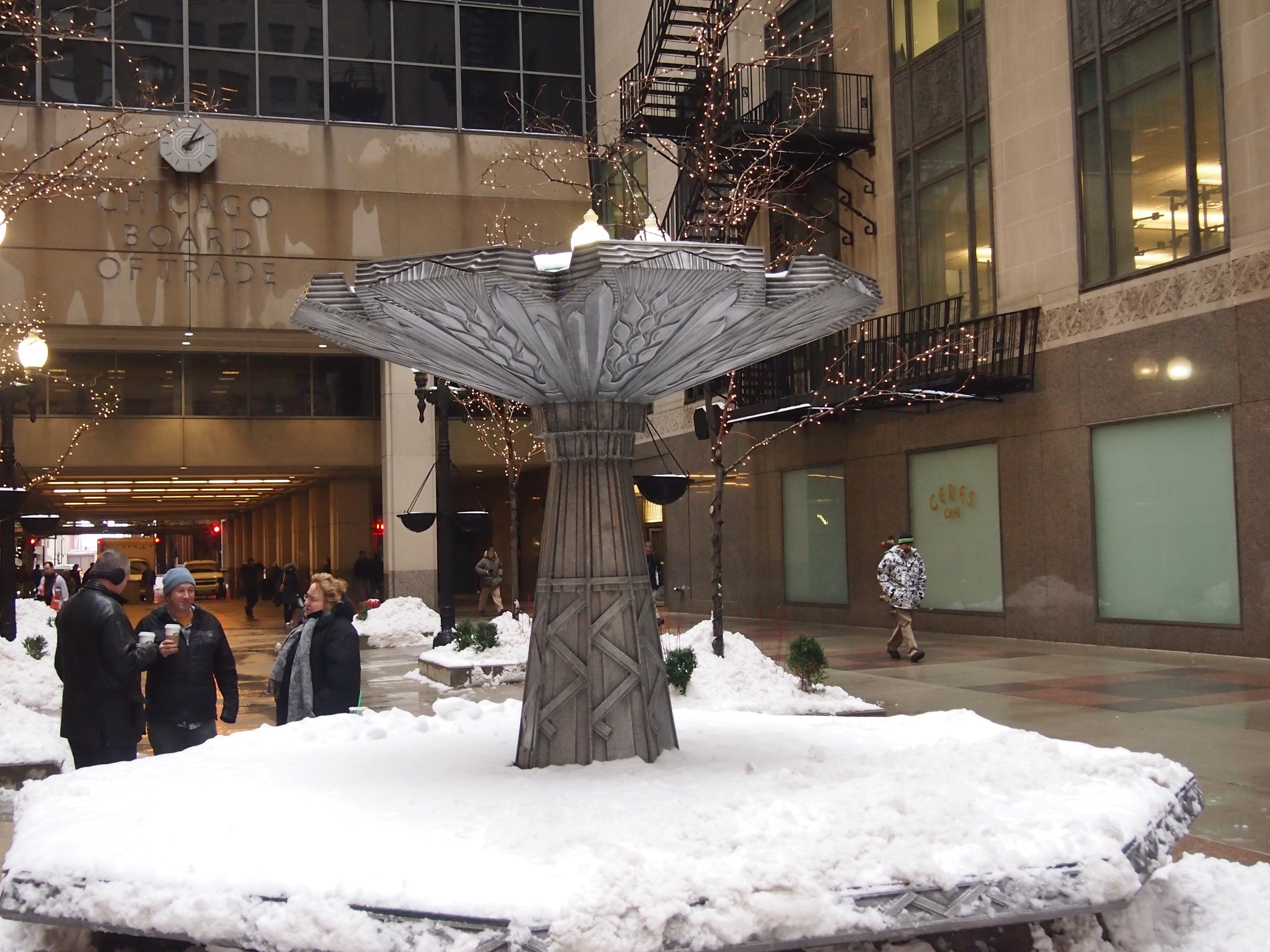
Last winter we didn’t get much snow. But it finally did snow in February, in time for me to see downtown Chicago with patches of snow, such as on the fountain in the plaza in front of the Board of Trade Building.

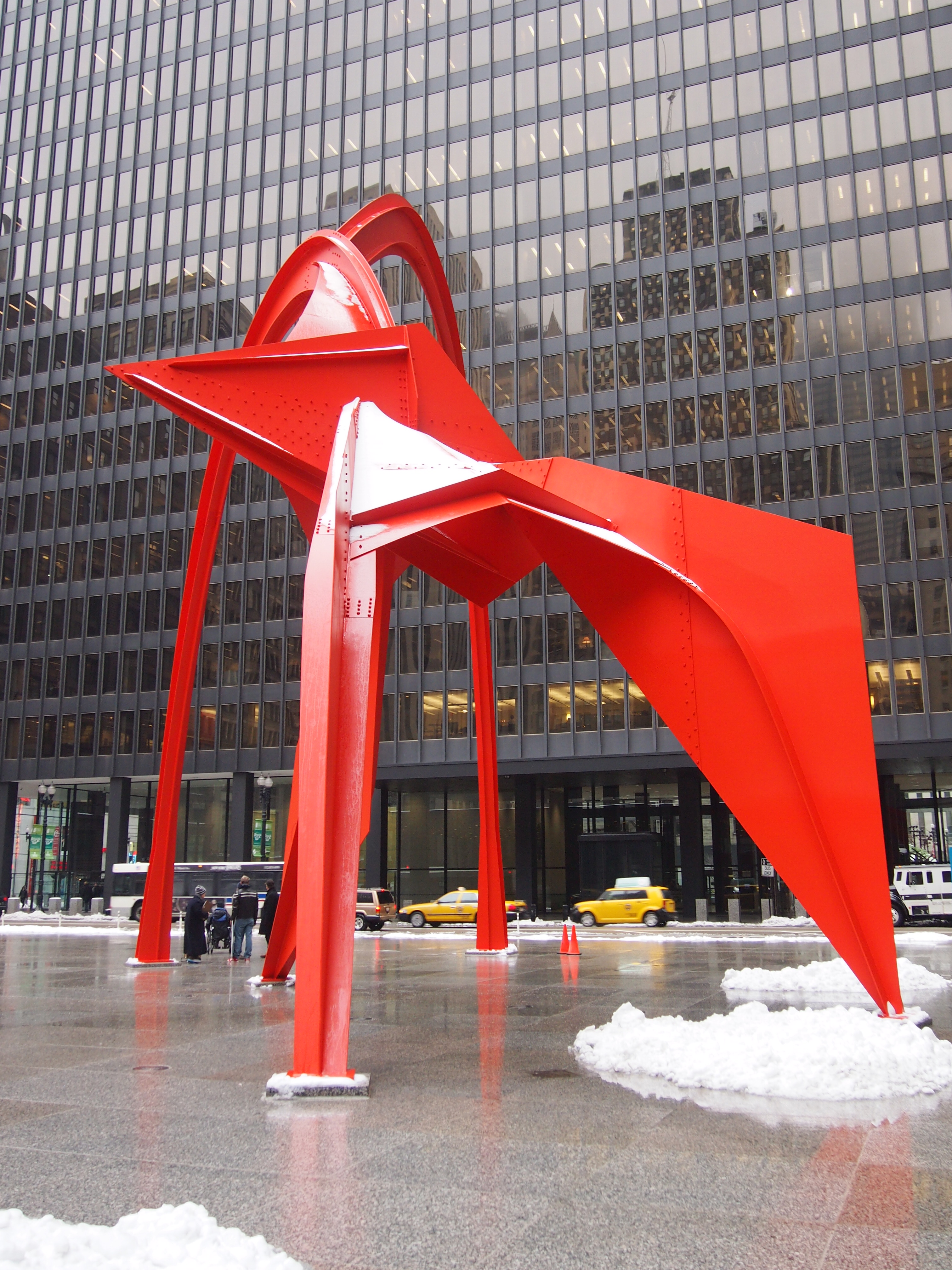
OLYMPUS DIGITAL CAMERABet it looks exactly like that now. Further along, I snapped a picture of “Flamingo,” a 50-ton steel work by Alexander Calder, which has been standing at Federal Plaza for about 40 years now.

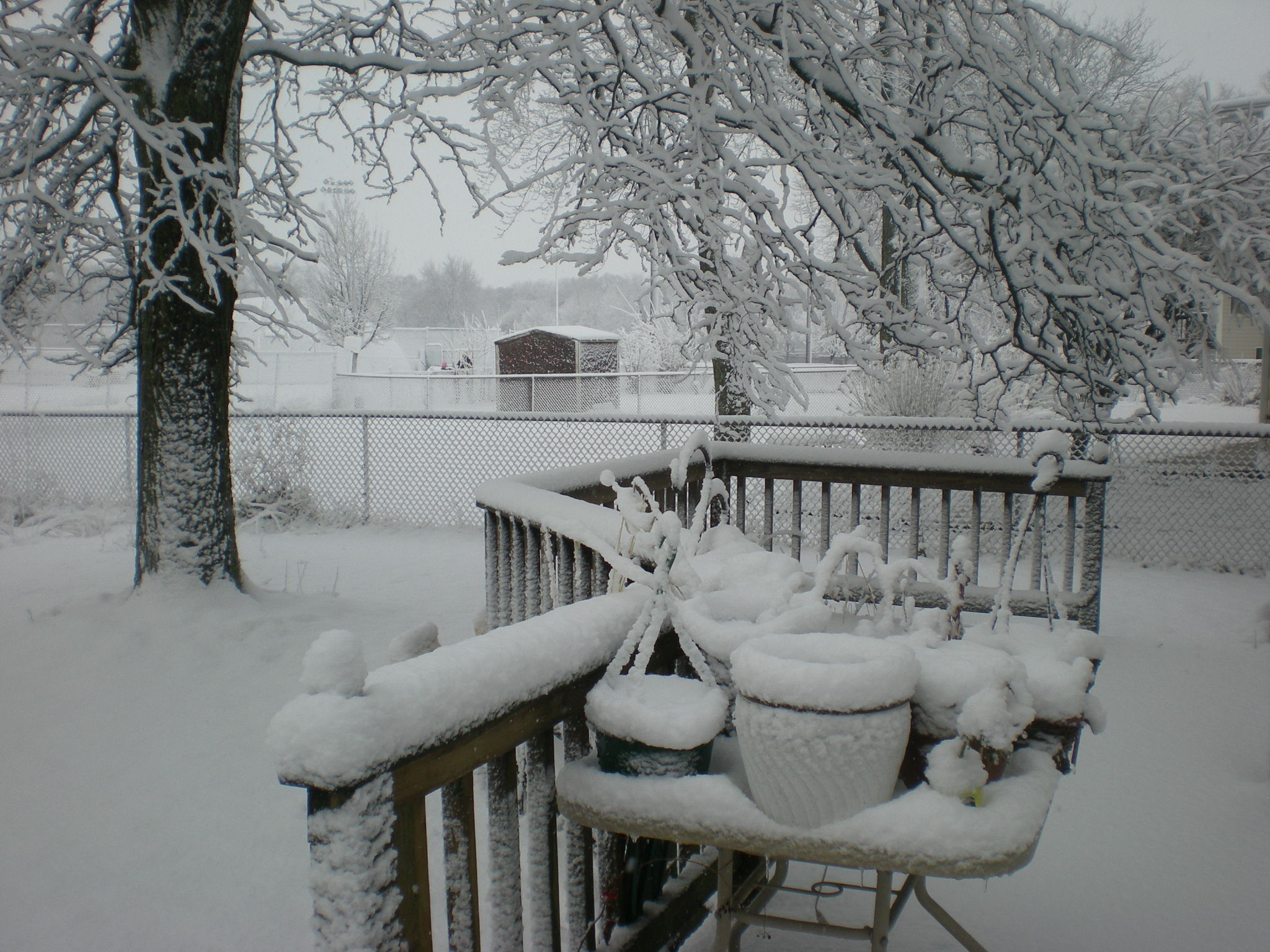
OLYMPUS DIGITAL CAMERATwo years ago in February, we had some particularly sticky snow one time.

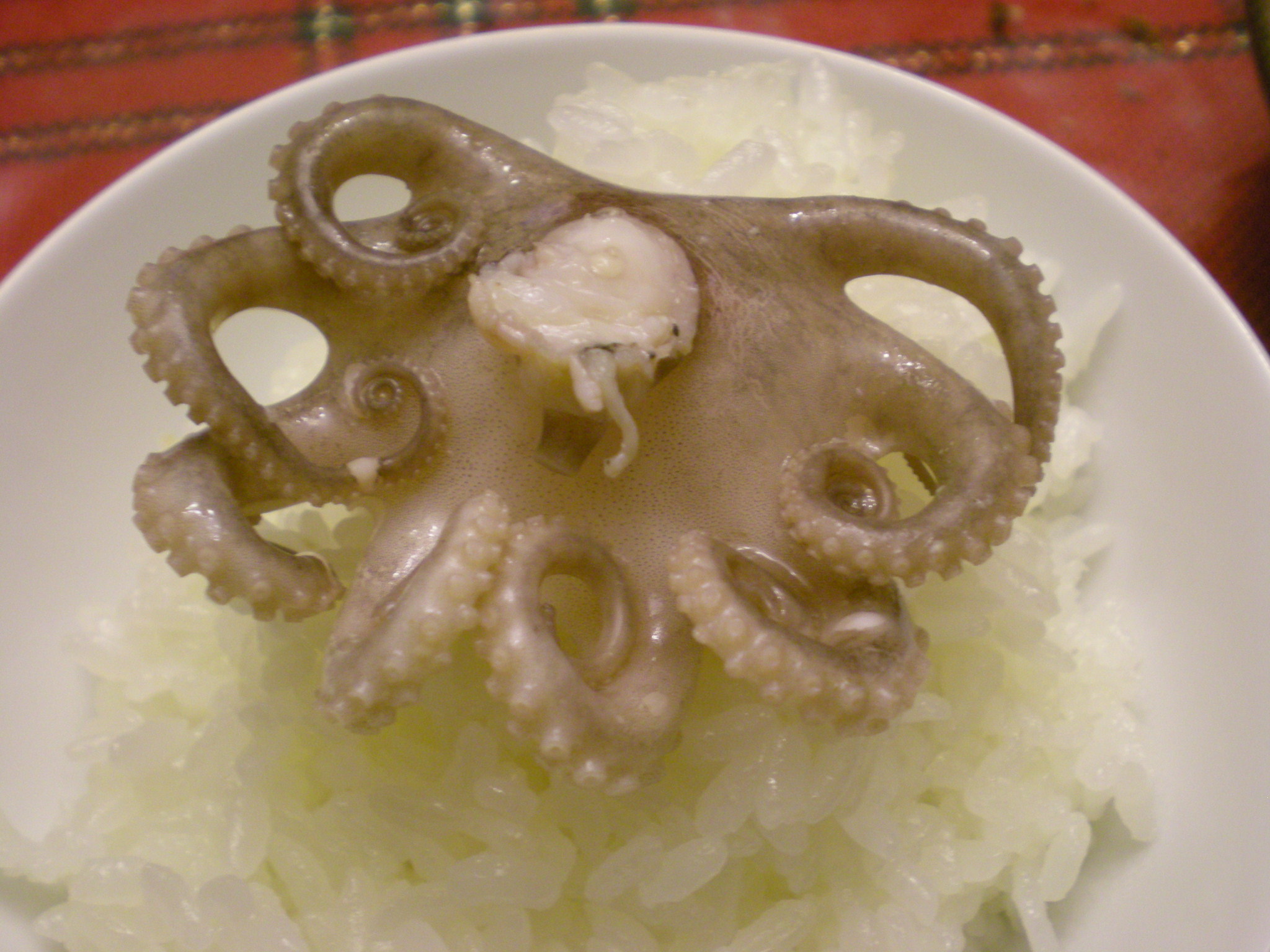
Feb 27 2012 007But we were warm inside and able to enjoy warm food, such as octopus on rice.

Feb 27 2012 008I don’t know that Calder ever did a 50-ft. steel octopus-like form, but it would have been a cool sculpture.