Confederate Field

Another major section of the Texas State Cemetery honors Confederate dead. Even before we went, I knew that Gen. Albert Sidney Johnston, who took a slug at Shiloh, had been reburied at the cemetery. Sure enough, he has one of the larger memorials, at a place of honor among the field of Confederates.

The memorial, including a recumbent statue of Gen. Johnston, was done by Elisabet Ney, another European sculptor who did well in 19th-century Texas, though she was no slacker before she left Europe. “Among her best-known works from this period [i.e., pre-Texas] are portrait busts of Arthur Schopenhauer, Giuseppi Garibaldi, and Otto von Bismarck, and a full-length statue of King Ludwig II of Bavaria,” notes the Handbook of Texas. After establishing herself in Texas, she did busts of Stephen F. Austin and Sam Houston (presumably not from life), among others. All in all, quite a career.

These days her Austin studio is a museum. How did I not know about it? Got another thing to see in Austin someday.

The light was poor on the recumbent Gen. Johnston, so I didn’t make an image. Not far away, however, is a much more obscure Confederate general, John A. Wharton. He was in full sunlight.

Another Confederate Texan, his date of death is listed as April 6, 1865, so I figured he was one of the unlucky few killed in action just as the war ground to an end. But no. Again from the Handbook of Texas: “On April 6, 1865, while visiting Gen. John B. Magruder’s headquarters at the Fannin Hotel in Houston, Wharton was killed by fellow officer George W. Baylor in a personal quarrel that grew out of ‘an unpleasant misunderstanding over military matters.’ Even though Wharton was found to have been unarmed, Baylor was acquitted of murder charges in 1868.” Geez.

The bust was by Enrico Filiberto Cerracchio, another European sculptor who ended up in Texas. Who knew there were so many? He came a little later, though, and is best known for his large bronze equestrian figure of Sam Houston at the entrance to Hermann Park in Houston, which dates from 1924.

Generals are one thing, but far more of the cemetery is occupied by ordinary Confederate soldiers, or more exactly, old men who had once been CSA who died in the late 19th and early 20th centuries. Confederate Field is large.

Stephen F. Austin and the Company He Keeps

There are a lot of notables in the Texas State Cemetery, but who’s more notable for Texas than Stephen F. Austin, especially since Sam Houston is buried somewhere else? Austin’s been in the cemetery in Austin for over 100 years now, reposing under a statue by an Italian sculptor who did most of his work in Texas, one Pompeo Coppini, whose name is conveniently on the base, and who had an interesting career I didn’t know about until I looked him up.

Wonder how many people who know about the city of Austin for its tech industries or music scene or its politics or UT or Keep Austin Weird or its moon towers know even a bit about Austin the man. Anyone who took Texas History in the 7th grade or read Texas History “Movies,” maybe.

Coppini gave Austin a determined visage, reaching for the future. Since he died young, at only 43, you have to wonder what he would have done had he lived another 30 years — at the very least held a number of high offices in the republic and the state, as Houston did.

The plaque in front of the figure says:

Stephen Fuller

AUSTIN

“The Father of Texas”
was born in Wythe County, Virginia
November 3, 1793
and died in Brazoria County, Texas
December 27, 1836

Wise, Gentle, Courageous, and Patient
He was the founder
of a mighty commonwealth

He’s actually one of the few full-sized bronzes in the cemetery. Most of the funerary art involves other shapes, such as that of Ma and Pa Ferguson, who are not far from Austin.

James and Miriam Ferguson, that is, who were both governor of the state at various times. My mother remembers them, and I heard about them from her from time to time.

One of the least conventional memorials in the cemetery — or in any cemetery — was this one, to William and Carrin Patman, whom I had to look up. He was a long-time Texas state senator and also spent a while in the U.S. House.

Other notables we spotted on “Republic Hill,” whose centerpiece is the Austin statue, included Walter Prescott Webb, Bigfoot Wallace, Rep. Barbara Jordan, Rep. Jake Pickle, and a few other governors and state officials. Coach Darrell Royal is buried near the road. I hadn’t realized he was dead. His stone features a UT gold ring and the words, “Let’s Give Him Three.”


The Texas State Cemetery

The Texas State Cemetery, which is in Austin east of I-35 but still not that far from the capitol, is a lush patch of mildly sloping land, artfully landscaped, graced by a variety of trees, a few water features, narrow roads, many Texas flags, and lots of monuments of different sizes and shapes, as you’d except from a good cemetery. Jay and I stopped by the State Cemetery on the afternoon of Friday the 13th under partly cloudy skies, and during the usual high heat you’re going to encounter in September in Central Texas. Fortunately, there was also a good bit of shade.

One thing the cemetery did not have, at least when we were there, was many other visitors – maybe a four or five all together, and I think at least one of them worked there. Then again, that’s not so strange. I often find myself alone – among living people, anyway – even in large cemeteries. The only recent exception to that has been Arlington National Cemetery.

The invaluable Handbook of Texas tells us that the 22-acre Texas State Cemetery “is divided into two plots. The smaller one includes some 234 marked graves of more or less prominent men and their wives, including… representatives of every department of state government and every period of state history. The larger plot contains the marked graves of some 2,047 Confederate veterans and their widows, who died after 1889 in the Texas Confederate Home and the Confederate Woman’s Home.”

The cemetery also still has room for expansion. I understand that most state officials can be buried there if they so desire, and the legislature can offer burial in the cemetery to whomever it wants. That would account, for example, for the stone dedicated to Wille James Wells, “El Diablo,” 1906-1989.

I hadn’t heard of him before. His stone says, “Played and managed in the Negro Leagues, 1924-1948. Began his career with the St. Louis Stars and became baseball’s first power hitting shortstop… He was best known for his aggressive play [hence the nickname]. During his career he compiled a .392 batting average against Major League ballplayers. In 1997, Willie Wells was inducted into the National Baseball Hall of Fame…” Wells’ connection to Texas isn’t obvious from the stone, so I looked him up, and it turns out he’s native to Austin.

Roads run through the cemetery, making a T shape. The formal entrance to the grounds is at the bottom of the T. According to Wiki at least, the stem of the T shape is part of Texas 165, which also includes part of a side street that borders the cemetery. It isn’t clear from the text whether the rest of the T also counts as Texas 165, but never mind.

This is the view looking north, past the top of the T. Whatever you call it, the road is abundantly lined with Texas flags.

GTT Fall 2013

Last Wednesday I spent the afternoon in downtown Dallas, walking around on a typically hot September day. I was visiting the second floor of a building – more about that later – when sirens blared in the street below. The windows sported heavy drapes, but it wasn’t hard to pull them back for a peek. On the street below was the aftermath of a traffic accident without apparent injuries, but also a little hard to understand.

So how did that little car wedge itself under that large truck? Other witnesses marveled at it as well. It would be one thing if the car was at a diagonal to the truck, which would mean that it rammed itself underneath. But the car’s aligned so evenly with the truck. Did the truck somehow park itself on top of the car? How could that have happened?

Just another little mystery. I went to Texas on the 12th and came back on the 19th. It was a trip but not a vacation. I spent time with family and friends, but I also continued working – all I need for that is a laptop, phone, and Internet connection. I drove a fair amount, too, because I flew to Dallas, drove to San Antonio by way of Austin, and later returned to Dallas for the flight home.

For a few hours on a couple of days, I managed to see a few things. New things, in fact: a large, immaculate Austin cemetery that I’ve known about for years but never visited; a music venue I’d never heard of in a familiar part of San Antonio; some small to mid-sized museums in Dallas, a pleasant bar in the same city, and a large church there, too.

Maps, Maps, Maps

Back again around September 22 — about on the equinox. That’s just a coincidence, since it’s the next Sunday that I want to begin posting again. But those days must mean something. Years ago, I took a flight across the equator on the solstice, and I turned into a Druid for a few minutes.

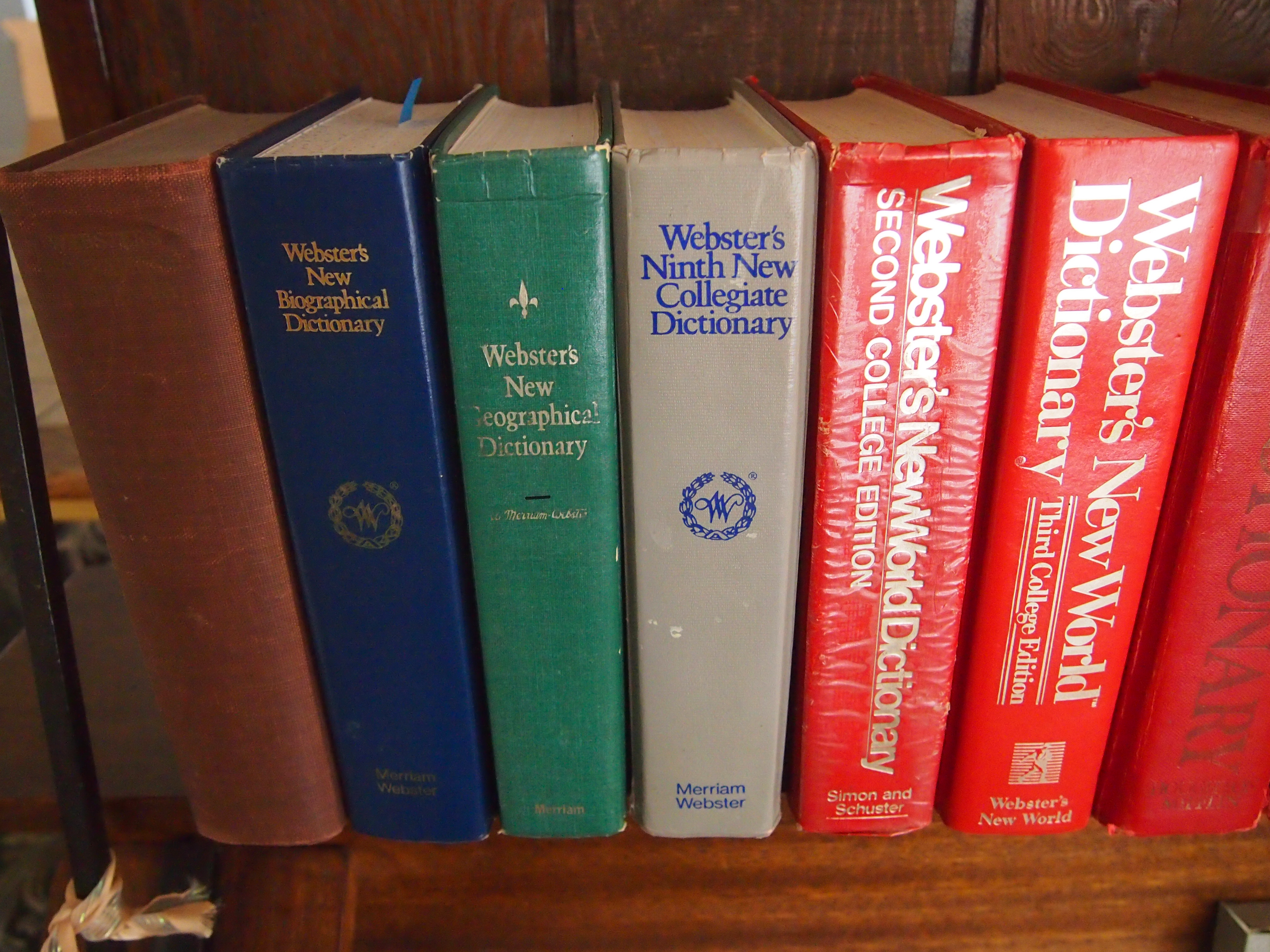
I have a collection of maps, many of which I’ve picked up as I visited places. Recently I moved them out of the lower level of the house, and as I was leafing through them, it occurred to me that my daughters — if they’re ever so peripatetic — will probably not end up with a clutch of paper maps. They’ll have some electronic box that offers directions wherever they are: New York, London, Paris, Munich.

Paper maps can be cumbersome. Of course I use Google Maps and its ilk sometimes. But my daughters and their cohort don’t know how much they’ll be missing without paper maps.

I’ve posted about that Stadtplan Berlin before, and one of my favorite maps ever (not pictured), Bensons MapGuide London Street Map.

And when am I going to give up my paper maps? When they pry them from my cold, dead fingers.

On ira pendre notre linge sur le ligne Siegfried

Another very warm, practically hot day. Sure, you can use the air conditioner in your car on days like today, but when I was driving along around 1 p.m., I kept the windows down and blasted myself with warm air. Pretty soon driving will be complicated by snow and ice, so I want to feel the warmth, even the sweaty heat, right now.

Ah, these warm days of September. Makes you think about the Sitzkrieg, doesn’t it? No? I might not have either, but not long ago I happened across the bilingual “On ira pendre notre linge sur le ligne Siegfried” (“I’m Going to Hang Out the Washing on the Siegfried Line”), a song I wasn’t familiar with. I like finding moment-specific songs — in this case, the Sitzkrieg — that have been lost to time. (Like this one and this one.)

This version was by French band leader Ray Ventura. Irish songwriter Jimmy Kennedy wrote it. His 1984 NYT obituary noted that “Mr. Kennedy’s songwriting career spanned 50 years. His familiar songs included ‘The Hokey-Cokey’ (which was popular as the Hokey-Pokey dance in the United States) ‘Teddy Bear’s Picnic’ and ‘I’m Going to Hang Out the Washing on the Siegfried Line.’ ”

Odd to think that someone actually wrote “The Hokey-Pokey” and “Teddy Bear’s Picnic,” (Bears’?) though of course someone did. Someone named Jimmy. Songs like that just seem to emerge from the woodwork.

Bombs Away, Mr. Nixon

Very warm today, a continuing summer that’s going to lead us to a sudden dropoff into cold. Maybe not literally, but it’s going to feel that way in hindsight. One day soon I’ll blink and the trees will be bare and the ground white. I’m wondering how the dog will react – up for romps in the snow, or whining at the prospect of going out in the cold? We’ll see.

Today, for obvious reasons, I was wondering about the quote: “The President of the United States can bomb anybody he likes.” Now where did that come from? One reason it’s so easy to get distracted on line is that you can ask Google such a question and see where it takes you. So I did.

One of the search results I got was this. I started reading it and it was a few seconds before I realized that I’d written it. The quote (though a little altered) is from the movie Nixon, said by Anthony Hopkins’ President Nixon. I don’t know if the president himself actually said such a thing, but I bet the scriptwriter thought it sounded like something he might have said, and it does.

Oh Yes! (Sweet Potato Creme-Filled Chocolate Cakes)

There’s a new H Mart not far from where we live – a smaller version of the Korean supermarket in Niles, Ill. It took over space formerly occupied by an independent Asian grocery store (whether that was Korean, I don’t know). I visited the new H Mart over the weekend, and for a discount got some Haitai brand Oh Yes! “Premium Chocolate Coated Sweet Potatoes Filling Cake.”

Oh Yes! A good name. Catchy. Wasn’t that something Molly Bloom said?

I wondered about that sweet potato filling. But for a couple of dollars for 12 cakes, I was willing to give it go. The ingredients are simple: cocoa powder, cocoa mass, white sugar, and sweet potato cream. You get about a third of your DV in saturated fat in each cake, with none of that trans fat. There’s also some carbohydrates in them, but very little else.

Haitai is a South Korean food company, lately owned by Crown Confectionery, another Korean entity. Naturally, I had to look up Haitai’s web site, and found some other product names that I like, all of which look like confections: Baked Potato Stick, Choco Homerun Ball, Bravo Cone, and Babamba.

About Oh Yes!, the web site says (all sic): “Oh Yes! (1984) is our one and only soft chocolate cream cake, which has been on demand for many years due to its soft and delicious taste that melts in your mouth. It is proudly making monthly sales of 4 billions won.”

I liked the Homerun Ball description, too: “The idea of our snack product, Homerun ball, was originated from the Korea Baseball Organization in 1981. It’s unique name was derived from its particular baseball shaped appearance. Homerun ball contains chocolate inside every round ball, and is a easy to-go snack that is great to take out to any event. The Homerun ball is successsfully reaching monthly sales of 4.2 billions won.”

So, a few more Homerun Balls than Oh Yes! cakes sold each month. Anyway, the sweet potato favor does take a little getting used to, if you’re used to regular cream fillings. But the cakes aren’t bad.

The Rookery

Also during my most recent visit downtown, I swung by the Rookery. Because it had been a long time since I’ve been in the Rookery. The last time might have been the Halloween parties that the concierge service down the hall at the Civic Opera building used to have, when I had an office at the Civic Opera building. The early ’00s, that is.

As always, the Rookery is cool on the outside.

And stunning on the inside.

As you can see, I wasn’t the only person paying photographic attention to the Burnham & Root creation, with its Frank Lloyd Wright filling.

Electric Jellyfish

Not long ago I visited the J.W. Marriott hotel at 151 W. Adams. It hasn’t had that flag very long — only about three years — and the building itself is the former Continental & Commercial National Bank, designed by no other than Daniel Burnham in 1914. I read that to turn the structure into a 610-room hotel — an upmarket one, since J.W. Marriott is described as the “black label” of Marriotts — and restore the ornate lobby, the hotelier spent $396 milllion.

I didn’t have a lot of time in the lobby, but ornate is a good adjective for it. Mostly I was in one of the larger meeting rooms, which was more interesting than most hotel meeting rooms.

There must be a reason, maybe in the original design of the property, that the ceiling sports arched beams, but I’m not in a position to say why.

Nice lights, too. A bloom of electric jellyfish