More About Lilacs Than You Need to Know

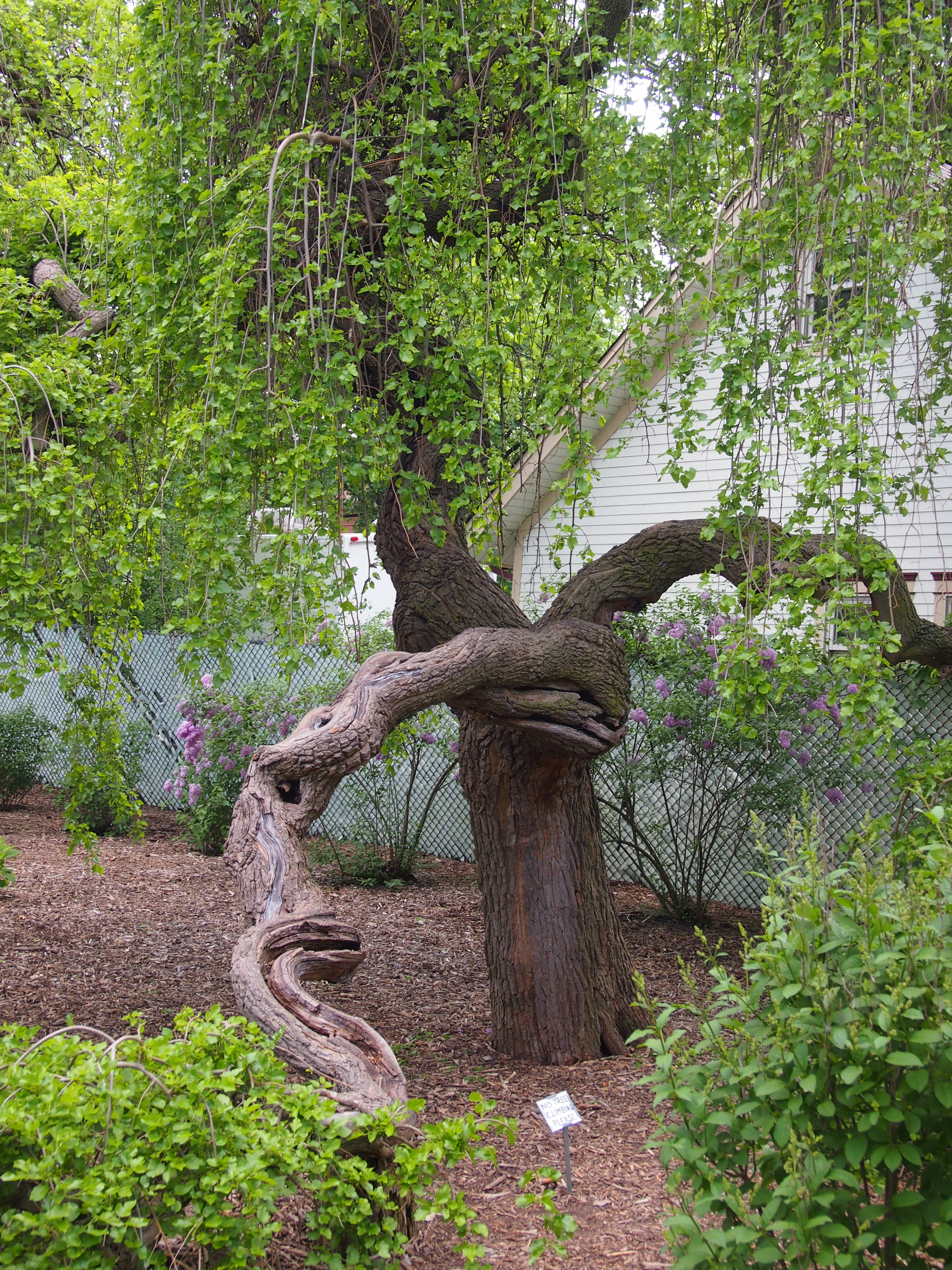
One more shot from Lilacia Park — a peculiar tree. Who doesn’t like tree trunks that splay out in different directions?

More on the story of this beflowered little park is told by Illinois Old Houses (1977) by John Drury, which this web site extracts and asserts the book is public domain. In any case, it says that “… this was the home of the late Colonel William R. Plum, pioneer resident of the village — soldier, lawyer, traveler, writer, horticulturist, and founder of Lilacia Park. Containing more than three hundred varieties of lilacs from all parts of the world, this park is regarded by botanists as the finest lilac garden in the Western Hemisphere.

” ‘In 1911, when we were on a tour of Europe,’ Colonel Plum once told a family friend, Mrs. Annabelle Seaton, ‘we stopped at Nancy, in France, and there visited the famous lilac gardens of Pierre Lemoine. That visit proved my downfall. My wife purchased two choice lilac specimens, a double white and a double purple, and we brought them back to Lombard. From that time on my enthusiasm for lilacs grew and I have never lost interest in them since.’

“When Colonel Plum made this statement, the results of his hobby could be seen all about the old Plum home. Here were all types of lilacs, including one of his favorites, a blue variety called the ‘President Lincoln.’ The shrubs were pleasingly arranged on the Plum estate of two and a half acres, which he called ‘Lilacia.’ Since expanded to ten acres, Lilacia — re-named Lilacia Park — now contains 1,500 lilac bushes as well as 87,000 tulip bulbs.”

The Abraham Lincoln variety, I noticed, is still growing on the grounds of Lilacia Park. So is one named after Gen. Pershing, but most varieties don’t involve famed Americans. As for Pierre Lemoine, he seems to be this fellow, Victor Lemoine (the Spanish version of the page gives his full name as Pierre Louis Victor Lemoine), “a celebrated and prolific French flower breeder who, among other accomplishments, created many of today’s lilac varieties.” Born 1823, died 1911, so I guess you could say he created lilacs for the Belle Époque.

Water-Colored Water & Pink Flamingos

Rain promised early in the day on Monday, but it didn’t come until late in the evening. So I had time to mow the lawn, a task that I’ve put off lately. I enjoyed cutting all the high dandelions and scattering their seeds to the winds.

We saw an odd feature of Lilacia Park: a fountain spouting blue-colored water. I’m pretty sure that the last time I saw the fountain, non-tinted water was used.

It made me think of Mon Oncle, which I haven’t seen in many years. One of the features of the ultramodern house in that movie, if I remember right, was a fountain spouting blue-colored water. It was something seen in passing, not commented on, but I think it was supposed to be a visual comment on the vacuousness of the haute bourgeoisie, or burgeoning postwar consumerism, or something (I’m entirely too Anglo-Saxon to care much about the subtleties of Gallic social criticism).

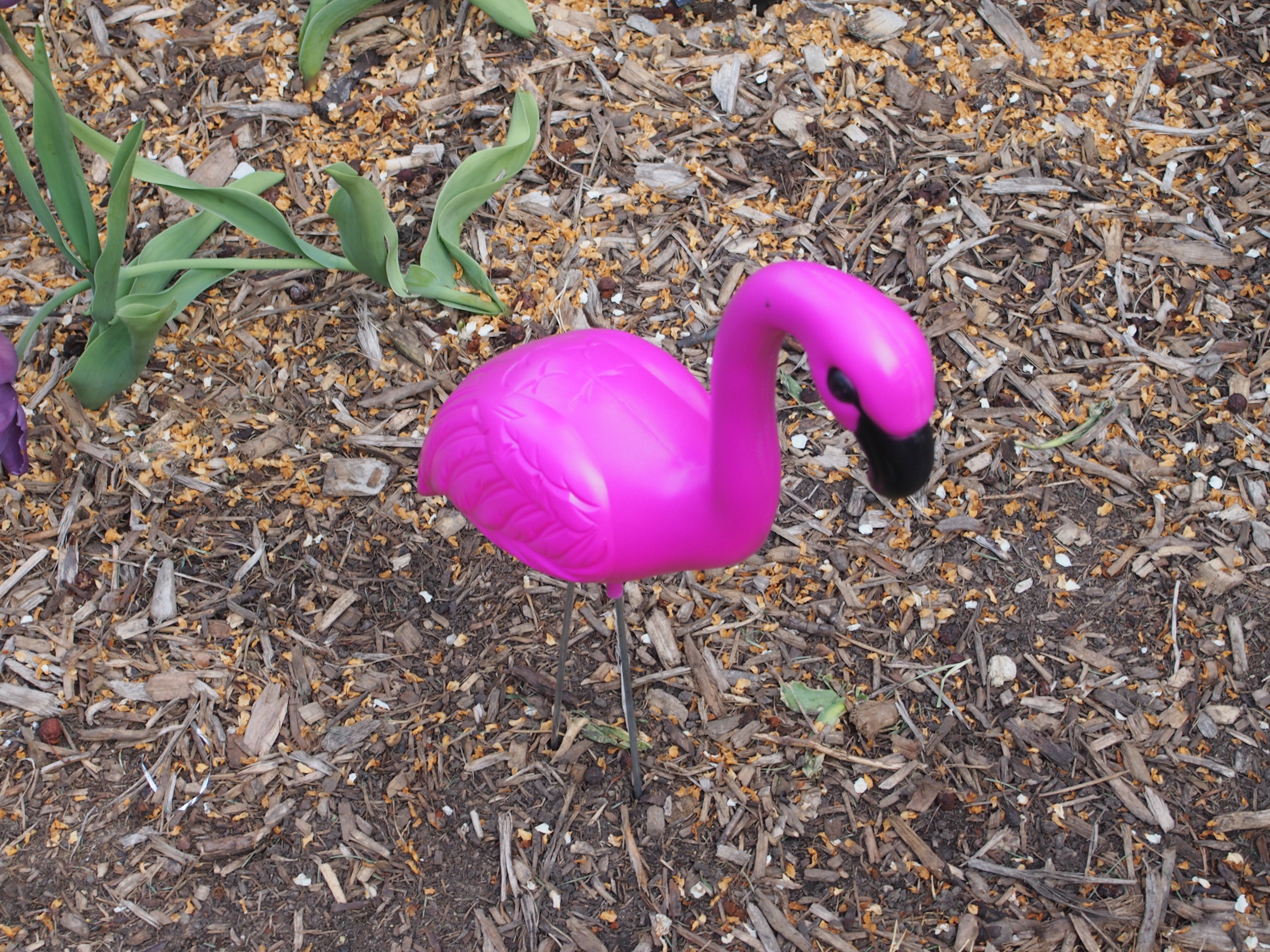
Also noted at the park: a couple of pink flamingos. There were exactly two that I could see, just idling next to one of the walkways. Say what you want about pink flamingos, I think there ought to be more of them in parks and gardens.

Lilacia Park ’13

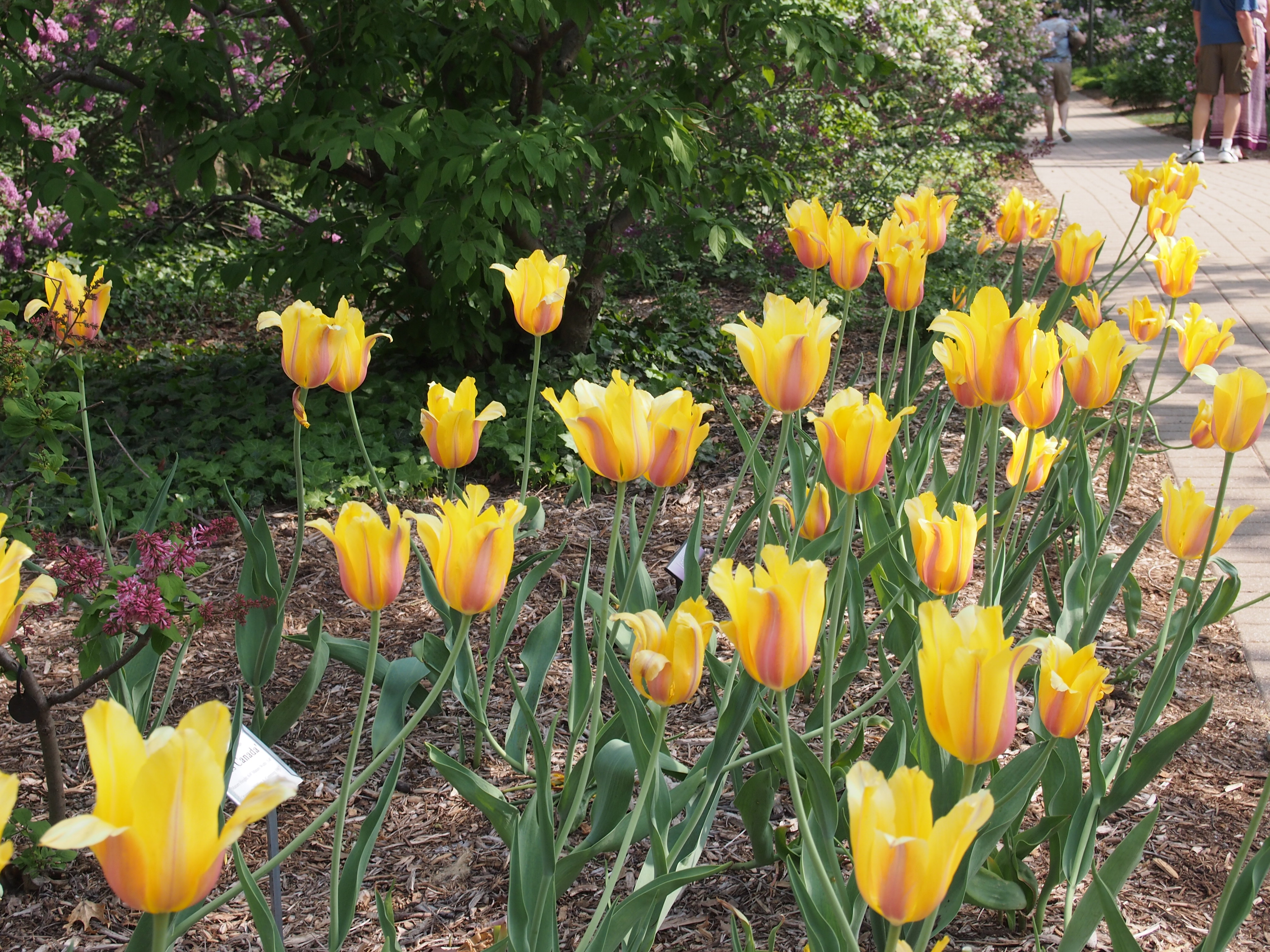
It’s been a while since we visited Lilacia Park in Lombard, Ill., at the height of lilac blossoming. It’s been six years, in fact. I wouldn’t have guessed quite that long. On Saturday I thought it was time to visit again.

I’m glad we went. For the profusion of lilacs, if no other reason. Make that two reasons: their fine sweet smell, which the picture can’t convey.

The tulips aren’t too shabby, either.

It was a flawless spring day, warm but not hot. Yet the park wasn’t jammed with flower seekers, though it was hardly empty. It’s a little-known jewel of the suburbs.

Biosphere, Montreal

May 28, 2002. In the morning, we went back to the quays adjoining Old Montreal, this time for a boat tour of the St. Lawrence. Some nice views, especially of the unexpectedly long Port of Montreal, but the heat wore us out early. So we rested until late afternoon, at which time we took the Metro to Île Sainte-Hélène, one of the islands built (or partly built) for Expo 67.

Besides walking paths and gardens, the main thing to catch the eye there is a large geodesic dome designed by a Buckminster Fuller, probably the best-known relic of that world’s fair. Once the U.S. Pavilion, now it’s called the Biosphere, and houses a museum “dedicated to water,” which was closed when we got there.

No matter. Yuriko wandered off to see the gardens, and I reveled in lying on the grass in the shadow of a five-story ball of triangles, cooled by the wind. Lilly indulged in what I believe was her favorite part of the trip: throwing rock after rock into the reflecting pond near the entrance of the Biosphere.

Juvenile Amusements

Not long ago I was getting rid of debris on one of my computers, the main one I use now for my work since the older one is bronze age in computer terms, and I found the scan on the right. A pizza delivery receipt. We rarely have pizza delivered, so I’m pretty sure it didn’t originate with us. I suspect it’s something Lilly put in the system, sent to her by a friend.

Probably the name “Bonquiqui Butts” had something to do with it. Turns out that refers to a character I’d never heard of, but which Lilly and her friends must know about.

Also found on my computer taking up space: a video made by Lilly and a couple of her friends in our back yard. I don’t think it was last summer, since the grass is much too green; probably the summer before last. Which would make them junior high antics.

It only goes to show that kids aren’t spending all of their time with electronic entertainment.

Launch

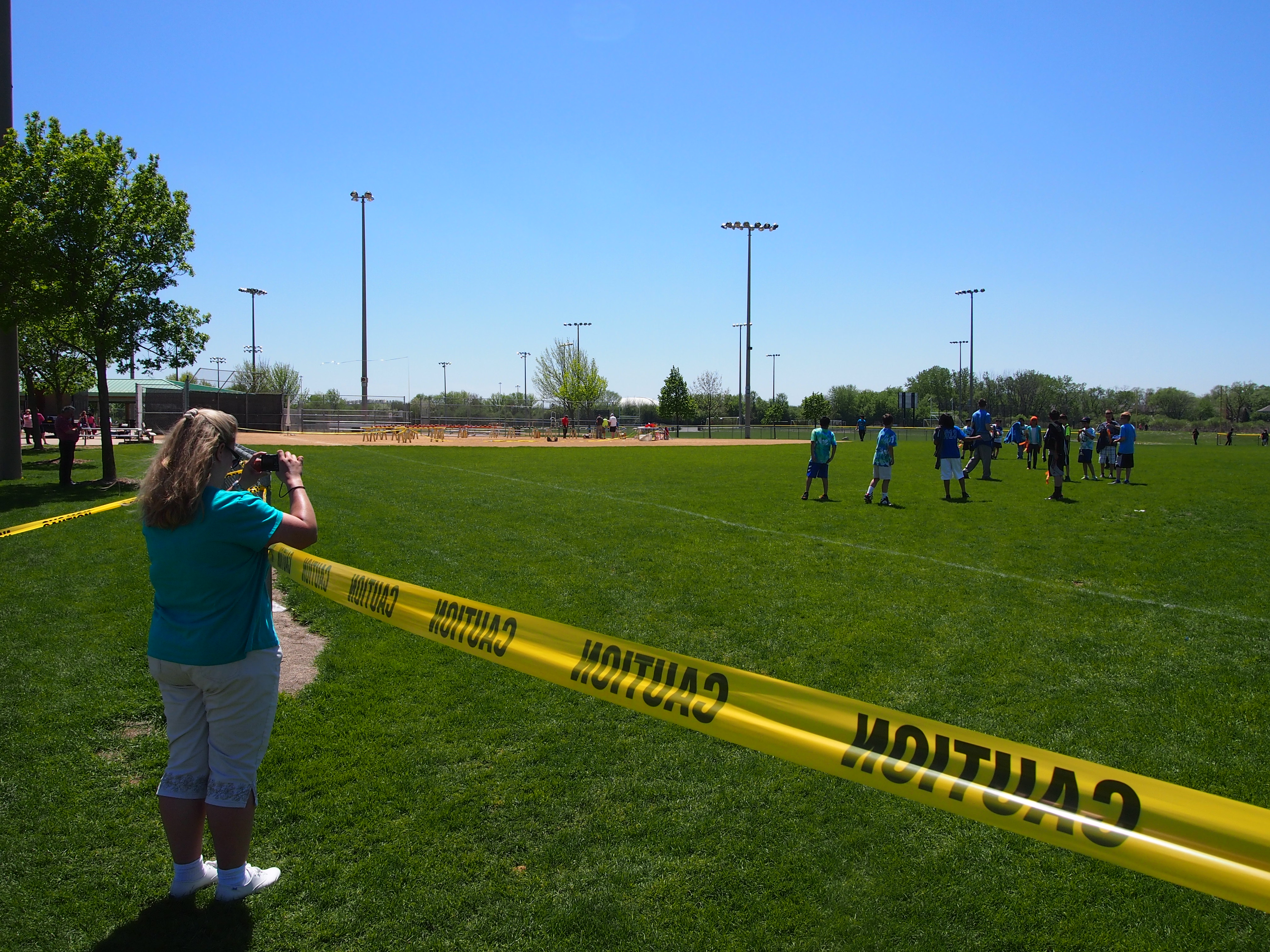
The launch zone yesterday for the flight of Payton, Ann’s rocket, and dozens of other student-built, one-foot rockets was a fenced off area in one of Schaumburg’s larger parks. The rocket launch pads were set in a long row of beams mounted on saw horses.

The students, as pictured above, stood somewhat closer to the launch site. Each rocket was announced by name and creator, and then pfssssst! they went skyward one at a time, most reaching a few hundred feet.

There goes Payton. Instead of parachutes, streamers emerged when the nosecone separated. That meant the rockets tended to come more-or-less straight down, rather than drifting off onto a nearby highway or forest preserve or the roof of a house.

During the launches that included Ann’s school, there was only one that didn’t go far. It hissed and wobbled and popped its streamer not long after launch. I felt a little sorry for that kid. He built the Charlie Brown rocket.

Rocket Girl

Clear, warm, summerish day today, with light winds. A perfect day for launching a rocket she called “Payton.” One she built.

Ann is seen here holding the thing, which, like most good rockets, has a detachable nosecone. It measures about 12 inches, has three fins, and is yellow. Before we painted it that color, I toyed with the idea of painting it like a V-2, even though it doesn’t otherwise look much like the German weapon (to start with, the V-2 had four fins). But that seemed like too much trouble for a joke no one would get.

Earlier this year, Quincy Adams Wagstaff Elementary inaugurated its rocket club – actually, the entire school district seems to be in on it – and to my mild surprise, Ann joined. For an hour every Thursday, she stayed with the club after school to work on a rocket (though it came home for painting last week). Everyone did his or her own, with the promise of a launch for each in the spring. And so it came to pass on May 14, 2013. More about that tomorrow.

Life on Mars

I saw a car in a parking lot the other day with a license plate frame that said MANCHESTER UNITED. Not something you see too much here in the heart of darkest North America, but maybe an expat Englishman drives that car. Or, in the Internet age, a local enthusiast who’s become a long-distance supporter.

Which makes me wonder: are there (say) Packer fans in the UK? Probably a few.

Speaking of Manchester, I managed to watch the first episode of the British Life on Mars not long ago, which adeptly combines cop show and SF. A modern-day (2006, anyway) Manchester policeman finds himself transported to an earlier time (1973, as it happens). Or does he? When I have time, I’ll make my way through the entire series, which is only 16 episodes.

Grad

This year, I read, Vanderbilt held its commencement ceremony – “graduation” except in the official documents – on Alumni Lawn on the morning of May 9. A Friday in early May, in other words. “Chancellor Zeppos confers degrees and addresses the members of the graduating Class of 2013,” the VU web site says. I hope the undergrads had undergrad fun with that name.

Thirty years ago, Joe Billy Wyatt was VU chancellor, number six since the heady days of Landon Cabell Garland, the first chancellor, who received the Golden Oak Cluster from Cornelius Vanderbilt himself in a secret midnight ceremony. According to an unimpeachable source – Wiki, that is – Garland thought dormitories “injurious to both morals and manners,” which is amusing since Garland Hall, a dorm, is named after him.

Anyway, Wyatt had been in office for a year when he shook a lot of hands at the commencement ceremony of Friday, May 13, 1983. He’s pictured on that day in the image posted here, facing away from the camera.

The fellow facing the camera at that instant, one of the graduates, wasn’t feeling his best that morning, since he was still recovering from an earache that began a few days earlier after a short swim in the waters of Lewis Smith Lake, down in Alabama. As it turned out, graduation from VU marked the end of his formal education. At some point over the last 30 years he decided, “I’ve done been educated.”

Dog Chew

The dog’s got some canine habits, for sure. Such as chewing things. Pictured below is a stuffed figure I don’t ever remember getting, and which no one in the house has paid much attention to for years. The hound found it recently and did some damage. Was Mr. Sluggo to its Mr. Bill. Reminds me of the young days of Katie, my mother’s dog, who destroyed (among other things) most of the pine-cone elves acquired in Germany in the ’50s that we used to hang as Christmas decorations.

A few months ago I picked up a hardback book at Big Lots. That retailer isn’t generally known for its books, but it had a bin of landfill-destined titles that I had to rummage through. I found A Fiery Peace in a Cold War (2009) by Neil Sheehan, whom I know as the author of A Bright Shining Lie, which I read some years ago, and remembered liking.

The progression of pricing was from $32 on the dust jacket to $7 at Bargain Books, which I could tell from a partially obscured price tag, to $4 at Big Lots. For that price, I would take a long look at Mr. Sheehan’s latest.

The book promised a biography of the man more responsible for the creation of the U.S. ICBM arsenal than anyone else: Air Force Gen. Bennie Schriever (1910-2005). I’d never heard of him. I started reading it the other day, and it’s good so far. I was interested to learn that Schriever mostly grew up in San Antonio. The early chapters contain a number of references to places that I would know 50 years later.