New Zealand in my Pocket

Maybe here or in Texas recently, I got what I thought was a Canadian five-cent piece in change. It was nickel-sized and had Queen Elizabeth on it. Nothing too unusual about getting such a coin, even in Texas.

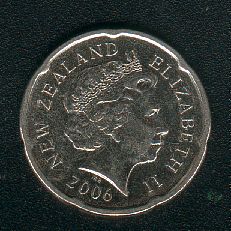
Yesterday I was picking through my change for quarters and took a closer look at the presumed Canadian nickel. It was no such thing. Instead, somehow or other I’d gotten a New Zealand 20-cent piece in change. I’d never seen one before, not even in Australia, where surely some kiwi coins must end up. A coin’s trip from New Zealand to the U.S. isn’t inconceivable, but it sure is unusual.

The Queen, of course, is on the obverse (seen below at 150 percent). Nothing odd in that. (Unless Yuriko sees the coin. That Elizabeth is the sovereign of New Zealand she finds a little strange.)
The reverse, on the other hand, has something no other coin has: Pukaki. My scan hardly does it justice.
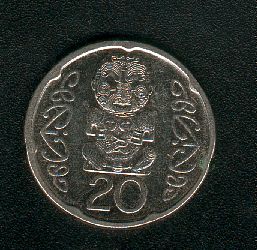
The Reserve Bank of New Zealand says: “New Zealand’s 20 cent coins issued since 1990 feature a remarkable Maori carving, as illustrated above. This is no generic image. Rather it is a reproduction of a specific carving of an 18th century Maori warrior leader called Pukaki, who was a Rangatira (Chief) of the Ngati Whakaue iwi of Te Arawa in the Rotorua district. The carving was made in 1836 and today it can be viewed in the entrance of the Rotorua District Council…

“Pukaki came to the attention of the Reserve Bank as a result of the 1984-87 Te Maori exhibition and the use of Pukaki’s image on a particularly striking Maori Language Commission publicity poster. At the time the Reserve Bank was looking for a new image to put on the 20 cent coin, given that the kiwi was being moved to the new $1 coin. The first Pukaki 20 cent coins were issued in 1990. More recently, a gold $10 collectors’ coin featuring Pukaki has been minted.”

The entire article about Pukaki is here. Also interesting to note: the coin is plated steel, which is more common than I realized, and has even been suggested for U.S. 1 cent and 5 cent coins. (And even though advocated by former Rep. Ron Paul in the same breath he hyperventilated about the boogeyman Fed, it seemed to be a serious proposal.)

The NZ 20c edge is also novel: a treatment called Spanish flower, which is seven indents evenly spaced. Why “Spanish” flower? I wondered. Wiki to the rescue (almost): “The 50 Spanish peseta coin issued between 1990 and 2000 were the first [citation needed]  that featured the Spanish flower.” Presumably for benefit of the blind, though it also makes differentiating the coins easier for the sighted.

Anyway, the NZ 20c piece a nice little design. And who knows that the United States minted a 20c piece, once upon a time? Not for long, though. It was one of the great coinage failures of the ’70s. The 1870s, that is.

U.S. Coin Values speculates that “perhaps the coin might have gained a foothold in American society had it not been so easily confused with the quarter of that era.” In other words, it suffered the Susan B. Anthony effect long before that coin ever did.
Sisters in Death

I know how hard it can be to produce good copy on a regular basis, but you know a story with a head like the following – from the LA Times’ TV critic, which popped up on Google News today – is going to be as ridiculous as you’d think: “Margaret Thatcher, Annette Funicello and the spectrum of sisterhood.”

The first graph confirms the fatuousness: “… a strange day took from us two women who helped a generation redefine what it meant to be a woman… as disparate as their careers and legacies were, they each contributed to shifting ideals of femininity and a modern woman’s movement often as dismayed by its successes as its failure.”

Oh, yeah? I remember when Groucho Marx and Elvis Presley shuffled off this mortal coil at about the same time. And I thought, wow, they each contributed to the shifting ideas of what it means to be a man in the modern world.

This is just too easy to mock. The process of putting this story together seems to have been the following: two famous women just died. Let’s put them together in death! Because they were both women who were, you know, kinda different from each other. Compare but especially contrast. By golly, women aren’t all the same! You can destroy a lot of patriarchal privilege with that kind of heavy insight.

Not that Maggie and Annette had nothing in common. Both were female, both spoke English, both had once been in the public eye, and both happened to die at roughly the same time. But can you imagine Prime Minister Thatcher sporting mouse ears or in a beach movie? (Go ahead, try.) Or Mouseketeer Funicello busting a coal miners’ strike or ordering the Royal Navy to clean Argentina’s clock?

Another story popped up today that I found much more interesting: “Nervous Europe Drives Demand for Dollars,” which was in The Financial Times. It notes: “The amount of dollar cash in circulation has risen by 42 percent in the last five years, with a main reason being demand from Europe, according to a top U.S. Federal Reserve official… The surge in demand for U.S. cash suggests that the world is worried about the safety of its banks and the future of the euro — but has no fear of inflation or default in the U.S.”

A little bit nuts, when you think about it. The euro’s dodgy, for sure. So what do Russians et al. decide to hoard instead? U.S. paper. (A special linen-cotton blend, actually). $100 Federal Reserve notes, to be exact. I guess it really is all about the Benjamins. Talk about talismanic power. I’m hardly a gold-standard crank, but last time I heard, Federal Reserve notes offer zero percent return, which is even lousier than a savings account, meaning that their value is slowly eroding.

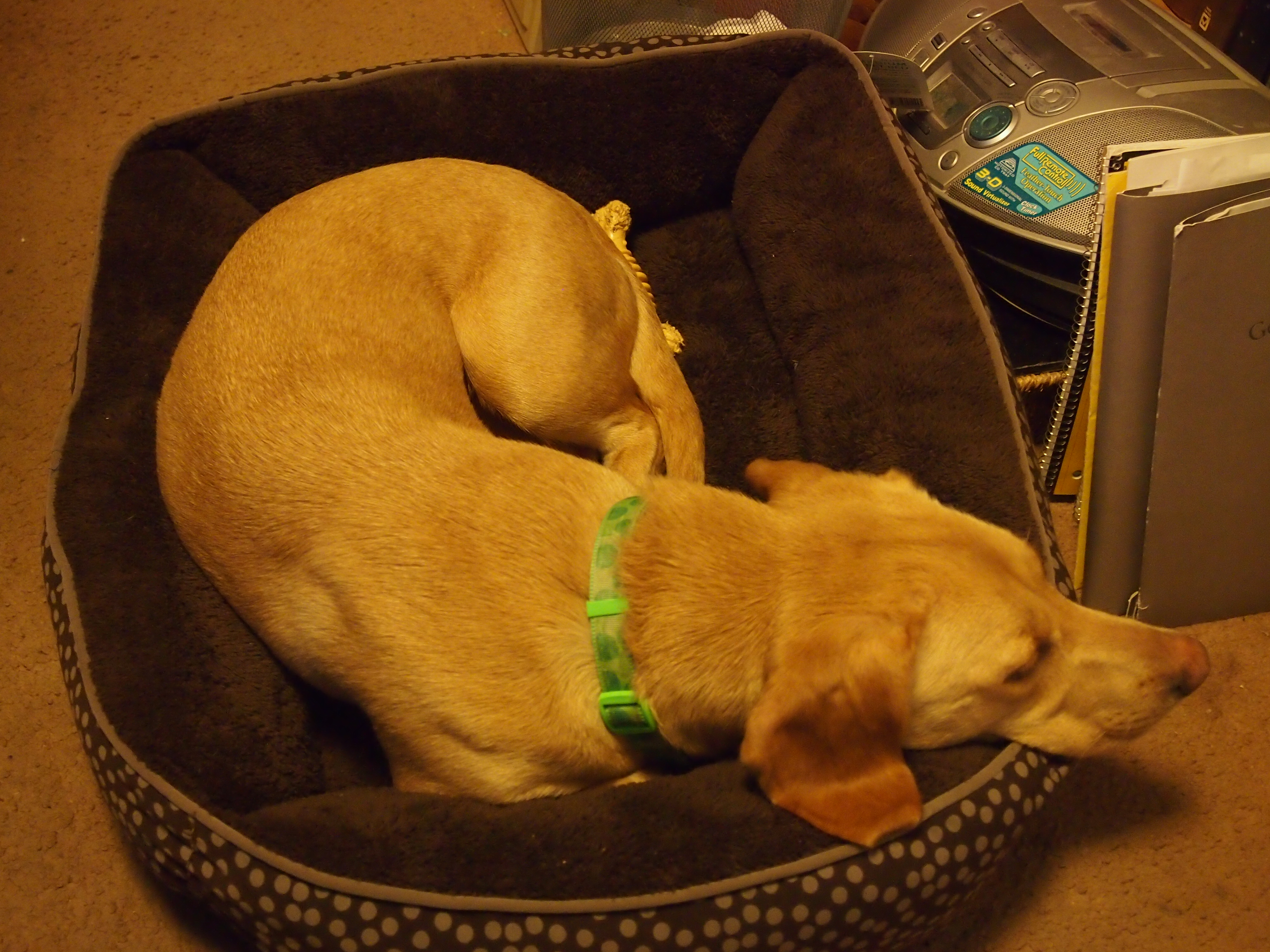
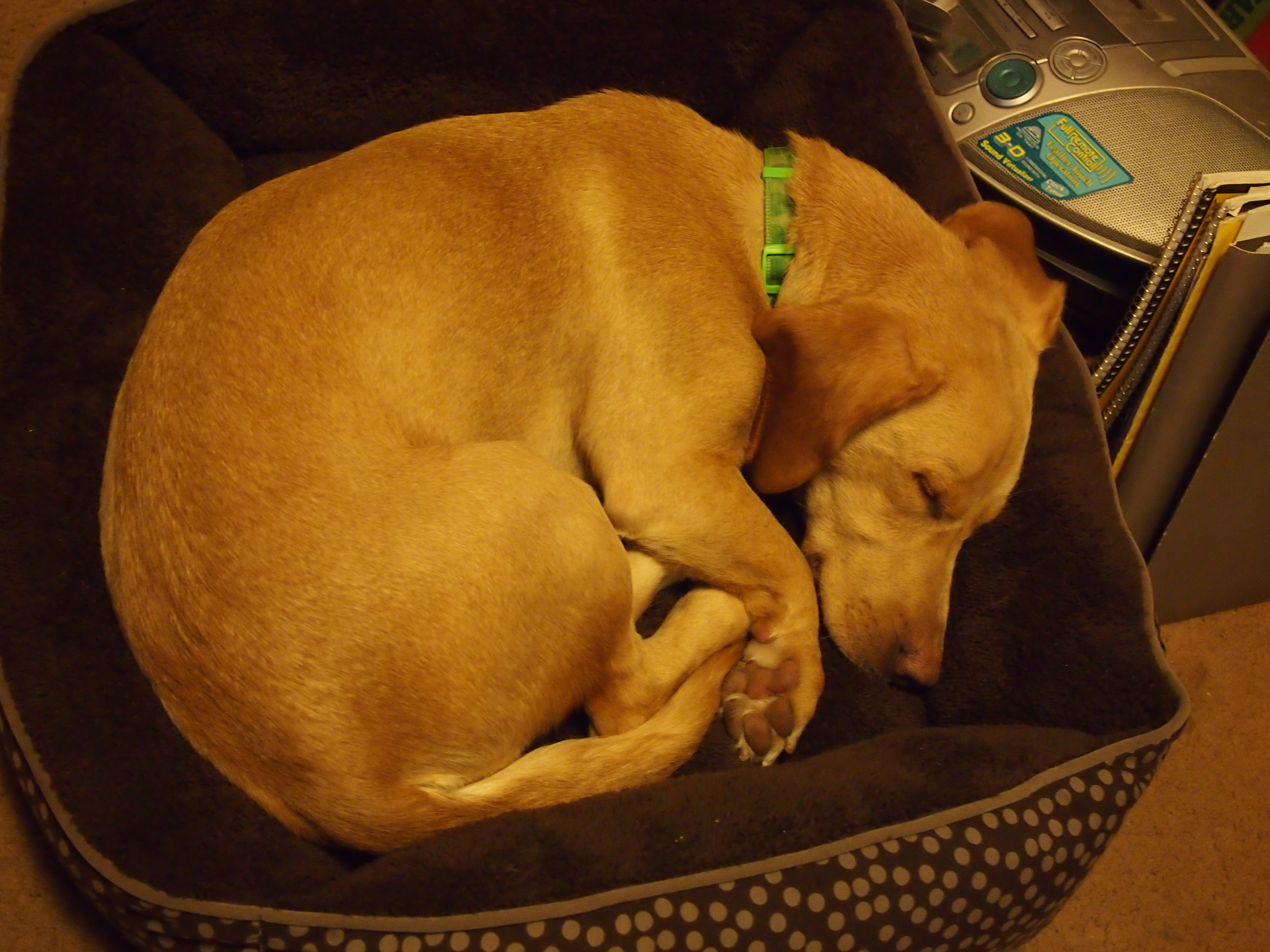
Dog Day

Something new in our house, as of today.

We got her from a rescue organization. She’s a three-and-some-year-old Lab-Bassett mix, they said, and already had a name, though not necessarily one I would have picked for a dog. Since she responds to it, we decided to keep it. In the few hours she’s been around the house, I’ve also called her “dog” and “hound” and “animal.” Not too worry, all are affectionate nicknames.

It’s early still, but my impression is that this dog likes to do what dogs ought to do, namely this:

I’m sure we’ll be taking more pictures, and probably some action shots, maybe as soon as a squirrel shows up in the back yard. I expect her to respond in a dog-like way to that, too.

SubTropolis

Early April 1999.

Just returned from Kansas City, which has its interests, but I was too occupied to see much of it, except for a “tour” given by an office developer. He knew the market well, and as you’d imagine, liked to talk.

We visited SubTropolis at one point, which is an underground warehouse and distribution complex, created from a former limestone mine, which was dug straight into the side of a KC hill. The former mine space now houses all kinds of goods, plus some thousands of people who work there. One of their big tenants is the post office, which stores millions of stamps there.

Postscript 2013: I toured a fair amount of commercial real estate in 1999, so this description sounds blase, but actually I was taken with SubTropolis, as I often am with places I’ve never seen before.

More recently, Steve Nadis wrote in The Atlantic: “With 5 million square feet of leased warehouse, light-industry, and office space, and a network of more than two miles of rail lines and six miles of roads, SubTropolis is the world’s largest underground business complex… [and not the only one in KC]. More than 10 percent of the industrial space in greater Kansas City is located ‘down under,’ covering about 25 million square feet—an area bigger than the downtown business district. Mining limestone for use in roadway construction and agriculture continues, with additional acreage carved out each year.”

View From the Brackenridge Eagle

Last time we were in San Antonio, we rode the Brackenridge Eagle miniature train, which makes a circuit through the park of the same name. The Sunken Gardens is near the main depot and the ride isn’t that expensive, so on impulse we went again. Ann insisted on borrowing my camera and documenting the ride. She took some good pictures.

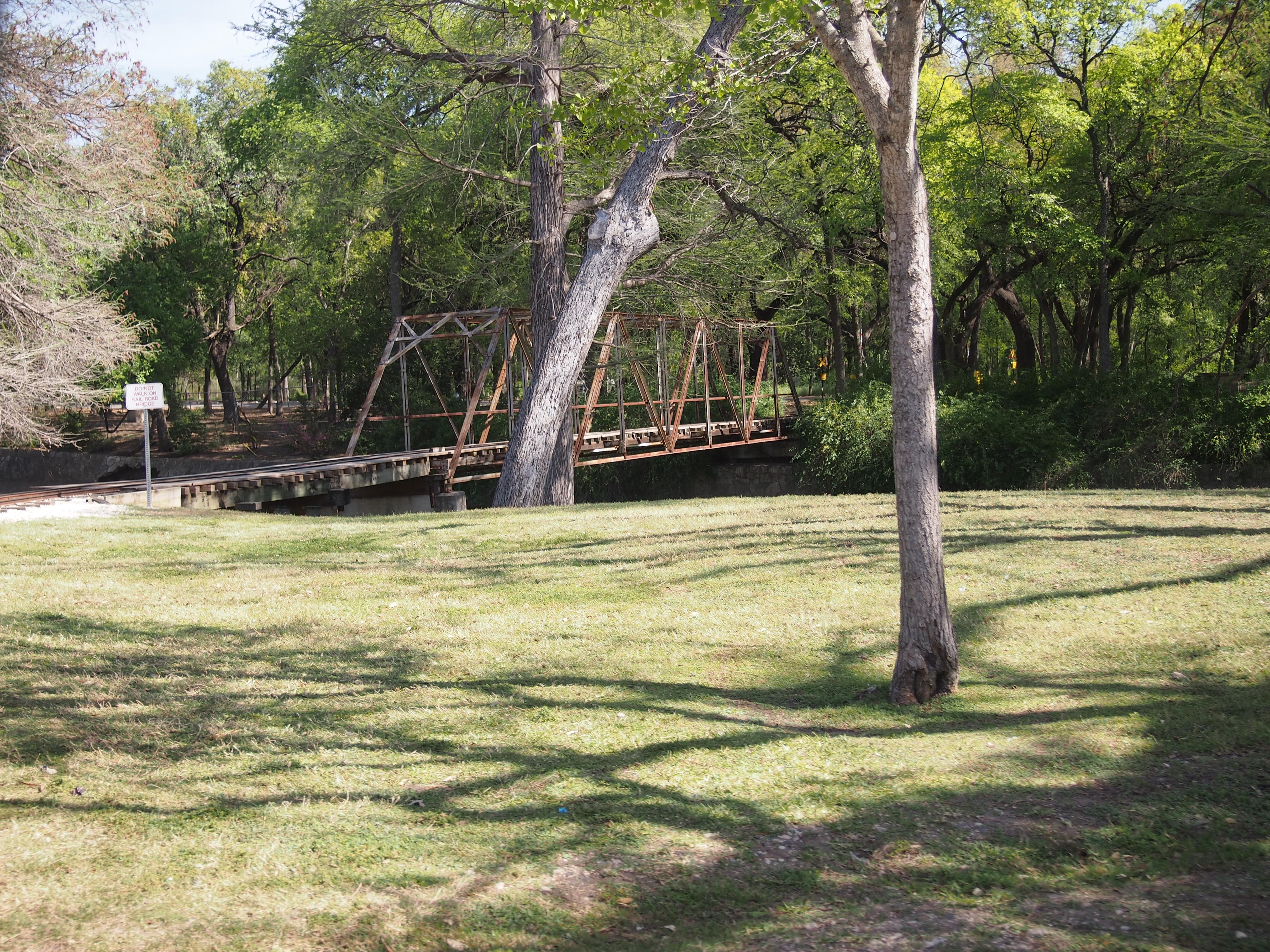
This a (miniature) RR bridge across the San Antonio River.

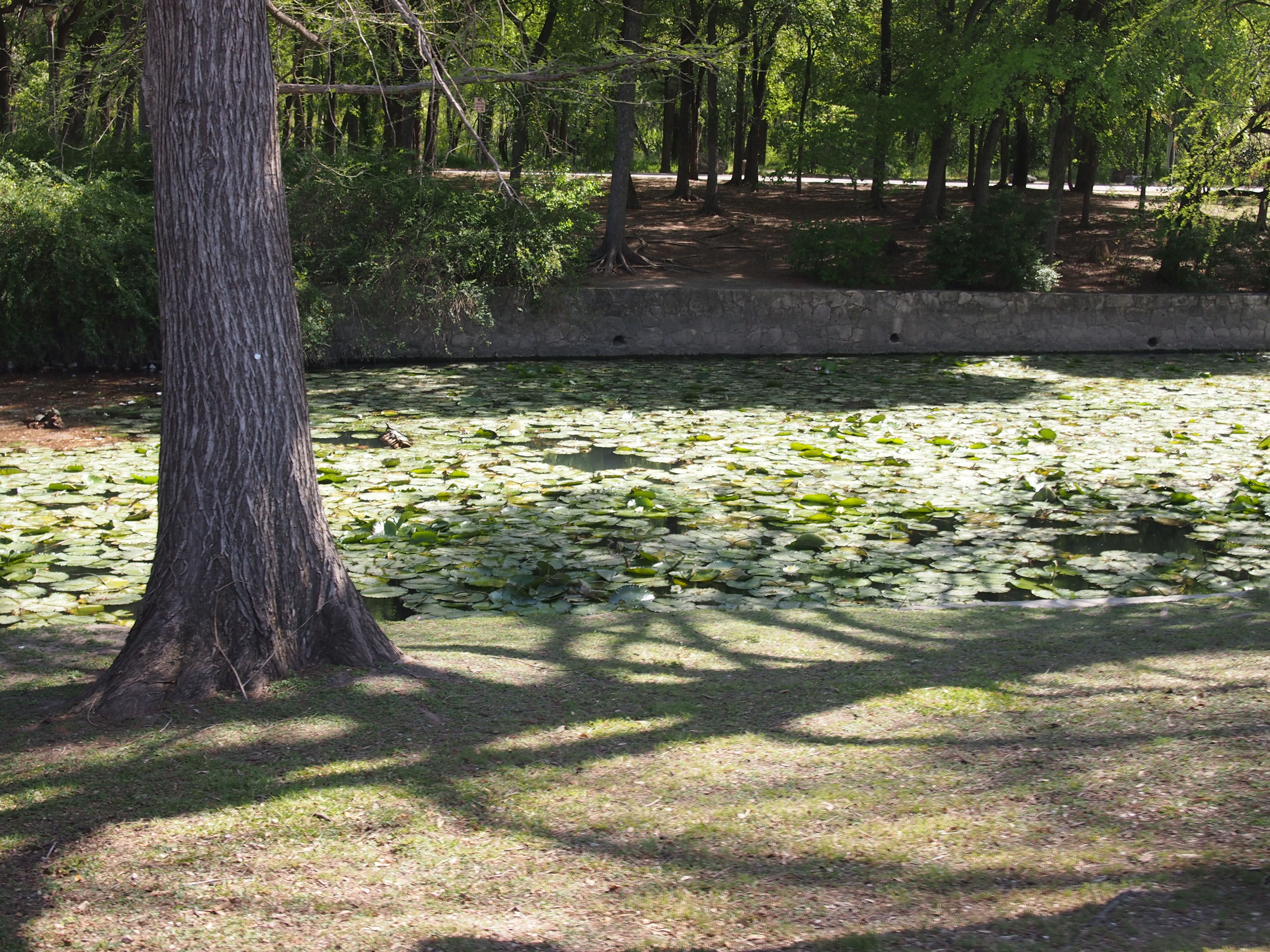
And the river itself, in its lily pad glory. This point isn’t very far at all from the headwaters of the river, which accounts for its small size.

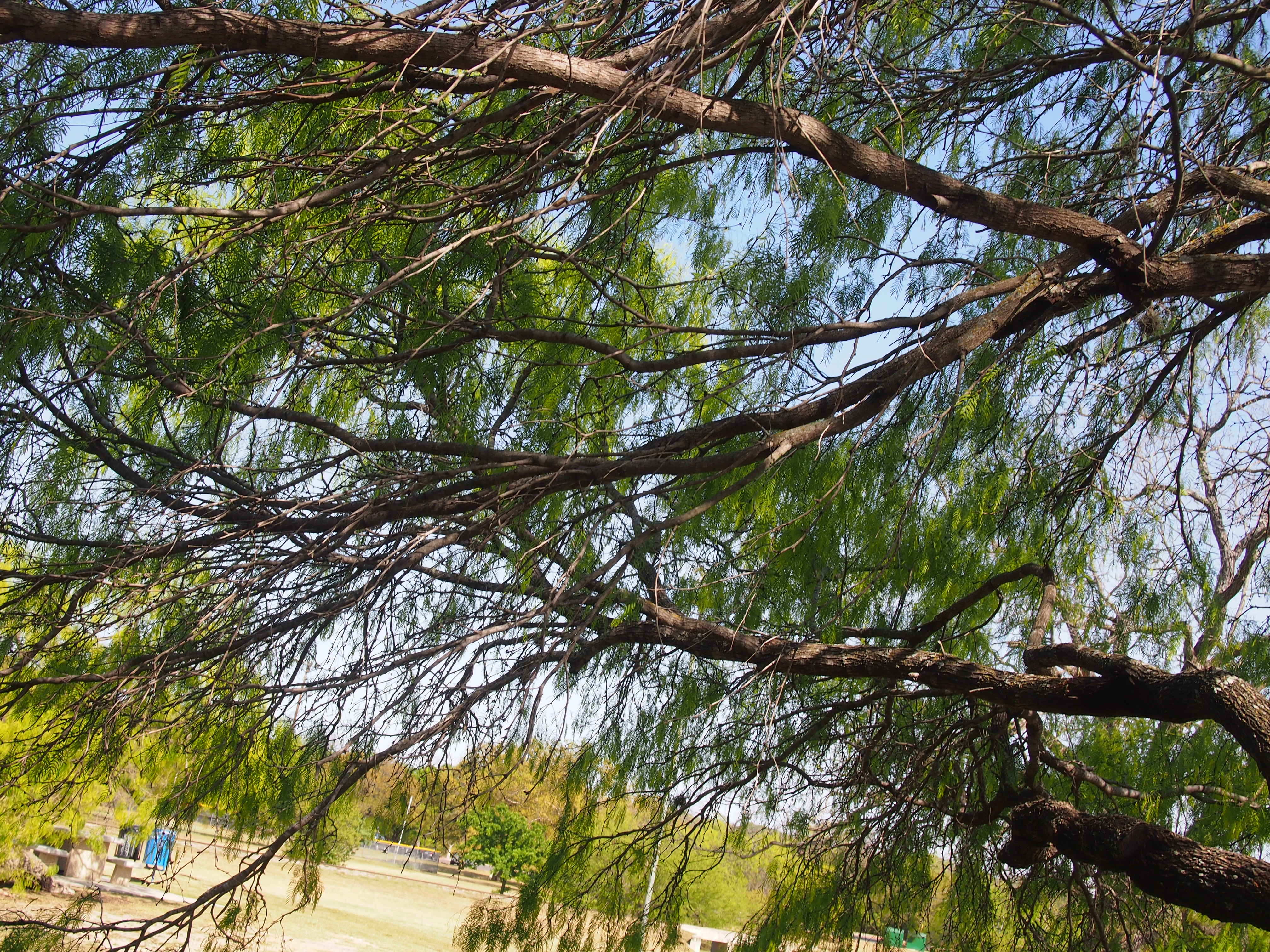
The unmistakeable branches of a mesquite tree near the tracks. The line brushes up against vegetation fairly close in some spots, and the requirement is to keep your hands (and head) inside the train. It’s a good idea.

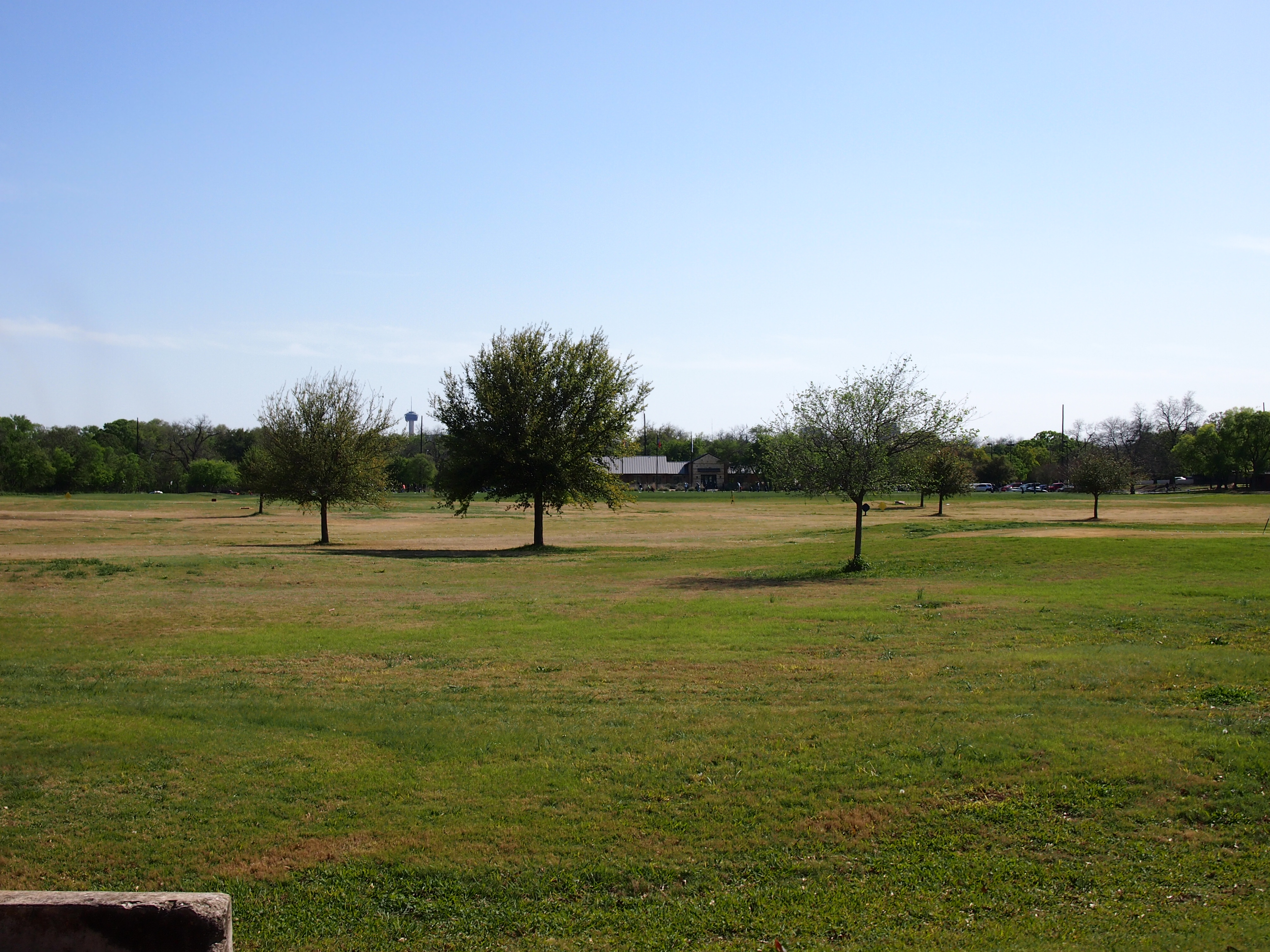
Not the most picturesque landscape, but note the Tower of the Americas in the background.

This train’s too good just for kids.

The Sunken Gardens

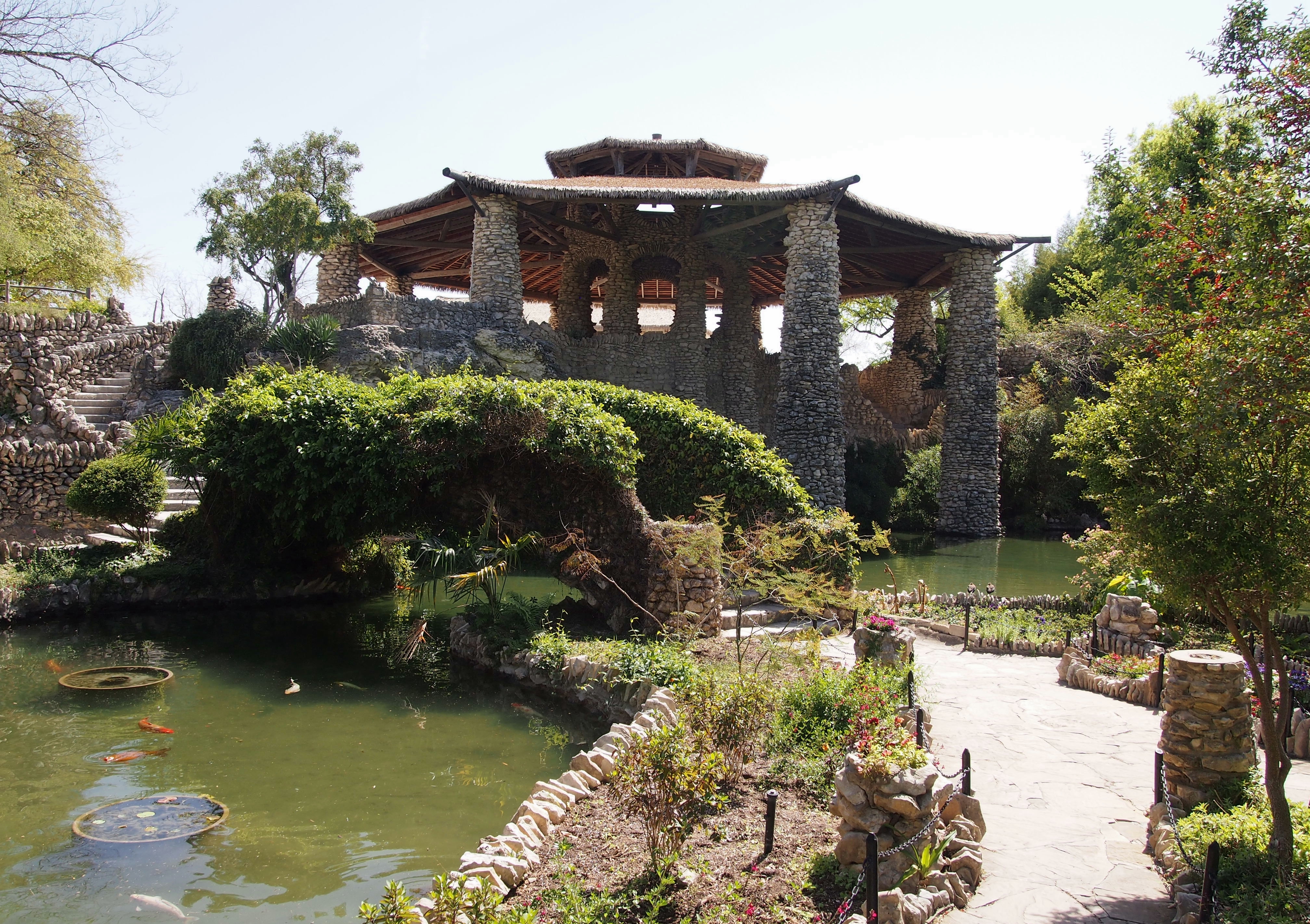
I went with my brother and children to the Sunken Gardens in San Antonio last week. It isn’t officially called that, but rather the Japanese Tea Gardens. More about that in a moment, but under any name it’s a lovely place, and a fine example of land re-use, since long ago it was a quarry.

A view from the “sunken” portion of the gardens, looking up at the pavilion, whose columns are remarkable stacks of stone, a bit like manmade hoodoos.

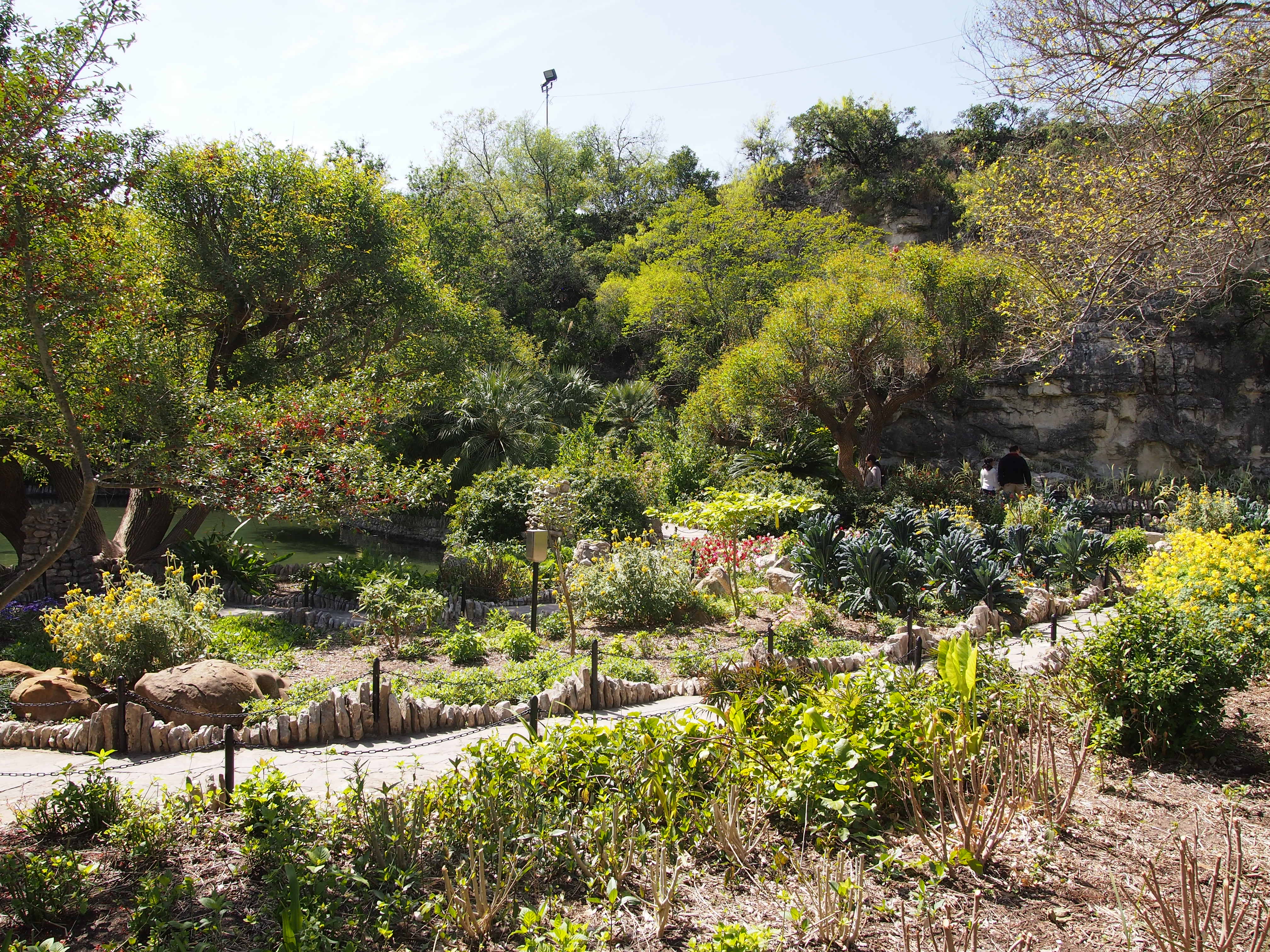
Coming from the pre-spring landscapes of the North, we appreciated the spring lushness of the place. Of all of San Antonio, actually.

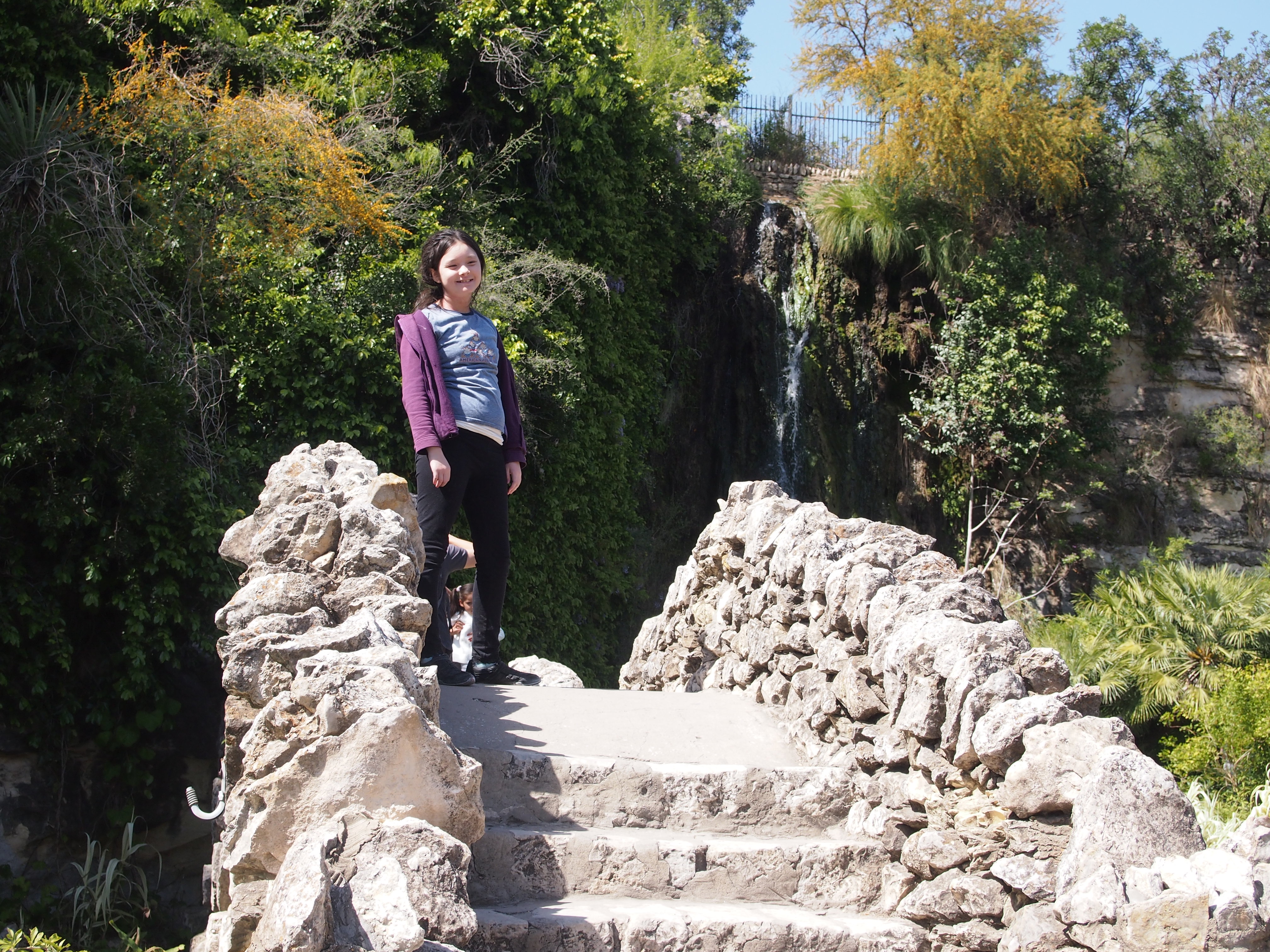
At its web site, the city of San Antonio briefly tells the story of the Sunken Gardens, which is part of the larger story of Brackenridge Park, crown jewel of San Antonio municipal parks. “The restored garden features a lush year-round garden and a floral display with shaded walkways, stone bridges, a 60-foot waterfall and ponds filled with koi,” the site accurately says.

I call it the Sunken Gardens because that’s what everyone called when I was growing up, and maybe people still call it that, despite the official renaming. There’s nothing wrong with the official name, since it honors the pre-WWII history of the garden, but I see no reason to change.

This woman took a better selection of pictures of the garden than I had the patience to make.

San Antonio Missions National Historical Park

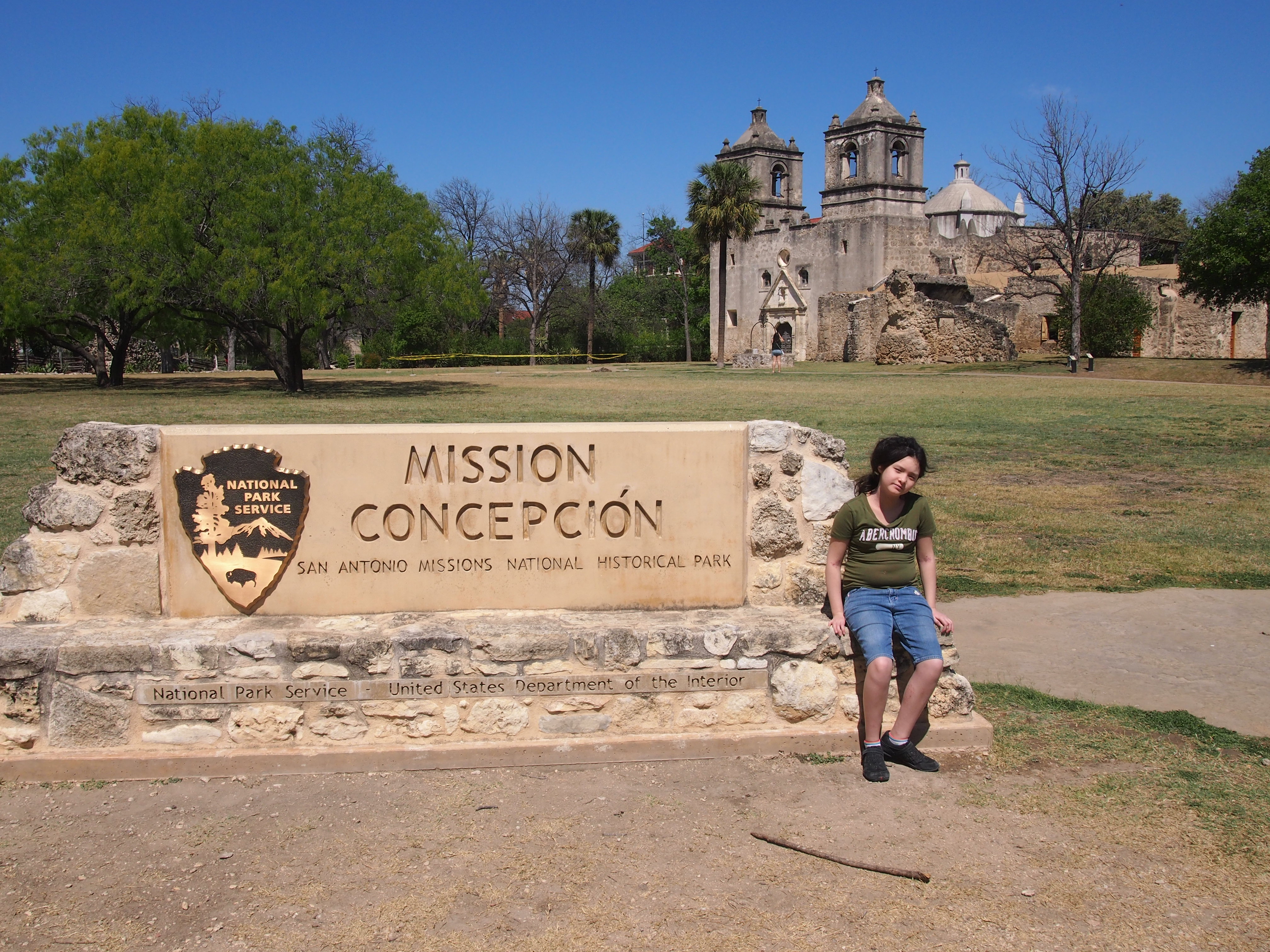
People remember the Alamo. Mission Concepcion, not so much.

I hadn’t visited any of the San Antonio missions — formally San Antonio Missions National Historical Park, est. 1978 — in about 20 years, when I took Yuriko to see them. During our spring break, it was time to take my children.

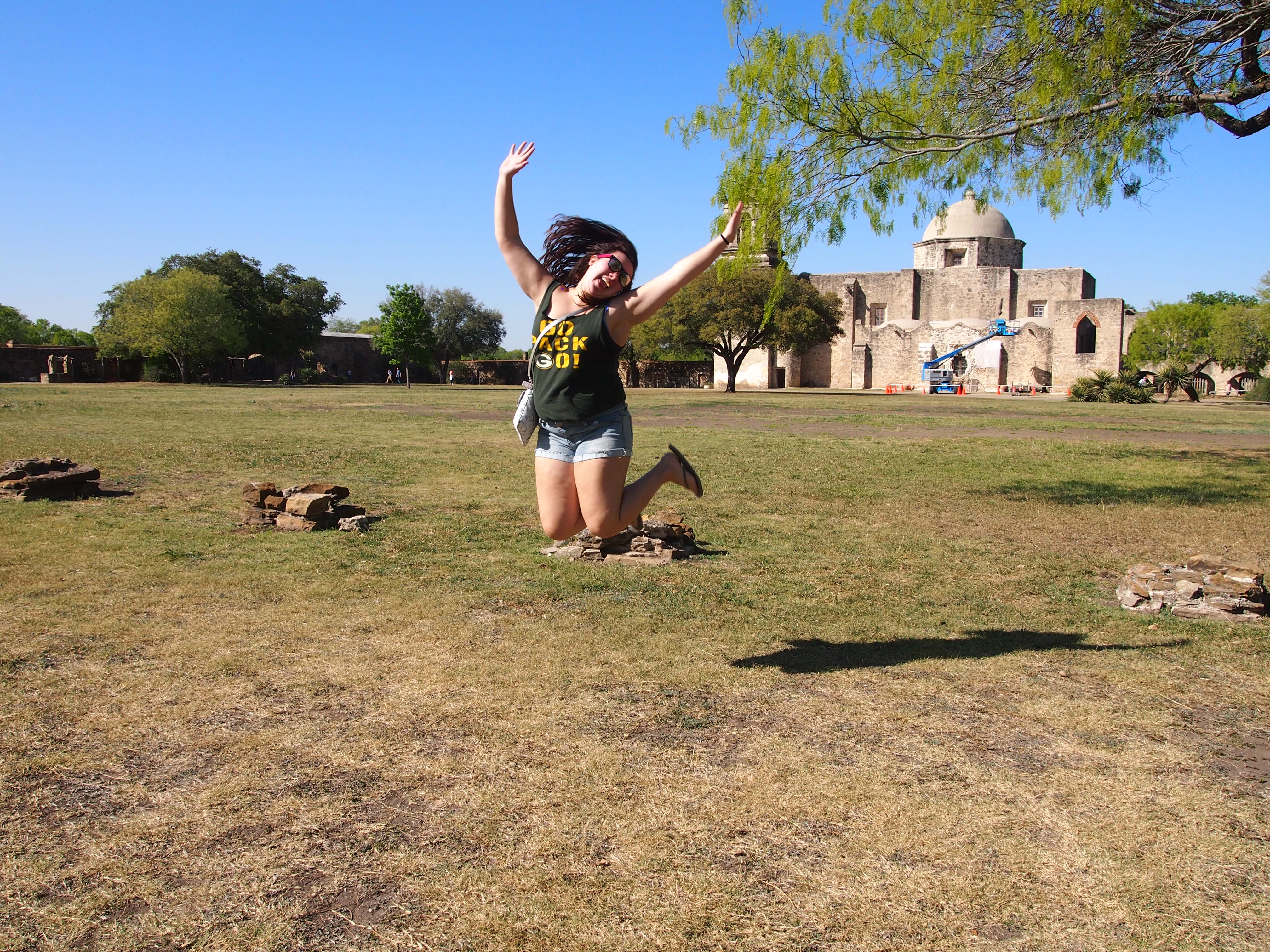
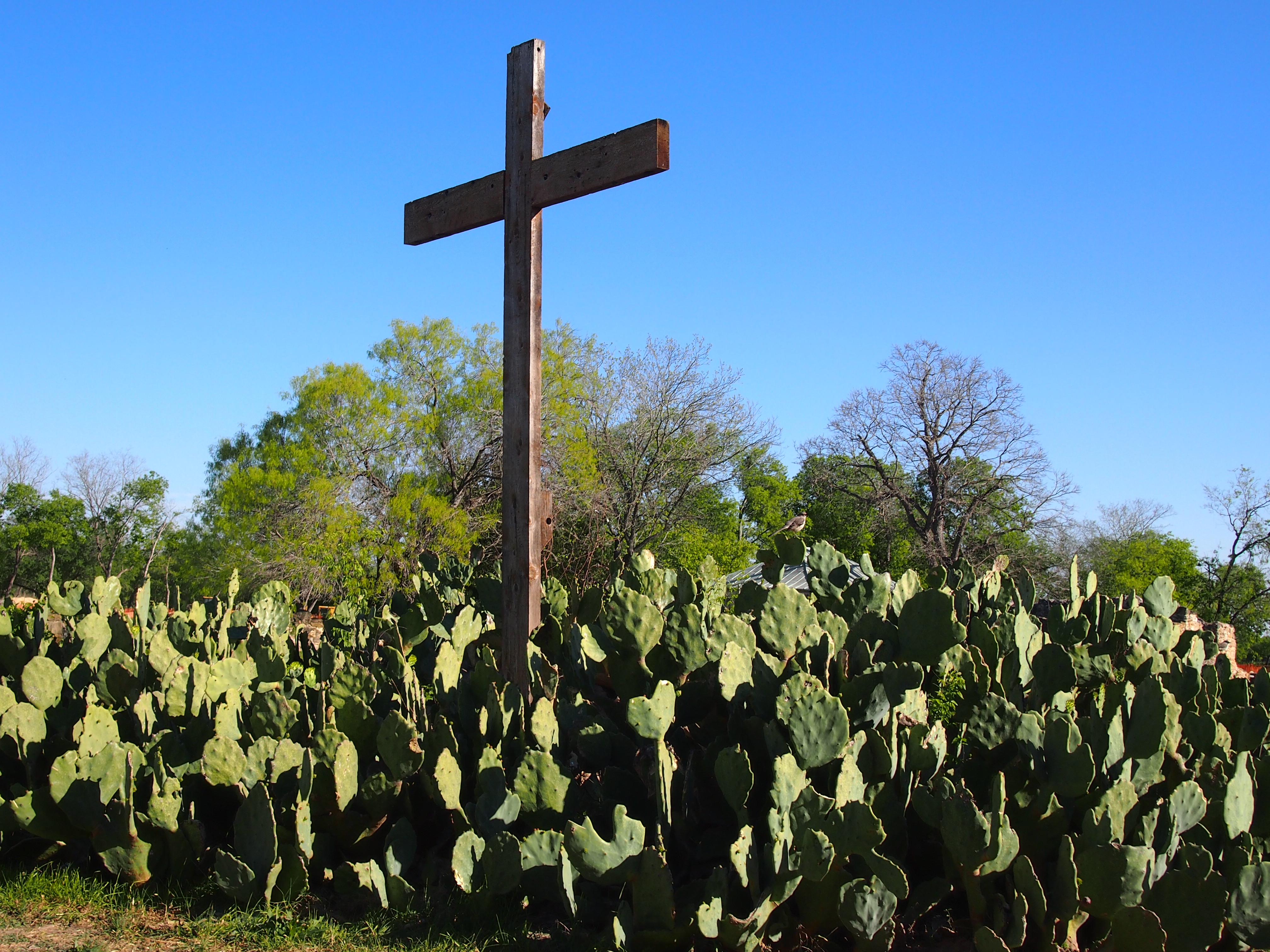
Lilly seemed positively excited about Mission San Jose. Well, maybe. We also made it to Mission San Juan, which was an interesting enough structure, but not as interesting as the crucifix in the cactus patch.

On the other side of the cross, we noticed straps for arms and a place to rest one’s feet built into it. We figured that in a few days — we were visiting not long before Good Friday — someone would be on the cross.

San Antonio ’13

We, that is Lilly, Ann and I, went to San Antonio last week to visit my mother, both brothers, a nephew, an aunt, and a cousin — from my point of view. For Lilly and Ann, they got to visit their grandmother, two uncles, a cousin, their great aunt, and another cousin.

We also saw a few places. Not much new for me, though including some spots I hadn’t seen in years, but new places for them. For them, San Antonio will always be, I hope, that interesting city where their dad grew up.

More about all that later. For now, though, prayers for my mother, their grandmother, who is recovering from a fall last Friday — a few hours after we left — that broke her hip. She had surgery over the weekend, and is still in the hospital.

R.I.P., Eleanore Triplett, whom we learned had passed away in Dallas while we were in San Antonio. She was my late sister-in-law Deb’s mother, Jay’s mother-in-law, and my nephews’ grandmother.

Spring Break

Had a weird interlude recently during which this entire blog vanished. Found some 404s and one of those ads offering the domain name for sale. That was unnerving. Then it came back, as if nothing had happened. (And what happened? I like to imagine some guy tripping over a cord at a server farm on Malta.) For all its faults in the end, Blogger never did that. Guess the lesson is, don’t run your mouth for years and years at any one site.

And do some backup. Also: if you’re look for this site and it’s gone, it isn’t because I pulled the plug.

But enough of the mechanics of Internet posting. That’s like telling someone else about your dreams: dull, unless they’re in them, and I’m not sure how someone else would be involved in my posting.

This year, spring break for the school-aged among us coincides with Holy Week, and I have much to do so that I don’t have to do as much as usual next week. Back again around April 1 — Easter Monday, which we ought to have as a holiday, as many other countries do. We could secularize the name, if that would make it more palatable.

Longitude John

I’ve been reading Longitude: The True Story of a Lone Genius Who Solved the Greatest Scientific Problem of His Time by Dava Sobel (1995), which is about John Harrison, solver of the Longitude Problem, and I came across this passage: “Sometime around 1720… Sir Charles Pelham hired [Harrison] to build a tower clock above his new stable at the manor house in Brocklesby Park.

“The clock tower that Harrison completed about 1722 still tells time in Brocklesby Park. It has been running continuously for more than 270 years, except for a brief period in 1884 when workers stopped it for refurbishing.”

Wow. I had to find out if that was still the case, and it seems that it is. That’s a clock tower I would go look at, if I were in the neighborhood. I saw the Harrison chronometers at the Maritime Museum in Greenwich before I had much inkling of what they were or what he did, but finding out things sometimes works that way.

Naturally, specialists are busy revising the legend of John Harrison, including this fellow, who asserts that the clockmaker might have farmed out some of his brass parts. Could well be, though I’m in no position to pass judgment on the matter. But even if it were true, that hardly takes away from Harrison’s achievement.

There’s even a song about John Harrison. That’s what we need more of, songs about generally obscure but remarkably important people, places or events.