Central Park Ramble ’25 (Strawberry Fields For Now)

Kids came in some numbers for Halloween here in the northwest suburbs yesterday, but I didn’t keep an exact count this year. The day was cool but not cold, without a hint of rain, so that might have encouraged turnout, like for voting. One time a passel of kids showed up, maybe a dozen or so, all under 10, with a smaller passel of parents off near the sidewalk.

We were giving away full-sized candy bars until they ran out, and the passel squealed with delight at receiving the various Hersey products. Even now, the costumes are a blur, maybe because I didn’t recognize a lot of the characters. Ones that I might have known weren’t familiar either. I asked the parents of a very small boy — ah, first-timers — what he was supposed to be. His shirt pattern reminded me of TMNT, but it was Hulk, they told me. “Hulk smash,” they said. “Hulk smash, all right,” I agreed.

All of the Halloween traffic, except for a handful of older kids, came before dark. My not-so-inner curmudgeon reacts: in my day, we trick-or-treated after dark, risking bodily injury on the streets, and we liked it.

But I am glad to report that the older kids – junior high and even high school – are far fewer than they were, say, 20 years ago. So it’s back to the way it should be. For older people, there are always such seasonal events as the Greenwich Village Halloween Parade. To this day, the ’06 iteration of that parade remains the only time I’ve encountered the band KISS live – they were the grand marshals (RIP, Ace Frehley). We also encountered Space Ghost then, or at least a fellow who was adamant about his Space Ghost identity.

Near Central Park on Fifth Ave. is 1 East 57th Street. We walked by last month.
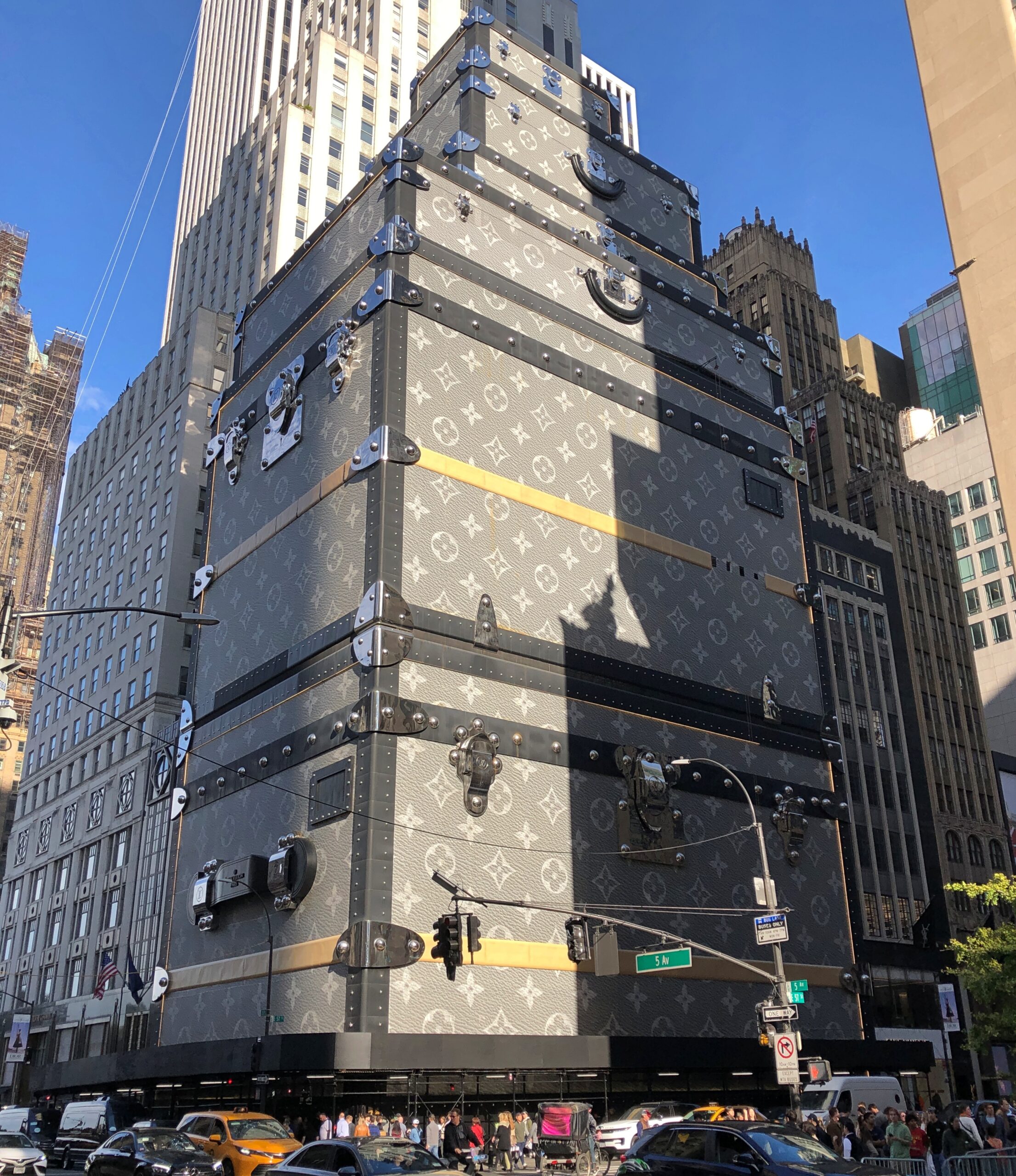
Louis V 2025

A few years ago, luxe retailer LVMH Moët Hennessy Louis Vuitton added a faux facade to its NY flagship store there on the avenue, one that evokes its signature luggage trunks in a highly visible way. Redevelopment plans for the building behind the trunks were unveiled not long ago, so I suspect the trunk-appearance doesn’t have much longer to look down on Billionaire’s Row and its strato-priced residential properties (whose high rents and sale prices don’t necessarily guarantee high-quality construction, apparently).

As we neared Central Park, we spent a little time at Augustus Saint-Gaudens’ statue of William Tecumseh Sherman (dedicated 1903) in Grand Army Plaza. Life’s too short not to look at some Saint-Gaudens from time to time.
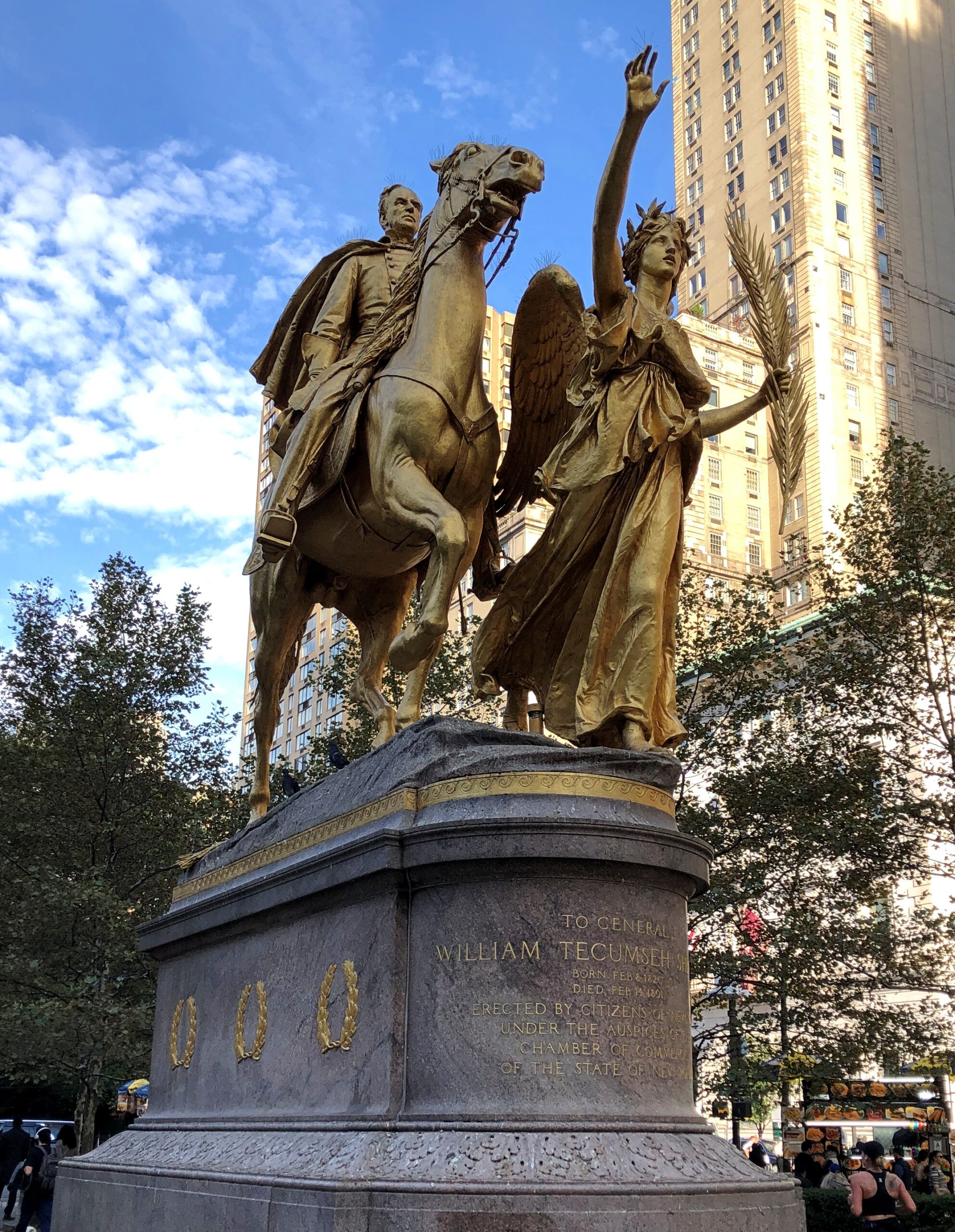
Grand Army Plaza

Not far away, something a little newer.
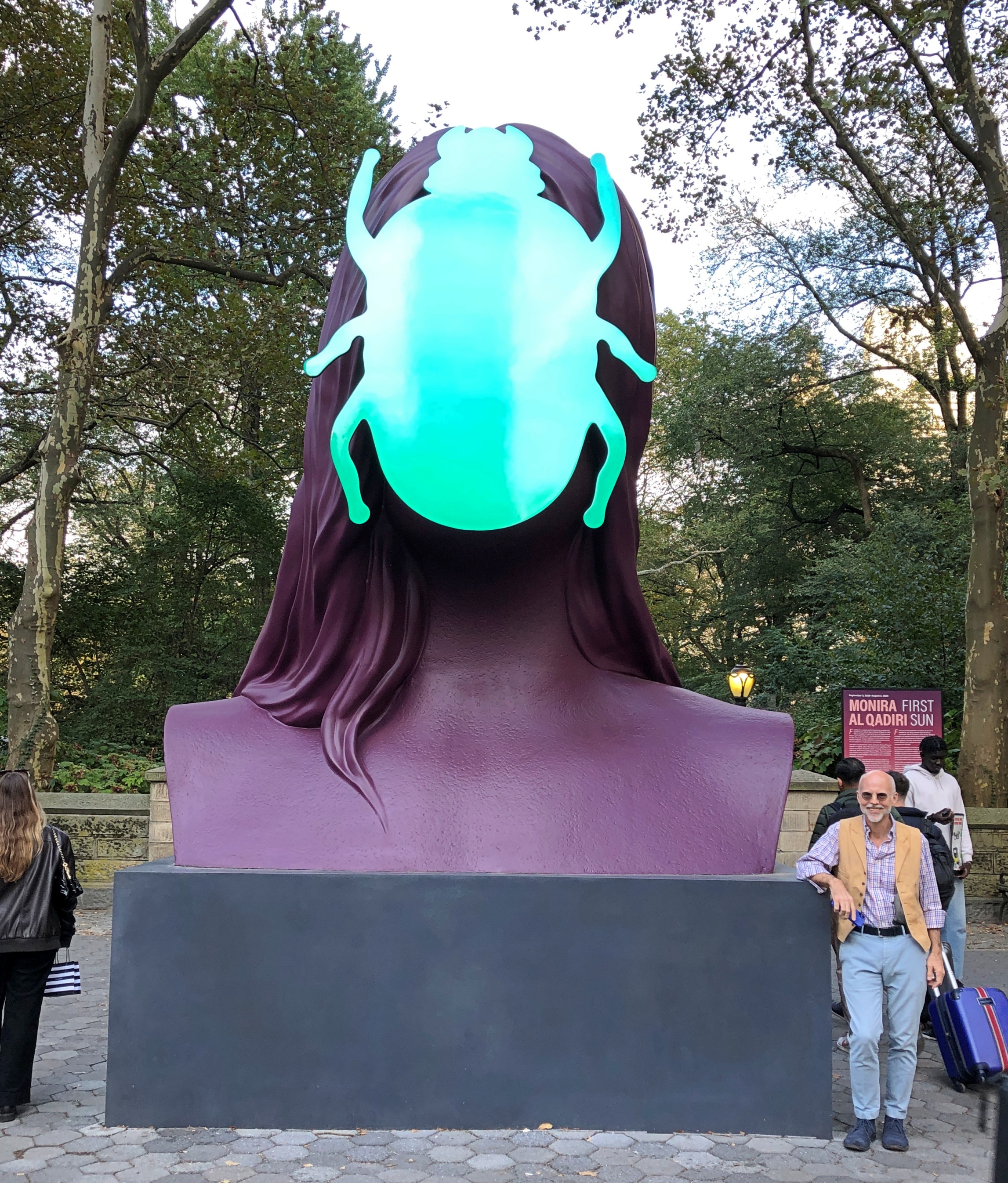
“First Sun,” a painted aluminum sculpture of a human-scarab figure by Senegalese artist Monira Al Qadiri, and slated to be in place until the end of next summer.


“First Sun,” a painted aluminum sculpture of a human-scarab figure by Senegalese artist Monira Al Qadiri, and slated to be in place until the end of next summer.

Visible from near the statues is the storied Plaza Hotel and an Apple Store, which is open 24 hours, Google Maps tells me. Storied in a different way.

I’m glad the Plaza acknowledges its fictional role in The Great Gatsby by featuring a lavish-beyond-the-dreams of Croesus Gatsby Suite. Of course. A smart hotel operator isn’t going to waste an opportunity like that. In this case, Fairmont Hotels and Resorts, a Canadian company, managing for owner Katara Hospitality – the large hotelier owned by the Qatari government. In the 21st century so far, the Plaza has been owned by an Israeli company and then an Indian one before Katara bought it. There’s something oddly American about an ownership trajectory like that.

We – Robert, Geof, Yuriko and I – charted ourselves a simple walking path through some of the southern reaches of Central Park. Manhattanites and visitors to the borough were out in Saturday-afternoon force. Saturday, in the park/I think it was the 18th of October. No, that doesn’t scan. A fair number of pitch-a-blanket cap and souvenir salesmen were out, too, but not nearly as many buskers as a great city park like Central Park should attract.
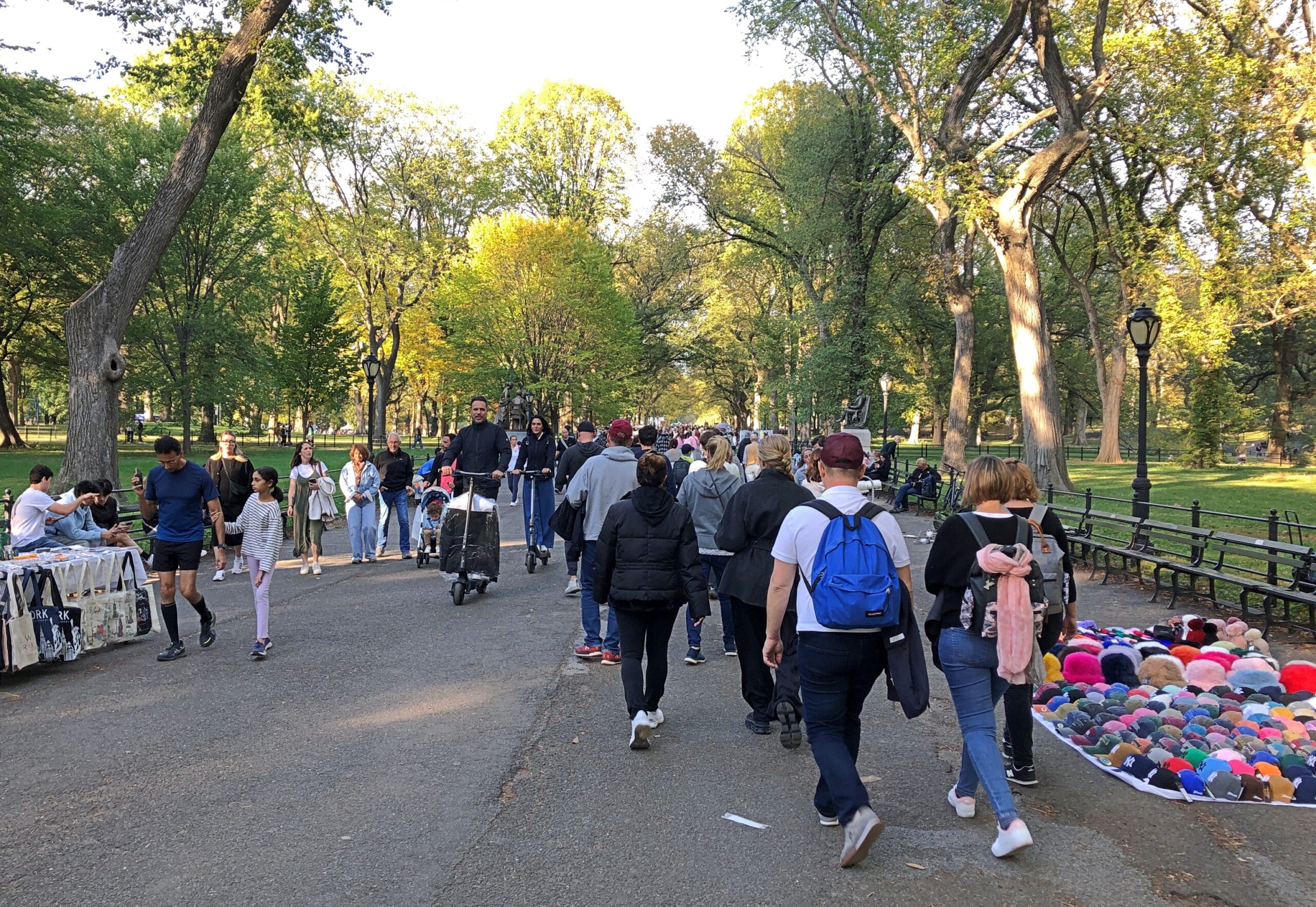
Central Park Oct 2025

There’s an editorial right there: why America needs more buskers, and why some American cities need to chill when it comes to suppressing buskers. Europeans might not be right about everything, but about allowing buskers? Yes.

The leaves weren’t at peak just yet, with the greens still hanging on more than not. I don’t remember which visit to Central Park it was, but one time I wandered the park during peak coloration, whipped into even greater yellow-and-red glory by a brisk October wind. Temporary clouds of leaves came and went, even as the wind shook more leaves from their branches. Color, but also motion.

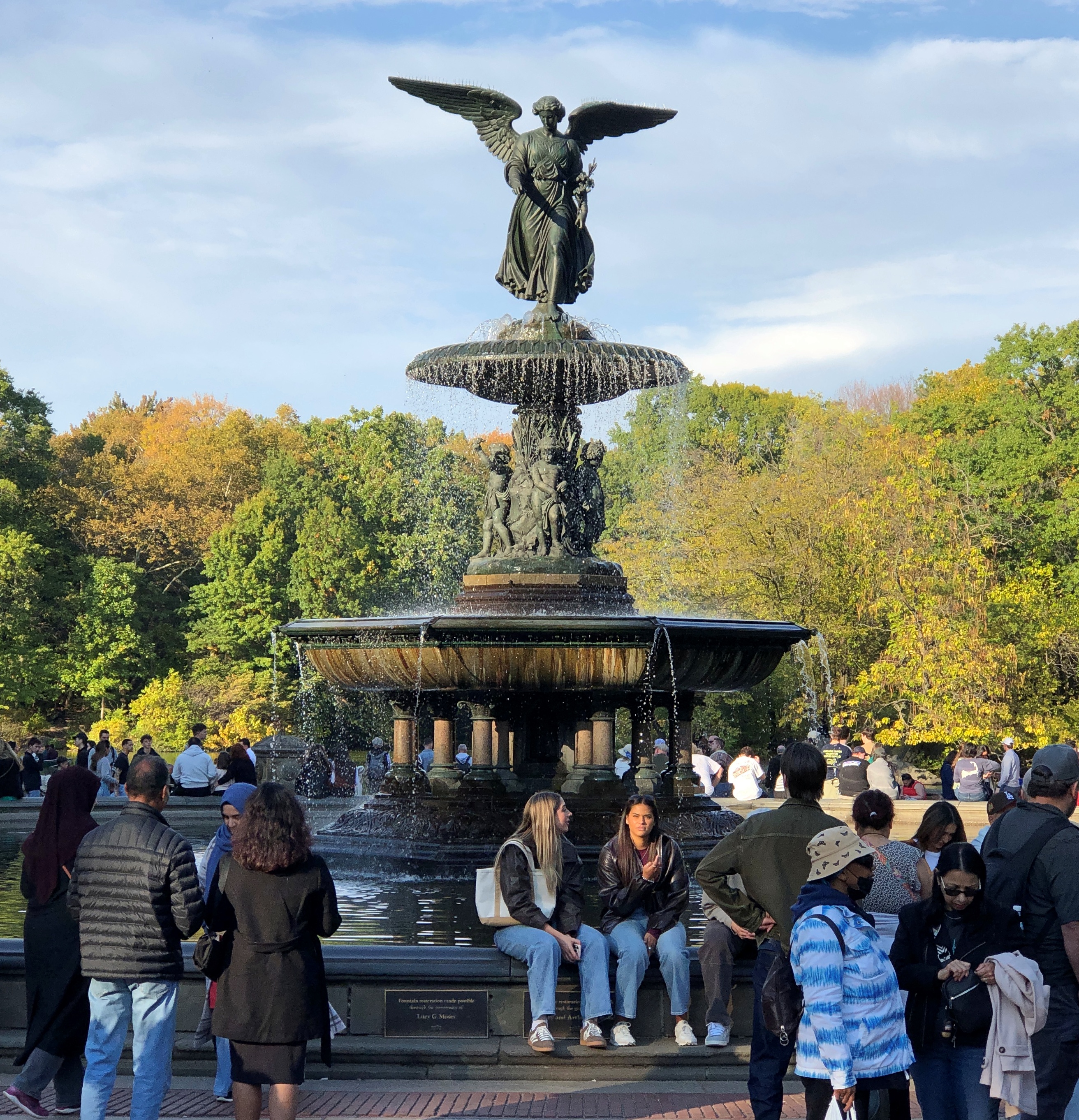
Eventually, we came to The Lake by way of Bethesda Terrace and Fountain.
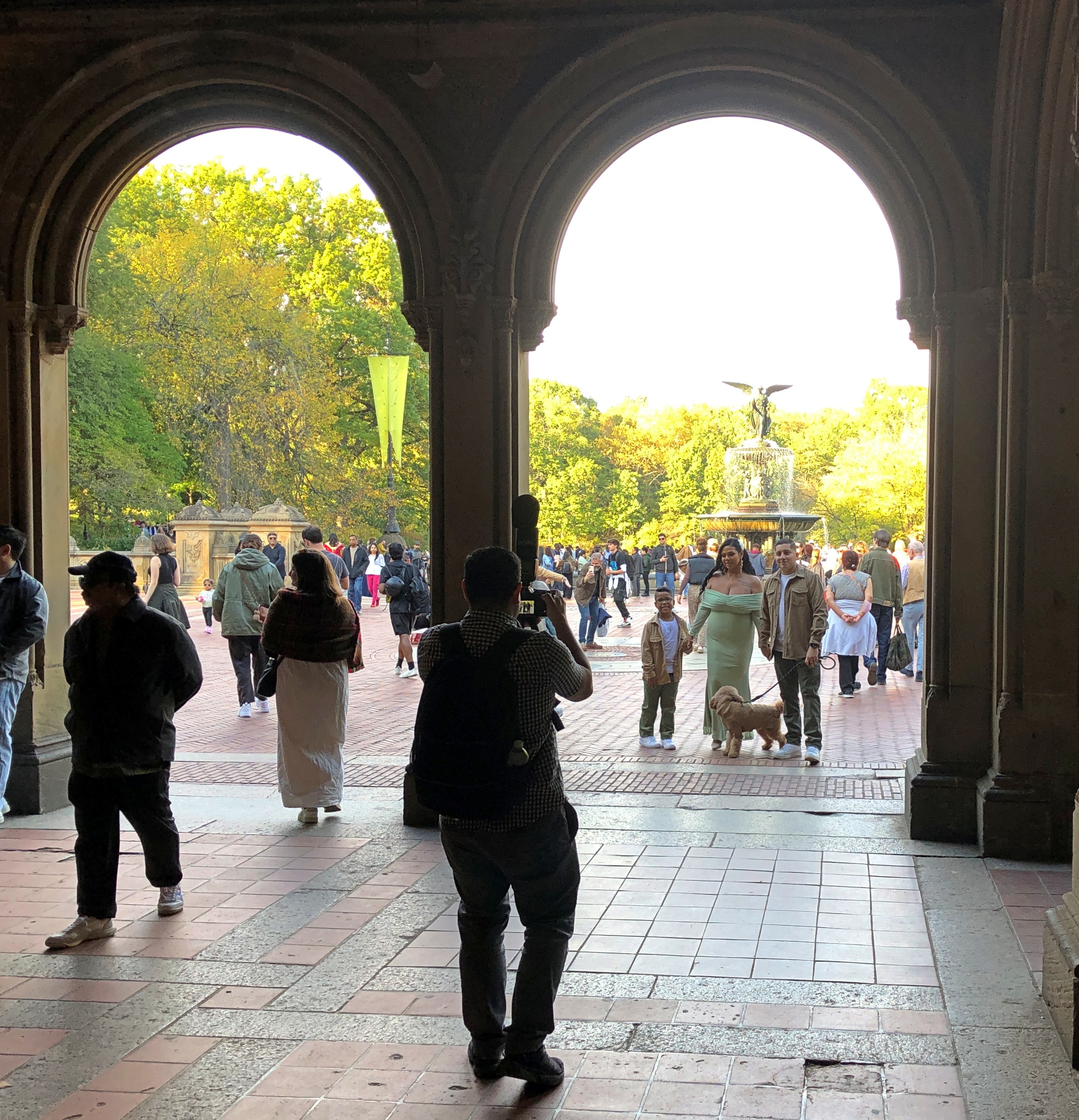
Central Park Oct 2025

But not all the way across The Lake to The Ramble, whose Wiki description drily states that “historically, it has been frequented for both birdwatching and cruising,” with hyperlinks articles about both of those activities. What about cruising birdwatchers? There’s a Broadway musical in that concept somewhere.

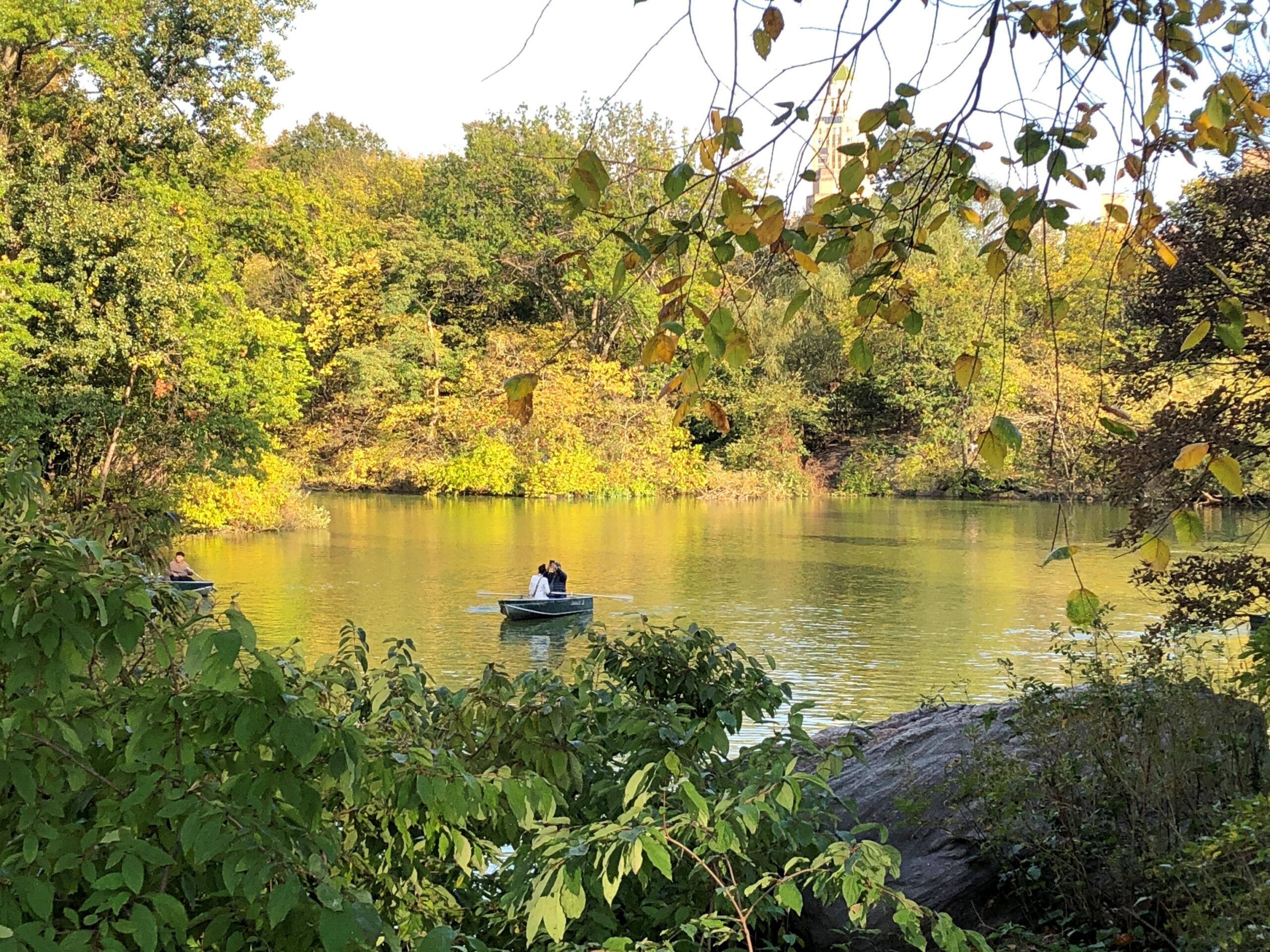
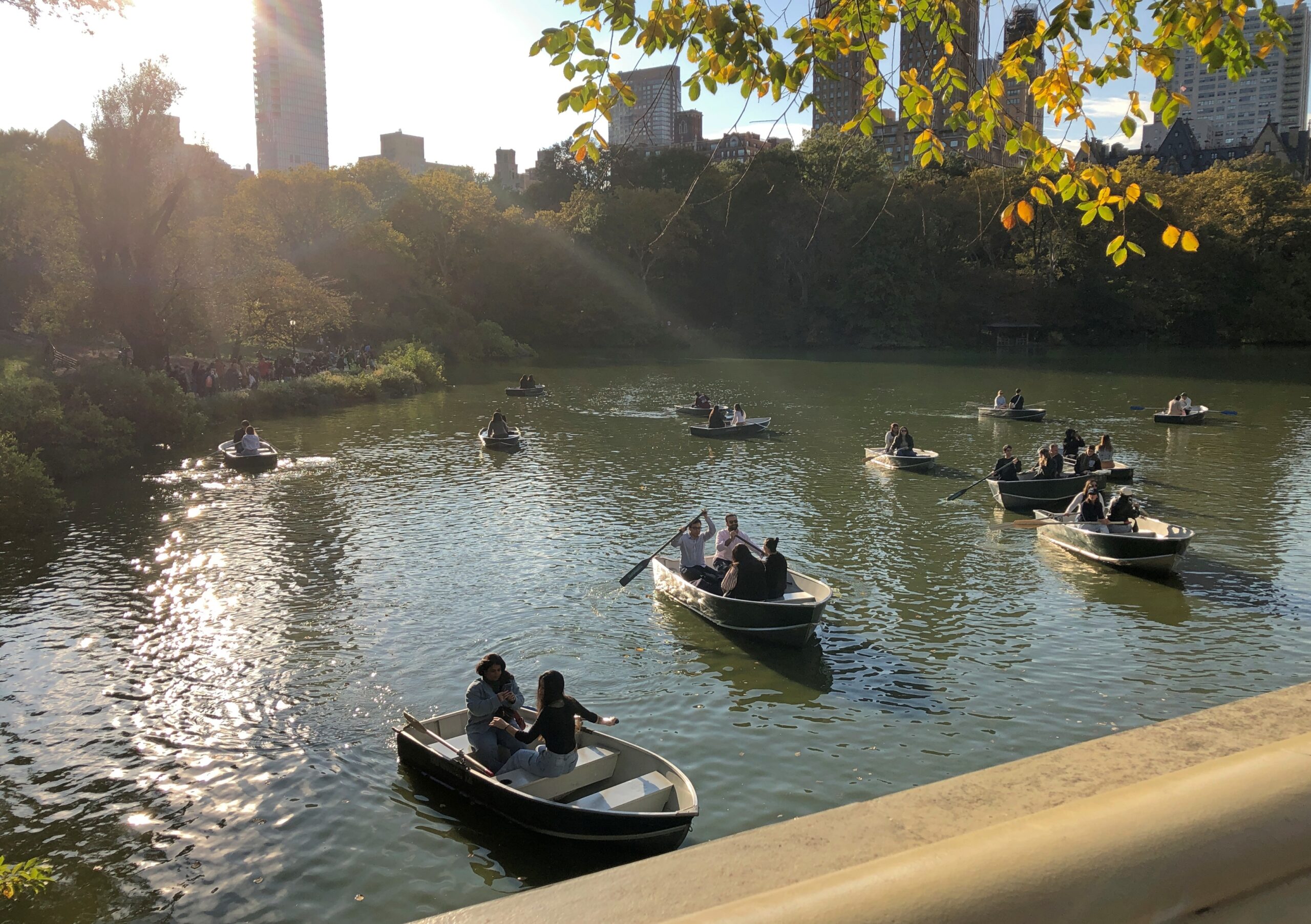
The Lake was clearly a good time and place for casual boating.
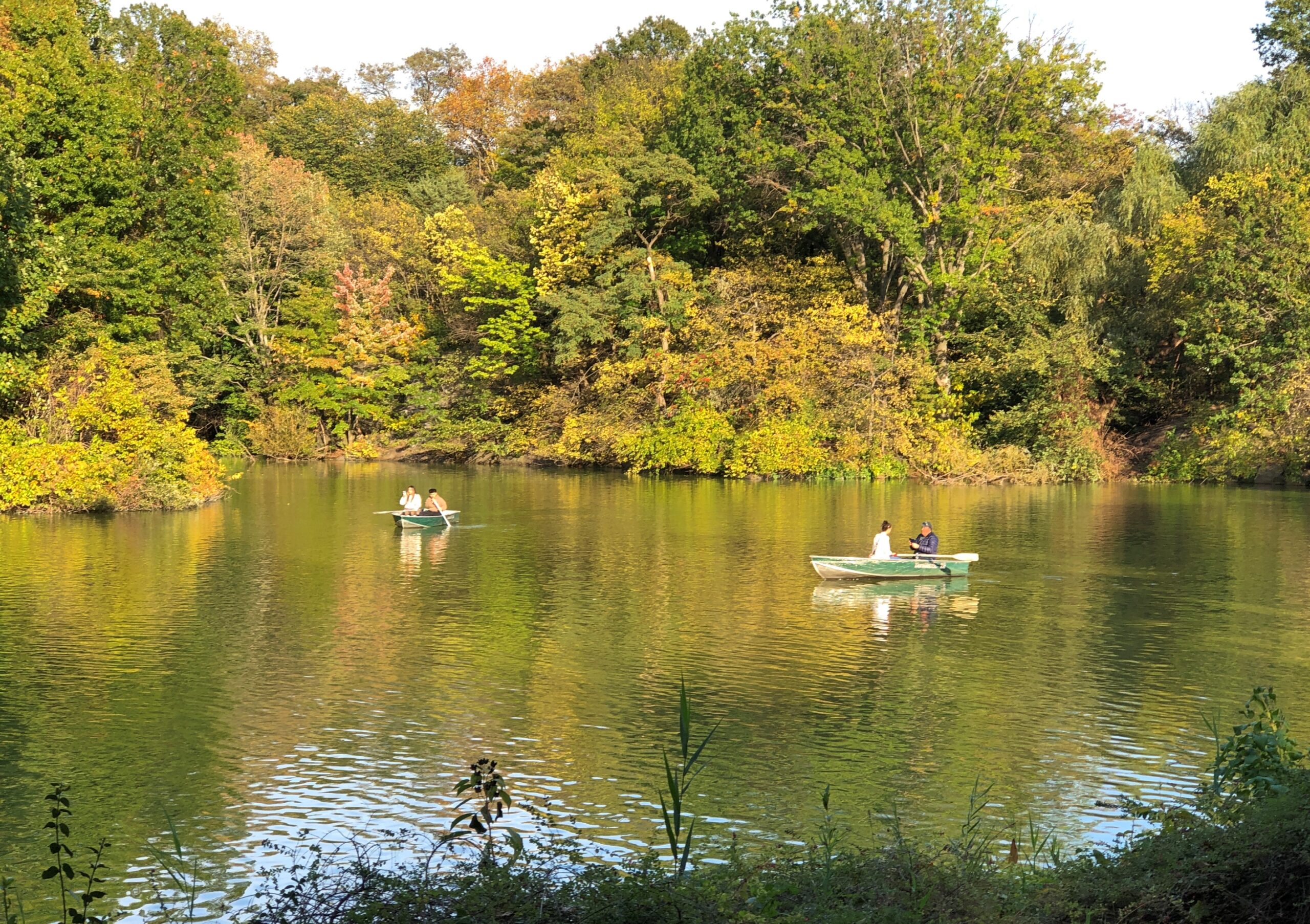
Central Park Oct 2025

The view from the Bow Bridge.

An Upper West Side backdrop.
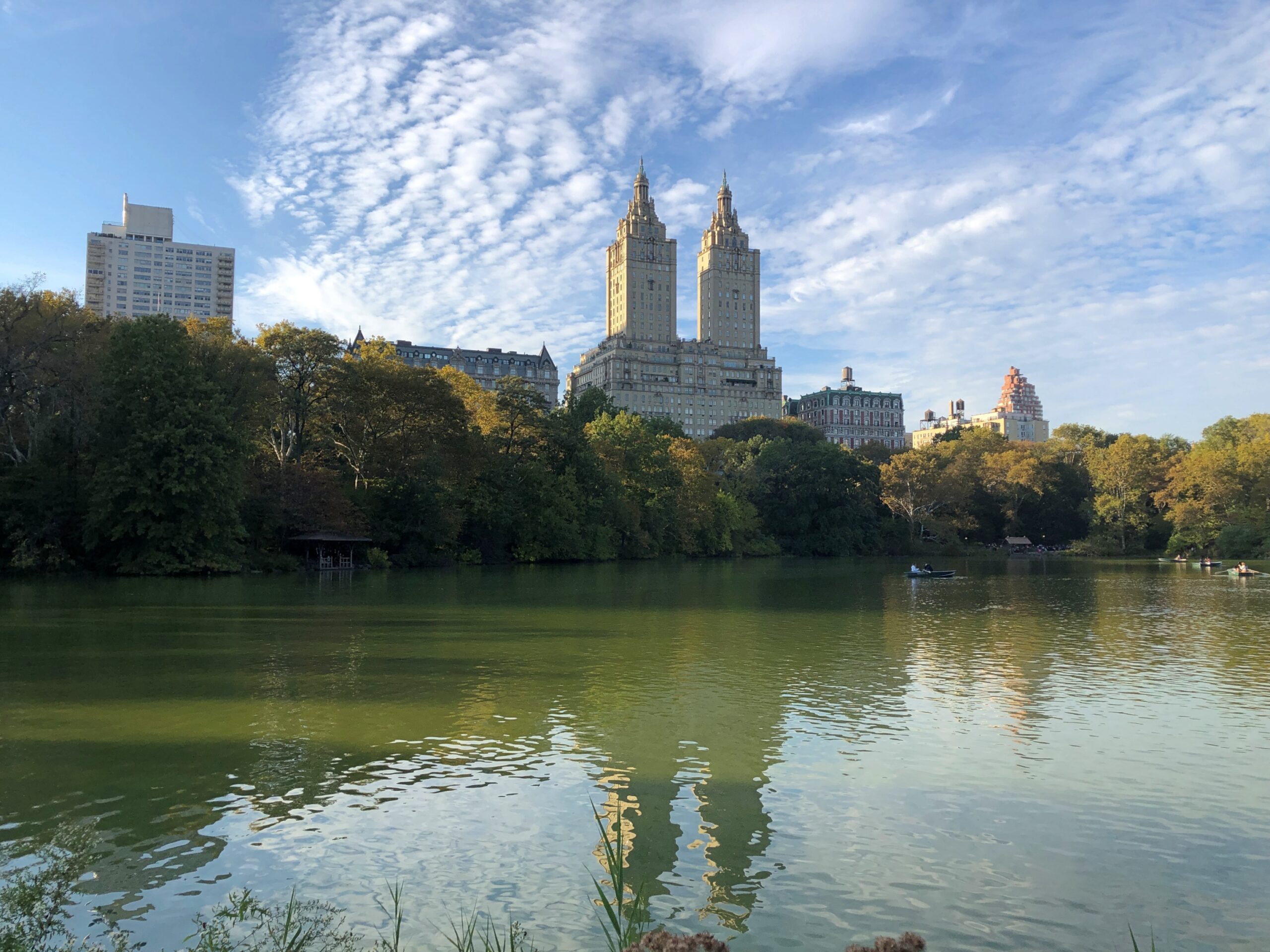
In that part of Central Park, it’s hard to miss Strawberry Fields. There is a fairly empty section.
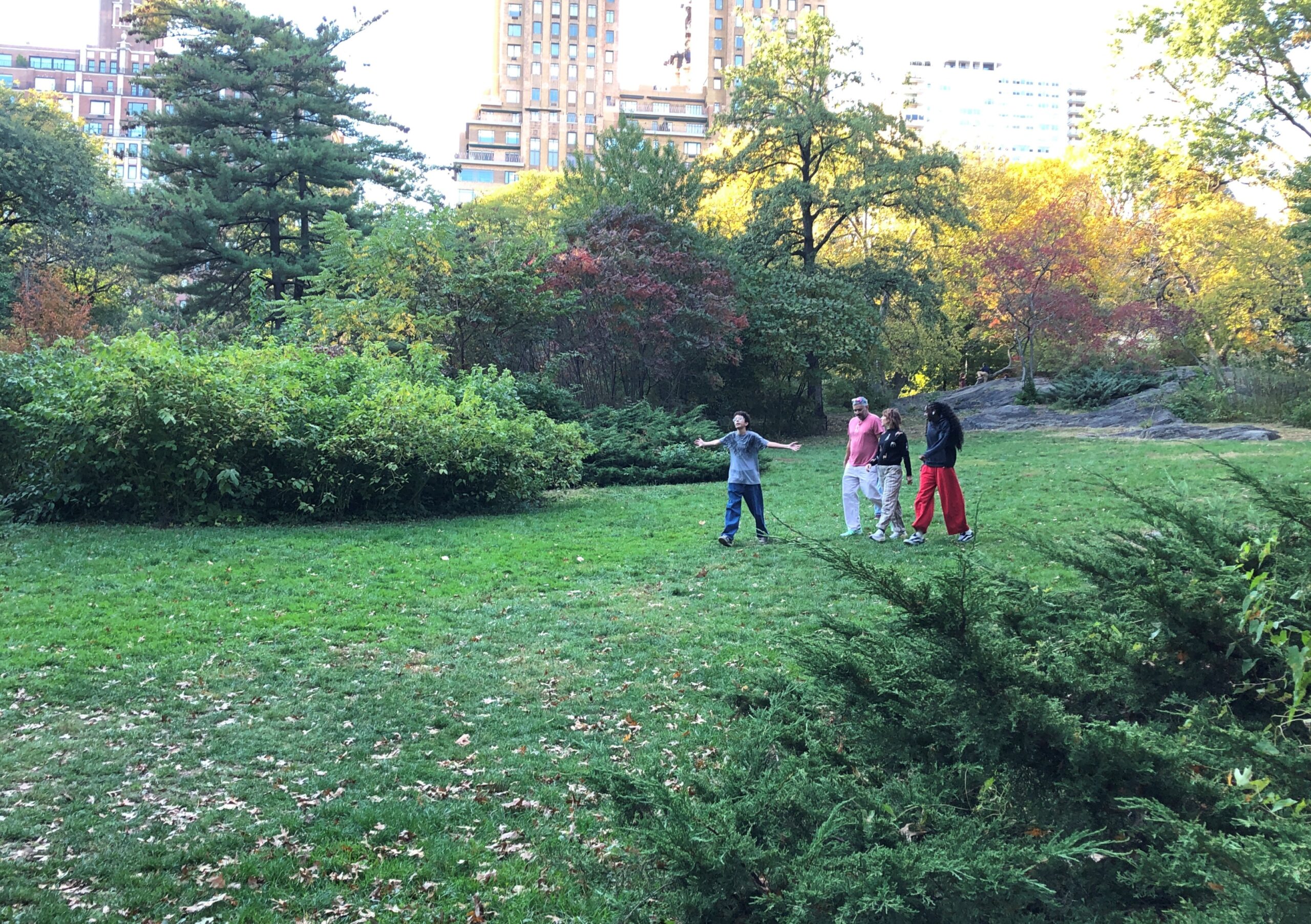
Central Park Oct 2025

That’s not the case when you get to the Imagine memorial. Among the visitors, a guitarist was noodling out one of the more famous Lennon-McCartney tunes, but I forget which. One of the usual ones. Not “Dr. Robert,” say, or “Happiness is a Warm Gun.” So that was one busker anyway, since I think he had a guitar case open in front of him. All you need is love, sure, but bills are bills.
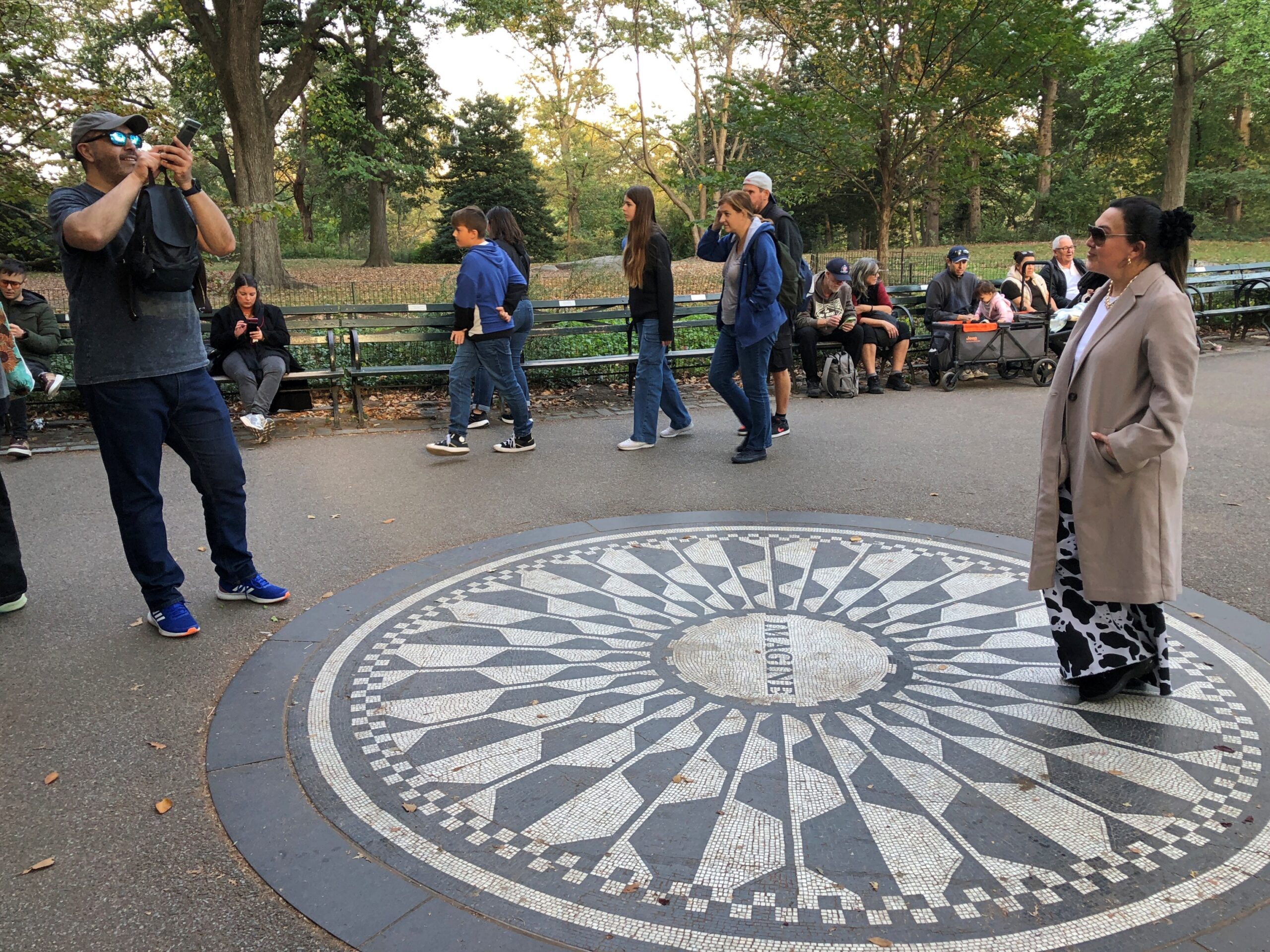
Central Park Oct 2025 - Imagine

Gone these 45 years and still packing ‘em in. Good for you, Mr. Lennon. In another 45 years? It would be interesting to know, and I sure I won’t.
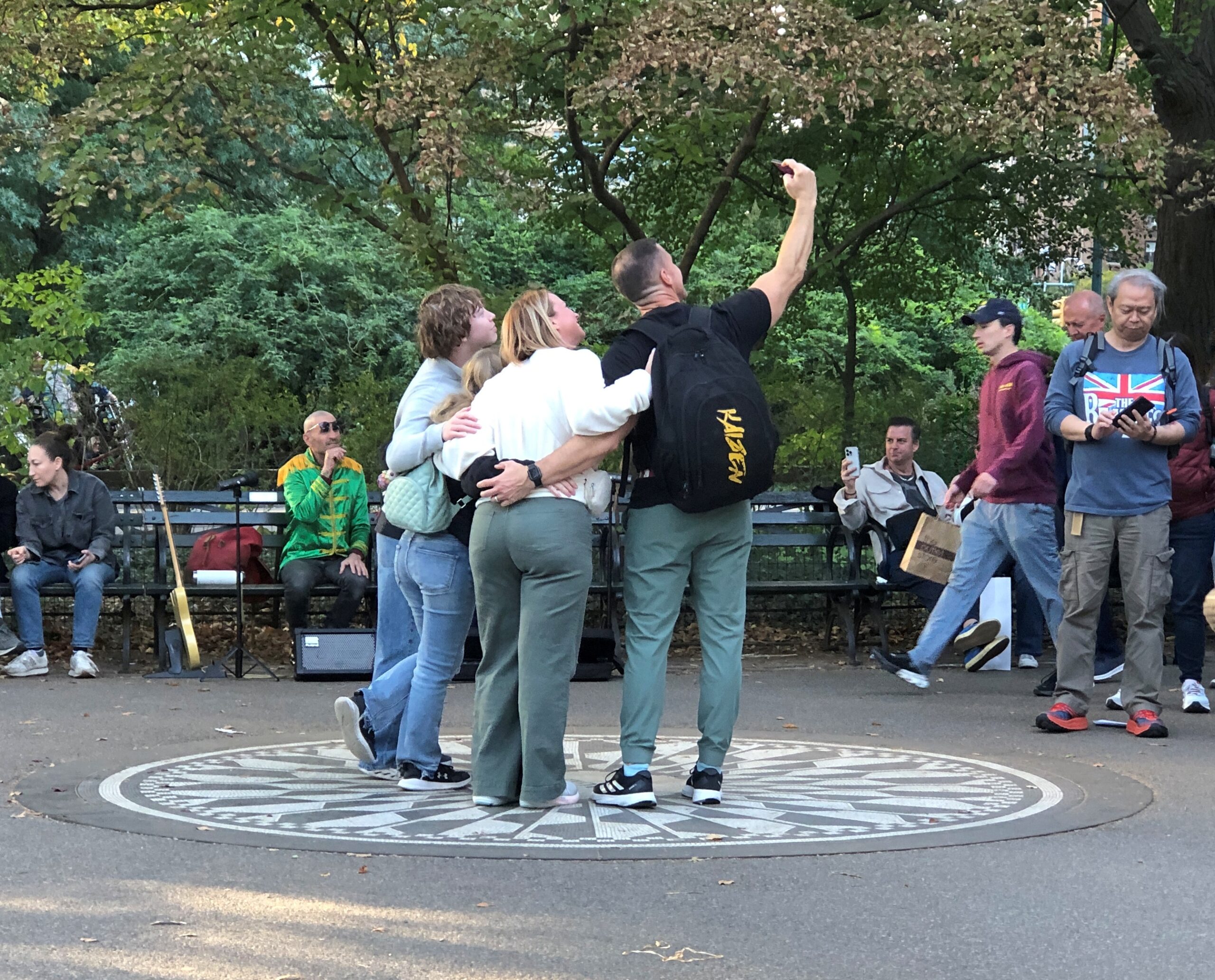
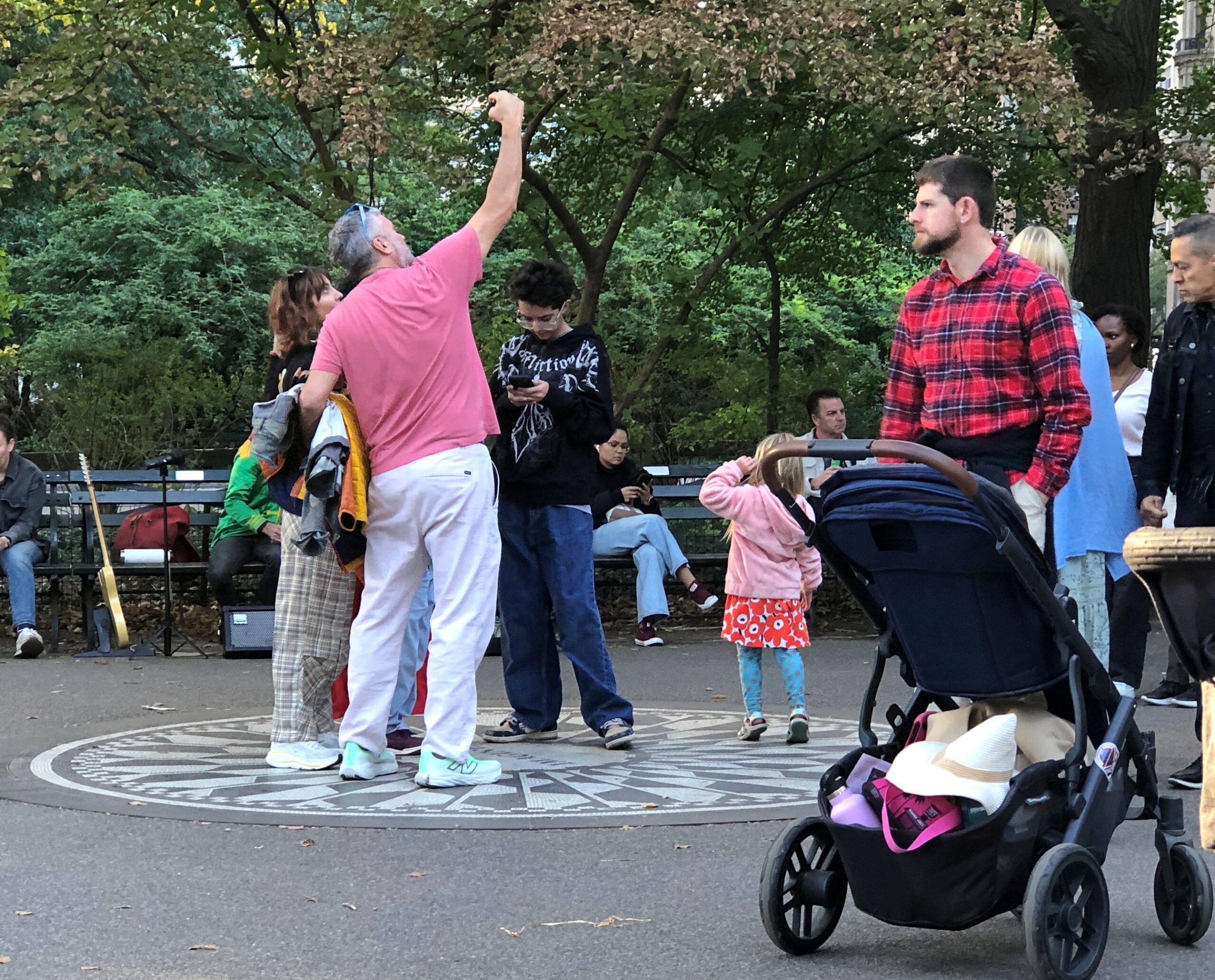
Central Park Oct 2025 - Imagine

I’m afraid the history of memorials doesn’t bode well for the longevity of any memorial, even the kind that people line up to pose with. I didn’t know the man, but I suspect somehow that the thought of fading into obscurity wouldn’t have bothered John Lennon.

At that point, you emerge from the park and are practically face-to-face with the Dakota.
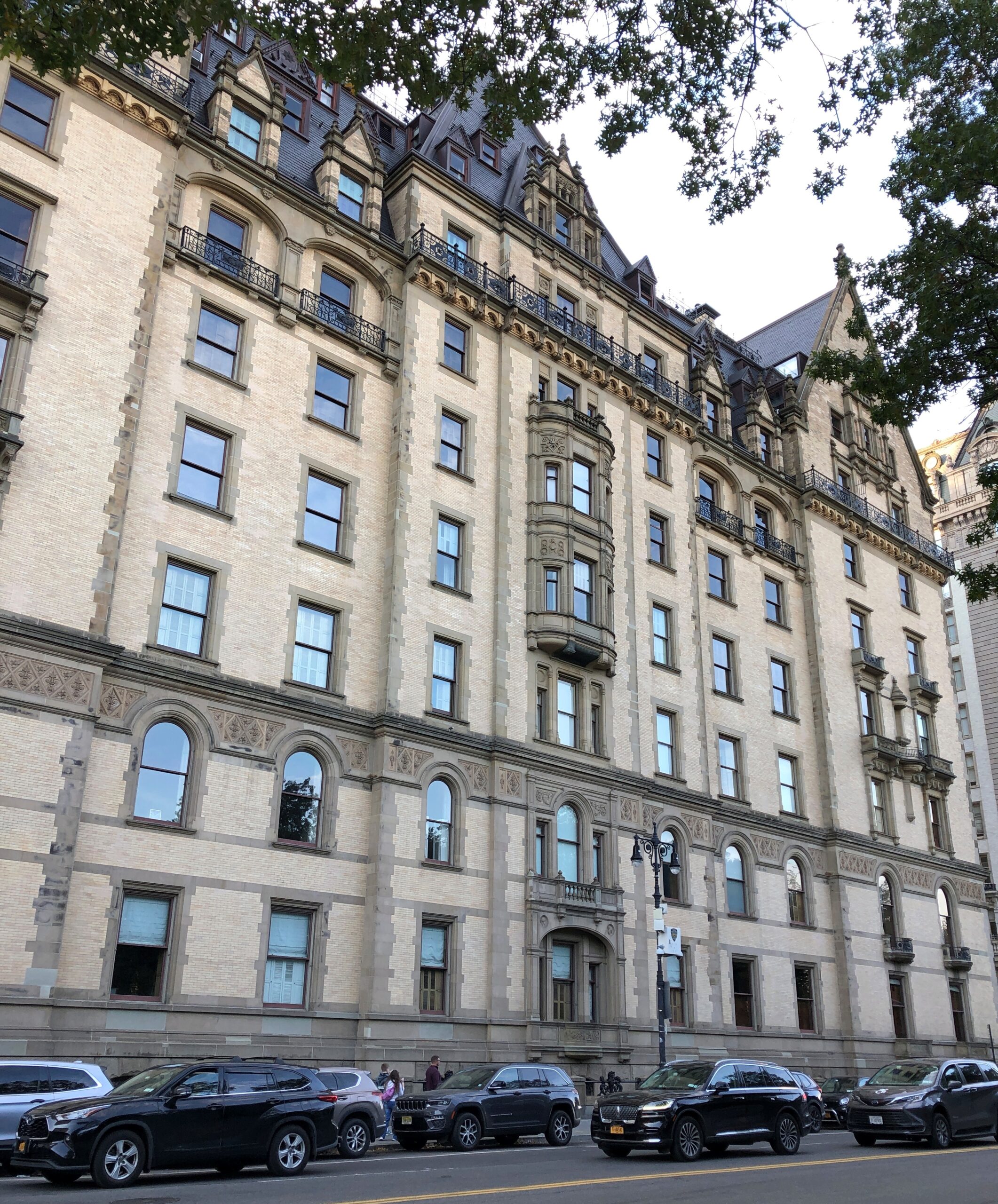
Dakota, Manhattan

We headed east to a subway station, and happened to walk by the entrance of the Dakota. In its grim way, it’s a kind of memorial too. The signs make it known with no uncertainty that no one unauthorized is getting in.
A Few Manhattan Churches

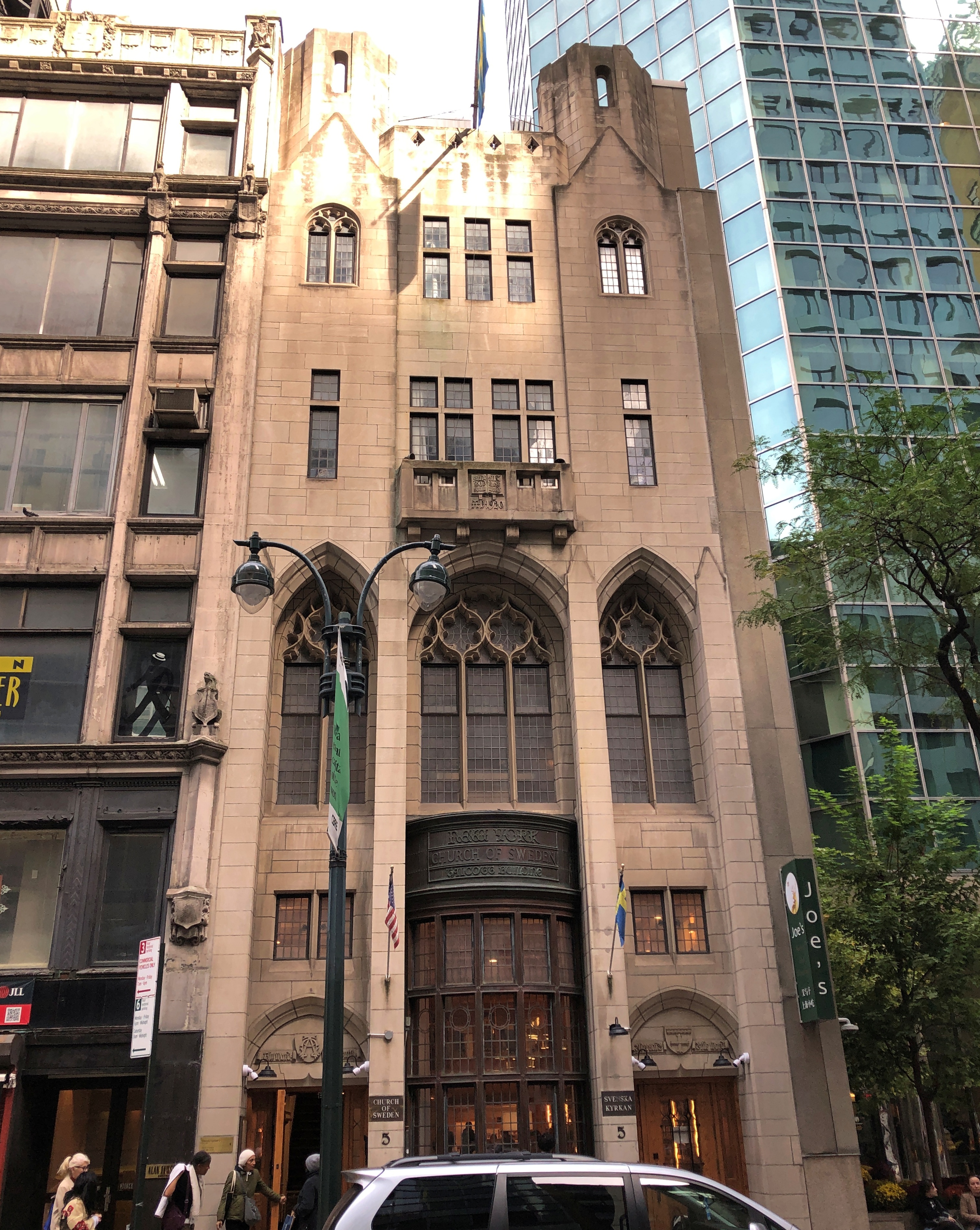
After the General Society of Mechanics and Tradesmen we headed for Park Ave., location of a famed Byzantine revival Episcopal church. Before we got there, we noticed a much smaller church, not actually part of the Open House New York event, at 5 E 48th Street.

Church of Sweden in New York

Swedish Church, NY

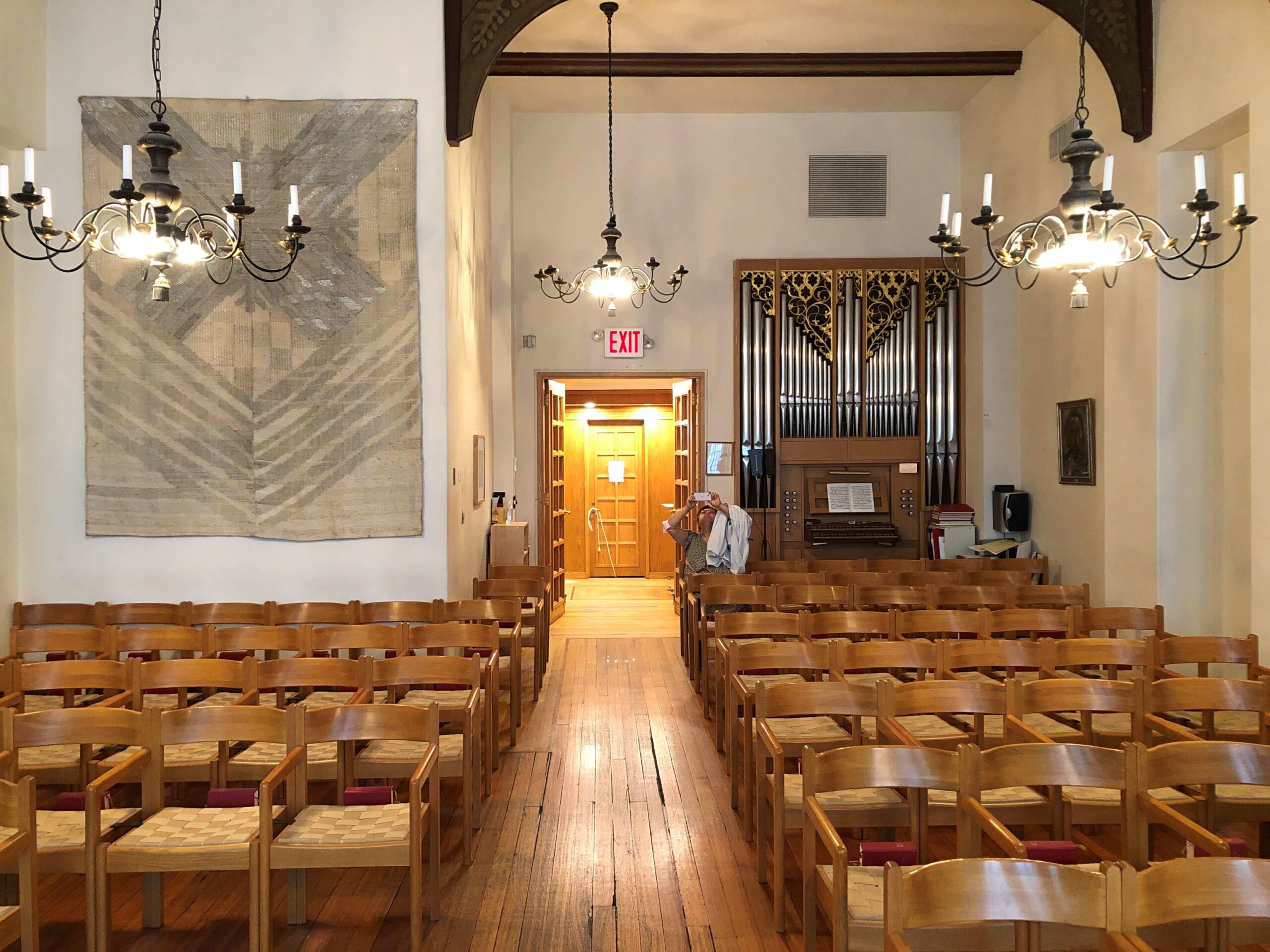
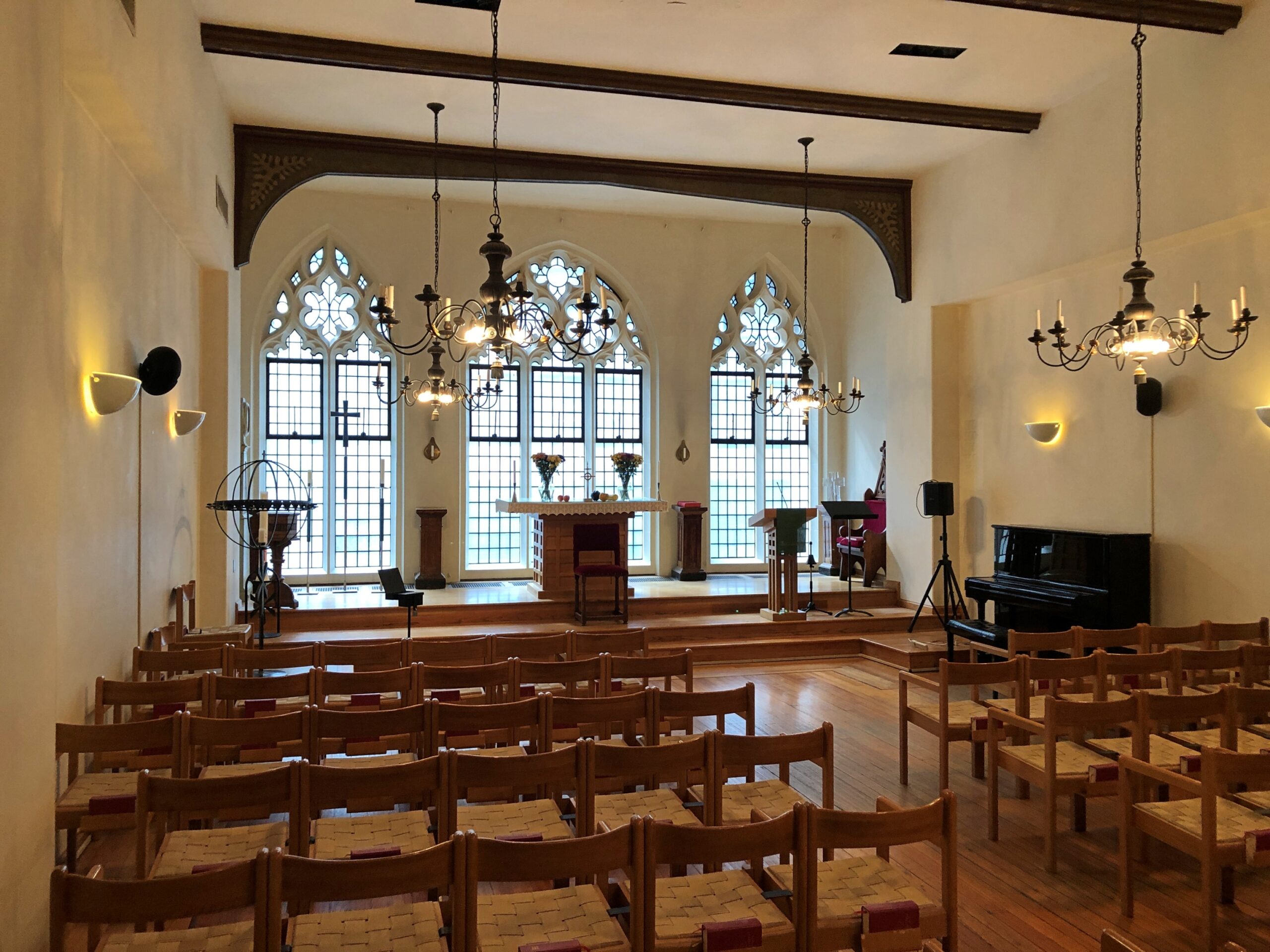
We’d come to the Svenska kyrkan i New York, where services are still held in Swedish. Not only was the church open, there was a cafe on its first floor. The sanctuary is on the second floor. Elegant little place, suitable for the small congregation that Swedish services might attract.

Swedish Church, NY
Swedish Church, NY

Under the Historik section of the church’s web site, you’ll find this helpful information: När svenskarna började flytta till USA och hur Svenska kyrkan på olika sätt velat vara närvarande i New York. A fuller history in English is on the Wiki page.

Swedish Church, NY

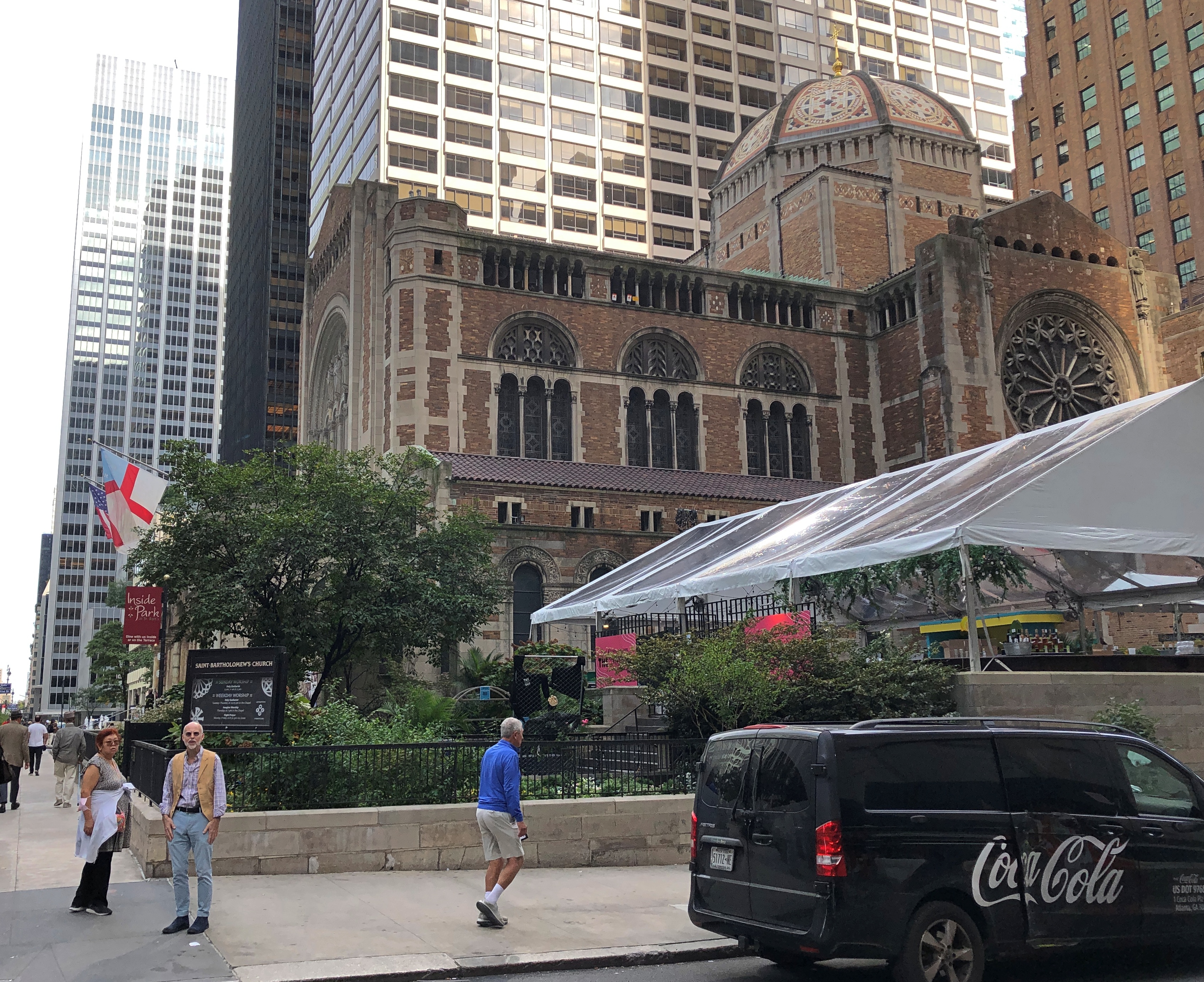
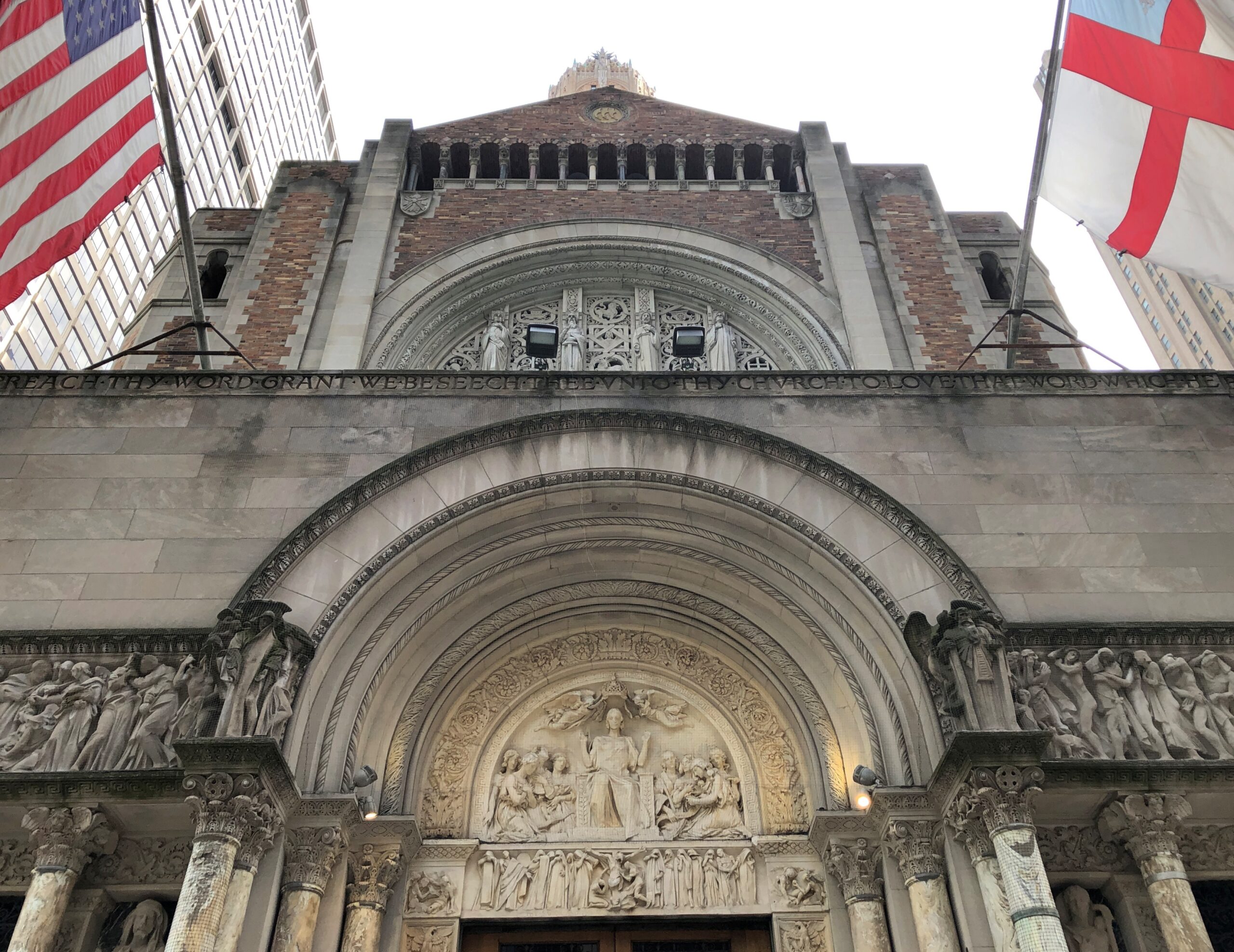
St. Bartholomew’s Church

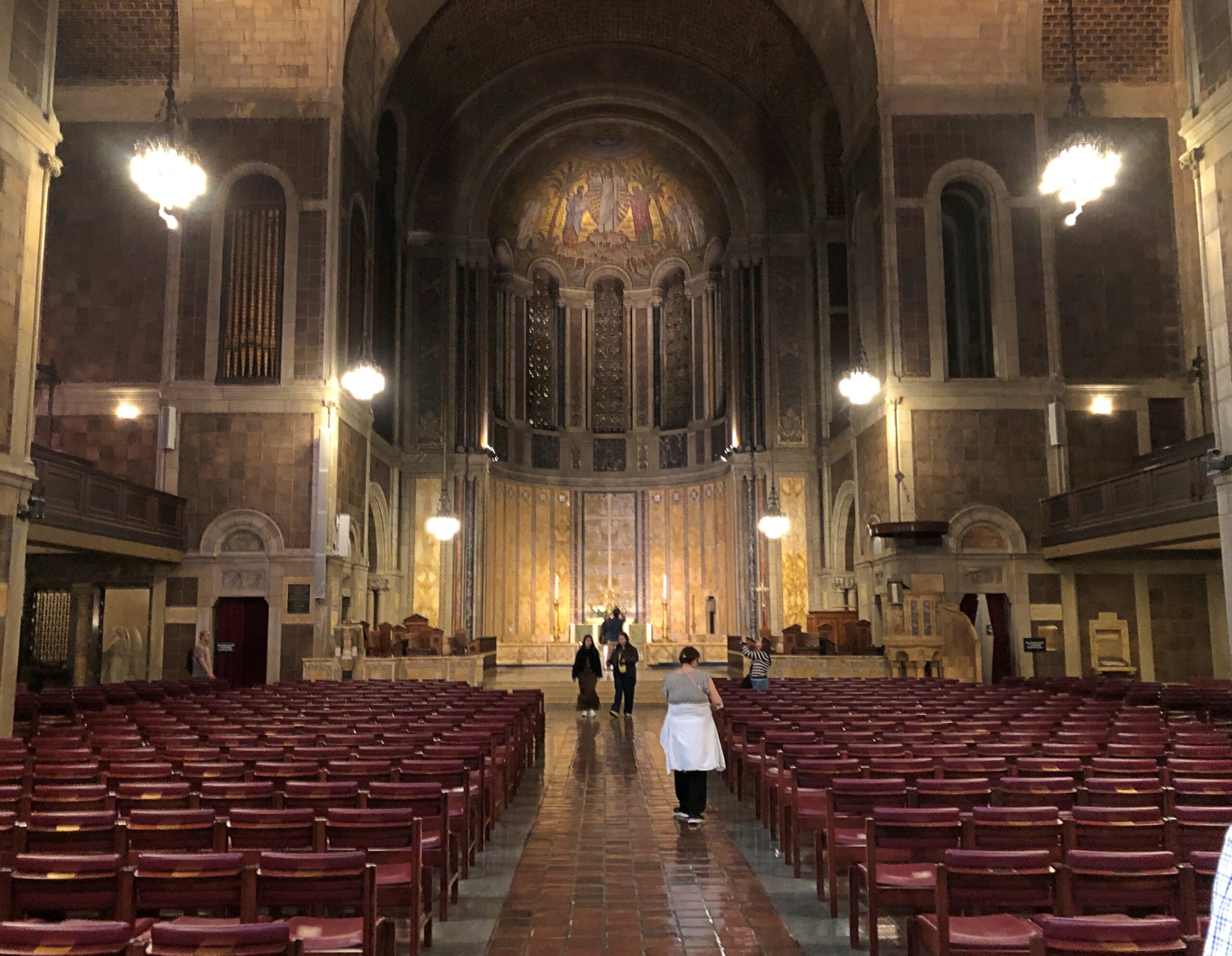
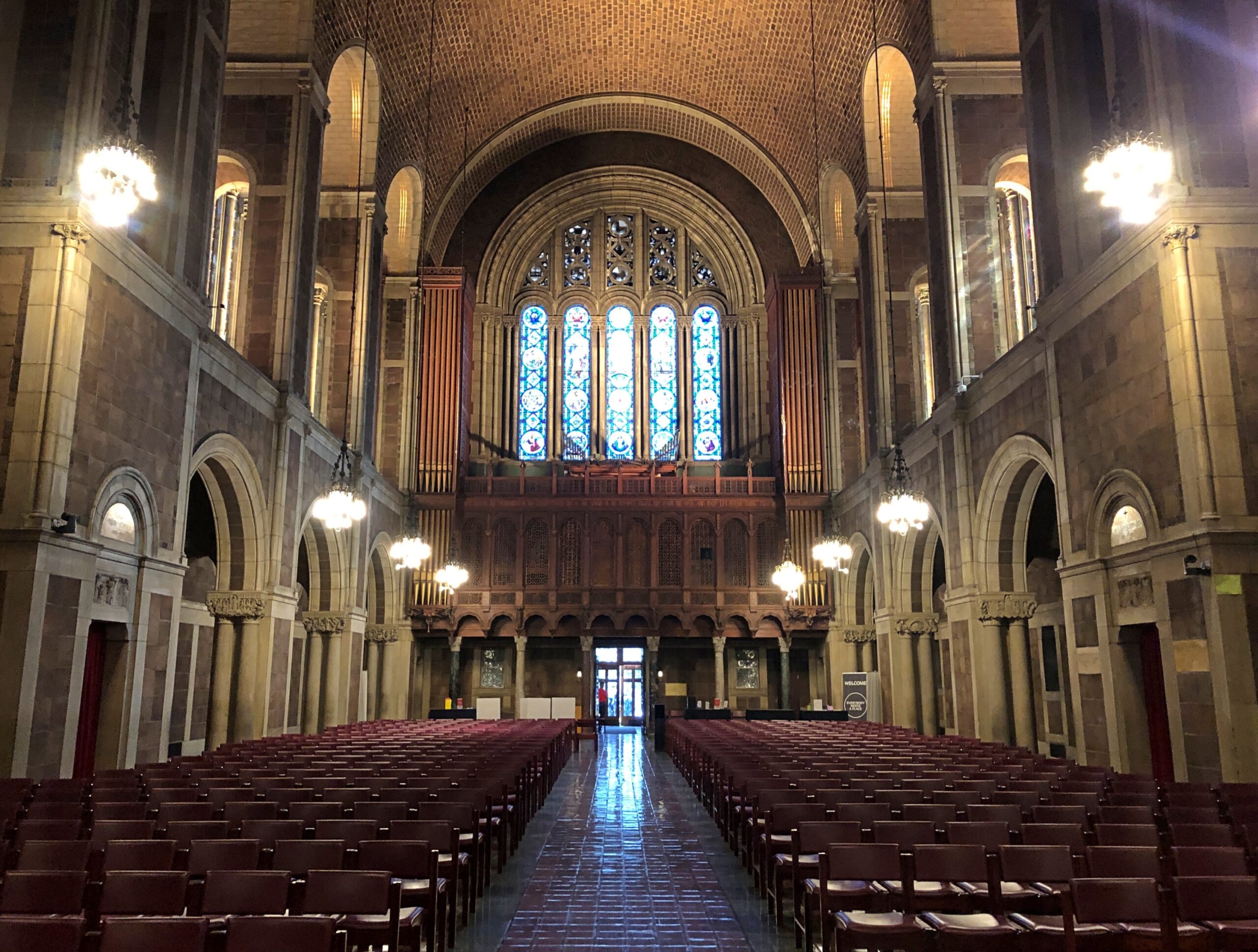
St. Bartholomew’s Church, an Episcopal congregation on Park Ave., was participating in the Open House. That meant it was sure to be not only open, but lighted. The first time I went there, many years ago, I compared it to a cavern. Later I visited when more lights were on. Twenty years ago I wrote: “This time, it was better lighted, the better to show off the church’s superb Byzantine-style mosaics.”

St. Bartholomew’s Church

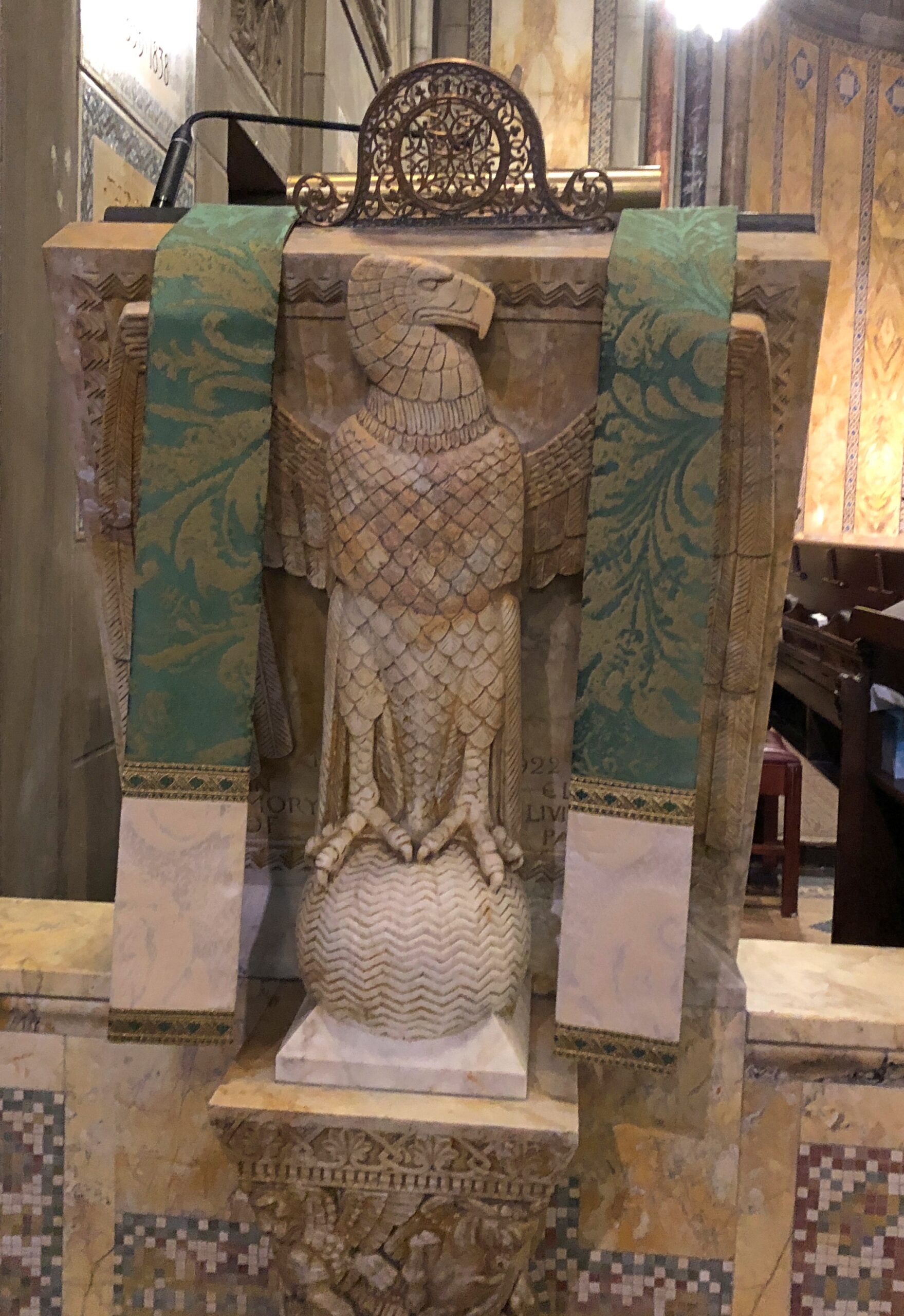
During my 2025 visit, now joined by my nephew Robert, we were able not just to gaze at the lit sacred space, but we had the benefit of a knowledgeable docent, a woman of a certain vintage with a hobbled gait and a raspy voice. She knew the history of the congregation, and its slice of Manhattan. She had the artistic detail down cold. She knew her ecclesiastical styles. From the depth of detail about the many artists who worked on the church, it sounded like she knew some of the artists personally, though that couldn’t be literally true for most of them, since the church was built more than 100 years ago, with certain later design additions.

St Bart
St Bart

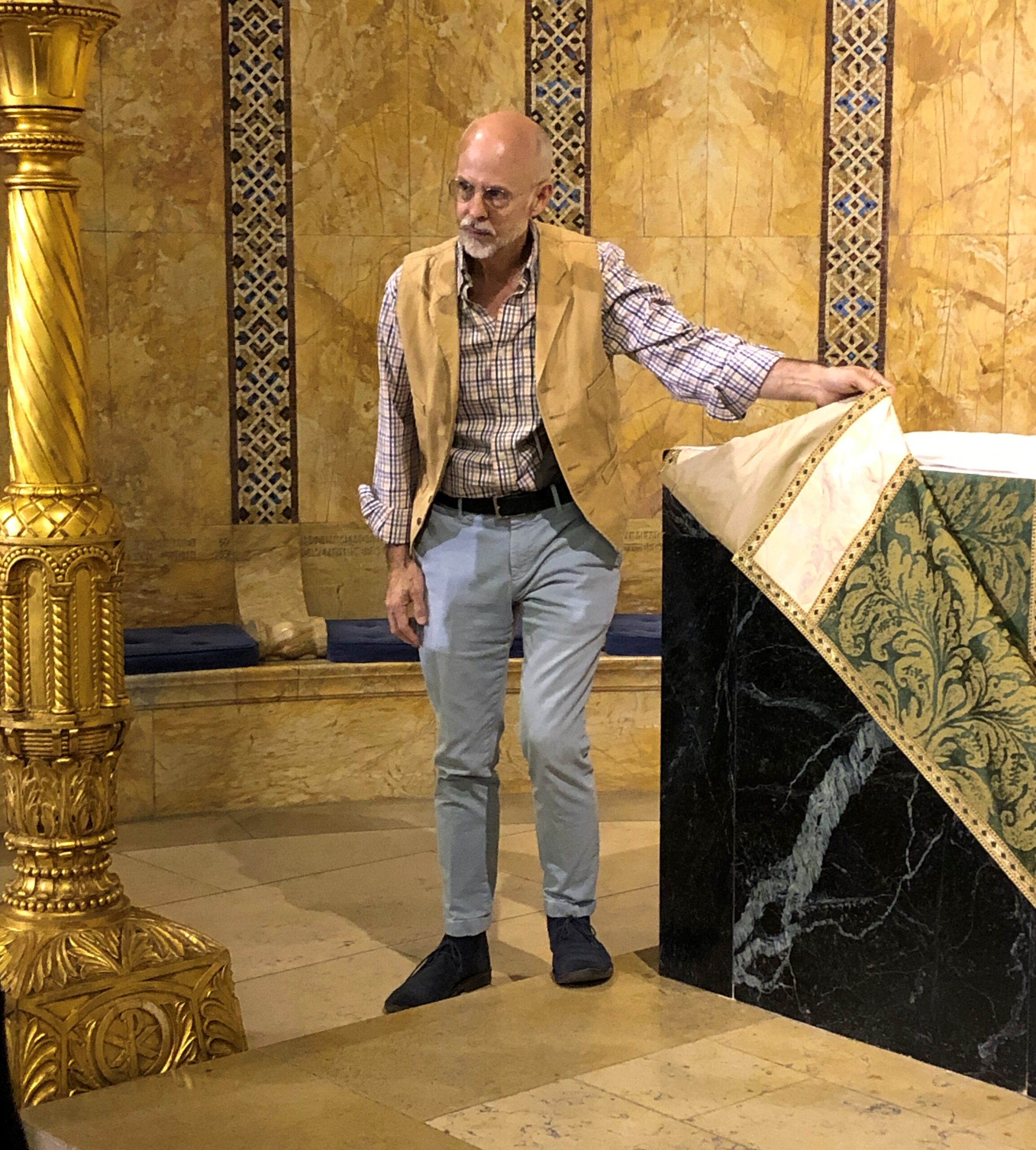
At the direction of the docent, Geof unveiled the altar for a moment.

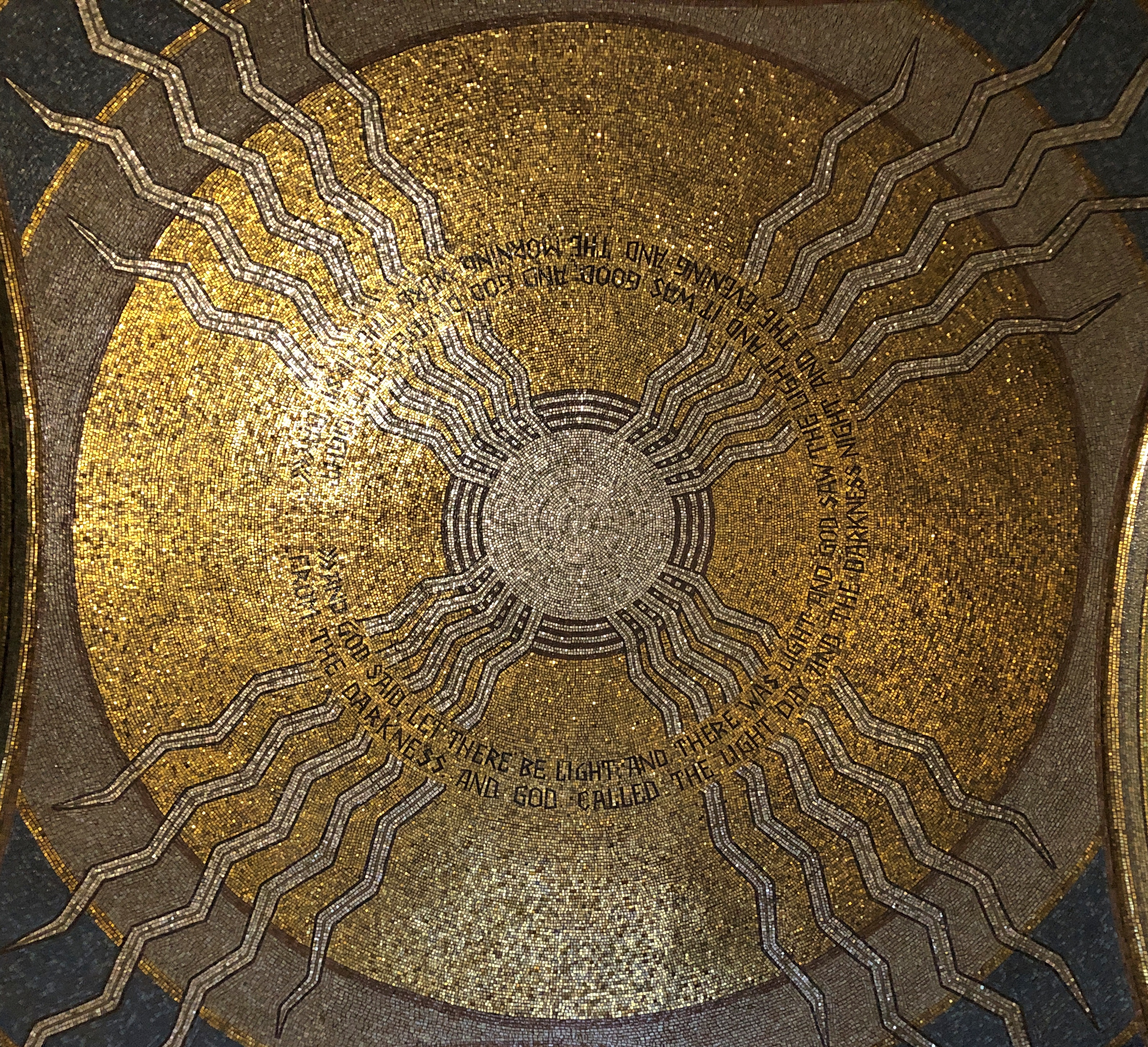
It might have been interesting to know Hildreth Meière. Hers was an astounding career: “Working with leading architects of her day, Meière designed approximately 100 commissions, both secular and liturgical,” the International Hildreth Meière Association says. “Her best-known commissions include Radio City Music Hall, One Wall Street, St. Bartholomew’s Church, Temple Emanu-El, and St. Patrick’s Cathedral in New York. She also decorated the Nebraska State Capitol in Lincoln, the National Academy of Sciences in Washington, D.C., and the Cathedral Basilica of Saint Louis.”

The mosaics didn’t photograph well – that is, I’m too lazy to carry around a better camera – but good images are at the association web site.

St Bart

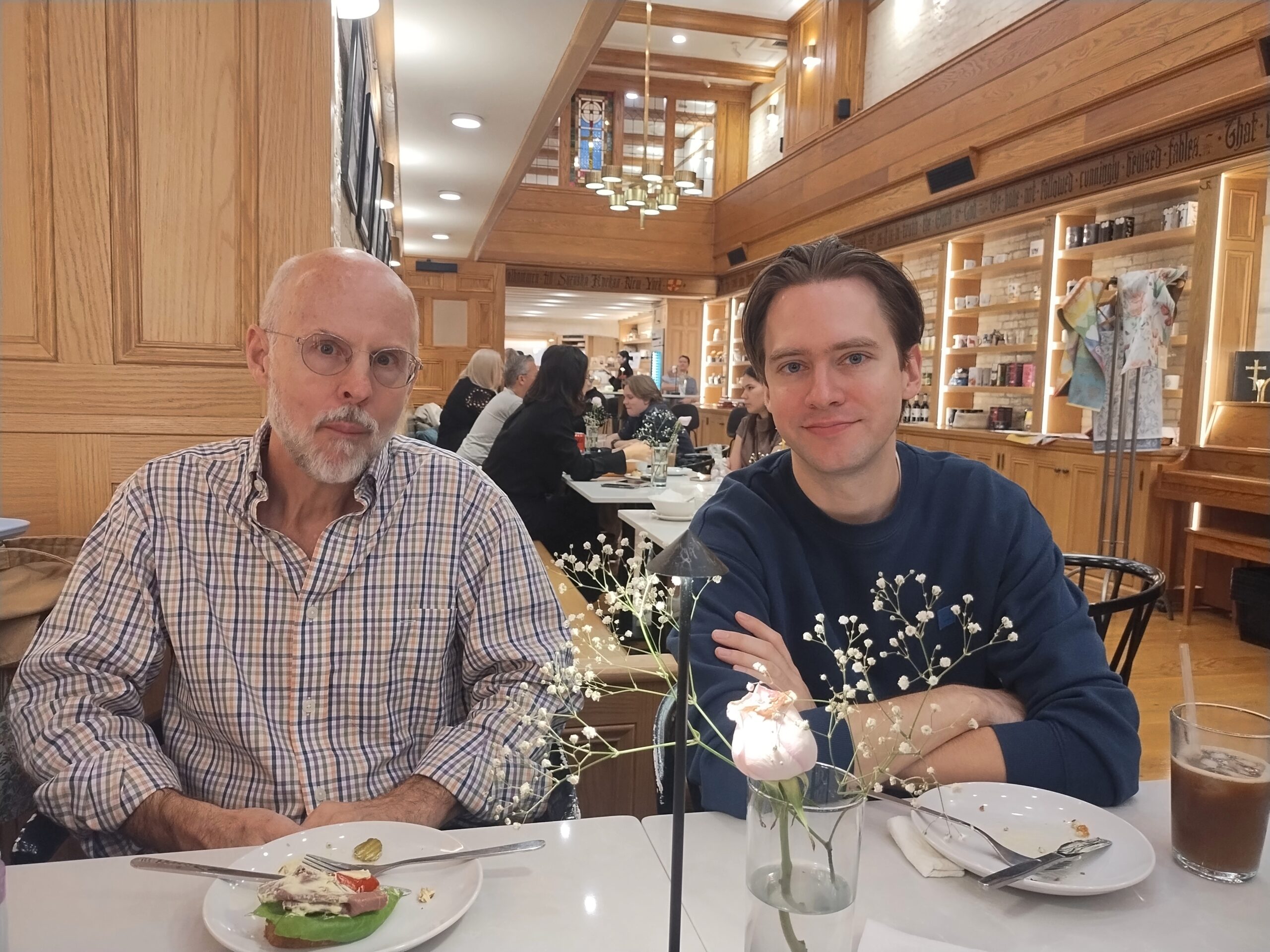
Emerging from St. Bart, we agreed that heading back to the cafe at the Swedish church would be a good idea. It was.

Sated with Swedish-style open-faced sandwiches, our walk soon continued, up Fifth Ave. to St. Patrick’s Cathedral, which was its usual crowded splendor. I think I spotted some new, or newish murals, just inside the nave. A wedding was in progress. One must come after another every Saturday not in Lent, with ropes closing off a large part of the nave, making for extra crowding in the side aisles.

We didn’t stay. Not far away was a church far less crowded but with its own splendor.

St. Thomas Church

St Thomas Church
St Thomas Church

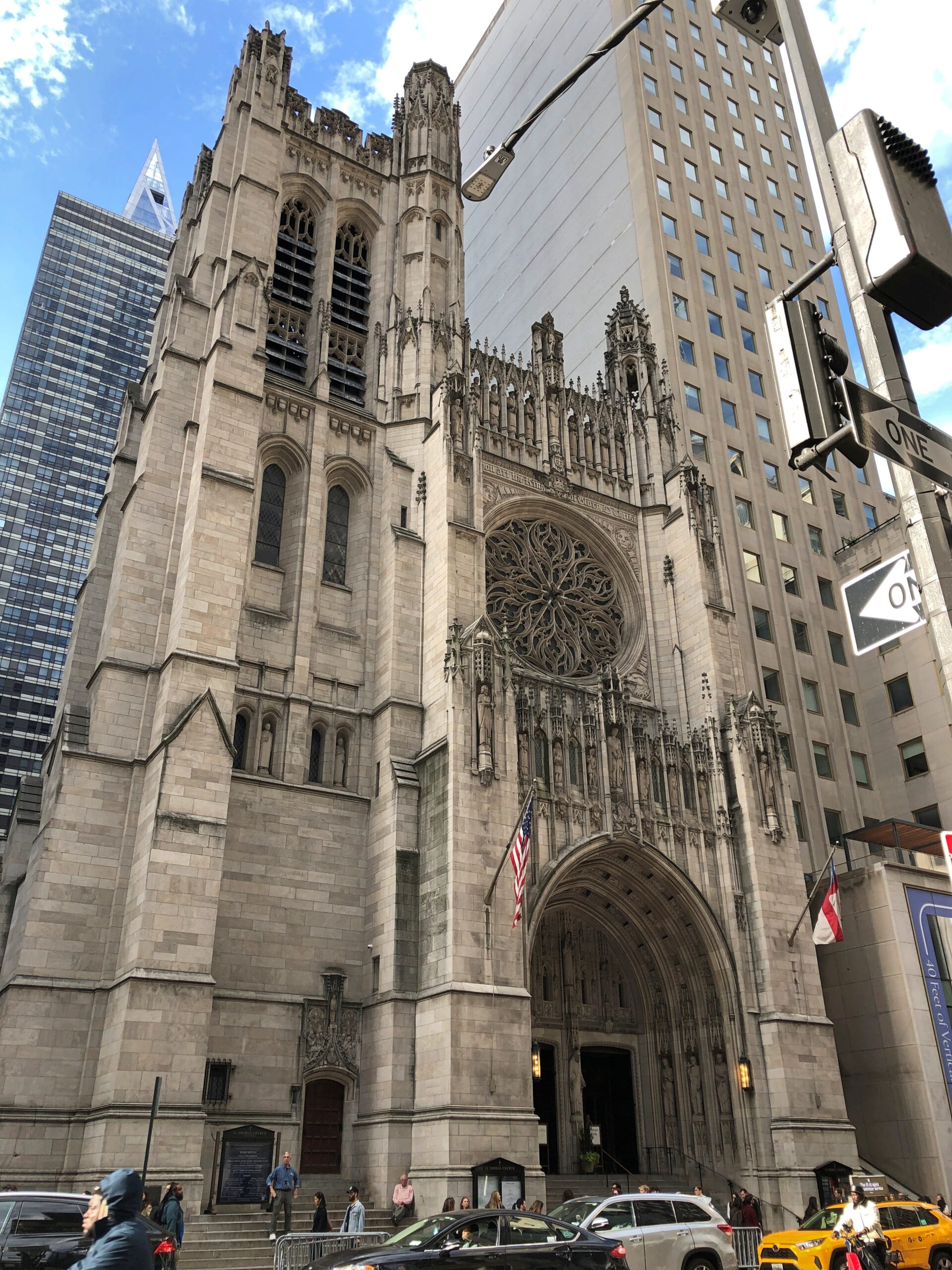
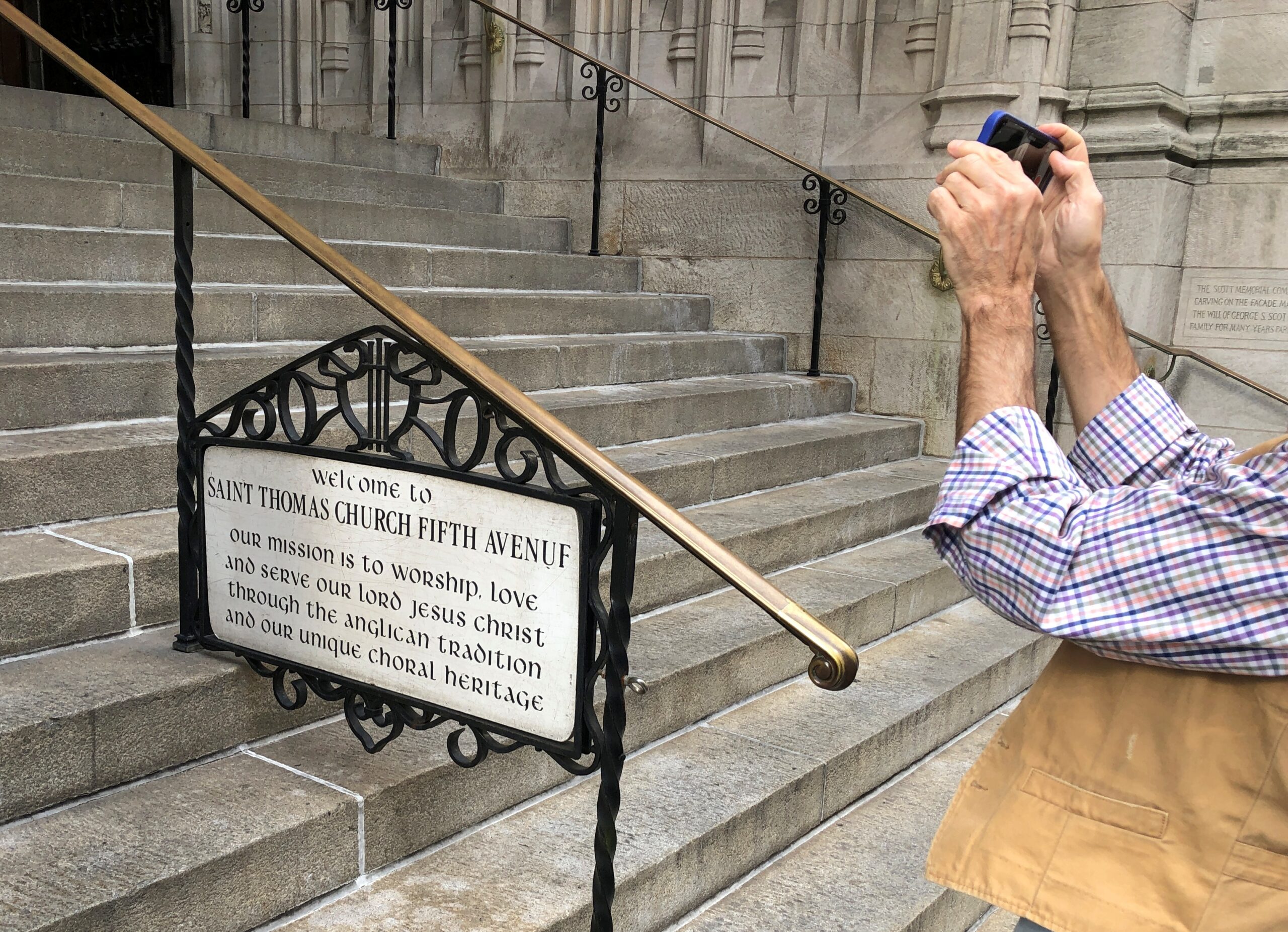
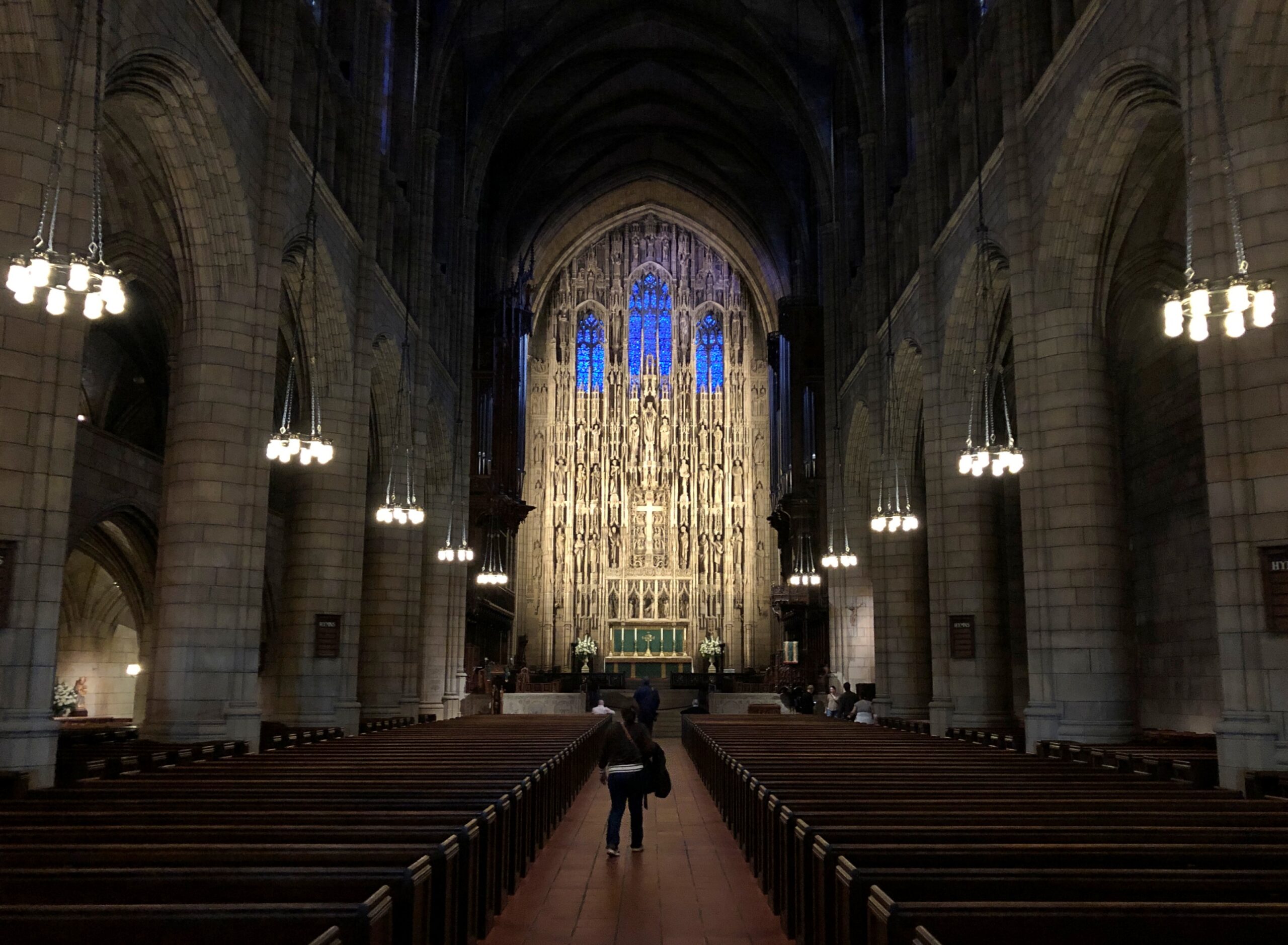
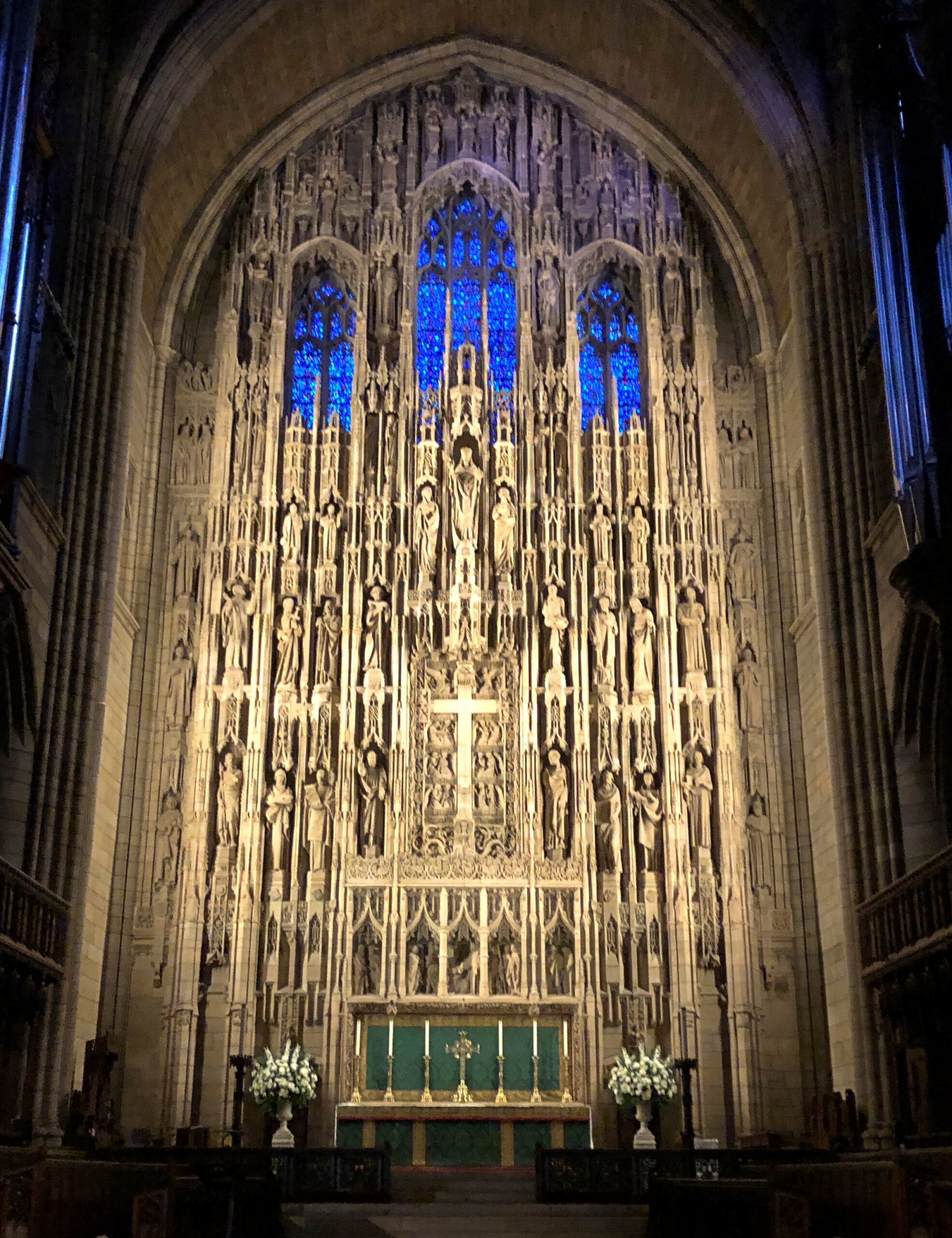
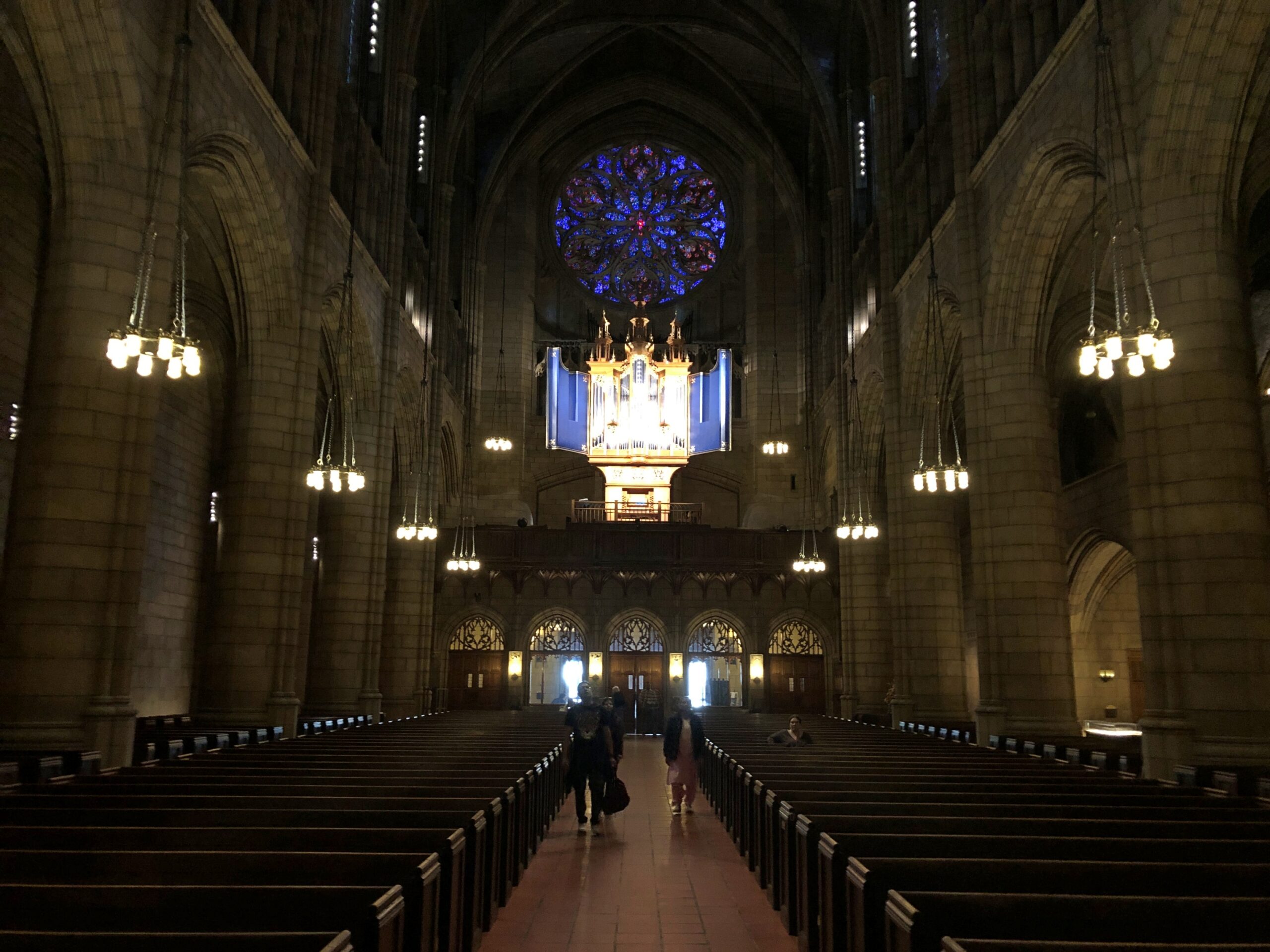
Namely, St. Thomas Church, another major Manhattan Episcopalian congregation. Inside, lights were low. The reredos stood out in the dark, a glowing presence above the altar populated by more than 60 stone carved figures, I’ve read. A Christian crowd: saints, prophets and reformers in an ivory colored stone from Wisconsin. I’d have needed a telephoto lens to have any hope of identifying any of them, but that didn’t make them any less striking.

St Thomas Church
St Thomas Church
St Thomas Church

Ralph Adams Cram and Bertram Grosvenor Goodhue of Cram, Goodhue and Ferguson designed the church, completing it in 1914. They were another of those prolific architects now out of living memory who seemed to design a long list of churches in a short time. The duo did St. Barts, too, and the Cathedral of St. John the Divine, and Rockefeller Memorial Chapel, just to name a few famed sacred spaces of near-palatial character.

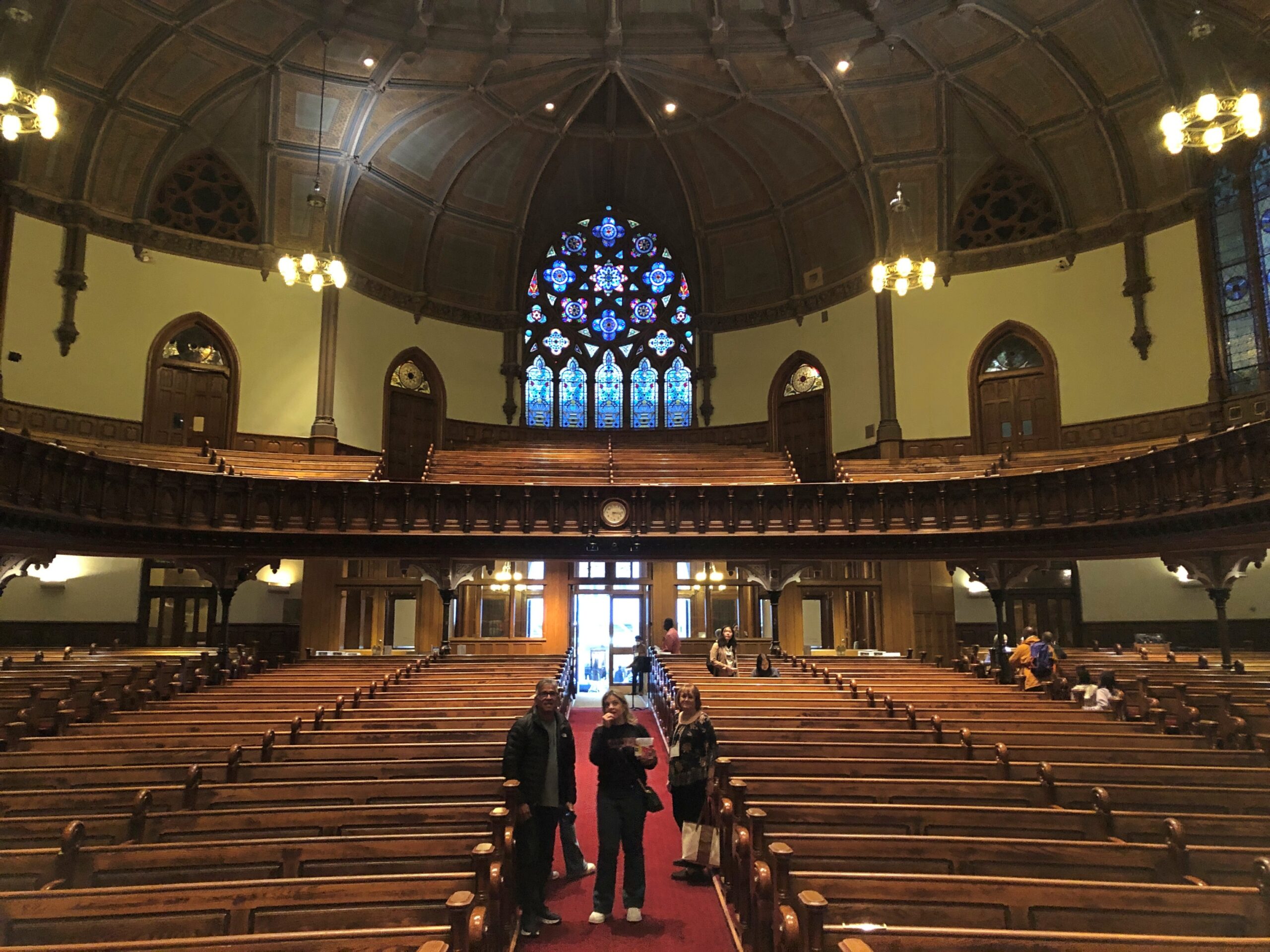
Fifth Avenue Presbyterian Church

Just steps away from St. Thomas, as real estate press releases like to say about two close buildings, is Fifth Avenue Presbyterian Church. It was our last Open House church for that day.

Fifth Avenue Pres
Fifth Avenue Pres

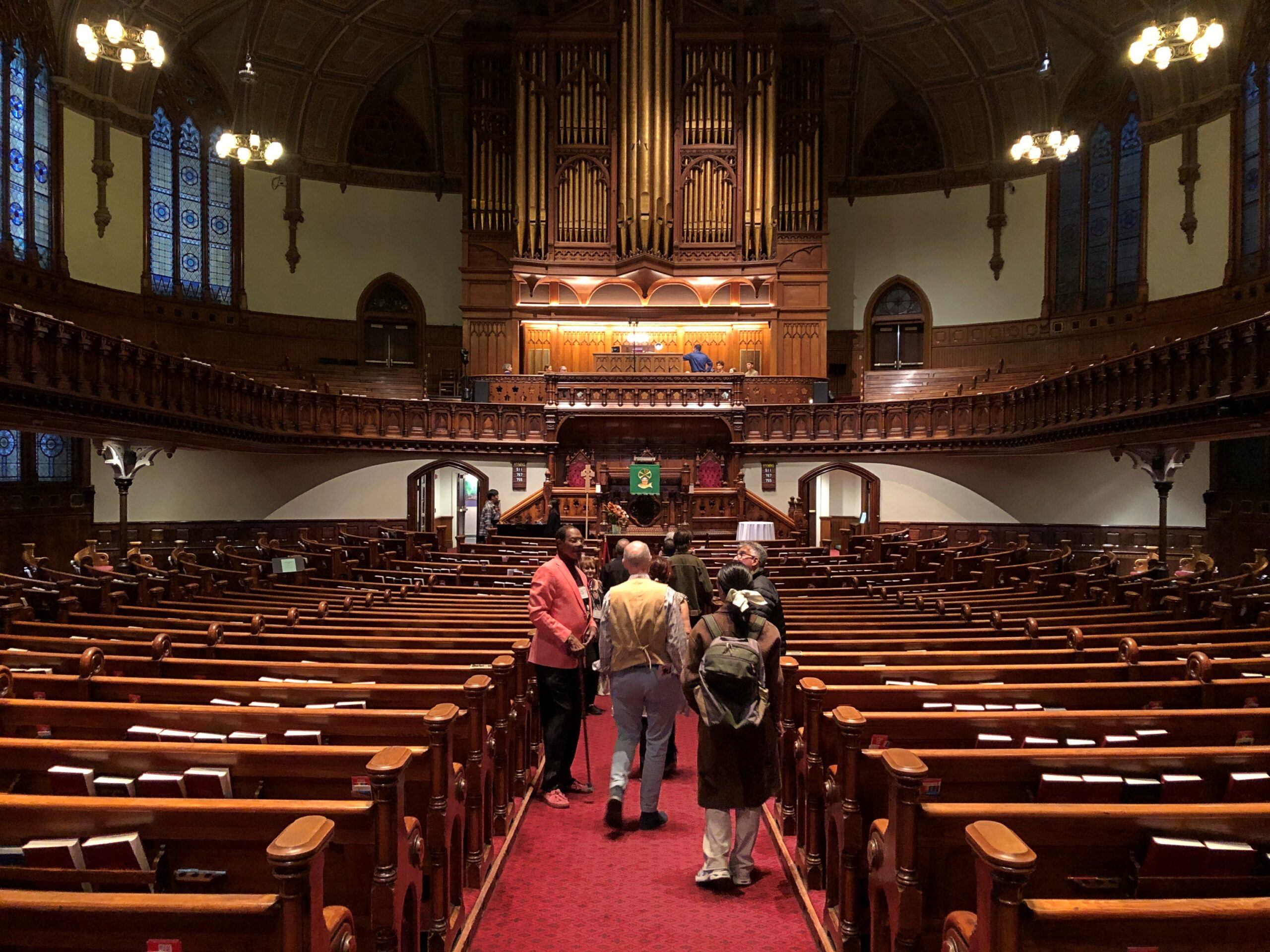
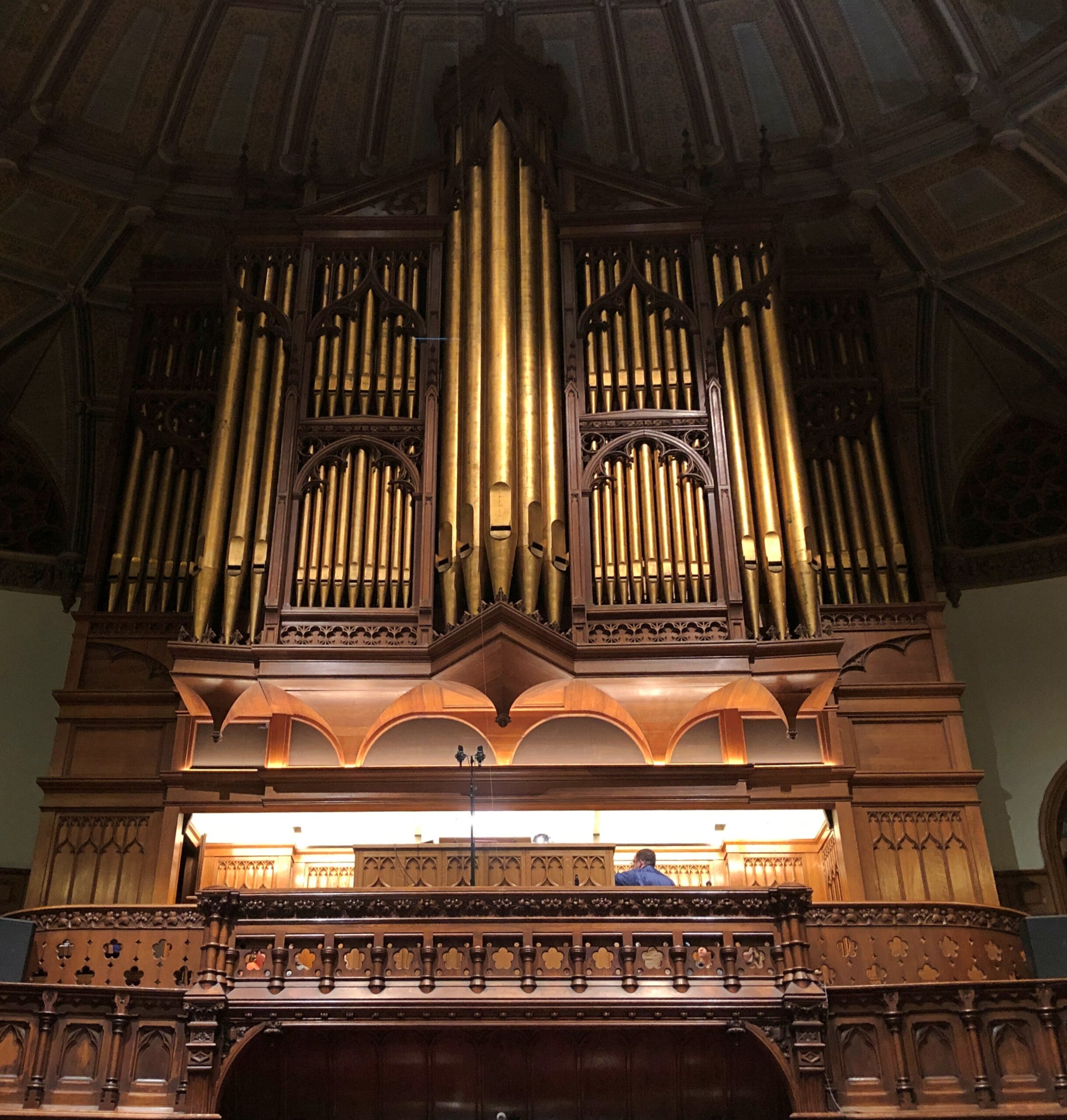
With its auditorium style and balconies, it reminded me of the Moody Church in Chicago, though Fifth Avenue Pres is much older: 150 years this year, as it happens.

Fifth Avenue Pres

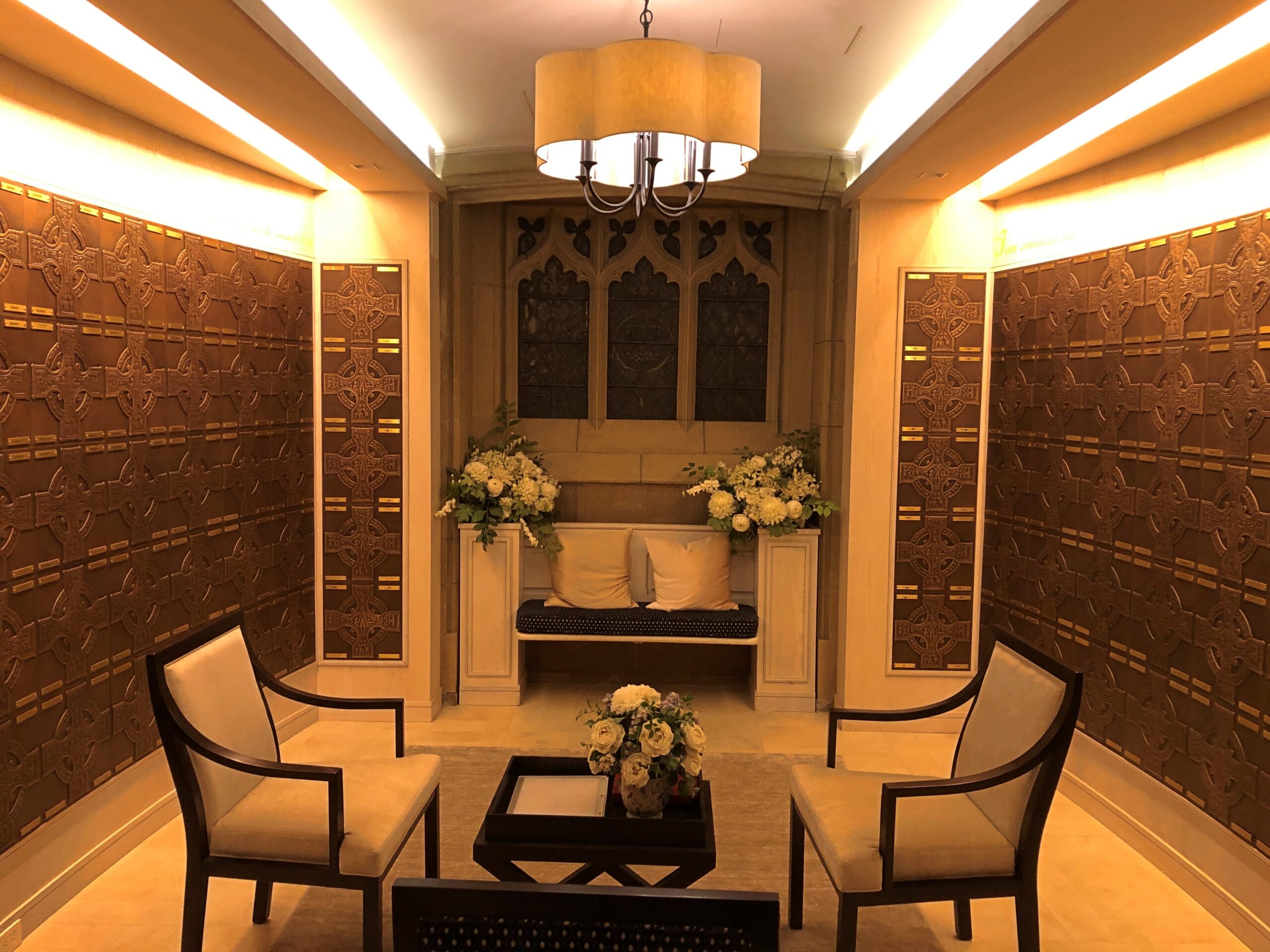
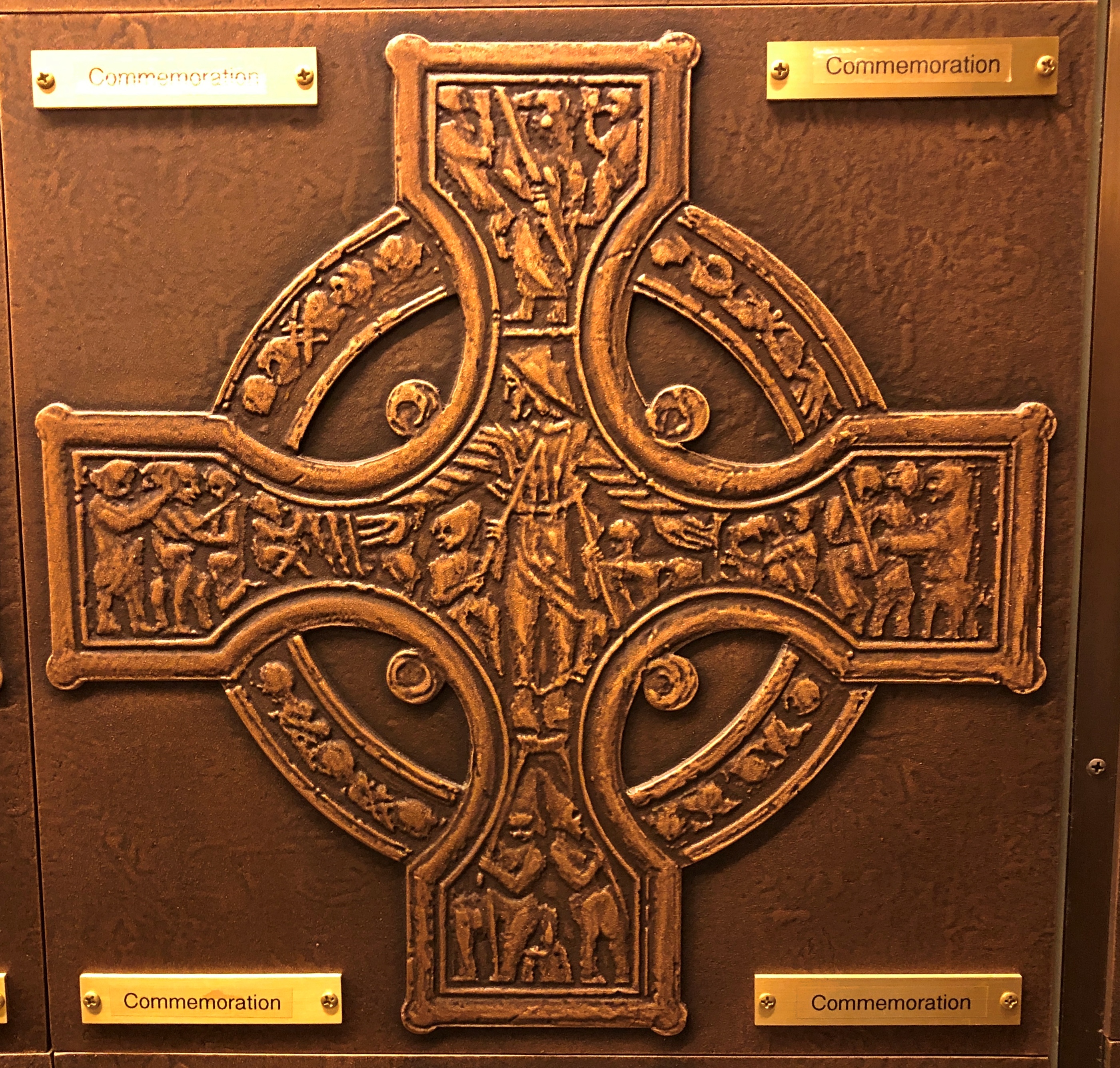
A hallway and some rooms extend beyond the front of the nave, including a columbarium.

Fifth Avenue Pres
Fifth Avenue Pres

Waiting for occupants. All it will take is time.

The Port Huron Blog Post

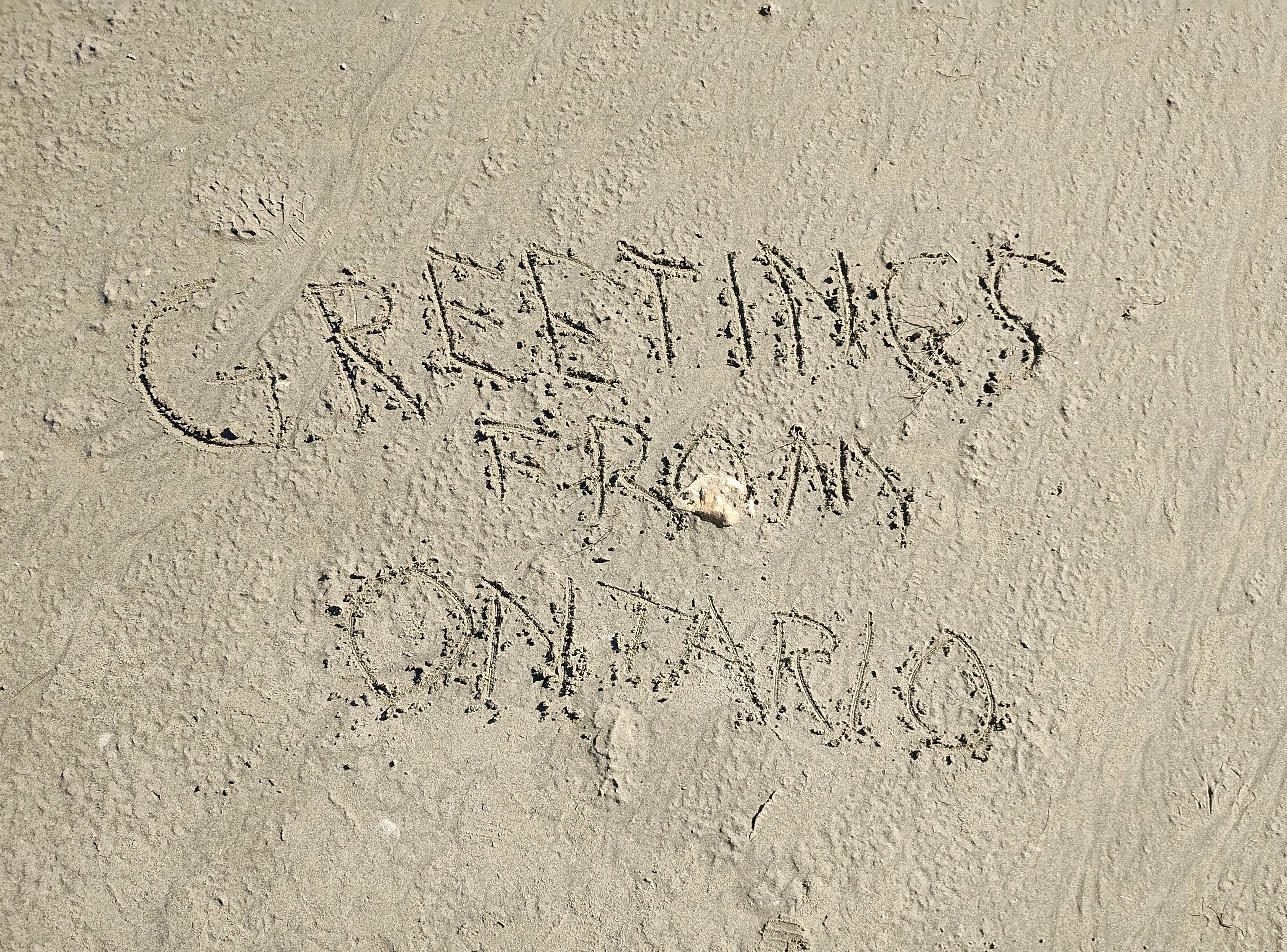
Every time I visit Ontario, or at least a beach in that province, I scratch a message in the sand for Geof Huth, and promptly send it to him electronically. This time it was from the sandy beach at Bruce Peninsula NP. Why? Why not?

My knowledge of the New Left is fairly sketchy, I must admit. As long ago as my own student days, in the early 1980s, it didn’t seem new, but old hat. I’ve never even read more than a few paragraphs of the Port Huron Statement, though I could get around to it, since it’s easy enough to find. Such a tract doesn’t need to be mimeographed to reach an audience anymore.

At least I’d heard of it when the Dude mentioned his connection to it. As I understand it, there was no second draft, compromised or otherwise. But the Dude inhabits the Coen Brothers universe, where surely there was one.

As for my knowledge of the actual city of Port Huron, Michigan, that’s a little better than it used to be, informed by a short visit on the way home from Ontario earlier this month. It’s one of those places I stopped because I’d never been there, but had long seen it on maps. There’s an endless supply of places like that.

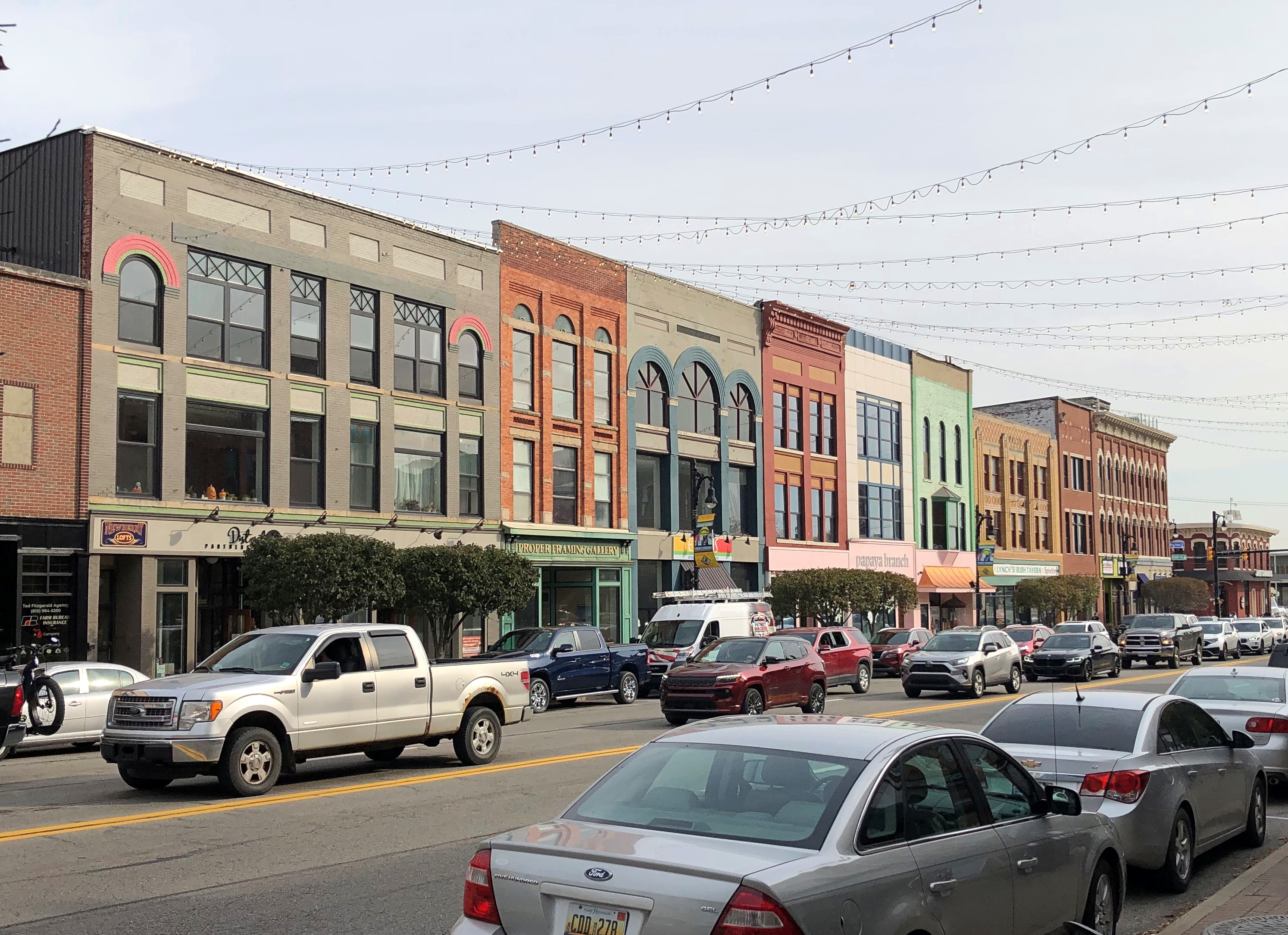
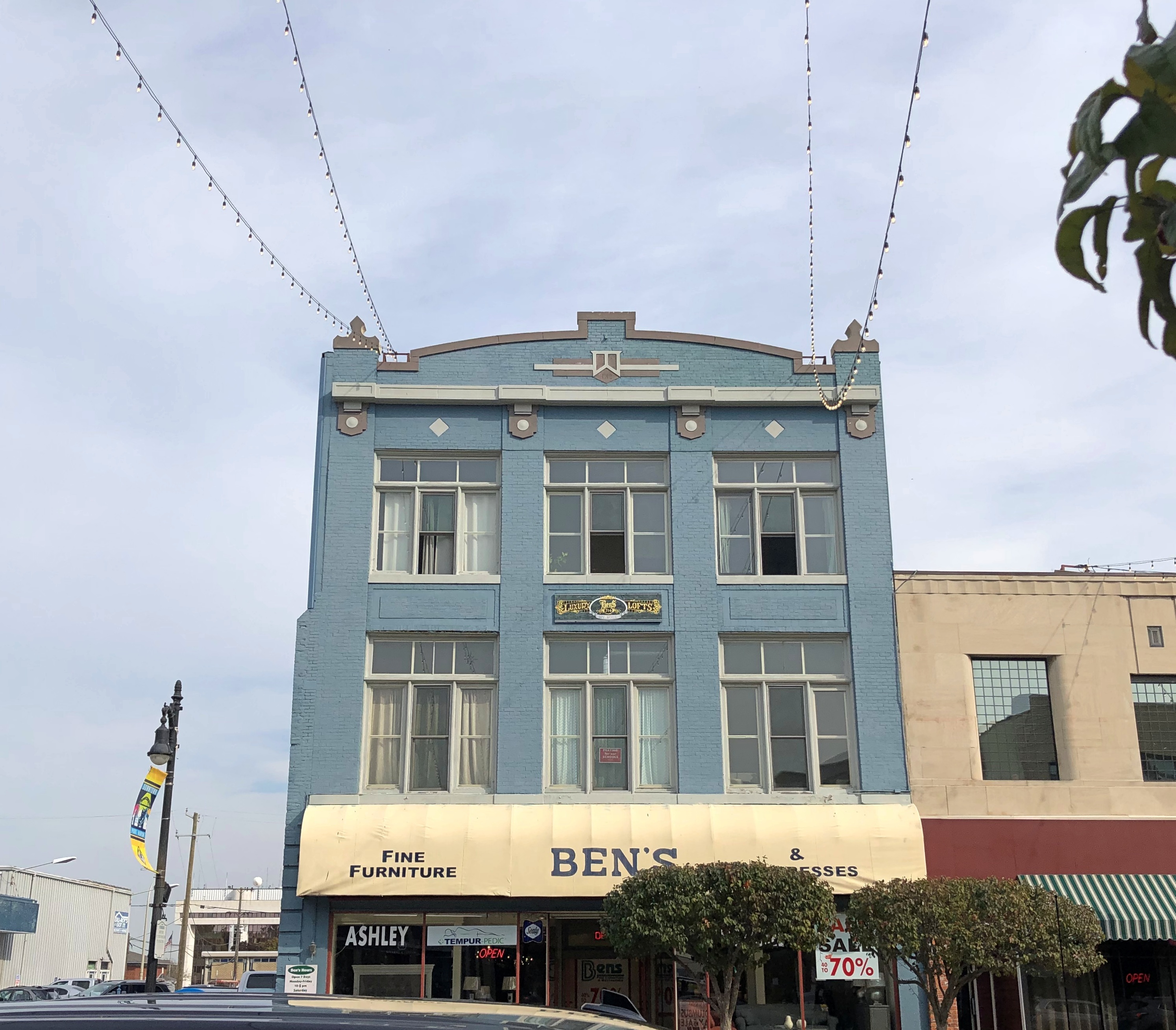
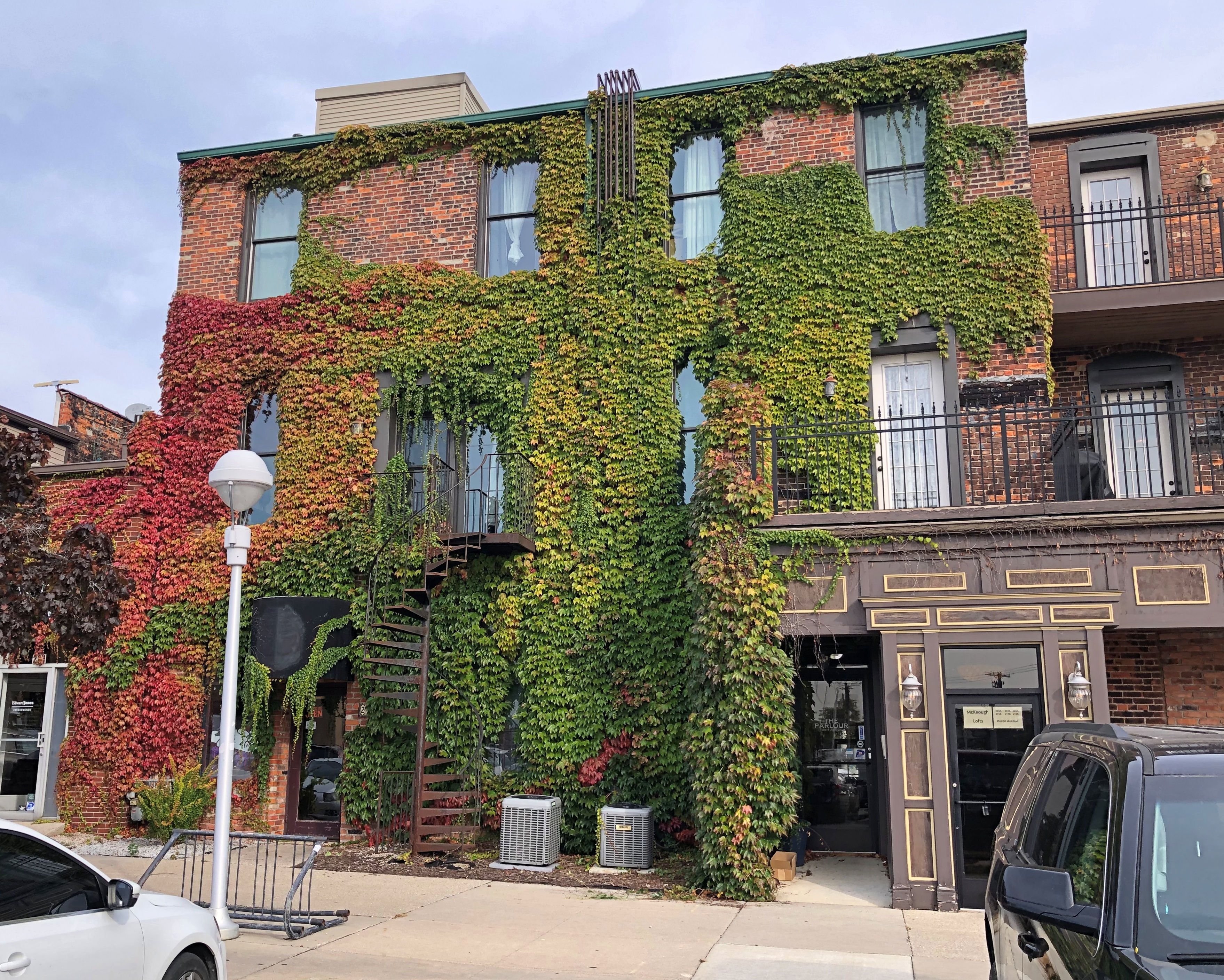
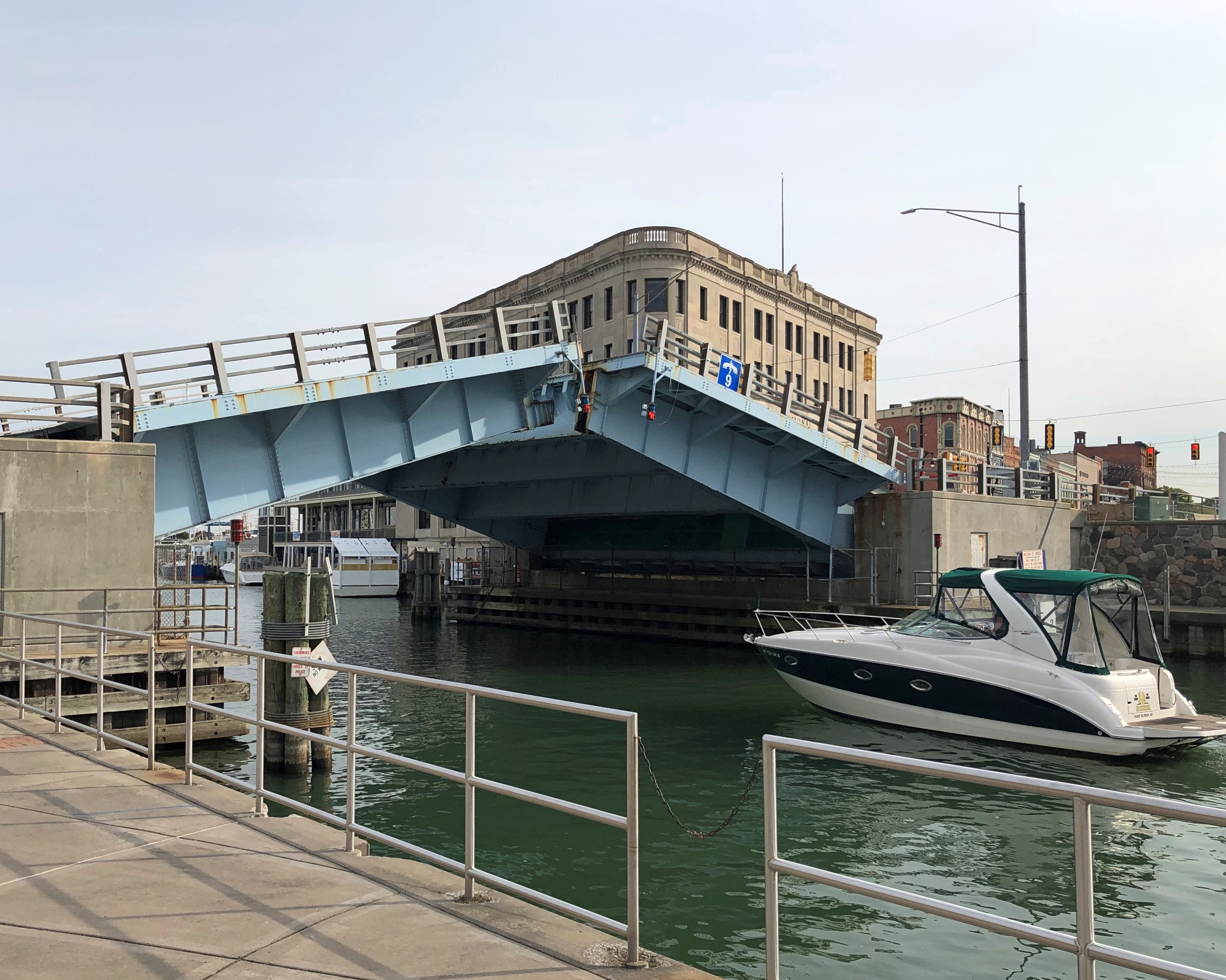
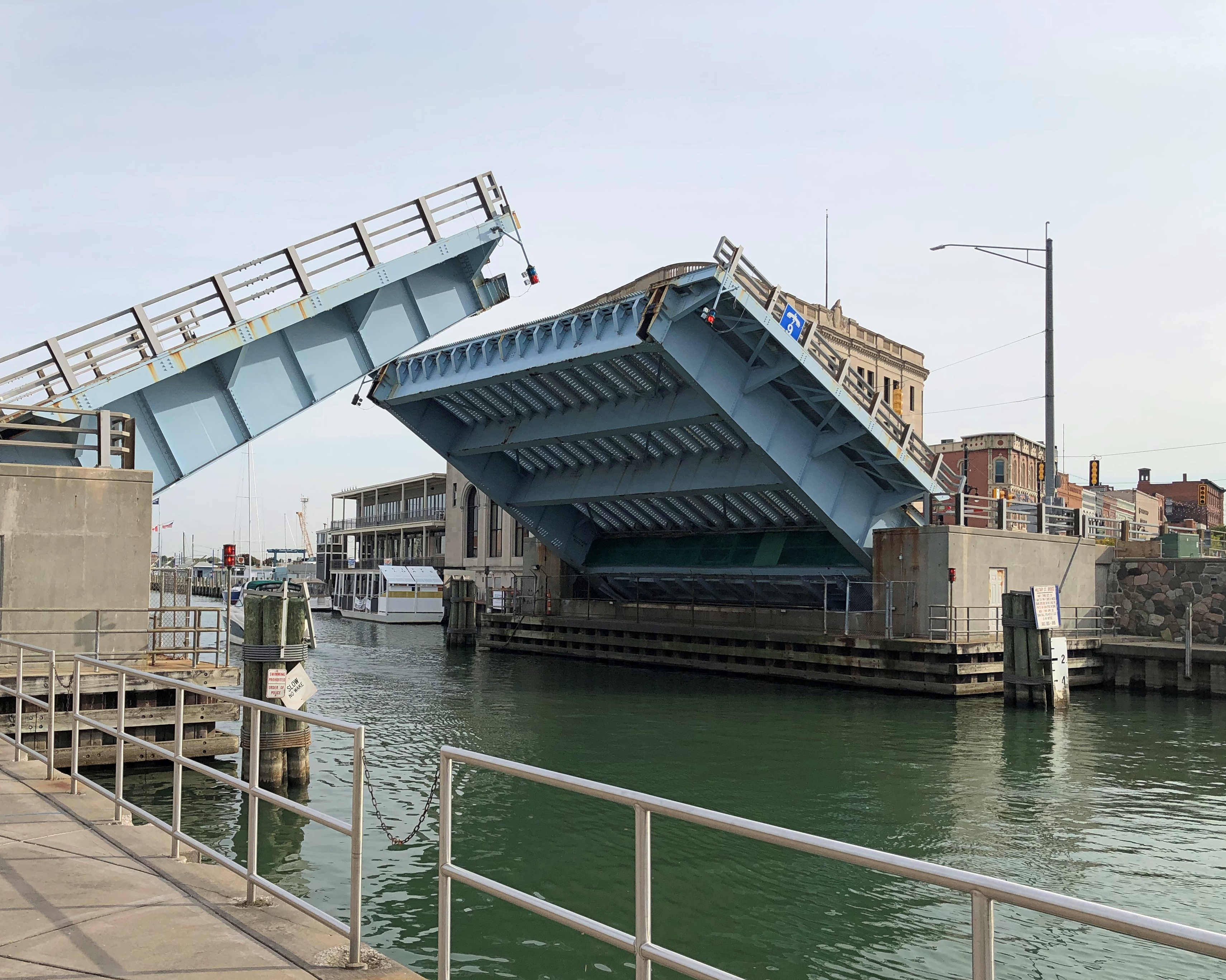
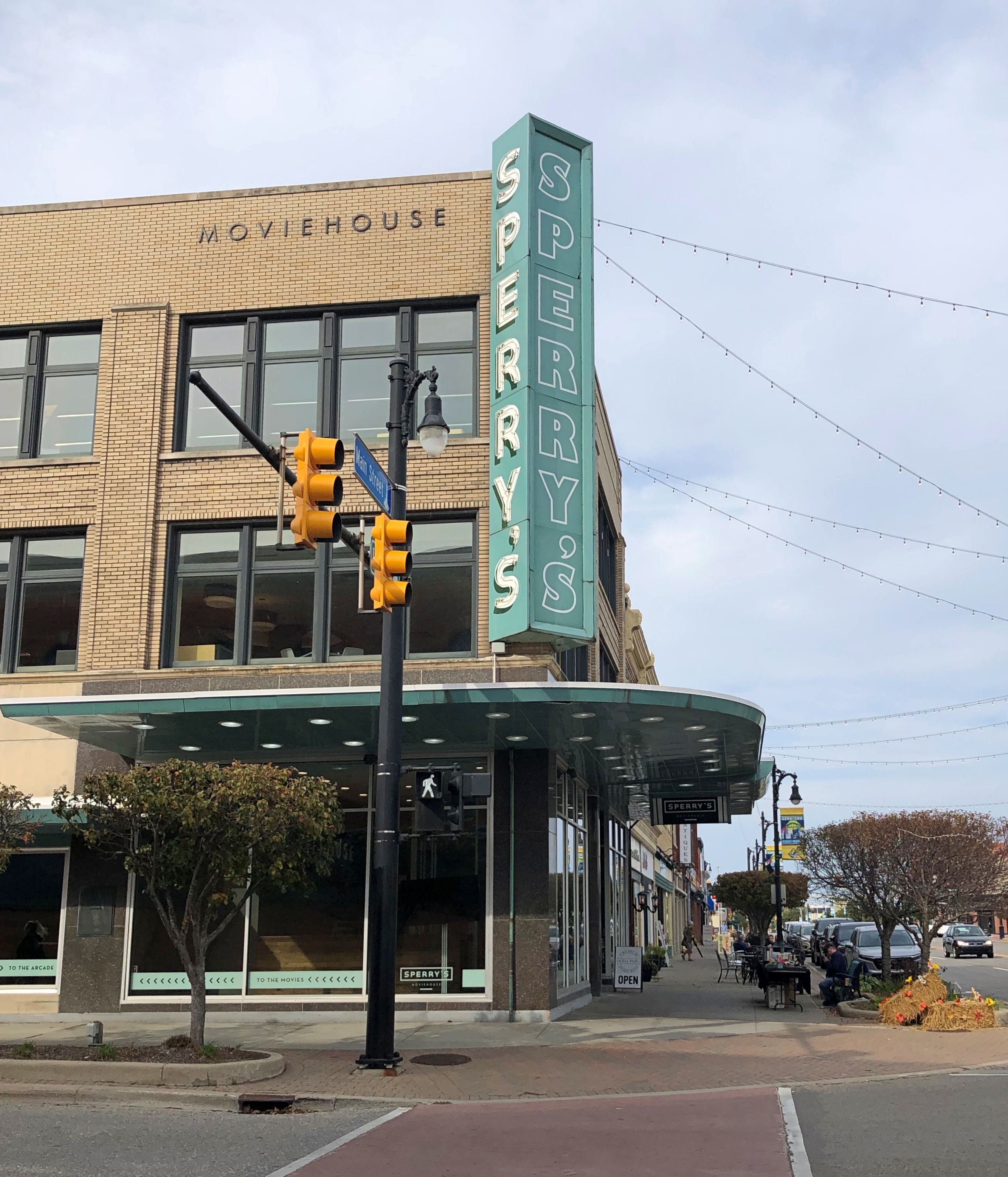
Downtown, especially Huron Ave., made for a pleasant walkabout.Port Huron, Michigan Port Huron, Michigan Port Huron, Michigan

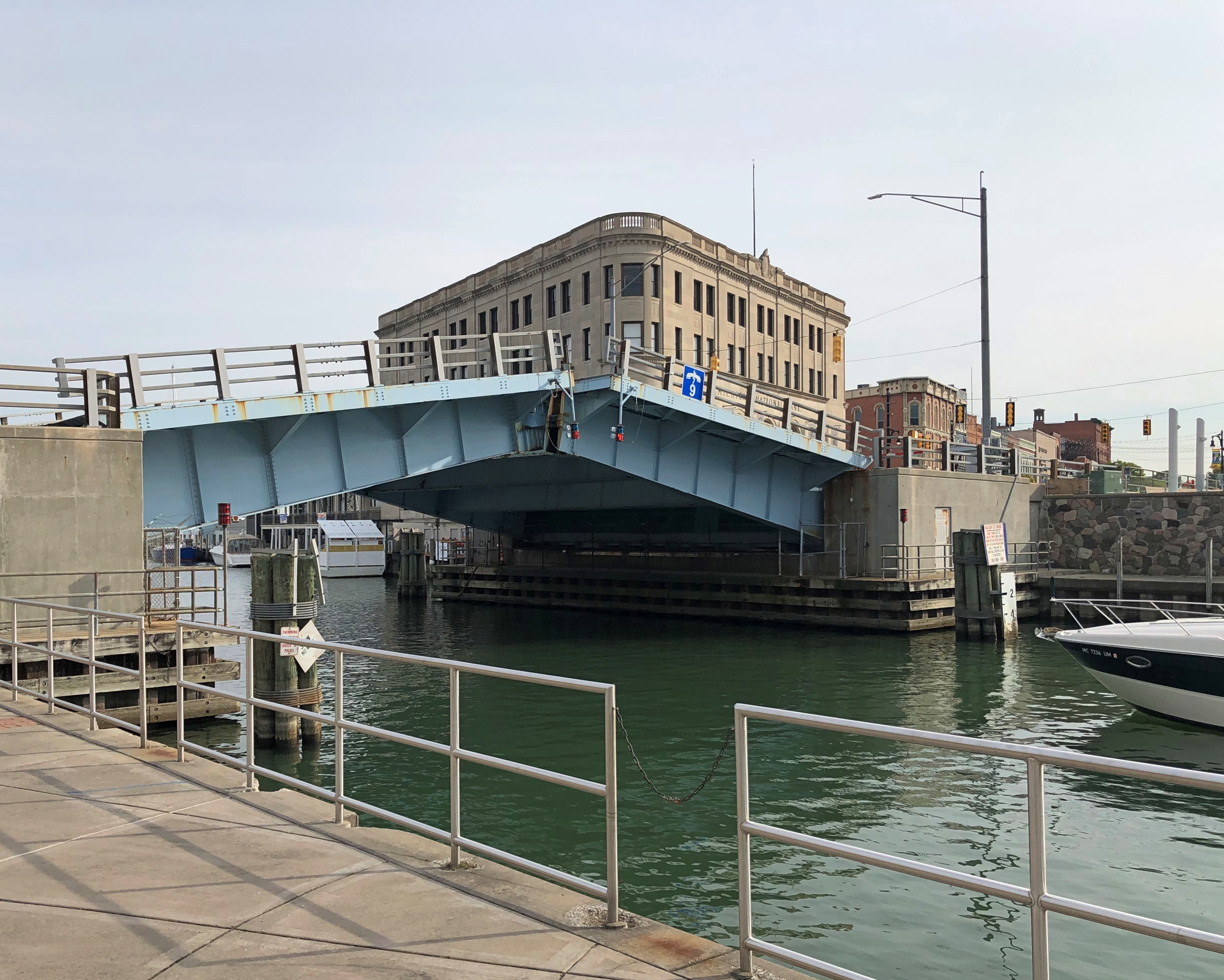
Huron Ave. crosses the Black River – one of a number of rivers called that in Michigan alone – at a drawbridge, just before the river flows into the St. Clair. As we wandered along the riverfront, bells went off.Port Huron, Michigan Port Huron, Michigan Port Huron, Michigan

When you see a drawbridge in motion, watch it if you can. Again and again. Just another of the little maxims I live by.

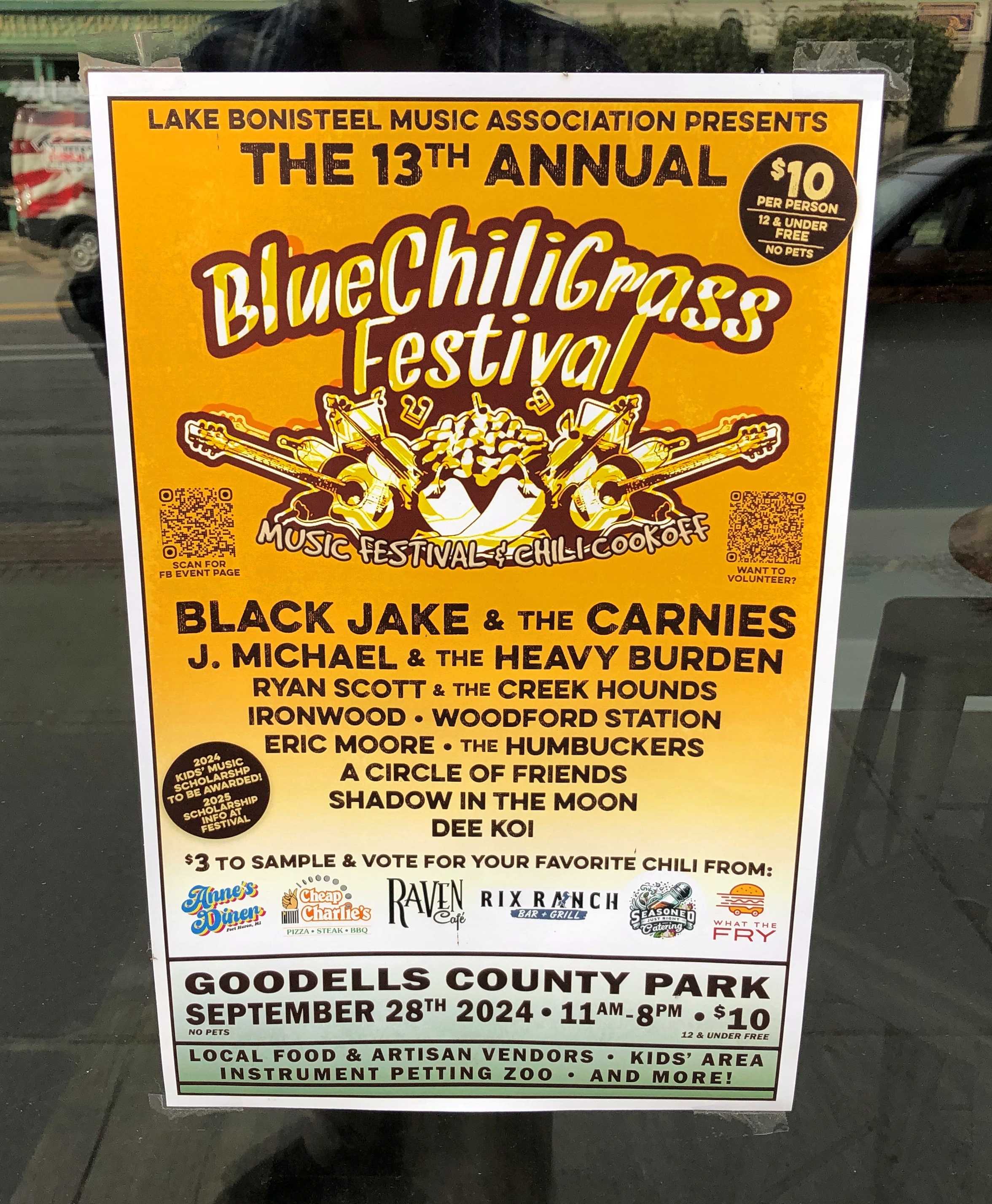
There are hints that hipsters have discovered Port Huron. Maybe a scattering of them who have been priced out of Ann Arbor.Port Huron, Michigan

We spent some time in a sizable, multi-room antique shop on Huron Ave. Not quite as entropic as Reid’s Corner, but nevertheless stocked with all sorts of interesting stuff, including vinyl records (more evidence of hipsters about).

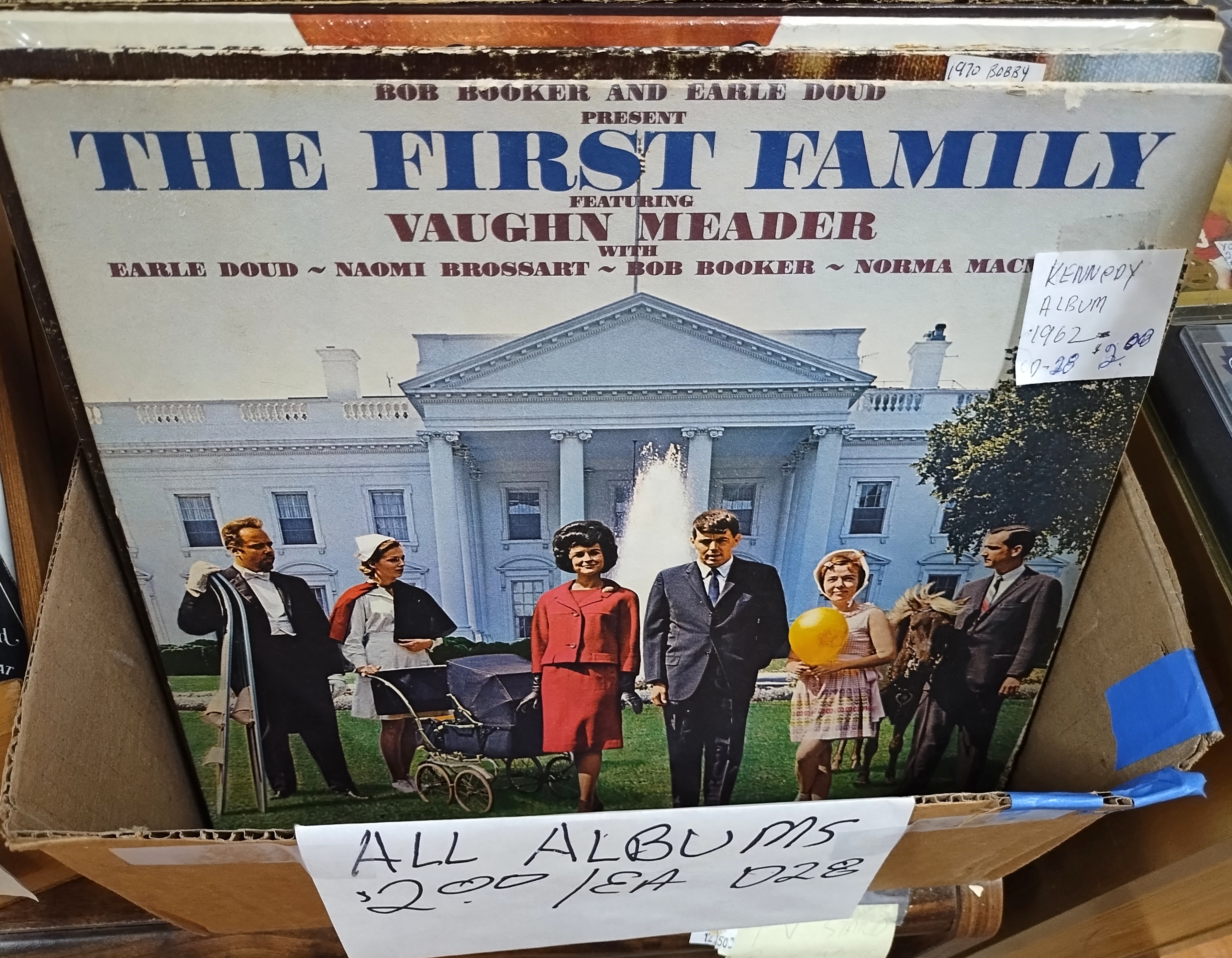
The First Family was first in a bin, offered for only $2. I didn’t buy it. I have a copy that my brother Jay gave me, and he said that he paid about 80 cents for it. I’m glad to have it around, though we have no record player any more. It functions as a reminder about eggs and baskets.

Two dollars might have been the nominal price in 1962, or a dollar or so more. As a collectible, First Family hasn’t even kept up with its original price in inflation-adjusted terms (nearly $21 now), though if you look at eBay or the like, people are trying to get ridiculous prices for the album. The supply of disks is vast, with 7.5 million units reportedly sold before the president’s death.

1962. The same year that the Port Huron Statement was published. Is it a mere coincidence that I saw this record in Port Huron, or is the universe trying to tell me something? I’ll go with mere coincidence.

Subtle Journal of Raw Coinage No. 66

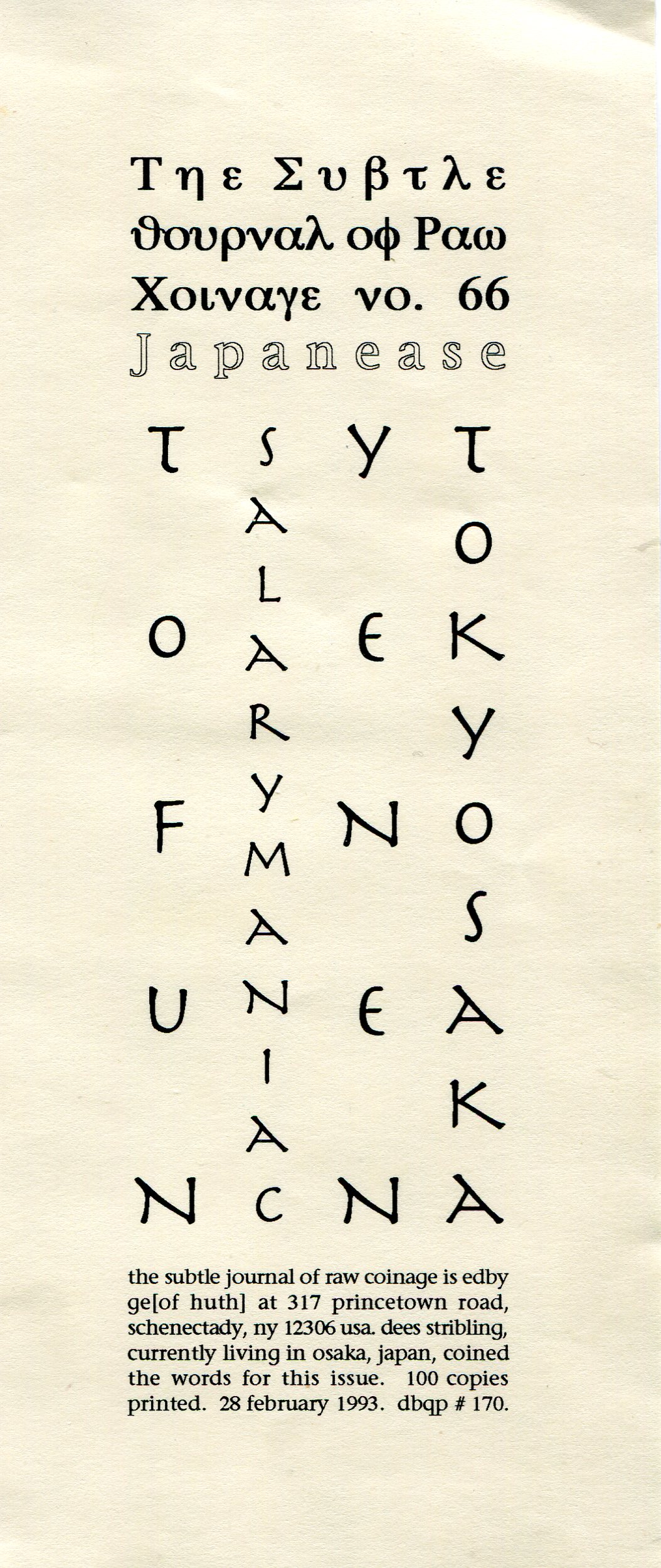
More from the physical files: something I’d forgotten I’d participated in, The Subtle Journal of Raw Coinage, which Geof Huth used to publish. It’s on a slip of paper – one of 100 copies – that I received in 1993 while in Osaka, publication date February 28. Looks pretty good for paper that’s now over 30 years old.

The actual size of the slip is about 8.5 x 3.5 inches, and the back is blank. Geof sent me more than one. I gave a few away, but I still have perhaps three or four.

I also don’t remember exactly how I came to create the words. Geof must have asked me to contribute some words; asked by letter or postcard, since this was pre-email, and I never spoke to him over the phone in those days. Then I must have sat down one day, whipped up the neologisms, and then put them in the mail.

The goal, as I vaguely remember, was to come up with words that could have some conventional meaning, but did not. Also, they had to evoke Japan somehow or other. I’m not sure whether the latter was my idea or not, but I believe I succeeded.

Japanease = Japan, ease (easy enough; easy days in Japan).

Tofun = tofu, fun. I knew about tofu long before living in Japan, since the food’s North American popularity had come of age in the 1980s. The very first time I heard of it, maybe, was at the New Guild Coop in Austin in the UT summer of ’81, where a health food enthusiast posted his verse in the communal kitchen:

Tofu/

is good/

for you.

Salarymaniac = Salaryman, maniac. Not too many actual maniacs among salarymen, I bet, but there must have been a few. We gaijin had a term for the vomit one would sometimes see on the sidewalks of Osaka, which looked like the result of a sudden projection straight down from a few feet up, if that. The sort of mess you’d expect from a salaryman who’d drank too much too fast with colleagues, and who managed to make it outside in time. The pattern somehow always included diced carrots. Anyway, that was a salaryman’s hanko.

Yenen = Yen, en. Yen is what we call the currency. En is what the Japanese call it.

Tokyosaka = Tokyo and Osaka, of course. The foreign press, at least in the those days, tended to be in Tokyo, and seemed not to get out of town much, so Tokyo = Japan in a lot of coverage, which was off-putting for those of us in Osaka. Or maybe I felt that way because I’ve long had an affinity for second cities.

Huthian Postcards Bookended By Time

Geof Huth has been a most prolific postcard sender to me over the years, and I like to think I’ve returned the favor. He asserted once that I send him a card every four days or so, but I don’t believe it has been quite that often, though there have been occasions when I send him a card each day from some trip or other. That’s something that usually lasts only a week or less.

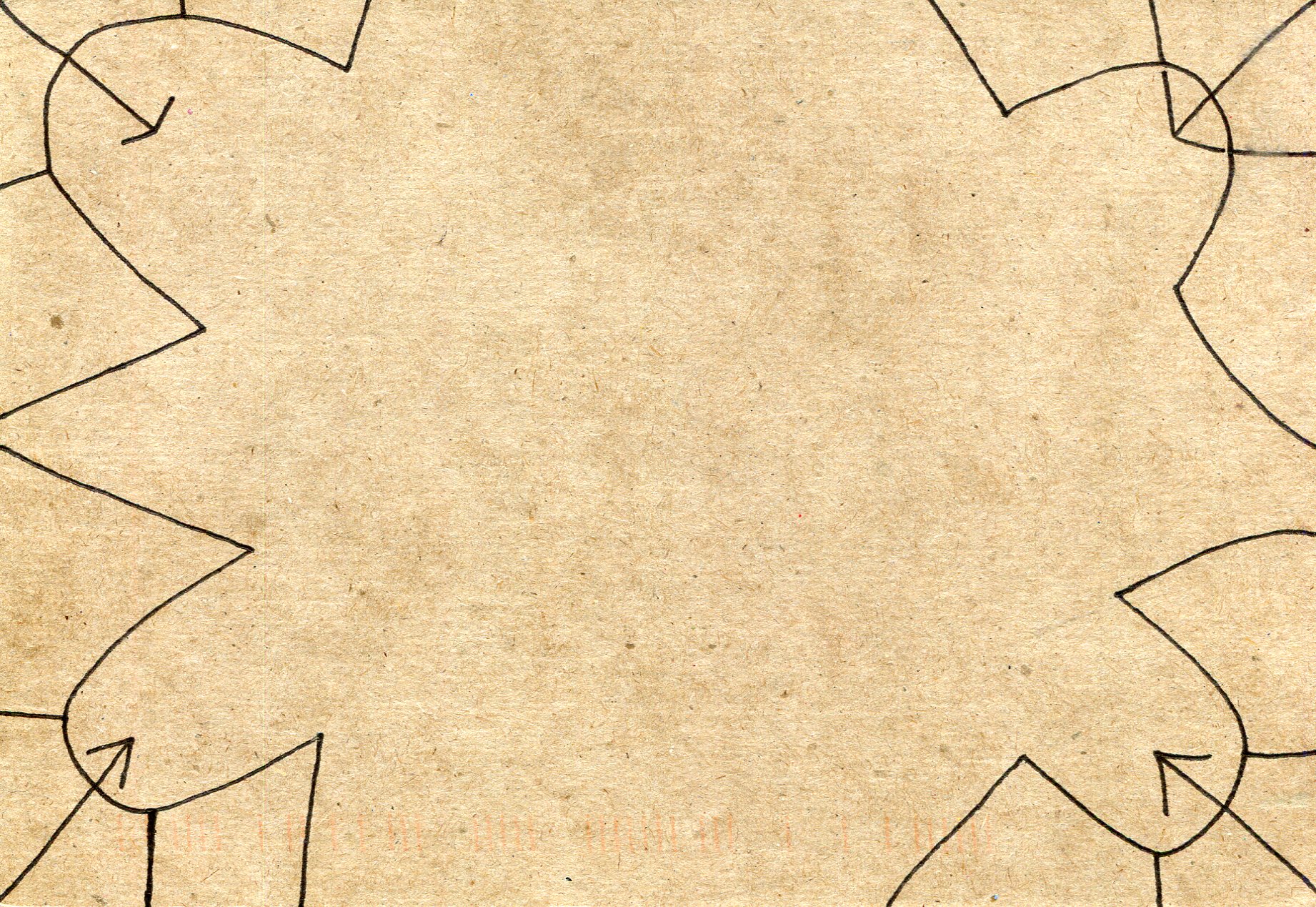
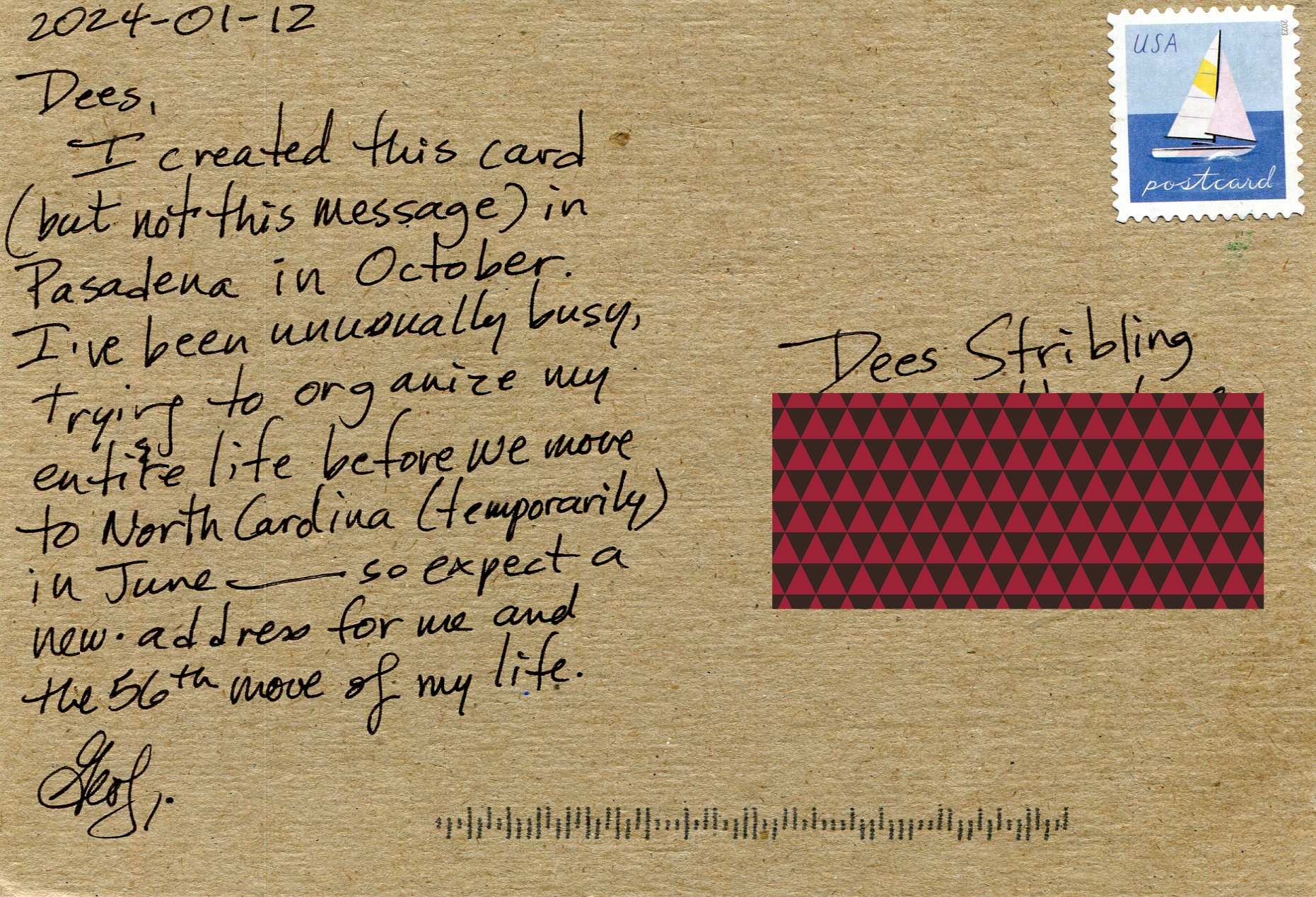
I got a card from Geof yesterday. For the moment, it is the newest in a very long line.

Nice. Made from found cardboard, hand drawn, imparting some information, and most likely unique in the history of humanity. Some of his cards have much more elaborate drawings, which he calls glyphs — if I remember right — though I’ve never asked for a precise definition of the term, and probably don’t need to. Some things exist beyond the boundaries of precision, and are no worse for it.

One of these days, maybe, I will post a collection of Huthian postcard glyphs, since they are quite remarkable graphic expressions. I’ve posted cards sporting a few over the years, including a particularly colorful, messy, exact, crayoned, inked & impressed one with a collection of letters and letter-like entities, but I don’t have the energy for kind of project right now. Sorting postcards is it.

During my postcard sorting, I came across what may be the first card he ever sent me. Geof’s father was in the Foreign Service, so he (Geof) would spend time in far-off locations during our college years, at least during the summers, and this came to me from Switzerland during the fantastic plastic summer of ’82.

I checked, pulling at the edge of one of the stickers, and after more than 40 years it would still be possible to remove them and stick them on something else. An example of Swiss adhesive prowess, I suppose. But I have no intention of doing so.

It’s possible I received something from him earlier, but I’m not sure how likely. I wouldn’t have known him well enough, or at all, the previous summer, since we probably met at some point that year (ca. 1981, let’s say) because of our mutual loose affiliation with the VU student magazine Versus.

I was in summer school at VU in ’82. I made no note of receiving the card in the diary I kept that summer, which presumably would have been toward the end of the month. I didn’t make many specific entries attached to specific days that month anyway – I was out to smash the diary paradigm or something. So that summer mostly exists beyond the boundaries of precision, but that doesn’t keep me from smiling when I think about it.

First Box of Cards

Nearly above freezing today, and icy rain this evening. A slushy week is ahead, more like late February or early March than late January, but each winter has its own rhythms. A relatively warm week this time of year is entirely welcome, except for the possibility of ice patches.

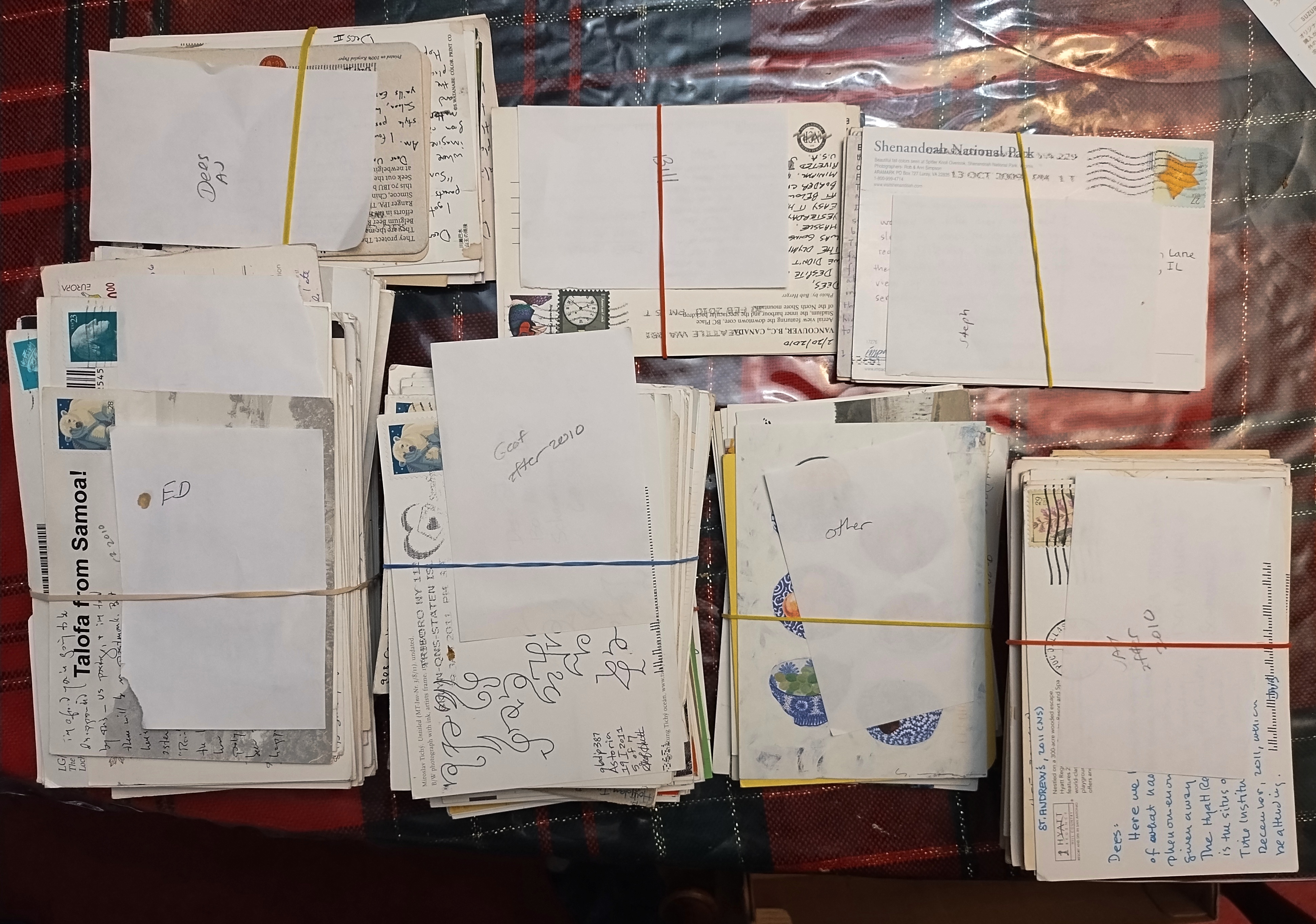
I’ve undertaken to sort my postcards, sometimes on the weekends, sometimes in the evenings, in short bursts. Note the choice of verb. Not organize. My goal isn’t so grand. I just want to separate the cards by who sent them, and store them in roughly chronological order, but not down to the granularity of an exact order – even if such a thing were possible, since not everyone dates every card, and USPS postmarks are often a smear of ink daring you to make sense of them.

Why bother? They’ll all be lost to time, of course. So what? It’s one of those things you do for your own satisfaction.

I’ve made my way through the first box out of 10 or so, but some other cards are stashed in folders and I’m not sure where else, down in the laundry room. This is going to take a while.

Most cards in this particular box are from the early to mid-2010s, though some as early as 2003 and as late as 2019. The tallest pile so far is from Ed Henderson, but I expect him to be overtaken eventually by cards from my brother Jay and Geof Huth, both of whom have known me longer, and both of whom have the advantage of being alive.

One from Jay, dated July 3, 2011. 

No printed text on the reverse. “I can’t say that I have any idea what this card is about,” Jay wrote. Me either.

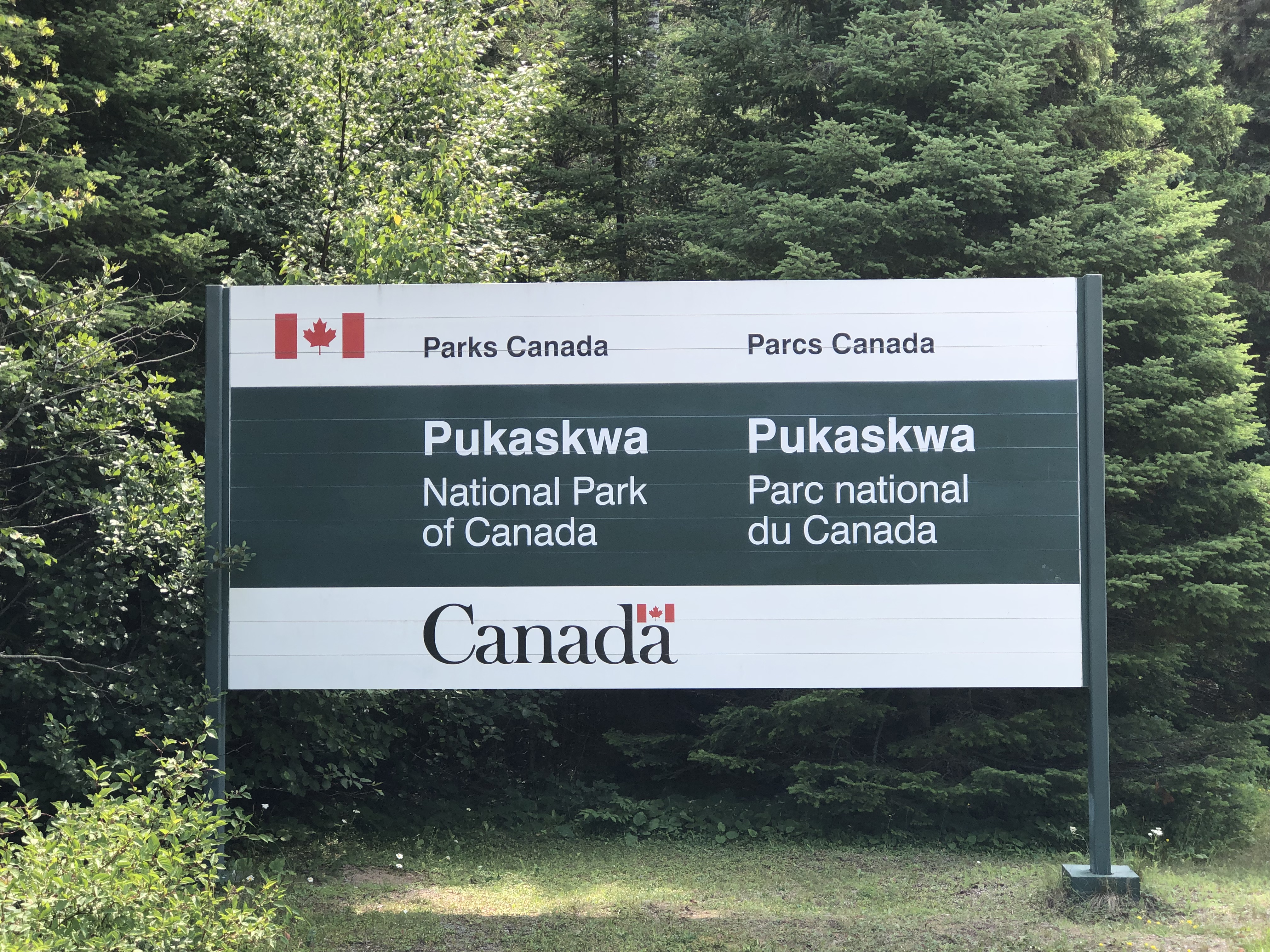
Pukaskwa National Park

My old friend Geof Huth has been known to post images of figures – glyphs – he draws in the sand, and so I took some inspiration from him. His glyphs are unique, probably in the history of the world. My are a touch more conventional.Pukaskwa National Park

I took a similar image on my crummy cell phone camera, but one good enough for snaps, and sent it to Geof. From the edge of the wilderness in northwest Ontario to a tower in Lower Manhattan, the message went.

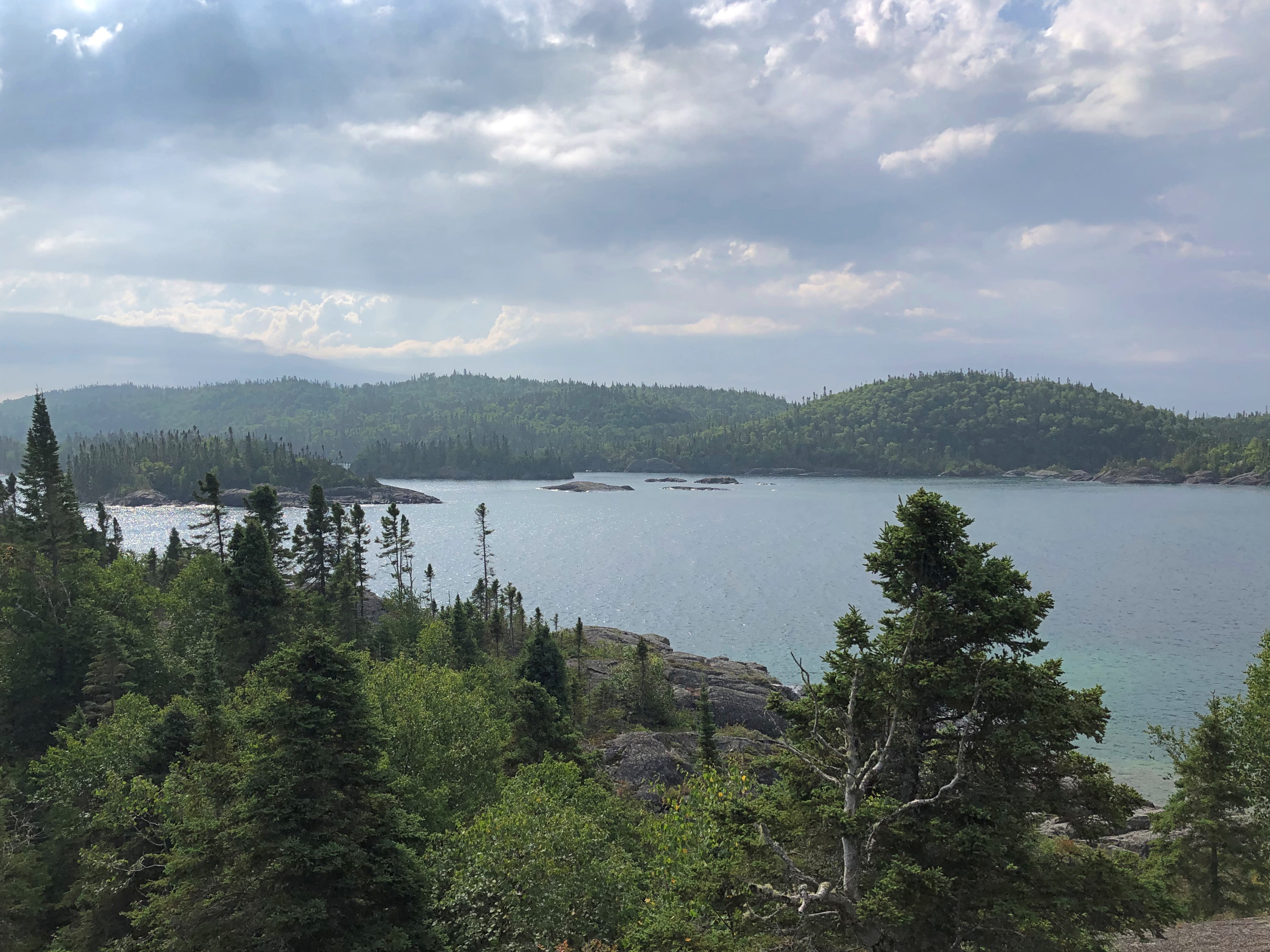
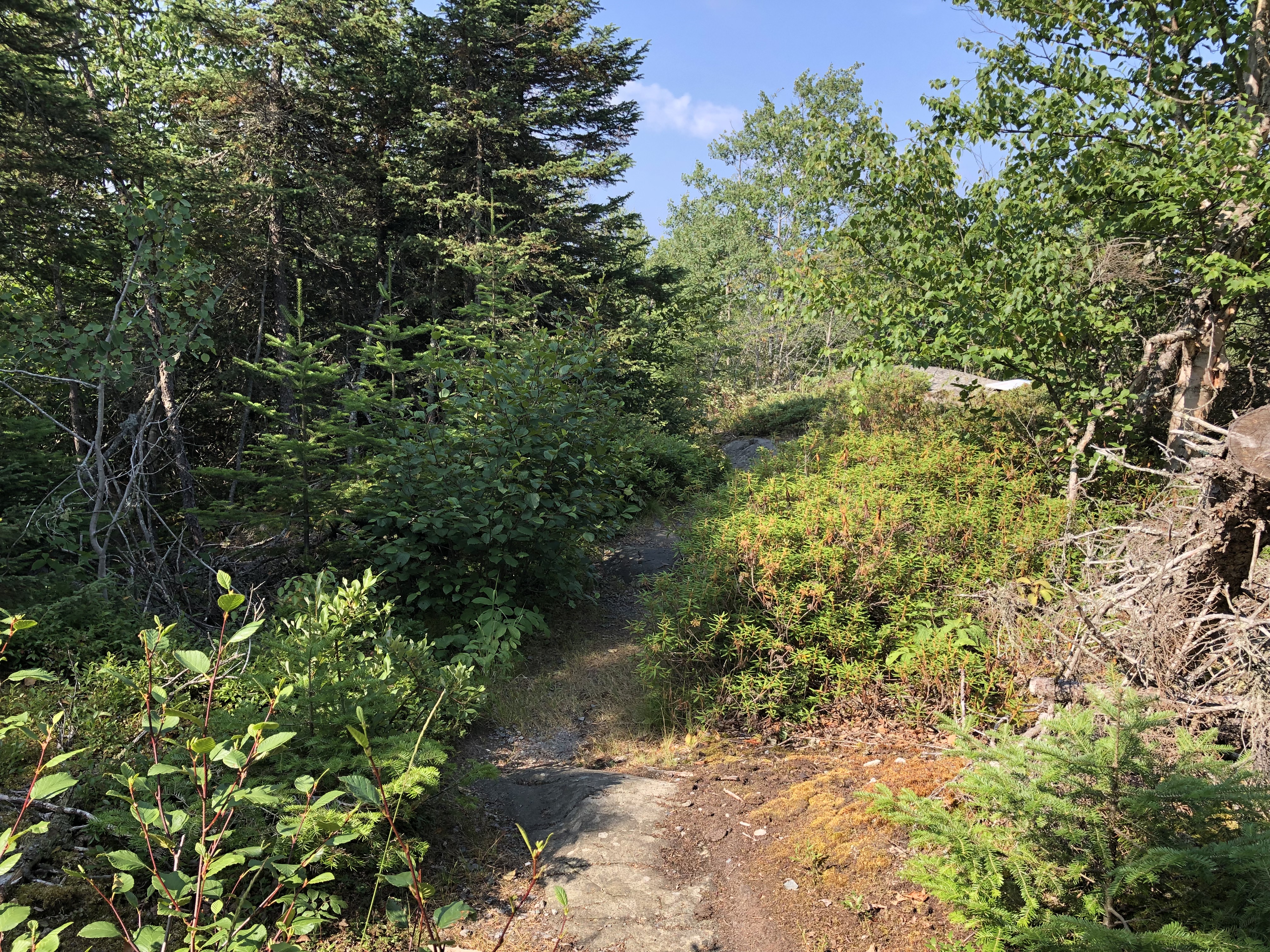
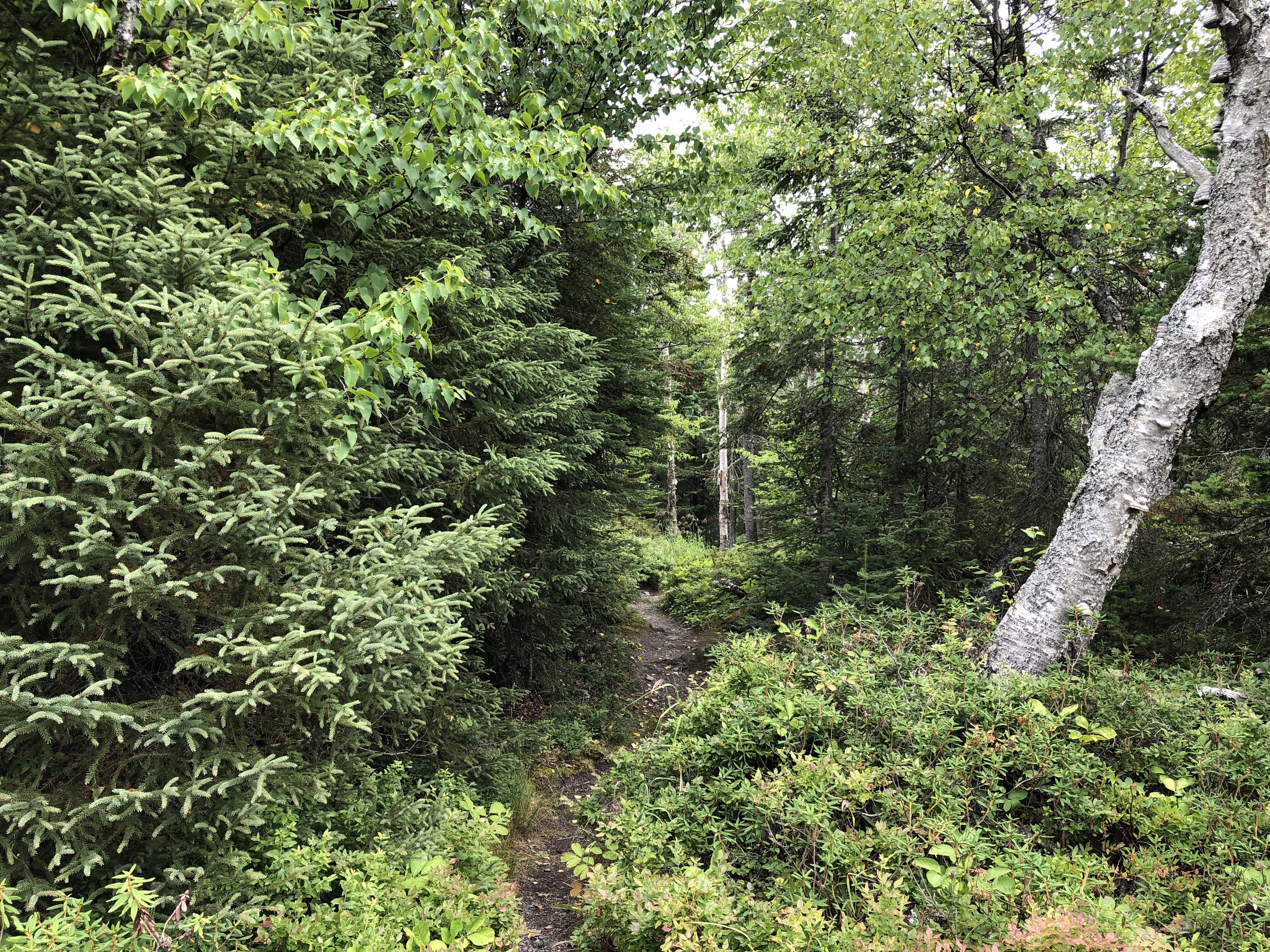
It might look like the wilderness.Pukaskwa National Park Pukaskwa National Park Pukaskwa National Park

But no. Edge it was. I might have been within the bounds of Pukaskwa National Park, but only a few miles in, with access by road.Pukaskwa National Park

Pukaskwa (PUK-ə-saw), a sizable slice of Ontario (725 sq. mi.) on the shore of Lake Superior, is mostly back country. Rugged is the inevitable term for its back country, so much so that the mostly wooded terrain mostly thwarted efforts to mine and even log it, back when that was legally possible. The park reportedly protects the longest undeveloped stretch of coastline on Lake Superior and, indeed, the Great Lakes.

A feature of the park: there are clusters of Pukaskwa Pits at remote locations. Wiki is succinct on those human-made structures: they are “rock-lined depressions near the northern shore of Lake Superior dug by early inhabitants, ancestors of the Ojibwa. Estimates of their age range from as recent as 1100-1600 CE to as ancient as 3000-8000 BCE.”

That’s a pretty wide range of age estimates. You might say their origin is “lost in the mists of time,” but that lacks academic rigor. Modern Canada created the park in the 1970s.

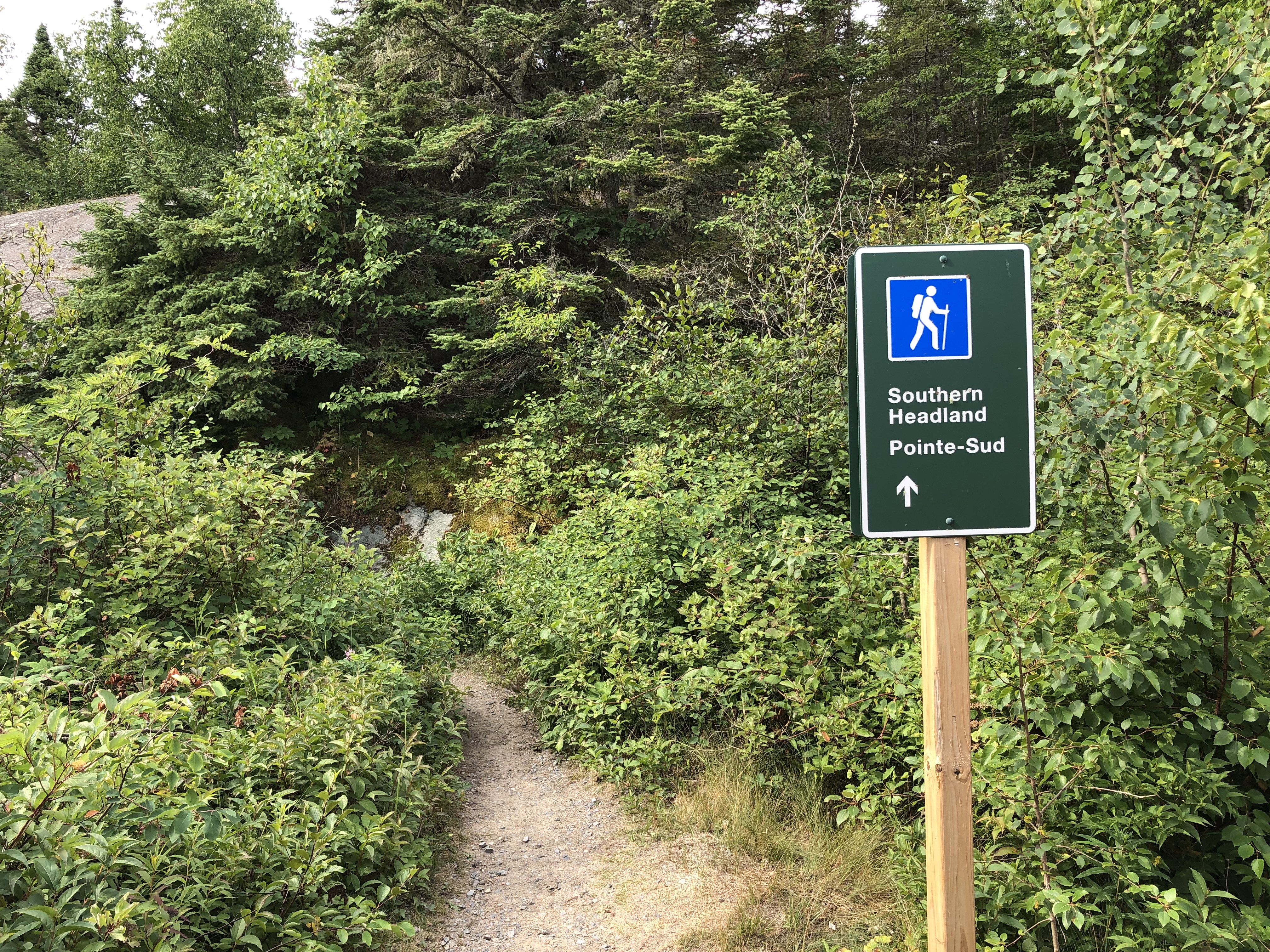
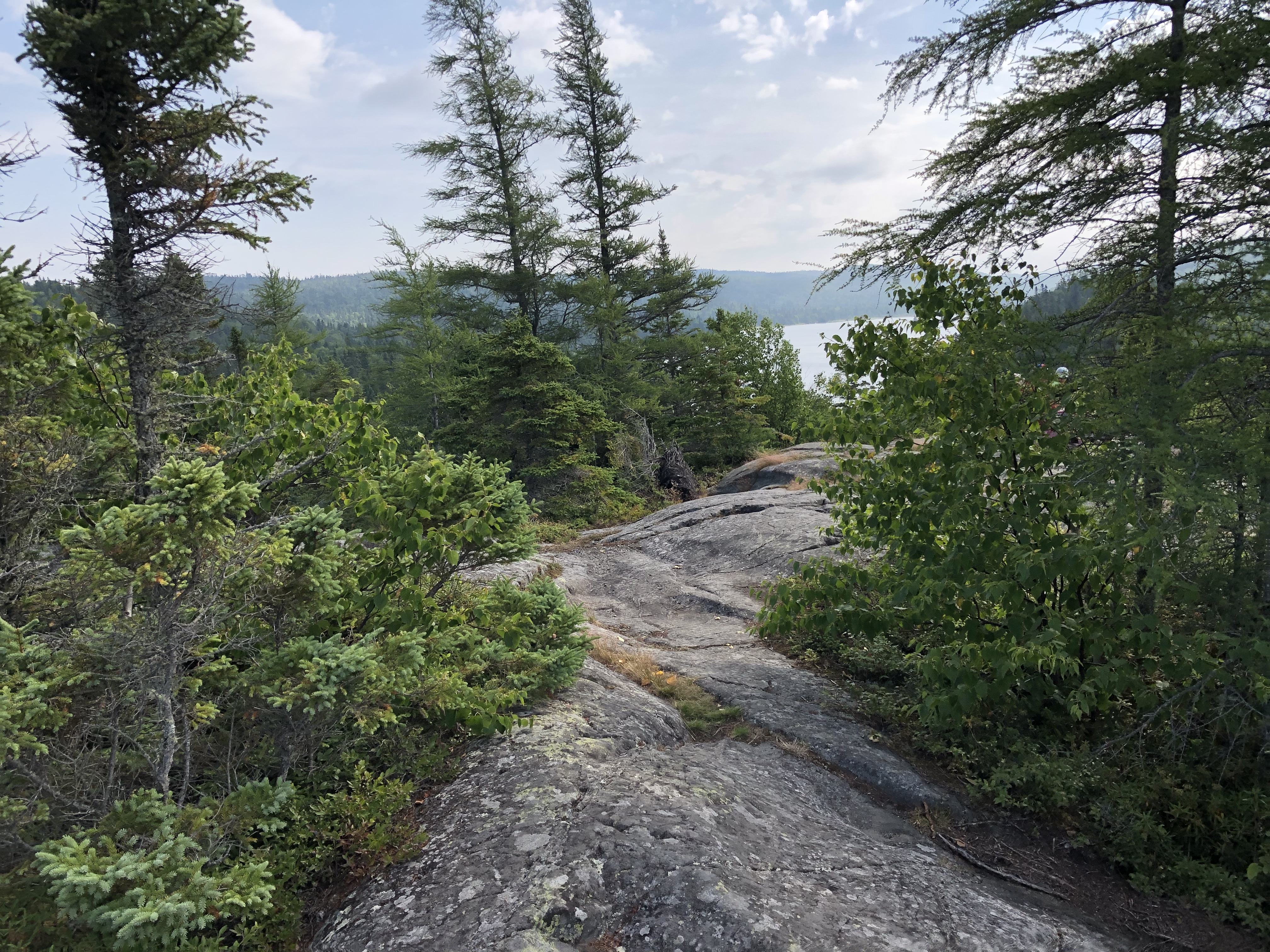
I wasn’t anywhere near the pits. At least, I don’t think so. The park’s single road leads to a few trailheads, such as Southern Headland.Pukaskwa National Park

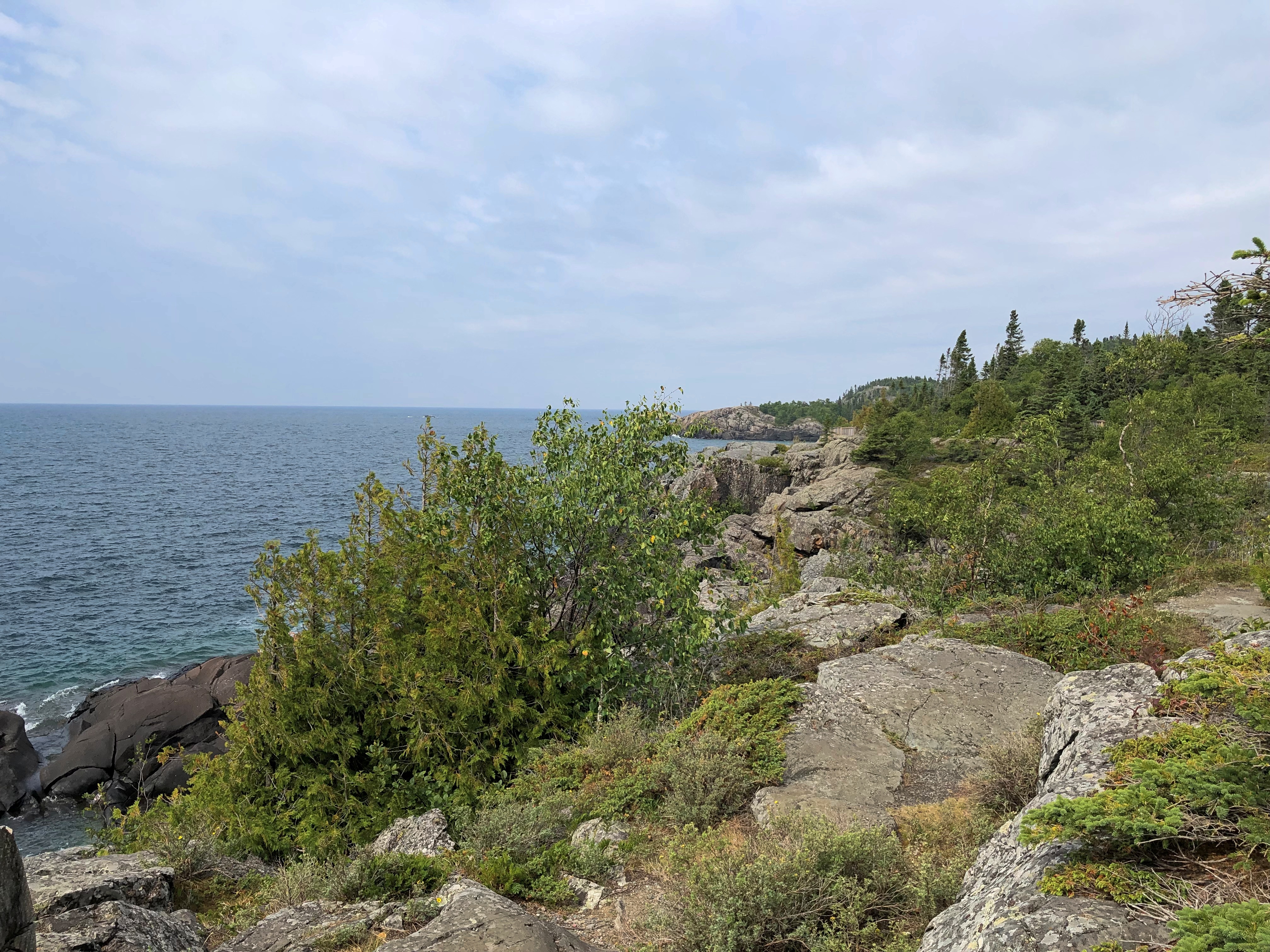
It winds around some hills near Lake Superior, with a variety of under-foot topography as you walk along. Nothing that hard. This time around, I had a walking stick and water to go with my decent hiking shoes.Pukaskwa National Park Pukaskwa National Park Pukaskwa National Park

The trail eventually leads to a deadwood-strewn beach.Pukaskwa National Park Pukaskwa National Park

A different, much shorter trail from the beach leads to another beach. I spent a few hours there, cooling my heels and drawing a few words in the sand. That is, I did once I’d crossed a horizontal forest of driftwood.Pukaskwa National Park

A long stretch along Superior.Pukaskwa National Park

There were about ten people on the whole beach. And as few on the Southern Headland trail, where the rocks meet the water and sky. From the beach, I captured an image of hikers on the rock outcropping where I’d been earlier in the day.Pukaskwa National Park

Rocks meeting water and wind and sun, because the sun came out in the afternoon. The four elements all together.

New York City ’21

Until a few weeks ago, I assumed that I’d take no more trips for the rest of the year. I’ve had an exceptional year in that way, so another one would be an unexpected cherry on top of the sundae.

Early this month, my company invited me to some meetings and other events at headquarters in downtown Manhattan, so on Wednesday I flew from O’Hare to LaGuardia, returning today. The first thing I noticed in NY is that the redevelopment of LaGuardia is coming along. LGA is on its way to being a real 21st-century airport, rather than the dingy embarrassment it has long been.

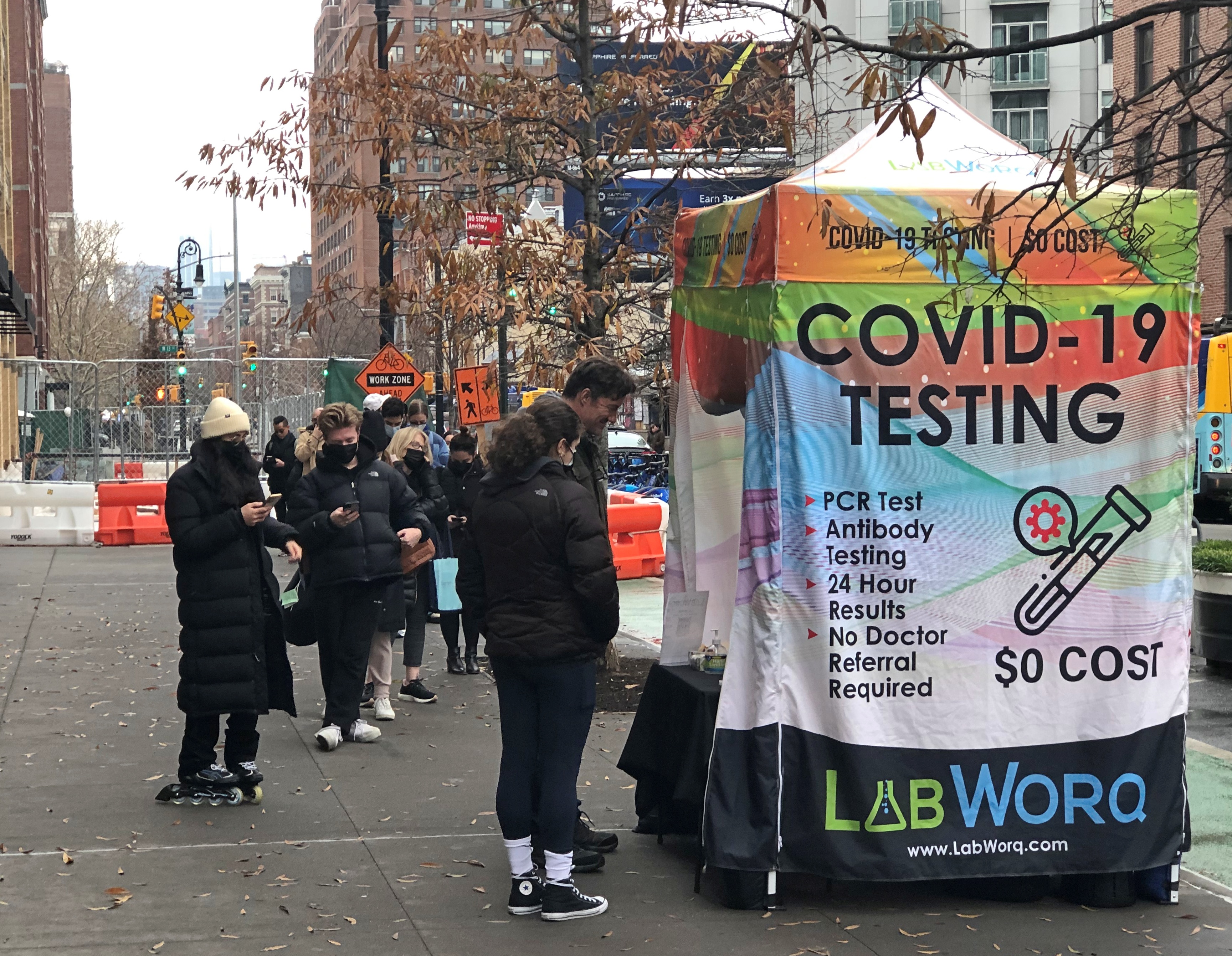
On the whole, the weather was cooperative for a visit, clear and cool until Saturday, when it was cool and alternated between drizzle and mist. The pandemic was not cooperative. Some of the events scheduled for my visit were canceled or otherwise disrupted. New Yorkers were eager to be tested at popup facilities.NYC 2021

I had some time to walk the streets and other pathways of the city, especially on Saturday – a low-risk activity, even in the days before the vaccines – and had a few good dine-in meals, in spite of everything. Such as at a storefront on Water Street, Caravan Uyghur Cuisine, where I had a wonderful lamb dish, besides the experience of visiting a Uyghur restaurant for the first time.Uyghur food

From Wednesday evening to Friday morning, I stayed at a hotel at the non-financial end of Wall Street, and spent the whole time in Lower Manhattan, below Barclay St. From Friday evening to this morning, I stayed at a hotel in Midtown East (or Turtle Bay, on 51st) and spent some time around there, though my travels took me back downtown sometimes.

Lower Manhattan is a fairly small district, with its streets roughly hewing to those of New Amsterdam, meaning a grid that’s been dropped and stepped on, unlike most of the rest of the island. That makes for more interesting exploring, but it’s also possible to get disoriented, though never for very long.

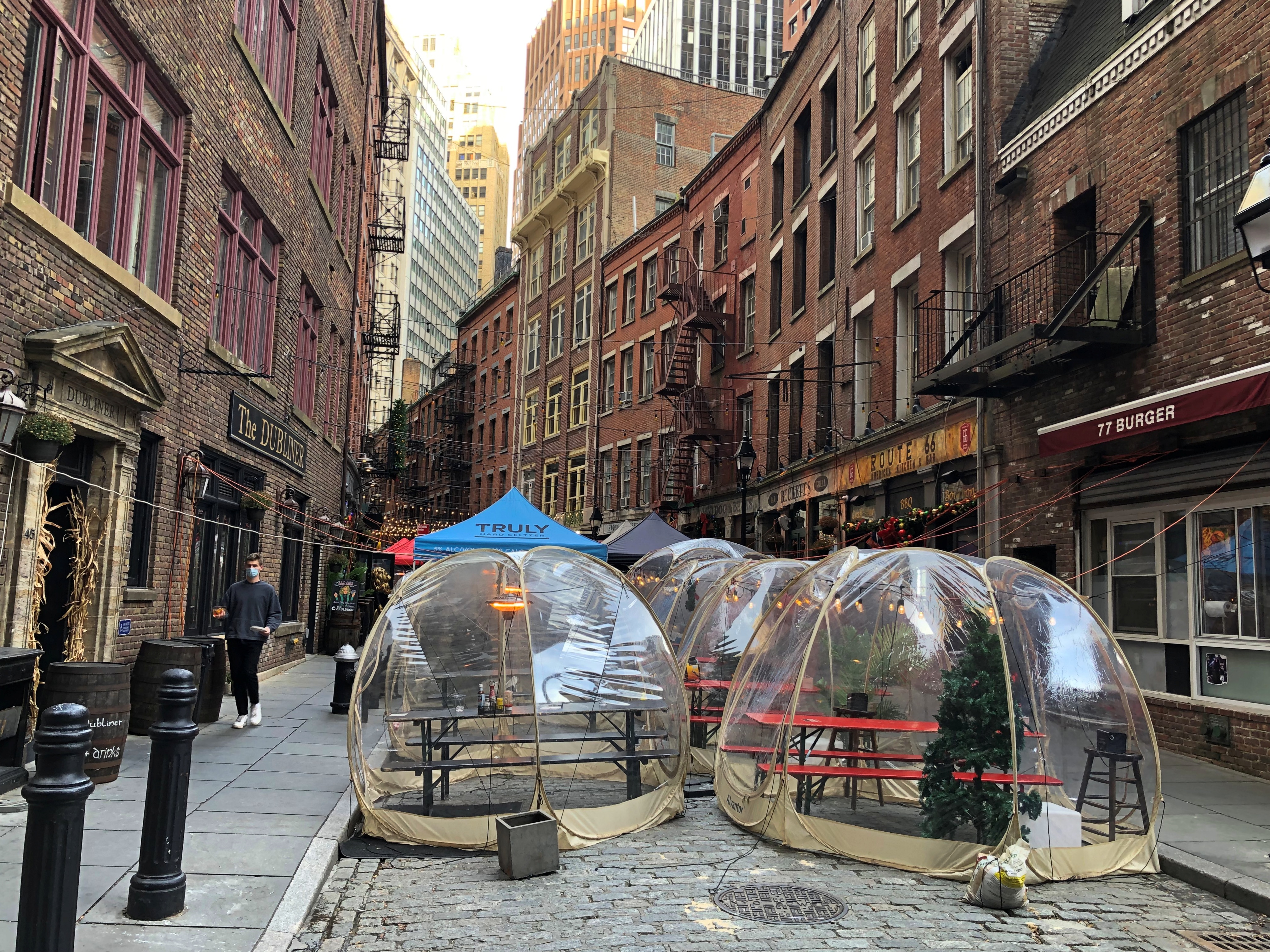
During this visit, I had time to look over two streets in detail, Wall and William, though I poked around some others, such as the charming and close-in Stone Street, where a residue of 19th-century buildings overlook 21st-century outdoor bubbles that serve as restaurant annexes.Stone Street NY

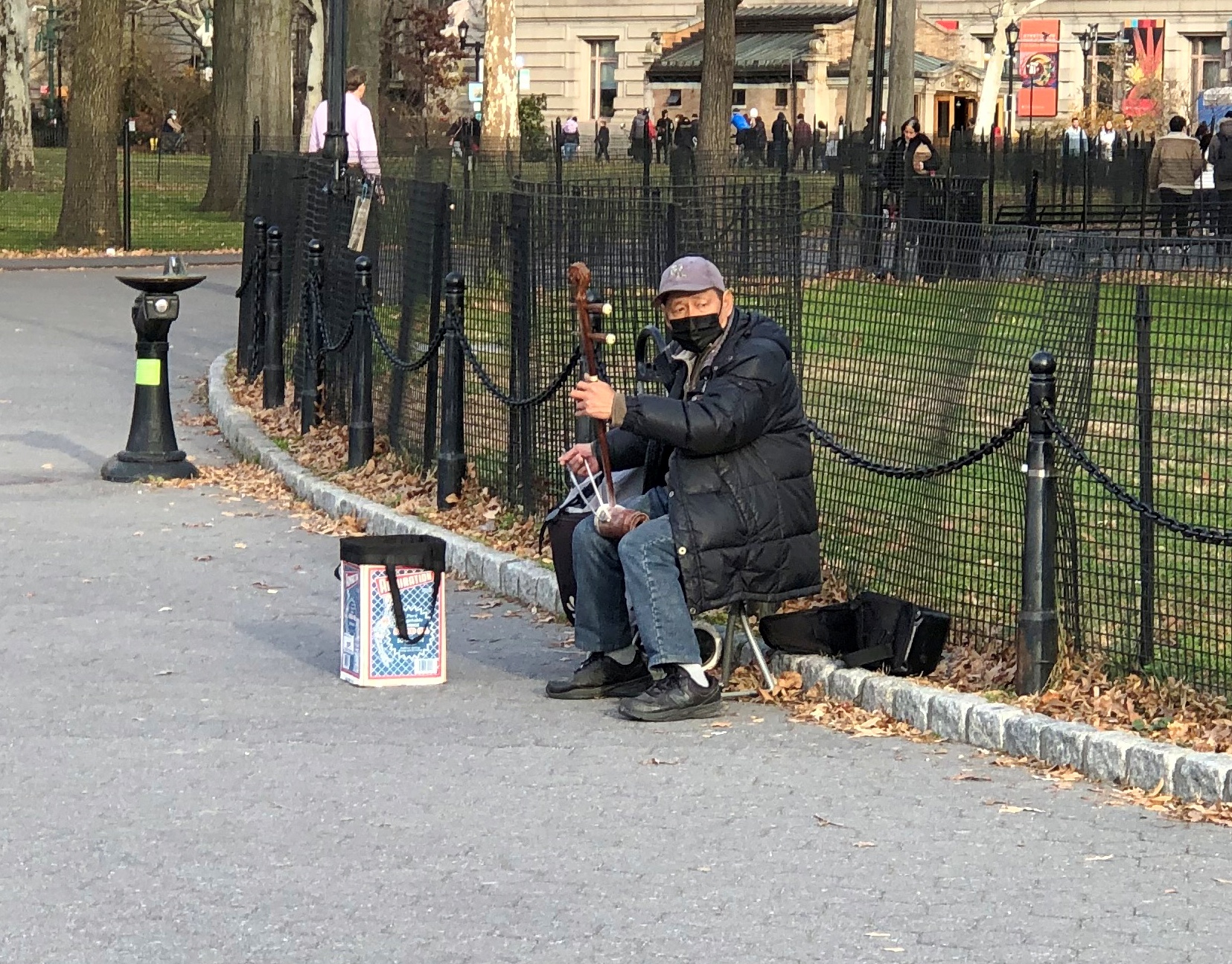
Spent some time in Battery Park (officially The Battery, but does anyone call it that?), which was alive with tourists and a few buskers late on Friday afternoon. Including this fellow, who was playing Christmas songs on his erhu. He was good, but not drawing much of a crowd, so I gave him a dollar.Battery Park, NY

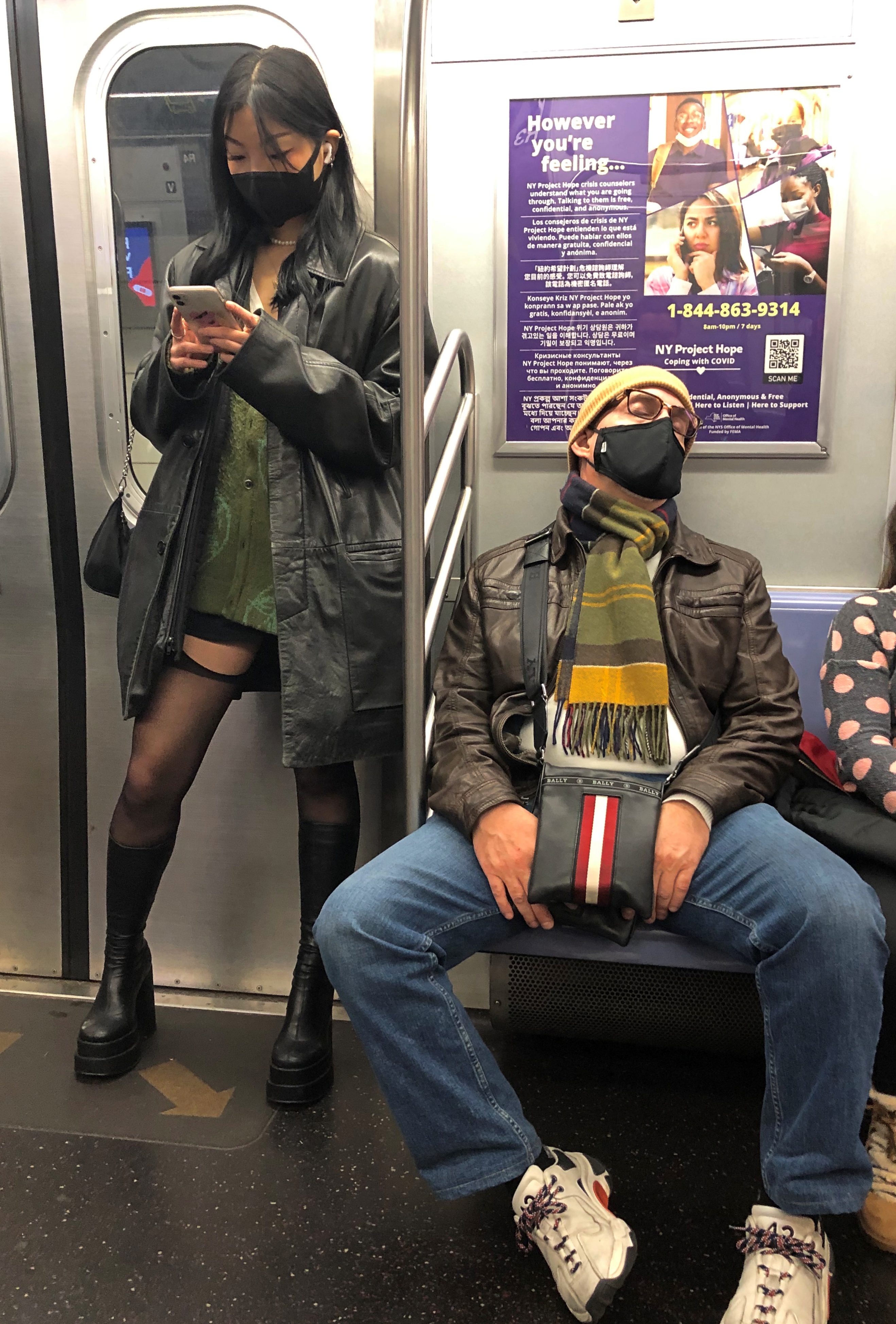
I did a lot of walking, but also rode the subway. It was about the same as ever, except for near-universal masks.NYC subway 2021

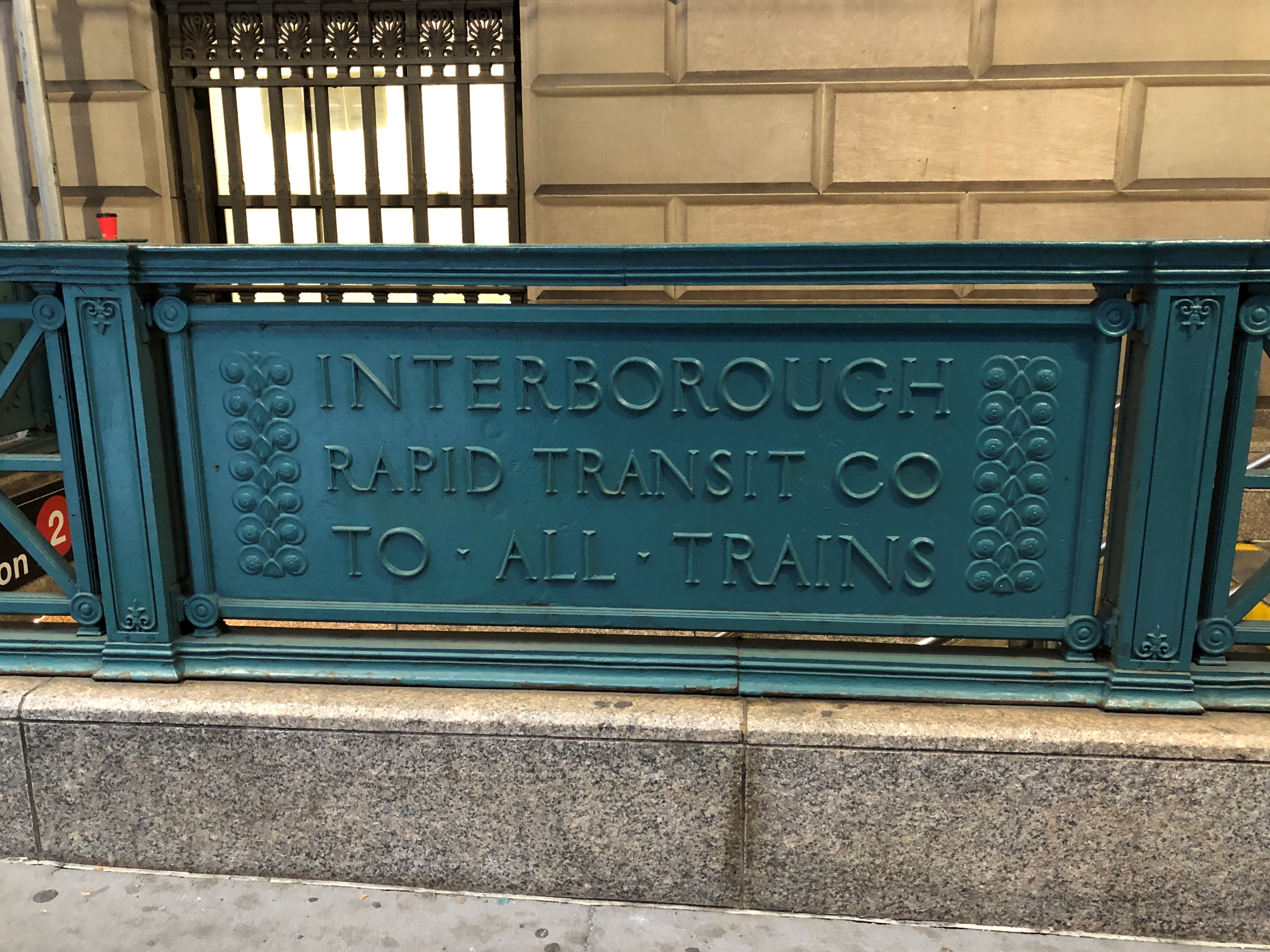
Also, no matter how many times I visit New York, and I’ve lost count, and how many times I ride the subway, I still get on the wrong line, get off at the wrong station, and mistake an express for a local. I did all of those things this time, once each. My wayfaring skills are pretty good, but without more practice, are no match for the irregularities of the system, which was welded together more than a century ago from two different competing systems, the IRT and the BRT, which were themselves consolidations of disparate lines.IRT sign NYC 2021

On Saturday, my only nonworking day in town, I was up early and walked with my old friend Geof Huth from Battery Park, near where he lives, up the greenway along the Hudson River to the city’s newest park, Little Island, a course of nearly three miles. Here’s Geof on Little Island.Geof Huth

We had a grand walk that morning, passing small parks, gardens, memorials, sculptures, recreational facilities, many Hudson River piers, and urban oddities, such as one of the most brutal structures I’ve ever seen, the Spring Street Salt Shed.

One thing I did not do, which I had fully planned to do on Saturday afternoon, was head up to the other tip of Manhattan to see the Cloisters. By now it’s a running joke with myself. Every time I go to New York, I want to see it. I have since a New Yorker friend of mine first recommended it to me in 1983, and a lot of other people have since then. Somehow or other on each trip, something happens to prevent my visit.

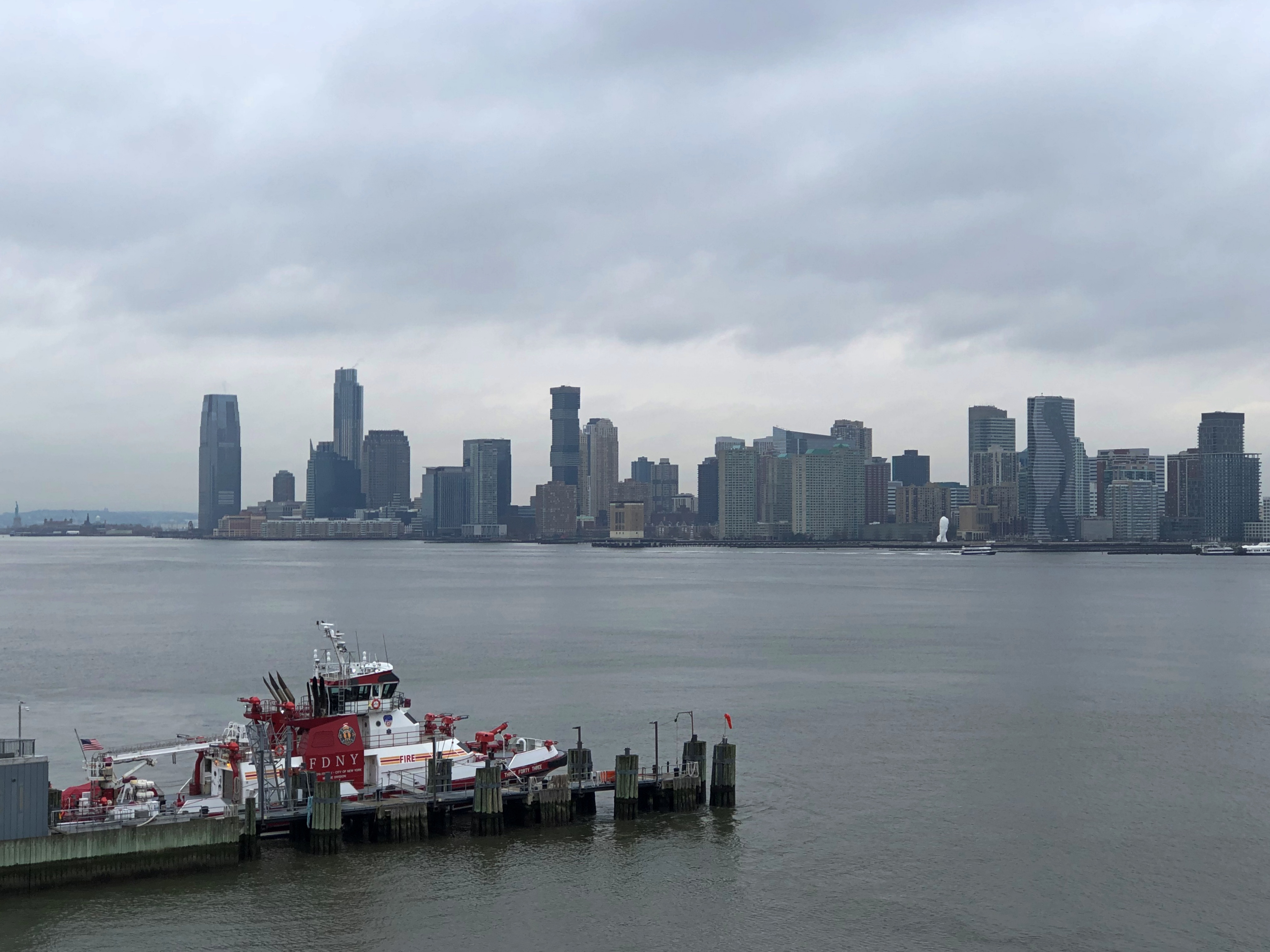
This time I was too tired after the grand walk, though I don’t regret the miles along the Hudson. Not only did we see a lot on the land side of the path, we had some excellent views of Jersey City and eventually Hoboken, across the river. Is it odd that I want to go to those places as well someday? Maybe not as odd as it once would have been.Jersey City 2021

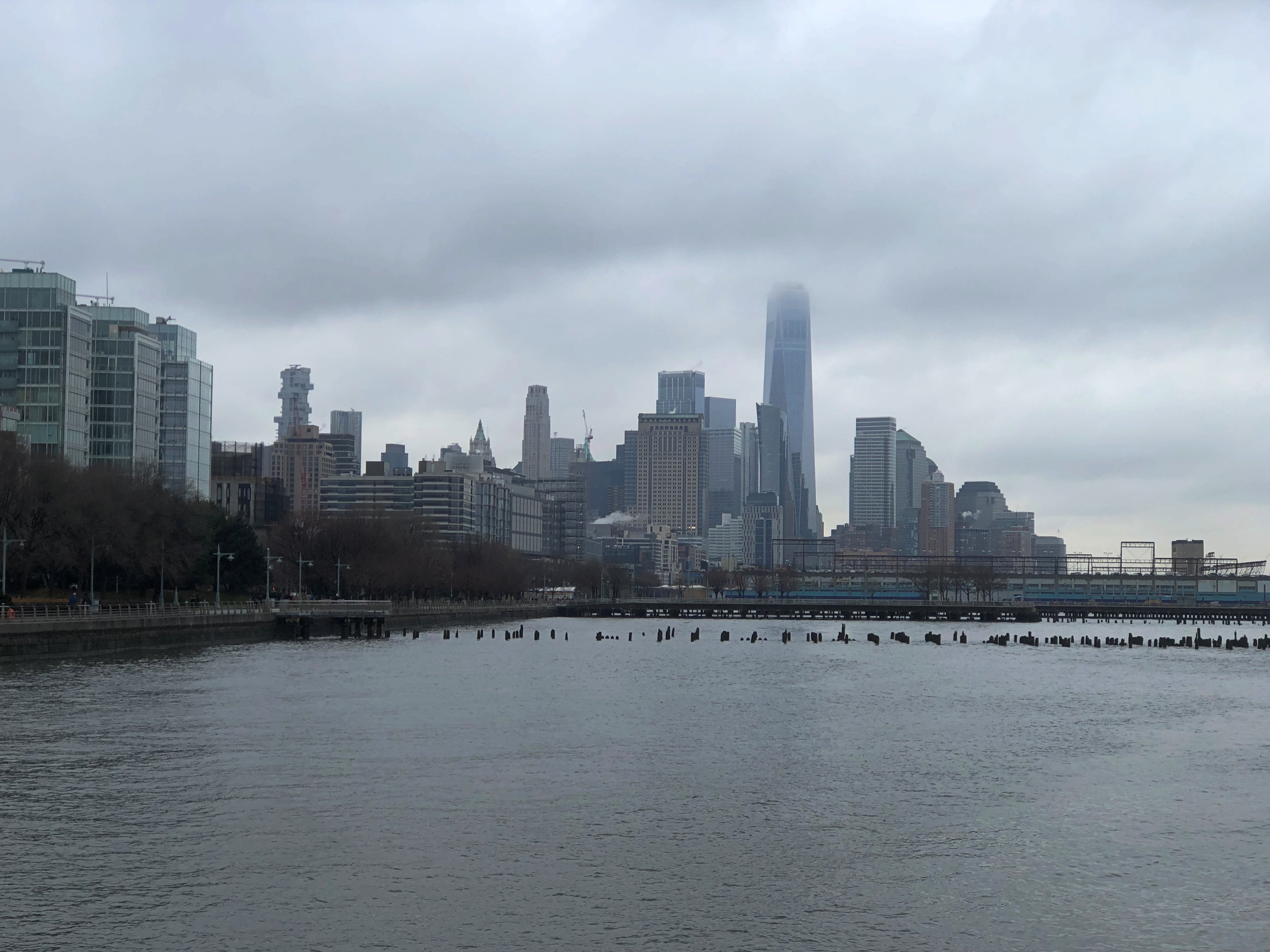
Had some fine views of Lower Manhattan too, such as with One WTC poking into the clouds. I’m going to consider this a vista, since we were raised a bit above sea level.Lower Manhattan 2021

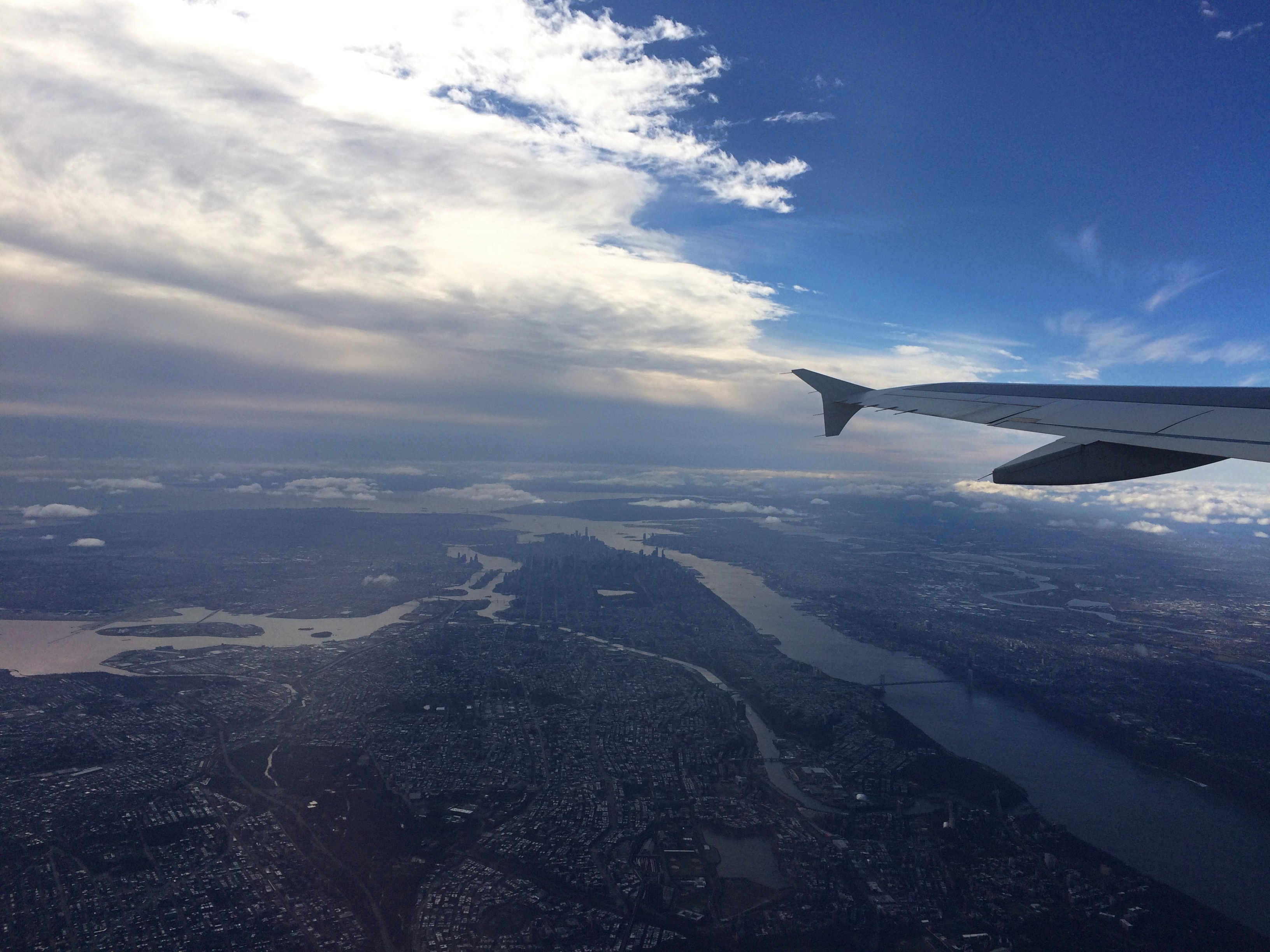
Though not technically a vista, I did manage to see the length of Manhattan as we left today.Manhattan &c

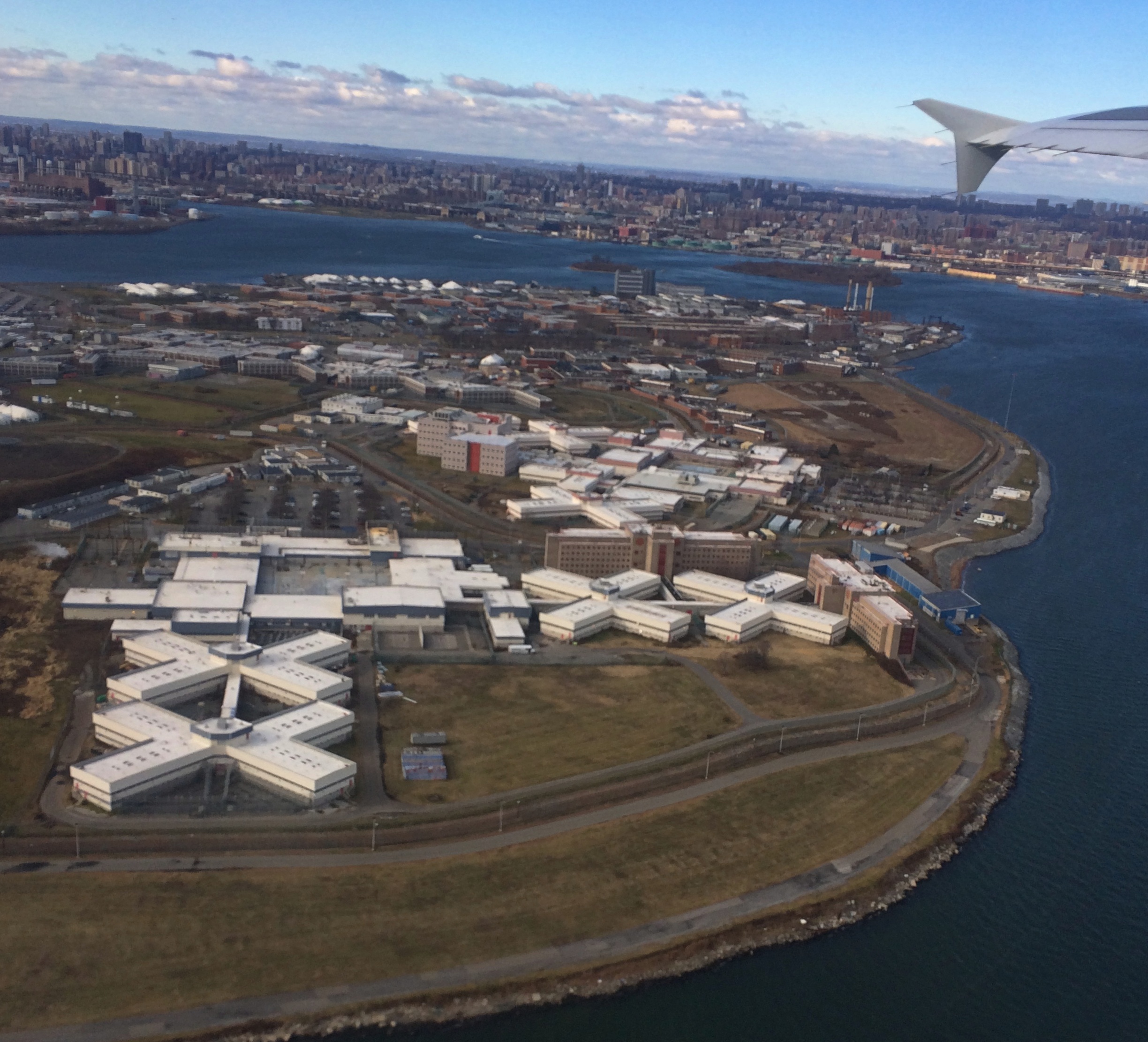
And a good deal else, such as the infamous Rikers Island.Rikers Island

I thought the year of vistas had come to a conclusion after Russian Hill, but no. I squeezed a few more more in.

Forgotten Cherihews

Too cold and rainy this weekend for walks in the woods. Too pandemicky for entertainment outside the home, or even casual shopping. So what did I do on Saturday? Another social Zoom. Summer was a good time for them, then I let it slack off, but the holidays seem like a good time to organize them again.

This one was far flung. One participant in New York, one in California, one in Tennessee and one in Illinois.
I’ve left the names on this time, since our participation has been documented already by one or more of the other participants on social media. Also, so I can quote some of the clerihews we discussed.

I’ve been acquainted with the members of this particular group since the early ’80s, when we all contributed in some capacity to the Vanderbilt student magazine of the time, Versus. It came up in conversation somehow that Geof wrote clerihews back then about people we all knew.

He did? I had no memory of them. Time flies, memory disappears. Writing cherihews would have been in character for him, though, so I’m sure it happened.

Steve Freitag,
Always the shytag,
Hid in the tunnel
To drink from a funnel.

Geof Huth
Ensconced in his booth
When asked if he cometh or goeth
Replied “boeth”

Dees Stribling,
Always dribbling,
Said it didn’t matter
That he would splatter.

They couldn’t remember one for Pete, so Geof wrote one on Facebook the next day:

Pete the Wilson
Only ate stilton.
When he ran out of cheese,
We felt a warm breeze.

A Motley Thursday Assortment

Congratulations to Geof Huth, who will be a grandfather come 2020. The latest of my contemporaries to do so, but hardly the last, I bet. Who are my contemporaries? People who could have gone to high school with me. An idiosyncratic definition, but I’m sticking with it.

News items pop up on my phone — misnamed, isn’t it? — my communications-information-time sucker gizmo, the work of bots and algorithms that are as mysterious as the Sibylline Books. Usually, it offers nothing I want to read, since the ways of bots and algorithms may be mysterious, but they’re still pretty dimwitted.

Sometimes, though, the offering is just downright bizarre. Recently the phone told me that one Susan Kristofferson had died. Given the name, I thought she was some relation of the singer of that name. I was just curious enough to check (on my laptop), and no — nothing to do with the singer. Nothing to do with me, either. Neither friend nor relative nor even nodding acquaintance.

So why did the phone tell me about her? Only the bots and algorithms know, and they aren’t telling.

Looks like Tom’s Diner in Denver, whose 1973 atmosphere I enjoyed in 2017, will soon be no more. Too bad to see a good diner go, Googie or not.

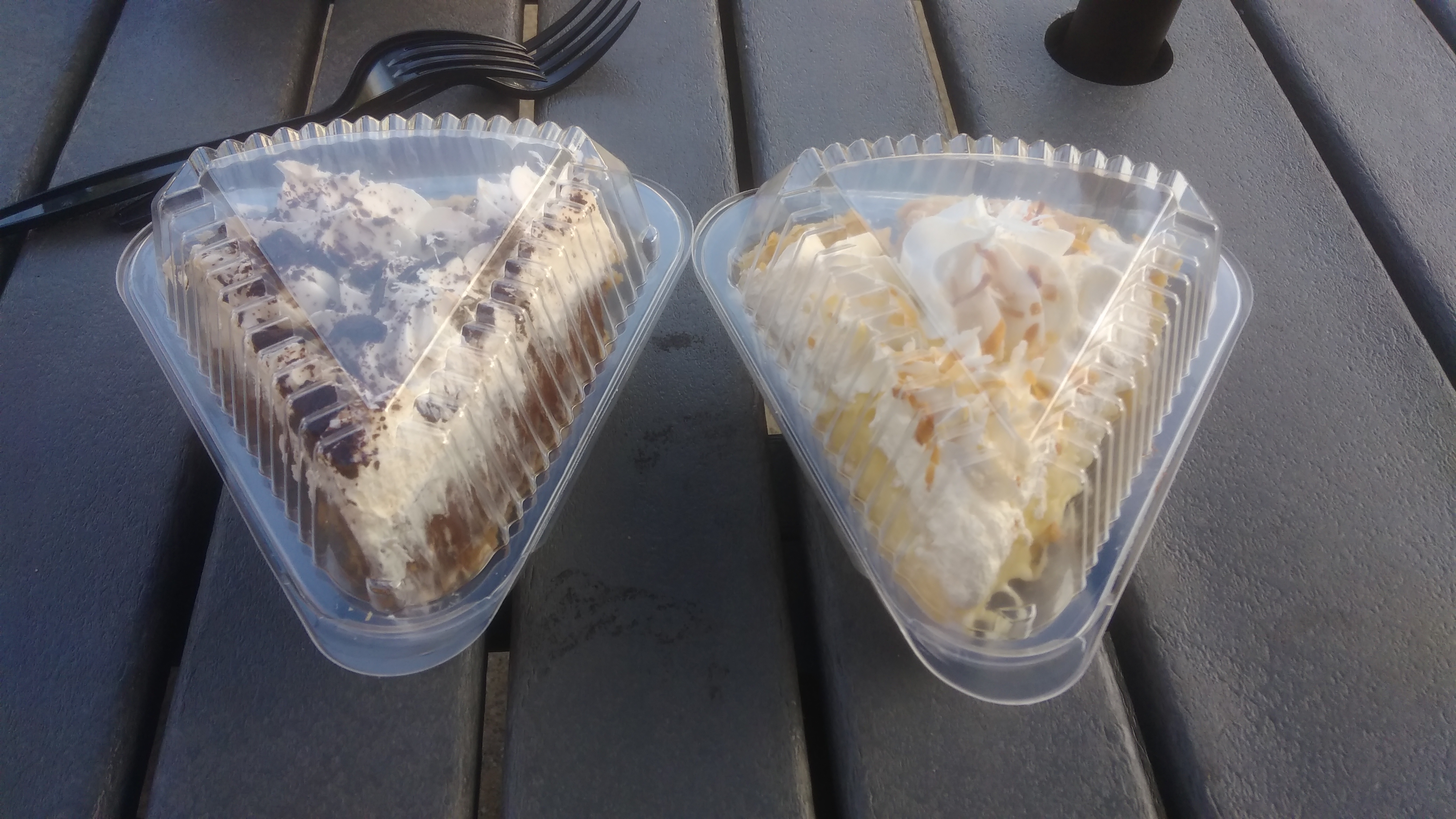
Late last year, I groused about a Chicago joint that serves $8 slices of pie, a price that compares unfavorably even to Manhattan. In Lansing, Michigan, recently, I paid about $8 for creme pie — but for that price we got two slices that we shared.

Tasty pie. Served by the Grand Traverse Pie Co., with 15 locations, all of which are in Michigan, except for an oddball in Terra Heute, Indiana. Sure, it’s cheaper to operate in a small city, but that alone can’t account for the difference between $4 and $8 slices.

Until recently, I hadn’t heard “Step Right Up” by Tom Waits in years. You might call it advert-scat. It’s funny.

I first heard it in college, because my friend Dan had some Tom Waits records, most memorably Small Change. Listening to it now, it occurs to me that some of the phrases have mostly passed from common use in the advertising world, such as please allow 30 days for delivery or the heartbreak of psoriasis or no salesman will visit your home.

So in 100 years, will the song mostly be 20th-century gibberish? Maybe. Still, with a light beat, steady bass and driving sax, I’d listen to Tom Waits sing gibberish.