Think of the 50 state capitols as, collectively, a giant free museum of U.S. history, complete with grand buildings and a collection of artifacts with some consistent themes, such as images of elected officials, relics of war, and memorials to officially worthwhile individuals or causes. Some capitols explicitly have museum cases or whole museum floors, with a wide variety of stories and items from a state’s early years.
The collections can be a little staid. But sometimes, oddities are tucked away. Not too often, but there was that time I saw a two-headed calf at the Georgia State Capitol, or the miniature Western movie set at the Utah State Capitol. Or a bust of President Benjamin Harrison, carved from a tree stump. In Idaho. Then, at the Iowa State Capitol last month, this fellow.
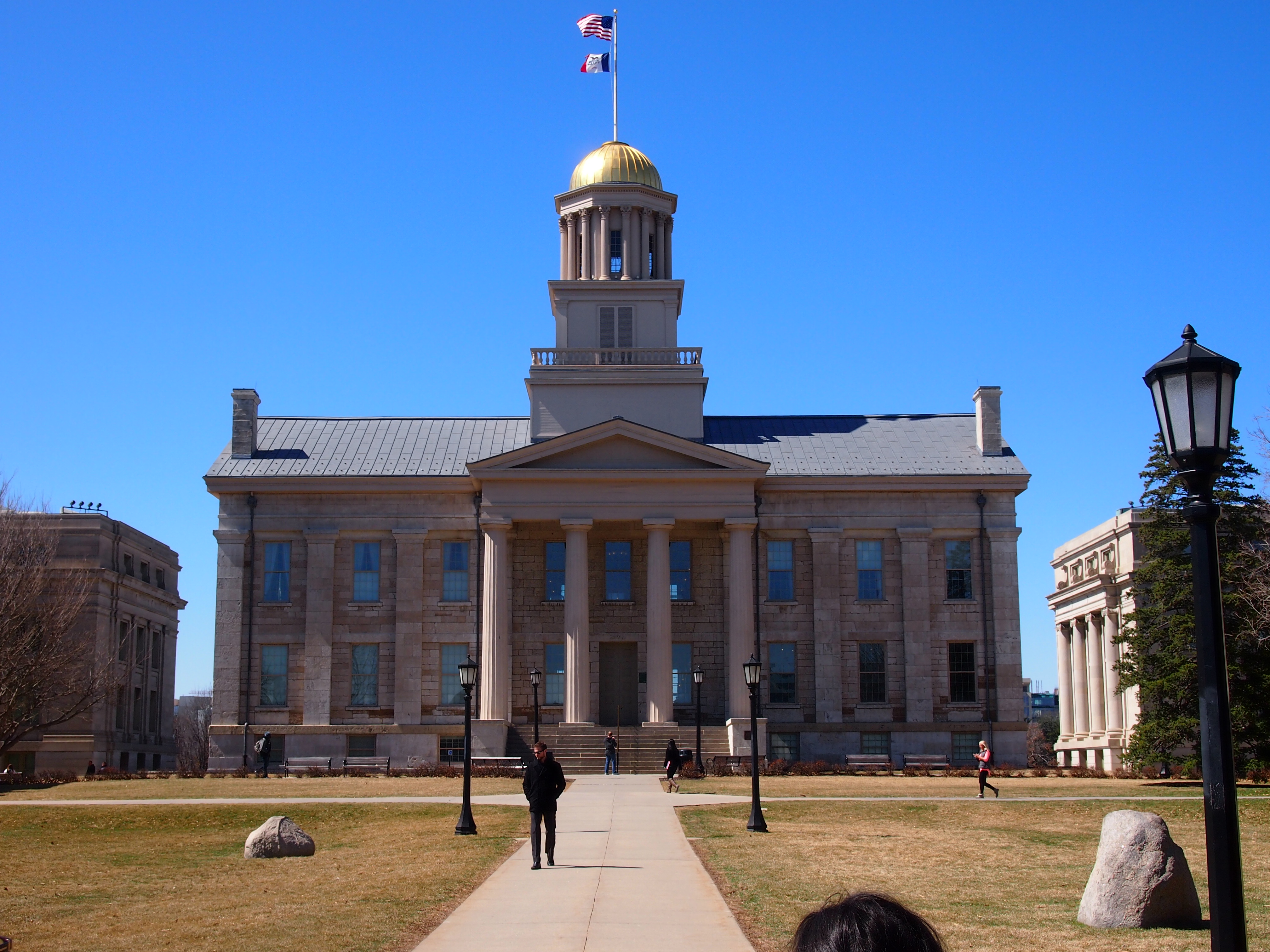
Last time I visited the Iowa State Capitol, I arrived about 10 minutes after it closed. So I — we, Ann was with me – looked at an assortment bronzes on the grounds, including the memorable (and mammary) Mother Iowa, and admired the gold-leaf dome. This time around, Des Moines was the destination for my first day of driving, September 4, and I was determined to see the interior.
It’s a grand edifice, as capitols usually are.
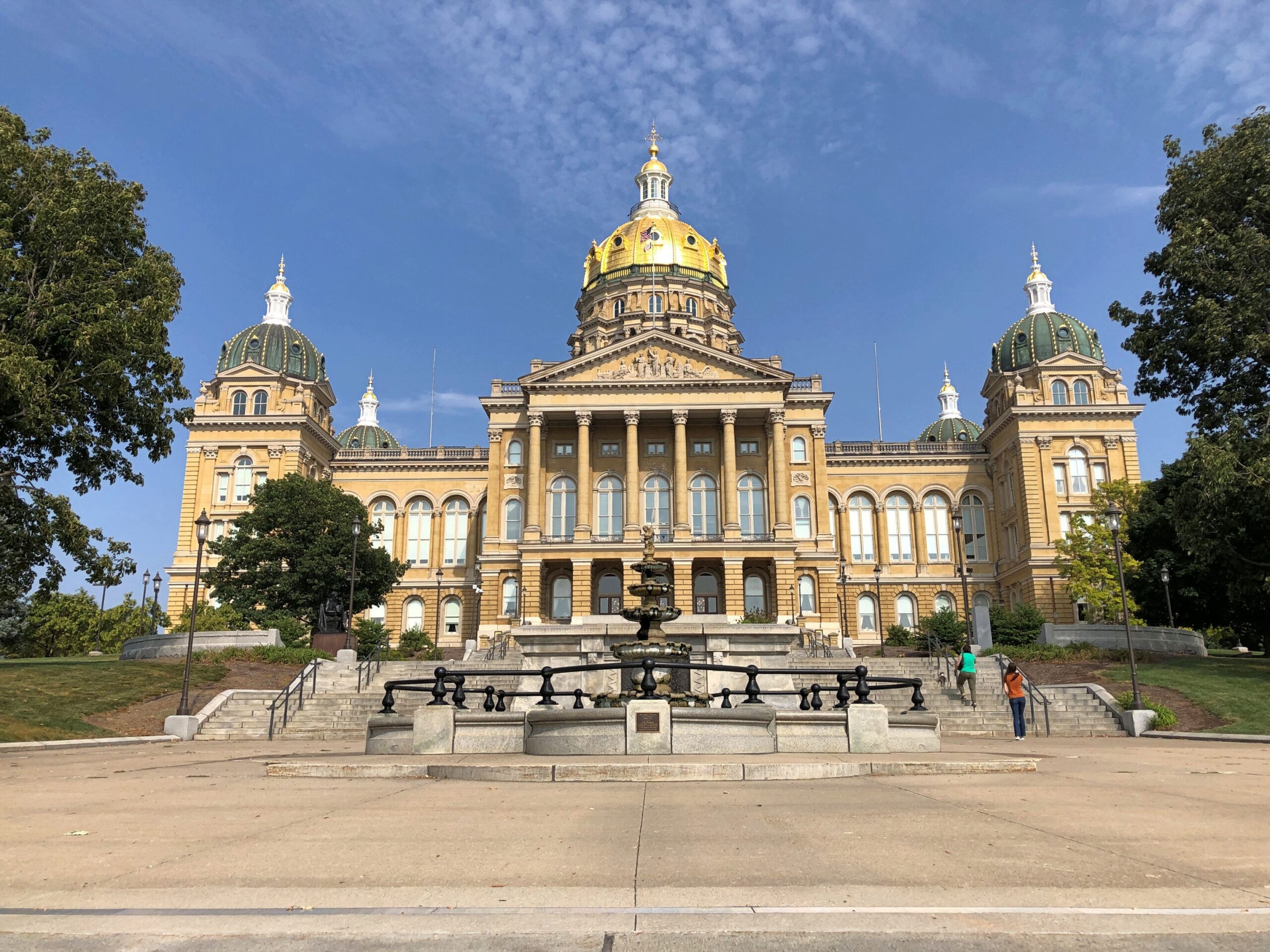

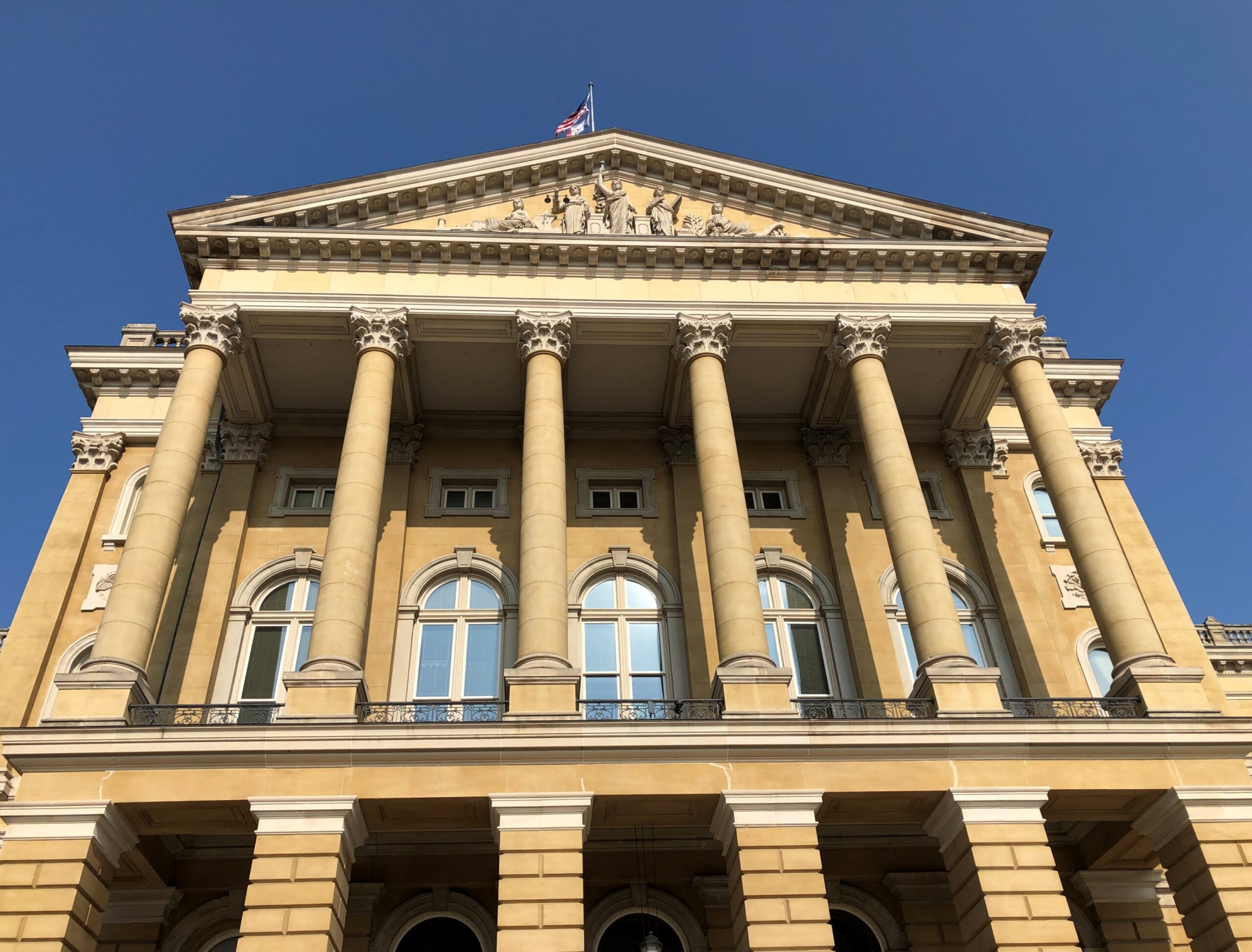
A series of architects oversaw the design, including Chicagoan John C. Cochrane, who also designed the Illinois State Capitol and, less well known, the handsome stick-style All Saints Episcopal in Chicago.
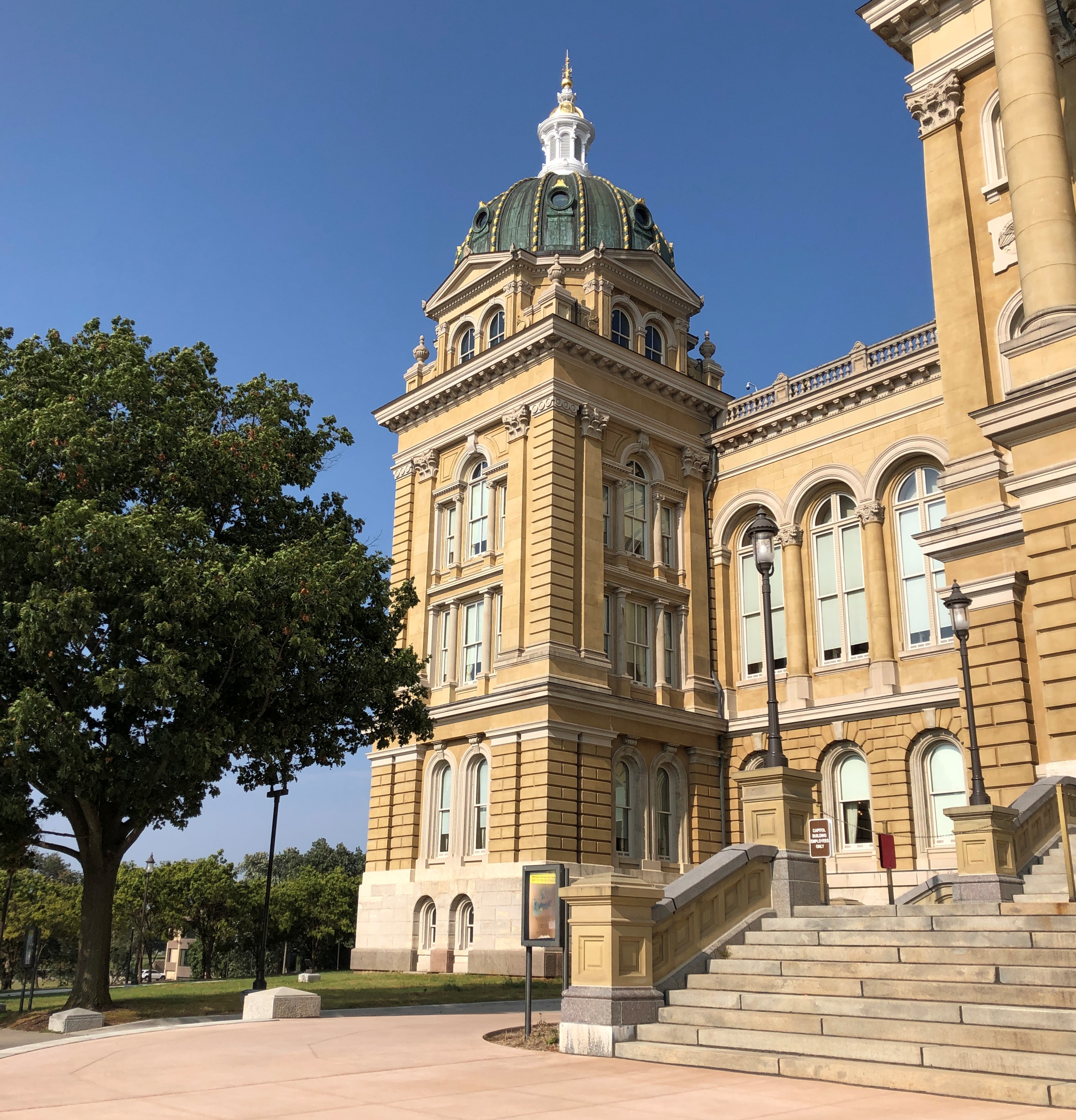
I’d forgotten that four smaller domes flank the main dome, forming in quincunx of domes. I understand that Iowa is the only such five-domed state capitol in the nation. I’m not sure how important that distinction is, but it is a distinction.
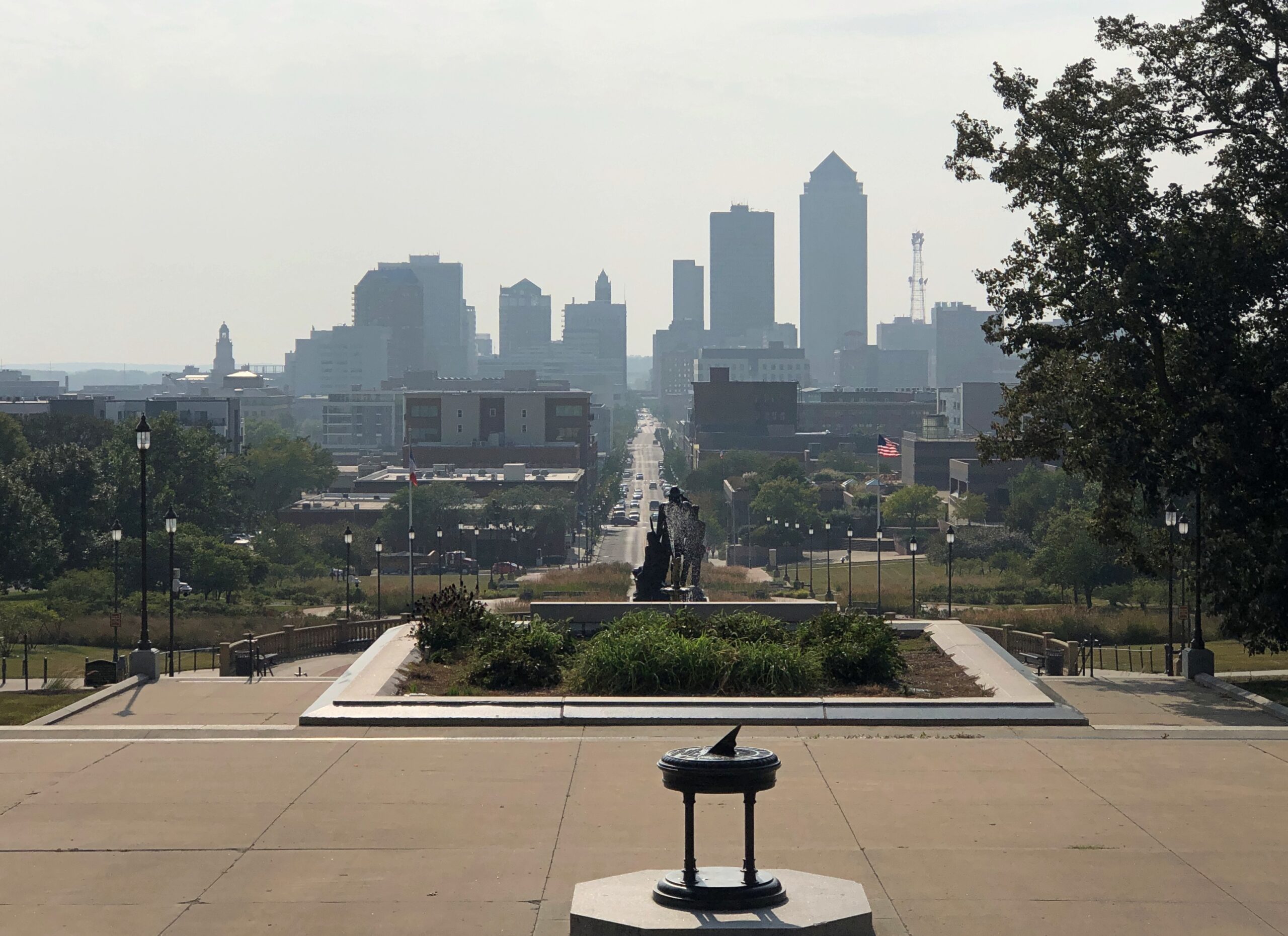
On a clear day, there’s a good view of downtown Des Moines from the capitol steps (and sundial). It was a hazy day, the result of Canadian wildfires.
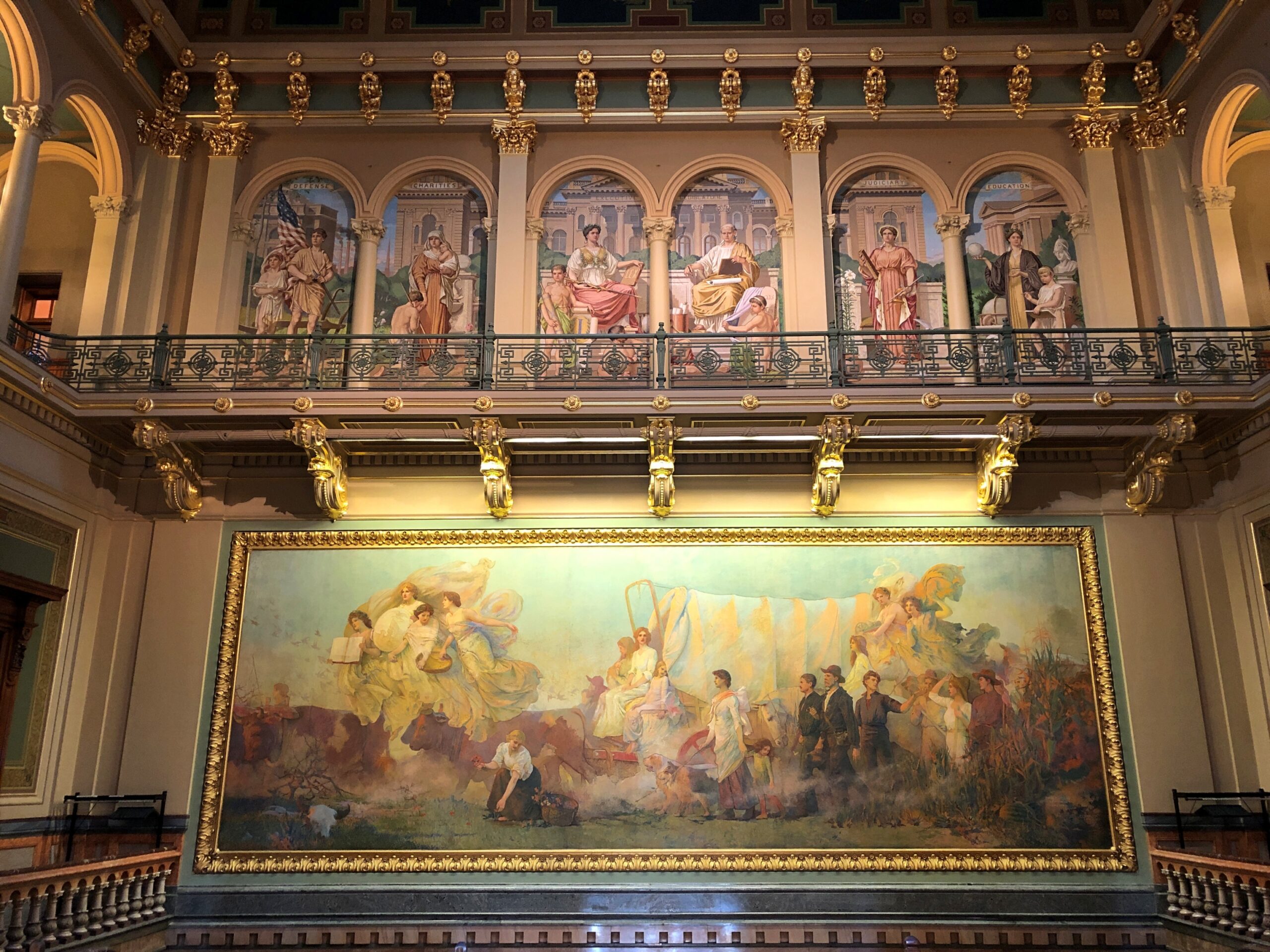
I arrived before closing, and experienced the grandness of the inside. Such as murals.
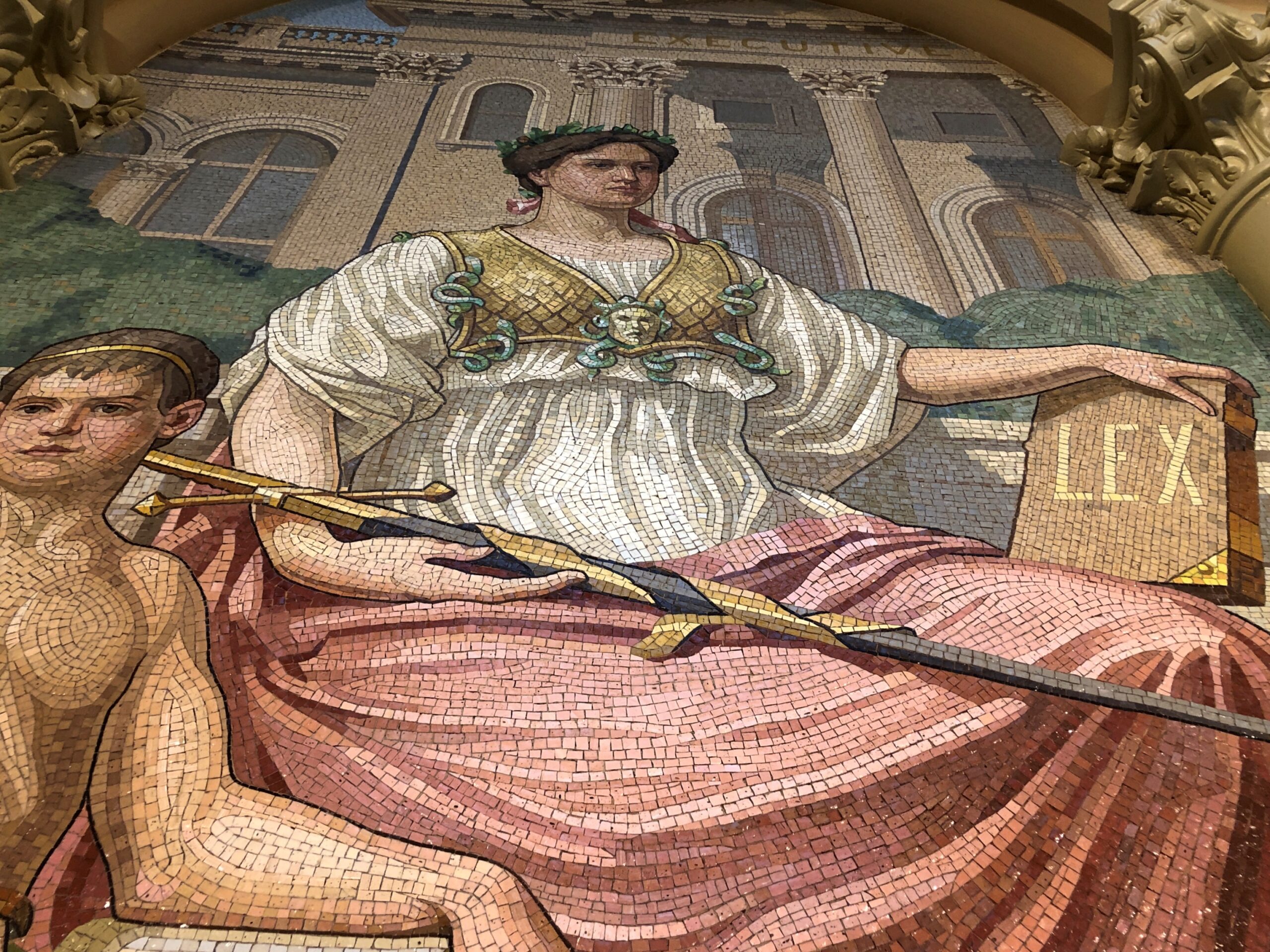
Allegories done in mosaic. Law, for instance. There was no backing up further to get a fuller image of Lex, since that would be over the edge of a balcony.
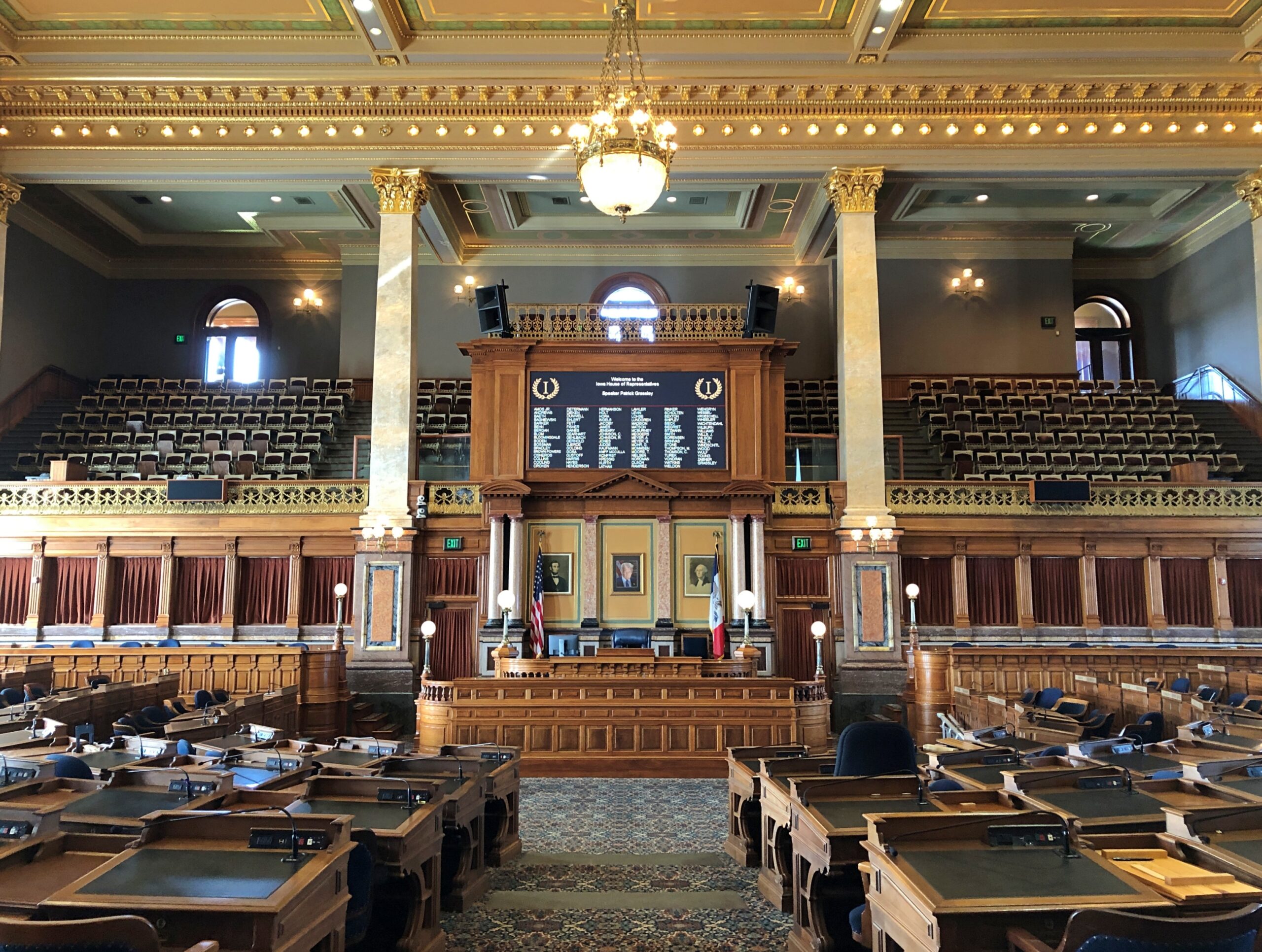
The House of Representatives.
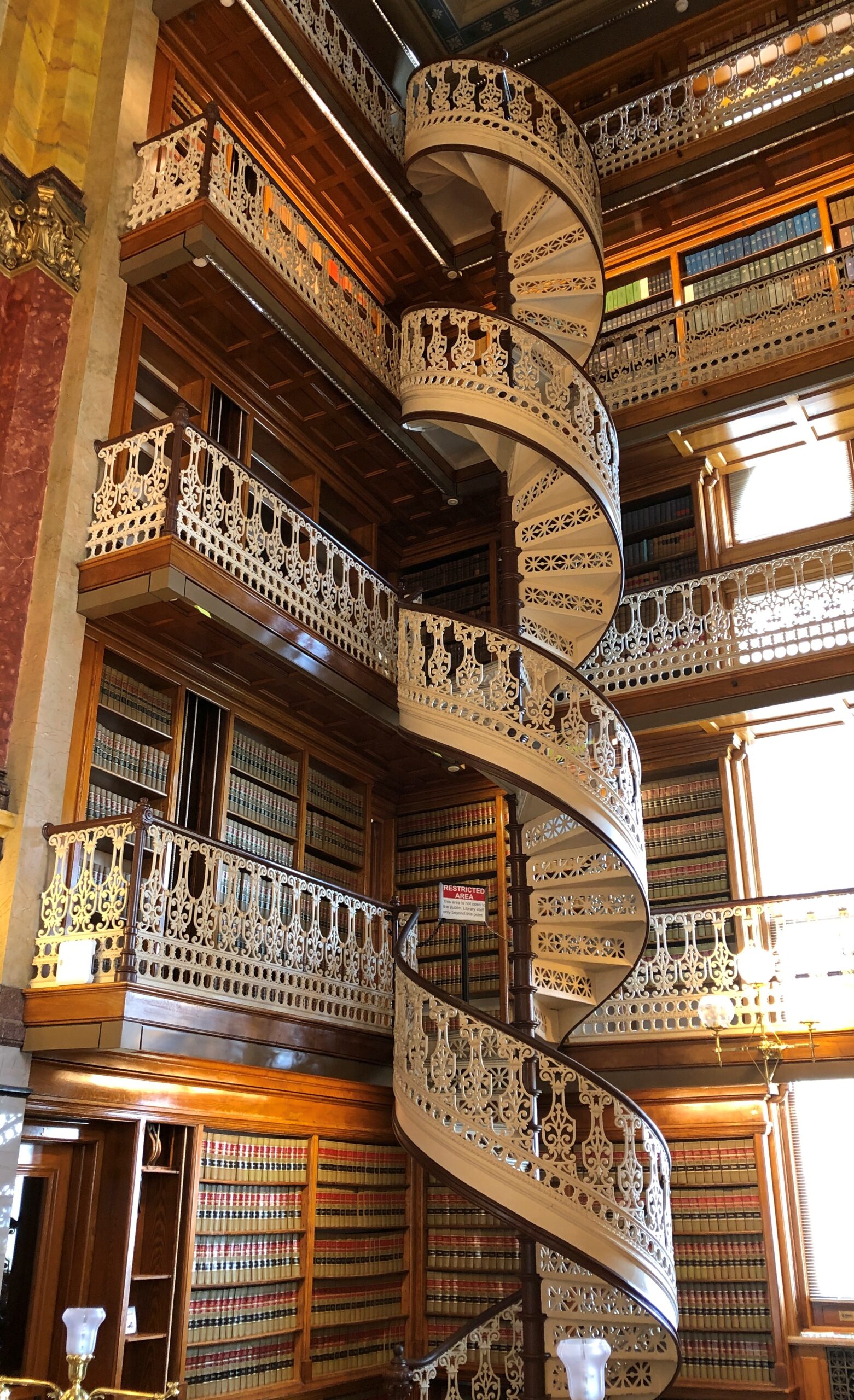
The Iowa State Law Library. The most gorgeous of the spaces, I thought. Just like canyon pictures, an image does no justice to the brilliance of the place itself.
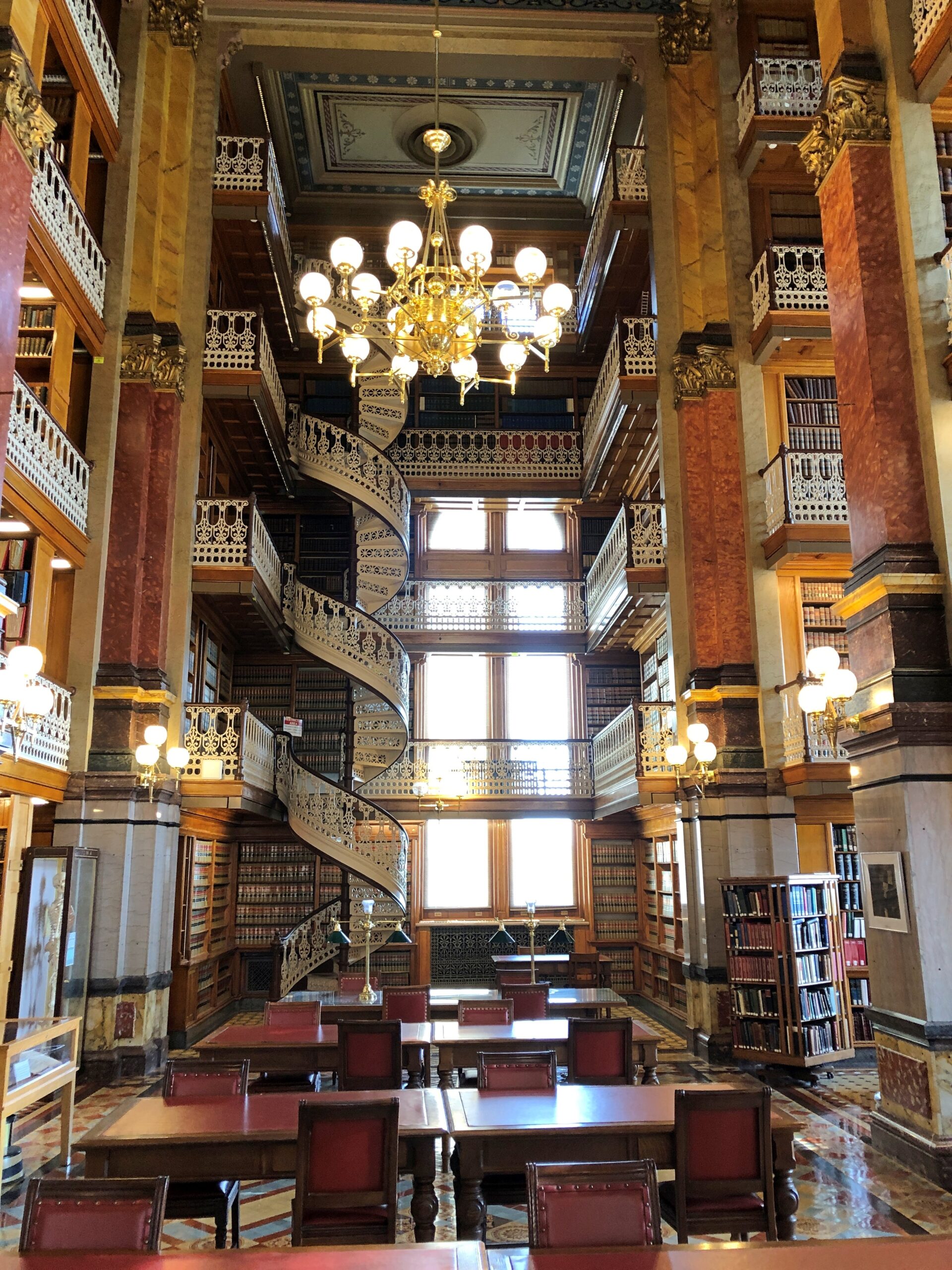
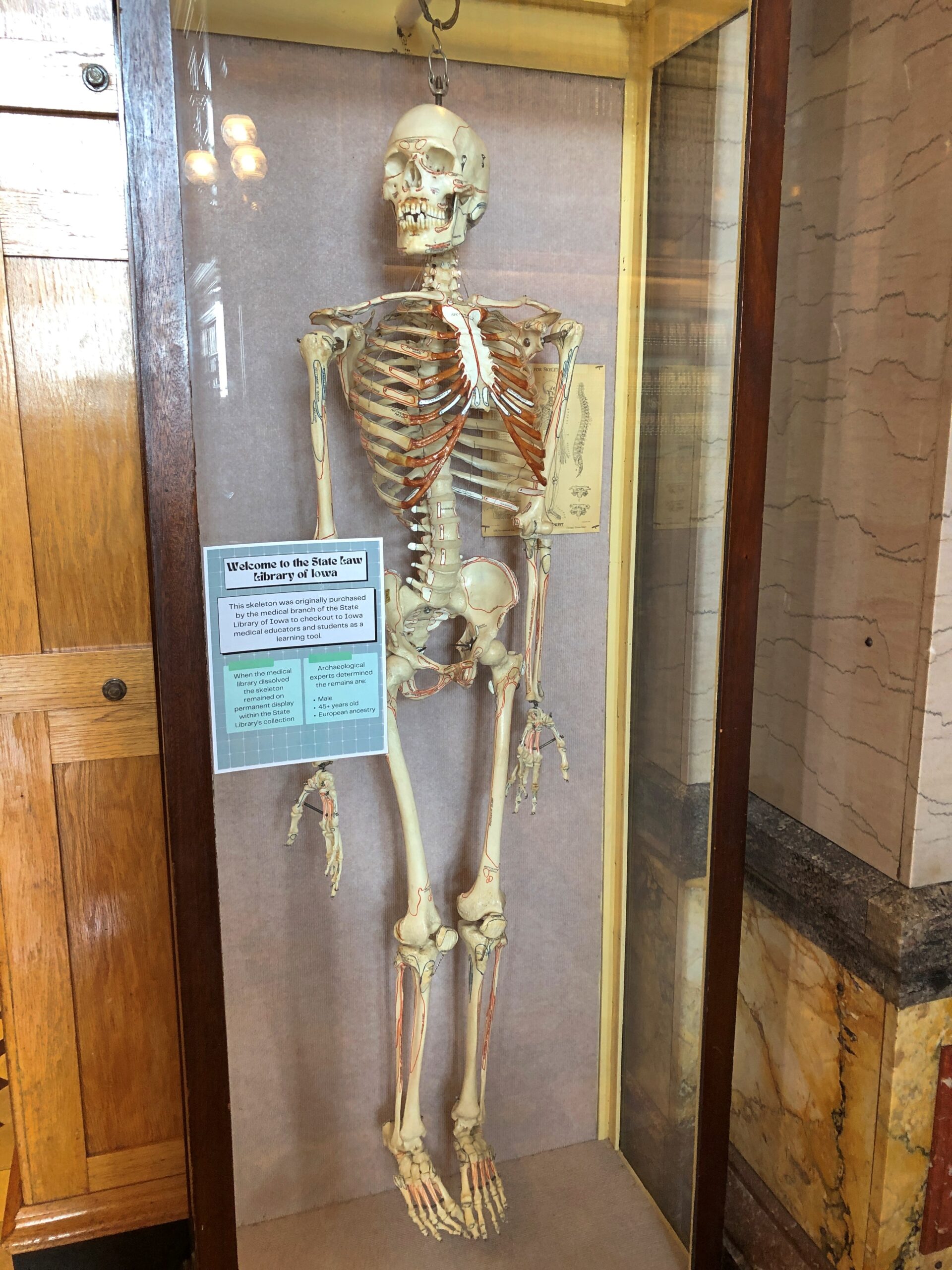
Note that the skeleton is behind glass in the Law Library.
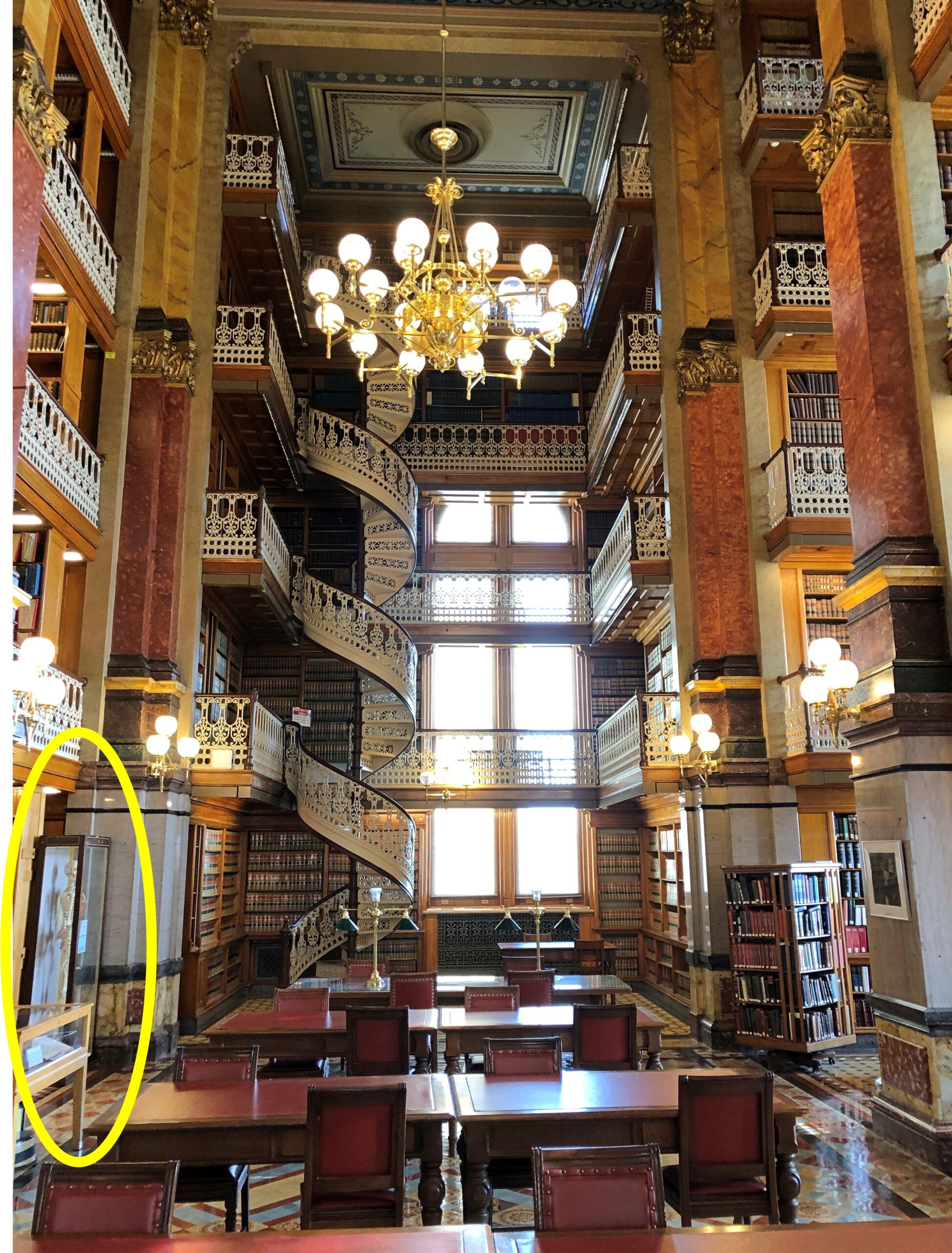
What’s he doing in the Law Library? Showing how strict the library used to be about returning materials late? (Or the smartass answer: “Nothing, really.”)
The sign on the case says, This skeleton was originally purchased by the medical branch of the State Library of Iowa to checkout [sic] to Iowa medical educators and students as a learning tool. When the medical library dissolved, the skeleton remained on permanent display with the State Library’s collection. Archaeological experts determined the remains are male, 45+ years old, European ancestry.
Check out a skeleton from a library? Learning that such a thing ever happened was worth the effort, all by itself, to get to the capitol.
The dome is a little unusual, too, a little more representational that you usually see.
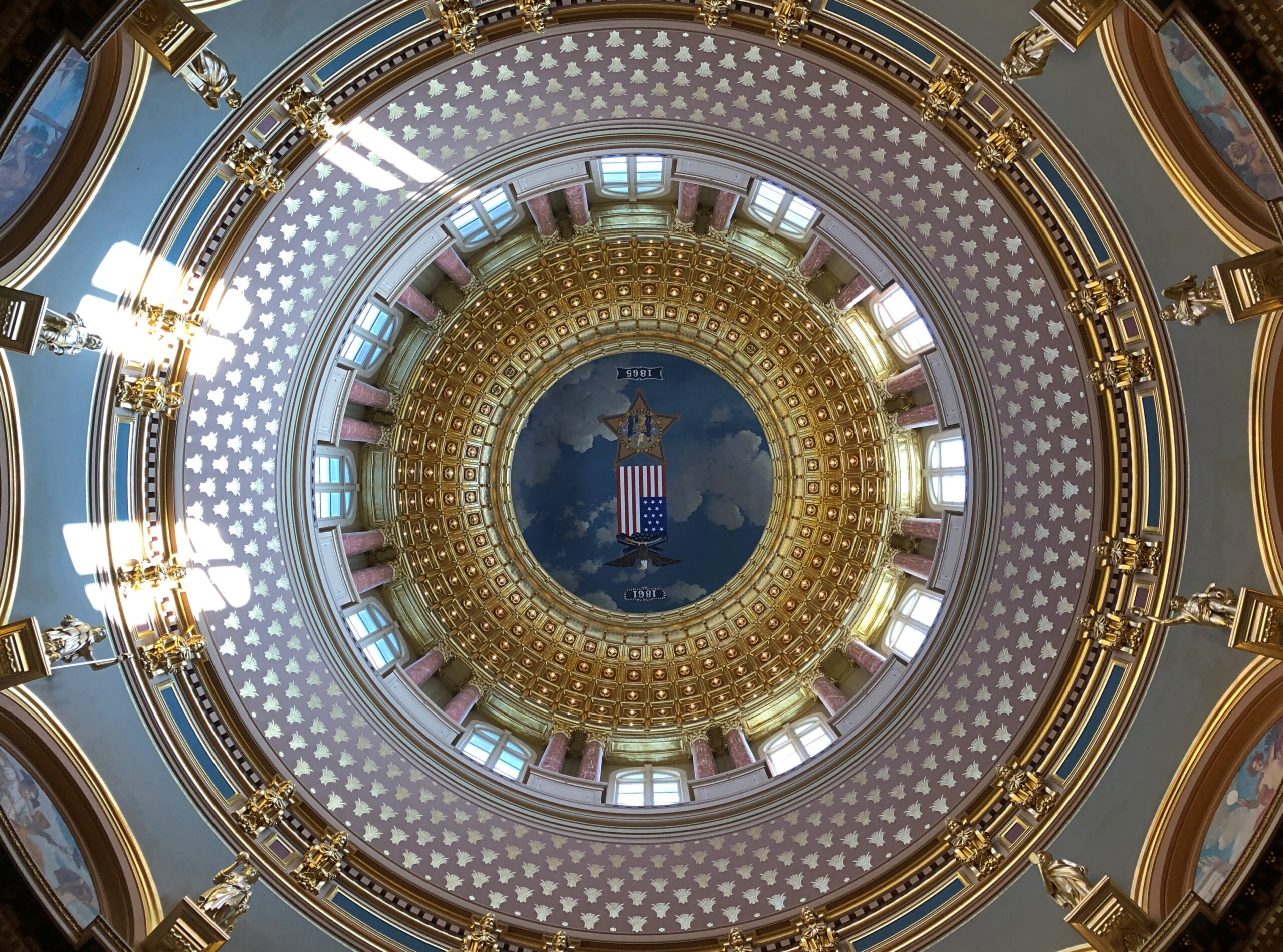
It features a memorial – in this case to the Grand Army of the Republic, with the name of the organization, a 13-star flag, and the dates 1861 and 1865. Considering that the development of the current capitol happened between 1871 and 1886, a GAR memorial of some kind isn’t a surprise, and I suppose the organization had the political heft at the time to get such a prominent spot.
Wiki tells me that more than 76,200 Iowa men fought for the Union out of a population of nearly 675,000 (in 1860), and about 13,000 died for it, two-thirds of whom by disease. Iowans supported the Union by about as lopsided a margin as imaginable. Seventy-six residents of Iowa are known to have served the Confederacy, and very likely most of those had recently moved to Iowa from the South.