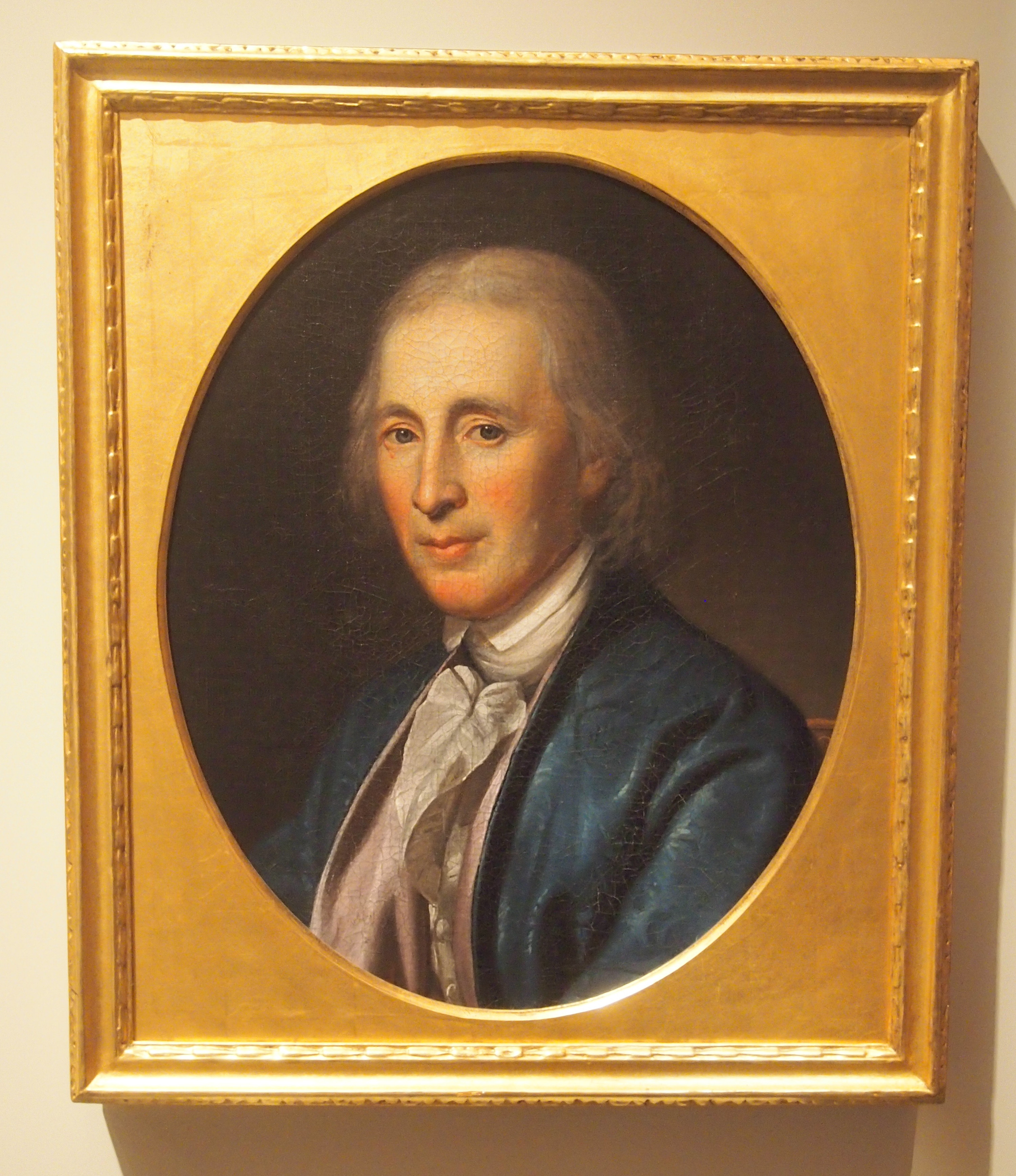
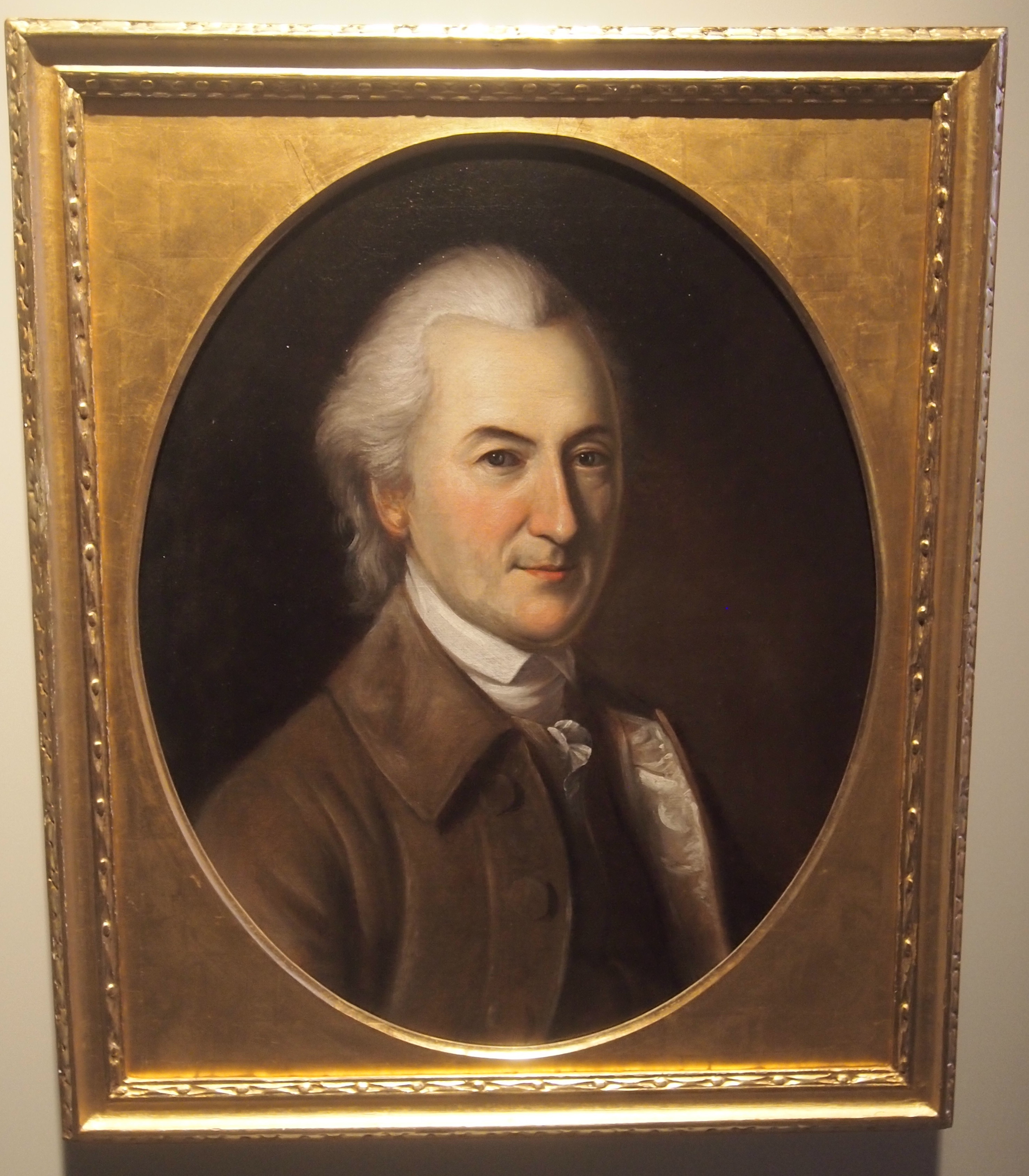
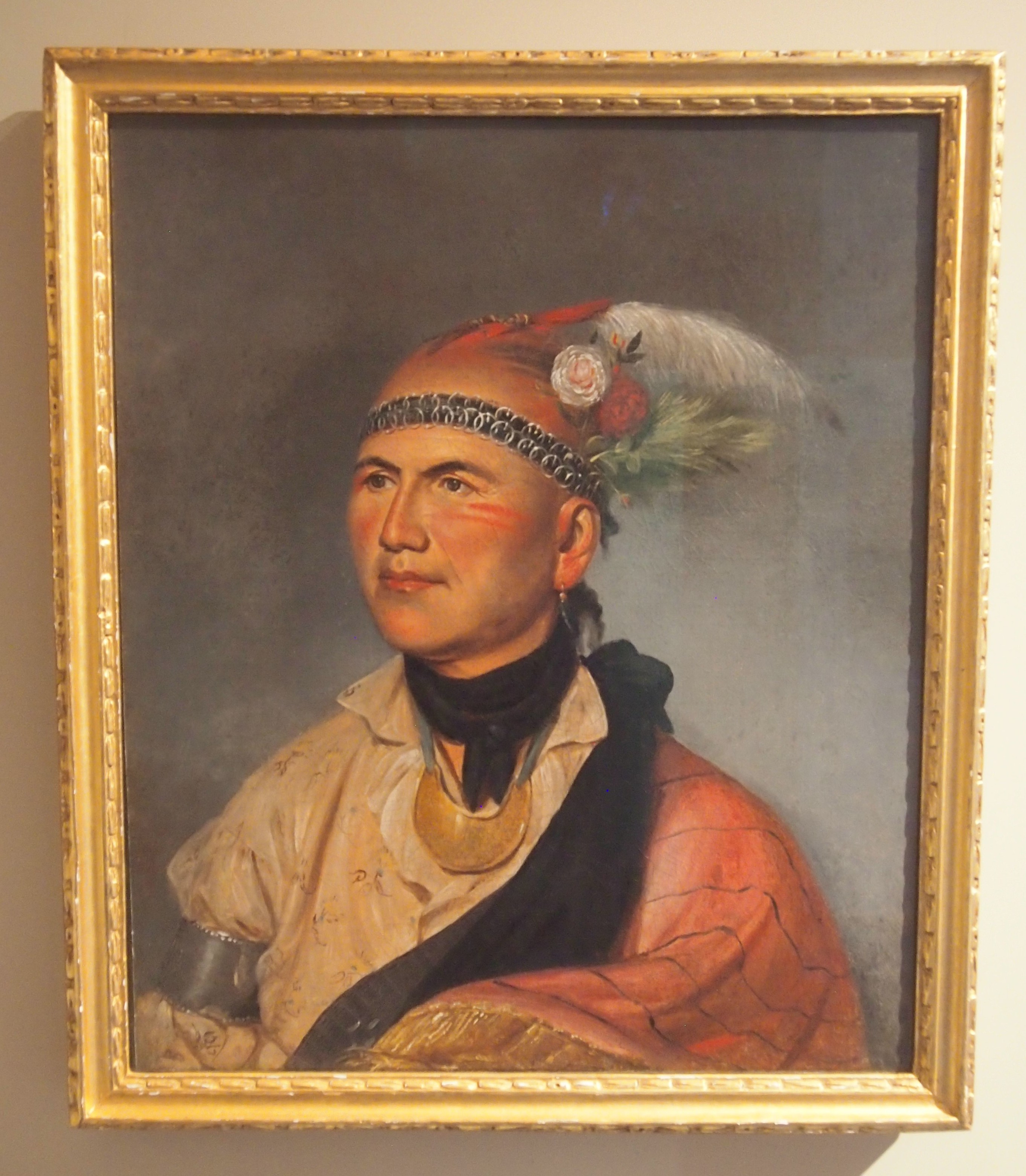
Eastern State Penitentiary

What to do after you’ve visited a major cemetery in Philadelphia? Visit a former prison, now a museum. You could, anyway, since they aren’t that far apart, though not comfortable walking distance.

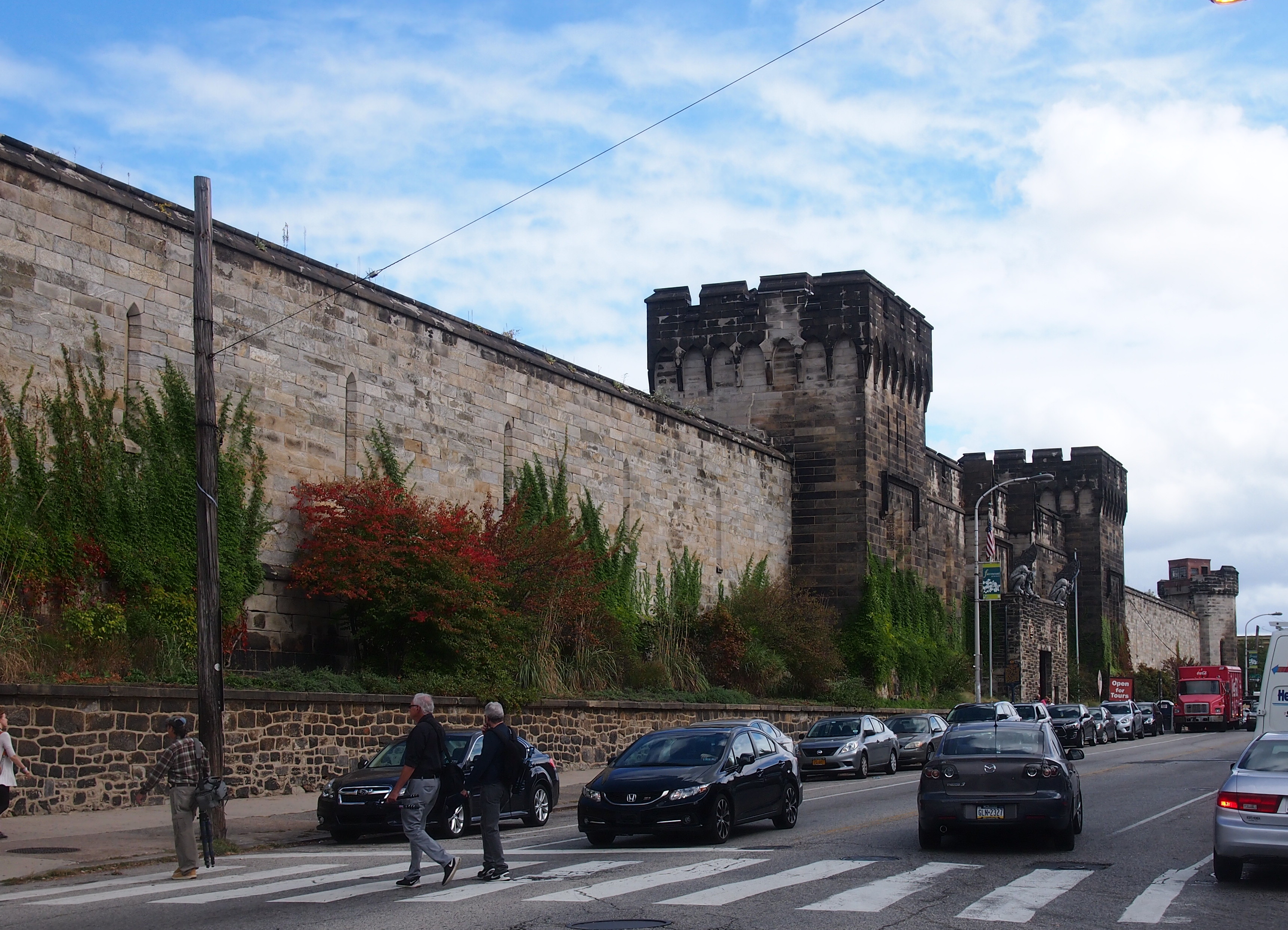
Specifically, you find yourself outside the massive walls of Eastern State Penitentiary, built in the late 1820s as one of the first modern prisons in the United States, and the first of its kind. In its early days, the prison enforced solitary confinement all the time for all the prisoners.
Eastern State PenetentiaryEastern State PenetentiaryThe museum’s web site tells the tale of its development very well: “In 1787, a group of well-known and powerful Philadelphians convened in the home of Benjamin Franklin. The members of The Philadelphia Society for Alleviating the Miseries of Public Prisons expressed growing concern with the conditions in American and European prisons… It took the Society more than thirty years to convince the Commonwealth of Pennsylvania to build the kind of prison it suggested: a revolutionary new building on farmland outside Philadelphia.

“Eastern State Penitentiary broke sharply with the prisons of its day, abandoning corporal punishment and ill treatment. This massive new structure, opened in 1829, became one of the most expensive American buildings of its day and soon the most famous prison in the world. The Penitentiary would not simply punish, but move the criminal toward spiritual reflection and change. The method was a Quaker-inspired system of isolation from other prisoners, with labor…. proponents of the system believed strongly that the criminals, exposed, in silence, to thoughts of their behavior and the ugliness of their crimes, would become genuinely penitent. Thus the new word, penitentiary.”

Eventually — though it took a long time to abandon the system, as usual with institutional change — the practice of all solitary was abandoned when it became clear that solitary confinement all the time drove a lot of prisoners nuts. Guess that counts as an example of good intentions paving the road to Hell.

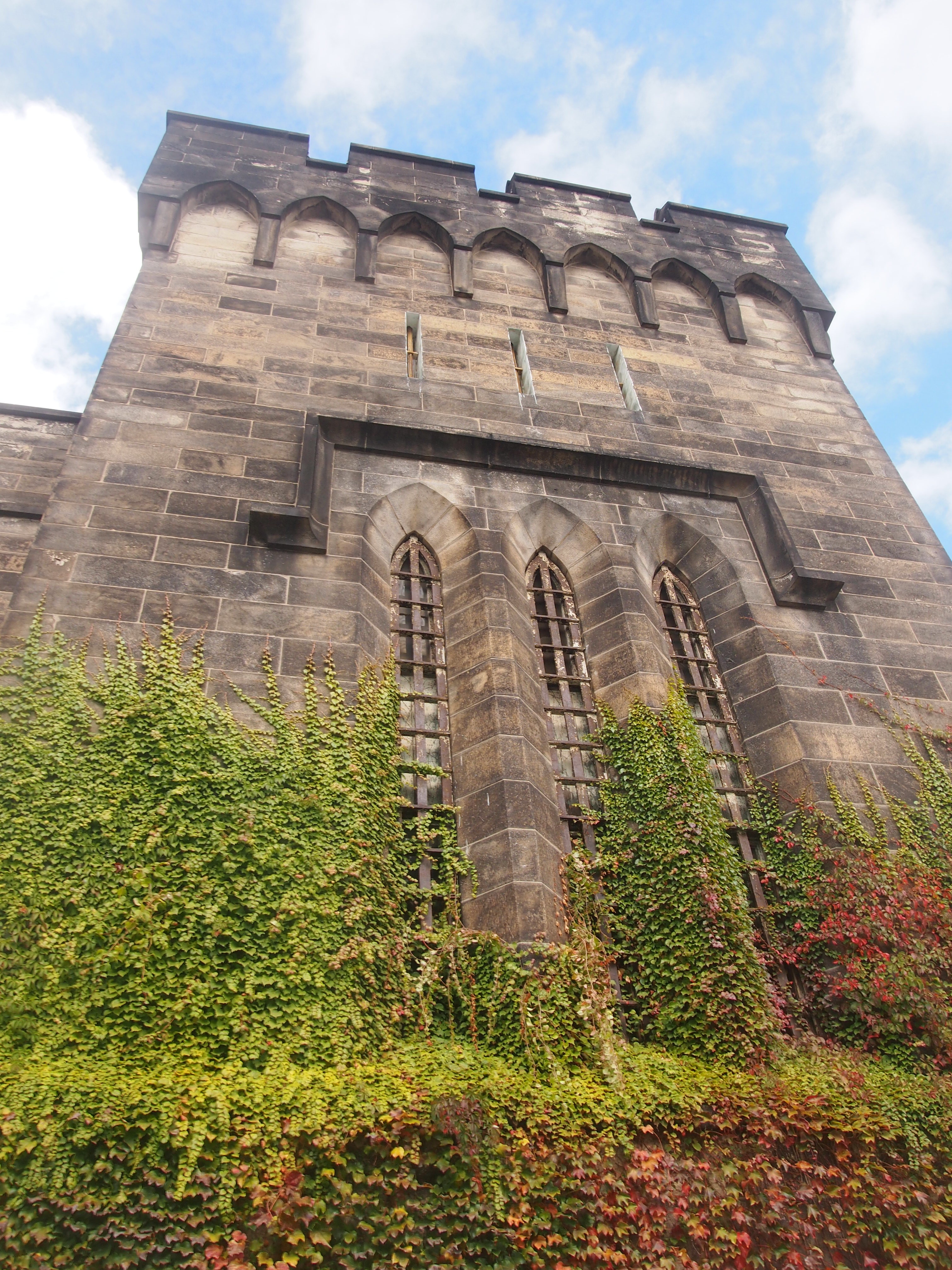
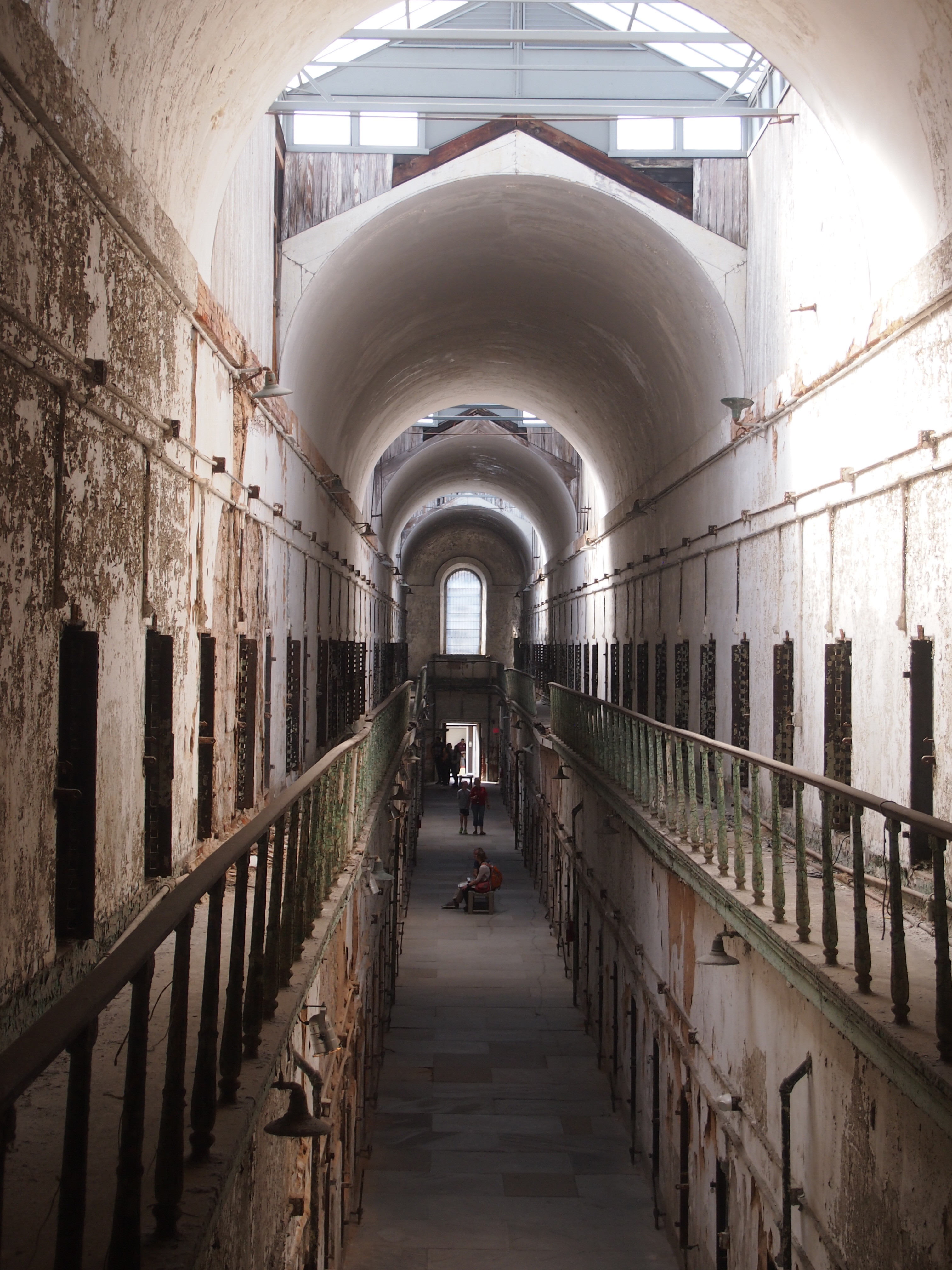
Eastern State’s massive walls form a square, the idea of which was to look as scary as possible from the outside, to deter criminal urges among those still outside (I doubt that that worked, either). Inside, the British-born architect John Haviland’s design included “seven cellblocks [that] radiate from a central surveillance rotunda,” explains the museum web site.

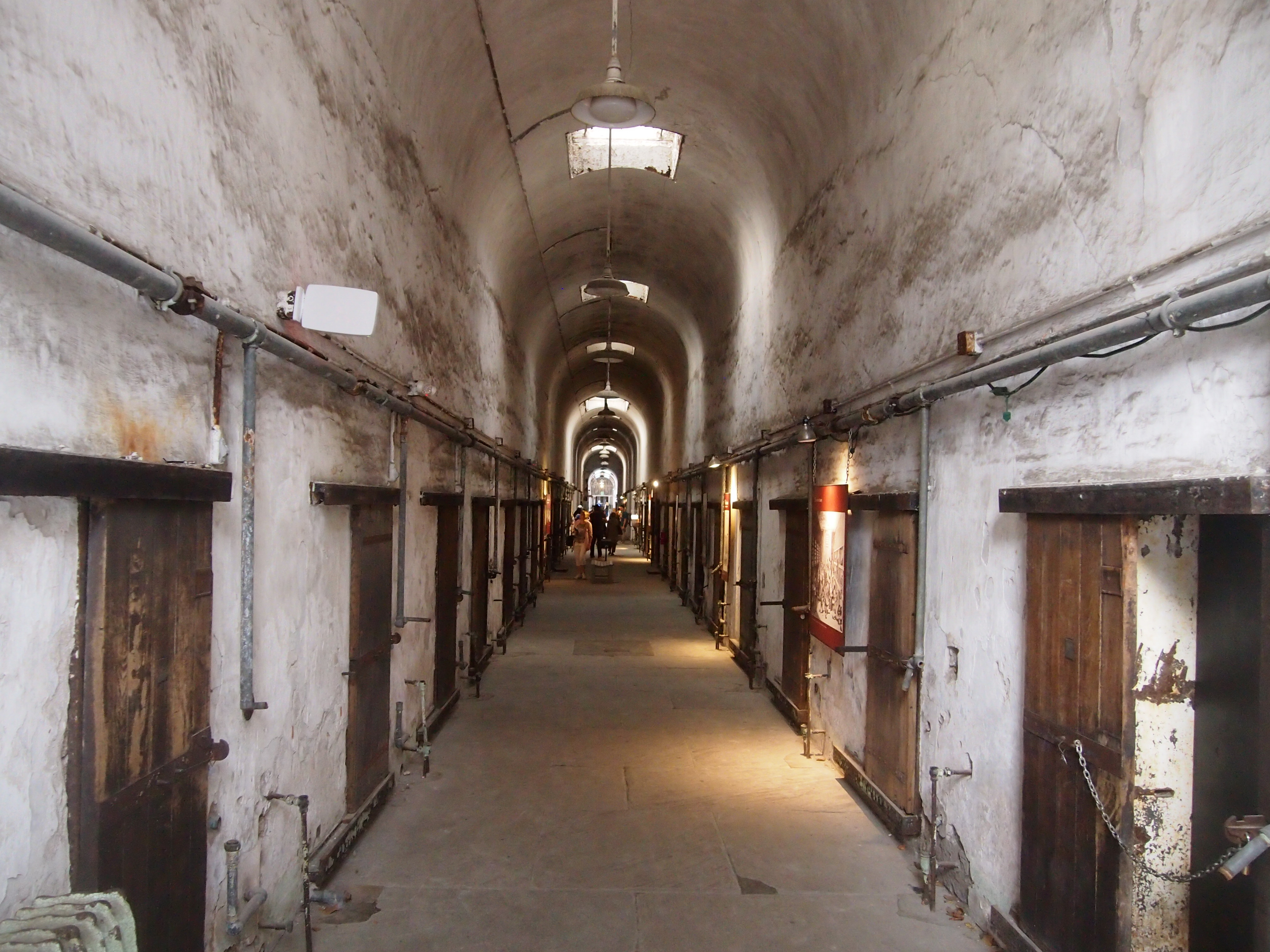
In our time, a number of the cellblocks have been partly restored to an earlier look.
Eastern State Penetentiary interior cellblockNot quite the original look, since at first the hallways’ only connection to the cells were through slots through which food was passed. “Haviland’s ambitious mechanical innovations placed each prisoner had his or her own private cell, centrally heated, with running water, a flush toilet, and a skylight. Adjacent to the cell was a private outdoor exercise yard contained by a ten-foot wall,” the prison says.

That wall had the only door, which of course was locked all the time. “In the vaulted, skylit cell, the prisoner had only the light from heaven, the word of God (the Bible) and honest work (shoemaking, weaving, and the like) to lead to penitence,” continues the web site. “In striking contrast to the Gothic exterior, Haviland used the grand architectural vocabulary of churches on the interior. He employed 30-foot, barrel vaulted hallways, tall arched windows, and skylights throughout. He wrote of the Penitentiary as a forced monastery, a machine for reform. ”

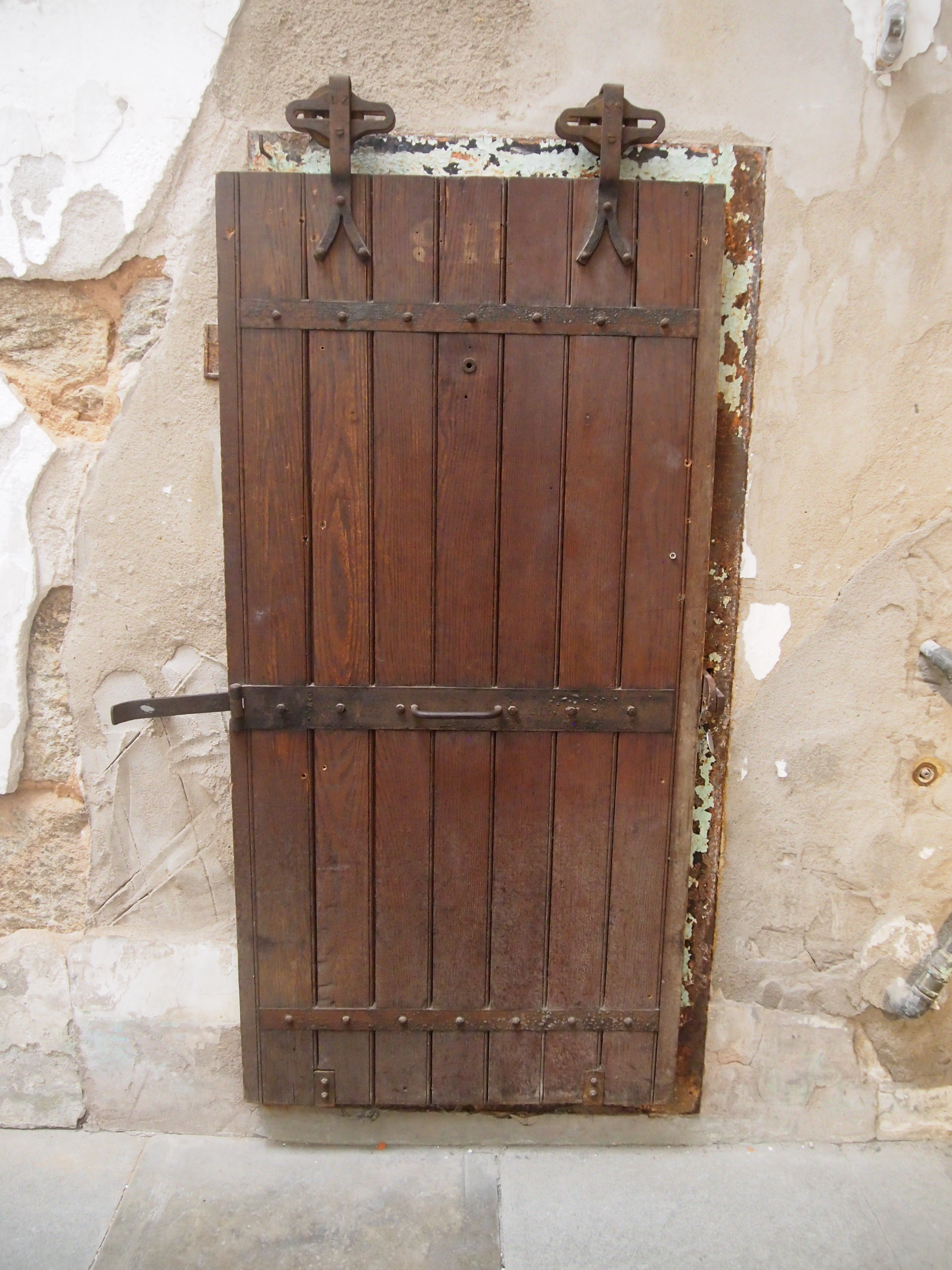
Later, Eastern State became more of a standard 20th-century prison, closer to the New York system, rather than the Pennsylvania system pioneered at Eastern State, finally closing in 1970. Hallway doors were added.

Eastern State Penetentiary

New cellblocks were also added, including a few two-story ones.

Eastern State Penitential

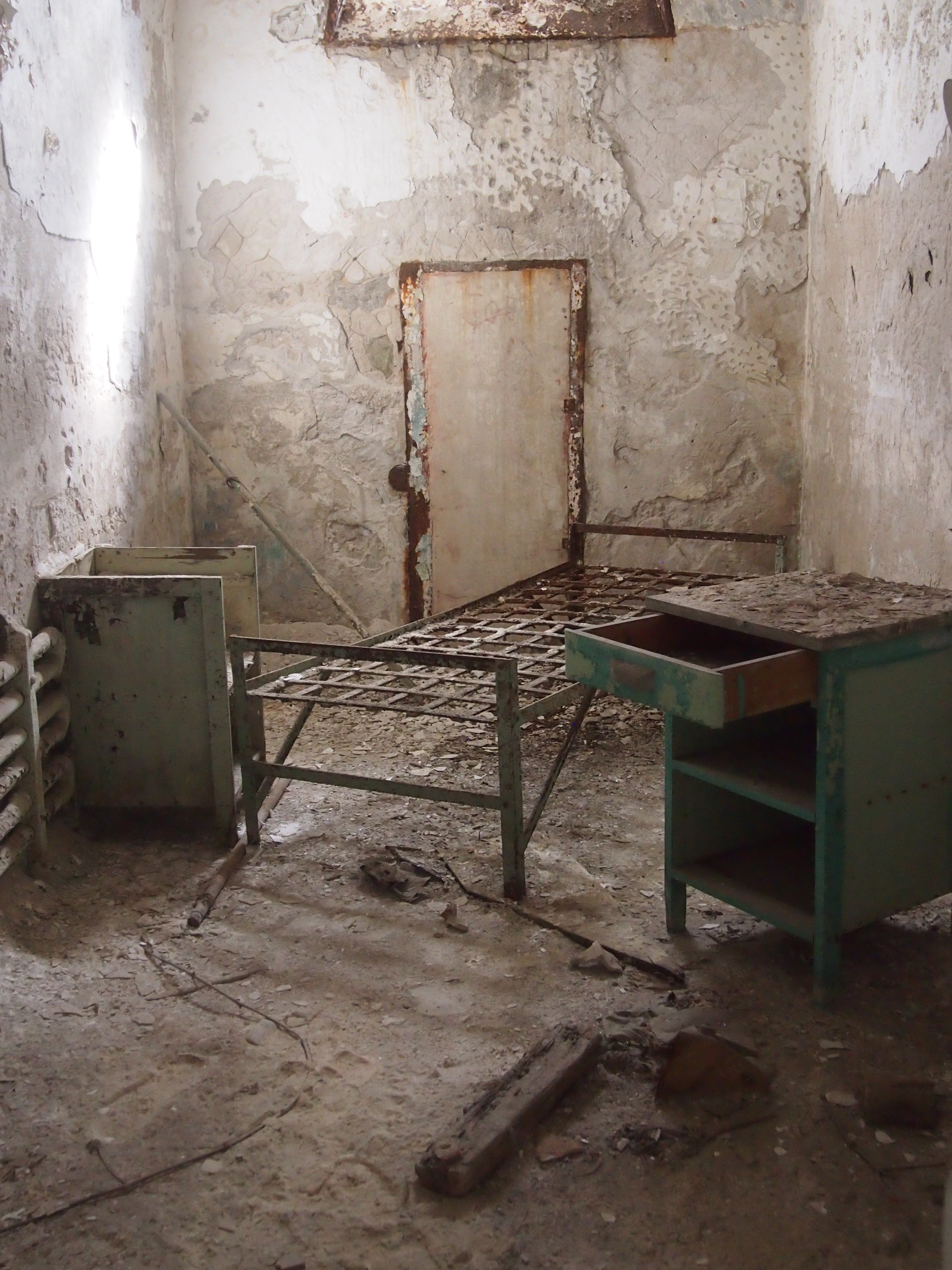
Some cells are open. Many of the cells are unrestored, containing debris of various kinds.
Eastern State Penetentiary

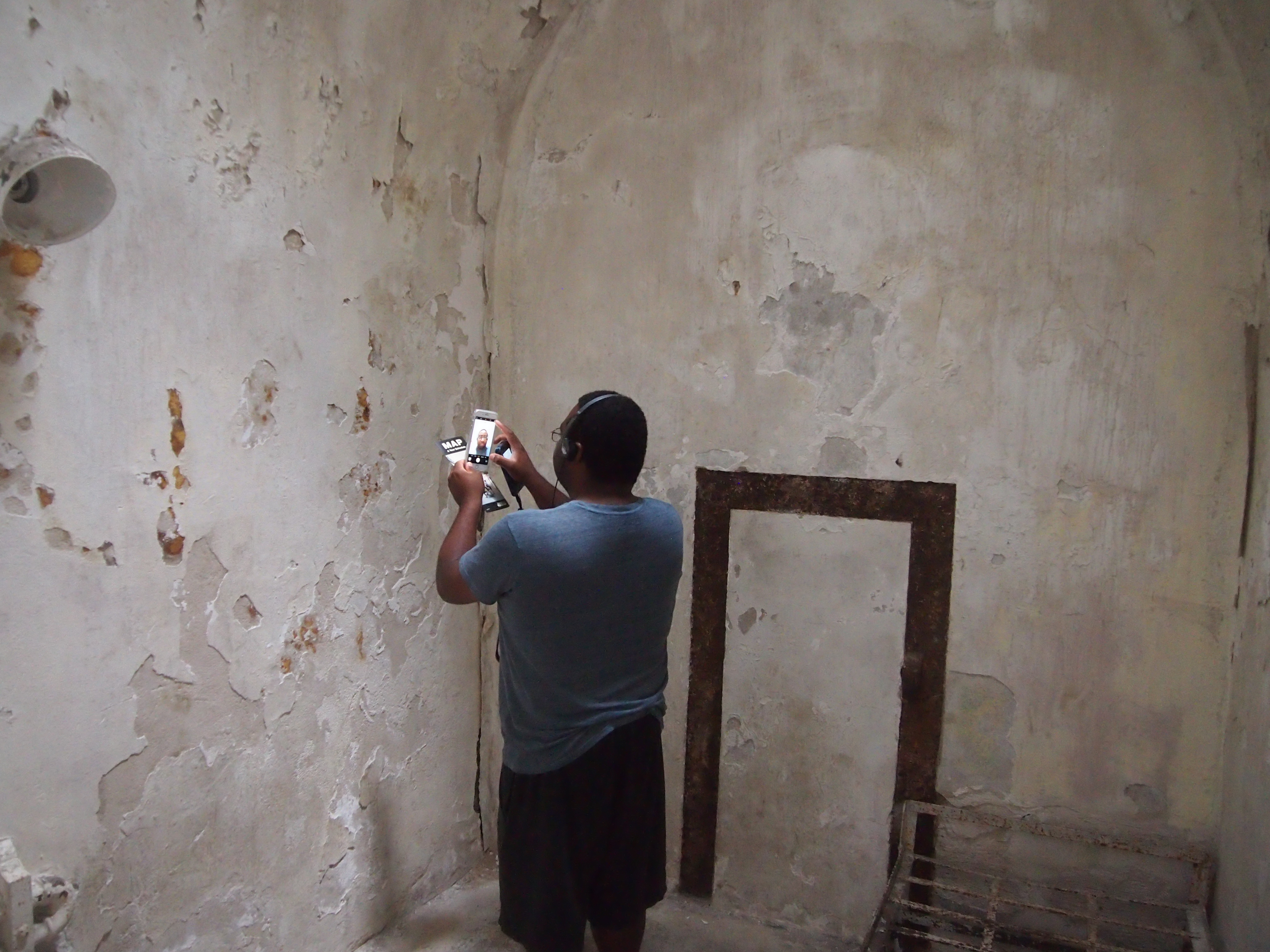
A few are more-or-less restored. The urge to take selfies doesn’t seem to go away just because the setting is a prison ruin.

Eastern State PenetentiaryNote that the fellow in the picture is wearing earphones. Part of the price of admission — not an extra — was the loan of an mp3 player and some earphones. Wearing them, you went to various stations and listened to narration about the prison by actor Steve Buscemi. He had a good voice for the text, which was well-written and informative. Adding an extra layer of interest: some of the segments also included interviews (perhaps done some years ago) of both inmates and guards at the prison in the 20th century.

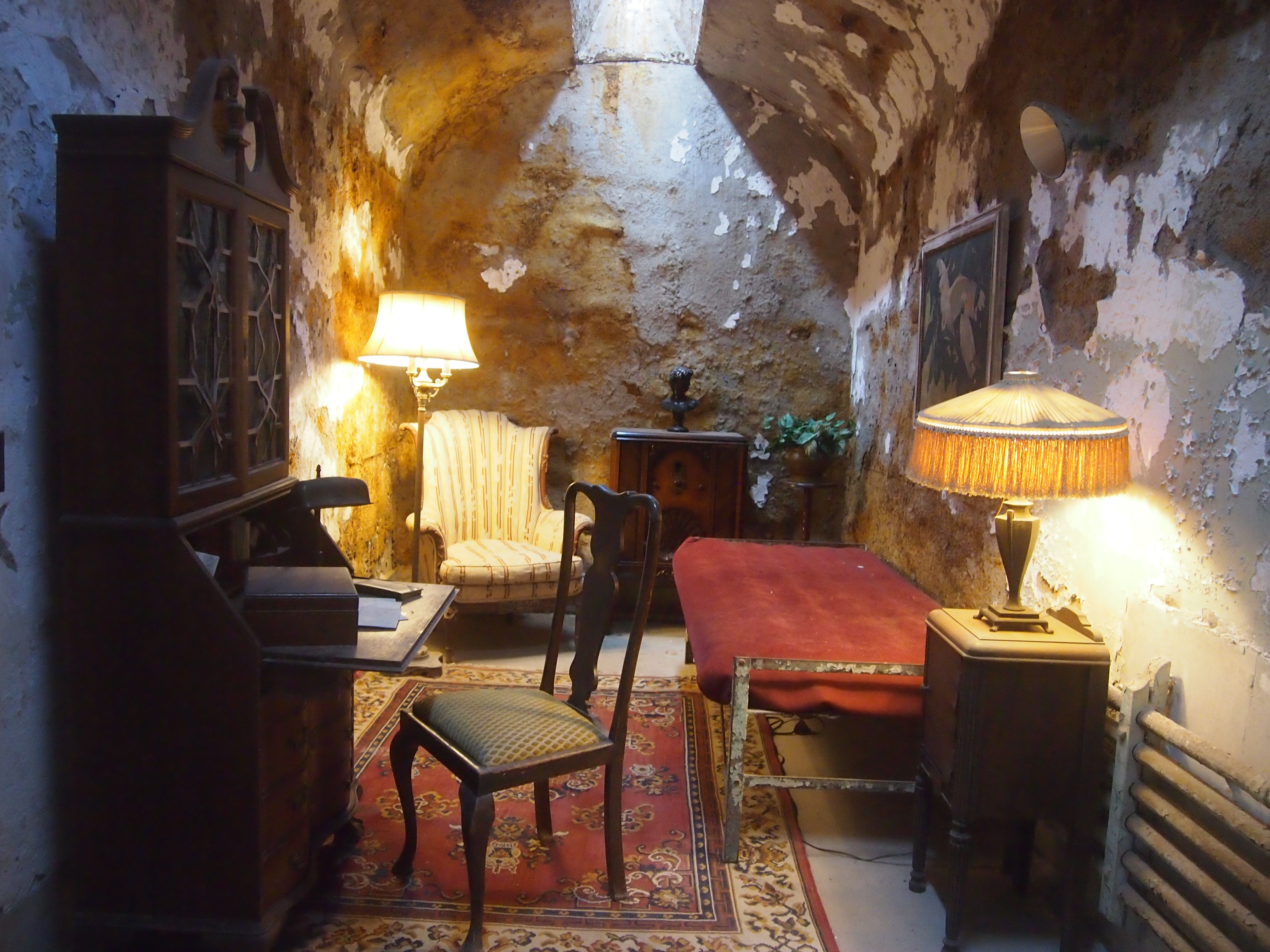
The museum featured a number of other restorations, such as a barber shop, the exercise yard, hospital, and (surprisingly) a synagogue. The museum couldn’t resist re-creating Al Capone’s cell, and I couldn’t resist taking a picture of it.
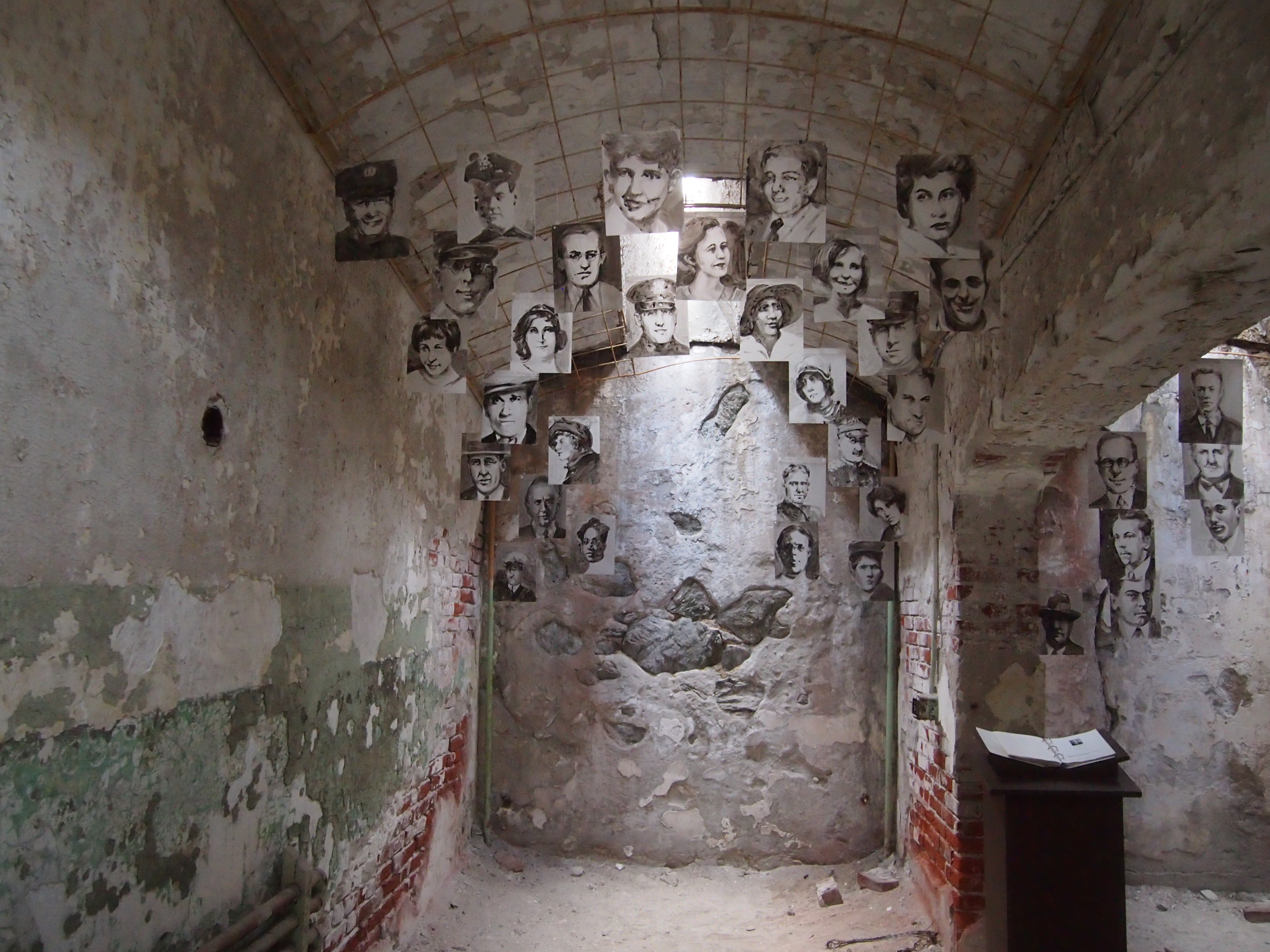
Eastern State Penetentiary - Al Capone's cellThere are about a dozen artists’ installations in the museum, most of which occupy single cells in various parts of the prison. I found this one, “Other Absences,” the most compelling.
Eastern State PenitentiaryArtist Cindy Stockton Moore’s web site says she created “fifty portraits of murder victims. The paintings, created with loose ink washes on translucent mylar, depict men, women and children whose deaths were attributed to those incarcerated at Eastern State Penitentiary.” That’s good. The prisoners shouldn’t get all of the attention.

Laurel Hill Cemetery

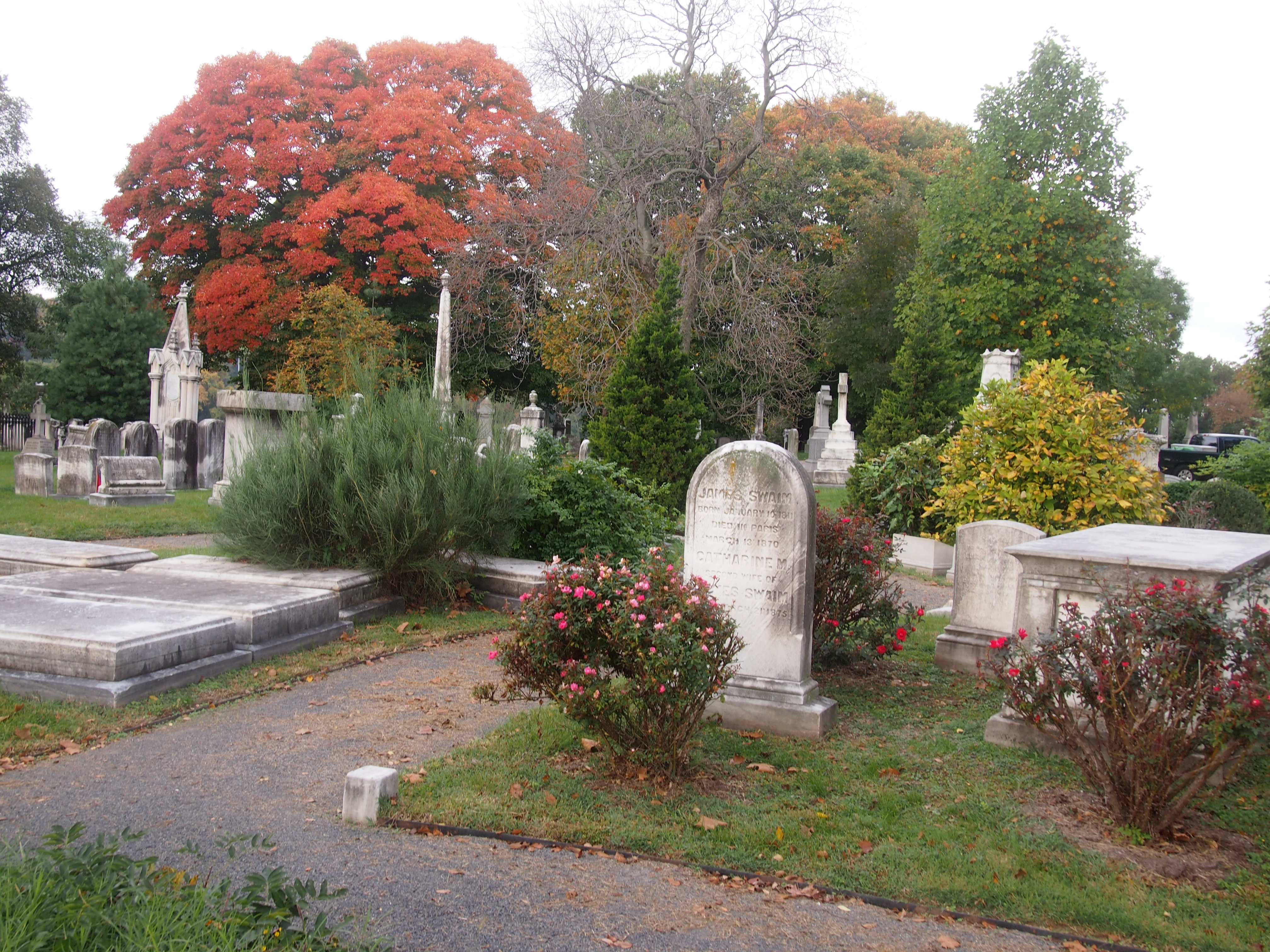
Laurel Hill Cemetery in Philadelphia is known as the second major rural cemetery in the country, dating from 1836. Its location isn’t remotely rural now, but in its early days the cemetery was outside the city on a sizable hill overlooking the Schuylkill River.

As the cemetery’s web site says, “Previously, churchyards were the only places available to bury the dead, and they were often as crowded and unsanitary as the streets that bordered them. Worse yet, rapid industrialization and population growth commonly led to the disinterment of burial grounds to make way for roads and buildings…. Laurel Hill was not only established as a permanent, non-sectarian burial place for the dead, but also as a scenic, riverside sanctuary for the living.”

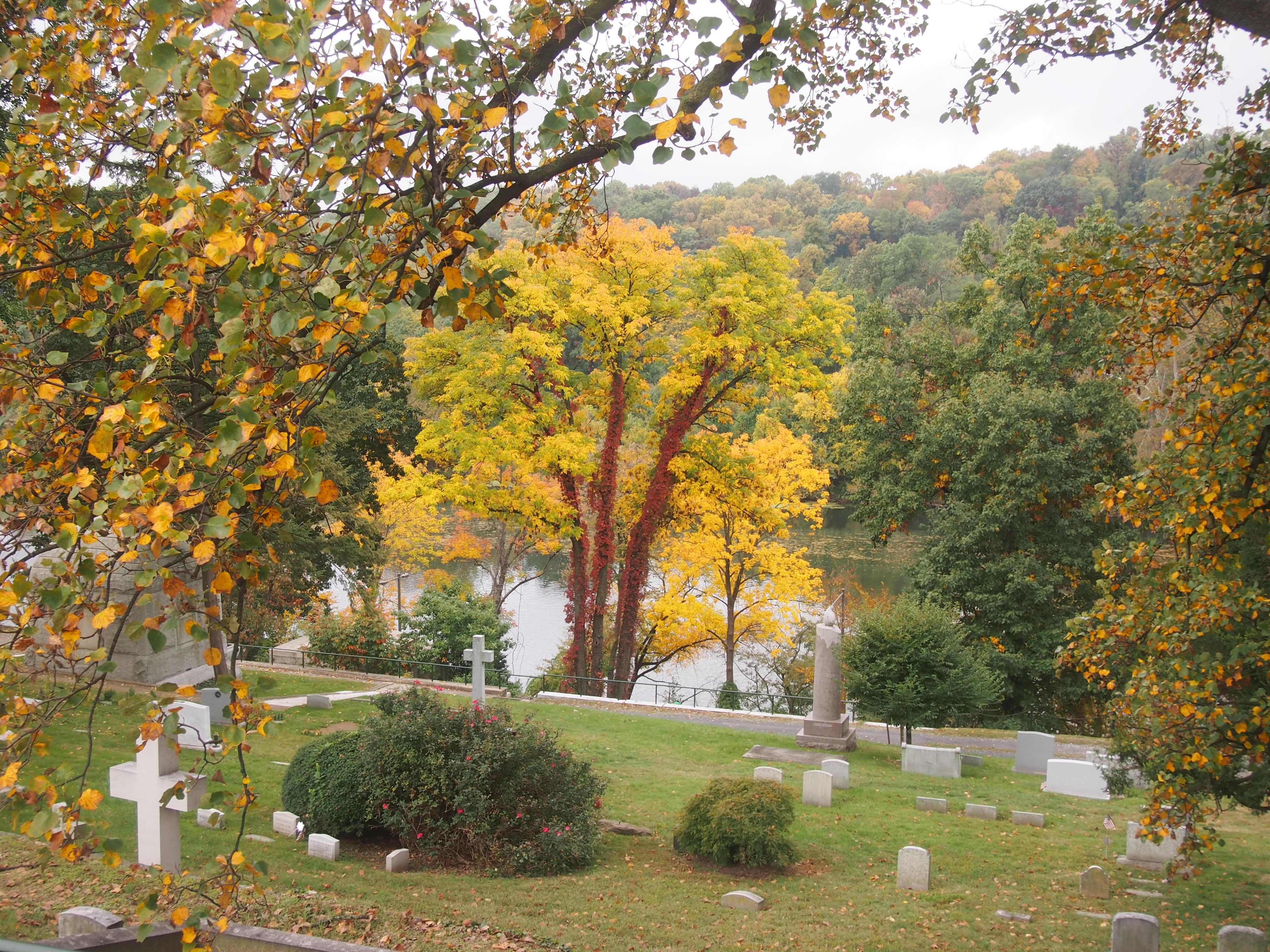
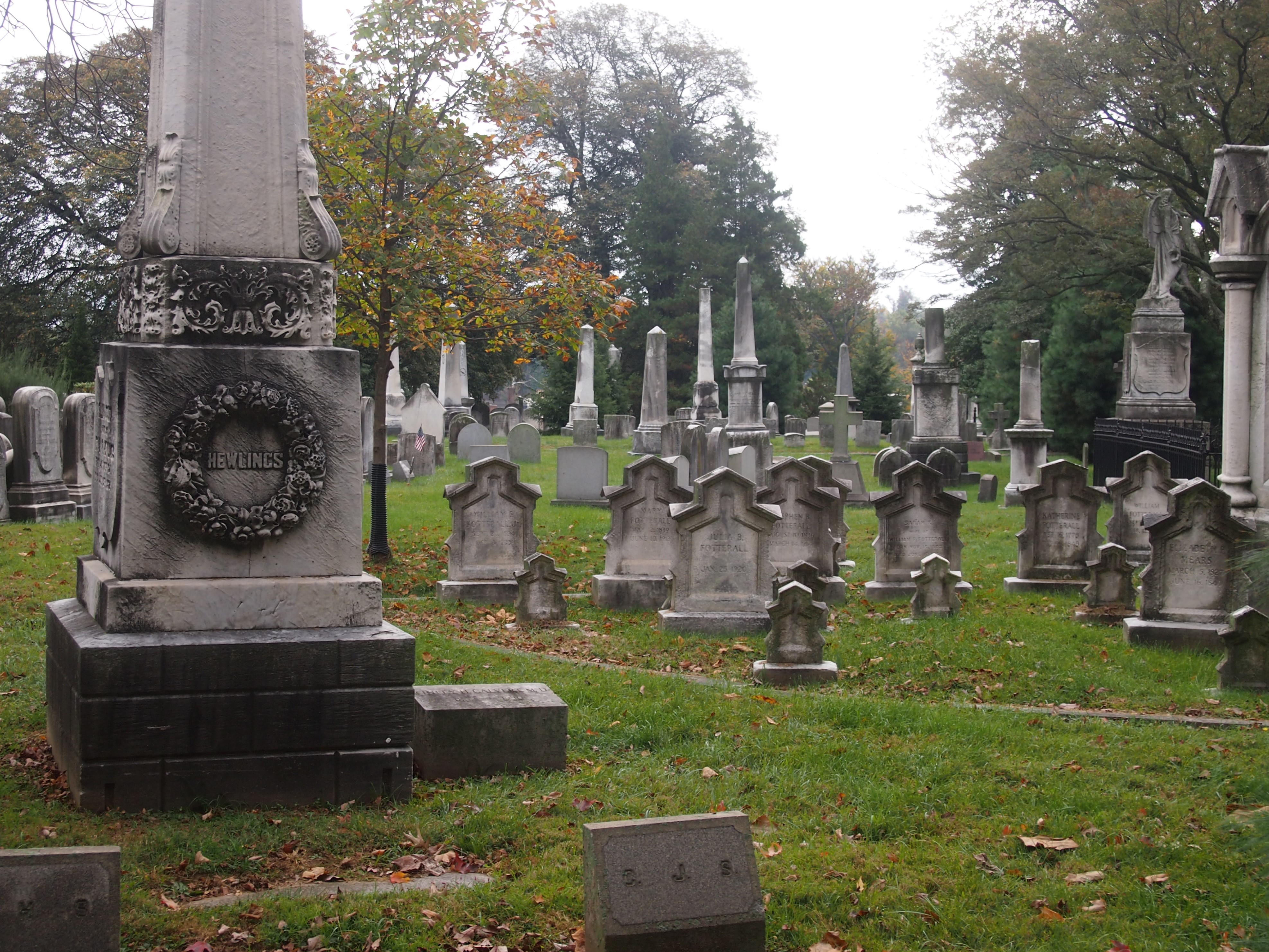
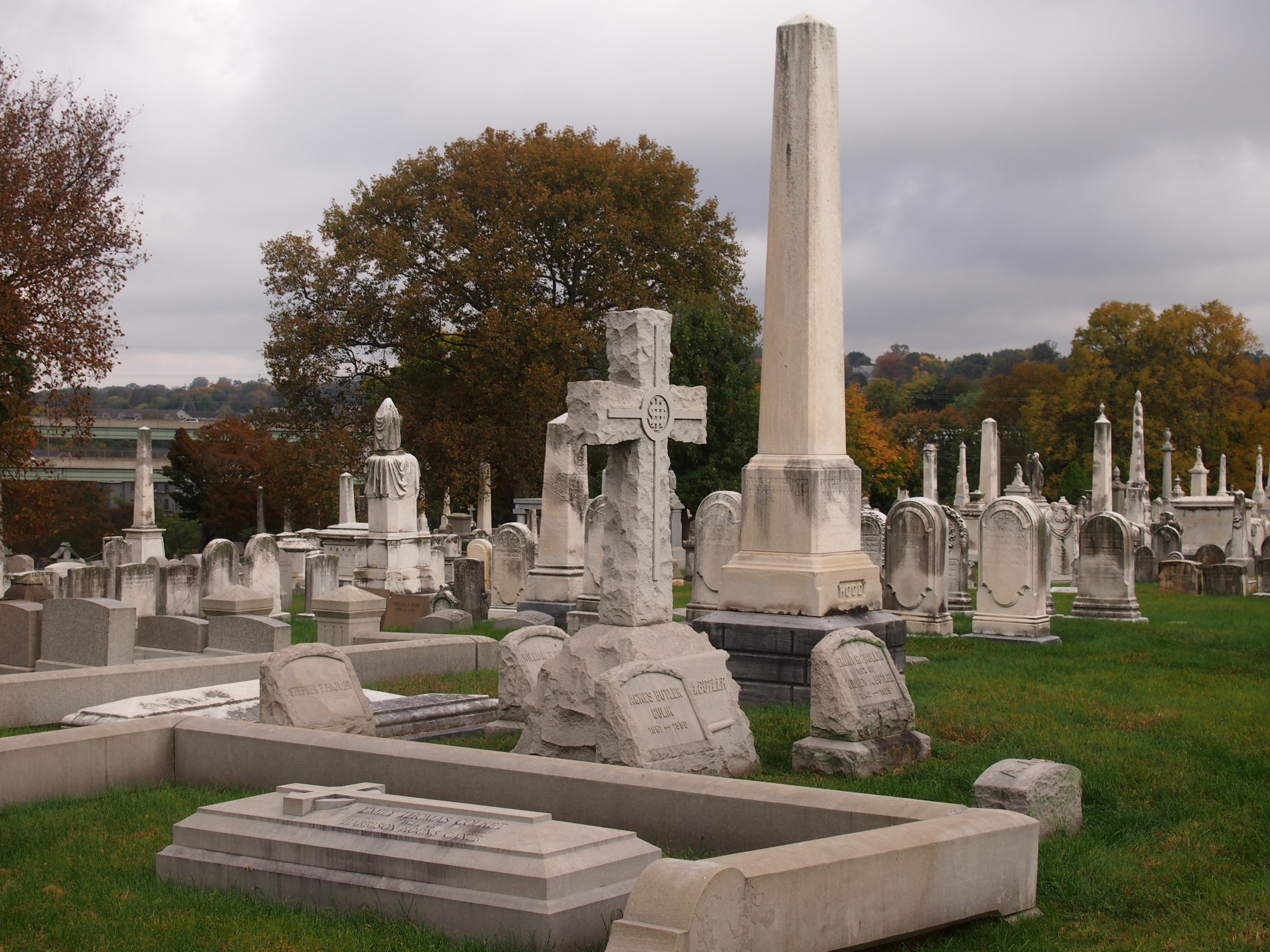
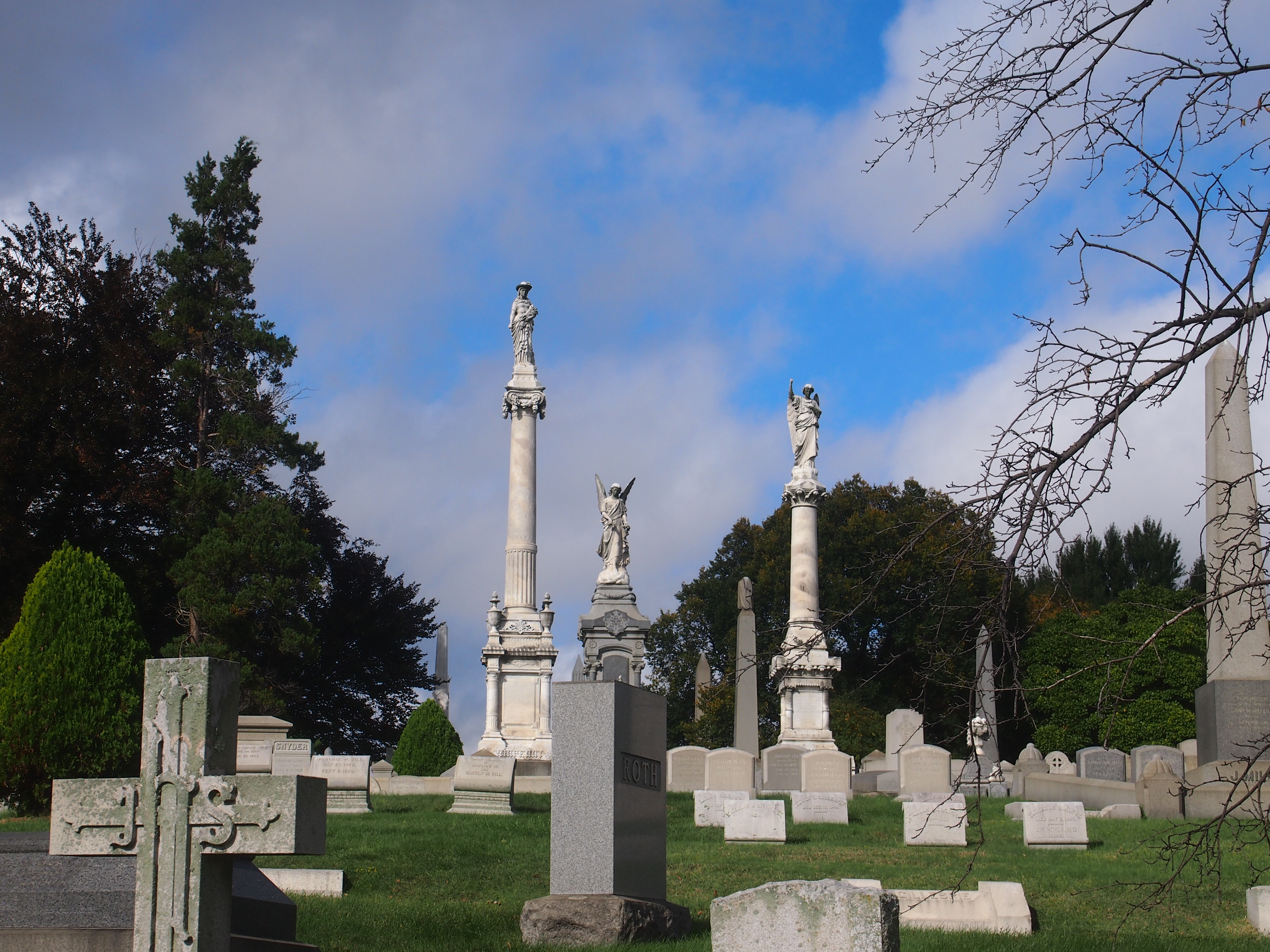
As the city grew around it, Laurel Hill itself become crowded, and it’s now a sizable necropolis with about 33,000 permanent residents in 74 acres. Many spots are lush with growth.Laurel Hill Cemetery 2016Trees grow on the slope down to the river.Laurel Hill Cemetery 2016Many parts are thick with stones.Laurel Hill Cemetery 2016Laurel Hill Cemetery 2016Some monuments reach toward the sky.
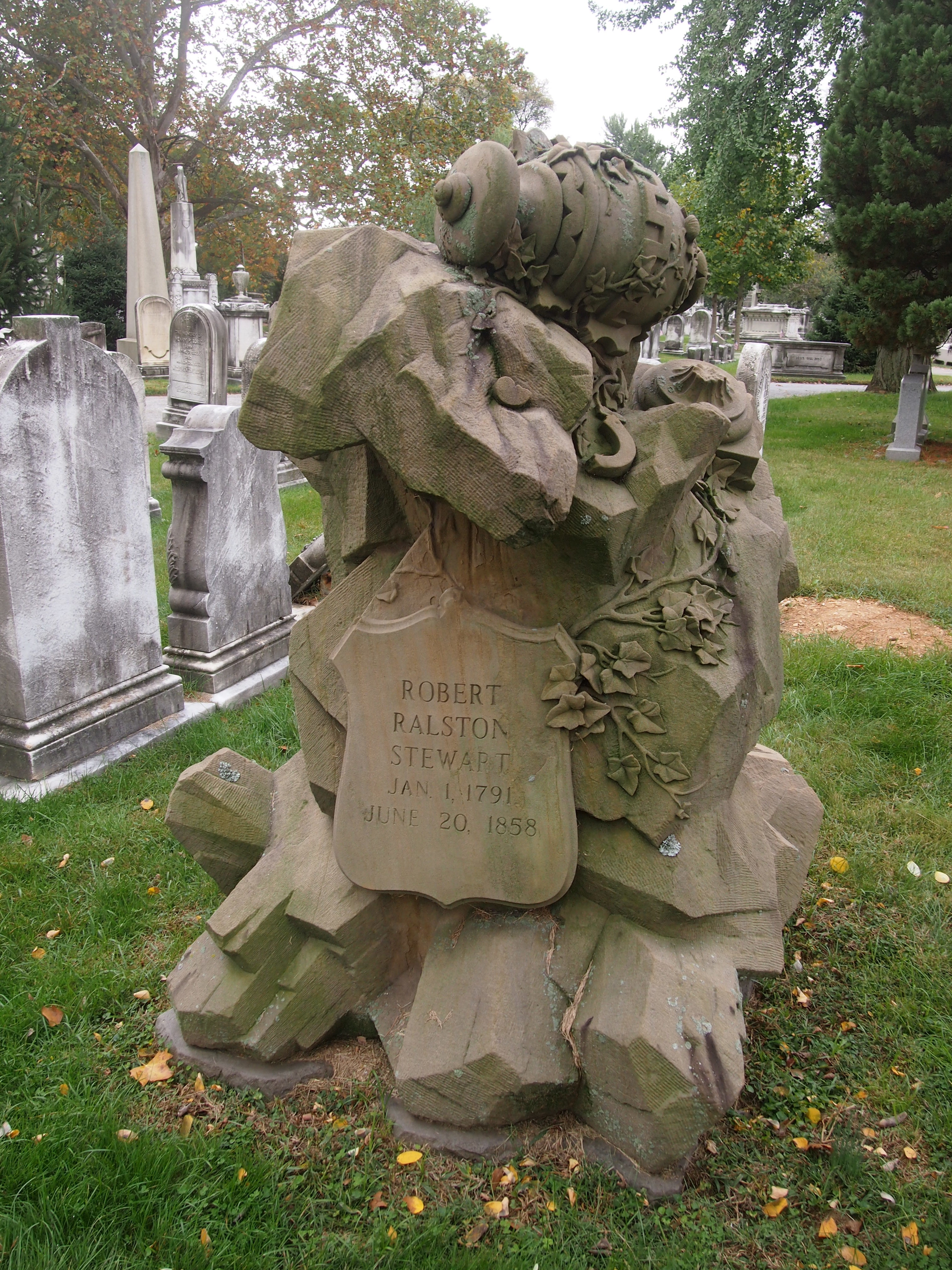
Laurel Hill Cemetery 2016There are less conventional stones. Find a Grave says that “the shattered urn symbolizes a violet death. Stewart was murdered by his manservant.”
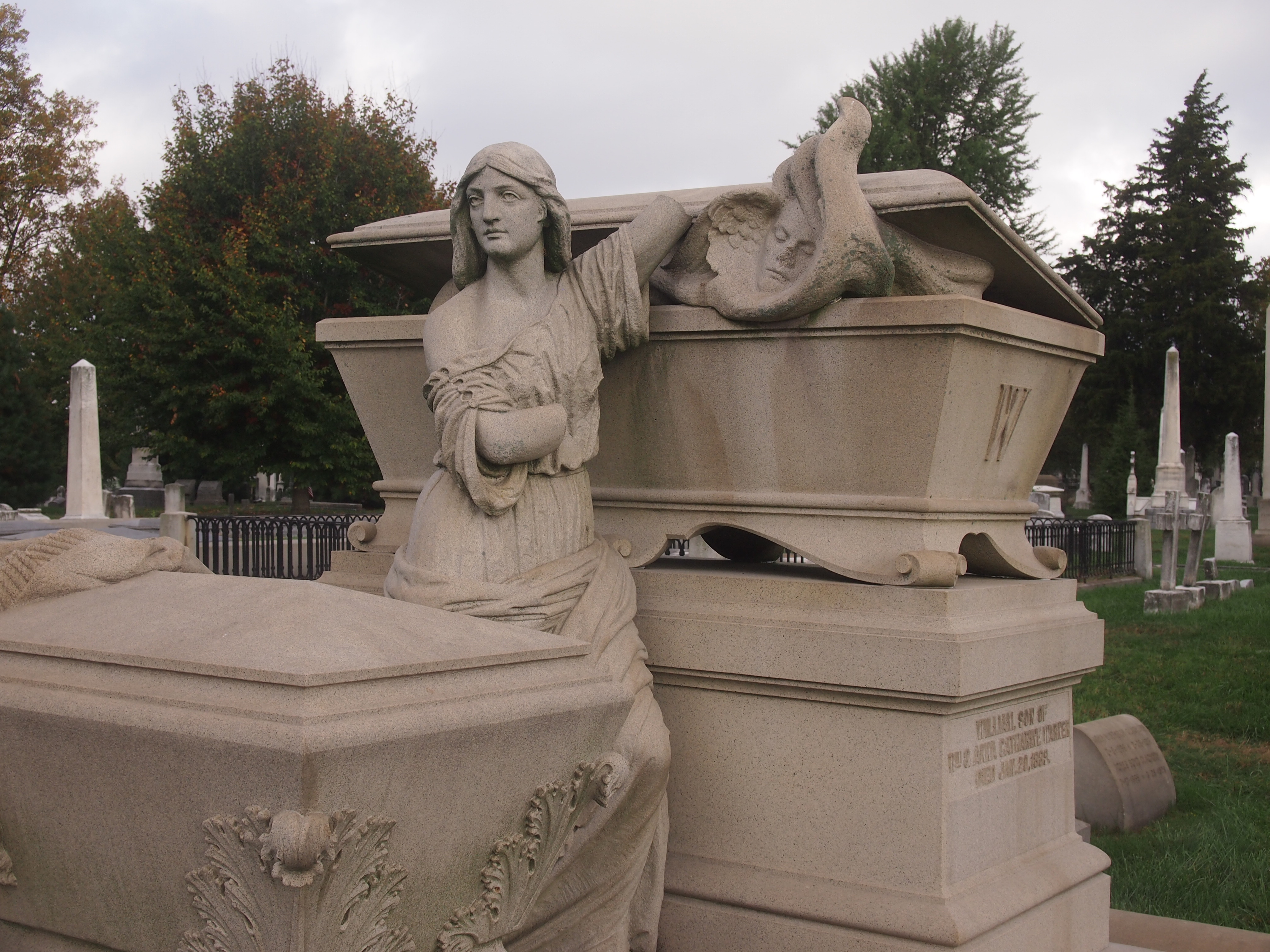
Laurel Hill Cemetery 2016The cemetery also has a large stock of striking funerary art, such as the Warner Memorial. Bellamorte.net says: “The Warner Memorial, sculpted by yet another Scottish craftsman, Alexander Milne Calder, shows a full-sized female figure opening a casket while the spirit of its male inhabitant slips free and takes wing. Sadly, the monument has been the target of vandalism over the years; both of the woman’s arms are missing as is the nose of the rising male spirit.”
Laurel Hill Cemetery 2016Another detail from the Warner Memorial.
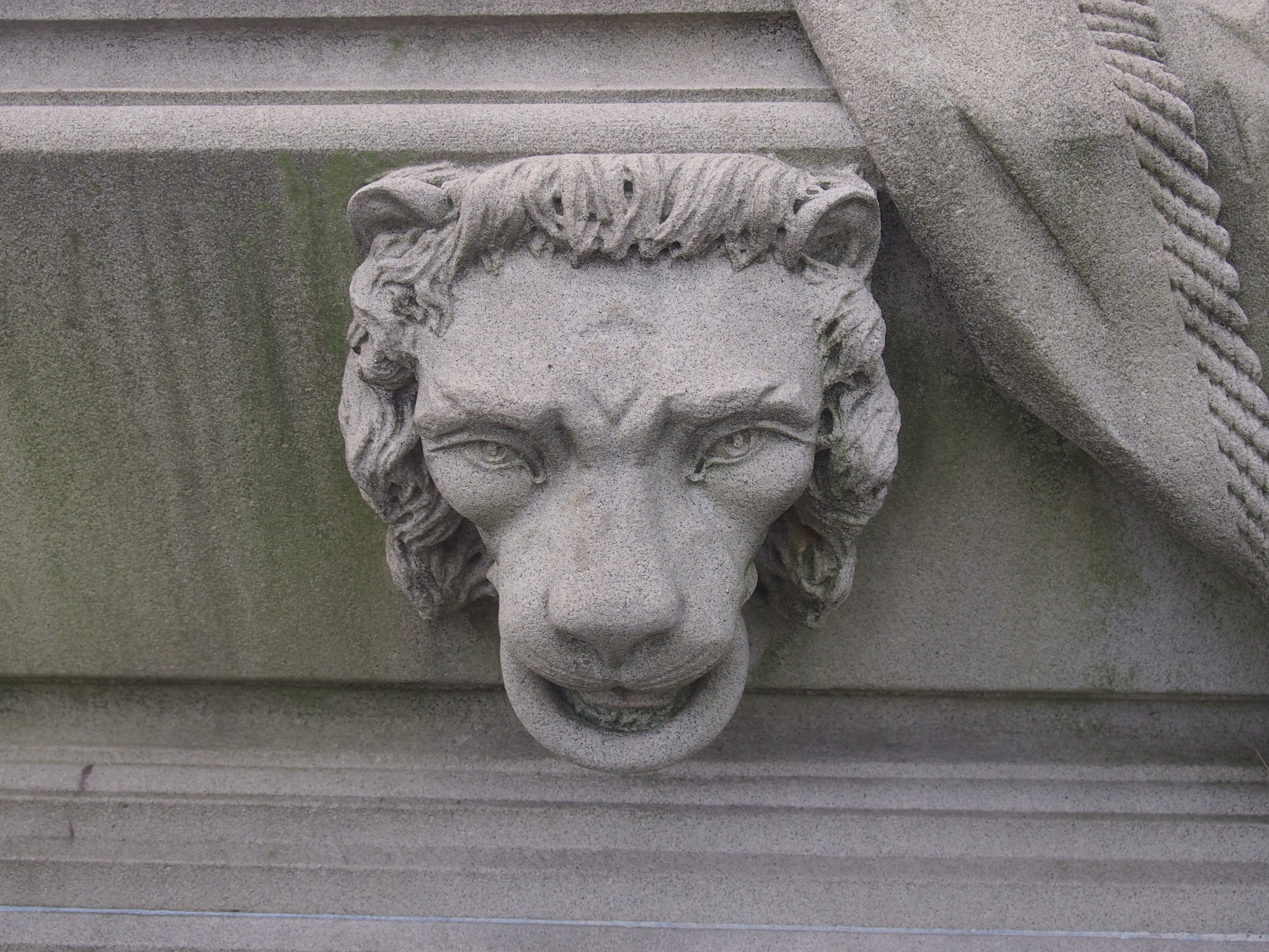
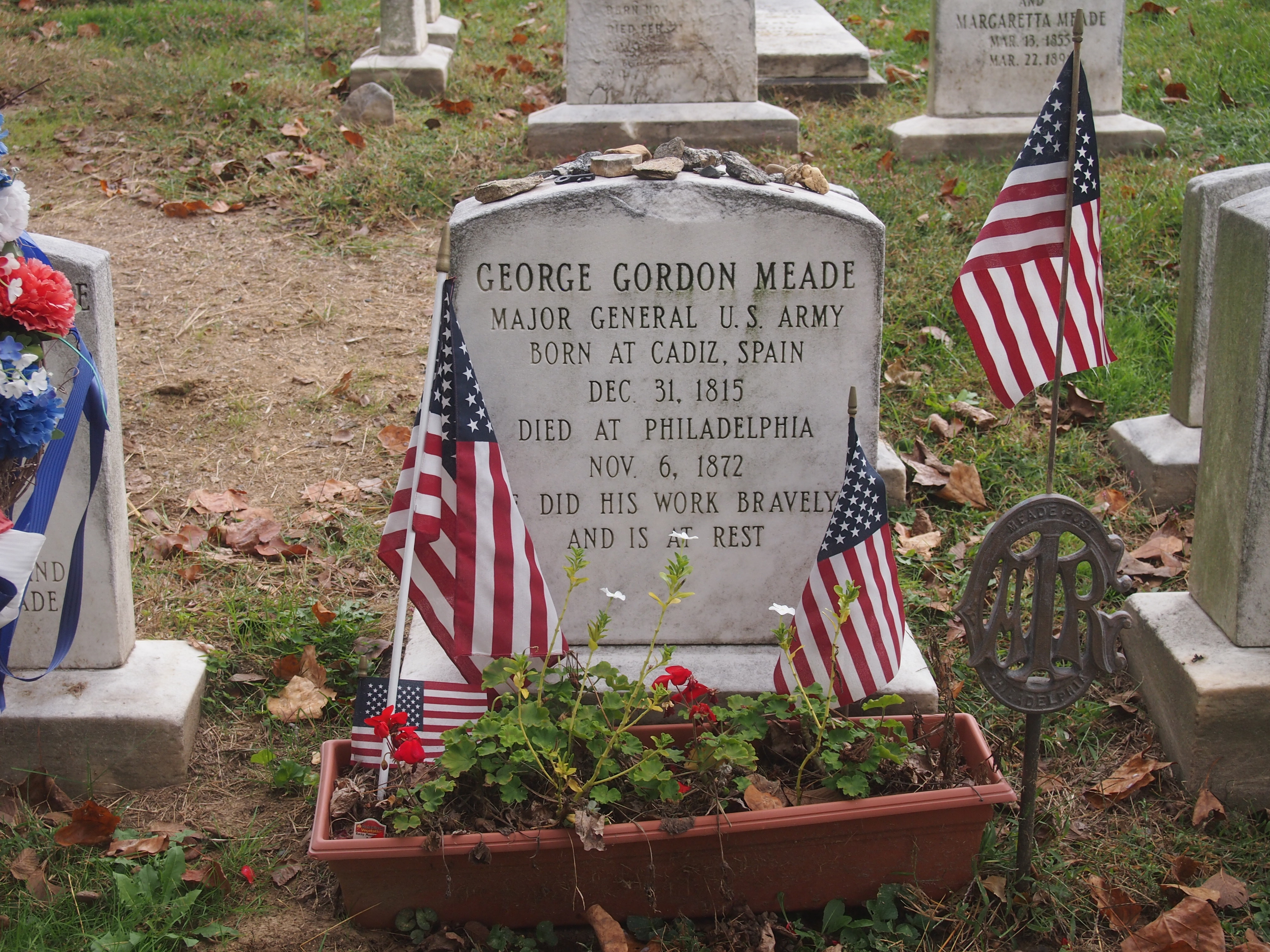
Laurel Hill Cemetery - Warner Memorial LionI didn’t seek out too many notable burial sites, except for Gen. George Meade, resident of the cemetery since 1872. He and some of his family have a spot with a nice view of the river, and I can report that people put stones on his grave.
Laurel Hill Cemetery - George Meade GraveOne of the oddest stones I saw belonged to Catharine Drinkhouse Smith and Levi Franklin Smith, a five-sided pillar (not four, as it says on Bellamorte.net). Mrs. Smith was a noted spiritualist of her time.

Her side of the stone said, with curious precision about some things: “Mrs. Catharine Drinkhouse Smith was born at Reading, Berks County, State of Pennsylvania, on Thursday, the Fifth day of August, 1824, at 15 minutes past 5 O’clock in the morning, and passed to spirit life 15 minutes before 12 O’clock the 27th day of March, 1893, from the residence of her husband, Professor Levi Franklin Smith, 2430 Thomson Street, Philadelphia, Pennsylvania. Mrs. Smith was a devoted Spiritualist, and one of the best mediums of her time, and accomplished great good, in spreading this beautiful truth, and in demonstrating a continuity of life.”

Another odd thing: the cemetery had a gift shop. Besides Arlington National Cemetery, I think that’s the only time I’ve run across that. The man behind the counter was an informative fellow, happy to talk about the place (and a bit about Professor and Mrs. Smith). I did my little part to support the cemetery by buying some postcards and a refrigerator magnet.

Phil-Tex ’16

Just returned from Texas, where I visited family, but before I went there I had about a day and a half to kick around in Philadelphia, the largest city in the United States that I’d never been to before. Of course, size is only one measure of a city. After only a small sample, I’d say that Philadelphia counts as a highly worthwhile place to go for all kinds of reasons.

The visit was partly mad dash — on foot, by bus and by rail to a few places I really wanted to see — while also trying to take a more leisurely gaze at interesting things as I wandered down streets or sat next to bus windows. Those sound like contradictory activities, but not really. I was helped by the fact that both days were good for walking for different reasons: Friday, October 21 because it was warm, clear and nearly summer-like; Saturday, October 22 because it was overcast, cool and a distinctly fall day.

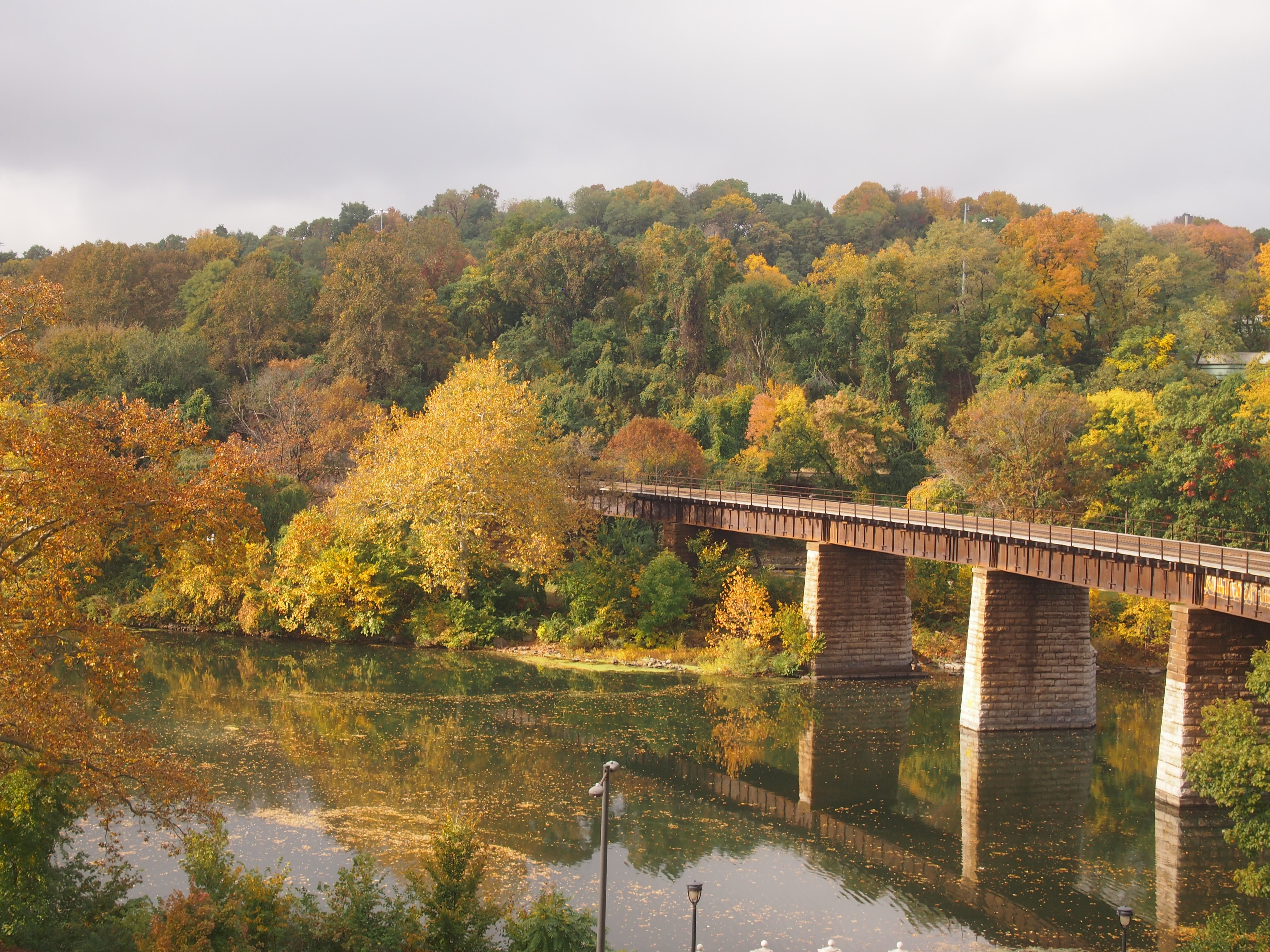
The region’s fall appearance was very distinctive in some places, such as this view of the west bank of the Schuylkill River (I didn’t make it over to the Delaware River).

Schuylkill River from Laurel Hill CemeteryI made it to the Laurel Hill Cemetery, one of the nation’s first park-like burial grounds, and about as picturesque as a cemetery can be, with weathered stones and funerary artwork and massive trees covering large hills along the Schuylkill, plus a few famed residents.

Also, I visited Eastern State Penitentiary, a museum that was once an enormous prison for the state of Pennsylvania. Not just any prison, but a 19th-century structure that was the first of an important kind of prison, and so an historic site. In our time it’s a magnificent ruin and quite a tourist attraction. Urban ruins are a little hard to come by, but not impossible.

I fulfilled a childhood ambition — I was a peculiar child — when I visited the U.S. Mint in Philadelphia just before it closed for the day on Friday, October 21. The last time I’d been to a functioning U.S. Mint facility was in 1980 in Denver, back before Big Zinc took an abiding interest preserving the penny.

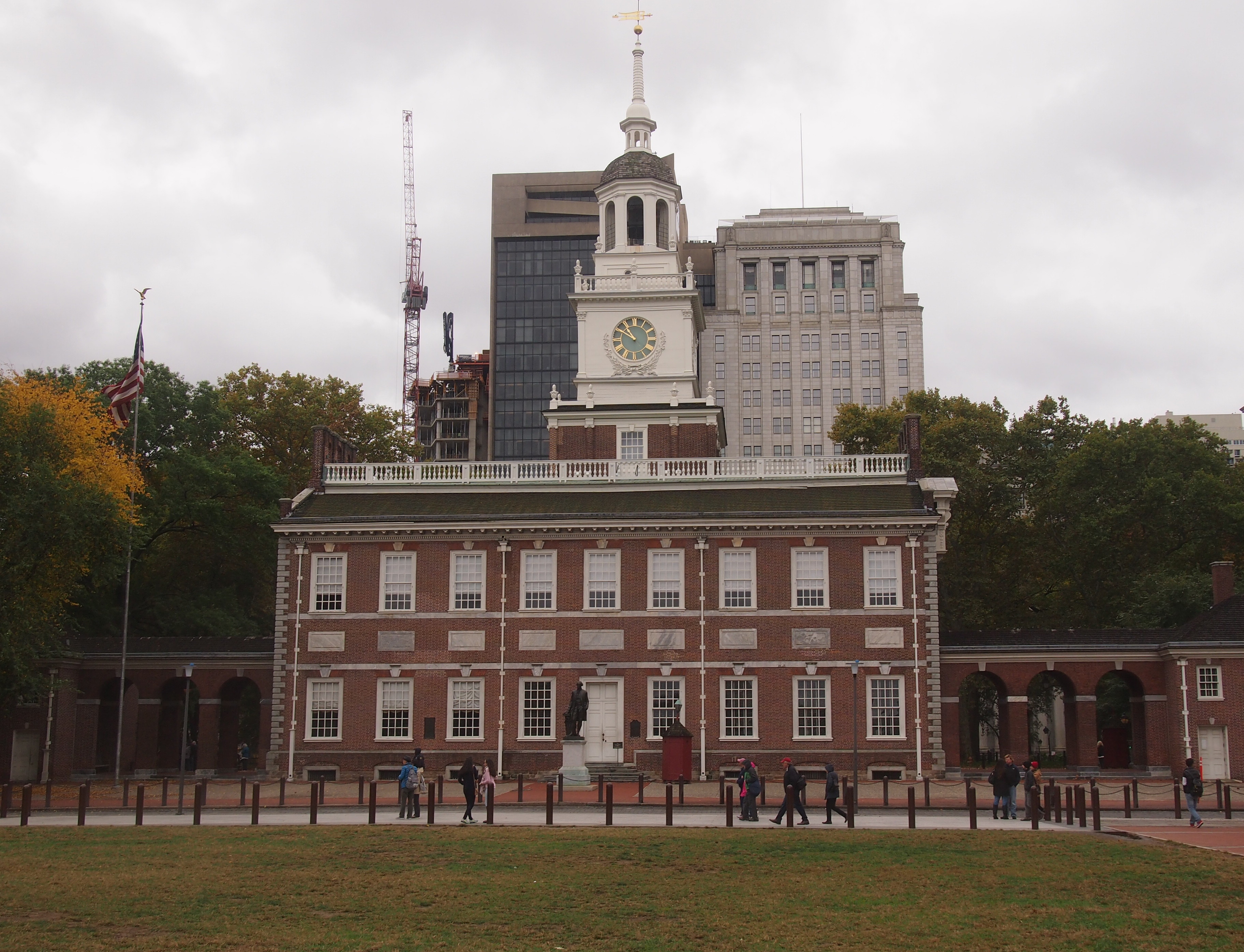
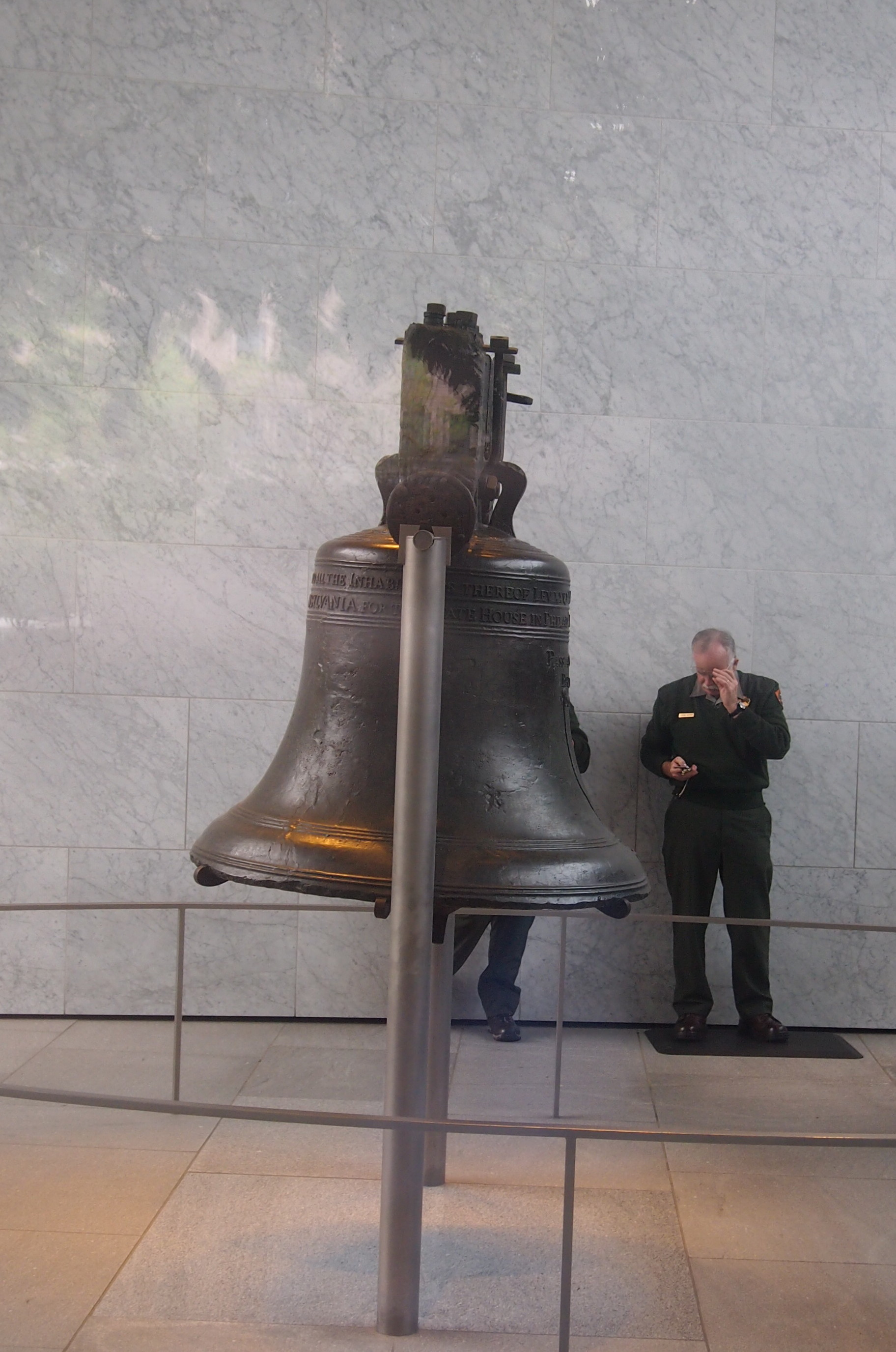
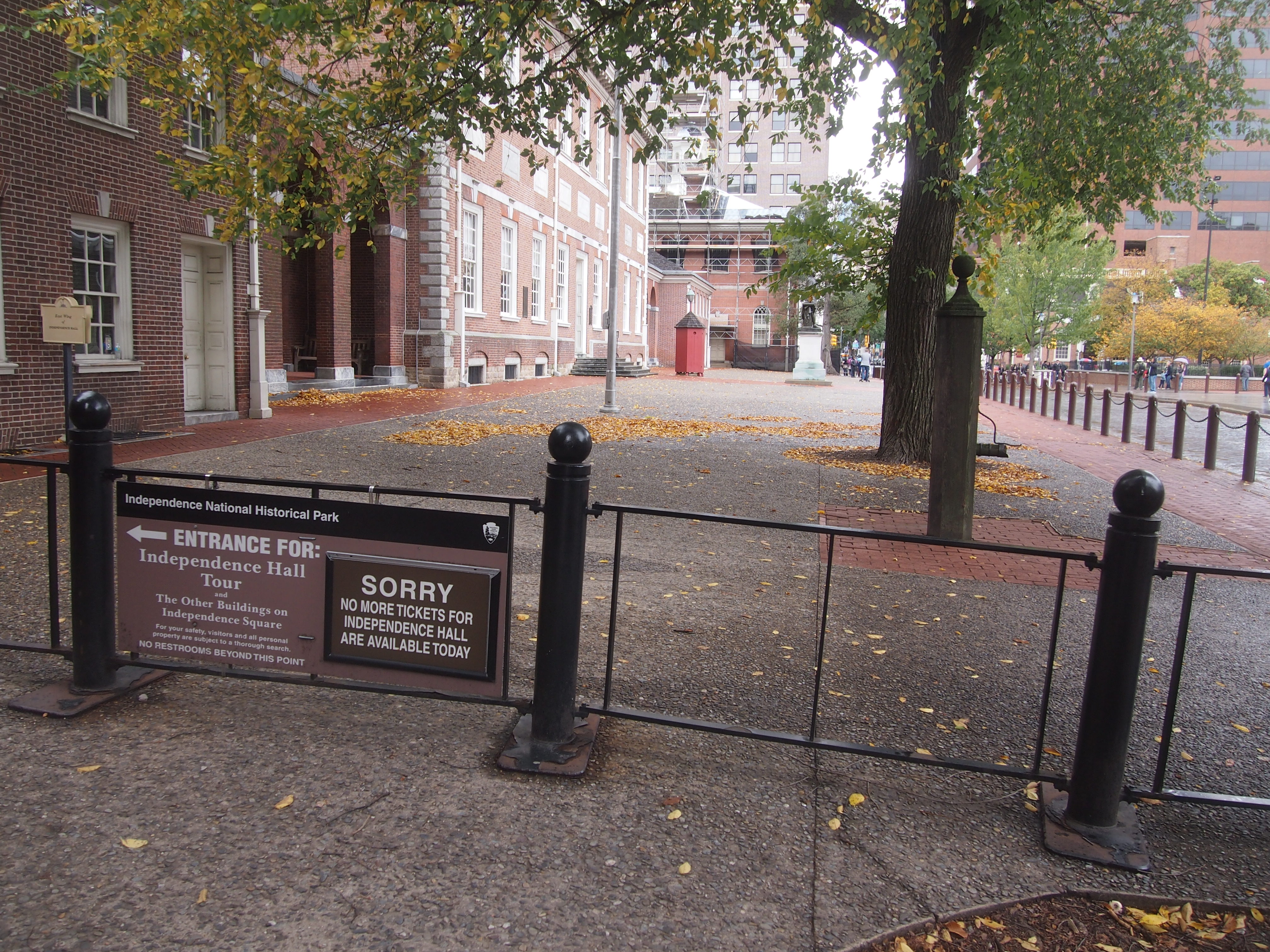
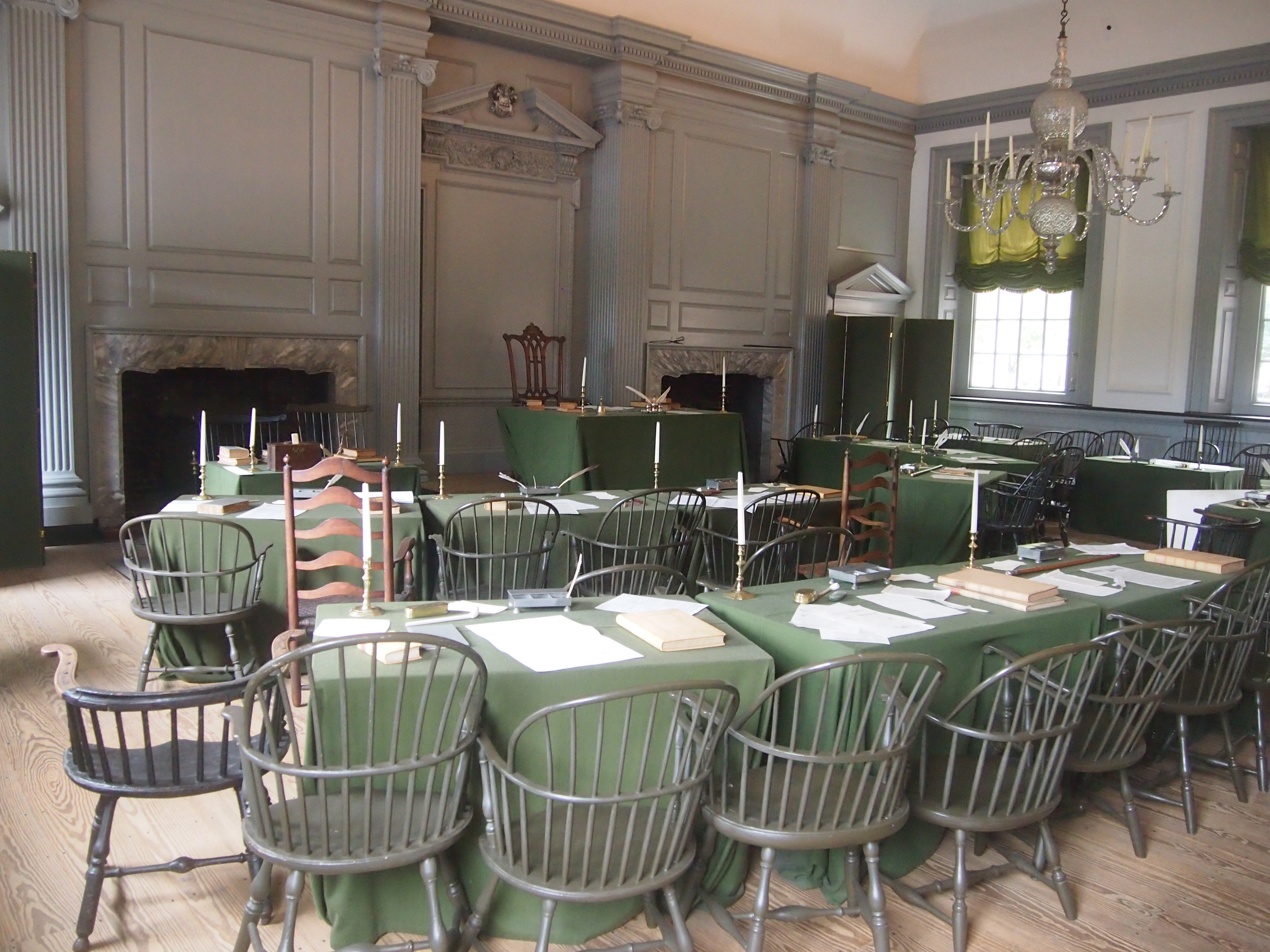
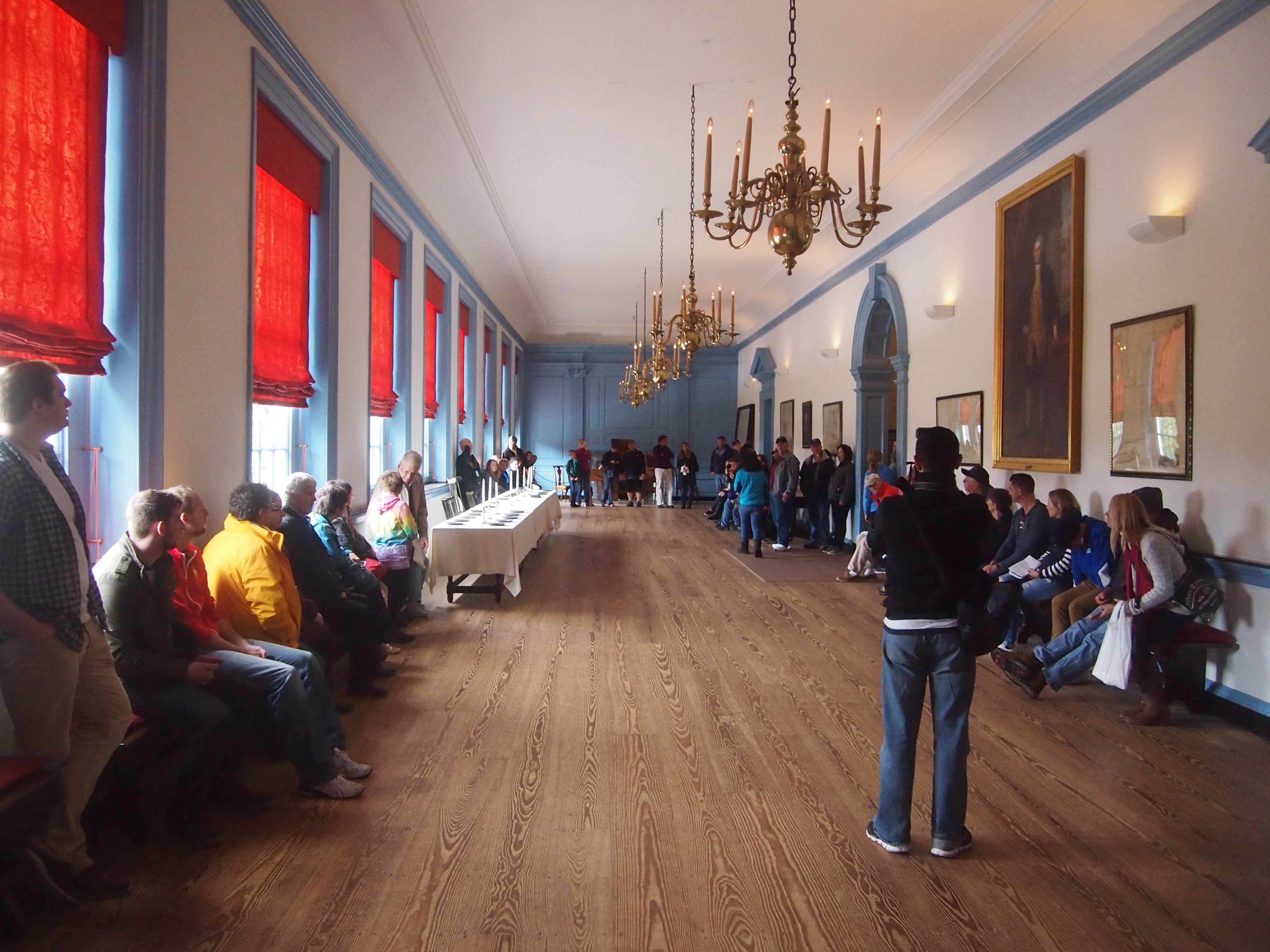
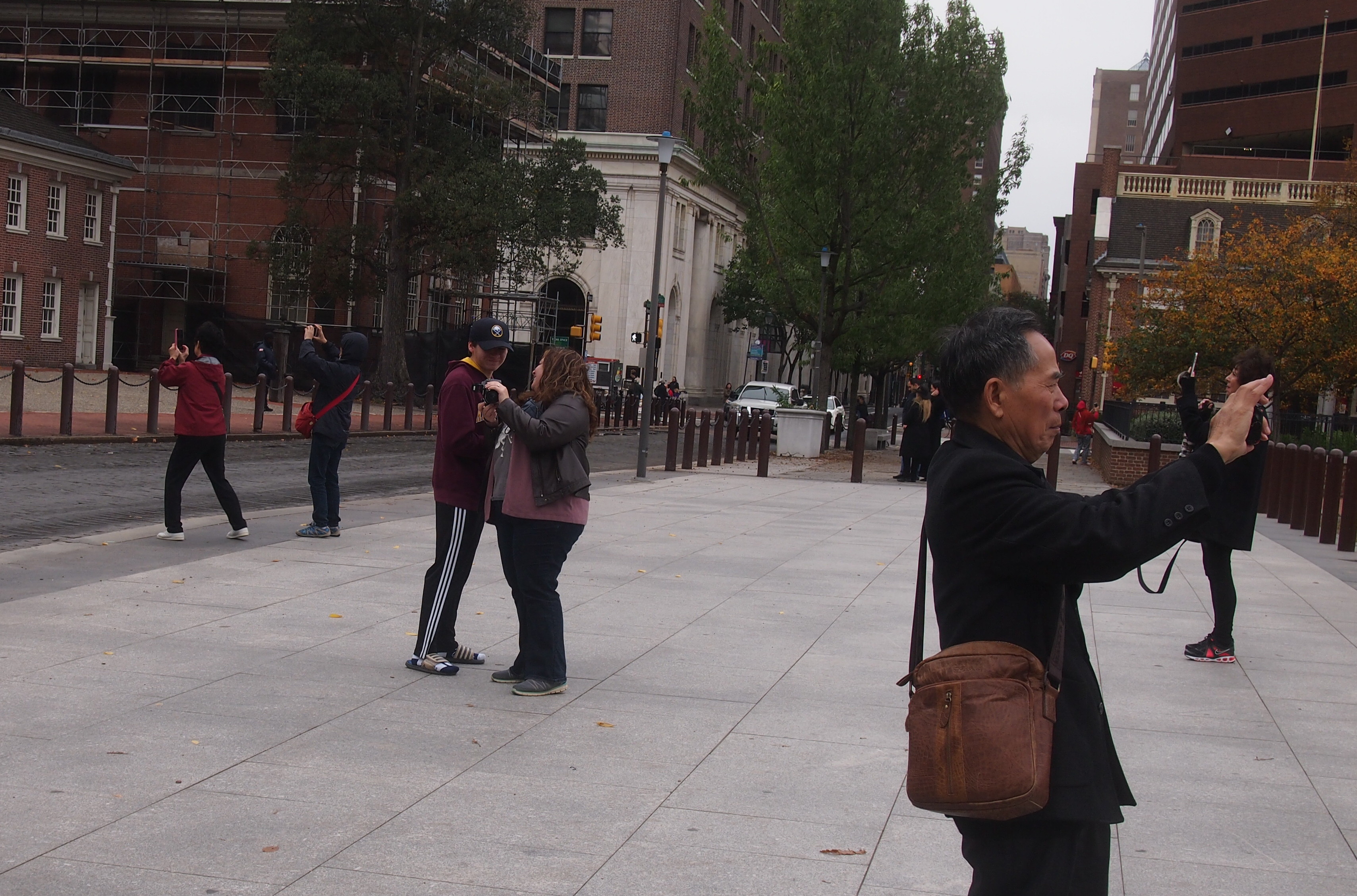
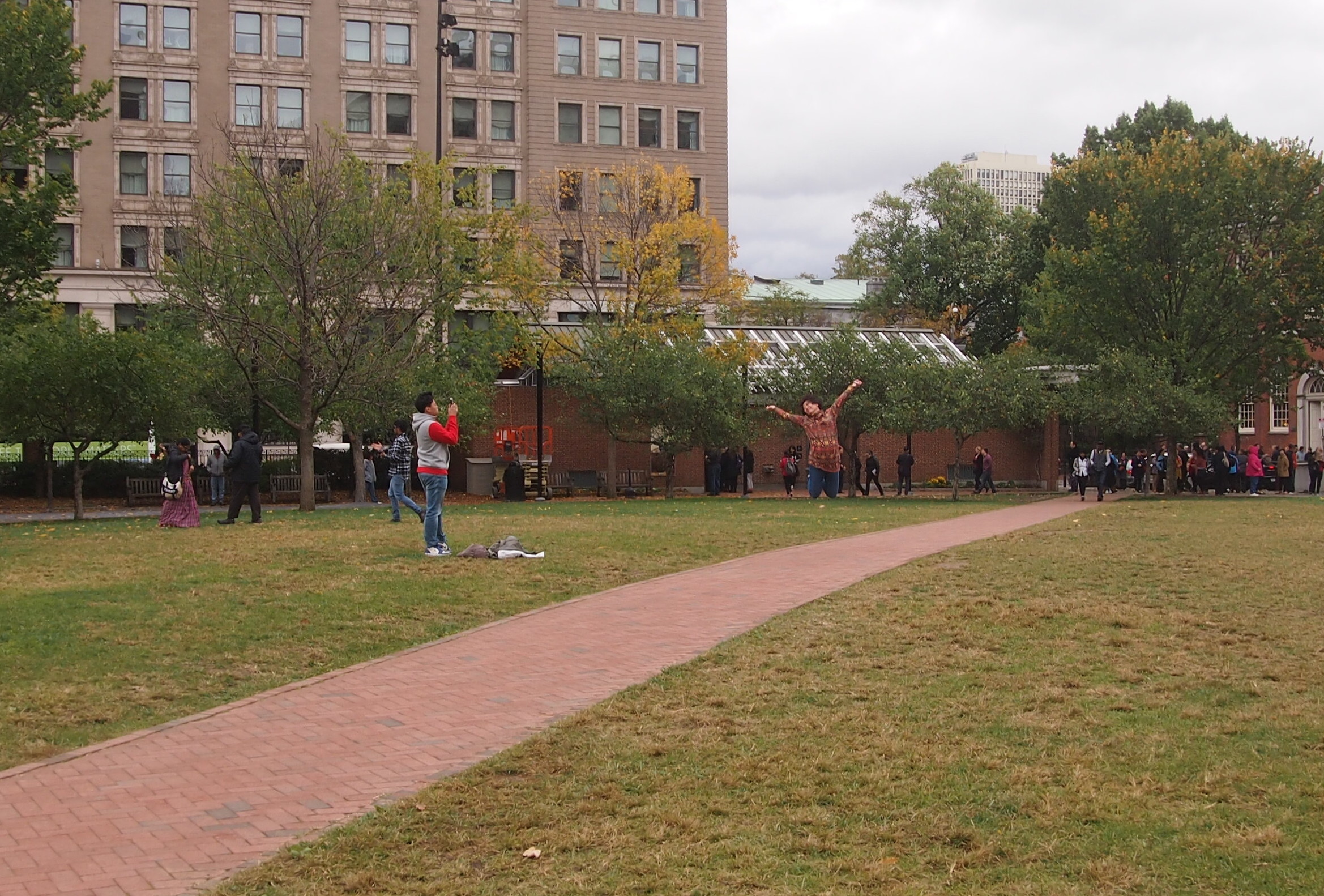
I wouldn’t have been a first-time Philadelphia tourist worth my salt if I didn’t find myself at Independence National Historic Park during my visit, whose star attractions are Independence Hall and the Liberty Bell. It was a popular place. Tourists from all over were there, taking pictures of the place where the United States was invented.

Independence National Historic ParkAs well as of each other.
Independence National Historic ParkShe took five or six jumps before he took a picture she liked.

Gettysburg

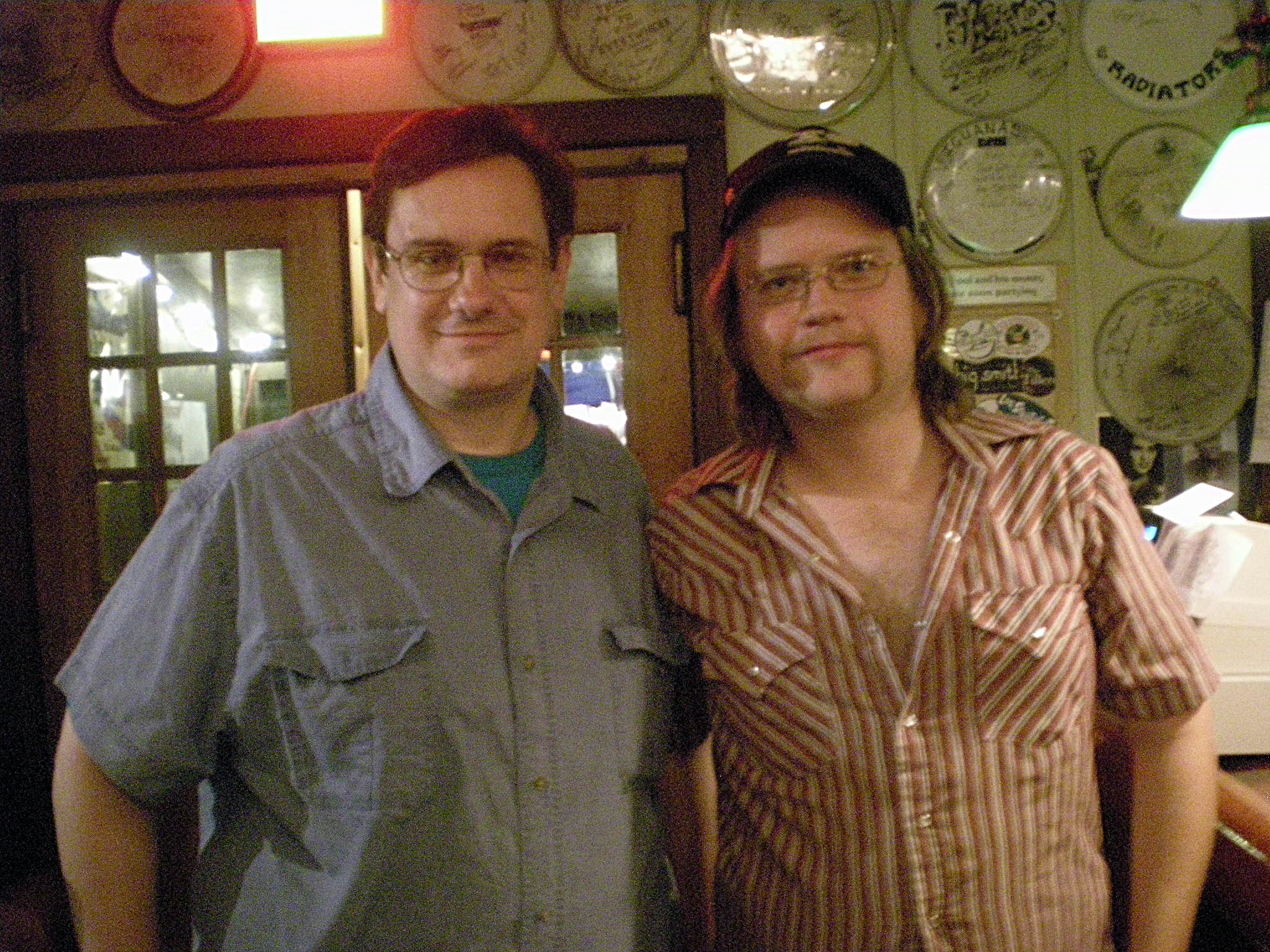
Got a postcard from my nephew Dees last week, the nephew who’s the drummer for Sons of Fathers. It describes the 12th Bonnaroo Music & Arts Festival earlier this month, in which the band participated. The photo on the right depicts the only known first-name Deeses of the world, together about this time last year, when Sons of Fathers played at FitzGerald’s in Berwyn, Ill., and I went out to see them. He’s the hale fellow with facial hair.

A little further in the past – 1991 – I found myself driving from Boston to Chicago during this time of year, and I stopped at Gettysburg National Military Park. I missed the 128th anniversary of the battle by a few days, and presumably whatever commemoration events they had. I thought of that when I was reminded by the newspaper today that the 150th anniversary of the battle is upon us, beginning tomorrow, of course.

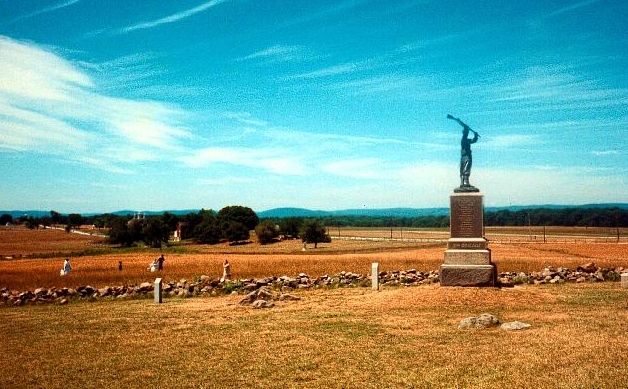
There were some other visitors when I was there, but not too many.  It was a hot day, fittingly, since it was a high-summer battle, which must have added to the misery. This image captures the summer conditions of the site pretty well, besides the 72nd Pennsylvania Infantry Monument, which has its own intricate history, and which was knocked over by high winds only last week.

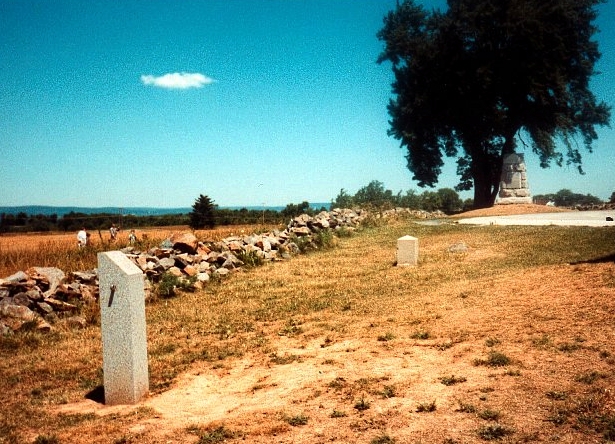
Here’s another view of the Angle – the stone wall that Pickett’s men managed to reach (Lewis Addison Armistead’s men, but let’s not be too pedantic).

I haven’t seen one of these quarters yet, though I’ve been noticing a number of national park quarters in change lately.