I Like Ike, And Abilene Wasn’t Too Bad Either

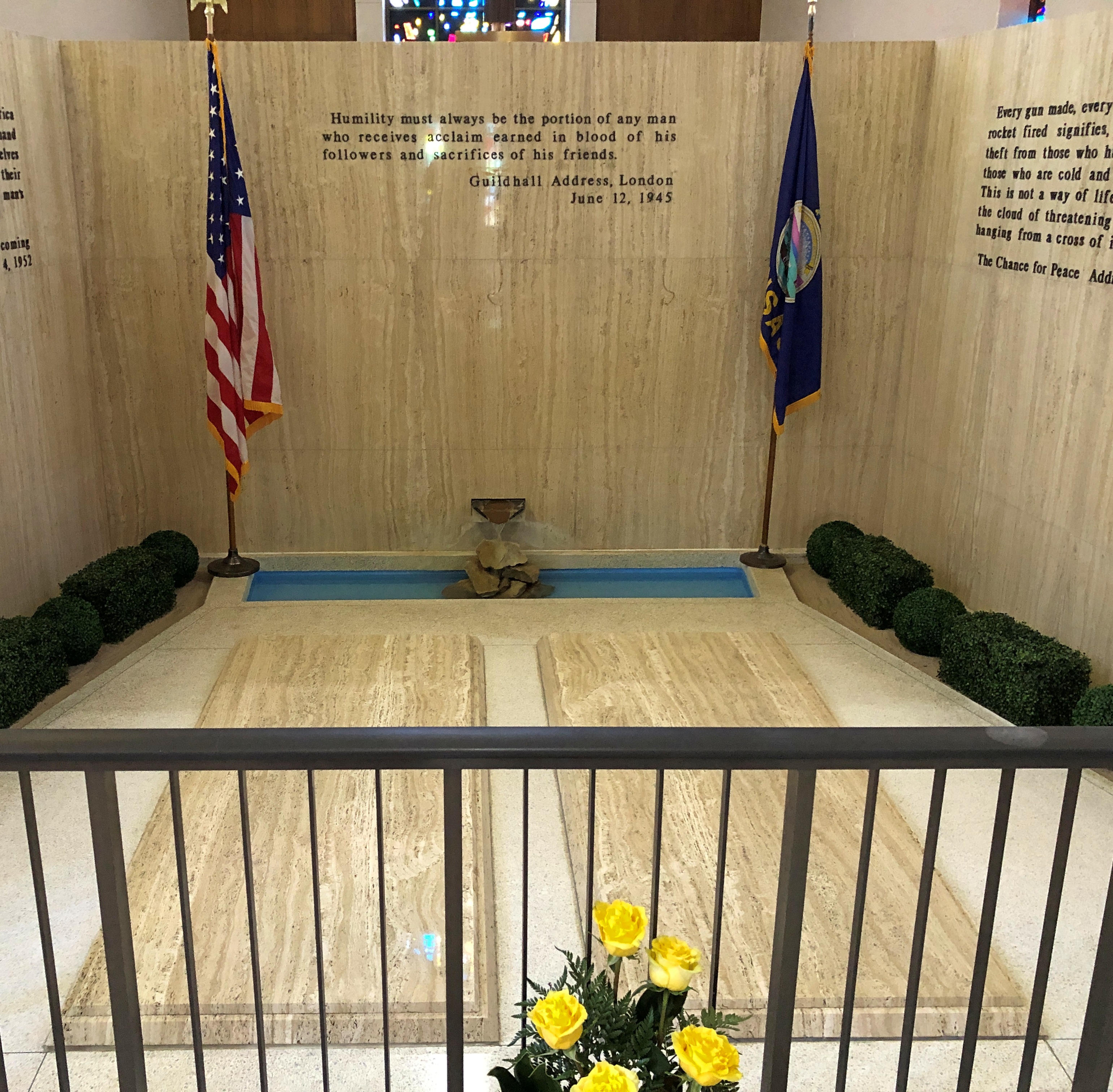
In Abilene, Kansas, not long ago, I found myself wondering, whatever happened to Manus Hand? That’s because I stood at that moment near the graves of President and Mrs. Eisenhower, Ike and Mamie.
Eisenhower

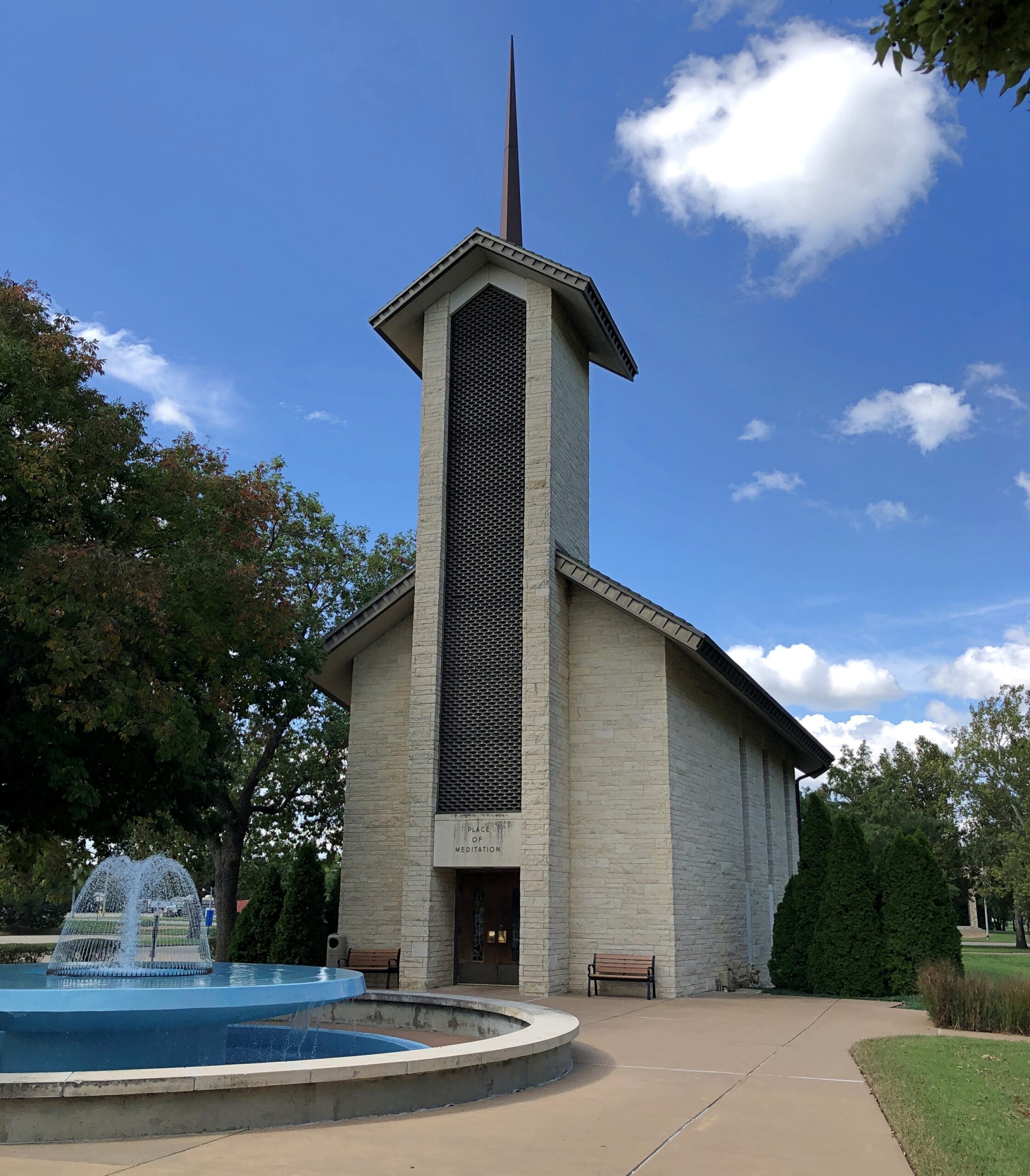
The 34th President of the United States and the First Lady repose in a chapel-like structure on the grounds of the Dwight D. Eisenhower Presidential Library, Museum and Boyhood Home in Abilene, pop. 6,400 or so, the town where the president came of age.
Eisenhower

I’ve been told I visited before, with my family during a trip to Kansas when I was a wee lad, but I don’t remember that at all. So I count this as a new visit to a presidential sight, including a grave site, which makes 21 presidential graves all together. But for the federal shutdown in October, there would be four more at least: Adams père et fils, FDR and TR.

I thought of Manus Hand because, back in the Neolithic age of the Internet, he had a web site featuring photos of him at presidential grave sites. In my own dead presidents days, I found Hand’s site at some point. He had visited almost all of them by then, 36 by his count. His site is still in existence, without much change, except an update to note that George H.W. Bush had died (2018), but not Jimmy Carter.

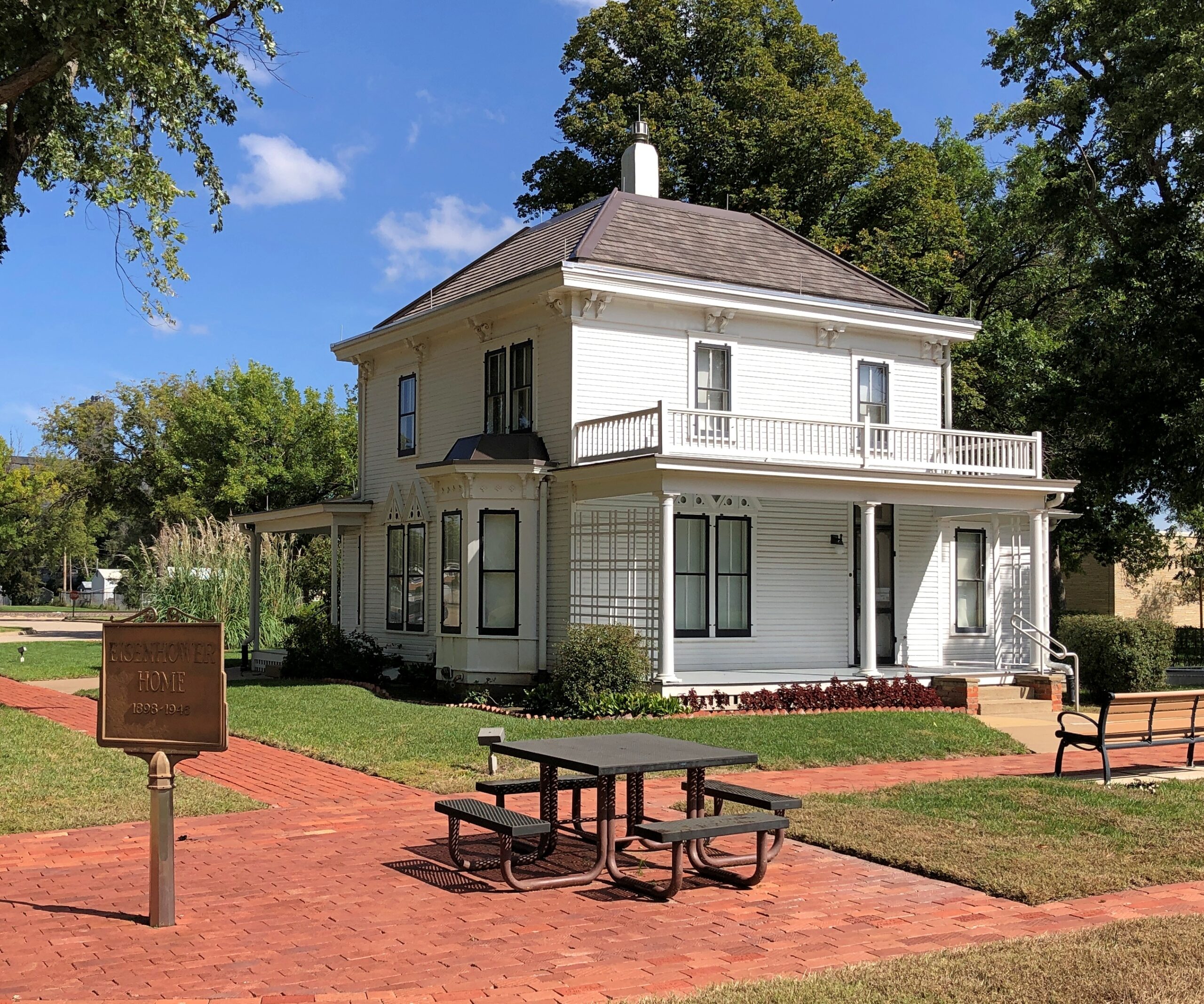
The Eisenhower Boyhood Home, moved to the site. No tours available when I came by.
Eisenhower

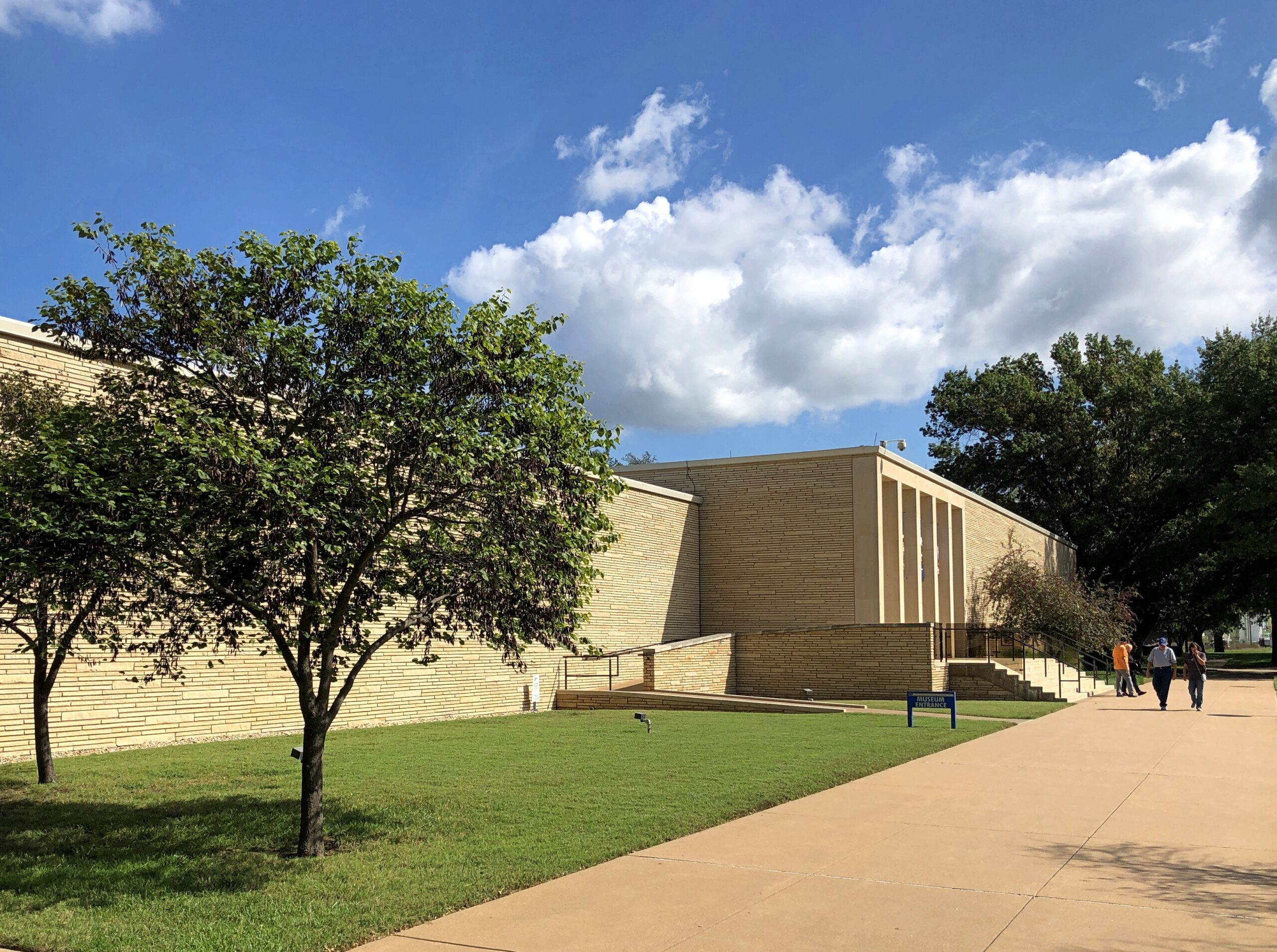
The Eisenhower Museum.

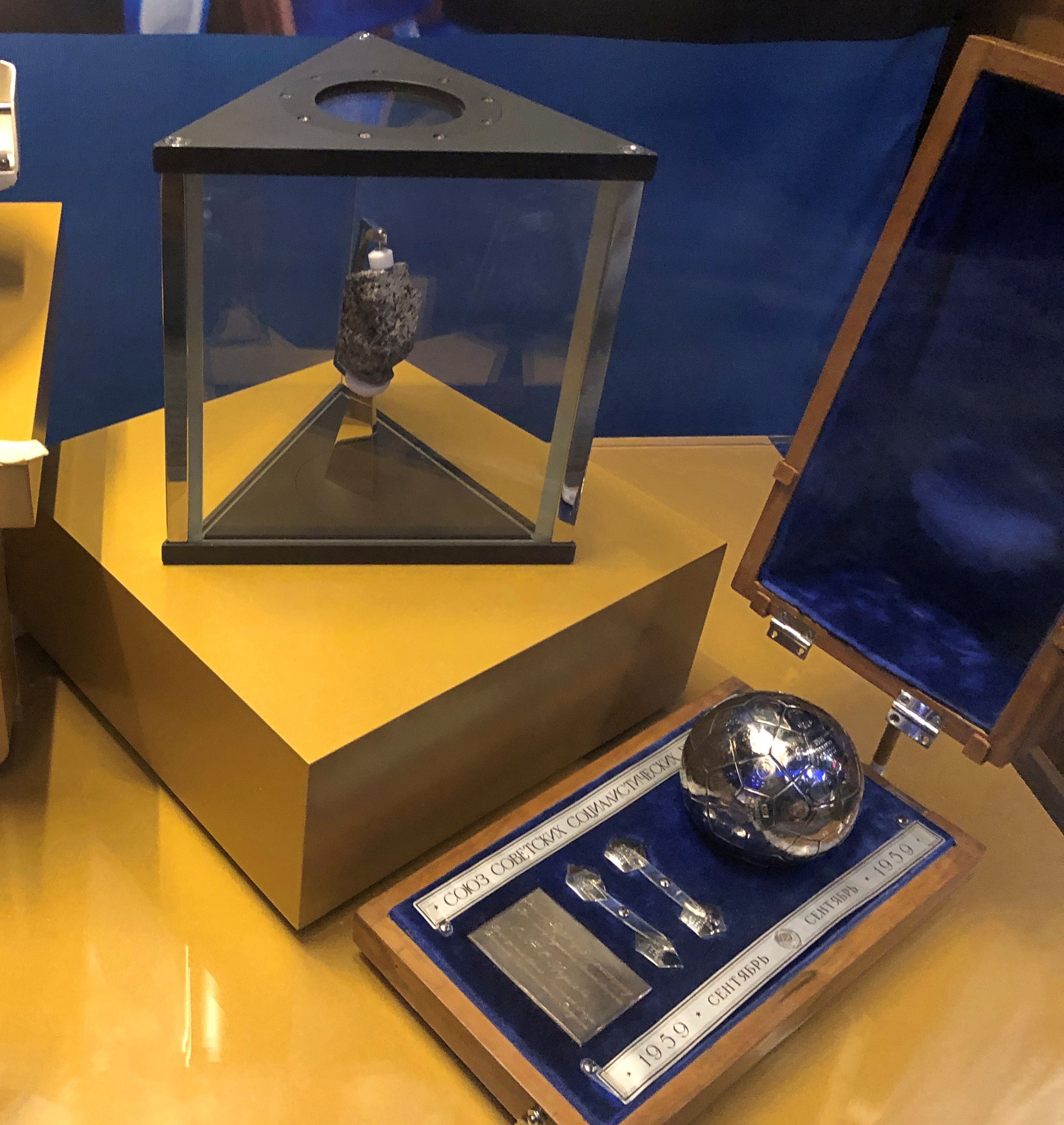
Midcentury, and what could be more fitting for Eisenhower? It’s chronologically organized: early Ike in Abilene; his Army career before WWII, including his cross-country epic; during that war and right after the war; his presidency and post-presidency, and a gallery about Mamie. Well organized, interesting artifacts, but (for me) none more interesting than a titanium sphere.
Eisenhower luna 2

The sphere is a replica of the pennant sphere that traveled to the Moon in 1959 aboard the Soviet spacecraft Luna 2, which was the first manmade object to reach the lunar surface, or any celestial body. The sphere was a detail that I remembered from long-ago reading about space exploration. I didn’t realize one existed any more, even in replica form. Khrushchev presented it to Eisenhower during his famed visit to the U.S. that year (Khrushchev’s due at Idlewild!).

Luna 2 carried two spheres filled with liquid and an explosive charge, designed to burst apart on impact and scatter pentagonal pennants, the Moon Registry says. The pennants were imprinted with: 1) Sentiabr 1959 (September 1959); CCCP… ; and the state seal of the USSR, a wreath of grain around the hammer and sickle. It is theorized that the medallions vaporized on impact.

Russia is still shooting Luna missions to the Moon. The most recent, Luna 25, crashed near the lunar south pole in 2023 but, unlike Luna 2, not on purpose. Oops. More about the many pennants the Soviets sent into space is here. On display next to the sphere is a lunar rock, which must have been a posthumous gift, since Ike didn’t live quite long enough to benefit from astronauts rock-gathering on the surface, though he was still alive during Apollo 7, 8 and 9.

A close second excellent artifact was a dagger Marshal Zhukov presented to General Eisenhower on the occasion of the defeat of Germany, a good-looking blade with an ivory hilt and gold decorations. I picture an exuberant Zhukov, as in The Death of Stalin, handing the knife to Ike and saying something earthy. Apparently the two, Ike and Zuke, got along well in the early months of the joint occupation of Germany. Differences aside, they had job experience in common. I don’t remember seeing anything about that in the museum, but there was a lot of material, so that could have been easily missed. That and any reference to Kay Summersby.

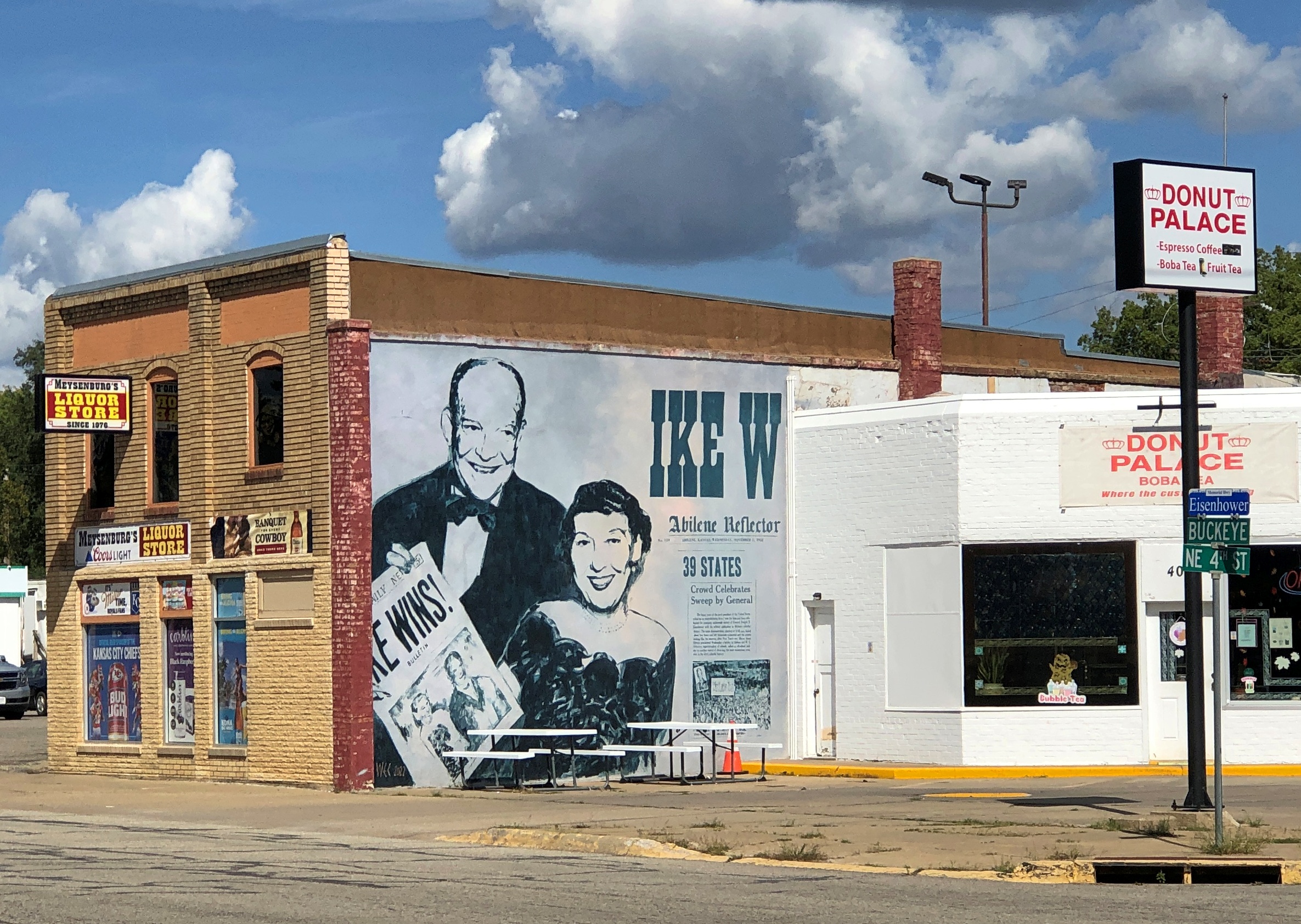
It was hot that day, September 24, but after visiting the museum, I took a look around Abilene anyway. The town hasn’t forgotten its most famous native son. Also, Donut Palace was closed.
Eisenhower luna 2

A lot of the detail would be different, but I’ll bet Ike would still feel at home with the scale of Abilene. Small town, small buildings, but some solid touches.
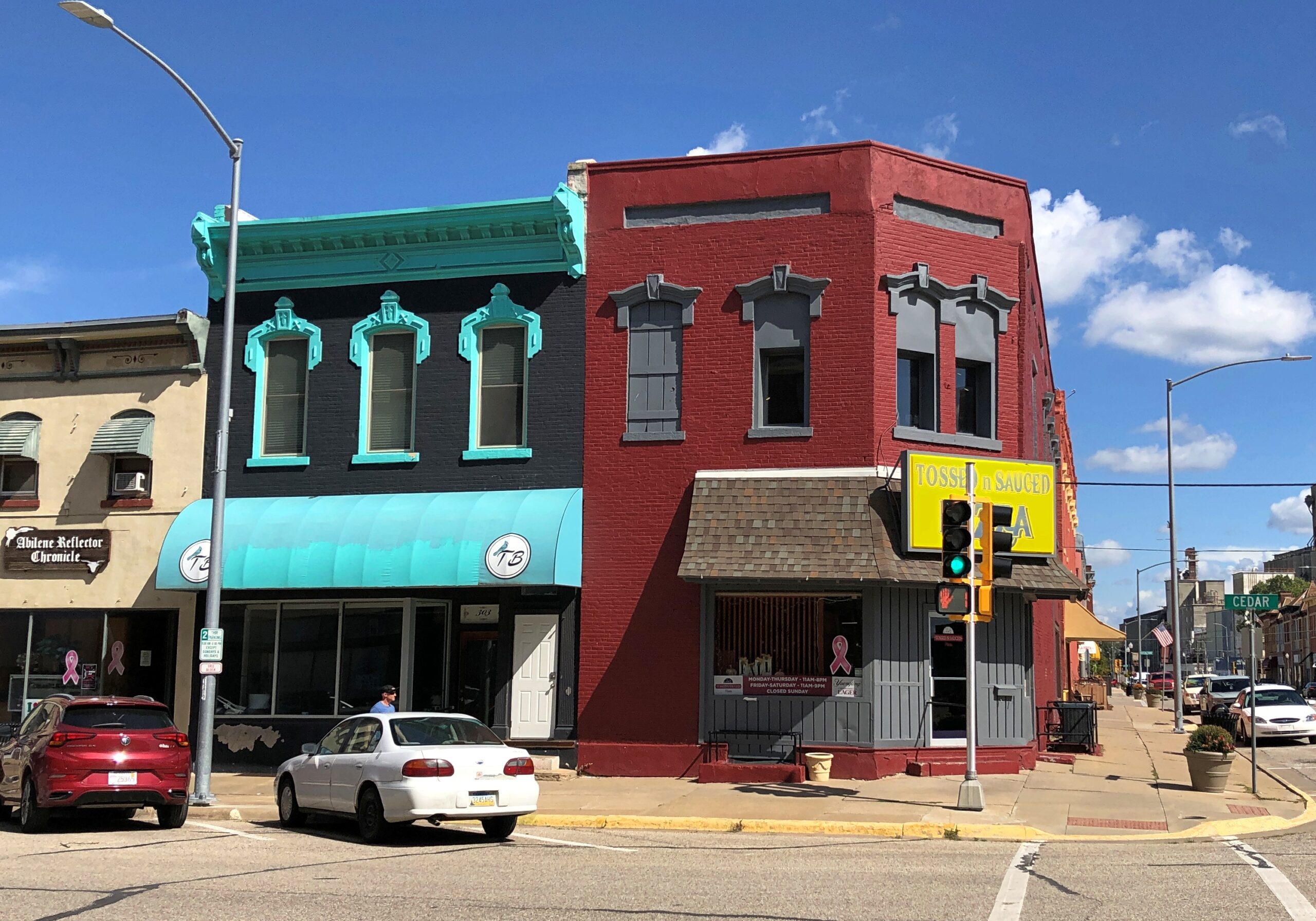
Abilene< KS

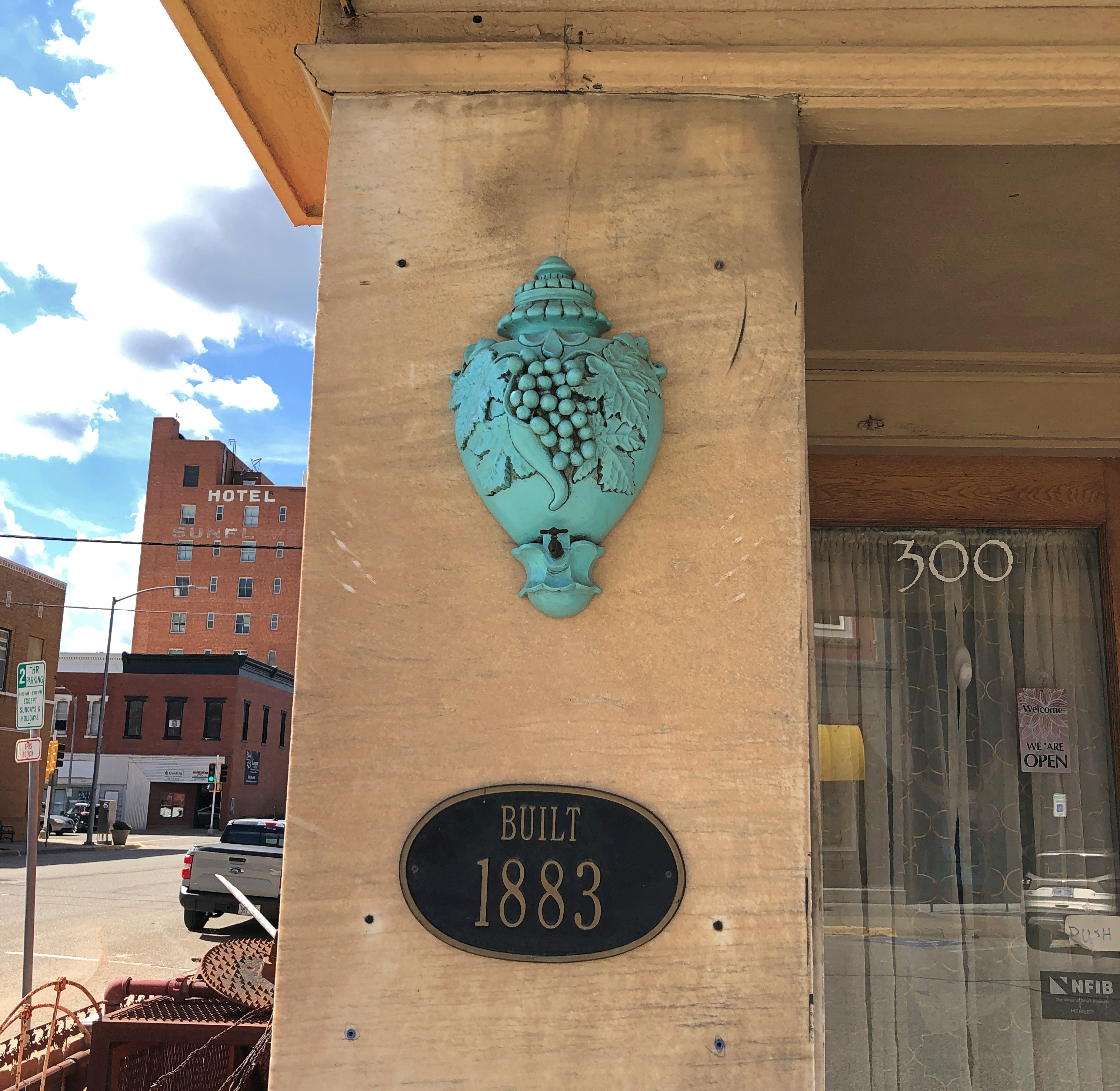
Including at least one building Ike would have known.
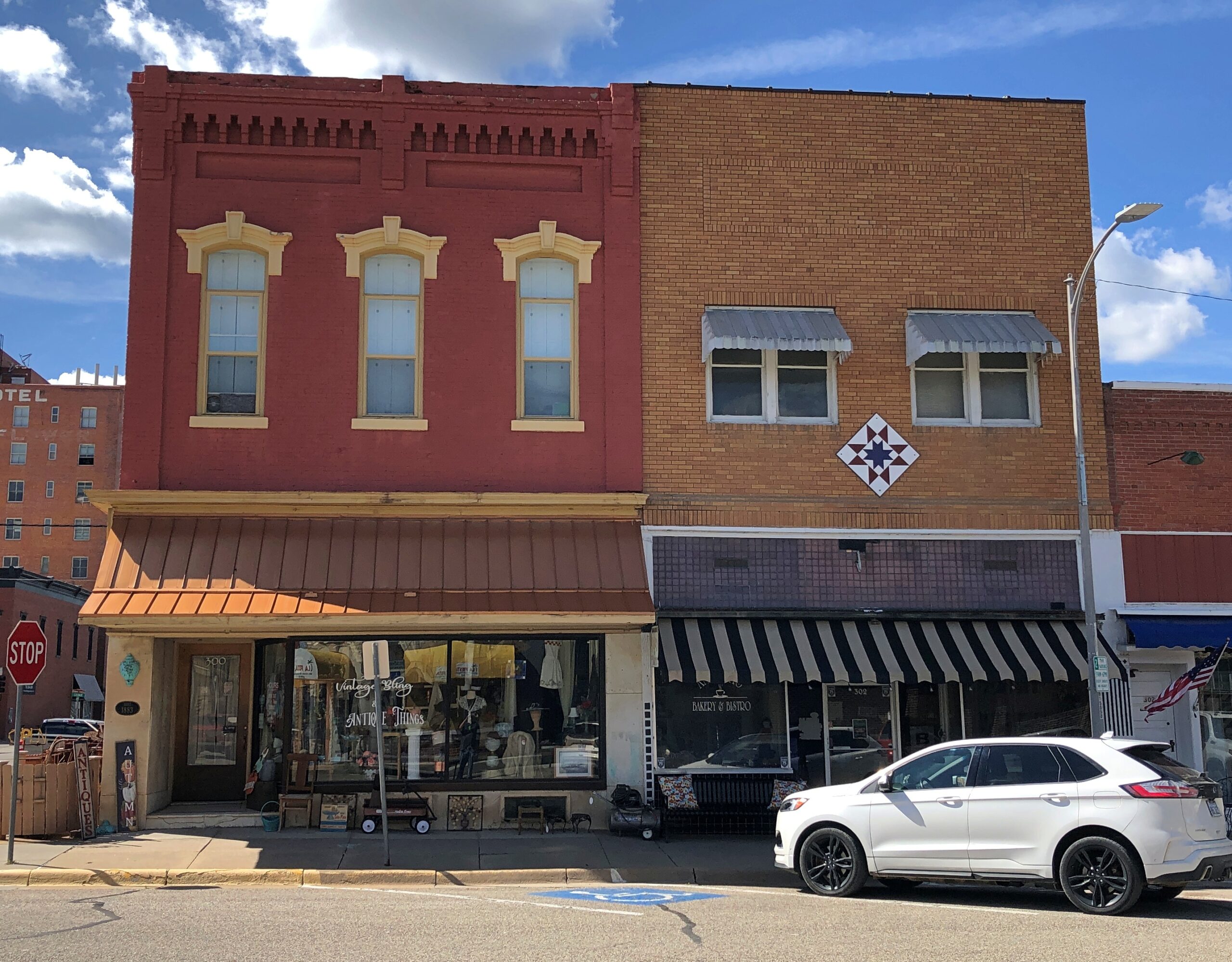
Abilene< KS
Abilene< KS+

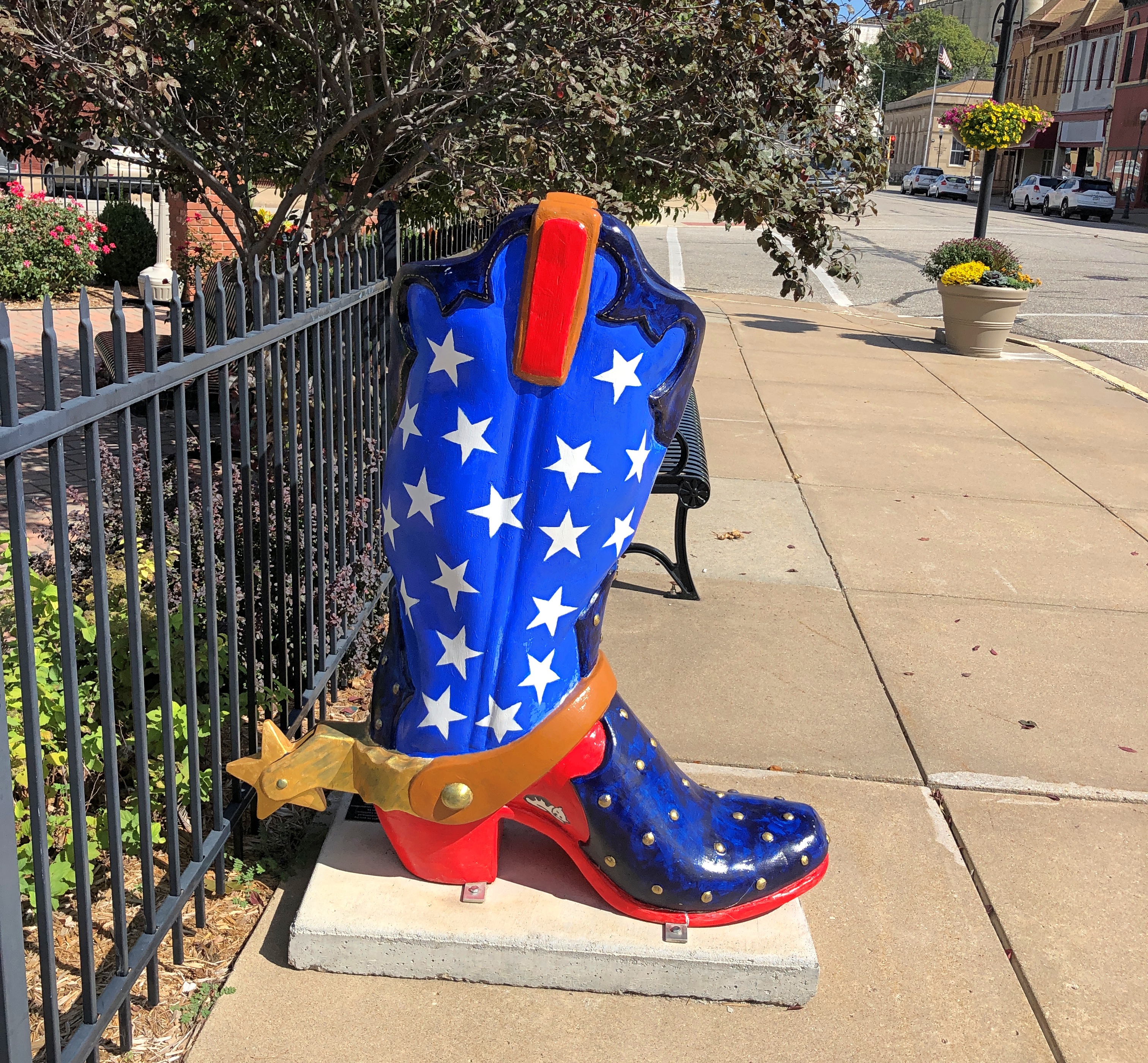
Chicago had cows, Abilene has cowboy boots.
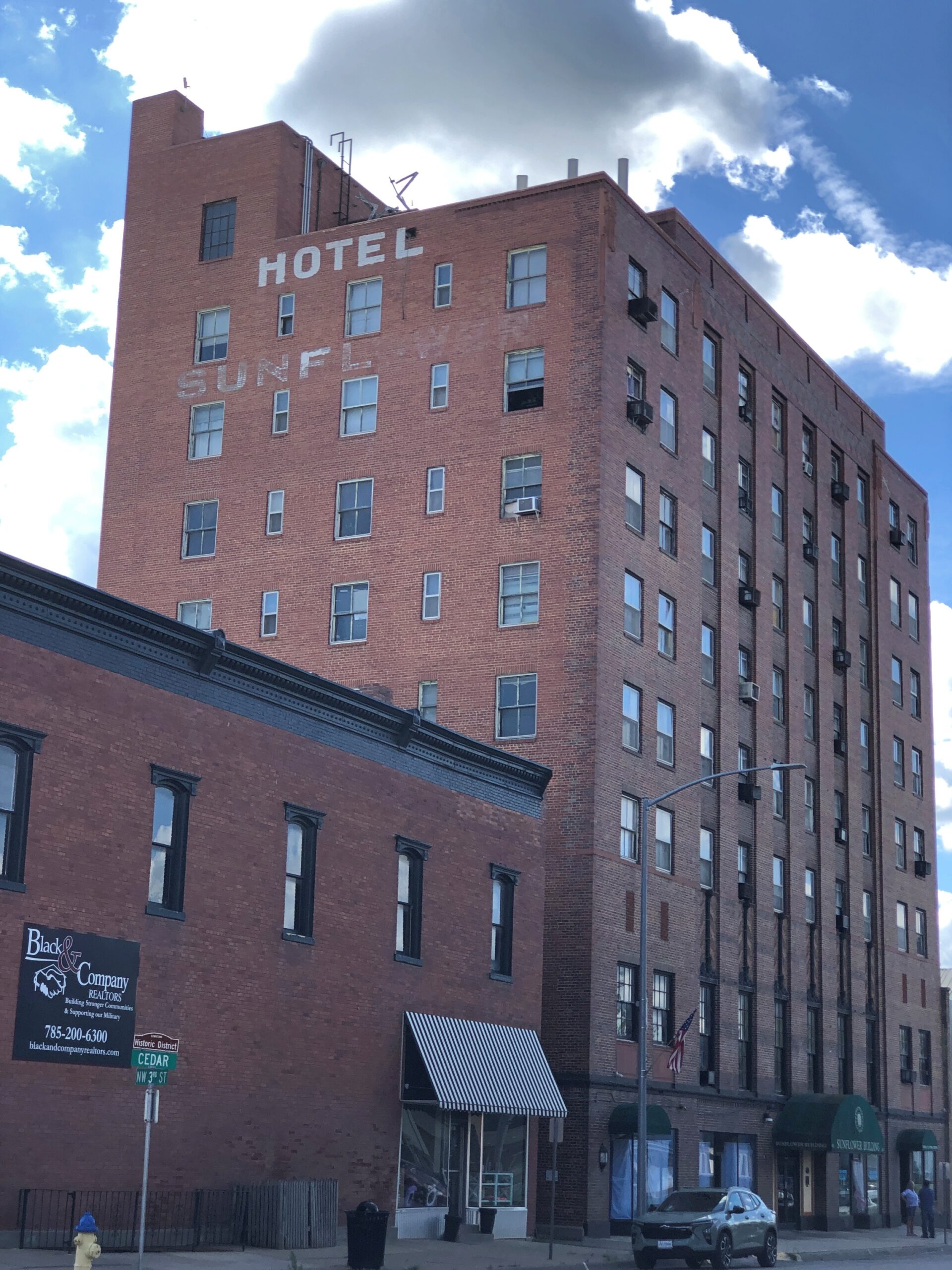
The Hotel Sunflower. Former hotel, that is, now apartments.
The Sunflower State. The flower looks a little ominous, peering down at the settlers.
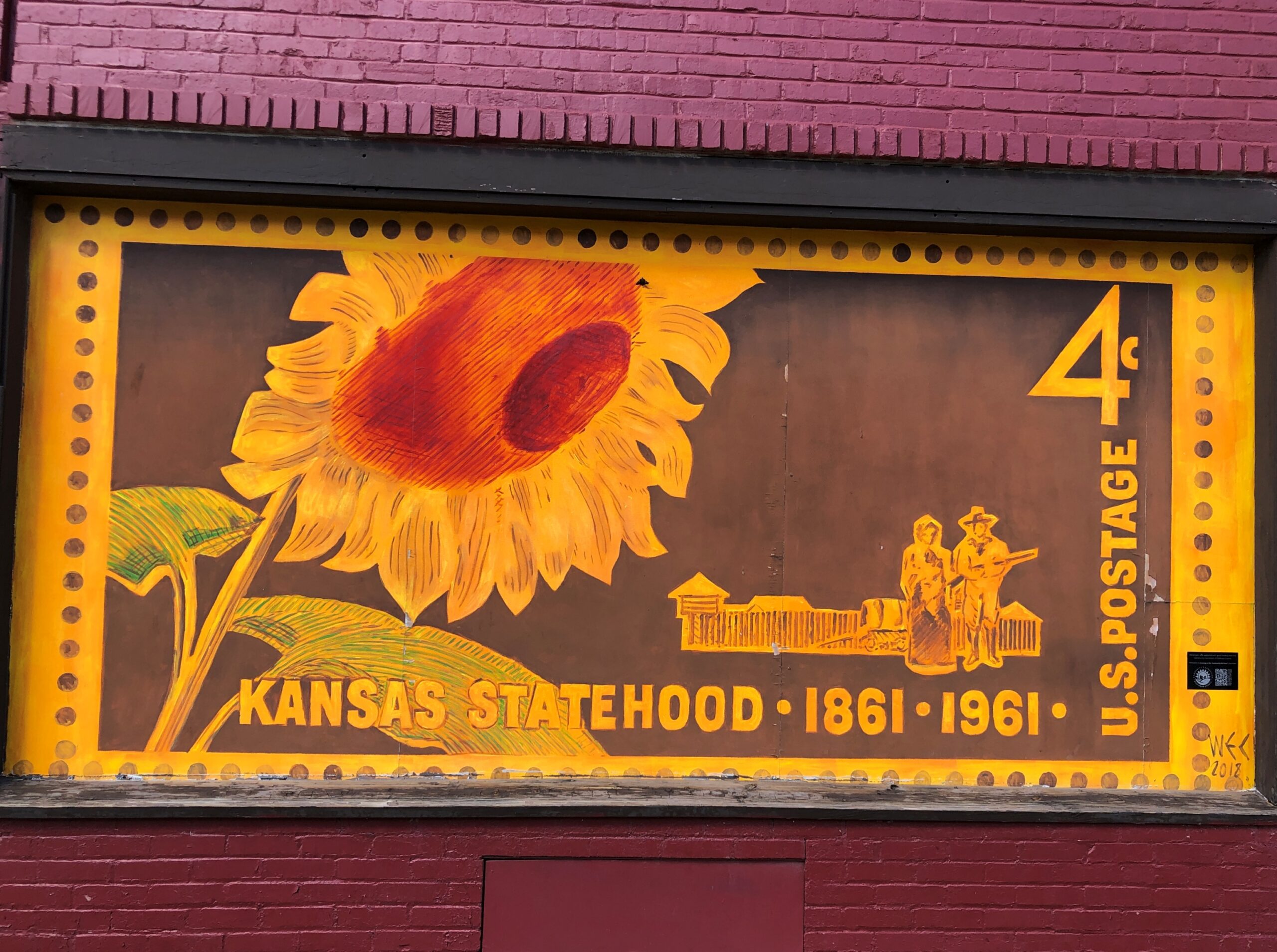
Kanzas

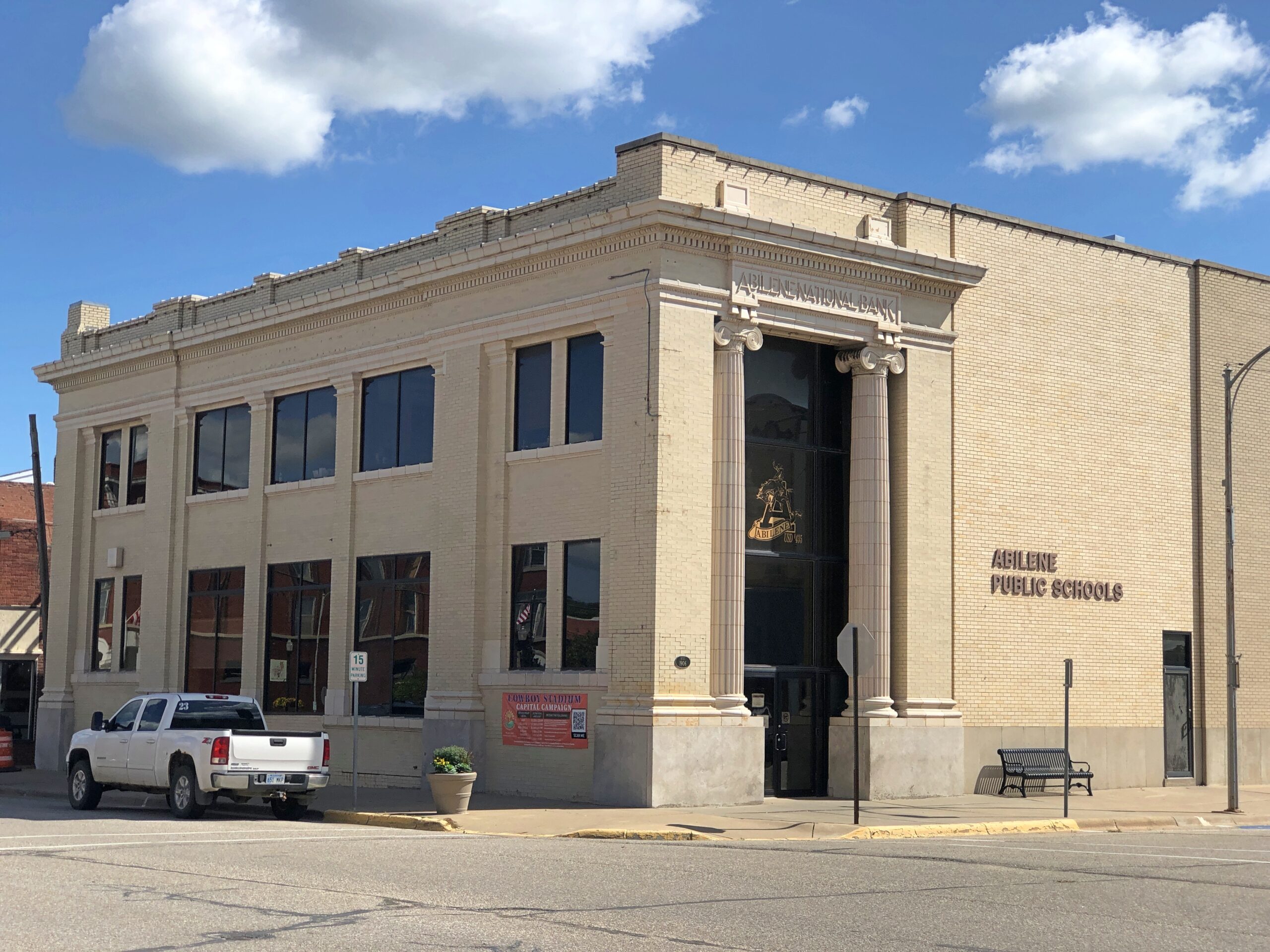
Structures that aren’t grand, but stately even so. Petite stately, you might call them.
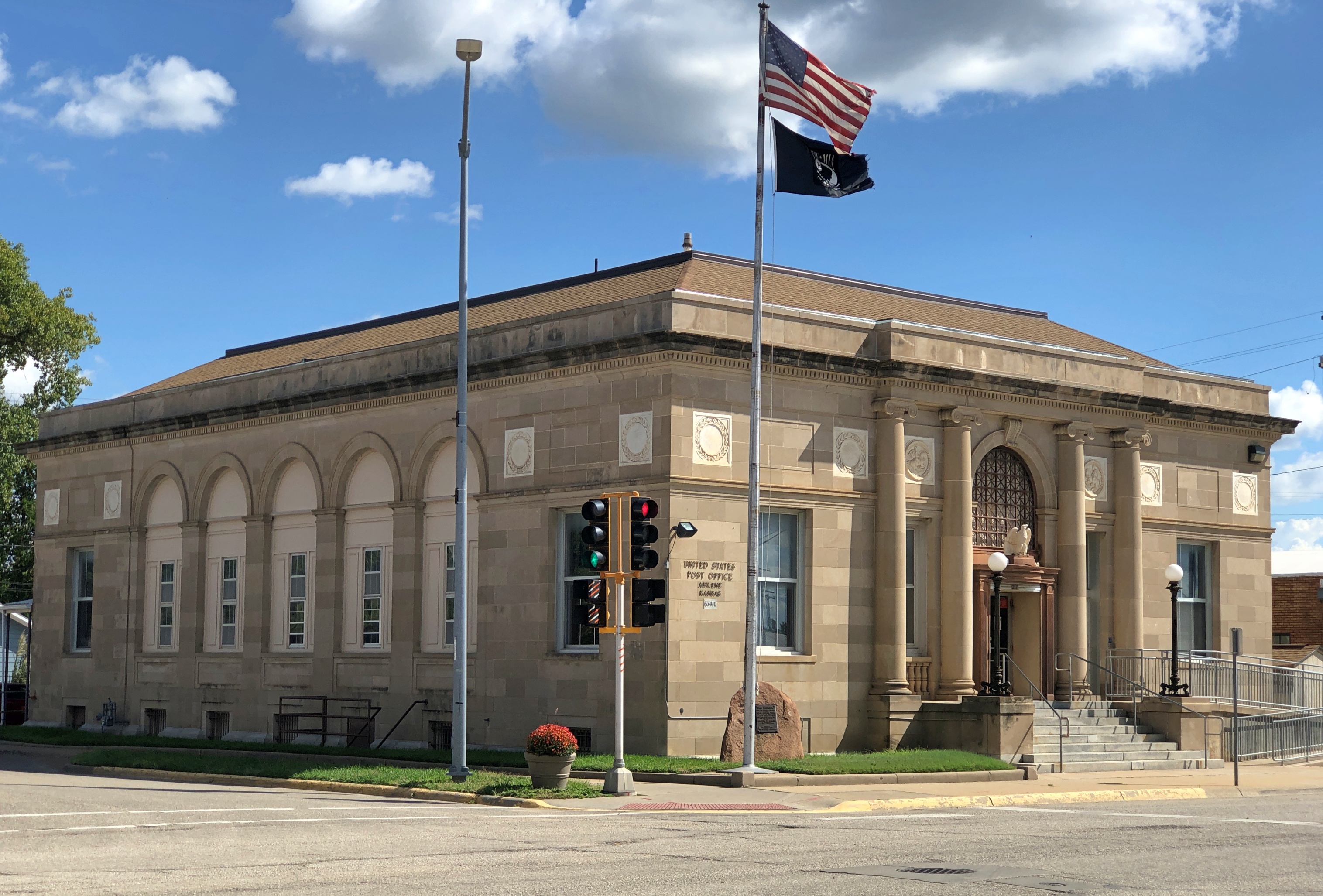
Abilene
Abilene
Abilene

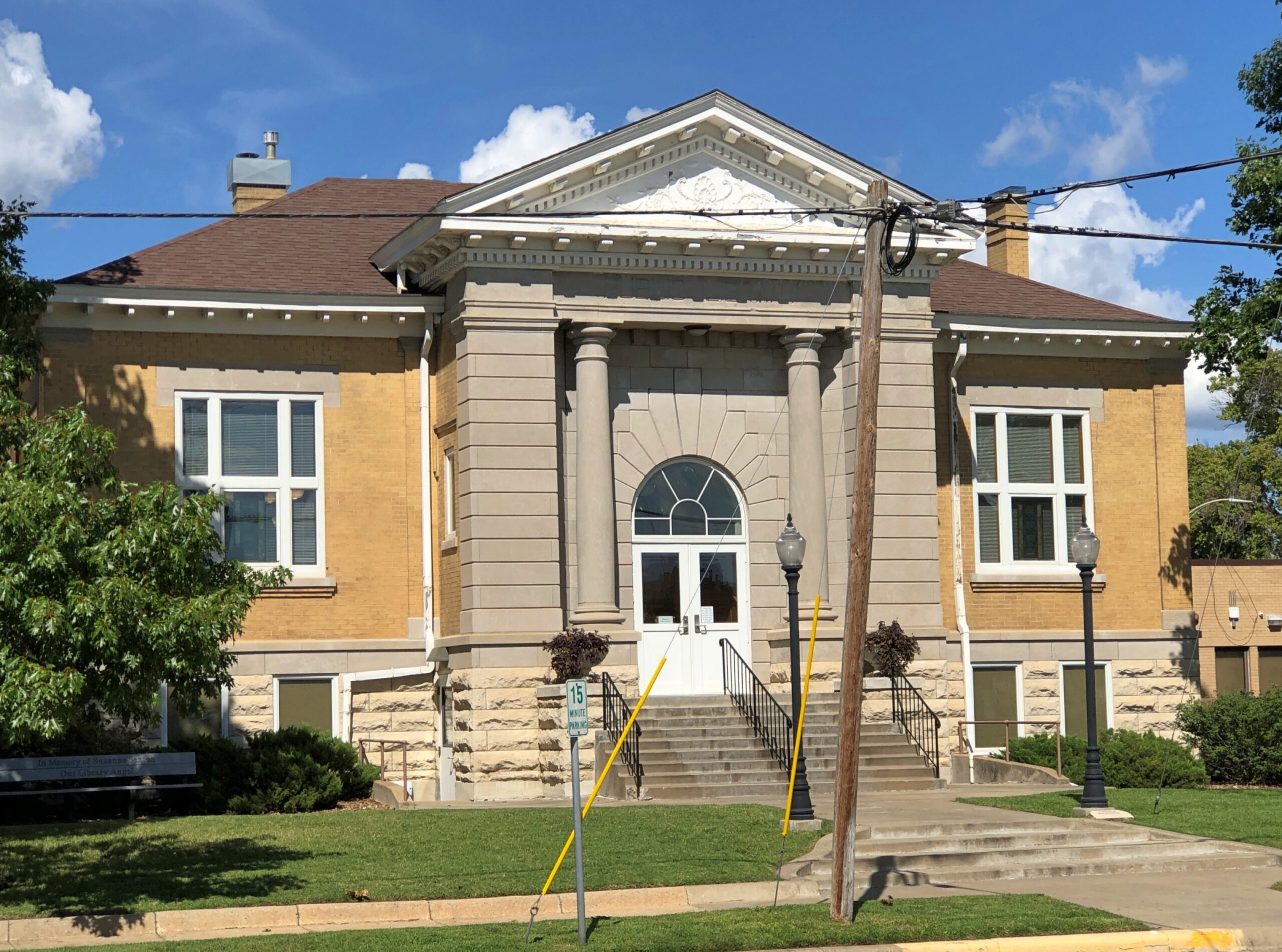
The third one is a Carnegie library. Though the Carnegie grant was large, other fundraising for the library’s erection had been done in the early 1900s, including a benefit lecture by William Jennings Bryan.

Out near the highway: truth in naming. But note also, the bowling alley is closed. I could go either way on the reopening of an alley in that location, but I really want the sign to stay.
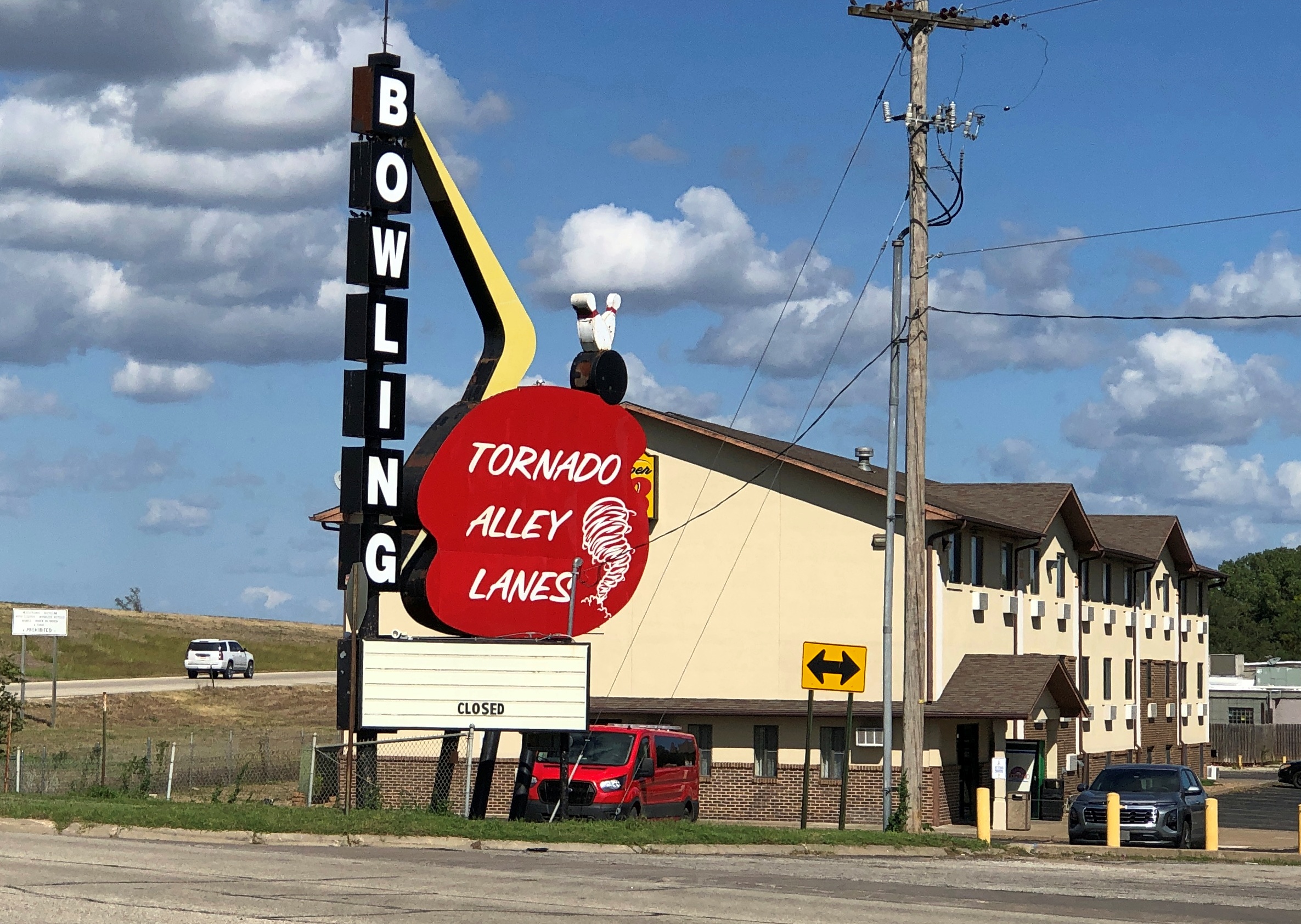
One more thing Abilene is known for, at least since 2022.
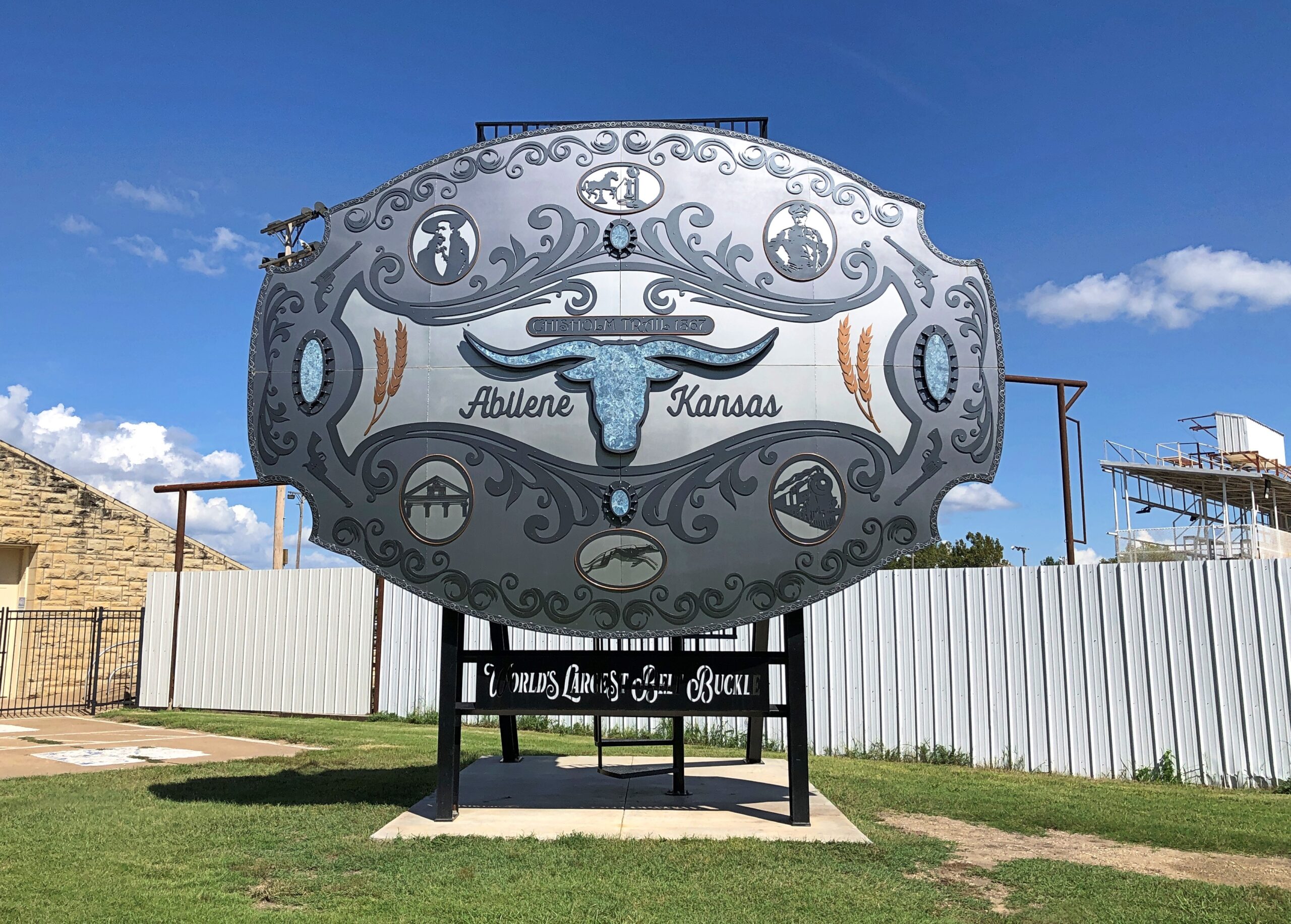
The World’s Largest Belt Buckle. Says so right there on it. How large would that belt have to be?

“Designed by local artist Jason Lahr, Fluter’s Creek Metal Works, the buckle features Dwight D. Eisenhower, Wild Bill Hickok, Abilene & Smoky Valley Railroad, Historic Seelye Mansion, C.W. Parker carousel horse, C.L. Brown telephone, a racing Greyhound and Chisholm Trail longhorn inlaid with blue quartz,” says the city of Abilene, Kansas.

“The buckle is a project of the Abilene Convention and Visitors Bureau which hopes the new roadside attraction will entice travelers to stop and visit the Best Historic Small Town.”
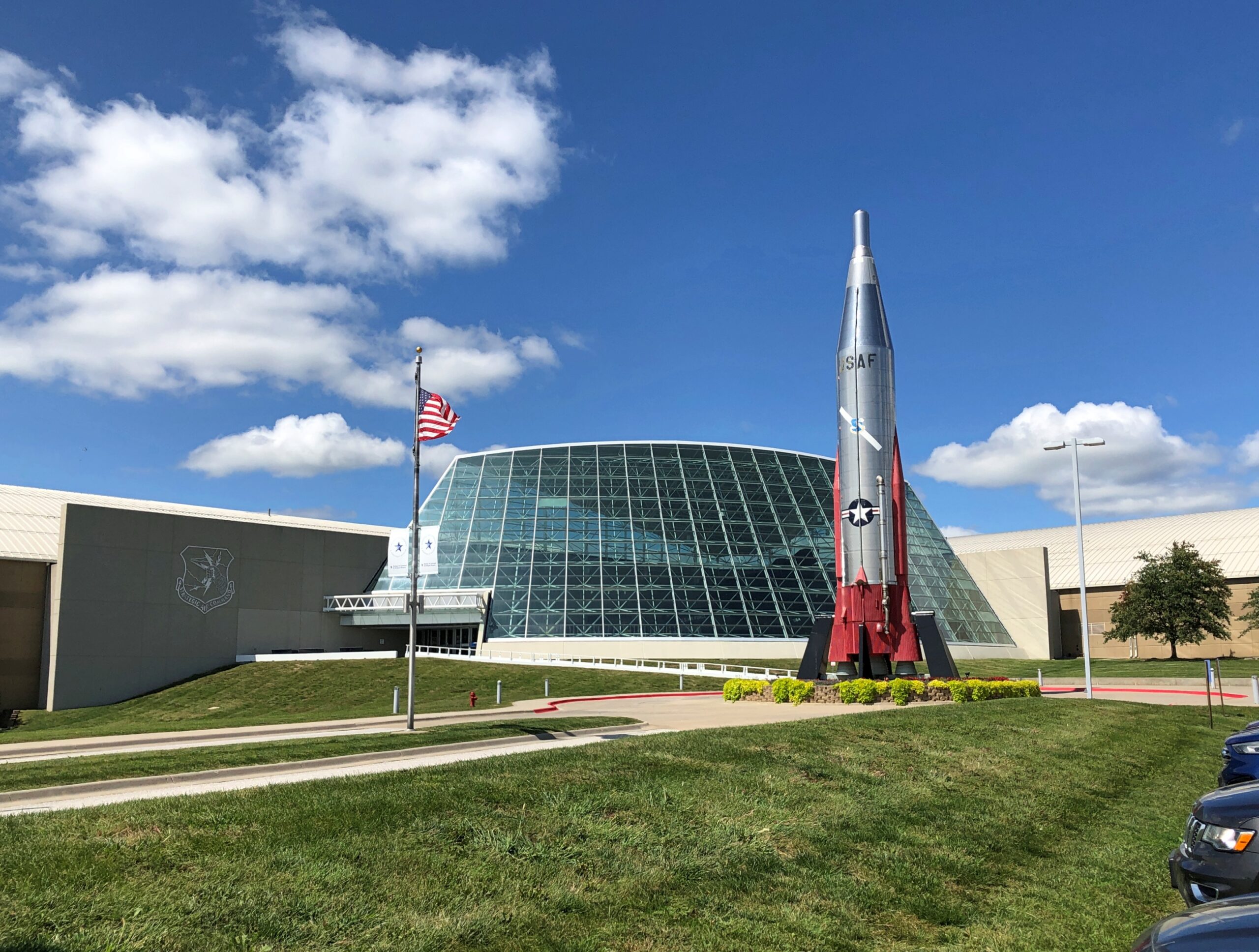
Strategic Air Command & Aerospace Museum

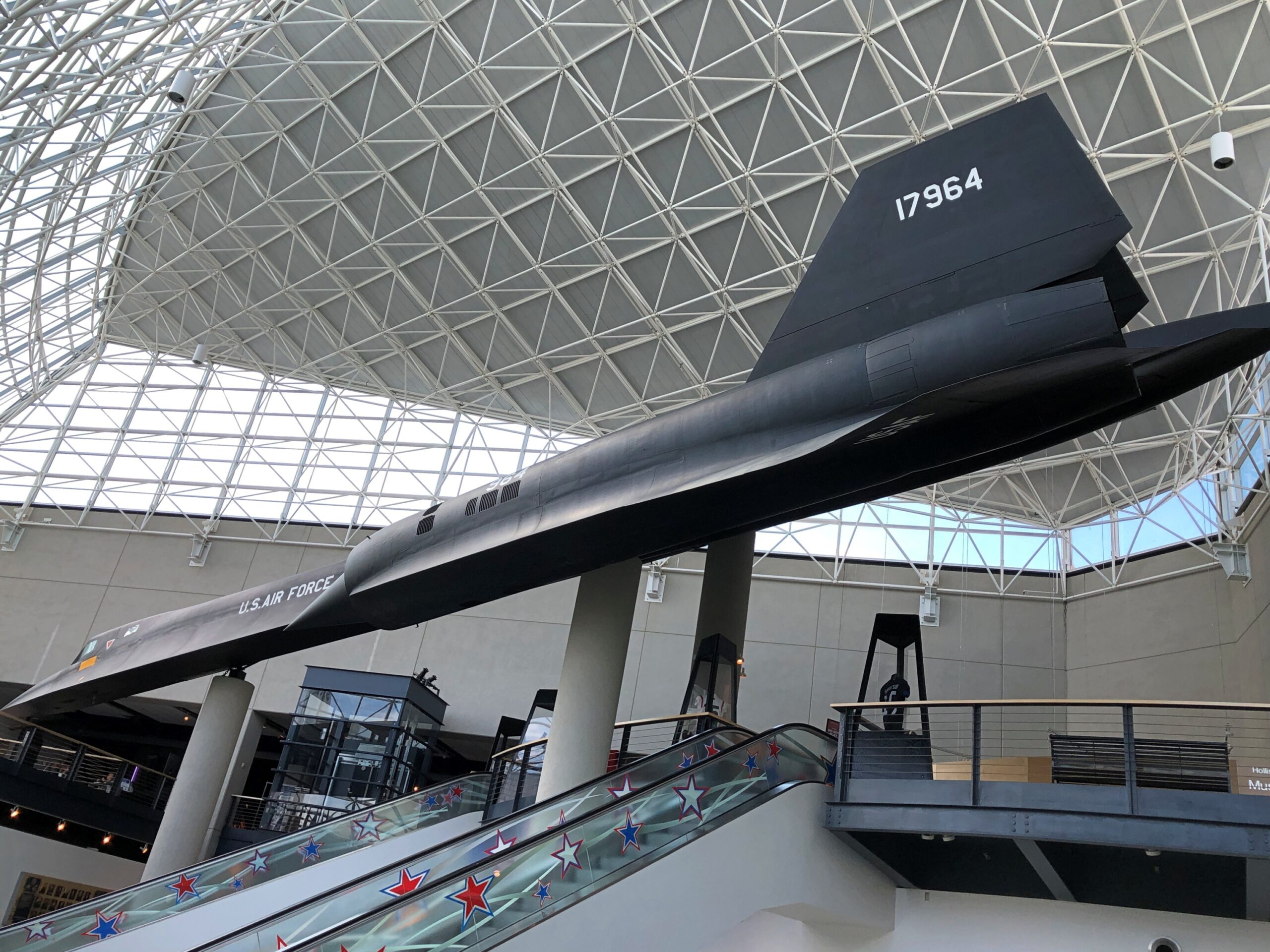
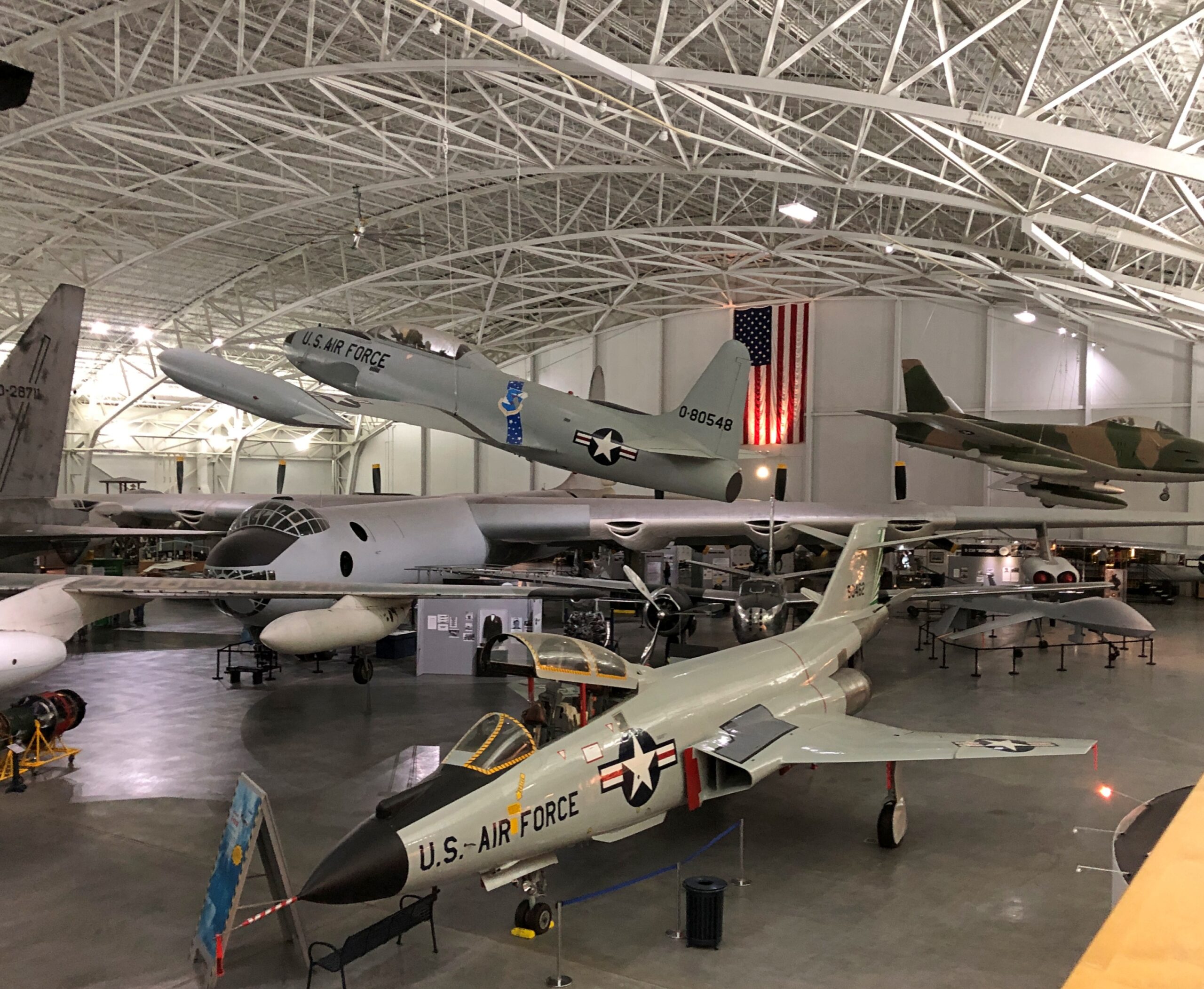
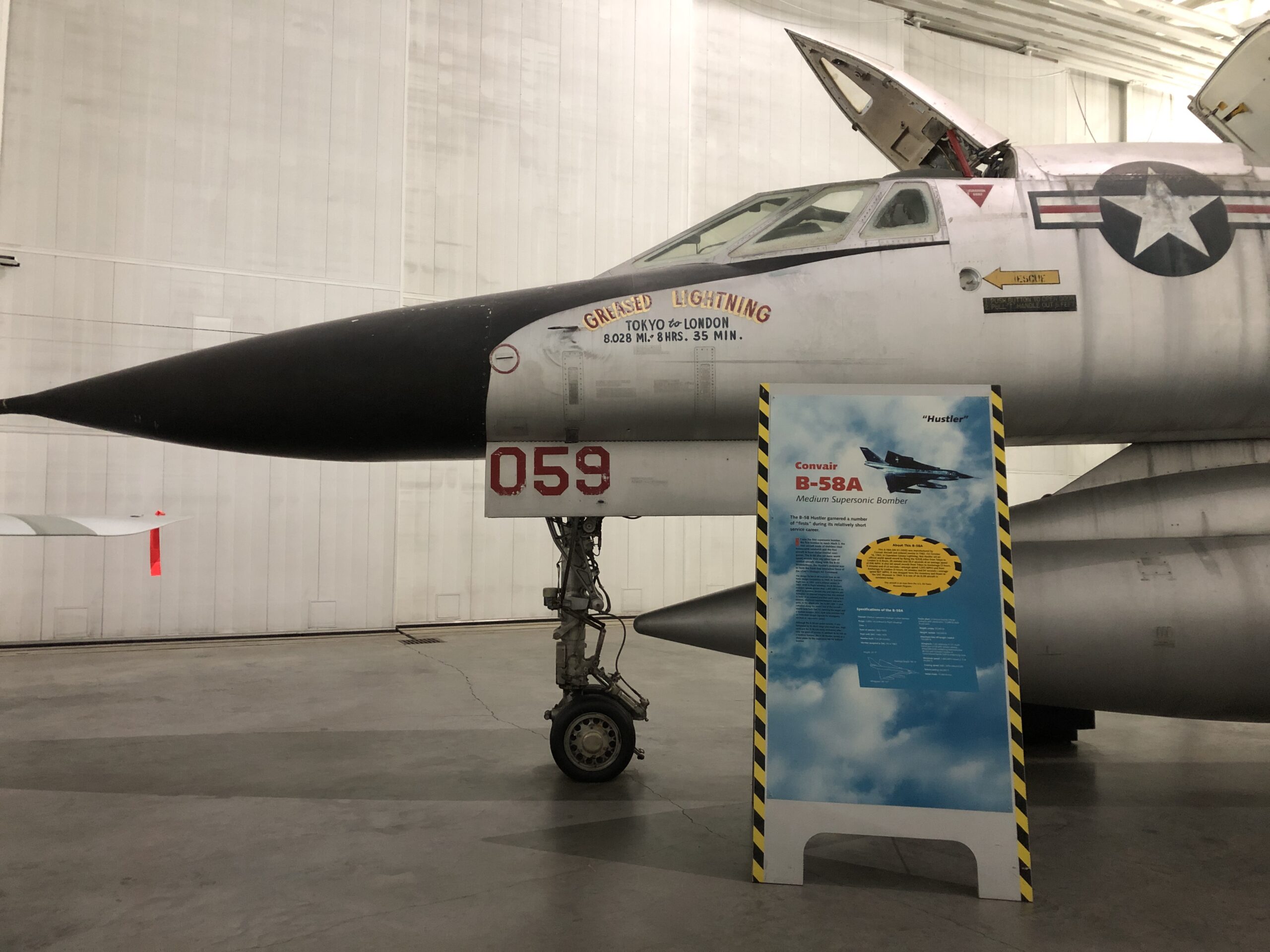
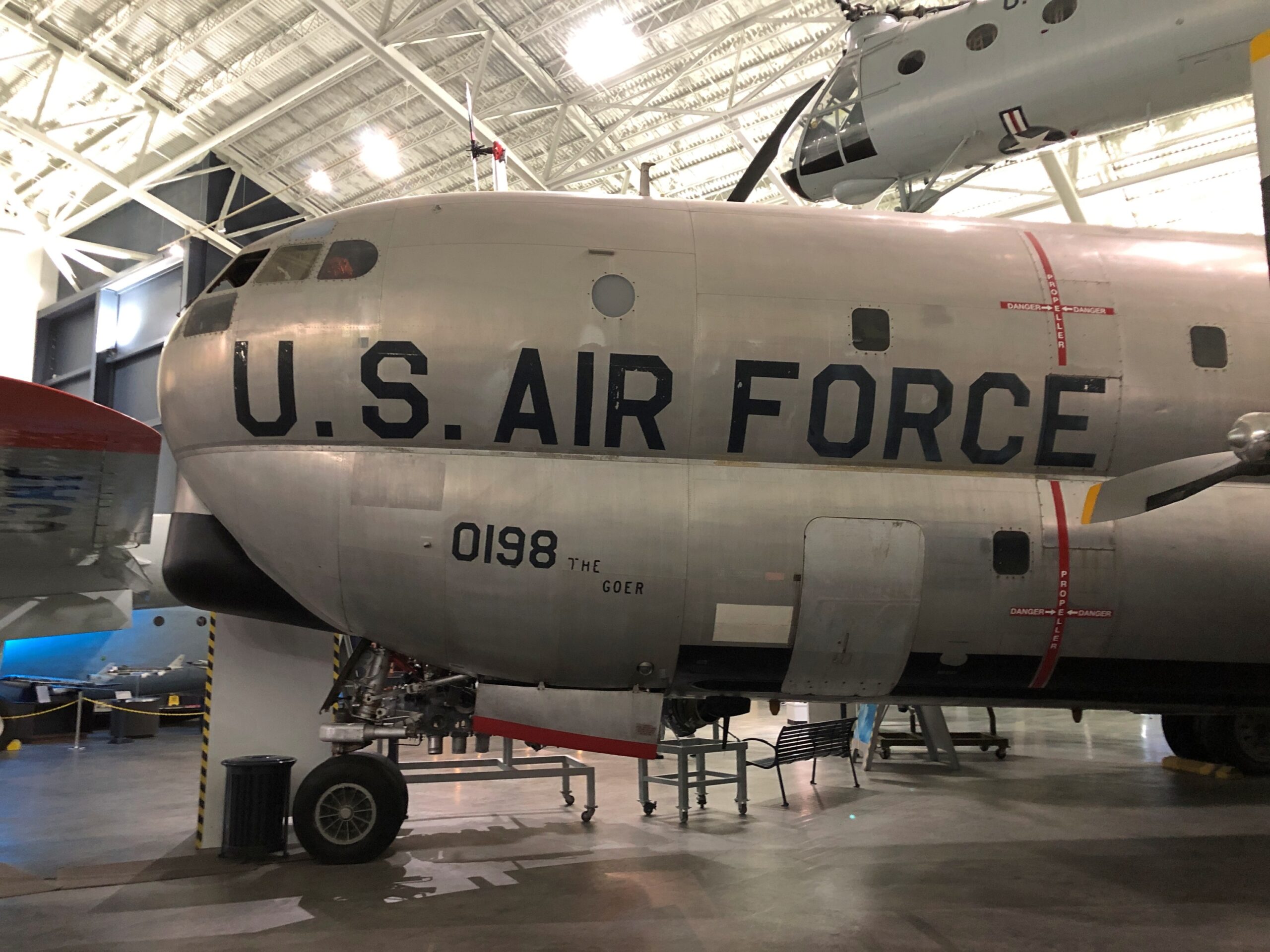
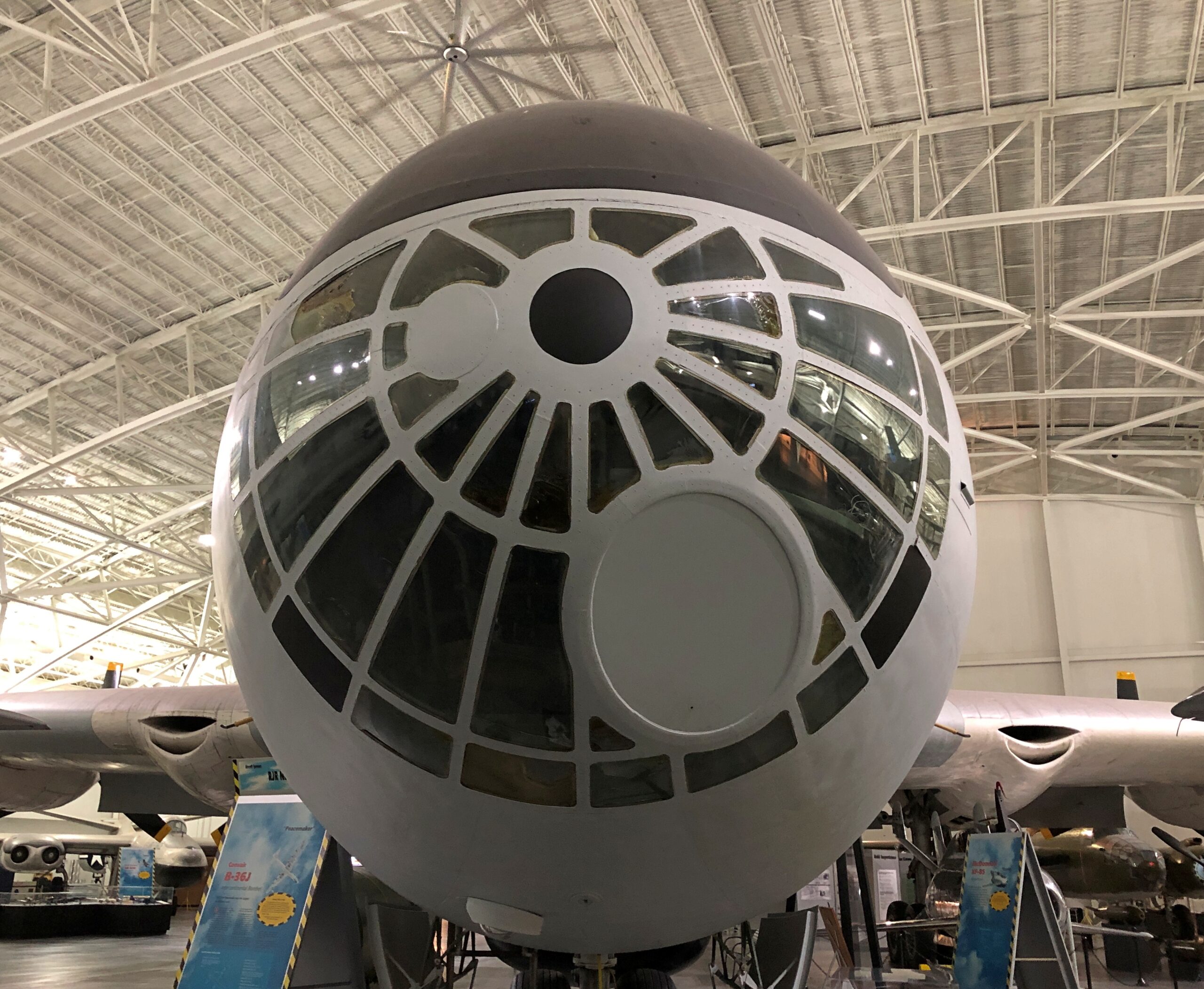
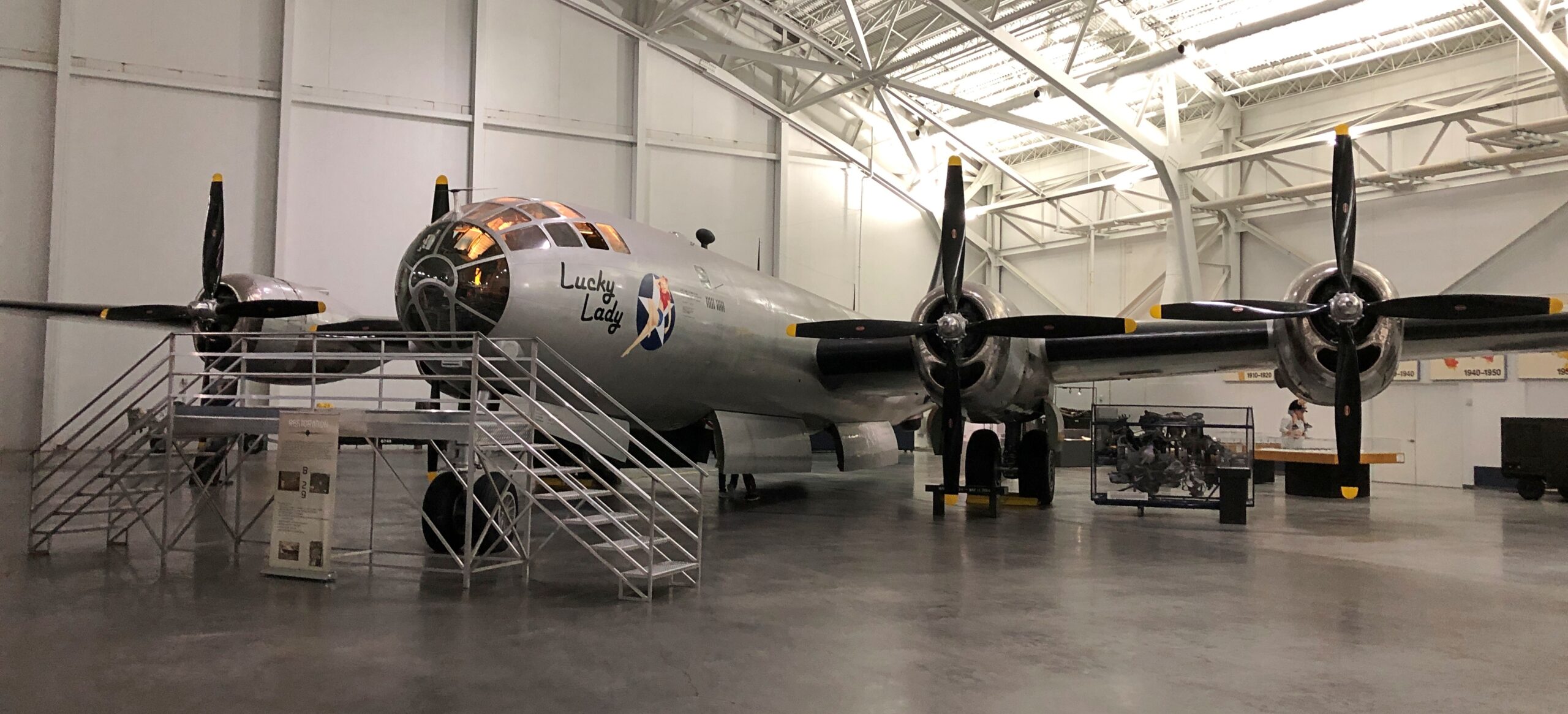
Not far outside Omaha, along I-80, it’s possible to stop and see, under two very large roofs, such marvels of aeronautical engineering as a B-17, B-29, B-36 and B-52, a Lockheed SR-71 Blackbird, a Douglas C-47 Skytrain and a Douglas C-54 Skymaster, a Convair F-102, and a Fairchild C-119 Flying Boxcar, among many others. Along side the airplanes are exhibits about the Tuskegee Airmen, Doolittle’s Raid, the Berlin Airlift and Francis Gary Powers.

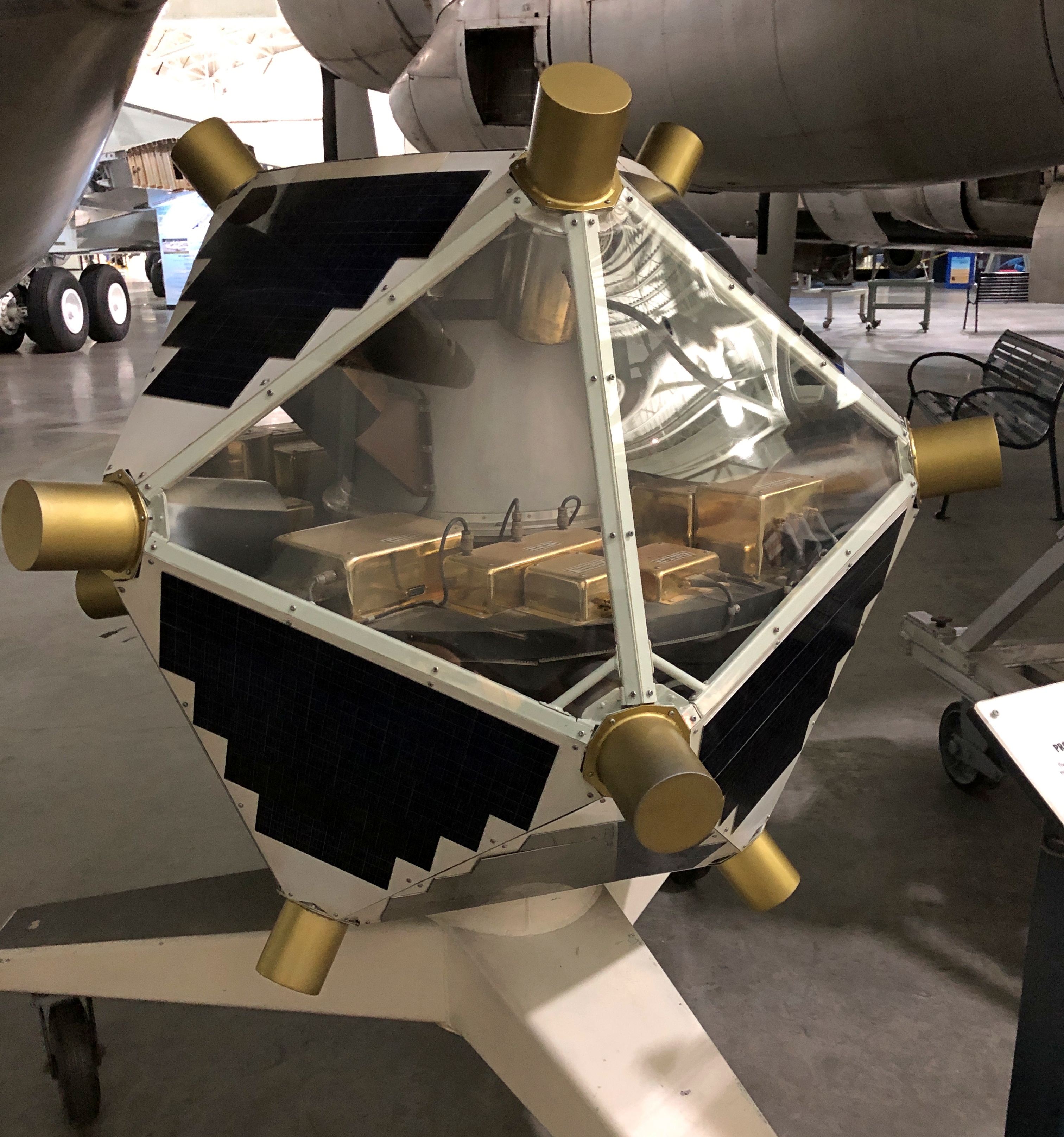
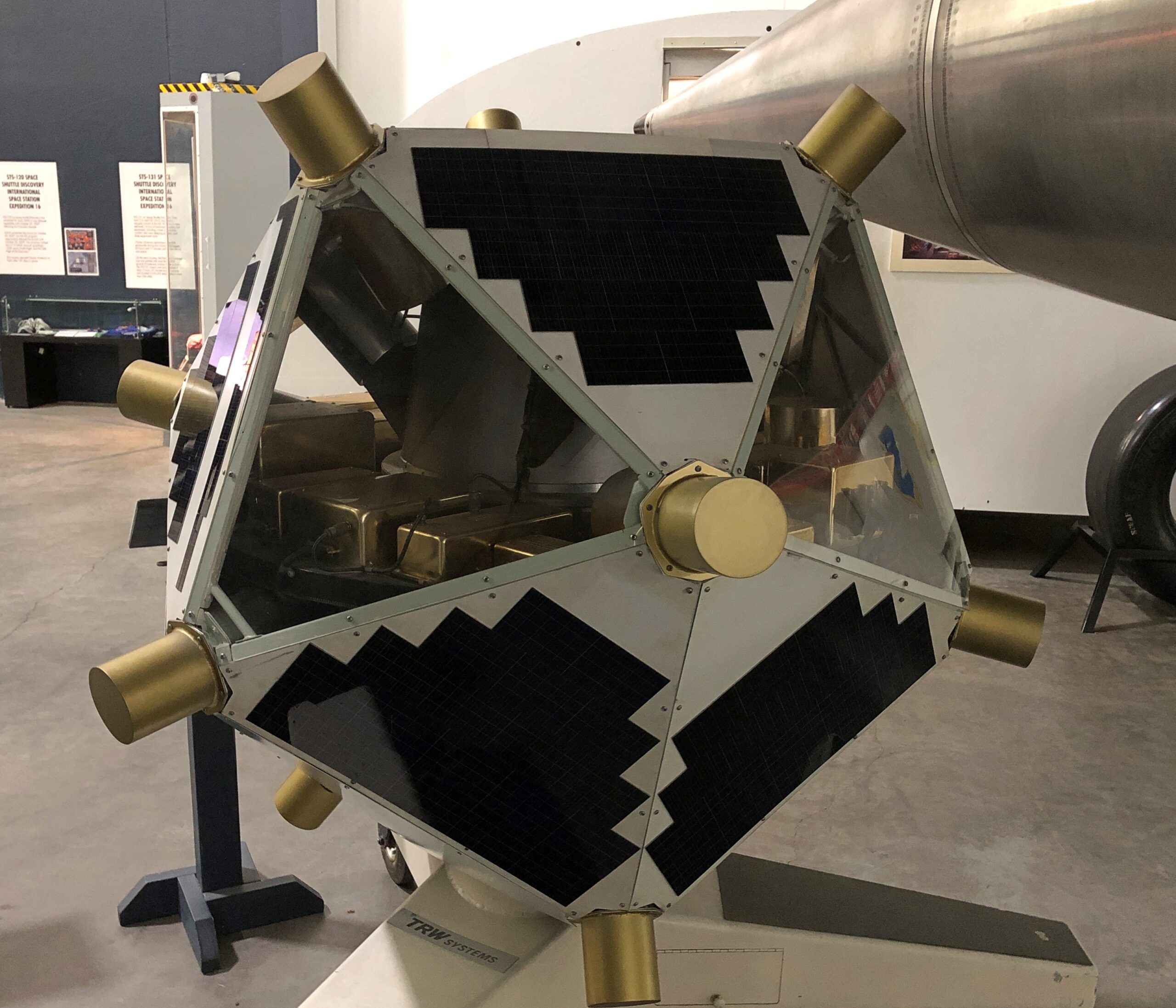
There are also space artifacts at the Strategic Air Command & Aerospace Museum, as the name says, but not that many. Still, my favorite artifact at that museum, the coolest bit of space hardware I’d seen since the Kansas Cosmosphere, was a Vela satellite.

SAC Museum Vela
SAC Museum Vela

Looks like something you’d see on the set of Space: 1999, but the Vela is more than just a curious glassy polyhedron. In September 1979, a Vela satellite noticed the characteristic flash – actually a double flash – of a nuclear explosion in the atmosphere, near the remote Price Edward Islands in the ocean south of Africa, roughly half way to Antarctica. It wasn’t long before the press got wind of the event, and I remember a widely held suspicion that Israel had tested a nuclear warhead, with the cooperation of South Africa, whose island it was. It seems likely that this was the case.

Besides that, “in 1967, the satellites were the first to detect extra-terrestrial gamma-ray bursts, thought to be the brightest and most energetic electromagnetic events in the universe,” the Space Force notes.

I arrived at the museum on September 5 heading westward, bypassing Omaha in favor of it.

SAC Museum
SAC Museum

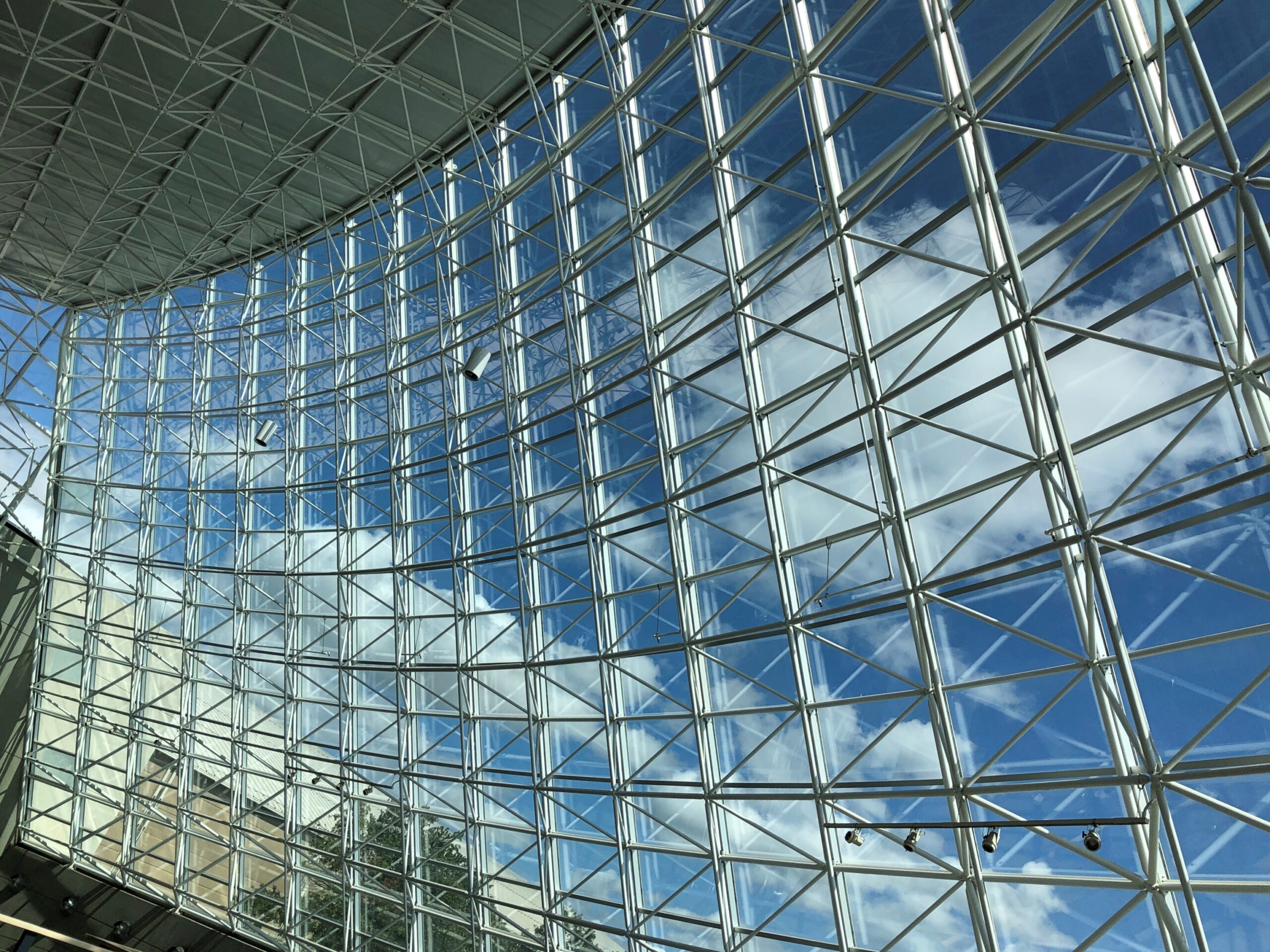
Most of the artifacts are aircraft used in one way or another by SAC, on display under sprawling ceilings. Leo A. Daly, a longstanding Omaha architect, did the museum’s design, completed in 1998.

SAC Museum

A fine collection, only outdone by Smithsonian Air & Space and the US Air Force Museum, since after all, SAC was only part of the Air Force.

SAC Museum

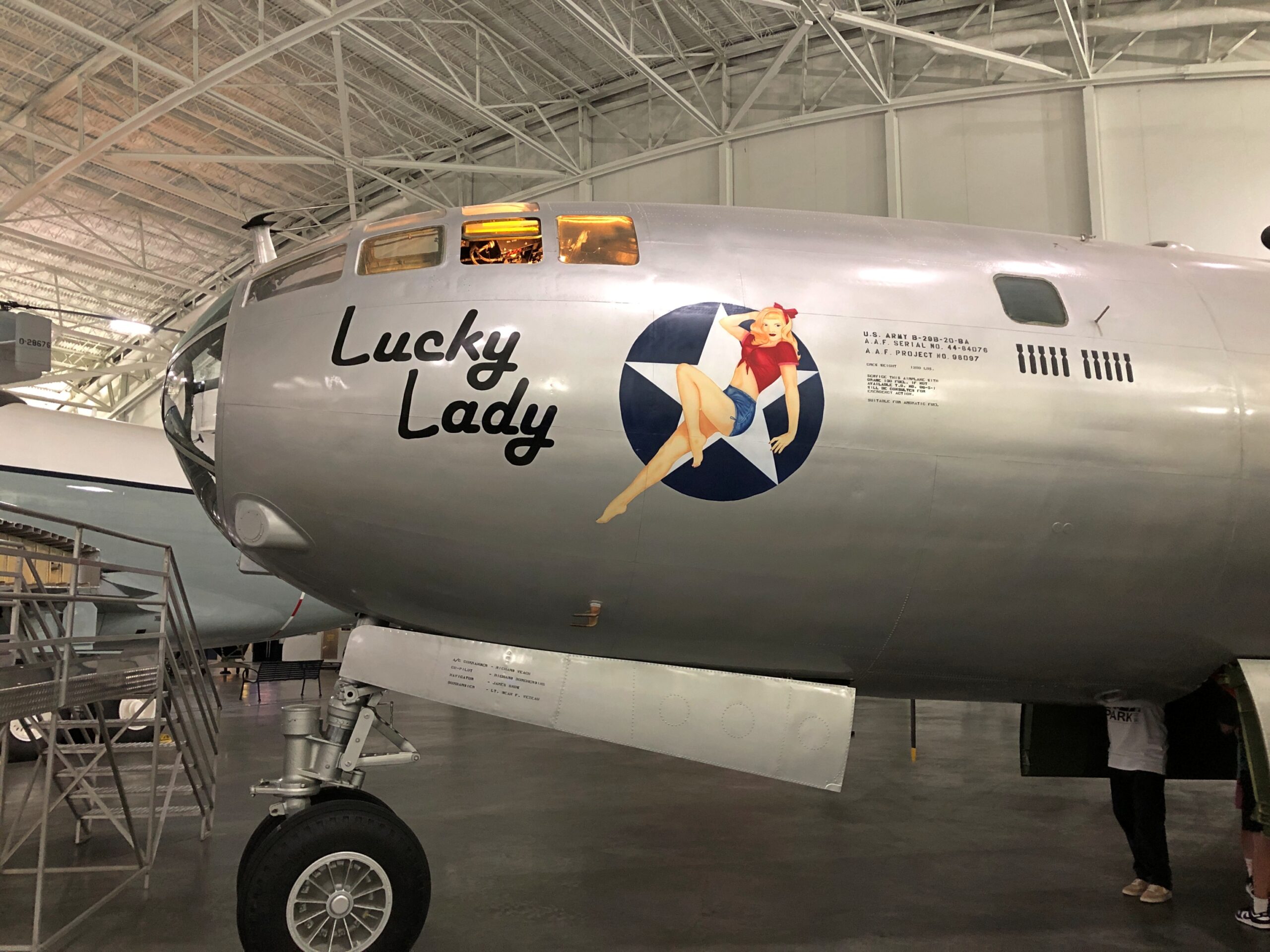
A named aircraft, the Lucky Lady, a B-29 Superfortress.

SAC Museum
SAC Museum

“The bomber was manufactured by Bell Aircraft, in Marietta, Georgia and delivered to the U.S. Army Air Force on August 4, 1945,” Airplanes Online says. “Its initial assignment was to Walker AAF (Second Air Force), Victoria, Kansas.” Lucky all right, as in manufactured too late in the war to get shot at, unless there’s something about 1940s Kansas I don’t know.
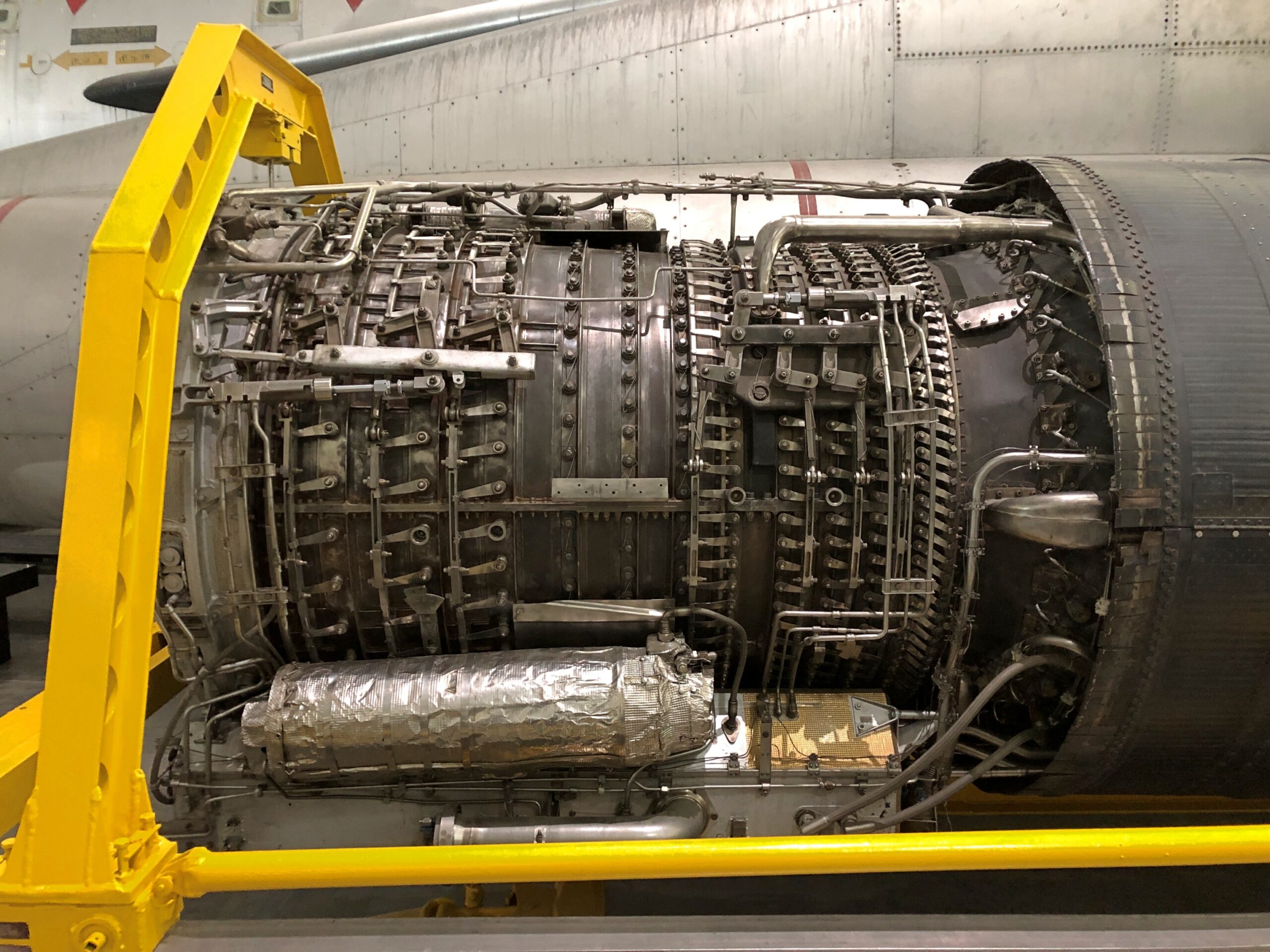
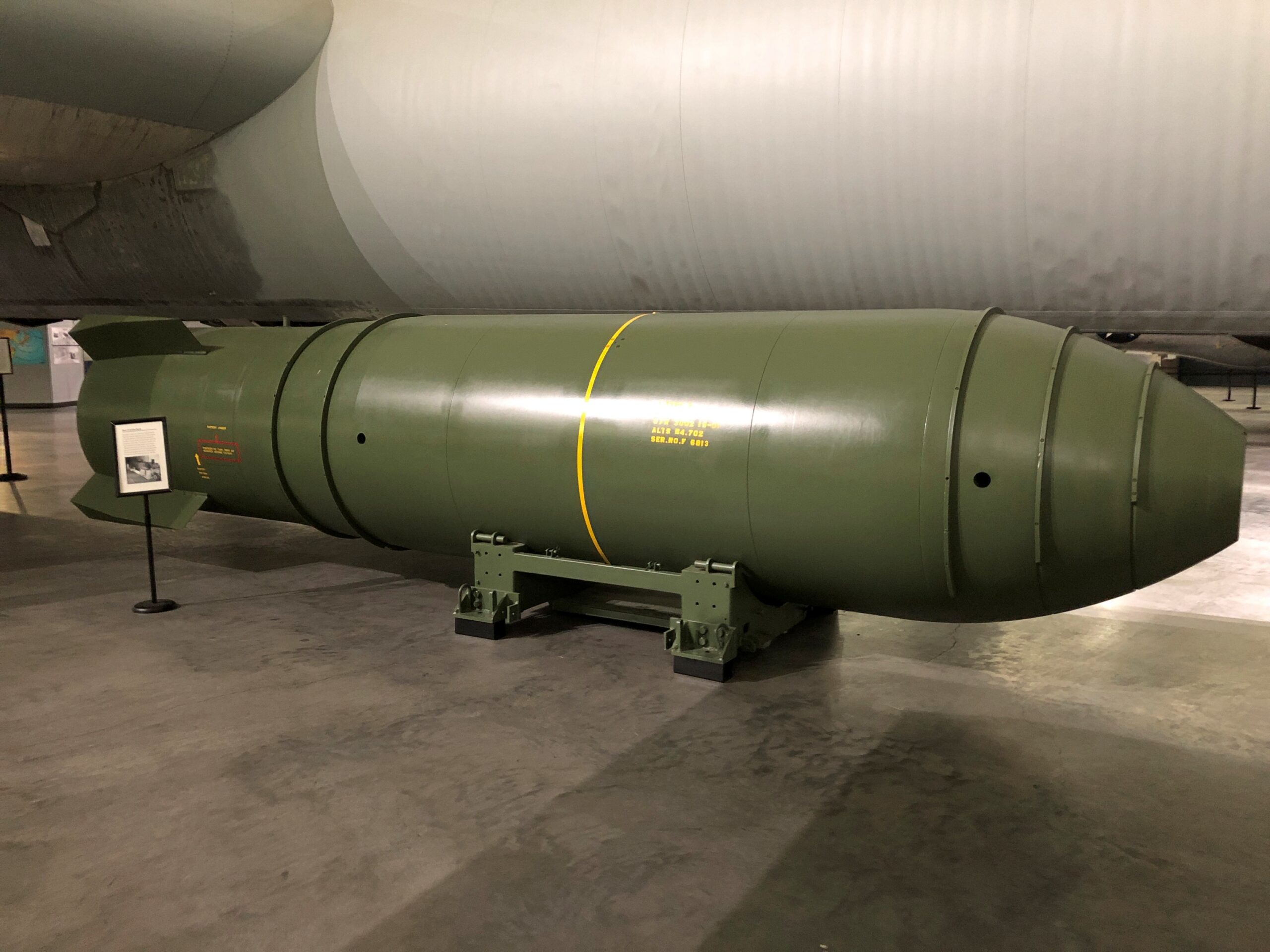
Smaller items, though not actually that small.

SAC Museum
SAC Museum

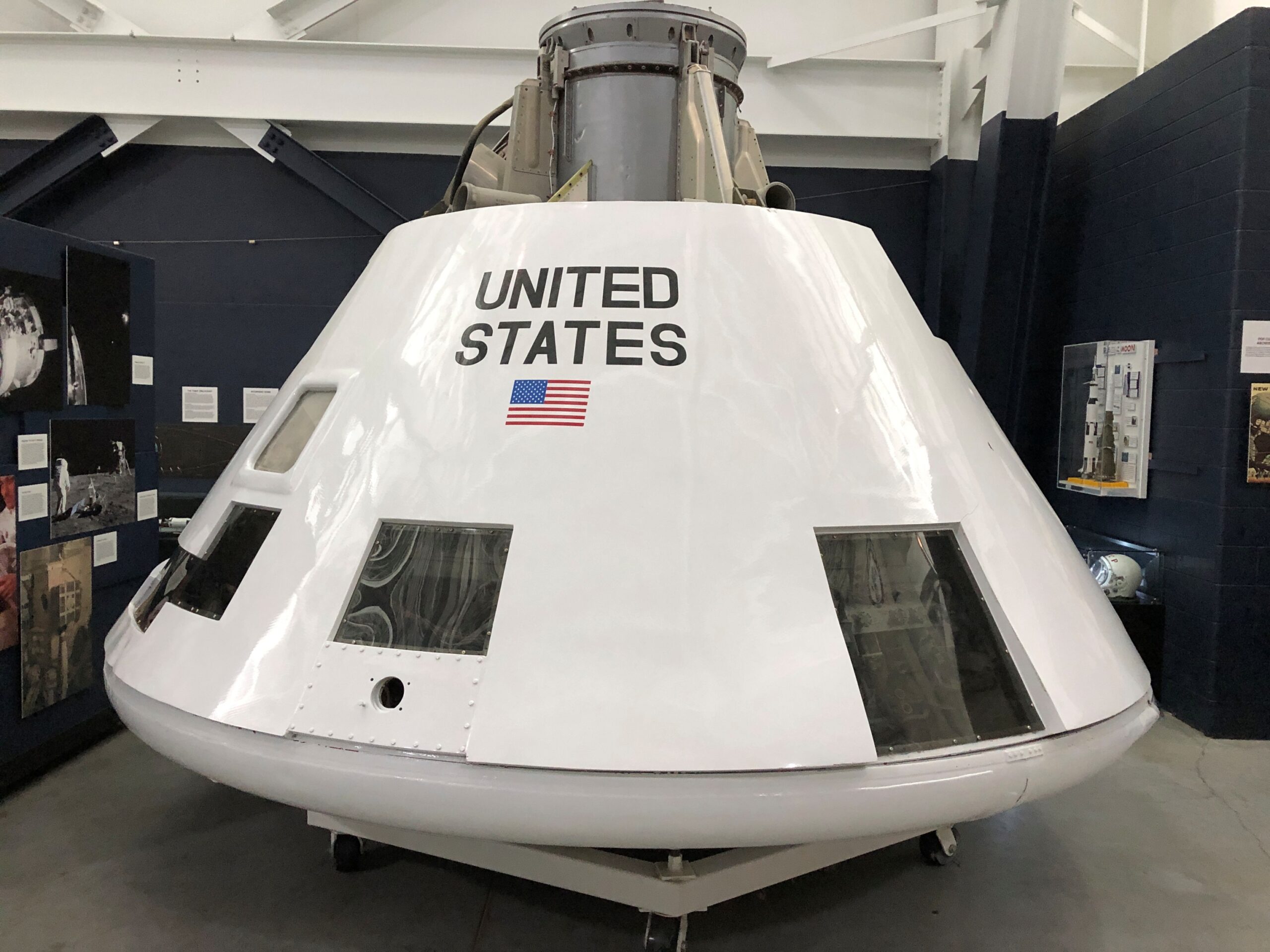
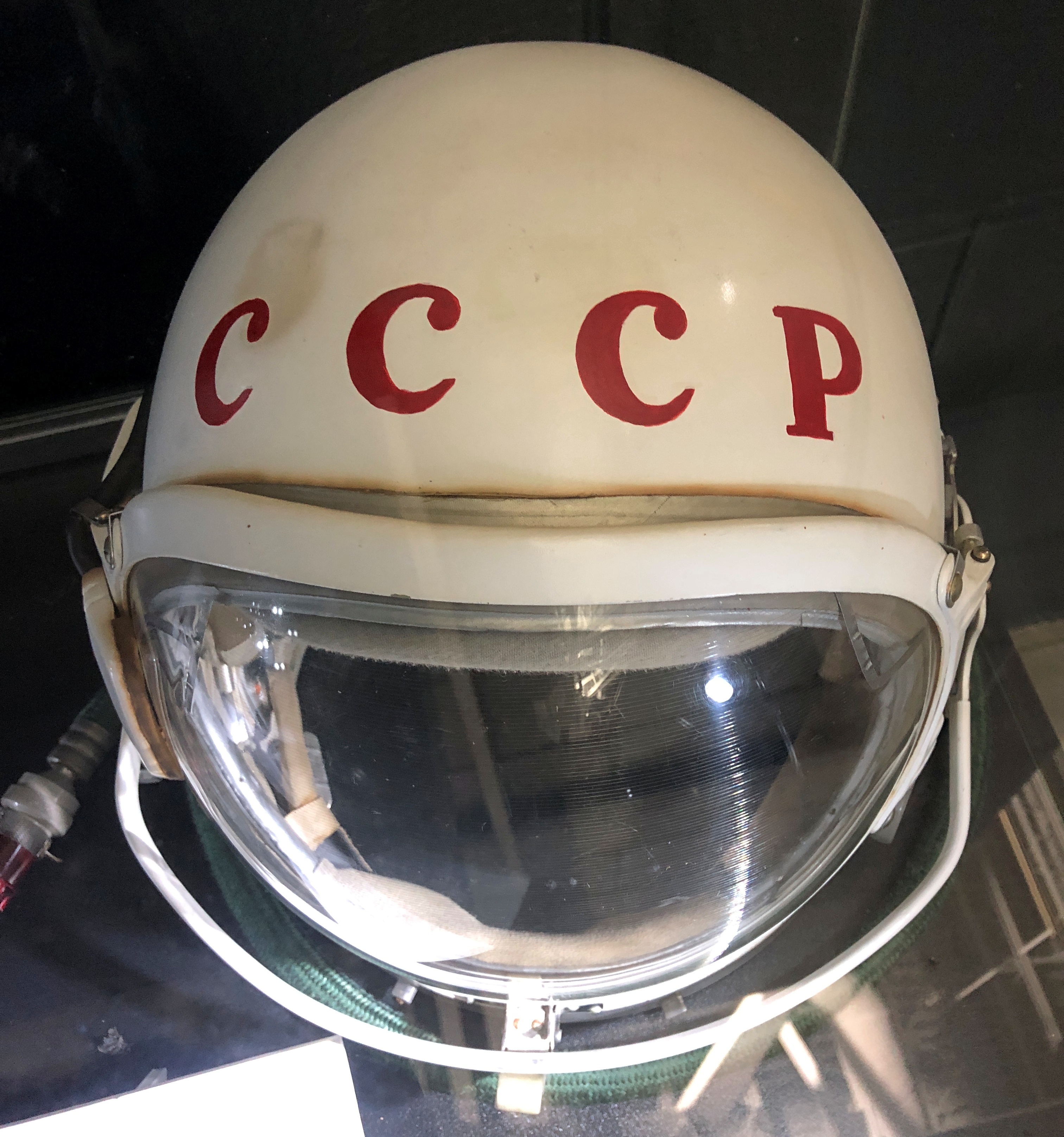
Besides the Vela satellite, other space items include spaceman gear and leftovers from the early days of manned space flight, such as a boilerplate Apollo, which wasn’t actually a capsule, but had the size, shape and mass of a command module, for testing.

SAC Museum

Picked up cheap after the dissolution of the Soviet Union?

SAC Museum

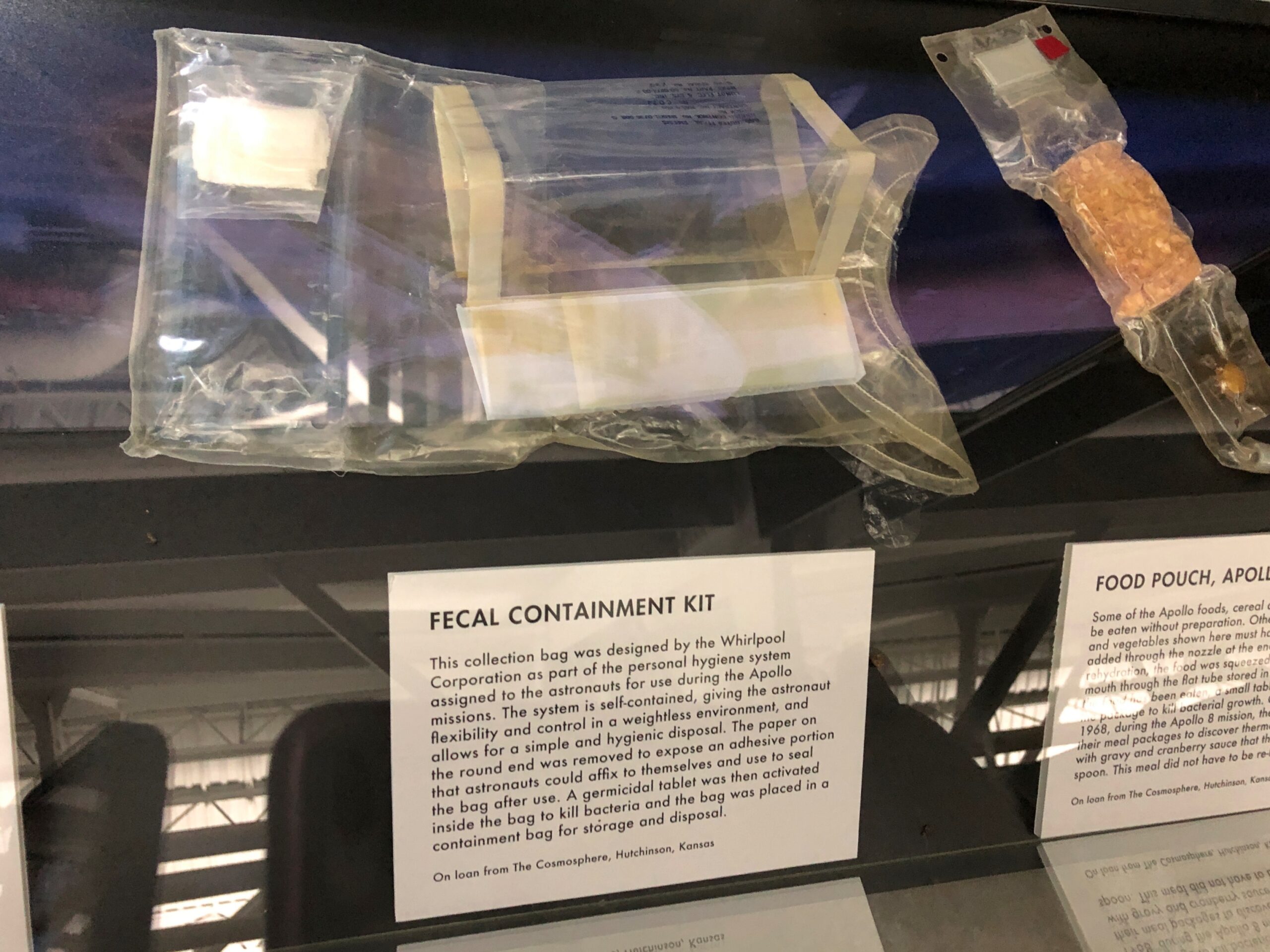
Probably something non-astronauts wonder about a great deal.

SAC Museum

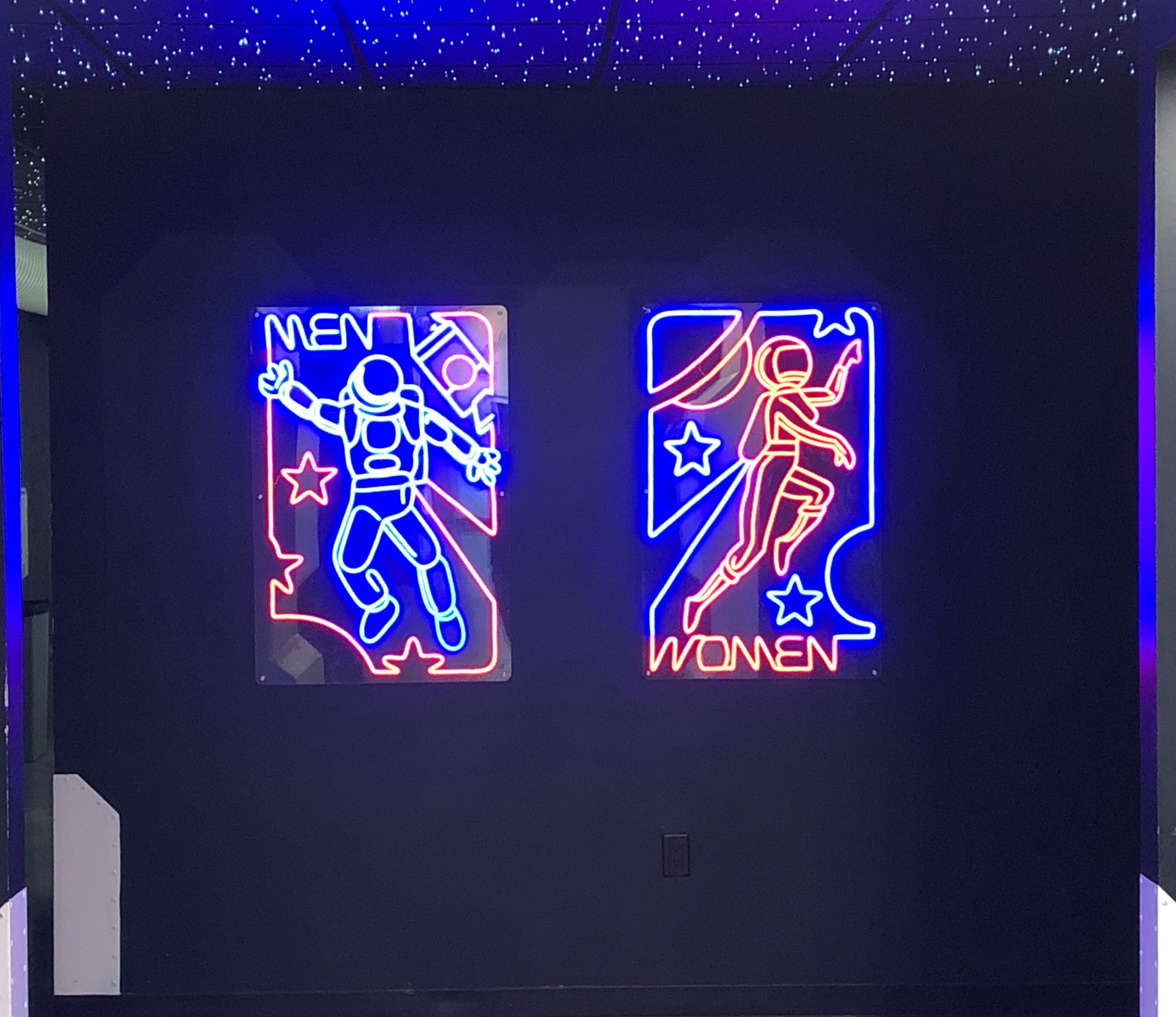
A little space whimsy.

SAC Museum
SAC Museum

Even the Air Force needs a little.

Catskills ’25

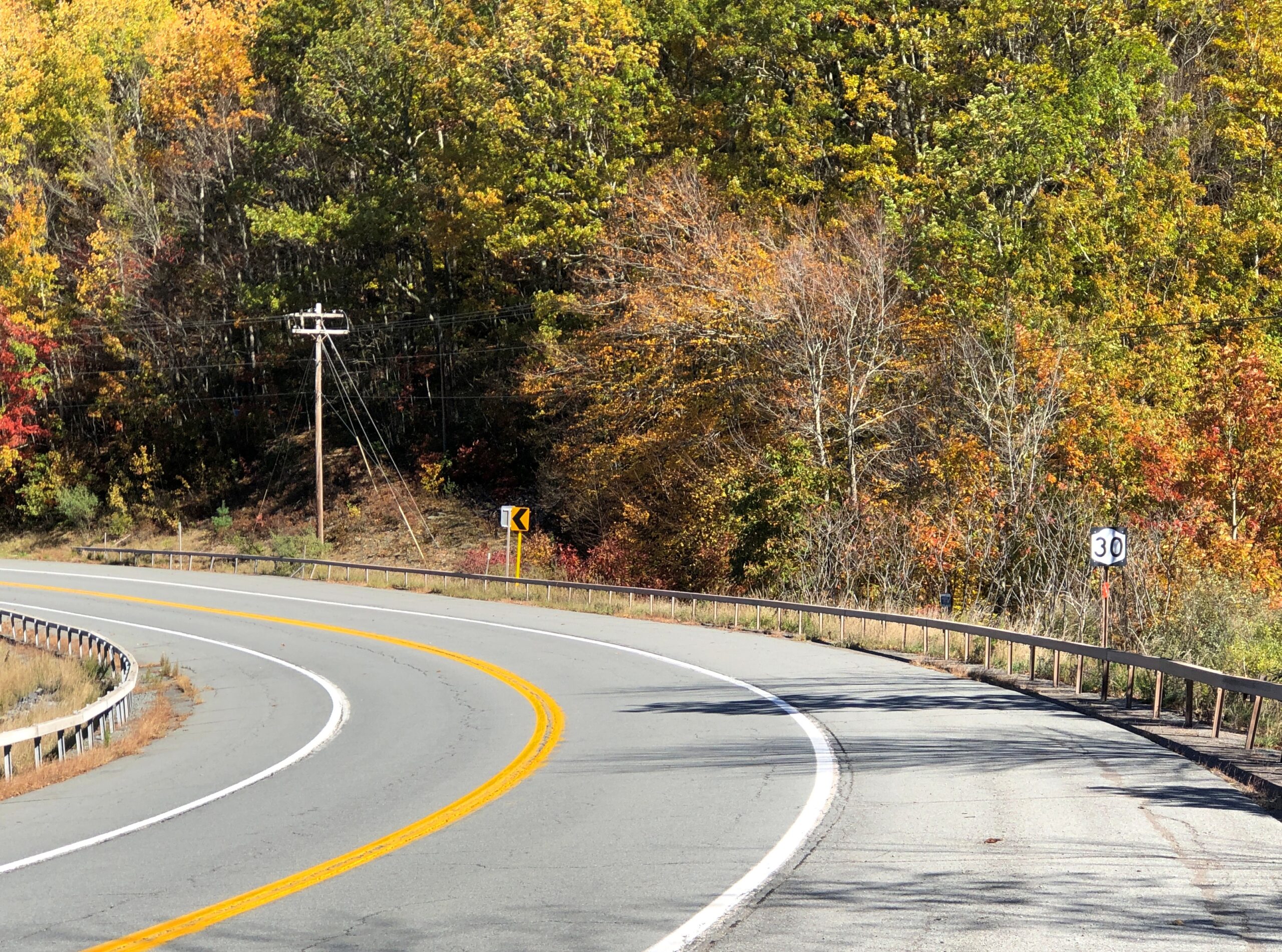
The highway New York 30 winds along the northwestern edge of Catskill Park because it follows the winding East Branch of the Delaware River, which would picturesquely come in and out of view as I drove that highway on the crisp late morning of October 16. I stopped at a place called Downsville. Wiki calls it “census-designated place, and former village in the town of Colchester, Delaware County, New York.”
This raises some questions. How is a village part of a town? (Colchester is marked on maps as not far away, but not on NY 30.) How does a place become a “former” village? People still clearly live there. Maybe I’ll investigate these questions sometime. Maybe not.

Village or former village, it’s at a pleasant spot on the East Branch.

East Branch of the Delaware River

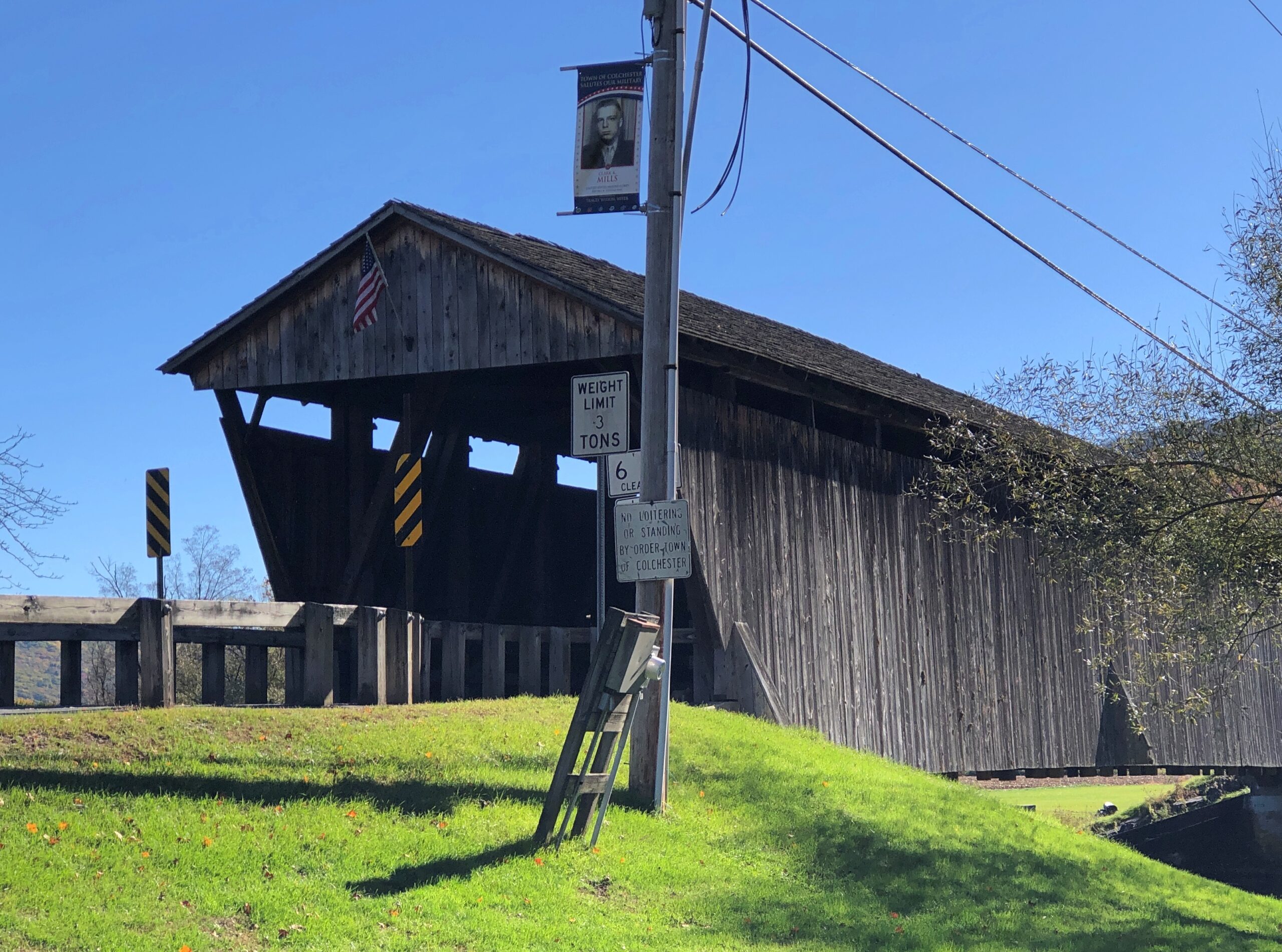
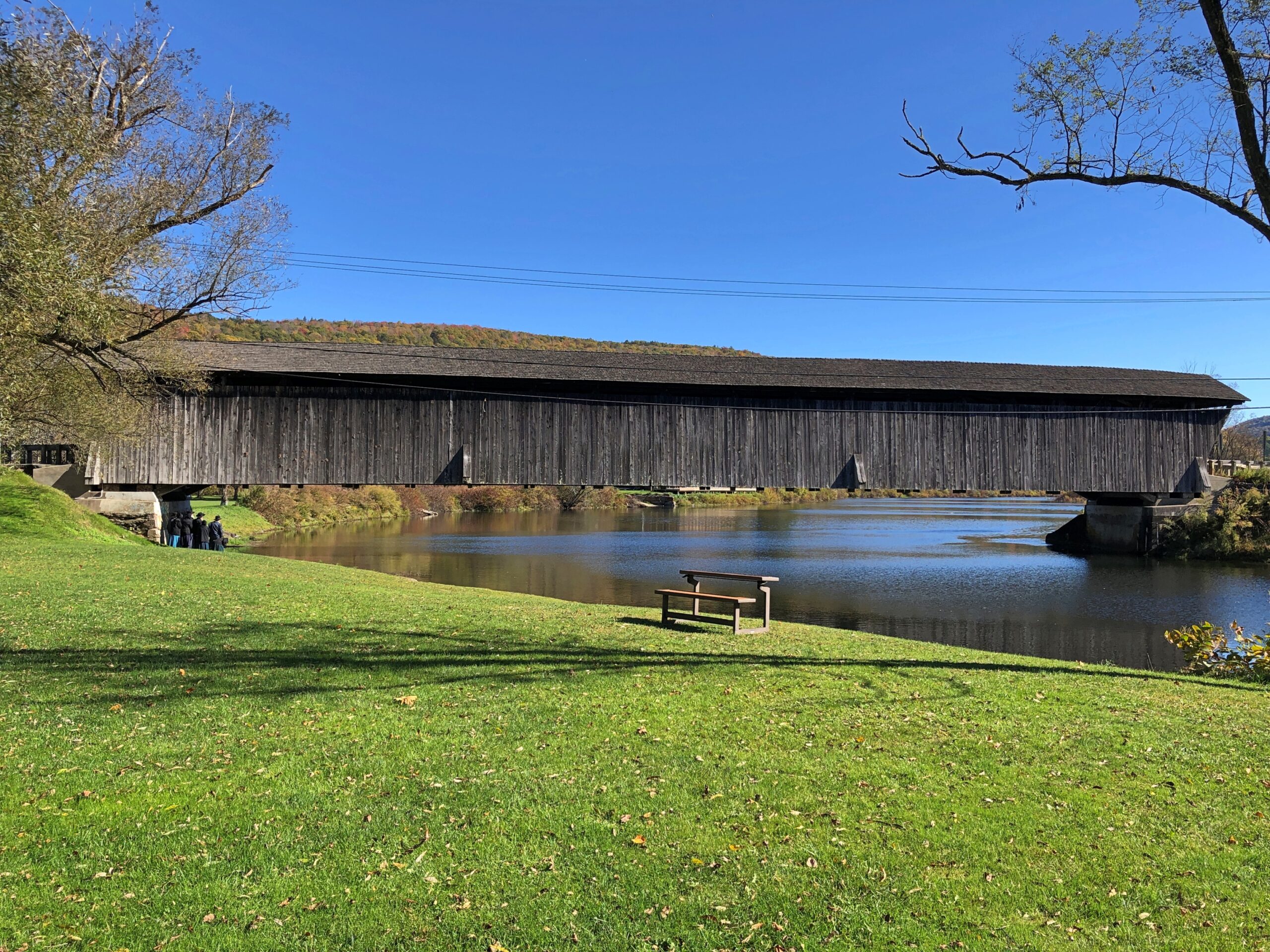
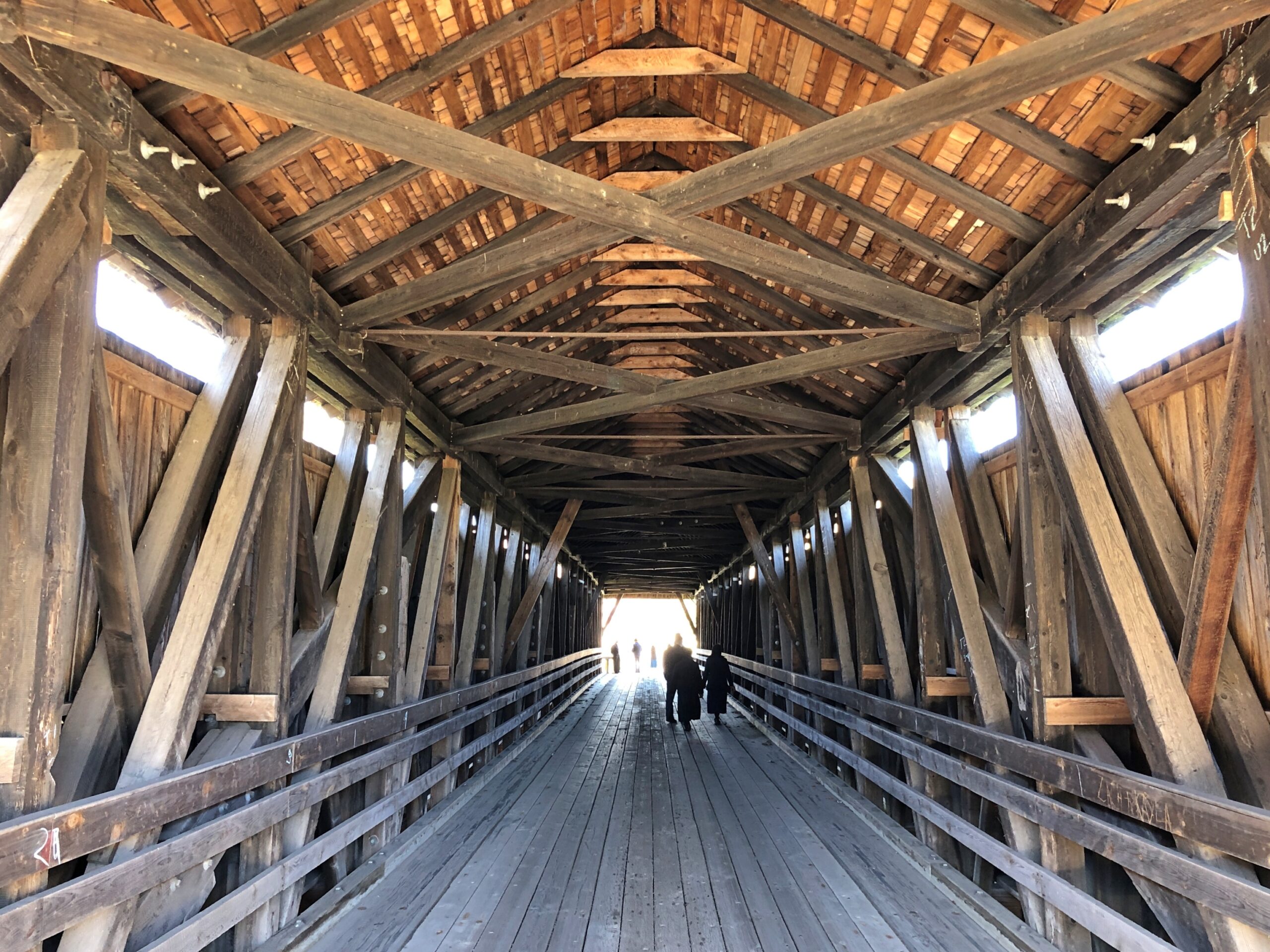
I stopped because a sign directed me to a covered wooden bridge, one that crosses the East Branch about a block away from NY 30.

Downsville, NY covered bridge

“The Downsville Covered Bridge is one of six covered bridges still standing in Delaware County…” explains the New York State Covered Bridge Society. “Built by Robert Murray in 1854, this 174-foot-long, single span structure incorporates the Long truss design patented on March 6, 1830 by Lieutenant Colonel Stephen H. Long of Hopkinton, New Hampshire, with an added Queenpost truss. This truss design is rare to Northeastern covered bridges.” 

Nice work, Mr. Murray, and the workers who have maintained it as a vehicular bridge down to the present day.

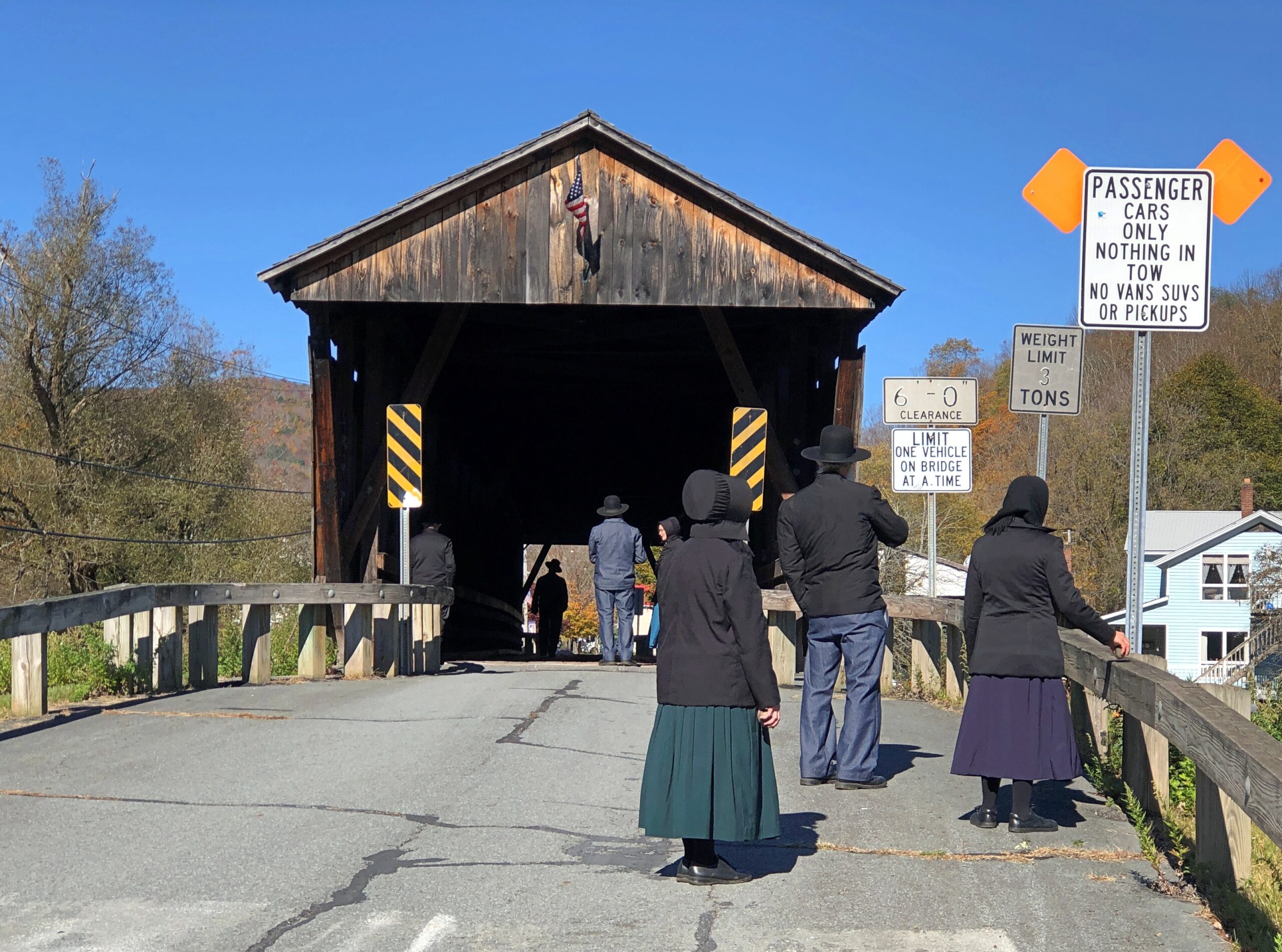
There’s a small park on the river next to the bridge, and a parking lot. Soon after I arrived for a look-see, a large van pulled up to the lot and about a half-dozen Plain People got out. They were there for a look-see too. So we were all on the bridge together.

Downsville NY covered bridge

I try not to do ethnic profiling, but I couldn’t help thinking that a top tourist sight for Plain People might well be a covered wooden bridge. Then I wondered, how is it they came in a van? As I was leaving, I noticed a non-Plain man waiting for them in the drivers seat. The Plain People equivalent of a Shabbos goy, I suppose. Except maybe that he can work any day except the Sabbath?

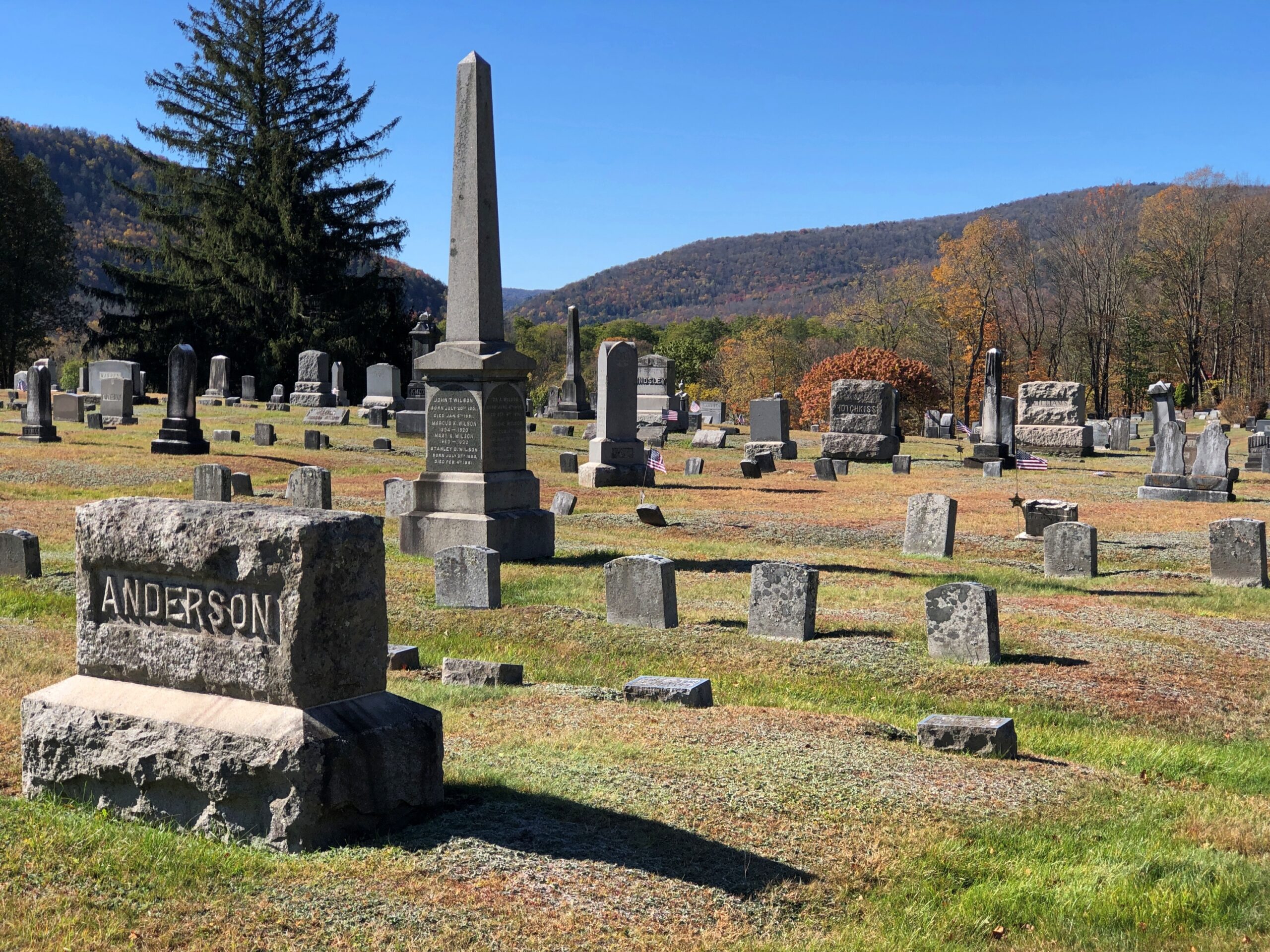
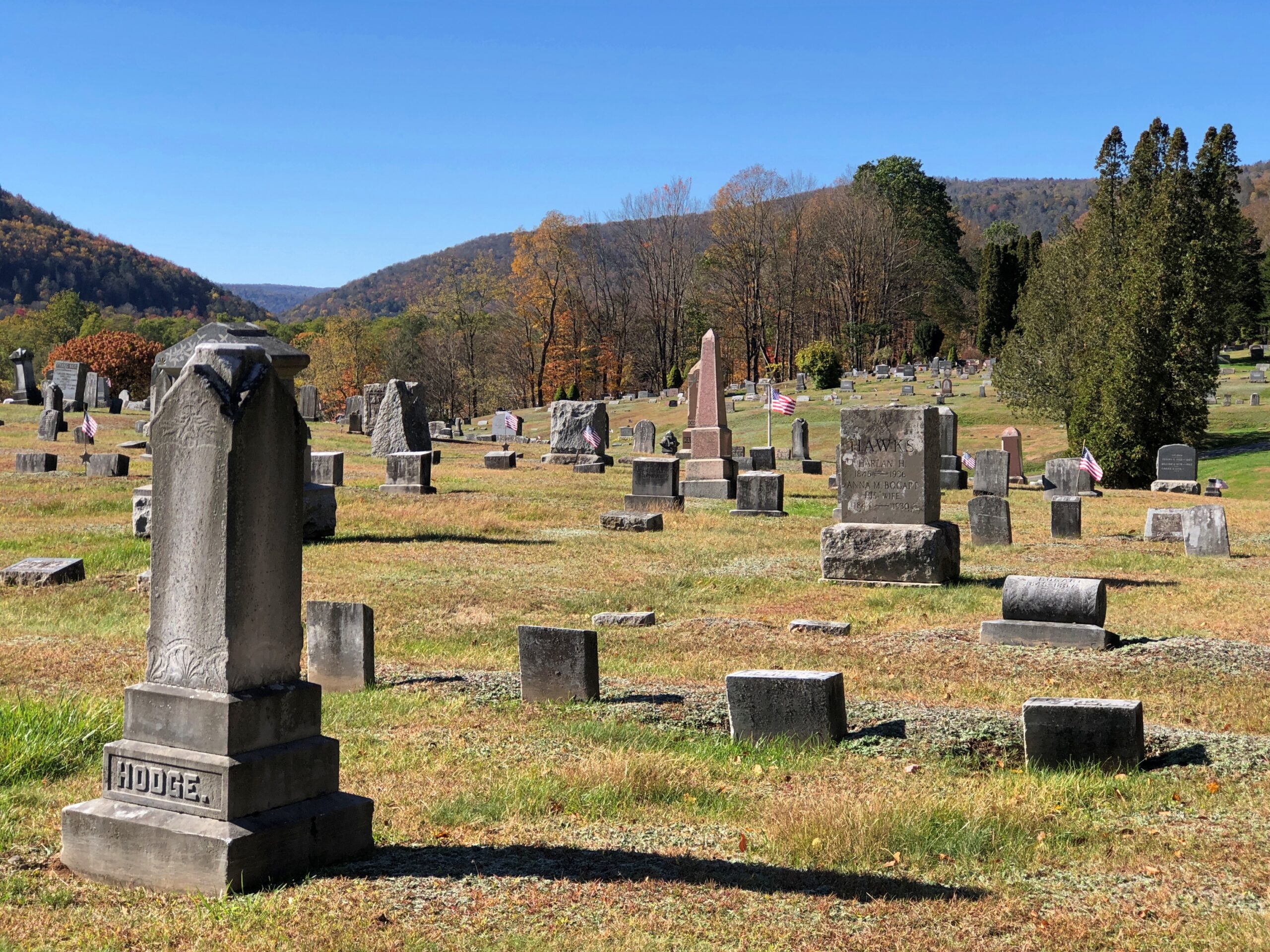
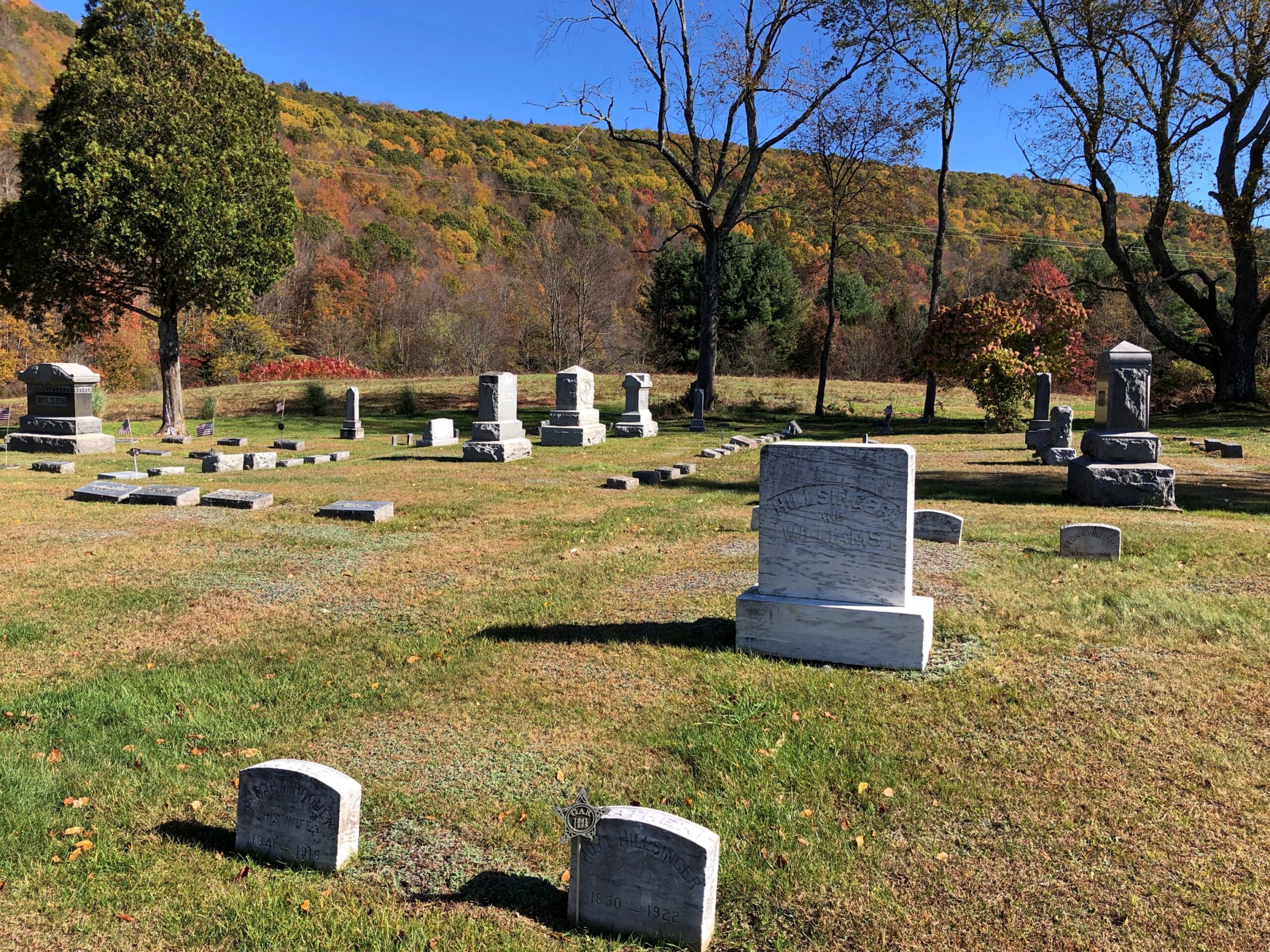
Not far away in Downsville is the Paige Cemetery. I had that to myself, as usual.

Paige Cemetery, Downsville, NY

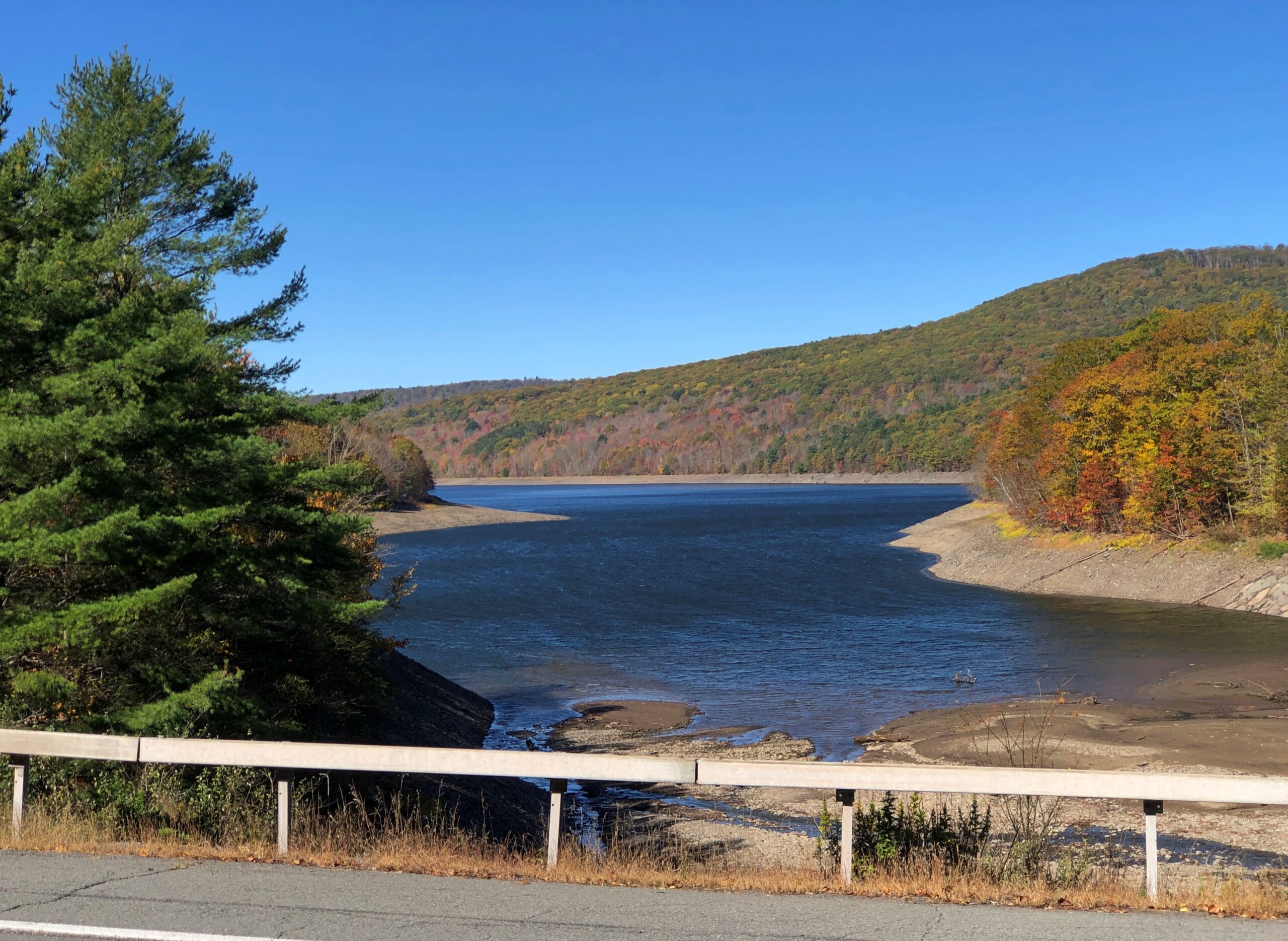
New York 30 continues a long way on the shores of the Pepacton Reservoir. Still car commercial driving.

NY 30
NY 30

The Pepacton Reservoir, seemingly so peaceful on a brilliant autumn day, has a hell of a back story.

“It is formed by the damming of the East Branch of the Delaware River, which continues west and joins the lower Delaware River,” says NYC Environmental Protection. “It consists of one basin, approximately 15 miles in length [that] holds 140.2 billion gallons at full capacity, making it the largest reservoir in the city system by volume. It was placed into service in 1955.

“Pepacton Reservoir is one of four reservoirs in the City’s Delaware Water Supply System. As the reservoir with the largest capacity, it normally contributes more than 25% of the total daily water flow into New York City.

Italics added, because they needed adding.

Once I left NY 30 and headed east on NY 28, which put me on a path toward the Hudson River Valley and NYC and Long Island, traffic kicked up several notches. It was still mostly a pleasant drive.

Most of the traffic was headed west into the park, opposite of the way I was going; as only to be expected on a Thursday ahead of a colorful fall weekend. The Catskills are still a destination, if not quite the Catskills of yore. Some of the old story was told to the rest of the country through TV shows in previous decades, or even more recently: namely, The Marvelous Mrs. Maisel.

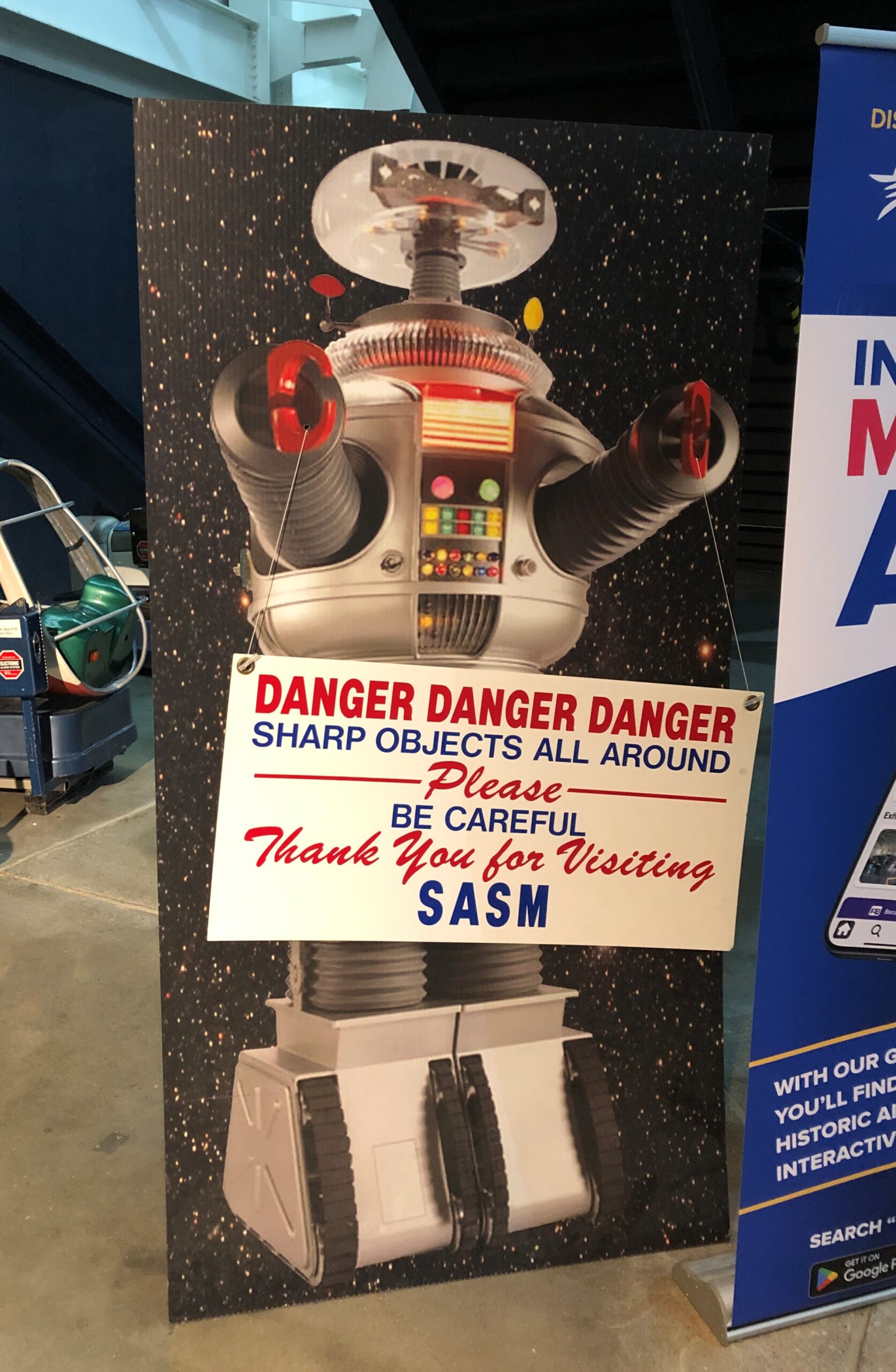
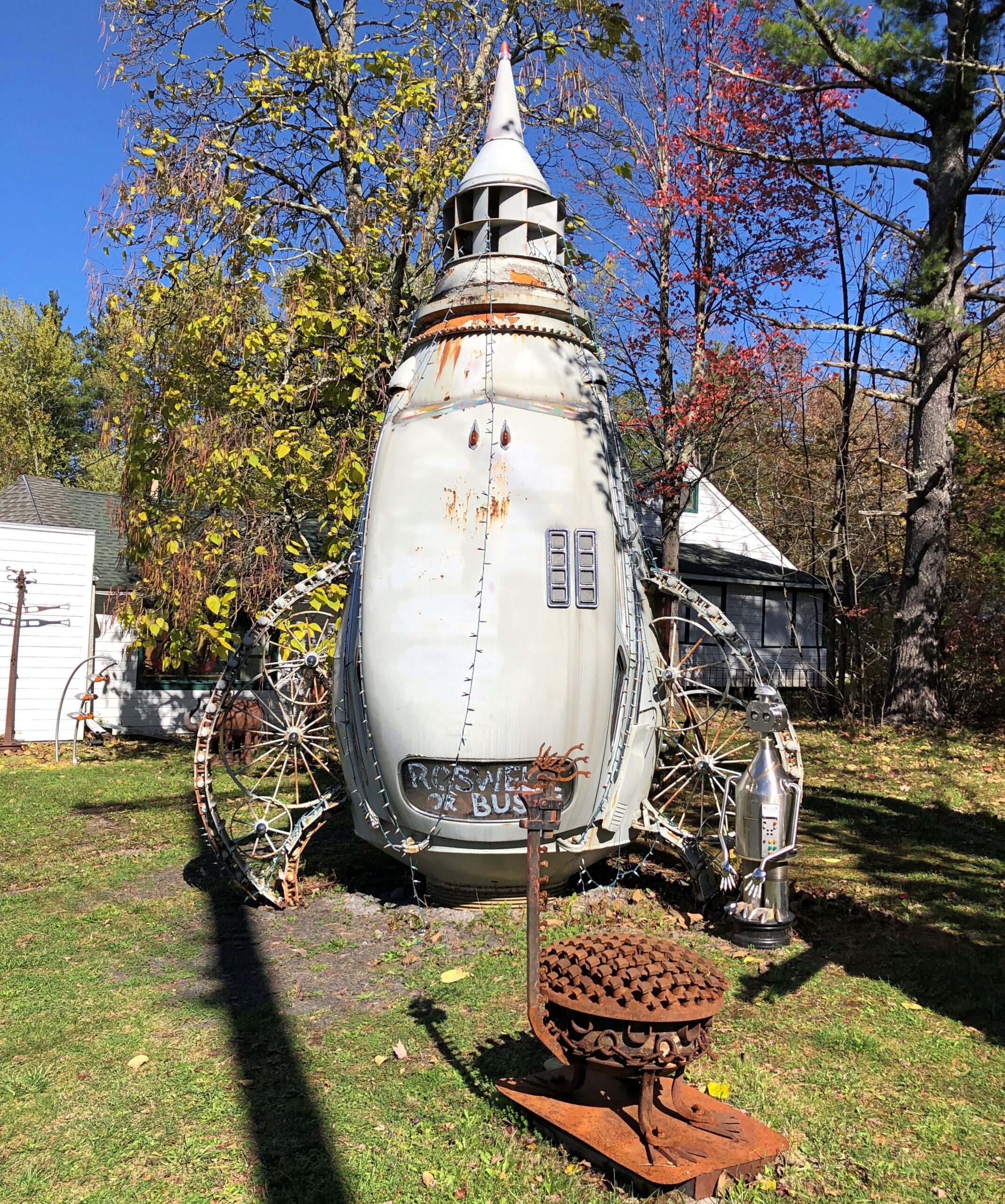
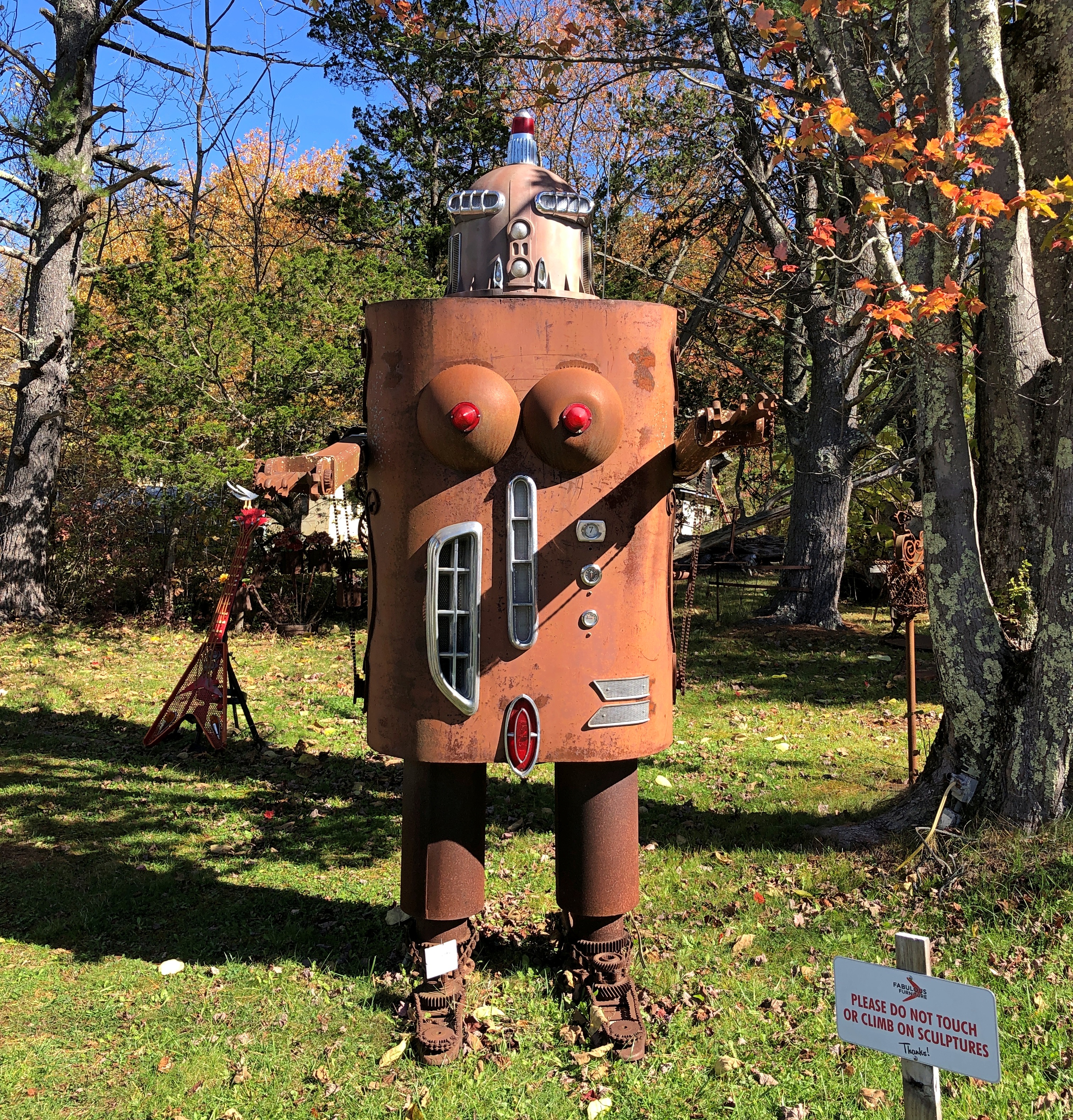
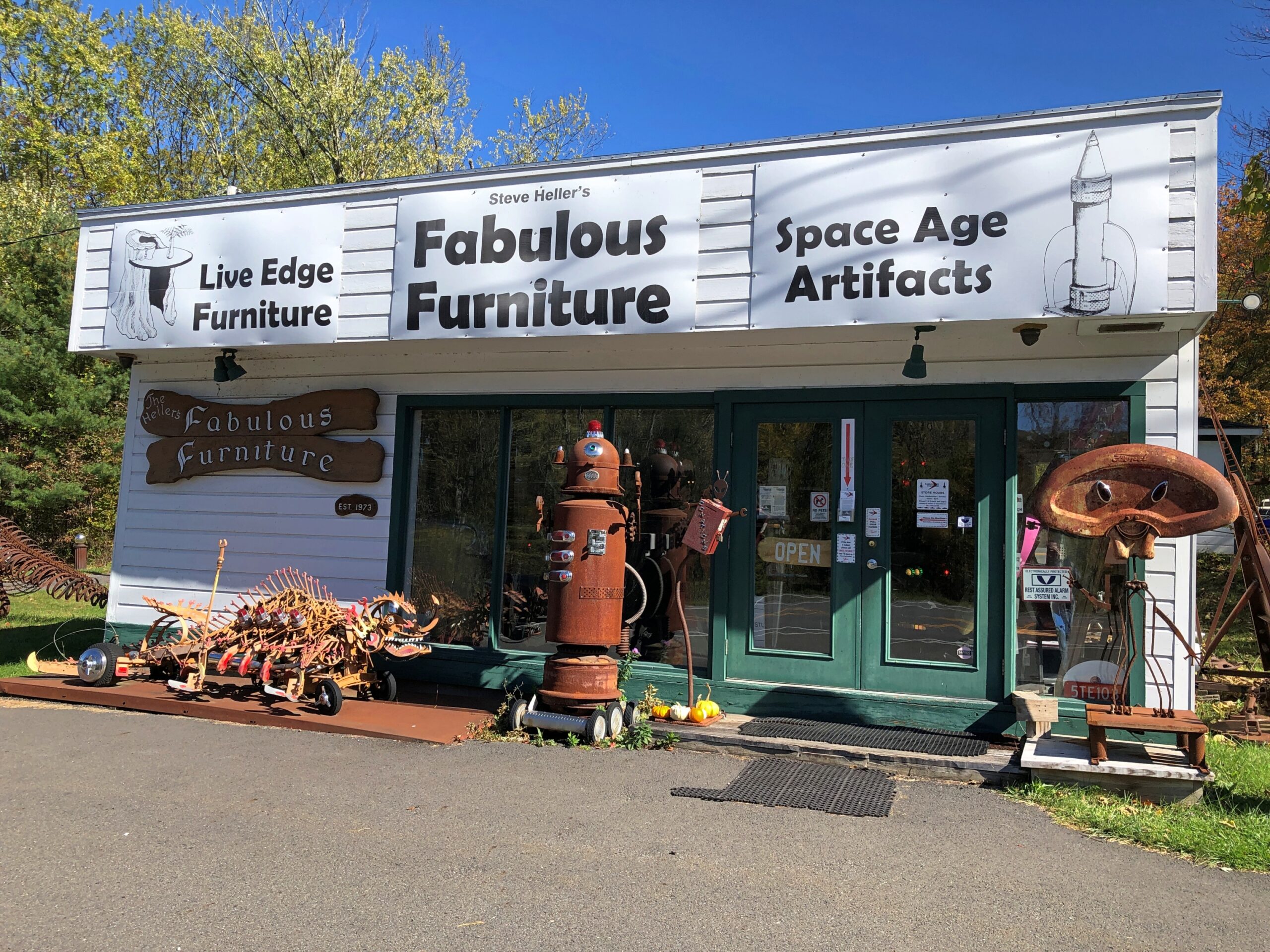
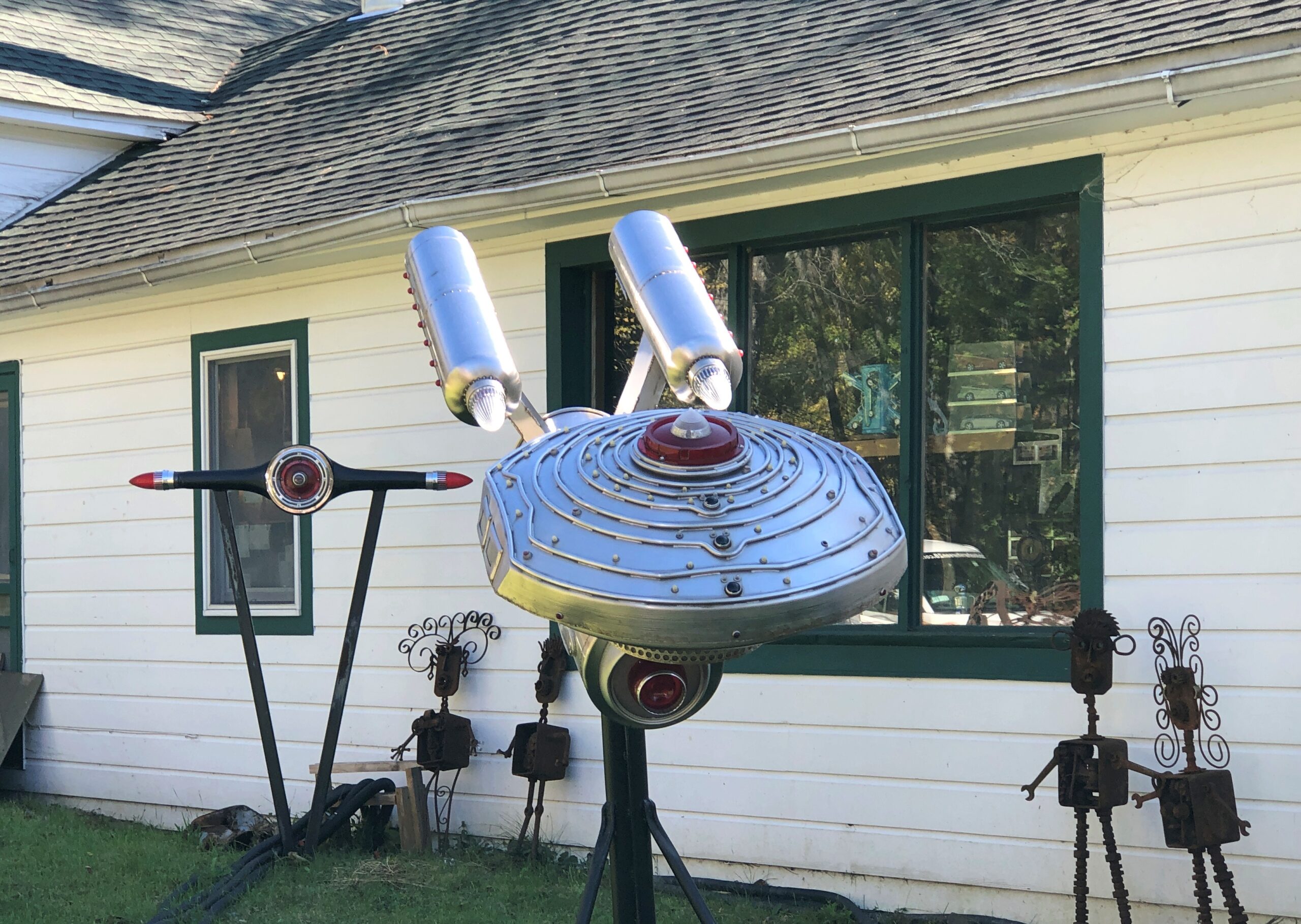
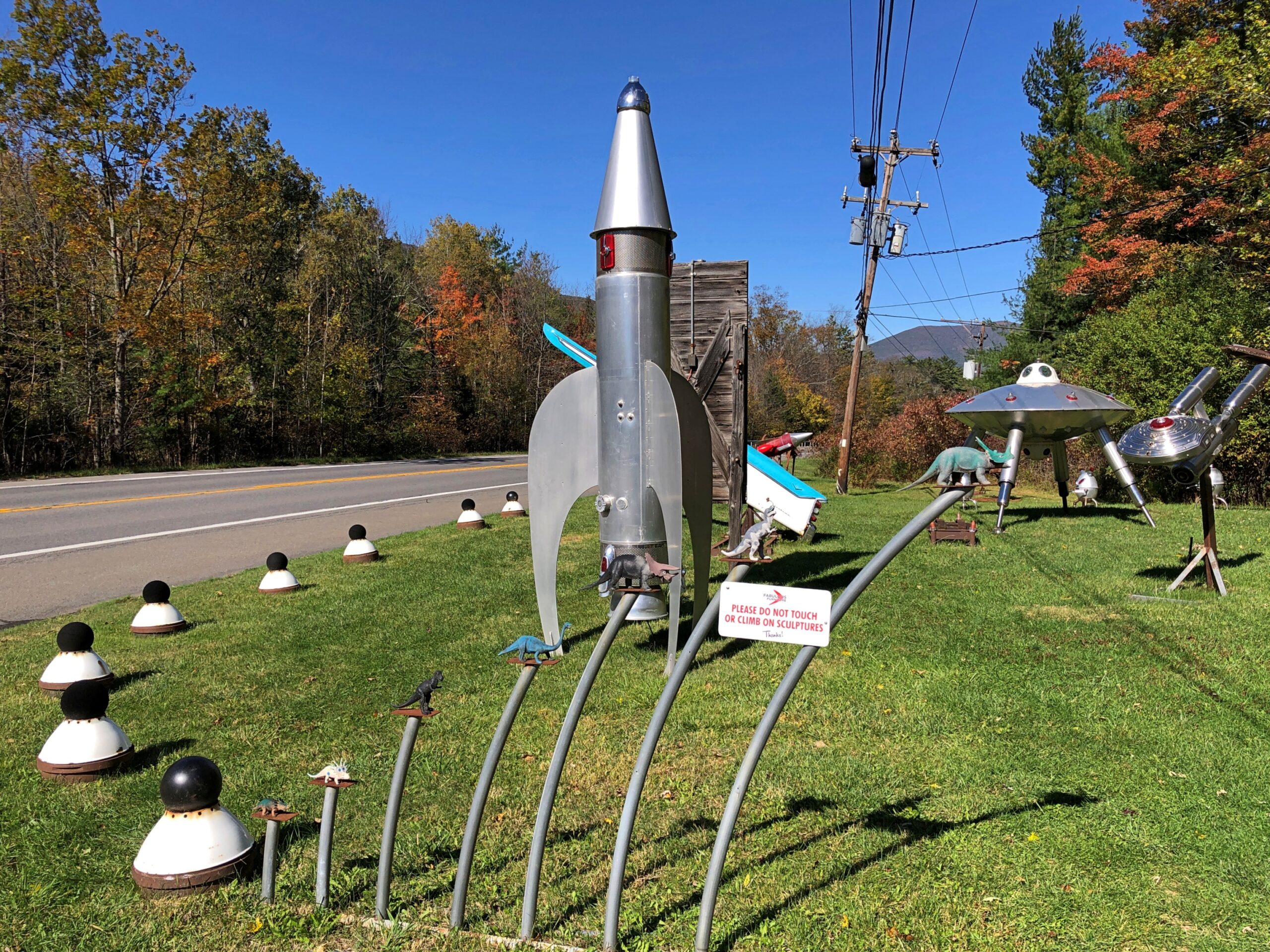
Metal spaceship and robot sculptures haven’t been part of the Catskills narrative that I know of. But there they were, right off NY 28.

Fabulous Furniture, Catskills

As part of this place of business.

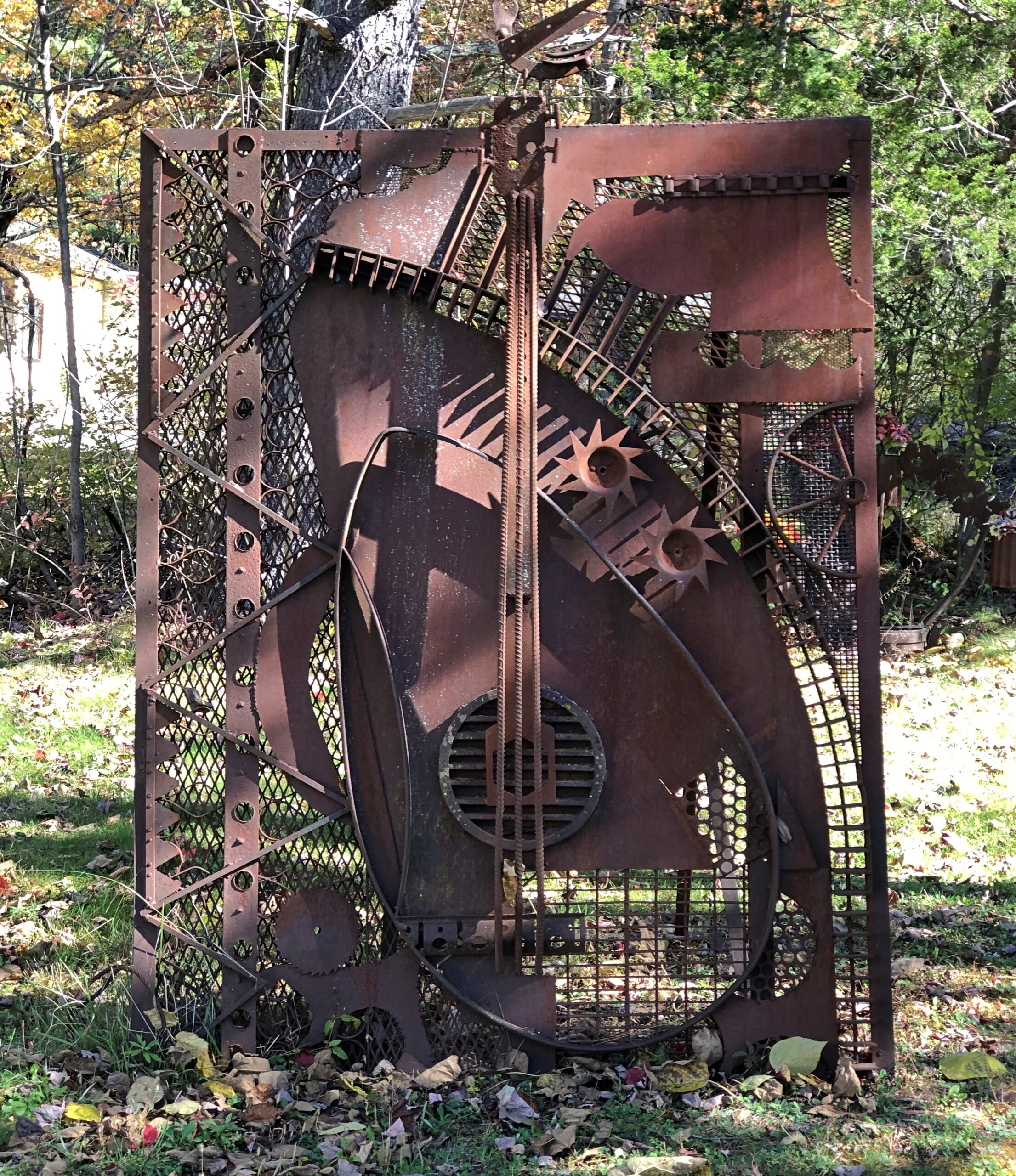
Fabulous Furniture, Catskills

Some artful metal for sure.

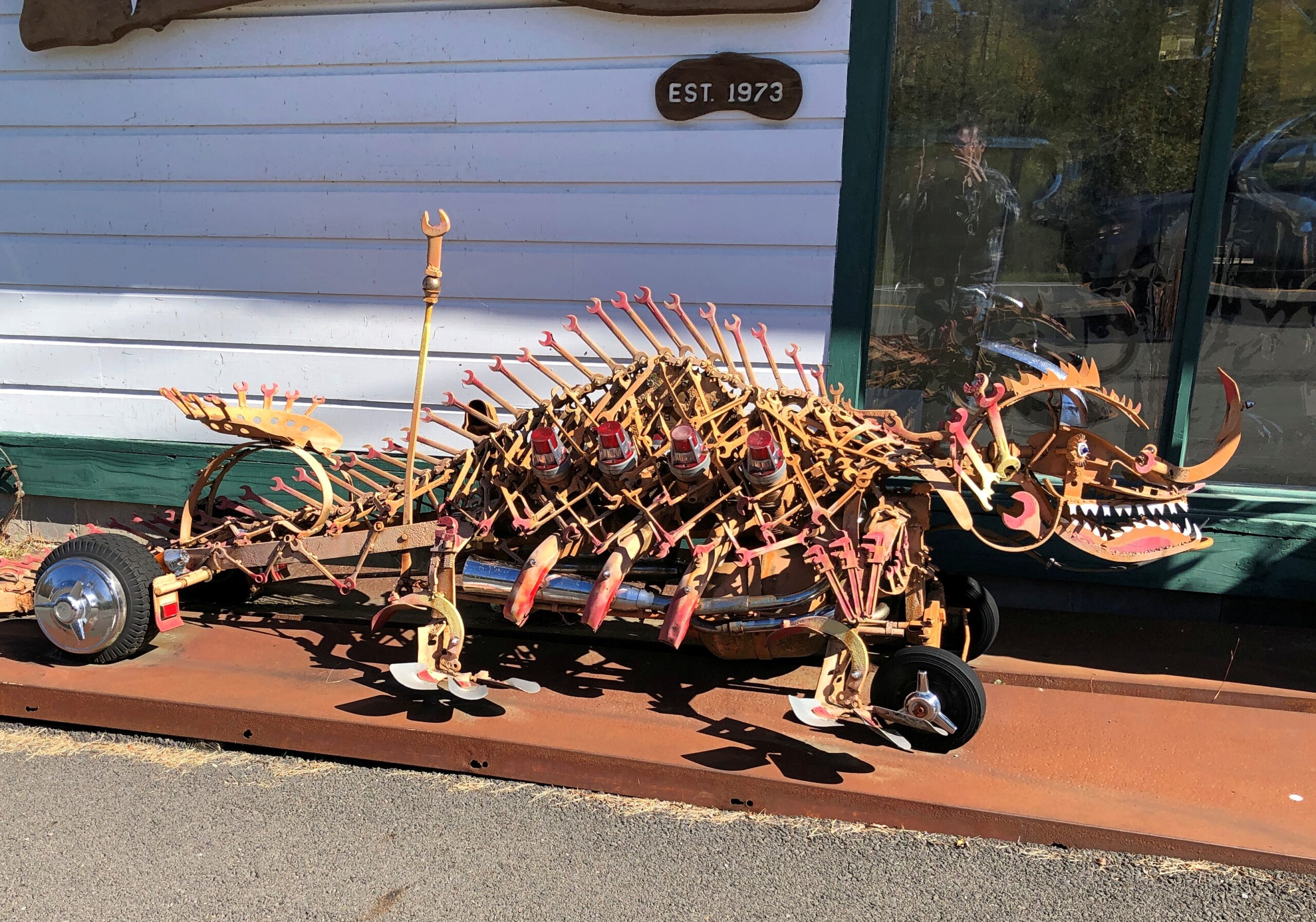
Fabulous Furniture, Catskills

More.

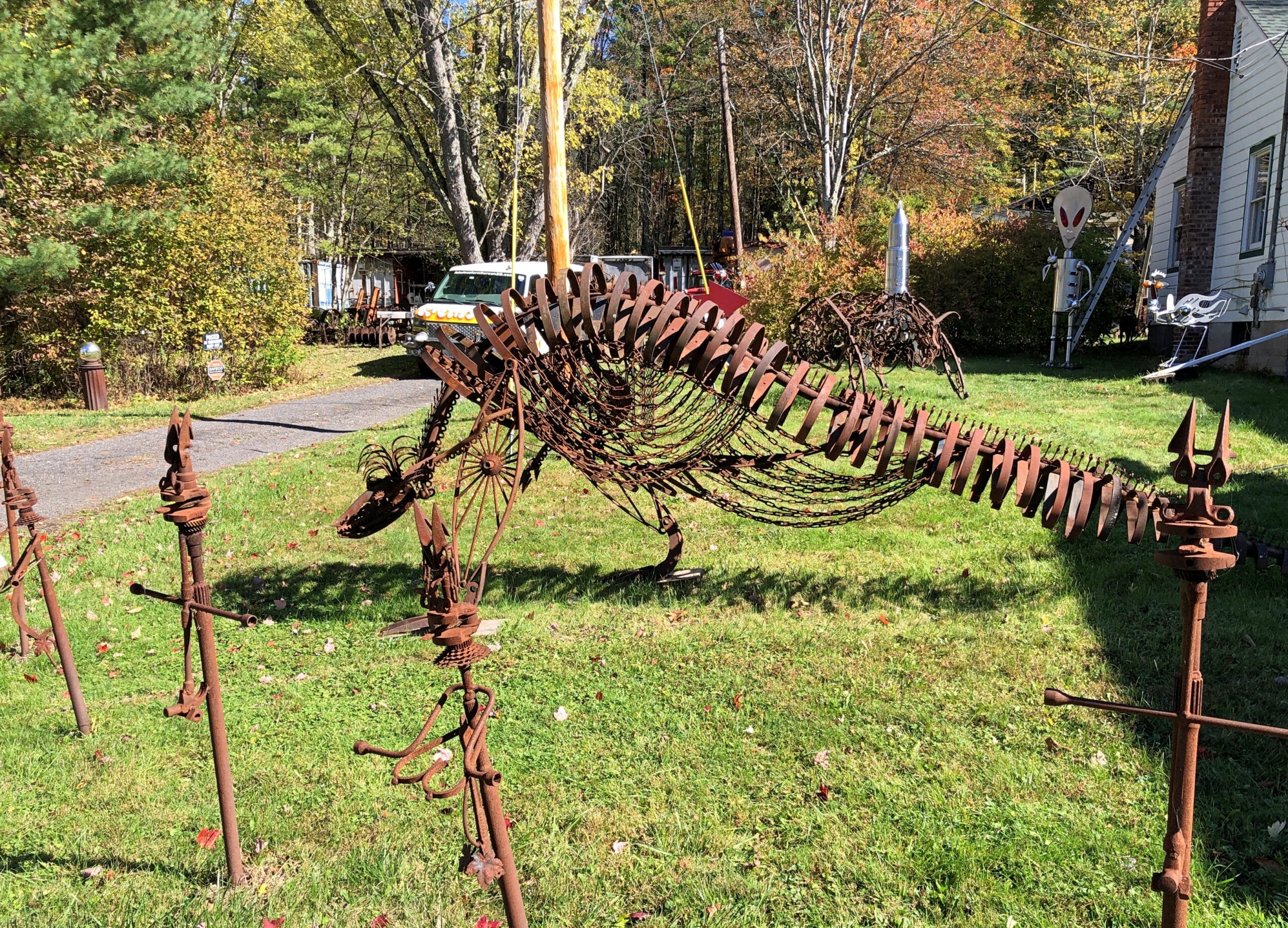
Fabulous Furniture, Catskills

Fabulous work, Mr. Heller, but those Space Age artifacts are of a Space Age that never quite was. Too bad.

State Street Windows, 2015

A coinage for our moment in history: Chief execucide. I won’t claim it’s my invention, however, since I found an example from 1988, though for comic effect. Whatever else is going on with the most recent incident, it isn’t comedy.

We haven’t been downtown since the Open House event, and so haven’t seen this year’s State Street windows at the store formerly known as Marshall Field’s. It probably would be another disappointment. They were once known for their imaginative displays. No more. In recent years the company has been phoning it in.

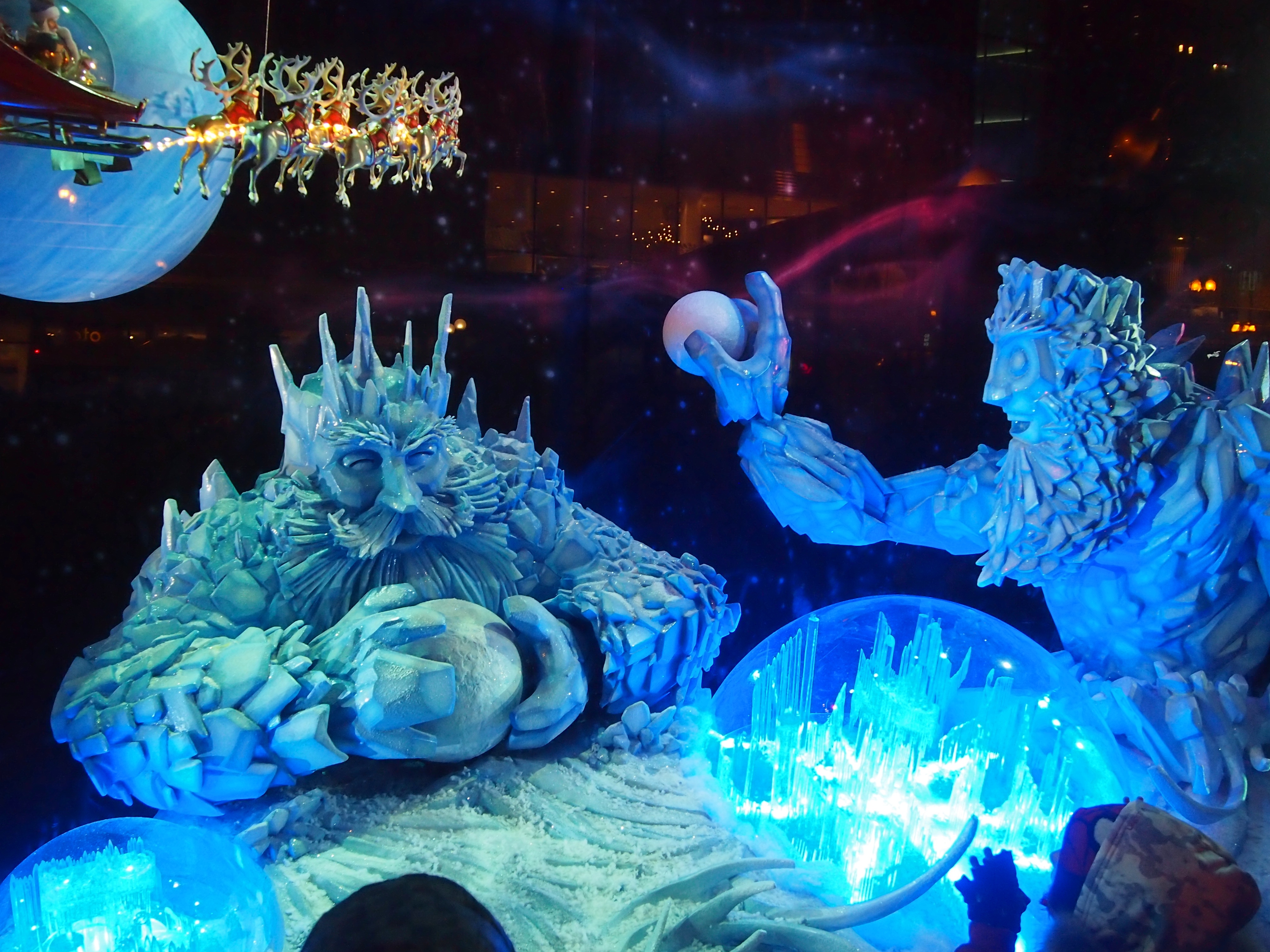
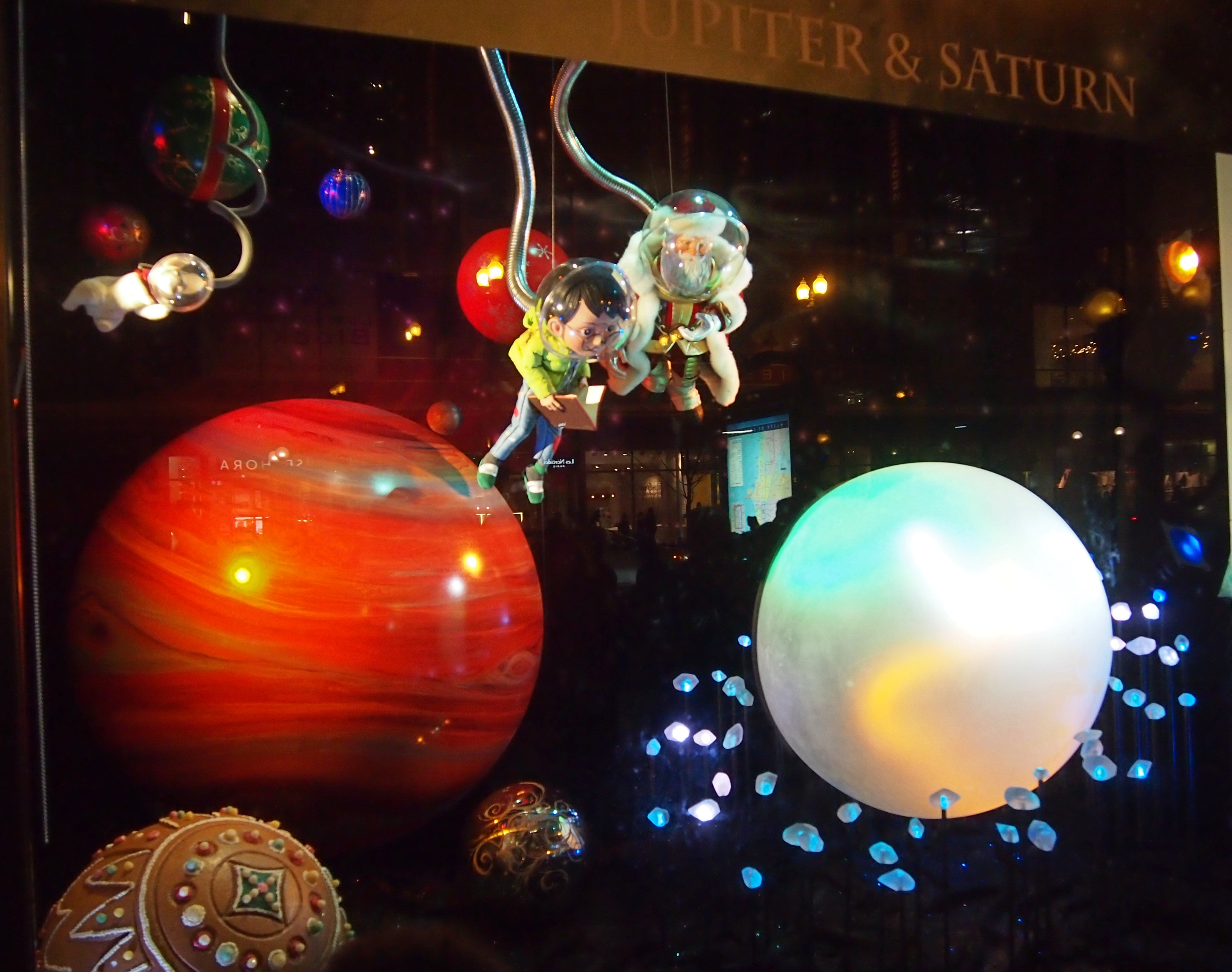
That wasn’t the case in 2015. Actual designers were carrying on the tradition back then, and I should have taken more pictures. This was a favorite: a snowball fight between Uranus and Neptune.

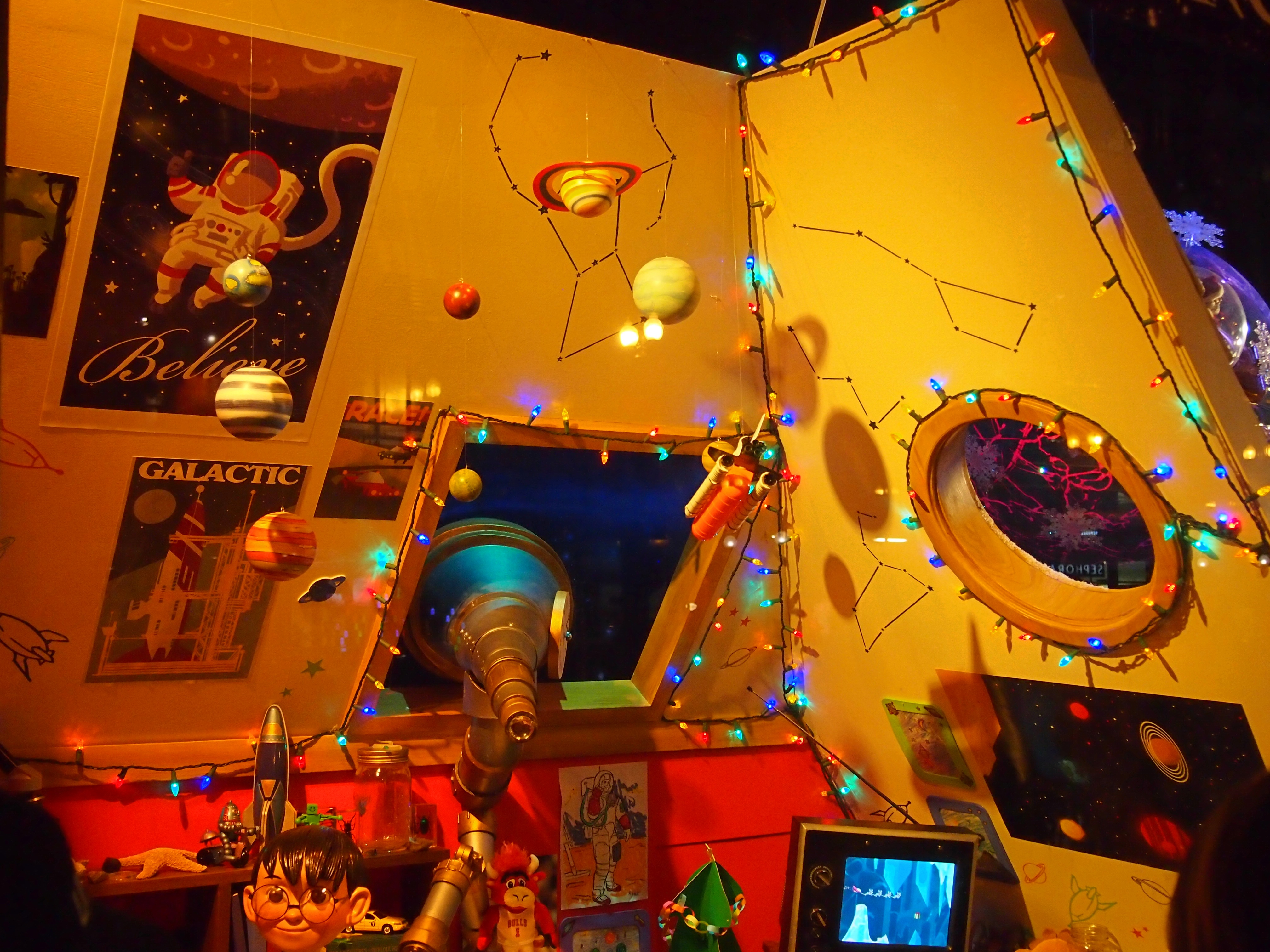
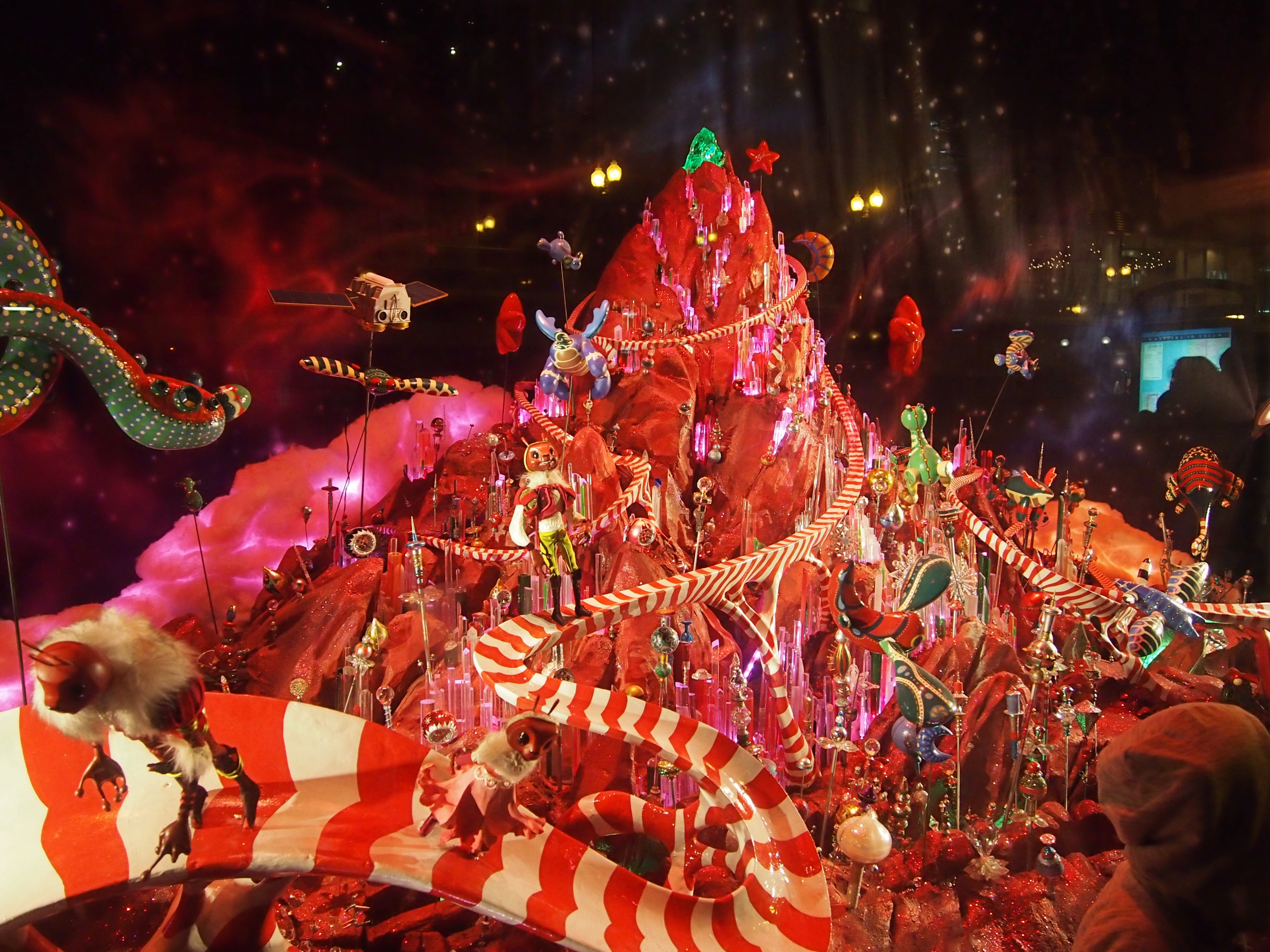
The conceit was, as I wrote, a “space-flight-enthusiast young boy hitching a ride with Santa to various fantastic versions of the planets (except Pluto), including a return to Earth that seemed to feature a bizarro hybrid of New York and Chicago.”

I did take a few other pics. The first was, I believe, the boy’s room.State Street windows State Street windows

C’mon, Macy’s. You can do better windows if you try. If you hire the talent. I expect my nephew Robert, whose profession encompasses such work, would be glad to help for a healthy fee.

Félicette

Another gabfest has come and gone: the 10th anniversary event, since the first one was held on June 14, 2014. This should have been the actual 11th event, but it was only the 10th, since we skipped 2020. Or maybe I should consider it the 11th event anyway, like how the Olympics still regard the canceled Games (1916, 1940, 1944) as numbered Olympiads (VI, XII and XIII, respectively).

This year, rain came on Saturday afternoon, so for the first time, we stayed indoors, and I cooked the hamburgers and sausages inside, though I cooked inside in ’17 because of high winds. We had the same good old time, with old friends eating and drinking and talking, without reference to any hand-held electronic communications gizmos.

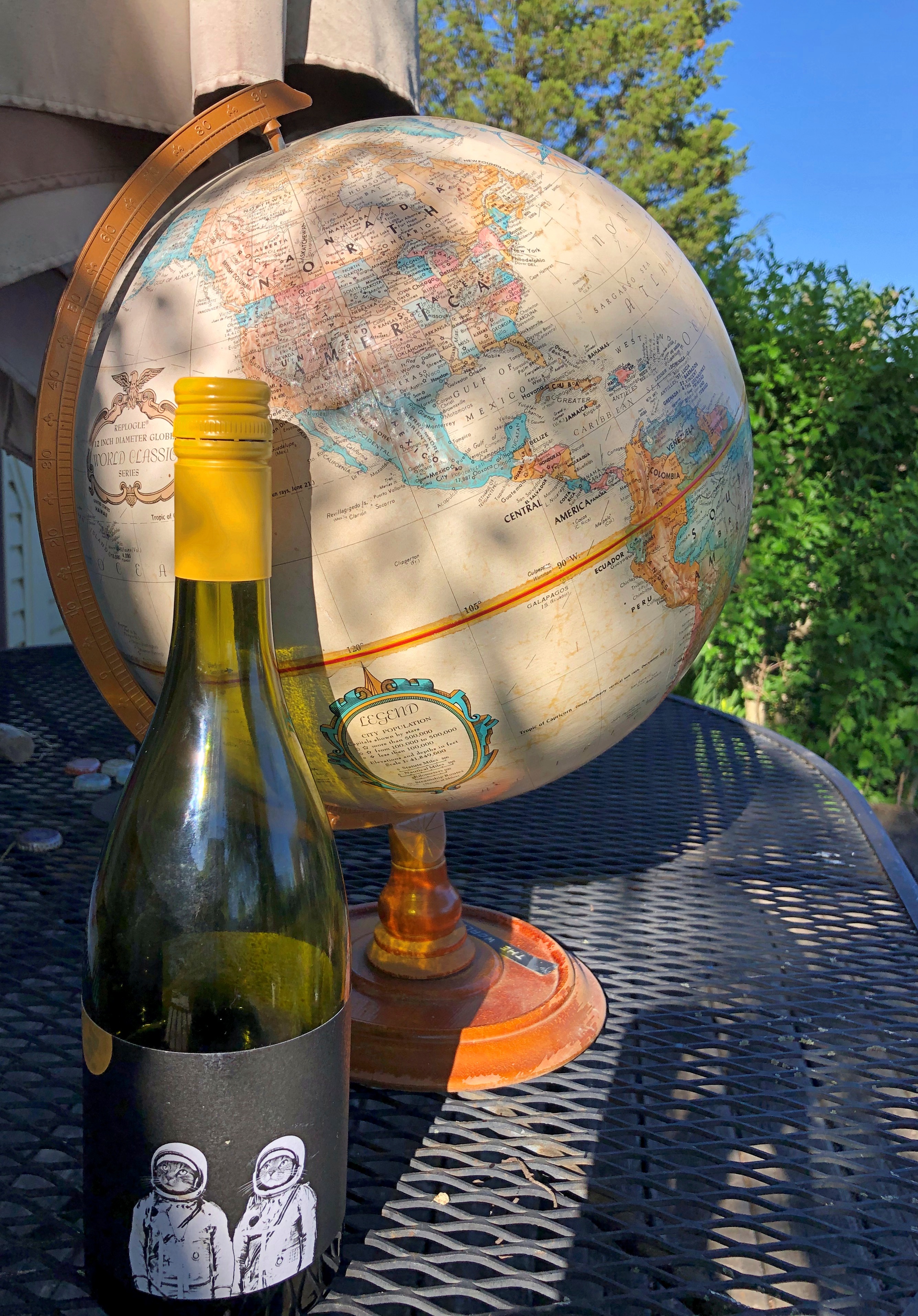
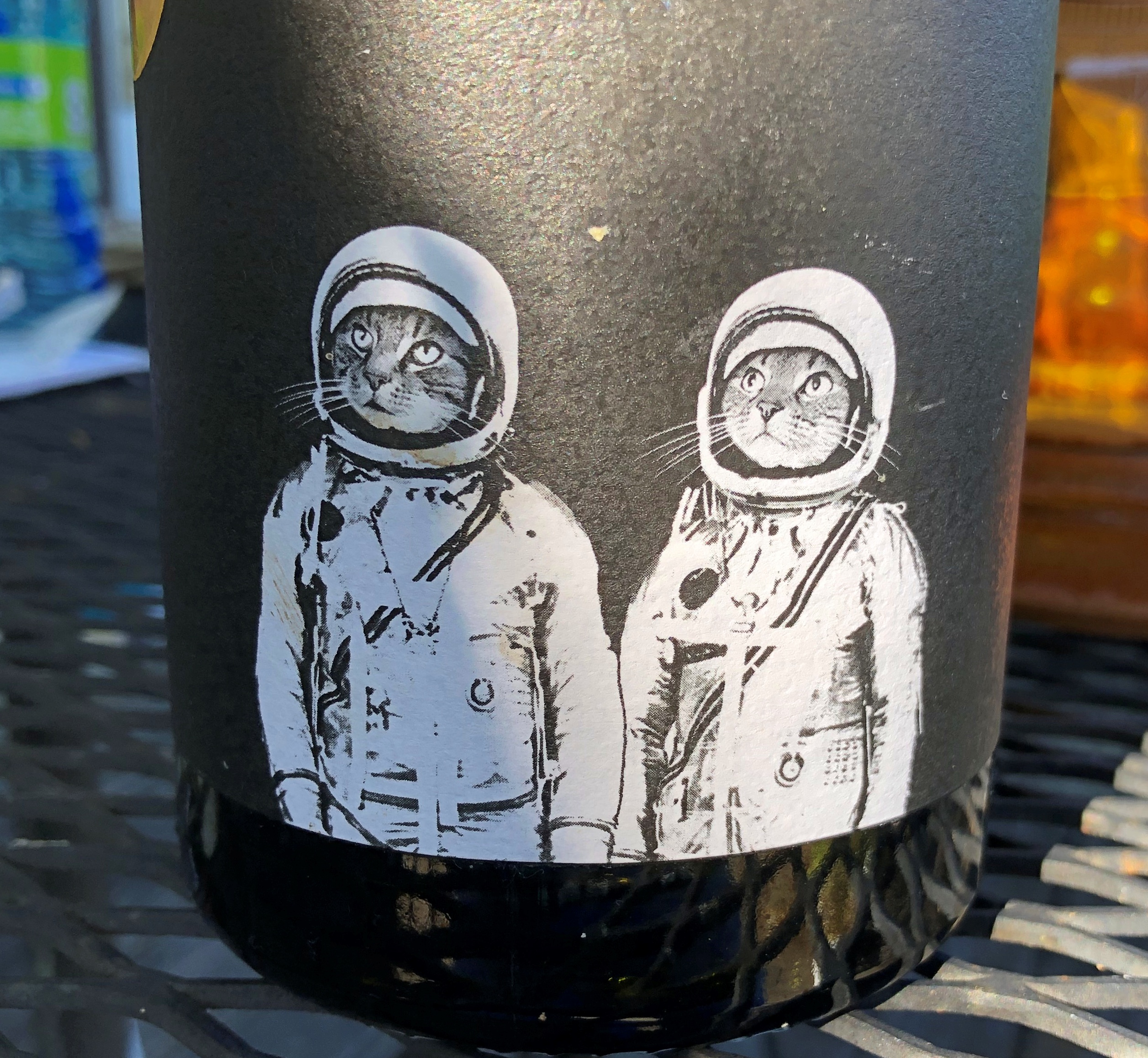
The main beer drinker didn’t come this year, as he was ill, so what little alcohol we drank consisted of white wine. With cat astronauts on the label. Today the weather was better, so I posed the bottle outside on the deck table.

The wine, which is French, is called Félicette. After a cat that the French shot into space in 1963.

We all know about Laika and Ham and Enos, and even Pigs in Space, but not Félicette. Could be she’s more famed in the French-speaking world. Good to know. Might even be a Trivial Pursuit answer. When was the last time I played that? Not since sometime in the 20th century, I think.

How I Learned Michael Landon Didn’t Look Much Like Charles Ingalls

Because of our drive through southern Missouri on April 6, first on Missouri 32, then U.S. 63 and U.S. 60, generally trending west but also somewhat south, I’ve learned a few things.

One, there’s a crater on Venus named after Laura Ingalls Wilder, which is mentioned in passing here and confirmed by the USGS.

All features on that planet are named after females, real or fictional. Specifically, according to the IAU, craters are named for “women who have made outstanding or fundamental contributions to their field (over 20 km); common female first names (under 20 km).” I assume the measurements refer to diameter.

This page on planetary nomenclature is fascinating stuff, as far as I’m concerned. Dig down a little deeper, and you’ll find 900 Venusian crater names, from Abigail (the name) and Abington (actress Francis Abington) to Zurka (gypsy first name) and Zbereva (aviator Lidiya Zvereva, d. 1916). With a death date like that, I’d assume a flying accident, but no: typhoid fever.

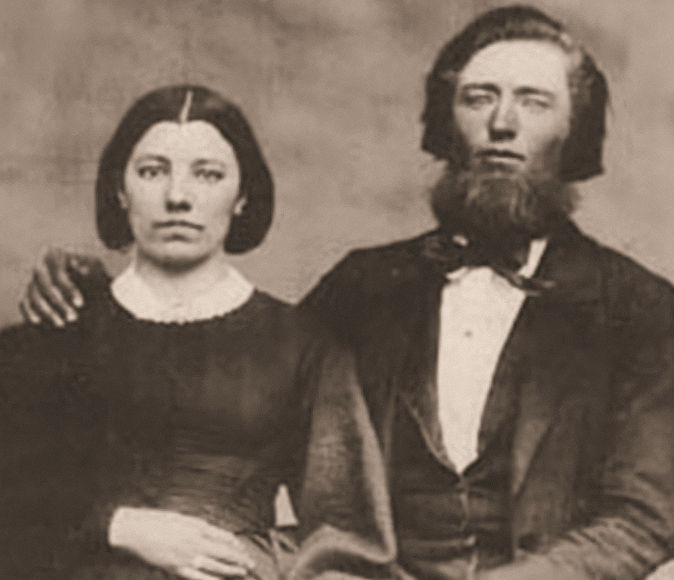
Also, I learned that Michael Landon, who portrayed Laura Ingalls Wilder’s father on TV, doesn’t look much like the man, Charles Ingalls. I can see that for myself, as he’s pictured with his wife Caroline here.

If it had been up to me, Landon would have at least sported a beard like Chas. Ingalls’. I don’t know whether that would have made Little House on the Prairie a better show, but it couldn’t have hurt.

The drive wasn’t quite car commercial driving. There was some traffic, and while the spring green woods and flowering patches of Mark Twain National Forest and the farms and businesses and churches and small-town buildings of southern Missouri offered pleasant enough scenery (and a favorite town name: Cabool), it wasn’t a Class A two-lane drive, as we would experience later, in Arkansas.

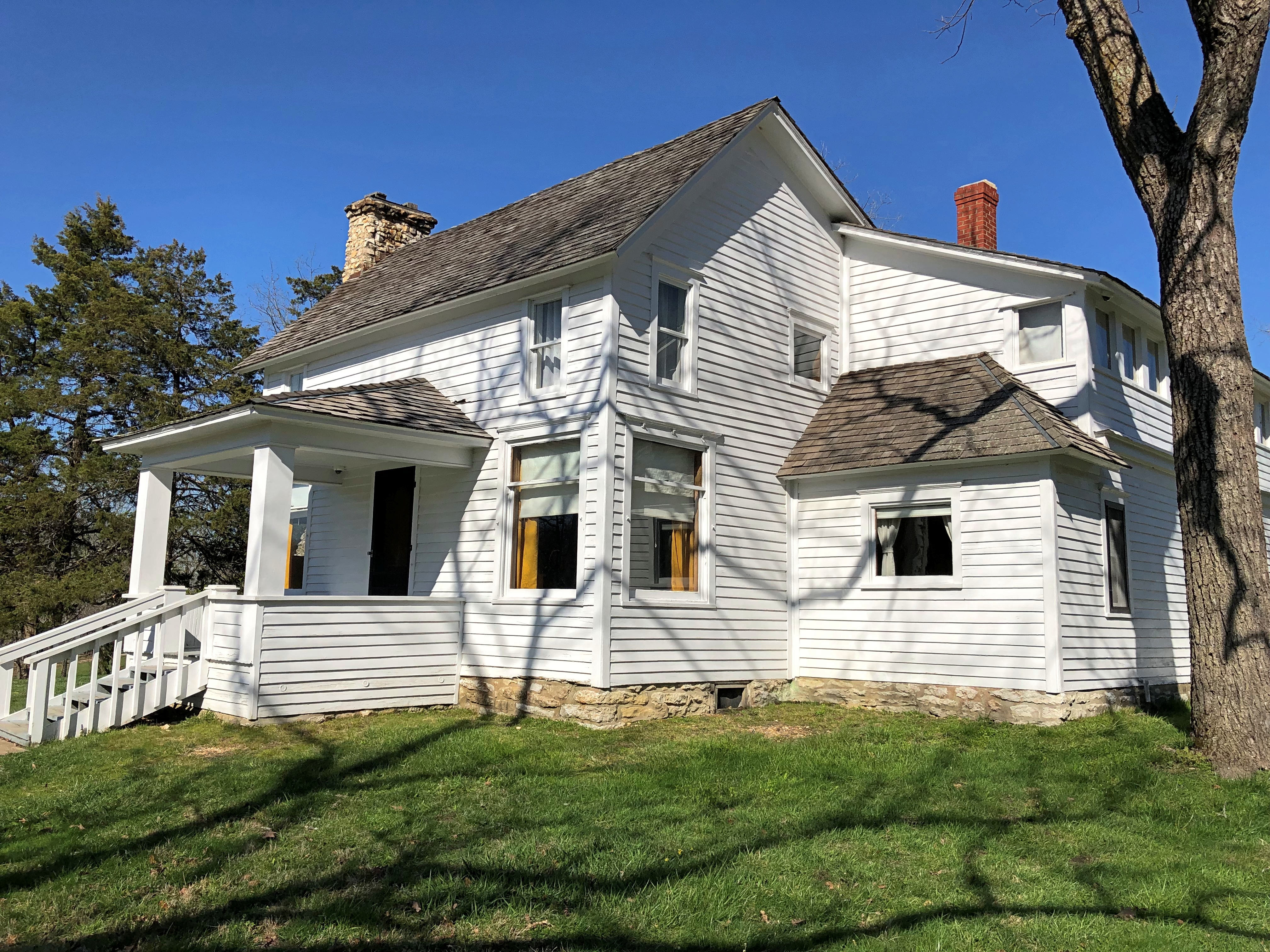
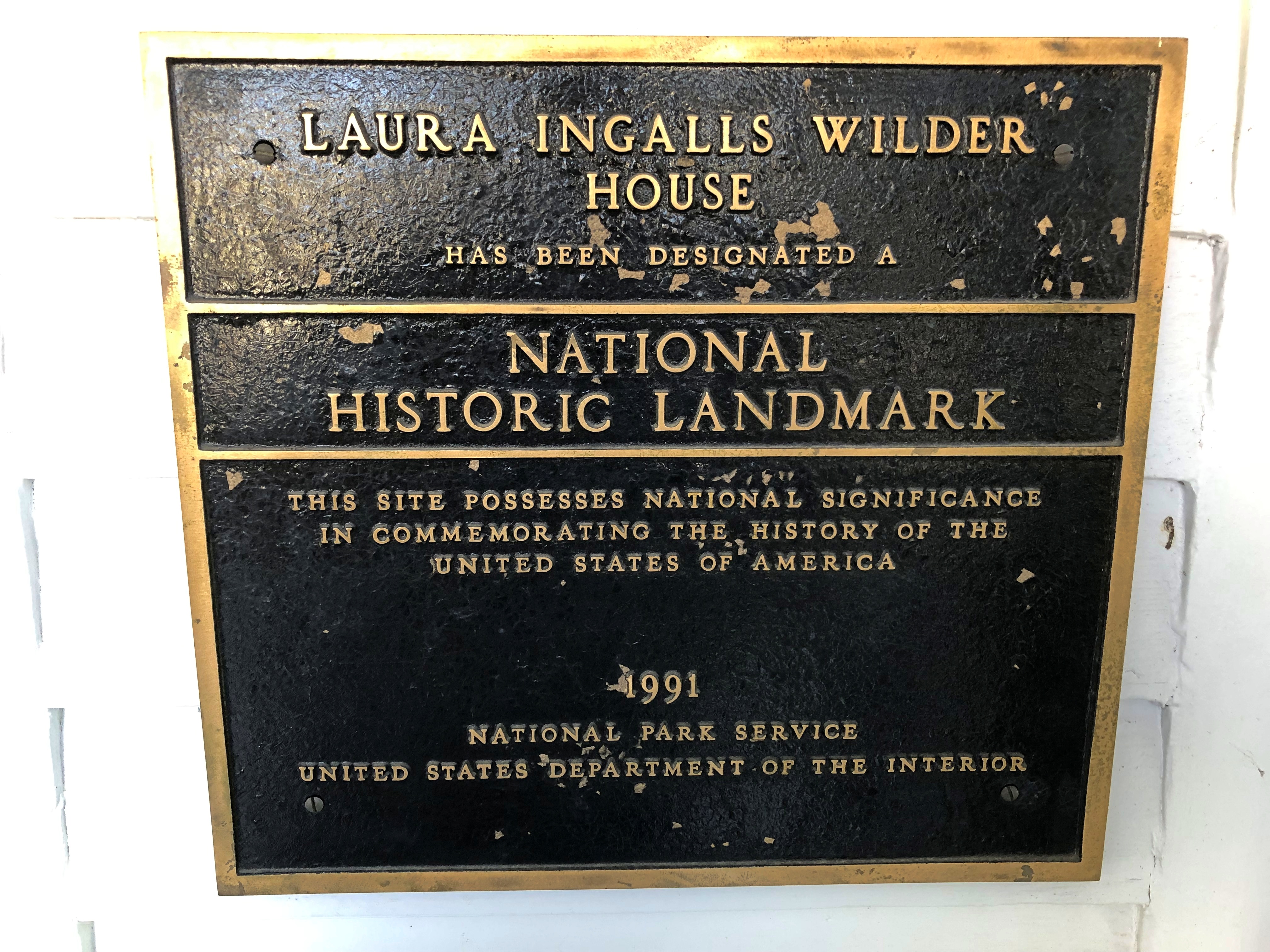
Late in the afternoon, we came to the Laura Ingalls Wilder Historic Home and Museum, near U.S. 60 as it passes through Mansfield, Mo., and we were just in time to catch the last tour of the day. That’s what ultimately turned my attention to Venusian craters, 19th-century beards, etc.Laura Ingalls Wilder home Laura Ingalls Wilder home

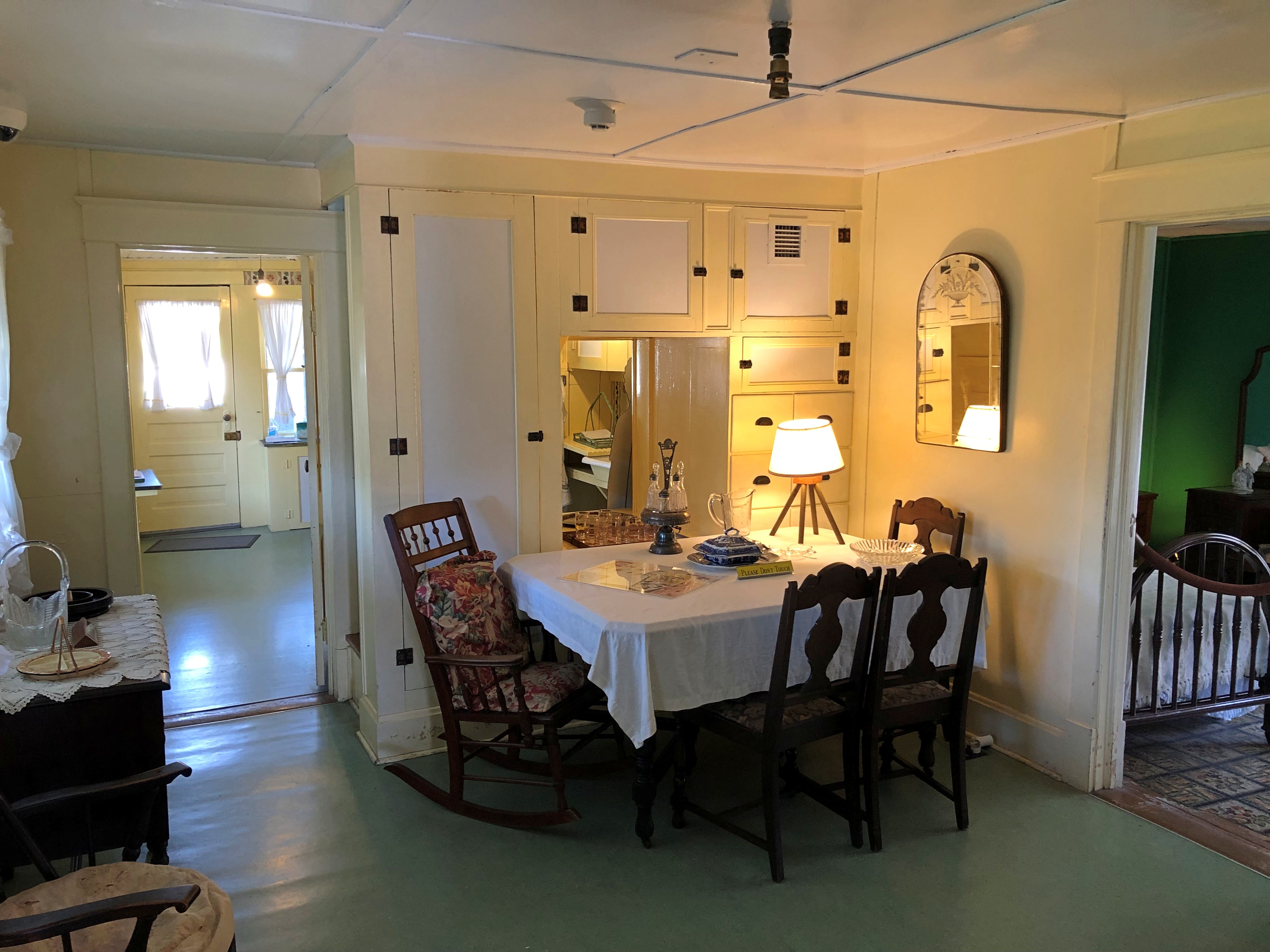
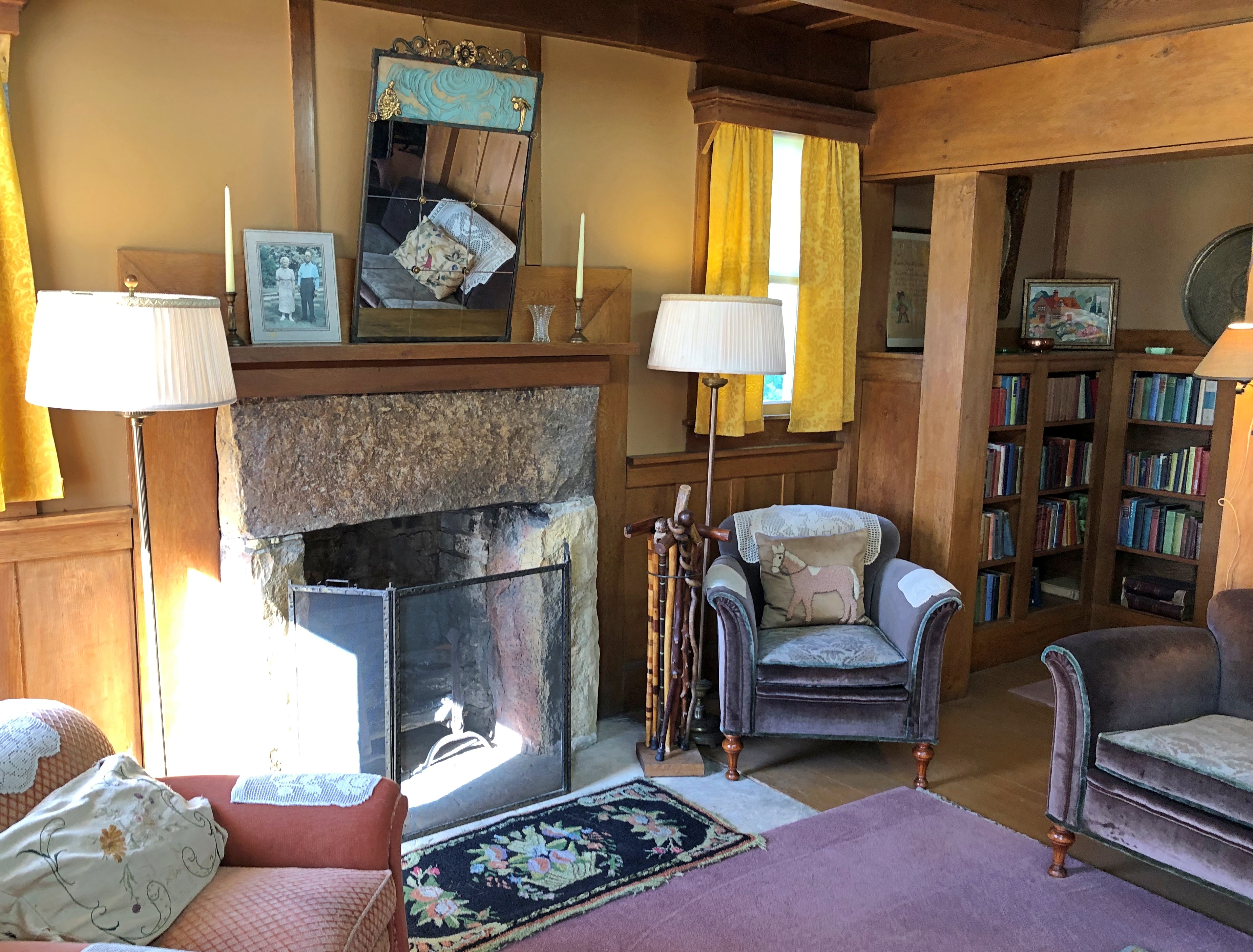
Not bad for an essentially self-built house – mostly by Wilder’s husband, Almanzo Wilder. She lived until 1957, for many years at this house, and could afford comfortable furnishings later in life.Laura Ingalls Wilder home Laura Ingalls Wilder home

Though the colors and styles were different, the living room nevertheless reminded me of my grandparents’ home in San Antonio. It had a similar old-folks-in-mid-century feeling somehow.

Spring Break Bits

It might not feel like spring out there, but no matter. Time for spring break. Back to posting around April 18.

Not long ago, an entire movie on YouTube called First Spaceship on Venus came to my attention, and I decided to watch a few minutes to see how bad it might be. Soon I realized, this isn’t that bad. For what was clearly a pre-manned spaceflight depiction of spaceflight, not bad at all. I didn’t have time to finish it, but I will at some point.

I’d never heard of it. But I have heard of Stanisław Lem. I read His Master’s Voice years ago – nearly 40 years, so I don’t remember much – and saw the 1972 movie version of Solaris, ditto, though I’ve read it’s rather different from his novel. Turns out First Spaceship on Venus is the American title of Silent Star (Der Schweigende Stern), an East German-Polish production from 1960. Lem wrote the source book, The Astronauts, a few years earlier. The American version is dubbed into English and, I understand, cut in length.

Also, if you want, you can listen to the original soundtrack of Der Schweigende Stern. YouTube’s quite the place.

More idle curiosity for the day: checking ticket prices for Billy Joel and Stevie Nicks, who are appearing the same night at Soldier Field in June. The closest ticket for sale is pretty close indeed: front section, third row. For resale, actually. There are a scattering of resale tickets available in that section, with those on the third row listed for $3,791 + fees. Oddly enough, fourth row seats list for $2,794 + fees. At least for now. So one row ahead, where you can catch a slightly better glimpse of Mr. Joel’s shiny pate, is worth about a grand more?

I expect that represents dynamic pricing of some kind, facilitated by soulless algorithms in the service of maximized shareholder value, and varies from moment to moment. But I was never one for front row seats anyway, or even third or fourth. Checking further, I found that you can bring your opera glasses and sit way back for $179. As it happens, I’ve seen both of those entertainers; separately, in 1979 and 1980. I don’t remember what I paid. A handy inflation calculator tells me that $179 now is the equivalent of $47 back then. I’m positive I didn’t pay that much, total, for both tickets.

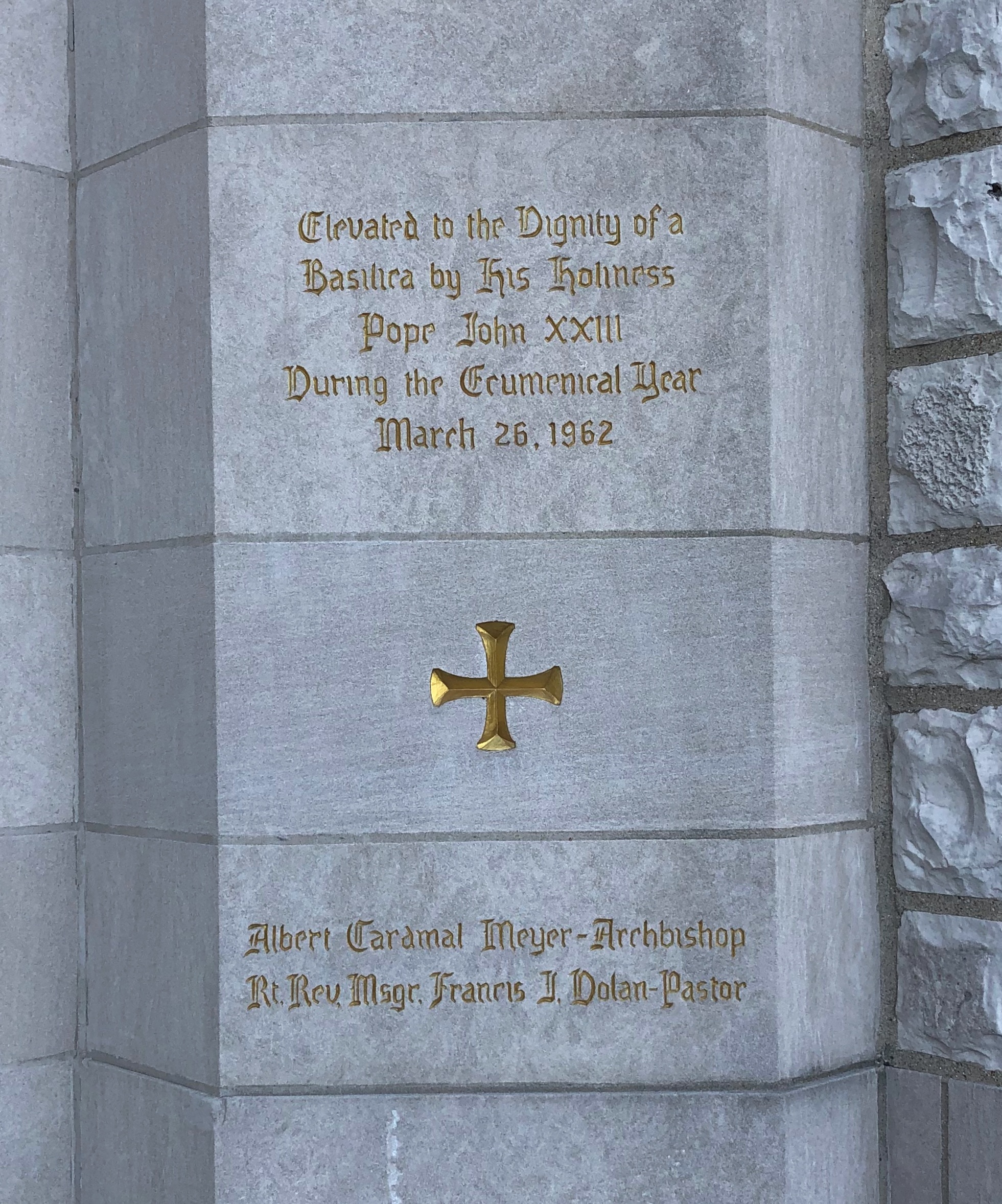
Visiting Queen of All Saints Basilica in Chicago last month, I took an image of carved text that puzzled me a bit, but then I forgot to look it up.

“Ecumenical Year?” I remembered to look into that more recently, and realized that it must refer to the first year of Vatican II, which was indeed 1962. Formally in English, the meeting was the Second Ecumenical Council of the Vatican.

Naturally, when one hears of Vatican II, it’s time to listen to “The Vatican Rag.”

The council might have been 60 years ago, but that song never gets old.

Monday Moonery

Why should we start sending people back to the Moon? Because it’s still there? Besides that. Rather, because the ranks of those who have flown to the Moon are getting pretty thin – something I thought of when I learned that Tom Stafford (Apollo 10) died. Now only seven of them are left, four who landed on the surface and three who got really close without landing.

At 88, the youngest of this rarefied group is Apollo 16’s Charles Duke. Three have passed just in the last few months, including Ken Mattingly (also Apollo 16) and Frank Borman (Apollo 8) and now Stafford. It wouldn’t be right somehow to have the experience of being close to the Moon slip out of living memory. The plan is for these astronauts to go next year on Artemis 2; we shall see.

If Artemis 2 does come to pass as planned, it would include among its crew one Jeremy Hansen, who happens to be a Canadian astronaut and would be the first non-American (non-citizen of the United States, to nitpickers) to pay a visit to the Moon. Assuming a knot of taikonauts doesn’t surprise the world before Artemis’ flight by appearing on the lunar surface hoisting the flag of the PRC.

Hansen, as Wiki succinctly put it, “Canadian astronaut, fighter pilot, physicist and former aquanaut.” If that’s not an action hero’s resume, I don’t know what would be.

Lots of rabbit-hole material here: Canada currently has four active astronauts (one of whom is Hansen) and a number of retired ones, including the dude astronaut who played “Space Oddity” on the ISS about 10 years ago. They work or worked for the Canadian Space Agency, which has been around since 1989 but I’d say is fairly low profile. Canadians have been going to space since before then, since Marc Garneau went up on a 1984 Shuttle mission. He happens to be a Québécois and until recently fairly highly positioned in the current Trudeau government.

Here’s a question for Moon landing deniers: how come some other nation (say, you know, China) hasn’t faked going to the Moon by now? Certainly Xi Jinping would be able to marshal the resources, by various carrots and sticks, to get the filming and other fakery done.

If someone (say, you know, Kubrick) could fake it using late ’60s video tech, wouldn’t the vast improvements in digital image creation since then mean a higher quality fake by the Chinese government? One so good no one would question it? Except of course for brave Moon-landing deniers.

Barely Winter Thursday Assortment

Another warmish day and a not-so-cold evening. We walked the usual path around Lake V. well after dark, taking in the Moon in the cloudless sky now and then. It’s nearly full. Then I remembered that an unmanned American spaceship was due to land near its south pole; Odysseus, which might not be the most auspicious name for a traveler, but at least a noble one from classical antiquity. Maybe the next one will be Penelope or Telemachus.

When I got home, I learned that the landing was successful. Good to know.

A leftover image from “Presidents Day.”

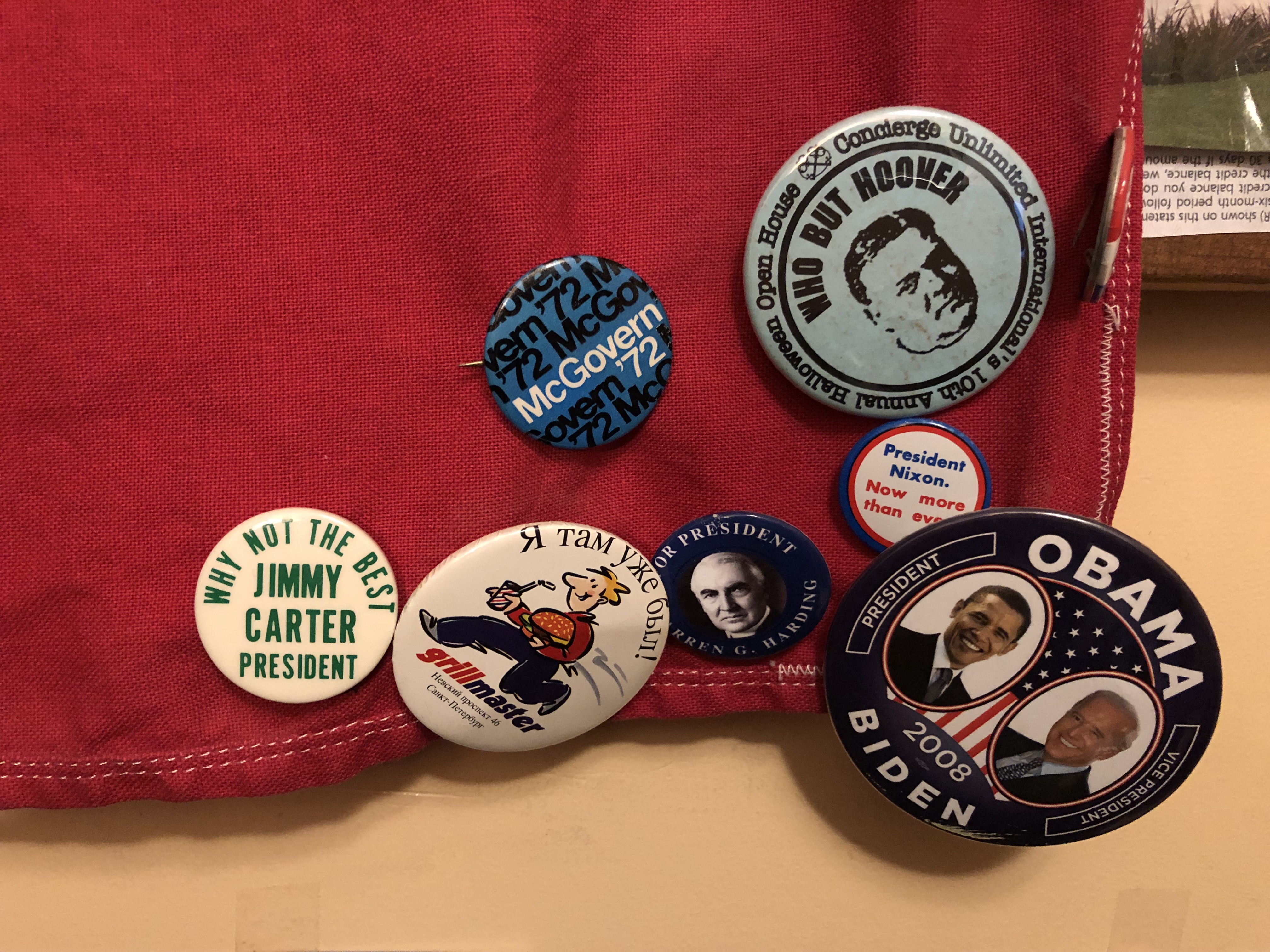
Recently Jay sent me two of those buttons: McGovern and Carter. The others have been hanging there a while.

The Hoover button was created for a Halloween party that a company down the hall from us in the Civic Opera Building used to throw many moons ago. The event wasn’t in that building, but rather the Rookery, whose common areas are excellent for a corporate events. The Harding one I picked up at the Harding Museum in Ohio last year, and the Grillmaster button has nothing to do with U.S. presidents. It was a souvenir of St. Petersburg, Russia.

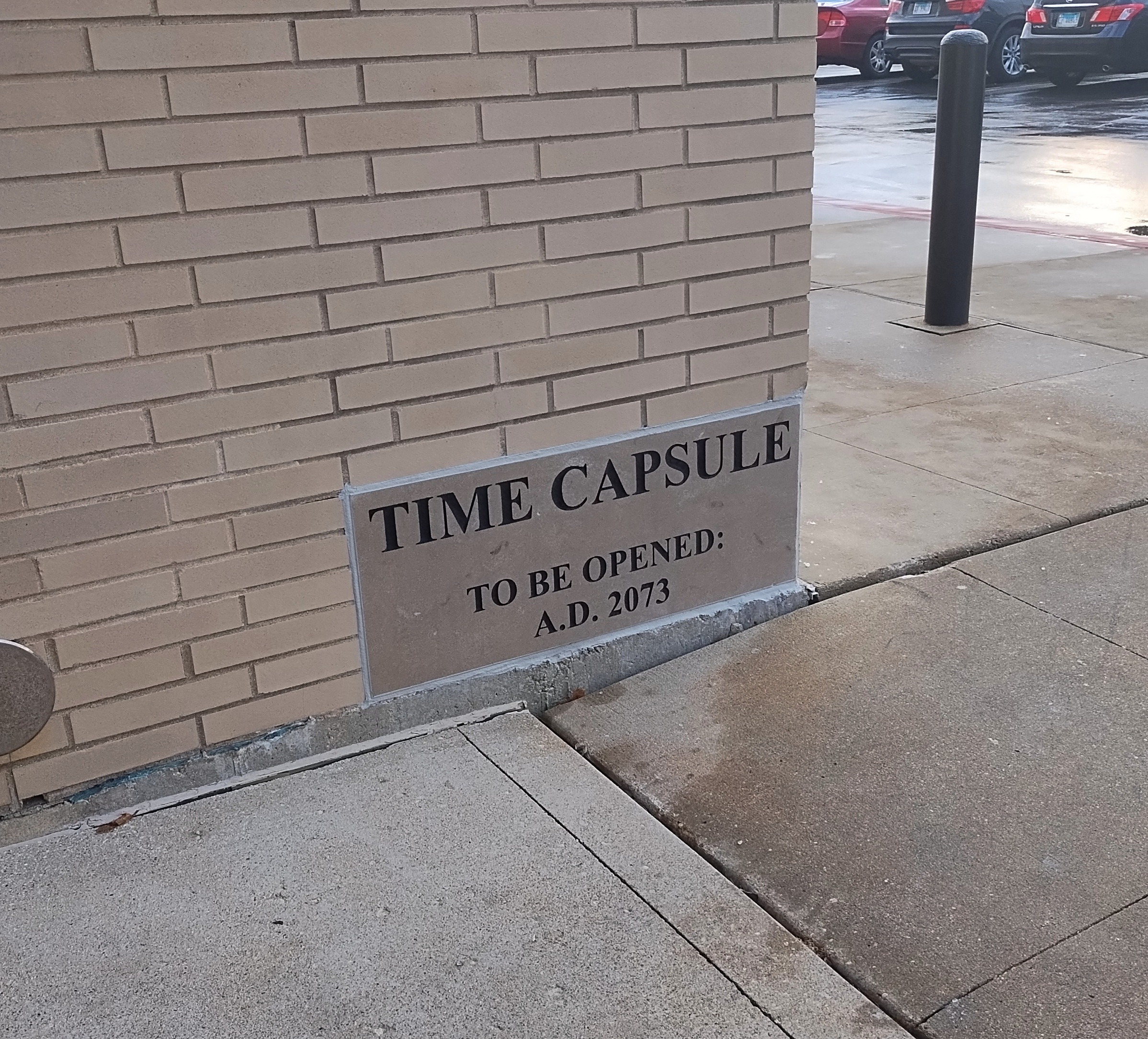
Spotted at the Schaumburg Township Library not long ago.Schaumburg Time Capsule

It used to say 2023.

“On Saturday, Sept. 23 [2023], more than 850 people gathered at our Central Library (with another 300 joining us online) to watch as we unveiled the contents of a time capsule that was placed in the cornerstone of our Library when it was built in 1998,” the library’s web site says.

I wasn’t one of them. I went to Milwaukee that day instead for Doors Open. The  contents of the ’98 capsule are mildly interesting, but one of the Westinghouse Time Capsules, it isn’t. (And no horny toads or cartoon frogs.)

Still, I like the idea of time capsules, enough to bury a few myself once upon a time, including one late in the summer of 1974 in our back yard, which I wasn’t able to retrieve five years later as planned. I dug a few holes in an effort to do so, damaging some grass, which annoyed my mother, if I remember right.

Starship Down

The trees are budding, flowers are emerging – including a fine crop of dandelions, suburbia’s most underappreciated blossoms – and the grass is green and long enough to merit a trim. One thing missing from this spring: about 20 degrees Fahrenheit of ambient temperature, sometimes 30. That winter clings so long into what should be spring is, I’ve long felt, worse that the actual pit of winter here in the North.

Happens every year. Then I forget about it as summer really does come.

Over the weekend I watched a clip of the flopnik launch of Starship, a few days after the event, as one does in our time. Flopnik probably isn’t a fair way to describe it, since Vanguard only got a few feet off the pad, but still: “rapid unscheduled disassembly”? That sounds like terminology made up for Space Force. Or it should have been. I only saw the first episode of that series, and found it to be lame. If it had had more jokes like rapid unscheduled disassembly, it might have been a better show.

I’d read about the launch before I watched the video, of course. Learned a few things, too. Apparently the Starship first stage has 33 engines. Sounds like a Soviet approach to clustering engines, and so it is. The N1 rocket first stage (retired in failure in 1972) had 30 engines and, like Starship, was a sumo wrestler among launch vehicles. The N1 didn’t ever propel anything to the Moon, but never mind. The Saturn V? A flawless record.

I’m no rocket engineer and so not up to the task of commenting on Starship‘s technical specs, or even whether the launch was a successful failure, but I will say this: dump that ridiculous name. Until you can build something that proceeds at some sizable fraction of the speed of light, say via sophisticated ion propulsion, and arrives at a nearby star system within a human generation, you haven’t got a starship, Mr. Musk.

Titan is taken, I guess. How about Gargantua? Behemoth? Juggernaut? Granted, all those may convey the rocket’s enormous size, but there’s also an undercurrent of threat in each of those names. Nothing a few million dollars in PR couldn’t try to change. What about Ares? The U.S. decided not to use that name for a rocket, and the thing called Starship is supposed to go to Mars someday, after all.

Something else: what’s all the cheering and applause recorded with the Starship video? A latter addition, or a capture of cheers among spectators? If the latter, were those people really cheering, or hired to cheer? If really cheering, I can understand a cheer at the successful launch, why did they continue to cheer when the rocket had obviously failed?