The 18th Street Station, Pink Line

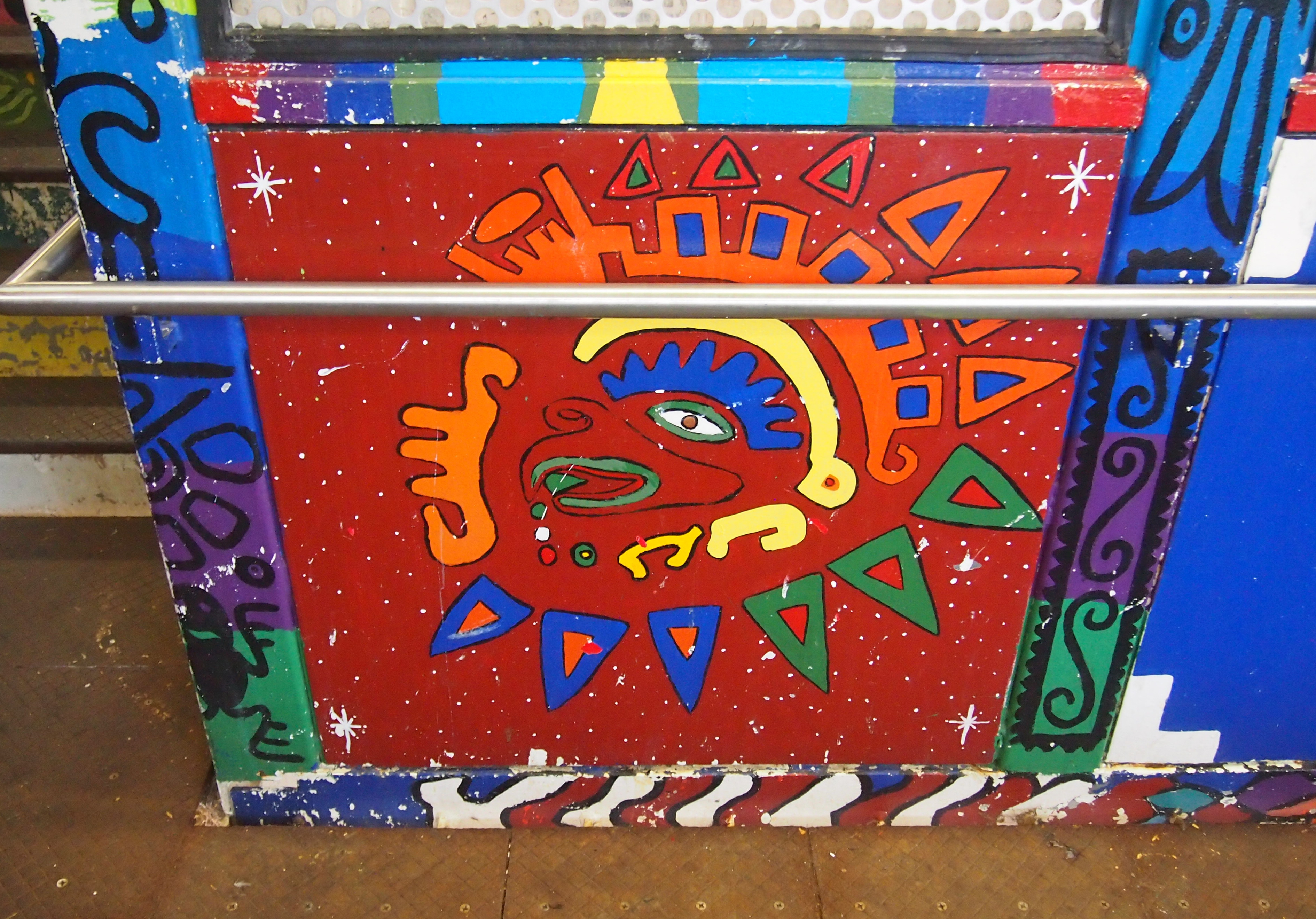
En route to the National Museum of Mexican Art on Saturday, I passed through the 18th Street Station of the CTA’s Pink Line. A number of El stations feature public art, but 18th Street, which serves the Pilsen neighborhood, is lavishly decked out.
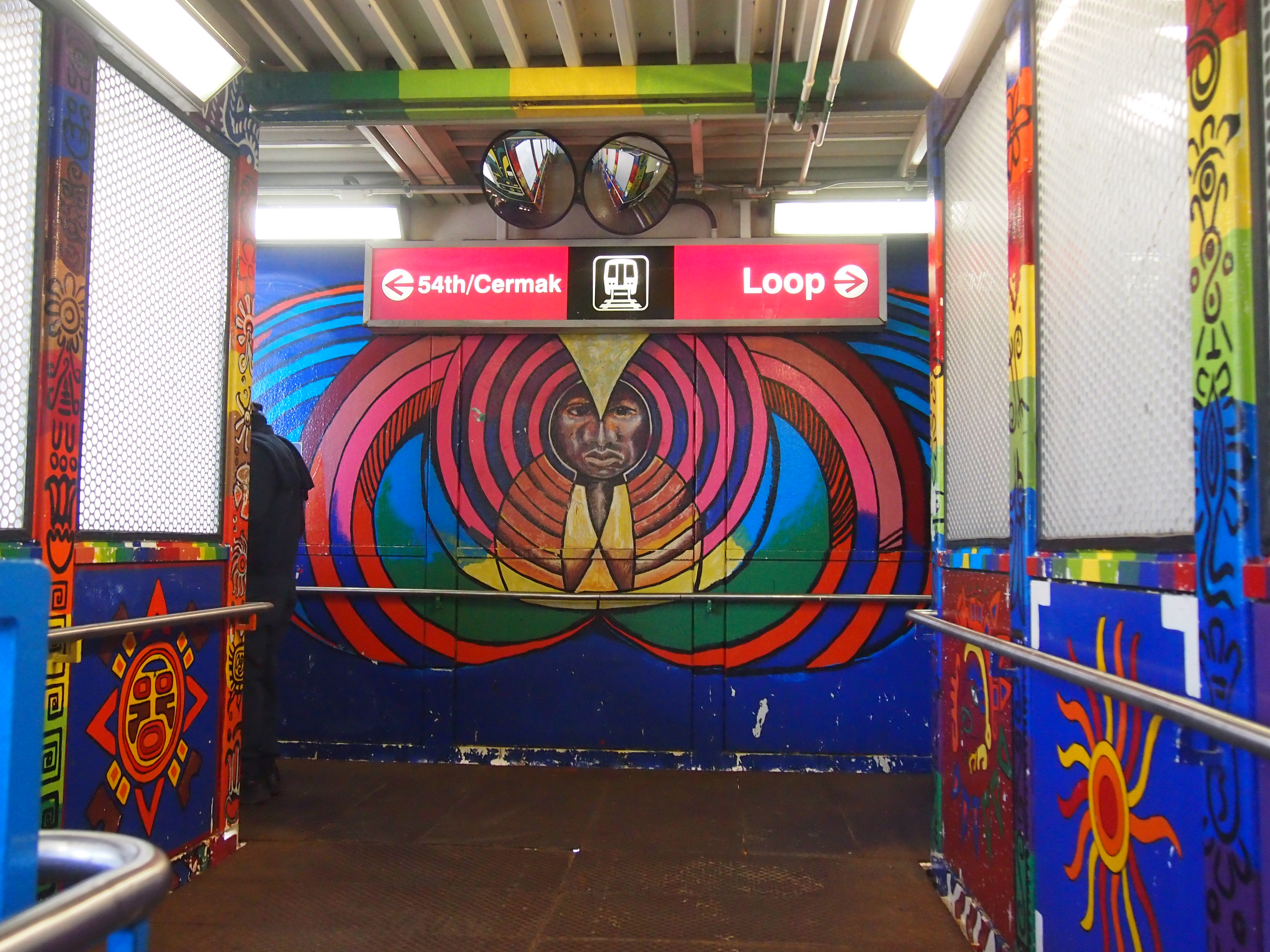
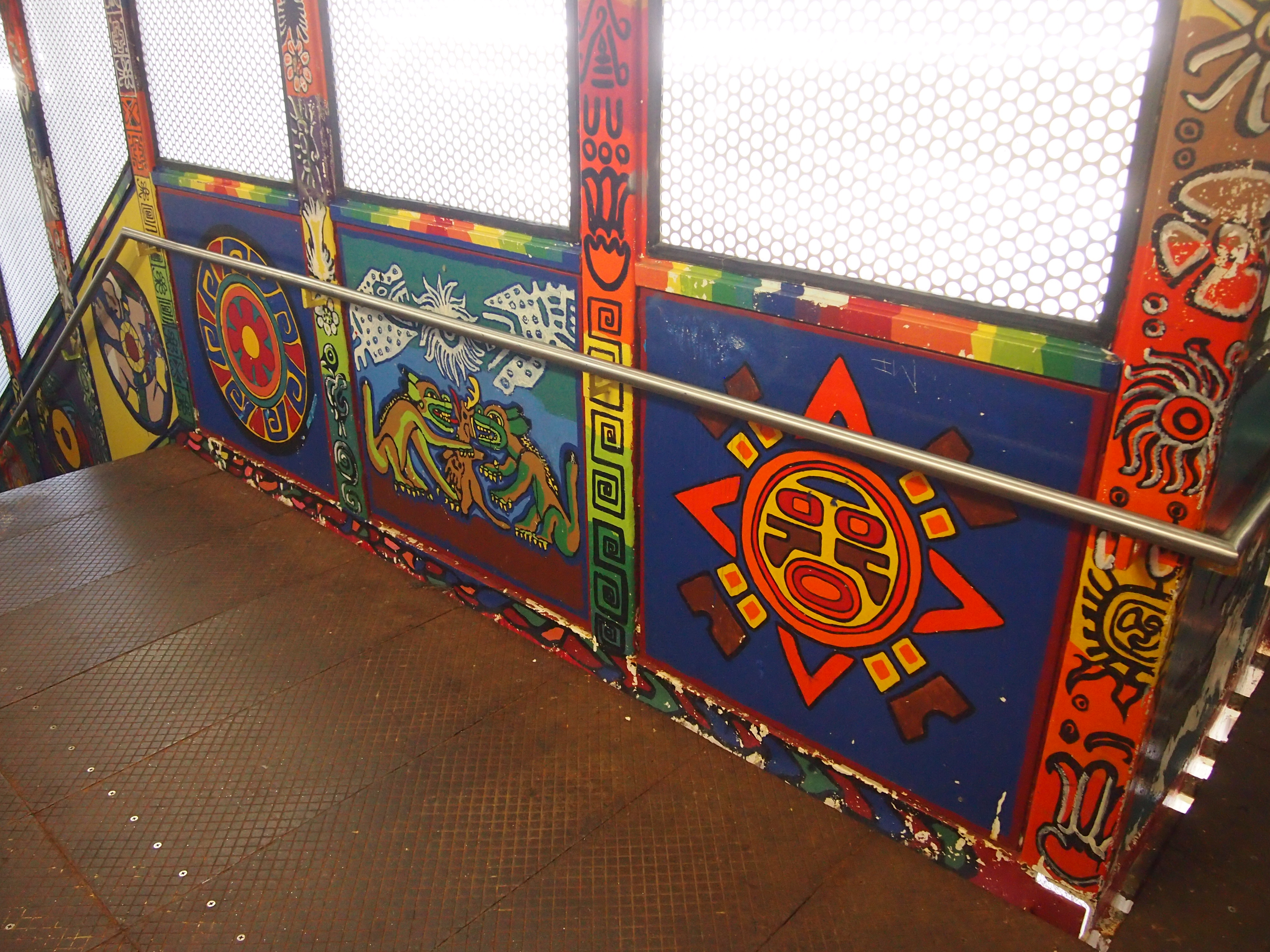
18th Street Station18th Street Station18th Street StationAccording to Chicago-l.org, which has detailed information about many aspects of Chicago’s elevated and subway system, the 18th Station “features two art installations contributed by members of the local Hispanic community, both installed under the auspices of the CTA’s Adopt-a-Station Program.”

The first is a mosaic mural on the exterior of the station on the east side of the entrance, installed soon after the station opened in the early 1990s (the current station replaced a earlier one dating from the 1890s). I didn’t see that mural this time, since I headed westward to visit the museum.

In 1998, local artist Francisco Mendoza and the Mexican Fine Arts Center Museum (now the National Museum of Mexican Art), along with the city-run youth art program Gallery 37, created a second art installation at the station, notes Chicago-l.org. “Art teacher Mendoza enlisted his students at Gallery 18, a satellite program of Gallery 37, along with anyone else in the neighborhood who could paint to create colorful murals throughout the station.”

That’s what I saw. Since CTA platforms now feature screens that estimate the arrival time of the next train — a very handy use of information tech, I believe — I had time to wander around the station and take pictures. Such as of the painted stairwells.
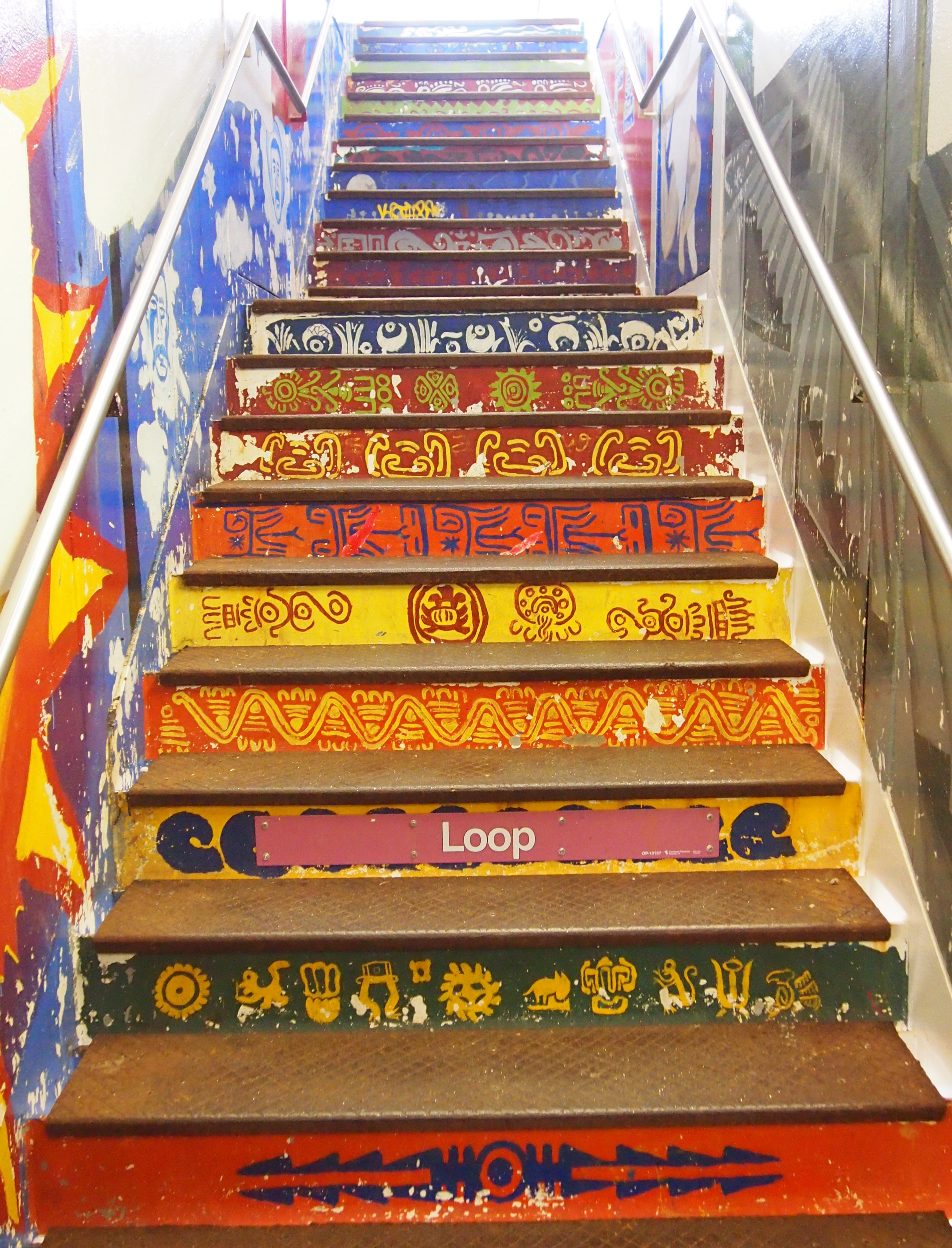
Stairs!More stairs!“Concentrated largely on the platforms and in the stairwells between the station house and platforms, the artwork covers any solid surfaces that could be utilized, including the lower panels on the side walls on the west platform and the full-height walls on the east platform under the platform canopy, and the walls, window and wall framing, and risers in the station stairwells.”
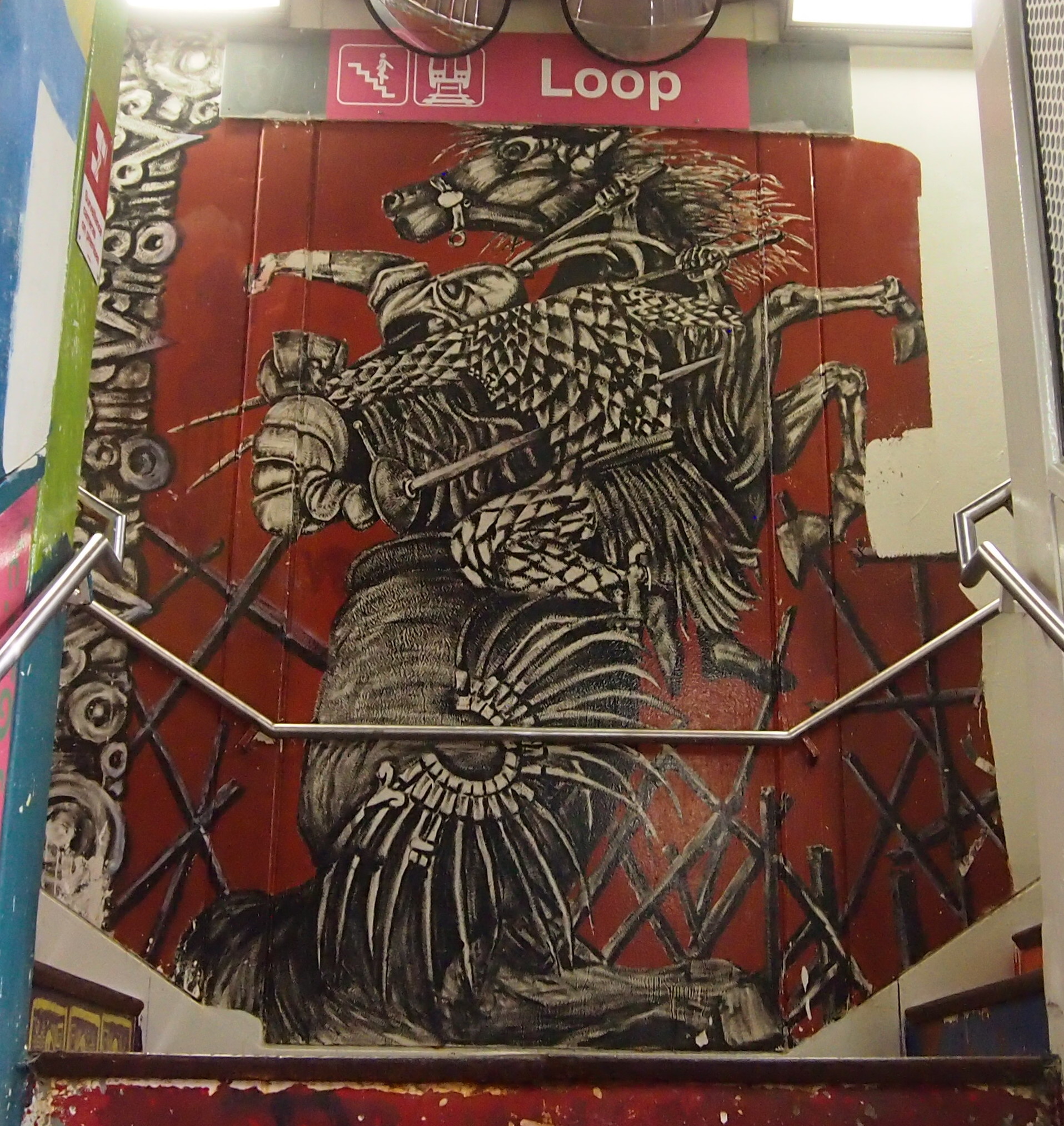
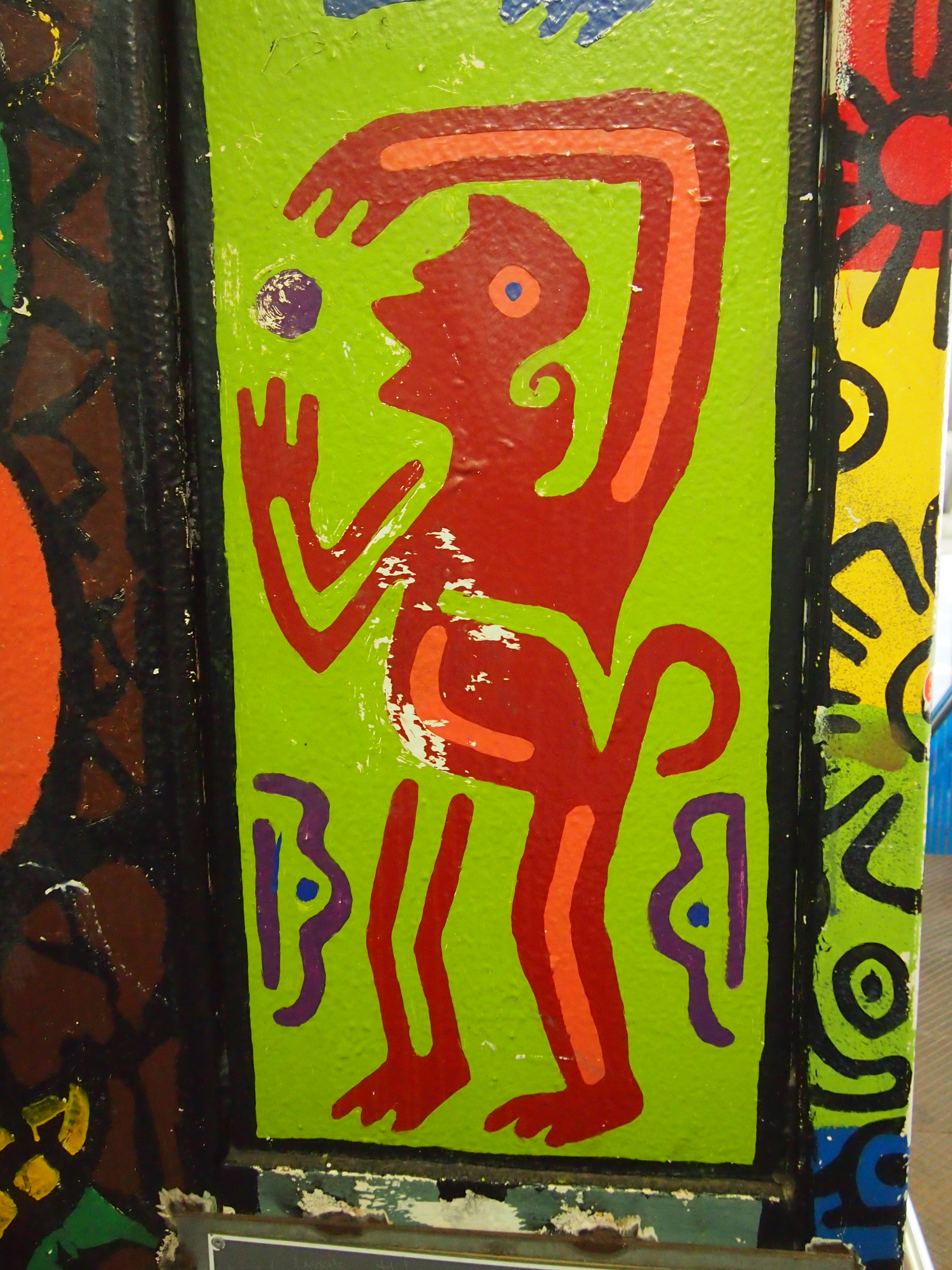
The station could look like an ordinary metal-and-concrete facility, but the painting makes it distinctive. It’s a good example of being someplace, rather than just anyplace.
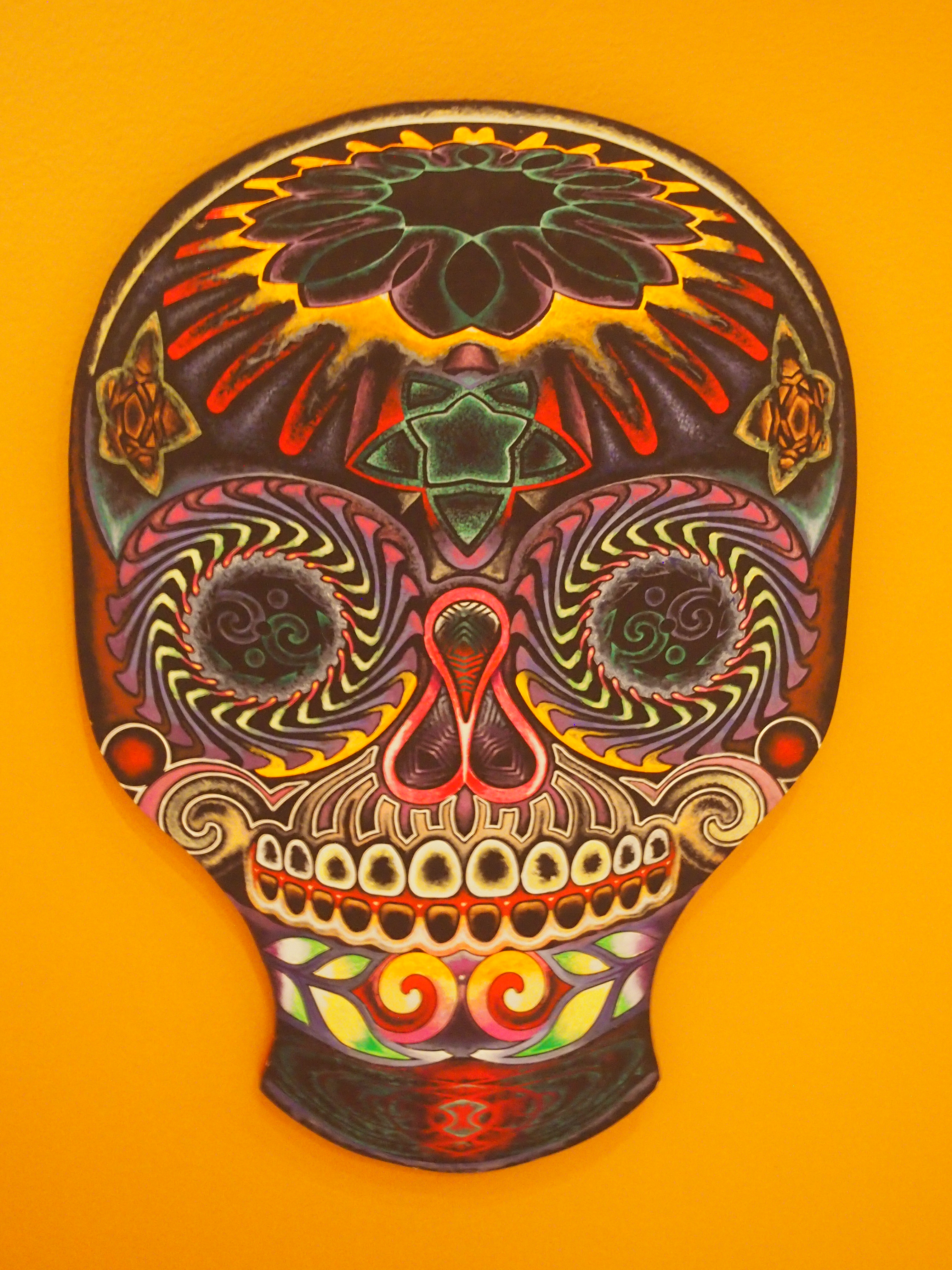
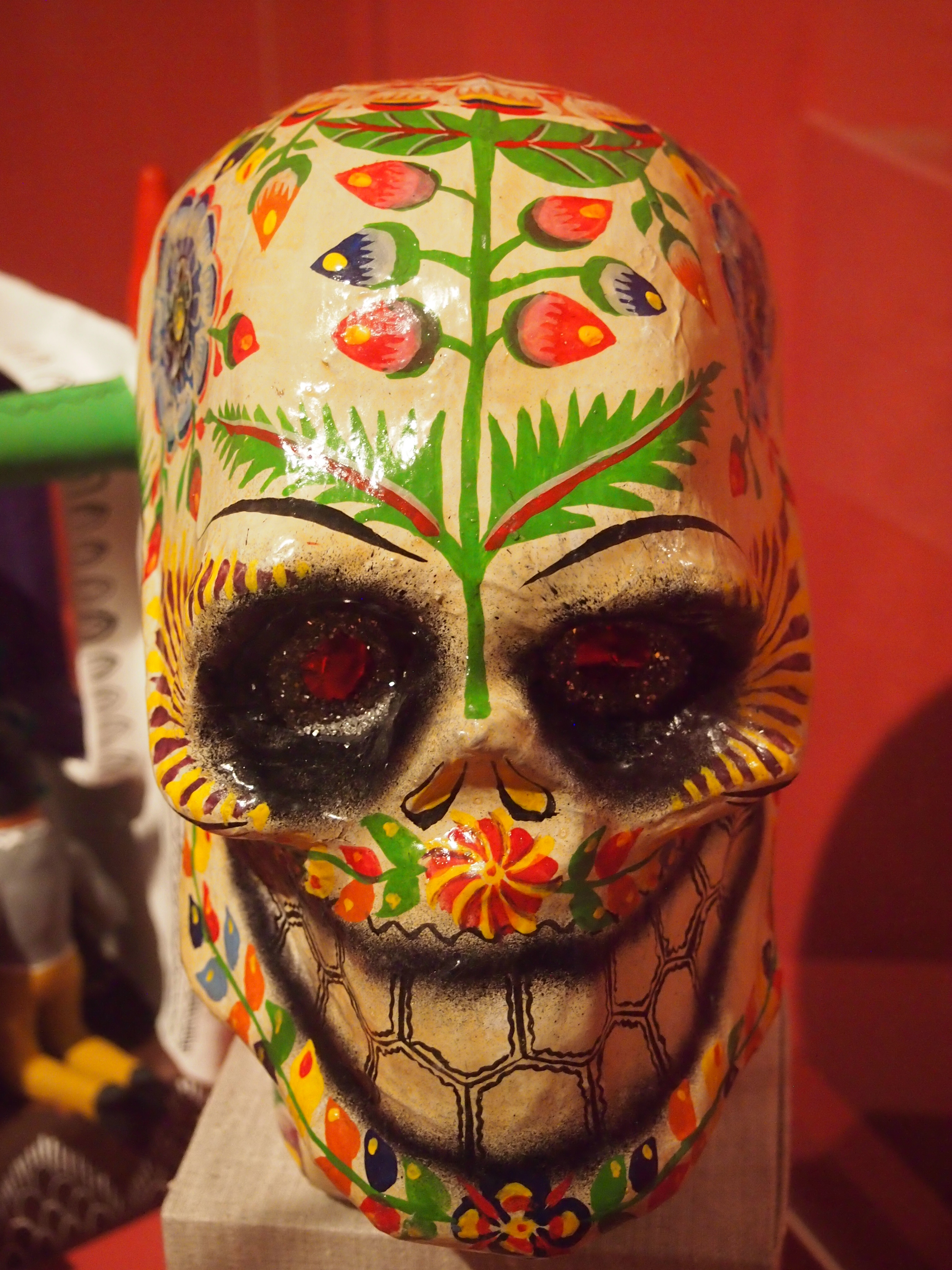
The National Museum of Mexican Art’s 2015 Day of the Dead Exhibition

In January 1990, when I knew I was leaving Chicago and not sure I’d ever move back, I spent some time visiting local places I hadn’t gotten around to. That included a few smaller museums, such as the DuSable Museum of African-American History, the Balzekas Museum of Lithuanian Culture, and what was then known as the Mexican Fine Arts Center Museum. Now it’s the National Museum of Mexican Art, but the museum is still located in Harrison Park in the Pilsen neighborhood of Chicago. I made it back there on Saturday for first time in 25 years.

Mainly I wanted to see the museum’s notable Día de los Muertos exhibit, which it mounts every October through December. Who can resist colorful skulls, in two and three dimensions?

Day of the Dead 2015Day of the Dead 2015But there was much more. “Come celebrate the Day of the Dead with the works of over 90 artists of Mexican descent from both sides of the border,” the museum web site notes. Among other works, “thirteen ofrendas and installations were created to remember distinguished artists and members of the community alike. Folk art, paintings, and sculptures comprise the largest annual exhibition of Day of the Dead in the U.S.”

The ofrenda (“offering”)  consists of objects arrayed on a ritual altar for the Day of the Dead, to honor someone who has died. The one that really caught my attention was for El Santo of Lucha Libre fame.
El SantoThe title of the ofrenda in full: “Santo in the World of the Dead: Altar to the Silver Masked Wrestler/Santo en el mundo de los muertos: ofrenda al enmascarado de plata,” by Juan Javier and Gabrielle Pescador of Michigan.

I had only the vaguest notion of El Santo, so I read more about him: Rodolfo Guzmán Huerta (1917-1984), one of the biggest stars of Lucha Libre. It’s too bad that some of his many movies, dubbed clumsily in English, didn’t show up on Saturday afternoon TV when I was young. Such as Santo vs. las Mujeres Vampiro, a poster for which is part of the ofrenda. After all, we did get the likes of The Robot vs. the Aztec Mummy on English-language TV in ’70s San Antonio.

Not to worry, in our time the original version of Santo vs. las Mujeres Vampiro is posted in its entirety on YouTube. If you watch it, and maybe a few other Santo clips, you might start getting YouTube commercials in Spanish, which I find easier to ignore.

(Something that made me smile from the Wiki entry on The Robot vs. the Aztec Mummy: “The movie shows a notable lack of awareness of Mesoamerican civilizations…” There’s a shocker.)

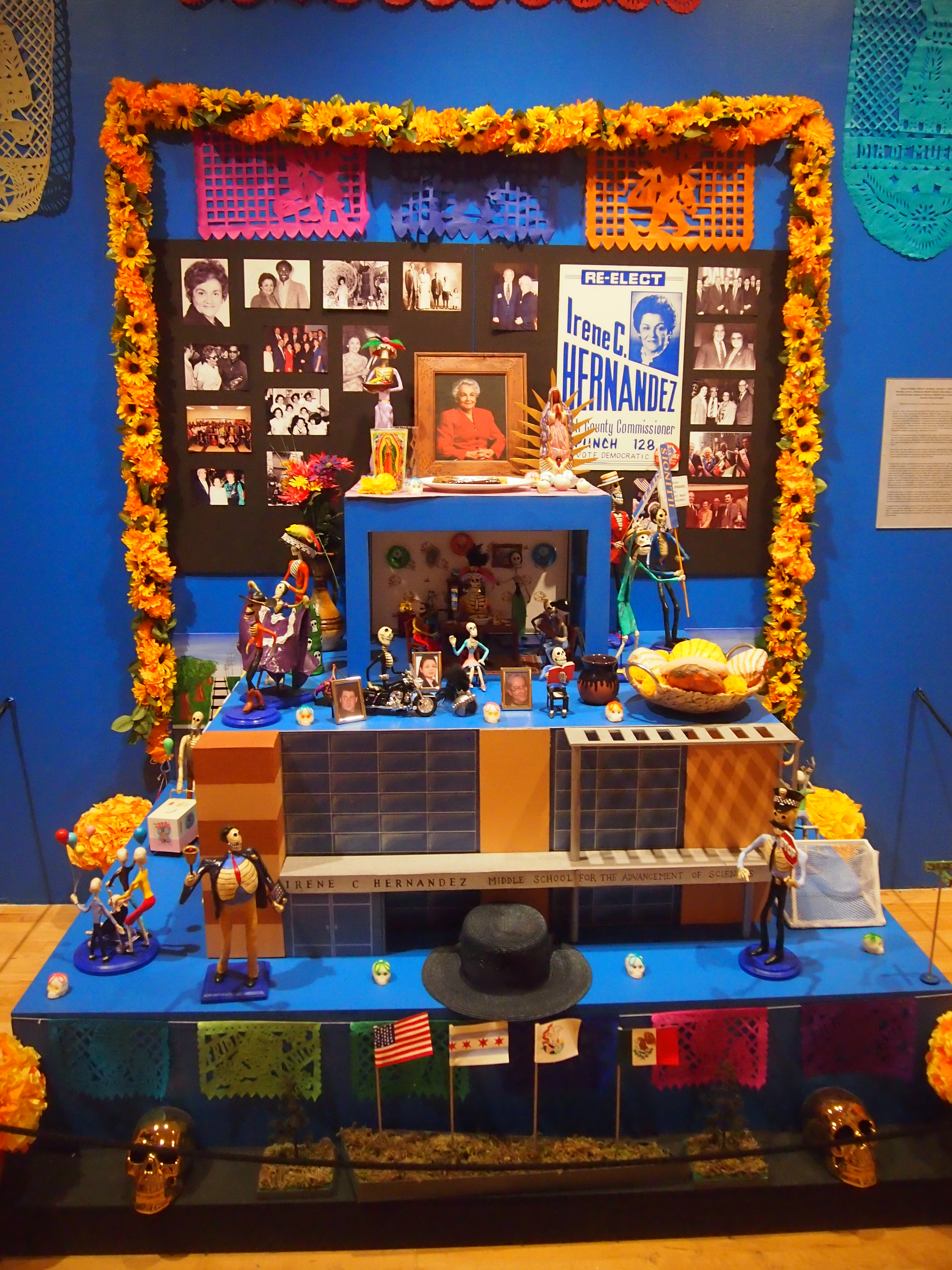
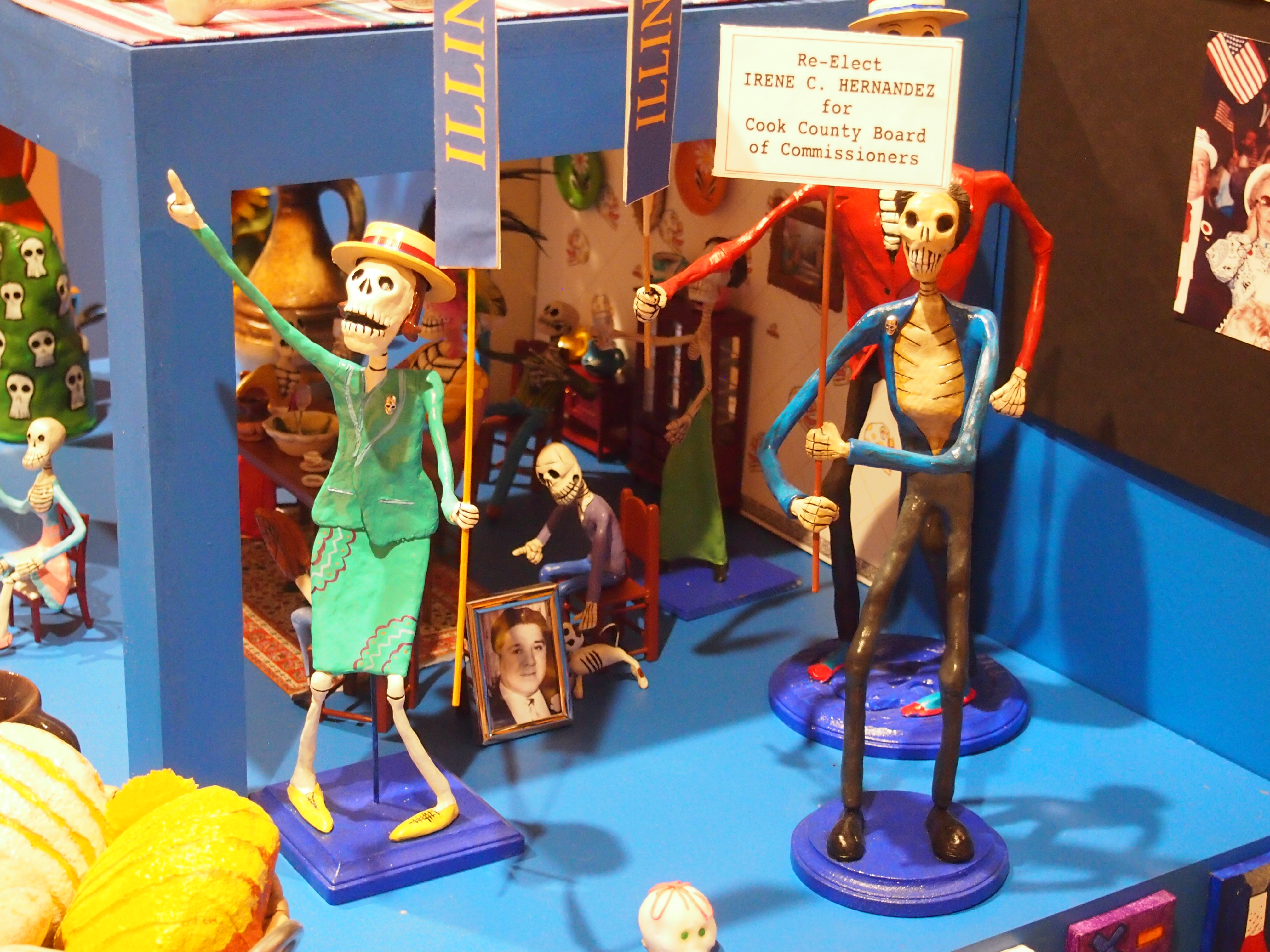
Another large ofrenda was for a woman in a rather different walk of life, though a public persona all the same: Irene C. Hernandez (1916-1997), who was on the Cook County Board of Commissioners from 1974 to ’94.
Day of the Dead 2015The work was created by a number of artists, including students at Irene C. Hernandez Middle School in Chicago. A lot of skeletons have their parts to play.
Day of the Dead, 2015Other ofrendas and installations honored the likes of Anthony Quinn, Selena, Brooklyn artist Ray Abeyta, and notable Chicagoans like Soledad “Shirley” Velásquez. Considering that the theme is death, they’re remarkably life-affirming.

Mid-November Quietude

I was going to post pictures taken on the Champs-Élysées and at the Louvre about 21 years ago, but with word from France of the latest murderous barbarian outrage, recalling a pleasant November visit to Paris doesn’t seem right. Another time.

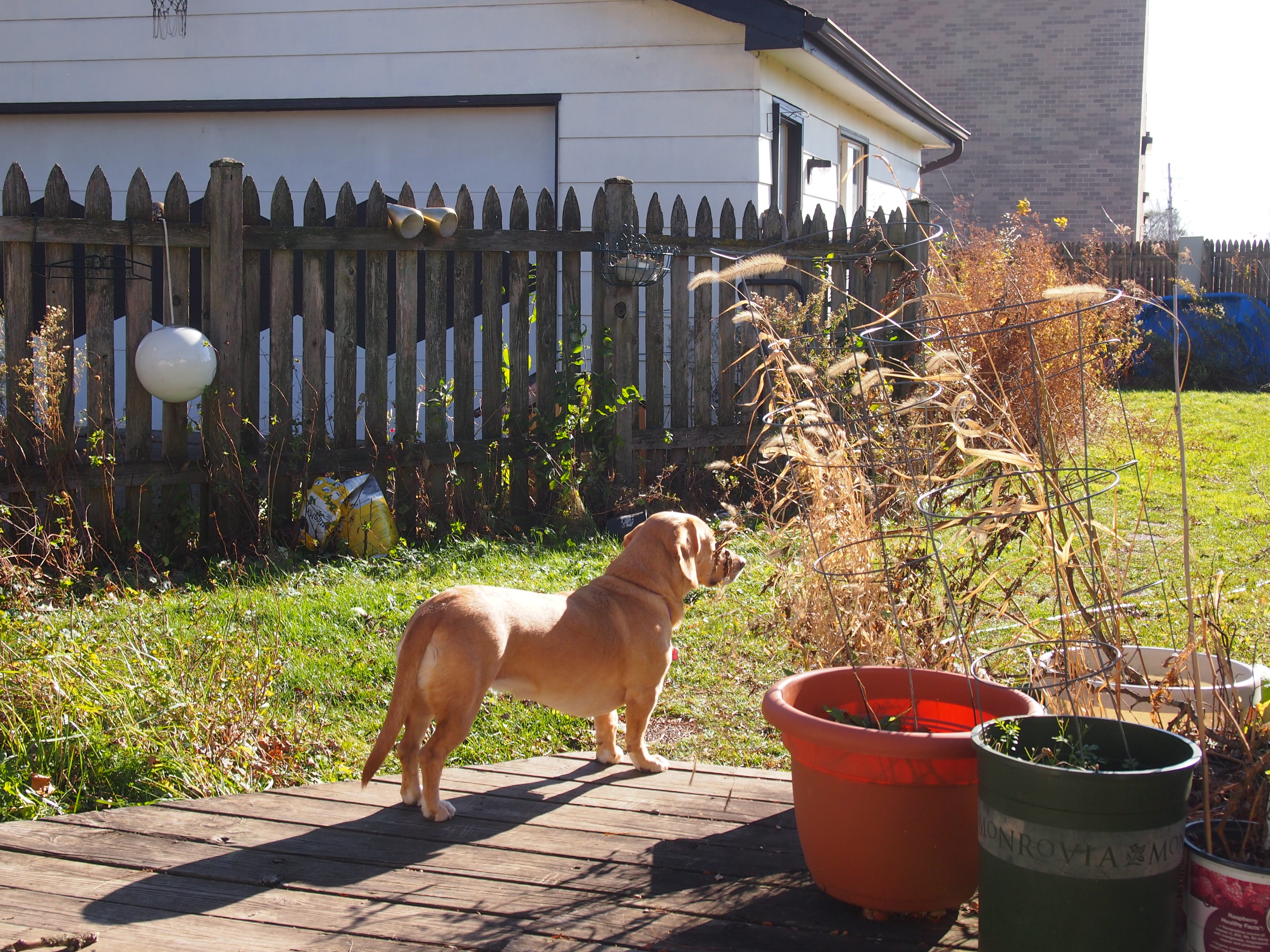
Here in northeastern Illinois this weekend, we enjoyed remarkably mild weather. The kind of afternoons during which you can sit in some comfort on your deck, should you be fortunate enough to have one, and eye the sun in the branches of the bare trees.

Nov 15, 2015Your dog, should you be fortunate enough to have one, joins you on the deck to watch for squirrels and rabbits and other intruders.

Payton, Nov 15, 2015Naturally it’s going to cool off dramatically soon. Winter wouldn’t be so tedious if there were occasional interludes like this in January and February, but that’s not how it works at this latitude.

1 Afghani

A cold front blew in last night, bringing not only colder air, but also air in motion. I woke up at least once during the small hours to hear the vigorous rush of wind outside. Reminds me of the last graph of Chapter 11 of The Sun Also Rises (not for the first time, but no smoking for me): “After supper we went upstairs and smoked and read in bed to keep warm. Once in the night I woke and heard the wind blowing. It felt good to be warm and in bed.”

This collection of Zone Rouge images would have been fitting yesterday, but I only found it today.

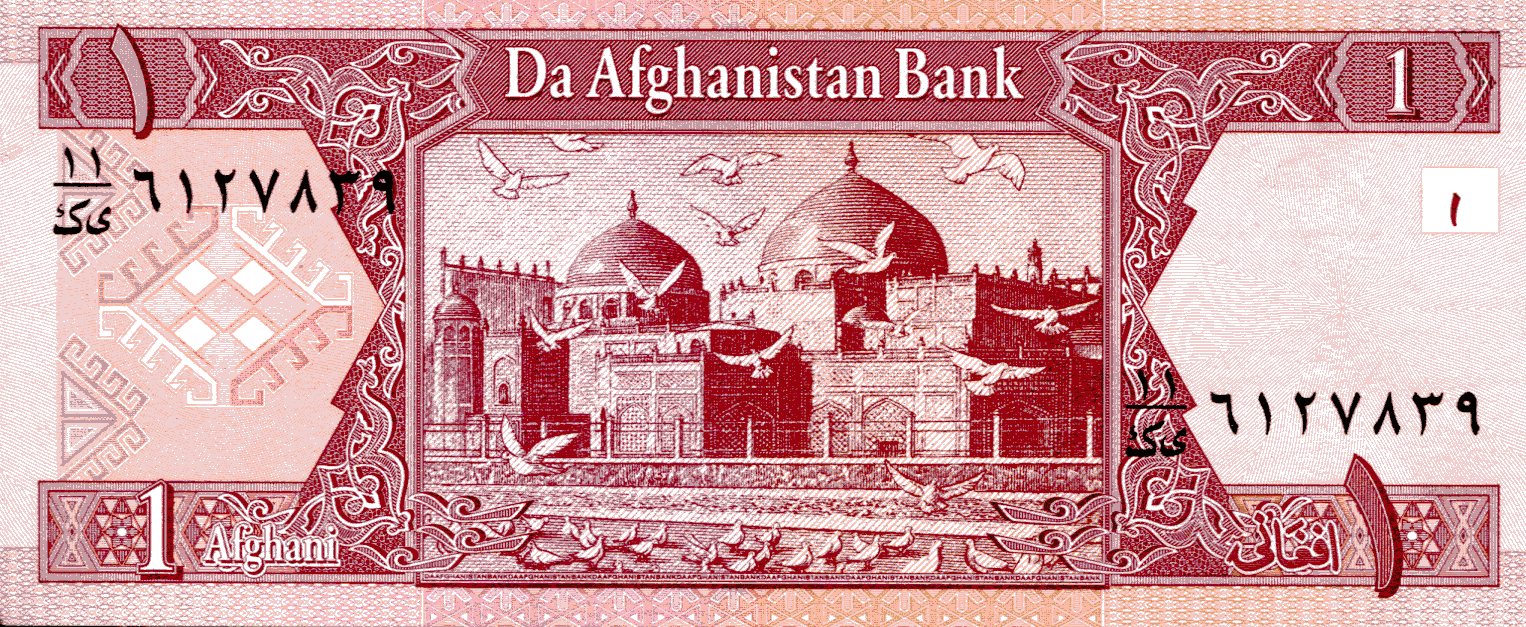
One more Asian banknote for now: an Afghan afghani, formerly issued by Da Afghanistan Bank, but replaced in recent years with a coin. I can’t help but smile at that institution’s name. Who issues the money in Afghanistan? “Da Afghanistan Bank, mon.”

AfghaniREVAfghaniOBVThese days, 1 afghani = 0.0151515 U.S. dollars. The obverse features the seal of Da Afghanistan Bank, which includes the design from the famed gold 20-stater of Eucratides, everyone’s favorite Greco-Bactrian king, or usurper, take your pick. Unless you’re fonder of, say, Menander, “who conquered more tribes than Alexander the Great.”

On the reverse is the Blue Mosque-Shrine of Ali in Mazar-i-Sharif, Afghanistan, which dates from the 15th century. Archnet tells us that “the shrine was restored extensively in the mid-twentieth century and draws Shi’a pilgrims throughout the year, and especially during the celebration of New Year (Neuroz).”

500 Dong

Tag line of recent email: Your Perfect Christmas Starts NOW! I object. Christmas doesn’t start now, and to quote W.C. Fields, “There’s nothing in this world that is perfect.”

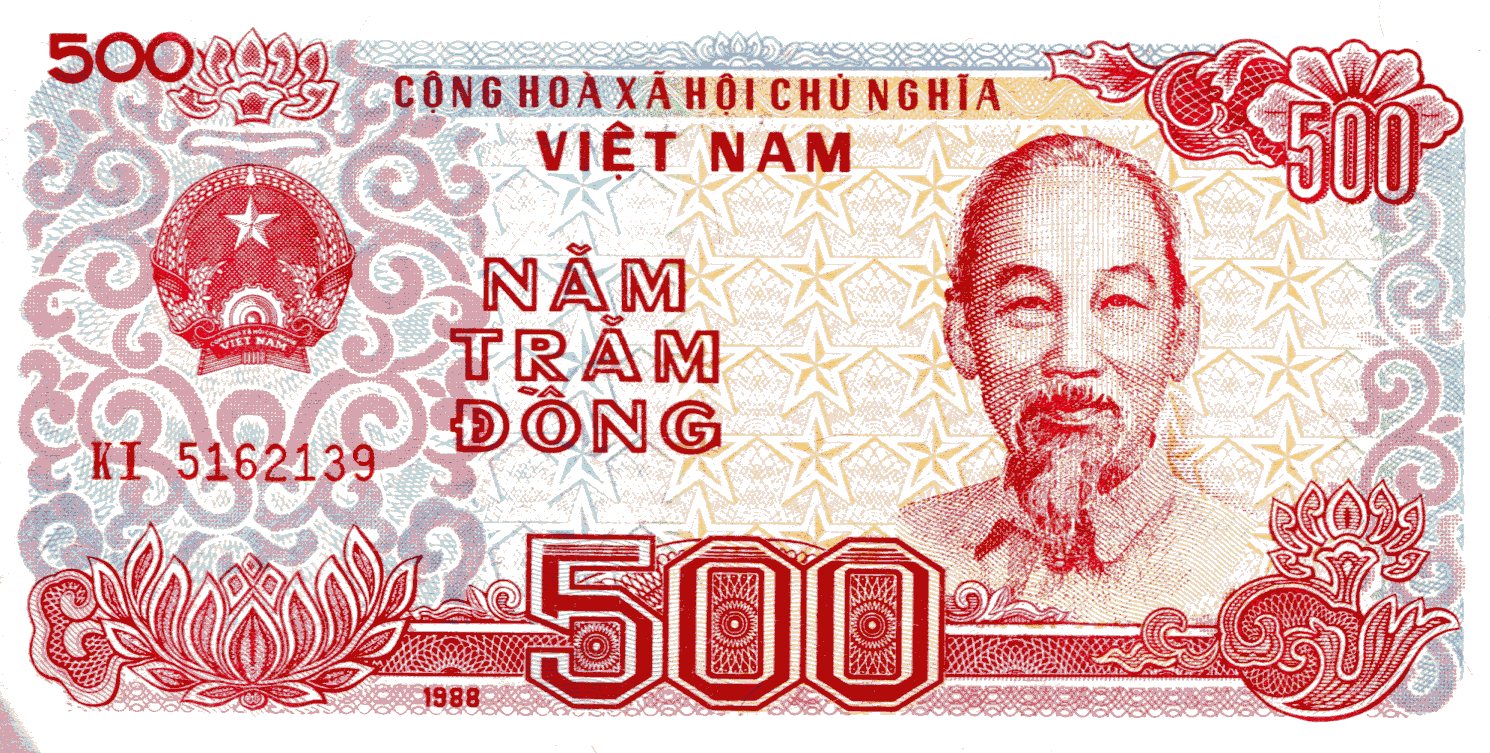
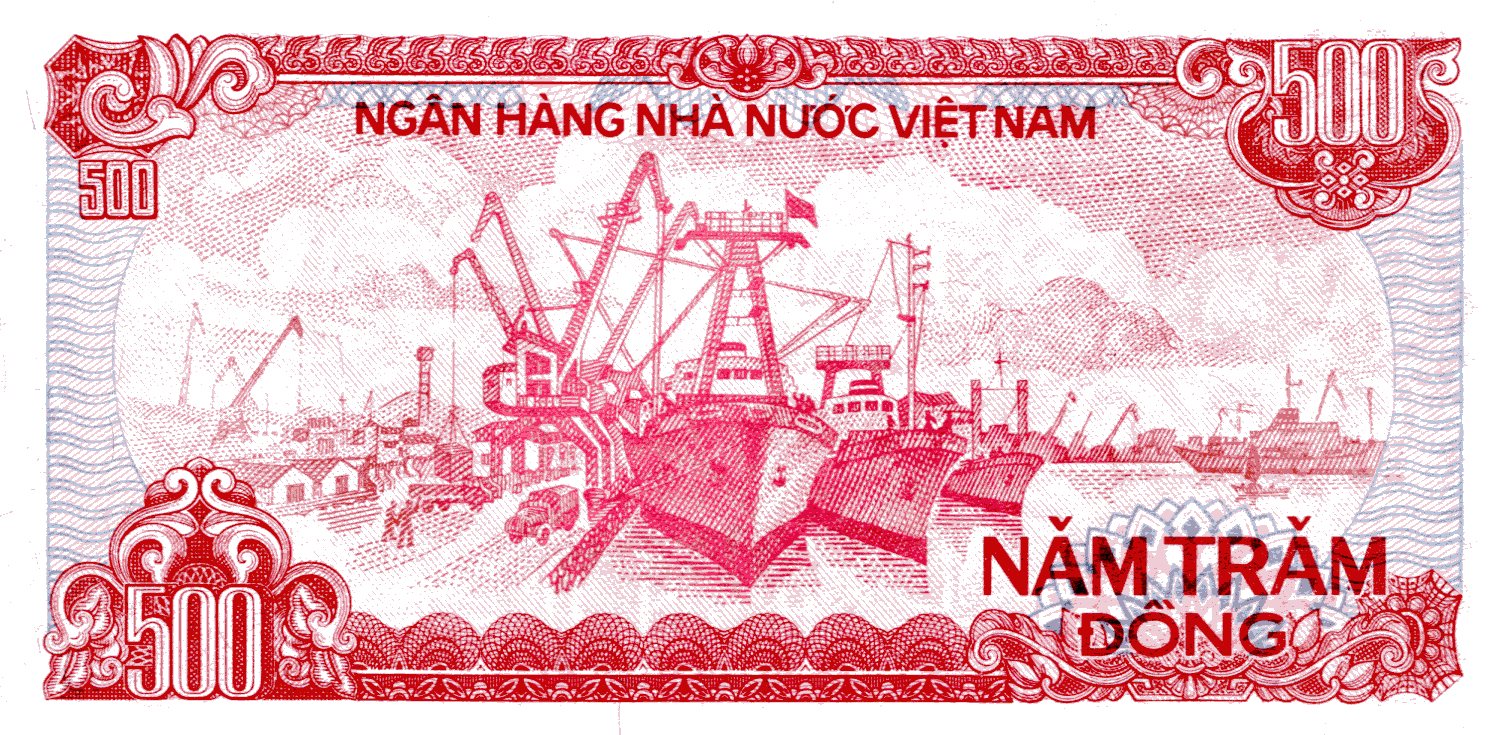
Here is 500 dong, a bit of the currency of the Socialist Republic of Vietnam, that nation’s official name even now, despite decades of various kinds of capitalist enterprise blooming there. I wonder if slightly brighter than average, but still adolescent Vietnamese boys ever jest among themselves, “Hey! Know what that means in English?”

500dongOBV500dong REVThe 500-dong note hasn’t been made since 2003, so little are they worth (500 dong = 0.022295 U.S. dollars). This one is dated 1988, so it’s the kind we might have handled in Saigon in 1994. Ho Chi Minh got to be on the obverse of all of the old notes, and gets to be on all of the post-2003 notes as well.

That’s when Vietnam switched to polymer banknotes, as some countries have. Canada and Australia also come to mind; I picked up a $5 Canadian polymer note in August, and among other things, it resists tearing. The new Vietnamese notes begin at 10,000 dong and go up to 500,000, or nearly $22.30, which probably still has considerable purchasing power in the Socialist Republic. Two hundred to 5,000 dong have been relegated to coins.

On the reserve is the port of Haiphong. I’m pretty sure I first heard of the place in the context of the mining of Haiphong Harbor, which I just learned the U.S. Navy called Operation Pocket Money.

20 Kyats

I’ll bet the Burmese kyat isn’t one of the world’s better-known currencies. Until lately I didn’t know much more than the name myself, but this 20-kyat note inspired me to look into the currency a bit more. K20, to use the abbreviation.
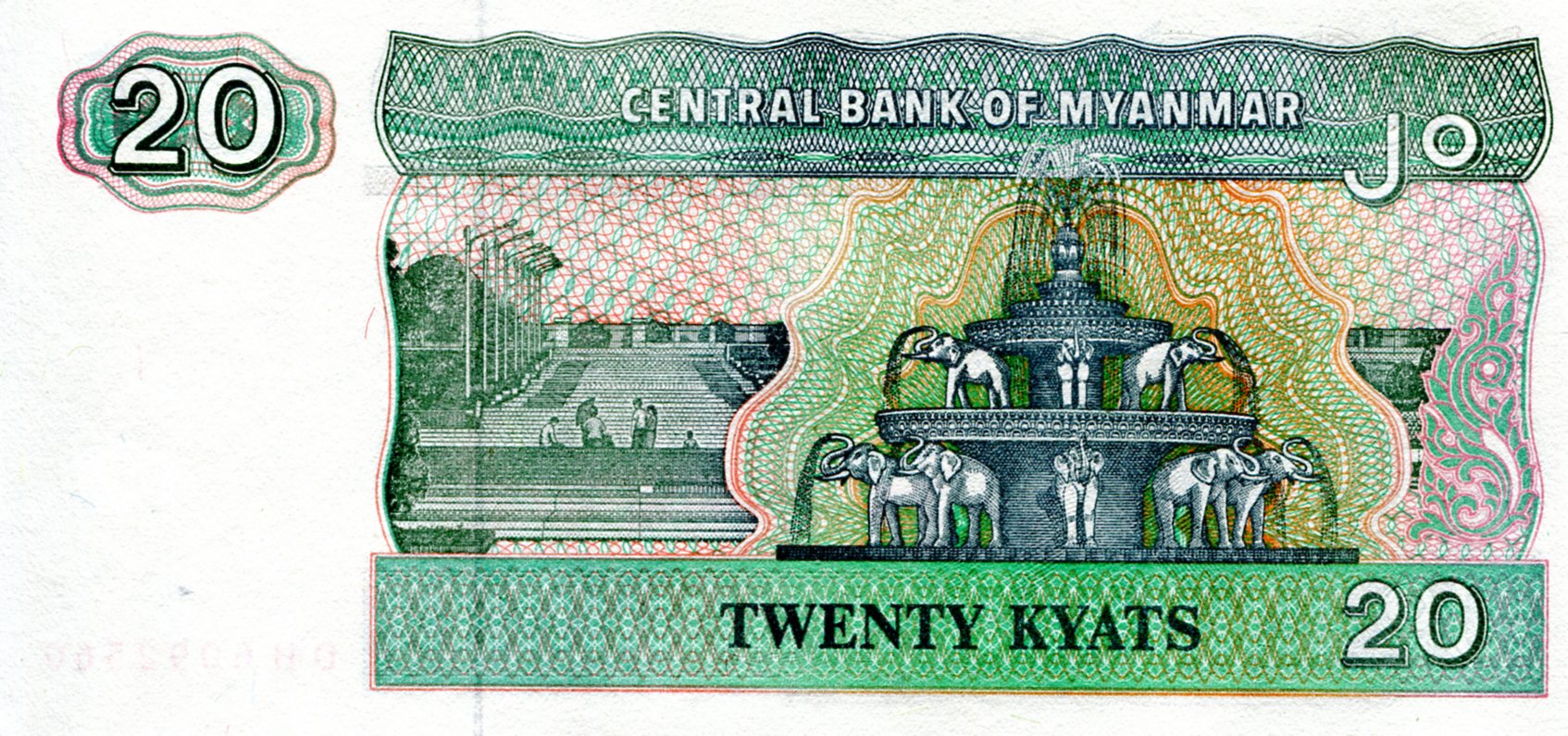
20KyatsBurmaOBV20KyatBurmaREVFor a very modest amount of U.S. currency, you can buy a number of crisp banknotes from the developing world, to use the euphemism of choice these days among us First World inhabitants. One thing the euphemism can’t hide is how little the notes are worth in terms of hard currency. For example, Google readily tells me that 20 Myanmar Kyats = 0.01552 U.S. Dollars as of today.

Still, some of the notes are pretty, and most of the them are interesting, and that’s what you get for your hard currency.

On the obverse is a Chinthe, a creature apparently beloved by the Burmese and a common feature on most modern Burmese banknotes. In statue form they’re usually depicted in pairs in front of Burmese temples and pagodas, guarding the place (and in Sri Lanka, I understand).

The reverse depicts a fountain in People’s Square and Park in Rangoon, which can be seen in this video, toward the end. Elephants supporting the world or just the fountain?

Prague 1994

Earlier this year, when I read about Prague in Patrick Leigh Fermor‘s A Time of Gifts, I found myself wondering, did I really visit the same city as he did? The answer is yes and no. He was there in 1934. I was there in 1994. That makes a considerable difference. But more importantly, he had a sharper eye for detail than I did, than I ever could hope to, and was informed by a better education and an all-around aptitude for the road.

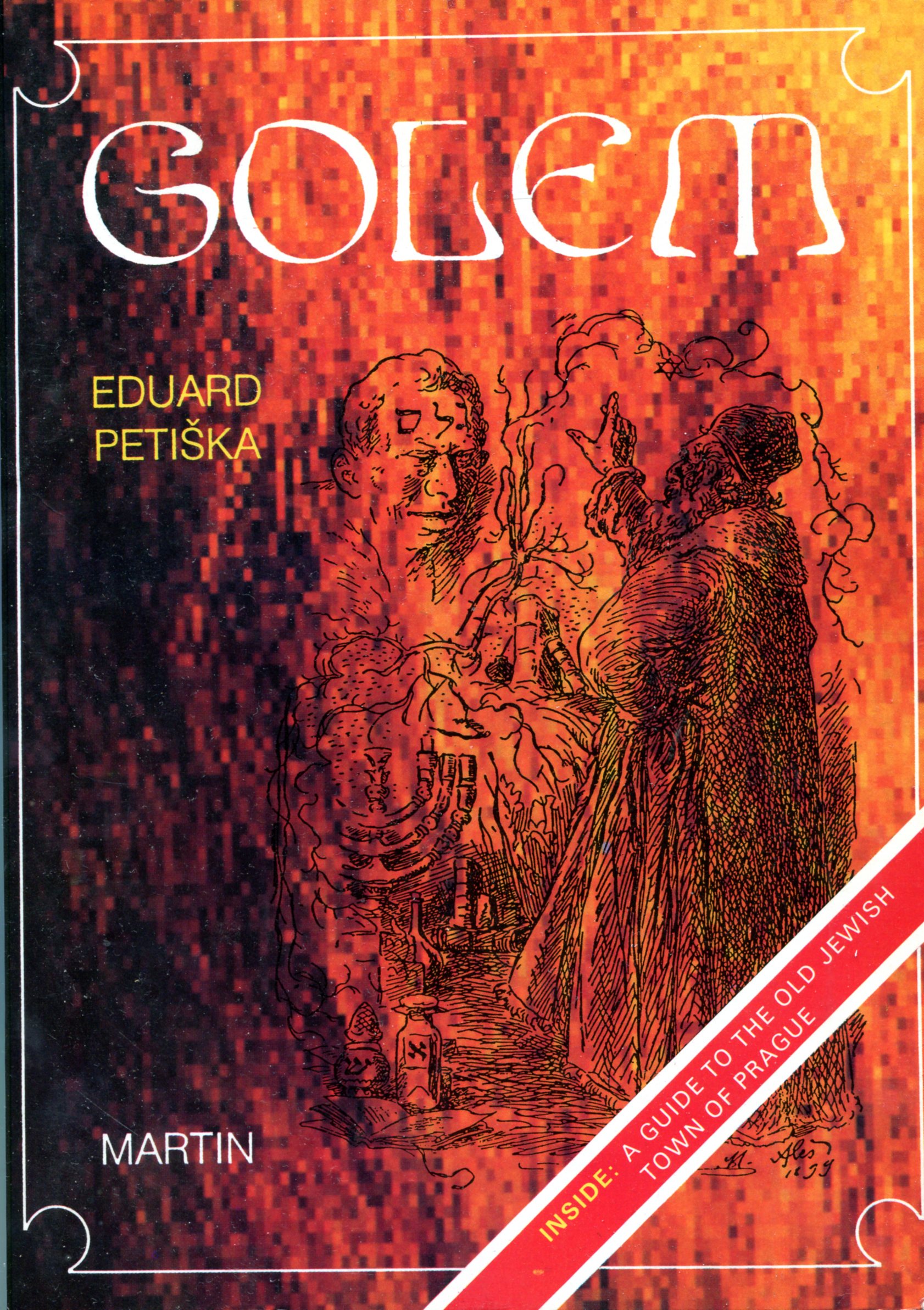
GolemBut at least I’d heard of the Second Defenestration of Prague, which made it a really cool moment when we saw the window from which it happened.

And I knew about the Golem. Or at least the concept. So I was interested in Prague to pick up Golem by Eduard Petiška, a Czech author and poet in a country that seems to take its poets seriously (and who managed to have an asteroid named after him). The book is his own telling of the various stories about Rabbi Loew of Prague and the creature he created to protect the Jewish population of the city. What is it about the Czechs and automatons? After all, another Czech author, Karel Čapek, gave the world the word robot.

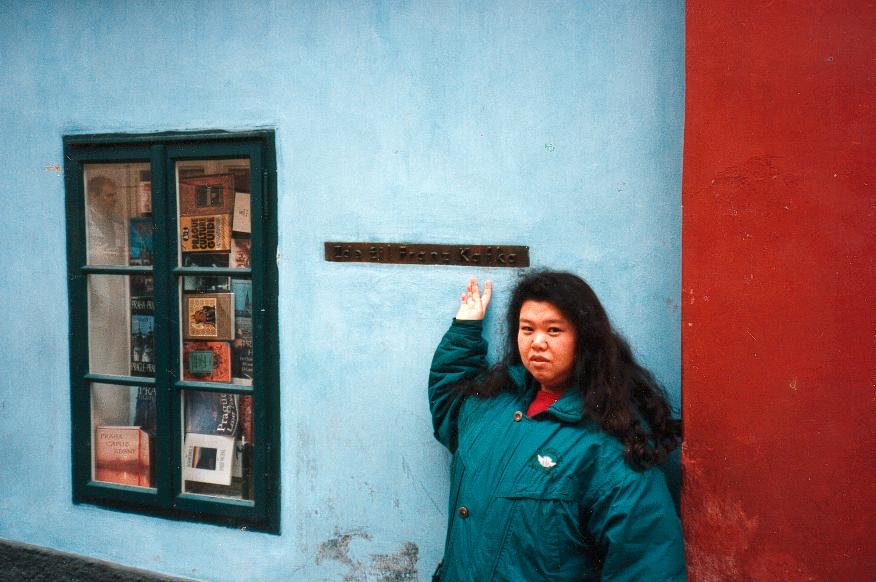
Speaking of authors from Prague, we also made our way to one of the places where Kafka lived. It’s the little blue-hued structure on this pedestrian street. At the time you could buy his works inside. Probably that’s still true.

ZlataUlickaKafkaKafka seems to be fairly well known in Japan, which might be something of a surprise, except when you consider the Kafkaesque elements of a salaryman’s life. Anyway, Yuriko was familiar with him.

And why is it always Kafkaesque? Guess Kafka-ish or Kafka-like or Kafka-oid don’t convey that sense of dread in the face of anonymous, malevolent functionaries.

Guy Fawkes & Martians &c

One more warm day. Then no more. Unless the forecasts about next week are right. What kind of November is this?

It’s Guy Fawkes Day again, and not a burning effigy in sight. It’s really something we should import. Lately I’ve been reading What If? 2, a collection of counterfactual history essays that I picked up used for 50 cents, but “What If Guy Fawkes Had Succeeded?” isn’t one of the subjects. Naturally that question’s been taken up elsewhere.

All of us went to see The Martian on Sunday. All in all, a well done bit of hard SF. Titanium hard, though considering the story, the focus on the technology of space travel and survival in a hostile environment isn’t misplaced. The movie also managed to present its exposition — and there was a lot of it — in a way that didn’t goo up the narrative, which is no small trick.

One thing (which the author of the book has acknowledged): the Martian atmosphere is so thin that a raging storm of the sort that got the hero in his jam would be impossible. The planet does have dust storms, of course, but not hurricanes of dust. Never mind.

There’s no overt indication of when the story takes place, so I figured it was either 20 years or so from now — very optimistic indeed, considering the sluggish pace U.S. manned space exploration these days — or in a present-day world in which a program to send people to Mars got started in earnest in the 1990s (it was, after all, something the elder Bush proposed). The flags on the spaceships and shoulder patches, I noticed, had 50 stars. A nice detail would have been to use the 51- or 52-star designs.

I suspect the only way U.S. astronauts are getting to Mars in a few decades is if the Chinese decide to attempt it.

From a web site I’d never heard of before but happened across recently, purporting to cover real estate news (all sic): “According to Investor Daily, TIAA-CREF’s Phil McAndrews has recently stated that the United States economy is under fairly good state that tantamounts to the continuing optimistic forecasts for the commercial property segment.”

That’s a sample from an item laid out like a real article, but clearly not written by a native speaker of English. The item, in fact, is a little hard to read, and larded with advertising links and other annoyances. And then it crashed my browser with an irritating “Unresponsive Script” message. I’m not overly worried about competition from such Mickey Mouse efforts as this.

Does anyone use “Mickey Mouse,” as in amateurish, any more? I had a teacher in junior high, our band director Mr. Fields, who was fond of the term. Now it sounds like it belongs to an earlier generation — Mr. Fields’ generation, or about the same age as Mickey himself. Maybe in more recent years, Disney minions have made trouble for anyone who uses Mickey like that. I’d better watch out.

When It Comes to Birthdays, Cake is the Thing

We’ve had a run of warm days since Monday. Warm for November, that is, about 70 F for a few hours around mid-day. For three days now I’ve made a point of eating lunch outside on my deck, because it’ll be months before I’ll want to do that again.

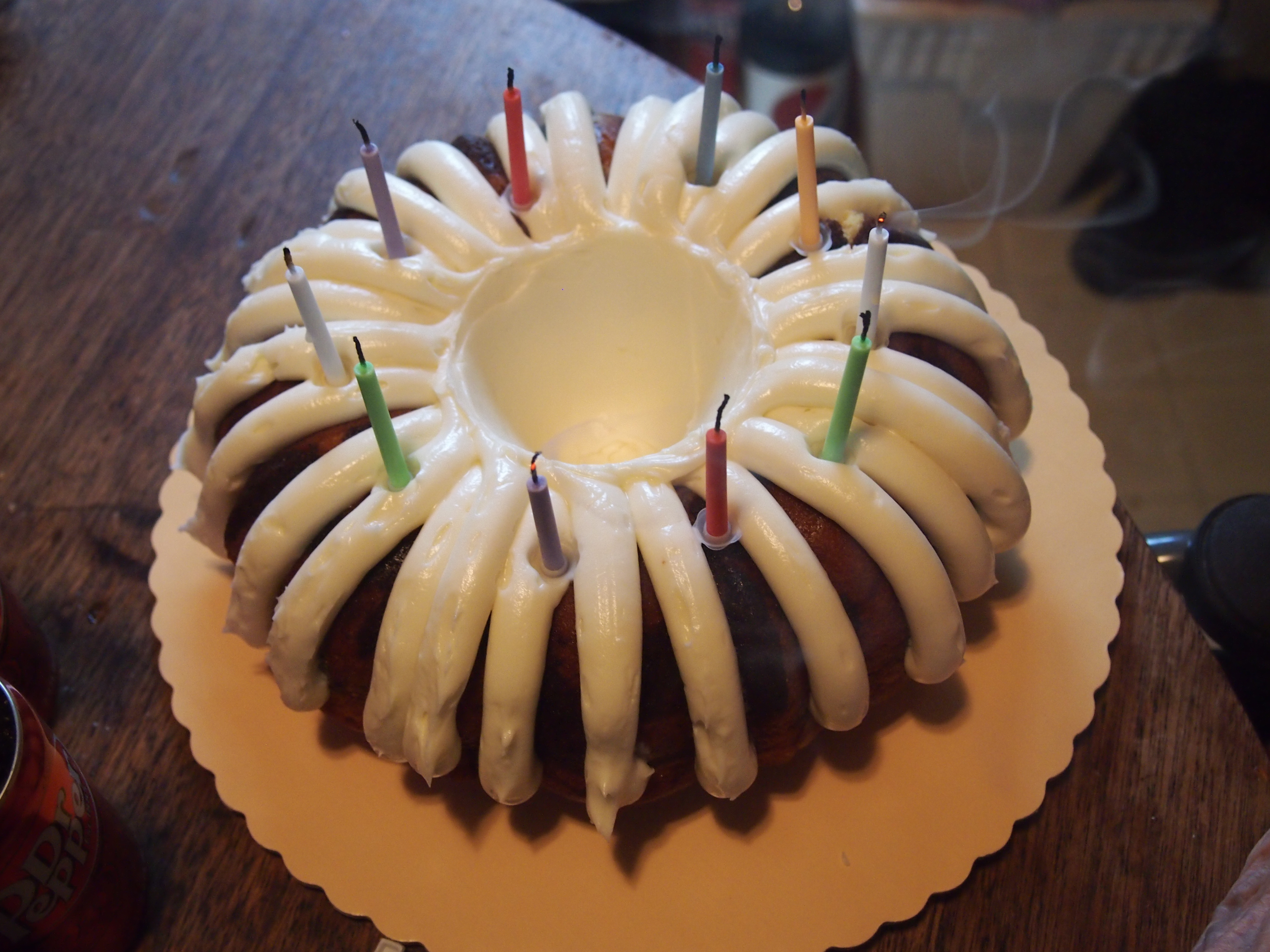
One more thing from my recent visit to Texas: my mother’s birthday cake, ringed with nine candles, one for each decade since 1925.

Mama's BD CakeMy nephew Sam and his wife Emily bought the cake at the too-cute named Nothing Bundt Cakes, a chain of bakeries that I’d never heard of before, but which are widespread. I can understand its success, though: the place makes high-quality bundt cakes.