July Idles

This year was a stay-close-to-home Fourth of July. That is, metro Chicago. Some are, some aren’t. We returned to our old haunts in the western suburbs on Saturday night to see the Westmont fireworks, from the vantage of Ty Warner Park. It’s always a good show.

That was a high point of the weekend. So was taking my daughters to Half Price Books, at their request, on the evening of the 3rd.

The low point of the weekend was walking the dog on the 4th, not long before we left for the fireworks show. Late afternoon, that is. Part of our usual route takes us along a path between a dense row of bushes and a small patch of land sporting enough trees to block the sky, when they have leaves. Pretty soon I re-discovered its mid-summer nature as Mosquito Alley. The mossies were especially forceful when I was cleaning up after the dog.

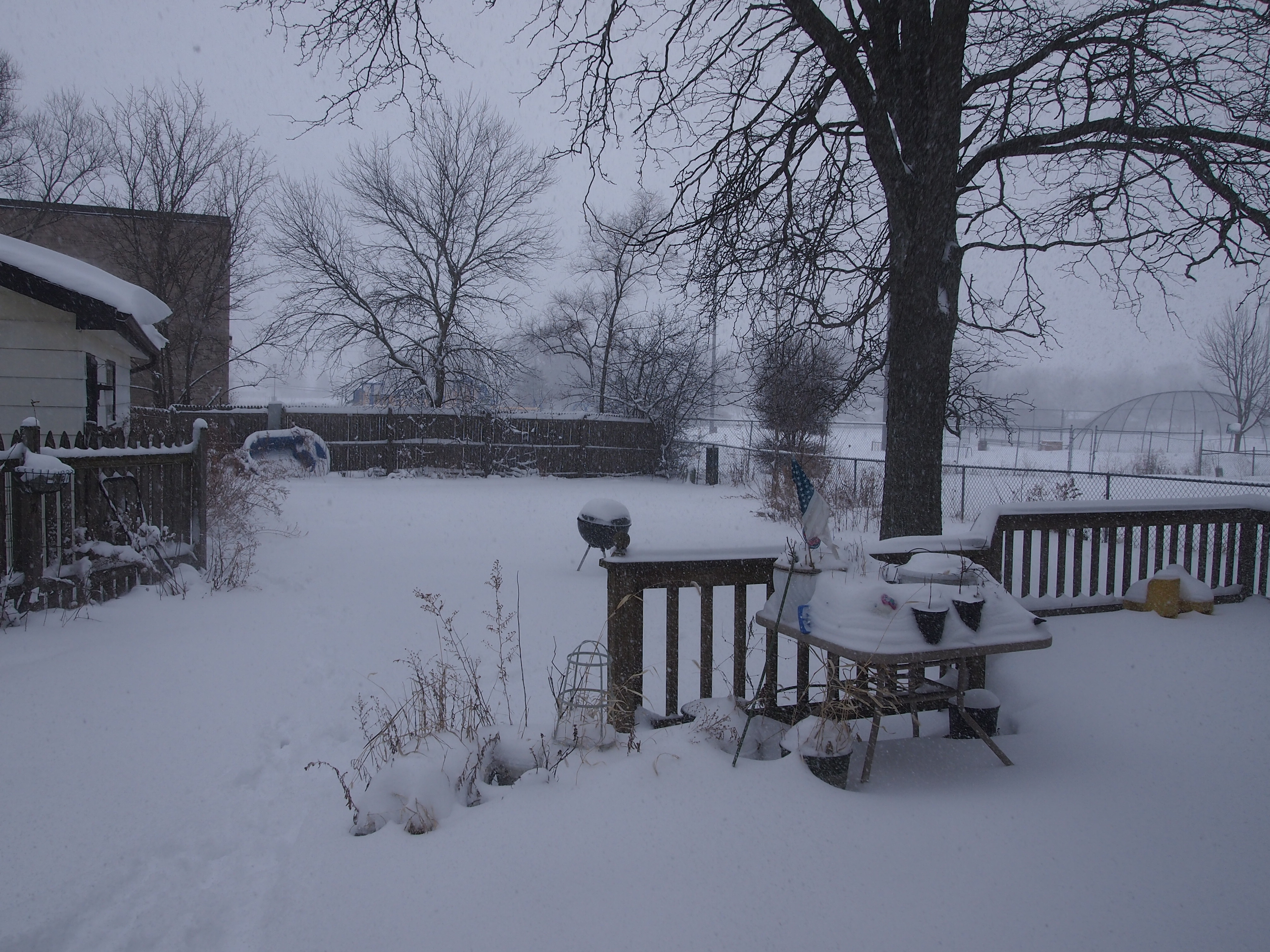
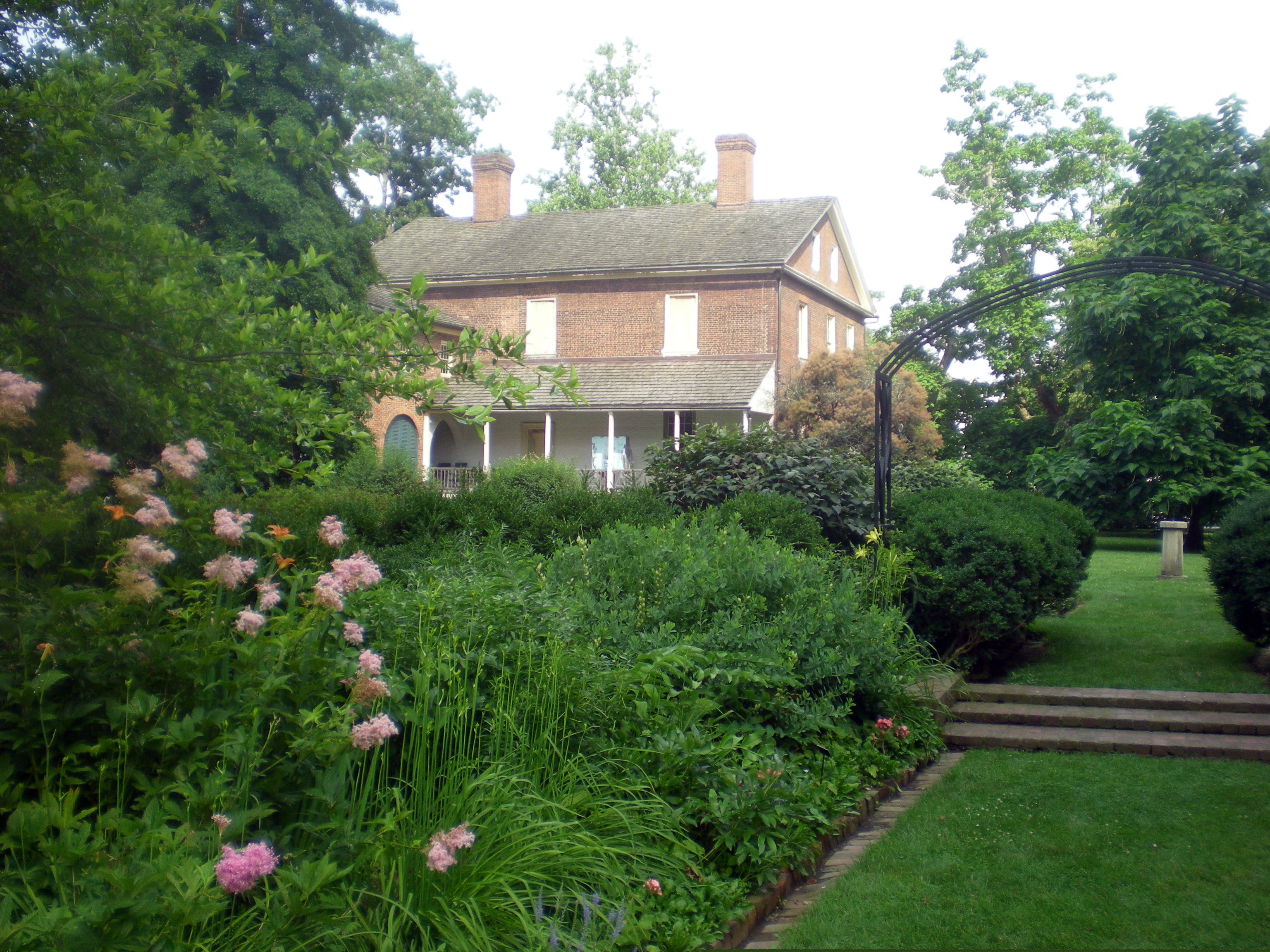
Complaining about mosquitoes, though, is just carping. I’d rather look out of my back door and see this (an early July shot).
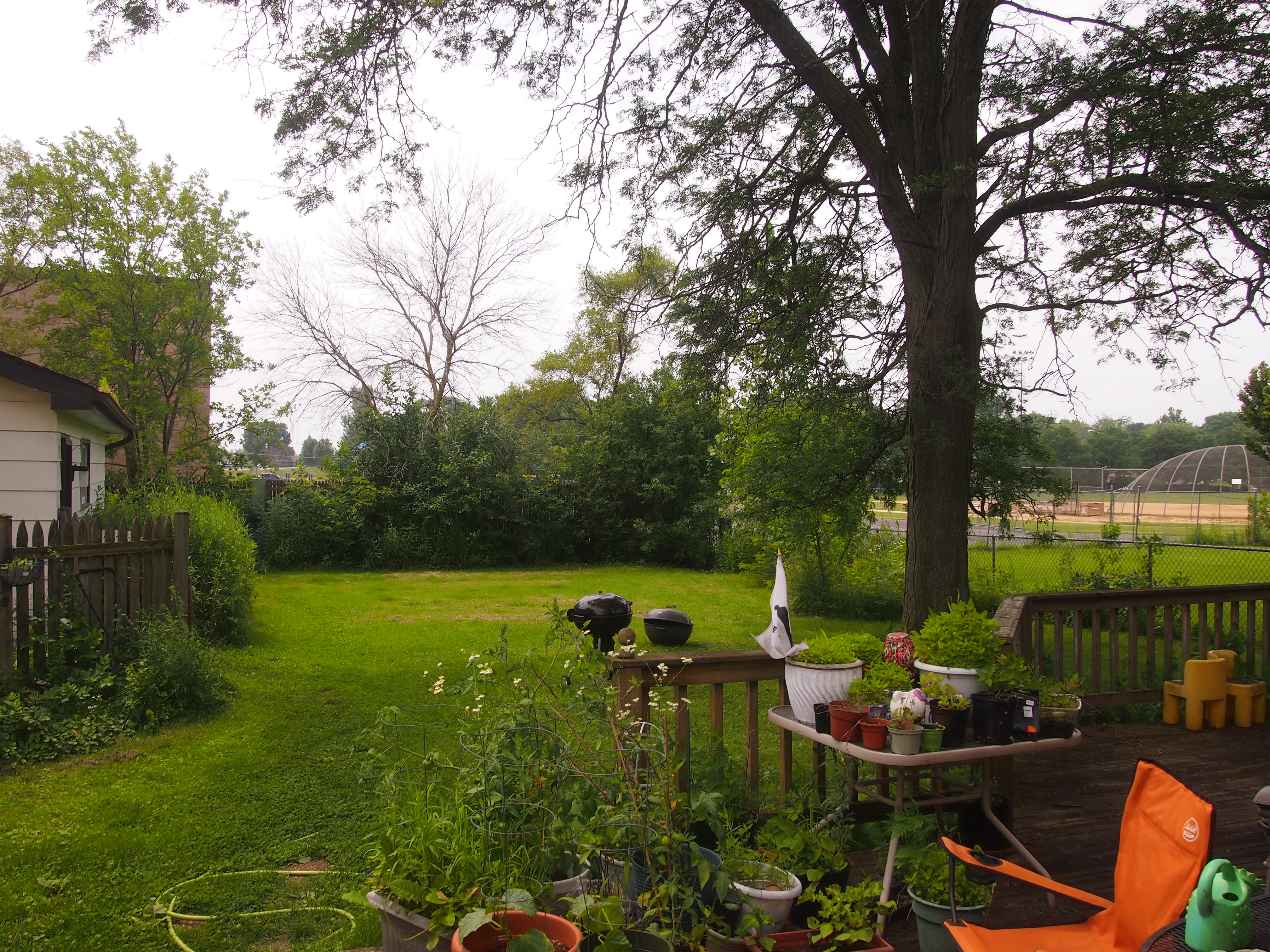
Schaumburg, July 2015Than this (an early January shot).

Schaumburg, Jan 2015Bugs aside, I spent a fair amount of time over the weekend on the deck reading The H.L. Hunley by Tom Chaffin (2008), a fine book about the submarine of that name, along with its predecessor vessels (the Pioneer and the American Diver). Or, as I learned reading the book, the “submarine boat,” which is a 19th-century usage. The Confederates gave underwater warfare a shot, but it turned out Age of Steam technology — as inventive as it clearly was — wasn’t quite up to the task. Not without killing more submarine boat crew than Union sailors.

Also, it’s another reason to visit Charleston, to see the vessel, now an artifact on display at the Warren Lasch Conservation Center. Not that I’d need any more reasons for a visit.

To the Smokies and Back ’08

Our trip to the Great Smoky Mountains NP and other places in 2008 was a late June, early July event. Has it really been seven years ago? The world seems like a different place now.

At Mammoth Cave NP, there was the famed cave, but you could also rent fun vehicles to tool around in.

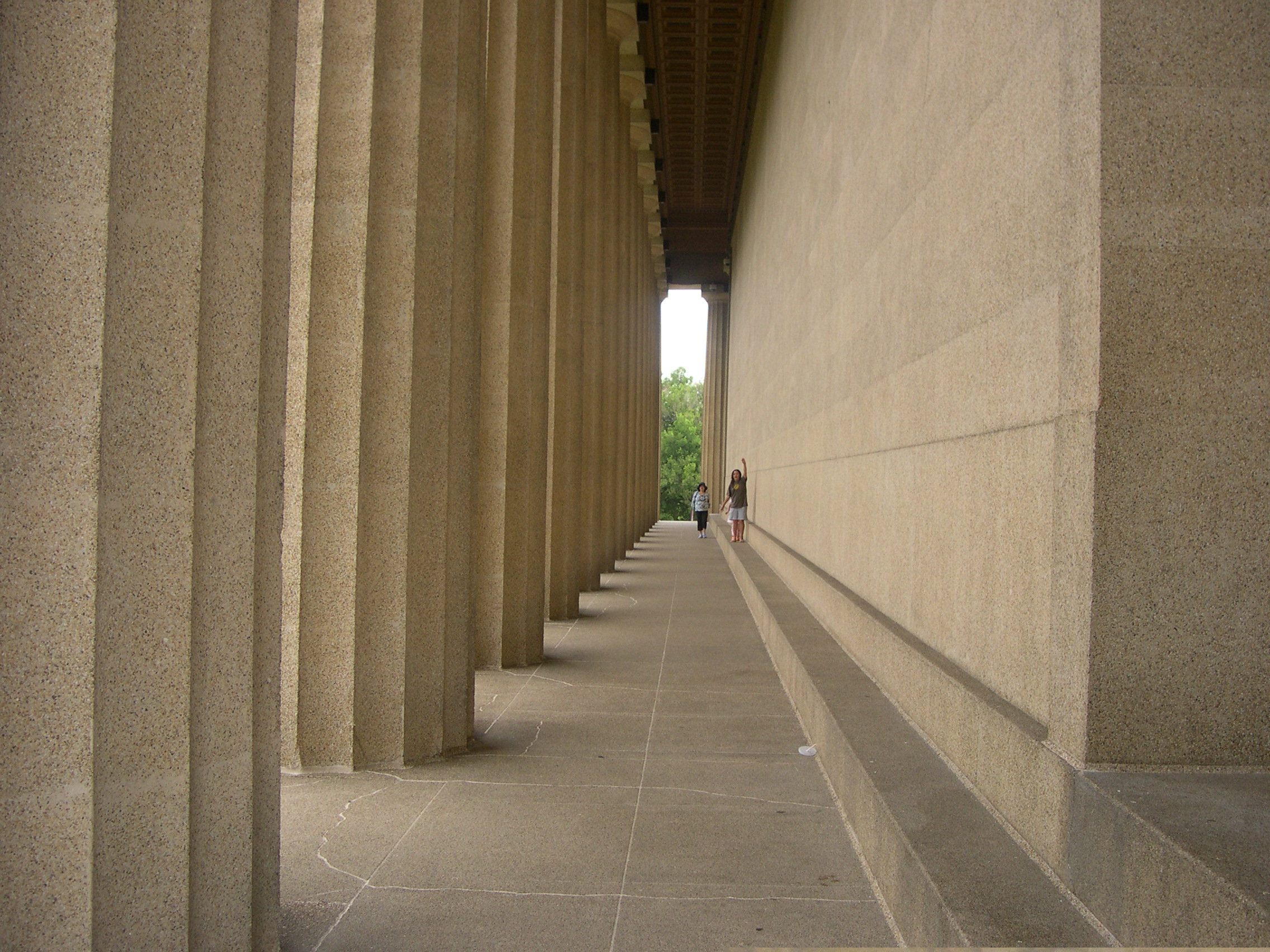
Lilly & Ann June 2008It’s good to show your family places you know, but which they don’t, such as the Nashville Parthenon.
Parthenon, June 2008That’s what this country needs, more public-private partnerships to re-create the wonders of Antiquity. The Hanging Gardens of Omaha. A new Lighthouse of Alexandria in Alexandria, Va. The Statue of Zeus at Olympia, Wash. A new Temple of Artemis in Tucumcari, NM. That kind of thing. (Or city walls around Dallas, as my brother Jay has suggested.)

Next, the Mingus Mill, which is part of the Great Smoky Mountains NP. I liked it just for the name. Water was flowing in the trough, and the girls liked it because they could float things in the trough.
Mingus Mill July 2015As the NPS says, “A half-mile north of the Oconaluftee Visitor Center is Mingus Mill. Built in 1886, this historic grist mill uses a water-powered turbine instead of a water wheel to power all of the machinery in the building. Located at its original site, Mingus Mill stands as a tribute to the test of time.” Yep.

In the Indian town of Cherokee, NC, you could pose for a small fee with this fellow. Chief Syd, he called himself.
Cherokee, NC July 2015It wouldn’t have been a good trip without dropping in on a dead president. Andrew Johnson, in this case. President Johnson reposes in his hometown of Greeneville, Tenn. As it happened, we saw his memorial on July 4. (I did. Family stayed in car.)
President Andrew Johnson, July 4, 2008It’s also good to happen across little-known historic sites, such as Liberty Hall in Frankfort, Ky. Little-known, at least, outside of the immediate area.
Libery Hall, July 2008“This Georgian mansion was begun in 1796 by John Brown and named for [the] Lexington, Va. academy he attended,” says the landmark sign. “His wife Margaretta and Elizabeth Love began [the] first Sunday School west of [the] Alleghenies in [the] garden. Guests have included James Monroe, Zachary Taylor, Andrew Jackson and Gen. Lafayette…” The plaque maker must have charged by the letter, what with all of the definite articles left out.

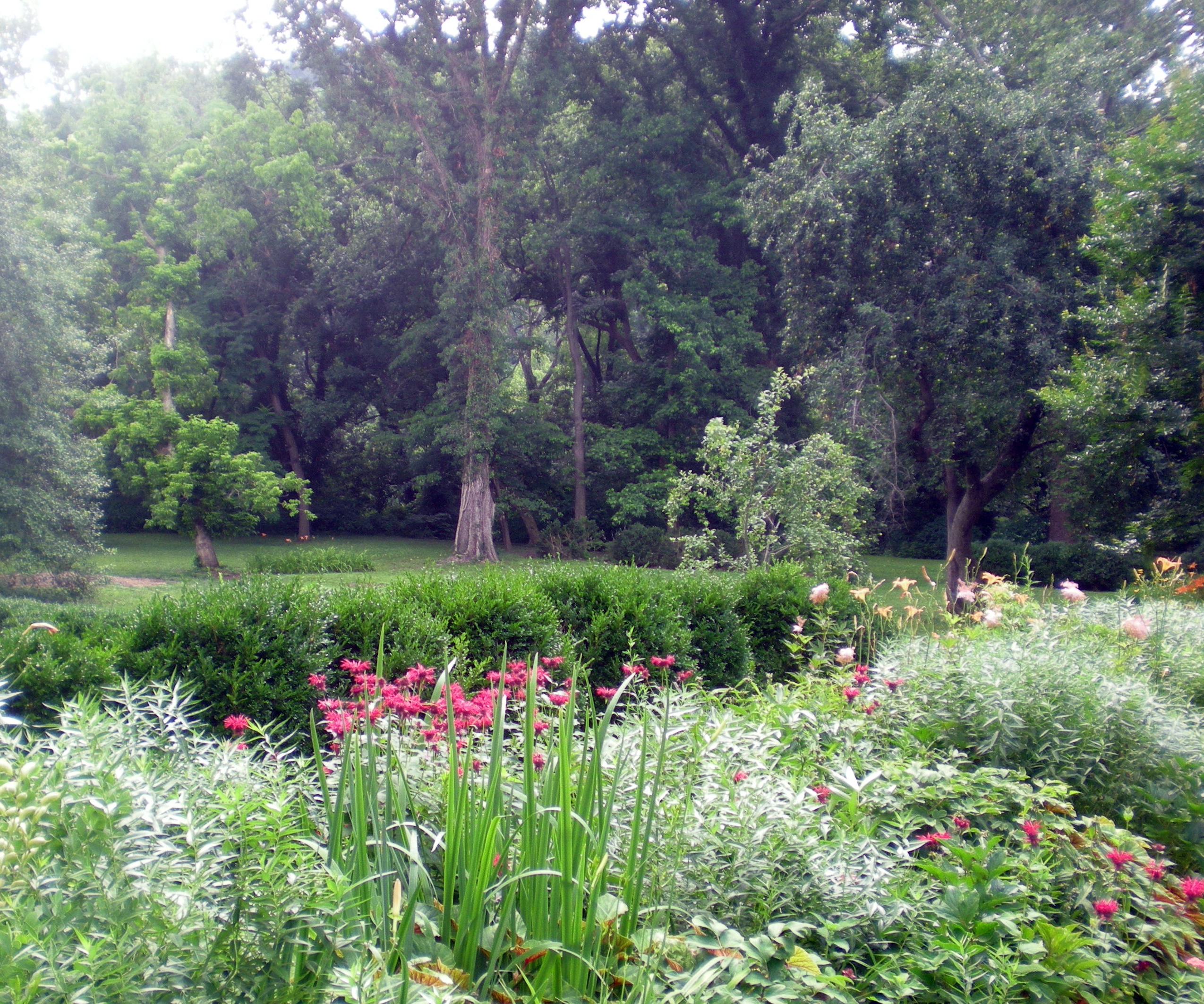
A lovely garden it was, too.

Liberty Hall garden July 2008One more thing. As I’ve said, it’s good to be open to sampling new things on the road.
Root beer, July 2008I don’t remember, but it was probably tasty. Things often taste better on the road.

Intangible Souvenirs

Aside from physical souvenirs, Lilly also brought home some intangibles from her visit to Latin America. As you should from any trip. They’re easy to carry, might last a long time (see my discussion about geoducks. I’ll never forget them), and there’s no risk that a third-world customs agent, or member of the TSA, will take them away from you.

As I once saw written on a hostel wall (in  London, or maybe Vienna): “No one can take your travel memories away from you.” Written under that, in a different hand: “Unless they hit you really hard on the head.”

Speaking of customs, she learned about the customers-officer glare first hand in a number of places and some other petty annoyances of airports. No parents around this time to shield her from those things.

Also, she discovered that in any small group with whom you travel, there will always be at least one — and maybe more — whiner who should have stayed home, and given his or her place to someone who could appreciate the experience. Luckily, I don’t believe she’s that person.

She tells me about the dangers of being a pedestrian in Ecuador and Panama. I’m glad she survived. The danger is real. Traffic’s more dangerous than most boogeymen — terrorists, random violent psychopaths, street crime, even bad water — in most places. I told her that. Now she understands viscerally.

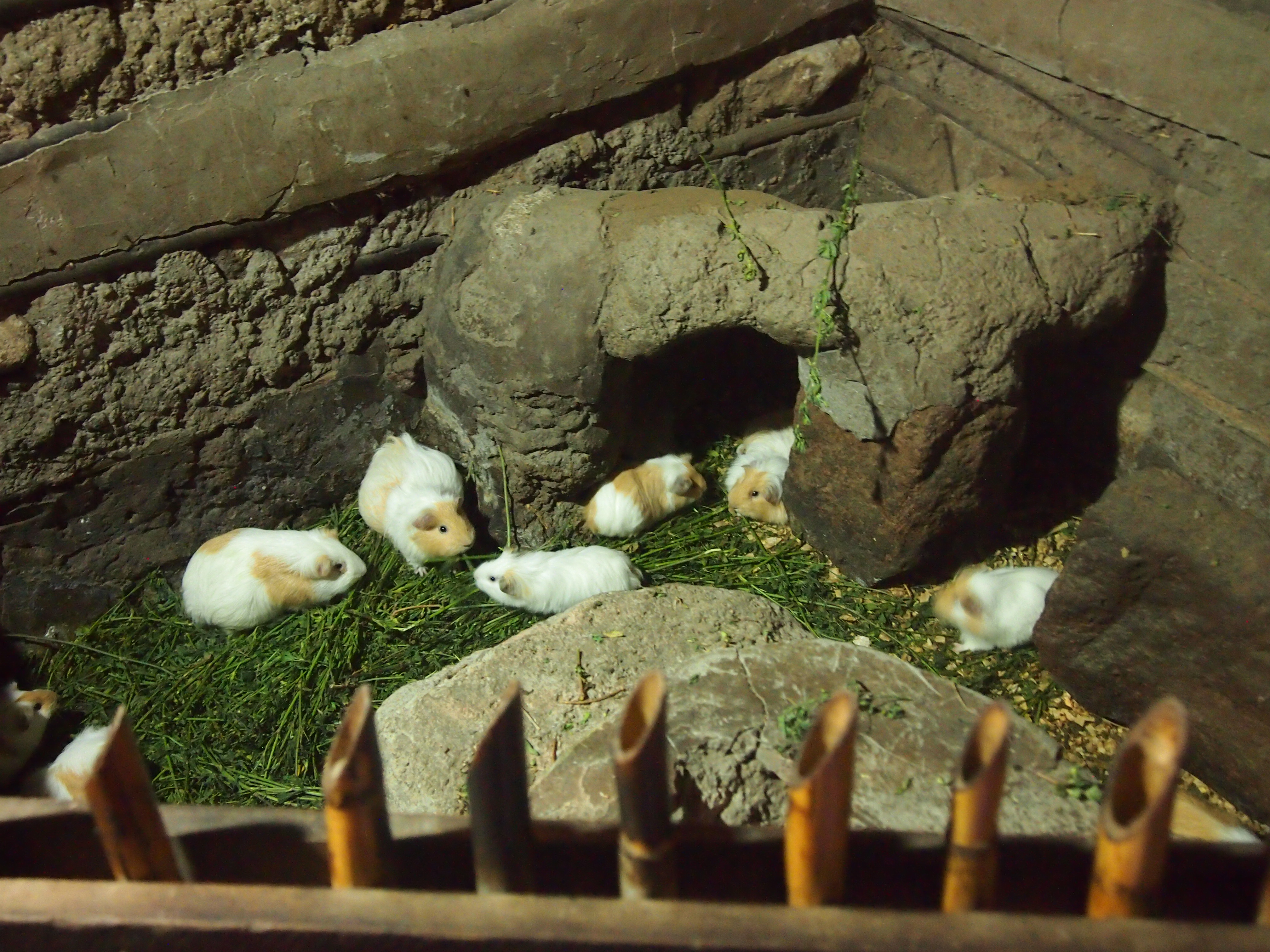
Finally, Lilly talks with relish about some of the foods she tried. Especially guinea pig, a favored meat in Ecuador.Guinea pigs, Ecuador, June 2015 Attagirl. Go places, eat things. Food snobbery not required, nor adventure, just a slight willingness to venture away from your habits.

Coins from Way Down South

Hard to believe Canada Day’s rolled around again. Time to honor our neighbors up north by watching one of their major cultural achievements. Other episodes are also available on YouTube.

Lilly brought us souvenirs from her trip to Latin America — omiyagi, to use the Japanese term, which means souvenirs specially obtained for people who didn’t make the trip. It’s a custom we follow.

She got me three things, all showing that she knows her dad pretty well: coins, postcards and Ecuadorean chocolate. As it happens, both Ecuador and Panama are dollarized economies. No currency exchange was necessary; she took greenback cash and also withdrew funds, in dollars, from an ATM.

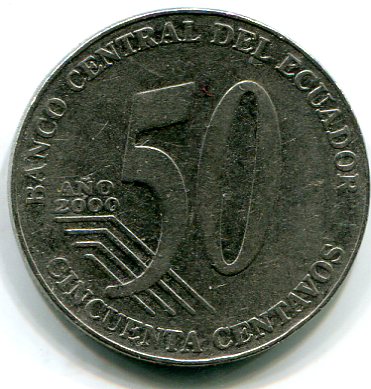
The small change is each country’s own. This is 50 centavos from Ecuador, obverse.

50 centavos, EcuadorIt features the face of one José Eloy Alfaro Delgado (1842-1912), who was president of Ecuador from 1895 to 1901 and from 1906 to 1911, and had the distinction of being assassinated by anti-secularizers, since he introduced the likes of civil marriage and divorce, and secular eduction, to his nation. He also oversaw the construction of the Ferrocarril Transandino (Trans-Andean Railroad) connecting Guayaquil and Quito.

The reserve.

50 centavos, EcuadorThe steel Ecuadorean coins are made at mints in Canada and Mexico. Other denominations include 25c, 10c, 5c, and (supposedly) 1c. Lilly brought back the first three of that list, and along with the 50c piece, I checked their sizes. They’re exactly the same size as their respective U.S. coins.

Apparently Ecuador doesn’t issue dollar coins. Lilly said that U.S. dollar coins are in circulation there much more than they are in the United States. If we’d known that, I’d have given her a roll or two of dollar coins to take with her.

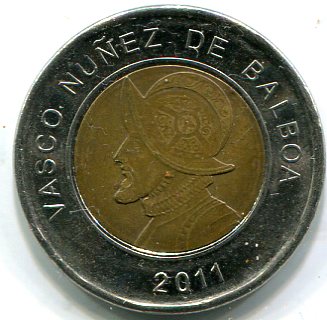
Panama, on the other hand, does have its own dollar-equivalent coin, the bimetallic balboa, which Lilly tells me circulates with U.S. dollar coins.

one balboaWho else to put on the balboa than Balboa? The man who lost his head over Panama. Here’s something I didn’t know: there’s a crater on the Moon named for him. He might have made it to the Pacific, but I’m pretty sure he didn’t get that far.

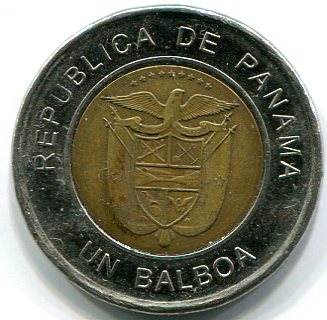
The reverse.

balboaIt’s hard to see, but the coat of arms of Panama includes a depiction of the isthmus, a sword, rifle, shovel, hoe, and more. The eagle is specifically — according to recent Panamanian law — a harpy eagle (Harpia harpyja), the national bird. The impossible-to-read motto is Pro Mundi Beneficio, for the benefit of the world.

Lilly in Panama

What was that? The flicker of fireflies. I saw the first of them around here late last week. Harbingers of high summer, they are.

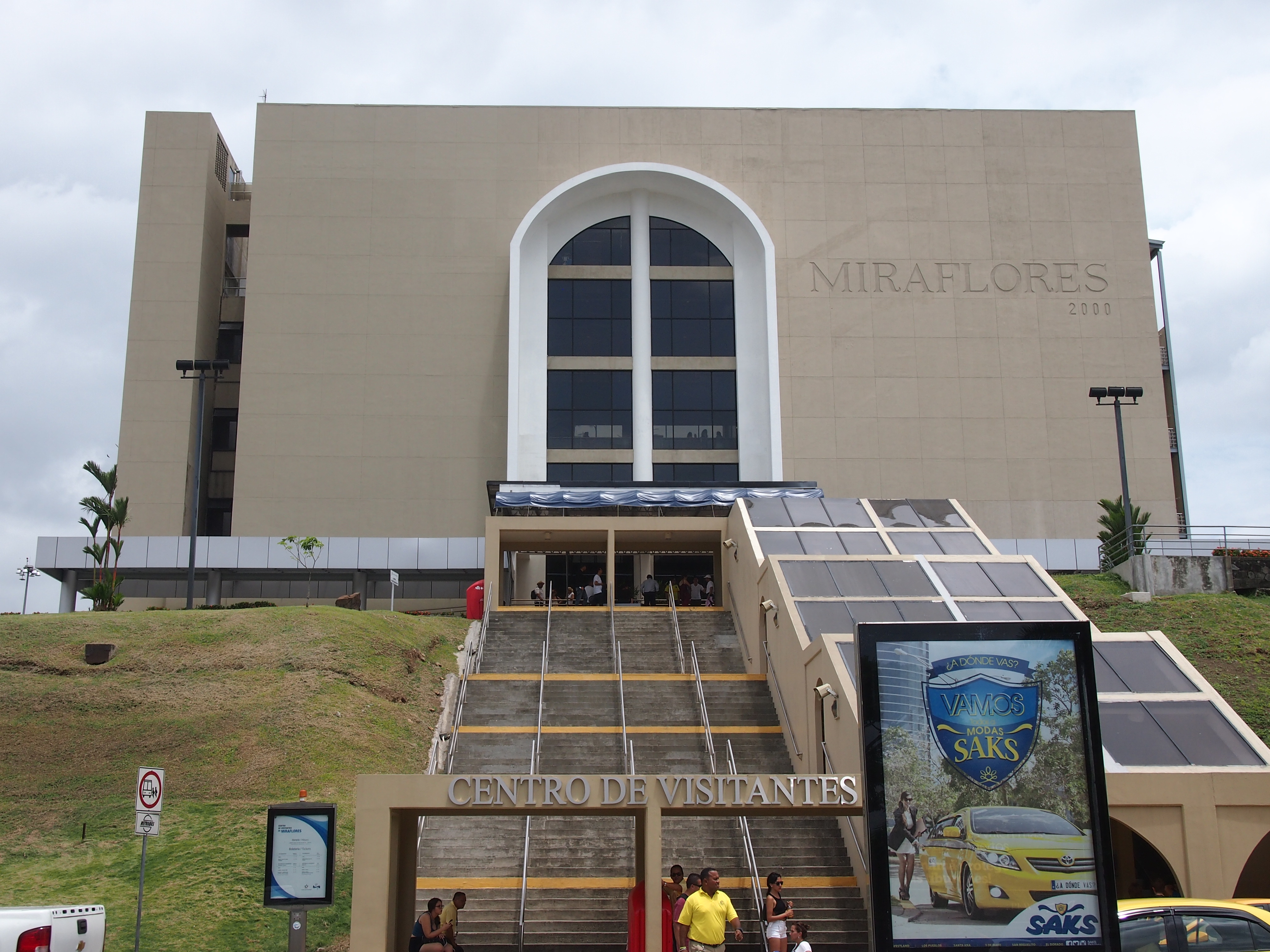
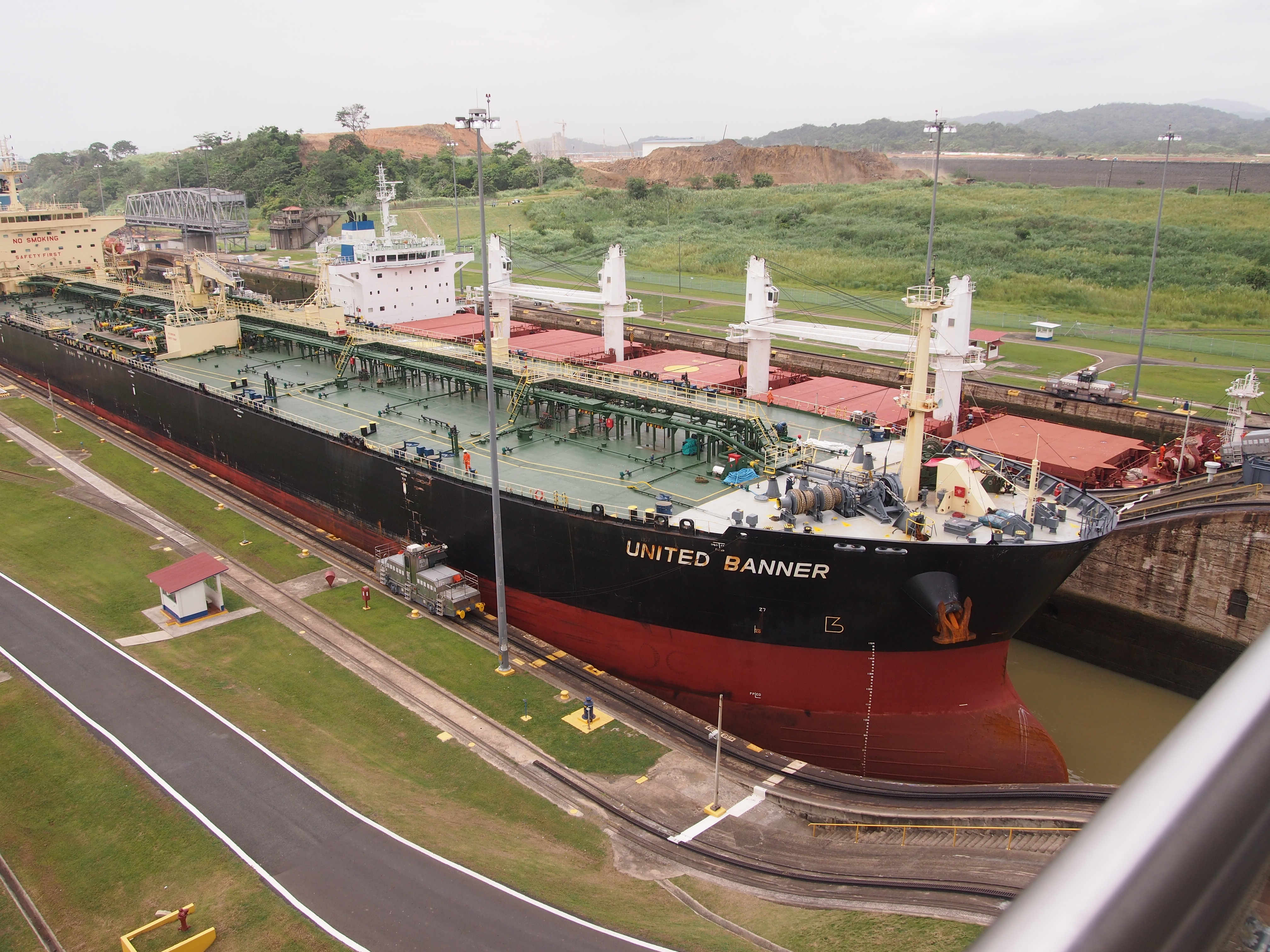
After a week in Ecuador, Lilly and her school group went to Panama for a few days. One thing you do there, I hear, is go see the big dig. In their case, at the Milaflores Lock, which apparently has a newish visitor center — dated 2000, right after the canal was finally Panamanian.

Panama, June 2015The cost to get in (Lilly has the ticket): $10. Once in, you get a view of the lock, and perhaps a ship passing through TR’s handiwork.

Panama, June 22, 2015As it happened, the United Banner was passing through. It’s easy to look up in our time: the vessel is a Greek tanker, built in 2007, at 42,010 gross tonnage, and more than 228 meters long. According to marinetraffic.com, it’s currently at anchor just off Colon. Maybe the ship’s waiting for the situation in Greece to sort itself out.

That wasn’t all she got to do in Panama — I’ve heard bits about a boat ride, time at a monkey reserve, a visit to a rain forest, more open air markets, and so on — but the pictures peter out in Panama. I understand completely. I let her take my camera, which isn’t a pocket-sized smartphone gizmo, so there are times when you don’t want to carry the damn thing around.

Lilly in Ecuador

I don’t have any comments to offer here on the jurisprudence of Justice Scalia, but I do crack a smile at his florid prose, as pointed out again recently by endless commentators (and wags who have fun with him). Such writing comes from having no editor to answer to, and a taste for it. I’ve run across most of his terms before — everyone ought to know “argle-bargle” and “applesauce” (in the way he meant it) for instance — but “jiggery-pokery” was a new one on me.

Or rather, an old-sounding new one. It’s a term of abuse that sounds like it might have come up in a London coffee shop argument about the Bangorian Controversy. I was glad to learn it.

Earlier this month, Lilly went to Ecuador and Panama on a Spanish Club trip. It was a big wheel, little wheel trip — one major destination (Ecuador for a week), one lesser one (Panama for three days).

That’s further than I ever got to go on any school trips, though taking a bus to Stevens Point, Wis., from San Antonio for the Mu Alpha Theta National Convention was its own kind of epic, and Amarillo seemed almost as far (Latin Club trip). It was the luck of the draw for her; some years the club goes to Spain, others Costa Rica. All those sound good to me, but Ecuador especially. South America. I’ve never even been close.

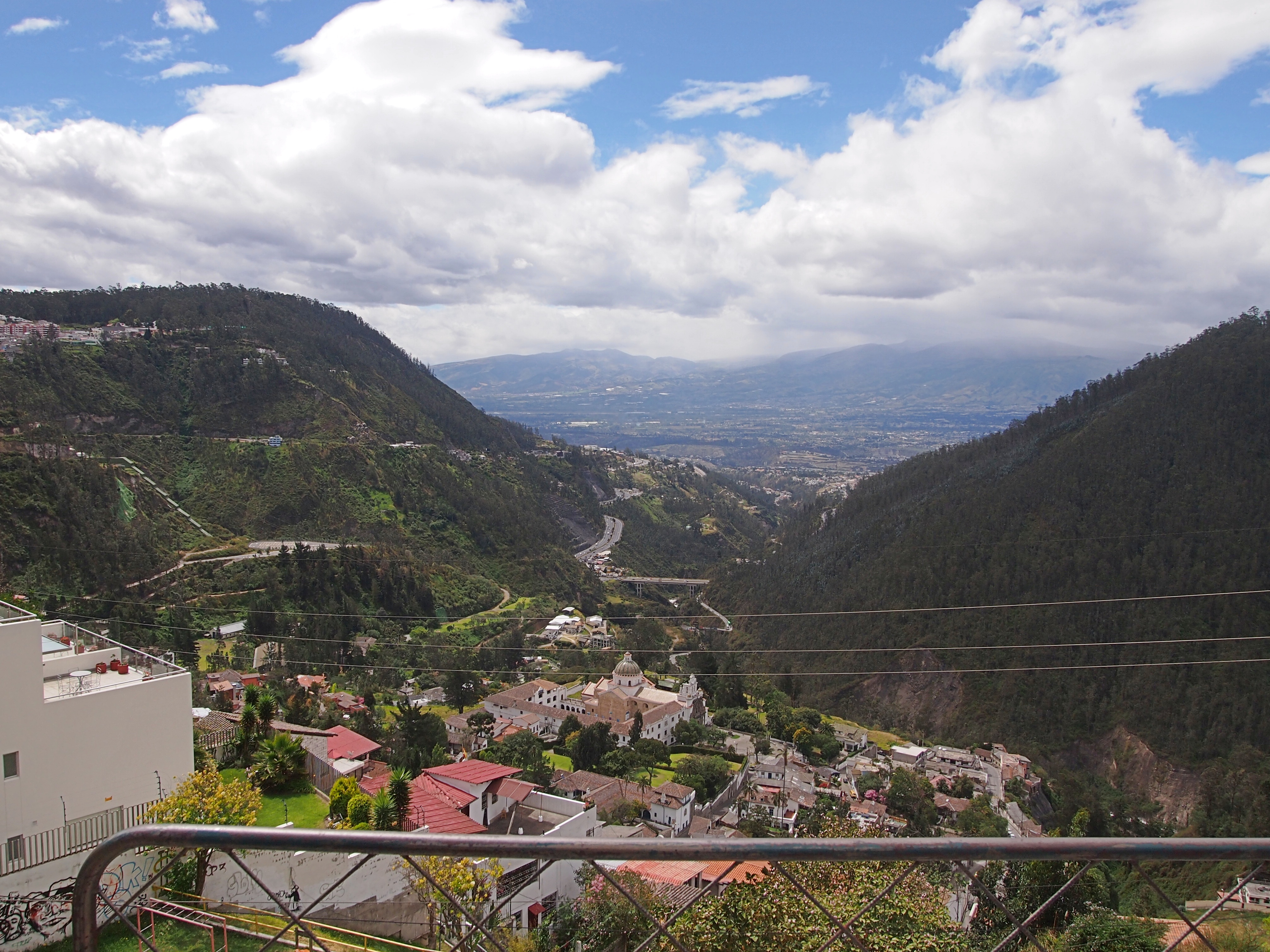
Most of her pictures weren’t selfies. She’s outgrowing a need for excessive self-images, I think. Here’s a view overlooking Quito.

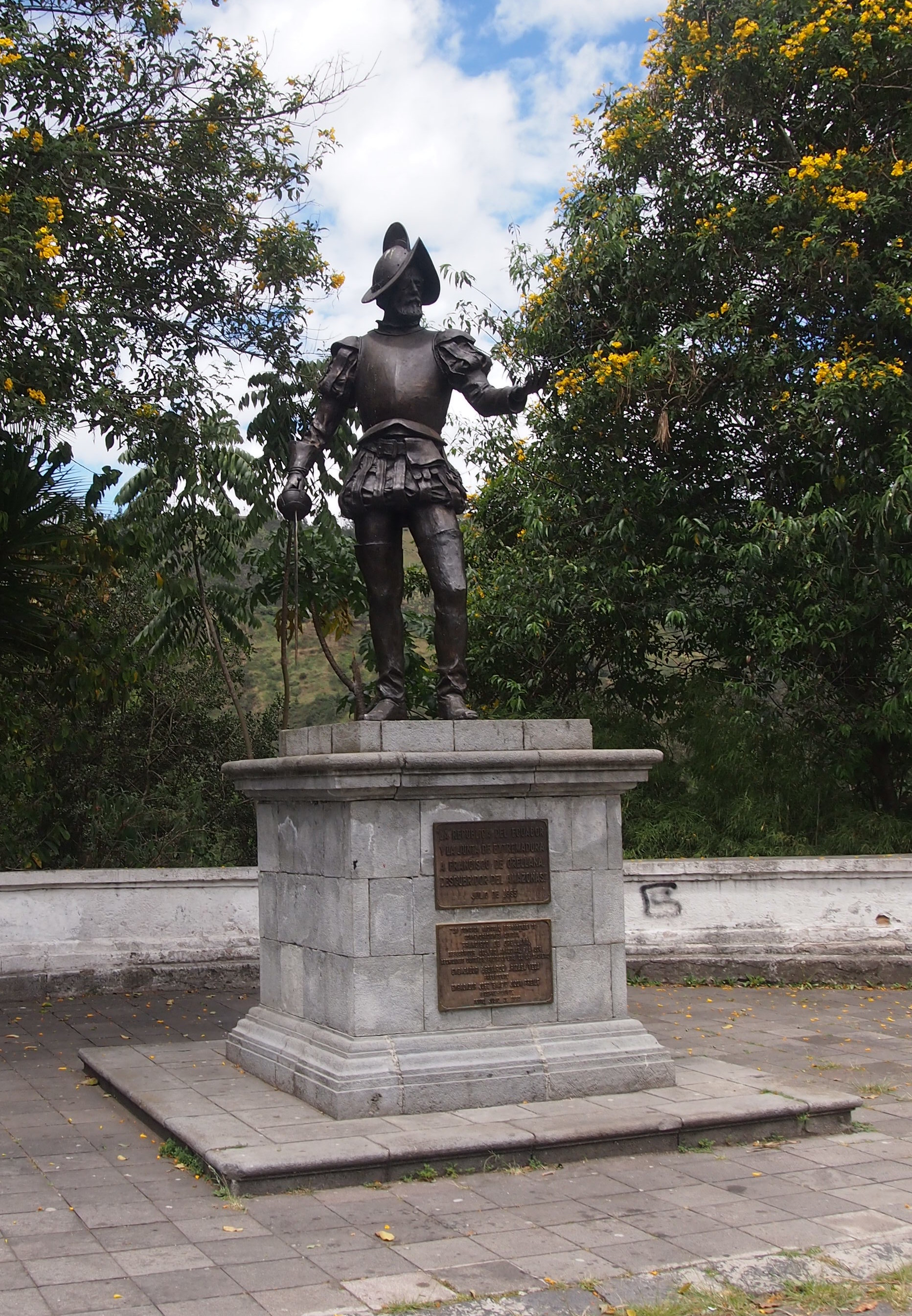
The next pics illustrate her taking after her father, unconsciously I bet, in taking pictures of statues and public art. This particular figure is Francisco de Orellana, explorer of the Amazon. As Wiki puts it, “in one of the most improbably successful voyages in known history, Orellana managed to sail the length of the Amazon, arriving at the river’s mouth on 24 August 1542.”
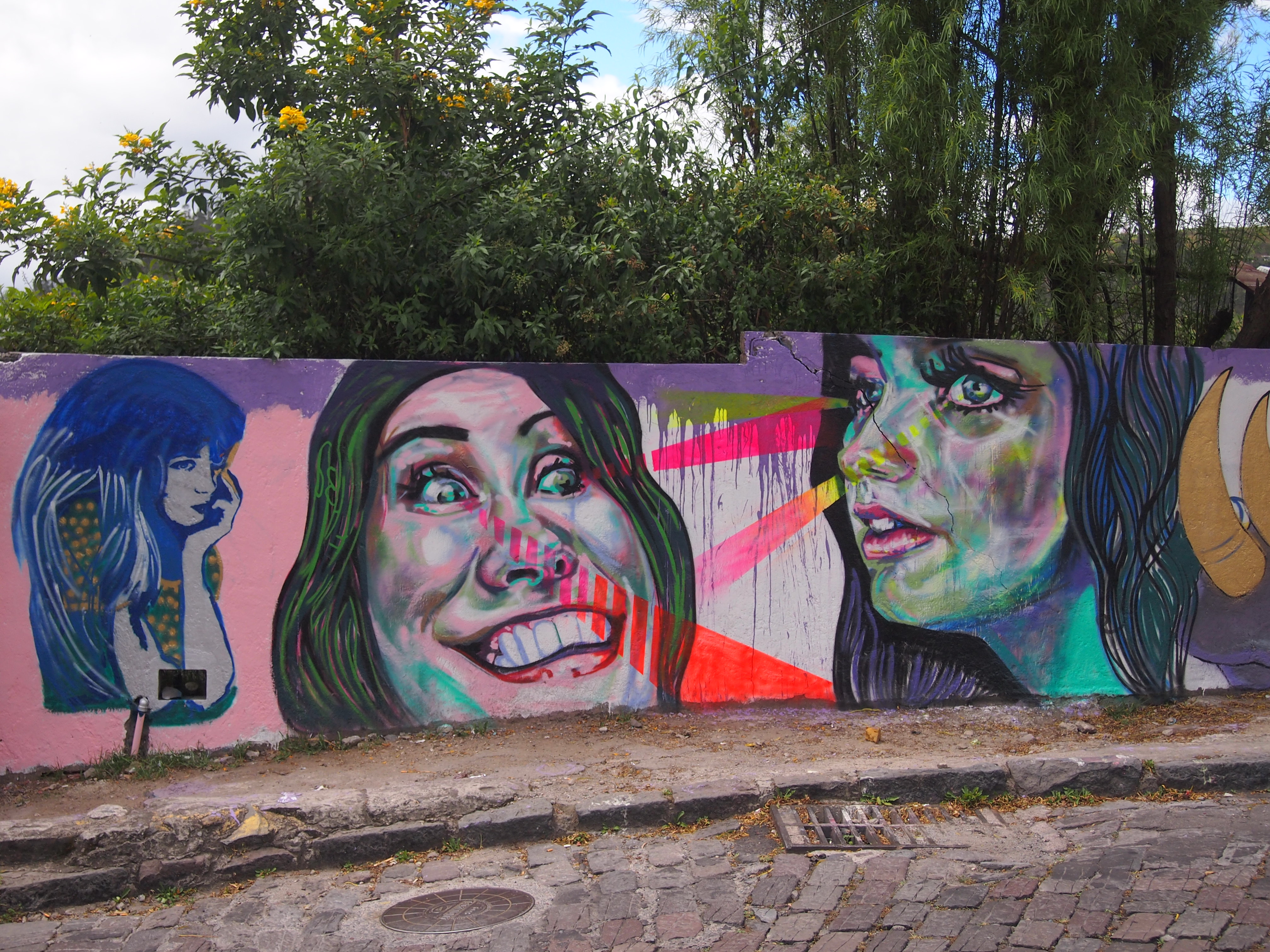
Quito June 2015Some roadside art.
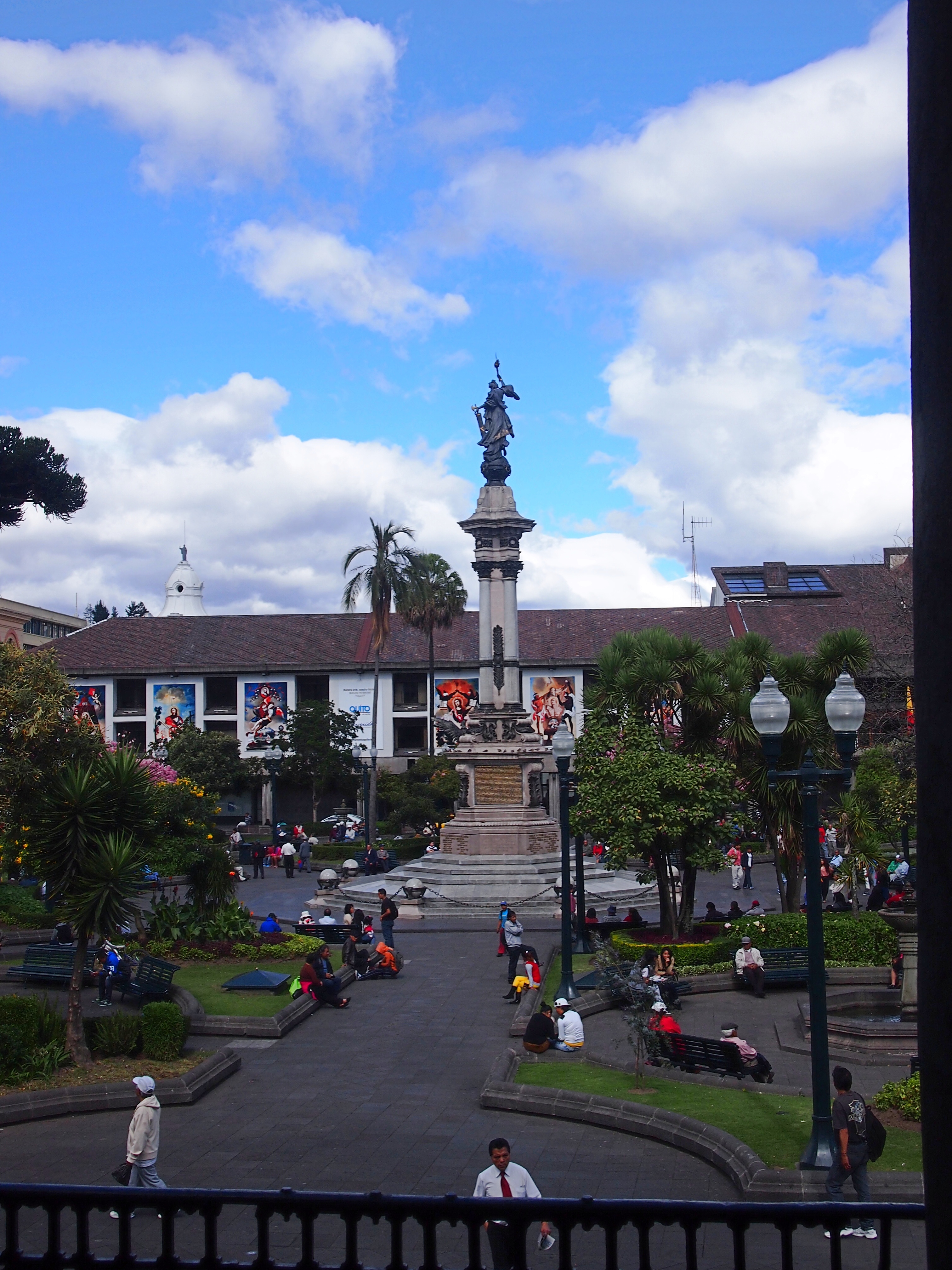
Quito June 2015Plaza de la Independencia.

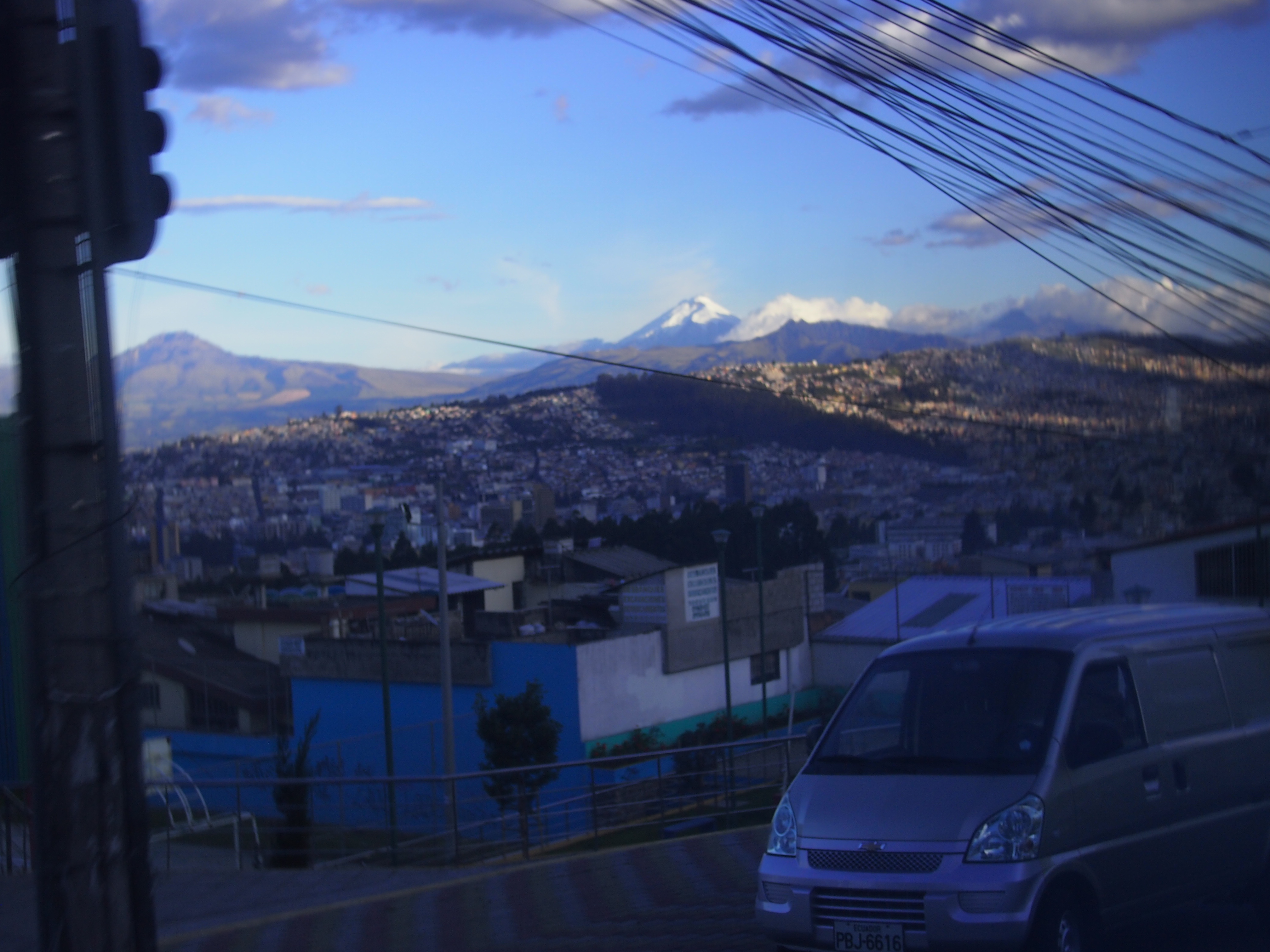
She was also impressed by the fact that she could see a volcano from Quito, which I believe is Pichincha. Alexander von Humboldt was the first European to climb it. I hear tell it’s still active.
Quito 2015Of course there were many more places. She visited the tourist Equator — how could you not? — Plaza Santa Domingo, a couple of art museums, open markets, grocery stores, churches, a school (technically they took a few Spanish lessons), the neighborhood in which she stayed with an Ecuadorean family, even the outside of the Ecuadorean presidential palace. All in all, it sounded like a fine trip. I’d need no persuasion to go myself.

Sprite & Jackfruit in Thailand

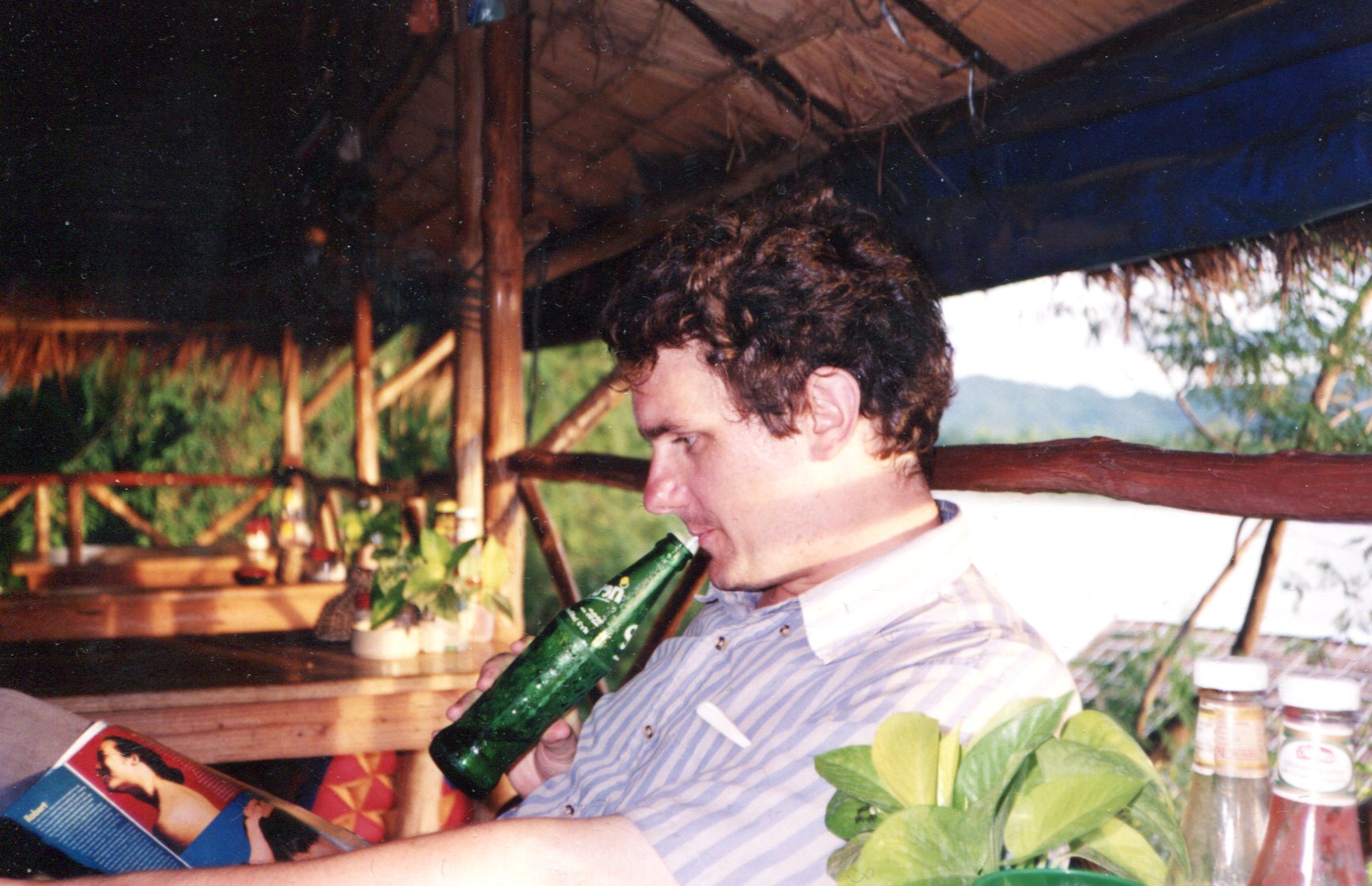
The rooms were small at our guesthouse near Kanchanaburi, Thailand, in June 1994, but the price was good: 100 baht, or about $4 a night for the two of us. The rooms were for sleeping. Otherwise, when you were at the guesthouse, you hung out at the patio overlooking the river. Here I am there, staying hydrated.

ThailandJune94.1I don’t remember exactly, but I think I was reading a loose Australian magazine someone had left behind on the patio.

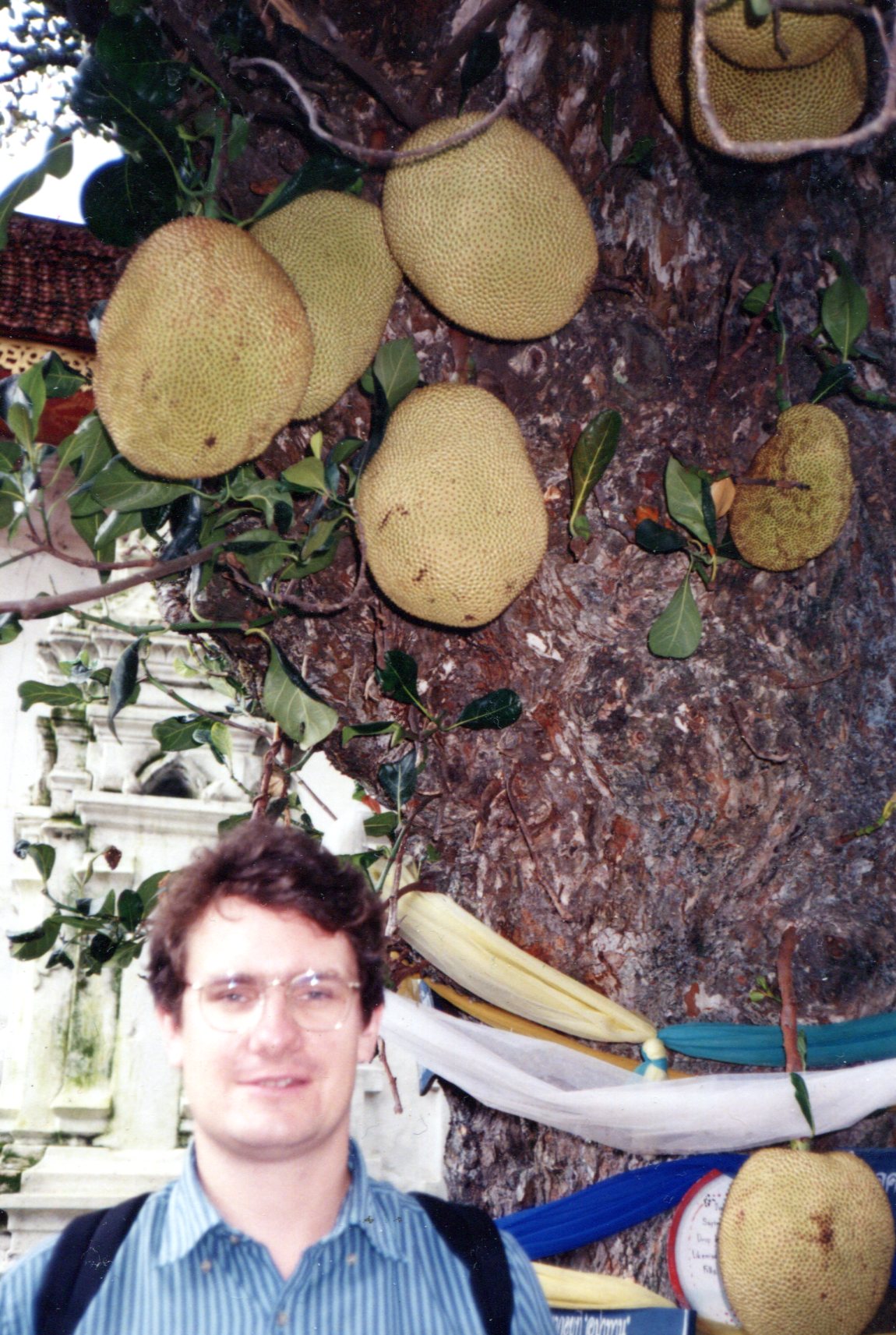
Later in the month, we made our way to Chang Mai, in the north of the country. One of the things to do there is visit Wat Phra That Doi Suthep, which involves climbing 309 steps to the temple grounds. Somewhere along the way, we spotted jackfruit.

ThailandJune94.2Over the years, I’ve found that almost no one in North America’s ever heard of it. (But it’s not as if I ask someone every day.) I’d never heard of it before visiting Southeast Asia either. It’s a tasty fruit, one of the tropical fruits you grow fond of in the tropics. It also disproves the notion that you shouldn’t eat anything bigger than your head. More about it here.

Too bad my face is overexposed. Even so, Lilly saw the picture after I’d scanned it and remarked on my youthful visage, though that wasn’t the word she used. As in, I can’t believe you were ever that young. It’s a hard thing to imagine one’s parents, even if I wasn’t that young at 33.

Thursday Scraps

Last year my part of the suburbs was lousy with skunks. For whatever ecological reasons, the population was up — so much so that both Lilly and I saw them prowling the streets at night.

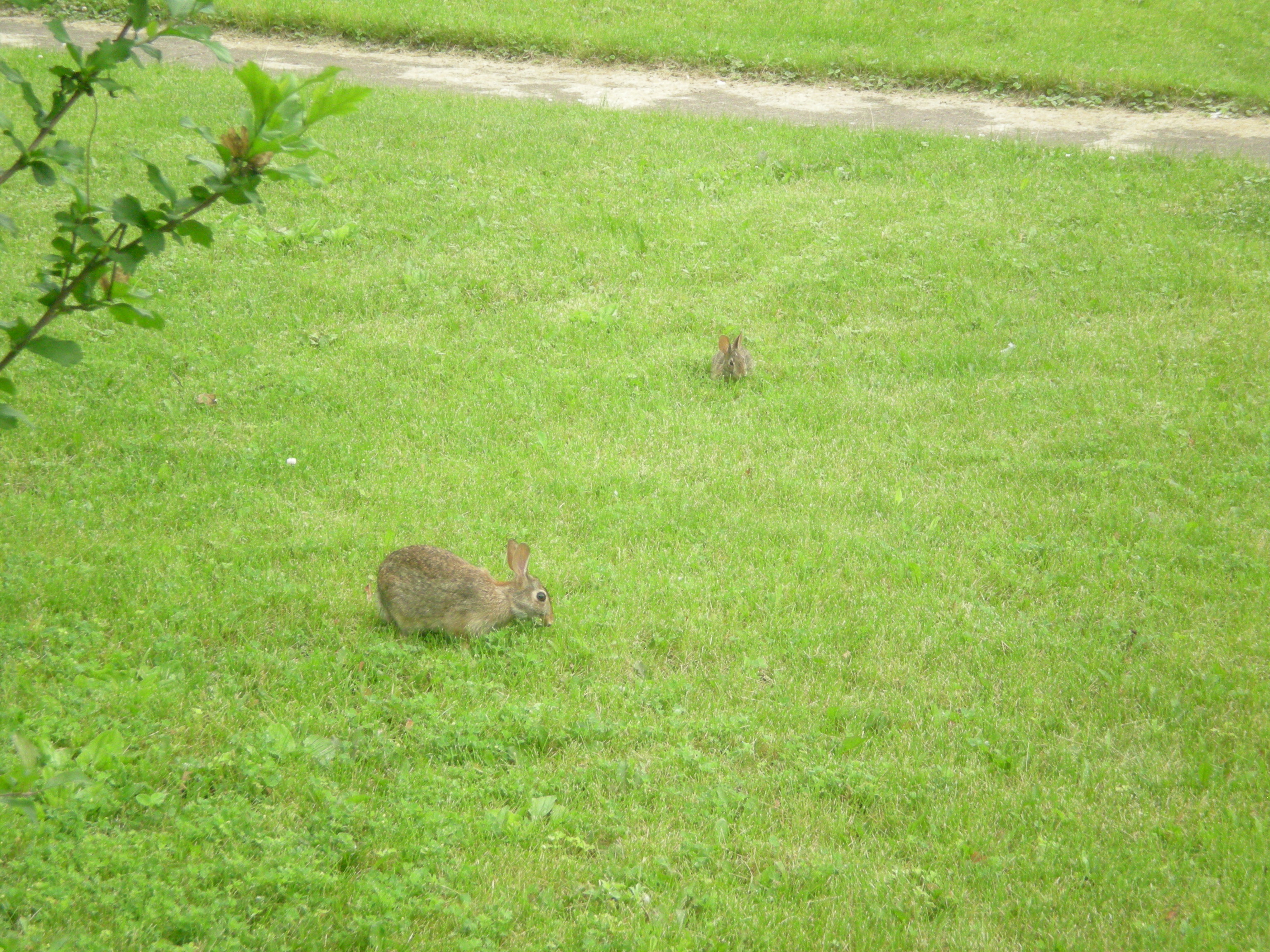
This year, not so much. This year, it’s rabbits. Yesterday I looked out my office window, which faces my front yard, and saw two, each helping to trim the lawn. I’ve seen single rabbits frequently in both yards, and in parks, but never two at the same time.

rabbits June 2015The dog would have had a barking fit if she’d seen them. But she didn’t.

Not long ago I woke up thinking, why are sidekicks just for superheroes and singing cowboys? Why not for other, less fictional occupations? Some examples:

Ben Smith, CPA, and his sidekick Tuck.
Deepak Patal, Ph.D., and his sidekick Hadji
President Clinton and her sidekick Slick (still hypothetical)

Earlier this month I was driving west on North Ave. in Glendale Heights, Ill., which is a western suburb, and decided I needed to go east, so I turned north on Glen Ellyn Rd. to find a convenient place to turn around. And then I discovered Easy Street. So I drove down Easy Street, just to get a look at the houses of the people who Live on Easy Street. More carports than usual in the Chicago suburbs, but other than that it looked fairly ordinary.

Occasionally, as in once every few years, the urge to listen to early ’80s German-language rock ‘n’ roll is just too strong to resist. We all feel that way. No? Well, I feel that way now and then, and the Spider Murphy Gang is just the thing for it. There’s always “Schickeria.” or “Skandal im Sperrbezirk.”

Palatine Prairie Nature Preserve

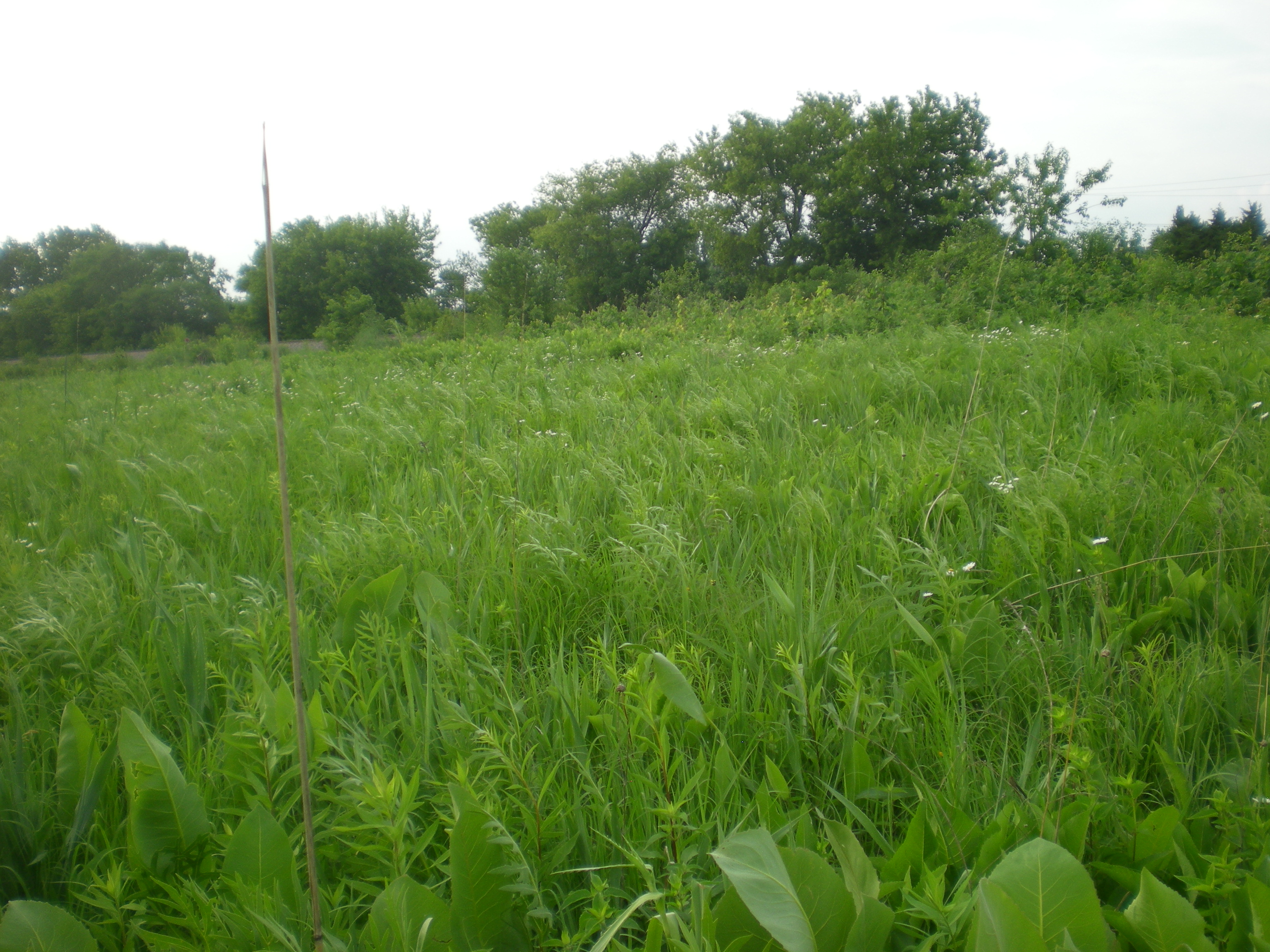
I’ve driven by the edge of the Palatine Prairie Nature Preserve and the adjoining Riemer Reservoir Park many times, traveling on N. Quentin Rd. in Palatine, Ill. Last Thursday, I decided it was time to stop and take a look at the place on foot. It happened not be raining, but the evidence of frequent rain was all around in the lush greens of this particular patch of Illinois greenspace.
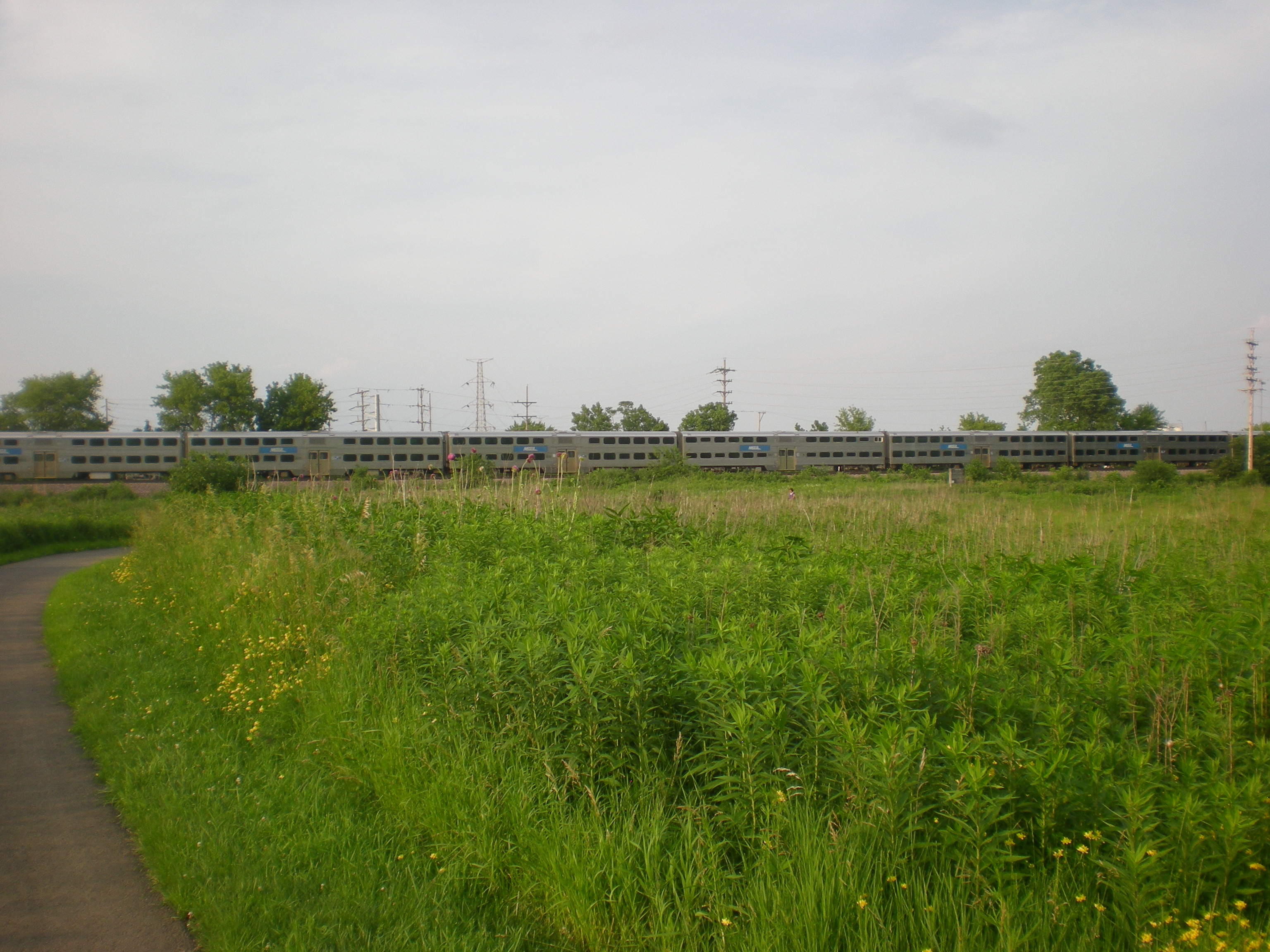
Palatine Prairie, June 2015That makes it look like the middle of nowhere. It’s no such thing. At the northern edge of the Palatine Prairie is the Union Pacific Northwest line of the Metra commuter rail system (not the line I usually take). Here’s a train bound for Crystal Lake at least, and maybe further northwest, and making the prairie a little less quiet.

Palatine Prairie, June 2015Not that the place is quiet. The roads aren’t far away. Palatine Prairie is the northern section of the greenspace; the somewhat larger Riemer Reservoir is to the south, and they’re separated by the small W. Wood St. A trail winds through both, and it’s a pleasant walk when it isn’t raining or too hot. The weather was just right for us last week.

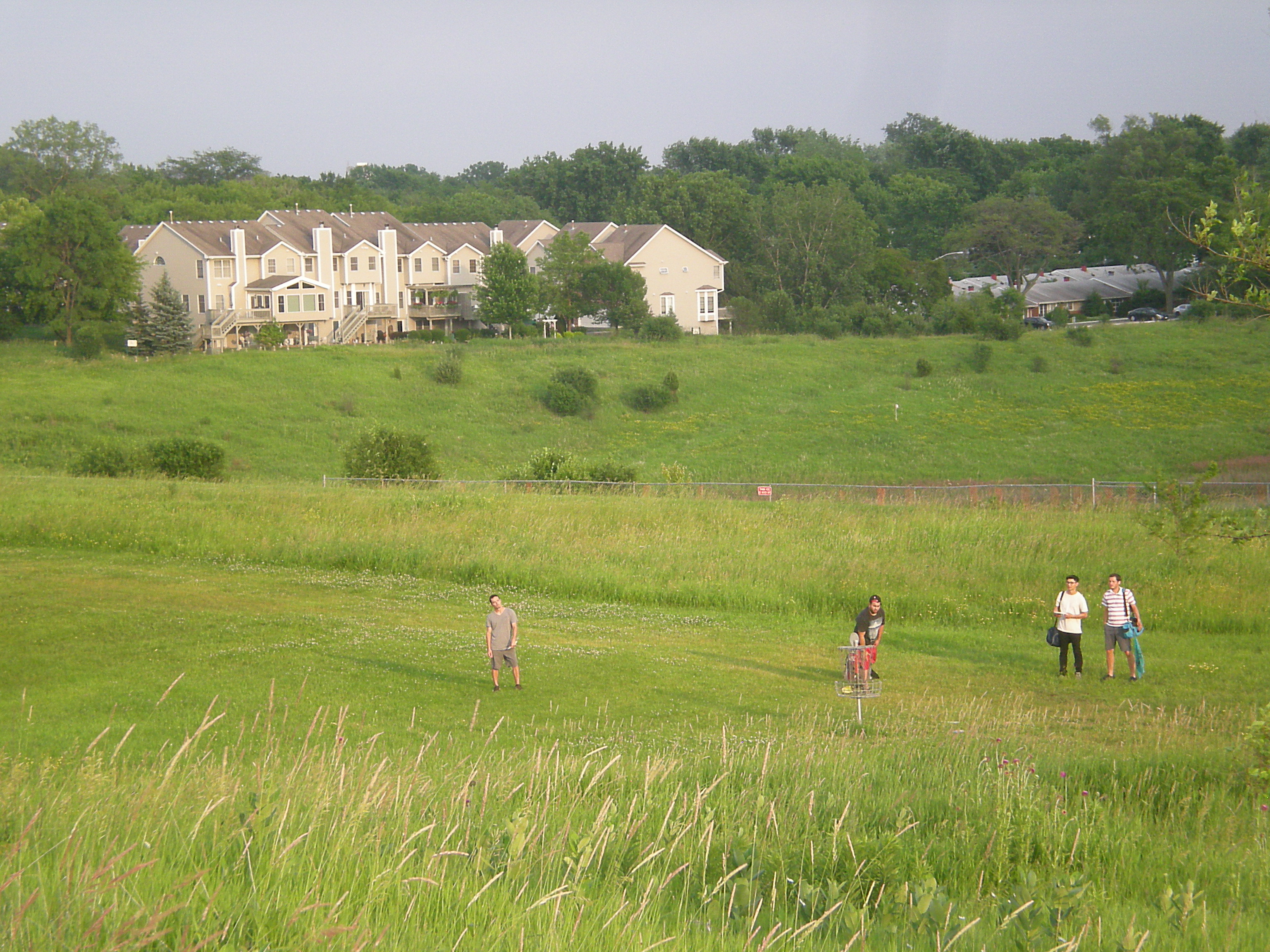
The greenspace that isn’t completely given over to prairie also includes a disc golf course. Guys were out playing disc golf. They seemed pretty serious about it, too.
Palatine Prairie, June 2015I’ve never played the game myself, though in the connected basements of Branscomb Quad at VU, we tossed frisbees at some kind of goals. Maybe the corridor doors, but I don’t think the rules were very well refined.

The 300 S. Wacker Map

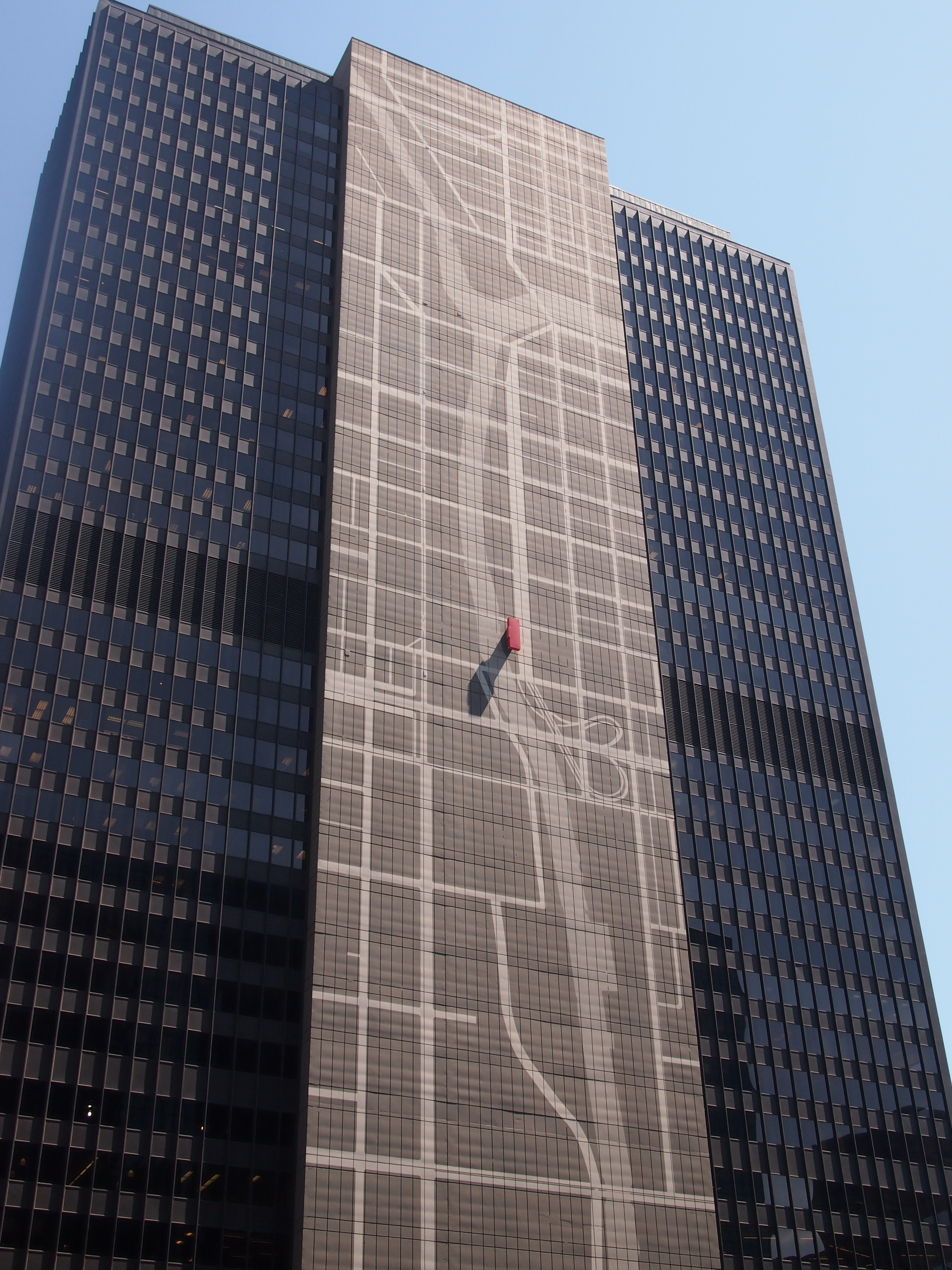
Last week in downtown Chicago, I also got a look at the 300 S. Wacker map, which was unveiled late last year and is easily visible from the west side of the Chicago River near Union Station. That’s because it’s a map as tall as a skyscraper, and who couldn’t like that?
300 S. Wacker 2015A close up.
300 S. Wacker 2015The giant map depicts the Chicago River and nearby streets, from Cermak to Chicago and LaSalle to Jefferson. The 300 S. Wacker building itself appears on the map as a three-dimensional red block.

Previously, 300 S. Wacker had little to distinguish it as a building, and little to catch the eye. Beacon Capital bought it last year and commissioned Elmhurst, Ill.-based South Water Signs to do the work. I’ve read that there are more art maps in the building’s lobby, backlit by LED lights; I’ll have to take a look sometime.