Maxine’s Chicken & Waffles

Until recently, I was only dimly aware of chicken & waffles. As a combined meal, that is, apparently known to the Pennsylvania Dutch and as a soul-food specialty in the 20th century. (More about it here.) Not long ago, Lilly started mentioning the combo. Not sure why. Maybe she picked it up from a let’s-go-there-and-eat-something show (e.g., Diners, Drive-Ins, and Dives.)

Anyway, the notion had lodged in my mind just in time for me to see a listing for Maxine’s Chicken & Waffles, which is at 132 N. East St., right at the eastern edge of downtown Indy. The area’s still mostly small commercial uses and parking lots, though I spotted a couple of apartment complexes being developed nearby.

Once I saw the listing in one of those publications left in hotel rooms, and did a little reading about the place – this is the age of Yelp, after all – I suggested it for Saturday lunch, after we’d finished with the Eiteljorg Museum. I didn’t want to end up at some restaurant that could be anywhere, just because we couldn’t think of anywhere else to go, and everyone wanted to eat right now.

Maxine’s is about a 20-minute walk eastward from the museum, across the heart of downtown Indianapolis. Along the way we spotted the statue of Vice President Hendricks, but also another memorial that goes to show the veneration we still have for President Lincoln.
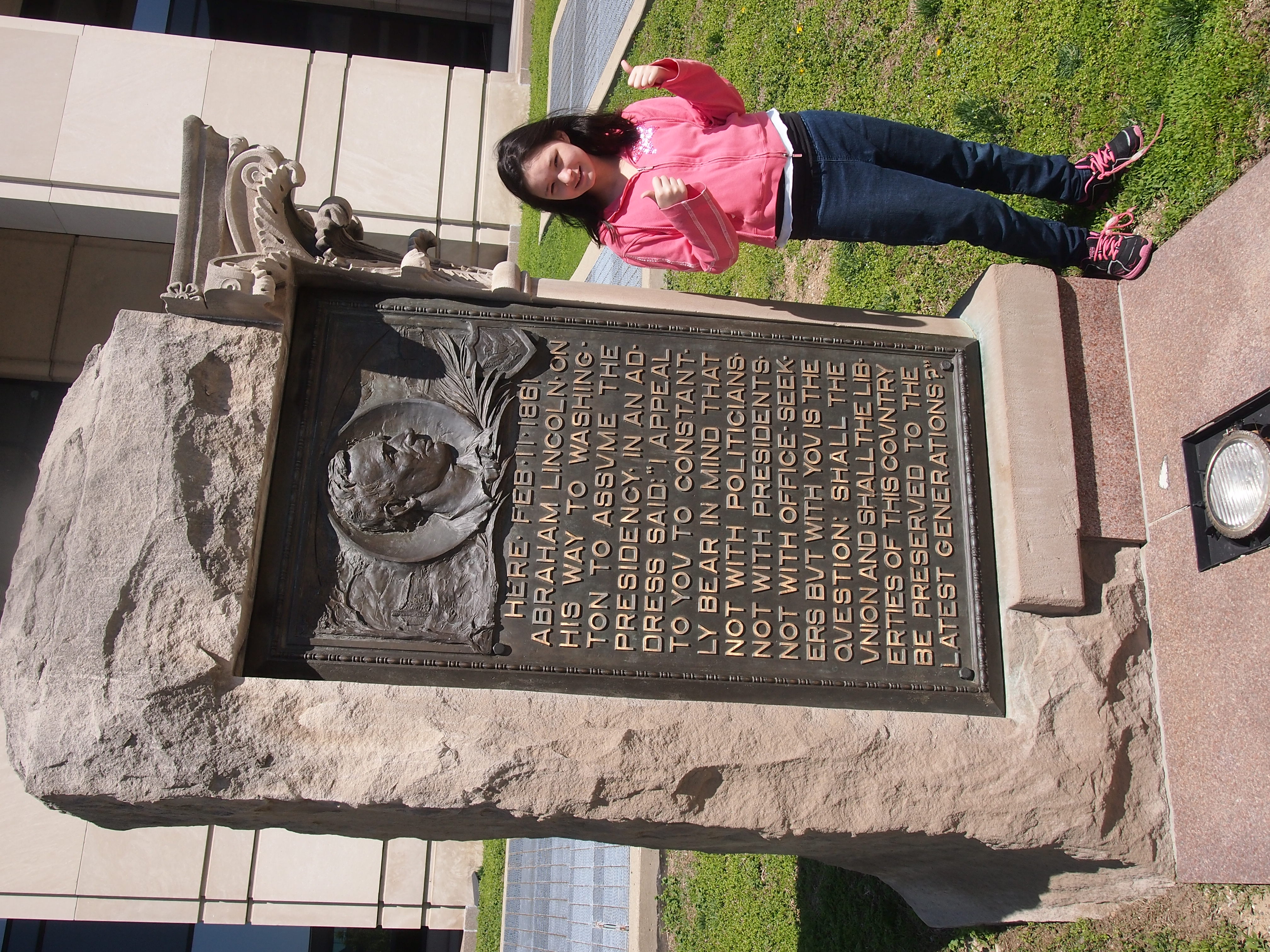
Indy, April 2014It marks the spot where Lincoln stopped to speak, on February 11, 1861, on his way to Washington City to become president. (We should still call it Washington City. Maybe that usage will return if DC wins statehood.)

We arrived at Maxine’s for a late lunch. Good thing, too, because I’ll bet the place gets really crowded on Saturday morning and into the early afternoon. As it was, it was mostly full. According to a sign on the wall, and its web site as well, the place only dates from 2007, founded by the children and grandchildren of Ollie and Maxine Bunnell, whose large family had a knack for cooking (Maxine’s regular job was cooking at St. Francis Hospital).

I’m glad that the restaurant survived the recession. Not every venture started in 2007 would be so lucky. But I don’t think luck was the main factor. We all had a variation of chicken & waffles – plain, blueberry and strawberry waffles – and they were terrific. So seemingly simple, so artfully made.
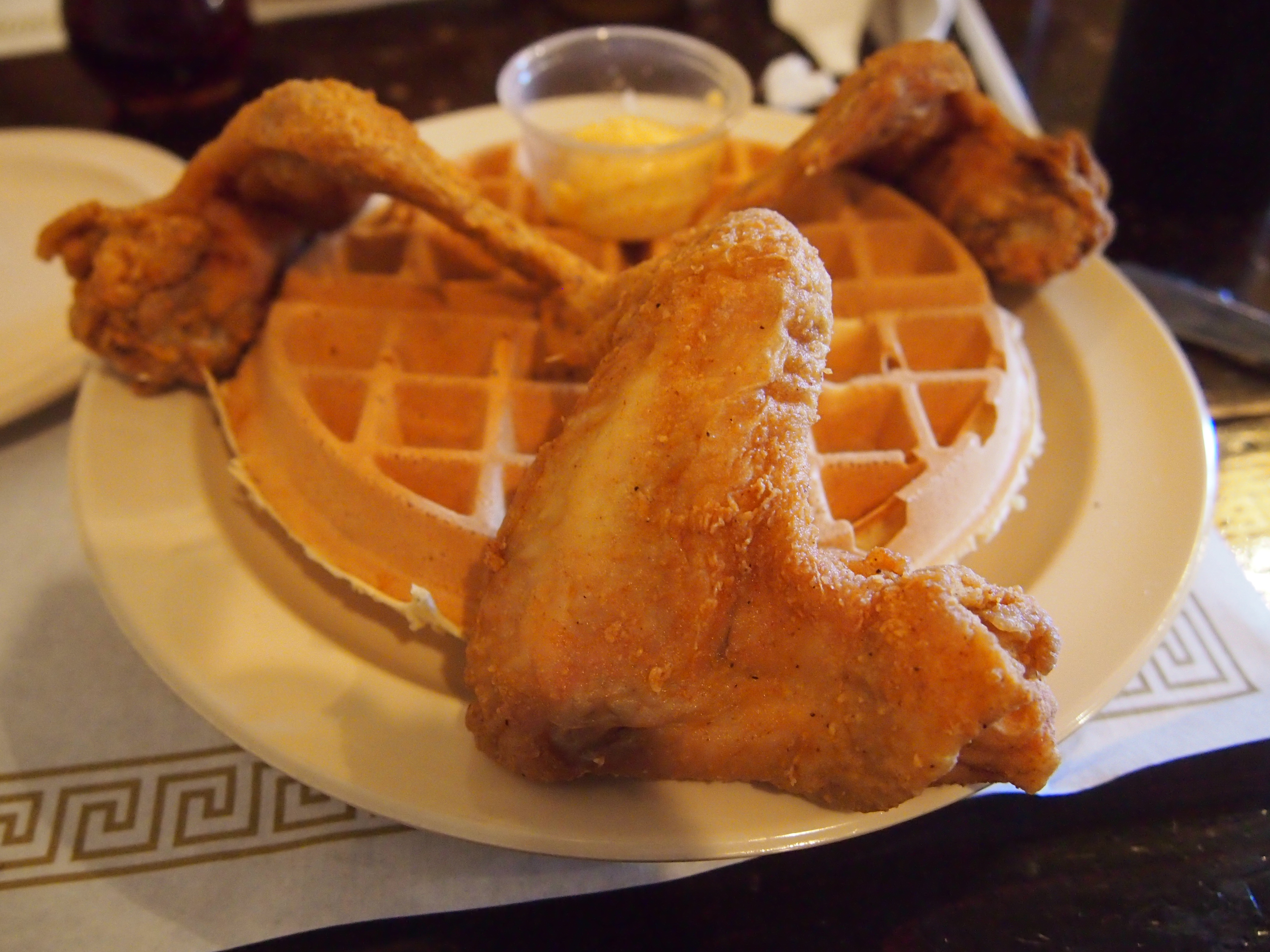
OLYMPUS DIGITAL CAMERAAs you can see, it’s your basic waffle, adorned by three fried chicken wings, with a bit of honey-butter on the side, along with syrup. The combo works. They complement each other. After you’ve eaten some of the sweet waffles, you switch to the mildly spicy chicken, and then back. From beginning to end, not a bad bite in sight. Not even a mediocre one. Whatever soul-food recipes the heirs of Ollie and Maxine have come up with, they’re winners.
The Eiteljorg Museum

The Eiteljorg Museum of American Indians and Western Art is one of a number of attractions at downtown Indianapolis’ White River State Park, just west of the capitol and the CBD. We parked in an underground facility and entered the Eiteljorg through its back entrance, which faces Indy’s canal. The museum’s small sculpture garden is outside that entrance.

When the museum specifies “American Indians and Western Art,” it means Indian art and artifacts of historic interest, but also artwork by contemporary American Indians, as well as art by non-Indians with a theme of the American West. Its collection along these three lines is substantial, housed in a large building adjacent to the Indiana State Museum, and well worth a look.

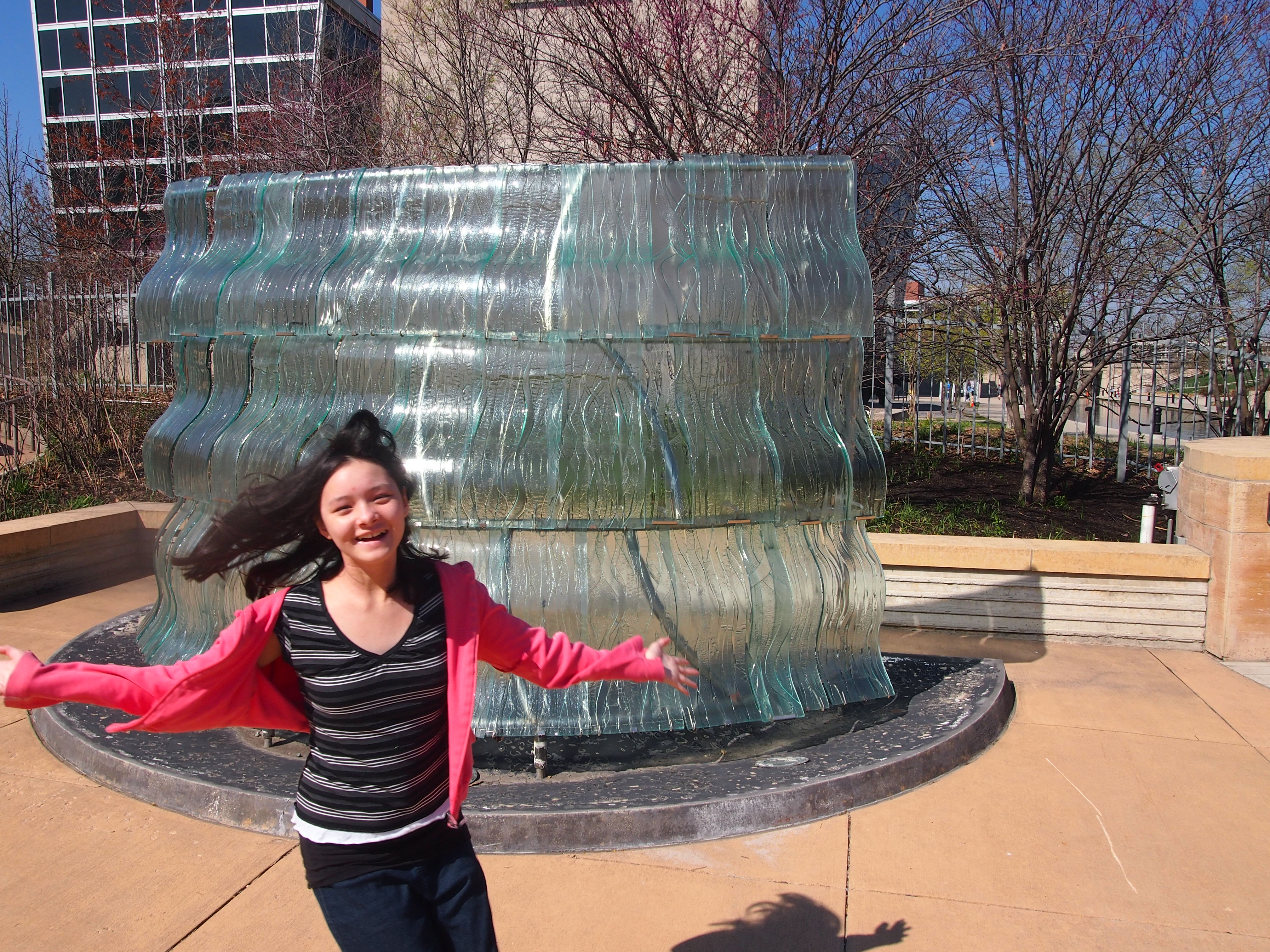
OLYMPUS DIGITAL CAMERAAnn’s in front of an example of contemporary Indian art in the sculpture garden: “Water Whispers” (2005), a steel-and-glass creation of Truman Lowe, a Ho-Chunk born in 1944 and professor emeritus at the University of Wisconsin-Madison Art Department.

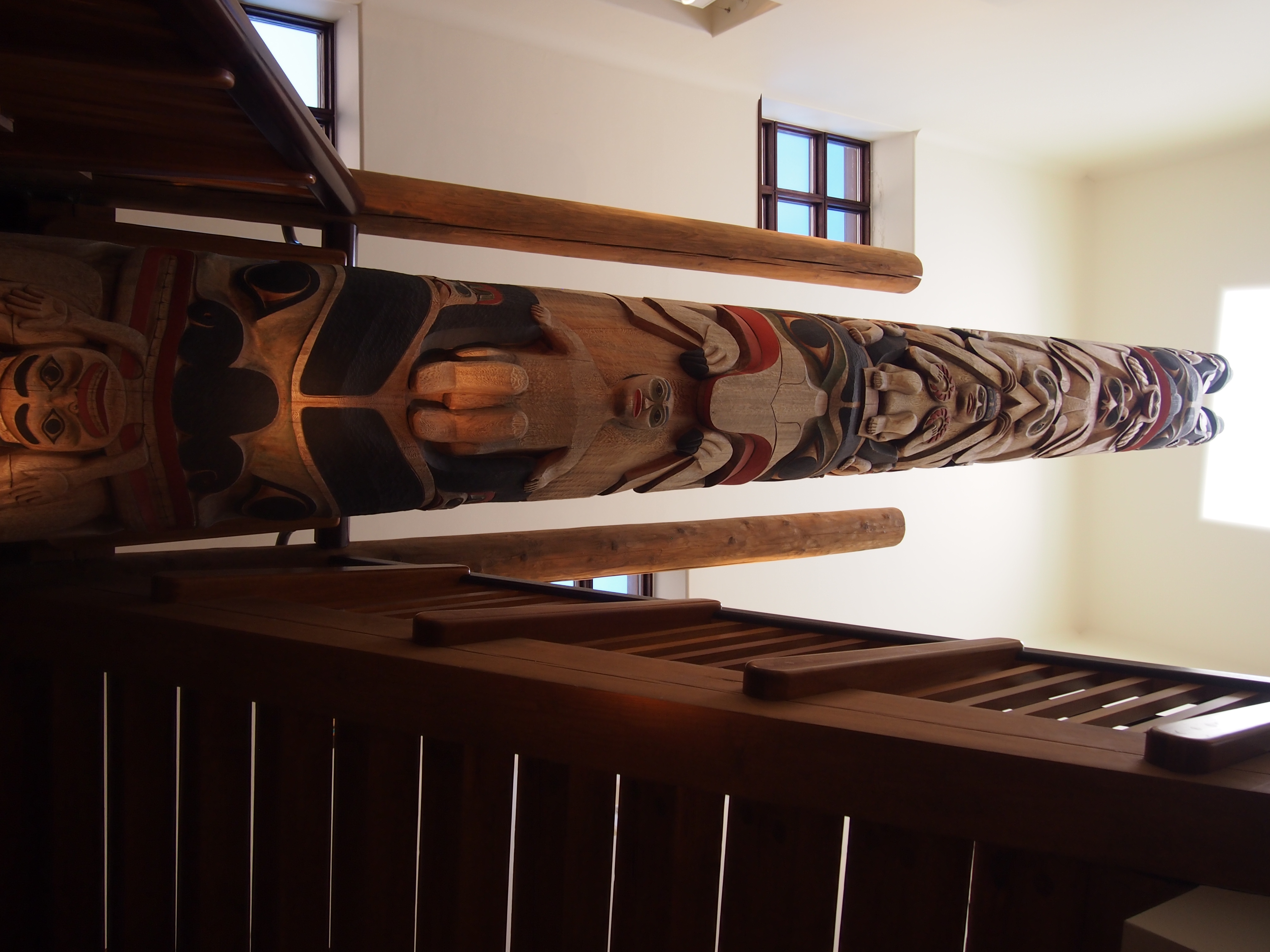
We entered the back entrance and immediately were face-to-face with a totem pole. Nothing like a totem pole right next to you to get your attention.

Totem Pole, Indiana 2014It’s a replica of a 19th-century Haida totem pole, carved by one Lee Wallace in 1996, great-grandson of the carver of the original pole, Dwight Wallace. Apparently the original pole had made its way from British Columbia to Alaska to the 1904 St. Louis World’s Fair to Indianapolis industrialist David M. Parry, who kept it on his land (as the Golden Hill totem pole) until it deteriorated and fell in 1939. The new pole, “The Legend of Wasgo,” is made of red cedar with acrylic paint.

The Eiteljorg’s Native American collection, according to the museum, “began with the personal holdings of founder Harrison Eiteljorg and the Museum of Indian Heritage formerly located in Eagle Creek Park. Ranging from traditional objects of material culture such as weaponry, clothing, and basketry, to contemporary Hopi Katsina carvings, jewelry, and Inuit sculpture, the collection includes works of historical and aesthetic significance as well as articles produced for everyday use.”

As for the contemporary Indian art, “the collection consists of copious materials from photographs, beadwork, works on paper and canvas, to beaver fur and hides, traditional paintings and large installation pieces incorporating several mediums. While there is recognizable imagery in a lot of the work, it also represents works that are non-representational such as the work of Harry Fonseca (Maidu/Niseman, Portuguese, Hawaiian) who’s painting is inspired by Navajo blankets or James Lavadour’s (Walla Walla) multifaceted landscapes influenced by hiking through the mountains.”

Two large galleries are devoted to Western-themed art. I’d only vaguely been aware of the Taos School, but I got a lesson about it at Eiteljorg. “The collection is especially strong in art by members of the Taos Society of Artists from the late 1890s to the late 1920s,” the museum notes. “The museum collection also includes an expressive collection of works by early modernist artists who found the West to be inspiring. Among highlights in this broad area are works by Georgia O’Keeffe, Robert Henri, Marsden Hartley, Randall Davey, and many more.”

On exhibit at the Eiteljorg until early August is a fine exhibit of 75 Ansel Adams prints, all apparently selected by the photographer himself at some point as his greatest hits (it could have been as recently as 30-odd years ago; I hadn’t realized, or forgotten, that Adams lived until 1984). A good many images were familiar — great hits, all right — but not all of them, including a handful of portraits of people. Not something he’s known for, but he did them sometimes. One of the portraits was of an elderly woman on a screened-in porch somewhere out West, and she reminded me of my grandmother.

As we were headed for the exit – and the gift shop before that – we chanced across an Art*o*Mat, a repurposed cigarette machine that now sells small pieces of art. I’d seen one of those before, at the Chicago Cultural Center, but that was some years ago. For $5 we got some handmade earrings.

Art-o-Mat, Indianapolis April 2014I also got a picture of my family reflected in the Art*o*Mat mirror.

Return to Lilly Lake

Besides being Good Friday, April 18 this year had a good Friday afternoon, as warm as a spring day sometimes is. It was a good day to visit Eagle Creek Park, in northwest Marion County, Indiana, which counts as an Indianapolis city park, though it’s much more like a forest preserve. It’s slightly hilly, forested, and features a number of small lakes.

The smallest of these, I think, is Lilly Lake. We have to like a name like that, though in fact it must be named after one or another of the Lilly pharmaceutical family, whose land this used to be. We parked nearby and took a stroll around Lilly Lake. It was the picture of an early spring day: puffy clouds, green grass, the smallest of buds on the trees.

Lilly Lake, Indianapolis April 18, 2014Besides being a pleasant setting on a warm day, I wanted to come because we’d been there before. Back in early 1999, we did a similar short trip to Indianapolis, and just before we left town, we stopped at Eagle Creek Park, and took a stroll around Lilly Lake. It had been a wet spring, or at least wet recently, and near the edge of the lake was a muddy patch of ground.

Lilly, who was two years old then, stepped into the mud without warning and immediately found her feet stuck. She pulled and pulled and, getting nowhere, burst out crying. Time for Dad to step in – figuratively, since I didn’t need to physically step in the mud. I reached over and picked her up. Her little boots stayed in the mud, to be retrieved separately. The whole incident lasted maybe 30 seconds, but somehow I haven’t forgotten. One of those things.

This time around, with two somewhat older daughters, we had no mud incidents.

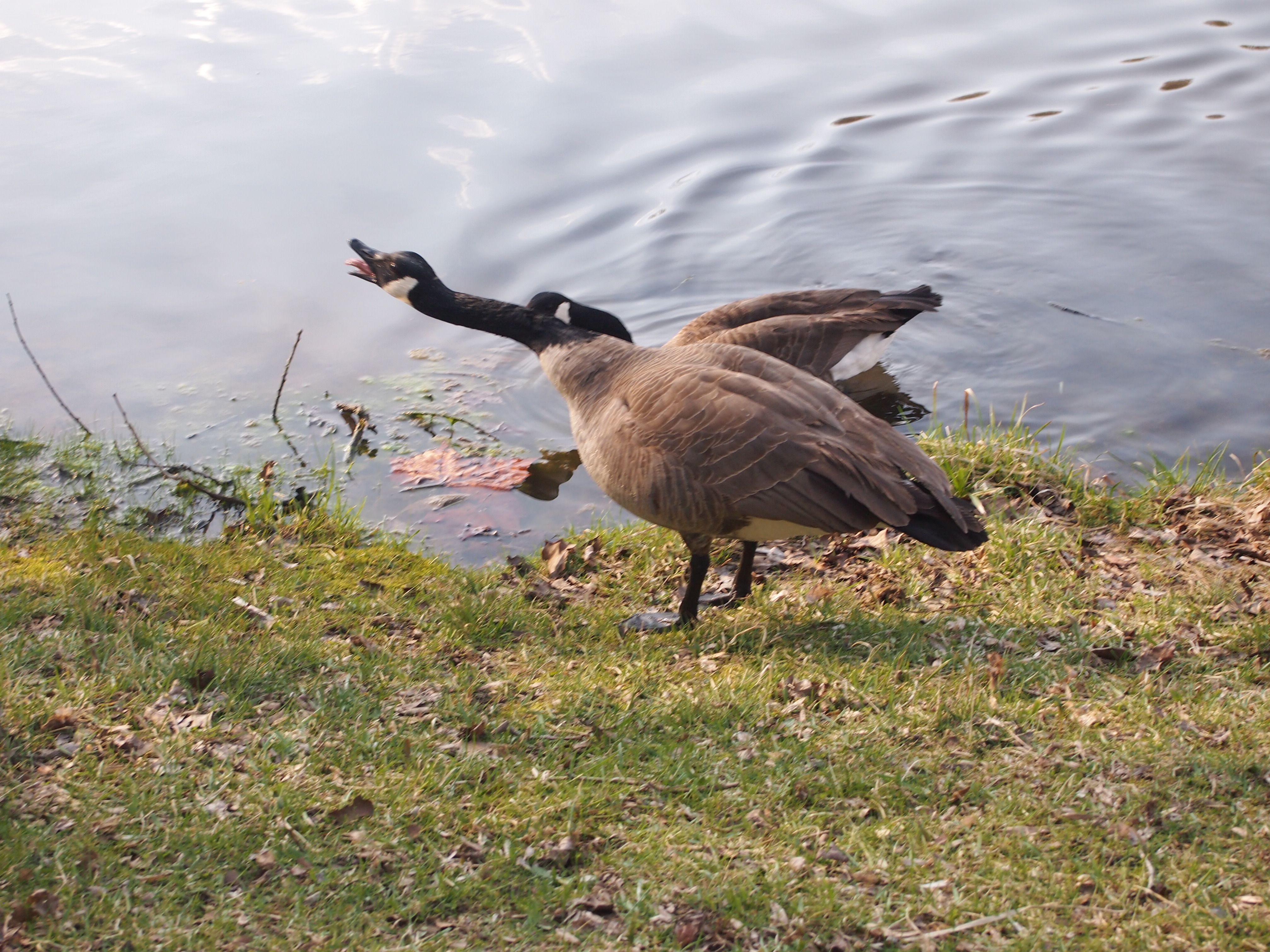
Indiana Goose, April 18, 2014A goose did hiss at Lilly, however.

Indianapolis ’14

On Good Friday, we loaded ourselves into my car and drove to Indianapolis by way of Lafayette, Indiana, and spent the night and much of the next day in Indy. We walked, we ate, we saw things. (There’s got to be a concise Latin translation for that: vidi would be last instead of first, though it won’t be as snappy.)

Years earlier I’d heard about the Eiteljorg Museum, which is downtown Indianapolis, and since then it had been filed in my large, rambling mental file called New Places to Go. That’s actually a large set of files, but the Eiteljorg had the advantage of being nearby. But far enough for an overnight trip.

Naturally, we hit the road later than planned, and so stopped to eat a late lunch in Lafayette, where we spent time wandering around the main street in town, which is helpfully named Main St. Later, just off I-65 in northwest Indianapolis, we rambled around Eagle Creek Park, which is one of the larger municipal parks in the nation – 3,900 acres of forest, plus some lakes.

Considering our arrival in Indy late in the afternoon, Eiteljorg had to wait until the next morning. After a few hours in the museum on Easter Saturday, we set out on foot in downtown Indianapolis, first along ordinary sidewalks, later along the canal. It was a bright spring day, a pleasantly warm, and so a lot of people were out, probably more than many Midwestern downtowns see on Saturdays. Looks like the redevelopment of the canal has been a success. After a late lunch, we headed back to metro Chicago, arriving back before dark.

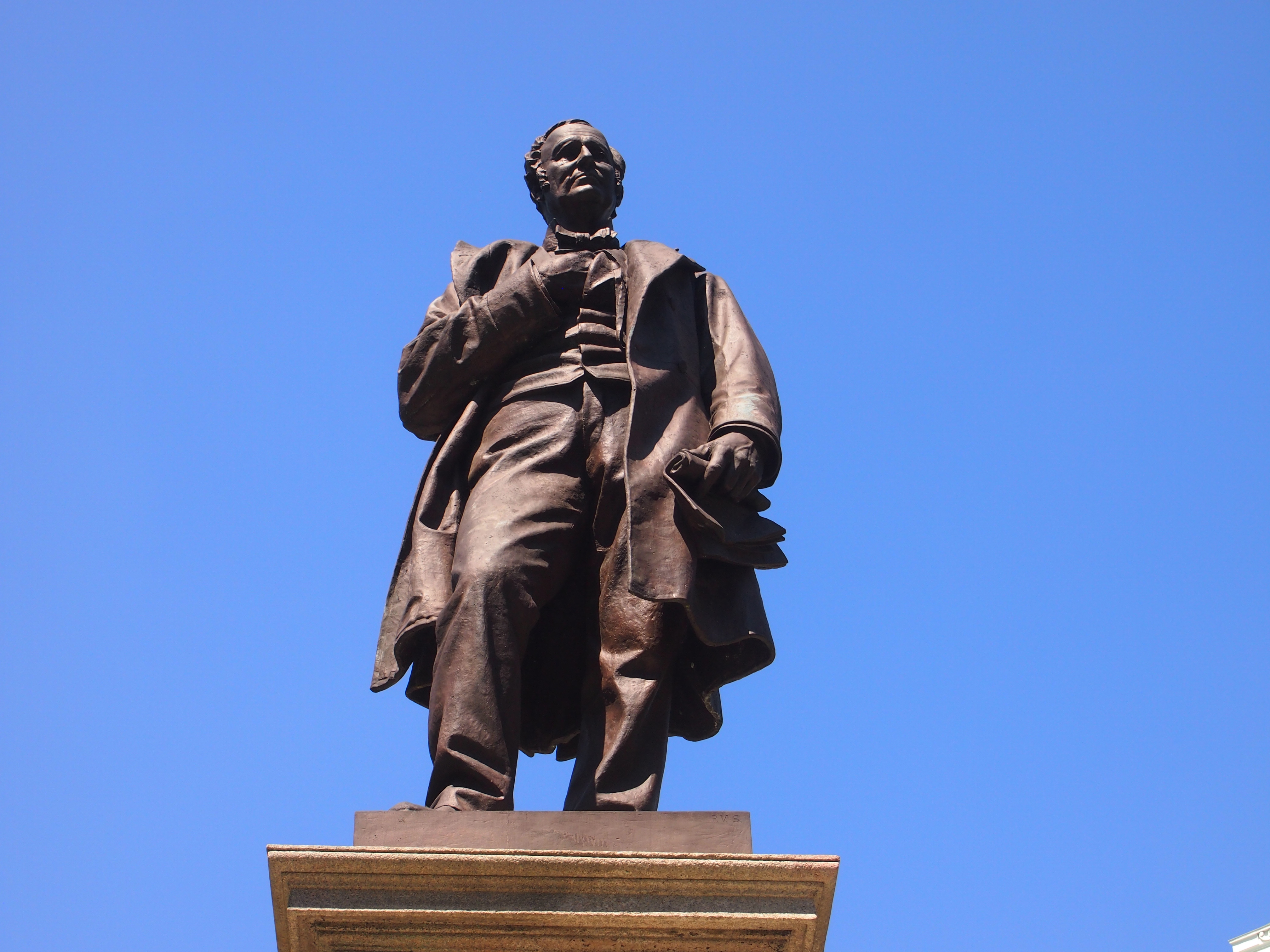
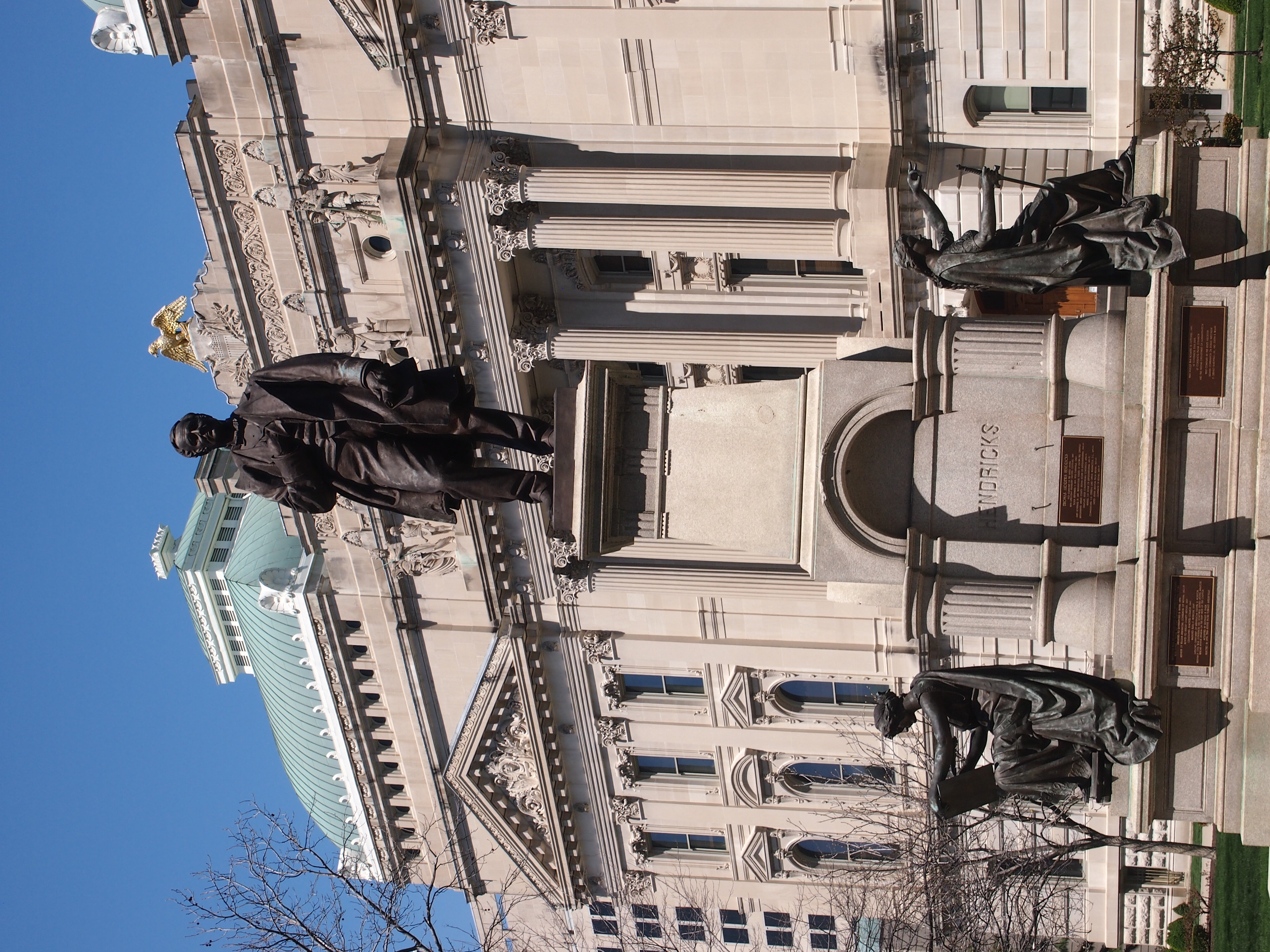
A simple but interesting trip. And I got to see a statue of a vice president.

OLYMPUS DIGITAL CAMERA Vice President Thomas Hendricks, that is, who was also a governor of Indiana. He was 21st Vice President of the United States from early 1885 to late 1885, during Cleveland’s first term. The 19th century, of course, was hard on U.S. vice presidents. Hendricks went to bed one night in November 1885 and never woke up.

Indiana CapitolHis statue is on the grounds of the Indiana State Capitol. Oddly, while I was taking these pictures, a Japanese tourist asked me to take his picture with Hendricks in the background, using his camera, so I did. Maybe he’s a U.S. vice presidential enthusiast.

Maundy Thursday ’14

Back to posting again around May 4. A pleasant Easter to all.

It’s my spring break time, now that it’s actually more-or-less spring. Not that I won’t be working during the next two weeks. It isn’t that kind of spring break. No one older than about 22 gets that kind of spring break.

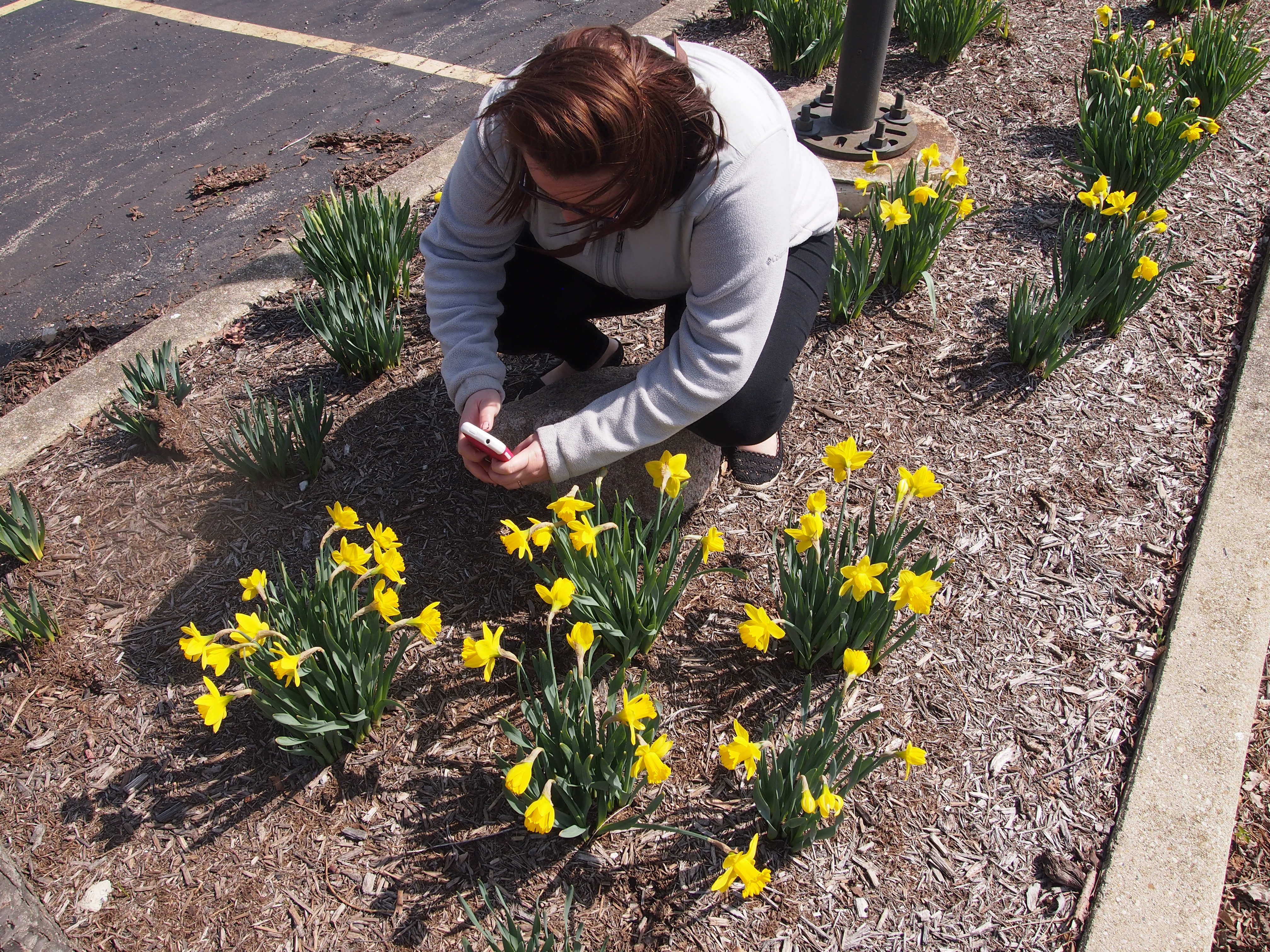
Today Lilly and I were out before noon and she wanted to take some pictures of the flowers that bloom in the spring (tra la). So I took a picture of her taking a picture. I think she sent some of her images immediately to friends, as youth does.

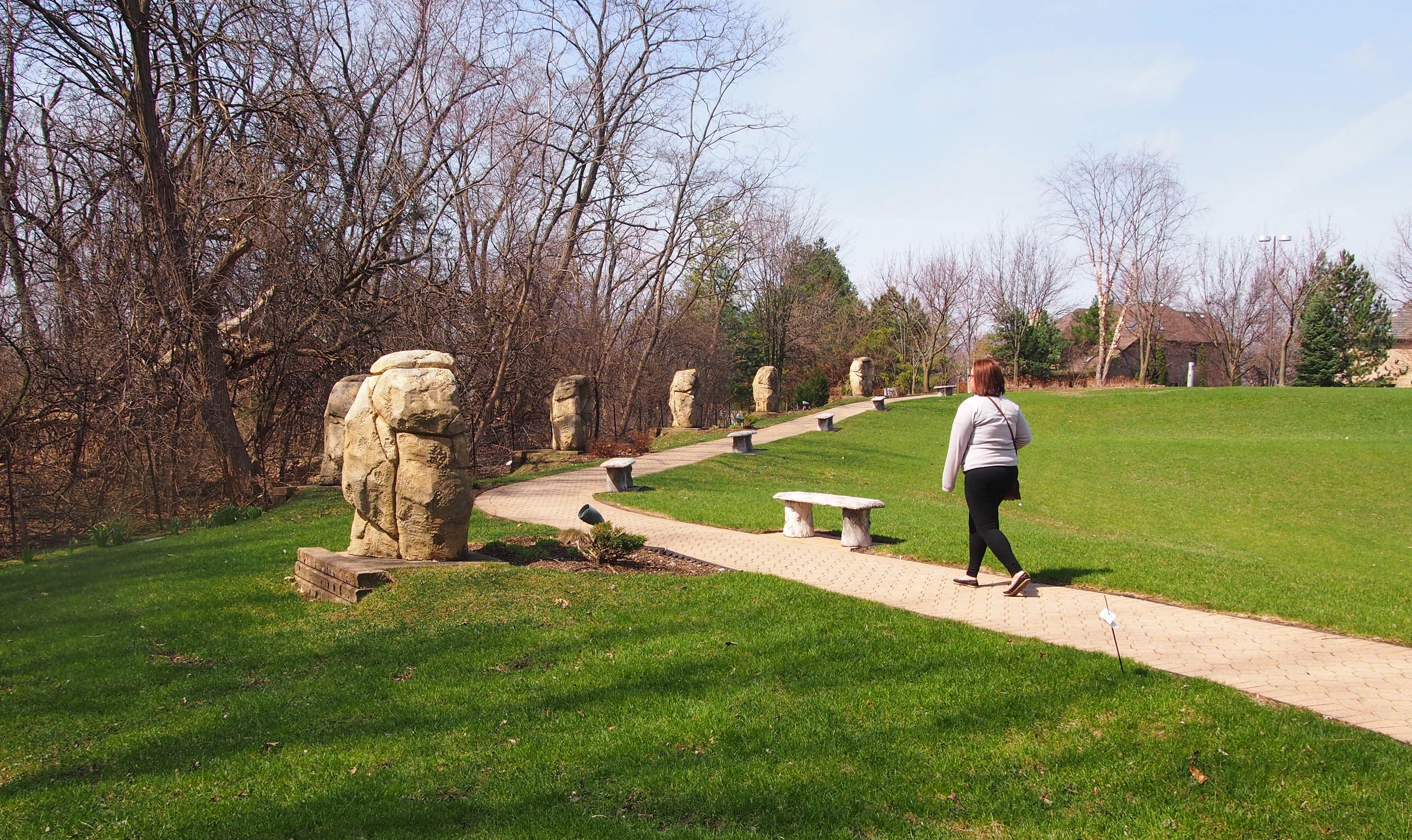
Lilly 4.17.2014They bloomed on a small island in the large parking lot at St. Matthew Parish, a Catholic church on Schaumburg Rd. in Schaumburg, Illinois. We didn’t go there to see flowers, though that was nice. Instead, I wanted to take a look at the Stations of the Cross on the grounds. Seemed like a good thing to do on Maundy Thursday, especially when it was almost warm again.

The stations form a semi-circle around a catchment, and are backed by the woods of the Spring Valley Nature Preserve.

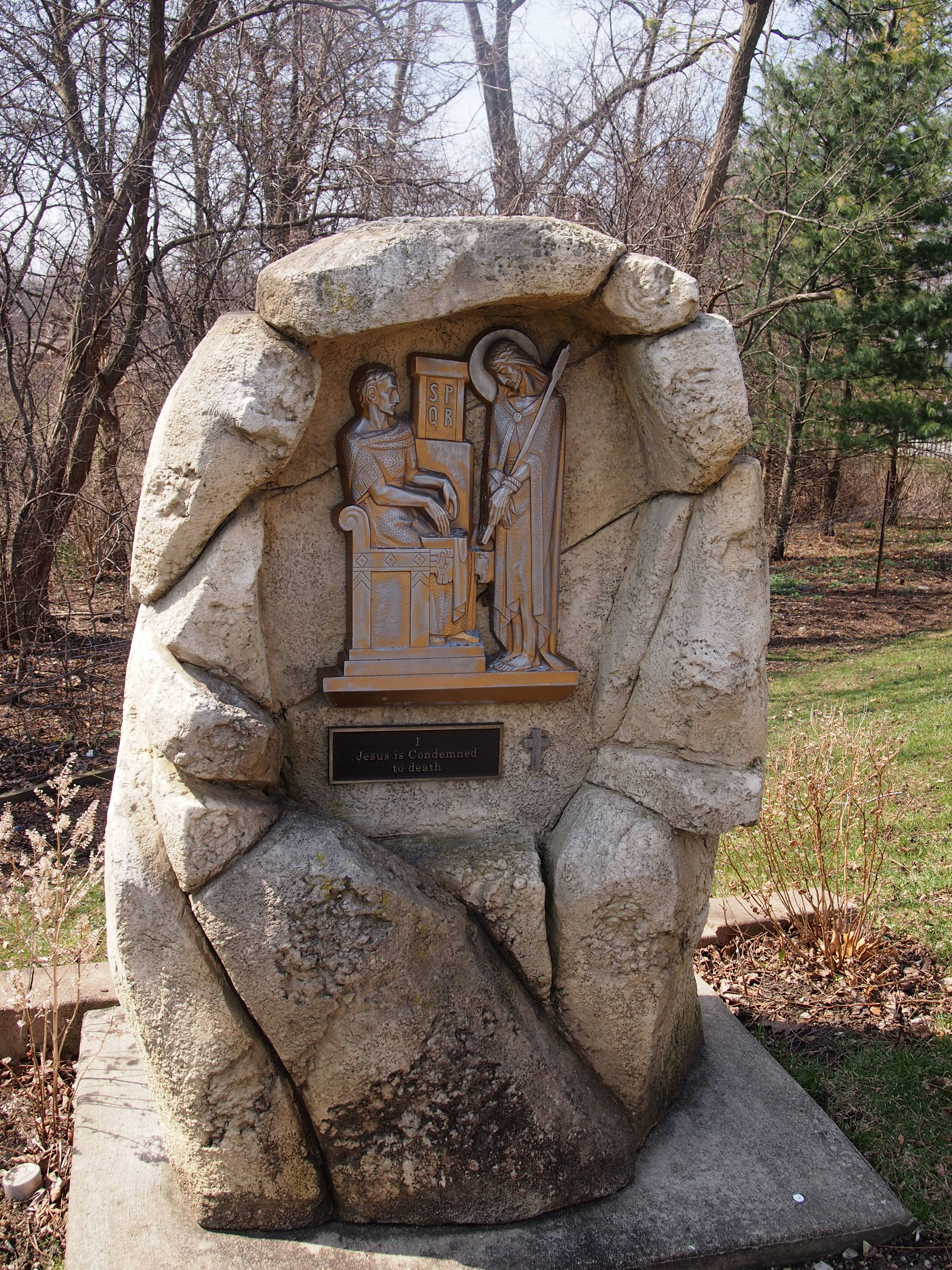
St Matthew, Schaumburg 4.17.14 - 1Plaques fixed to a short agglomeration of stones illustrate each station. This is the first one, with Jesus and Pilate.

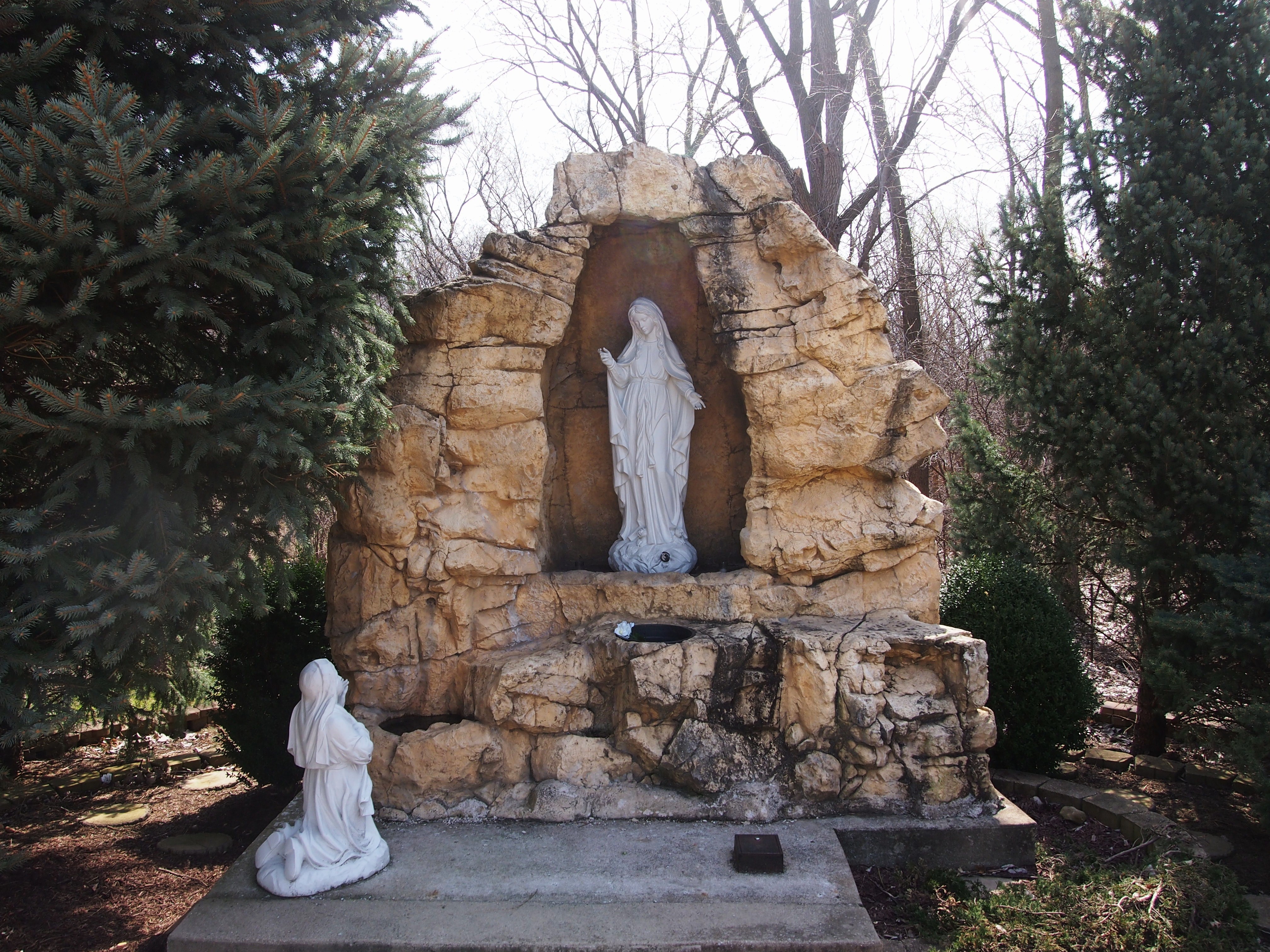
St. Matthew Schaumburg 4.17.14 - 2There isn’t much information about this particular Stations of the Cross on the St. Matthew wed site, so I don’t know if they were custom made for the parish, or you can get them ready made. Along the way, there’s also a grotto.

St Matthew Grotto, April 17, 2014Like I’ve said before, if you find a grotto, no matter how humble, take a picture. And then pause for a moment.

Eat Potatoes With Potatoes

File this under “Learn Something Every Day.” As I was reading a press release today about an environmentally friendly hotel – a green hotel, in commercial real estate parlance – I came across the following: “[It’s the] most environmentally aware hotel that I have ever stayed at – breakfast plates and cutlery made from potatoes…”

Wait, what? Immediately I imagined knives and forks carved out of potatoes. No matter how artfully you did that, I don’t think they would work very well as eating utensils. Of course that’s not what the release meant. PR writers should avoid that kind of unexplained references in passing.

Still, help is only a Googling away, and pretty soon you’re reading about bioplastic cutlery made from potato starch (Spudwear is or was one brand) and other plant-based materials. Been around for the better part of a decade. I had no idea.

That Cold Blood Moon

It was too cold this morning to drag myself outside and document the snow clinging to the April grass and trees. Why bother anyway? It looked more-or-less like this.

Actually a little less snow coated the ground this time than seven years ago, at least as recorded by my pictures. There wasn’t quite as much sticking to the branches, and none on the street. In any case, except for shadowy spots, all the snow vanished in the afternoon sun, pale and weak as it was.

Missed the early morning Blood Moon, as some headline writers seem to be calling the latest lunar eclipse. They’re nice to see, but not worth getting up at 3 in the morning, especially when it was snowing when you went to bed a few hours earlier. It’s a hard enough sell when it’s merely cold outside, as it also was this morning.

I didn’t miss the season opener of Mad Men, which apparently got low ratings. As a casual viewer of TV, the last thing I care about is ratings, especially for a show that’s going to end on a schedule anyway. It was a decent episode, neither the best nor the worst of the series, and as usual seemed to inspire a lot of commentary, so I won’t really add to that total, even in my small way.

Writing about television in general seems to inspire a body of ridiculous, or at least pointless, writing. Not long ago I saw a headline something like this: “Breaking Bad and The Walking Dead Occupy the Same Universe.” The only reasonable reaction to that is, who cares?

Winter Strikes Back: Sorry!

Here on our small patch of North American earth, we have a few hardy flowers, some buds, and a little green in the grass, along with a few bugs. Saturday proved to be as warm as advertised (70s F.), cloudy sometimes, sunny at other times. Yuriko and I took a pleasant walk at the Spring Valley Nature Preserve.

On Sunday, the warm air held the promise of rain all day, but it held off long enough to allow me to replace a dodgy hinge on our wooden gate and do other things around the back yard, such as pick up the wintertime debris that collects here and there. Lilly and I sat around on the deck for a while, and I could feel the air cooling down. In the span of about half an hour, we lost 10 degrees.

Today, cold and snow. So cold that it stuck, as of the early evening.

On Saturday evening, Ann wanted to play a board game. She plays more video games than any other kind of game, so I thought it was a good idea to oblige her. We don’t have that many games, though, and decided that Monopoly and Risk would involve more time than we wanted to commit. So we played Sorry! Lilly and a friend of hers played, too. Not the most engaging board game in the world, but it has its moments.

BoardGameGeek (“gaming unplugged since 2000”) mentions a Sorry! alternate that sounds interesting: “Sorry! can be made more of a strategic game (and more appealing to adults) by dealing five cards to each player at the start of the game and allowing the player to choose which card he/she will play each turn. In this version, at the end of each turn, a new card is drawn from the deck to replace the card that was played, so that each player is always working from five cards.”

Someday I need to teach Ann and Lilly the rudiments of Risk. Maybe they’ll never play it, but maybe they will. Once or twice a year in the late ’70s and early ’80s, I played Risk with some of my high school friends, and I have fond memories of the games. Eventually, we got to know each other’s strategic thinking pretty well, such as the fact that one of us (and he knows who he is) inevitably took the offense. That is, attack! Outnumbered? Attack! Surrounded? Attack! Just do it! Sometimes it worked out for him, usually not.

Hong Kong Days

April 12, 1994

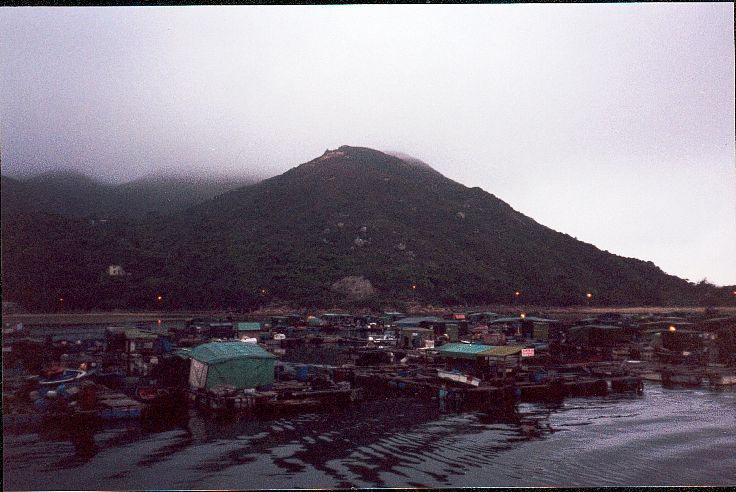
Yuriko and I walked around some on Lamma Island today, from the beach at Hung Shing Yeh along a path through grassy, rocky slopes. Some places had been burned by a recent fire, rendering them black and nearly barren. Then we passed through a lusher area, then along a waterfront path smelling of seaweed and debris.

LammaEventually we reached Sok Kwu Wan, a small village, where we saw some fishermen out in their sampans. We wondered whether some of them might live on their boats, but we had time to watch their comings and goings from the deck of the Mandarin Seafood Restaurant, one of a row of eateries facing the water, and figured that they only worked on their small vessels. It looked like an old man’s game. Everyone else probably works in Victoria or Tsim Sha Tsui.

We returned to Hong Kong Island via kaido to Aberdeen. Nice harbor. The town itself, so-so. We bought a few things and spend some time looking for a bus stop. Yuriko tripped on the sidewalk and bruised both knees, but we got back to the Welcome Guesthouse. [Remarkably, it still seems to be in business.]

April 13

We hung out in Kowloon, mostly, and bought tickets at China Travel Services for the ferry Jimei on the 19th to Xiamen (Amoy), each ticket costing HK$545  [about $78 at the time]. I hope its clear, since it’s supposed to be a fine-looking coastline.

April 19

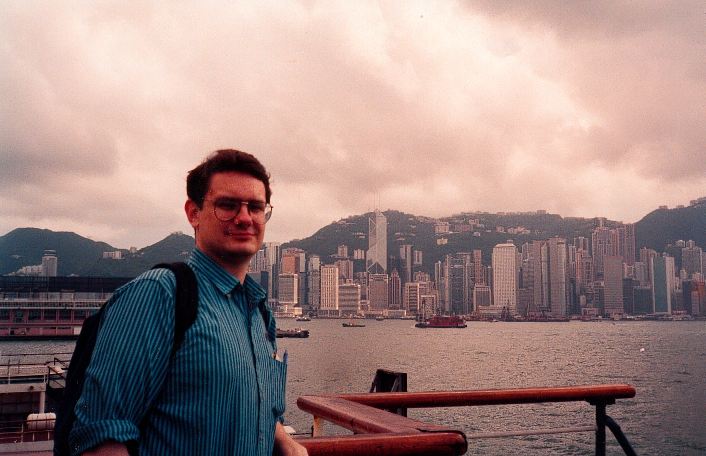
HKHarborDeparture went without much delay, about 45 minutes behind schedule, and the day was partly cloudy and very warm. Victoria Harbour was brilliant. We sat out on deck and watched it recede. I like Hong Kong, but I’m glad to get away. A week would have been enough, and we had 11 days. It made me tired sometimes, this frenetic city.

It’s About Time

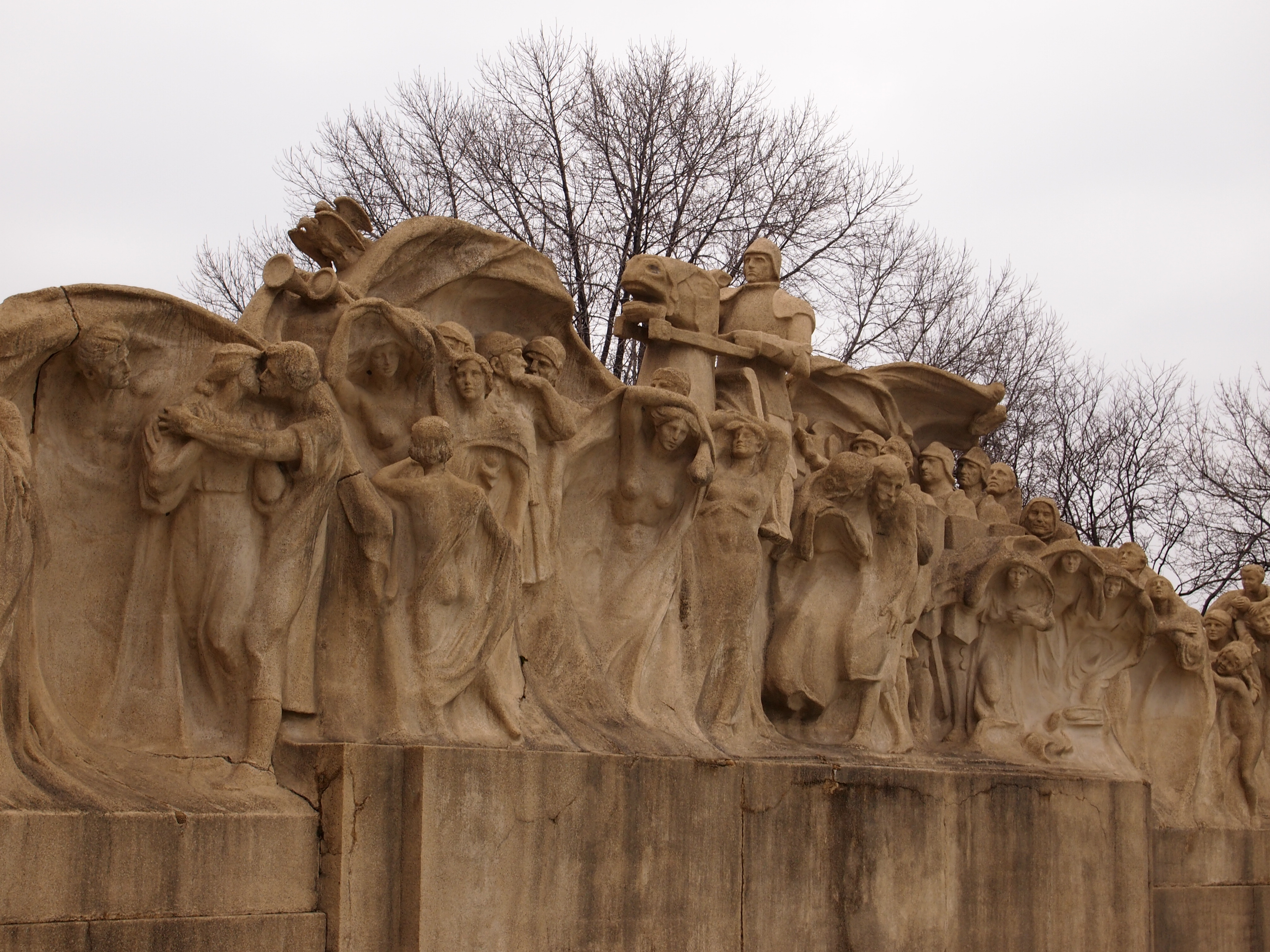
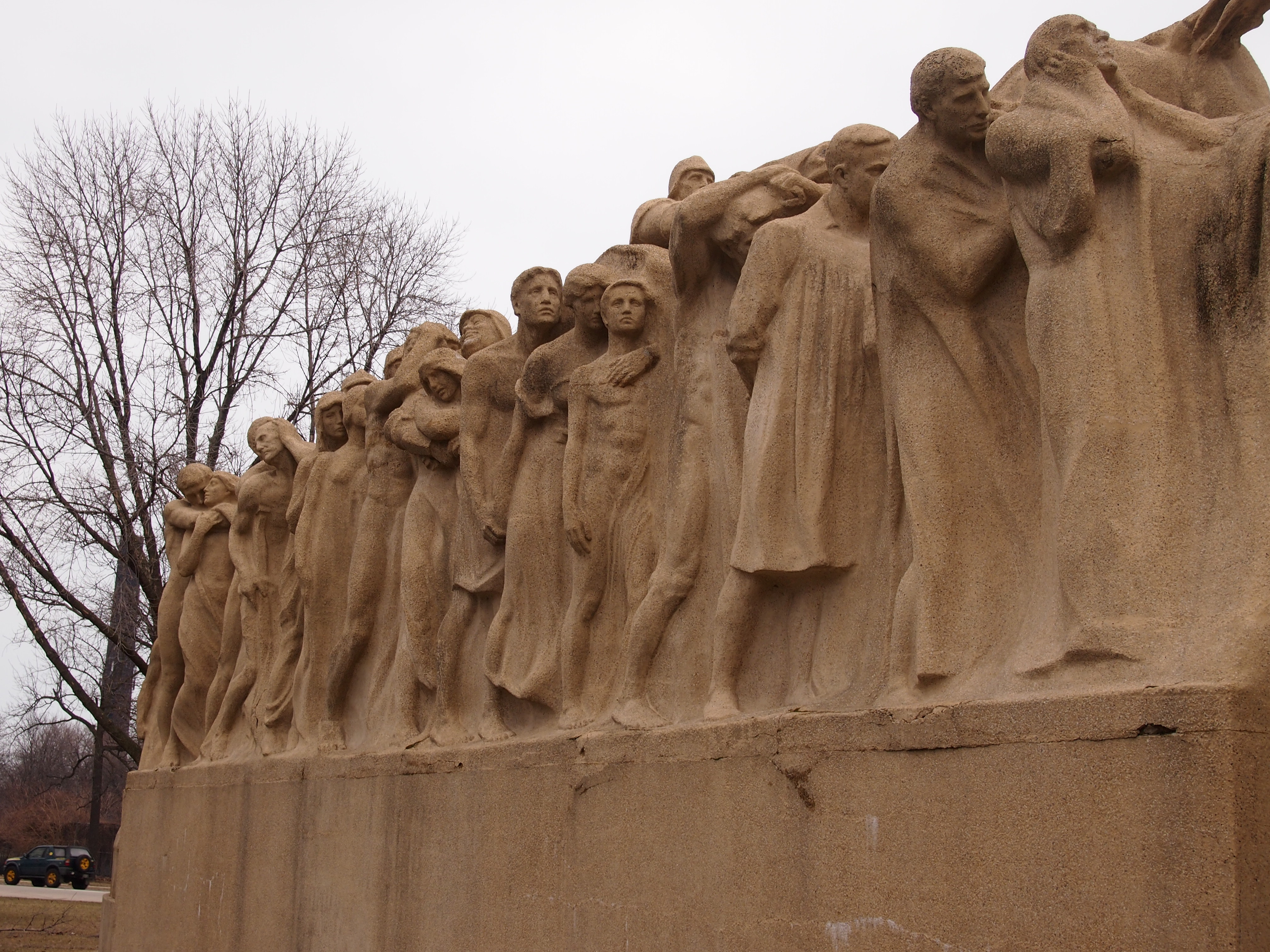
It took a long time for me to get around to Time. Or, to use its full name, Fountain of Time, a sizable sculpture by Lorado Taft at the southeast edge of Washington Park in Chicago. I’ve known about it for a long time, and have even seen Taft works in other places, some at a considerable distance from Chicago, but not Fountain of Time. So when we visited Hyde Park the week before last, I made stopping at Fountain of Time an appendix to the trip.

From the AIA Guide to Chicago: “One of Chicago’s most impressive monuments anchors the west end of the Midway, which Taft wanted balanced by a Fountain of Creation at the east end [which never happened]. Inspired by lines from an Austin Dobson poem:

Time goes, you say? Ah, no! / Alas, Time stays, we go…

“Taft depicts a hooded figure leaning on a staff and observing a panorama of humanity that rises and falls in a great wave.”

That would be this fellow. Father Time.

Father TimeDoes Father Time that have gender-neutral, 21st-century equivalent? “Temporal Being,” maybe, but that sounds like something Star Trek writers would use. Best to stick with Father Time. After all, Father Time got it on with Mother Nature, and that’s how Life was created. Of course, that’s a heteronormative metaphor, but sometimes you have to run with these things.

This is part of the east side of Fountain of Time. OLYMPUS DIGITAL CAMERAThis is a view of the west side. OLYMPUS DIGITAL CAMERATaft completed it in 1922, working with concrete engineer J.J. Earley. The deteriorated work was restored by the BauerLatoza Studio in 2002. According to the AIA, “Taft envisioned the group sculpted from marble, but the material’s high cost and vulnerability to Chicago’s weather made it impractical. Bronze, his second choice, was also prohibitively expensive, lending to a selection of a pebbly concrete aggregate. The hollow-cast concrete form reinforced with steel was cast in an enormous, 4,500-piece mold.”

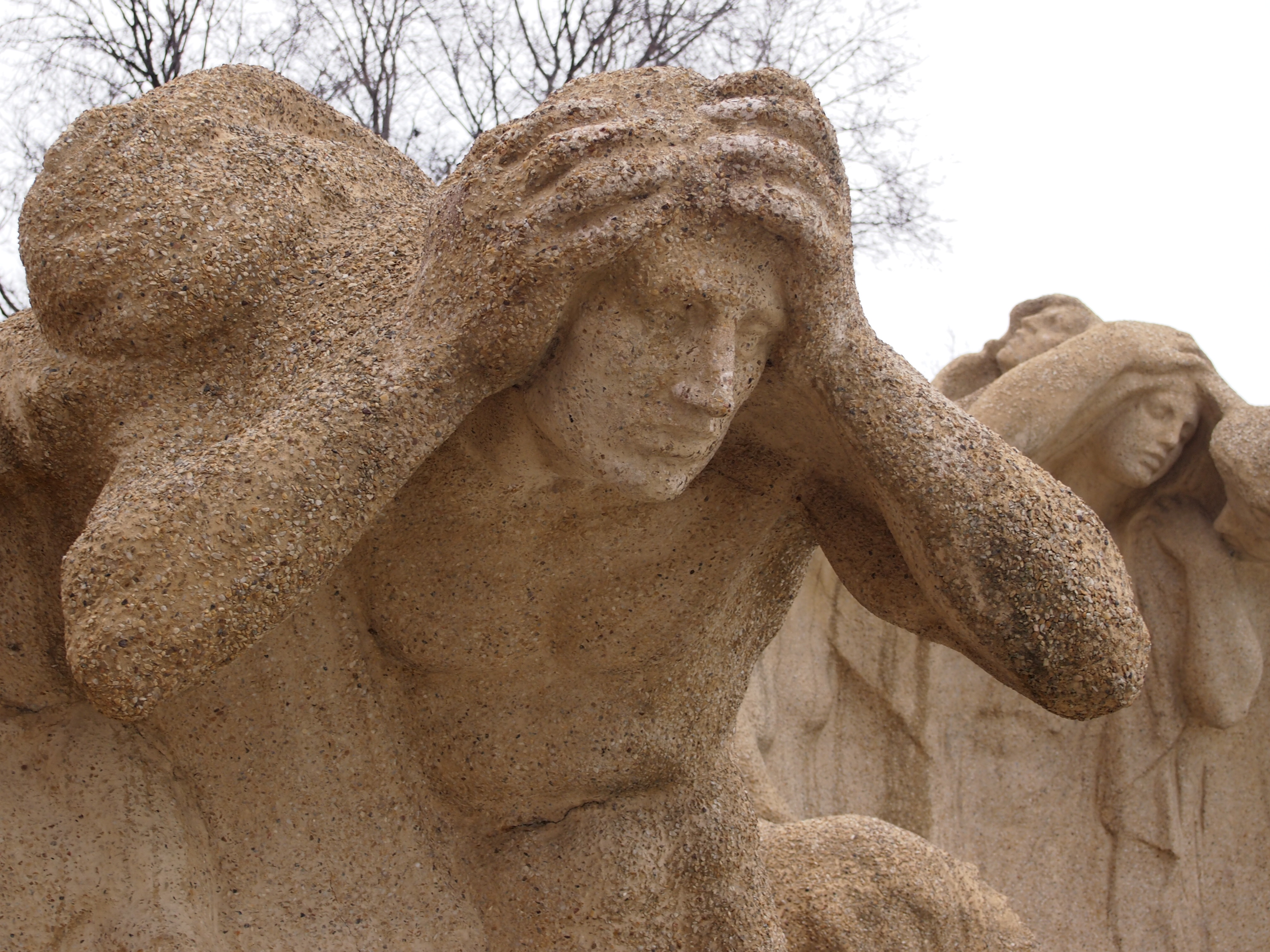
Fountain of Time includes a variety of faces.

ArghI like to think of this figure as My Deadline Was Last Week.