Le Corbusier & Ando

The first-ever exhibit at Wrightwood 659 is called Tadao Ando and Le Corbusier: Masters of Architecture. You’d think the more alliterative Masters of Modernism would be the thing, but probably the organizers thought that would be too narrow. And Masters of Human Creativity would be too broad.
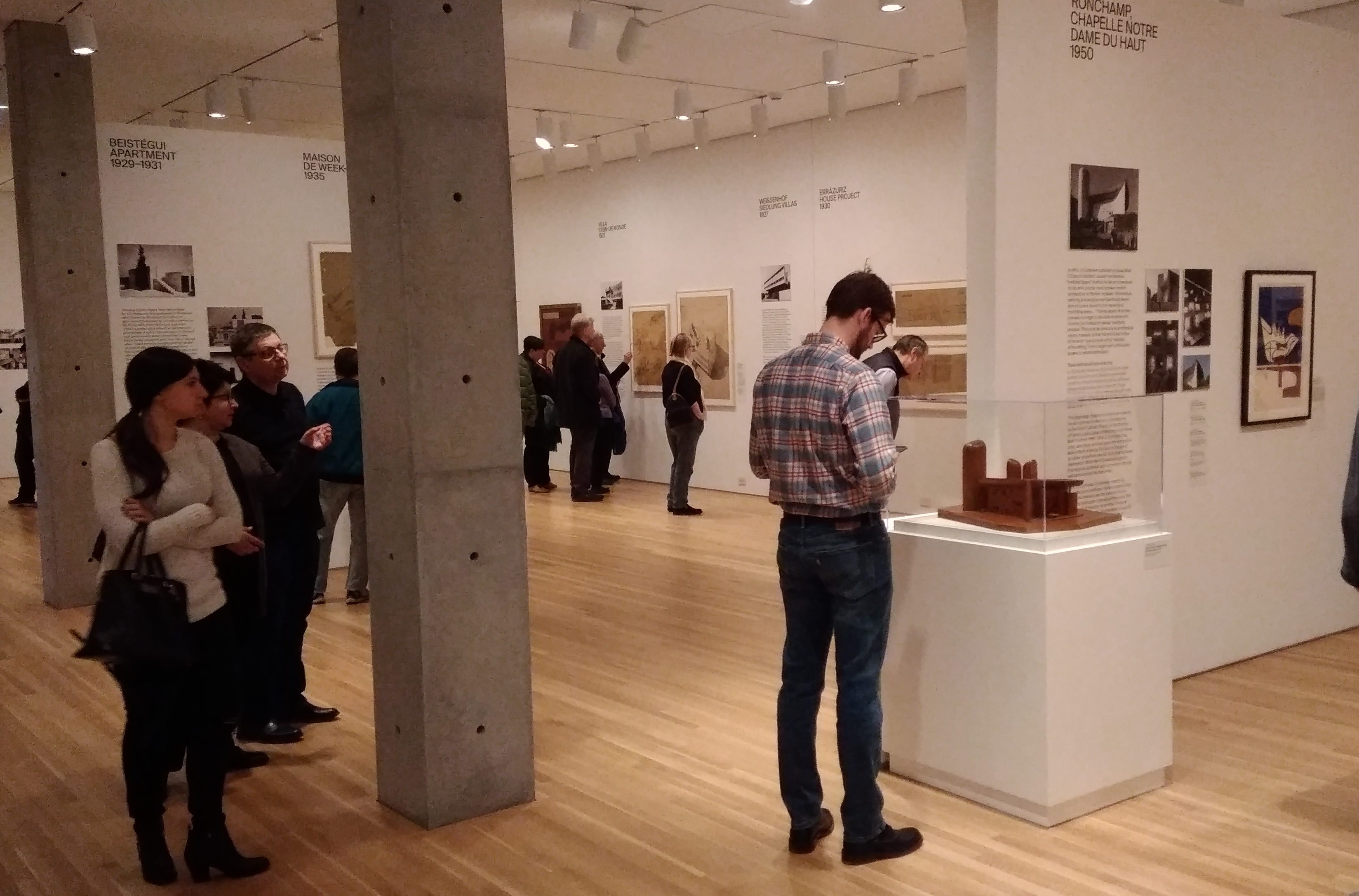
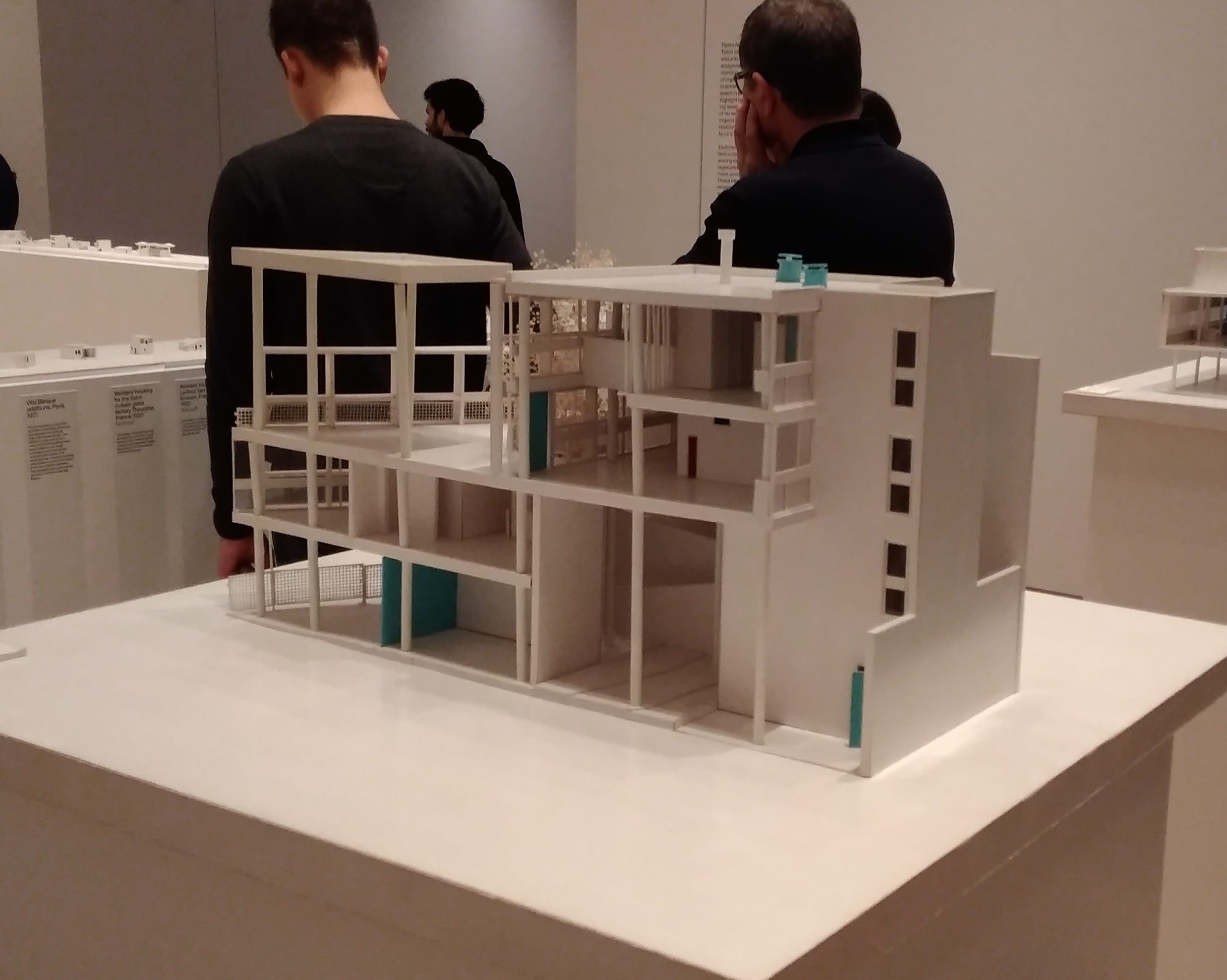
The Le Corbusier exhibit was on the second floor. Pictures and paintings and models and a lot to read.
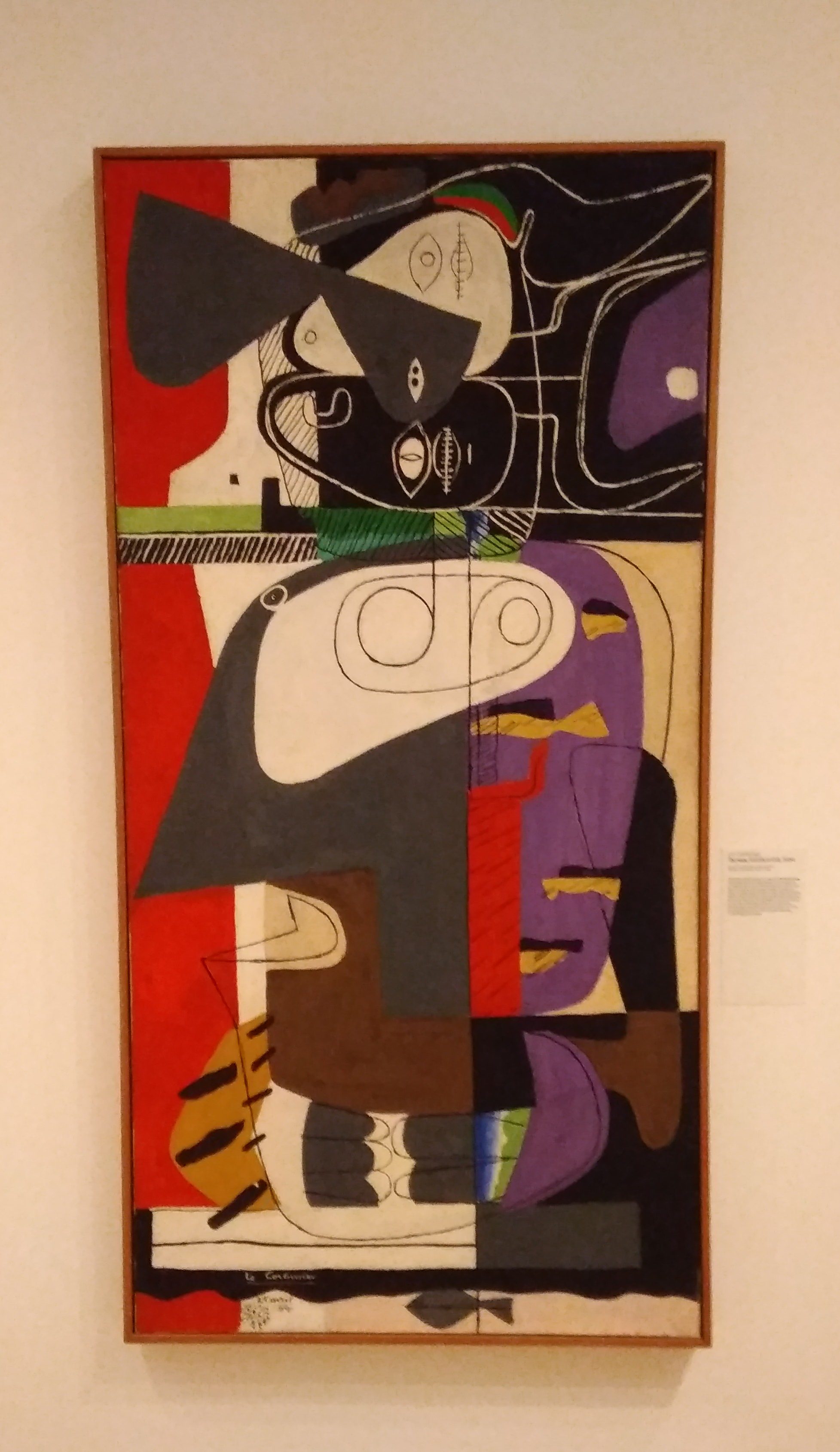
Before I’d only had a casual acquaintance with his output. I didn’t know about his paintings, for instance. Such as Taureau VIII (Bull VIII), 1954.

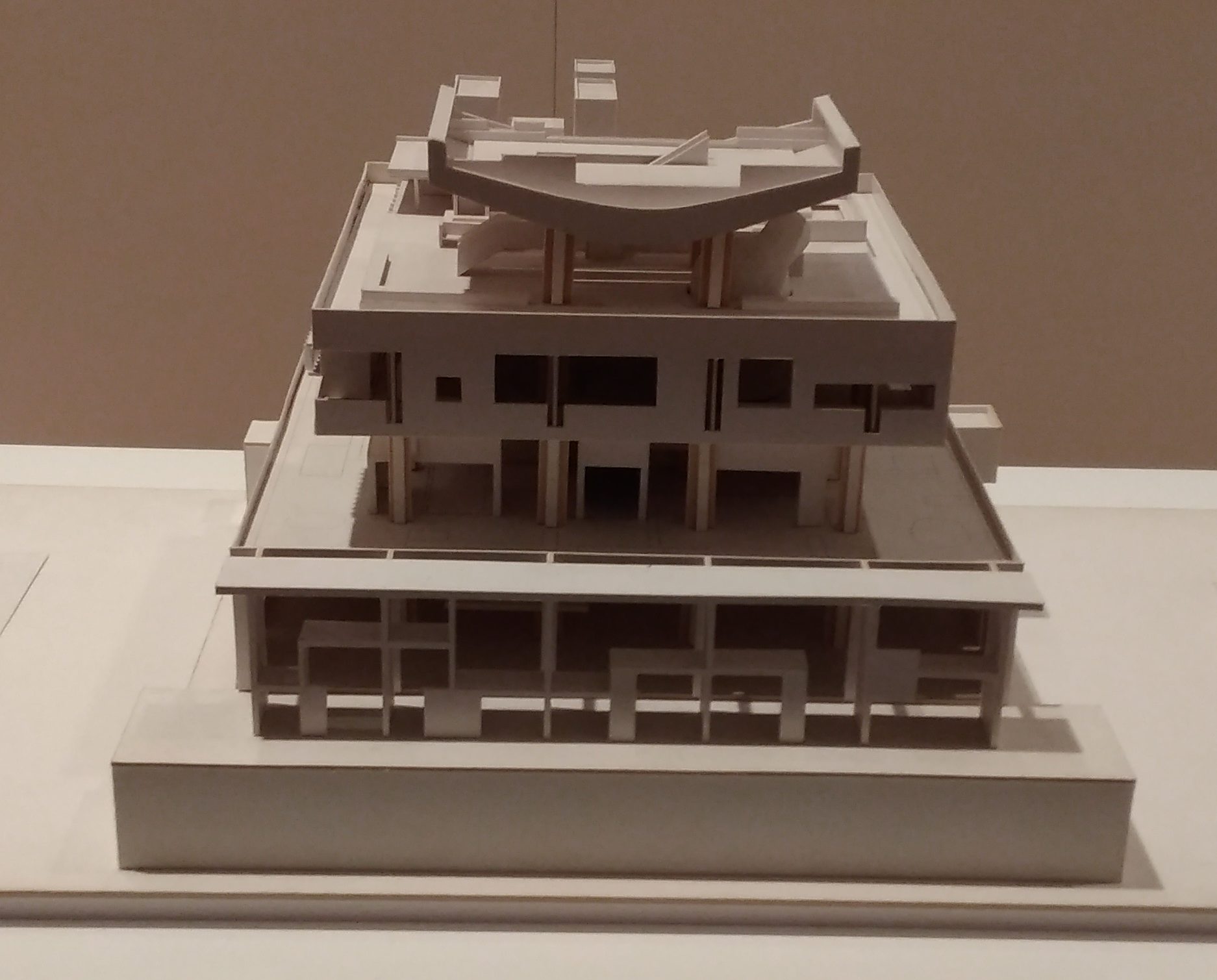
Looks suspiciously Picassoesque to my unlearned eye, but I don’t doubt Le Corbusier’s creativity. The models for some of his buildings, built and unbuilt, show that well enough.

A house he designed in Argentina, 1949.
An unbuilt governor’s palace for Punjab State in India, 1950-65.
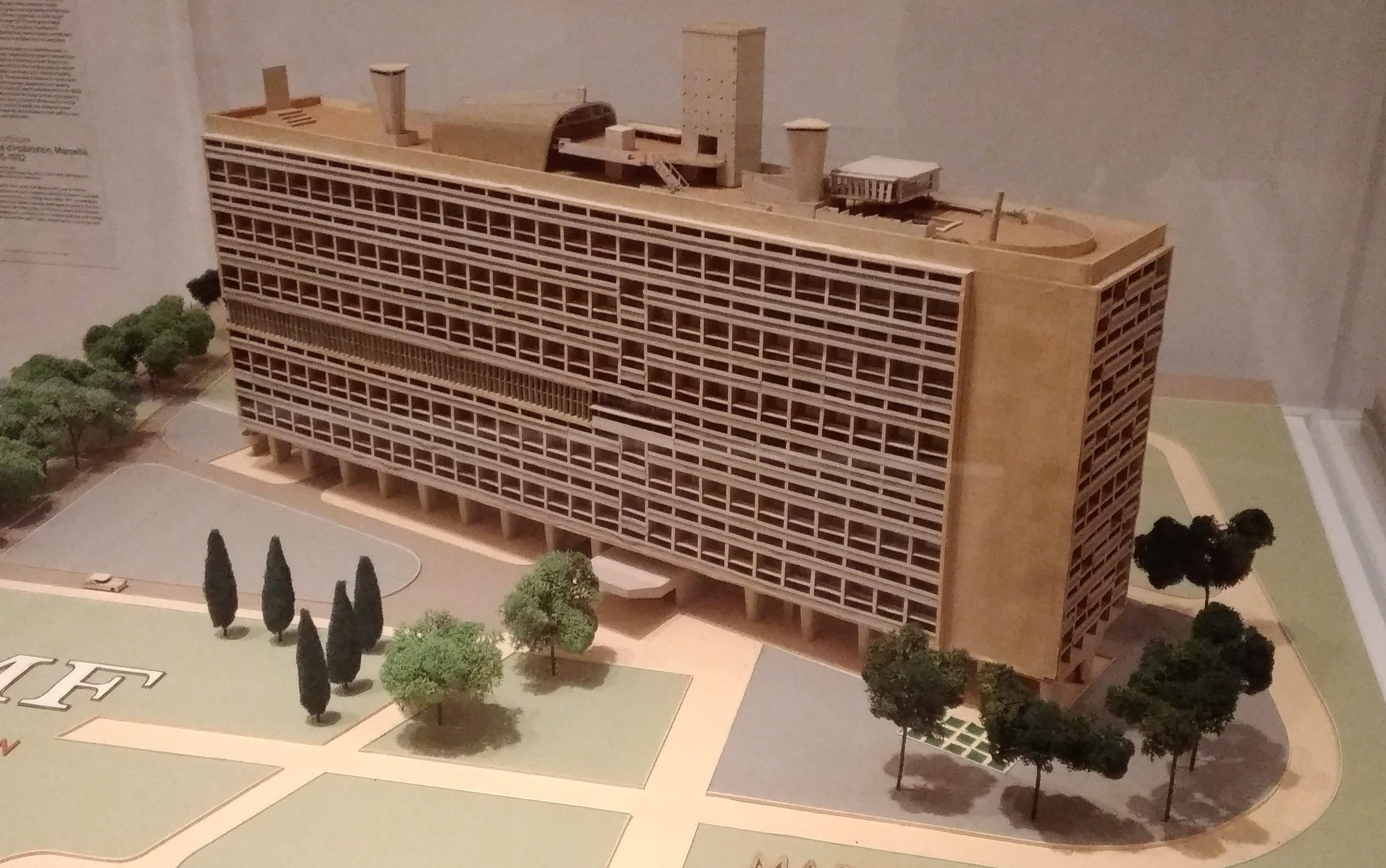
Still, when I looked at some of the models, I couldn’t help being reminded of every ugly modernist box I’ve ever seen, even if his own work — in this case Le Corbusier’s Cité Radieuse in Marseille — had a bit more style.
Remarkably, the building now includes the Hôtel Le Corbusier on two floors, and some color seems to have been added to the exterior. Even more remarkably, according to the Telegraph: “Double rooms from €79 (£67) year-round, an incredibly reasonable rate for the opportunity to sleep within an architectural icon.”

Reasonable all right. If the hotel were in this country, its owner would brag about curating Le Corbusier’s legacy, tout its upscale amenities, and charge three or four times as much.

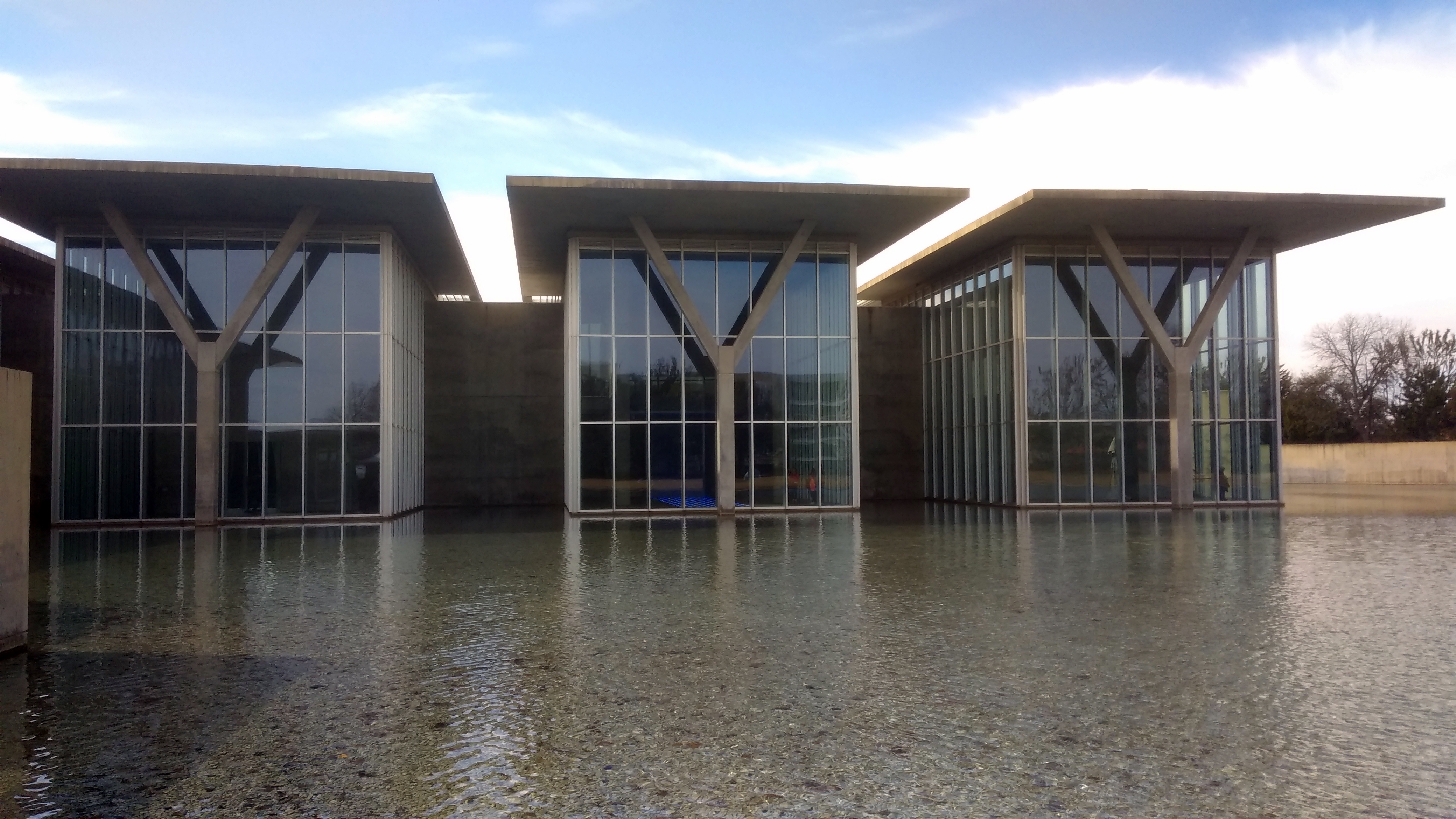
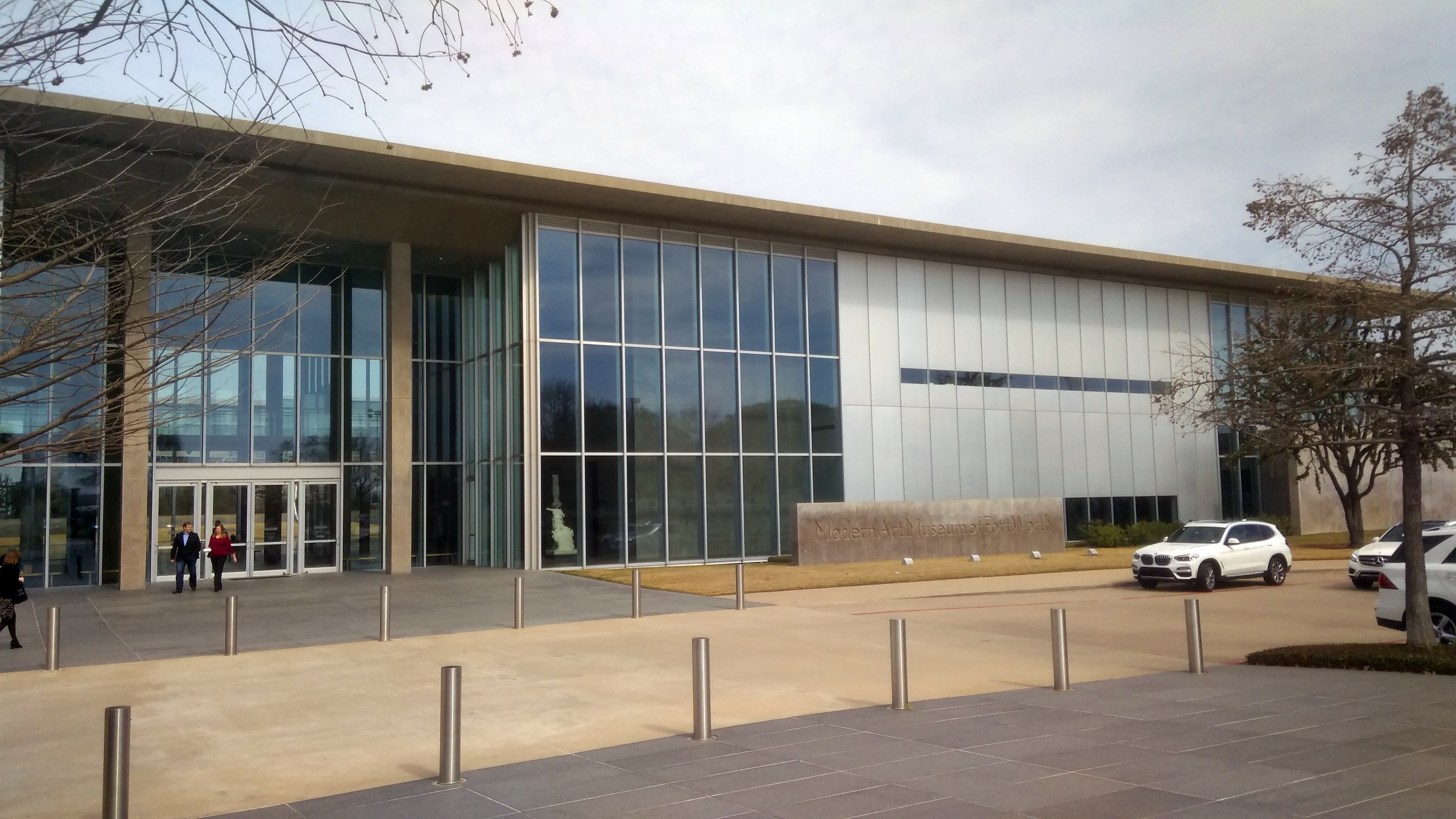
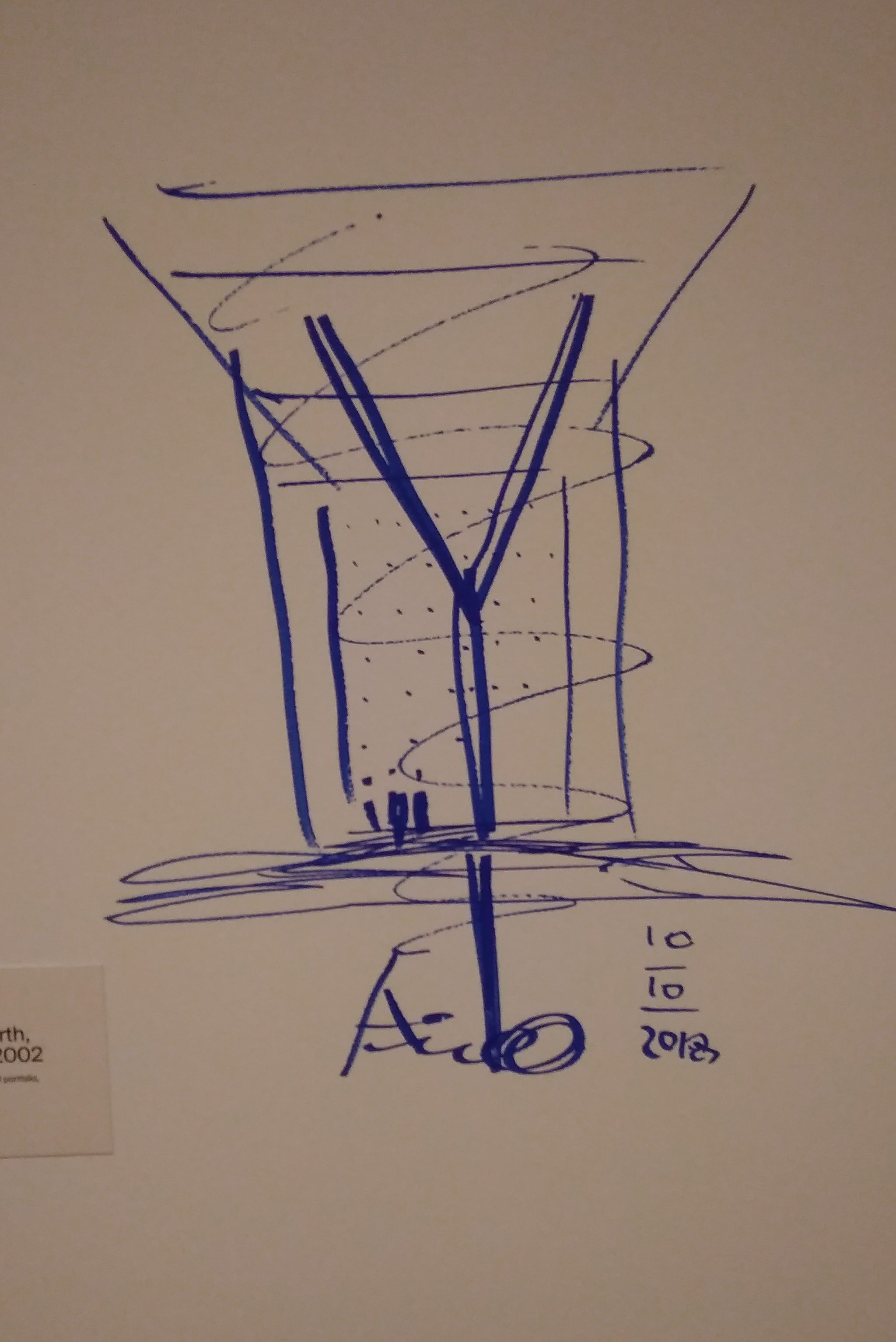
On floors three and four of Wrightwood 659 were the Ando exhibits. I believe Ando has some advantages over Le Corbusier. He’s alive, for example, and could visit the exhibit when it opened and draw on the walls. This doodle evokes the Modern Art Museum of Fort Worth, which he designed.
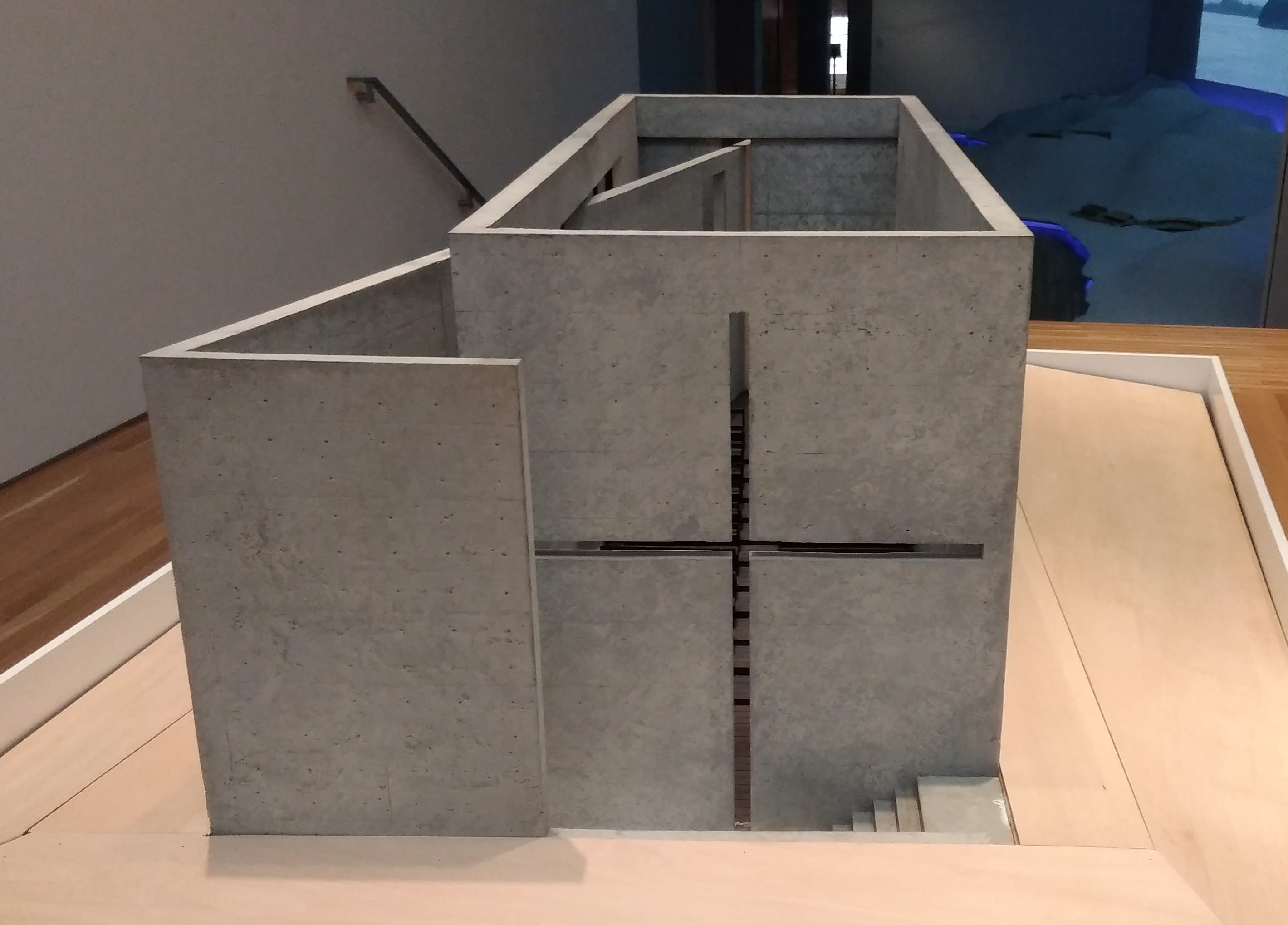
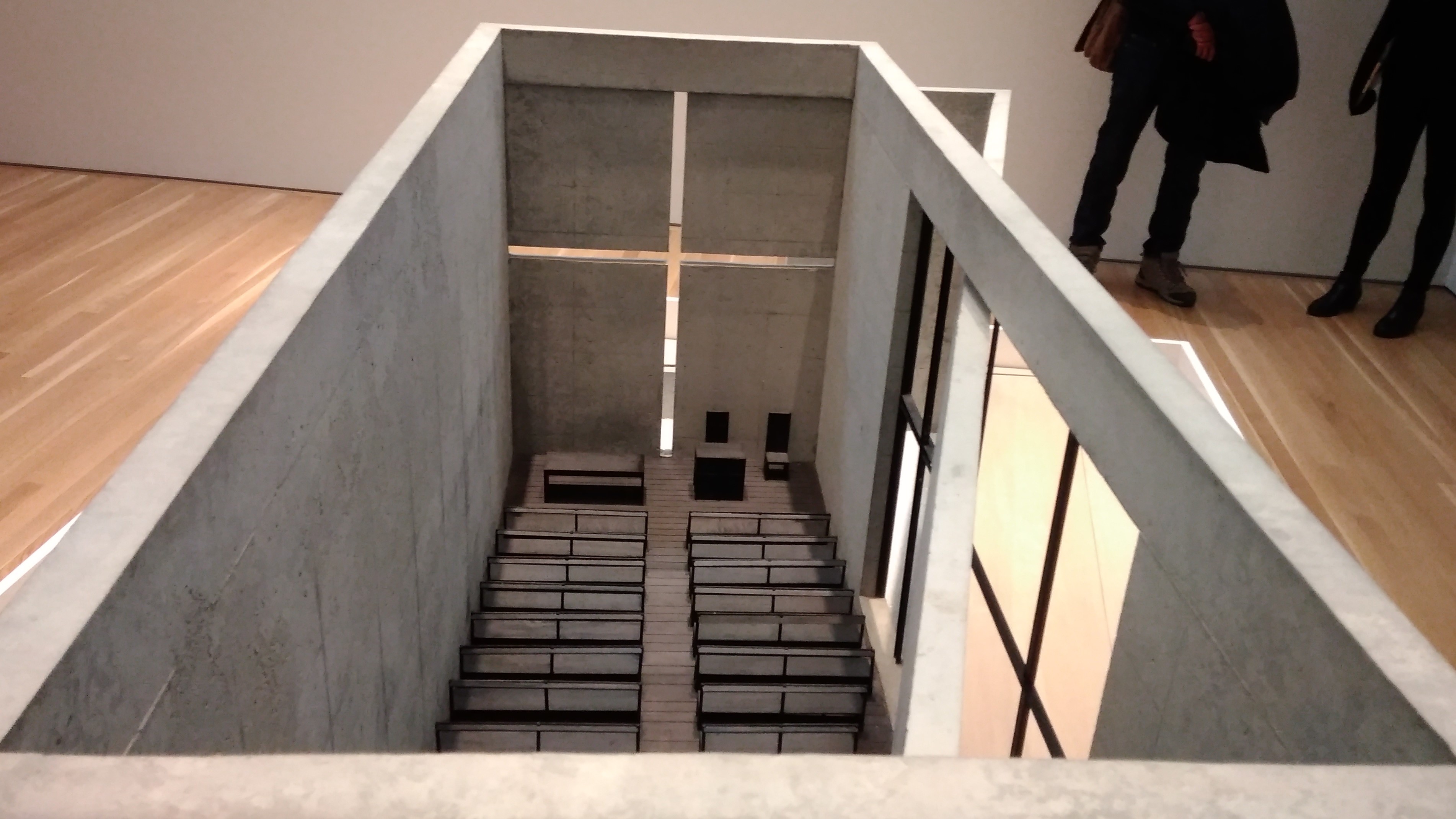
Also, Ando is a niche practitioner who does marvels in concrete, not someone inspiring a rash of urban renewal destruction and ugliness. Here’s a model of Ando’s Church of the Light near Osaka. I need to visit someday.

A lot of the third floor was taken up with a model of Naoshima, a small island in the Inland Sea that’s large enough to be home to a number of Ando-designed museums, developed over the last few decades.

Know where else I need to visit? Naoshima. There are just too many interesting places in the world.

Wrightwood 659

Saint Clement and a stroll in Chicago’s Lincoln Park neighborhood were nice, but we’d come to the city last Saturday morning to see Wrightwood 659, a new exhibition space designed by architect Tadao Ando. Yuriko has a fondness for him, and not just because he’s Japanese, or even that he’s from Osaka, though those help. A few years ago, she was impressed by the Church of the Light in Ibaraki in Osaka Prefecture, one of his works.

I have a sneaking admiration for him too. The man has a way with concrete.

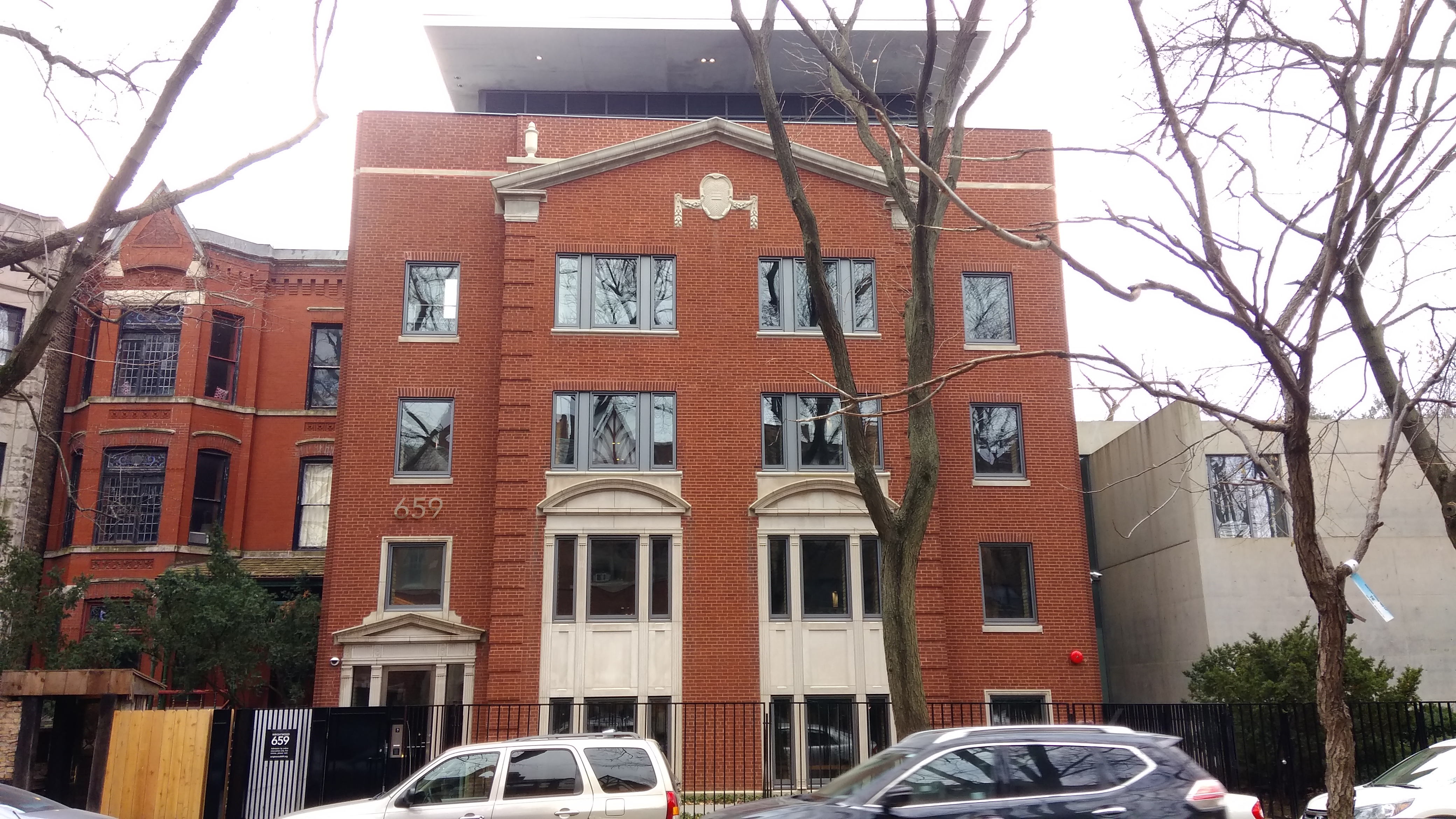
You wouldn’t know that looking at the front elevation of Wrightwood 659, which happens to be at 659 W. Wrightwood Ave.
The space, opened only in October, is the redevelopment of an ordinary Lincoln Park apartment building dating from the late 1920s.

“The building greets the visitor with a refurbished facade adorned with arches, festoons and other Beaux-Arts details,” Blair Kamin wrote in the Tribune. “But the decorous facade turns out to be a mask. Like a ship in a bottle, the project inserts a new steel and concrete frame inside the brick walls; the frame braces the old walls and turns the original four floors into three. A concrete slab that floats building’s new identity.

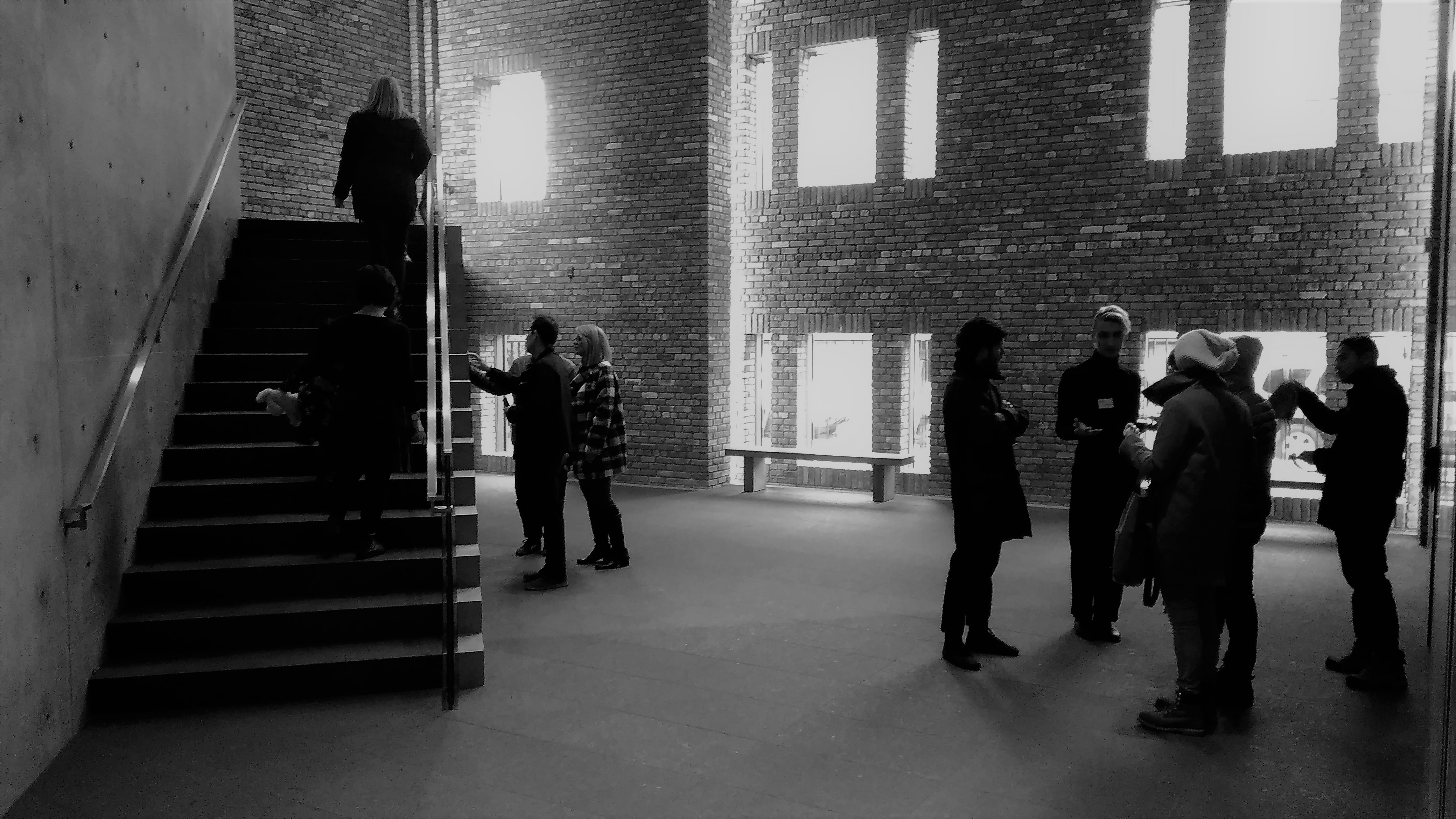
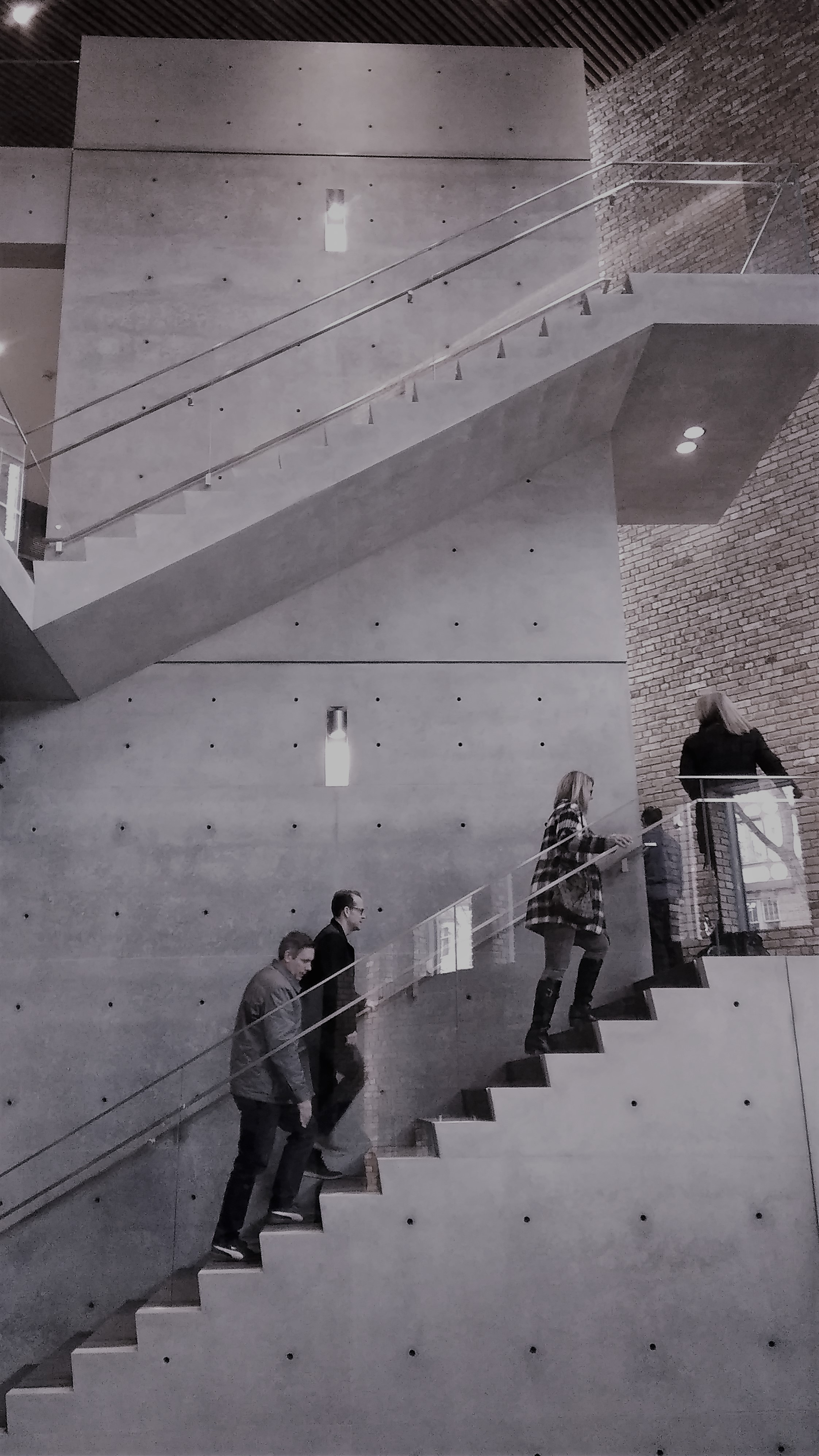
“Ando gives us that kind of space in Wrightwood 659’s lobby, an unexpected, four-story burst of space that’s energized by the rhythmic treads and risers of an exposed concrete stair that corkscrews upward. Common brick recycled from the original building’s corridor lines the walls, its mottled texture in counterpoint with finely honed stairs.”

The staircase is signature Ando.
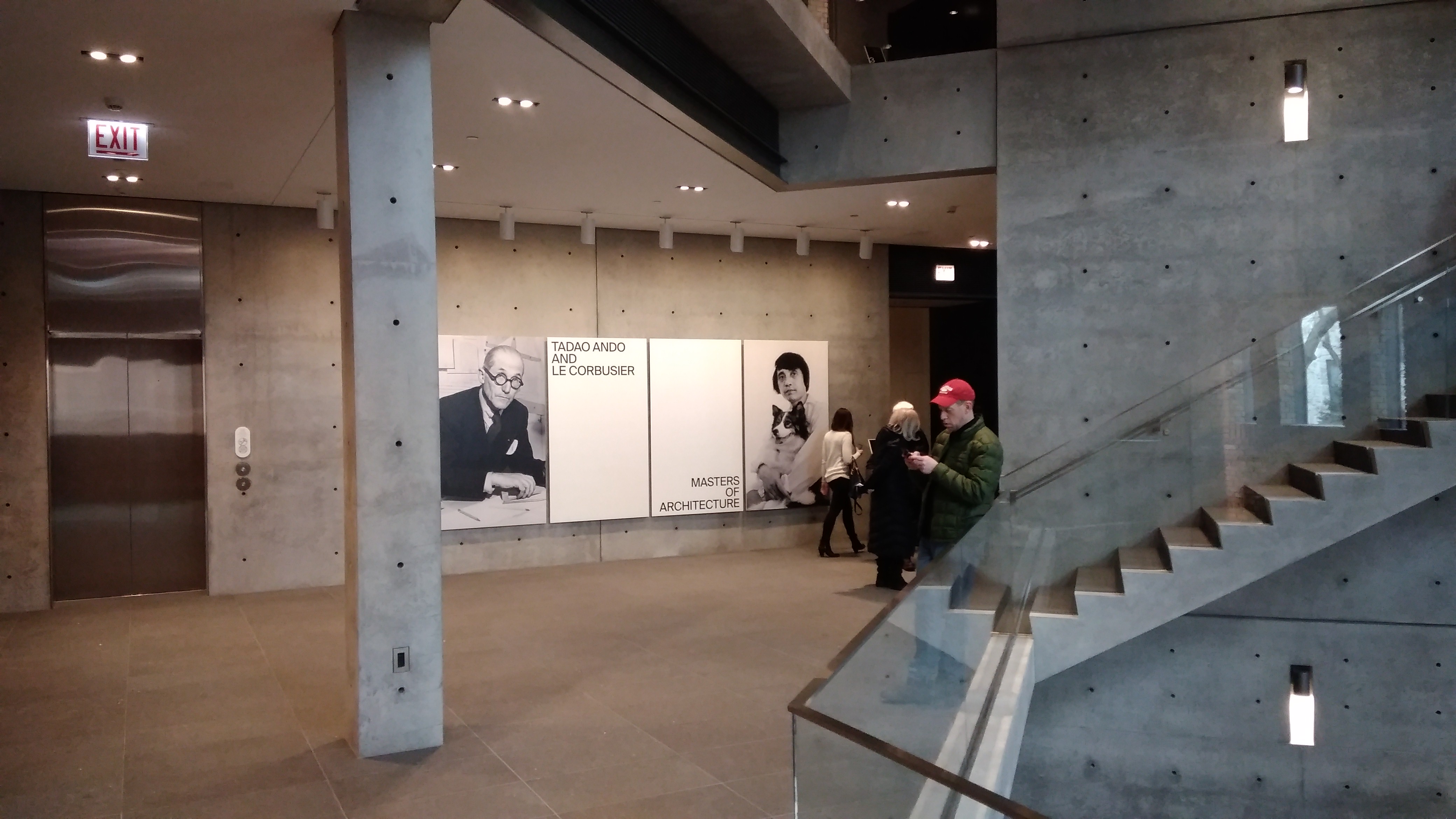
This image is untinted, reflecting the true color of the walls.
I understand that the dog’s name was “Corbusier.”
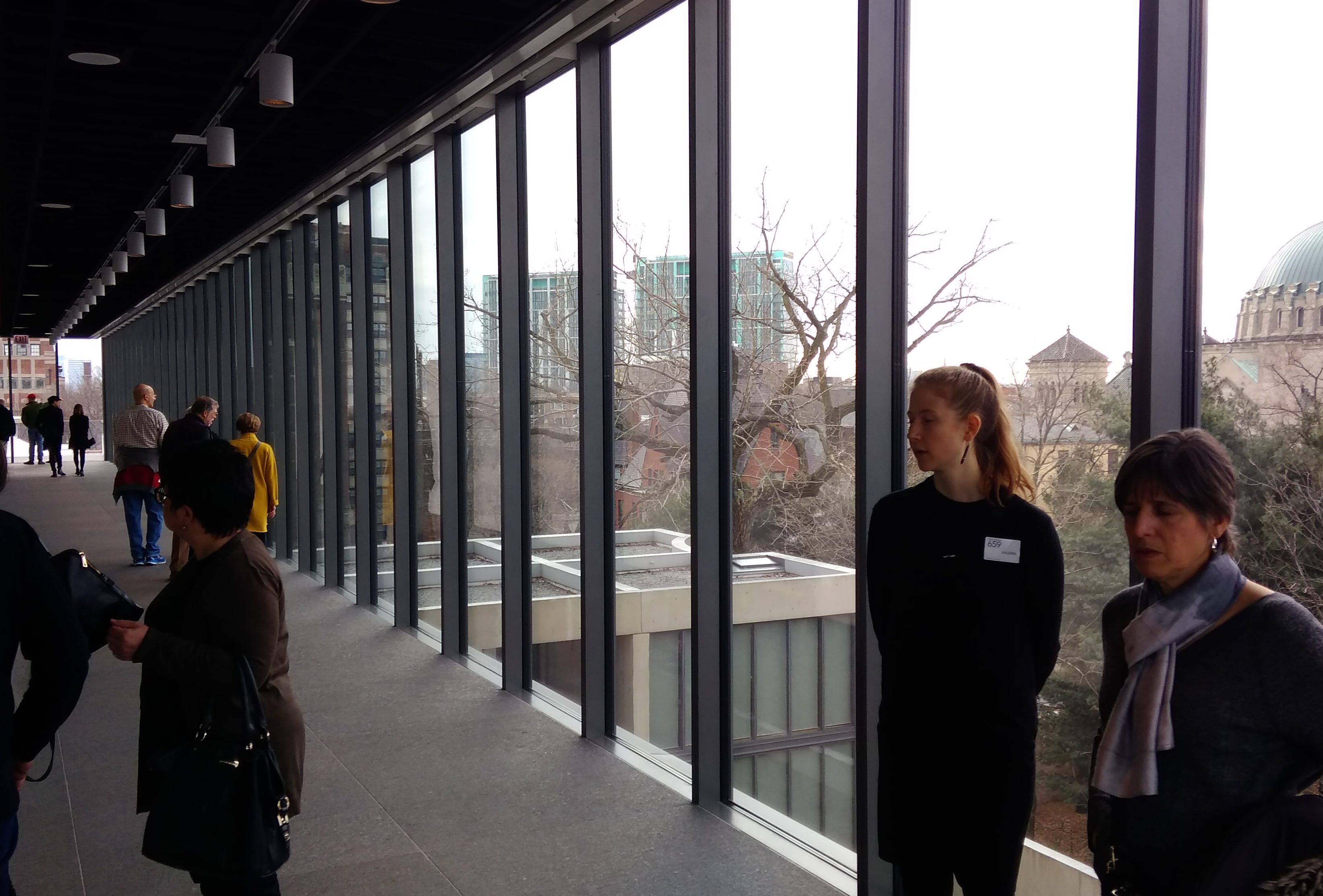
Gallery space on the second floor, at least until this Saturday, features an exhibit about Le Corbusier, and the third- and fourth-floor galleries are devoted to Ando. The fourth floor west-facing wall, which is floor-to-ceiling glass and steel, has a terrific view of the neighborhood.
The view also looks down on the Ando-designed, 665 W. Wrightwood Ave., a 1998-vintage private house owned by Fred Eychaner, a Chicago media mogul. Eychaner must like Ando’s work, since he was the moving force — and probably most of the money — behind the establishment of Wrightwood 659.

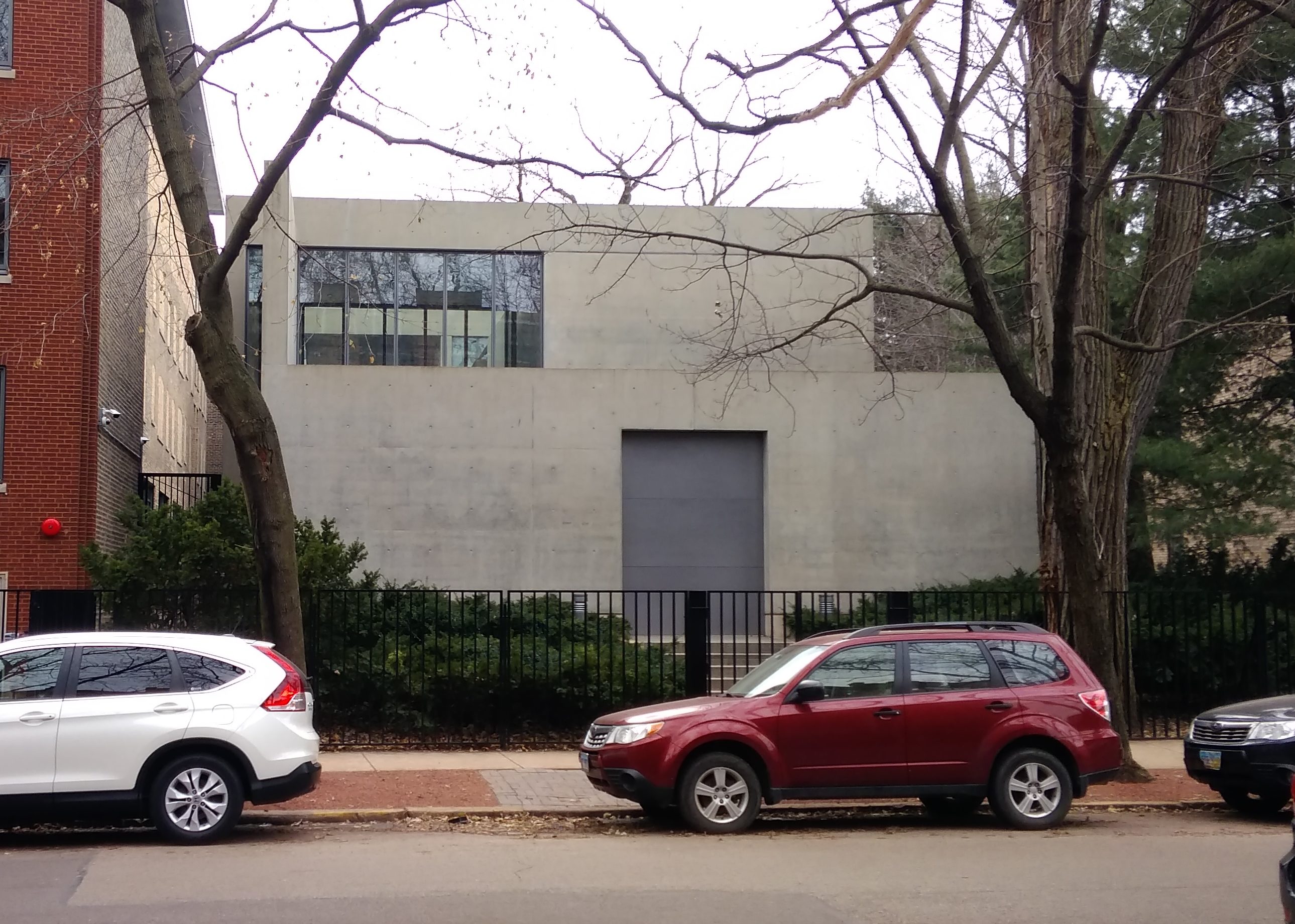
Eychaner is inevitably described as “reclusive.” As we were leaving, I took a look at the front of 665 W. Wrightwood, nestled as it is among ’20s-vintage apartments.
Yep, that wall pretty much says, Go away, leave me alone.

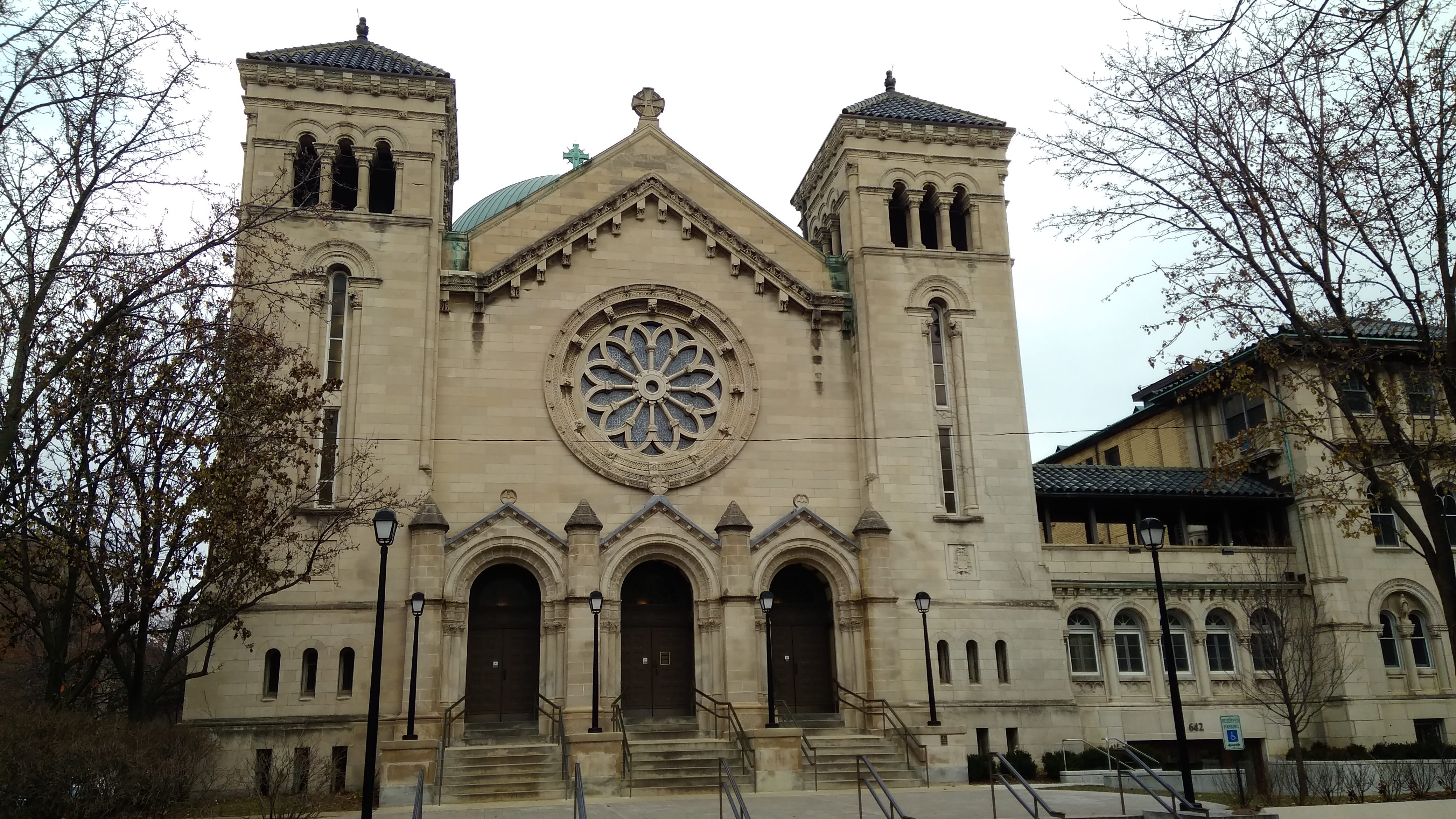
Saint Clement Church, Chicago

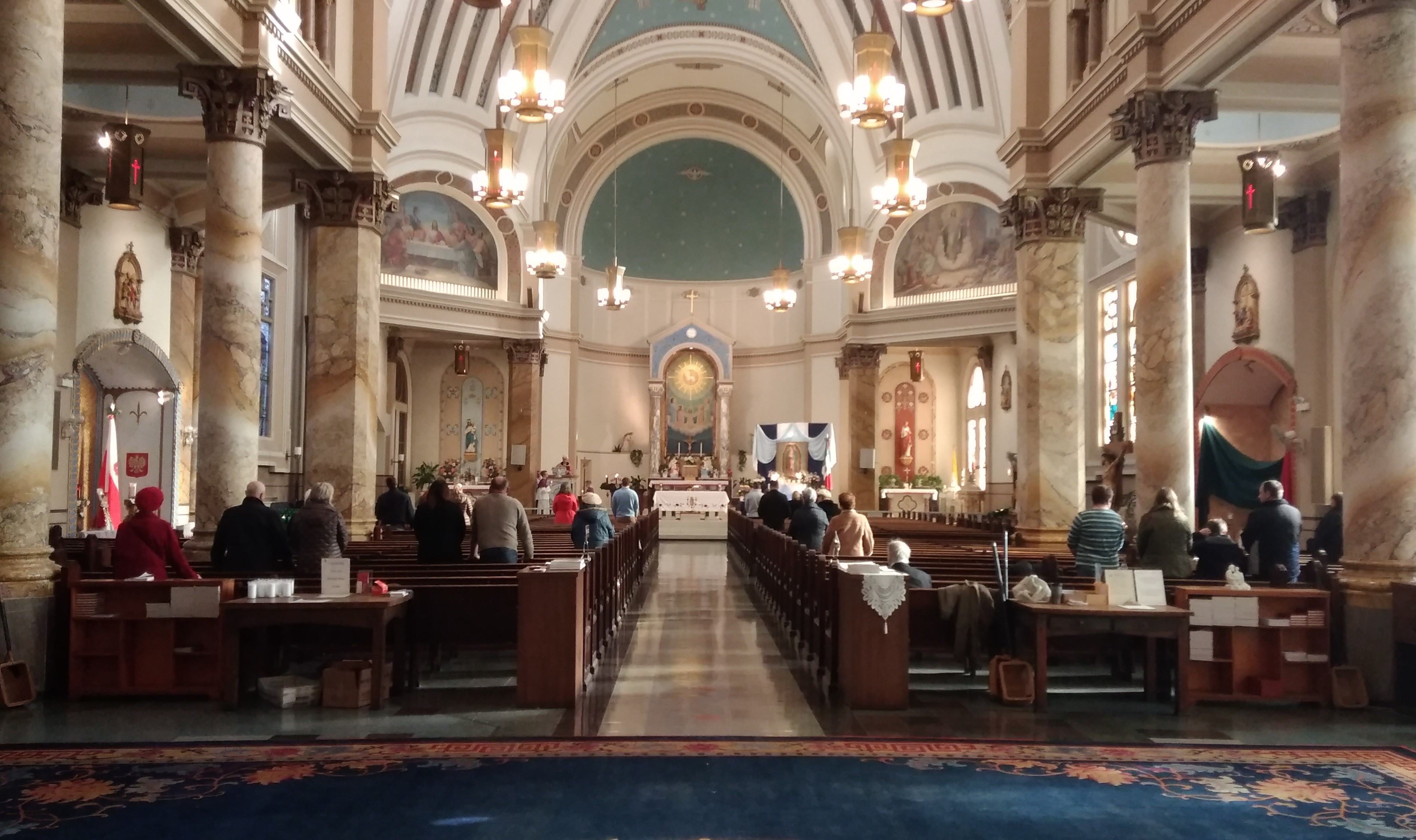
At noon on Saturday, we’d just emerged onto the street in the Lincoln Park neighborhood of Chicago when we heard church bells nearby. A robust peeling that commanded our attention.

We soon figured out that they were the bells of Saint Clement. What do the bells of Saint Clement say? Oranges and lemons. A different church, but never mind. I might not know that if I’d never read 1984, but what kind of person would I be if I’d never read 1984?

Naturally, I wanted to see if the church was open. The bells gave us extra incentive to take a look. Saint Clement is at N. Orchard St. and W. Deming Pl.
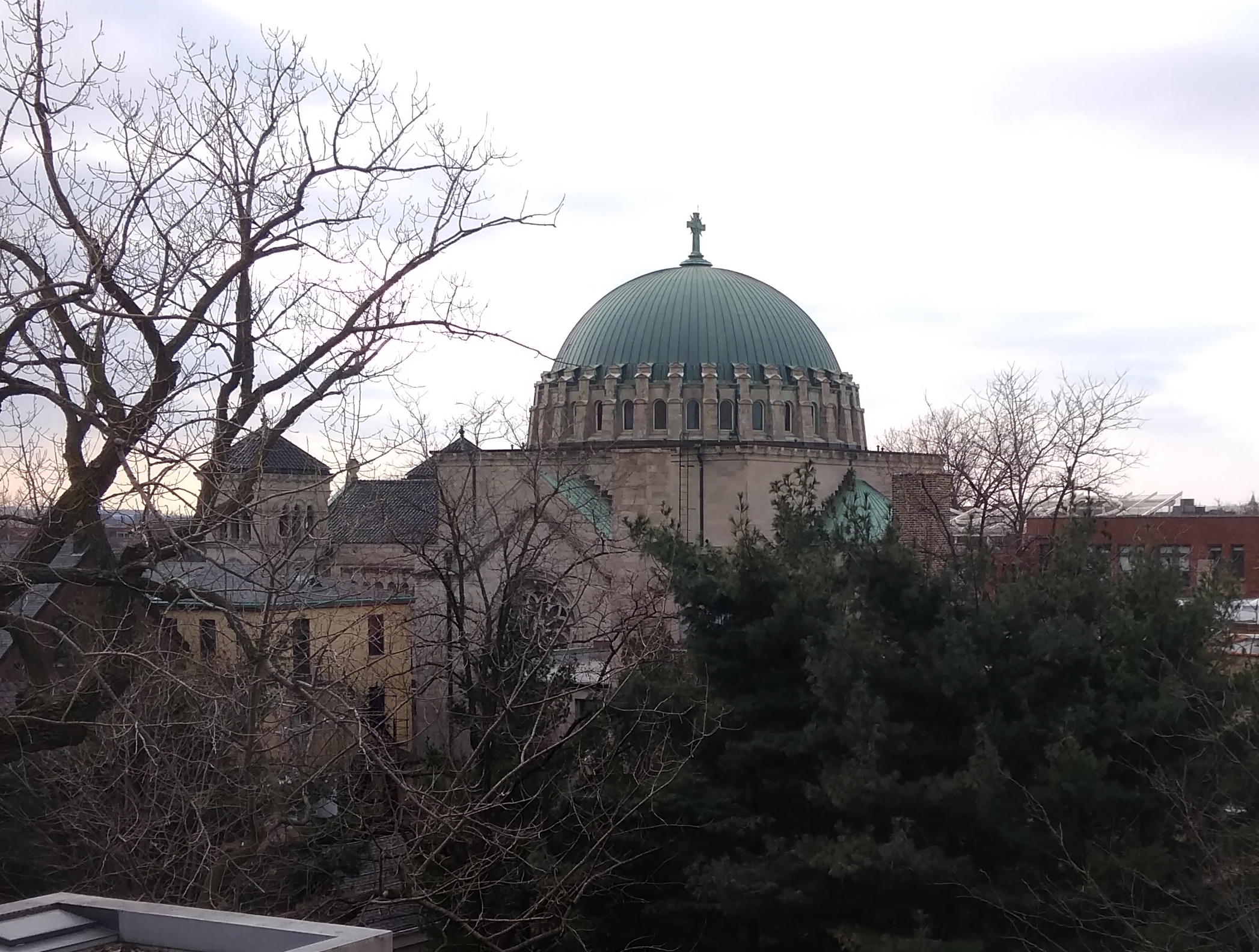
Not long before, we’d seen the striking dome of the church from a fourth-floor view, more about which later.
Saint Clement in Chicago is 100 years old, originally built by German Catholics. St. Louis architect Thomas Barnett designed the church. He also did the Byzantine-style Cathedral Basilica of St. Louis, and Saint Clement reminded me of that place of worship, though without the mosaics.

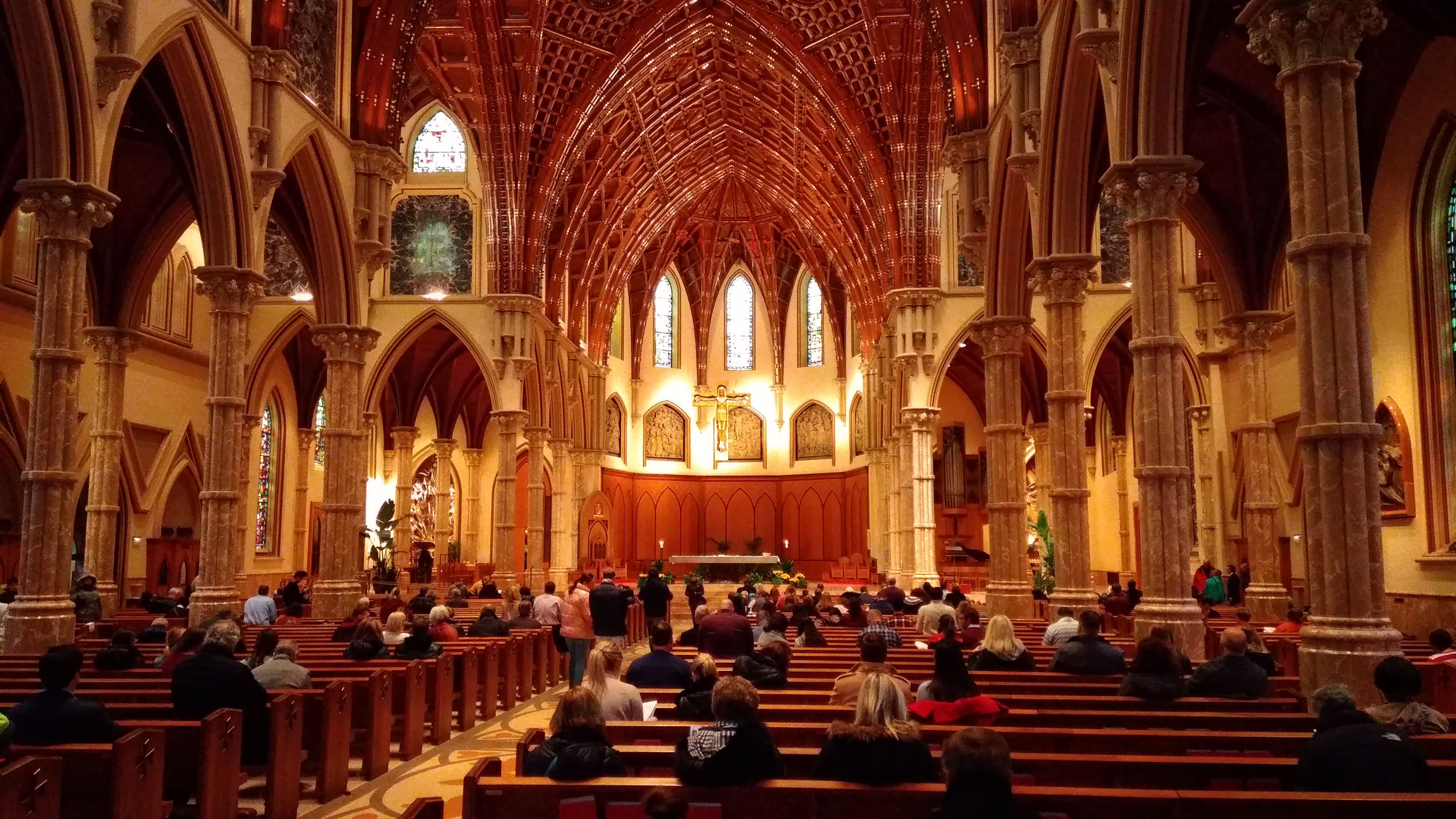
The interior was dark when we visited. It must be expensive to light such a large place. Besides, I imagine that most large churches in most places during all the pre-electric centuries were dark most of the time. Here are some pics with all the electric light blazing and it must be quite a sight. But even dark, the place was impressive (and it would be fine to see it lighted by candle).

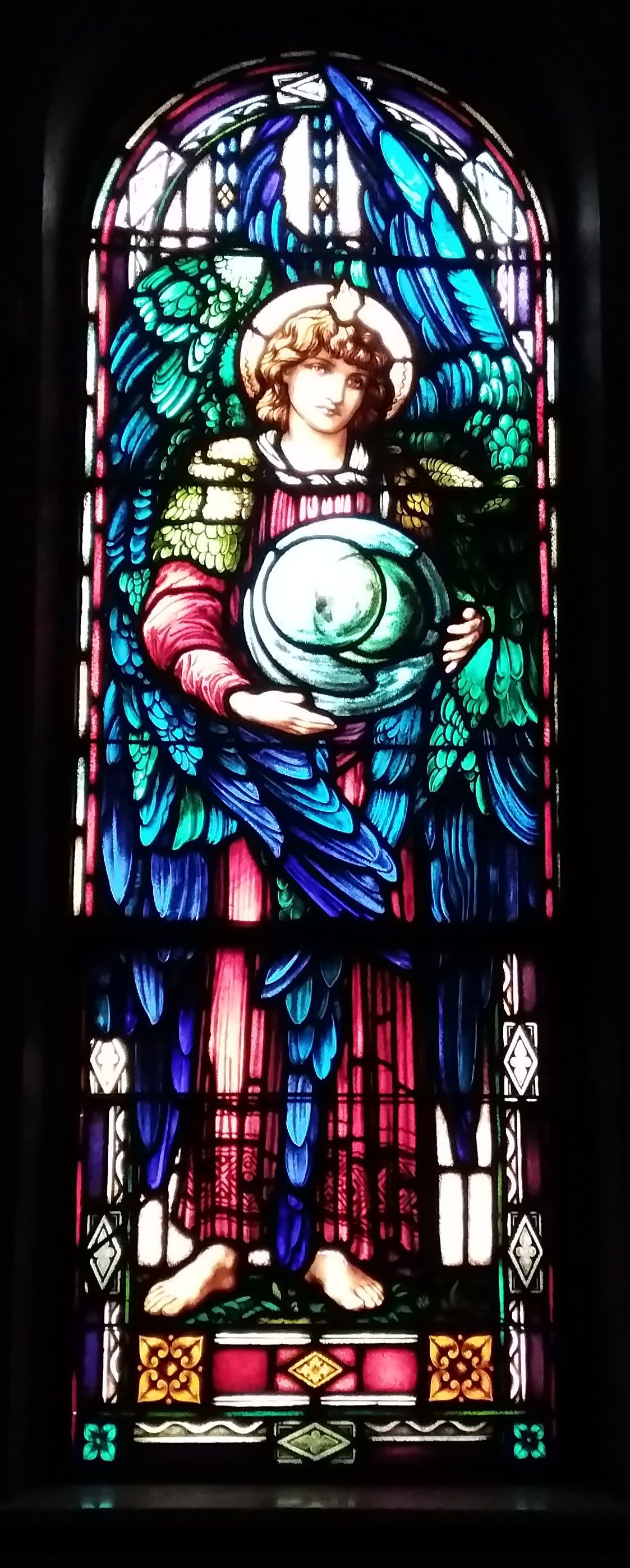
On an overcast day, the stained glass was well illuminated.

Of course I had to look up St. Clement. I might have learned about him in passing in New Testament class, but that was a good many years ago. Anyway, he was the fourth bishop of Rome and, according to legend, found martyrdom ca. AD 101 in a distinctive way: tossed into the Black Sea tied to an anchor.

That would account for the anchor motif I saw on the exterior of Saint Clement School, which is across the street from the church. If I’d had a bit more light, I might have found that in the church as well.

A Pair of Chicago Cathedrals: Holy Name and St. James

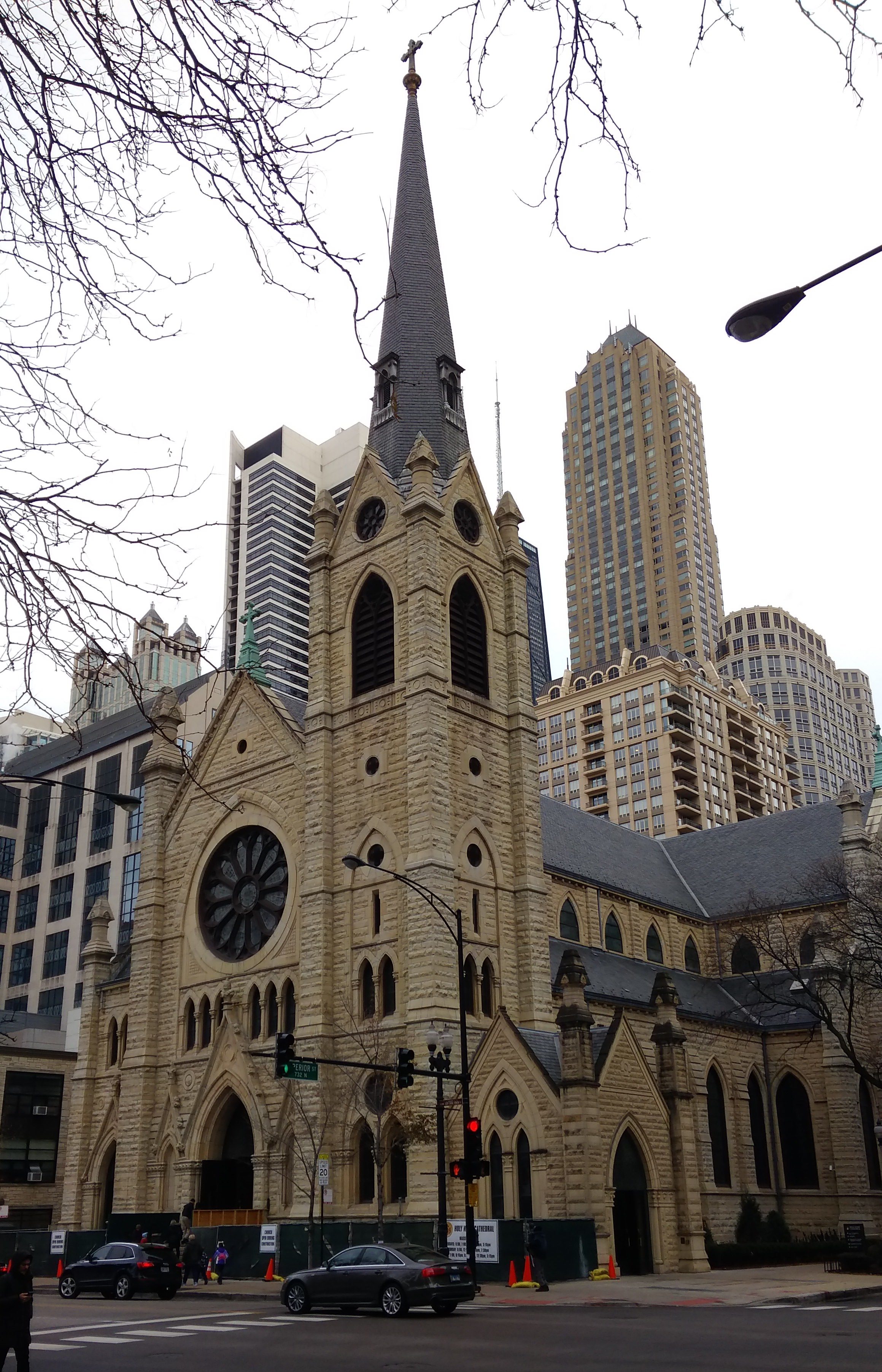
Spent a little while in the city this weekend and had time to visit two major churches. Cathedrals, in fact. Holy Name Cathedral, which is the seat of the Catholic Archdiocese of Chicago, and St. James Cathedral, which is the seat of the Episcopal Diocese of Chicago. They are a block apart and both only a few blocks west of Michigan Ave. on the near North Side.

The Gothic Revival style Holy Name rises over State St.
“After the Great Chicago Fire destroyed both the Cathedral of St. Mary (Madison and Wabash streets) and the Church of the Holy Name (site of the present Cathedral), a new cathedral was needed,” the Chicago Architecture Center says…. “the new Holy Name Cathedral was dedicated in 1875.”

More recently, the roof was restored after a 2009 fire did serious damage to the cathedral.
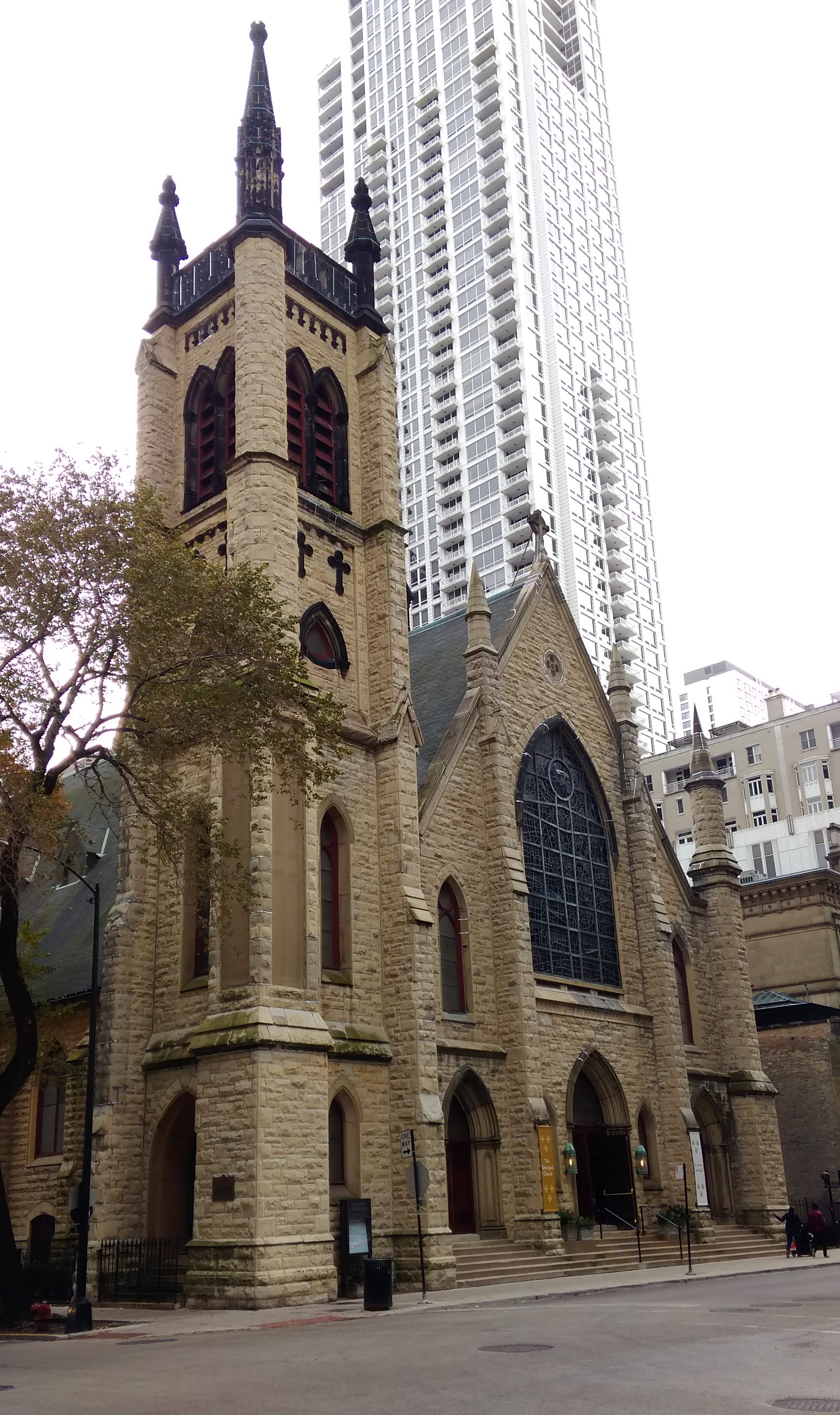
St. James Cathedral is another Gothic Revival structure, rising above Wabash St. It too is the result of rebuilding.
“A few weeks after the splendidly redesigned church was formally rededicated in 1871, the Great Chicago Fire erupted, leaving nothing but the stone walls, the Civil War Memorial, and the bell tower, whose bells gave warning to the neighborhood of the fire,” the church’s web site says.

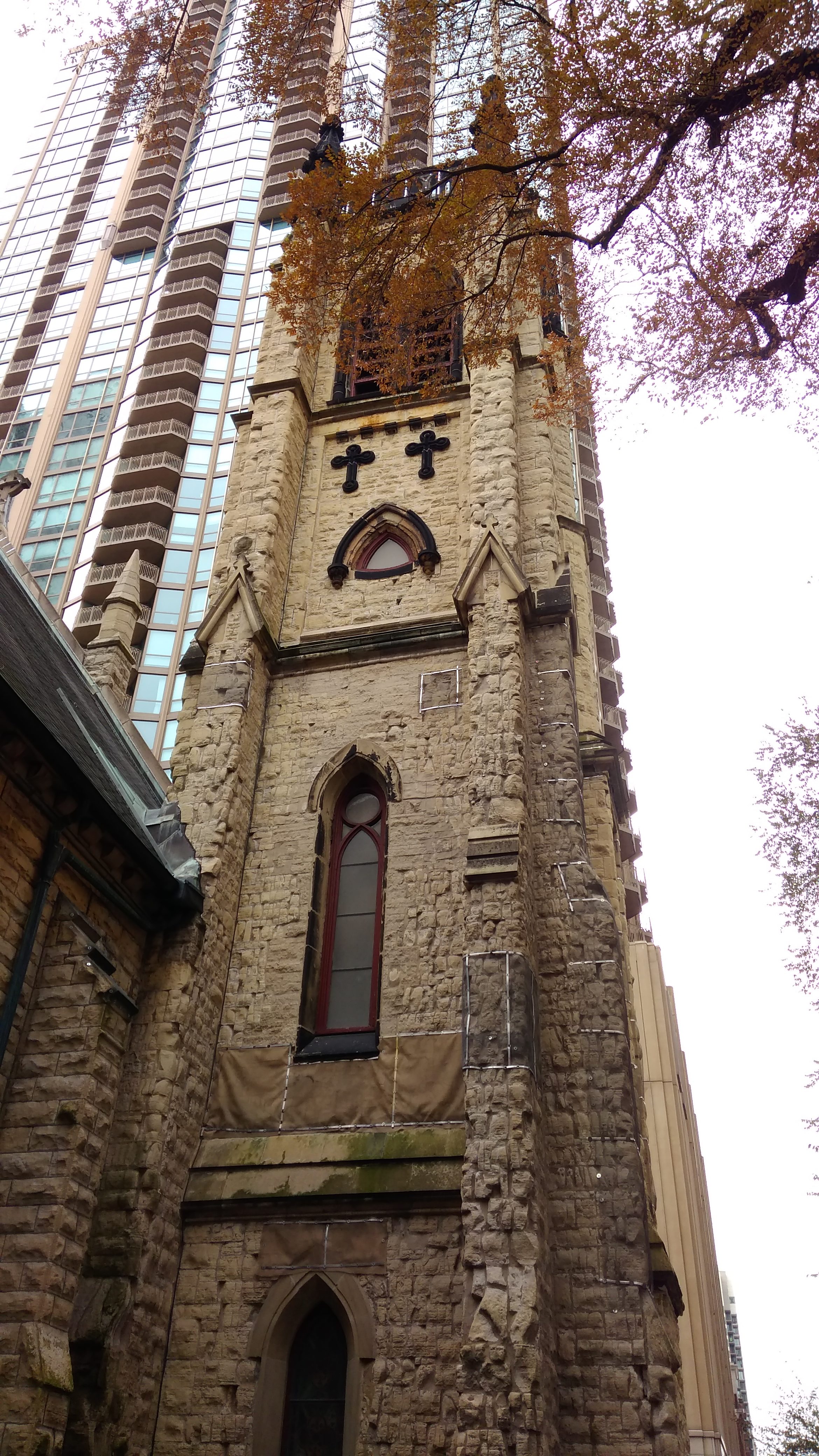
Wiki says that the upper reaches of the bell tower are still stained with soot from the Fire, but I didn’t really see it.
Maybe the soot was obscured by trees from my vantage. Anyway, here are some interior shots of St. James.

(Formerly) Like Going to School in Brasilia

Back in the late 1980s, I knew a fellow who was pursuing an MFA at the University of Illinois at Chicago. Academically, the place was strong, he told me. “But it’s also like going to school in Brasilia,” he said.

The last time I spent much time on the UIC campus was at roughly the same time, though I’ve visited places on the edges since then. So both before and after the Armistice Day event, I took a stroll through campus to revise my mental image of the place.

Turns out that UIC isn’t quite the brutalist wonder that it was 30 years ago or, presumably, in the mid-60s heyday of brutalism when Walter Netsch designed the school. In recent years the campus has been softened somewhat, especially with the addition of green space and trees.

But the campus still has its brutalist bones. Such as the vaulting University Hall, one of the original buildings and apparently home to some peregrine falcons since the late ’90s. As brutalism goes, not bad.

The Student Residences & Commons South, while also considered brutalist, has some style to it as well.

So does the campus’ latest structure, a residential hall that’s still under construction overlooking the Eisenhower Expressway on the north end of the east campus. More of an homage to brutalism than the thing itself, I’d say.
It’s a 550-bed project, designed by SCB, that will be completed next summer. The university is eager to have more students live on campus, it seems. Back in the days of a hardcore brutalist campus, I doubt that was a priority, but it is now.

Turner Hall, Milwaukee

From the Encyclopedia of 1848 Revolutions, part of an article on the German Turnverein: “Founded amid the nationalist enthusiasms of the War of Liberation, the German gymnastic movement, or Turnverein, had fundamentally changed by the time of the 1848 revolutions in the German lands.”

Ah, a branch of the physical culture movement. Maybe the main branch; I’m no expert. But I do blame the physical culture movement for the indignities of PE in 20th-century America.

To continue from the encyclopedia: “Although Friedrich Ludwig Jahn, the gymnasium instructor who had originated the idea of nationalist gymnastics in Berlin in 1811, was still venerated in the organization, his anti-Semitism, hatred of the French, and loyalty to the Hohenzollern dynasty left him out of step with an organization committed to national unification and political liberalism…

“These gymnastic clubs were often closely aligned with workers’ organizations and democratic clubs with whom they shared a desire for reform and a rejection of traditional hierarchies…

“In contrast to the organization Jahn had founded, almost one-half of the membership in the 1840s were non-gymnasts, the so-called ‘Friends of Turnen,’ and because of this, the new clubs engaged in more non-gymnastic activities, such as funding libraries and reading rooms, and sponsoring lectures, often of a politically liberal nature.

“Given the radicalization of the movement in the 1840s, it is not surprising that the German gymnasts were directly involved in the 1848 revolutions…

“The aftermath of the 1848 revolutions devastated the German gymnastic movement. Clubs were disbanded, property confiscated and leaders lost to jail or exile.”

One place exiled Turners went was Milwaukee. By 1882, they had completed Turner Hall, which stands to this day on 4th Street in downtown Milwaukee. Remarkably, the Milwaukee Turners are still around, and for a paltry $35, anyone can join. No German language skills or even gymnastic aptitude seem necessary.

Our Turner principles are as follows [their web site says]:
Liberty, against all oppression;
Tolerance, against all fanaticism;
Reason, against all superstition;
Justice, against all exploitation!

The hall was open as part of Milwaukee Open Doors, so we visited.
That’s not the building’s best side, which was in the shadow when we visited. Here’s a good picture of the front.

The building’s a fine work by Henry Koch, himself a German immigrant who also did Milwaukee City Hall. Built of good-looking Creme City brick, which is now going to be the subject of another digression.

“Like the road to Oz, much of Milwaukee is made of yellow brick – Cream City brick, to be precise. But how, exactly, did it end up here? And why is it such a source of local pride?” asks Milwaukee magazine.

“Clay found along Milwaukee’s river banks was naturally high in magnesia and lime, giving the brick its unique color and durability, according to Andrew Charles Stern, author of Cream City: The Brick That Made Milwaukee Famous.

“Its popularity extended well beyond Wauwatosa. Local manufacturers shipped Cream City bricks to clients around the United States and as far away as Europe, until production ceased in the 1920s, when the clay supply was depleted and builders began to favor stone and marble…”

Talk about enjoying a local sight. A building built for Milwaukee Turners from a material created locally.

Inside, we joined a tour group and saw the restaurant space, which I believe was a beer hall once upon a time. After all, they might have been physical culture enthusiasts, but they were also Germans.

Murals dating back to the early days of the Milwaukee Turners grace the walls in that part of the building. Such as one featuring Turnvater Jahn and assorted allegories.
The aforementioned Friedrich Ludwig Jahn (1778-1852), that is, the father of gymnastics, and possibly a godfather of National Socialism, though that point is disputed, and in any case the NSDAP never had much traction in Milwaukee.

A detail from another Turner Hall mural whose subject is the founding of Milwaukee.

Pictured are Solomon Juneau and a Native American. Juneau founded the city in the early 1800s.

I feel another digression coming on. From the forward of Solomon Juneau, A Biography, by Isabella Fox, published in 1916:

The name of Solomon Juneau has long been honored, alike for the sterling integrity, the true nobility of the man, and for his generous benefactions in the upbuilding of the city he founded nearly a century ago, near the Milwaukee bluff on the shore of Lake Michigan. He was the ideal pioneer — heroic in size and character — generous by nature, just in all his dealings, whether as a fur trader with the red man, or in business transactions with his fellow townsmen, through the trying times when early settlers often required fraternal assistance, and the embryo city in the wilderness was ever the gainer through his benevolence, for selfishness was non-existence in him…

They don’t write ’em like that any more.

The star attraction in the Turner Hall is the ballroom.

The ballroom was damaged by fire at some point, but it’s stabilized enough — including netting covering the ceiling — for public events, such as the wedding that was going to be held there sometime after we visited last Saturday.

Eventually, the room will be restored. Bet it’ll be a marvel.

Milwaukee Doors Open ’18

We went to Milwaukee on Saturday for this year’s Milwaukee Doors Open, a fine event that more cities in this country would do well to emulate. Doors Open and Open House have a fair number of participating cities around the world, but by my count only Atlanta, Chicago, Denver, Milwaukee, Lowell, Mass., and New York in the U.S.

Last year during the event, we visited five Milwaukee churches and one secular building, City Hall. After visiting six churches just last week in Chicago, we took a break from religious sites and focused on other kinds of buildings: a theater, an arena, a former clubhouse that’s now an event venue, a library and a planetarium.

The Doors Open buildings weren’t the only things we saw. For instance, in downtown Milwaukee I noticed this memorial on the grounds of the Milwaukee Fire Dept. HQ, called “The Last Alarm.”Words on one side the plinth explained: Traditionally, in the Milwaukee Fire Department, when a fire fighter dies in the line of duty, his-her boots, topped by a fire fighting coat and helmet, are placed in the procession. As the funeral cortege of the fallen firer fighter approaches, the on-duty crew comes to attention and offers a final salute. This empty turnout gear not only symbolizes the missing fire fighter, but also the emptiness felt by family, friends, and fellow fire fighters who share the loss.

On another side of the plinth is a list of Milwaukee FD firefighters who died in the line of duty.

A few blocks away is an historical marker about the typewriter. It’s pretty much self-explanatory, at the least to the aging part of the population that grew up with typewriters.

Also downtown is the Milwaukee County Courthouse, and imposing neo-classical edifice by McKim, Mead, and White, finished in 1931. From the east.

Another view, from the southeast, roughly.

In the afternoon, we left downtown to visit the campus of the University of Wisconsin- Milwaukee, which is in the northern reaches of the city, not far from Lake Michigan. Though not open for a tour, I thought this building was interesting.

It’s the Kenwood Interdisciplinary Research Complex, which includes labs, classrooms, offices and meeting spaces for the university’s physics, chemistry and the Environmental Health Sciences doctoral program within the Zilber School of Public Health. Finished in 2015.

Postmodern, I suppose. According to Flad Architects, who designed it, “the exterior expression of yellow terracotta, exposed concrete and metal panels is rendered as an assemblage of components, a metaphor for the research and innovation happening within.” That is to say, pay attention, Science is happening here.

Not far away is a sizable concrete sculpture.

Not the most aesthetic assemblage of material, or even concrete, that I’ve ever seen. But it has a cool name: “Jantar-Mantar,” which I suppose is an homage to the astronomical observatories in India of that name, though without the hyphen. Erected in 1995.

Narendra Patel, who used to teach art at the university, is listed on the plaque as the sculptor, with the piece otherwise “created and completed through the hard work and direction of Dennis Manley and the following students of sculpture [lists 14 names].”

The Church of St. Barbara

The last stop for bus #4 on this year’s church tour in the Bridgeport neighborhood of Chicago was the Church of St. Barbara on S. Throop St.
It’s an octagonal Renaissance-style church and another edifice created by a Polish congregation in the early 20th century. These days, the congregation is much more  ethnically mixed, but Polish still greets visitors at the main entrance.
St. Barbara is another Worthmann & Steinbach design, finished in 1914, the second we saw on Saturday after First Lutheran Church of the Trinity. Architects tend to be ecumenical in their clients, I figure. A commission’s a commission.

The octagonal shape makes it a little hard to comprehend the interior by looking straight ahead. You have to spend time looking around.
And looking up.
Here’s St. Barbara, looking down on the altar.
I couldn’t remember who St. Barbara was thought to be, but the sword is distinctive. So I looked her up later.

“Virgin and Martyr,” New Advent says. “There is no reference to St. Barbara contained in the authentic early historical authorities for Christian antiquity, neither does her name appear in the original recension of St. Jerome’s martyrology. Veneration of the saint was common, however, from the seventh century.

“Barbara was the daughter of a rich heathen named Dioscorus. She was carefully guarded by her father who kept her shut up in a tower in order to preserve her from the outside world… Before going on a journey her father commanded that a bath-house be erected for her use near her dwelling, and during his absence Barbara had three windows put in it, as a symbol of the Holy Trinity, instead of the two originally intended.

“When her father returned she acknowledged herself to be a Christian; upon this she was ill-treated by him and dragged before the prefect of the province, Martinianus, who had her cruelly tortured and finally condemned her to death by beheading. The father himself carried out the death sentence, but in punishment for this he was struck by lightning on the way home and his body consumed.

“The legend that her father was struck by lightning caused her, probably, to be regarded by the common people as the patron saint in time of danger from thunderstorms and fire, and later by analogy, as the protector of artillerymen and miners.”

One of those very popular saints without any actual historical basis, it seems. No matter. She has a lot of places named after her besides the city in California.

After looking around the sanctuary, we went to the adjacent school for snacks. That’s where I saw something else I’d never seen before.

A bingo sign. Plugged in and everything. Pretty much as mysterious to me as the tales of St. Barbara.

All Saints-St. Anthony Church

After we visited the relatively spare First Lutheran Church of the Trinity in the Bridgeport neighborhood, we experienced a more ornate style at All Saints-St. Anthony on W. 28th St.
The Romanesque style church was another work by Henry Schlacks, completed in 1915. According to a history of the two congregations that formed the present church, “Pre-eminent among the distinguishing features of the Church, even today, is a mosaic of the vision of St. Anthony of Padua adorning the exterior above the main entrance.”

The view toward the apse.
The mural behind the altar.
Back toward the narthex.
The church’s stained glass is attributed to Franz Xaver Zettler, whom I’ve run across before.
Though Bavarian, Zettler did a lot of American windows.

First Lutheran Church of the Trinity

Mostly Catholic immigrants have populated the Bridgeport neighborhood in Chicago over the years, but not entirely. There were many Germans there once upon a time, some of whom happened to be Lutheran.

First Lutheran Church of the Trinity rises over W. 31st St. and has since 1913. It was the only Protestant church we visited on the tour.

Worthmann & Steinbach did the Gothic design. They also did St. Mary of the Angels, while Steinbach did Covenant Presbyterian Church.

“Currently the oldest Christian congregation in the Bridgeport neighborhood of Chicago [founded in 1865], First Trinity was originally located on the southeast corner of 25th Place and S. Canal,” the church web site notes. “After the railroad took possession of that property, the church moved to its current location… in the early 20th century.

“The church started out as a German immigrant parish named Ev. Luth. Dreieinigkeits (Evangelical Lutheran Trinity), supported an elementary school, and earned the nickname ‘Mother Church of the South Side’ by numerous branch schools that eventually developed into daughter congregations on the South Side of Chicago.”

The last service in German was sometime in the 1950s, if I remember the docent right. During a renovation at some point the line from Scripture (Luke 11:28) was changed from German to English.

Inside, as you’d expect, the adornment is toned down.

As the docent said, there isn’t much to distract you front looking straight ahead.
I thought the trefoil over the altar was an interesting detail.
I don’t think I’ve seen one quite like it. Completely fitting, considering the name of the church.