Monastery of the Holy Cross and Ling Shen Ching Tze Buddhist Temple

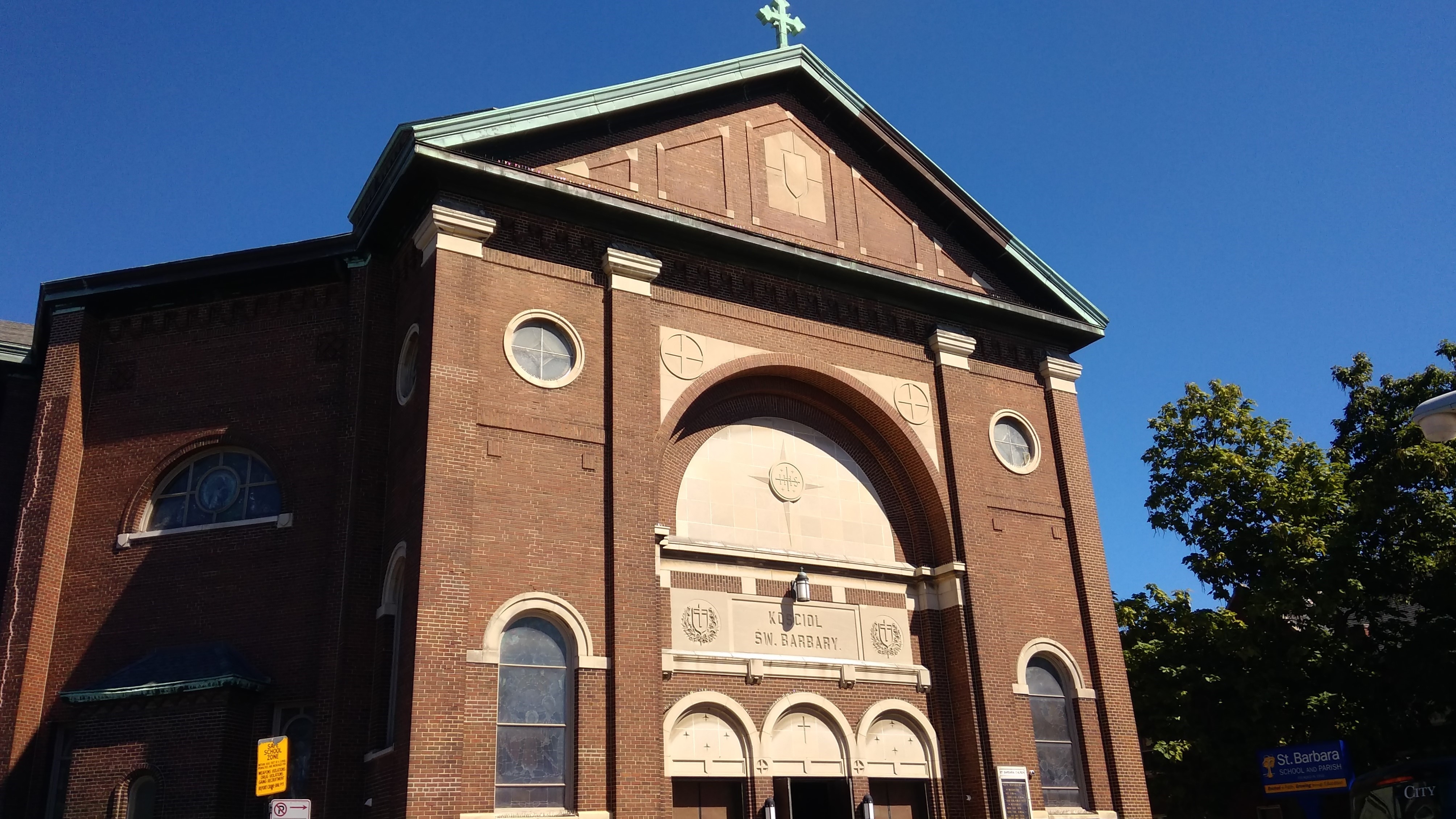
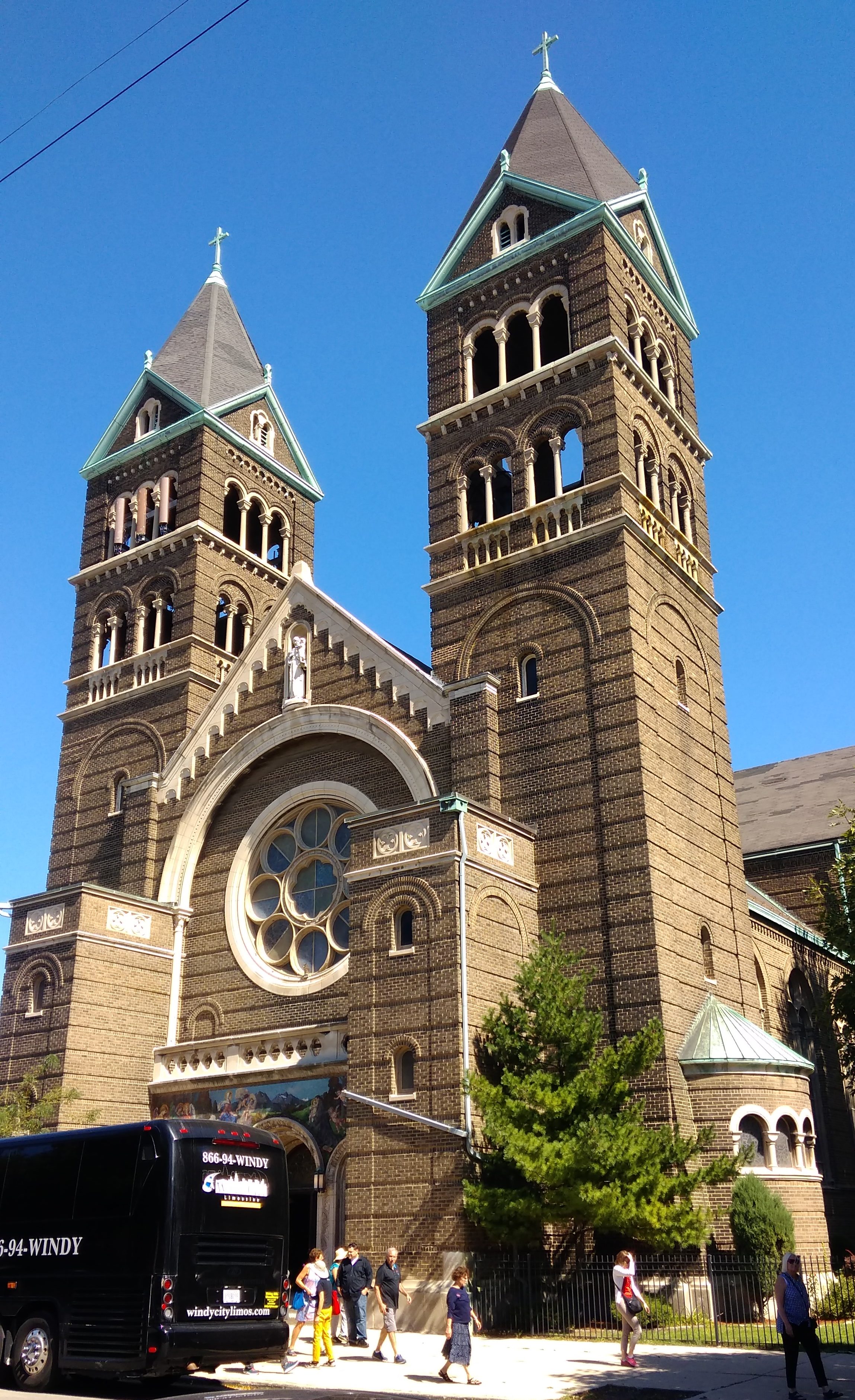
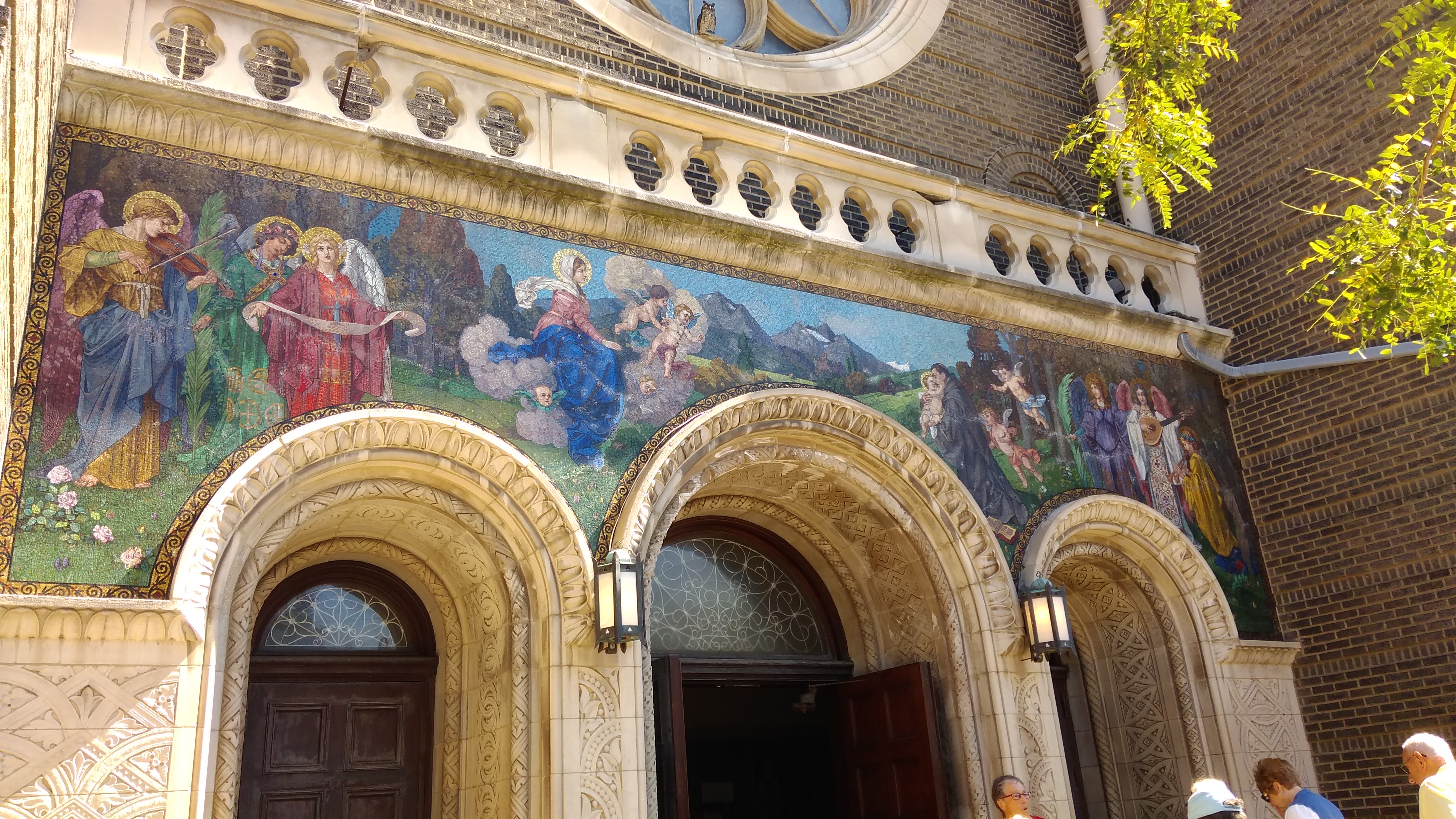
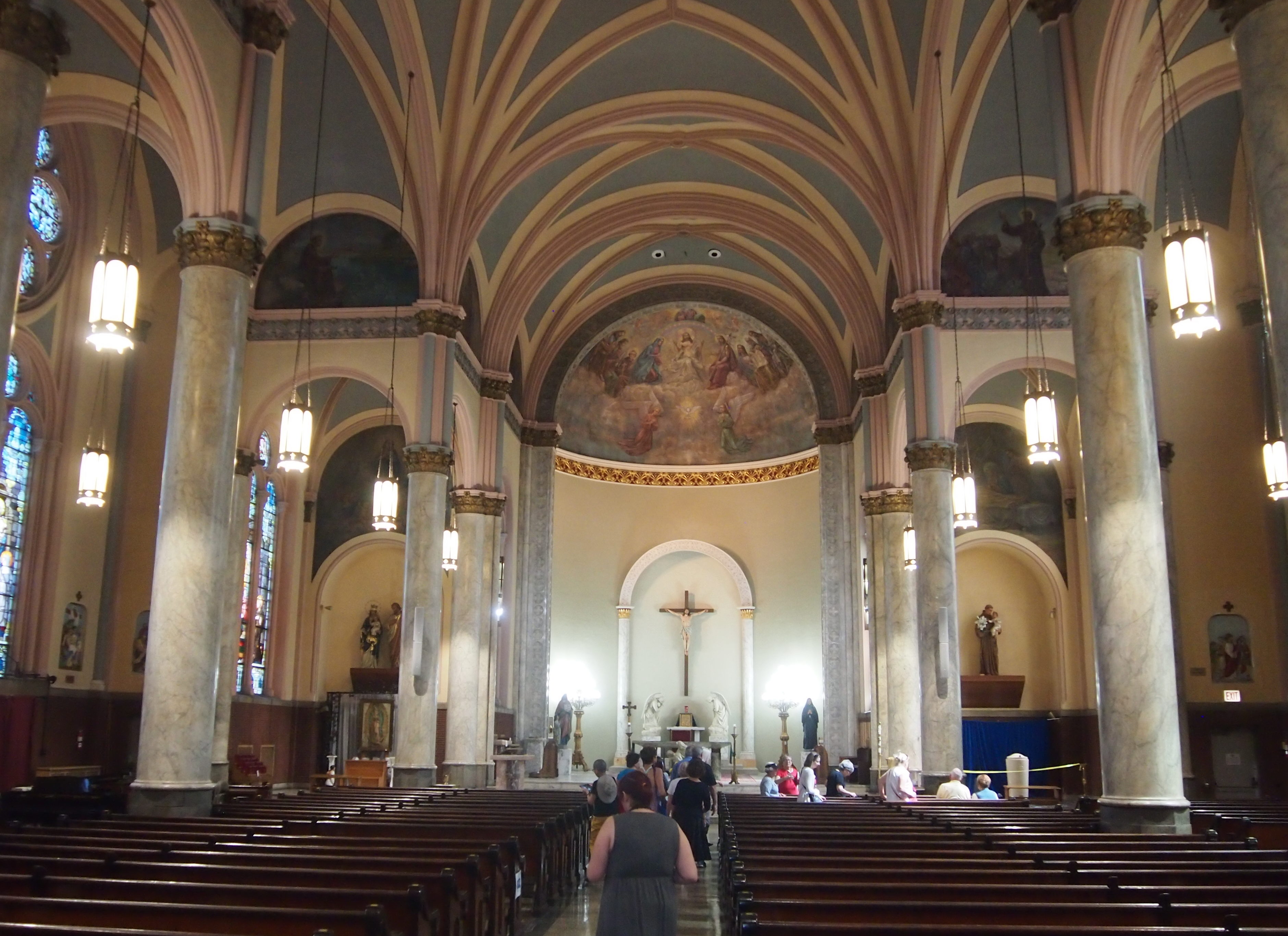
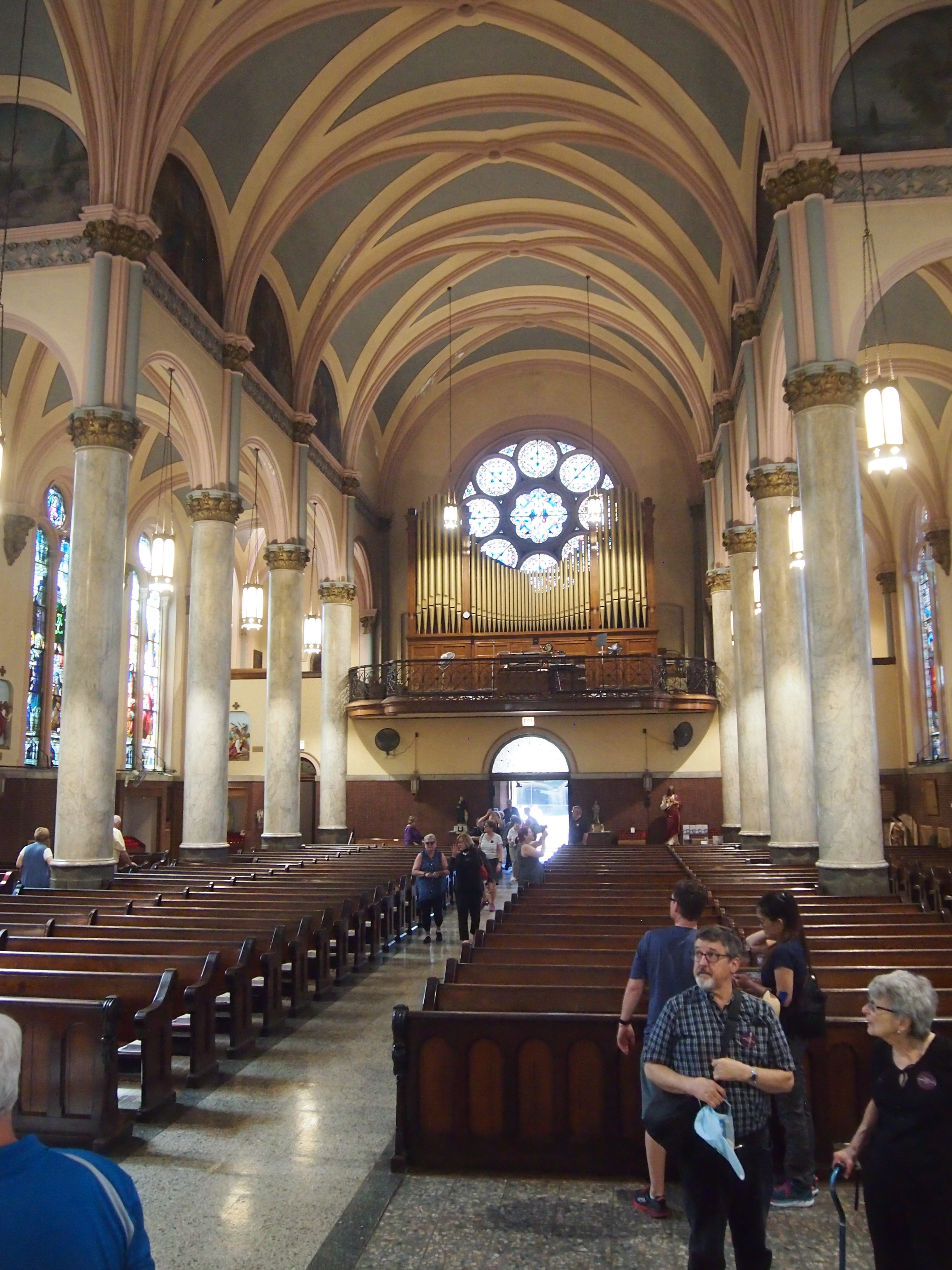
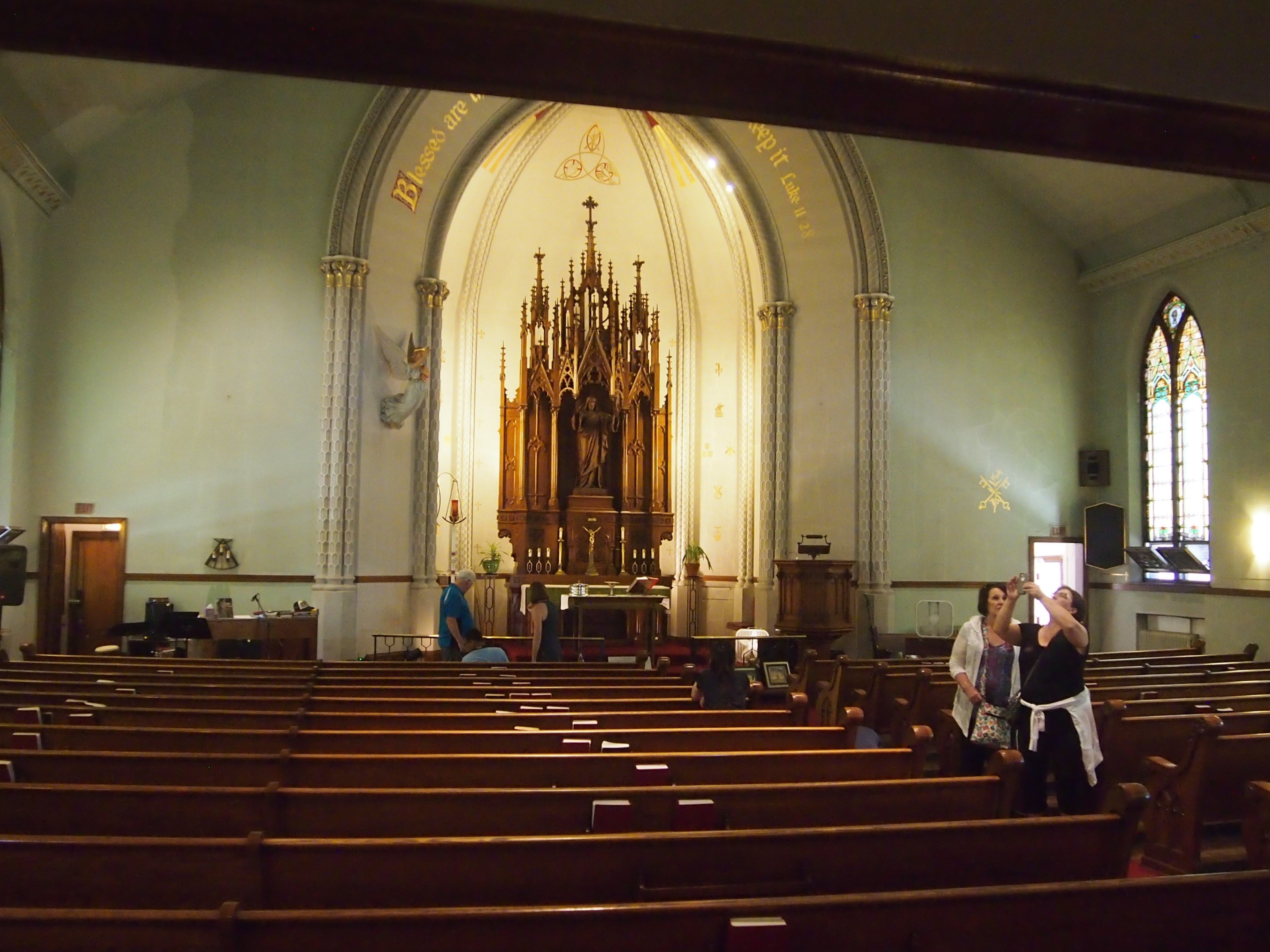
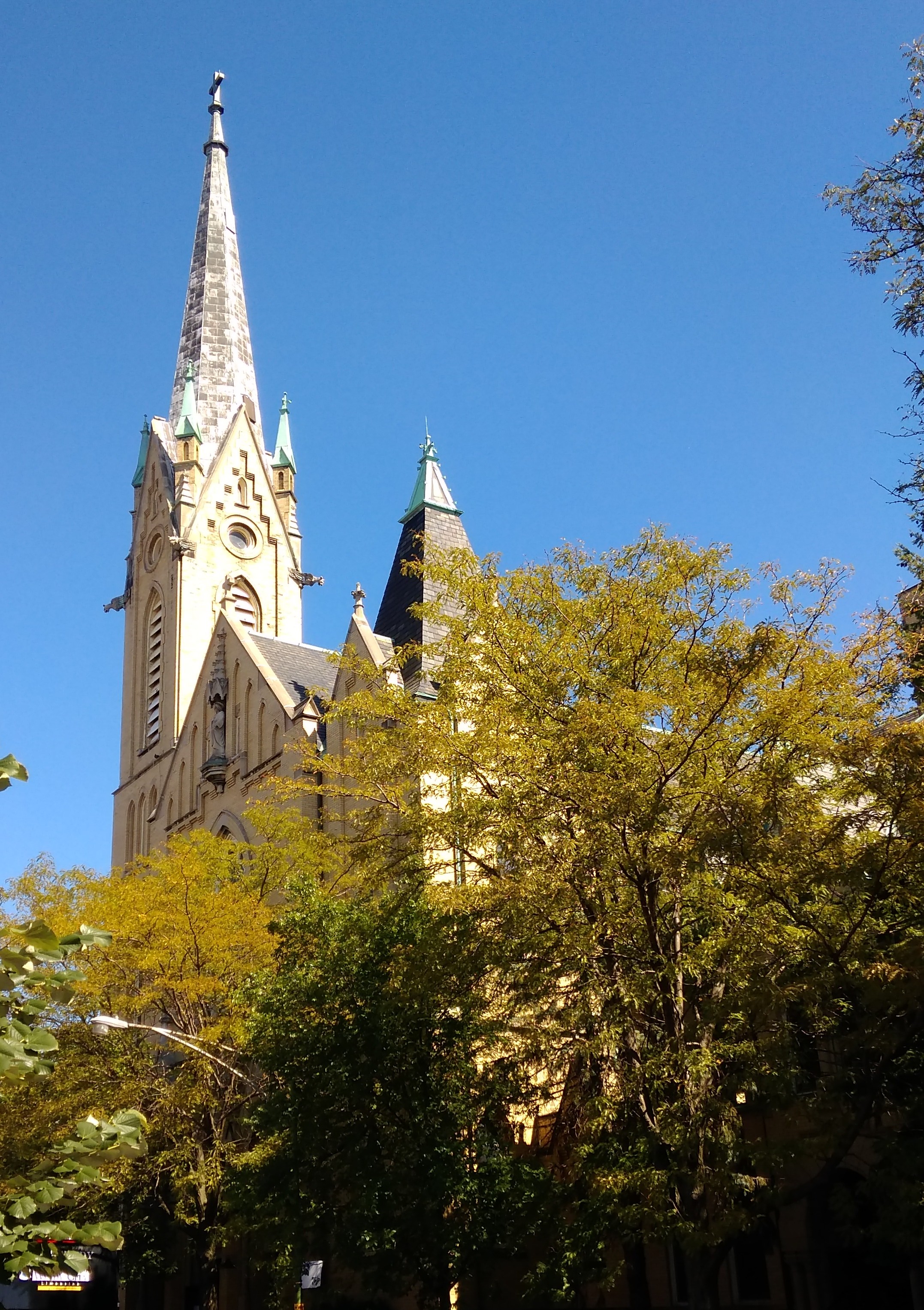
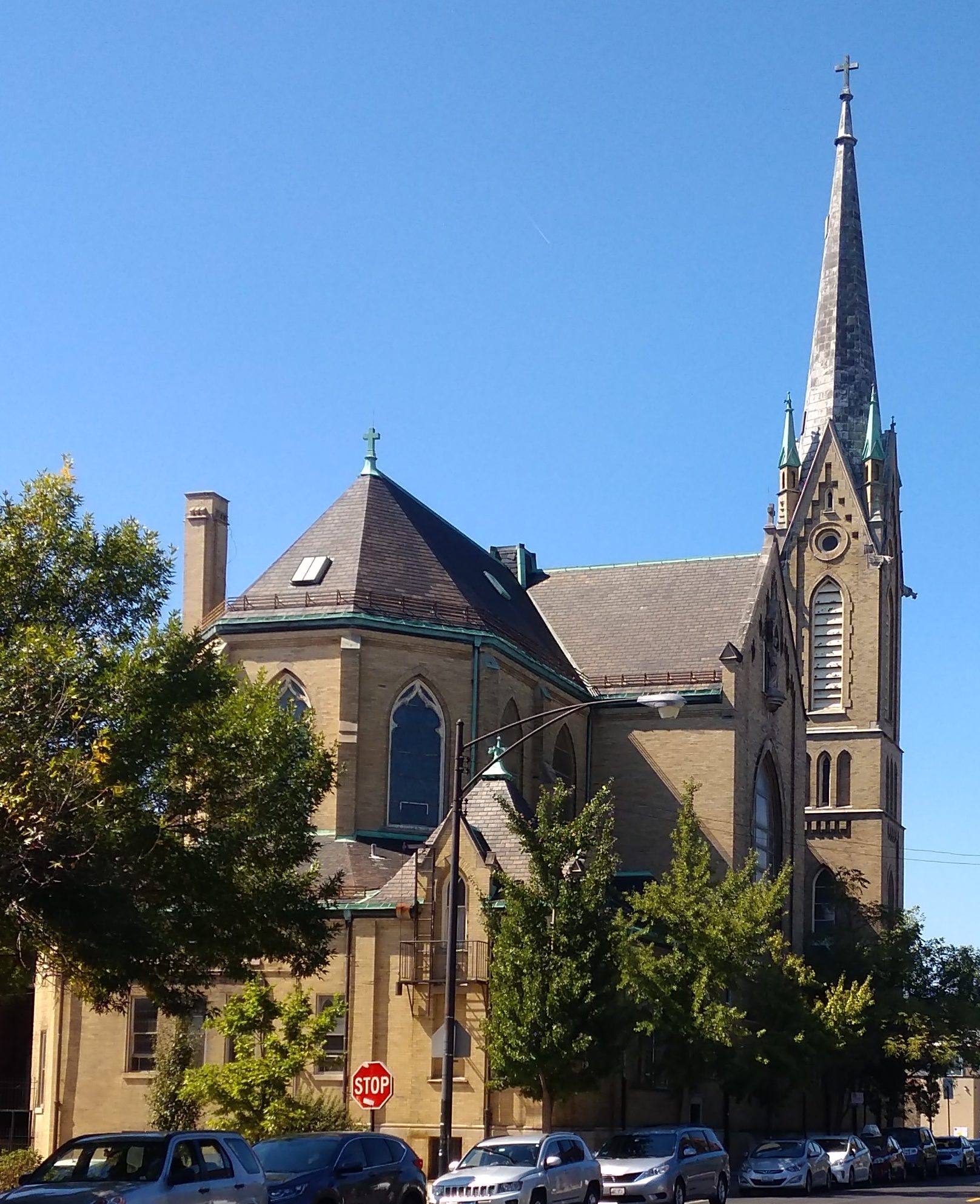
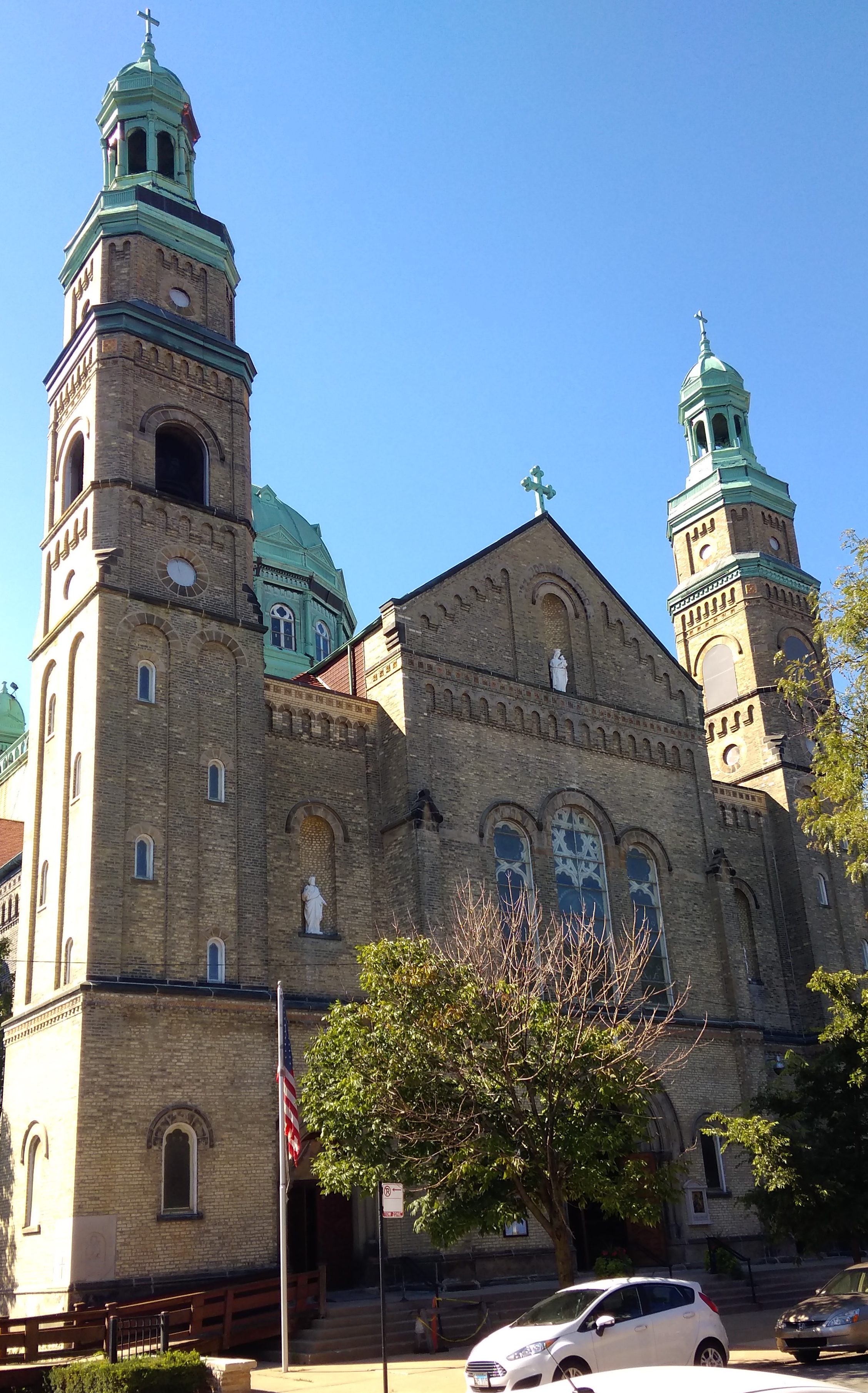
Two stops on the churches by bus tour in the Bridgeport neighborhood of Chicago on Saturday weren’t churches any more, not at least as they’d originally been built. One was the Monastery of the Holy Cross on S. Aberdeen St.

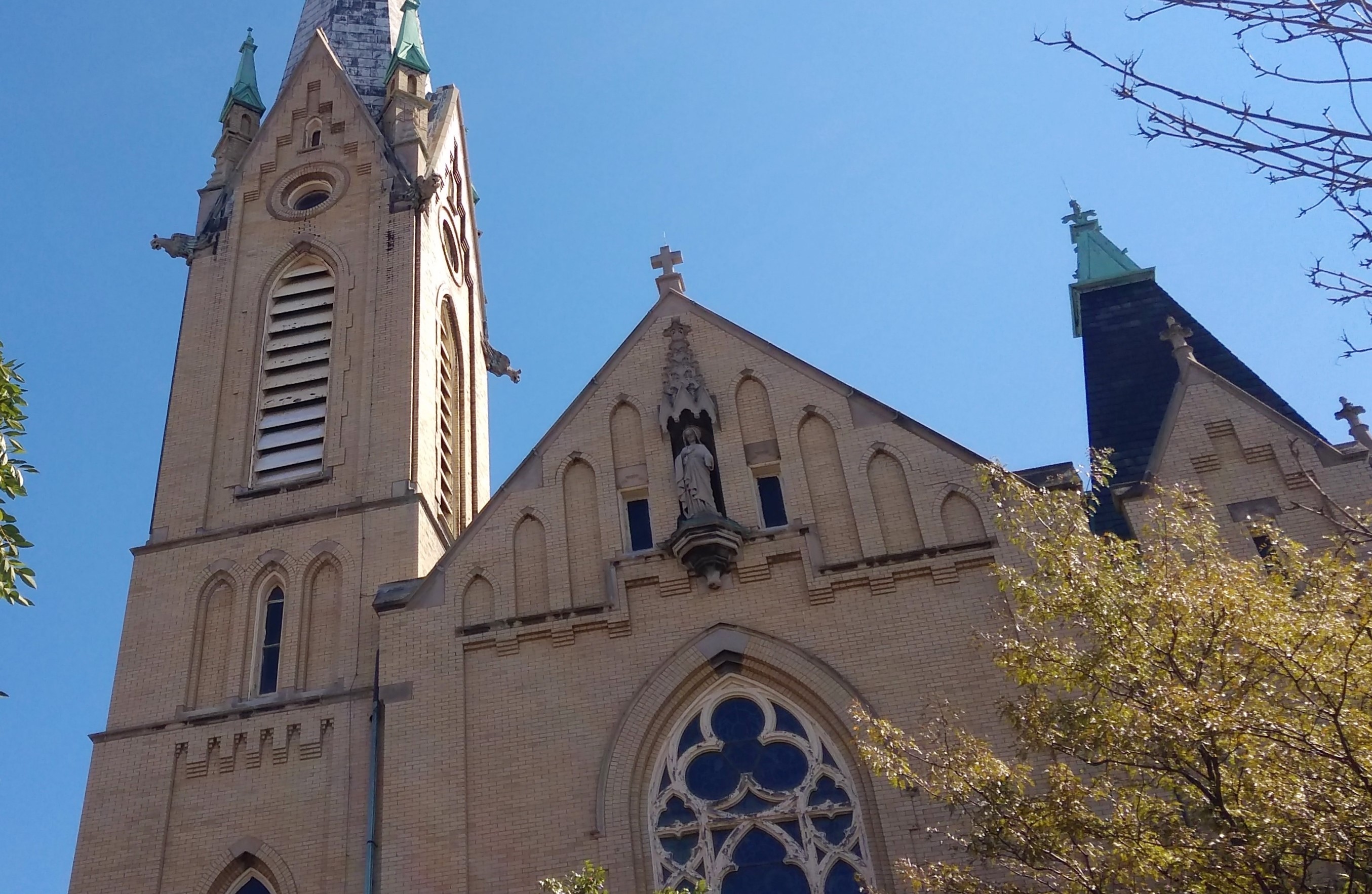
Hermann Gaul designed the Gothic structure as Immaculate Conception Church in 1908. You have to like a tower that sports gargoyles.
It occurred to me that Gargoyle or the Gargoyles would be a good name for a punk or metal band, but as usual keener minds are ahead of me.

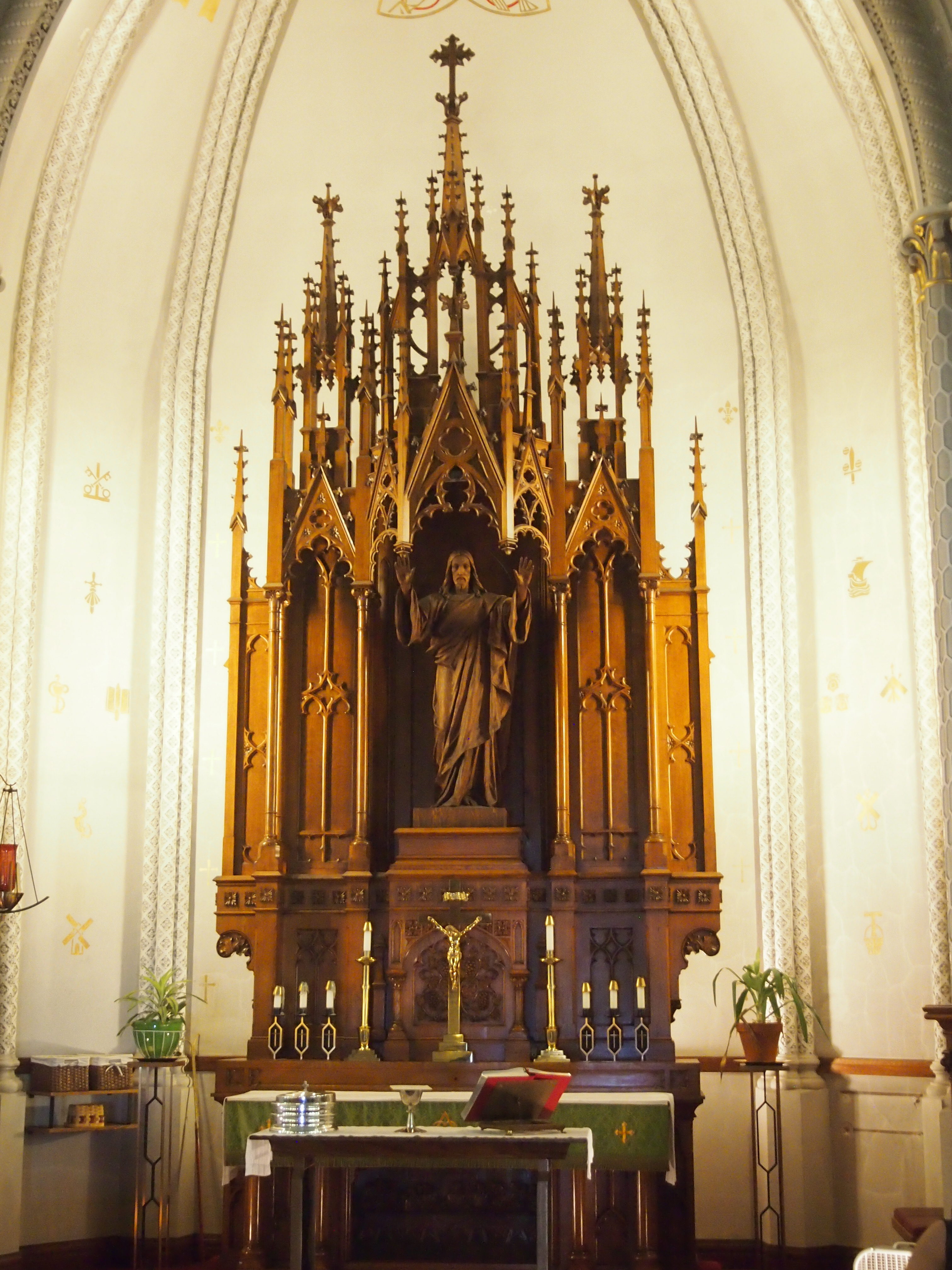
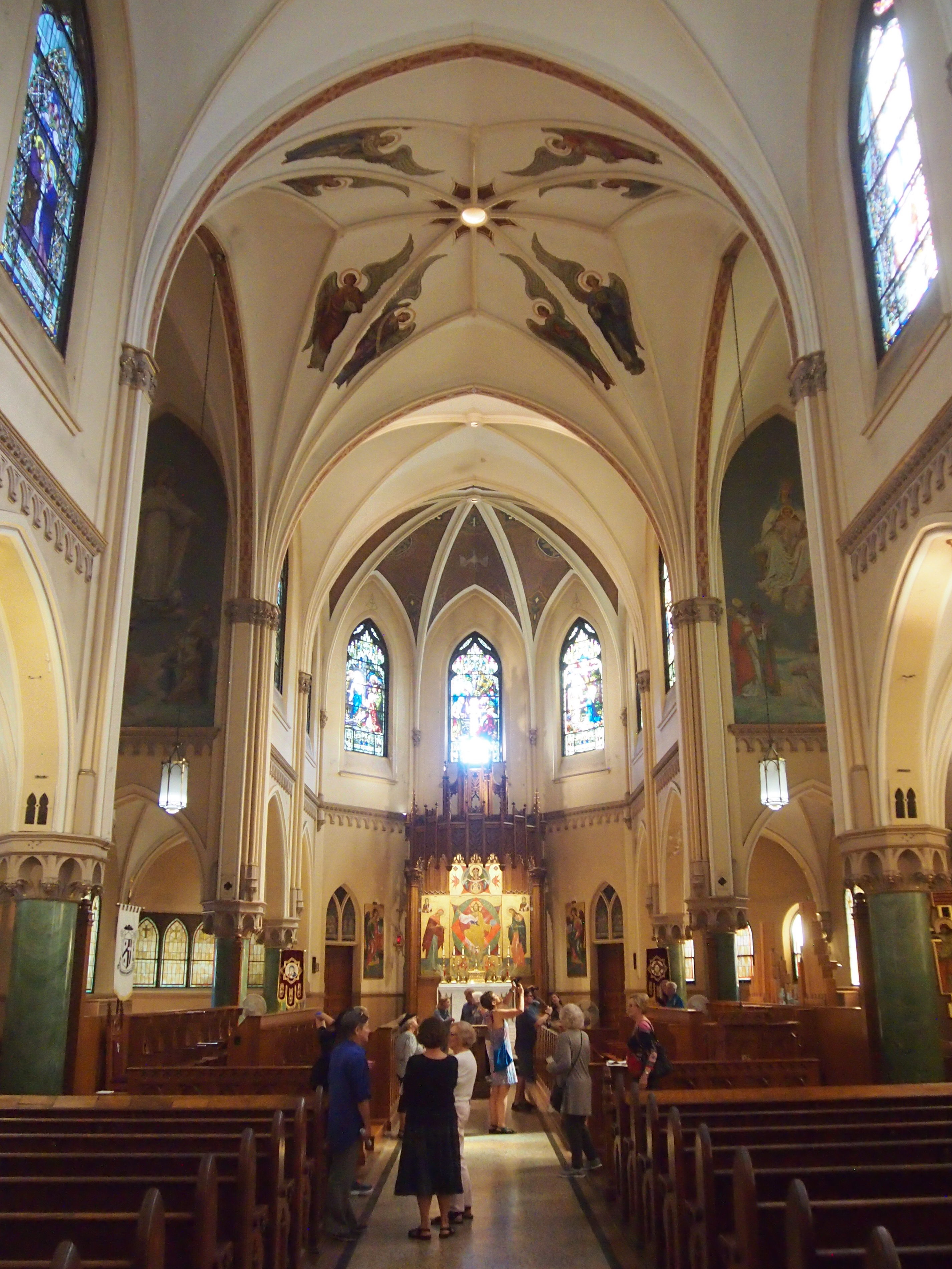
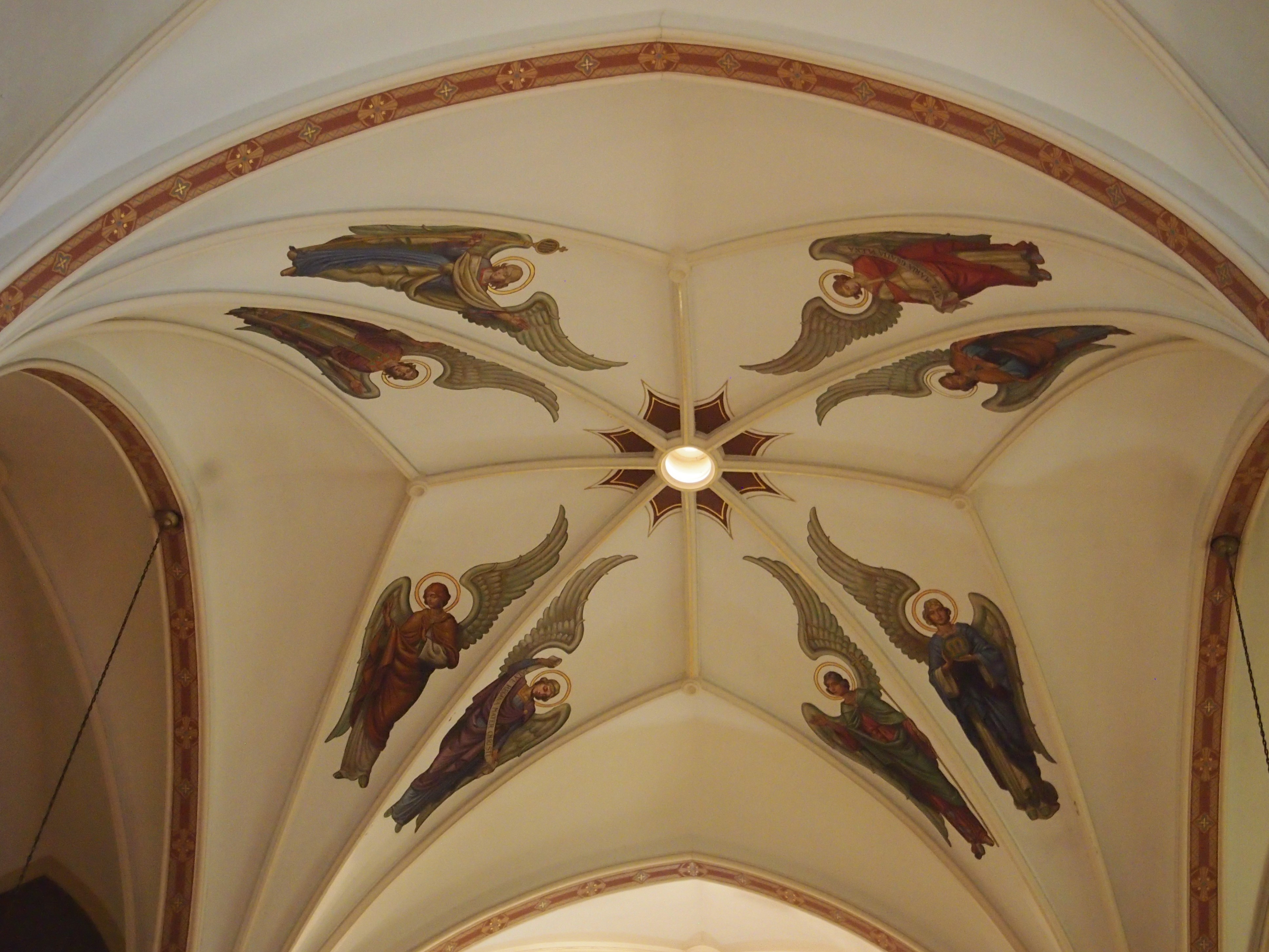
Eventually the church closed due to declining attendance, and some Benedictines took the place over in 1991. I understand that the monks have to be self-sustaining, so they operate a bed and breakfast on the property (which we did not see), and also sell coffins and CDs of their plainsong.

I’d say the brothers have done a pretty good job of keeping up the place.

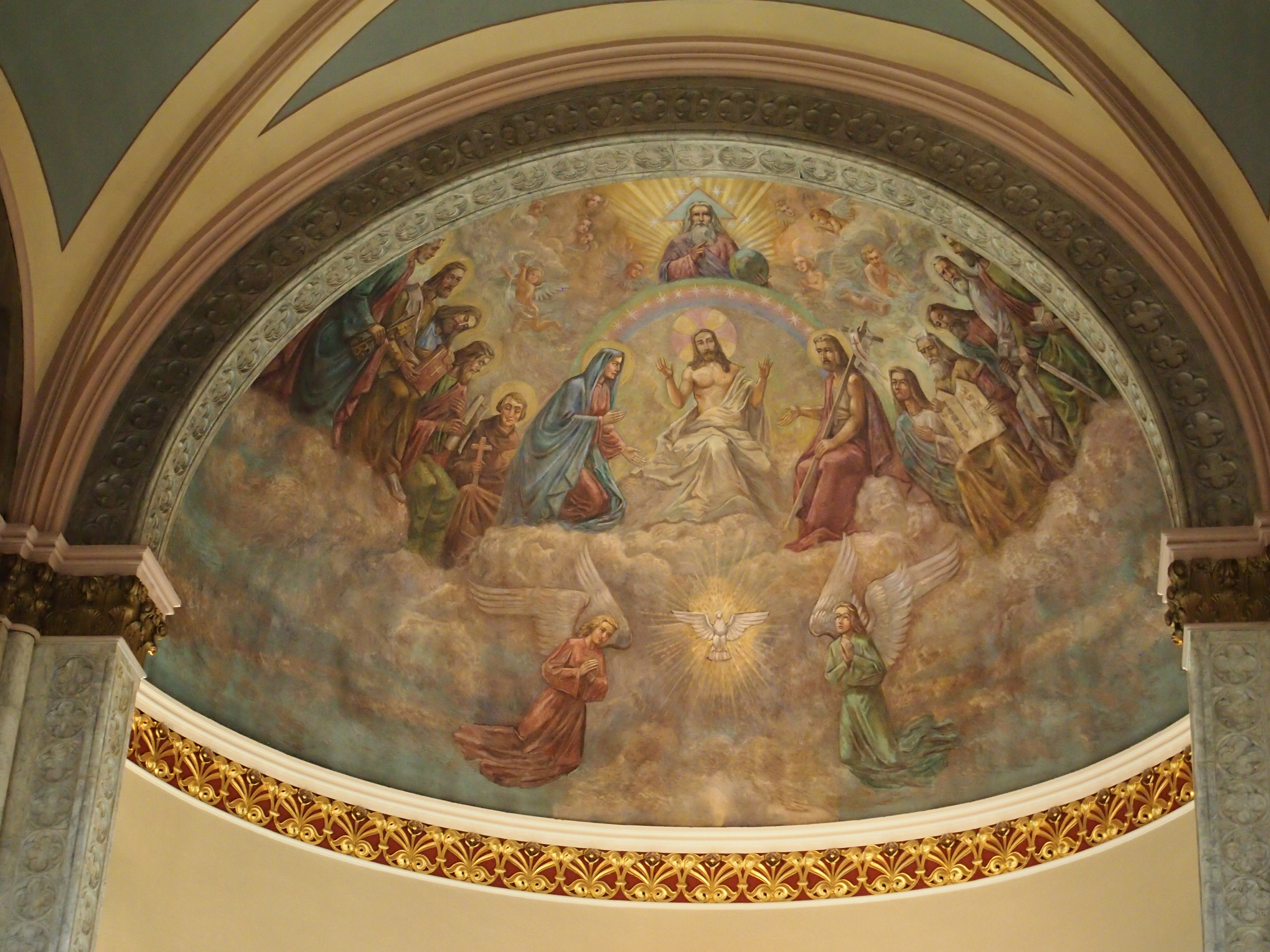
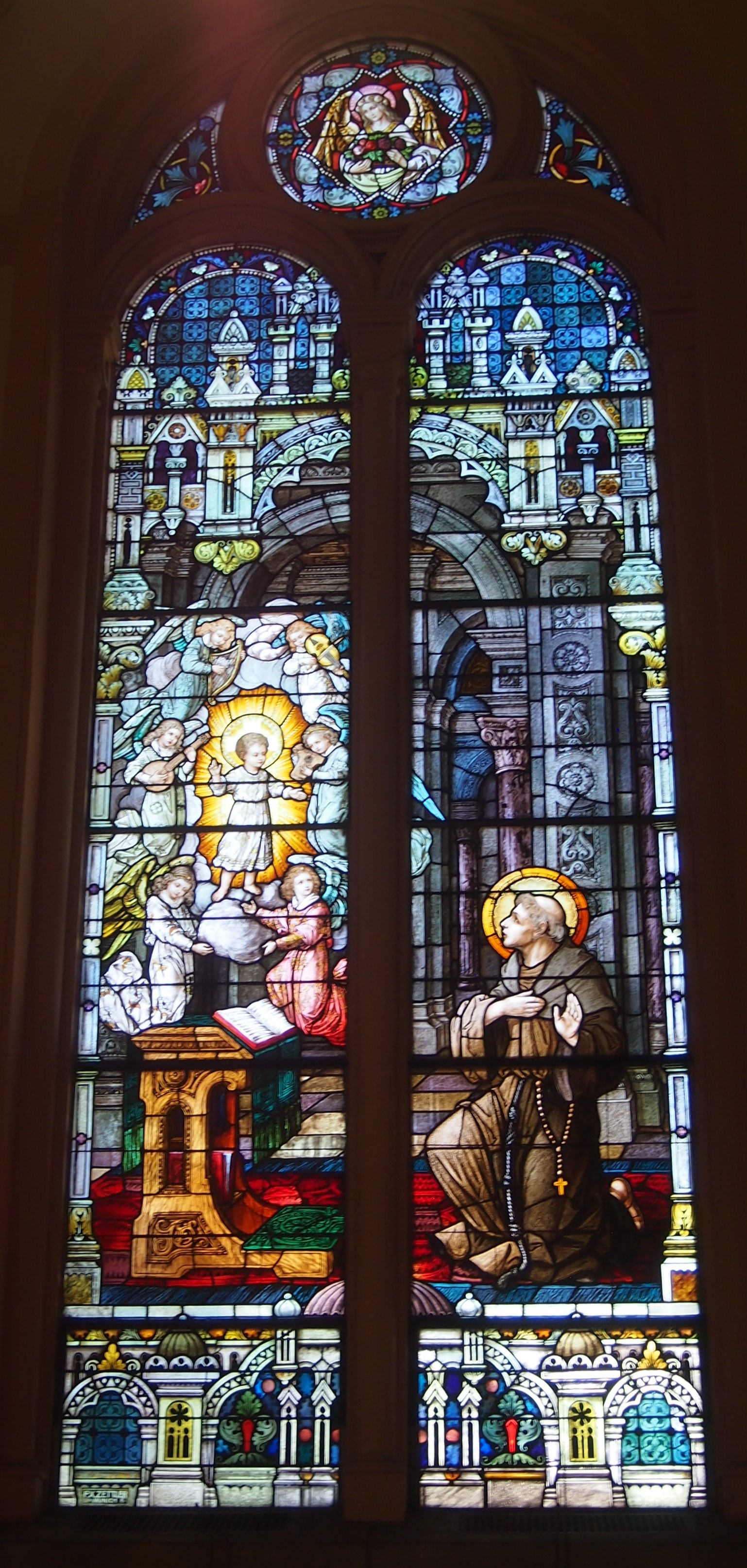
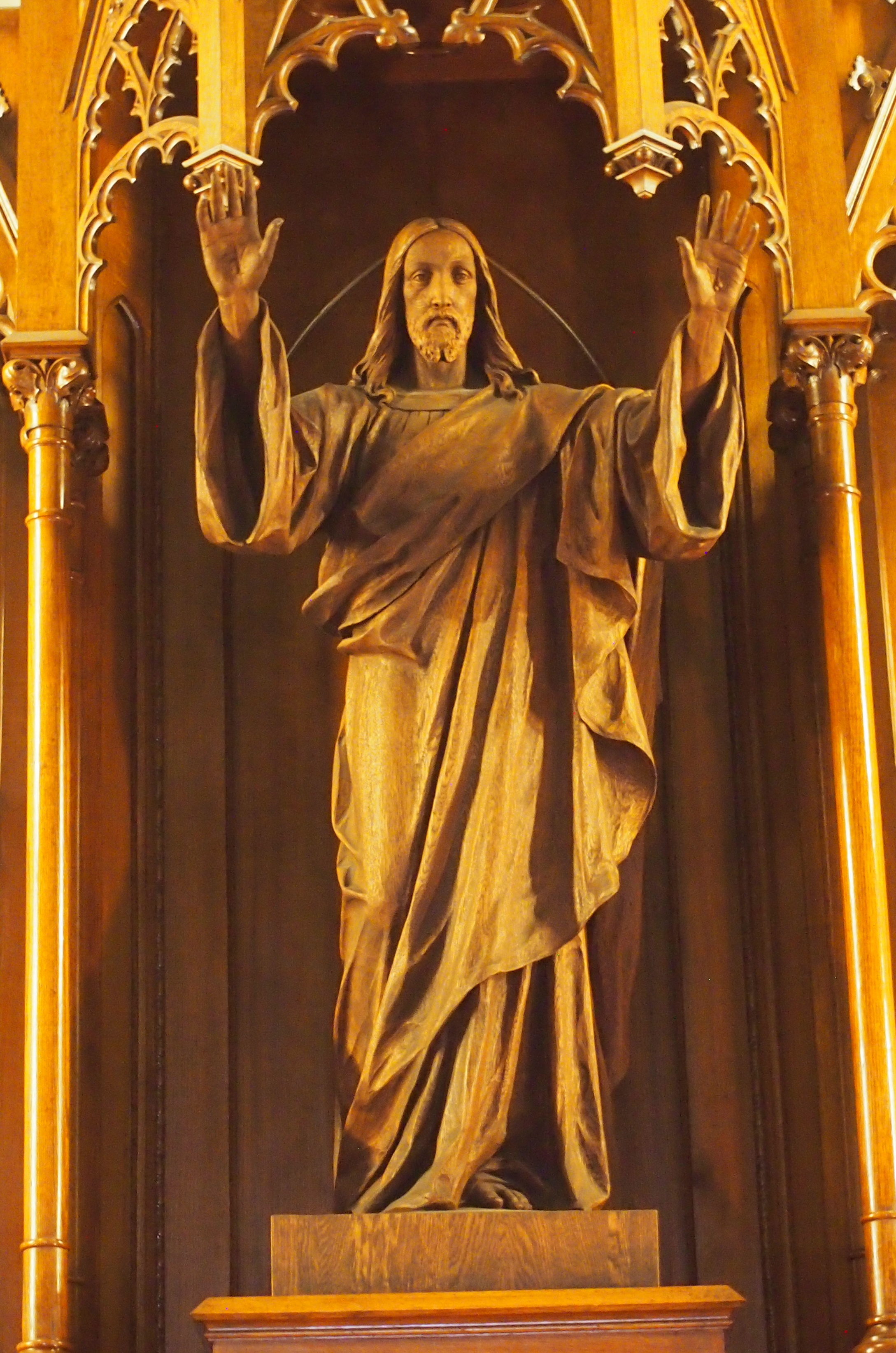
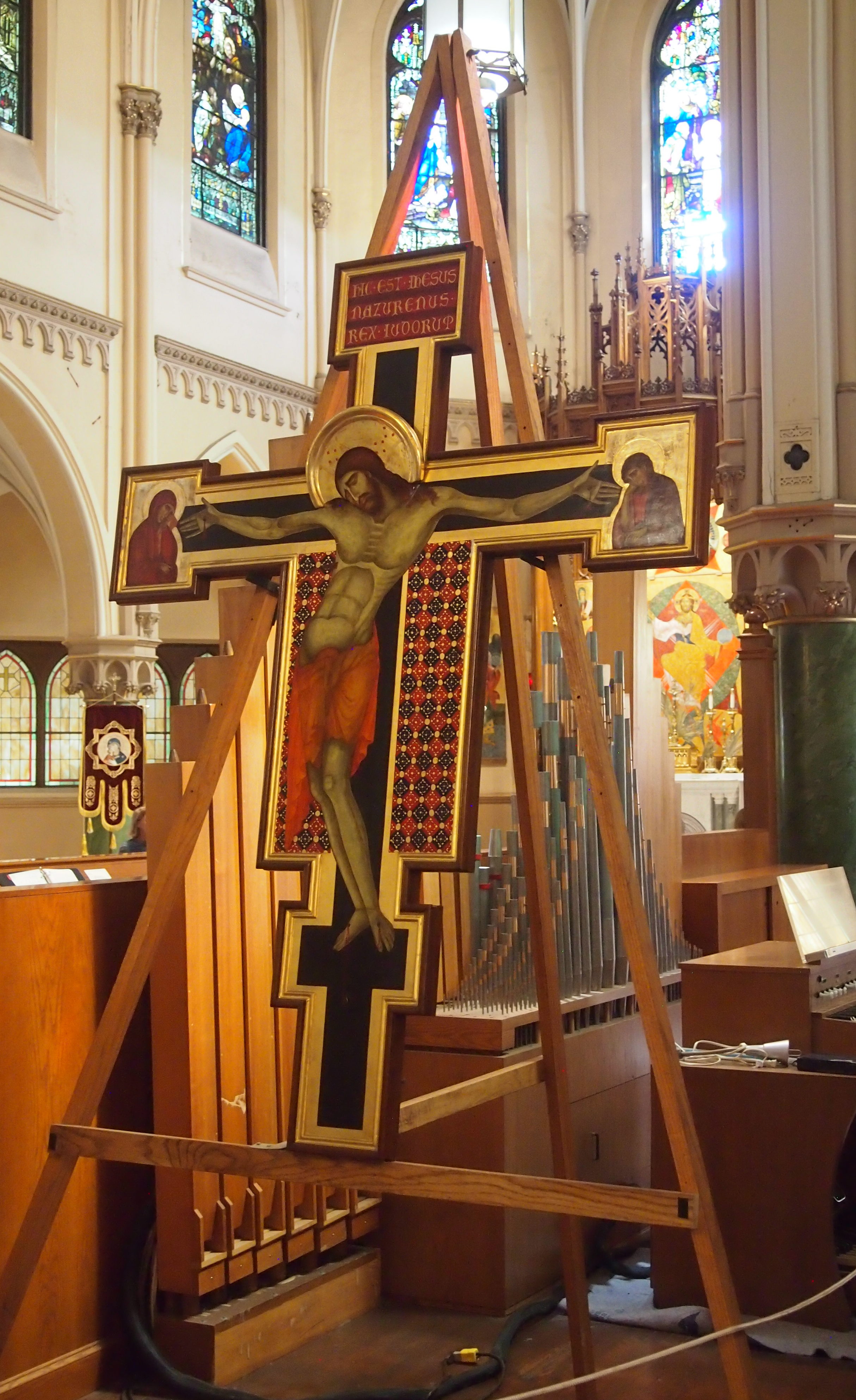
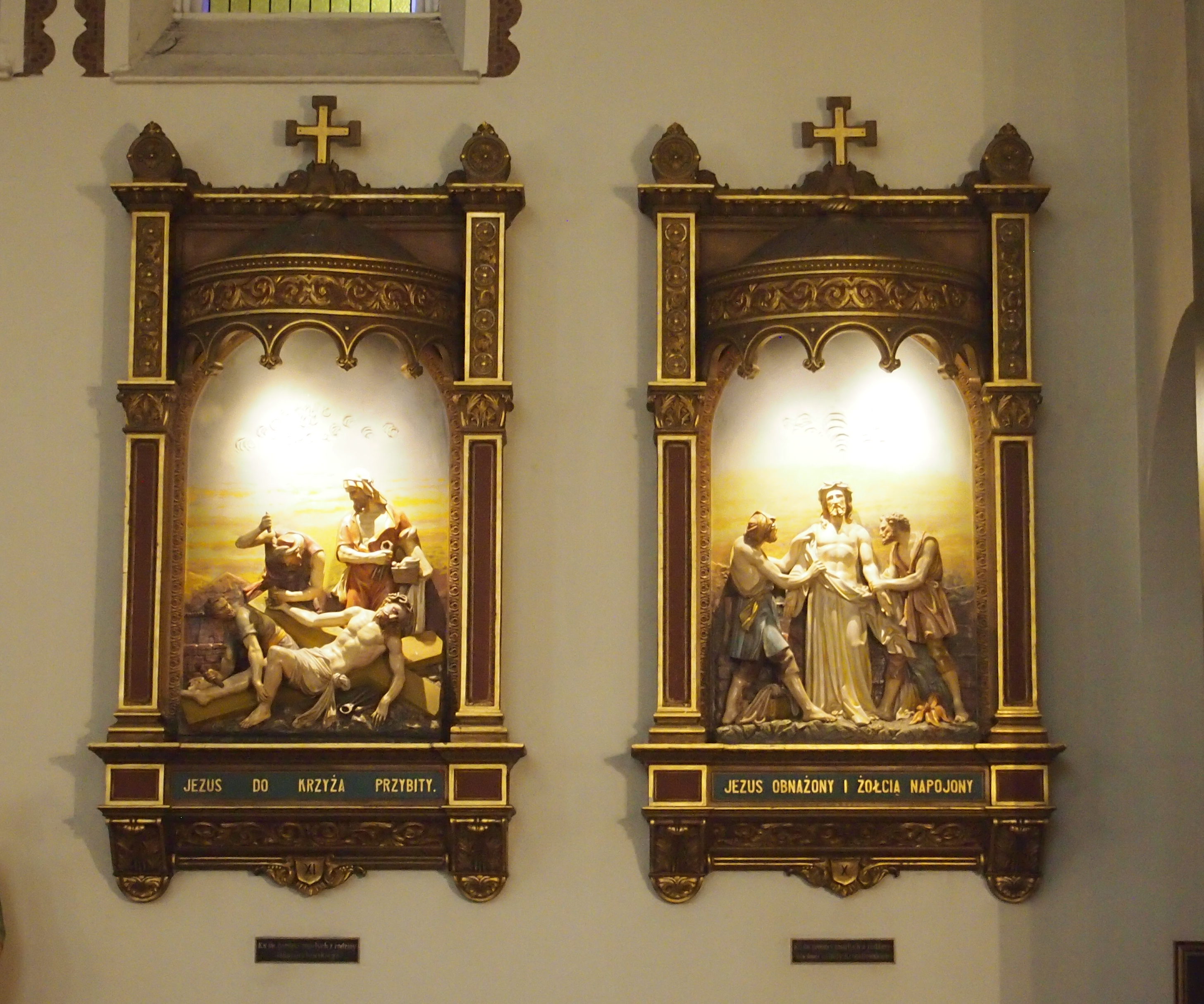
As well as providing sacred art.
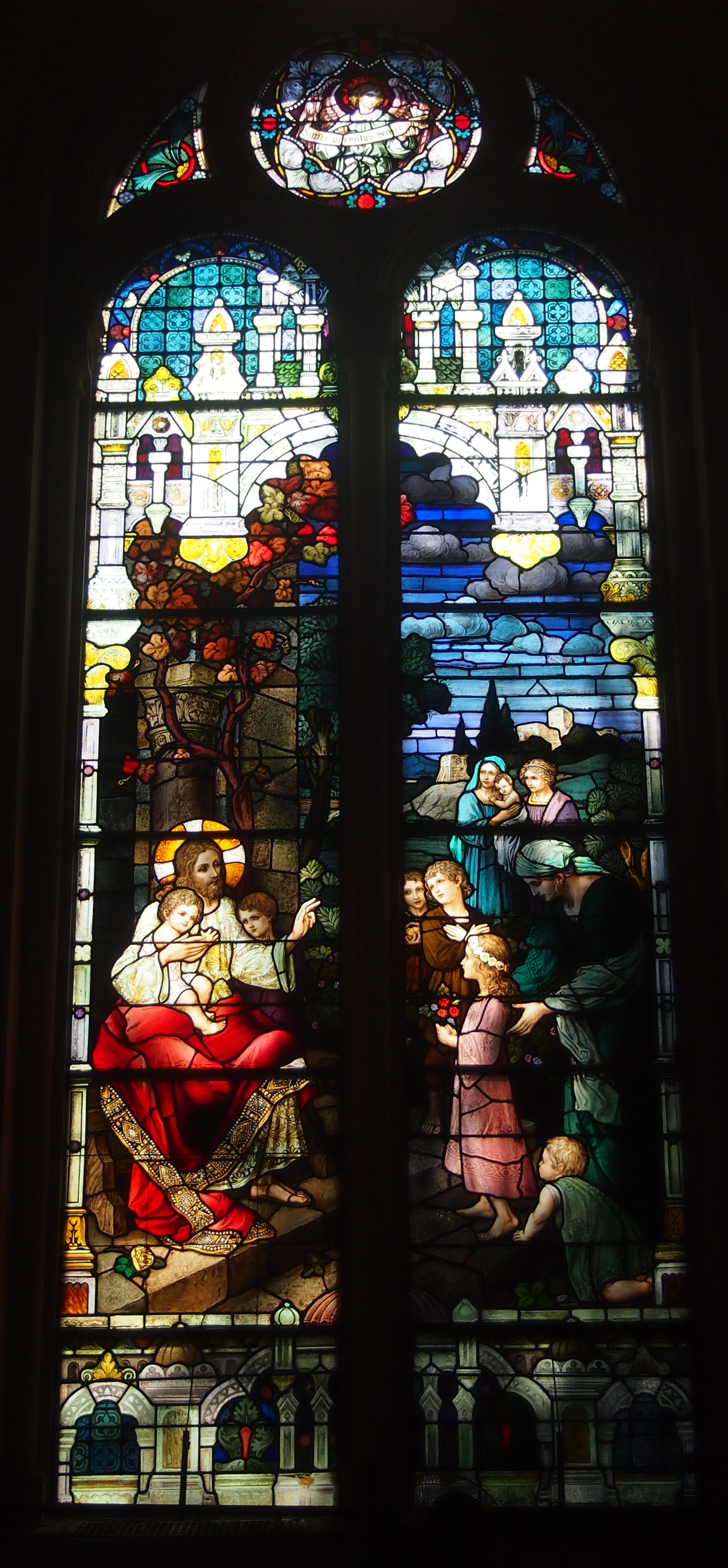
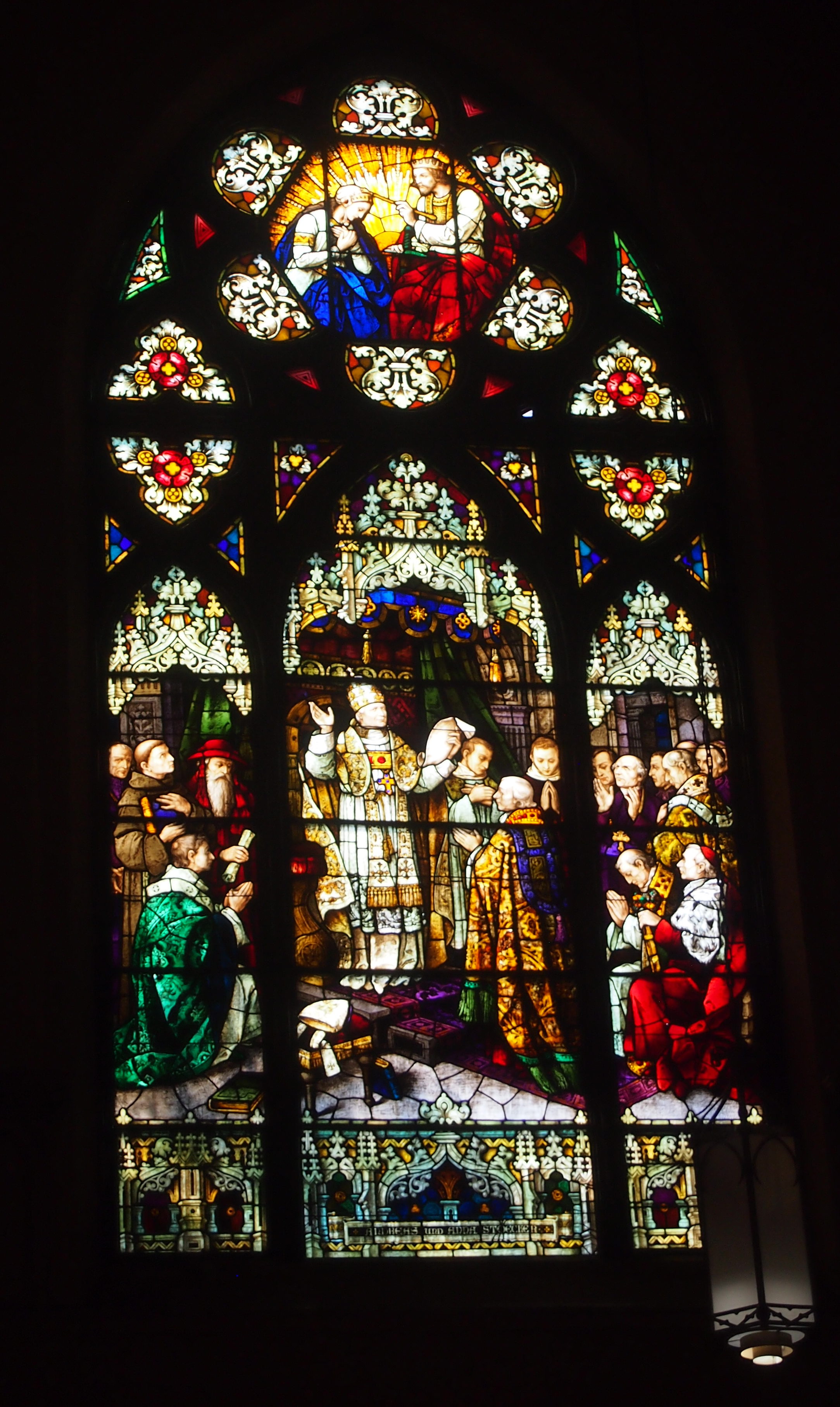
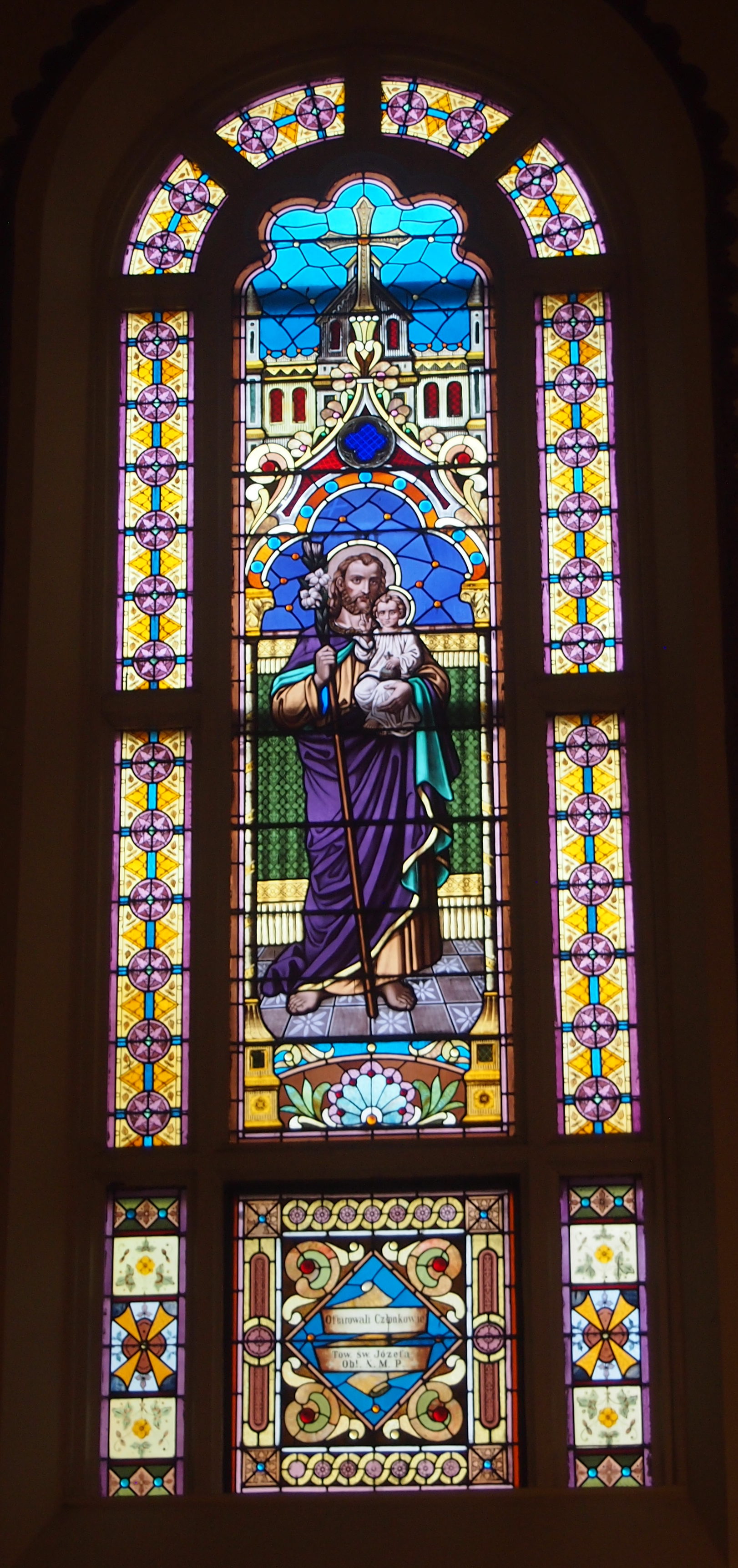
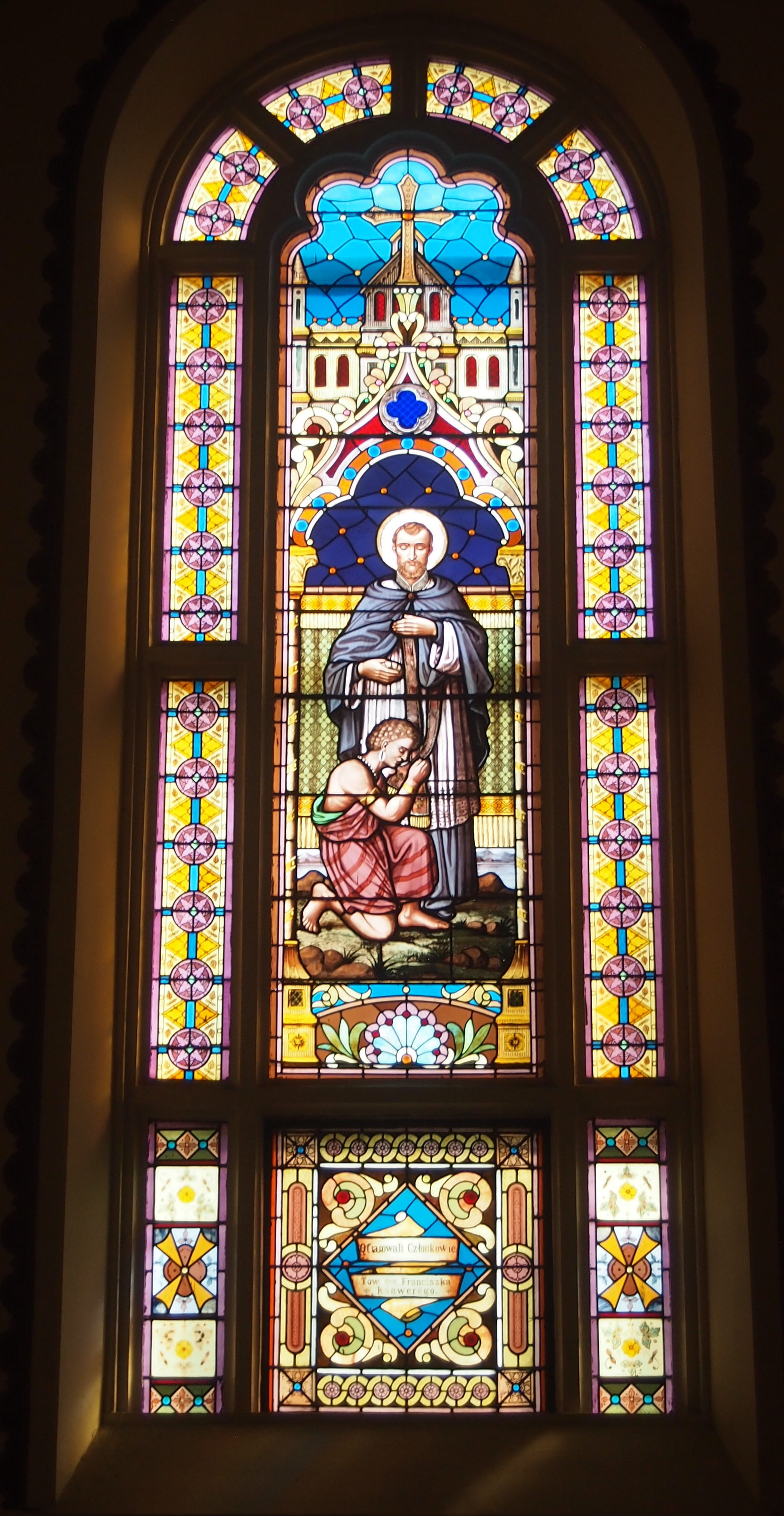
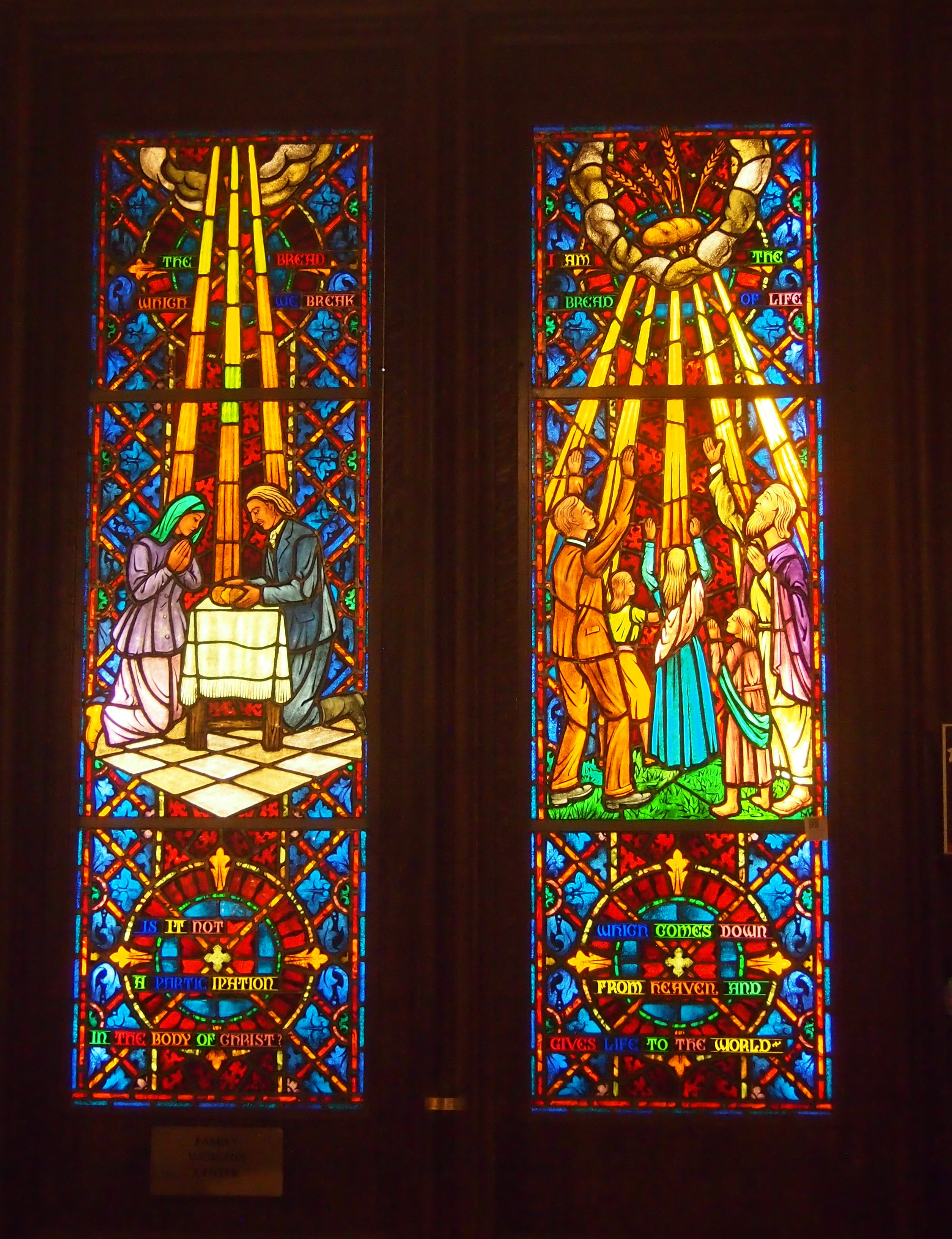
Here’s an unusual subject for a stained glass window, but it does reference the original name of the church. The glass depicts Pius IX promulgating Ineffabilis Deus, which defined the dogma of the Immaculate Conception, in 1854.
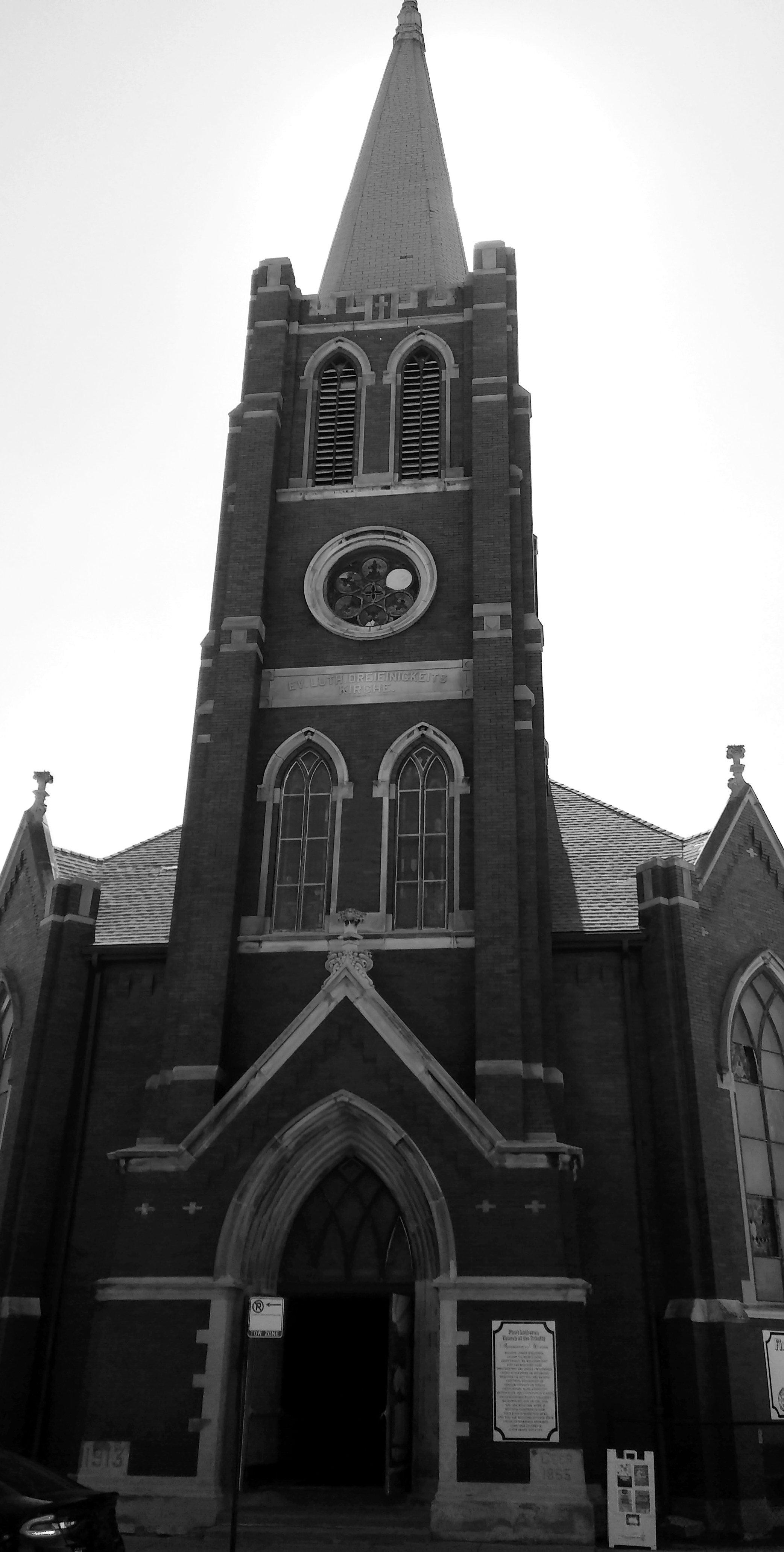
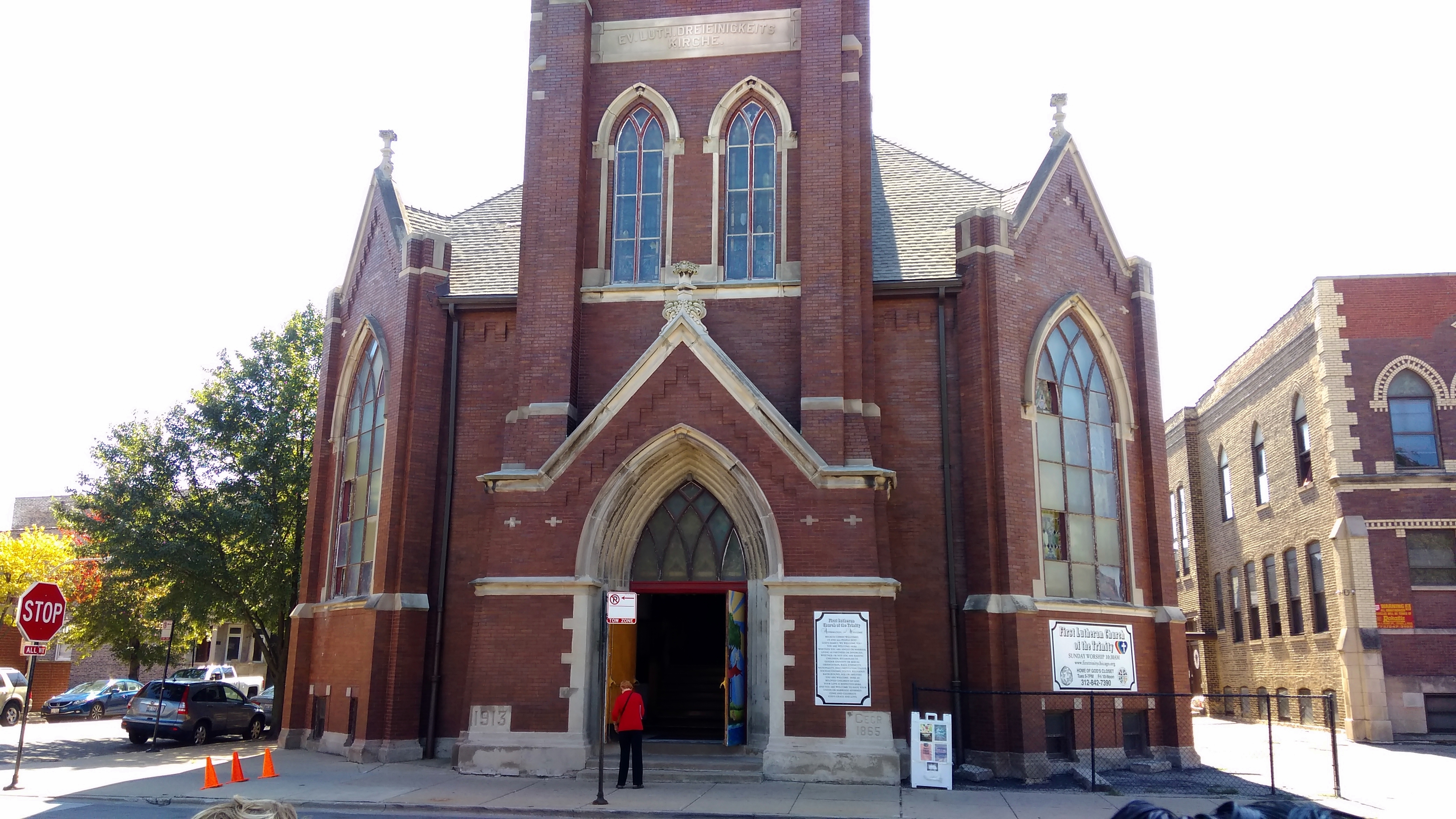
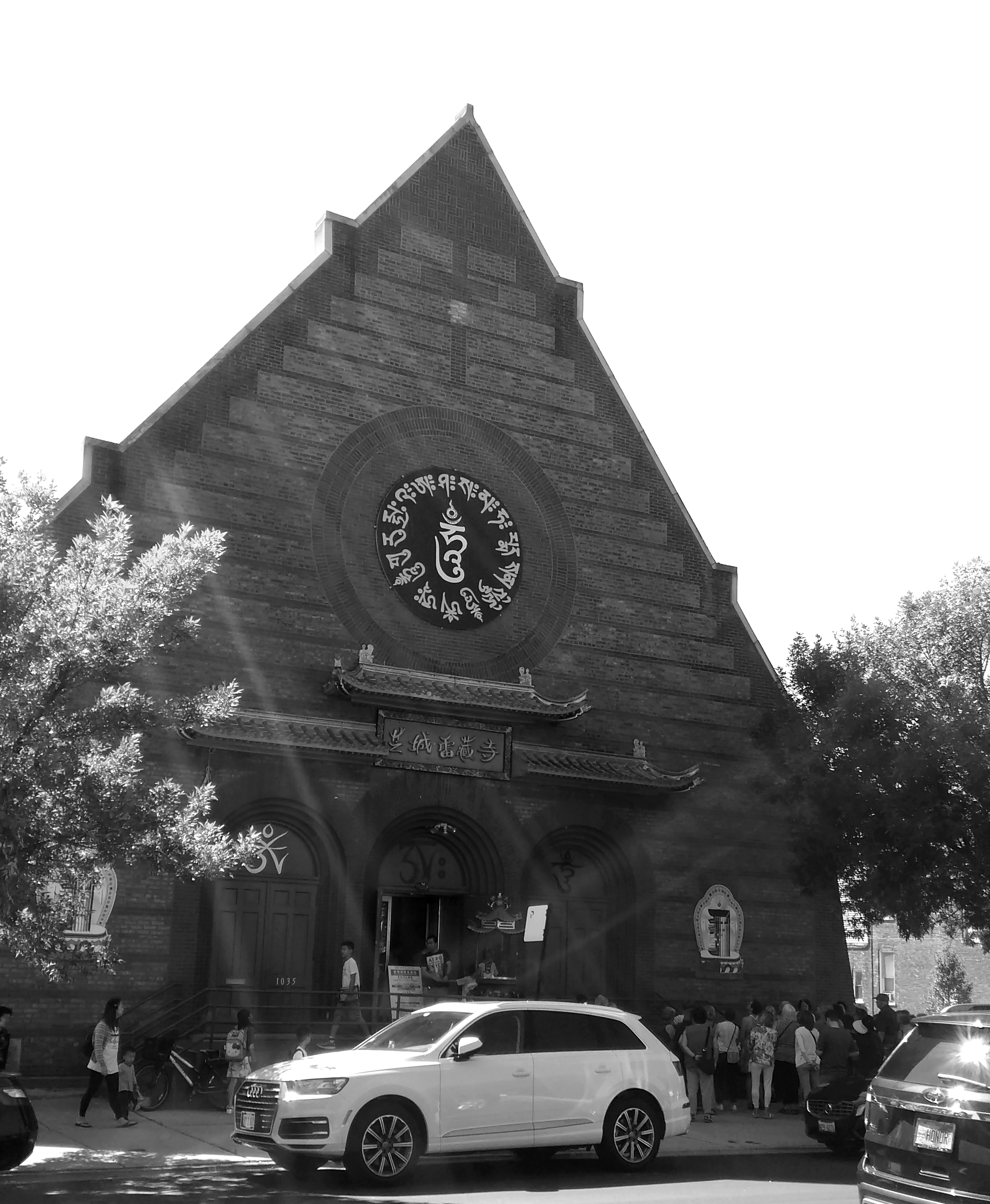
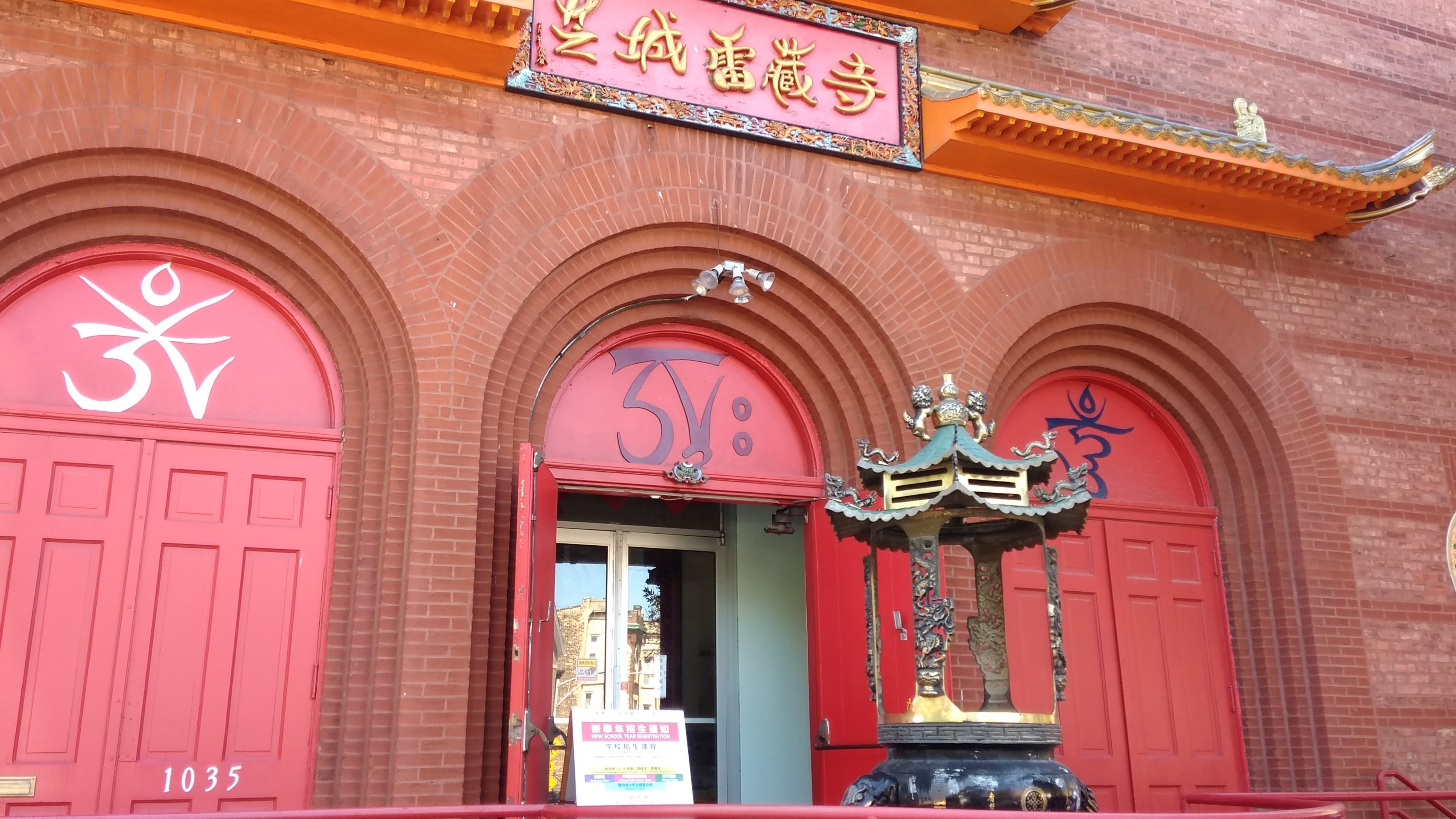
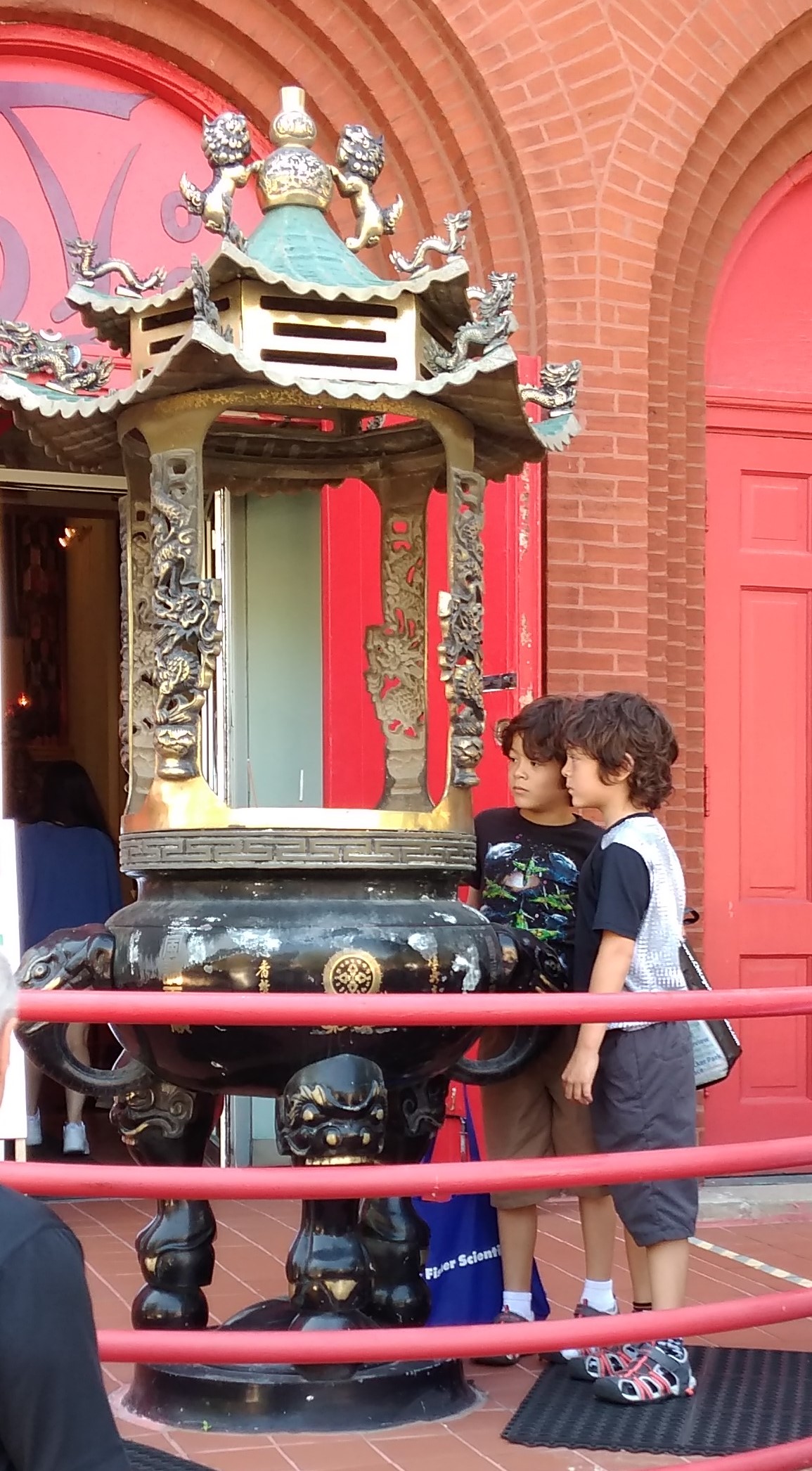
A block away from Monastery of the Holy Cross is Ling Shen Ching Tze Buddhist Temple, on W. 31st St. For most of its existence, the structure was Emmanuel Presbyterian Church. Which looks better, at least at the time of day I visited, in monochrome.

John Wellborn Root designed the church before his unfortunate death at 41, and Daniel Burnham oversaw its construction in 1894. In 1994, Ling Shen Ching Tze acquired the property.

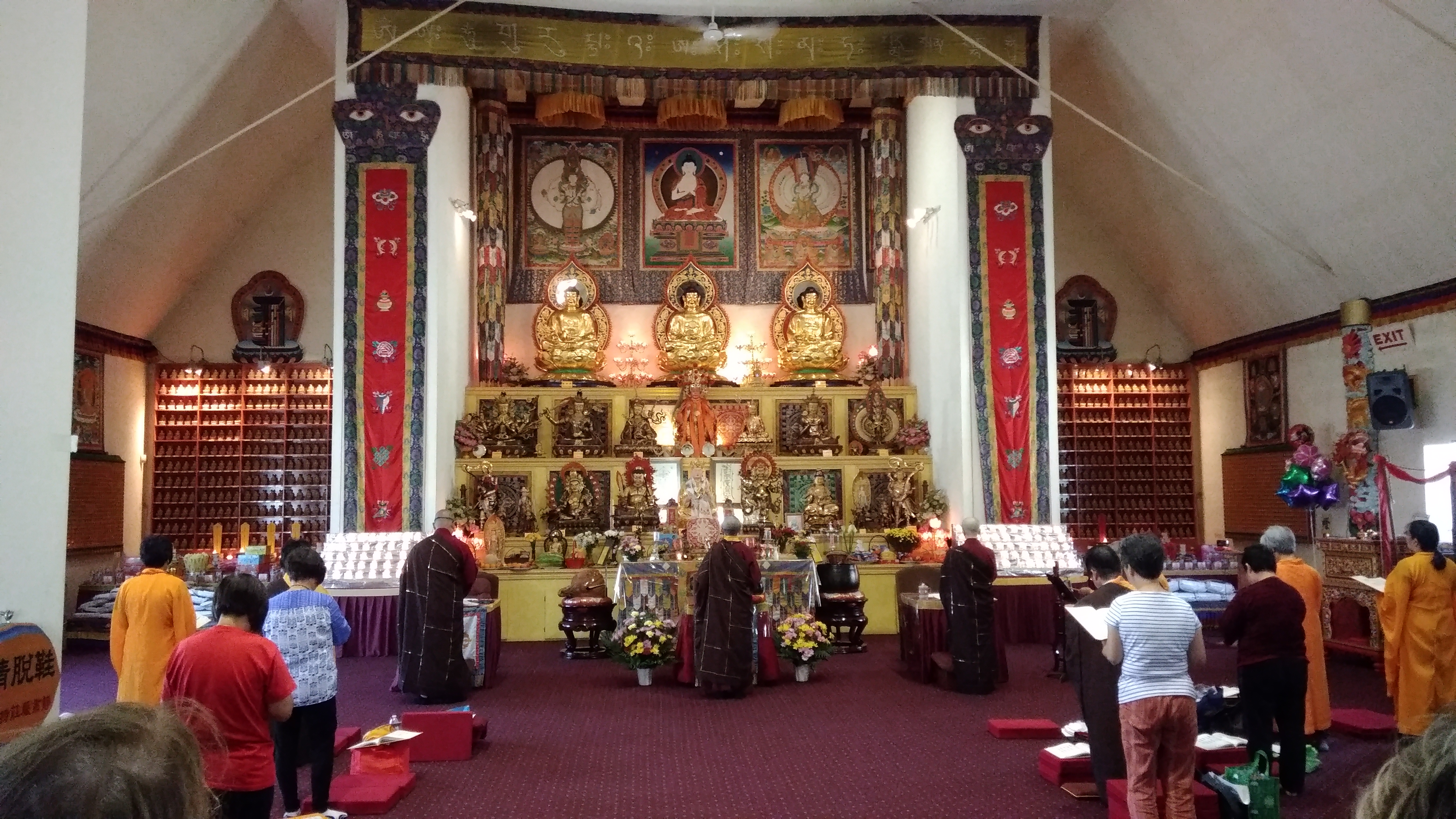
A service was going on when we visited, so we could only peek inside.
The temple’s headquarters is in Washington state. As far as I can tell, it’s devoted to the teaching of Taoism, Sutrayana and Tantric philosophies. A mite different from Presbyterianism, no doubt.

St. Mary of Perpetual Help

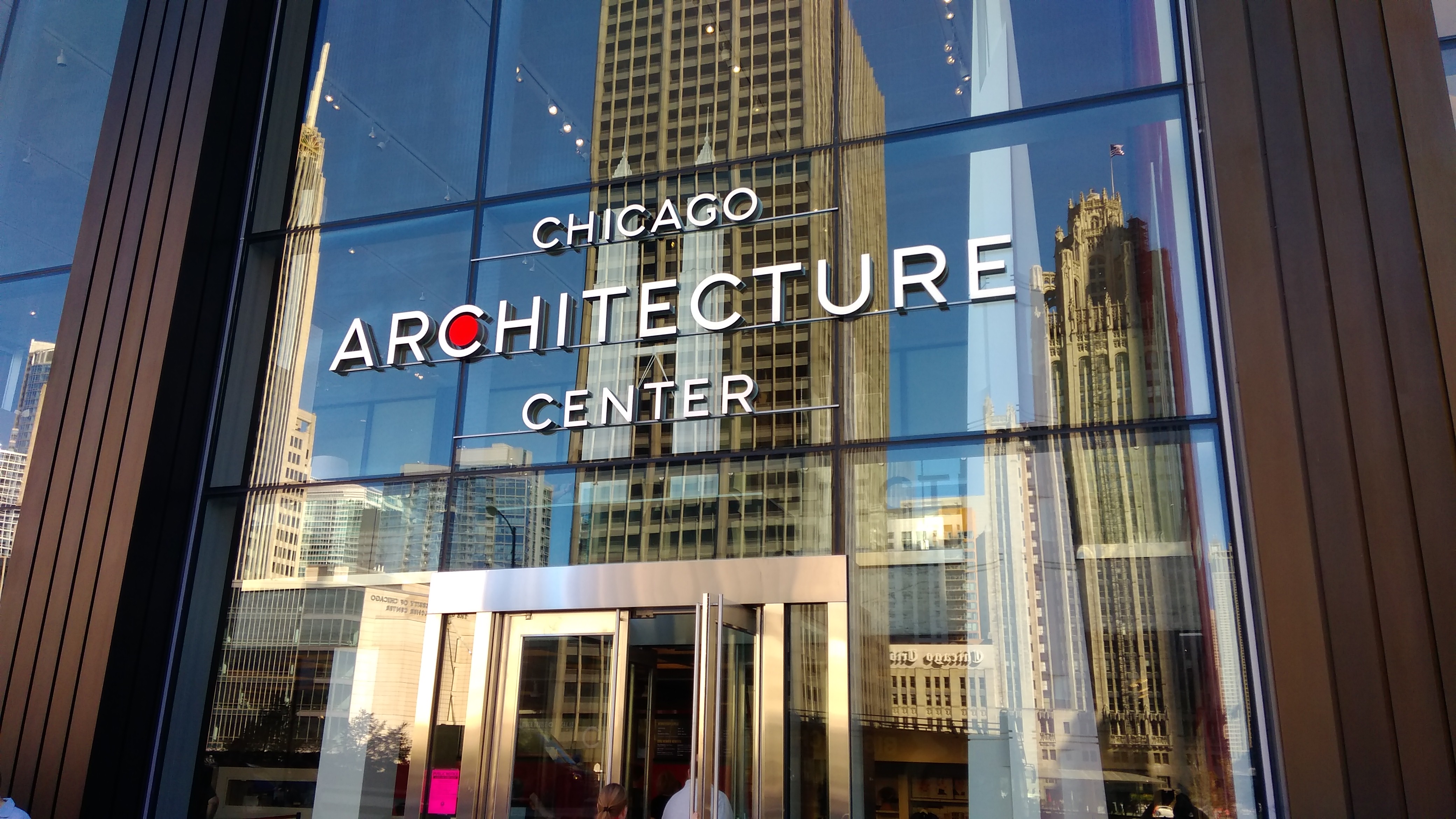
It’s been a few years since we took a church bus tour — 2014 and ’15, as it happens — so a while ago I looked into this year’s offerings from the newly renamed and relocated Chicago Architecture Center on E. Wacker Dr.

Formerly, Chicago Architecture Foundation. Why did the organization give up the solidity of foundation for the generic center?

Never mind, the tours look as good as ever. The church bus tour selection this year was a cluster of churches in the Bridgeport neighborhood of Chicago. Actually, four Christian churches, one monastery, and one Buddhist temple in a building that used to be a church, but has been modified to meet the needs of the Chinese-American population moving into Bridgeport from nearby Chinatown.

Even now, Bridgeport evokes the Irish. After all, that’s the neighborhood that gave Chicago the Daleys and, going back a little further, Mr. Dooley. Of course in our time, other ethnicities are in the mix, such as the aforementioned Chinese, but also an Hispanic population. As far as I can tell, Bridgeport never really was home to just one group, because even in the early days there were Irish, but also Germans, Poles, Lithuanians, Italians and Bohemians.

It hasn’t always been a peaceful place. “Bridgeport once stood as a bastion of white ethnic communities,” the Encyclopedia of Chicago says. “Racial and ethnic strife has always been part of its history. An almost legendary clash between the Germans and the Irish occurred in 1856. During the Civil War pro-Confederate rallies were held in the neighborhood. In the twentieth century Polish and Lithuanian gangs often clashed along Morgan Street.”

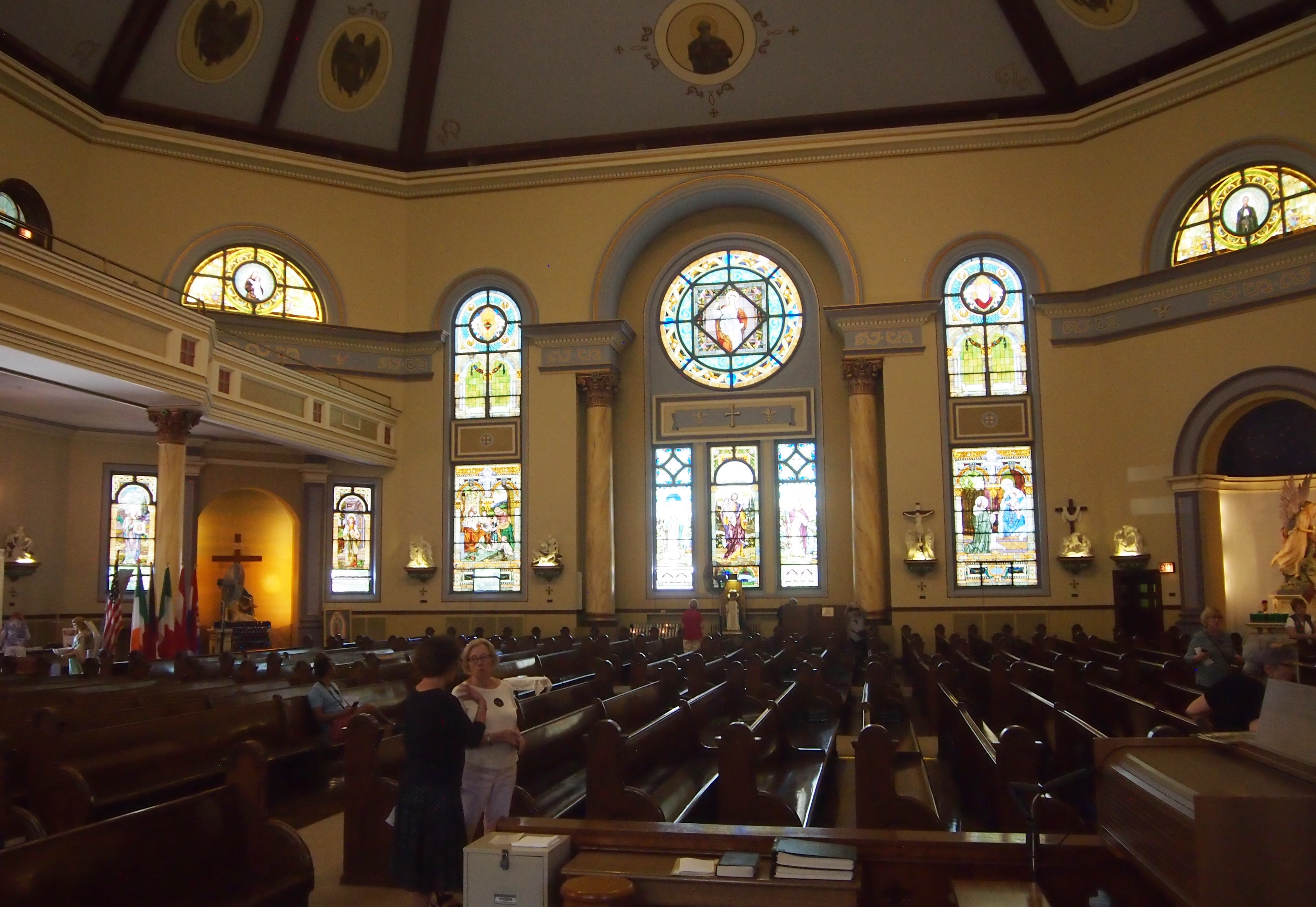
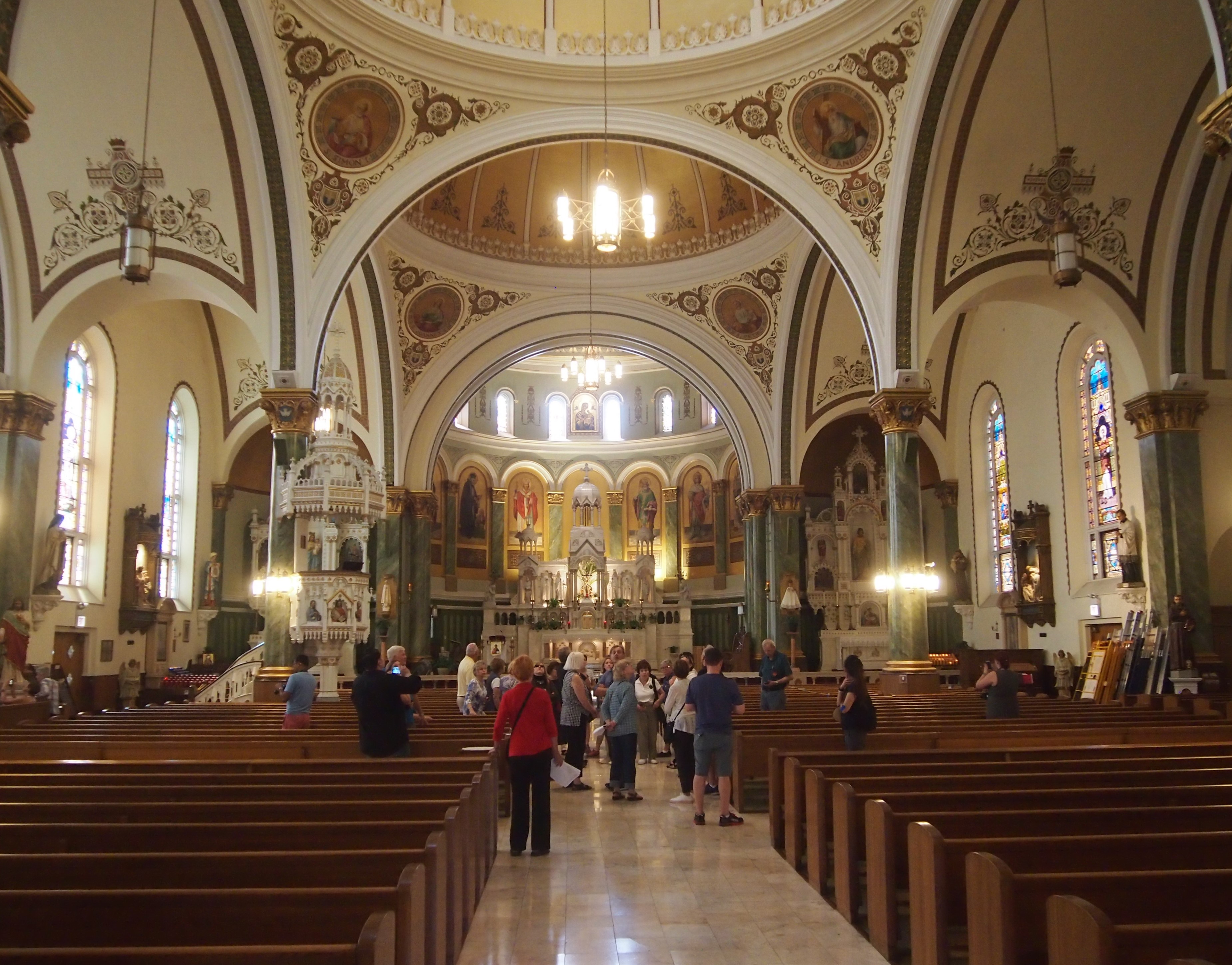
St. Mary of Perpetual Help, tucked away on W. 32nd St. in Bridgeport, originally had a Polish congregation. It’s a magnificent blend of styles, with Romanesque on the outside.
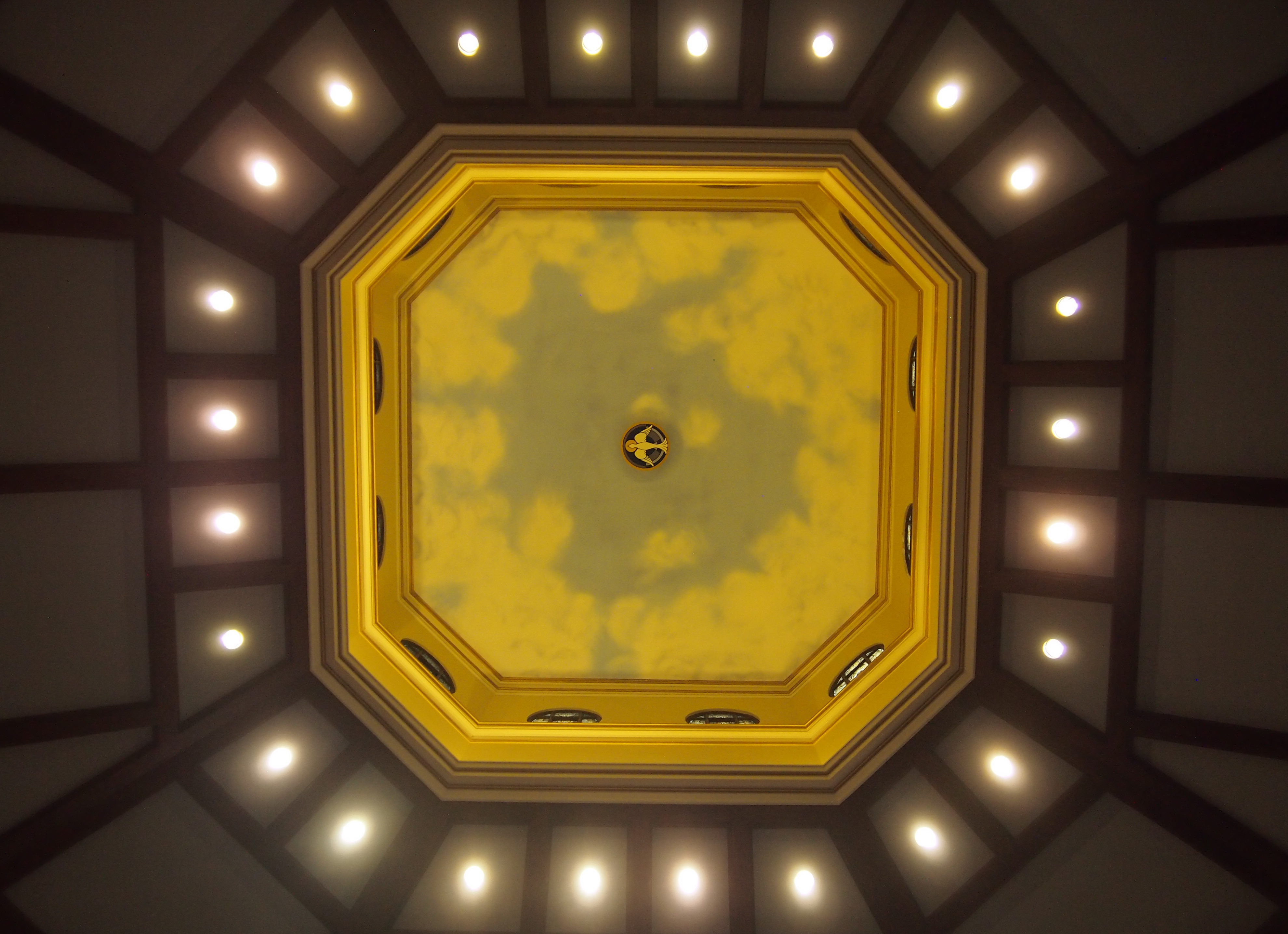
Inside, a handsome Byzantine style.

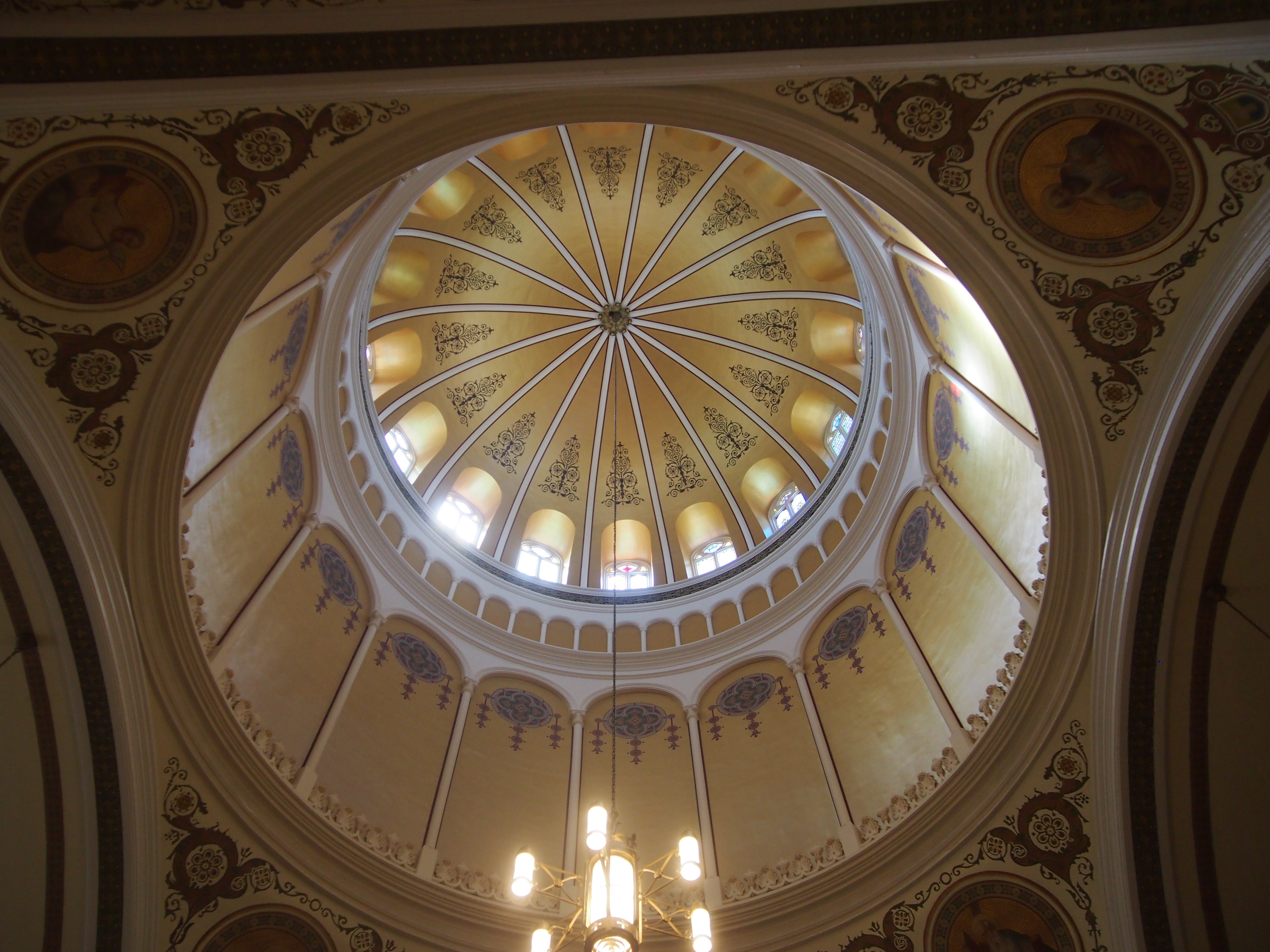
With impressive domes, though I didn’t manage a good shot of any of their exteriors.
Henry Engelbert designed the church, which was completed in 1892. He’s listed as one of the designers of Our Lady of Sorrows Basilica in Chicago, but he’s better known for his work in New York City. St. Mary of Perpetual Help’s interior was by John A. Mallin, who did the interiors of a lot of churches in his long career.

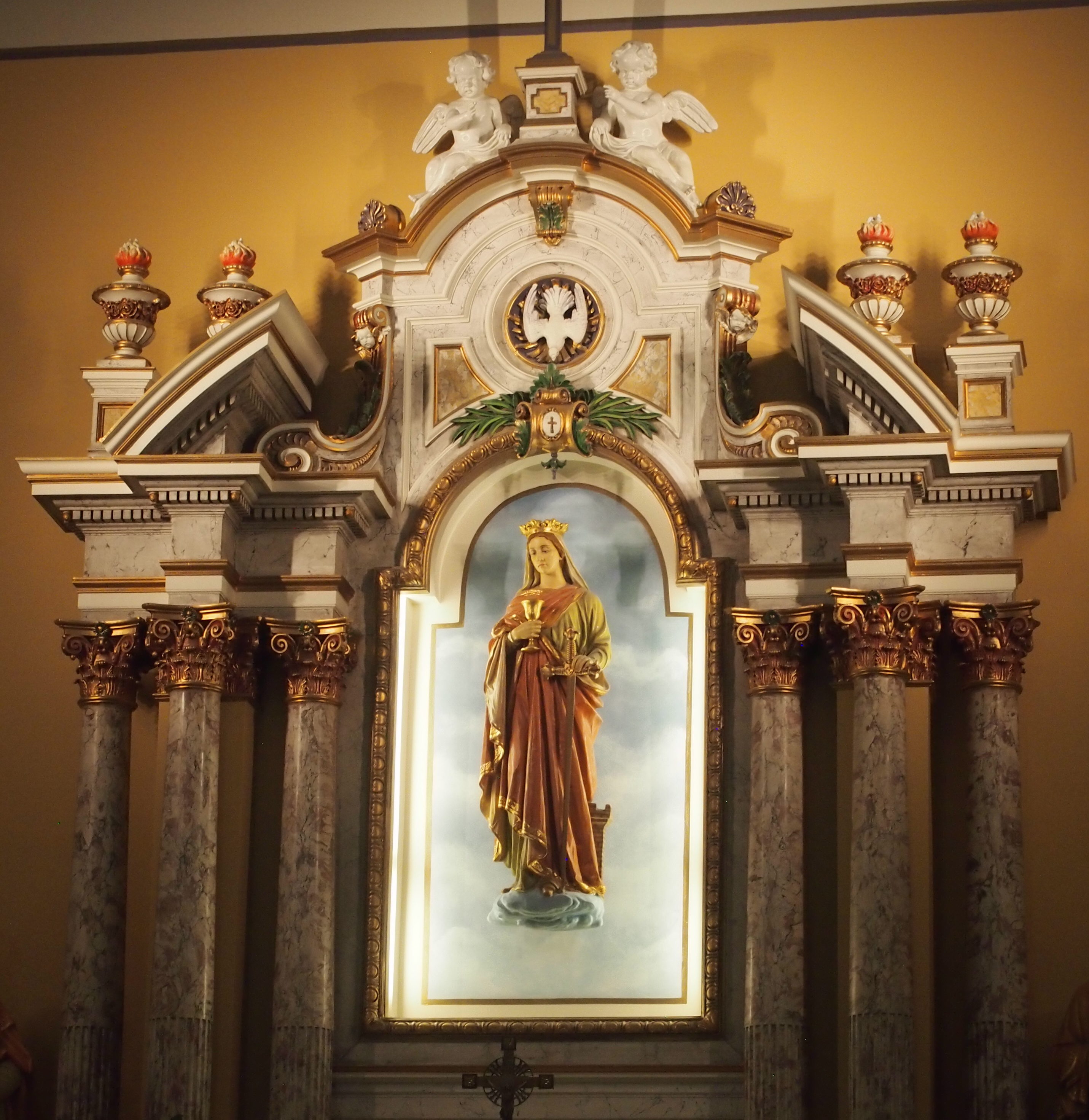
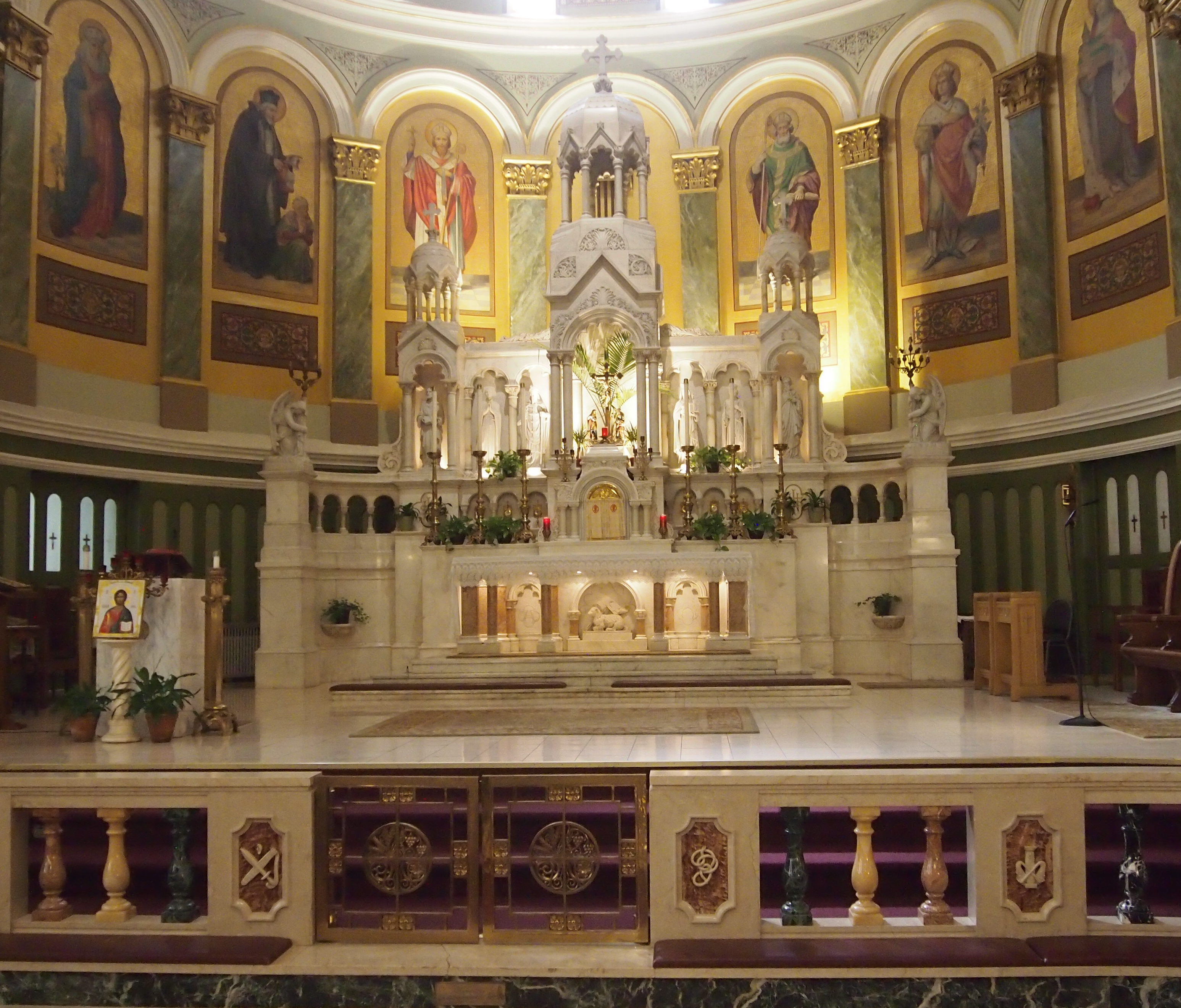
Here’s the resplendent altar.
Stations of the Cross, with original Polish.

First-rate stained glass, as you’d expect.

Everything looks impressively new, but that’s because during the decades of the 21st century so far, the parish has undertaken major restoration work both exterior and interior. Being able to raise that kind of money must count as a minor miracle, though probably not in the theological sense.

Two Downtown Chicago Churches

Yesterday evening at about 8:15 I was out walking the dog — sometimes it’s an after-dark activity now that there’s more darkness — and I spotted a pale yellow slender crescent moon hanging just over the western horizon. Low enough to appear luminously large. Quite a sight.

Just after the new moon signifying Rosh Hashanah, I realized. I couldn’t remember the year’s number, so I looked that up: 5779.

While downtown last week, on the way back to Union Station to return home, I ducked briefly into two churches. I’d been in them before, but they’re always good for a look.
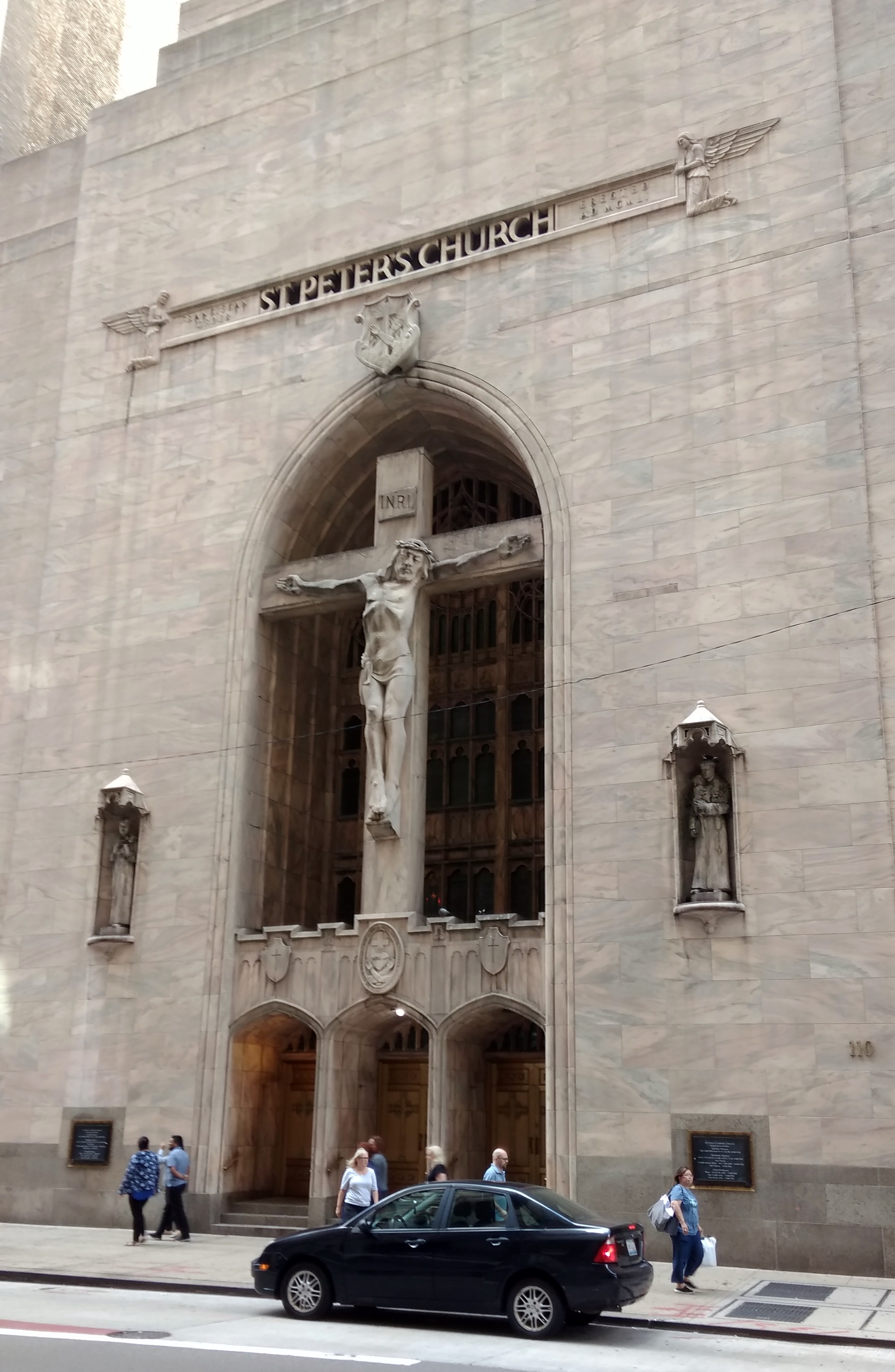
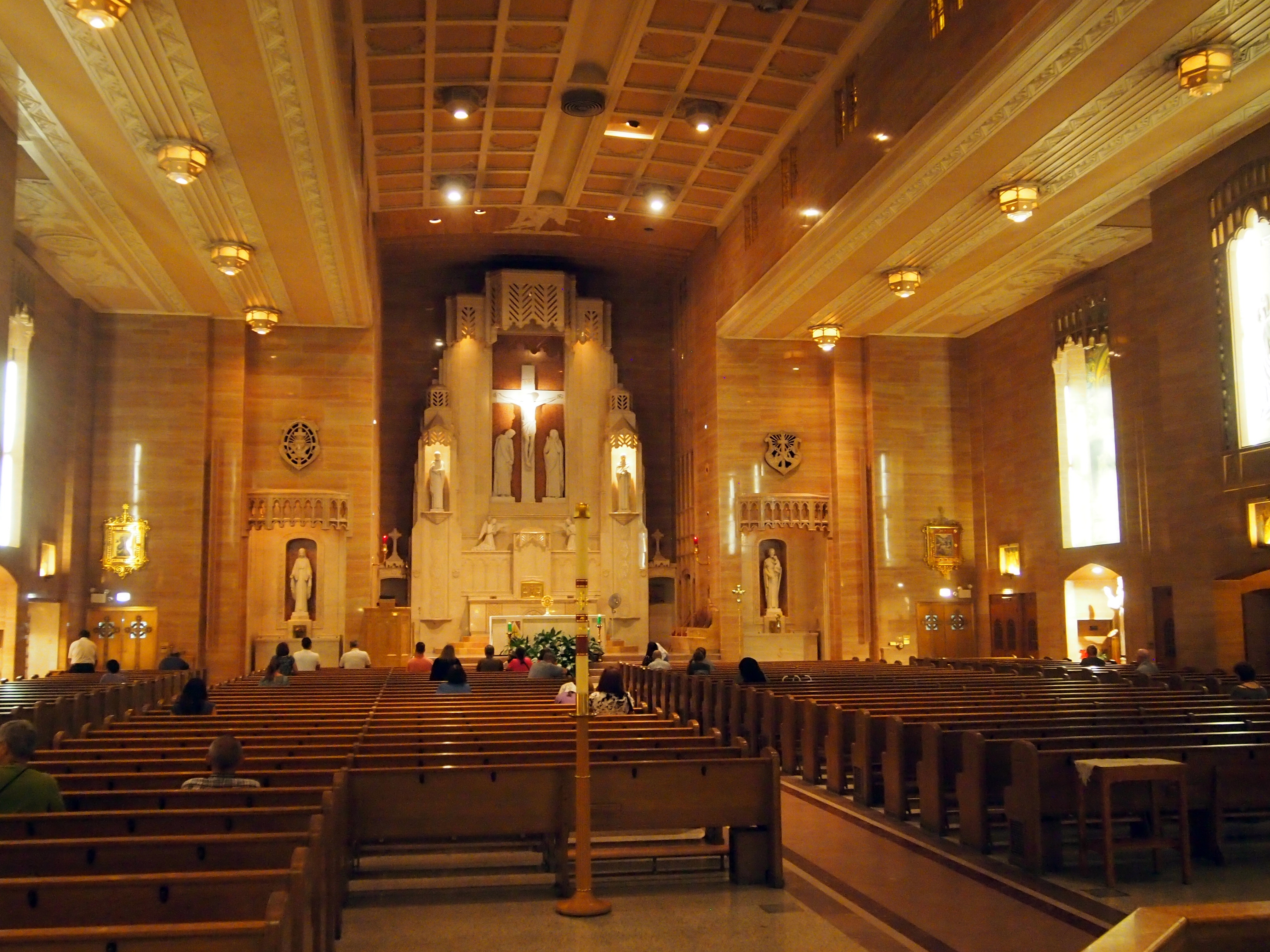
One was St. Peter’s in the Loop, a Catholic church on W. Madison St.
The enormous crucifix is by Latvian artist Arvid Strauss. The building dates from 1953. According to Heavenly City: The Architectural Tradition of Catholic Chicago by Denis McNamara, “the stepped-back roof profile of the exterior recalls the Art Deco skyscapers [architects Vitzthum and Burns] had designed and gave the church a modern sensibility, but the facade retained the sign value of churchliness with Gothic decorative elements, pink Georgia marble, and [the] monumental exterior cruxifix…”

The interior. Sacred deco, you might call it.
The building is more just the sanctuary. Tucked away in the structure, hidden from casual visitors like me, are an auditorium, library, offices, meeting rooms and friary completed with living quarters, kitchen and a chapel for the Franciscans who run the place.

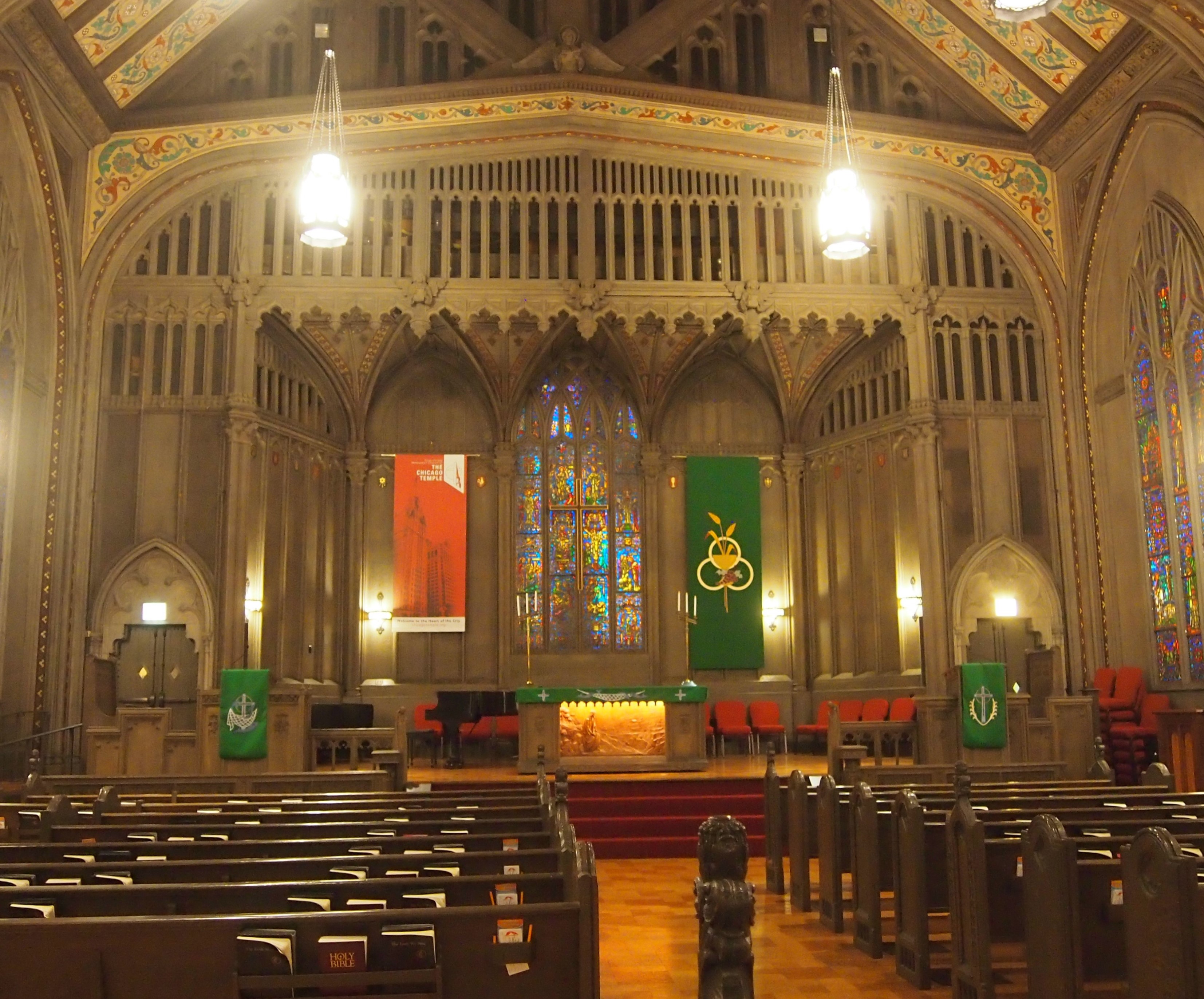
Not far away is the First United Methodist Church at the Chicago Temple, an unusual arrangement for a church. It’s at the base and top floors of a 568-foot skyscraper on W. Washington St. I didn’t take any exteriors, but this is what it looks like. A Holabird & Roche design from the 1920s.

It features another handsome interior.
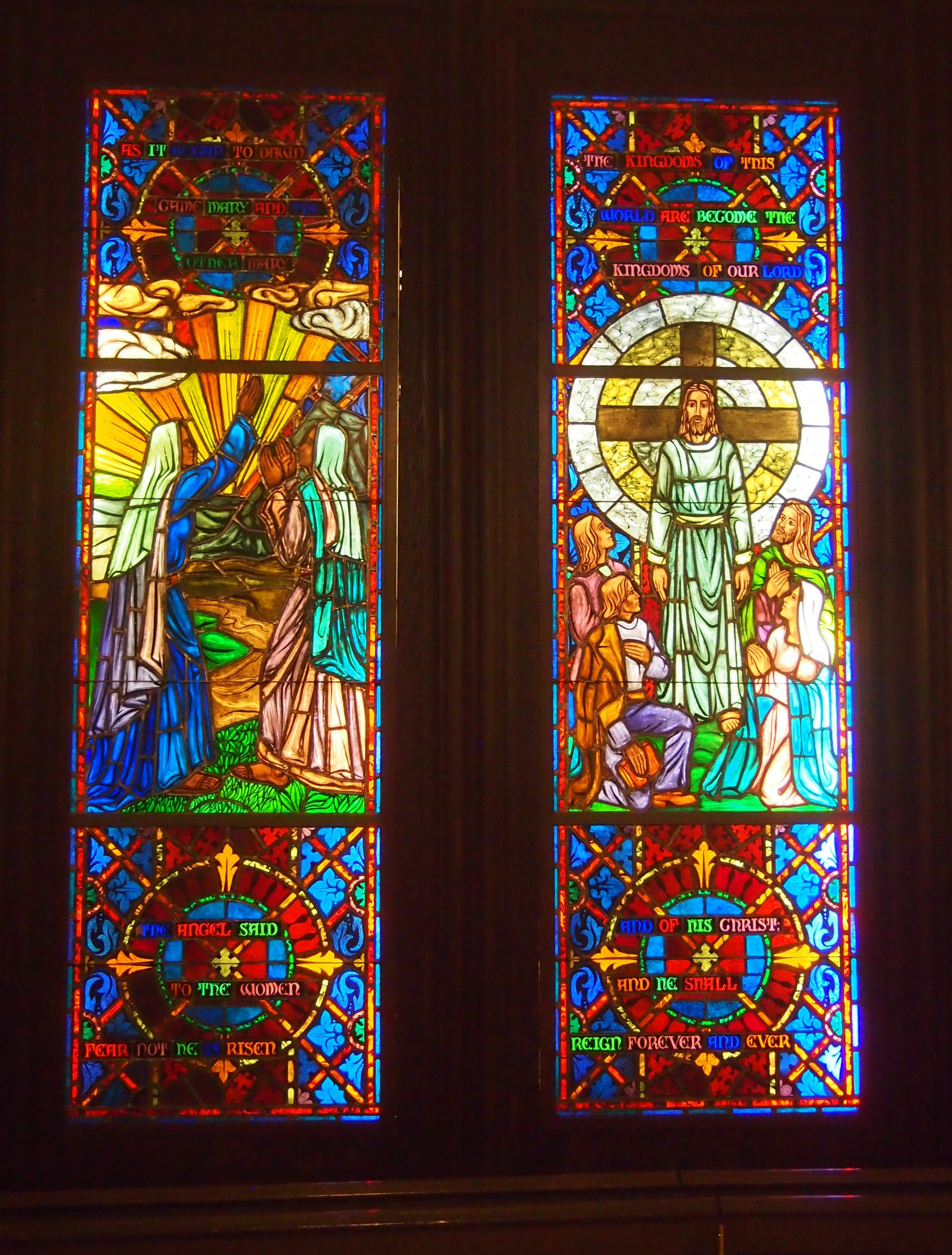
With fine stained glass.

I had no time to tour the Sky Chapel again — I visited ca. 2002 — which is at top of the building and open every day at 2 p.m. It’s a sacred space unlike any other I know.

Views From 151 N. Franklin St.

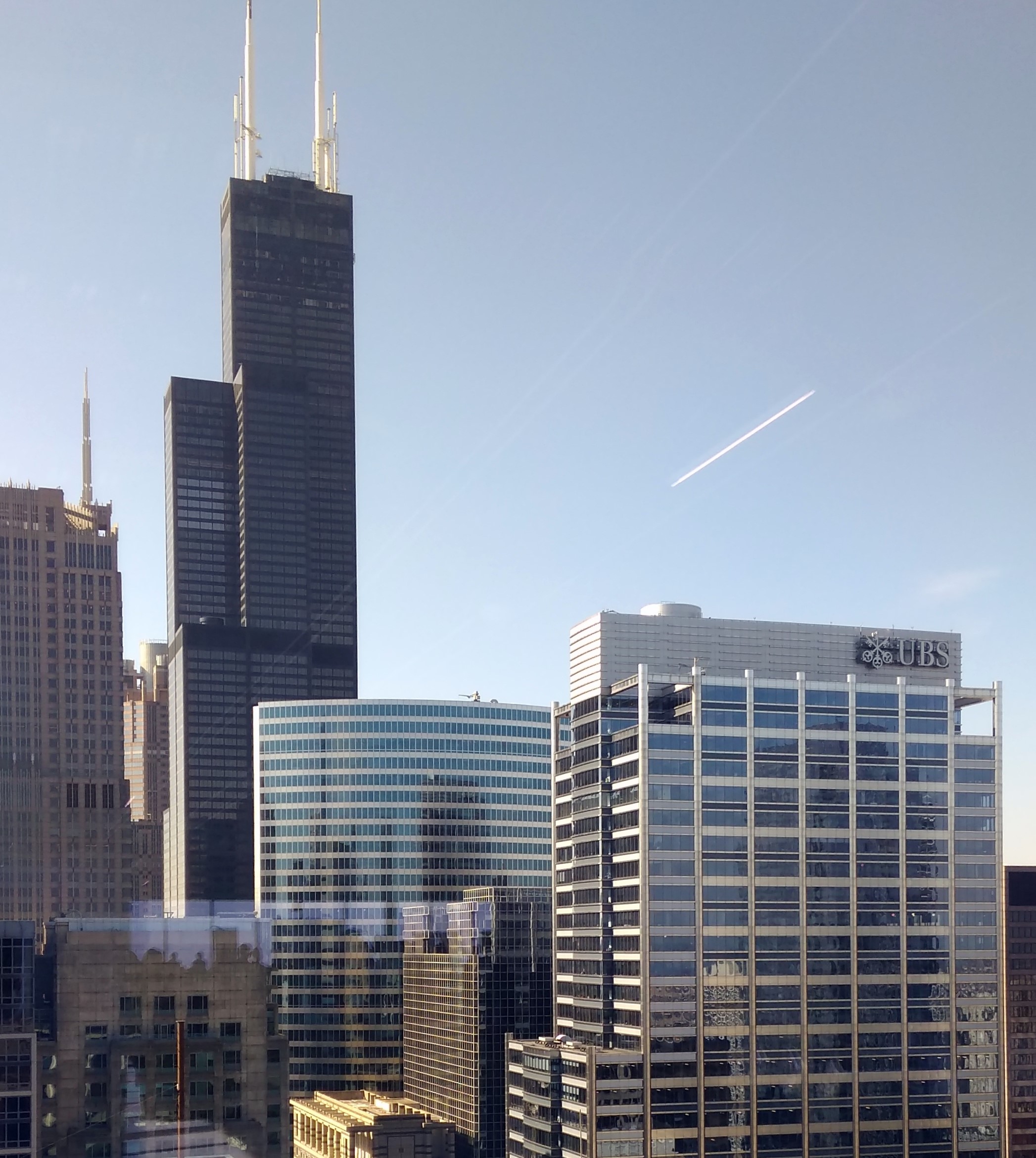
Last week I attended an event on the top floor of 151 N. Franklin St., a new office building in downtown Chicago. I had a few moments to admire the excellent views.

Looking slightly to east-northeast, roughly. In a gap far to the right is a slice of Lake Michigan.

To the south-southwest, roughly. The tower formerly known as Sears rises above all, including annoying reflections.

Straight north.

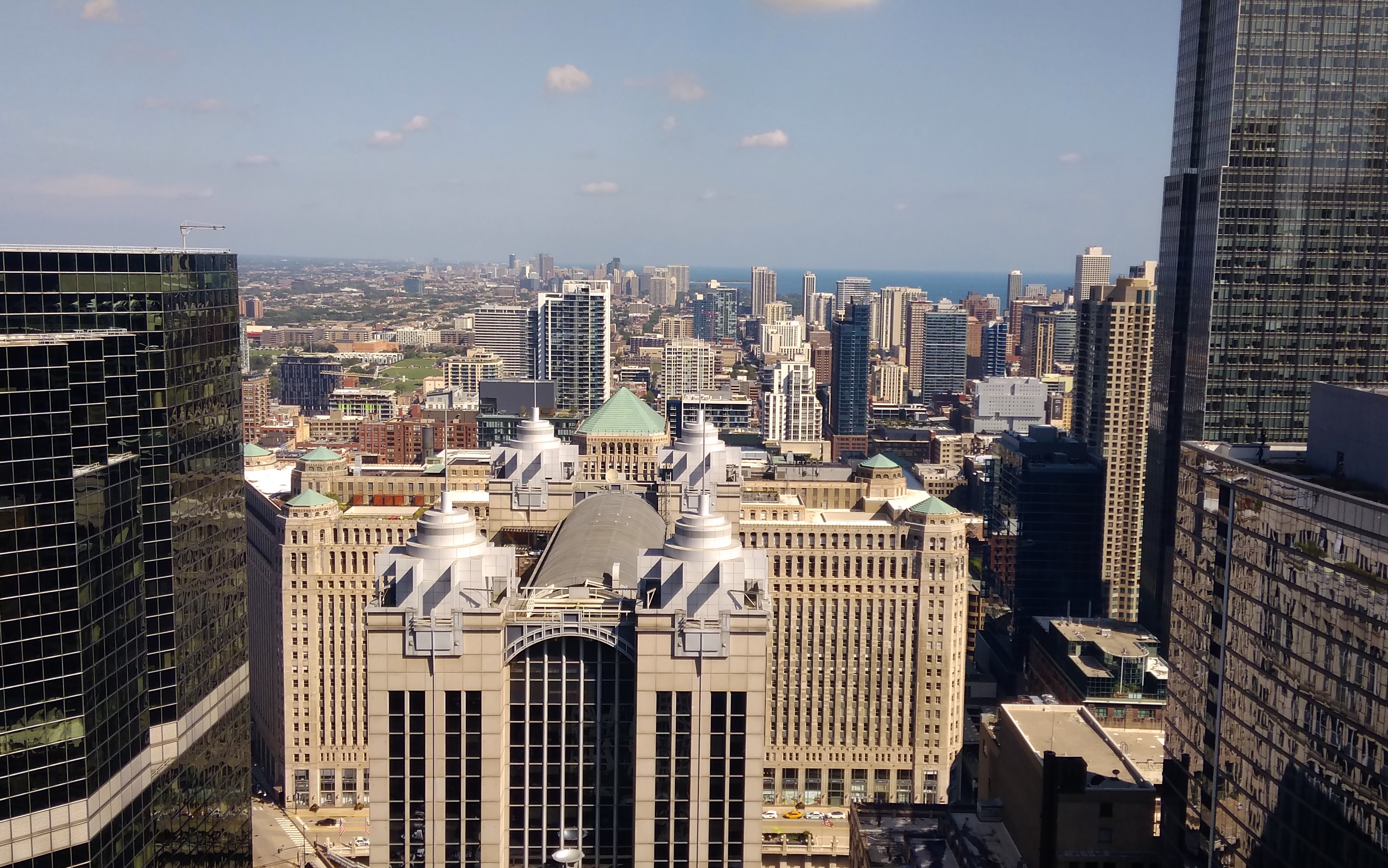
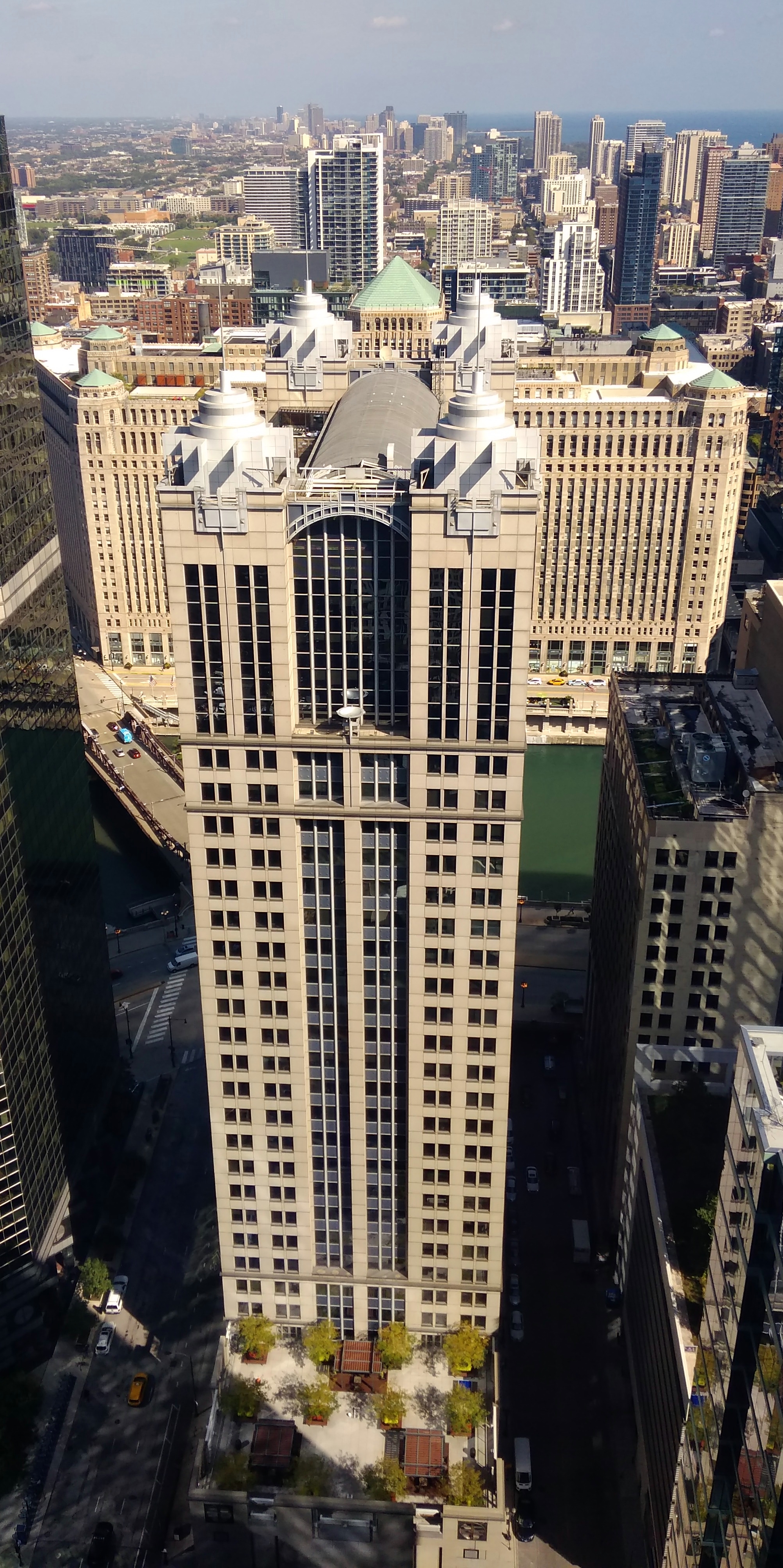
The building with the four roof features — maybe those count as cupolas — is 225 W. Wacker Dr., a 30-story late ’80s development designed by Kohn Pedersen Fox. A vertical shot of that building.
Behind it, or rather to the north, across the Chicago River, is the much more horizontal Merchandise Mart.

More about the 35-story 151 N. Franklin is here, including a mention of the views from the top. Here’s the thing that struck me: the building was just completed. That means these are spanking-new views of Chicago.

More Riverside

Hanging in the metra station in Riverside, Illinois, is a reproduction of the plan of the town as originally envisioned in the late 1860s, except the spot that says “land not belonging to the company” (that is, the Riverside Improvement Co.) is part of the town in our time.

The streets and the green spaces are still pretty much still the way they were originally laid out. Note the bend in the Des Plaines River that forms a tongue of land, marked by me by a red circle. Also, the red star is roughly where the train station, tower, library, etc. are located.

With a Riverside Museum walking tour pamphlet in hand, we decided to take a walk in the tongue of land after seeing the sights near the train station. The air was a little steamy, but with the sun hiding behind clouds, we put up with it.

One of the streets along the river is Bloomingbank Road. The river, hidden by foliage, is to the right in this image.

The road is populated mostly by large vintage houses. Such as the Clarence Cross Cottage, 1887 Shingle & Queen Anne.

The Thomas W. Blayney Residence, 1869 Italianate.

The John C. Smith House, 1907 American Four Square. That’s a nice porch.

Most people probably come this way for the Frank Lloyd Wright works, which are a cluster of residences on 10 acres near the tip of the tongue. Originally they were built as a single residence for the Coonley family.

Per Wiki: “Avery Coonley, a Chicago industrialist and his wife, Queene Ferry of the Detroit-based Ferry Seed Company, were both heirs to industrial fortunes and had an unlimited budget to commission a new residence.” Just the kind of clients FLW liked, no doubt.

Formerly the stables and coach house.

Formerly the gardener’s residence.

Formerly the main house.

Not the best view of the house. That would be the other side, but there’s no access to ordinary gawkers since the house is privately owned. That source says the house is up for sale, listed this spring for $1.6 million. Might be a reasonable price for a FLW work, if you remember it’s an artwork more than a residence, and don’t mind the invisible hole somewhere in the place where your money seems to go.

Riverside

I’ve known about Riverside, Illinois, for years, and used to pass through it every weekday in the late ’90s and early ’00s when I took the Burlington Northern Santa Fe Metra line to work downtown. One thing I could see from the train window was the fine brick station.

As well as the town’s former water tower, not far from the station. The building underneath the tower is now the town’s park and recreation department.
Riverside is a special place beyond what you can see from the train. But I never got around to a longer visit than a train stop, so on Saturday morning, inspired by the fact that some of its buildings were part of Doors Open Illinois — not to be confused with Open House Chicago, or Doors Open Milwaukee — we drove to Riverside for a look around.

“Starting [in 1869] with a blank canvas of 1,600 acres of purchased farmland, the Riverside Improvement Company arranged for a complete utility infrastructure — water, sewer, and gas for lighting,” WTTW says. “They called their brand-new community ‘Riverside’ for the Des Plaines River that flows through the site.

“To design and plan the village, they hired Frederick Law Olmsted and his partner Calvert Vaux, whose Central Park success a decade before had made them superstars of design.

“Olmsted’s signature approach was to create a picturesque, landscaped topography. Inspired by the winding Des Plaines River, he eschewed a standard city grid, instead creating a series of curvilinear streets that wound across each other — a pattern that resulted in dozens of tiny triangular mini-parks.”

These days, Riverside is still a prosperous suburb, as it was intended to be from day one. We parked near the station and first got a better look at the station’s handsome interior.

As well as a closer look at the former water tower.
Unfortunately, it isn’t open to the public for a climb. Too bad. Even local vistas are usually worth the effort. A view of Riverside from that perch would probably be a fine thing.

A nearby former pumping station is now a small museum devoted to Riverside. Mostly it sports photographs on the wall of earlier times in the town.
The three volunteers inside, local ladies all, seemed really glad to see us. I expect that word never really got out about Open Door Illinois, and the little museum doesn’t get that many visitors anyway.

They told us a bit about the town and the structures we’d been looking at. For example: parking is usually possible near the train station, even on weekdays, which is unusual among suburban Metra stations. Most commuters walk or ride bicycles to the station, one of the volunteers said. Probably just as Olmstead wanted it.

More from WTTW about Riverside: “In 1871, when the Great Fire decimated Chicago and before Olmsted’s plan was fully executed, the developers went bankrupt. But before long, Riverside picked up momentum again, with community resident and notable architect William LeBaron Jenney stepping in to complete the town plan, and other notable architects of the day such as Frank Lloyd Wright and Louis Sullivan designing homes.”

One of the aforementioned mini-parks is next to the train station: Guthrie Park.
Named after a local luminary, not the folk singer. There are an assortment of commemorative plaques attached to rocks ringing the flag pole in Guthrie Park. Some of them honor men, presumably locals, who were killed in the Great War.
Rev. Hedley Heber Cooper, d. May 26, 1918. War was dangerous for chaplains, too.

Private Albert Edward Moore, d. July 19, 1918.

There’s also a plaque for a soldier who died not long after the Armistice, but here at home. A little late for the flu, but still possible. Accident, maybe.

Sgt. James P. Quinn, d. February 4, 1919, Camp Logan.

Near Guthrie Park is the Riverside Public Library, completed in 1931, which looks like a church. The architect is given as Connor & O’Connor, or simply “Mr. Connor” in this timeline.
On the inside it looks even more like a church. A certain kind of church, anyway.

The library is the only one I’ve ever seen with an Olmsted collection.

The collection takes up a number of shelves in its own special niche.

South Texas, Summer ’18: The King William District in July

Just back from eight days in San Antonio. Most of the time I visited with family or worked, since my kind of work is mobile. Also, temps in the high 90s and sometimes over 100 degrees F. discouraged me from too much wandering around during the day.

Even so, last Sunday toward the late afternoon I drove down to the King William District, which is leafy this time of year and so not quite unbearably hot, and took a few short walks.

“The district encompasses land that was once irrigated farm land belonging to the Mission San Antonio de Valero, commonly known as the Alamo,” the City of San Antonio says. “When the mission was secularized in 1793, the lands were divided among the resident Indian families from the mission or sold at public auction. In the 1860s the area was subdivided into lots and laid out with the present streets.

“In the mid-nineteenth century… a great many Germans, who had immigrated to Texas in the 1840s, began to settle in this area… The area developed into an idyllic neighborhood of large, impressive houses designed in the Greek Revival, Victorian, and Italianate styles.

“The main street into the neighborhood was given the name King William in honor of King Wilhelm I, King of Prussia in the 1870s. During World War I, when America was at war with Germany, the name was changed to Pershing Avenue. A few years after the war ended the King William name was restored.”

These days there’s a Pershing Ave. in San Antonio, but it’s further north, fittingly not far from Fort Sam Houston. By the mid-20th century, the King William District was run down. By the late 20th century, restoration was under way.

One of my short walks took me along King William St., which is an important street in the district, but hardly the only one. The array of houses made me think of the East End Historic District in Galveston. In King William, there are large and historic houses such as the Villa Finale.
The Steves Homested. One of these days, I’ll take the tour.Edward Steves was a successful businessman in lumber in San Antonio in the 19th century, and Steves & Sons, which makes doors, is still around. I went to high school with a girl who was descended from Steves on her mother’s side.

There are plenty of other large and not-so-large houses on the street, most of which are worth a look.
That last one is the Alfred Giles House. One the architect of that name designed for himself. He’s thought to have done the Steves Homestead, and he certainly designed a lot of buildings in Texas, including some county courthouses (such for Goliad County and Presidio County) and even some in Monterrey, Mexico.

The Old Illinois State Capitol, Springfield

Before we revisited the Lincoln Museum in Springfield, we revisited the Old State Capitol. At least I revisited it. I’m not sure whether I’d ever taken Ann, or whether her friend had ever been there at any point. Never mind, it was worth a look.
In the background from that vantage is the larger dome of the modern capitol, on which construction started in 1868. Didn’t visit there this time around.

More formally, the old capitol is the Old State Capitol State Historic Site, a Greek Revival structure that served as the state house from 1839 to 1876, so it was the one Lincoln would have hung around. In fact, as a state legislator, Lincoln was among the legislators who facilitated the movement of the capital from Vandalia, which is further south.

“In the Legislature at Vandalia in the session of 1836-7, Sangamon county was represented by two senators and seven members of the lower house,” says ‘The Story of the Sangamon County Court House,’ a 1901 monograph by H.D. Giger. “They were a singular body of men, all tall and angular and their combined height was exactly 54 feet, they are famous in Illinois history as the ‘Long Nine.’

“The capitol of the State at this time was at Vandalia, having been removed there from Kaskaskia, and as the tide of emigration was moving northward it was conceded that the capitol must be nearer the center of population; although Vandalia and Southern Illinois fought hard against it.

“From the beginning of the session the Long Nine set to work log rolling. They asked for no public improvements; they wanted no railroads, canals, no plank roads, but would help out any member that did want them for his district, if he would vote to remove the capital to Springfield.

“There were many applicants, and on the first ballot Springfield had but 35 out of 121 votes… Poor old Peoria, as usual, brought up the rear and Springfield captured the prize on the fourth ballot.”

Abraham Lincoln Online picks up the story: “The capitol building, designed by architect John Rague, was the third to appear on the square, replacing two previous courthouses.” (Rague also did the old Iowa capitol.)

“The [state] outgrew the building during Lincoln’s presidency, and work on a new statehouse began soon after his death. The present building was dismantled in 1966 and rebuilt, which allowed the inclusion of an underground public parking lot and space for offices. The original stone exterior was stored and rebuilt, but the interior was completely reconstructed.”

It’s a well-done reconstruction.

The exhibits include a statue of the Little Giant.
While we were there, a group of historic re-enactors in 19th-century costumes happened to be in the recreated House chamber.
They gave a lively 20-minute or so performance, recalling the lives of black Illinois citizens of the Civil War era.

The Robert Allerton Park & Retreat Center

One of the main rewards of looking at maps is finding places you didn’t know about, interesting places that sometimes become destinations. Not too long ago, I was scanning a map of the area near Champaign, and came across the Robert Allerton Park & Retreat Center. Curious, I looked it up.

Soon, I decided that besides Arthur and Arcola, our other main east-central Illinois destination on Saturday should be Allerton, which covers more than 1,500 acres in rural Piatt County, not far from Monticello, Illinois.

Robert Allerton (1873–1964), whose father was one of the founders of the Chicago Stock Yards, and who thus inherited a fortune, set about building an English-style manor house around 1900 on land along the upper Sangamon River. A handsome house it is.

These days, the property belongs to the University of Illinois. Allerton, presumably tired of paying the taxes on it, donated it to the school in 1946. The manor house, besides being rented for events, is a conference center and not open for tours.

Too bad. But the grounds and gardens are extensive, and punctuated by sculpture from the time of Allerton. They are open, and at no charge. More about that tomorrow.

The Oculus

Not everybody likes the Oculus, which is the unofficial name of World Trade Center Transportation Hub in Lower Manhattan, opened in 2016 to replace the facilities destroyed in the 2001 attack. The last time I was in town, it was still under construction, but now it’s done.

A good deal of the criticism is about how much it cost, and it certainly was expensive ($4.4 billion, I’ve read). As a non-New Yorker, I can easily be sanguine about that. Besides, with a GDP of $1.3 trillion or so annually, which is in the same league as Spain or South Korea, I suspect metro New York can afford a few grand public works. But it’s also short-term thinking. If the structure lasts even 100 years, who’s going to care about cost overruns?

Then there are the visceral reactions to Santiago Calatrava’s design. Some of these can be found at TripAdvisor, in the one- or two-star comments. A selection follows, all sic.

“White sterile, soulless, limited shopping, resembling a rotting beached whale. This place does not look as if it belongs in NY. More suited to a Middle Eastern theme park.”

“Cavernous: much better to look at from the outside; although, it really just looks like some animal’s ribcage.”

“Although many reviews praise the style of architecture as ‘impressive’, the underlining truth about this architecture is that it was designed in a style similar to that of Soviet Constructivism in order to purposefully induce feelings of tension, intimidation, a global or “one-world” identity rather than a traditional or local one.”

That last one’s an odd notion. Soviet was about the last thing I thought of when inside the Oculus.

That’s the view from one of the balconies on one side of the main hall. I got the sense of a large, vaulting open space — like a major train terminal of old, but looking nothing like one. I have a few quibbles, though. The space could use more places to sit, for instance.

Turning the camera to the vertical from the same perch.

I’d walked to the Oculus from the Downtown restaurant where Geof and his wife Karen and I had had dinner. They wanted to show me the Oculus.

This is Geof Huth. Known him for over 35 years now.

A look at the ceiling from down on the main floor.

I’m not going to spend time intellectualizing my experience at the Oculus. Enough to say that I liked it. I was impressed. It’s a wow. It isn’t like anything else I’ve seen. It may or may not be worth the money, but it is worth spending a few minutes standing in the space and looking up and all around.