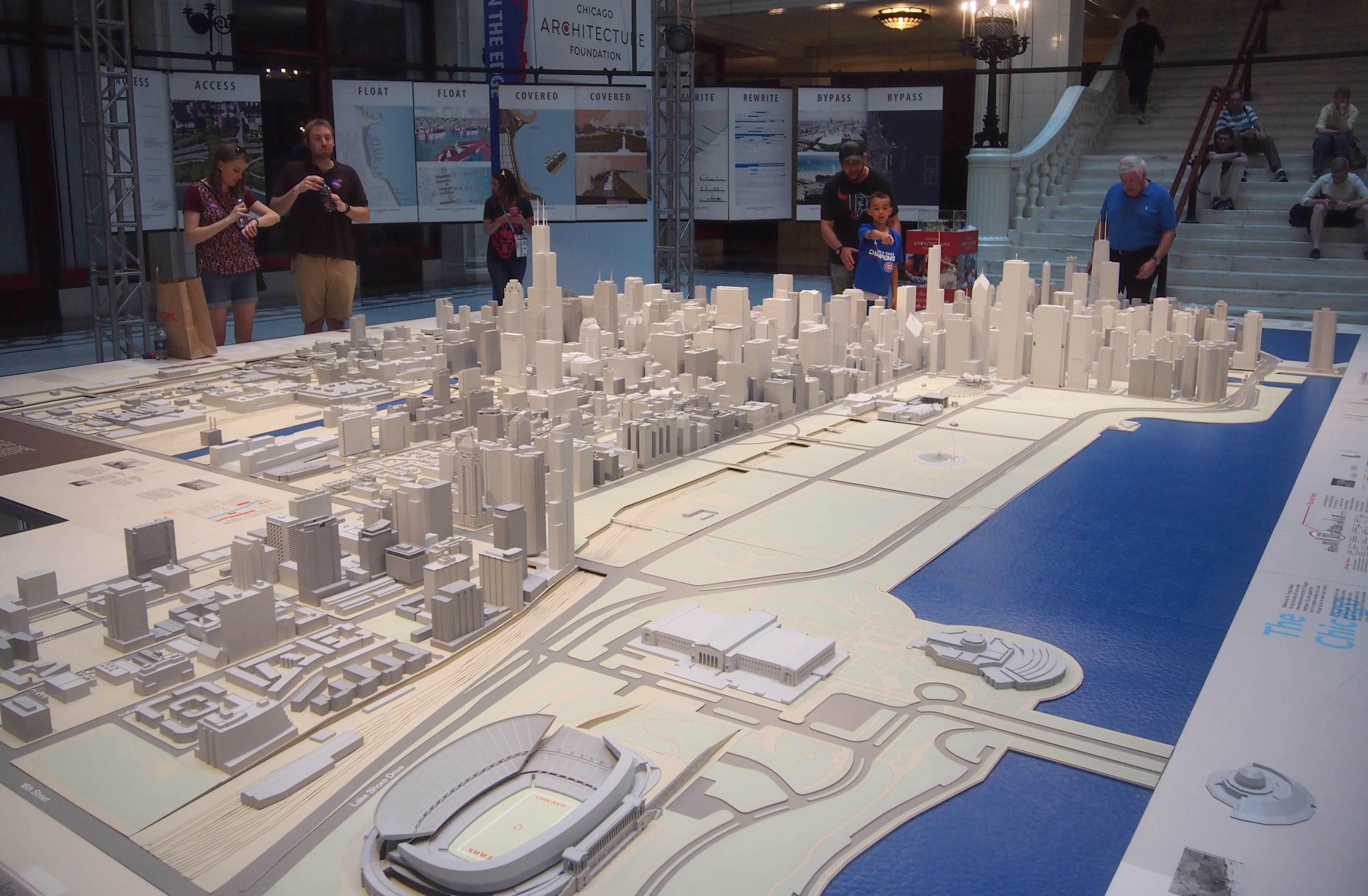
Model Chicago

Most Chicago Architectural Foundation tours begin at 224 S. Michigan Ave., where the foundation is located and which is also known as the Santa Fe Center or, originally, the Railway Exchange Building. It’s a handsome structure by Daniel Burnham, dating from 1904.

“A building around a light well, a form common to Daniel H. Burnham’s work from the mid-1880s onward, received an undulating white-glazed terra-cotta skin, oriel bays, and a top floor of distinctive porthole windows,” notes the AIA Guide to Chicago. “As in the Rookery, there is a two-story covered court at the base of the light well dominated by a grand staircase.”

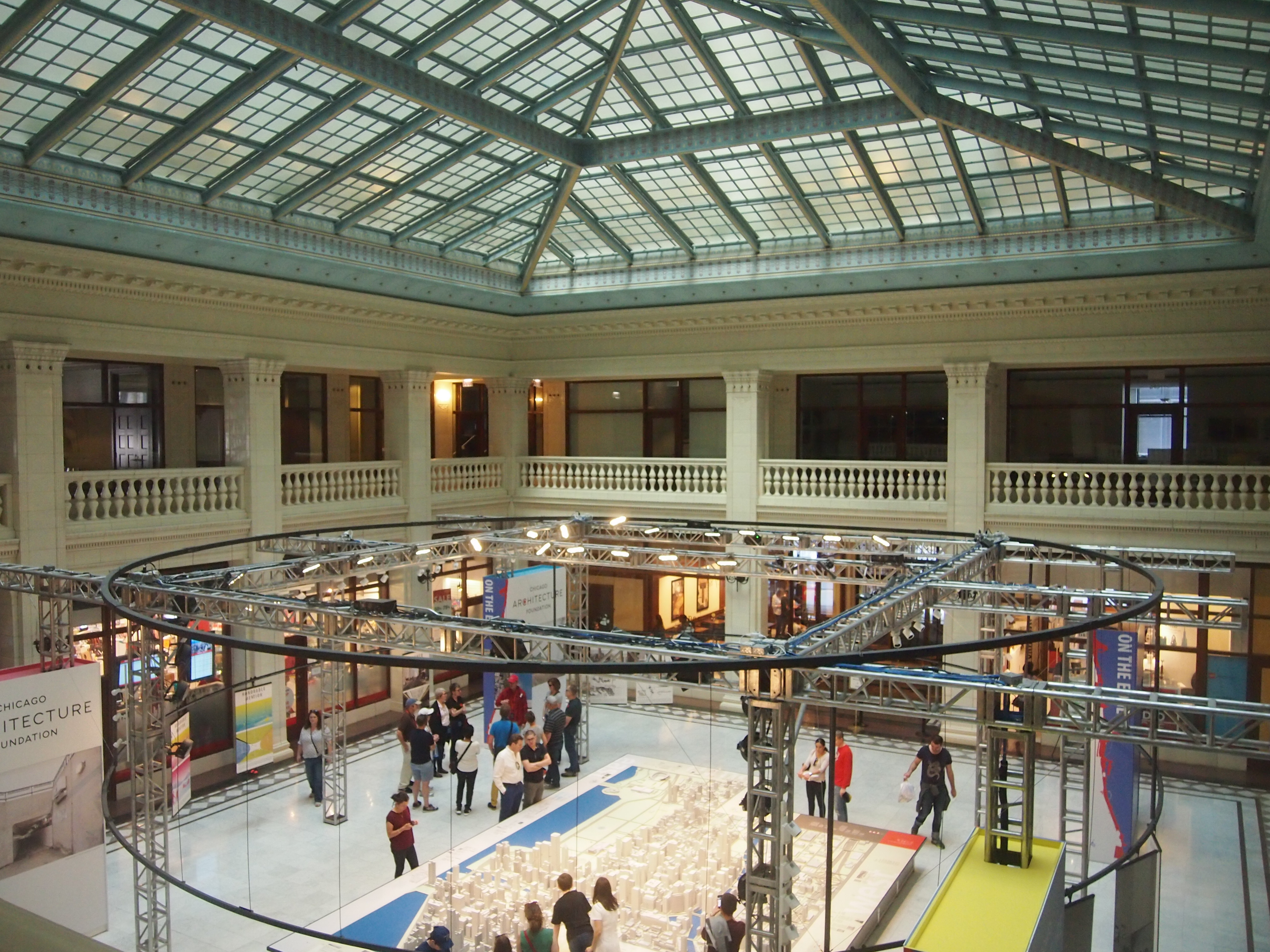
The view from near the grand staircase.
Railway Exchange BuildingNote the model of Chicago taking up much of the floor. At 25 by 35 feet, it’s an exact model of every building in more than four square miles of the city, or more than 1,000 of them. The obviously skilled Columbian Model & Exhibit Works created it for the Chicago Architectural Foundation in the late 2000s.

The Tribune reported in 2009 that the “model buildings came from Columbian’s workshop. The exhibit is broken down into 400 city blocks, in squares the size of dinner plates carried in food caterer’s serving carts. With the buildings already glued in place, the blocks were placed into the exhibit like waiters carefully placing food plates into a buffet table.

“[Foundation VP Gregory] Dreicer said the first step in the process was creating a digitized three-dimensional computer model of the city that could be manipulated on a screen. The designers did it using architectural drawings or drawings purchased from commercial firms that collect such information.

“To make each building, they went to firms that use the three-dimensional printing process called stereolithography, used to make design prototypes of various products like plastic containers for food, cleaning or pharmaceutical products.”

Wow. That’s impressive. And right there, for anyone to walk in and see, no charge. It’s not a static display, either. I’ve read that the CAF updates it periodically, as buildings come and go in Chicago.

Two Churches & One Temple in Old Town

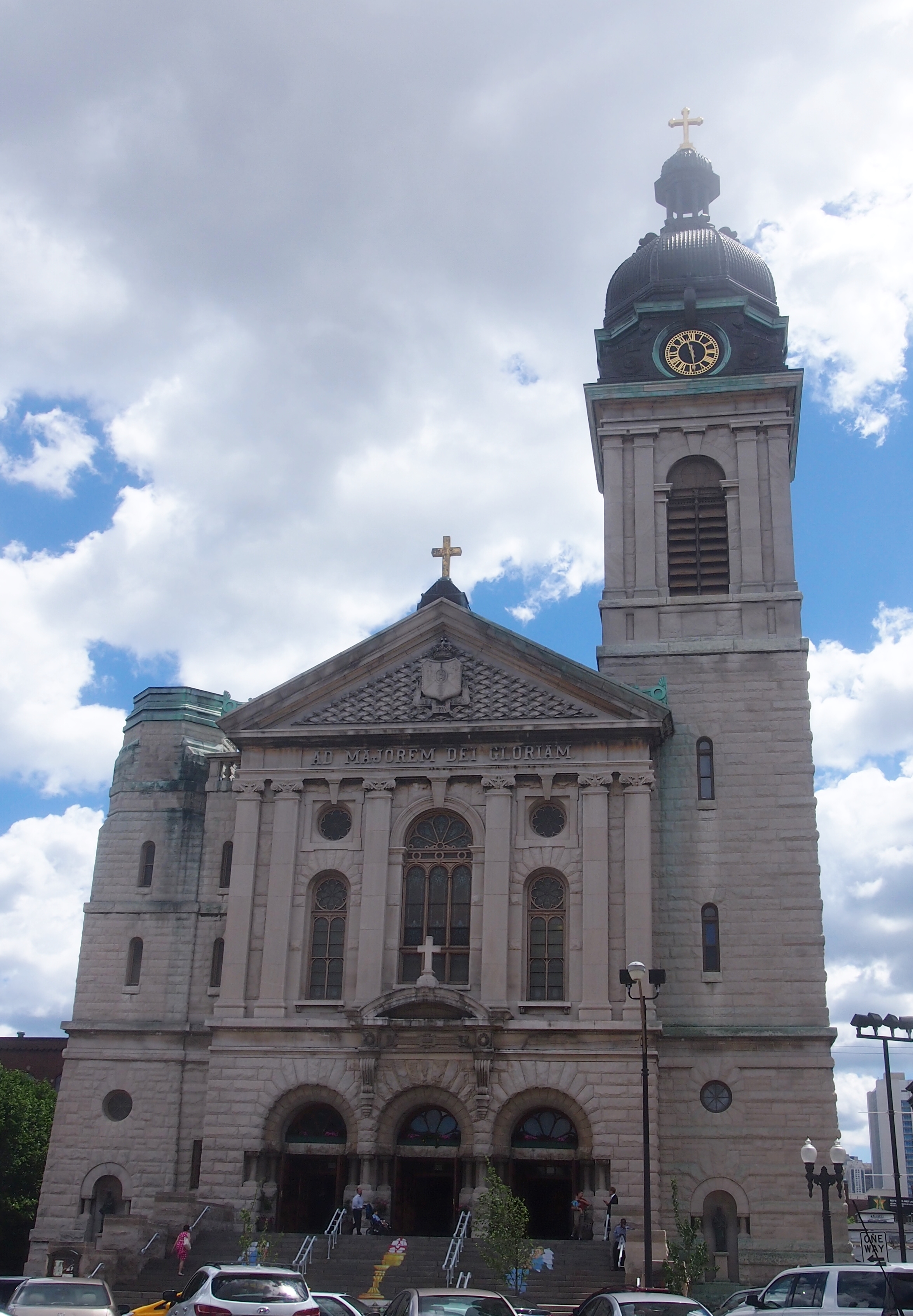
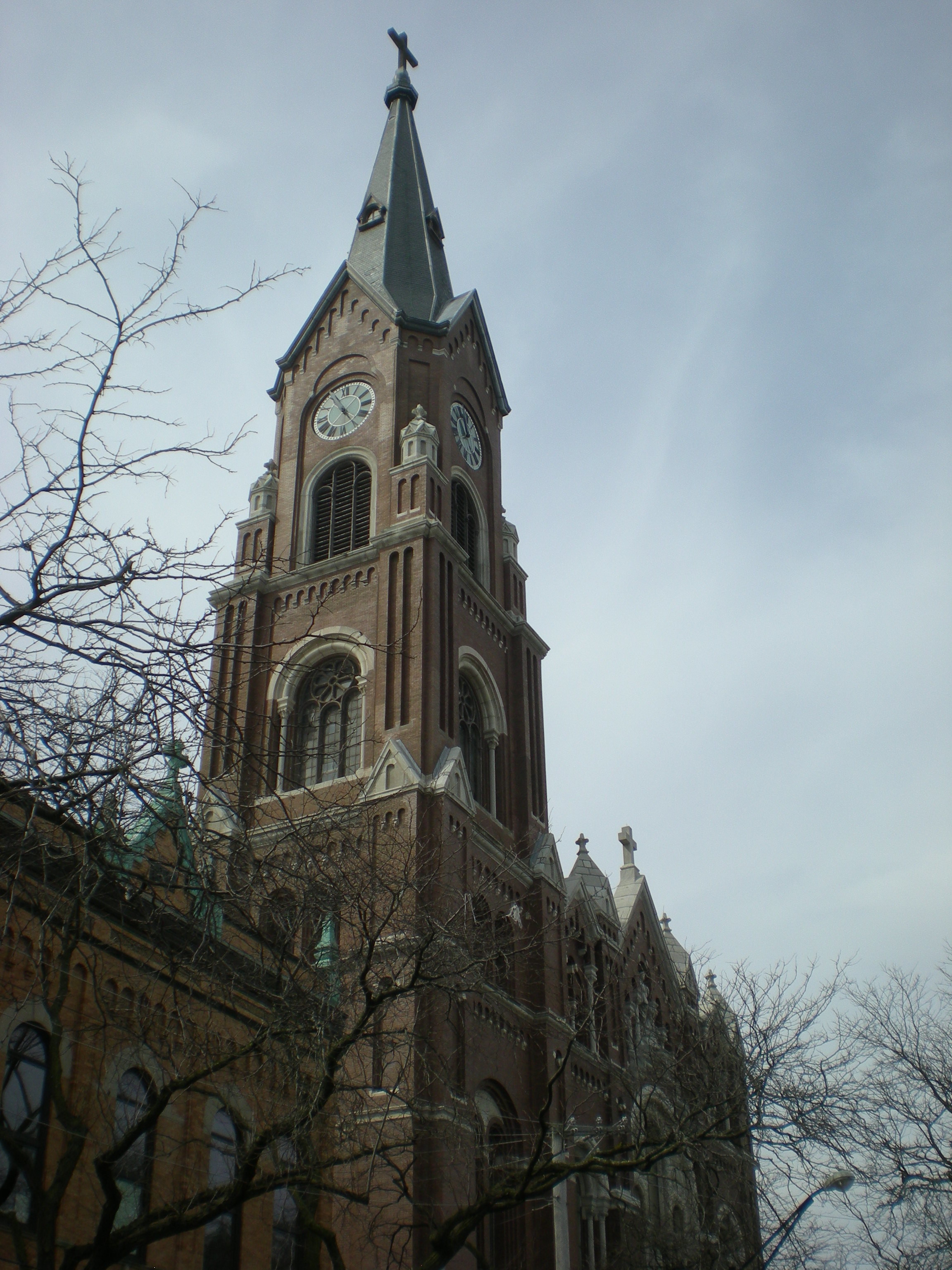
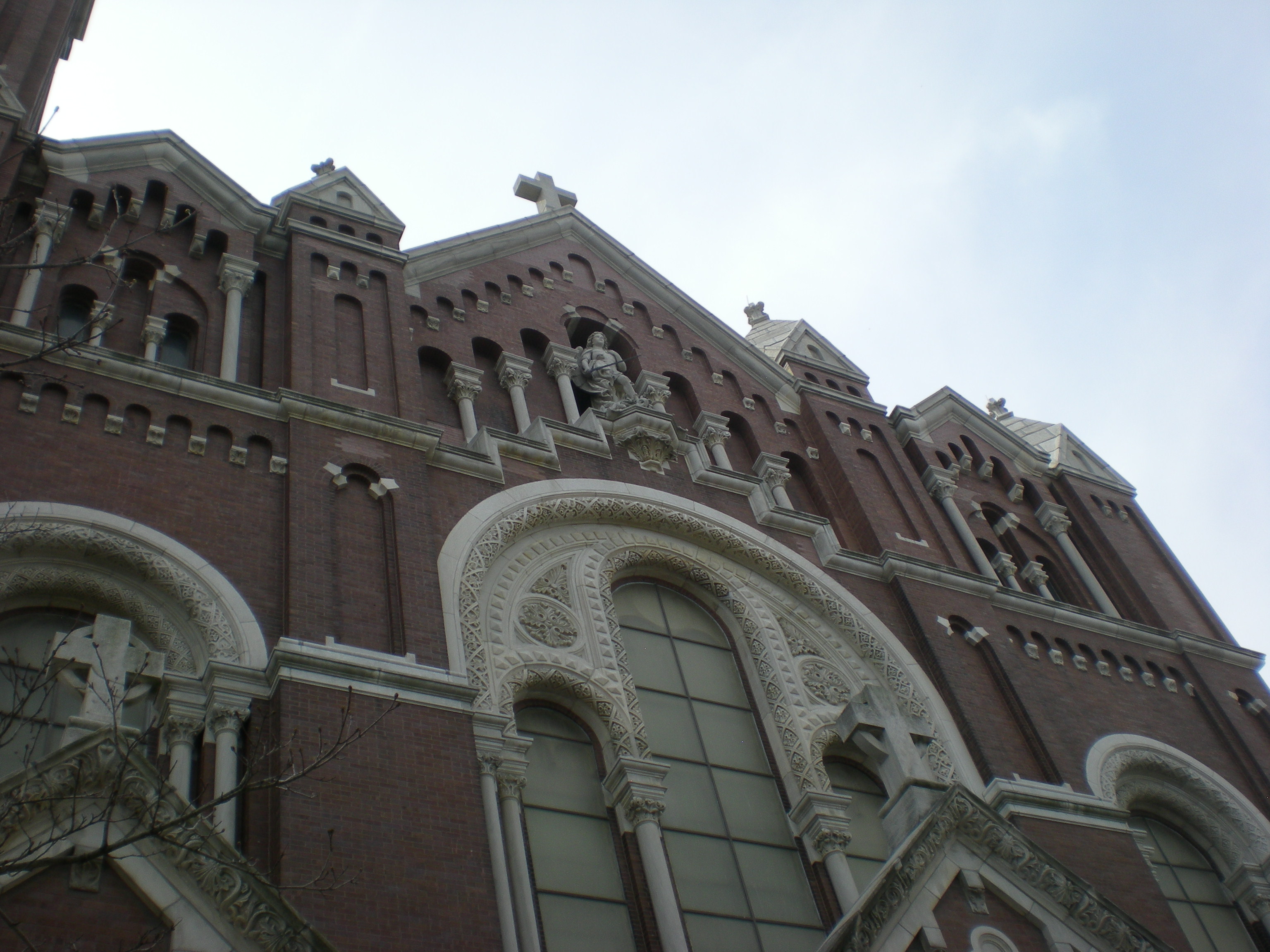
Towering over N. Cleveland and W. Eugenie Sts. in the Old Town neighborhood of Chicago is St. Michael’s, a Romanesque Catholic church dating from just before the Great Chicago Fire. Not good timing, since the building was thus in the path of the conflagration.

“As the fire moved past Holy Name Cathedral, religious from nearby institutions rushed to St. Michael’s for respite, but they knew that the fire was just a few hours away,” the church tells us at its web site. “Priests, brothers, and nuns, helped by parishioners, packed parish treasures onto an oxcart and fled. Soon, flames tore into all the parish buildings, leveling all of them. Only the walls of the church remained standing.”

By 1873, the church had been rebuilt, though various modifications have occurred since then.

St. Michael's, Old Town, Chicago St. Michael's, Old Town, ChicagoLook closely up there and you see the Archangel Michael, sword drawn, ready to do battle with Old Scratch and his minions.
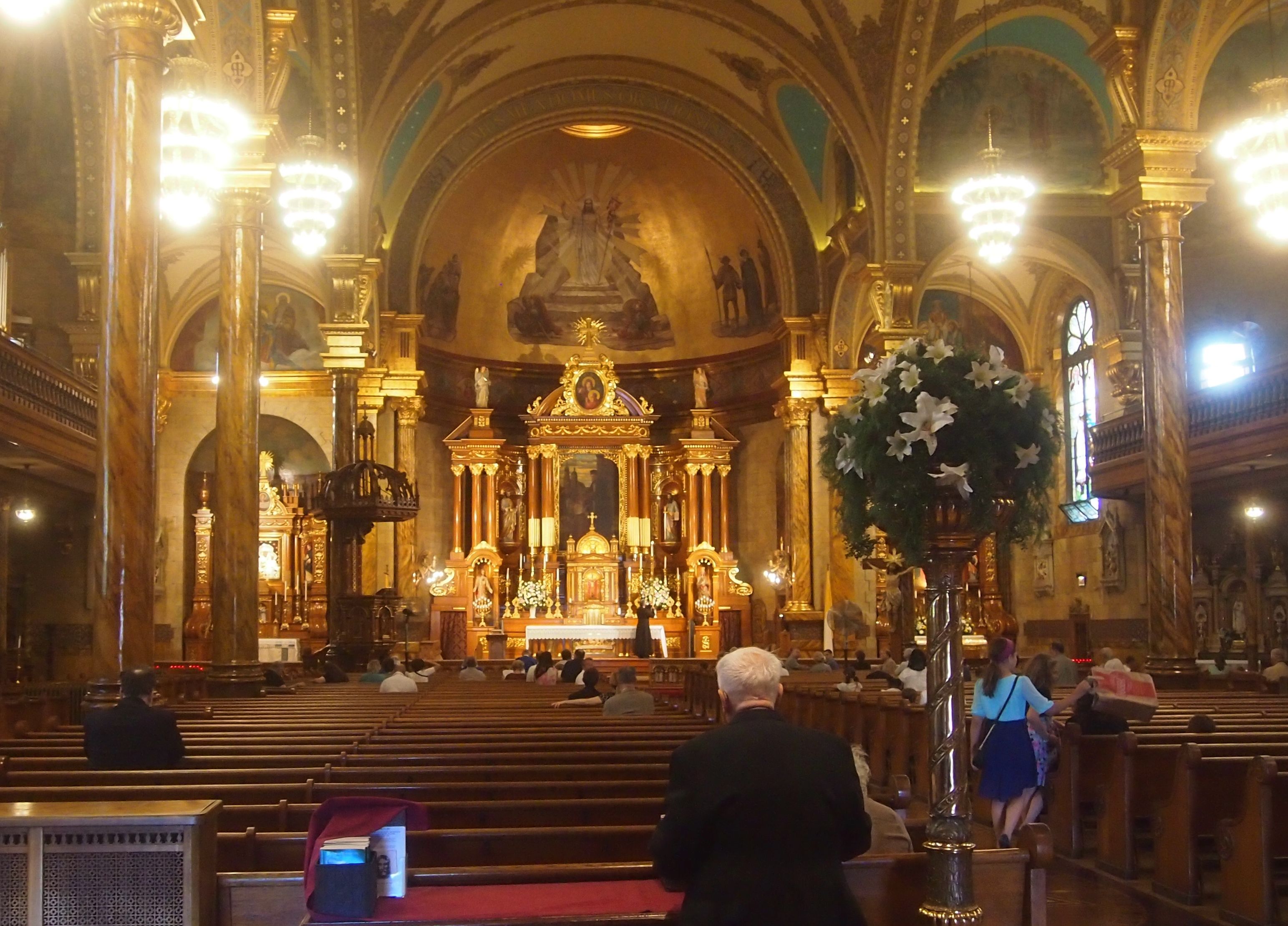
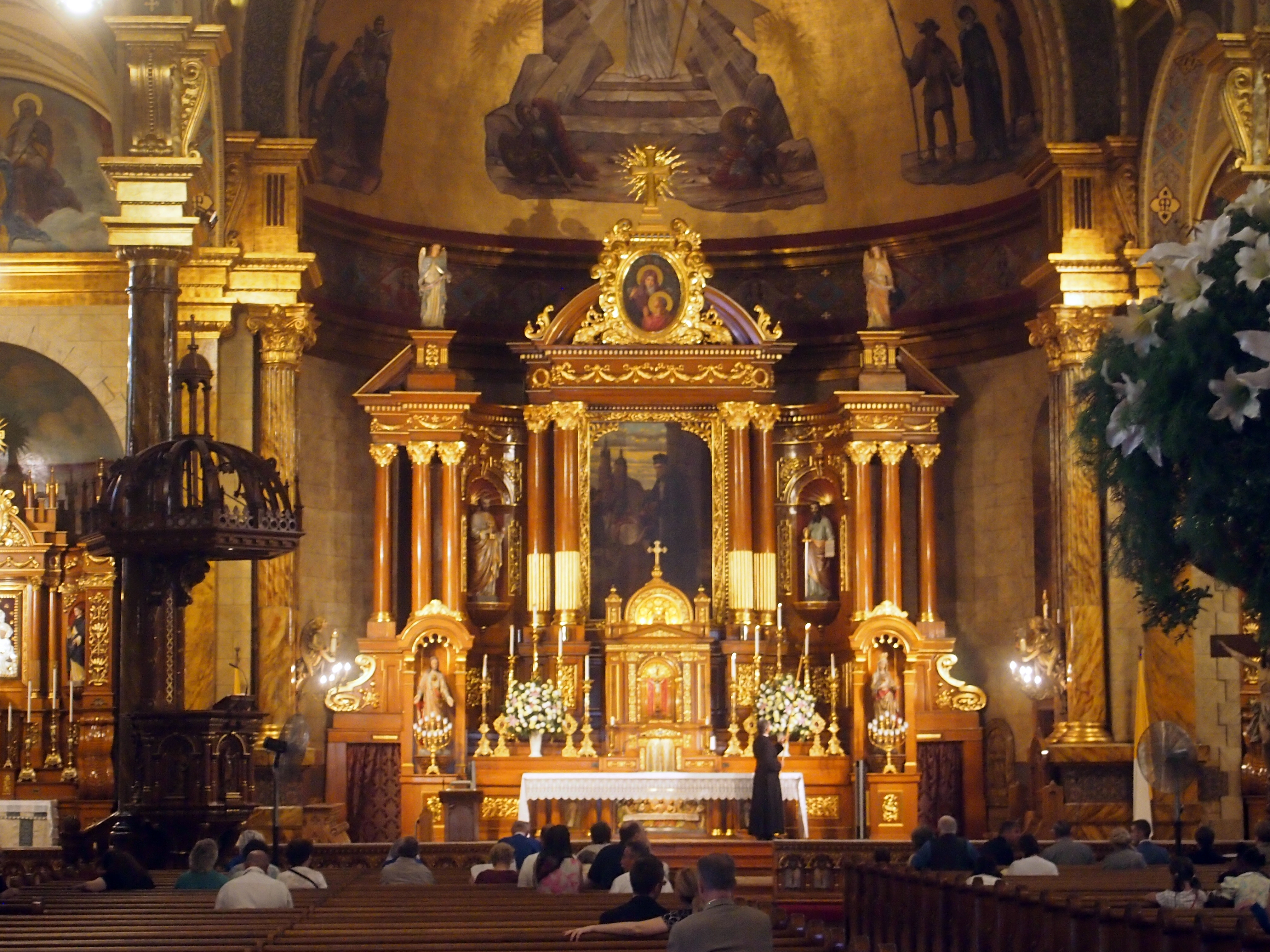
St. Michael's, Old Town, ChicagoThe interior looks like this: Bavarian Baroque, according to the AIA Guide to Chicago.

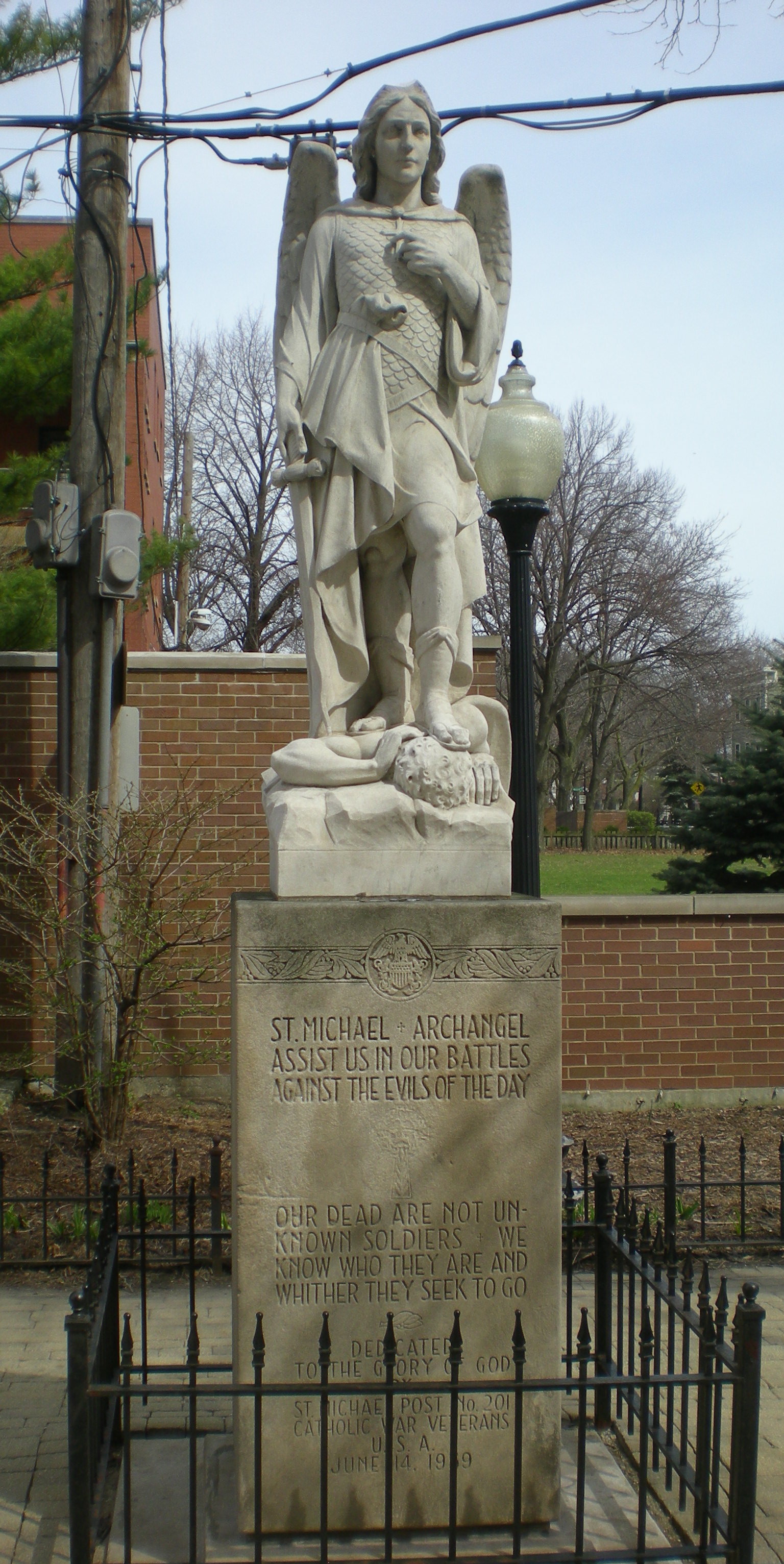
The archangel is also depicted outside on the plaza, facing the church. His sword is at his side, after vanquishing Old Scratch (at least, I assume that’s Satan underfoot). Good thing none of the nearby telephone wires were damaged in the struggle.
St. Michael's, Old Town, ChicagoThe plaza itself is a pedestrian zone that cuts the flow of cars on that section of Eugenie St. That’s unusual. I can’t think of another church in Chicago that has one. It helps make that part of Old Town distinct.

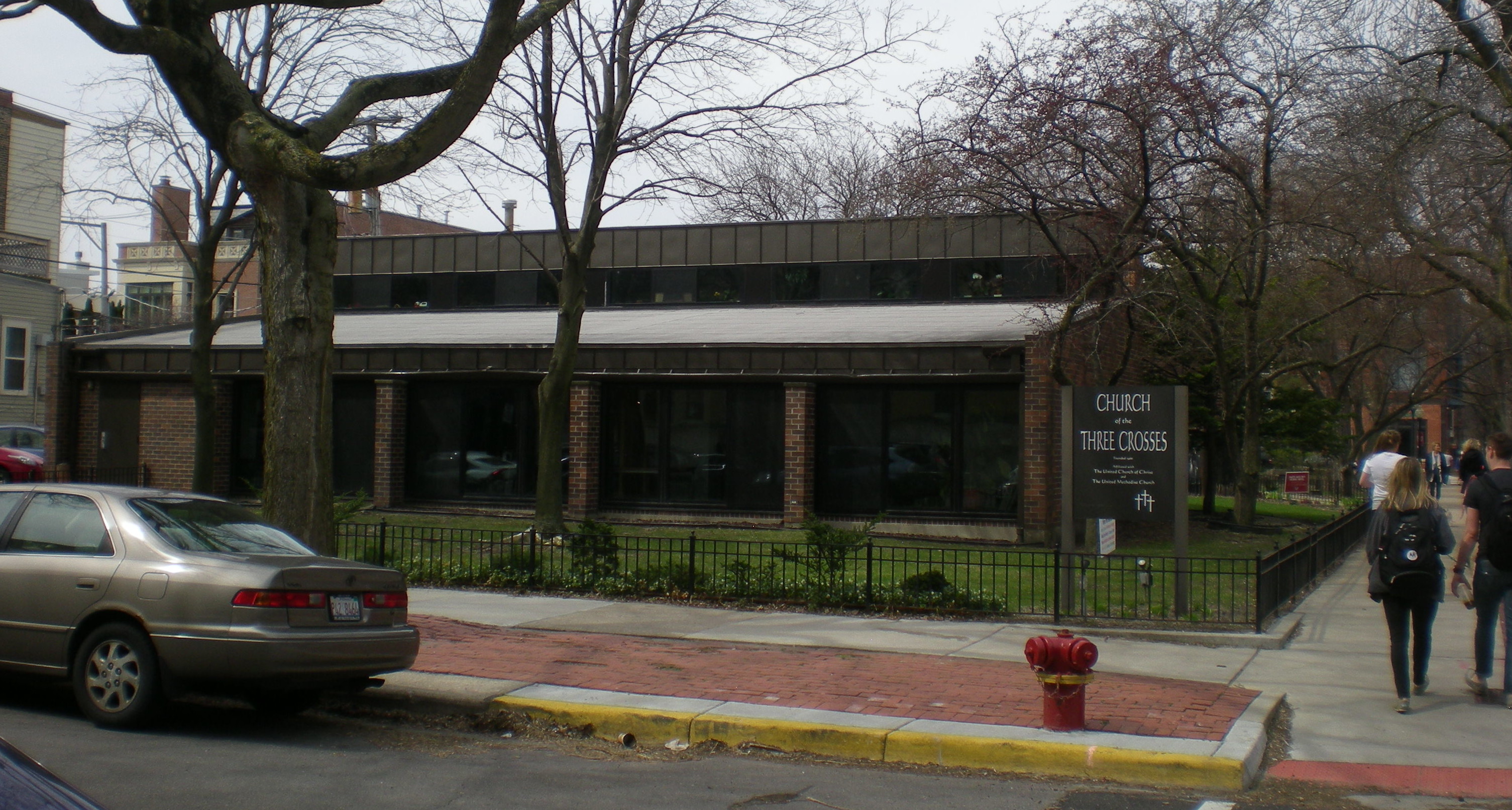
A few blocks to the north, at Wisconsin and Orleans, is the less distinct — at least as a building — Church of the Three Crosses, which is affiliated with both the United Church of Christ and the United Methodist Church.
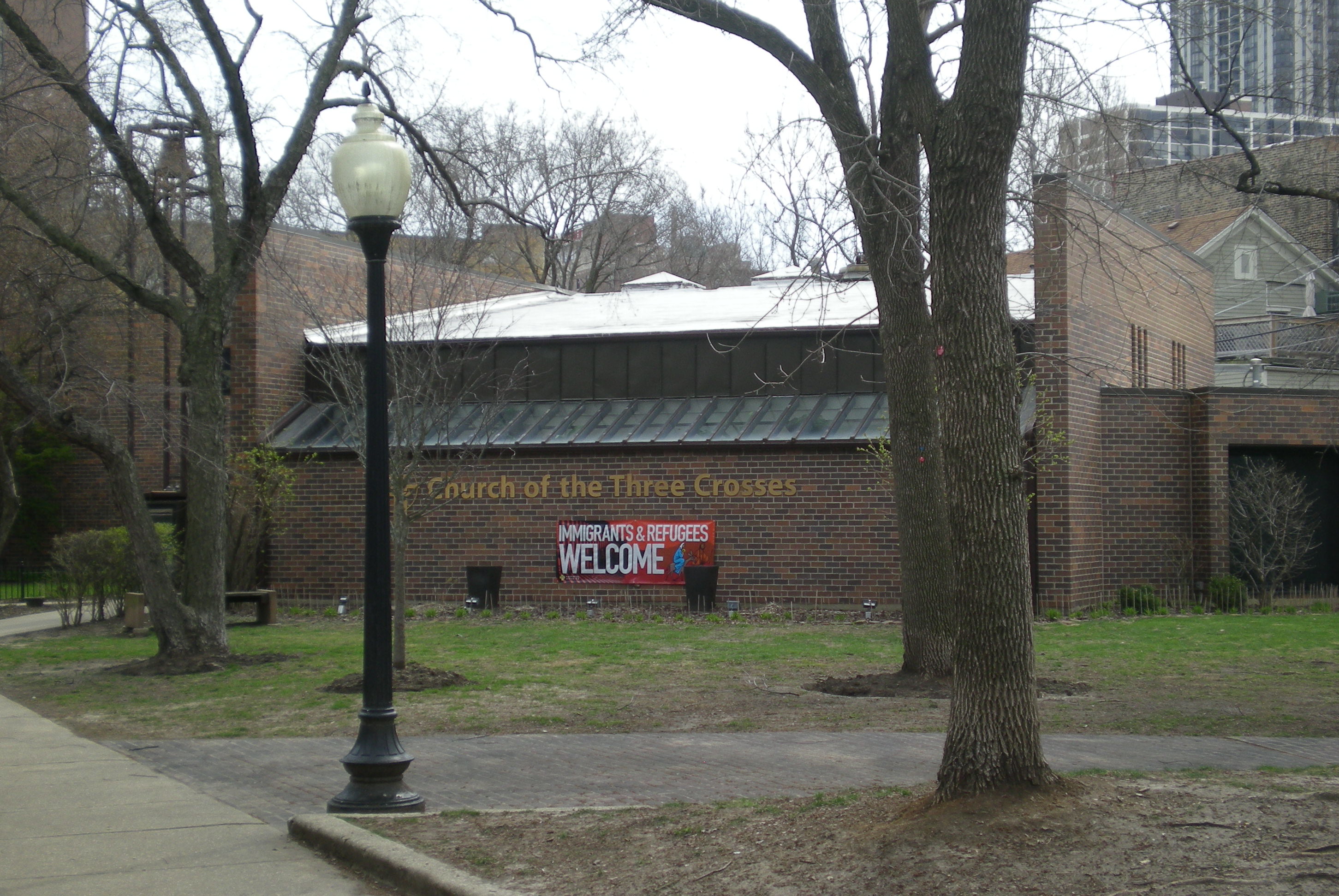
Church of the Tree Crosses, Old Town, ChicagoAround back, however, is a sign of the times.
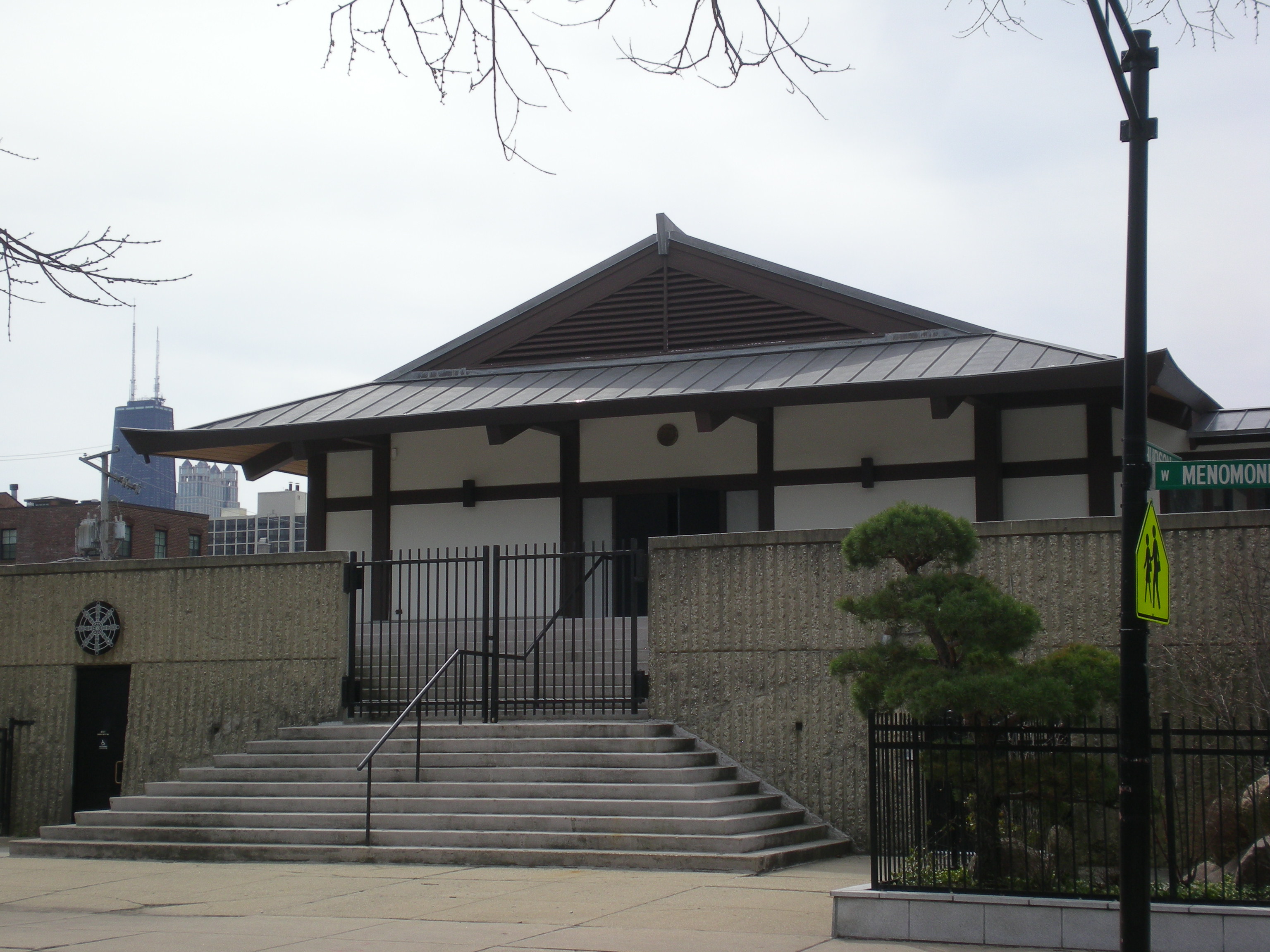
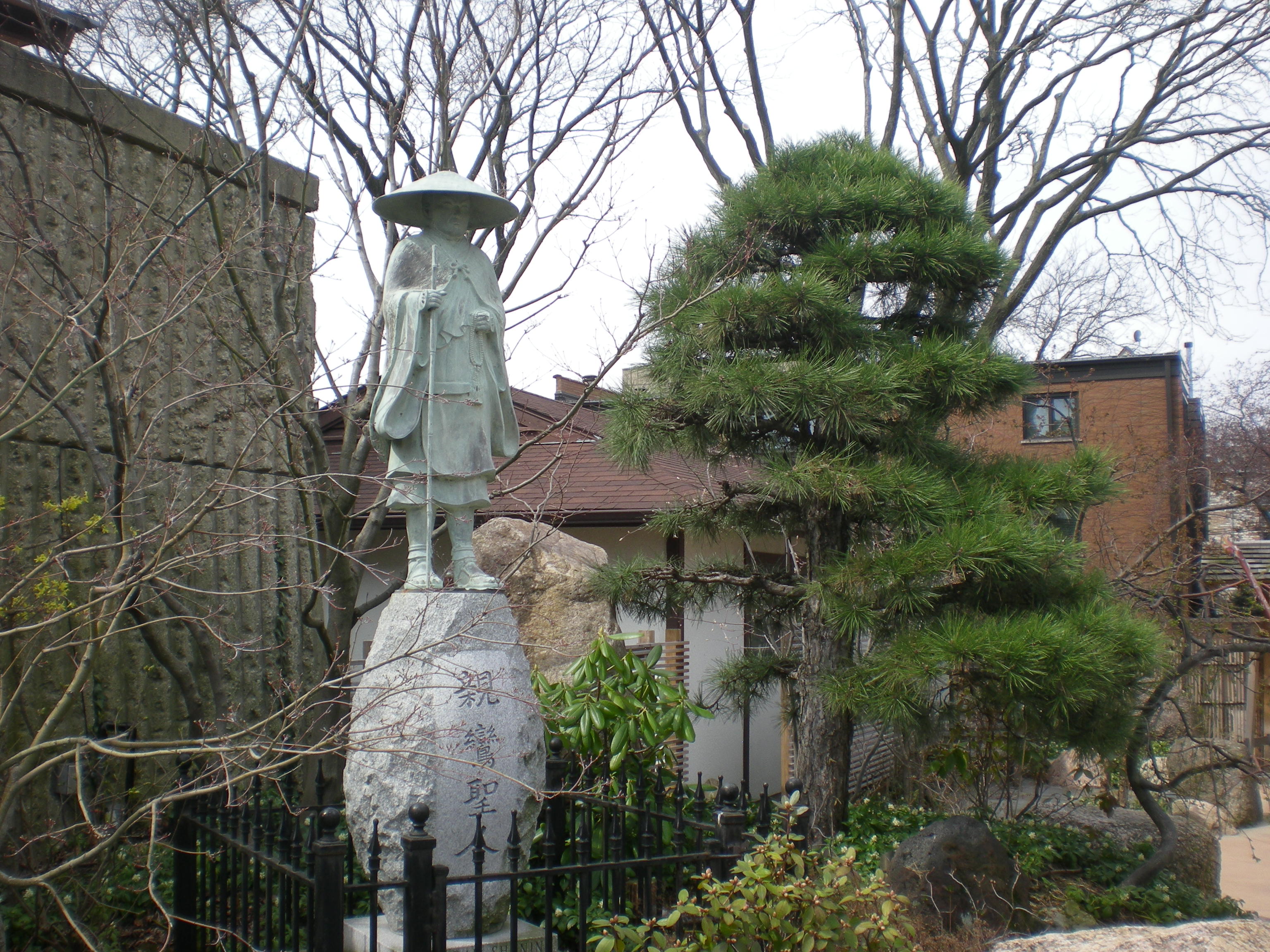
Church of the Three Crosses, Old Town, ChicagoRoughly between St. Michael’s and the Church of the Three Crosses, on W. Menomonee, is the Midwest Buddhist Temple, a temple of the Jodo Shinshu school of Buddhism.

Midwest Buddhist Temple“Jodo Shinshu, also referred to as Shin Buddhism, was founded in Japan by Shinran Shonin (1173-1262),” explains the temple’s web site. “It was Shinran Shonin who made Buddhist teachings accessible to people of all walks of life — in contrast to the traditional, primarily monastic practice of Buddhism.

“Between 1900 and 1940, many Jodo Shinshu temples were founded along the West Coast of the United States. But it wasn’t until 1944 that the Midwest Buddhist Temple was founded in Chicago by Rev. Gyodo Kono — its beginning linked to the ‘resettlement’ of many Japanese-Americans who moved to the Midwest to start new lives as World War II came to a close.”

At the edge of the property is a small but lovely garden, designed by Hoichi Kurisu of Portland, Ore., who also did the Anderson Gardens in Rockford.

Midwest Buddhist TempleMidwest Buddhist Temple“The boulders, set into place by a 30-ton crane, were especially important in representing the topographical features of Shinran Shonin’s walk from Mt. Hiei to the people in the Japanese villages as he spread the teachings of Shin Buddhism.”

Luckily, these days there are funiculars connecting Mt. Hiei with the rest of Japan.

Pettit Memorial Chapel

Belvidere, town of about 25,000 and seat of Boone County, Ill., is east of Rockford, but not very far, so it’s part of the Rockford MSA. Rather than take the Interstate all the way back from Rockford, we drove on US BUS 20 for a while, then US 20. That route takes you near Belvidere Cemetery, home of the Pettit Memorial Chapel.

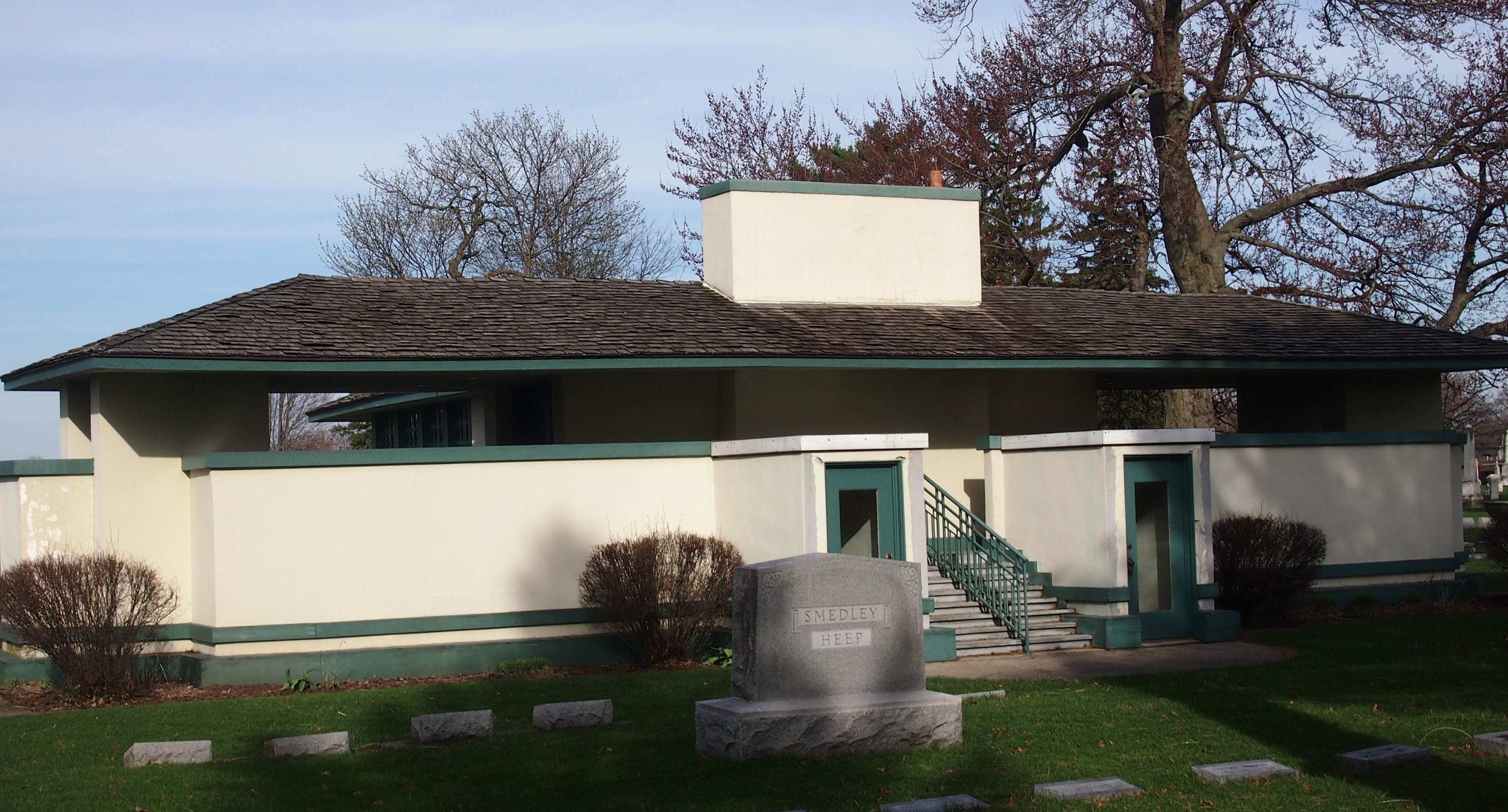
Pettit Memorial ChapelThe chapel counts as minor Wright, vintage 1906 (pre-running off with a client’s wife, in other words, and pre-ax murders at Taliesin). The Frank Lloyd Wright Trust says that “the Pettit Memorial Chapel is a small structure on the grounds of Belvidere Cemetery… Emma Glasner Pettit, the sister of William A. Glasner, for whom Wright designed a home Glencoe in 1905, commissioned the chapel in honor of her deceased husband, William H. Pettit.

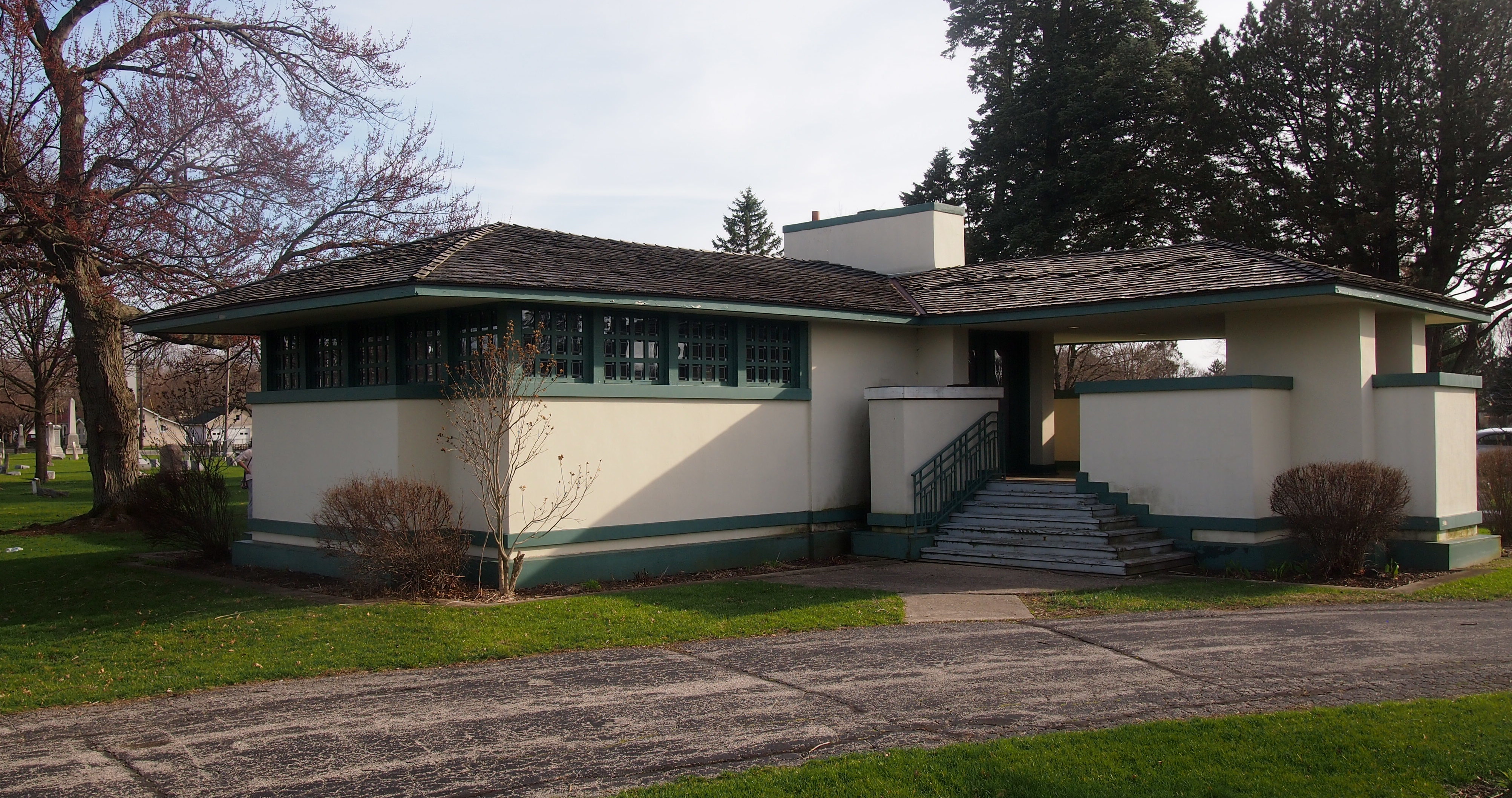
“The chapel consists of a long narrow porch and an adjoining, rectangular room for memorial services. Raised above ground level, the chapel is accessed via a staircase at the front of the porch, or a set of angled staircases that flank the meeting room at the rear of the porch. Just as he did in his residential designs, Wright included a centrally located fireplace with a broad chimney that emerges from a low-hipped roof.”

We went onto the porch.
Pettit Memorial ChapelThen we went around back. The rectangular room — marked by green window trim — was locked.
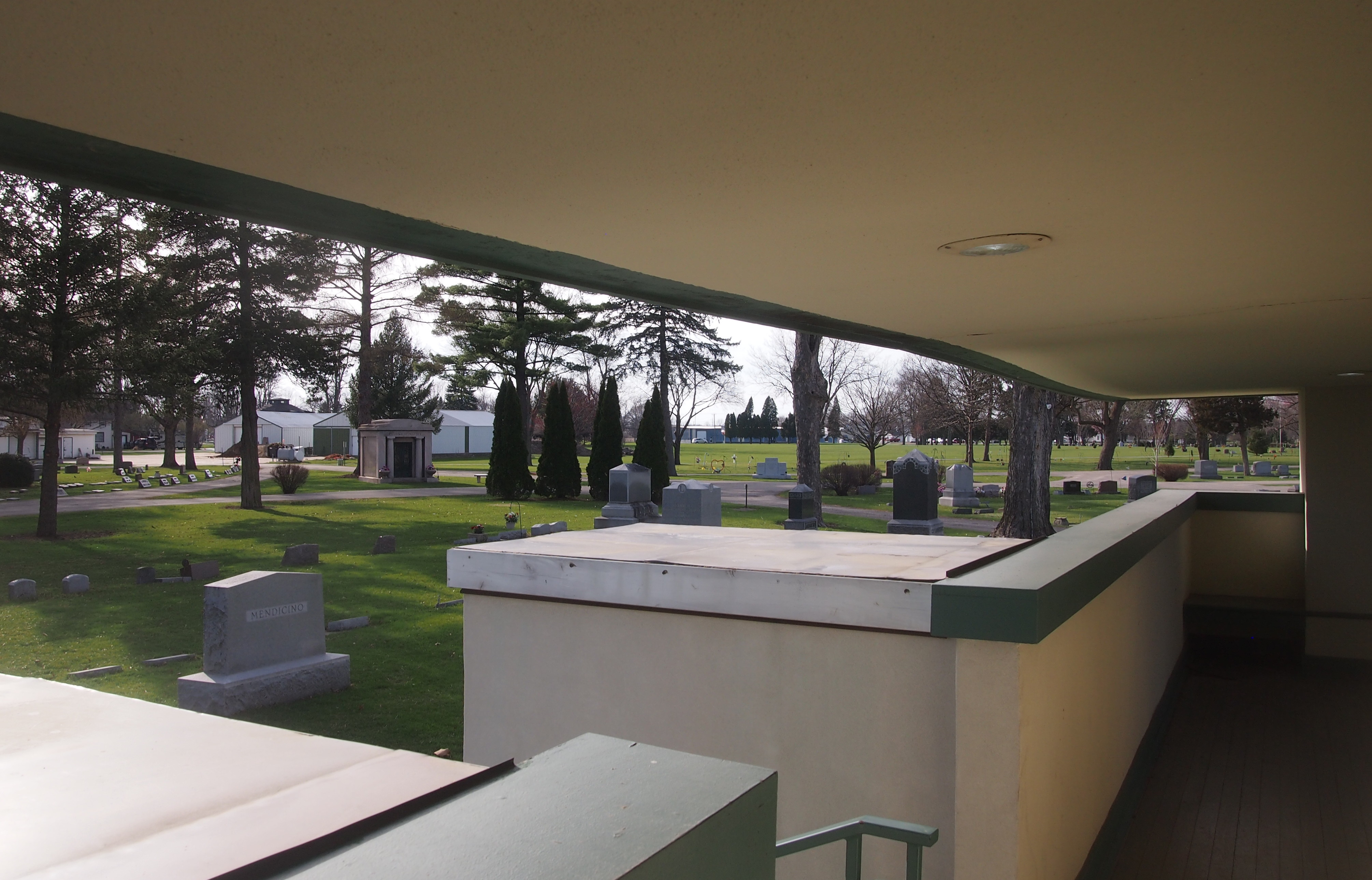
Pettit Memorial ChapelThe cemetery looked fairly nice, but we didn’t take any time for a closer look. This is a view from the chapel.
Belvidere CemeteryWe didn’t see William Pettit’s stone. According to the nomination form for the National Register of Historic Places (by an Oak Park architect named Thomas A. Heinz), “Dr. Pettit had the largest practice in northern Iowa, and most of the state mourned his sudden passing in 1899… After proper deliberation as to a suitable memorial, it was decided to build a chapel in Belvidere, his hometown…”

Also in the nomination form: “[The chapel]… is the only structure of its kind in the oevre of [Wright’s] work, the only memorial or cemetery structure ever built.”

Mount Carmel Cemetery, Hillside

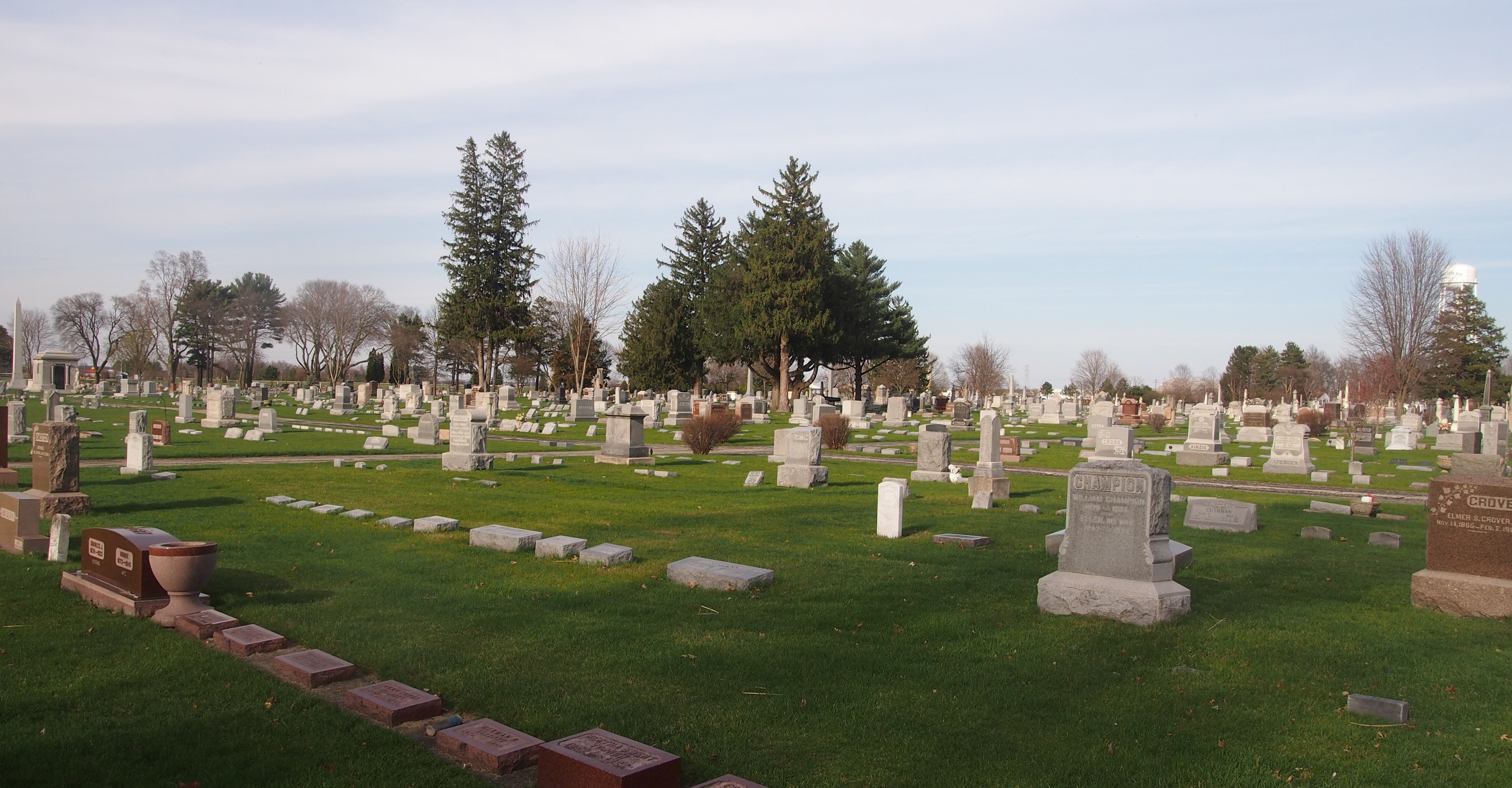
Demographic note: a lot more people reside in Mount Carmel Cemetery in west suburban Hillside, Ill., than in the village itself. The cemetery has about 226,000 permanent residents, while the village has only about 8,100 (living) people. But the advantage goes to the living, of course. For instance, they can vote in Cook County elections; most of the dead people can’t.

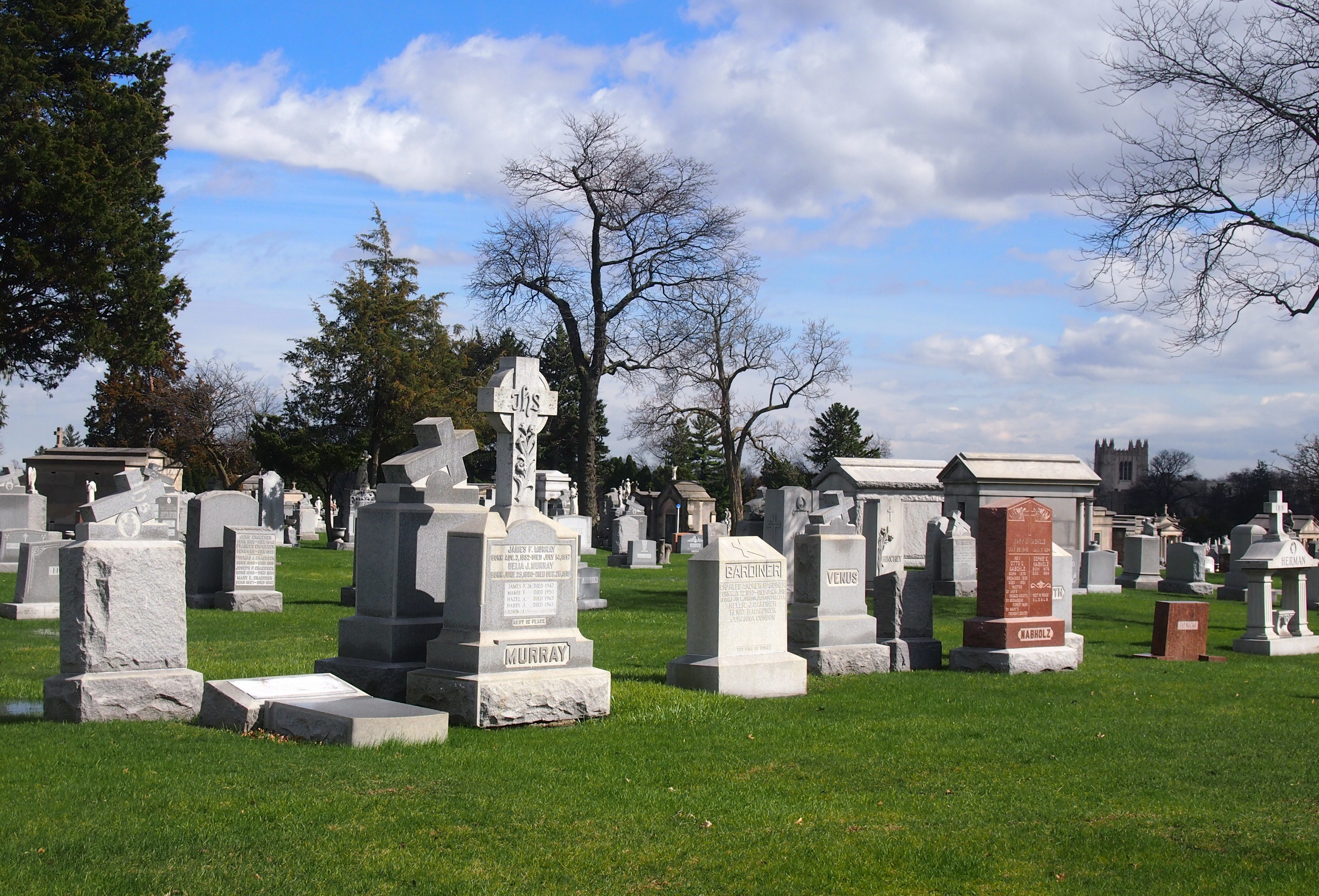
I’ve known about Mount Carmel for years, but only got around to visiting last week, on a cool and partly cloudy afternoon. The cemetery is thick with upright stones —

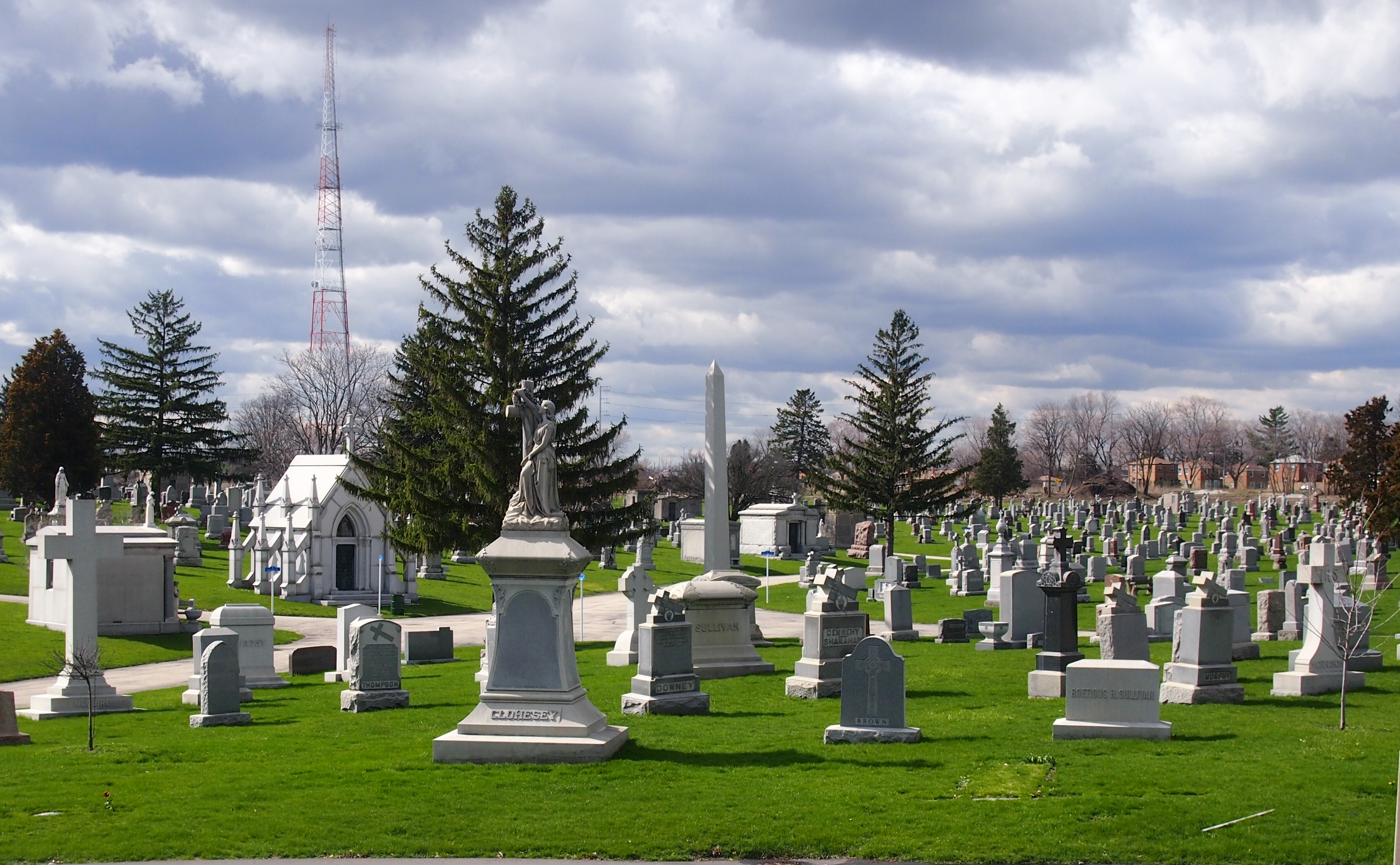
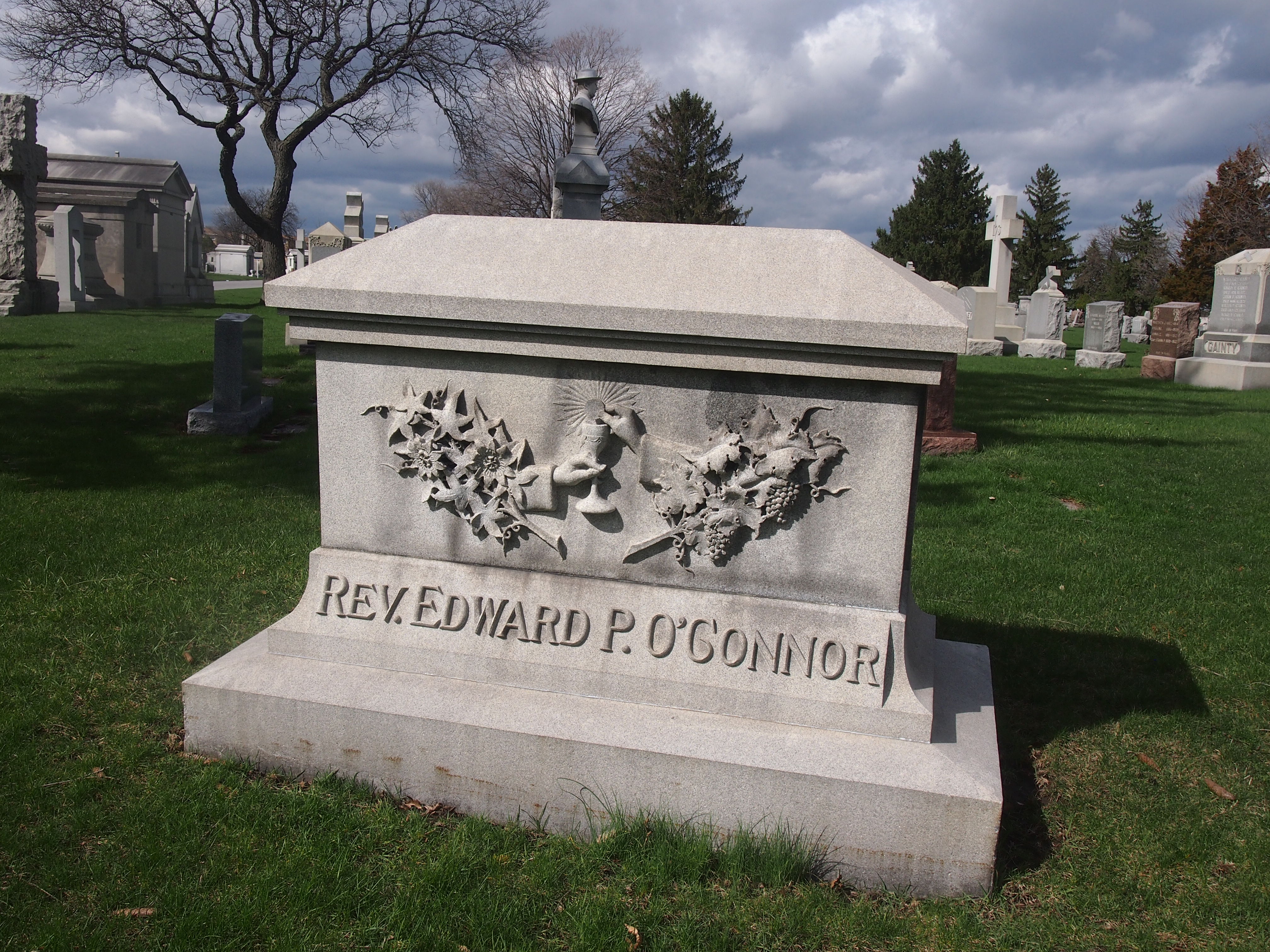
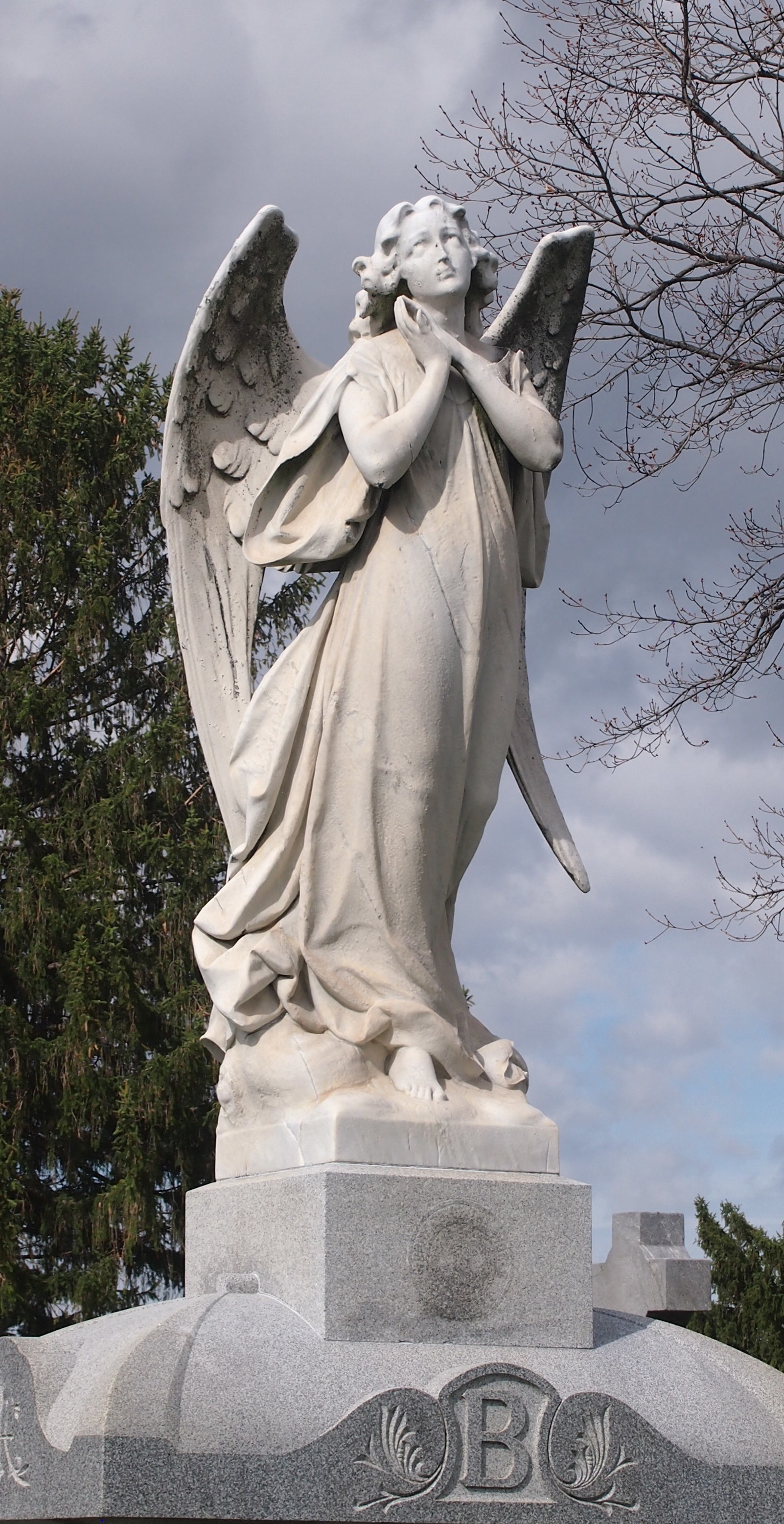
Mount Carmel Cemetery, Hillside ILMount Carmel Cemetery, Hillside IL… funerary art —

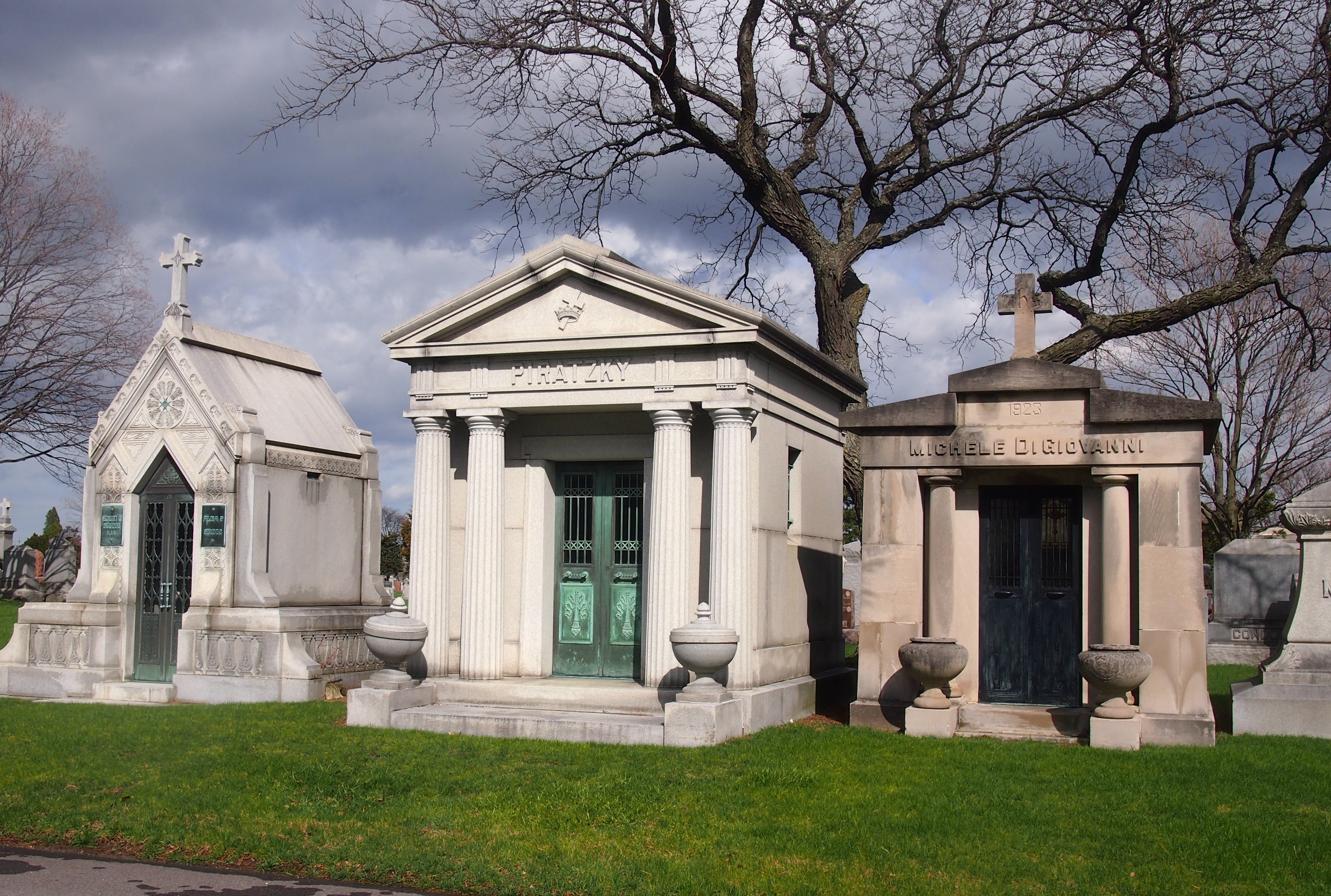
Mount Carmel Cemetery, Hillside ILMount Carmel Cemetery, Hillside… and mausoleums. In fact, there are a lot of family mausoleums there, about 400, including these three.
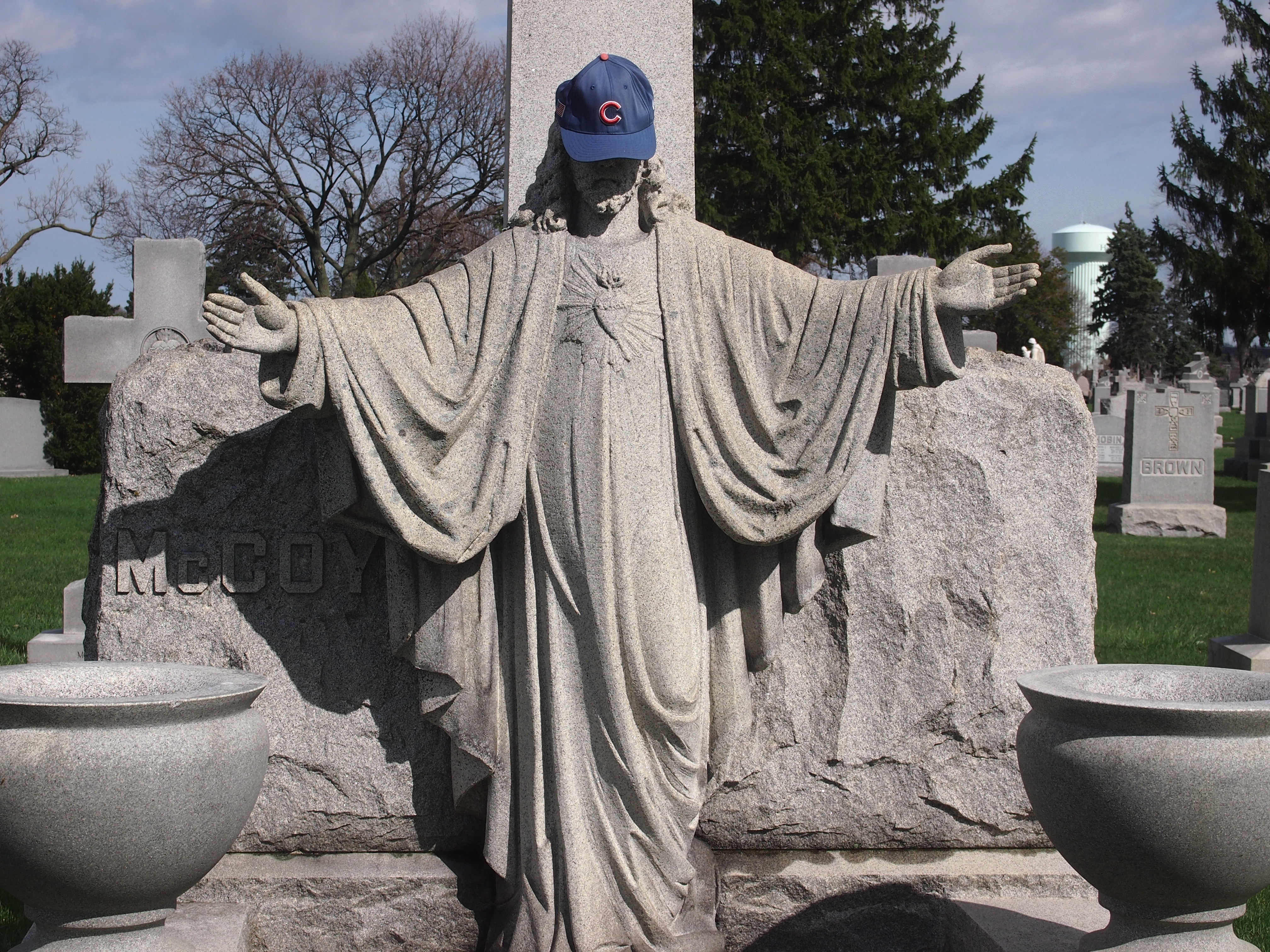
Mount Carmel Cemetery, Hillside ILAt Mount Carmel, one learns that the Lord is a Cubs fan.
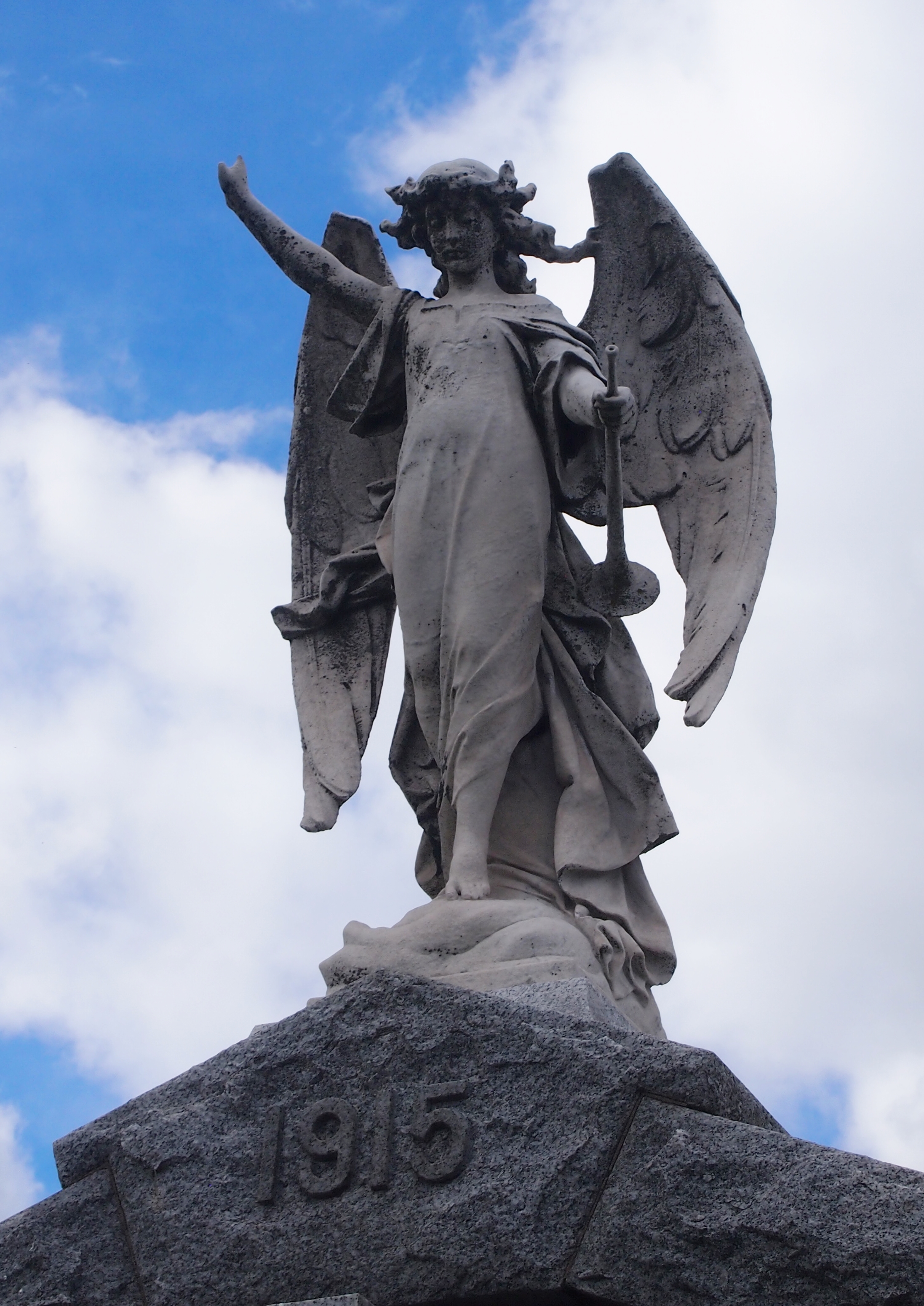
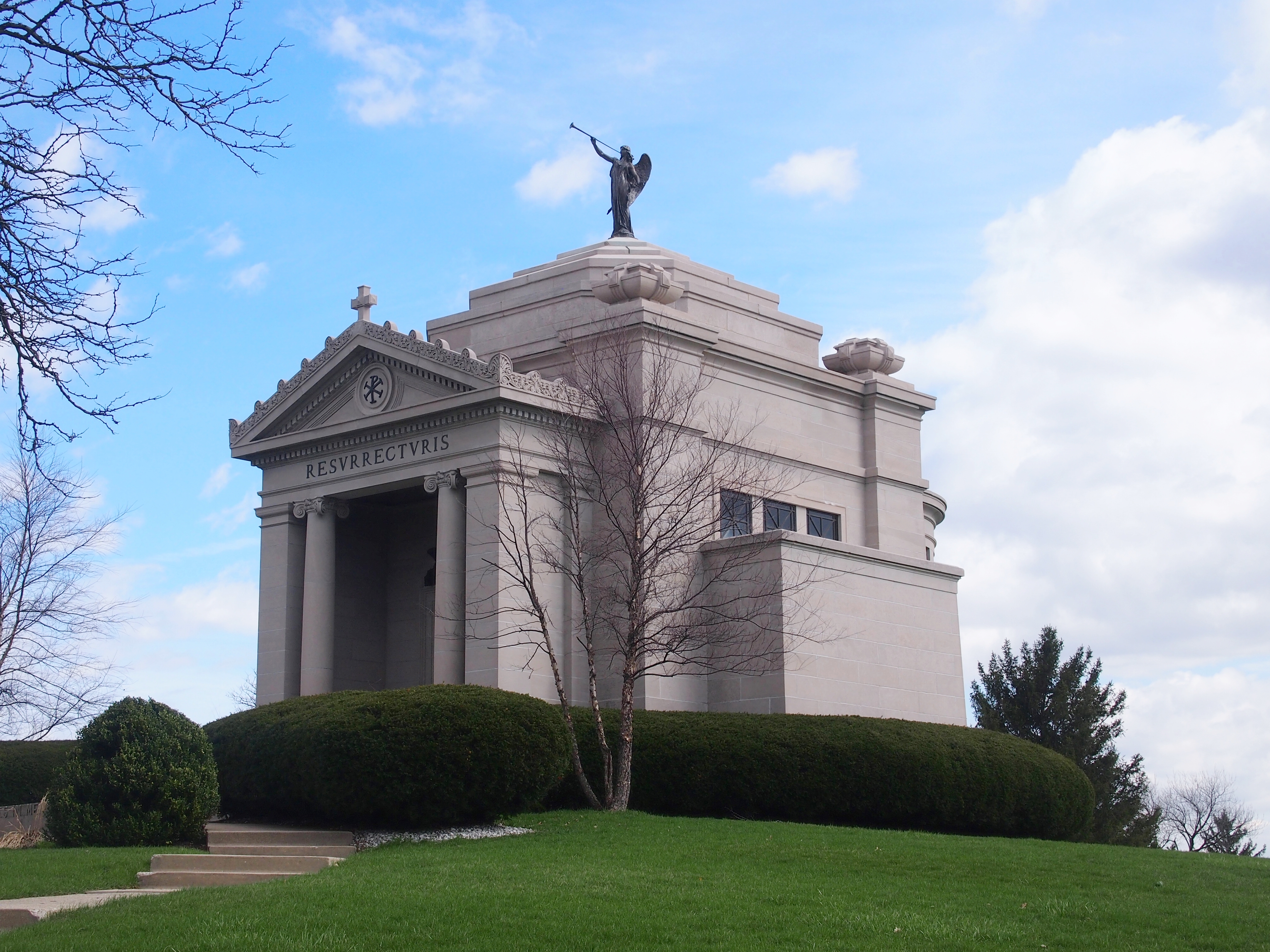
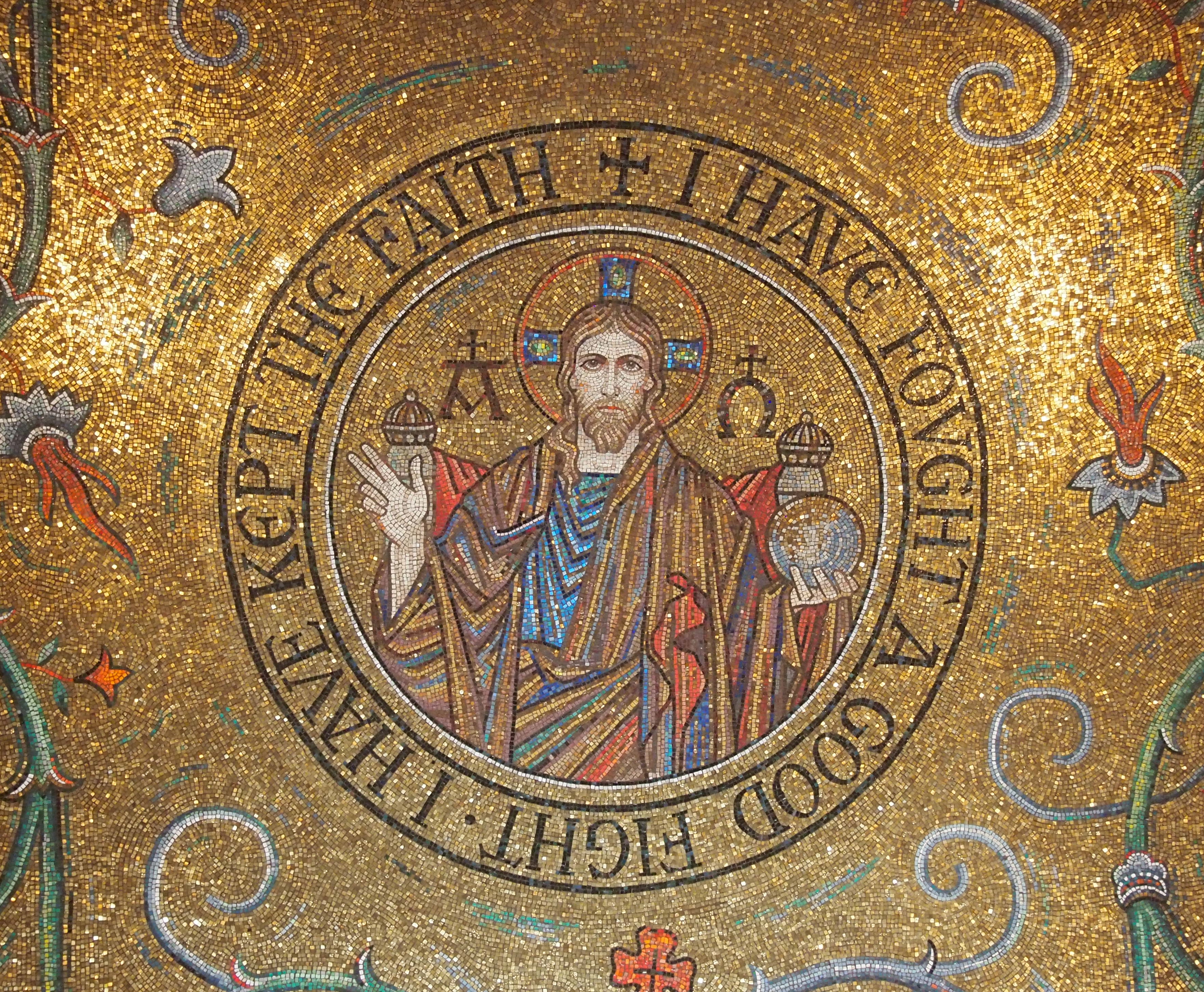
Mount Carmel Cemetery, Hillside ILOn a hillock in the middle of the cemetery is the Bishops’ Chapel, or Bishops’ Mausoleum, but in full the Mausoleum and Chapel of the Archbishops of Chicago, complete with Gabriel blowing his horn.
Mount Carmel Cemetery, Hillside IL bishops' mausoleum and chapelInside are the remains of seven bishops, archbishops and auxiliary bishops of Chicago, mostly recently Joseph Cardinal Bernardin, who was entombed in 1996. I remember in the fall of ’96 seeing his funeral procession cross the Michigan Ave. Bridge from an office window in 35 E. Wacker, where I worked. Presumably they were headed for Mount Carmel.

The book Mount Carmel and Queen of Heaven Cemeteries by Jenny Floro-Khalaf and Cynthia Savaglio gives quite a lot of detail about the Bishops’ Mausoleum, which was completed in 1912. The cemetery itself was established with the new-born century in 1901, long before the Eisenhower Expressway ran to its north, and probably when Roosevelt Road to the south — not yet called that, but 12th St. in the city at least — was very rudimentary indeed.

“[The chapel] was the brainchild of Chicago’s second archbishop, James Quigley, who oversaw its construction,” Floro-Khalaf and Savaglio write. “He engaged a local architect, William J. Brinkmann, who came up with the simple, Romanesque style that embodies the building’s outline. However, in keeping with the aesthetic tastes of his predecessor, Patrick Feehan, Quigley engaged one of the most famous architects of the day, Aristide Leonori, who designed the building’s breathtaking interior… Leonari executed a design reminiscent of Rome in marble and mosaic.”

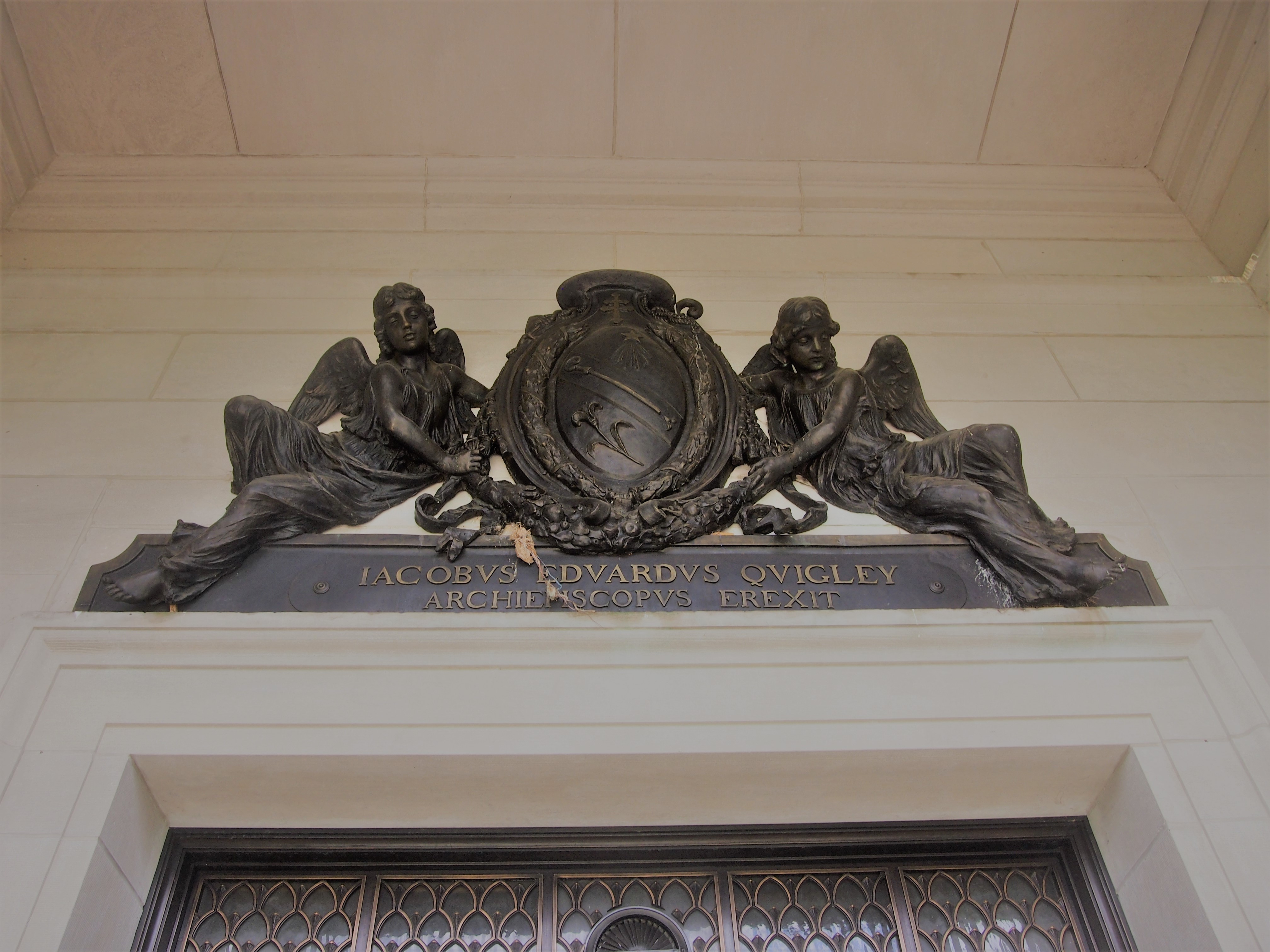
A locked door was as close as I got to the breathtaking interior, for which I blame wankers who would do harm to it. But over the door, you’re reminded that Quigley built the place.

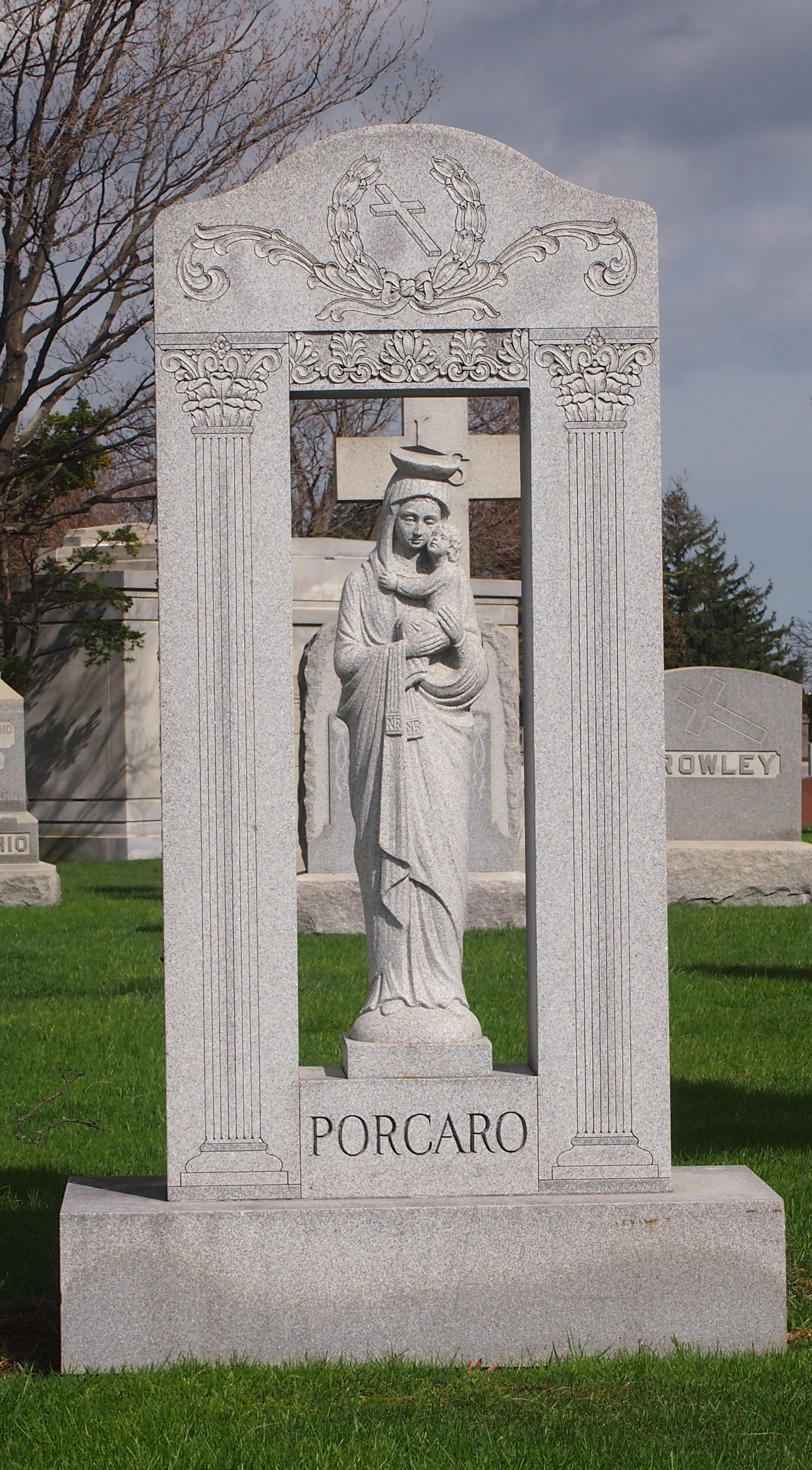
Many Italian names dot the cemtery’s landscape. Benedetto, Bernardo, DeVito, DiGiovanni, Felicetti, Gazzolo, Genna, Mazzitelli, Salerno, Serritello, Truppa, Perazzo, Porcaro, Porzio, and Viviano were among those I saw, though there was a fair number of Irish names and others mixed in.

One name I didn’t see was Capone. If I’d done any research beforehand, I would have known where to look for Al Capone. The cemetery doesn’t guide visitors to his grave, unlike the signs posted to direct you to the Wright Bros. at the Woodland Cemetery in Dayton or the Hunley crews in Magnolia Cemetery in Charleston. Maybe some other time.

Other mafioso are buried in Mount Carmel, though not as well known as Capone any more. But their stories are no less lurid. Such as Joseph “Hop Toad” Giunta, who ran afoul of Capone in a particularly bloody way, or so the story goes. I didn’t see his grave, either.

Find a Grave says, “He was a high ranking member of the Capone gang who formed a secret alliance with Al Capone enemy Joe Aiello. Giunta planned to kill Capone and take over his operations, and enlisted the help of Capone triggermen John Scalise and Albert Anselmi with the promise of higher positions when Giunta was in power.

“Capone found out about the plan and invited Giunta, Scalise and Anselmi to a dinner party. During dinner Capone brought out an Indian club he’d received as a gift and proceeded to beat the three men to near death. Capone then allegedly finished the job with gunshots…”

Views from Aon

Recently I attended an event at the Mid-America Club, which happens to be on the 80th floor of the Aon Center, formerly known as the Amoco Building, and if you go back far enough, the Standard Oil Building (for some time after ’73, when it was completed). At 83 floors and 1,136 ft., it’s the third tallest building in Chicago, but that makes it only the 52nd tallest in the world in our time, when China and the UAE have decided that really tall buildings are just fab.

Aon Center 2017

Getting to the 80th floor, I encountered an elevator system I’d never experienced before. There are touchpads at each elevator bank, and you press the number of the floor you want to go to. Then the machine tells you which of the elevator cabs to board to go express to that floor. There are standard elevator buttons inside the cab, but they’ve been covered over by a hard plastic case and are inaccessible. Guess this makes inter-floor transit more efficient. For all I know, this kind of system could be common and not exactly new; I don’t go into that many very tall buildings any more.

I’d been up to the Mid-America Club before, though I couldn’t remember exactly when. Probably as long ago as the early 2000s. It offers a mighty 360-degree view, though this time around it was obscured some by overcast skies.

This is looking west, down at the top of the Prudential Center. Pru II, vintage 1990, has the pointy spire, maybe for zeppelin mooring. Pru I, vintage 1955, is the shorter structure immediately to Pru II’s left, though it was the tallest building in Chicago when new.
Prudential Center II Chicago spireUp and to the right, and on the river, with the cupola on top, is 35 E. Wacker, a handsome ’20s building in which I had an office for a few years.

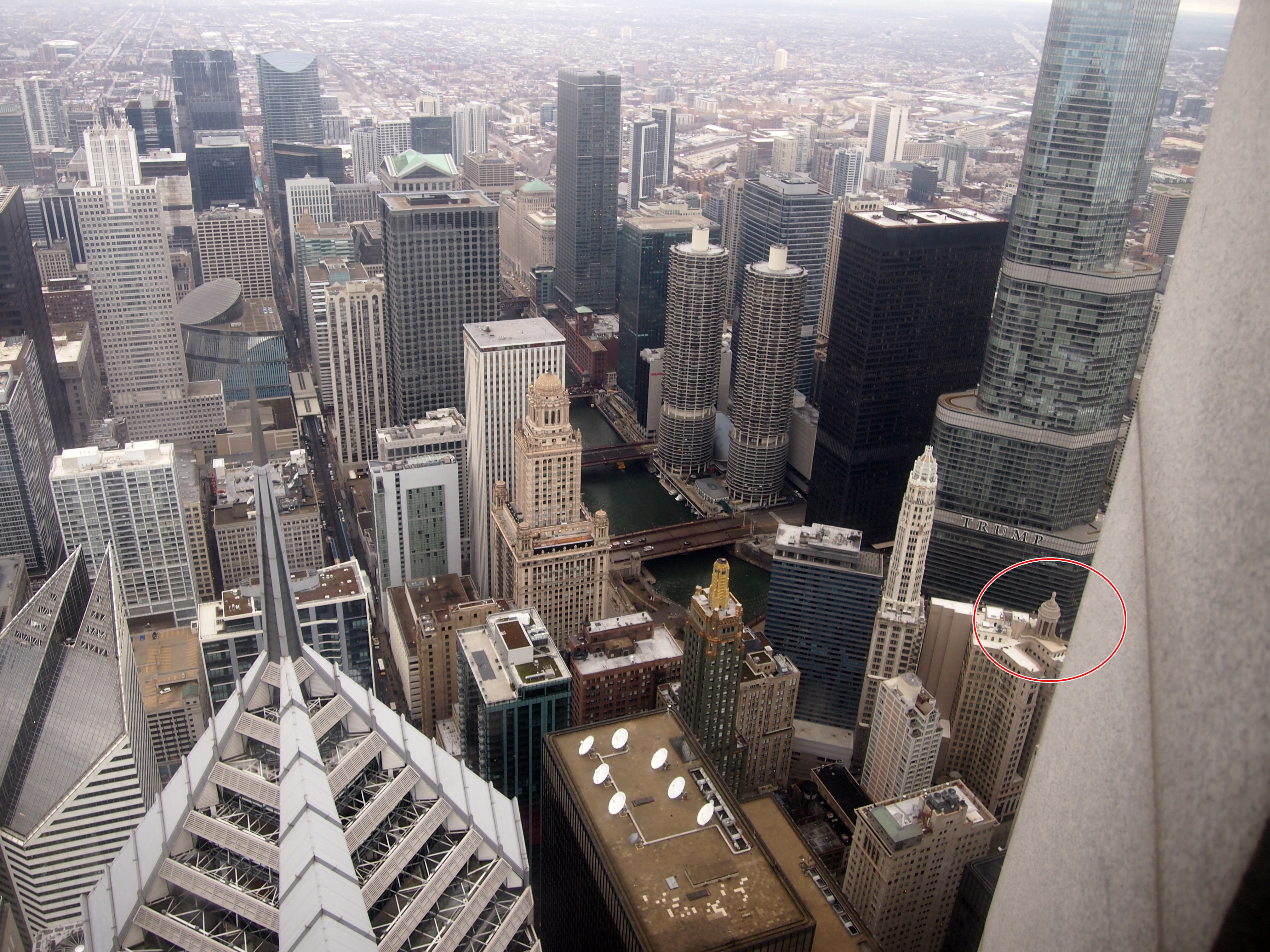
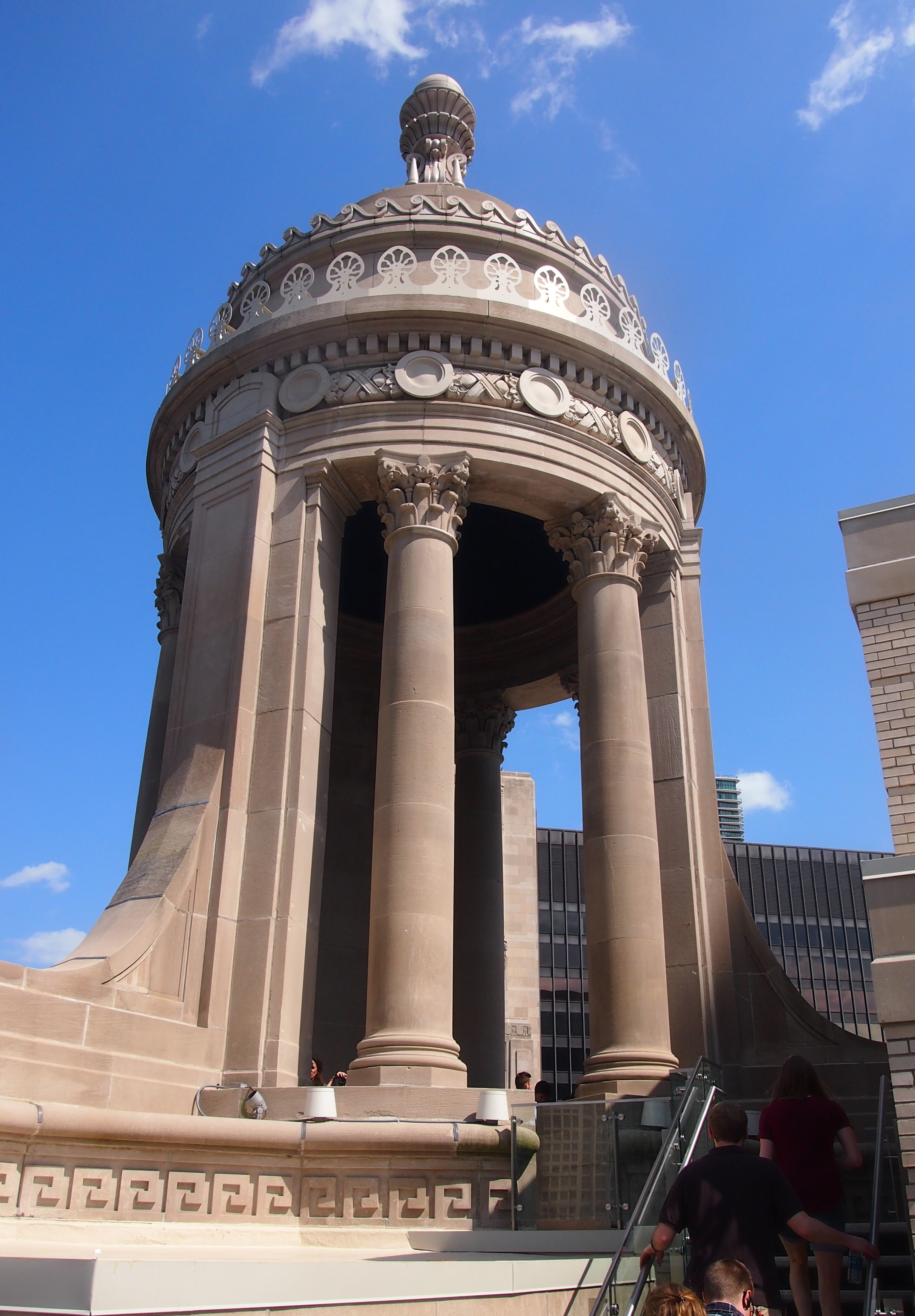
Also seen from this vantage is 150 N. Michigan. Years ago, I ventured onto the exterior of that building, at a place marked by the red oval. It’s a lot safer than it looks like here.
150 N. Michigan Ave.

To the northeast, the entirety of Navy Pier, with part of Chicago’s massive Jardine Water Purification Plant behind it. Largest in the world by volume, I’ve read: nearly one billion gallons of water goes through per day.
Navy Pier from aboveOne of the pictures posted here is shot from Navy Pier, looking back in the direction of the Aon Center (and a lot of other buildings).

To the north, a large chunk of downtown off in the distance: North Michigan Ave. and Streeterville.
North Michigan Ave and StreetervilleTo the south, and looking nearly straight down, is Pritzker Pavilion. As seen from ground level in this posting.
Pritzker PavillionThe ribbon snaking off to the left is a pedestrian bridge. Officially, the BP Bridge, one of the projects funded by the oil company before its really big sponsorship of a hole in the Gulf of Mexico. Frank Gehry, who did the Gehry-like bandshell, did the bridge too.

Finally, the Bean, or “Cloud Gate.”
The Bean from the airFrom this vantage, looking like a bead of quicksilver surrounded by ants.

The Salvador Dali Museum Bench

On April 2, 2005, we visited the Salvador Dali Museum in St. Petersburg, Fla. As wordy as I was before I published pictures at BTST, I didn’t write much about the place. “Housed in a mid-sized, appropriately modernist building, the Dali Museum is all Dali, all the time, as it should be,” was one line. I also considered how the museum came to be in central Florida.

As far as I can tell, I didn’t take a picture of the building. I did take a picture of bench on the grounds. Lots of people have taken pictures of it.

Salvador Dali Museum benchI didn’t realize until I read more about the place today that the Dali has been in a new building since 2011, and apparently the bench was moved to be near the new structure. I don’t remember whether the giant Dali mustache was there in ’05. You’d think I’d remember a thing like that, but memory is a eccentric thief, taking things you’d never expect.
Regarding the new building, the museum web site says, “Designed by architect Yann Weymouth of HOK, it combines the rational with the fantastical: a simple rectangle with 18-inch thick hurricane-proof walls out of which erupts a large free-form geodesic glass bubble known as the ‘enigma.’

“The Enigma, which is made up of 1,062 triangular pieces of glass, stands 75 feet at its tallest point, a twenty-first century homage to the dome that adorns Dali’s museum in Spain. Inside, the Museum houses another unique architectural feature – a helical staircase – recalling Dali’s obsession with spirals and the double helical shape of the DNA molecule.”

Alma Mater, UIUC

I took Lilly back to school on Sunday. I didn’t do quite as much of a walkabout on the University of Illinois at Urbana-Champaign campus as I did in January, but I was determined to pause on the way out to see one thing: Alma Mater, a sculpture by Chicago’s own Lorado Taft.

Alma Mater UIUCAccording to UIHistories Project by Kalev Leetaru, “Unveiled on Alumni Day, June 11, 1929, the statue depicts ‘a benign and majestic woman in scholastic robes, who rises from her throne and advances a step with outstretched arms, a gesture of generously greeting her children.’ Behind her stand the twin figures of Labor and Learning, joining hands in a bronze incarnation of the University’s motto.”

This is Labor. The muscular man in the work duds.
Alma Mater UIUCLearning, in Classical garb. It would be more interesting if the costuming were reversed, since labor involves learning and learning involves labor, but never mind.
Alma Mater UIUC

Older pictures of the statue depict a green patina, acquired over time. During the 2010s restoration of the sculpture, that was stripped away, so presumably it now looks a lot like it did when new.
“Conceived in 1922, Alma Mater was cast in 1929 by the American Art Bronze Foundry and paid for by donations by the Alumni Fund and the classes of 1923-1929,” notes Leetaru. “It was crafted by Taft as ‘his gift to the University in commemoration of the fiftieth anniversary of his graduation.’ Alma Mater rests on a granite pedestal conceived by Charles Platt.

“The statue was originally placed directly behind the Auditorium, and at night spotlights cast twin shadows of Labor and Learning onto the rear wall of the Auditorium, making them truly larger than life. On August 22, 1962, the Alumni Association moved the sculpture to its present location in front of Altgeld.”

Altgeld being Altgeld Hall, named after the Illinois governor. There’s a bell in that tower, and I took this picture as it was ringing 4 o’clock on Sunday.

building behind Alma Mater UIUC“Completed in 1897, Altgeld Hall, originally known as the Library Building, was designed by Nathan Ricker and James McLaren White…” writes Leetaru. “From 1955 to the present, the Department of Mathematics and the Mathematics Library have called the building home.

“The building is an example of Richardsonian Romanesque architecture and the external stonework is pink limestone. The original pink hue may still be seen in the interior of the East entrance.”

More Charleston Scenes

The Nathaniel Russell House on Meeting St. in Charleston, SC, completed in 1808, was originally home of one of the wealthiest men in the city at the time, Nathaniel Russell. In our time, it’s an historic property open for tours.

I didn’t have time to take a tour. I did have time to wander around its picturesque garden, which is open to the public. More remarkably, in mid-February this year, the garden looked like spring already.

Nathaniel Russell House gardenNathaniel Russell House gardenLocal sources told me that the weather lately had been unusually warm, even for Charleston. Flowers and other plants responded to the warmth in the only way they know how.
Nathaniel Russell House gardenSignage sometimes has its charms in Charleston.
Tellis Pharmacy, Charleston SC 2017That’s what more drug stores need, mortar-and-pestle symbology. Alas, it’s only a relic now, since the drug store on this site apparently closed a few years ago. Looks like an antique shop occupies the building, which is on King St. At least the new owners decided to keep the sign; or maybe it’s protected.

Unlike St. Philip’s graveyards, which were locked away behind imposing iron fences (though I could see the stone of Vice President Calhoun in the distance), the Circular Congregational Church’s graveyard is open to all during the day.

 Circular Congregational ChurchThe cemetery included some stones, pre-Revolution in vintage, that reminded me very much of the old stones in Boston’s downtown graveyards.
 Circular Congregational Church cemeteryPlus plenty of later 18th- and 19th-century stones.
 Circular Congregational Church cemeteryAnd some nice views of the back of Circular Church.
 Circular Congregational Church cemeteryOne of the best known tourist attractions in Charleston is City Market, which has been the site of a public market for more than two centuries. I’ve never been one to eschew tourist destinations just because they’re popular among tourists, so I popped it for a look. Not bad, but not nearly as interesting as the Pike Place Market in Seattle.
City Market, Charleston 2017One more structure: Charleston City Hall.
Charleston City HallDiscover South Carolina says: “On the site of a Colonial marketplace, this handsomely proportioned 1801 building first housed the Bank of the United States and then became Charleston’s City Hall in 1818. The design is attributed to Charlestonian Gabriel Manigault, a gentleman architect credited with introducing the Adamesque style to the city after studying in Europe.”

Also worth knowing: the building has some of the few public restrooms in downtown Charleston that are open on the weekend.

Charleston Walkabout

Here’s something I learned about the oldest part of Charleston, SC, when I visited recently: good to walk through, not so much to drive through. I could have guessed that anyway. Small streets, many cars, extremely restricted parking.

But early Saturday morning, when the cars roaming the streets were still few, wasn’t a bad time to come to town by car. I arrived and found a parking garage as soon as I could. On foot from there, on Cumberland St., I encountered traces of historic Charleston almost immediately in the form of the city’s most obscure plaque (maybe), fixed to the ground just north of the sidewalk on the north side of that street, between Meeting St. and Church St.

This Oak Was Planted In Celebration Of

ARBOR DAY 1984

It stands above a portion of the fortification wall that once protected the early Charleston settlement. The wall has been destroyed through time as the city spread beyond it’s [sic] original boundaries. The only visibly [sic] portion of the original fortification is the half moon battery, located in the basement of the Exchange Building.

Dedicated by the City of Charleston
Joseph B. Riley Jr., Mayor

Mr. Mayor, you could have ponied up a bit for a proofreader, considering that the text is in bronze. Anyway, the tree isn’t in the most picturesque part of Charleston.

Soon I moved on to better-looking urban core scenes. The city even has aesthetic water meter covers.
Charleston SC water meterThe palmetto is easy enough to figure out, but the cannons? According to one source (which says it’s “probably true”), the cannons refer to Col. William Moultrie’s victory over the British attack on Sullivan’s Island in 1776. Palmetto logs, which had some ability to absorb cannon fire, were used to reinforce the earthenwork defense.

St. Philip’s, an Episcopal church, stands fittingly on Church St. between Cumberland St. and Queen St.
St Philip's Episcopal Church, Charleston SCThe church, the third for this congregation and the second on this site, dates from 1838. The early history of the church, and Charles Towne for that matter, was one damn thing after another. From a short history of St. Philip’s on its web site:

1728-40: Fires, hurricane, epidemics of smallpox, yellow fever, slave uprisings, Indian attacks, threats of war from the Spanish occurred.

Ah, but Charleston flourished. Slave-cultivated rice, indigo and then cotton from the Carolinas did the trick (part of the bondsman’s two hundred and fifty years of unrequited toil). Highly skilled slaves, I understand, were involved in the wrought iron gates around St. Philip’s, which are a marvel by themselves.
St Philip's Episcopal Church, Charleston, SC iron gateNearby is the light pink Huguenot Church, dating from 1844, at the corner of Church and Queen. It was the first independent Huguenot congregation in America (more-or-less Calvinist, starting in the 1680s) and now the last one.
Huguenot Church, Charleston SCRainbow Row, the nickname for a stretch of East Bay St., features colorful row houses, 13 in all, mostly dating from the late 18th century.
Rainbow Row, Charleston SC 2017They’re in a tightly controlled historic preservation district, except for one thing: the owners get to choose the colors. The pastels were originally put on in the 1920s and occasionally change.
Rainbow Row Charleston SC 2017There are plenty of other handsome houses in that part of Charleston as well. Reminded me a bit of the East End of Galveston.

Charleston, SC 2017Charleston, SCCharleston, SC 2017All in all, a good place to see on foot, provided it isn’t summer.

Winterlude ’17

Time for a winter hiatus. Back on about February 26, when it will still be winter, but at least with the prospect of a less winterish March to look forward to. Winter around here fades like it’s being tuned out by a dimmer switch — in the hands of a three-year-old, so the transition isn’t very smooth.

Before we saw the parade in Chinatown earlier this month, we walked by the Chicago Public Library Chinatown Branch. It’s fairly new and I didn’t remember seeing it before.
Chicago Public Library Chinatown branchIt’s a nice piece of work. Designed by Skidmore, Owings & Merrill, the building won a Library Building Award from the American Institute of Architects and the American Library Association about a year ago. Being Sunday, it was closed, so we didn’t have a chance to go inside and look around.

Here’s something I saw not long ago when I happened to have a camera in my hand.
It was a drink machine. That it takes credit and debt cards isn’t so strange. Apple Pay, on the other hand, is a new one for me on a vending machine. But maybe I don’t see enough vending machines to notice. At least regular cash is still an option. What’s next, Bitcoin?