Kyoeido Import Store, 1992

It occurs to me that if I lived in Japan now as a fairly youthful expat, instead of 25 years ago, I probably could order anything I wanted on Amazon or Alibaba, maybe, though I don’t know how much purchase the latter site has in Japan. It would be expensive, of course, but what isn’t in Japan?

Those online retailers might be one of the marvels of the age, but essential to the experience of being an expatiate is going out and finding things you need or want, by design or chance, using scraps of information from native and non-native sources (gaijin lore, I used to call the latter). Or so I believe. Amazon and Alibaba aside, the hunt for consumer goods among non-Japanese in Japan must also be facilitated by smartphones these days. It must be a wholly different experience, and I’m not persuaded it’s a better one.

I thought of all this looking at bits of letters I wrote in early 1992.

Feb. 1
I went to Kyoeido import store yesterday, a place I discovered by chance about a year ago. It’s a wonderful place. You never know what they’re going to have. Yesterday I noticed a bottle of Egri Bikavér in a bin of ¥1000 wines. Good value, that.
[To save a trip to the wine-speak in Wiki: Egri Bikavér, in English Bull’s Blood, “is a red blend produced in Eger. It is the true essence of the red wines of Eger, a terroir wine, which carries the flavour of the soils of local production sites, the mezzo-climate unique to the region and the traditions and mores of local residents, from the selection of varieties to choosing the period and method of grape processing and mellowing.”

I discovered the wine when I lived in Nashville. I probably bought it for the first time because of the novelty of a vintage from still-behind-the-Iron-Curtain Hungary.]

I asked the shopkeeper if he always had Bull’s Blood on hand. Actually I said, “Here, in this place, this thing is always here?” in my rudimentary Japanese. I didn’t fully understand the answer, but caught enough to know that wine imports from Hungary are an iffy proposition. He showed me a second bottle that I hadn’t seen, and I bought that too.

Feb. 20
Like a fool, I went to Kyoeido today. I always drop more money there than I intend. I saw a big stack of big jam jars, maybe containing half a kilo each. On closer inspection, the jam turned out to be from Russia, though labeled from the CIS. (That still sounds like a microchip manufacturer.)

The jam sure was cheap. I had to wonder what was wrong with it. In the end, I bought a slightly more expensive, smaller jar of Bulgarian jam instead, which is reputed to be good, and maybe not too radioactive.

The Church of the Serbian Orthodox Monastery of St. Sava

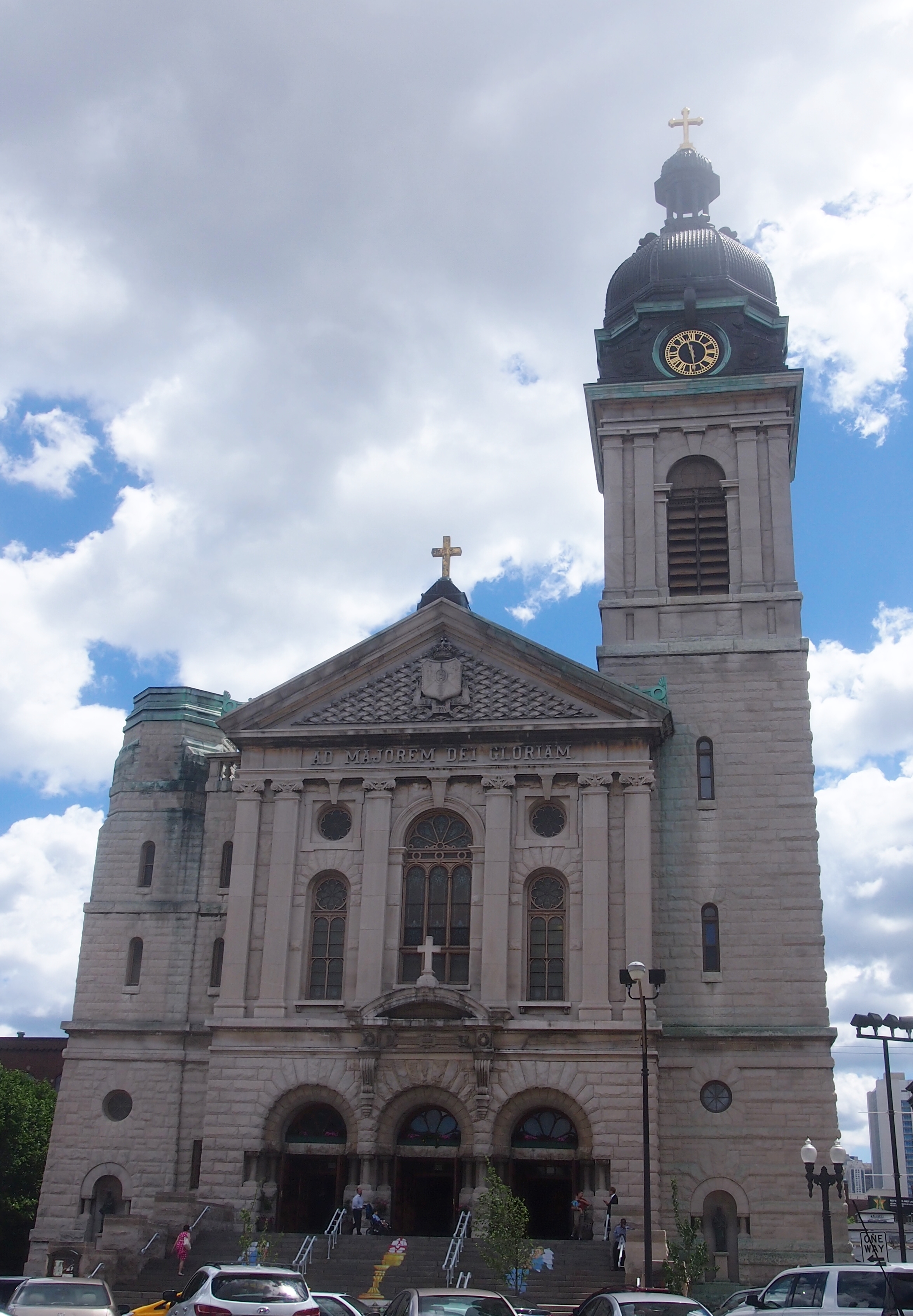
Next to the the cemetery of the St. Sava Serbian Orthodox Monastery in Lake County, which I visited on Saturday, is a handsome church building belonging to the monastery. There’s something about onion domes that pleases the eye.

The Serbian Orthodox Monastery of St. Sava

Even without the domes, the structure has a pleasing aspect to it. The cornerstone dates the building to 1925. Back then there couldn’t have been much around it besides farmland. Even now, the area nearby is mostly undeveloped.

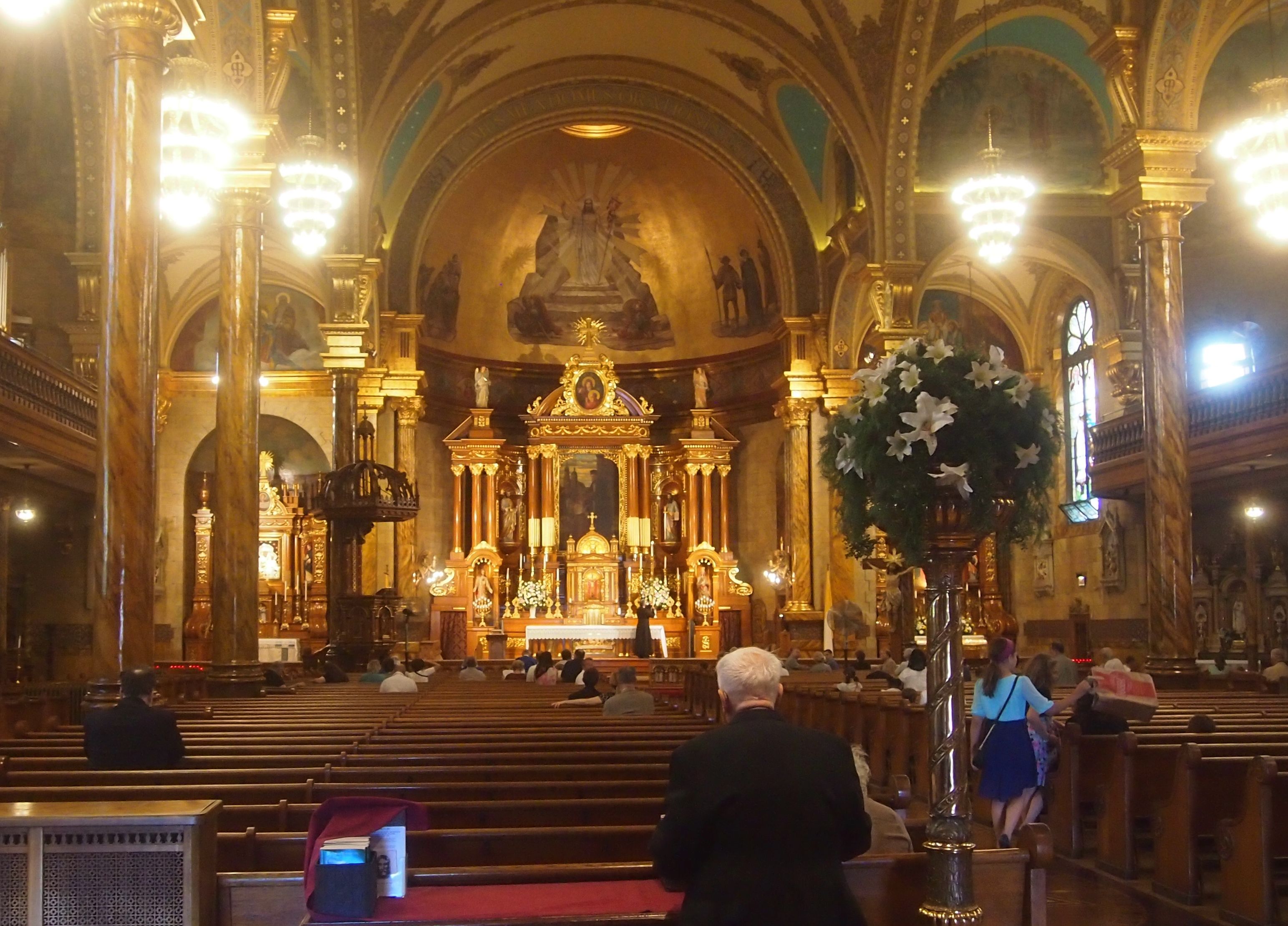
I fully expected the building to be locked. It wasn’t. I went inside and found myself alone with its striking interior, albeit a little dark.

A panoply of Jesus and saints and holy men — I assume that’s what I saw — graced pretty much every surface.

The Serbian Orthodox Monastery of St. SavaThe Serbian Orthodox Monastery of St. SavaAngles and demons, too.
The Serbian Orthodox Monastery of St. SavaLooking up.
The Serbian Orthodox Monastery of St. SavaKing Peter II of Yugoslavia used to be interred in the church. Here’s the spot where he was until a few years ago.
The Serbian Orthodox Monastery of St. Sava - King Peter II former gravePresumably the place is now a memorial to the king, marked with black stone instead of the white that used to be there.

I suspect that Peter’s story isn’t much known to Americans outside the Yugoslav diaspora. I only knew the outline, so I did some reading. Already on the throne, he was chased out of Yugoslavia at age 17 by the Nazis in 1941, and the post-war Tito government wasn’t interested in letting him return.

He spend much of his exile in the U.S., dying fairly young in 1970. For his own reasons, he wanted to be buried at St. Sava. Probably something to do with the schism going on within the Serbian Orthodox Church at the time, but I’m not going into the briar patch someone else’s schism by looking into the matter further. In any case, his son Alexander oversaw the repatriation of Peter’s remains to Serbia in 2013.

My reading led me to the web site of the Royal Family of Serbia, which is how Alexander, the claimant to the throne, styles it. It’s a well-designed and sophisticated site, offering a lot of information about Alexander — who styles himself HRH Crown Prince Alexander — and his family.

“Although King Peter II died in 1970, the Crown Prince, as the heir to the throne decided at the time not to use the title of King – which he felt would have had little meaning in exile,” the site explains. “He made it very clear at that time that he was not renouncing his title, or the dynastic right to the throne.”

Unlike a lot of pretenders, Alexander and his family actually get to live in the palace of their ancestors, which is near Belgrade and which his grandfather built. He’s had a residence there since moving to then-Yugoslavia after the overthrow of Slobodan Milošević.

The web site’s news page is incredibly detailed, with hundreds of releases about the family’s activities stretching back a number of years. Some recent examples:

More than 1,200 children at traditional White Palace Christmas receptions

Royal couple at the celebration of the Chartwell International School

Crown Princess Katherine as the patron of the first regional Veuve Clicquot Business Woman Award

Speech by Crown Prince Alexander at the monument of Vasa Carapic

Crown Prince Alexander at Military Museum exhibition opening

It occurs to me that Alexander is living precisely as he would, were he actually a constitutional monarch, and pretty much along the lines of the British approach (he grew up in the UK, after all, and was a captain in the 16th/5th The Queen’s Royal Lancers). No doubt he believes that if he acts like a monarch long enough and well enough, one day he or an heir will be King of Serbia.

The Cemetery of the Serbian Orthodox Monastery of St. Sava, Lake County

After leaving Marytown on Saturday, I headed north on Milwaukee Ave. A few miles from of Libertyville’s lively main streets, in an area not quite rural — call it exurban — is the St. Sava Serbian Orthodox Cemetery. At least, that’s a form of the name, since there’s wording in English and Serbian over a gate to the property that calls the entire place (in English), the Serbian Orthodox Monastery of St. Sava.

Near the cemetery is a church, presumably the monastery’s church (more about which later). I didn’t investigate any of the other buildings off in the distance, which are presumably the places for monks to live and otherwise follow their vocation. The map also tells me that St. Sava College is a little ways up the road.

Anyway, I came to see the cemetery. It’s been receiving Orthodox Serbs for about 90 years. The place is thick with weighty headstones.

St. Sava Serbian Orthodox Cemetery

With a mix of Cyrillic and Roman lettering.
St. Sava Serbian Orthodox CemeteryThere’s little funerary art, as seen in cemeteries steeped in Western European traditions, unless you count variations on the Cross. A few stones told in some detail of the person at rest, at least if you read Serbian.
St. Sava Serbian Orthodox CemeterySome sites included wooden crosses along with stone markers. A few had no headstone at all.

Some stones are of a distinctly modern cast, and in English.
St. Sava Serbian Orthodox CemeteryI’ve read that Rod Blagojevich’s parents are in the cemetery, but I didn’t see their stone that I know of. Blago was recently in the news briefly for not being on President Obama’s commutation list during his last days in office. Tough luck, Rod. Politics ain’t beanbag.

Marytown

Everyone else had something to do Saturday afternoon, so I took advantage of the fact that winter isn’t particularly bitter right now — and neither snow nor ice is covering the ground — to buzz up to Lake County, Ill., for a few hours. I wanted to visit a spot on the map there I’ve seen for years but never gotten around to: Marytown. Or, the National Shrine of St. Maximilian Kolbe.

A Polish Franciscan, St. Maximilian Kolbe was murdered by the Nazis. We’d come across a memorial to him before, at Our Lady of Mount Carmel Monastery in Munster, Ind. There he was a supporting player, so to speak. At Marytown, he’s the star of the show, after only Jesus and Mary.

The Marytown complex includes a Franciscan friary, a retreat and conference center, various outdoor shrines and a rosary garden, and a gift shop (where I bought postcards). It’s also home to the Marytown Press and is the American HQ for the movement that St. Maximilian Kolbe started, the Militia Immaculata.

For the purpose of my visit, however, Marytown is home to Adoration Chapel of Our Lady of the Most Blessed Sacrament. That’s what I’d heard was worth seeing, and it was. Here’s the exterior.

Adoration Chapel of Our Lady of the Most Blessed Sacrament - MarytownThe chapel, completed in 1930, was designed by architect Joseph W. McCarthy, who trained under Daniel Burnham and did a lot of Catholic churches in the Chicago area. I’ve read it was patterned after St. Paul’s Outside the Walls in Rome.

“The Benedictine Convent of Perpetual Adoration in Mundelein, known today as Marytown, was a special project of Cardinal George Mundelein, meant to keep alive the spirit of the 1926 Chicago Eucharistic Conference and provide for the spiritual needs of diocesan priests and seminarians at the newly built seminary next door,” writes Denis Robert McNamara in Heavenly City: The Architectural Tradition of Catholic Chicago.

This is the interior of the main chapel, as best as I could make an image. A fine combination of stained glass, mosaics and marble.
Adoration Chapel of Our Lady of t Most Blessed Sacrament, Marytown“The Benedictine Sisters maintained unbroken adoration of the Blessed Sacrament until they withdrew from the location in 1977, handing the complex over to the Conventual Franciscan Friars,” McNamara writes. “The Franciscans renamed the site Marytown and established the national shrine of St. Maxmilian Kolbe…”

One of the Adoration Chapel’s side chapels features is a mosaic stretching toward the ceiling of St. Maximilian Kolbe rising triumphant from Auschwitz. Right below it are some relics of his, which include beard hair — cut some years before he died in a place that would leave no earthly remains — a piece of a habit, a prayer book.

Outside the chapel, in the garden nearby, St. Francis makes an appearance in bronze, unsurprisingly, singing the Canticle of the Sun.

St Francis - Marytown

With a non-human audience.

St. Francis - Marytown

There are some other statues nearby and a rosary garden, which I’ve never encountered before. Or maybe never realized I’d encountered one before, since they seem to be fairly common.

MarytownMuch of the statuary was short on labels, so I’m not certain who this is supposed to be, though I’d guess an older St. Francis.

The Move Up North, 1987

Thirty years ago, I packed up and moved to Chicago. Nothing like moving in late January to make you lose your taste for long-distance moving, but that didn’t stop me from packing up again three years later to move even further, again in the winter. And twice again in the 1990s.

Instead of writing in any detail about the move, I did a schematic in a notebook I used at the time as a diary. I did that occasionally.
Move to Chicago, Jan. 1987The move was fairly straightforward. Load up a rental truck in Nashville, unload at my new apartment in Andersonville in Chicago, take the truck back to Nashville, drive my car and whatever I hadn’t loaded back to Chicago. About 500 miles each way. I guess it was tiresome, but I was young.

Weather wasn’t a factor, except for one incident. While driving the empty truck back to Nashville — and in fact just inside Davidson County — I hit a patch of black ice. For a flash of a terrifying moment, the truck was swaying wildly. But I stayed on the road.

The Spurlock Museum

Just before bugging out of town on Sunday afternoon, I stopped at the Spurlock Museum on the UIUC campus. I was surprised to find it open. As opposed to the Krannert Art Museum, the focus of the Spurlock — in full the William R. and Clarice V. Spurlock Museum — is ethnographic. I didn’t want to spend a long time, so I only wandered through the first-floor galleries, one dedicated to the ancient Mediterranean, the other to North and South American Indians.

The Mediterranean room offered reproductions of ancient statues and a wide mix of smaller artifacts. It’s always good to run across Augustus, though maybe he should be painted in bright colors.
Augustus, Spurlock MuseumIt’s a plaster cast of a first-century Roman marble that’s in the Vatican Museum, which itself was a copy of a Roman bronze original, ca. 20 BC, which was lost to time.

Next, Artemis.
Artemis, Spurlock MuseumAgain a plastic cast of a marble Roman copy, ca. 2nd century AD that’s now in the Louvre. Unlike Augustus, she’s wearing sandals. The original Greek bronze, ca. 350 BC by Praxiteles, is also no more.

The Doryphoros.

Spear carrier, Spurlock Museum

That is, the spear carrier. No fig leaf for this fellow. No spear, either, though he could pick one up at any time. The original bronze, ca. 450 BC, is lost (of course, sigh). A 1st century AD marble copy is in the National Museum in Naples.

Now for a different aesthetic.

Diablada costume, Spurlock MuseumAccording to the museum, this Diablada costume was acquired by Isabel Scarborough in Cochabamba, Bolivia; the mask, whip and matracas were acquired by Cynthia LeCount Samane in Oruro, Bolivia, in both cases in the late 2000s.

A drum from Andean Ecuador in the 1970s.

Andean Drum, Spurlock Museum

Canelos Quichua Miniature Pottery Festival Group, by Marta Vargas Dugua, Puyo, Ecuador (2008).
South American figures, Spurlock MuseumUpstairs are exhibits about East Asia, Southeast Asia, Oceania, Europe, Africa, ancient Mesopotamia, and ancient Egypt. Guess I’ll have to drop by again.

UIUC Walkabout, January ’17

The first time I took a walk through the University of Illinois Urbana-Champaign campus, when visiting with Lilly not quite a year ago, we didn’t have much of a plan. On Sunday, I took another walk around UIUC, studying a campus map beforehand. Not exactly a plan, but at least informed guesswork about an interesting route.

I parked on 6th St. next to the College of Business and near a side street named after sculptor Lorado Taft, a distinguished early alumnus, and headed out from there on foot. I saw more evidence of Taft’s connection to the university elsewhere, though not the well-known “Alma Mater” sculpture (this time).

Nearby was the Architecture Building. Four panels are embedded in the walls of the building, on conspicuous display. Here’s one, featuring Michele Sanmicheli.

Architecture Building panel UIUC“The Architecture building, also known as Architecture and Kindred Subjects, was designed in the Georgian Revival style by Charles A. Platt in 1926-1927,” writes Muriel Scheinman in Explore C-U. “Platt, who also designed ten other buildings on campus including the University Library, David Kinley Hall, and Mumford Hall, embedded four panels with medallion portraits of famous architects on the Architecture building. Michelangelo Buonarroti and Michele San Michele are displayed on the west gates, and Christopher Wren and Inigo Jones are on the east gates. Frank G. Menconi, an architectural sculptor based in New York, designed the panels.”

Back to Lorado Taft. One of his monumental works is the Fountain of Time in Chicago. He had planned a similarly monumental work nearby called the Fountain of Creation, but the project was never realized.

He did complete four figures intended for the Fountain of Creation, however, and now they stand in front of the UIUC main library and behind the Foellinger Auditorium. I wandered by and saw them all. Here’s one of two near the library’s entrance, “A Daughter of Pyrrah.”
A Daughter of Pyrrah, Lorado Taft, UICU“Pyrrha” is how it’s spelled in my go-to reference on the subject, Gods and Mortals in Classical Mythology: A Dictionary (Michael Grant and John Hazel, 1979) and other places. She was part of the husband-and-wife team who survived a worldwide flood and then helped re-create mankind by tossing rocks over their shoulders, which then became people.

Pyrrha had natural-born daughters as well as rock-created ones. It isn’t clear which one Taft was thinking of, at least from reading the plaque.

Here’s the other.
A Daughter of Pyrrha, Lorado Taft, UICUWhatever else, they seem to be in some kind of distress. A collegiate title might be, “I’m not ready for my exam!” A more topical title could be, “The inauguration’s coming soon!”

Not far away, behind the Foellinger Auditorium, are two sons of Duecalion, whom Taft called “Eucalion.” He was the husband in the flood myth.
A Son of Duecalion, Lorado Taft, UICUIf anything, the sons look even more distressed than the daughters.
A Son of Duecalion, Lorado Taft, UIUC

“After a weekend bender” might be a good title for that one.

“Around 1917, [Taft] proposed to the city a pair of huge fountains, one at each end of a strip of public park known as the Midway Plaisance on the Chicago’s South Side,” explains Chicago Outdoor Sculptures. “On the western edge, the Fountain of Time and at the eastern edge would stand the Fountain of Creation. Although the Fountain of Time was completed, The Fountain of Creation was never completed… Taft planned 38 monumental figures and figure groups for the Fountain of Creation. But only four were carved in stone.”

Nearby is the UIUC Observatory. It wasn’t open for inspection, but I liked the outside.

UIUC Observatory Jan. 2017“The University of Illinois Observatory was constructed in 1896,” the university says. “…Though none of the astronomical instruments are being used for professional research today, the observatory still contains a 12” Brashear refractor. The observatory played a key role in the development of astronomy, as it was home to a key innovation in the area of astronomical photometry. The facility has been directed by such noted scientists as Joel Stebbins and Robert H. Baker.”

Looping back, I took in the view from the steps of the Foellinger Auditorium, which is nice even in winter. It encompasses the Illini Union. You wouldn’t know it to look at the building, but part of the financing for its construction came from the WPA.
There’s a bowling alley in there somewhere, among other things. I’ll have to take a closer look inside sometime. Likewise with the Foellinger Auditorium, which was closed on Sunday afternoon.

Mt. Hope Cemetery, Champaign-Urbana

RIP, Gene Cernan. That leaves six of 12 moonwalkers.

I took Lilly and a friend of hers back to UIUC yesterday. It was a good day for popping down to Champaign/Urbana, at least as good as you’re going to get in January, with overcast skies but no ice or snow or much wind, and temps a bit above freezing.

After I dropped them off, I did a little walkabout of my own before returning home. I soon found myself all by myself, at least among the living, at Mt. Hope Cemetery. The cemetery, founded in 1856, is older than the university, and these days is a long stretch of land south of the school, totaling 52 acres between Florida and Pennsylvania avenues.

It’s fairly flat, but then again, this is Illinois.

Mt. Hope Cemetery, Champaign/Urbana

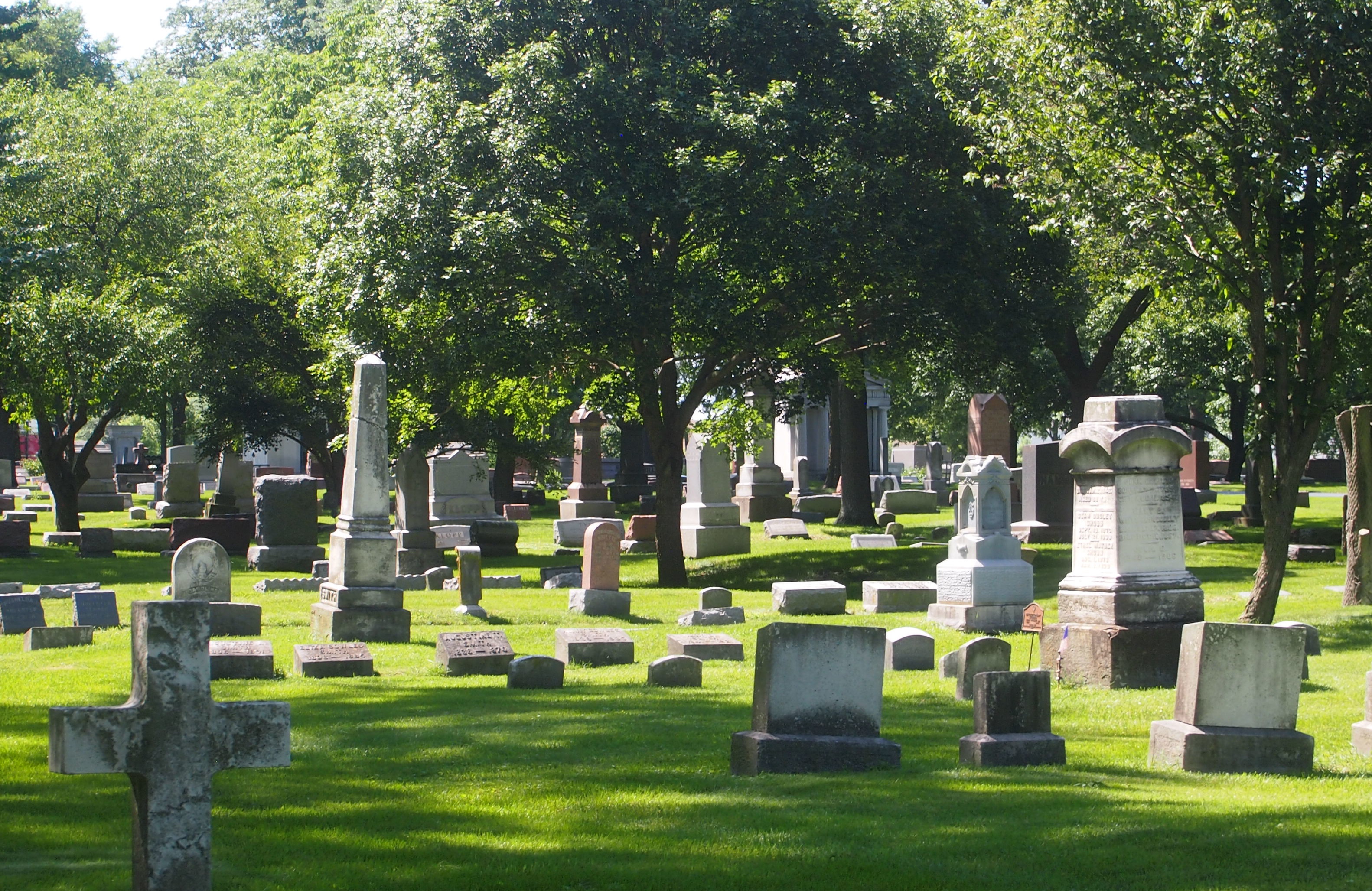
There’s a nice variety of stones and some mature trees, though not quite the arboretum I’ve encountered in other places.

Mt. Hope Cemetery, Champaign/Urbana

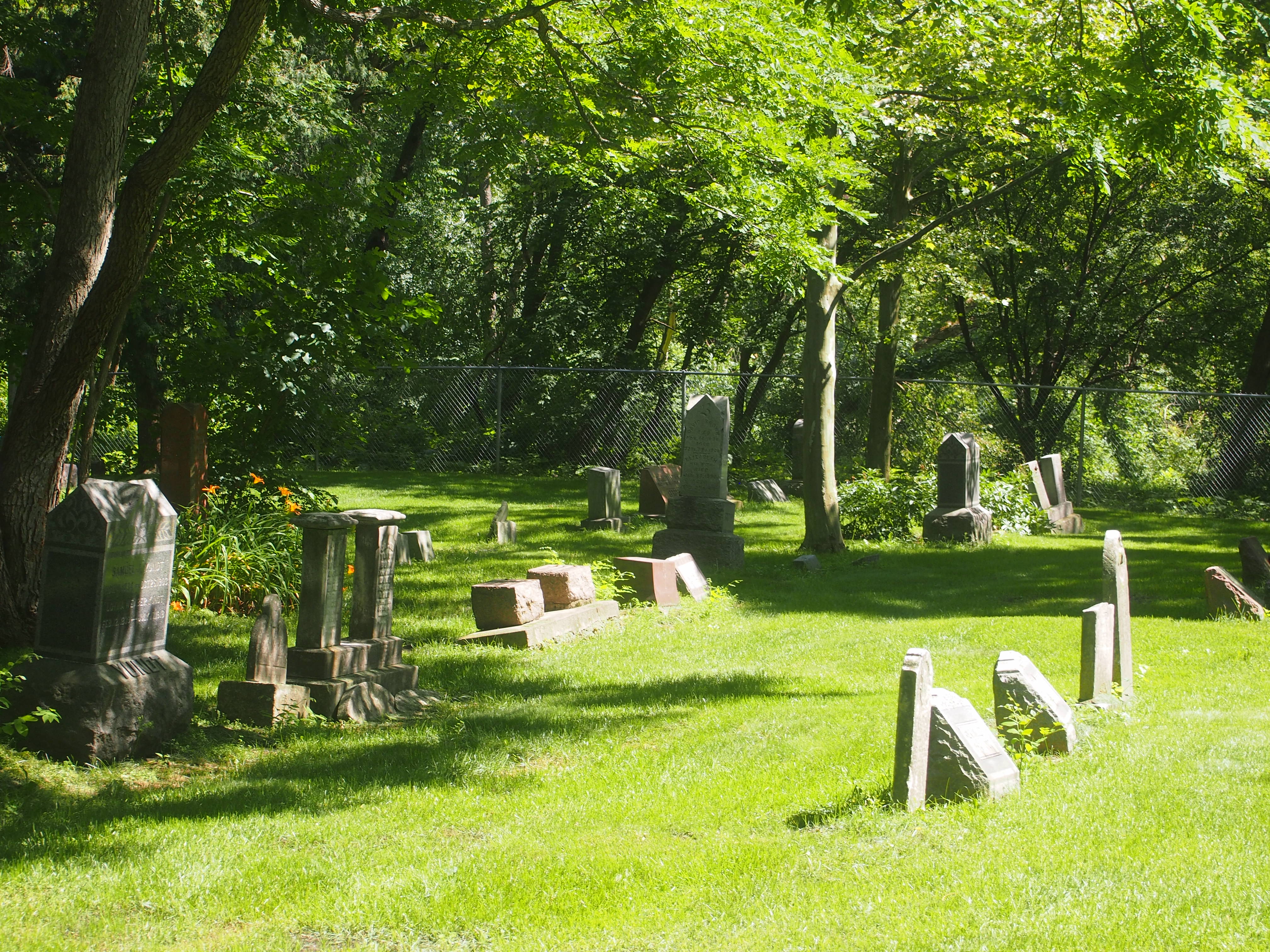
Many of the stones date from the 19th century. That is, people whose lives came and went entirely during that century, though there were also a good many early 20th-century burials. I also saw some newer stones as well, such as this curious one.

Mt. Hope Cemetery, Champaign/Urbana

That’s a style I’d never seen before: the grave marker as bench.

Mt. Hope sports some interesting funerary art, including some stone styles you see in a number of places, such as this Woodman’s monument.

Mt. Hope Cemetery, Champaign/Urbana

A few larger monuments, like the obelisk below, dot the landscape, but mostly the stones are more modest. There’s a modern-ish looking building that serves as a mausoleum, but not many of the freestanding family mausoleums you find in other older cemeteries.

Mt. Hope Cemetery, Champaign/Urbana

“Prior to Mt. Hope, locals were buried in the Old Urbana Cemetery (now Leal Park), the Old Jewish Cemetery, or on family farmland,” writes Laura Miller in Explore C-U. “Jesse Burt, a local farmer, recognized that the growing community of Urbana needed a larger and more organized burial ground with scenic walks more in keeping with the park-like cemeteries then popular and contributed land for this purpose…

“Many families moved their ancestors’ graves from the old burial grounds to Mt. Hope. The drives through the cemetery were named after trees. Once, numerous footpaths weaved through the cemetery making it a popular place for walks and picnics; however, this space has been reclaimed over the years for burial lots. After it opened, it became the primary cemetery for burials until 1907, when Woodlawn and Roselawn Cemeteries began operation.”

In the 1890s, veterans and their supporters erected one of the larger monuments in Mt. Hope. “Dedicated,” it says, “to the memory of the defenders of our flag, 1861-1865.”
Mt. Hope Cemetery, Champaign/UrbanaNot long after, the GAR put up a cannon next to the statue.
Mt. Hope Cemetery, Champaign/UrbanaAll in all, a fine graveyard to visit, even when you need a coat. I’ll have to take a look in springtime.

Tsūtenkaku and Billiken

At some point during their recent visit to Osaka, Yuriko and Ann made their way to the Tsūtenkaku, a tower rising above the Shinsekai neighborhood.

dscn8283

I hadn’t thought about the tower in years. I visited it very early during my time in Osaka. The present tower dates from 1956, probably counting as part of the postwar reconstruction. An earlier tower, built in 1912 and which supposedly took inspiration from the Eiffel Tower, stood until a wartime need for steel spelled its end in 1943.

I didn’t know, or had forgotten, that the current structure is the work of one Tachu Naito (1886-1970), Japan’s “Father of Towers.” He had a talent for designing towers that can withstand earthquakes, so he did a fair number of them.

Tsūtenkaku — fancifully translated as “tower reaching toward heaven” — has a mascot, Billiken. The same charm doll that’s the mascot of Saint Louis University, it seems, a creation and fad item of the very early 20th century in the United States.

How exactly Billiken made the transition to Japan isn’t clear to me, and I refuse to go down the rabbit hole looking for the story right now. Wiki says, without a footnote: “The Billiken made its Japanese debut in 1908. A statue was installed in the uppermost level of the original Tsutenkaku Tower as it was opened to the public in 1912. When the nearby Luna Park was closed in 1925, the tower’s Billiken statue disappeared. In 1980, a replacement statue made its appearance in a new Tsutenkaku Tower that was built in 1956.”

He comes in a number of guises near the tower, too.

Billiken Osakadscn8284I can see the appeal, actually. He looks like something that the Japanese would have created. They didn’t happen to, but no matter. He fits right in. The real question is why is he associated with the tower?

Speaking of Billiken, if you listen to the “Billiken Rag,” you might be the only person you know ever to have hear it.

Nipponese Debris

Yuriko and Ann are back from Japan, no worse for trip except for the usual jet lag. They brought back various things, including some printed items and small packaging material. Japanese aesthetics, known the world over, are present on every surface.

The only request I had for them to bring me some postcards. Here’s an Osaka-specific one.
Osaka postcard 2017Osaka has a sobriquet: The Kitchen of Japan. Specialty regional items include butaman, okonomiyaki, kushikata, and takoyaki. Delicious indeed.

Disposable chopsticks. Or rather, the paper wrapper for the chopsticks.
Disposable chopsticksSometimes even disposable items are too cute for words. Too cute is a running theme in Japanese design.

A nice brochure picked up at Nara Palace (Heijō Palace).
Nara Palace brochureHeijō Palace was the imperial residence in the Japanese capital city Heijō-kyō (Nara) during most of the Nara period, which essentially spans the 8th century AD. Things tend to get lost or kicked around after 12 centuries, so what visitors see on the site now are 21st-century reconstructions. Good ones, Yuriko said. Yet another thing for me to see, since they weren’t there in the 1990s.

Back to food packaging: Sakuma Drops hard candy.
Sakuma Drops Something a bit softer: Morinaga’s Milk Caramels.

Morinaga's Milk CaramelsThat’s the front of the box, plus one side. Each piece is wrapped in a yellow wrapper whose design is the same as the box.