“Agora”

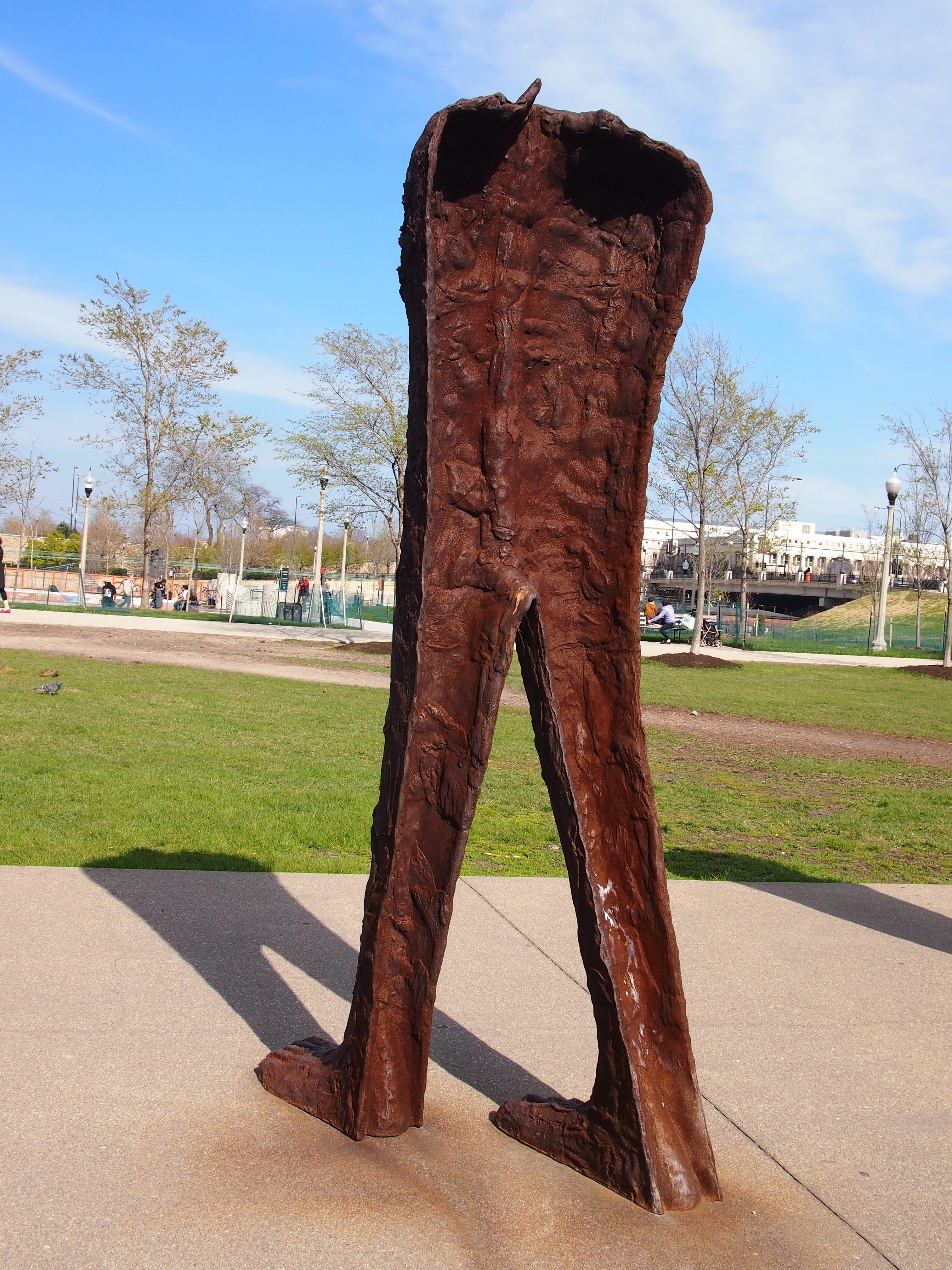
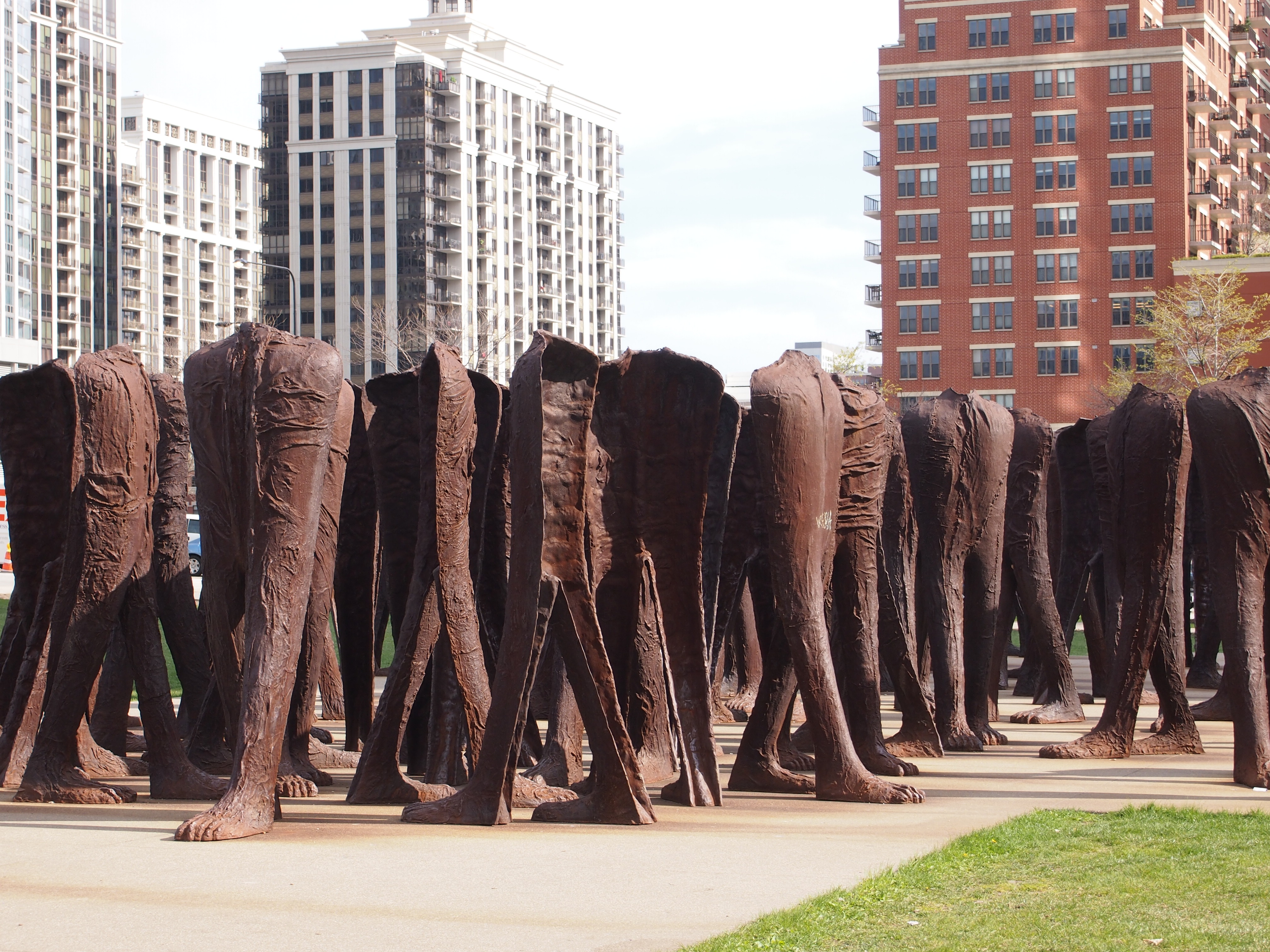
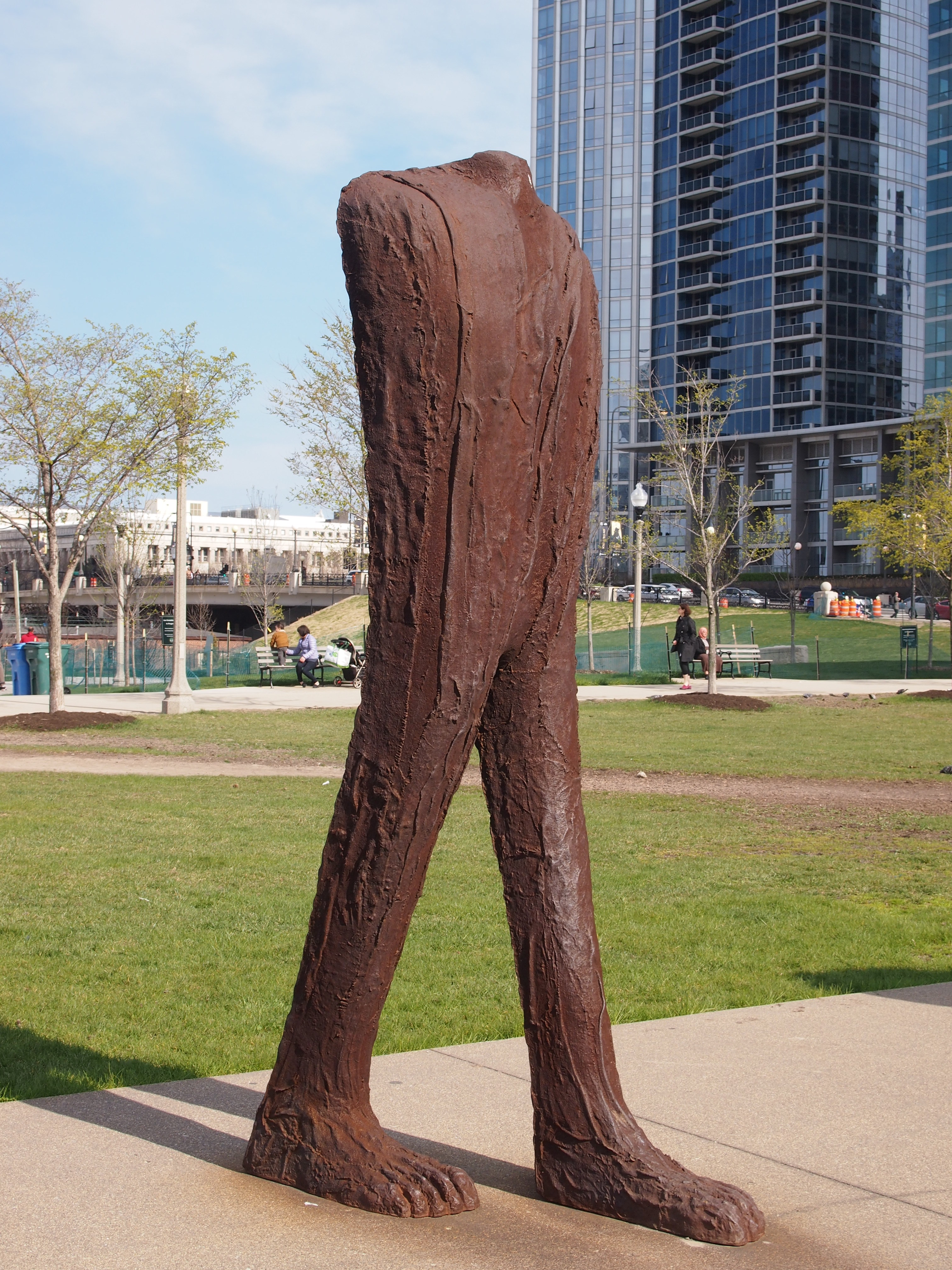
As far south as you can go in Grant Park, near the corner of Michigan Ave. and Roosevelt Rd., there’s a permanent sculpture installation called “Agora,” by the Polish sculptor Magdalena Abakanowicz.

“Agora” includes iron figures that look like this from one angle.

Agora, May 1, 2015And like this from another.

Agora, May 1, 2015They look alike at first glance, but actually the texture of the iron is different on each one. There are 106 of them.

Yeah, it's a little creepyThey’re roughly in two groups, but some of them are at a distance from the rest. Abakanowicz cast them at the Srem Foundry in Poland from 2003 to ’06.
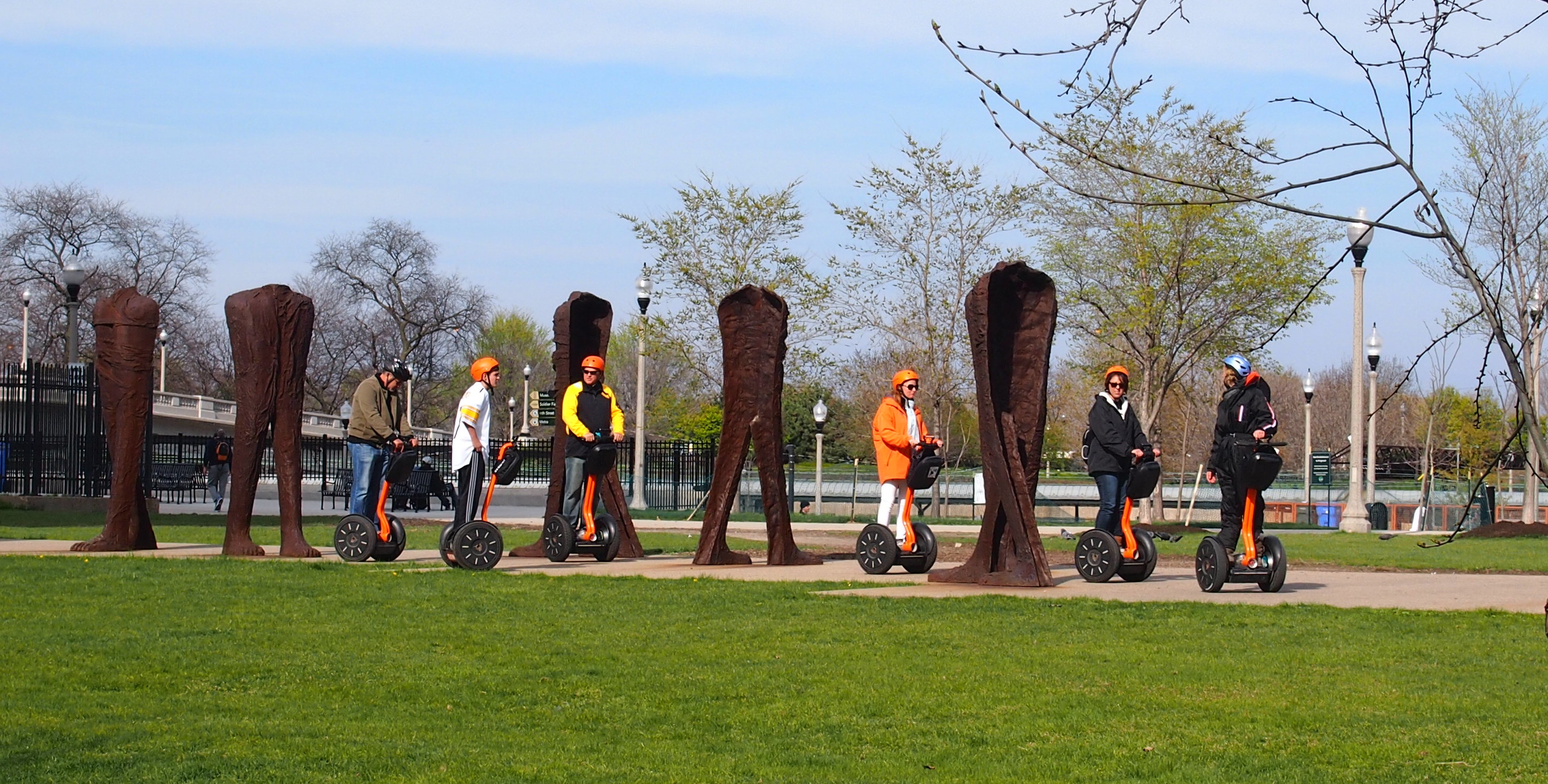
The work also seems to attract the attention of roving bands of Segwayers.

Grant Park, May 1, 2015As I looked at the half-figures, I thought, they seem really familiar. Where have I seen them before, or at least something similar?

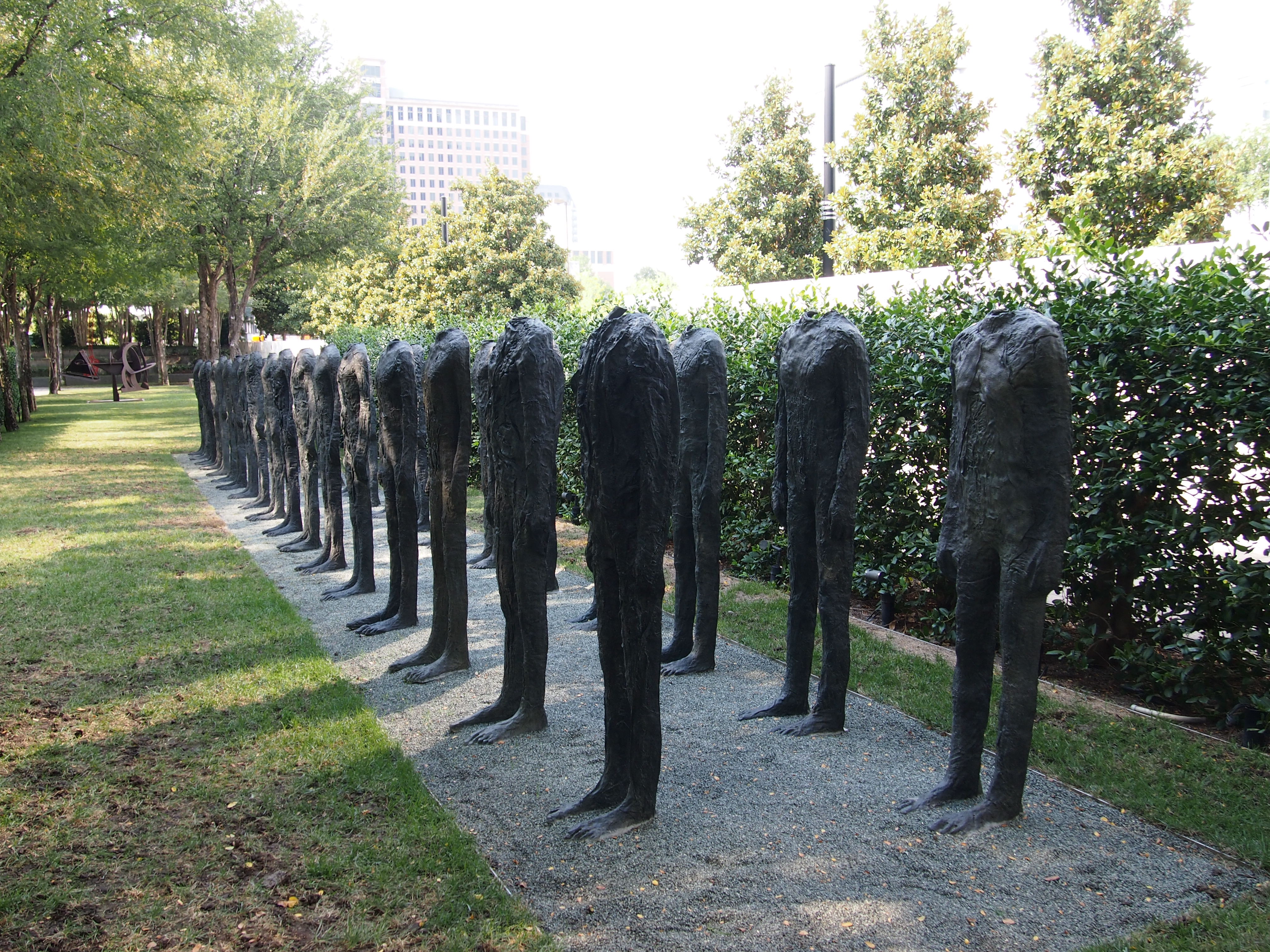
Nasher Museum, 2013The Nasher Sculpture Center in Dallas in ’13, that’s where, which has another grouping of cast-iron figures by Abakanowicz. The headless halves were in long lines instead of milling around like at an agora.

South Grant Park Sculpture &c.

The thing to do when walking to the southern reaches of Grant Park in downtown Chicago on a warm Friday afternoon is take a look at some of the less-famed artworks installed there. That’s what I’d do, anyway.

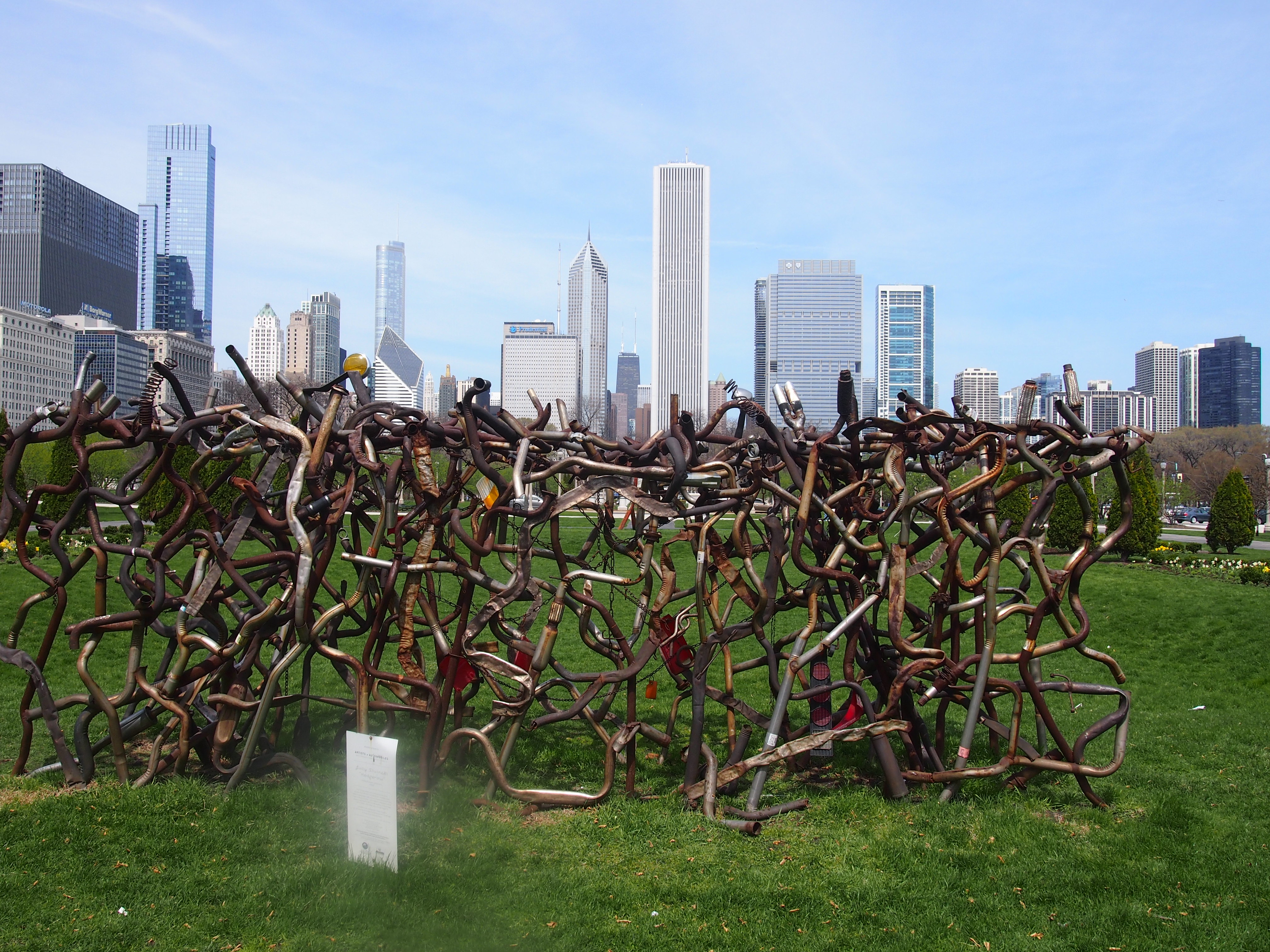
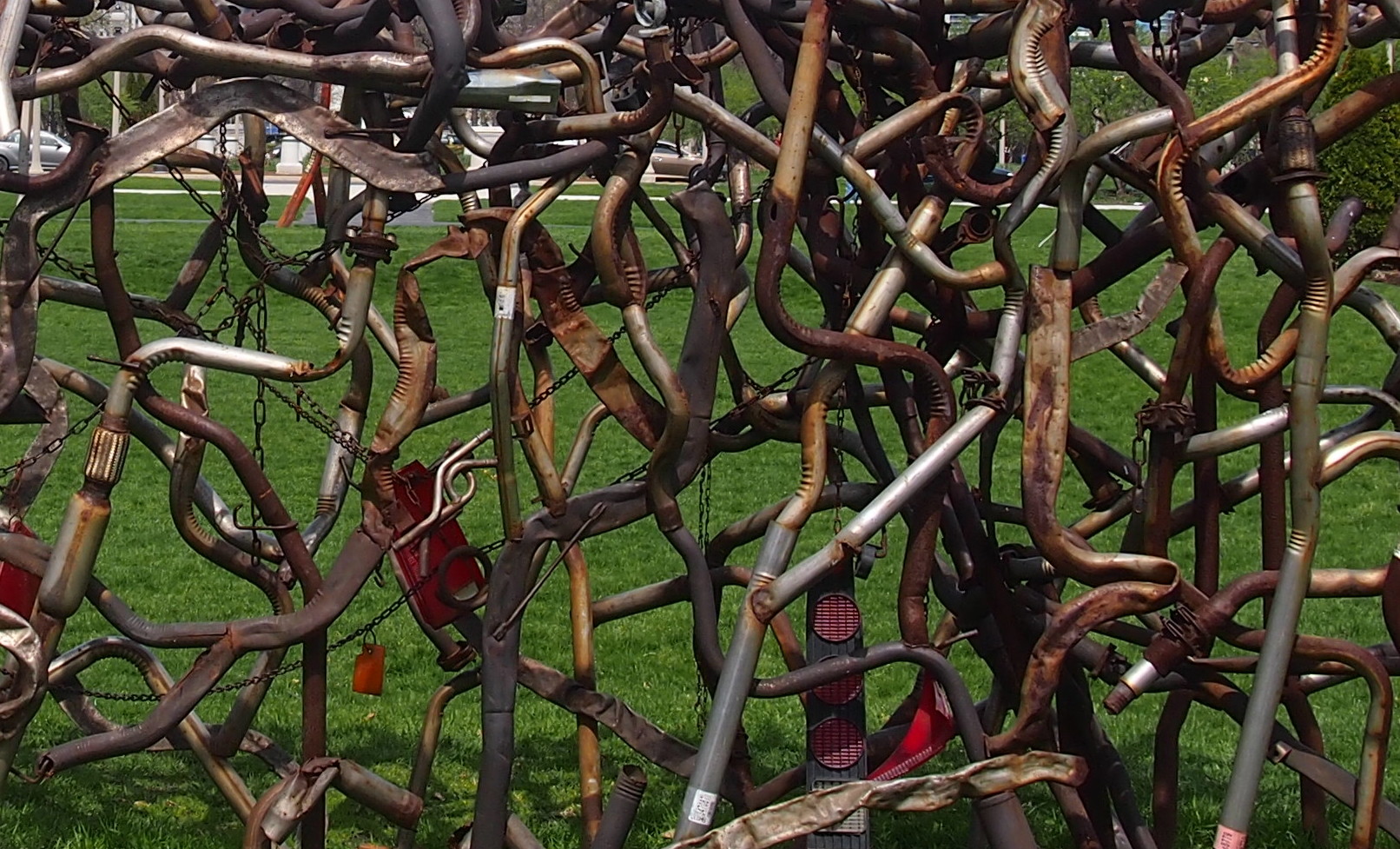
Such as “Hedgerow” by Chicago sculptor Lucy Slivinski, composed of vehicle exhaust pipes and reflectors and other auto oddments.

HedgerowIt was created in 2006, a nearby sign says, as part of an exhibit called Artists + Automobiles, for which the artists were “asked to use salvaged auto parts as the inspiration and primary material.” Yep.
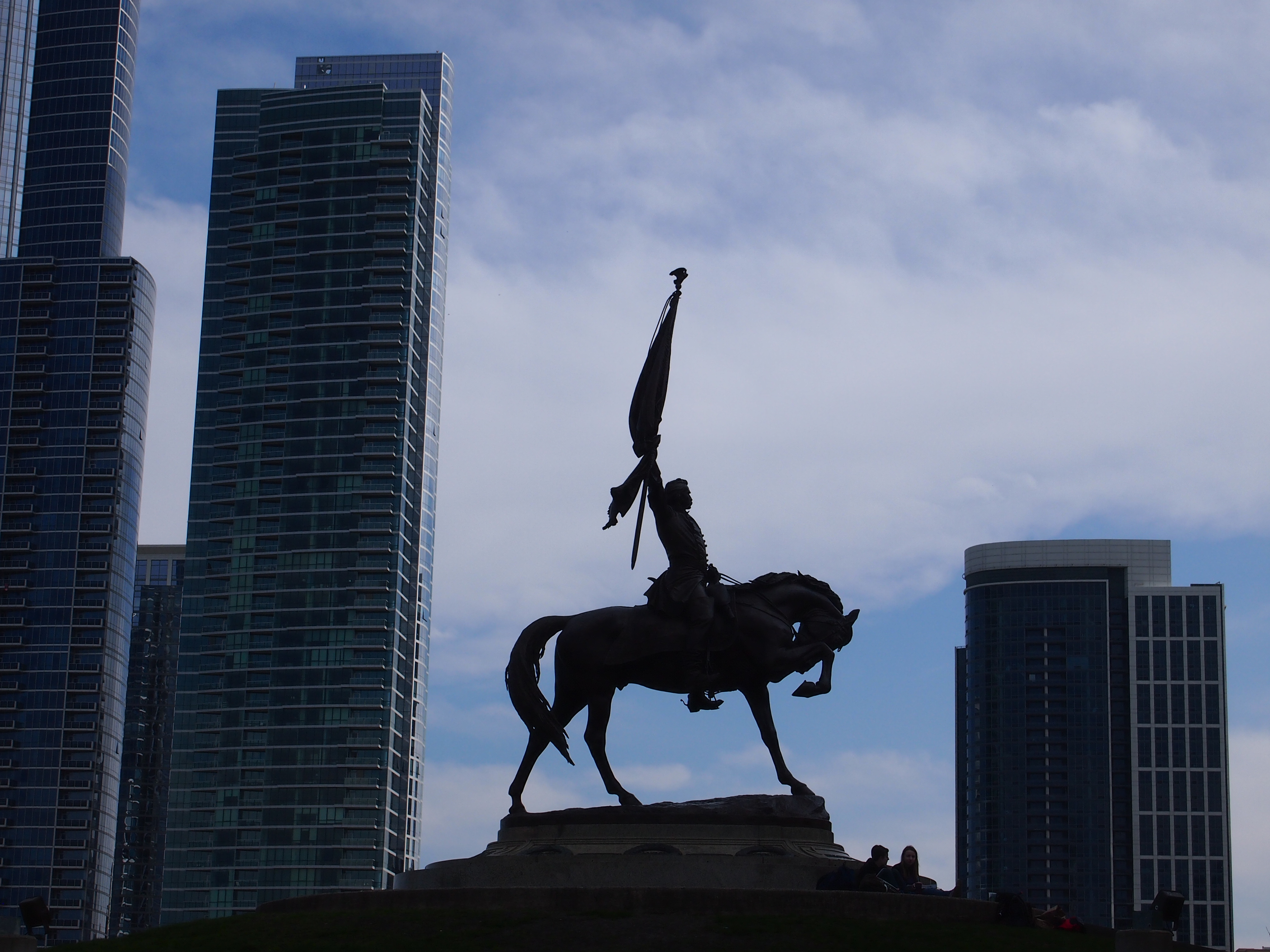
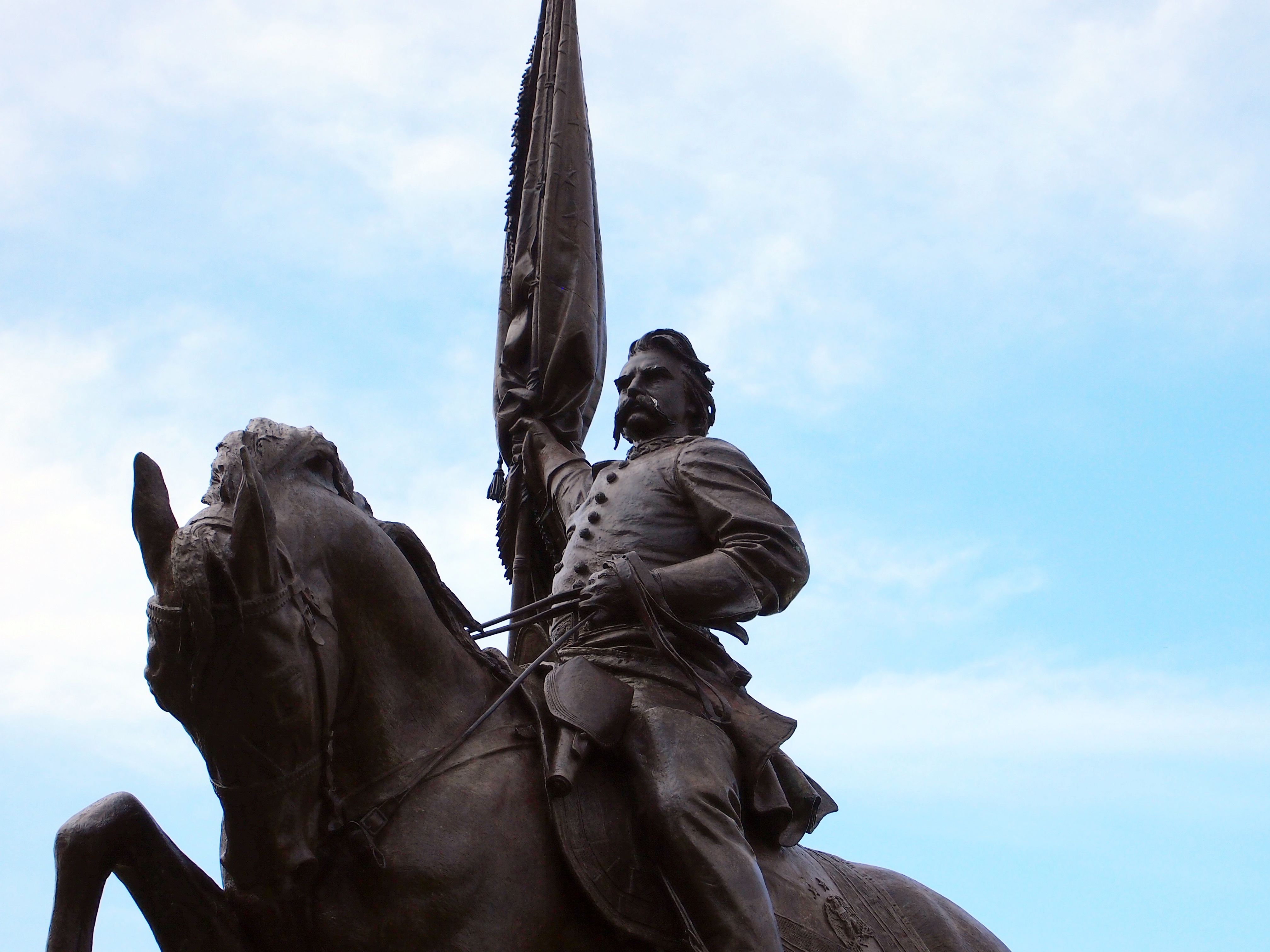
HedgerowFurther south, and closer to Michigan Ave., is the more conventional equestrian statue of Gen. John A. Logan. He’s remembered by Civil War aficionados, but by not many others, I’d say, even in Illinois, despite the part he played in the war or in establishing Decoration Day.
Logan memorial, Chicago, May 1, 2015There’s a John A. Logan Museum in Downstate Illinois. I didn’t know that. Its web site describes him this way: “Who was John A. Logan? General Grant’s favorite officer, one of Illinois’ most powerful Senators, Founder of Memorial Day as a national holiday, and among Mark Twain’s favorite public speakers.

“Or as historian Gary Ecelbarger has said, ‘John A. Logan may be the most noteworthy nineteenth century American to escape notice in the twenty-first century.’ What pushed him from becoming Abraham Lincoln’s bitter rival to campaigning for Lincoln’s re­election? How does an avid racist and author of Illinois’ Black Laws become an advocate for African American Civil Rights and education?

“Visit the General John A. Logan Museum and maybe you will better understand why Frederick Douglas [sic] said, if a man like Black Jack Logan can have a change of heart, then there is hope for everyone.”
Gen. Logan, May 1, 2015His statue is on top of a (probably manmade) hillock. It’s no ordinary equestrian statue, though — it’s a Saint-Gaudens. Any statue by the creator of the Double Eagle is all right by me. Much more about the creation of the statue, which was supposed to be erected at the site of the ’93 World’s Fair but instead came to Grant Park, is at the informative Connecting the Windy City blog. When the statue was originally put there, the site wasn’t an obscure patch of a city park, but very near Central Station, an intercity passenger terminal for the Illinois Central RR, gone now for 40+ years.

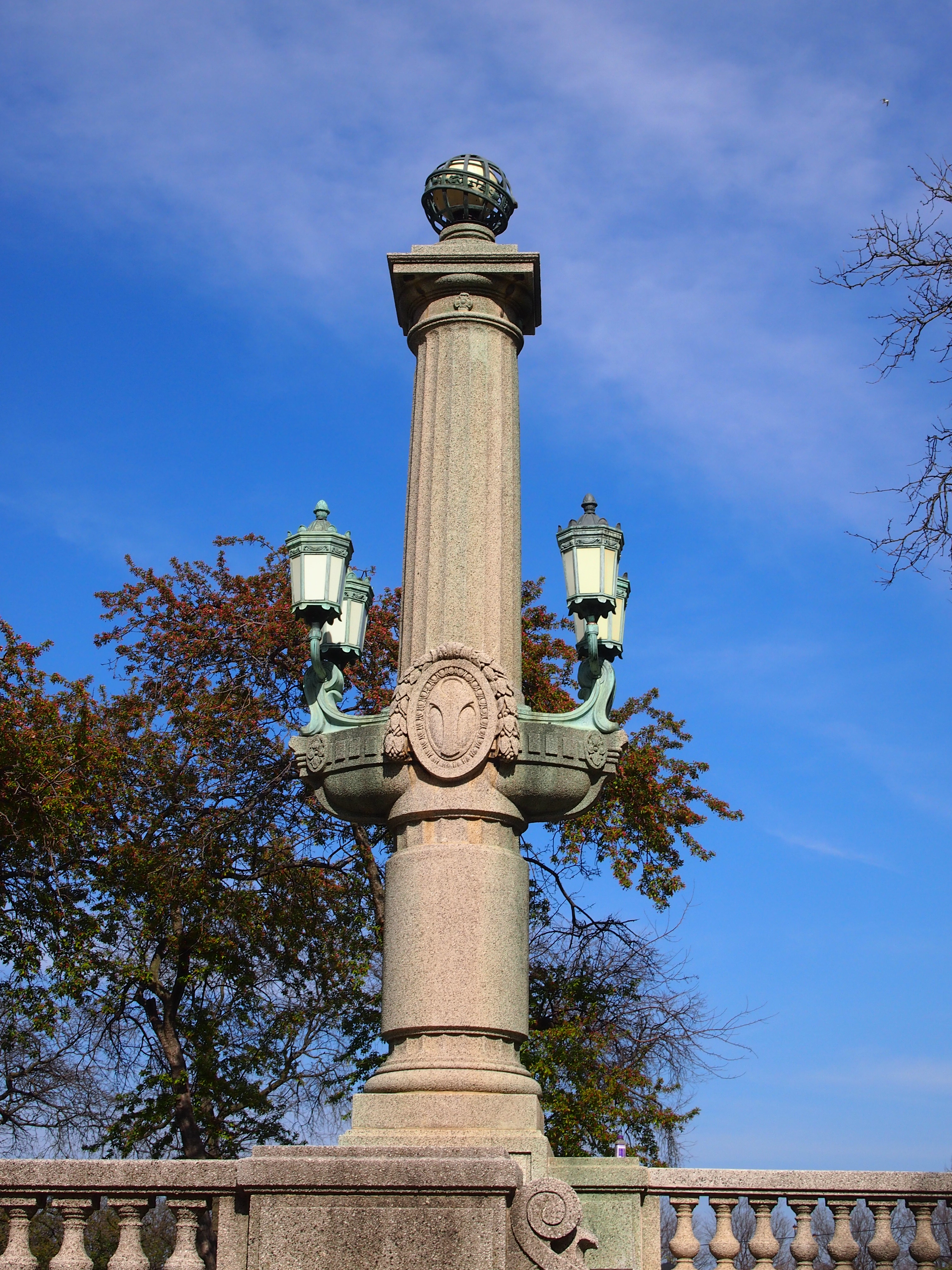
Not far from Gen. Logan, I took a look at some of the concrete lampposts in the park, picking up on some details I’d never noticed before. A fair number of them look like this.

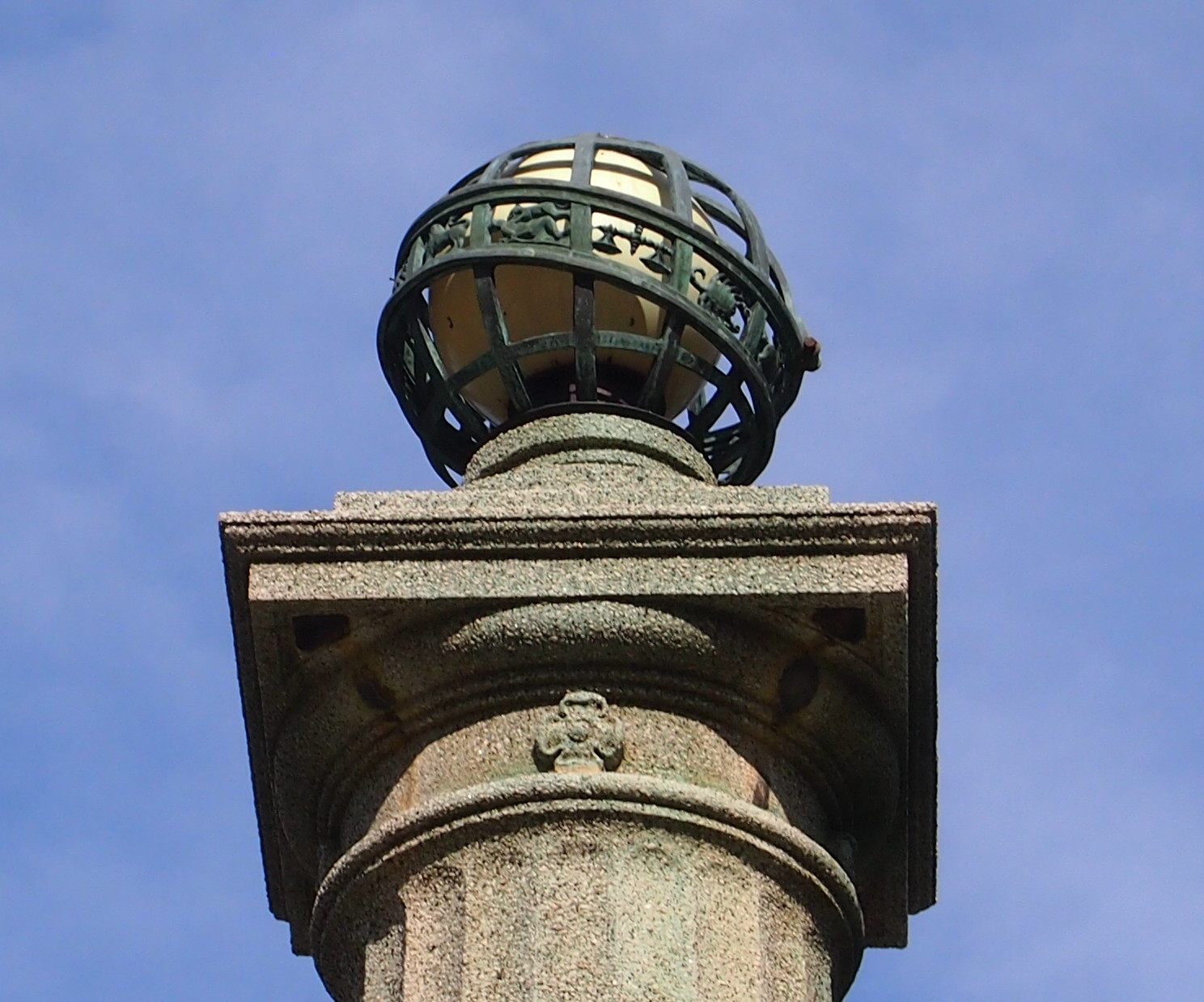
lamppost, Grant Park, May 1, 2015Atop the posts are globes, ringed by the zodiac.

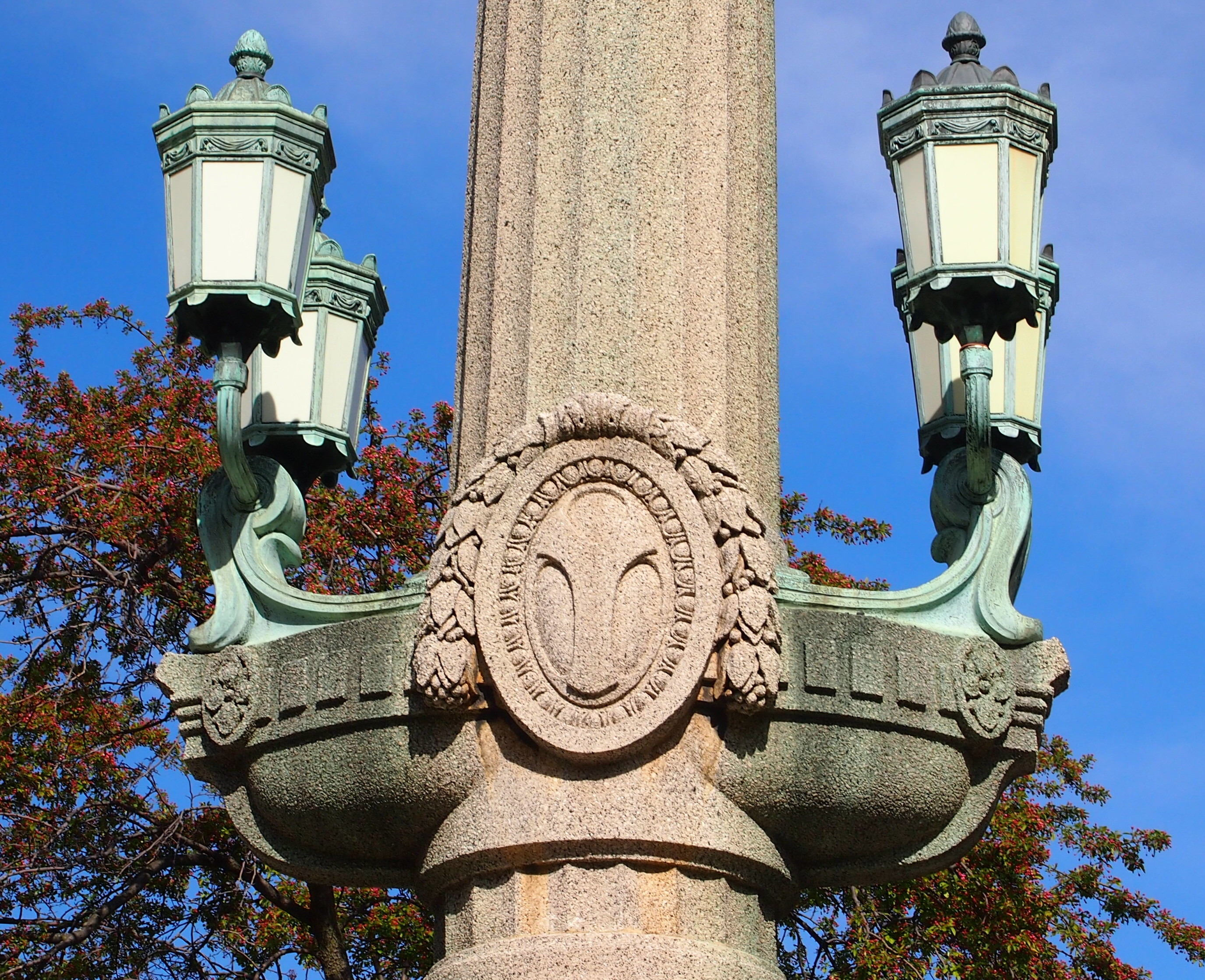
lamppost, Grant Park, May 1, 2015Note the Municipal Device.
lamppost, Grant Park, May 1, 2015Once you learn what it is, you see it everywhere in Chicago.

Football, You Bet

May Day was a genuine spring day this year, clear and warm enough for the season. I spent some of it on a walkabout in downtown Chicago, starting west of the Loop and wandering more or less east and south until I reached Grant Park. At Congress Pkwy. and Dearborn St., I noticed barricades in front of the Auditorium Theater Building. A long line of people, many of them wearing football jerseys, stood behind them.

Then I remembered hearing on the radio that the NFL draft was being held in Chicago this year, and giving it no more thought. If I had, I’d have guessed it was in a major hotel ballroom somewhere, but it turns out it was in the Auditorium Theatre.

There, and at a large white temporary tent in Grant Park, across Michigan Ave. at Congress. As the NFL’s senior vice president of events, Peter O’Reilly, explains on league’s web site: “Every year we can’t really satisfy the demand for fans that want to be inside the theater, so now we’re creating this Draft Town in Grant Park, just across from the Auditorium Theatre, in order to allow more fans to experience the excitement of the draft.”

The line of people, a block long, was waiting to get into the tent, and I’d bet they paid hard gold coins for the thrill. A large electronic sign on the tent said, “Look, Another Profit Center for the NFL!”

Actually, it said “Chi-Town is Draft Town.”

The sidewalks along Michigan Ave. were lousy with fans wearing football jerseys and lanyards with plastic badges, which probably let them into the tent. Cops were everywhere, presumably to keep a lid on any sports riots later. (Which were probably no new thing even at the time of the Nika Riots.)

The NFL draft wasn’t on my mind when I started walking, and it didn’t remain top of mind very long. I pressed on toward the far southern end of Grant Park, away from crowds, cops and mass-market sports.

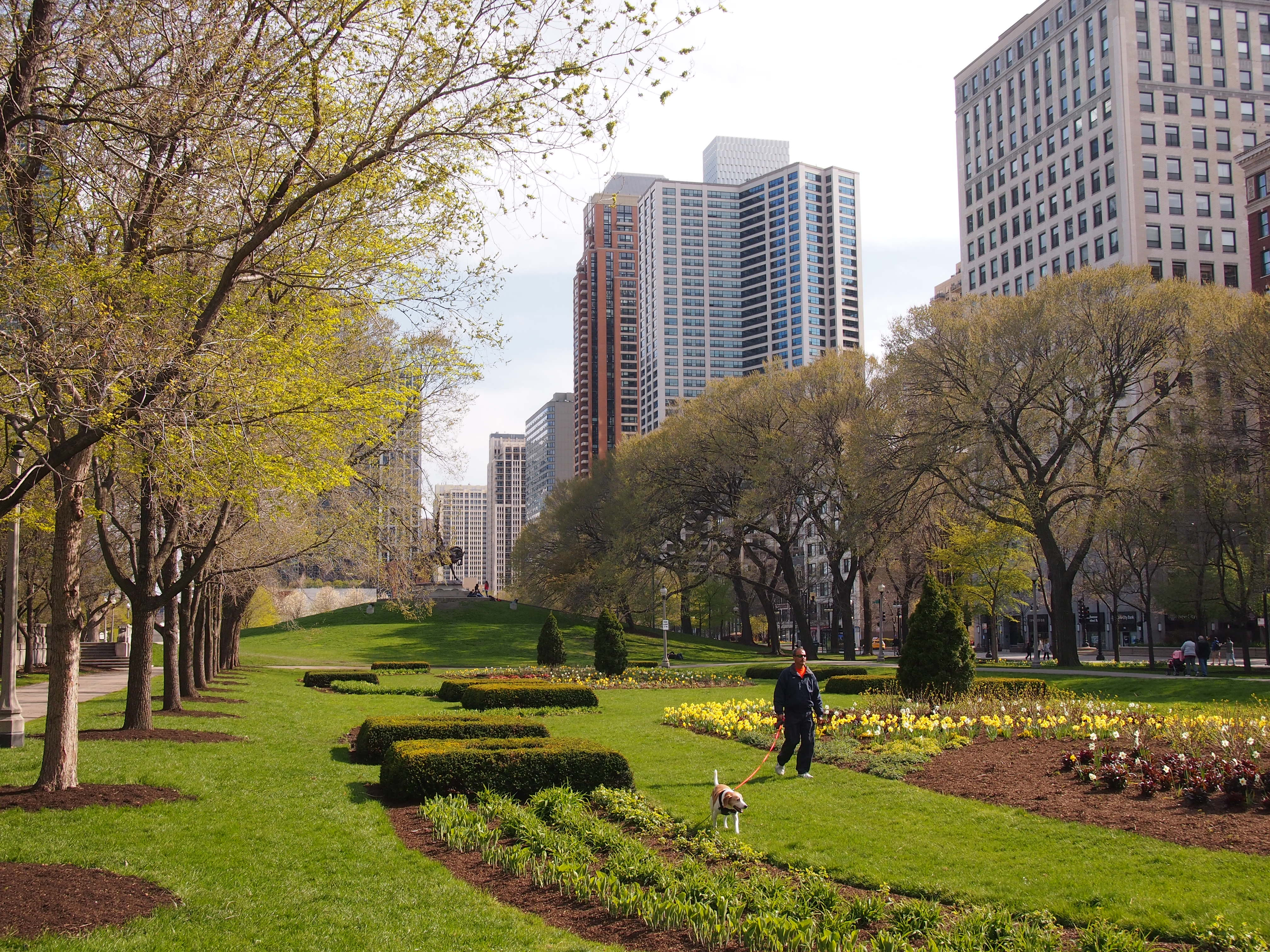
Grant Park, May 1, 2015I don’t remember the last time I was in this part of Grant Park. It was a fine place to be on a warm Friday afternoon.

FEC from the PRC

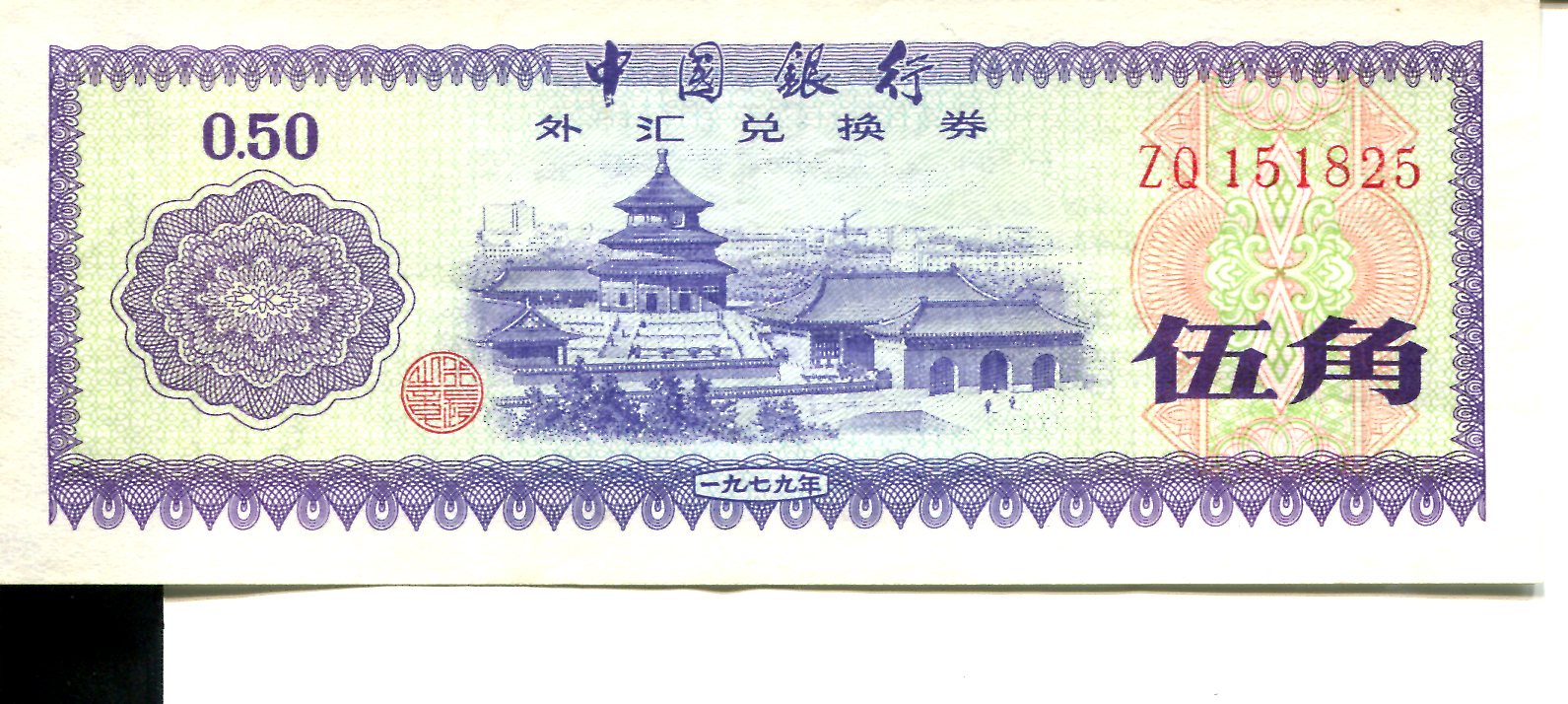
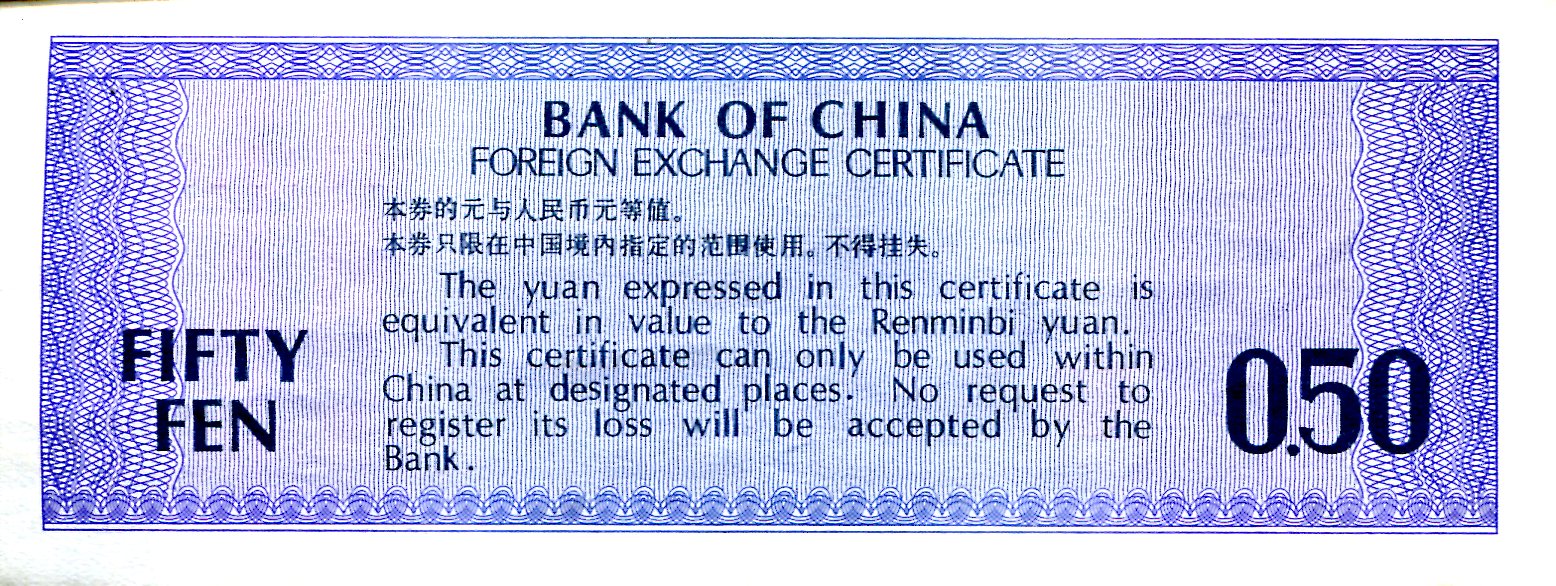
One more scrap of former currency (for now). And by scrap, I mean that almost literally, since this Foreign Exchange Certificate from the People’s Republic of China measures 5.25 x 2 inches. It’s more like script than a note.

FECI’ve posted about this currency before, so no need to re-write about it, only re-post: “I only changed money once outside of the Bank of China, when Yuriko and I were sitting on a bench and she reminded me of the FECs that I had — not much, only about ¥110. I took them out of my wallet to look at them, and a man next to me on the bench, who had previously expressed no interest in us, suddenly offered a 1-to-1 exchange for RMB. I accepted the deal. I don’t know what profit he got from it, since FECs were being phased out, but he must have gotten something.

50 fenFor some reason, probably my partiality to odd souvenirs, I kept this one. Maybe it wasn’t worth bothering with, since this particular note is 50 fen — or half a yuan, the base currency (it was about 8.7 yuan to the dollar then, so 50 fen was 6 cents or so). Ten fen is called a jiao, but I’m not sure how close an equivalent of a dime that is. That is, everyone understands that a dime is 10 cents, but it’s fairly rare to count in dimes. I don’t know whether the Chinese usually count in fen or some combination of fen and jiao.

More from before: “RMB, or Renminbi (人民币), ‘People’s Money,’ is Chinese currency, of which the yuan is the main denomination. From 1979 to early 1994, just before we visited, foreigners in China were supposed to use FECs instead of RMB, which the government sold to foreigners at a premium to RMB. But as usual with this kind of thing, I understand that rule wasn’t rigidly enforced, especially by the early 1990s. We didn’t have to worry about it in any case, and thinking back on it now, I’m not sure how I got the FECs.”

Złotych No Mo’

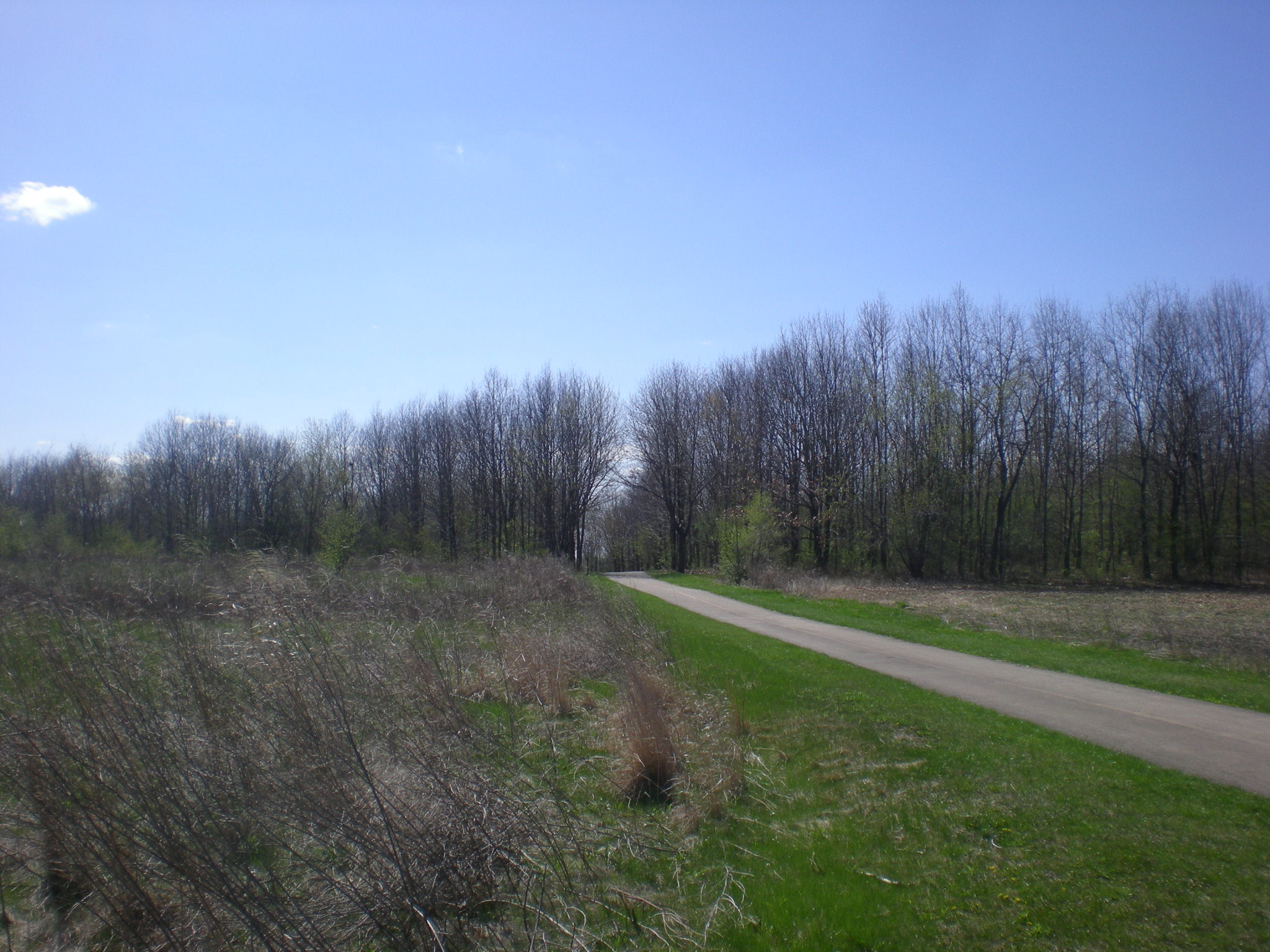
The awakening spring at Poplar Creek Forest Preserve on Sunday.

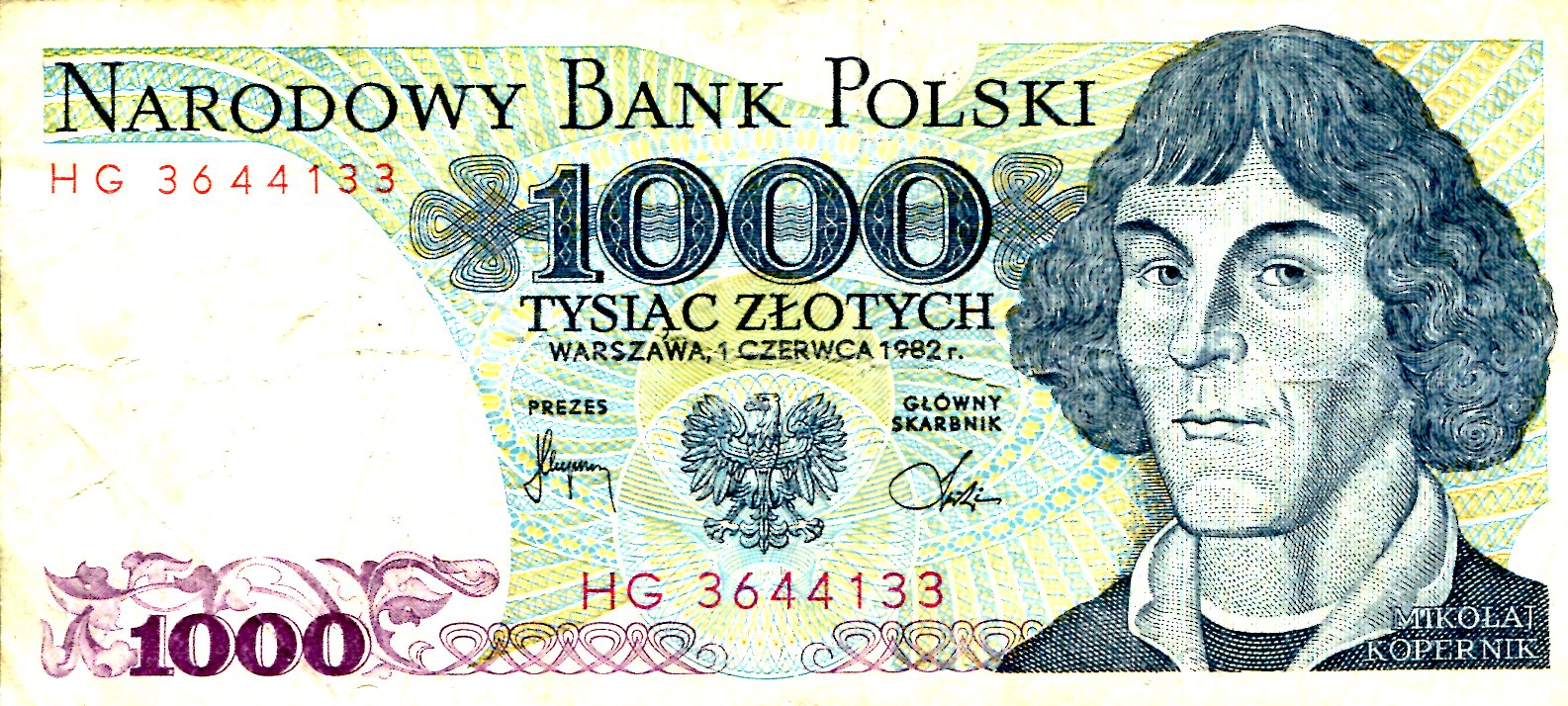
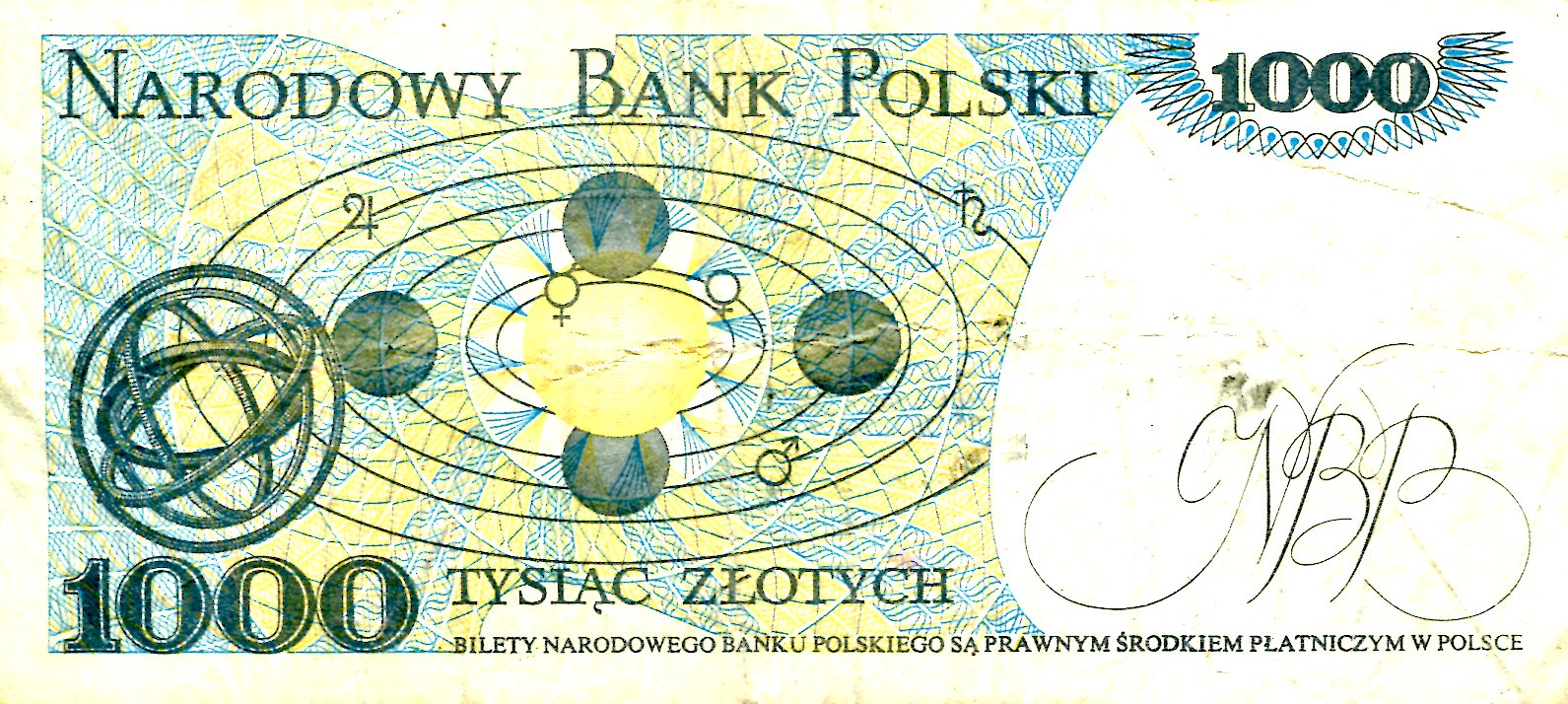
Poplar Creek, April 2015Poland had one of the smallest currencies of any country I’ve been to, since we got there a few months ahead of the redenomination of 1995. Soon notes like this Communist-era 1,000 złotych would be obsolete.
1000złotychThey were already small change. If I remember right, the exchange rate was about 20,000 złotych to the US dollar, making this note worth about a nickel. No coins were in circulation in late 1994 in Poland, only notes; and somewhere in my envelope of worthless foreign money, I have a 50-złotych note: all of 0.25 cents at the time.

I was glad to see Copernicus on the note, even if he’s a little horse-faced in the portrait, which is clearly based on this painting, dated 1580, some decades after his death. Maybe he looked like that.

1000złotych-2Fittingly, a Copernican solar system on the other side. As I said, the note has long been superseded by new currency at 10,000 to 1. No euros for Poland yet, though. Understandably, they’re a mite skittish about the common currency just now.

An Old Ringgit

Warmth + Rain =
clover April 2015At least here in temperate North America. Flowers are emerging, too, as well as bush buds. The trees are still more cautious about the whole notion of spring, but they’re coming around.

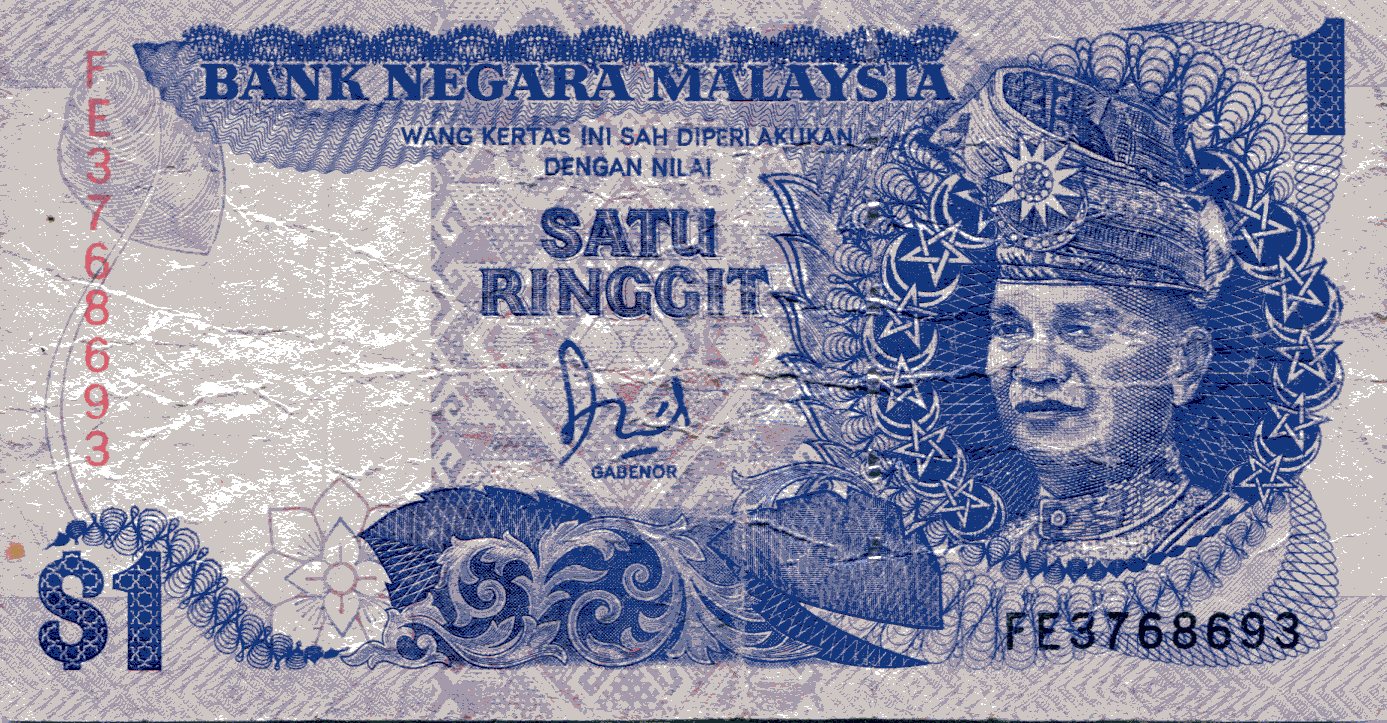
Tucked away in my envelope of nearly worthless — sometimes flat-out worthless — paper money is a RM1 I picked up either in 1992 or ’94. The formal name is a ringgit, though informally it’s a Malaysian dollar.

M$1By the early 1990s, the note was on its way out, replaced by a dollar coin, an example of which I don’t have. These days, RM1 is worth about US 28 cents; I remember it trading for about 40 cents. I’d do pricing in my head in dollars, even though my pay was in yen, and 40 cents to the ringgit made it easy: half minus 10 percent (Singapore dollars were half plus 10 percent in those days).

The portrait on the note is Tuanku Abdul Rahman ibni Almarhum Tuanku Muhammad (died 1960), the first Yang di-Pertuan Agong of Malaya. That is, the supreme head of state, elected by the country’s other sultans, in office before the country was reorganized as Malaysia. I don’t think there’s any monarchical position anywhere else quite like it.
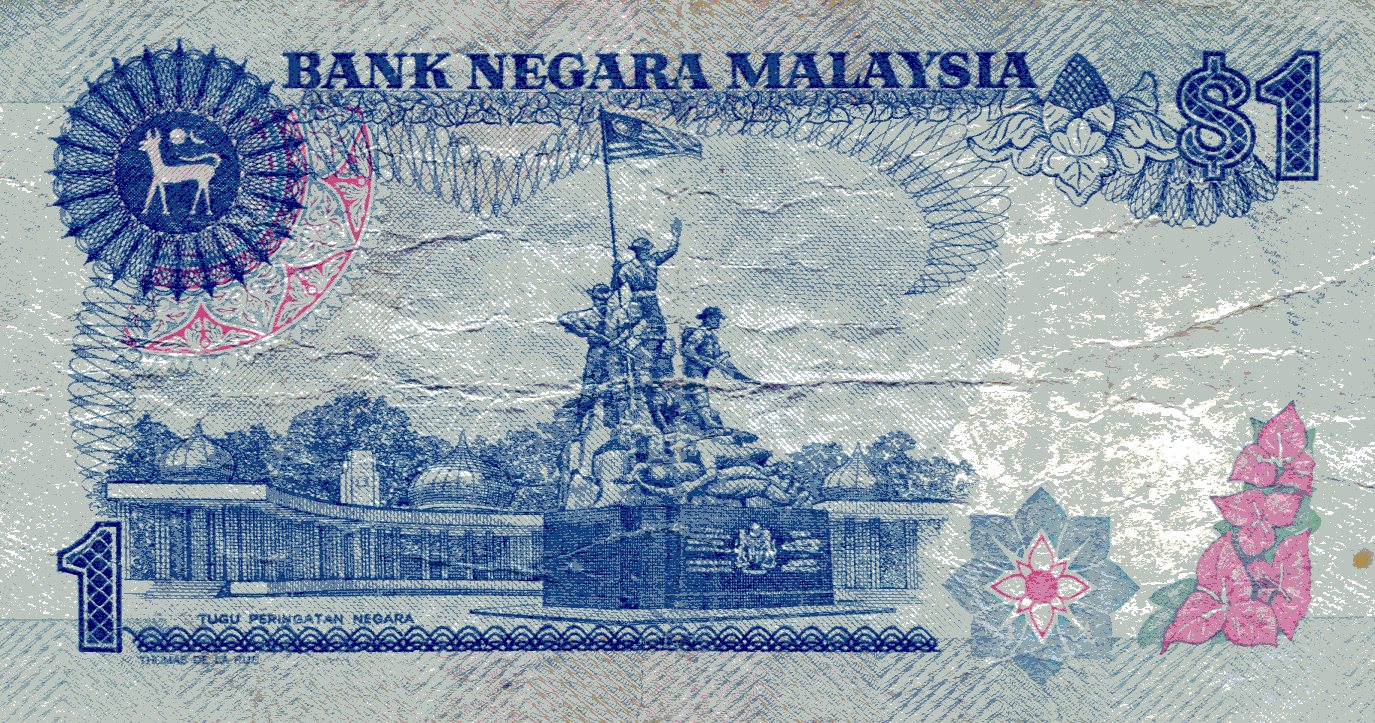
M$1-2That’s the National Monument in Kuala Lumpur, which memorializes the Malaysian dead of the Japanese occupation and the Malayan Emergency.

Shanghai Views

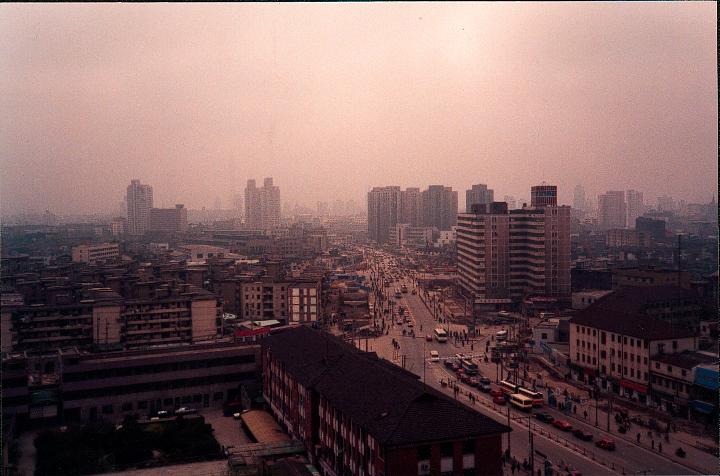
The view is from the first hotel we stayed at in Shanghai in late April 1994, whose name and exact location I forget. Even so, I’ll bet there are a lot more buildings in this view these days, if the view still exists. It was a cloudy day, but I think there’s some smog in the mix. The air’s probably not any cleaner now.

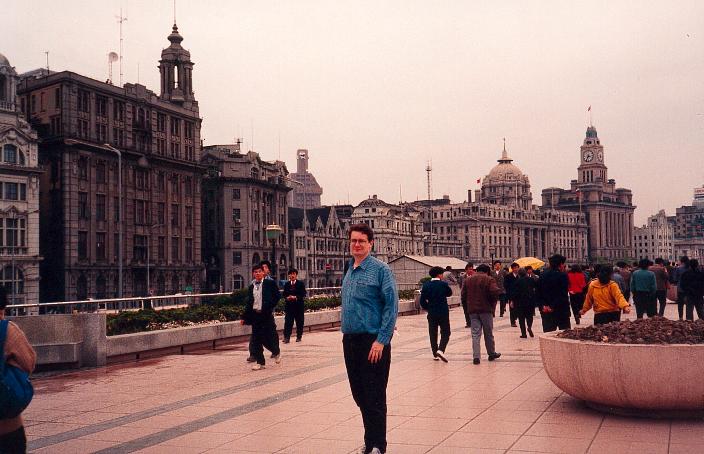
Shanghai1994-1Soon we relocated to a hotel near the Bund — the Astor House Hotel, which in those days was part inexpensive hotel, part cheap-looking office space. It clearly had a magnificent and storied past, with a slow decline post-1949 and especially during the Cultural Revolution. Word was the hotel was going to be razed, which would have been a damned shame. Fortunately, it’s been renovated since then, and while probably not cheap any more, it’s still a jewel of the Bund.

Shanghai1994-2The Bund was a fine place for walking, as it was designed to be.

The Gustave Brand Murals at Carl Schurz HS

Saturday is Anzac Day, and not just any anniversary, but the centennial of the landing at Anzac Cove. Here’s a remarkable collection of images from last year’s commemorations (published by a British tabloid, no less).

Speaking of anniversaries, I’d never heard of this disaster until today, the 75th anniversary of the Rhythm Club Fire in Natchez, Miss.

Last Saturday our tour took us inside Carl Schurz High School, which is on the Northwest Side of Chicago. Its library has something few other school libraries can claim: a domed ceiling and murals by Gustave Brand. The murals were painted in the late 1930s by Brand, a German immigrant who was then pushing 80, so he had some help by former Schurz students. Brand had originally been sent to Chicago by the German government to paint murals in that country’s pavilion at the 1893 Columbian Exposition, and he must have liked it here.

The works were restored in the late 1990s. At the back wall is a large alcove featuring “The Spirit of Chicago.” The text under the painting says: “The Spirit of the Pioneer lingers here. Where once the Redman roamed, a City vast Lifts its proud Skyline to the Morning Sun. A Monument to service nobly done.”
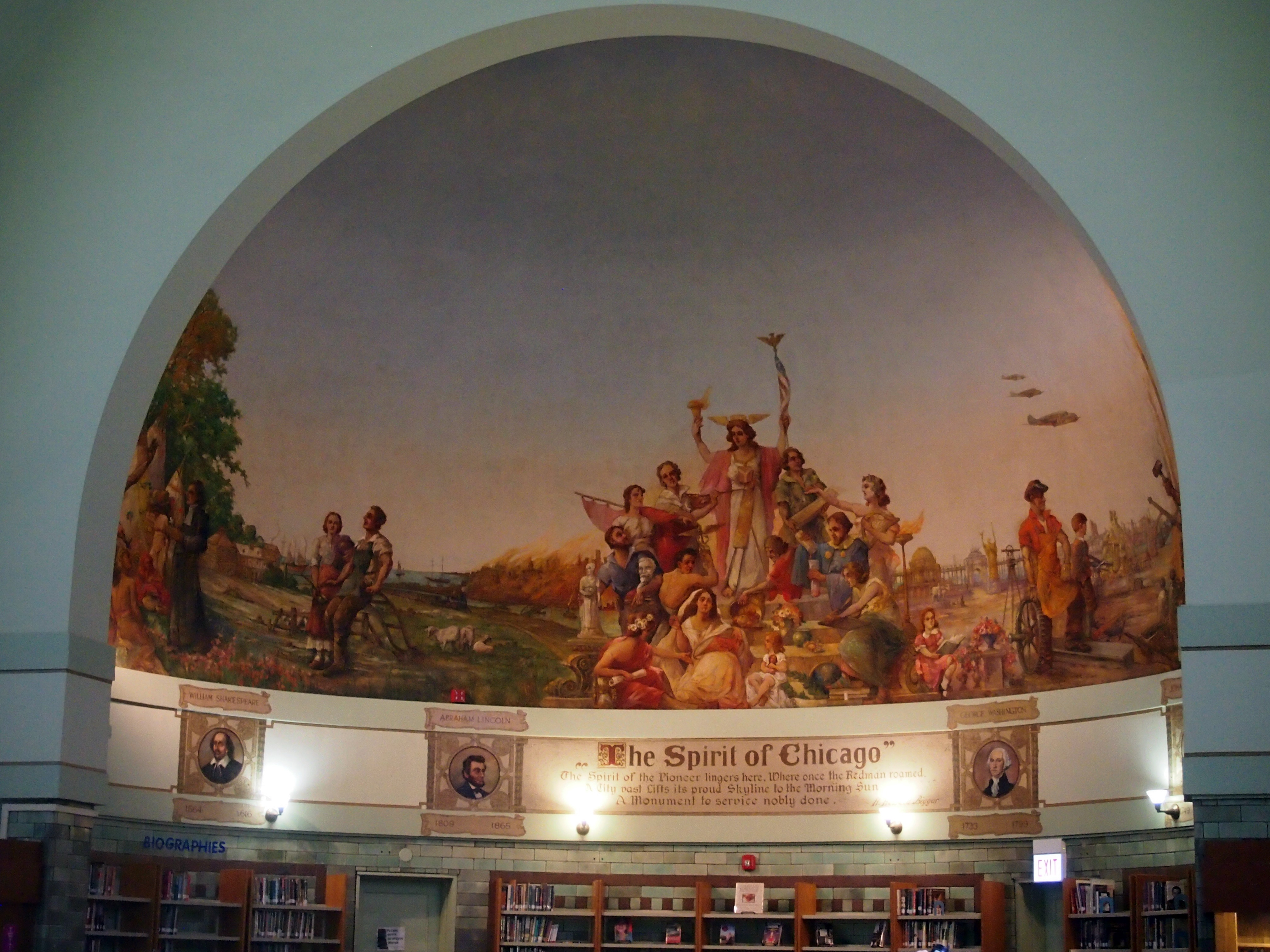
Schurz HS, April 2015A closeup of the centerpiece.

Schurz HS, April 2015Looks like a collection of allegorical figures under the protection of the Spirit of Chicago. I take that to be the City, not Columbia with her torch and flag, because of the Y on her chest, the Municipal Device of Chicago. To the left is the Fire, and to the right the ’93 world’s fair, among other things.

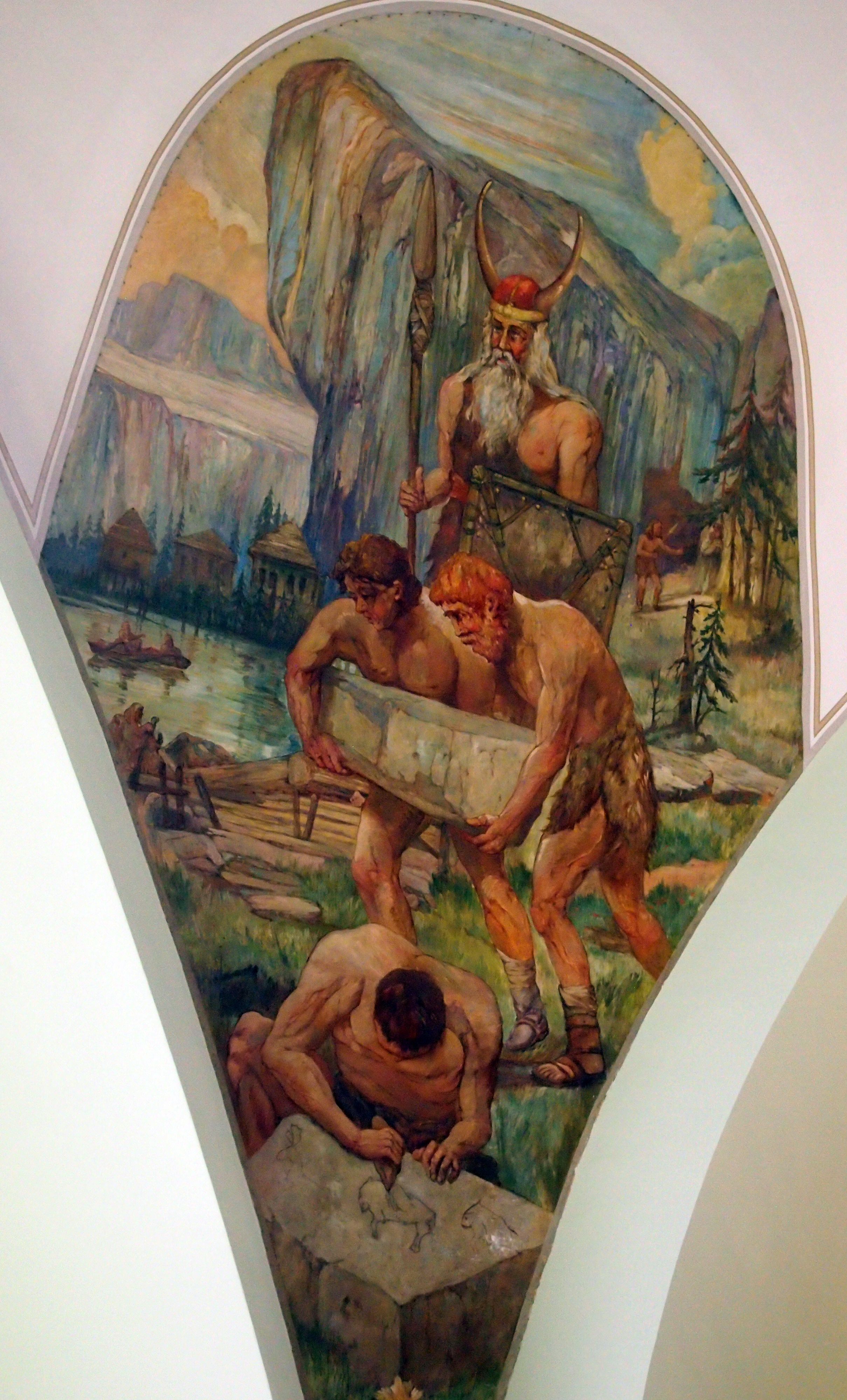
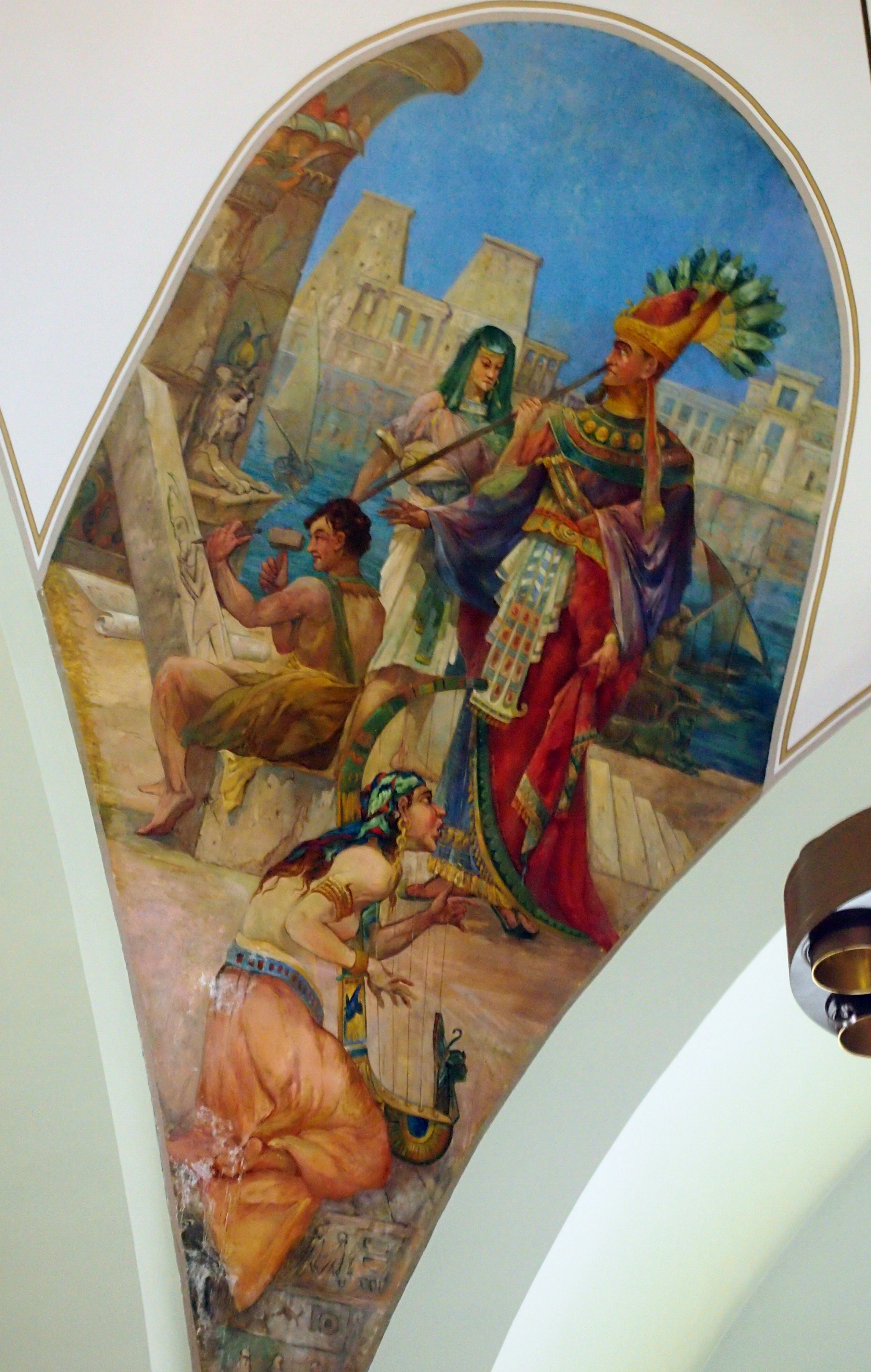
On the ceiling, around the dome, are four more murals by Brand, who clearly had a lot of energy for an elderly man. They depict the evolution of the written word, fancifully done, but fitting enough for a library.

Here are Stone Age men — presumably — carving in stone.
Carl Schurz HS April 2015Egyptians devising their hieroglyphics. Seems like Brand had a thing for fancy headgear.
Carl Schurz HS, April 2015Medieval monks doing their part to preserve the written word. OLYMPUS DIGITAL CAMERAAnd Gutenberg.
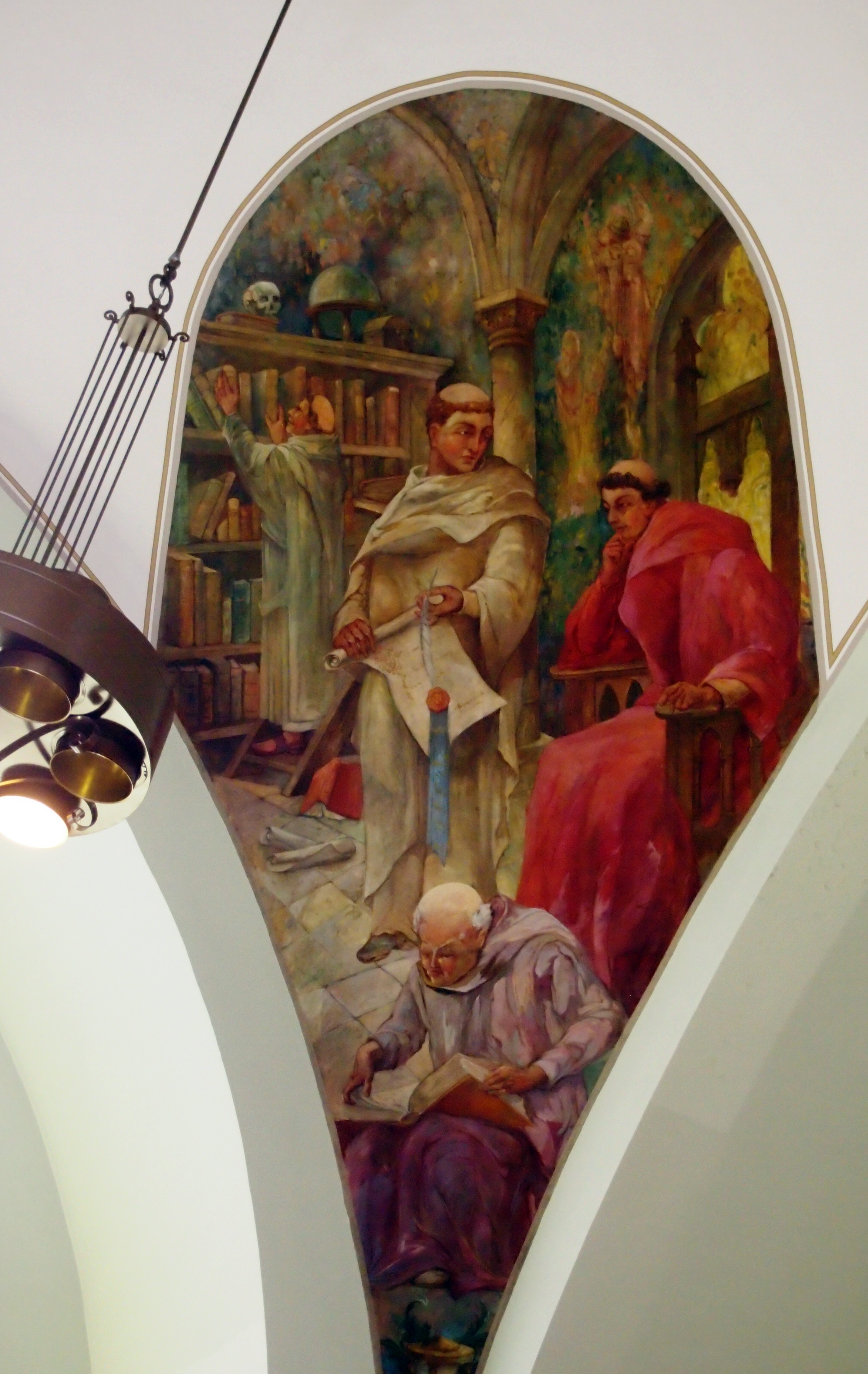
Carl Schurz HS, April 2015What I did see at my high school library when I looked up at the ceiling? I don’t remember exactly, but it must have been acoustic ceiling tiles.
Carl Schurz High School

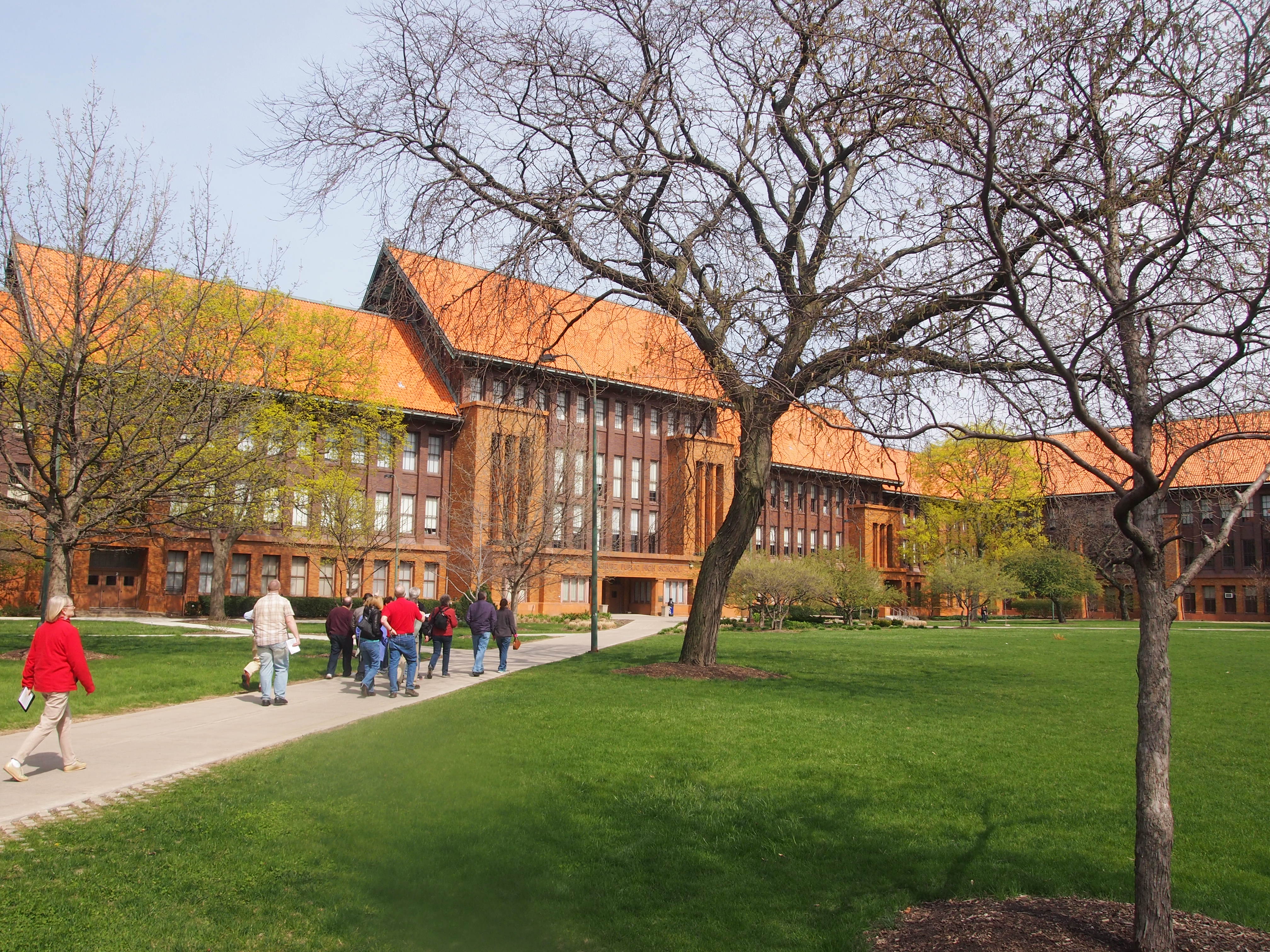
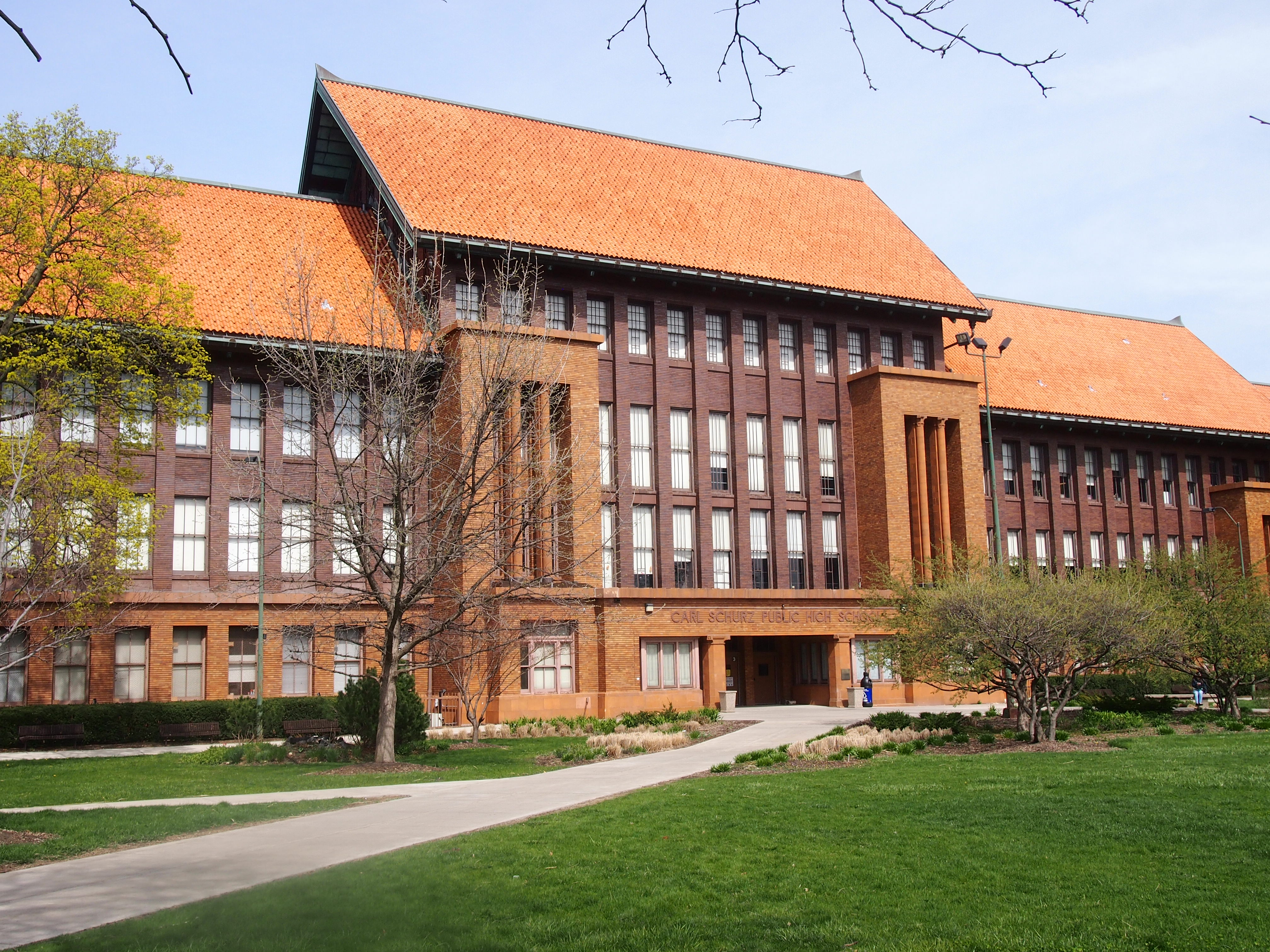
One of the other destinations on the Schools by Bus tour was Carl Schurz High School, a Chicago public school at 3601 N. Milwaukee Ave. As the name suggests, the neighborhood used to be heavily German. Work on the school began in 1908, with wings on either side added later that look a lot like the original structure.

Without a wide-angle lens, it’s hard to get an image of the whole structure, so expansive is it. This is the original building, plus part of one of the wings on the right. All together, the structure forms a squared C shape, with a large lawn filling in the C.

Carl Schurz HS April 2015“Commissioned by a reform-minded school board headed by Jane Addams, the project was one highlight of a broad program for rescuing the immigrant poor from the ignorance and isolation engendered by the industrial city,” the AIA Guide to Chicago says about the building.

The school board’s architect from 1905-10 was Dwight Perkins, who did the original Schurz structure. “Chicago’s typical Dickensian public school before 1905 was a poorly lighted and ventilated box, set into the city grid with no significant playgrounds,” AIA continues. “Toilet facilities were archaic and located in the basement.

“The forty-odd schools that Perkins designed between 1905 and 1910 changed all that, creating a building type with grass and trees, sunlight and fresh air, safety from fire, and good sanitation.”
Carl Schurz HS, April 2015Good for him. From our fairly comfortable perch here in the 21st-century First World, I doubt that we really appreciate the squalid conditions that spurred action in the Progressive Era.

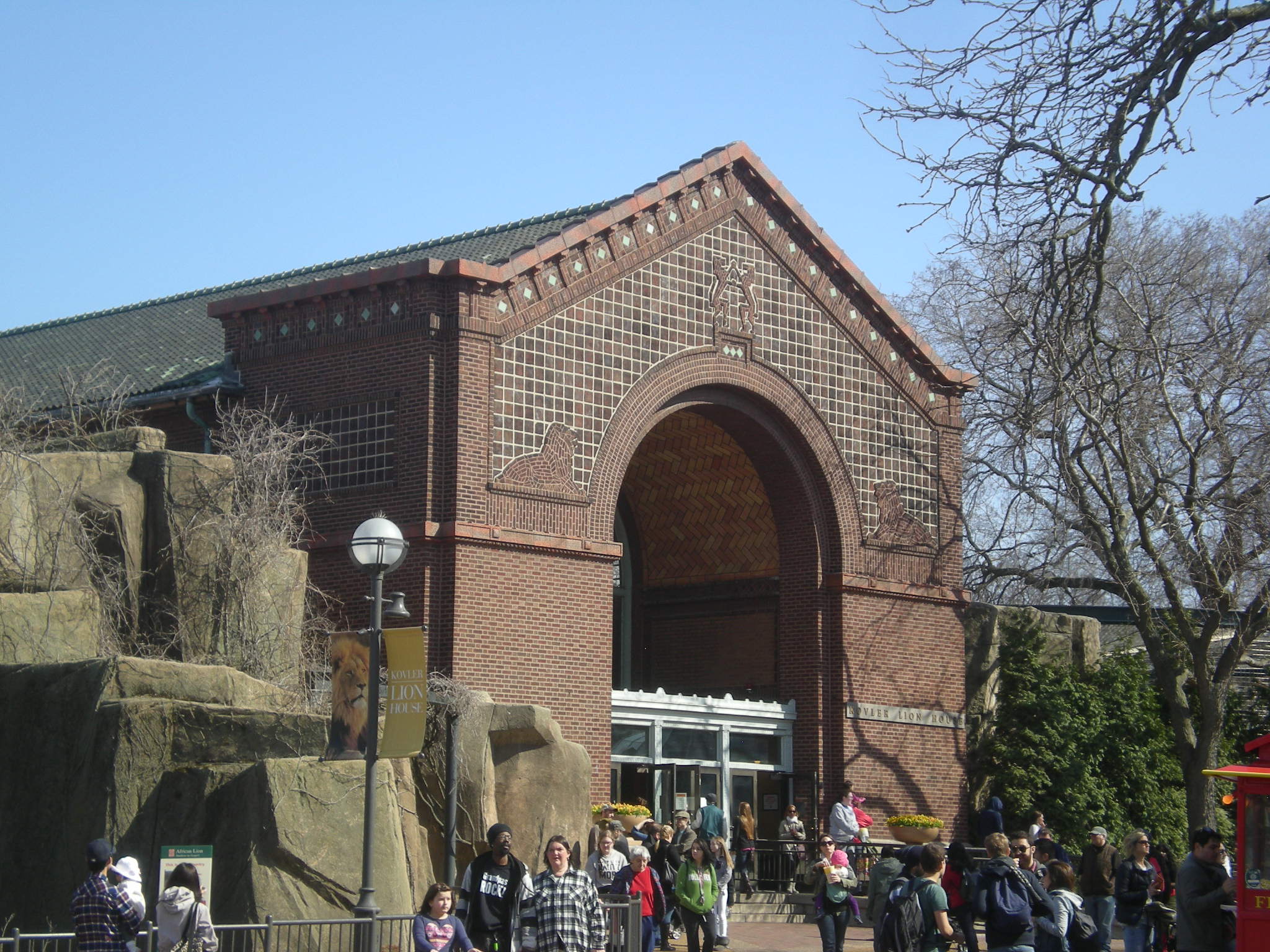
I didn’t know this until I read about Perkins, but he also did the Lincoln Park Zoo Lion House. We were there earlier this month.
Lion House, Lincoln Park ZooA nice use of brickwork.

Inside El Centro

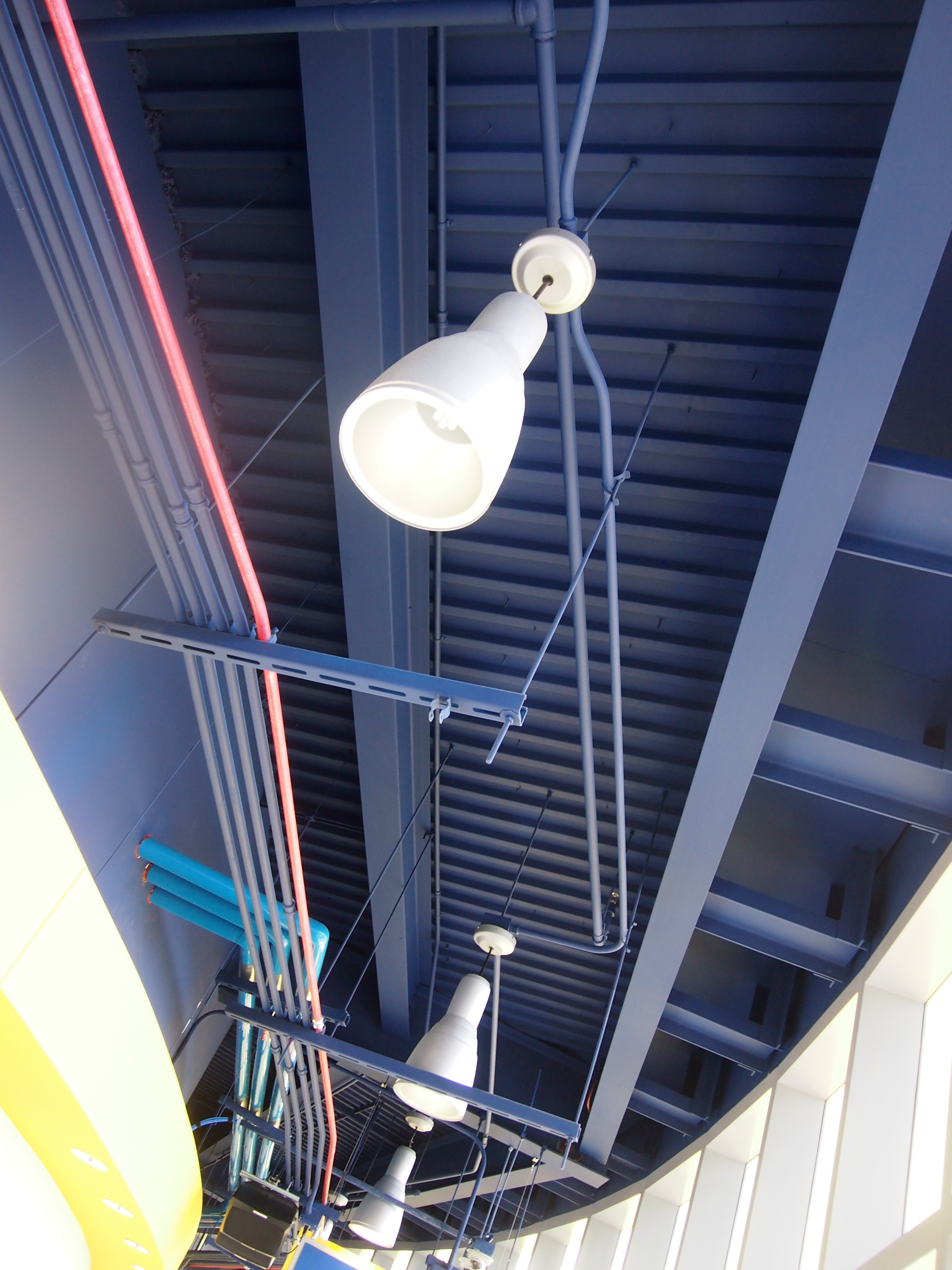
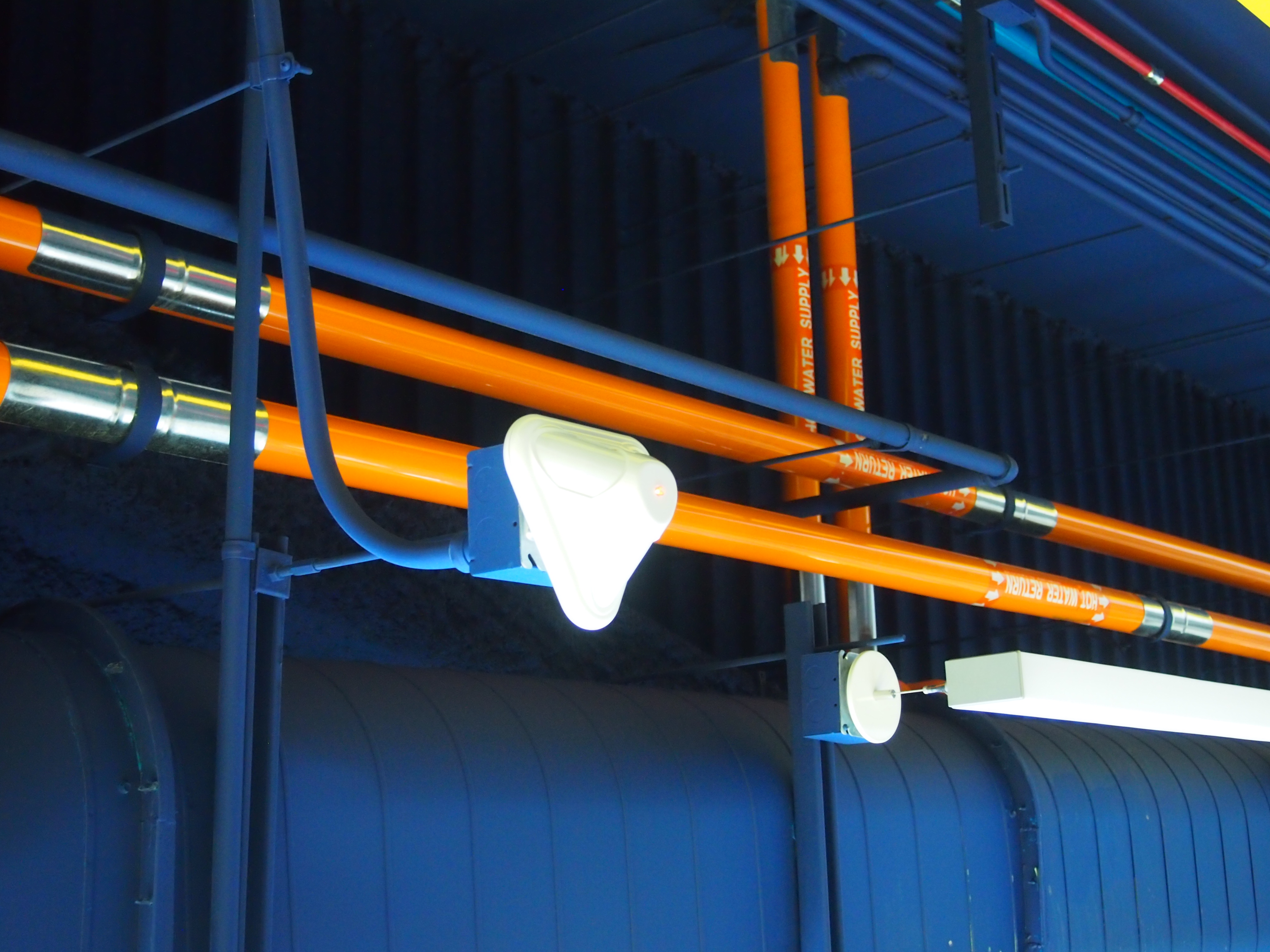
Inside El Centro, a campus of Northeastern Illinois University, you not only can find gender-neutral restrooms (see yesterday), but also a lot of cool pipes near the ceilings.

El Centro, Chicago, April 2015El Centro, Chicago, April 2015It’s something more buildings ought to do, at least if their pipes are exposed. El Centro has more surface colors than most buildings, certainly most educational facilities, and on the whole it works.

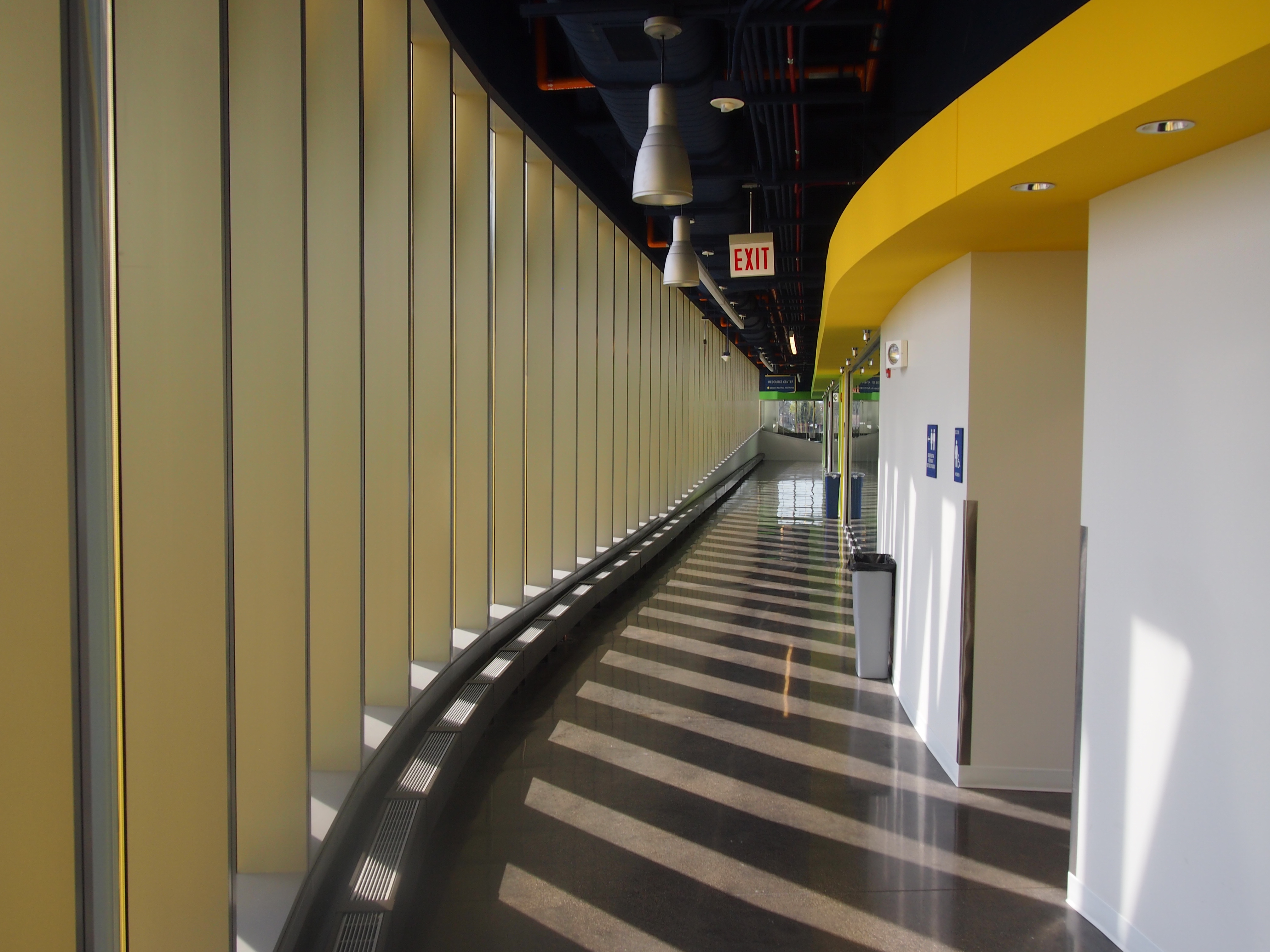
The hallways put natural lighting to good use. That, by contrast, is no rare thing in newer buildings. Turns out that cutting people off from natural lighting isn’t considered good for them any more. How is it that took decades to figure that out?

Anyway, in the afternoons, one side of the building catches light like so.

El Centro, Chicago, April 2015Some of the artificial light placements were interesting, too.
El Centro, Chicago, April 2015As our tour group wandered down one of El Centro’s halls, we encountered another tour group. They were architectural historians in town for the Society of Architectural Historians 68th Annual Conference. The conference seemed to have a lot of tour options, one of which was “Provocative New Architecture in Chicago: The Work of JGMA,” led by Juan Moreno, the designer of the building we were in.
He paused and spoke to us for a moment. He didn’t say anything earthshaking, but it was a nice thing for him to do.