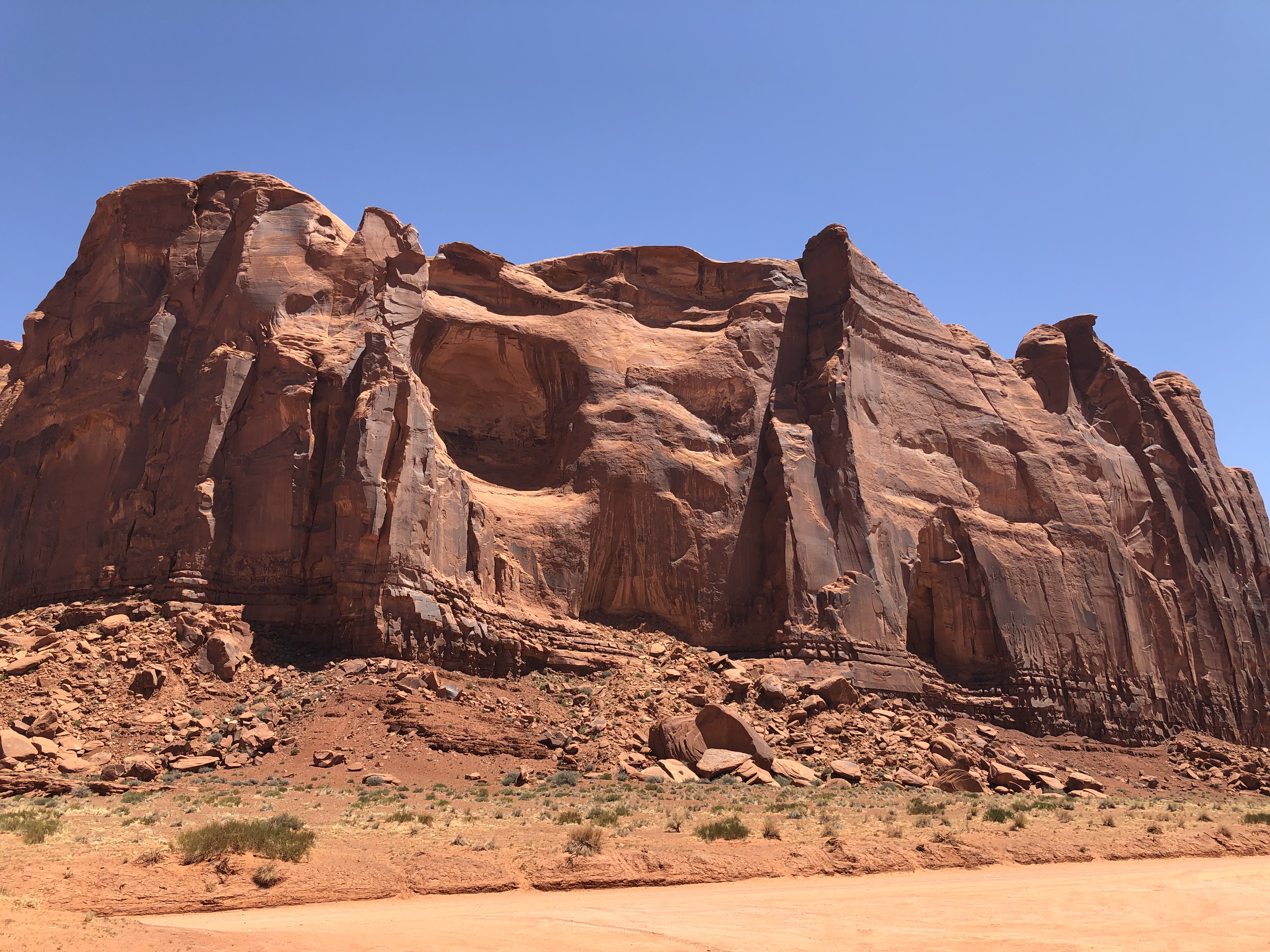
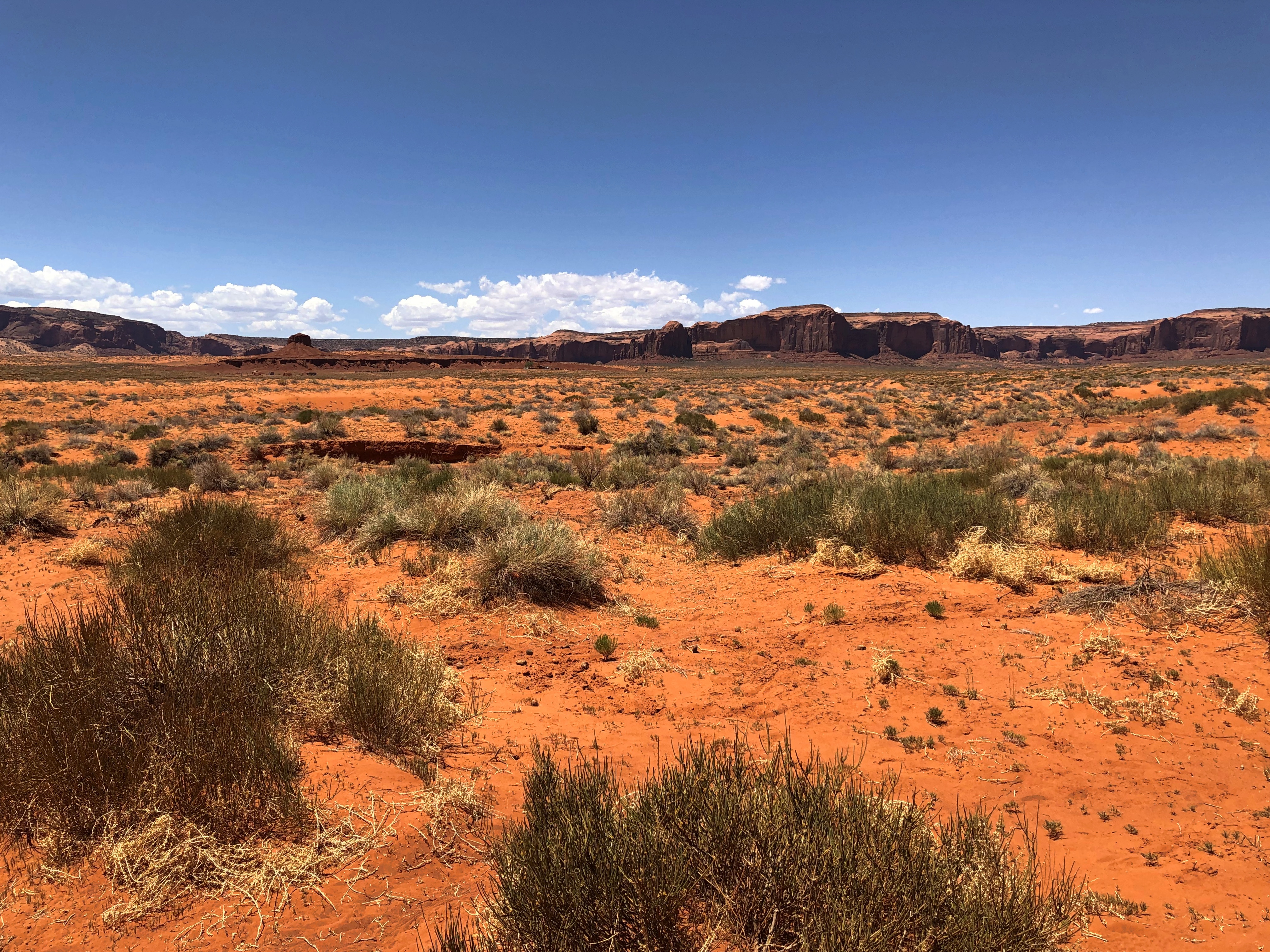
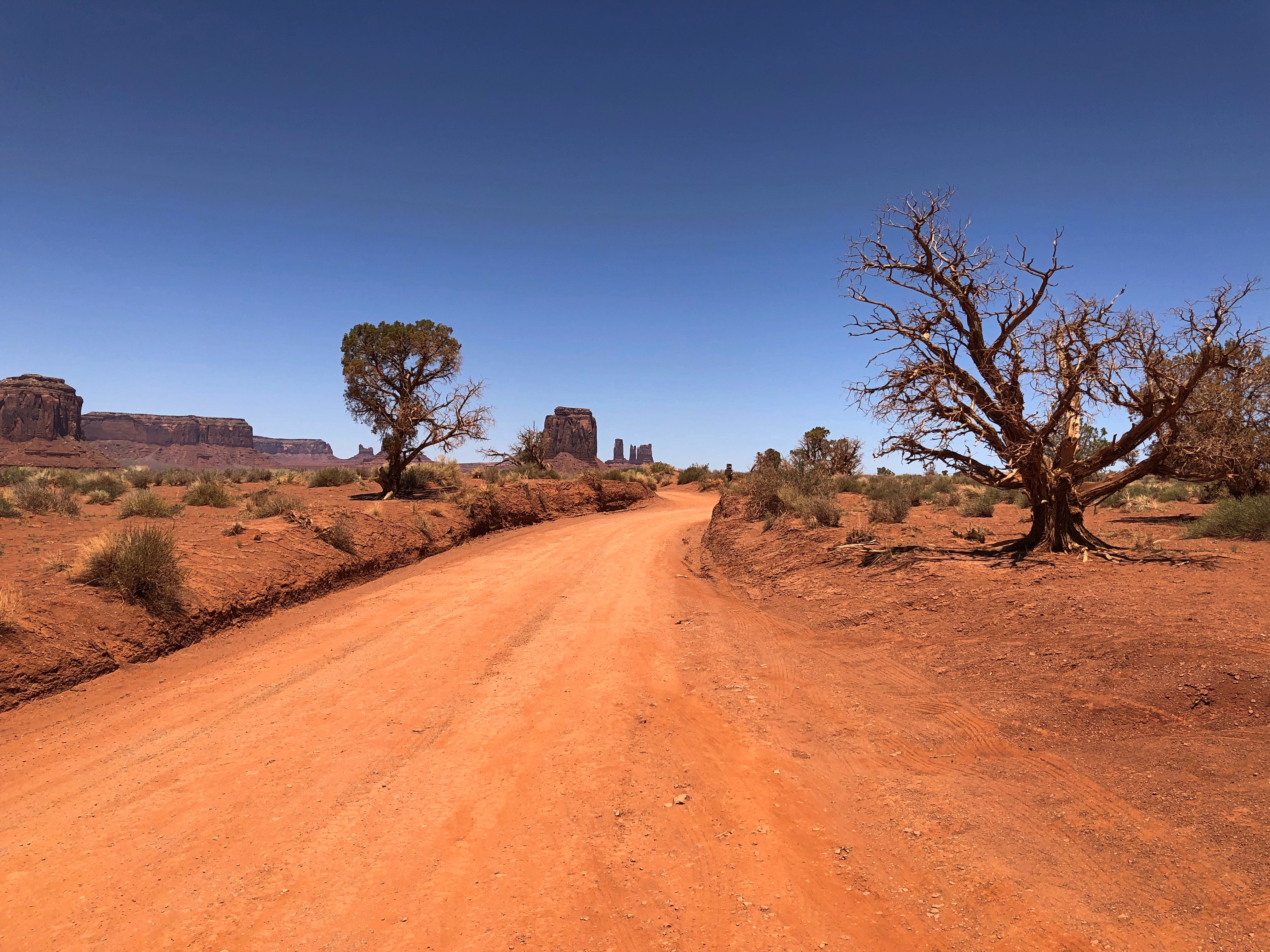
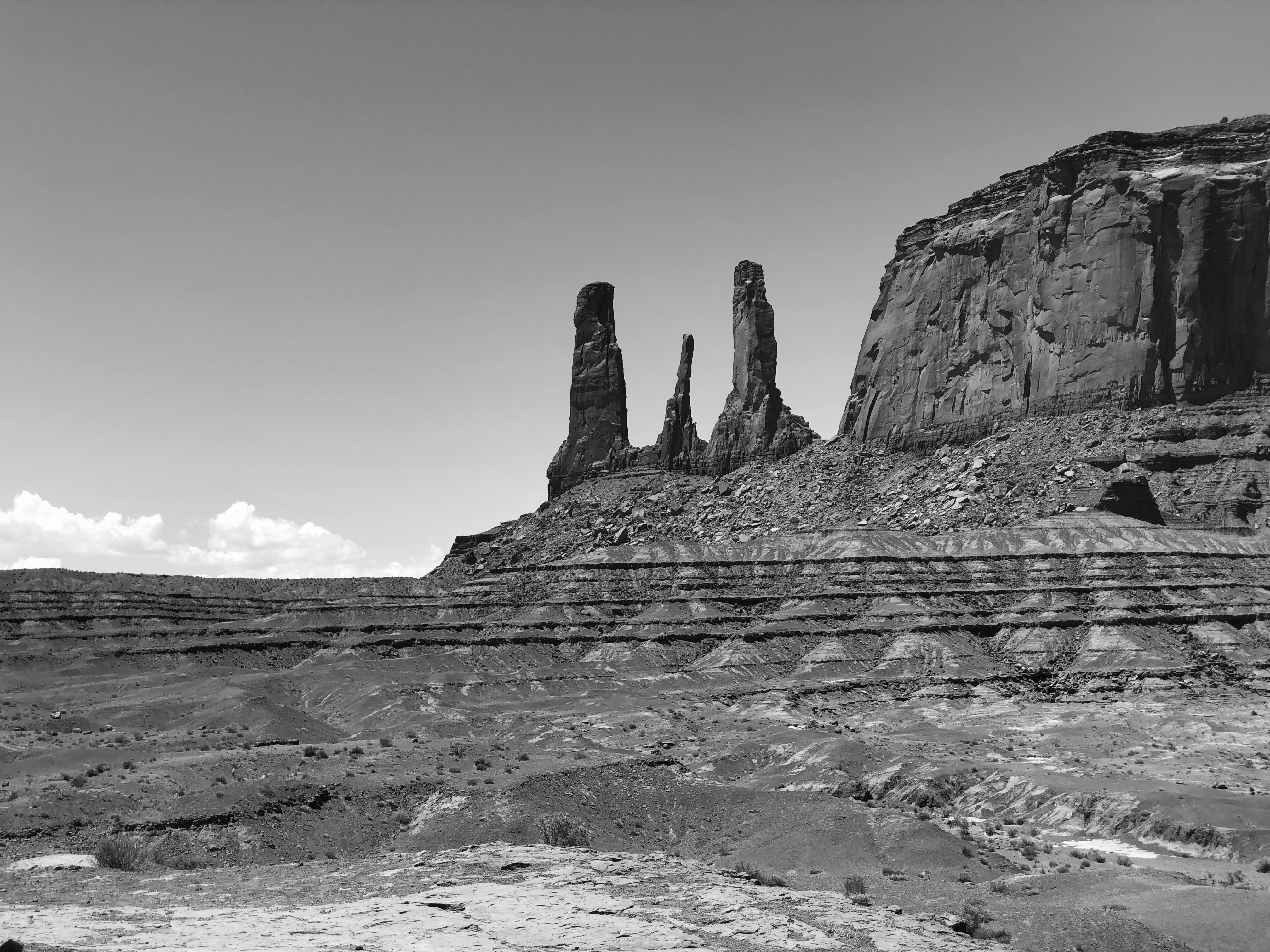
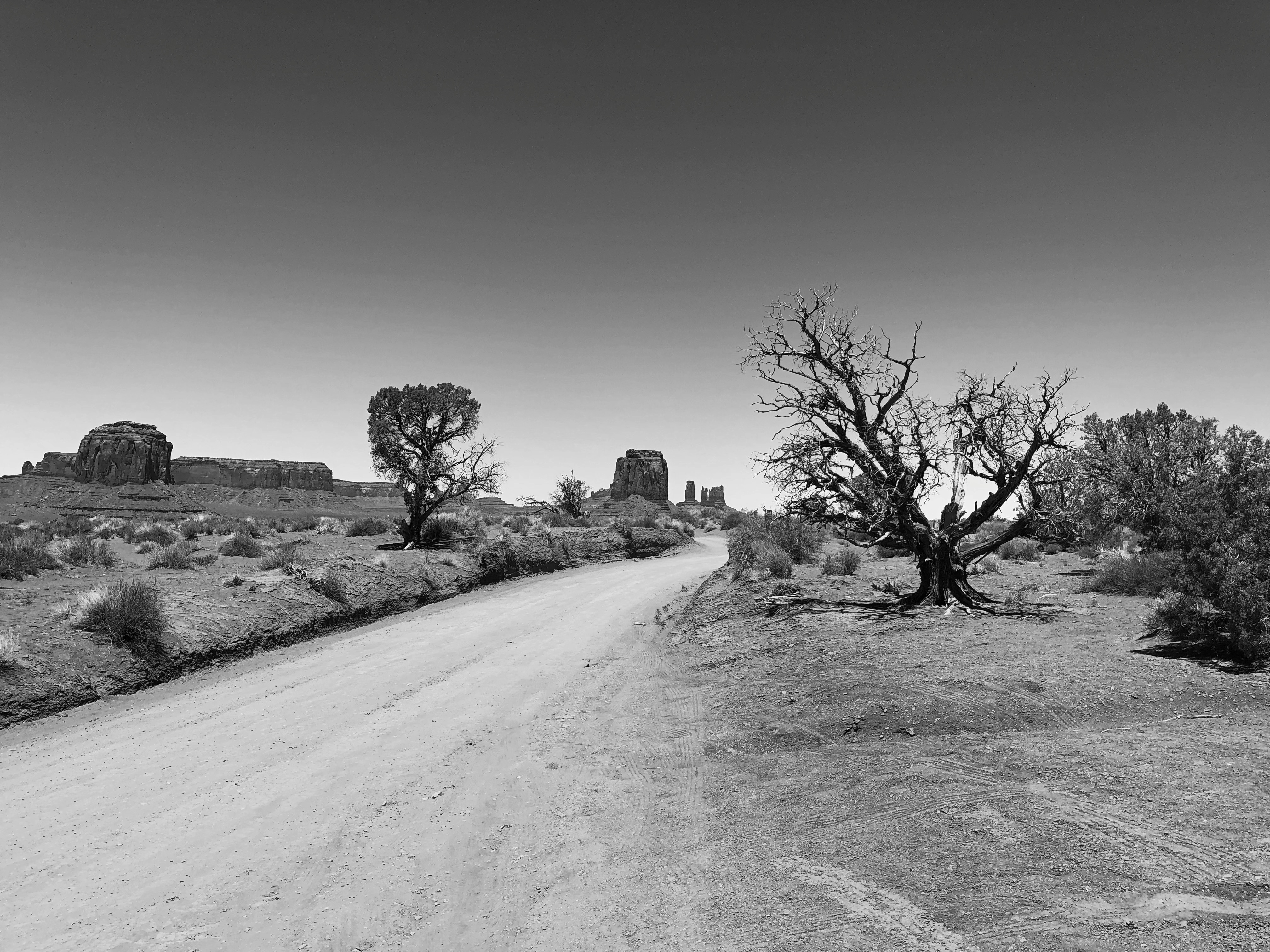
Monument Valley Navajo Tribal Park

Back to posting on the last day of May. Memorial Day and Decoration Day coincide this year, which won’t happen again until 2033.

“Throughout the 19th century, white settlers considered the Monument Valley region — like the desert terrain of the Southwest in general — to be hostile and ugly,” notes Smithsonian magazine. “The first U.S. soldiers to explore the area called ‘as desolate and repulsive looking a country as can be imagined,’ as Capt. John G. Walker put it in 1849, the year after the area was annexed from Mexico in the Mexican-American War. ‘As far as the eye can reach… is a mass of sand stone hills without any covering or vegetation except a scanty growth of cedar.’ ”

Tastes change. I imagine Capt. Walker’s reaction was entirely reasonable for his time, considering he and his men came by horse and mule, carrying everything they needed, living meagerly and fully aware that their surroundings could kill them all too easily, or at least make for days of uncomfortable misery, whatever season it was. Monument Valley was a vivid ordeal for them, not a notion fostered by cinematic entertainment.

We have it a good deal easier here in the 21st century, and am I glad. All it took for us to reach Monument Valley Navajo Tribal Park on May 18 was a roughly two-hour drive from Page, Arizona, by Toyota horseless carriage along paved two-lane roads through the Navajo Nation.

My main concern that morning — and we got up fairly early — was that I didn’t know for sure we’d get in. The park’s policy for visitors is, first come, first served, and there’s a limit to the number of people who can enter each day. Even on a weekday, I imagined joining a long line of cars waiting, only to be turned away.

Nothing of the kind happened. We got to the entrance booth with no one ahead, paid $8 a head, and got in to the place known as Tse’Bii’Ndzisgaii in Navajo. First stop, a fully modern visitor center.Monument Valley Navajo Tribal Park
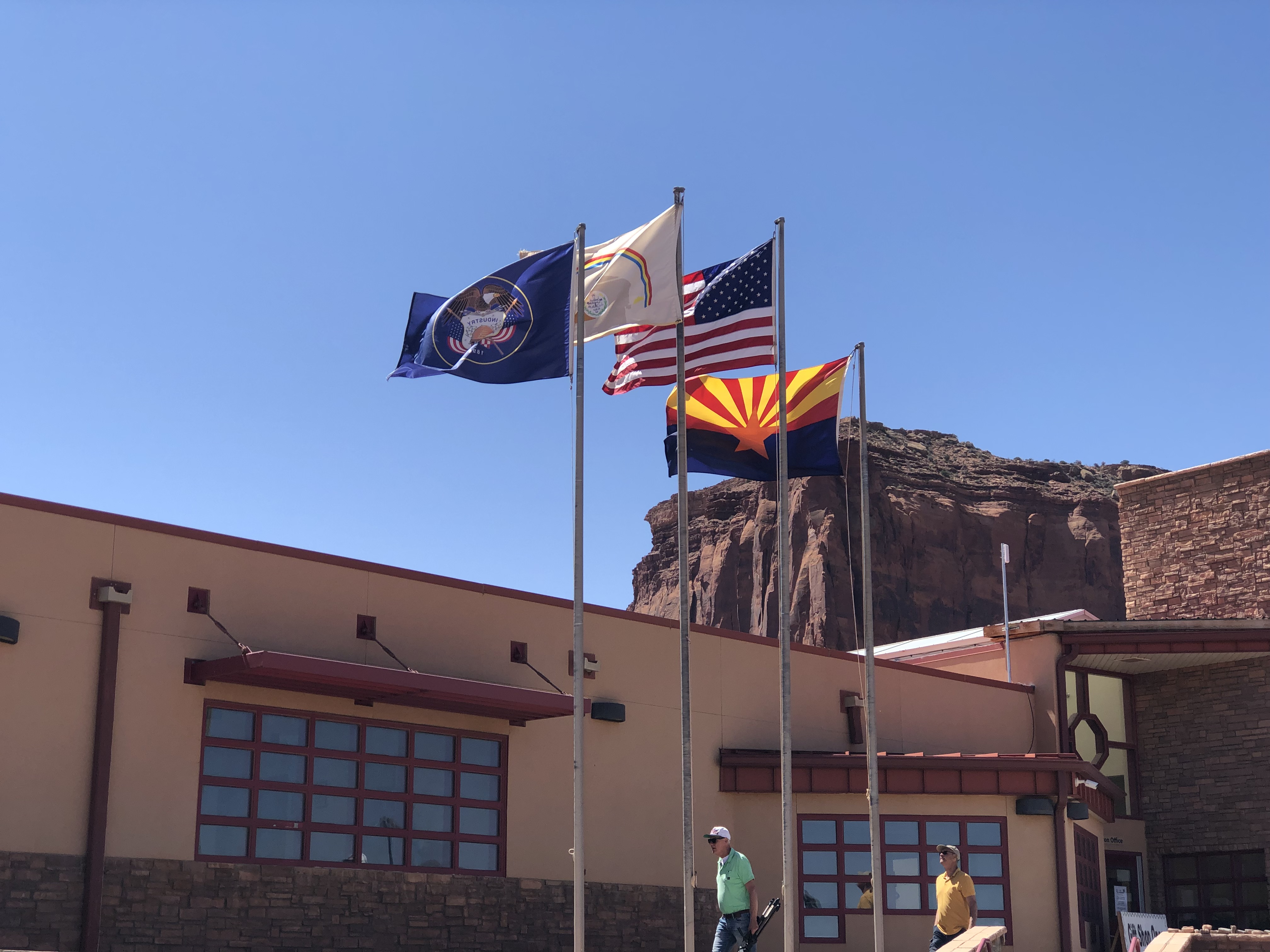
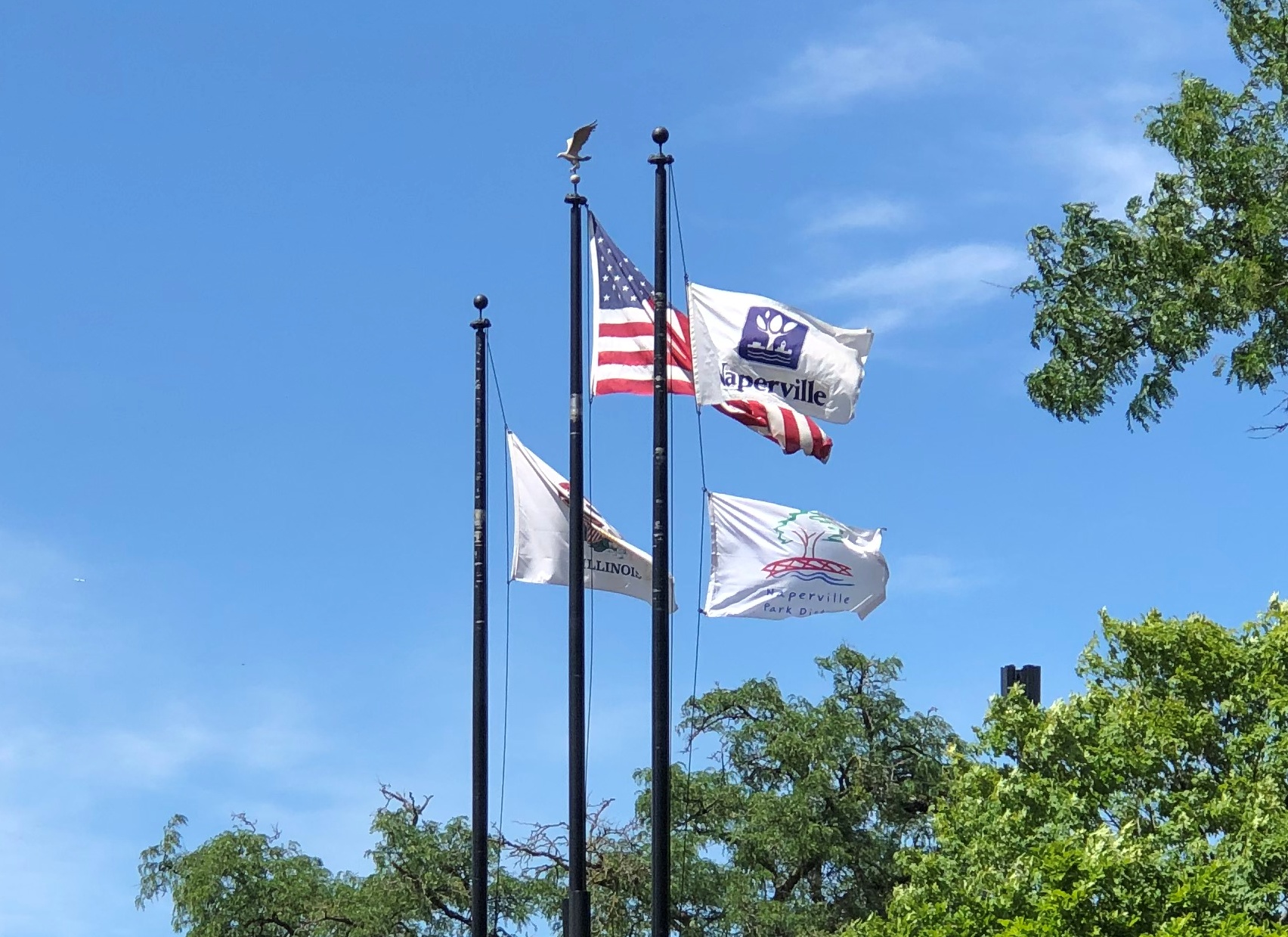
The wind whipped the four flags in full motion: Utah, the Navajo Nation, the United States and Arizona. I wasn’t familiar with the Navajo flag, but I am now.

Something I didn’t know until we entered the park and saw a number of private roads leading off to residences in the distance: people live in Monument Valley, unlike in a national park or monument. I expect ranching and running tours are their main occupations, along with selling the products of Navajo craftsmanship to visitors.

For $8 a head — an absolute bargain, if you asked me — you get to drive around a 17-mile unpaved loop road in the park, dusty and red as Mars, but only occasionally bumpy. The road doesn’t venture that deep into the park, which measures nearly 91,700 acres. Longer treks by foot or horse or jeep are possible, available only with Navajo guides, and no doubt offer rich rewards to those undertake them.

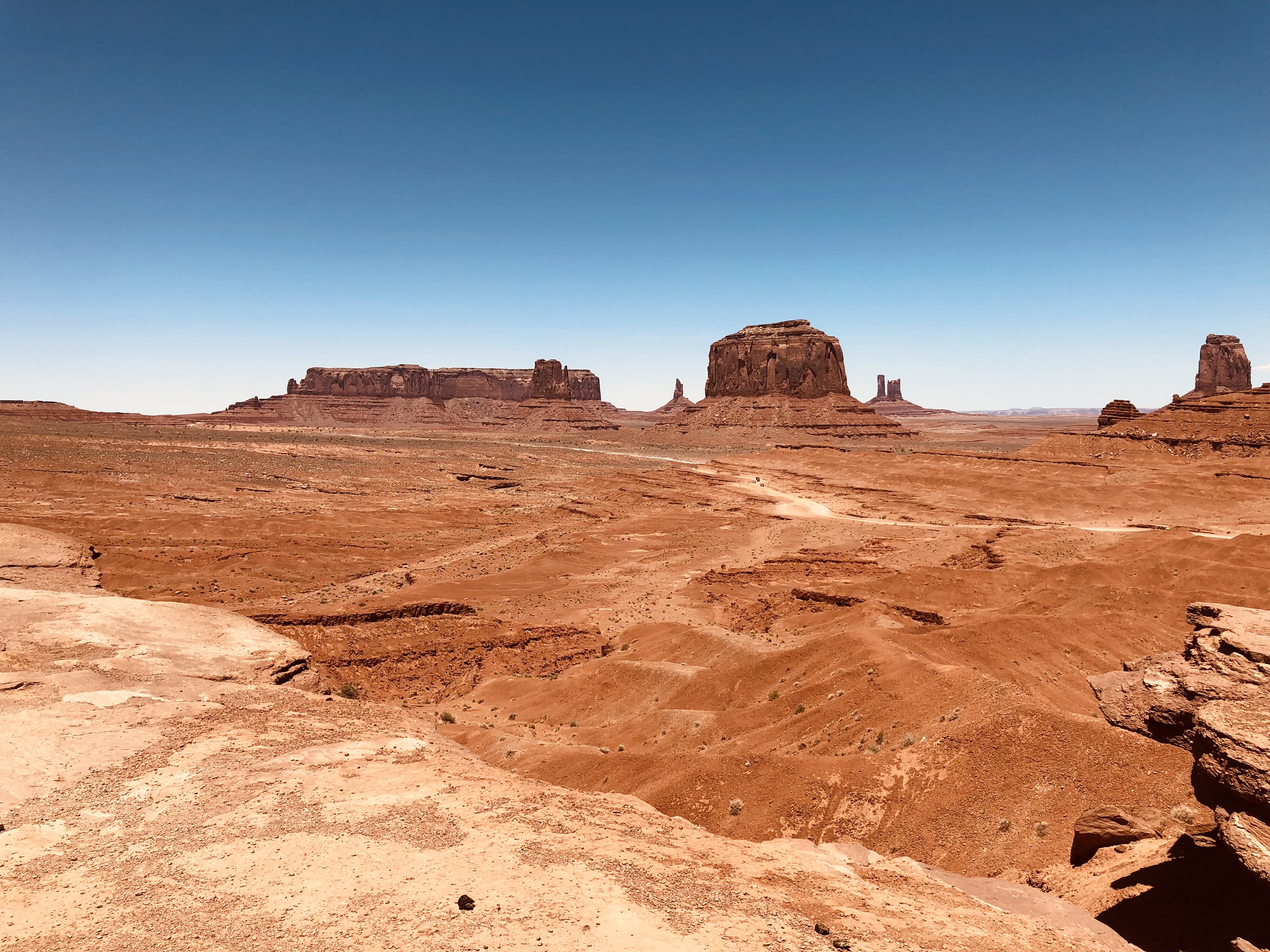
Even so, the drive is incredible, passing formations of astounding size and shape and contour and color. It’s easy to see what enamored John Ford about the place.
Speaking of the director, the park honors him with a spot called John Ford Point.

As well it should, since he put Monument Valley on the map, as far as the more receptive imagination of the 20th century was concerned, though naturally he wasn’t the first outsider of that period to visit — the likes of Zane Grey and (of course) Theodore Roosevelt came earlier. Harsh terrain, still, but the material progress of later years allowed later visitors the leisure to appreciate the place in a way that Capt. Walker could not.

Ford must have known he had a cinematic treasure in view when he had the cameras first deployed here for Stagecoach. The world clearly agreed.

Of Ford’s many forays into the valley, Smithsonian has this to say: “The shoots were usually festive, with hundreds of Navajo gathering in tents… singing, watching stuntmen perform tricks and playing cards late into the night. Ford, often called ‘One Eye’ because of his patch, was accepted by the Navajo, and he returned the favor: after heavy snows cut off many families in the valley in 1949, he arranged for food and supplies to be parachuted to them.”

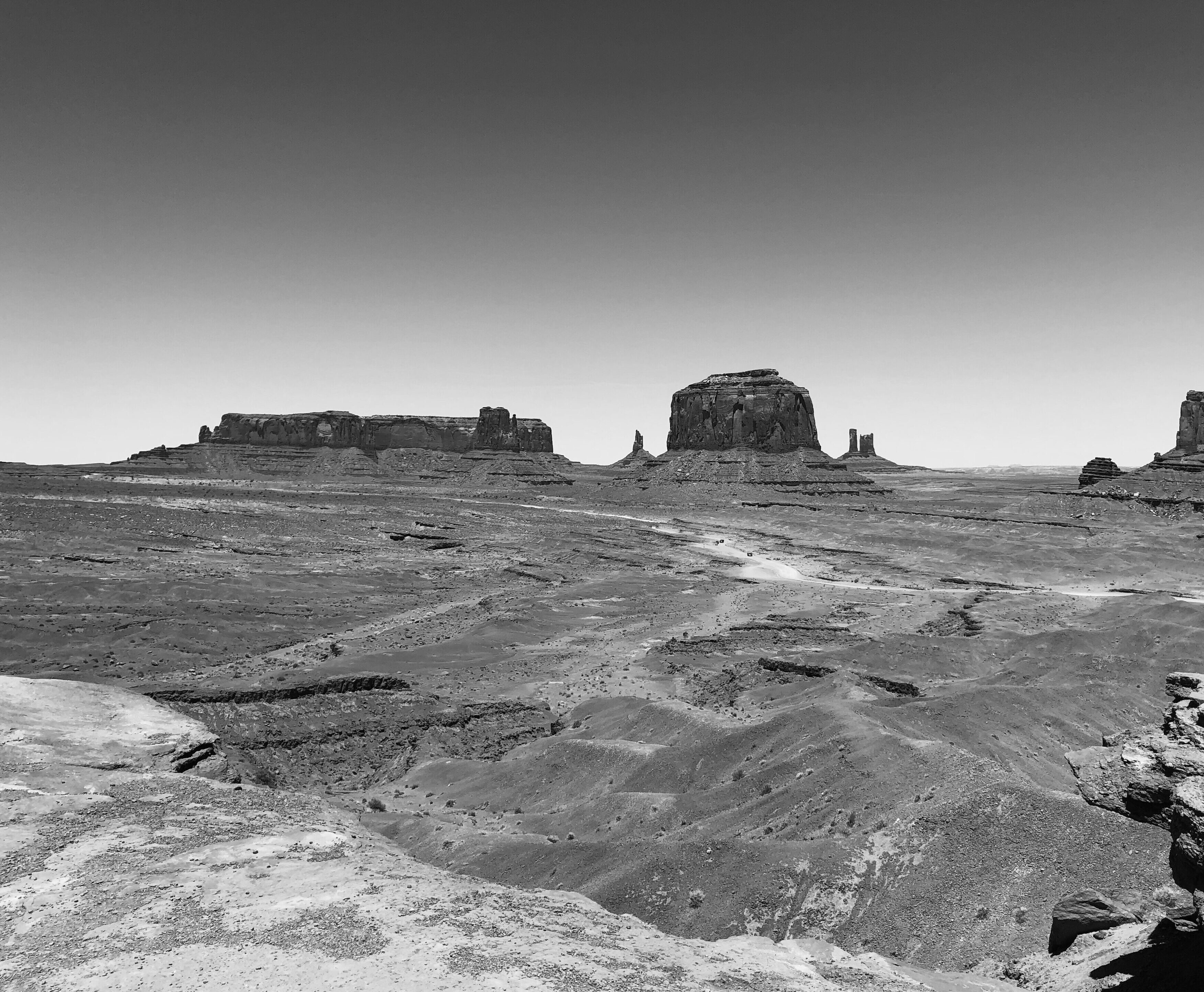
Though it wasn’t the first place we visited on the drive — in fact, it was nearly the last — the instantly recognizable view from John Ford Point is going to go first here.Monument Valley Navajo Tribal Park Monument Valley Navajo Tribal Park Monument Valley Navajo Tribal Park
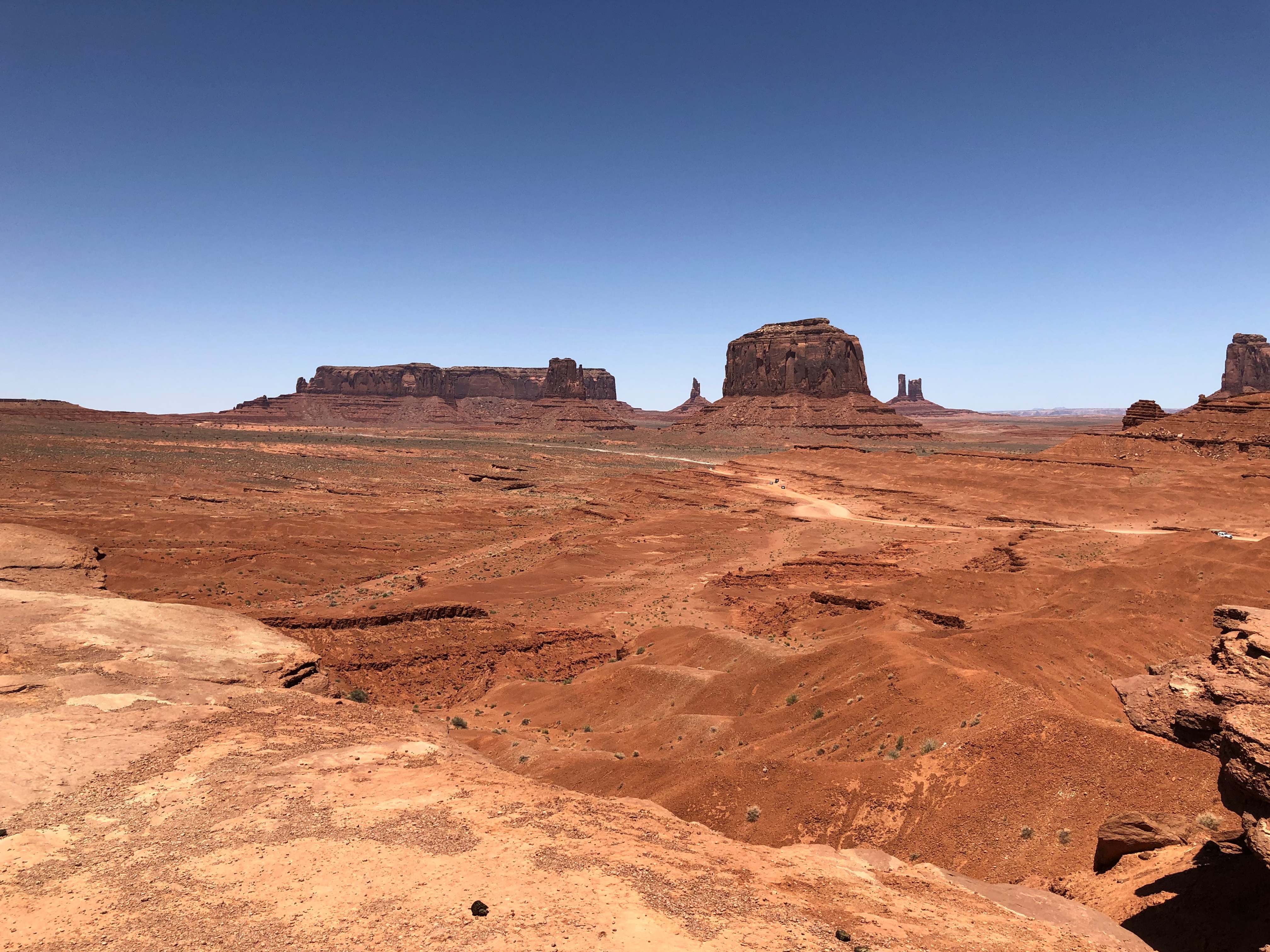
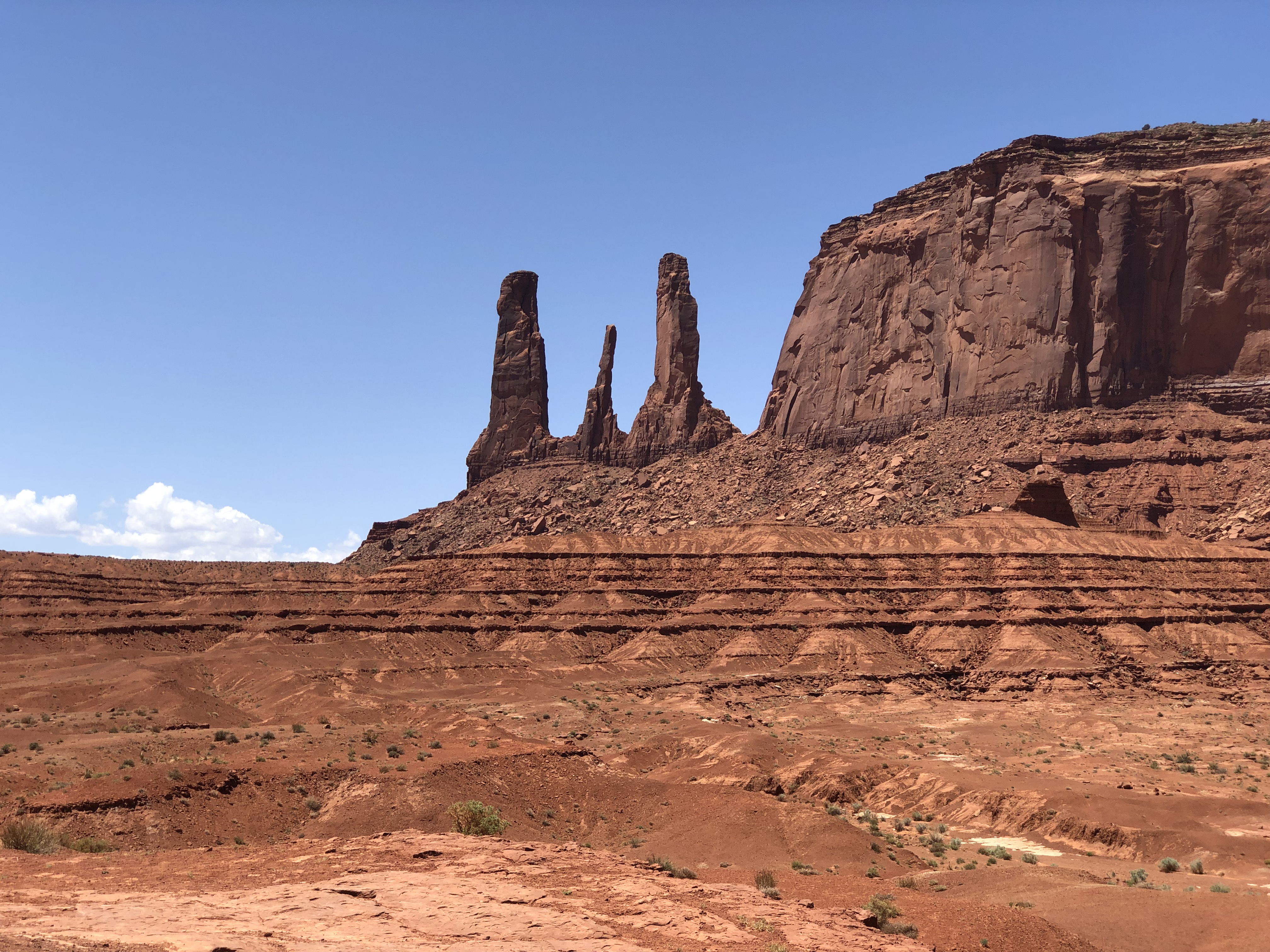
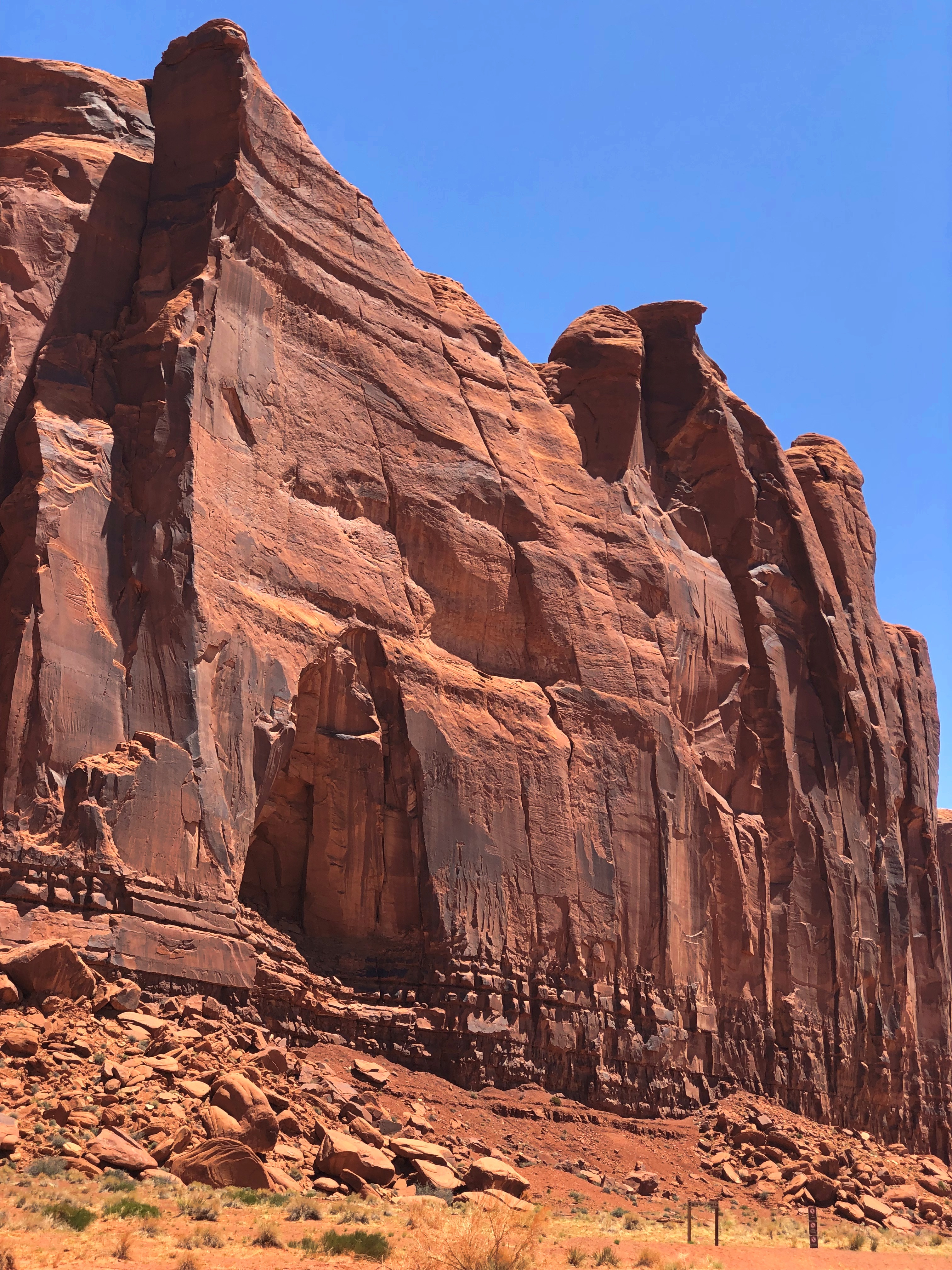
Because later movies and commercials returned to this particular view so often, the other marvels on the road aren’t as famed or recognizable. But they’re equally worth a good look. Just a sampling below; there was something remarkable just about everywhere you look.Monument Valley Navajo Tribal Park
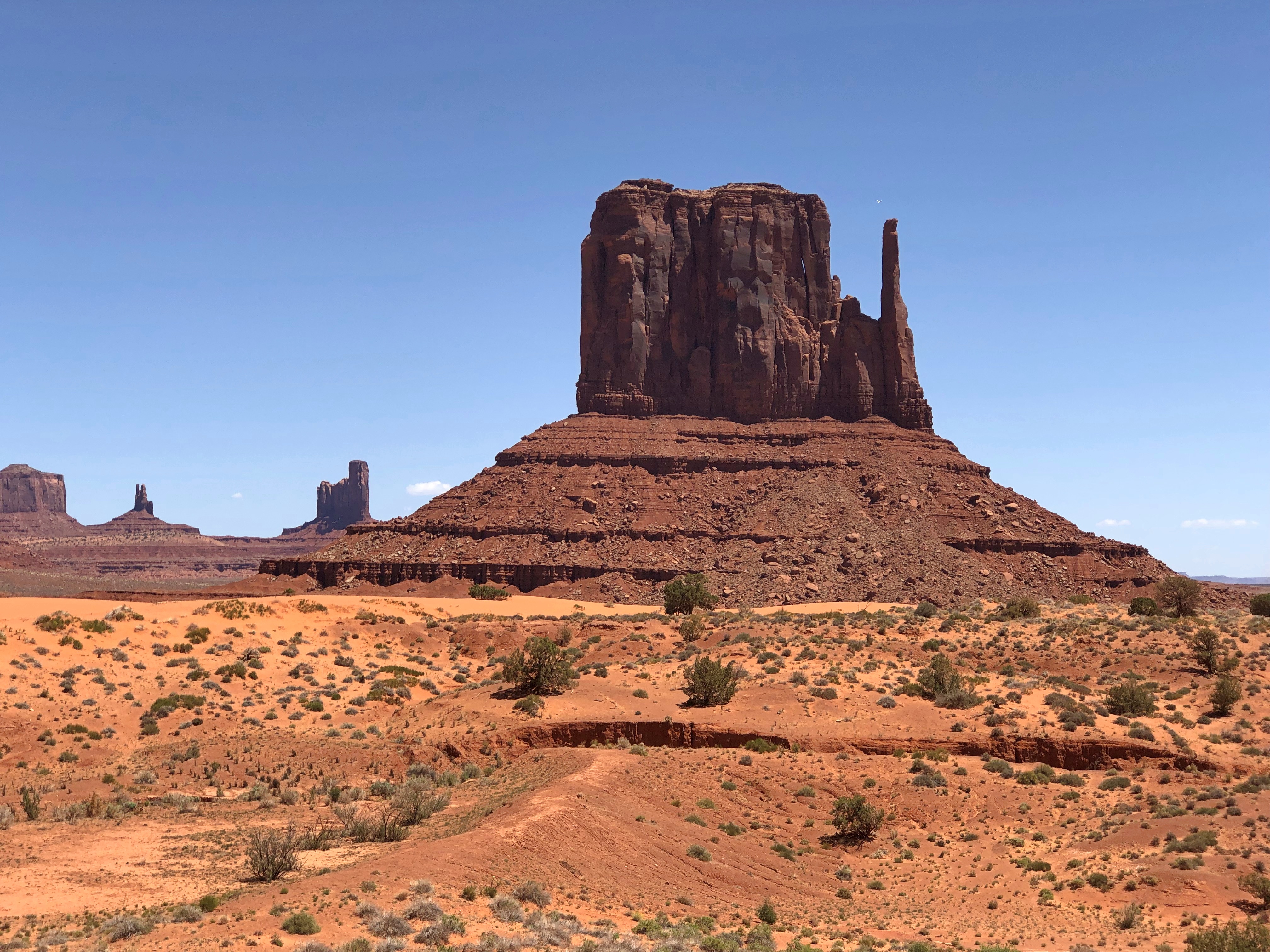
Monument Valley Navajo Tribal Park Monument Valley Navajo Tribal Park Monument Valley Navajo Tribal Park

Aside from the rock giants, the terrain itself fascinates, its colors so unusual to those of us from greener places.Monument Valley Navajo Tribal Park Monument Valley Navajo Tribal Park
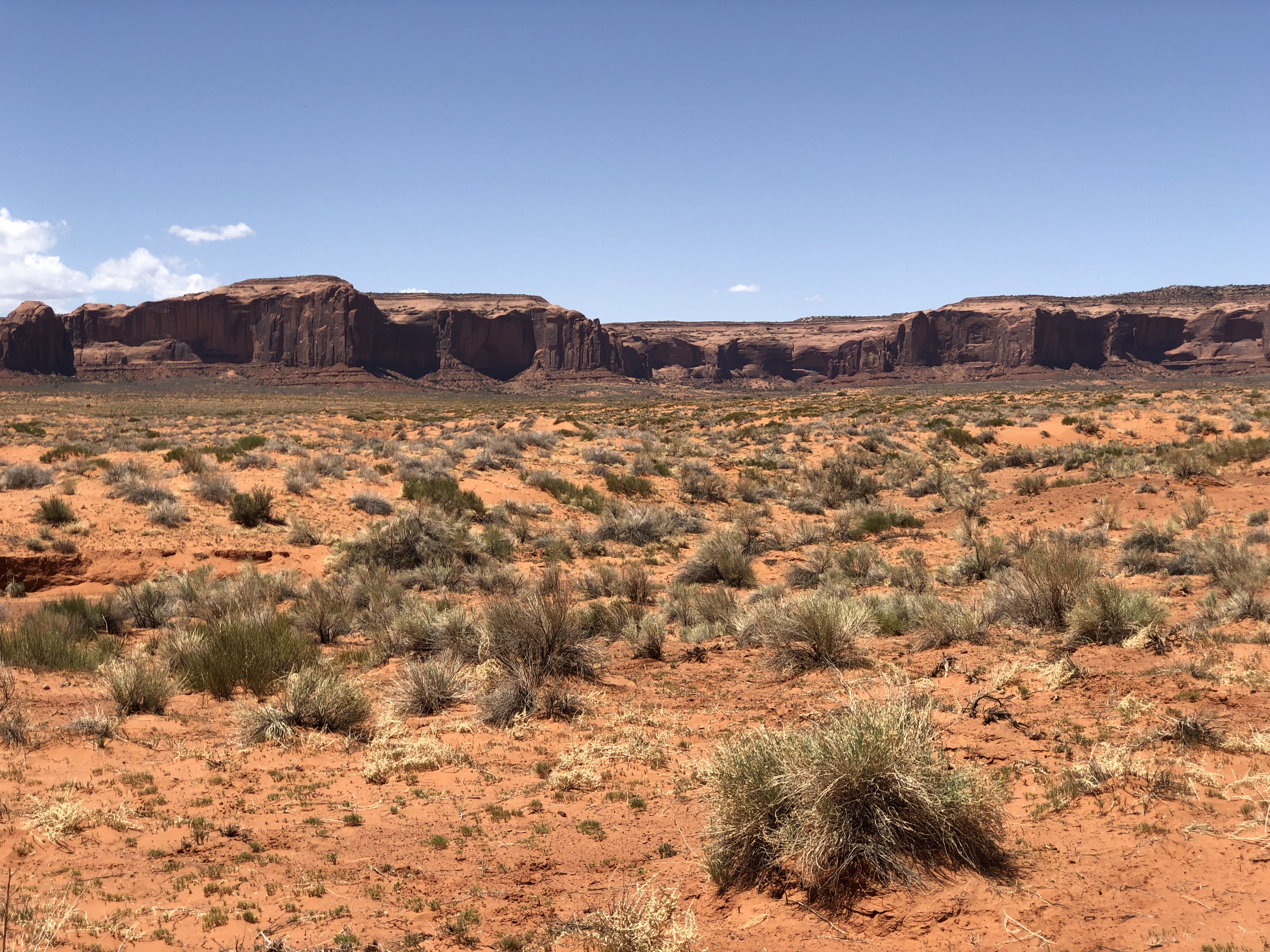
Color that the road itself shares.Monument Valley Navajo Tribal Park

Without color, the contours emerge vividly; Ford must have appreciated that, too.Monument Valley Navajo Tribal Park
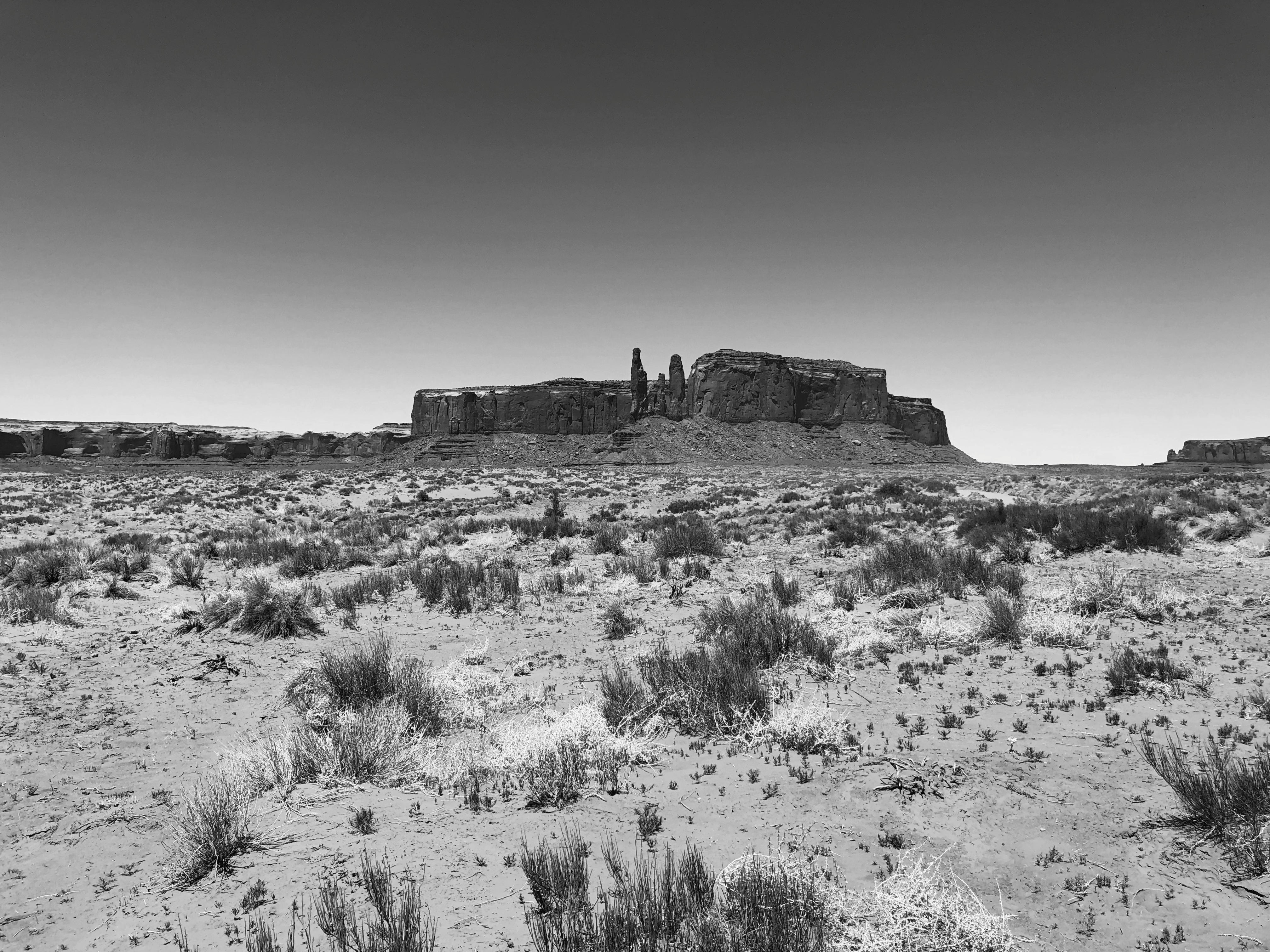
Monument Valley Navajo Tribal Park

We left the park that afternoon, but even as you drive north from Monument Valley on U.S. 163, it has one more gift to give, if you’re paying attention. I almost wasn’t. As we drove along, we noticed people ahead, standing in the road, taking pictures. They got out of the way before we reached them, but I wondered, what are they doing there?

Then it hit me, and we stopped at the next pullout in the road, maybe a fifth of a mile away, and looked back. A view almost as famed as that at John Ford Point, and certainly as arresting.Monument Valley Navajo Tribal Park
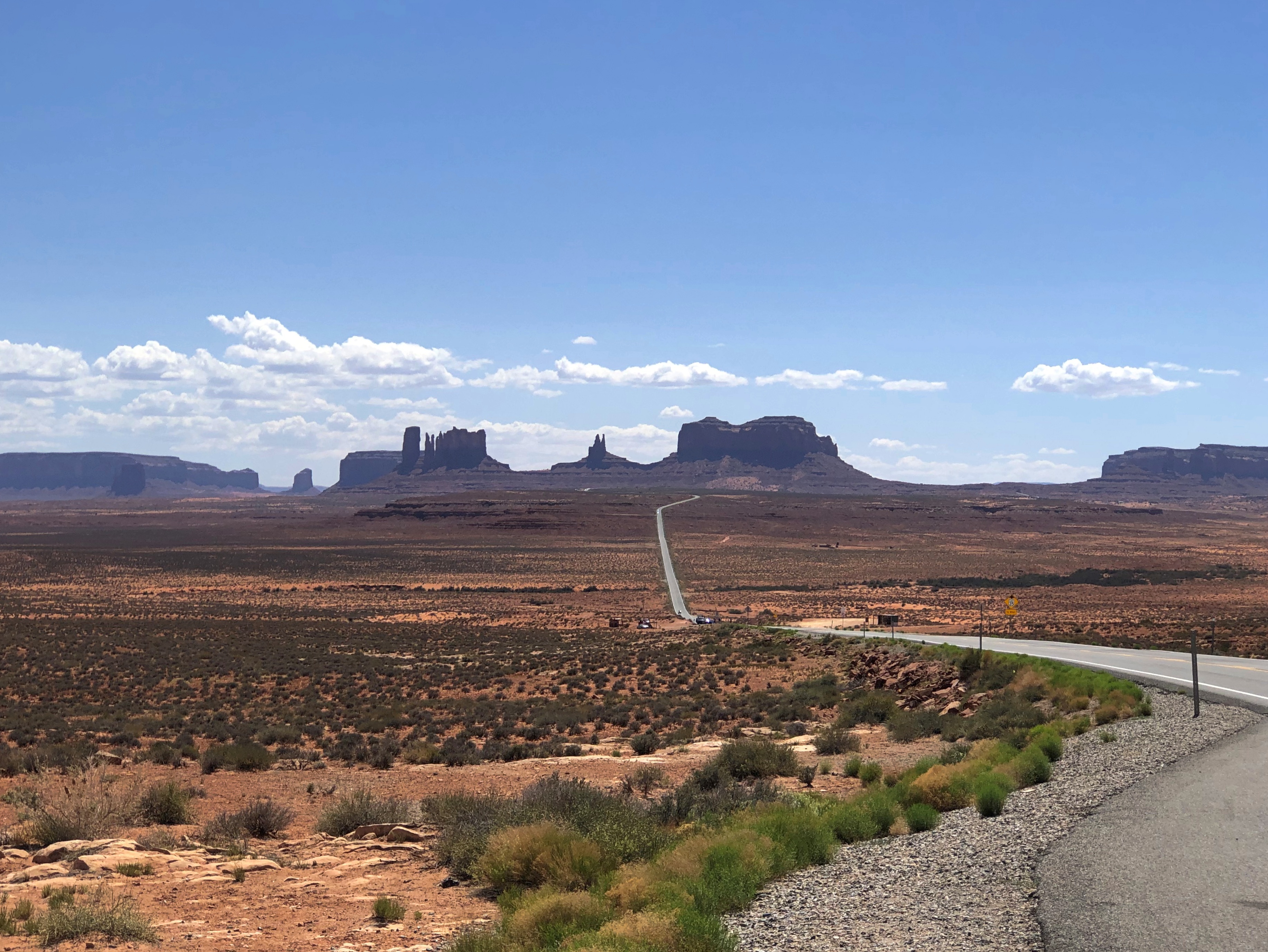
That isn’t quite the “Forrest Gump Stopped Here” place, but I wasn’t about to go back where those yahoos had been standing in the road just for that (unlike Stagecoach, it isn’t a movie I like very much). In fact, I wouldn’t have remembered the view was made famous in that movie, either, but some other people had stopped where we were, and I overheard them talking in German about Forrest Gump.
Thursday Grab Box

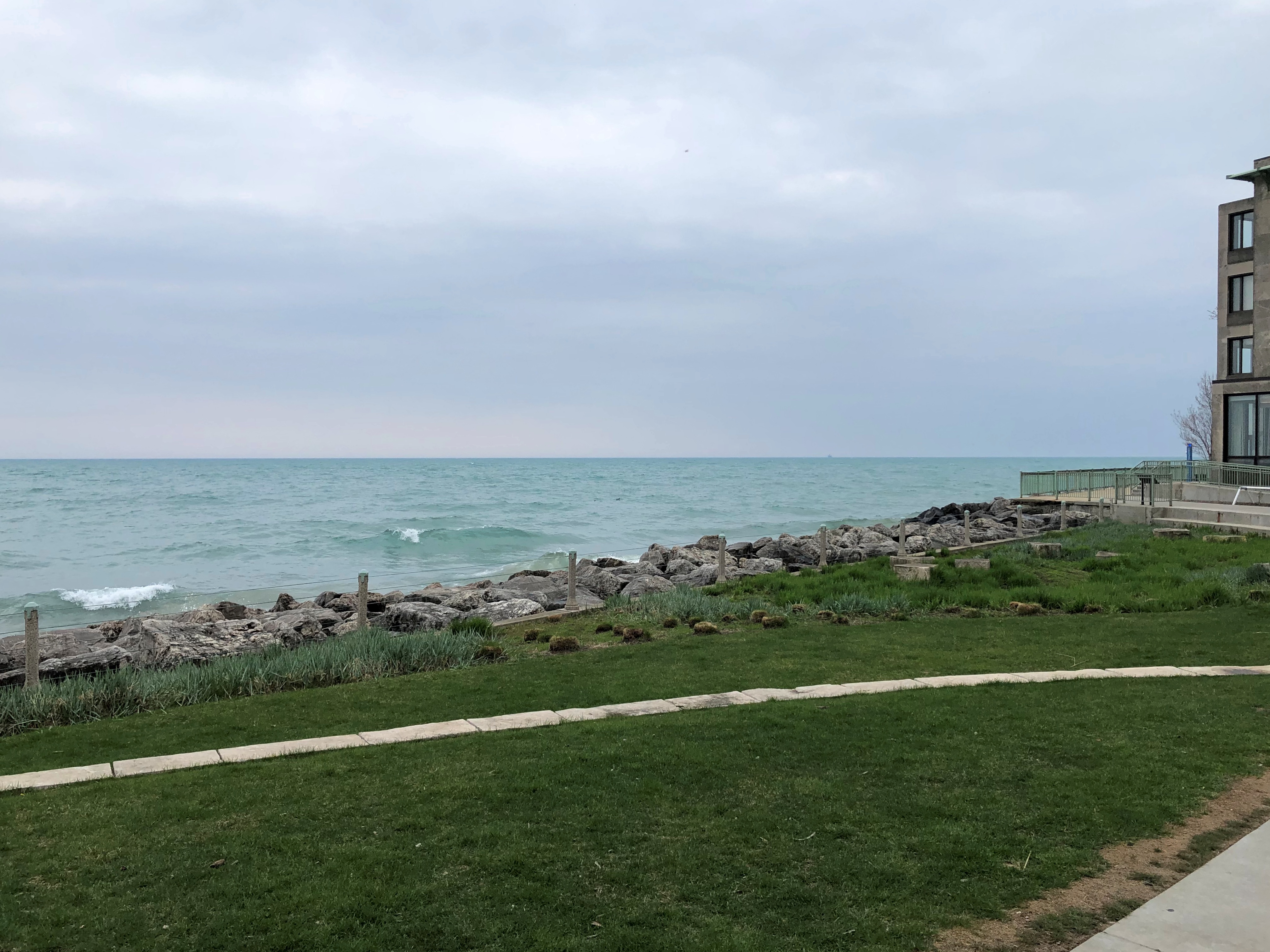
Lake Michigan was active but not stormy on Saturday. Views from Loyola.Lake Michigan 2022 Lake Michigan 2022

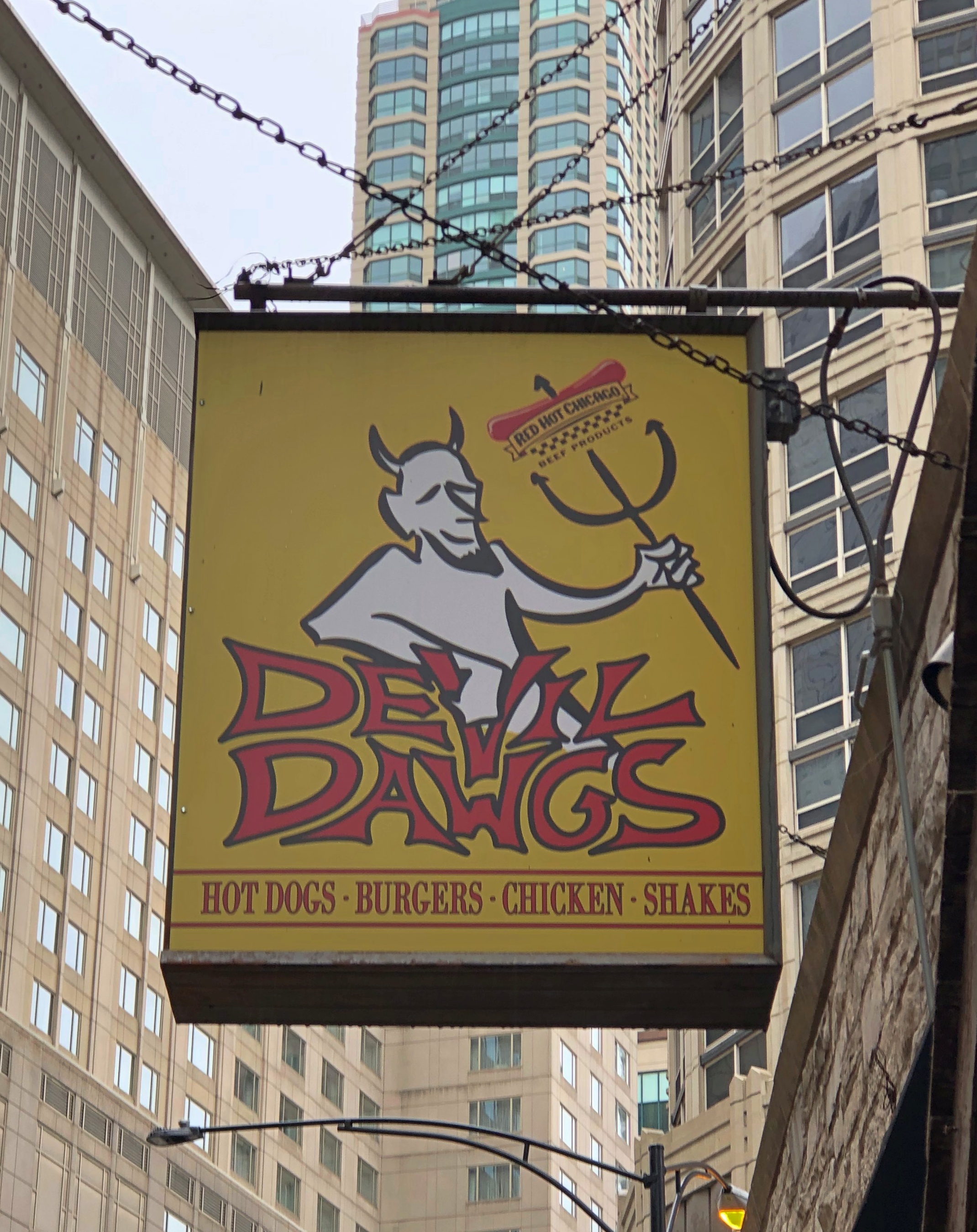
There’s a coffee-table book in this: chain-hung Chicago signs.
Devil Dawgs Chicago

High-res images, of course. Can go on the same coffee table with Austin neon.

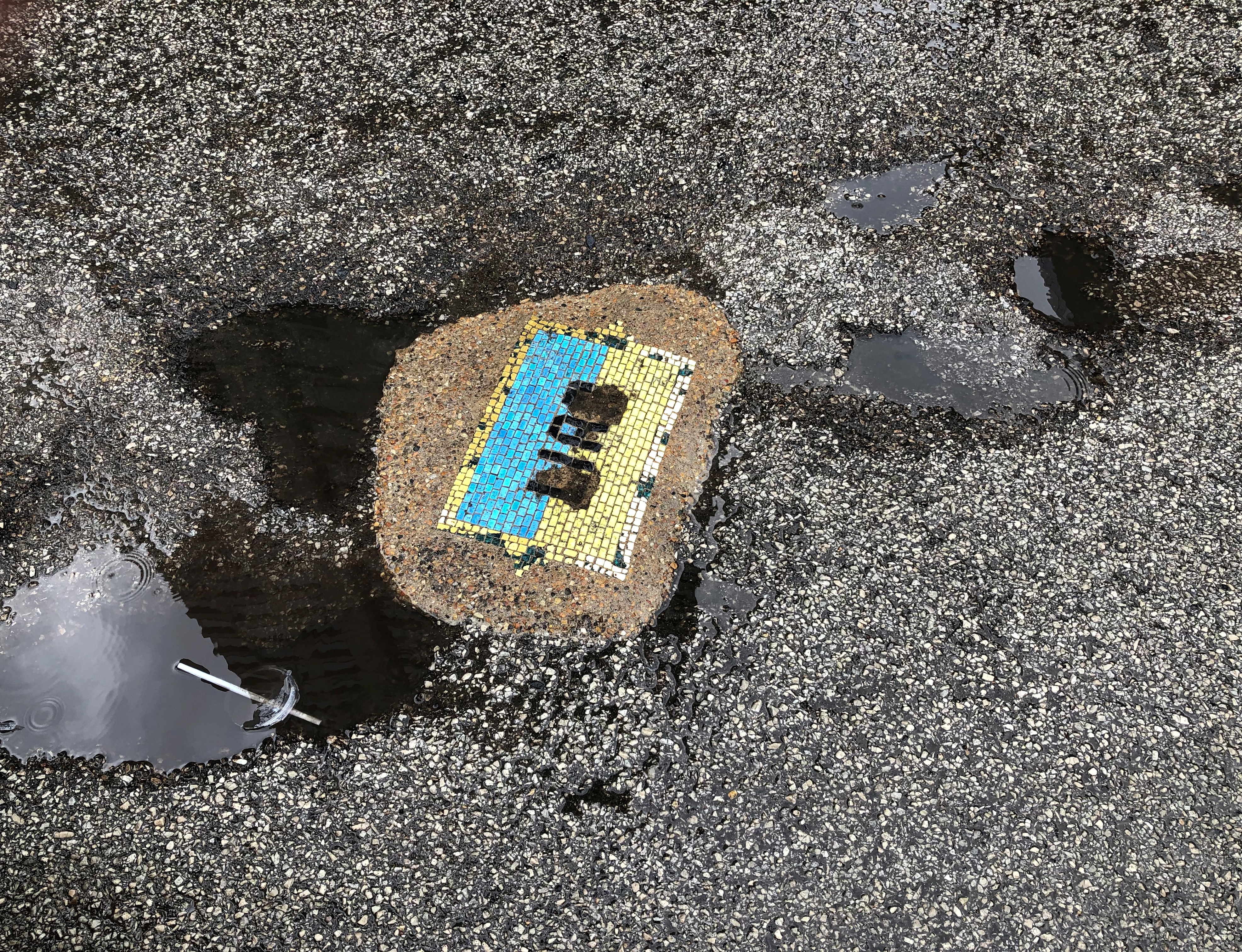
Also Chicago. Specifically, on the street. Make that in the street: a Toynbee tile-like embedment doing its part to remind us of the beleaguered Ukrainians.

Recently I started reading Illegal Tender, subtitled “Gold, Greed and the Mystery if the Lost 1933 Double Eagle,” by David Tripp (2004). A remainder table find some years ago; nice hardback. As it says, the book tells the intriguing (to me) story of the 1933 Double Eagle, which tends to make lists of the world’s most valuable coins, along with the likes of the Brasher Doubloon, the 1804 Bust Dollar and the 1913 Liberty Nickel. Coins so special that their names are capitalized.

On that particular list, I hadn’t heard of the 723 Umayyad Caliphate Gold Dinar, but wow, what a name, with images of ancient treasure in distant lands woven right into the words. The 1913 Liberty Nickel was the MacGuffin in an episode of the original Hawaii 5-0. Namely, “The $100,000 Nickel,” which first aired on December 11, 1973.

“A rare 1913 Liberty Head nickel, one of only five ever made, is to be auctioned at a coin show held at the Ilikai Hotel,” says the imdb entry on the episode. “European master criminal Eric Damien gets con artist and sleight-of-hand expert Arnie Price freed from jail so that he can switch a cleverly-made fake with the original before the auction. But things do not go as planned, as Price, fearing capture, tries to dispose of the nickel in a news rack, and the chase is on to recover the nickel before anyone else finds it.”

Naturally, McGarrett and his men recover the nickel. I don’t remember that specifically, even though I saw that episode either that day or on repeat, but that’s a safe assumption for the denouement. I do remember that I’d heard of the nickel before, probably in a Coins or Coinage article.

I think the episode at least partly inspired one of the Super 8 movies I made with friends David and Steve in junior high, The $300,000 Dime, which I think involved Swiss operative Hans Lan foiling the theft of the titular dime. Sadly, this and the other Hans Lan story, The Assassin, plus the SF non-epic Teedees of Titan and a couple of others whose names I’ve forgotten, are lost as the Hanging Gardens of Babylon, except that no one cares.

An NFT 42 Years in Development

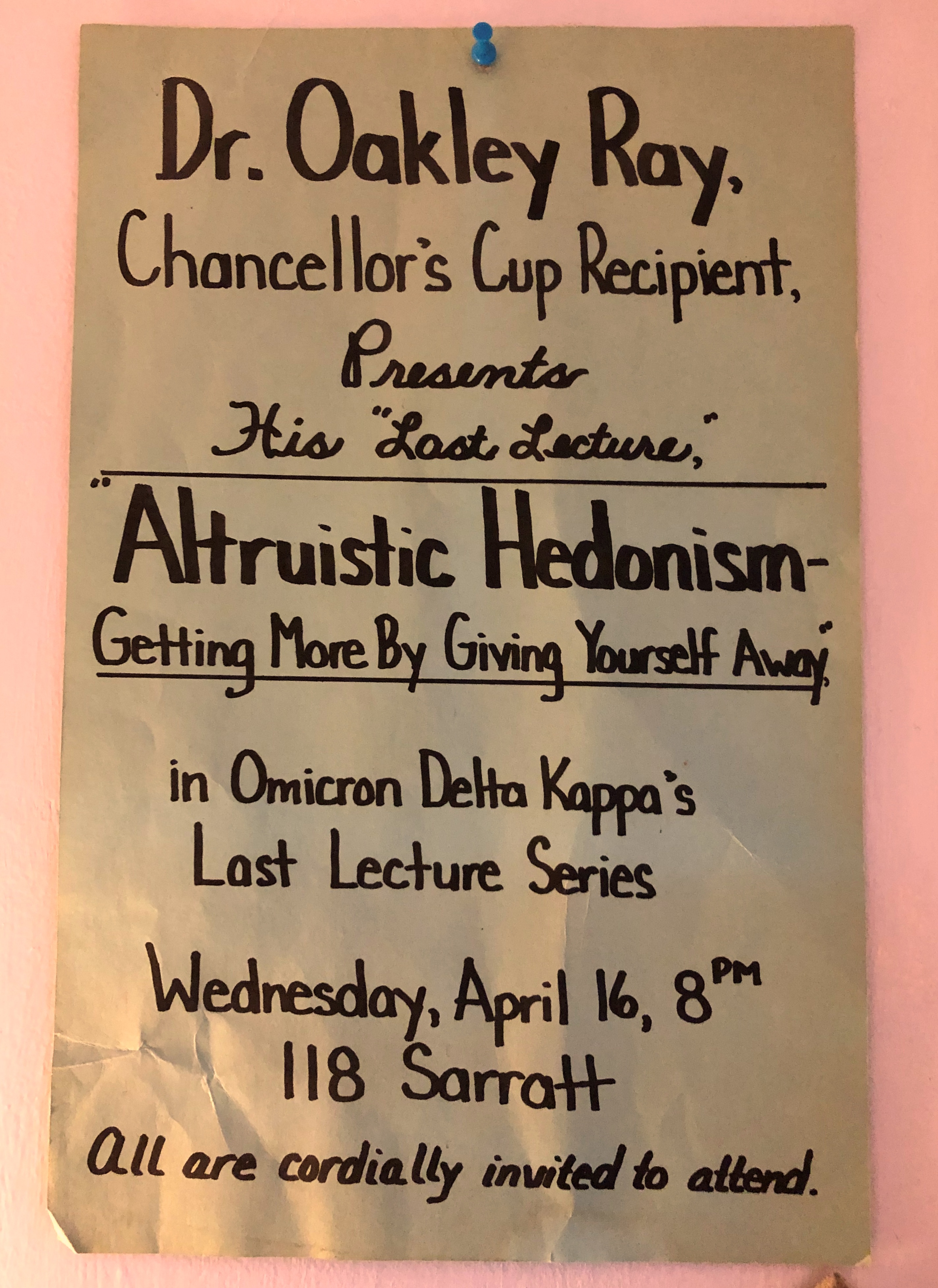
Not too long ago, I found this poster tucked away in a corner of my house. The year had to have been 1980, considering that April 16 was a Wednesday that year. Not only do I not remember the event mentioned on the poster — a lecture at Vanderbilt — I don’t remember why I saved it in the first place.

So I decided to post it in the downstairs bathroom, which has been pending renovation for some years now. At 17 inches tall and 11 wide, it covers 187 square inches of bald and unconvincing wall.

I remember Oakley Ray, VU professor and text book author, but faintly. I audited one of his classes, attending maybe 10 times at most. I don’t know whether I went to the event or not, but I do remember one other thing from that week, something that stands out a lot darker in memory — a dark star of a memory from April 1980, seeing Eraserhead at a movie theater.

NFT 4.24.22Simply put, that movie depicted a nightmare. That was my take on it 40+ years ago, and I don’t see any reason to revise it now. I emerged from the theater that night positive I never needed to see it again. I’ve stuck to that, too.

Never mind all that. I’ve created a bit of digital artwork that’s an NFT. Bidding starts at $100,000.

An Excellent Story for Earth Day, Mrs. Maisel

It’s about time, backyard croci.

Today was warm, cloudy and windy, until the clouds let go a lot of water, and then another -y adjective came into play, rainy. Tomorrow will be rainy, windy and chilly, and it won’t get warm again till after Easter, I hear.

Got an email pitch the other day, one of very many. There was a fair amount of verbiage to it, but the heart of the matter was this line: Are you interested in speaking to XY, a holistic health expert, about the sharp rise in the use of anti-anxiety drugs and why taking hemp extract is better for your health?

The short answer is, no. A longer answer would also be no. And I feel not a jot of anxiety about my decision.

And another pitch, at about the same time:

We think this is an excellent story for Earth Day that your audiences will love. The nationally acclaimed eco-feminist artist XX is celebrated as the real-life Marvelous Mrs. Maisel of the art world.

Is she now? Got into art one drunken night when she was on the outs with her husband? I know that show has won some Emmys, and I’m enjoying episodes of the recently dropped fourth season (once a week), but it’s still interesting that the publicist believed it would be a widely enough known reference to make such a statement, silly as it is.

Thursday Grab Bag

Sluggish progress toward spring here. But some progress. Plants in a nearby park.the flowers that bloom in the spring, tra-la

The croci in my own yard have been very slow this year — no blooms even now. I don’t keep an exact track every year, but that seems a couple of weeks late. Some years, I remember seeing their very first green sprouts at the end of February. And of course, croci don’t mind a little snow.

On a bench in the same park. What is that thing?Soofa

A Soofa sign. The company web site says it makes electronics for advertising or as part of “smart city” communications. This doesn’t look like that, and it also looks inactive. Since I’d never noticed it before, it could be that it isn’t operational yet.

Or is it? According to a park district web site I couldn’t access fully — but could see a bit of, from my Google search — you can charge devices there. Solar-powered, and the top does resemble a solar panel. Wonder how much juice it has these many cloudy days.

The latest snack food to enter the house: Calbee brand Takoyaki Ball-flavored corn snacks. Though Calbee is Japanese, not a product of Japan, but rather Thailand, where ingredients and labor are no doubt cheaper.

No octopus, which is the main ingredient of actual takoyaki, is listed among the ingredients. Still, it’s flavored to taste like takoyaki, which it does, though the simulation isn’t quite spot-on. A little too sweet, Yuriko said, and I agree. Sweetened for North American tastes? Just how many North Americans are going to buy takoyaki-flavored snacks? But not bad.

Calbee, incidentally, began as a candy company in postwar Japan (1949) and acquired its name in the mid-50s, a portmanteau of “Calcium” and “Vitamin B1.” Soon the company found its way into crispy snack foods, especially wheat crackers. I suppose that was something of a novelty in Japan at the time, compared with rice crackers, which go way back. Calbee’s early confections caught on, and so the food technologists there have been working hard to make new varieties of snacks since then.

I see that the fifth season of Better Call Saul has appeared on Netflix. That’s good. I’ll watch it. Once a week or so, that is. That’s how new TV should be, according to Leviticus, I think, though it doesn’t apply to shows that might have been watched every day after school.

Proto-Spring Break

Time for a spring break, even though it isn’t quite spring yet here. Proto-spring is more like it. That winter-spring tug o’ war has started, with winter still having the upper hand, and the most visible result being mud puddles. Anyway, back to posting around March 13.

Mostly I remember metal showman Dee Snider for sparring with what-about-the-children Tipper Gore in the mid-80s over naughty words in popular songs, and for testifying before the U.S. Senate (along with interesting bedfellow John Denver) in favor of free expression. By all accounts, the Twisted Sister frontman acquitted himself well in those spats.

Also, I like that he goes by “Dee.” Still, metal has never really been my cup of meat. Even so, I took the occasion this week to listen to “We Aren’t Going to Take It,” Twisted Sister’s best-known song (released 1984) and something I haven’t heard in years. Apparently a number of groups have taken inspiration from it over the decades, and I can see why. Though the Twisted Sister video frames the song in terms of teenaged rebellion, most of the lyrics are broad enough to apply to most any resistance to authority or oppression.

We’re right
We’re free
We’ll fight
You’ll see

They’re also simple enough to be easily understood, even if English isn’t your first language. No wonder some Ukrainians have taken up the song. Snider reportedly has approved. But he doesn’t approve of every group who wants to use the song.

“People are asking me why I endorsed the use of ‘We’re Not Gonna Take It’ for the Ukrainian people and did not for the anti-maskers,” Snider said recently in a tweet. “Well, one use is for a righteous battle against oppression; the other is a[n] infantile feet stomping against an inconvenience.”

Snider continues to acquit himself well.

Pre-Chekov

The other day I watched an episode of mid-60s sitcom I had heard of, but never had seen before. It was playing on a nostalgia channel I have access to. A show that only lasted a season, which makes it unusual as a rerun (and why no Camp Runamuck, which was on precisely the same season?).

I decided to watch the whole thing because in the first minute or so, Chekov showed up. That’s what came to mind instantly when I saw him. It took me a few minutes to remember the actor’s name. About two years before he started on Star Trek; just a young-ish character actor at the time (29).

In that episode, he played a Swedish character. His dialect wasn’t so different than the faux Russian he would later do, though you could tell he was trying to add a bit of Swedish to the sound. I’m not an expert on Swedish, but I suspect that the sound wasn’t particularly authentic. But why would it have to be?

As for the show itself, it wasn’t that bad. Or that good. Mildly amusing, occasionally, and decidedly dated. Being only a little older than the show itself, I completely understand how that happens.

Snowy Thursday

As expected, snow followed rain today. But at least yesterday’s rain didn’t leave an ice glaze everywhere. Especially underfoot. I salted a few patches of driveway this morning, but on the whole the surfaces were dry till the snow started around 1 p.m.

Views of the snowy scene this afternoon from the front door.

Wish I could say I wrote this, but no. By a random soul online: It’s only a comorbidity if it comes from the Comorbois region of France. Otherwise it’s just a sparkling pre-existing condition.

I heard a song by a band called Modest Mouse the other day on the radio in the car. Apparently they’ve been around for 30 years, but I miss a lot my not paying attention to much.

Interesting song, though I don’t remember what it was. Maybe that’s because I was busy imagining that Modest Mouse is Mighty Mouse’s lesser-known brother. He didn’t care for the spotlight, and never went into the Mouse family business of saving the day.

Text message from Ann not long ago (edited for caps and punctuation): Seeing Princess Bride at the Normal Theatre.

With this pic attached:
Normal Theatre 2022

Message continued: The sword fight was really great on the big screen.

My answer: Oh yes.

Noises Off ’99 & ’20

It’s been two years since I’ve been to the theater. In February 2020, just before I went to California late that month, I took Ann to see Noises Off at the Metropolis Performing Arts Centre in Arlington Heights, where we go periodically. Logistically, it’s more convenient than theaters in Chicago, though of course that didn’t stop us from going into the city in ’19 a number of times.

Noises Off is a British farce first staged in London in 1982. It was at the Savoy until 1987, but I wasn’t fortunate enough to see it during my ’83 visit. Rather, my friends and I went to see The Real Thing at the Strand, a Tom Stoppard play also from 1982, which I remember being amusing.

Noises Off is really amusing. I didn’t see it until ca. 1999 in Chicago, and it was the funniest thing I’d ever seen on stage. Actually, it still is. Laugh out loud funny, along with the rest of the audience.

The 2020 staging was also funny, but not quite as much as the first time around. Maybe because I was older; or the cast wasn’t quite as good (though they were good); or that I knew what to expect. Still, Ann seemed to enjoy it, and I certainly did, even if it didn’t quite have the same punch as my memory of it.

It occurs to me now that I need to start going to the theater again. Health concerns haven’t been stopping me for a while now. It’s just that I got out of the habit. So I’ll soon do my bit to support regional theater, as part of that pent-up demand.

Things in the Mail

Got a circular in the mail recently — another bit of paper, in this supposed digital age — advertising live shows at a metro Chicago theater I’ve been to exactly once, maybe five or six years ago. The theater has never forgotten that, on the off chance that I’d be willing to put in the miles (and it’s quite a few) to see another show there.

Topmost act on the ad? Grand Funk Railroad. It’s a nostalgia-oriented theater, and that name does take me back to adolescent days, or rather nights, of listening to my cheap bedside radio.

The band itself doesn’t have a lot of nostalgia value for me, though. They were fine. Had a few hits. Such as a decent version of “The Loco-Motion,” of all things. They were part of the astonishing variety that was commercial radio in the 1970s, which wasn’t that astonishing until the radio business decided to silo itself in unimaginative ways in later decades.

I was curious enough to look at the band web site, learning the following (all caps sic):

“Grand Funk Railroad is extremely excited to be touring in 2022 marking a 53 year milestone. After playing to millions of fans on the band’s tours from 1996 to 2021, Grand Funk’s 2022 SOME KIND OF WONDERFUL TOUR will continue to reach both new and long-time fans.”

I didn’t know they were originally from Flint, Michigan. Learn something every day. Forget just as much every day as well, probably.

I checked the ticket prices at the theater web site. For seats far away from the stage, $60. Most seats are north of $100, and if you want a seat in the loge right or left, that will run you at least $248. This doesn’t encourage me to see Grand Funk Railroad.

Also in the mail lately.

My name, unusual as it is, is gender ambiguous. I’ve been getting things addressed to Miss and Ms (and maybe Mrs, not sure) for as long as I’ve been getting circulars and other solicitations. That and, of course, a variety of misspellings, including of my last name, which is perfectly phonetic.

Our gas bills, which come all too regularly in the mail, offer up data on the price of natural gas. This isn’t good.

December 2020: 29 cents/therm. December 2021: 68 cents/therm. Good thing the most recent December was warmer than a year earlier, but I’m afraid January isn’t turning out that way.

I had to refresh my memory that a therm = 100,000 Btu. I’ve always liked that name, the British thermal unit. A Btu is the quantity of heat required to raise the temperature of one pound of liquid water by 1 degree Fahrenheit at the temperature that water has its greatest density (at about 39 degrees Fahrenheit). If that’s not a legacy of Victorian scientists, I don’t know what is. Sure enough, it is.

I’d read that natural prices were on the rise, and sure enough, there it is in my bill. “What’s Up with Natural Gas Prices?” this American Petroleum Institute article asks, as if Andy Rooney were asking. The short answer: the market fluctuates, and be glad you aren’t in Europe, where prices are astronomical, rather than merely steep.