Leif Erikson and His Rose Garden

According to Wiki, which cites a book called Vikings in the Attic: In Search of Nordic America by Eric Dregni (2011), there are statues of Leif Erikson in Boston, Milwaukee, Chicago, St. Paul, Duluth and Seattle.

According to Leif Erikson.org, there are also statues of him in Reykjavik, as well as Newport News, Va.; Trondheim, Norway; Minot, ND, Eiríksstaðir, Iceland; Brattahlid (Qassiarsuk), Greenland; Cleveland (a bust); and L’Anse aux Meadows, Newfoundland.

That’s not counting the more generic Viking Big Ole, who stands in Alexandria, Minn., home of the pretty-sure-it’s-a-hoax Kensington Runestone.

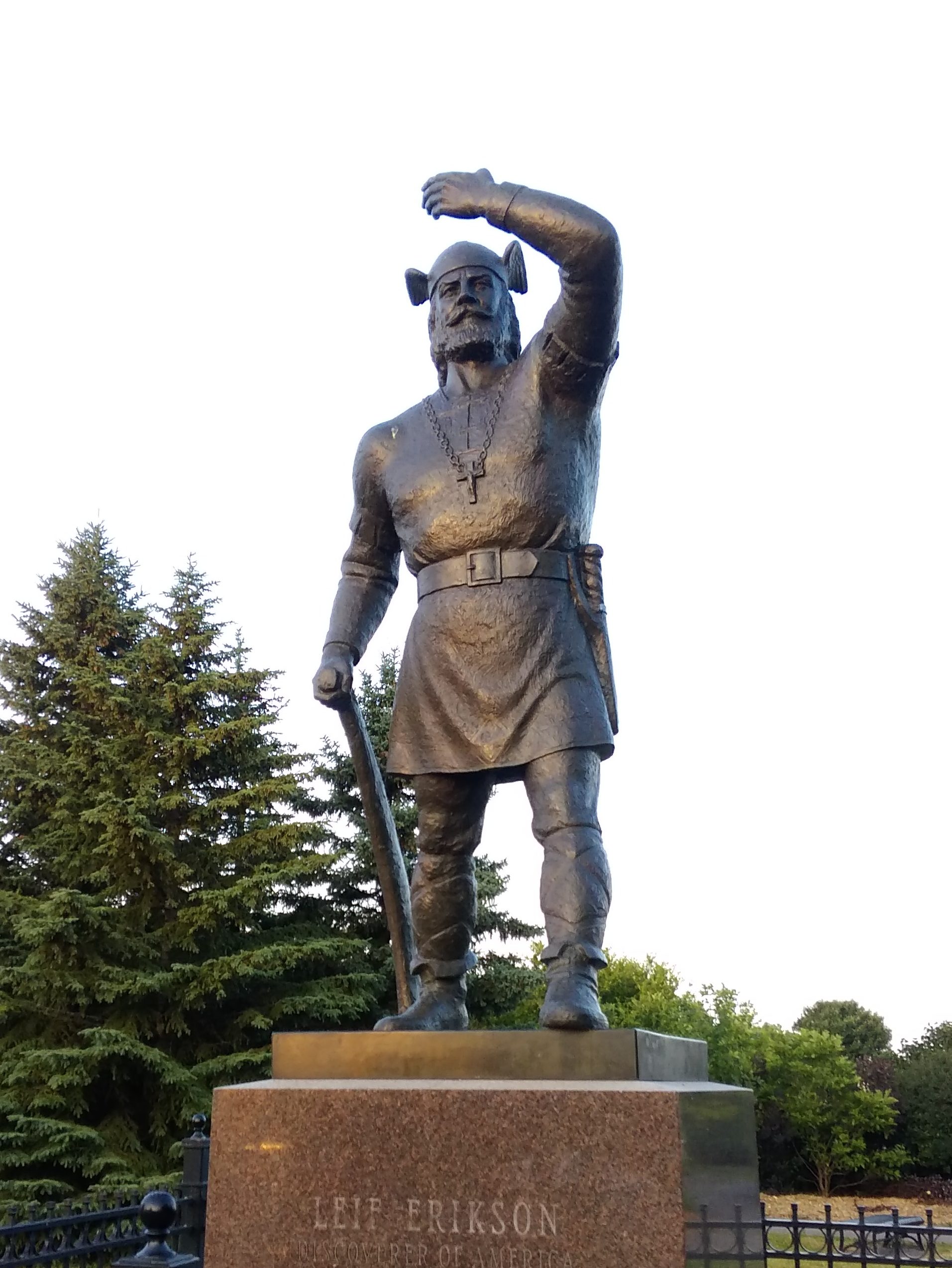
I’ve seen the Chicago Leif Erikson myself; it’s in Humboldt Park. Now I’ve seen the one in Duluth. Here it is.

Carved on the plinth are the Viking’s name and “Discoverer of America 1000 A.D.” Also that the statue, designed and executed by John Karl Daniels, was erected by the Norwegian American League (no hyphen) of Duluth and “popular subscription.” It was “presented to the city” on August 25, 1956.

I wonder what Leif, an obscure chieftain from a remote island 1,000 years ago, would make of his current modest fame, which came to his name more than 800 years after his death. Modest fame, but then again, how many other 10th/11th-century figures are so well known in the 20th/21st century?

Who among the teeming billions on the Earth now, through some completely convoluted and unpredictable set of circumstances across the centuries to come, will be remembered at the beginning of the fourth millennium, for reasons impossible to imagine?

A stout iron fence surrounds the statue, I guess to discourage casual vandalism, but ardent vandals, statue revisionists, or garden-variety wankers could climb the fence without too much trouble. As far as I know, there hasn’t been much grumbling about old Leif, though skinhead lowlifes apparently try to co-opt a statue of the lesser-known Icelandic explorer Thorfinn Karlsefni in Pennsylvania each October 9.

That being Leif Erikson Day. Time And Date.com says: “October 9 was chosen because it is the anniversary of the day that the ship Restauration arrived in New York from Stavanger, Norway, on October 9, 1825. This was the start of organized immigration from Scandinavia to the USA. The date is not associated with an event in Leif Erikson’s life.”

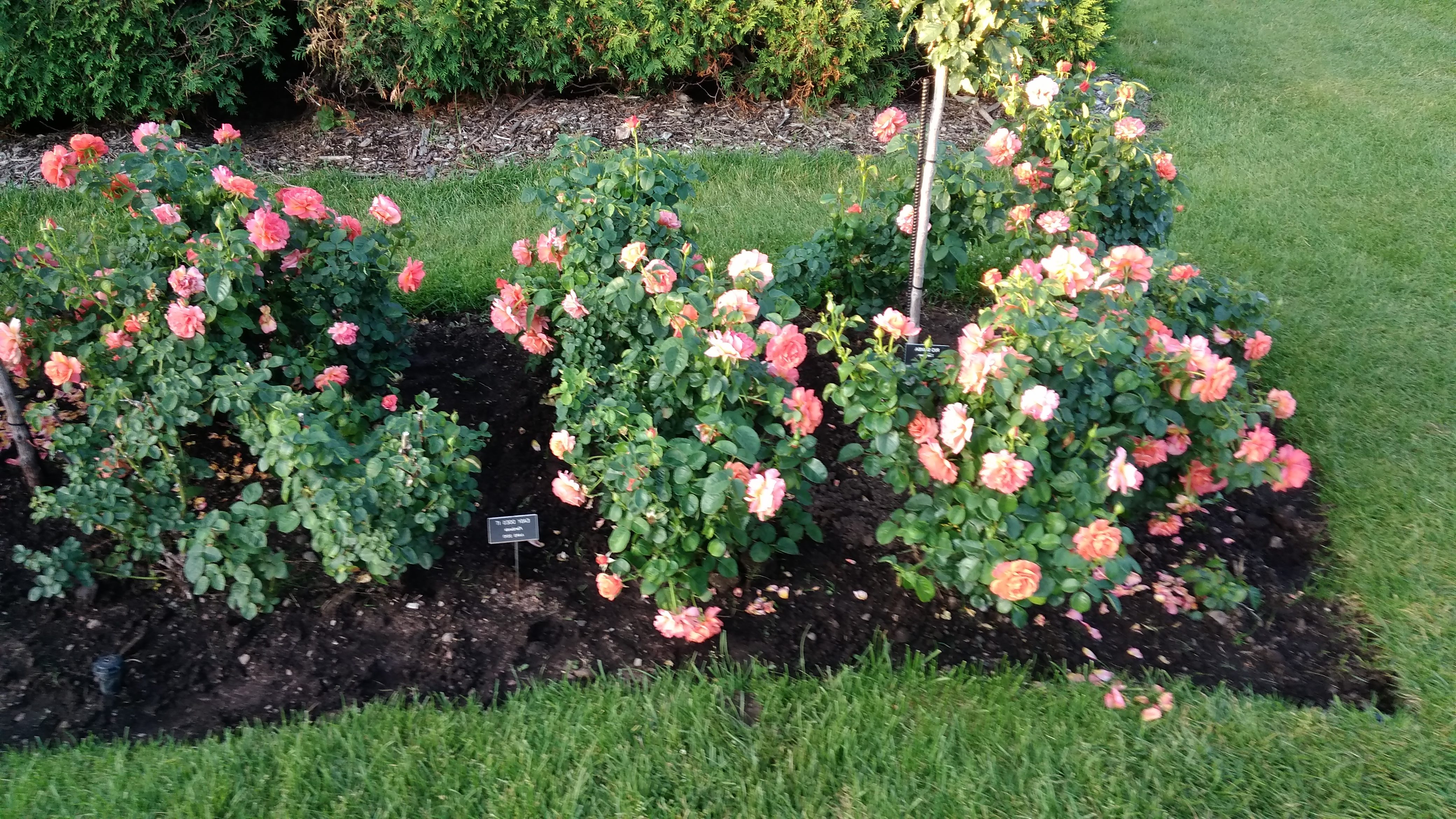
Some context for the Leif Erikson statue in Duluth: it’s in Leif Erickson Park (sometimes styled Erikson) and next to the Leif Erikson Rose Garden, also known as the Duluth Rose Garden. It has some fine plantings.
The garden “was begun by Mrs. John Klints, a native of Latvia, who wanted to give her adopted home of Duluth a beautiful formal rose garden similar to those she’d known in Europe,” says Public Gardens of Minnesota. “It opened in 1965 within Leif Erickson Park, with 2,000 roses, all arranged in gently curving beds surrounding an antique horse fountain. Here it remained for 25 years….

“A vast and ambitious city redevelopment project, and a clever Department of Transportation solution to the termination point of the freeway entering Duluth, resulted in the new location of the rose garden. The garden reopened in 1994 after four years of construction… again as part of the new Leif Erickson Park.

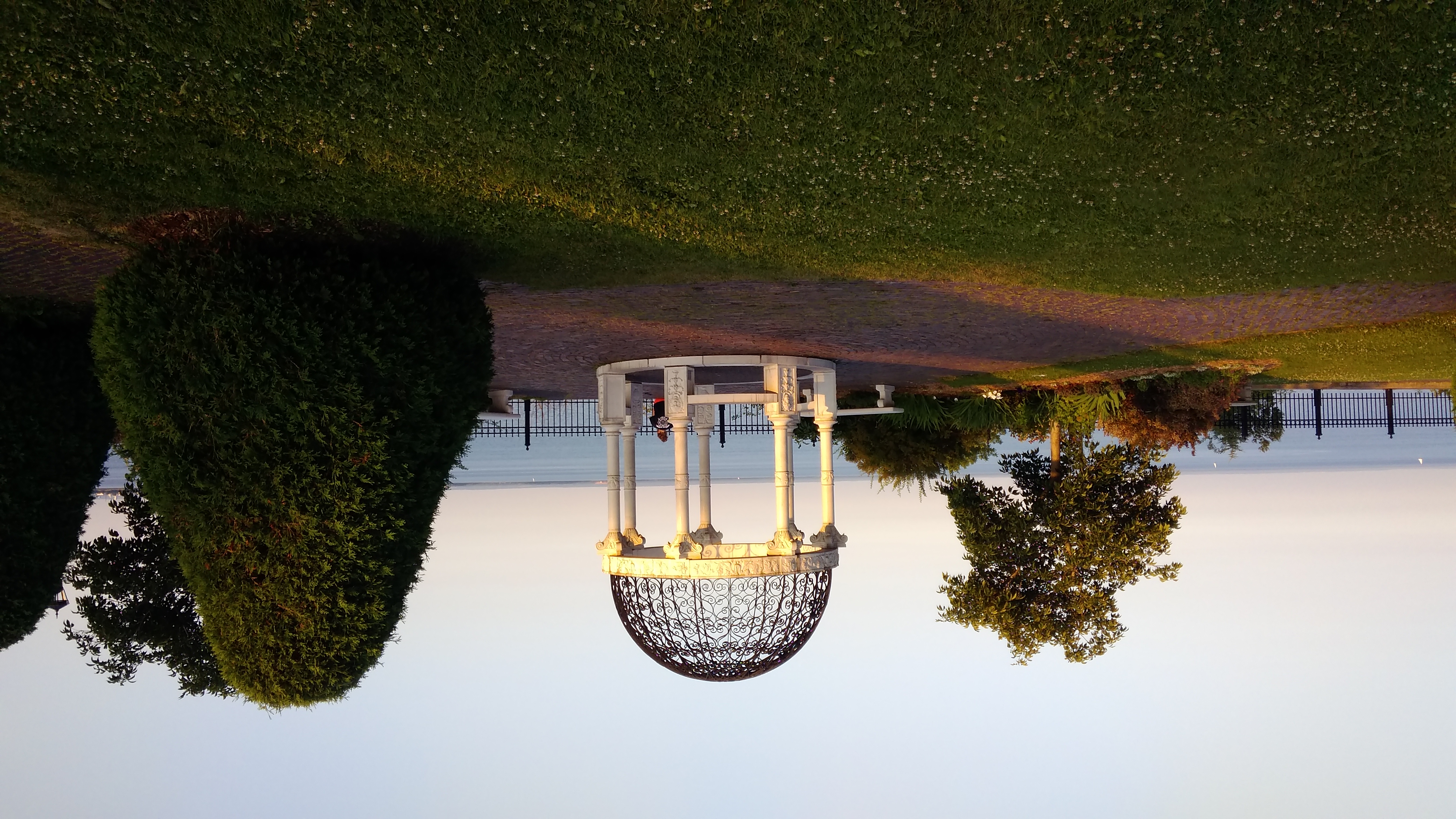
“The six acres are still formal in nature and still have the fountain and gazebo from the original garden, but the beds are now two long beds and four circular beds. There are now in excess of 3,000 roses and 12,000 non-rose plantings, including day lilies, evergreen shrubs, mixed perennials and an herb garden.”

Good to see the garden’s gazebo. It has a nice view of Lake Superior. That’s what this country needs, more public gazebos.

Enger Tower

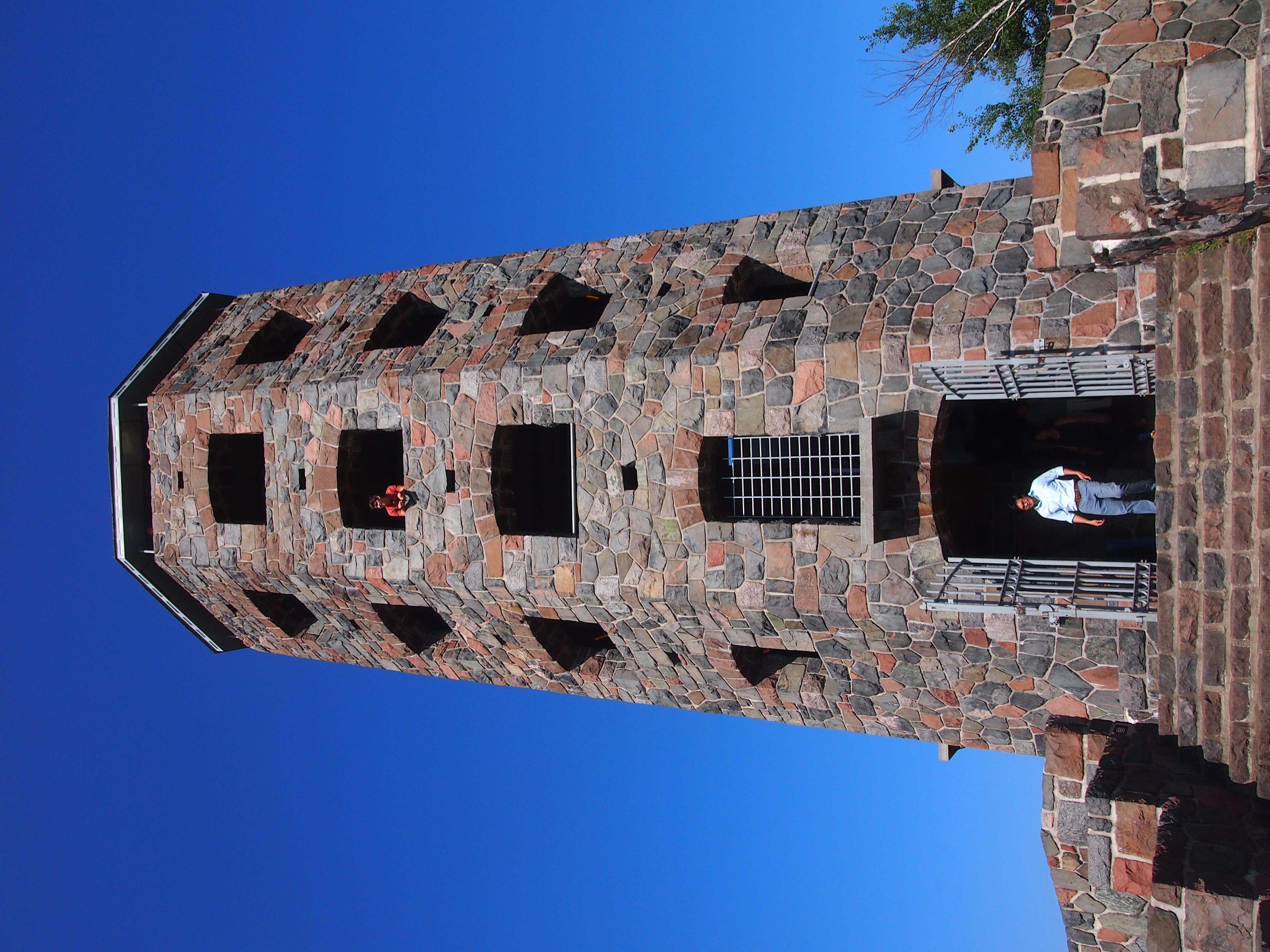
Whenever possible, I recommend finding a high perch to see the territory around you. Ideally, a spot reached without much danger of bodily harm. Even better, a structure created just for that purpose. Best of all, a structure open to the public at no charge, like the handsome Enger Tower in Duluth, which we climbed on July 29.

In full, the Enger Observation Tower. At least that’s what it says on a plaque just inside the entrance. That plaque also says that it’s named after Bert J. Enger (1864-1931), “Native of Norway, Citizen of Duluth.”

Enger was an immigrant who made good in the U.S., and left money for building the tower. Crown Prince Olav of Norway came all the way to Duluth to dedicate the structure in June 1939 (Olav wasn’t king until the 1950s, many eventful years later). A separate plaque notes that King Harald, the current Norwegian monarch, re-dedicated the tower in 2011 after renovations.

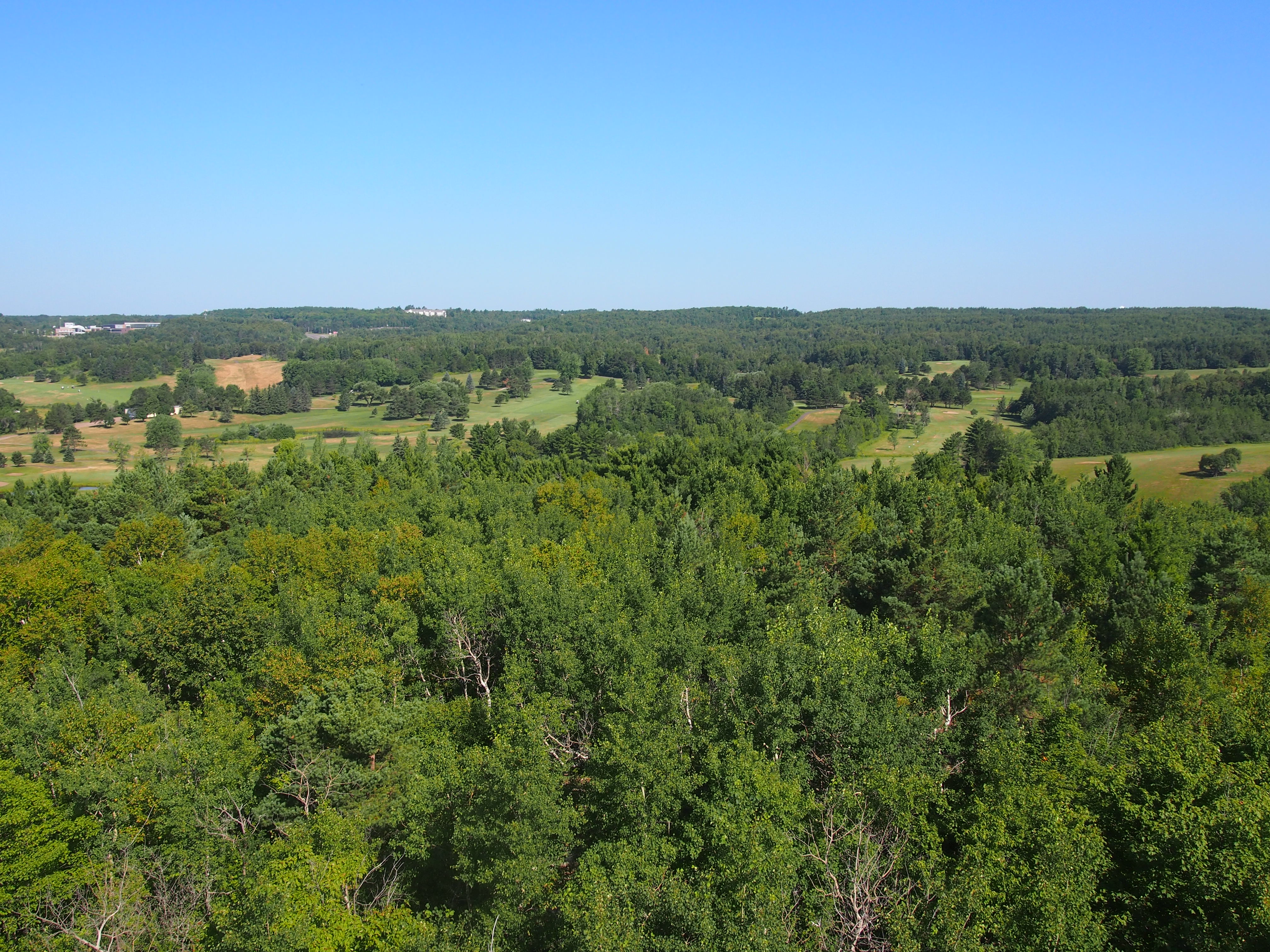
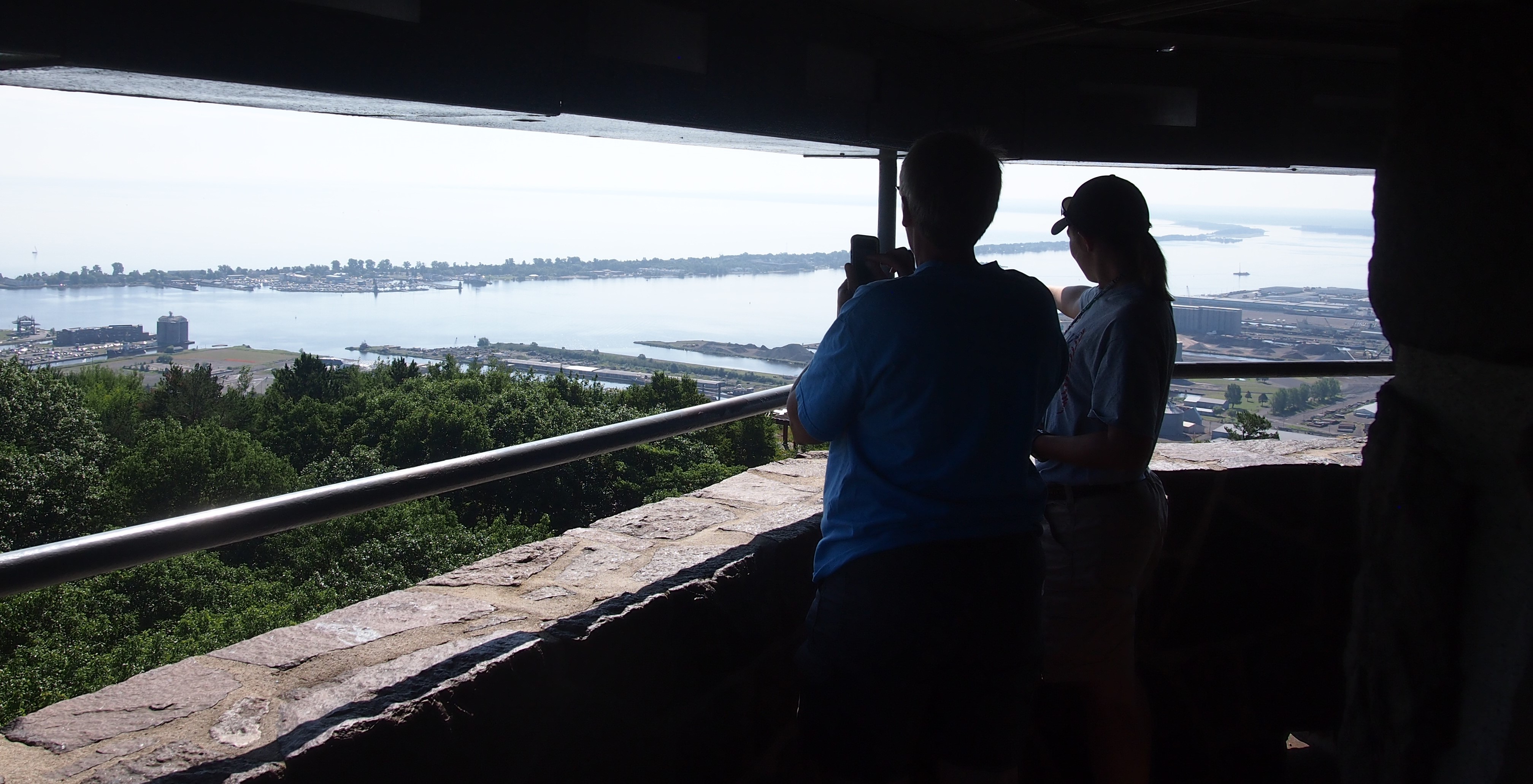
The blue stone tower rises 80 feet on top of an already high hill, so the view is terrific: Downtown Duluth, St. Louis River and St. Louis Bay, Superior, Wis., and the rolling greenery north of town.

Enger Tower

During our visit, the light was best for capturing images to the north of the tower, including woods and the park’s golf course.

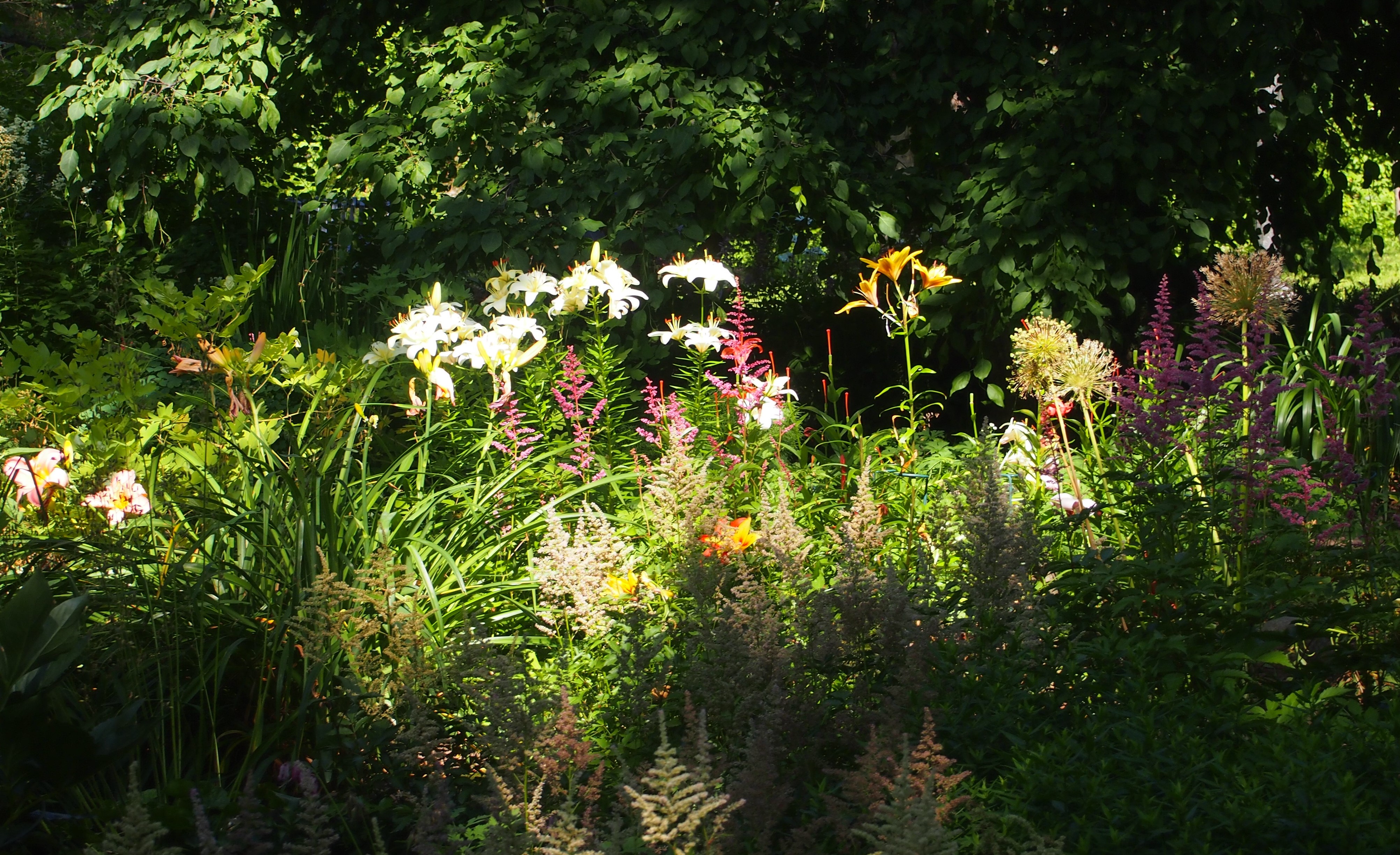
The tower wasn’t the only attraction at Enger Park. There were gardens too.

Full of flowers enjoying the short boreal summer.

Zoo View 2011

I can’t remember the last time we went to the Brookfield Zoo. It might have been as long ago as July 2011. I have a file labeled 2011-07-18 and many of the pics are of that zoo, the larger of the Chicago area’s two main zoos.

I don’t care what PETA thinks, it’s a fine zoo. I posted some of the Brookfield pics at the time. But not the bright birds.
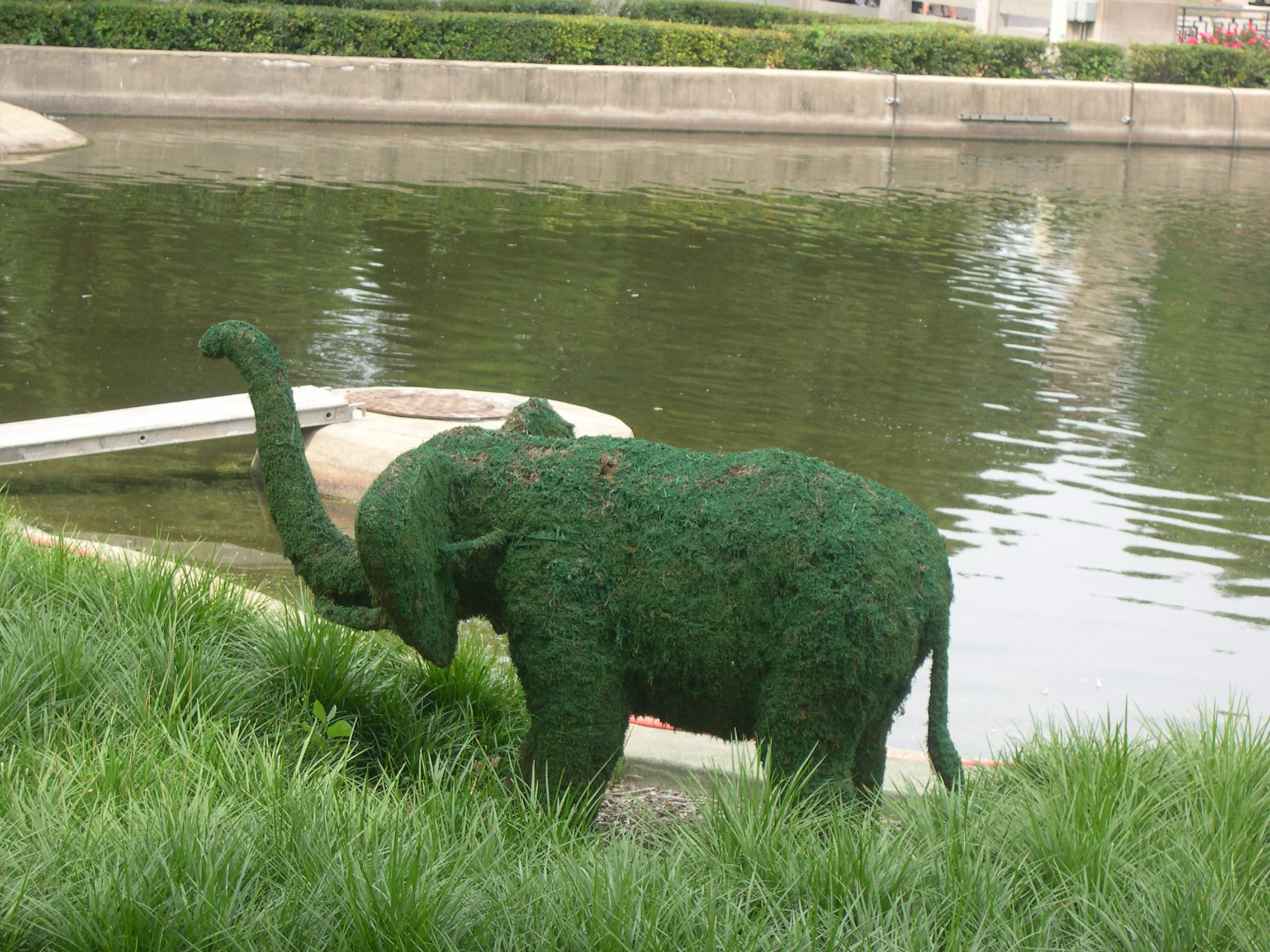
Brookfield Zoo 2011Or any of the non-animal aspects of the place, such as the topiary elephant.
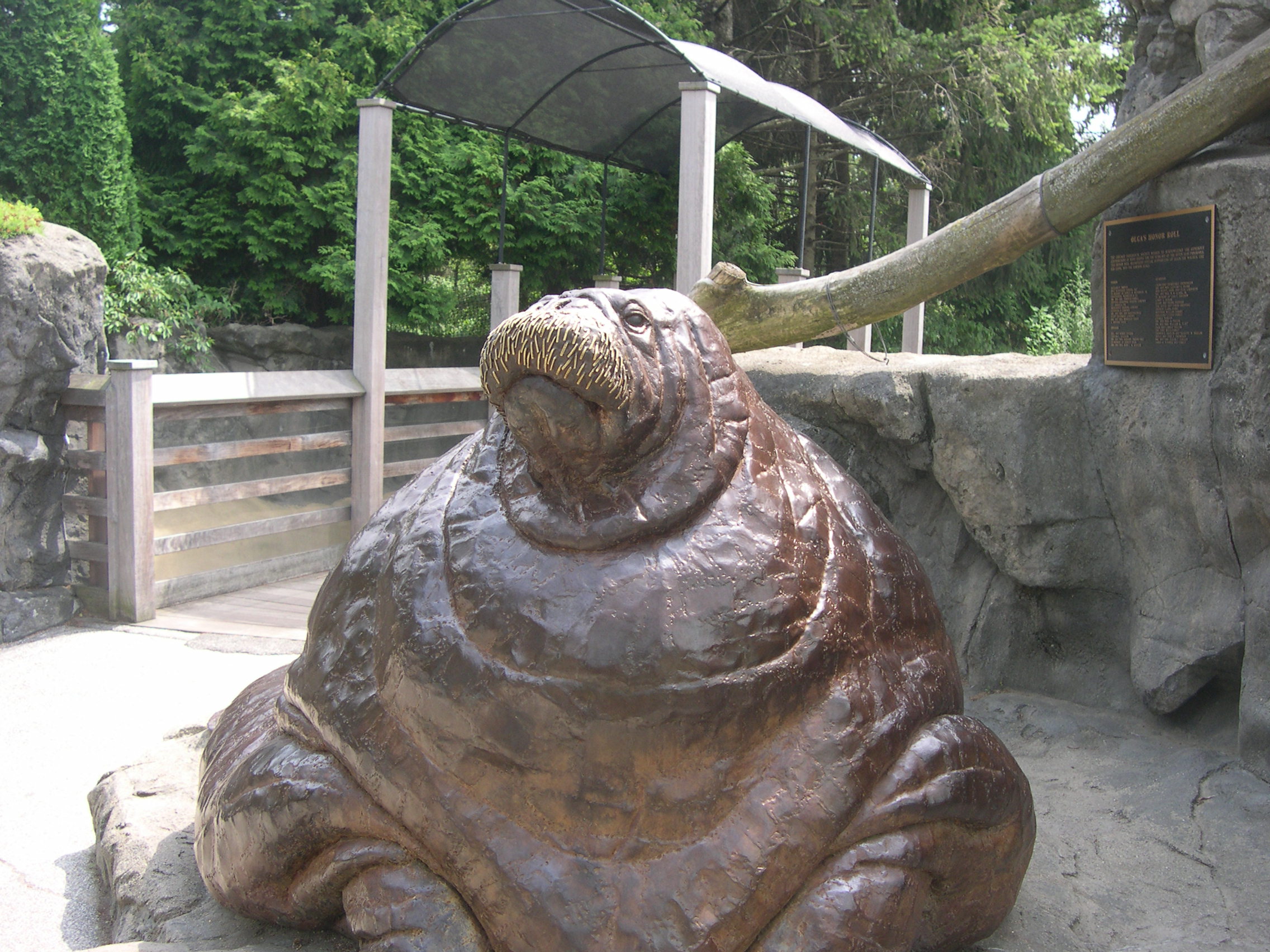
Brookfield Zoo 2011Or the bronze walrus.
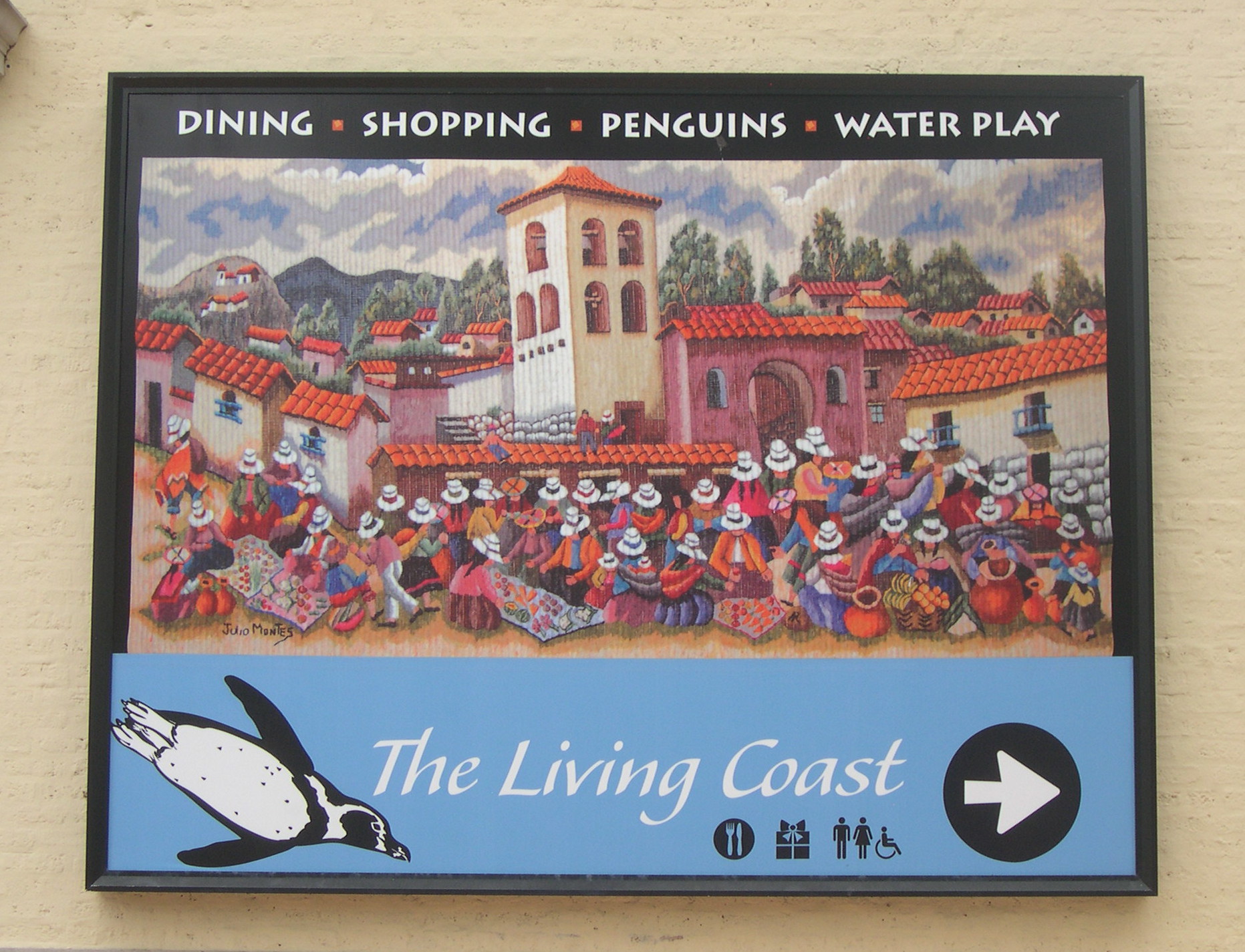
Brookfield Zoo 2011Or the Living Coast mural.
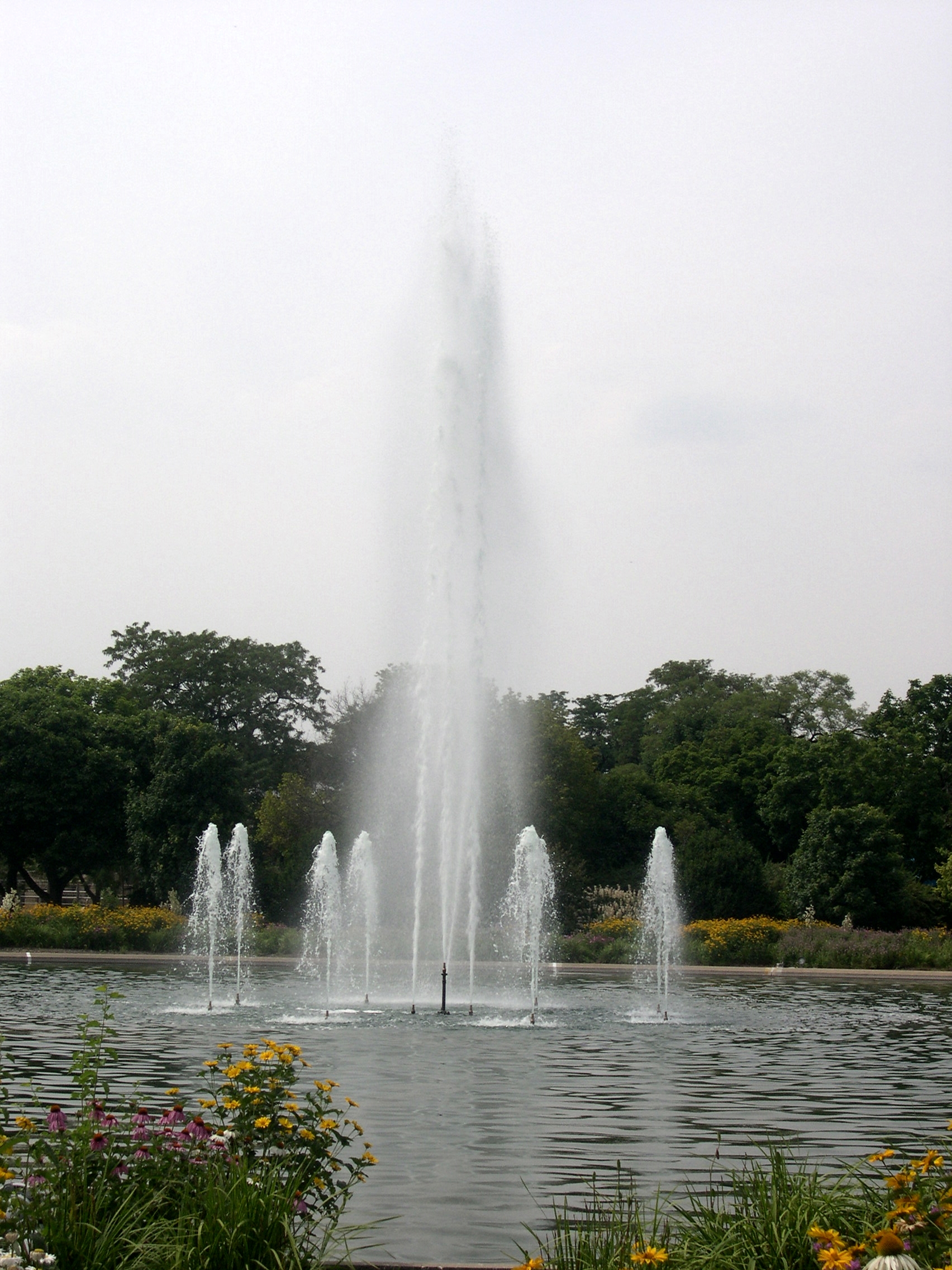
Brookfield Zoo 2011Or even the Theodore Roosevelt Fountain, there since 1954, though I did post the cornflowers nearby.

Brookfield Zoo 2011

July is cornflower time, and we’re all better for it.

The Dallas Arboretum and Botanical Garden

Geophysicist and petroleum geologist Everette Lee DeGolyer (1886–1956) put oil exploration on a more scientific footing in the early 20th century. I’ve read about him and his work, but do not understand the details. Maybe I could if I read more about it, but life is short.

“In May 1925 DeGolyer organized a subsidiary of Amerada, the Geophysical Research Corporation, which located a record eleven Gulf Coast salt domes in nine crew months and perfected a reflection seismograph that has become the principal tool for geophysical oil exploration worldwide,” says the Handbook of Texas Online. “This technology inaugurated the modern age of oil exploration with the 1930 discovery of the Edwards oilfield in Oklahoma by reflection survey.”

Enough to say here that DeGolyer was an oilman among oilmen, and later in life, he and his wife Nell DeGolyer (1886–1972) lived on an estate on White Rock Lake, as the city of Dallas grew around them.

The Handbook entry on Nell takes it from there: “Another abiding interest for her in Dallas was the family’s forty-four-acre estate known as Rancho Encinal, which she and her husband built and decorated. The thirteen-room Spanish Colonial Revival structure on White Rock Lake in East Dallas, completed in 1940, reflected the DeGolyers’ world travels, Everette’s outstanding book collection, and Nell’s expertise in gardening.

“Until her death Mrs. DeGolyer lived in this home; it was willed to Southern Methodist University after her death and several years later became the property of the city of Dallas. Into the 1990s the city used it, as the Dallas Arboretum and Botanical Society, to showcase the gardens planned and maintained by Nell DeGolyer.”

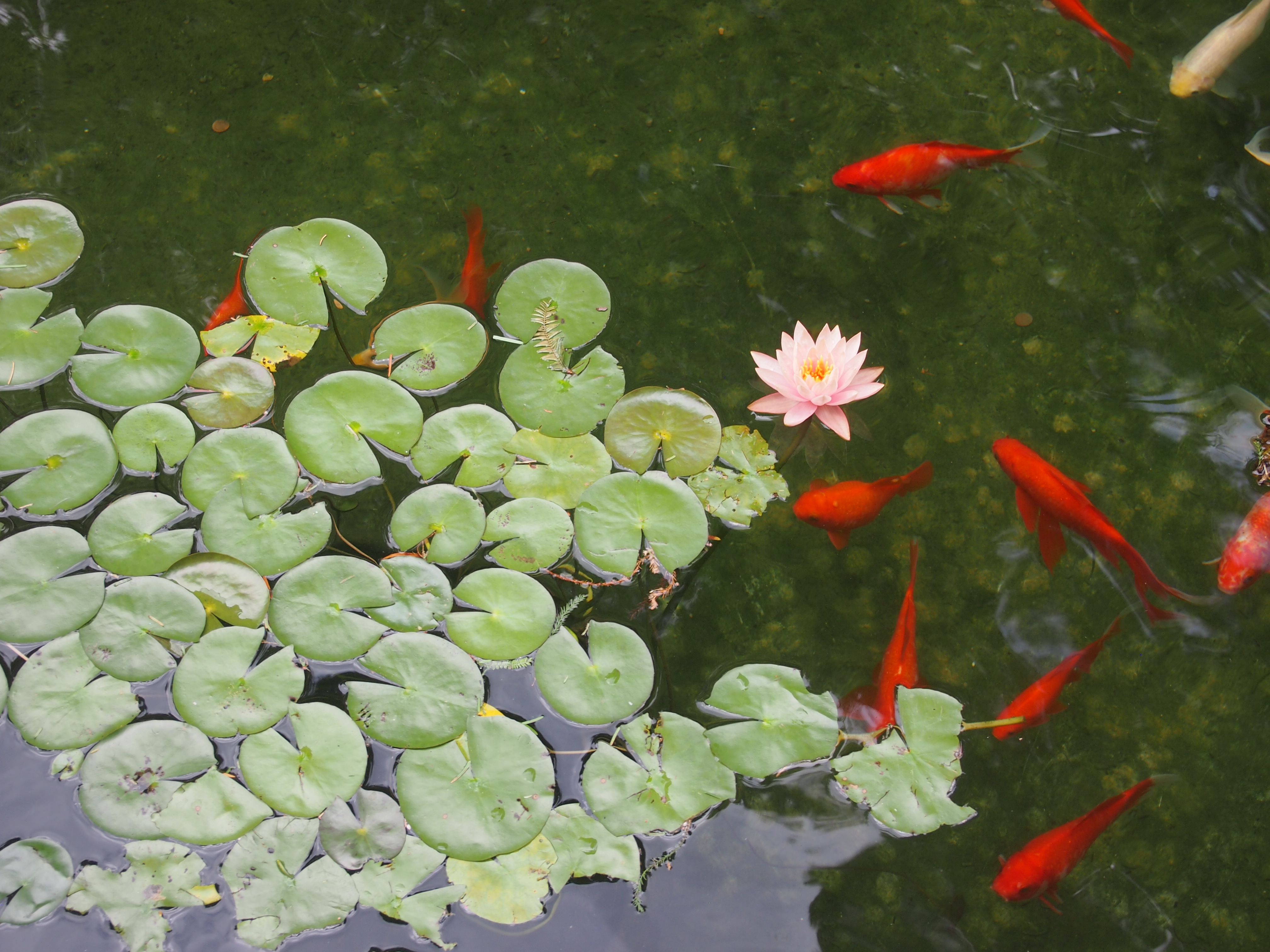
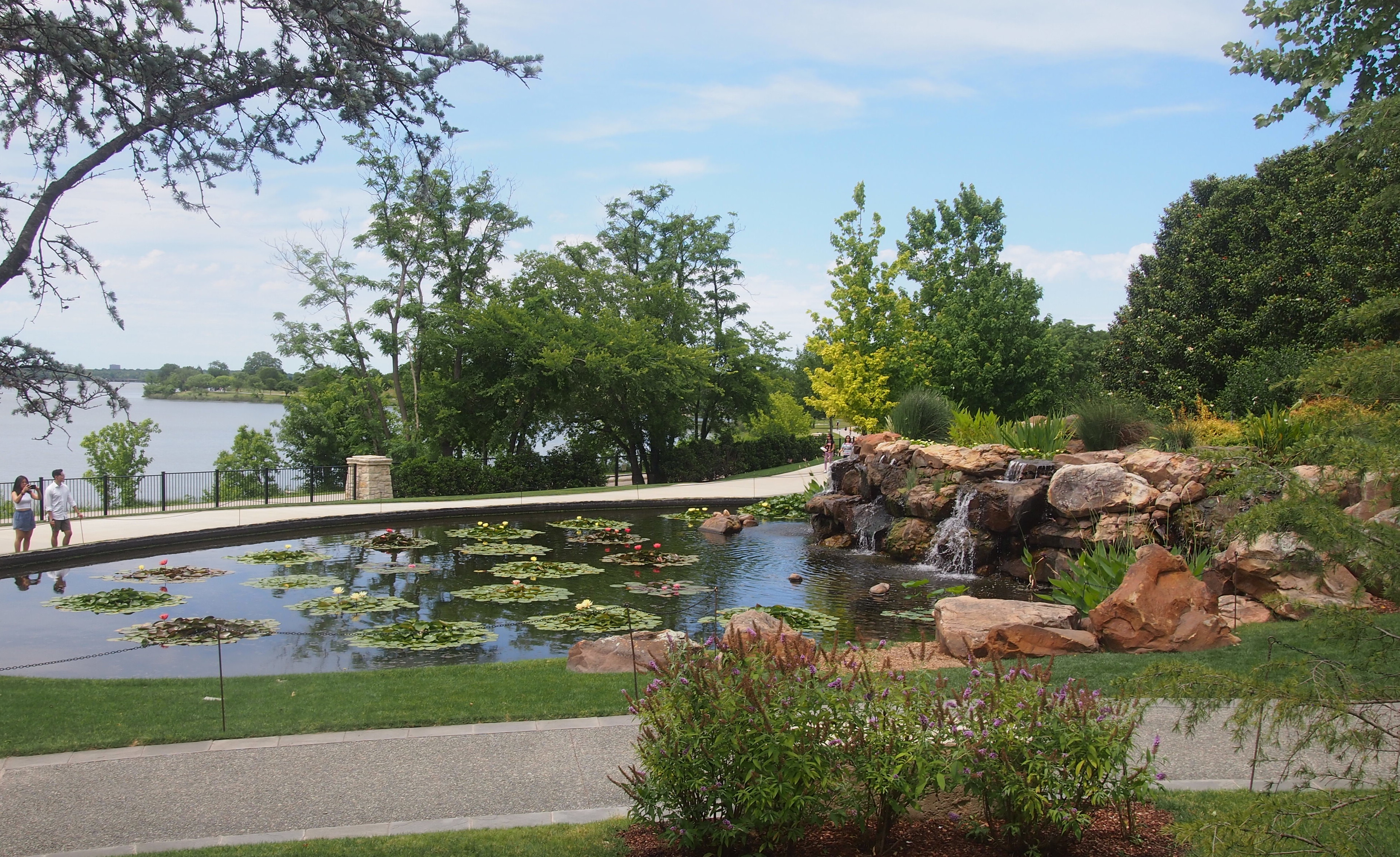
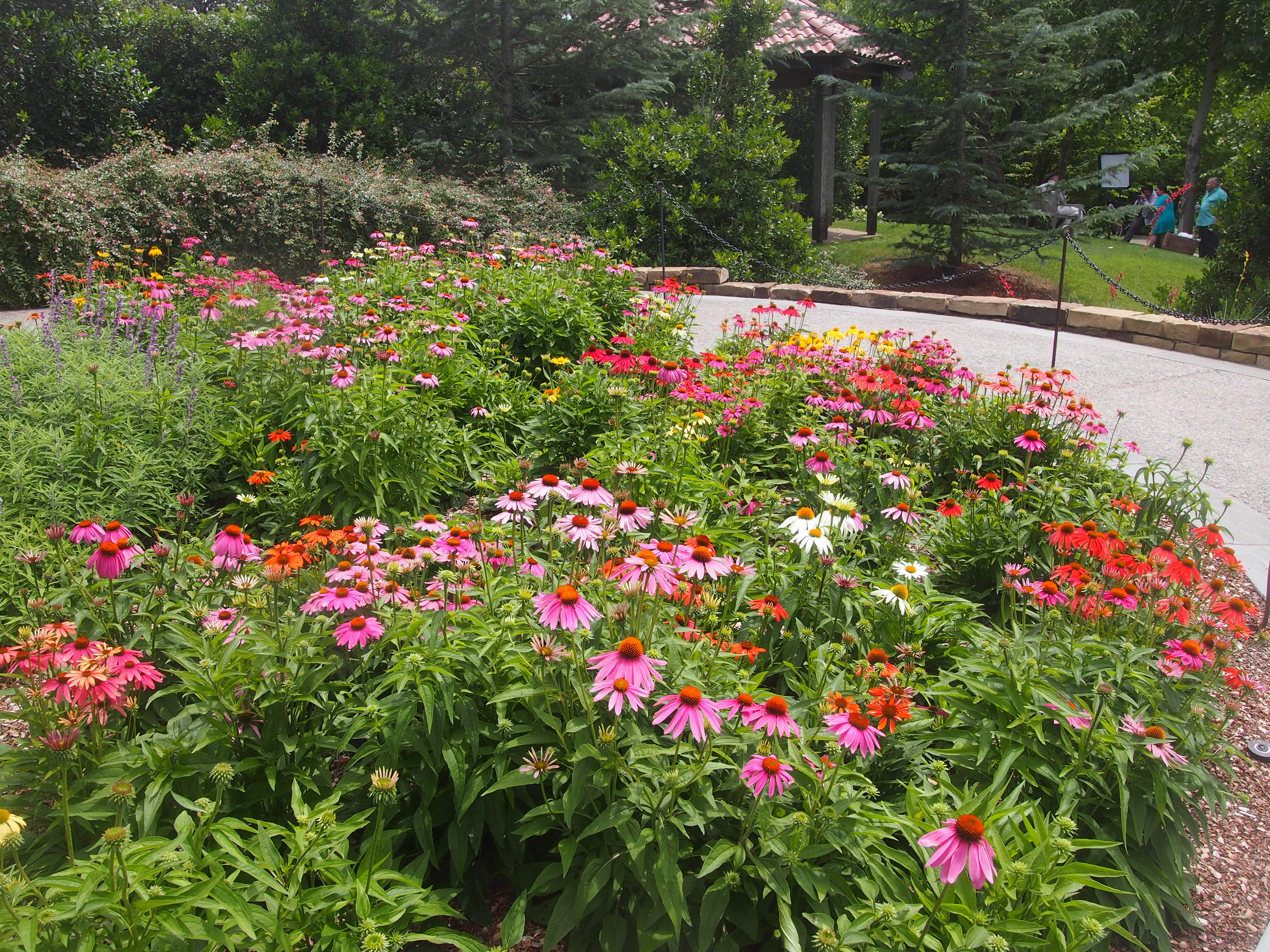
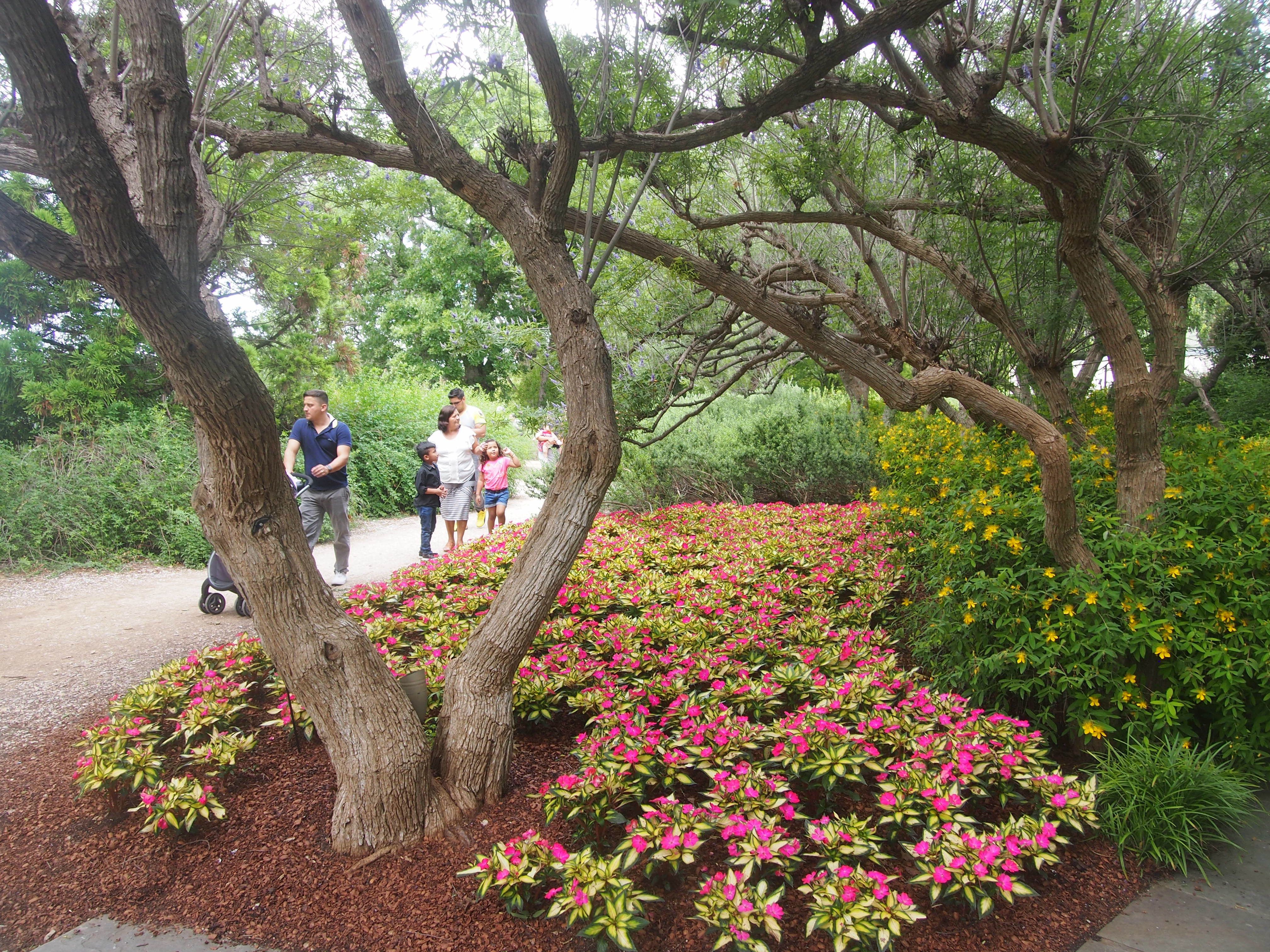
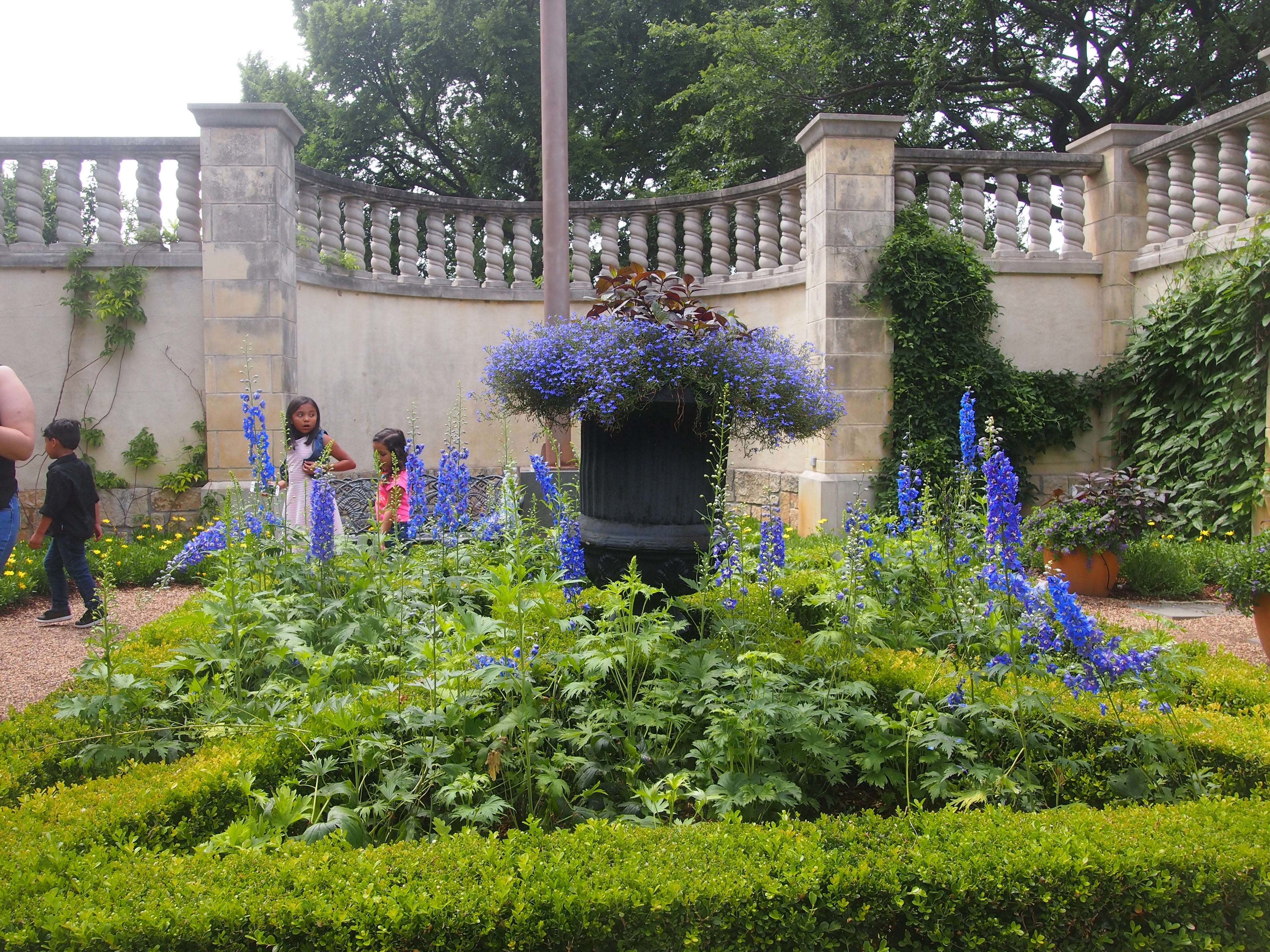
The DeGolyer estate, plus the adjoining Alex and Roberta Coke Camp estate, form the modern Dallas Arboretum and Botanical Garden, open since 1984. We spent a pleasant May afternoon there. It’s hard to go wrong at a place with lily pads and koi.

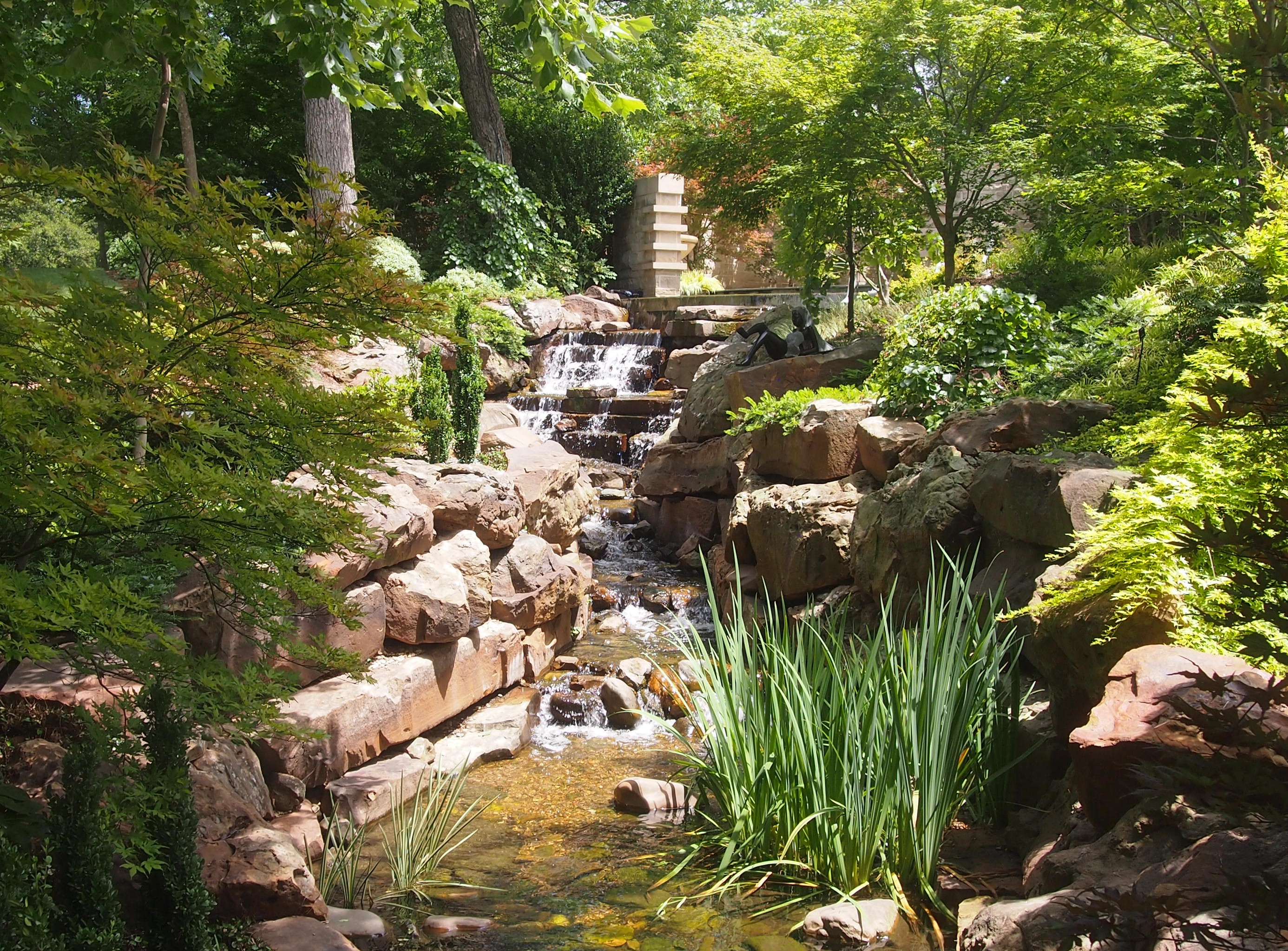
The Dallas Arboretum and Botanical GardenAnd babbling brooks. Or maybe they murmur, since babbling implies a negative incoherence.

Dallas Arboretum and Botanical GardenAnd other water features, some within view of White Rock Lake.

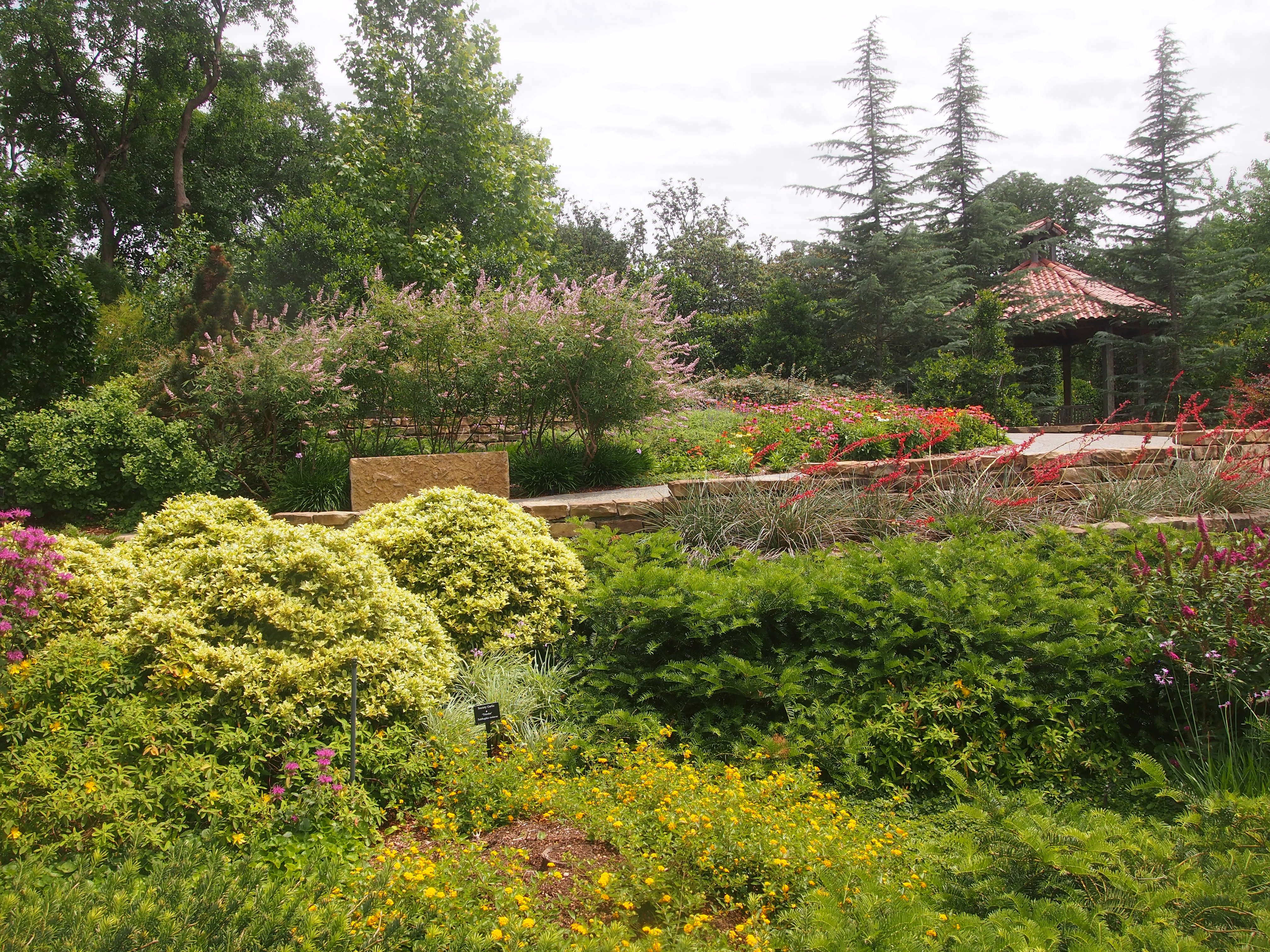
Dallas Arboretum and Botanical GardenA lot of flowers, in various arrays.

Dallas Arboretum and Botanical Garden

Dallas Arboretum and Botanical GardenDallas Arboretum and Botanical GardenPlenty of bushes and trees.
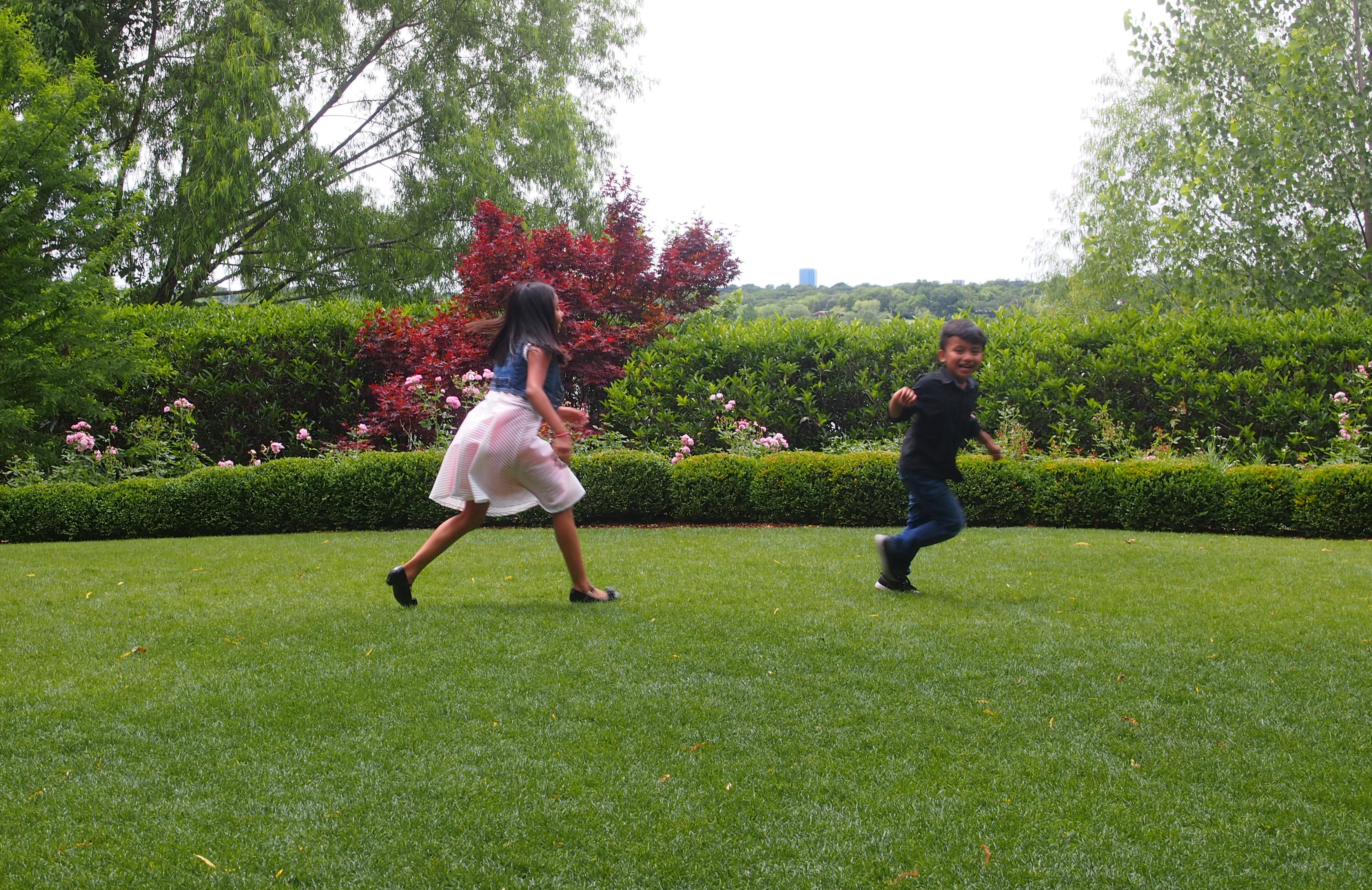
Dallas Arboretum and Botanical GardenOpen spaces for children to be children.

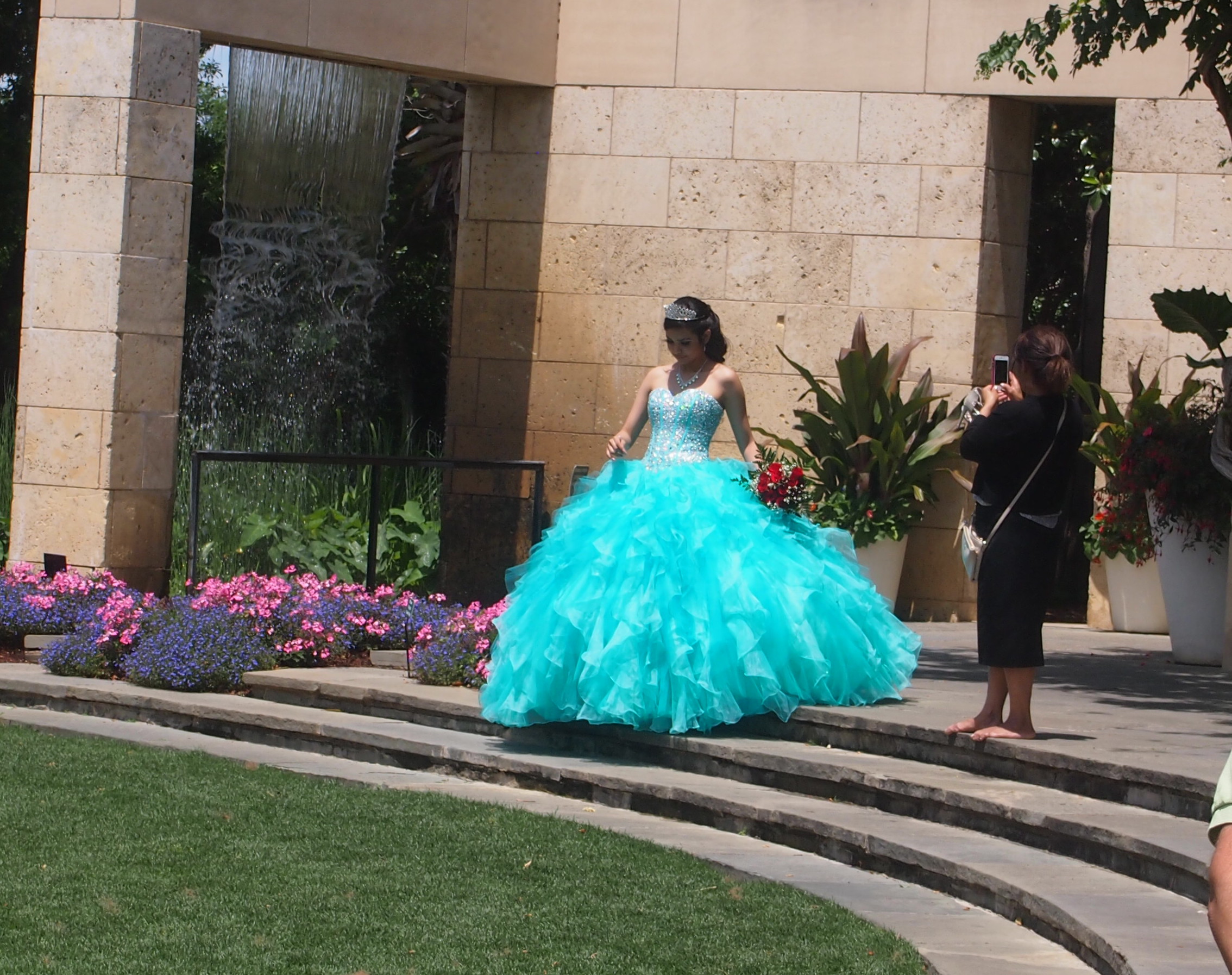
Dallas Arboretum and Botanical GardenSpaces for formal pictures. Could be a quinceañera participant.
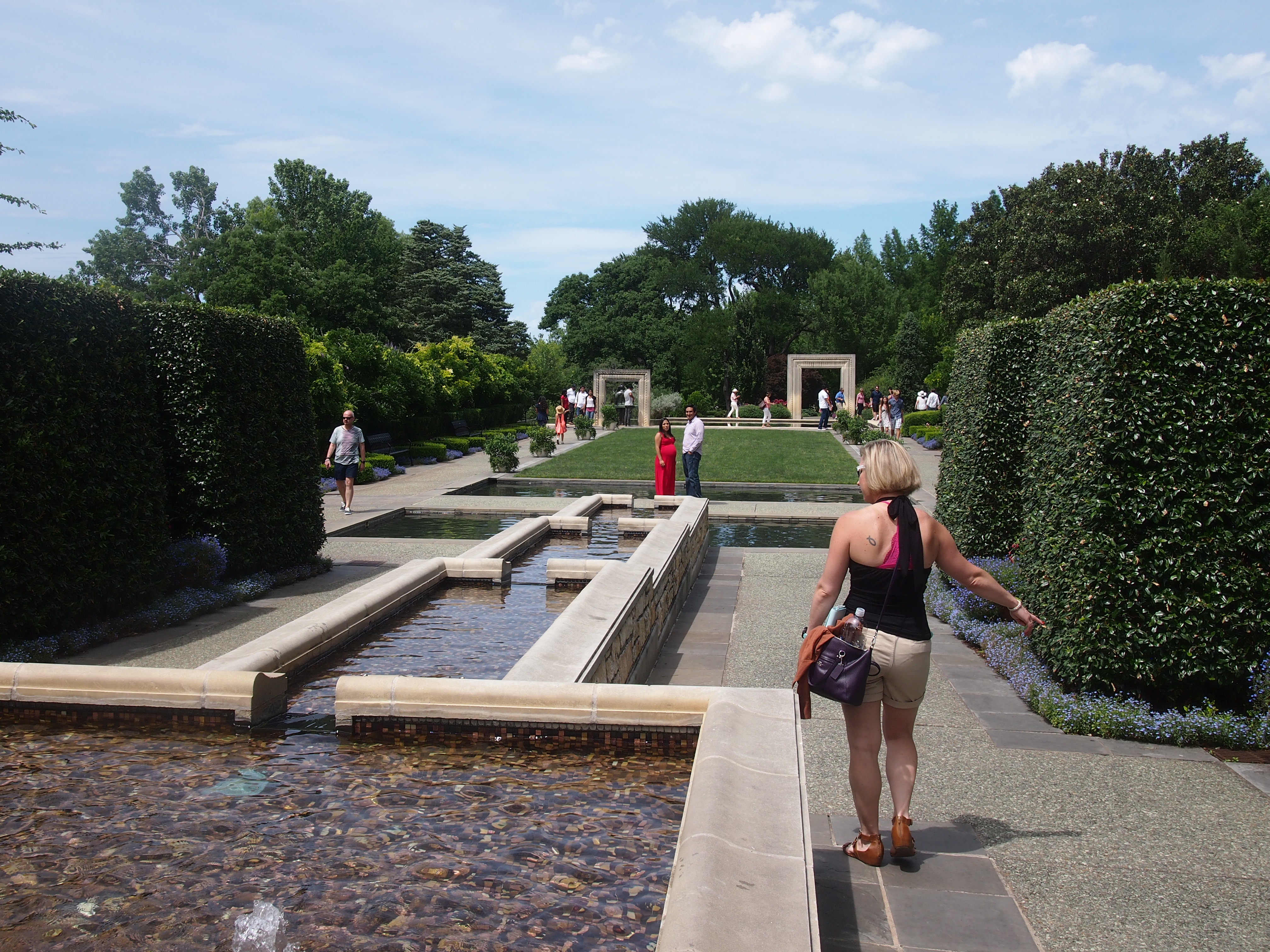
Formal spaces.
Dallas Arboretum and Botanical GardenWiki nails it with this line: “A horticultural masterpiece in North Texas.”

The Mizumoto Japanese Stroll Garden

There are a surprising number of Japanese gardens in the United States, as illustrated by this Wiki list of them, though it’s probably incomplete. It had never occurred to me that there might be one in Springfield, Mo., until I spied it on a map: the Mizumoto Japanese Stroll Garden.

The garden is part of the larger Springfield-Greene County Botanical Center, which also includes an azelea garden, dogwood garden, iris garden, butterfly garden, hosta garden, dwarf conifer garden, and more. All that sounds nice, but on the road sometimes you have to focus. The stroll garden it was.

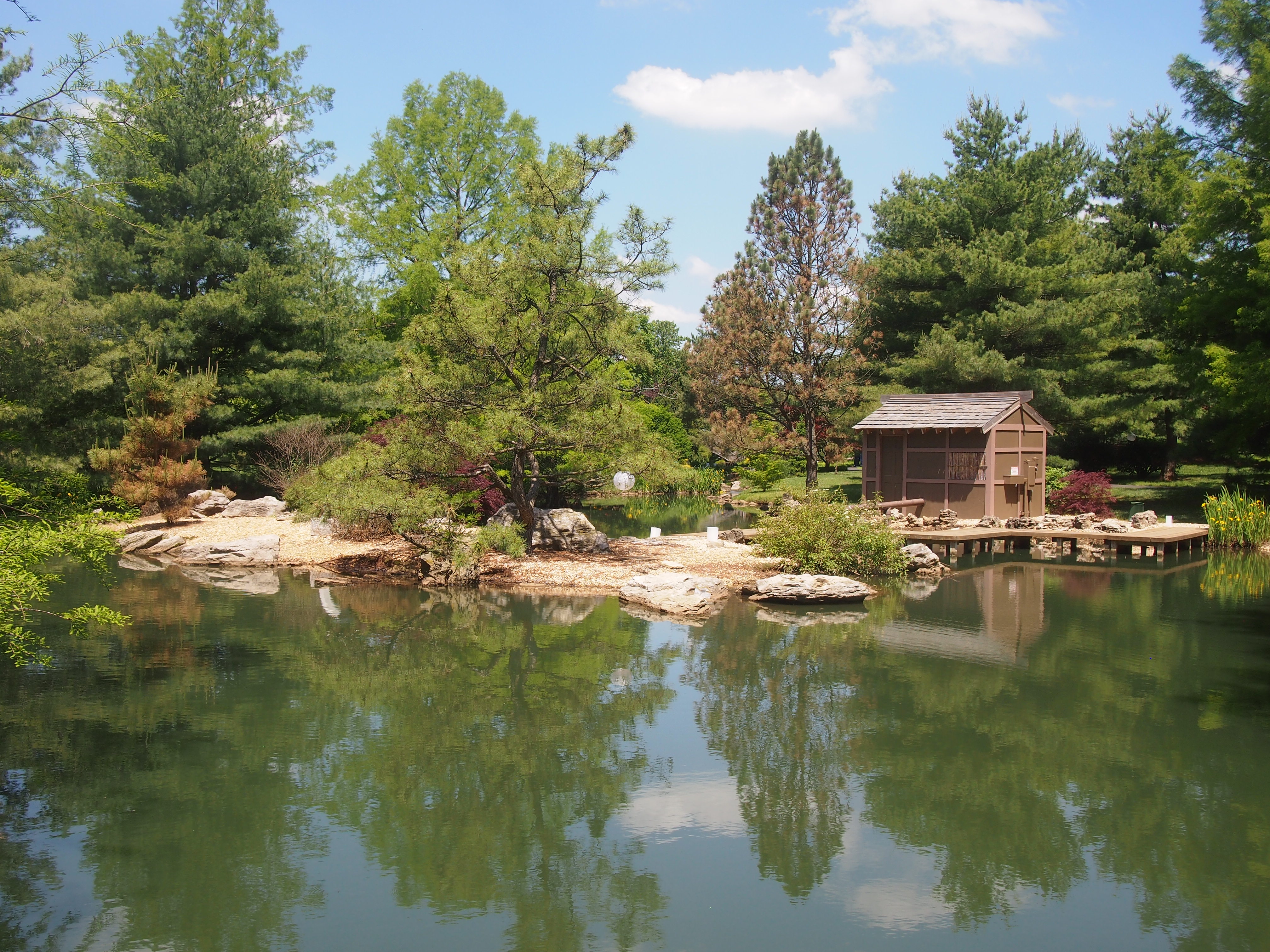
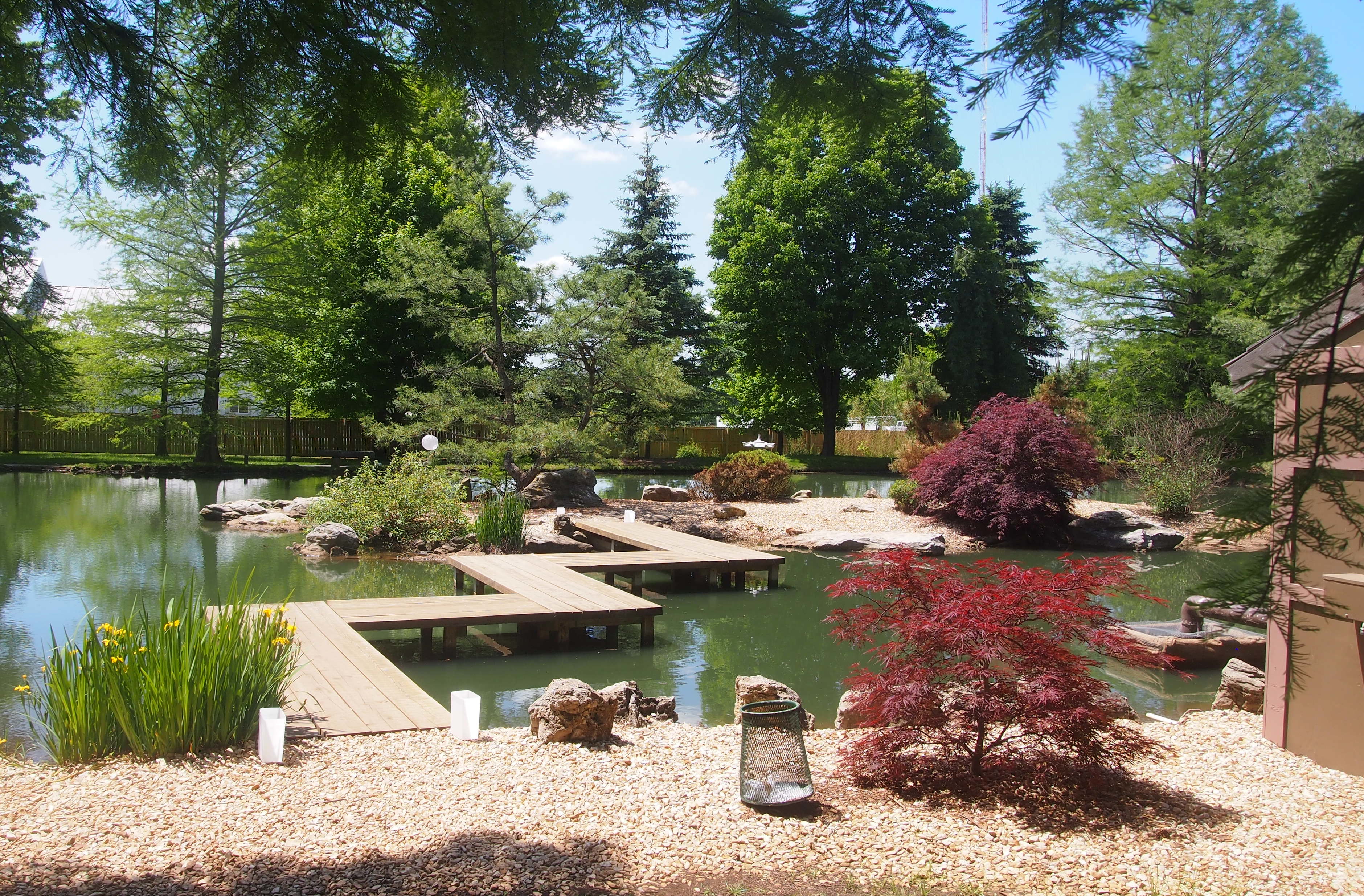
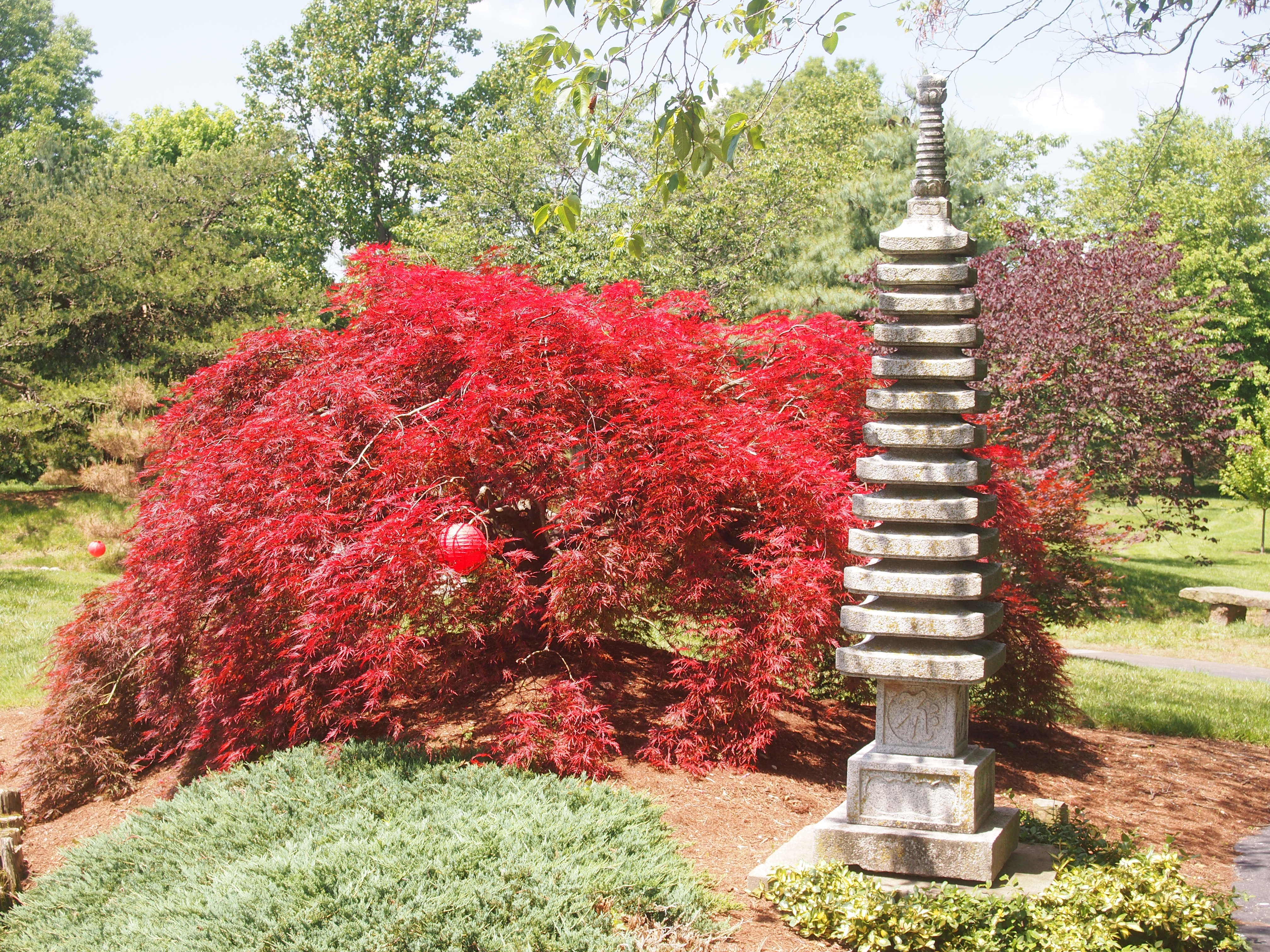
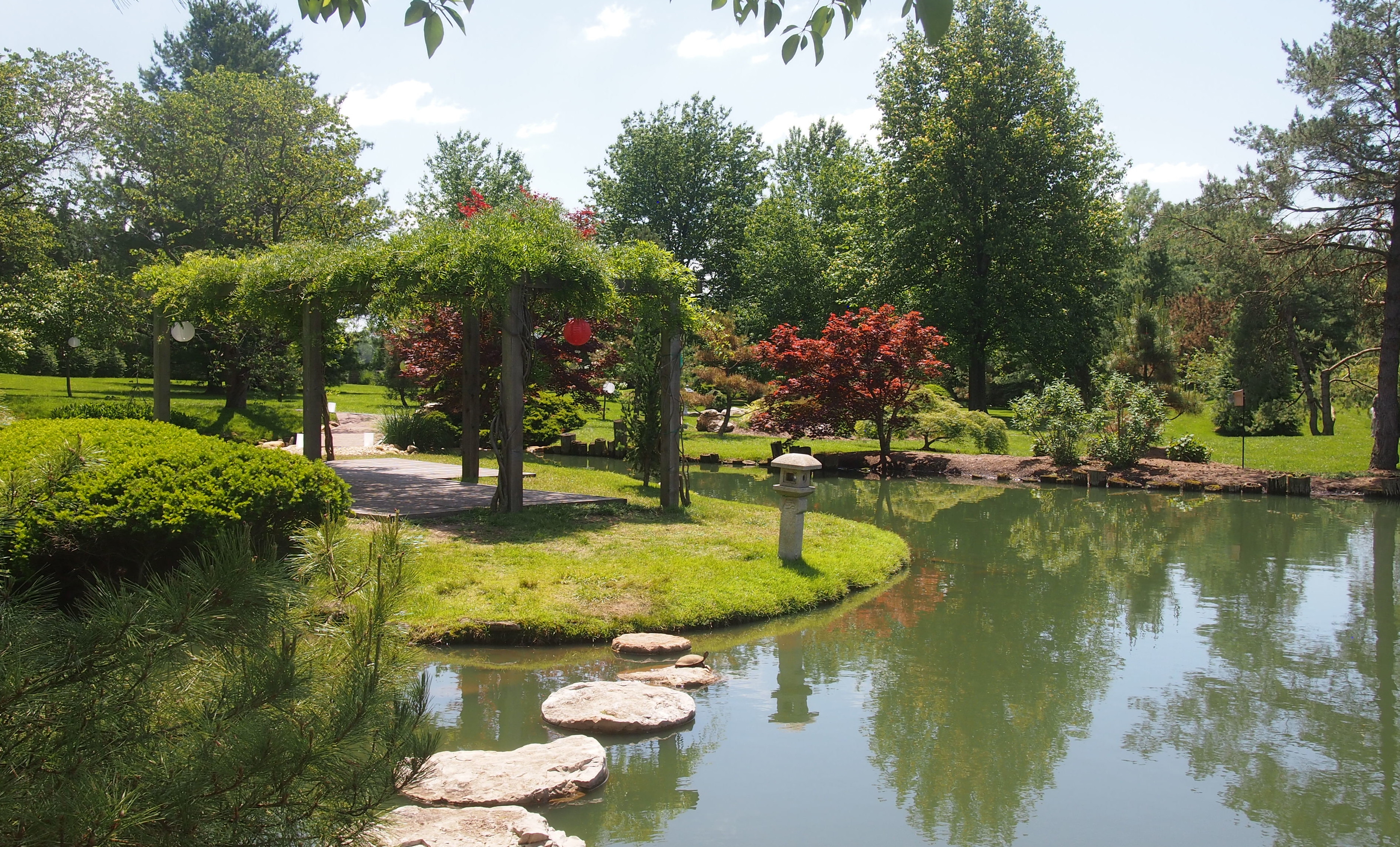
It had everything you’d expect, trees and shrubs and flowers and lanterns and other structures along a winding path, along with water features.

Mizumoto Japanese Stroll GardenA zigzag bridge.

Mizumoto Japanese Stroll GardenAccording to one web site anyway, the notion such bridges were designed to prevent dimwitted evil spirits from being able to cross them is baloney.

THE MYTH: Some misguided Westerners claim that evil spirits can only travel in straight lines and that Japanese gardens have zig-zag bridges to prevent evil spirits from moving through them.

THE FACT: Japanese gardens do sometimes feature zig-zag bridges, but the evil spirit story is complete nonsense. Zig-zag bridges are featured in Japanese gardens partially because they are attractive and because they are interesting to walk over. There is also a charming story that links zig-zag bridges to Japanese literature and culture. [?] The zig-zag bridge motif is a natural fit for many of the Japanese arts including gardening.

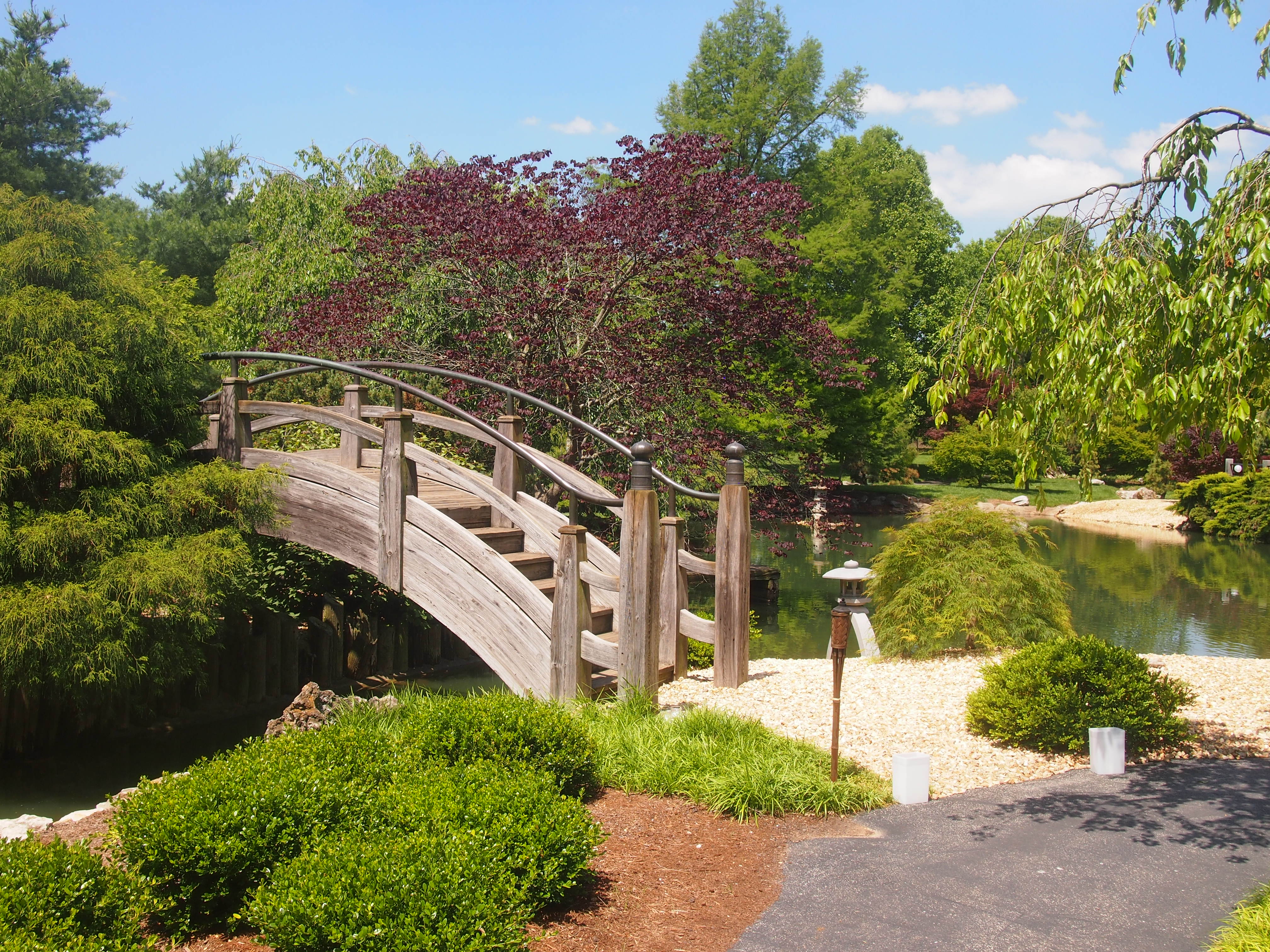
A moon bridge.
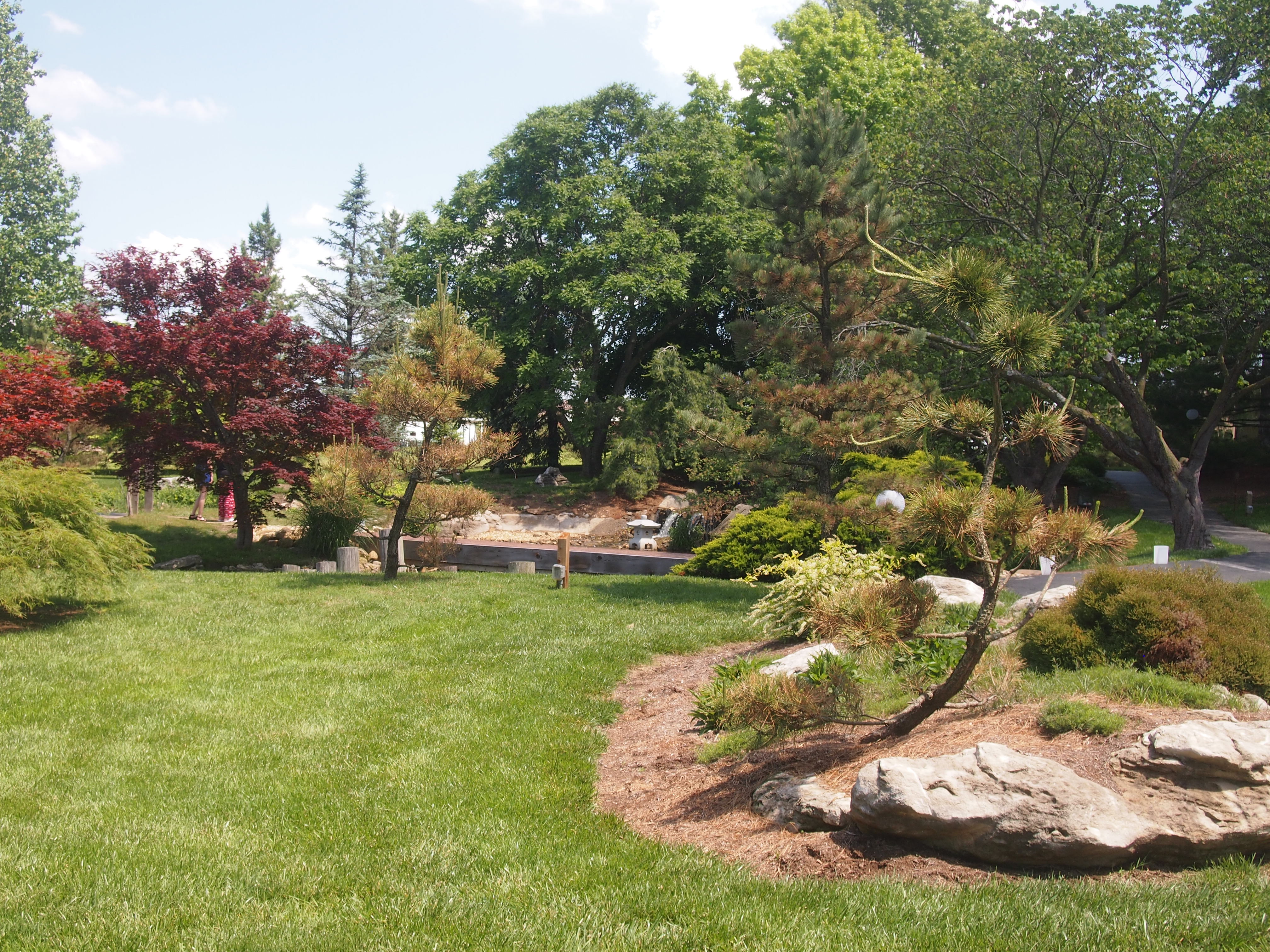
Mizumoto Japanese Stroll GardenExpanses of lawn.
Mizumoto Japanese Stroll GardenNot all the foliage is green in the spring.
Mizumoto Japanese Stroll GardenA trellis.

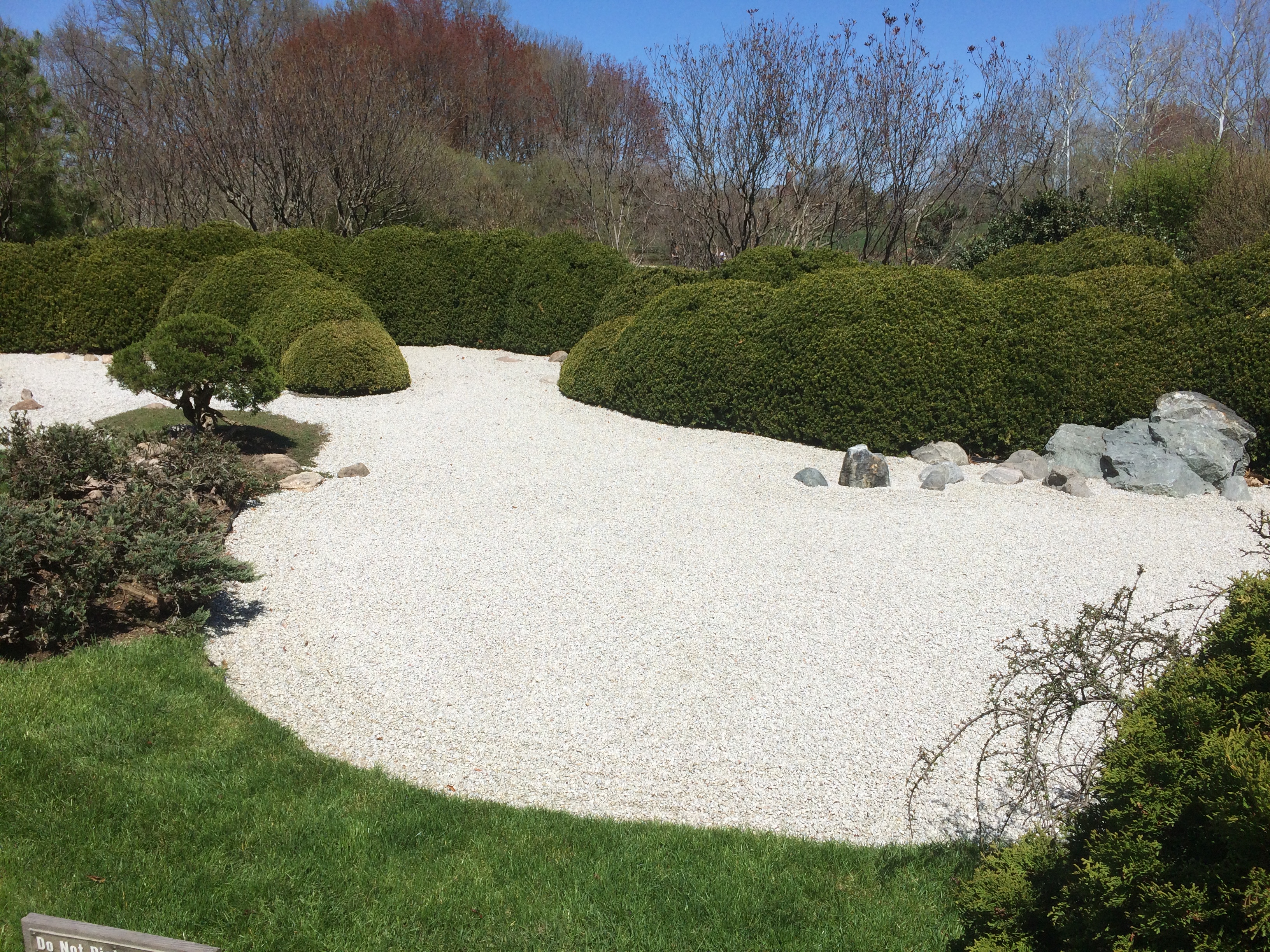
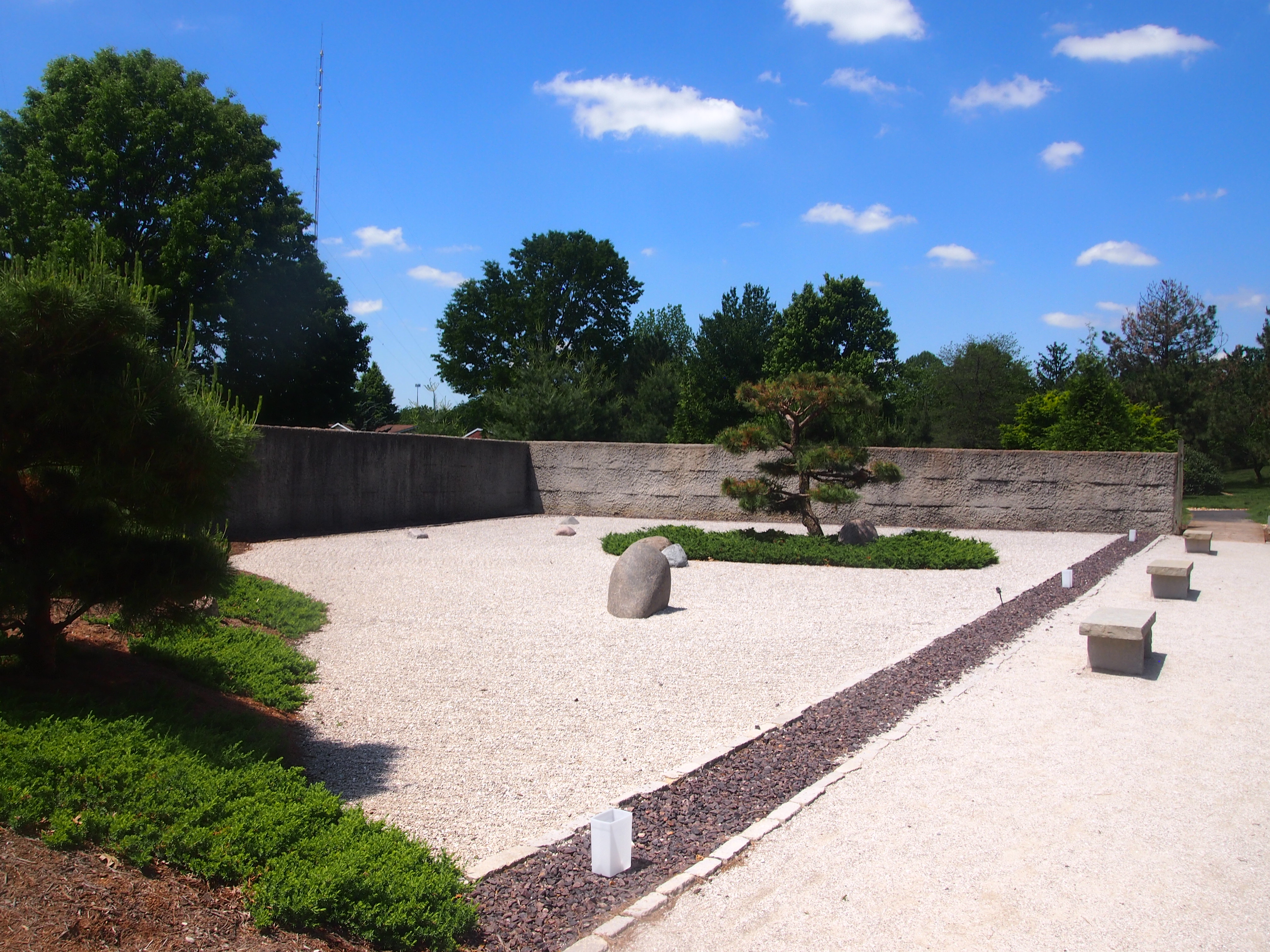
Mizumoto Stroll Garden 2017A zen garden. But of course.
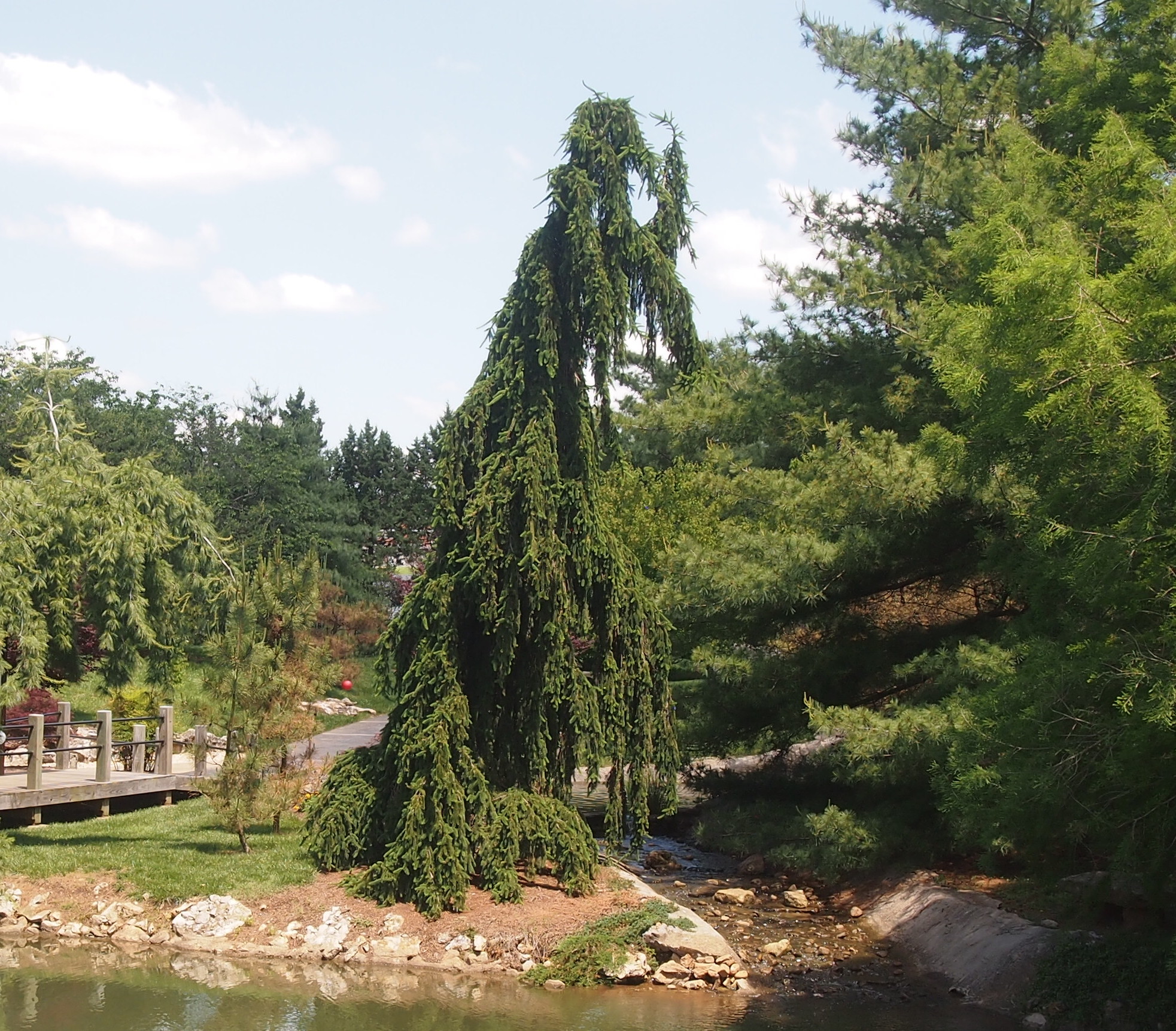
Mizumoto Stroll Garden 2017And some droopy pines, the likes of which I once saw in Rockford.
Mizumoto Stroll Garden 2017According to Japanesegardening.org, the 7.5-acre Stroll Garden is the oldest attraction at the Springfield-Greene County Botanical Center, now a little more than 30 years old. “The plan was inspired by a Fort Worth, Texas copy of the Garden of the Abbot’s Quarters in Kyoto,” it says. Probably that means Tofukuji Temple, which is indeed stunning.

“The garden was initiated by the superintendent of park operations, Bill Payne, in the early 1980s and supported with partnerships from the Springfield Sister Cities Association, The Southwest District of Federated Garden Clubs, The Botanical Society of Southwest Missouri and the Friends of the Garden.

“The garden was given the name Mizumoto in 2004, in honor of Yuriko Mizumoto Scott. She generously acts as a bridge between her native Japan and her home in the Ozarks. As the first Japanese War bride brought back to the United States, her insight has the breadth of a bi-cultural history.” First war bride brought to the Ozarks? Not to be pedantic, but I think they mean postwar bride. Or occupation bride.

“Mrs. Mizumoto Scott spent many years as a volunteer in garden maintenance and hosting tour groups. She has also conducted hundreds of tea ceremonies and explained the customs of Japan. The gardens are maintained by the Friends of the Garden Japanese Gardening Group and Park staff. Gardens are supported by the Springfield Sister Cities Association Isesaki Committee.”

Well worth the stop in Springfield, a town I’d only ever known before as the turn off to Branson.

Flowers in the Snow

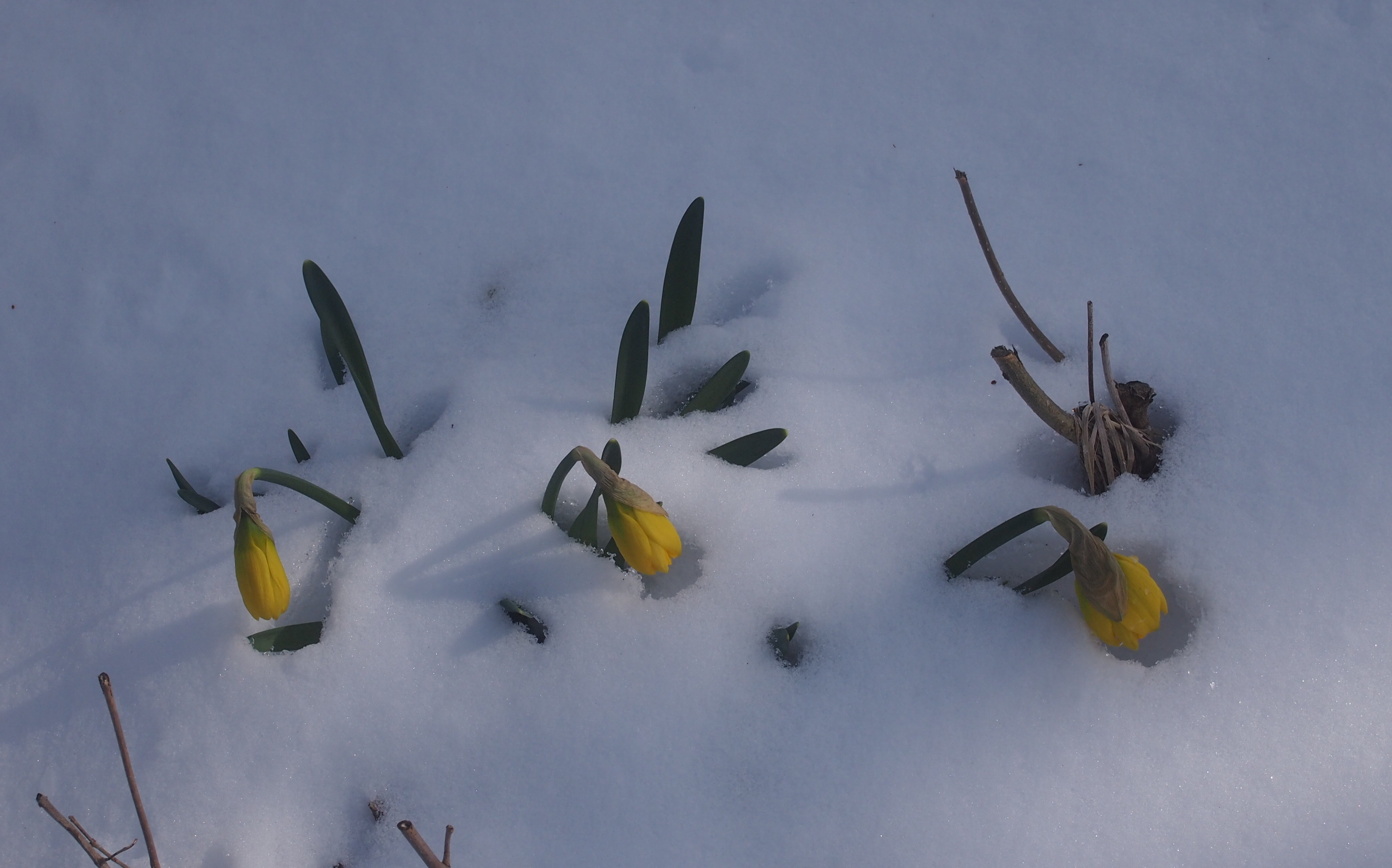
Not the Blizzard of 1888, but they say the Northeast got a lot of snow. We got three or four more inches last night and into the morning. More than in January or February, and enough to catch the back yard croci in early blossom.

Flowers in the Snow 2017They’re hardy flowers. I’m sure they’ll survive the day or two of snow cover.

The snow’s already mostly melted off the streets and driveways and sidewalks, so it hardly counts as a nuisance. Still, it’s hard to believe the view from the back door will look like this in three months.

The Chicago Botanic Garden

The Chicago Botanic Garden is actually in Glenco, Illinois, but it would be nitpicky to insist that it be called the Greater Chicago Botanic Garden, or even the Chicagoland Botanic Garden, though that has a ring to it. Glenco is a northern suburb, as far north as you can get in Cook County. The road that leads to the garden’s entrance is in fact Lake-Cook Road, more or less the border between Lake and Cook counties.

All of the gardens’ 385 acres are south of that road, and are property of the Forest Preserve District of Cook County (just like Bachelor’s Grove Cemetery, but far away geographically and otherwise). On Saturday, Yuriko and I went to the garden because we’ve long been fond of it, because it was a warm, pleasant day, and because we couldn’t remember the last time we went. So long ago, I think, that we pushed Ann around in a stroller (later than 2004, maybe, but not much). This time Ann stayed home.

It’s a large garden, offering a multitude of plants in a variety of settings, including 27 display gardens, such as the Crescent Garden.

And the three-acre Rose Garden, whose flowers surround a popular lawn.
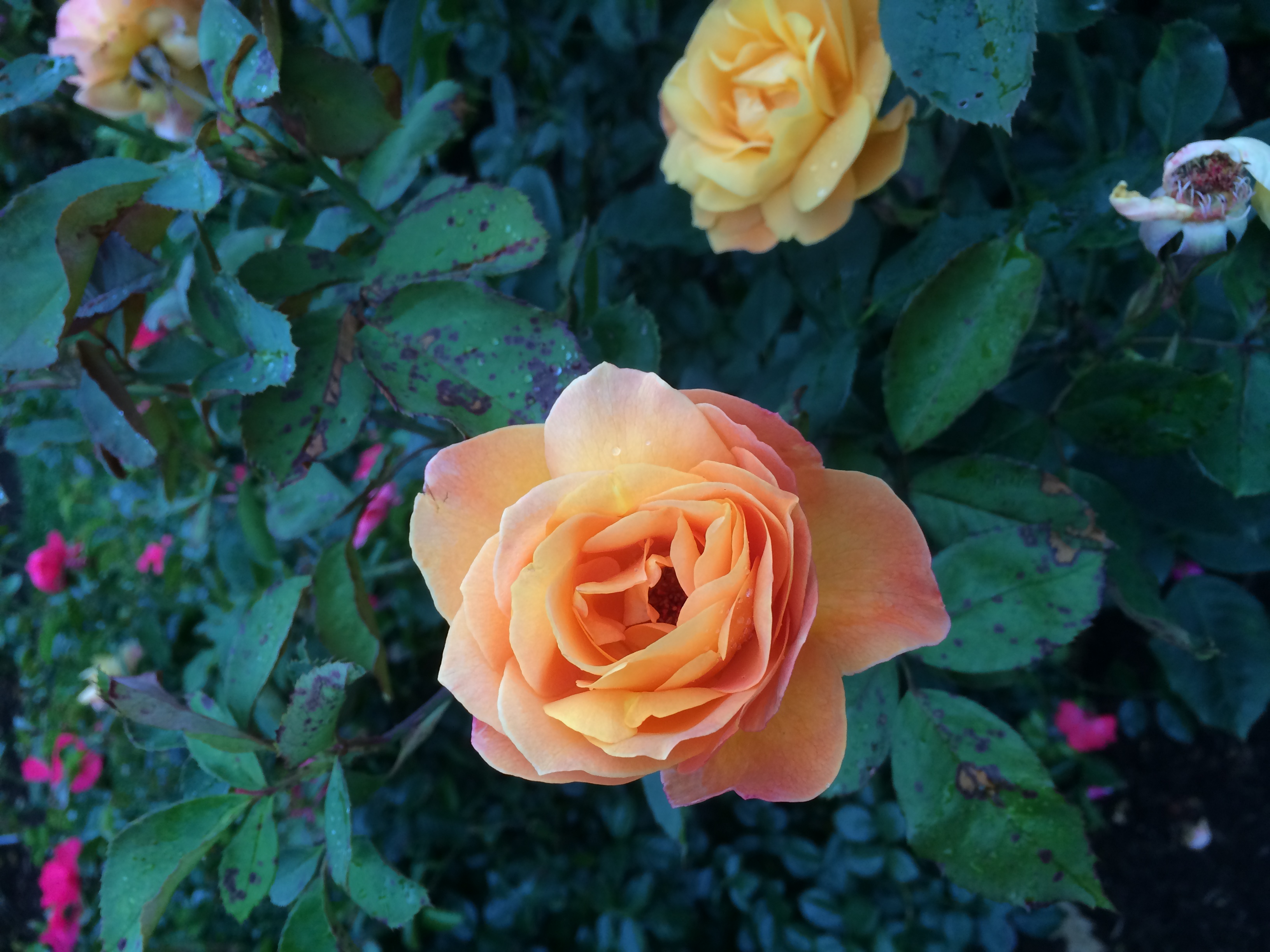
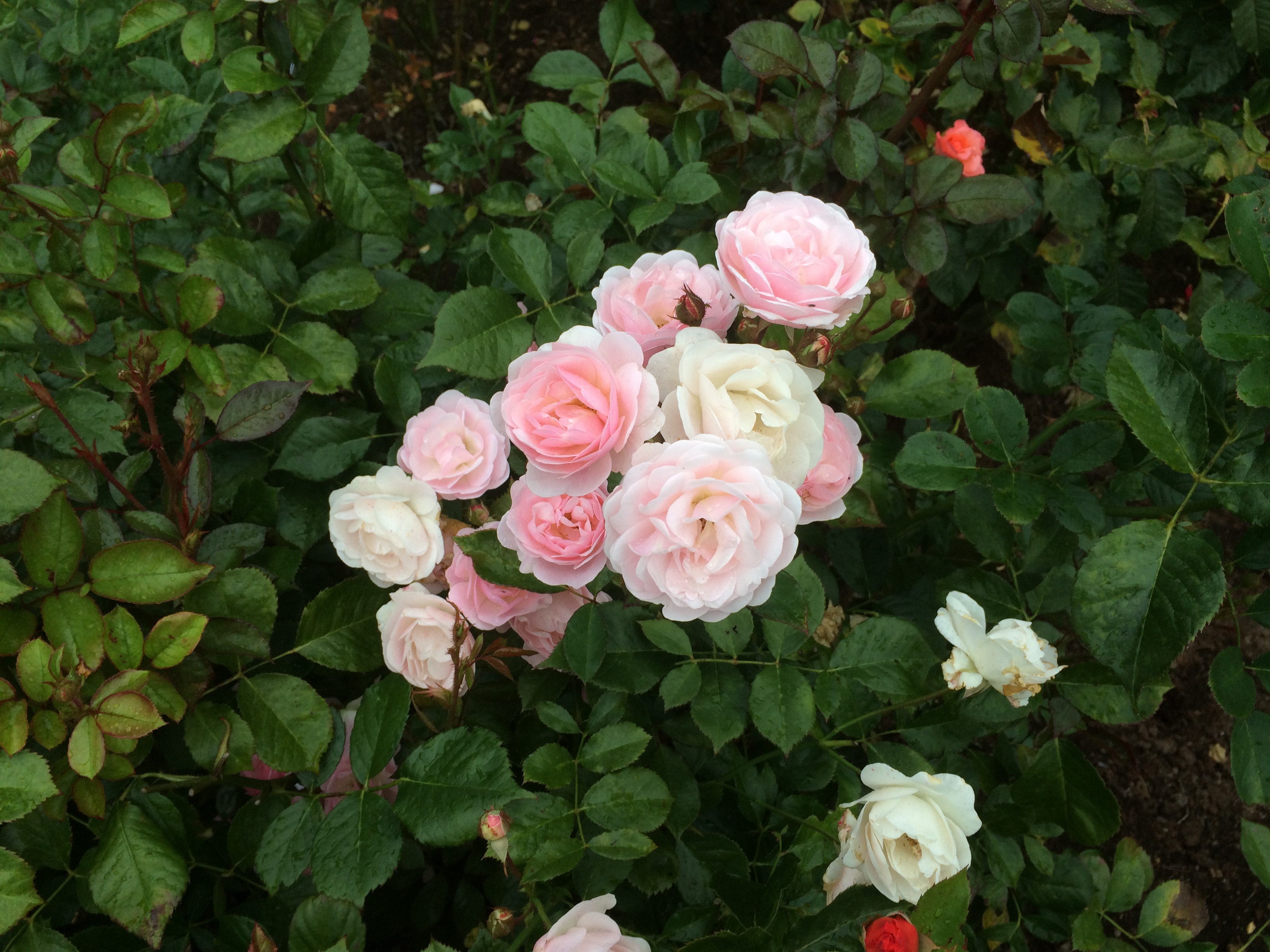
Chicago Botanic Garden - Rose Garden“The Rose Garden — one of the most popular spots at the Chicago Botanic Garden — also gives context and history to the storied flowers, while celebrating the best among them,” the garden’s web site asserts. “Consider the old garden roses (also called antique or heirloom roses), which were cultivated before 1867… The History of Roses Bed, which tracks the development of the rose from the earliest wild rose to the modern hybrids, also provides context. And, for inspiration, the Rose Garden features All-America Rose Selections winners, along with the best rose varieties for Midwest gardens.”

Is 1867 particularly important in the history of roses? Turns out it is. Again, I quote from the Chicago Botanic Garden, which has a brief history of roses on its site. “To bring order to the wild world of roses, the American Rose Society has classified all roses into two major categories: old garden roses (sometimes called antique or heirloom roses) and modern roses. The old roses are those that were cultivated in distinct classes prior to 1867, and the modern roses are those that followed. The year 1867 is an important one in rose history, since it marks the debut of the hybrid tea rose.” Ah. Just another thing we inherited from the corybantic 19th century.

Among the many blooms evident even in September at the Chicago Botanic Garden:

Bourbon RoseRosa Champlain
Chicago Botanic Garden - Rose GardenAnd one of those thoroughly modern hybrid tea roses (Rosa Medallion) Chicago Botanic Gardens - Rose GardenElsewhere in the garden is the shady Waterfall Garden, whose centerpiece is a 45-foot cascade.
Chicago Botanic Garden - Waterfall GardenThe Japanese Garden could stand alone as a destination. Part of it is an inaccessible island (at least to casual visitors) called Horaijima, or the Island of Everlasting Happiness. It’s fitting that no one can go there.
Chicago Botanic Garden - Japanese GardenAnother part of the Japanese Garden includes a Shoin (書院) House, patterned after the studies of priests and scholars, with antecedents as far back as the Muromachi era (ca. 1336 to 1573), though this particular house was finished in 1982.
Chicago Botanic Garden - Japanese GardenAmong many other plants, the Evening Island sports enormous grass.

Chicago Botanic Garden - Evening Island“Evening Island is an example of the New American Garden style of landscape design, which features vast naturalistic sweeps of low-maintenance grasses, perennials, and roses to create a living tapestry,” the garden says. “The garden is sited, appropriately, between the formality of the English Walled Garden and the wildness of the native Prairie.”

The English Walled Garden was the site of a wedding on the afternoon of September 3, so it was closed to other visitors. I remember that it’s a lovely place, though.

We wandered through a number of other sites at the garden as well, such as the Sensory Garden, Spider Island, the Circle Garden, and bonsai collection and the greenhouses. We didn’t see many other places. It’s like a major art museum in that way: too much for any single visit.

I did start taking notes of some of the plant names that interested me. With a digital camera and a lot of signs identifying plants, that was easy. Some examples of common names, not scientific names, just to keep things simpler: Siberian Bugloss, Virginia Waterleaf, Mountain Bluet, Columbine Meadowrue, Southern Blue Monkshood, Fairy Bells, Chocolate Dragon Smartweed [sounds like something you can buy in a shop in Seattle], Black Adder Hyssop, Cranberry Cotoneaster, Venice Masterwort, Purple Rain Jacob’s Ladder, Floss Flower, and Art Deco Zinnia.

I have to publish a picture of that last one.

Chicago Botanic Garden - Art Deco ZenniaWish I had a memory for plant names and characteristics.

Spring Valley, June ’16

We went to Spring Valley on the afternoon of June 10 to look for the peonies, but we were a little late. Not sure why they’d bloom earlier this year than two years ago around June 10. This year’s been rainy too. Natural variation in timing, I guess. But some were still in flower.

Spring Valley, June 2016Even so, Spring Valley’s usually a good walk, even in very warm temps. Just take some water and avail yourself of shade when you can.

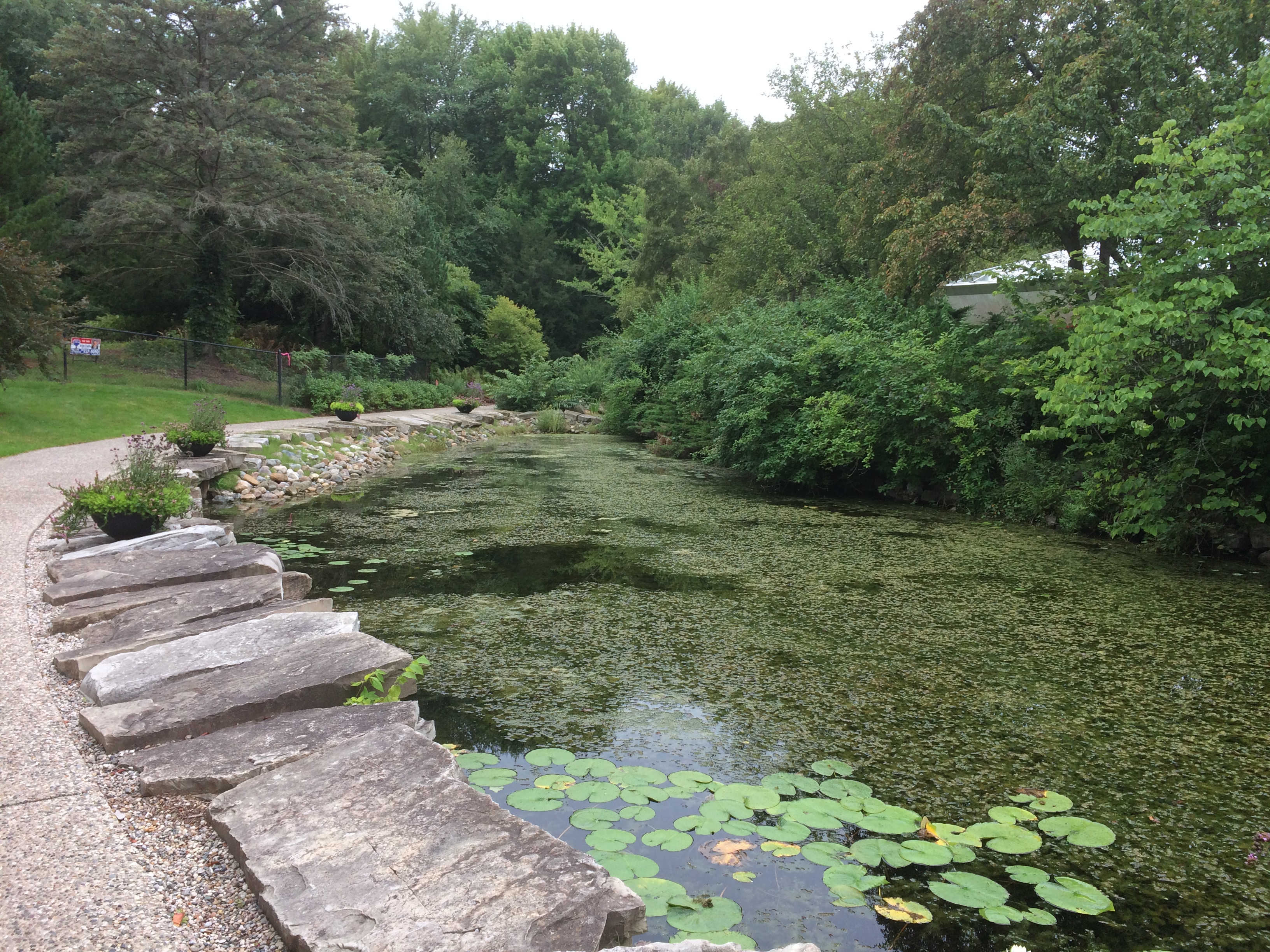
There weren’t as many lily pads on the major pond as in previous years, either. Mostly pond scum. Which is probably an underappreciated and misunderstood part of the eco-system and health of the pond, etc, etc. But if you look closely at the surface of the water…
Spring Valley, June 2016You’ll notice a frog, partly submerged, belly up.
Srping Valley June 2016Waiting for hapless insects to come to close, probably. Unfortunately, says Susan Paskewitz of the University of Wisconsin, “adult frogs eat a variety of things but there is no evidence that mosquitoes are an important part of the adult diet of any species.”

Also, according to Professor Paskewitz: bats are overrated as agents of mosquito control. Too bad.

South Texas Flora, Early March

While walking along in Fredricksburg, Texas, on March 4, 2016, I noticed bluebonnets beginning to bloom. Not a sweeping field of bluebonnets, as you see in Hill Country paintings, or occasionally in person, but those emerging from a small green patch ‘tween concrete and asphalt. It was a pleasure to see them all the same.

Up in Illinois, I did see a handful of croci beginning to push out of the earth before I left. But nothing like the early spring flowers of Texas. Such as those emerging from rocky ground.

Or on bushes.

And trees.

Plus the glories of irises, always a favorite, wherever they grow.

What’s the matter,
That this distemper’d messenger of wet,
The many-colour’d Iris, rounds thine eye?

Lan Su Chinese Garden

At the Lan Su Chinese Garden in Portland, I wondered: How true to the original connotations are the inevitably flowery translations of some Chinese phrases into English? Put into English, various parts of the garden come out as “Tower of Cosmic Reflections,” ‘Flowers Bathing in Spring Rain,” and “Knowing the Fish Pavilion.”

I’ll never have an answer to that. Maybe that’s because the “original connotations” would cover a wide range of meaning, even among native speakers of whatever Chinese dialect is represented. Never mind. Lan Su’s a beautiful place.

Lan Su Chinese Garden, Aug 2015According to the garden’s web site, it’s “a result of a collaboration between the cities of Portland and Suzhou, our sister city in China’s Jiangsu province that’s famous for its beautiful Ming Dynasty gardens. Lan Su was built by Chinese artisans from our [sic] Suzhou and is the most authentic Chinese garden outside of China.”

Quite a claim. But I was intrigued that the garden was patterned after ones in Suzhou. I’ve seen some of those gardens. Now I’ve seen this one.

Lan SuLan SuThe web site again: “The garden’s name represents this relationship: sounds from both Portland and Suzhou are combined to form Lan Su. Lan (蘭) is also the Chinese word for Orchid and Su (蘇) is the word for Arise or Awaken, so the garden’s name can also be interpreted poetically as ‘Garden of Awakening Orchids.’ (蘭蘇園).” More of that flowery translation again. In this case, literally flowery.

Lan SuLan SuSomething about the place brings out the flowery, even in English. From Travel Portland: “Since the garden’s opening in 2000, its covered walkways, bridges, open colonnades, pavilions and richly planted landscape framing the man-made Zither Lake have created an urban oasis of tranquil beauty and harmony. It’s an inspiring, serene setting for meditation, quiet thought and tea served at The Tao of Tea in the Tower of Cosmic Reflections, as well as public tours of the grounds led by expert horticulturalists.”

Zither Lake? After the class of stringed instruments? Anyway, this is it, complete with the reflections of surrounding buildings. Lan Su takes up a city block, but it is still only one block among other city blocks.
Zither LakeWhat I remember best from Suzhou were the rocks, and Lan Su has those too.
Lan SuLan SuThe place also inspires romance. I saw a group of people planning a wedding at the garden, a couple necking among the greenery, and more than one person exercising a bit of self-love by taking selfies.