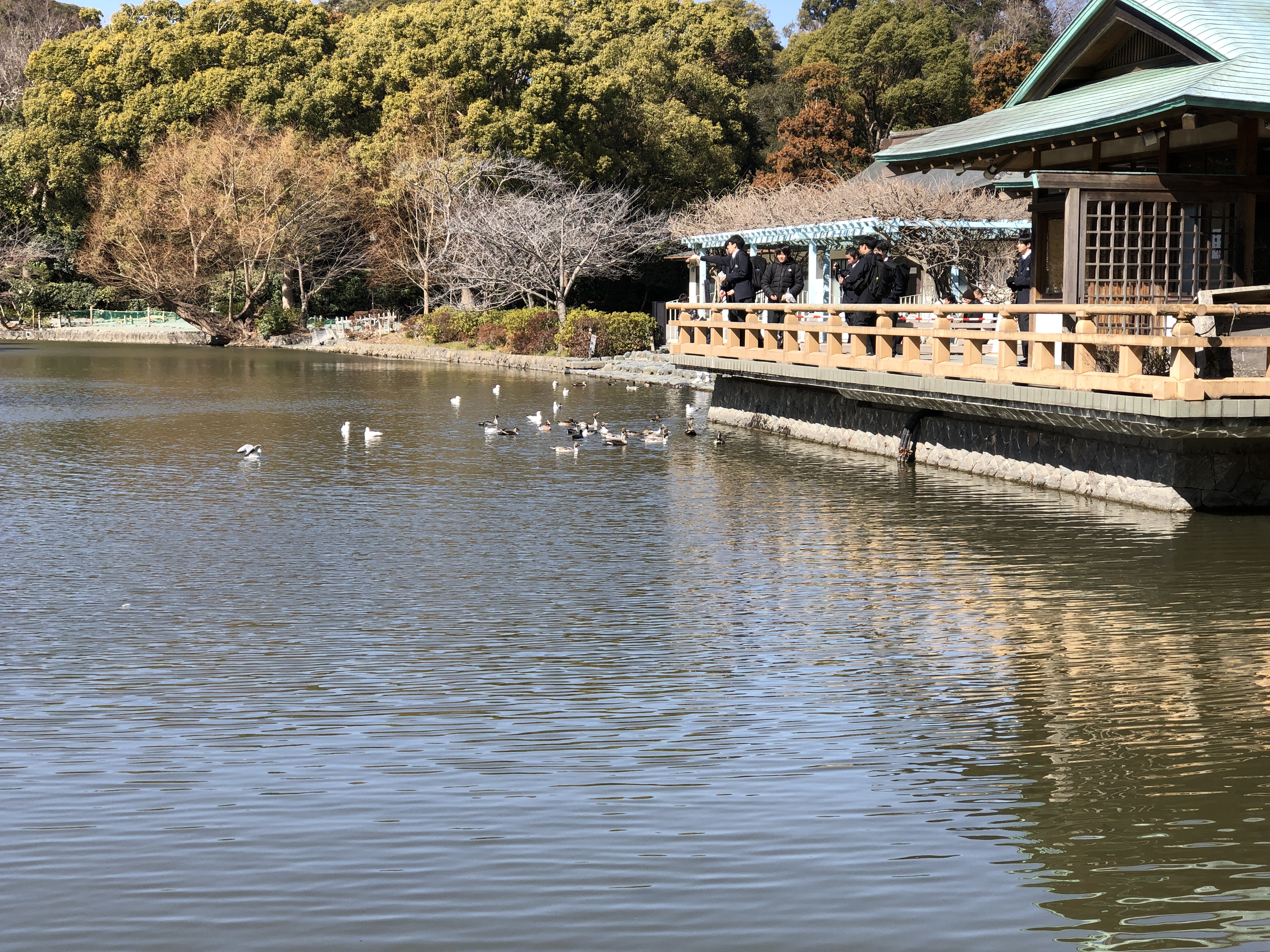
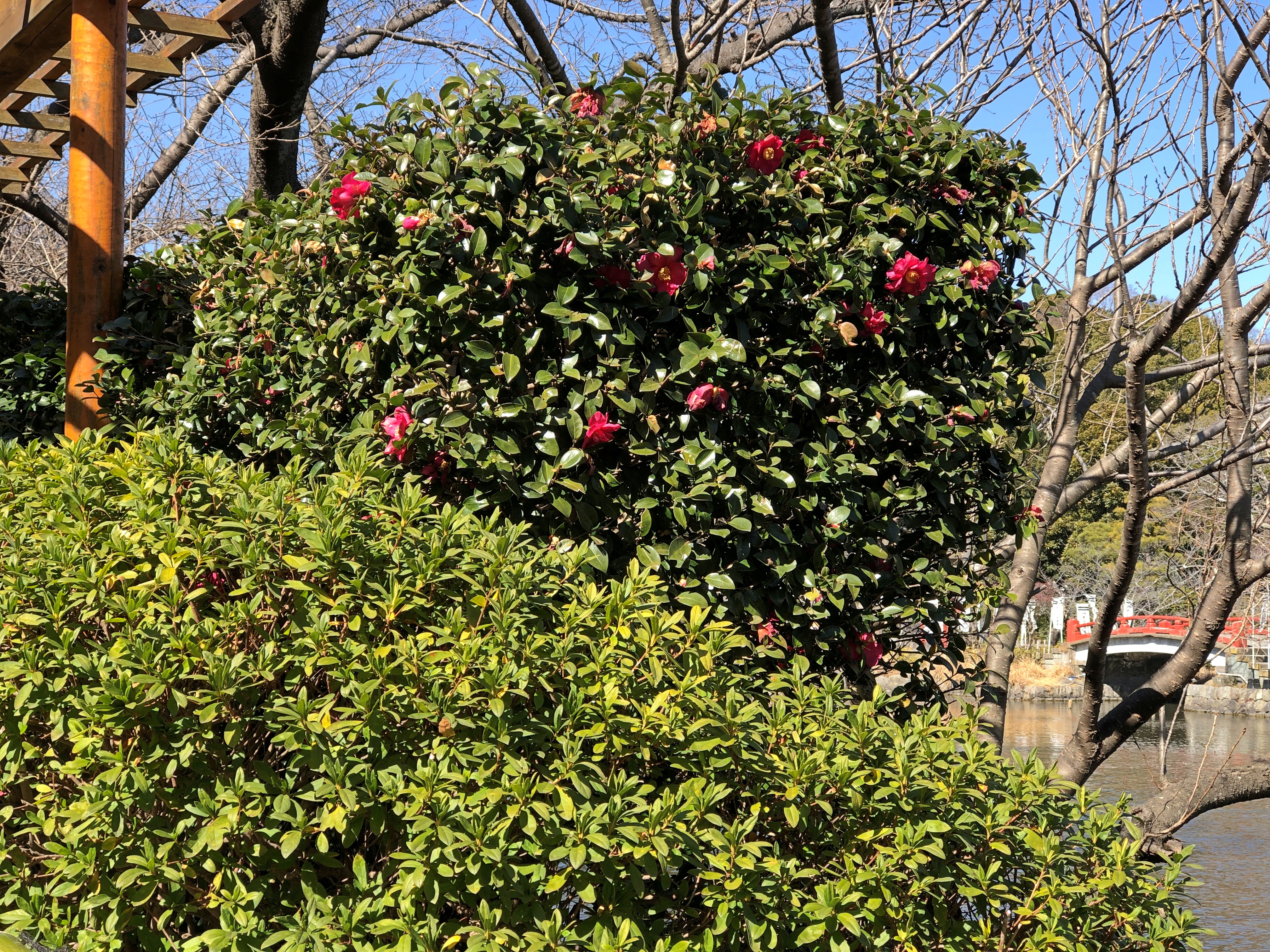
Kamakura Stroll Garden

On the extensive grounds of Tsurugaoka Hachimangu Shrine in Kamakura – or maybe a separate entity adjacent to the shrine, it wasn’t quite clear – was a garden that managed to sport flowers in mid-February.Kamakura Japan

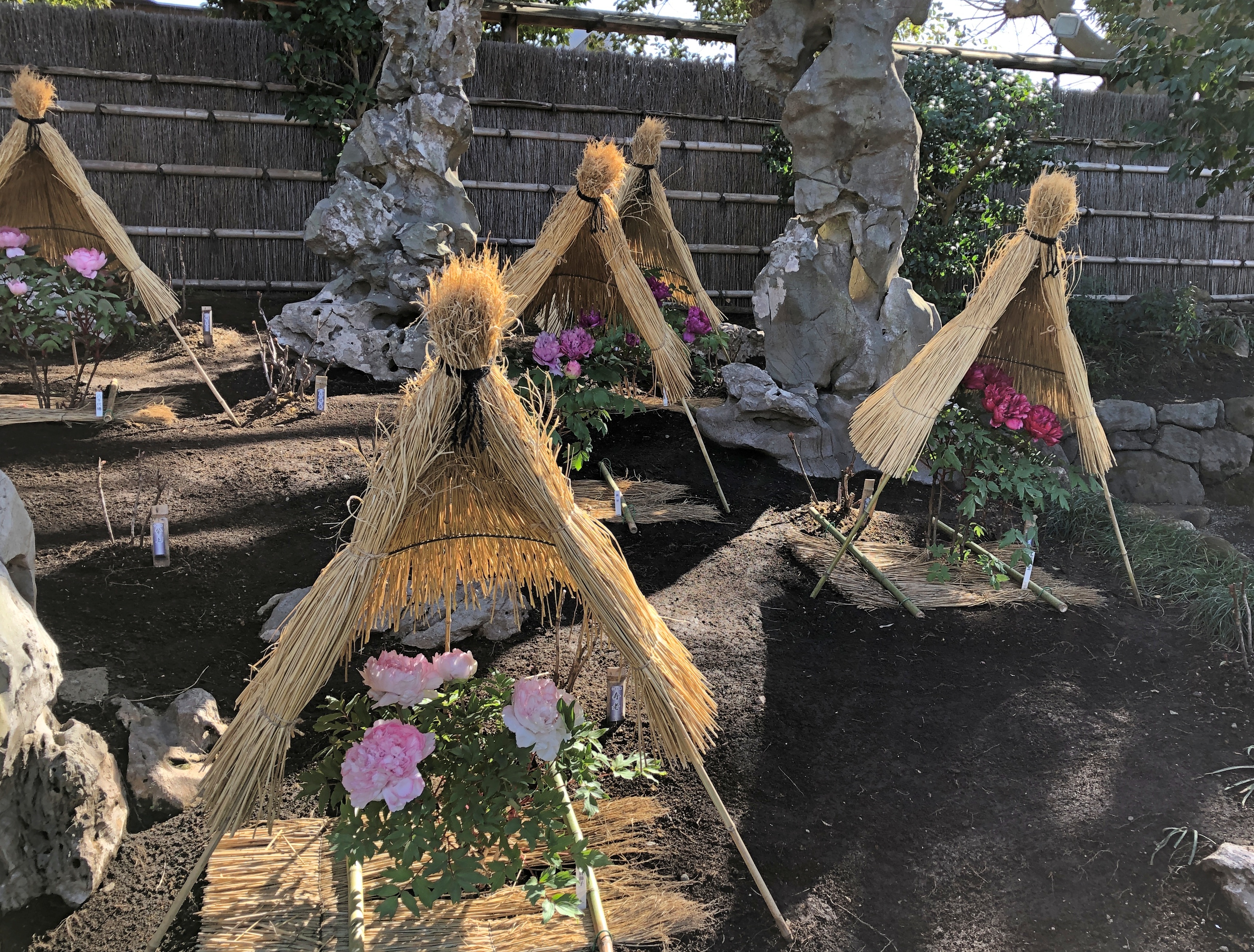
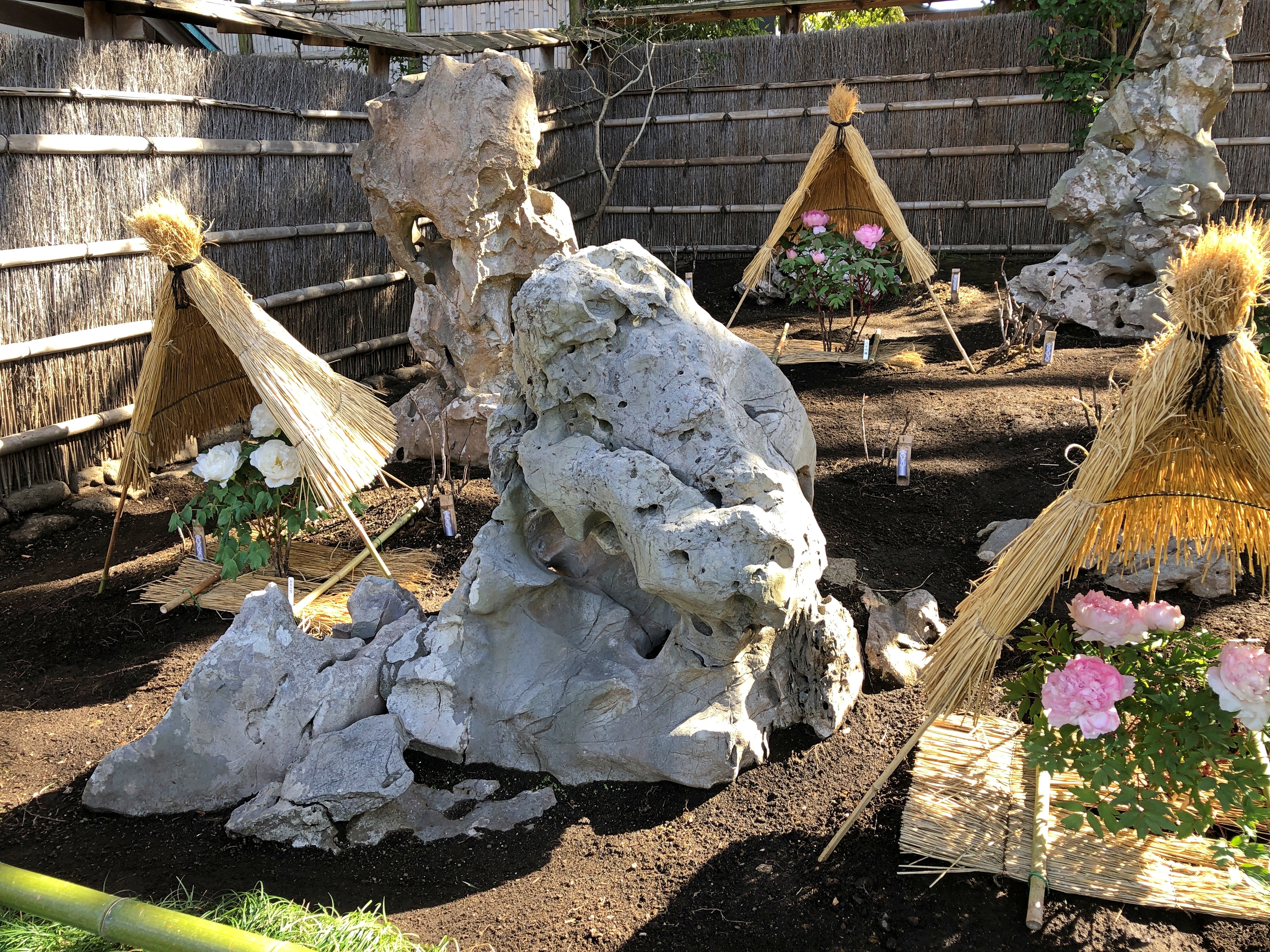
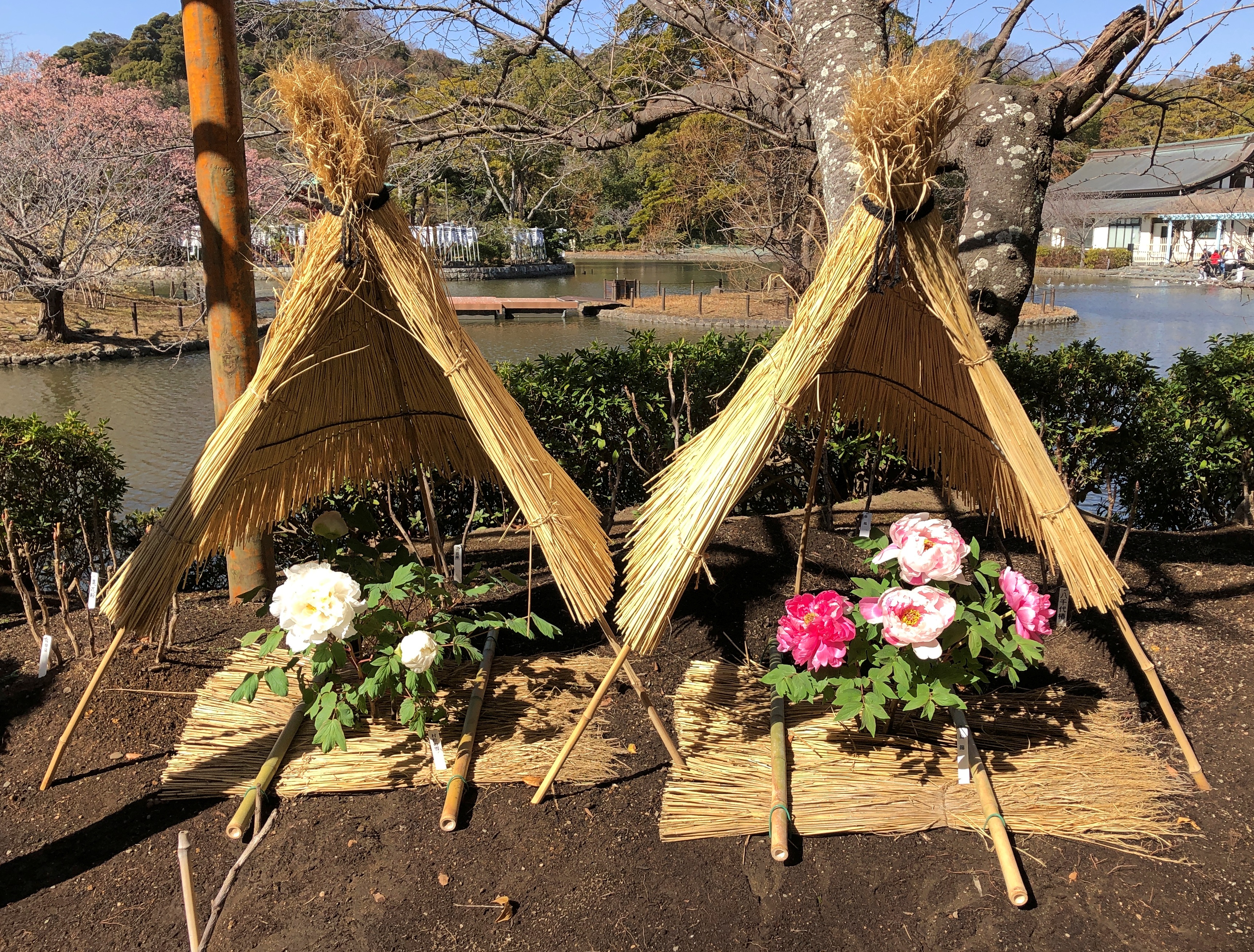
Part of the gardeners’ strategy seemed to be tepee-like straw structures over the blooms, many of them ‘mid the garden stones.Kamakura Japan Kamakura Japan Kamakura Japan

There must be a word for that sort of cover. In English or Japanese or some other language, and it must work somehow, though speaking as a non-gardener, it doesn’t look like it would keep cold air out. The area is roughly the same latitude as Nashville or Oklahoma City, certainly far enough north for some chilly winter days, though presumably the ocean off Kamakura moderates temps somewhat in Kamakura. Anyway, it does get cold there, as this detailed climate page notes.

Or maybe the growing season is longer than it used to be. Whatever could be the cause of that?

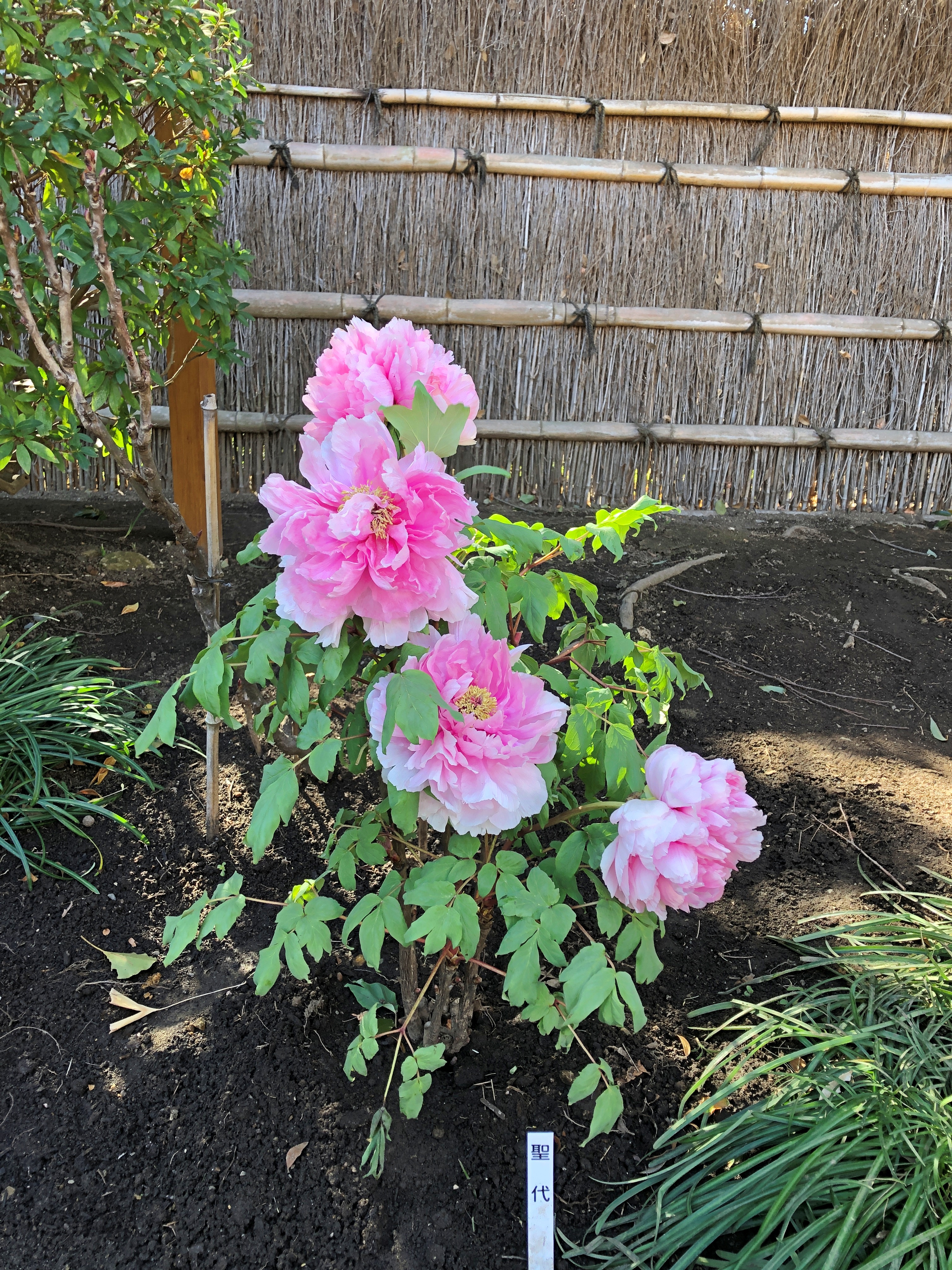
Not every floral growth was covered.Kamakura Japan

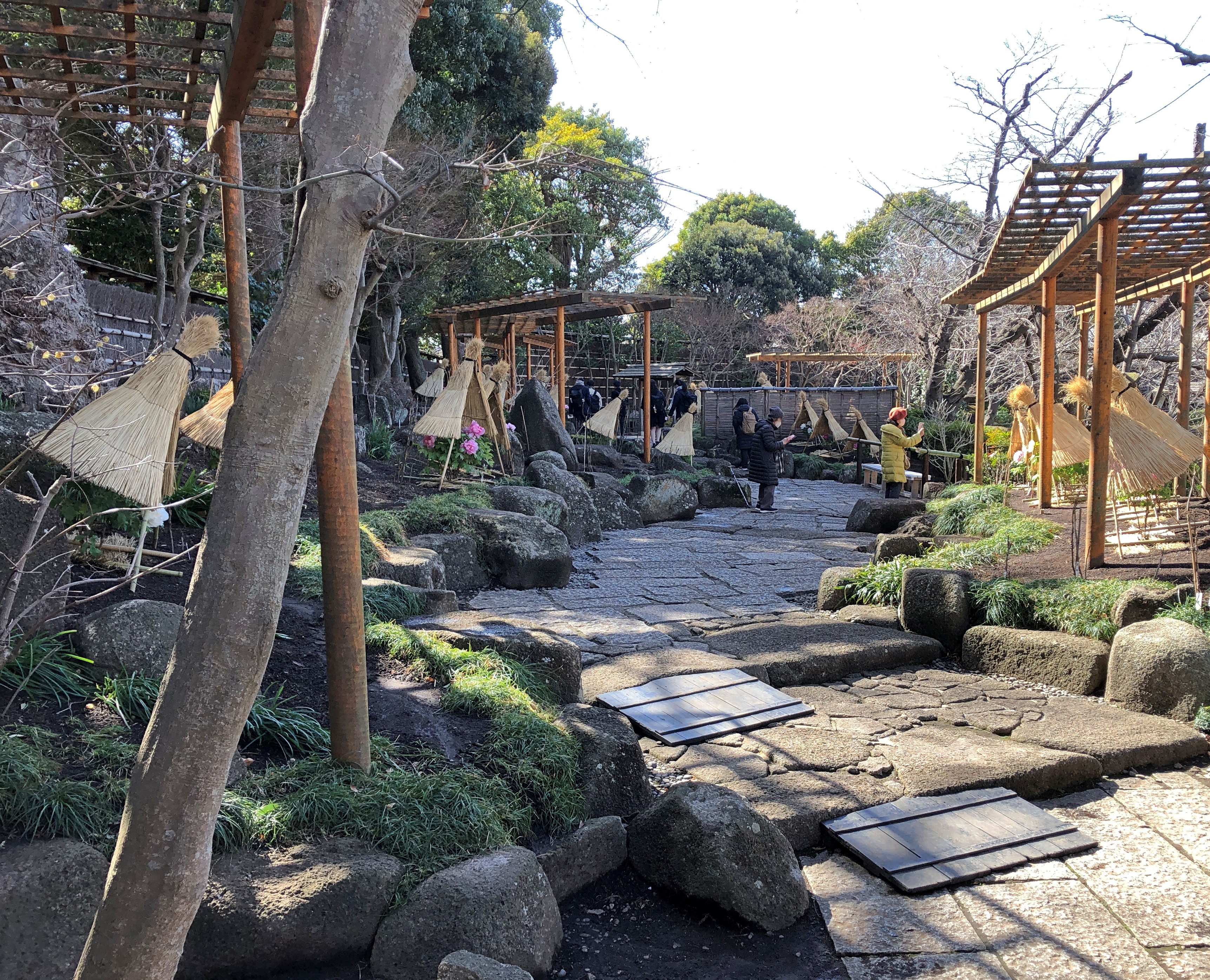
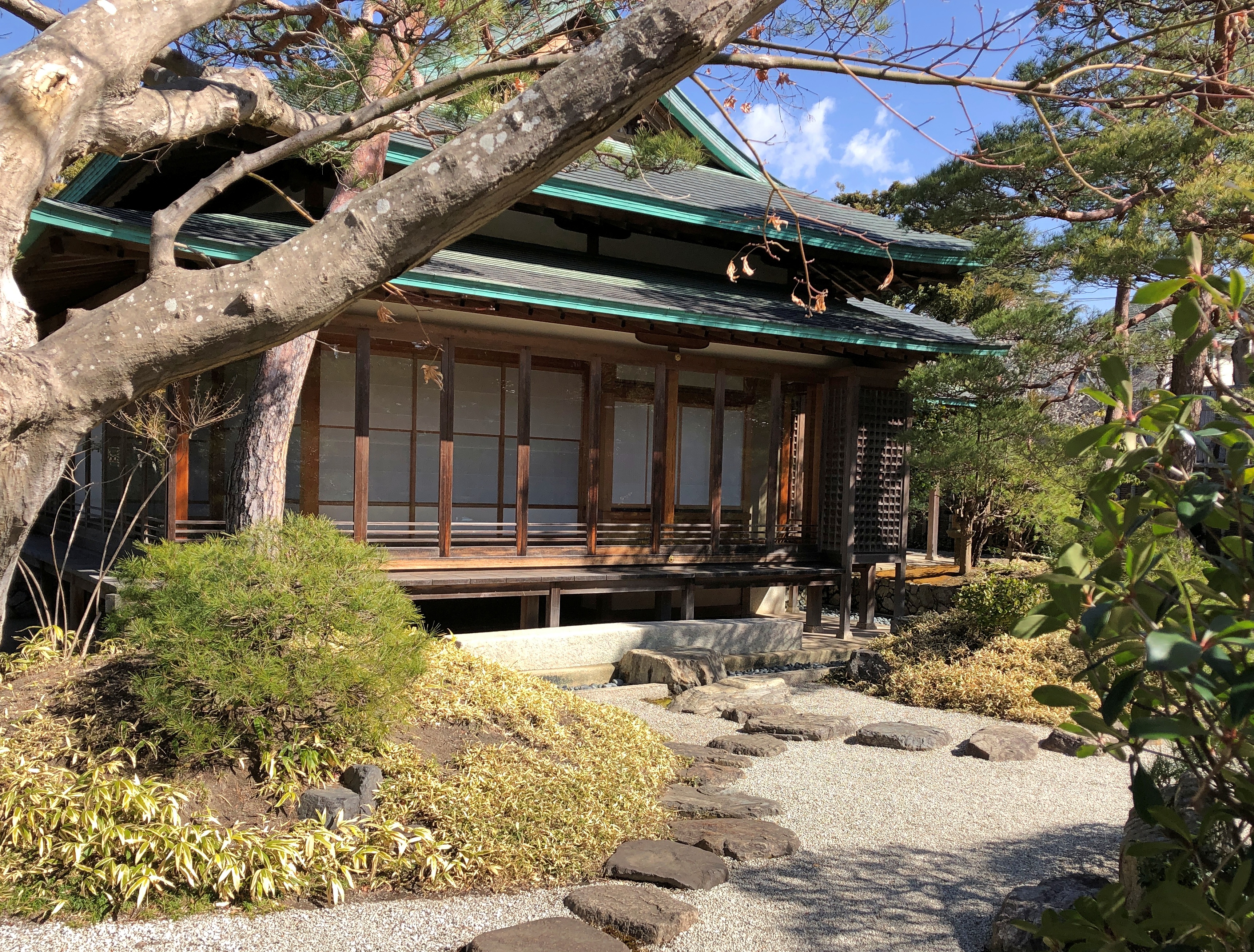
Even without flowers, the place made for a pleasant stroll in an elegant setting.Kamakura Japan Kamakura Japan Kamakura Japan

What would a kaiyushiki teien, a stroll garden, be without bamboo?Kamakura Japan

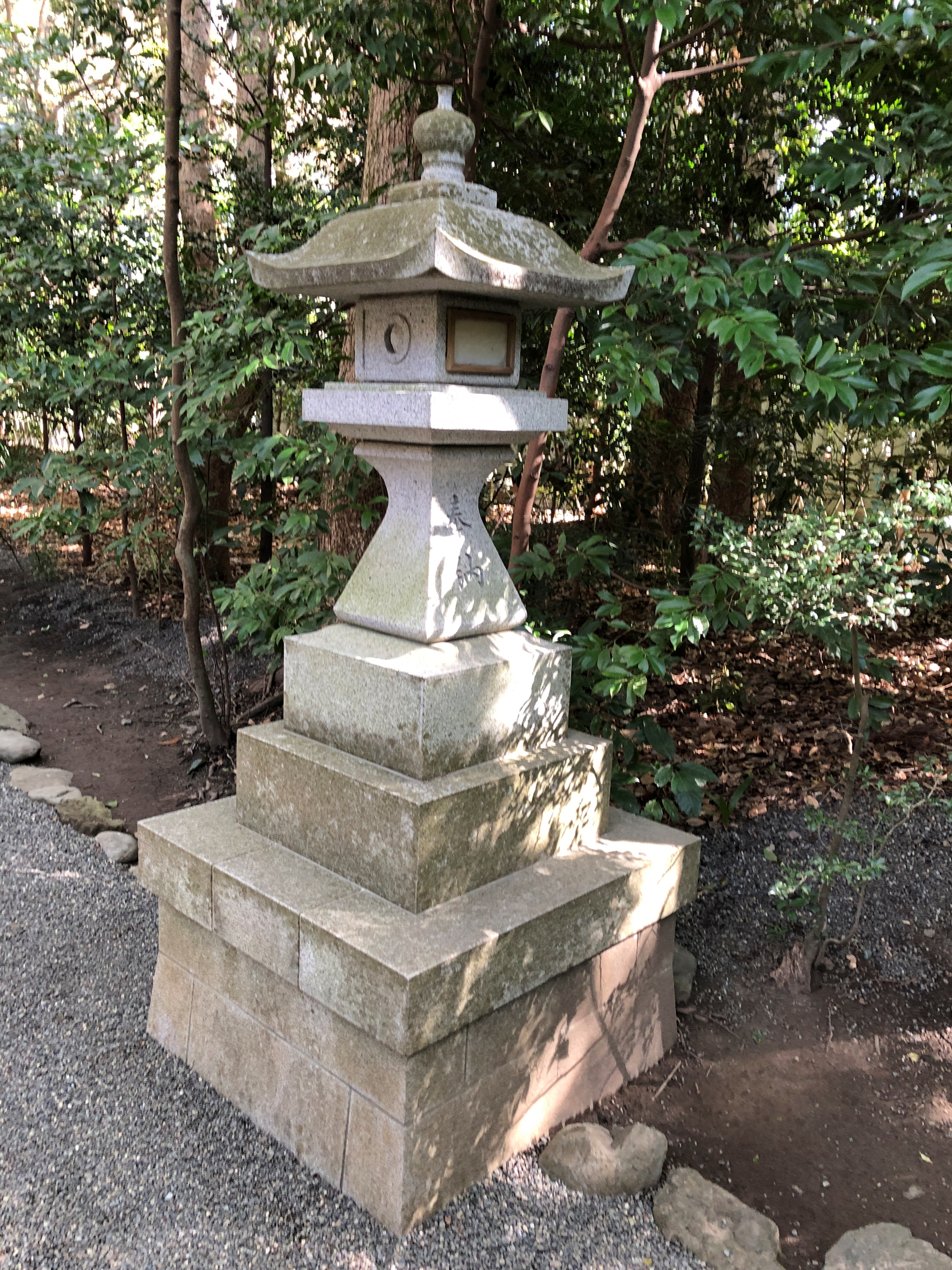
Or a stone lantern?Kamakura Japan

After we strolled the garden, we made our way to the Kamakura Daibutsu, the Big Buddha, a bronze of many tons that somehow makes you think about impermanence. As February days go, the one in Kamakura was top-notch.

Birdman of Osaka Castle Park

In Chinese city parks during our visit in 1994, it was fairly common to see (mostly) elderly men out for a walk with their birds. Their songbirds in cages, that is, which the men carried along with them and would hang somewhere nearby while they rested on benches. This article at least asserts that the practice goes back to the Qing Dynasty, which was founded in 1644. I’d never seen such a thing before anywhere else, and not since, until we visited Osaka Castle Park in February.

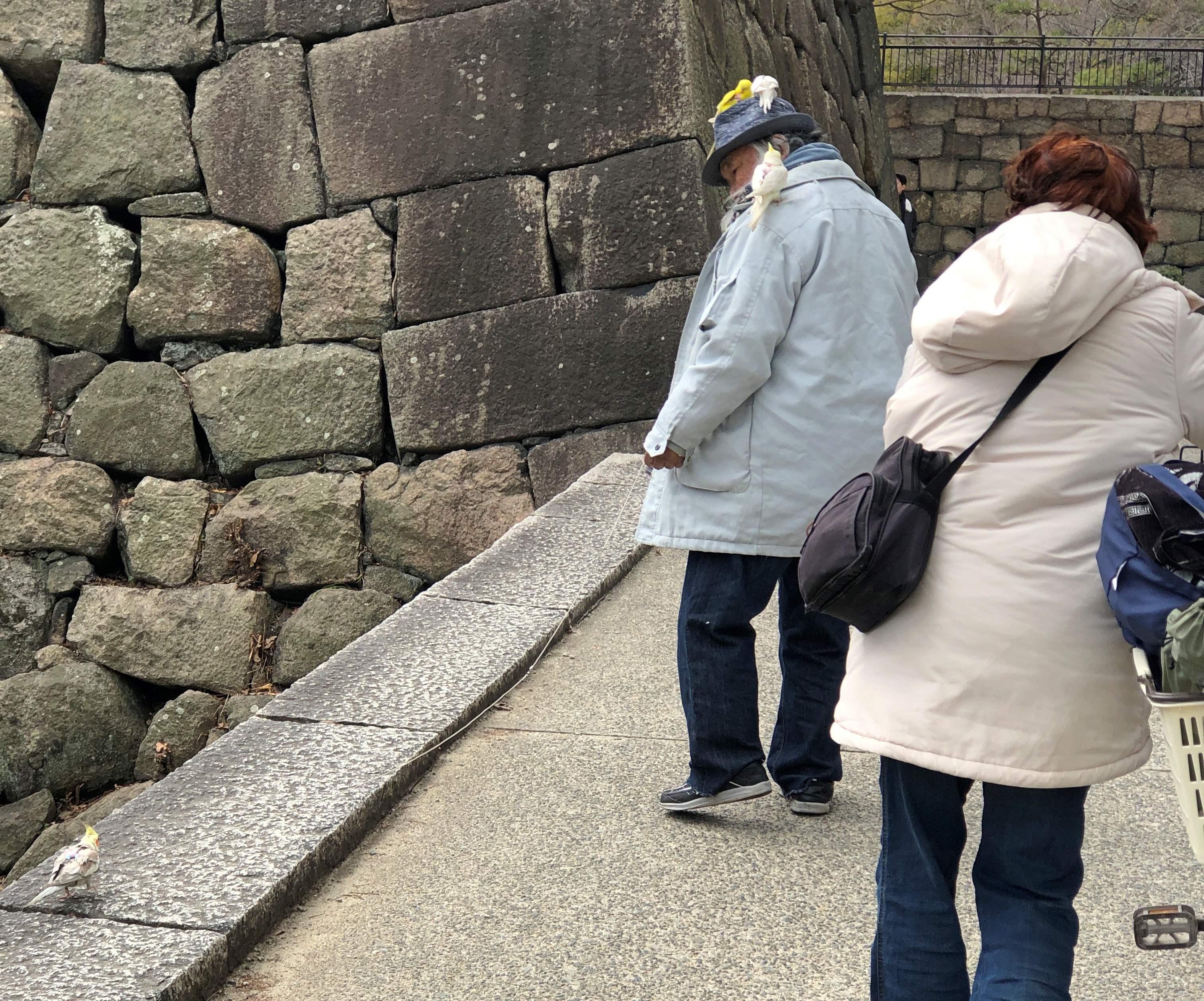
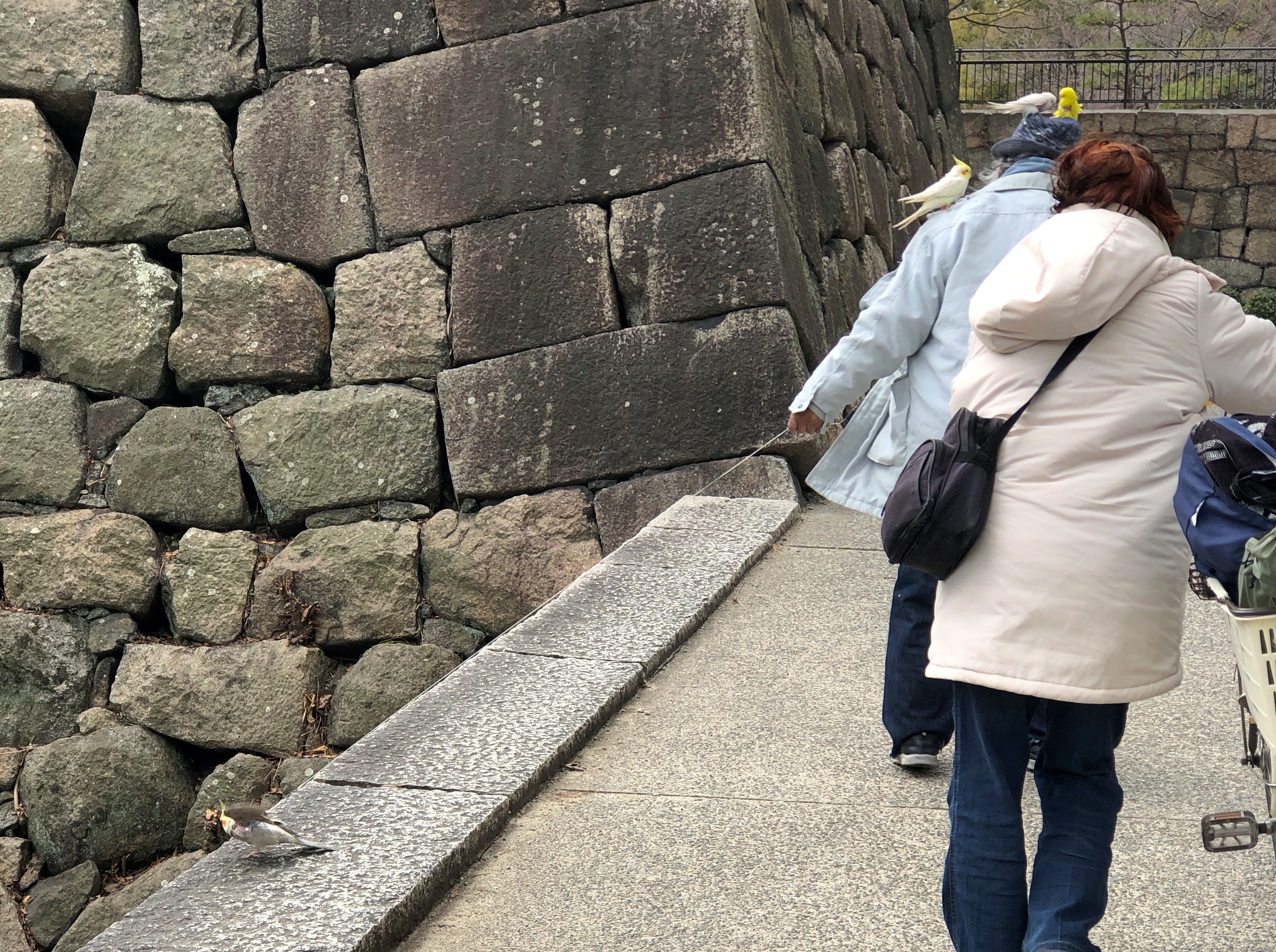
Note the fellow in the blue jacket and blue hat, near one of the former castle walls, with birds perched on his head and shoulders. He seemed to be out for a stroll with his birds.Osaka-jo Koen

They were living, chirping birds that would periodically fly away, but they would also come back. The bird at the left bottom corner of the image was one of his as well, tethered to a string he’s grasping with his hand. Guess that was a bird in training.Osaka-jo Koen

Of course, Japan is not China, however much the Japanese borrowed from China in earlier centuries. Bird walking wasn’t one of those borrowings, so I believe this man and his birds were eccentric outliers who eschewed cages for freedom of movement. Still, the level of training is impressive. It’s one thing to train the birds to return – carrier pigeons do that – but do they know to go somewhere else when it’s time to drop a load? I’d hope so, but I don’t know whether that is possible.

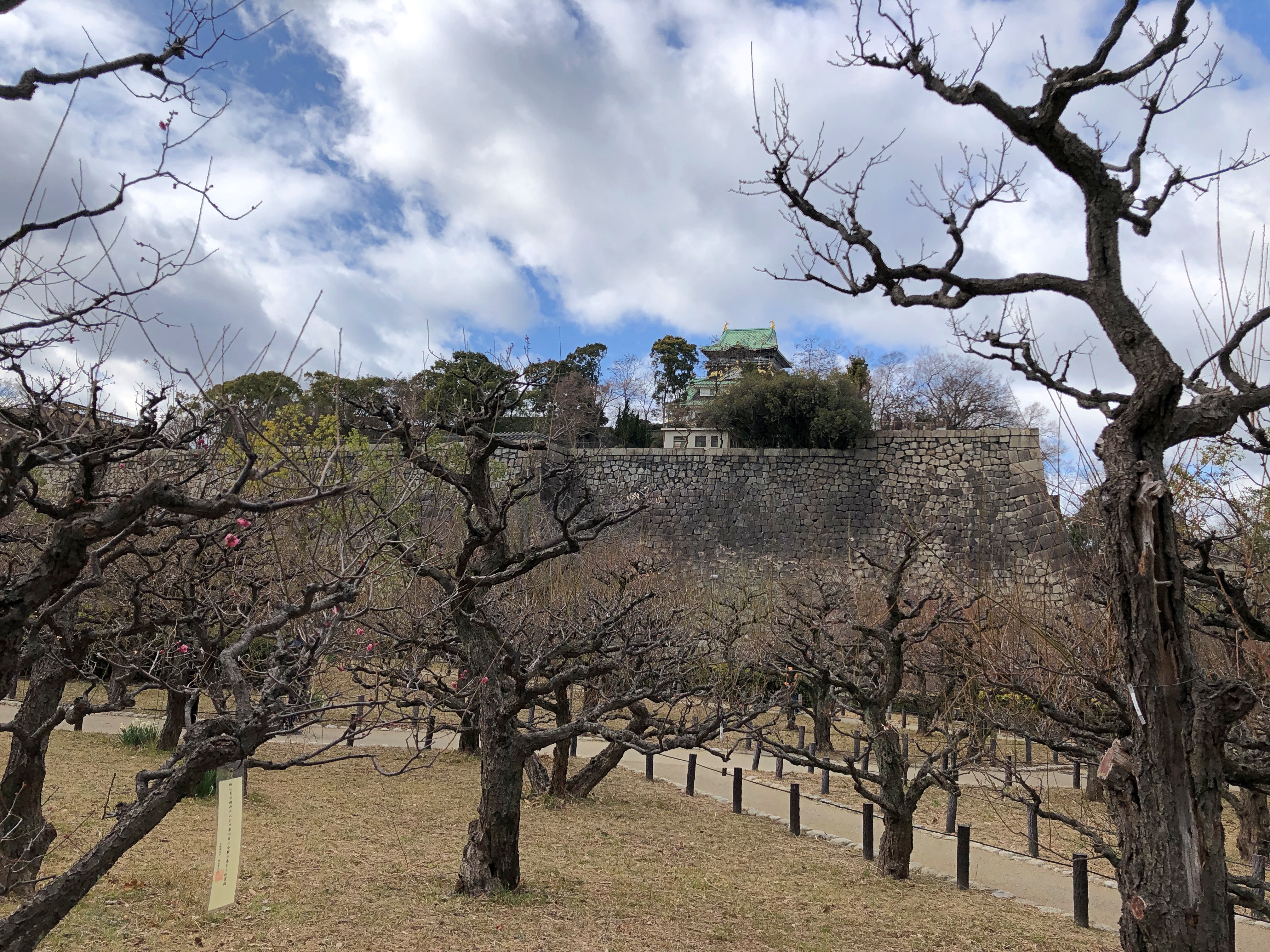
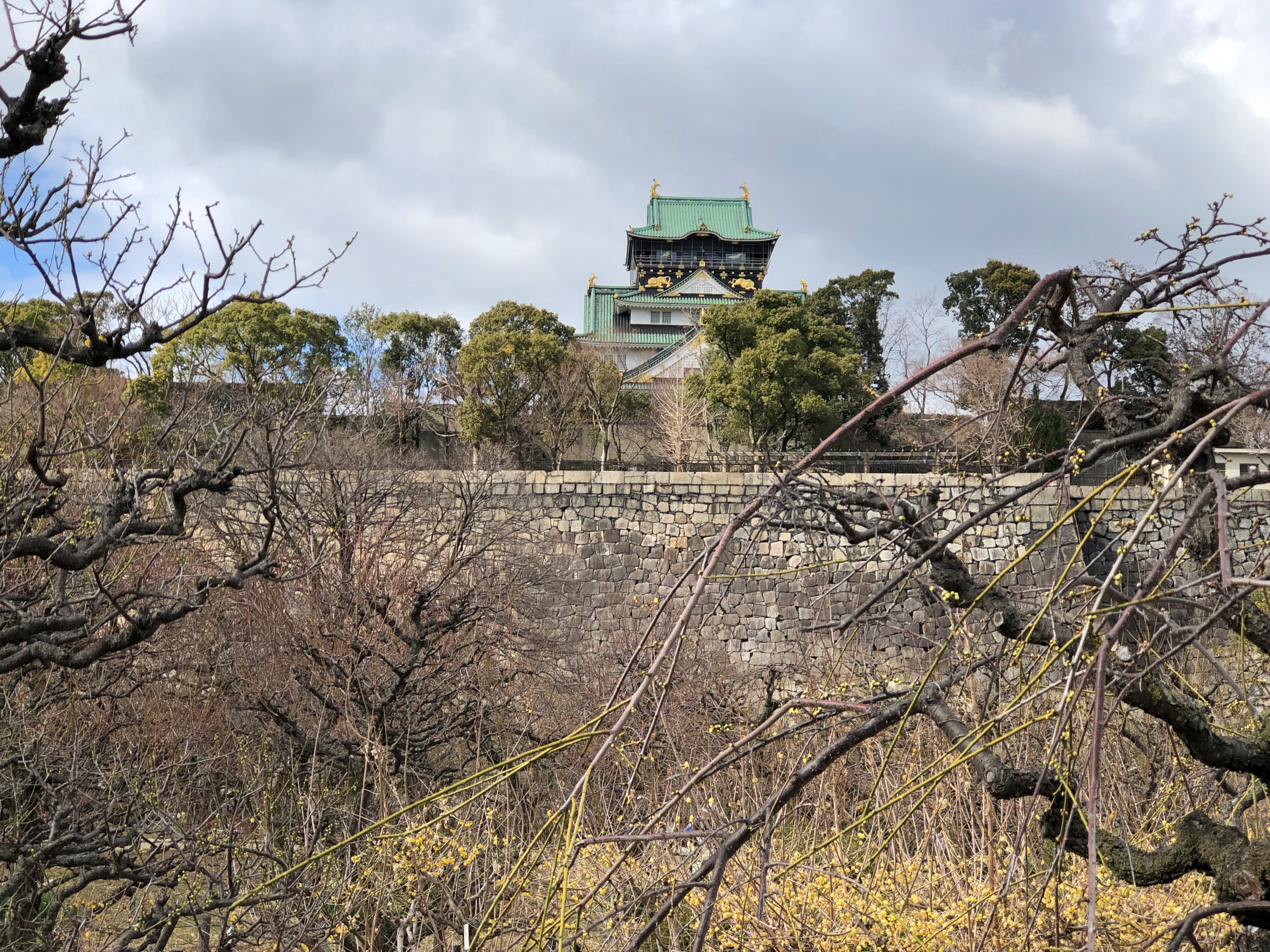
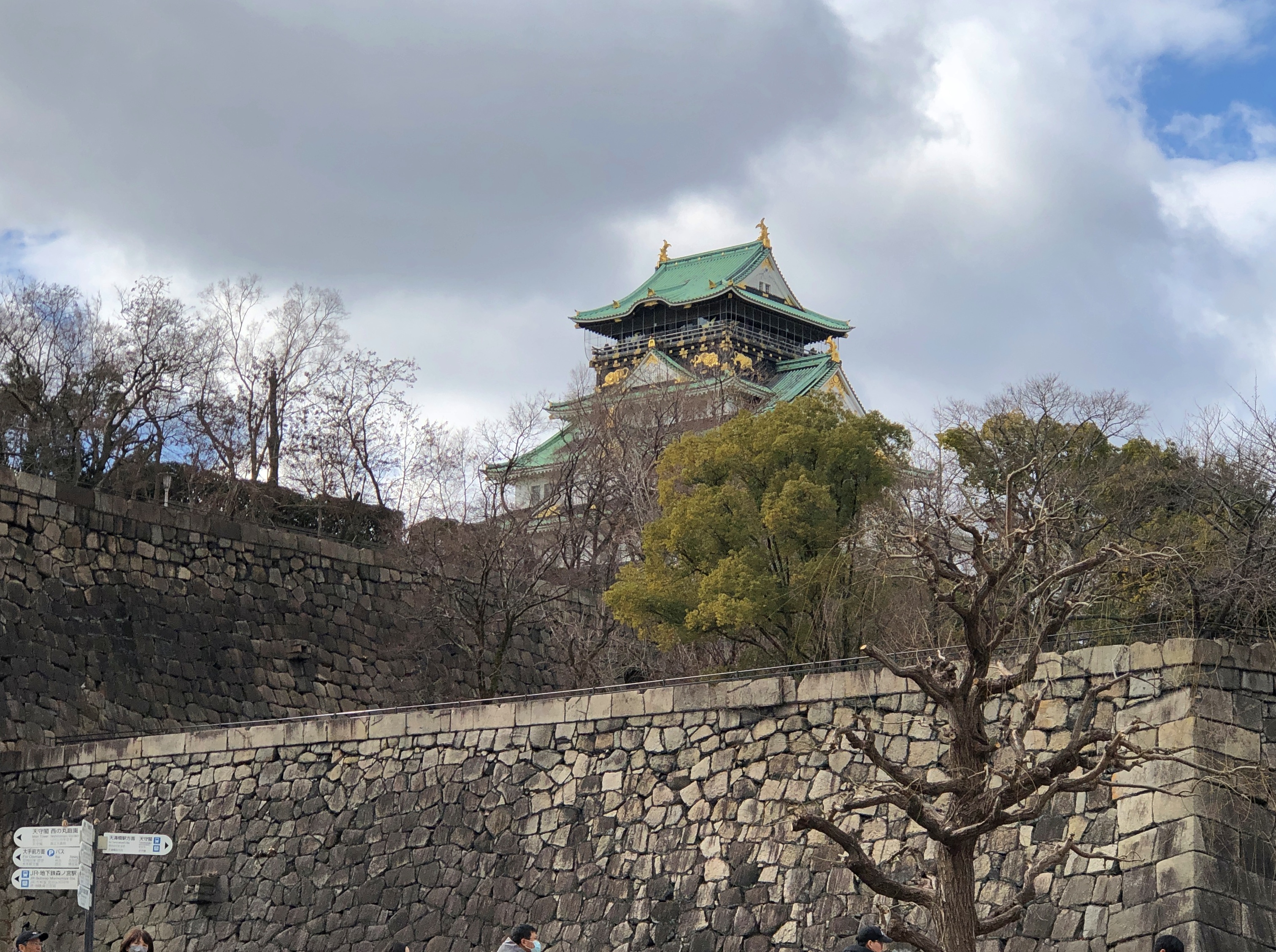
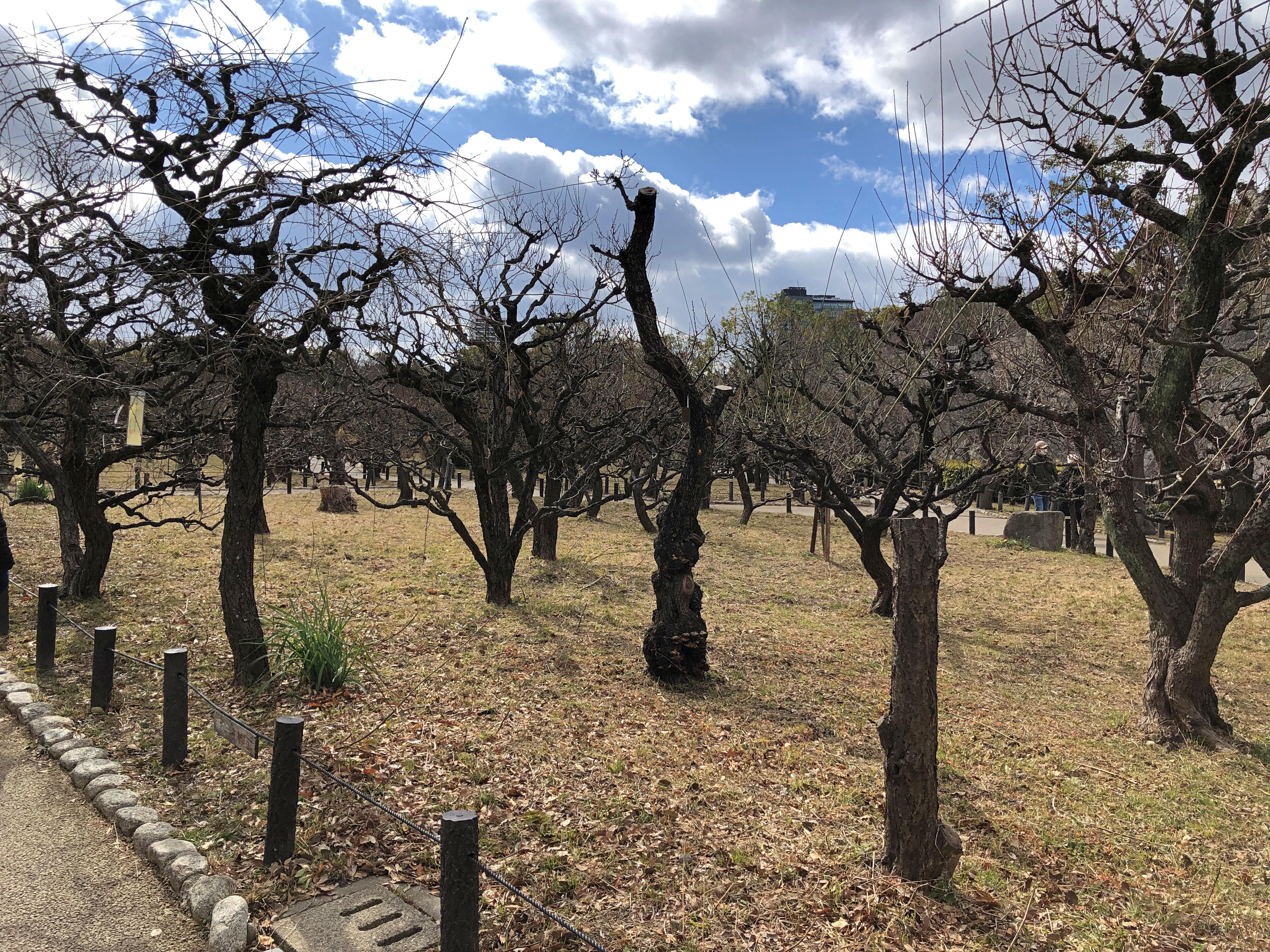
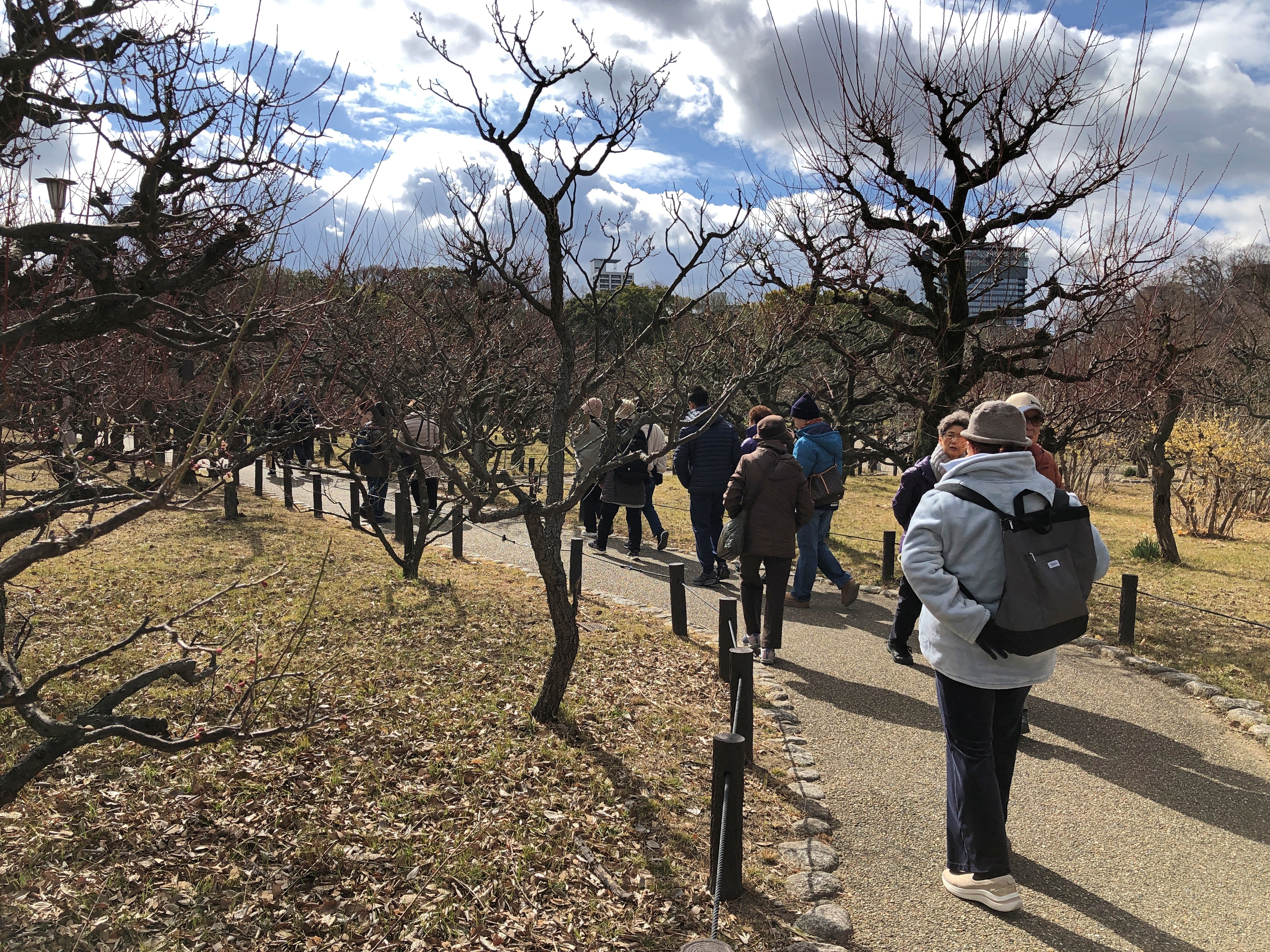
Even in winter, Osaka Castle Park (Osaka-jo Koen, 大阪城公園) is a pleasant place to stroll. We didn’t enter the castle itself, where we’d both been a few times before, but took in some nice views of it.Osaka-jo Koen Osaka-jo Koen Osaka-jo Koen

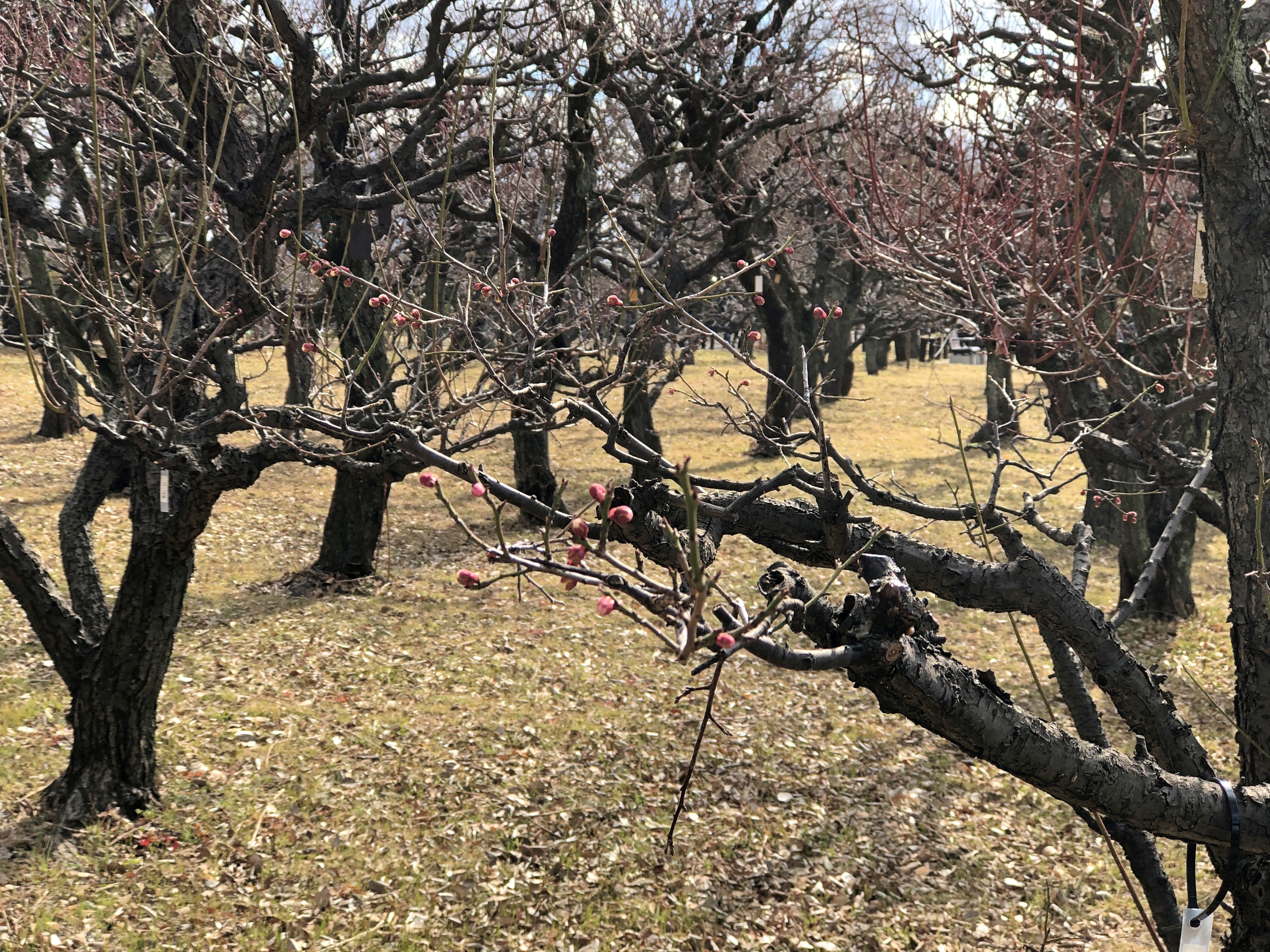
Many of the trees are plums. They are the first to blossom, and we could see the very beginnings of buds, but we were too early for full flowering.Osaka-jo Koen Osaka-jo Koen Osaka-jo Koen

Later, peach and cherries blossom in the park, though the place to see cherry blossoms in Osaka without the crowds in 1990s – and there were always crowds in the large parks, including the grounds of the Japan Mint – was Osaka Gogoku Shrine in Suminoe Ward. I’ll bet it still is.

Volo Bog State Natural Area

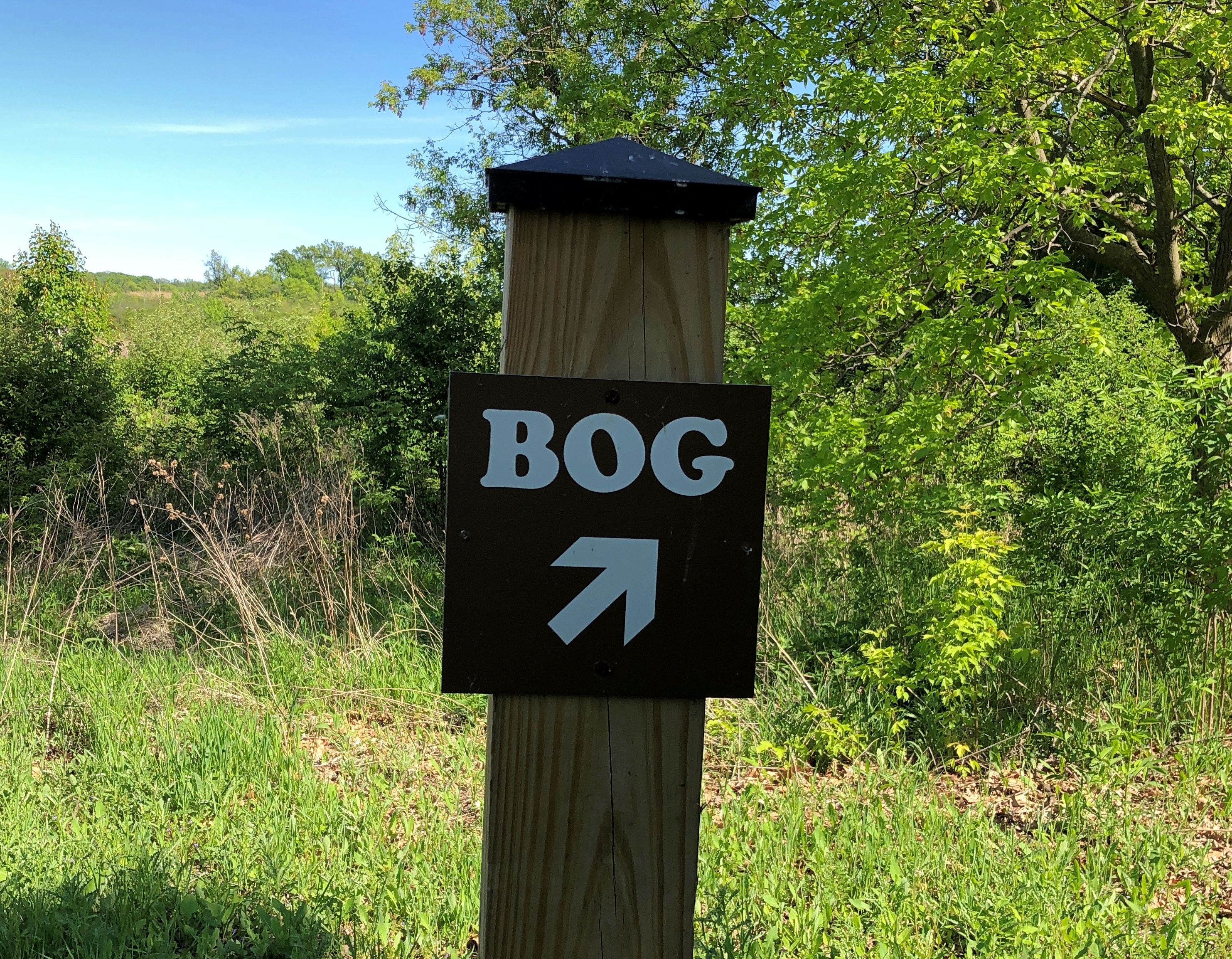
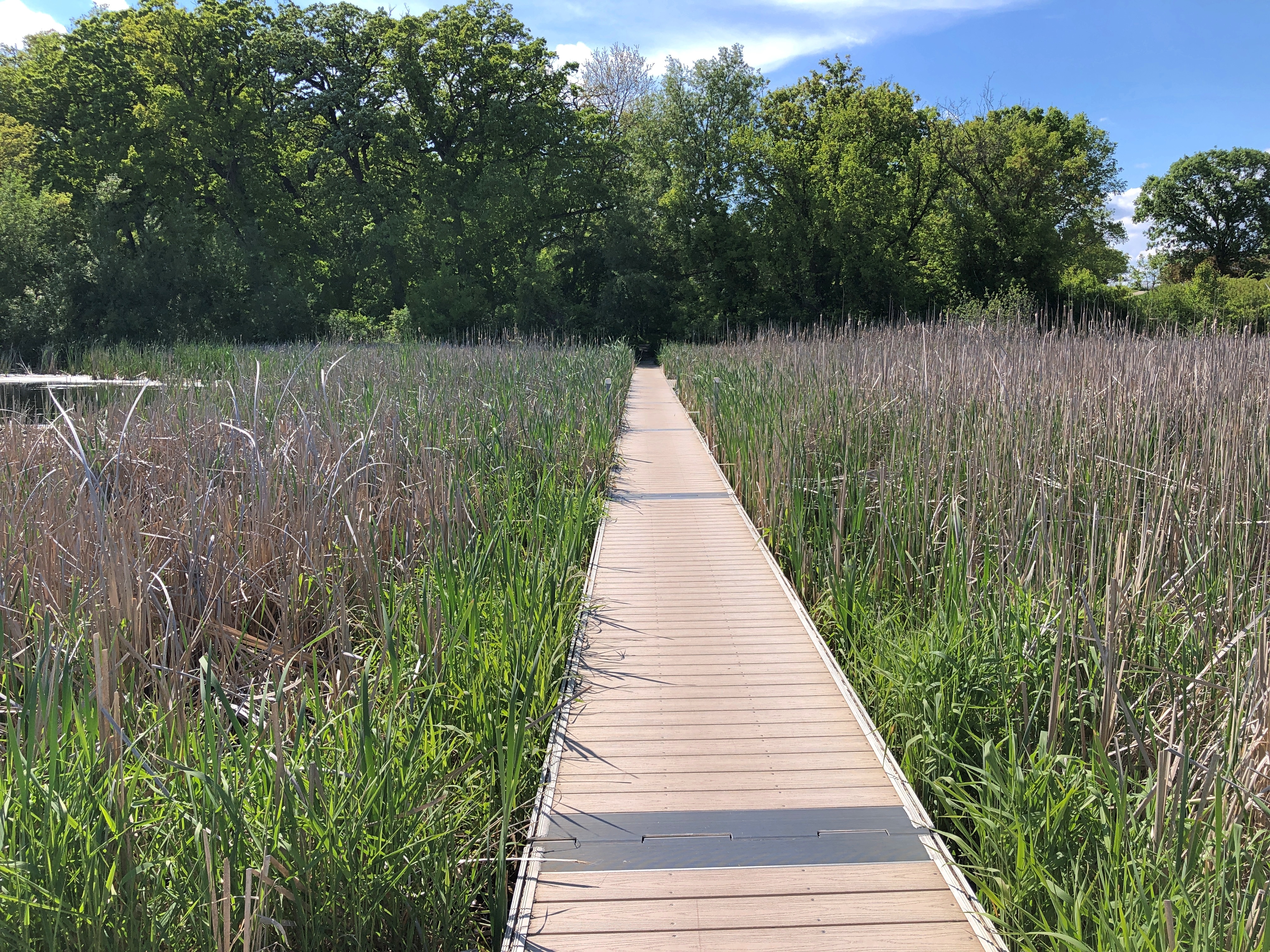
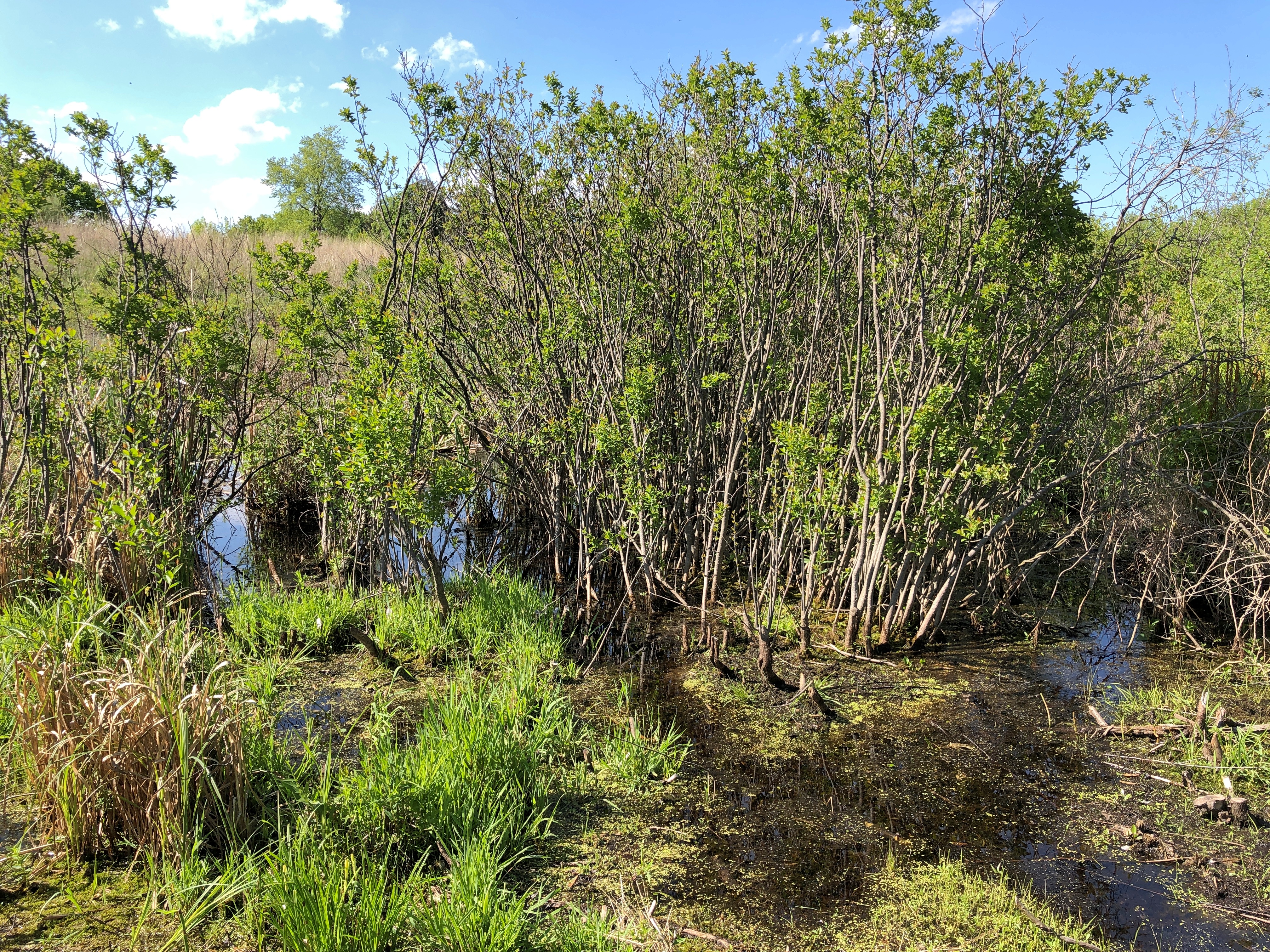
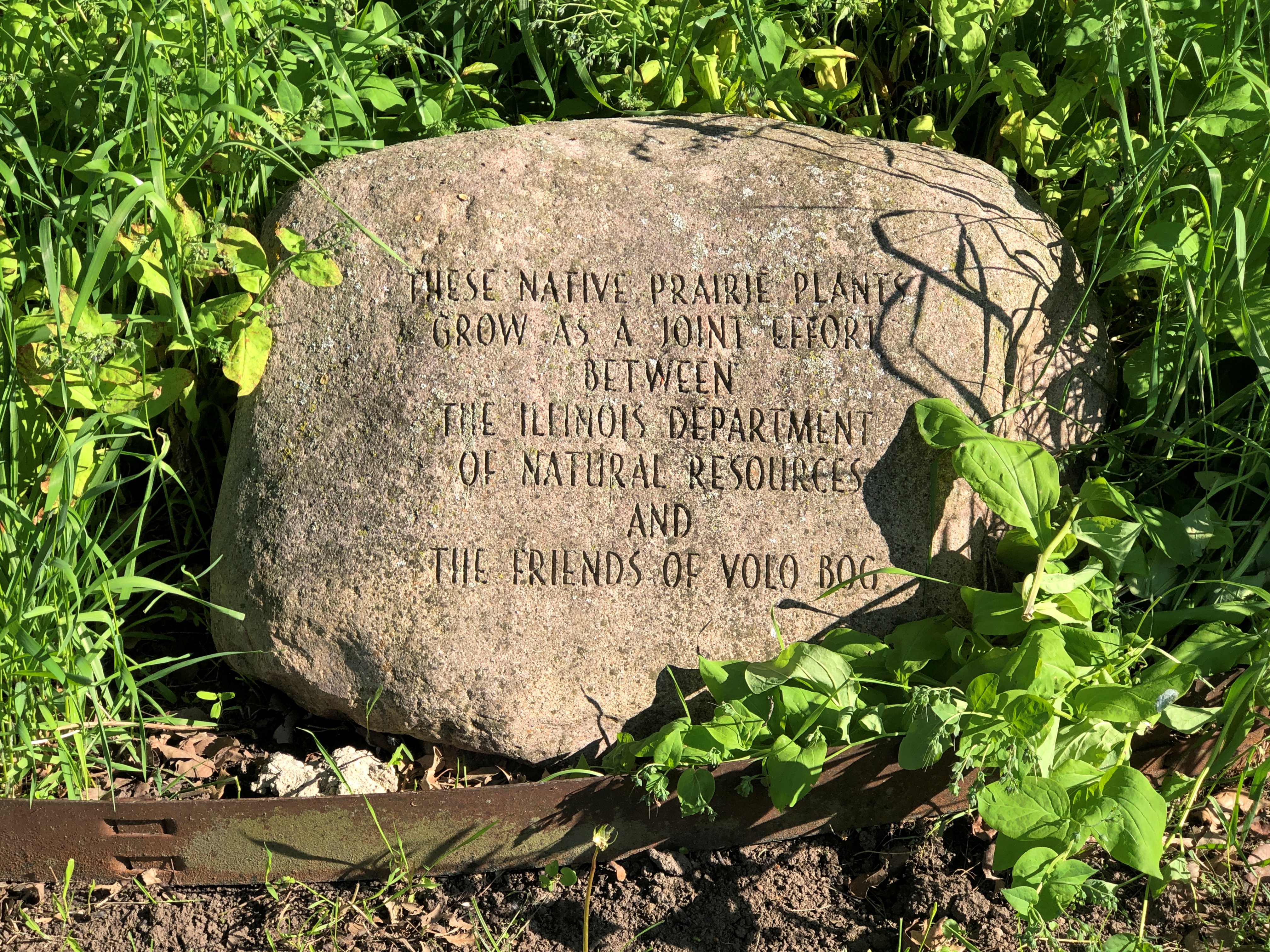
Not a sign that you see very often.Volo Bog

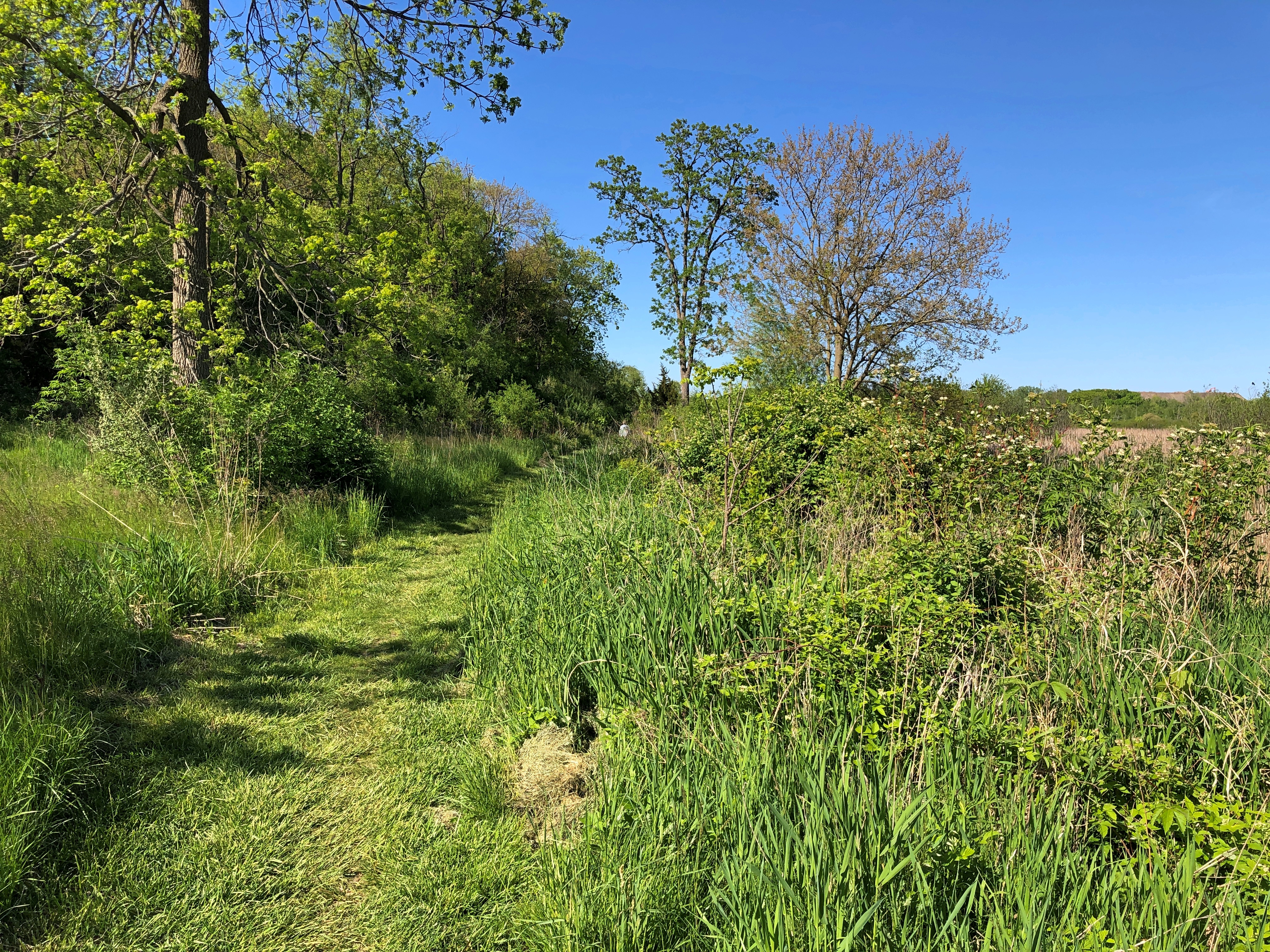
Unless you visit Volo Bog State Natural Area often. It is “the only open-water quaking bog in Illinois,” according to the Illinois DNR, and I’m inclined to believe it, though sad to say my grasp of the scientific difference between a bog, marsh and a swamp is weak. Still, as a pleasant spring day, we figured Sunday was a good time to re-visit the bog, up northwest, about a 45-minute drive.Volo Bog

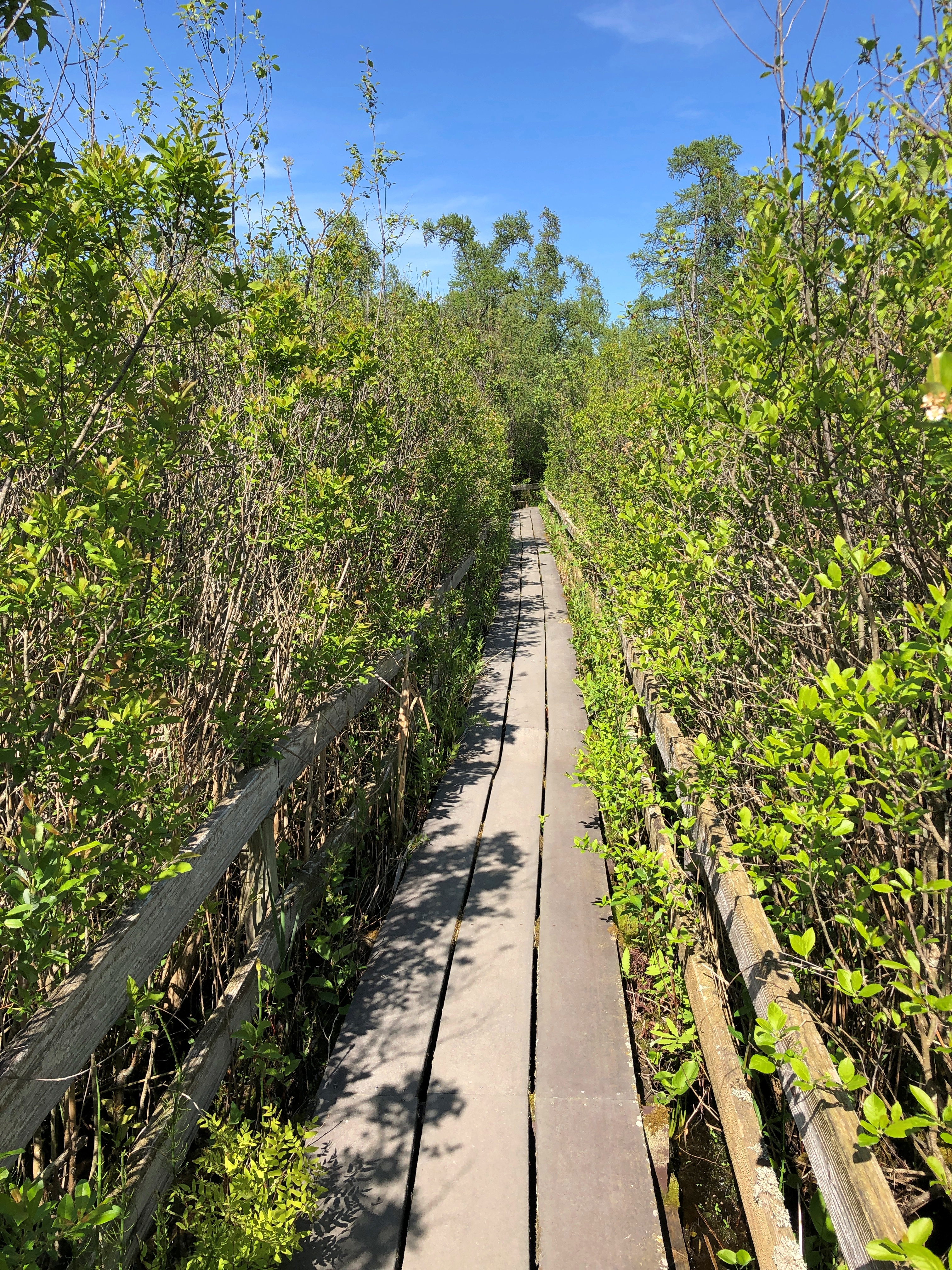
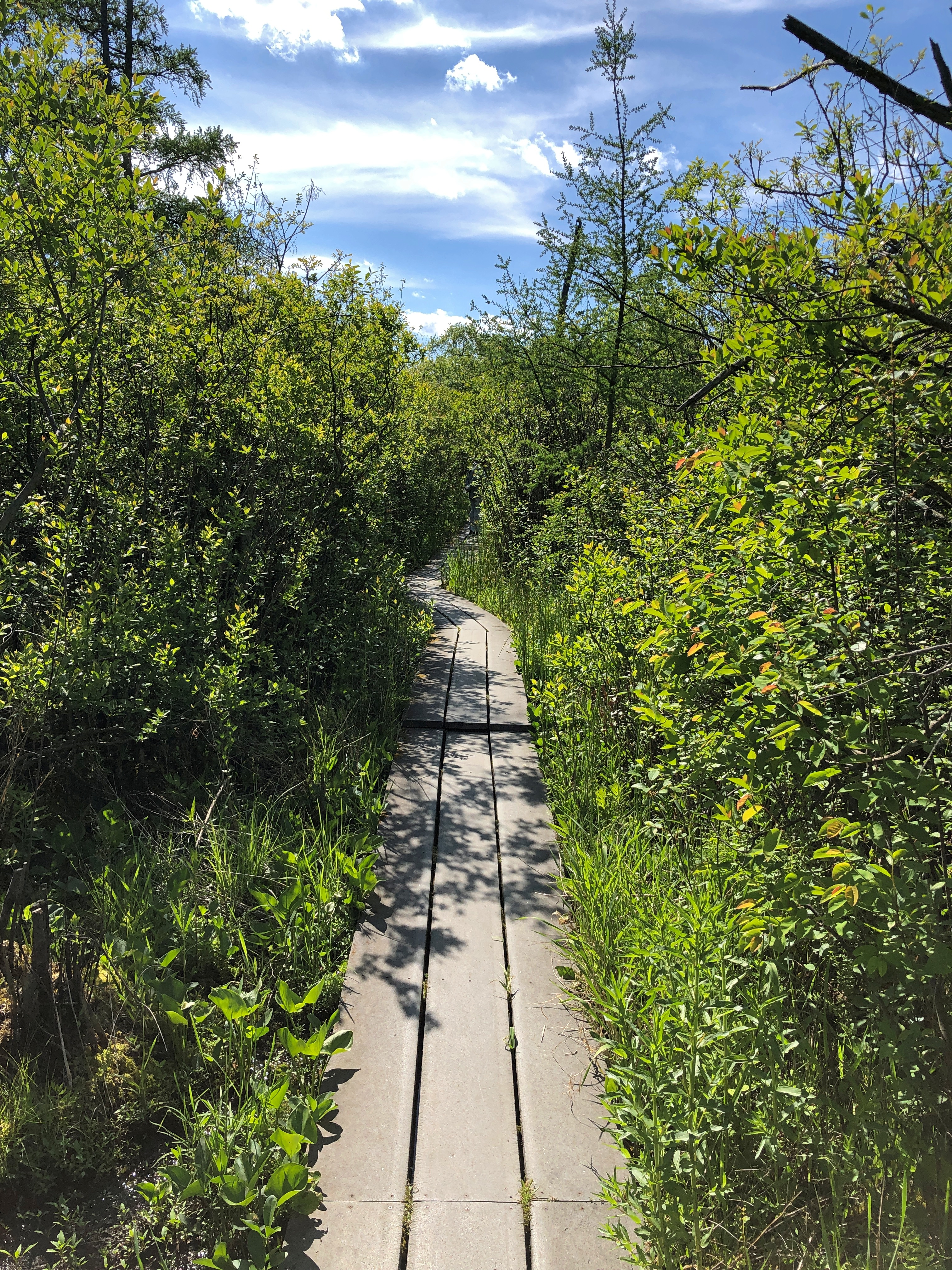
It had been a while. But I can say that the trail still wobbles a bit, which still takes a few minutes’ getting used to.Volo Bog Volo Bog Volo Bog

” ‘It’s moving,’ I heard either Lilly or Rachel say ahead of me, since they were first to reach the trail, which is a boardwalk over the bog,” I wrote in May 2010. “The boardwalk’s wobble is a little unnerving at first, but before long you get used to it. For anyone over about three years old, anyone who is sober anyway, the danger of pitching into the bog is pretty low.”

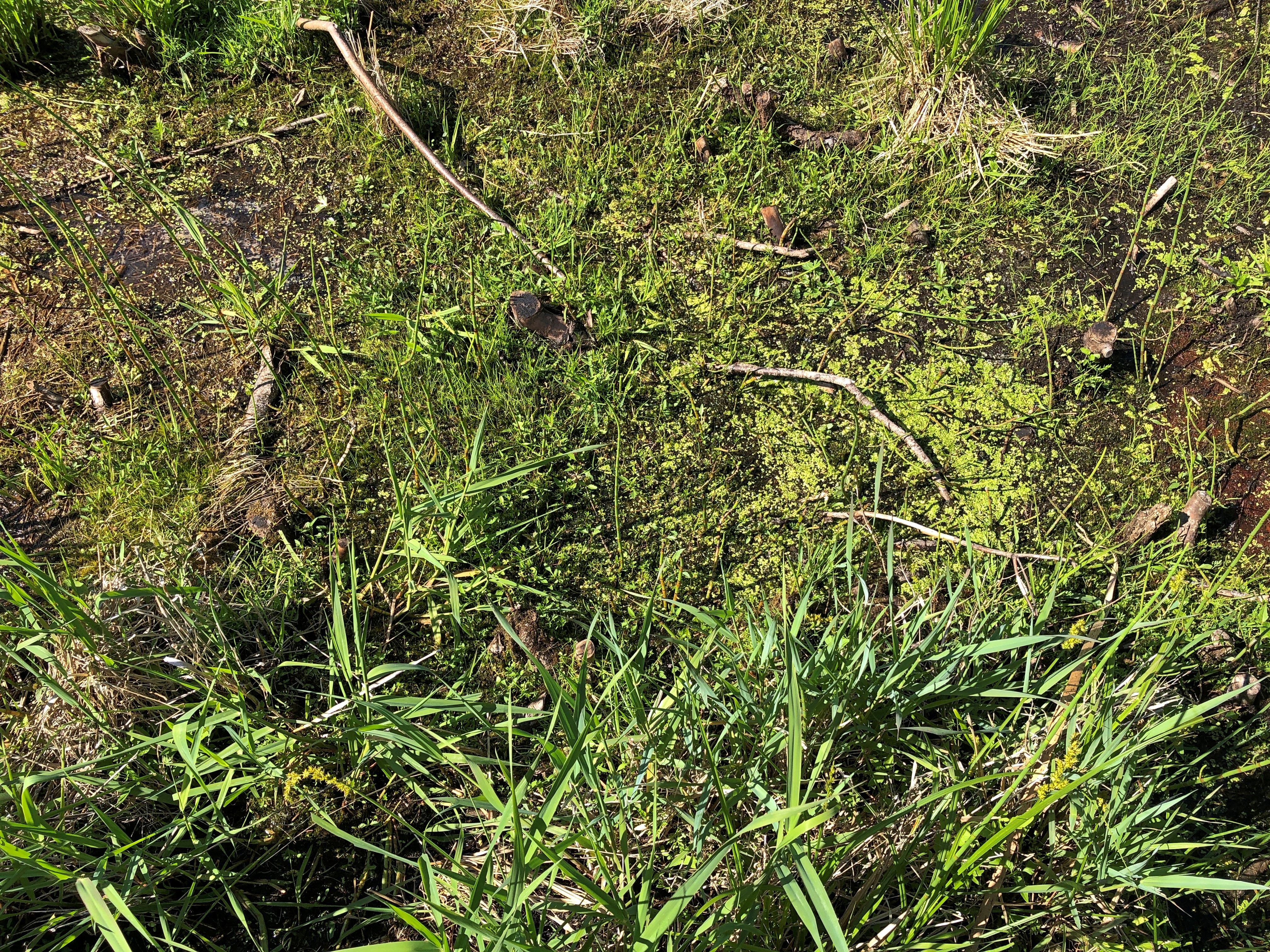
It’s moist down there. I’d expect no less of a bog. I know that much, anyway.Volo Bog Volo Bog Volo Bog

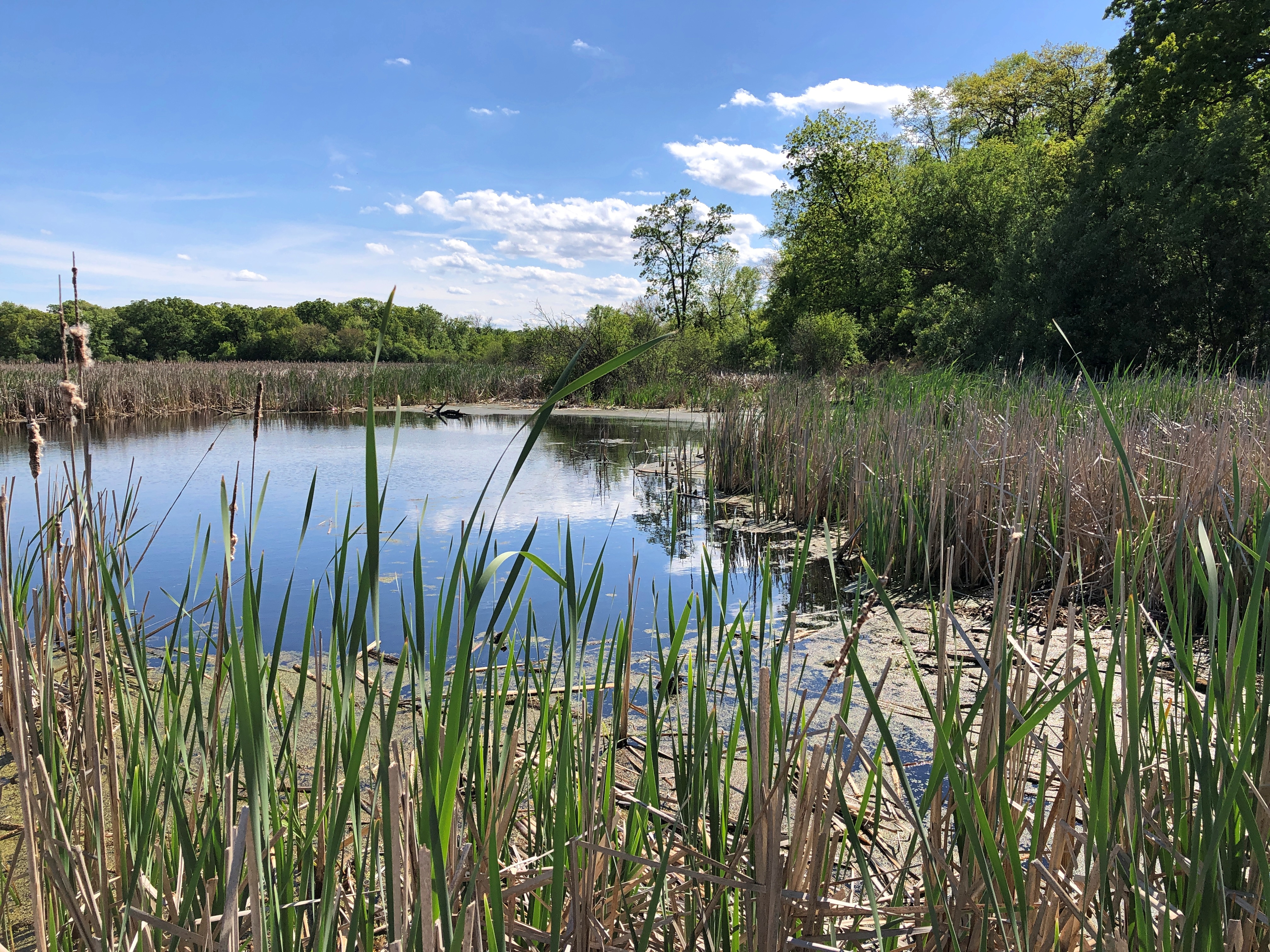
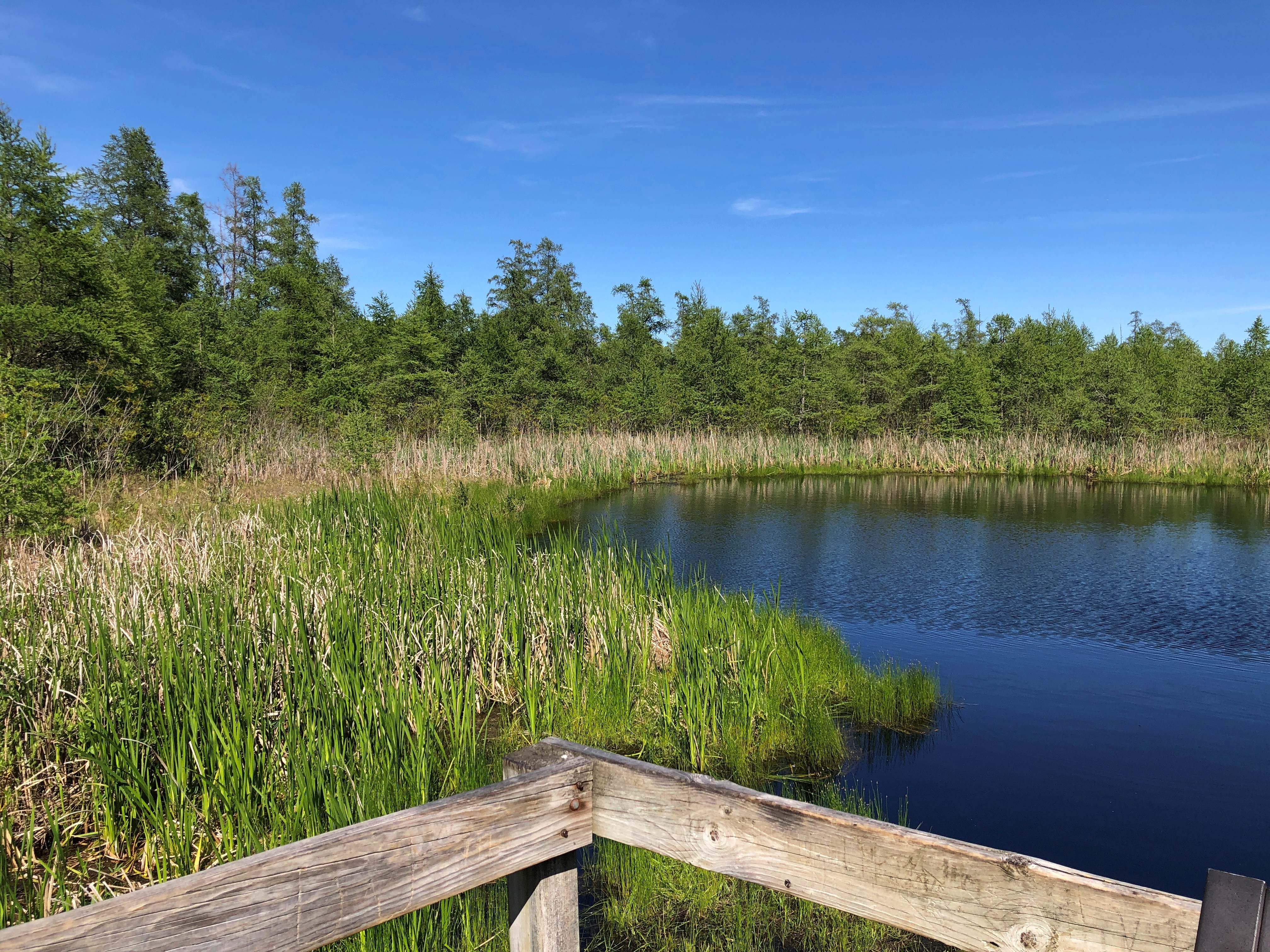
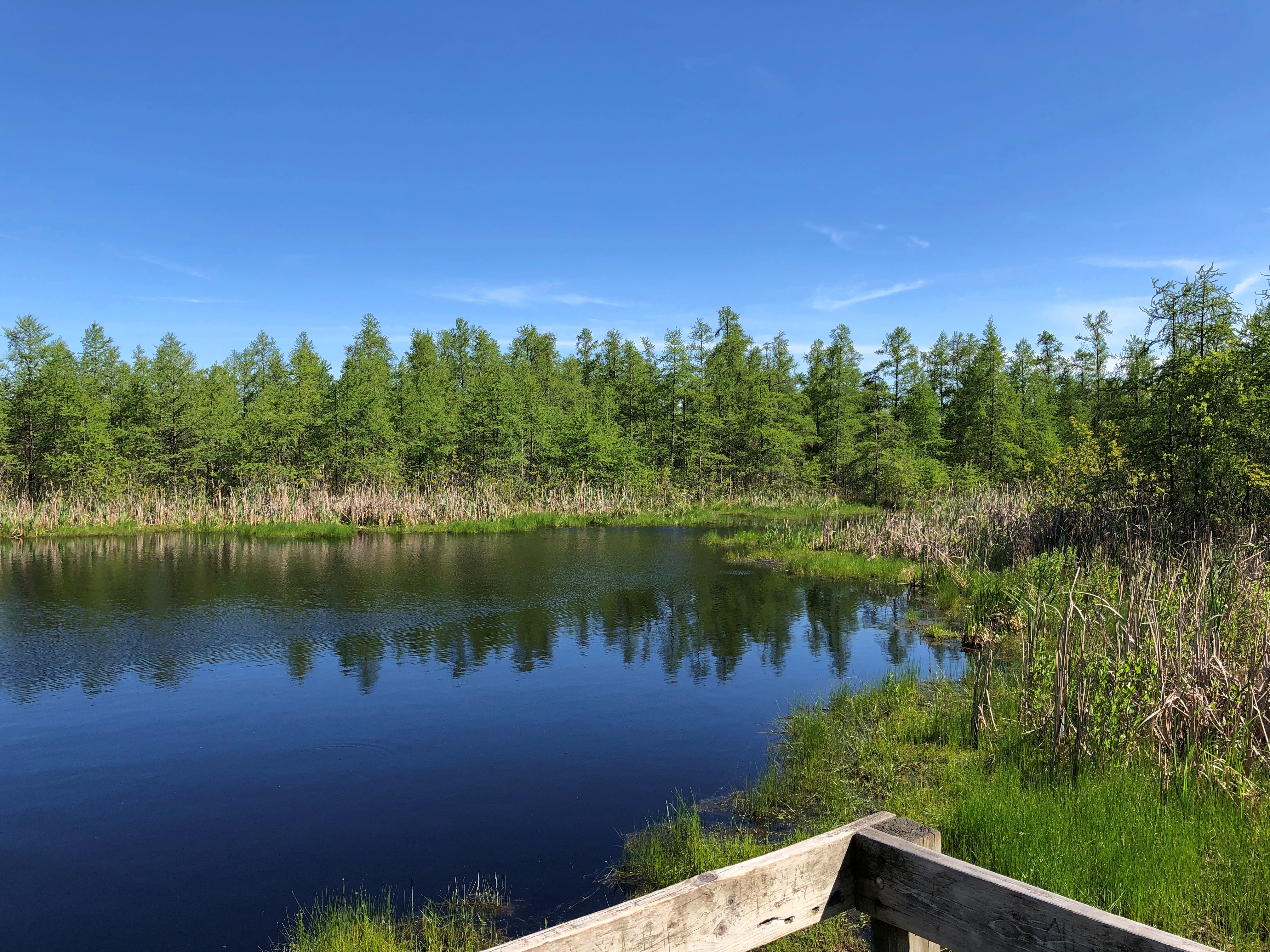
Formed in an ancient glacial kettle hole lake, Volo Bog features a floating mat of sphagnum moss, cattails and sedges surrounding the open pool of water in the center of the bog,” the DNR says. “Further from the open water, the mat thickens enough to even support floating trees!”

The open pool. exuberant  exuberant

The public land at Volo Bog includes more than just the bog. A path loops around the property in parts that are a little less sloshy underfoot.Volo Bog State Natural Area

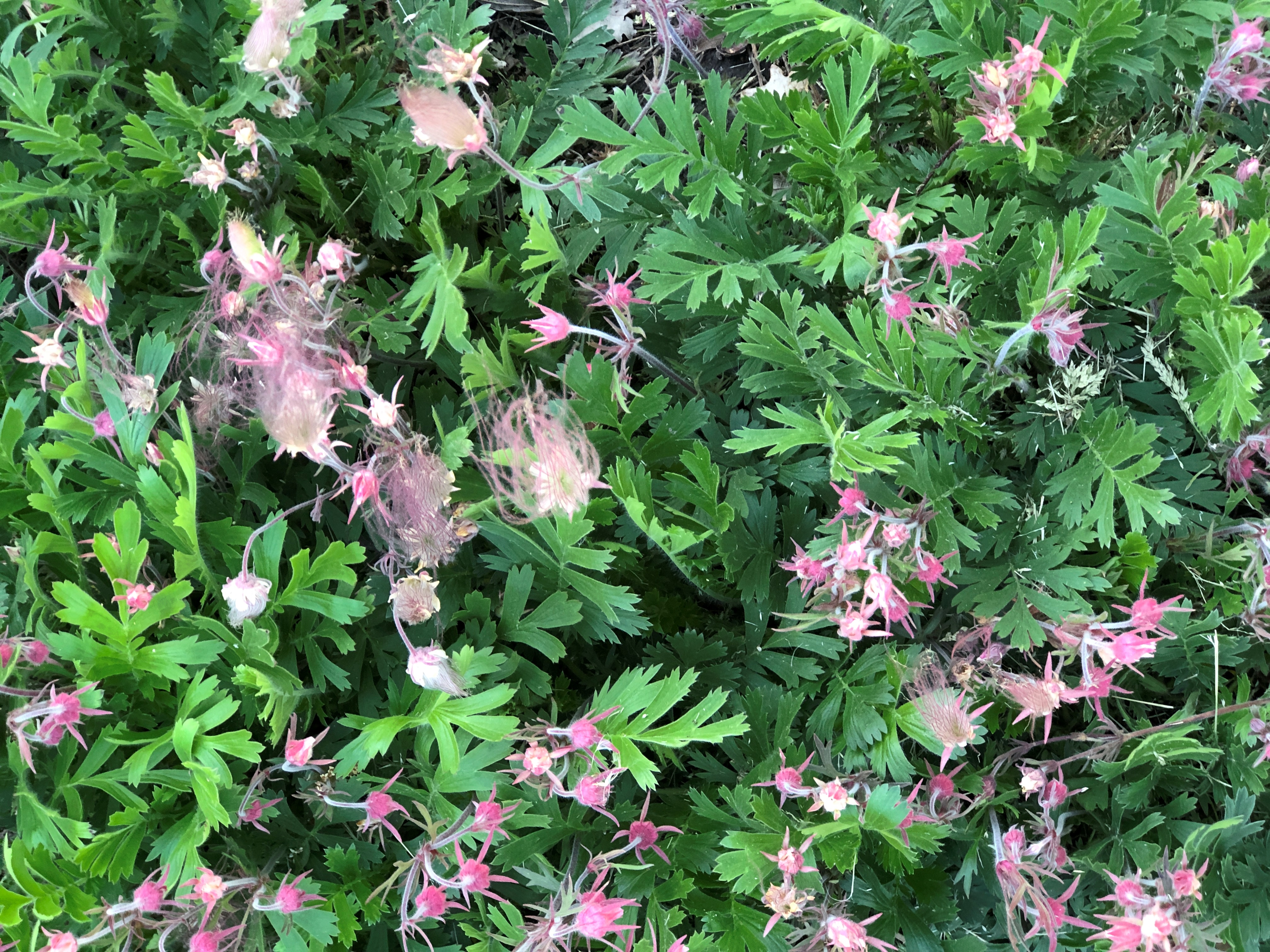
It takes a while, but when the full flush of spring comes to the North, it’s exuberant.Volo Bog State Natural Area

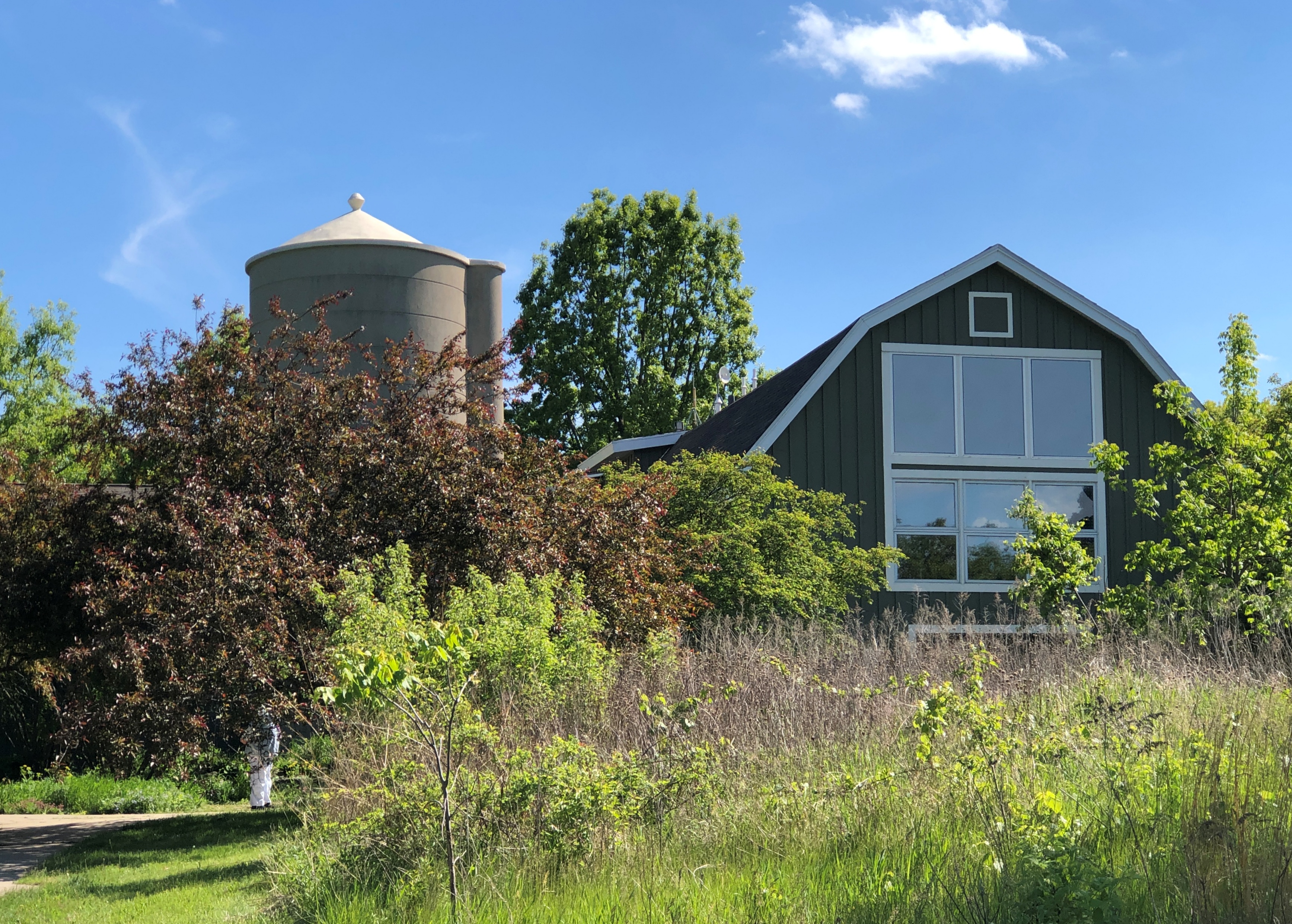
A modest but elegant building, a barn homage, houses the visitor center. Closed.Volo Bog State Natural Area Volo Bog State Natural Area

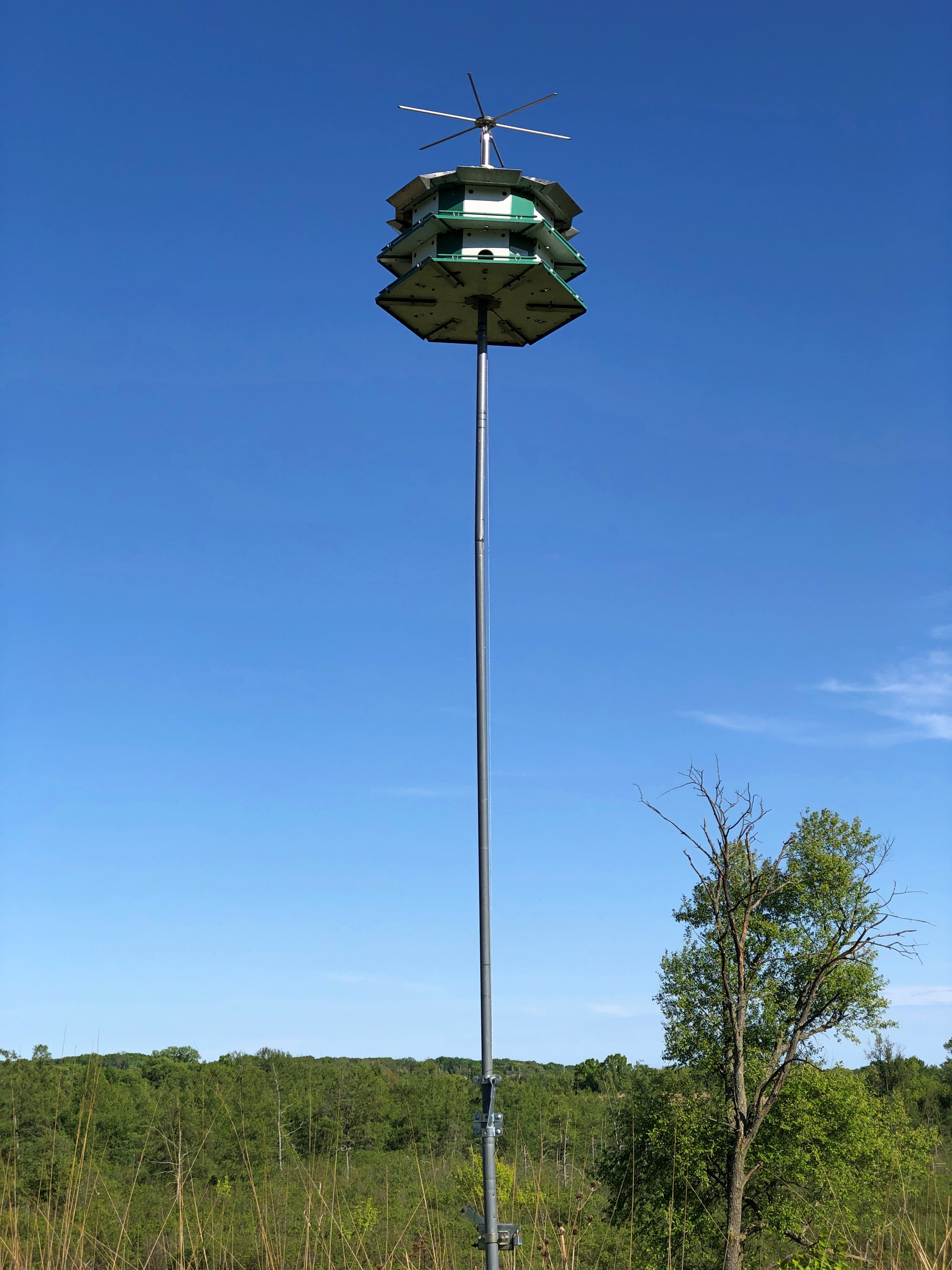
Bird apartments. Or maybe bats.Volo Bog State Natural Area

Tip of the hat (if I had a hat) to the Nature Conservancy, whose actions in the late ’50s preserved the bog. The organization has done the same for 119 million acres of land over six decades, E&E News reports, citing the organization itself.

Raj Ghat, Delhi

Still a chill in the air here in Illinois, but a bit warmer, so we’re on a slow climb back to real spring. Back to posting on May 27. In its float around late May, Memorial Day is four days earlier than Decoration Day this year.

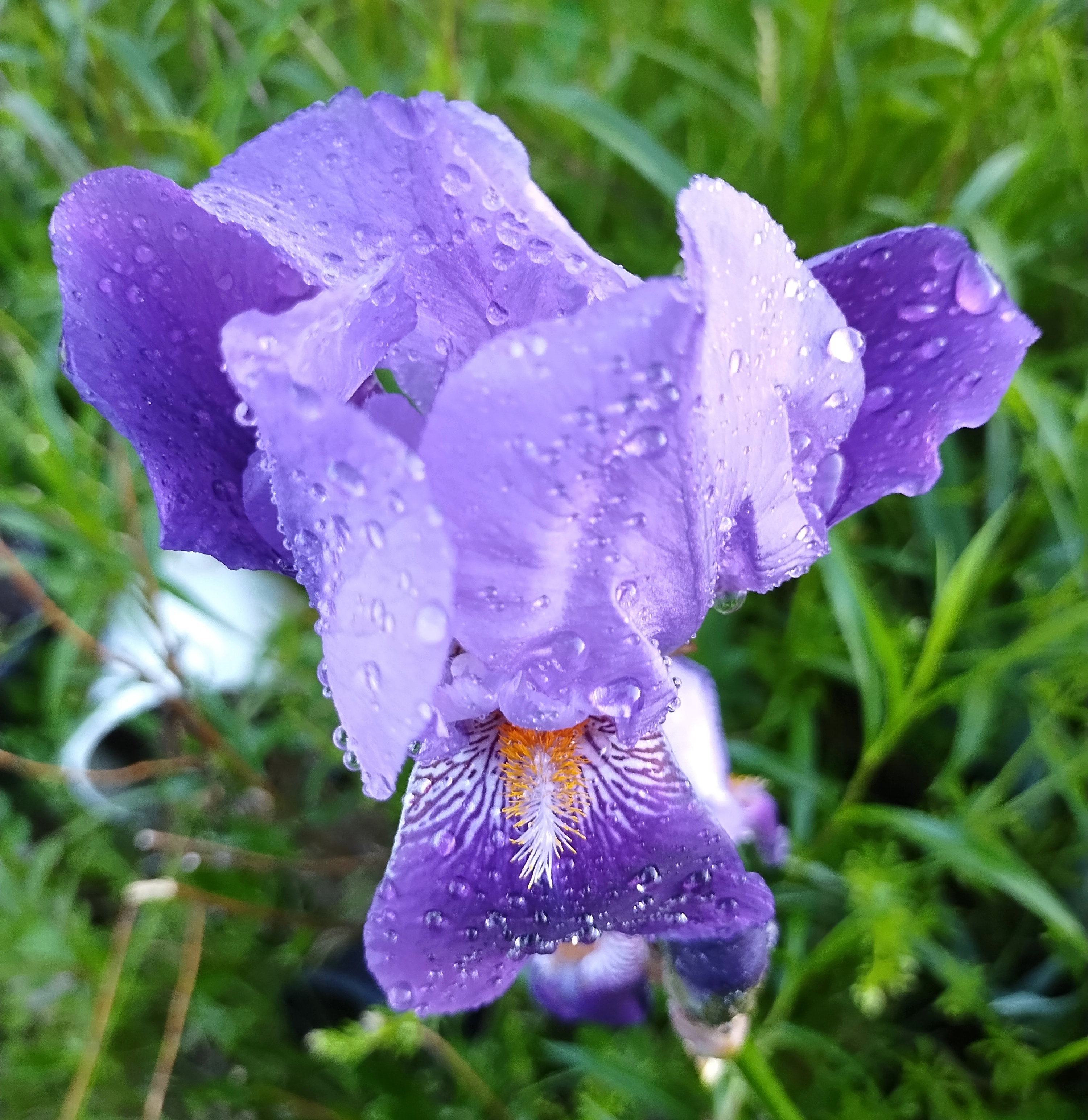
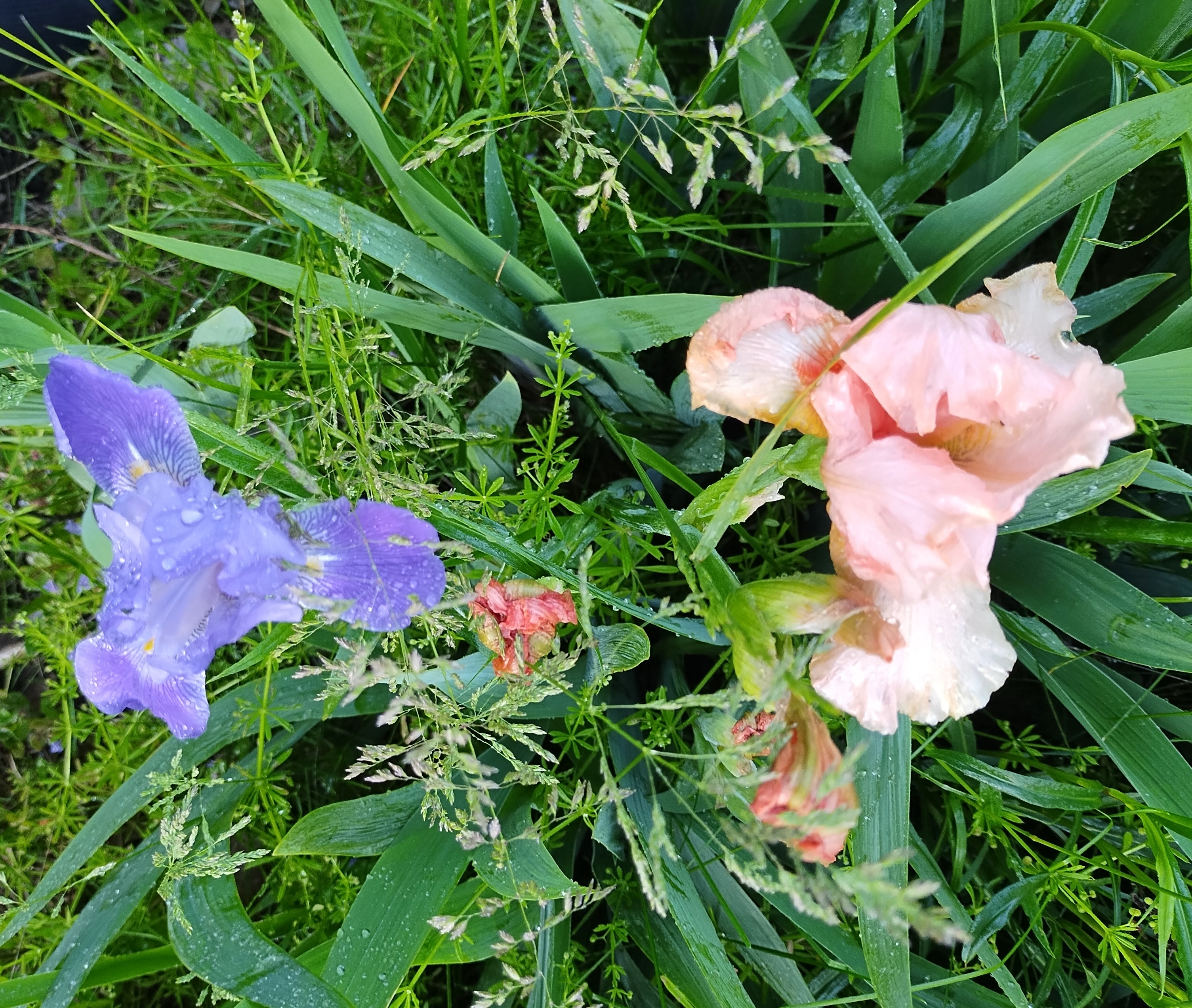
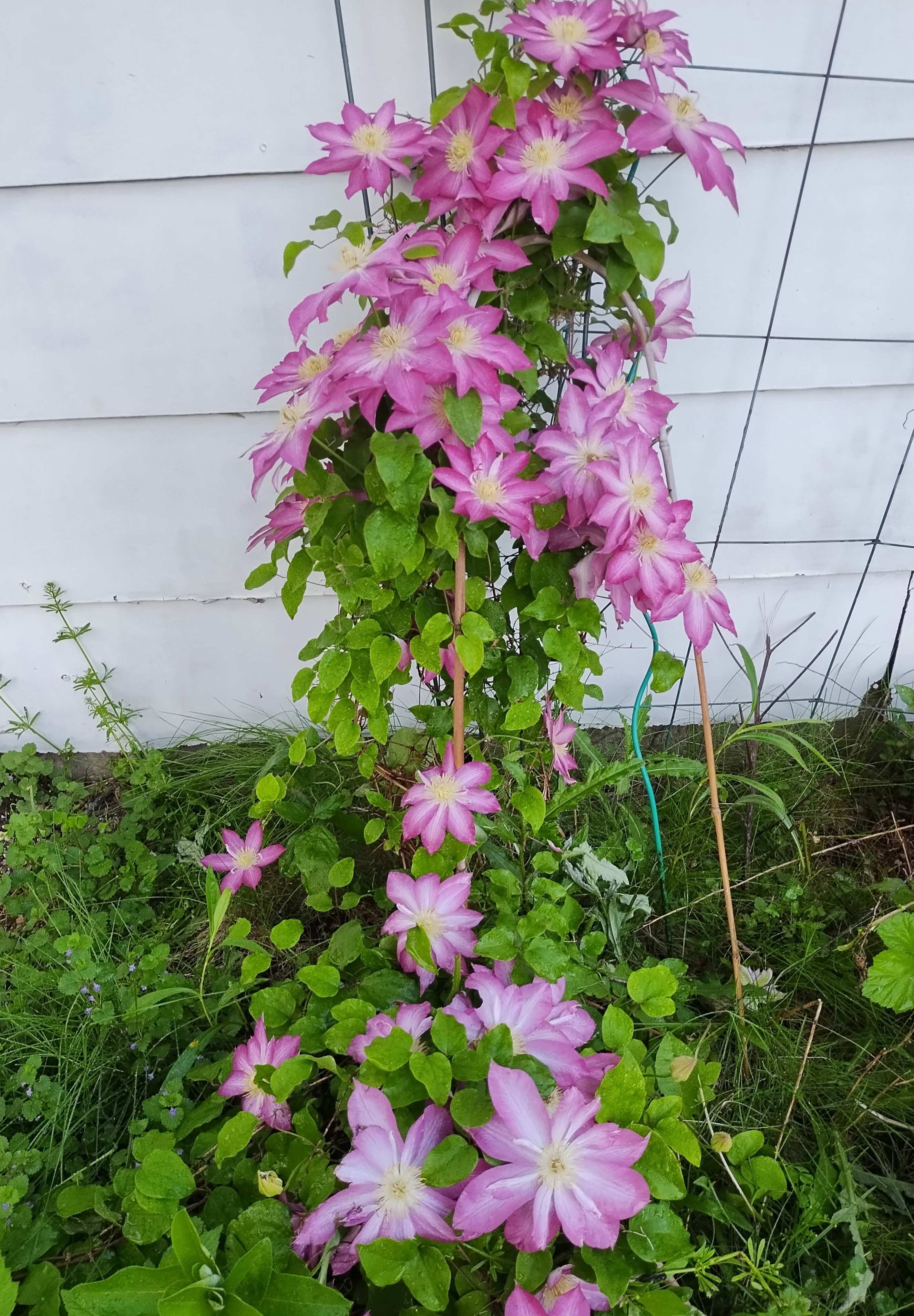
Chilly, maybe, but that hasn’t discouraged the back yard irises.iris iris

A gift from a neighbor last year – some bulbs that we planted in the patch of land that, decades ago, had been a garden. That isn’t quite what I’d call it now. More of a back yard feature whose greenery towers over the ordinary lawn grass.

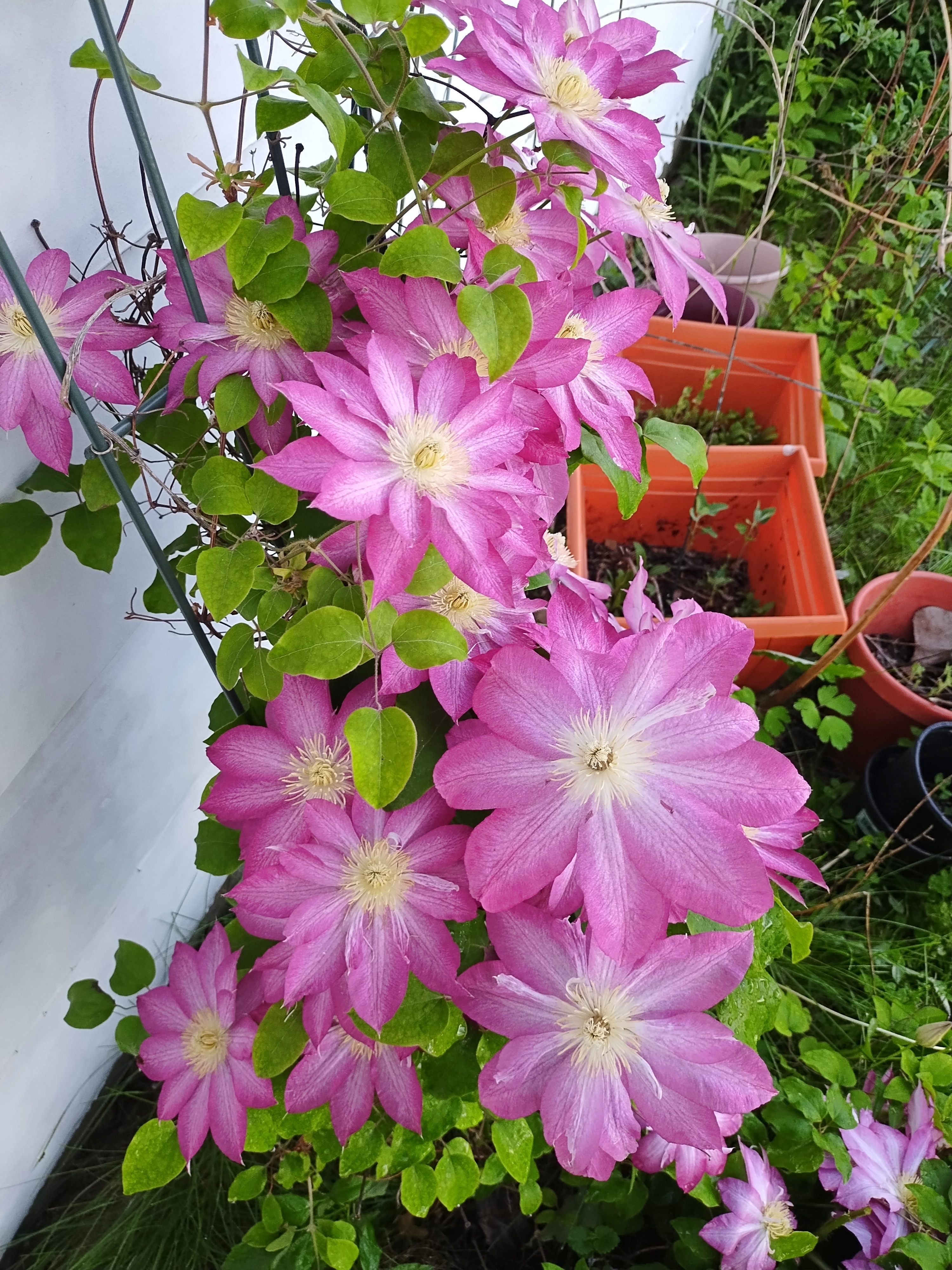
Not just irises. On the other side of the yard:

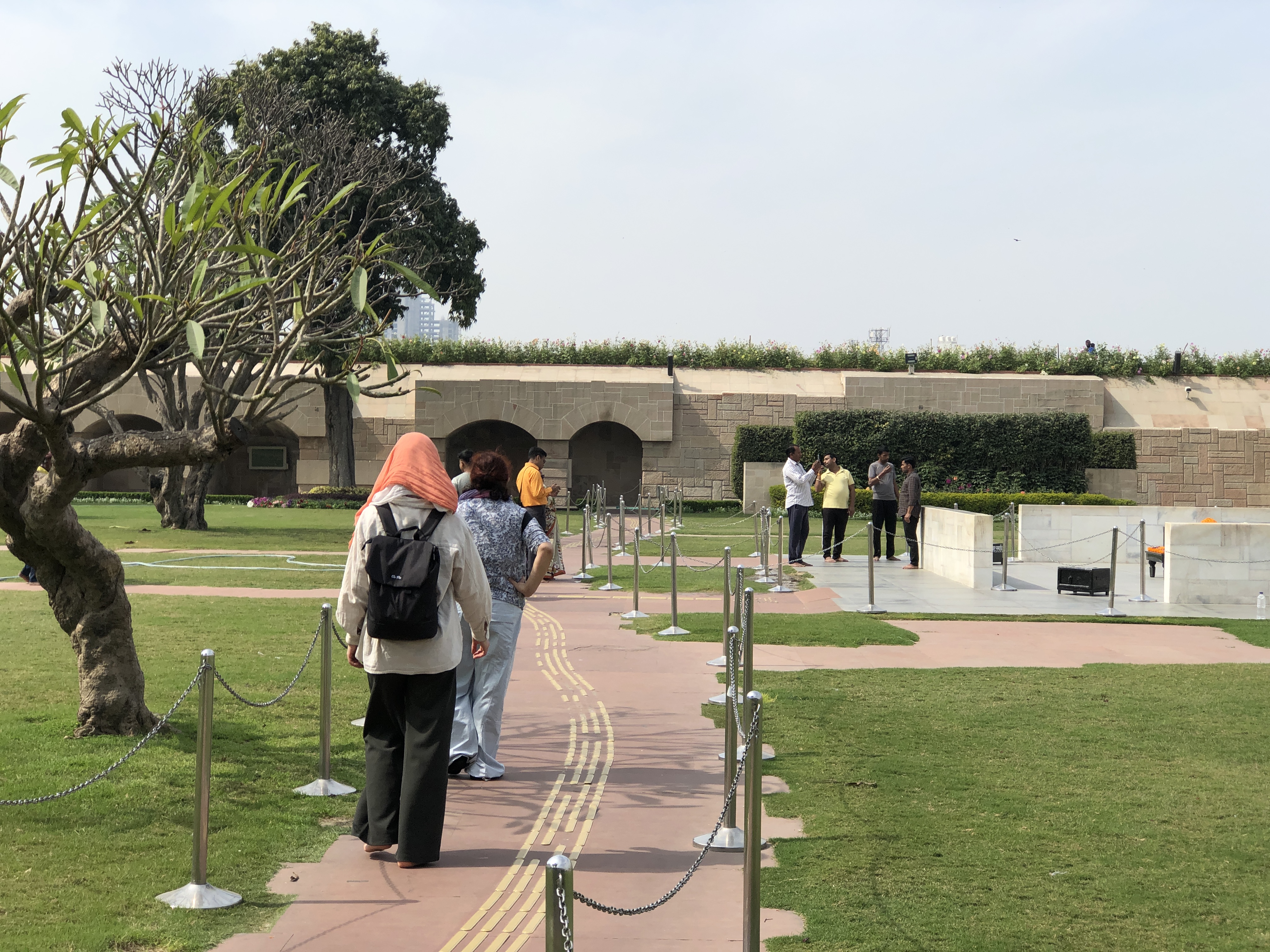
Raj Ghat was one of the first places we went in India. Its centerpiece is a memorial dedicated to Gandhi, in the middle of a large green square surrounded by walls. The black marble platform marks the spot of his cremation on January 31, 1948.Raj Ghat Raj Ghat Raj Ghat

Outside the walls is more green space. A popular spot for school groups, looks like.Raj Ghat

Nearby is the National Gandhi Museum. Considering that he’s Father of the Nation, not many people were there, but I suppose school groups show up  regularly to enliven the place. Overall, the memorial seemed to be more of a draw.

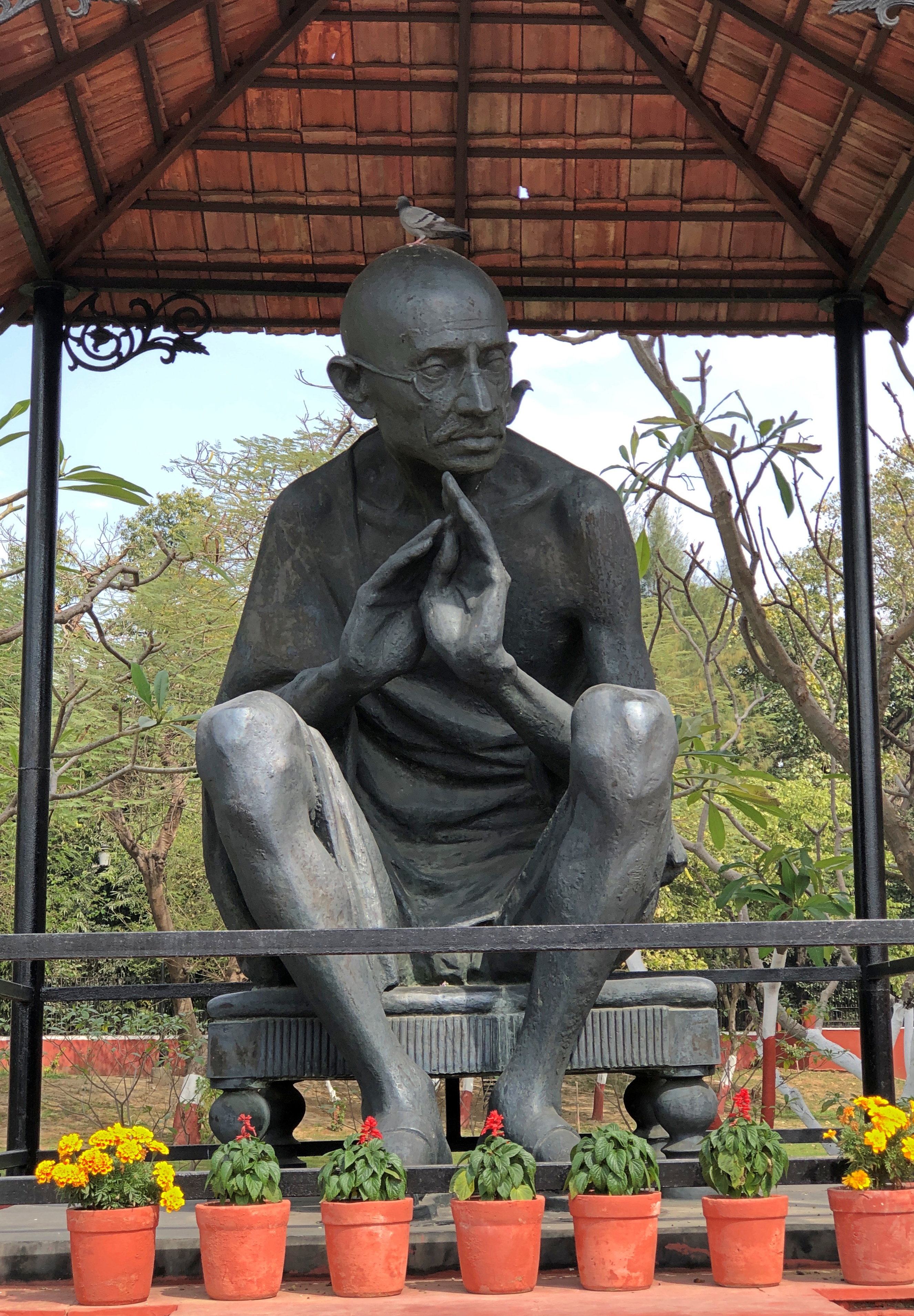
On the grounds of the museum.Gandhi Museum Gandhi Museum

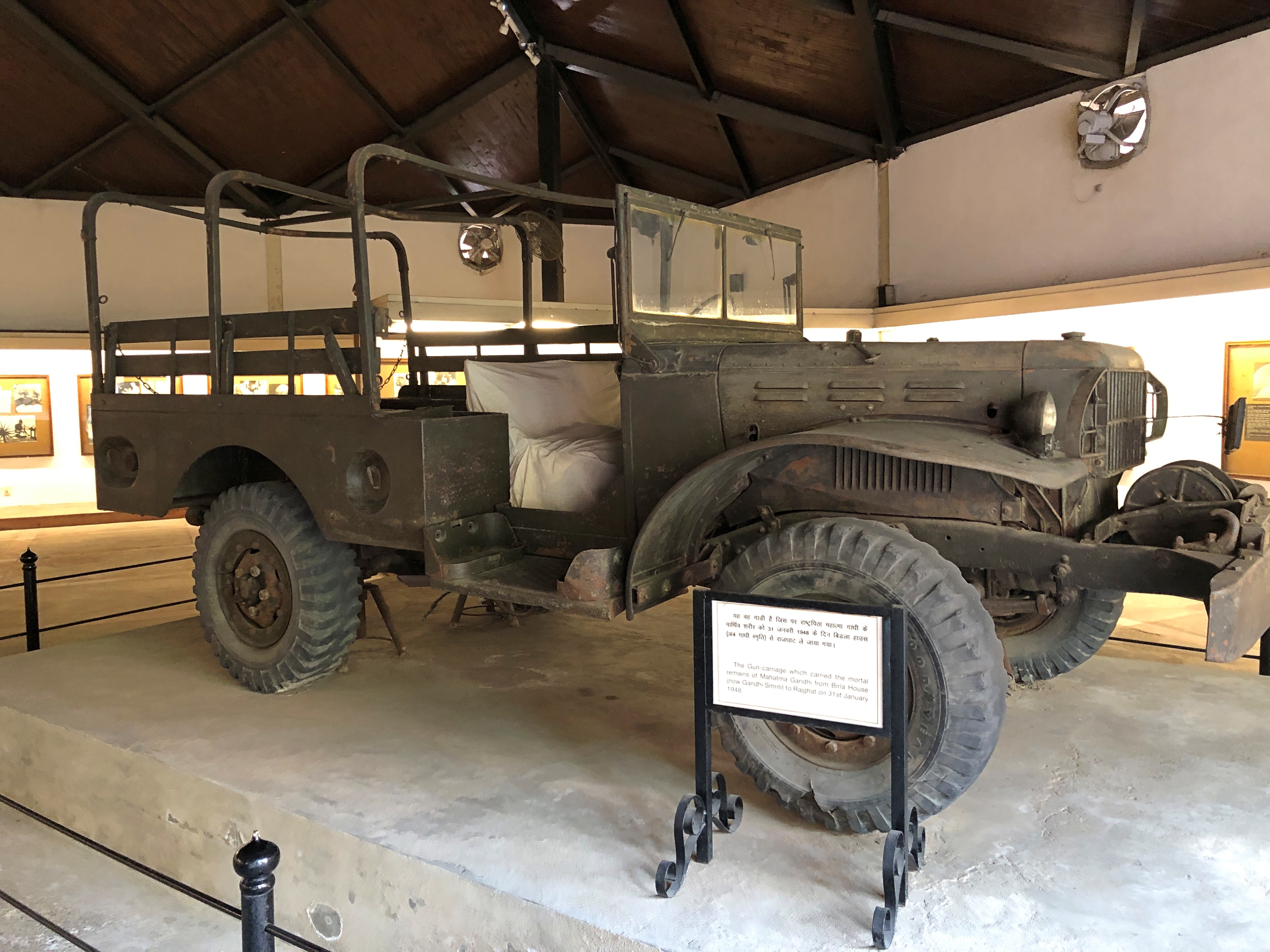
The plain rooms of the museum featured a lot of photos of Gandhi and text to go with it. For someone who lived before digital photography, his image was certainly captured by a lot of cameras. There were also a few artifacts, including one large one.Gandhi Museum

The vehicle used to carry his remains to Raj Ghat for cremation. I thought of the wagon I’d seen in Atlanta used for a similar melancholy purpose.

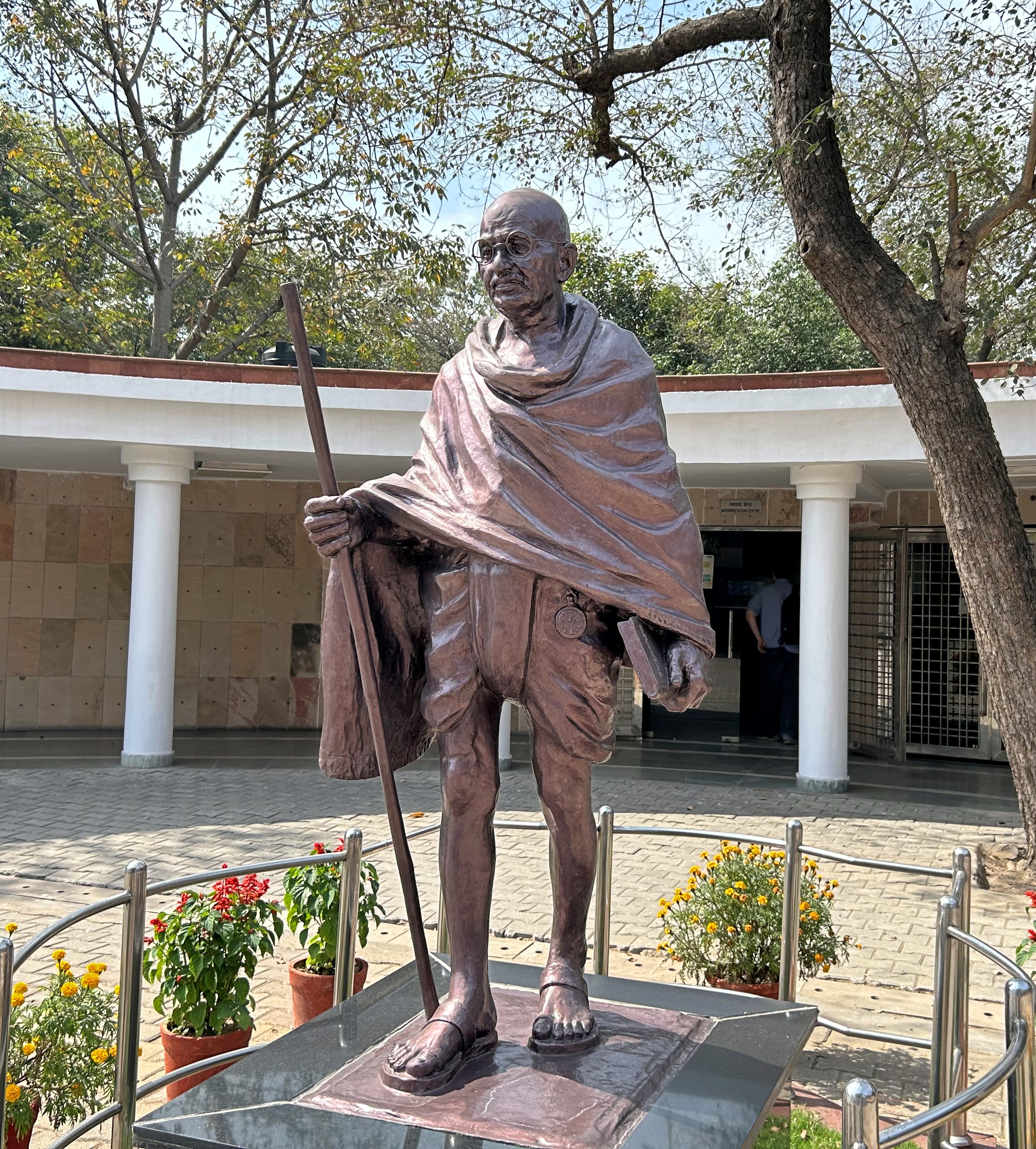
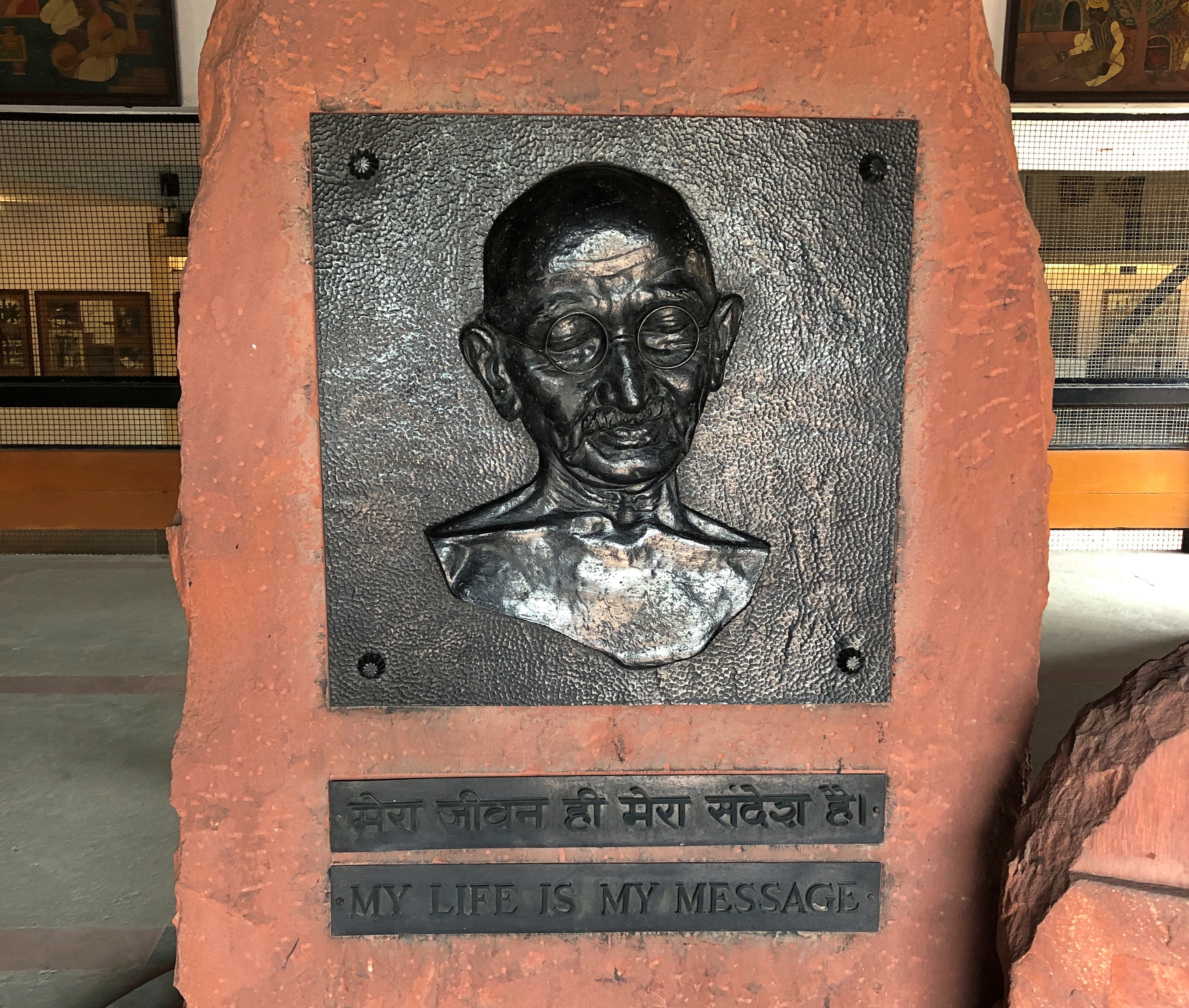
I can’t leave it at that.Gandhi Museum

Seen at the museum’s entrance.

The World Seems in Tune on a Spring Afternoon

One more image from graduation.

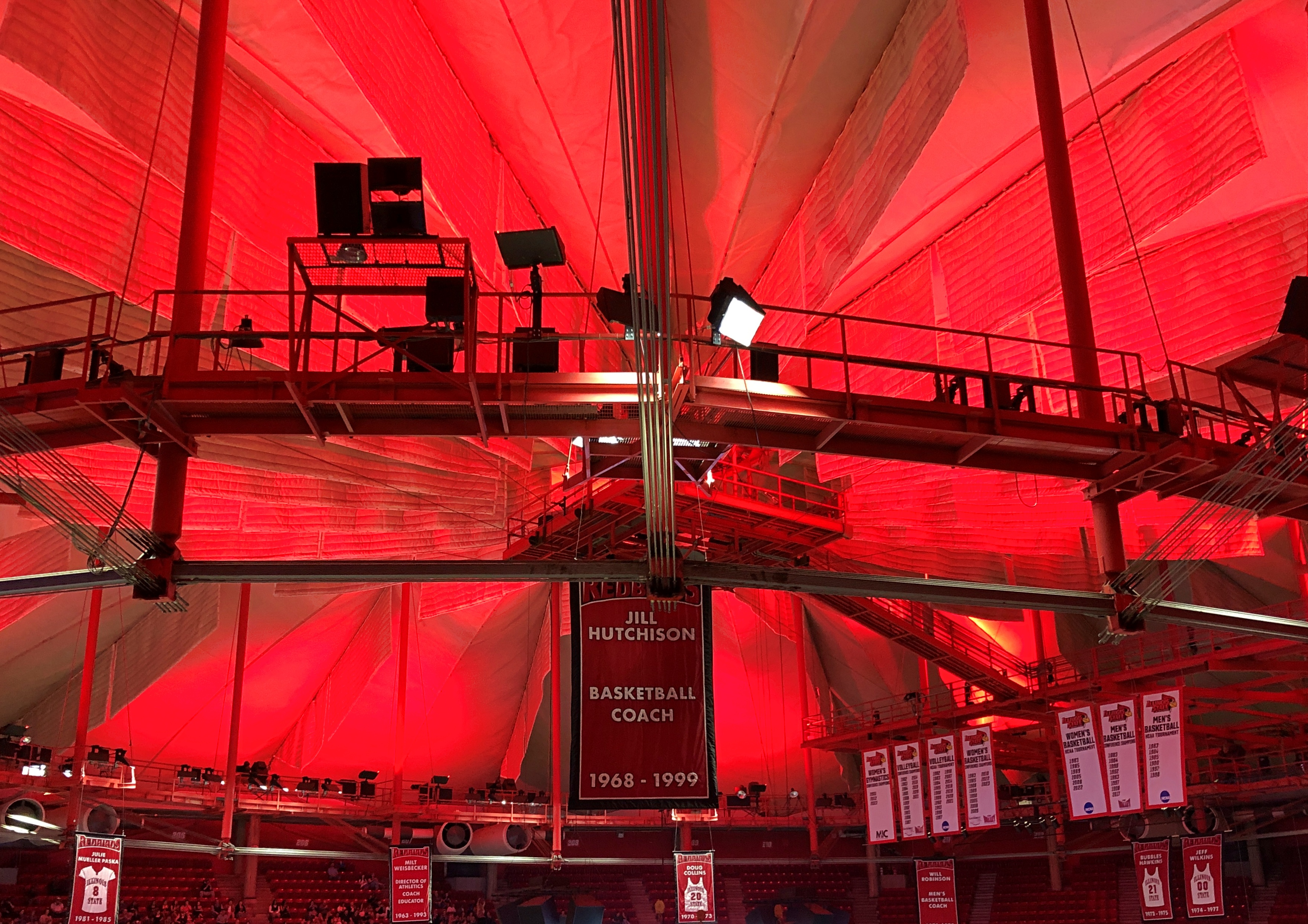
That’s the ceiling of CEFCU Arena in Normal. Once upon a time CEFCU was Caterpillar Employees Federal Credit Union. That company‘s HQ wasn’t far away, also once upon a time. But in more recent years, the entity became an independent financial services firm, renamed Citizens Equity First Credit Union to keep the initialism consistent.

It didn’t occur to me until later that the ceiling is Redbird red.

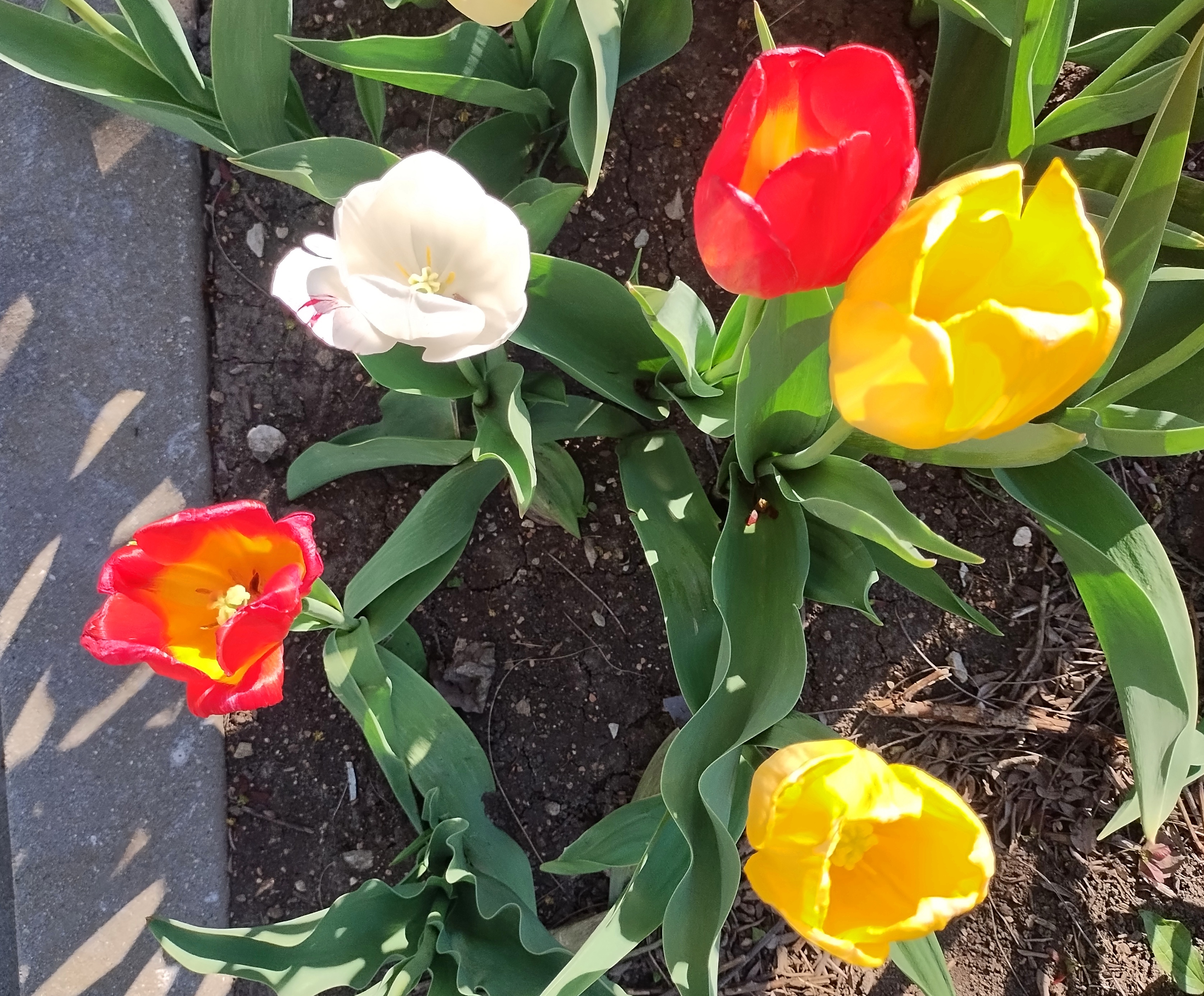
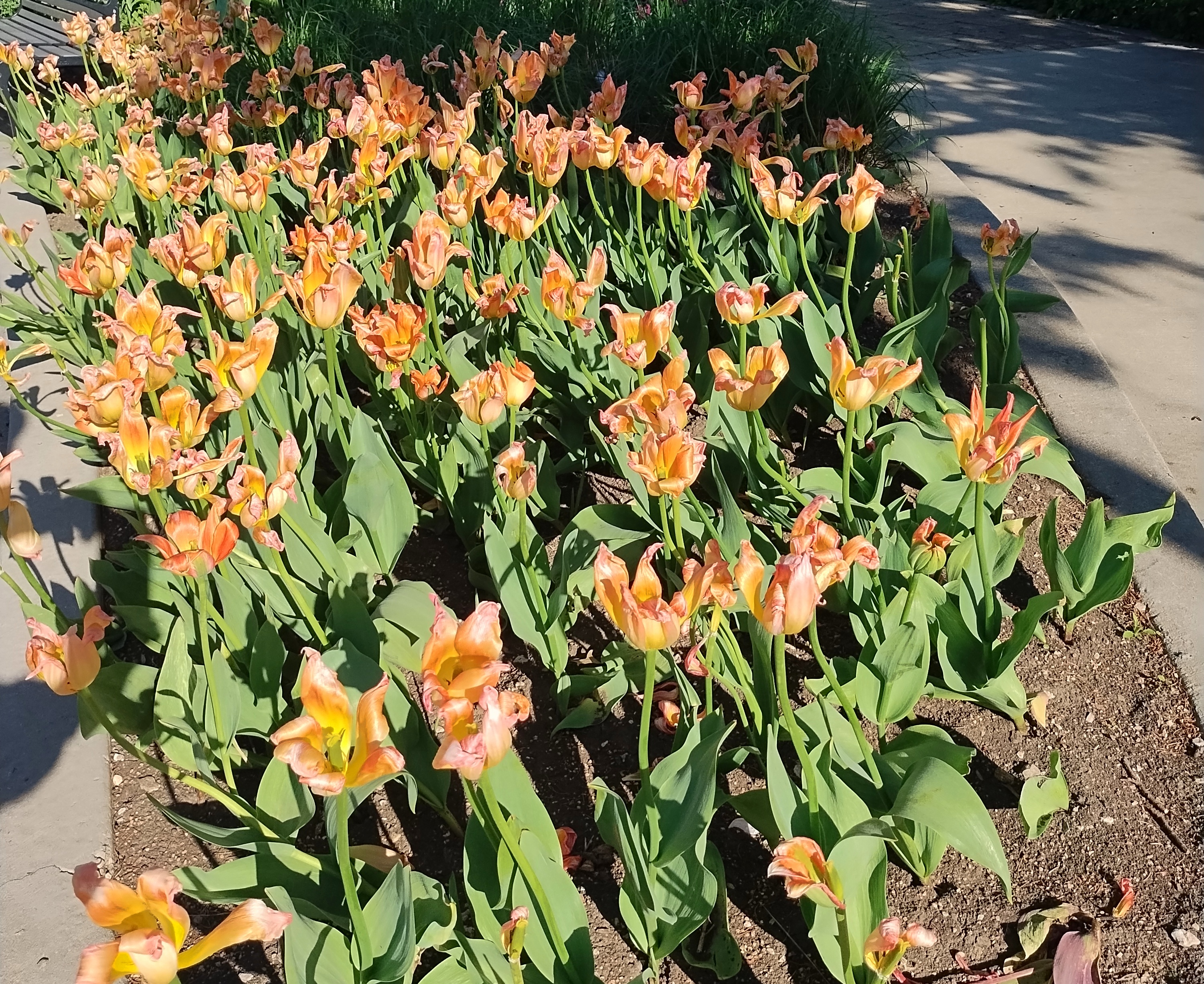
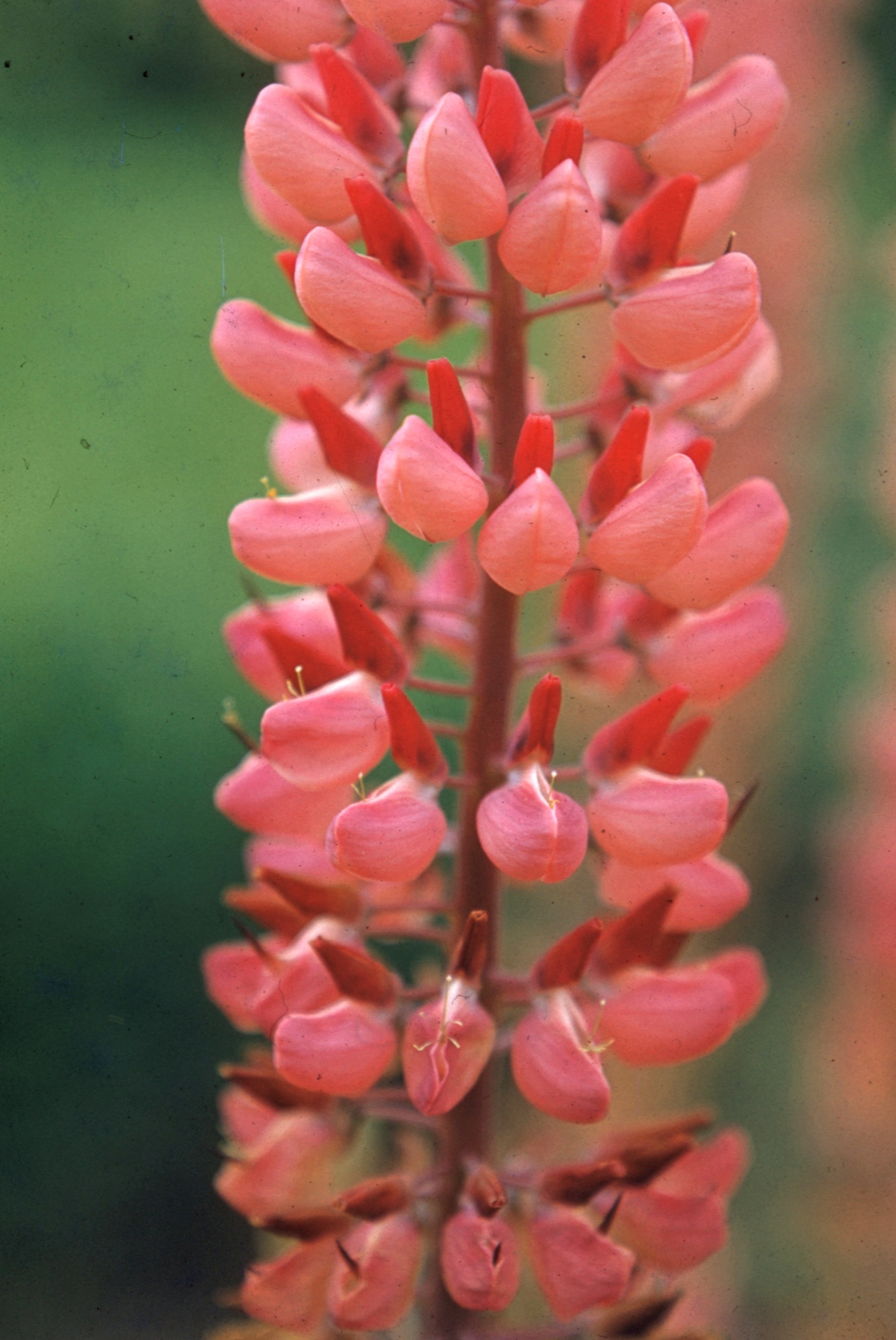
Speaking of red.May Flowers

Not in Normal or anywhere else I’ve traveled lately, unless you count flowerbeds here in the northwest suburbs, about a mile and a half from home. Not just reds, either.May Flowers May Flowers May Flowers

Nothing like spring flowers to remind you of favorite old springtime songs.

Have a Nice Trip, Sucker

As scam text messages go, this one needs work. Mostly literate, but the tone is off.

I don’t think the tollway authority has a bit of girlishness in it. Or boyishness either, or any particle of human emotion. It functions as a machine: in its own small sphere, a calculating, persistent revenue-generating engine. Then again, I guess it’s fitting that the text message is likely machine produced.

That’s pretty heavy. Something a little lighter.

Floral studies by my father.

Mitchell Park Domes ’24

Since we went to Indiana just before Christmas, it only seemed logical (to me) to go to Wisconsin just after Christmas. Due to considerations I don’t need to detail, we chose to make it a day trip. Milwaukee is convenient that way.

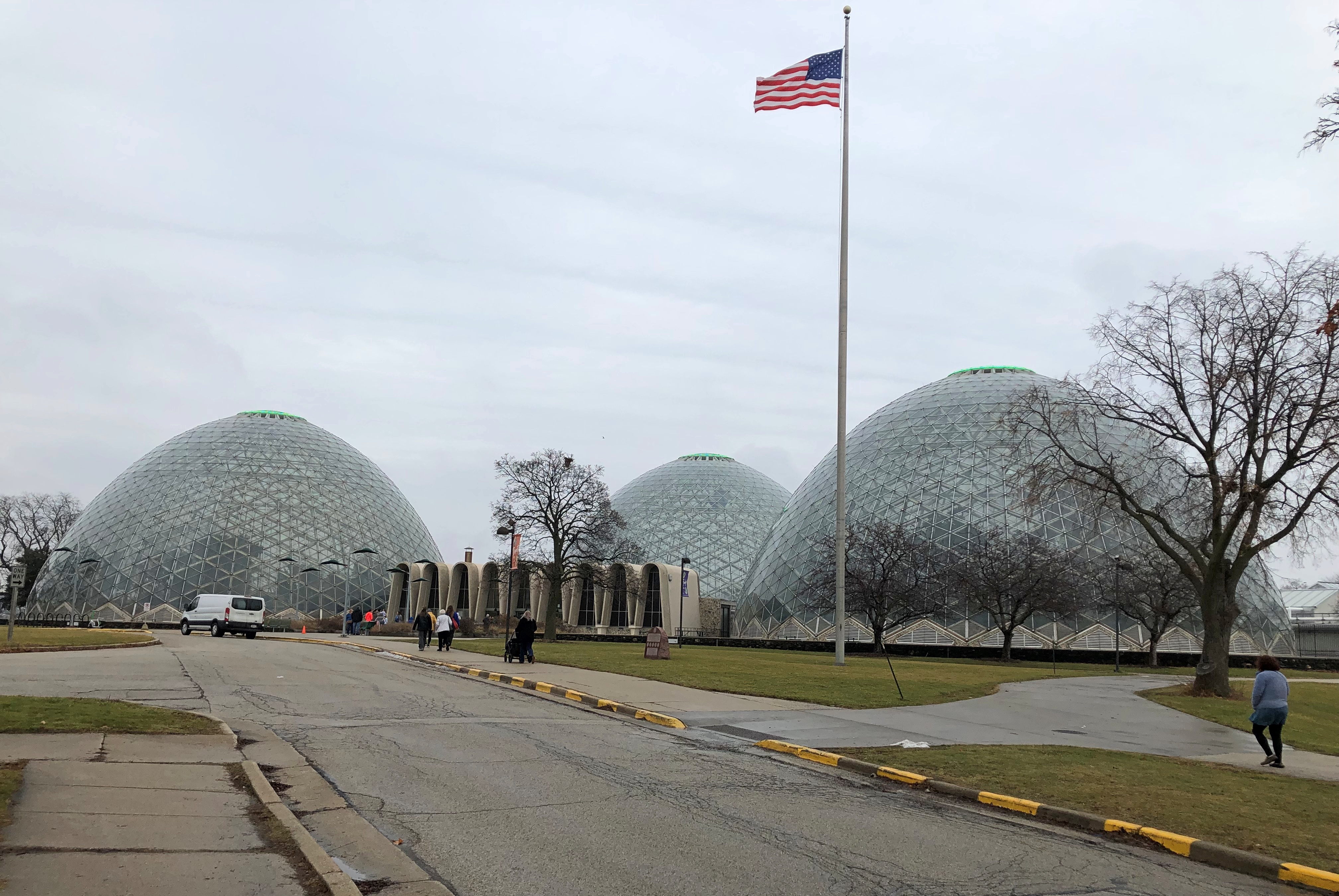
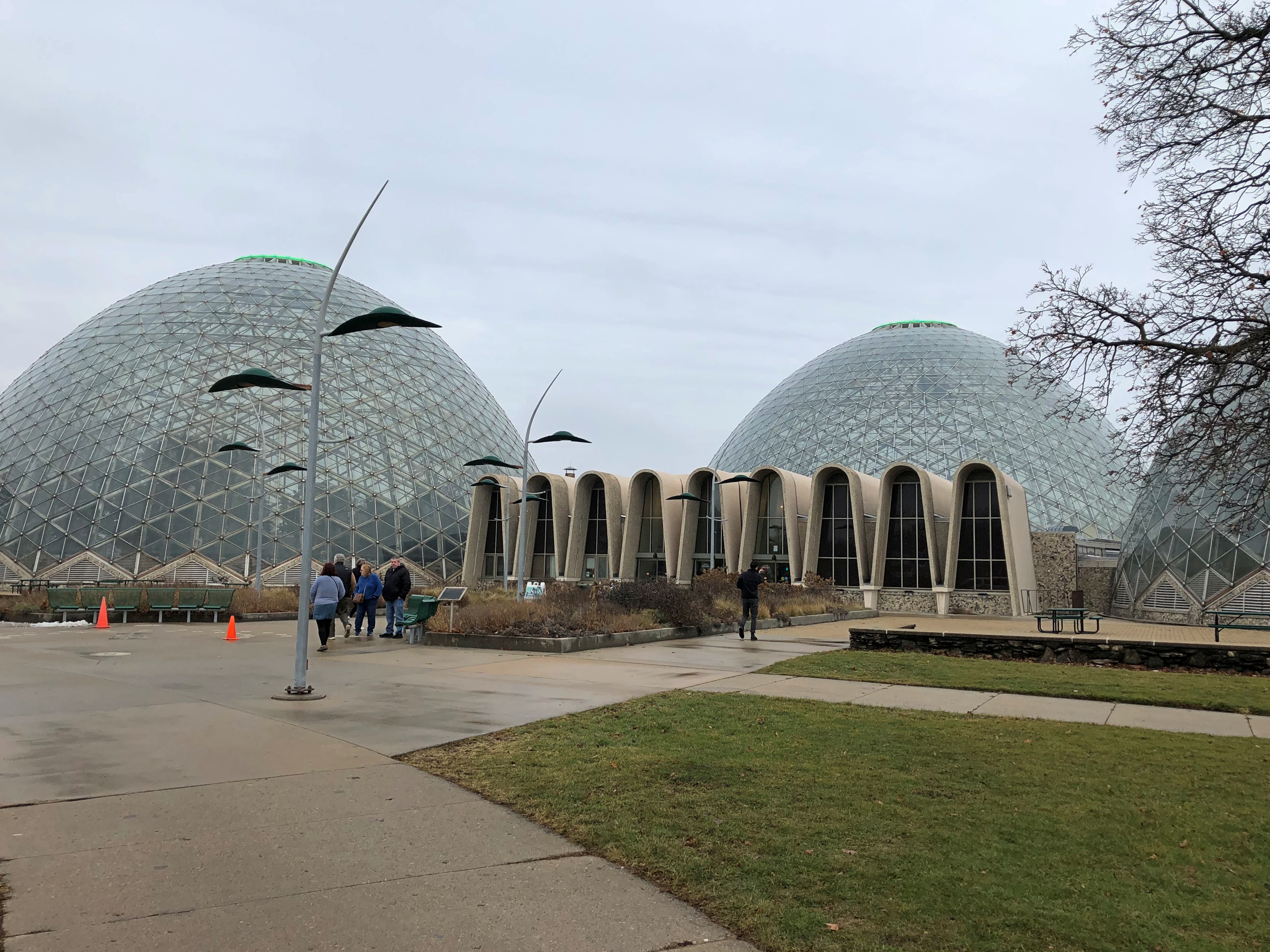
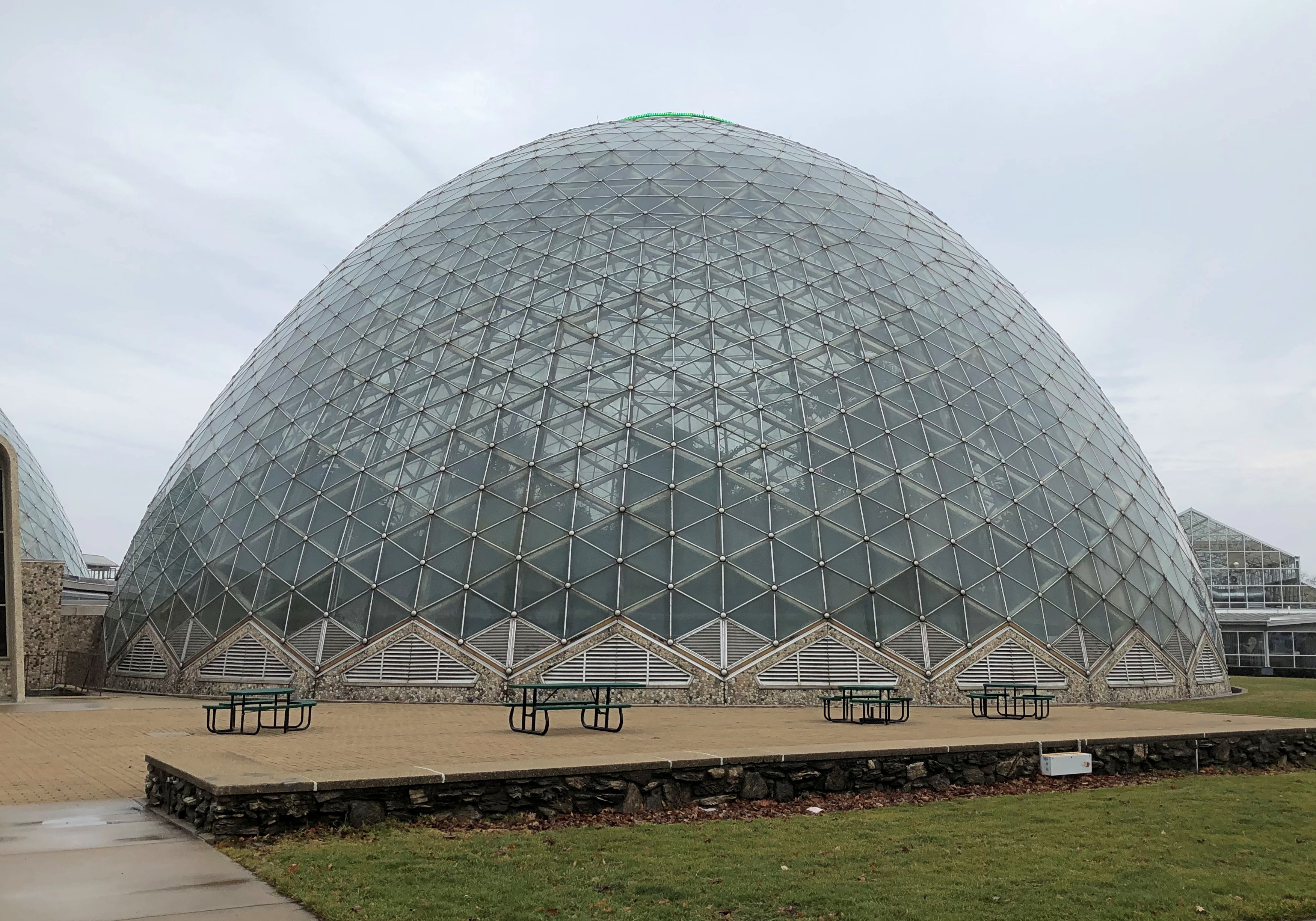
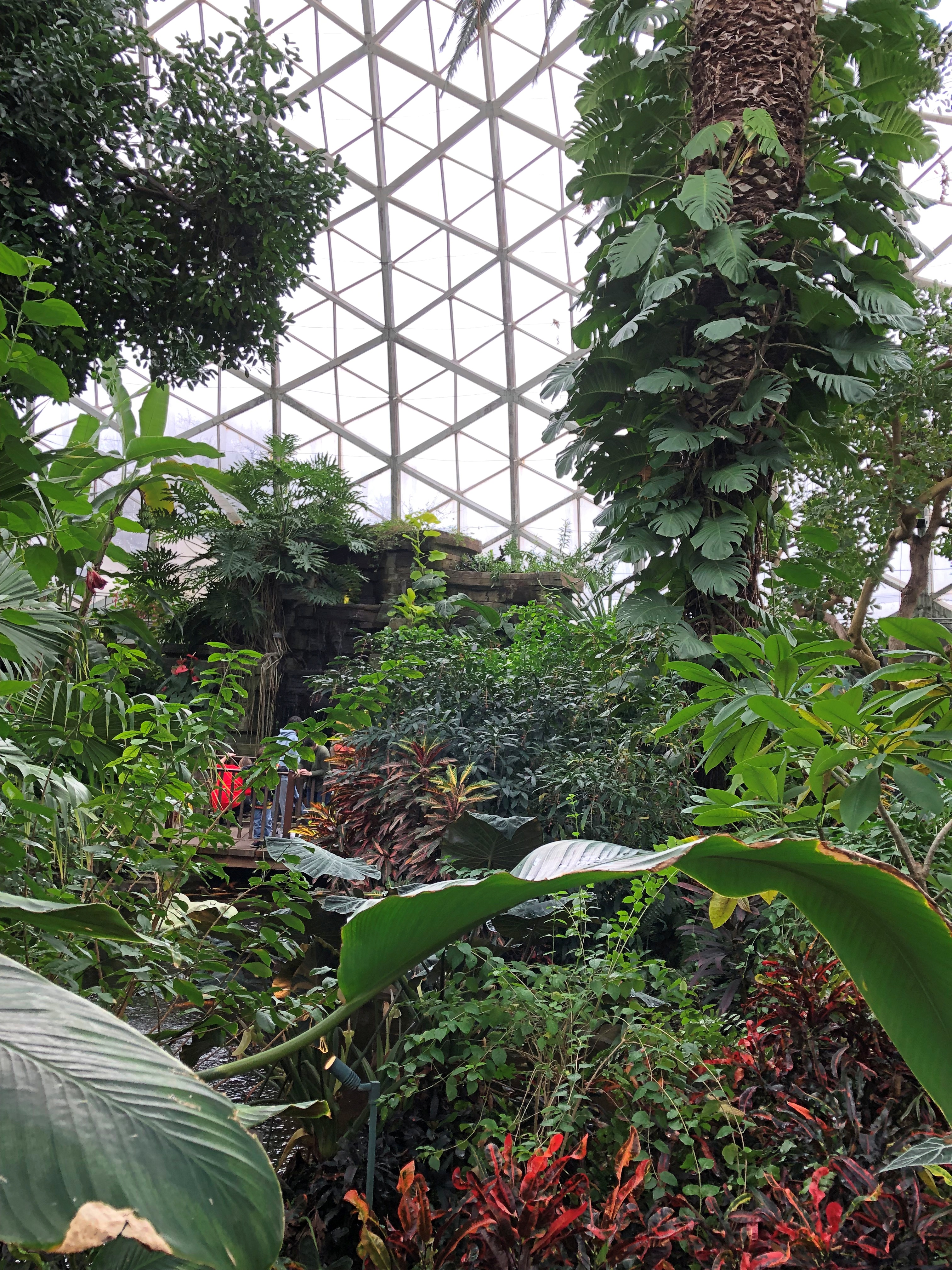
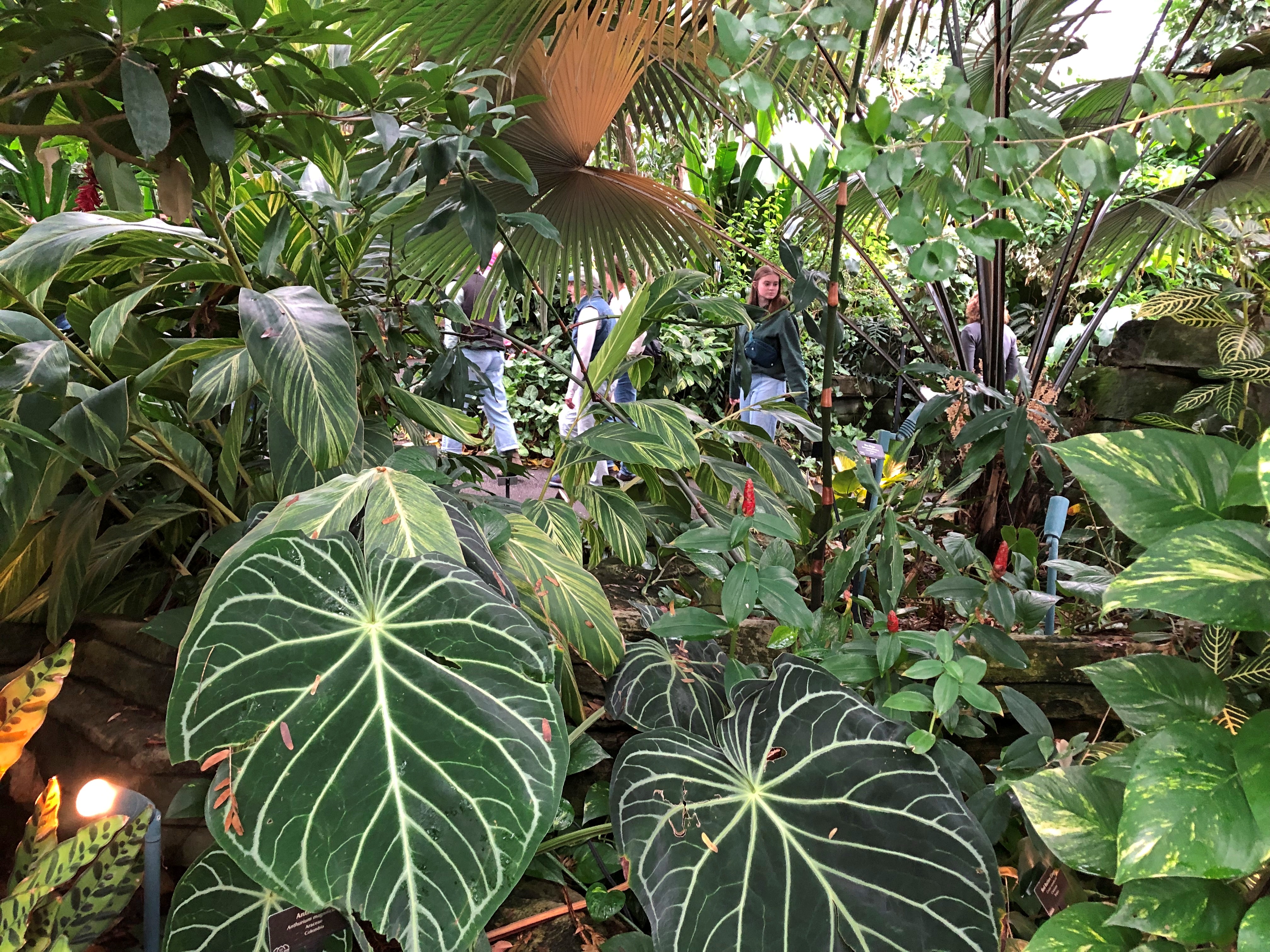
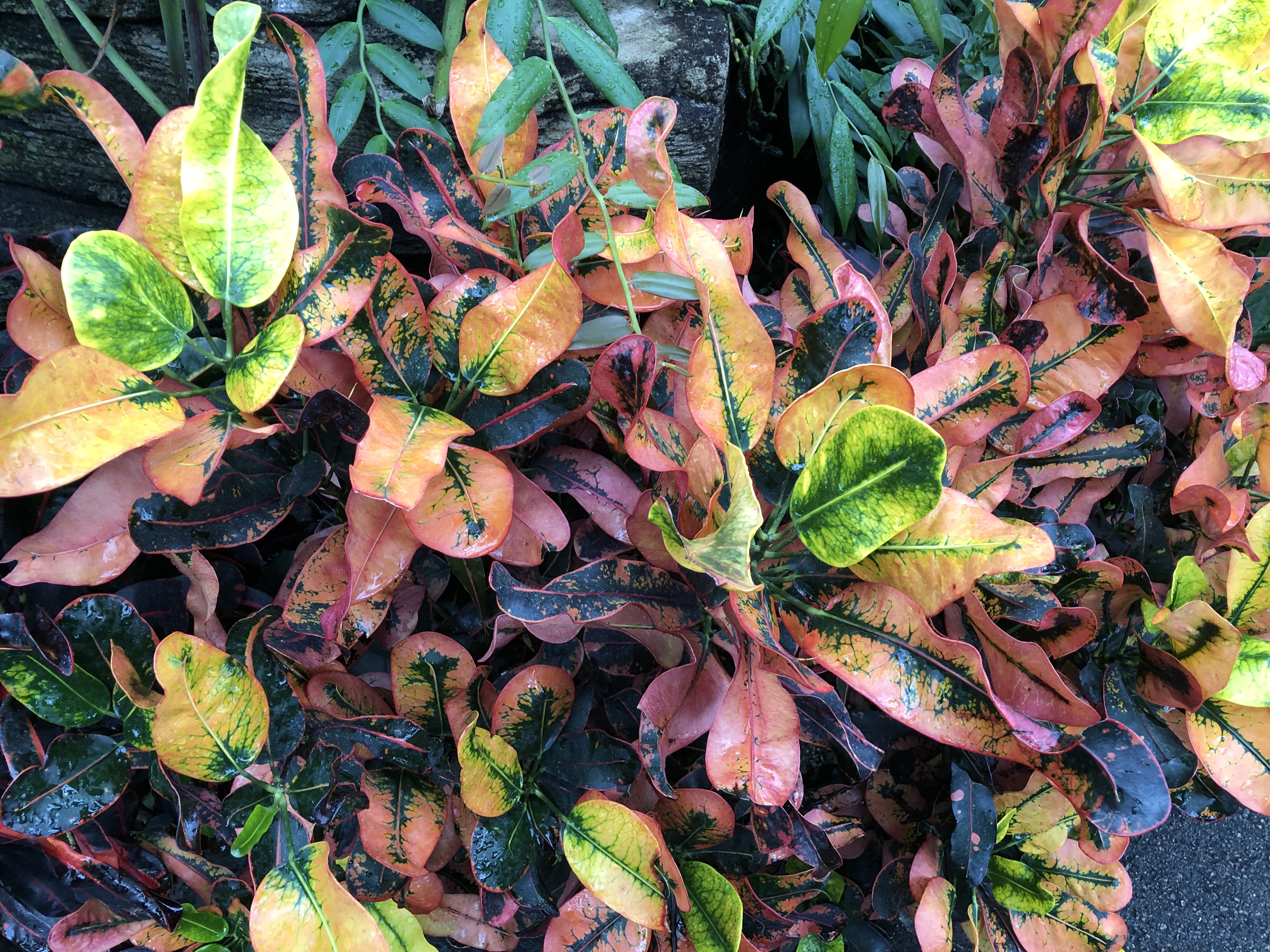
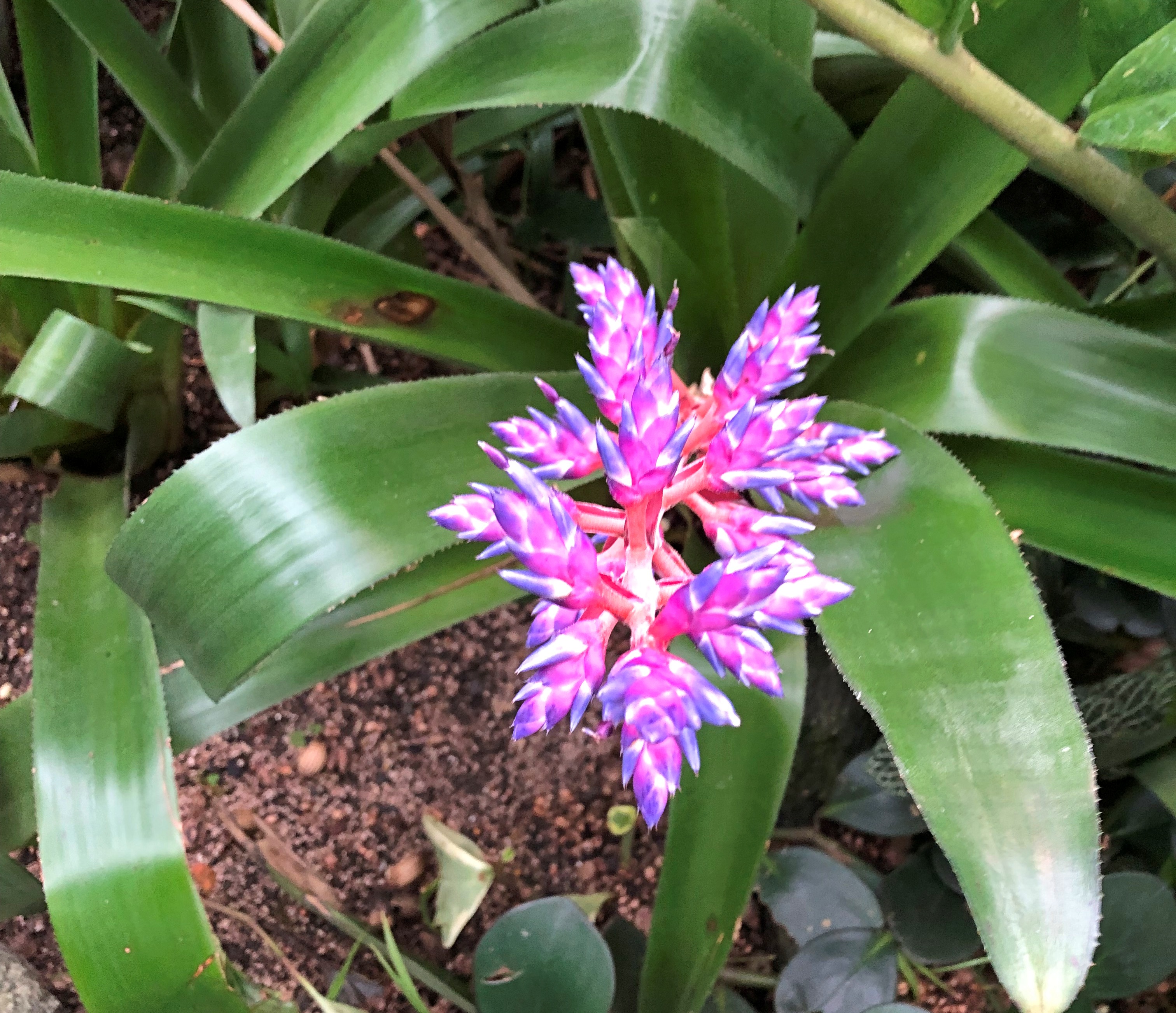
We arrived at the Mitchell Park Domes late in the misty drizzly but not freezing morning of December 27. Not our first visit, but the last time was quite a while ago.Mitchell Park Domes Mitchell Park Domes Mitchell Park Domes

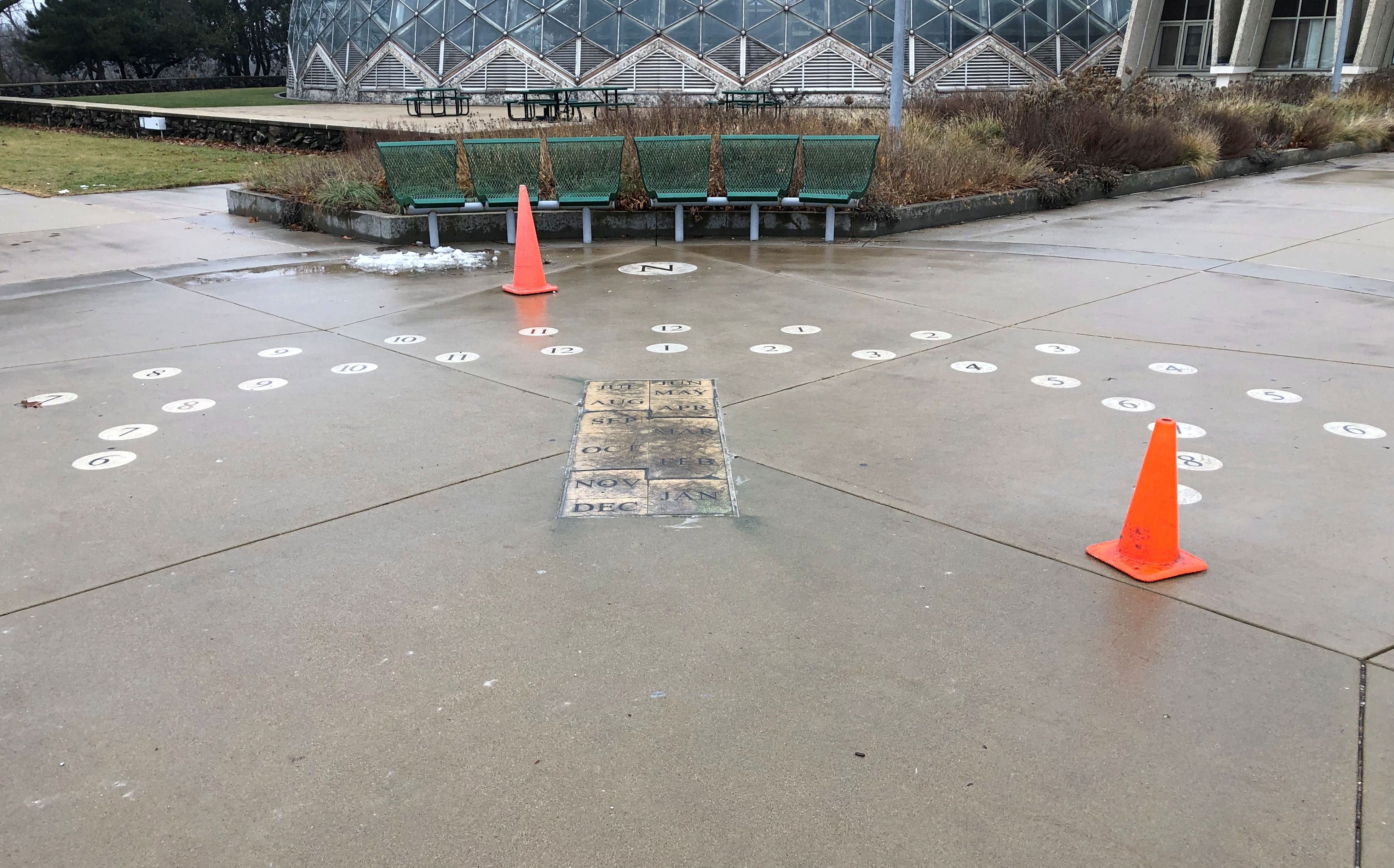
Didn’t remember this detail: An analemmatic sundial in the sidewalk near the entrance, the likes of which you don’t see often. But no sun.Mitchell Park Domes

Formally, the place is known as the Mitchell Park Horticultural Conservatory and, since the last time we were there, the fate of the Domes was the subject of a number of recommendations and other proposals. One proposal was to knock ’em down and replace them with something still undesigned, but which I suspect which would be more along the lines of immersive edu-tainment. Again, just a suspicion, but that would fit a pattern: destroy something distinctive to a particular place (in this case, Milwaukee) and put up something that could be anywhere, in the name of an enhanced guest experience that is interactive as a modest pinball arcade.

A few months ago, the county committed to spending some money on the Domes, including “a $30 million commitment from Milwaukee County once funding milestones are achieved,” according to Friends of the Domes, which unfortunately sounds like “when the county figures out how to get the money, this could take a while.” But at least the magnificent triad of domes isn’t going to be destroyed in a plan to merge it with the county’s Milwaukee Public Museum.

“Based on our review of the information we believe there could be a great guest experience which integrates the content and stories from Milwaukee Public Museum with the content and experience of the current Domes and Conservatory,”  a 2019 report by an outfit called Gallagher Museum Services notes. “Specifically, the natural history portion of the MPM storyline fits very nicely with the Domes experiences. From our analysis, GMS has concluded that the Milwaukee Domes should be demolished. The cost of properly renovating the Domes greatly outweighs the benefit of doing so…”

A far as I can tell as a non-Milwaukeean, the reaction to that was, “Outweighs the benefits? Says who?” Anecdotal evidence supports the preservationists. On the Friday after Christmas this year, when people have more time to go out, they were out in force at the Domes. Not obscenely crowded, but pretty busy. All ages. Many were families with small children. Children who will, if allowed, take their own children one day.Mitchell Park Domes Mitchell Park Domes

The GMS report makes it sound like the Domes themselves aren’t really part of the “Domes experience,” which really just involves an elaborate garden, as opposed to an elaborate garden in a distinctive, placemaking setting. The experience, the report seems to assert, is portable: take it out from under the Domes and you’d still have the “Domes experience” somehow in a spiffy new building.

People like the Domes. They already want to go there. The Domes are not the Milwaukee Public Museum, which is a fine institution in its own right, however one might shoehorn the “Domes experience” into a part of that museum that happens to be about nature. The “Domes experience” is only found at the domes, and the people of Milwaukee know that.

I believe that too. Just for the vaulting glass overhead, if nothing else.Mitchell Park Domes Mitchell Park Domes

The Domes hold their crowds pretty well, too. We were able to circulate comfortably and without any sort of jostling.

The tropical dome.Mitchell Park Domes Mitchell Park Domes Mitchell Park Domes Mitchell Park Domes

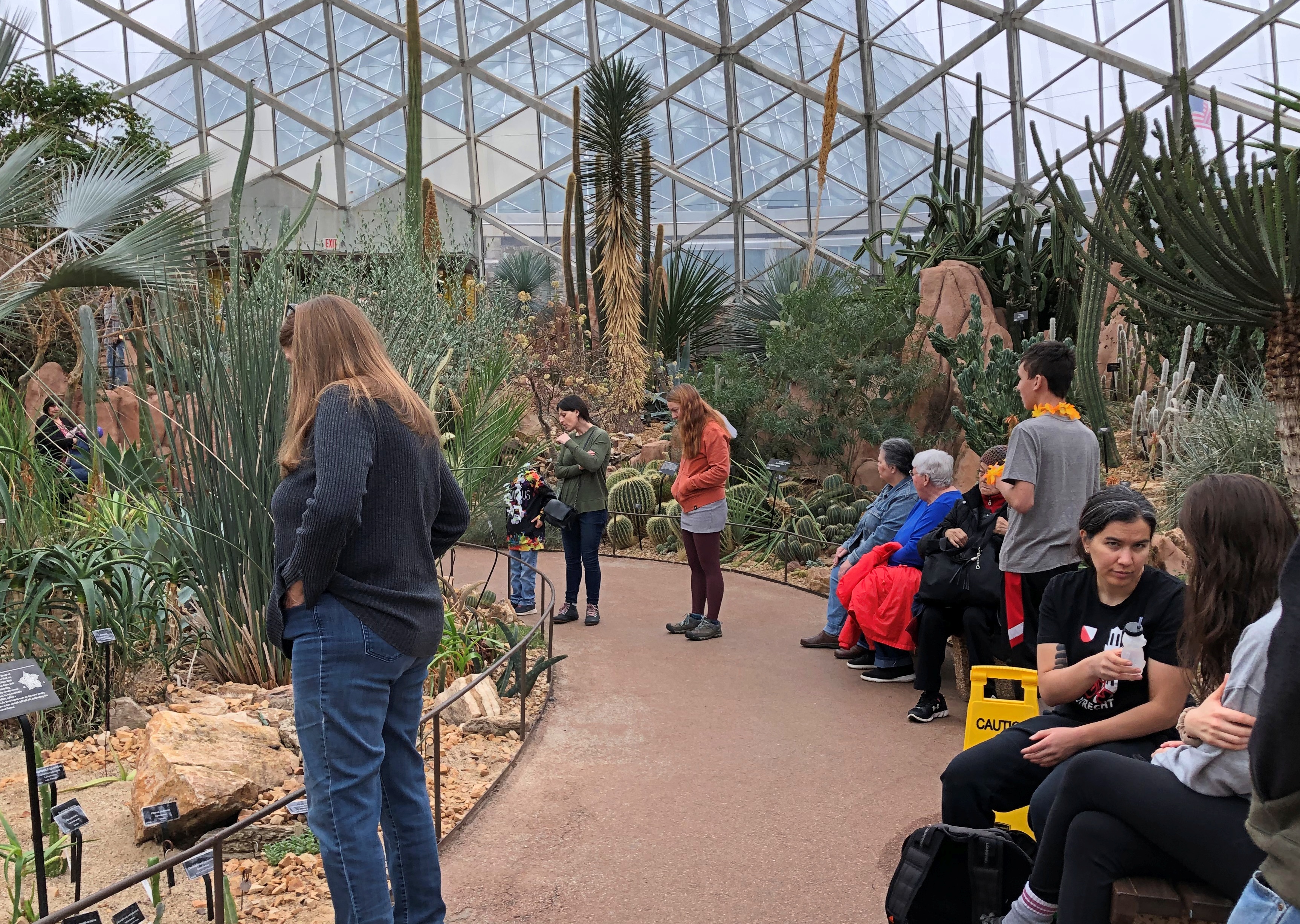
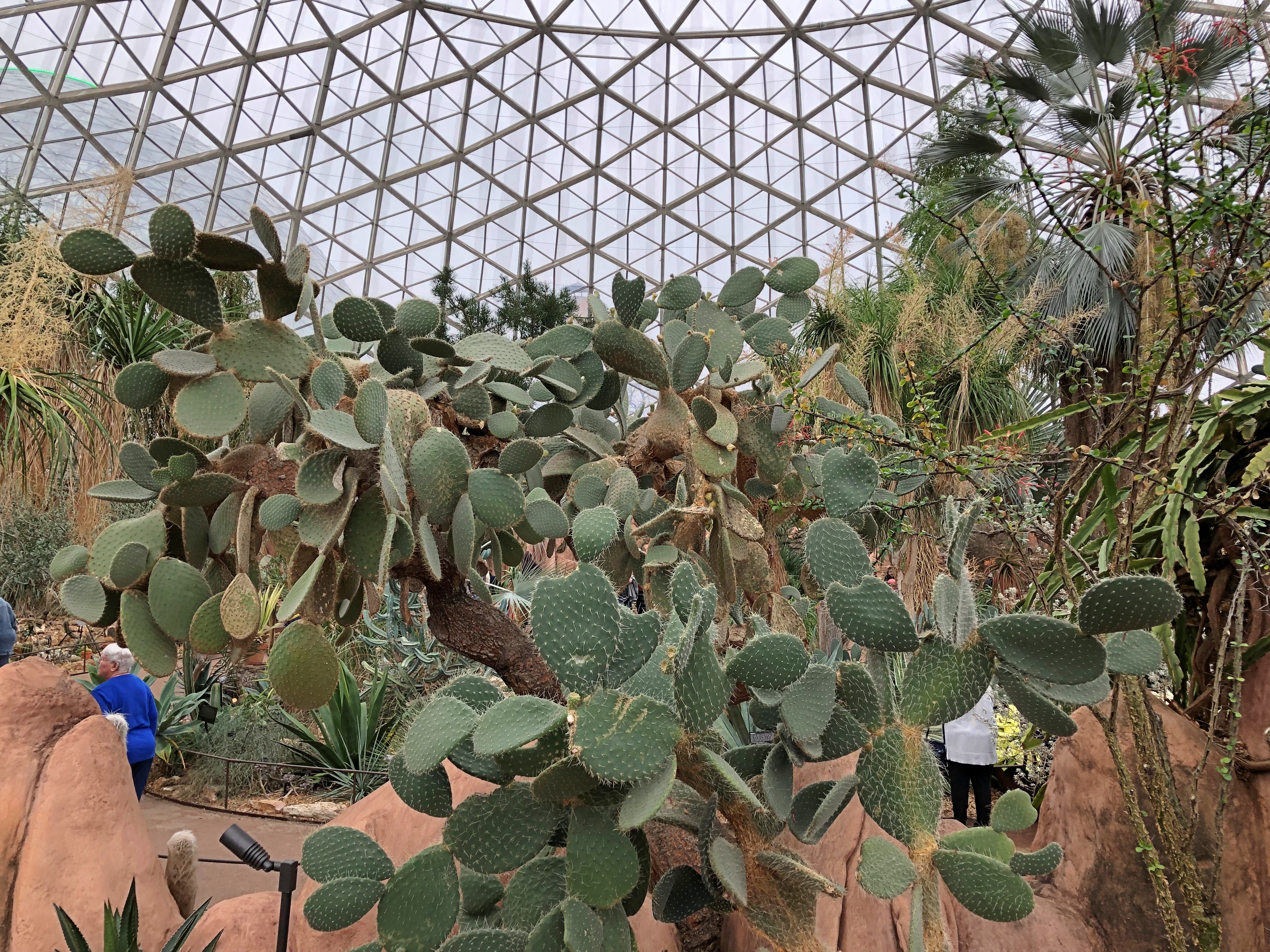
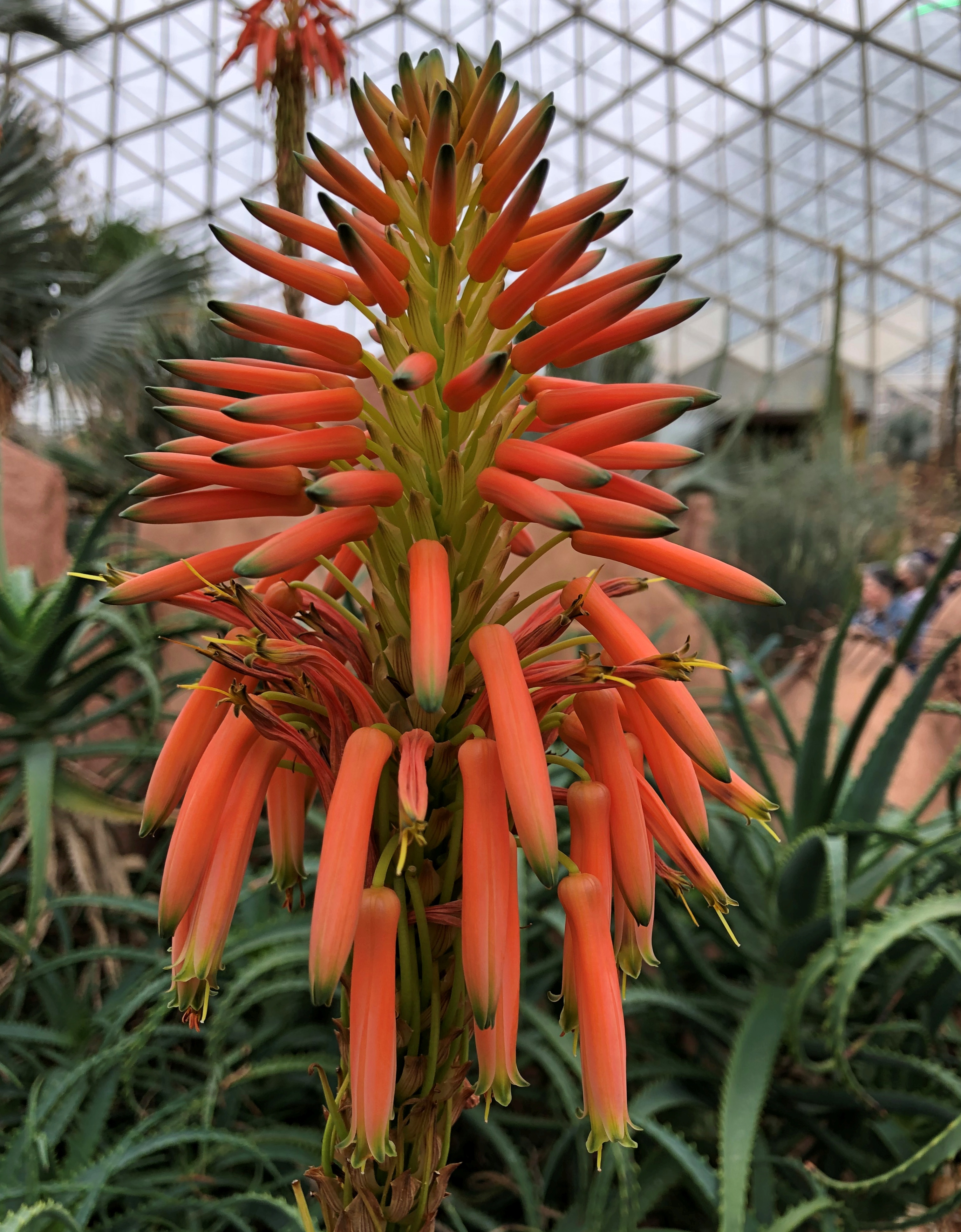
The arid dome.Mitchell Park Domes Mitchell Park Domes Mitchell Park Domes

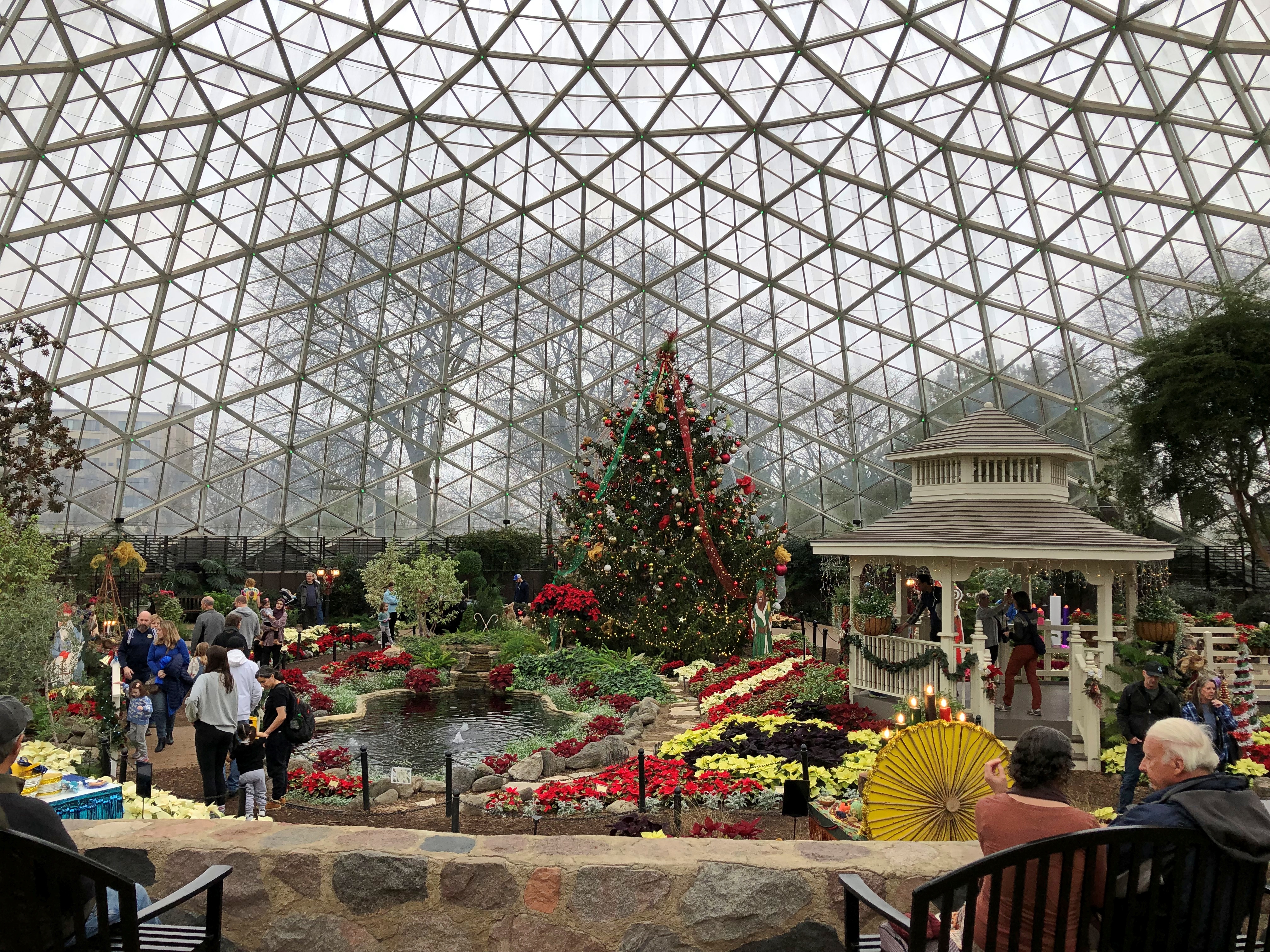
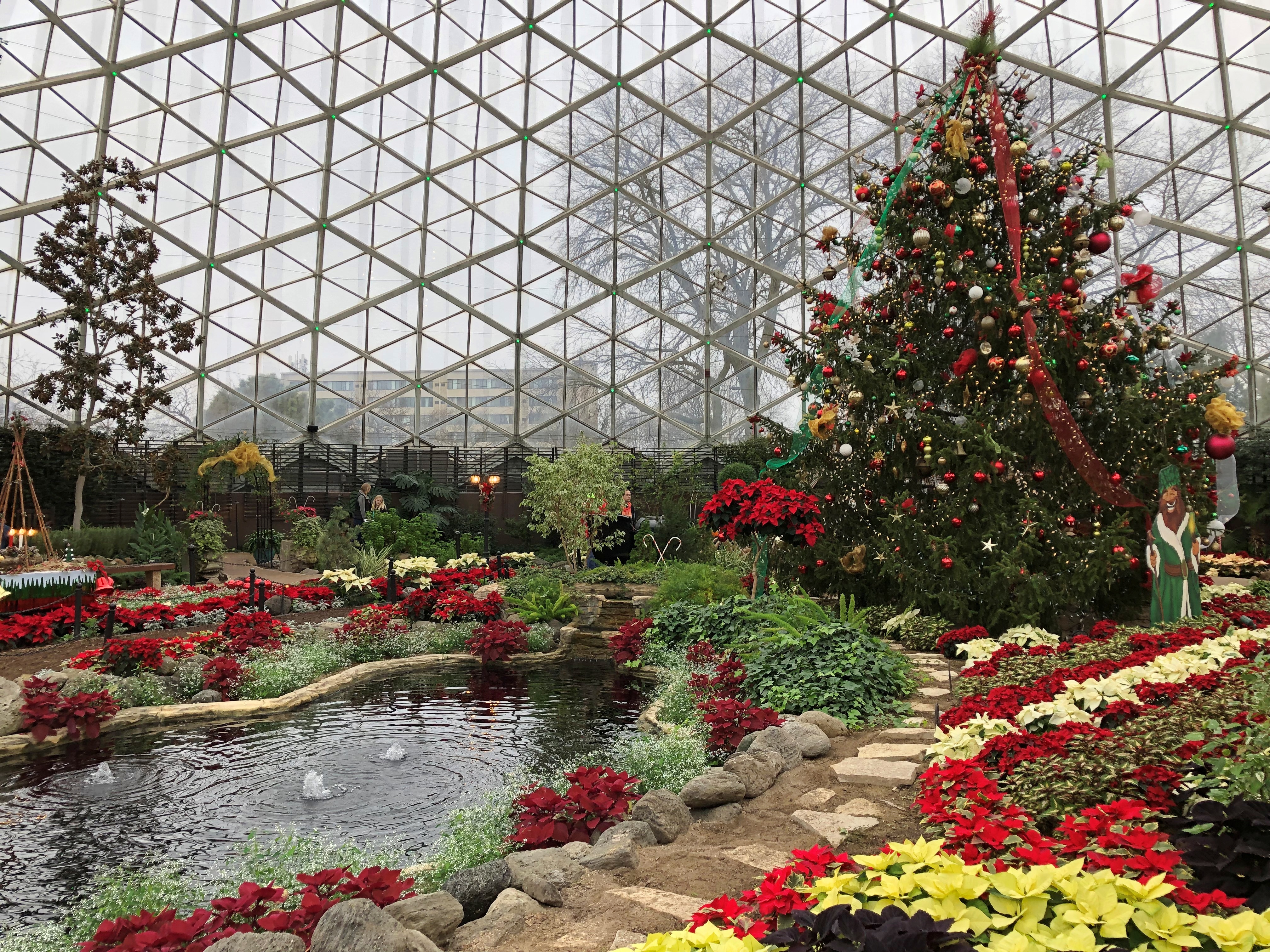
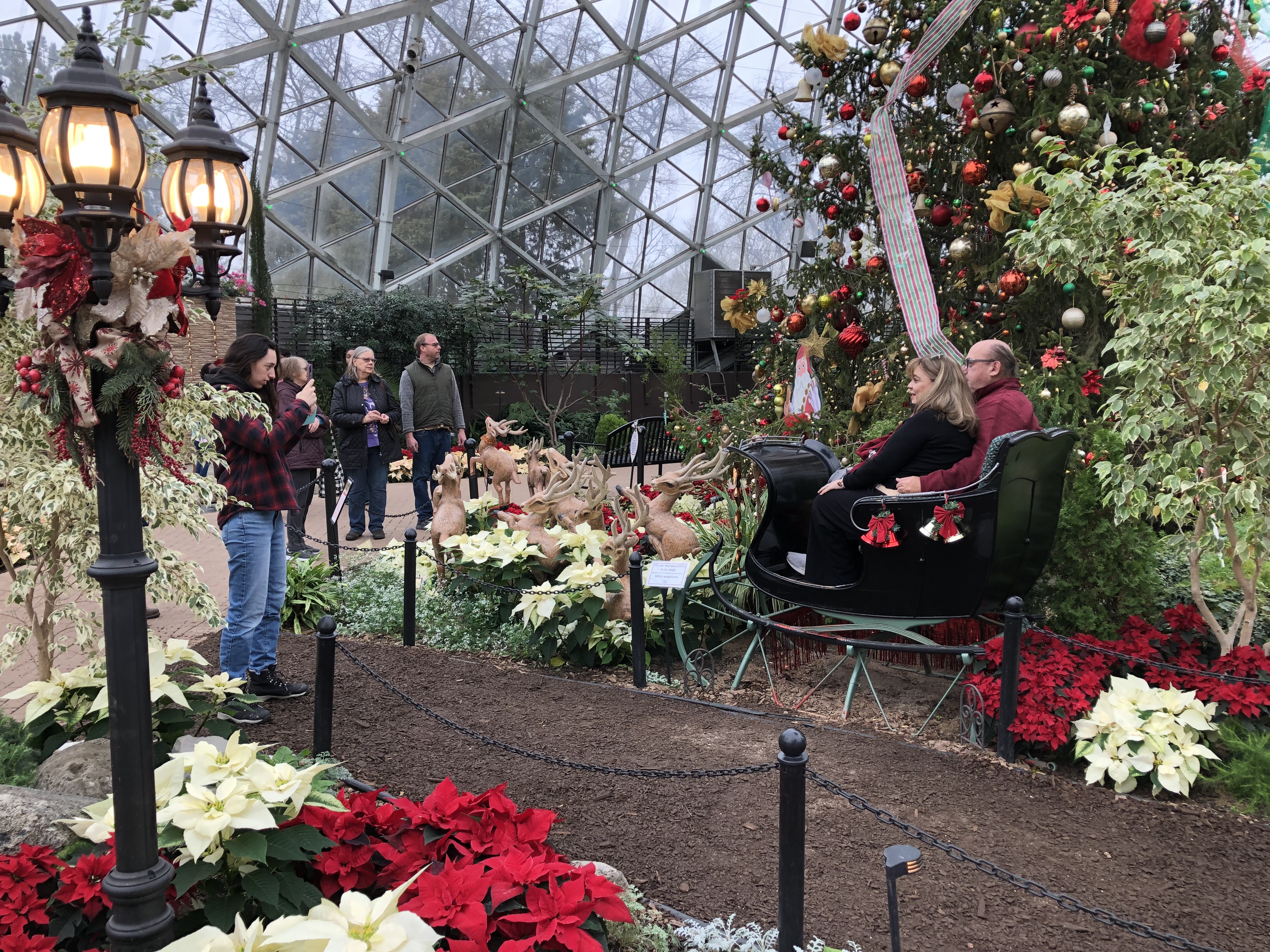
The show dome.Mitchell Park Domes Mitchell Park Domes Mitchell Park Domes Mitchell Park Domes

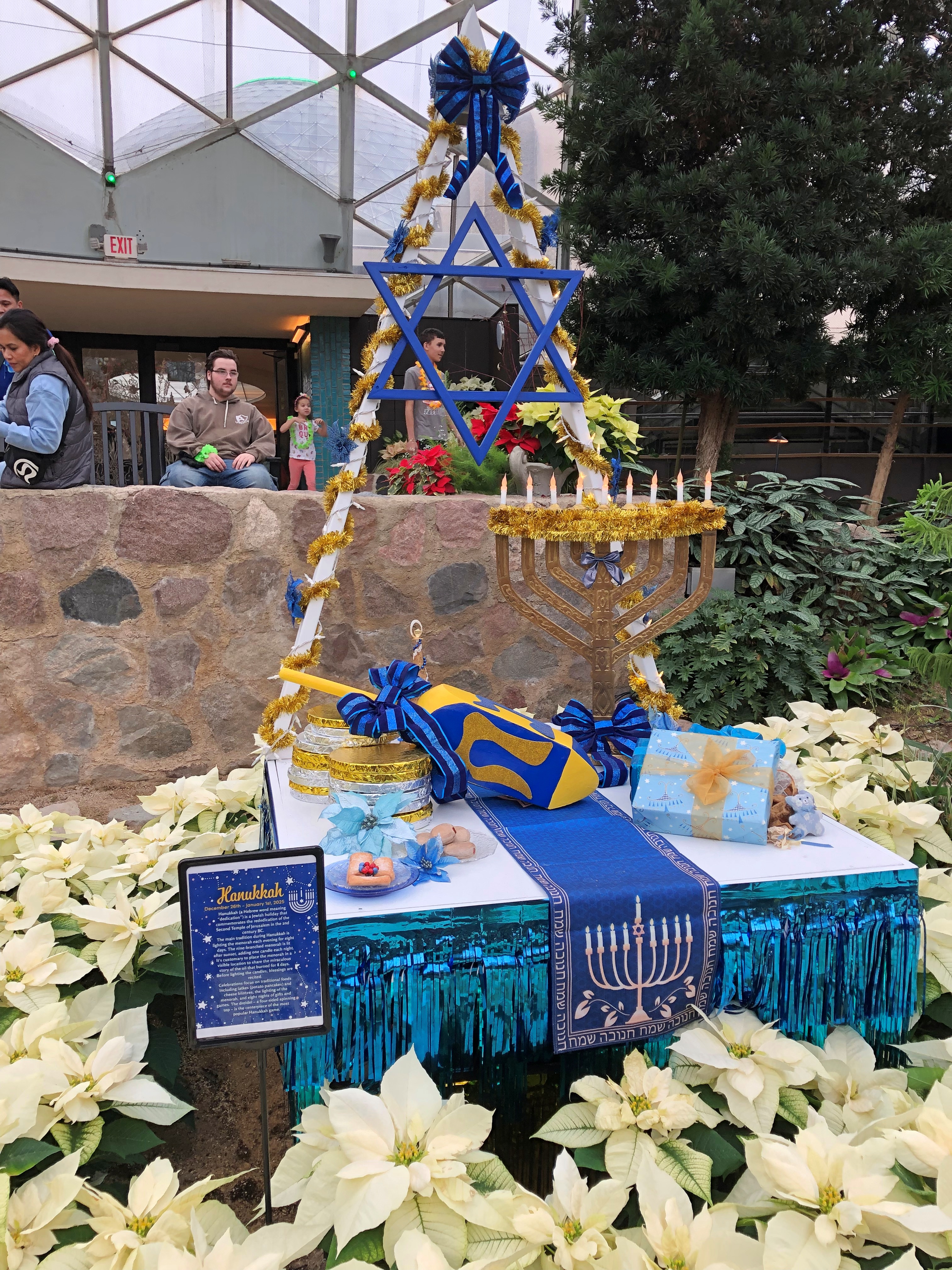
Christmas was represented, of course, but also Advent, Winter Solstice, Hanukkah, and Kwanzaa.Mitchell Park Domes

As we did those years ago, we caught it during the holiday season show, and quite a show it is under the Domes.

Graceland Cemetery: The Color

On Sunday Yuriko was at her occasional cake class creating some figgy pudding. That’s what I’m calling it, since fig is the star ingredient, along with cinnamon and nutmeg and other spices. I’m also calling it oishi, Japanese for delicious, a word we use a fair amount.

There is no Spam in the recipe, however. Just as well.

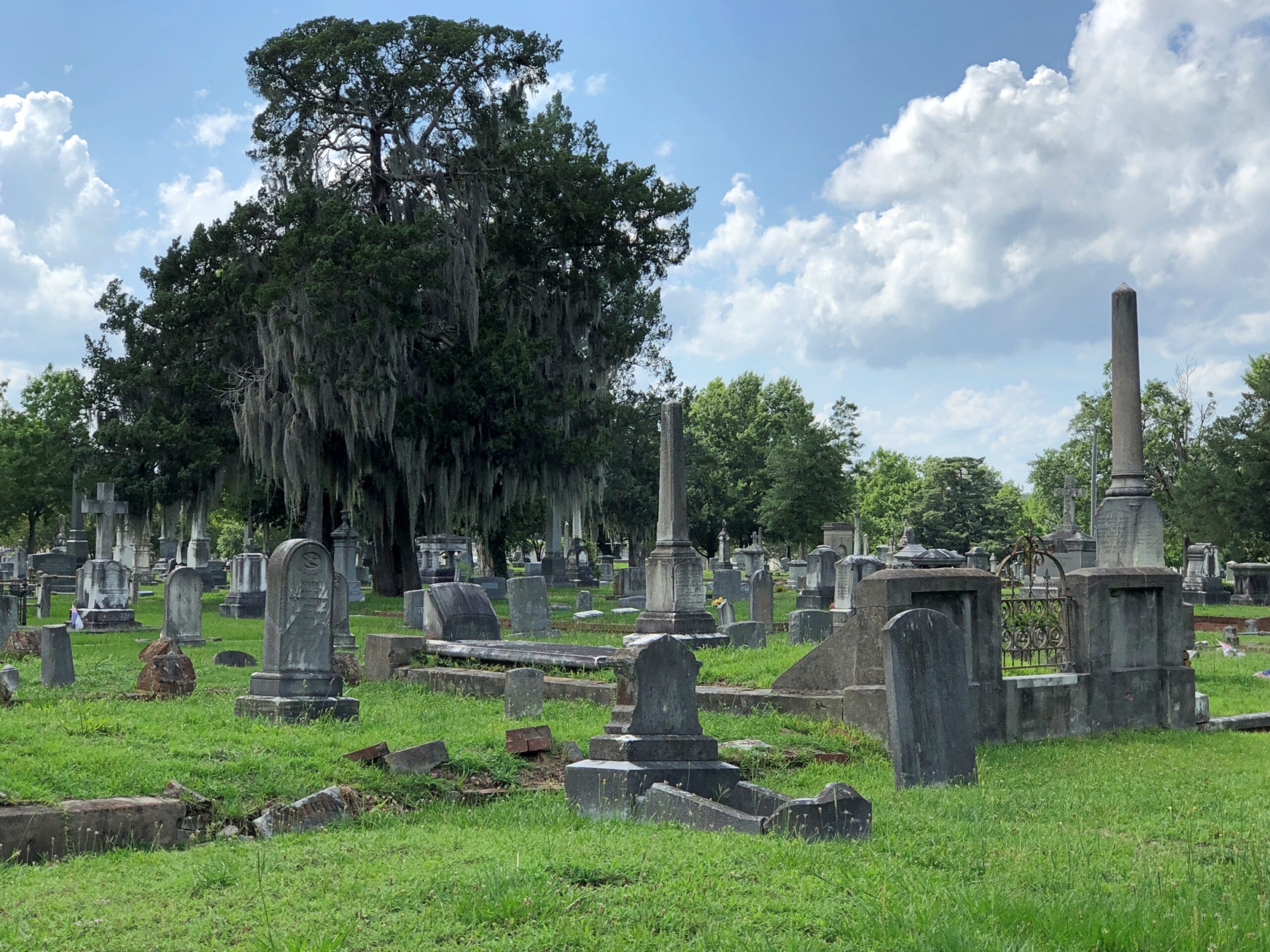
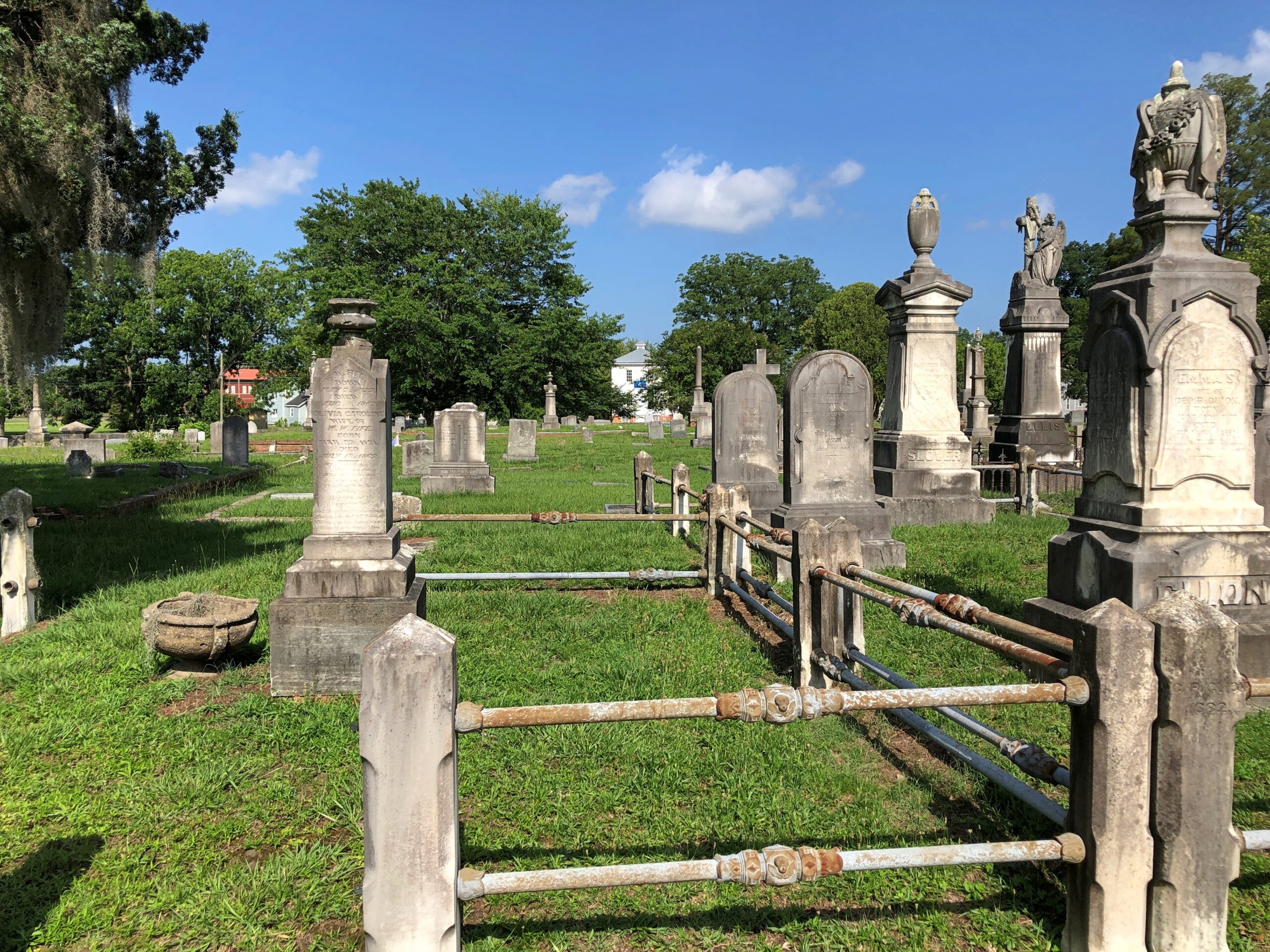
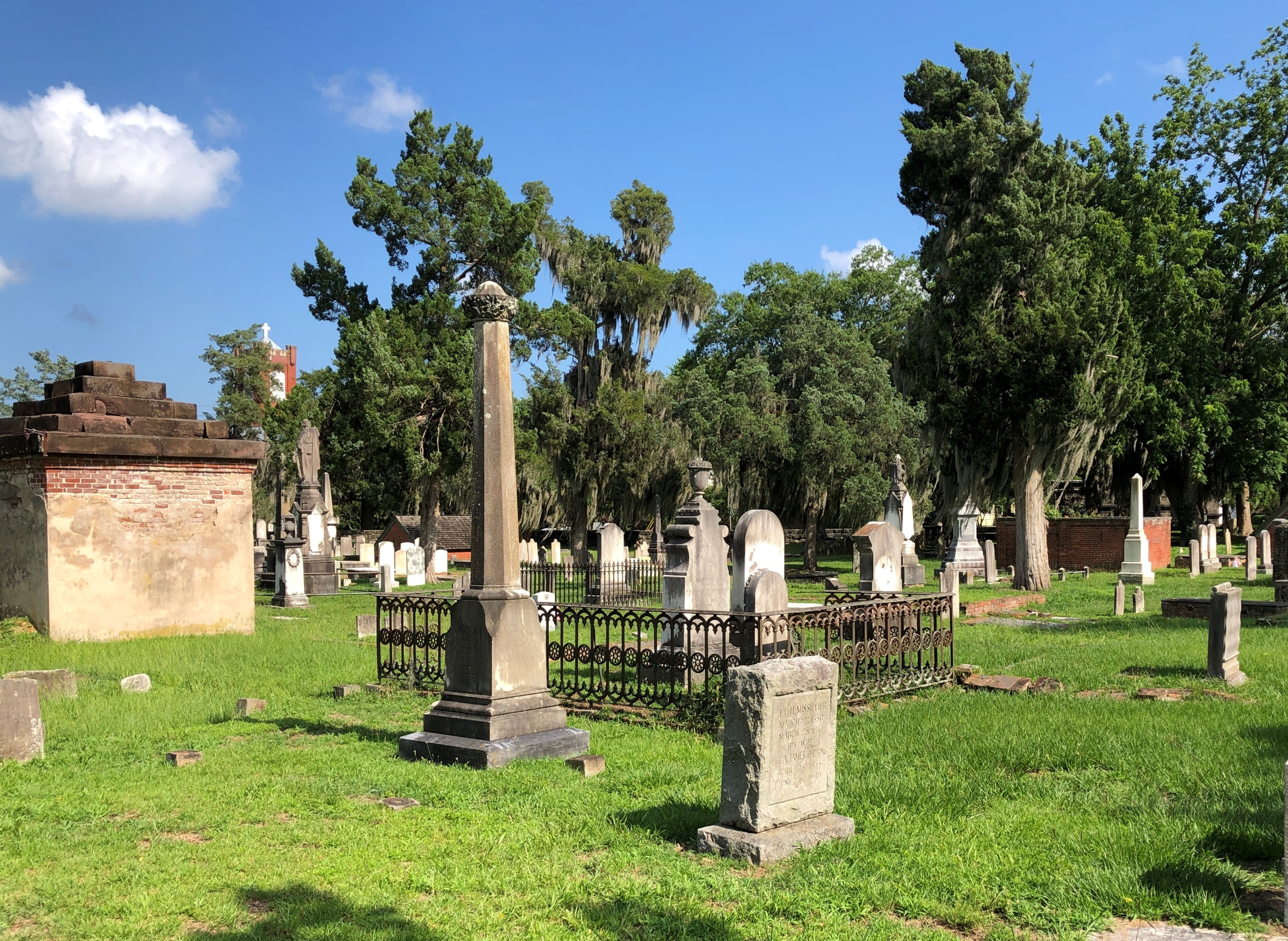
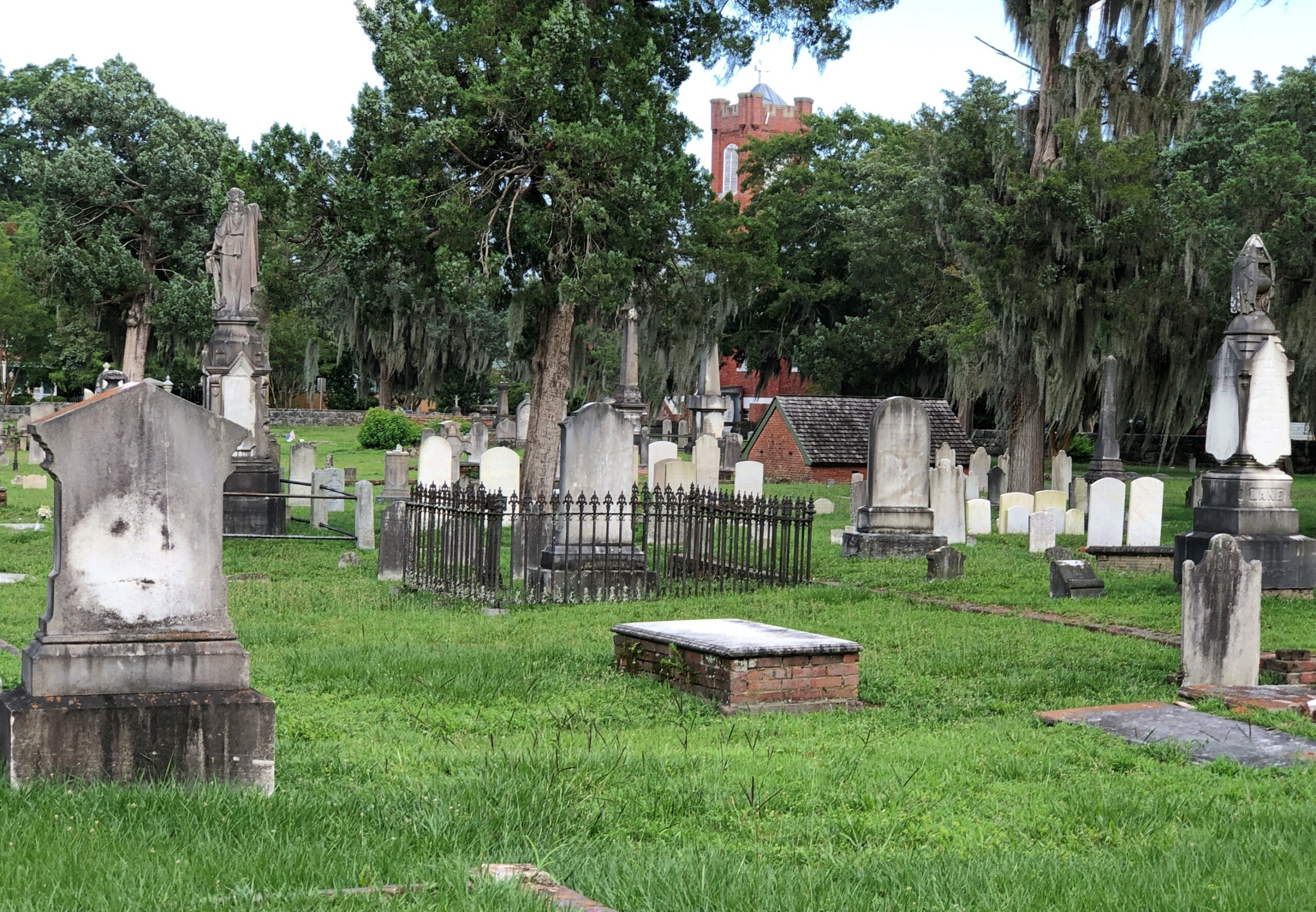
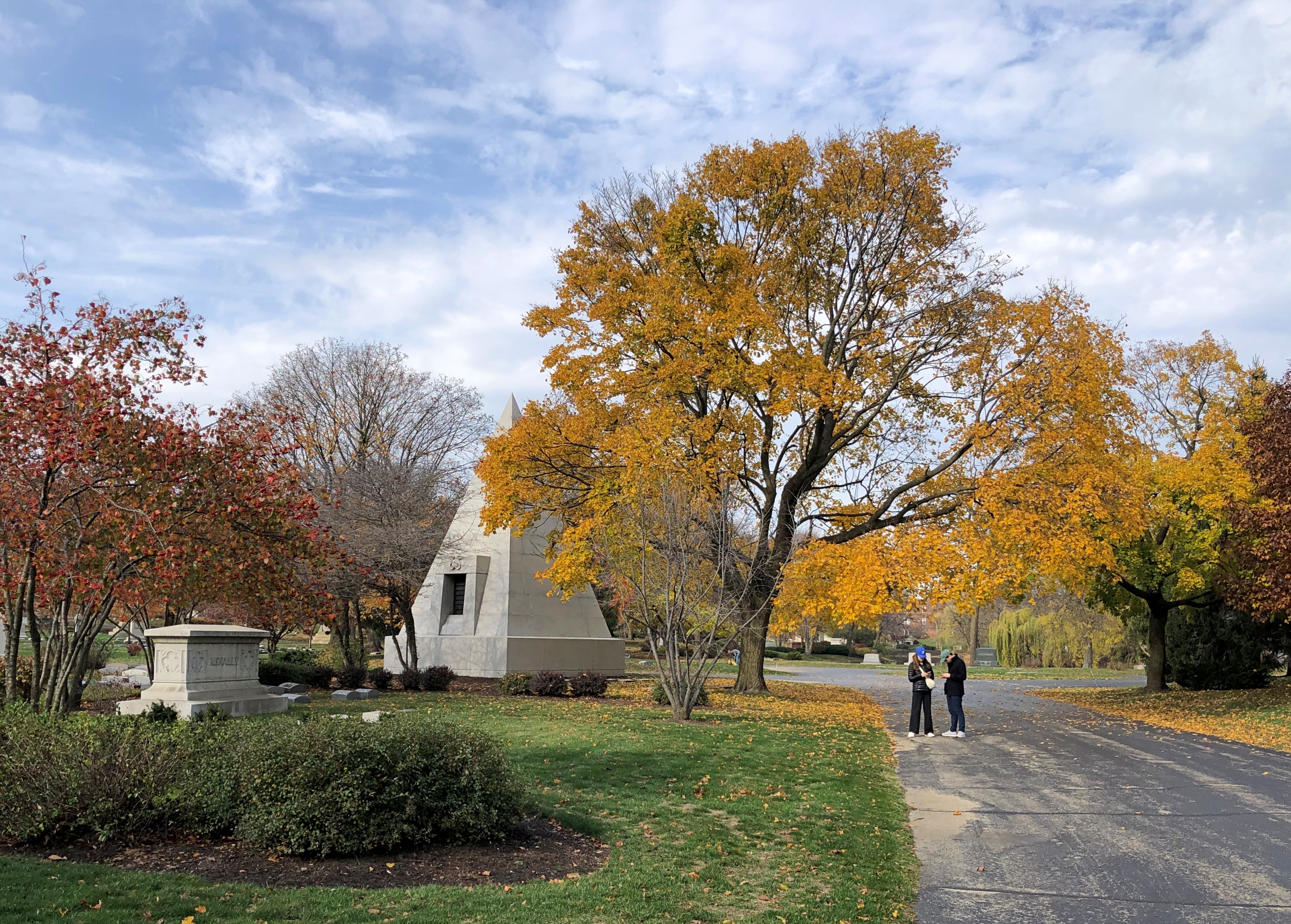
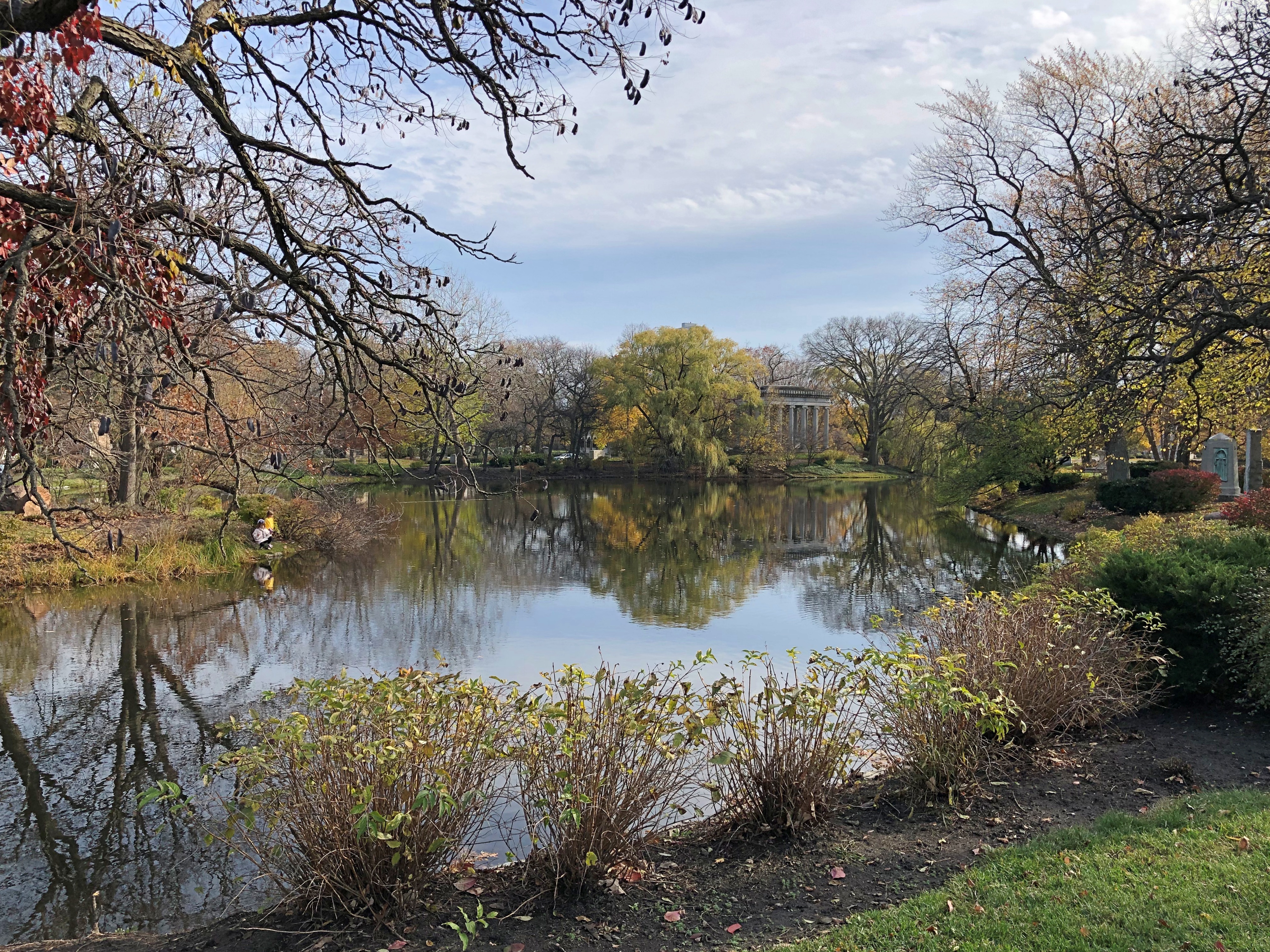
Class is in the city, and I am chauffeur on such days, driving to the Humboldt Park neighborhood. The benefit for me: I get to spend a few hours in Chicago. This time I used the time to visit Graceland Cemetery on the North Side, accessed by bus and then the CTA Red Line.Graceland Cemetery, Chicago

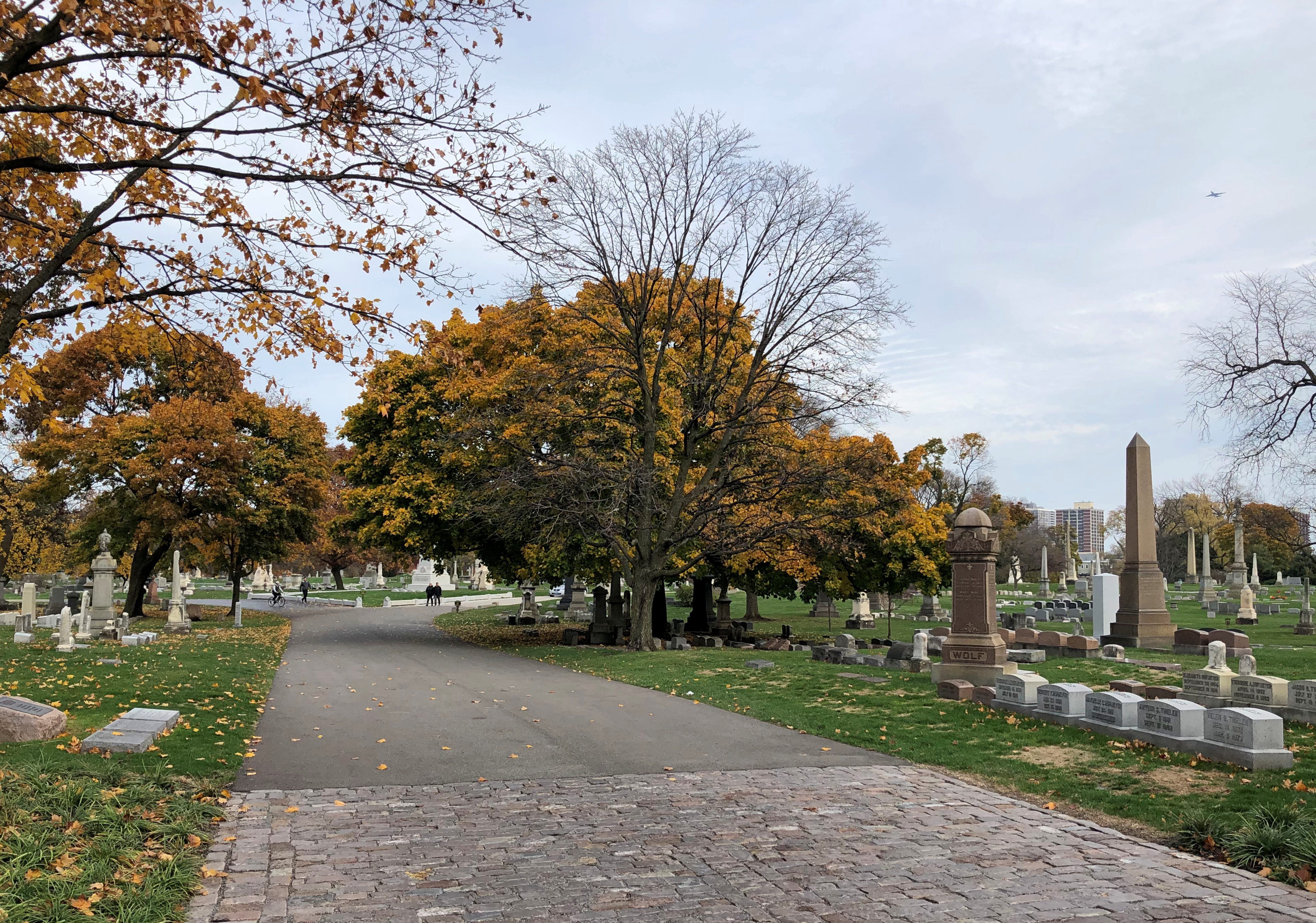
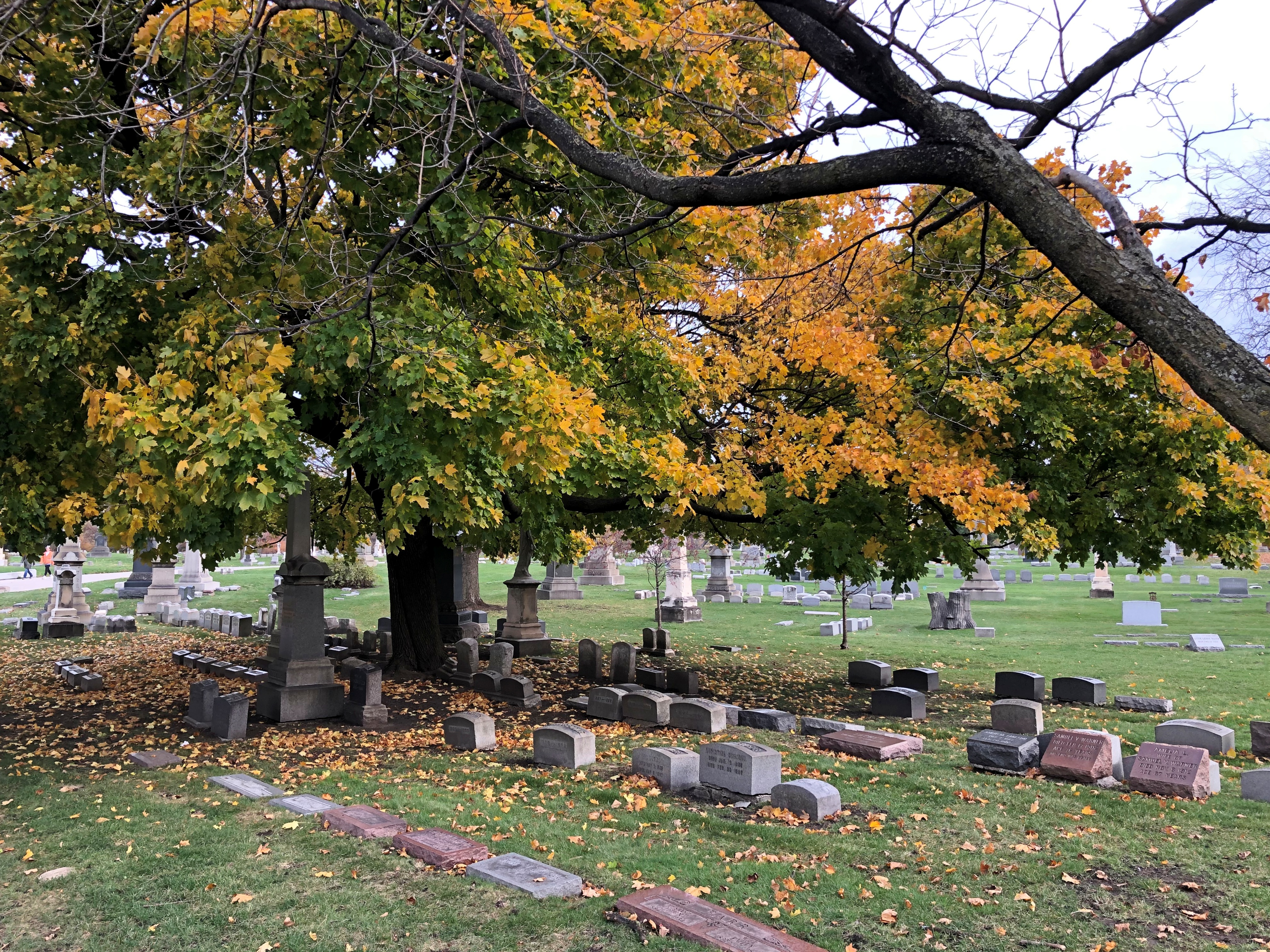
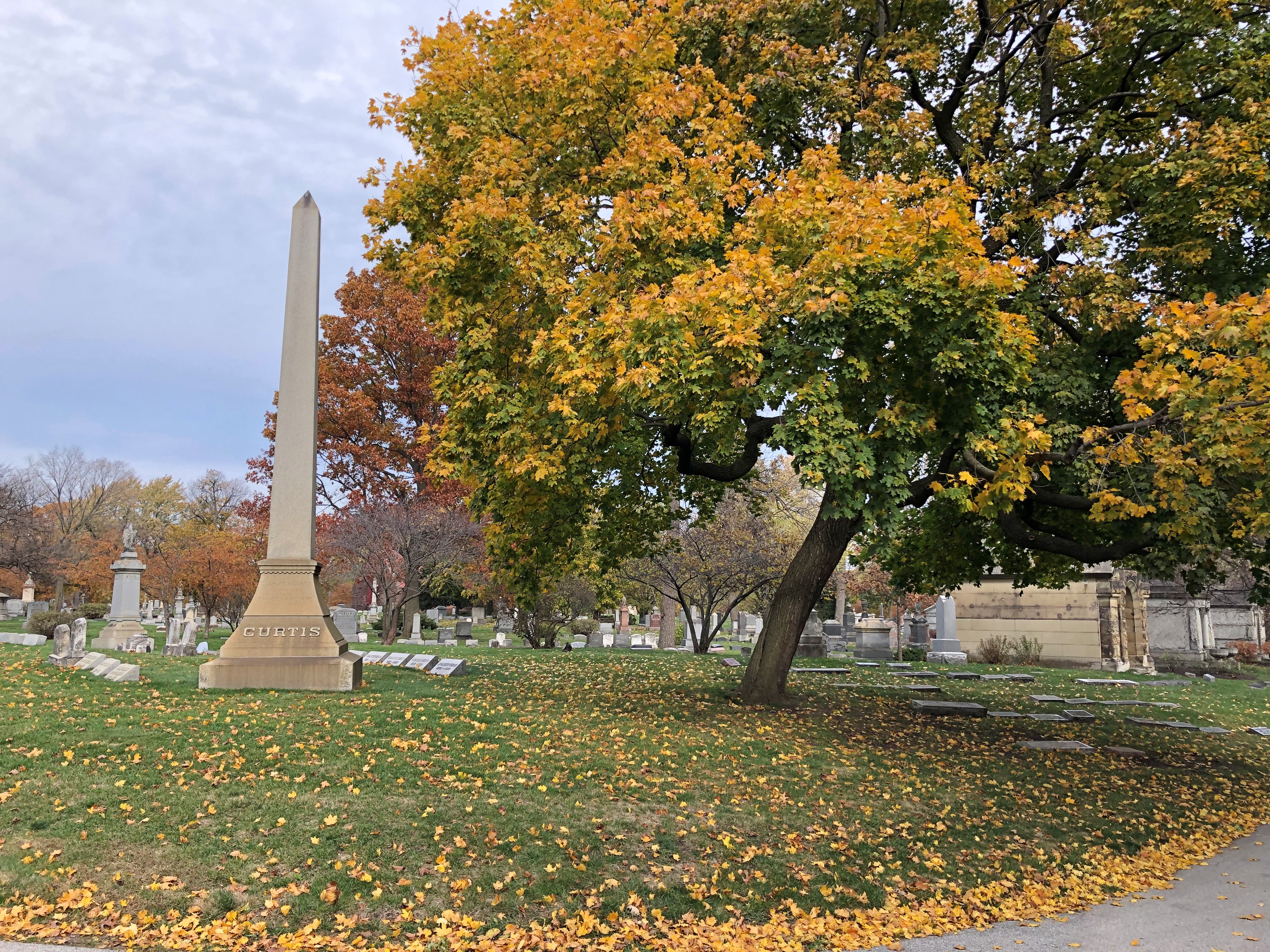
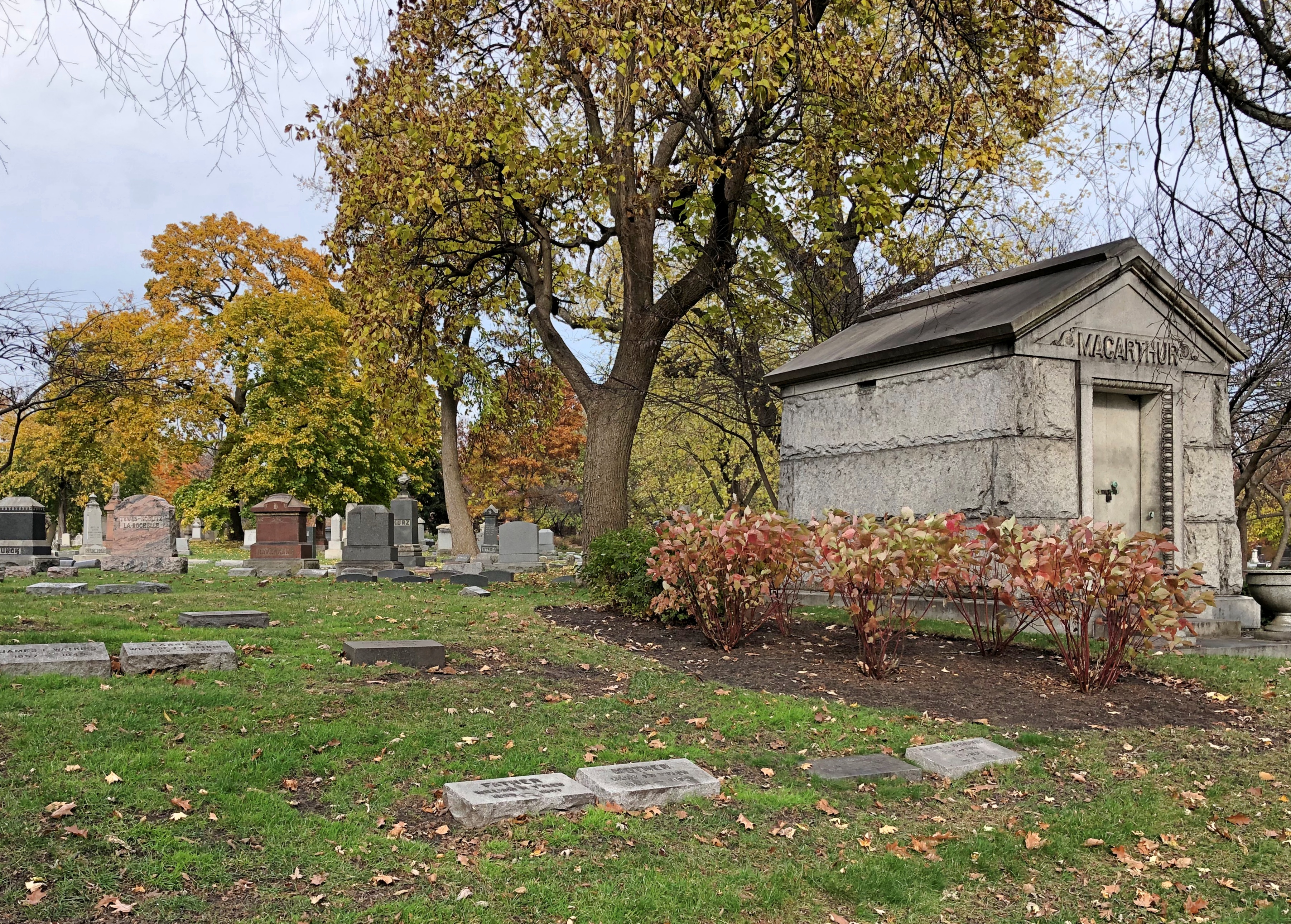
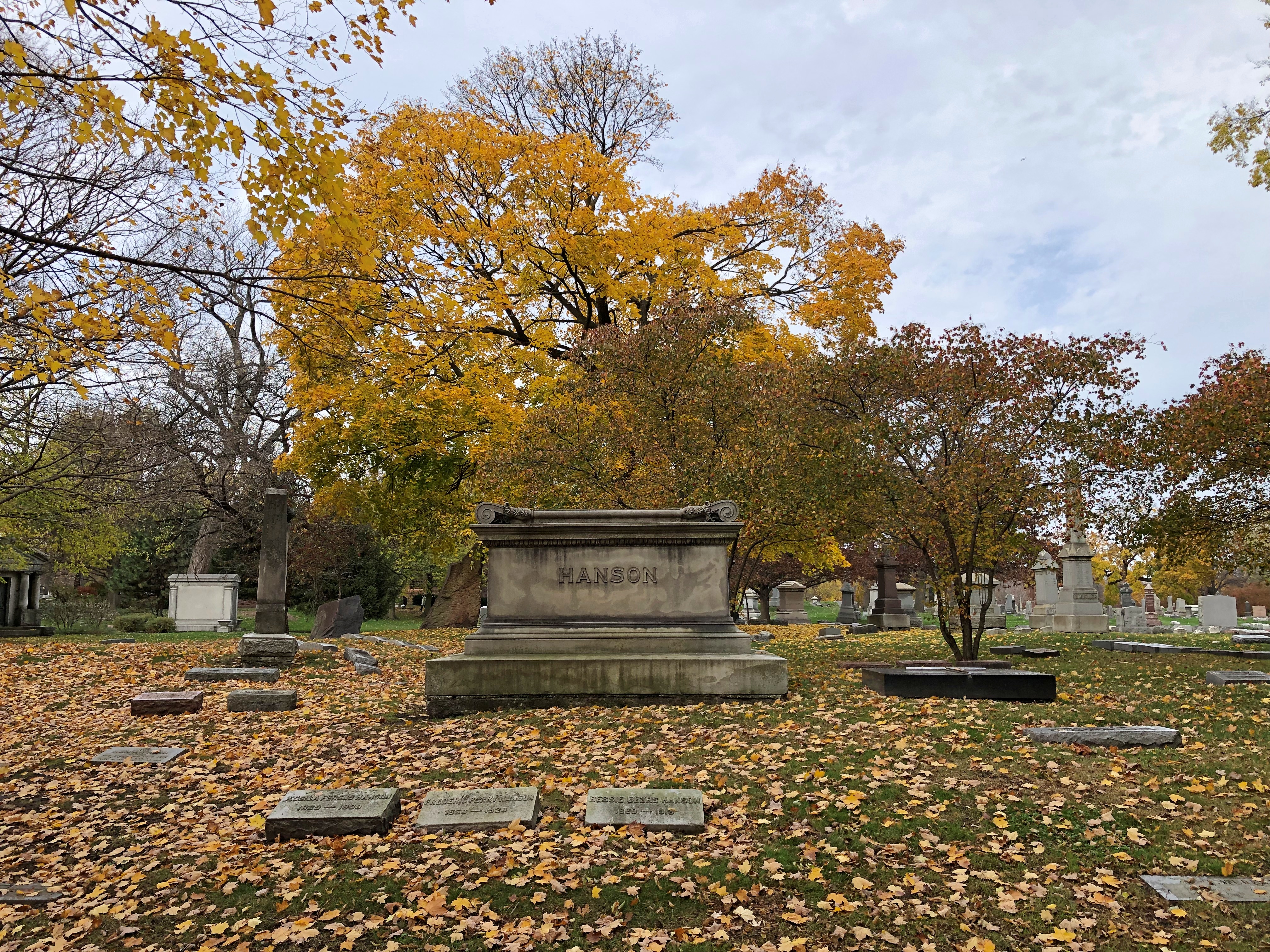
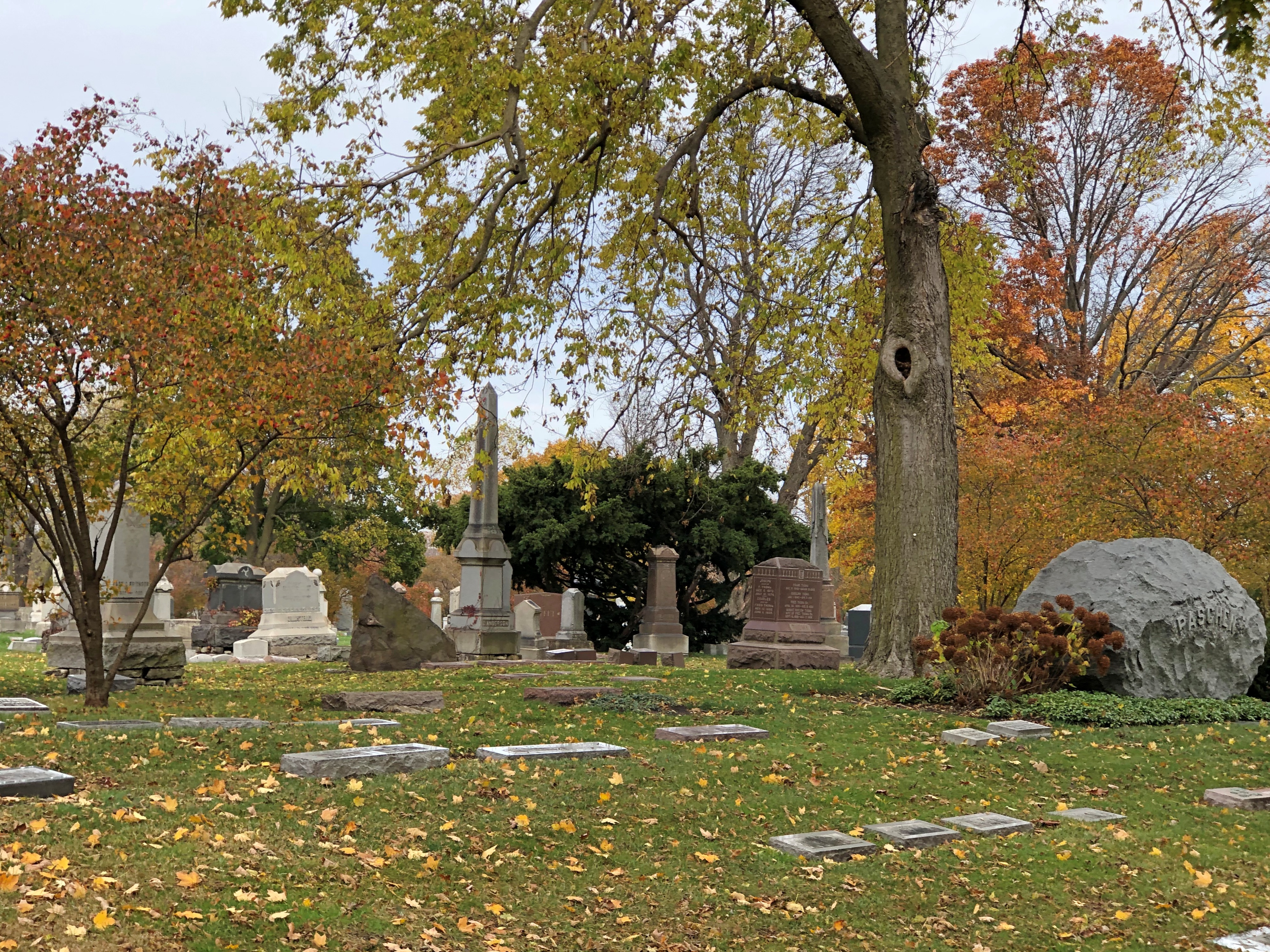
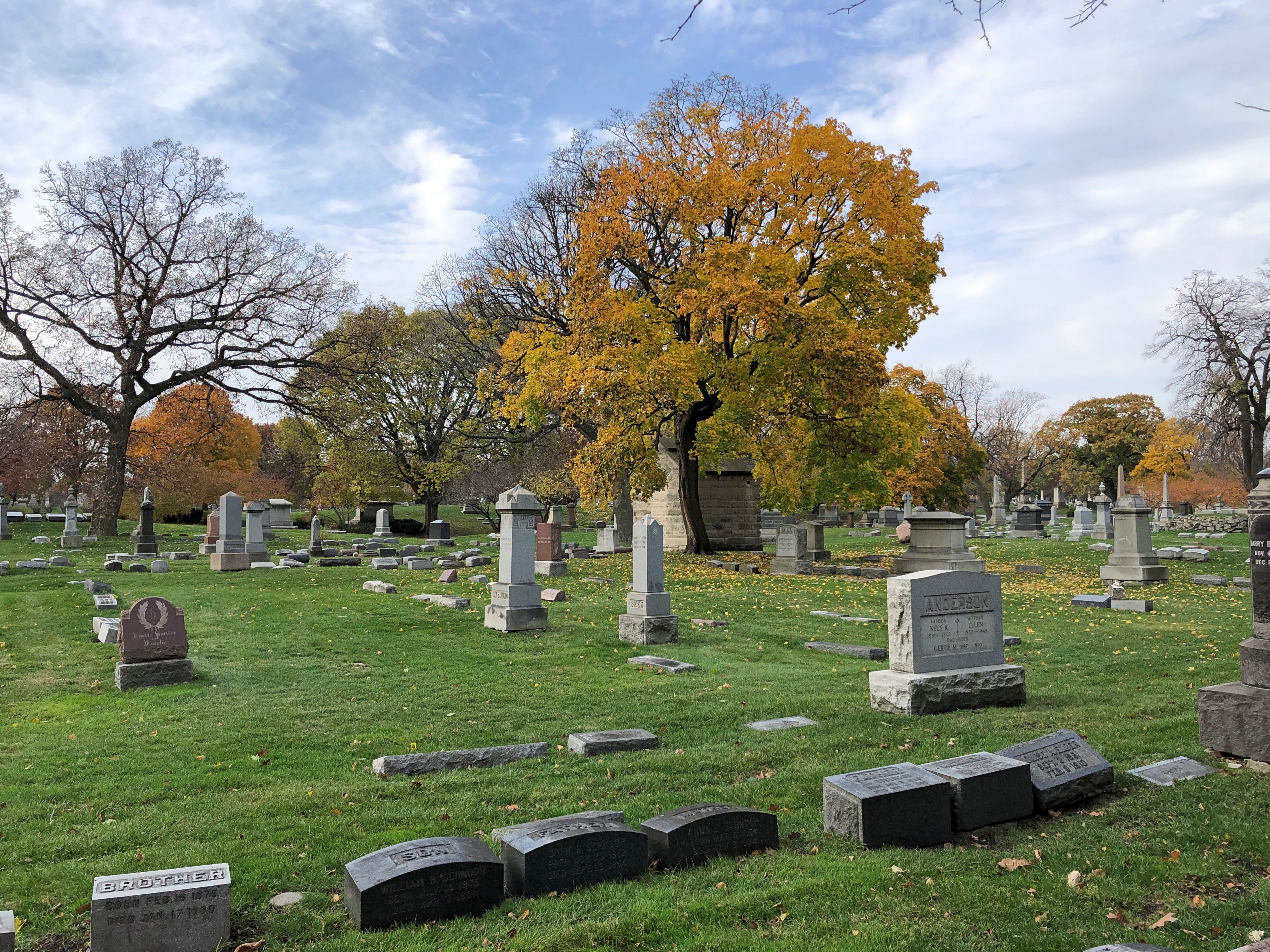
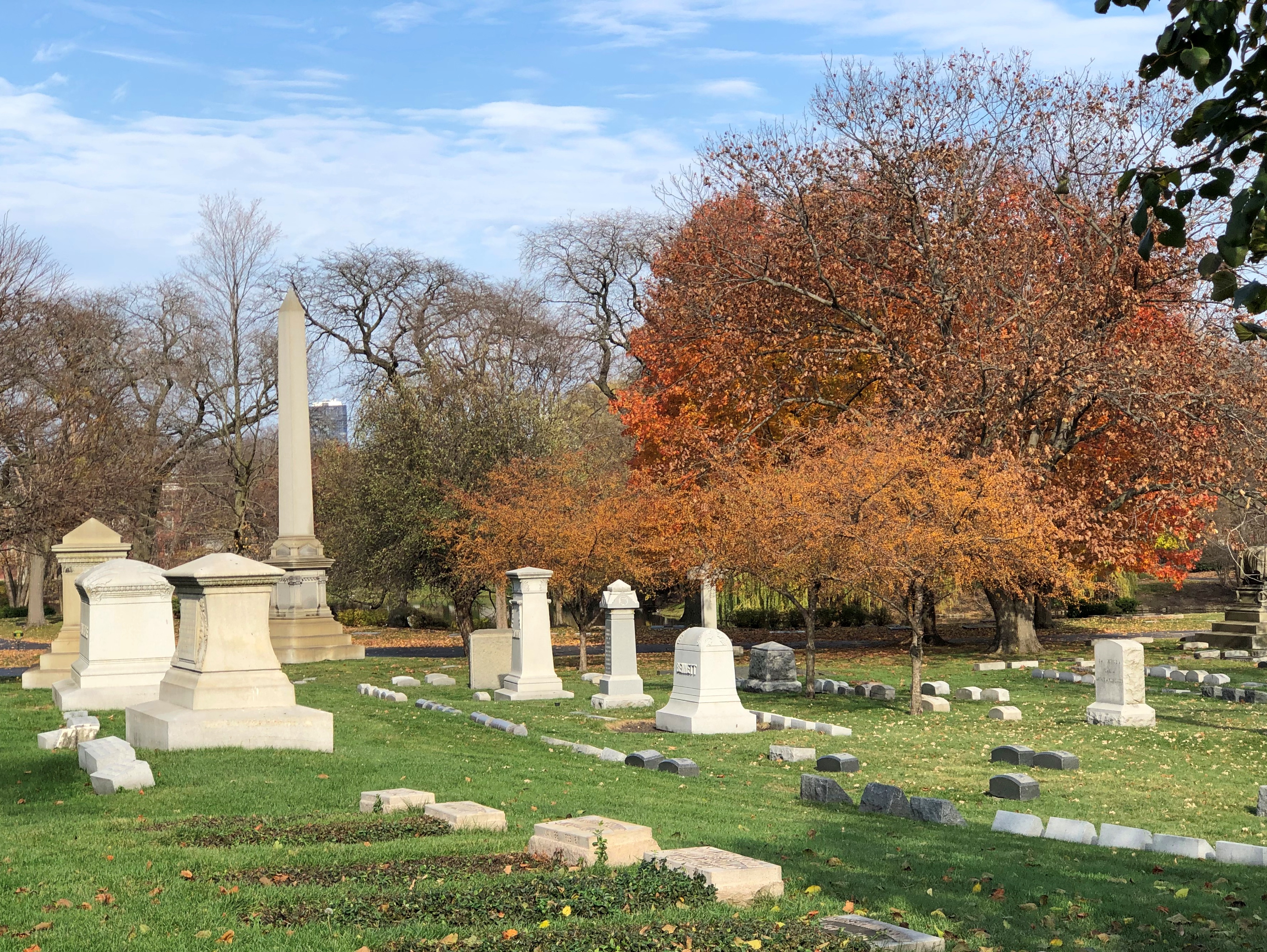
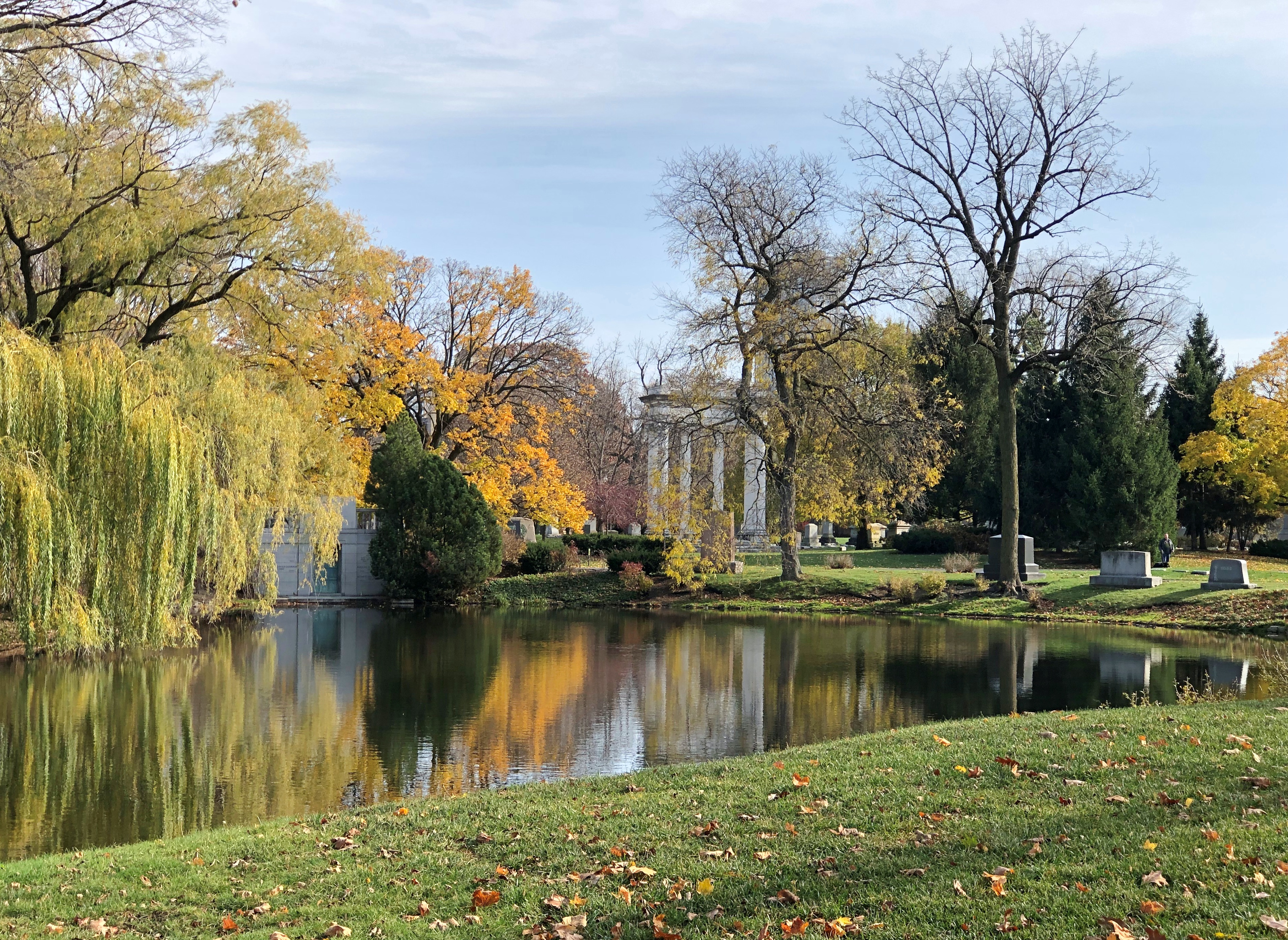
More color than I expected. The leaves are a little late in falling this year.Graceland Cemetery, Chicago Graceland Cemetery, Chicago Graceland Cemetery, Chicago

What can it signify? Natural variation in timing? A hint of climate woes? I can’t claim to be smart enough to know, but I do know that my hour-plus stroll benefited from the unexpected late colors. Graceland is a queen among cemeteries for its beauty, so any season will offer a display worthy of that status. Still, fall is special.

As an arboretum, Graceland has over 2,000 trees and scores of species.Graceland Cemetery, Chicago Graceland Cemetery, Chicago Graceland Cemetery, Chicago

In Chicago, as well as other major cities in America and Europe, cemeteries predated city parks as sites for pastoral strolls and quiet contemplation,” notes Chicago Garden: The Early History.Thomas B. Bryan, a wealthy Chicago businessman and avid horticulturist, was the major force behind the creation of Graceland in 1860. Along with other investors [he] formed the Graceland Cemetery Company.

“Graceland’s location was ideal: readily accessible from Green Bay Road (now Clark Street) and later the Chicago and Evanston Railroad, yet far enough removed from the city to avoid health and sanitation issues. The company chose the high ridge area along what is now Clark Street, which was once an old Indian trail… In the sandy soil here, plants thrive better than in Chicago’s typical clay soil.”Graceland Cemetery, Chicago Graceland Cemetery, Chicago Graceland Cemetery, Chicago Graceland Cemetery, Chicago

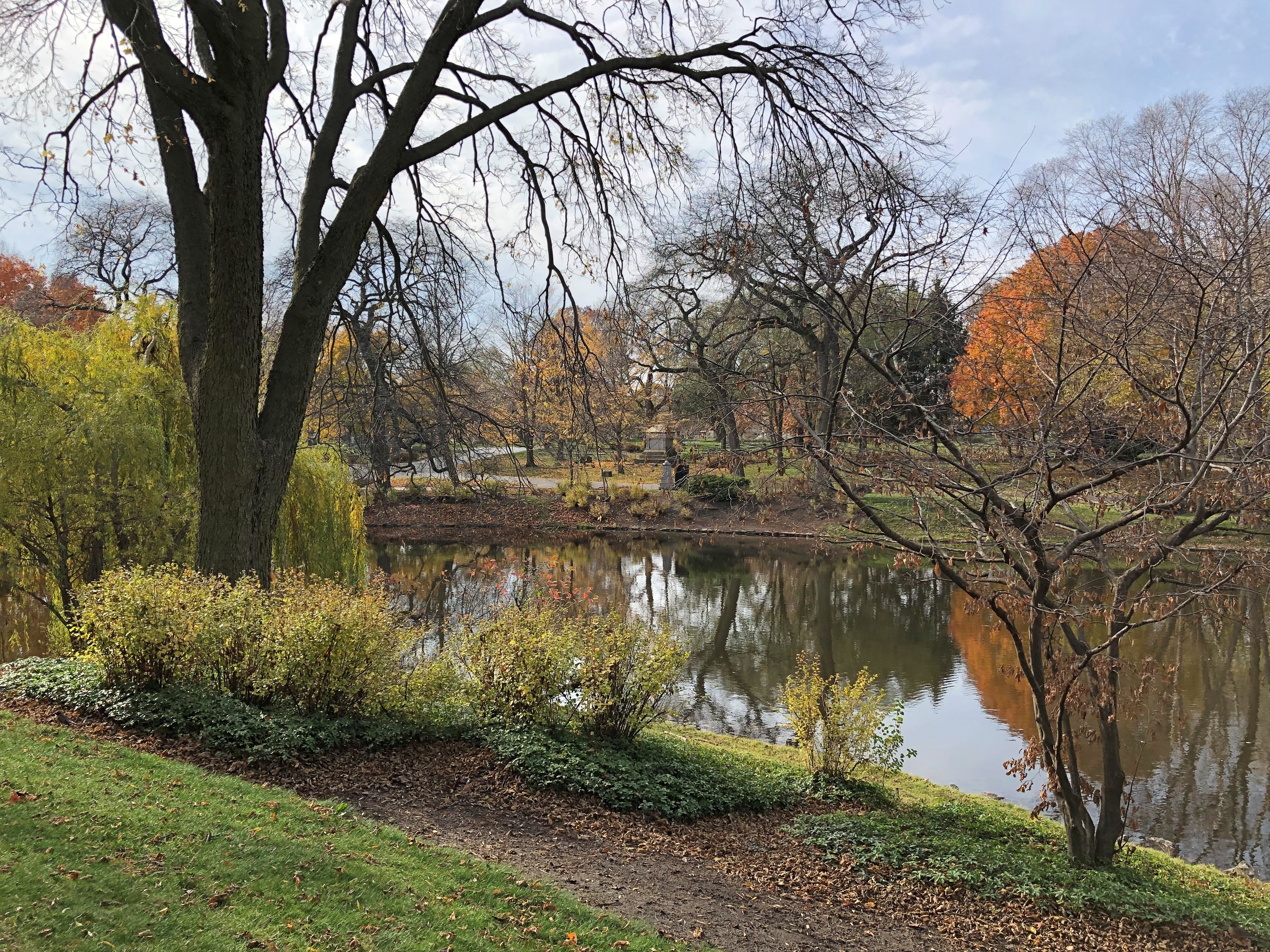
Water views. The map calls it Lake Willowmere.Graceland Cemetery, Chicago Graceland Cemetery, Chicago Graceland Cemetery, Chicago

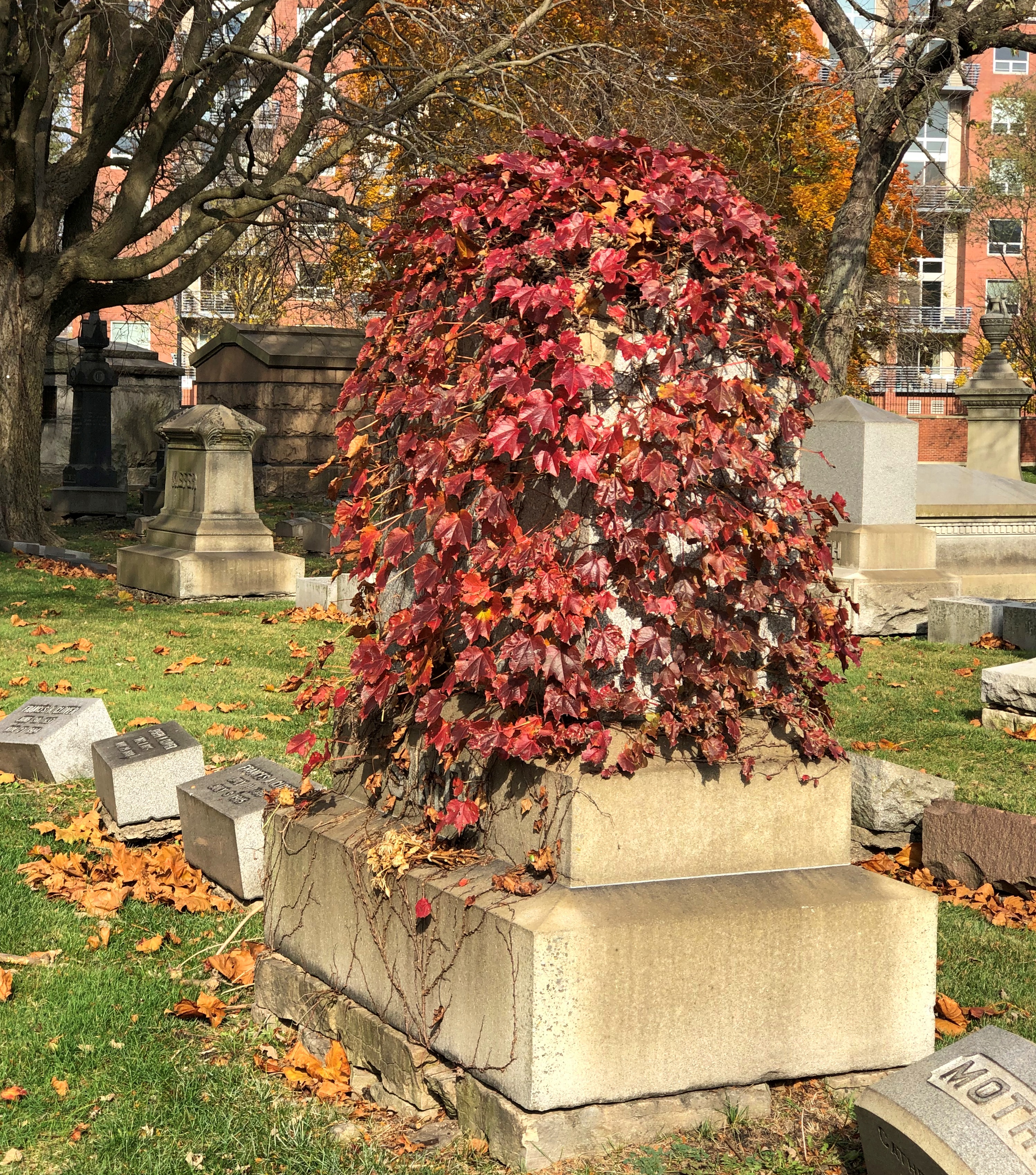
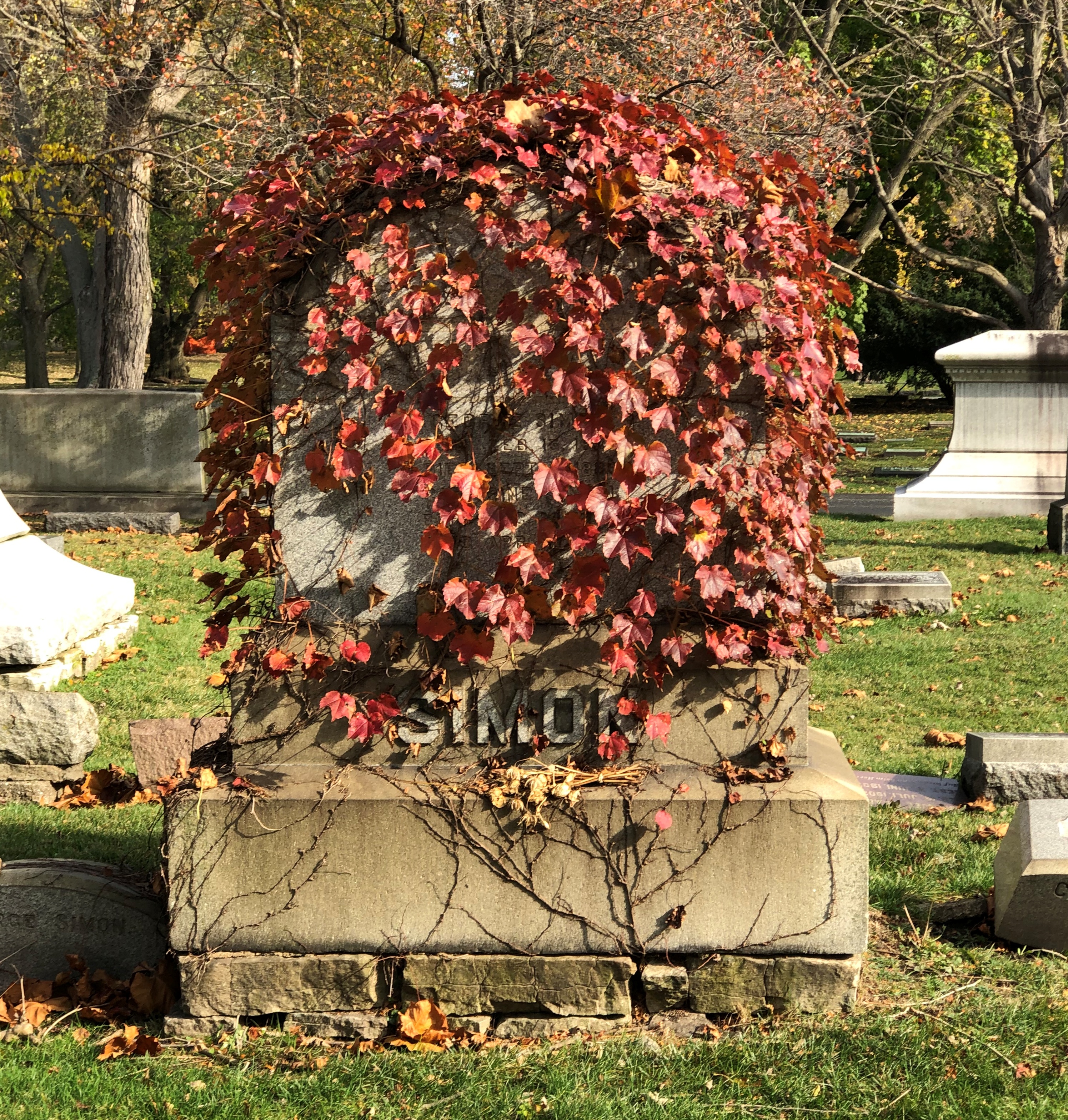
An ivy-covered stone. Graceland Cemetery, Chicago Graceland Cemetery, Chicago

That can’t be an accident of nature, since the standard of lawn care is clearly pretty high at Graceland. Could be the Simons wanted it that way. Or still do. Anyway, the leaves are changing.

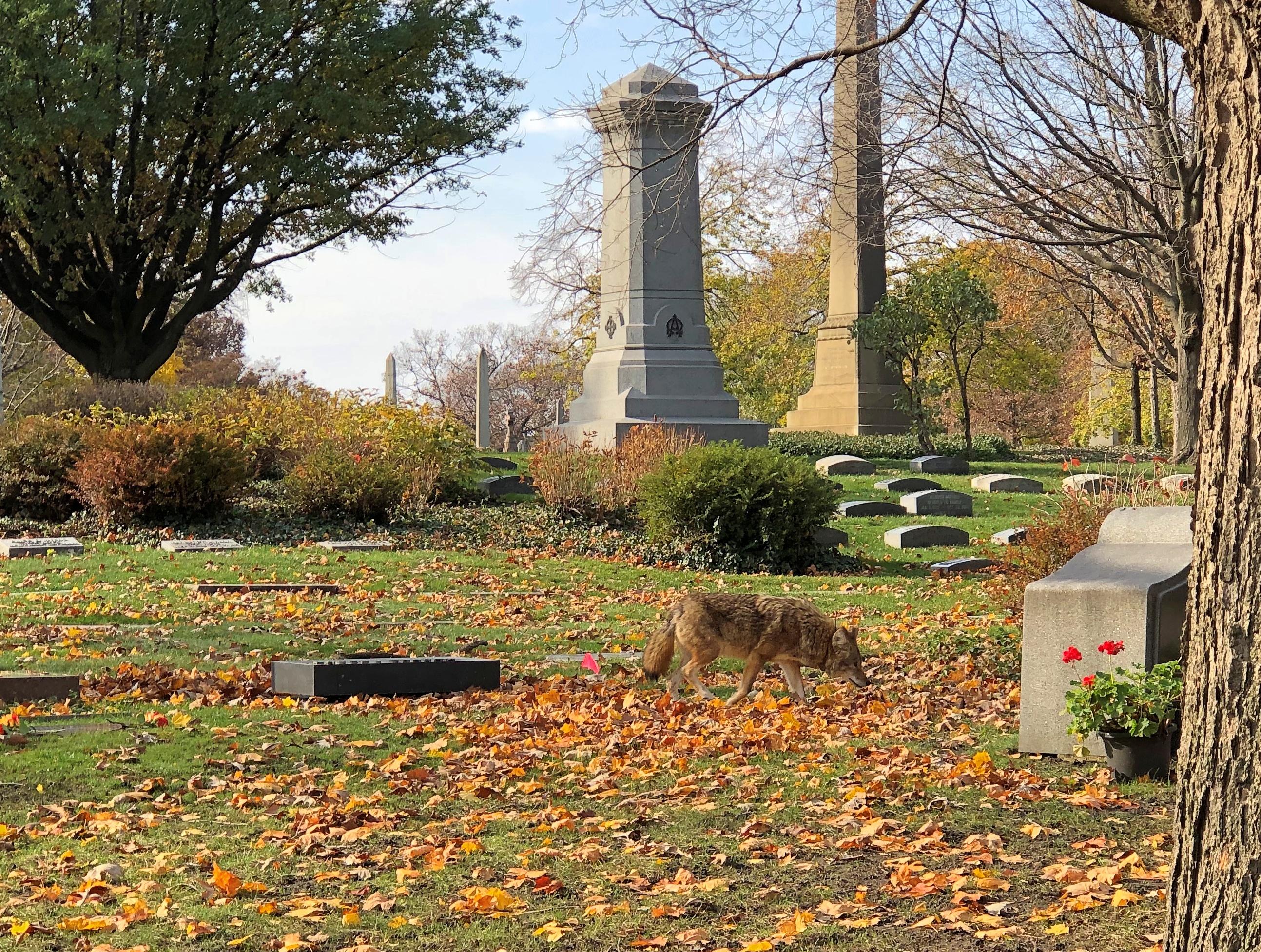
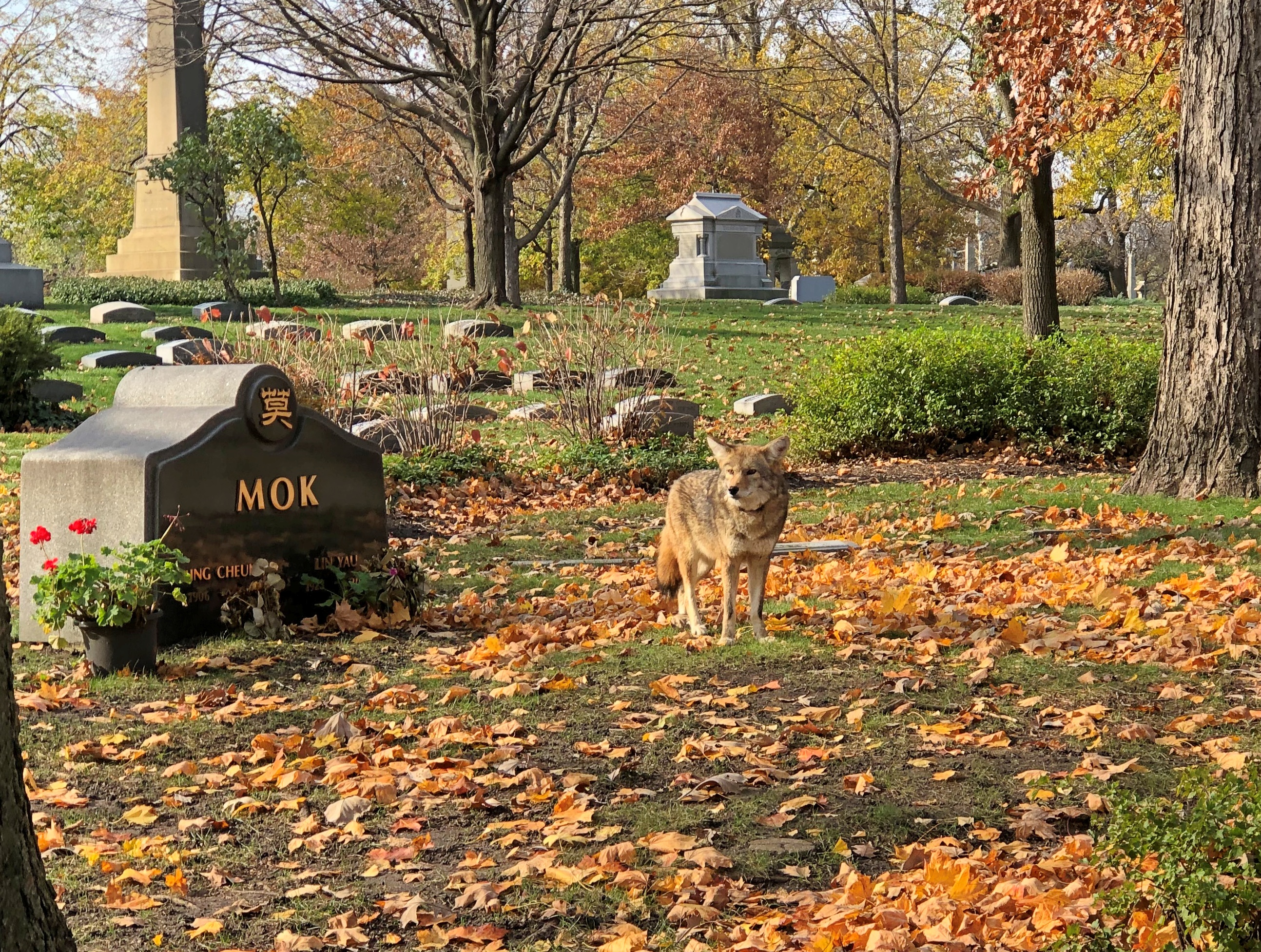
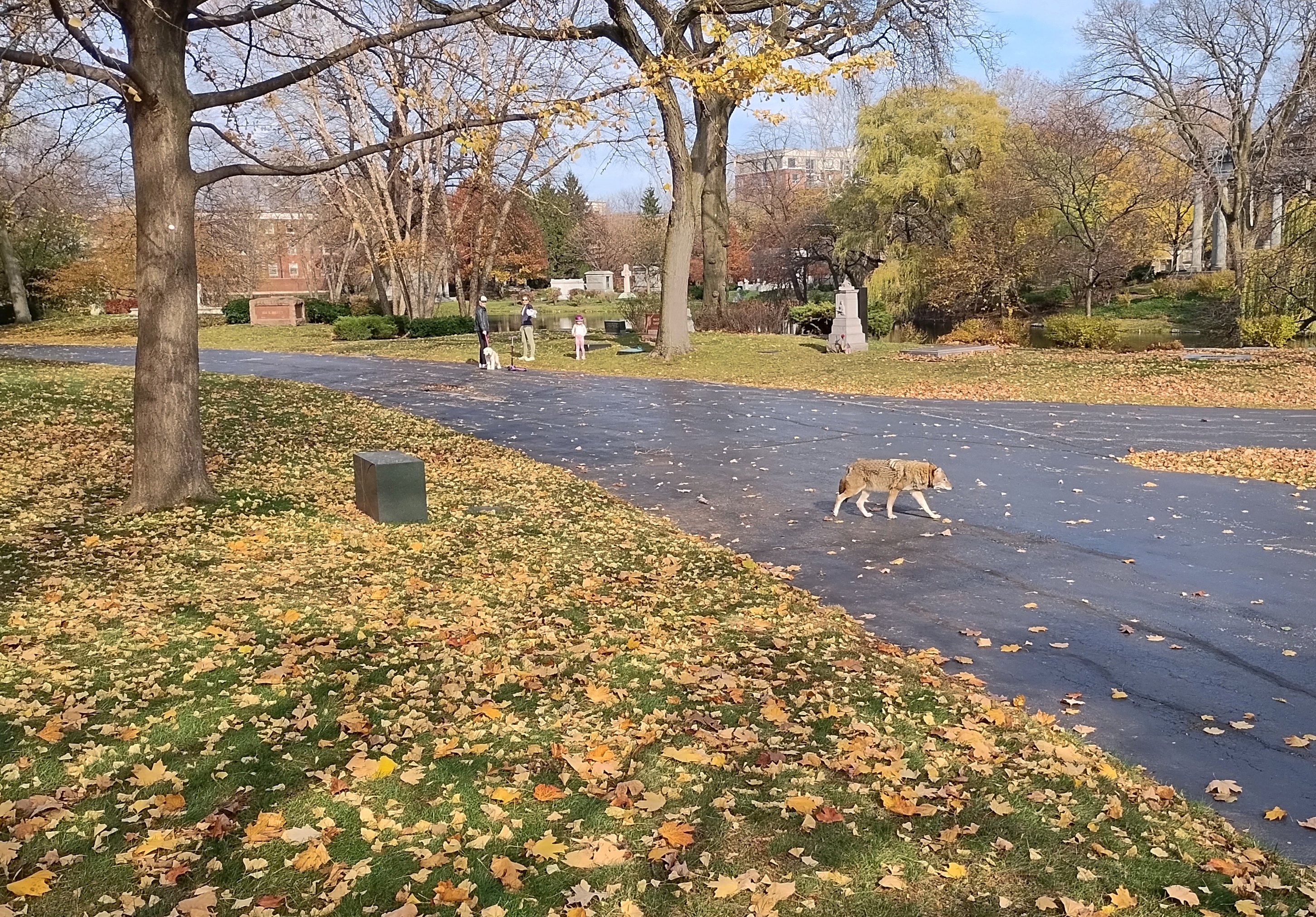
Coyote, looks like. Graceland Cemetery, Chicago

I didn’t get very close, but close enough, and he seemed nonchalant about being around humans. He just wandered on by. Urban Coyote: there’s an animation project in that for someone.

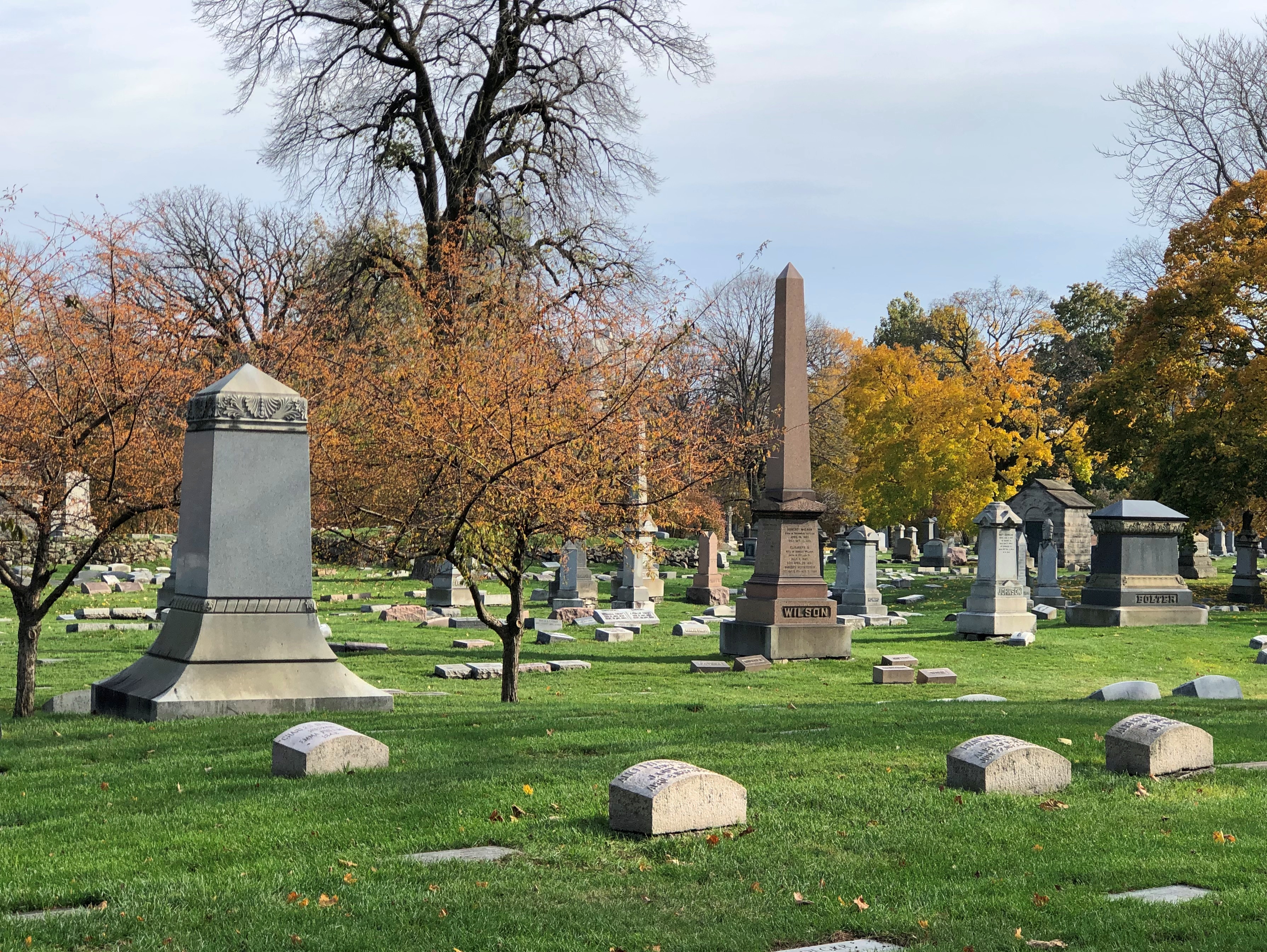
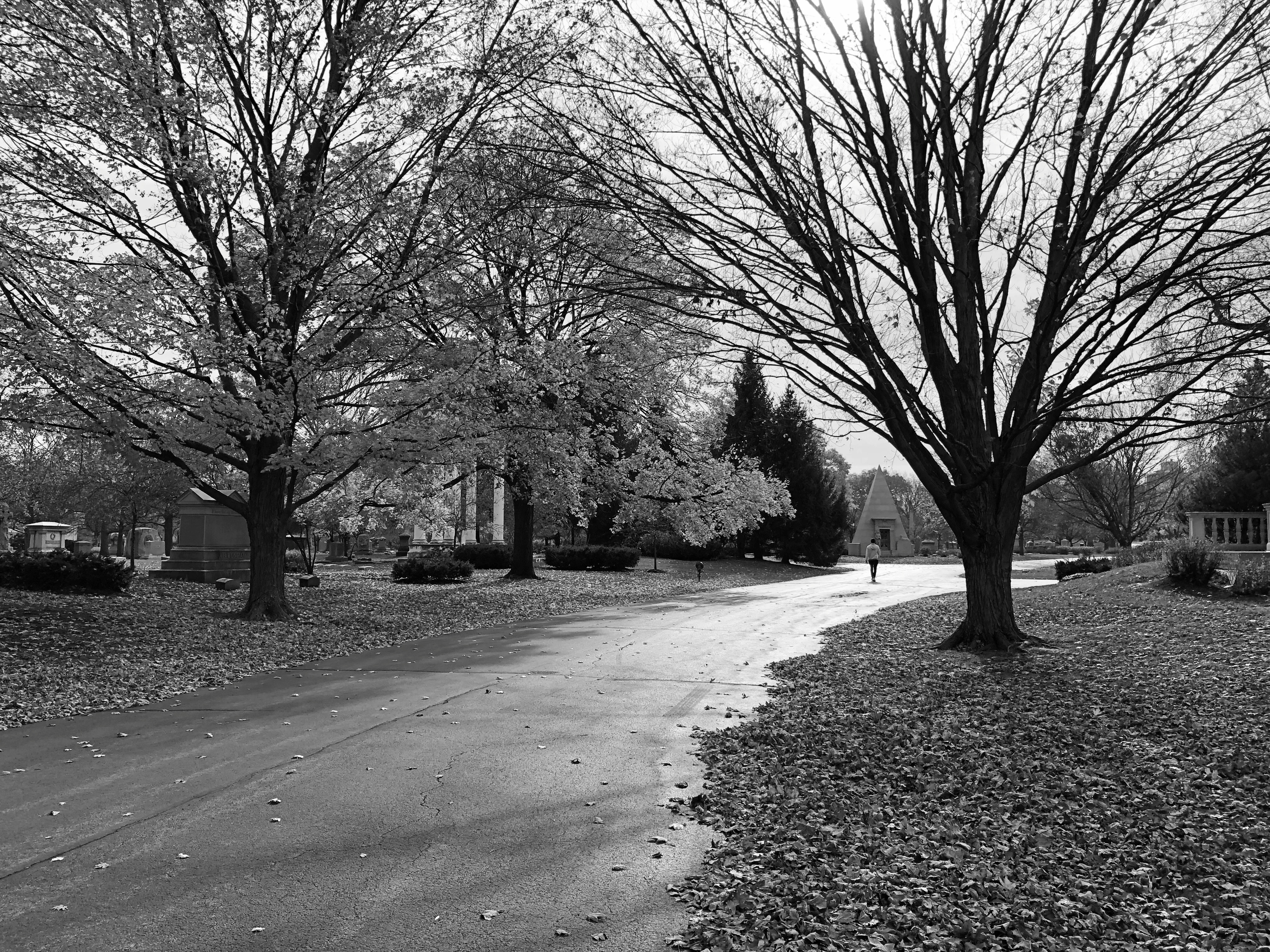
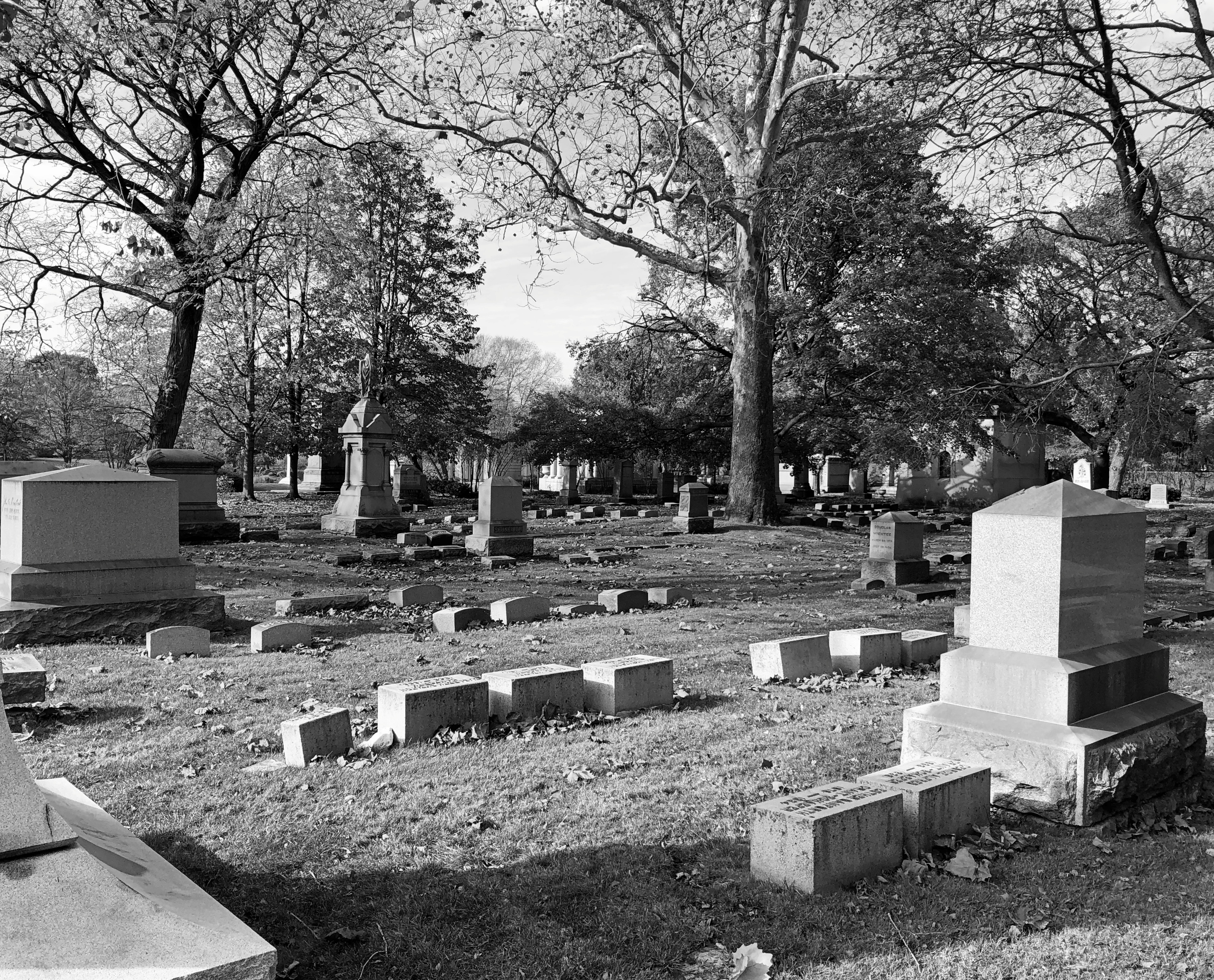
Color is good, of course. So is monochrome.Graceland Cemetery, Chicago Graceland Cemetery, Chicago Graceland Cemetery, Chicago

In our time and place, cemetery tourism isn’t much practiced. At many cemeteries, I’m the only living person around, except maybe for grounds keepers. Graceland stood out from most in that way. I saw maybe two dozen or so other visitors, including bike riders, dog walkers and a handful doing what I was doing: wandering the 121-acre grounds, taking it in.

Meacham Grove Forest Preserve & The Temporary Tunnel of Gold

Though it’s fairly close, we hadn’t been to the Meacham Grove Forest Preserve in a few years, so on the last Saturday in October, I suggested a walk. Bright, warm and little wind: a good day for it.Meacham FP

The path around Maple Lake – called that on maps, anyway – takes you about halfway before you come to another path: a section of the North Central DuPage Regional Trail. We headed west on that trail. Meacham Forest Preserve October 2024

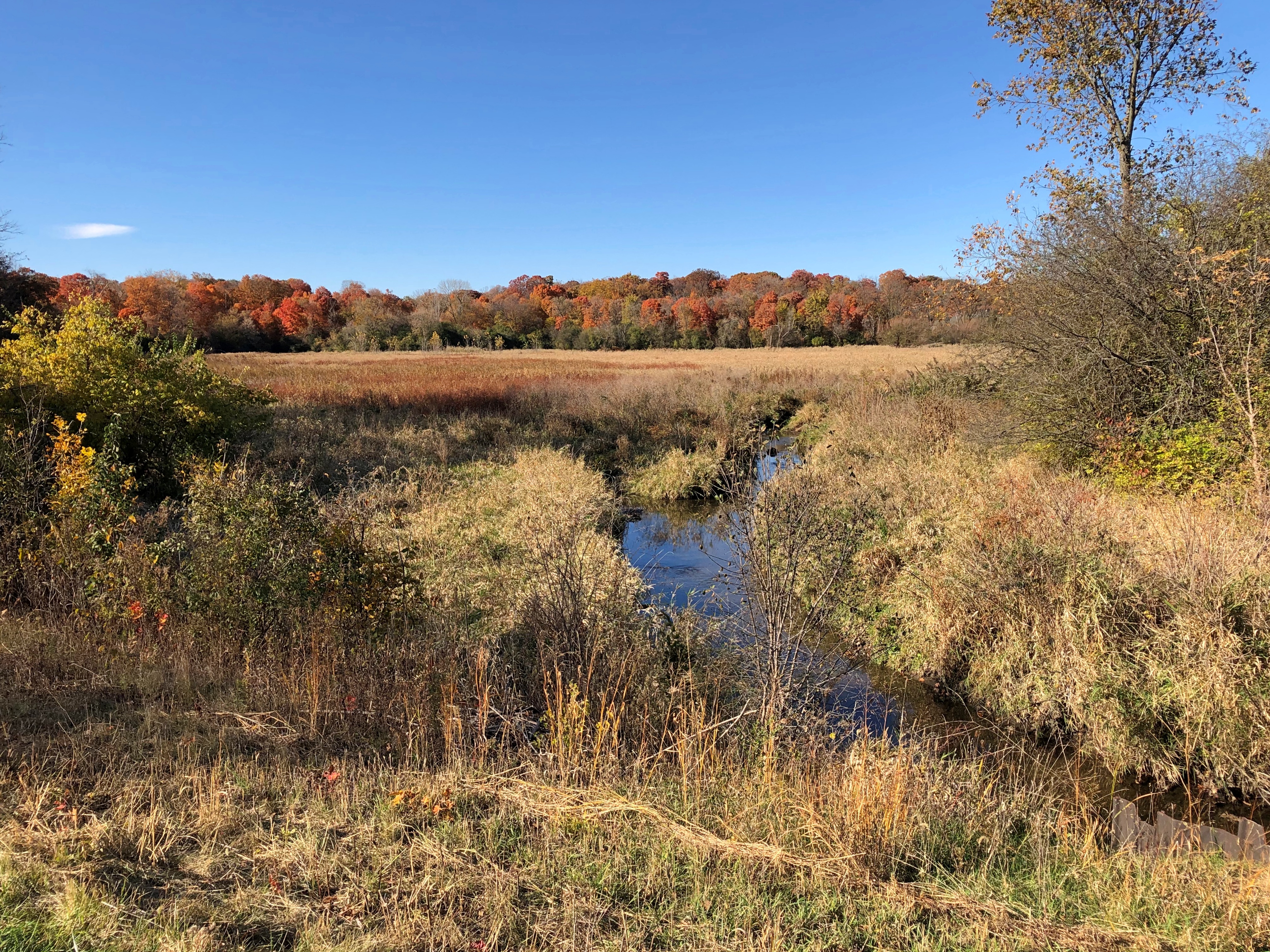
At first the trail passes Spring Brook and Meacham Marsh. The Meacham brothers were earlier settlers in this part of DuPage County and the village of Bloomington was once known as Meacham’s Grove, as a waystation on the Chicago-Galena Stagecoach Trail.Meacham Forest Preserve October 2024 Meacham Forest Preserve October 2024

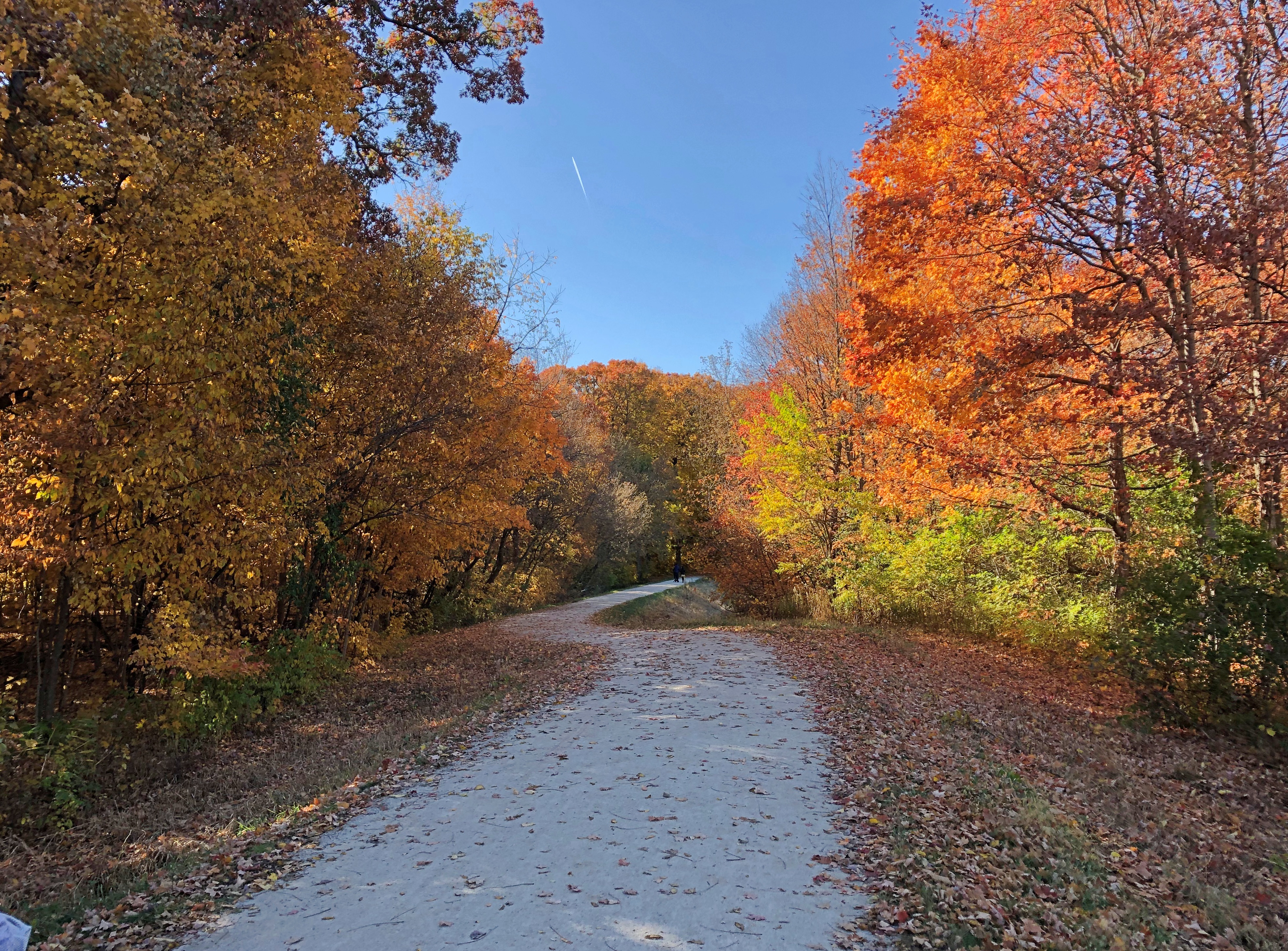
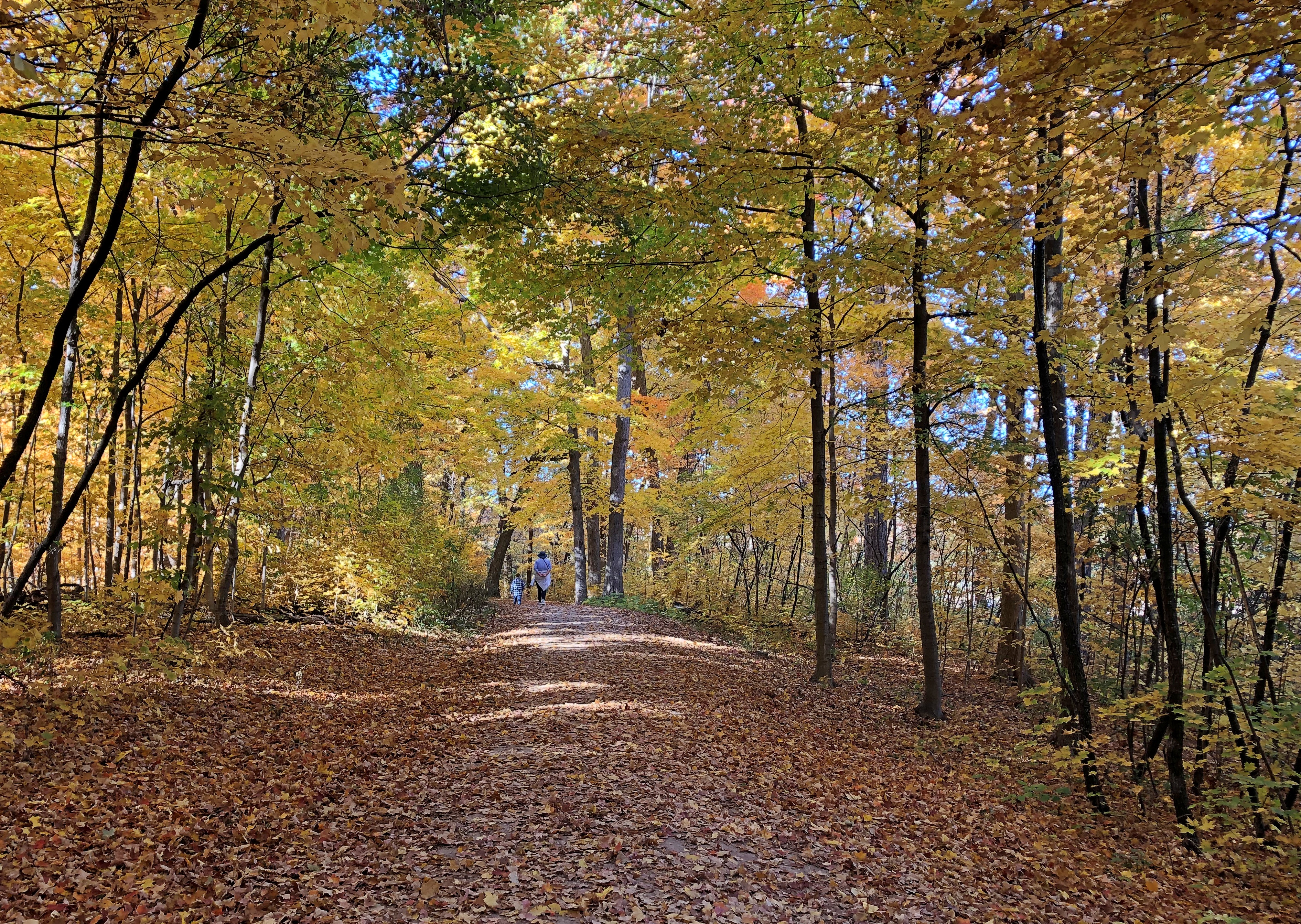
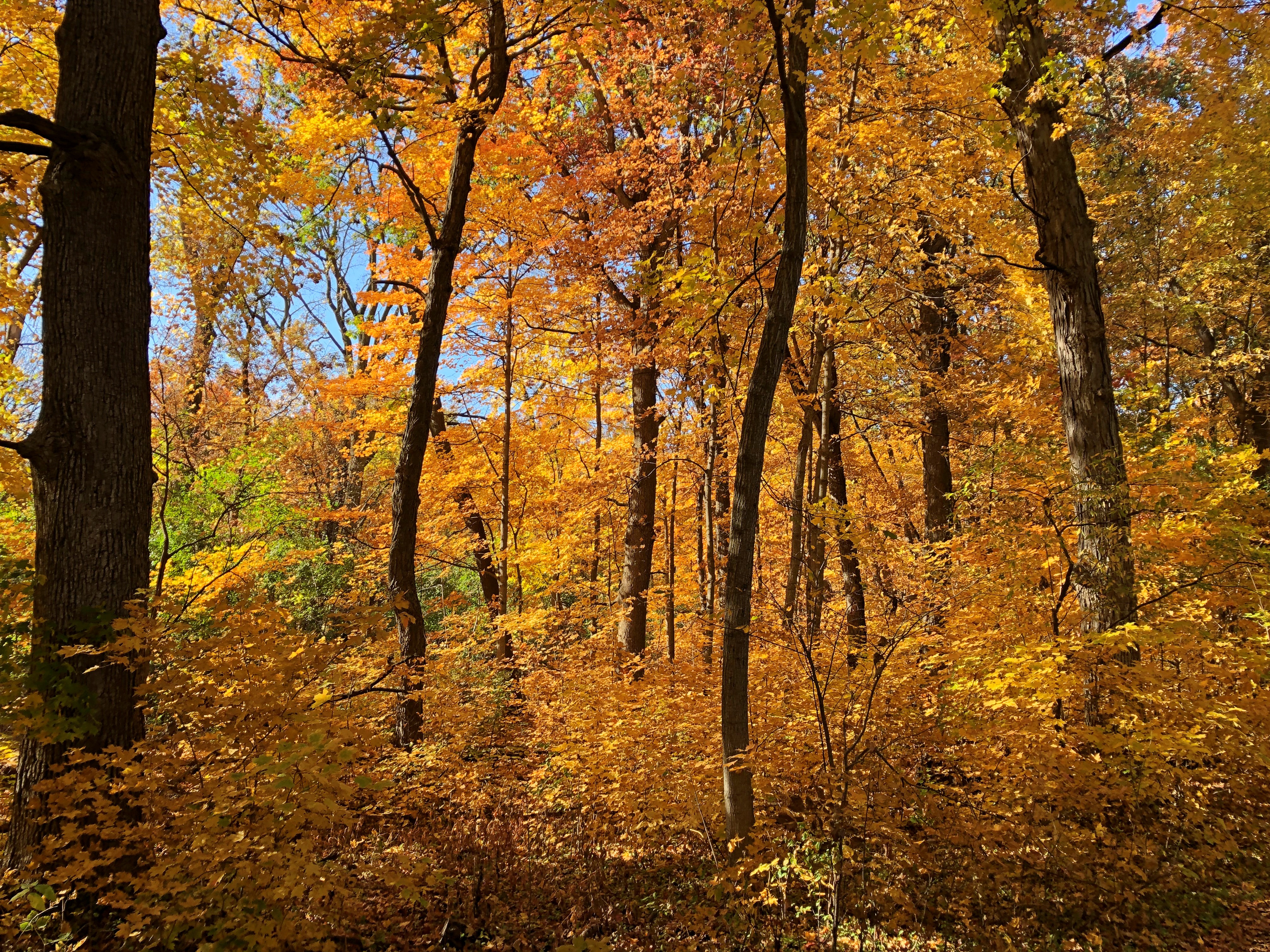
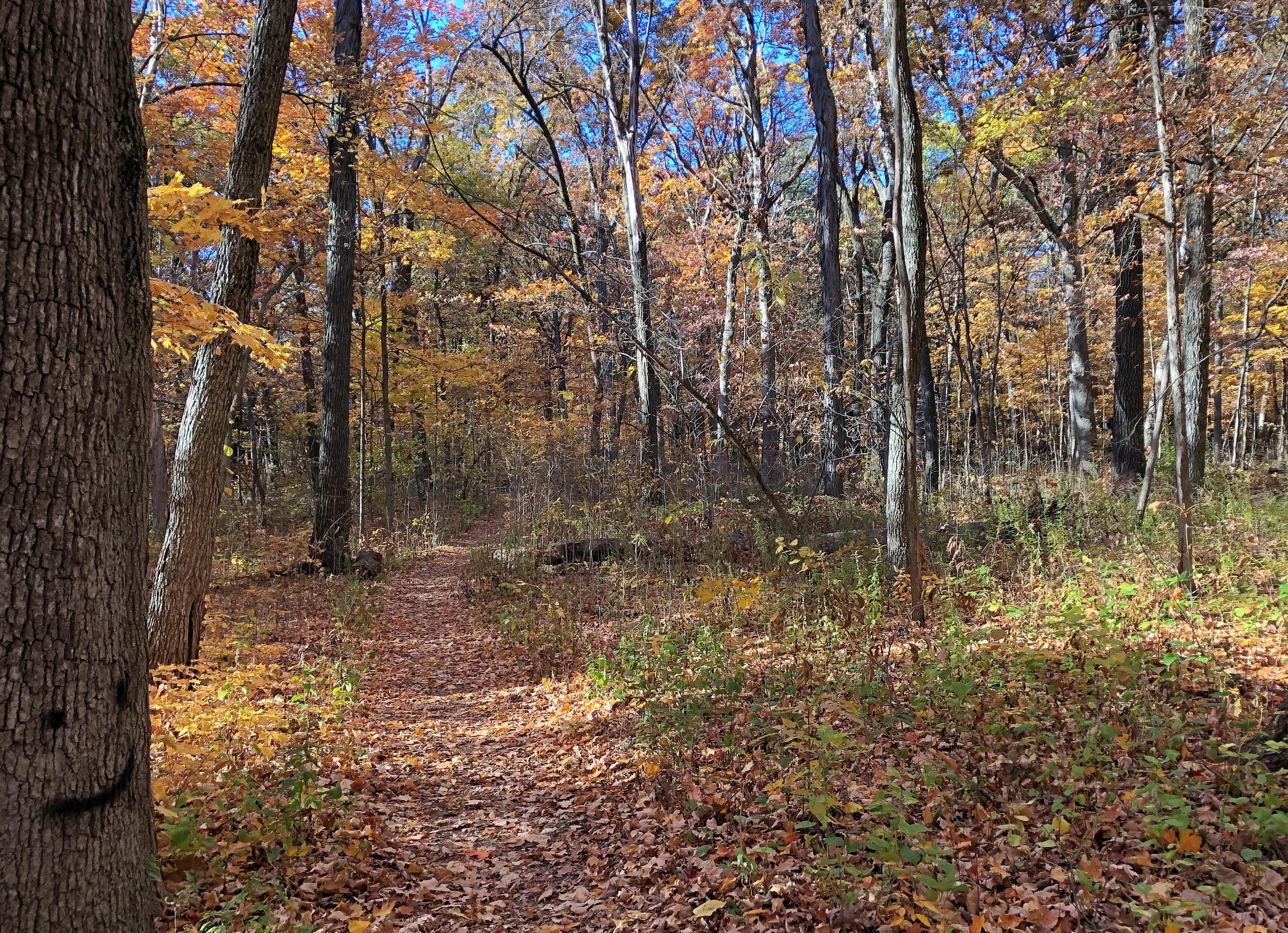
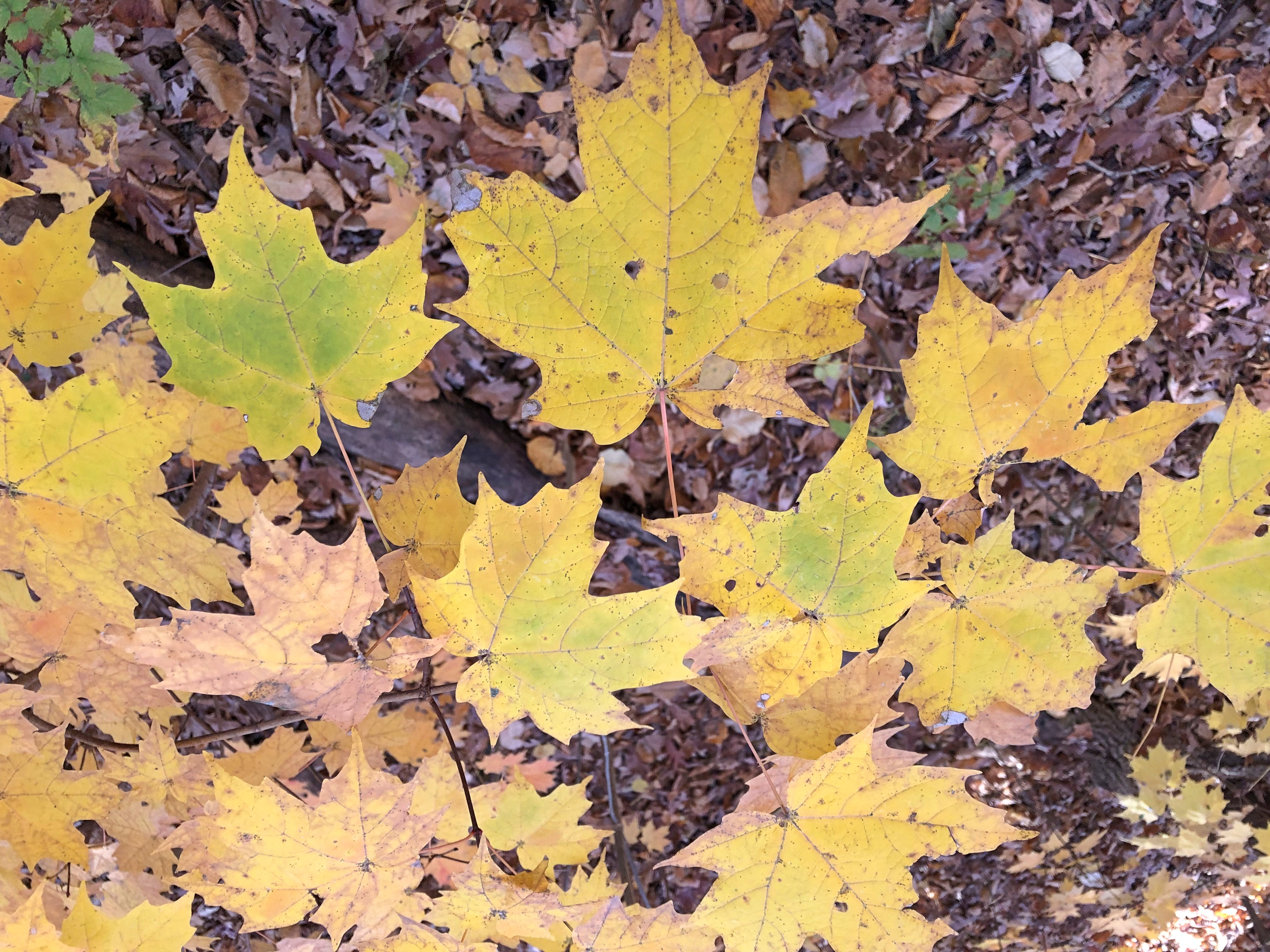
At that moment in October, the trail winds into a tunnel of gold. That’s what I’m calling it anyway, mostly formed by a canopy of maple leaves. Canada has no monopoly on them, even if they put it on their flag.Meacham Forest Preserve October 2024 Meacham Forest Preserve October 2024 Meacham Forest Preserve October 2024

Roselle Road divides the preserve. The other section is accessible by footbridge over the road.Meacham Forest Preserve October 2024

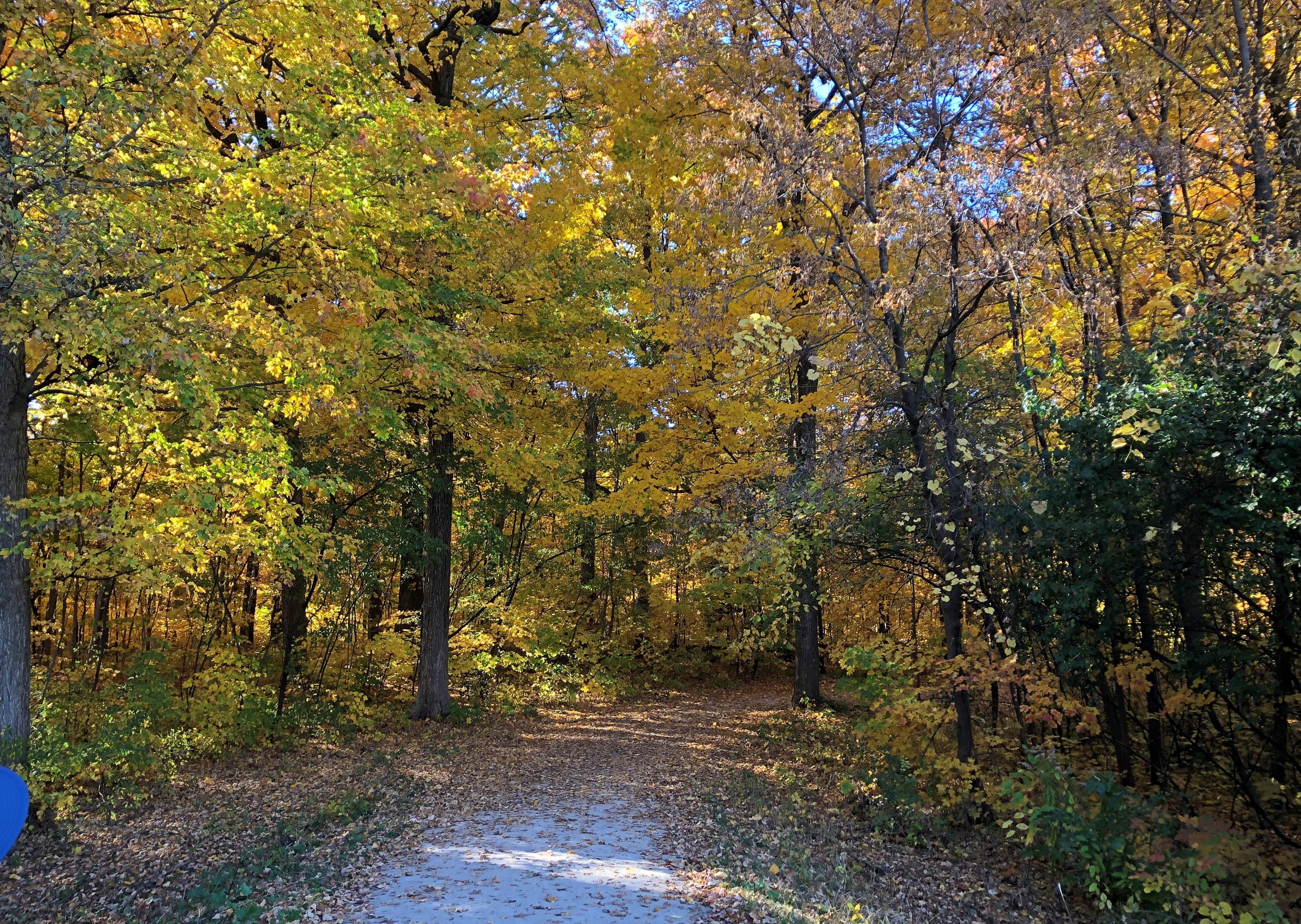
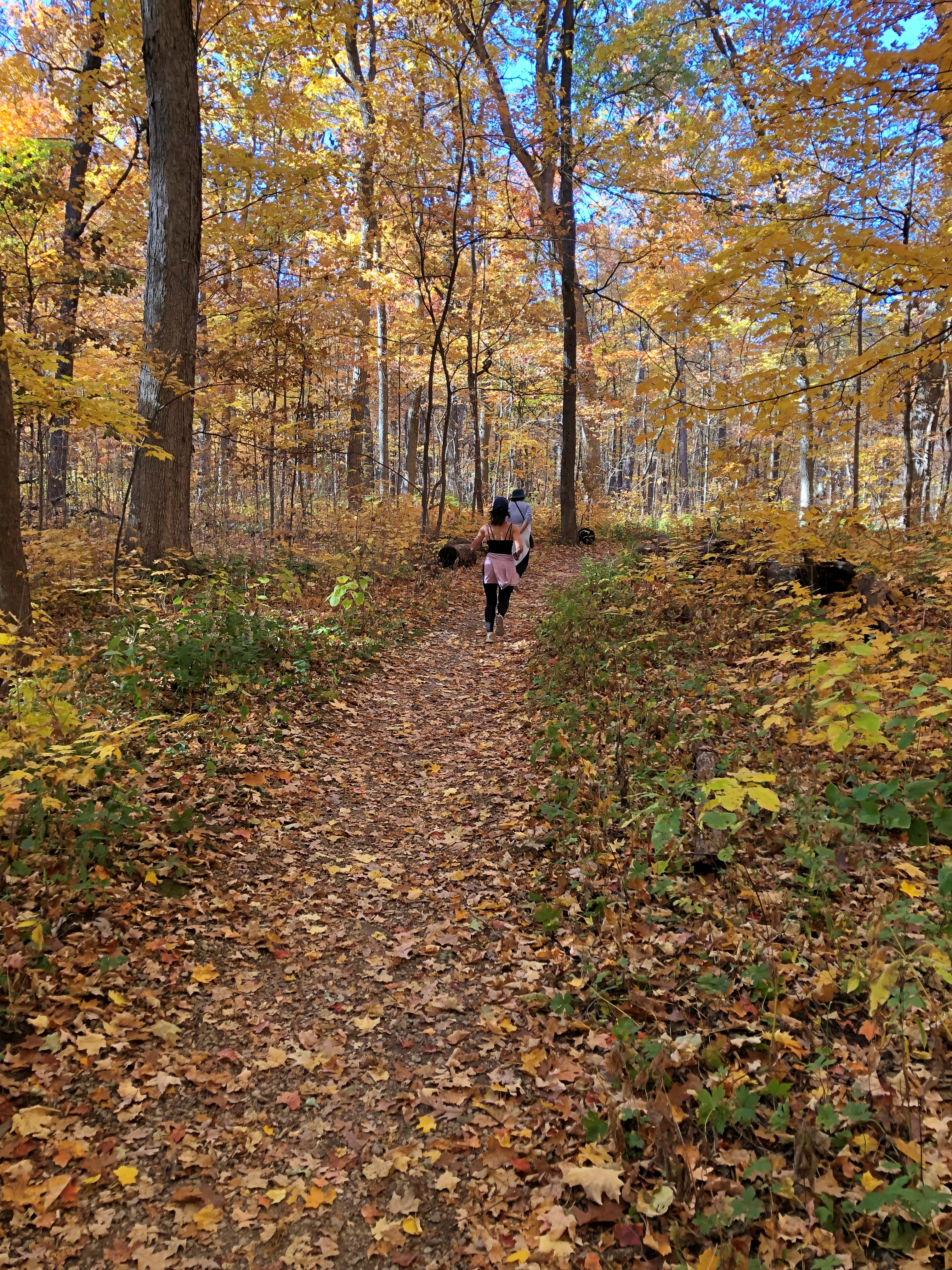
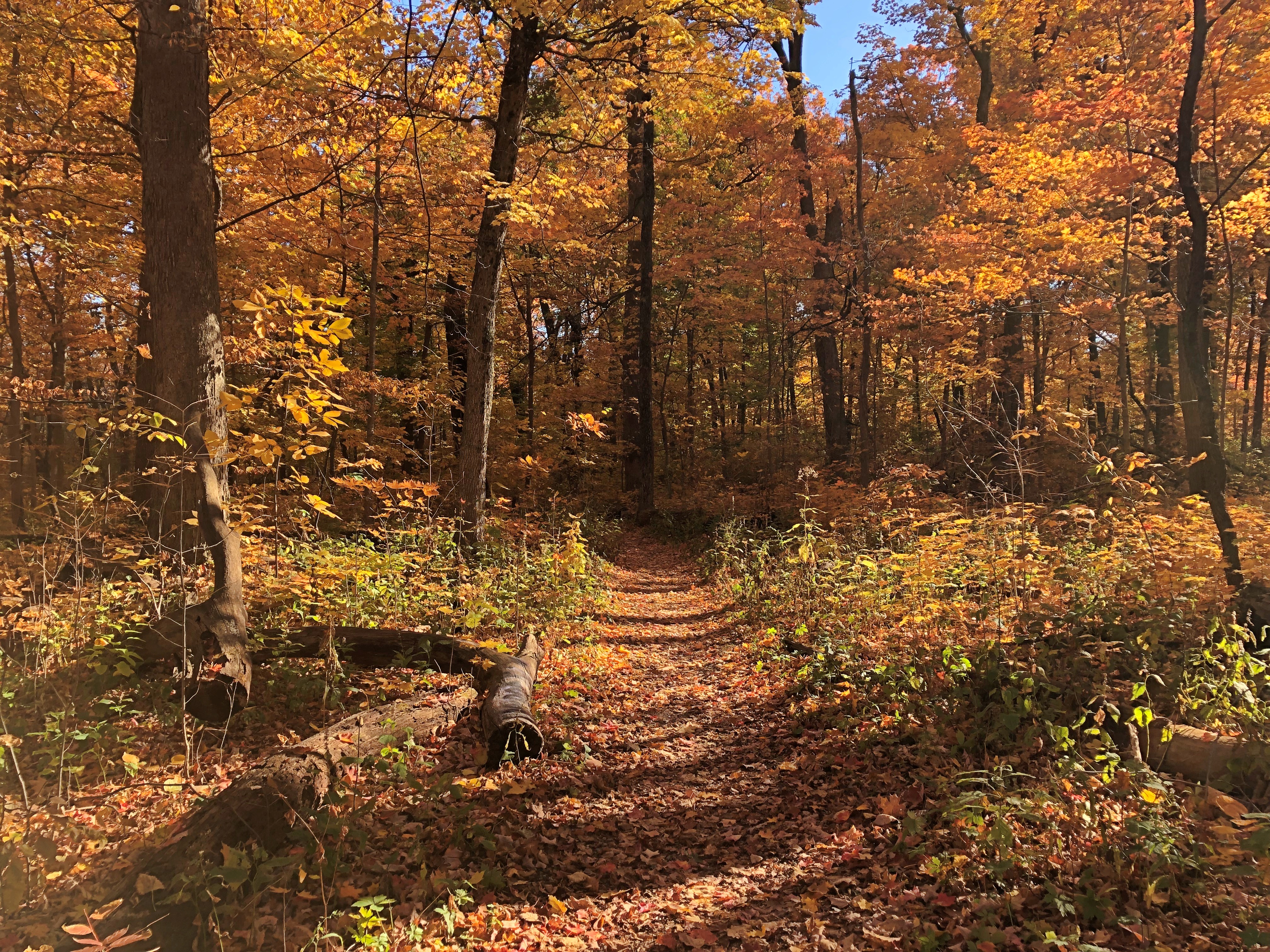
All these years in the northwest suburbs, and we’d never ventured across the bridge. In the western section of the preserve, the North Central DuPage Regional Trail connects to a half-mile loop, Savanna Trail. Not quite a tunnel of gold, but not too shabby in its foliage.Meacham Forest Preserve October 2024 Meacham Forest Preserve October 2024 Meacham Forest Preserve October 2024

There’s a metaphor in those leaves somewhere: a brief blaze of glory near the end.Meacham Forest Preserve October 2024 Meacham Forest Preserve October 2024

Or maybe leaves are leaves are leaves.

Bruce Peninsula National Park: The Sand

Clambering around on rocks, even the kind that don’t require any technical skills, takes energy, so lunch was the next order of business after our hike along the shore of Georgian Bay last Wednesday. We spotted a food truck outside the park, on Ontario 6, called the Hungry Hiker. That seemed fitting.Hungry Hiker, Tobermory

It had a Bigfoot theme. That seemed odd.Hungry Hiker, Tobermory

During our travels in the U.S. West, especially Montana-Idaho-Washington state, we noticed many roadside Bigfoot depictions, including this one in metro Seattle, in front of a place in Edmonds where we had lunch one day.Bigfoot, Edmunds, Wash.

The Hungry Hiker Bigfoot was the only one we saw in Canada. Whimsy on the part of the owner, maybe, which also included some of the menu items, such as the Sweaty Yeti, a chicken sandwich with a sweet glaze. We ordered one, but not The Big Foot, which was a foot-long hot dog. Sasquatch theme or not, the Hungry Hiker’s food was satisfying.

Next stop: Singing Sands Beach at Bruce Peninsula NP. The park includes more than one section, with the beach on the other side of the peninsula, facing Lake Huron proper.Singing Sands Beach, Bruce Peninsula NP

Nice. A big, almost empty beach. In mid-summer, it’s probably overrun. In October, there were only a few people and a frolicking dog.Singing Sands Beach, Bruce Peninsula NP

Behind the beach, a fen.Singing Sands Beach, Bruce Peninsula NP Singing Sands Beach, Bruce Peninsula NP

I don’t know a fen from a bog or a marsh, even though I’ve seen a fen, but that’s what the sign said. It also informed us that resident in the area is the Massasauga rattlesnake (Sistrurus catenatus), “Ontario’s only venomous snake.”

I didn’t know Ontario had any venomous snakes either, much less a rattler. We were further assured that they are small (not a good thing) and shy (better), so they are likely to avoid you. Also, they are endangered, so gardeners in, say, suburban Toronto aren’t at much risk. Canada ≠ Australia, despite some historic similarities. As we tromped along, none were to be heard.

A short trail wandered into the trees near the beach, past a couple of creeks meeting Lake Huron.Singing Sands Beach, Bruce Peninsula NP Singing Sands Beach, Bruce Peninsula NP

The trail was a loop, returning by way of grasslands and more beach, which was a little rocky at that point.Singing Sands Beach, Bruce Peninsula NP Singing Sands Beach, Bruce Peninsula NP Singing Sands Beach, Bruce Peninsula NP

We still had some afternoon left – a warmish day in October isn’t to be wasted – so we went to the BPNP visitor center, back on the Georgian Bay side, to climb the observation tower.Bruce Peninsula NP Bruce Peninsula NP

Nice views, though not as much fall color as we’d expected. I could feel the tower shake just a little in the wind, which wasn’t a pleasant sensation. I’m still up for climbing towers for the vistas, but find myself a bit more unnerved by the experience than I used to be.Bruce Peninsula NP Bruce Peninsula NP

We still weren’t quite done. We drove the short way to Big Tub Harbour, which isn’t part of the national park, but rather part of the town of Tobermory.Big Tub Harbour, Ontario

The thing to see there is the lighthouse.Big Tub Harbour, Ontario Big Tub Harbour, Ontario

Still a working light, so no climbing, unlike others. Not as storied as the Lighthouse of Alexandria or even the Eddystone Light, but good enough on a windy afternoon in Ontario.