Savannah ’22

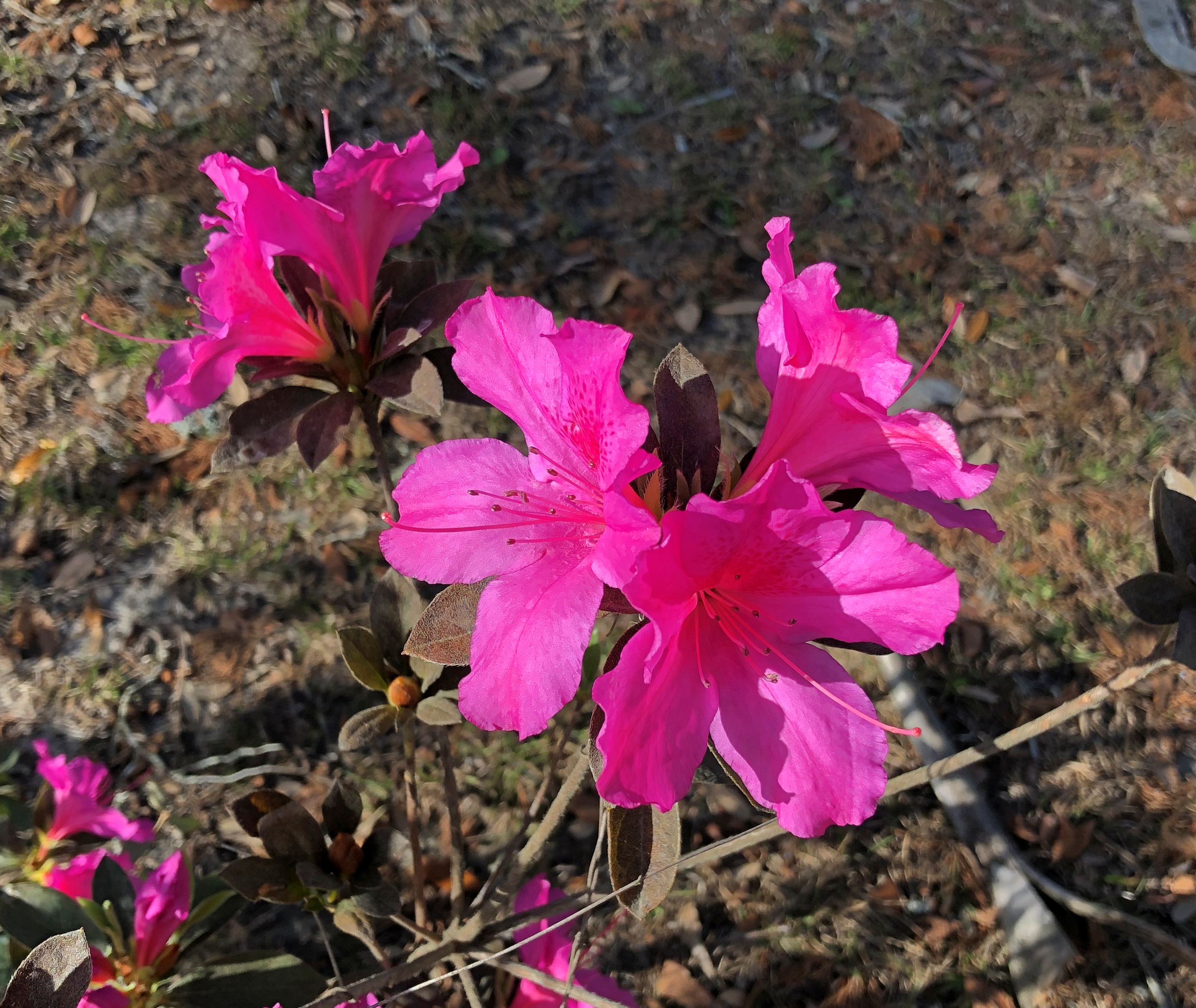
What to do during spring break on a three-night jaunt? Go somewhere that’s actually experiencing spring. A week ago Saturday, Ann and I flew to Savannah, Georgia, where the grass is green and the air warm, and the azaleas are in profuse bloom —Savannah, Georgia 2022

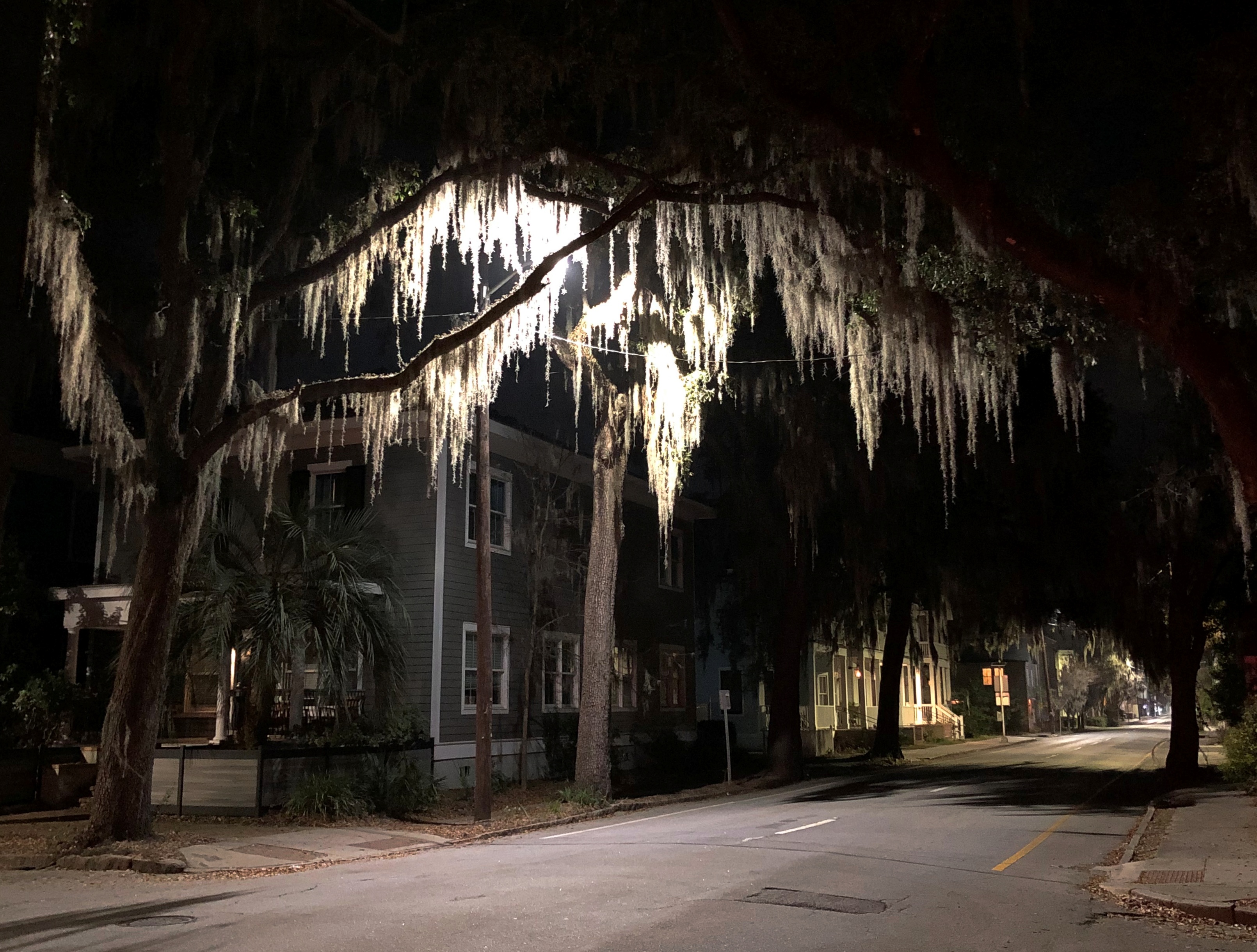
— and Spanish moss festoons tree after tree after tree, silver-gray and airy by day, slightly sinister by night, in the right light.Savannah, Georgia 2022

Besides pleasant flora, Savannah has much else to recommend it. I’ve known as much for years, but sometimes it takes years to get around to visiting even the most intriguing places.

We took long walks in the Savannah Historic District, which is enormous and very much lives up to its title, with street after street lined with the sort of aesthetic and storied buildings that speak of earlier times, both more genteel and more cruel. They also speak of restoration in the 20th and 21st centuries, and a new affluence for the city in our time.

We also spent time out from Savannah, as far afield as drives through the Savannah National Wildlife Refuge and through the beach town of Tybee Island, with a longer visit to Fort Pulaski National Monument.

Naturally, I had to visit Bonaventure Cemetery, famed in book and movie, and alive with other tourists and explosions of spring azaleas. And Spanish moss. Lots of Spanish moss on towering southern live oaks.

We ate well: plentiful seafood, kolaches as delightful as in Texas, hardy diner fare, innovative sliders and amazingly delicious fried chicken at a regional chain in suburban Savannah, our first meal after arrival and a tiresome experience in the long line to claim our rental car.

We slept well: I think I surprised Ann by booking a room at a one-of-a-kind inn a mile or so from the historic district, a sizable 1906 house renovated in the early 21st century for guests like us. Each room had its own theme, and the common areas were comfortable and ornate. Best of all, it really was an independent hotel, not a faux unique property of a high-priced boutique chain, and so I didn’t pay the moon.

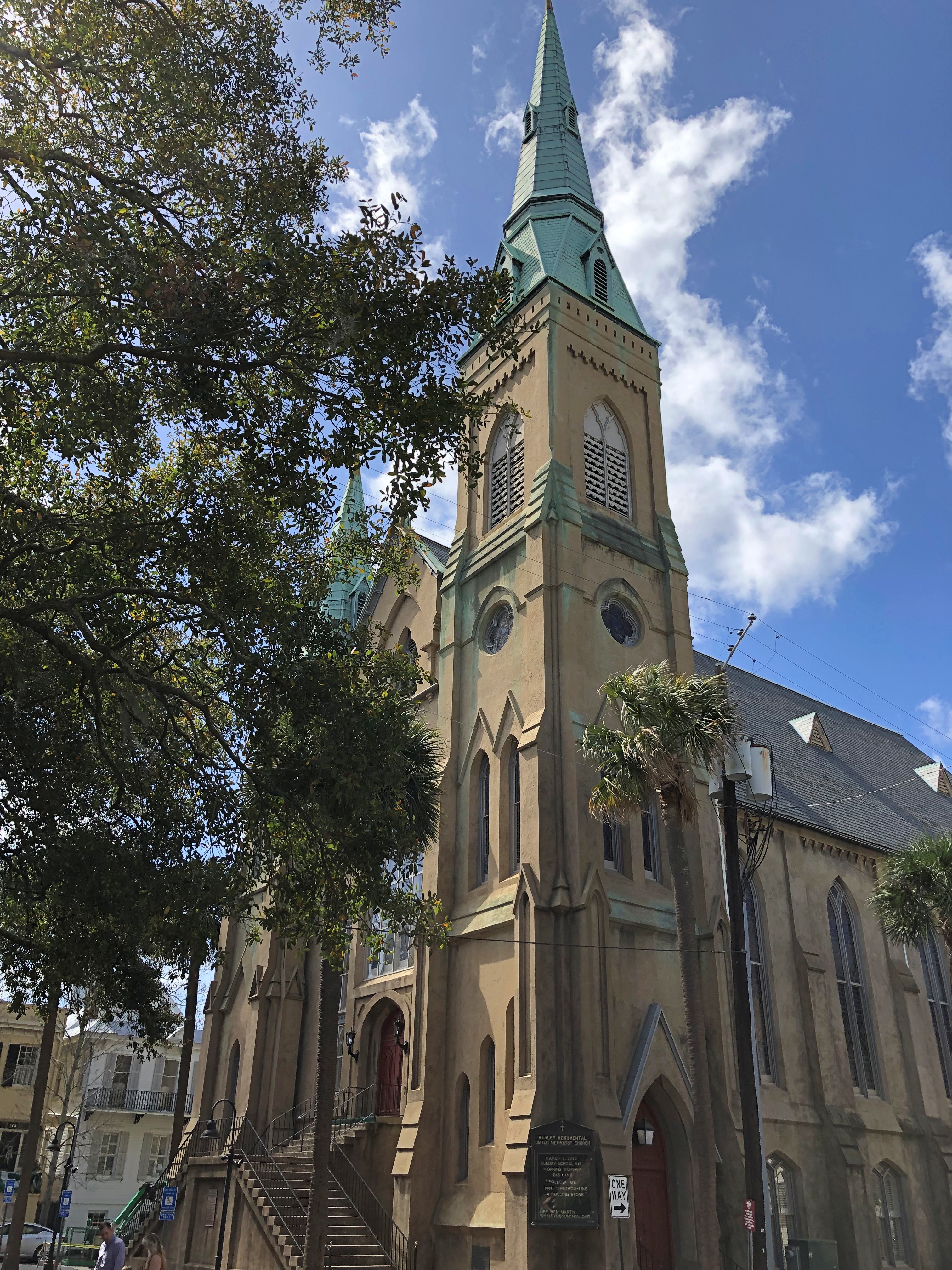
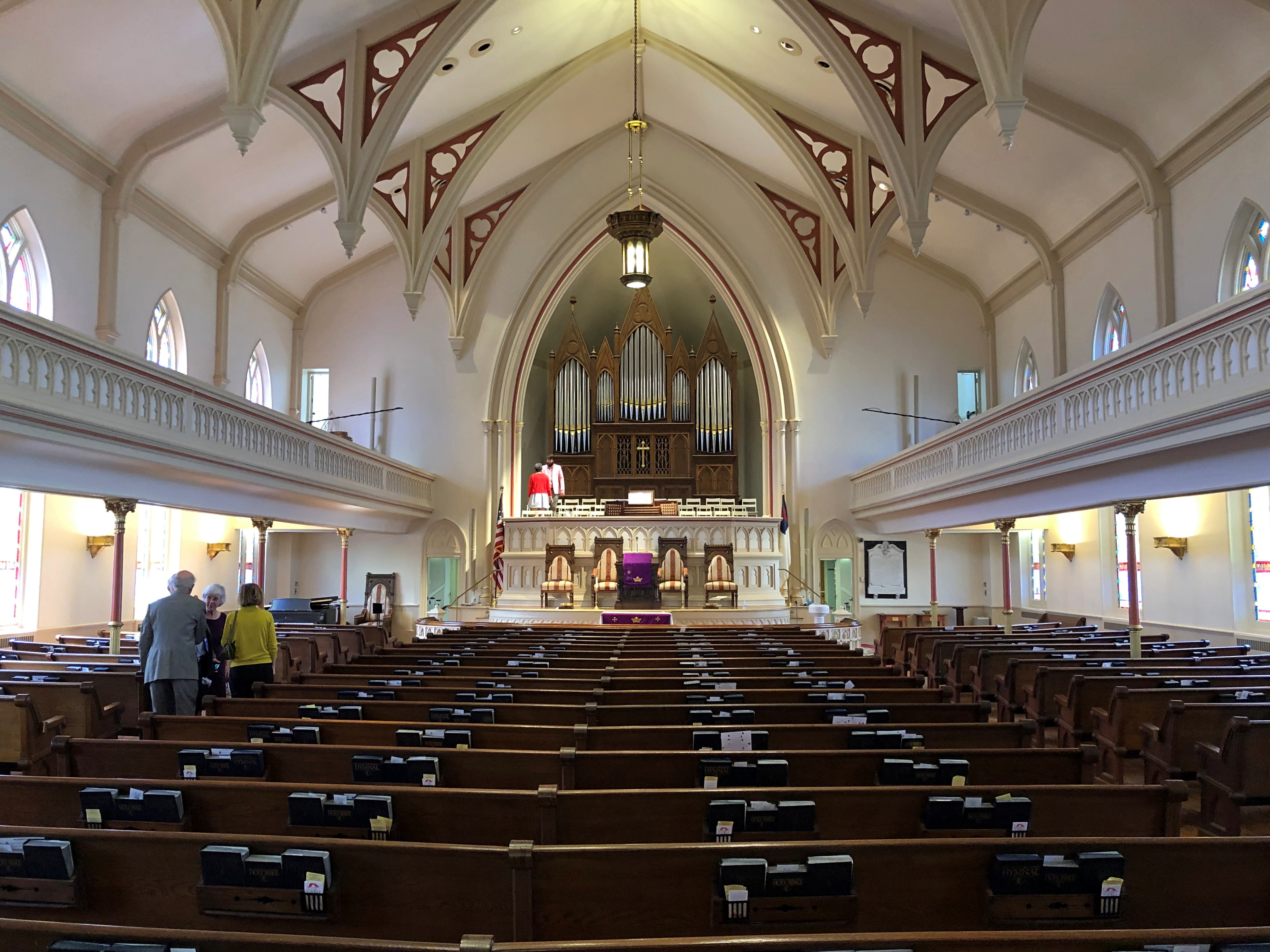
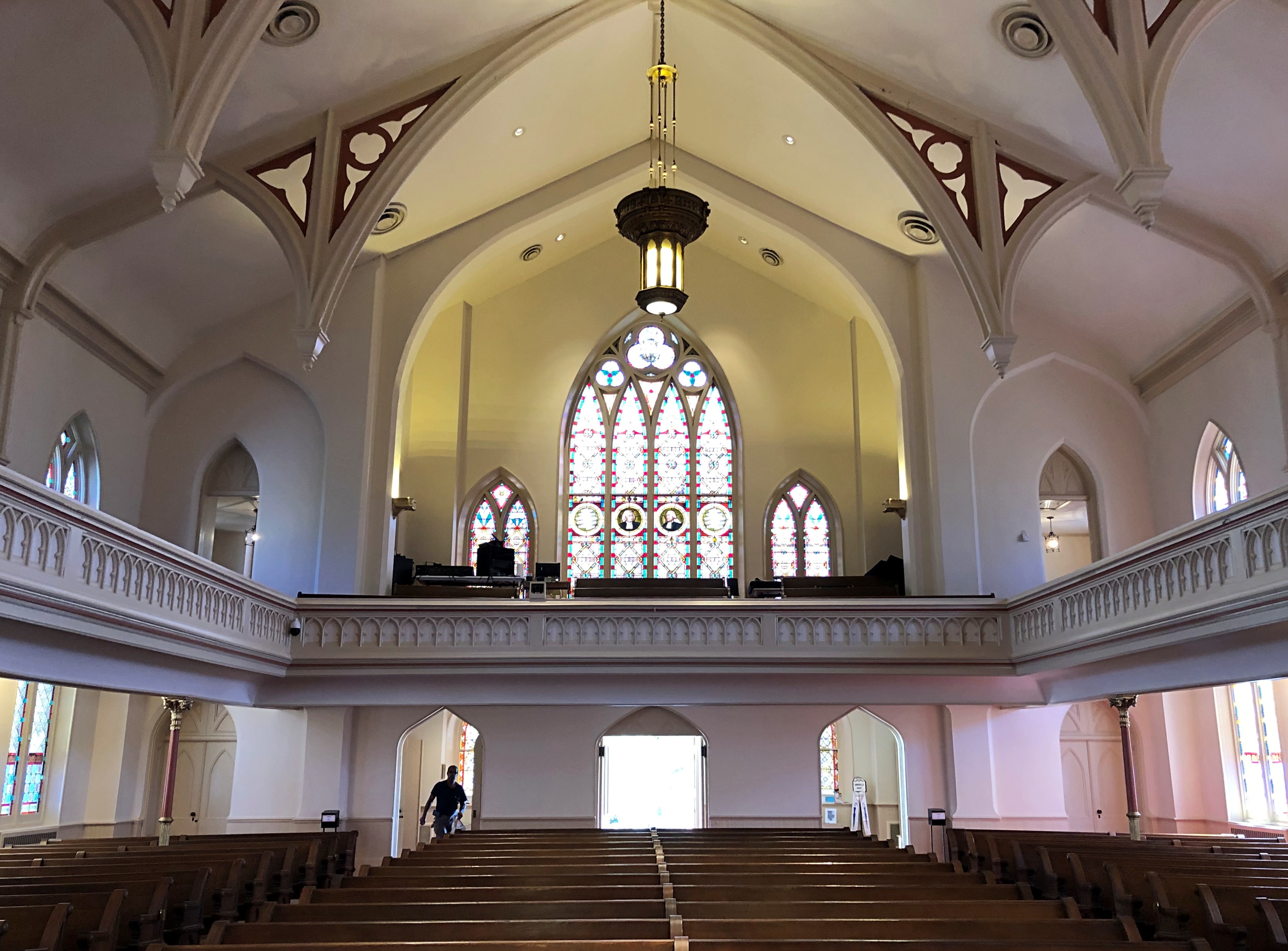
We were also did a kind of Methodist pilgrimage, odd as that sounds. First, the only Savannah church we were able to enter during our visit was Wesley Monumental United Methodist Church, completed in 1890.Wesley Memorial UMC
Wesley Memorial UMC Wesley Memorial UMC

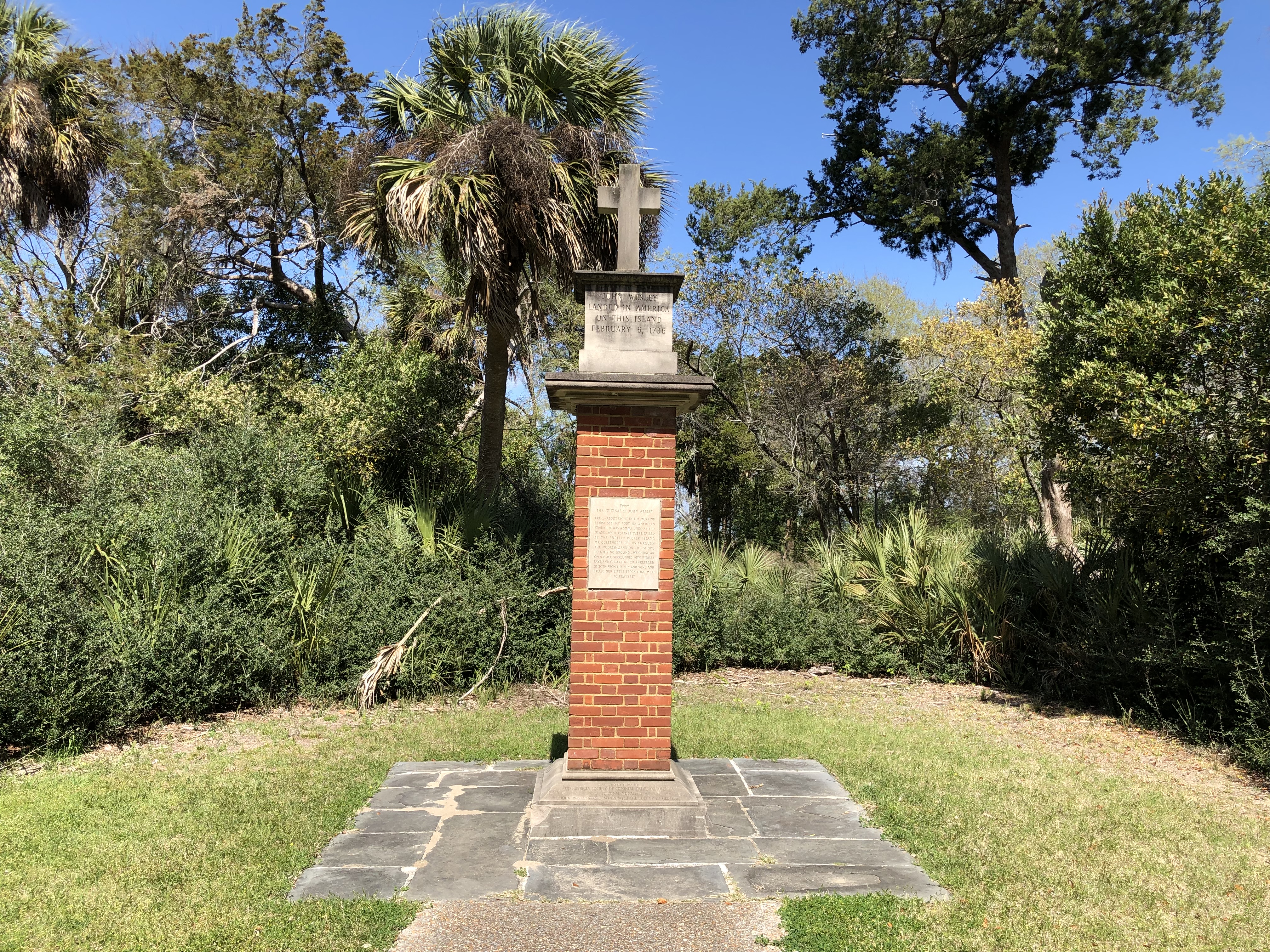
During our visit to Fort Pulaski NM the next day, we encountered the John Wesley Memorial.Wesley Memorial, Georgia
The memorial says (among other things): John Wesley landed in America on this island, February 6, 1736. He was still an Anglican priest at the time.

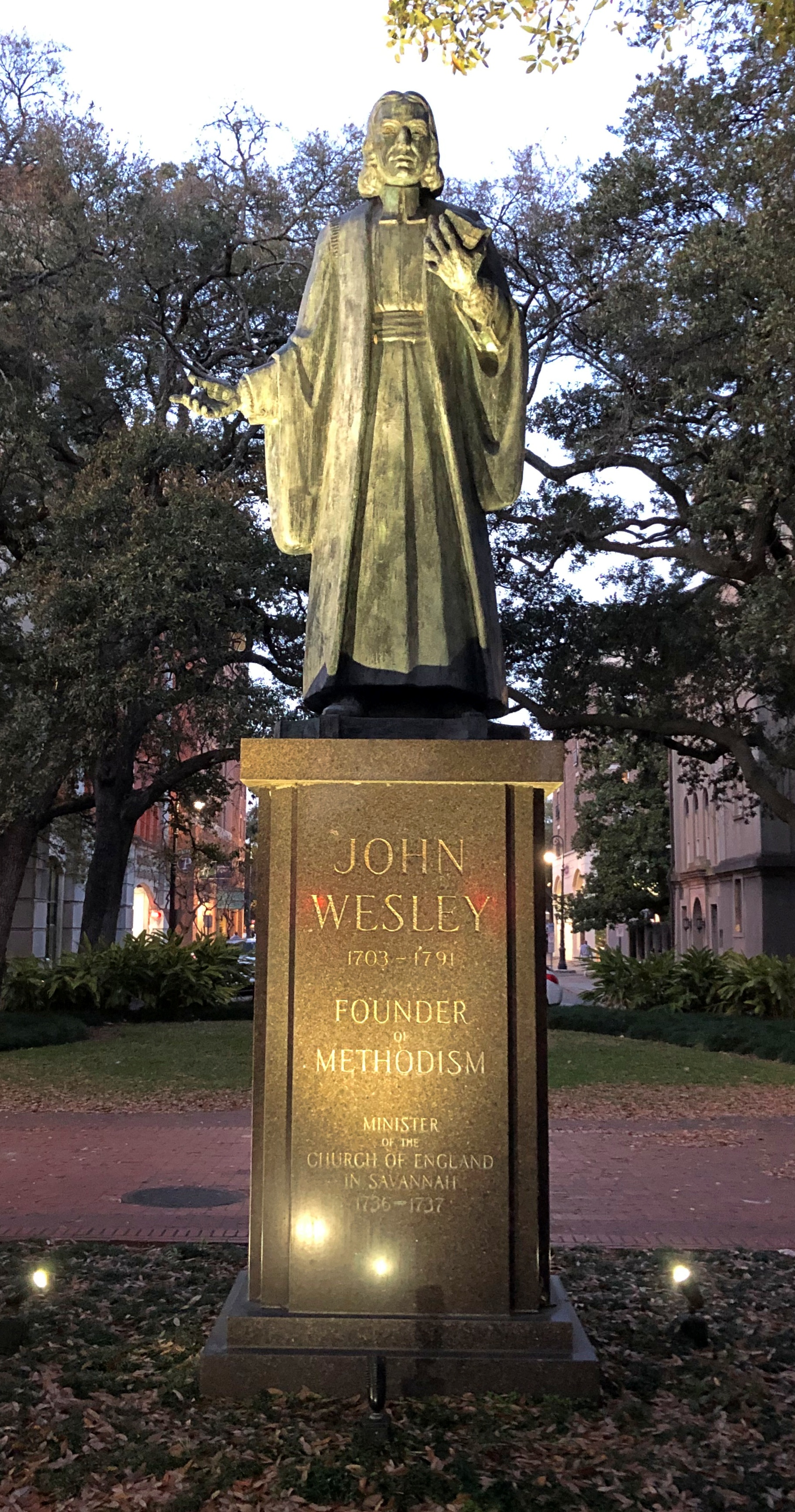
That evening at dusk, we strolled into Savannah’s Reynolds Square, and there he stood.Wesley Memorial, Georgia

The pilgrimage wasn’t planned. I don’t belong to that denomination, though of course I know that in earlier days, they ran with a pretty rough crowd.

The Gardens at Lake Merritt

Not far from the Cathedral of Christ the Light in Oakland is Lakeside Park, the lake being Lake Merritt. The afternoon of October 28 was sunny and pleasant in Oakland. Actually a little warm; I should have brought some water.

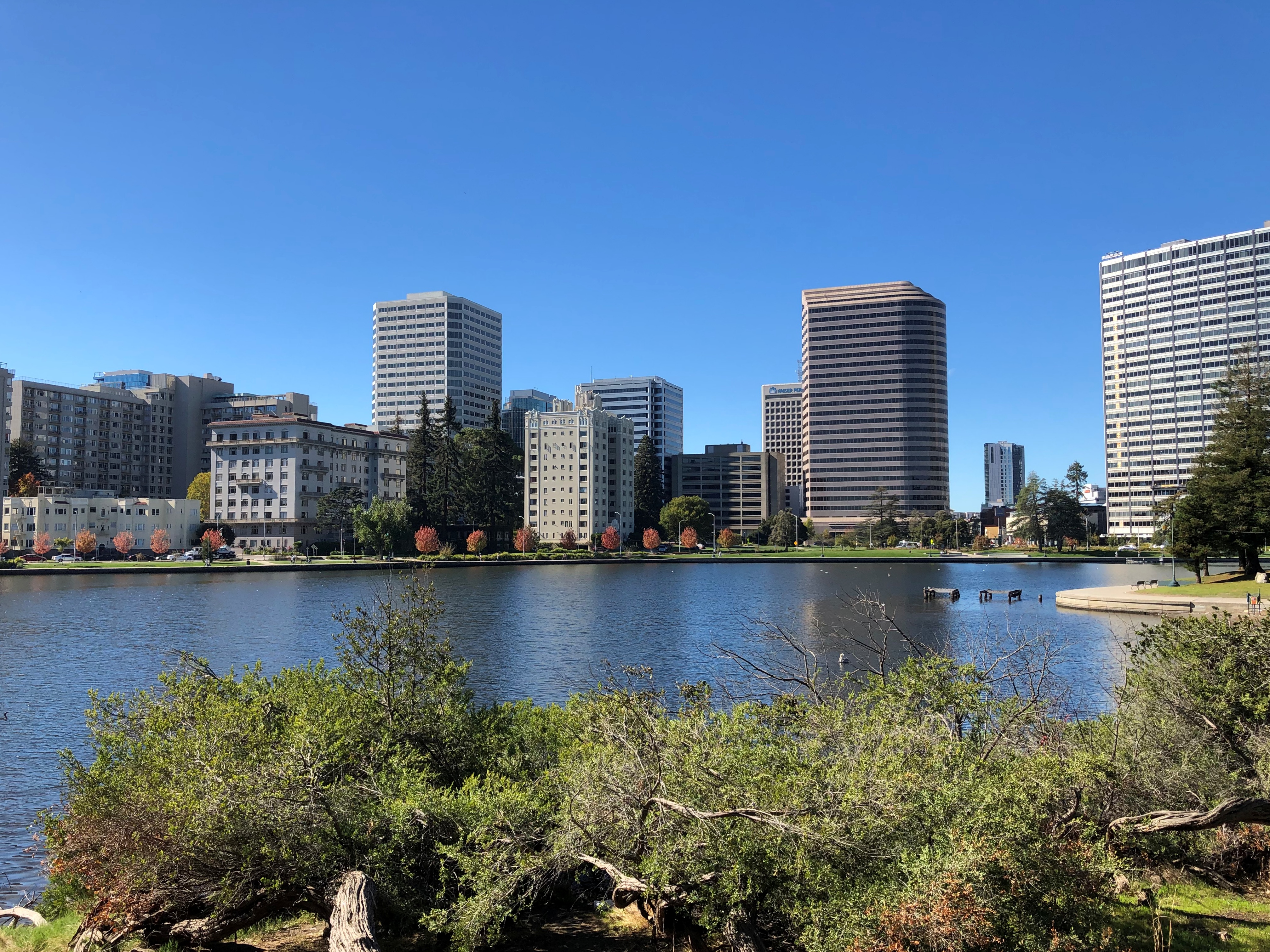
Nice views of the city from the park.Lakeside Park, Oakland
Lakeside Park, Oakland

Paths to follow.Lakeside Park, Oakland

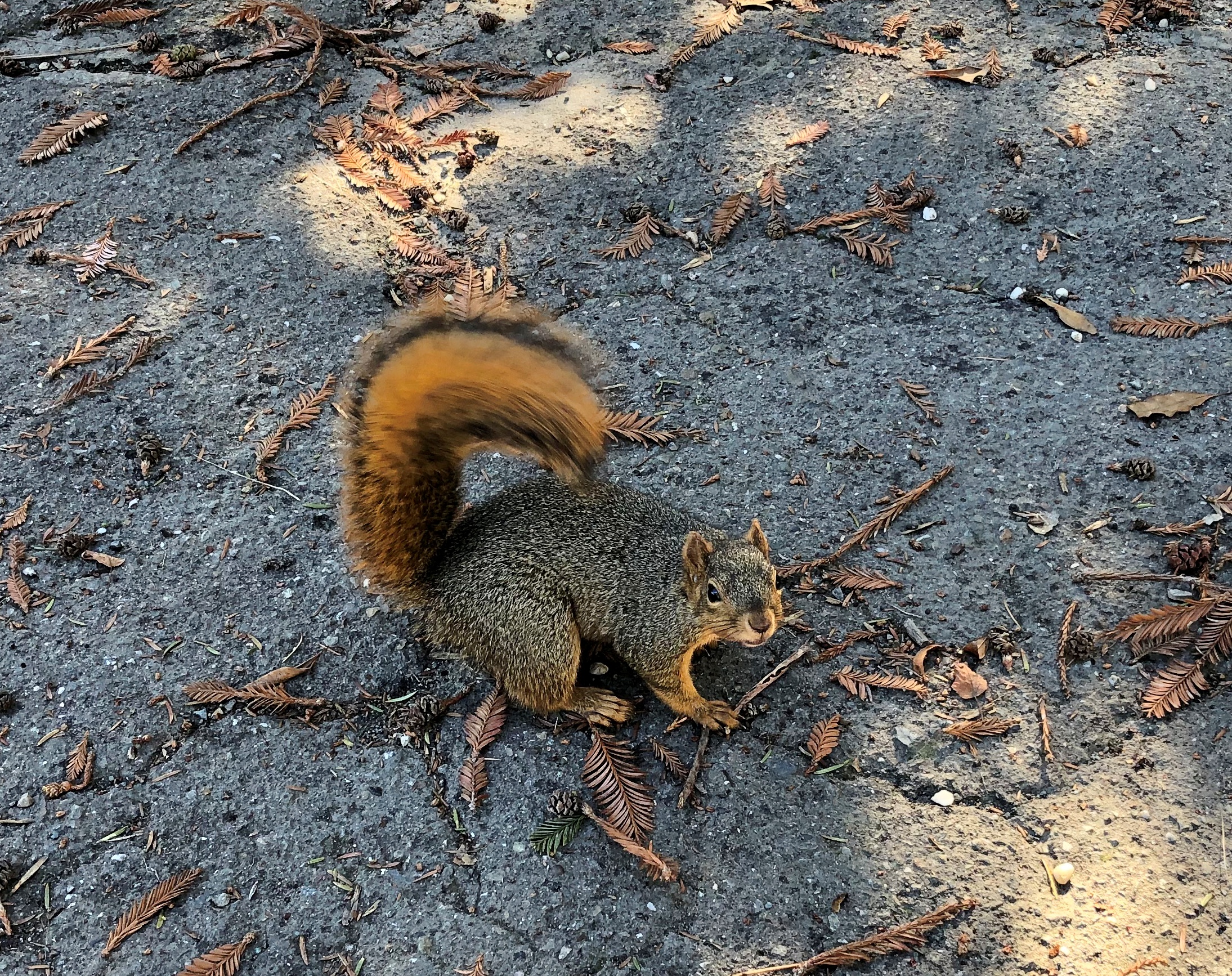
With wildlife to be found. Small examples, at least.
Lakeside Park, Oakland

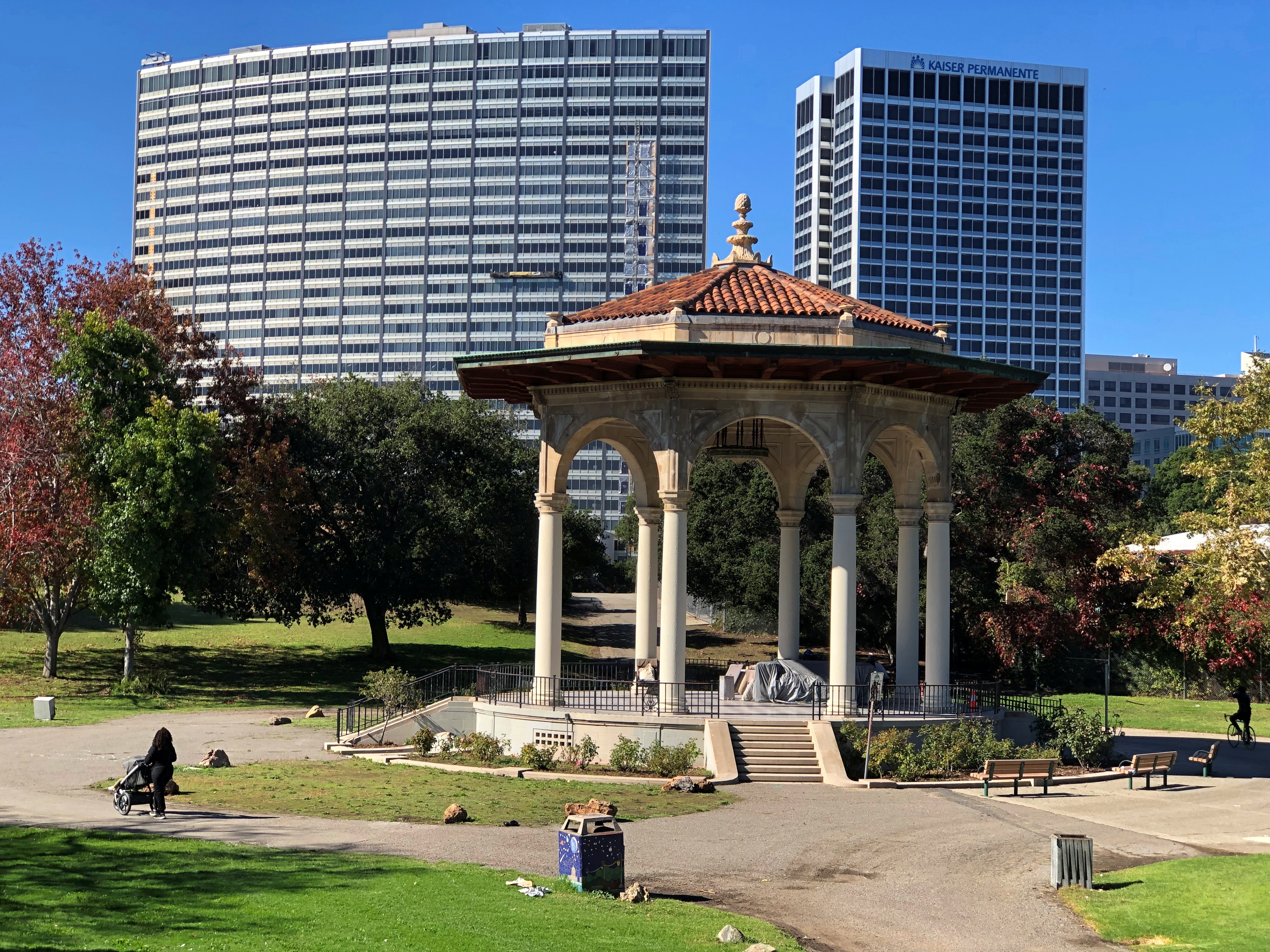
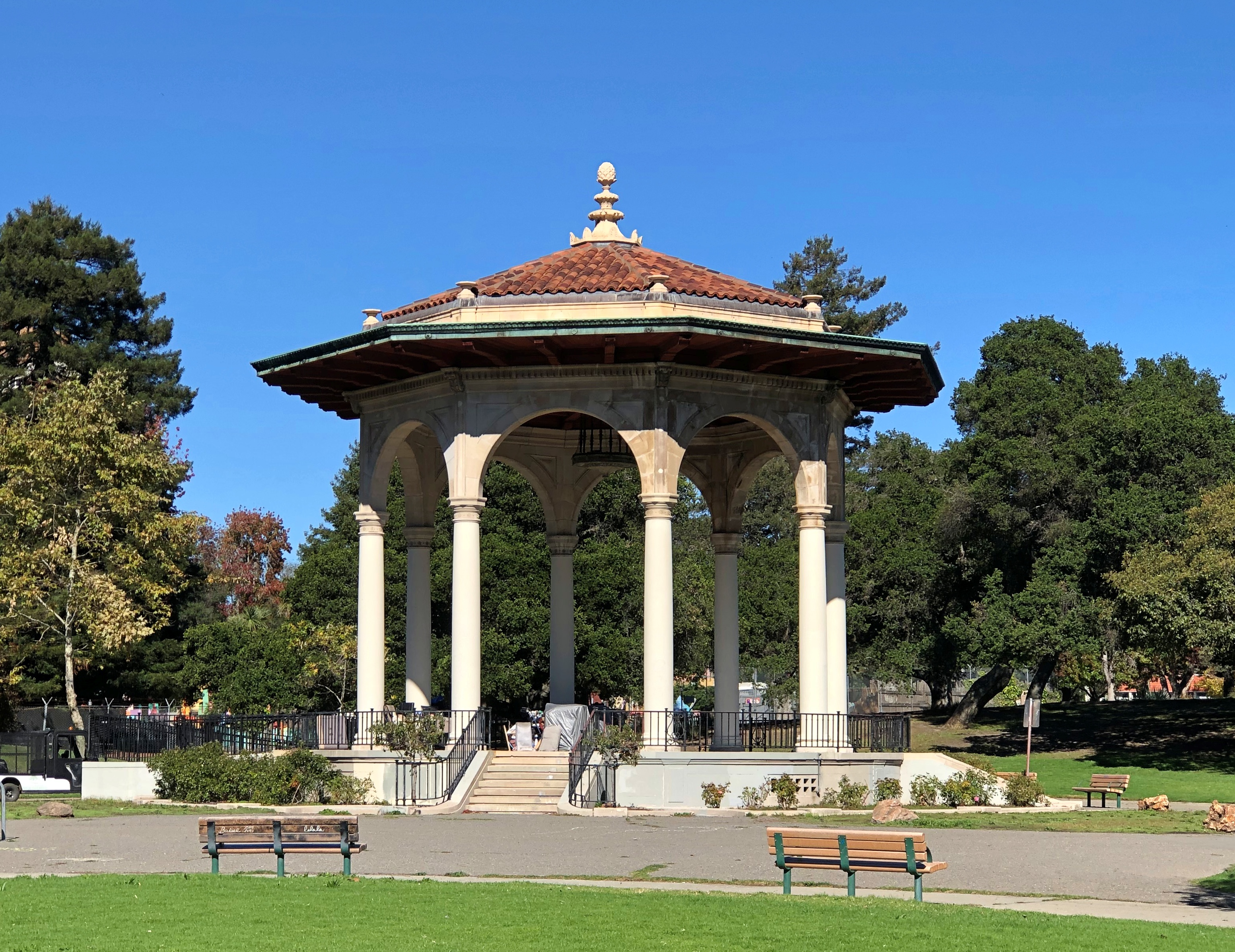
This isn’t a gazebo. No. It’s a bandstand. Quite a bandstand.Lakeside Park, Oakland Lakeside Park, Oakland

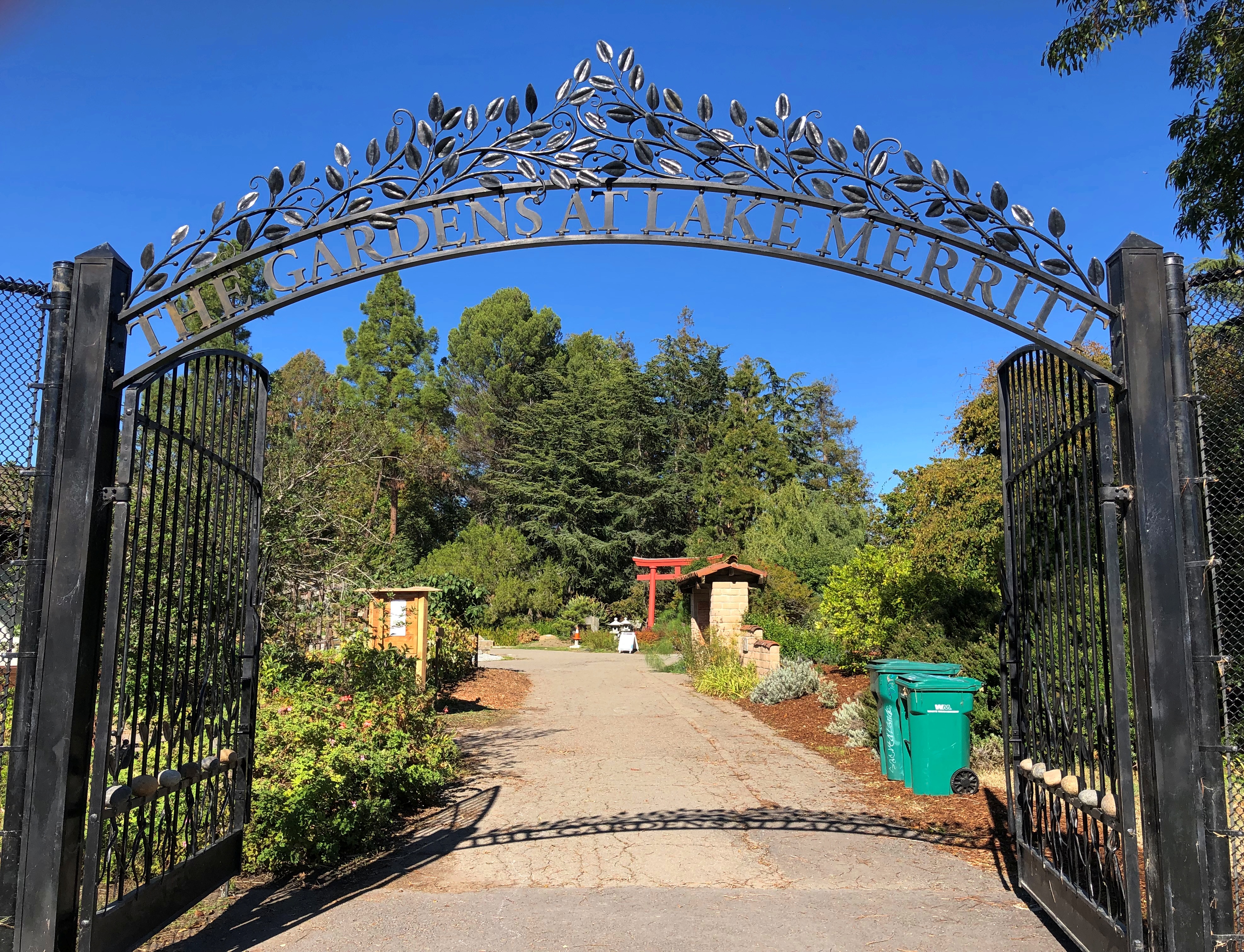
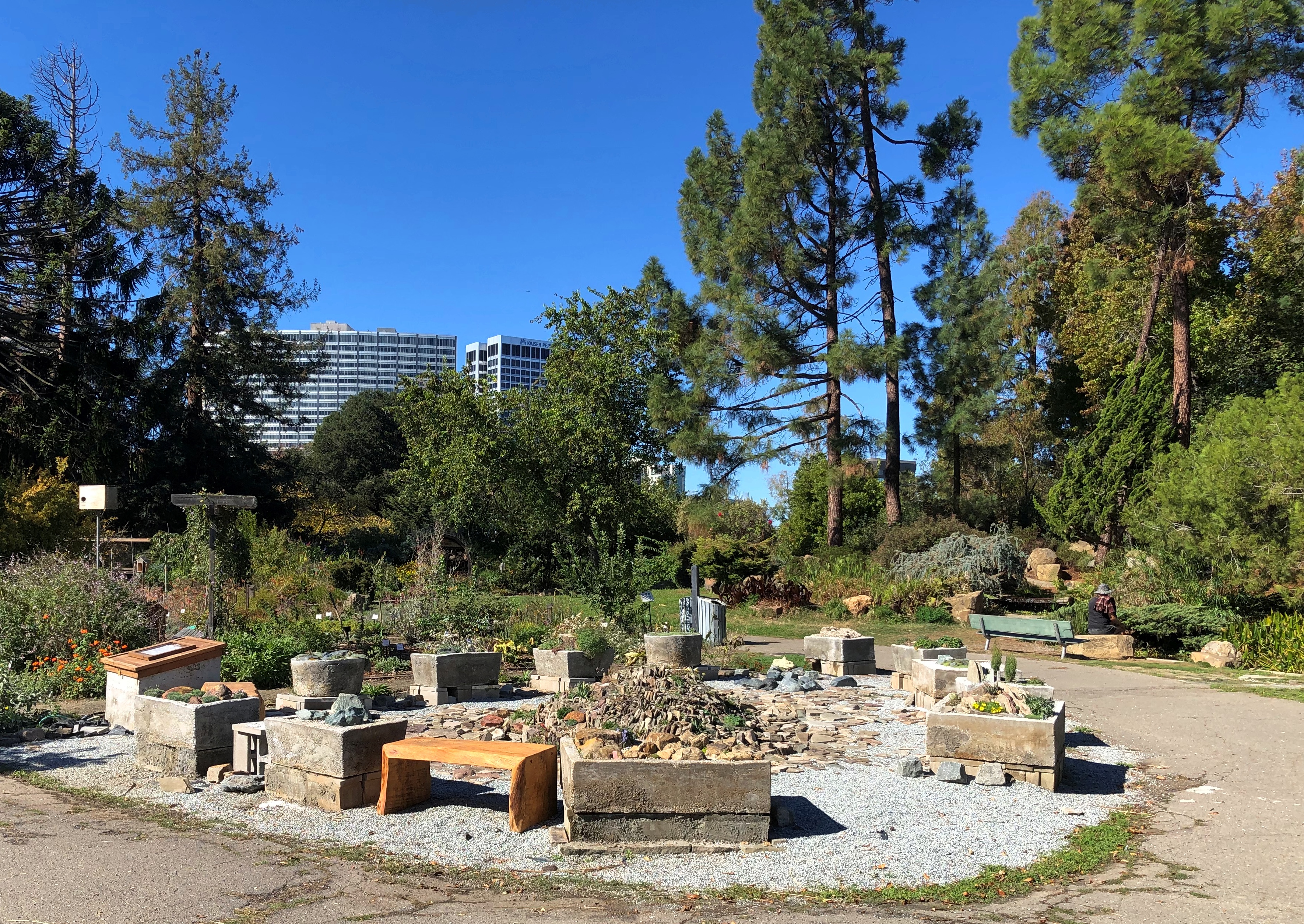
A section of the park is given over to the Gardens at Lake Merritt.Gardens of Lake Merritt Gardens of Lake Merritt

“In the late 1950s, a coalition of garden clubs and plant societies developed and built the Oakland-East Bay Garden Center,” says Pacific Horticulture. “Upon completion, the building was donated to the City of Oakland with the understanding that the coalition would be able to use it in perpetuity for meetings and other activities. Later, the various groups took on the task of landscaping the seven-acre site.

“The gardens flourished for many years under the care of 16 city gardeners. However, by the late seventies and eighties, membership in many formal garden groups waned and, little by little, the city’s resources were directed elsewhere. Inevitably, many of the garden plots were neglected, and the appearance and appeal of the Gardens declined.

“With the vision and commitment of Victoria (Tora) Rocha, who was appointed Park Supervisor in 2010, and with renewed interest from garden groups and local residents, the Gardens at Lake Merritt are once again an interesting, enticing, and very attractive group of plantings.”

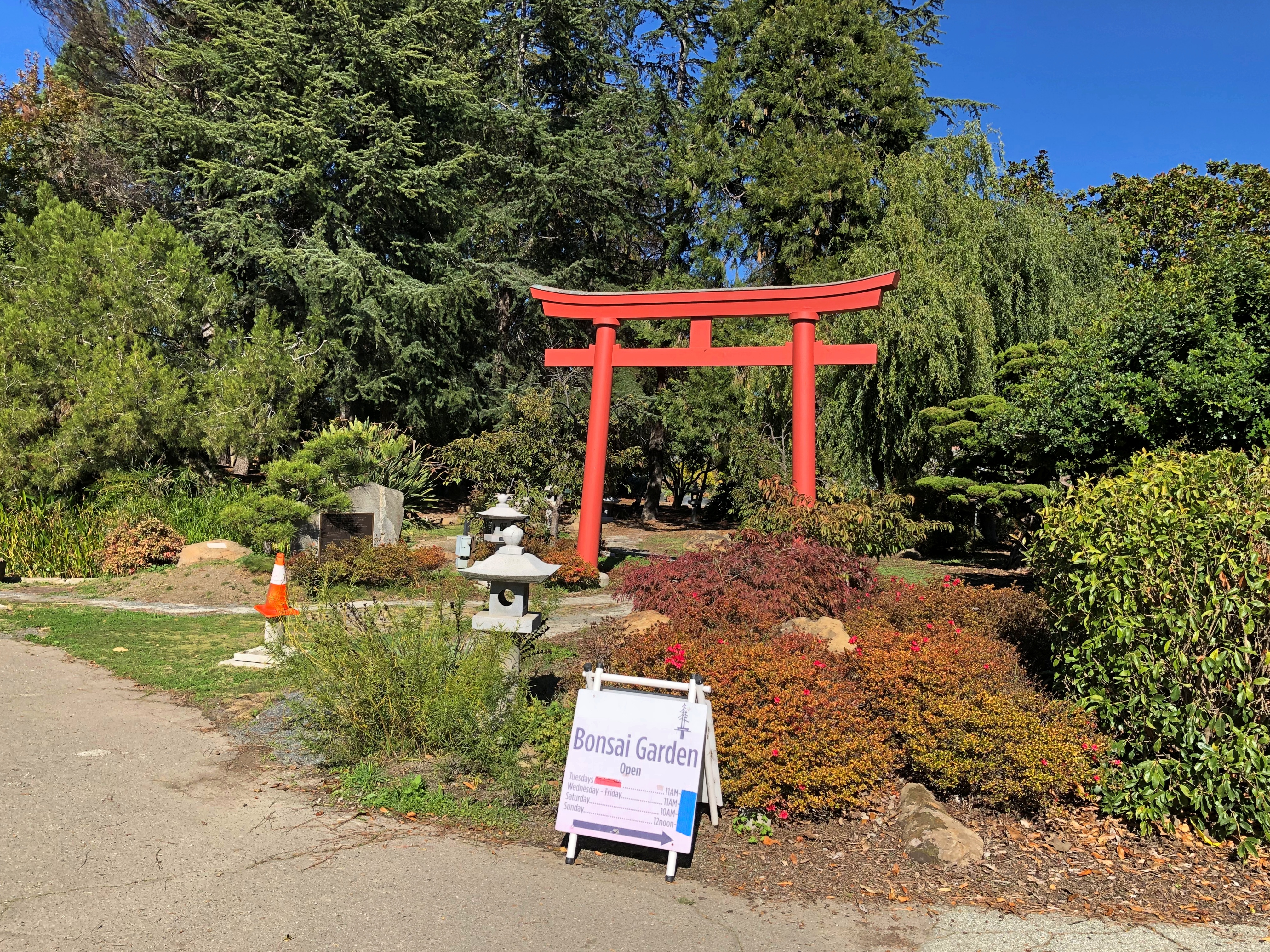
Sure enough. All sorts of gardens are part of the collection: bonsai, California riparian, Japanese, lily, Mediterranean, pollinator, rhododendron, sensory and urban edible gardens, along with a native bee hotel and native lawn.Gardens of Lake Merritt Gardens of Lake Merritt Gardens of Lake Merritt

The Japanese garden.
Gardens of Lake Merritt

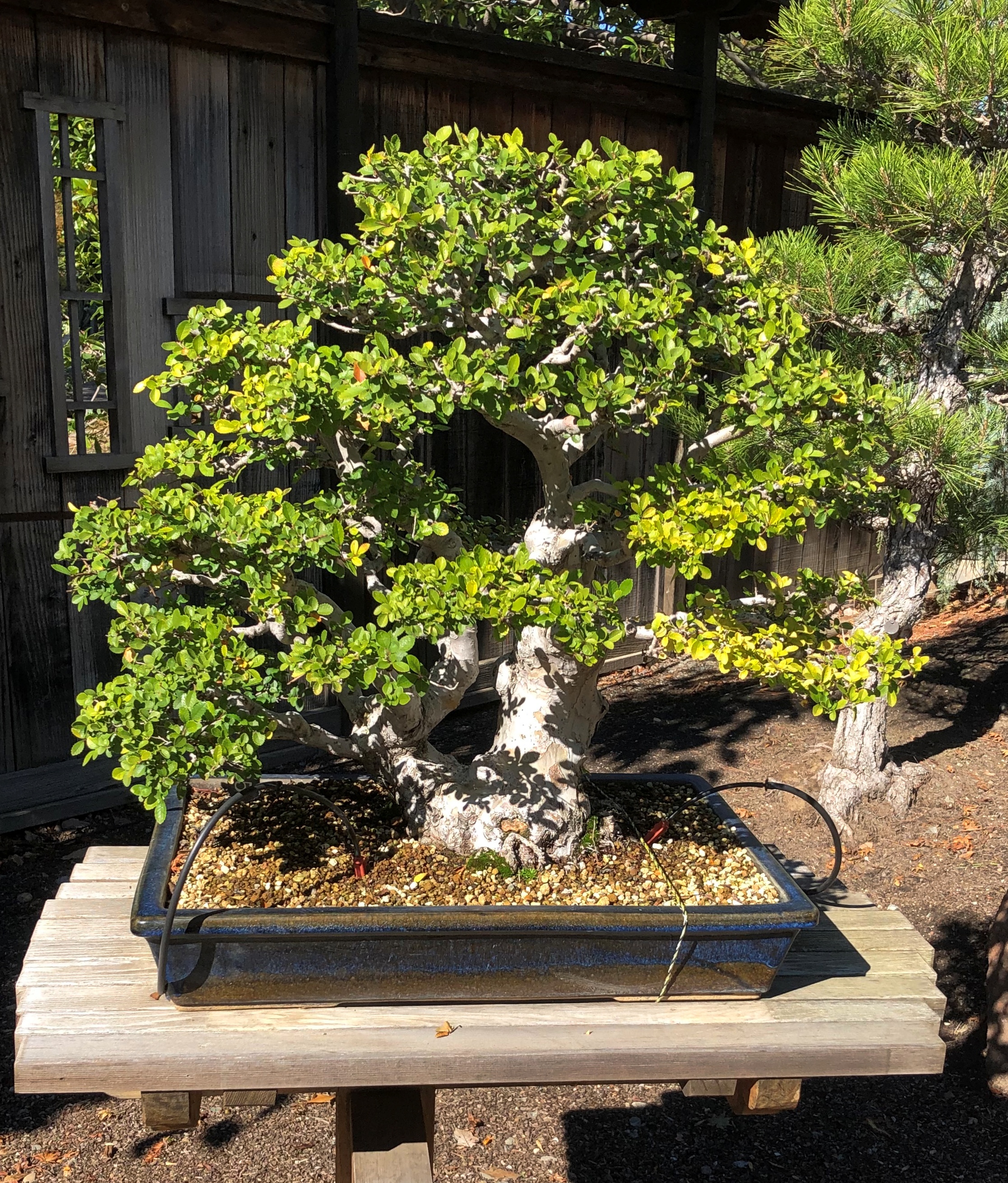
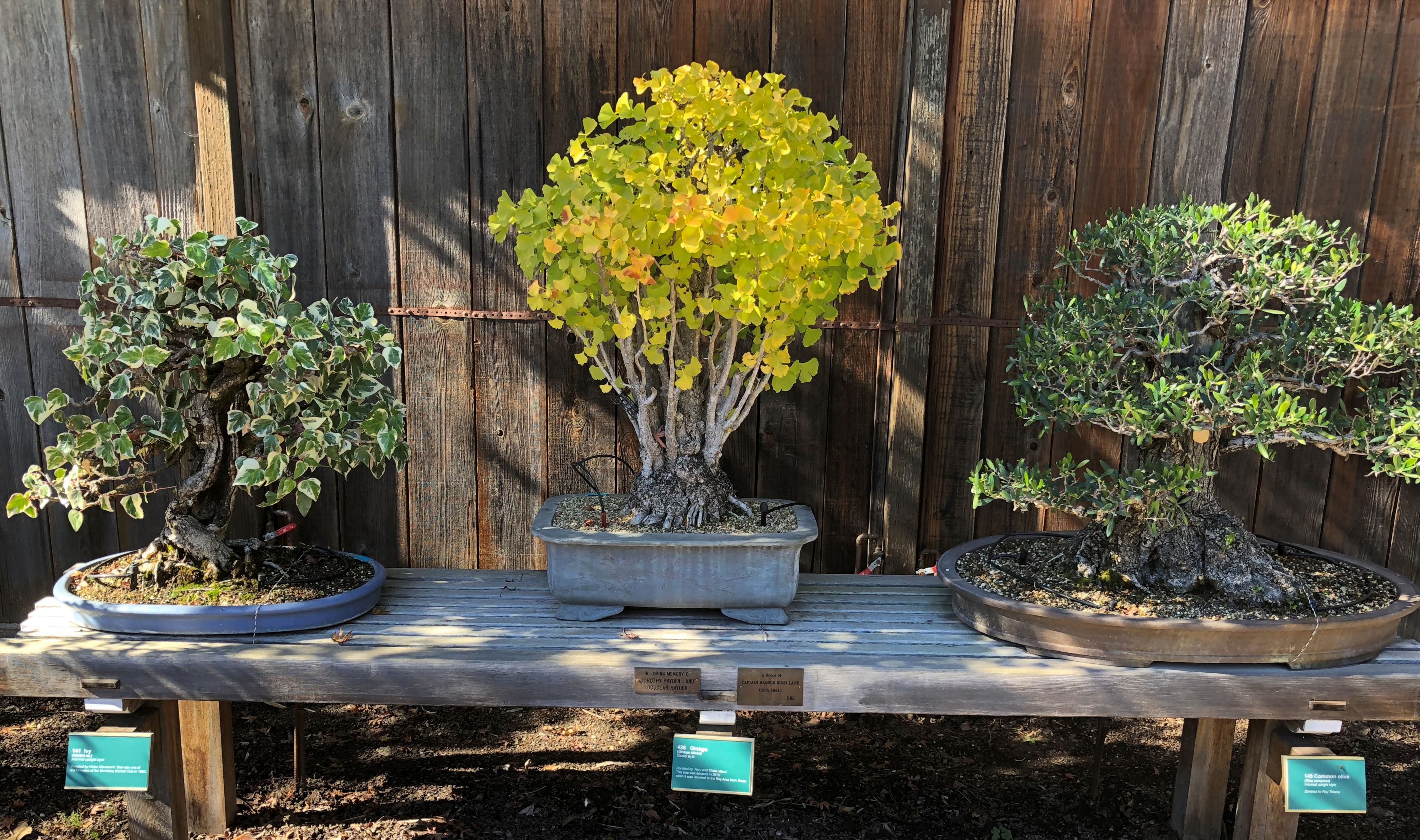
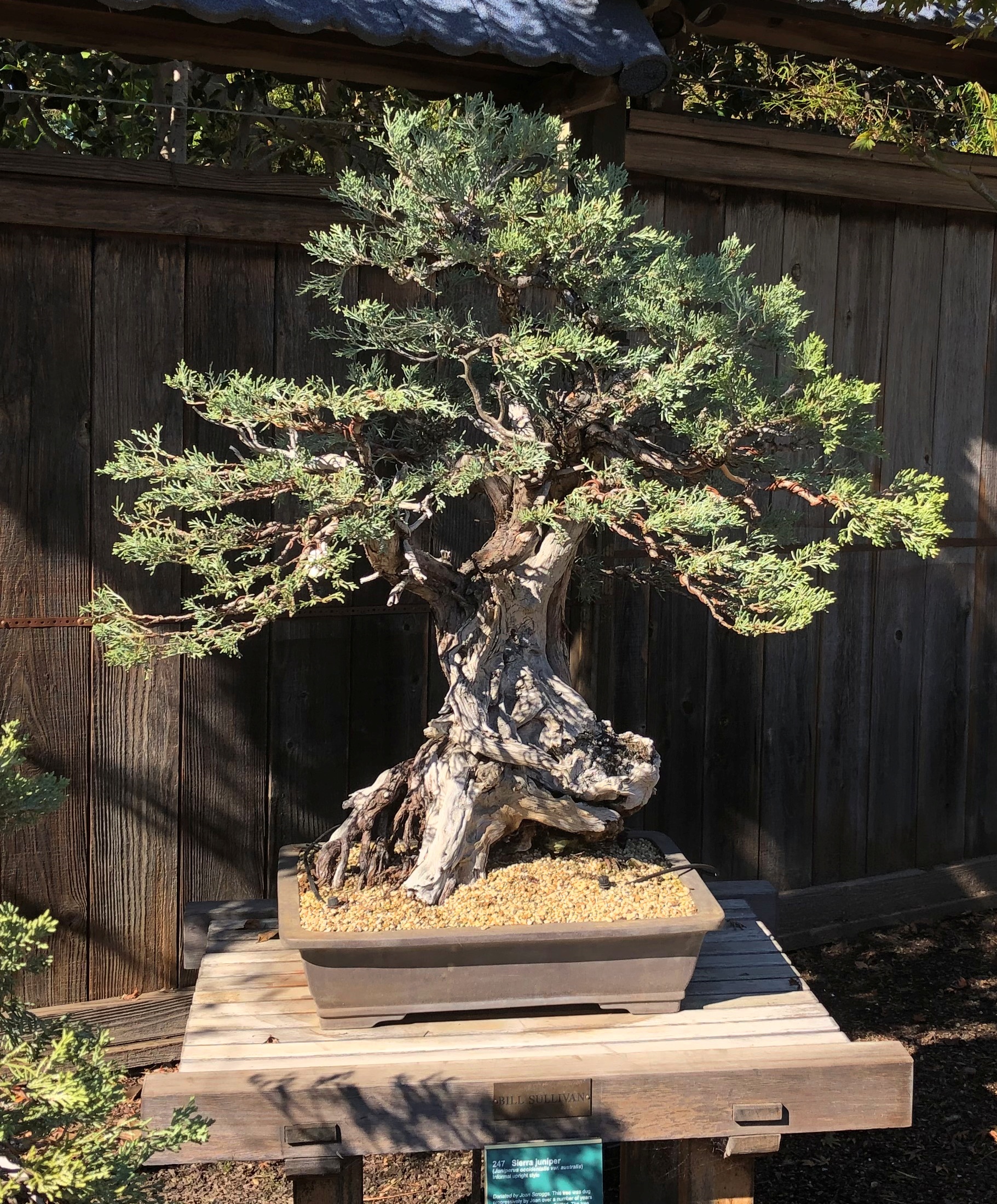
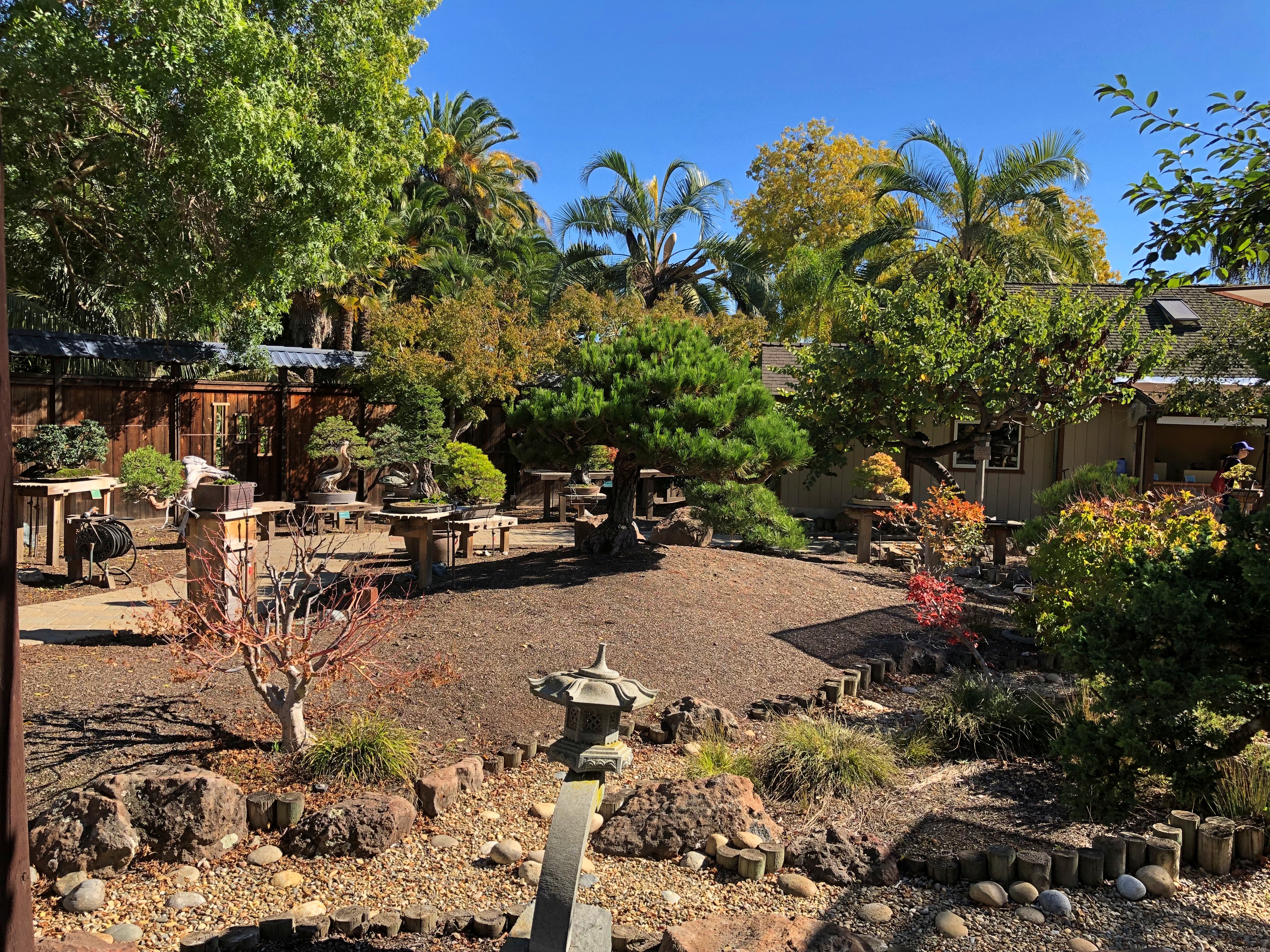
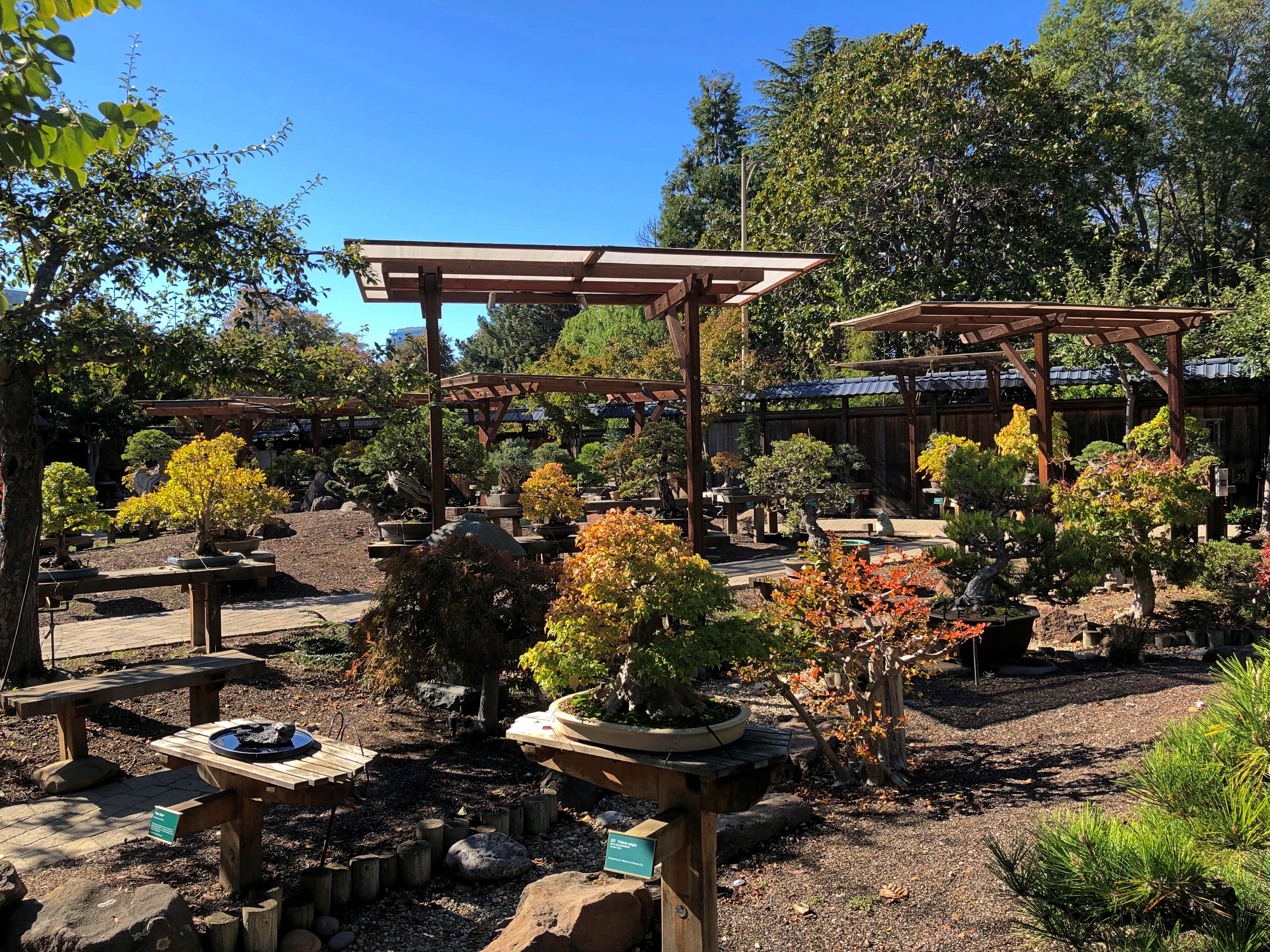
I spent the most time in the nearby bonsai garden.Gardens of Lake Merritt Gardens of Lake Merritt (Bonsai)

A collection of more species than I would have expected, but that’s just my ignorance of things bonsai.

A Chinese elm.Gardens of Lake Merritt (Bonsai)

Ivy, gingko and olive.Gardens of Lake Merritt (Bonsai)

Sierra juniper.
Gardens of Lake Merritt (Bonsai)

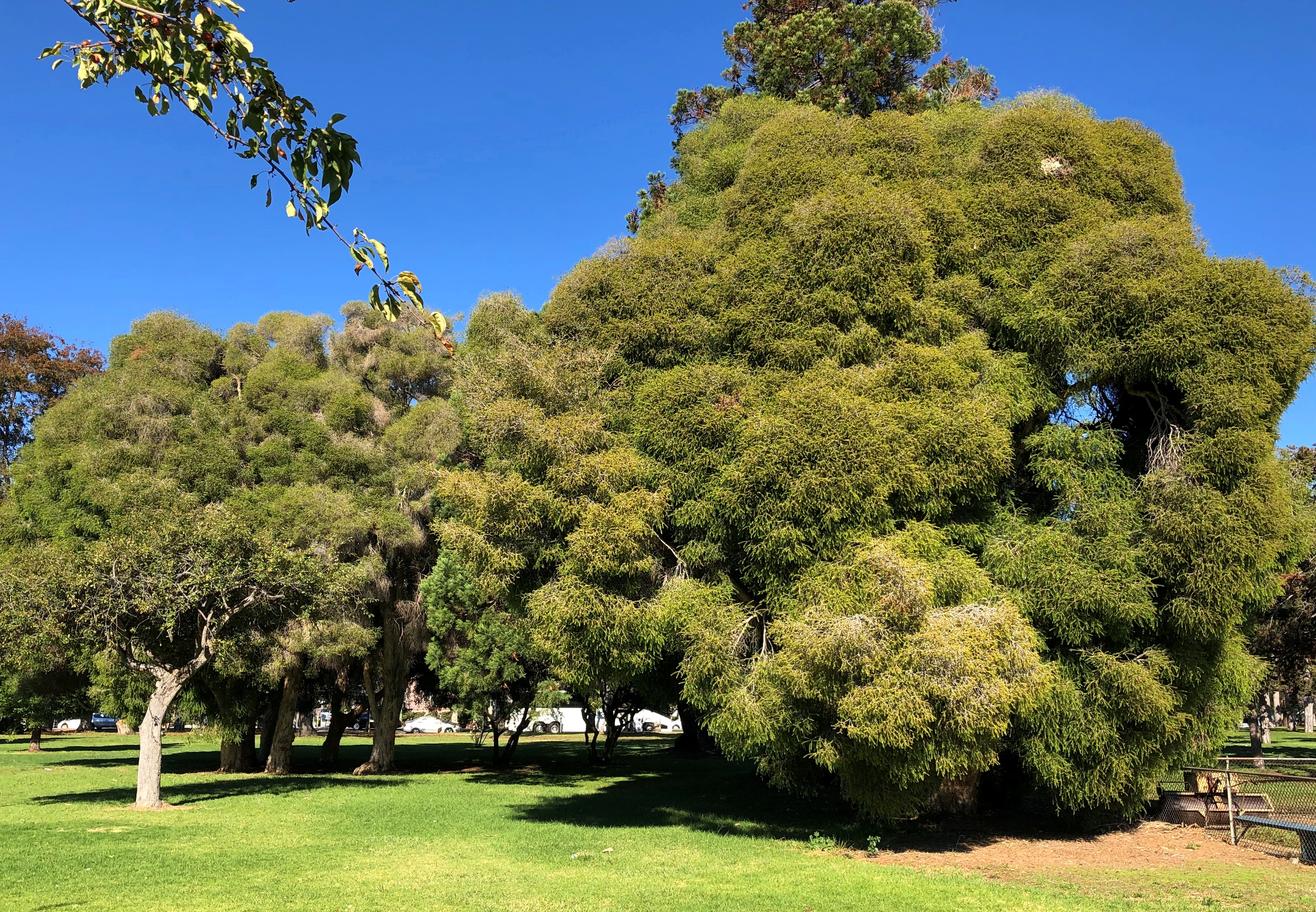
Not all the botanic marvels of the park were in the designated gardens. Some striking trees could be found scattered through the park.Gardens of Lake Merritt (Bonsai)

Including the impressive whatever-it-is pictured above. A botanist, I’m not.

ISU Quad Walkabout

Heavy rain for a while today and cooler temps, but not till afternoon, so there was time for one more lunch on my deck.

Ann invited us to visit her over the weekend, which we did, heading down to Normal on Saturday morning and returning Sunday afternoon, spending the night in a motel near I-55. Daytime temps were nearly as warm as when I dropped her off at ISU in August.

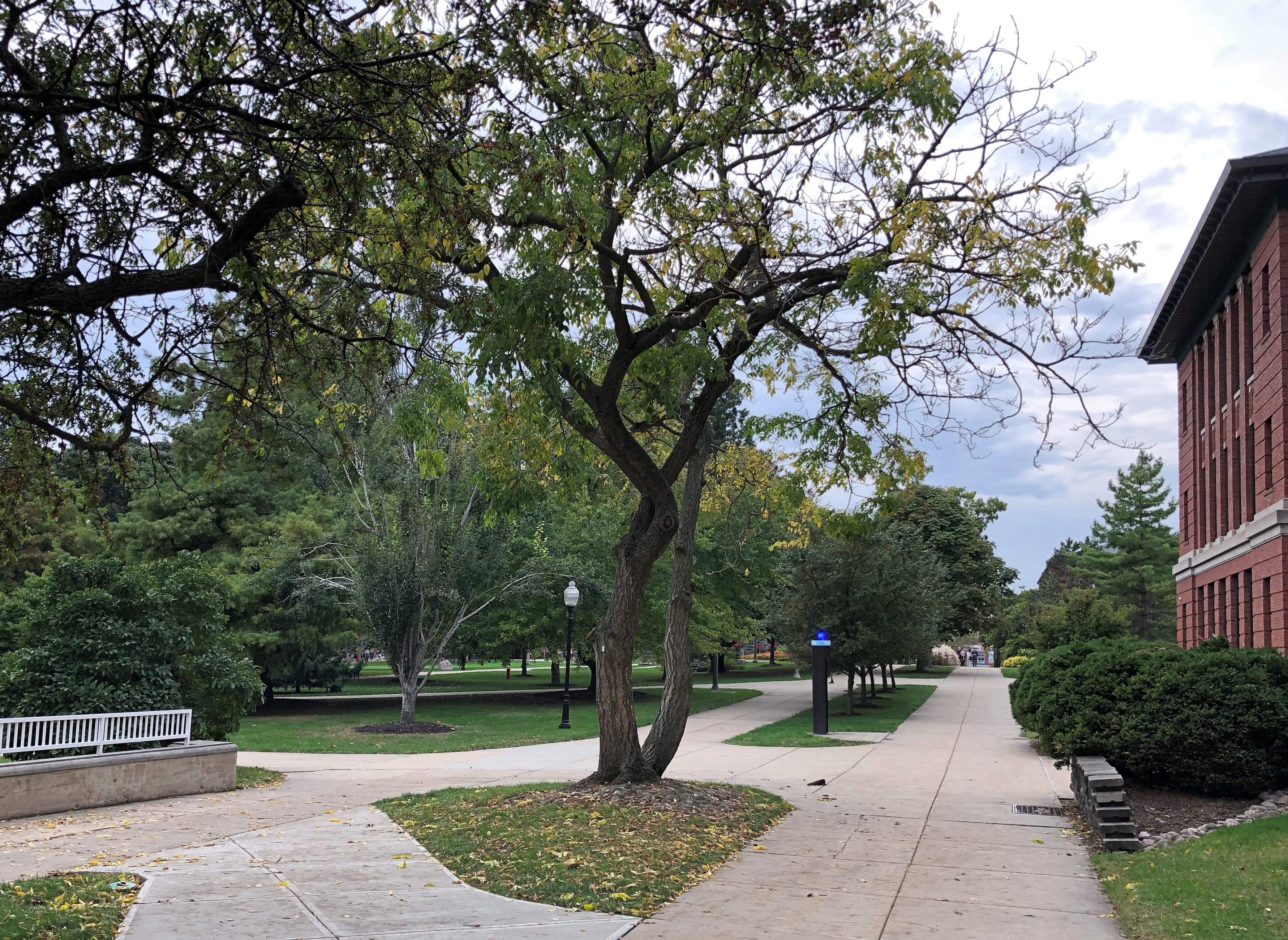
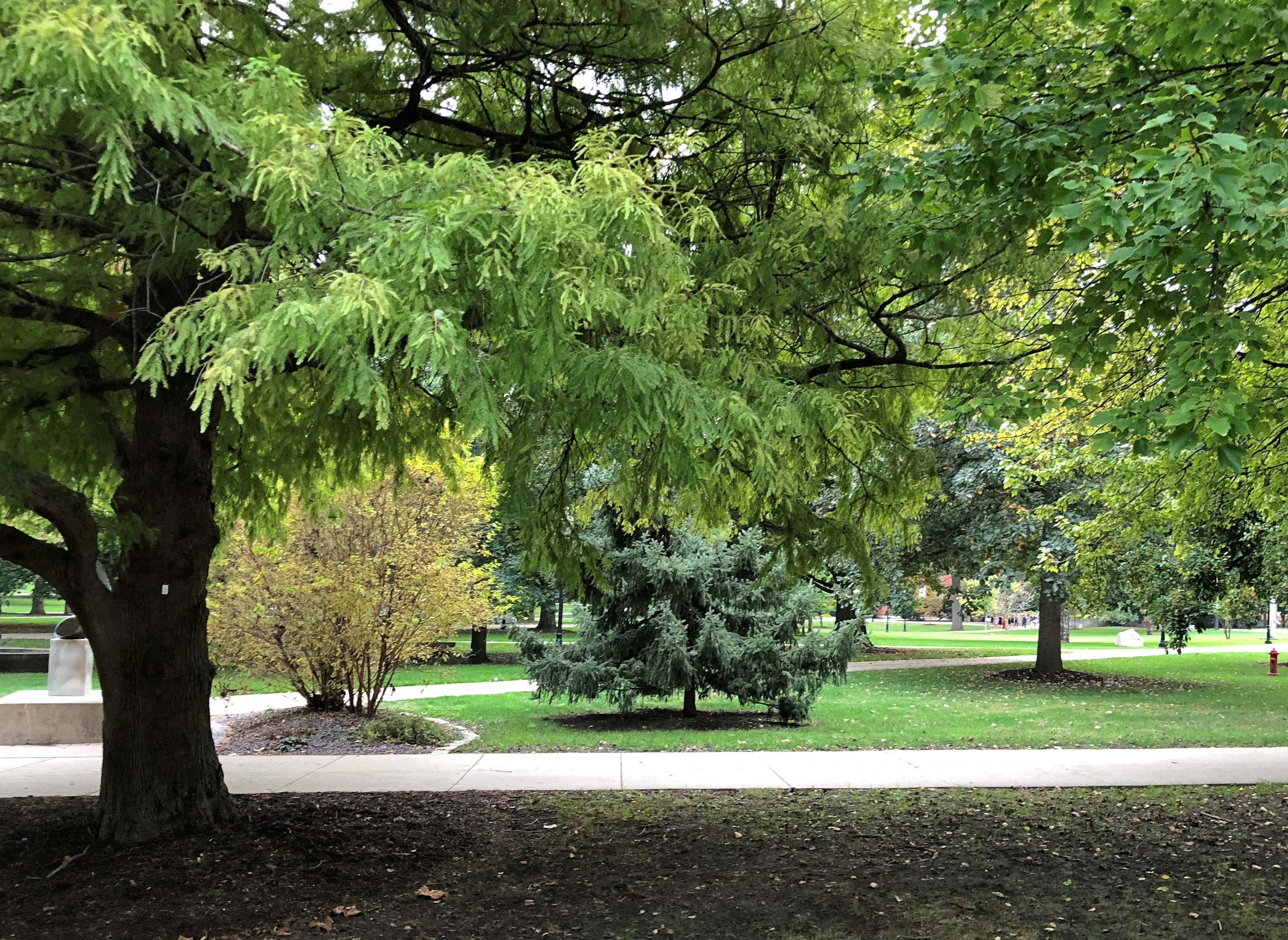
Toward the end of the day on Saturday, it had cooled enough for a short walk — including the dog, whom we brought — around the prettier parts of campus. Mostly that meant the ISU Quad. What’s a university without a quad or two?

As mentioned yesterday, most of the foliage is still green. An eastern approach to the Quad.ISU Quad

ISU Quad

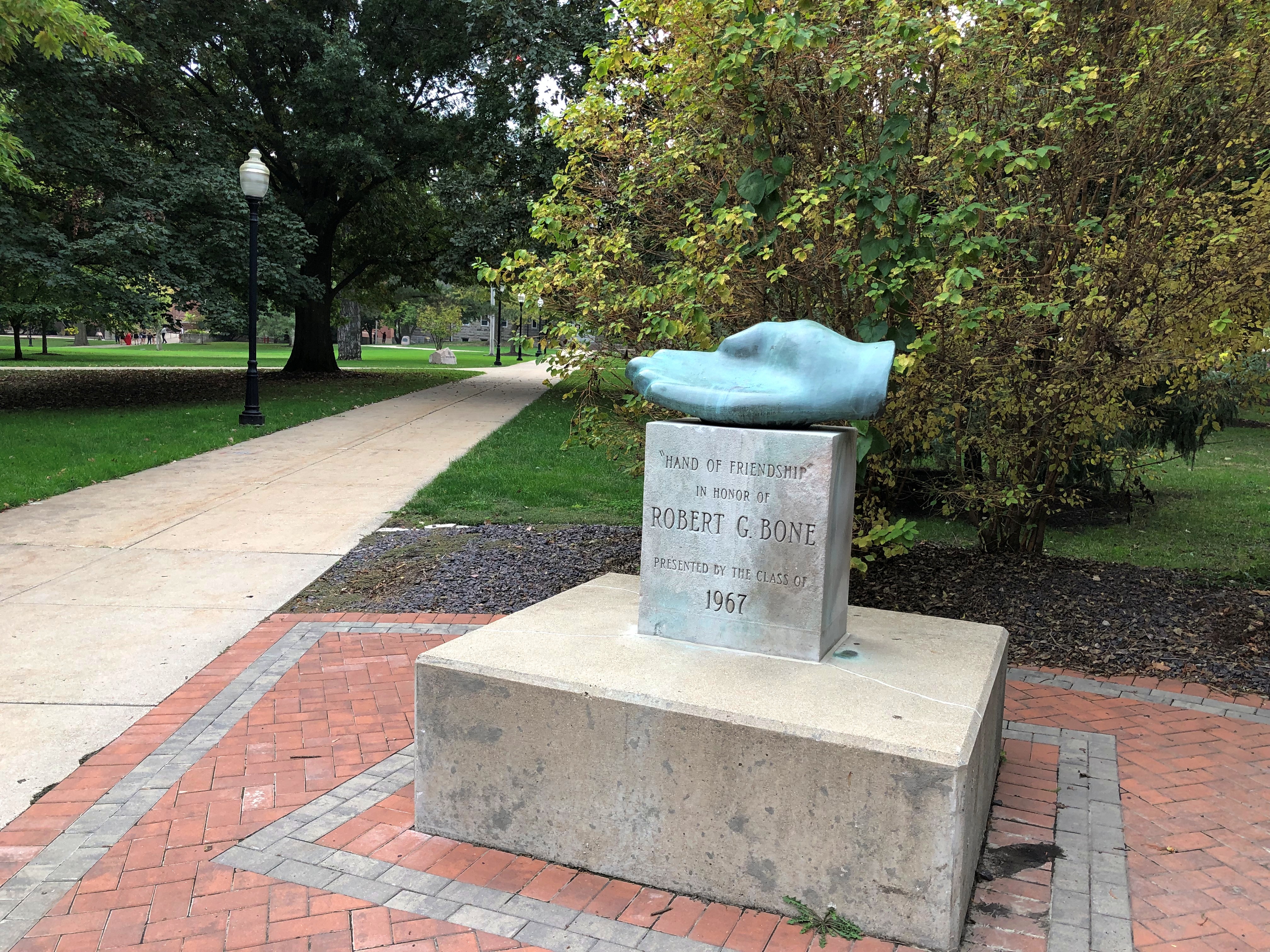
“The Hand of Friendship,” which honors Robert G. Bone.ISU Quad

Bone (1906-1991) was the ninth president of Illinois State Normal University, which was renamed Illinois State University during his tenure. Though only president for 11 years (1956-67), he oversaw a lot of construction, including the tower where Ann lives. Later, the school’s student center was named after him.

The Quad also counts as the heart of the arboretum that spans the campus — the Fell Arboretum, to cite its formal name, honoring one Jesse Fell.

Fell (1808-87) was the sort of businessman that America spawned in the 19th-century — lawyer, real estate speculator, newspaper publisher and sawmill owner. Specific to Illinois, he was a friend of Lincoln’s. He founded towns in central Illinois and helped organize counties there as well, and is considered a founder of ISU.

As for the arboretum, apparently Fell not only profited from cutting down trees, but was a fanatic when it come to planting them, so ISU named it in his honor.

Elsewhere, we saw a plaque on a rock honoring the horticulturist who designed the original landscape for the campus, William Saunders (1822-1900), who also happened to be a founder of the National Grange of the Order of Patrons of Husbandry, an organization I had only scant knowledge of before. That is to say, little that I remember, though I’m sure heard about the Granger movement in a U.S. history class. Always good to learn or re-learn something.

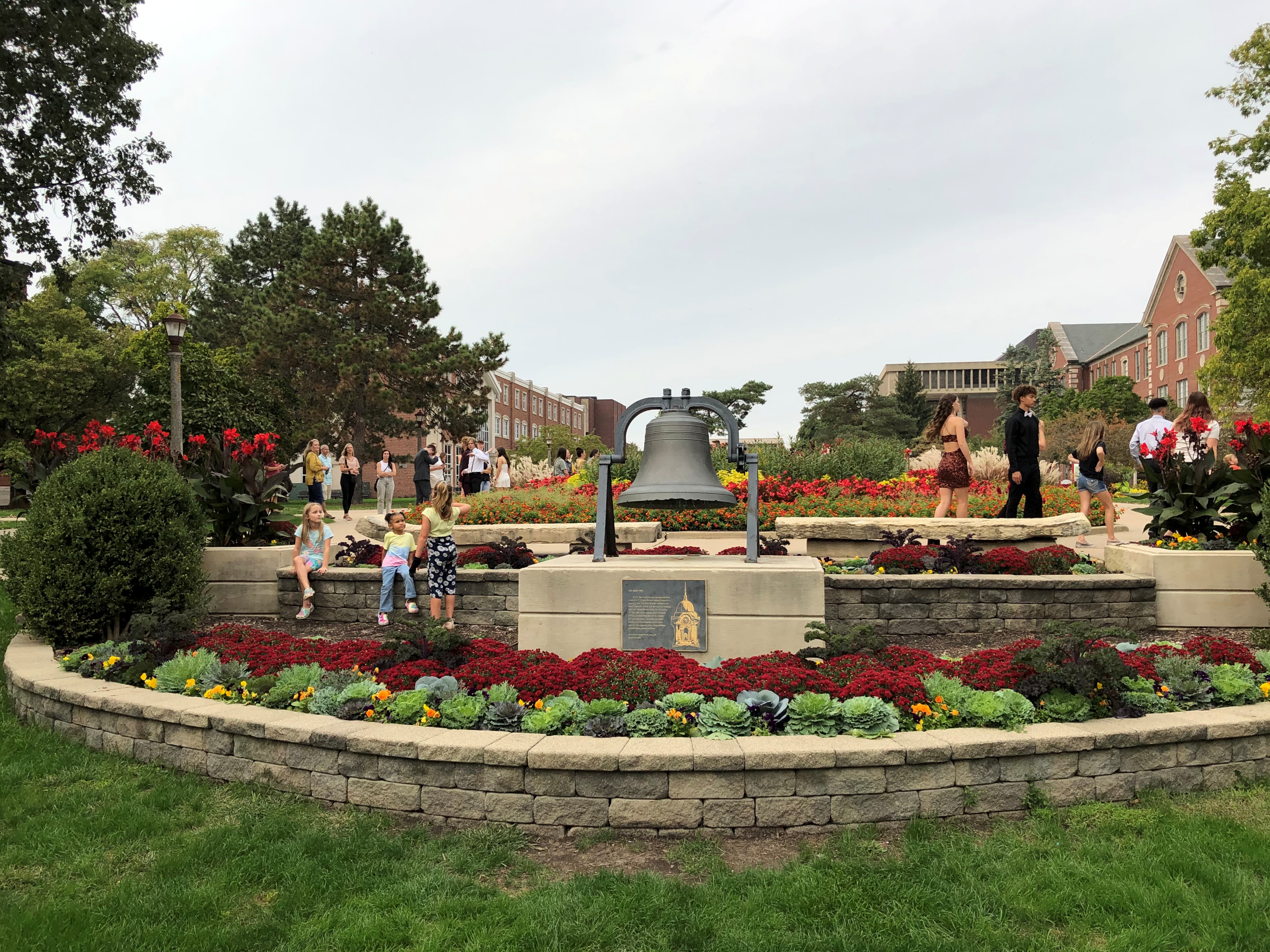
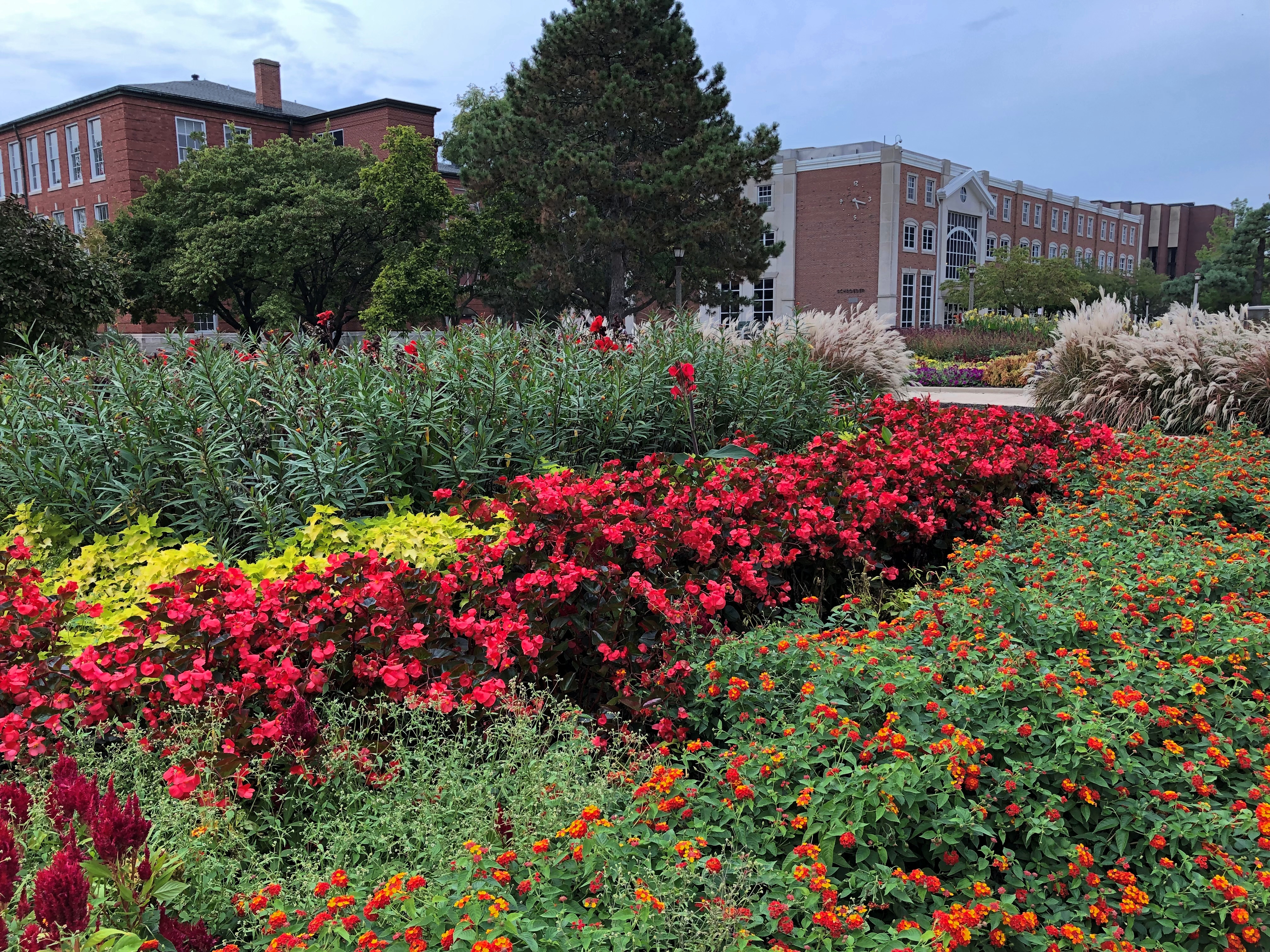
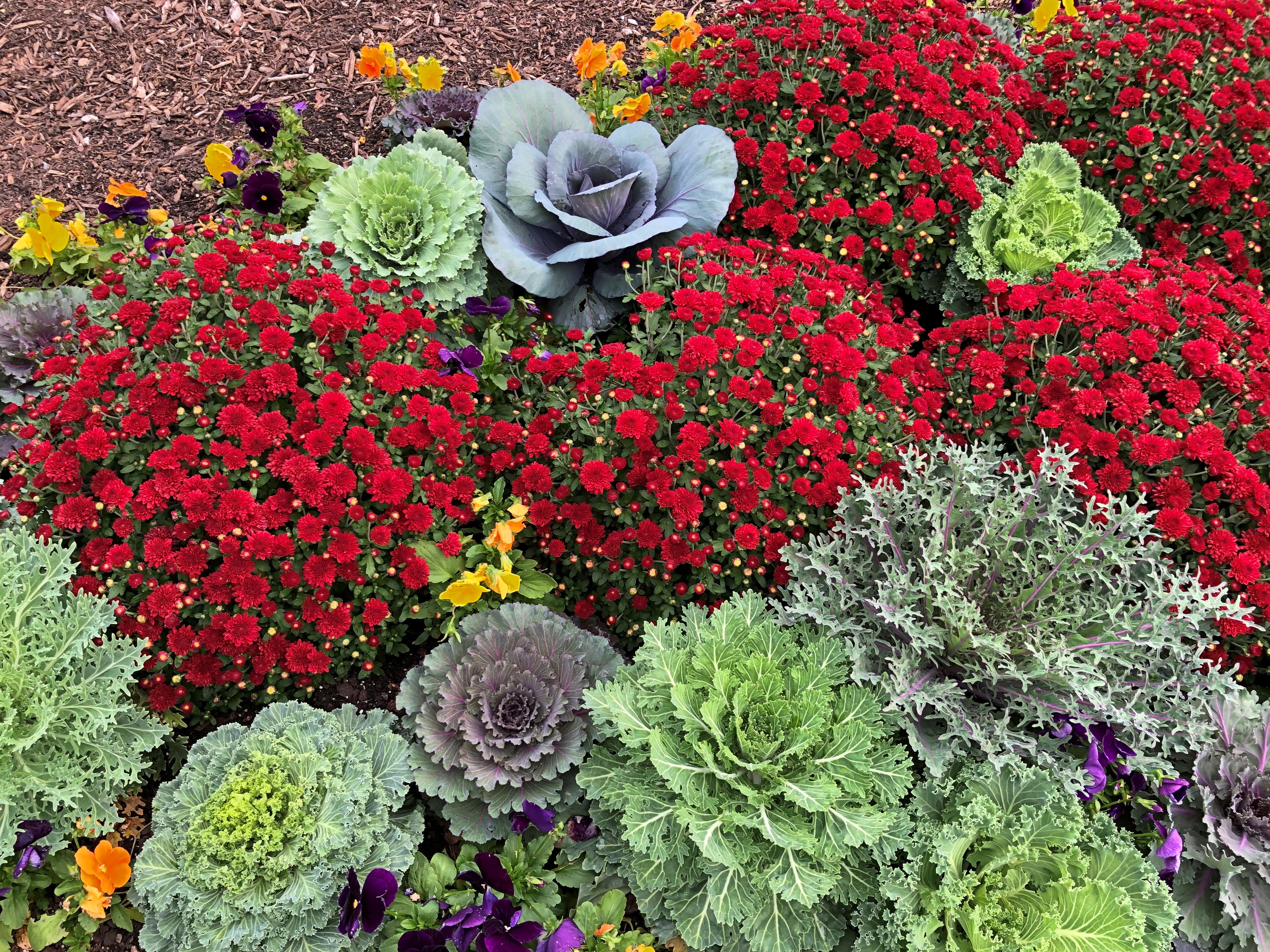
In the middle of the Quad is a lush garden.ISU Quad

ISU Quad

ISU Quad

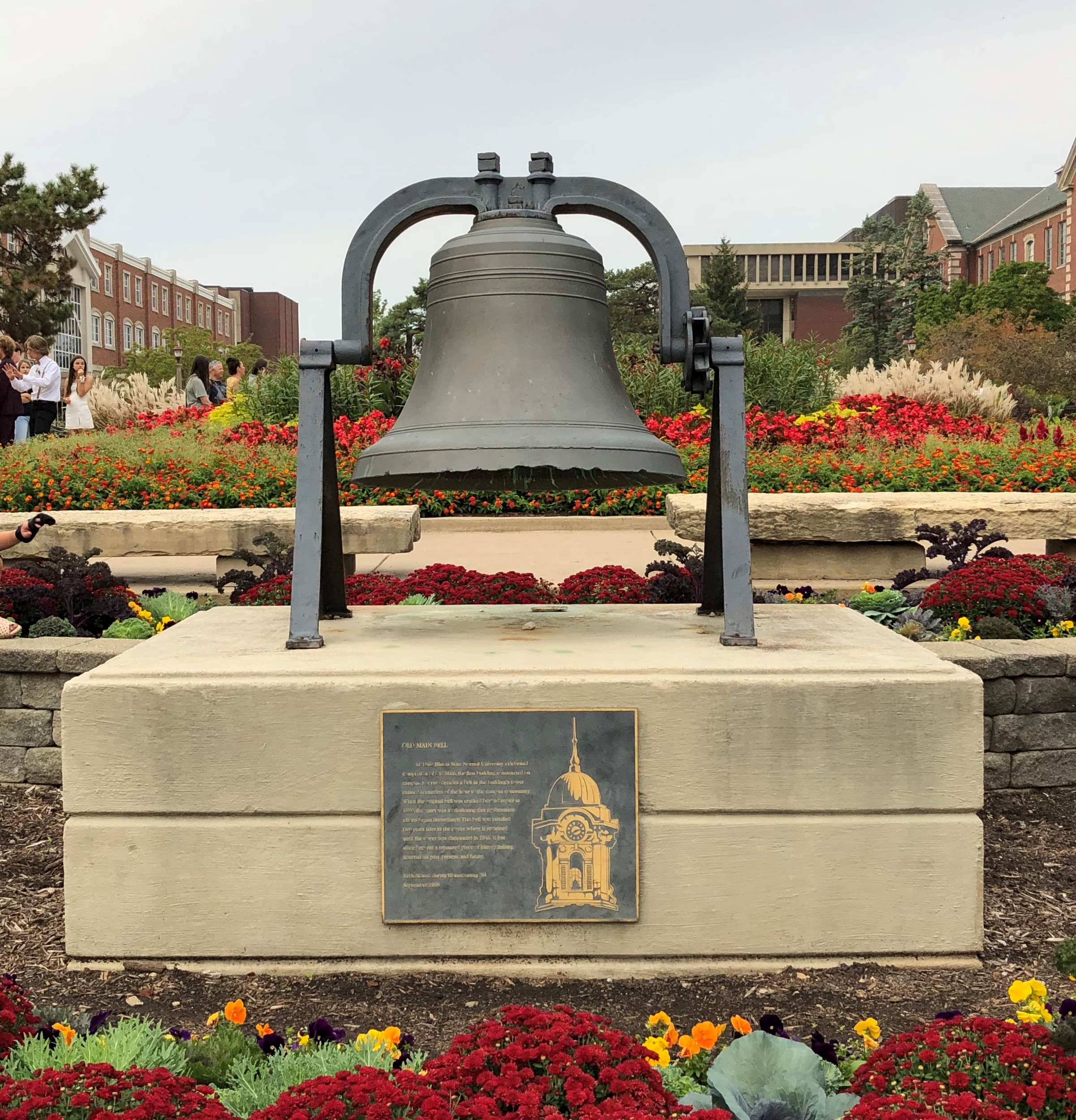
The centerpiece is the Old Main Bell, dating from 1880.
ISU Quad Old Main Bell

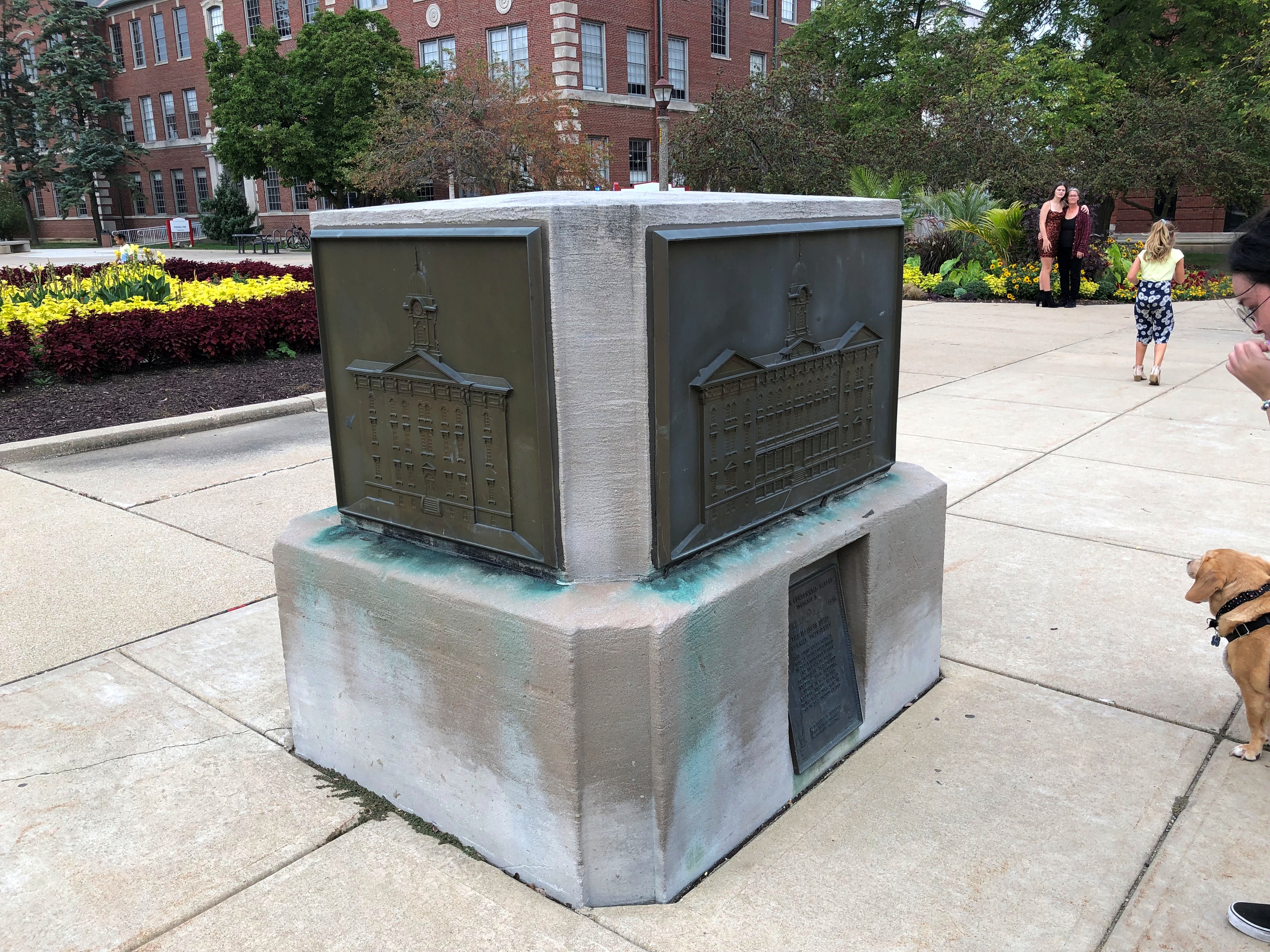
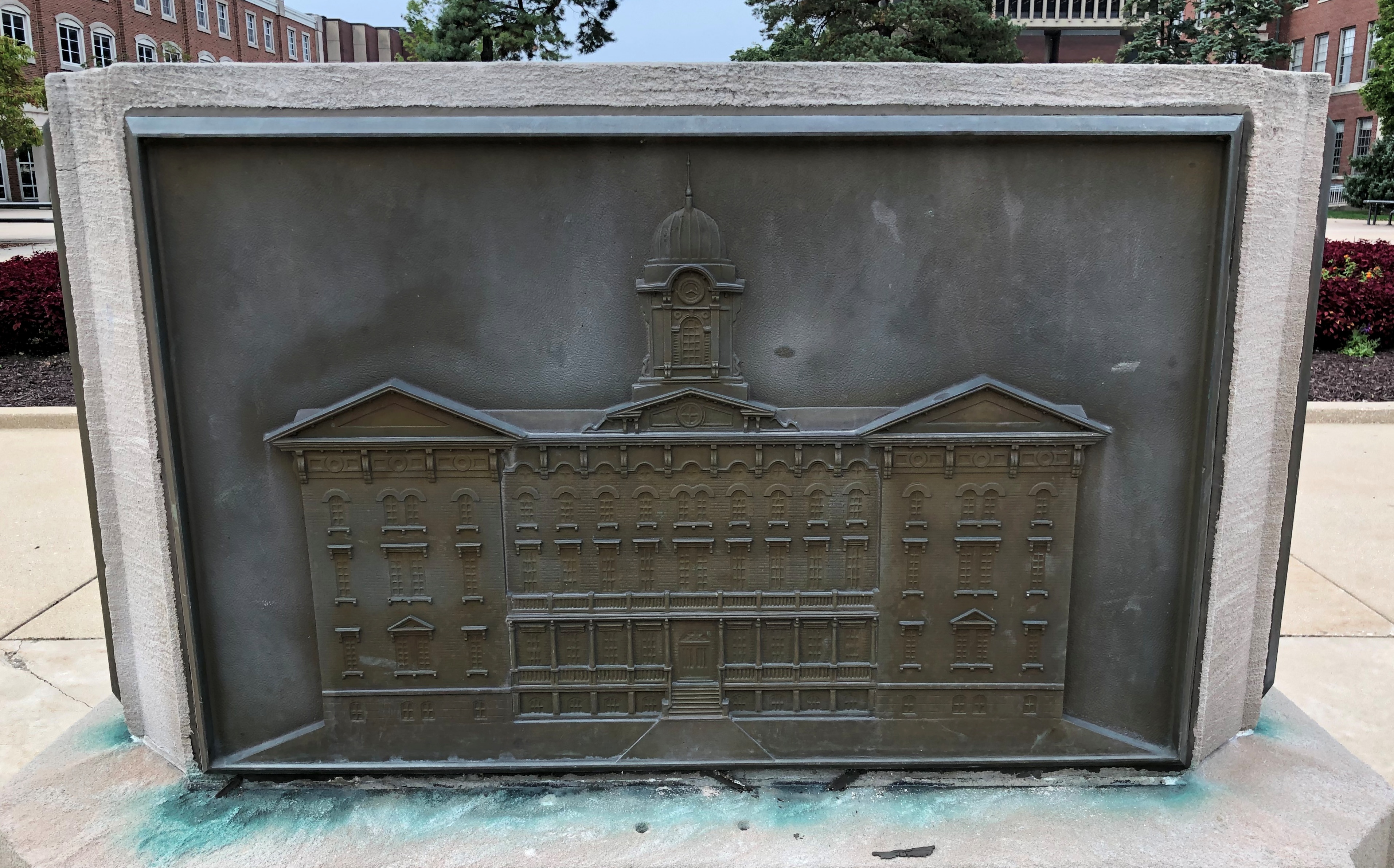
Old Main was the campus’ first building, which stood from 1857 to 1958. A memorial honors the building not far from its bell. Unusually, it depicts all four elevations of the building.
ISU Quad Old Main
ISU Quad Old Main

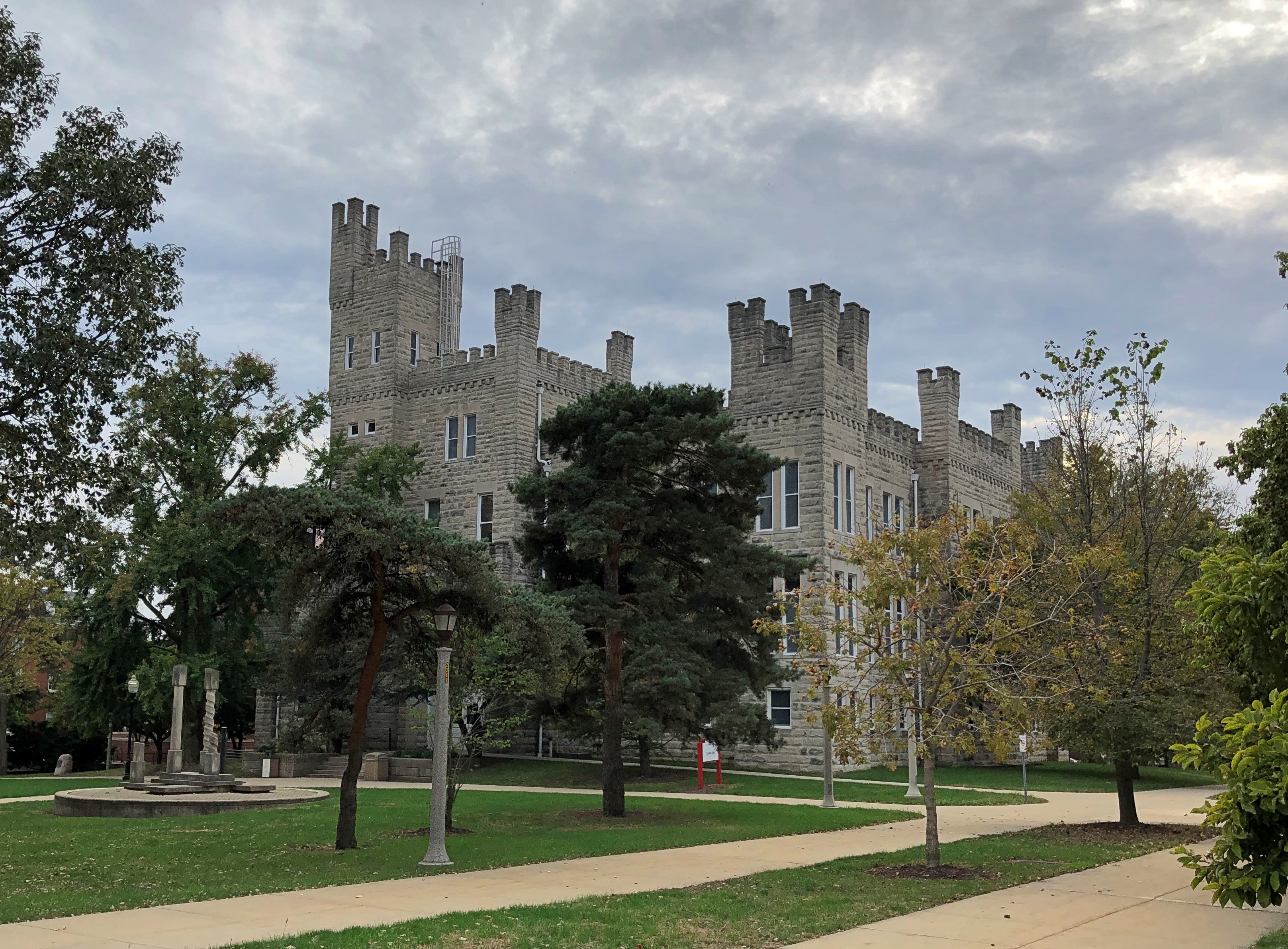
We wandered on. This is Cook Hall.

“One of Illinois State’s most interesting buildings and the oldest one still standing on the Quad, Cook Hall was originally built to be a gymnasium,” ISU tells me. “It was completed in 1897 and was named after John Williston Cook, the University’s 4th President (1890-1899). He earned his diploma in 1865 from Illinois State Normal University and in 1876 he became a Professor of Mathematics.

“The building has also been known as the ‘Old Castle’ or ‘The Gymnasium.’ The governor at the time, John Altgeld, had a great liking for medieval castles and insisted all new state construction during his term in office resemble castles. You’ll find a Cook Hall look-alike at many other state schools; they are called ‘Altgeld’s Folly.’ ”

Really? I had to look into that more, and found this Wiki item about Altgeld Castles. It does indeed seem that a raft of crenellated, or quasi-crenellated buildings at Illinois state schools dates from the 1890s. I remember seeing Altgeld Hall at UIUC, but didn’t know it was part of a pattern. An eccentric pattern. That’s two things I learned (or relearned) today; makes for a good Monday.

Mallard Lake Twilight

Heavy rain part of the day, with the promise of a cooling trend later this week. Not down to icy depths, but rather a hint of the months ahead.

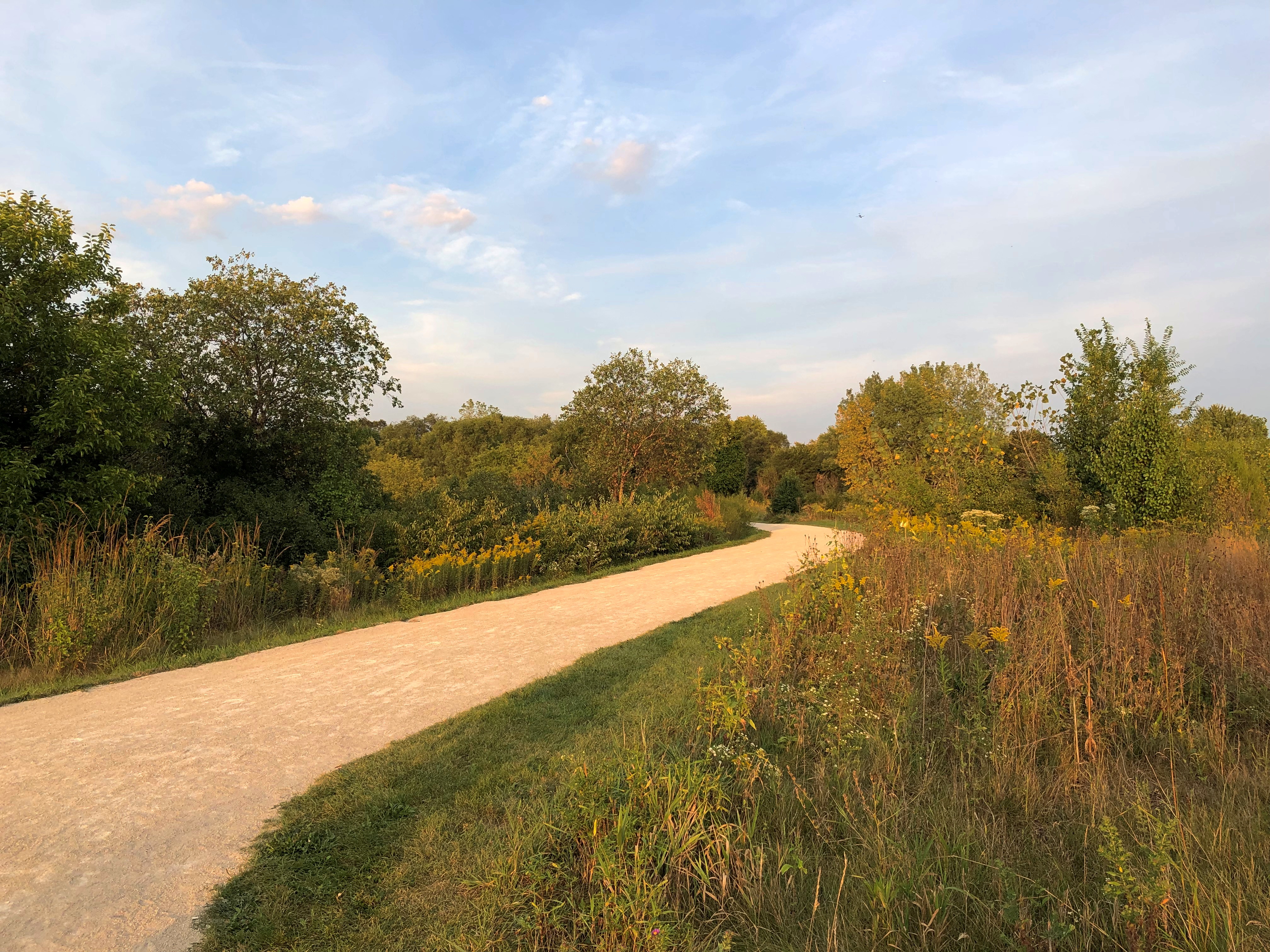
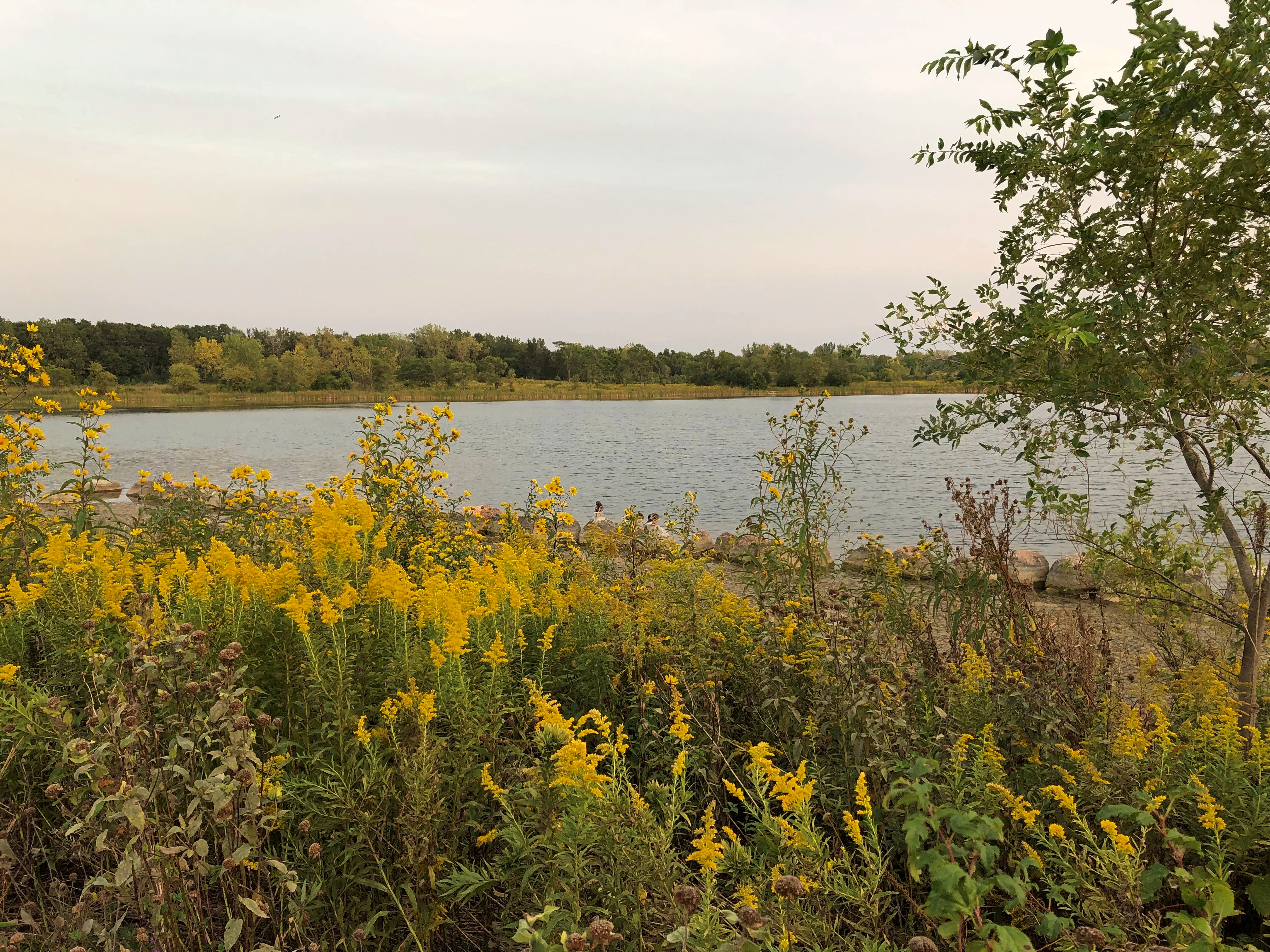
Yesterday we walked the dog around Mallard Lake. Last time there was April 2020, which seems like an eon ago. This time, the sun set while we walked the trail.Mallard Lake

Mallard Lake

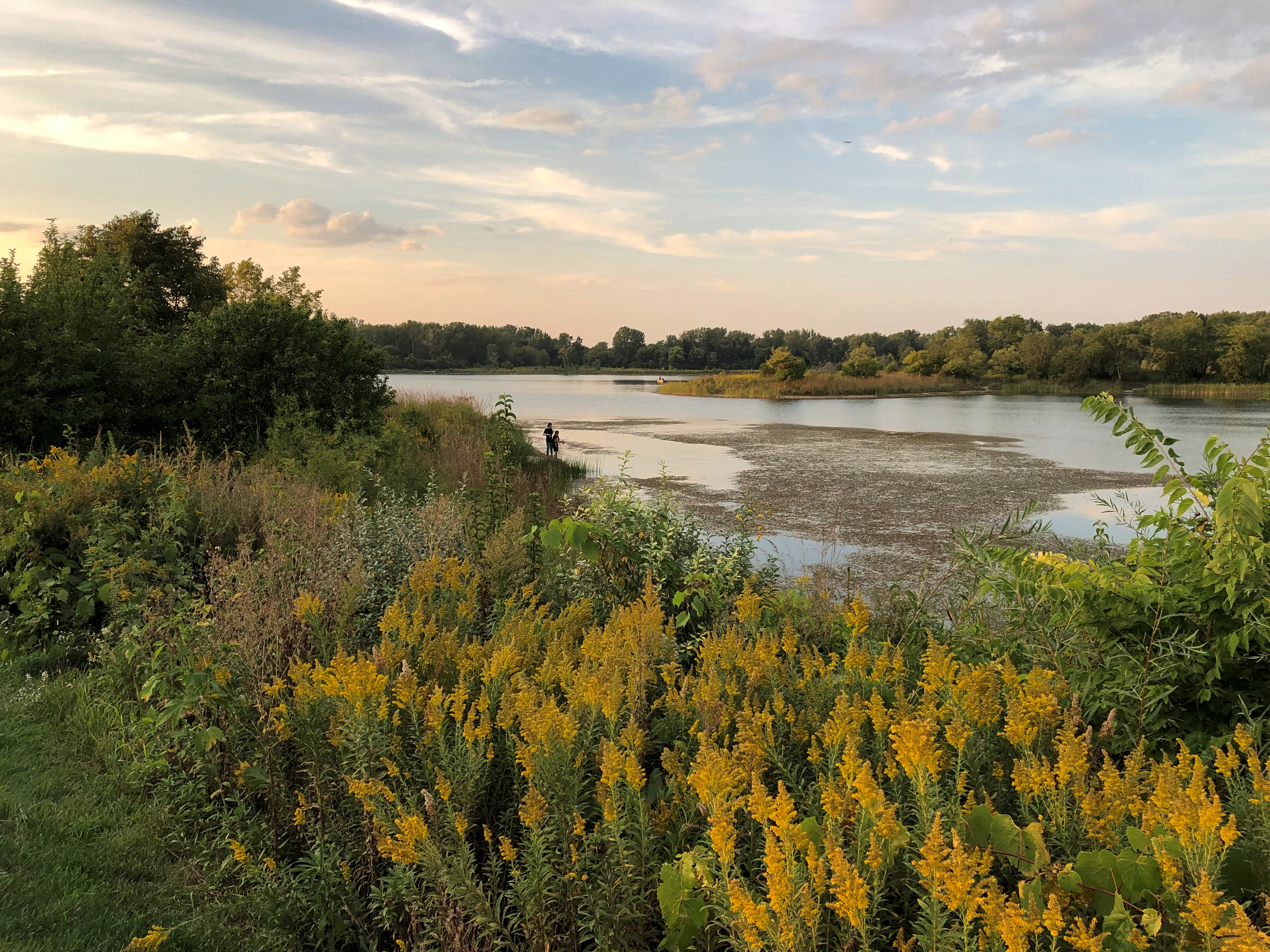
Lots of goldenrod still.Mallard Lake

Mallard Lake

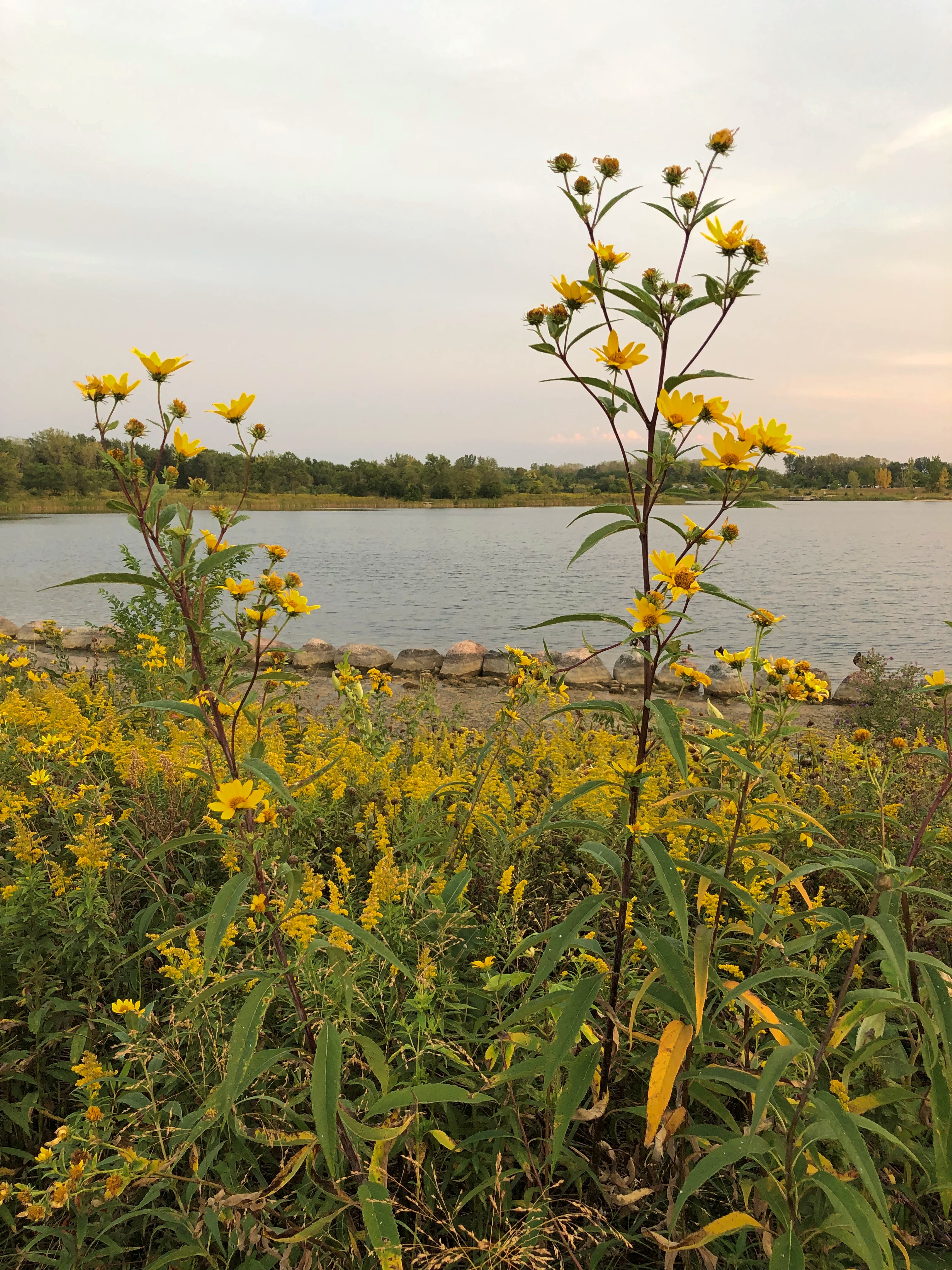
And Brown-Eyed Susan.Mallard Lake

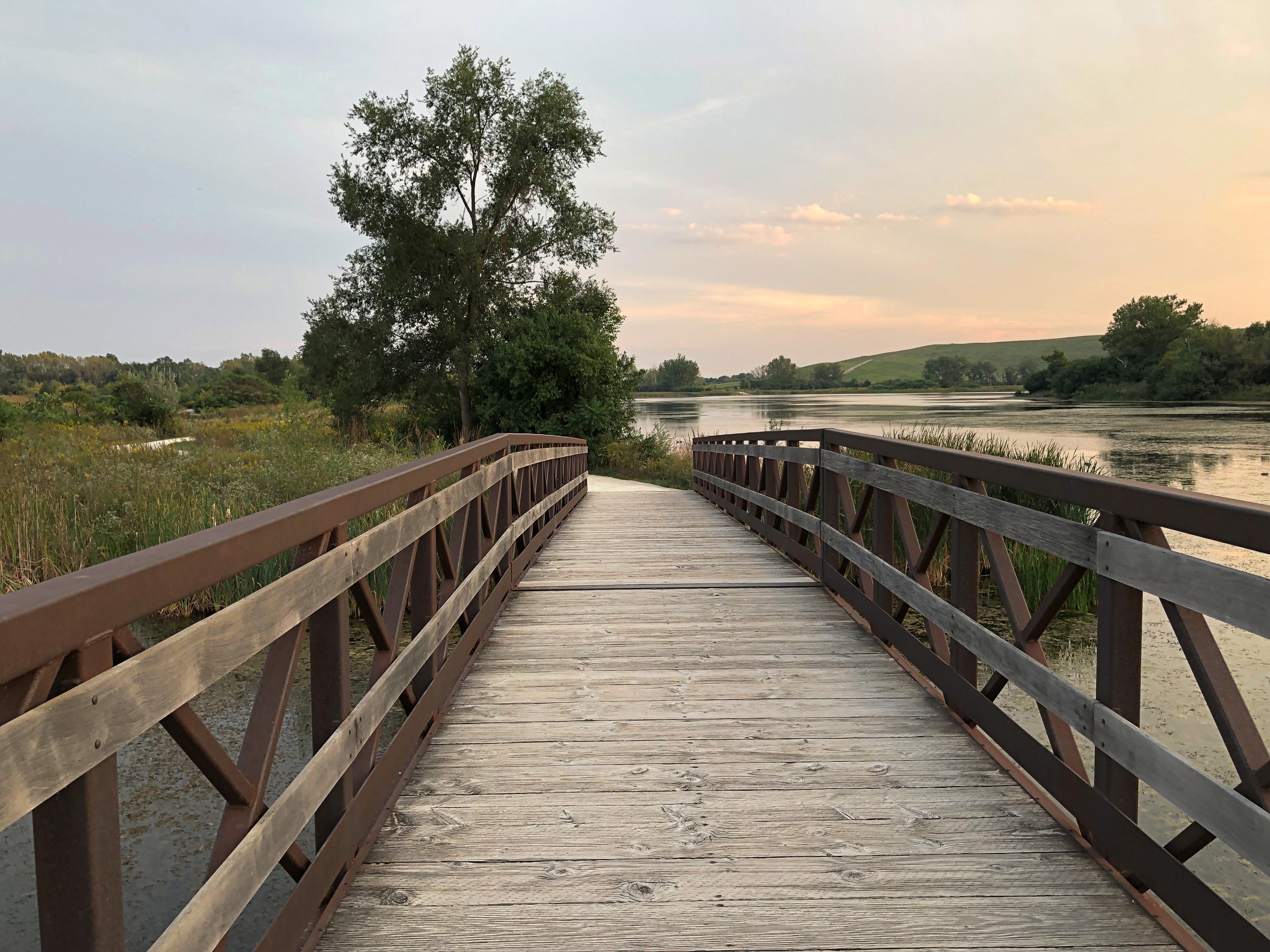
Bridges to cross.
Mallard Lake

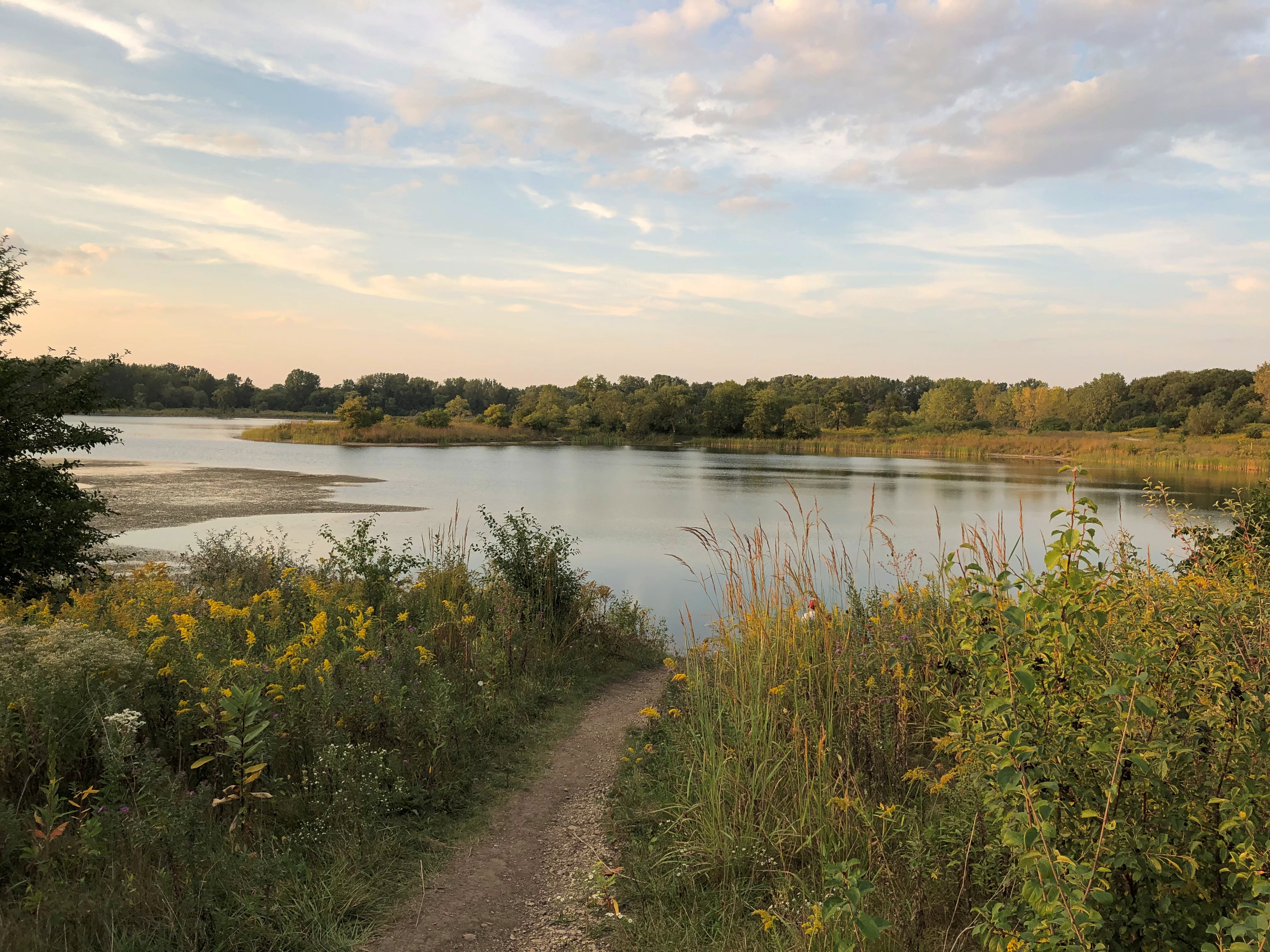
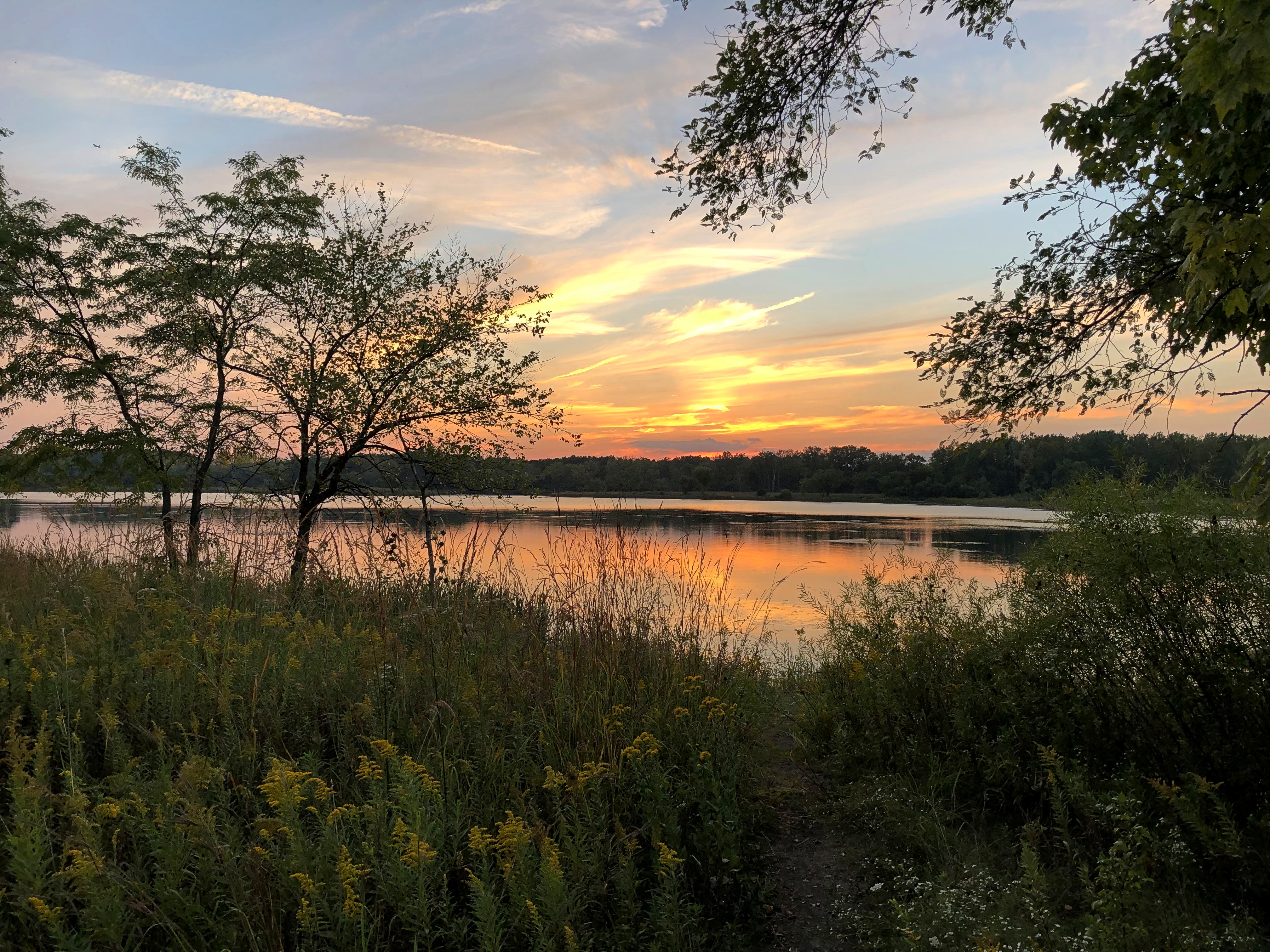
Toward the end of the trail, a pretty western sky. Much prettier than the image below, but that’s the way it is.
Mallard Lake

A good moment to finish the walk. The dog thought so too, though I don’t know that she paid much attention to the aesthetics of the sky.

Waning Summer Tidbits

As if on cue, we had a cooler afternoon and evening to start September. Not much cooler, but noticeable. Warmth will be back soon, but the air is slowly leaking out of that balloon as the days grow shorter. Back to posting around September 7.

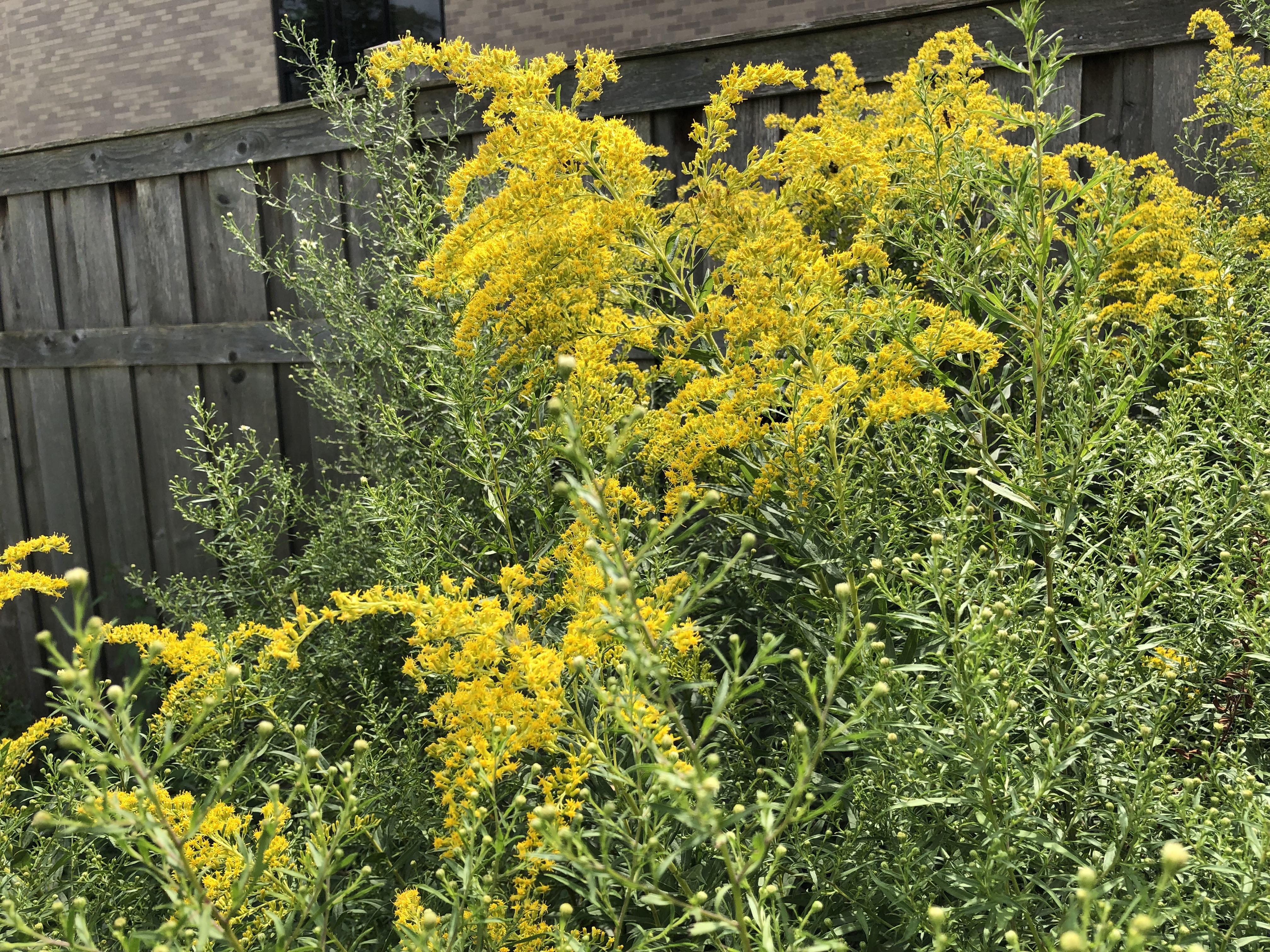
There’s a nice bloom of goldenrod out by the back fence.

I realize that it isn’t causing our intermittent runny noses, which have been worse this year than last, but not as bad as the worst ever. That would be 1987, the first late summer/early fall I spent in northern Illinois, maybe without much experience with the pollen in question. Ragweed causes that unpleasantness, I understand.

“About Hay Fever,” says American Meadows. “In short, it’s an old wives’ tale. Goldenrod does not cause hay fever. It simply got that bum rap since it blooms at the same time as the real culprit — ragweed.”

Today I started reading When In Rome by Robert J. Hutchinson (1998), subtitled “A Journal of Life in Vatican City,” which is part travel book, part memoir, part popular history, and all very readable and amusing.

Something I found out today: Lyle Waggoner (d. 2020) founded a successful company that provides trailers to movie and TV studios, Star Waggons. After The Carol Burnett Show and Wonder Woman, that’s what he turned his attention to. One of his sons runs it even now, though it has been acquired by a REIT.

One more thing I found out today, early this morning: even at my age, dreams about missing class, or being unprepared for a test, do not disappear completely. Also, the sense of relief is still there when you wake up — ah, I haven’t had to go to a class in nearly 40 years, much less be prepared for one.

The Georgeson Botanical Garden & Other Alaskan Flora

One of the channels on my hotel TV in Fairbanks was essentially a continuous commercial for places to visit in that part of Alaska. All kinds of tourist activities or things to buy to remind you of your visit.

Here’s a thought for the Great Alaskan Bowl Co. of Fairbanks: noting that your product was featured in the 2017 “Made in America Week” event at the White House, however much of an honor that might seem to be, and however excellent your paper-birch wood bowls might be, could be a way to alienate as many potential buyers as it impresses. Just a thought.

The only TV recommendation I took to heart was a suggestion to visit the Georgeson Botanical Garden on the campus of the University of Alaska Fairbanks.

Georgeson Botanical Gardens, Fairbanks

Georgeson Botanical Gardens, Fairbanks
At the end of July, the eight-acre garden is a lush place, flush with flowers and varieties of vegetables I wouldn’t have associated with Alaska. But I am horticulturally ignorant. The growing season is short in the subarctic, but there is a growing season.

Flowers.Georgeson Botanical Gardens, Fairbanks

Georgeson Botanical Gardens, Fairbanks

Georgeson Botanical Gardens, Fairbanks
Vegetables.
Georgeson Botanical Gardens, Fairbanks

Including the largest cabbages I’ve ever seen.
Georgeson Botanical Gardens, Fairbanks

“The Georgeson Botanical Garden began in 1989 as a research, educational, and public outreach program,” the garden web site says. “However, its roots lie much deeper. In 1898, 31 years after the US purchased Alaska, the Secretary of Agriculture of the USDA sent [a] special agent of agriculture, Charles Christian Georgeson, to Alaska to explore the agricultural potential of the state.”

Georgeson established seven agriculture stations in the territory, two of which still exist, one in Fairbanks and one in Matanuska.

“The Fairbanks experiment station was established in 1906 and in 1931 the farm was incorporated into the Alaska Agricultural College and School of Mines (renamed the University of Alaska Fairbanks in 1935). [By the 1980s]… UAF proposed turning the muddy paths and straight rows of trial plants into a space that is more accessible and welcoming to the public.”

Why do cabbages (and cantaloupes and broccoli and others) grow so large in Alaska? It might be counterintuitive, but NPR offers an explanation.

“It’s Alaska’s summer sun that gives growers an edge, says Steve Brown, an agricultural agent at the University of Alaska Fairbanks. Basking in as much as 20 hours of sunshine per day, Alaskan crops get a photosynthesis bonus, allowing them to produce more plant material and grow larger. Brassicas like cabbage do especially well, says Brown.”

Elsewhere I saw plenty of other intriguing flora, including the main kinds of trees in the state, such as spruces, black cottonwood, paper birch, quaking aspen, alder and balsam poplar.Alaskan bush

Alaskan bush

Fireweed. Late summer is its time, and I saw it everywhere.
Alaskan fireweed
Alaskan fireweed

Alaskan fireweed

“The fireweed we know in Alaska — Chamerion angustifolium — proliferates during summer, aggressively erupting in open spaces before cottoning in the turn toward fall,” the Anchorage Daily News says.

“Fireweed is common throughout much of the northern hemisphere. In Canada, it is the willowherb. In the United Kingdom, it is rosebay willowherb….
“The ‘fire’ in the name derives not just from the vivid color of the flower itself but from its tendency to grow in areas cleared by fire. As fireweed favors open, cleared and dry land, it was among the first plants to grow in the wake of the 1980 Mount St. Helens volcanic eruption in Washington state.”

Back Yard Summer Flora ’21

Rain again in the morning. Tomorrow maybe more. Moderate temps in the meantime. I understand that we’ve traded places, weather-wise, with the Pacific Northwest, which is remarkably hot and dry for the moment.

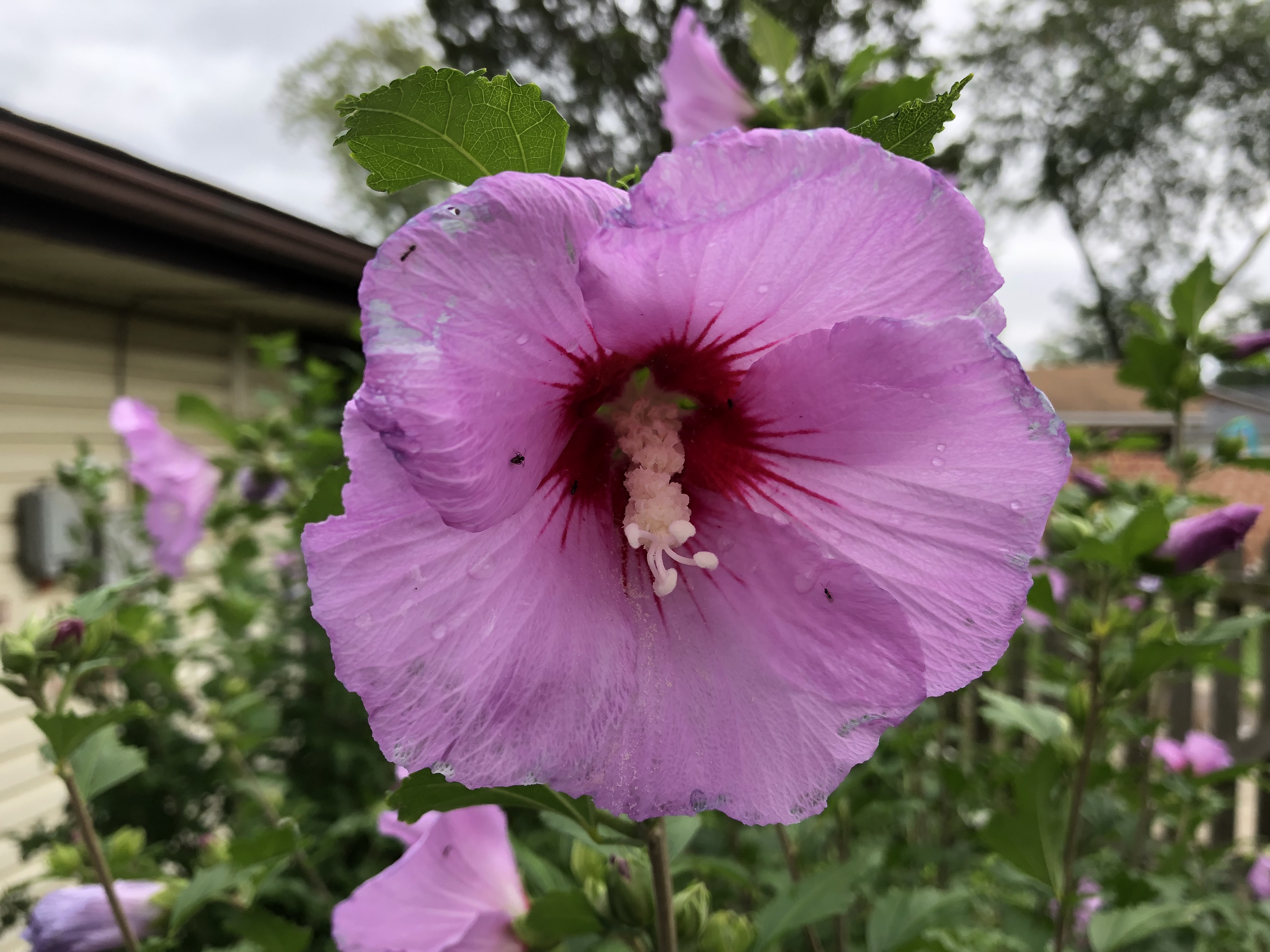
By afternoon it was again dry enough to sit on our deck. I also did a survey of the flowers of the back yard, including those springing from the damp earth.

back yard flowers

back yard flowers

back yard flowers

Those in pots on the deck.
back yard flowers

And along the fence.
back yard flowers

“Summer afternoon — summer afternoon; to me those have always been the two most beautiful words in the English language.” — Henry James

Thursday Extras

This was in a window we walked by in west suburban Wheaton not long ago. I like the neon. Who doesn’t like neon? Who doesn’t like gelato? I’d never had any gelato until I went to Florence. That was a great place to experience it for the first time.
gelato
We didn’t stop by for any gelato. We did buy a couple of most delicious pastries at a nearby place called Suzette’s.

I found this card in Peoria recently. Near Bradley U. Not at the store itself, but while picking up food at Jerk Hut, where we bought some tasty jerk chicken.
Interesting that the students of Bradley, some of whose parents weren’t around for the original iteration of hippies, would support such a business. Then again, the key might be in that now-obsolete code term tobacco accessories.

I heard a few seconds of an ad on YouTube recently featuring a young Brit walking along the Thames, with the Tower Bridge in the background, to make absolutely sure we know he’s British, as if his dialect didn’t tell us that. He said something along the lines that such-and-such was going “redefine the way you think about men’s makeup.”

Fat chance, ya limey bastard. I can sum up my thinking on men’s makeup in one pithy sentence that isn’t going to change: I’m never wearing any.

Got a press release the other day from someone — some automated mailing list — that doesn’t appreciate my commercial real estate beat.

“With #chlorophyll and #chlorophyllwater trending on social media, I wanted to put Chlorophyll Water® (the only bottled, pre-made chlorophyll drink on the market) on your radar, as it’s selling out in retailers across the country,” the release asserted.

“A favorite amongst Kourtney Kardashian, Rosario Dawson, Mandy Moore and Aly Reisman, Chlorophyll Water® is a plant-powered purified water enhanced by nature with the addition of Chlorophyll, a key ingredient and the distinct green pigment in plant life.”

I probably won’t be a consumer of that product, but who knows? Chlorophyll might be tastier than I think. Also, glad to report that I’ve only heard of two of those celebrities, only one of whom I can acknowledge has some talent.

Received some direct mail the other day promising better lawns through chemistry. It is spring, after all. As chilly as temps have been, it’s still green out there. Anyway, on the outside of the envelope, it says:
Dandelions. Crabgrass. Weeds.

Act now to stop those lawn problems and receive your 20% neighborhood discount.

Plus a FREE Core Aeration. See details inside.
Problems, you say? I say it’s biodiversity. The suburbs need it, too.
This is a gimme letter envelope I had to scan, from a statewide advocacy org with its eye on utility rates. I suspect the risk is pretty small, considering the distinct history of the two states.

You know, in some other context, some other organization might be sending letters screaming, Texas Cannot Become Illinois.

Lilacia Park ’21

RIP, Helmut Jahn. I never met the man, but I worked in the same building in downtown Chicago as his office, once upon a time. The superb 35 East Wacker, as it happens, where Jahn had his showroom in the top dome. We were on the seventh floor. We could always tell when architects were on the elevator, headed up to Jahn’s office; they were the gentlemen with ponytails.

Lilacia Park, like Cantigny, is in the western suburbs, in Lombard as it happens, only a few miles to the east and a little north. Early May is the time of the lilac blooms there, and it’s been a fair number of years since we went, so we decided to drop by Lilacia on the way home on Saturday.Lilacia Park

The park didn’t disappoint, though I think it was a few days past peak for lilacs, to judge by the effusions of flowers I’ve seen in earlier years.Lilacia Park Lilacia Park

But not for tulips. Definitely peak blooms for many of them.Lilacia Park tulips Lilacia Park tulips Lilacia Park tulips

Lilacia was crowded too. Especially with prom and quinceañera celebrants.Lilacia Park

Lilacia Park

“Lilac bushes are not native to North America,” explains Flower magazine. (Just like most of us.) “The Common Lilac originated in Eastern Europe in the mountains of Bulgaria, Croatia, Slovakia, the Czech Republic, Hungary and Romania. For centuries, the Turks cultivated the species.

“Then, in the 1500s, lilac bushes arrived in Vienna and Paris. The French developed so many varieties that Common Lilac is often called French hybrid or simply French Lilac. Finally, these European specimens made the journey to the New World, and lilac bushes graced the gardens of George Washington and Thomas Jefferson.”

And, I have to add, the former garden of Col. William Plum and his wife Helen Maria Williams Plum in Lombard, Illinois.

“Colonel Plum moved to the Chicago area in 1869 and settled in Lombard when it was still a new village. The Plums purchased land and filled it with lilacs, which they fell in love with after traveling to the celebrated gardens of Victor Lemoine in France,” Atlas Obscura says.

“The couple returned from the trip with two lilac cuttings, one of Syringa vulgaris, ‘Mme Casimir Périer,’ a double white, and the other of Syringa vulgaris, ‘Michel Buchner,’ a double purple — the initial cultivars of the collection that stands today.

“The acclaimed landscape architect Jens Jensen — responsible in large part for the design or redesign of Chicago’s Columbia, Humboldt, Garfield, and Douglas Parks — agreed to design the Lombard Community Park, now known as Lilacia Park.”