This joke in one form or another must go back to vaudeville at least.
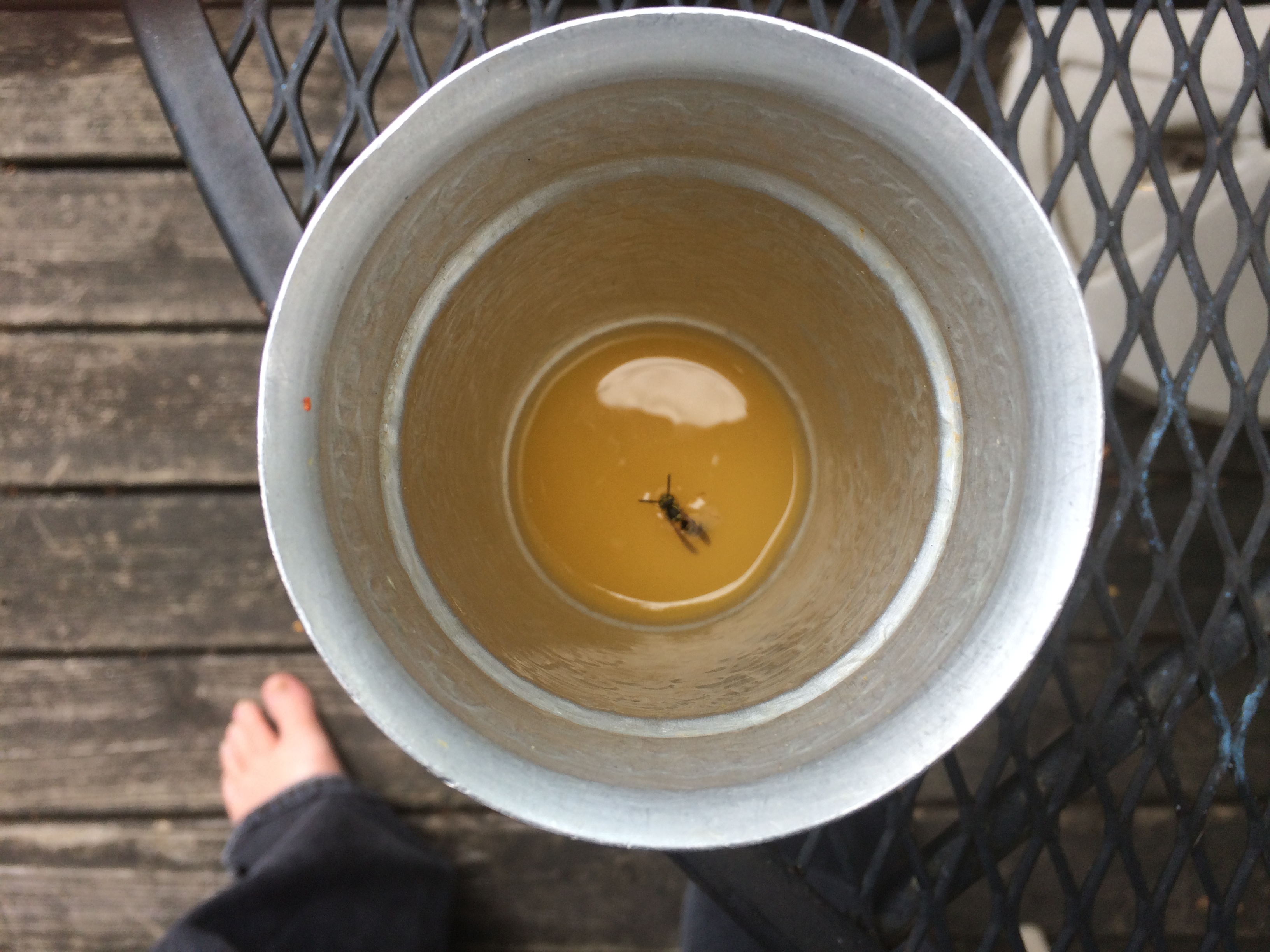
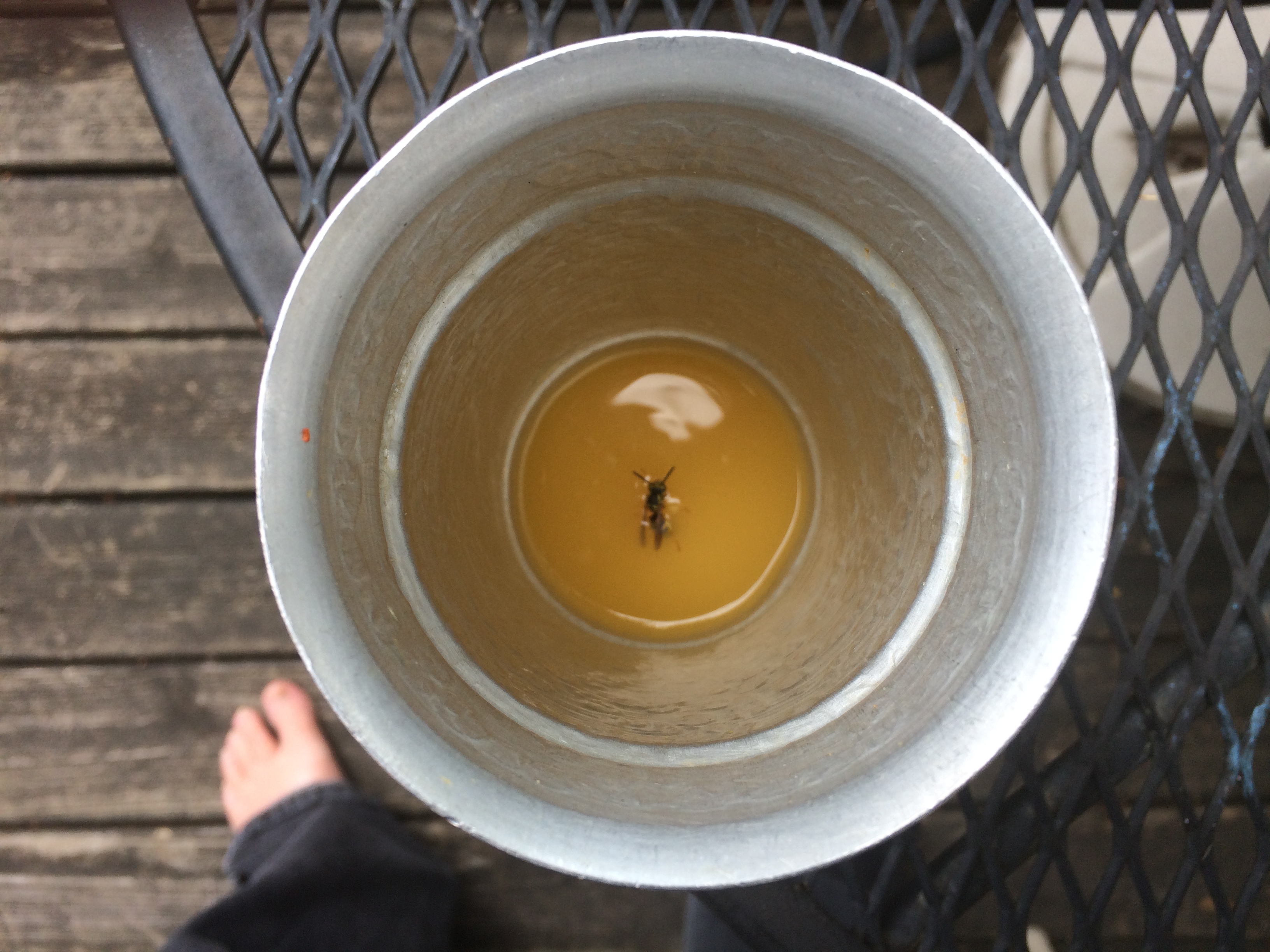
What’s that bee doing in my orange juice?
The breaststroke.
Congratulations to Geof Huth, who will be a grandfather come 2020. The latest of my contemporaries to do so, but hardly the last, I bet. Who are my contemporaries? People who could have gone to high school with me. An idiosyncratic definition, but I’m sticking with it.
News items pop up on my phone — misnamed, isn’t it? — my communications-information-time sucker gizmo, the work of bots and algorithms that are as mysterious as the Sibylline Books. Usually, it offers nothing I want to read, since the ways of bots and algorithms may be mysterious, but they’re still pretty dimwitted.
Sometimes, though, the offering is just downright bizarre. Recently the phone told me that one Susan Kristofferson had died. Given the name, I thought she was some relation of the singer of that name. I was just curious enough to check (on my laptop), and no — nothing to do with the singer. Nothing to do with me, either. Neither friend nor relative nor even nodding acquaintance.
So why did the phone tell me about her? Only the bots and algorithms know, and they aren’t telling.
Looks like Tom’s Diner in Denver, whose 1973 atmosphere I enjoyed in 2017, will soon be no more. Too bad to see a good diner go, Googie or not.
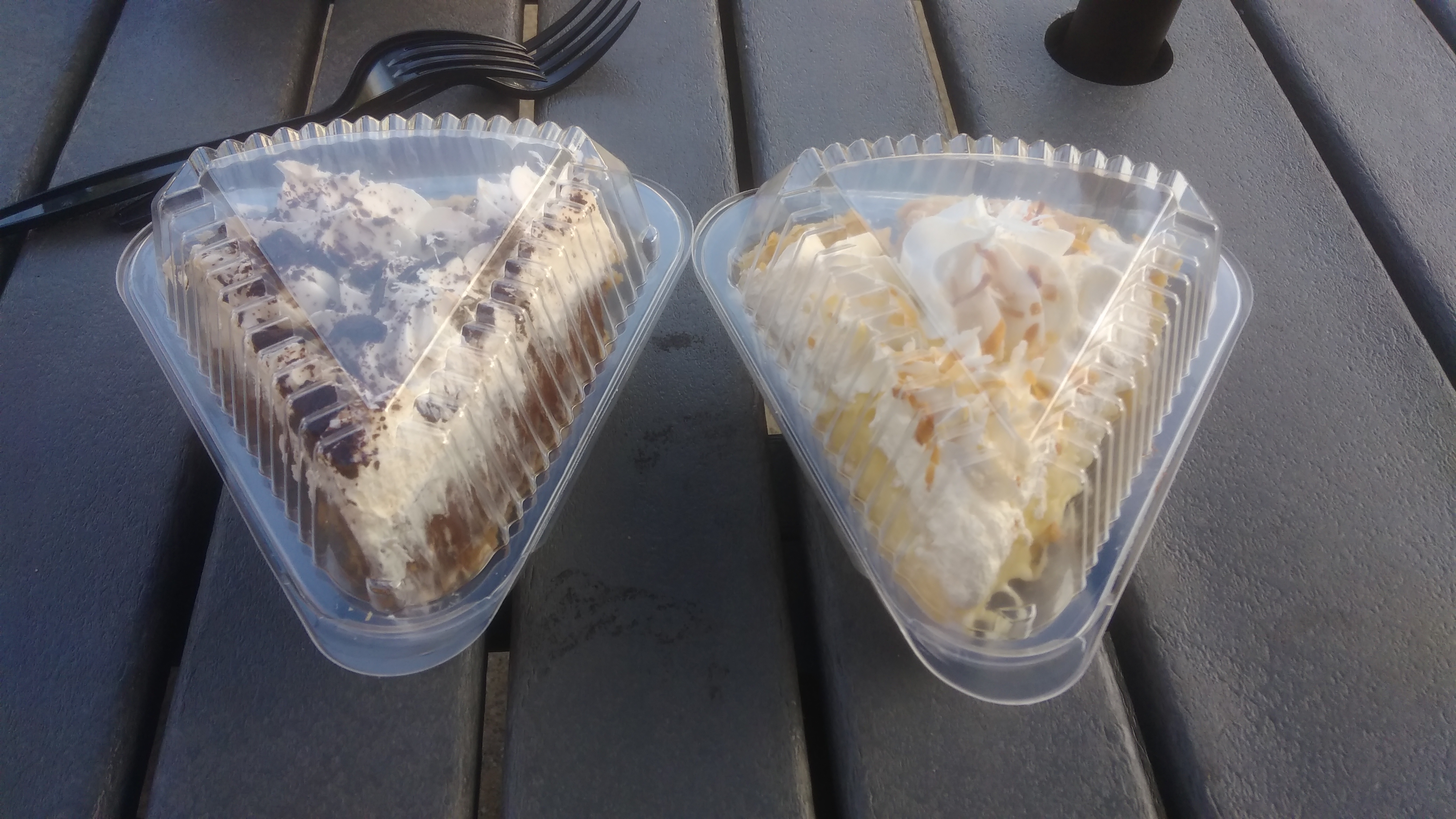
Late last year, I groused about a Chicago joint that serves $8 slices of pie, a price that compares unfavorably even to Manhattan. In Lansing, Michigan, recently, I paid about $8 for creme pie — but for that price we got two slices that we shared.
Tasty pie. Served by the Grand Traverse Pie Co., with 15 locations, all of which are in Michigan, except for an oddball in Terra Heute, Indiana. Sure, it’s cheaper to operate in a small city, but that alone can’t account for the difference between $4 and $8 slices.
Until recently, I hadn’t heard “Step Right Up” by Tom Waits in years. You might call it advert-scat. It’s funny.
I first heard it in college, because my friend Dan had some Tom Waits records, most memorably Small Change. Listening to it now, it occurs to me that some of the phrases have mostly passed from common use in the advertising world, such as please allow 30 days for delivery or the heartbreak of psoriasis or no salesman will visit your home.
So in 100 years, will the song mostly be 20th-century gibberish? Maybe. Still, with a light beat, steady bass and driving sax, I’d listen to Tom Waits sing gibberish.
If I didn’t know better, and I don’t, I’d think that Lonely Planet is straying away from its backpacker roots into travel articles infused with that wan emotion felt by wan people, fear of missing out.
Take this article about the Scott’s Addition neighborhood of Richmond, Virginia. Not long ago, I wrote about an apartment development in the area, and in the course of my research discovered that the district is hip, up-and-coming, the haunt of millennials who have more adventuresome tastes than all previous generations, etc. That wasn’t something I’d known. On the whole, that’s probably good: economic and real estate development for the area, new businesses, people walking around, maybe even a few older buildings saved.
Still, the tone of the article is offputting. Here’s how it starts: “Passionate entrepreneurs have muscled onto the scene: hot art-themed hotels are wowing guests, bold chefs are shaking up the culinary landscape and brewers offer sours and saisons in brand-new tasting rooms.”
A sentence that could be published in precisely any travel guide about anywhere thought to be hip. There’s nothing distinctive about it. Remember in Masada, when one of the other Romans was committing a particularly heinous act, Peter O’Toole’s character stopped him while yelling, This is not Rome! My urge here is to declare, This is not Lonely Planet!
Lonely Planet cares not for art-themed hotels or bold chefs or brand-new tasting rooms. Lonely Planet might take a look in the hotel lobby, but then it finds a cheap lunch and eats it on a bench as life on the streets goes by, which Lonely Planet watches with delight. Lonely Planet smiles at the thought of bold chefs who create must-have creations. How do we know that they are must have? Everybody says so. Guaranteed to be expensive too, and Lonely Planets cares not for that.
That’s not my only beef with this particular article. It’s called “36 hours in Scott’s Addition, Richmond’s new hotspot.” It should be called, “36 hours in Scott’s Addition, Richmond’s new hotspot, while well and truly drunk.”
The following is an outline of the article’s suggestions: First, go to a distillery and drink. Then drink cider made from apples so rare only one secret tree in Serendip grows them. Then have dinner, with “craft beer and adult milkshakes” at a “postmodern diner.”
See some art, because art is good, then resume drinking — Chinese food with craft beer. Then more beer. And some more after that, at very arty places. Or maybe saisons or farmhouse ales. Then stagger to another brewery. Don’t forget to eat after that, because the food’s special around here, but also finish things off with more beer!
It’s definitely the tone that bothers me. No doubt all of the recommended places are quite good, if that’s what you want. Some of my old friends have epicurean and gourmand tendencies, after all. The tone of the article, on the other hand, is Hit! All! The! Special! Places! or your trip will be crap, your time wasted and your soul unnourished.
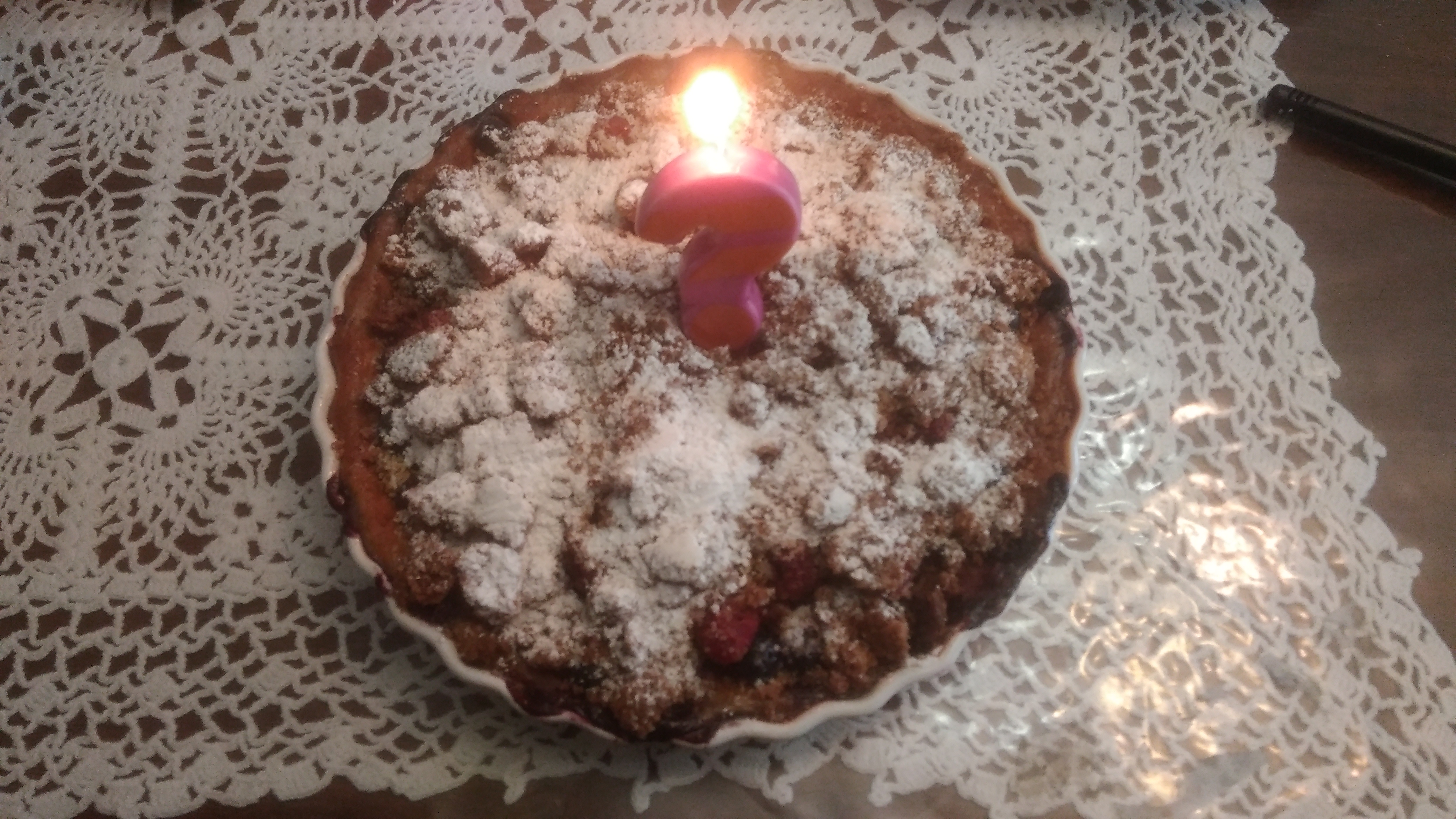
A birthday tart, using blueberries and raspberries obtained at a nearby weekly farmers market, though they aren’t really visible under the light cover of powdered sugar. Yuriko made it for herself.
I added the candle. Ann expressed surprise that such question mark candles are sold, but she’s young yet. I suggested that exclamation candles might be on the market as well. Who knows, maybe even interrobang candles.
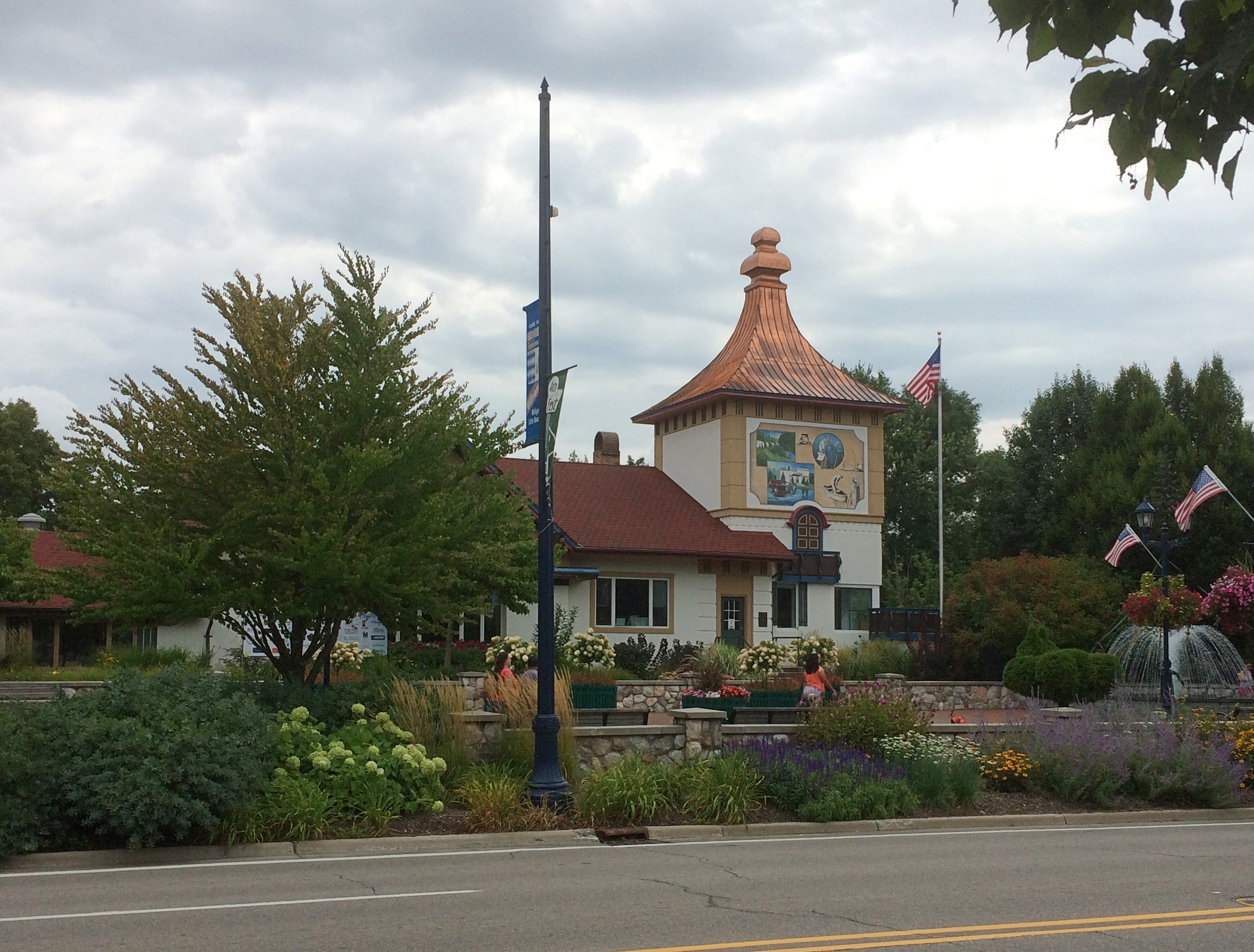
One thing I didn’t expect while we strolled along Main Street in Frankenmuth, Michigan, on Labor Day — yet another walkable main street — was a life-sized bronze of a fudge maker. Yet there he is.
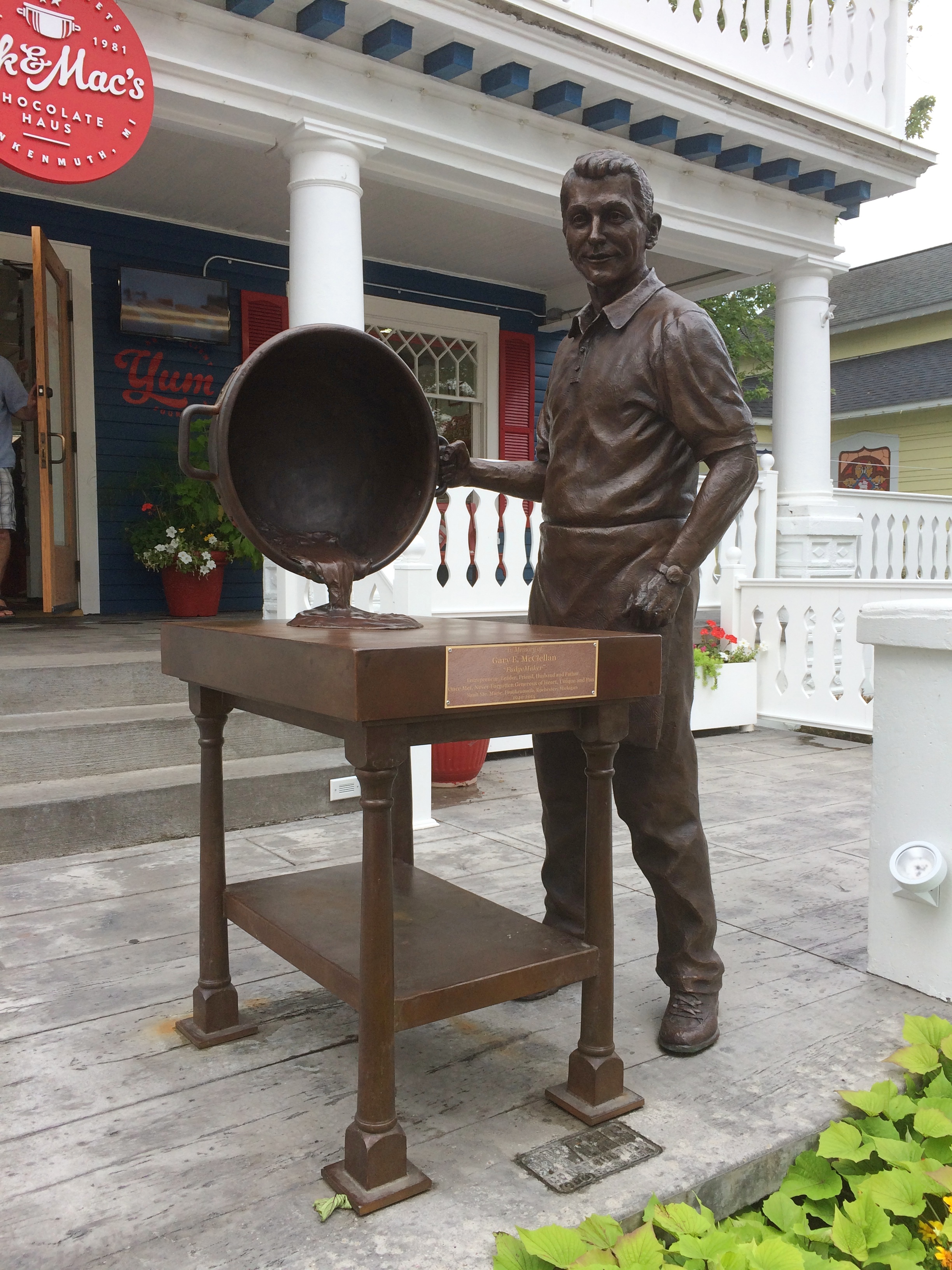
According to the plaque, it’s Gary F. McClellan (1940-2015), “entrepreneur, leader, friend, husband and father.” He must have had something to do with Zak & Mac’s Chocolate Haus, which is behind the statue. That’s one of a string of small stores along the street whose customers are the tourists who come to Frankenmuth, a farm town settled by Bavarians in the 19th century that eventually added a tourist component.
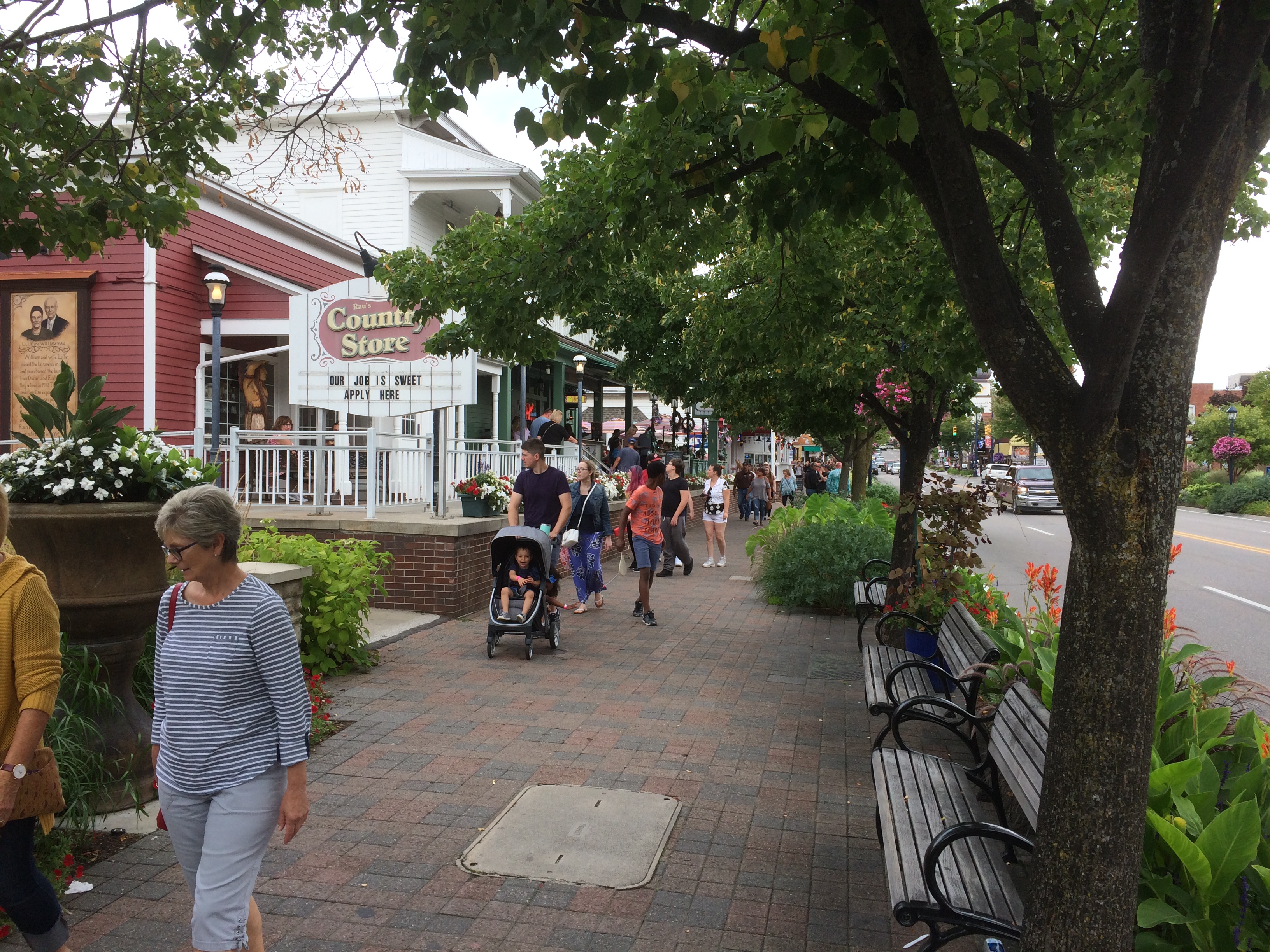
A successful component, I’d say. Lots of people had come to town on Labor Day.
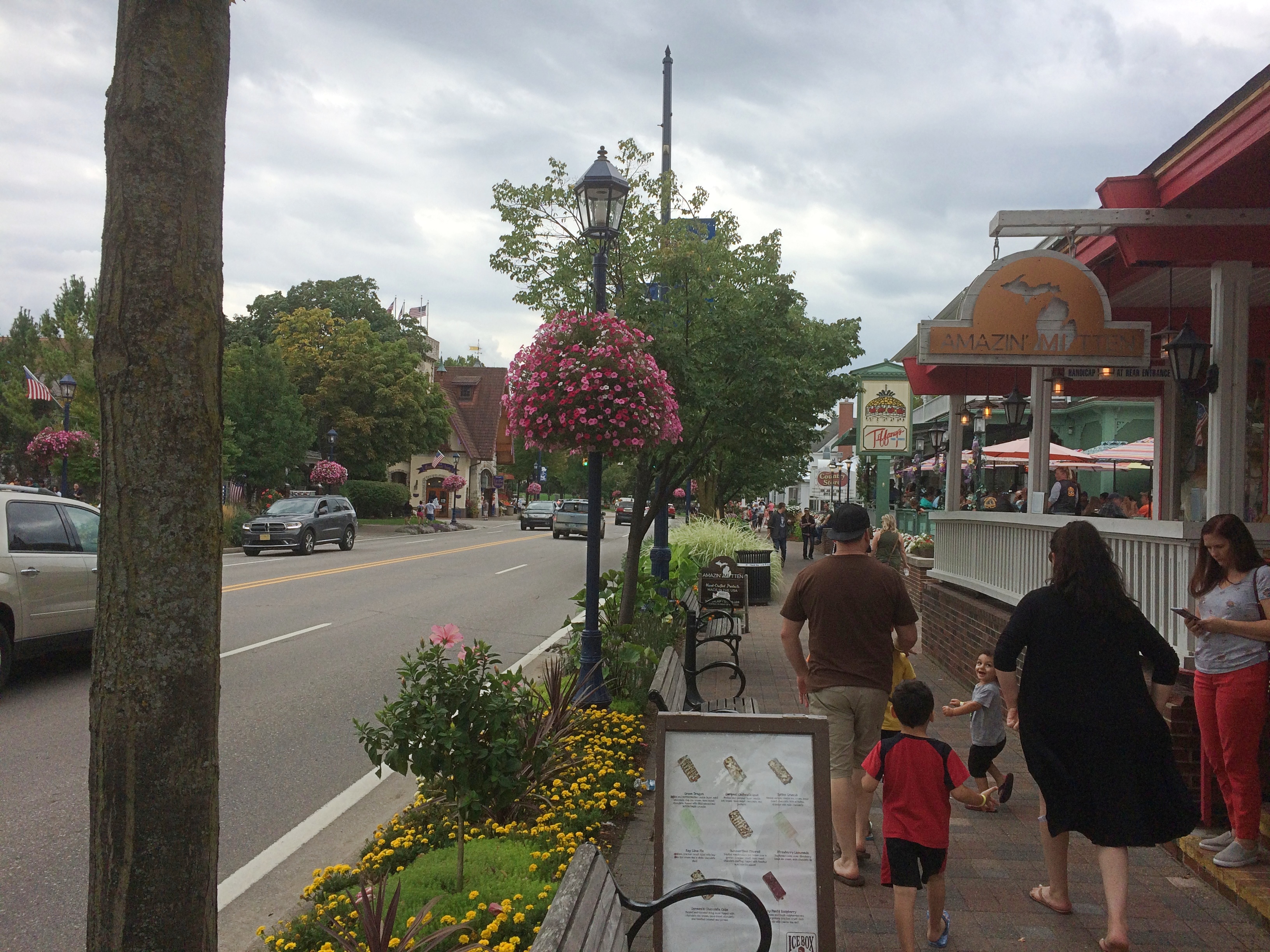
I’d read a little about the settlement of the area by Bavarians, interestingly before 1848, as an Indian mission that never really panned out because most of the Indians were already gone by then. Even so, the doughty colonists stayed. Their descendants are probably pretty thick on the ground in this part of the state.
Modern visitors come to wander through the shops, many with that Bavarian look. That’s what we did.
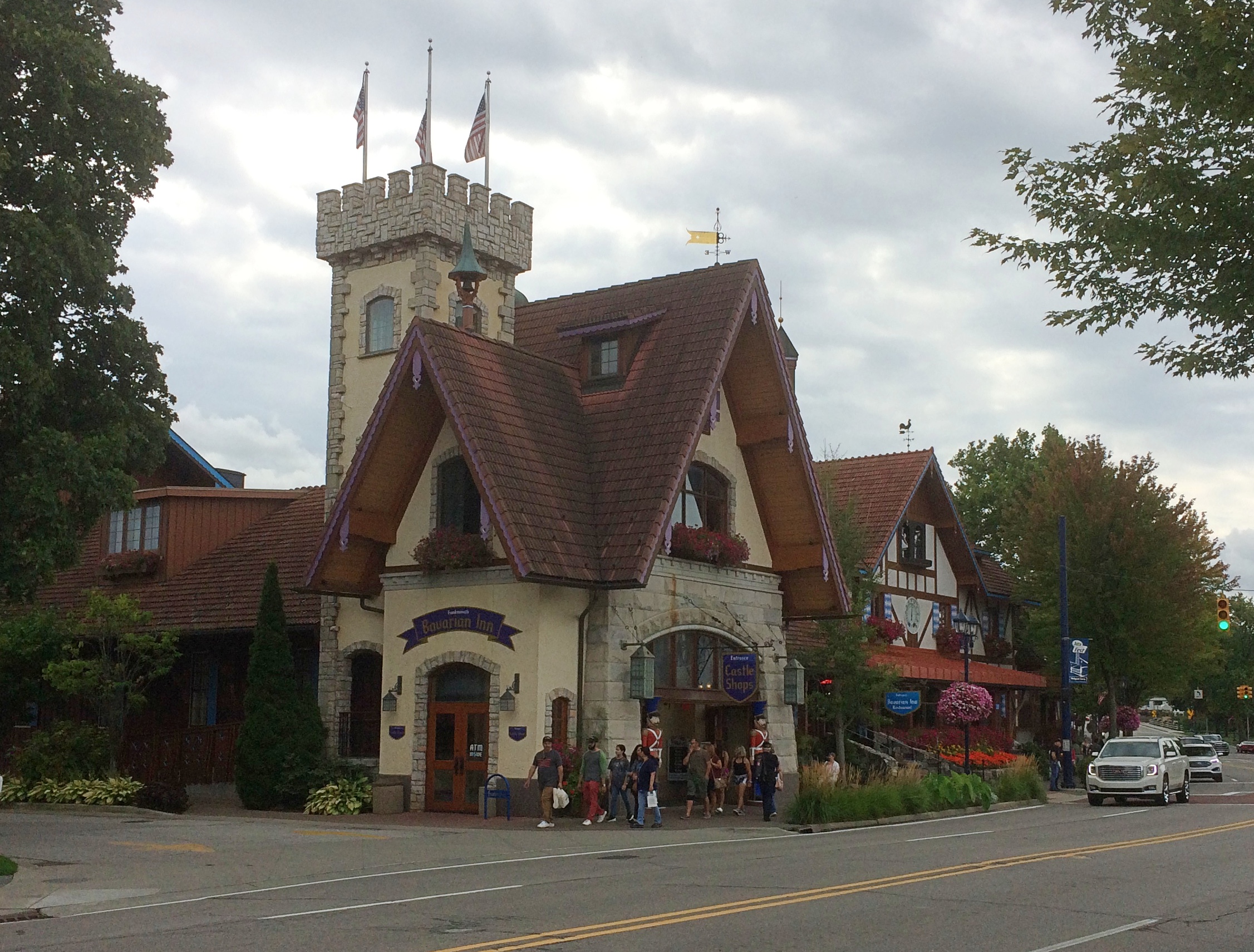
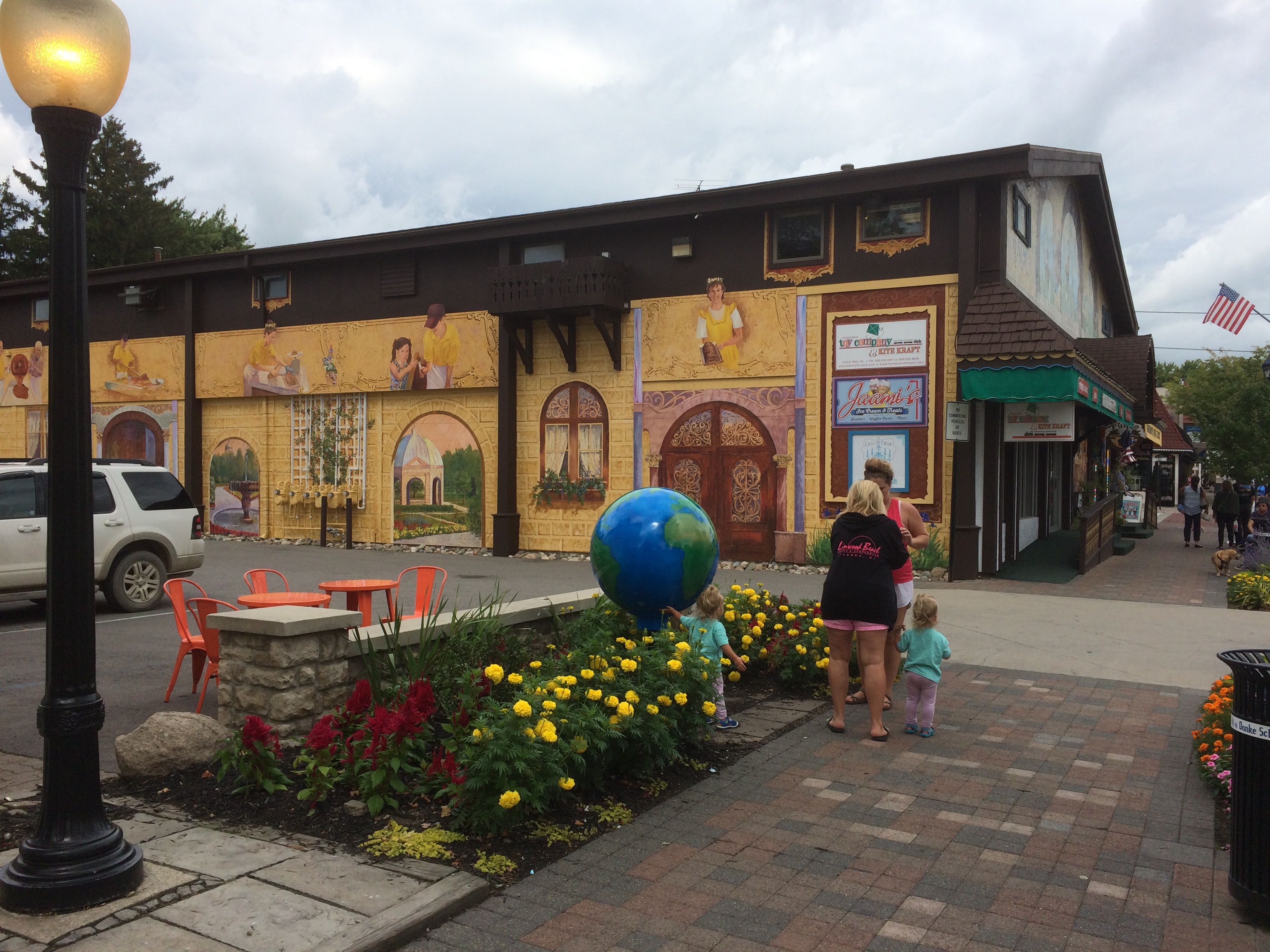
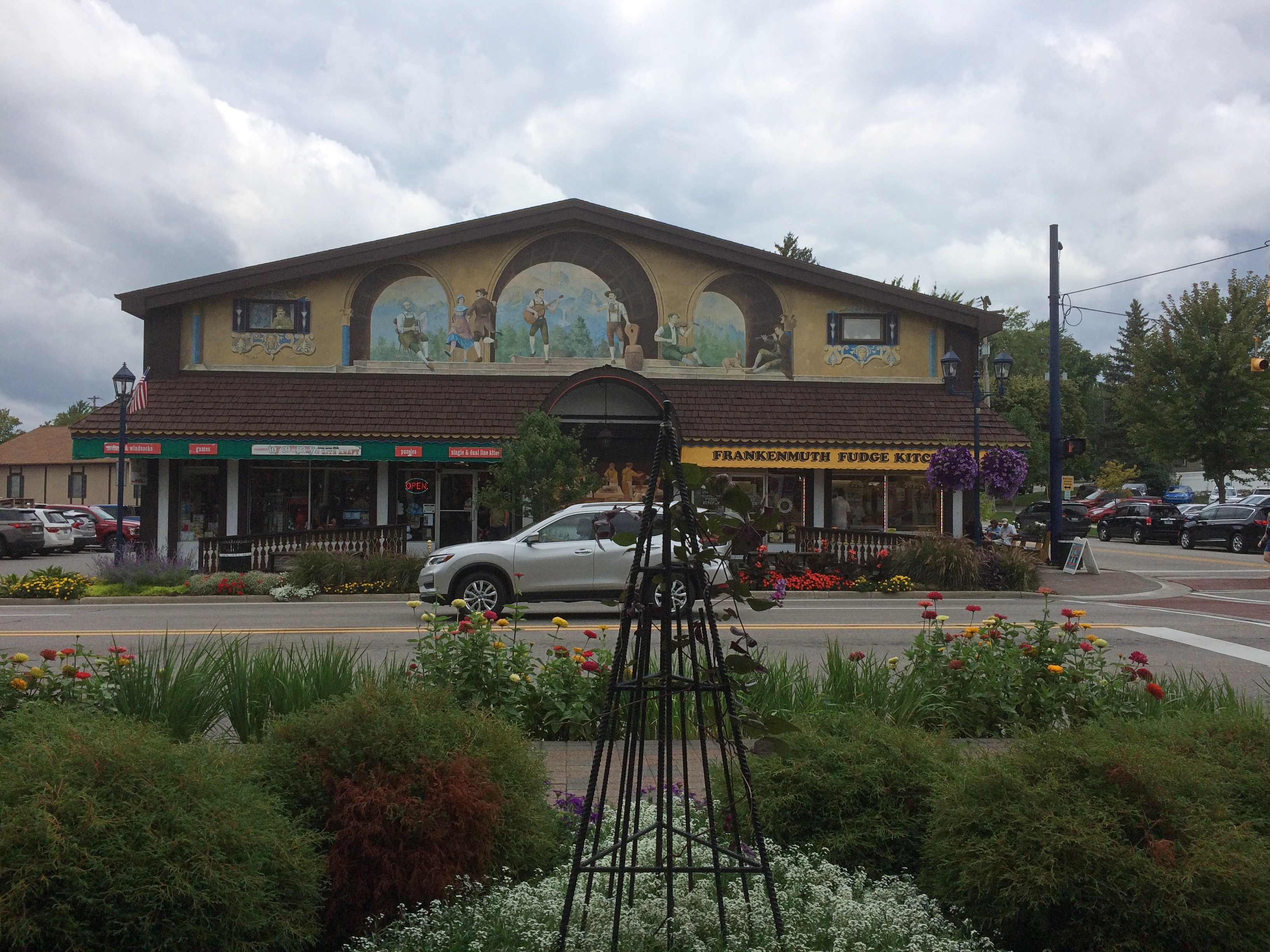
Also they come to eat.
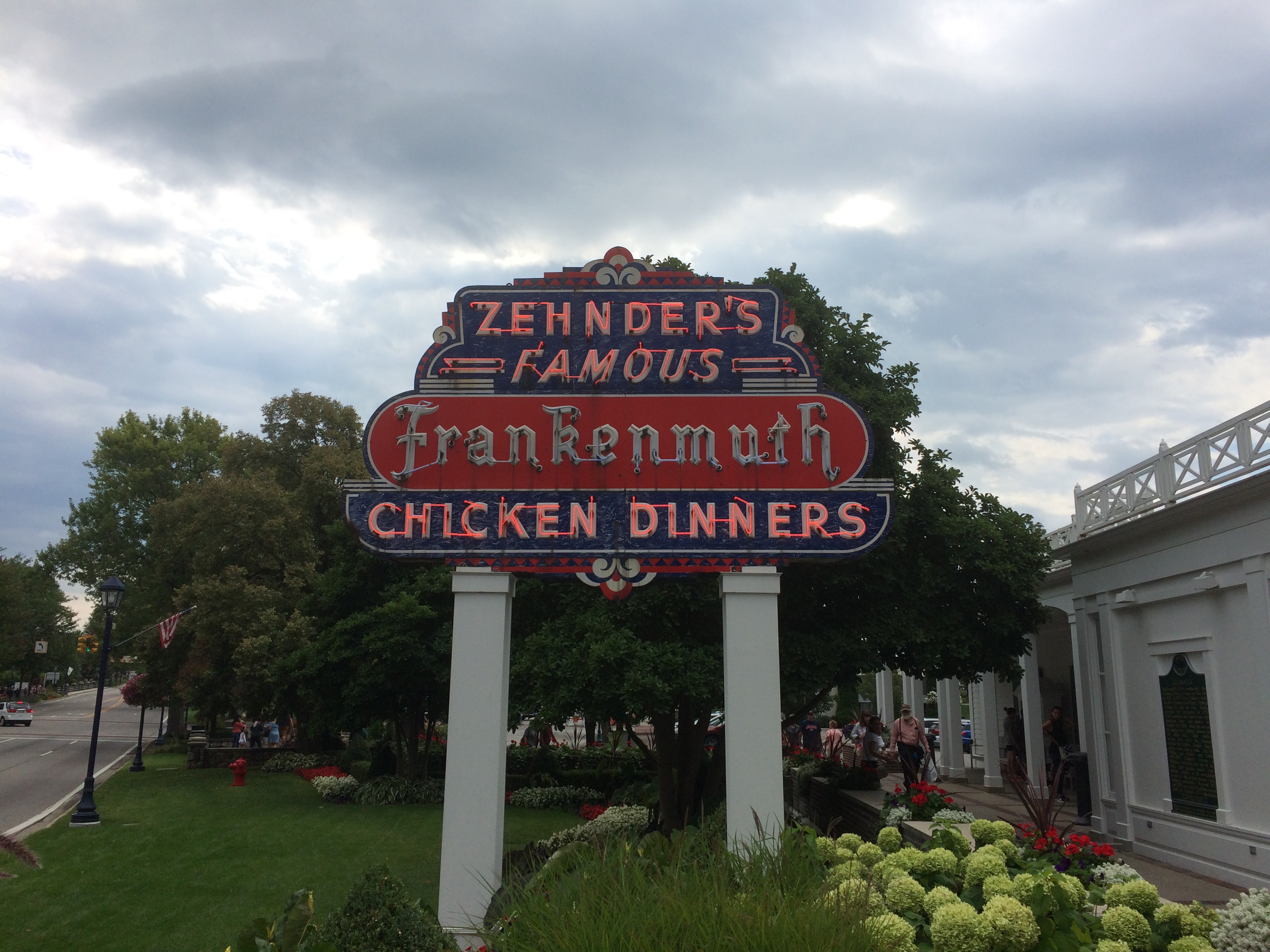
So did we. In fact we had Zehnder’s chicken, though we took a to-go family pack to a picnic table behind the restaurant: fried chicken, beans, macaroni, potato salad, rolls. Aside from a few interrupting bees, we enjoyed it.
Frankenmuth also sports such sights as a maypole fountain, a popular place for posing.
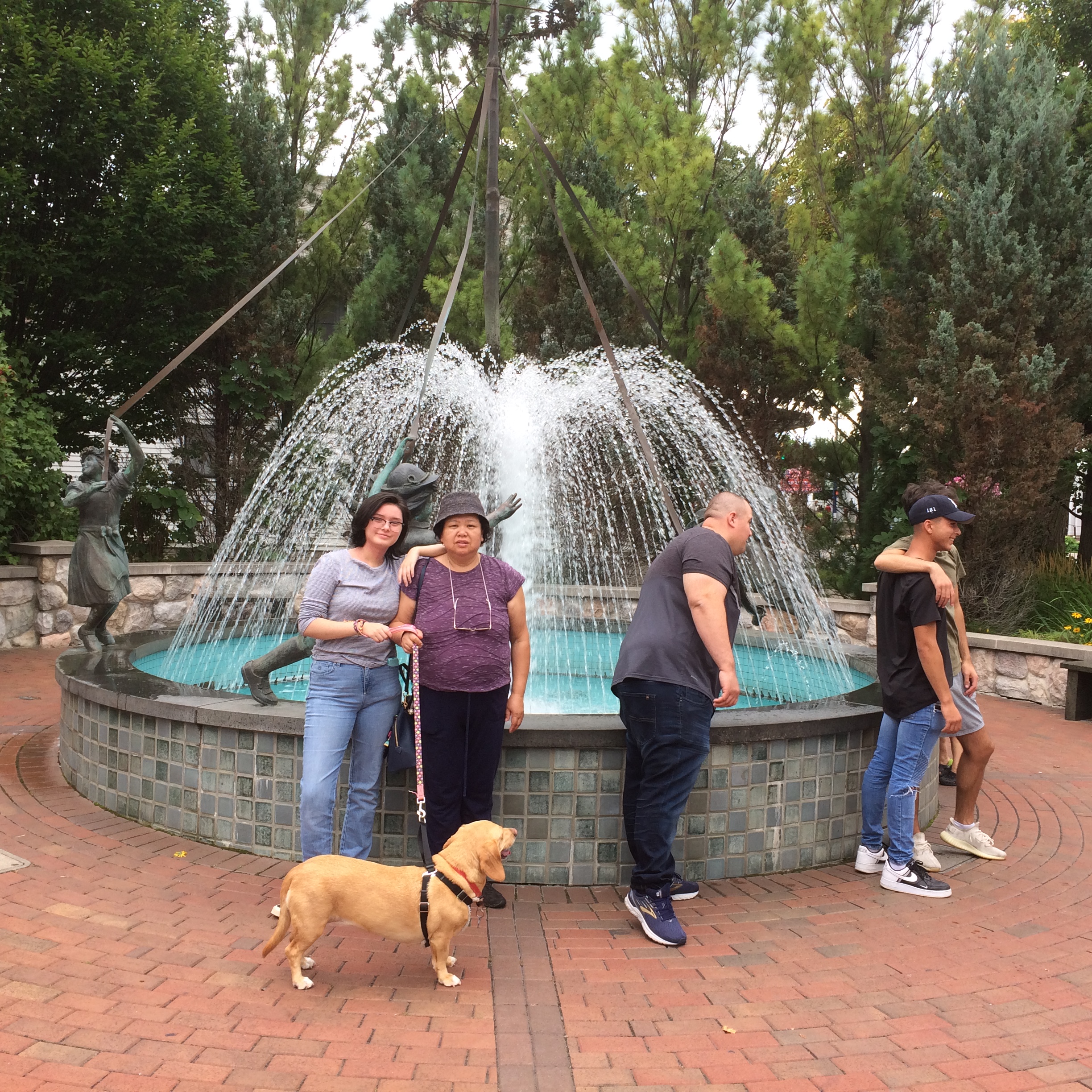
Later I read a little about Bavarian maypoles. The idea is similar to English maypoles, but not quite the same. Maybe that’s the real source of dispute between the UK and the EU — the regulation of maypoles. Just a thought.
In the various sources that I’ve consulted — skimmed — the early history of Frankenmuth gets some attention, such as in this short history of the place. But modern Frankenmuth, that is, its invention as a tourist town after World War II, gets short shrift. To my way of thinking, that’s as interesting as its history as a German colony in Michigan.
There are some hints here, however, in the Frankenmuth media kit, of all places. From the “significant dates,” you learn that Zehnder’s Restaurant, which is a sprawling place with a lot of dining rooms, got its start as the Exchange Hotel in 1856. Another 19th-century hotel, Fischer House, later became the Bavarian Inn, also with a large restaurant.
When did Frankenmuth start playing up its Bavarian-ness? Looks like the 1950s.
From the timeline: 1957: Rupprecht’s Sausage was the first building decorated in the “Bavarian” architecture. 1958/59: Zehnder family… redecorates the Fischer Hotel in Bavarian architectural style. 1960 & Current: More buildings adopt “Bavarian” architecture.
A Bavarian Festival started in 1963 but the town didn’t around to an Oktoberfest until 1990. In 2001, a Bavarian-themed mall opened south of the Cass River along Main Street.
Sounds like a few places — the chicken restaurants — were long-time draws. After all, metro Detroit and the once-prosperous Flint aren’t that far. But in the postwar age of auto tourism, the town’s merchants happened on a winning formula of more than just chicken, one that dovetailed with the town’s origin: faux Bavaria.
That might sound like criticism of Frankenmuth as “inauthentic,” a vague epithet if there ever was one, but I refuse to go down that road.
Of course the place isn’t really Bavarian. No one thinks that. Visitors respond to it as a pleasant place to be. People were out and about on a summer day, having an innocuous good time, and supporting businesses that exist here and nowhere else. You could call it an homage to Bavaria, but in any case it’s an authentic American town with a popular theme.

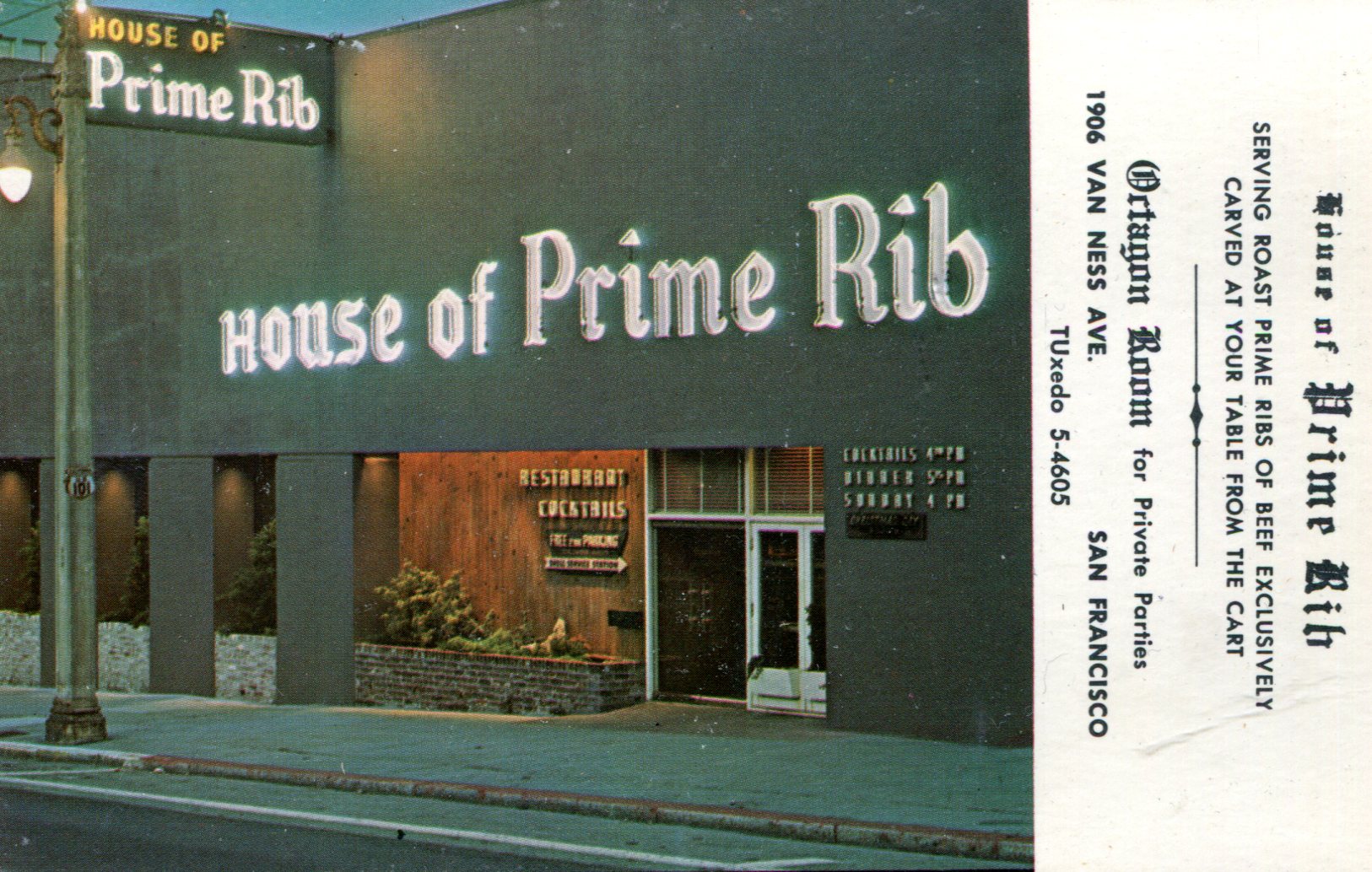
I went with my family to the House of Prime Rib on Van Ness Ave. in San Francisco in August 1973, picking up a souvenir postcard at the same time.
I remember the place seemed dark. Low-light restaurants weren’t something I knew except maybe from TV. More exotically, servers carved the meat at a cart near our table. There was a dessert cart as well. Every now and then around the dim room, flambé erupted. Quite a place for a 12-year-old with ordinary tastes.
The House of Prime Rib, which is still open, wasn’t the sort of restaurant we usually patronized. The only place we visited remotely like it (that I can think of) was Old San Francisco — which was in San Antonio, and still is. We went there two or three times.
Except for the fact that Old San Francisco served upmarket beef like the House of Prime Rib, there wasn’t much similarity. Old San Francisco wanted to evoke those giddy Barbary Coast days before 1906; the House of Prime Rib had a Old England vibe. It was a midcentury fancy restaurant.
We were on vacation, hence the indulgence. My mother and brothers and I flew to Los Angeles that August, spent a few days there, drove up the coast on California 1 in a rental car, and spent a few days in San Francisco, flying back to San Antonio from there.
I remember it well: Disneyland in the days of A-E tickets, the Huntington Library, a side trip down to see Mission San Juan Capistrano, perhaps because my mother remembered one version or another of the song, the smoggy LA air, the winding coastline, our disappointment in not getting to see the Hearst Castle, Big Sur, climbing the hills of San Francisco, crossing the Golden Gate Bridge, Chinatown, the Cannery, the cable cars, my brother Jay ordering octopus at a Fisherman’s Wharf restaurant, a boat trip around the Bay (Alcatraz was still closed at the time). A nothing out-of-the-ordinary tourist week in California. What a good time.
Near (or on) Eldorado St. — one of Decatur, Illinois’ main streets — are three small museums. Two are former mansions, one is attached to a factory. I figured we had time for two on Saturday afternoon, but in the end we visited all three.
This is the former mansion of three-time Illinois Governor, U.S. Senator and Civil War General Richard J. Oglesby (1824-99).
I’ve encountered Oglesby, in bronze anyway, in Chicago. He grew up in Decatur and had a successful run as an Illinois lawyer, Union Army officer, and politician. He panned for gold in California, traveled in Europe in the 1850s, married at least one wealthy woman (not sure about his first wife) and knew Lincoln well — was in fact at the Petersen House in Washington City when the Great Emancipator died.
Designed originally in the 1870s by William LeBaron Jenney, father of the skyscraper, in the 21st century the mansion is resplendent, the work of decades of restoration.
The museum’s web site says: “The Library is the most significant room in the house regarding authenticity. It remains as it was built. All the wood is of native black walnut, with the exception of the parquet floor. The original shutters have been reproduced, and glass doors were added to the shelves which were on the architect’s drawings. The books in the cases are Oglesby family books.
“The dining room is the other area that is known to be correct. During the restoration, the complete decoration of the room was found, even the color of the ceiling and all the faux finishes. This room has been reproduced as it was during the Oglesbys’ time in the house.
“The dining room wallpaper was reproduced by a company that was making authentic Victorian wallpapers. All the walls with the exception of the hall and the library are covered with Bradbury and Bradury Wallpaper copied from papers of the time period.
“Furnishings in the home have been chosen for the time period 1860-1885. Most came from old Decatur families. Many of the pieces and the artifacts have come from Oglesby descendants.”
My own favorite artifact is tucked away behind glass: a 19th-century prosthetic leg, that is, a primitive wooden item purported to belong to Antonio de Padua María Severino López de Santa Anna y Pérez de Lebrón, Napoleon of the West, and captured at the Battle of Cerro Gordo in 1847 after said Napoleon badly mismanaged things.
The authenticity of the leg hasn’t been confirmed, however. Unlike the other one in Illinois. Per Wiki: “Santa Anna, caught off guard by the Fourth Regiment of the Illinois Volunteer Infantry, was compelled to ride off without his artificial leg, which was captured by U.S. forces and is still on display at the Illinois State Military Museum in Springfield, Illinois.”
Not far from the Oglesby mansion is the Hieronymus Mueller Museum, a different sort of place.
Mueller, as in the Mueller Co. These days headquartered in Tennessee, but for a long time a Decatur company. Even now the company has a factory in Decatur, which is next to the museum. Mueller Co. made, and makes, metal parts and structures and machines. Half of the fire hydrants sold in the United States are Mueller made, for instance.
But that’s just a part of the output. Many examples of the company’s products are on display at the museum, along with various exhibits about the German immigrant Hieronymus (1832-1900) and his many children and grandchildren.


The company dabbled in horseless carriages, but didn’t go whole hog into that.
It did its part in WWII.
Here’s Hieronymus in bronze. He was a whiz during the golden age of American invention.
The museum says: “He started his business with a small gunsmithing shop but soon added locksmithing and sewing machine repairs. He had a knack for understanding mechanical devices. This led to his appointment as Decatur’s first ‘city plumber’ in 1871 to oversee the installation of a water distribution system.
“The following year he patented his first major invention, the Mueller Water Tapper who [sic] is, with minor modifications, still the standard for the industry.
“He and his sons went on to obtain 501 patents including water pressure regulators, faucet designs, the first sanitary drinking fountain, a roller skate design, and a bicycle kick-stand. In 1892 Hieronymus imported a Benz automobile from Germany and, together with his sons, began refining it with such features as a reverse gear, water-cooled radiator, newly designed spark plugs, and a make-and-break distributor – all leading to patents.”
Our third and final small Decatur museum for the day: the Staley Museum, one-time house of Decatur businessman A.E. Staley.
Staley was neither politician nor inventor, but had considerable talents as a salesman and ultimately boss man of A.E. Staley Mfg. Co., which started out as a starch specialist and expanded into many other products, mostly made from corn and soybeans. As a child, I ate Staley syrup.
Among other causes, Staley (1867-1940) was a soybean booster. In the spring of 1927, he organized a train to publicize and facilitate soybean cultivation in Illinois, the Soil and Soybean Special.
As the promotional material with the map says, “This is a farmers’ institute on wheels. If the farmer can’t go to college, this college will come to him.”
Staley is also known for founding the football team that evolved into the Chicago Bears: the Decatur Staleys, a leather-helmet company team. Here they are in 1920.
The origin of the team isn’t forgotten. Even now, the team mascot is Staley Da Bear.
Here’s the boss man himself.
Looking every bit the ’20s tycoon. He also developed an office building for his company a few miles from the home. The structure was one of the largest things in Decatur at the time, and a stylish ’20s design it is (see page 5).
Later in the day, we drove by for a look at the office building from the street. It’s still a commanding presence in its part of Decatur, though like the A.E. Staley Mfg. Co., it’s part of Tate & Lyle, a British supplier of food and beverage ingredients to industrial markets.
This year’s back yard grilling and gabfest has come and gone, when old friends gather to sit on our deck and gab. You know, old-fashioned conversation. It’s been an annual event now since 2014 on the second Saturday of June. In recent years, I’ve been claiming that we gather to celebrate Cole Porter’s birthday, which was on Sunday this year. No Porter songs were sung at the event, however, probably because none of us can sing.
Beer bottles remain behind. Actually, beer and hard cider this year. I drank the Two Hearted Ale and tried one of the ciders this year, though I forget which.

We had a domestic array of alcohol this time. Know-Nothing brews, you might say. In fact, not just domestic, but all Midwestern.
The Holy Moses White Ale was brewed in Cleveland, while the Two Hearted Ale originated in Comstock, Michigan. Both ciders were from Stevens Point, Wisconsin, despite the Union Jack-themed label, and it did my heart glad to learn that.
Among Wisconsin towns, I have a sentimental attachment to Stevens Point, where I spent a few days in the summer of ’78. If you can’t be sentimental about the summer of ’78, when can you be?
Once upon a time, you either knew about a place like Davis Cafe or you didn’t. If you didn’t know it already, it wasn’t a place you were likely to stop if you were driving by — even if it weren’t on an obscure Montgomery, Alabama, side street, which it most definitely is.
The view from the outside.
But that was once upon a time. Now the challenge is sifting through too much information to capture a useful recommendation from the fire-hose gush that is the Internet.
I tasked Lilly to find a place for lunch before we left Montgomery. She came up with Davis Cafe. It’s a soul food meat-and-three. Or rather meat-and-two, but that hardly mattered, since the helpings were so ample and so wonderful.
I had the ribs, with black-eyed peas and yams, while Lilly had catfish with collard greens and macaroni, with corn bread for the both of us. Exceptionally good eating and good value as well. My kind of place. Like the gone but not hardly forgotten Mack’s Country Cooking in Nashville.
We didn’t have a bad meal in New Orleans, or even anything mediocre, which wasn’t much of a surprise. We visited a number of spots on Decatur St. in the Quarter, including the wonderful Coop’s Place, where I had rabbit and sausage jambalaya and an Abita beer; another spot where we had shrimp and crayfish and corn al fresco — better yet, on the second-floor balcony, and Lilly said it was her favorite meal of the trip; and a yet another place for beans and rice.
But my own favorite of the New Orleans visit was Li’l Dizzy’s Cafe on Esplanade Ave. in Treme for lunch the first day. It too was located using tech that didn’t exist the last time I was in town.
Li’l Dizzy’s lunch buffet might have been the thing, but we wanted to eat dinner that evening with some appetite, so we ordered off the menu. Had me a shrimp po’ boy to make up for the fact that when passing through Lafayette, Louisiana, the day before, Olde Tyme Grocery was closed for Sunday. Ten years later, my memory of the Old Tyme po’ boy hadn’t faded, and I wanted another. Li’l Dizzy’s po’ boy didn’t disappoint.
(We were hungry all the same in Lafayette, so we stopped at the absolutely nondescript, immigrant-run Charlie’s Seafood. It wasn’t Old Tyme, but it sure was a good place for fried seafood at a low cost.)
Two days out of three, breakfast in New Orleans meant the Cafe du Monde, because of course it did. One of the virtues of the Hotel Chateau was the five-minute walk to the cafe.
The cafe and its beignets are precisely the way I remember them from 30 and more years ago, or at least as I wanted to remember them. Light and sweet and as satisfying as waking up on a day off with more days off ahead.
We did learn, however, that the time to go was around 9, if breakfast is the goal. Earlier than that probably means a crowd of workers there for morning coffee. Later, by 10 or so, and there’s definitely a much larger tourist crowd. I don’t have anything against tourists, except when they all want the same thing as I do at the same time — a potential problem with any crowd.
So one morning we went to the Market Cafe instead, a simple restaurant in the French Market. Had a Southern, rather than specifically New Orleans, breakfast that day: biscuits and gravy, enjoyed while a three musicians played in the background.
The sort of breakfast you have if you’re going to go out and work on the farm all day, I told Lilly. Not too many people work on a farm anymore, but the breakfast hasn’t changed, which helps make us fat in the 21st century. On the other hand, we had a long day of walking ahead of us, so the breakfast geared us up for it.
Sorry to report that Miss Ruby’s is no more. It was a shoebox of a French Quarter restaurant on St. Philip St. that I remember fondly from 1989. Especially the pie. When I get my Tardis-like device to travel to my favorite restaurants, past or present, open or closed, I’m returning to Miss Ruby’s for pie.
Oddly enough, a good description of that long-lost restaurant is in the comments section of a book hawked by Amazon: Miss Ruby’s Southern Creole and Cajun Cuisine: The Cooking That Captured New Orleans (1991).
Reviewer Susan said: “I had the pleasure of many years ago (1980s), stumbling upon Miss Ruby’s restaurant while on a trip to New Orleans with an old boyfriend… Miss Ruby came to the door as we stood outside contemplating a place that looked more like her kitchen then a restaurant. She introduced herself with a big smile and welcomed us in. To this day I can recall what we ate, fried chicken, the sweetest green peas ever, lemonade to die for and I believe a German Forest Cake.”
Except for a few details (girlfriend instead of boyfriend, pie instead of cake), that was pretty much the Miss Ruby’s I encountered late in the ’80s.
In Nashville, we ate at somewhere old and somewhere new, though actually our best meals in town were homemade by my friends Stephanie and Wendall, with whom we stayed. But for restaurant food, we first went to the Elliston Place Soda Shop, which has been open since 1939 and looks the same as it did when I first went ca. 1980. The next day we ate lunch at the fairly new and highly aesthetic Butchertown Hall, open only since 2015.
Nashville Guru says: “Butchertown Hall gets its name from one of Germantown’s old nicknames ‘Butchertown,’ inspired by the numerous German immigrants who worked as butchers in the neighborhood. The first thing you notice when you walk through the Butchertown Hall doors is the appetizing smokey scent coming from the Grillworks Infierno 96 Grill (one of only three in the country). The high ceilings and natural light make the space feel large and open. A mossy rock wall separates the sleek bar and main dining area. There are community tables, two-top tables, four-top tables, and benches throughout the restaurant with seating for up to 130 people.”
It was Sunday, so the brunch menu was on the offing. I had the brisket and gravy — more gravy! — and it was tasty indeed. The place was a little loud, though, making conversation, which is what you want as much as the food during brunch, a little hard.
That there are newish restaurants in Nashville is no surprise. It’s a growing city. What surprised me walking around before and after eating at Butchertown Hall was that the entire Germantown neighborhood seemed new. New apartments, retail and restaurants, created ex nihilo in recent years (but naturally, according to demand). Now Germantown is a happening Nashville neighborhood. What was it 35 years ago? Nothing to speak of. As in, I don’t ever remember hearing anything about it when I lived in Nashville.
This and other Nashville growth nodes — that means you, Gulch — were the subjects of much old-person conversation during the time we were in Nashville. Old, as in me and my friends. Young Lilly put up with it.
A good Easter to all. Back on Easter Monday.
When in doubt, eat some pho. Part of the delight is looking down into the bowl and taking in the aroma in all its richness and feeling the light warm steam on your face.
That was actually Yuriko’s lunch. But I’ve been eating pho on and off for 25 years, and I’m glad to report that delicious examples are still easy to find, essentially unchanged over the decades, and reasonably priced in all the places we visit.
Somewhere, there’s probably pho for hipsters that costs three times what we pay, but we haven’t sought that out. I didn’t have the pho during our recent lunch, however.
That’s what I had: a Vietnamese pork chop, along with sausage and an egg. Along with the pho, to be found at Viet Taste, a small restaurant — seats about 30, I think — in the inner northwest suburb of Norridge. Good food for these sometimes chilly April days. Or any day, really.