Mexico City Sobras

Back to posting on January 16. Would that Dr. King had been born in the summer, but I’ll take holidays when I can.

The last major sight we visited in Mexico City was the vast Palacio Nacional, the National Palace, on Zocalo Square. It was fairly late in the afternoon of December 31, and we’d already walked a fair amount, so we only had energy enough to see a small slice of the complex. Even now the palace includes the offices of the president of Mexico and other governmental functions, but there’s also artwork and museum space and some impressive plazas, both open air and covered.

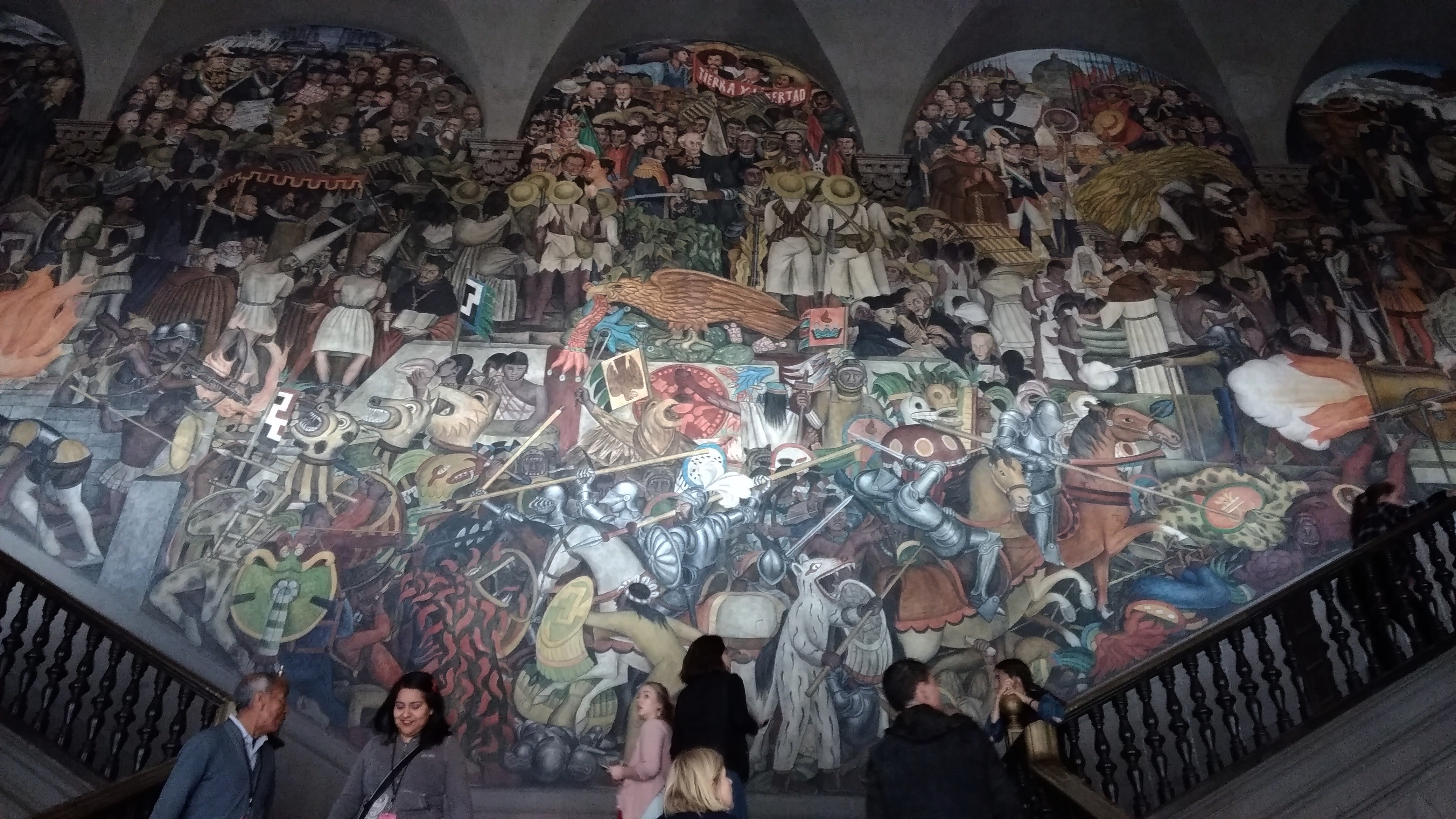
Diego Rivera’s mural depicting the history of Mexico, “The Epic of the Mexican People,” is impossible to miss. This only part of it. My picture does it no justice. One thing it does include is an epic amount of violence.
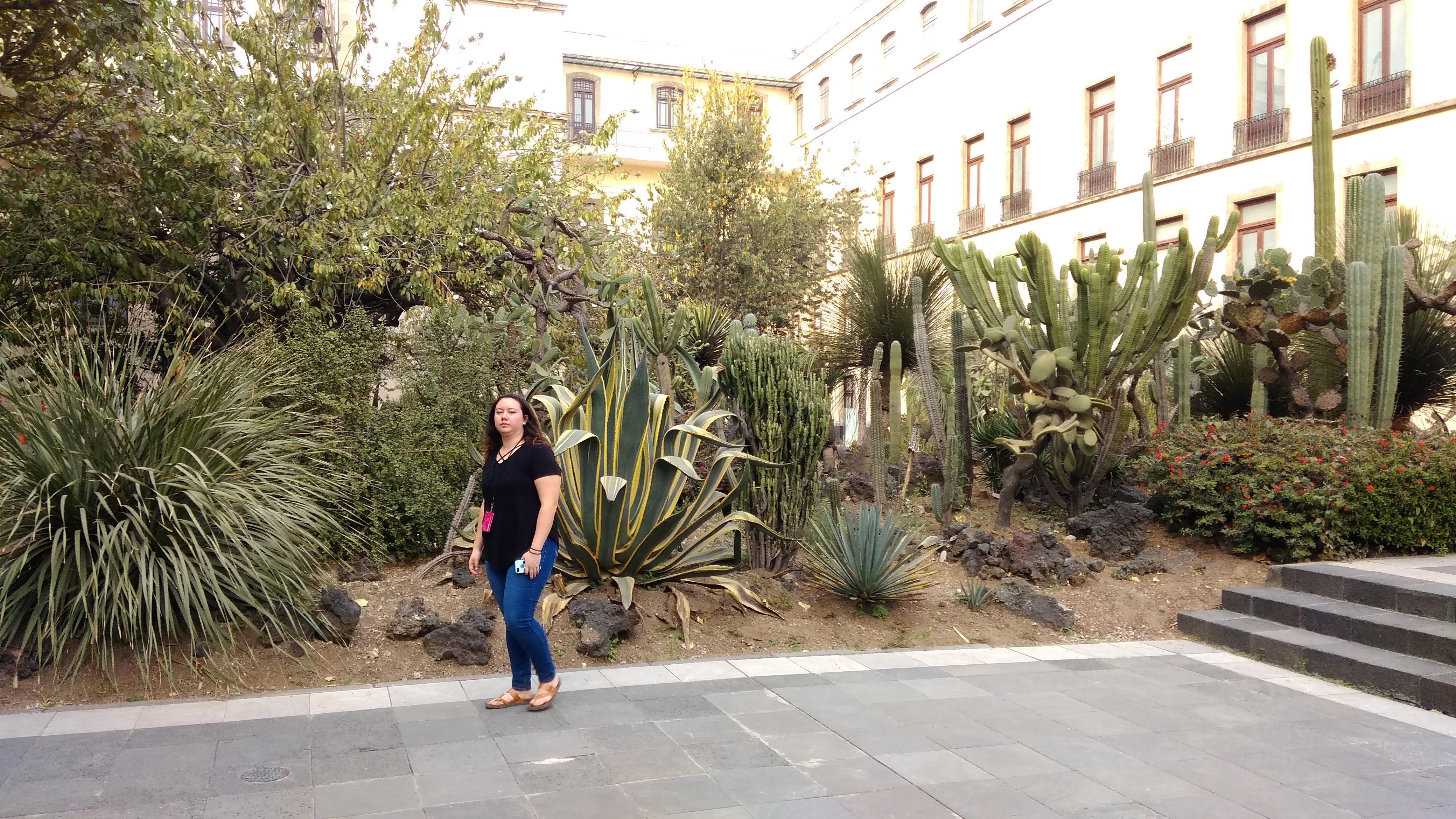
The building, which evolved over the centuries on the site of an Aztec palace and then a fortified compound that Cortez built on top of its ruins, included a spot that features a lot of cacti native to Mexico, along with other flora.
This is the most useful postcard I bought in Mexico City, on the second day we were there, a route map of the Sistema de Transporte Colectivo.
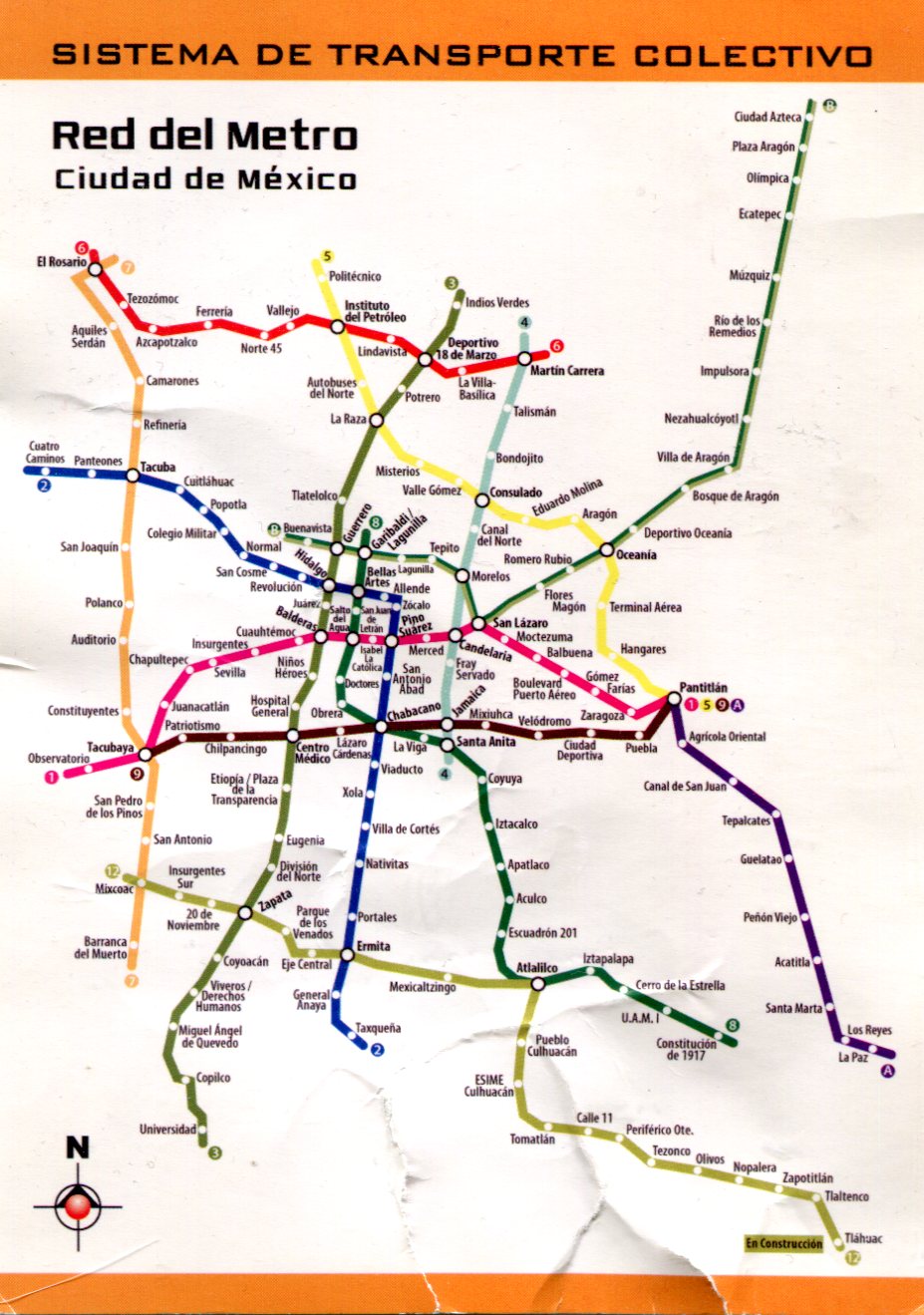
The Mexico City Metro, that is. If we didn’t walk someplace, we took the Metro. Note the crumpling of the card. I had it in my back pocket a lot.

Rush hour was as jammed as any other megalopolis’ subway, and occasionally we’d get the hairy eyeball from someone who presumably disapproved of tourists on the subway, but on the whole it was a good way to get around: quick, clean, and best of all, 5 pesos per ride. About 25 cents, that is. I know it’s because of subsidies. If you’re going to have a metro area of more than 20 million, best to have a large network of subsidized transit.

Wayfinding in the transfer stations was sometimes lacking. As were maps on the walls. Some stations had them, along with maps of the neighborhood, while some didn’t — such as the station closest to our hotel, Sevilla. That’s what made the postcard so useful.

Also of note: each station has a symbol. Sevilla’s, for instance, was a schematic of the old Chapultepec Aqueduct that runs nearby (and which we saw on foot). Construction of the Metro started in the 1960s, and the idea was to devise a system everyone could use, including people who couldn’t read, which was a higher proportion of the population in those days.

Who created the symbols? Remarkably, American graphic designer Lance Wyman, who is still active. Here at his web site are the some of the symbols for Line 1, which is colored pink, including the aqueduct. We rode that line most of all, and discovered that even if you can read, the symbols are quite useful for knowing where you are quickly.

Walking presented its own challenges. Namely, holes and other rough patches in the sidewalks. Some of the Mexico City sidewalk damage, I expect, is from routine neglect. In other places, the recent earthquake probably did some damage that hasn’t been repaired yet.

Still, you got used to watching for sidewalk hazards in pretty short order, and even got to know the bad spots on the streets you walked on frequently. The street we used from the hotel to the Roma neighborhood, where we ate some fine meals, was Calle Varsovia, which then changed to Calle Medellin, and it featured an especially dangerous urban crevasse. The spot had once had a set of steel plates, maybe covering a utility trench, but some of the plates were gone, others cracked. Step into that unknowingly and you’d break a leg.

In Chapultepec Park, we saw this kind of acrobatics.
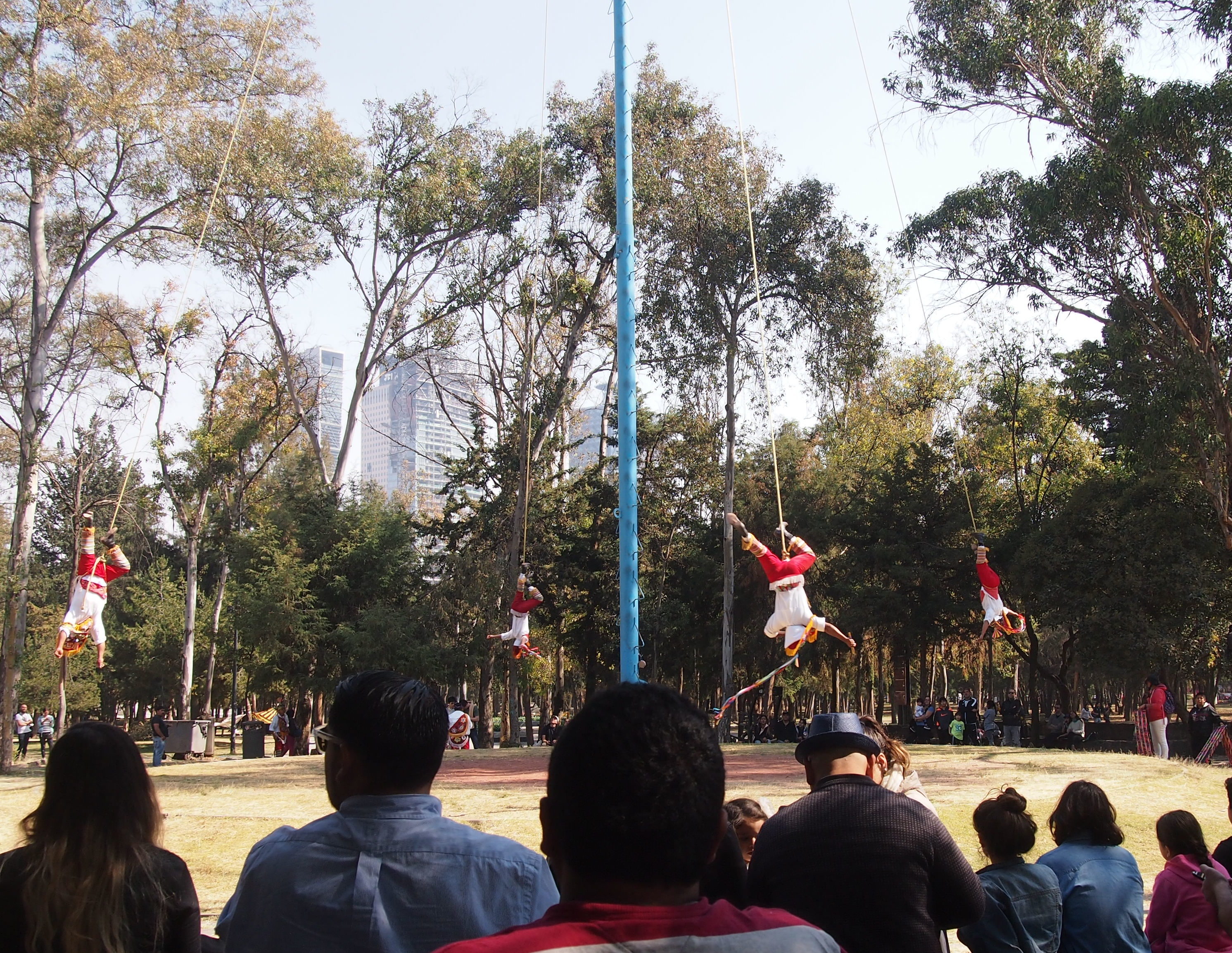
It’s called Danza de los Voladores, Dance of the Flyers. “The ritual consists of dance and the climbing of a 30-meter pole from which four of the five participants then launch themselves tied with ropes to descend to the ground,” says Wiki. “The fifth remains on top of the pole, dancing and playing a flute and drum.”

That’s exactly what we saw, with the four flyers slowly getting lower as they circled the pole. Tom said he’d seen it in other parts of Mexico.

My favorite meal of the trip was at a place called Los Almendros, a handsomely appointed restaurant just north of Chapultepec Park in the well-to-do Polanco neighborhood. Apparently there’s another location in Mexico City and one in Cancun and one in Merida. Fittingly, since it specializes in cuisine of the Yucatan.

We arrived at about 2 pm for lunch, and were a little early. Pretty soon the place filled up. That’s the timing of meals in Mexico: lunch after 2 and dinner after 8. We got into the groove of that without much trouble.

I had the pan de cazón: “a casserole dish in Mexican cuisine that is prepared in the style of lasagna using layered tortillas with shark meat such as dogfish shark, black beans or refried black beans and spiced tomato sauce,” explains Wiki, which are says it’s a specialty of Campeche.

Close enough to the Yucatan, I figure. It was tasty. It also inspired a discussion of the various times we’d eaten shark. For me, that goes back at least to a visit to Long Beach in 1982 when a friend and I acquired shark at a grocery store and cooked it up.

One should try things like Yucatani shark casserole on the road, I think. While in Mexico City, I had an ambition of trying fried grasshoppers, chapulines, and even found a recommended place; but it closed early on New Year’s Eve.

You’d think a place like Los Almendros would be expensive, and I suppose it is, locally, but a strong dollar helped us out: the check for three (no separate checks in Mexico, so Tom and I took turns paying) came to about 1,100 pesos, or about $57, including the meals, beer and tip. Put that restaurant in New York or Chicago or Los Angeles and it would have been three times that, at least.

A bit more expensive was Cafe de Tecuba, not far from the Palacio de Belles Artes, the sort of place that ends up in guidebooks. Indeed, I quote from Moon Mexico City, the book that I had with me: “Occupying two floors of a 17th-century mansion… the fun of eating here is enjoying the Old Mexico atmosphere in the dining room, with its tall wood-beamed ceiling, pretty frescos, and old oil paintings.”

For atmosphere, it was the most aesthetic place we ate. And the food was very good, just not quite as novel as we got other places. I had some enchiladas.

At the other end of the expense spectrum was McDonald’s. Try McDonald’s at least once in each country you visit, to see how it’s different. German McDonald’s have beer, for instance, and the wonderful McTeriyaki is available at Japanese McDonald’s. The only thing different about Australian McDonald’s was that the restaurant stressed to one and all that it served 100% Australian beef.

As for Mexican McDonald’s, it wasn’t so different from its norteamericano counterparts, except that Filet-O-Fish was missing, and the condiments counter had more varieties of local peppers.

One leisurely morning, after the busy day in Chapultepec Park, we ate at Jaxson’s Chicken & Waffles, a smallish joint in the Roma neighborhood that would not have been out of place in Brooklyn, including the bearded hipsters at other tables. More importantly, the place served up a whopping good breakfast — the kind of large breakfast you eat at 10 or 11 to get you through a day of tourism. Each of us had the special: chicken, waffles, hash browns, bacon and a pancake in there somewhere.

Not far away in Roma, on Fuente de la Cibeles square, is Cancino Cibeles. We ate pizza there al fresco, and while the evenings are a bit chilly in Mexico City in December, the restaurant had heaters on poles near the sidewalk tables, the kind that radiate heat downward (Tom didn’t want to sit too close to it, asserting that it would be too hot for his bald head).

To make things as interesting as possible for a setting like that, we picked the Gorgonzola and pear pizza for the main course, a thin-crust wonder of the pizza arts, and a bottle of wine. I don’t remember the name of the wine. But it was red and Portuguese and had a dignified label.

I’m sure people order a bottle of wine for three people all the time, but it was a rare thing for me. The kind of thing the characters in The Sun Also Rises would do, except that they would drink half a dozen bottles and then go somewhere else and drink absinthe. And then do knife tricks.
Birm-Tex ’17

Before spending the last week in San Antonio visiting family, I spent about 36 hours in Birmingham, Alabama, during the first weekend in December. I went there to visit my old friend Dan, whom I hadn’t seen in about 18 years.
That’s too long, as the Wolf Brand Chili man said. See your old friends if you can, because we’re all mortal. I was also fortunate enough to become reacquainted with his wife Pam, whom I’d only met once, more than 20 years ago.

Dan and I had a fine visit, talking of old times and places — we’ve known each other 36 years — but not just that. He grew up in Birmingham and has lived there as an adult for a long time, so he was able to show me around and tell me about the city’s past and about recent growth as an up-and-coming metro. In this, he’s quite knowledgeable.

I’d heard something about that growth, but it was good to see some examples on foot and as we tooled around hilly Birmingham in Dan’s Mini Cooper, which was also a new experience for me. Not to sportiest version, he told me — he’d traded that one for this one he now drives — but it had some kick.

On the morning of Saturday, December 2, we first went to Oak Hill Memorial Cemetery, very near downtown Birmingham, and the city’s first parkland-style burial ground. Dan told me he’d never been there before. Not everyone’s a cemetery tourist. But he took to the place, especially for its historic interest, and he even spotted the names of a few families whose descendants he knows.

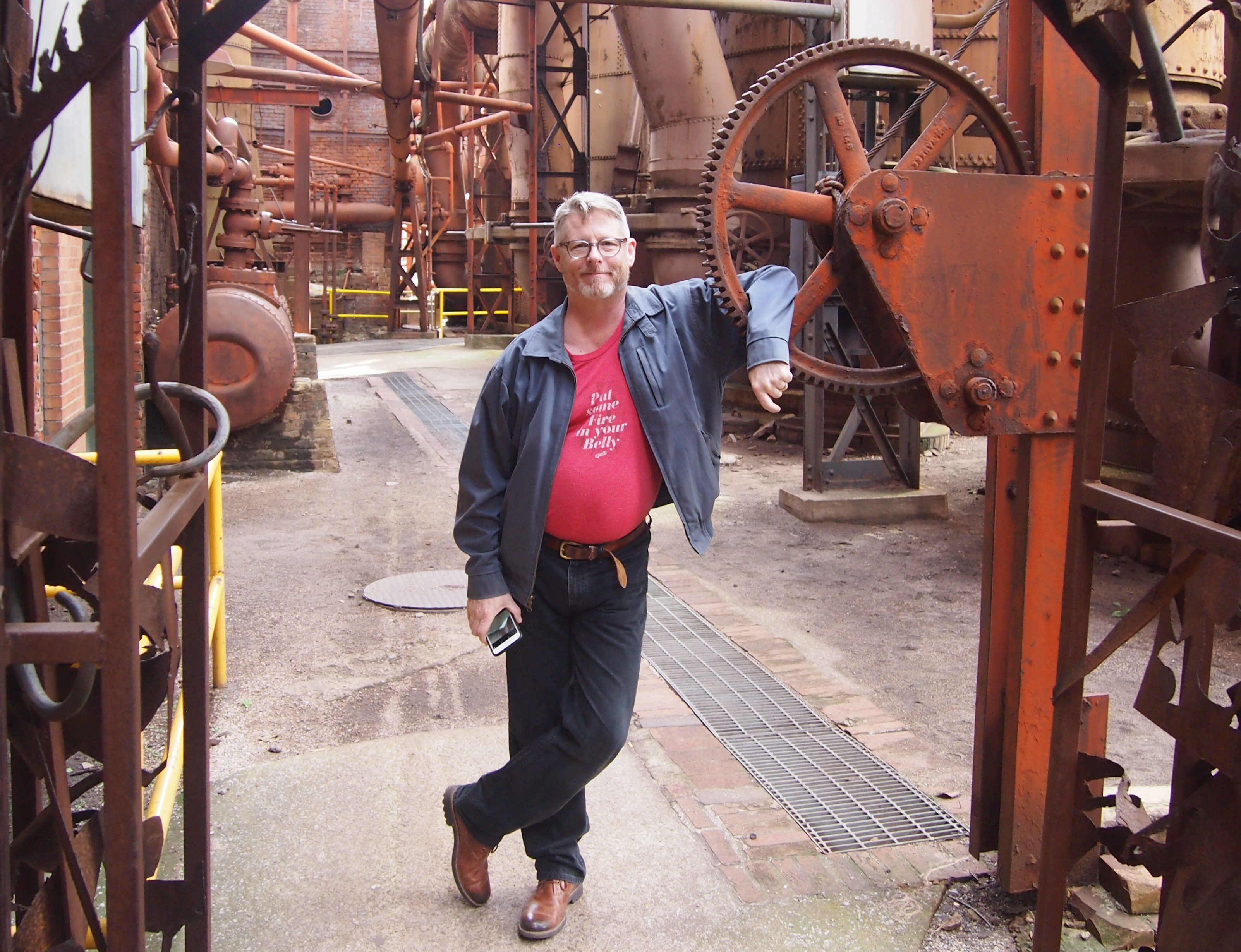
From there we drove to Sloss Furnaces, which, as the postcard I got there says, is “the nation’s only 20th-century blast furnace turned industrial museum.” Iron mining and smelting made Birmingham the city that it is. So it was only fitting that we went to Vulcan Park as well, to see the mighty cast-iron Vulcan on his pedestal on a high hill overlooking the city.

Toward the end of the afternoon, I suggested a walk, and so we went to the Ruffner Mountain Nature Preserve, which has 14 miles of hiking trails. More than that, the earth there is honeycombed with former mines, all of which are now sealed. But we got to see the entrance of one of them, dating from 1910.

After all that, we repaired to Hop City Beer & Wine Birmingham, a store that has an enormous selection of beer and wine in bottles, as well as a bar with a large draft selection, where we relaxed a while. Had a cider and a smaller sample of beer that I liked.

Along the way during the day, we also visited Reed Books, a wonderful used bookstore of the kind that’s increasingly rare: owned and run by an individual, and stacked high with books and other things, with only marginal organization. I bought Dan a copy of True Grit, which he’d never read.

We drove through some of Birmingham’s well-to-do areas, sporting posh houses on high hills and ridges along roads that I could make no sense of, twisty and web-like as they were. Luckily, Dan knew them well.

In downtown Birmingham, we also drove by some of the historic sites associated with the civil rights movement, including the new national monument. According to Dan, it would take a day to do the area right, so we didn’t linger. I got a good look at the 16th Street Baptist Church, the A.G. Gaston Motel, where King and others strategized, and Kelly Ingram Park, where protesters were attacked with police dogs and water cannons.

During my visit, I ate soul food, breakfast at a Greek diner — Greek immigrants being particularly important to the evolution of restaurant food in Birmingham, Dan said — excellent Mexican food (mole chicken for me), and a tasty breakfast of French toast and bacon made by Dan and Pam. On the whole, we carpe diem’d that 36 hours.

In San Antonio, as usual, I was less active in seeing things, but one sight in particular came to me. On the evening of Thursday, December 7, I looked out of a window at my mother’s house and saw snow coming down. And sticking. “I’ll be damned,” I muttered to myself.

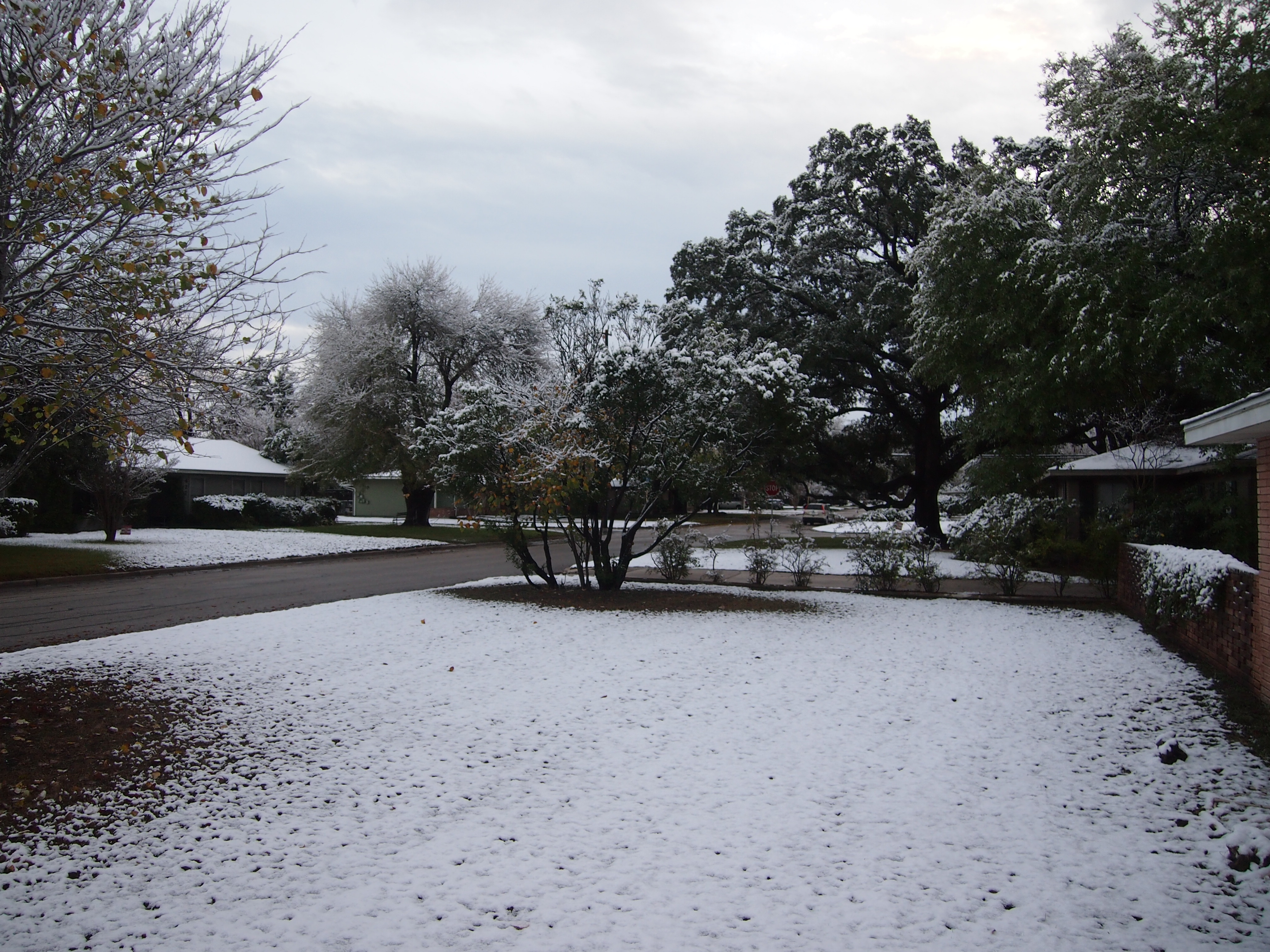
At about 7:30 the next morning, I went outside to take pictures. Nearly two inches had fallen, according to the NWS. The snow was already melting. A view of the front yard.

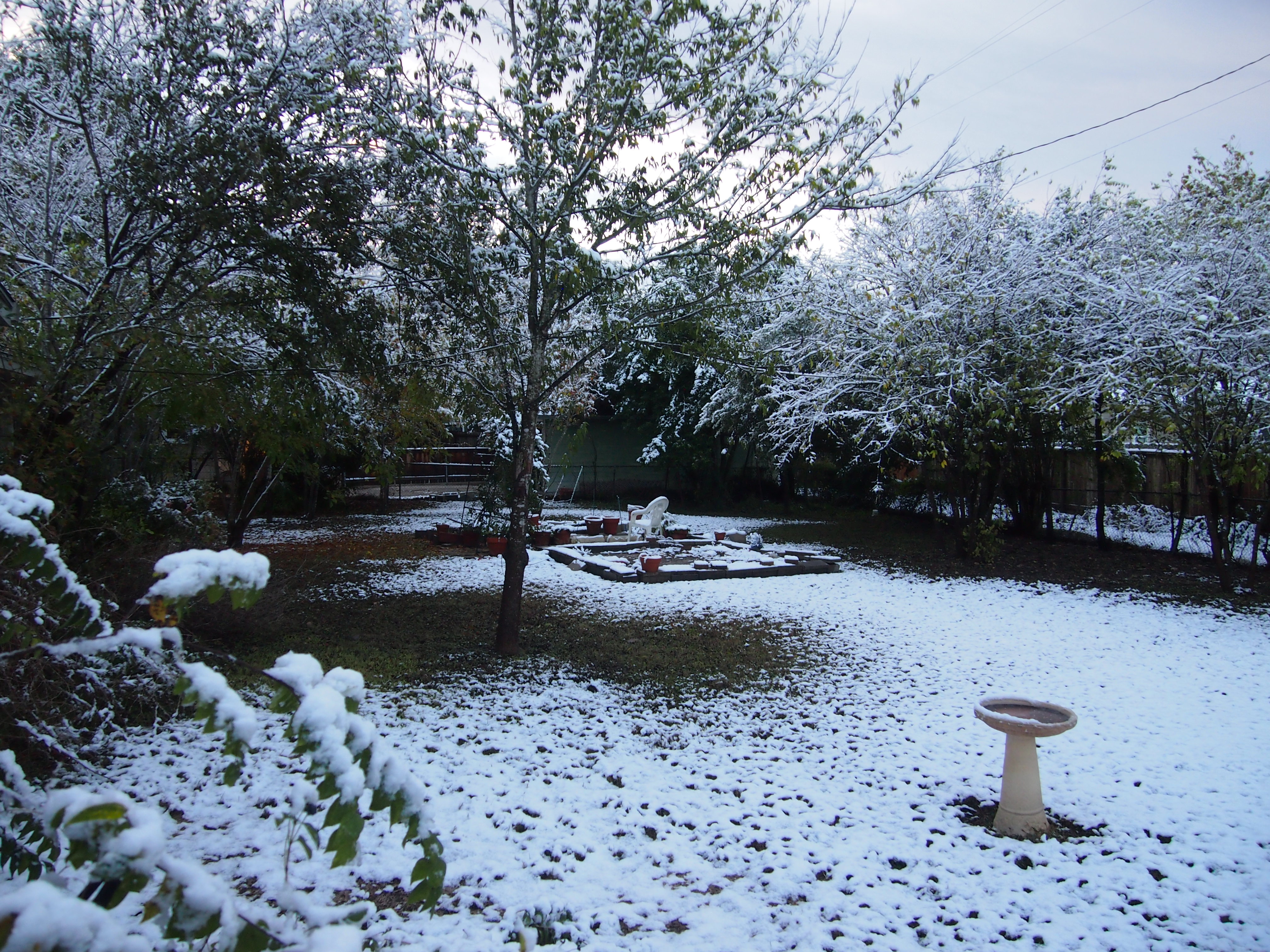
Of the back yard.

It occurred to me that hadn’t seen snow on the ground in San Antonio since 1973.

’50s Euro Bottles

Out in our garage, there’s an accumulation of bottles. Collection’s too dignified a word. Some of them have already been photographed for posting, generally for the oddity of their labels.

My parents brought home some bottles from their time in Europe in the mid-1950s. Some time ago, I decided to take pictures of them at my mother’s house.

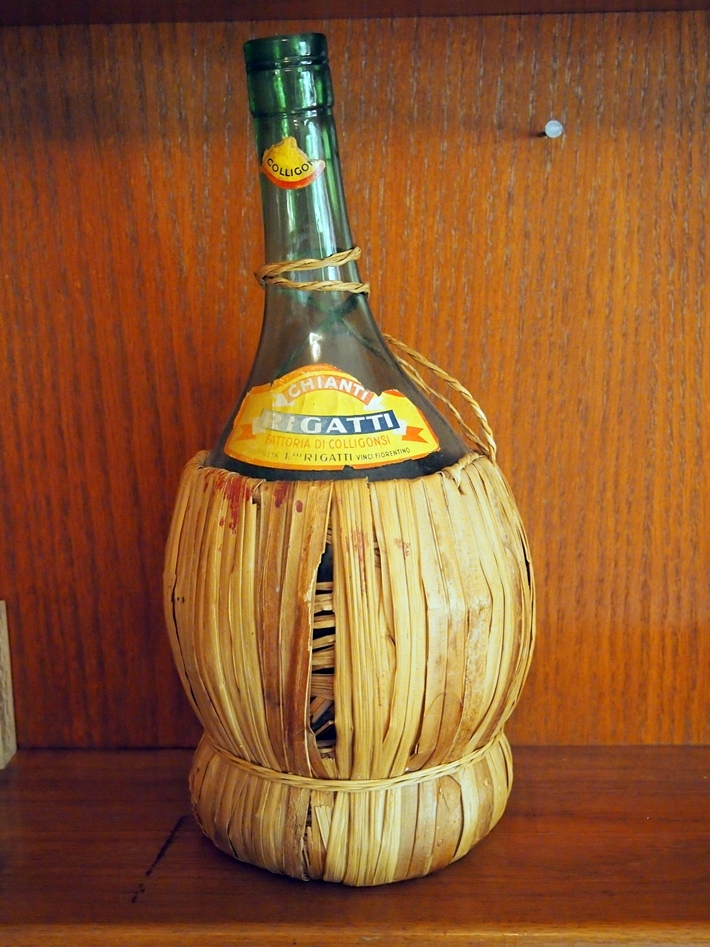
A Chianti. I assume Rigatti is the brand. For a Chianti to be a Chianti, it must be produced in the Chianti region and be made from at least 80% Sangiovese grapes, Vinepair says. Also: “Almost none of the Chianti sold today comes in the classic straw basket.”

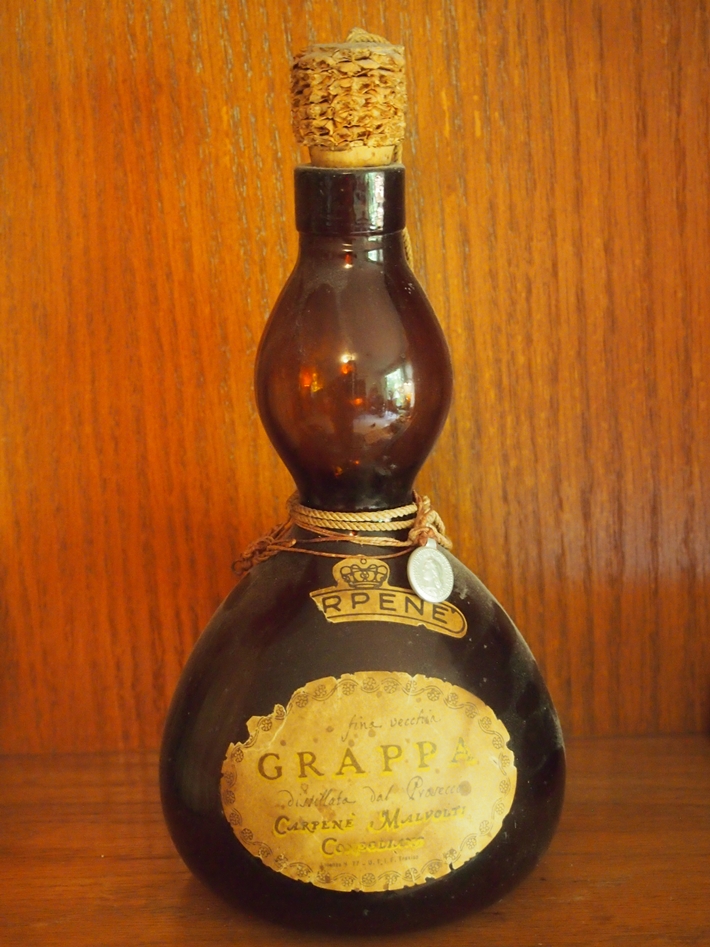
Clearly not true 60-odd years ago.A grappa. The brand label is partly missing, looks like. According to Rome File, the main ingredient of grappa is pomace, which consists of the grape skins, seeds and stalks that are left over from winemaking.
And something German.

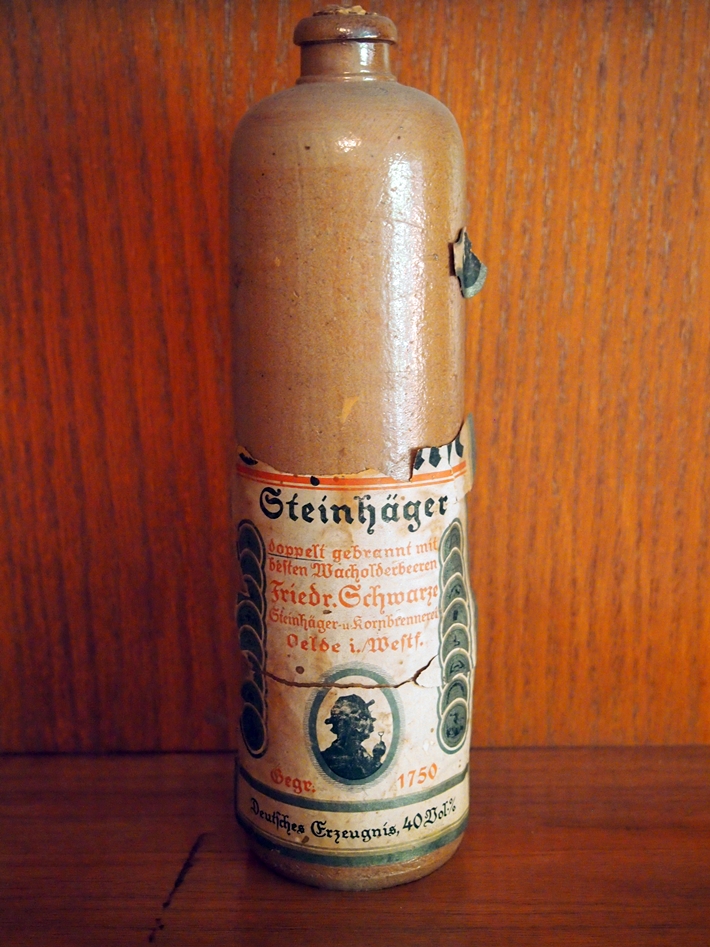
I didn’t know this until I looked it upSteinhäger is a type of German gin, flavored with juniper berries. It’s local to Steinhagen, North Rhine-Westphalia.

It makes me glad to think that my parents, or at least my father, sought out a few local liquors while in Europe. Not only that, they kept these aesthetic bottles as no-extra-charge souvenirs.

Overthinking a Coupon

Classic November to begin the month: overcast skies, drizzle, cold but not cold enough for anything to freeze.

Not long ago I found myself taking a close look at a coupon for a bagel shop we patronize sometimes. Though a chain, it has better bagels than most places I can get to easily.

They’ll do, in other words, till I can visit New York again. Say what you want about that city, I agree with the idea that its bagels are really good. I found that out back in 1983. Some days I’d buy a half dozen in the morning and they’d be gone by the end of the day — and I was staying by myself.

Anyway, here’s the coupon.

Look carefully at the expiration dates.

When I saw that, I started overthinking the thing. What does it mean that the coupon expires on a day that doesn’t exist by conventional Gregorian calculation, November 31, 2017?

1. The entire coupon is invalid.

2. Only the expiration date is invalid, so it never expires.

3. It actually expires on December 1, which is the day that actually exists after November 30.

4. It expires at the end of November, regardless of what it says.

5. It means whatever the employee at the bagel shop says it means, when asked.

6. The national chain has a SOP for these cases. Call the franchising headquarters.

7. Illinois state consumer law has a provision that kicks in these cases. Refer to the appropriate regulations.

8. The circular in which I found the coupon slipped into our universe from one that has a November 31, and I’d better watch for (or watch out for) other items from that reality.

9. It’s Russian disinformation, designed to destabilize America.

10. It doesn’t mean a damn thing. It’s just a misprint.

Though it’s the prosaic choice, I’ll have to go with 10 and, as a practical matter, 4. Within the perimeters in which I live my life, that’s the sanest choice.

Halloween ’17

A chilly Halloween. That might account for the seemingly low numbers of kids coming by for candy. As of about 8 p.m., a total of 22. Or maybe that’s about the same as every recent year. I haven’t been counting. This year I decided to, just on a whim.

Ann did not go out. As far as I can tell, no high school kids came by — unless a couple of those tall(ish) skinny kids in one party were in high school, but I took them for junior high.

This is a good development. When we first moved here in the 2000s, high school kids used to show up. But if you’re in high school, you’re too old to trick-or-treat. If it were true 40 years ago, it should still be true.

This year I sprang for a box a full-sized candy bars to give away. A bulk box of Mars products, acquired at a warehouse store: Snickers, Milky Way, M&Ms (plain and peanut) and Twix. A little more expensive, but the leftovers are better. We got an audible reaction sometimes: as two girls walked away, I heard them both squeal, “Full sized!”

A moderately interesting selection of costumes was on display among the kids who came to the door. I didn’t recognize all of them.

“What was that movie, set in Hawaii, with an alien and a girl?” I asked Ann.

I think I took Lilly to see it when she was four. Or maybe we saw it on tape. Anyway, I couldn’t remember the title, but I remembered what the character looked like. I assumed Ann had seen it at some point. I was right.

Lilo and Stitch.”

“Right. That kid had a Stitch costume on, though the hood wasn’t up.”

The very first kid, a little boy of about three with his mother at the door, wore some kind of blue dinosaur outfit. At least the purple dinosaur seems to be dead and gone. (Or is he?) Years ago, 1998 or ’99 I think, a little kid in a strikingly full Teletubbies costume came to the door. I expect he’s a grown man now. I hope his parents took pictures of his foray into Teletubbie-ness to embarrass him occasionally.

Like I documented Lilly in her paper space armor, ca. 2001.

She didn’t actually wear that trick-or-treating, though she could have. If I remember right, it came folded up in a Japanese magazine. Unfold it and you have a cheap costume.

Later a somewhat older boy came by fully dressed as Flash. Other kids mostly wore head pieces for the desired effect: a pirate hat, mouse ears, a karate band, a flower crown and antlers — a nice array, but odd — and a girl in a zebra coat and… a pork pie hat?

I didn’t get a good look at it, but that was my impression. Maybe that’s just because I finished Breaking Bad not long ago. And I don’t remember any zebra coats in that show. Could be from a kid’s show I know nothing about. There’s an increasing number of those, and I don’t mind.

September Pause

Back to posting again around September 17. Constitution Day. Maybe I’ll have finished the Federalist Papers by then.

It might also be warm again. A distinct October-like coolness has settled on northern Illinois since Labor Day.

Saw a cherry picker in the neighborhood recently. The man atop the equipment was repairing a street lamp that had gone a little funny. Not out, just flickering from time to time.

cherry picker

Why a cherry picker? Why not apples or lemons? And why do careless or unscrupulous researchers cherry pick their data? Why not grape harvest it?

Speaking of fruit, completely by chance down an Internet rabbit hole recently I came across the Citronaut — the first mascot of Florida Technical University, which eventually became the University of Central Florida. He’s an anthropomorphic orange wearing a space helmet, dating from 1968.

Florida produces citrus and shoots men into space, so it must have seemed like a bright idea. For a very short time. Says Wiki: “After one year, students petitioned the Student Government to establish a new mascot for the university.” Poor old goofy Citronaut was ignominiously dumped. You’d think he could have gone on to shill Tang or something.

The thought of Tang led me to another Internet rabbit hole. Eventually I came across the Tang Pakistan page. Is Tang popular in Pakistan? Could be. At least it seems more advertised there than its country of origin.

The About Tang page is in English, and includes such sentences as: “Being the king of flavours, its fruity and refreshing taste wins millions of hearts every day. Be it family gatherings, group studies, play days or summer struck – Tang is the Neverland for everyone to indulge, lift their moods and bond together to share good times.”

Not a peep about astronauts.

Over the Labor Day weekend, I watched The General on DVD. I’d only ever seen clips of it. It’s one of the most kinetic movies I’ve ever seen. Fittingly, with locomotives chasing each other and Buster Keaton all over the place, doing his own stunts. Funny stuff. I’m glad a movie more than 90 years old can still be so amusing.

Some scenes were flat-out amazing. Best known, probably, is when a locomotive causes a trestle to collapse, precipitating the engine into the river below. As I looked at that, I thought, that looks awfully real, not like a model. Turns out it was a real locomotive shot falling into a river (like the train fall in Bridge On the River Kwai).

Sean Axmaker writes in Silentfilm.org: “For the scene in which Johnnie sets fire to a bridge to prevent the North’s engine from crossing the river, Keaton had [set designer Fred] Gabourie construct a stunt trestle designed to collapse under the train’s weight. It was the only sequence that did not use existing track and it has been called the most expensive single shot in silent film history (Keaton biographies put the cost at $42,000).

“It is certainly the most expensive that Keaton ever executed. He had only one shot at the scene and ran six cameras to capture the spectacle. The engine that plunged into the river was one of the doubles used to stand in for the working engines and it rested there in the water, rusting away for 15 years until it was hauled out for salvage in the scrap drives of World War II.”

Later I looked up the female lead in the movie, Marion Mack, a one-time Sennett Bathing Beauty. She got tired of being in movies around the time talkies started, and lived a long time after, until 1989, including a career as an Orange County real estate broker. As for Glen Cavender, an original Keystone Cop who played antagonist Capt. Anderson, he lived until 1962. He seems to be an example of one of those actors that didn’t transition well to talkies, though he kept working.

The actual leader of the 1862 Great Locomotive Chase was James J. Andrews, a civilian scout for the Union Army. Things didn’t turn out well for him, since the Confederates hanged him. He lost out posthumously, too. This from Wiki: “Some of the raiders were the first to be awarded the Medal of Honor by the US Congress for their actions. As a civilian, Andrews was not eligible.”

You’d think Andrews should get something, even now, such as the Presidential Medal of Freedom or the Congressional Gold Medal, which go to civilians.

One more thing about a movie. Recently I happened across this video on You Tube.

It’s a remarkable bit of editing to go along with Elmer Berstein’s justly famous, magnificent Magnificent Seven main theme, right down to Steve McQueen’s smile in the last frame. The video featuring the theme from The Good, The Bad and The Ugly is also worth a watch.

Fish Heads, Fish Heads

The main course of this evening’s dinner, still in its packaging, before it became dinner.

Snapper Supper

We didn’t eat the fish head. I was told long ago — I think by an elementary school teacher — that fish heads were eaten in Japan. I later discovered that wasn’t universally true, just more likely than in this country.

At least one writer argues that stubborn Westerners ought to eat ’em up, yum. I’m not persuaded.

Thursday Whatnots

Yesterday I picked up my copy of the Federalist Papers and read No. 1 (Hamilton). It’s a beat-up paperback, a somewhat yellowing Mentor Book, published in 1961. Somehow fitting in its republican simplicity. Seems like I got it used in the summer of ’81 at the University Coop in Austin, probably for the Government class I took that summer at UT.

I read some of them at the time, and a scattering more later in the ’80s, but little since. Time to take it up again. Its 18th-century educated dialect — call it Enlightenmentese — was a little hard to unpack as a callow lad. Not as much now, though now and then I need to re-read a sentence to make sure I understand it.

Each paper is conveniently short: pamphlet sized, you might say. So I’m reading one a day. I ought to have time enough for that. Today was No. 2 (Jay).

Hamilton’s wisdom shines through from the get-go. From Federalist No. 1: “So numerous indeed and so powerful are the causes which serve to give a false bias to the judgment, that we, upon many occasions, see wise and good men on the wrong as well as on the right side of questions of the first magnitude to society.”

And a notion that foretold Internet comment sections, among many other things: “To judge from the conduct of the opposite parties, we shall be led to conclude that they will mutually hope to evince the justness of their opinions, and to increase the number of their converts, by the loudness of their declamations and the bitterness of their invectives.”

I also recently acquired The Shipping News and The Dharma Bums, and plan to read them soon. Reading should involve variety.

Besides this vanity map of the states, a while ago I made a map color coded according to my visits to the state and provincial capitols. It’s a minor hobby of mine.

CapitolsGreen represents the state capitols and provincial parliament buildings that I’ve seen inside and out. The orange-pink means that I’ve seen the capitol, but for one reason or another I didn’t go inside. White is for capitols I’ve never seen at all.

As for the two gold-orange states, Hawaii and Utah, I can’t remember whether I’ve seen or been in the capitols. You’d think I’d remember something like that, but the visits in question were in 1979 and ’80, respectively, years that are otherwise known as a long damn time ago. I was in Honolulu and Salt Lake City. I could have gone. A few years later, I would have made a point of going. But I’m not sure I did then.

Ice Cream Truck, August 2017

How did “Turkey in the Straw” become the universal song for American ice cream trucks? This article suggests a lineage for the association. This YouTube video plays another song to the same tune, one I wasn’t familiar with.

8/8/88 &c.

August 8, 1988

On this particular confluence of numbers for a date, I went to work. After all, it was also a Monday. VW started today as editorial assistant. At last we get one. After introductions and a basic editorial meeting, I spent a fair amount of the morning showing her how to use the VDT.

At 11 or so, I met a writer named SB. Seems like he could do good work for us. Works part-time now for another local mag that I’ve never heard of.

Lunch: KD, JD, VW, MS and me at Dick’s Last Resort, which opened not long ago at North Pier. I think there are others in Dallas and Houston. The place has its staff pretend to be rude. Restaurant motto: “Can’t Kill a Man Born to Hang.” Had a bucket o’ beef ribs & fries & slaw & bread. Was good.

[I checked just now, and the Dick’s Chicago location at some point moved to Marina Towers. It’s still a relatively small chain, with 13 locations, according to its web site. I went a few other times during the late ’80s, and maybe once again when I moved back to Chicago.

Dick’s used to serve — maybe still does — Mamba, pride of the Ivory Coast brewing industry. Actually a malt liquor, not a beer. Came in pint bottles with a croc and a map of Africa on the label. I bought one once just to drink something made in République de Côte d’Ivoire.

Not bad. Had the empty bottle for some years, but it disappeared at some point.]

In the afternoon, got a surprising amount done. Queried participants in the Mortgage Roundtable, interviewed an industry cockalorum, and more.  After work, had a hard time getting home. The El was jammed with Cubs fans going to the big-deal, first-ever night game at Wrigley.

Got home, a postcard was in the mail from Bill K. He says he’s in love and that “Elvis lives.” At 7:30 or so, I headed north on the El, away from all the hubbub, to go swimming. As I was walking to the pool from Davis station, it started raining hard. Got to the pool, swam. Less crowded than usual. Still raining some as I walked back to the station. Down to a drizzle by the time I got home, but I understand the big night game was called because of it.

[Sure enough, it was called. I seem to remember that Royko was there, and the next day in his column said he was tired of people telling him that God didn’t want night games at Wrigley. One was played to a conclusion the very next evening in better weather.]

Thursday Odd Lots

“What’s so funny, Dad?”

“That sign across the street.”

We were in Wisconsin during our recent trip, and had stopped at a place where I could access wifi. The sign was visible from there.

“That’s not funny.”

“Maybe it will be for you someday.”

What would happen if you used this granite for landscaping? Would your back yard suddenly cause you dread? Kafkaesque landscaping, now there’s a concept.

Looks like Kafka does some good work, though.

Here’s a sign you don’t see much any more, though I’m pretty sure that they were common once upon a time. I think even my high school cafeteria, which was in a basement, had one in the late ’70s. They’re so rare now that when you do see one in situ, you take note. Something like a working public pay phone.

Fallout Shelter Sign, Calumet, Michigan

This one is on Sixth St. in Calumet, Michigan. It even has a capacity number. What was once an unnerving reminder of the nuclear Sword of Damocles can now “add a cool tone to a man cave or retro game room,” according to Amazon, where you can pick a reproduction up from the Vintage Sign Co. for (currently) $18.99. The note also calls the item a “vintage style WWII metal sign.” What is it about basic chronology that flummoxes so many people?

Something else I saw, a little more recently, in Bucktown.

Bucktown, Chicago Shiva Shack

Shiva Shack? C’mon in for a bit of destruction and then transformation.

Also in Bucktown: a game of beanbag on the sidewalk.

Bucktown 2017

Maybe there to remind us what politics ain’t.

Recently I picked up The Happy Isles of Oceania (1992) by Paul Theroux. It’s been sitting on my shelf for a number of years. So far it’s a good read. I understand that he has a reputation as a snob, and some of that comes through in his writing, but I don’t know the man personally, so I wouldn’t have to put up with him anyway.

He writes well, at least about the places he’s been, and that’s all that counts. His description, early in the book, of hiking on the South Island of New Zealand, is a fine bit of work, and had the unfortunate side effect of making me want to drop everything and go do that. The mood passed.

Theroux’s work did influence me to go one place. In the early ’90s, I read his Sunrise With Seamonsters, a collection of essays and travel bits, and one piece included a mention of the Cameron Highlands on the Malay Peninsula. It’s a former British hill station, more recently a getaway place for Malaysians and the trickle of tourists who’ve heard of it. His mention of it was probably where I first heard of the place.

When I went to Malaysia for the first time, I made a point of going there, and did not regret it. Besides cool temps, you can enjoy jungle walks (unless you’re Jim Thompson), a butterfly garden, a nighttime view that can include the Southern Cross, and eating Chettinad cuisine on a banana leaf, with your hands.

This is what life is, according to the song.

Life's a Bowl of Cherries

Rainier cherries, which are in season now. Very popular around the house, and we buy them in large quantities while we can. I’m glad that there are still some foods, some fruits, that have a season.

I’m not all that keen on Rudy Vallee, but his version of the song is good. And the lip sync from Pennies From Heaven (1981) is amusing. I saw that movie when it was new, probably because Steve Martin was in it, but I don’t remember very much about it. Maybe I should watch it again. I know I was too young then to appreciate its songs.