Duluth & Environs ’18

When I was very young, I had a U.S. map puzzle that I put together who knows how many times, fascinated by the individual shapes of the states. Some states more than others, including Minnesota, with its rough northern border, more-or-less straight-back western border, concave eastern border and pointy southeast and especially northeast corners.

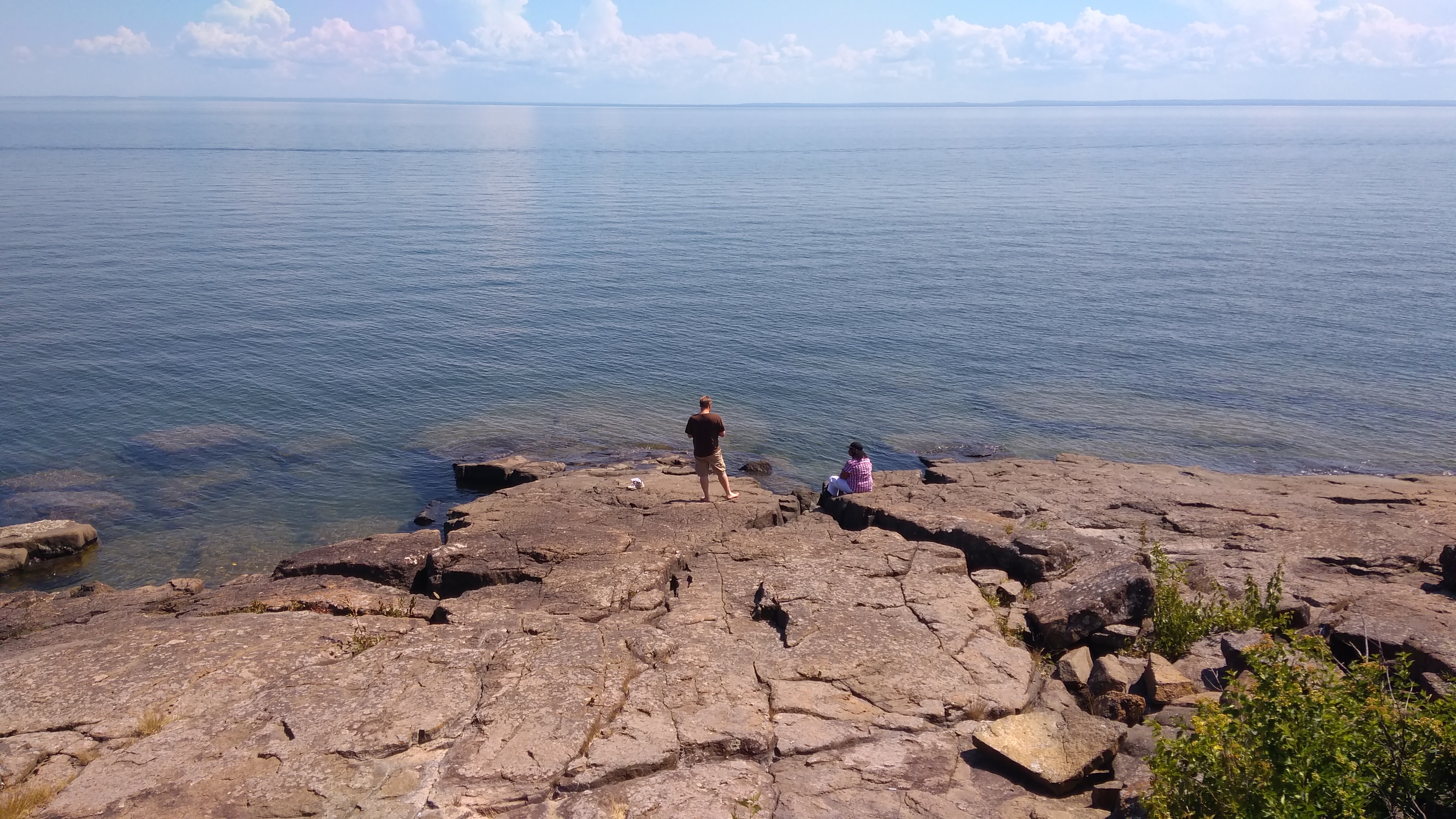
The northeast corner still holds some fascination, and for more than just the shape. There’s the lure of the North Woods, and Lake Superior is always calling. Enough to inspire a short trip. On July 27, after I finished my Friday work, we hit the road for a five-night trip to Duluth and environs.

Since reaching Duluth means crossing northwest all the way through Wisconsin, a few points in that state were part of the trip as well, especially Eau Claire, where we spent the first night at a spartan but tolerable chain motel.

From Saturday afternoon until the morning of Wednesday, August 1, we stayed at the non-chain Allyndale Motel, a notch up from spartan. It’s in west Duluth, almost at the edge of town, but actually Duluth isn’t that large, so the location wasn’t bad.

I guessed that the Allyndate dated from the golden age of independent motel development, namely the 1950s. The details were right, except no bottle opener attached to a surface somewhere in the room. Just before we left, in a talk with the owner, I was able to confirm that vintage. The first rooms dated from 1952, he said, with later additions.

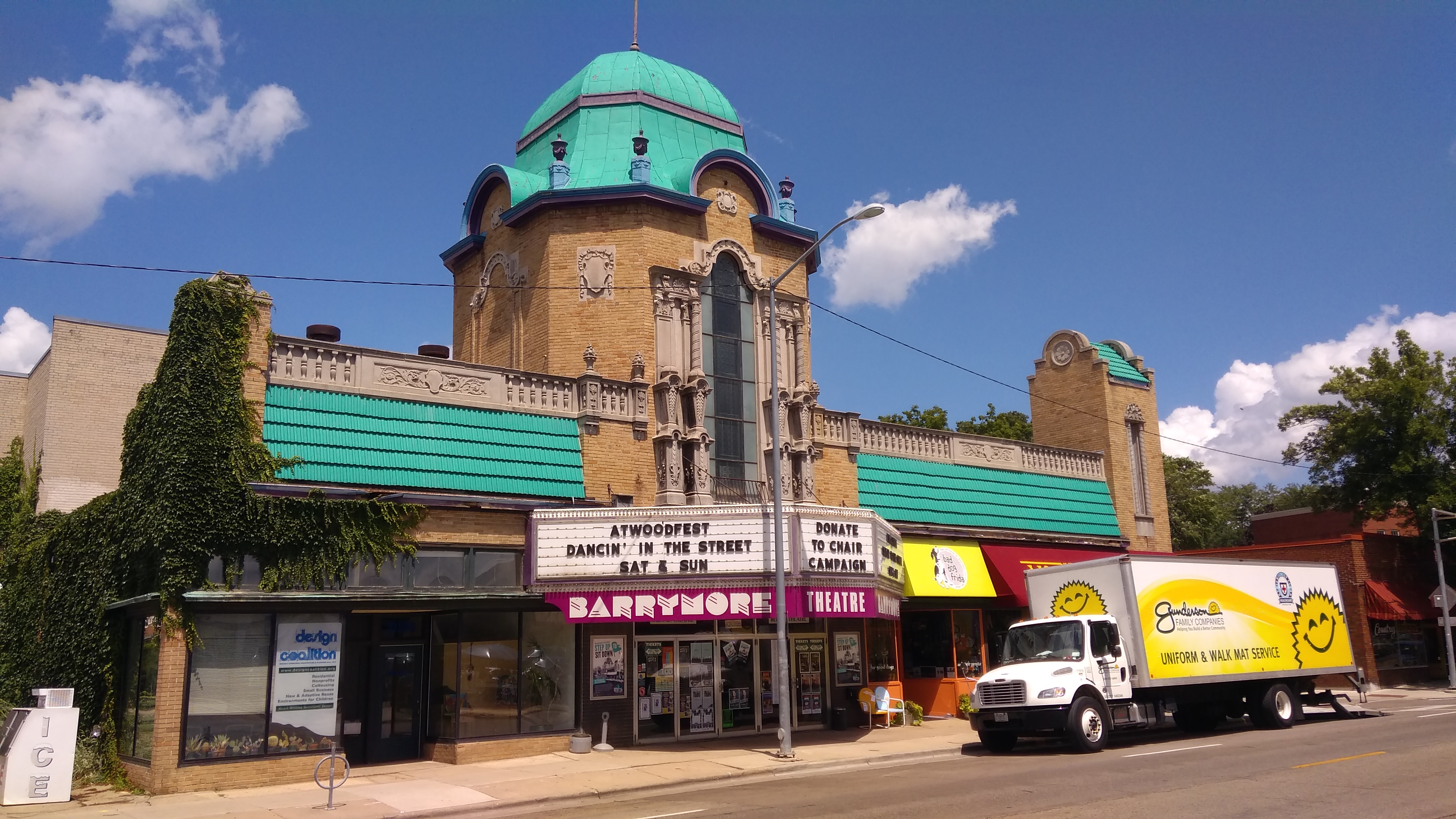
Before checking into the motel that first day, we spent a short while in downtown Duluth, walking along E. Superior St., which features shops and entertainment venues, including a legitimate theater, art house cinema and a casino. Rain, which had been holding back on the way into town, started to come down hard, so we ducked into the Duluth Coffee Company Cafe long enough to wait it out over various beverages.

That evening, we took in a show at the Marshall W. Alworth Planetarium, which is part of the University of Minnesota Duluth. The recorded show, narrated by Liam Neeson, was about black holes, and then an astrophysics grad student (I think) talked about the night sky. Many planetariums don’t bother with live narration anymore, so that was refreshing.

On Sunday we drove along much of the winding and often scenic Skyline Parkway in Duluth, stopping along the route to take in the sweeping view of the city, as well its twin city of Superior, Wis., and a large stretch of Lake Superior, from the Enger Tower in the aptly named Enger Park.

There happened to be a coffee and ice cream truck in the park, so Lilly had iced coffee and Ann had ice cream. The truck showed its regional pride in the form of a Minnesota flag.
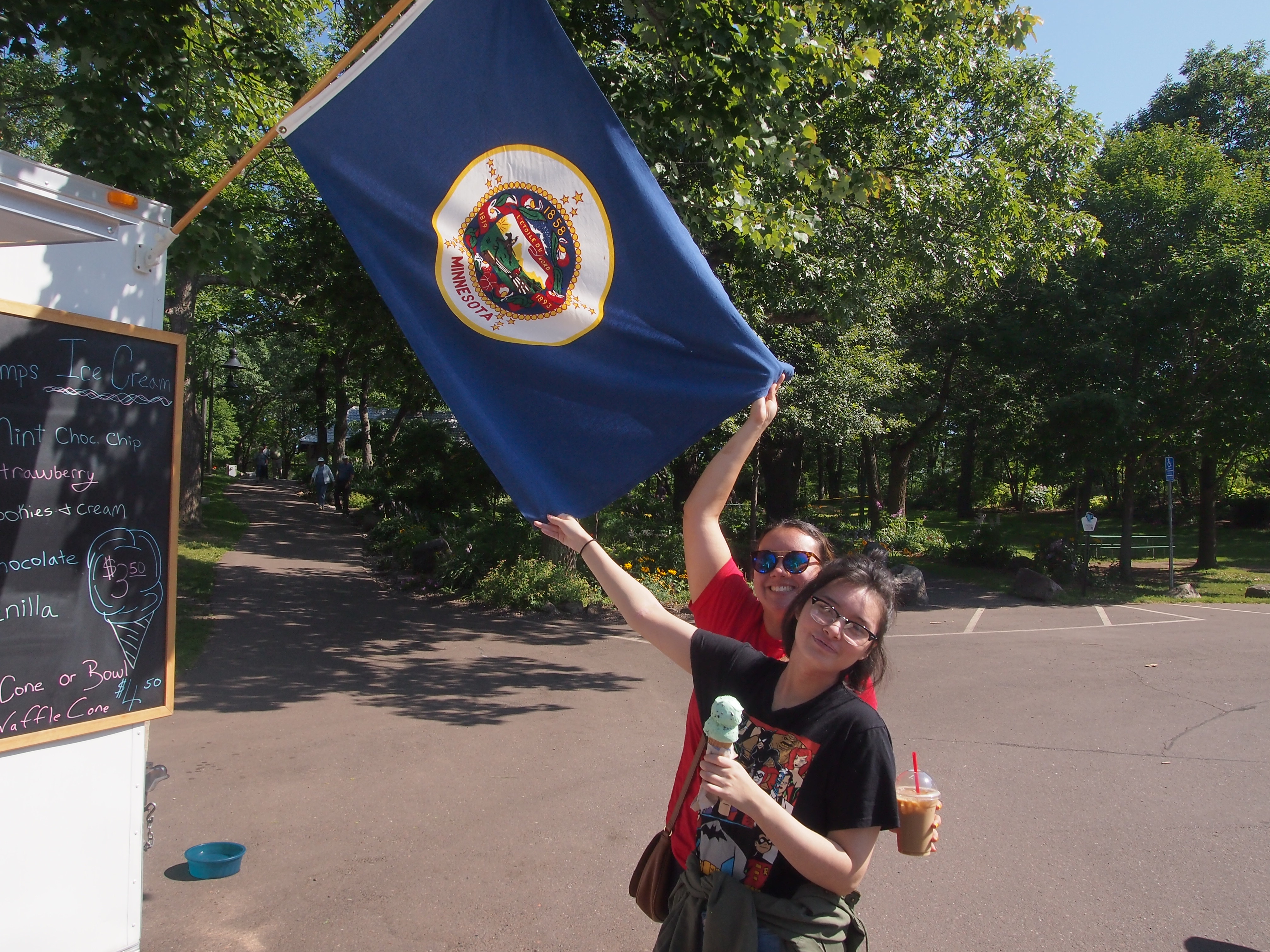
The design needs work, like many Midwest state flags. Here’s an alternative.

Late that morning we saw Duluth’s Aerial Lift Bridge up close, along with other parts of Canal Park and lakeside spots. The lofty bridge — crossing the entrance to Lake Superior from St. Louis Bay — is the Eiffel Tower of Duluth, a stand-in for the city that appears in a lot of places, including a refrigerator magnet that we brought home. (But I refuse to use the i-word.)

In the afternoon, we headed northeast from town along U.S. 61, which follows the shore of Lake Superior. That region, I discovered, is known locally as the North Shore. We made it as far as Gooseberry Falls State Park.

On Monday, July 30, we headed north, mostly via U.S. 53, to Voyageurs National Park, which is hard by the Canadian border. The trip up and back from Duluth is a little far for a single day, but ultimately seemed worth the effort. Besides, something about the symmetry of visiting Voyageurs NP and Big Bend NP during the same year appealed to me.

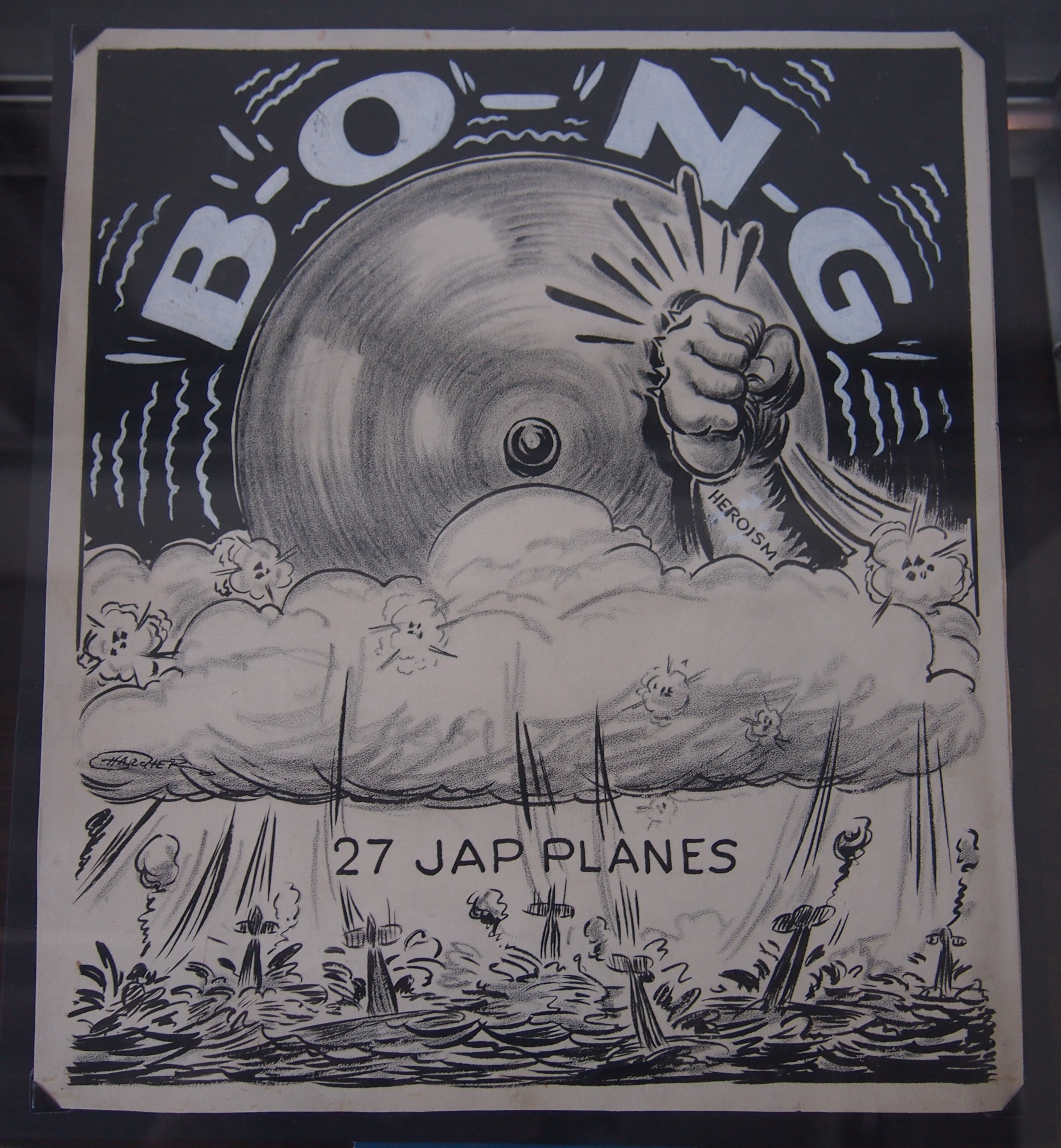
As the girls slept late on the last day of July, I made my way to Superior, Wis., and visited the Richard I. Bong Veterans Historical Center, a small military museum. WWII is increasingly distant, and except in Wisconsin, the memory of air ace Bong’s deeds has faded. But he had his moment.
The main event of July 31, our last day in town, was the Great Lakes Aquarium, which is in downtown Duluth, on St. Louis Bay not far from the Aerial Lift Bridge and Canal Park. The aquarium’s distinction is that it focuses on freshwater creatures.

Late that afternoon, I struck out again on my own to see one more place: Forest Hill Cemetery, which is in the hills northeast of the University of Minnesota Duluth. My kind of site, not the girls’.

On August 1, we got up early and drove home, stopping only to eat lunch in Madison. I wanted to take Lilly to Ella’s Deli, since she wasn’t with us last year when we went. But it’s closed.

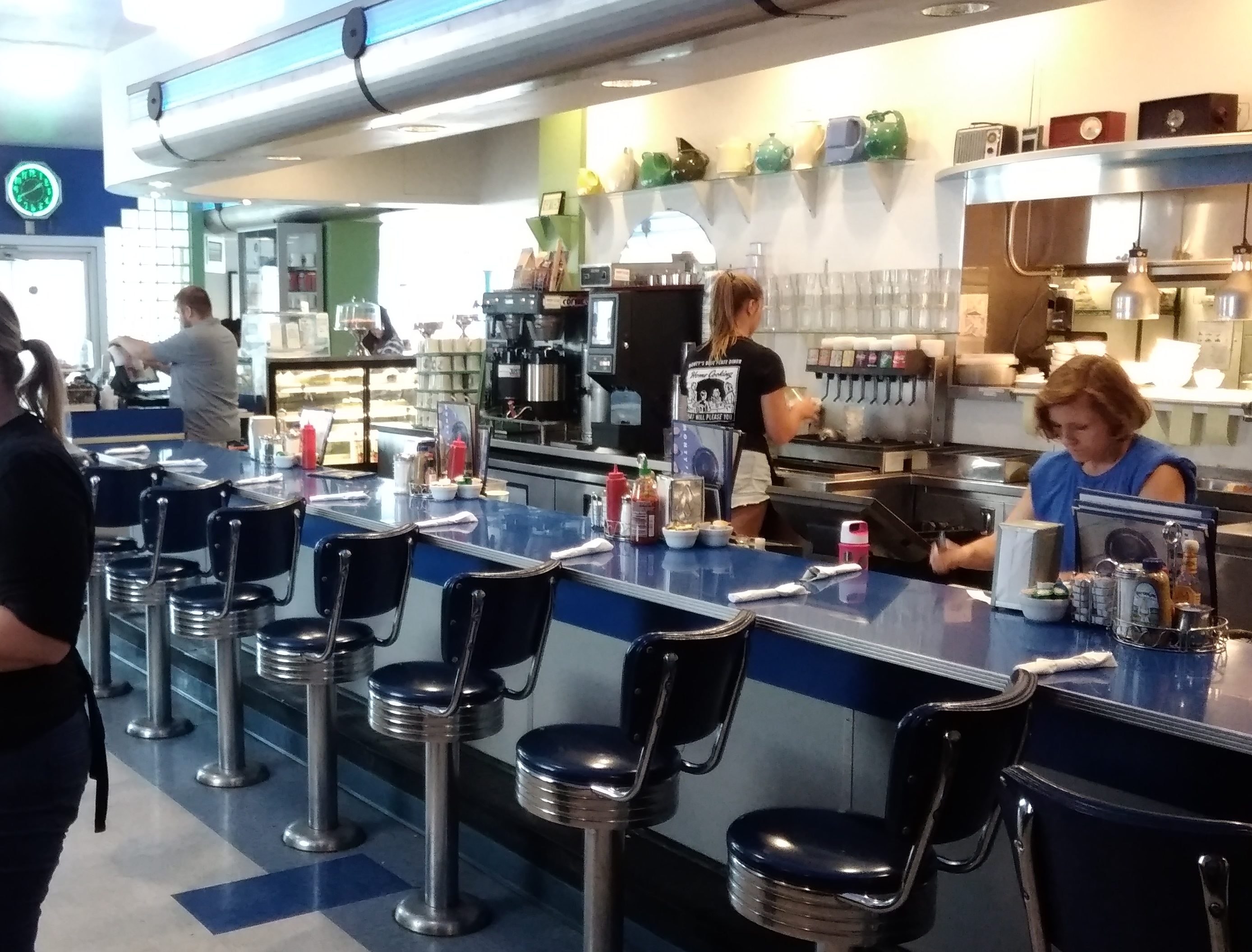
Too bad. Wonder what happened to all the oddball stuff Ella’s had. Instead we found Monty’s Blue Plate Diner. Not as much whimsy on the walls as Ella’s, but the food was good.

The Daley Plaza Food Truck Array

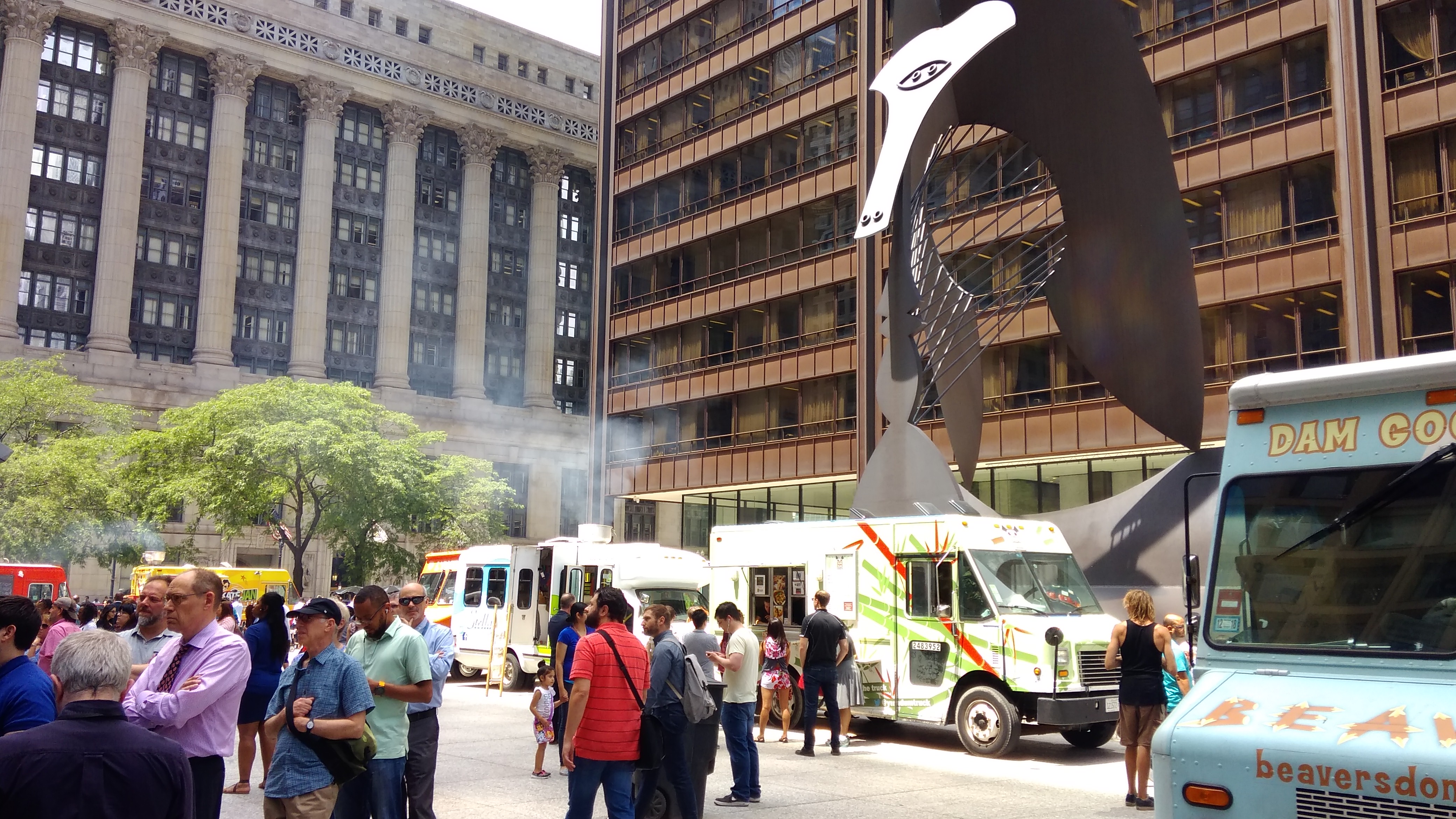
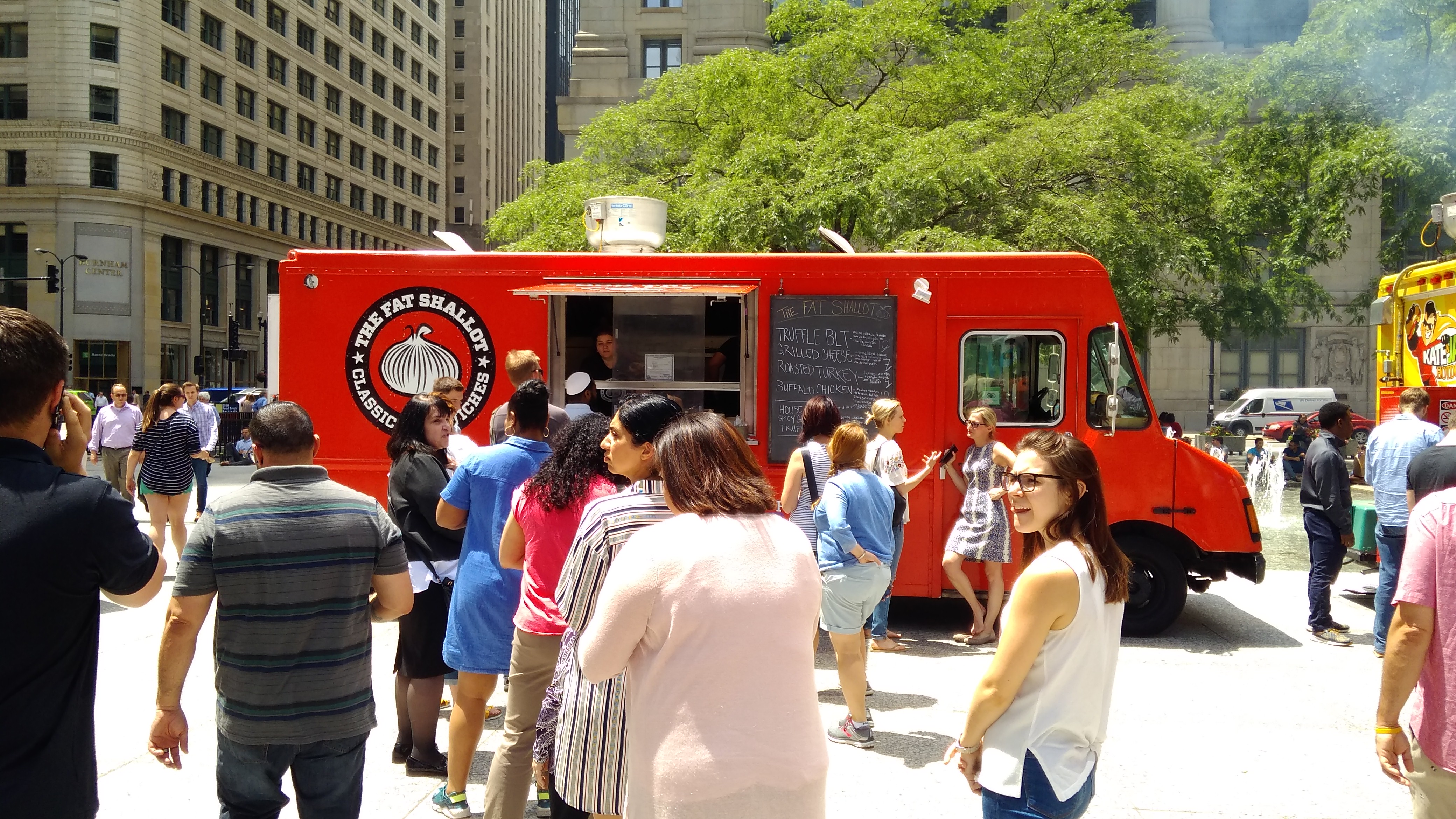
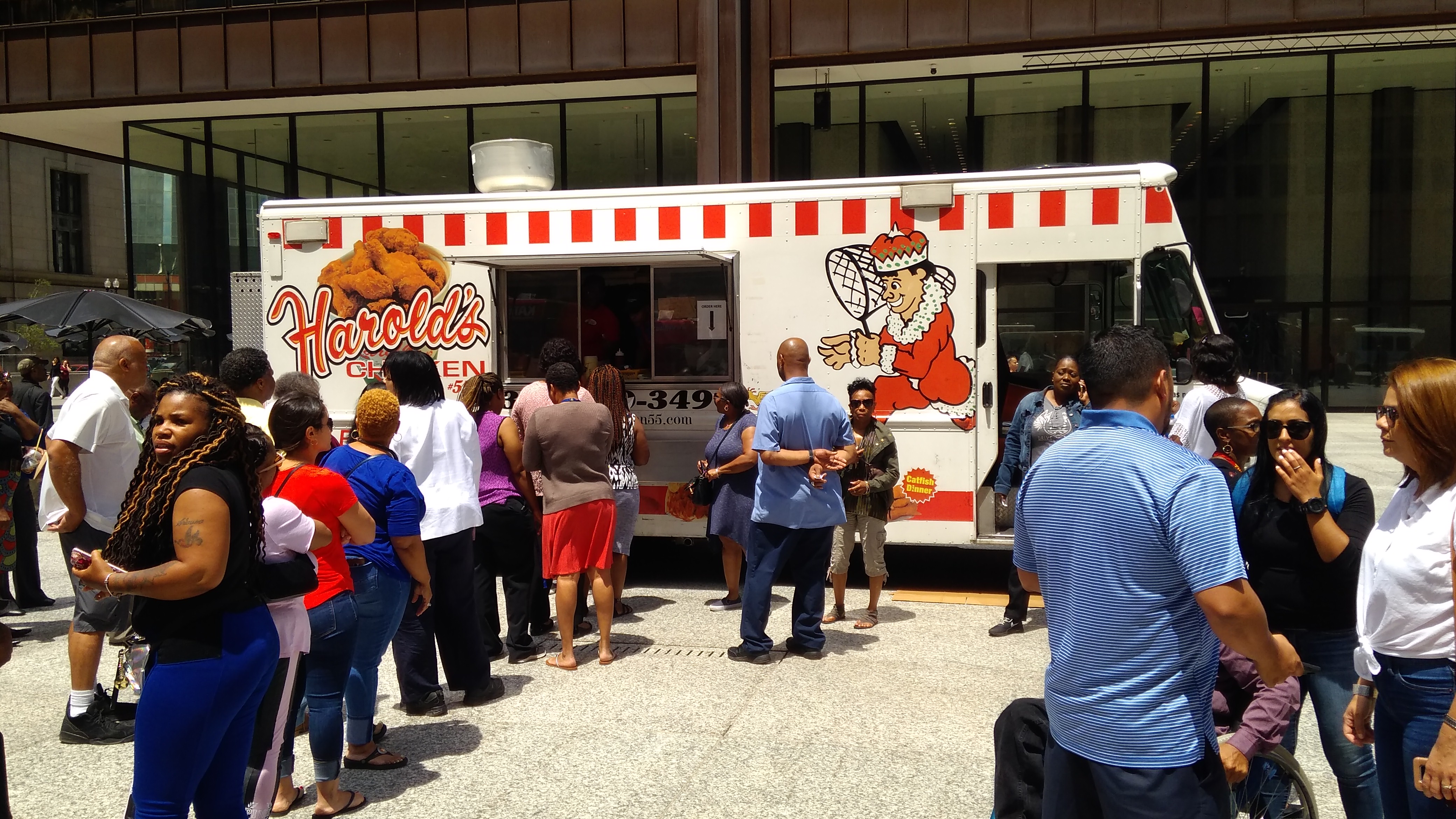
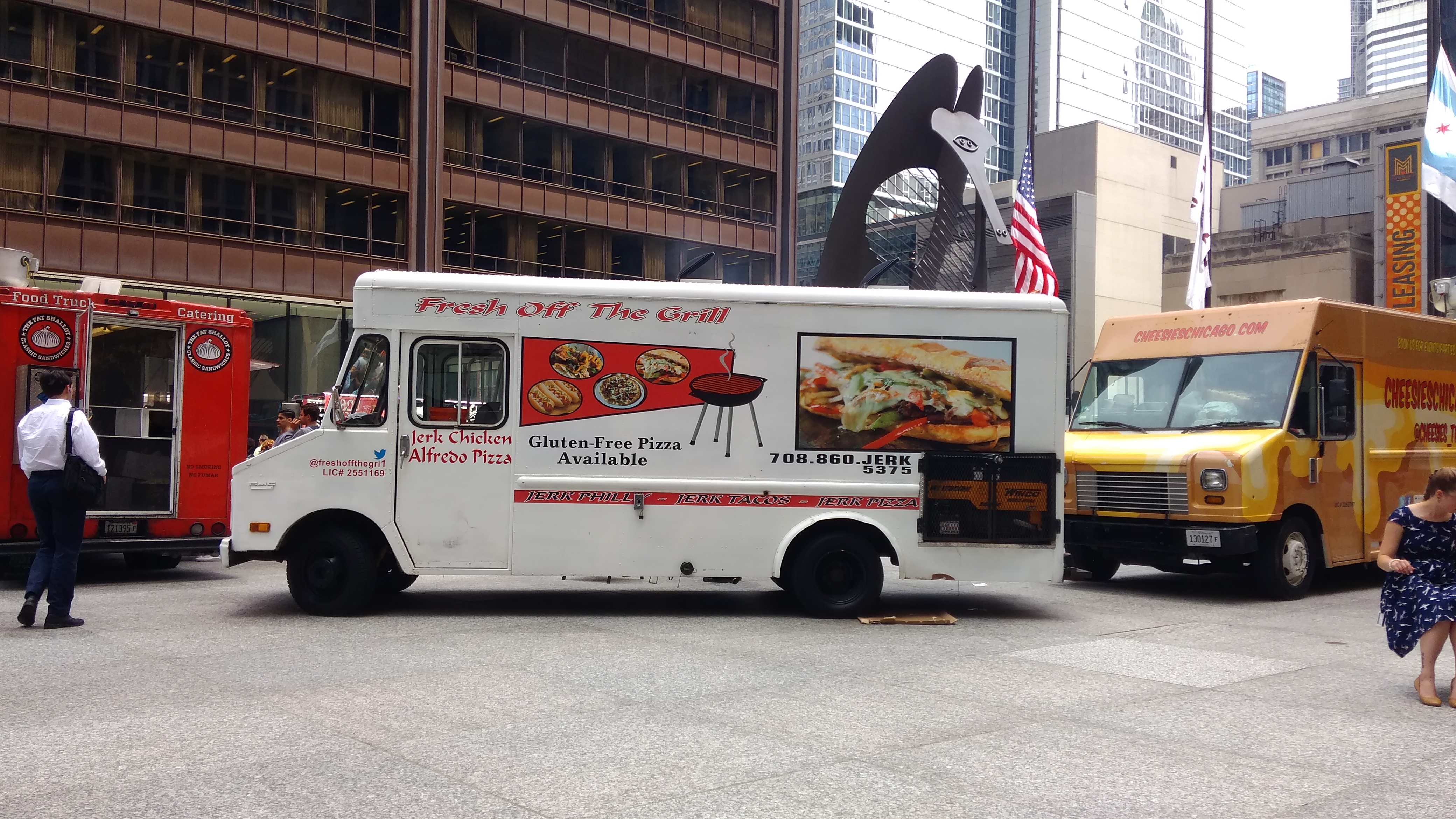
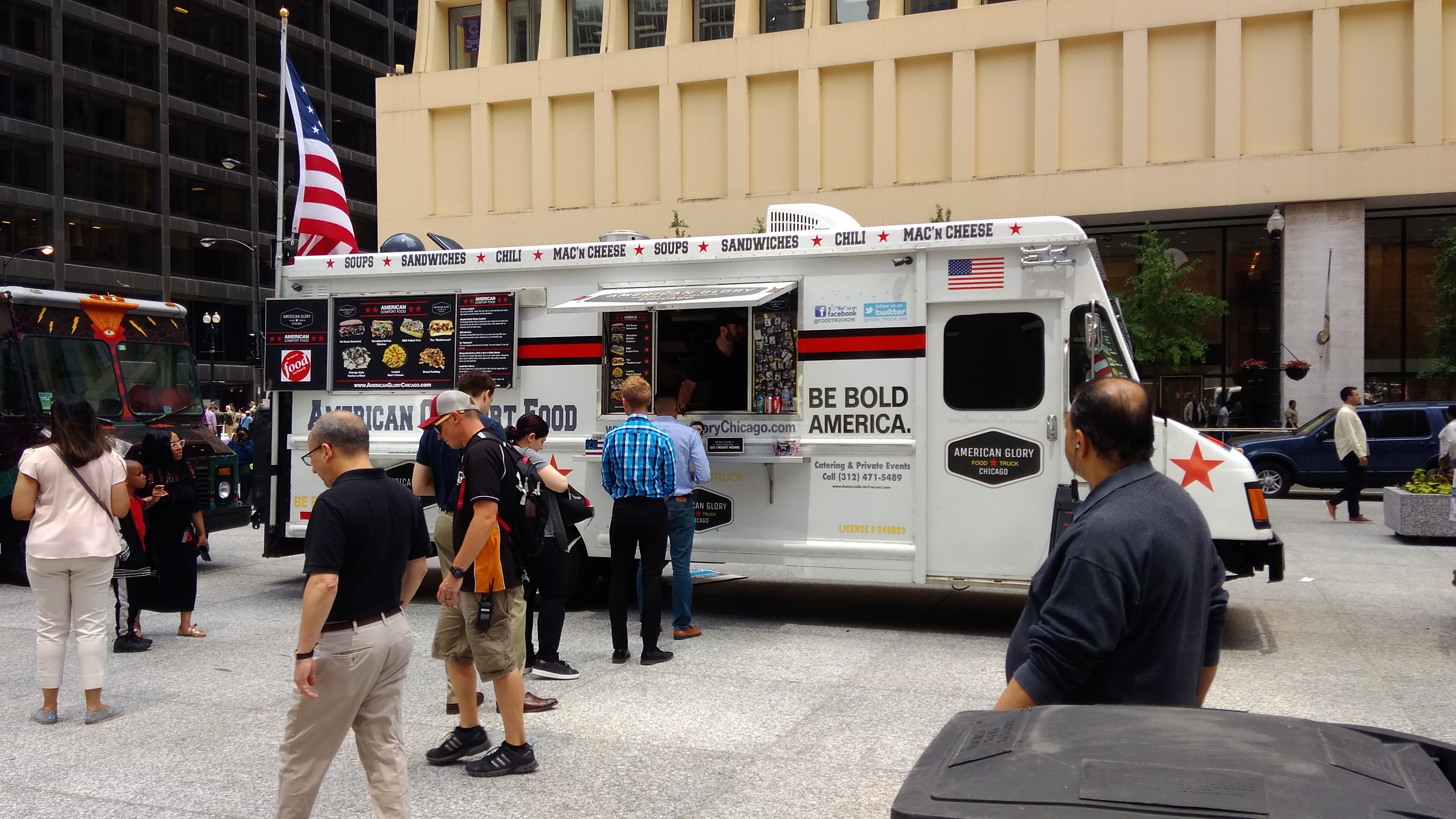
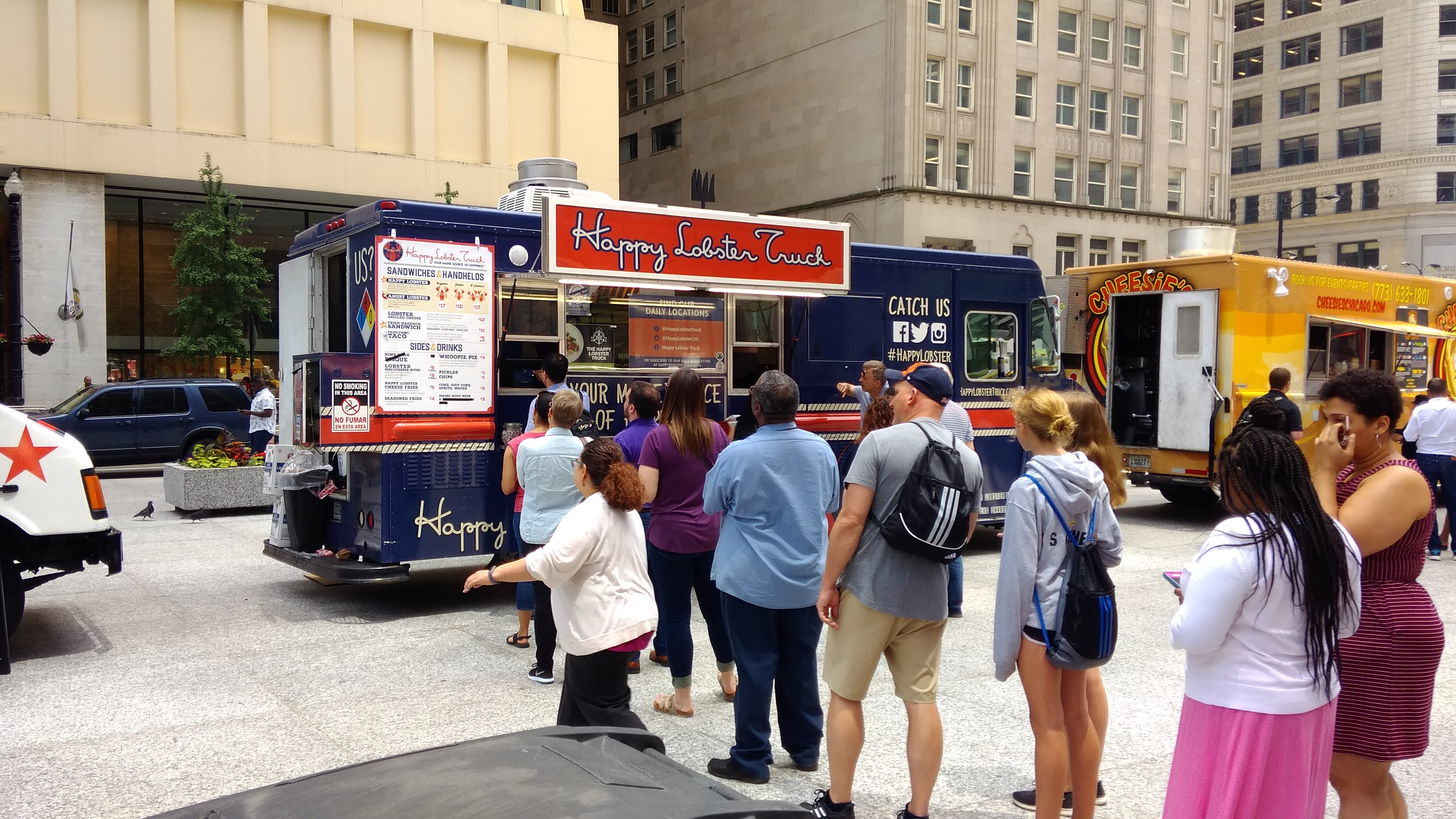
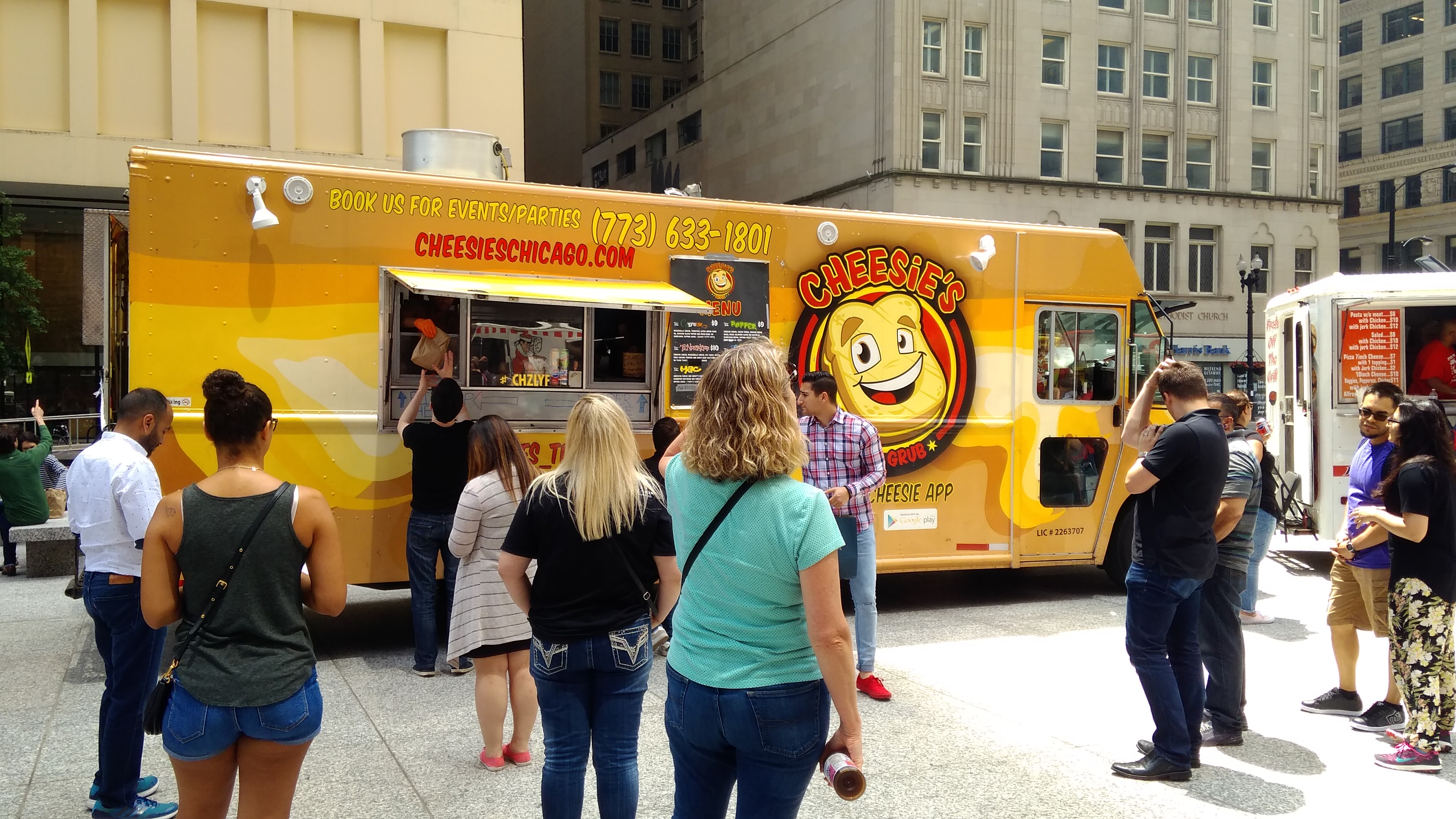
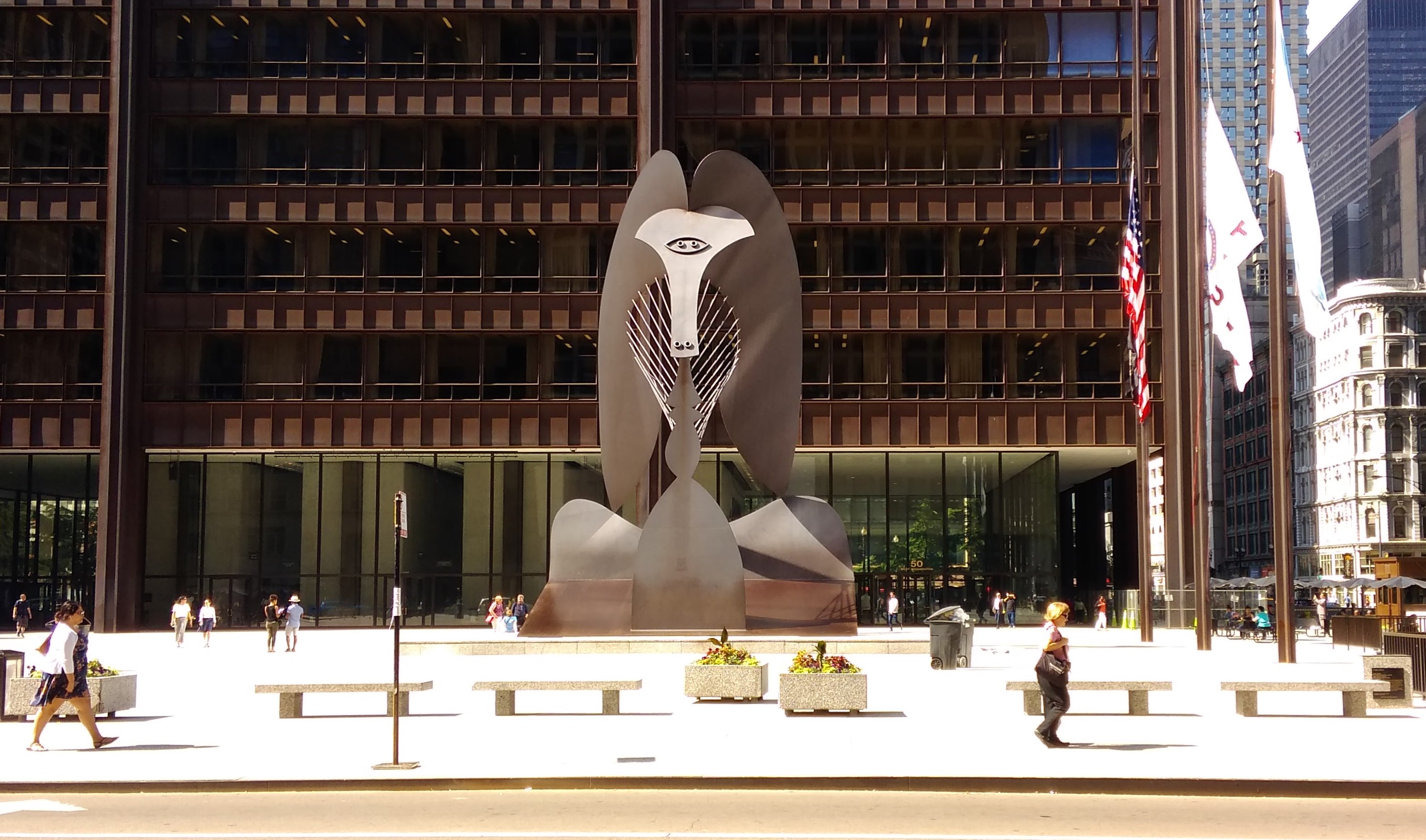
On Friday, the court gave us a generous hour and a half for lunch, so I had time to look around the collection of food trucks in downtown Chicago’s Daley Plaza, some of them ‘neath the Chicago Picasso.

The array of trucks was broad. Maybe 15 in all, though I didn’t count.

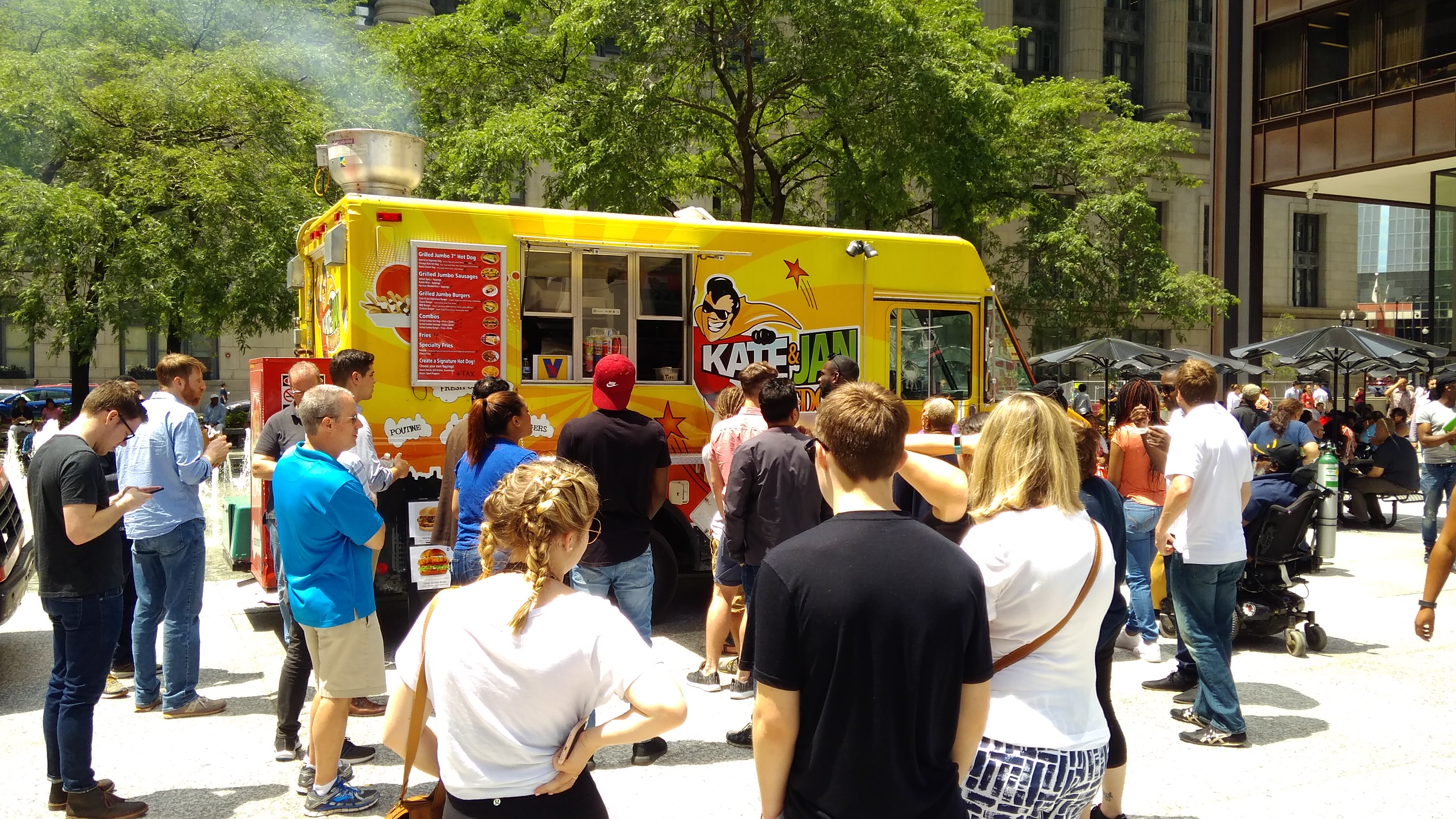
The one I eventually picked. Had a grilled cheese sandwich a cut above most diners, say, but still a little expensive, I thought.

Jury duty was over late in the afternoon.

It was as if the trucks had never been there.

Thursday Crumbs

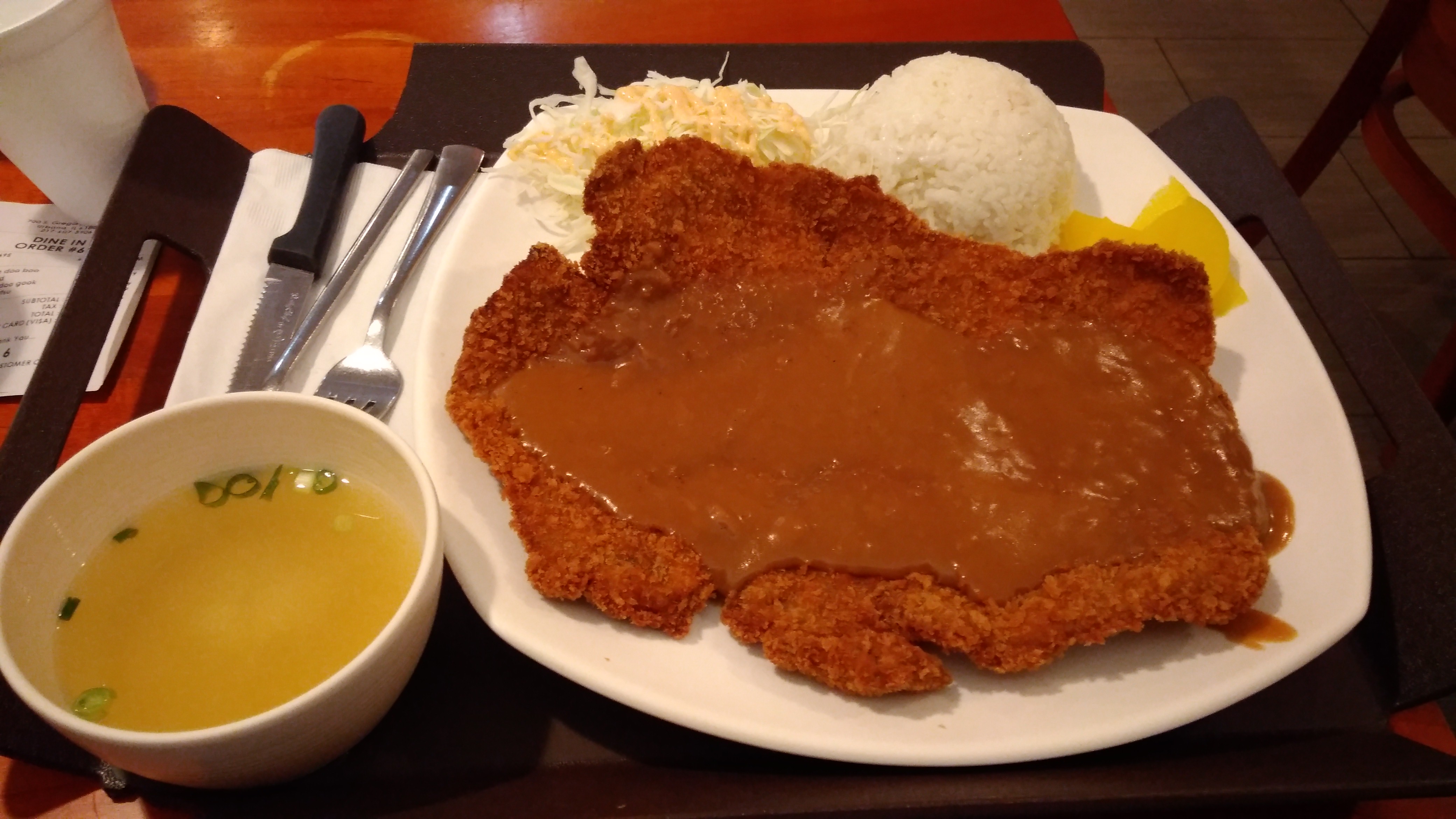
Not long ago I had a pork cutlet at a Korean restaurant, done in the katsudon style I’ve encountered in Japanese restaurants and at home. This particular cutlet was remarkably large. So much so that I was inspired to take a picture.

Large, but thin, so it wasn’t overfilling. Overall, quite good.

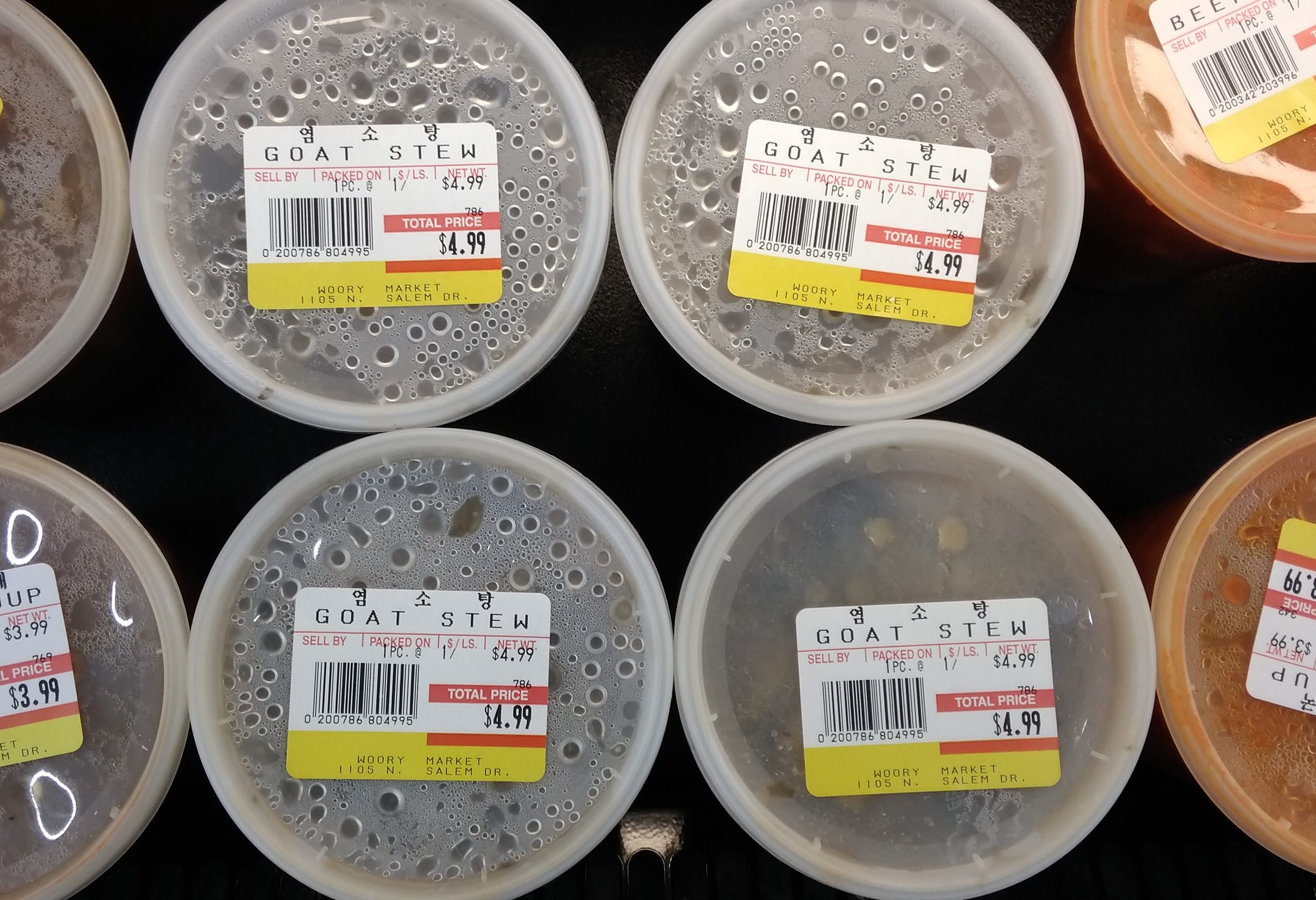
At an Asian grocery store the other day — Asian grocery stores are endlessly interesting — I saw this on offer.

I have to say I’m intrigued. People believe outdoor markets ought to be part of any visit to non-OECD cities, for that all-important authenticity and to see the locals, but if you really want authenticity, grocery stores are the place to go in any country. Ye shall know them by their grocery stores.

More debris from the Saturday grilling and gabfest.

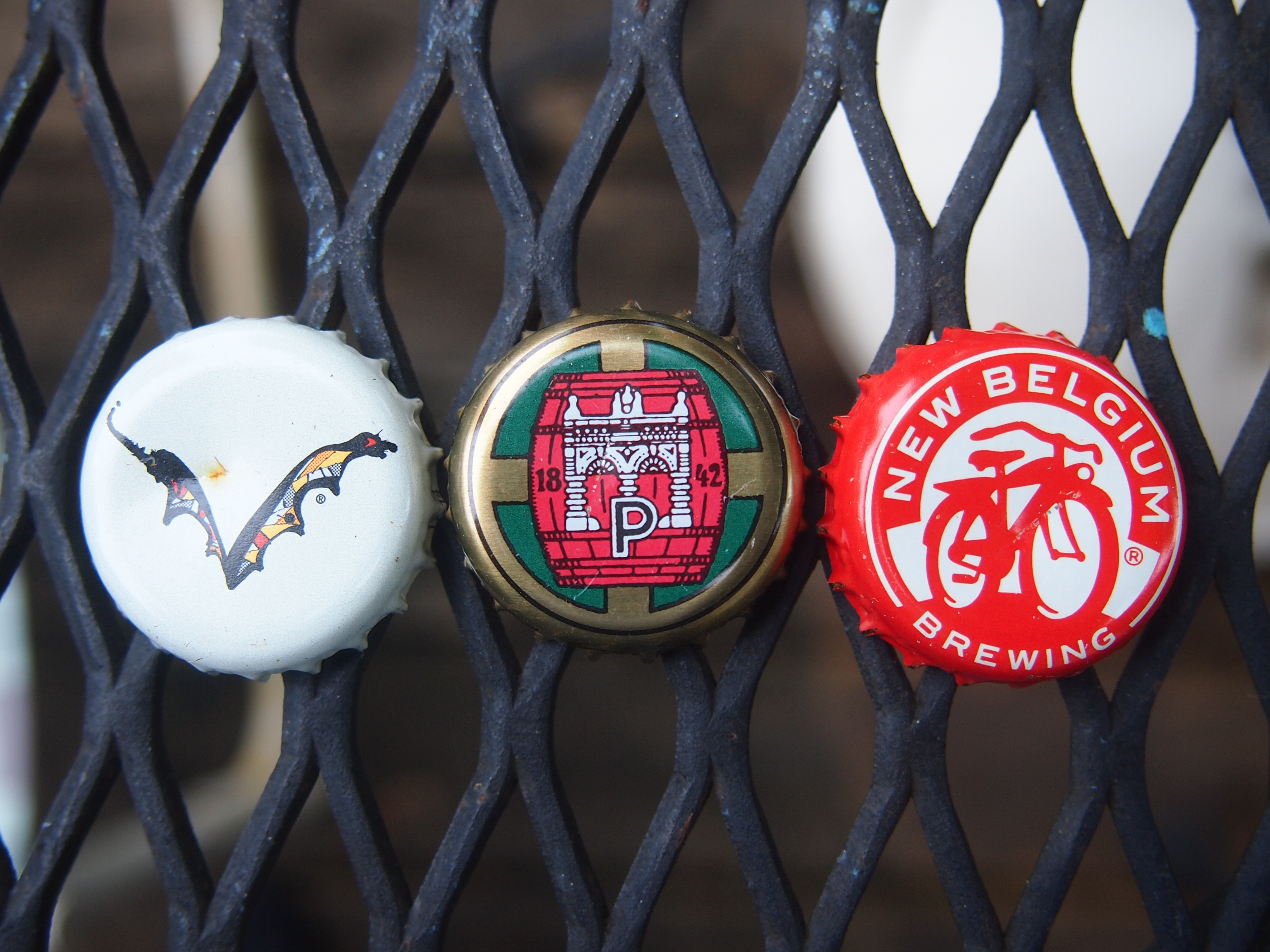
The caps to the bottles I posted the other day, arranged in the same order.

I had a shandy over the weekend and later, during a moment when I had much else to do, naturally decided to look up the word, the story of which I didn’t know. I know more now, after reading this.

Shandy, a shortening of shandygaff, origin obscure. Now that’s a fine word. If I were a brewer, I’d use it for my shandies. Radler is a good word to know too.

Had a curry doughnut today. I don’t eat that many of them, but when I do I enjoy them.

“In Japanese bakeries of virtually every stripe, you can buy a thing called a curry doughnut,” I wrote once upon a time. “What a discovery that was. No part of it is sweet. Browned by frying on the outside, it’s soft on the inside, and a spicy brown curry resides at its core. An enormous amount of fat, I’m sure, and heartburn later on, but boy they’re good going down.

“My favorite spot for curry doughnuts used to be the Cascade Bakery, near the main promenade of Hanshin Station, Umeda, in the heart of Osaka. Even now, I can get one in Arlington Heights, Illinois, if I’m so inclined. I know at least two Japanese bakeries in that town that sell them. But it’s been a while.”

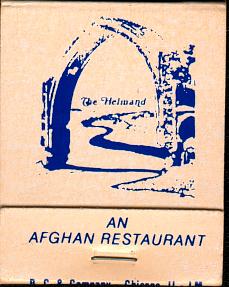
I’ve been to only two Afghan restaurants that I remember. One was in New York City in 2005. The other was ca. 1987 in Chicago: The Helmand.

Writing in 2005, I said: “I can remember visiting an Afghan restaurant only once before, about 20 years ago, a place on the North Side of Chicago near Belmont Blvd., long gone now. Much later I learned that it was owned by relatives of Mohammed [sic] Karzai. I vaguely remember it being exotically good.”

I have a matchbook from the place even now. Can you get matchbooks at restaurants any more? My experience is you can’t. In New York in March I experienced a brief and very minor moment of excitement when I picked up what I though was a small matchbox advertising a restaurant. Matches! Turned out to contain toothpicks.

Whatever happened to Hamid Karzai? Having managed to survive the Afghan presidency, no small thing, he seems to be living in comfortable semi-retirement after his career in peculation.

Here, Here, Some Beer

Friends were over on Saturday for meat, beer and conversation on the deck, despite rain that morning. By mid-afternoon, the deck was dry enough to sit around.

We had more meat and conversation than beer, though there were a few empty bottles left over afterward, as there have been before. And before that.

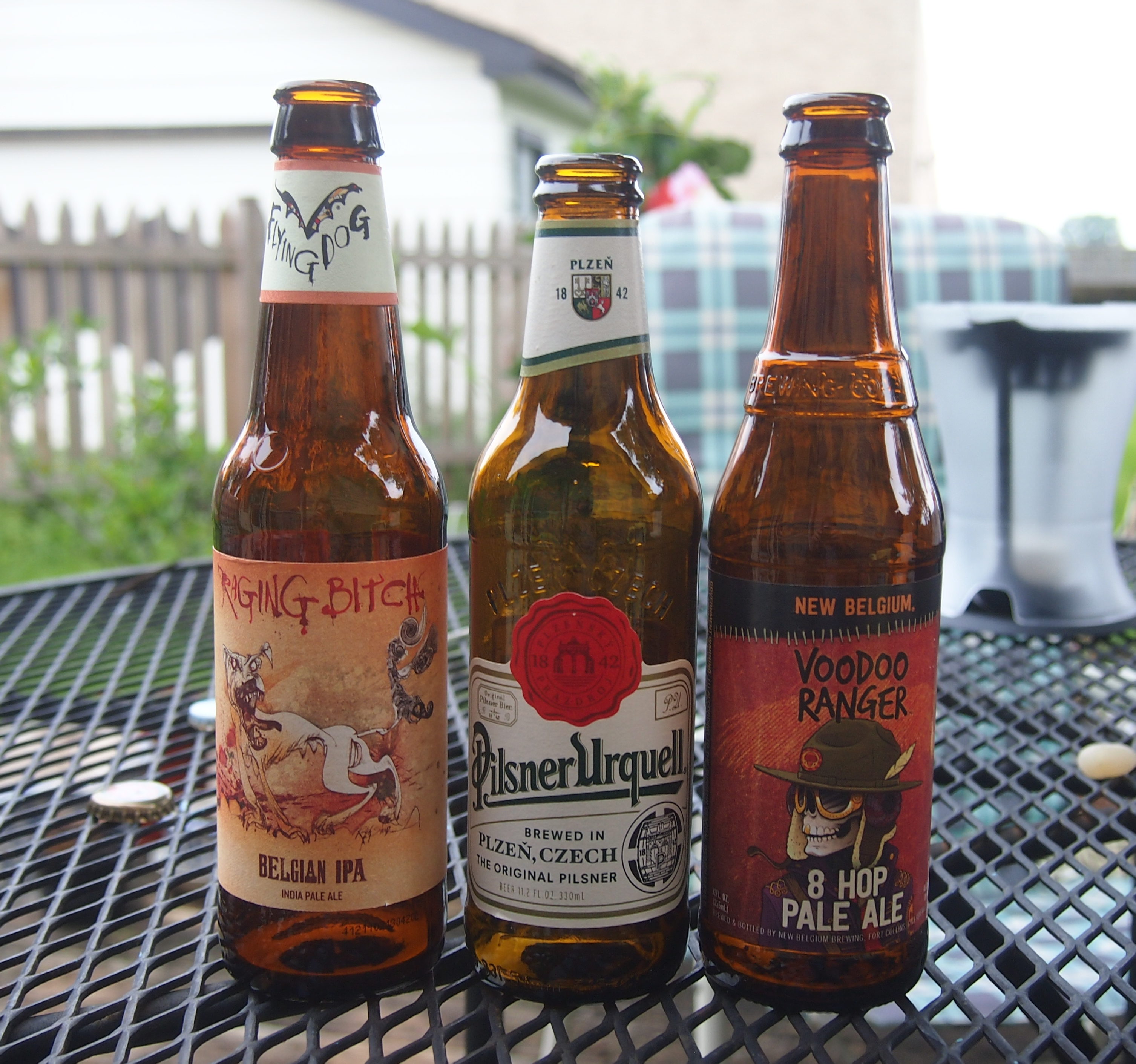
I acquired a “flight” of beers before the event at an area grocery store with a beer cave, and these are three of them. As usual, my beer-buying technique was to look for a variety of states and countries of origin, and interesting labels.

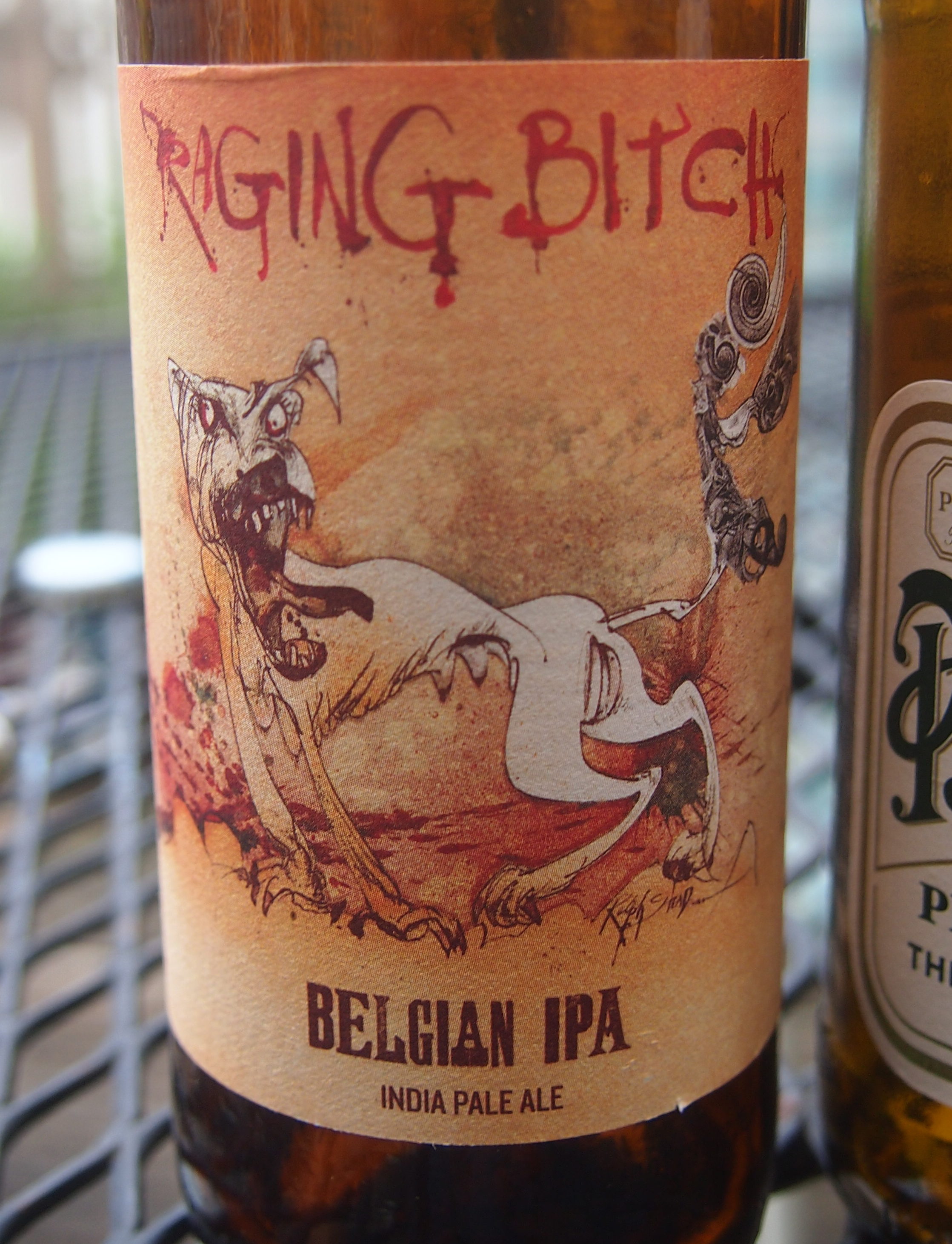
Raging Bitch was the hit among the beer names. Its acid-trip Ralph Steadman artwork was remarked upon as well.

A product of the Flying Dog Brewery in Maryland. Later, I read the marketing blarney on the bottle, attributed to Steadman. It’s pretty good:

“Two inflammatory words, one wild drink. Nectar imprisoned in a bottle. Let it out. It is cruel to keep a wild animal locked up. Uncap it. Release it… stand back!! Wallow in its goldenn glow in a glass beneath a white foaming head. Remember, enjoying a RAGING BITCH, unleashed, untamed, unbridled and in heat is pure GONZO!!”

Gonzo, eh? Maybe if you added peyote, which we did not. Otherwise, it was reportedly  a pleasant brew.

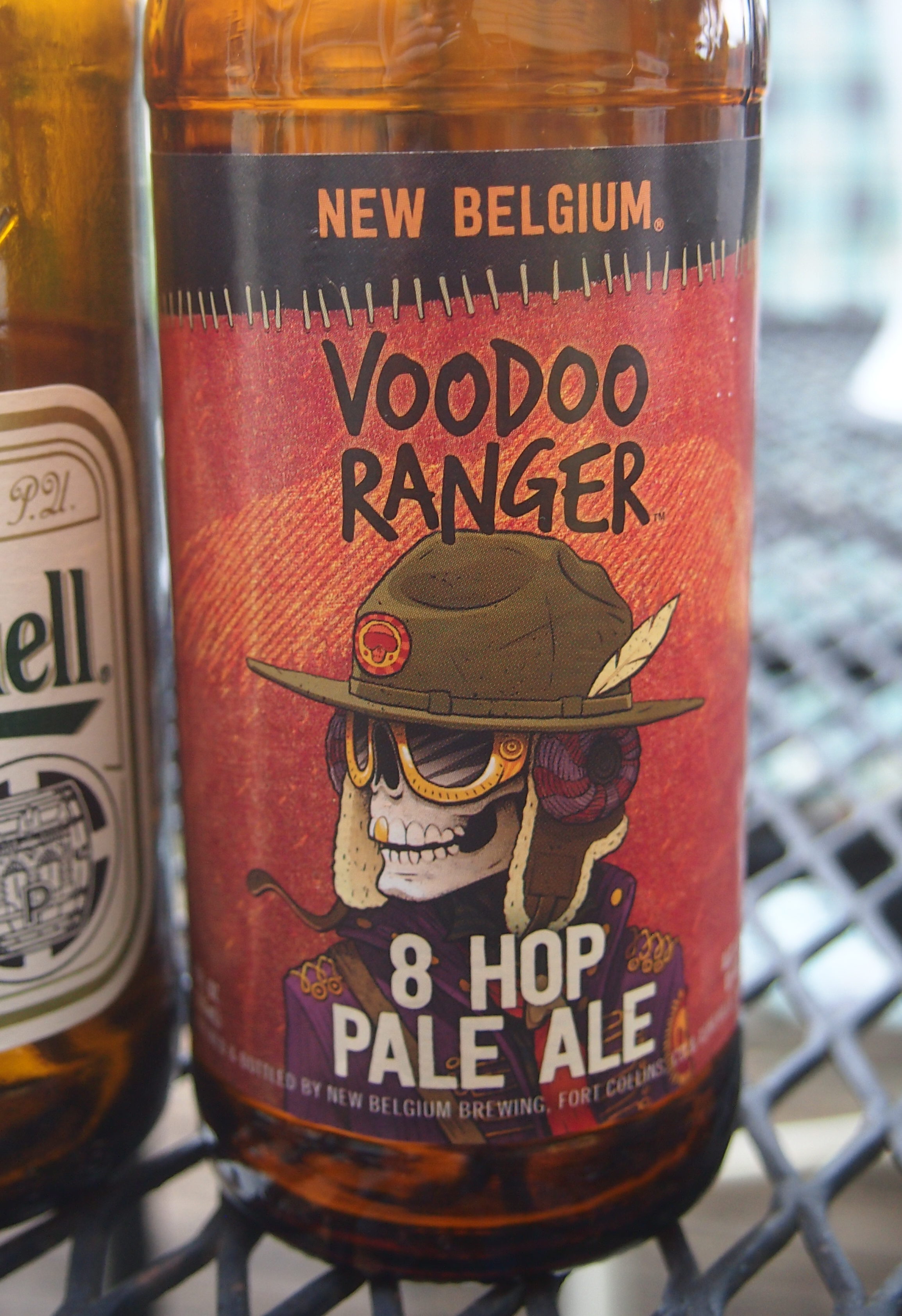
Voodoo Ranger, by New Belgium Brewing of Colorado and North Carolina, had another amusing label.
It didn’t assert its gonzo-ness. The label did say, “Brilliantly balanced for easy drinking, this pale ale is packed with citrus and tropical fruit flavors from eight different hop varieties.”

The center beer, PilsnerUrquell from Plzeň (Pilsen), Czech Republic, had the most conventional label, appealing to a drinker’s sense of tradition. The label said:

“In 1842, the Citizen’s Brewery of Plzeň brewed the world’s first golden pilsner and never stopped. We make it in the same way in the same place, with 100% of our ingridients from the same farming regions in Czech, as always.”

Not pictured is the grapefruit shandy that I tried, which a guest brought. It went down well, but in combo with meat and another bottle of beer, I later had a rare but fortunately fleeting bout of indigestion. I’d say it was worth it, though.

They Might Be Serious About This Burger Thing

Today I encountered the strangest press release I’ve seen in a long time, and I’ve seen a few odd ones over the years. Normally, press releases purposely avoid eccentricity of any kind. Sometimes there are as dull as can be. But not always. Especially in this case. It starts off:

BURGER, Calif., June 11, 2018 /PRNewswire/ — Today, IHOP® Restaurants announces that it is going by a new name – IHOb. For burgers…

Turns out it’s a temporary “name change.” IHOP wants to add a little oomph to its effort to compete in the crowded field of hamburgers in America.

The change, in fact, celebrates the debut of the brand’s new Ultimate Steakburgers, a line-up of seven mouth-watering, all-natural burgers…. According to a company spokesburger, “These burgers are so burgerin’ good, we re-burgered our name to the International House of Burgers!”

That isn’t even the strange part. The third, fourth and fifth paragraphs of the release are, and I quote exactly as they appear:

Also, burgers burgers burgers. Burgerin’ burgers burgers. Reburgered burgers burgers burgers burgers burgers burgers. Burger burgerings burgers burgers burgers. Burgerin’ burgers burgers. Moreover, burgers burgered burgers burgers. Burgers burgers burgerin’ burgers burgers burgers burgers burgers burgers burgers burgers burgers burgerin’ burgers.

Furthermore, burgers burgers burgers. Burgerin’ burgers burgers burgers burgers burgers burgers burgers burgerin’ burgers burgers! Burgers burgers burgers reburgered burgers burgers burgers burgering burgers. Not to mention, burgers burgered burgers burgered. Burgers, burgers, burgerin’ burgers and burger burgers.

Lastly, burgers burgers #burgers. Reburgered burgers burgers burgered burgers burgered burger burgers. Burgers burgers burgers?

I Got Great Entertainment Value From My DoDeCaHORN in Early ’90s Japan

In early 1992, a curious-minded friend asked me in a letter about the cost of living in Japan. At the time the oft-used example, probably by lazy journalists, was the $10 cup of coffee (shocking in a pre-Starbucks-everywhere context, I guess). I’m sure you would have been able to find such a brew at upscale hotels in Tokyo, but it wasn’t part of my experience.

So I wrote him the following.

March 1992

Japan is justly famous for its high cost of living. But one can adapt, especially as a single person, though you never really grow fond of the system, the basis of which is to squeeze consumers as much as possible. Luckily, I’m no more a typical consumer in Japan than I was in the United States. Remarkably, my personal cost of living is roughly the same in absolute (dollar) terms, and a little less in terms of percentage of income, than in Chicago.

That might seem strange, but there are several factors to consider. Japanese income tax is a flat 10%, sales tax on everything is 3%, so neither of those is especially onerous. I have no car, which I believe would be a useless luxury in Japan, and endlessly expensive. For instance, gasoline is about four times as expensive as in the U.S. I buy few articles of clothes here. They’re expensive, but it’s also true that it’s hard to find my size anyway. I’ve supplemented my wardrobe during travels outside Japan, especially in Hong Kong, where clothes are reasonably priced (except I couldn’t find shoes there either). A spare pair of glasses was a deal in Hong Kong, too.

I’ve been slow in acquiring household appliances. Some of them I bought new — a gas cooker, about $100; a Korean-made TV, about $200; a bottom-of-the-line VCR, also about $200; a DoDeCaHORN combination CD player/double cassette deck with AM/FM band, again about $200. I’m highly satisfied with the quality of these goods, as you might expect from Japanese (and Korean) electronics.

Other items I’ve bought recently have been from departing foreigners in sayonara sales. Recently I acquired a table, microwave oven, book shelf, a number of books and other things that way, cheap. I’ve found a few things in the street for free. My Osaka Gas Fan Heater 2200 is an example, which I found the first summer I was here, before I needed it, abandoned by its owner. Such finds are called gomi, or so-dai-gomi if the items are large.

Food is a major expense. Some things are insanely expensive, such as bread, at $1.50 for four or five measly slices, or $4 or $5 for a glob of raw hamburger American stores wouldn’t package that small, or liters of milk that cost as much as a gallon in the U.S. You might think those aren’t typical Japanese foods, but they are now. Consumption of “Western foods” is so commonplace that the distinction makes little sense in most cases. Besides, rice and fish aren’t particularly cheap, either.

Properly done, eating out is little more expensive than eating at home, due to high grocery costs. I know a lot these days about (relatively) cheap Japanese eateries, including the location of a score of places that offer meals for $5-$8, most of them filling and excellent nutritionally and gastronomically: noodle soups, chicken and pork cutlet meals, Japanese-style Chinese food, rice dishes, curries and more.

Then there’s the matter of rent. I have a modest place, one-and-a-half rooms, certainly less than I had in Chicago. For it I pay slightly less rent, in dollar terms, and somewhat less as a percentage of income. Except in winter, when gas bills are high, utilities aren’t bad.

One more thing: entertainment. Fun can be dear in this country. Luckily for me, I’m seldom inclined to visit bars, no doubt the greatest black hole for yen around. I do go to an izakaya once a week with friends, but that’s as much cheap restaurant as bar. Video tape rentals are about $4 for new movies, less for others. Movies in the theater run at least $18, but I know a couple of second-run houses for less than half that. Some of the best museums and temples in the country are only a few dollars to get in and, if I really don’t want to spend much for entertainment, I take the subway to some part of town I don’t know well and walk around. That never gets old.

Folderol for March 1

In the wee first hours of March this year, I woke up to light rain. After I went back to sleep, weird and unsettling dreams came. I don’t know if that was connected with the rain, but I was surprised in the morning to see that a lot of rain fell as I slept, more than I would have thought. Rain that forms large puddles near the back fence.

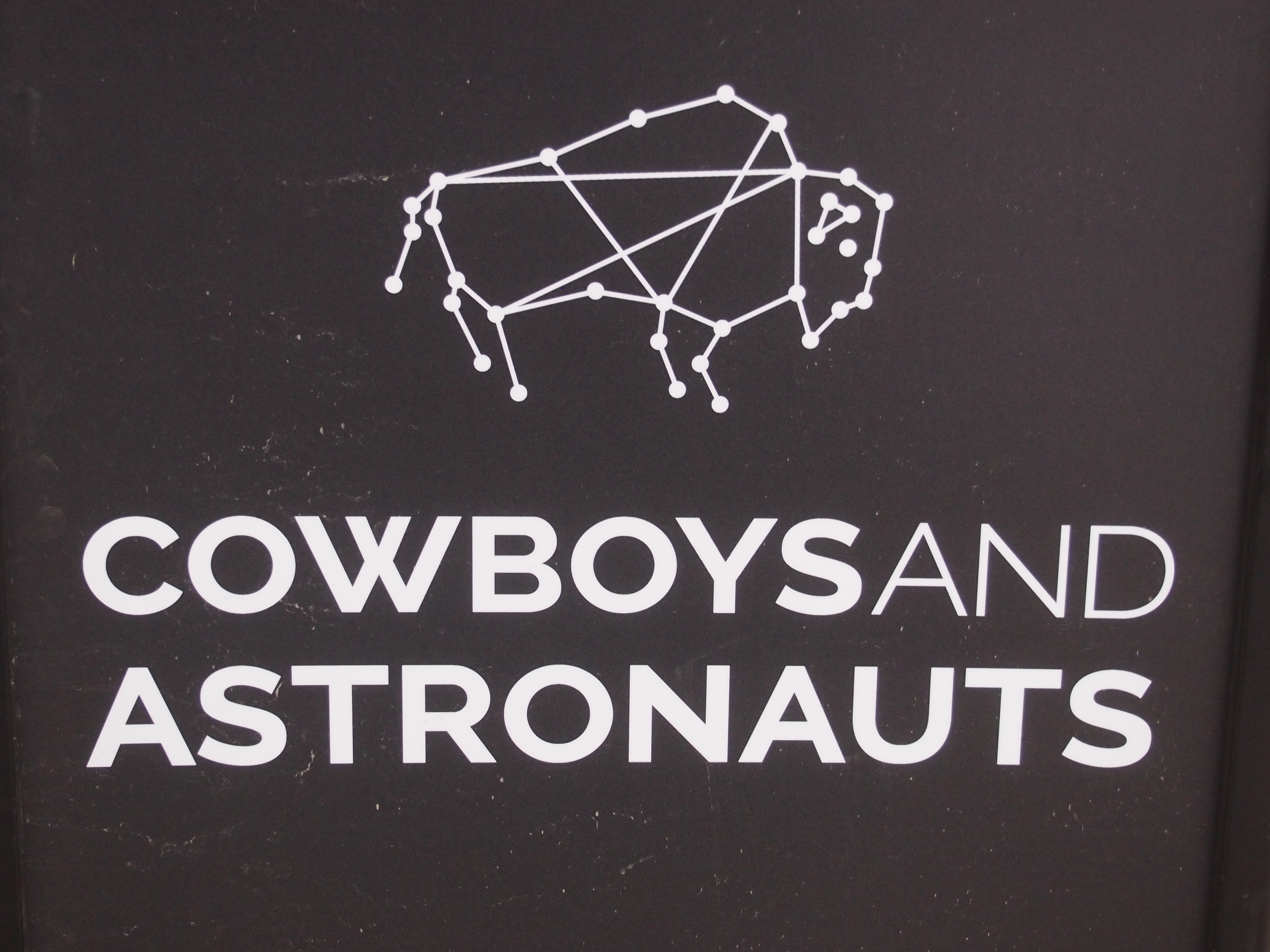
In Andersonville last weekend, we saw a shop called Cowboys & Astronauts, just off Clark St. I liked the sign advertising the place.
Its web site says: “Cowboys and Astronauts, Chicago’s newest men’s lifestyle and supplies destination, is proud to announce that we have opened our storefront in the heart of Andersonville. We hope that you will swing by and check out our curated blend of apparel, accessories, grooming, travel supplies, home goods, and gifts.”

Curated men’s lifestyle and supplies, eh? I’m resisting the urge to mock that idea. We didn’t go in, so I can’t comment on the goods. But we could see that the store did have a faux space suit on display. I’ll give them that.

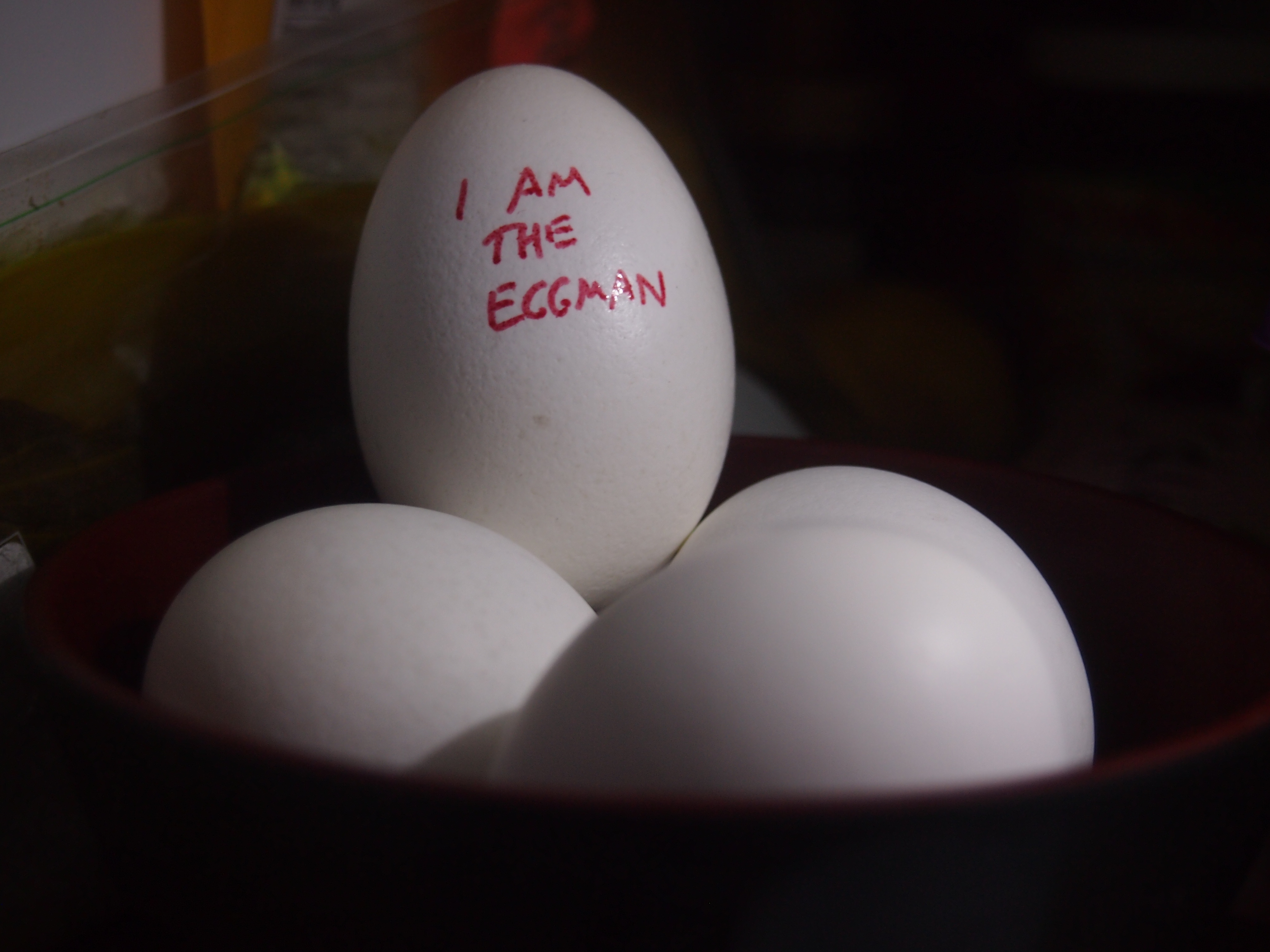
Next: eggs. Occasionally, I write on my eggs. Just for grins.

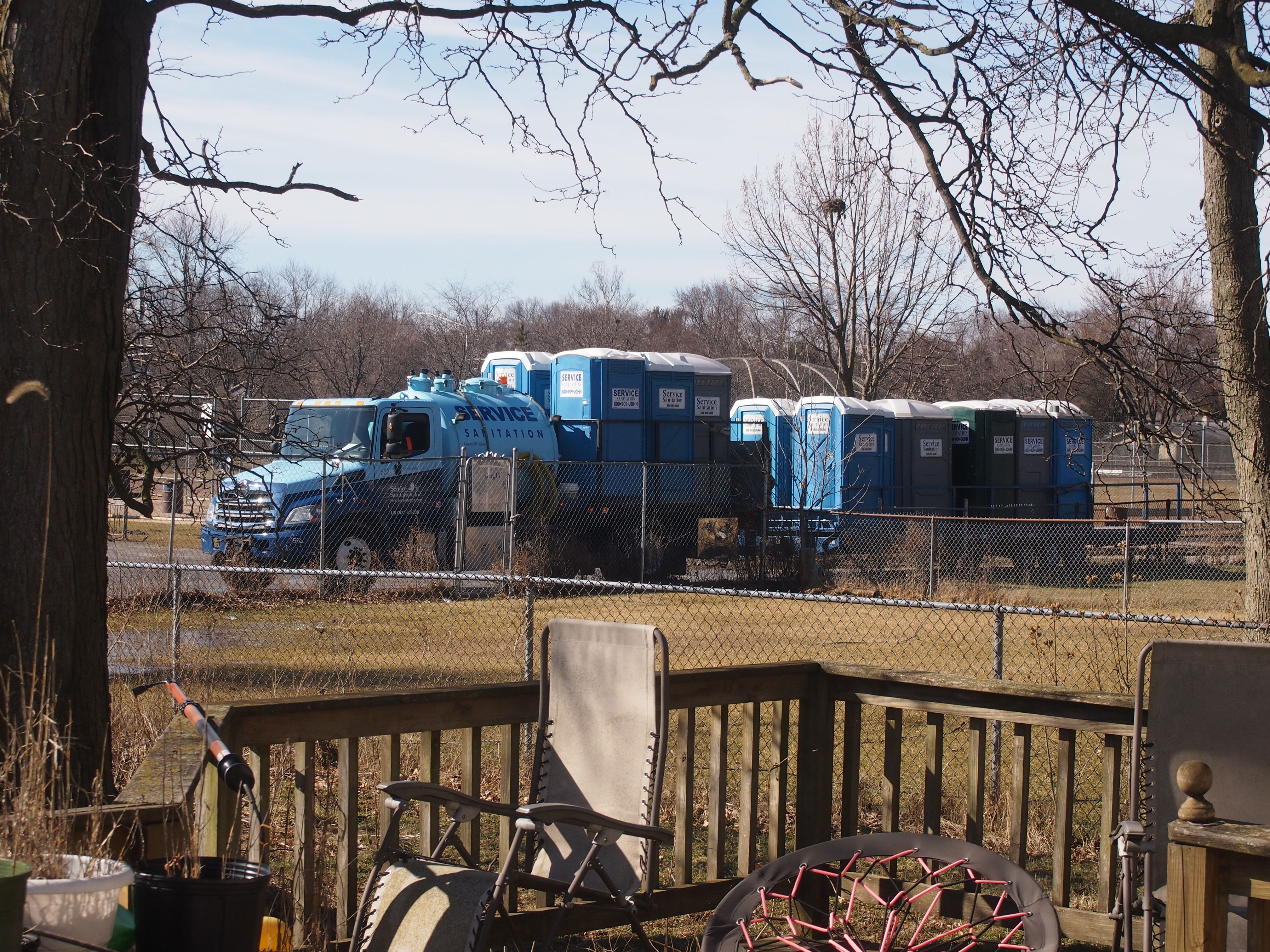
How often do you see a truckload of portable toilets? Of the plastic-molded outdoor cubicle type, loaded and ready go wherever they need to go?

Not often. I think the truck was delivering a few to the park behind the house. Maybe that’s an early sign of spring.
Dim Sum & Banh Mi

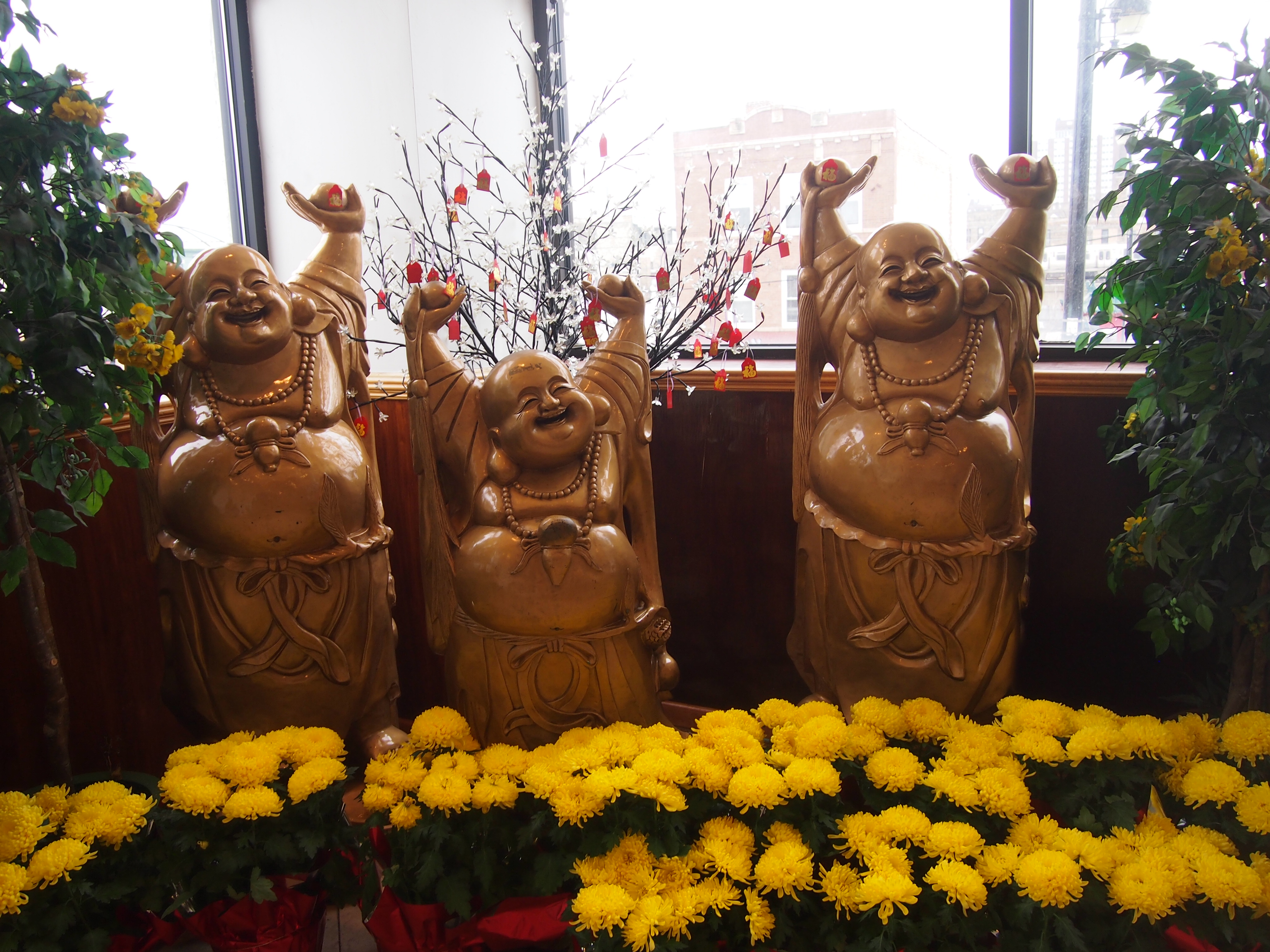
After watching a very short early afternoon parade on Argyle St. in Chicago, the thing to do is cross Broadway and eat dim sum at Furama. The laughing buddhas encourage you to do so when you get there.

Been a while since we’d had any dim sum, not sure how long. I also couldn’t remember the first time I’d ever had it. Not that that matters to anyone, even me, but I did wonder. It might have been at Furama more than 30 years ago, during one of my periodic visits to Chicago before I moved there. I know I was familiar with it by the time I had dim sum with friends in Boston on January 1, 1990.

I read in the Tribune that dim sum out of carts is considered passe these days. “When you go out for dim sum now in Chicago, after your server sets down your first pot of tea, you’ll scan other tables to see fellow diners reach with chopsticks into steamer baskets and small plates, then you’ll notice something missing: the carts,” Louisa Chu wrote last year.

“The iconic steaming silver serving carts were once considered signs of traditional dim sum, the Chinese weekend brunch where families gathered to share food and stories. But the customs and meal itself are changing, locally and globally.”

That’s mildly disappointing. The carts are important to the experience. Luckily, Furama still does it that way, and so we enjoyed the various things you get from dim sum carts: ha gow, siu mai, cheong fun, lo mai gai, und so weiter. One thing I’ve never acquired a taste for: fried chicken feet, fung zau.

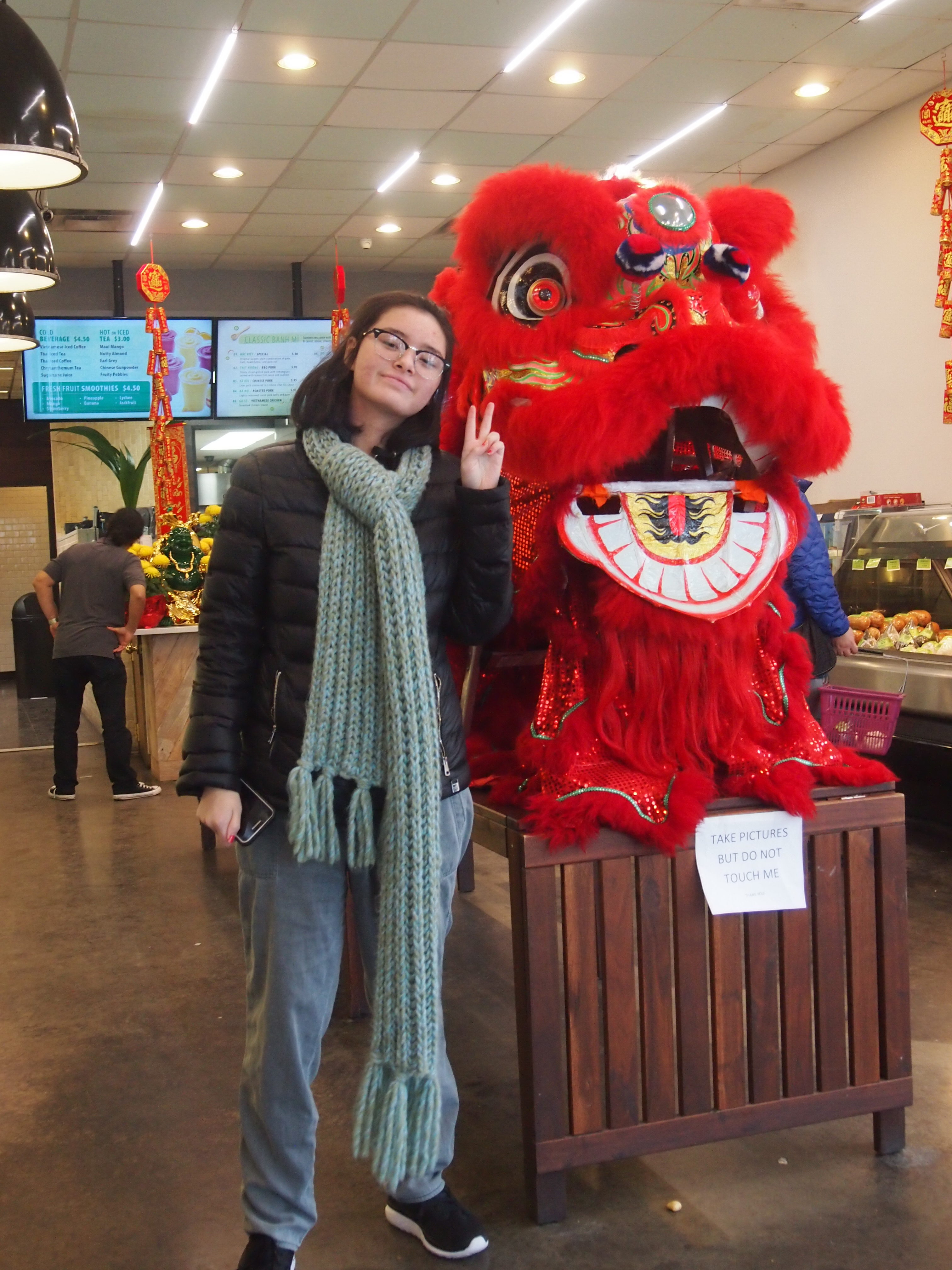
Afterward, we went a block to the north to Ba Le Sandwich Shop to buy takeout Vietnamese food for later consumption. A dragon, maybe to mark the Tet, greeted customers.

Whenever we’re in the neighborhood, we visit Ba Le for banh mi sandwiches or other good things, since everything there is good, and not very expensive. When we lived in the neighborhood, we used to go there too. One spring day in 1998, when we took a very small Lilly on her first picnic in Lincoln Park, we stopped at Ba Le for provisions.

February 1st Miscellanea

February, bah. A really cold week lies ahead, with some snow. The only good thing is that January is over.

We got a call one recent day at 7:41 a.m., not the best time, but I guess it couldn’t wait. Our machine recorded it, so I can transcribe it here, with a few details changed.

“Please stand by for an informational message from your community. There may be a short delay before the message begins.

(pause)

“This is an important message from the Schleswig-Holstein Police Department. Please be on the lookout for a missing juvenile named W—-. Male, white, five feet tall, approximately 90 pounds, brown hair, brown eyes. Last seen wearing a purple Washington Huskies sweatshirt, gray sweatpants, and black, white and red Nike Air Jordan sneakers. Please call the Schleswig-Holstein Police Department or 911 if you have any information. Thank you.”

At 8:44 a.m., there was another call.

“Please stand by for an informational message from your community. There may be a short delay before the message begins.

(pause)

“This is an important message from the Schleswig-Holstein Police Department. The missing juvenile referenced in the previous message has been located safely. Thank you for your assistance.”

That was a first. Maybe W—- wandered off without telling anyone. It was a relatively warm morning.

Something I happened across in my online wanderings, an incident in New Jersey: “A 16-year-old from Willingboro was arrested by West Windsor Police on Dec. 4 after attempting to steal a car. The theft was thwarted because the car had a stick shift, and the would-be thief only knew how to drive cars with an automatic transmission.”

You’d think the JD — there’s a term to bring back — would have backed away when he saw that the car had a stick, and before police got involved. Then again, JDs aren’t known for their brains.

This falls under the My, How Things Have Change File: Recently I got an email from a grocery store that has my address. The subject line said: ORDER YOUR SUPER BOWL SUSHI PLATTER FOR $29.99.

I’m not holding a Super Bowl party, or going to one, or watching the damn thing at all, but somehow I don’t associate it with sushi. Just me being old. I vaguely remember, about 30 years ago, Mike Royko (maybe) mocking in print the fact that sushi was being sold at some baseball game, probably in California. That seemed strange, I suppose.

Since then, though still associated with Japan, sushi has been fully assimilated into American eating habits. Probably not too many people younger than me would give sushi at a Super Bowl party a second thought.

Ann at 1111

No store-bought birthday cake this year for Ann, at her request. Her mother made a cheesecake.

It was good cheesecake. We didn’t have a numeral 5 candle. You’d think we would, considering my age, but no. So the numeral 1 stood for a decade, the smaller candles for years. Ann was OK with that arrangement.

I thought of, but forgot to suggest, that the numbers be in base 2, which would be 1111. There’s no reason to use base 10 for birthday candles other than the dead hand of decimal tradition, after all.