Refrigerator Magnets

The web site of CERN (Conseil Européen pour la Recherche Nucléaire), of all places, has a page on refrigerator magnets. This from an organization that otherwise concerns itself with Higgs and other bosons, antimatter, and other arcane nature, though I suppose magnetism is an essential interest of the org.

“Fridge magnets only ‘stick’ to the fridge on one side, not on the other,” CERN says. “This is because the magnetic field they create is very different from the one of simple dipole magnets… instead of having only one North pole and one South pole, these fridge magnets consist of strips with alternating polarity. We call them multipolar magnets. This setup, called a Halbach array, generates a magnetic field on one side which is two times as strong as it would be if not arranged in this particular way, and on the other almost zero.”

Something I didn’t know. This site purports to offer a short history of the refrigerator magnet. Invented at the dawn of household refrigerators and mass tourism, it seems. In the 1920s, that is — why am I not surprised?

I was inspired to look into refrigerator magnets after taking pictures of our refrigerator the other day.

Left door top.refrigerator magnets

Left door bottom.refrigerator magnets

Right door top.refrigerator magnets

Right door bottom.refrigerator magnets

Freezer door.refrigerator magnets

Side (the other side is flush against the wall).refrigerator magnets

I documented the magnet-bedecked surfaces because soon we’d be getting a new refrigerator, since this one had quit working last month, after – how many years? We weren’t sure. The purchase documents are in a file downstairs, probably, but I didn’t feel like looking for them.

The magnets are in a paper bag. Each is light, but together they weigh several pounds. The refrigerator came today. It stands in the kitchen, naked for now. Soon the magnets – some, most? will migrate to the new appliance.

Billy Goat Tavern & Grill ’23

I can’t say whether Billy Goat Tavern & Grill looks exactly the same as it did in the ’80s, but it sure felt the same on Monday night. The walls of photos, neon, beer taps, rows of bottles, knickknacks and basic restaurant tables and chairs, and plenty of worn red bar stools. The vibe is Chicago tavern clutter, comfortable as an old shirt.Billy Goat Tavern Billy Goat Tavern

Now that I think about it, I had the most Greek experience I’ve ever had at the Billy Goat, having never yet made it to Greece. Shortly before the 1988 presidential election, the Dukakis campaign staged a campaign parade on Michigan Avenue, and after work I went to watch, on a spontaneous quasi-date with a fetching Greek-American woman I knew. Was it a torchlight parade? In my memory, there were torches, but probably no: that seems like a 19th-century thing.

We were within feet of the candidate as he walked by, his expression a little stiff and discouraged. Later we repaired to the Billy Goat, which was wall-to-wall packed, including many Greek Americans – wearing the colors of the Greek flag, some of them — with everybody feasting on cheeseburgers and beer, the place alive with talk, and the clank of spatulas on the grill, and the hissing burgers and onion air, and the clouds of cigarette smoke still common in bars and restaurants.

I’m pretty sure the workers called out Cheezborger! Cheezborger! in those days, which might be an example of life imitating art, or more likely, life and art reinforcing either other.

Rumor was that Dukakis himself would make an appearance, and well he should have, but he never did. He should have shown up in his tank helmet, shaking hands and mugging for cameras. Rather than be embarrassed by it, he should have leaned into it, but no.

Back here in the 21st century, there are reminders of goats at Billy Goat. How could it be otherwise?Billy Goat Tavern

You can see a wall of bylines at Billy Goat. Once upon a time, both major Chicago newspaper buildings were within easy walking distance, even in winter, so newspapermen hung out there.Billy Goat Tavern

Best known was Royko, who worked the place into his column from time to time. From there, the place went on to wider notice, sort of.

I expect the number of journalists is fairly low these days, outnumbered by other kinds of downtown residents and workers, plus tourists. On Monday night at least, no one called out when you ordered your cheeseburgers; they just went to work at it.

Except for the vegan in our group – she was a good sport about it — we had cheeseburgers and chips and beer. What else? In theory, a few other things are on the menu, but we didn’t test it. No fries, either.Billy Goat Tavern

We also sipped from a single glass of Malört. It’s a Chicago thing to do.

Around the corner from the entrance of the Billy Goat, directly facing Lower Michigan Ave. and just north of the Chicago River., is a mural and a tavern sign.Billy Goat Tavern

The mural is a work by Andy Bellomo, “a self-taught artist who began her creative interest as a young teen studying the color, light, shapes, and lines of traditional stained glass in churches,” according to the the Magnificent Mile Association, as part of a number of murals known as Undercurrent (at least to the Mag Mile Assn.).

It’s been there about a year, which would account for me never noticing it before. Haven’t been down to Lower Michigan Ave. in a some years, but I can assure the world that it’s still the hard urban space it’s always been.

There’s more of the Undercurrent mural on the other side of the tavern’s entrance, not captured in the below image.

But I did capture, without realizing it, part of a different mural, one that’s been there for decades, by an artist mostly lost to time in Chicago, even though his heyday was only about 50 years ago. It’s on the extreme right edge of the image: a rainbow goat.

“Many people ask about the rainbow goats painted on the walls outside of The Goat,” notes the tavern web site. “They were painted in 1970 by Sachio Yamashita, known as Sachi… Billy [Sianis, original owner of the tavern] made a deal with Sachi. Every day after Sachi and his helpers finish their work, beer and borgers are free! Unfortunately Billy Goat Sianis passed away on October 22, 1970 just days before the paintings were complete.”
I might have noticed the goats before, but didn’t give them much thought. I didn’t notice them this time, or I’d have taken a full image, since how many rainbow goats could there be in the world? On walls, that is.

Chicago Christkindlmarket ’23

I made a point of watching the tribute to Norman Lear that was simulcast – now that’s a aging concept – on several networks this evening, at 8 Eastern/7 Central. Mostly, I was curious to see what they would do. Turned out to be about 15 seconds of a picture of him (maybe taken in the late 20th century), his name and birth and death year, indicating quite a lifespan. That was it. I wonder how many people who saw the spot knew who he was. Network audiences skew old, but even that demographic is more likely to remember his shows than him.

But he was well enough known to inspire a torrent of virtual print, so I won’t add to it, except to say too bad Hot L Baltimore didn’t last, while Good Times did. Nobody’s perfect. RIP, Mr. Lear.

Extremely crowded Chicago Christkindlmarkets of years past – mob city, as my mother used to say, not referring to gangsters – must have pushed any notion of visiting it on Monday right out of my head. But when I ambled over to the Thompson Center, I saw the market. Might as well drop in, see if the crowd was thinner. It was. A more manageable Monday in mob city. Just enough to be lively.

First, pass by the eternal flame on Daley Plaza. Dedicated since 1972 to all U.S. veterans of any kind.Chicago Christkinlmarket 2023

Still there. Well, it is eternal. That’s not meant in a literal sense, of course, on past the heat death of the Universe, but as long as humanly possible. The upshot for the flame is that people will maintain it until its honorees have disappeared from common memory. I hope that’s some centuries at least, but who knows.

As I said, lively. It isn’t really crowded unless it’s tricky to navigate through people.Chicago Christkinlmarket 2023

The stalls are more crowded.Chicago Christkinlmarket 2023 Chicago Christkinlmarket 2023 Chicago Christkinlmarket 2023

Everything in that lower pic is eccentric shapes of chocolate, and pretty much the only place I was tempted to buy anything. The economic model at the market is the same as I described a few years ago: “priced in euros at a lousy exchange rate, with an extra 50 percent tacked on for good measure.”
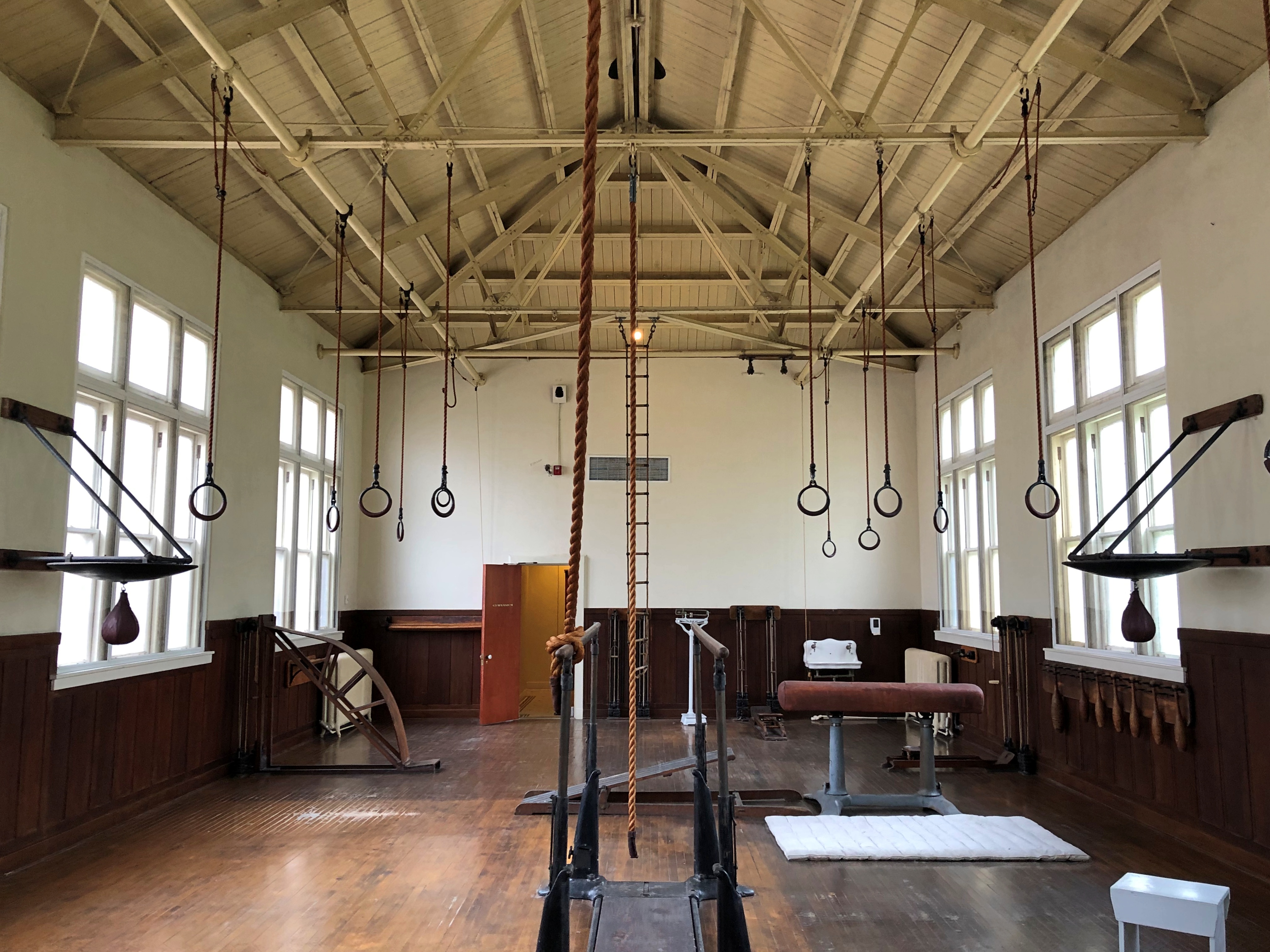
Paper stars.Chicago Christkinlmarket 2023

Locally themed ornaments, and pickles. Who doesn’t like Christmas pickles?Chicago Christkinlmarket 2023 Chicago Christkinlmarket 2023

Eats.Chicago Christkinlmarket 2023

And Paul.Chicago Christkinlmarket 2023

His sign says, “Hi, everyone! I am Paul, the Hamburg sailor! Take a picture with me!’

Paul, huh? Are the Hamburgers having a spot of fun with that? St. Pauli is a red light district in Hamburg, after all, and while Paul here might look clean-cut, on leave I bet he’s out for beir and bumsen. Or maybe he’s a more modern sailor, and while visiting Chicago slips off to North Halsted Street sometimes.

Pontiac-Oakland Museum and Resource Center

Not something you see very often: a wall of motor oil.Pontiac-Oakland Museum

I’d never seen such a thing until I came across it just a few doors down from the Museum of the Gilding Arts, in the Pontiac-Oakland Museum and Resource Center, which also faces the elegant Livingston County courthouse in Pontiac, Illinois. In the case of the museum, Pontiac refers to the car brand of that name, and Oakland does as well, as the predecessor of Pontiacs. Both brands are defunct now, but not in the hearts of enthusiasts.

The many cans of motor oil happen to be a backdrop for one of the cars on display: a 1960 Pontiac Venture.Pontiac-Oakland Museum

Nearby are other cars of roughly the same era.Pontiac-Oakland Museum Pontiac-Oakland Museum

A 1964 LeMans Convertible and a 1970 Pontiac GTO Judge, respectively. Not sure if that counts as a Little GTO.

The collection on display isn’t that large – not compared to Fairbanks or Reno, say – but it was well worth a look. Before its absorption into GM, and in fact before horseless carriages, Pontiac got its start as a carriage maker.Pontiac-Oakland Museum

An 1890s product of the Pontiac Buggy Co. “One of a handful known to exist,” its sign said.
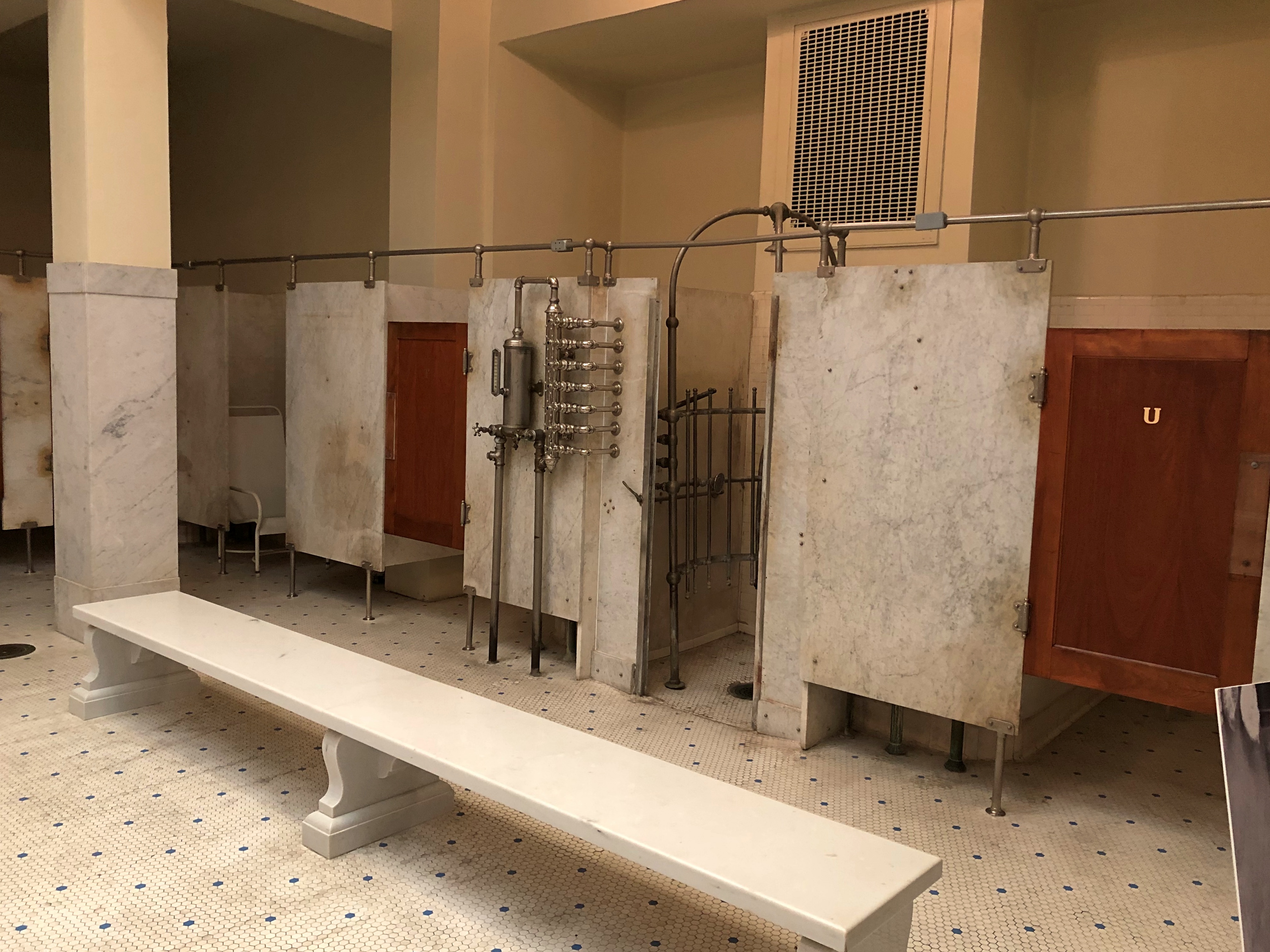
Soon enough, Pontiac Buggy founder Edward Murphy began building 2-cylinder runabouts called Oaklands, and later built more successful 4-cylindar models, as products of the Oakland Motor Car Co. GM bought Murphy out in 1909, and focused on Oaklands for some decades. The GM Pontiac model didn’t exist until 1926, and then the Depression killed off the higher-priced Oaklands.

A 1929 Oakland.Pontiac-Oakland Museum

A Pontiac sedan of the same model year.Pontiac-Oakland Museum

Also on display: marketing odds and ends that emphasize the Native roots of the name.Pontiac-Oakland Museum Pontiac-Oakland Museum Pontiac-Oakland Museum

Some might object these days, but I can’t help suspect that Pontiac – Obwandiyag – able 18th-century leader of the Odawa – might have liked being associated, however tenuously, with such a solid object of commerce.

Wiki, citing a 2002 academic work, notes: “Their neighbors applied the ‘Trader’ name to the Odawa because in early traditional times, and also during the early European contact period, they were noted as intertribal traders and barterers.”
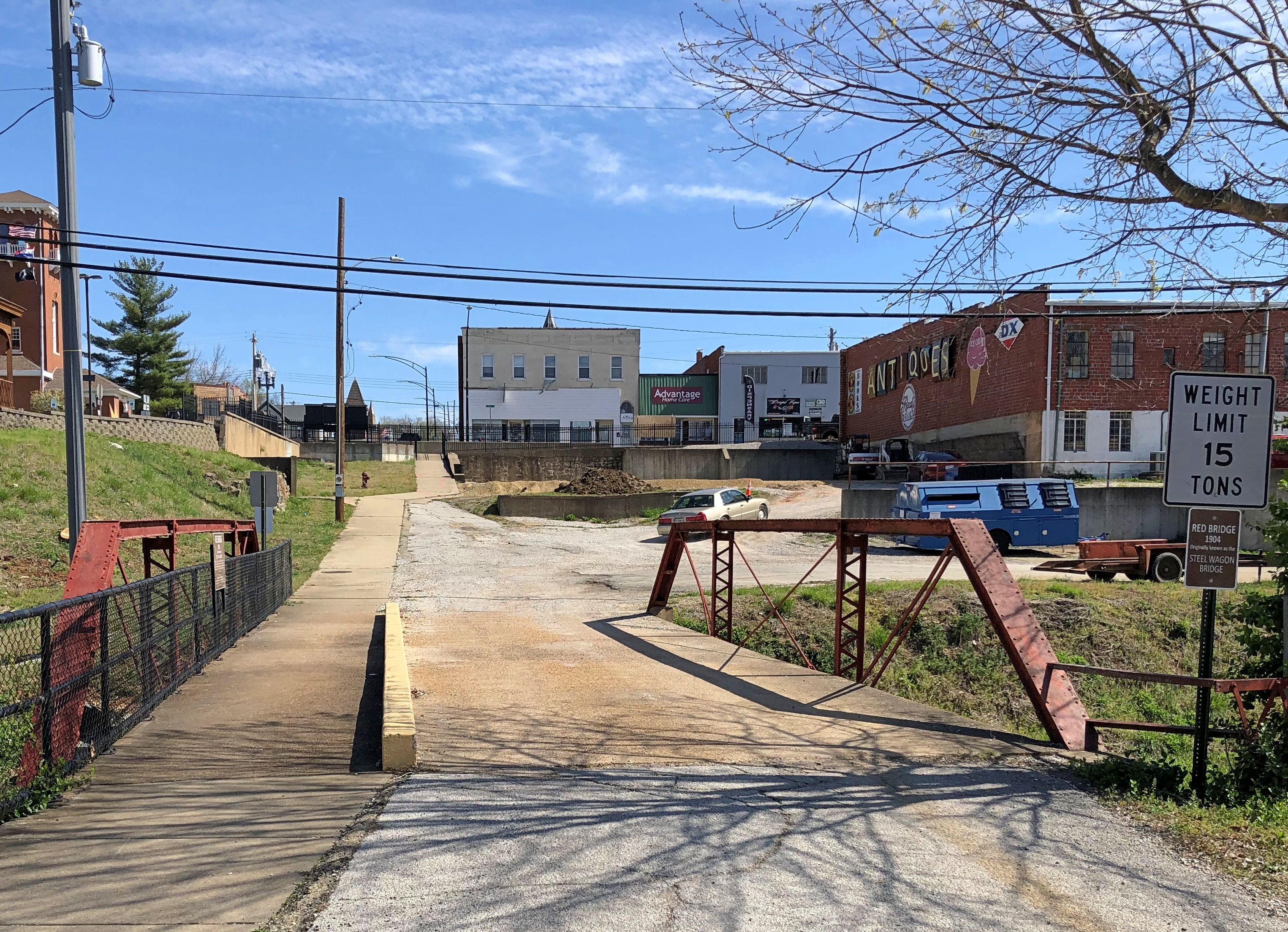
Museum of the Gilding Arts

The docent at the Museum of the Gilding Arts, a neatly dressed woman about 10 years my senior, wasn’t sure why the museum is in Pontiac – Pontiac, Illinois, that is, where I stopped on Sunday specifically to visit the diminutive two-room museum.The Museum of the Gilding Arts The Museum of the Gilding Arts

“I’m going to ask about that, because I’ve wondered as well,” she said. “I’ve only been here three weeks.”

Before that, she said, she hadn’t known much about gilding, but had been reading about it and spending time with the exhibits. For a while, I had a personal tour of the place, as she suggested things to look at, such as the various items that had been gilded, including decorative pieces but also machines.The Museum of the Gilding Arts The Museum of the Gilding Arts

Visit Pontiac is succinct about the place: “The focus of the Museum of the Gilding Arts is the history, craft, and use of gold and silver leaf in architecture and in decoration throughout a history that dates back to the days of ancient Egypt.

“There are examples of gold and silver leaf, artifacts used in the application of the precious metal leaf, and displays showing how leaf was manufactured.

“The exhibit features items from the Society of Gilders’ Swift Collection. The M. Swift and Sons company manufactured gold leaf in Hartford, Connecticut, and began its operations in 1887.”

The docent seemed most impressed by the story of M. Allen Swift, the last owner of M. Swift & Sons, who died at a very advanced age in 2005. The business died with him, having been founded by his grandfather, Matthew Swift, who emigrated as a youth from the UK in 1864. Before he died, Allen Swift had the foresight to preserve old-time elements of his family’s gold leaf factory, including an array of wooden work benches – which are now on display in the back room of the two-room museum.

Each bench sports one of the heavy hammers that late 19th-century workmen used to beat gold.The Museum of the Gilding Arts

The 19th century was full of jobs that required great upper-body strength, and gold beater was surely one of them.

“The process of making gold leaf began with quarter-inch-thick gold bars, 12 inches long by 1.5 inches wide,” notes an article in Connecticut Explored about the redevelopment of the Smith factory in our time. “The bars were rolled to a thickness of 1/1000 of an inch and cut into squares. The squares were then dusted with calcium carbonate applied with a brush — often a hare’s foot — and placed between a thin membrane made of the outer layer of an ox intestine.

“These were then stacked, in as many as 300 layers, and repeatedly struck with a 16-pound hammer. The squares were cut again into smaller squares and the process repeated with a 10-pound hammer; the squares were then placed in a mold and struck with a 6-pound hammer. When finished, a layer of 280,000 leaves stood just an inch high.”The Museum of the Gilding Arts The Museum of the Gilding Arts

What happened to the residue of the ox intestine? Maybe I don’t want to know. Not only a tough job, then, but probably a dirty one as well, and ill-paying unless you were a Swift. Machines took over most of the heavy beating in the 20th century, but I expect it still was a tedious job. More about the museum, which opened in 2015, is at the Society of Gilders web site.

Before I left, the docent told me that I had been the only visitor that day. I was glad to hear it. I hadn’t gone too far out of my way, stopping after I’d dropped Ann off in Normal, and it was worth the small effort to get a glimpse of an entire industry I knew nothing about.

Armistice Day 2023

A public domain image borrowed from an article by Joseph E. Persico, published by Military Times in 2017.

Note the date of the paper: November 7, 1918. As I understand it, there was a false alarm about an armistice on that day that was picked up by the AP and spread at the speed of telegraphy.

The article tells the story of men who fell on November 11 that year, in spite of the armistice, a bloody coda for four bloody years. Including the story of Henry Gunther who, for official purposes at least, was considered the last American killed in the war. Official time of death: 10:59 am, as he unaccountably charged Germans with machine guns.

He was one among thousands. “Losses on all sides that day approached eleven thousand dead, wounded, and missing,” Persico notes.

“Indeed, Armistice Day exceeded the ten thousand casualties suffered by all sides on D-Day, with this difference: The men storming the Normandy beaches on June 6, 1944, were risking their lives to win a war. The men who fell on November 11, 1918, lost their lives in a war that the Allies had already won.”

Cave Hill Cemetery, Louisville

Wrapping up a fun long weekend is always a bit of a downer, but so it goes. Rather than grind all the way north from Nashville on Monday, I decided to pause on the return in Louisville. I couldn’t remember the last time I’d spent any time there – 1990? – though I’ve passed through many times since then. This time, I got off I-65 and made my way to Cave Hill Cemetery.Cave Hill Cemetery

Cave Hill is a Class A cemetery. Or Class A+ or maybe A++. I ought to create an aesthetic rating system for cemeteries, but I think that would be a lot of work. Enough to say that Cave Hill has everything a top cemetery should have: a vast variety of standing stones, plain to elaborate, including a lot of funerary art and mausoleums and a scattering of odd memorials; historic burials of those notable locally and a few famed worldwide; a Victorian rural cemetery movement pedigree; hilly contour (in places where that is possible) and enough mature trees, bushes and flowers to count as an arboretum; water features; and a chapel or two.

By those criteria, Cave Hill is the complete package. Definitely in the same league as Bonaventure in Savannah, Forest Lawn in Buffalo, Hollywood Forever in Los Angeles, Hollywood in Richmond, Saint Louis No. 1 in New Orleans, Green-Wood in Brooklyn, Woodlawn in the Bronx, Bellefontaine in St. Louis, Laurel Hill in Philadelphia, Woodland in Dayton and Graceland or Rosehill in Chicago.

Bonus in early November: fall foliage.Cave Hill Cemetery Cave Hill Cemetery Cave Hill Cemetery Cave Hill Cemetery

Funerary art, some relatively modest.Cave Hill Cemetery Cave Hill Cemetery Cave Hill Cemetery

Funerary art, more monumental.Cave Hill Cemetery Cave Hill Cemetery Cave Hill Cemetery Cave Hill Cemetery

Structures.Cave Hill Cemetery Cave Hill Cemetery Cave Hill Cemetery

An oddity.Cave Hill Cemetery

Their ashes were probably scatted nearby. This stone is near a part of the cemetery called the Scattering Garden.Cave Hill Cemetery

Among scenes of fall, at least for now.Cave Hill Cemetery Cave Hill Cemetery

Cave Hill sports a number of notable permanent residents, but two far outshine the rest in terms of posthumous fame. At least for someone my age; I can’t vouch for later generations, who may not realize that Col. Sanders was an actual person, not just a cartoon mascot for KFC.Cave Hill Cemetery Cave Hill Cemetery

Even more famous worldwide, at least during the last half of the 20th century, was Muhammad Ali. At some point, he was thought to be the best-known person on Earth, or so I read. If not, he was in the running.Cave Hill Cemetery Cave Hill Cemetery

Even boxing-indifferent people like me knew him, since he was no mere prizefighter. Float like a butterfly, sting like a bee.

The Centennial Park and Vanderbilt Ramble

On Saturday the sun came up in Nashville and we weren’t there to greet it, having stuffed ourselves with hot chicken and beer the night before, and then engaged in conversation until fairly late. On the other other hand, we were there to see the sun set later that day from the roof deck.

Between those moments, we did a lot of walking. First we set out from our well-located short-term apartment along side streets past the site of our residence in the early ’80s, which was also the place we built an isolation tank for ourselves, then to Centennial Park, the crown jewel among Nashville parks.

On Saturday morning we merely crossed the park, where one of our number had been arrested for drinking beer in public 40-plus years ago, exiting it at the end (or beginning) of the short Elliston Place. We noted the buildings and businesses gone from that street – such as Rotier’s and its barbecue chicken without peer – and additions, none of any particular character.

The Elliston Place Soda Shop still serves tasty meat-and-threes, wonderful breakfasts, and incredible milkshakes, though in a larger location next door to its original site, where it reopened in 2021. The look is about right, a larger space but still a close homage to the original. The real test was the food, and the place passed with flying colors.

Then came the Vanderbilt Ramble: along sidewalks and across greens, past dorms and classrooms and other buildings, many tied to specific sets of memories: McGill Hall, Sarratt Student Center, the Main Library, Furman Hall, and 21st Avenue to the former Peabody Campus, where we noted that Oxford House had vanished, replaced by a parking garage still under construction; East Hall is still that and West Hall that; but Confederate Memorial Hall is merely Memorial Hall and the Social-Religious Building is named for some chancellor or other. Former Social-Religious has ten pillars out front, which to this day I believe stand for the Ten Commandments. On its expansive front steps, every day once upon a time, a blind student practiced his bagpipes. He wasn’t bad.

Further wanderings took us through Hillsboro Village, a storefront shopping district that existed 40+ years ago, though most of the shops are different these days. Returning to campus, we passed through the blocks of fraternity and sorority houses, once marked by regular streets, which are now pedestrian walkways. We had little to do with them in our student days, though one of us pledged ATO, which didn’t take. I noted the spot where I had a short springtime conversation with a tipsy future vodka billionaire. Indeed, besides going to the same junior high and high school as I did, he spent one year at VU.

The arboretum that is the Vanderbilt campus, including Peabody, was near peak coloration, a blaze of leaves in places. Many trees are enormous and stood well before anyone on campus today was born. The day was warm and campus alive with people, though never crowded anywhere. Students went about their weekend business, and paid no attention to the oldsters wandering by, with their collective recollections trailing behind them.

On Sunday afternoon, we spent more time in Centennial Park, legacy of a long-ago expo.Centennial Park

The temporary art building, a replica of the Parthenon, was rebuilt in the 1920s to be more permanent, and it abides. So does Athena inside.Centennial Park Centennial Park

She wears the world’s largest sandals, probably.Centennial Park

Though Steve and Rich had never seen her, Athena isn’t exactly new, having been completed by sculptor Alan LeQuire in 1990. I’ve visited a few times in the years since.

Much more recent (2016) is the Tennessee Women’s Suffrage Monument, also done by Alan LeQuire. None of us had seen it.Centennial Park Centennial Park

We visited a few other spots in the park, but forget to visit the new Taylor Swift Bench. Oops.

OLLU & Elmendorf Lake Park

Despite the cold, we had about 40 kids show up yesterday to collect sweets, maybe half again as many as the busiest Halloweens of the past, though I don’t count every year. We ran through an entire box of full-sized candy bars plus some other smaller confections. Almost all of the kids came before dark, which has been the case for many years now. Another example of widespread nervous parenting that’s pretty much entrenched, I figure. When I was that age, we went out after dark in our Invisible Pedestrian costumes and we liked it.

Most of the costumes this year were buried under coats, but I have to say the best of ’23 was a tallish kid in no coat and a white-and-red full-body chicken outfit, complete with a comb as prominent as Foghorn Leghorn’s. The costume might well have been warm enough for him to go without a coat. The color scheme reminded me of Chick-fil-A right away.

I’m just old enough to remember sometimes receiving baked goods and fruit on Halloween; those vanished by about 1970, victim of the lurid nonsense stories about razor blades in apples, poisoned cakes and chocolate Ex-Lax being given to kids. We found the thought of that last one pretty funny, actually.

This morning we woke to about an inch of snow destined to melt later in the day. A small preview of winter.

The cold is an unpleasant contrast to South Texas last week, where it was hot for October. (Temps have fallen there since then, I heard.) Just after noon on Saturday, I headed over to the campus of Our Lady of the Lake University, OLLU. I’d heard of the school for a long time, but my knowledge of it never rose above the level of hazy.

Main Building, the sign says. A name refreshing in its simplicity. The building’s a little more intricate.OLLU OLLU

Mere steps away is Sacred Heart Chapel.OLLU OLLU
OLLU

The school recently marked the chapel’s centennial. At your feet at the entrance, a date.OLLU

“The English Gothic chapel was the vision of Mother Florence Walter, Superior General of the Congregation of Divine Providence from 1886-1925,” says the university web site. “In 1895, she looked down from Prospect Hill at a swath of wilderness and declared, ‘One day we will have a chapel here. And its spires will be seen throughout the city of San Antonio.’ ”

That must have a good day for the superior general. Funding the chapel took 11 years, but eventually the Sisters, who had founded the school in 1895, were able to hire a renowned architect, Leo Dielman, to design the chapel. A prolific architect of sacred space – more than 100 churches to his credit – Dielmann had his funeral in 1969 at Sacred Heart Chapel.

When I went in, a funeral was going on. I gazed in for only a moment from the very back of the nave. Looked like this, except for the sacrament pictured.

OLLU borders Elmendorf Lake Park, with walking trails ringing a small manmade lake, created by the damming of Apache Creek. I took a walk. When the sun periodically came out from behind the clouds, it felt like it was about 90 F. It was a sweaty walk. Needed that hat I’d left in Illinois.

Thick foliage luxuriates on the lakeshore.Elmendorf Lake Park Elmendorf Lake Park Elmendorf Lake Park Elmendorf Lake Park

Almost no one else was around on what, compared with South Texas temps only a few weeks and months earlier, was merely a warm day. A Saturday at that. The place gave out no sense of being avoided out of fear for one’s person; just ignored. A few recreational fishermen stood on the shore, angling. One was in a small boat. That was all.

Another, more hard-surface part of the park includes benches. Parc Güell sorts of benches, but without the crowds.Elmendorf Lake Park Elmendorf Lake Park

No human crowds, that is. Birds were another matter. An astonishing number of birds occupied a handful of the trees in the park, ca-ca-ca-ca-ing with a resounding volume, especially on a small island I saw later is called Bird Island. Thinking on it, their Hitchcockian vibe might keep some people away. A lot of people.Elmendorf Lake Park Elmendorf Lake Park Elmendorf Lake Park

Birds looking something like herons with completely black plumage. I couldn’t place them, but my bird knowledge is pretty meager. Crows? They look leaner of build than crows. But what do I really know about crows?

I do know enough not to walk under them. A few of the bird-occupied trees were along the path of my walk, so I took minor detours to avoid any direct bombardment. I passed through the park without being the target of any droppings.Elmendorf Lake Park

I thought of a Red Skelton TV sketch featuring his characters, seagulls Gertrude and Heathcliff (I had to look the names up, but not that fact that he did those characters). One of the birds noted that the beach below was very crowded. The other responded, “There’s no sport in that.” Odd what sticks with you after more than 50 years.

San Fernando Cemeteries No. 1 & No. 2

Halloween snow today. Flurries on and off through much of the day, presaging a cold outing for those trolling for candy. Halloween Snow 2023

I doubt that the kids mind. Their adult companions trailing behind, on the other hand, might be a mite annoyed. Glad that part of being a parent is well behind me.

Early on Saturday morning I made my way to what I believe is the oldest Catholic cemetery in San Antonio, San Fernando No. 1, which is in a modest neighborhood just west of the King William district. Cementerio de San Fernando, to go by the entrance.San Fernando No. 1 San Antonio San Fernando No. 1 San Antonio

Overnight rain had left puddles and mud. I was the only living person among the old stones in soggy ground that morning.San Fernando No 1 San Antonio San Fernando No 1 San Antonio San Fernando No 1 San Antonio

The elements continue to wear away even the larger memorials.San Fernando No 1 San Antonio San Fernando No 1 San Antonio

Some Ursuline Sisters rest in the cemetery.San Fernando No. 1 San Antonio

Some signers of the Texas Declaration of Independence and a SA mayor or two are reportedly buried in the cemetery as well, but this was the only memorial of note that I saw.San Fernando No. 1 San Antonio

“Placido Olivarri is most famous for his service as a scout and guide for the Texas Revolutionary Army under Sam Houston,” the Texas State Historical Association reports. “His proficiency as a scout was so great that Gen. Martín Perfecto de Cos of the Mexican Army offered a substantial bounty for Olivarri’s capture, dead or alive… Following the Texas Revolution, Olivarri became a landowner and wagon train manager in San Antonio.”

San Fernando No. 1 reportedly started taking burials in 1840 – during the brief period of the Republic, that is. The newer San Fernando No. 2 (opened in 1921) is considerably west of the first one, but not hard to find, and still an active cemetery. There is a No. 3, but I didn’t make it out that way this time.

I arrived at No. 2 in the afternoon, once the skies had cleared. It too was muddy.San Fernando No 2 San Antonio San Fernando No 2 San Antonio

Deep in the cemetery is a section for clergy.San Fernando No 2 San Antonio San Fernando No 2 San Antonio San Fernando No 2 San Antonio San Fernando No 2 San Antonio

Some stones suggest 20th-century prosperity in San Antonio. Or at least, money for more impressive memorials.San Fernando No 2 San Antonio San Fernando No 2 San Antonio San Fernando No 2 San Antonio

In the newer sections, more color.San Fernando No 2 San Antonio San Fernando No 2 San Antonio San Fernando No 2 San Antonio San Fernando No 2 San Antonio

After all, the Day of the Dead is coming soon.