Downtown Fort Wayne

RIP, Will Friend. I didn’t know him well, but did meet him at events over the years, and we got along. I didn’t realize he was quite that young.

Toward the end of the afternoon on Saturday, we took a walk in downtown Fort Wayne. Not long after parking the car, this caught our attention.Wells Street Bridge, Fort Wayne Wells Street Bridge, Fort Wayne

Not just any pedestrian bridge, but the historic Wells Street Bridge over the St. Marys River. A sign on the 1884 truss bridge names the Wrought Iron Bridge Company of Akron, Ohio, as the bridgebuilder.Wells Street Bridge, Fort Wayne

For nearly 100 years, vehicular traffic crossed the bridge, but in 1982 it became a pedestrian walkway. A view from the bridge, toward a less-developed part of the city.Wells Street Bridge, Fort Wayne

After you cross the bridge, there is another elevated walkway, this one over a small section of riverbank. The blue building in the background is a block of riverside apartments, under construction. Move to Fort Wayne, young members of the laptop class. While rents don’t exactly seem cheap there — I don’t think anywhere counts as that anymore — there have to better deals than in the large cities.Riverwalk, Fort Wayne Riverwalk, Fort Wayne

The walk offers a view of the Fort Wayne — skyline isn’t quite the word. A view of a few  larger buildings in the background, with Promenade Park in the foreground. We soon  rested a while at that park, lounging around on iron chairs at an iron table, drinking soda. Rest: always an essential part of any walkabout.Downtown Fort Wayne

Occasional party boats ply the St. Marys.Downtown Fort Wayne

Away from the river is Freimann Square, home of the aforementioned Anthony Wayne statue, as well as a fountain and flower beds. Downtown Fort Wayne
Downtown Fort Wayne

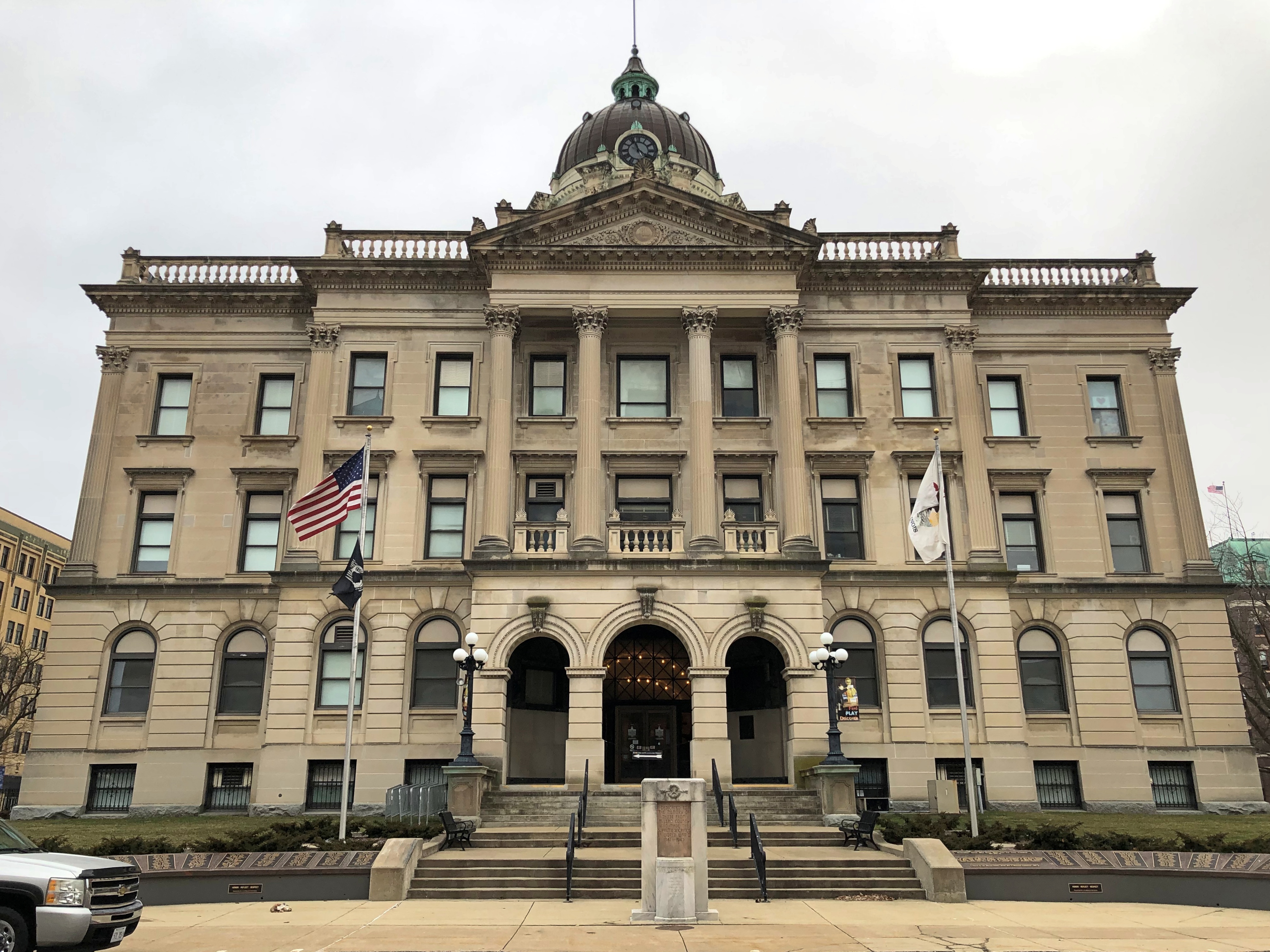
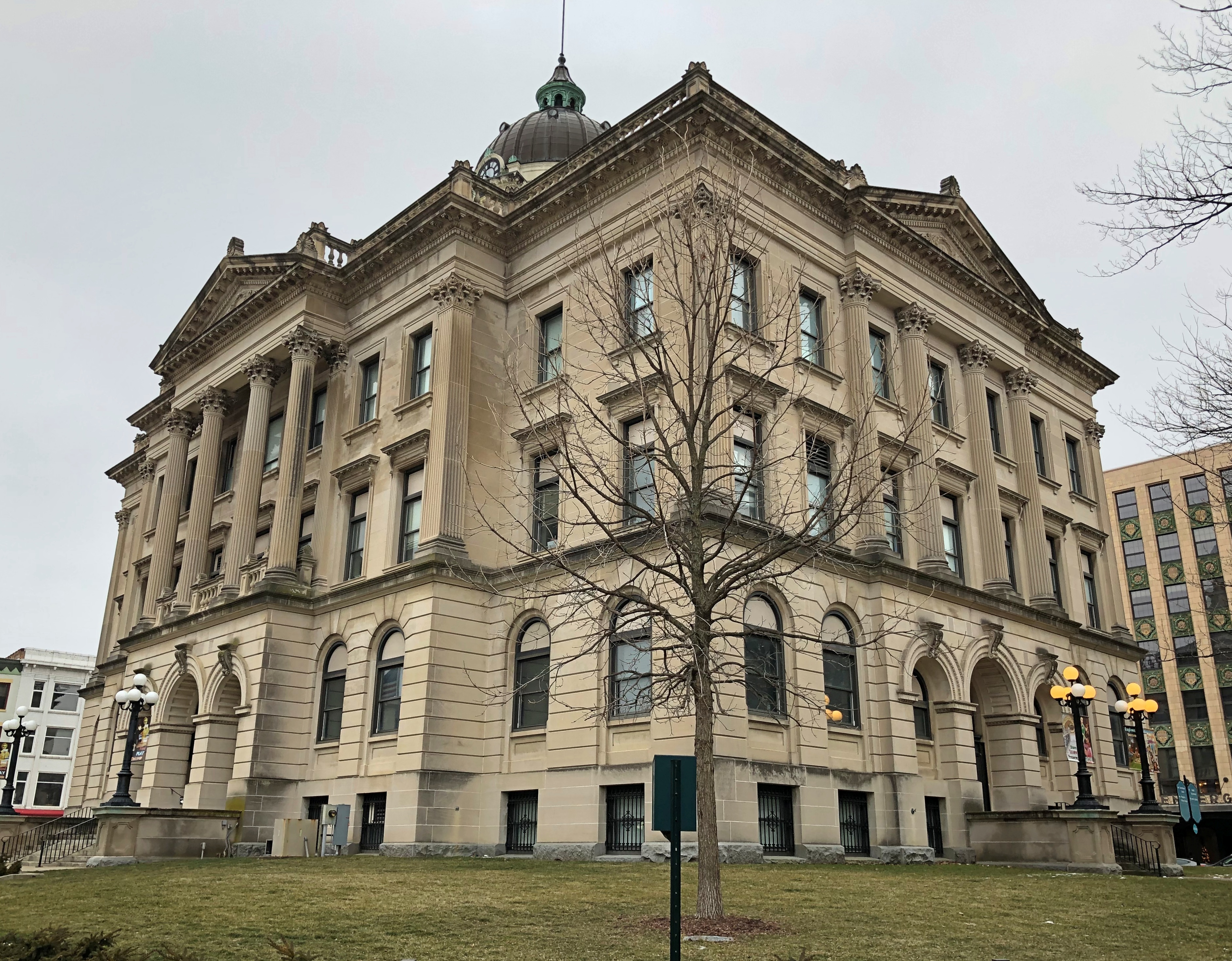
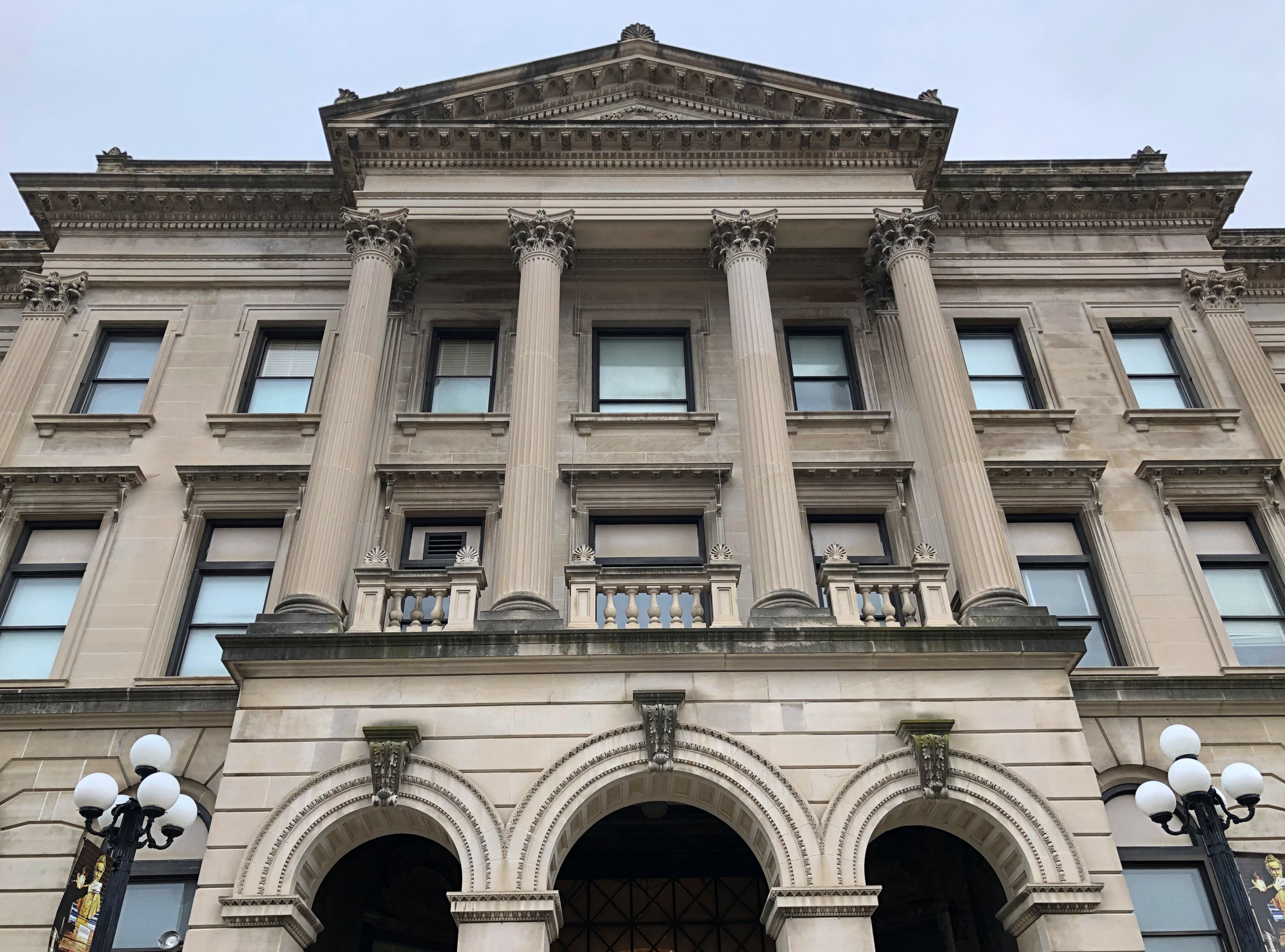
Not far is the Allen County Courthouse, designed around the turn of the 20th century by Hoosier architect Brentwood Tolan.Courthouse, Downtown Fort Wayne Courthouse, Downtown Fort Wayne

The figure on top, I’ve read, is a copper Lady Liberty that turns, as a vane does, with the wind.

A few decades pass and you get art deco. In this case, the Lincoln Bank Tower, another of those structures started just in time — 1929. Design by another Hoosier architect, Alvin Strauss.Lincoln Bank Building, Fort Wayne
It could have been the German American Bank Tower, but for some hard-to-figure reason the bank changed its name in 1918.

The Japanese Friendship Garden, on a tenth of an acre near the Fort Wayne Museum of Art, was gift of one of Fort Wayne’s sister cities, Takaoka. I had to look it up, even though I probably passed through it on a train the fall we went to Hida-Takayama. I suspect most Japanese, faced with the name Fort Wayne, would have to look it up, too.

The museum was closed when we got there, but the garden is always open. Bonus: the garden also features a 2002 time capsule under a rock, slated for a 2027 opening.Friendship Japanese Garden, Fort Wayne Friendship Japanese Garden, Fort Wayne

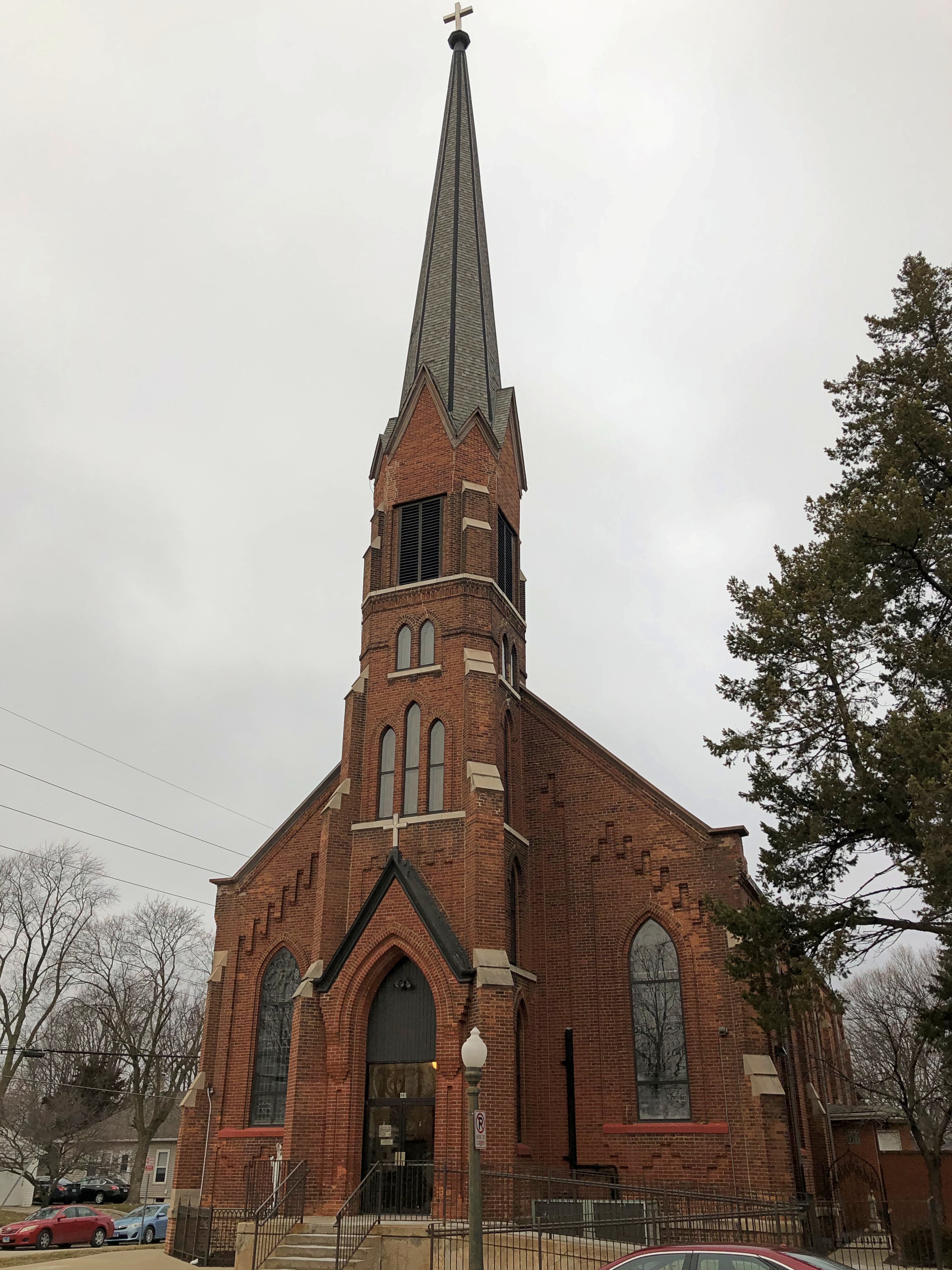
Elsewhere downtown: Cathedral of the Immaculate Conception. Dating from 1860, it is the oldest church building in Fort Wayne, with its Gothic design attributed to Rev. Msgr. Julian Benoit.Cathedral of the Immaculate Conception, Fort Wayne Cathedral of the Immaculate Conception, Fort Wayne

Vigil mass was about to start, but we got a peek.Cathedral of the Immaculate Conception, Fort Wayne
Cathedral of the Immaculate Conception, Fort Wayne

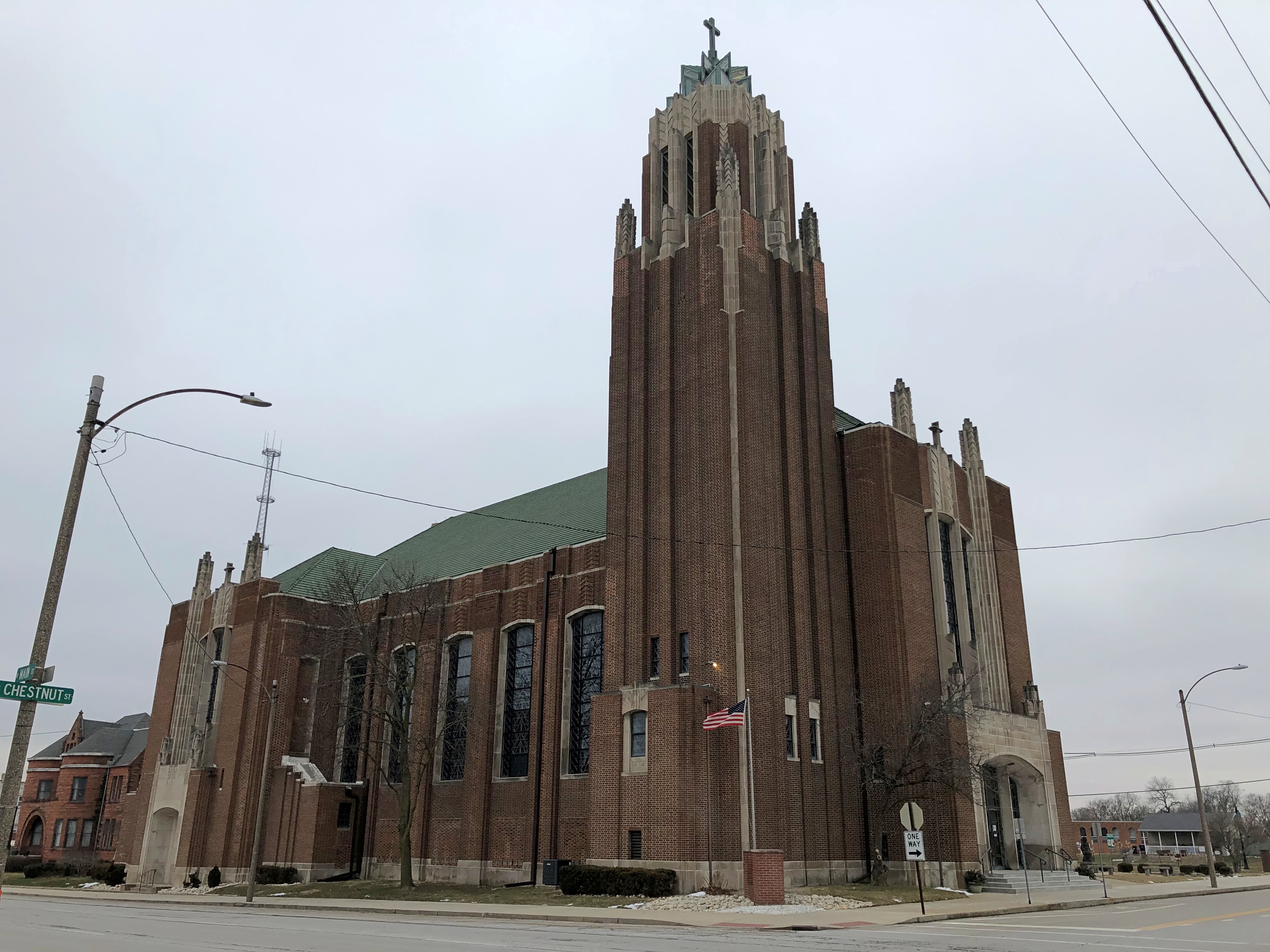
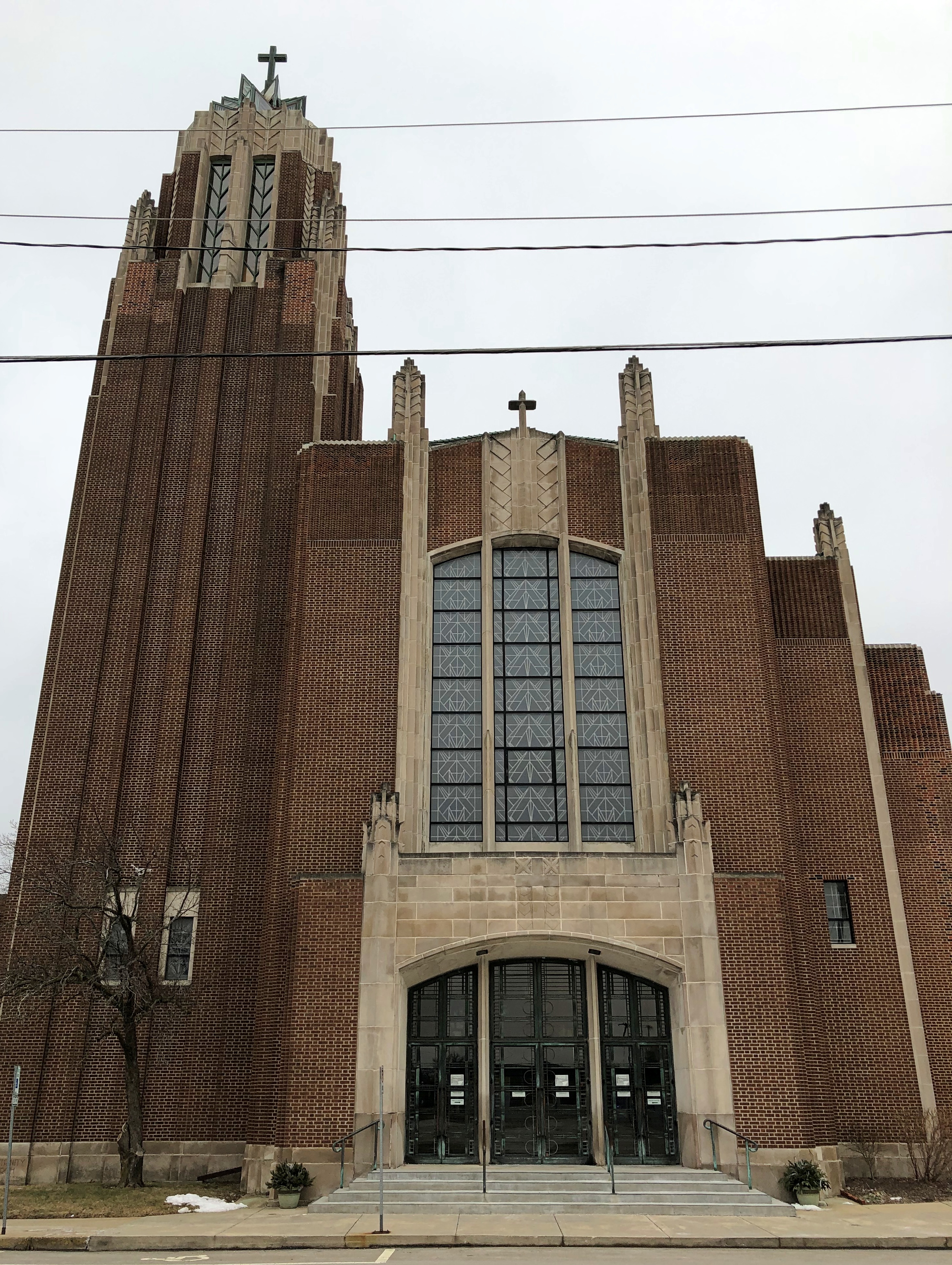
It isn’t the only sizable church around. A few blocks away is St. Paul’s Evangelical Lutheran Church. St. Paul's Evangelical Lutheran Church , Fort Wayne

Not open. Too bad, looks like quite a looker inside.

Northern Indiana Dash

Ah, high summer.

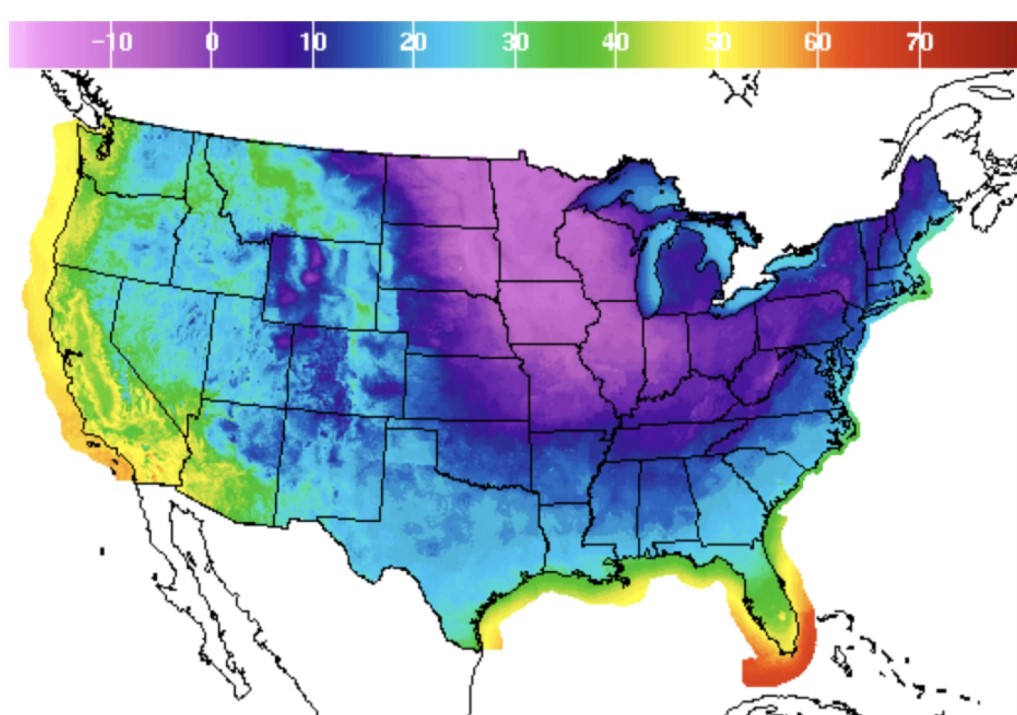
That’s in Dallas. I’m not there. Today’s high here was 79 F., a dip from a hot and muggy 90s-day on Tuesday. Several degrees of latitude will make that difference.

One of these days, the times might catch up with Gen. “Mad” Anthony Wayne, leader in the Revolution and scourge of the Northwest Territory Indians, but for now, you can find him on horseback in bronze at Freimann Square in downtown Fort Wayne, Indiana, in a work by Chicagoan George Etienne Ganiere (1865-1935).Gen. Mad Anthony Wayne statue, Fort Wayne

We gazed a Mad Anthony for a few moments as part of our trip through northern Indiana. I wanted to take a short trip over the long Independence Day weekend, but I didn’t want it to consume the entire three days.

So on Saturday, we left in mid-morning and made our way to Fort Wayne, where we stayed overnight. On Sunday, we returned across northern Indiana to get home, which took up most of the day.

We arrived in Nappanee, Indiana, for lunch on Saturday. I’m glad to report that Main Street Roasters (not so new anymore, it seems) makes a fine pulled pork sandwich. Yuriko said the ingredients in her Cobb salad tasted very fresh, and I sampled some, and agreed. The place was doing a brisk business.Main Street Roasters

We figured the main source for both fresh pork and fresh greens was the Amish farms in the area. Nappanee is considered the focus of one of the country’s larger Amish populations, though that’s a little hard to tell in a casual look around downtown, which isn’t so different from other Indiana towns its size (pop. nearly 7,000). Out away from town, though, you can see from the road farm houses and other buildings, clustered closer than in other rural areas, which is characteristic of Amish settlements.

In town, Plain People in carriages rolled by now and then. Some female store clerks wore the small head coverings common among Mennonites. The Amish tourist attraction in Nappanee known as Amish Acres closed in late 2019, and a more upmarket property re-opened the next year — in an example of bad timing, though it seems to have survived — as The Barns at Nappanee, Home of Amish Acres. Maybe all those extra words are going to cost you more.

Across the street from Main Street Roasters (and not Amish Acres).Nappanee, Indiana

On Sunday, our first brief stop was at Magic Wand, home of the Magicburger, which can be found in Churubusco, Indiana.Magic Wand, Churubusco

We didn’t have a magic burger, but rather shared a strawberry milkshake to go. Among strawberry milkshakes, it was the real deal. The real tasty deal, straw-quaffed as we speed along U.S. 33.

Churubusco was a name I took an instant liking to. The town fathers apparently read in their newspapers about the battle of that name, and wanted the town to borrow a bit of its martial glory. According to some sources, it gets shortened in our time, and maybe for a long time, to Busco. I also noticed references to the place, on signs and the like, as Turtletown. Really? What was that about? I wondered.

The Beast of Busco, that’s what. Quite a story. A giant among turtles that the townsfolk never could quite capture. I haven’t had this much fun reading hyperlocal history — lore — since I chanced across a small lake in Wisconsin that is supposedly home to an underwater pyramid. Turtle Days was last month.

Another spot for a short visit on Sunday: Warsaw, Indiana. It’s the seat of Kosciusko County, with a handsome Second Empire courthouse rising in the town square.Kosciusko County Courthouse

Designed in the 1880s by Thomas J. Tolan, who died during construction, the Indiana Historical Society says. The project was completed by his son, Brentwood S. Tolan.Kosciusko County Courthouse

The square sports some other handsome buildings, too.Warsaw, Indiana Warsaw, Indiana Warsaw, Indiana

Warsaw is also home to a garden the likes of which I’d never imagined, and the reason I stopped in town, days after spotting it on Google Maps and then looking it up: the Warsaw Biblical Gardens.Warsaw Biblical Gardens Warsaw Biblical Gardens Warsaw Biblical Gardens

The brainchild of a local woman back in the 1980s with access to the land. “It would be no ordinary garden — not a rock garden, nor a rose garden, nor a perennial garden — it would be a truly unique and beautiful Biblical Garden,” the garden’s web site says.

“Actually, we say ‘gardens’ because the Warsaw Biblical Gardens has a variety of areas: the Forest, Brook, Meadow, Desert, Crop and Herb gardens; the Grape Arbor; and the Gathering site. Warsaw Biblical Gardens is ¾-acre in size, and there are very few gardens like this in the United States.

“The term ‘biblical’ refers mainly to the fact that the plants, trees, flowers, herbs, etc., are mentioned in the Old and/or New Testaments of the Bible. These have been carefully researched to preserve the integrity of the Gardens’ uniqueness.

“The Warsaw/Winona Lake area of Indiana has a long religious history. That history begins perhaps with the Chatauqua times of Winona Lake, now being revived. [Really?] Many other famous historical religious figures made their home’s here, from Homer Rodeheaver to Fanny Crosby to Billy Sunday.”

I won’t pretend I didn’t have to look up the first two of those three. Regardless, it’s a stunning little place.Warsaw Biblical Gardens Warsaw Biblical Gardens Warsaw Biblical Gardens

Go far — always good if you can manage it. But also go near.

Art Show at Naper Settlement

Parking in downtown Naperville on a sunny summer Sunday takes a little time, featuring as it does slow drives through a few full parking lots and passing by other lots that look full, while navigating the crooked grid of streets and keeping an eye out for a free flow of pedestrians.

I’ve been on worse parking treks. Before too long, we found a spot at Naperville Central High School, whose lot was open and no charge. To reach the riverwalk from there, you have to go around Naper Settlement, an open-air museum covering 12 acres and featuring historic buildings from the vicinity.

Unless you go into the museum, which we didn’t particularly want to, since we’d been there before. September of ’09, when we attended a pow-wow.

Then we found out that an art show was going on, with no admission to the grounds. So we popped in for a look-see.Naper Settlement Art Show Naper Settlement Art Show

“Since 1959, the Naperville Woman’s Club has presented a free art fair in the summer,” the Naper Settlement web site says. “The longest continuously running art fair in Illinois, this event brings a weekend of art and artistry to Naper Settlement in a free, fun, and family-friendly environment.” My italics.

Some nice work was for sale. We managed not to buy anything, remarkably enough.Naper Settlement Art Show Naper Settlement Art Show

In that first pic, he’s selling ceramic graters. Not something I would have thought of.

I was more interested in taking a look at the buildings, even though most of them were closed. The crown jewel of the museum, of course, is the handsome Martin Mitchell Mansion, which we toured those years ago. I didn’t remember much about Mitchell — just that he made money in bricks, many of which are evident in the house, and that his daughter was a dwarf who willed the property to the city.Naper Settlement Naper Settlement

The Daniels House.Naper Settlement

Hamilton C. Daniels (1820-97) doctored in 19th-century Naperville. Wonder whether, toward the end, old doc Daniels was still a miasma man or he came around to germ theory.

The Century Memorial Chapel.Naper Settlement

Formerly St. John’s Episcopal in Naperville, dating from 1864.

The museum also has some nice gardens.
Naper Settlement

Speaking of gardens, there was a special display of Victory Gardens. Boxes honoring the originals, anyway, and individual service members.Naper Settlement Victory Garden Boxes Naper Settlement Victory Garden Boxes

Something I learned from the signage: In 1943, seven million acres of Victory Gardens were planted, producing 40% of the nation’s fresh produce that year.

One more structure, though there are 30 all together on the grounds: the Murray Outhouse.
Naper Settlement outhouse

How many outhouses in the world are named? There have to be others, but there couldn’t be that many.

Down in Galveston, Up in Yellowstone

Back to posting on Tuesday, since of course Juneteenth is a holiday. I just found out that since last year, there’s been a mural in Galveston commemorating the issuance of General Order No. 3 by (Brevet) Maj. Gen. Gordon Granger, who would be wholly obscure otherwise. The artist, Reginald C. Adams, is from Houston.

Something to see if I ever make it back to Galveston, which is more likely than, say, Timbuktu. But I don’t believe I’ll go to Galveston in the summer again.

I downloaded a National Park Service image (and thus public domain) today of the road near the north entrance of Yellowstone NP, showing the damage from the recent flooding. Damn.Yellowstone NP flood 2022

Many more pictures of the flooding in the park and in Montana are here, along with a story about the curious absence of the governor of Montana.

“Aerial assessments conducted Monday, June 13, by Yellowstone National Park show major damage to multiple sections of road between the North Entrance (Gardiner, Montana), Mammoth Hot Springs, Lamar Valley and Cooke City, Montana, near the Northeast Entrance,” the NPS says. “Many sections of road in these areas are completely gone and will require substantial time and effort to reconstruct.”

No doubt. We entered the park at the north entrance back in ’05 and spent some time in that part of Yellowstone. The Gardiner River was much more peaceful then.Gardiner River 2005

“Just south of the park’s north entrance, there’s a parking lot next to the Gardiner River. Just beyond the edge of the lot is a path that follows the edge of the river, under some shade trees,” I wrote at the time.

“The river is very shallow at that point, with a cold current pushing over piles of very smooth stones… piles of rock moderated the current a little, so that you could sit in the river and let it wash over you. It wasn’t exactly swimming, but it was refreshing.

“Along the road, just at the entrance to the parking lot, there were two signs: ENTERING WYOMING and 45TH PARALLEL of LATITUDE HALFWAY BETWEEN EQUATOR and NORTH POLE.”

Wonder if that sign is still standing.

Colorado Plateau ’22 Leftovers

I’ve changed the name of this trip. What, doesn’t everyone name their trips? No? Anyway, Colorado Plateau ’22 is better than the ridiculous NV-AZ-UT 22, which looks like a part number in a tool-and-die factory.

But not quite all on the Colorado Plateau. Just outside Las Vegas, maybe five or so miles from where  that city finally peters out on I-15 toward Los Angeles, is Seven Magic Mountains.Seven Magic Mountains Seven Magic Mountains Seven Magic Mountains

Magic, maybe, mountains no, at least not in any literal sense. An art installation by Ugo Rondinone, a Swiss artist.

We only passed through Zion NP, stopping only for a few minutes on the side of the road.Zion NP Zion NP Zion NP

Near the entrance.Zion NP

At the entrance.Zion NP

A different entrance: Grand Staircase-Escalante National Monument. A small bit of the vastness of the place, more than 1.8 million acres.
Grand Staircase-Escalante NM

I knew that was a road I wanted to drive a little ways at least, to check out the views. My instincts were right.Grand Staircase-Escalante National Monument Grand Staircase-Escalante National Monument Grand Staircase-Escalante National Monument Grand Staircase-Escalante National Monument

When we were nearly in Page, Arizona, we stopped for a few minutes at a viewpoint over Lake Powell. I was flabbergasted by how low the lake looks.Lake Powell 2022 Lake Powell 2022

And so it is. The lowest level since the lake was built. Lake Mead is low as well, so much so that (possible) mob hit victims have been discovered. Apparently the idea of draining Lake Powell to fill Lake Mead is being entertained by officialdom, I read, though it’s hard to know how seriously.

The cookers at Big John’s Texas Barbecue in Page.Big Johns Texas Barbecue Page Arizona Big Johns Texas Barbecue Page Arizona

Man, Big John made some mean ‘cue in those cookers.

The Lake Powell Motel, also in Page, where we stayed. For the second time. We were there in 1997. A one-minute walk to Big John’s.Lake Powell Motel

When we stayed there 25 years ago, the property was called Bashful Bob’s Motel. Sometime in the 2010s, new ownership changed the name and spent a fair amount renovating the interiors so that they are pretty nice two-bedroom apartments. Back in the late ’90s, the rooms were old, but pleasant. I wonder if I have the ’97 bill somewhere to compare rates. Maybe.

Also, it’s clear that the owners had to renovate to compete with the numerous chain hotels in the town. Bashful Bob didn’t a lot of that kind of competition in the old days, just  smaller properties, a few of which linger still in Page.
Red Rock Motel Page Arizona

The Red Rock started as housing for workers building Glen Canyon Dam, built in 1958 by the Bureau of Reclamation. Actually, I suspect Bashful Bob’s started out that way as well.

In Moab, Utah, we stayed at the Apache Motel. We found it a most pleasant place to stay, and with a touch of movie history to it.Apache Motel Moab Utah Apache Motel Moab Utah

Clean, comfortable, not particularly cheap or expensive, feeling very much like a ’50s motel, though with a few modifications. The motel doesn’t let you forget that the Duke stayed there when filming movies nearby. Other stars did too.Apache Motel Moab Utah

One more feature at Temple Square in Salt Lake City: the Handcart Pioneer Monument.
Handcart Memorial

More Mormons in metal: The centerpiece of the This is the Place Heritage Park, which is on a hill at the edge of the city, where B. Young reportedly told his followers This is the Place, as in, to settle. We dropped by for a short look.This is the Place This is the Place

At the base of the memorial are six figures depicting important in the history of this part of Utah who weren’t Mormons, such as a couple of fur trappers, a chief of the Shoshone, plus adventurers and explorers.

Including this fellow, John C. Fremont.
This is the Place, John Fremont

That’s my presidential site for the trip. Ran for president in ’56, after all.

The Utah State Capitol

Back in August 2011, I wrote: “Among the National Statuary Hall Collection — each state gets to place two, except Virginia, which gets an extra one for Washington — I spied Ronald Reagan, Jack Swigert, Caesar Rodney, Kamehameha I, Dwight Eisenhower, Ephraim McDowell, Huey Long, Hannibal Hamlin, Samuel Adams, Gerald Ford, William Jennings Bryan, Po’pay, John Burke (of North Dakota), James Garfield, Andrew Jackson, Sam Houston, Washington and Jefferson. I looked in vain for Philo T. Farnsworth, since who wouldn’t want to see him?”

Yet when I saw the lanky statue of boob-tube inventor Philo T. Farnsworth in the Utah State Capitol last month, I was sure I’d seen him at the U.S. Capitol more than 10 years earlier. Memory’s that kind of trickster.Utah State Capitol -Philo T. Farnsworth

Philo’s among a number of Utahans honored in the capitol, both as statues and in paintings. Curiously, I don’t remember seeing Brigham Young there, who is (unsurprisingly) the other statue in the U.S. Capitol from Utah. Must have missed him.

Utah being a late-blooming state (1896), its capitol is an early 20th-century edifice, designed by Richard K. A. Kletting, a local architect who did a lot of Utah projects.Utah State Capitol Utah State Capitol

The capitol has an expansive lawn. When we were there, we watched a man throw frisbees and two dogs catch them in mid-air, again and again.Utah State Capitol

Speaking of tricky memories, before visiting the capitol this time, I wasn’t sure whether I’d seen it in 1980. I got a good look this time.Utah State Capitol Utah State Capitol Utah State Capitol Utah State Capitol

Detail inside the dome. Note the seagulls in the sky.Utah State Capitol Dome Utah State Capitol Dome Utah State Capitol Dome

Lots of nice detail in the building. Some allegories.
Utah State Capitol

Some display cases on the first floor depicting Utah history, including one calling the state “America’s Film Set.”
Utah State Capitol Film Set of America

One exhibiting beehive items.
Utah State Capitol Beehive

Beehives are worked into the architectural detail, too.
Utah State Capitol Beehive

Now I’m sure I didn’t see this place 40-odd years ago, because even after that long I’d remember such a magnificent capitol.

The Road to Salt Lake City

On the afternoon of May 20, we drove from Canyonlands NP to Salt Lake City by way of U.S. 191 (including a short stretch of I-70), U.S. 6 and I-15. The reds and oranges of southern Utah were soon left behind for a more monochromatic sort of desert.Book Mountains, Utah

We stopped briefly in Green River, Utah (pop. a little less than 1,000), to find a bathroom and change drivers. I also spotted something unexpected in the small but green O.K. Anderson City Park.Green River Utah Athena Missile OK Anderson Park

An Athena missile casing, a relic of the nearby Green River Test Site, where the Air Force shot off 141 such missiles from 1964 to 1973, all aimed at the White Sands Missile Range in New Mexico (though one hit Mexico once. Oops).

“The program was developed to study missiles’ re-entry behavior and test anti-ballistic missile defenses through the simulation of the full flight dynamics of an ICBM within the confines of the U.S.,” notes the sign near Green River’s missile. Later (until 1975), the Air Force tested 61 Pershing missiles from Green River and trained U.S. and West German troops on their use at the site. Bet that was a plumb posting for the Germans.

Also in the park: a memorial to Bert Loper, whom I’d never heard of. A pioneer in whitewater river-running. Died at 79 on the Colorado River in the Grand Canyon doing exactly that.Green River Utah Bert Loper Memorial OK Anderson Park

Further north, we made a spontaneous stop in Helper, Utah. Originally a railroad junction, and supposedly named after helper engines kept there by the railroad, Helper thrived on coal mining for many years — it is, after all, in the aptly named Carbon County.

Main Street in Helper.Helper Utah Main Street

Mining still goes on in the county, but these days Helper seems to be evolving into an arts and tourist town, presumably having been discovered by hipsters from Salt Lake City, only 100-plus miles away. Mormon hipsters? Why not? With the way SLC is growing these days, it’s probably producing more hipsters than it needs locally, and so can export them to Utah towns with colorful histories.

But Helper isn’t going to forget mining. Not if Big John has anything to say about it.
Helper Utah Main Street Big John

The fiberglass miner has been standing in Helper since the 1960s. He’s in front of the Streamline Moderne municipal building, built by the WPA.
Helper Utah Main Street Big John

Main Street Helper has examples of both buildings renovated for our time —Helper Utah Main Street Helper Utah Main Street

— and those with that potential.Helper Utah Main Street Helper Utah Main Street

At one end of Main Street is a handsomely restored Conoco filling station.Helper Utah Main Street Conoco Helper Utah Main Street Conoco Helper Utah Main Street Conoco

A sign on the door says the place is listed on Airbnb, so you can stay there.

Helper is also home to the Western Mining and Railroad Museum, which was closed when we passed through town. But some of its exhibits are outdoors, on a small lot nearby: mining equipment.Helper Utah Railroad and Mining Museum Helper Utah Railroad and Mining Museum Helper Utah Railroad and Mining Museum

Further north from Helper, at a rest stop on U.S. 6 — Tie Fork Rest Area — is one of the more elaborate historical displays I’ve ever seen at such a place.Tie Fork Rest Stop Tie Fork Rest Stop

Go for the bathroom, stay to look at the locomotive and the other displays about railroading in Spanish Fork Canyon, which unsurprising involved hauling a lot of coal.

We made it to greater SLC in time for dinner at a place specializing in Korean-style fried chicken. We had a number of inexpensive options for dinner, because we were in a college town.

Provo, that is. We took a drive around the BYU campus, a sprawling presence at the base of the Wasatch Mountains: 560 acres with more than 300 buildings. Got the barest glimpse. At that moment, finding and feasting on Korean fried chicken was the priority instead. Travel is like that sometimes.
Natural Bridges National Monument

A question for very serious presidential history buffs: how many national monuments did President Theodore Roosevelt create? He was the first president with the authority to do so, since the passage of the Antiques Act of 1906, which was actually fairly late in TR’s time in office. Of course, he’d been instrumental in its passage.

Not a man for half measures, the president created 18, including the very first, Devils Tower in Wyoming, coming in at over 1,300 acres, as he took advantage of the fact that the law didn’t limit the size of the monuments. Some of TR’s national monument designations no longer apply, since they later became national parks, such as Petrified Forest, Lassen Peak, Mount Olympus and especially the Grand Canyon.

One by TR that retains its monument status is Natural Bridges National Monument in southern Utah. Created on April 16, 1908, it measures more than 7,600 acres, featuring some of the largest natural bridges in the Western Hemisphere. Natural Bridges also happens to be the first established of Utah’s many national parks and monuments, created about eight years before the National Park Service itself.

We arrived late in the afternoon of May 18.Natural Bridges National Monument

As NPS entities go, Natural Bridges isn’t that large, and can be accessed via a ring road that passes within sight of three major natural bridges. At each, you have the choice of looking at the natural bridge from a viewpoint near the road, or following a trail closer to the feature. Each bridge also has a Hopi name.

Sipapu Bridge.Natural Bridges National Monument

The NPS calls this a “mature” natural bridge, and it is the monument’s tallest and greatest in span. “It endures very little stream erosion because its abutments stand far from the stream,” the pamphlet says.

Kachina Bridge.Natural Bridges National Monument

A little hard to see, but it’s the dark curve almost filled by a tree in my pic. It’s young, according to the park service, with canyon floodwaters still at work enlarging its span.

At the beginning of the trail to Owachomo Bridge.Natural Bridges National Monument

We took a walk closer to Owachomo, about 20 minutes each way.Natural Bridges National Monument Natural Bridges National Monument Natural Bridges National Monument

We encountered no snakes along the way to the bridge. I think we would have heard one before seeing it, anyway. Owachomo’s an “old” bridge, the NPS says: “The bridge may now have a fatal crack, or it may stand for centuries.”

Yep. We didn’t go quite all the way to its underside, since it was time to call it a day — an extraordinary day, as any day that includes Monument Valley and Natural Bridges and the Moki Dugway would be, but exhausting.

Utah 261 & The Moki Dugway

When planning our recent trip to scenic corners of the Southwest, I determined that we were going to make the move from Page, Arizona, to Moab, Utah, on May 18 by way of Monument Valley. I figured the mid- and late afternoon would be given over to the drive out from Monument Valley.

The most direct route to Moab from there is U.S. 163 through Mexican Hat, Utah, then on to U.S. 191 north through Blanding, Monticello and La Sal Junction, all Utah towns. Of course I examined some road maps as part of the process. (Doesn’t everybody? No? How is that possible?)

I spied an alternate route. Just after Mexican Hat, take Utah 261 north to Utah 95, then west a few miles to Natural Bridges National Monument as a possible stopover. I didn’t know anything about that national monument; there are so many. One hundred twenty-nine in fact, of which I’ve only visited a mere 20 or so, counting those on this trip.

A quick look at the park service map of the monument on line told me that is isn’t very large, and a single road loops through it with places to stop. Perfect for a short visit, I decided, before heading on to Moab. We might be a little more tired when we got to Moab, but it would be worth it. I was right.

I didn’t look into Utah 261 any further. On the Rand McNally road atlas, the small label Moki Dugway is next to the road, with a small arrow pointing from that name to about the mid-point of the road. I don’t remember noticing that. Later, I would. Michelin doesn’t mention the dugway at all.

So we set out from Monument Valley, stopping for a moment roughly where Forrest Gump stopped, but otherwise pushing on through. I expected more at Mexican Hat, which seemed to be a hotel or two overlooking the San Juan River plus a few other buildings. North of Mexican Hat, Utah 261 is an ordinary if remote two-lane highway through the desert. Dead ahead are the cliffs of a plateau, but it’s still off in the distance.
Before long, signs warn drivers that the road ahead will be unpaved for a few miles. No problem unless it’s raining, when reportedly unpaved desert roads gum up even four-wheel drives. It looks like it hasn’t rained here in a while.
The plateau grows closer, filling more of the windshield, and another warning sign about the unpaved segment whizzes by. I found myself thinking: does this road go around the plateau? It’s hard to see its course ahead. The road just seems to vanish into the steep cliffs of the plateau.

The next warning signs announce the road grade ahead: 10%. Also, they mention switchbacks on a narrow gravel road. By this time, you’re in the shadow of the cliffs, and realize the road goes up the side.

“Utah 261 is part of the Trail of Ancients, a National Scenic Byway that stretches across 480 miles through Colorado and Utah,” says Road Travel America. “The highway connects Utah Highway 95 with US Highway 163 by crossing Cedar Mesa and plunging down the dugway at an 10% grade, revealing sweeping views of Valley of the Gods, stripes of color in the rocks of the San Juan River Canyon known as the Navajo Tapestry, and distant Monument Valley.”

Up we went. The climb is about 1,200 feet. The road curves as much as you expect, enough to lose count of the switchbacks, all the while kicking up a little sand and gravel in your wake. There aren’t any rails, though usually there’s a rise in the ground at the edge of the cliff, so it would take more than a casual slip of the wheel to take a plunge. Or would it?

It wasn’t really a hard drive, and I didn’t think it was that dangerous, since I was going only fast enough to outpace the pull of gravity. Of course I had to hyper-focus: every instant on the road ahead, though peripherally I caught twisting and turning glimpses of the sky and the increasingly distant valley below.

I enjoyed the drive. It had a rare intensity. Yuriko was less enthusiastic, there in the passenger seat, where eyes can linger on the increasingly high drops.

Only twice did we encounter vehicles coming the other way, down, and while narrow, the road was wide enough to pass them without stopping. The state of Utah recommends that only vehicles less than 28 feet in length and 10,000 pounds in weight attempt to drive the dugway, which seems reasonable to me, and which I’m sure is routinely ignored.

“Moki is derived from the Spanish word, Moqui, a general term used by explorers in this region to describe Pueblo Indians they encountered as well as the vanished Anasazi culture,” Road Travel America explains. “Dugways are roads chiseled into steep slopes.”

Turns out that the Moki Dugway is a relic of the early atomic age, created in 1958 for trucks to haul uranium ore from the Happy Jack Mine on Cedar Mesa to the mill in Halchita, near Mexican Hat, which left a radioactive legacy of its own.

I’d learn about all that later. Of course we made it to the top. The road turned back into an ordinary two-lane blacktop. I paused to take a few pictures of the valley below. Note the lower paved level of Utah 261, snaking toward the cliffs.Valley of the Gods

Valley of the Gods, eh? Angry, unforgiving gods lording over a desolate realm, I’d say.

Monument Valley Navajo Tribal Park

Back to posting on the last day of May. Memorial Day and Decoration Day coincide this year, which won’t happen again until 2033.

“Throughout the 19th century, white settlers considered the Monument Valley region — like the desert terrain of the Southwest in general — to be hostile and ugly,” notes Smithsonian magazine. “The first U.S. soldiers to explore the area called ‘as desolate and repulsive looking a country as can be imagined,’ as Capt. John G. Walker put it in 1849, the year after the area was annexed from Mexico in the Mexican-American War. ‘As far as the eye can reach… is a mass of sand stone hills without any covering or vegetation except a scanty growth of cedar.’ ”

Tastes change. I imagine Capt. Walker’s reaction was entirely reasonable for his time, considering he and his men came by horse and mule, carrying everything they needed, living meagerly and fully aware that their surroundings could kill them all too easily, or at least make for days of uncomfortable misery, whatever season it was. Monument Valley was a vivid ordeal for them, not a notion fostered by cinematic entertainment.

We have it a good deal easier here in the 21st century, and am I glad. All it took for us to reach Monument Valley Navajo Tribal Park on May 18 was a roughly two-hour drive from Page, Arizona, by Toyota horseless carriage along paved two-lane roads through the Navajo Nation.

My main concern that morning — and we got up fairly early — was that I didn’t know for sure we’d get in. The park’s policy for visitors is, first come, first served, and there’s a limit to the number of people who can enter each day. Even on a weekday, I imagined joining a long line of cars waiting, only to be turned away.

Nothing of the kind happened. We got to the entrance booth with no one ahead, paid $8 a head, and got in to the place known as Tse’Bii’Ndzisgaii in Navajo. First stop, a fully modern visitor center.Monument Valley Navajo Tribal Park

The wind whipped the four flags in full motion: Utah, the Navajo Nation, the United States and Arizona. I wasn’t familiar with the Navajo flag, but I am now.

Something I didn’t know until we entered the park and saw a number of private roads leading off to residences in the distance: people live in Monument Valley, unlike in a national park or monument. I expect ranching and running tours are their main occupations, along with selling the products of Navajo craftsmanship to visitors.

For $8 a head — an absolute bargain, if you asked me — you get to drive around a 17-mile unpaved loop road in the park, dusty and red as Mars, but only occasionally bumpy. The road doesn’t venture that deep into the park, which measures nearly 91,700 acres. Longer treks by foot or horse or jeep are possible, available only with Navajo guides, and no doubt offer rich rewards to those undertake them.

Even so, the drive is incredible, passing formations of astounding size and shape and contour and color. It’s easy to see what enamored John Ford about the place.
Speaking of the director, the park honors him with a spot called John Ford Point.

As well it should, since he put Monument Valley on the map, as far as the more receptive imagination of the 20th century was concerned, though naturally he wasn’t the first outsider of that period to visit — the likes of Zane Grey and (of course) Theodore Roosevelt came earlier. Harsh terrain, still, but the material progress of later years allowed later visitors the leisure to appreciate the place in a way that Capt. Walker could not.

Ford must have known he had a cinematic treasure in view when he had the cameras first deployed here for Stagecoach. The world clearly agreed.

Of Ford’s many forays into the valley, Smithsonian has this to say: “The shoots were usually festive, with hundreds of Navajo gathering in tents… singing, watching stuntmen perform tricks and playing cards late into the night. Ford, often called ‘One Eye’ because of his patch, was accepted by the Navajo, and he returned the favor: after heavy snows cut off many families in the valley in 1949, he arranged for food and supplies to be parachuted to them.”

Though it wasn’t the first place we visited on the drive — in fact, it was nearly the last — the instantly recognizable view from John Ford Point is going to go first here.Monument Valley Navajo Tribal Park Monument Valley Navajo Tribal Park Monument Valley Navajo Tribal Park

Because later movies and commercials returned to this particular view so often, the other marvels on the road aren’t as famed or recognizable. But they’re equally worth a good look. Just a sampling below; there was something remarkable just about everywhere you look.Monument Valley Navajo Tribal Park
Monument Valley Navajo Tribal Park Monument Valley Navajo Tribal Park Monument Valley Navajo Tribal Park

Aside from the rock giants, the terrain itself fascinates, its colors so unusual to those of us from greener places.Monument Valley Navajo Tribal Park Monument Valley Navajo Tribal Park

Color that the road itself shares.Monument Valley Navajo Tribal Park

Without color, the contours emerge vividly; Ford must have appreciated that, too.Monument Valley Navajo Tribal Park
Monument Valley Navajo Tribal Park

We left the park that afternoon, but even as you drive north from Monument Valley on U.S. 163, it has one more gift to give, if you’re paying attention. I almost wasn’t. As we drove along, we noticed people ahead, standing in the road, taking pictures. They got out of the way before we reached them, but I wondered, what are they doing there?

Then it hit me, and we stopped at the next pullout in the road, maybe a fifth of a mile away, and looked back. A view almost as famed as that at John Ford Point, and certainly as arresting.Monument Valley Navajo Tribal Park

That isn’t quite the “Forrest Gump Stopped Here” place, but I wasn’t about to go back where those yahoos had been standing in the road just for that (unlike Stagecoach, it isn’t a movie I like very much). In fact, I wouldn’t have remembered the view was made famous in that movie, either, but some other people had stopped where we were, and I overheard them talking in German about Forrest Gump.