Tuross Head Tangent

While looking into Australia-related matters today, since it’s Australia Day, I looked up Tuross Head. It’s a small village on the coast of New South Wales.

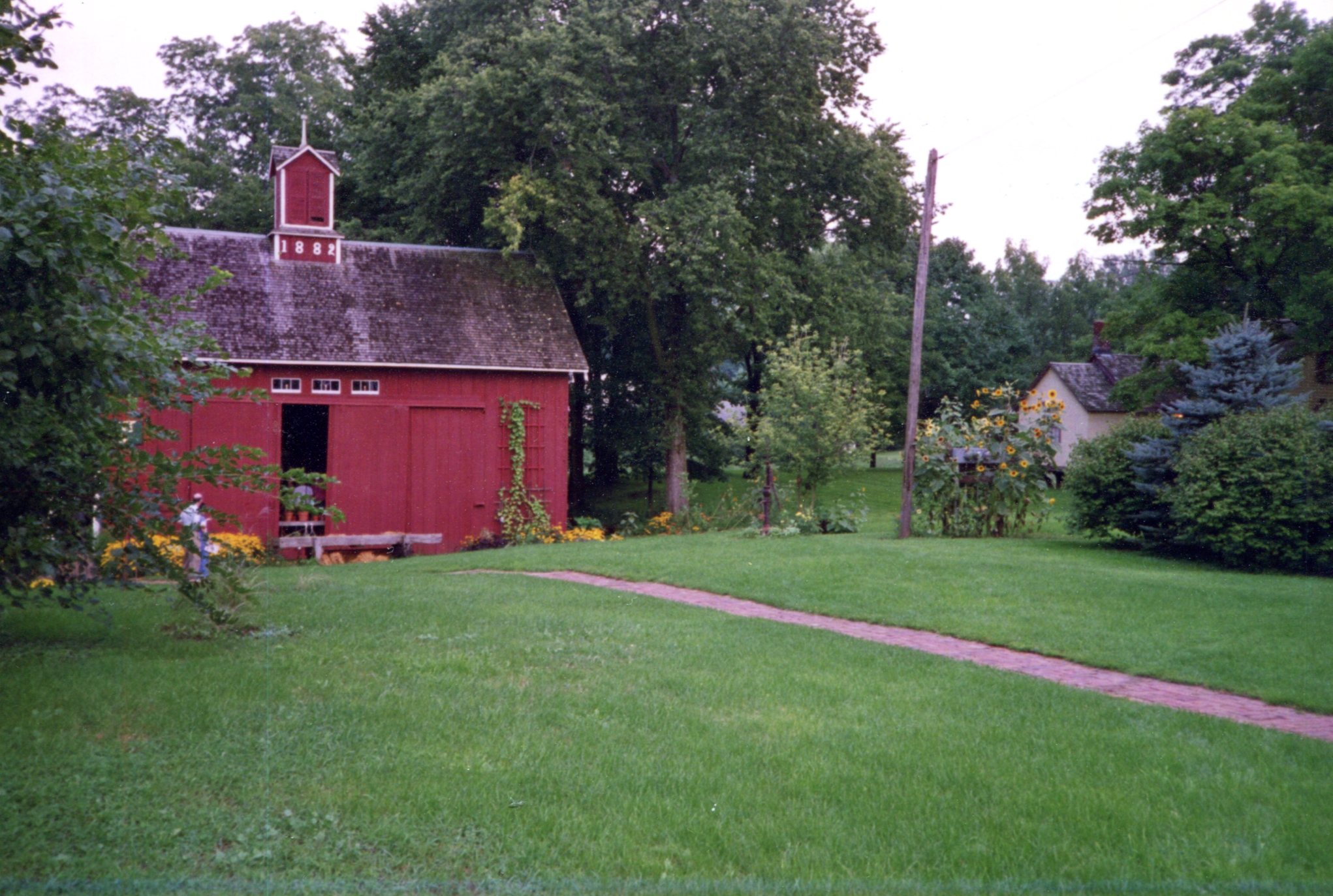
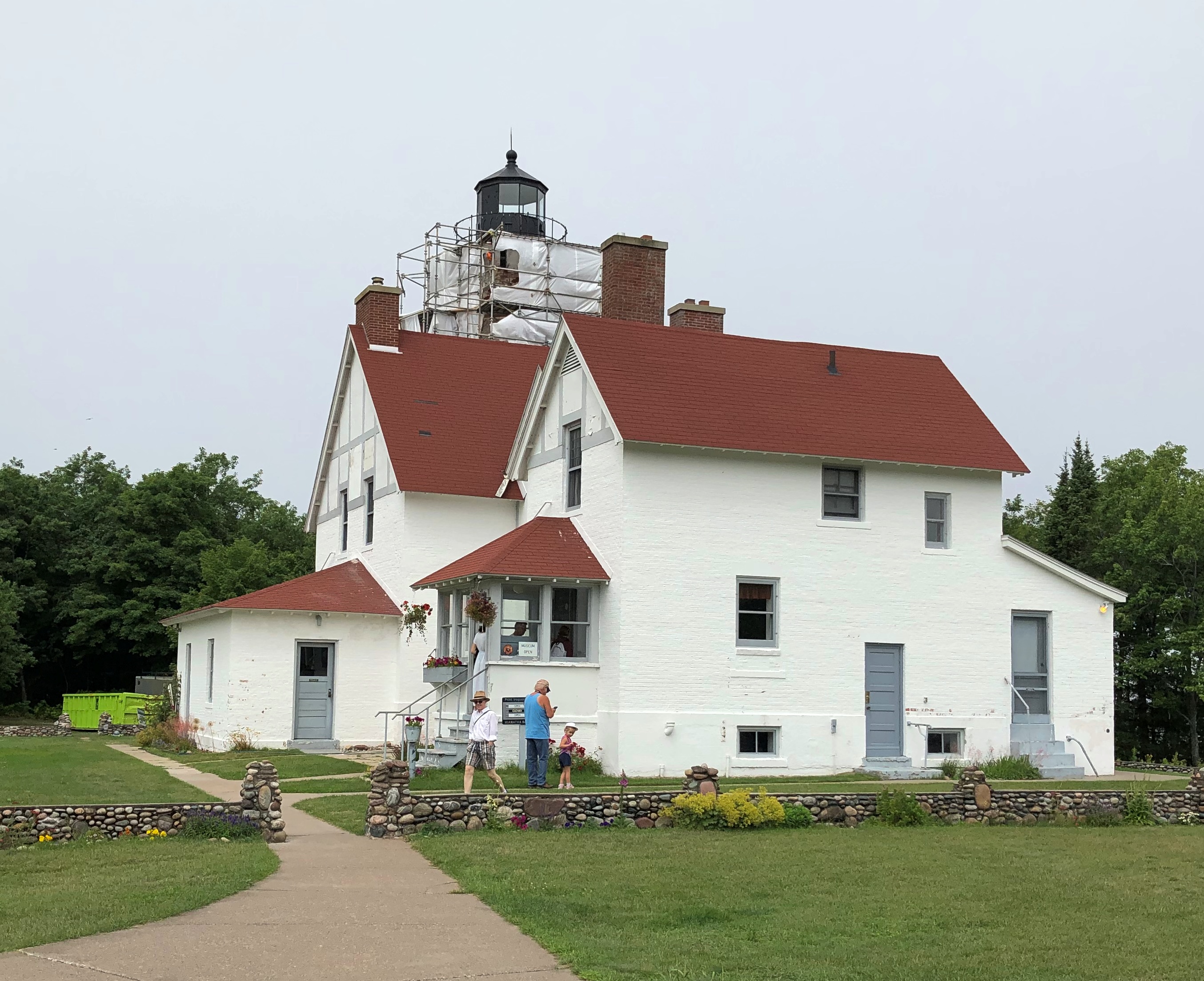
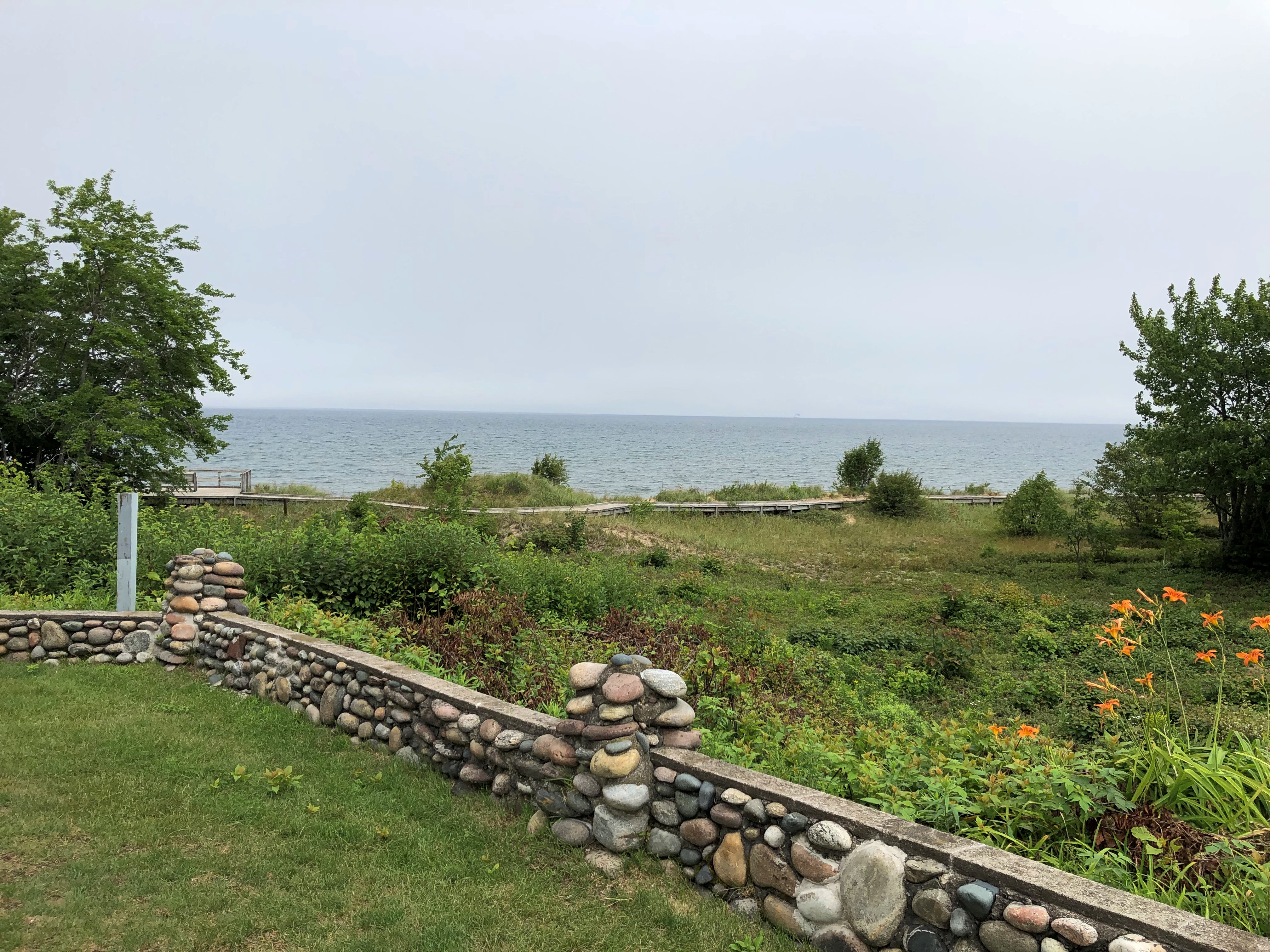
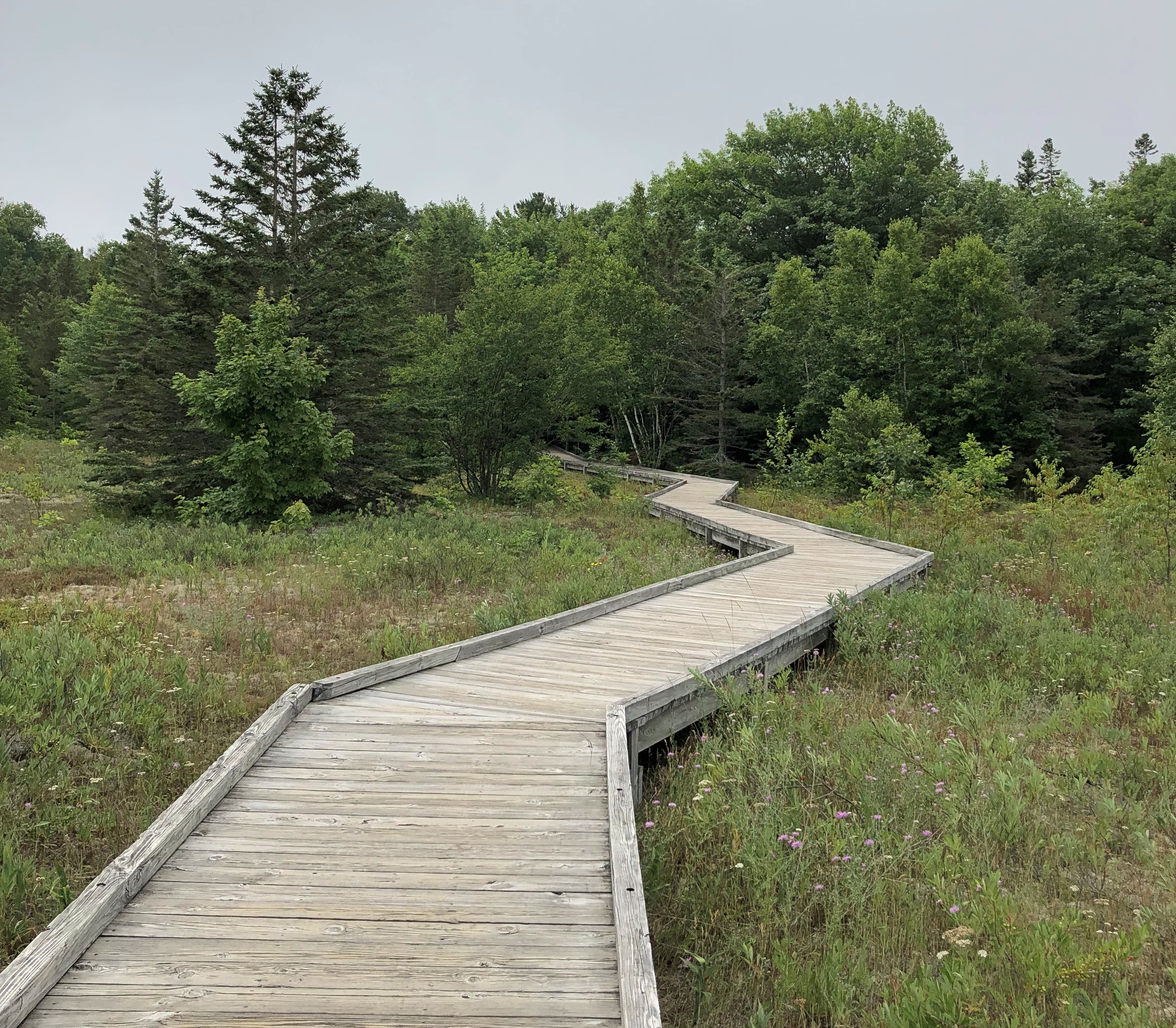
I already knew that, since just after Christmas 1991, I spent a few days nearby, guests of the hospitable Clark family, one of whom I knew in Japan. I spent a good while one day wandering around the fine coastline at Tuross, rocky shores enlivened by distinctly unfamiliar flora, though that doesn’t really show in my snapshots.Tuross Head 1991 Tuross Head 1991 Tuross Head 1991

More recently, as in today, Wiki informed me that one Eva Mylott (1875-1920) was born in Tuross Head. She was a popular opera singer from Australia, and also so happens to be Mel Gibson’s paternal grandmother, though she was never to know him, since she died when her own children were very young.

That’s her, in a photo from the collection of the State Library of New South Wales.

Then I started reading about her son, Mel’s father, Hutton Gibson (1918-2020). While he didn’t have the platform of celebrity, the elder Gibson had quite a career as a crackpot, back when that meant pamphlets and physical-medium videos or appearing on local radio or talking to people in person about your ideas. Just as the Internet has become a vast conduit of more or less factual information, so too vast eddies of crackpot nonsense now flow through it; but that’s a rant for another time.

Crackpot dad, eh Mel? There’s a Japanese proverb for this situation: kaeru no ko wa kaeru (蛙の子は蛙). Literally, a tadpole is a frog. The less poetic English — though it has some resonance, both as sound and emotionally as meaning — would be, like father, like son.

Tuesday Humor

Up to balmy double-digit Fahrenheit numbers this afternoon, barely, as a brilliant sun reminded me that in January a sunny day usually means it’s cold as Swedish hell.

I didn’t know Dave Barry was still doing his annual humor piece, or even that he was still alive, but so he is on both counts. Found that out today.

In case the Washington Post is behind a paywall, here’s an essential nugget from Barry:

At this point these are the known facts about the pandemic in America:

Many Americans have been vaccinated but continue to act as though they have not.

Many other Americans have not been vaccinated but act as though they have.

Next, a joke that’s evidently begin kicking around a while. I spotted it this morning. I’ve put it, as they used to say in school, in my own words.

Just before he was appointed chancellor, Hitler — always with an interest in the occult — visited a fortune teller and asked her a number of questions, including what day he would die.

The fortune teller told him that he would die on a Jewish holiday.

“How do you know that?” an outraged Hitler demanded.

“Any day you die will be a Jewish holiday.”

Lawless Roads, A Greene Enthusiast & The Pecan-Shellers Strike

Really nice sunset today, red-grays among the lingering clouds that had dropped snow earlier in the day. Too good, I decided, to capture in digital image form. Besides, it’s cold out there.

I picked up Lawless Roads again last night. It was the book I took with me to New York last month, reading about half. Very near the end of my outbound flight, a youngish fellow in the middle seat next to me spied the cover and told me he’d never heard of the book, even though he thought he’d read all of Graham Greene.

I told him it was one of his handful of travel books. He said he would find it and read it. We had to get off the plane pretty soon after that, so I didn’t discuss Greene any further with him. That may be just as well, since I’ve only read a few of his titles, such as The Quiet American, Journey Without Maps, The Third Man, and Travels With My Aunt. I liked all of them, but don’t count myself as an enthusiast.

Early in the book, Greene visits San Antonio, and mentions in passing the city’s pecan shelling industry, whose poorly paid and ill-treated workers were on strike at the time (early 1938).

One thing that struck me was the size of the industry: “Forty-seven pecan shelleries lying discreetly out of sight in San Antonio and they shell in a good year, twenty-one million pounds of nuts,” according to Greene.

“In the 1930s Texas pecans accounted for approximately 50 percent of the nation’s production,” the Handbook of Texas says, revealing an even larger industry than Greene thought. “San Antonio was the Texas shelling center because half the commercial Texas pecans grew within a 250-mile radius of the city.

“The pecan-shelling industry was one of the lowest-paid industries in the United States, with a typical wage ranging between two and three dollars a week. In the nearly 400 shelling factories in San Antonio the contracting system was prevalent; the large firms controlled the supply of nuts as well as the prices for shelling.

“Working conditions were abysmal — illumination was poor, inside toilets and washbowls were nonexistent, and ventilation was inadequate.”

It was a brief flowering for the labor movement in San Antonio, with mixed results, and in a few years the point was moot, with hand shellers generally replaced by machines. By the time I came along, all traces of the industry had vanished, at least as far as I knew. Its memory had vanished as well, again at least as far as I knew.

As labor actions go in San Antonio, that was one of the more memorable ones, yet somehow by the 1970s not even my former Wobbly high school U.S. history teacher, the spirited Mrs. Collins, mentioned it in class. She was from upstate New York, so perhaps had little knowledge of it herself. I had to hear about it from my Government teacher at UT Austin in the summer of ’81, who said he was an adherent of anarchism, but that’s a story for another time.

50 Francs, Luxembourg

In the fourth or fifth grade, a number of us kids were looking at close range at a map of Europe being held up by one of our teachers, and she asked whether we could find Belgium on the map. I’m not sure why she picked that country. Maybe because it wasn’t one of the more famed places that one of us might conceivably know, such as the UK or France or (West) Germany. Maybe she wanted to show us that Europe had other places besides the big countries.

Boom! I pointed my finger right at Belgium. I might have even tapped the map accidentally. I think she was surprised, but she didn’t know my map gazing habits, especially the atlas included with our encyclopaedia set, but also road maps and whatever else we had in the house.

So I knew about the Low Countries. Even more interesting than Belgium, I thought, was Luxembourg. Tiny Luxembourg got to be its own country. How about that. As fascinated as I was with maps in those days, I might not have realized there were even smaller European countries, though of course I learned about them eventually.

In my currency envelope, I have a 50 franc note, long demonetized, from the Grand Duchy, dated 1961.
50 Francs, Luxembourg

It might actually be worth something in mint condition, but it’s worn and slightly torn, especially on the top edge of the note. That’s a sign that it was in one wallet for a long time, or a lot of wallets for a long time, with the note facing upward.

That’s Grand Duchess Charlotte on the obverse. She had a long reign, 1919 to 1964, and an even longer life, 1896 to 1985. Her grandson Henri is grand duke these days.
50 Francs, Luxembourg

The reverse depicts one-quarter of the area of Luxembourg. Just kidding. But it is a pretty small country after all (I wasn’t wrong as a kid), at a shade less than 1,000 square miles. Rhode Island is larger. So is Brewster County, Texas — actually more than six times the size of Luxembourg — as are a lot of other places.

50 Tyiyn, Kyrgyzstan

A little-remarked consequence of the breakup of the Soviet Union: it spawned a lot of new currencies. Central Asia had a positive boomlet in new banknotes and coins in the early to mid-90s.

The effusion of notes included the production of my Kyrgyzstani 50 tyiyn note, part of a series (the country’s first) issued in 1993. The note made its way in recent years to an envelope in my possession, here in the heart of North America.50 Tyiyn, Kyrgyzstan

Fifty tyiyn is half a som, the base unit. The notes haven’t been withdrawn, but coins are apparently used for everything valued at 10 som or less these days. 1 som = about 1.2 U.S. cents, so I’ve got myself a theoretical sixth-tenths of a cent note.

No national heroes of the sub-som notes of this series, but an eagle on the (I think) obverse. The 1, 5 and 20-som notes feature an illustration of the Epic of Manas, a Kyrgyzstan work I have to admit being unfamiliar with until today.
50 Tyiyn, Kyrgyzstan

Ah, Kyrgyzstan. Most likely to be confused with Kazakhstan, at least here in the West. I have to add that it looks like Kazakhstan has some pretty nice coins.

10 Dinars, Croatia

Seasonal lights are going dark around here, but as of this evening anyway, a cluster of five houses that includes mine still displays colorful lights: two houses on my side of the street and three on the other side. I suspect that at least one of my neighbors wanted to keep them up past Orthodox Christmas, which seems like a good reason to me.

Time to make the acquaintance of Roger Joseph Boscovich, S.J., (1711-87) or as they write in Croatia, Ruđer Josip Bošković. Or, as the man of the Enlightenment he surely was, Rogerius Iosephus Boscovicius, because Latin is where it was at.

He was on the obverse of all of the 1991 transitional currency after the independence of Croatia, from 1 dinar to 50,000 dinars. I have a 10-dinar note.10-dinar note Croatia

A native of Dubrovnik, though known as Ragusa in those days, “[Boscovich] developed the first coherent description of atomic theory in his work Theoria Philosophiae Naturalis, which is one of the great attempts to understand the structure of the universe in a single idea,” writes Fairfield University. “He held that bodies could not be composed of continuous matter, but of countless ‘point-like structures.’ ”

Funny, I remember discussions of atomic theory always starting with John Dalton, so maybe Boscovich’s ideas count as a precursor, or maybe textbooks in the English-speaking world are loath to give him the credit he deserves. I’m not enough of a historian of science — not at all — to know. Atomic theory must of seemed a radical notion 200 years ago in any case.

The article calls Boscovich “a physicist, geometer, astronomer and philosopher.” His Wikipedia entry calls him a “physicist, astronomer, mathematician, philosopher, diplomat, poet, theologian, Jesuit priest, and a polymath.” Whatever the aptness of those terms, clearly a weighty intellect. Who’s really a polymath any more? Anyone?

In 1994, Croatia retired its dinars in favor of a currency called the kuna, and so far has kept it in the face of the euro. These days, one kuna fetches about 15 U.S. cents.

On the reverse, Zagreb Cathedral. It’s horizontal on the note but certainly vertical in Zagreb. I’d hope so anyway.10 dinar note Croatia

In full, Zagreb Cathedral of the Assumption of the Blessed Virgin Mary, first completed in 1217 but destroyed by the Mongols not much later in that same century. Oops. It was rebuilt not long afterward, and at least the Ottomans didn’t destroy it, though earthquakes have done damage over the years, including as recently as 2020.

First Thursday of the Year Musings

Little wind today, which made the outdoors marginally better to experience. But not much. Tonight will be really cold, an illustration of the superiority of the Fahrenheit scale for everyday use, with 0 degrees being really cold and 100 degrees really hot.

I can’t remember exactly when I read it, but years ago there was an item in Mad magazine lampooning the midcentury notion — the quaint notion, as it turned out — that Americans were going to have a surfeit of leisure time in the future, including a vast expansion of the number of holidays. Millard Fillmore’s birthday was a suggested holiday.

Well, that’s tomorrow, and I have to work. That idea about leisure time didn’t pan out anyway. But I will acknowledge the 13th president’s birthday, because why not. Besides, I paid my respects to President Fillmore in person recently.

Today’s also a good day to acknowledge the expansion, ever so slow, of the public domain, eking out growth despite the rapacious efforts of certain media oligopolists whose mascot is a rodent. Works published in 1926 are now in the public domain.

I’m happy to report that The Sun Also Rises is one of those works, to cite one of the better-known novels of 1926. I could have quoted it previously, and in fact I have, relying on notions of fair use. Now all the words are freely available, no questions asked.

“Here’s a taxidermist’s,” Bill said. “Want to buy anything? Nice stuffed dog?”

“Come on,” I said. “You’re pie-eyed.”

“Pretty nice stuffed dogs,” Bill said. “Certainly brighten up your flat.”

“Come on.”

“Just one stuffed dog. I can take ’em or leave ’em alone. But listen, Jake. Just one stuffed dog.”

“Come on.”

“Mean everything in the world to you after you bought it. Simple exchange of values. You give them money. They give you a stuffed dog.”

“We’ll get one on the way back.”

“All right. Have it your own way. Road to hell paved with unbought stuffed dogs. Not my fault.”

Speaking of life between the wars…

If that song doesn’t make you smile, what will?

William Street

Less famous than Wall Street and a bit longer, William Street snakes through non-grid Lower Manhattan, another faint echo of New Amsterdam. I didn’t walk the entire way during my recent visit, but did cover a fair amount of the street, starting at the back of the fortress-like Federal Reserve Bank of New York.NY Fed 2021
NY Fed 2021

Beneath my feet, roughly, more than 6,000 tons of gold, more than even old Croesus himself could imagine. Above street level, a building that evokes Florentine palaces, though larger even than a Medici could imagine. Designed by a NY firm that did a lot of bank buildings, York and Sawyer.

A block away is Fosun Plaza, which surrounds the 60-story 28 Liberty Street, formerly One Chase Manhattan Plaza, a midcentury creation. The plaza is a story above street level, accessible by a wide staircase. The first thing you see on the plaza is a Jean Dubuffet sculpture, “Group of Four Trees,” commissioned by David Rockefeller and completed in 1972. Almost instantly, it reminded me of “Monument With Standing Beast” in Chicago.Fosun Plaza, NYC
Deeper in the plaza is an Isamu Noguchi rock garden fountain, back down at street level and naturally dry this time of year.Isamu Noguchi rock garden fountain,

“Windswept” came to mind when I was at the plaza, the adjective that’s often attached to such midcentury artificial flats, even though there wasn’t that much wind. Still, the plaza offered some good views of surrounding buildings, such as 84 William Street, the Howell apartments. In front of the Howell (from this vantage) is a small park featuring steel sculptures by Louise Nevelson.William Street 2021

A wonderful old office building at 62 William Street, dating from 1900.William Street 2021

Down at street level at that building, a Greek restaurant that didn’t survive the pandemic. Or simply didn’t survive.William Street 2021

From that vantage, there’s also a good view of the non-Wall Street side of 40 Wall Street.William Street 2021

At William and Pine streets, one of two churches I was able to visit this time in NYC, Our Lady of Victory. I popped in for a few minutes to enjoy the sacred-space quiet.Our Lady of Victory, William Street 2021 Our Lady of Victory, William Street 2021 Our Lady of Victory, William Street 2021

Further south.William Street 2021

Delmonico’s, by gar.Delmonico's 2021

Or at least its 21st-century iteration, though in a fine old building. I understand there have been a few Delmonico’s down the centuries, since like the Dread Pirate Roberts, the name is the thing. I’m pretty sure the first time I ever heard of the place was years ago in this Charles Addams cartoon, when I didn’t really understand the joke.

I ducked over to Stone Street at this point.Stone Street 2021

It’s a happenin’ place, on Thursdays anyway.Stone Street 2021

At South William and Broad is the former International Telephone Building, once occupied by IT&T and designed by Buchman & Kahn in 1928.International Telephone Building International Telephone Building

Your voice goes wingedly around the world? Notice that underneath the winged figure, there are people using 1920s-style telephones, along with ’20s-style telephone poles with multiple crossarms.

One more place, this one on Broad.National Bank Note Company Building

Designed by Kirby, Petit & Green, the American Bank Note Company building dates from 1908. I’m always delighted to see a physical presence of something I’ve only ever read about.

Wall Street

Not too many streets get to be metonyms, but Wall Street does, which is a little remarkable for such a short street, only eight blocks from the East River to Broadway, or vice versa. During my walk along the street just before sunset, I wanted to take a closer look at the physical street, not its high finance subtext, which I hear about enough as it is.

I started at the East River Waterfront Esplanade, near where Wall Street meets South Street, which is partly under FDR Drive. You can catch a fine view of Brooklyn from the esplanade.East River, Dec 2021

That’s as close as I got to Brooklyn this time around, as opposed to some other trips.

An enlargement of the sidewalk on the easternmost block of Wall Street forms Mannahatta Park, a pleasant place with bushes and trees and benches. Rose bushes bloomed there this December.Wall Street 2021

More than two centuries ago, the site was New York’s slave market, and surely not a pleasant place. The city erected a sign only in 2015 to mark the doleful history of the site.

At the corner of Water and Wall is 88 Wall Street, these days the Wall Street Hotel, very much an upmarket property (and not where I stayed) that opened only this year in a former office building.Wall Street 2021

The hotel’s web site has an unusually long and detailed history of the site, which is only fitting, considering the richly layered history of the street. One of the more remarkable snippets of 88 Wall Street history is the fact that a series of two buildings on the site from 1791 to 1870 were owned by a tontine, and known as the Tontine Coffee House and then the Tontine Building. Out of the 203 investors who had funded the coffee house, seven survived to be beneficiaries of the tontine.

The current building, a Beaux-Arts structure designed by Clinton Holton & Russell in 1901, was for a time home to an import company that was, among many other things, the world’s largest dealer in mother-of-pearl. When plastic buttons bottomed out the market for that material, the company went into cultured pearls.

By the time you pass 88 Wall Street, the thoroughfare takes on its famed canyon-like aspect.Wall Street 2021

Next to 88 is 74 Wall Street. Its entrance caught my attention.Wall Street 2021

The ever-useful New York Songlines says: “This round-arched building was put up in 1926 as the Seamen’s Bank for Savings Headquarters (hence the seahorses, mermaids and other nautical motifs); the architect was Benjamin Wistar Morris.”

Nautical motifs, all right, though Seaman’s Bank is long gone.Wall Street 2021

Almost as remarkable, the building seems to be vacant. Then again, maybe not so remarkable. Despite the persistence of Wall Street as an metonym, and the presence of the New York Stock Exchange, the street hasn’t been the hub of U.S. finance in many years; that moved on to Midtown.

Though not on Wall Street, 1 Wall Street Court — the Beaver Building, 1904 — is visible from there.
1 Wall Street Court

67 Wall Street, now a residential co-op.Wall Street 2021 Wall Street 2021

Songlines again: “This 25-story triangular building, originally known as the Munson Building, was designed in 1906 by Kenneth M. Murchison for the Munson Steamship [Line]. From 1931 until 1972 it was the New York Cocoa Exchange.”

63 Wall Street.Wall Street 2021

60 Wall Street, a 1988 building designed by Kevin Roche John Dinkeloo.Wall Street 2021

Originally Morgan Bank’s HQ, these days Deutsche Bank occupies it. I found the lobby impressive.Wall Street 2021

Soon after this point, it’s pedestrians only. Trinity Church isn’t far away.Wall Street 2021

40 Wall Street.Wall Street 2021

Lots of history here. A picture of the upper section.
Songlines: “Formerly the Manhattan Bank Building, this was designed to be the tallest building in the world, but was beaten out by the Chrysler Building’s surprise spire…

“The Bank of the Manhattan Company, which eventually became Chase Manhattan, opened its first office here in September 1799. It was founded by Aaron Burr against the opposition of Alexander Hamilton. The New York Stock & Exchange Board, as the NYSE was then called, had its first permanent office here in 1817.
“Donald Trump calls this the Trump Building; please don’t encourage him.”

37 Wall Street.Wall Street 2021

A familiar name, but Tiffany’s is a fairly recent occupant. Designed by Francis H. Kimball, a very busy New York architect, the building originally housed the Trust Company of America in 1907, and then a series of other banks. The upper floors are now residential.

Before long, one comes to Federal Hall National Memorial, which is behind some scaffolding now.Wall Street 2021

George looks a bit cut off up there. Looking down pensively, perhaps, on the nation he created.Wall Street 2021

There’s plenty else on Wall Street that’s perhaps a little less permanent. For instance, sources of affordable food to price-oppressed New Yorkers.Wall Street 2021
Wall Street 2021

I bought a falafel at that first one, delicious and large enough to make part of dinner two nights in a row.

Also, men working.Wall Street 2021

Finally, I couldn’t very well come to Wall Street without a look at the NYSE (11 Wall Street), whose after-hours trading floor I got to visit in 2002.Wall Street 2021

“It’s a primary rain forest of electronic equipment — the guts of the capitalist beast — no, the sinews of the Invisible Hand,” I wrote at the time. Looking at the allegory-stuffed pediment, I’d also say Temple of Commerce.

Despotism In Jest & In Earnest

Back around December 19. Got things to do and, maybe, a few things to see.

Today’s amusement: I happened across this photo.

I’ve seen a lot of pictures of President Roosevelt, but never this one, which I downloaded from the National Archives. The occasion was a Roman-themed birthday party for the president, January 30, 1934.

Among other things, FDR’s enemies accused him of despotic tendencies, and it looks like he decided to make fun of the notion as Emperor Roosevelt.

Speaking of despotism, somehow our gnome ended up on the Christmas tree.
Stalin in the Tree

Dreaming of a red Christmas, no doubt. Except that reds don’t celebrate Christmas. Of course, Stalin could have, if he’d wanted to. He was Stalin.
I’d better keep an eye out, or some of the other ornaments might be sent off to parts remote, including the great beyond, as Christmas tree wreckers.