Technical Errors

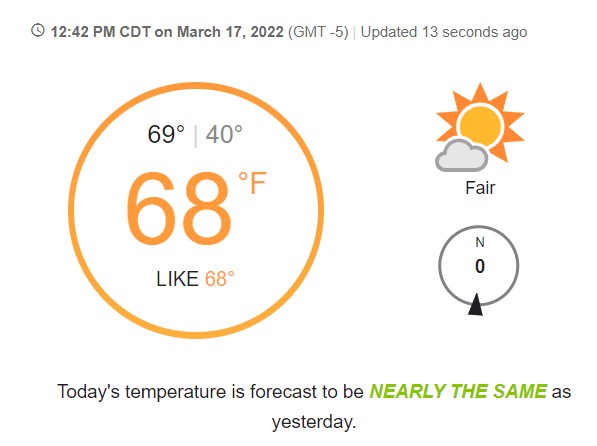
Good news for the day. Our heater woke from its summertime slumber on command this morning, after I found that the house’s interior temp had edged below 68 F. during the night. I could have lived with 67 F., and it would have warmed up anyway, but I wanted to do the test.

Speaking of tech — vastly more complicated than my garden-variety HVAC — not long ago, I watched a couple of interesting videos by an outfit called Mustard, which specializes in aviation subjects and other complex transport. So that’s what happened to the SST. I vaguely remembered hearing about its effective cancellation in 1971, but haven’t thought about it much since, along with much of the nation. A rare example of officialdom deciding not to throw good money after bad, I think.

Even more obscure is the story of the Antarctic Snow Cruiser. For me, the most intriguing part is the fact that the monster machine has vanished beyond the ken of man.

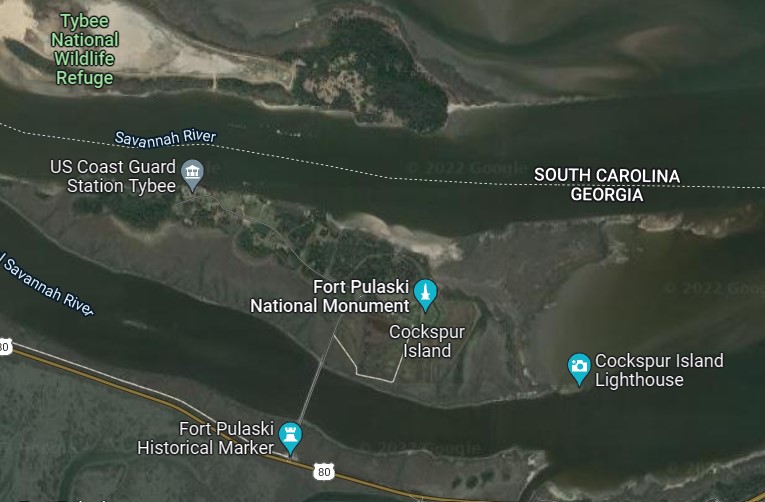
Here’s a Google Maps map to illustrate that Google makes mistakes.Not Freedom Park

I took a walk not long ago in “Freedom Park.” That is not the name of the park, at least according to the Schaumburg Park District. This is the sign at Cambridge Drive entrance to the park, as documented in 2018.

More recently, the park district has been replacing its signs with a new style, so that sign is gone. But the new sign — which I saw myself this week, no Google tech intermediary needed — still gives the name as Duxbury Park. There is no sign at the S. Salem Drive entrance, and the two green blobs on the map are actually connected by an undeveloped neck of land under which natural gas and water mains run, giving the park an irregular dumbbell sort of shape.

A small error, but worth noting.

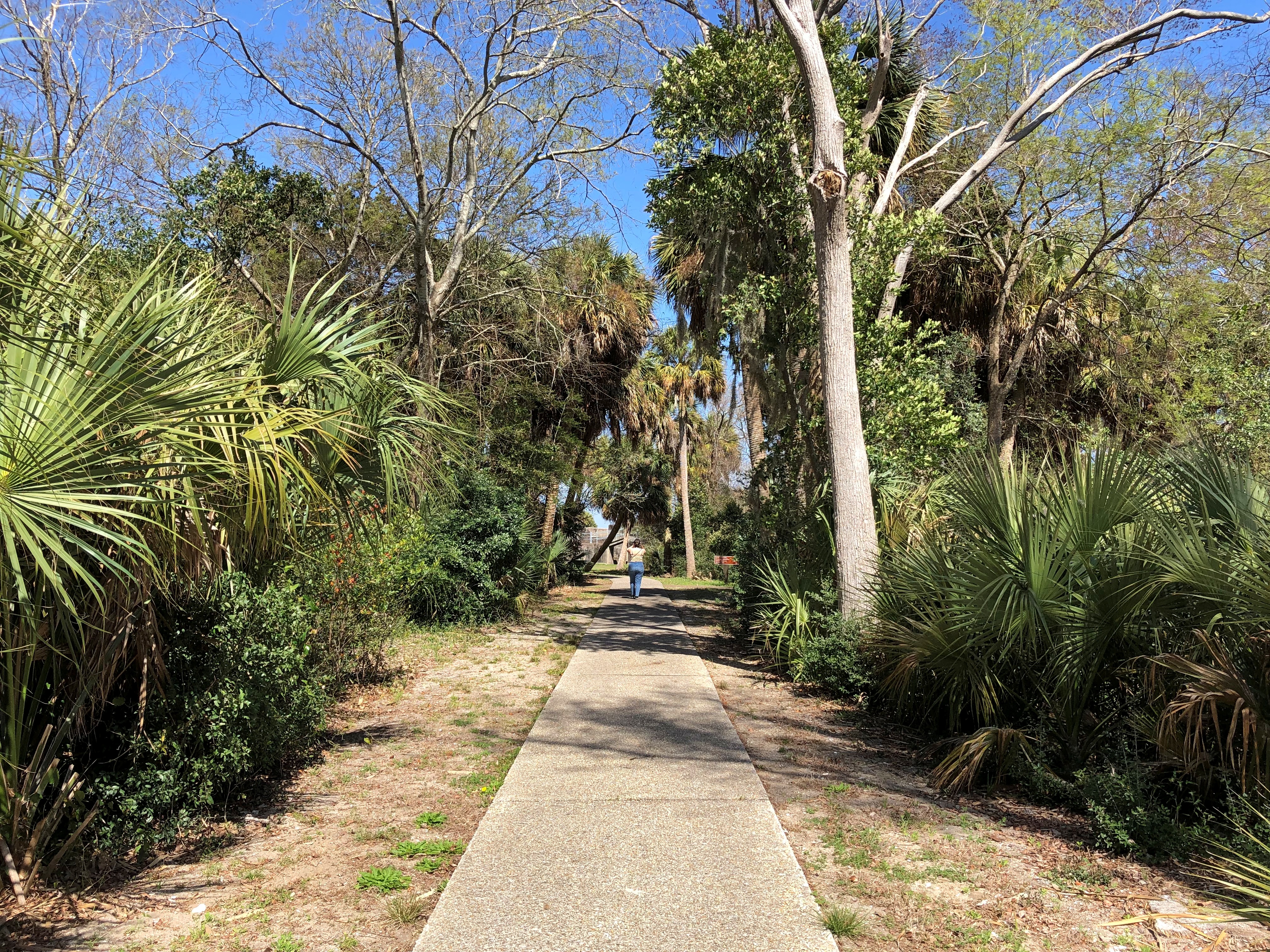
Duxbury Park’s pretty nice around the fall equinox. Mostly still green, with hints of yellow.
Duxbury Park

That’s the “Freedom Park Little Mountain” off in the distance. I’d call it a hillock, to use a word that needs more use.
Duxbury Park

My daughters sledded there occasionally in previous winters, but it’s been a while. Next to that bald hillock is a wooded hillock, complete with trails that cross it.
Duxbury Park

Take all of about a minute to climb up one side and down the other, if you don’t stop for anything. Definitely a hillock.

Fortune Cookie Wisdom

I ate a fortune cookie not long ago, as I do when offered them by restaurants and takeout places that offer them. Also, I read the fortune, as a form of very low-grade entertainment.

Something I knew about fortune cookies: their origin seems to trace from Japan, Kyoto in fact, a place that’s long been inventive when it comes to confections. I’ve sampled some of the traditional products in the small, wonderfully colorful shops of that city.

“The idea that fortune cookies come from Japan is counterintuitive, to say the least,” wrote Jennifer 8. Lee in the New York Times some years ago, an article I remember seeing before. Maybe so, but ideas and inventions travel and morph, in this case to California for an association with Chinese food by the 20th century.

“The Japanese may have invented the fortune cookie,” she quotes Derrick Wong, the vice president of the largest fortune cookie manufacturer in the world, Wonton Food, based in Brooklyn. “But the Chinese people really explored the potential of the fortune cookie. It’s Chinese-American culture. It only happens here, not in China.”

Which brings me to the wisdom in my most recent fortune cookie, from a bakery in Chicago. Seven words, entirely sic:

Being an able man. There are always.

Glad to see that fortune-cookie writing, in this case, has been outsourced to someone whose native language isn’t English. Entirely possible in polyglot Chicago. I can’t say what language they do speak, but I’m certain of that.

Allouez Catholic Cemetery

The village of Allouez, Wisconsin, which counts as a suburb of Green Bay, was named after missionary Claude-Jean Allouez, S.J.

The Catholic Encyclopedia (1913): “Allouez, Claude, one of the most famous of the early Jesuit missionaries and explorers of what is now the western part of the United States, b. in France in 1620; d. in 1689, near the St. John’s River, in the present State of Indiana. Shea calls Allouez, ‘the founder of Catholicity in the West’… Allouez laboured among the Indians for thirty-two years. He was sixty-nine years old when he died, worn out by his heroic labours. He preached the Gospel to twenty different tribes, and is said to have baptized 10,000 neophytes with his own hand.”

Besides the village, the Allouez Catholic Cemetery and Chapel Mausoleum has his name. The missionary isn’t buried there, however, but in Michigan. Allouez Catholic Cemetery

I visited on the morning of Labor Day. The cemetery is on a long slope between two major streets in the area, Riverside Dr. and Webster Ave. Nearly two centuries old, it still has a lot of room to grow.Allouez Catholic Cemetery

In the developed area, so to speak, the stones are fairly dense.Allouez Catholic Cemetery

Allouez Catholic Cemetery
According to the cemetery web site, there are a number of Green Bay bishops in on the grounds, but I wasn’t looking for anyone in particular.Allouez Catholic Cemetery

Allouez Catholic Cemetery

The cemetery is home to only a handful of individual mausoleums, such as this one.
Allouez Catholic Cemetery

An intriguing stone. People get around, until they aren’t able to any more.Allouez Catholic Cemetery

As always, some stones reflect unalterable sadness. This stone silently speaks of a terrible recent incident: a boy run over by a man in a truck.Allouez Catholic Cemetery

He says accident, the DA says homicide by negligent operation of a vehicle.

Green Bay: State & Church

The town of Green Bay wasn’t our primary destination over Labor Day weekend, but when I stay somewhere, I like to look around if I can. Never know what you’ll see, such as a bit of history of the Green Bay Packers.Brown County Courthouse Wisconsin

Moreover, the sign said there’s a Packers Heritage Trail. A little further investigation reveals information posted by the Neville Public Museum in Green Bay.

“The Packers Heritage Trail consists of 22 commemorative bronze plaques. The trailhead is located at the front entrance of the Neville Public Museum. On the journey, you can see Curly Lambeau’s childhood home, as well as the birthplace of the Packers. Visit the train depot that sent off the team for road games. Stop at City Stadium, where the Packers played home games from 1925 to 1956. You will also see the hotel that Vince Lombardi held his first press conference as Head Coach, and the church where he attended daily mass.”

By golly, that’s quite a trail. The plaque pictured above is on the grounds of the Brown County Courthouse, itself a sight to see.Brown County Courthouse Wisconsin

Brown County Courthouse Wisconsin
Charles E. Bell design. He did other courthouses around the beginning of the 20th century, as well as the Montana and South Dakota state capitols. This courthouse dates from 1910, and with its Beaux Arts-ness, reminded me of the Palacio de Belles Artes in Mexico City.

Also on the courthouse grounds is “The Spirit of the Northwest,” by Sidney Bedore and dedicated in June 1931. Looks good for being out in the Wisconsin elements for 90 years; maybe it’s been restored at some point.Brown County Courthouse Wisconsin
The trio are an unnamed Fox Indian, Jesuit missionary Claude Allouez, who arrived in the area in 1669, and Nicholas Perrot, an explorer who arrived about 1664 and claimed the lands around the bay for the King of France.

One more: an unusually modest memorial to the Civil War veterans of Brown County. Late, too — erected in 1934 by the Woman’s Relief Corps No. 91 of the GAR.
Brown County Civil War Memorial

A few blocks away from the courthouse is St. Francis Xavier Cathedral, the cathedral church of the Diocese of Green Bay, completed in 1881.
St. Francis Xavier Cathedral Green Bay

“The original cost of $35,000 was contributed by the immigrant population of the area, the Bavarian Mission Society in Germany, including a donation from King Ludwig I and friends of Bishop Francis Xavier Krautbauer, the second Bishop of the Diocese of Green Bay,” the cathedral web site says. “The architecture is Romanesque in form and was modeled on the Ludwigkirche in Munich, Germany, where then Msgr. Krautbauer was pastor before immigrating to the United States.St. Francis Xavier Cathedral Green Bay

“Bishop Krautbauer is interred under a granite slab in the floor at the Bishop Wycislo entrance. A 40-by-25-foot mural entitled ‘The Crucifixion’ is painted on the rear wall of the sanctuary. It was painted in 1883 by Johann Schmitt, a German immigrant.”

Remembrance

Ten years ago, Schaumburg had a September 11 remembrance at a spot called Veterans Gateway Park. This year, the ceremony was elsewhere on Schaumburg Road, on a patch of land in front of the village’s memorial for police and firefighters, not far from the headquarters of those village organizations. It started at 8:30 a.m. and lasted less than half an hour.
Sept 11 Schaumburg

There was an color guard, singing of the national anthem, a moment of silence, and short speeches — though a little hard to hear, over the din of traffic on Schaumburg Road — by the mayor, police and fire chiefs, the Congressman who represents the area and, a little surprisingly, Cook County Board President Toni Preckwinkle. Perhaps she had a string of events to attend, though I’d think most of them would be in the morning, around the exact anniversary of the attacks.

Door County Shores

In the outskirts of Sturgeon Bay, Wisconsin, county seat and largest town on the Door Peninsula, is a simple sign on state highway 42/57 that says LIGHTHOUSES, with an arrow pointing to a side road. After that, you’re on your own if you want to see those structures, which are on the Sturgeon Bay Canal where it meets the Lake Michigan.

Getting to them involved a couple of wrong turns and passing by the intriguing side road to Leif Everson Observatory, marked by what looks like a model of the planet Neptune, with its Great Dark Spot and some Poseidean moons.

Eventually we found ourselves near the shore — and the lighthouses, but also a pier jutting out into the lake.Sturgeon Bay Pier and Lighthouses

Besides the road and a small parking lot, most of the area is divided between private property and a Coast Guard station. Many signs warn you not to trespass on either, which hints at a history of miscreants showing up and making messes.

The Coast Guard station has a light: the Sturgeon Bay Canal Light, vintage 1899.Sturgeon Bay Pier and Lighthouses
A little ungainly, but I suppose it gets the job done.

The concrete pier is a bit crumbled in places and its iron-and-plank superstructure is a bit rusty in places. The pier is open to the public. To get there, one treads the “public” half of a narrow footpath. More signs warn you not to step off it.Sturgeon Bay Pier and Lighthouses

So if you are a mind to, you can go down the pier. We did.
Sturgeon Bay Pier and Lighthouses

The pier offers some nice views, including the Coast Guard facility and the private shoreline.Sturgeon Bay Pier and Lighthouses
Sturgeon Bay Pier and Lighthouses

Even better is a view of the other light, Sturgeon Bay Ship Canal Pierhead Lighthouse, which is the older of the two, dating from 1881.
Sturgeon Bay Pier and Lighthouses

The light is on a rock island of its own, connected to the pier by the iron superstructure. In other pictures, the light is bright red, and maybe it still is, in the right light. On Sunday morning, it looked dull red, but even so considerably more handsome than the Coast Guard’s tower.
One more thing: a survey marker way out near the tip of the pier.Sturgeon Bay Pier and Lighthouses

Those two lights satisfied the tourist requirement that you visit at least one lighthouse in Door County. So on we went from there, pausing briefly in Sturgeon Bay for gas, and then up the other coastline — the two aren’t very far apart — to the 14-acre Frank E. Murphy County Park on Horseshoe Bay, a small patch of Green Bay.

It’s a pleasant little park, grassland and a beach.Frank E. Murphy County Park

Frank E. Murphy County Park
A homely concrete pier juts out into Horseshoe Bay, and we went there too, taking in the wind and the waves.
Frank E. Murphy County Park

Frank E. Murphy was a Door County lumberman, cattle breeder and fruit grower in the decades on either side of 1900, according to a sign at the entrance. His family donated the land for the park in 1934.

Another fact on the sign: the man credited with naming Horseshoe Bay in 1842 was Increase Claflin Jr. (1795-1868, pictured). His Find a Grave bio is just a touch hagiographic: “Increase Claflin was a splendid type of a pioneer, a most auspicious forerunner of Door County’s men. He was sturdy, reliable, fearless, intelligent, loyal and self-sacrificing. In the rare quality of his ancestors as well as in his own noble manhood, Door County could ask for no truer type of American virtue.”

The text sounds suspiciously like it was lifted from a 19th-century bio of the man, maybe a newspaper obit, as a reasonable use of the public domain.

Anyway, Increase needs to be brought back as a first name. Perhaps Gen Z parents will take it up.

Globes on the Move

My globes migrated upstairs the other day. Five in all, acquired over the years.

Even the newest of them isn’t so new anymore, ca. 2000, missing features such as South Sudan and East Timor. The oldest globe dates from the late 1950s, including as it does a divided Germany, independent Ghana, but also French West Africa.

Another is ca. 1970, featuring most of the newly independent states of Africa, but also the Afars and the Issas and, elsewhere, East Pakistan. Yet another is from that brief window after the reunification of Germany but before the dissolution of the Soviet Union.

The Moon globe is special, acquired for me during the Apollo era. Many of the craters and other features are unnamed, but some craters have names informally given to them by Apollo astronauts, such as two honoring Charles Bassett and Elliot See. The International Astronomical Union Working Group for Planetary System Nomenclature did not, alas, retain those two, at least according to the Gazetteer of Planetary Nomenclature.

Arlington National Cemetery, 2011

Ten years ago this month we went to Washington, DC, which was the entire focus of the week-long trip. That had some advantages, especially since DC has a decent network of subway lines. We went everywhere by subway, including Arlington National Cemetery. Once there, shuttle buses run a loop around the grounds. Good thing, since the cemetery covers 639 acres.

President Kennedy drew a crowd.Arlington National Cemetery

Robert Kennedy isn’t far away, marked with a small stone and a cross.
Arlington National Cemetery - RFK

President Taft, the other U.S. chief executive buried in the cemetery, did not draw a crowd.Arlington National Cemetery - Taft

The memorial to the crew of the Space Shuttle Columbia. An elegant design.
Arlington National Cemetery - Columbia
The memorial to the crew of the Space Shuttle Challenger. Not an elegant design.Arlington National Cemetery - Challenger

Mainly because of the faces. The more you look at them, the worse they become.
Arlington National Cemetery - Challenger

Remember the Maine.Arlington National Cemetery - Maine

Arlington National Cemetery - Maine

Audie Murphy. I hadn’t remembered that he died that young; airplane crash.Arlington National Cemetery - Audie Murphy

Other noteworthy stones we happened across. Ones I did, anyway. Not sure anyone else noticed as I took pictures.Arlington National Cemetery

Arlington National Cemetery - Oscar York
Army brass. Among others, Gen. Alexander “I’m in control” Haig in the foreground, and Gen. Omar Bradley, with his five stars, not far away.

The Tomb of the Unknown Solider.
Arlington National Cemetery - Unknown Soldier
Here are the girls, goofing around at the nearby amphitheater.
Arlington National Cemetery

Hope the trip made some kind of impression.

Ann Goes to College

Ann is now a student at the Illinois State University in Normal, Illinois. From now on, August 14, 2021 will be the day she went to college. Such dates seem to be creeping further into August, but I only have a small sample. My own such day was August 25 and Lilly’s August 18.

ISU is a little closer than UIUC, only about two hours on the road to Springfield and St. Louis. As completely normal for August in Normal, it was hot. That didn’t keep anyone from moving in.
The oddest thing I saw this time wasn’t a TV or bottled water, but a fellow with a turntable and a vinyl record collection. State-of-the-dorm gear in — 1979, as I recall (I didn’t have one).

Her building, Watterson Towers, is enormous, and looks old enough for me to have lived there as a student. Yep, it opened in 1968.

The tallest building in Bloomington-Normal and, according to some sources, the tallest between Chicago and St. Louis.

A nugget I found about the building reported by WGLT, the school’s NPR station, last summer: “Illinois State University said Thursday it will rename floors in the Watterson Towers residence hall in the wake of nationwide upheaval and a renewed dialogue on race and history.

“… every five floors in both towers are called a ‘house.’ The university named those houses for the nation’s first 10 secretaries of state: Van Buren, Clay, Marshall, Madison, Adams, Pickering, Monroe, Randolph, Smith, and Jefferson. Eight out of the 10 were involved in slavery. Several would be elected president after serving as secretary of state…”

Guess which two didn’t own slaves. That would be Adams, as in John Quincy, and Van Buren.

“The entire Watterson Towers complex was named for a beloved professor on campus and that name will not change,” WGLT concluded.

As far as I can tell, the “houses” are now North, A through E, and South, A through E.

Ann found her room and we moved all her stuff in.

It’s a tiny room that she shares with a roommate. Again, the way a dorm should be.

Fountainhead Antique Auto Museum

Usually it isn’t a good idea to quote promotional material too much, since it has a tendency to exaggerate. But for Fountainhead Antique Auto Museum in Fairbanks, I’m going to borrow an entire paragraph from its site, so fitting is it.

This “living museum” is home to over 95 pre-World War II automobiles, with 65 to 75 stunningly lit and staged rare automobiles at all times. This expansive collection encompasses horseless carriages, steamers, electric cars, speedsters, cyclecars, midget racers and ’30s classics.

Not just stunningly lit and staged, but each vehicle is described by a concise and expertly written sign. Also, the museum displays period clothing on mannequins, artfully interspersed with the autos, so that the two kinds of artifacts complement each other to evoke their precise period in the history. Yet another array of period detail is found in the large photographs from early 20th-century Alaska on the walls.

As if that isn’t enough, popular music of the period — from roughly the first four decades of the 20th century — plays not quite in the background. Unobtrusively at first, but then you begin to hear it as a worthwhile background. Once I started listening to the songs, I found the variety remarkable: the popular jazz tunes you’d expect, but also other kinds of hits from the period, such as a few opera or opera-inspired songs.

The museum entrance gives no hint of what’s ahead. But the place doesn’t need a fancy, name-architect structure; it’s got content.Fountainhead Antique Auto Museum

Once inside, the museum’s sizable scope becomes clear.Fountainhead Antique Auto Museum

Fountainhead Antique Auto Museum
Most of the vehicles have been restored to factory appearance, or at least to highly presentable, and according to the museum, all but a handful are functional. There were many vehicles I’d never heard of.

A 1901 De Dion-Bourton.
Fountainhead Antique Auto Museum

A 1903 Toledo. “This is the only gasoline-powered Toledo known to survive.”
Fountainhead Antique Auto Museum

A 1917 Owen Magnetic.
Fountainhead Antique Auto Museum

Plus others, such as an Argonne, Auburn, Grant, Heine-Velox, Hupmobile and Oakland. The display also included a 1911 EMF. Nickname: “Every Morning Frustration.”

Plus plenty of models I knew, but maybe not much about their early models beyond the names: Brush, Cadillac, Lincoln, Packard and Rambler.

Plus at least one celebrity car. Mostly the museum doesn’t go in for that sort of thing, but it does have Wallace Reid’s 1919 McFarlan. It was a speedy car to suit Reid, whose motto seems to have, “die young, stay pretty.” He did.Fountainhead Antique Auto Museum

I could make a entire long posting from the hood ornaments, nameplates, horns and lamps I saw.Fountainhead Antique Auto Museum

Fountainhead Antique Auto Museum

Fountainhead Antique Auto Museum

Let’s not forget the period clothing. Tended to be on the posh side, but what else survives?Fountainhead Antique Auto Museum

Fountainhead Antique Auto Museum
The fur set in the second picture is described as men’s wear. This is early 20th-century Alaska, after all.

This displayed not so much the bonnet or the dress.
Fountainhead Antique Auto MuseumBut rather the eyeglasses. Nearby was a glass display case of glasses from the period.