Prairie du Chien ’20: Effigy Mounds National Monument

Another holiday weekend, another pop up to Wisconsin for a short spell. Actually, Wisconsin and a small slice of Iowa — that being the main goal of the trip: Effigy Mounds National Monument, which is mostly in Allamakee County, Iowa’s northeastern-most county.
Effigy Mounds National MonumentThe 50-hour trip took us to Madison on Thursday evening to spend the first night, and from there to Prairie du Chien, Wisconsin and environs, where we stayed from late morning Friday to early afternoon Saturday. We returned home late Saturday afternoon, in time for Vietnamese takeout dinner at home — and to hear a July 4 neighborhood blasting of fireworks like none I’ve heard before.

Why Effigy Mounds and Prairie du Chien? Because I’ve seen those places on maps for years. I’ve read about them as well, of course, but spots on a map can be alluring in a way no mere textual description is. Come here, the spots say; come see what’s here.
Also, the rolling, verdant Driftless Area is a special place. I’ve only come to appreciate it in recent years.

A road trip at this moment in history is necessarily different than before. Gone for now are casual meals at restaurants picked on a whim, visits to intriguing local museums or wandering down busy small-town shopping/tourist streets and spending time in their specialty stores.

Now the trip means takeout — from the only Chinese restaurant in Prairie du Chien, for example — finding places where few people go (such as cemeteries) and generally spending your time outdoors, as we did on the trails of the national monument and a Wisconsin state park.

Or staying in your room. It so happened that on Friday night, some high school-vintage friends (two in this picture) invited me to a social Zoom, and I managed to figure out how I could attend using my phone. We had a good time.

We arrived at Effigy Mounds NM early Friday afternoon. Temps were high, about 90, and we were warned on a sign that the trail from the (closed) visitors center to the first fork involved a rise of about 350 feet.

I can’t say I wasn’t warned. Up we went.
Effigy Mounds National Monument
The shade moderated the heat some. I wore a hat — one I’d bought at Joshua Tree NP in February, where it was just as sunny but not as hot. I had water. I made progress through the winding green tunnels, resting often. Yuriko was soon far ahead.
Effigy Mounds National Monument
Eventually I could tell I was near the crest of the hill.
Effigy Mounds National Monument
I don’t need a sign to tell me that. By that point, I was well tired. Just another thing I should have done 20 (30) years ago. Still, the vista was worth the effort: a view of the Mississippi, looking southeast, from a spot called Fire Point. Prairie du Chien is in the distance.
Effigy Mounds National Monument
Due east: party boats gathered on the river for July 3.
Effigy Mounds National Monument
Besides a nice vista, Fire Point featured a collection of mounds. Larger —
Effigy Mounds National Monument
— and a row of smaller ones.
Effigy Mounds National Monument

Something inspired the peoples who lived here to reshape the ground into recognizable forms. Recognizable, but you need to squint a little. Not nearly as recognizable in simple photos, unfortunately.

Not far from Fire Point is Great Bear Mound. Probably best visible from above, though park management helpfully trimmed the grass to make the shape a little easier to see from ground level, and you do see it — but it’s also good to bring a little historical imagination to the task. (As it is even in highly visible places.)Effigy Mounds National Monument - Big BearI expect these mounds survived farming and other depredations of the 19th century because the land was too steep to farm or even harvest timber. President Truman created the monument, which protects 206 mounds, in 1949.

“The Late Woodland Period (1400-750 B.P.) along the Upper Mississippi River and extending east to Lake Michigan is associated with the culture known today as the Effigy Moundbuilders,” notes the NPS. “The construction of effigy mounds was a regional cultural phenomenon. Mounds of earth in the shapes of birds, bear, deer, bison, lynx, turtle, panther or water spirit are the most common images…

“The Effigy Moundbuilders also built linear or long rectangular mounds that were used for ceremonial purposes that remain a mystery. Some archeologists believe they were built to mark celestial events or seasonal observances. Others speculate they were constructed as territorial markers or as boundaries between groups.”

Why did Moundbuilders build mounts? The answer is dunno even among modern experts. They had their reasons. The mists of time are pretty thick in the hills of the Driftless Area.

Cuba Marsh Forest Preserve

Late last week I spotted fireflies, which are harbingers of high summer, for the first time this year. This might be a Summer of Nowhere, but at least we have fireflies. Lilly calls them lightning bugs. Who taught her that? I didn’t.

After a short but heavy rainstorm Friday evening, we had a warm and steamy weekend. That made our Sunday afternoon walk at the 781-acre Cuba Marsh Forest Preserve in Lake County a little sticky, but not bad. Always good to visit somewhere new.Cuba Marsh Forest Preserve

We took the path south from the parking lot off Cuba Road, marked on the above map image by a star, through the wooded northern section of the preserve, and eventually along both trail loops, through woods and grassland. I was a little surprised, since going by the name, you’d expect wetland.Cuba Marsh Forest Preserve
Cuba Marsh Forest Preserve
Turns out the wetlands are a little beyond the path, especially toward the south end of the preserve. The woods are a mix of deciduous and pine trees.
Cuba Marsh Forest Preserve
Cornflowers are beginning to bloom. Another sign of high summer.
Cuba Marsh Forest Preserve
Walked about a mile and a half. After we got home, I started to wonder: Cuba Marsh? Anything to do with the Caribbean nation of that name?

Indirectly. Cuba Marsh is in Cuba Township, the southwestern-most township in the county. Wiki, citing a 1912 history of Lake County, says: “Cuba Township was originally named Troy Township, but was renamed to Cuba in support of the López Expedition of 1851, when it was discovered the township name of Troy was already taken.”

López Expedition, eh? That would be a filibustering expedition to liberate Cuba, led by Venezuelan Narciso López (1791-1851). Note that the year of the filibuster and his death year are the same. The expedition did not go well for him.

Walnut Hill Cemetery, Baraboo

We finished our hiking at Devil’s Lake SP at about 3 in the afternoon and headed into Baraboo for something to eat. Not so long ago, that would have meant parking ourselves at a restaurant for a meal. Though there are no restrictions on indoor dining in Wisconsin now — the whole kit and kaboodle was thrown out — we thought better of it, and ordered takeout.

That left us about 20 minutes to wait for the food. Rather than wait in the car in the restaurant parking lot, I consulted Google maps and found a nearby place to go: the 52-acre Walnut Hill Cemetery, which has about 11,500 permanent residents. Baraboo, the Census Bureau tells me, has a shade over 12,100 living residents.

It’s a pleasant cemetery.Wallnut Hill Cemetery Baraboo
Wallnut Hill Cemetery Baraboo
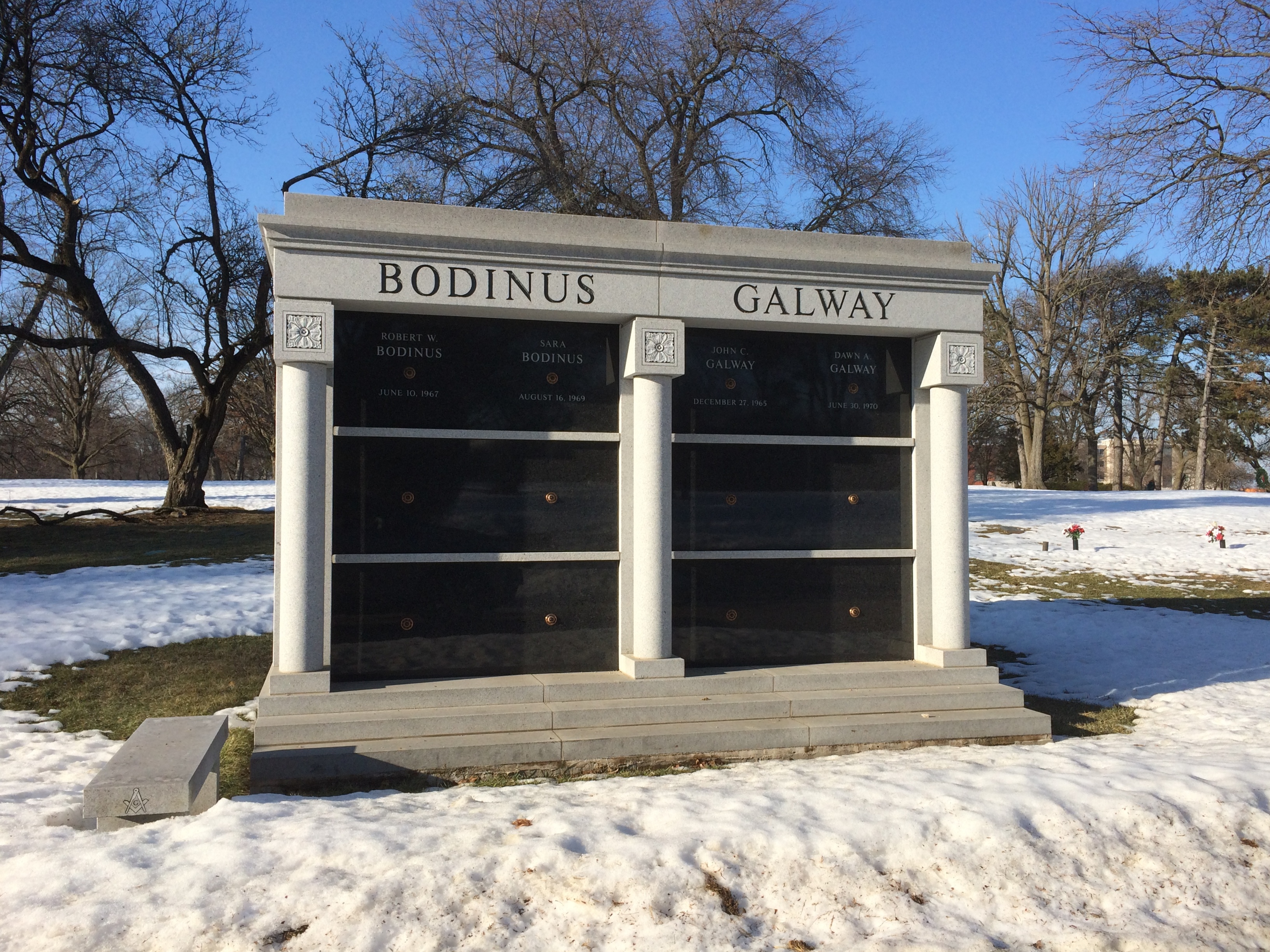
Wallnut Hill Cemetery BarabooI hadn’t come to see any specific grave, but I had to investigate one of the few mausoleums I saw, there on a small rise.
Wallnut Hill Cemetery Baraboo
It turned out to be the resting place of Al. Ringling (1852-1916), the eldest of the circus family, and his wife Lou. Makes sense. Baraboo was a circus town, after all.
Walnut Hill Cemetery Baraboo Al. Ringling
Later I read that some of the other circus brothers are buried at Walnut Hill as well, but I didn’t spot them. I did see another intriguing stone.
Walnut Hill Cemetery Baraboo John Duckens

JOHN DUCKENS
Born a slave in Kentucky
Died in Baraboo, Wi 1894
Aged 75 years

A new-looking stone at that. It’s a replacement for a weather-worn original, put there only in 2011 by the Sauk County Historical Society, which published a sketch of his life — probably all that’s possible — as a Sauk County Notable.

The National Museum of Denmark

Another example of somewhere I visited but don’t really remember: The National Museum of Denmark (Nationalmuseet). You could say that’s because I was there 37 years ago this month, which is a long time ago, but at roughly the same time, I visited the Carlsburg Brewery and Tivoli — the same day in the case of Tivoli — and I remember those fairly well.

Memory’s a slippery character. Here’s what I wrote at the time.

June 18, 1983

Walked [after breakfast] to the National Museum and spent a lot of time in the early Danish collections, a fine assortment of artifacts from pre-farmers (4000 BC) to the Vikings. They had a lot — tools, weapons, pots, clothes, ornaments, more. I noticed that much of the collection — seemed like nearly all of it — survived because it was buried with people.

Then I spent a long time ogling the coin collection, mostly the Roman ones. The museum had at least one example of every emperor and plenty of usurpers and others. I didn’t take as much time in the rest of the museum, but walked through. It is vast. Rooms and rooms and rooms of exhibits.

I left to eat lunch at a Chinese place, spring rolls with sauce and a heap of rice. After lunch I bought chocolate: Toblerone and Ritter Sport.

Those sound like ordinary chocolate purchases, and maybe they are now, but in those days Toblerone wasn’t available in every shop from here to East Jesus and my traveling companions and I had never heard of Ritter Sport. It was an important discovery for us that summer, somewhere in Germany a few weeks earlier. If you’re walking around all day, chocolate’s a good thing to have. Even better, it’s good to snack on high-quality choco like Ritter Sport. Best of all, it’s chocolate that I’ve enjoyed ever since it became available in the U.S. sometime in the late ’80s.

Dundee Township East Cemetery

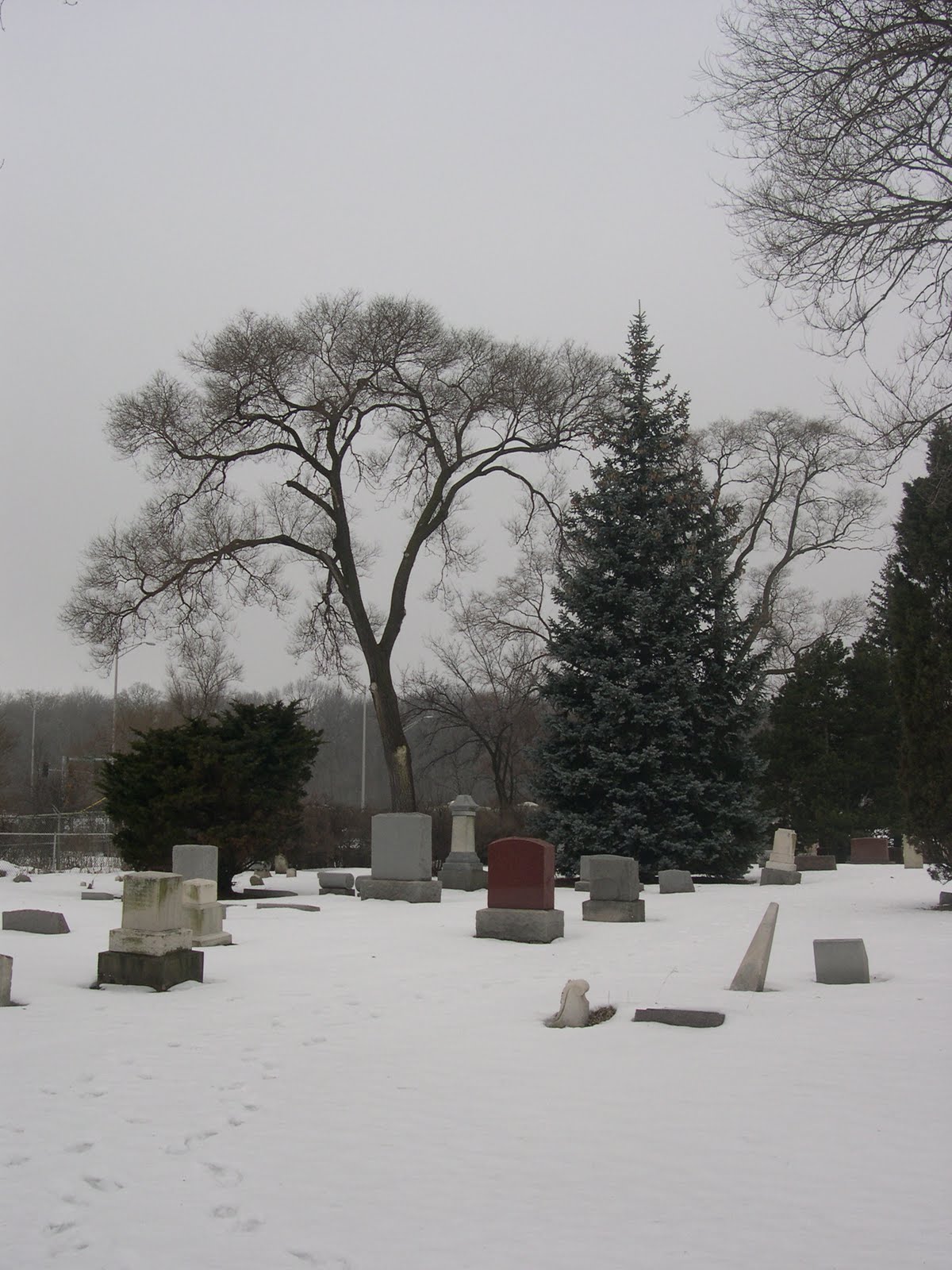
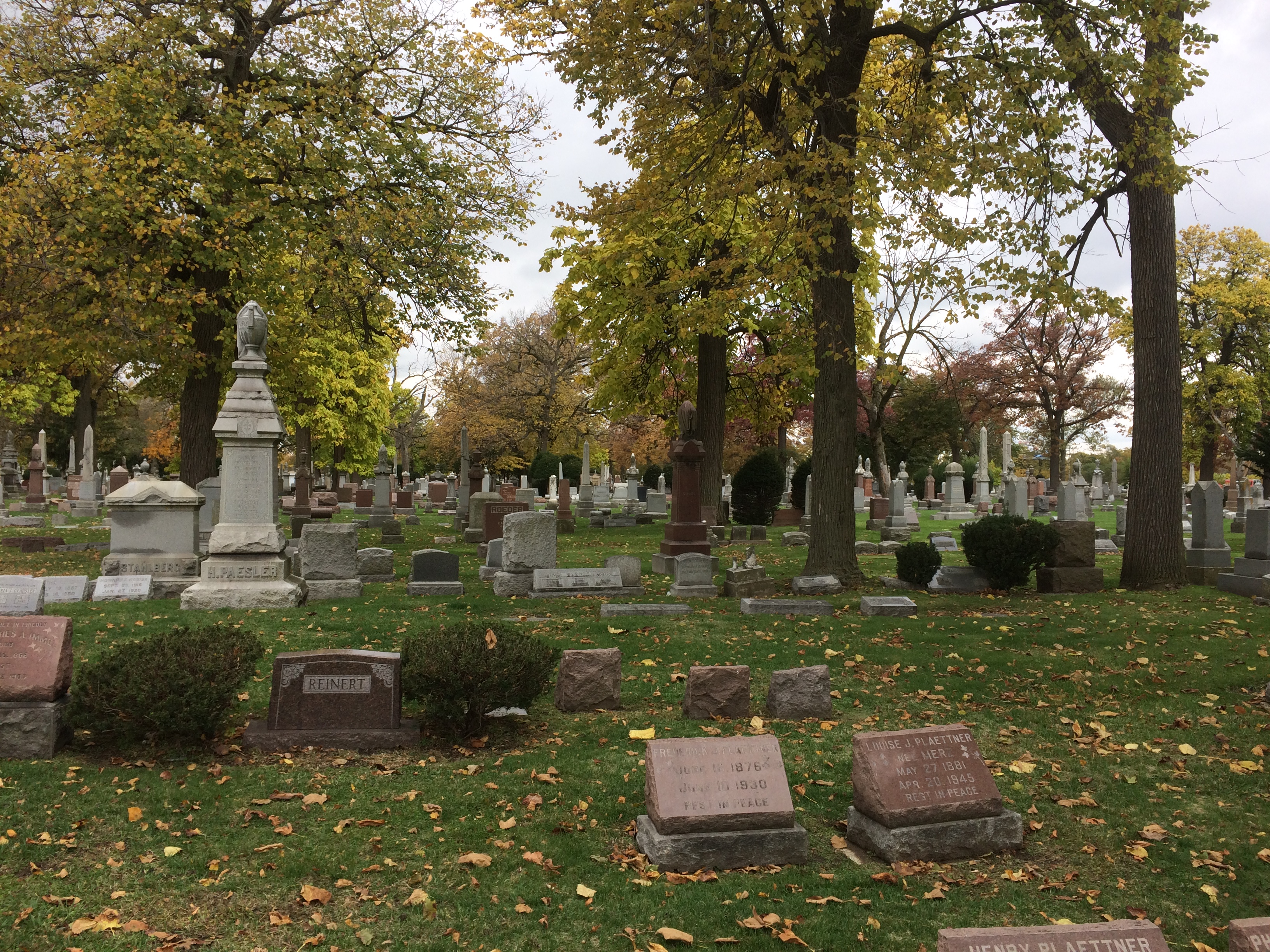
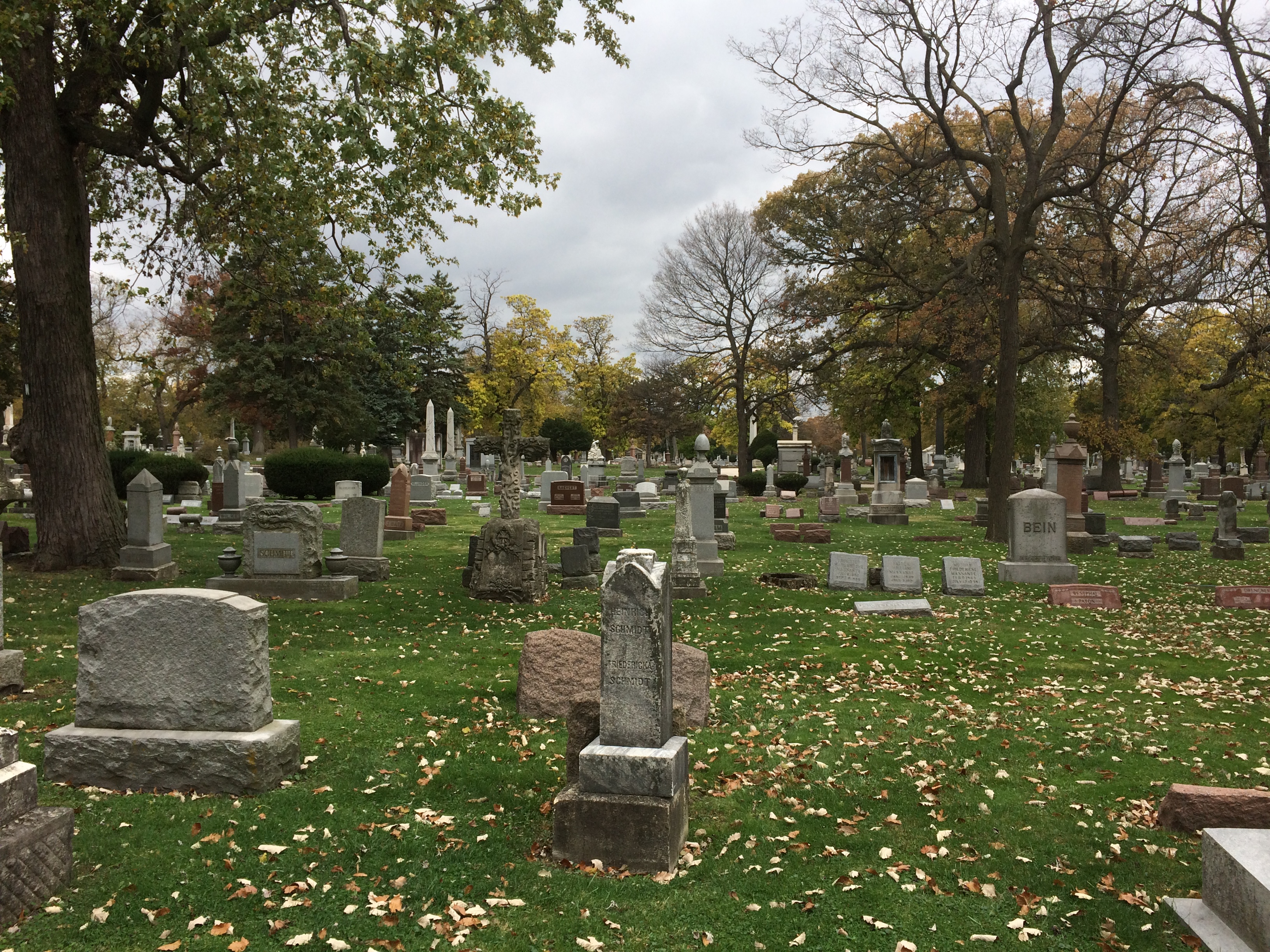
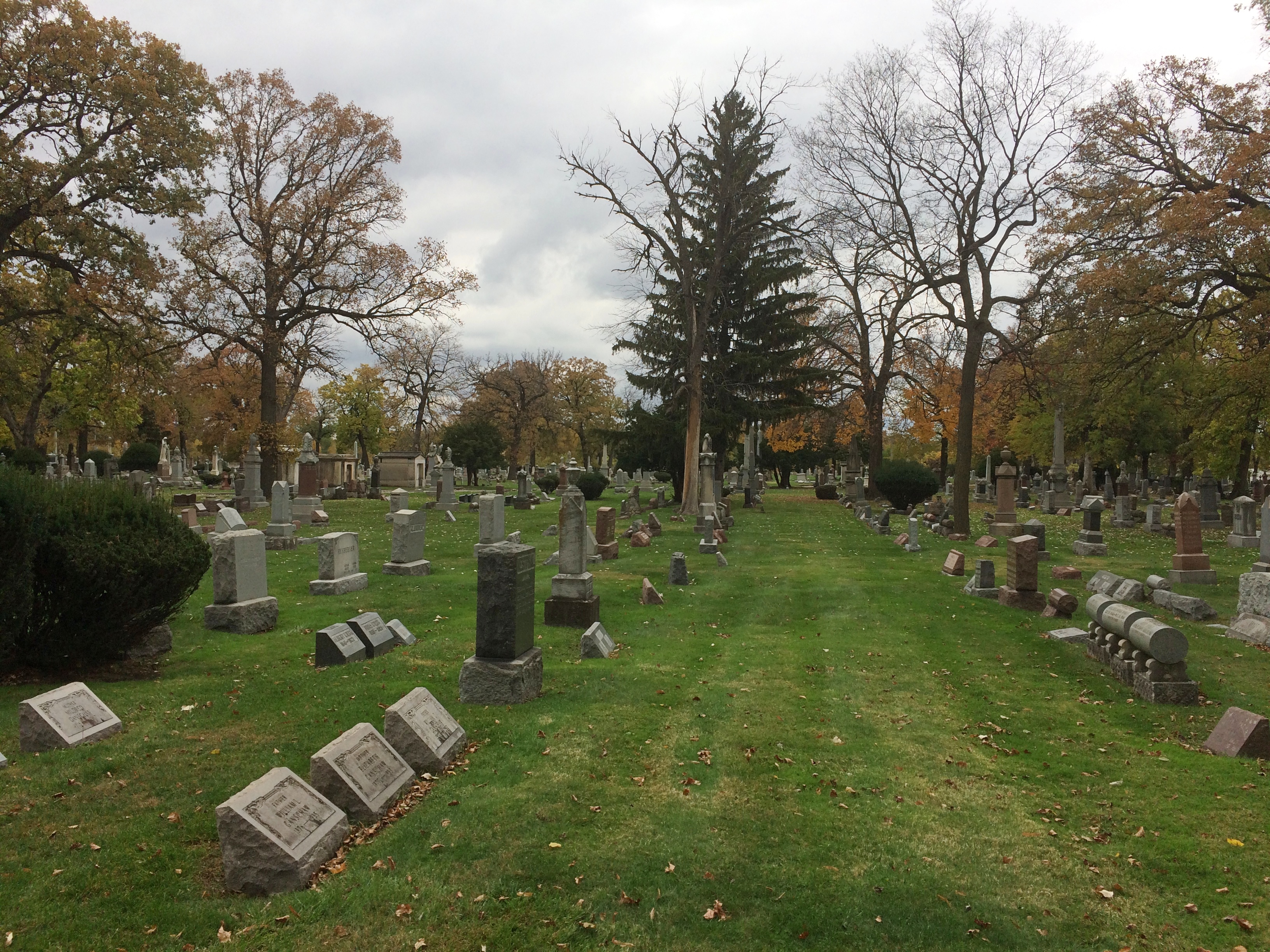
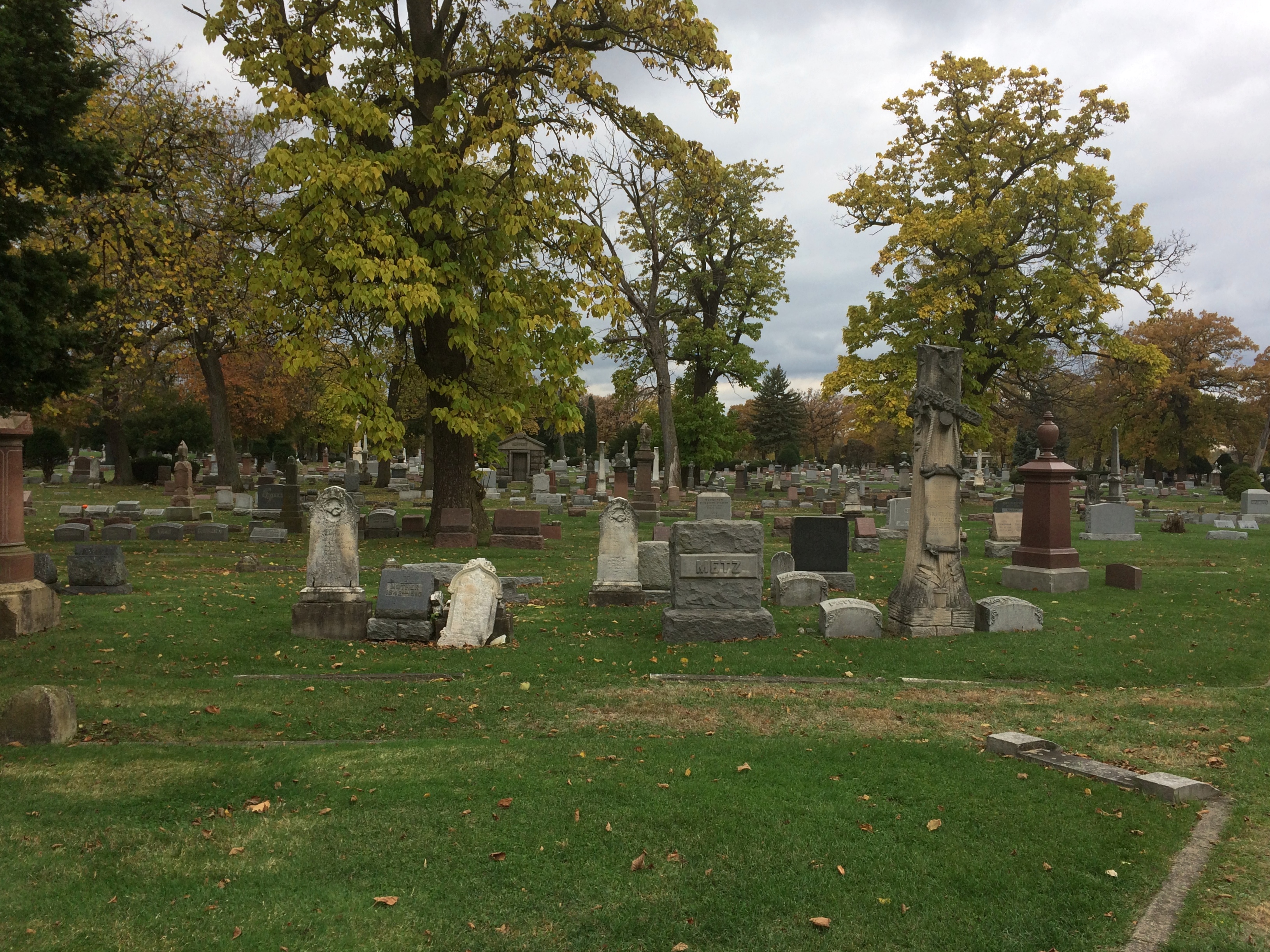
At the intersection of Dundee Ave. and Higgins Road (Illinois 25 and 72) is the 48-acre Dundee Township East Cemetery, owned by the township of that name, but also entirely within the village of West Dundee in Kane County. There’s no fencing or anything else to separate it from those fairly busy roads.
Dundee Township East Cemetery

We — that is, Ann and I — visited briefly on Saturday when we were out that way, which is northwest from where we live.

The cemetery dates from the 1890s, no doubt long before those adjacent roads were paved, though it’s possible that part of the future Illinois 72 had planks, since I understand much of its route follows the old Galena-Chicago Stagecoach Trail. These enthusiasts drove the trail’s modern-equivalent roads on a motorcycle. Not for me, but I’d consider using a car.

It’s a pleasant cemetery in the summer.Dundee Township East Cemetery
Dundee Township East Cemetery
Dundee Township East CemeteryIn an older section, there were a fair number of German names, and some German-language script on the stones. Here’s a fine German name: Schneidewendt, whose stone memorializes burials in the early 20th century.
Dundee Township East Cemetery
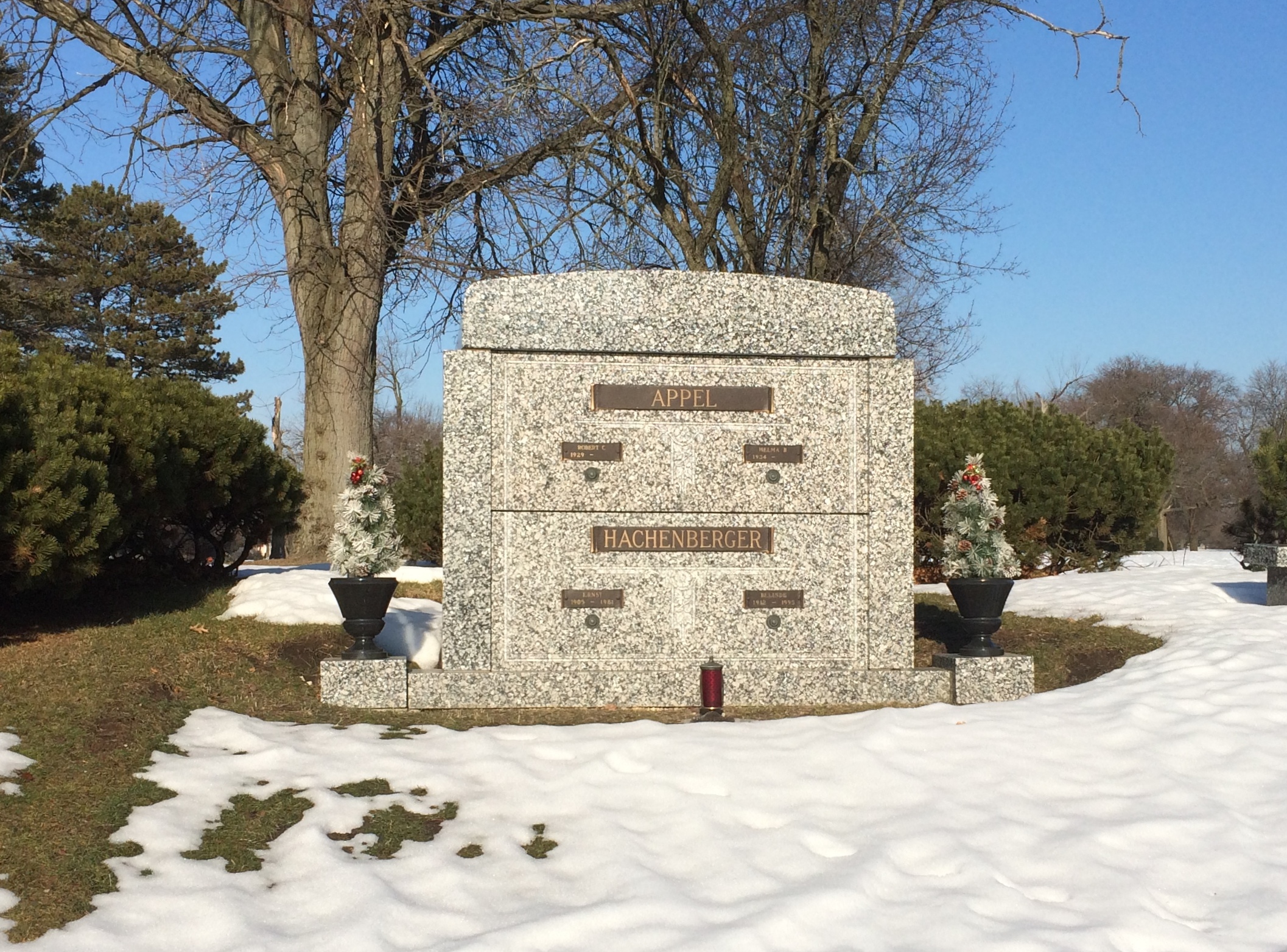
Not many mausoleums that I noticed, but there were a few. I expect a lot of the population in Dundee Township a century and some years ago were prosperous farmers, but not that prosperous.
Dundee Township East CemeteryWhoever The Family of Theodore Kunke were — that’s the text over the door — they had the scratch for a simple edifice.

Thiruvalluvar in the Suburbs

It’s been a few years since we visited the Chicago Athenaeum International Scupture Park, though more recently than 10 years ago. We went on Saturday toward the end of daytime, taking the dog along for the walk.

All of the same sculptures are still there, but with one recent addition.
ThiruvalluvarThe upper plaque has some Tamil script and then English:

Thiruvalluvar (31 B.C.)
Poet & Philosopher Who Wrote the Immortal Thirukural

I wasn’t previously familiar with Thiruvalluvar, being woefully ignorant of most things Tamil, so I did a little reading. Now I’m slightly less ignorant, having learned that he is held in high esteem by the Tamil. Also, that specific date — same as, far away on the Eurasian landmass, the Battle of Actium — is the first year of the Tamil calendar, as determined by the government of Tamil Nadu and various scholars.

The lower plaque says:

Commemorating 10th World Tamil Research Conference
Keezhadi Nam Thaai Madi
July 4-7, 2019, Schaumburg IL
Jointly organized by
Federation of Tamil Sangams of North America,
International Association of Tamil Research &
Chicago Tamil Sangam
Statue Donated by VGP World Tamil Sangam

A sangam is an assembly of Tamil scholars, which seems to have a specific meaning when it comes to assemblies in ancient times, but clearly a modern usage as well.

Never heard about any of that before. I despair sometimes about how much I don’t know about the world. But I also never know when the world will reach out to teach me something — in this case, a brief lesson in the form of a recent northwest suburban statue.

Billions and Billions

More fun with the screen saver function. An obsolete estimate by the Census Bureau, no matter how fast I post it.

I was idly curious about the world’s population today. When I was a child, it was generally estimated to be three billion, a number that lingered for some time after the estimate hit that milestone in 1960. As Tom Lehrer sang: “Nearly three billion hunks of well-done steak.” The four billion milestone came in 1974, back in the heyday of overpopulation scare books like The Population Bomb.

Hard to image that many people, 7.6 billion or 329.6 million for that matter. Make that impossible to imagine. Yet they’re out there, more or less that many, beyond the walls of my house.

Battle of the Bands, 1979

I see that Fiesta San Antonio is now scheduled for November this year. The first time in its century-plus-decades history it hasn’t been in April, but such is our time. Social distancing isn’t the norm for Fiesta.

Yuriko and I went to a few Fiesta events in 2000, parking toddler Lilly with her grandmother for a few hours, but I remember my high school Fiestas better. Each year from 1976 to ’79, I was with the Alamo Heights HS marching band in the Battle of the Bands at Alamo Stadium and then — with one exception — the Battle of the Flowers parade downtown a few days later.

It’s officially called the Battle of Flowers Association Band Festival, but no one I knew called it that. It was the Battle of the Bands. High school bands from all over the metro area came to compete.

The best a band could do was score a 1 in music and 1 in marching. For decades, Alamo Heights had always scored two 1s — until sometime in the early ’70s, before I was in high school.

Since then, including my freshman, sophomore and junior years, the band had gotten a 1 and a 2. Very good, but not top.

So we were keen to score two 1s in the 1979 Battle of the Bands. I don’t remember what music we played or what steps we marched. All I remember was the announcement afterward: two 1s! The band exploded with joy.

I can remember only one other exuberant moment like that for the band: early junior year when, after two years of losses, the AHHS football team actually won a game, narrowly. The Battle of the Bands moment was better, though — we’d won that for ourselves.

That was a day or two before the ’79 Battle of Flowers parade — April 26, 1979 — that didn’t happen because of a wanker with a gun. Fortunately for us, at our staging area the band wasn’t close to the shooting. I didn’t even hear any shots, though at one moment heard the roar of a suddenly panicked crowd at a distance.

Even that day had its lighter moments. The parade cancelled, we in the band got back on our buses to leave. Just before we left, a non-band senior got on as well, someone most of us knew. Our band director asked him to leave, and the boy, who was chemically enhanced, got the opposite of belligerent.

“All right, all right,” he said in an almost sing-song voice, smiling and giggling. “I’m getting off now. Don’t worry, I getting off now!” (I’m re-constructing those words; but that was the gist.) It was a little puzzling then, but looking back on it, I think he’d done more to prepare for the parade than drink a little beer or smoke a joint. At that dour moment, he was having a good trip.

The Former Rex Theatre, Amarillo

Our back yard view, Friday morning.

Enough already, I cried to the heavens. Not really. It was more of a mutter. Yet I seemed to get an answer, because the snow melted by Saturday and today we enjoyed a fine spring day.

I even heard people out mowing their grass this morning. The flush of spring hasn’t quite inspired me to yard work, however.

Two years ago, when I spent about a day and a half in Amarillo, I took a walk along Sixth Ave. the evening I arrived. It has the distinction of being part of U.S. 66 at one time.

“The U.S. Route 66-Sixth Street Historic District comprises 13 blocks of commercial development in the San Jacinto Heights Addition west of Amarillo’s central business district,” the NPS says. ” Developed as an early 20th-century streetcar suburb, the district was transformed by the establishment of a national transportation artery running through its center.

“The U.S. Route 66-Sixth Street Historic District is Amarillo’s most intact collection of commercial buildings that possess significant associations with the highway. Featuring elements of Spanish Revival, Art Deco, and Art Moderne design, these buildings represent the historic development phases of this early 20th century suburb and the evolving tastes and sensibilities of American culture.”

I’d read about the street, but more importantly at that moment, I was looking for something to eat. I didn’t find anyplace I wanted to eat, but I did see some of the historic buildings on the street. I was inspired to take a picture of only one of them. A detail of one of them.Sixth Street Haunted House AmarilloSkulls. They’re on a wall of the 6th Street Massacre Haunted House. Note also the plaque. It says that the building is on the National Registry of Historic Places. This is a wider view.

It was once the Rex Theatre, which opened in 1935 and lasted until 1956 as a movie venue. It’s a little hard to see it as a theater building from Sixth Ave. The view around the corner shows it better.

A movie palace, it probably wasn’t. Just a neighborhood picture show. I think that makes it just as interesting, historically speaking, as one of the palaces, but not as nice to look at.

The Grim Fate of the Ace of Diamonds, Who Surely Had It Coming

Back in the spring of 2003, while visiting Manhattan with a coworker, we came across a street vendor selling most-wanted Iraqi playing cards. Officially “personality identification playing cards,” according to Wiki. I’m a little surprised the U.S. Army didn’t refer to them as PIPCs (pronounced PIE-picks). “Sergeant, distribute two PIPCs to each man before 1800 hours.” “Yes, sir.”

I bought a pack from the vendor and it’s still kicking around the house somewhere, along with other souvenir playing cards that I’ve acquired over the years. Such as a pack depicting Elvis — every card a King? — and another one from Mexico City with the Aztec Sun Stone on each card.

That purchase seems like a long time ago. Maybe because it was, though more psychologically than chronologically.

As for the Ace of Diamonds, Abid Al-Hamid Mahmud al-Tikriti, certainly a man with much blood on his hands, a later Iraqi government (2012) showed him the business end of a rope, though that was some years after his boss met the same end.