Garden District Walkabout, Including Lafayette Cemetery No. 1

Someone once warned me about the condition of the sidewalks in the French Quarter, but on the whole, they weren’t that bad. For crumbling, occasionally hazardous sidewalks, the Quarter or even Treme couldn’t compare with the Garden District. Some stretches reminded me of Mexico City in that regard.

The houses in the Garden District clearly represent a concentration of wealth, so you’d think the sidewalks would be repaired. Maybe it’s that New Orleans is a trifle lax when it comes to infrastructure, but I don’t actually know that — the idea merely fits with the city’s reputation.

Or it could be a weird municipal dynamic: the city can’t appear to put too much money into the roads and sidewalks of an affluent area like the Garden District. Bad optics. So the area’s infrastructure is a little rough. Maybe the residents don’t care much. The only people on foot in the district seemed to be tourists, singly or in tour groups.

Never mind, it’s a good place for a walk, if you pay attention, and even when the Southern sun begins to beat down, as it did late on the morning of May 14. Sometimes shade is there for the taking.

The trees part to reveal some fine houses.

My favorite among those I saw, though of course that was a small fraction of the area’s visual richness.
Our walk took us past some houses marked as historic, such as the Goldsmith-Godchaux House.
Alas, it seems to be noted more for its invisible (to us) interior than the exterior, though that’s nice enough. The plaque outside says: “Designed by noted nineteenth century architect Henry Howard in 1859. Significant for its painted interiors. Has more fresco wall decoration and stenciling than probably any other mid-nineteenth century residence in the South.”

It occurred to me, walking along and sweating, that the Garden District represents 19th-century urban sprawl. New development is often spoken of as if it’s kudzu, which grows willy-nilly and takes over the place. This is nonsense, since residential development follows demand, though infrastructure spending helps facilitate it (in the 20th century, that means you, Robert Moses).

In any case, the demand was there after New Orleans became part of the United States, since the new English-speaking population didn’t particularly want to live with the Creoles in the Vieux Carré. They probably considered the old city an old dump.

Who started subdividing the plantations that used to be the Garden District? I had to find out. A singularly interesting character named Barthélémy Lafon, a Frenchman who seems to have skipped out on the Revolution, coming to New Orleans in 1789.

According to 64 Parishes, “Barthélémy Lafon enjoyed a long and diverse career in Louisiana as an architect, builder, engineer, surveyor, cartographer, town planner, land speculator, publisher, and pirate.”

My italics. Though it seems like he was more of a rich-man sponsor of pirates than someone who went to sea in search of booty. Even pirates need seed capital.

Down on Magazine St., we walked by some interesting commercial structures, such this one at the corner of Magazine and Jackson.

As it says, the building is home to Koch & Wilson Architects, who (I found out) are restoration specialists. Good for them. A fine thing to be in New Orleans. Among other things, the firm restored the nearby St. Mary’s Assumption. Sadly, we couldn’t get in to see that.

On the first floor of the Koch and Wilson Architects building is a flag shop, a deli and a doughnut shop (and H&R Block, but never mind). How cool a tenant roster is that?
We stopped by for doughnuts, and coldbrew coffee for Lilly. The shop served large and pricey hipster doughnuts, something not especially distinctive to New Orleans, but who cares. They were good.

Walking down Magazine, you come across this curiosity.
I’d look that up, but I’d rather not know exactly what you’d see there. We all need a little mystery, even in the age of Google.

Down the other direction on Magazine is a joint after my own heart, but we didn’t stop in.
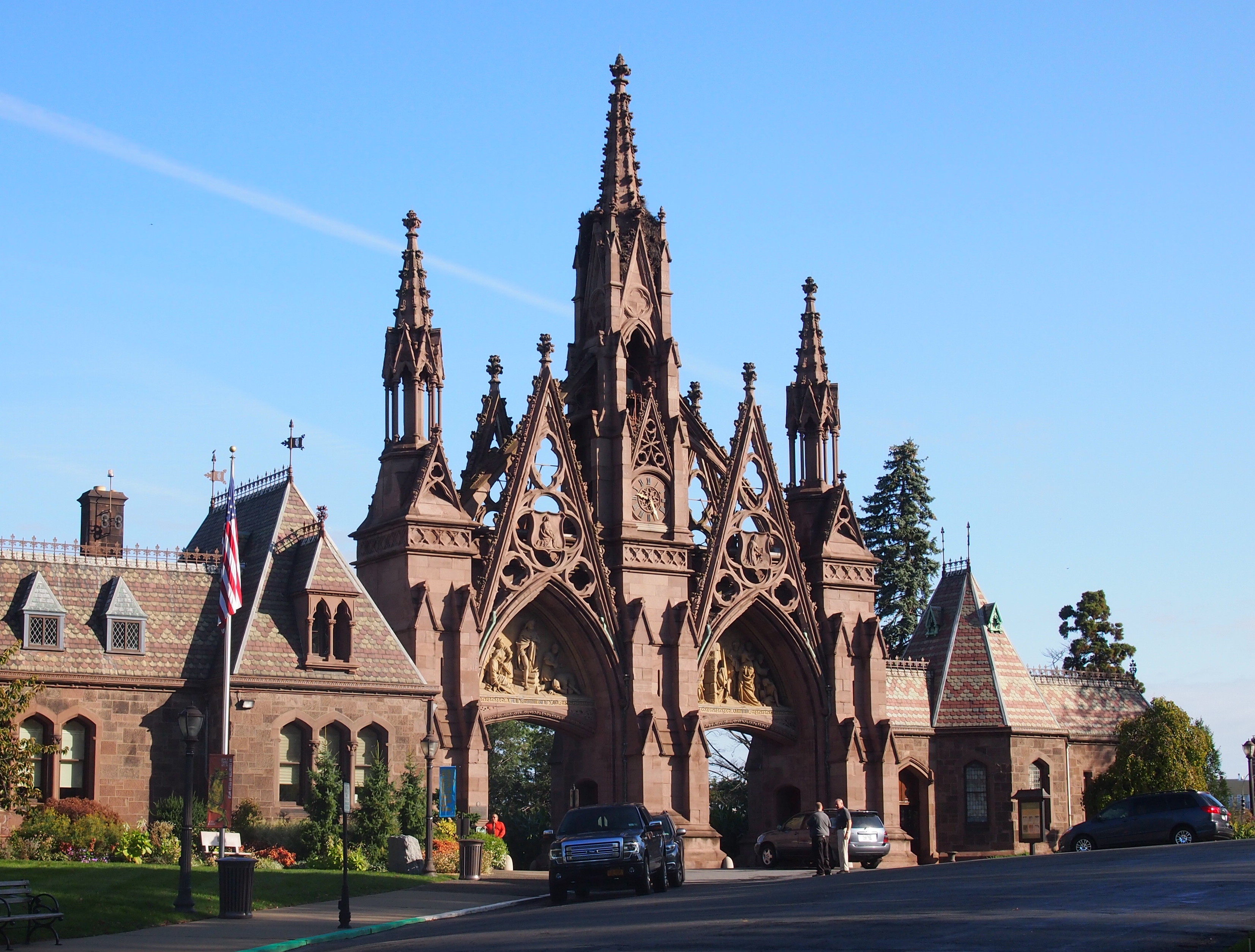
I couldn’t visit the Garden District without dropping in on Lafayette Cemetery No. 1. It was a more popular place than most cemeteries I’ve been to.

The collection of tombs is similar to that of Saint Louis Cemetery No. 1, a mix of maintained and crumbling examples.
The cemetery had better shade than Saint Louis, mostly in the form of sheltering magnolias, and wider avenues of the dead in some places.
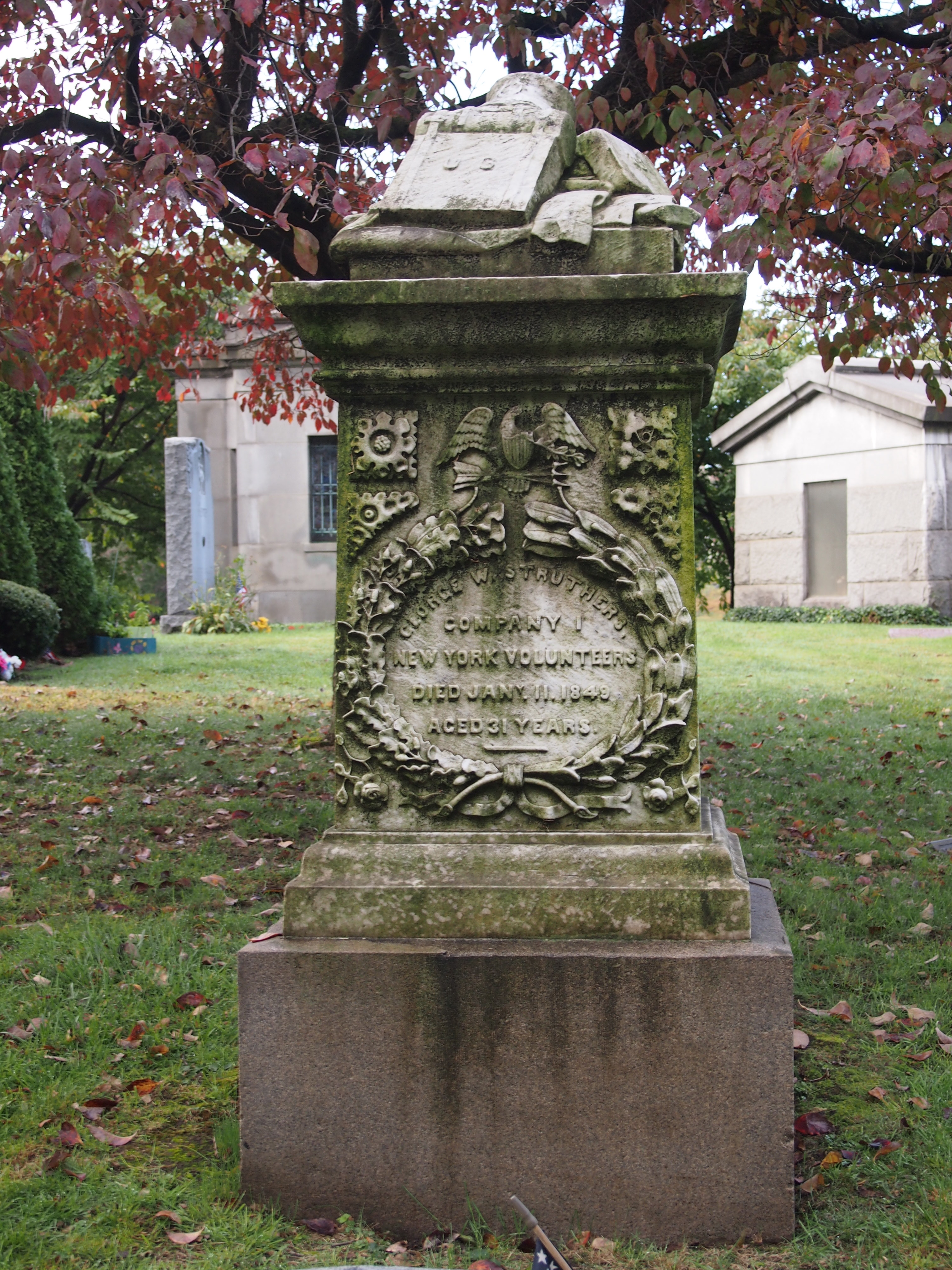
Lafayette Cemetery No. 1 also has some collective tombs. This one says Jefferson Fire Company, 1852.
Here’s one for orphans.
Society for the Relief of Destitute Orphan Boys, 1894. If that isn’t Victorian nomenclature, I don’t know what is.

The National WW II Museum

World War II was a big war, and it has an impressively big museum in New Orleans, the National WW II Museum, which we visited on May 14. The focus isn’t the whole — that’s too big — but rather the American part in the global conflict. A big enough subject.

All together, the museum includes five buildings of more than one story each, artifacts large and small, a vast number of words to read with the exhibits, and dozens of continuous video presentations.
The building reminded me a bit of the Denver Art Museum’s Hamilton Building, but a different architect did the work, Bart Voorsanger.

The structure isn’t finished yet. Looks like the wing-like-thing (wing of victory?) is being added right now.

A museum of this scope is exhaustive and exhausting, but I’m getting old. It has a lot of ground to cover, of course, but more than that the museum needs heft to amplify the war’s increasingly dim echo as time passes. It’s mostly vanished from living memory.

The Second World War was my parents’ war, so when I was growing up, the echo was pretty loud, largely in the torrent of books and movies and TV shows dealing with the war. Some of my earliest memories of watching TV include Combat! and The Rat Patrol, to use examples of televised WWII fiction more and less serious. The details of the war might have faded some by the time I came along — it was years before I got Bugs Bunny’s joke about A cards at the end of “Falling Hare” — but the big picture was still clear.

Time passes, even the big picture fades. Just look at what has happened to the Great War. It’s all we can do that they shall not grow old.

So the National WWII Museum starts off big, with a Douglas C-47 Skytrain hanging from the ceiling over the entrance and ticketing counter, which is in the Louisiana Memorial Pavilion.
On the floor is a replica LCVP, built from original plans. This kind of boat is pretty much the reason the museum is in New Orleans.
As an acronym, LCVP is about as standard Army as you can get: “landing craft, vehicle, personnel.” Less formally, they’re Higgins boats, designed by Andrew Higgins and built en masse during the war by Higgins Industries of New Orleans.

Wiki describes the usefulness of the boats well: “The Higgins boat was used for many amphibious landings, including Operation Overlord on D-Day in Nazi German-occupied Normandy, and previously Operation Torch in North Africa, the Allied invasion of Sicily, Operation Shingle and Operation Avalanche in Italy, Operation Dragoon, as well as in the Pacific Theatre at the Battle of Guadalcanal, the Battle of Tarawa, the Battle of the Philippines, the Battle of Iwo Jima and the Battle of Okinawa.”

Pretty much a greatest hits of U.S. amphibious landings during the war. In its early days, beginning in 2000, the museum focused on D-Day exclusively, so what better place than the city where the Higgins boats were built?

Upstairs in the Louisiana Memorial Pavilion is a floor devoted to the U.S. industrial production so critical to victory. As the museum notes, “By the time the Japanese surrendered in 1945… American manufacturers had turned out more than 96,000 bombers, 86,000 tanks, 2.4 million trucks, 6.5 million rifles, and billions of dollars’ worth of supplies to equip a truly global fighting force.”

A number of artifacts illustrate the Arsenal of Democracy, such as a jeep chassis.
Along with smaller items, such as the cigarettes, chocolate and gum that made a soldier’s lot slightly more bearable.
A machine to make dog tags.
They actually were an innovation just before WWI, at least as far as Americans were concerned. For millennia, many men went off to war and simply vanished. I remember, for instance, seeing at Gettysburg National Cemetery row upon row of stones marked UNKNOWN.

Also in the Louisiana Memorial Pavilion is the D-Day exhibit. As the original crux of the museum, it’s very detailed, with artifacts, images, reading material and more. The rooms reminded me of the Musée du Débarquement Arromanches in Normandy, though that facility had the advantage of looking out on the remains of one of the artificial harbors used during the landing.

A copy of the Order of the Day, June 6, 1944, along with French currency presumably carried by soldiers. Notes, not coins.

Another building, Campaigns of Courage, highlights the course of the war in the European and Pacific theaters with artifacts, photos, movies, text and some elaborate diorama-like sections that visitors walk through.

In Europe, for example, the Seige of Bastogne, done to look like snowy woods, though without the freezing temps. In the Pacific, the Guadalcanal Campaign, done to look like a tropical rain forest, though without the venomous bugs. There’s only so much verisimilitude a museum can do.

It took quite a while to work our way through these exhibits and, as usual, I knew we were absorbing only a small fraction of what they had to offer. So it is with large museums.

About 20 minutes before the museum closed, we arrived at the U.S. Freedom Pavilion: The Boeing Center. On display are airplanes, as you’d expect. Hanging from the high ceiling.
The centerpiece of the display is My Gal Sal, a B-17E Flying Fortress, one of only three or four such warplanes still in existence.

You can ride up to the fourth floor and look down on the plane.
Heights don’t usually bother me from behind a secure railing, but looking down from above the plane, with it filling the void below me, made me a little unsettled.

My Gal Sal probably survived because bad weather forced it to land in the wilds of Greenland in 1942, and it couldn’t fly again. The crew survived, but the plane stayed on the ice, not to be salvaged until the 1990s and restored in the early 21st century.

A Few New Orleans Statues, With Some Opinions

As of May 2019, Gen. Andrew Jackson still rides his steed at Jackson Square in New Orleans, the dramatic centerpiece of a handsome public space.
The equestrian bronze, by notable 19th-century sculptor Clark Mills, has been there since 1856, when the Battle of New Orleans was still in living memory, at least among the old timers. I understand the monument is a target of removalists, so there might come a day when Jackson Square loses its man on horseback and becomes Something Else Square.

That’s New Orleans’ decision. Yet I’m not persuaded Jackson should go, for all his retroactively understood flaws. It’s one thing to remove monuments to those who actively sought disunion because they feared to lose their human property. Jackson and his men defeated an invading army on American soil near New Orleans. As president, he had no use for disunion, either. Just ask John C. Calhoun.

During our last day in New Orleans, Lilly and I visited the National WW II Museum, and to do so we got off the St. Charles streetcar at Lee Circle (as Google Maps calls it). Looking back at the circle, we saw an empty pedestal.

That’s odd, I said to Lilly. But I must have known at some time — I’d ridden on the St. Charles line decades earlier — that a statue of Robert E. Lee used to stand atop the pedestal. I’d forgotten. I don’t ever remember taking a close look at the Lee statue, since I haven’t always watched for monuments as much as I do now.

Just yesterday, it occurred to me to look up Lee Circle, and was reminded that removal activists were able to persuade New Orleans to take down Lee and three other monuments in 2017. Sic transit gloria mundi, Gen. Lee.

Of course, there are many ideas about a new statue to put on Lee’s former spot. Among this selection, the one I like best on prima facie examination is the relatively unknown J. Lawton Collins, a New Orleans native and important commander during WWII. He’s also appropriate because the museum devoted to that war is mere blocks away. Or if a strictly military option is out, Andrew Higgins, of Higgins boat fame, seems reasonable.

Here’s another statue that has gained the ire of removalists: Chief Justice of the United States Edward Douglass White Jr., who had a long and varied career but sided with the majority on the notorious Plessy v. Ferguson decision. (Most sources double that s in his middle name, but the statue does not.)

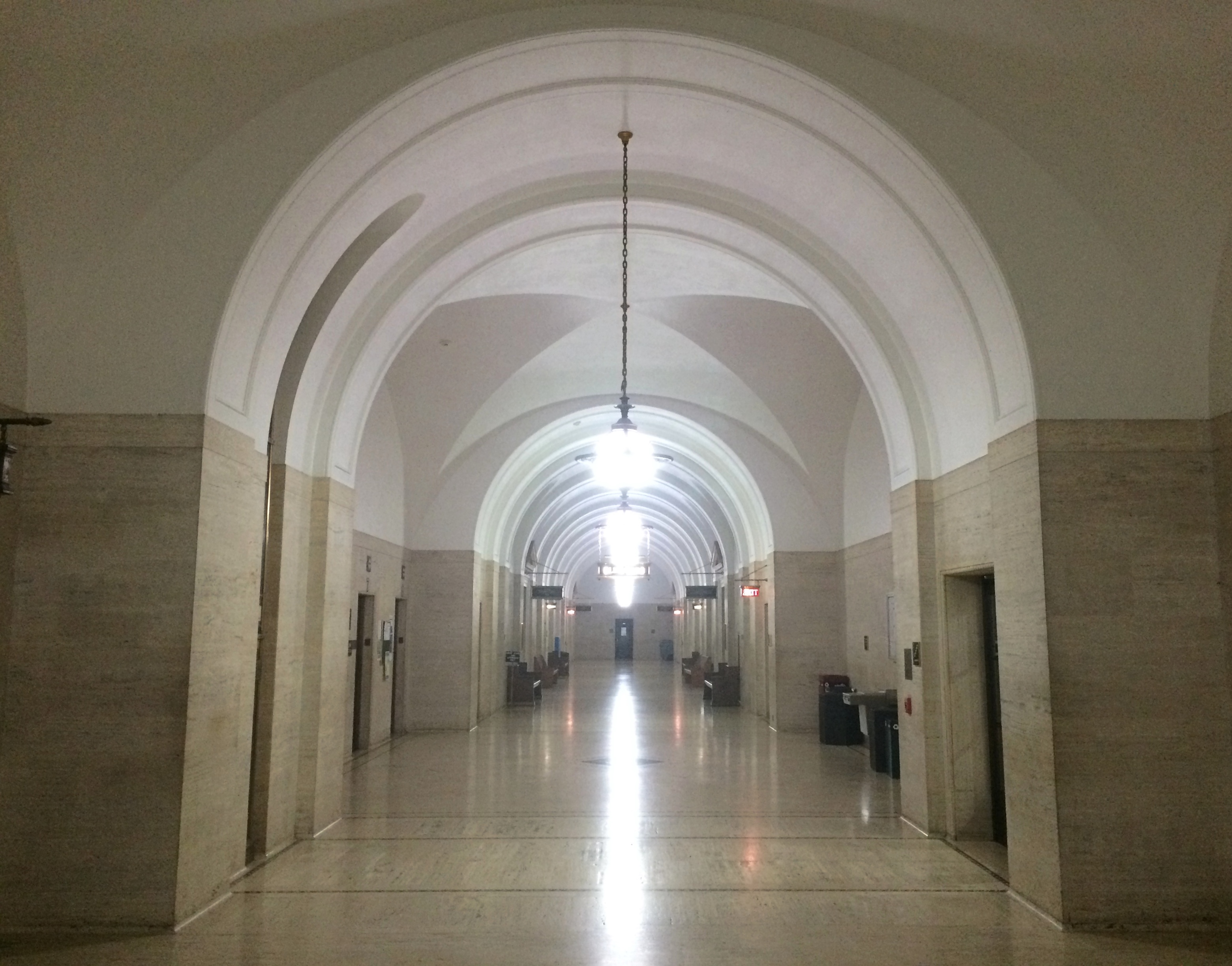
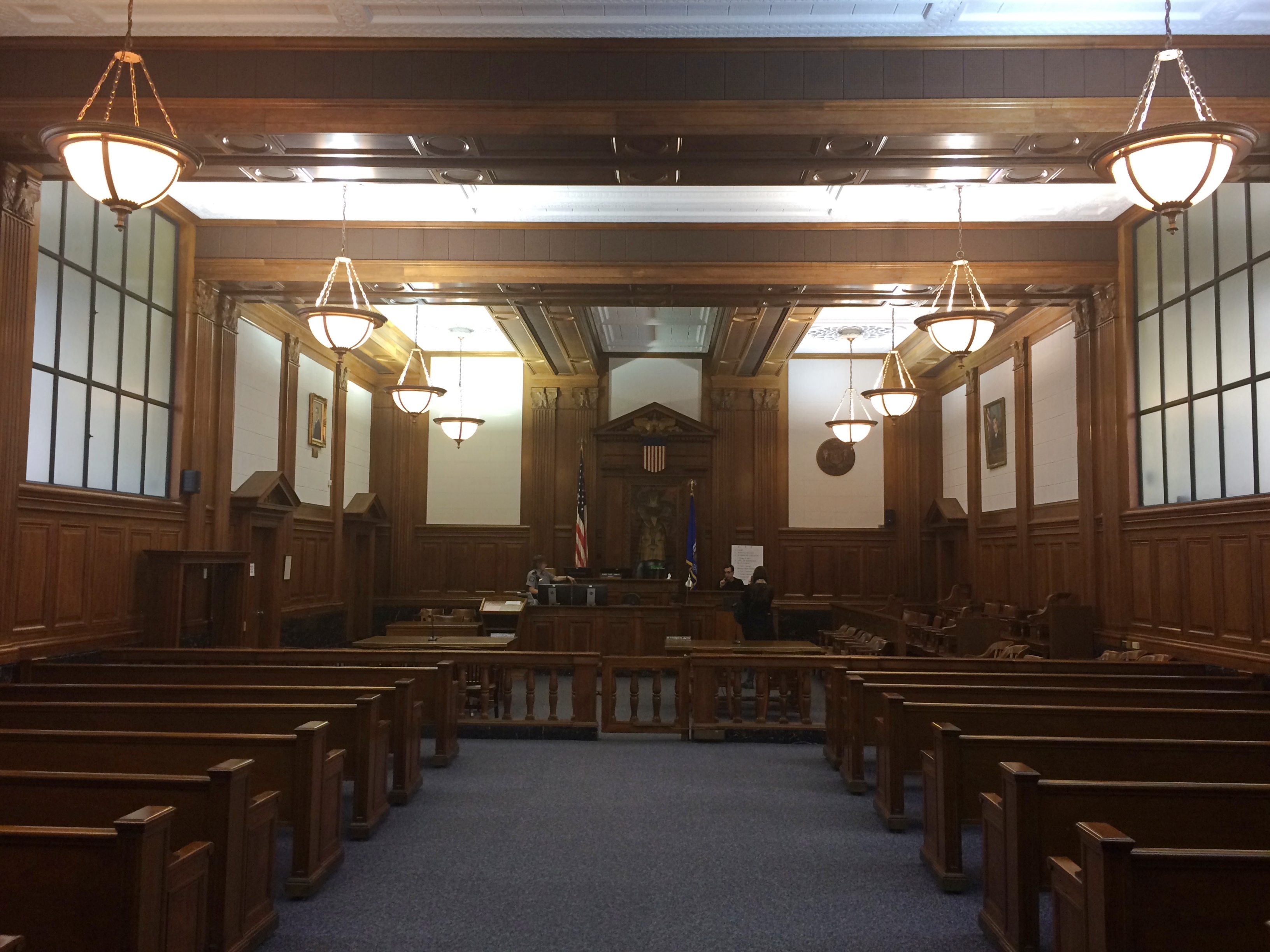
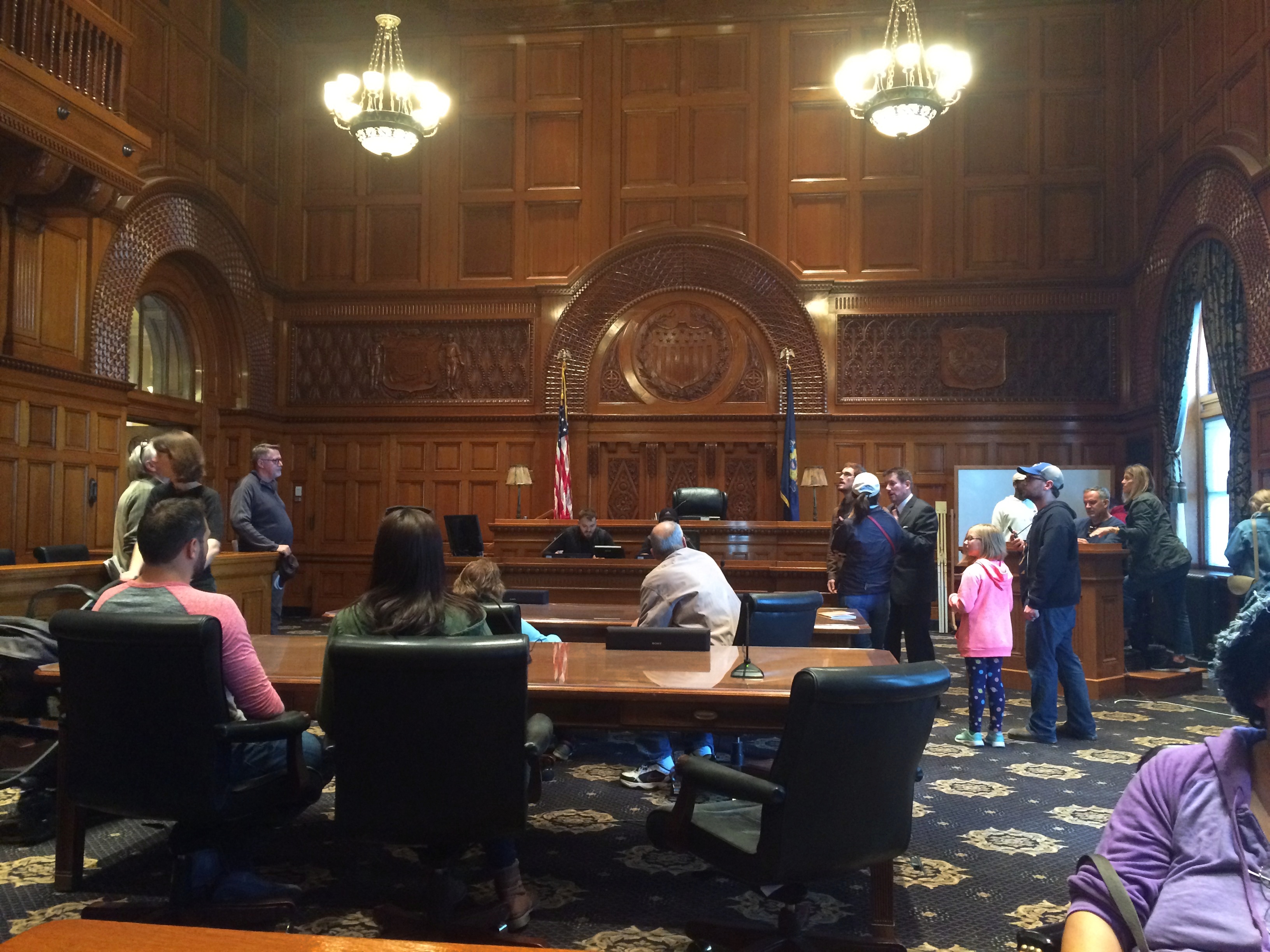
The chief justice stands on Royal St. in front of the major edifice housing the Louisiana Supreme Court, a building whose reputation has varied across the decades. We just happened to walk by.

Later I wondered, what’s the state supreme court doing in New Orleans and not Baton Rouge? Guess as far as the court is concerned, Baton Rouge is a johnny-come-lately capital, having that title only since 1846.

Chief Justice White would be a harder nut to crack for the removalists than Lee, simply because among the generally ahistoric American people, whipping up righteous outrage about someone as obscure as White would be a tall order. But it might happen.

In Louis Armstrong Park, where we had a pleasant stroll despite the increasing heat, there are plenty of statues that will probably last a good long time. Satchmo himself certainly deserves to.
Elizabeth Catlett did the bronze, which was dedicated in 1980.

Other metal jazzmen grace the park, such as a marching brass band by sculptor and New Orleans native Sheleen Jones-Adenle, erected in 2010.
Here’s a tripartite statue of foundational jazzman Charles ‘Buddy’ Bolden created by sculptor Kimberly Dummons, also from 2010. Such triple figures aren’t common, but not unknown.

In Congo Square, there’s a vivid sculptural relief by Nigerian-born artist Adéwálé Adénlé fittingly called “Congo Square,” another of the 2010 class of works in the park.

That hardly covers everything in Louis Armstrong Park. Whoever Mike is, he made good images of these and other sculptures there.

Next to the French Market, at St. Philip and Decatur Sts., is Maid of Orleans, a gift from France to New Orleans and erected in 1972.
A replica of the 1880 Emmanuel Frémiet equestrian statue of Joan of Arc in Place des Pyramids in Paris, the Maid used to be at the foot of Canal St., but when a casino was developed there, she moved to her present location in the Quarter.

One more: A seated statue of Francis Xavier Seelos.
Francis Xavier Seelos statueHow we came see that statue, during our walkabout in the Garden District, is slightly convoluted. But that’s never stopped me from pursuing a destination.

While relaxing at the Chateau Hotel during the second evening, I queued up “Pearl of the Quarter,” a dulcet song about a New Orleans long gone and which never quite was. One of its lines: “I met my baby by the shrine of the martyr.”

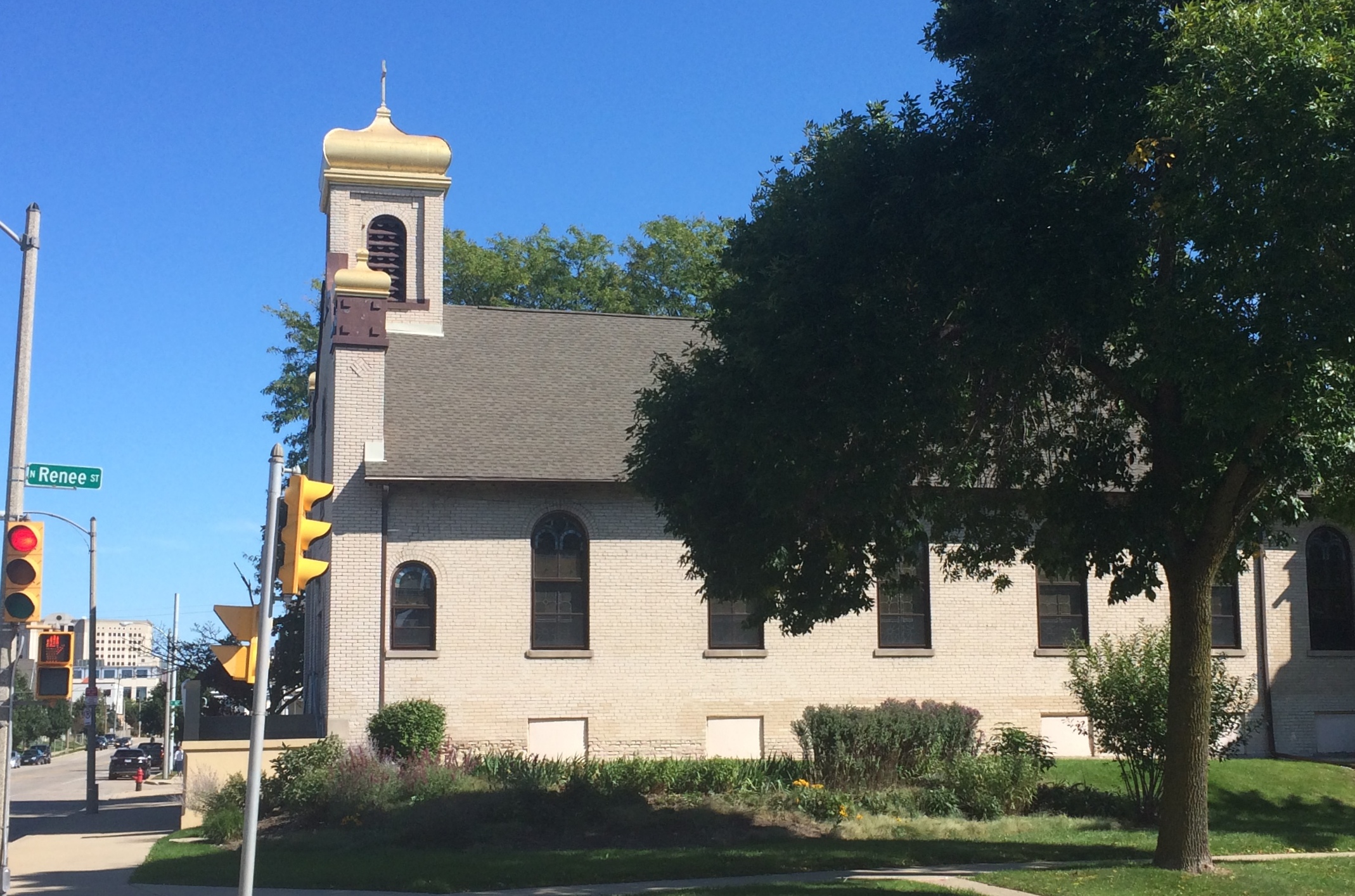
A flight of Steely Dan fancy, I’m sure, but if you Google around using that term and “New Orleans,” pretty soon you come across the National Shrine of Blessed Francis Xavier Seelos at St. Mary’s Assumption Church in New Orleans. Which just happened to be not too far from where we were going to go the next day.

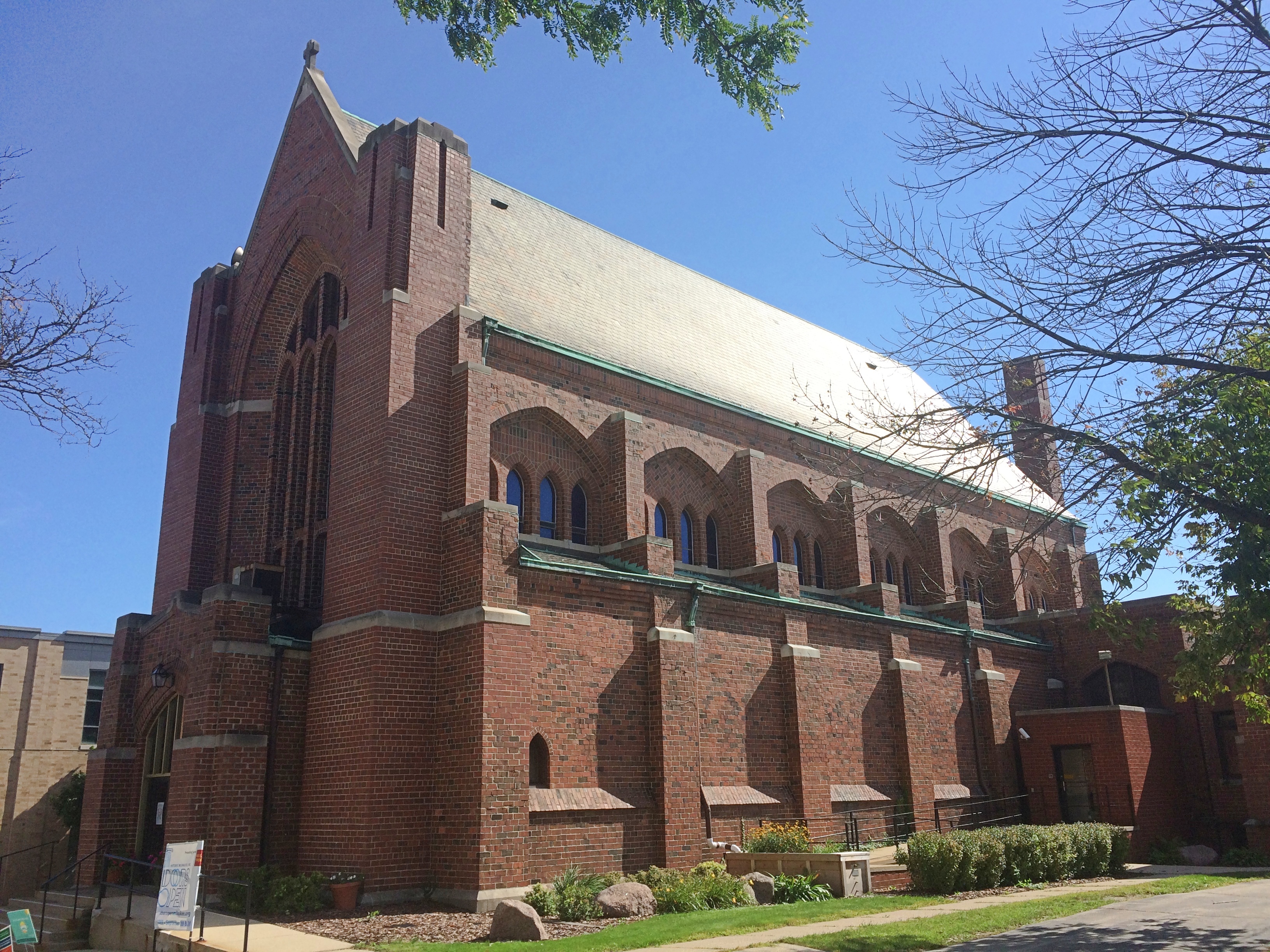
So we visited the shrine and its reliquary, which are separated from the nave of the church by a wall and a door — locked. We didn’t get to see the interior of the church as a result, which I understand is well worth seeing.

The seated statue is in the hallway outside the shrine itself, which includes a number of exhibits about Fr. Seelos, a Redemptorist from Bavaria, along with many relics and a more conventional standing statue of him at the end of the hall.

Fr. Seelos, for his part, was beatified by the church in 2000. He came to New Orleans as a missionary in the 1866.

“As pastor of the Church of St. Mary of the Assumption, he was… joyously available to his faithful and singularly concerned for the poorest and the most abandoned,” Seelos.org says.

“In God’s plan, however, his ministry in New Orleans was destined to be brief. In the month of September, exhausted from visiting and caring for the victims of yellow fever, he contracted the dreaded disease. After several weeks of patiently enduring his illness, he passed on to eternal life on October 4, 1867.”

The Painted Churches

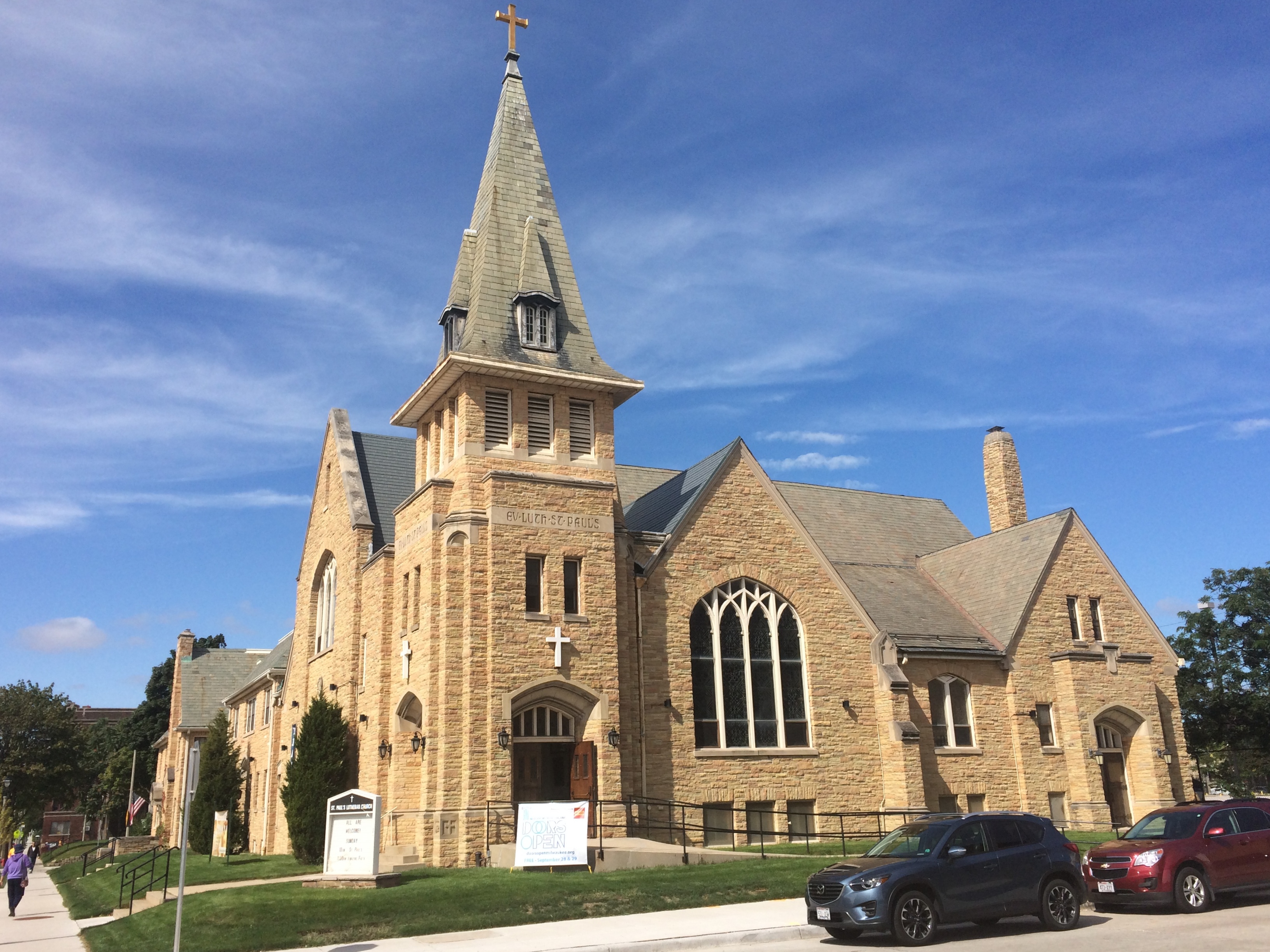
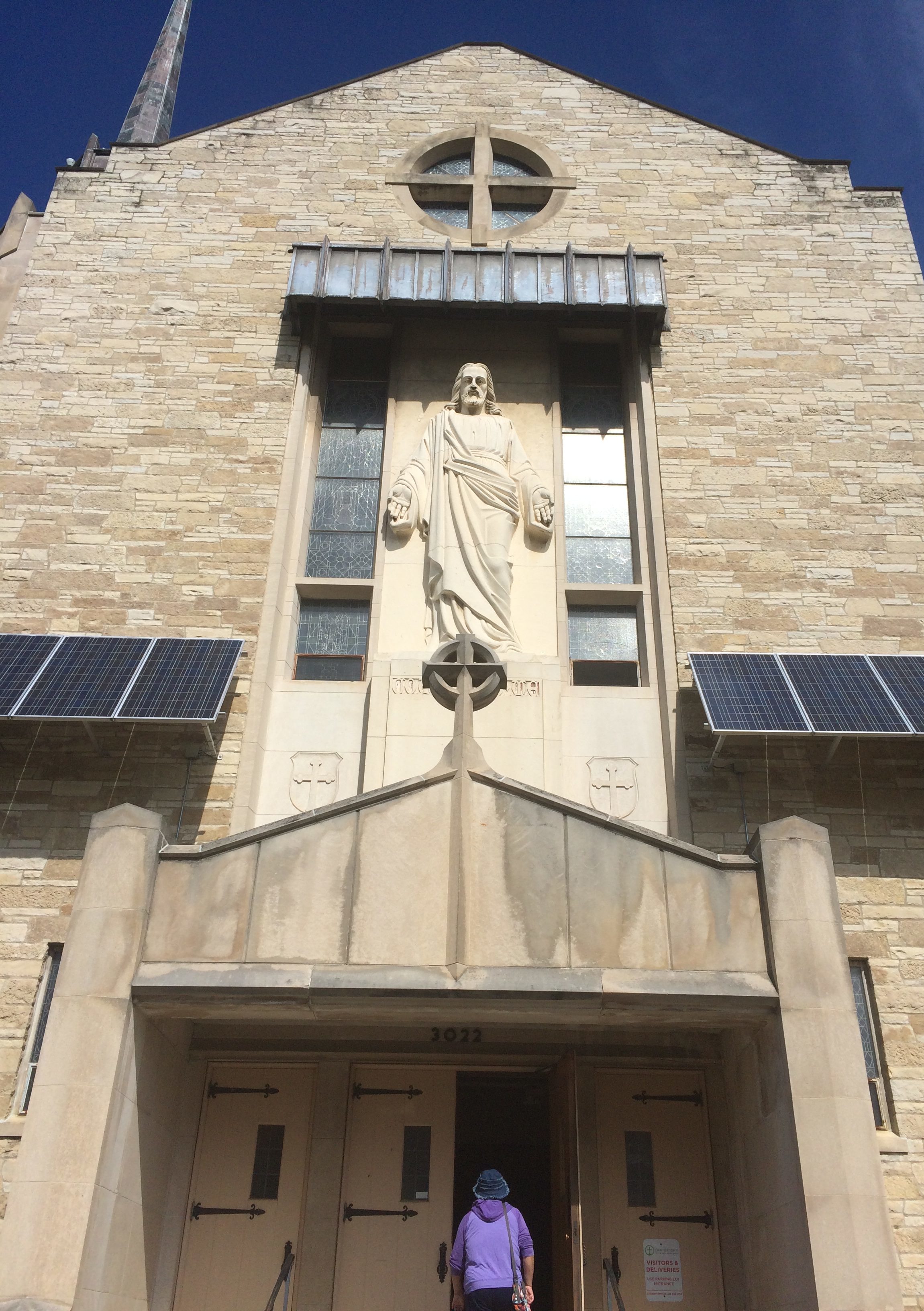
Just outside the hamlet of Serbin, Texas, if you follow your map but also keep your eyes peeled — because the map isn’t quite accurate — you’ll find yourself outside St. Paul Lutheran Church. The exterior is nice, but isn’t particularly distinctive.
Inside is a different story.
St. Paul is one of the Painted Churches found in Central Texas. In its case, the church was built in the late 19th century, but not decorated until 1906, when the congregation itself took up the task.

“Cross the threshold of these particular Texas churches and you’ll encounter not a simple wooden interior but an unexpected profusion of color,” says KLRU, which aired a documentary on the churches nearly 20 years ago.

“Nearly every surface is covered with bright painting: exuberant murals radiate from the apse, elaborate foliage trails the walls, wooden columns and baseboards shine like polished marble in shades of green and gray. These are the Painted Churches of Texas.

“Built by 19th-century immigrants to this rough but promising territory, these churches transport the visitor back to a different era, a different way of life. Inscriptions on the walls read not in English, but in the mother tongue of those who built them: German and Czech.”

I’ve wanted to visit the Painted Churches for some time now, but something or other has always make it inconvenient to do so. Still, potential destinations sometimes get under your skin, so I designed part of this particular driving trip to scratch that longstanding itch.

Heading south from Waco on U.S. 77 on May 11 in sometimes heavy rain — sheets of rain — we passed through such towns as Rosebud, Cameron, Rockdale and Giddings, and near the wonderfully named Old Dime Box. St. Paul Lutheran is near Giddings and the first of the four churches we visited.

Further south, in the town of Ammansville, is St. John the Baptist Church. We went there next.

A cemetery is adjacent to St. John the Baptist, which was built in 1918 and painted the next year by one Fred. Donecker of San Antonio, who seemed to specialize in church interiors.

St. Mary’s, also known as Nativity of Mary, Blessed Virgin, is in High Hill, and was built in 1906.
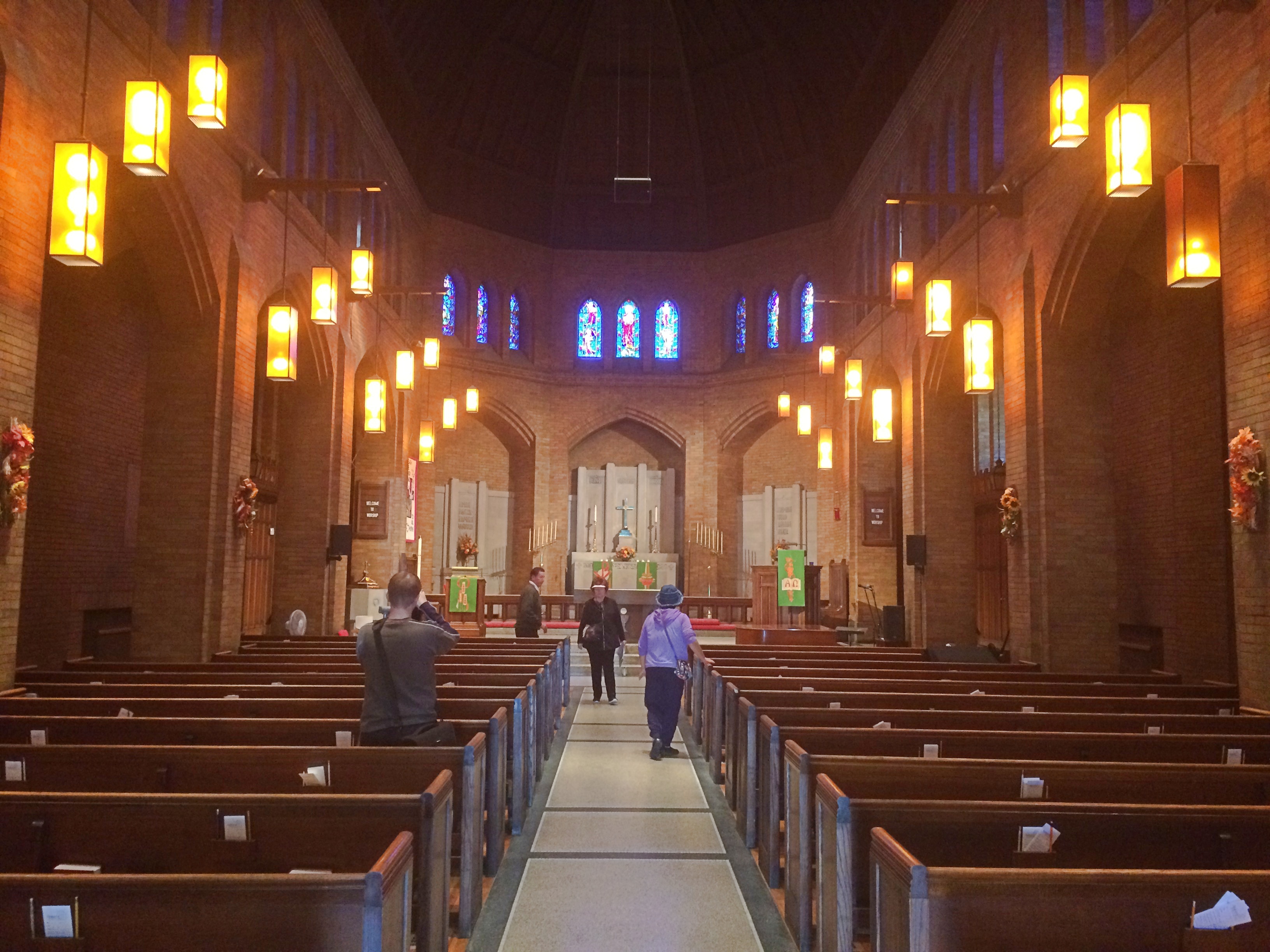
St. Mary’s billed itself as the Queen of the Painted Churches, and it was indeed gorgeous. Unfortunately, it was also dark inside. These pictures capture a bit of its ornate interior.

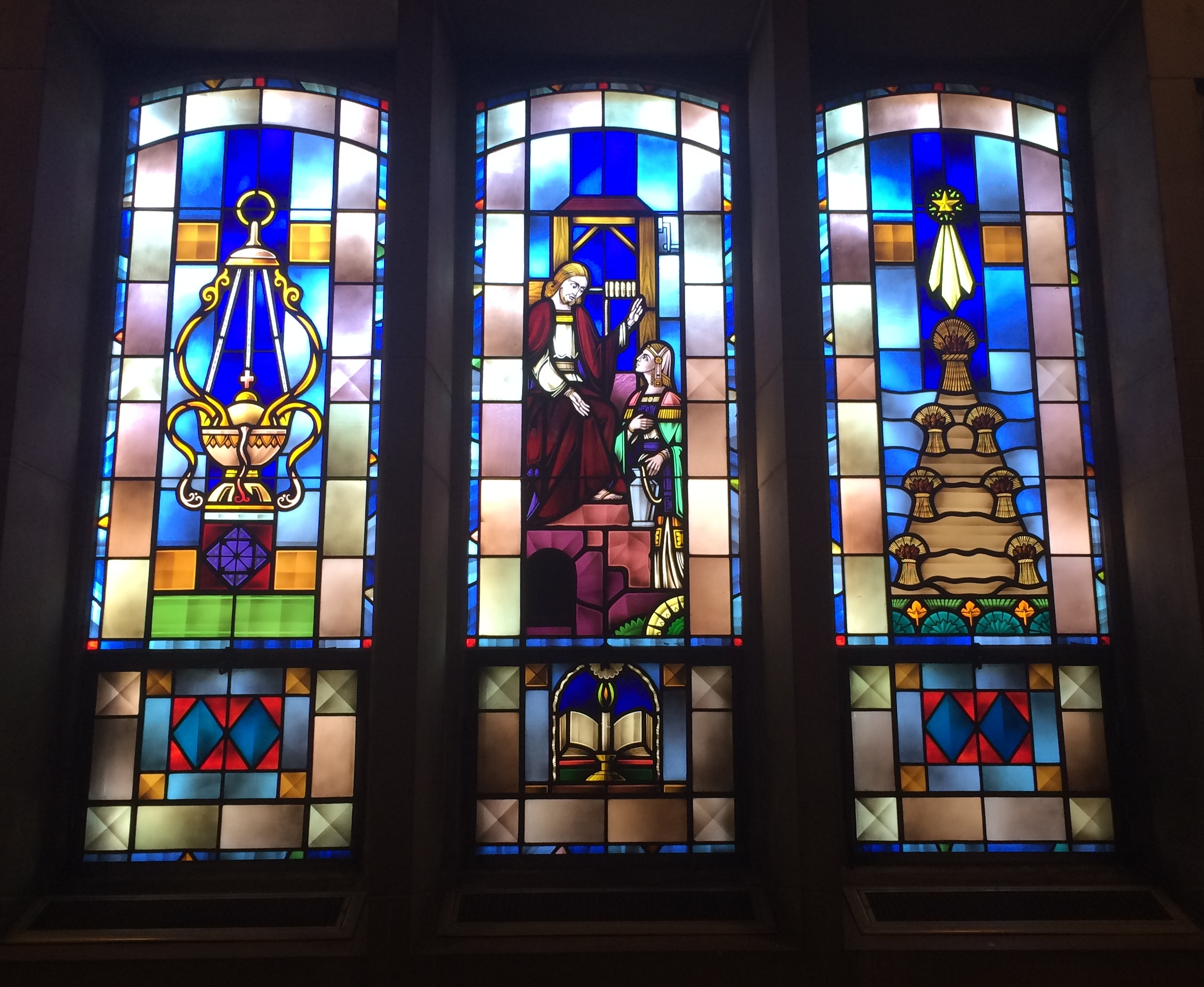
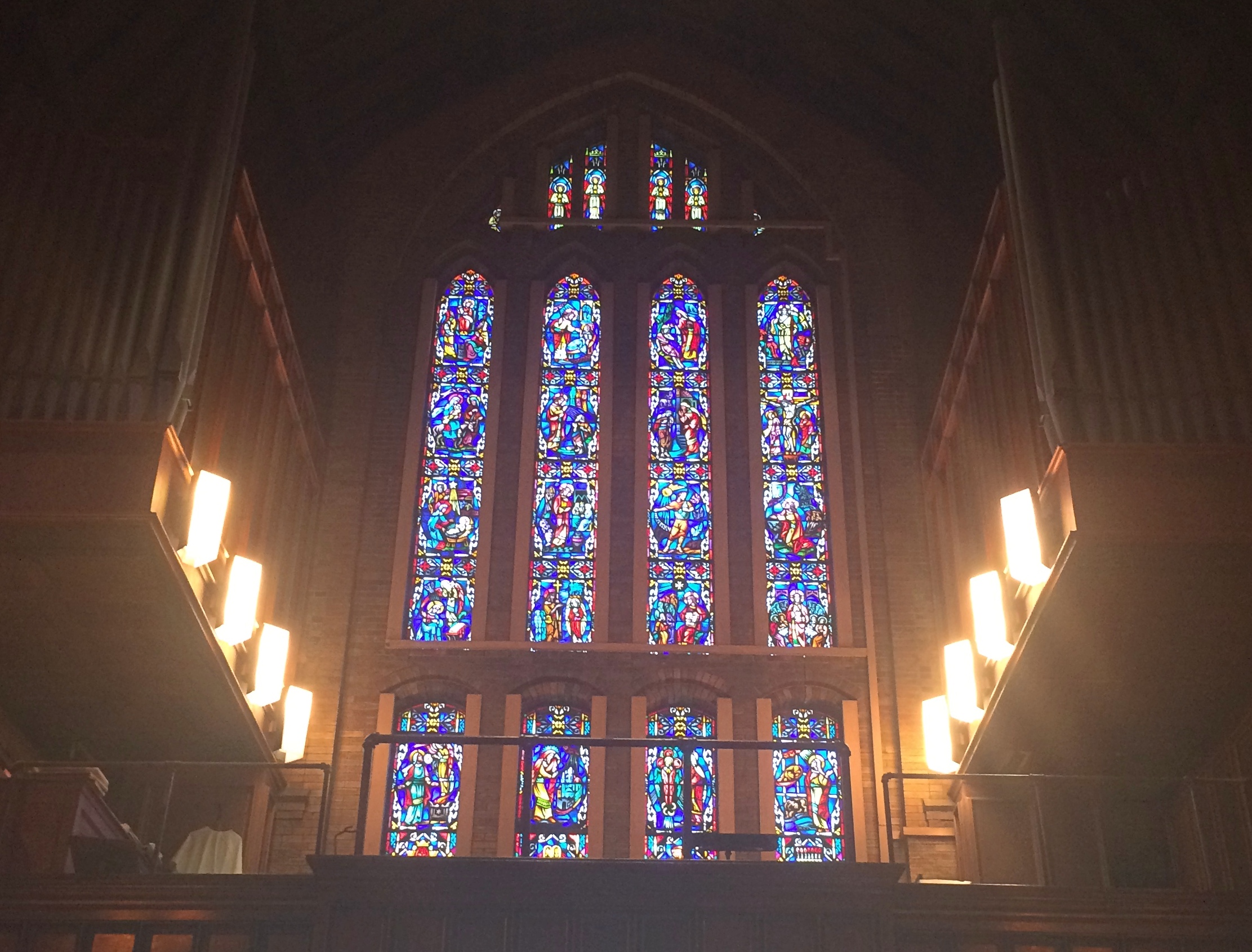
St. Mary’s stained glass captured a fair share of light, even on a cloudy day.
Finally, near Dubina, we visited Sts. Cyril and Methodius Church.
Artist unknown (1909), but he did a fine job.
By some counts, there are as many as 20 Painted Churches in Texas, so our visit wasn’t comprehensive. But after four or five such structures, you begin to get your fill of even the most beautiful ecclesiastical spaces anyway. Maybe I’ll see some of the others some other time.

Wolf Point & The Merchandise Mart Hall of Fame

On Friday I went to downtown Chicago for business. Since it was a warm, clear spring day, I wanted to do a more extensive walkabout, especially in the River North area, where I attended to business. But I didn’t have much time.

Instead I was able to take a quick walk near the Chicago River, mostly on the way to my appointment and heading back to Union Station afterward. I was near the place where the river divides into its North and South Branches, which is known as Wolf Point and is the origin of the Chicago Municipal Device.

For quite a while, Wolf Point was oddly underdeveloped, at least compared with the rest of the riverfront. For instance, until recently the point was occupied mostly by a parking lot.

No more. The latest project there, Wolf Point East, is still under construction.

So Wolf Point looks a little different than at the beginning of this decade, and a lot different than it did in 1833.

Hines, Joseph P. Kennedy Enterprises, the AFL-CIO Building Investment Trust and PNC Realty Investors are the developers of Wolf Point East; Pelli Clarke Pelli did the design. The 60-story tower will have 698 residential units — upper-end rentals — that will be available late this year.

Just to the east, of course, is the 4 million-square-foot Merchandise Mart, seen here catching a shadow in the mid-afternoon.

A street runs between the Merchandise Mart and the river — the unimaginatively named W. Merchandise Mart Plaza — and from there, you can see the Merchandise Mart Hall of Fame. That is, eight bronze busts honoring one-time U.S. merchant princes, each facing the building. Joseph P. Kennedy himself commissioned the busts in the early 1950s, which was possible because the Kennedy family owned the Merchandise Mart for many decades.

The busts are in two groups of four. These are the busts to the west. They don’t look so large from across the street, but the heads are four times the size of a regular human head.
From left to right: John Wanamaker, founder of the stores by that name; George Hartford, founder of A&P; Edward Filene, founder of those stores; and Montgomery Ward.

These are the busts to the east.
Construction and taxis whizzing by made it a little harder to make an image, but in any case they are Robert Wood, a chairman of Sears; F.W. Woolworth; Julius Rosenwald, another chairman of Sears and founder of the Museum of Science and Industry; and Marshall Field.

More about each of the busts is here. Twelve years ago, at least, they looked like they needed some restoration. I didn’t get quite close enough to them this time to know whether that has happened.

Sign of the Times: The Great American Political Poster 1844-2012

Visiting the Elmhurst History Museum for its local history collection was fine, but what I really wanted to see on Saturday — before it ends next weekend — was an exhibit called Sign of the Times: The Great American Political Poster 1844-2012. I’d picked up a leaflet about the exhibit when visiting the Elmhurst Art Museum, so that kind of marketing works sometimes.

The exhibit includes 50 items and occupies the first floor of the museum. I could have spent an hour looking at everything, but not everyone in the family is as enthusiastic about presidential ephemera as I am. Even so, I got a good look and had the chance to explain some things to the girls, such as who this fellow McGovern was. He had a fair number of posters, for all the good it did him.

As promised, the exhibit begins with the election of 1844. As we all know, Henry Clay headed the Whig ticket.

Less well known is the Whig for vice president that year, Theodore Frelinghuysen of New Jersey. Vice presidents are often obscure, but men who ran for VP and lost tend to be even more obscure. Too bad he was never veep. Vice President Frelinghuysen has a ring to it.

The Kellogg Brothers of Hartford, Conn., did the poster. They were rivals of Currier & Ives but about as well remembered as Mr. Frelinghuysen these days. Google Kellogg and you tend to get cereal, and they aren’t mentioned in any Christmas songs that I know of.

“An Illustrative Map of Human Life Deduced from passages in Sacred Writ” (1847), which is Wiki’s example of one of their works, makes for some interesting reading.

These were the days of hand-colored prints. This one’s exceptional.
John C. Fremont and William L. Dayton, the first Republican candidates for the presidency and vice presidency, in 1856. A wonderfully named artist, Dominique O. Fabronius, did the poster, which was issued by C.E. Lewis of Buffalo. Look at Fabronius’ portrait of “Spoons” Butler here.

On to the golden age of the color lithograph: two posters from the 1900 presidential contest. First, William Jennings Bryan. A busy poster, promising no cross of gold, attacks on the Standard Oil octopus (I assume) and other things.
William McKinley and TR: an even busier poster.
The artists are unknown in both cases. I enjoyed this detail on the McKinley-Roosevelt poster.
I’ve posted about Phrygian caps before, but not in a North American context. Maybe it’s just as well that the caps are generally forgotten in this country as a symbol of liberty. Such symbols are sometimes co-opted by wankers.

The last of the two-man campaign posters: TR and his mostly forgotten VP, Charles Fairbanks. The city in Alaska is named for him, at least.
Note the fasces. Talk about being co-opted by wankers.

Fast forward a few decades. This poster offers a more folksy style for voters in the 1940 election. Note that a happy worker smokes a pipe, besides supporting Willkie.

Offset lithography was the most common means of poster-making by that time. Artist unknown in the case of the Willkie poster.

In 1964, Goldwater got a fairly standard treatment (unknown artist again) in a pro poster.
Along with a stinging anti poster drawn by Ben Shahn.
The ’72 election was represented by previously mentioned McGovern posters, but Nixon made an appearance as well.
By R. Crumb. Am I right in finding it strange that the Nixon campaign would enlist Crumb to do a poster? Well, strange bedfellows and all. Nixon and the Do-Dah man. The ’72 election was a long strange trip, after all.

The Elmhurst History Museum

Lilly visited for Easter weekend this year. We were glad to see her.
Easter Saturday turned out to be brilliant and warm, much like the Saturday two weeks ago when we visited Elmhurst. So all of us, including Lilly this time, went back to Elmhurst to wander around in the park again, but also for something we didn’t do last time: visit the Elmhurst History Museum.

The museum, founded in 1957, is in the former home of Elmhurst’s first village president, Henry Glos, and his wife Lucy. The mansion dates from ca. 1892.
As I’ve mentioned before, the Gloses are interred across the street. I understand that street didn’t exist when they were alive — in fact, not until the 1970s — so their mausoleum and their house must have been on a single piece of land.

A few odds and ends dot the grounds. Such as the Elmhurst fire bell.

The plaque says (all caps, but I’ve regularized that):

The old Elmhurst fire bell
is here erected as a memorial
dedicated
in the Illinois sesquicentennial year 1968
to the brave men of the Elmhurst Volunteer Fire Department
who served with courage and devotion
from the days when fire fighting equipment
was crude and horse drawn
on behalf of a grateful community

The Elmhurst Historical Commission

It doesn’t look bad for a bell that’s been in the elements for more than 50 years now.

The museum has a modest but interesting collection of Elmhurst-specific artifacts.

Such as an Order of Odd Fellows sword. How often do you see one of those?
It goes along with a Shriner’s fez, a Jaycee’s collection box, some Knights of Columbus pins and other fraternal org items.

This calendar, produced by the local Rothmeyer Coal Co., belongs in the don’t-make-em-like-that-anymore file.

Notable birthdays on the calendar for January 1934 include Alexander Hamilton, Benjamin Franklin, Robert E. Lee, Stonewall Jackson and William McKinley.

A six pack of Baderbrau beer.
A short-lived Elmhurst brew (1989-1997). Never heard of it, even though Chicago’s well-known Goose Island brewery acquired the name and formula after 1997 and brewed it for a few more years. A mid-2010s revival didn’t work out either.

Better known are the Keebler elves. Keebler Foods Co. used to be located in Elmurst until its owner Kellogg Co. moved the snack operation to Michigan. I suspect not all of the elves relocated. There’s probably a neighborhood in Elmhurst where some of them still live.

You’d think the Village of Elmhurst would try to get permission from Kellogg to build an elf tree in one of the local parks. Do it right and people would come to see that.

The Whole World A Bauhaus

After a pleasant weekend and a warm Monday and Tuesday — lunch on the deck is my benchmark for warm days — the hammer dropped on Wednesday. Mostly we got cold rain, but I also saw flecks of ice on the deck and in the greenish grass today.

I’m pretty sure that the first time I ever heard of the Bauhaus, or Walter Gropius for that matter, was ca. 1977 listening to Tom Lehrer’s That Was The Year That Was album. One of the songs, “Alma,” was about Alma Mahler, who had died during The Year That Was, that is, 1964.

Walter Gropius was Alma’s second husband. In amusing Lehrer fashion, he made a rhyme of “Bauhaus” and “chow house” in the verse about Walter and Alma.

But he would work late at the Bauhaus
And only come home now and then
She said, “Vhat am I running, a chow house?
It’s time to change partners again!’

This is an interesting video about Alma. Nearly 55 years after her death, she still inspires strong opinions, pro and con; see the comments section. I think my opinion about Alma will be, I don’t care.

We went to the Elmhurst Art Museum on Saturday to see The Whole World A Bauhaus, a traveling exhibition mounted for the 100th anniversary of the founding of the Bauhaus. Elmhurst, it seems, is its only stop in the United States.

Blair Kamin did a good write-up of the exhibition in the Chicago Tribune: “Amid the show’s 400-plus objects,which include photographs, works on paper, architectural models, documents, films and audio recordings, are classic chairs by Mies and Marcel Breuer; geometric wall tapestries and carpets by such Bauhaus masters as the textile artist Anni Albers, wife of painter Josef Albers; and curiosities like a yellow, blue and red cradle and flyers for Bauhaus designs.”

Curious indeed, that cradle.

It looks like with a vigorous push, you could roll it completely over, throwing an unfortunate infant onto the floor.

But never mind that. At least it’s a Bauhaus object. Kamin calls the exhibit “overstuffed,” and I’ll go along with him. It’s overstuffed with photos and documents and other Bauhaus ephemera.

For true Bauhaus nerds, this might be exciting, but the minutiae was a little much for me. For a school that produced a wealth of artful objects, or perhaps elegant industrial objects, The Whole World A Bauhaus had relatively few of them on display. Fewer pictures of Bauhaus types at work and play and more Bauhaus output to examine in person would have improved the show.

Even so, I learned a fair number of things — such as how the Bauhaus formed factions almost immediately, as you might except from a group of people with talent, strong opinions and high ideals.

One example, as Kamin tells it: “One was the charismatic Swiss artist Johannes Itten, who shaved his head and wore rimless round glasses and gurulike garb. Itten made his students do breathing exercises to improve their powers of concentration. When the school’s founding director, the urbane German architect Walter Gropius, shifted the focus of the Bauhaus’ workshops from distinctive crafted objects to design for mass production, the idealistic Itten left the school in 1923.”

I also enjoyed much of what I saw. Such as the model of the Dessau Bauhaus building.
I wondered whether it, unlike the school itself, survived National Socialism, or the war or the DDR for that matter. Yes, it turns out. In reunified Germany, the Dessau Bauhaus is a big-deal tourist attraction.

I consciously looked for works on paper that would make good postcards. I found a few. Such as “Construction for Fireworks” by Kurt Schmidt.

I’m not the only person who thinks a line of Bauhaus postcards would be just the thing. Gropius himself apparently thought that.

In 1923, the Bauhaus was preparing for its first exhibition, where Walter Gropius, the school’s founder, would extol the benefits of industrial mass production,” notes Wired.

“To publicize the events, the Bauhaus mailed out beautiful postcards.”

Here’s one more. Who needs a course catalog when you have this?

I wondered for a moment how the Elmhurst Art Museum bagged the only U.S. visit by this exhibition, and figured there were a few reasons. The Chicago area has strong ties to modernism, for one thing, but a few rooms of Bauhaus might get lost in a larger venue like the Art Institute.

Besides, the Elmhurst has its own ties to modernism. Namely, the main display space is adjacent to the McCormick House, a single-family home designed in 1952 by Mies van der Rohe, last director of the Bauhaus 20 years earlier, and moved to its current location from elsewhere in the village of Elmhurst.

The house was restored to a more original appearance recently.
The house is open, so we wandered in for a look. Not quite as striking as the Farnsworth House, but definitely Miesian.

The Wilder Park Conservatory

Near Elmhurst College in west suburban Elmhurst is Wilder Park, a mid-sized suburban park that includes the Elmhurst Public Library, Elmhurst Art Museum, Lizzadro Museum, Wilder Mansion and the Wilder Park Conservatory and Formal Gardens.

This is the Wilder Mansion, named after the last family that owned the place, before the Elmhurst Park District acquired it and the surrounding land in the early 1920s.
I understand that for most of the 20th century, the building housed the Elmhurst Library, but these days it’s a wedding and event venue. Even though it was late Saturday morning, the place was closed. I was a little surprised. I expected someone to be there, setting up for a wedding.

Not far away is the modest Wilder Park Conservatory and Formal Gardens. The gardens were around back and not growing much yet.
At one room and a non-public greenhouse, I believe the Wilder is the smallest public conservatory in metro Chicago, smaller even than the one in Mount Prospect, but it has a nice array of plants. Especially when outside is still mostly brown.

Along with a few rock formations.

Outside the conservatory is a public oddity.
The sign says:

Elmhurst Landmark
1870
Urn-Adorned
Cook County Court House before Chicago Fire
of 1871

According to the ElmhurstHistory.Org: “Following the Great Chicago Fire of 1871, many people from the Chicago area collected ruins from the fire as a souvenir [sic]. Seth Wadhams, who lived in what is now known as the Wilder Mansion, brought two roof finials (decorative pieces) from the Cook County Courthouse, which had burned in the fire. One of the finials deteriorated over time. The second one remains in Wilder Park.”

It looks like you can see many of the courthouse finials in this pre-Fire photo. Strange thought that one of them might be, probably is, the obscure stone relic now miles from its original perch.

Hercules Mulligan, Patriot

I had ramen at home for lunch on Friday. Unremarkable, except I ate my ramen sitting out on the deck. No coat necessary to keep warm. The setting made the tasty noodles, vegetables and broth that much better.

The warmth didn’t last. It couldn’t. By the evening, drizzle. By Saturday, a late winter chill that hasn’t gone away even yet. Today came the bonus of wind gusts blowing the only way wind blows in cold weather: in your face.

Croci and a few weeds and a purple flower or two now poke out of the ground to tease us about spring. Maybe that counts as cruel. But April is also the month when, suddenly, the grass will be green again.

A couple of weeks ago, I decided it was time to read Ron Chernow’s biography of Alexander Hamilton, which has been on my shelf for quite a while. I don’t regret it. It’s a weighty book, as befits a weighty subject, but also a lively read that illuminates Hamilton’s character and ideas.

There are also plenty of interesting and sometimes entertaining supporting characters. My favorite so far: Hercules Mulligan, only partly for the name. Hamilton met him not long after coming to New York, just before the Revolution.

“[Hamilton] had all the magnetic power of a mysterious foreigner and soon made his first friend: a fashionable tailor with the splendid name of Hercules Mulligan….” Chernow writes. “Born in Ireland in 1740, the colorful, garrulous Mulligan was one of the few tradesmen Hamilton ever befriended. He had a shop and home on Water Street, and Hamilton may have boarded with him briefly…

“Later, during the British occupation of wartime New York, Mulligan was to dabble in freelance espionage for George Washington, discretely pumping his foppish clients, mostly Tories and British officers, for strategic information as he taped their measurements.”

Later, regarding the events associated with Evacuation Day in New York — November 25, 1783 — Chernow relates the following: “The morning after he entered New York, Washington breakfasted with the loquacious tailor, Hercules Mulligan… To wipe away any doubts about Mulligan’s true loyalties, Washington pronounced him ‘a true friend of liberty.’ ”

Mulligan ought to have a plaque somewhere on Water Street. He’s buried in Trinity churchyard in Lower Manhattan. If I’d known that last year, I might have looked for him.

As for Evacuation Day, New York holidays aren’t any of my business, but that’s one that ought to be brought back, even if it’s more-or-less at the same time as Thanksgiving.