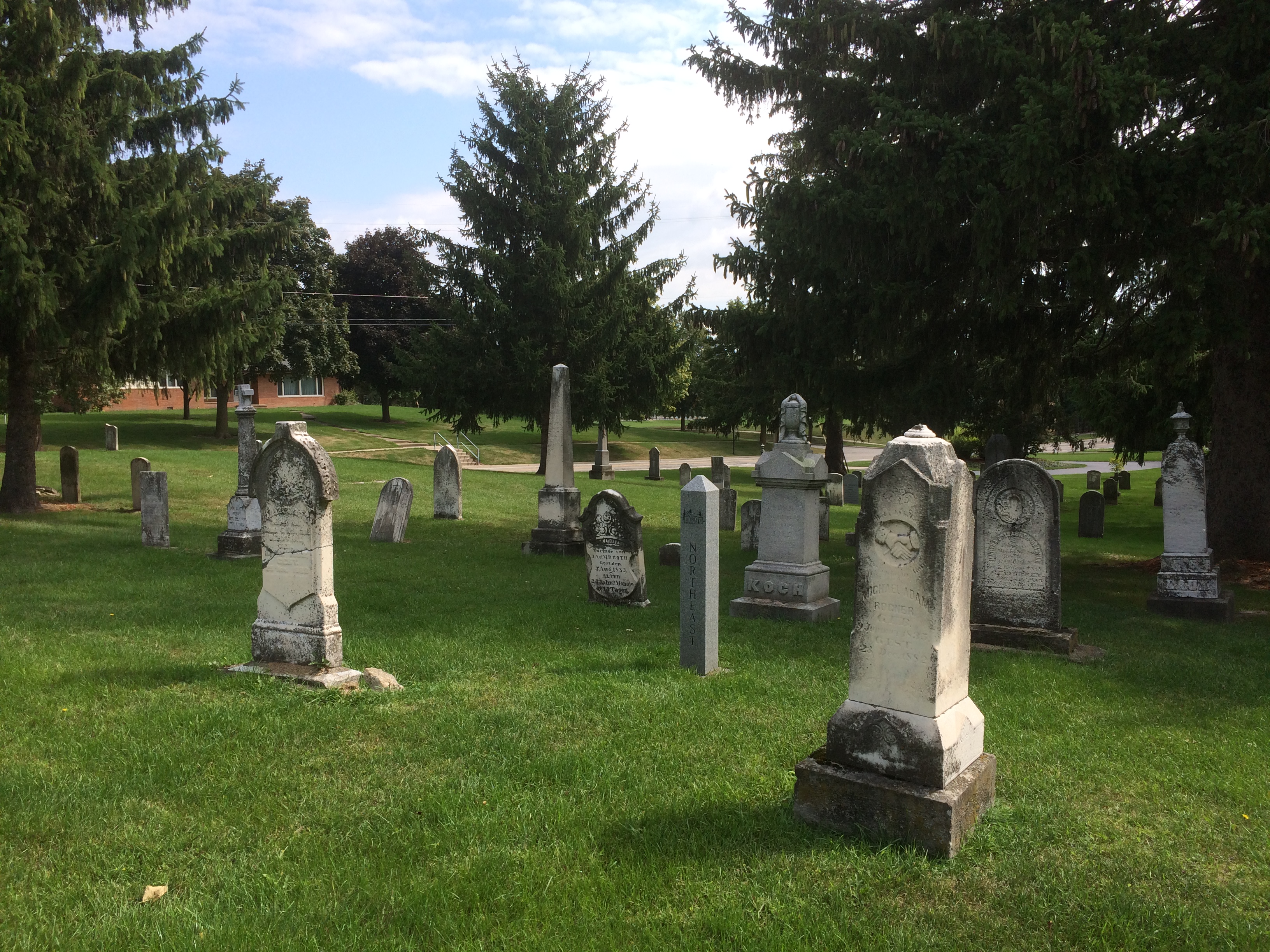
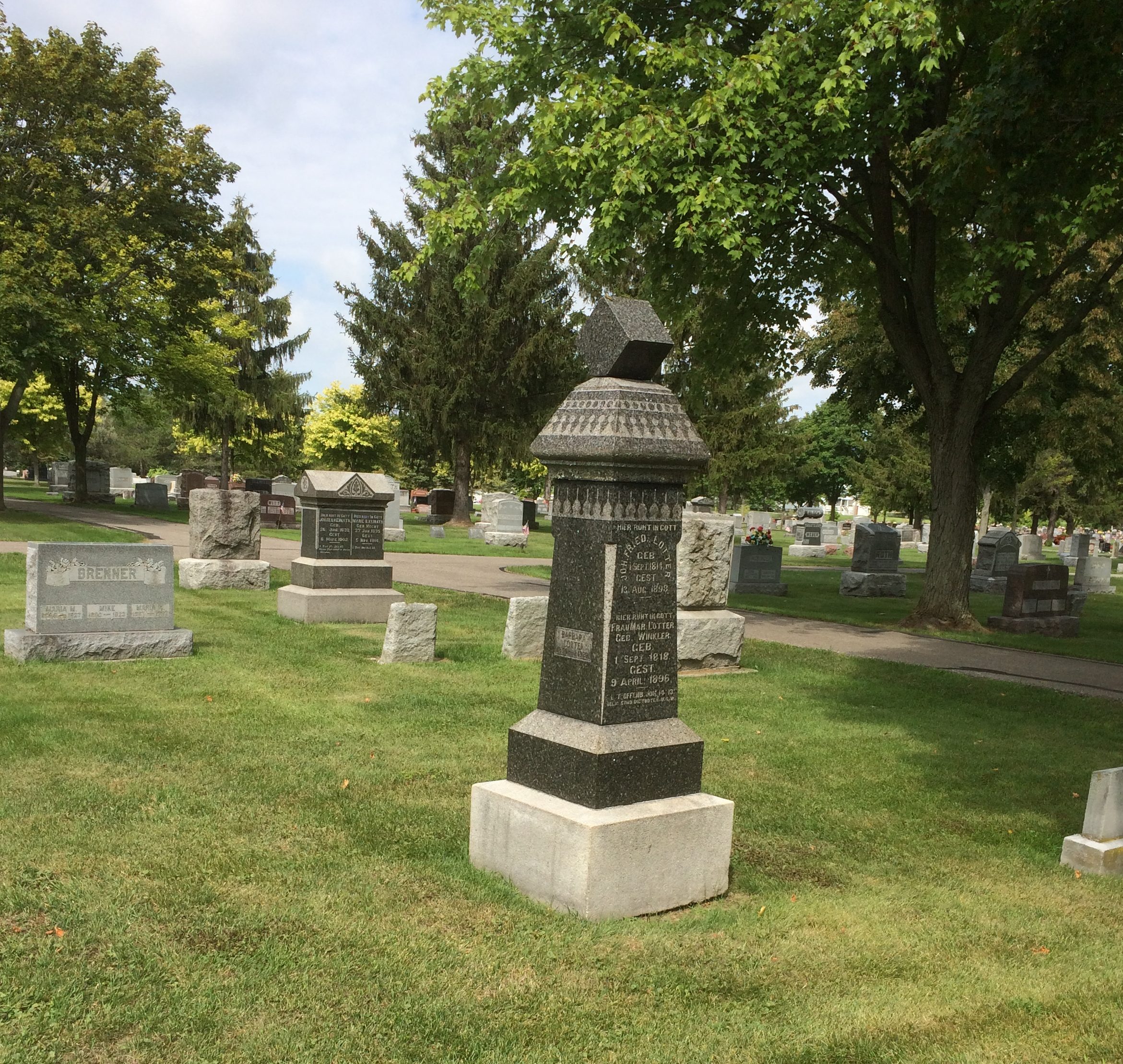
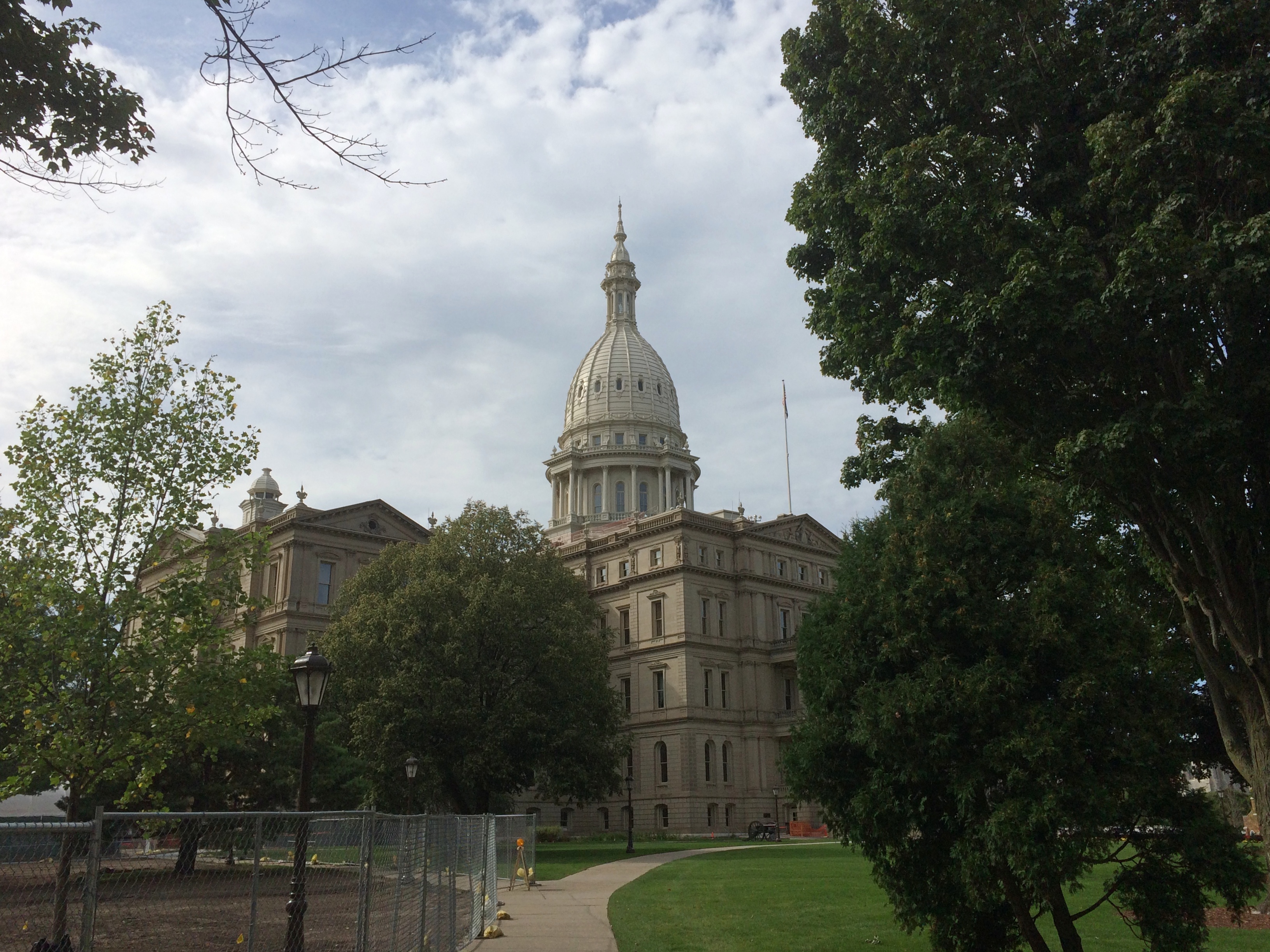
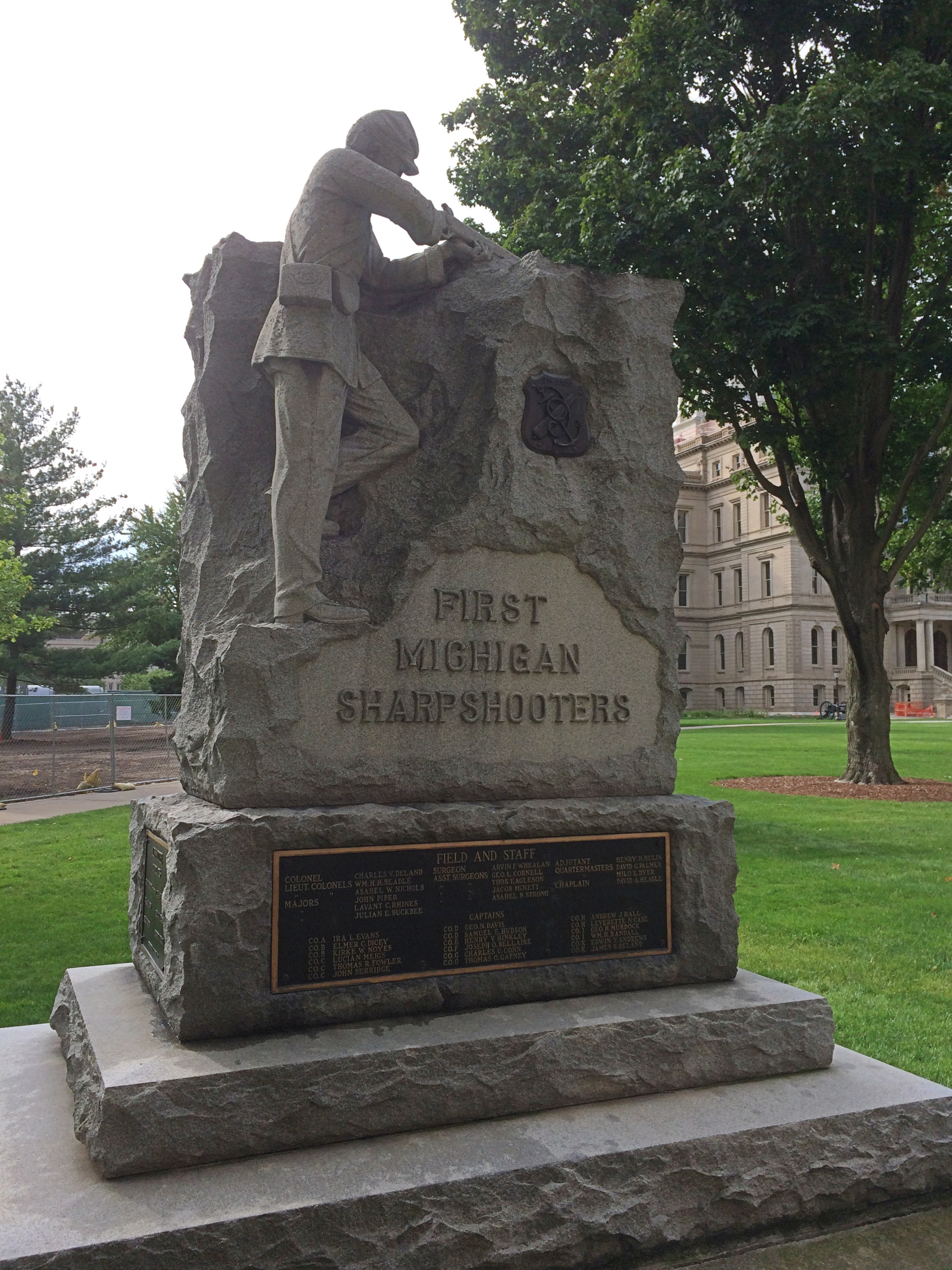
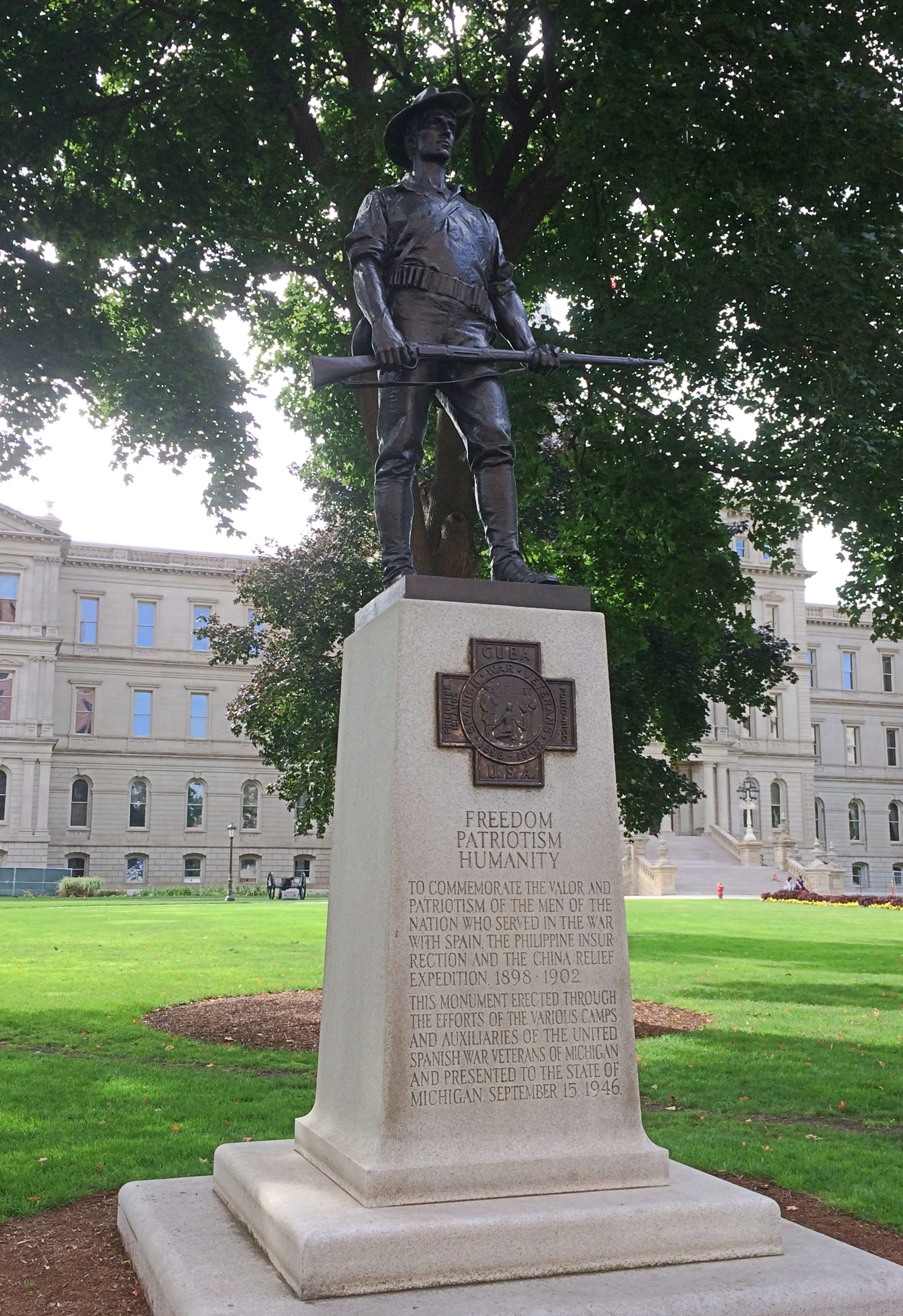
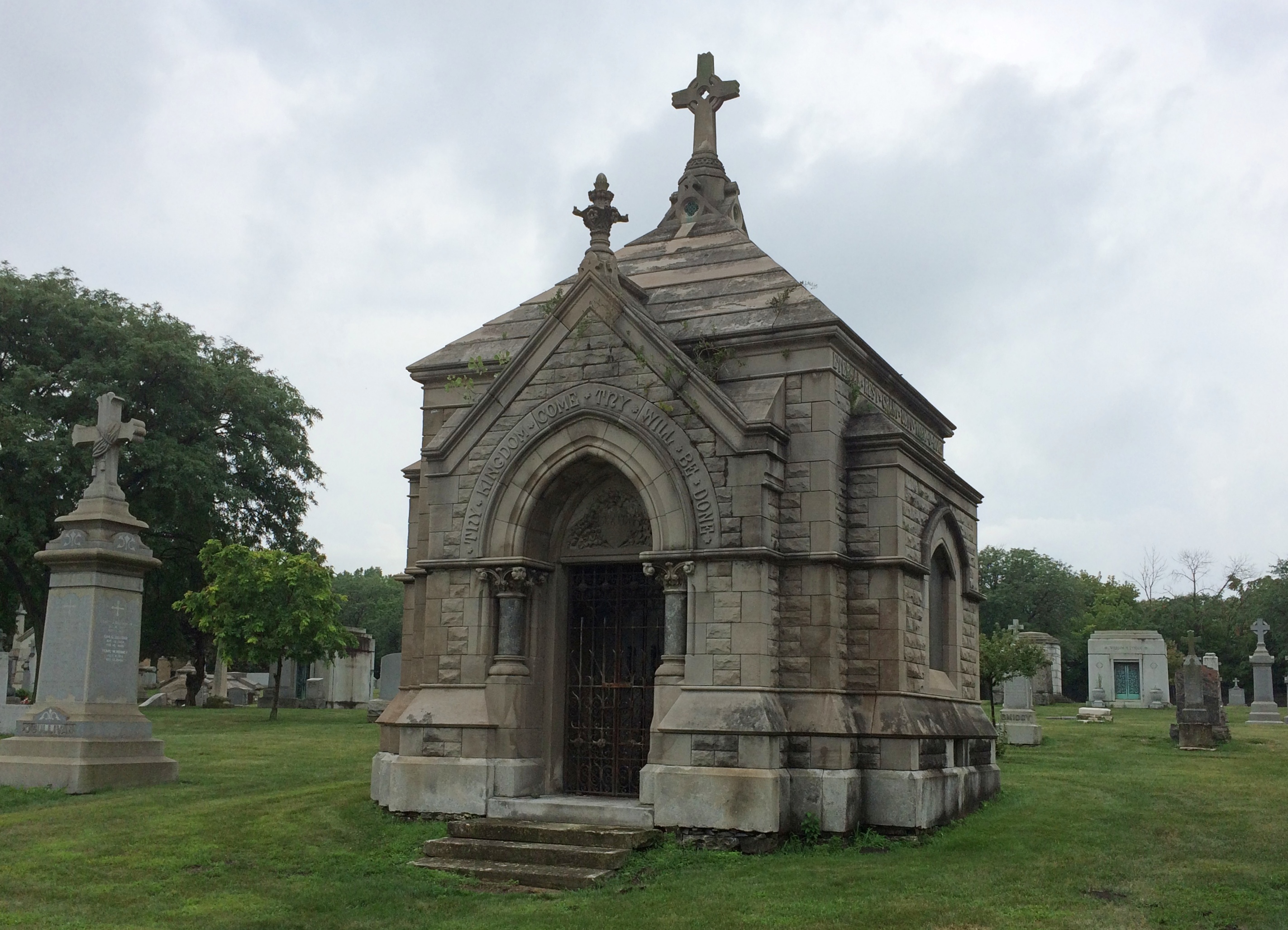
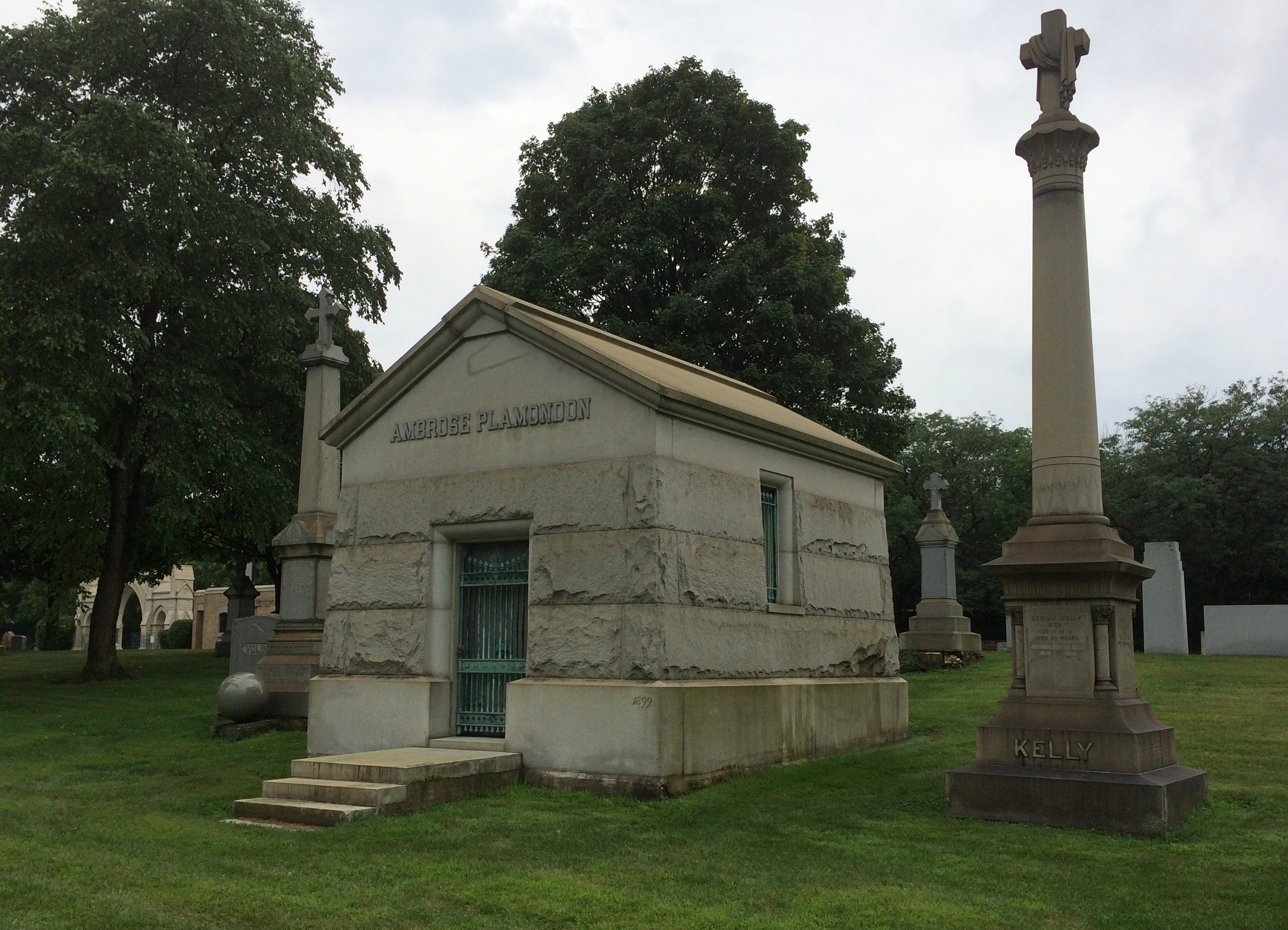
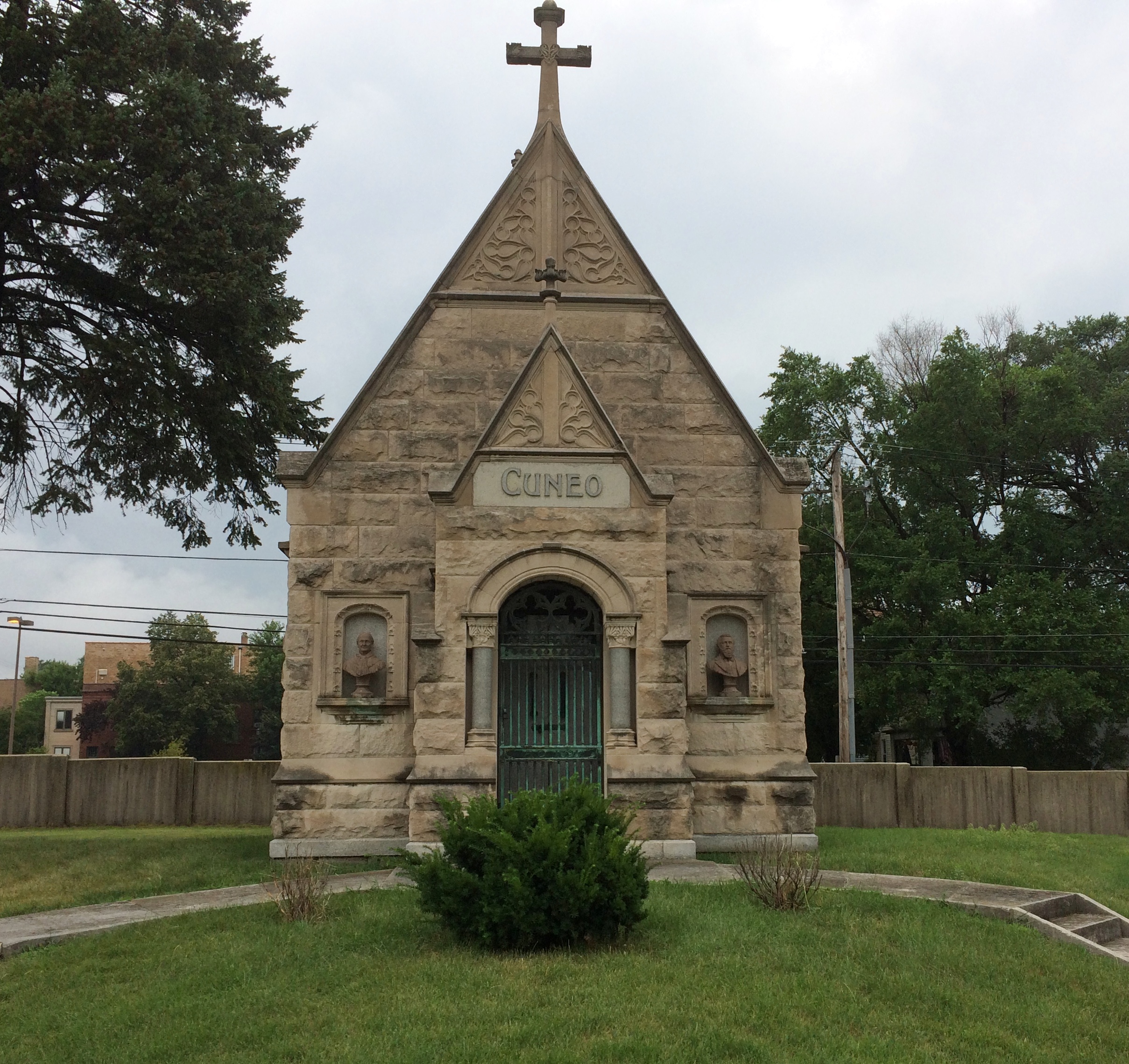
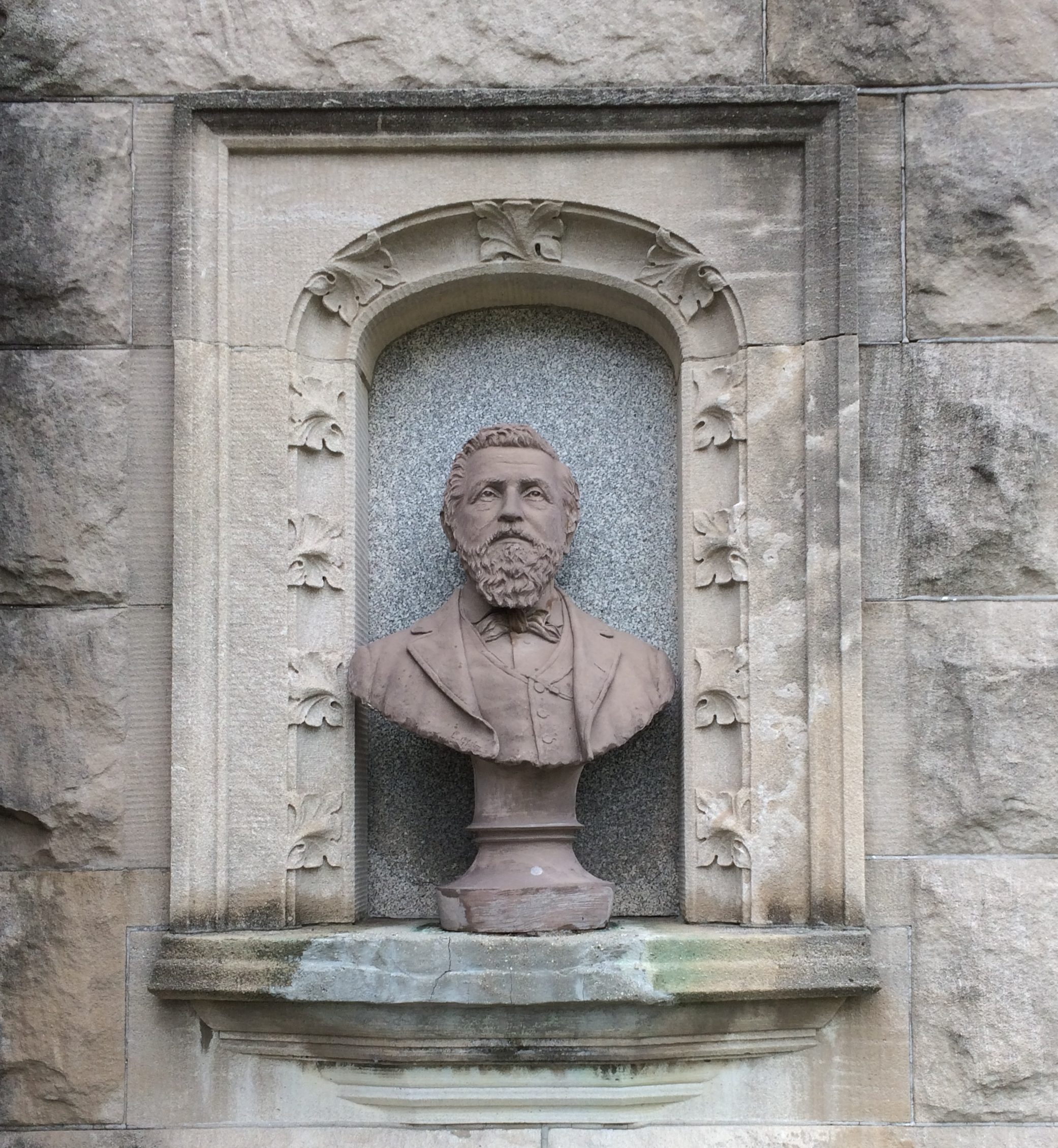
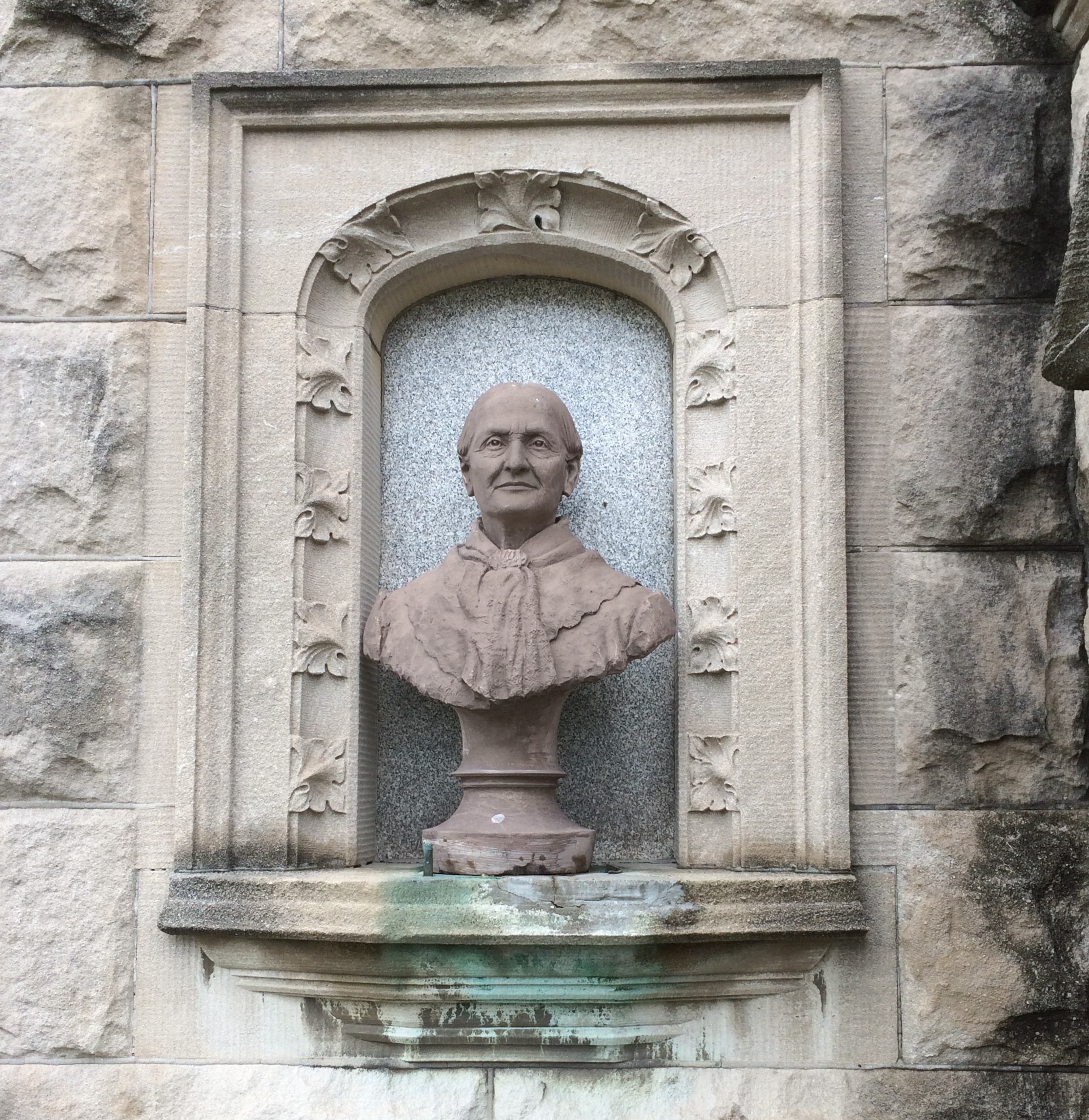
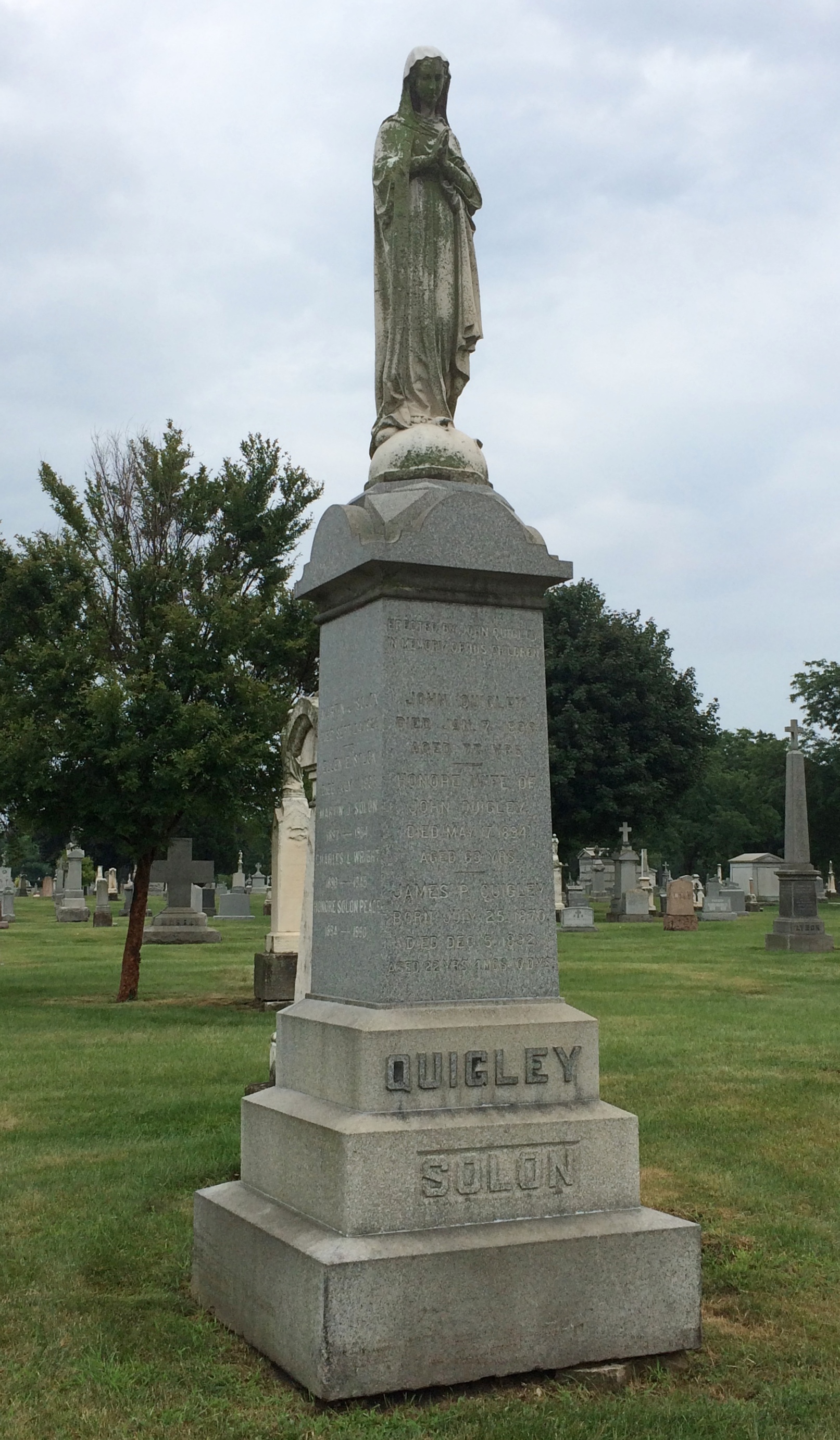
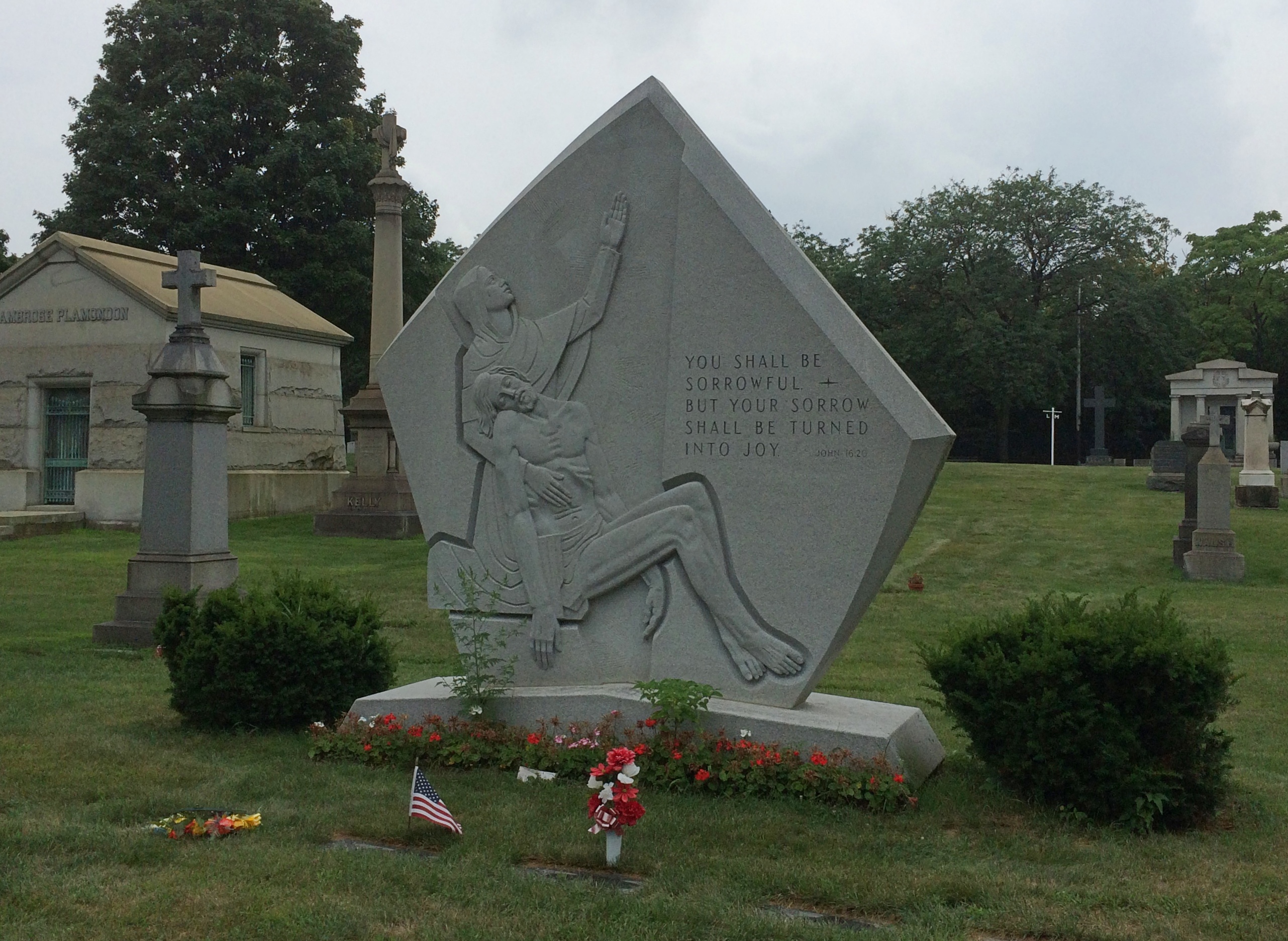
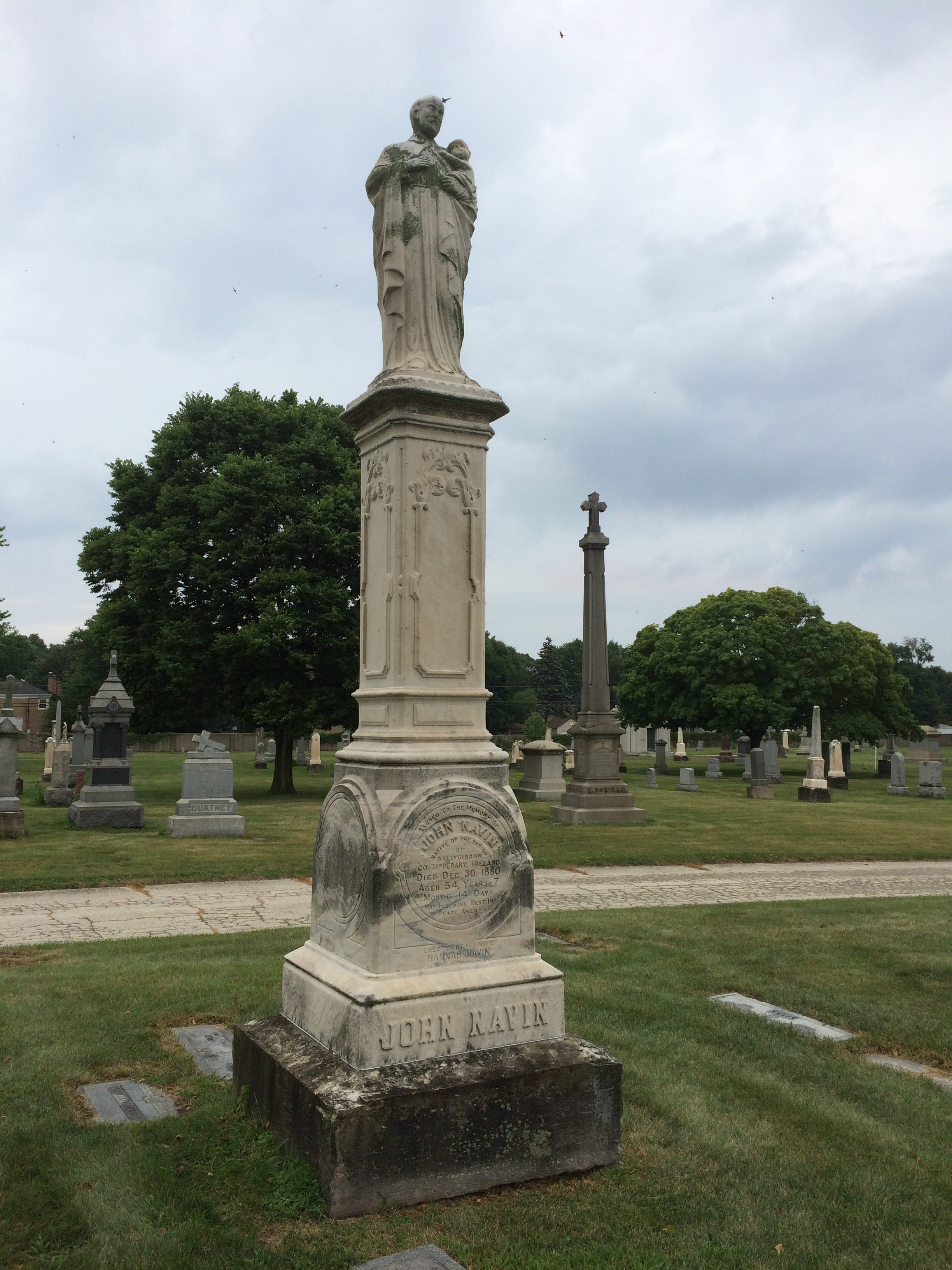
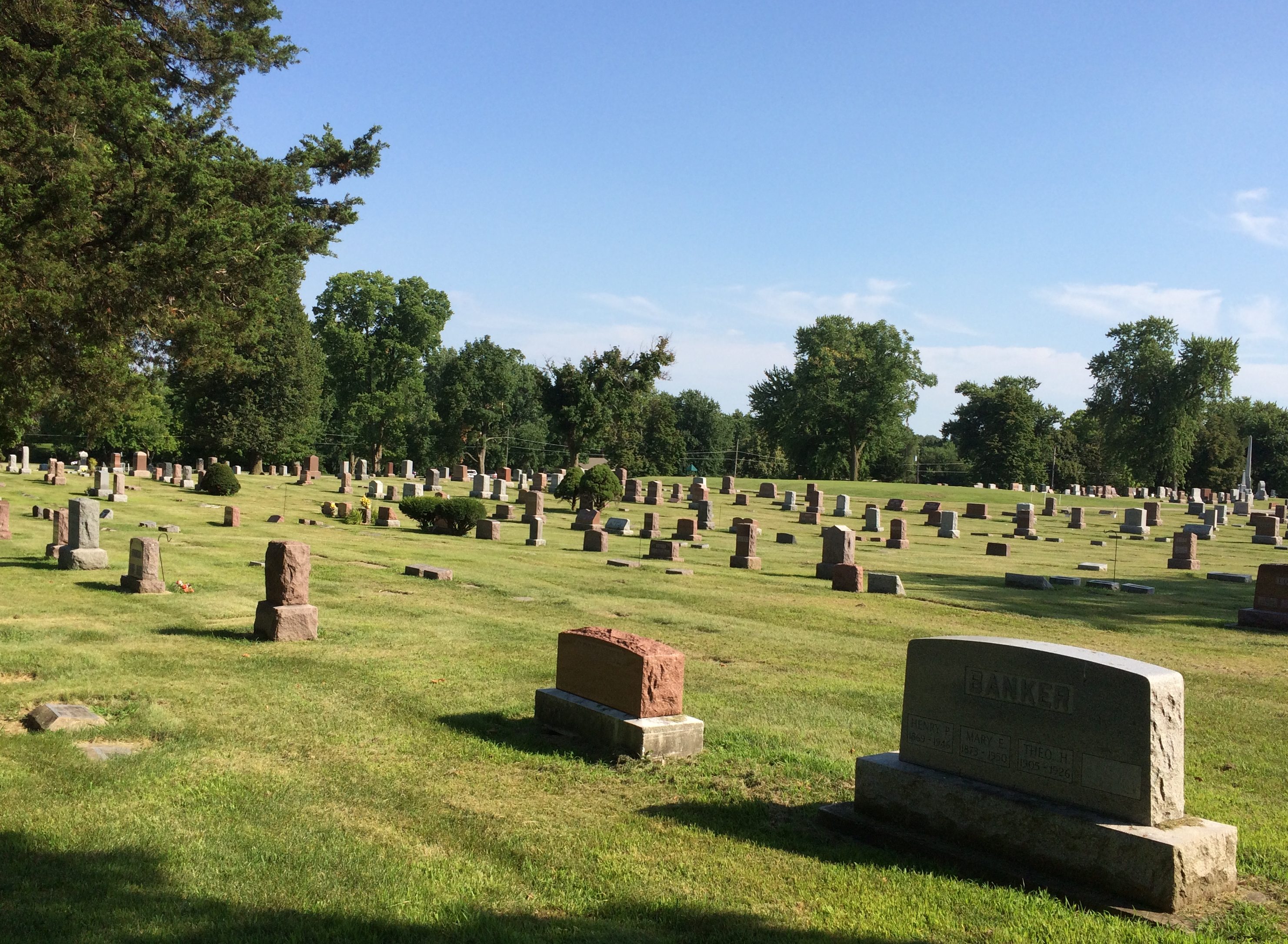
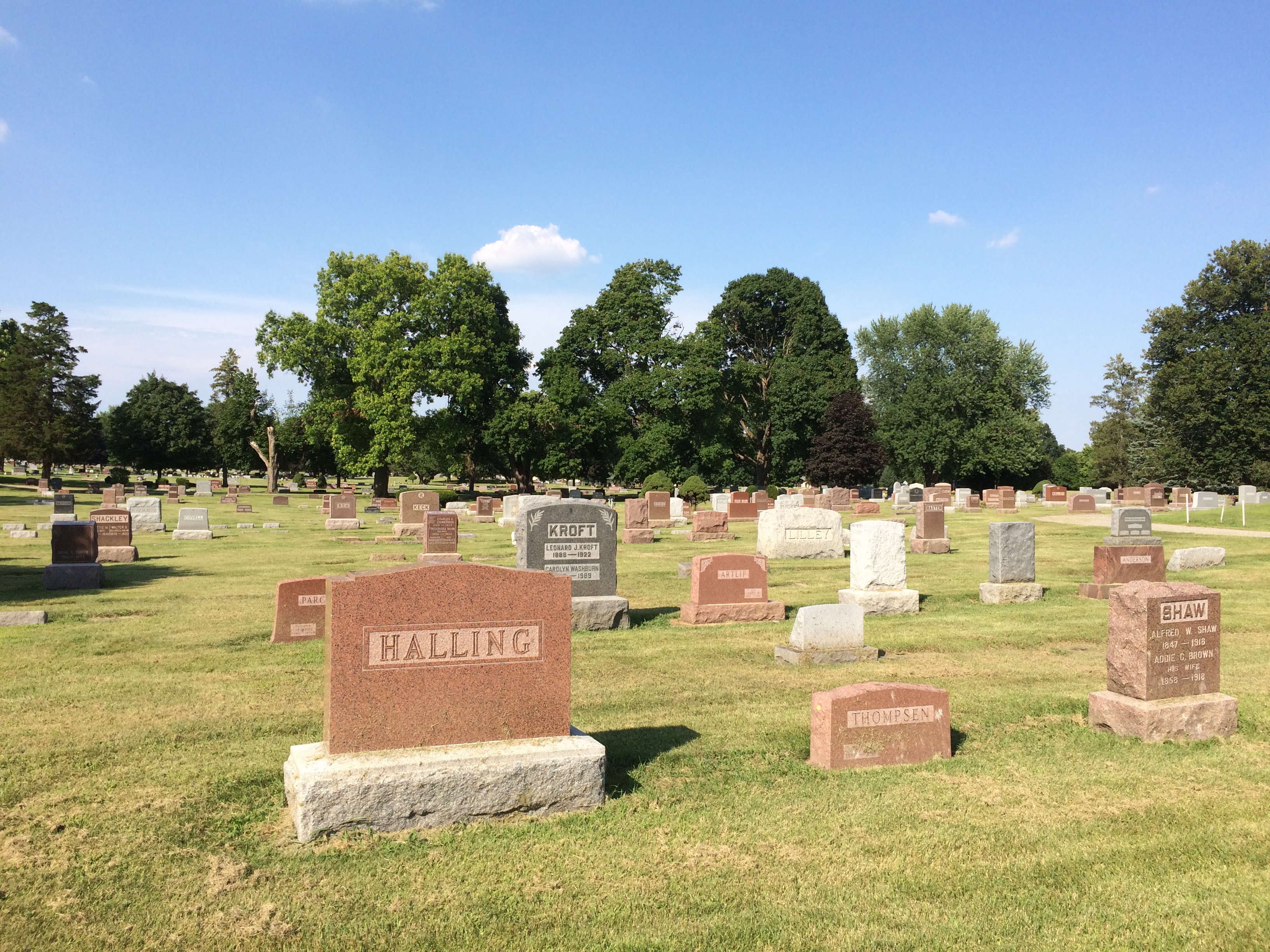
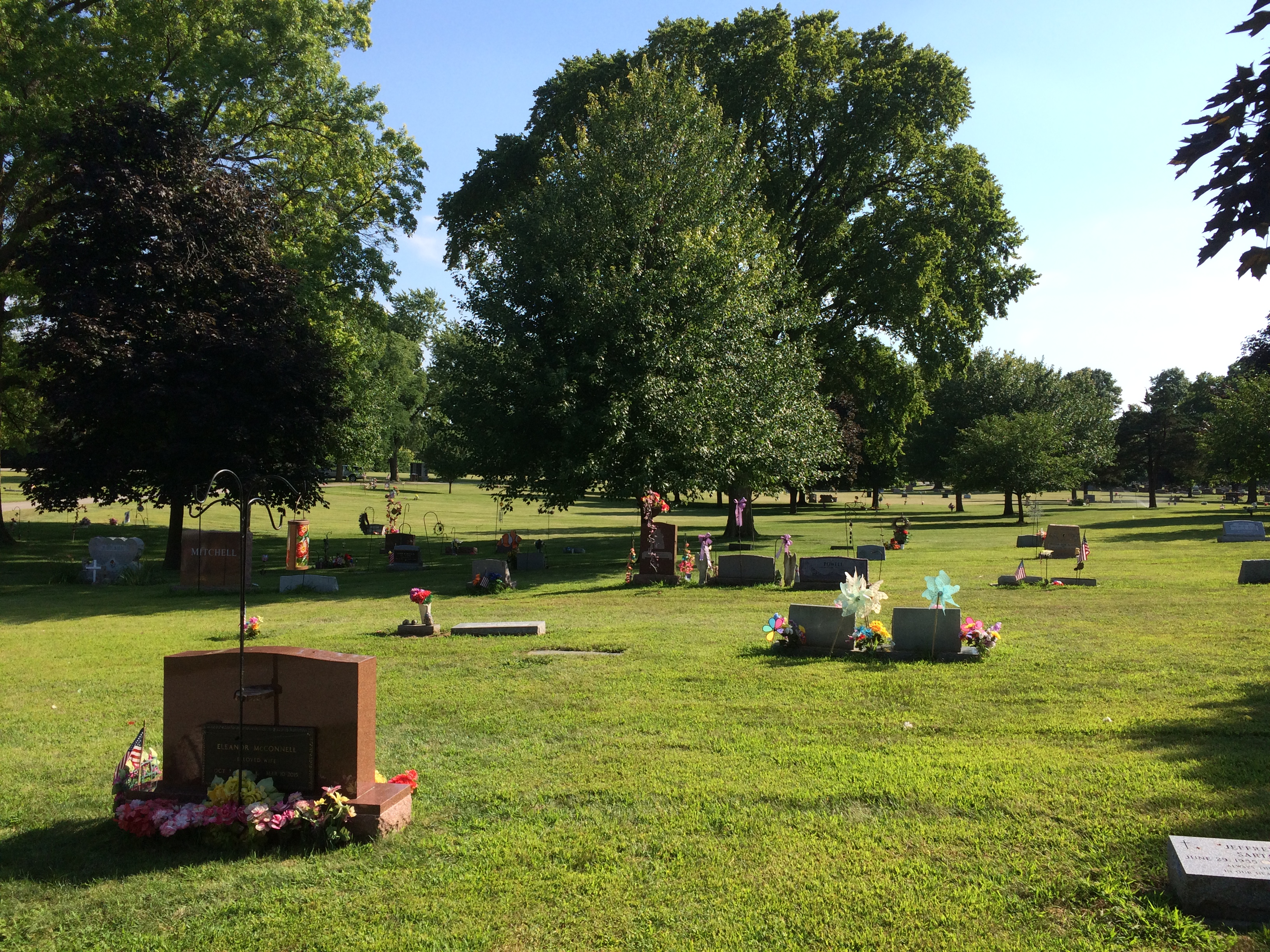
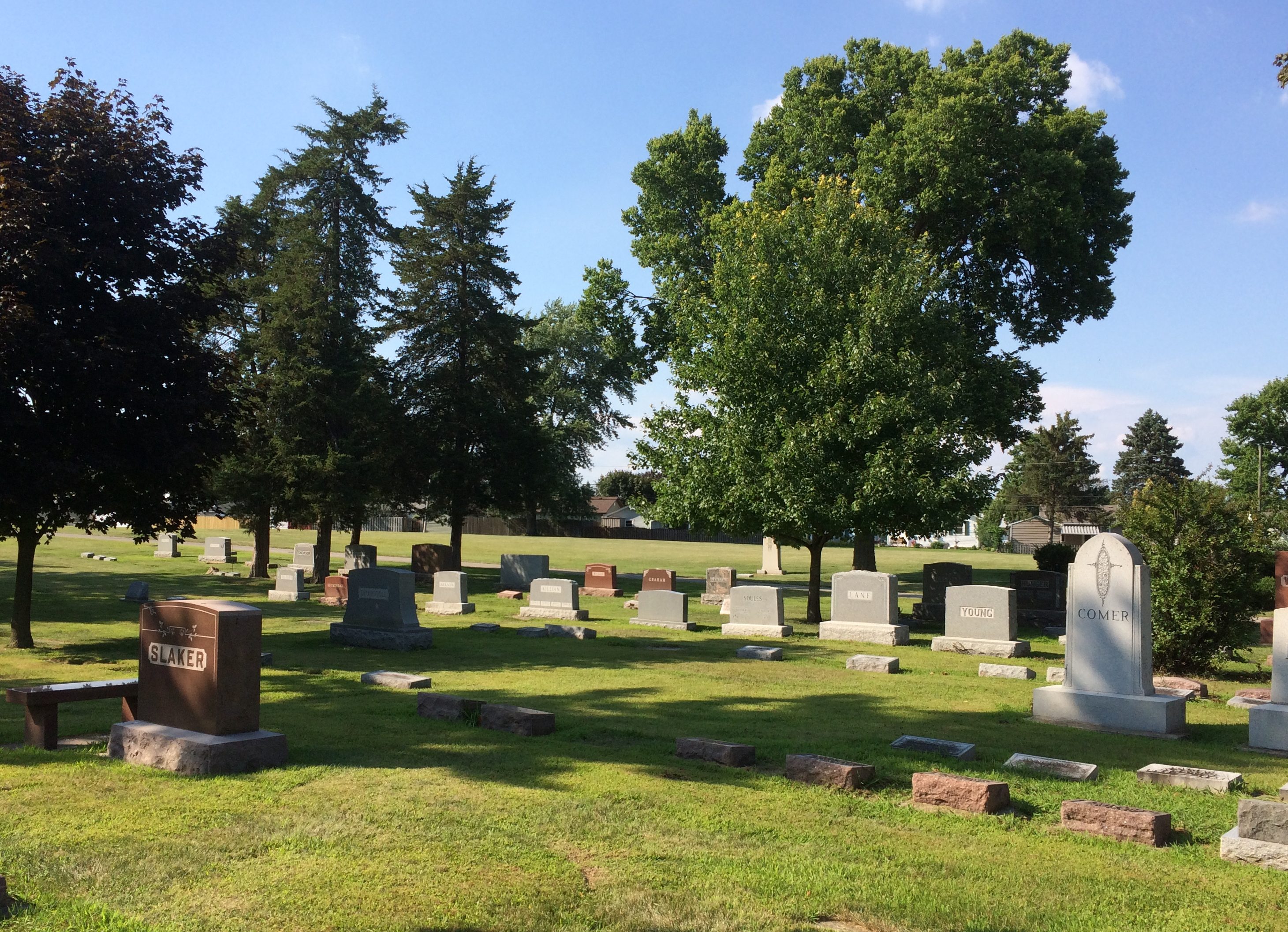
Evergreen Memorial Cemetery, Bloomington

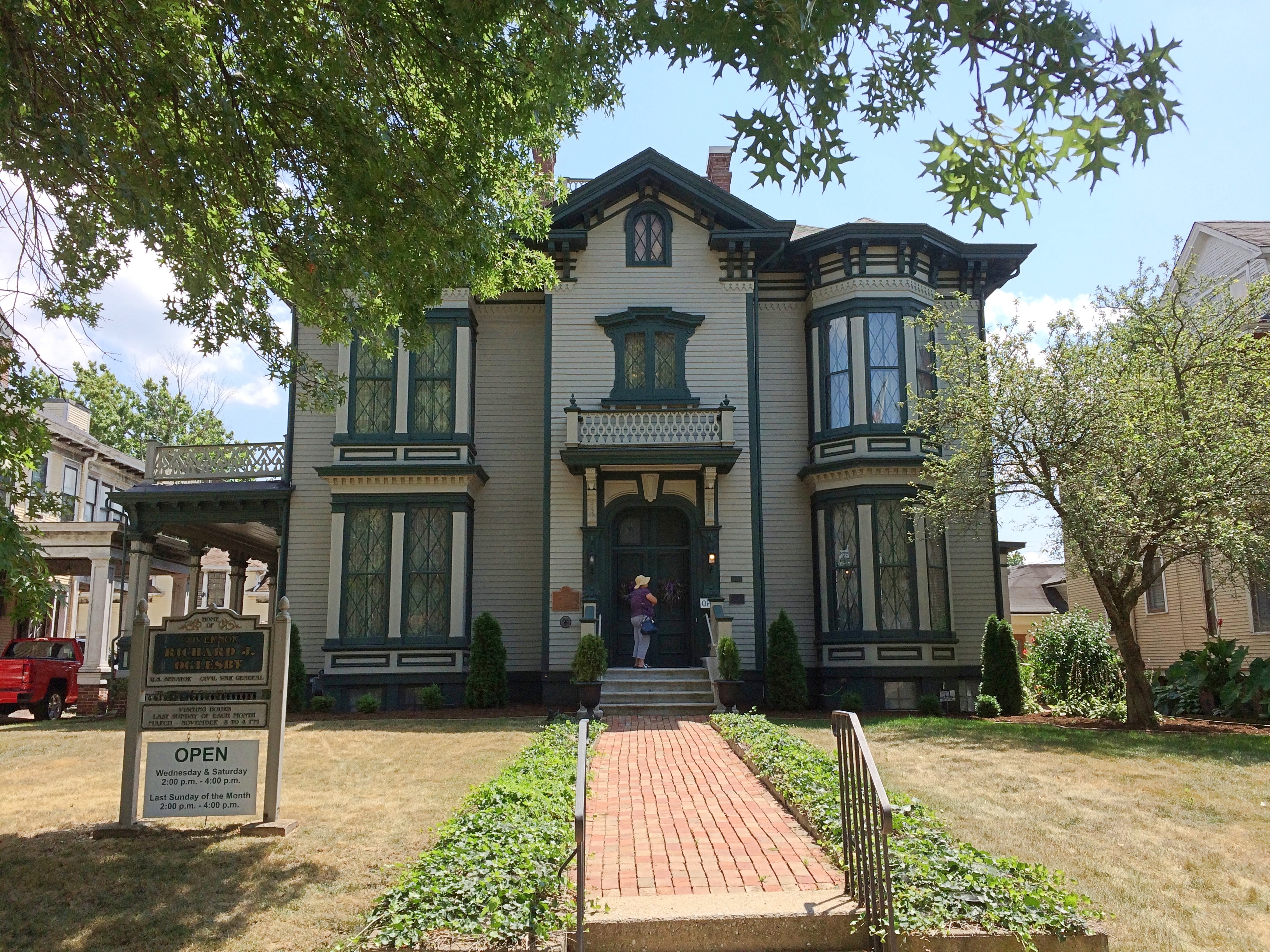
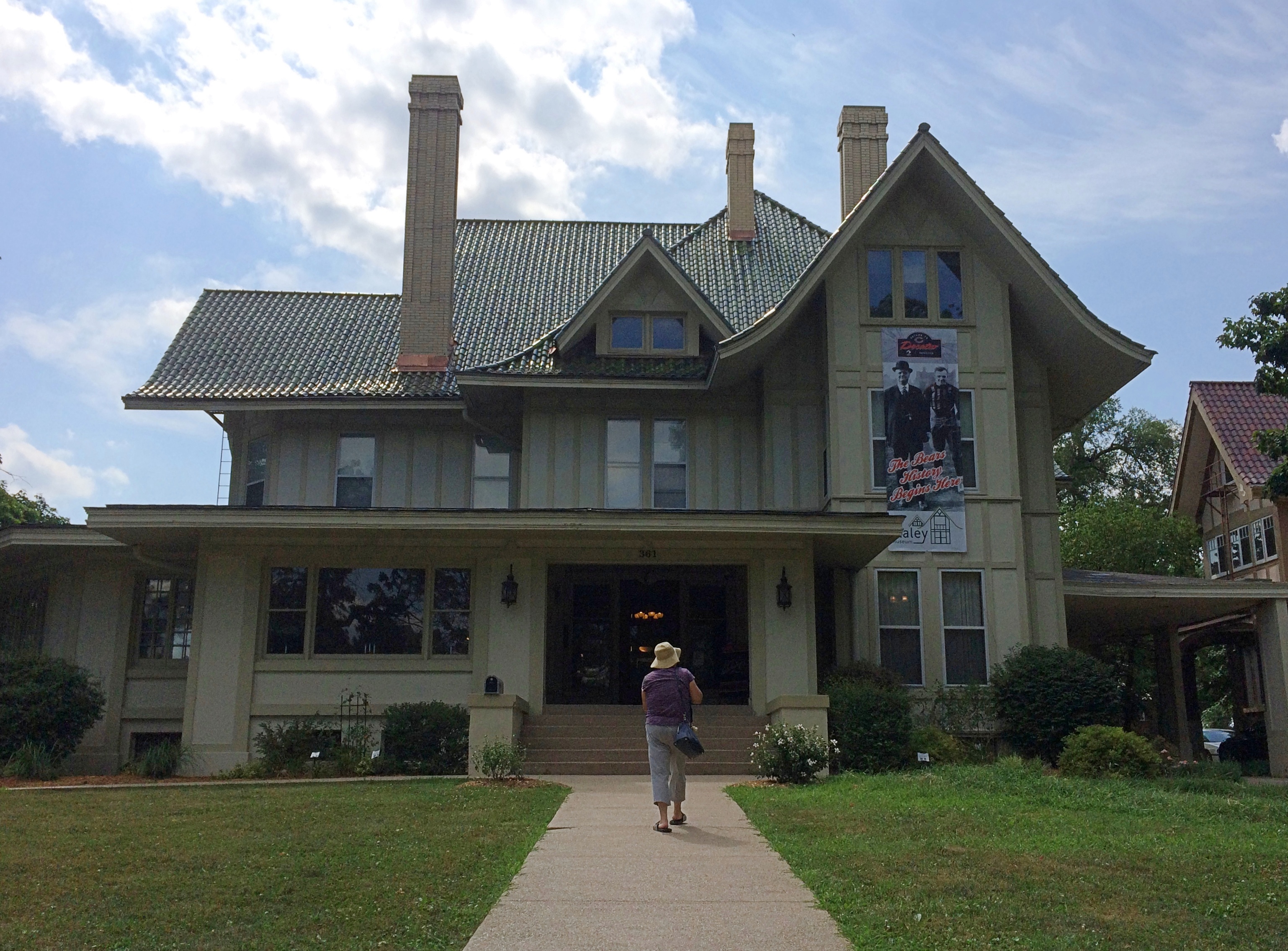
Sometime in the late 1990s, I visited the David Davis House in Bloomington, Illinois. As Lincoln’s campaign manager in 1860 — and important in getting him nominated in the first place — Davis was a behind-the-scenes man at a critical turning point in U.S. history. Lincoln put him on the Supreme Court in ’62.

On Sunday, I took a quick look at the house. As handsome as I remember.
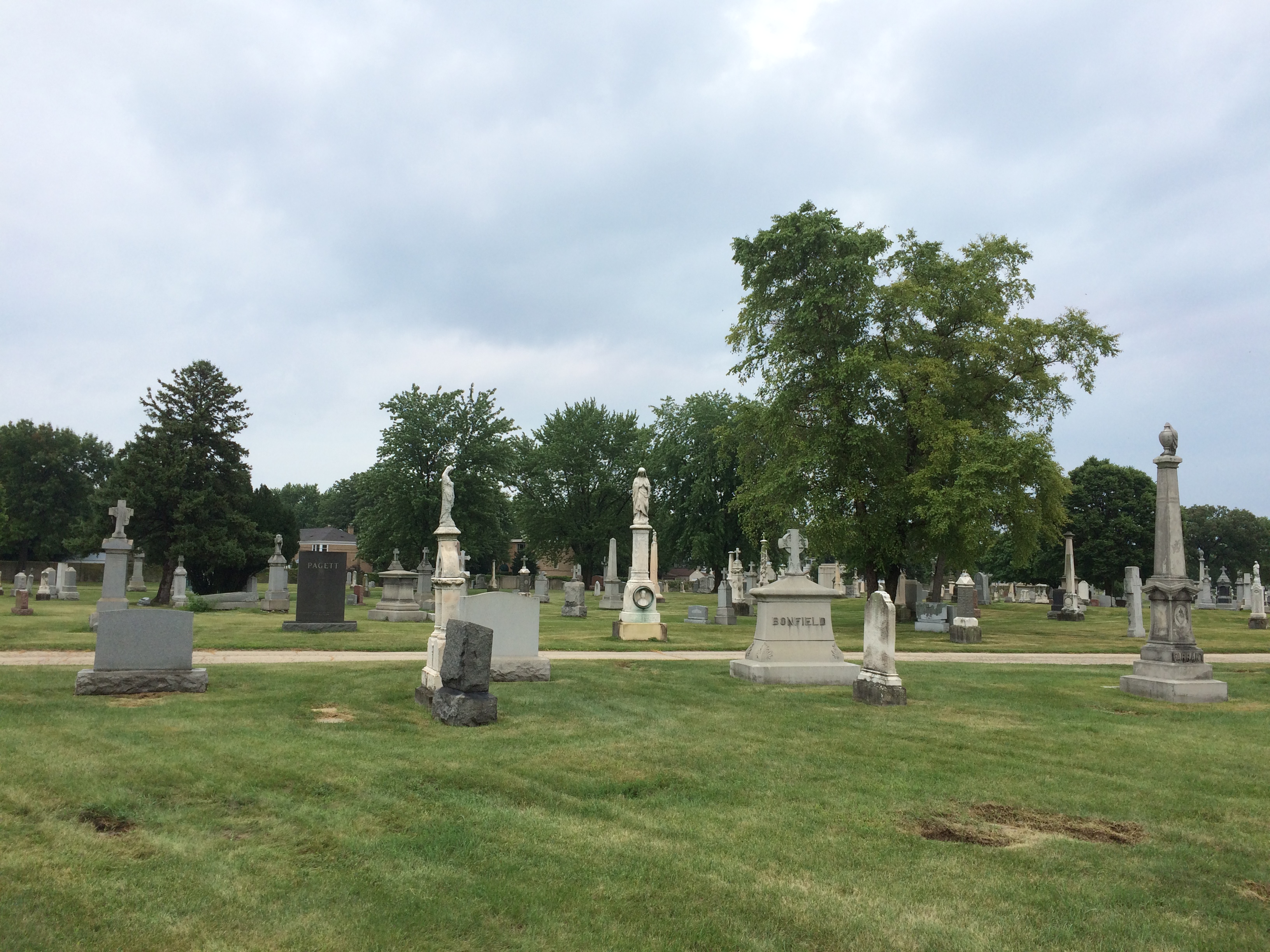
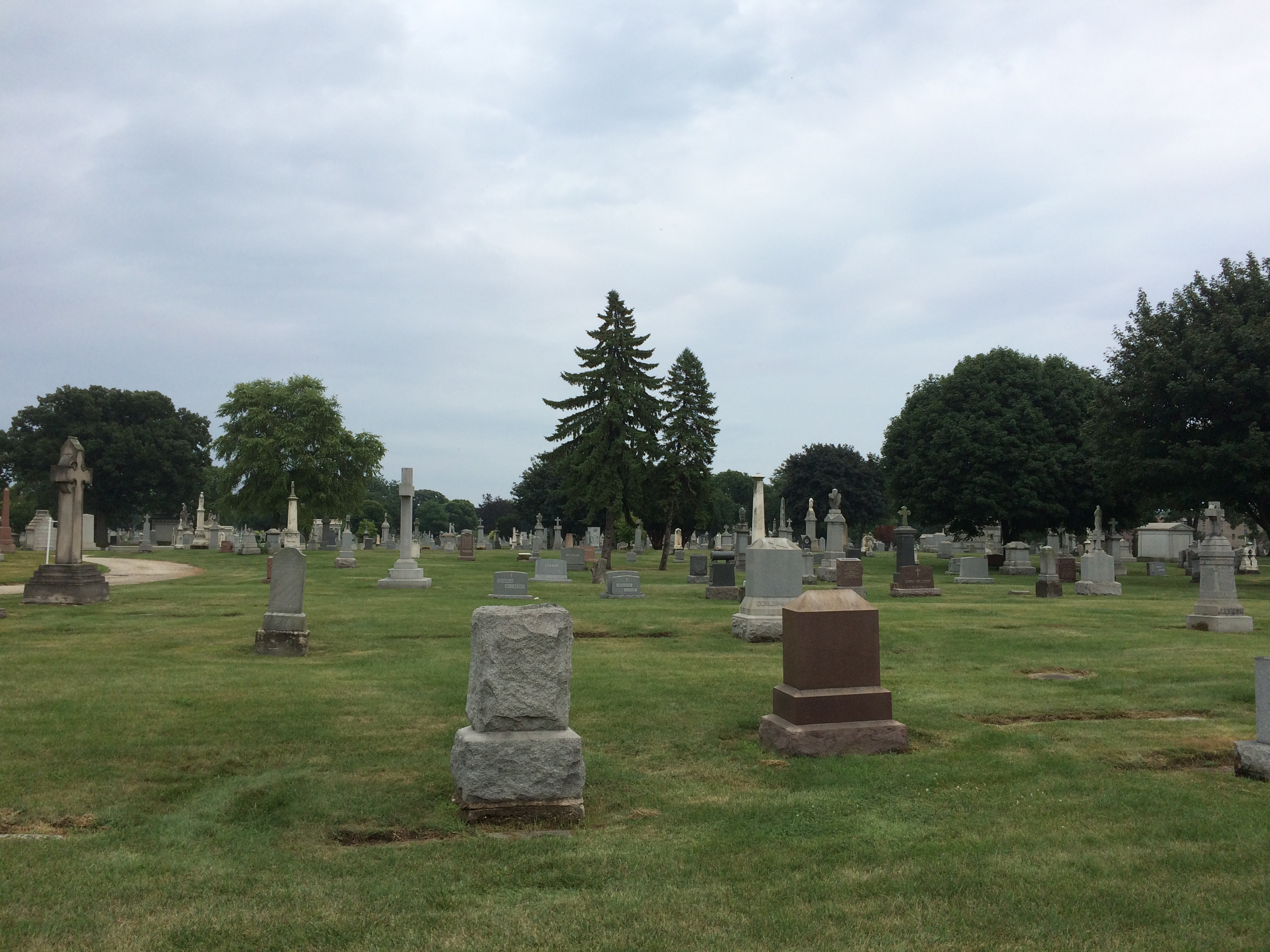
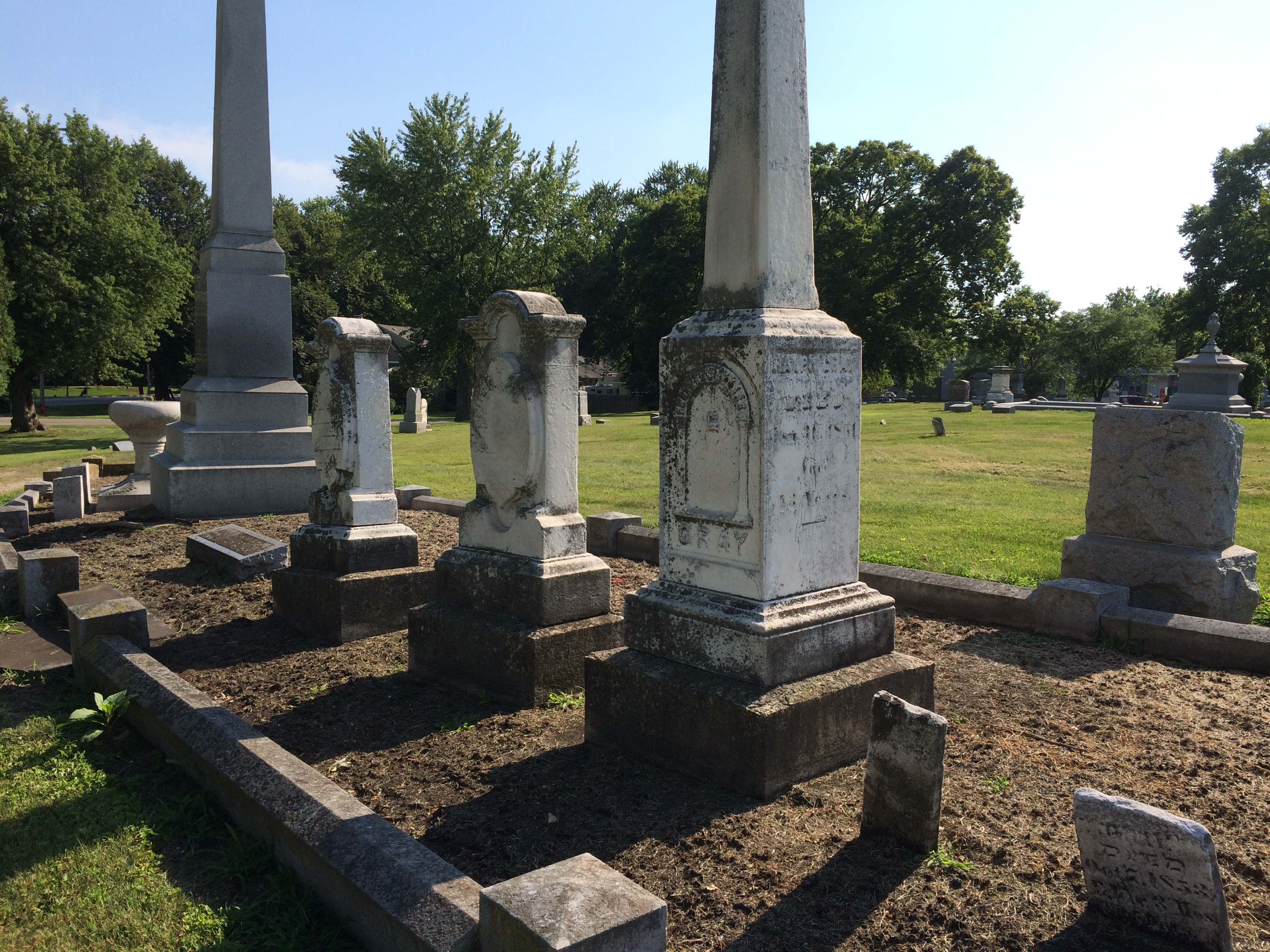
David Davis House BloomingtonBut that isn’t why I swung through Bloomington. I wanted to see the Evergreen Memorial Cemetery. An impressive array of stones among the still-bare trees and brown grass.

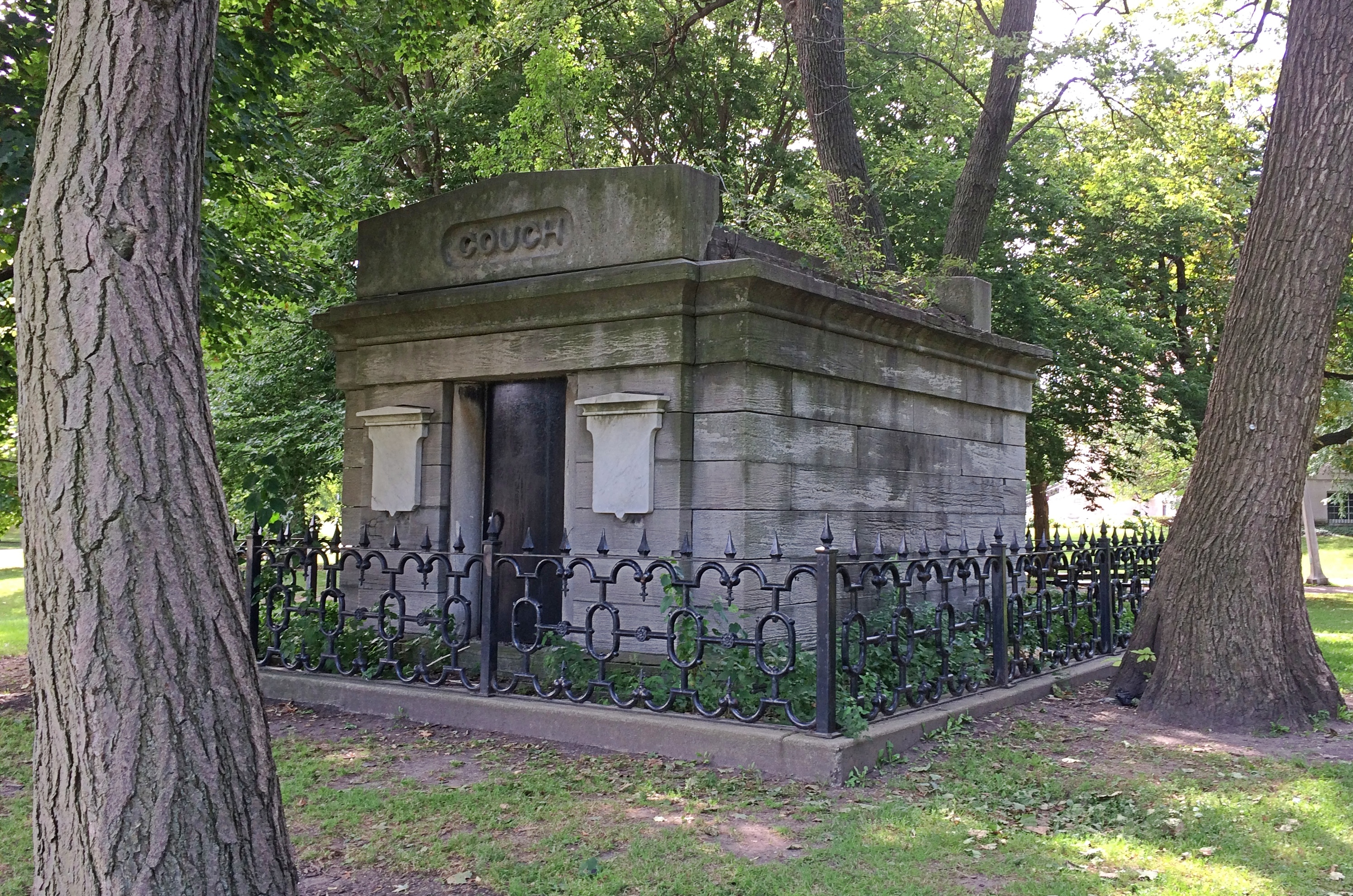
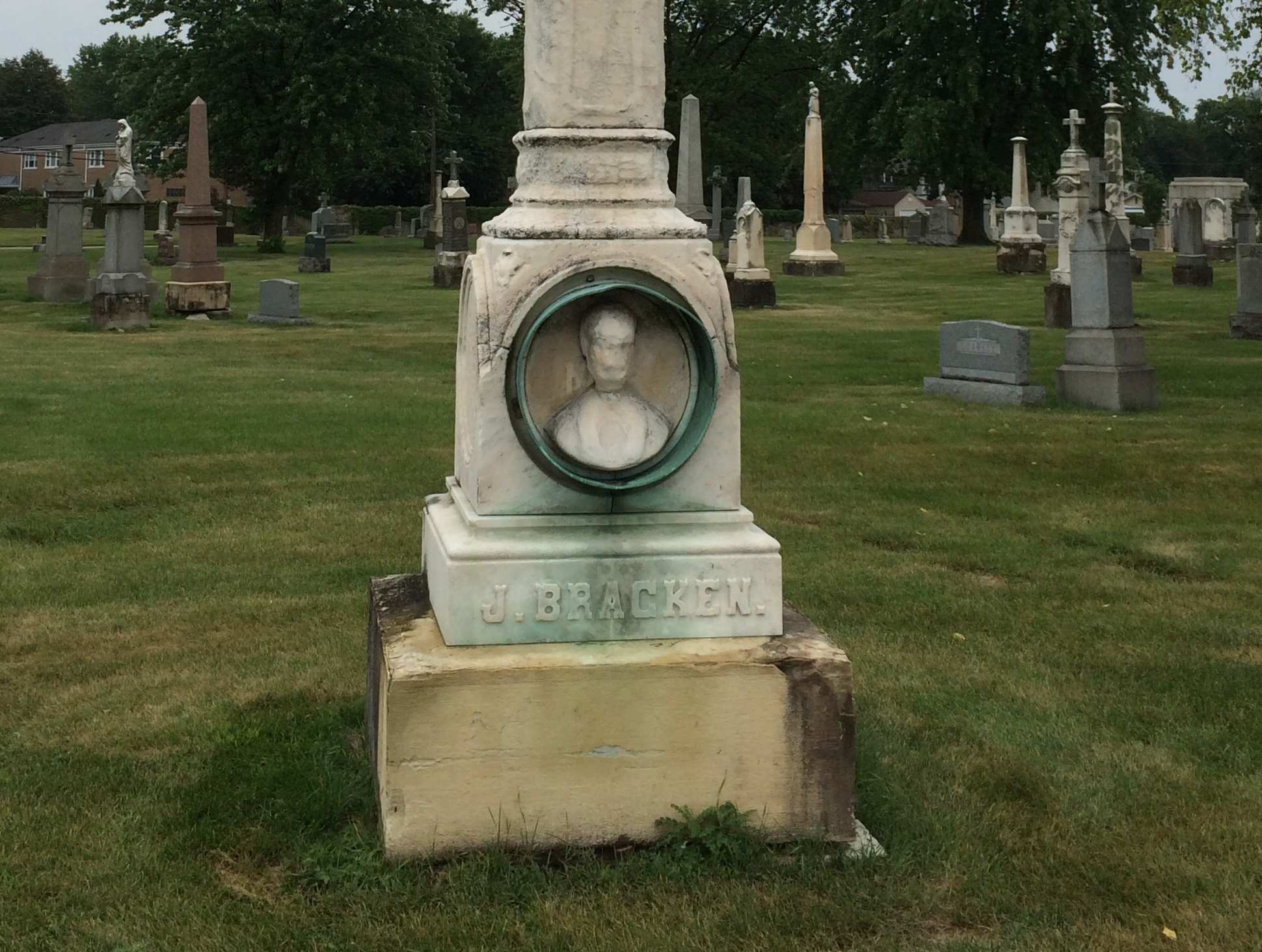
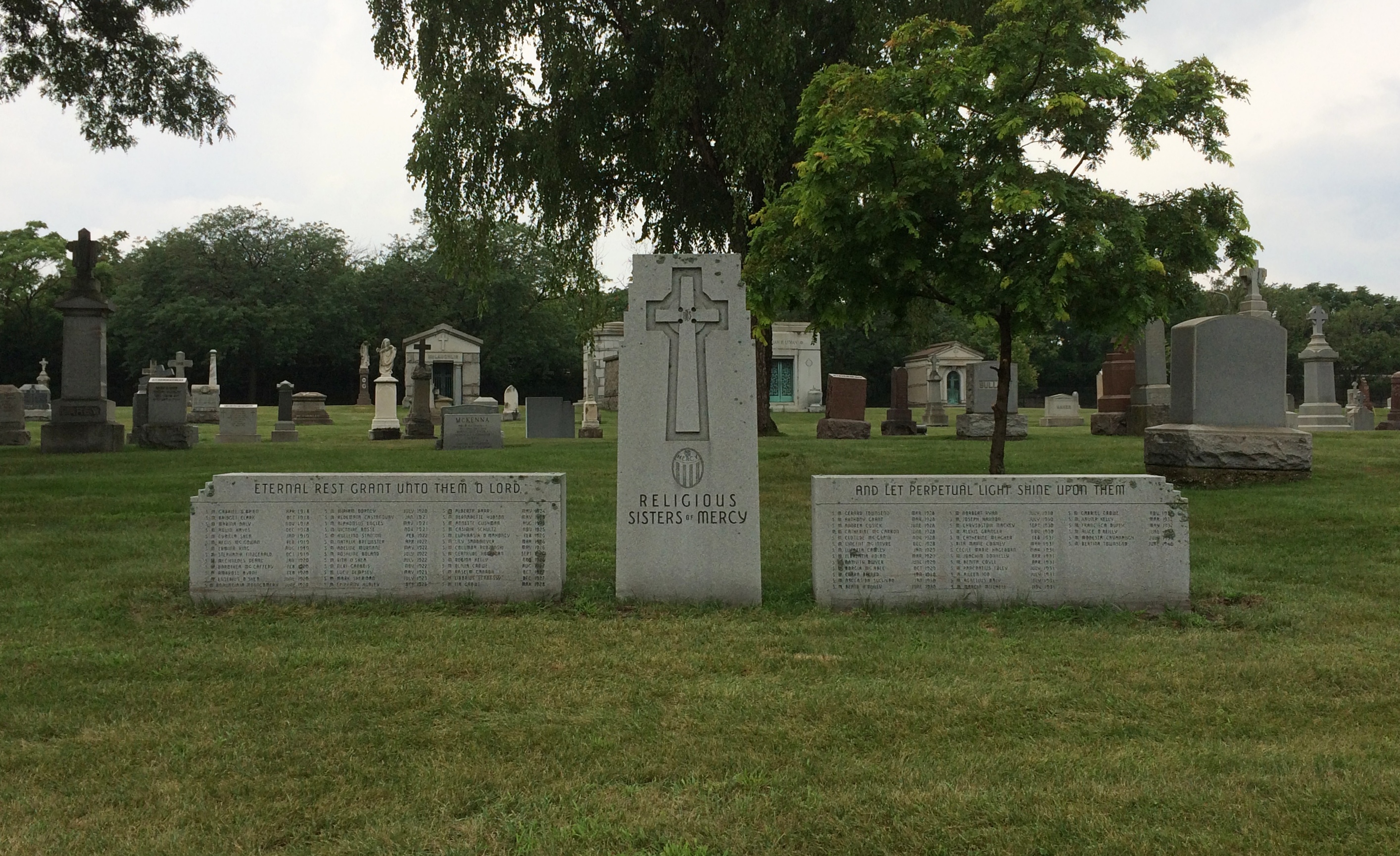
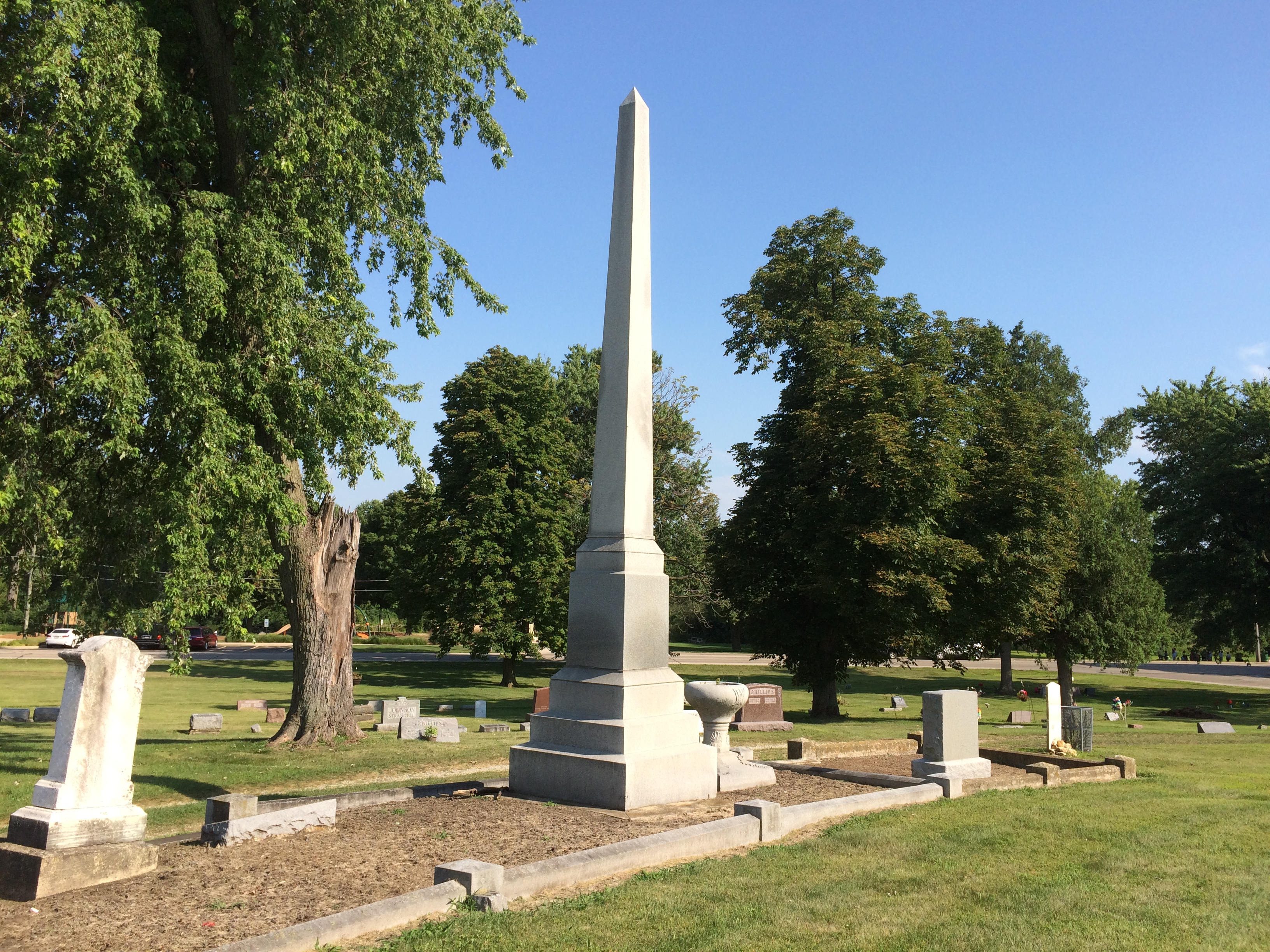
Evergreen Memorial Cemetery, BloomingtonEvergreen Memorial Cemetery, BloomingtonEvergreen Memorial Cemetery, BloomingtonSome sizable memorials, too, befitting the prosperous place Bloomington was in the 19th century.

Evergreen Memorial Cemetery, BloomingtonEvergreen Memorial Cemetery, BloomingtonNot a huge amount of funerary art, but some.
Evergreen Memorial Cemetery, BloomingtonI’d come to visit the Stevensons. Here’s the Adlai Stevenson famed for being shellacked by Eisenhower but also for his denunciation of Soviet behavior on the world stage.

Evergreen Memorial Cemetery, Bloomington

This Adlai Stevenson was 23rd Vice President of the United States, from 1893 to 1897, during Cleveland’s second term.
Evergreen Memorial Cemetery, BloomingtonHad President Cleveland’s cancer in ’93 been more aggressive, or medical science not up to its extraction — a few years earlier, probably not — this is also the Stevenson who would have been president.

I didn’t know the Scotts also memorialized on the stone: Matthew and Julia Scott. Turns out Stevenson was married to Letitia, Julia’s sister. Also, Matthew T. Scott was a business partner of Adlai Stephenson, with a distinctly 19th-century CV: land speculation, newspaper publishing, a coal mine.
Just before I left, I took a look at something a little more unusual.
Evergreen Memorial Cemetery, BloomingtonAccording to a nearby plaque, the carving memorializes an airplane that crashed into the tree that used to stand there.

“On May 31, 1948, a group of citizens gathered at Evergreen Memorial Cemetery’s Civil War Veteran’s enclosure…” the plaque begins.

That must be here, very near the tree.

Evergreen Memorial Cemetery, Bloomington“… During the ceremony, a WWII trainer plane flown by James A. Tuley and passenger Chester H. Frahm was flying over Evergreen… to drop poppies over the grounds. The plane crashed into this tree, killing Frahm and severely injuring Tuley,” the plaque continues.

“In 2015 this tree had to come down and cemetery employees felt something more needed to be done with the wood from the tree… chainsaw artist Tim Gill was contacted and he accepted the challenge.”

The Pantagraph published a fuller version of the story.

Oak Grove Cemetery, LeRoy

One place I wanted to visit during Sunday’s micro-excursion was the Evergreen Memorial Cemetery in Bloomington, Illinois, but just before I arrived at the town of LeRoy (see yesterday), which is about 20 miles from Bloomington, I spotted the Oak Grove Cemetery off U.S. 150.

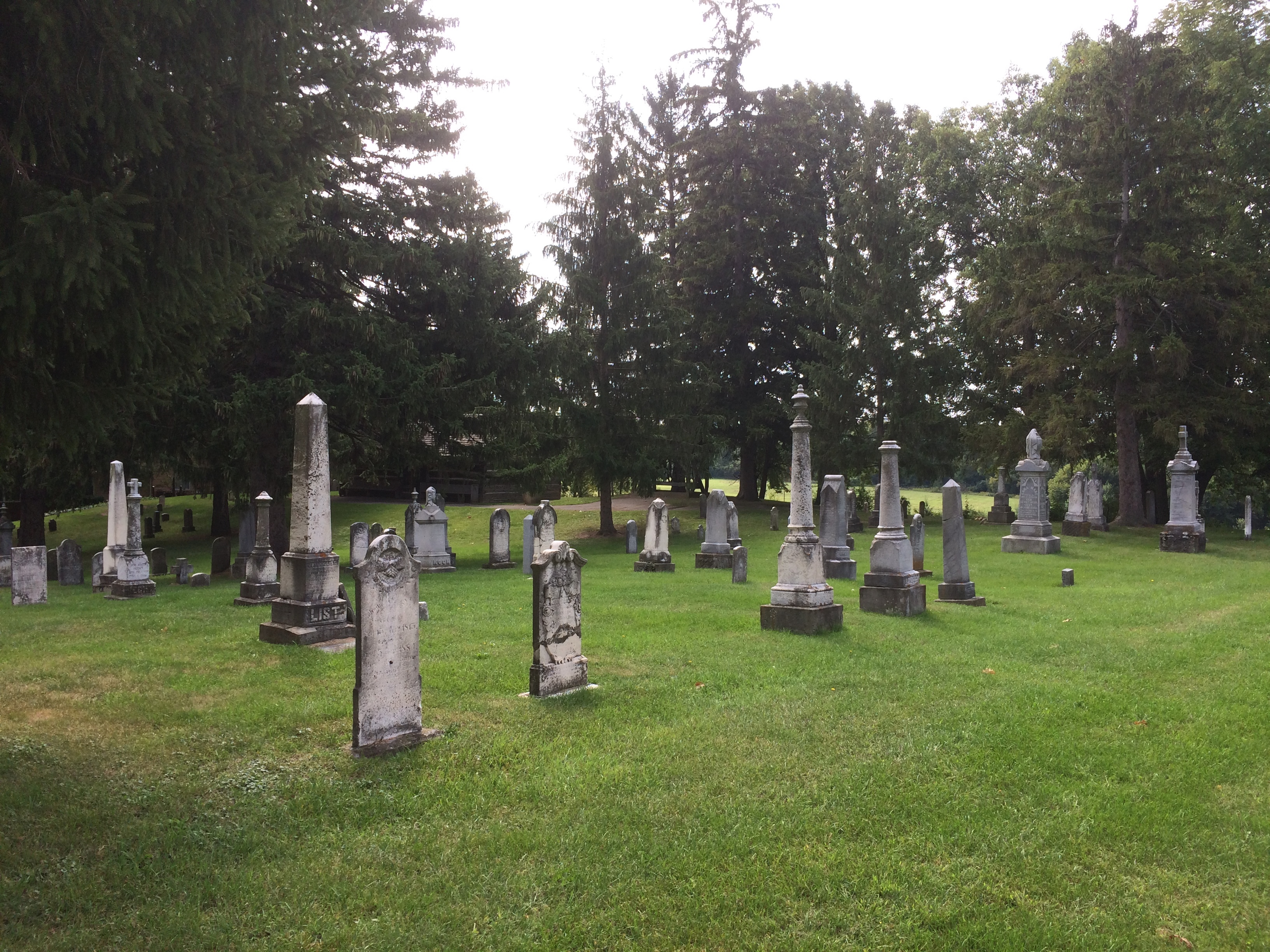
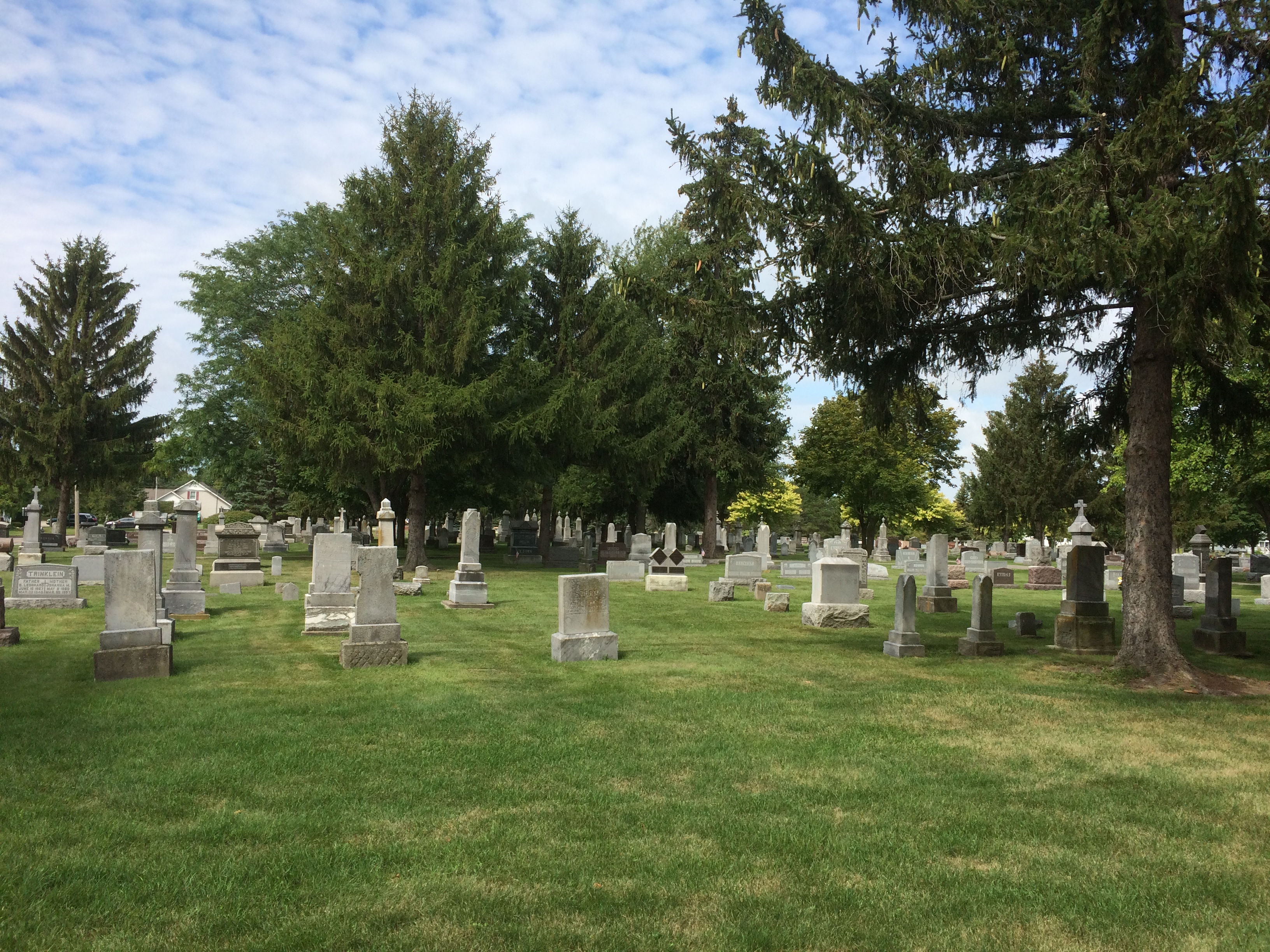
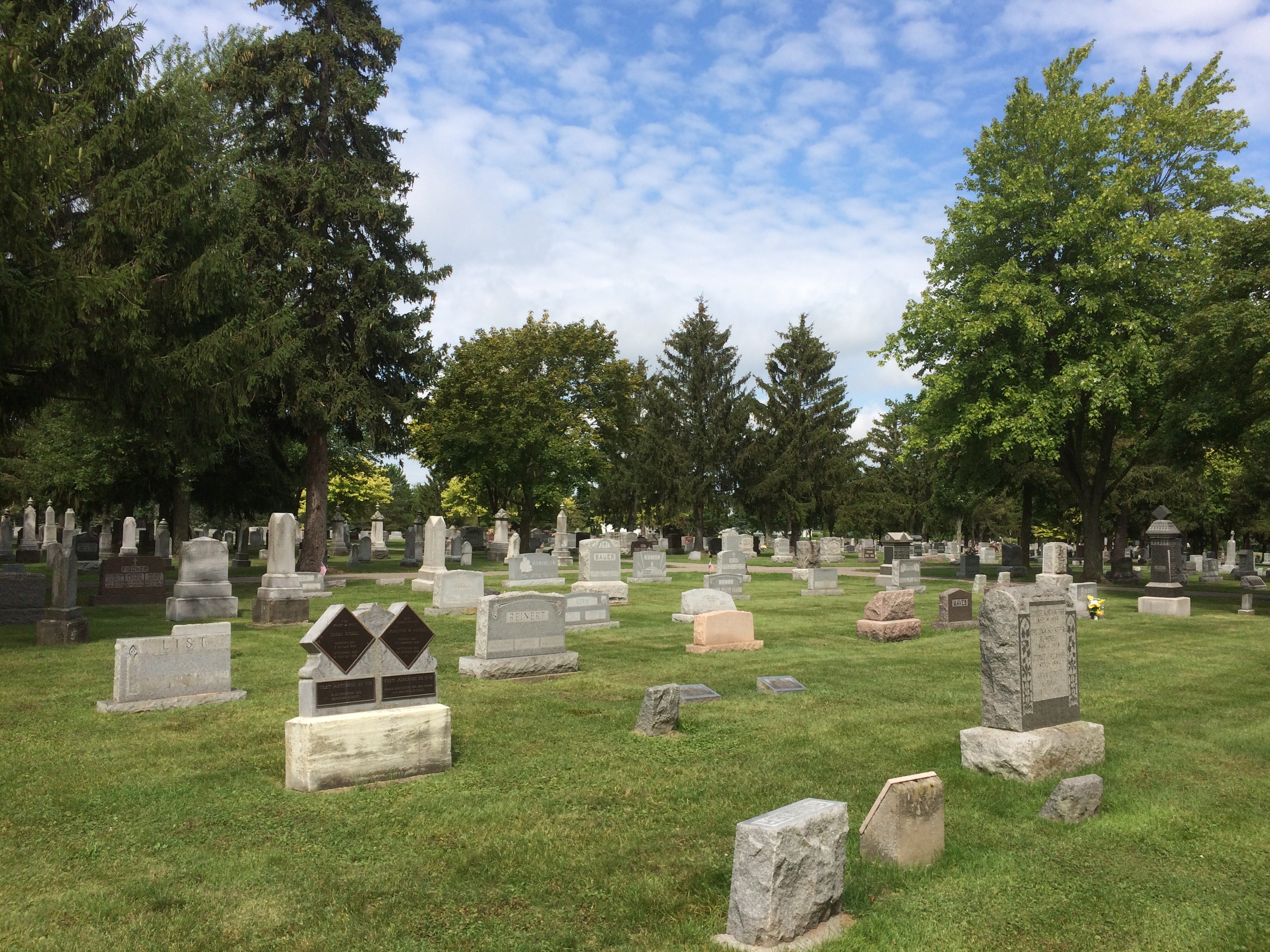
I pulled in. Why not? I expected a small cemetery, but it stretched back for acres, with plenty of well-established trees that will probably fill out nicely beginning next month.

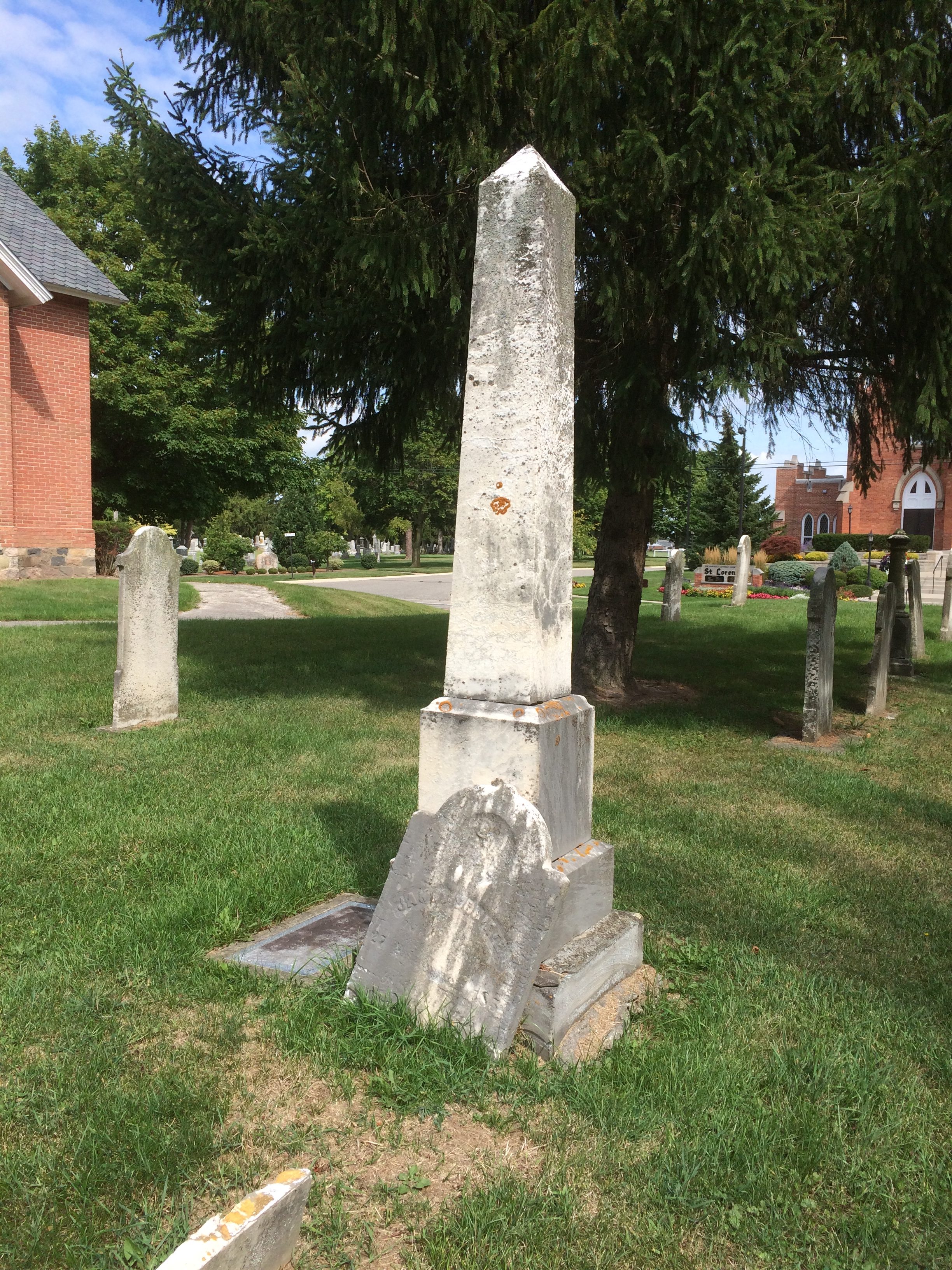
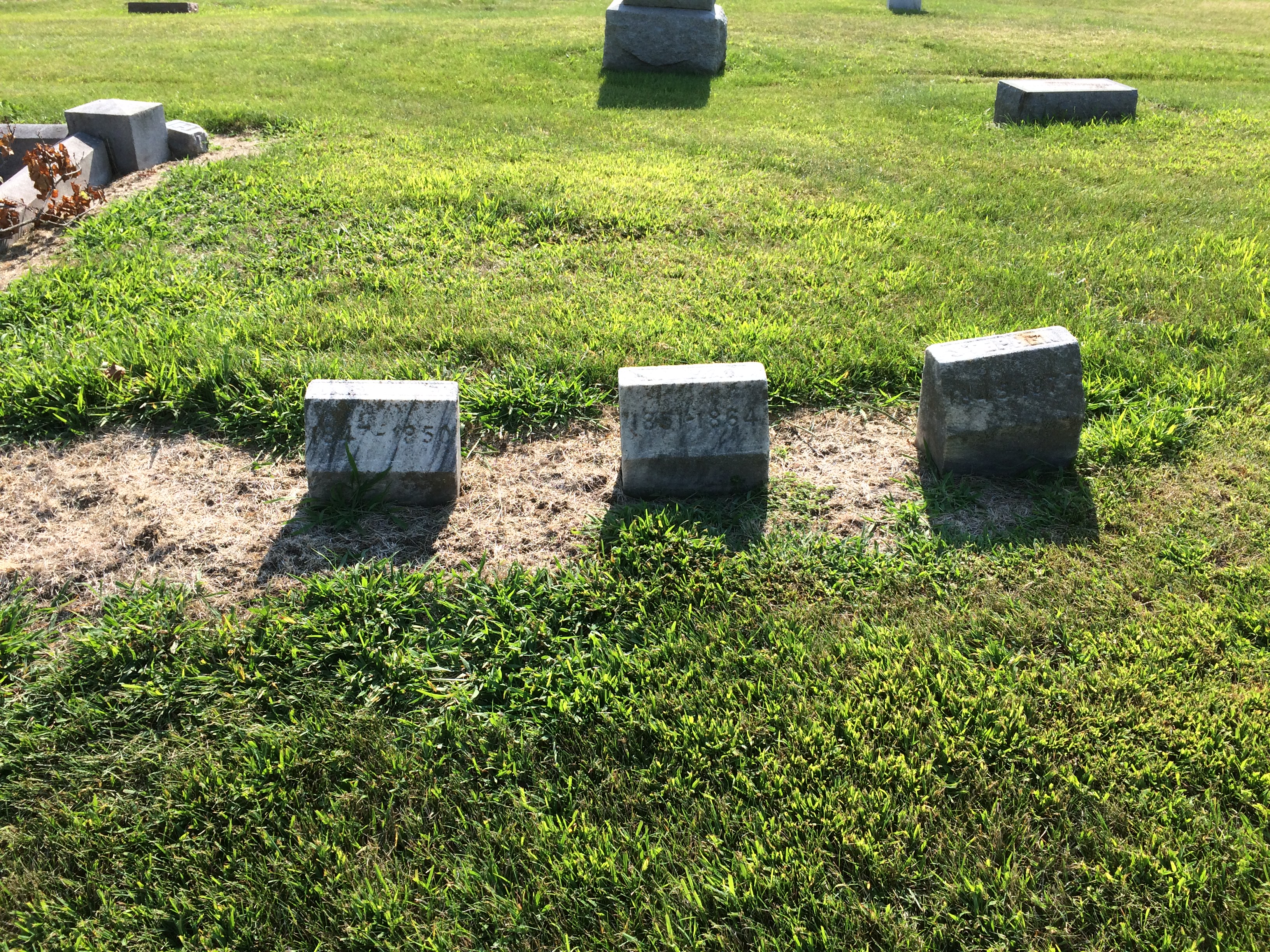
Oak Grove Cemetery, LaRoy IllinoisOak Grove Cemetery, LaRoy IllinoisOak Grove Cemetery, LeRoy IllinoisThere weren’t a lot a large memorials, but whoever Robert Flegel was, he and his wife Mary got an obelisk after their passing in the early 20th century.
Oak Grove Cemetery LaRoy IllinoisWhatever else he did, Flegel fought to save the Union, according to the inscription: Co. K, 108th Illinois Volunteer Infantry. Looks like his descendants or other family members are keen to decorate the many Flegel stones.

Oak Grove Cemetery LaRoy IllinoisThere are a lot of Munsters at Oak Grove as well.
Oak Grove Cemetery LaRoy IllinoisFurther back away from the road are older stones. Mostly 19th century, including some pioneers of McLean County, probably.
Oak Grove Cemetery LaRoy IllinoisAccording to Find-A-Grave, spiritualist Simeon H. West was buried in the cemetery after he “departed this life Apr. 2, 1920.” I hadn’t made his acquaintance yet — that happened later in the day — and I don’t remember seeing his fairly large stone.

LeRoy (Le Roy), Wausaneta and Simeon H. West

On Sunday afternoon, as I headed roughly northwest on U.S. 150 in McLean County, Illinois, I impulsively made a turn off the main road onto Center St., which goes directly to the town square of LeRoy. Or rather, the town sort-of-circle.

I came to be in that part of Illinois because earlier in the day, I’d taken Lilly back to UIUC at the end of her spring break. Usually the trip to Champaign involves popping down on I-57 and returning the same way. But the day wasn’t that cold — not like last time — and despite sometime drizzle, I wanted to make a slight detour and return home via Bloomington.

Champaign to Bloomington could mean a short drive on I-74. Or, if you want something different in March, you take U.S. 150, passing close to the still-unplanted fields and by hulking grain silos and through towns like Mahomet, Mansfield, Farmer City, and LeRoy (sometimes styled Le Roy). The road roughly parallels the Interstate. I took it.

When I got to the LeRoy square (circle), I noticed some memorials inside the circle, including a statue on a pillar. While I was still driving, I took it to be a memorial featuring a Union soldier. I parked nearby and got out for a closer look.

The formal name of the round-shaped green space in LeRoy is Kiwanis Park. Visitors are greeted on one side of the circle by a shoe-store mural.

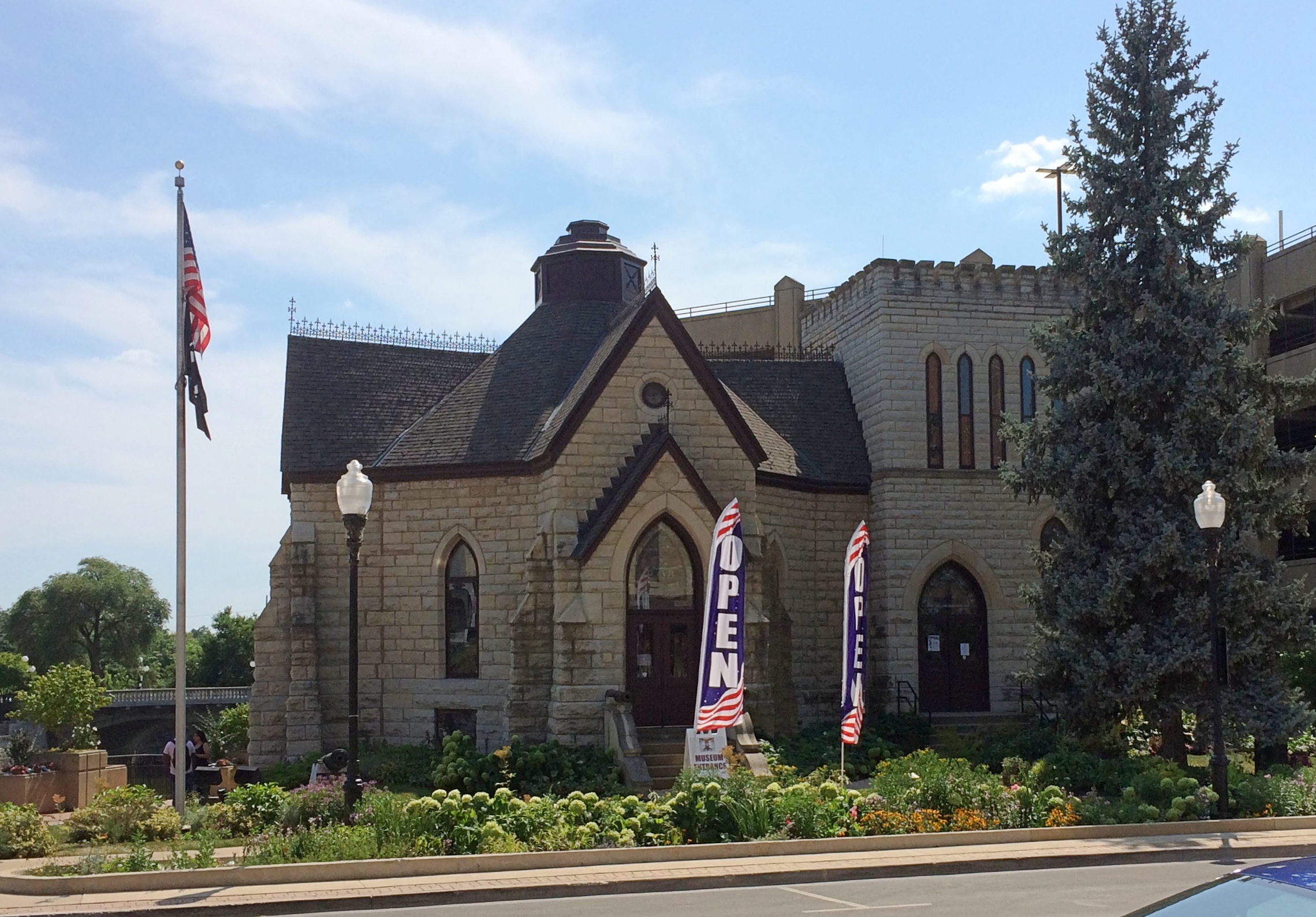
A building labeled “Town and City Hall” is next to the Le Roy Performing Arts & Media Center, which has the look of a former church building, but I didn’t take a closer look.

Also around the circle are an undertaker, the American Legion Post 79, a clinic and some other buildings.

Kiwanis Park itself has a gazebo. I have to like a place that has a gazebo.

There are also smaller memorials, such as one to all U.S. service men and women, and one to honor Victor, LeRoy Police K-9 Officer from 2005 to 2012.

As I got closer to the main memorial, I realized that it was no Union soldier.
It was an Indian.
If anyone else had been with me — and absolutely no one else was anywhere nearby — I would have said, “How about that?” or “That’s odd” or some such.

An inscription on the base says WAUSANETA. The year carved on the base is 1911.

Also on the base: Cultivate love, peace and harmony; life is too short and time too valuable to waste in angry strife. Be slow to believe evil reports about your neighbors. Be diligent in searching for something good to say about others, and when you find it don’t wait until they are dead, but say it at once.

And more: West’s Precepts. Love and thank the supreme power. Control your temper. Try to keep cheerful. Do all the good you can. Be honest, truthful and temperate. Help the poor, needy and sick. Encourage the weak and timid. Make a specialty of trying to add to the happiness of someone to-day…. and all other days.

What on Earth is this? Why is it in LeRoy, Illinois, about as off the beaten path as you can be?

Last night when I got home, I looked it up. It didn’t take long. The wonderfully named Pantagraph newspaper published an article in 2011 about Wausaneta by McLean County Museum of History Archivist/Librarian Bill Kemp.

“Although few know it today, this statue embodies LeRoy’s longtime ties to spiritualism…” Kemp wrote.

“The idea for such a statue came from local resident and ardent spiritualist Simeon H. West, and he foot the bill to purchase, ship and install the pre-cast metal Native American and its elaborate pedestal. West claimed that on more than one occasion he communed with a deceased Kickapoo named Wausaneta, and he erected this statue as a tribute to the chief and his people.

“The Wausaneta statue gazes in a northeasterly direction toward a long-gone Kickapoo fort or stockade located seven or so miles out of town. In late November 1905, West oversaw the placement of a granite marker at this rich archaeological and historic site (now considered part of the Grand Village of the Kickapoo).

“In the midst of that day’s heavy snow and howling winds, West had an intense spiritualist encounter, later reporting that he had established a ‘rapport with the spirits of the people who lived there in the distant past.’

It was then that he supposedly learned from these spirits that a Kickapoo by the name of Wausaneta was ‘head chief’ during the fort’s construction. In a later seance, West heard from Wausaneta himself, and was told that the chief had died at the age of 75 and was buried north of the historic marker.”

“LeRoy’s Wausaneta was unveiled to the public on New Year’s Day 1912. West, in his typical new-agey grandiosity, dedicated his statue ‘to the lovers of the beautiful in every country and in every clime until time shall be no more.’ ”

That made my day. It’s exactly the kind of eccentric sight I enjoy finding on the road, especially when serendipity leads me to it.

Thursday Sundries

I’m glad to report that Jimmy Carter has become the oldest person ever to be President of the United States, at 94 years, 172 days, topping George H.W. Bush. For many years, life expectancy was such that no one bested John Adams, who died at 90 in 1826. Finally Ronald Reagan lived longer than Adams in 2001. Since then, so have the elder Bush, Ford and Carter.

I’m not glad to report that we’ve been getting a raft of calls from an “800 Service” lately, asking me to contact “Apple Support Advisor” for unspecified but ominous reasons. Ah, spring is coming, and that must be the season for phishing.

Turns out it isn’t even a new scam, but this one didn’t say anything about iCloud.

Email subject line recently from a news outlet that has my address: “Meet R. Kelly’s lawyer.”

I don’t think so. Some years ago, I introduced my daughters to the concept of the List of Things I Don’t Care About. A lot celebrities are on the list. More are added all the time, mostly without me being conscious of it. R. Kelly’s been there a long time, but since his recent legal problems, he’s on the list with a bullet.

Here’s something I’d never heard of until the Internet offered it to me completely by chance, despite the fact that it happened in Texas, near a place that I drive by often when I visit that state: the Crash at Crush.

“On September 15, 1896, more than 40,000 people flocked to this spot to witness one of the most spectacular publicity stunts of the nineteenth century — a planned train wreck,” the Texas State Historical Association tells us.

“The man behind this unusual event was William George Crush, passenger agent for the Missouri, Kansas and Texas Railroad… As the arena for his spectacle, Crush selected a shallow valley just north of Waco, conveniently located close to Katy’s Waco-Dallas track.

“In early September 500 workmen laid four miles of track for the collision run and constructed a grandstand for ‘honored guests,’ three speaker’s stands, two telegraph offices, a stand for reporters, and a bandstand. A restaurant was set up in a borrowed Ringling Brothers circus tent, and a huge carnival midway with dozens of medicine shows, game booths, and lemonade and soft-drink stands was built.

“At 5:00 P.M. engines No. 999 and 1001 squared off at opposite ends of the four-mile track. Crush appeared riding a white horse and trotted to the center of the track. He raised his white hat and after a pause whipped it sharply down. A great cheer went up from the crowd as they pressed forward for a better view.

“The locomotives jumped forward, and with whistles shrieking roared toward each other. Then, in a thunderous, grinding crash, the trains collided. The two locomotives rose up at their meeting and erupted in steam and smoke.

“Almost simultaneously, both boilers exploded, filling the air with pieces of flying metal. Spectators turned and ran in blind panic. Two young men and a woman were killed. At least six other people were injured seriously by the flying debris.”

Say what you want about the 19th century, they knew how to stage a spectacle. A dangerous spectacle, but it must have been quite a sight.

The article doesn’t say, but I assume the conductors had some way of keeping the throttles open after they themselves left the engines before they gathered too much speed.

Another thing I didn’t know (there are so many): Scott Joplin named one of his pieces, “Great Crush Collision March,” after the event. Guess it counts as one of the lesser-known railroad wreck songs, unlike the more famous “The Wreck of the Old 97.”

Various Spacewalkers

The daylight around the spring equinox around here stretched from an overcast sunrise to an overcast sunset. But at least it wasn’t especially cold. Hints of spring are around, such as croci peeking out of the earth and robins bob-bob-bobbing.

For the equinox, time to list to “Equinox” by Coltrain.

Or, more obscurely, “E.V.A.” by Public Service Broadcasting. After all, a few days ago was the anniversary of the first spacewalk, undertaken by cosmonaut Alexei Leonov. He very nearly bought the farm there in orbit in 1965, but survives to this day at age 84.

He didn’t get a Google doodle this year. You’d think it would be a good one to illustrate, with “Google” standing in for the Voskhod 2 spacecraft, and Leonov floating nearby.

Interestingly, looking at this table, I see that there were long gaps between Soviet spacewalkers in the early days. After Leonov, no cosmonaut did so again until 1969, when two did; and then not again until 1977, after which red spacewalking became more regular.

The first non-American, non-Soviet spacewalker? One Jean-Loup Jacques Marie Chrétien, who also happened to be the first Frenchman in space in 1988.

The first woman? That would be Svetlana Yevgenyevna Savitskaya in 1984. Bet neither she nor Chrétien ever got a Google doodle.

Along E. 57th Street, Chicago

Our stroll through a small slice of the Hyde Park neighborhood on Sunday took us westward on E. 57th St. for a few blocks, roughly between S. Kenwood Ave. and S. University Ave. As you head west, small businesses and flats give way to university property.

Mostly. This is the 57th St. side of the First Unitarian Church of Chicago.
According to the AIA Guide to Chicago, the church, which was completed in 1931, is a “textbook example of English Perpendicular Gothic design [that] fits in easily with the limestone facades and Gothic ornament of many Hyde Park residences and university buildings.”

Denison B. Hull did the design. “The son of a five-term, Republican U.S. representative, Morton Hull, he grew up in the Hyde Park area that his father represented in the 1920s,” the Chicago Tribune said in his 1988 obit.

“After serving as an officer in World War I, Mr. Hull was graduated from Harvard University. In 1922, he won first prize in an architectural design contest conducted by the university.

Among his noted architectural work, besides the First Unitarian Church, were the restoration of Old Church and the expansion of the historical museum, both in Bennington, Vt…

Mr. Hull was noted also as a scholar of ancient Greek and Greece.”

They don’t make ’em like that anymore.

I’ve never been able to see the inside of First Unitarian. Services are at 10 a.m. Sunday, and if I ever happen to be in Hyde Park then, I will attend one. Not just to see the interior, but also to see whatever it is Unitarians do during their services.

At 1219 E. 57th St. is the Neubauer Family Collegium for Culture and Society. More simply, the Neubauer Collegium.

According to a sign in front, exhibits can be seen inside, but not, as it happens, on Sunday. I wondered just what the organization was, and why I’d never heard of it. To answer the second question first: it was founded only in 2012, and makes its home in the former Meadville-Lombard Seminary Building.

As for what it does, the Neubauer — as best as I can describe it — is a humanities think tank.

UChicago News says: “The Neubauer Collegium will unite scholars in the common pursuit of ideas of grand scale and broad scope, making the University of Chicago a global destination for top scholars engaged in humanistic research while also pioneering efforts to share that research with the public.”

Here’s the view of the Reynolds Club bell tower from near 57th St.
As probably no one calls it: the John J. Mitchell Tower of the Joseph Reynolds Student Clubhouse. These days, the clubhouse, completed in 1903, is a student union. Joseph “Diamond Jo” Reynolds was a Gilded Age steamboat and railroad magnate whose bequest paid for the building; I believe John J. Mitchell was a Chicago banker who seems to have died in a road-rage incident.

As Time reported in 1927:

Near Chicago last week death came to banker John J. Mitchell, and to Mrs. Mitchell. They were driving in an open motor car from their country home at Lake Geneva, Ill., to Chicago for the funeral of their elder daughter’s father-in-law, when their machine met a roadside brawl. Two motor cars, going in opposite directions had tried to pass a hay wagon at the same time. Both cars went into a ditch; the drivers jumped clear and fell to words and fisticuffs. The haywagon stopped as did several machines. Their drivers wanted to see…

To read more, I’d have to subscribe, but I’d rather leave the story at that.

Here’s the view of the tower from inside the quad formed by the Reynolds Club and some other buildings.

Designed by Shepley, Rutan & Coolidge, the building was “derived from St. John’s College at Oxford, and its domestic feeling is enhanced by a stair hall that could have come straight out of an English manor house.”

Also inside — behind the row of windows to the left of the tower, above — is the Charles L. Hutchinson Common, which SRC did as well. Hutchinson, better known as founder of the Art Institute of Chicago, ponied up for building the hall.

It’s also like stepping into Oxford. According to Wiki, anyway, “The Harry Potter film series has used the original hall at Christ Church in each of its films, imparting a tourist interest in its American replicate.[citation needed].”

Once the Rockets Go Up…

I’m much of the way through Von Braun by Michael Neufeld (2008), aptly subtitled “Dreamer of Space, Engineer of War.” Overall, a solid biography, though the chapters I’ve just finished bog down a bit in all the mid-50s interservice rivalry and the fog of uncertainty about who would get to launch the first U.S. satellite. It’s hard to keep track of all the bureaucrats, official acronyms and other long-forgotten missile minutiae.

In the end, the answer of who would get to launch for the Americans came after Sputnik was up and beeping. Namely, whatever’s ready, launch it now! Which of course led to flopnik, since the Navy’s Vanguard rocket wasn’t quite up to snuff.

Rather, it was the Army’s Redstone, a design overseen by von Braun, that put Explorer 1 into orbit (to be fair, the Navy launched a Vanguard satellite successfully on March 17, 1958, the second U.S. satellite, and it’s still in orbit). I didn’t realize it until now, but the Explorer Program is ongoing after six decades, with over 90 missions to its credit.

Granted, we’ve been sluggish about getting around to the big-deal missions like sending astronauts to Mars, but by no stretch of the imagination has humanity turned its back on space exploration during any of the last 60-odd years.

As for von Braun, the bio doesn’t shy away from his early employment history and the various Nazi bureaucracies that facilitated development of the V-2, often using slave labor. He was a rocket engineer to his core, and happy to work for whomever would facilitate rocket development — hideously expensive when you get beyond fireworks — up to and including membership in the SS.

One of these days, I’ll have to return to Huntsville, Ala., to see what NASA has done with its rocket displays at the Marshall Space Flight Center (the haus that Wernher built). I remember seeing some of them in 1984, but I suspect the museum’s been expanded since then.

Also, I was only vaguely aware of how well known von Braun was to the American public, even in his pre-Saturn V days, what with his collaborations with Collier’s and especially Disney in the 1950s. Von Braun was famed as a space-flight evangelist at a time when a lot of people probably considered it a not-in-my-lifetime sort of proposition. Lehrer was making fun of a celebrity.

Remarkably, PDFs of “Man Will Conquer Space Soon!” and the other Collier’s articles are available here, complete with the magnificent Chesley Bonestell illustrations.

Digression: there’s a Bonestell Crater on Mars (42.37° North, 30.57° West). An image is downloadable, in this case from NASA. Which I did.

One more thing about von Braun. I don’t have to go very far to find a small tribute to him.

That’s Von Braun Trail in Elk Grove Village, here in the northwest suburbs of Chicago. The neighborhood dates from ca. 1970, and some of the nearby streets honor other space pioneers: Aldrin Trail, Armstrong Ln., Cernan Ct., Conrad Ct., W. Glenn Trail, Haise Ln., Lovell Ct., Roosa Ln. and Worden Way, and probably others I haven’t spotted.

The Alamo and Its Cenotaph

March 6 has rolled around again, so of course Remember the Alamo.

During my most recent visit to the Alamo, I also took more than a passing look at the Alamo Cenotaph. Here it is in the context of Alamo Plaza.

Alamo Plaza October 2018Why civic busybodies think the Cenotaph needs to be moved, or Alamo Plaza should be sterilized in the name of History, is unclear to me. I was there on a warm day and Alamo Plaza was alive with people. As a plaza in the here and now should be.

Living urban texture isn’t somehow at odds with proper reverence for the Shrine of Texas Liberty. As I understand the plans for Alamo Plaza, its living urban texture will slowly be strangled. That’s no way to remember the Alamo.

Enough of that. As it stands now, the south face of the Cenotaph — which is 60 feet high — features a figure known as the Spirit of Sacrifice.

Alamo Cenotaph 2018Under the figure, text reads: From the fire that burned their bodies rose the eternal spirit of sublime heroic sacrifice which gave birth to an empire state.

On the east and west faces are depictions of the defenders of the Alamo.

Alamo Cenotaph 2018Alamo Cenotaph 2018None other than Pompeo Coppini did the figures. I’ve come across his work before in Austin and Dallas.

I didn’t capture the main inscription, which says:

Erected in memory of the heroes who sacrificed their lives at the Alamo, March 6, 1836, in the defense of Texas. They chose never to surrender nor retreat; these brave hearts, with flag still proudly waving, perished in the flames of immortality that their high sacrifice might lead to the founding of this Texas.

Apollo 9

Now I’ve seen everything. An ad for something called “Crop Preserver Deodorant Anti-Chafing Ball Deodorant” popped up on YouTube the other day. Ball deodorant?

The ad is here. It is as ridiculous as you’d expect. So is the price: $20 for 3 fl. oz. Someone is guffawing on the entire route to his financial service provider.

This year, as NASA is eager to point out, marks the 50th anniversary of the first Moon landing. I’m glad to point that out too, but it’s more than just Apollo 11.

Fifty years ago this week, Apollo 9 orbited the Earth, its main mission to test the lunar module. The flight was an unqualified success.
Gumdrop Meets SpiderApollo 9 is a special one for me. Odd, considering that Apollo 8’s trailblazing journey to the Moon was so much bolder. It was, and that caught my attention, but it wasn’t until Apollo 9 that my full attention — as much as a near eight-year-old can muster — was on the space program.

By then, I’d realized that something very special was going on. Apollo 9 was part of something big. From then on, I followed all of the missions closely, down to the bittersweet Apollo 17 and its glorious night launch, when I was an older and wiser 11-year-old wishing that the rest of the missions hadn’t been cancelled.

NASA created an Apollo 9 video for the anniversary. The dance of Spider and Gumdrop in orbit. Remarkably, all of the crew are still alive.

It’s pretty rare that you can, as a late middle-aged person, look back on an opinion you had as a child and say, I was right. Something very special indeed was going on.

The San Marcos City Cemetery

San Antonio to Dallas is roughly a five-hour drive straight through, provided traffic isn’t gummed up somewhere along I-35, which it will be in Austin, so best to take Texas 130 around that city, even though it costs extra.

Also best to break the trip into smaller segments and take a look around an in-between place or two. My nephew Dees told me that Aquarena Springs, formerly a postwar tourist attraction — trap — of some renown in San Marcos, is a good thing to see. In recent years, Texas State University-San Marcos remade the place as the Meadows Center for Water and the Environment. Glass-bottom boat tours are star attraction now, rather than the “aquamaids” of yore.

Sounded like a diversion of more hours than we were willing to spare, so we skipped it this time. But we did stop in San Marcos.

First for a look at the Hays County Courthouse, which is a fine old building with a statue of John Coffee Hays outside, whom the Handbook of Texas Online calls a “Texas Ranger extraordinary.” South Texas sculptor Jason Scull did the bronze.
Hays Statue, Hays County CourthouseNot far away is the San Marcos City Cemetery. According to the Heritage Association of San Marcos, the cemetery replaced a smaller boneyard, with burials beginning in 1876. The city took ownership in the 20th century, as it retains today.

Though you climb a small hill at the entrance, most of the cemetery is level. Though not heavily wooded, the cemetery has trees to remind us that late February in central Texas is early spring.

San Marcos City CemeterySan Marcos City CemeterySan Marcos City CemeteryThere are some larger stones and some funerary art, but not a lot.
San Marcos City CemeteryAs Jay pointed out, ready money in 19th-century San Marcos — when such art was more likely to be erected — was in short supply, at least compared with a place like New York, home of Green-Wood and Woodlawn, or even old Charleston.

Still, there are some more ornate markers, such as the draped obelisk of Z. T. Cliett (1847-1892).
San Marcos City CemeteryOr the stone of Dr. P. C. Woods (1820-1898).
San Marcos City CemeteryA nearby Texas Historical Commission marker says that Dr. Woods came to Texas from Tennessee, as so many did (T for Texas, T for Tennessee). Commanding the 32nd Texas Cavalry Regiment during the war, he patrolled the border with Mexico and the Gulf coast against possible Union attack, and fought in Louisiana, where he “received an arm injury which impaired him for the rest of his life.” That didn’t keep him from being a farmer and doctor in postbellum Texas, however.

Thomas Reuben Fourqurean (1842-1925) (interesting name) had a metal marker to denote his service to the CSA, of the kind that’s easy to find in older Southern cemeteries.

San Marcos City CemeteryAnother marker — local, not state — tells the story of Ann B. Caldwell (1800-65), who was reinterred here in the 1870s from an earlier San Marcos cemetery.
San Marcos City CemeteryIn life, she had been among Stephen F. Austin’s colonists and then an early settler in Hays County.

The cemetery’s old enough to include weather-worn stones whose names have been lost to time.
San Marcos City CemeteryEveryone’s stones will eventually disappear in the fullness of deep time, of course. These stones simply have a head start on the others.