St. Petersburg 1994

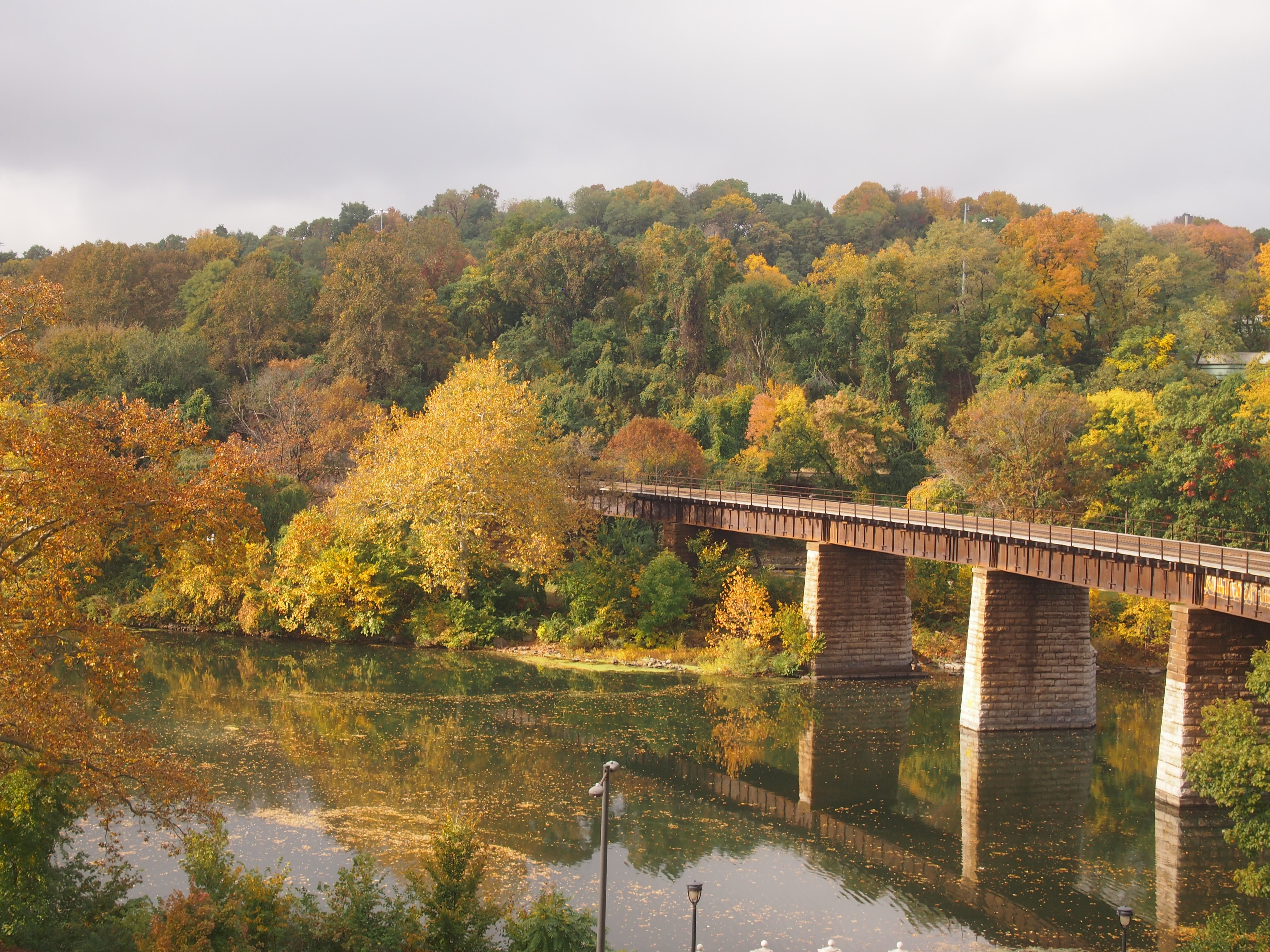
After Moscow comes St. Petersburg. Of course it does. We spent the last days of our Russian visas in St. Petersburg after taking an overnight train between the cities, and after hearing stories about how thieves would pump knockout gas into our train cars and proceed to rob us naked. Somehow that didn’t happen.

If the Russians had been less prickly about extending tourist visas, we might have spent a few more days in the country, spending some of the hard currency we had that they wanted. But no.

StPete94.1It was a balmy October day when we boarded the Aurora. The vessel survived the Battle of Tsushima and later of course had her part to play in the October Revolution. Since the mid-Soviet period, Aurora has been a museum ship.

StPete2Also balmy outside the Hermitage. Much spectacle on the exterior, many fine works of art inside, but dank and crummy amenities, especially the bathrooms.

The Pigeons of ’48

Missed the big-hairy-deal debate last night. Nothing either of them could say at this point is going to change my mind. This election has gone on long enough already.

Instead I worked, as I usually do on Monday nights, and late in the evening read for pleasure, as I often do. Currently I’m working my way through 1948 by David Pietrusza (2011), which is about (as the subtitle says), “Harry Truman’s Improbable Victory,” or the story of an election that didn’t go on quite so long, and had its share of surprises. I read Pietrusza’s book about presidential politics in 1920 some time ago, and it was fairly good. So is 1948.

I haven’t been in a hurry to get through 1948, diverting into other books as well, such as a second reading of The Right Stuff (first time was in the early ’90s, and well worth the re-read), and first readings of The Basketball Diaries and Death Comes for the Archbishop. It’s a rare time when I just read one thing all the way through to the exclusion of others. I might even take up News from Tartary soon, since it’s been much too long since I read any Peter Fleming.

1948’s got some interesting detail. Here’s an anecdote about the Democratic National Convention that year that I like: “With the convention running three hours and forty-three minutes behind schedule, [Sam] Rayburn nevertheless undertook one last chore before introducing the exceedingly patient Truman: ‘I want to introduce Mrs. Emma Guffey Miller, Pennsylvania delegate-at-large. She has a surprise for us which I hope the convention will enjoy.’

“The plump, white-frocked, seventy-three-year-old Mrs. Miller, younger sister of former Pennsylvania senator Joseph Guffey, had prepared an elaborate, six-foot-high floral display composed of red and while carnations, in the shape of the Liberty Bell. Imprisoned inside it for several hours were forty-eight caged white pigeons, officially and symbolically designated ‘doves of peace.’ In the horrible heat, a couple had already expired. The band stoked up ‘Hail to the Chief,’ and the surviving birds — crazed by the noise, lights, and the heat — exploded out of the opened ‘Liberty Bell.’

“Pigeons flew into the rafters. They dive-bombed delegates. Men and women shouted, ‘Watch your clothes!’

” ‘Though the press delicately did not mention it,’ noted Clark Clifford (who did), the ‘doves of peace began, not surprisingly, to drop the inevitable product of their hours of imprisonment on any delegate who had the bad luck to be underneath them.’

“Some birds landed on the platform. Rayburn frantically shushed them away. One nearly landed on his glistening, bald head… ‘Get those damned pigeons out of here!’ he screamed over live radio and TV.

” ‘As [Truman] spoke,’ Time reported, ‘pigeons teetered on the balconies, on folds of the draperies, on overhead lights, occasionally launched on a quick flight to a more pigeonly position.’

“Thus, Harry Truman’s choice of a crisp, double-breasted white suit that evening may not have been the wisest choice of the campaign…”

Nevertheless, Truman’s ’48 Democratic Convention acceptance speech famously turned out to be a barnburner: “Senator Barkley and I will win this election and make these Republicans like it — don’t you forget that!”

Queen Elizabeth Cake, NW Suburban Style

A recent birthday cake in our house.

Queen Elizabeth Cake, Deerfield BakeryOne candle because no one could be bothered to come up with some other combination. “It’s for your first half-century,” I told Yuriko.

It’s called a Queen Elizabeth Cake, a creation of the always-talented Deerfield Bakery here in the northwest suburbs. The bakery’s web site tells me that it’s “yellow cake filled with strawberries, Bavarian cream and sliced bananas.” That jibes with my experience of eating some of it.

Also, “a single strawberry crowns this dessert, created by Henry Schmitt in honor of Queen Elizabeth’s visit to Chicago in 1959.” That would be part of the Queen’s tour along the spanking-new St. Lawrence Seaway that year. (A bit of major infrastructure that should be better known; I’d bet that only a small number of kids in Lilly’s dorm, just to pick one sample of people that age, know what it is.)
Henry Schmitt, coming from a line of bakers from Germany, founded Deerfield Bakery in metro Chicago in the 20th century. Apparently his QE Cake was an idiosyncratic take, since elsewhere (such as allreipes.com), I’ve read that the term refers to “a date nut cake… crowned with a broiled coconut topping.”

That sounds good too, but it isn’t anything like the Deerfield Bakery creation.

Queen Elizabeth Cake, Deerfield BakeryWhich is very, very good.

Bachelor’s Grove Cemetery (Or, I Ain’t Afraid of No Ghost)

By the end of August, summer’s a little tiring, but I’m also not glad to see it go. Odd how that works. Back to posting again on September 6.

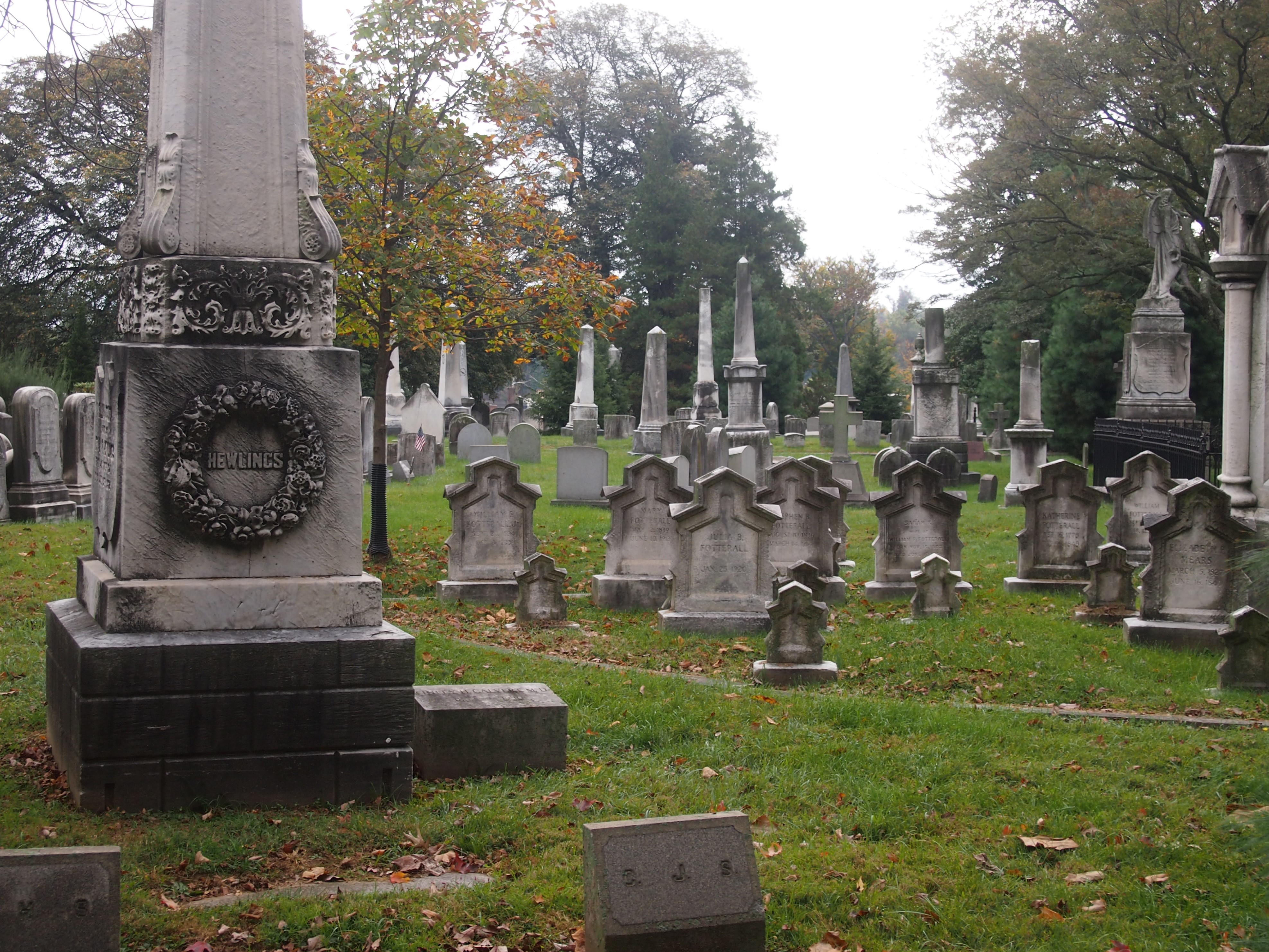
As if I hadn’t seen enough cemetery grounds for the day last Saturday after I visited the Oak Woods Cemetery, I decided before going home to fulfill a longstanding ambition and see Bachelor’s Grove Cemetery in south suburban Bremen Township. Going all the way to the south suburbs just to see Bachelor’s Grove has always been a stretch, but I was already further south than I usually go, making the cemetery relatively close.

Bachelor’s Grove is known for one thing locally, and maybe even in the wider world: ghosts. Graveyards.com’s Illinois page, which usually includes fairly sober assessments of burial grounds, says the following:

A small, abandoned graveyard in the southwest suburbs has been called the most haunted place in Chicago — and one of the most haunted places worldwide.

This is Bachelor’s Grove.

WARNING: Do not go in or near Bachelor’s Grove Cemetery at night. Do not go in or near Bachelor’s Grove Cemetery at Halloween, or for several weeks before or after that date. You will be arrested and charged with trespassing.

The author of graveyards.com recommends that you don’t go to Bachelor’s Grove at all.

How do we know the place is haunted? Same way we know anywhere is haunted: people say it is. If I sound skeptical, I am. Not necessarily about the reality of noncorporal beings, but about the tales of Bachelor’s Grove. It’s easy to tell stories about an abandoned graveyard in the woods, especially if those woods happen to be in a suburban area where teens are looking for places to hang out undisturbed.

On the other hand, I’m not skeptical that forest preserve police — Bachelor’s Grove is on forest preserve land in our time — might go looking for nighttime visitors. The cemetery has an indisputable history of wankers showing up to vandalize the stones. Otherwise I can’t see that visiting the cemetery counts as trespass, since the point of a forest preserve is public use.

To get to Bachelor’s Grove, you park at one of the Rubio Woods Forest Preserve parking lots on the north side of the Midlothian Turnpike (143rd), and then cross that road not far to the west. A trail leads into the woods from the south edge of the turnpike. A sign on a chain between two posts says NO ENTRY, but I took that to mean vehicular traffic, since the path is wide enough for a car.
Path to Bachelor's Grove Cemetery, IllinoisI’ve read that this is the former route of the Midlothian Turnpike. If so, that would have taken traffic next to the cemetery, which is about a fifth- or a quarter-mile walk away. The cemetery itself presumably predates any modern paved road, having been founded, according to Graveyards.com, in 1864. The most recent burial was supposedly in 1965, but in any case it never was a large or populous necropolis. Instead of a city of the dead, more like a hamlet of the dead.

Older pictures of the cemetery, such as at Graveyards.com, depict a unkempt place, but on August 27, 2016, I found a well-maintained graveyard, at least in terms of undergrowth control, surrounded by a tall, newish chain-link fence, but with no gate. There are no signs telling you the name of the place or anything else.

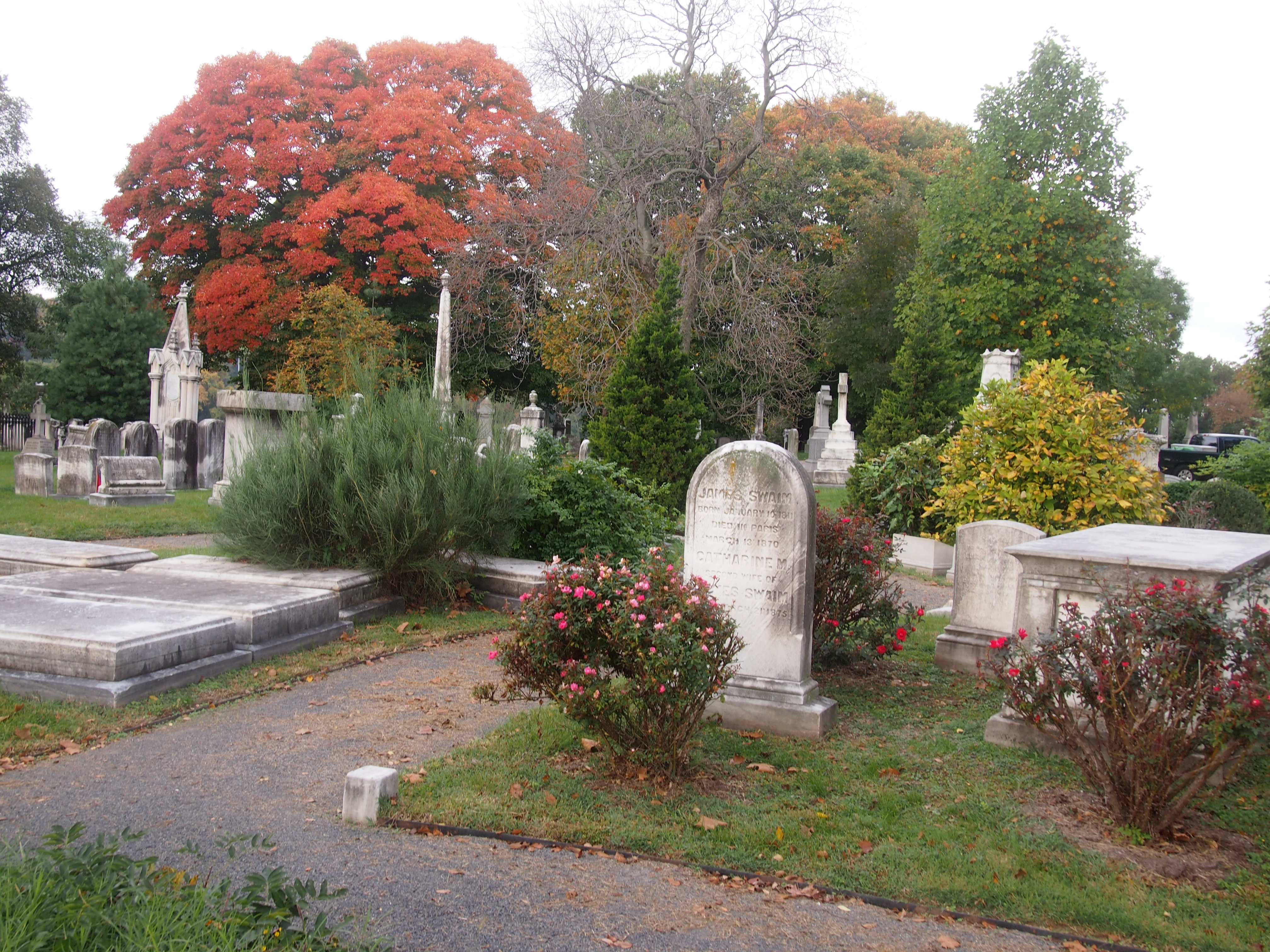
Bachelor's Grove Cemetery IllinoisBachelor's Grove Cemetery Illinois 2016Bachelor's Grove Cemetery Illinois 2016Could be that the forest preserve is now taking a “broken windows” approach to discouraging vandalism. That is, if the grounds look cared for, people are less like to do further damage. There’s still plenty of evidence of earlier damage, however, such as tumbled-down tombstones.
Bachelor's Grove Cemetery Illinois 2016Evidence of wankers with spray paint, too.
Bachelor's Grove Cemetery Illinois 2016Many of the stones merely look old and weather-worn, some of them beyond deciphering any names or other information.
Bachelor's Grove Cemetery Illinois 2016Bachelor's Grove Cemetery Illinois 2016Others have held up better, or maybe are more recent replacements.
Bachelor's Grove Cemetery Illinois 2016Bachelor's Grove Cemetery Illinois 2016The cemetery clearly has living visitors who do the opposite of vandalism. People have left items for the “Infant Daughter” at the largest stone in the graveyard, with the name Fulton on the other side. According to Graveyards.com, a descendant of these Fultons was the last trustee of the cemetery, turning it over to the forest preserve district in 1976.
Bachelor's Grove Cemetery Illinois 2016I was the only living person at Bachelor’s Grove early that afternoon, but as I was leaving the forest preserve, I saw a man and a woman headed in the direction of the cemetery. So I guess there’s often a trickle of curious visitors. Unless I saw a couple of really life-like haints, down to the sunglasses and baseball caps.

The South Shore Cultural Center

The South Shore Cultural Center at 7059 S. South Shore Dr. in Chicago started off as the South Shore Country Club. “In 1905, Lawrence Heyworth, president of the downtown Chicago Athletic Club, envisioned an exclusive club with a ‘country setting,’ ” the Chicago Park District says. “Heyworth selected unimproved south lakefront property, often used for fishing and duck hunting, for the new country club.

“The club’s directors hired architects Marshall and Fox, later known for designing many of Chicago’s most luxurious hotel and apartment buildings, including the Drake Hotel. For inspiration, Heyworth provided a photograph of an old private club in Mexico City, but asked the architects to exclude expensive embellishments…

“Enjoying immediate success and social importance, South Shore Country Club quickly outgrew its facilities. Marshall and Fox were hired to build a new clubhouse, incorporating the original ballroom. Constructed in 1916, the larger and more substantial reinforced concrete building, like the original, was designed in the Mediterranean Revival style.”

So it remains to this day. I have fond memories of the place, since I attended Wendy and Ted’s wedding there 20 years ago last month, but I hadn’t been back since. (The Obamas had their wedding reception there as well in 1992.) Since Oak Wood Cemetery isn’t far away, I decided to swing by and look around again.

This is the front. If you turn around at that point, you’ll see a long, lush garden planted on the narrow boulevard that serves as the driving entrance to the property.

South Shore Cultural Center, Chicago 2016The back. Or maybe that’s actually the front, since it faces Lake Michigan. Wendy and Ted stood just inside those large windows to take their vows, while the audience looked toward them and out toward the lake. A very nice setting.
South Shore Cultural Center, Chicago 2016Some deferred maintenance. It’s 100 years old and belongs to the city, after all.
South Shore Cultural Center, Chicago 2016But the inside still looks resplendent. According to the city, “the country club’s membership peaked in the late 1950s. Simultaneously, many African-Americans began settling in South Shore. Because the private club excluded black members, it went out of business in the 1970s. In 1974, the Chicago Park District purchased the property to expand its lakefront facilities.”

I walked all the way around the building and through it, also taking in a few views of the lake from the South Shore Cultural Center. From a rocky shore.
South Shore Cultural Center Chicago 2016 - Lake MichiganFrom the property’s small beach.
South Shore Cultural Center Chicago 2016 - Lake MichiganI sat for a while at a picnic table nearby, and the ambient sound was an audio parfait. The waves crashed against the shore; the wind blew; and the cicadas in the nearby tree made their buzz.

A warm Saturday, but almost no one else was there. Not sure why. It isn’t the best beach on Lake Michigan, but not the worst either. Maybe there were algae blooms in the water or something else noxious that I couldn’t see.

Confederate Mound

Something I didn’t know until I visited Oak Woods Cemetery on Saturday: Confederate Mound, which is within the bounds of the cemetery but on land owned by the federal government, is thought to be the largest mass grave in the Western Hemisphere. Not only that, the memorial at the site is the largest one in the North dedicated to Confederate soldiers.

Oak Woods Cemetery, Confderate Mound“Near the southwest corner of Oak Woods Cemetery in Chicago’s Hyde Park neighborhood [sic] stands a monument dedicated to the thousands of Confederate soldiers who died as prisoners of war at Camp Douglas,” notes the National Park Service. “The monument marks a mass grave containing the remains of more than 4,000 Confederate prisoners, reinterred here from the grounds of the prison camp and the old Chicago City Cemetery.

“Confederate Mound is an elliptical plot, approximately 475 feet by 275 feet, located between Divisions 1 and 2 of Section K.  The most prominent feature of the plot is the Confederate Monument, a 30-foot granite column topped with a bronze statue of a Confederate soldier, a figure based on the painting ‘Appomattox’ by John A. Elder.” (The sculptor doesn’t seem to be known.)

As for Camp Douglas, it “opened in 1861 as a training site for newly recruited soldiers from this area, and part of it would remain so,” says the Chicago Tribune. “It was named for the man who donated its 60 acres of land: Stephen A. Douglas, the politician known as the ‘Little Giant,’ most famous for his 1858 debates for the U.S. Senate with Abraham Lincoln (Douglas won re-election).

“It became a prisoner-of-war camp in early 1862, as 5,000 Confederate soldiers moved in after being captured when Fort Donelson in Tennessee fell to Union troops led by Gen. Ulysses S. Grant.”

From there, things at the camp went from bad to very, very bad in short order, as usual for 19th-century POW camps. The result was a mass grave in a corner of Chicago probably unknown to most 21st-century Chicagoans.

At least the Confederate dead are memorialized in a highly visible way, a result of sectional reconciliation late in the 19th century. “General John C. Underwood, a regional head of the United Confederate Veterans, designed the monument and was at its dedication on May 30, 1895, along with President Grover Cleveland and an estimated 100,000 on-lookers,” the NPS says.

“In 1911, the Commission for Marking the Graves of Confederate Dead paid to have the monument lifted up and set upon a base of red granite; affixed to the four sides of the base were bronze plaques inscribed with the names of Confederate soldiers known to be buried in the mass grave.”

Near the Confederate memorial are the graves of 12 guards at the prison who probably were carried off by the same diseases that beleaguered their prisoners. Their stones are all marked Unknown.

Oak Woods Cemetery Chicago, Confederate Mound, Guards GravesThere are also four well-preserved cannons at the site as well.
Oak Woods Cemetery Chicago, Confederate MoundElsewhere at Oak Woods Cemetery are a smaller number of Union graves — as far as possible from Confederate Mound, our guide pointed out (sectional reconciliation only went so far).
Oak Woods Cemetery Chicago - Union gravesIf I remember correctly, they were residents of a Chicago old soldier’s home, and so their burials were a good bit later than the Confederates’ (as at the Texas State Cemetery). A weather-worn soldier watches over them.
OLYMPOak Woods Cemetery Chicago - Union gravesUS DIGITAL CAMERASo does Lincoln, in an unusual posture for depictions of the 16th president.
Oak Woods Cemetery Chicago - Union graves - Lincoln Statue Post 91 of the Department of Illinois GAR put up the statue, which is a copy of a statue erected in 1903 near Pana, Ill. The sculptor was Charles Mulligan, who also did “Lincoln, The Railsplitter” in Garfield Park.

One more stone at Oak Woods, though it has nothing to do with the Civil War. It’s a memorial to railroad engineer Cale Cramer.
Oak Woods Cemetery Chicago - Cale Cramer memorialSacred to the memory of
CALE CRAMER
who lost his life by saving
the train at York, Indiana
July 27 1887.
Aged 37 years, 1 month
and 11 days.

Oak Wood Cemetery Chicago - Cale Cramer memorialIt was a story I’d never heard before. Graveyards.com tells us that “Cale Cramer’s monument resembles a pile of disassembled locomotive parts. Cramer was an engineer for New York Central. On July 27, 1887, Cramer stayed at his post as another train approached. Attempting to prevent a head-on collision, he activated the brakes and shut off the steam. Cramer was killed in the crash, but had reduced speed enough that his passengers escaped without injury. The passengers raised funds to provide this monument.”

Oak Woods Cemetery

Large thunderstorm during the mid-afternoon today following a clear morning. That wasn’t so odd, but when I checked the radar maps it looked like only the northwestern suburbs were getting any rain at all. The storm also decided to linger here, and pour and pour, rather than race to the southeast as usual.

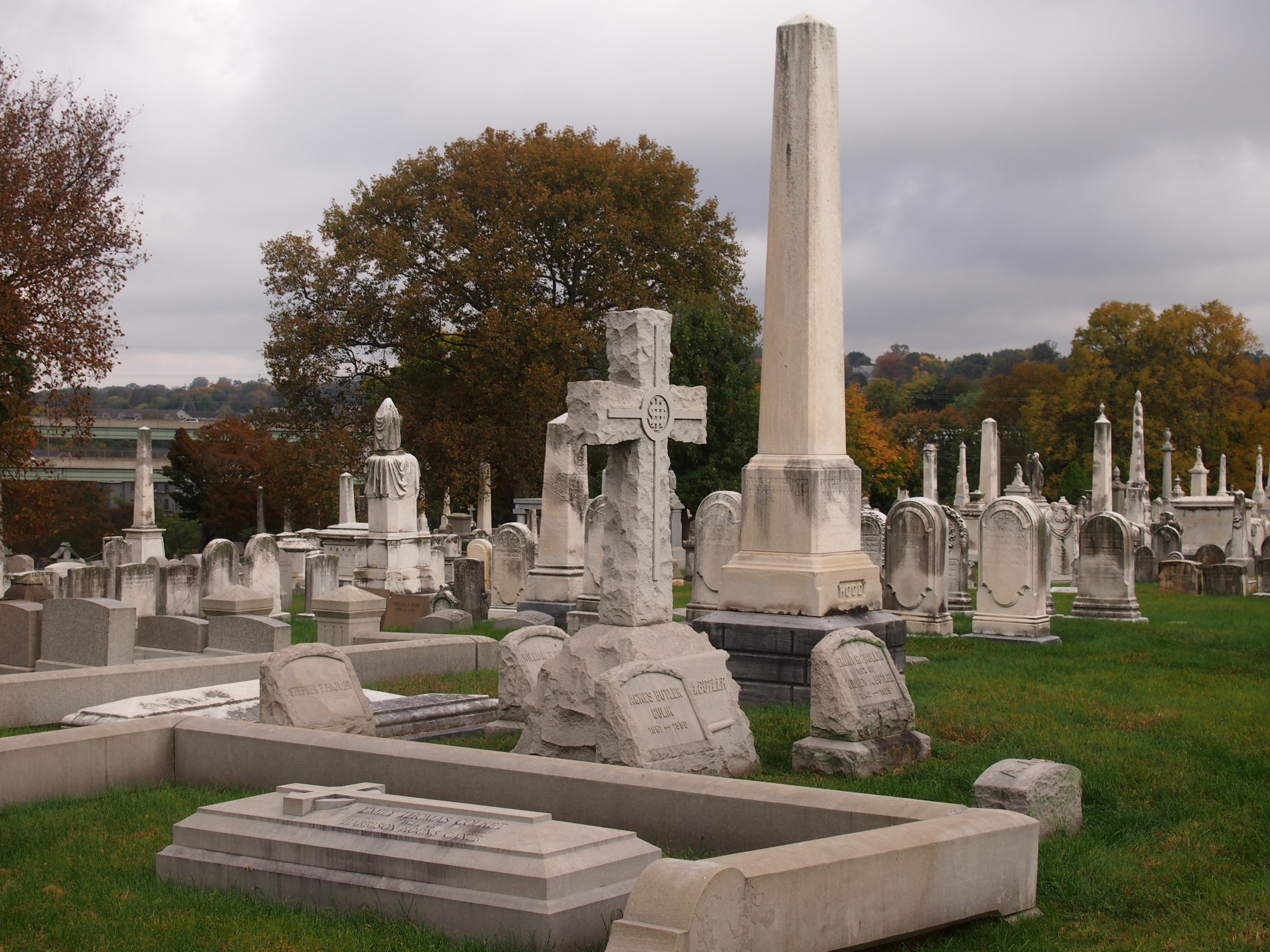
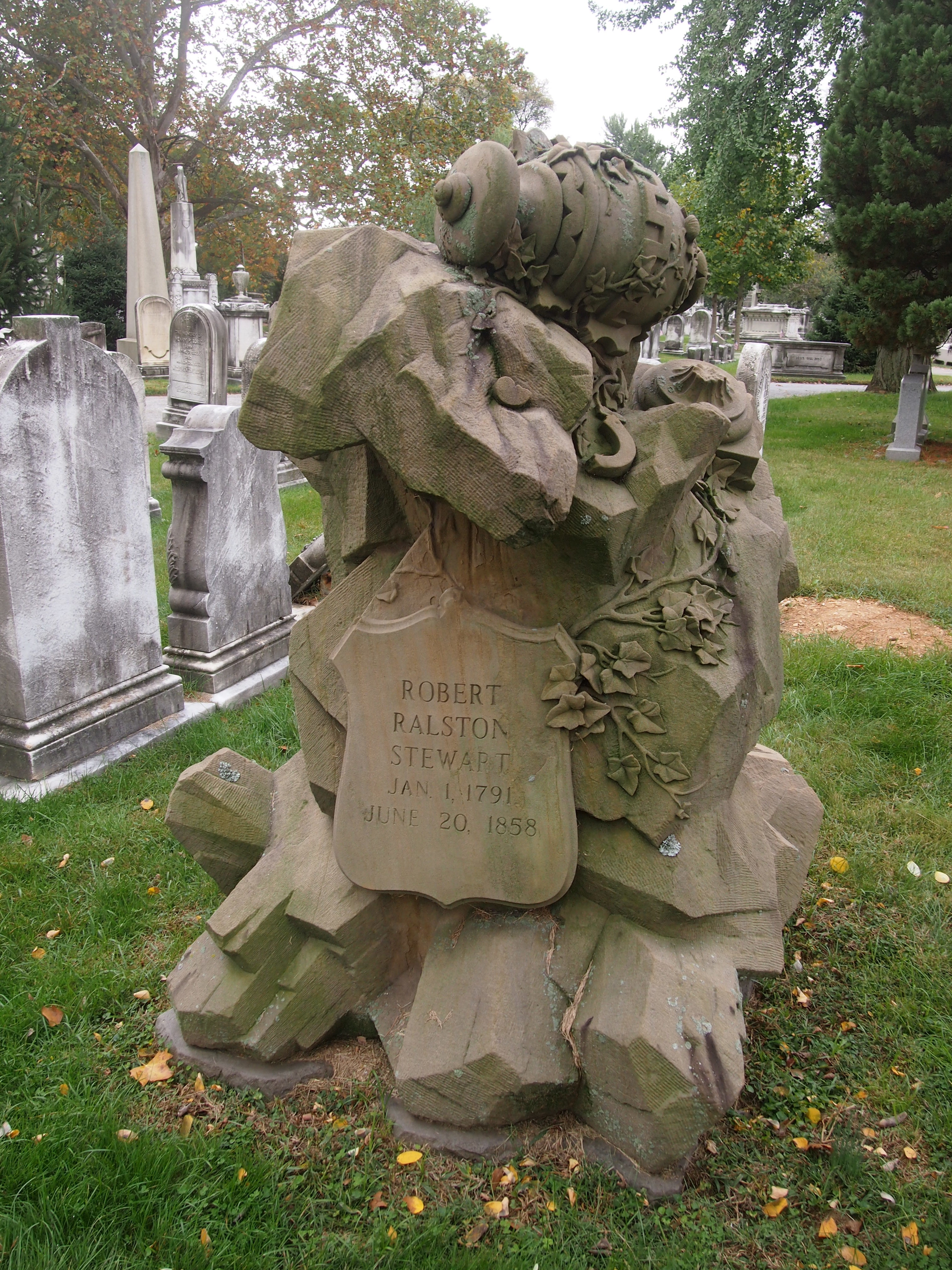
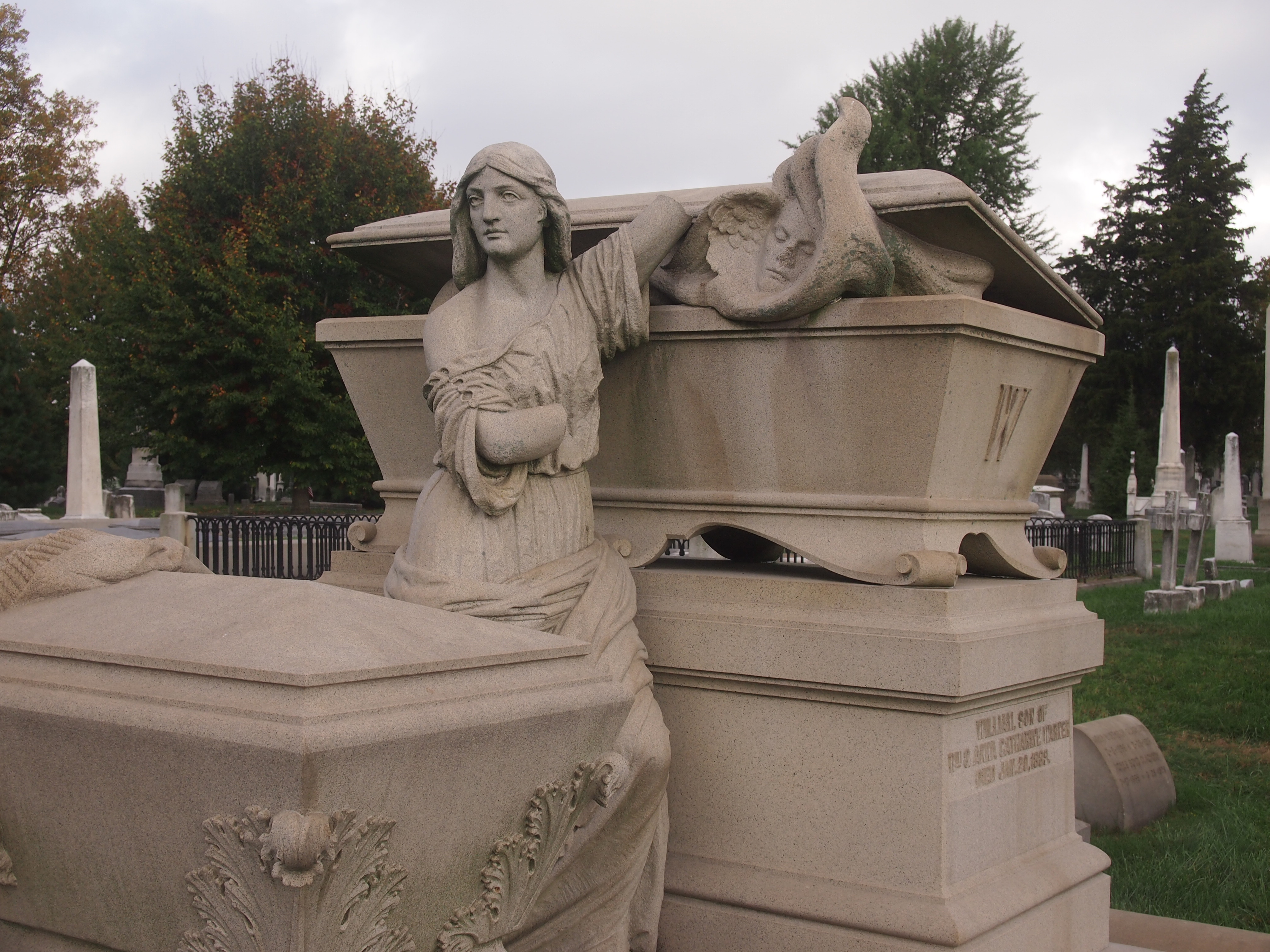
Oak Woods Cemetery occupies about 183 acres on the South Side of Chicago, only a short distance southwest of Jackson Park and about a mile west of Lake Michigan. On Saturday morning, I got up earlier than usual, drove down to Oak Woods and joined a Chicago Architecture Foundation tour of the cemetery. No one else in my house was interested, so I went by myself.

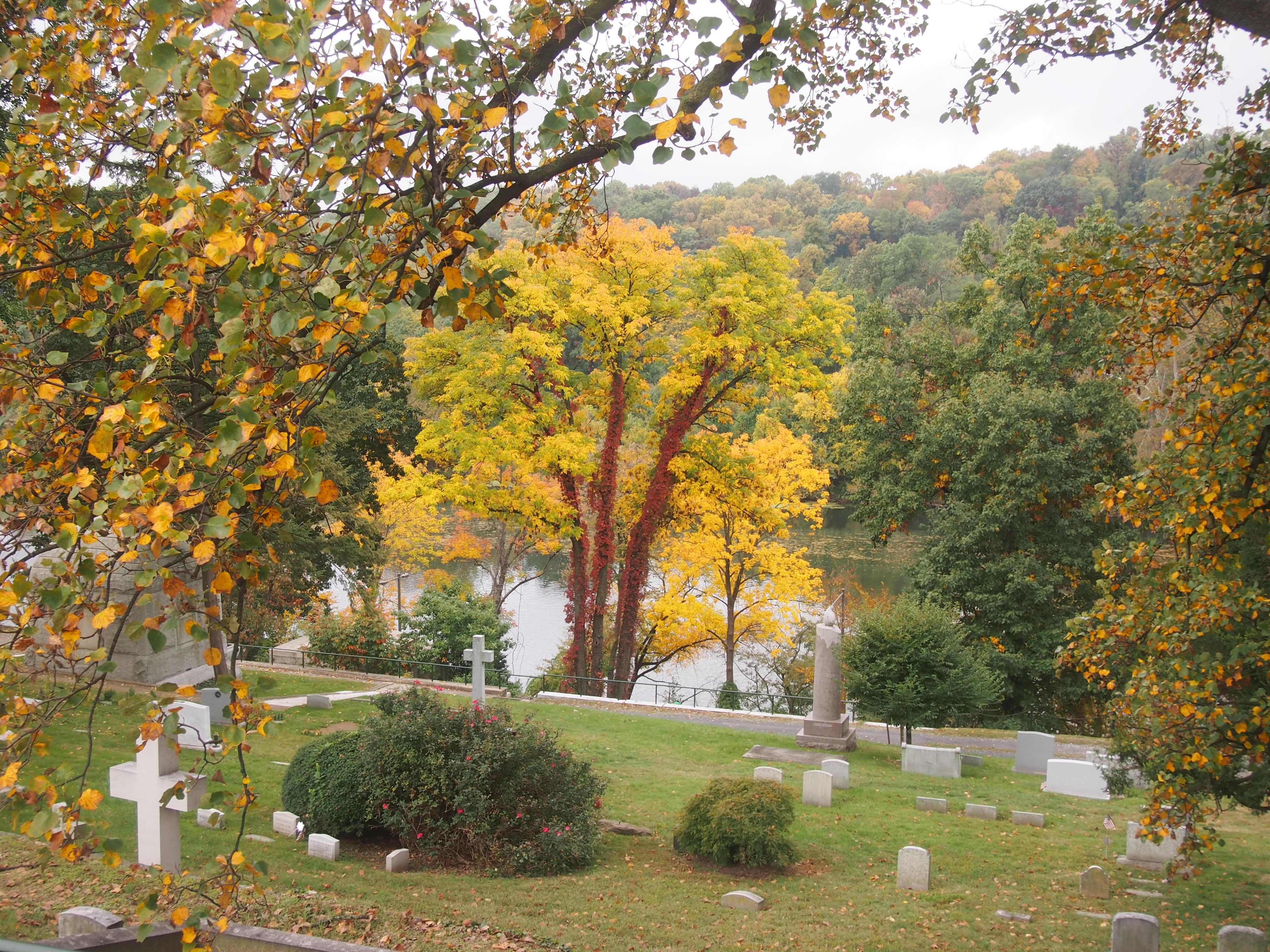
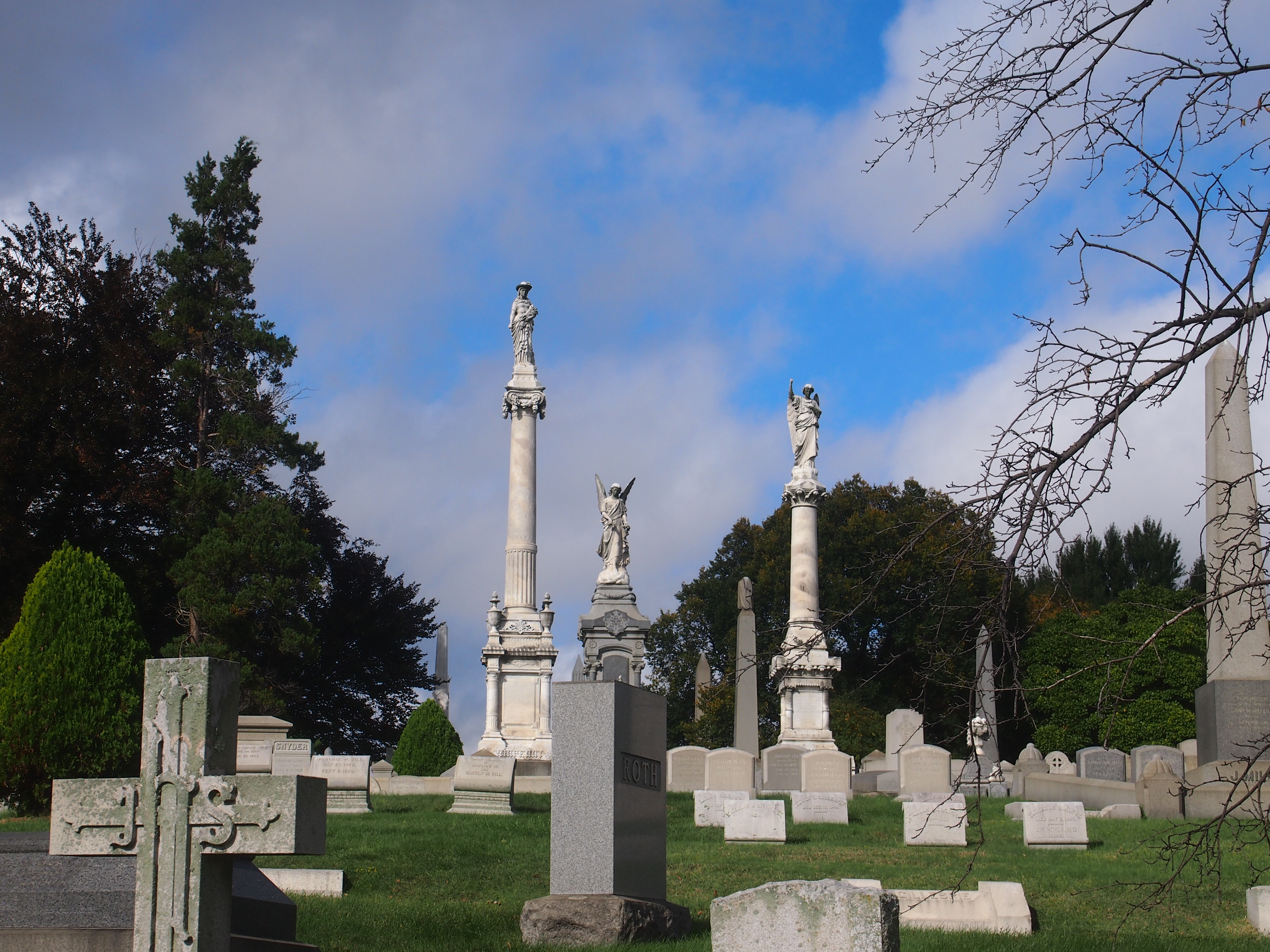
Skies were overcast, but at least the rains had stopped. Oak Woods, founded in 1853 south of the city — I believe it wasn’t in the city proper until the great annexation of 1889 — was part of the 19th-century vogue for park-like cemeteries. Which it remains to this day, green and leafy in late summer.

Oak Woods Cemetery Chicago 2016Oak Woods Cemetery Chicago 2016 To design the place, the founders of the cemetery tapped one Adolph Strauch, a Prussian landscape architect who did parks and park-like cemeteries in the United States (Ve vill haf Ordnung, he was known to mutter). He was especially active in Cincinnati, but in Chicago, Strauch also did the highly picturesque Graceland Cemetery, the North Side equivalent of Oak Woods.

Oak Woods Cemetery Chicago 2016Oak Woods Cemetery Chicago 2016There are also a number of water features that add to the overall aesthetic.
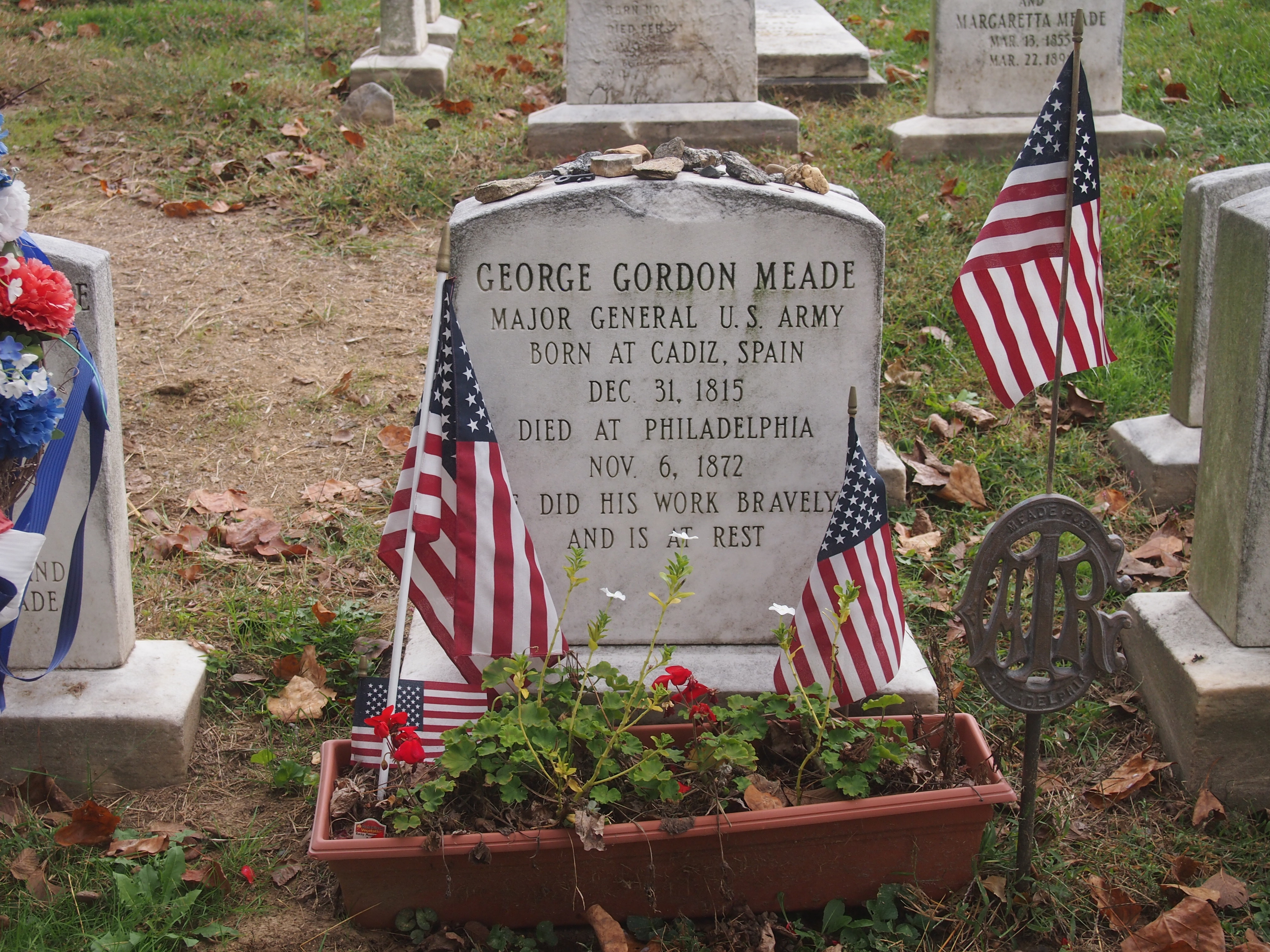
Oak Woods Cemetery Chicago 2016The tour was partly concerned with the burial sites of well-known people. Oak Woods has quite a few, such as a number of Chicago mayors. Here’s Big Bill Thompson’s obelisk, for instance.
Oak Woods Cemetery Chicago 2016 - Big Bill ThompsonHere’s Harold Washington.

Oak Woods Cemetery Chicago 2016 - Harold WashingtonOther notable markers we saw included baseball player Cap Anson; Bishop Louis Henry Ford, head of the Pentecostal Church of God in Christ; John H. Johnson, founder of Ebony and Jet magazines; Rep. James R. Mann, who lent his name to the Mann Act; Ted “Double Duty” Radcliffe, star of the Negro League; and activist Ida B. Wells.

Along with Jesse Owens.
Oak Woods Cemetery Chicago - Jesse OwensAs well as Illinois politico Roland Burris. Former Sen. Burris, it should be noted, is still alive. He’s planning ahead with a sizable tomb detailing some of his career in stone, in a way that earned him a fair amount of ridicule. It did seem like a pompous exercise. Perhaps he doesn’t understand that Death doesn’t care about your CV.

Interesting stones I didn’t get to see included Enrico Fermi, Nancy Green, Chicago Mayor Monroe Heath, and pre-Capone Outfit boss Big Jim Colosimo, who was rubbed out in 1920. Or the monument and flag for the 16 firefighters and workers who died fighting the blaze at the Cold Storage Building at the World’s Fair on July 10, 1893.

Off in a corner of the property is a small, separate Jewish cemetery, fenced off probably to discourage vandals from disturbing the stones.
Jewish cemetery near Oak Woods ChicagoReminded me a bit of the old Jewish cemetery in Krakow, though that’s had a few more centuries to age.

A Fashion Wagon Party Card

One more recently acquired postcard for the week. This one’s in James Lileks territory, I think, not only because of the mid-century commercial artwork, but also because the entity behind it was from Minnesota.
FashionWagonIf that card doesn’t scream late ’60s, I don’t know what does. Indeed, it’s postmarked February 16, 1968. It’s an invitation for a neighbor to a “Fashion Wagon Style Show” at a house in Hoffman Estates, Ill., scheduled for February 23.
FashionWagonRevAn event to brighten up what must have been a dreary February in metro Chicago (they’re all dreary). And to sell a few dresses. Interesting detail: the RSVP phone number uses two letters to begin with. That pretty much disappeared in the ’70s, but I remember learning the telephone exchange letters for our home phone number as a child.  It began with TA (Taylor).

Apparently TW was “Twinbrook.” That took a little digging to find, but strangely enough I found it referenced in Jack Hoffman’s obit in the Chicago Tribune in 2008. Hoffman was the homebuilder who developed Hoffman Estates.

“Eventually, Mr. Hoffman’s company would build some 5,000 homes in the town incorporated in 1959 as Hoffman Estates. Residents that year voted to name the new city Twinbrook, after the local telephone exchange,” the paper noted. “But Mr. Hoffman’s influence led the homeowners association’s board of directors to dismiss the popular vote.”

So much for the vox populi, but there’s still a Twinbrook Elementary School in the village. Note that the editor didn’t see fit to explain the term “telephone exchange” in 2008. Few readers younger than me would understand the reference, but then again, how many people younger than me read newspapers?

Back to the card: it was produced by the Minnesota Woolen Co. to promote its fashion parties. A little digging and you find information from the University of Minnesota Duluth that tells you that “the Minnesota Woolen Company was founded in Duluth in 1916 by Nat G. and Abraham B. Polinsky. The company sold clothing throughout the United States through door-to-door sales. The company was the largest in the nation in sales of clothing on a direct to consumer basis…

“The Mendenhall, Graham Company was purchased in 1946 by Minnesota Woolen Company, which operated it as Minnesota Manufacturing Company with a plant at 514 West 1st Street. The company distributed clothing designed and manufactured in part at 131 West 1st Street through the national Fashion Wagon Party Plan introduced in 1962….

The last major expansion occurred in 1972 when the company moved the Fashion Wagon sample warehouse and shipping facility into a new building at 42nd Avenue West and Superior Street. The retail store closed in 1976, the manufacturing outlet in 1977.”

By the time alphanumeric telephone exchanges were gone, so were Fashion Wagon Parties.

(Speaking of telephones, out of idle curiosity I looked up those two dates in 1968, and found, according to Wiki anyway, that “…on February 16, 1968, the first-ever 9-1-1 call was placed by Alabama Speaker of the House Rankin Fite, from Haleyville City Hall, to U.S. Rep. Tom Bevill, at the city’s police station.”)

A McGovern Postcard

Here’s another recently acquired postcard, one from a very specific moment in U.S. history, a good many elections ago.

McGovernObvMcGovernRevIt was never used for its intended purpose, namely being put in the mail in the service of the McGovern campaign. Not that it would have made any difference to the outcome; not that a million such cards, all mailed, would have made any difference.

I don’t think I’ve seen any presidential campaign cards in recent years, or ever, come to think of it, but more local races still use them. I’m already getting postcard-based claims and counterclaims from candidates for the Illinois State House. I expect more in the coming months.

A particularly memorable example of postcard campaigning was in 2004. As I wrote then, “[Phil Crane] was also the subject of one of the most brilliant direct-mail campaigns I’ve ever seen in politics. Almost every day for about 10 days before the election, we received a large postcard, paid for by the state Democratic Party, all featuring the same picture of Rep. Crane photoshopped onto a variety of backgrounds.

“Each card had a different headline, and backgrounds to match, along with Phil in the foreground in a different outfit: GREETINGS FROM COSTA RICA (tropics, him in a floral t-shirt)… SCOTLAND (golf course, him with clubs)… ROME (Coliseum, him with a camera around his neck)… etc. The point being that Rep. Crane was fond of junkets at lobbyists’ expense. ‘Junket King’ was on several of the cards, too.”

Former Rep. Crane died in 2014. One thing I didn’t know about him was his role in Singapore easing its ban on chewing gum, which was in effect when we were there.

Adieu, Victoria Station

Late last week, despite the fact that I recently inherited a good many hundred postcards, I bought a some more. I couldn’t resist. I found a box of old cards at a resale shop that, in my experience, seldom offers any for sale. A dime each. Looks like someone was cleaning house after an elderly relative died. Or maybe the box represented a number of households with caches of cards, all stripped of their small-value debris at about the same time.

A few of them are used, but most are blank. Such as this one, which made me wonder, Whatever happened to Victoria Station?

VictoriaStationObvVictoriaStationRevTurns out there’s an entire book devoted to that question. (A song advertising Victoria Station starts playing when you open that page, which would normally be annoying, but the singer is Johnny Cash.) Anyway, the short answer is, as a darling brand of the ’70s, the chain’s time passed in a big way in later decades. Apparently the 99 locations at its peak shrunk to exactly one in our time, located in Salem, Mass.

Its web site says, “We are proud to continue the Victoria Station name and continue to pay close attention to the historic and nostalgic atmosphere with a new approach and even higher standards than today’s customers demand. We specialize in classic New England cuisine with a fusion of the once great Steakhouse and still offer Victoria Station’s signature slow roasted Angus Prime Rib and ‘All you can eat’ Salad Bar.” Well, good for them.

I can’t remember whether I ever ate at a Victoria Station. At first I thought yes, but then realized I was confusing it with Spaghetti Warehouse, so maybe not. Could be the confusion was because that chain always featured a trolley car in its restaurants.

For its part, Spaghetti Warehouse was an early adaptive reuser of old space that might have otherwise been destroyed. Say, whatever happened to Spaghetti Warehouse? Its contraction wasn’t as thorough as Victoria Station. Reportedly 14 are still in operation.

One more thing about Victoria Station. A chain of that name still exists in Japan, operated by Zensho. More specifically, there are 45 locations, most in Hokkaido, as this site makes clear (provided someone in your house can interpret the page).