San Fernando Cathedral

Where are the copy editors? Maybe the Chicago Tribune laid off all its copy editors. On Wednesday, the paper ran a review of The Royale, a play now on stage in Chicago, and it begins like this: “In 1910, Jack Johnson, a boxer who had long dominated the World Colored Heavyweight Championship, finally coaxed the formerly undefeated James J. Jeffries out of retirement… Johnson’s July 4 victory in Reno, Nev., over the white opponent was hailed as a singular moment for the advancement of African-Americans, many of whom felt enormous pride as they listened, huddled around radios, as the Galveston Giant laid his doubters, and, symbolically, white America, flat on the canvas.”

Is it too much to ask that someone at the Tribune know that there were no commercial radio broadcasts in 1910?

I didn’t remember the last time I visited San Fernando Cathedral, which is in downtown San Antonio — probably in the early ’80s — so I figured it was time to go again. A church has been on this site since the 1740s, though as usual with this kind of thing, the structure’s been modified and enlarged and restored and otherwise changed over the centuries.

In our time, it’s a handsome structure with a Gothic Revival nave, triple entrance portals, a gable roof, and twin bell towers and buttresses.

San Fernando Cathedral Feb 2015Just inside the entrance, in the narthex, you’ll find this marble coffin.

Feb 2015The nearby plaque asserts that:

Here lie the remains of Travis, Crockett, Bowie and other Alamo heroes. The Archdiocese of San Antonio erected this memorial May 11, AD 1938 R.I.P.

Formerly buried in the Sanctuary of the old San Fernando church

Exhumed July 28, 1936  Exposed to public view for a year  Entombed May 11, 1938

If it’s written in stone, it must be true. Right? But not everyone’s so sure. Ashes and bits of bone were found buried in the sanctuary in 1936, and the archbishop at the time concluded that they were the defenders of the Alamo, whose bodies were known to be burned. This article posits that the archbishop pulled that assumption out of his miter, and that the remains might actually be casualties — Spanish loyalists, no less — of the little-known Battle of Rosillo fully 33 years before the Battle of the Alamo.

San Fernando’s lovely inside. The view toward the apse.

OLYMPUS DIGITAL CAMERAAnd back through the nave.

San Fernando Cathedral Feb 2015Not far from where I took this picture was a brass plaque embedded in the floor that said: Official Center of San Antonio by Ordinance of the City Council. Another plaque in the floor of the church said: Original Entrance to the Church of the Villa de San Fernando. Demarcation of the Center of the City 1731.

The Texas State Historical Society outlines the early history of the church: “Although information is contradictory, the cornerstone for the first attempt to build a stone church was laid most likely on May 11, 1738. In 1748 the viceroy approved a donation of 12,000 pesos to complete the church. With funds secured, two artisans from San Luis Potosí, Gerónimo de Ibarra (a master stonemason) and Felipe de Santiago (a stonecutter), were hired to continue the project. Ibarra razed the earlier construction and enlarged the dimensions of the building. He completed the church in 1755.”

After that, of course, came damage and repair and modifications and even a part for the structure in the Battle of the Alamo, when “Antonio Lopez de Santa Anna not only used the church as a lookout but ordered a red flag flown there to signal that the Texans at the Alamo would be shown no mercy.”

The reredos. Maybe it would be a retablo in this context. In any case, a shiny bit of work.
San Fernando Cathedral Feb 2015To the right were a number of stone tablets embedded in the wall that looked they might have been burial stones that used to be part of the floor. One of them, in Spanish and English, was that of Eugenio Navarro, brother of Jose Antonio Navarro, who lived a lot longer.

HERE RESTS The Remains of EUGENIO NAVARRO Native of the City of Bexar who departed this life on the 6th of May 1838, Aged 34 Years, 5 Months & 21 days  He fell an innocent victim, by a shot from the Pistol of a vindictive adversary, who also lost his life by the dagger of the brave defender, of his honour and person.

That is, someone shot Eugenio, but he was able to dispatch the attacker with his knife. In 1836, he’d had a critical part to play in the Texas Revolution, especially in warning the Texians in San Antonio that Santa Anna was coming, and in force. More about him here.

Treue der Union

The Texas State Historical Association says that “the Civil War skirmish known as the battle of the Nueces took place on the morning of August 10, 1862, when a force of Hill Country Unionists, encamped en route to Mexico on the west bank of the Nueces River about twenty miles from Fort Clark in present-day Kinney County, were attacked by mounted Confederate soldiers… Contentions over the event remained on both sides, with Confederates regarding it as a military action against insurrectionists while many German Hill Country residents viewed the event as a massacre.

“After the war the remains of the Unionists killed at the battle site were gathered and interred at Comfort, where a monument commemorates the Germans and one Hispanic killed in the battle and subsequent actions. The dedication of the Treue der Union monument occurred on August 10, 1866. To commemorate the 130th anniversary of the memorial, the monument was rededicated on August 10, 1996. It is the only German-language monument to the Union in the South where the remains of those killed in battle are buried, and where an 1866 thirty-six star American flag flies at half-staff.”

The memorial stands on High Street in Comfort, Texas, between 3rd and 4th Sts., next to a piece of undeveloped land and across the street from a church and a school.
Comfort, Texas Feb 2105With the names of the dead on the sides. These fell in a later event in October 1862, on the Rio Grande.

Comfort, Texas Feb 2015And a 36-star flag does indeed fly there.

Comfort, Texas Feb 2015Not something you see too often. That flag was only current for two years, between 1865 and 1867, or rather between the admission of Nevada and Nebraska.

Two Stops on the Hill Country Bat Trail

Somewhere or other Jay heard about a bat roost near Comfort, Texas, and if that isn’t an incentive to visit that place when you’re already close by, I don’t know what is. So on the afternoon of the 14th, we went looking for it.

Comfort is a small town, pop. 2,300 or so, in Kendall County and, according to the Census Bureau, part of the San Antonio MSA. I’d put it in the Hill Country, though that’s not an official designation. Comfort’s main street (named High Street) is characterized by handsome 19th-century buildings, many made of local stone, put to 21st-century purposes, such as antique stores and restaurants that point out — or should point out — that they offer Comfort food.

To get to Comfort from San Antonio, head northwest on I-10. On Ranch to Market Road 473, a few miles east of town, you’ll find this curious structure.

Bat Roost, near Comfort, TexasAccording to the Texas Historical Commission plaque at the site: “This shingle style structure was built in 1918 to attract and house bats in an effort to eradicate mosquitoes and thereby reduce the spread of malaria. It was designed for Albert Steves, Sr., a former mayor of San Antonio, by Dr. Charles A. R. Campbell, an authority on bats who had served as the health officer in the same city. Named ‘Hygeiostatic’ by Steves, the bat roost is one of 16 constructed in the United States and Italy between 1907 and 1929. Recorded Texas Historic Landmark – 1981.” It’s also on the National Register of Historic Places.

No bats were at home, it being February. I understand that they do live there in the warmer months. Different sources put the number of such towers in this country at two or three. Apparently one of the others is on Lower Sugarloaf Key in the Florida Keys.

North and east of Comfort, not far from Fredericksburg, is Old Tunnel State Park. Formerly a railroad tunnel, it’s now a home for bats. During the warm months, you can sit outside the entrance and watch bats emerge around dusk — a smaller version of the bat flight out of Carlsbad Caverns, memorable enough that I remember it after 40+ years. Again, no bats were around in February. But on hand were a couple of bat enthusiast-volunteers to tell casual visitors about the bat cave, and we talked to them a few minutes.

That’s two stops on the hypothetical Hill Country Bat Trail. Another could be the Congress Street Bridge in Austin, also known for as a bat habitat, or Bracken Cave in Comal County.

Tumbledown Cemeteries Near Downtown San Antonio

Cemetery tourism isn’t what it used to be. I’m pretty sure that most San Antonio tourist literature either ignores or gives scant mention to the Eastside Cemeteries Historic District, as the city calls it.

Too bad. I’d call it a fascinating agglomeration of old graveyards amazingly close to downtown San Antonio. Officially 31 separate cemeteries over 103 acres, and even better, as unkempt as old burying grounds sometimes are.

City Cemetery No. 1, fittingly, is the oldest in the district, dating from the 1850s. Even a mild climate like San Antonio’s will wear stones down eventually.

Cemetery No 1 San AntonioHere lie Aug. and Georgiana Ohnescorce, both of whom passed their lives in the 19th century. Their stones are still legible, but you have to look at them pretty closely.

Cemetery No 1 San AntonioI didn’t seek out well-known permanent residents of the Eastside Cemeteries Historic District, though the San Antonio city site cited above tells us there are a number of them, including mayors, prosperous local businessmen, German pioneer families, 19th-century soldiers (some of them Buffalo soldiers), the woman who led the fight to preserve the Alamo in the first decade of the 20th century — Clara Driscoll — and the man who designed and advocated the San Antonio Riverwalk, Robert H.H. Hugman.

This is Cemetery No. 6, not quite as tumbledown as No. 1.

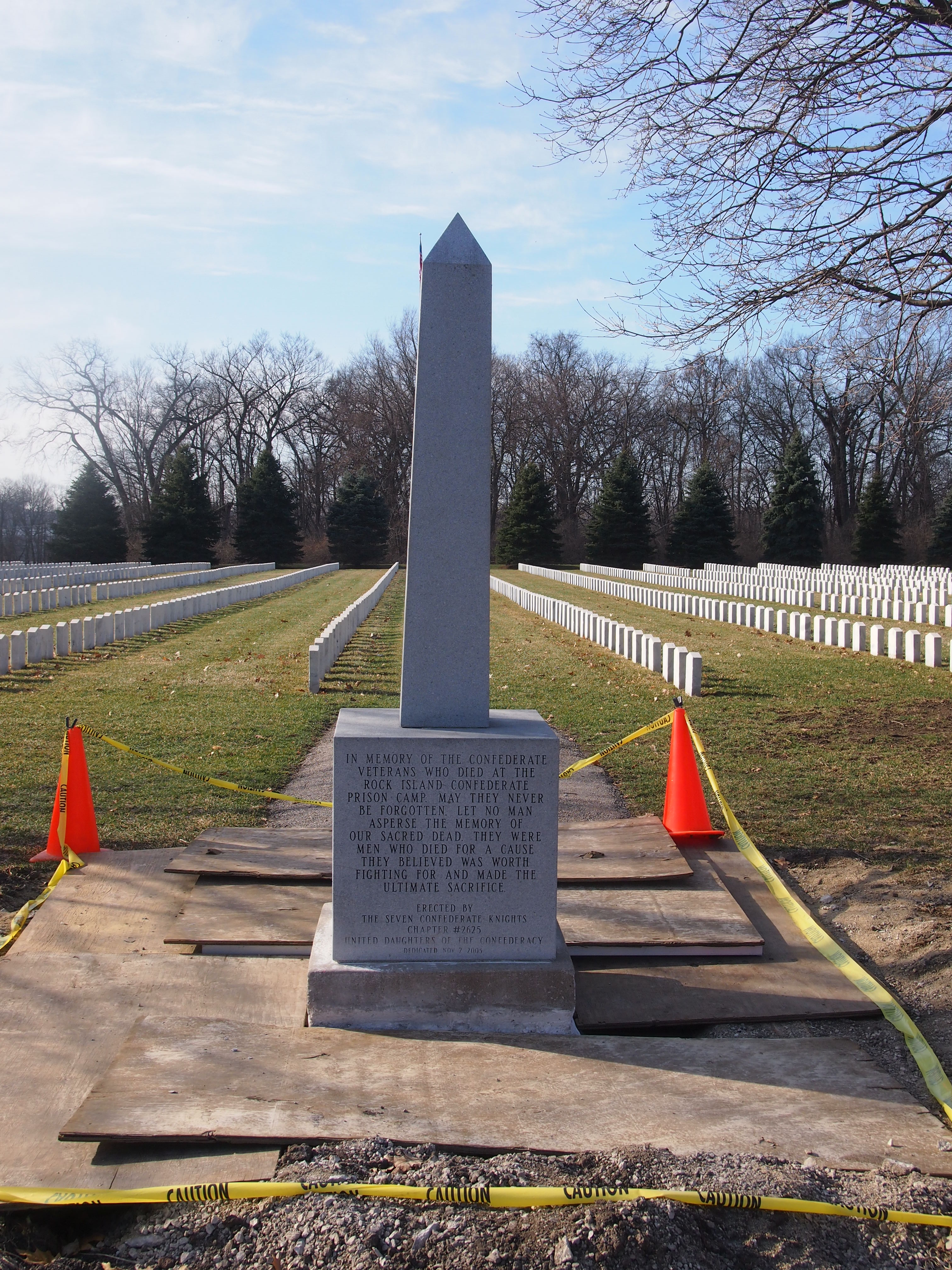
Cemetery No 6 San AntonioAccording to the city, the Confederate Cemetery is separate from Cemetery No. 6, but that’s hard to tell when you’re there. In any case, the Confederate Cemetery sports the Stars and Bars.

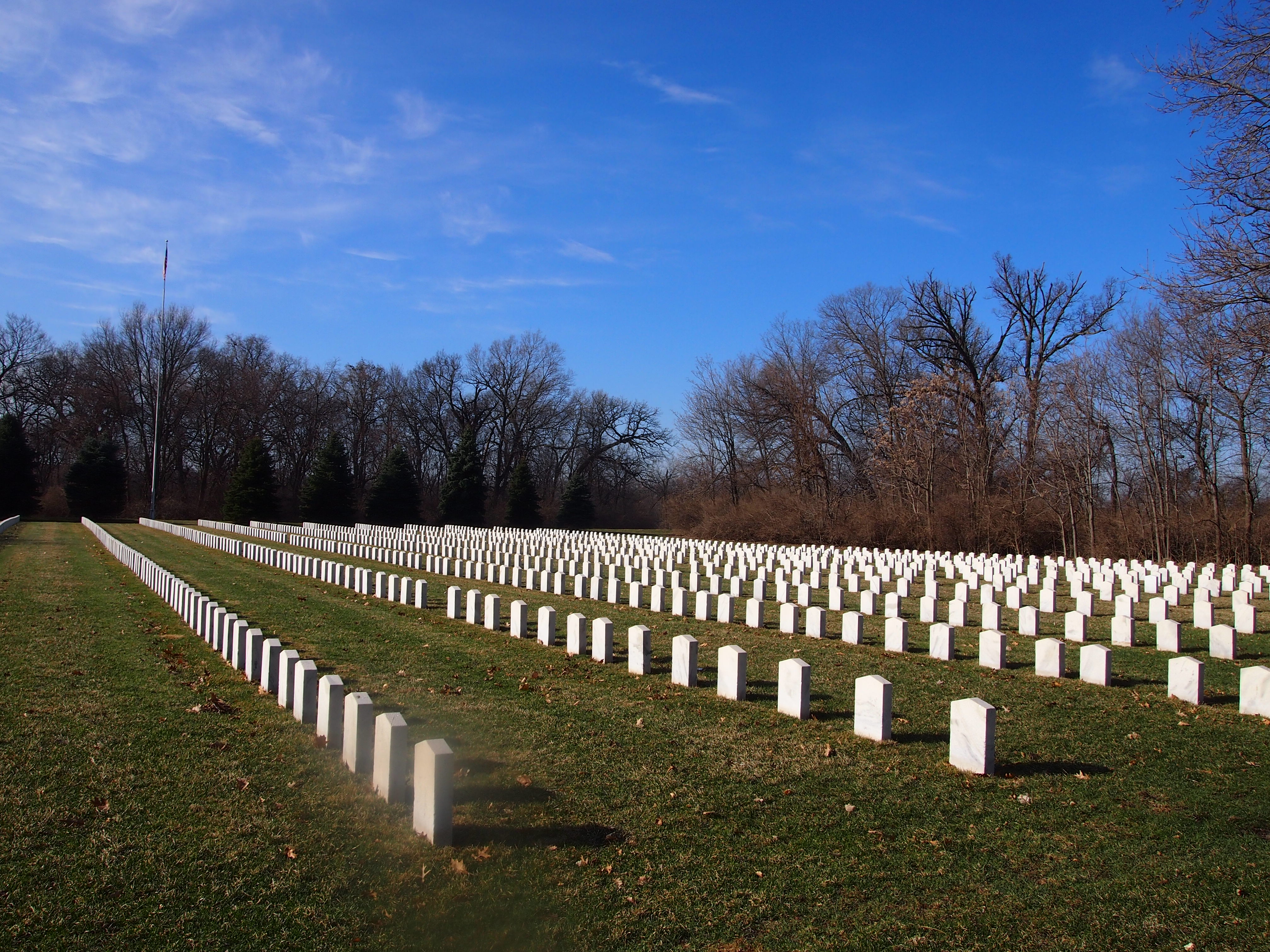
Confederate Cemetery San Antonio Feb 2015The cemetery’s historical markers says that there were over 900 burials in the cemetery, including former CSA soldiers, but also their dependents, some later descendants, and some vets from WWI and WWII as well.

Then there’s the Hermann Sons Cemetery, also enjoyably frowzy.

Hermann's Sons Cemetery San AntonioHermann's Sons Cemetery San AntonioThe first Texas lodge of Ordens der Hermanns-Söhne was founded in San Antonio, and the organization is no thing of the past.

Thursday Odds and Ends

Throwback Thursday? Where did that come from? I’m always late to the meme party, not that that makes any difference. I first saw the term after I sent my old friend Tom an image of him that I scanned from a color slide.

TomJones1979I took it outside my house in the spring of 1979, and it’s now proof that Tom once had hair. He posted it on his Facebook page on Jan. 1, calling it a “Throwback Thursday” picture (though curiously, Jan. 1 is a day people tend to look ahead). I don’t think I’ll throwback on Thursdays, except for this picture. Thursday’s a good day for odds and ends, though.

Part of Isaac’s Storm, which is mainly about the Galveston Hurricane of 1900 (see Jan. 19), mentions previous big blows in passing, such as the Great Storm of 1703, which slammed into Great Britain. I didn’t know, for instance, that that storm destroyed — completely scoured off the rocks — the first Eddystone Light. With builder Henry Winstanley and his crew, who were doing repairs, still inside. More about all four lighthouses on those rocks is here, including the incredible fate of the lighthouse keeper when the second one burned down. Here’s a short of a fellow visiting the current lighthouse (a cool destination if there ever was one).

I don’t think I have the patience to read Daniel Defoe’s work on the subject, The Storm — or, to give it its full name, The Storm: Or, a Collection of the Most Remarkable Casualties and Disasters Which Happen’d in the Late Dreadful Tempest, Both by Sea and Land — which is available thanks to Project Gutenberg. But it’s good browsing. Some people died in 1703 from falling chimneys, for instance:

In Threadneedle-Street, one Mr. Simpson, a Scrivener being in Bed and fast a-sleep, heard nothing of the Storm; but the rest of the Family being more sensible of Danger, some of them went up, and wak’d him; and telling him their own Apprehensions, press’d him to rise; but he too fatally sleepy, and consequently unconcern’d at the Danger, told them, he did not apprehend any Thing; and so, notwithstanding all their Persuasions, could not be prevailed with to rise: they had not been gone many Minutes out of his Chamber, before the Chimneys fell in, broke through the Roof over him, and kill’d him in his Bed.

I suppose that counts as a throwback, too, though I bet most people who use the term don’t go back as far as 1703. So here’s something new: socks that Yuriko brought back from Japan for Ann.

JsocksToo cute for words, as Japanese design sometimes is.

Isaac’s Storm

Isaac’s Storm by Erik Larson (1999) promises to be a good read. Especially if it’s as well written as The Devil in the White City, by the same author.

Got it the other day at a resale shop, a bit beaten up and miscategorized as fiction. Not so. “A Man, a Time, and the Deadliest Hurricane in History,” says the subhead, which doesn’t quite pin it down as nonfiction, but I happen to know it’s about the Hurricane of 1900, which blew through Galveston, killing – no one knows for sure how many, but the usual figure quoted is 6,000 to as many as 12,000.

Isaac is Isaac Cline, resident meteorologist for the U.S. Weather Bureau at Galveston, and survivor of the storm, though not all of his family made it. In the movie version of this story, Isaac would heroically warn the unbelieving residents of Galveston that a bad blow was coming. Unfortunately, he seems not to have done that. No one knew how bad it was going to be. Hurricane science was still fairly primitive, after all.

I peeked ahead, and found that afterwards Cline had a long career with the Weather Bureau, posted in New Orleans. Among other things, he was there for the Flood of 1927, the subject of another book I want to read, Rising Tide (John M. Barry, 1998; I read his book about the Pandemic of 1918, though). In fact, though retired, Cline almost lived long enough to see the first weather satellites, dying in his 90s in 1955.

Christmases ’14

Merry Christmas to all. And a fine New Year, since I’ll post again around January 4 ’15.

It’s also the centennial of the Christmas Truce. Can’t forget that.

A worthwhile dramatization from the movie Joyeux Noel (2005). A bit of documentary about the incident is here.

Custer Shorn

Historical tidbit for the day, from The Last Stand by Nathaniel Philbrick, subtitled “Custer, Sitting Bull, and the Battle of Little Bighorn” (2010), p. 38.

“Custer was known for his long hair, but in 1876 he, like many men approaching forty, was beginning to go bald. Before leaving Fort Lincoln, he and another officer with thinning hair, Lieutenant Charles Varnum, ‘had the clippers run over their heads.’ This meant that the former ‘boy general’ with the famously flowing locks now looked decidedly middle-aged.”

Nice detail. All the depictions I’ve ever seen of Custer just before he met his fate feature the distinctive locks. It’s a good book so far, as all of the other Philbrick books I’ve read – Sea of Glory, Mayflower, and In the Heart of the Sea – though this one isn’t about the sea. Unless you consider the Great Plains as a vast kind of ocean.

As the subtitle says, the book isn’t just about Custer. Sitting Bull gets equal billing as the winning commander.

Also interesting to note: Going west that spring, Custer, publicity hound that he was, hoped that a battle with the Indians would win him a large measure of fame back east in time for the Centennial. Sure enough, it did. But maybe not quite in the way he planned.

I don’t think I’ve read this much about Custer since before we went to Little Bighorn in 2005.

Last Stand Hill, 2005The stone with the black backdrop is Custer’s, but unlike the other men, his body was reburied elsewhere, at West Point in fact.

An Early Three-Cent Card

The U.S. domestic postcard rate went up to 3 cents on August 1, 1958. The postmark on the following card clearly says August 1958, but the exact date is impossible to suss out. Its message is also short and to the point — from the West Coast back to the East Coast, an image of Grauman’s. Lots of people have been there before and since. Graumans1958.1Gaumans1958.2I didn’t forget! We stopped here on our tour of Hollywood and Beverly Hills! We are having a wonderful trip.

Emily Loeser

It’s addressed to Robby’s Beauty Salon (originally “shop,” but it’s crossed out) in Elizabeth, New Jersey. Note the staple holes in upper-right corner. I like to think that the recipients at Robby’s stapled the card to a bulletin board or the like for a while.

Another Two-Cent Card

On July 13, 1958, a fellow named Ned mailed a hotel card – one depicting the Radisson Minneapolis surrounded by what I take to some Minneapolis sights. A busy design, but the Radisson has had a long history in the city.

Raddison1958.1Raddison1958.2Dear Mother & Dad

Here is where I stay in Minneapolis. Heading home Tuesday. Hope you are OK.

Love, Ned

Ned could have put that in a tweet, I think.