“Batcolumn”

Lest we forget, today is the centennial of the sinking of the RMS Lusitania. It’s getting some attention online. The latest book about the subject, Dead Wake: The Last Crossing of the Lusitania, came out recently, and I plan to read it in the near future. It’s by Erik Larson, who wrote The Devil in the White City, which is a strong recommendation, so I’m looking forward to it.

One more item from my May Day foray to downtown Chicago: “Batcolumn,” a very tall (101 feet) statue standing in front of the Harold Washington Social Security Administration building at 600 W. Madison St.

Batcolumn, May 1, 2015The sculpture was erected (and it must have been some job) in 1977, commissioned by the GSA. That reportedly annoyed people who objected to spending public money on making interesting things, but here it is, nearly 40 years later. I don’t know that it’s a favorite bit of public art among Chicagoans — not like the Picasso or the Bean — but everyone’s seen it, and no one seems to object to it any more. I think the government got its money’s worth.

The Swedish-born U.S. sculptor Claes Oldenburg did the work. His specialty: large versions of ordinary objects. While looking at some of his other items on line, one looked familiar right away.

Claes Oldenburg, Typewriter Eraser, ScaleXIt’s “Typewriter Eraser, Scale X,” which we saw at the National Gallery of Art Sculpture Garden in Washington DC in 2011. Back in 1998, I think, I also saw “Spoonbridge and Cherry” at the Walker Art Center in Minneapolis.

FEC from the PRC

One more scrap of former currency (for now). And by scrap, I mean that almost literally, since this Foreign Exchange Certificate from the People’s Republic of China measures 5.25 x 2 inches. It’s more like script than a note.

FECI’ve posted about this currency before, so no need to re-write about it, only re-post: “I only changed money once outside of the Bank of China, when Yuriko and I were sitting on a bench and she reminded me of the FECs that I had — not much, only about ¥110. I took them out of my wallet to look at them, and a man next to me on the bench, who had previously expressed no interest in us, suddenly offered a 1-to-1 exchange for RMB. I accepted the deal. I don’t know what profit he got from it, since FECs were being phased out, but he must have gotten something.

50 fenFor some reason, probably my partiality to odd souvenirs, I kept this one. Maybe it wasn’t worth bothering with, since this particular note is 50 fen — or half a yuan, the base currency (it was about 8.7 yuan to the dollar then, so 50 fen was 6 cents or so). Ten fen is called a jiao, but I’m not sure how close an equivalent of a dime that is. That is, everyone understands that a dime is 10 cents, but it’s fairly rare to count in dimes. I don’t know whether the Chinese usually count in fen or some combination of fen and jiao.

More from before: “RMB, or Renminbi (人民币), ‘People’s Money,’ is Chinese currency, of which the yuan is the main denomination. From 1979 to early 1994, just before we visited, foreigners in China were supposed to use FECs instead of RMB, which the government sold to foreigners at a premium to RMB. But as usual with this kind of thing, I understand that rule wasn’t rigidly enforced, especially by the early 1990s. We didn’t have to worry about it in any case, and thinking back on it now, I’m not sure how I got the FECs.”

Sir Issac & His Toblerone

I might be misremembering, but when I saw an episode of Yes, Minister on a Virgin Air flight out of Stansted in ’94, I think that one of the characters handed another a pound note for some reason. That got a chuckle from someone British seated nearby, who observed that the one-pound note was long gone. As it would have been by then, by about 10 years, replaced by a pound coin in 1984 (the US dollar note, while an icon, is also increasingly an outlier).
pound noteI must have acquired this note in the UK in 1983. It’s crisp and unused. This particular one was part of Series D, first issued in 1978 and finally withdrawn in 1988. I understand, however, that if I take it to the Bank of England, I’ll receive a pound coin in exchange.

Sir Isaac Newton graces the back. According to one source — a book called Religion, Science, and Worldview: Essays in Honor of Richard S. Westfall (2002) — the portrait was based on two paintings by Sir Godfrey Kneller, and on the table beside Newton is a telescope and a triangluar prism (taken by jokers to be a Toblerone bar).

pound noteHe’s holding a copy of the first edition of the Principia, open to the pages that contain a diagram of a Keplerian ellipse. I know that Newton built on Kepler’s work to compute the acceleration of bodies, but what the diagram describes exactly is beyond me. So is the knowledge required to assess this line in Religion, Science, and Worldview: “The large diagram that occupies the left half of the note is also from Proposition XI, but evidently from the Cajori edition of the Motte translation of the Pemberton third Latin edition.”

The book further asserts that the original issue in 1978 had a mistake in one of the diagram’s lines, corrected in 1981. That means I have a note made after 1981. There’s more discussion about the Sun in the diagram not being at one of the foci of the ellipse, but mistakenly at the center. Even a fan of currency minutiae like me can’t be bothered to care.

Tom Dewey at the Resale Shop

A curious thing: I’ve been self-employed for 10 years as of today. When I got to my office on the morning of April 14, 2005, I found that the company’s HR woman had come in from New York — and so had the publisher. I didn’t appreciate it at that moment, but I’m glad they had the good graces to fire me in person.

Journey to the Far PacificHere’s something I found in a resale shop the other day. Odd what you can get for $1.

Published by Doubleday & Co. in 1952, Journey to the Far Pacific is a forgotten tome by Republican politico Thomas E. Dewey, who (considering the country’s disregard of its own history) is at some risk of being forgotten himself. Then again, he’s probably one of the better-known presidential election losers. If you’re going to lose, do it in a surprising, spectacular way.

The book’s blurb notes: “A few months ago New York’s Governor Thomas E. Dewey set out on an extensive tour of the Orient to view conditions at first hand and to form for himself impressions of the peoples and nations who stand between Communism and the California coast. During his trip he traveled forty-one thousand miles, visiting seventeen republics, kingdoms, territories, and colonies.”

The book’s maps are interesting. Of course they are. Note that on the cover, communist-controlled territory is red-orange, including half of the Korean peninsula but not Taiwan, which naturally is called Formosa.

The map that illustrates the main title page shows the “Chinese Republic” as including all of the modern PRC except Manchuria — which is separated as if it were independent — as well as Mongolia, which is merged into China as if it weren’t independent (it was a Soviet satellite, but still technically independent in the early 1950s). Ulaanbaatar is called “Urga.” It’s easier to spell, anyway.

Thomas Dewey 1952Unfortunately, there’s no index to look things up conveniently. Not sure when I’ll get around to actually reading the thing, but for now owning it’s enough.

Dewey’s on the back cover. I never appreciated how oval his head was. There’s a monograph in that somewhere: head shapes of the men who ran for president. Maybe one shape or another tends to win.

That’s a Yousuf Karsh photograph of Dewey. Not one of his better-known images. Not bad, but it doesn’t have the luster of some of his more famed shots. Then again, maybe it was hard to make Dewey look like he had even an ounce of charisma.

The Rock Island National Cemetery & Confederate Cemetery

These days, visiting the Rock Island National Cemetery means crossing over to Arsenal Island (formerly Rock Island) in the Mississippi River, which is located smack in between all four of the Quad Cities. The island is occupied by a U.S. Army facility, and has been the site of one kind of military installation or another for about two centuries. You pass through a checkpoint where a soldier looks at your driver’s license and asks your business, and then it’s a short drive the cemetery.

It was a quiet place on the morning of March 28, a Saturday. It’s probably quiet most of the time.

Rock Island Nat'l Cemetery March 2015The entrance to the Rock Island National Cemetery used to be marked by this piece of ironwork.

Rock Island Nat'l CemeteryThese days, the historic gate marks the entrance to the cemetery’s Memorial Walkway, which features about 30 memorials to various branches of the armed forces, or groups related to them, such as Pearl Harbor survivors, Mexican War veterans, female veterans, Gold Star Mothers, and local veterans organizations. I was glad to see that the Seabees have a stone there.

Not that I have a special connection to the Seabees, though I used to work with a fellow who said that his brother, who had died in Vietnam, had been a Seabee. It’s nice to see lesser-known battalions get their due.

The walkway leads to the grave of Thomas J. Rodman and his wife, Martha Ann. The NPS says that “Brigadier General Rodman, the ‘Father of Rock Island Arsenal,’ was an officer during the Civil War and was the arsenal’s commanding officer from 1865 to 1871…

Gen. Rodman's grave“Rodman invented the construction method used in producing [Rodman guns], which involved casting the cannon barrels around an air- or water-cooled core, ensuring that the barrel cooled and hardened first. This allowed the cannon to withstand higher pressures, making them stronger, safer, and more reliable, while also greatly increasing the lifespan of the cannon.”

Not far from the Rock Island National Cemetery is the Rock Island Confederate Cemetery, “final resting place for nearly 2,000 prisoners of war who died in captivity from disease and the poor living conditions of the camp,” the NPS says.

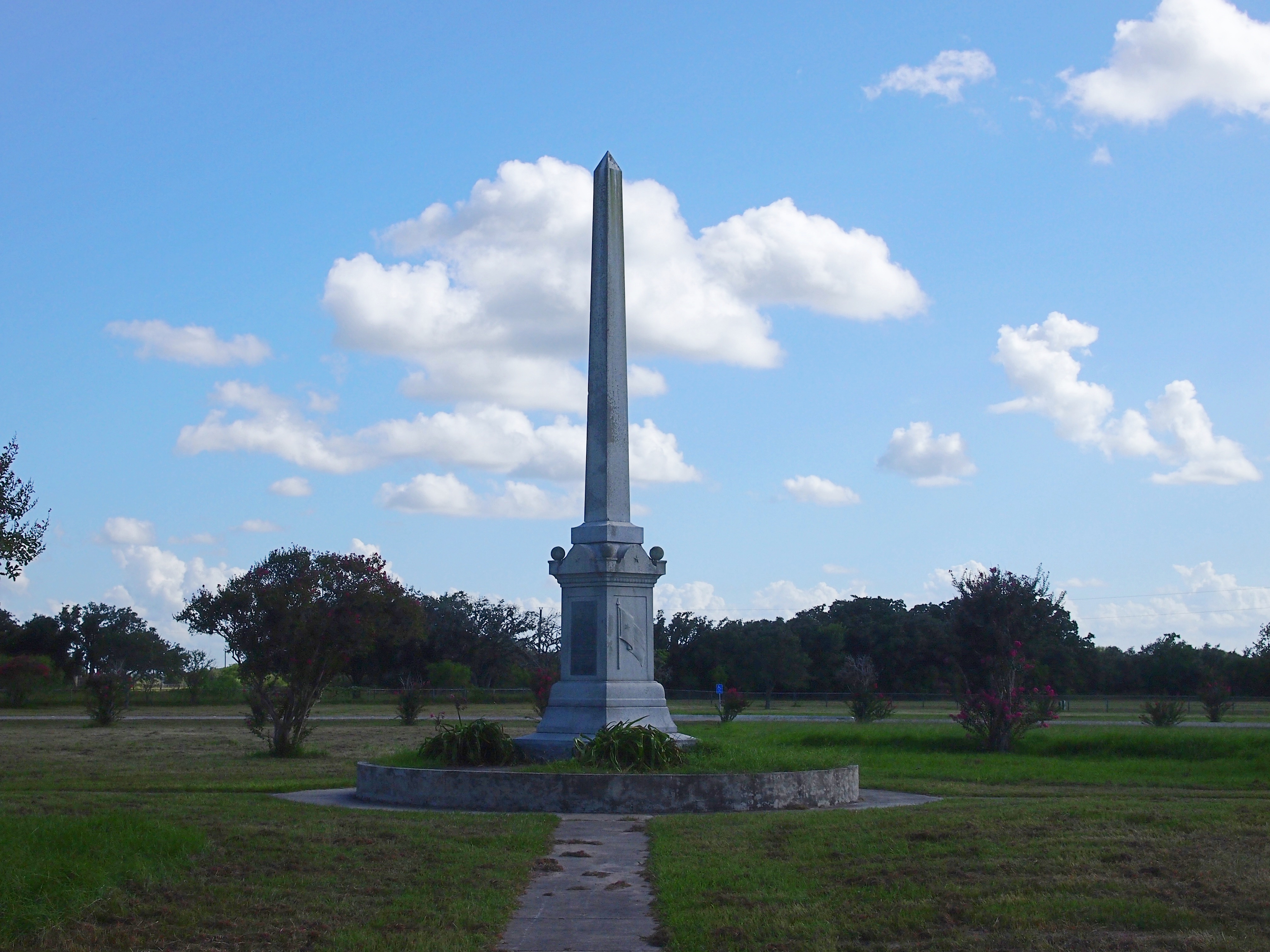
Confederate Cemetery, Rock Island, Ill.It’s a much simpler cemetery, with only one memorial besides the gravestones, a six-foot obelisk erected only in 2003. (Some work around it seems to be under way now.) It says:

Confederate memorialIn memory of the Confederate veterans who died at the Rock Island Confederate Prison Camp. May they never be forgotten. Let no man asperse the memory of our sacred dead. They were men who died for a cause they believed was worth fighting for, and made the ultimate sacrifice.

Erected by the Seven Confederate Knights Chapter #2625 and the Daughters of the Confederacy.

The Rock Island prison camp, incidentally, is where Margaret Mitchell put character Ashley Wilkes after his capture in the service of the CSA. So by a peculiar circumstance, he’s better known for being there than any of the actual prisoners.

Don’t Call It a Hooverville

Just off of I-80 in east-central Iowa is the town of West Branch, hometown of Herbert Clark Hoover. These days, you can visit the Herbert Hoover National Historic Site there, as we did on March 27.

Besides the museum and library, and the graves of President and Mrs. Hoover, the site includes a collection of 19th-century buildings moved from other parts of town to form a sort of young Hoover-era village: a half-dozen houses, a schoolhouse, Jesse Hoover’s smithy, a Friends Meeting House, and a barn. All of these were put in the vicinity of Hoover’s birthplace cottage, a two-room structure in which HH came into the world on August 10, 1874. It’s the only thing in the area that hadn’t been moved.

It’s a small place. Really small: 280 square feet.

Herbert Hoover birthplace March 2015“Like any couple just starting out, 21-year old Hulda Minthorn and 23-year old Jesse Hoover were eager to have a place to call their own,” the NPS says about the cottage. “Shortly after their first wedding anniversary, and with the help of his father Eli, Jesse built this simple, but sturdy two-room cottage in the spring of 1871 on the corner of Downey and Penn streets.

“Looking around this house, you may think the Hoover family was poor. But their prudent spending, strong work ethic, and resourceful ways were actually a reflection of their Quaker beliefs.” More about the cottage is here.

Across Hoover Creek from the cottage is a curious thing. A statue of Isis — the ancient Egyptian deity, that is. How many monumental statues of Isis are there in Iowa? Maybe just this one. How many anywhere? I couldn’t say, but I do know there’s one at the Herbert Hoover National Historic Site.
Isis in Iowa, 2015“Considering Herbert Hoover’s Quaker upbringing, you might be wondering why there is a statue of Isis, ‘the Egyptian goddess of Life,’ sitting on the grounds of his birthplace,” says the NPS. “This bronze, seven-and-a-half-foot tall statue is the work of Belgian sculptor Auguste Puttemans [apparently his last work] and was a gift from the children, refugees, and soldiers of Belgium in gratitude for Hoover’s famine relief efforts on their behalf during the First World War.”

The Very Early ’70s

Of the five group photos of my elementary school classes, I only put the exact date of the picture on one of them — the third grade shot. Why I did that, I can’t remember. But there it is: March 17, 1970. Forty-five years ago.

March17.1970Not the first time I dated an image from that grade, either. I also wrote everyone’s name, though I did that every year. Glad I did. Among other things, it preserves a sample of mid-century children’s names, most of them common, but not all. I always had the least common name.

Top row: Lester, Dees, David, Jerry, David, Ellen.

Next row down: Susan, Jack, Karen, Tom, Cole.

Next row down: Marie, Ruth Ann, Gary, Luis, Renee, Leslie.

Bottom row: Shirley, Mariann, Art, Maura, Steven, David.

Few surprises there. For example, according to the Social Security Administration, David was the no. 2 popular boys’ name for the 1960s. Everyone in the picture except for Mrs. Bigelow would have been born in 1960 or ’61.

San Antonio Debris

I come by my packrat nature honestly. While at my mother’s house last month, I found a number of things tucked away, all of them stashed for decades. Such as some old license plates in the garage.

HemisfairPlate68That comes from the former practice by the state of issuing new plates every year, rather than the cheapo modern practice of issuing stickers. Once upon a time, I guess, the state had to keep its prisoners busy. Or at least I always heard that prisoners were the ones making the plates.

For the above plate, the year is special: 1968. Texas hosted a world’s fair that year, the punning HemisFair by name, which I was fortunate enough to attend. So the plates boasted of the fair.

I was astonished to find this tucked away among some papers in a cabinet.

poll tax receiptA poll tax receipt from 1963 for my father’s payment of the tax. Fortunately, that execrable practice was well on its way toward ending by then, but it was still hanging on in Texas and a few other states. The nails in the coffin were the ratification of the 24th Amendment the next year, and the Supreme Court decision in 1966 that the amendment applied to all elections, not just federal. Interestingly, the Texas legislature got around to ratifying the amendment in 2009, no doubt as some kind of symbolic gesture.

I also spent some time in our library. When my mother bought the house, it was a porch covered by the roof, but open to the elements. About 40 years ago, she hired a contractor — who did a terrific job — to add a wall and put bookshelves on every wall, with some cabinets on the lower levels. It’s full of books, as a library should be, though in some disarray.

Library 2015Many are the SF titles that my father and brothers amassed. In high school, I alphabetized most of them, and so they remain. Here’s a row of Poul Anderson novels. The only one I’ve ever read was The High Crusade, during my bus trip to Utah in 1980, though I also read the story “The Man Who Came Early” at one time or other.

Poul Anderson paperbacksElsewhere on the shelves, I found three books I decided to bring home to read eventually. The Man in the High Castle, because I’ve never read any Phillip K. Dick, and I want to read at least one; Metropolis, because I didn’t know it was a book before becoming the famed silent movie; and a collection containing “The Marching Morons,” whose notoriety I’m curious about. All of the editions are 50 years old or more. Cheap to begin with, they’re yellow and falling apart now. I might be the last person to read these particular editions.

The Spanish Governor’s Palace

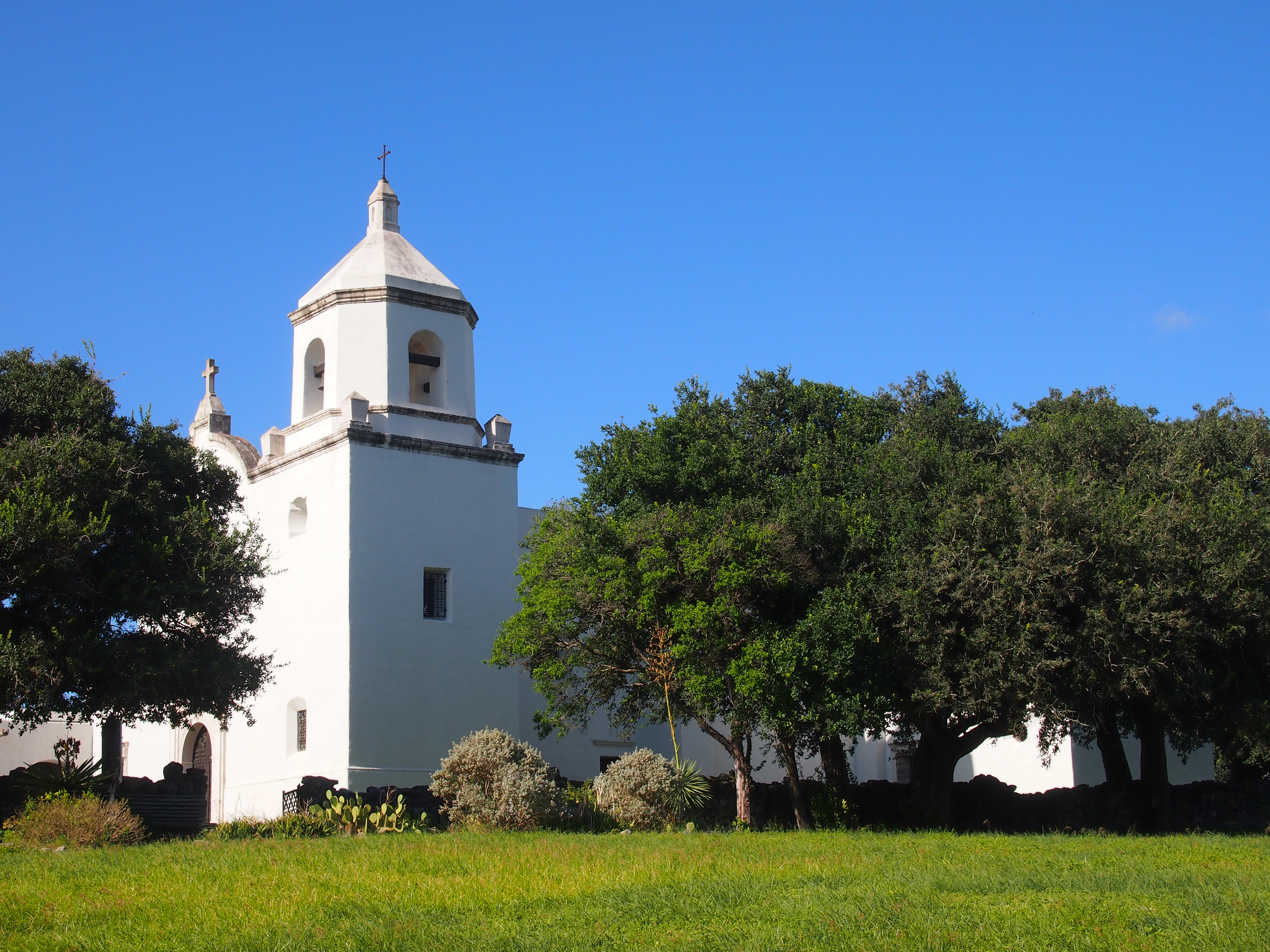
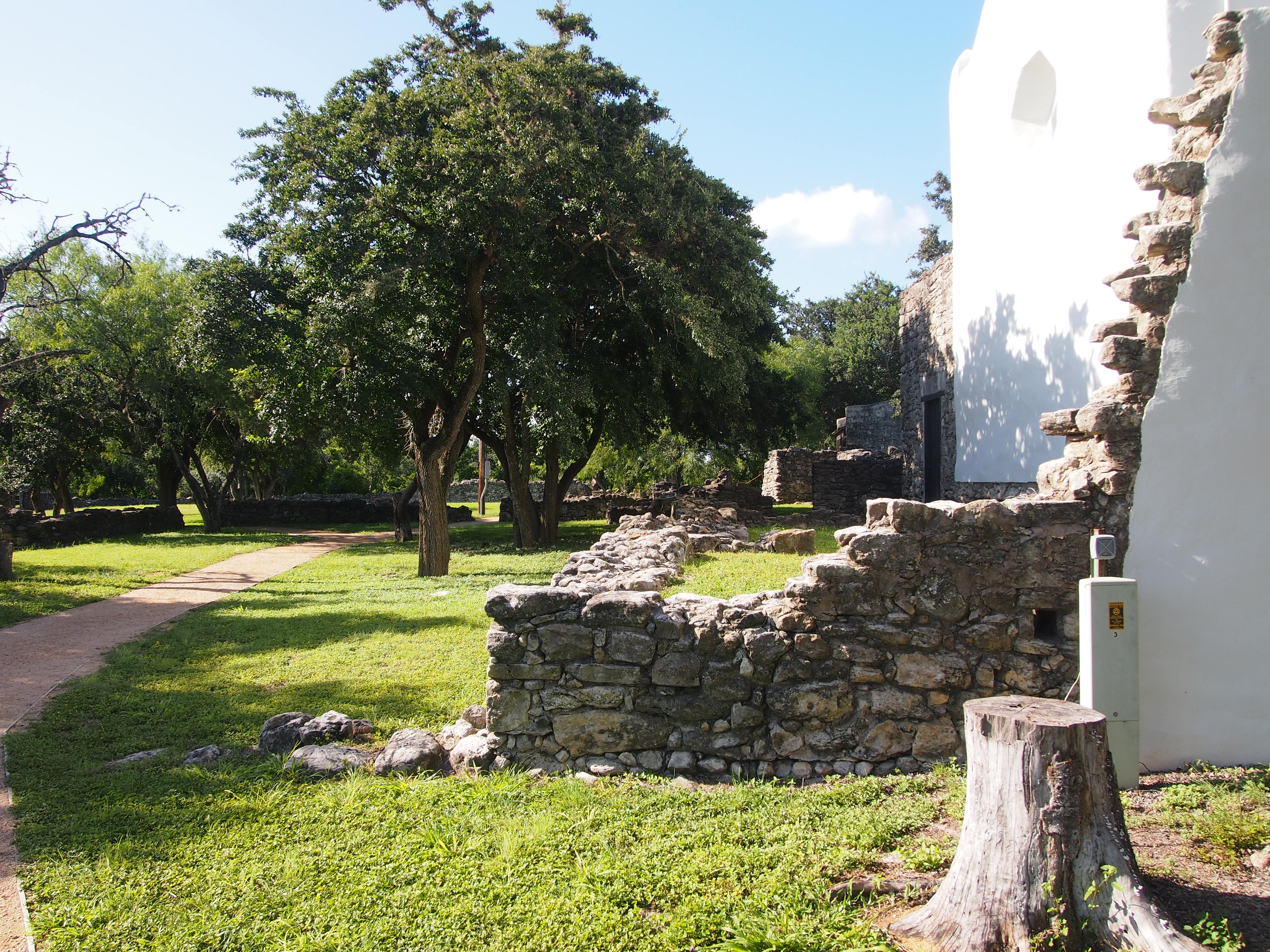
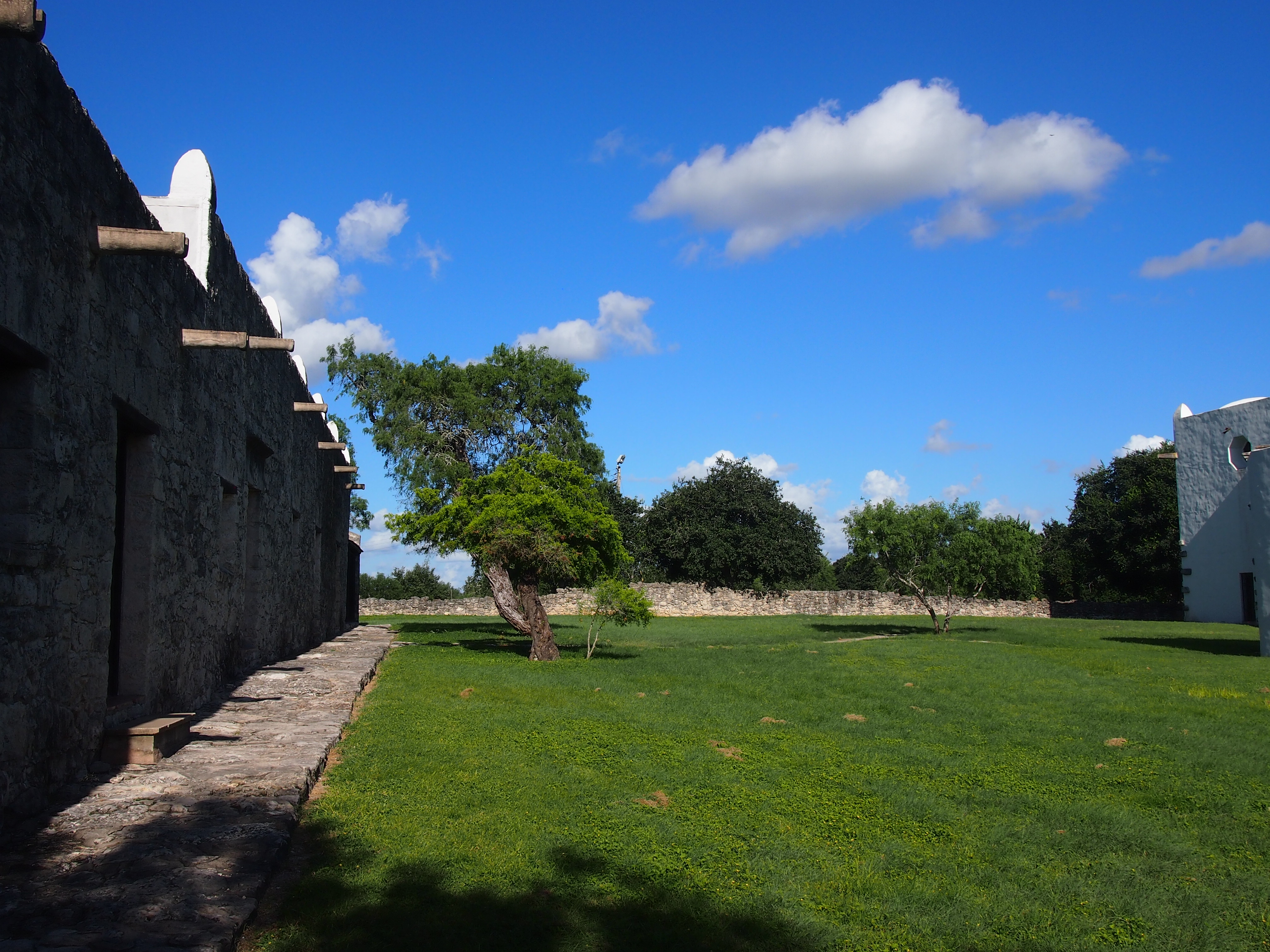
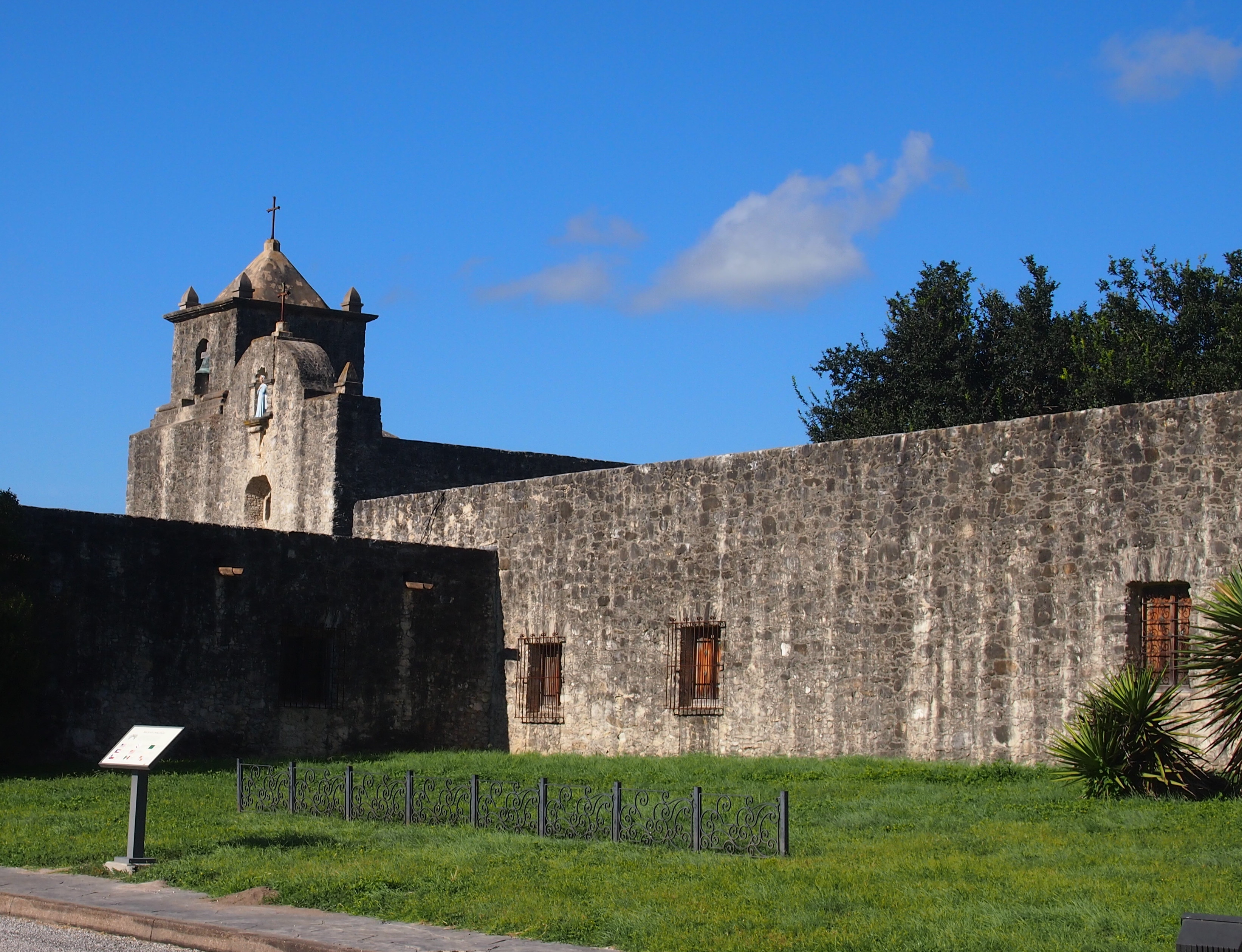
Across Military Plaza (Plaza de Armas) from San Antonio City Hall is the Spanish Governor’s Palace. It too was a place I’d been before, maybe as long ago as the 1970s, so I dropped in for a revisit. It’s a well-done re-creation of the Spanish colonial period, including 10 rooms, some dating back to earlier centuries, others added in the 20th century.
Spanish Governor's Palace Feb 2015Spanish Governor's Palace Feb 2015Once again, from that fount of all things Lone Star, the Texas State Historical Association: “The Spanish Governor’s Palace, at 105 Military Plaza in San Antonio, was constructed in 1749. The name, something of a misnomer, is traditional; the building was not the home of the Spanish governor but served as the residence and headquarters for the local presidio captain. [So the governor didn’t live there, and while very nicely restored, it isn’t a palace. At least it was Spanish. At first.] The one-story masonry structure is built in the Spanish Colonial style; in the rear is a large patio.”

It’s a very pleasant spot on a warm day, this patio.

Spanish Governor's Palace Feb 2015Spanish Governor's Palace Feb 2015The association continues: “A keystone above the entrance bears the date of construction and the Hapsburg coat of arms. After the end of Spanish sovereignty, the building passed into private ownership. In the late 1860s it was purchased by E. Hermann Altgelt, founder of Comfort in Kendall County. He and his family lived there at various times, and the property was held by his widow, Emma Murck Altgelt, until the early 1900s. Then the building fell into a state of disrepair.

“In 1928, voters in San Antonio passed a bond issue for the purpose of purchasing and conserving the building, and in 1929–30 the building was restored under the supervision of architect Harvey P. Smith. Members of the San Antonio Conservation Society aided in restoring and furnishing the historic structure. In 1962, the building was registered as a recorded Texas historic landmark and is now a national historic landmark.”

Jose de Azlor Feb 2015This gentleman makes an appearance in the building, at least pictorially, looking every bit the Spanish nobleman of the early 18th century. The sign next to him said: “Jose de Azlor, the second Marques de San Miguel de Aguayo, was born in Spain and came to Mexico in 1712, where he owned a large ranch in Coahuila. After being appointed governor of Coahuila y Texas, Aguayo visited the site for the Presidio San Antonio de Bejar and ordered that the fort be built at this location.” That was just one thing. He had a busy time as governor of Coahuila y Texas.

The Old Spanish Trail Zero Milestone (One of Them, Anyway)

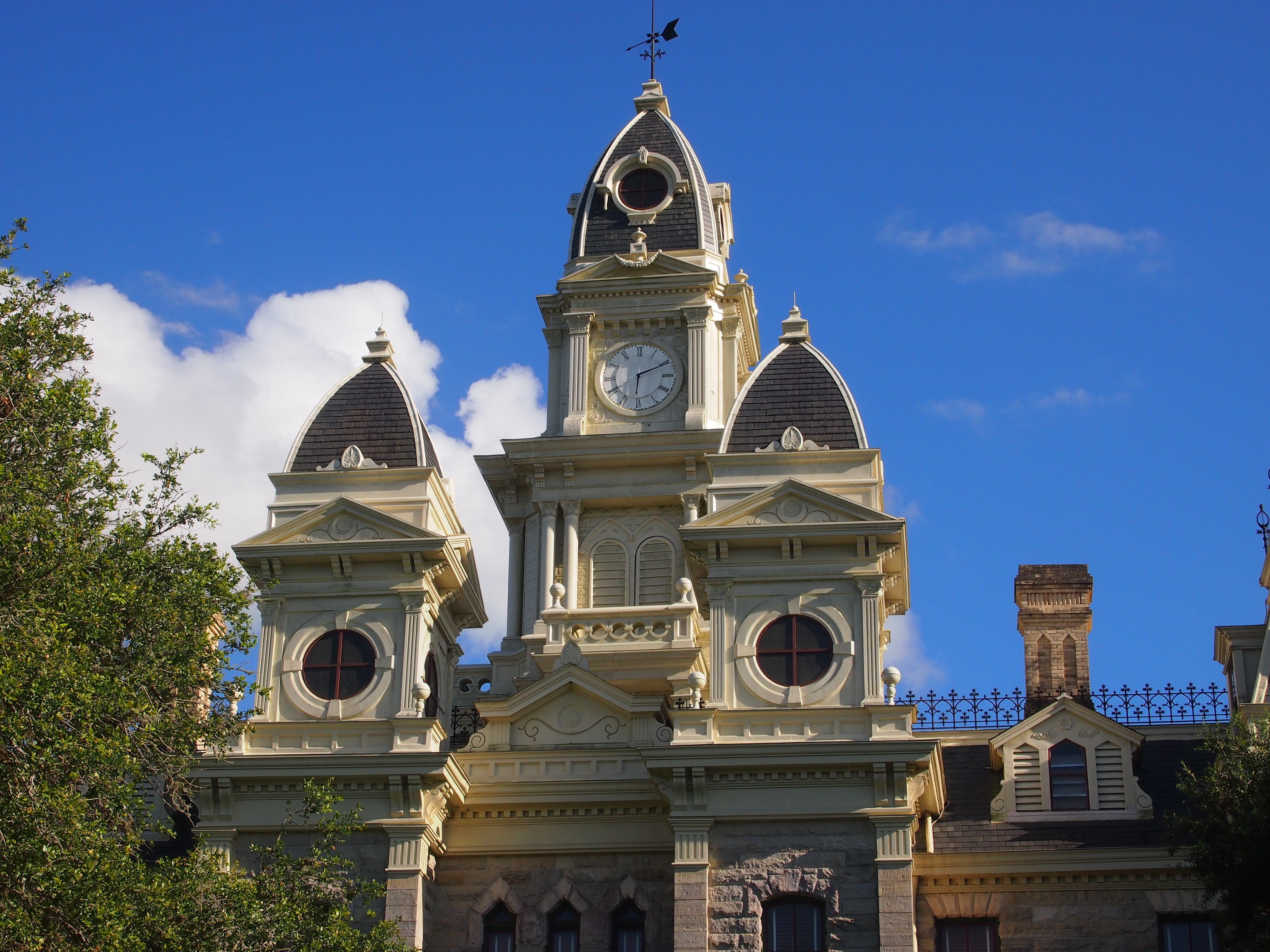
From San Fernando Cathedral, I made my way past San Antonio City Hall, which is a handsome Italian Renaissance Revival structure dating from the 1880s.
San Antonio City Hall Feb 2015Among the other monuments and markers on the grounds is a boulder with a plaque stuck to it. I have to say I’m a sucker for boulders with plaques stuck to them. This one’s apparently been there over 90 years.

San Antonio City Hall Feb 2015ZERO MILESTONE
OLD SPANISH TRAIL

St. Augustine – Pensacola – Mobile – New Orleans – Houston – San Antonio – El Paso – Tucson – Yuma – San Diego

Dedicated by Governor Pat M. Neff
March 27, 1924

Erected by the San Antonio City Federation of Women’s Clubs
Mrs. J.K. Beretta, President

Zero milestone, eh? Odd, considering that San Antonio is roughly in the middle of the route described by the cities on the plaque. This Old Spanish Trail, incidentally, has nothing to do with Spanish colonialism in North America, except that it passed through territories that were at one time or another part of the Spanish Empire. The OST was a 20th-century invention. (Confusingly, OST also refers to an earlier, non-motorized trail between Santa Fe and Los Angeles that did involve actual Spaniards.)

As this excellent article published by the Texas Transportation Museum notes, “…a very grand vision arose for a continuous highway from the Atlantic at St. Augustine in Florida to the Pacific in San Diego California, a distance of 2,817 miles…. The route was given a picturesque name, “The Old Spanish Trail,” as a marketing tool, much as naming the first Northern transcontinental route from New York to San Francisco, “The Lincoln Highway,” first proposed in 1912. The names were designed to capture the imagination of cities and counties along the proposed routes and encourage participation in the construction of the route, as the OST organization could not even begin to pay for all the roads and bridges that would be required.”

But why is there a zero milestone in San Antonio? Google “zero milestone Old Spanish Trail” and you’ll also find information about a plaque on a sphere in St. Augustine — dating from 1928.

Back to the Texas Transportation Museum article: “Governor Neff dedicated an OST zero milestone outside San Antonio city hall in March 1924. It is still there today… The first ceremonial drive across the 2,817 miles of continuously improved road, lined with signs put up by each state, began in San Diego, California on April 4 1929. Their arrival in San Antonio was ceremoniously greeted with a dinner at, of course, the Gunter Hotel.”

That doesn’t really answer the question. Maybe the San Diego-San Antonio stretch was finished first. Or more likely, the San Antonio City Federation of Women’s Clubs really wanted a marker.