Crystal Lake Cave

Three storms passed through northeast Illinois on the last day of June 2014, one in the wee hours, two others in the evening. All of them featured hearty electric displays and vigorous rain. We were warned about possible bursts of high wind, but didn’t see much of it. Not like the wind blasts of late summer ’07 (was it that long ago?) or the howling afternoon of June 18, 2010, but enough to worry property owners hereabouts, such as me. But the condition quite literally blew over.

Today, on this Canada Day 2014, it’s sunny and warm here somewhat south of Canada. (Actually, I could drive east and reach a small part of that nation.) Chamber of Commerce weather, as a former colleague of mine used to call it. Similar conditions are predicted for the run up to the Fourth of July.

Speaking of the last day of June, yesterday was the 80th anniversary of the Night of Long Knives. Who but Al Stewart would write a song about that? But as far as I know, he’s never done one about the assassination of Archduke Franz Ferdinand, the centennial of which was of course over the weekend. Not long now till Der Tag.

Crystal Lake Cave, a few miles south of Dubuque, has some nice features, but it was one of the tightest commercial caves I’ve ever been through. Often the ceiling was low, and the walls were close in as well, just wide enough for an adult to pass through in many places. Our guide pointed out that in its natural state, the floor was a lot higher. So the original cavers – men who were looking for lead deposits – would have had to crawl through. No thanks.

Crystal Lake Cave, June 2014The Chandelier.

OLYMPUS DIGITAL CAMERAThe Pipe Organ.

Crystal Lake Cave, June 2014

The Chapel.

Apparently Crystal Lake Cave enthusiasts have been married in the small room called the Chapel, though as far as I could tell, there would barely be enough space for two people, much less an officiator.

There’s also an underground body of water in the cave, hence “lake.” What I saw looked more like a pond, but it might extend much further. And anyway, “Crystal Pond Cave” doesn’t quite have the same ring to it.

Things You See in Mount Carroll

Somewhere or other at some time, I read that Mount Carroll, Illinois, had enough things to see to recommend a short visit (how’s that for source amnesia?). Wherever I got it, I can pass along that recommendation. It’s a small place, with only about 1,800 people, but it has a sizable concentration of historic structures. We took a look at a few of them on the afternoon of June 20.

That includes a fine courthouse, the Greek Revival part of which dates back to before the Civil War. Elsewhere on the courthouse grounds are a few monuments – but not quite as many as some courthouses I’ve seen – including a tall one dedicated to Union veterans. Turns out that Lorado Taft sculpted the cavalryman at the top of the monument, which is formally called the Carroll County Civil War Soldiers And Sailors Monument.

Mount Carroll, June 20, 2014

Writing in the short-lived blog Larado Taft: The Prairie State Sculptor, Carl Volkmann says, “Lorado Taft was a member of a team of artists who was commissioned to create the Carroll County Civil War Soldiers And Sailors Monument. George H. Mitchell designed the monument, and Josiah Schamel constructed the foundation. John C. Hall designed the annex that was added later when county officials determined that there were many names missing from the original honor roll list.

Mount Carroll, June 20, 2014“The monument consists of a fifty-foot vertical shaft with a Lorado Taft-sculpted soldier holding a flag at the top. Lewis H. Sprecher of Lanark posed for the statue and made several trips to Taft’s Chicago studio to model for it. Two additional statues are attached to the base of the monument, one an infantryman and the other a cavalryman.”

Not far from the town square is a genuine, honest-to-God Carnegie Library that is, in fact, still a library. We went in for a look around. It seemed like a nice facility for a town the size of Mount Carroll. We were the only ones in the library except the librarian – it was about 30 minutes ahead of closing time on a Friday afternoon – and I spoke briefly to her, telling her that I wanted to show my daughters what a Carnegie Library was. I also wanted to come in because they aren’t exactly common sites.

Later, I checked, and my feeling wasn’t quite right. At least according to this Wiki list, some 60-odd Carnegies are still functioning libraries in Illinois alone, out of more than 100 originally built. Seems like most of them are in small towns away from metro Chicago, so unless you frequent that kind of small town, you won’t see them much.

Just before we left town, we came across something that’s presumably not always near the courthouse in Mount Carroll: this unusual car.

Mount Carroll, June 20, 2014Unusual for American roads, that is. I don’t think I’ve ever seen a Morris Minor in this country. It’s so unusual that besides it being a Morris, I didn’t know anything else about it.

Naturally, I had to look it up. Through the marvel of Google images, I was able to pin it down to a Morris Minor 1000 Traveller. In its pages on Morris Minor history, Charles Ware’s Morris Minor Centre Ltd. in Brislington, Bristol, says “there is only one other car on British roads today which is as familiar as the Morris Minor, and that’s the Mini. That both were designed by the same man is no coincidence, and indeed Sir Alec Issigonis is one of the very few car designers whose name is recognised by the man or woman in the street and not just by enthusiasts or fellow engineers. [This might be true in the UK, but I have no way to judge that.]

“The products of Sir Alec’s genius have had a profound and highly beneficial influence on the British motor industry, so it is hardly surprising that it is his first car, the Morris Minor of 1948, which has become the subject of this proposal for a long-life car.” Morris Minor 1000 Traveller, Mount Carroll, Illinois, June 2014

More about Sir Alec here. I’m not sure I’d want to own a Morris Minor myself, but it’s a distinctive design. Good to see one loose on the roads of North America. I’m glad there are enthusiasts in this country. Any fool with money can buy a snazzy new sports car or a Lexis or the like, but it takes some imagination to invest in a Morris Minor.

The Fenelon Place Elevator, Dubuque

Do you remember your first funicular? I know I do: Innsbruck, Austria, August 1, 1983. My friend Rich and I signed up for a group hike organized by the youth hostel we were staying at. We rode a bus up a mountain road to the terminus of a train that went further up the side of the mountain: a funicular.

Merriam-Webster: “A cable railway ascending a mountain; especially: one in which an ascending car counterbalances a descending car,” but that’s a latter-day usage. Go back far enough and you get to funis, which is Latin for rope.

Both the word and the thing itself please me. The Fenelon Place Elevator began as a cable car line up the side of Dubuque’s bluff in the 1880s, built by a banker who lived at the top of the bluff but who worked down near the river. By the 1890s it had evolved into a true funicular, using a system based on those used in the Alps, and according to the official history, “Ten neighbors banded together and formed the Fenelon Place Elevator Co…. This group traveled to the 1893 Colombian Exposition in Chicago to look for new ideas. They brought back a streetcar motor to run the elevator, the turnstile, and steel cable for the cars.”

Remarkable the things that are connected in one way or another to the 1893 world’s fair, isn’t it? In our time, a technically more modern – but still old-timey appearing – funicular travels the slope in Dubuque. I assume some people still commute on it, because the neighborhood at the top of the bluff is still residential, and the district at the bottom is still mostly commercial. But I’m sure that much of the Fenelon Place Elevator’s business involves tourists taking it for a lark.

Here’s the view from inside one of the cars, waiting at the bottom. Fenelon Place Elevator

A sign at the entrance says:

CABLE CAR IS OPERATED FROM ABOVE

GET IN AND SIT DOWN

PULL BELL CORD WHEN READY

OPERATOR WILL SIGNAL, WITH A BUZZ, WHEN CAR WILL START TO MOVE

PLEASE REMAIN SEATED UNTIL CAR HAS STOPPED AT THE TOP

The funicular is 296 feet long, runs on a 3-ft. gauge, and while I didn’t time the trip, it couldn’t have been more than a minute. Here’s the view from the observation deck at the top, looking down on the funicular. The cars can hold about six people comfortably.

Fenelon Place Elevator, June 2014Round-trip adult fare: $3. A lot if you consider the literal distance traveled. A bargain, if you consider how cool funiculars are.

Juneteenth Firefly & Felipe

Saw the summer’s first firefly this evening, around dusk as you’d expect, but only a solitary bug, in the middle of the road ahead of me as I drove along. Still, it’s the first. A winged, flickering harbinger of the short high summer here around the Great Lakes.

Soon, bigger flashes were visible. Plenty of cloud-to-cloud lightning up high in evil-looking black clouds. According to the weather maps, most of the rest of the nation is having a quiet night, but we’re getting the pops and the rumbles. No big peals, cracks or claps of thunder just yet, but that could come at any time. No urgent warnings from weather experts, so I guess it’ll just be wet in the morning.

I had a lot else to do today, so I read a bit about the new King of Spain. Wiki’s handy for this kind of thing, and tells me a number of facts, such as his full name: Felipe Juan Pablo Alfonso de Todos los Santos de Borbón y de Grecia. I wonder how old he was before he learned all of them in order, or whether he ever bothered.

Also, and this isn’t particularly surprising, he’s the great-great-great-grandson of Queen Victoria through two different lines. More interestingly, he’s descended from the kings of the Two Sicilies, most recently Ferdinand II of the Two Sicilies (1810-59). There’s a kingdom you don’t hear much about any more, but the name always amused me.

Mercy Otis Warren

Heavy rains last night. Didn’t hear a drop of it. Guess I was too busy with weird dreams. This morning I noticed the soaking. The yard’s really lush so far this summer.

It’s summer, never mind the solstice. Rising summer. The mosquitoes are out, but not quite in force. No fireflies yet, but I’ve seen a dragonfly or two.

Ann and her class did their class presentation this morning, which I attended, called “I Am the Nation.” Each student dressed up as, and recited a short report they’d written about a figure from the American Revolution. I’m only mentioning this because I actually learned something from Ann’s choice: namely who Mercy Otis Warren was.

If I’d heard of her, I’d forgotten about her. Or maybe I missed her entirely; Revolutionary history, while interesting, hasn’t ever been a special period of fascination for me. She did a number of things, but mainly seems to be remembered as a polemicist of the Revolution, and afterward, an historian of it. Needless to say, though it’s pointed out a lot, those were unusual occupations for a woman of the time.

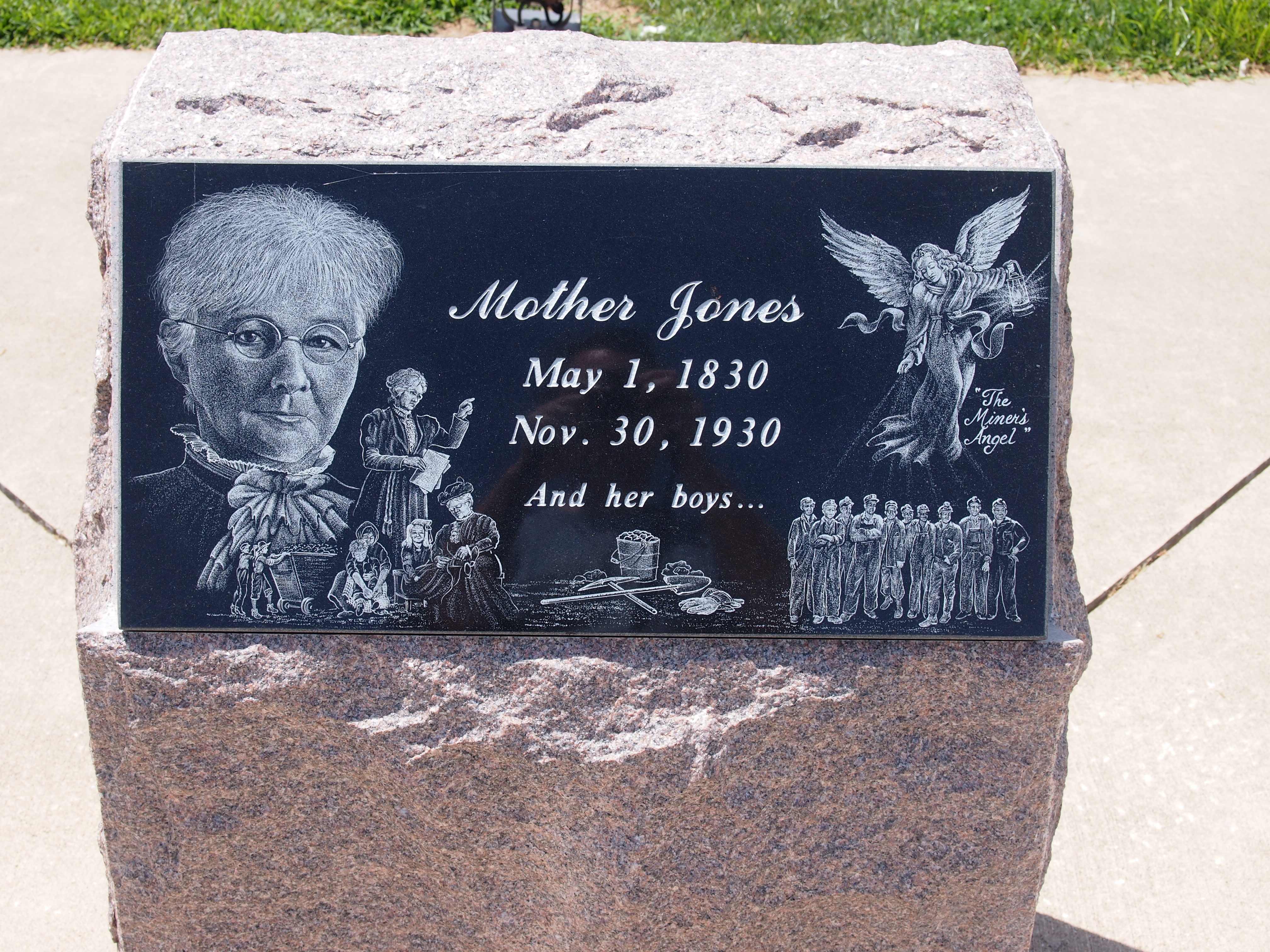
More about her is here. If ever I’m in Barnstable, Mass., I’ll go see her statue, and her brother’s too. James Otis was also a patriot and polemicist, and had the distinction of being killed by lightning one day in 1783.

Other than Warren, I’d heard of the rest of the notables the children eulogized, even Deborah Sampson and Phyllis Wheatley, whom I first encountered years ago in San Antonio, when one of the school districts there wanted to re-name a high school in her honor, and not everyone was on board with that idea.

Though I’ve cited three women examples, most of the characters were in fact men. The usual suspects, too: Washington, Adams, Jefferson, Hamilton, Franklin, Paul Revere, Patrick Henry, Nathan Hale, et al.

All well and good, but I hankered a bit for some more unusual names. Such as Francis Marion (the Swamp Fox), Baron von Steuben, Nathanael Greene or, besides military men, Roger Sherman (he of the Connecticut Compromise), or Robert Morris and Haym Soloman  (financiers of the Revolution). And throw in a couple of loyalists, just to show what’s what, such as William Franklin, Ben’s son and governor of New Jersey, or the interesting footnote character William Augustus Bowles. 

Independence Hall & The Brazos

The main attraction at Washington-on-the-Brazos State Historic Site, as far as I’m concerned, is Independence Hall. Texas Independence Hall, that is, a much more modest and lesser-known structure than the one in Pennsylvania.

Independence Hall, Texas 2014Actually, it’s the second replica of the original building, dating from the 1950s, which replaced a 1910s replica put on the site. There’s something to be said for replicas or even hasty copies. After all, much of what survived the golden age of Greek civilization was through Roman copies.

The display inside is refreshingly informal. Go in through the open door and there you are. There are no roped off areas, probably because everything inside’s a recent copy. Not that there’s much inside. Just a few long wooden tables, some straight-back wooden chairs, and a couple of jugs, maybe to represent the hard cider on hand to steady the delegates’ nerves. The small obelisk just outside the door says On This Spot Was Made the Declaration of Texas Independence – March 2, 1836.

There isn’t much else, at least in the way of structures, near Independence Hall. Various paths lead off from it through the rest of the historic site, including one to the Brazos River. The scenery along the way looks like this, at least in late April in a non-drought year.

Texas4.25.14 064Before long you arrive at the banks of the Brazos. It seems like an under-appreciated river. For a moment I thought I’d never been to its banks before, but of course I have – and not that long ago, when I walked along the Brazos in Waco in 2009, and even crossed it on a footbridge. But it hardly seems like the same river, even though maps tell me that it is.

Texas4.25.14 065Something I didn’t know about the Brazos before today: it’s the 11th longest (source-to-mouth) river in the United States, according to the U.S. Geological Survey, and for that matter the longest within Texas. It used to be navigable as far north as Washington-on-the-Brazos, but its career as a river of commerce didn’t really take off. Finally, no less an authority than Hank Hill says that Alamo Beer is “from the lukewarm headwaters of the mighty Brazos River.”

Washington-on-the-Brazos State Historic Site

Not far south of College Station and Bryan is Washington, Texas, an unincorporated place with a small population. In some alternate universe, it’s a major city sprawling along the Brazos River in Washington County – and it’s the capital of Texas (the state, or an independent nation; maybe that’s two different alternatives), best known for a large public university, its tech industry, and a thriving music scene. Popularly called Brazos, to distinguish it from that other Washington on the Potomac, the city also has a countercultural streak: Keep Brazos Weird, the bumper stickers say.

For a while, little Washington on the Brazos River was the capital of the Republic of Texas – 1842 to the end of independence in 1845, but then a town further west permanently won the prize of state capital, where it remains. Along the way, the back-and-forth of the Texas capital location led to the odd incident known as the Archive War, which wasn’t really a war, and which I don’t remember being discussed in 7th grade Texas History class.

These days, Washington, Texas, is best known as the site Texas declared independence from Mexico in 1836, a fact that was taught in Texas History class. That event is memorialized at the 293-acre Washington-on-the-Brazos State Historic Site, owned and operated by the Texas Parks and Wildlife Department. More about it here.

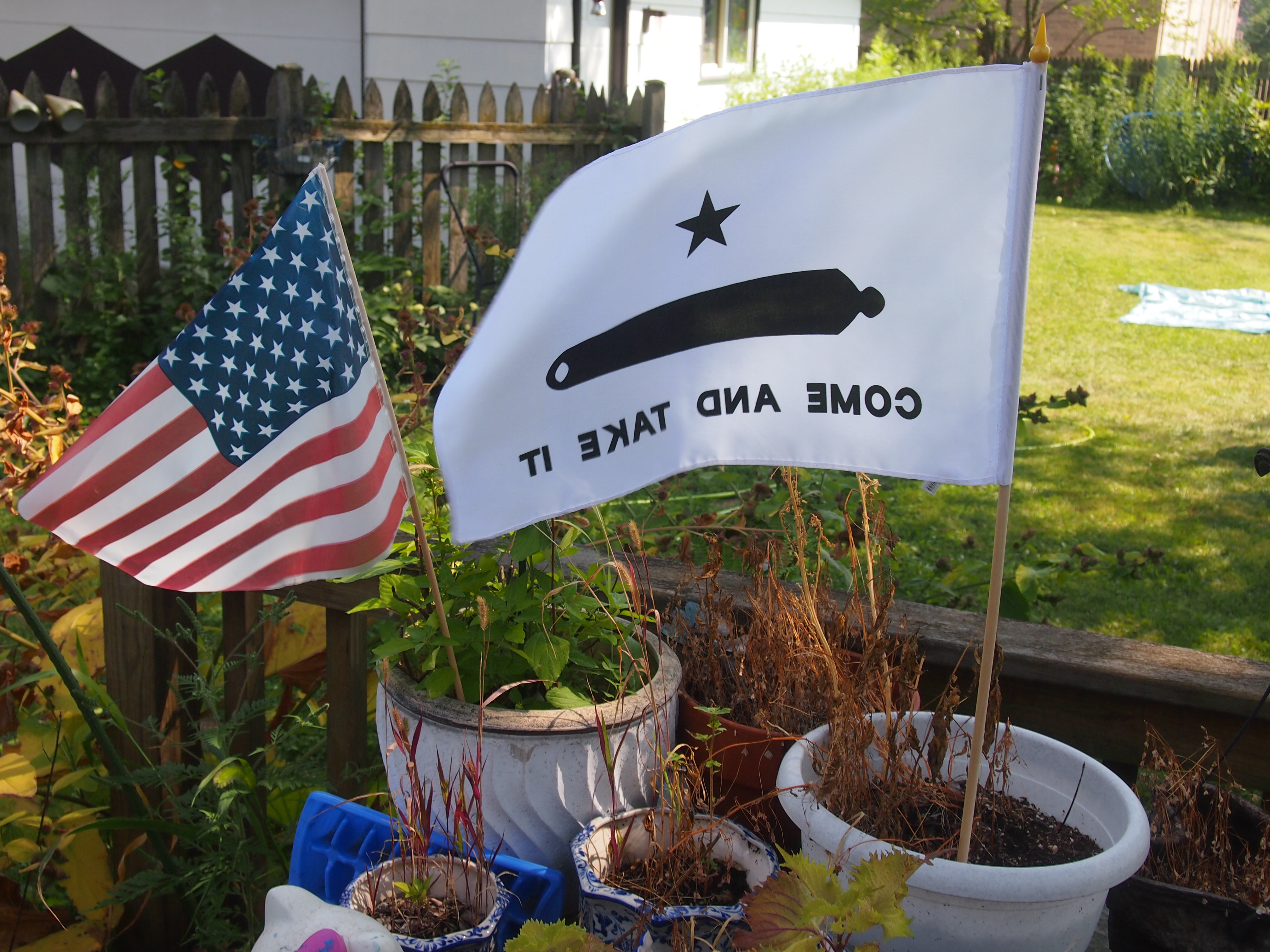
Jay and I took a look at the site on the way from College Station to San Antonio on April 25. I’d never visited before. The site has three major components: Independence Hall, the Star of the Republic Museum, and the Barrington Living History Farm. We saw the first two, along with the visitors center, where we each bought a small Come and Take It flag in the gift shop because how many places can you do that? (Amazon doesn’t count.)

Near the visitors center is a bronze of this fellow: George Campbell Childress (1804-1841).

Childress, April 2014Another of the long line of Tennesseans who came to Texas early, and a brother-in-law of James K. Polk, Childress was honored with this bronze because he’s acknowledged to be author of the Texas Declaration of Independence. Note the quill and scroll. He was head of the committee tasked on March 1 to write a declaration, and it was ready the next day, so it seems likely that he’d already prepared the thing. The document clearly owes a rhetorical debt to Jefferson. The first paragraph says:

When a government has ceased to protect the lives, liberty and property of the people, from whom its legitimate powers are derived, and for the advancement of whose happiness it was instituted, and so far from being a guarantee for the enjoyment of those inestimable and inalienable rights, becomes an instrument in the hands of evil rulers for their oppression.

Even so, the list of grievances is specific to the time and place, such as abrogation of the 1824 Constitution of Mexico and the annoying union of Texas with the state of Coahulia, but mainly boiling down to the assertion that no dictator in Mexico City’s going to tell us what to do.

Texas4.25.14 052The deco-like statue itself dates from 1936 – the centennial of Texas independence – and was done by Raoul Josset, a French sculptor who immigrated to the United States in the early 1930s, and left behind a number of works, including Childress but also “The Spirit of the Centennial,” now in Fair Park in Dallas, and the Fannin Monument in Goliad, Texas. More about Josset here.

Tiananmen Square 1994

Ten years ago, I wrote about our visit to Tiananmen Square 10 years earlier, noting that “Yuriko and I got into a taxi — one of those yellow van-like vehicles that Bob said were called breadboxes — and said ‘Tiananmen.’ Said it a few times, actually, before the driver figured out where we wanted to go. Soon we were walking the cement squares that make up that vast plaza. It was a bright, windy moment.”

Naturally, we took pictures of each other. Here I am wearing the same shirt I held while posing with Mt. Fuji, this time posing with Tiananmen Gate.

Beijing, May 1994Here’s Yuriko, posing near Mao’s tomb, or more formally the Chairman Mao Memorial Hall.

Mao's Tomb, May 1994The line wasn’t long to get into the tomb. The Great Helmsman, as I recall, was under glass, and had a Chinese flag draped from mid-chest on down. He looked a bit waxy, but I guess nearly 20 years of embalming (at the time) will do that to a fellow. Being the only exhibit, it didn’t take long to see Mao, and soon we exited – right into the gift shop, or rather the gift area outside the exit, which was marked off by partitions.

How many places can you buy Mao souvenirs? Not many, so I bought a set of Mao postcards, which I sent to Jay and Deb, and some packs of cigarettes with Mao on them, which I sent to friends who smoked. I also bought a set of lapel pins, which I still have somewhere. One has the National Emblem of the PRC; another, the Chinese flag; and then there’s Mao. I scanned it some years ago. Not the best image, but it gives a flavor of the thing, which is maybe about a half inch in diameter.

Mao pinIn September 1994, when we returned to Beijing to prepare to ride the Trans-Siberian to Moscow, Bob took us to the Hard Rock Cafe Beijing, which had opened earlier that year, and which I’ve learned closed in 2012. The place featured the usual Hard Rock collection of rock memorabilia and hagiographic images of rock stars, but particularly striking was a round painting on the ceiling. Its background was sky blue with clouds, and arrayed around the edge were portraits of early rock legends – Elvis, Chuck Berry, Buddy Holly, the Beatles, the Stones, et al. The painting also had local references: Tiananmen Gate and the Temple of Heaven.

We were seated so we could see the painting easily. Bob said, “Look closely and you’ll see a figure not usually associated with rock ’n’ roll.” And sure enough, there he was. The reproduction of Tiananmen Gate was accurate, including the painting of Mao that hangs there.

The George Bush Presidential Library

I’m told that we went to the Eisenhower Library when I was a child, but I don’t remember it. Since then I’ve visited other presidential libraries or museums: Lincoln, Hoover, Truman, Johnson, Nixon, Ford, Carter. And now the George Bush Presidential Library, focusing on George Bush the elder. Jay and I visited just before we left College Station.  

GHWB Prez Library 2014His library opened in 1997 on the Texas A&M campus, though it’s  way out from everything else. Bush didn’t attend A&M, famously being a Yale man, but presumably the Aggies put in the best bid. Besides, he did make his name in the oil business in Texas. A&M oversees the place with the National Archives and Records Administration. It’s an HOK design, which from the front looks a little like it’s missing a dome.

Presidential history’s interesting (of course it is), but I thought that the most interesting exhibit in this particular museum was a temporary one about offshore oil drilling. Called “Offshore Drilling: The Promise of Discovery” (sponsored by Shell), the museum says that it’s “a tribute to [Bush’s] role in the development and use of the innovative independent leg offshore jack-up rig Scorpion launched by LeTourneau in 1956… It focuses on the history, development and future of offshore drilling, with an emphasis on the work of George Bush, emerging technologies and ongoing research at Texas A&M University.”

An independent leg offshore jack-up rig is a mobile offshore platform stable enough for the open ocean, but flexible enough to be moved when the time comes. Before 1956, offshore platforms mostly had to be fixed permanently to the bottom, limiting their usefulness; the few floating platforms couldn’t stand heavy seas, so they tended to be near shore. LeTourneau was an inventor: Robert Gilmour LeTourneau (1888-1969). He was, says Wiki, “a prolific inventor of earthmoving machinery. His machines represented nearly 70 percent of the earthmoving equipment and engineering vehicles used during World War II, and over the course of his life he secured nearly 300 patents.”

Drilling Contractor (Sept/Oct 2005) further tells the story: “Although the concept of a deep-sea, mobile offshore platform aroused considerable interest among the oil companies, none of the companies were prepared to help finance construction of such an expensive (nearly $3 million) and unproven project. Then [in the early 1950s] Mr. LeTourneau proposed the idea to Zapata Off-Shore Company of Houston, headed by future United States President George H.W. Bush.” (The article is here.)

Zapata. You have to like that name for an oil company. (Apparently Bush and his partners were inspired by the movie Viva Zapata!) So Zapata became the first oil company to use an independent leg offshore jack-up rig. The exhibit tells that story, but even better, it includes models of various rigs, platforms and supply vessels that have been used over the years by the industry — exceptionally detailed models — as well as pieces of drilling equipment.

The rest of the museum has pretty much what you’d expect: exhibits about different stages of the life and career of George Bush the elder, including his harrowing escapes from death as a naval aviator in the Pacific in 1944 (over the course of the year, his squadron suffered a 300 percent casualty rate), though no mention of this story that I saw, and his various public-sector jobs, both elected and appointed. A well-done set of displays, but even so it’s hard to think of any presidency that happened while you’re an adult as history.

Other items included a big hunk of the Berlin Wall, a replica Oval Office – any presidential museum worth its salt has one – and a life-sized bronze of Bush, depicting him as Ambassador to the United Nations.

Texas4.25.14 048I didn’t make a picture of the oddest bit of art we saw in the museum. Called “1000 Points of Light,” it was painted for the Points of Light Foundation, which encourages volunteerism. A presidential George Bush reaches for a nimbus-ed U.S. flag, while a crowd of enraptured everyday Americans watches. I’d call the style Socialist Realism, but there’s no socialist content here. Maybe Volunteerist Realism. The artist is Frank Hopper, who seems to excel at this kind of thing, and is also fixated on mermaids.

Stranger still are the ghost presidents in the sky, watching. And not just any ghost presidents. With the exception of Washington and Jefferson and either Madison or Monroe, all the rest of them are ghost Republican presidents, all the way from Lincoln to Reagan. The faces are a little spectral, but I think the only ones left out are Arthur and Harding. Take a look.

In the plaza outside the museum stands another work of art, “The Day the Wall Came Down,” by Veryl Goodnight.

Texas4.25.14 042Bronze horses racing over replicated bits of the Berlin Wall, with graffiti copied from the actual wall (the west side, naturally). With the horses, the plaque tells us, “representing the freedom of the human spirit.” Fine figures of horses, and all very kinetic, which is fitting for the destruction of the wall, but I’m not sure how well beasts of burden stand in for the unconquerable human spirit.

Though the pieces of the Berlin Wall in “The Day the Wall Came Down” seem to be simulations, the sculpture (and the actual piece inside) did get me thinking. Like pieces of the World Trade Center, or moon rocks, where are all the scattered bits of that former communist concrete now? Relics tend to get around.

The Bonfire Memorial

Besides a few buildings and a WWI exhibit at a campus library, Jay and I also took a look at the Bonfire Memorial on the campus of Texas A&M. It’s located on the edge of campus, on the site where 12 students and former students were killed, and 27 more were injured, when the Aggie Bonfire collapsed during construction in the wee hours of November 18, 1999.

Bonfire Memorial, April 2014Passed the entranceway to the memorial, there’s a walkway to the ring – the Spirit Ring, it’s called. To the right of the walkway is a north-south line of cut stones that represents each year that the Bonfire burned from 1909 to 1998, with a black stone marking 1963, when the event was cancelled because of the assassination of President Kennedy. The names of three students who died during their involvement with pre-1999 Bonfires are also marked, each on the stone for the year he died (in logging and traffic accidents).

Bonfire Memorial April 2014These are three of the 12 granite “portals” of the ring, as they’re called. I wondered about their orientation on the ring; later I read that each points toward the hometown of the person they memorialize. Connecting the portals are 27 stones to represent the injured.

Inside each portal is a bronze interior that gives the name, likeness, and a written reflection about one of the dead.

Bonfire Memorial April 2014This one happens to be Bryan Allen McClain, Class of ’02, all of 19 years old, who happened to be from San Antonio. All of them are listed here, including their inscriptions on the bronze.

Usually when I see a new or newish memorial, I can’t help the sneaking suspicion that in a century, even half a century or less, the memorial will be disregarded, and the event hazily remembered at best. This comes from seeing too many neglected memorials of that age, though it’s just a feeling, and completely untestable.

Not the Bonfire Memorial. Texas A&M pays an unusual amount of attention to its past, mostly in the form of revered traditions. I don’t have any reason to think the 1999 Bonfire’s going to be forgotten as long as there’s an A&M.