I hadn’t heard until today about the expedition that found some Saturn V first stage engines – the mighty F-1 — on the bottom of the Atlantic. The Bezos Expedition site is careful to note that “many of the original serial numbers are missing or partially missing, which is going to make mission identification difficult. We might see more during restoration,” so they could be from any of the missions that used the engines, though I believe they were looking for Apollo 11 relics.
There might be less headline glory in finding something from (say) Apollo 16, but I think it would be just as cool. The expedition site goes on to say that whatever their origin, “the objects themselves are gorgeous.” Bet they are. They’ve gone to the Kansas Cosmosphere and Space Center for stabilization, so maybe they’ll stay there for display. That place would be worth going to that corner of Kansas to see, F-1s or not.
Seems that Amazon boss Jeff Bezos paid for the expedition, or at least much of it. Good for him. It’s the kind of thing that billionaires should spend some of their money on. That and the 10,000-Year Clock.
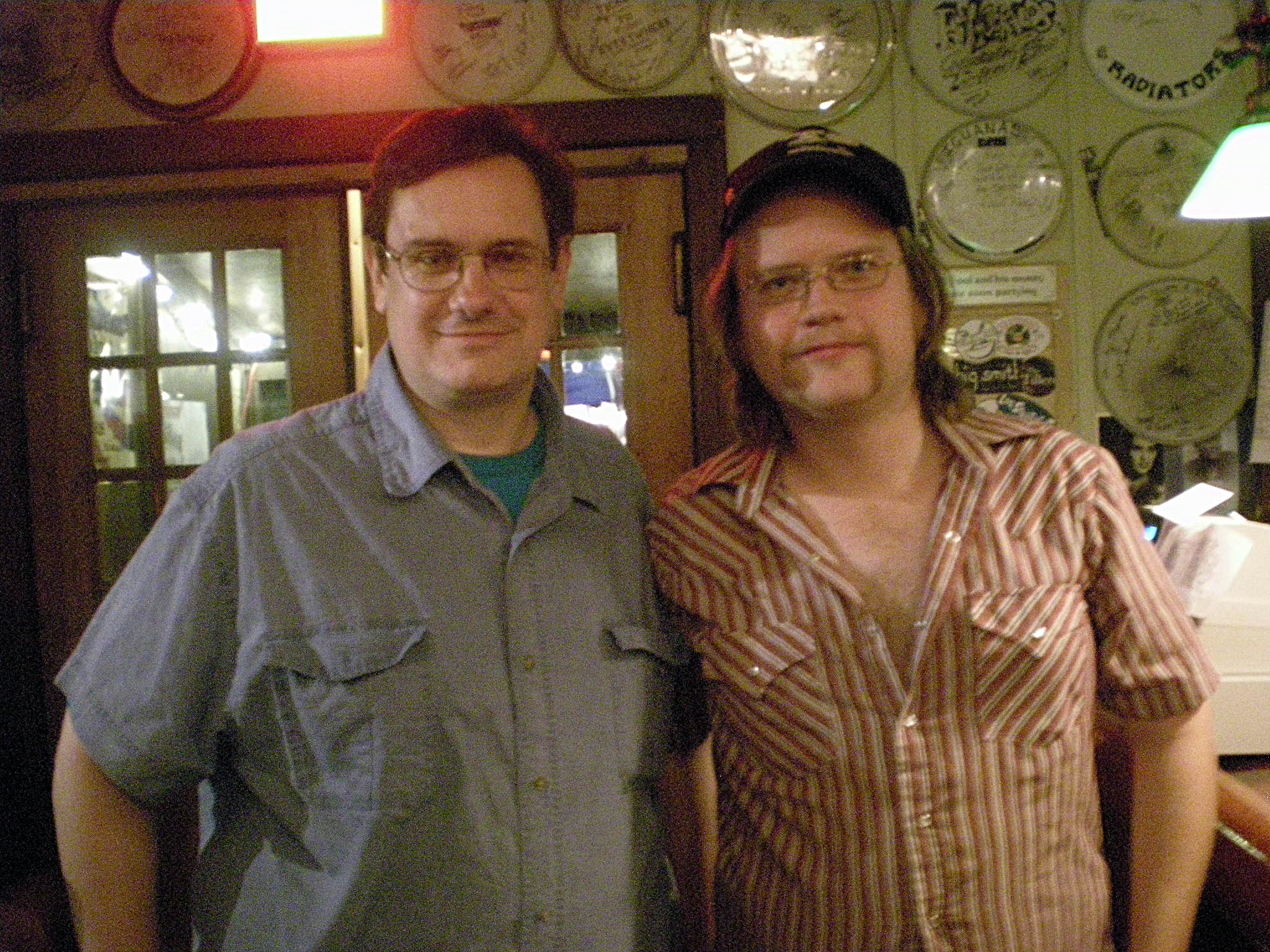
Got a postcard from my nephew Dees last week, the nephew who’s the drummer for Sons of Fathers. It describes the 12th Bonnaroo Music & Arts Festival earlier this month, in which the band participated. The photo on the right depicts the only known first-name Deeses of the world, together about this time last year, when Sons of Fathers played at FitzGerald’s in Berwyn, Ill., and I went out to see them. He’s the hale fellow with facial hair.
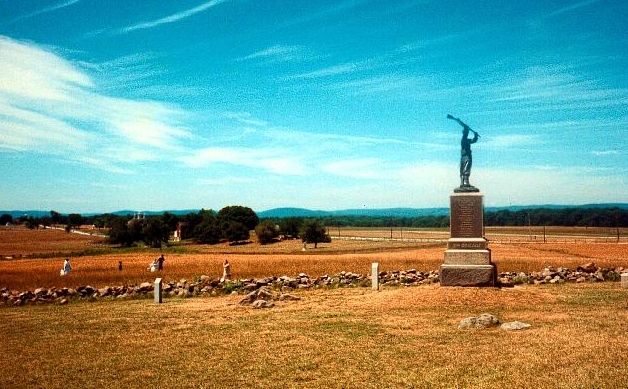
A little further in the past – 1991 – I found myself driving from Boston to Chicago during this time of year, and I stopped at Gettysburg National Military Park. I missed the 128th anniversary of the battle by a few days, and presumably whatever commemoration events they had. I thought of that when I was reminded by the newspaper today that the 150th anniversary of the battle is upon us, beginning tomorrow, of course.
There were some other visitors when I was there, but not too many. It was a hot day, fittingly, since it was a high-summer battle, which must have added to the misery. This image captures the summer conditions of the site pretty well, besides the 72nd Pennsylvania Infantry Monument, which has its own intricate history, and which was knocked over by high winds only last week.
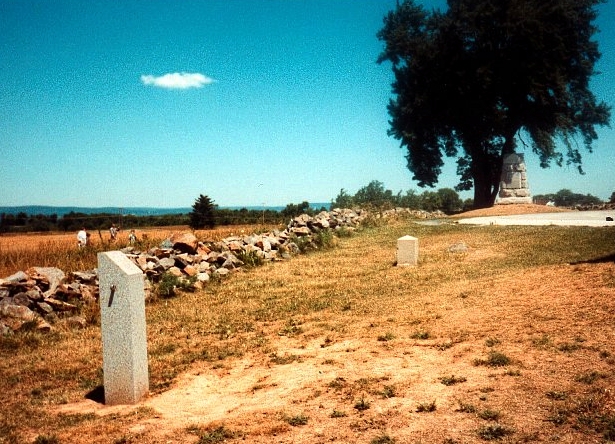
Here’s another view of the Angle – the stone wall that Pickett’s men managed to reach (Lewis Addison Armistead’s men, but let’s not be too pedantic).
I haven’t seen one of these quarters yet, though I’ve been noticing a number of national park quarters in change lately.
Missed the conjunction of Venus, Jupiter and Mercury so far. Every night I’ve thought about it, it’s been cloudy. Every time it’s been clear, I’ve forgotten about it. Ah, well. I satisfied my need to see major celestial events for a while about this time last year with the Transit of Venus. If the next big thing I get to see is the eclipse of August 21, 2017, I’ll be satisfied.
Oz the Great and Powerful was an interesting failure. Ann wanted me to take her to a movie last weekend, and that happened to be one we could agree on, and playing at the second-run theater for $1.75. The 2D visual effects – layer-caked CGI – were worth that much, especially the colorful landscape of Oz. The story was uneven and so were the characters, especially Mila Kunis’ Wicked Witch of whichever direction.
Hyde Park on Hudson was likewise an interesting failure. Saw that on DVD a few weeks ago. Mainly I wanted to see Bill Murray give FDR a go. At times he did quite well with the part. Then there were moments I looked at him and thought, that’s just Bill Murray.
Chanced across this video not long ago. Wow, these kids are talented. How does that happen? It also made me look the original English version of the song. I can’t remember the last time I heard it.
The last book of the year that Lilly is reading for freshman English class is Animal Farm. She asks me about it, and I oblige her with what I know, but it’s all I can do not to overload her with detail about the Russian Revolution, Whites vs. Reds, Lenin, Marxism, Stalinism, Trotsky, show trials, old Bolsheviks, the gulag, Five Year Plans, the Nazi-Soviet Non-Aggression Pact, etc., etc. Over the summer she’s supposed to read Nineteen Eighty-Four. I’ll have to resist the urge to blather on about that, too.
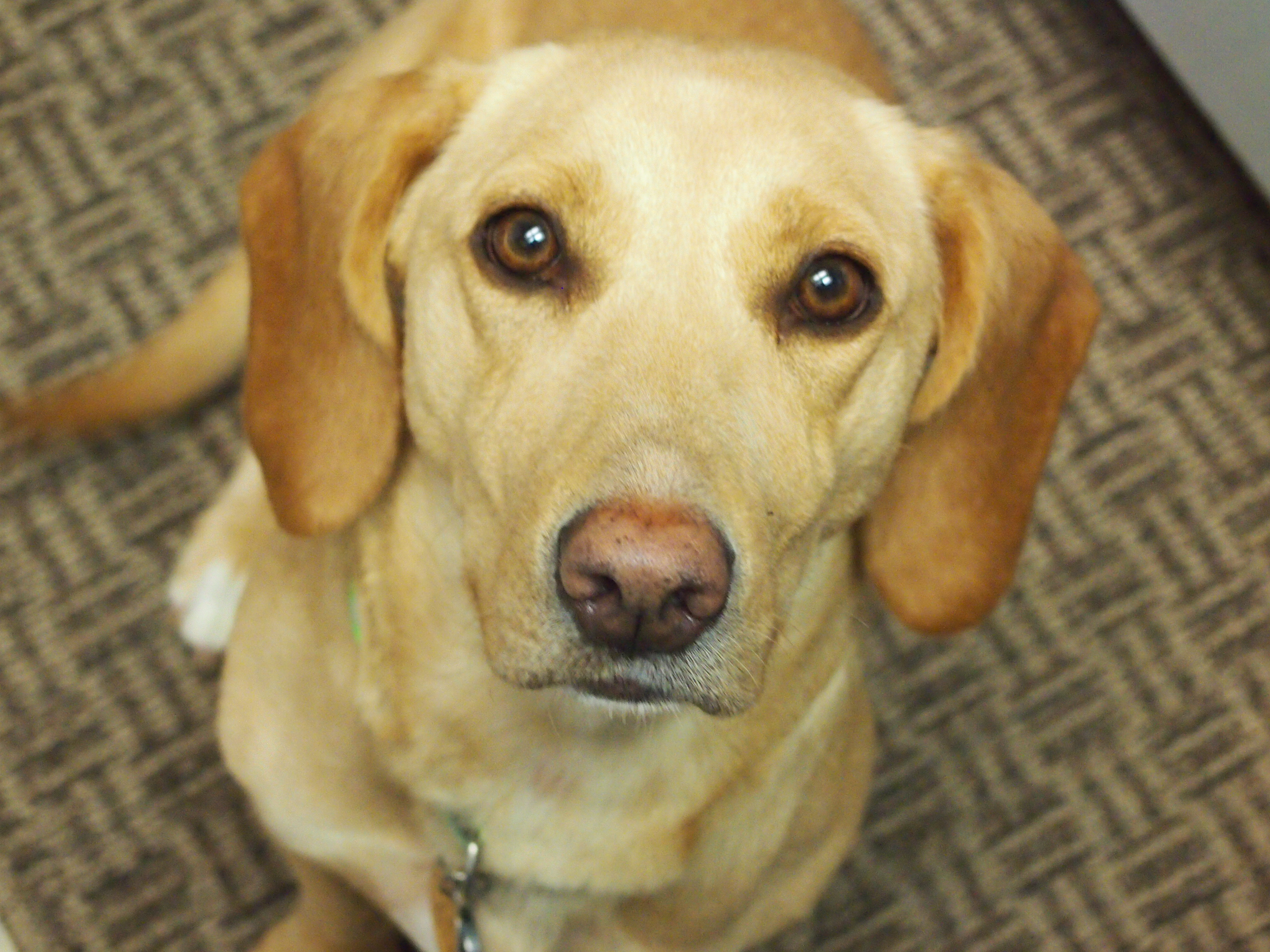
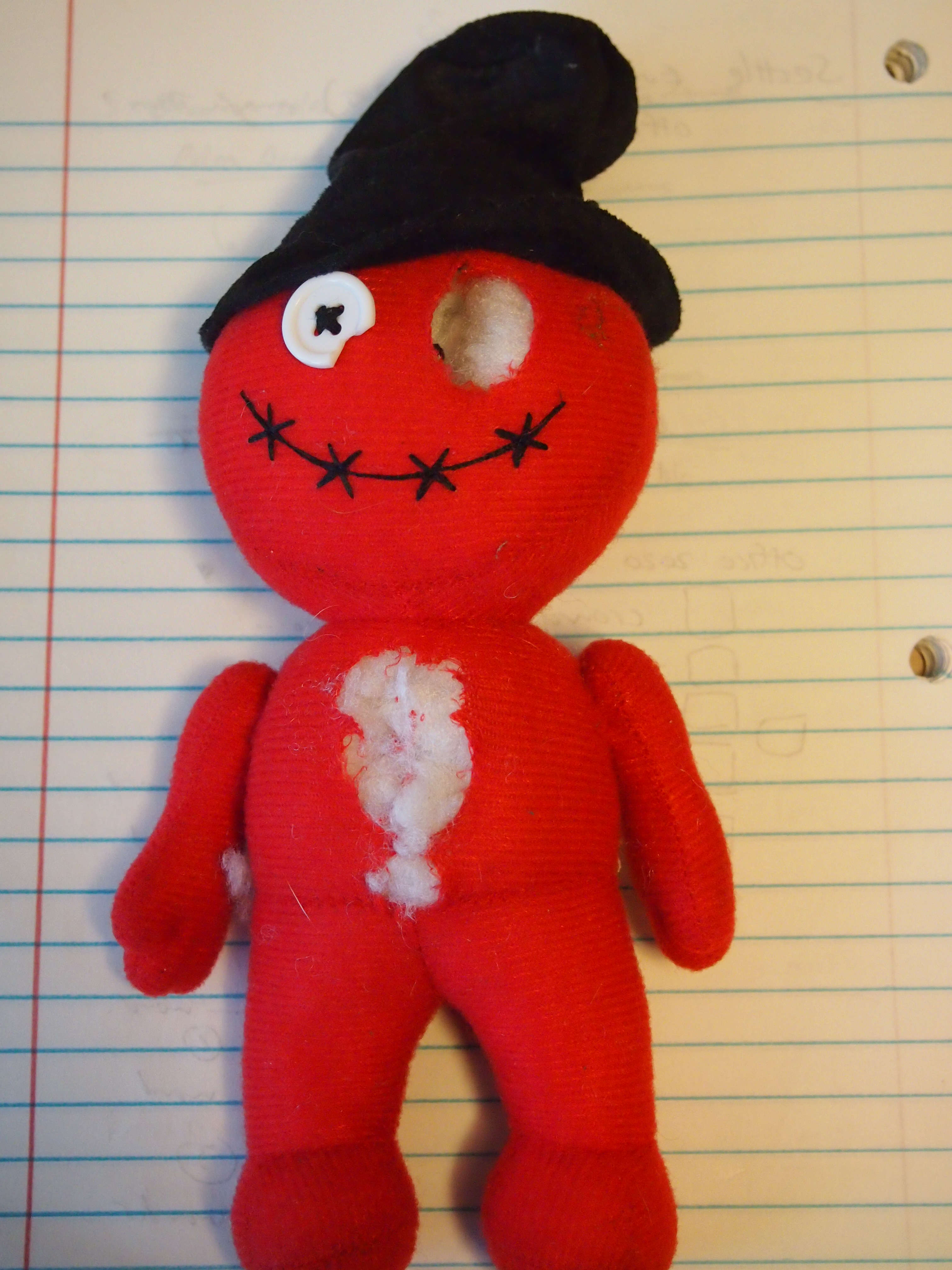
The dog’s got some canine habits, for sure. Such as chewing things. Pictured below is a stuffed figure I don’t ever remember getting, and which no one in the house has paid much attention to for years. The hound found it recently and did some damage. Was Mr. Sluggo to its Mr. Bill. Reminds me of the young days of Katie, my mother’s dog, who destroyed (among other things) most of the pine-cone elves acquired in Germany in the ’50s that we used to hang as Christmas decorations.
A few months ago I picked up a hardback book at Big Lots. That retailer isn’t generally known for its books, but it had a bin of landfill-destined titles that I had to rummage through. I found A Fiery Peace in a Cold War (2009) by Neil Sheehan, whom I know as the author of A Bright Shining Lie, which I read some years ago, and remembered liking.
The progression of pricing was from $32 on the dust jacket to $7 at Bargain Books, which I could tell from a partially obscured price tag, to $4 at Big Lots. For that price, I would take a long look at Mr. Sheehan’s latest.
The book promised a biography of the man more responsible for the creation of the U.S. ICBM arsenal than anyone else: Air Force Gen. Bennie Schriever (1910-2005). I’d never heard of him. I started reading it the other day, and it’s good so far. I was interested to learn that Schriever mostly grew up in San Antonio. The early chapters contain a number of references to places that I would know 50 years later.
I ran across the term “Vichy shower” the other day in a press release. It was touted as an amenity in a new condo property, which are being developed again in some markets, such as Miami-Dade. Vichy shower? I wondered. One that collaborates with the enemy? And what would the enemy of a shower be, anyway? BO? Dirt?
No, the Scotsdale Resort & Athletic Club web site says, “A Vichy shower includes five to seven shower heads that are placed in a row over a cushioned table. During the treatment, a client lies on a cushioned table while water showers the body. The origin of the shower came from Vichy, a town in central France known for its natural mineral springs, and for its puppet government… [I added that, of course.] Instead of jumping into a shower to rinse off after their treatment, the guest can simply lay and relaxwhile enjoying the therapeutic benefits of the water raining down on them.”
Vichy’s city fathers are probably irritated by the lingering collaborationist association. After all, it was 70 years ago, and the city probably didn’t ask for the distinction anyway. Maybe the French don’t care anymore, but somehow I doubt that. Certainly “Vichy France” would get blank reactions on this side of the Atlantic: So why did Capt. Renault kick that bottle of Vichy Water?
Got an idea for a Scandinavian version: The Quisling Shower.
Finally this week Mad Men got around to something I remember, namely the assassination of Martin Luther King Jr. I don’t remember much about it, but I did think about it the next morning.
I also don’t know what conclusions I reached, but I was learning (without realizing it) that out in the wider world, it’s just one damn thing after another. Not much that happened in 1968 would lead to another conclusion.
I remember the assassination of Robert Kennedy better, because I got up early the next morning and turned on the TV. Regular programming was off the air — maybe I was expecting Captain Kangaroo — and some kind of bulletin was in its place.
The talk was about Kennedy’s death, and I was confused, since I was sure he’d died quite a long time before.
Saw Argo on DVD recently. It deserved its praise for suspenseful plotting and all-around storytelling. Lilly and her mother watched it with me – Ann isn’t really old enough to be interested – and toward the end, Lilly said, “I can’t stand this anymore! What’s going to happen?”
I didn’t tell her. That would have spoiled a cracking good yarn. Part fictionalized? Who cares, if the results are good.
I faintly remembered the extraction of six embassy workers from Iran in 1980 as a momentary good-news pause during the early hostage crisis, and vaguely remembered the much-later revelation that a bogus movie production had been involved. I didn’t believe for a moment that Revolutionary Guards chased a departing Swissair flight down the runway in Tehran, or any of the other last-minute excitements depicted in the movie. Not that such things were impossible, but they seemed too cinematic to be real, and of course they were.
I enjoyed reading about some the real details of the operation afterwards. I especially liked the reason for the timing of the escape, which was on an early-morning flight. Revolutionary Guards, it was reasoned, don’t like to get up early either, zeal or no zeal.
“This was another reason for choosing the 7:30 a.m. Swissair flight,” wrote CIA agent Tony Mendez, who led the escape on the ground at considerable personal risk. “If we arrived at the airport at 5 a.m., the chances were the airport would be less chaotic. Also, the officials manning the controls might still be sleepy, and most of the Revolutionary Guards would still be in their beds. This was the case that Monday morning, 28 January 1980.”
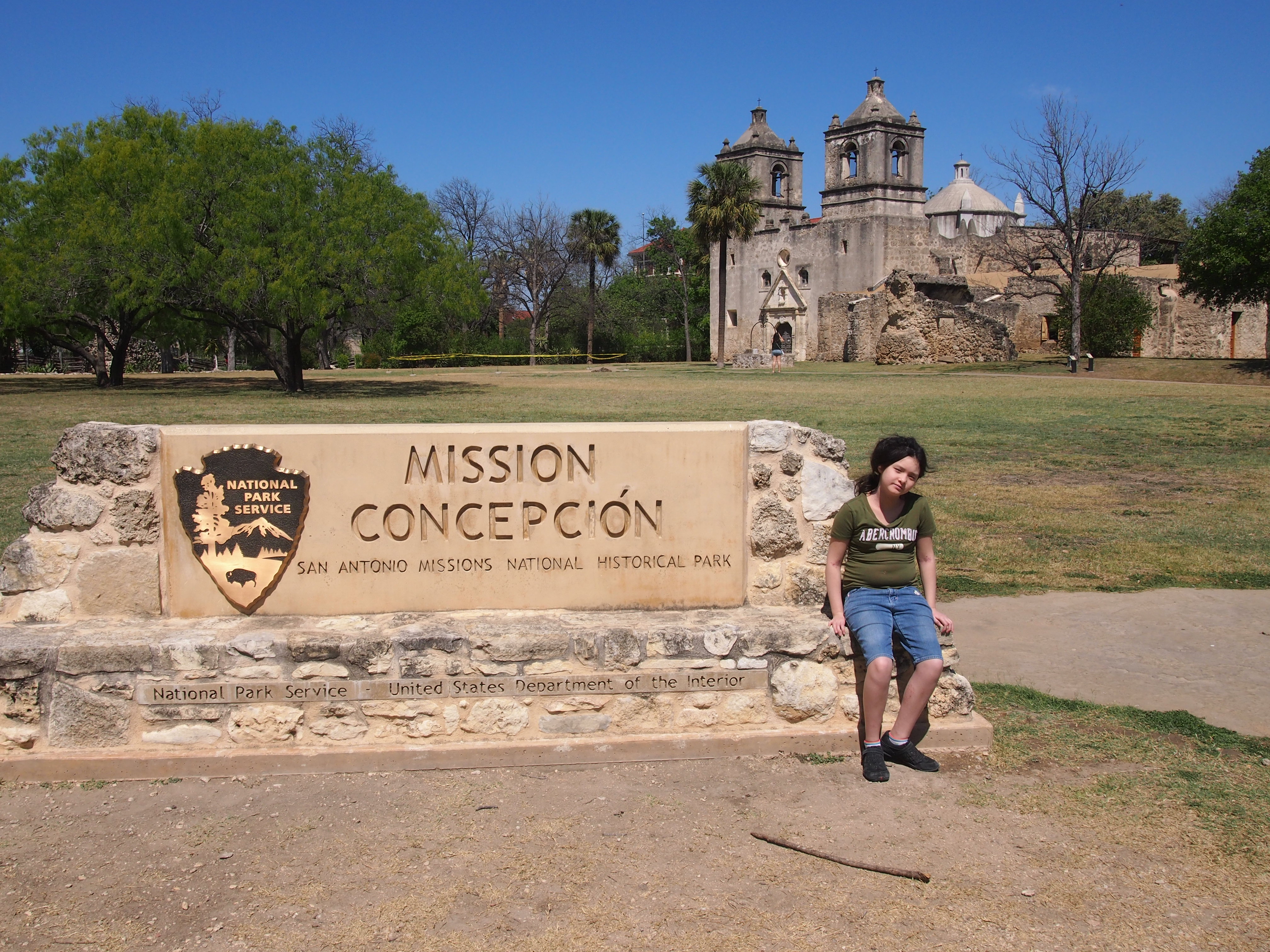
People remember the Alamo. Mission Concepcion, not so much.
I hadn’t visited any of the San Antonio missions — formally San Antonio Missions National Historical Park, est. 1978 — in about 20 years, when I took Yuriko to see them. During our spring break, it was time to take my children.
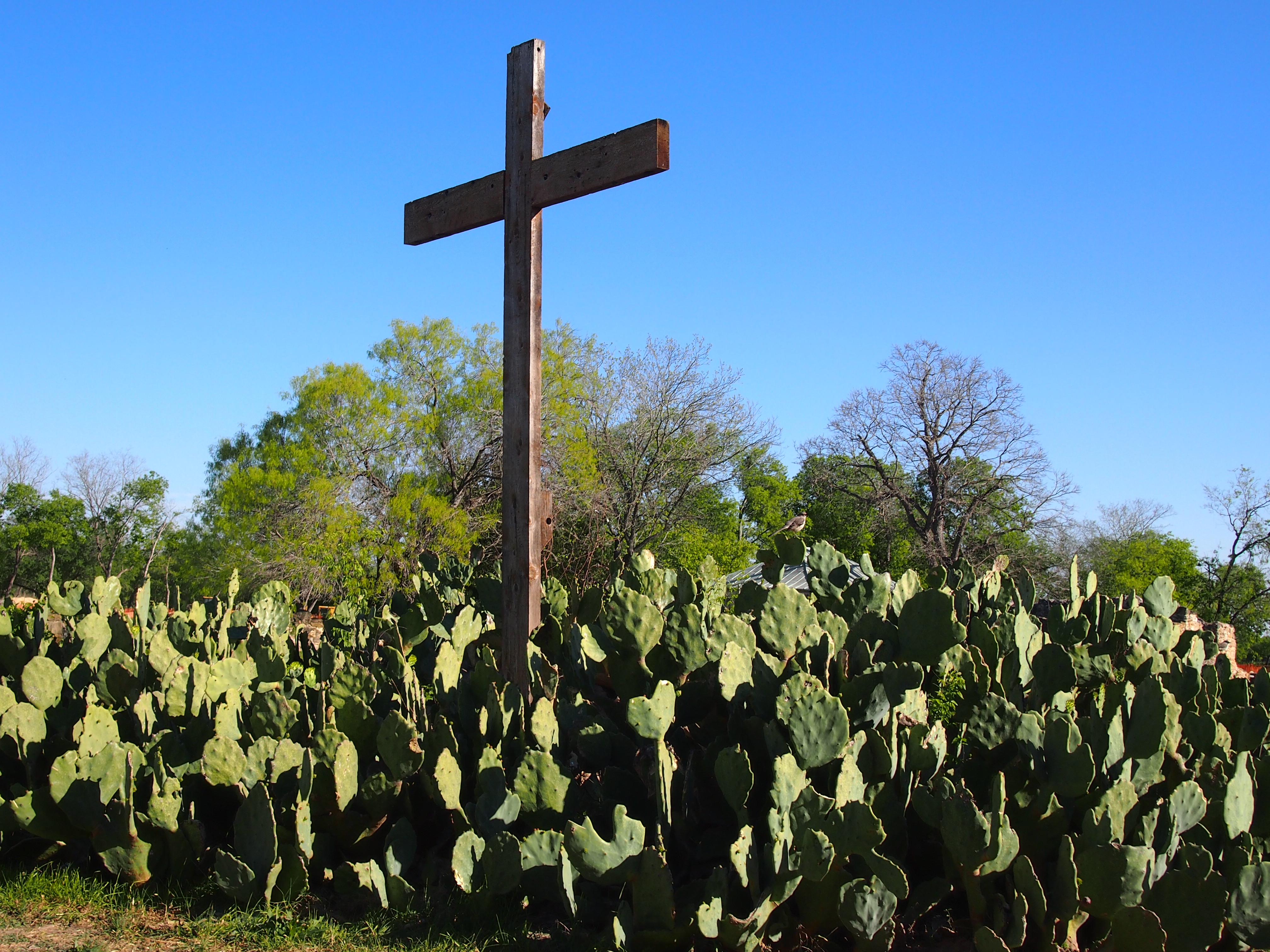
Lilly seemed positively excited about Mission San Jose. Well, maybe. We also made it to Mission San Juan, which was an interesting enough structure, but not as interesting as the crucifix in the cactus patch.
On the other side of the cross, we noticed straps for arms and a place to rest one’s feet built into it. We figured that in a few days — we were visiting not long before Good Friday — someone would be on the cross.
I’ve been reading Longitude: The True Story of a Lone Genius Who Solved the Greatest Scientific Problemof His Time by Dava Sobel (1995), which is about John Harrison, solver of the Longitude Problem, and I came across this passage: “Sometime around 1720… Sir Charles Pelham hired [Harrison] to build a tower clock above his new stable at the manor house in Brocklesby Park.
“The clock tower that Harrison completed about 1722 still tells time in Brocklesby Park. It has been running continuously for more than 270 years, except for a brief period in 1884 when workers stopped it for refurbishing.”
Wow. I had to find out if that was still the case, and it seems that it is. That’s a clock tower I would go look at, if I were in the neighborhood. I saw the Harrison chronometers at the Maritime Museum in Greenwich before I had much inkling of what they were or what he did, but finding out things sometimes works that way.
Naturally, specialists are busy revising the legend of John Harrison, including this fellow, who asserts that the clockmaker might have farmed out some of his brass parts. Could well be, though I’m in no position to pass judgment on the matter. But even if it were true, that hardly takes away from Harrison’s achievement.
There’s even a song about John Harrison. That’s what we need more of, songs about generally obscure but remarkably important people, places or events.
Today’s the first day of DST, and the nation is vexed by tired workers and dangerous motorists. To hear the opponents of the change tell it (and they’re never are quite as vocal in the fall). Maybe there’s something to their charges, but I’ve lived in a temperate-zone country where the time does not change, namely Japan. At the height of summer, the morning sun would wake me up at around 4 a.m. and my non-air conditioned apartment would be hot already by the time I had to get up for work.
It’s then, when you’re lying in bed feeling the sweat rising at 5 a.m., that you think: maybe taking this useless hour of daylight and dropping it into the evening is good idea. That is to say, I’m not persuaded that getting rid of DST would cure much of what ails us.
On the other hand, early March to early November isn’t quite right either. Better the way it was before Congress tinkered with it in 2005 – first Sunday in April to the last one in October, or even the way it was from 1967 to 1986, when it was the last Sunday in April to the last Sunday in October.
I looked at this map today because of the change, but also because it’s always a good day to look at a map. I wondered, what’s up with that corner of British Columbia that doesn’t change their clocks? Wiki says: “Part of the Peace River Regional District of BC (including the communities of Chetwynd, Dawson Creek, Hudson’s Hope, Fort St. John, Taylor and Tumbler Ridge) is on Mountain Time and does not observe DST. This means that the region would be on the same time as Mountain Standard Time (MST) in the winter, and Pacific Daylight Time (PDT) in the summer.” Hm.
One more thing: the change brings to mind this charming song, which is mostly lost to time.
I like the video that bsgs98 made. Where do you get so many pictures of people and paper moons? Google images, of course. But I also wondered, how exactly did the custom of sitting for a photo with a paper moon start, how long did it last, and why did it die out? A simple search doesn’t tell me, and I’m too lazy to dig around more (for now).
A quick check does reveal that there were many covers of the “Moonlight Saving Time,” but among those I’ve heard, I prefer Guy Lombardo’s version. The song was written by Irving Kahal and Harry Richman in the early ’30s, and it’s amazing the things you can find with a little creative Googling.
The Milwaukee Sentinel, in a squib published on June 17, 1934, said: “It was in the spring, three years ago, on the night that New York went on daylight saving time that he [Richman] thought up the title. There was a beautiful moon and the idea occurred to Harry that ‘Moonlight Saving Time’ would be a good title. Next day, he and Irving Kahal wrote the song.”