The Krannert Art Museum

Time to praise university art museums: generally unpretentious, inexpensive and not so large that you can’t have a good look-see in a short time. One of the places Lilly and I visited at the University of Illinois Urbana-Champaign was the Krannert Art Museum, which has ten galleries and art ranging from ancient Egypt and Pre-Columbian to much more recent items.

One so recent that it was created using an iPhone: “A Lexicon of Dusk.”
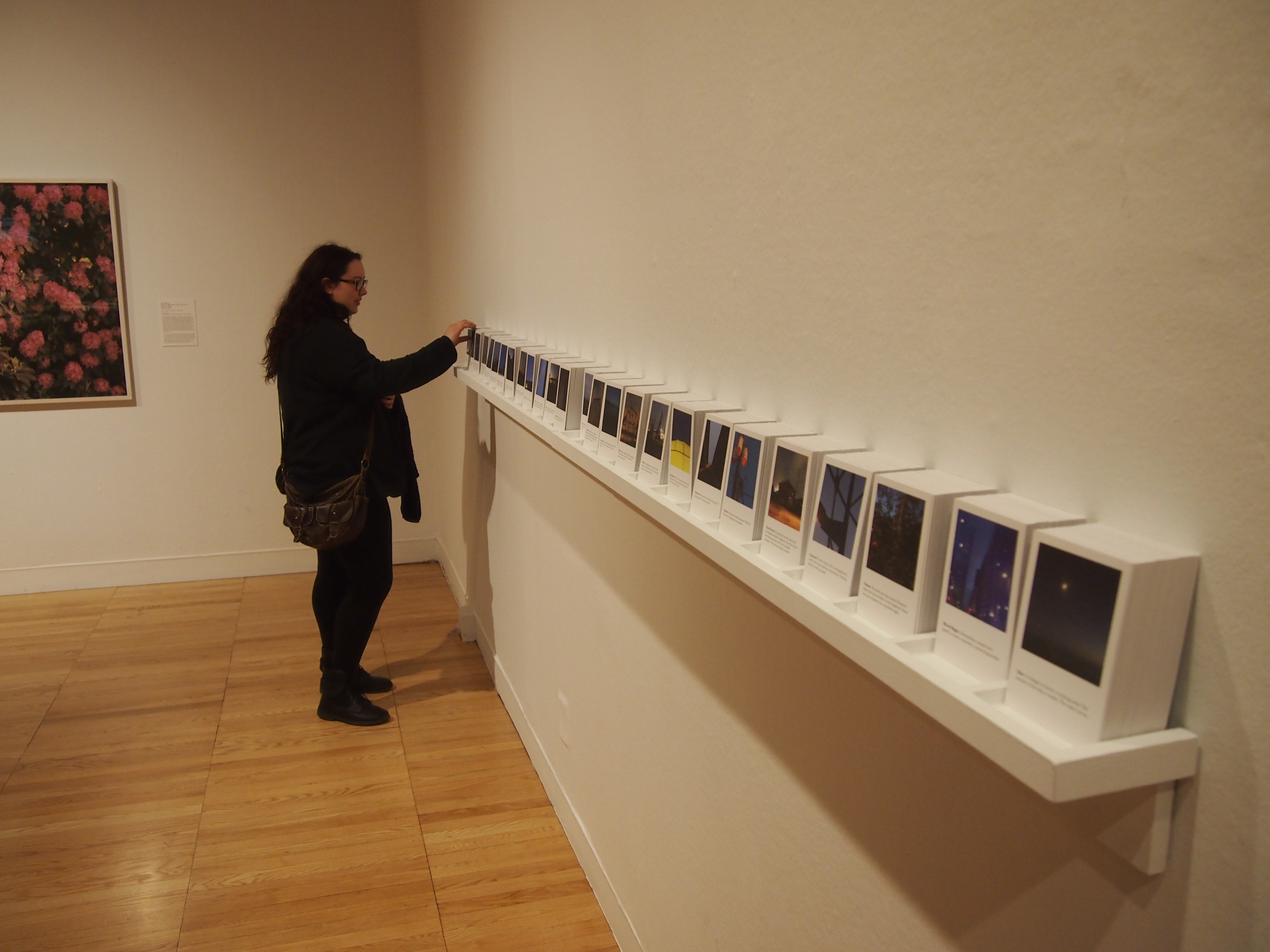
The Krannert Art MuseumOver the last six years, a Houston artist named Ruth Robbins took her iPhone out and took pictures at dusk. From these, she made a series of 26 different postcards, copies of which were on a long shelf at the gallery. That’s the artwork.

“Printed as postcards for the viewer to take away — a distributed work of art in line with conceptual art practices — the images show richly colored ambiguous skies and whatever else she happened to have seen at the time: lights low on the horizon, an electricity pole, a snow-covered landscape, an equestrian statue,” the sign near the cards says. “Longitude and latitude coordinates are documented on each image…” That, and an exact date and time when the image was made.

The best part? Postcards are free to take, adds the sign. I took one of each. I’ve already mailed a few.

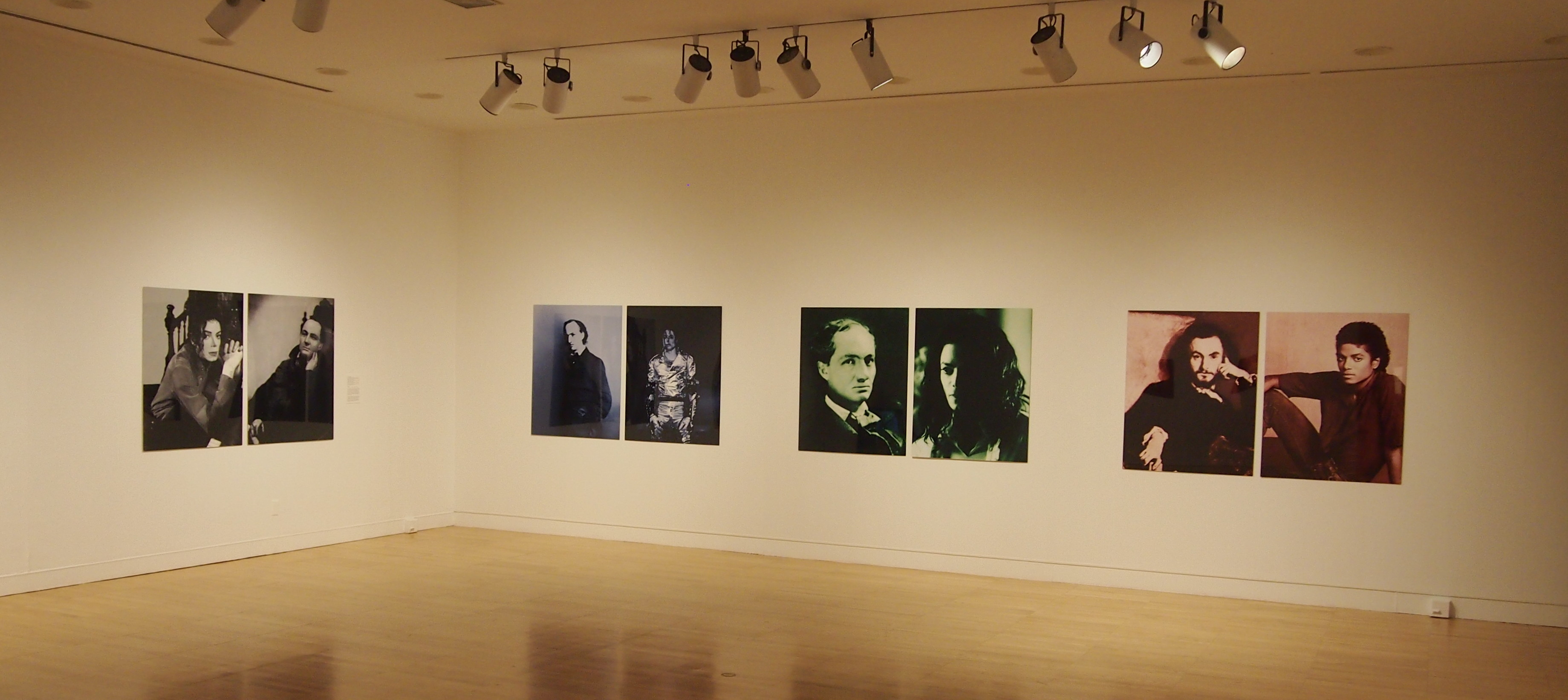
In the room adjoining the postcard exhibit was an amusing series called “The First and Last of the Modernists,” by Lorraine O’Grady, pairing images of Baudelaire with Michael Jackson.

The Krannert Art MuseumI’ve had a soft spot for Baudelaire since an entertaining acquaintance of mine recited “Be Drunk” — I think it was this translation — at a party at our house late in my college years, ca. 1982. As for the King of Pop, I can’t claim to be a fan, but I respect his reach. I heard his songs walking down the streets of the 10 European countries I visited in the summer of ’83, even East Germany, but maybe not the Vatican City, and even then I might have heard something from a transistor radio someone was carrying at the Piazza San Pietro.

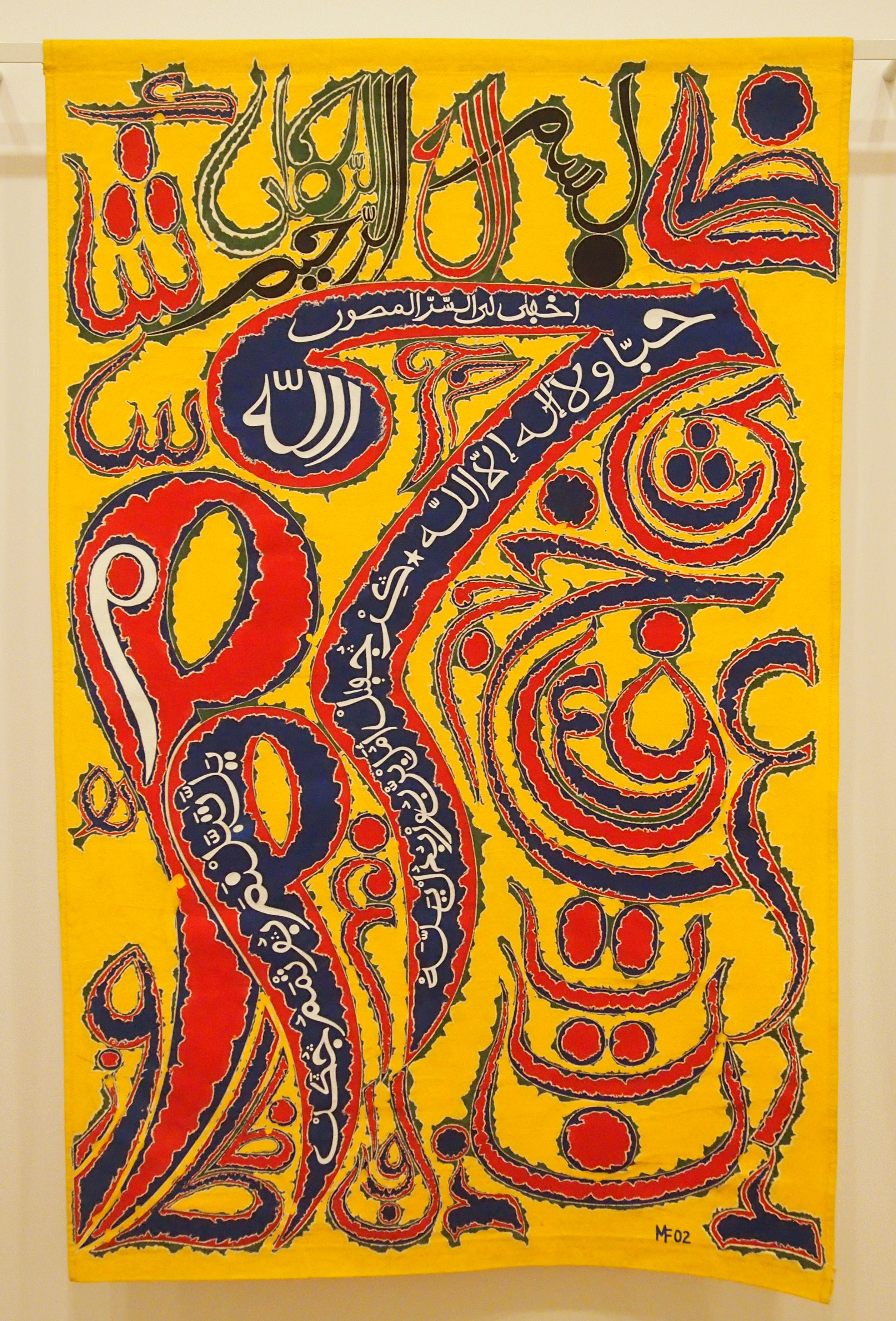
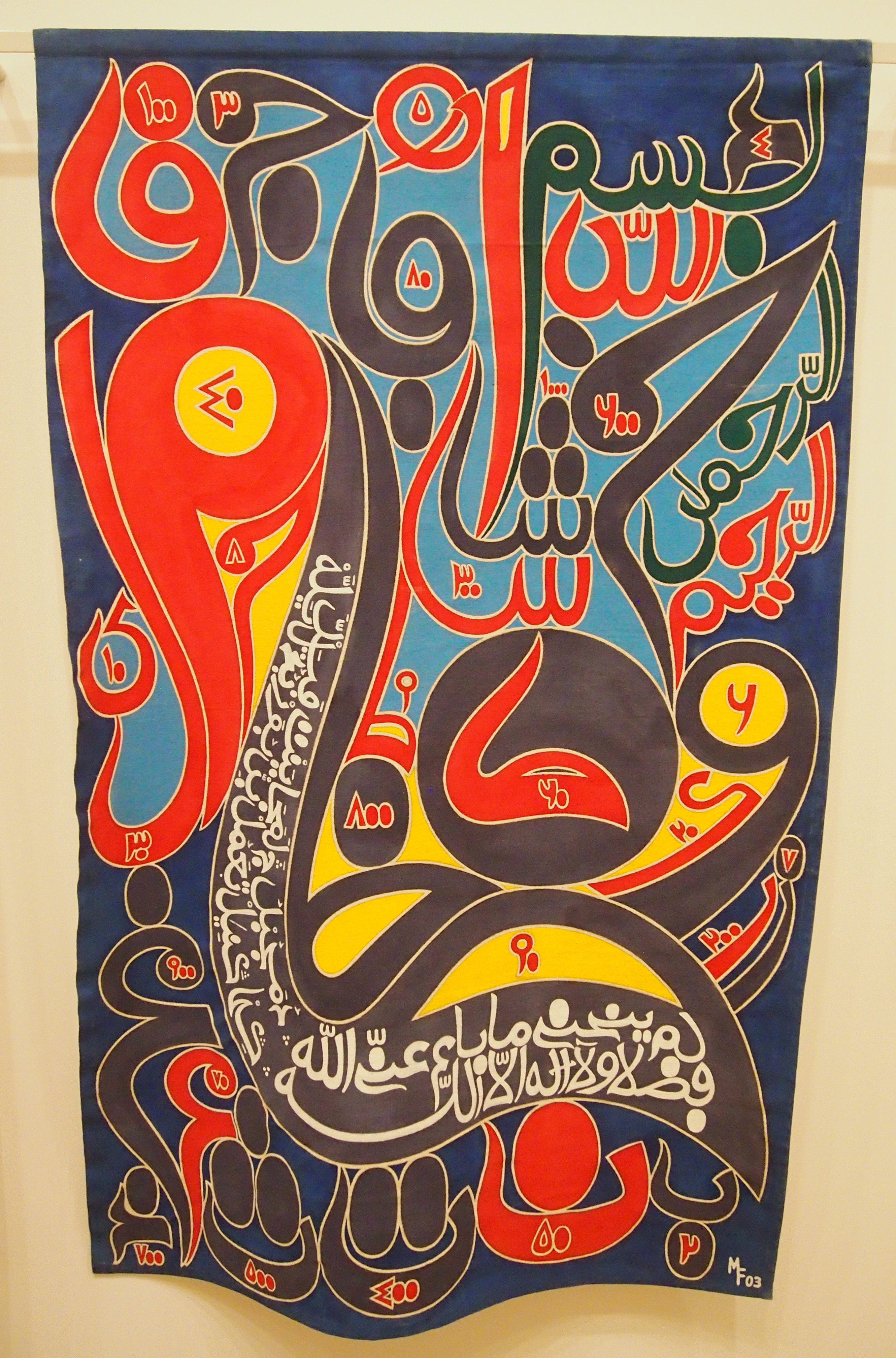
Another room sported some African art. Not just pre-Scramble works from lost states and misty kingdoms, but more modern items. These are two of a particularly striking series, “Seven Lines From Djwartou” by Yelimane Fall.

Krannert Art MuseumKrannert Art MuseumI appreciated these visually, not as someone who can read Arabic. The artist-calligrapher hails from Senegal, and is a devotee of one Sheikh Amadou Bamba, founder of the Sufi brotherhood Mourides in that country, and who wrote the poem “Djawartou” in the early 20th century, among many other things.

As the BBC notes, “Senegal’s most powerful men are not politicians, but the leaders of the country’s Islamic Sufi brotherhoods, to which a very large proportion of Senegalese belong, and whose influence pervades every aspect of Senegalese life.”

Seems that the Mourides are a very big deal in their corner of the world and, from what I can tell from a brief look, eschew the poisons of Wahhabism, and stress hard work among their members (work hard, make money, support the sect). And there are enclaves of them elsewhere. According to Religion News, “Their dictum, ‘pray as if you will die tomorrow and work as if you will live for ever,’ has brought the Mourides economic success wherever they have settled. In New York, the Mourides established their own community, Little Senegal, and July 28 has officially been designated Sheikh Amadou Bamba day.”

Remarkable the things that go into making an image on the wall. I never knew any of that. I don’t expect to make a detailed study of Senegal, but it’s good to be reminded that there are whole other worlds here on Earth yet beyond one’s experience.

Denman Estate Park

Last year I was looking at a Google Maps map of San Antonio and noticed an odd green blob tucked away in a neighborhood just northwest of the junction of I-10 and Loop 410, an area not too far from where I grew up, but not within my usual orbits. Higher resolution revealed that it was called Denman Estate Park. What?

“The City of San Antonio purchased 12.52 acres of land from the estate of philanthropist Gilbert Denman Jr. in 2007 at a cost of $2,561,081,” the city’s web site says, with a cost-precision sometimes found in public documents. “An adjacent 7.70 acres were purchased by the University of [the] Incarnate Word. In 2010, Gilbert Denman Jr. Estate Park, 7735 Mockingbird Lane, opened as a jointly used park and a retreat center for UIW.

“Park amenities include a 0.5-mile walking trail, labyrinth, picnic benches and tables, parking, fencing and lighting. It also features a monument hand-built in Gwangju, Korea, by Korean craftsmen and artists who traveled to San Antonio to assemble it. The City and UIW entered into a joint use agreement in which UIW maintains the property and uses the buildings as a retreat center.”

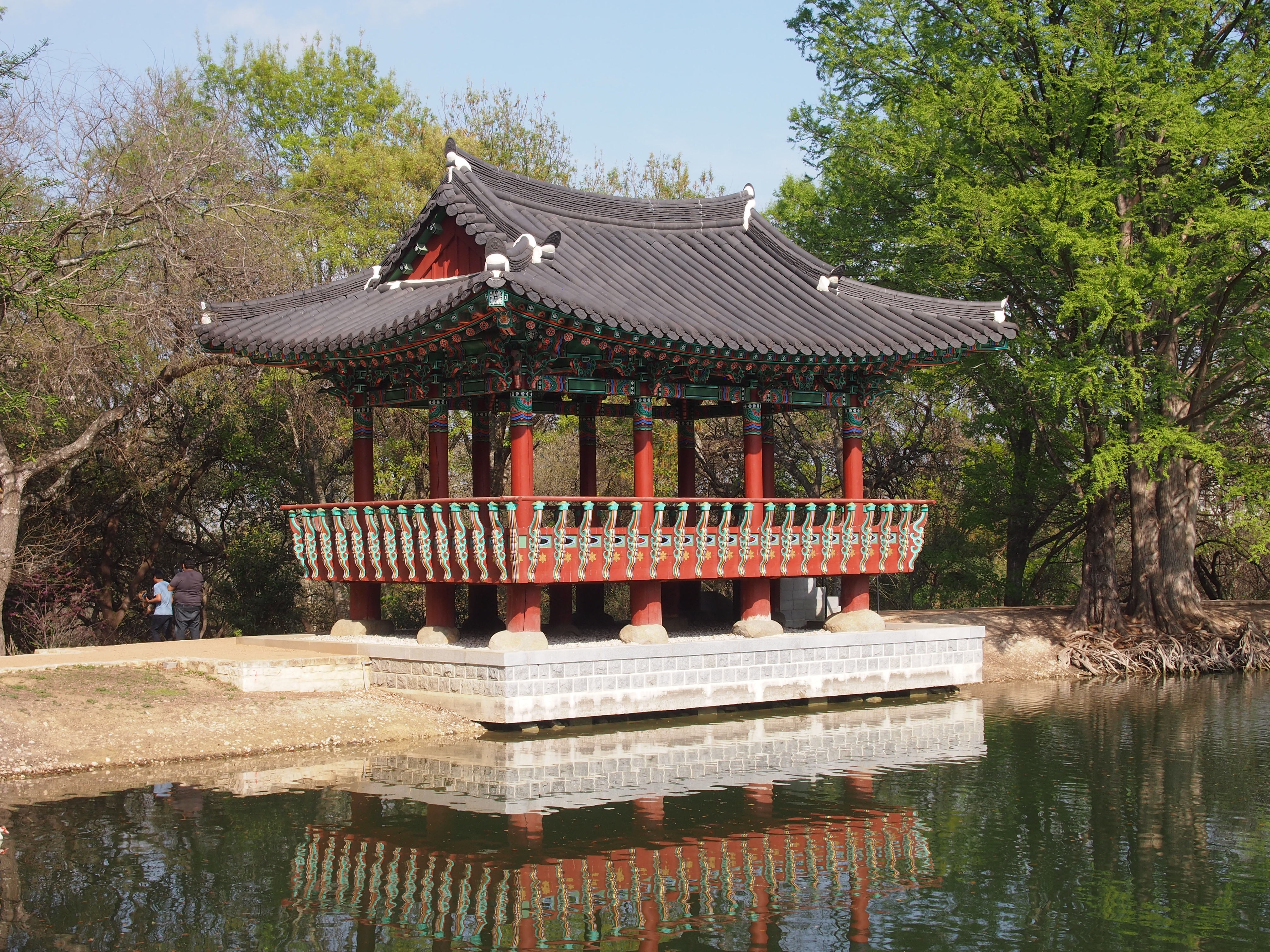
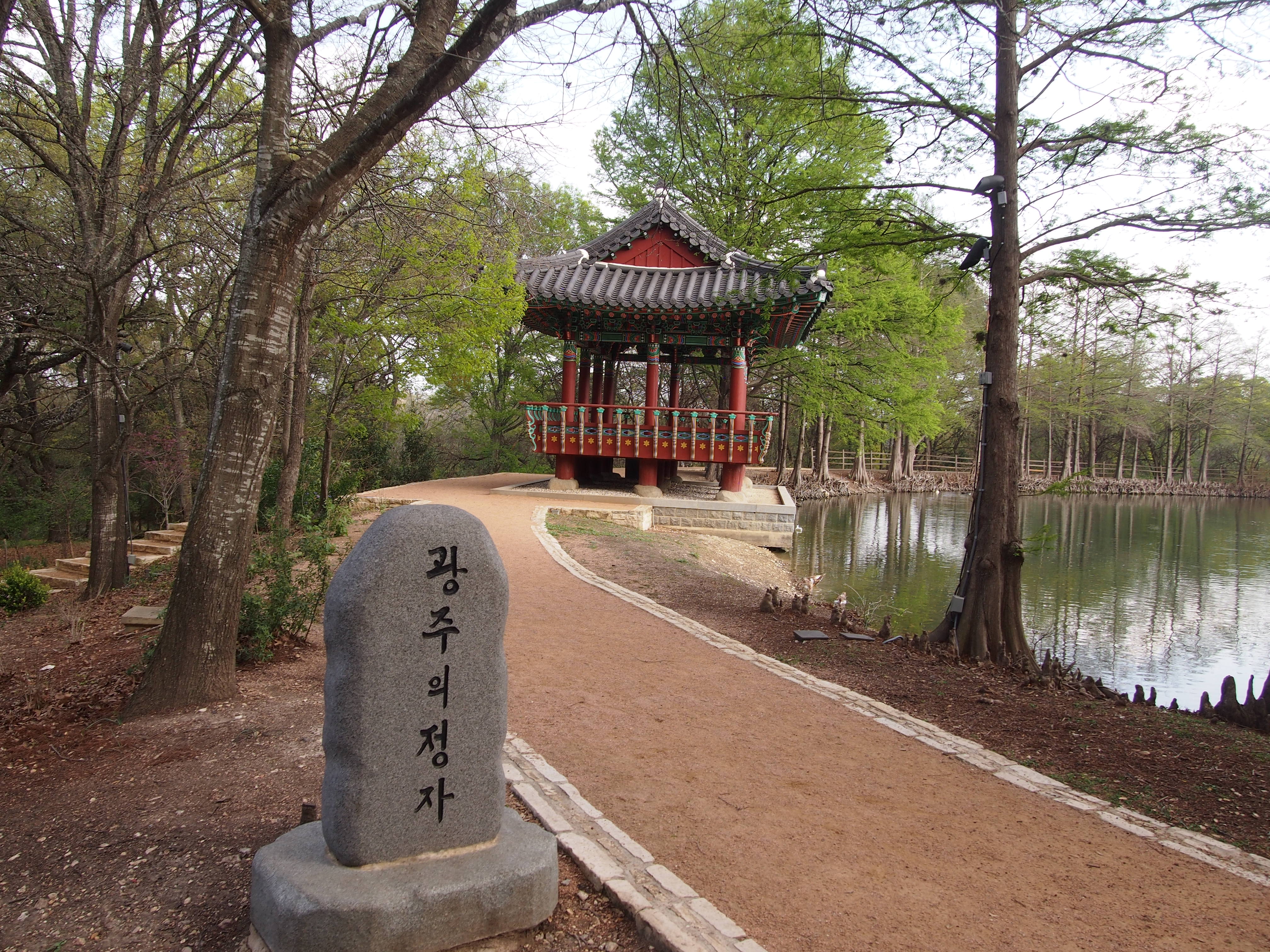
I knew had to take a look at that. I finally did so when I had a few free hours in San Antonio during my most recent visit. I arrived in the early afternoon, parked my car, and found the short path to the park’s small pond, which also has a path all the way around it. The hand-built “monument,” on the banks of the pond, is a striking little structure — especially for being in South Texas — in a nice setting.

Denman Estate Park, San Antonio“Pavilion” is a better word for it in English, and in fact that’s the word a nearby plaque uses.

Denman Estate Park, San Antonio“This pavilion is a replica of the traditional Korean pavilion style of the southern provinces,” the plaque says. “The pavilion, traditionally used as a place of reflection and reception by scholars and gentlemen, embodies the beauty and harmony created by nature and structure.

“It is hoped that this ‘Pavilion of Gwangju’ will offer many opportunities to strengthen the friendly relationship between Gwangju and San Antonio, as well as inspire an in-depth understanding of Korean culture and traditions by the American public.”

A noble sentiment, but I have a feeling K-pop reaches more Americans than other kinds of Korean culture and traditions. The pavilion seems to have been a gift from Gwangju to San Antonio. It isn’t clear whether Gilbert Denman himself had anything to do with its placement, since the structure was dedicated in 2010, six years after his death.

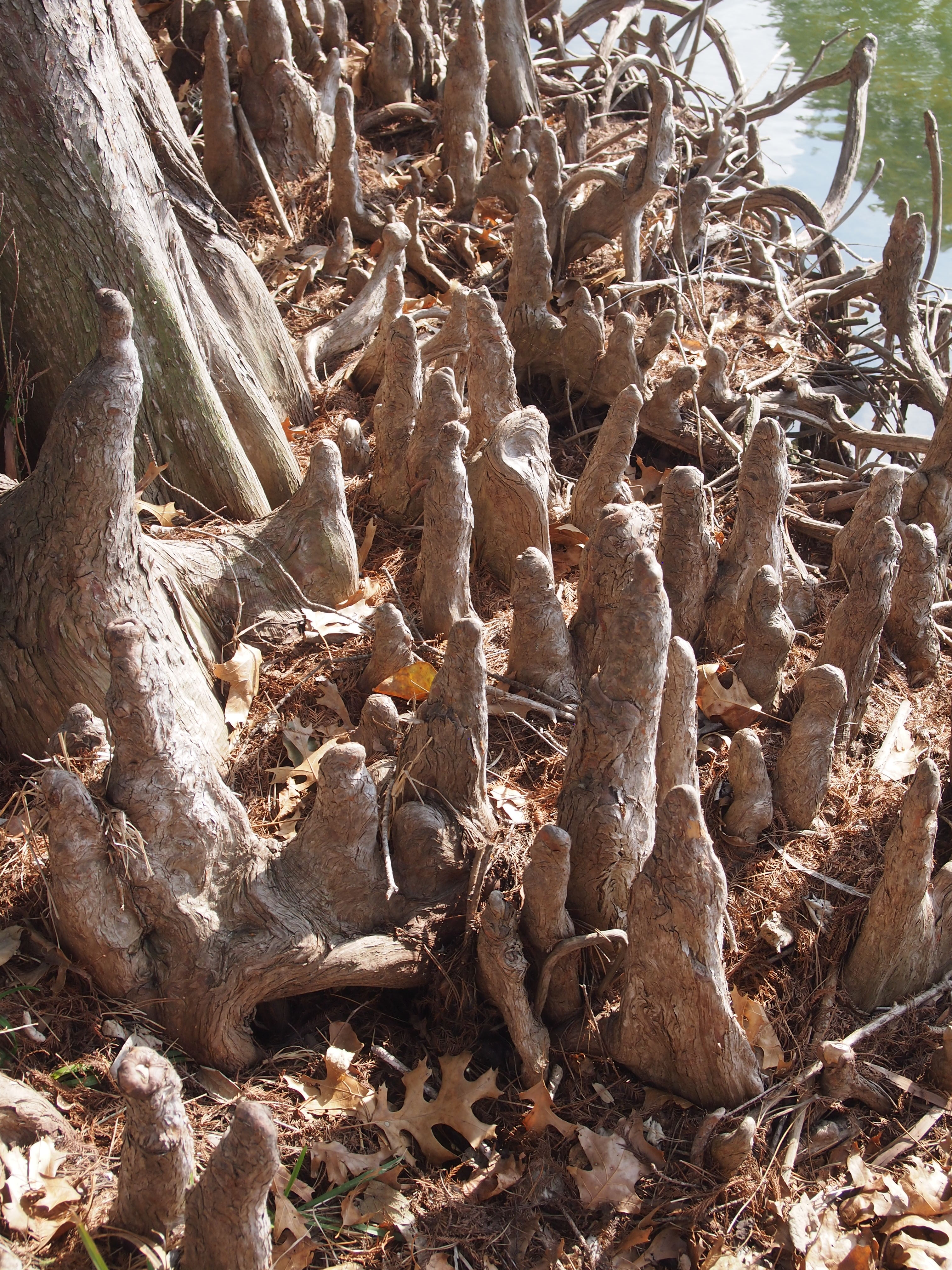
The pond was partly ringed with cypress trees with a vast number of cypress “knees” — the woody bumps that emerge near the base of the trees — a term I just learned.

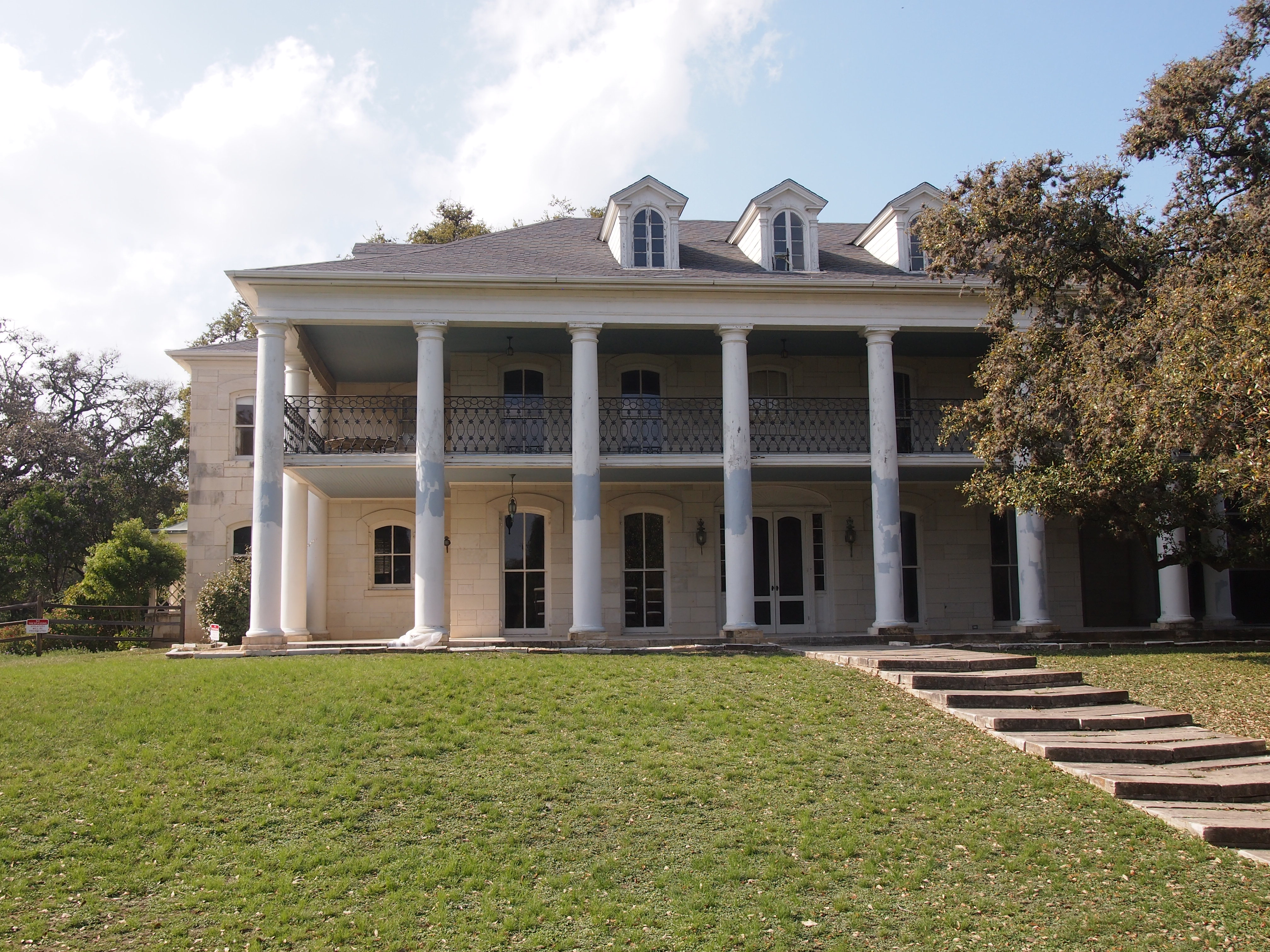
Denman Estate Park, San AntonioDenman Estate Park, San AntonioElsewhere on the property is the former Denman manse (I assume), which is closed to casual visitors. No doubt the university uses for events and rents it for weddings and the like.

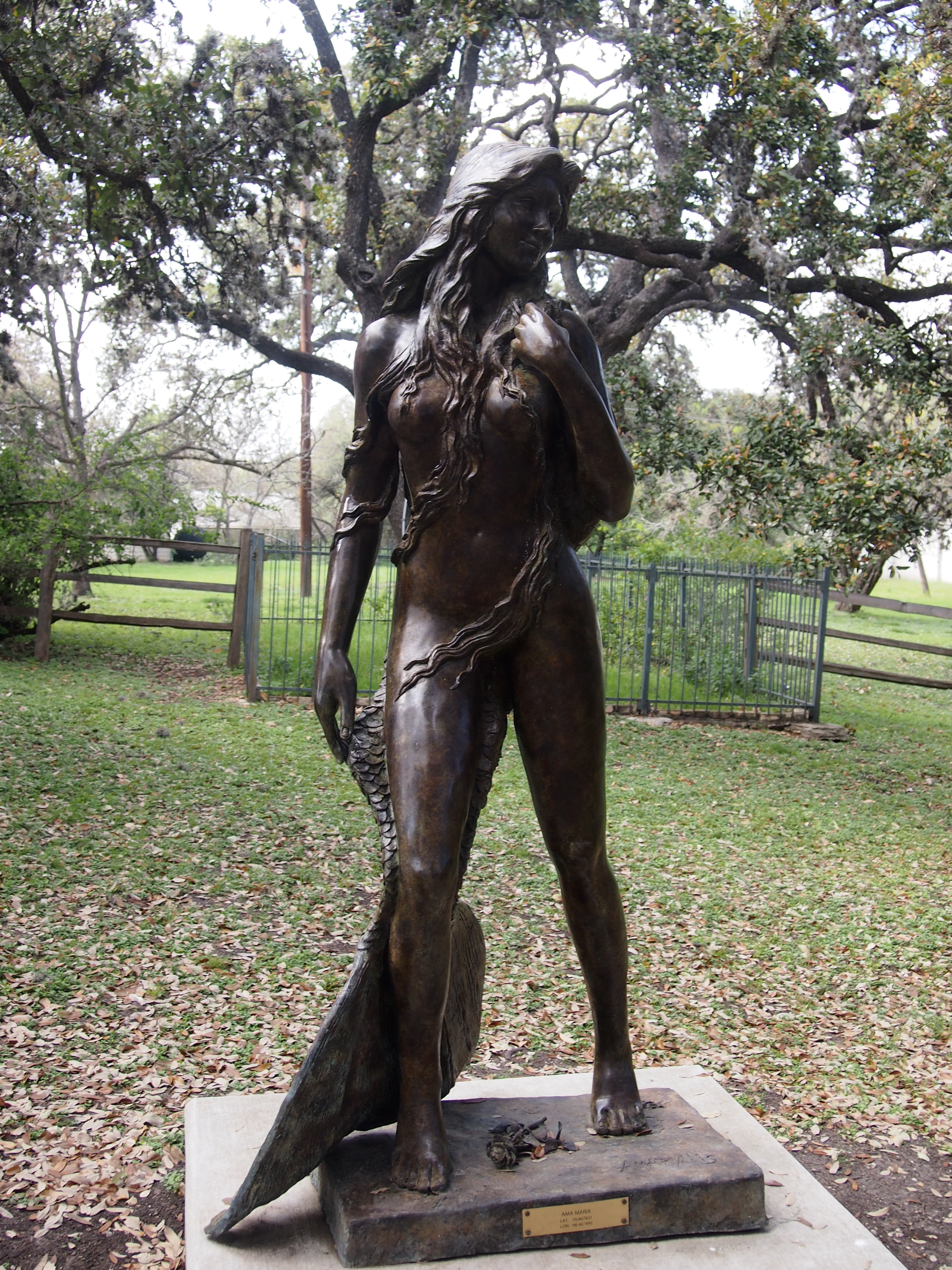
Denman Estate Park, San AntonioNot far from the house is “AMA Maria,” a mermaid sculpture with strategically placed flowing hair, a fish tail, and human legs.

Ama Maria, Denman Estate Park, San AntonioOddly enough, the plaque on the base of the statue also includes its latitude and longitude to six decimal places: LAT. 29.467831  LON. -98.467490. Turns out there are a fair number of these statues in various parts of the world, including three others in Texas. It was something I’d absolutely never heard of before.

A site called mermaidsofearth.com tells us that “the Amaryllis Art for Charity project is placing AMA mermaid statues all over the world, with each mermaid statue uniquely made and customized for its location… The statues are for sale, with about one third of the proceeds dedicated to a charity jointly chosen by the project organizers and the local sponsors.”

It isn’t clear from that whether the statues are for sale in situ or whether they’re bought and put in places like Denham Estate Park. Never mind, there’s one there now. More about it is here.

Finally, who was Gilbert Denman Jr. (1921-2004)? A handy obit published by the Porter-Loring Funeral Home in San Antonio offers a few details about his charmed life, which included being born to a wealthy family and presumably doing well himself as a prominent attorney in San Antonio. Like Robert L.B. Tobin, he was also a notable local philanthropist.

One of his many acts of philanthropy, according to the obit, involved donating “his extensive collection of Greek and Roman artifacts to the San Antonio Museum of Art. The collection, among the finest of its type in the nation, is housed in the Denman Gallery of the Ewing Halsell Wing at the museum.”

The good people of San Antonio are clearly better for his Antiquities collection. I will be better for it, once I get around to visiting the San Antonio Museum of Art again sometime. It’s been a long time since I’ve been there, since the late ’80s at the latest, before the creation of the Denman Gallery in 1990. The big deal exhibit the last time I remember being there was Nelson Rockefeller’s large collection of Latin American folk art, which arrived as a permanent part of the museum’s collection in the mid-80s.

The National Museum of the Pacific War

The National Museum of the Pacific War is a complex of structures at a short distance from each other in Fredericksburg, including the restored Nimitz Hotel, which now houses a museum about Adm. Nimitz; the George H.W. Bush Gallery, which focuses on the war in the Pacific; and more: the Veterans’ Memorial Walk, the Plaza of Presidents, the Japanese Garden of Peace, the Pacific War Combat Zone, and the Center for Pacific War Studies.

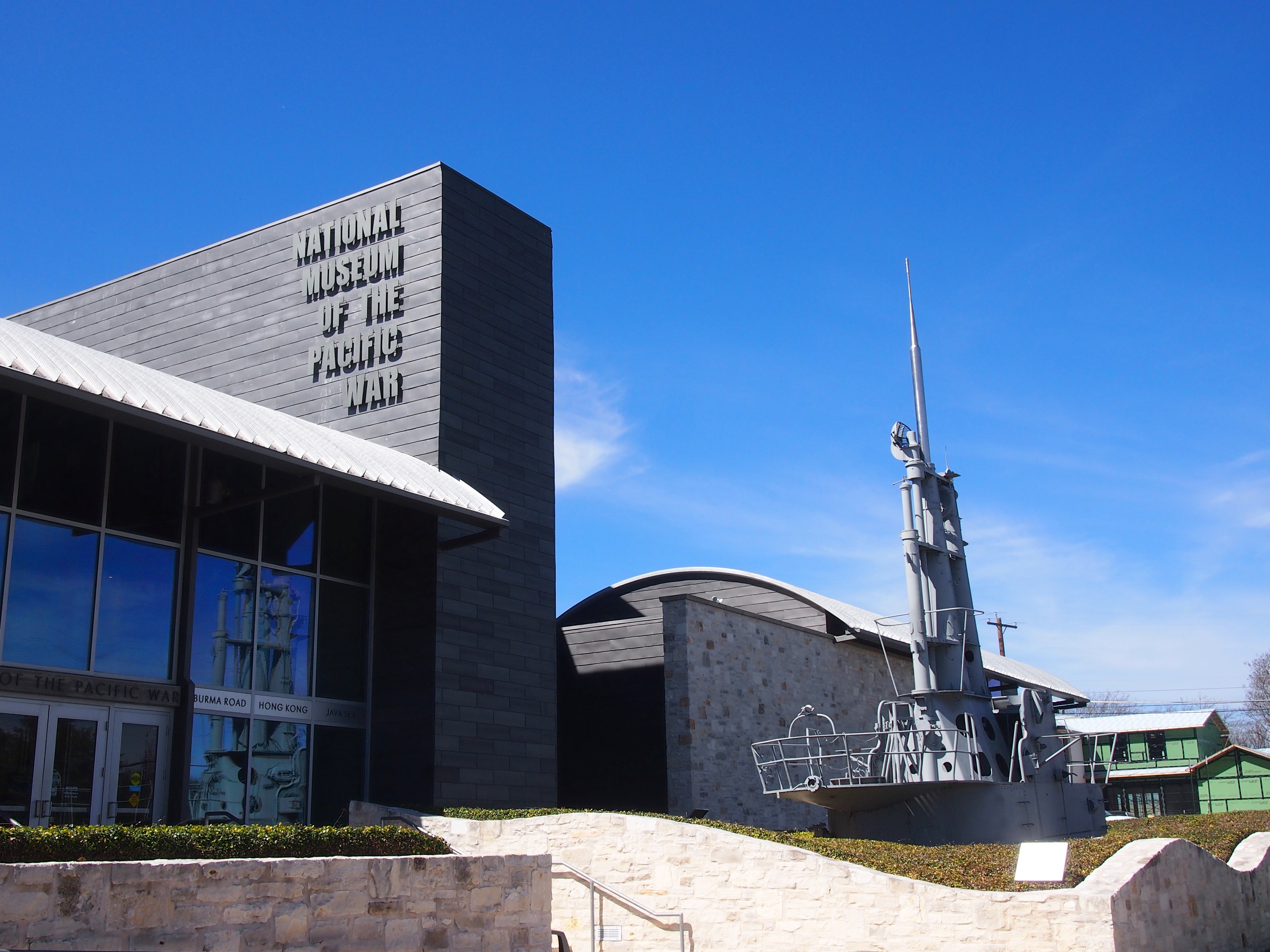
The Nimitz Hotel building used to include the war exhibits, but now they’re in the much larger (32,500 square feet) Bush Gallery, open since the 1990s, and expanded in 2009. Outside its entrance is the conning tower of the USS Pintado, a submarine that conducted a number of a patrols against the Japanese.
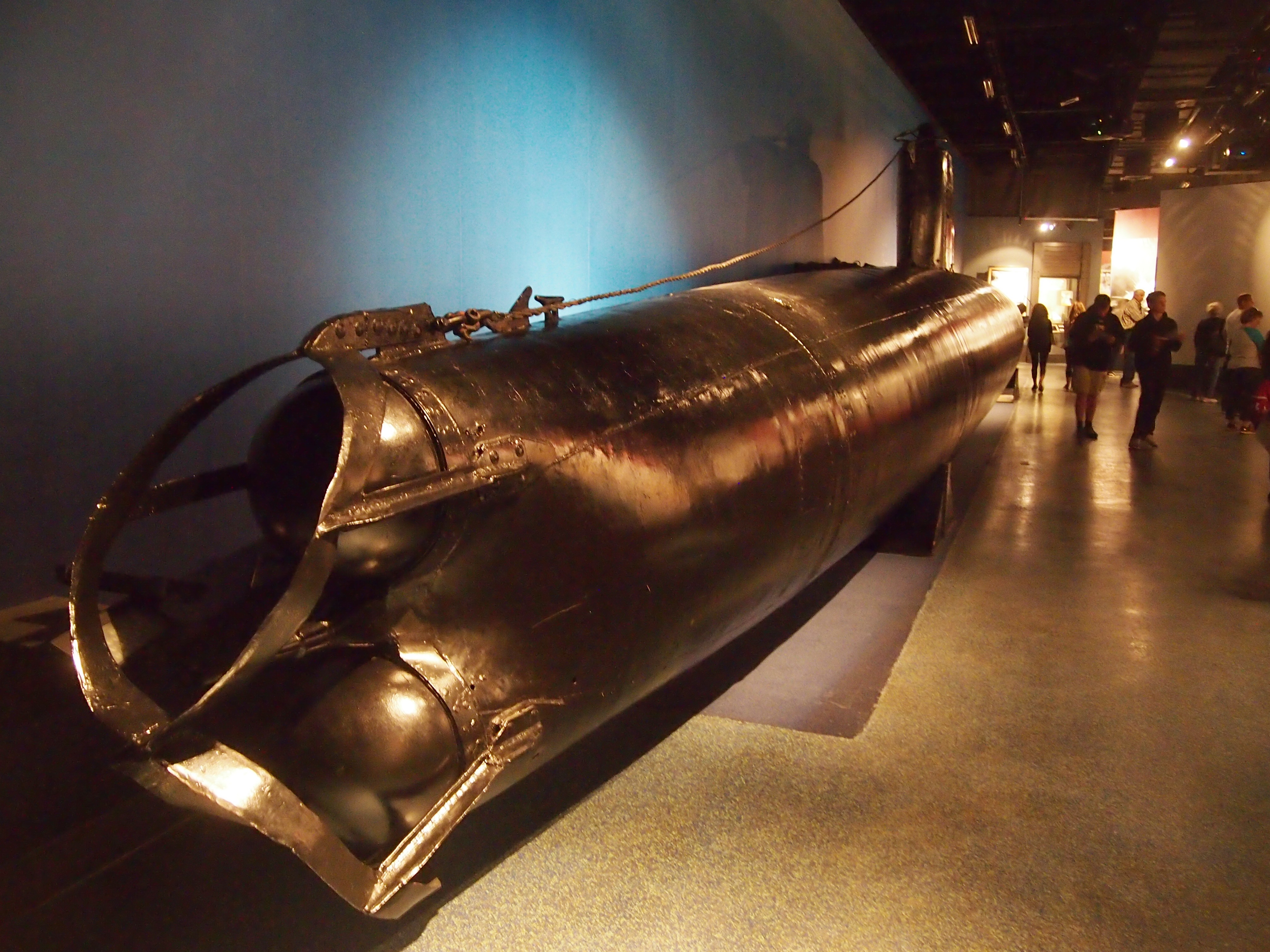
National Museum of the Pacific WarThe museum, organized chronologically beginning before the war and ending at the USS Missouri, is incredibly detailed, and home to a large array of impressive artifacts. That includes some impressively large artifacts, such as a Ko-hyoteki-class midget submarine that participated on the attack on Pearl Harbor, which actually seems pretty large when you stand next to it.
National Museum of the Pacific WarThe pilot of this particular vessel, Ensign Kazuo Sakamaki, survived its beaching and became the war’s first Japanese POW, having failed at suicide. According to the Honolulu Star-Bulletin in 2002, “When the war ended, he returned to Japan deeply committed to pacifism. There, Sakamaki was not warmly received. He wrote an account of his experience, titled The First Prisoner in Japan and I Attacked Pearl Harbor in the United States, and thereafter refused to speak about the war.” (He died in 1999.)

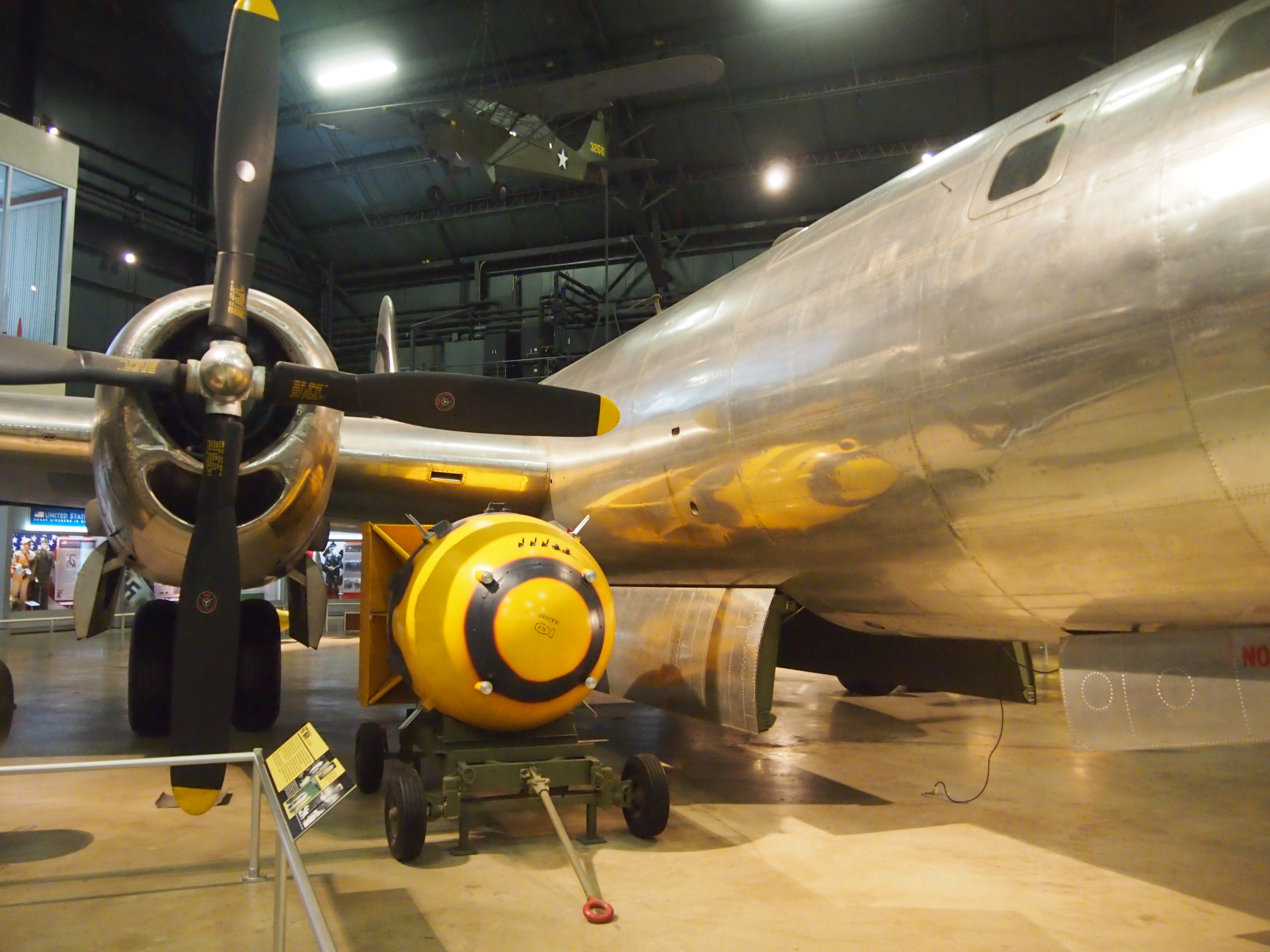
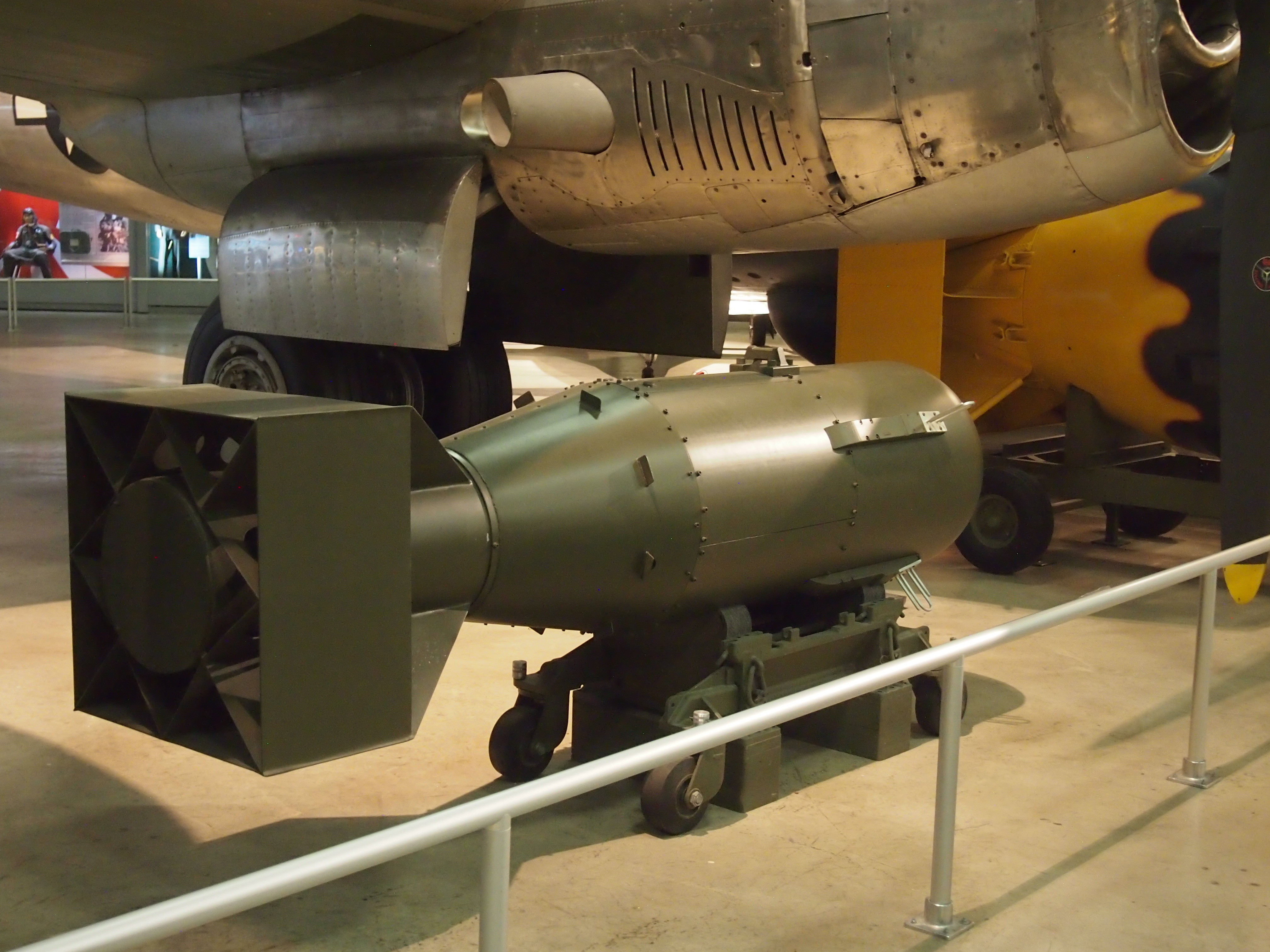
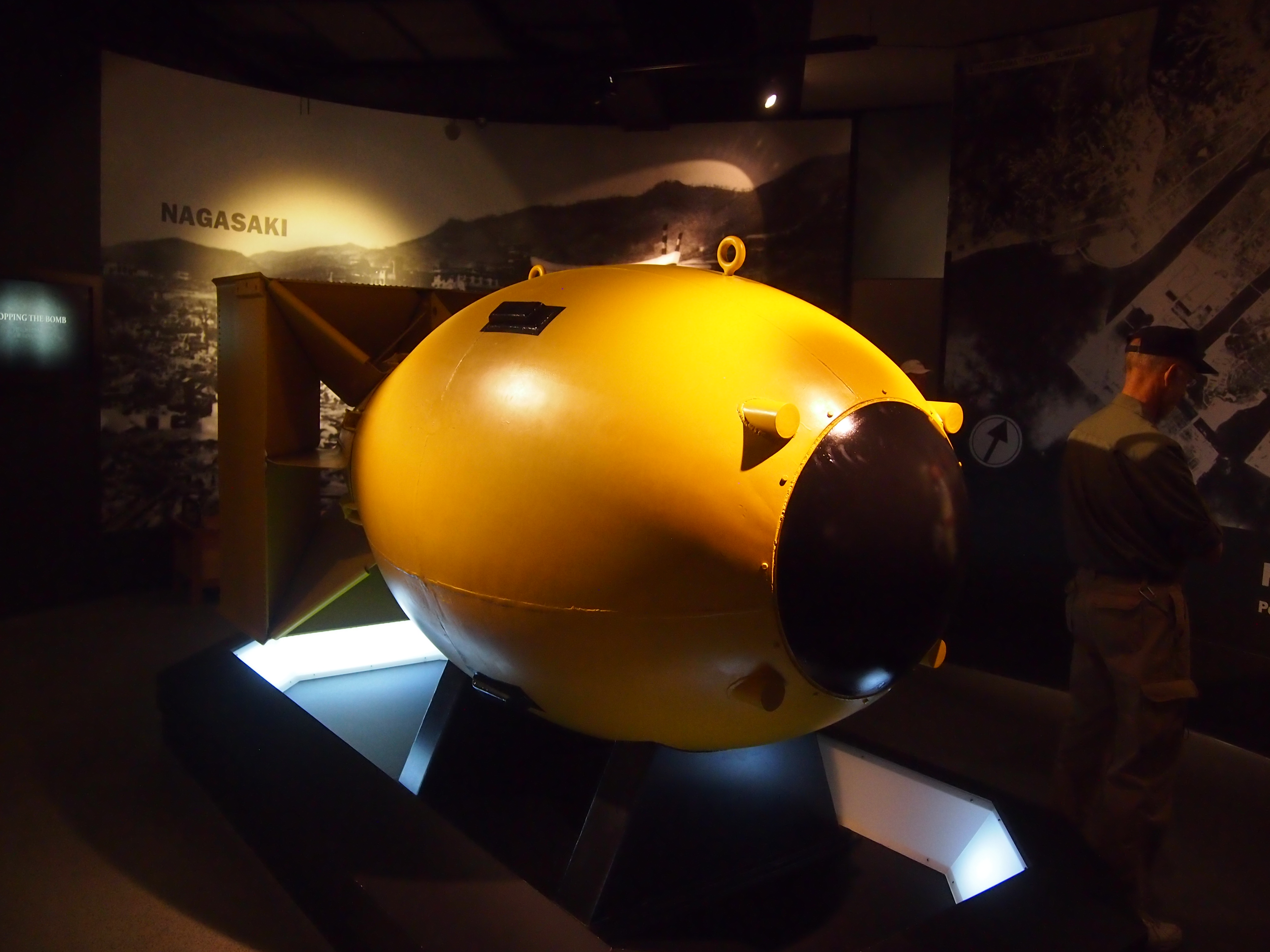
Also on display were a B-25 — as part of a exhibit about the Doolittle Raid — a Japanese N1K “Rex” floatplane, an F4F Wildcat fighter, and a replica of Fat Man, just to name some of the larger items.
Fat ManThe exhibits also included a lot of smaller weapons, tools, posters, uniforms, model ships and airplanes, military equipment, and sundry gear and items associated with the fighting and the people who were behind the front. Plus a lot to read. Campaigns and incidents both well known and obscure were detailed, such as the effort to salvage the ships in Pearl Harbor in the months after the attack, which was often dangerous work. Other Allied efforts weren’t ignored, such as the Australian advance on Buna-Gona, a campaign that incurred a higher rate of casualties than for the Americans at Guadalcanal.

All in all, a splendid museum. But exhausting. If I’d had time on Sunday as I went from Austin to San Antonio, I would have gone back (the tickets are good for 48 hours). It’ll be worth a return someday.

20,000 Days

Texas Independence Day. As good a reason as any to knock off for a while, till about March 13. Don’t forget to Remember the Alamo on the 6th.

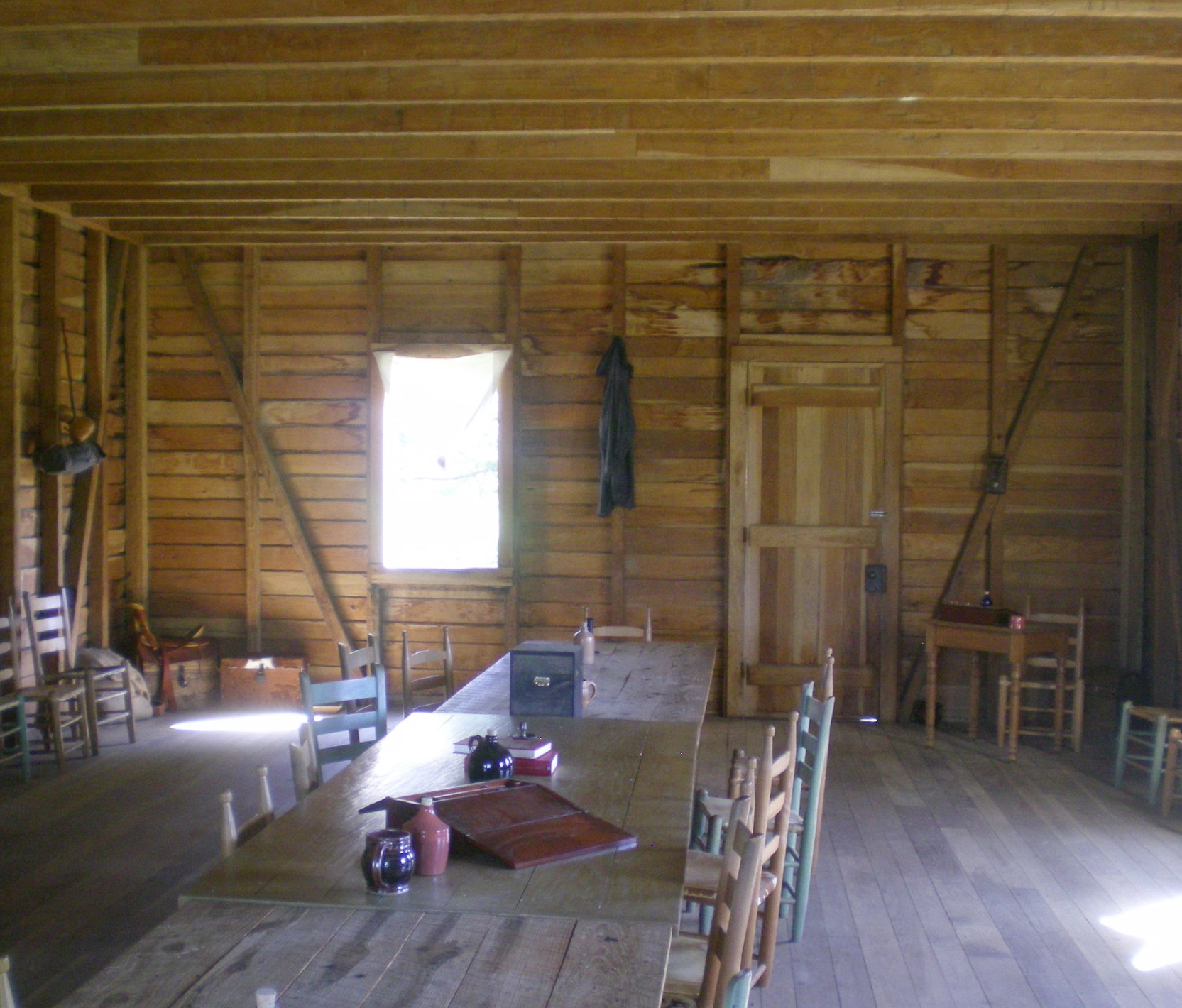
Here’s the interior of the Texas Hall of Independence in Washington-on-the-Brazos, as seen a couple of years ago. Everything’s a replica, including the building, but never mind.

Texas Hall of IndependenceThe handy timeanddate.com tells me I’m about to be 20,000 days old. Not bad.

The motivational poster notion of “living every day fully” is malarkey, and not just because that’s awfully vague. People can’t live like that. Most of my 20,000 days have been nondescript, though sprinkled with good and bad moments, either forgotten or remembered, while some days have been very good indeed, and none (so far) have been really horrible. Not everyone gets to be that lucky.

First Folio Exhibit, Lake County Discovery Museum

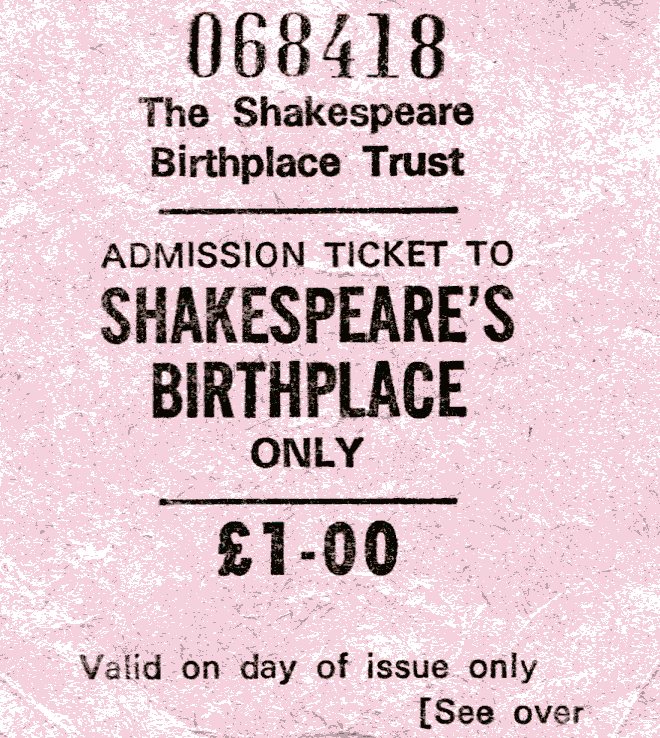
ShakesBirthI’ve done a little Shakespeare tourism in my time, such as visiting his birthplace in Stratford. When I scanned the ticket from that visit, I noted that I paid £1 for admission in 1983. The Bank of England has a handy UK inflation calculator that tells me that’s the equivalent of just over £3 now.

I checked the Shakespeare Birthplace Trust web site today and found that a “Birthplace Pass” now costs £16.50 for an adult. For that, you get into “Hall’s Croft, Harvard House, Shakespeare’s Birthplace, Shakespeare’s Grave,” so that’s not as outrageous as £16.50 for just the birthplace, but it still doesn’t quite sit right. Can you just buy a single ticket for the birthplace, or is the pass the minimum? Also, there are other, more expensive options that include other houses and a garden.

Shakespeare’s grave is at the Church of the Holy Trinity, and I don’t recall being charged admission. These days, the church asks for a £2 or £3 donation if you want to take a look at the playwright’s grave, and spare those stones and not move his bones. A good idea, since moving those bones wouldn’t just get you cursed, it would probably be a fairly serious criminal offense in the UK.

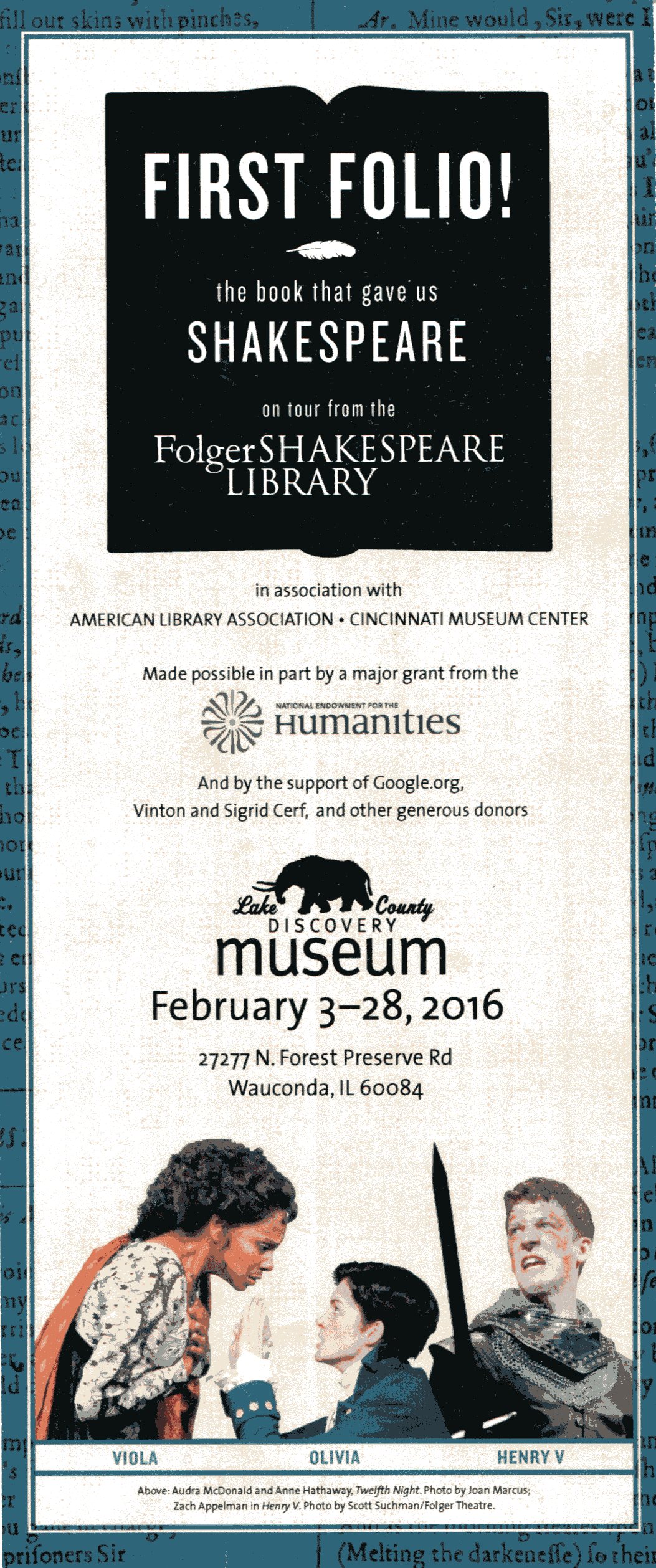
FirstFolioAll this comes to mind because last week we — all of us going the same place, an increasingly rare thing — went to the Lake County Discovery Museum in Wauconda, Ill., to see a First Folio. It was my idea. On the occasion of the 400th anniversary of Shakespeare being laid to rest in that church near the Avon, the Folger Shakespeare Library has sent out some of its First Folios in traveling displays. Each state has one display in one location over the course of 2016, and Illinois’ is this small museum in the far northwest suburbs.

Of all the times I’ve been to DC, I’ve never managed to make it to the Folger. There’s a good chance I’ve seen a First Folio somewhere — maybe at the British Library or the New York Public Library — but I don’t remember. So I wanted to see this one.

I’d been the Discovery Center a few times before, mainly to see excellent exhibits drawn from the museum’s Curt Teich Postcard Archives. That includes over 400,000 postcards of more than 10,000 towns and cities nationwide and elsewhere, plus a lot of other subjects.

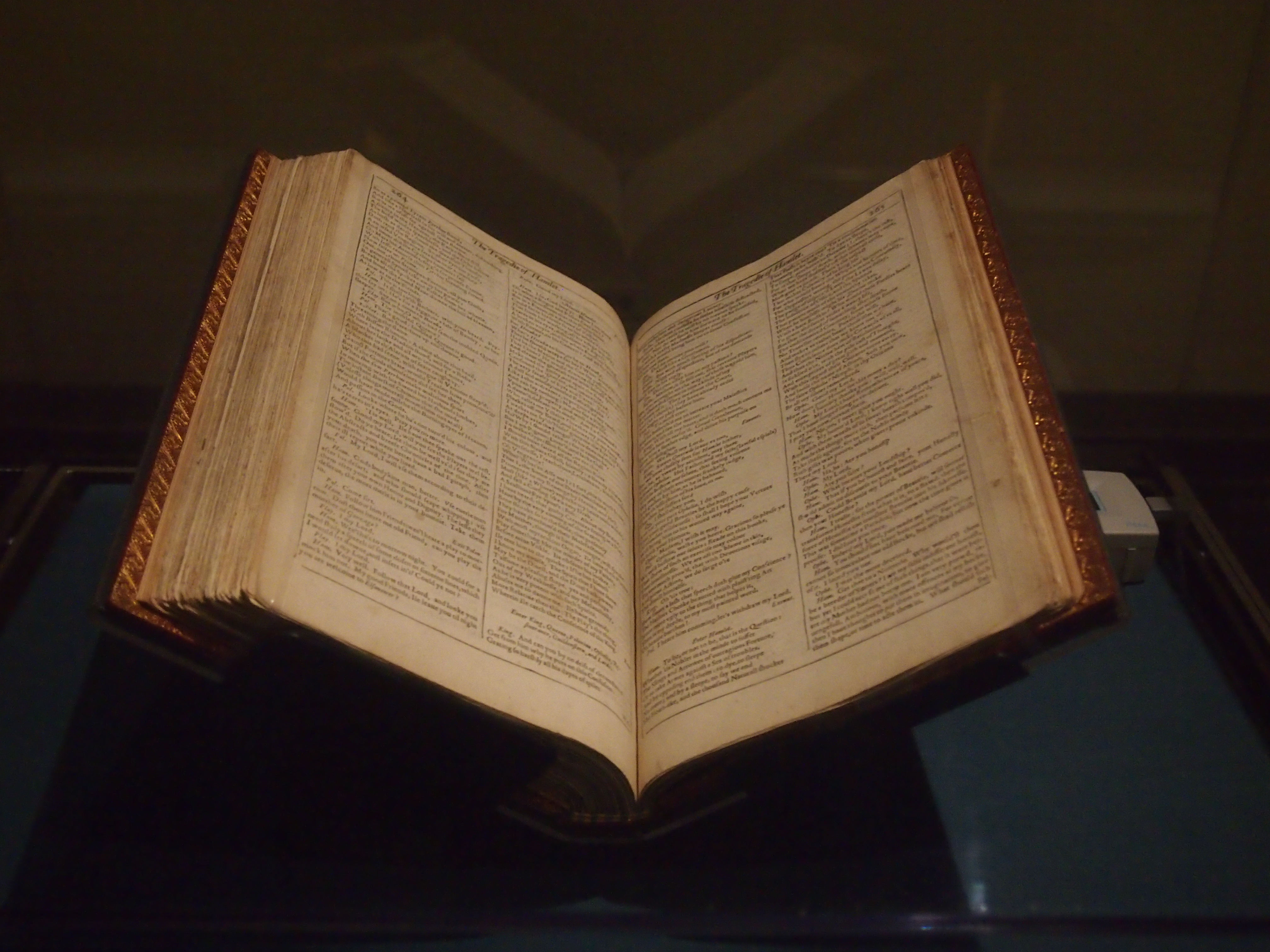
The First Folio exhibit was straightforward: a room with tall signs offering various facts about Shakespeare, his plays, the Quartos and the 1623 and later Folios, along with the King’s Men actors who saw fit to have them published: John Heminges and Henry Condell. A smaller, adjoining room includes the First Folio itself, behind glass and opened to the page that includes Hamlet’s soliloquy.

First FolioIt’s a handsome volume, not much worn or yellow. This was no pulp publishing. It’s also one of the 233 copies that are known to exist, and one of the 82 that the Folger owns as the largest collector of them. Remarkably, Meisei University in Tokyo has the second-largest collection, numbering 12. How did that happen?

A cop lurked in the shadows at the exhibit; a wise precaution, no doubt. At a Sotheby’s auction in 2006, a copy fetched £2.5 million, and thieves have been known to target the book, though the fellow in that article sounded like a bumbler.

I thought it was worth the 45-minute drive to Wauconda. My family might not have been persuaded, except we also had an enjoyable dinner in that town first. More about that tomorrow.

Mikimoto Pearl Island 1992

Does anything interesting happen at the junction of January and February? I’m not persuaded anything does. At least it was warmish around here for the last weekend in January — in the 40s F. both Saturday and Sunday, with rain today to melt away much of the remaining snow, which isn’t too bad for the pit of winter. But the relative warmth didn’t persuade us to do much. At least I found the likes of Hugh Laurie in New Orleans on YouTube over the weekend.

Early February 1992

Recently I visited Toba, a town on the ocean in Ise Prefecture, Japan. That’s the place where cultured pearls were popularized, if not invented, in the early 20th century, and the popularization continues to this day in the form of Mikimoto Pearl Island.

The island, which is connected to the mainland by a very short bridge, includes a museum at which you can learn all sorts of pearl factoids; this I did. I had no idea pearls came in so many colors. You can also buy terrifically expensive jewelry there; this I did not.

On display are some items of gaudy fascination, such as a silver replica Liberty Bell (one-third scale) mostly covered in cultured pearls, complete with a crack represented by a zigzag of darker pearls. Supposedly it was exhibited at the 1939 New York World’s Fair. Other structures include a be-pearled model of Himeji Castle, a globe that includes rubies and diamonds as well as a pearls, and a lotta pearls in the shape of large model pagoda.

At Mikimoto Pearl Island I thought of what the mother of a friend of mine told me upon hearing that I planned to move to Japan. That’s where the pearls come from, she said. Guess Mikimoto’s been successful in getting the word out.

Another Round of Thursday Bagatelle

I saw Travels With My Aunt (1972) not long ago. Like a fair number of movies, I’d have to say that the book is better, though the movie wasn’t bad. Then again, I’ve forgotten most of the book, since I read it at least 25 years ago.

I was startled to see Cindy Williams as the young American on the Orient Express. She was merely a young actress at the time, but even so I kept expecting to see Penny Marshall show up. Such is the conditioning effect, even after 40 years, of mediocre sitcoms; you just can’t get rid of them. Yet even that show had a few charms, which are best watched in the form of a YouTube video collections of Lenny & Squiggy entrances. Or if you like, the setups and then their entrances. The two were the butt of essentially the same joke for years.

Apparently Teen Spirit deodorant is a real thing. I saw some at a dollar store a while ago. I had no idea is was an actual product. Entertainment lore has it that the product inspired the song name, not the other way around. On its label it promised a “girly” smell.

Naturally the Greek exhibit at the Field Museum ended with a gift shop. We poked around and I found a small owl statue for Yuriko, who’s fond of owls, but I didn’t find any postcards. I asked the clerk about it, and she posited that note cards, which the shop carried, would sell better. Nuts to that.

Someone will be the new President of the United States a year from now, so I took a look at the oddsmakers at Paddypower. That outfit calls itself “Ireland’s biggest, most successful, security conscious and innovative bookmaker.”

Hillary Clinton remains the favorite, according to Irish bookies: 5/6. Much more astonishingly, at least in historical terms, Donald Trump is next at 7/2. Marco Rubio and Bernie Sanders are at 6/1. Ted Cruz, 11/1. Jeb Bush’s many donors must be steamed that he’s 22/1. Chris Christie, 33/1. Somehow Mitt Romney is 100/1, same as Paul Ryan. Guess the scenario there is a brokered convention with either of those jamokes selected. In the can’t-get-anyone-to-notice them category are John Kasich, 125/1, and Martin O’Malley, 150/1.

I won’t bother with the others, except Rocky De La Fuente, at 300/1. Most Americans don’t know him, but I do, though I hadn’t realized he was in the race. He’s a real estate developer from San Diego, so I suppose that makes him the lesser-known real estate mogul running for president (the anti-Trump, and as a Democrat, in point of fact). I don’t know anything about his politics, but I will say he’s got a fun presidential name.

The Greeks: From Agamemnon to Alexander the Great

I’m not sure if it counts as a megashow, but the touring exhibit called The Greeks: From Agamemnon to Alexander the Great now at the Field Museum seems like a fairly big deal among museum shows. For one thing, it’s sizable enough, featuring a large assortment of sculpture, tools, vessels, jewelry, weapons, helmets, and more.

“Presented in chronological order, the exhibition begins with the Neolithic Period, around 6000 BC, and continues until the death of Alexander the Great in 323 BC, marking the end of the Classical period,” the Field Museum says. “Highlights of the exhibition include artifacts from the tombs of the first rulers of Mycenae… a burial that depicts the ritual of burial and sacrifice in a funeral pyre described by Homer in the Iliad, a replicated Illyrian warrior helmet that visitors may try on, grave goods from the tomb of Philip II, and inscribed pieces of pottery (ostraka) that were used to ostracize even the most powerful leaders of Classical Greek society.”

But the show’s main distinction is that its artifacts come from no fewer than 20 Greek museums, and some of them haven’t ever been exhibited outside of Greece. Such as this fellow.
Not AgamemnonBecause my misspent youth didn’t include a visit to Greece, I’d never seen this object in person, though I’ve seen the image reproduced enough to be familiar with it. At once I thought Agamemnon. I wasn’t the first person to think of that, of course.

“Displayed here for the first time outside of Greece, this is the gold mask that Schliemann first associated with Agamemnon,” the sign near the artifact said. “It was placed over the face of a person who died in his or her thirties. Although the deceased was certainly not Agamemnon — assuming that Agamemnon ever existed — he or she could have been one of his ancestors and was undoubtedly a powerful Mycenaean ruler. Mycenae, Circle A, Grave V, second half of the 16th century BCE. National Archaeological Museum, Athens.”

Google “mask of Agememnon” or the like, and you’re get this image, not the mask above. That’s because Schliemann later dug up another mask — the one Google pulls up — that he more famously associated with Agamemnon. The second mask wasn’t part of the exhibition, but there was an artful 19th-century replica of it on display.

Other familiar faces populated the exhibit. That is, sculptures I’d seen reproduced in books or elsewhere. Such as Homer (a Roman copy of a Greek work, exact time of creation unknown).

D'oh!Then there’s this unnamed lad with an Archaic smile. In fact, he seems pretty happy, considering that part of his penis is missing.

Smile, damn you, smileHere’s Aristotle (another Roman copy). I’m pretty sure this very image was depicted on a collection of his works that I have somewhere.

AristotleAnd Alexander.

Looks like Jim MorrisonThe bust is a Greek original, created in Pella. Am I the only one who thinks Jim Morrison resembles this Alexander? Anyway, the busts of Homer and Aristotle are from the National Archaeological Museum, while the famed face of Alexander is usually found at the Archaeological Museum of Pella (open only since 2009).

The exhibit will be in Chicago until April, and then go to the National Geographic Society Museum in DC for its last stop. Previously, it traveled to Ottawa and Montreal. The Greeks pointedly decided not to send the trove to anywhere in the UK, such as the British Museum or even the Victoria and Alberta. Still some bad feelings over the Elgin Marbles, it seems.

New Year’s Eve at the Field Museum

On the last day of 2015, Ann and I went to the Field Museum. It had been a while since I’d been there (maybe this long ago), though she told me she’d visited with a school group in the not-too-distant past. It was a cold, gray day, just the time for an indoor diversion.

Note to the CTA: how is it that a bus (No. 130) directly from Union Station and Northwestern Station to the Museum Campus — home of the Field Museum, but also the Shedd Aquarium and the Adler Planetarium — runs only in the summer? Isn’t that backwards? Summer’s the time to cover all or part of the distance on foot. In winter it’s good to have transit. Never mind, we walked to State Street and caught the No. 146, arriving at the museum not long after noon.

Field Museum Dec 31, 2015We saw some of time-honored exhibits at the Field, such as Sue the T. Rex. People sure are fond of taking its picture.
Field MuseumNot very many people were down in the basement looking at the Man-Eater of Mfuwe, but there it was, behind glass.
Field Museum“This cat terrorized Zambia’s Luangwa River Valley — near Msoro Monty’s [a 1920s man-eater] old stamping grounds — in 1991,” notes the Smithsonian. “After killing at least six people, the lion strutted through the center of a village, reportedly carrying a laundry bag that had belonged to one of his victims. A California man on safari, after waiting in a hunting blind for 20 nights, later shot and killed him.” Unlike Cecil the Lion, there was no international outrage over that.

The Field Museum also has a nice collection of Pacific Northwest house posts.
Field MuseumNot quite the selection that the University of British Columbia Museum of Anthropology in Vancouver has, but impressive. We were among the few in the hall looking at them.

I was also glad to see that the Field is preparing to exhibit pieces of the Chelyabinsk meteorite. According to a sign, the Field has “one of the largest collections of the Chelyabinsk meteorite in the Western Hemisphere.” (I wonder what the Church of the Chelyabinsk Meteorite thinks of that, if there really is such a group.)

None of that is why I wanted to visit the Field. Instead it was a rare occasion when I was willing to pay extra to see a special show. Namely, “The Greeks: Agamemnon to Alexander the Great.” It was worth it. More on that shortly.

The National Museum of Mexican Art’s 2015 Day of the Dead Exhibition

In January 1990, when I knew I was leaving Chicago and not sure I’d ever move back, I spent some time visiting local places I hadn’t gotten around to. That included a few smaller museums, such as the DuSable Museum of African-American History, the Balzekas Museum of Lithuanian Culture, and what was then known as the Mexican Fine Arts Center Museum. Now it’s the National Museum of Mexican Art, but the museum is still located in Harrison Park in the Pilsen neighborhood of Chicago. I made it back there on Saturday for first time in 25 years.

Mainly I wanted to see the museum’s notable Día de los Muertos exhibit, which it mounts every October through December. Who can resist colorful skulls, in two and three dimensions?

Day of the Dead 2015Day of the Dead 2015But there was much more. “Come celebrate the Day of the Dead with the works of over 90 artists of Mexican descent from both sides of the border,” the museum web site notes. Among other works, “thirteen ofrendas and installations were created to remember distinguished artists and members of the community alike. Folk art, paintings, and sculptures comprise the largest annual exhibition of Day of the Dead in the U.S.”

The ofrenda (“offering”)  consists of objects arrayed on a ritual altar for the Day of the Dead, to honor someone who has died. The one that really caught my attention was for El Santo of Lucha Libre fame.
El SantoThe title of the ofrenda in full: “Santo in the World of the Dead: Altar to the Silver Masked Wrestler/Santo en el mundo de los muertos: ofrenda al enmascarado de plata,” by Juan Javier and Gabrielle Pescador of Michigan.

I had only the vaguest notion of El Santo, so I read more about him: Rodolfo Guzmán Huerta (1917-1984), one of the biggest stars of Lucha Libre. It’s too bad that some of his many movies, dubbed clumsily in English, didn’t show up on Saturday afternoon TV when I was young. Such as Santo vs. las Mujeres Vampiro, a poster for which is part of the ofrenda. After all, we did get the likes of The Robot vs. the Aztec Mummy on English-language TV in ’70s San Antonio.

Not to worry, in our time the original version of Santo vs. las Mujeres Vampiro is posted in its entirety on YouTube. If you watch it, and maybe a few other Santo clips, you might start getting YouTube commercials in Spanish, which I find easier to ignore.

(Something that made me smile from the Wiki entry on The Robot vs. the Aztec Mummy: “The movie shows a notable lack of awareness of Mesoamerican civilizations…” There’s a shocker.)

Another large ofrenda was for a woman in a rather different walk of life, though a public persona all the same: Irene C. Hernandez (1916-1997), who was on the Cook County Board of Commissioners from 1974 to ’94.
Day of the Dead 2015The work was created by a number of artists, including students at Irene C. Hernandez Middle School in Chicago. A lot of skeletons have their parts to play.
Day of the Dead, 2015Other ofrendas and installations honored the likes of Anthony Quinn, Selena, Brooklyn artist Ray Abeyta, and notable Chicagoans like Soledad “Shirley” Velásquez. Considering that the theme is death, they’re remarkably life-affirming.