The House on the Rock, Section 1: Alex Jordan’s Odd Man Cave

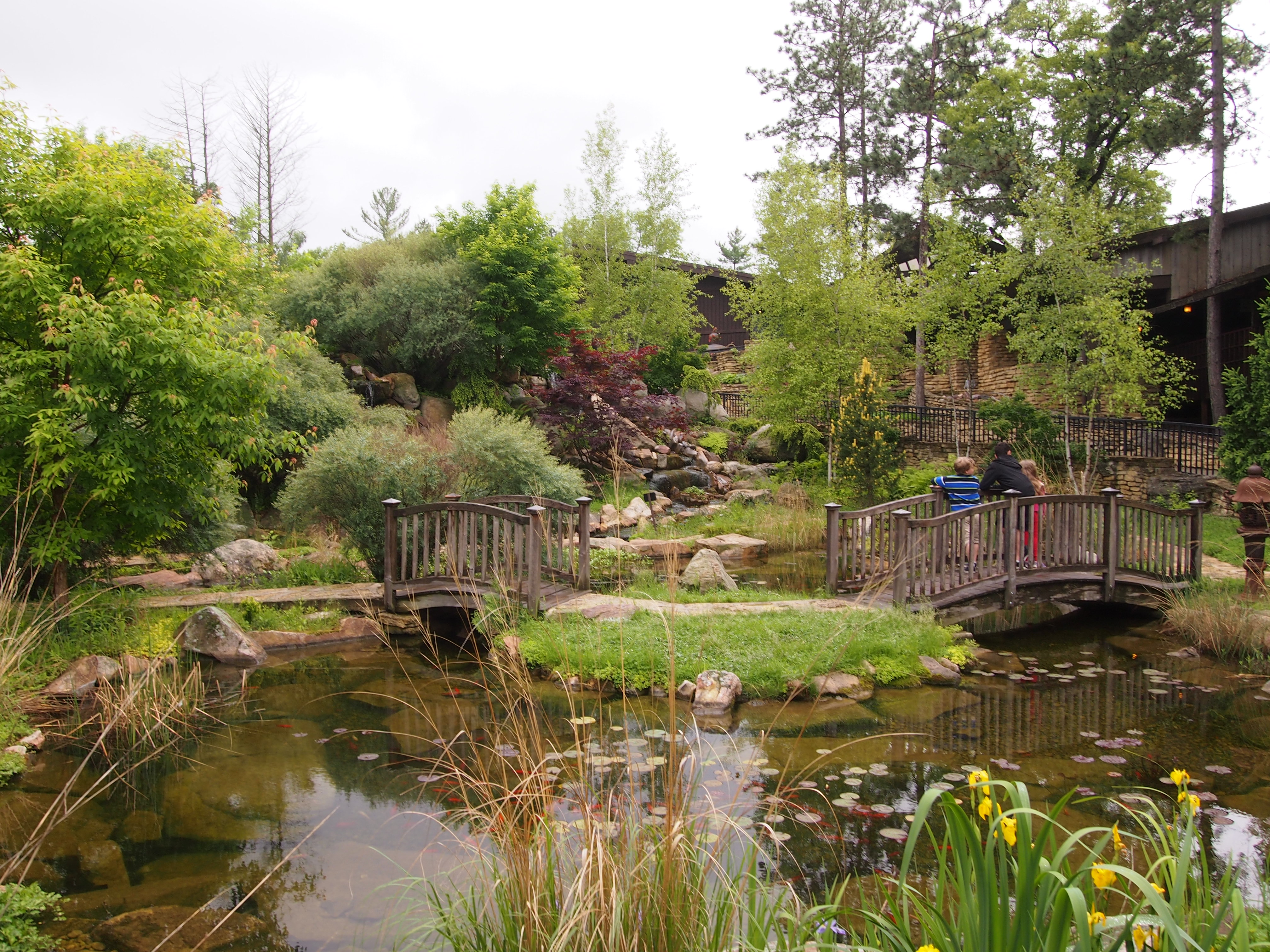
The Alex Jordan Center is the first building of The House on the Rock you encounter after the ticketing building. Reached by a walkway through an “Asian garden” (an odd mix of Chinese and Japanese elements), the center is essentially a museum devoted to The House creator, Alex Jordan Jr. (1914-1989), with information about him and his lifelong obsession with building the complex, and filling it with stuff.

Ann, May 30, 2015There’s more information on the walls of the Alex Jordan Center than is easily available elsewhere, especially online (as Wiki puts it, “published information on Jordan’s life is scarce”). Much of what’s written about the place follows the Roadside America school of reportage: Wow, what a wacky place! Look how wacky it is! Can you believe how wacky this place is?

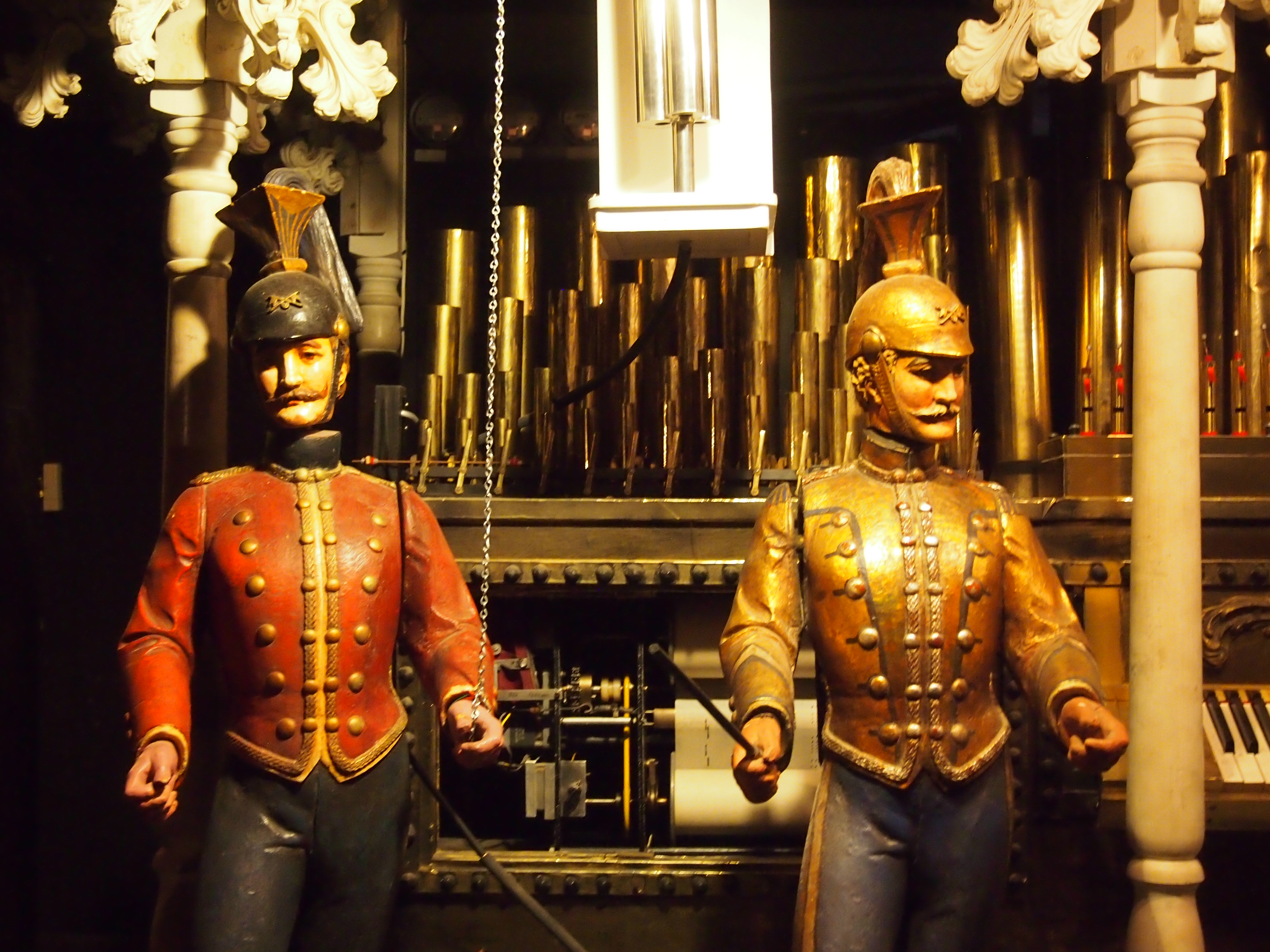
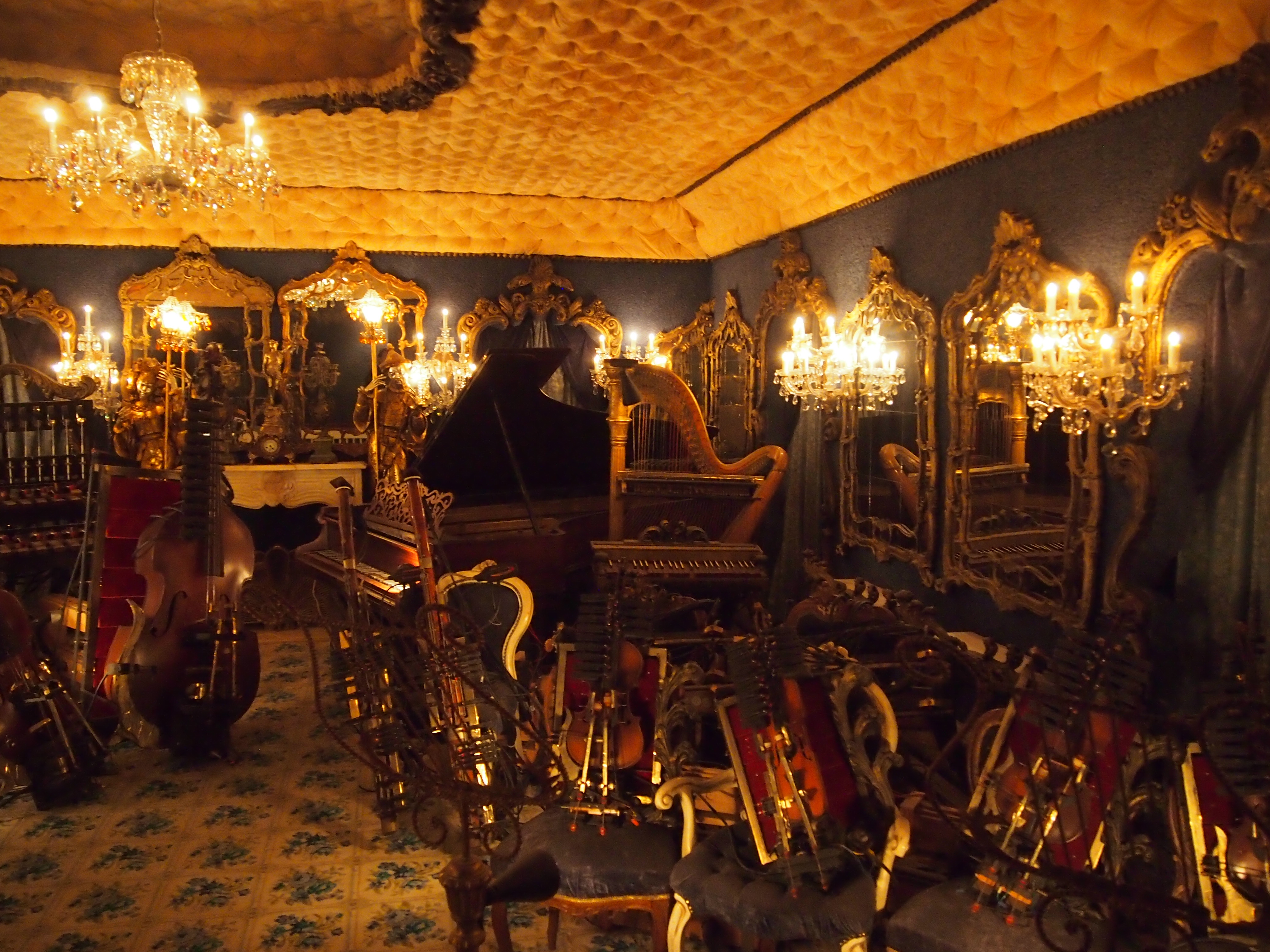
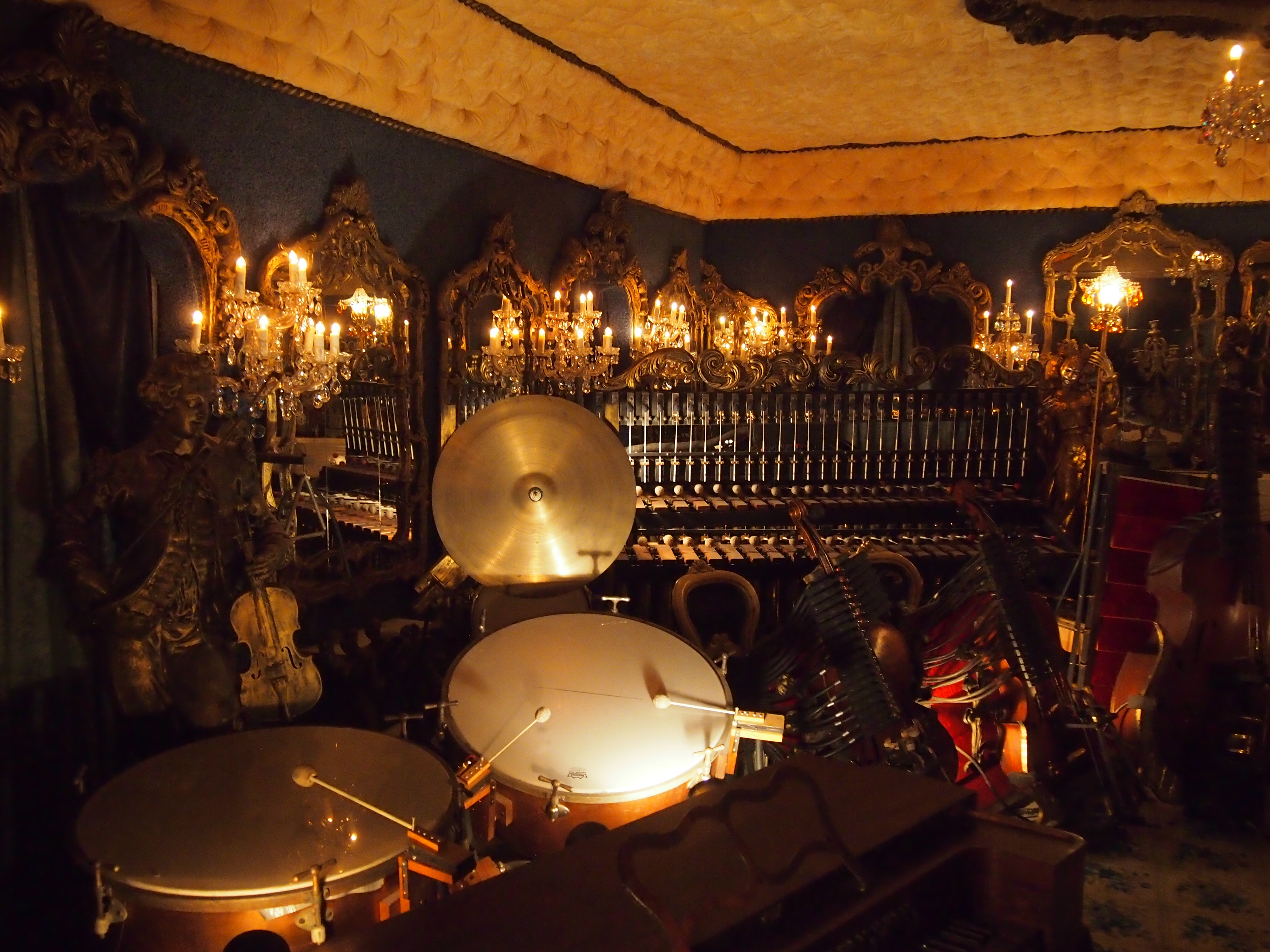
The House on the Rock is wacky. Ah, but so much more. My impression is that Alex Jordan was something of a ne’er-do-well whose parents supported him until he lucked into a way to support his obsessions: charging people admission to see his stuff (that, and maybe farm subsidies). Once it got up and going, the place grow’d like Topsy. Except not quite: Jordan spurred the growth. Whatever the character of his obsessions, he also clearly wasn’t stupid. I was astonished to learn that he oversaw the design and construction of some of the automatic music machines, which look as fantastically complex as any of the Disney animatronics.

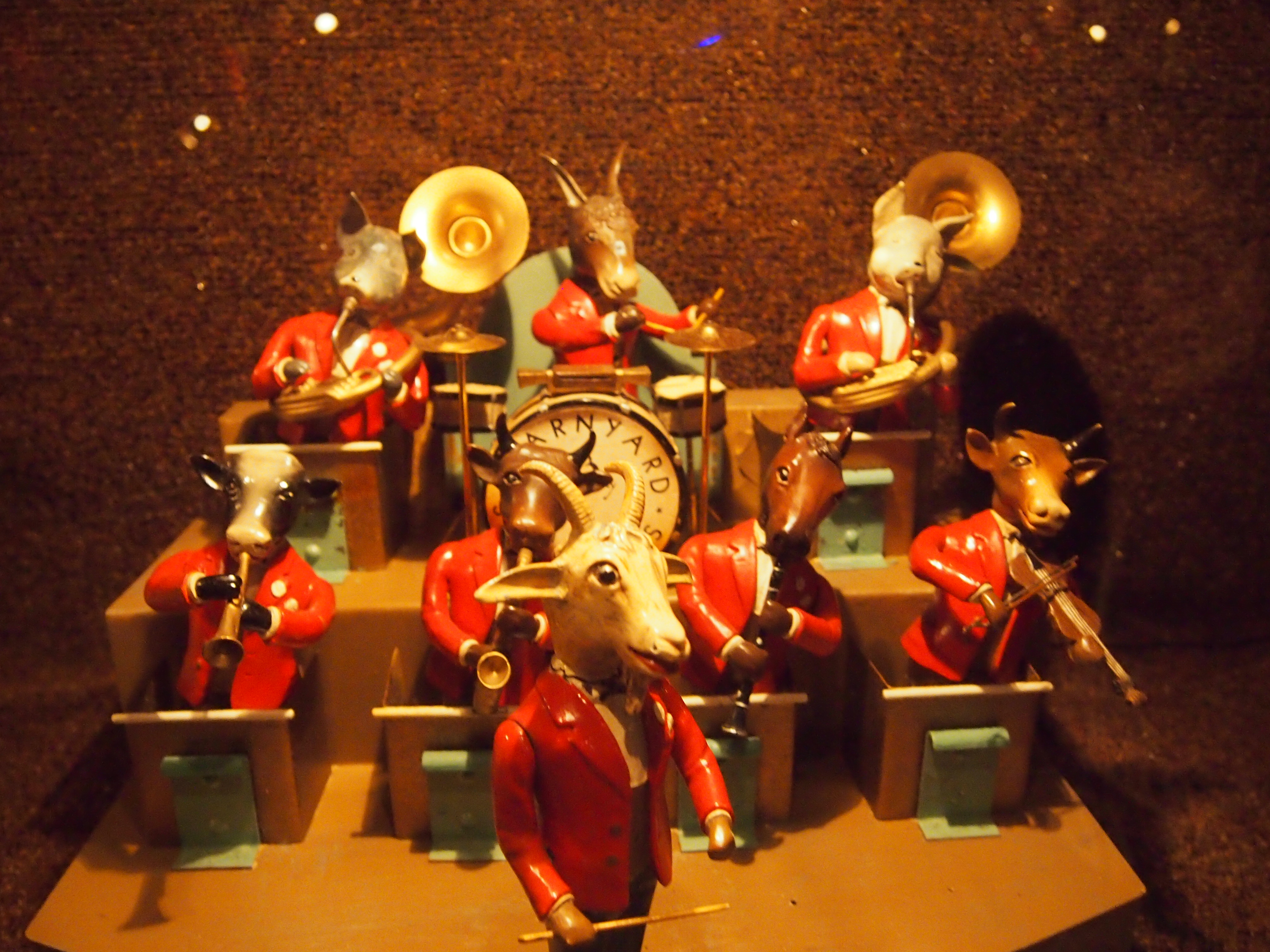
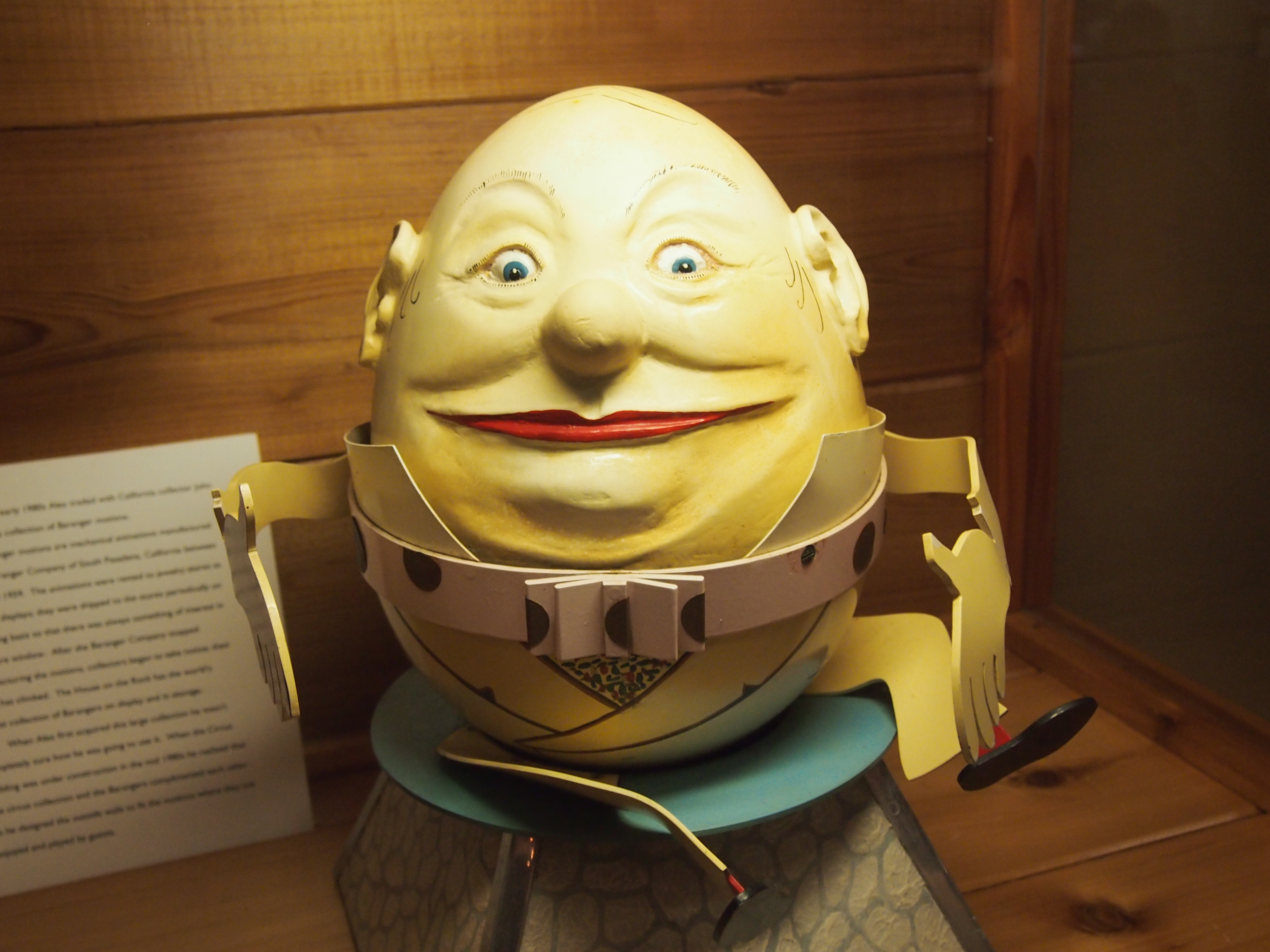
Here’s a smaller example of a kind of animatronics I’d never heard of before, one of which, with information, is in the Alex Jordan Center: “In the early 1980s, Alex traded with California collector John Daniel for a collection of Baranger motions…

The House on the Rock May 2015Baranger motions are mechanical animations manufactured by the Baranger Company of South Pasadena, California between 1925 and 1959. The animations were rented to jewelry stores as window displays; they were shipped to the stores periodically on a rotating basis so that there was always something of interest in the store window… The House on the Rock has the world’s largest collection of Barangers on display and in storage.” (The Pollack Advertising Museum in Mesa, Ariz., reportedly has more.) The pictured eggman, a Humpty Dumpty Baranger, is only one of 14 in existence, according to one source.

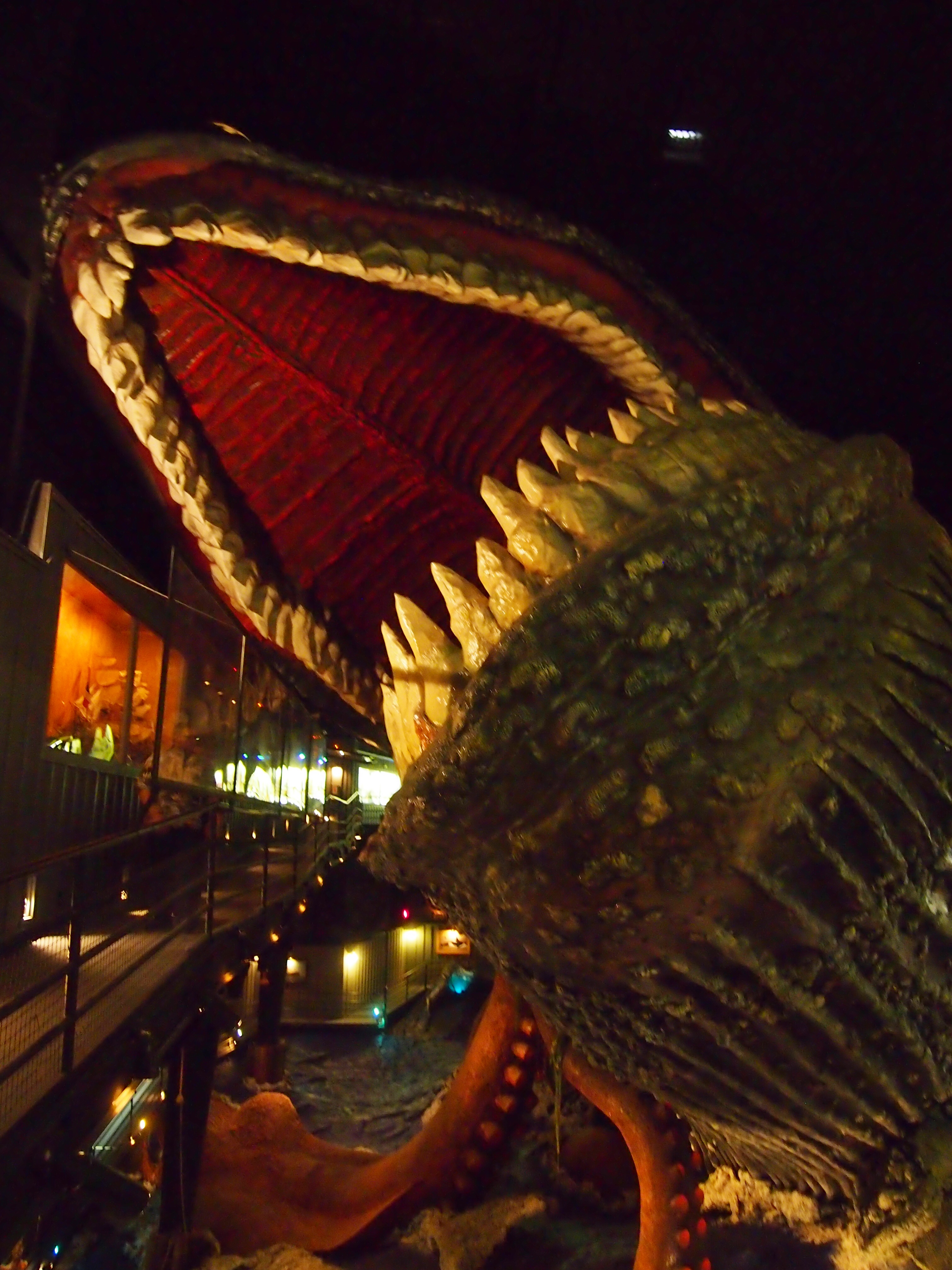
Jordan must have also had a dash of P.T. Barnum in him. Why else would you have a three-story sea monster built for the world to see? On the other hand, I was happy to learn that The House on the Rock doesn’t particularly gouge its visitors. Admission for three adults and one child, bought at a discount on line, was less than $90, and certainly worth it. The gift shop was tourist-priced, but not excessive. One small example: postcards were a quarter each. I seem to remember that cards of Taliesin were more, maybe a dollar. The place doesn’t charge Buc-ee’s prices, in other words.

The House on the Rock is formally divided into three parts. The first part begins after leaving the Alex Jordan Center, and includes the original structure: a dimly lit collection of rooms snaking around the side of the hill. At least, that’s what it felt like. Without a map, or an aerial view of the complex, it’s hard for a casual visitor to tell how it’s all put together. Not that that matters. Once you’re into the groove of the place, passing through twisting corridors and crossing pedestrian bridges and climbing staircases and wandering along footpaths through mildly claustrophobic tunnels, and even taking in an occasional view of the outside, it’s just one thing after another. Quite literally.

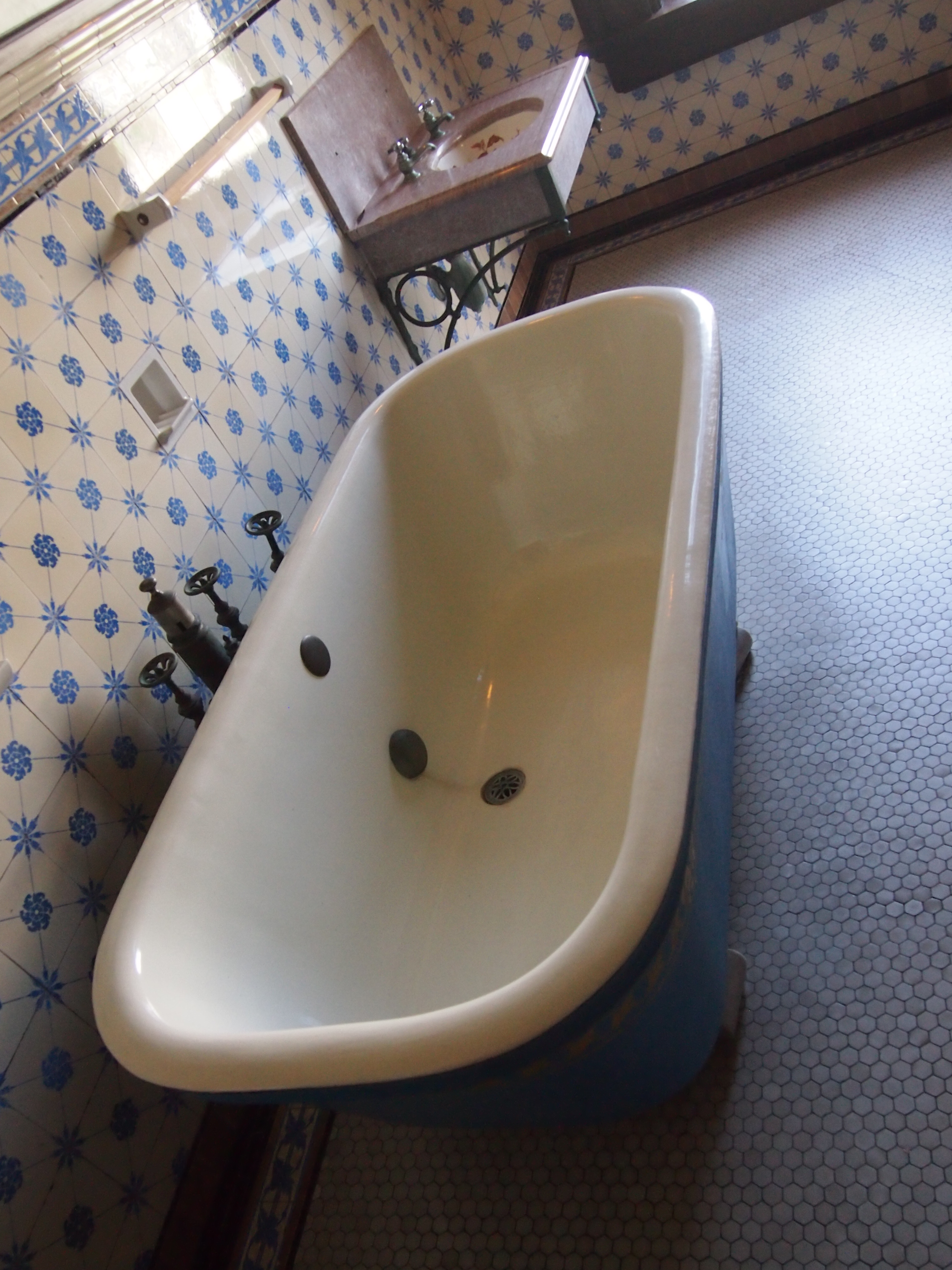
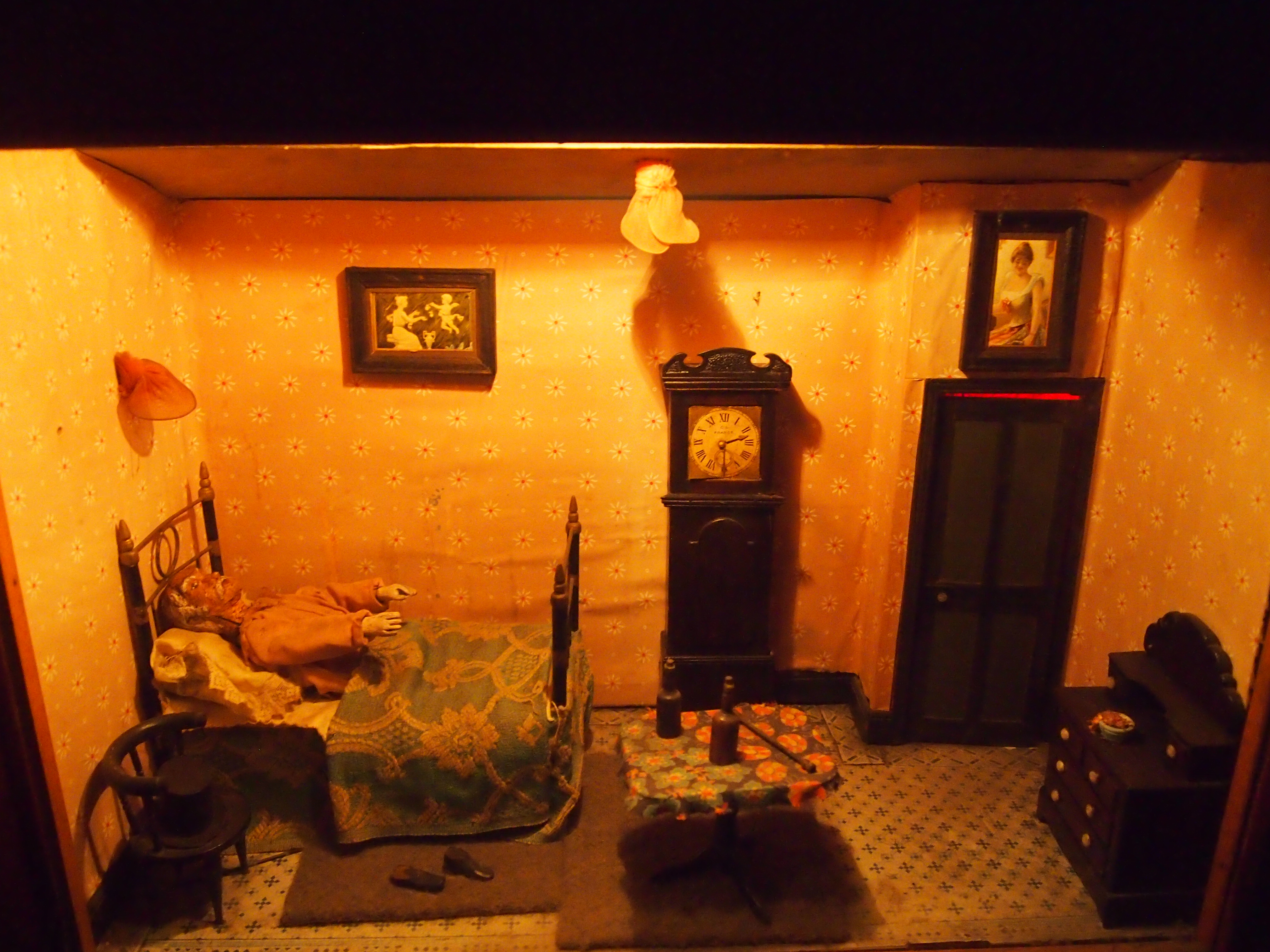
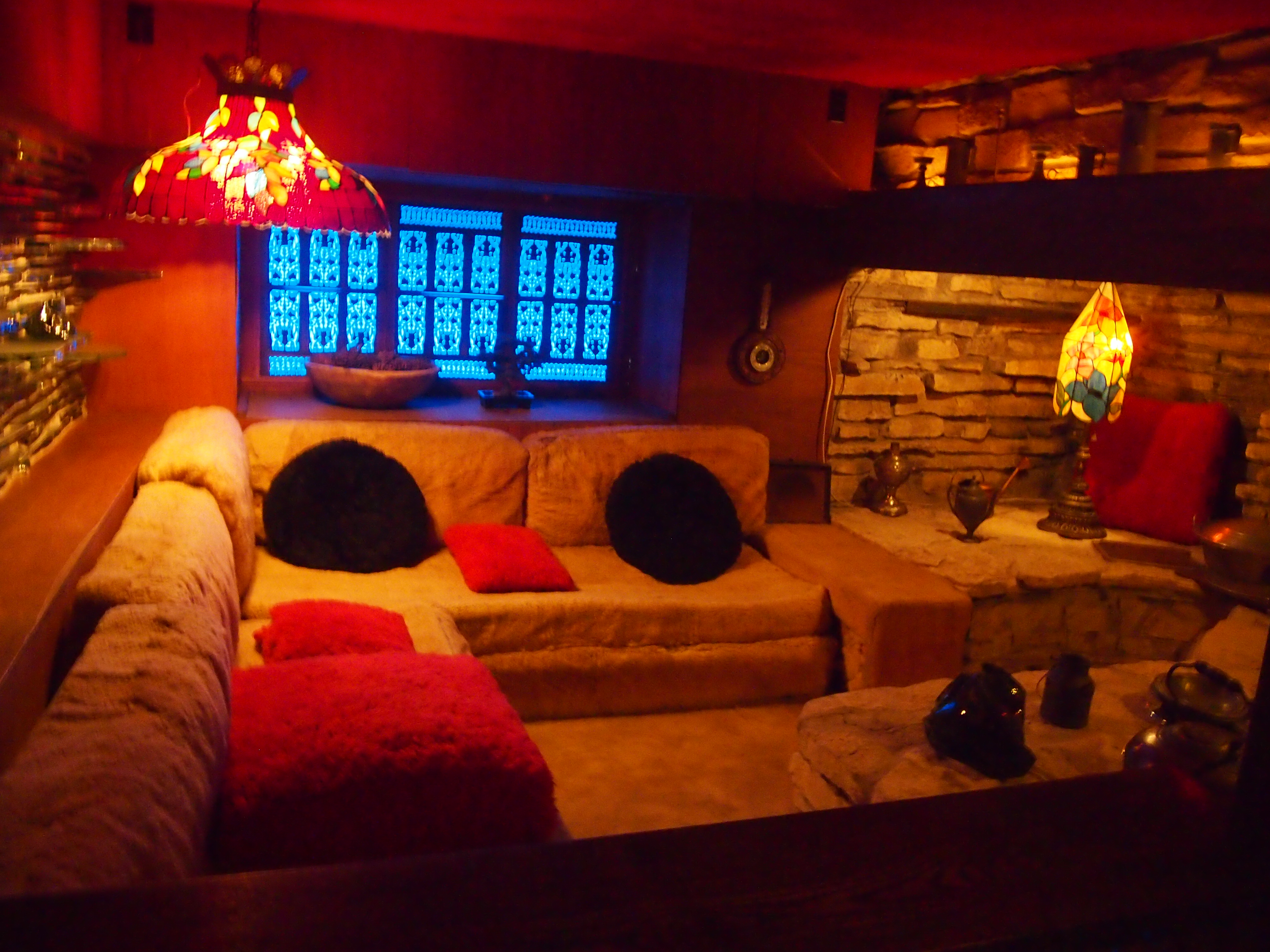
The first section was also the only part of the complex that remotely resembles living quarters, featuring (among other things) a simple kitchen looking about 40 years old. Other rooms included pieces of furniture, such as couches and tables, and one has a large fireplace: elements of an elaborate man cave, to use a term more recent than The House. With some stress on cave. Rock formed the basis of most of the walls, the ceilings were low, and much of the color scheme involved brown.

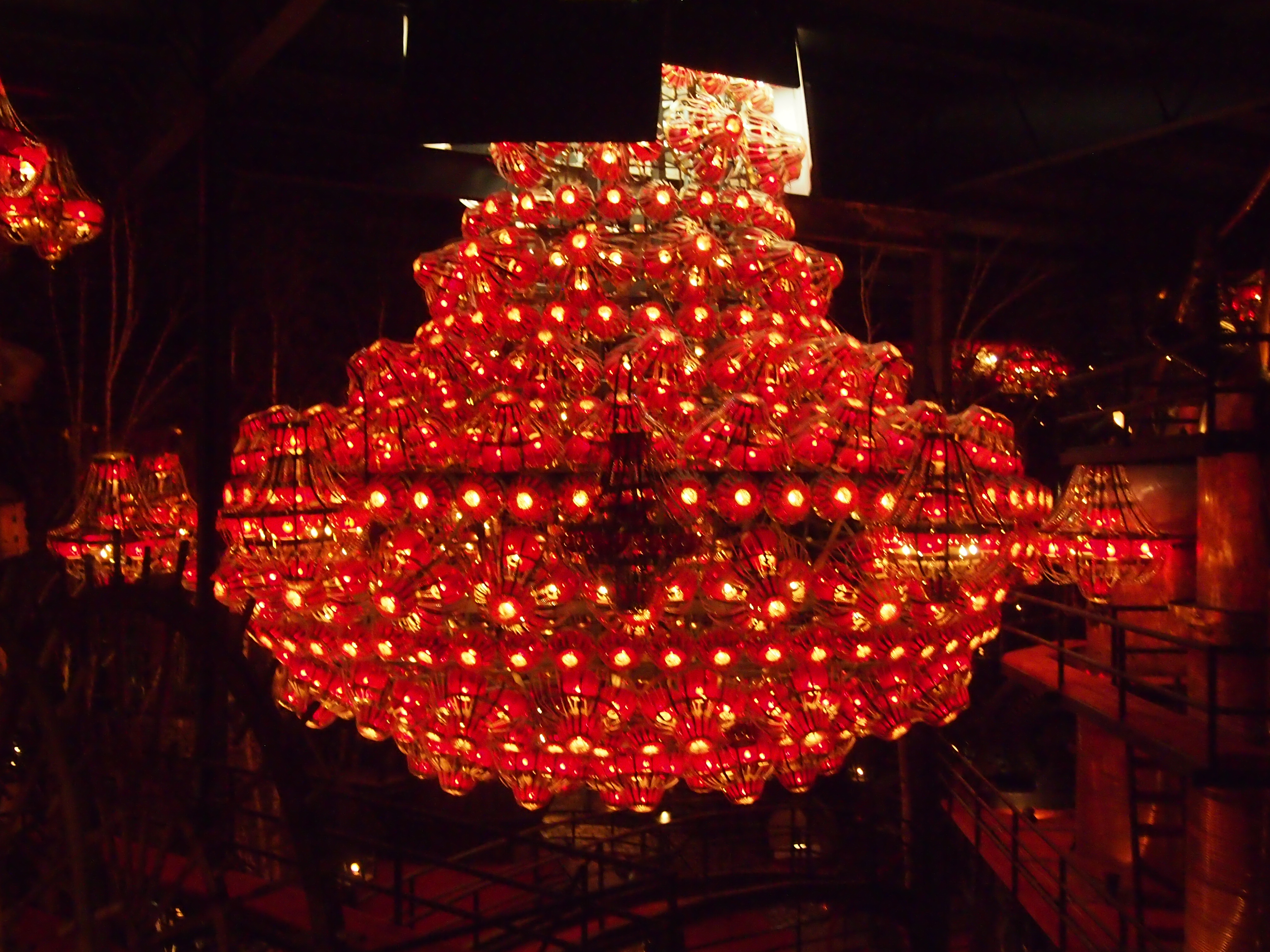
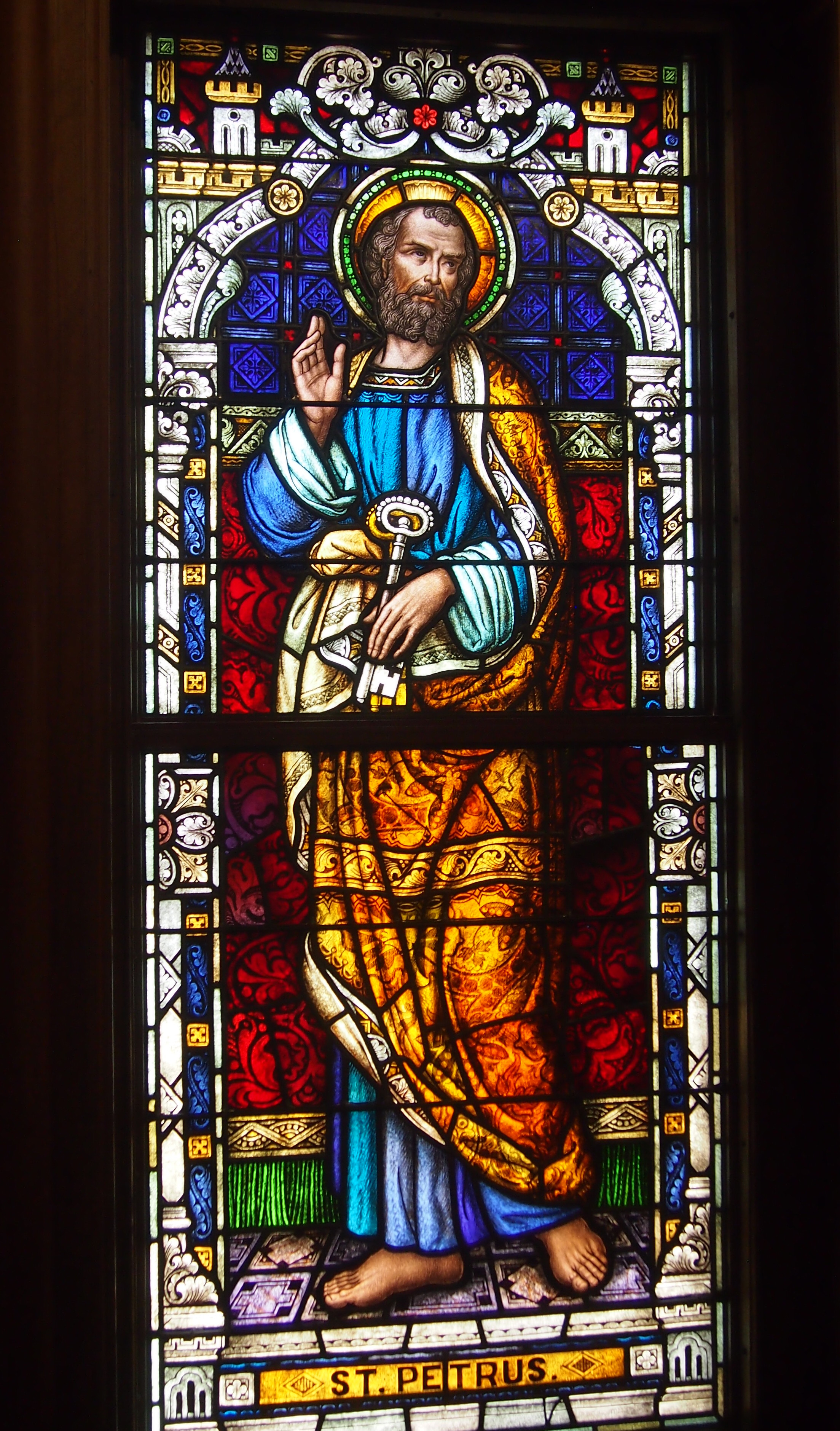
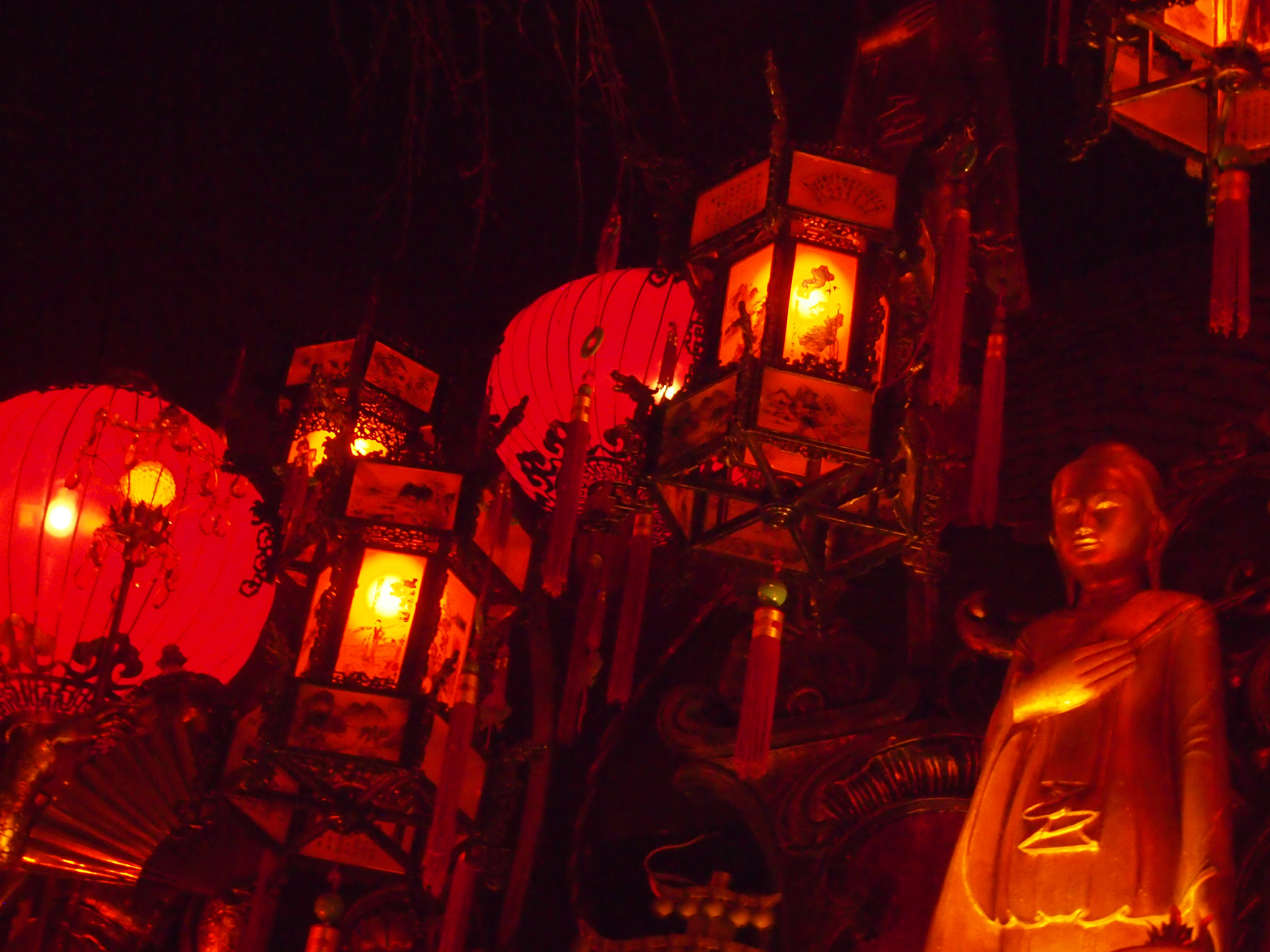
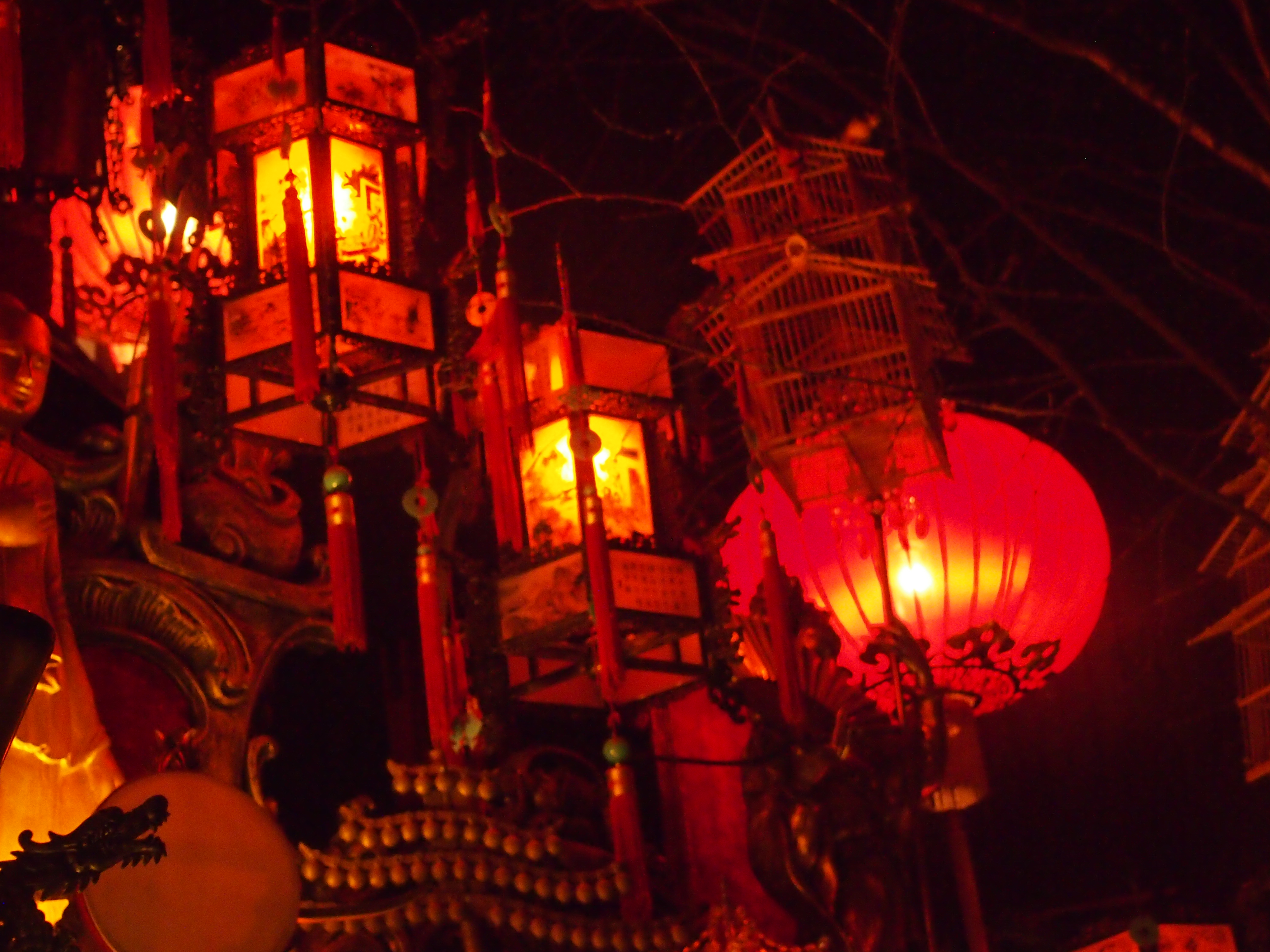
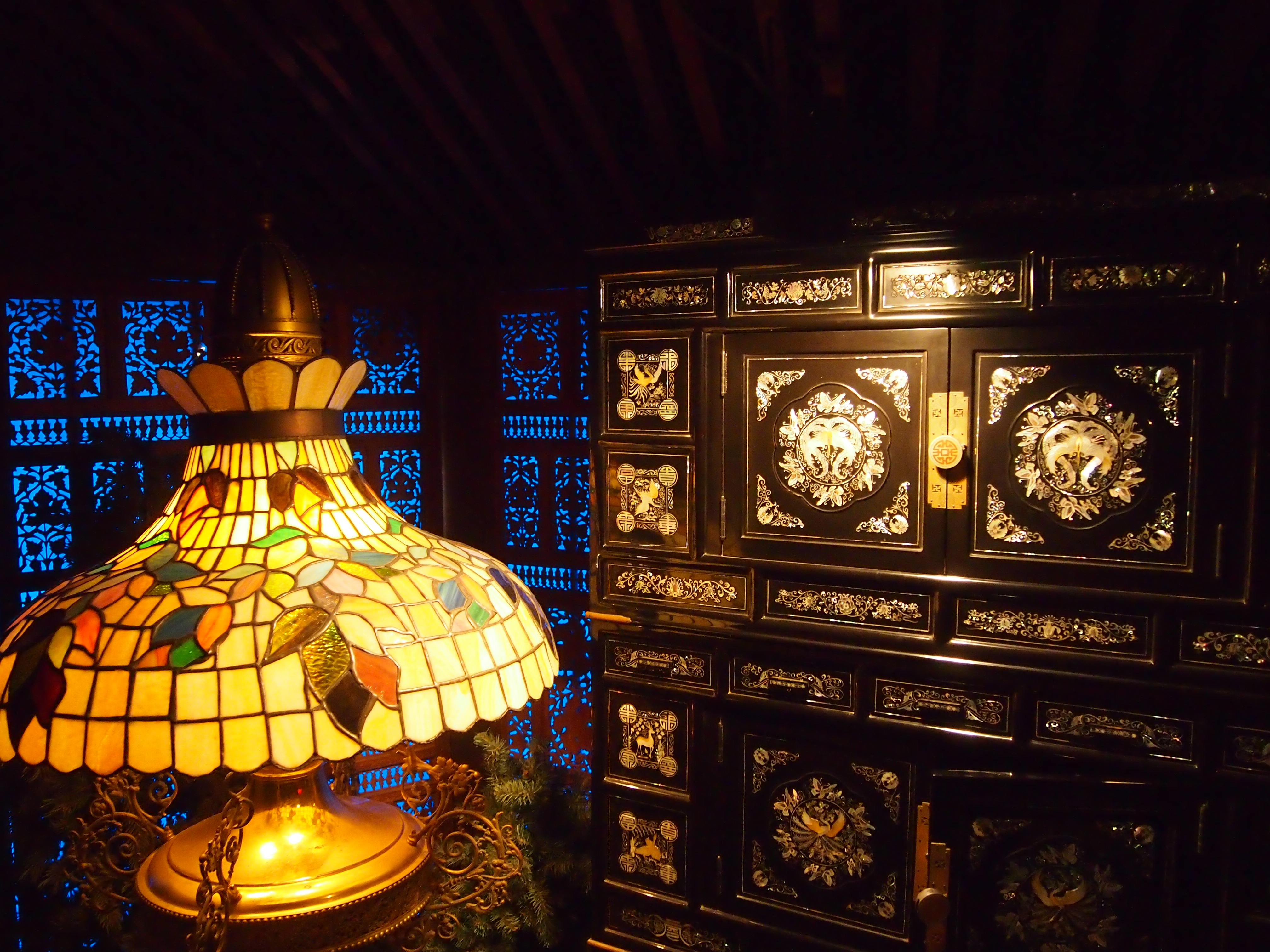
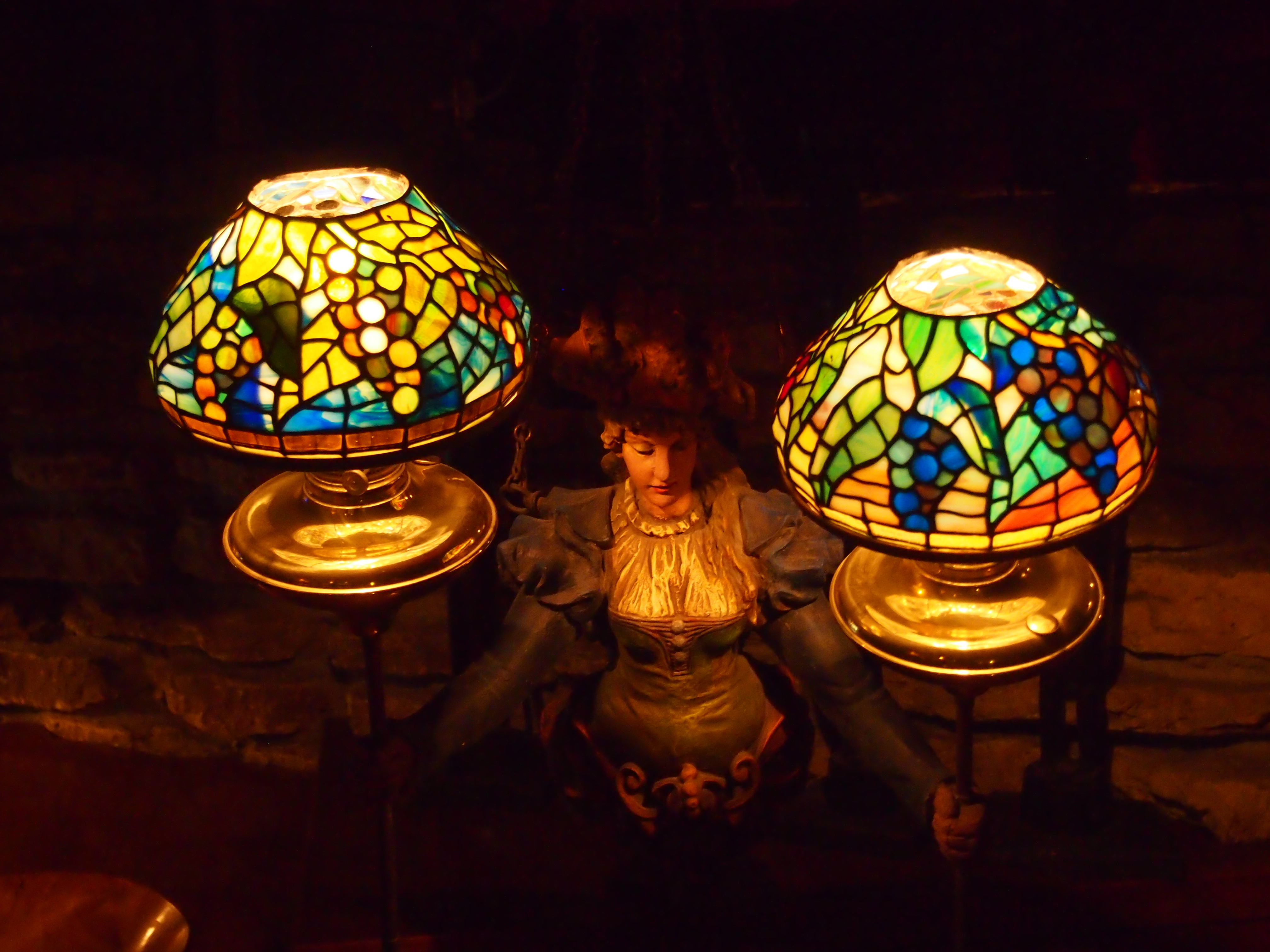
The House on the Rock, May 2015Most of the rooms weren’t so ordinary. Jordan’s fascination with collecting dolls, especially Japanese dolls, and Tiffany lamps, or Tiffany-like lamps, is apparent in many places.
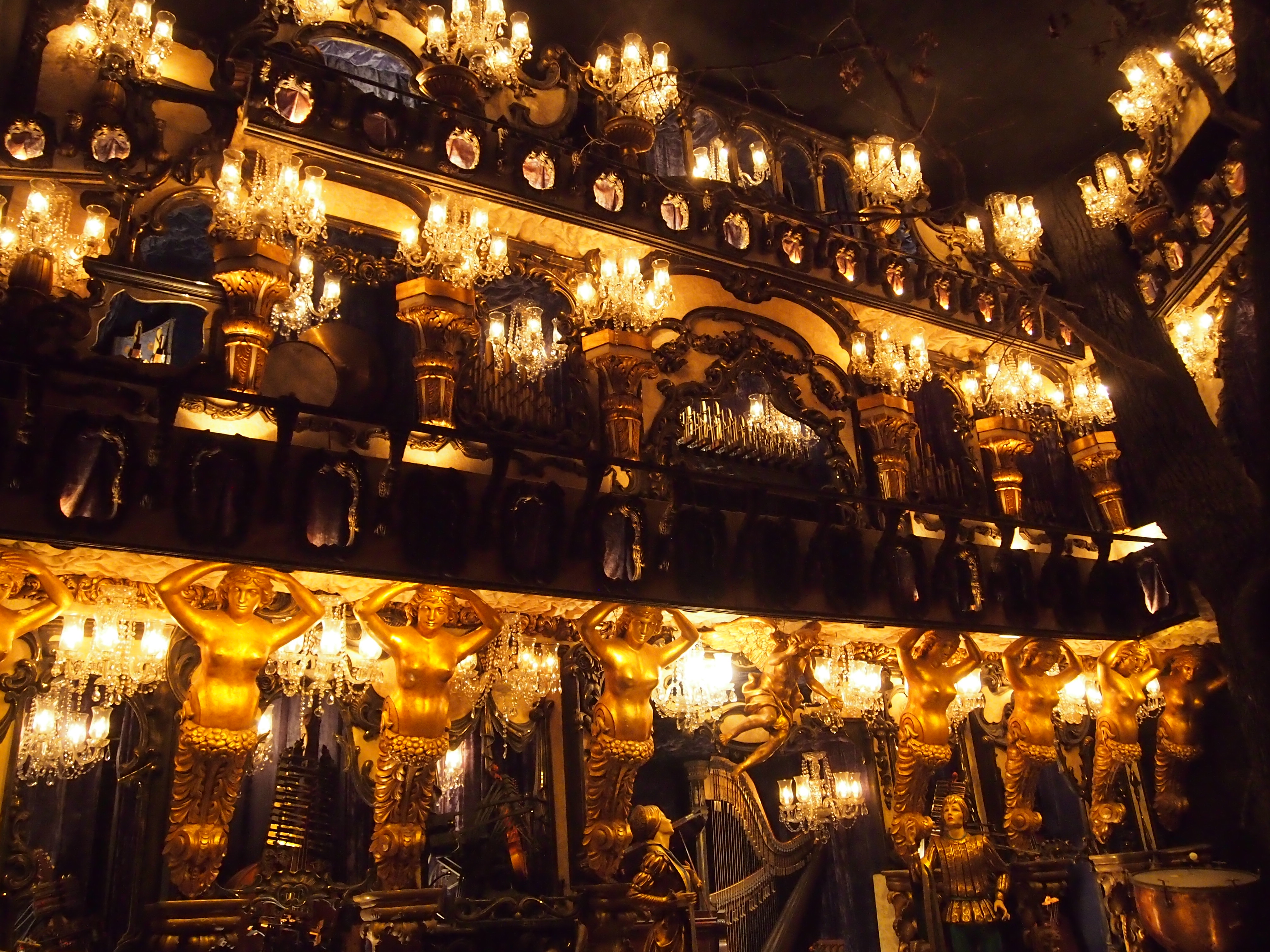
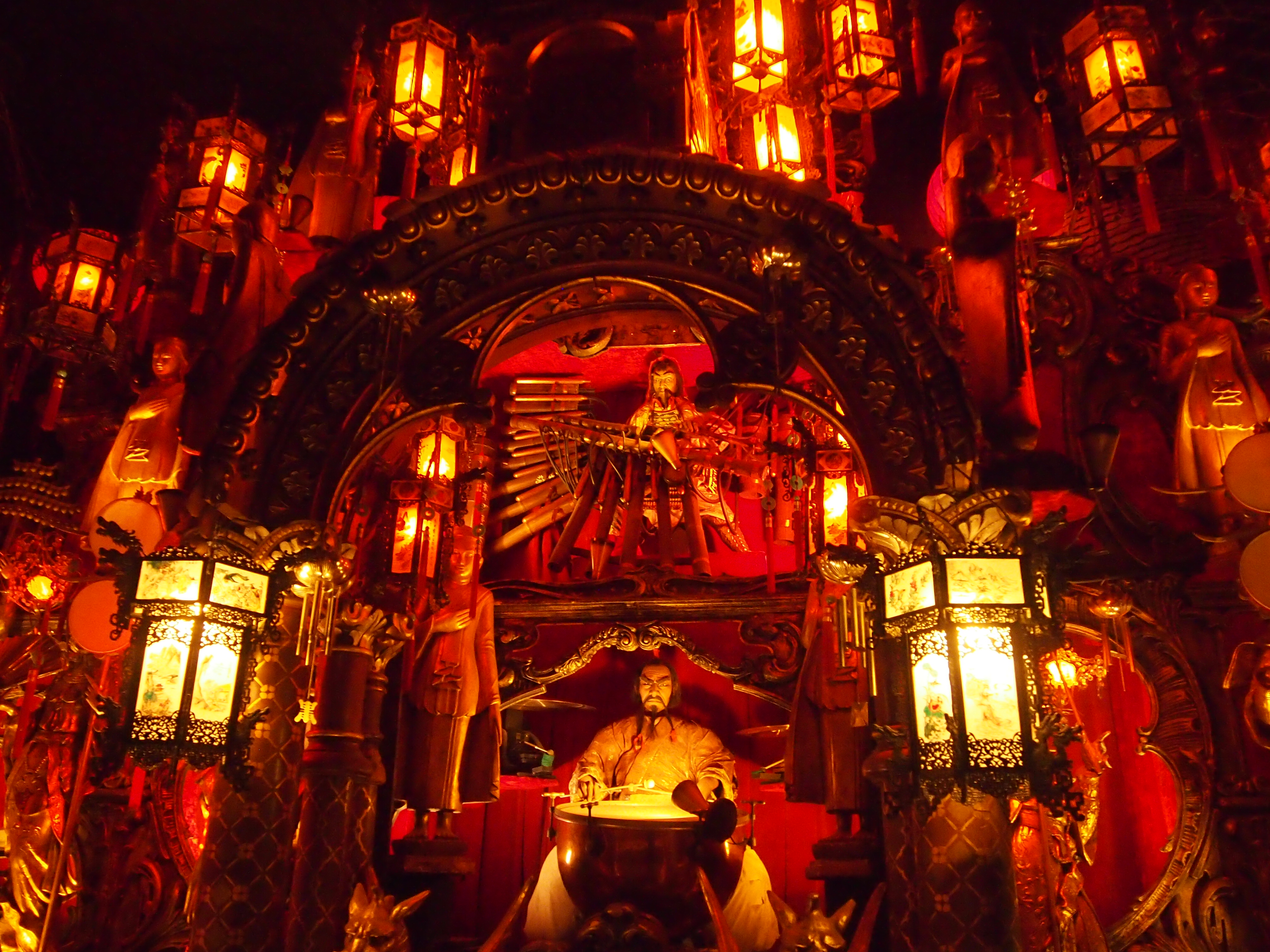
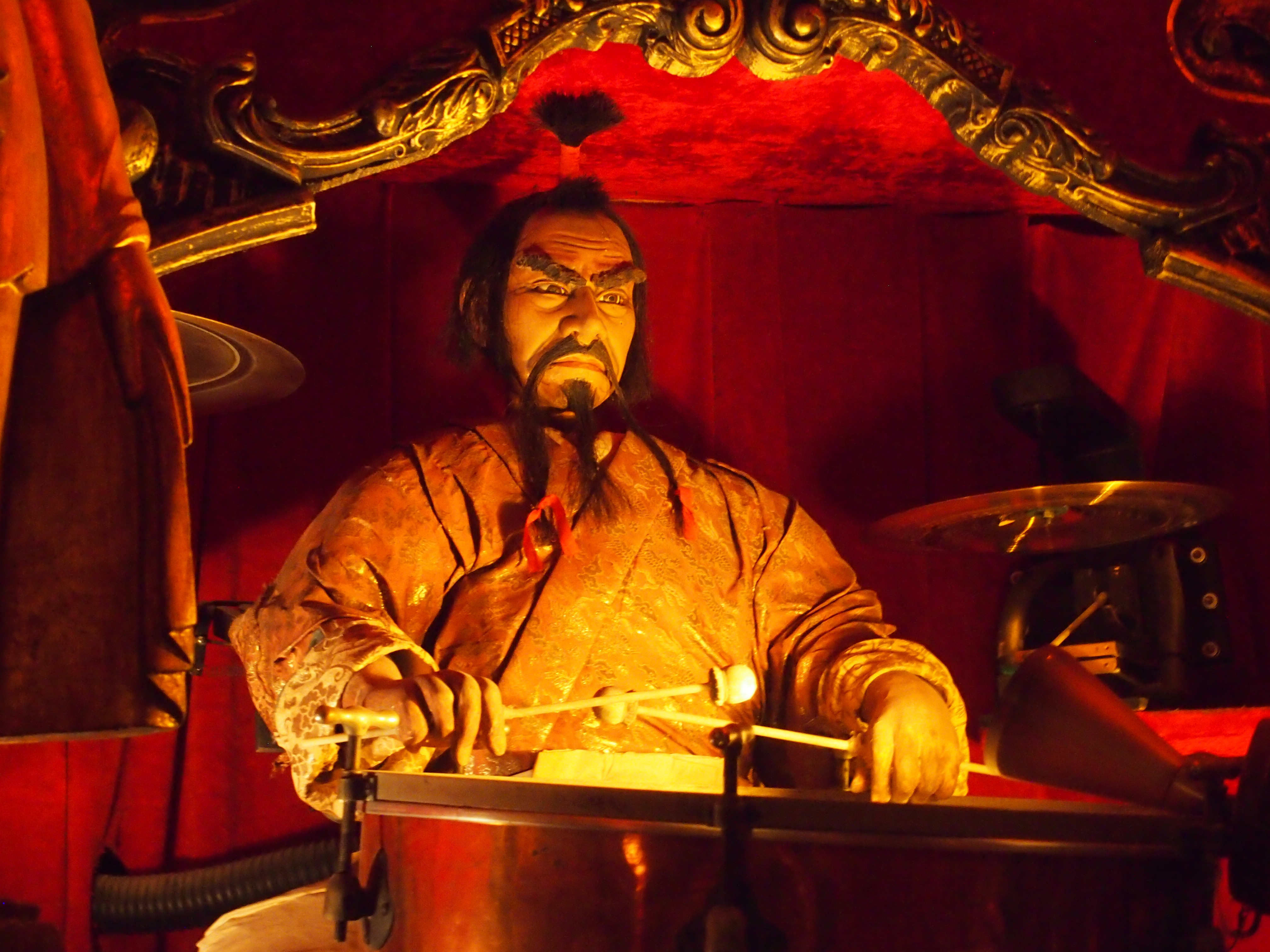
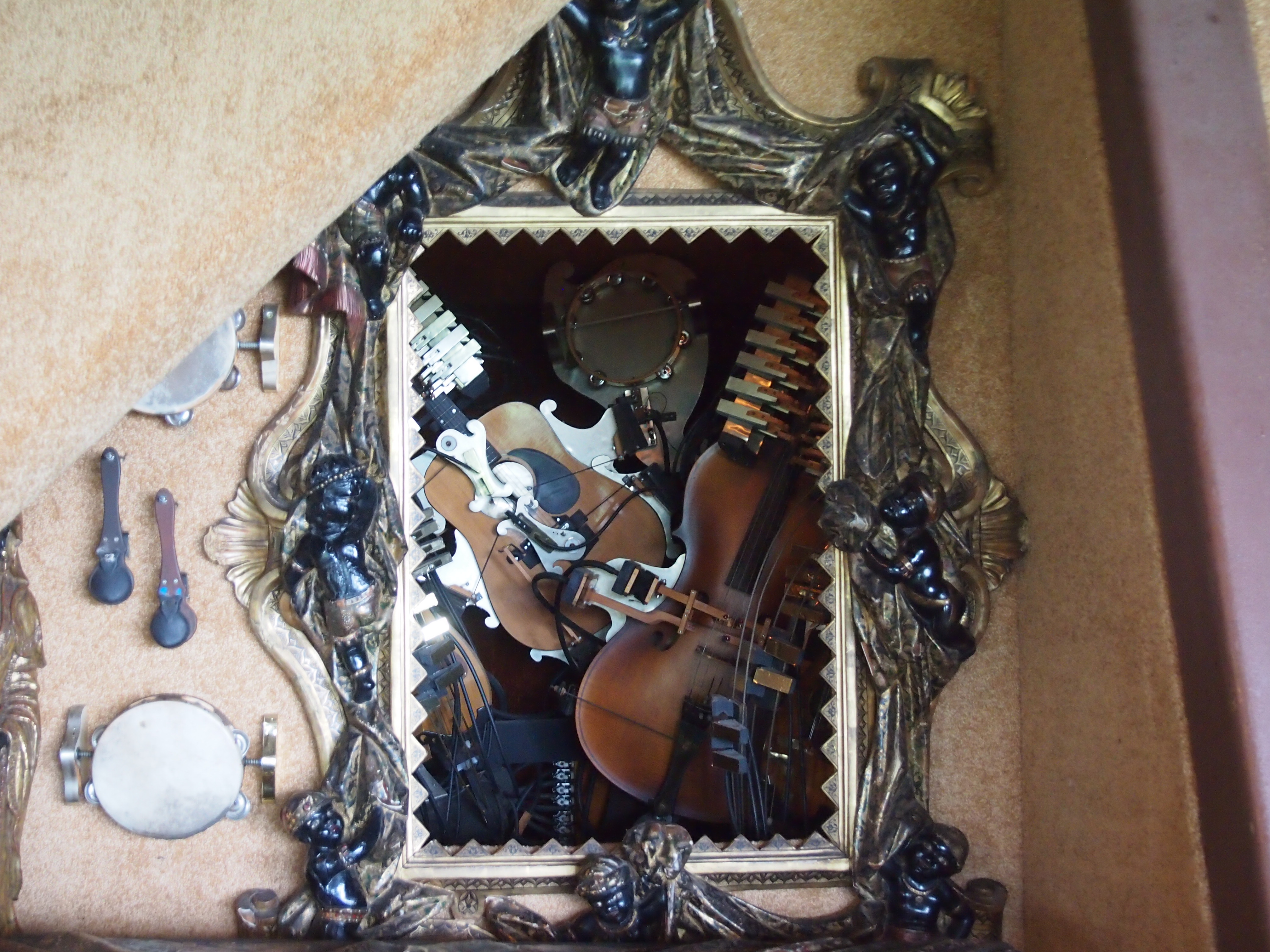
The House on the Rock, May 2015The House on the Rock, May 2015The first section also included a handful of the automatic music machines that would show up in such quantity later in the complex. This looks like a painting of such a device — in fact, an homage to a famous painting I can’t quite place — but actually the device is behind a hole in the wall made to look like a frame. Insert a token and it makes music.

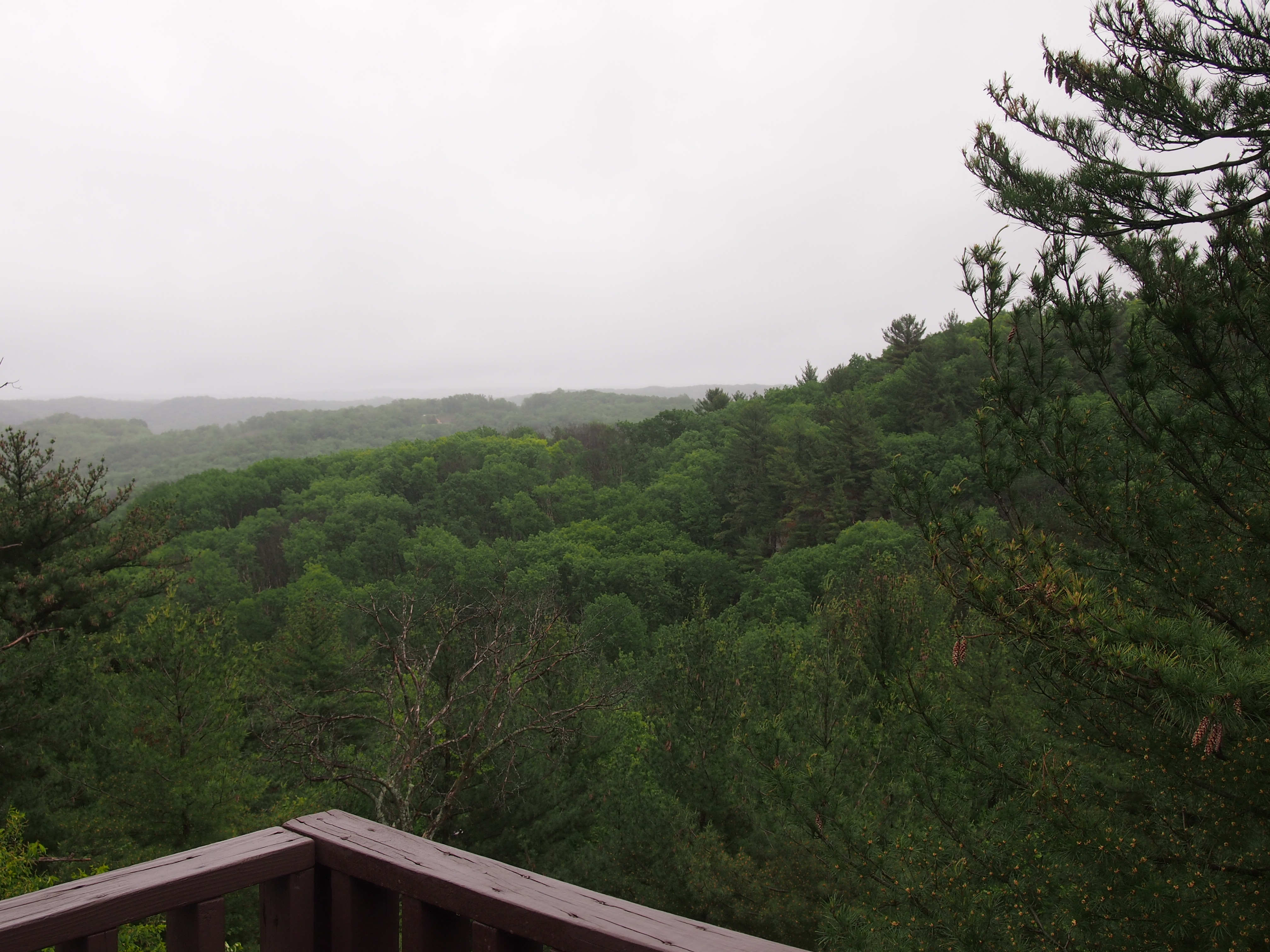
The House on the Rock, May 2015At one point the tour trail takes you outside to enjoy the view. Even though last Saturday was overcast and rainy, I saw the appeal of the vista, off into the rolling green hills of southern Wisconsin.

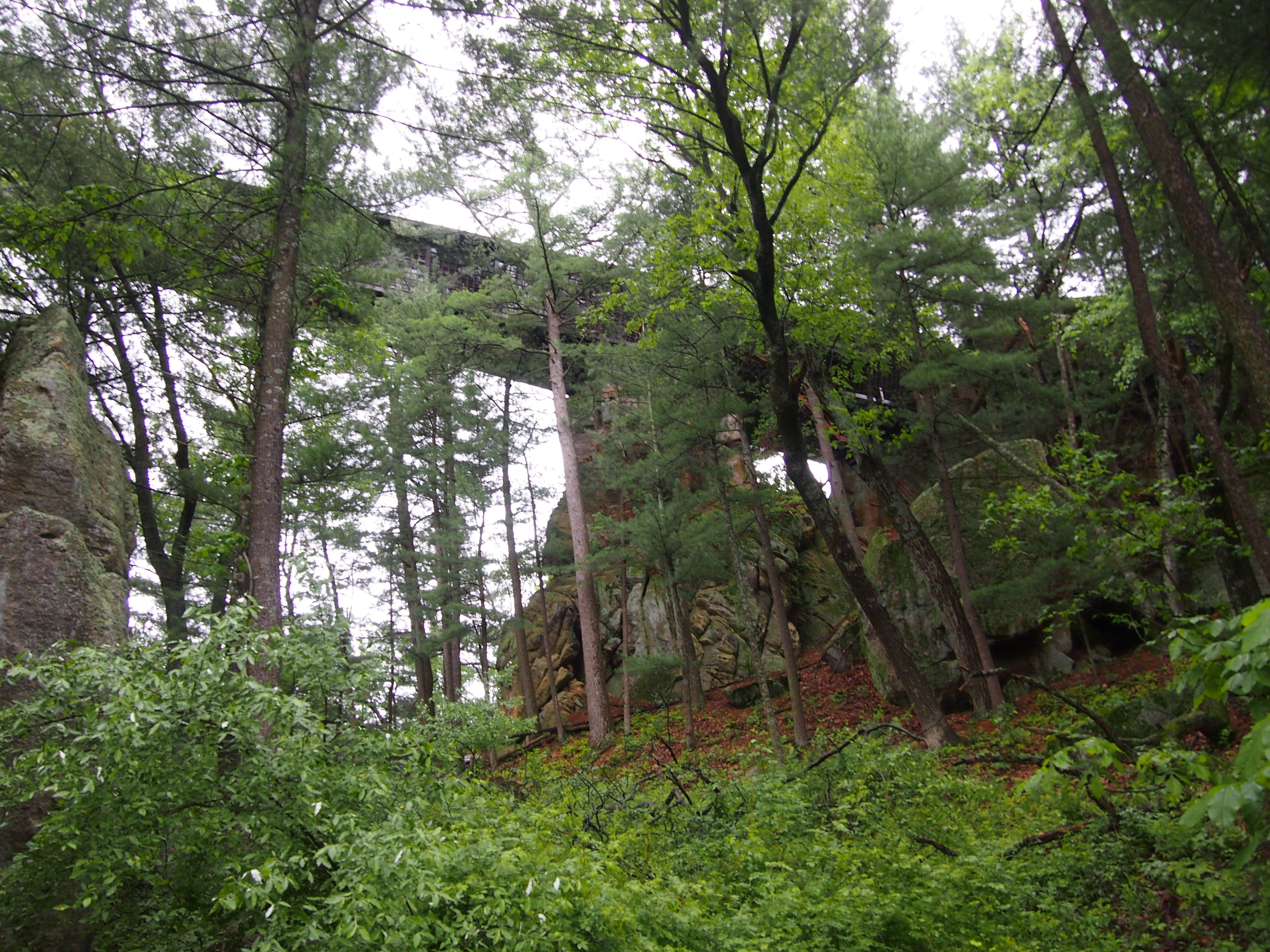
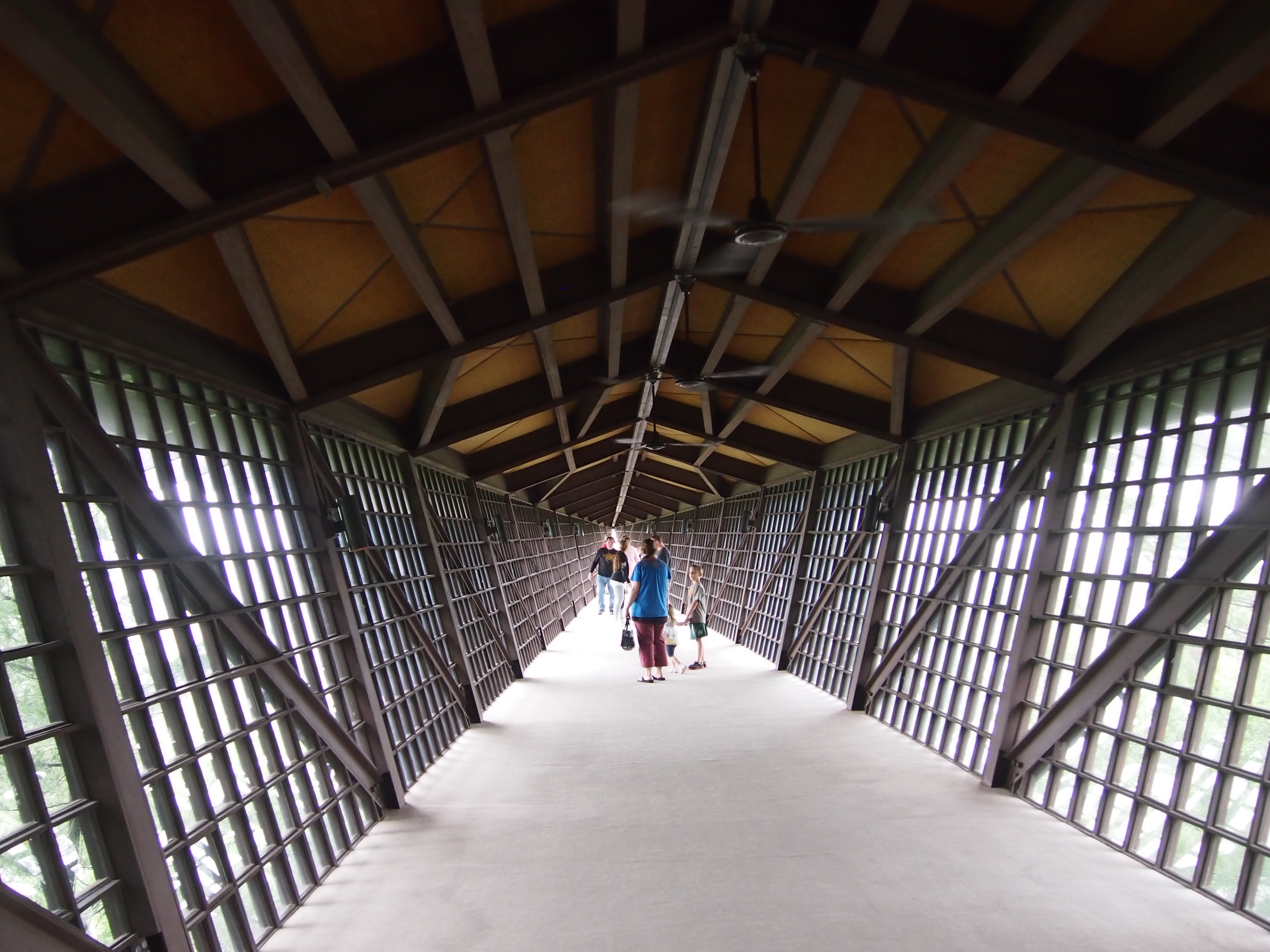
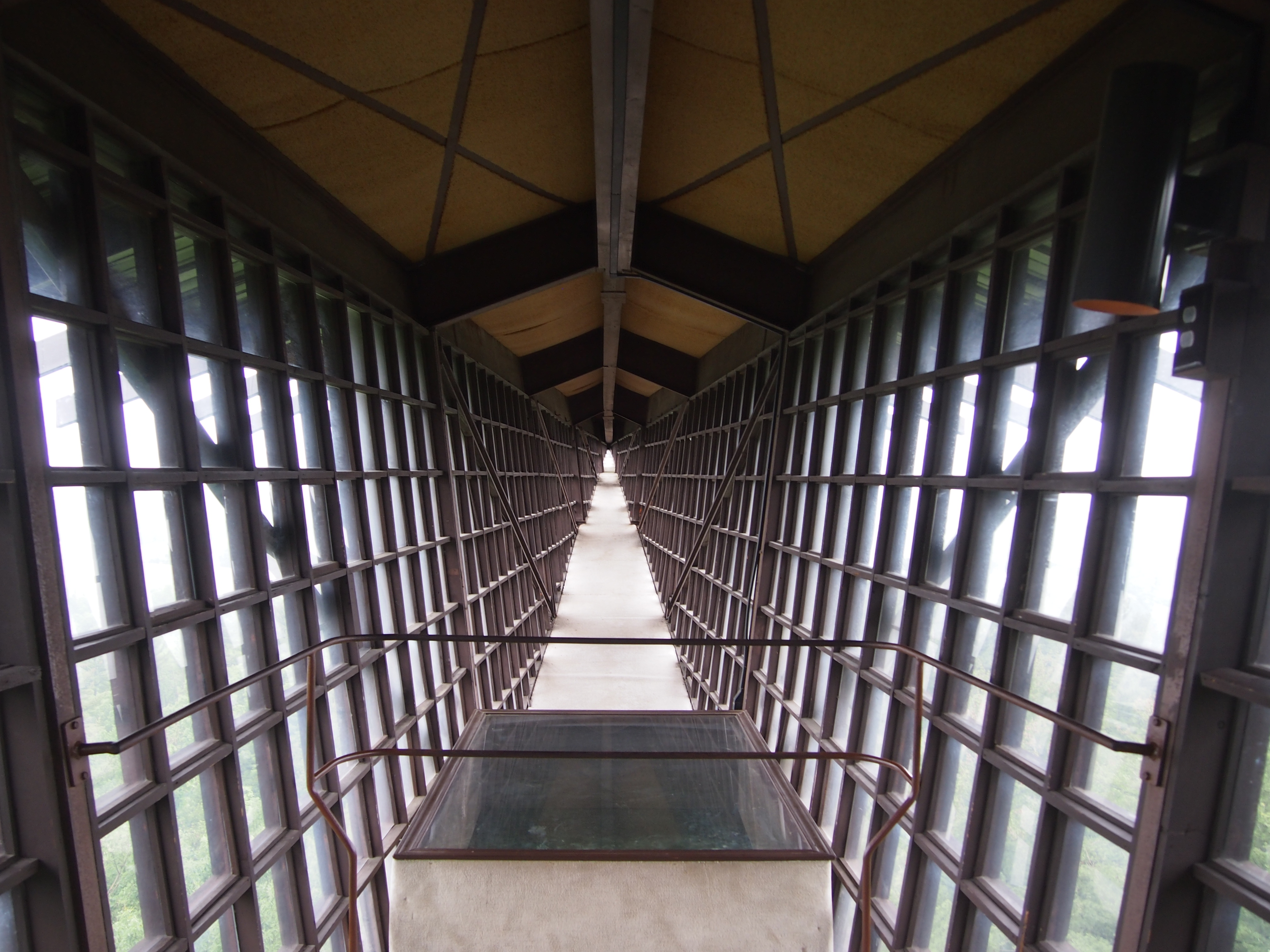
The House on the Rock May 2015The signature room of the first section is the Infinity Room. In its terse way, The House on the Rock web site says, “The 14th room of the House, completed in 1985, this engineering marvel extends 218 feet out over the scenic valley and 156 feet above the forests [sic] floor. The Infinity Room has 3,264 windows for walls that treat guests to a truly spectacular view.”

I wasn’t able to take a picture of the Infinity Room exterior that wasn’t obscured by trees, but there are some images on line.

Looking toward to end of the room, you see this.
The Infinity RoomAs far as you can go into the room, you see this.
The Infinity RoomDead ahead from there is a window in the floor that allows you to look down toward the tops of the trees. I can only hope that Jordan hired competent engineers to cantilever the thing safely, and that inspectors from Iowa County periodically take a look at it. The room’s been up for 30 years, so presumably it’s fairly sound. Still, Yuriko was unnerved by entering the room, and didn’t stay long, and she wasn’t the only one. Another woman visitor voiced her disquiet and turned around mid-way to the end point. Her young daughter went on (as did mine). The lure of infinity wasn’t to be missed.

The House on the Rock

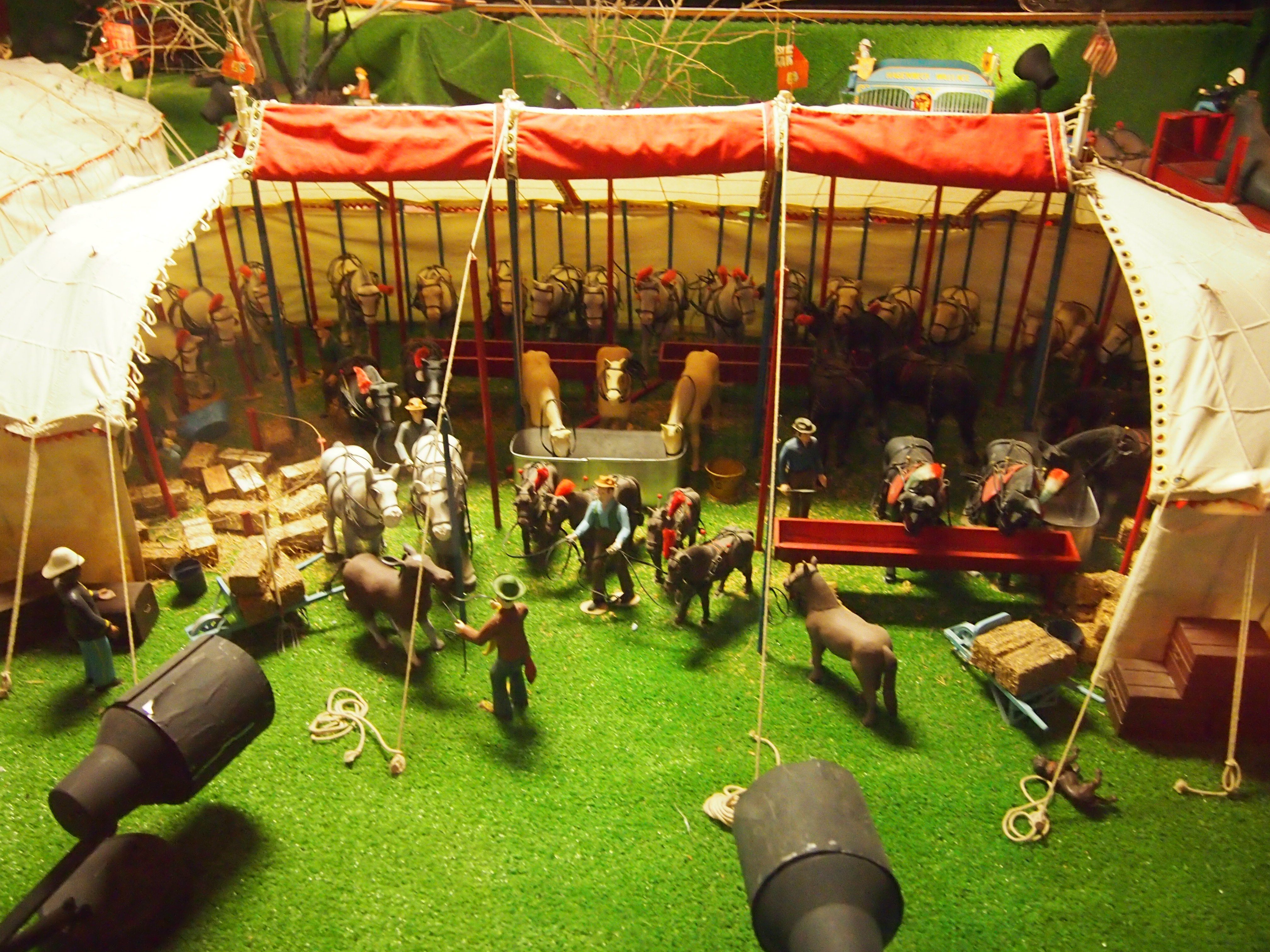
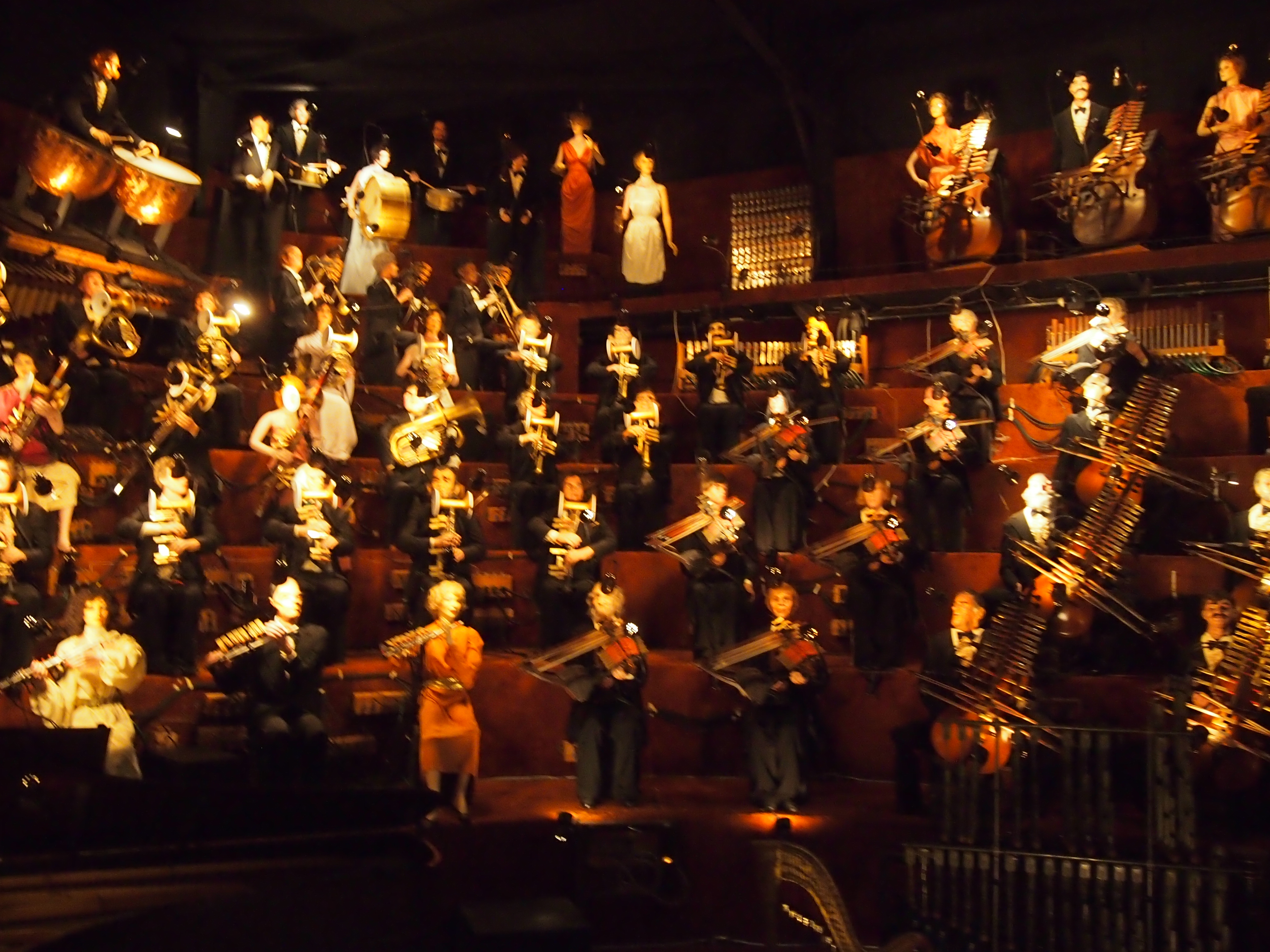
Here’s a list of some of the things we saw at The House on the Rock on Saturday. It’s only a partial list, and most of the categories represent a large number of individual items: books, Tiffany-style lamps, dolls, Japanese dolls, Japanese lanterns, musical instruments, self-playing musical instruments, stained-glass windows, stained-glass panels, paperweights, stuffed birds, antique guns, dueling pistol sets, rifles, coin banks, model trains, suits of armor, swords, faux crowns, Fabergé-like eggs, 19th-century doctor, barber, and pharmacy equipment, scrimshaw, model ships, nautical equipment and ephemera, cash registers, model airplanes, bottles, mounted newspapers, brewery equipment, cheese vats, bells, doll houses, cannons, and circus miniatures.

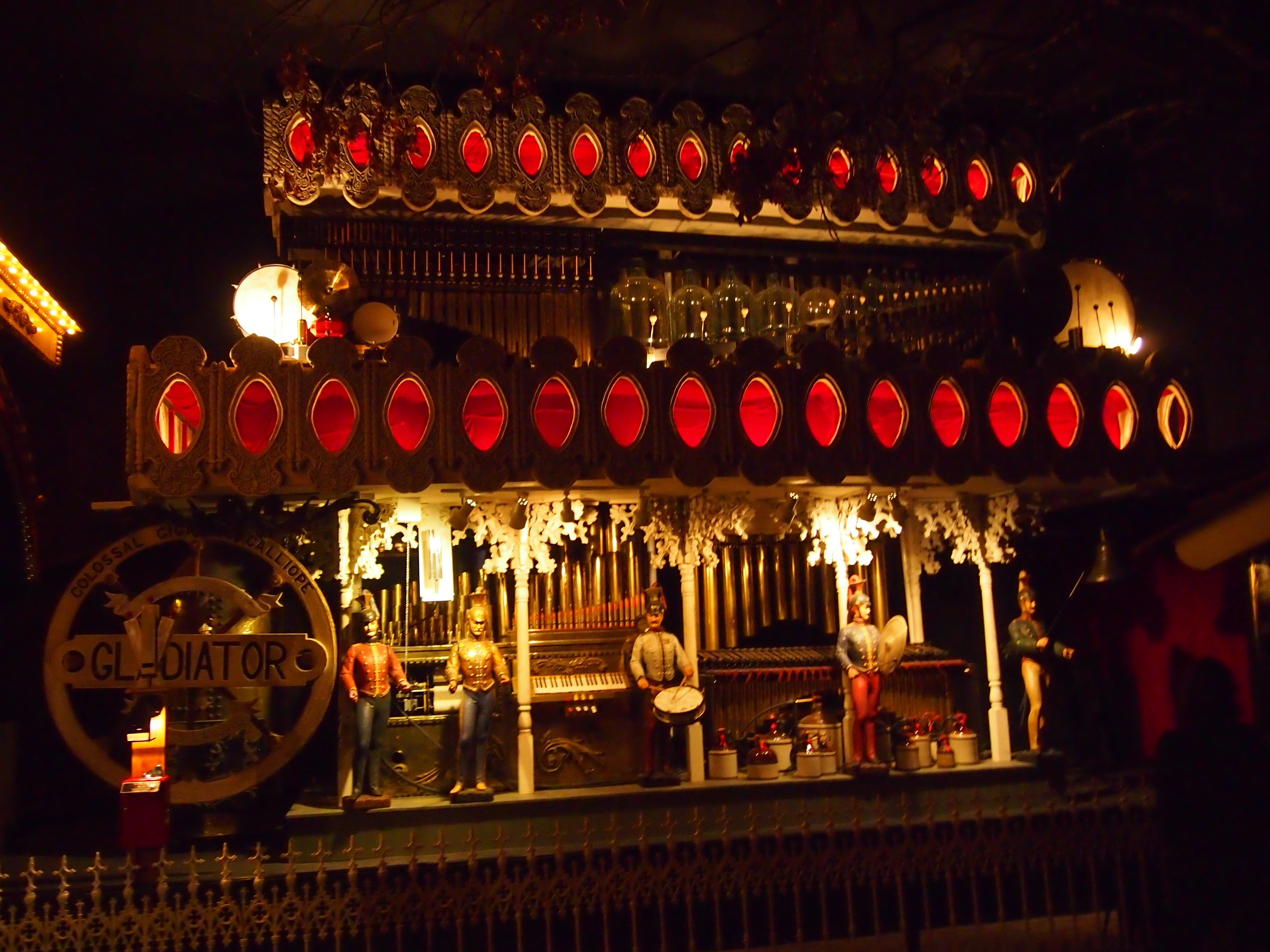
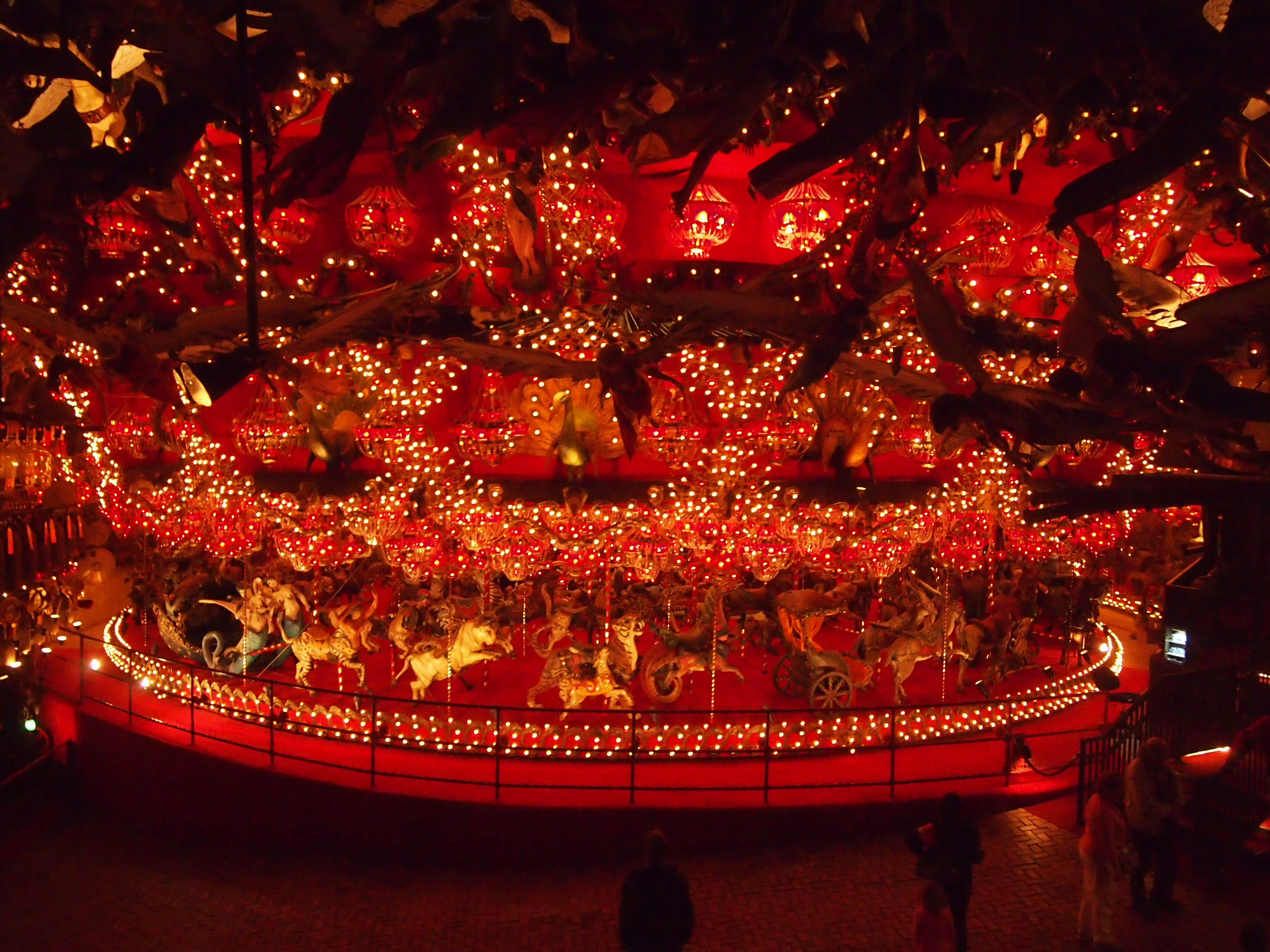
The House on the Rock is also home to an enormous calliope; what’s asserted to be the largest carousel in the world (and it could well be); and a 200-foot-long model of a sea monster, about three stories high, poised in mid-fight with an enormous squid.

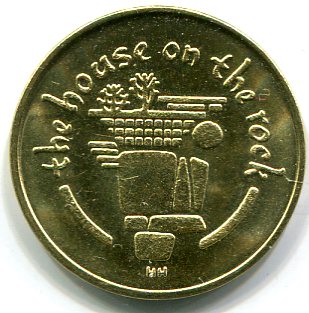
HouseontheRockObvThe self-playing musical instruments were many, some small and maybe from the golden age of such devices, the late 19th century (it’s always a maybe at The House when it comes to authenticity), and others were room-sized and created for The House. Most were operated by nicely designed gold-colored tokens that were available for four for a dollar. I kept one as a souvenir, and used a handful of others to play the automatic tunes.

All of these items are housed in a complex of buildings built on hill in rural Wisconsin. It’s a successful tourist trap, quasi-museum, psuedo-antique gallery with some possibly valuable items mixed in, a remarkable piece of outsider architecture, a monument to a highly energized eccentric collector named Alex Jordan Jr. who might have his own cable show were he living in our time, and most of all a mass agglomeration of stuff acquired according to the idiosyncratic lights of Mr. Jordan, dead now more than 25 years, but maintained as all of these things (and a viable business) by a successor he picked. I’ve never been any place like it before.

Actually, I have. Once or twice a year, I have a phantasmagoria dream, usually involving my passage through a street or a cityscape or a tunnel among a constantly shifting complex succession of images and things. Usually these are good dreams, but sometimes there’s an edge of anxiety, such as the time I passed through the phantasmagoria trying to remember where I’d parked my car (I woke relieved to realize my car was in my driveway). The House was no dream, but as you walk through, it’s for sure a complex succession of images and things.

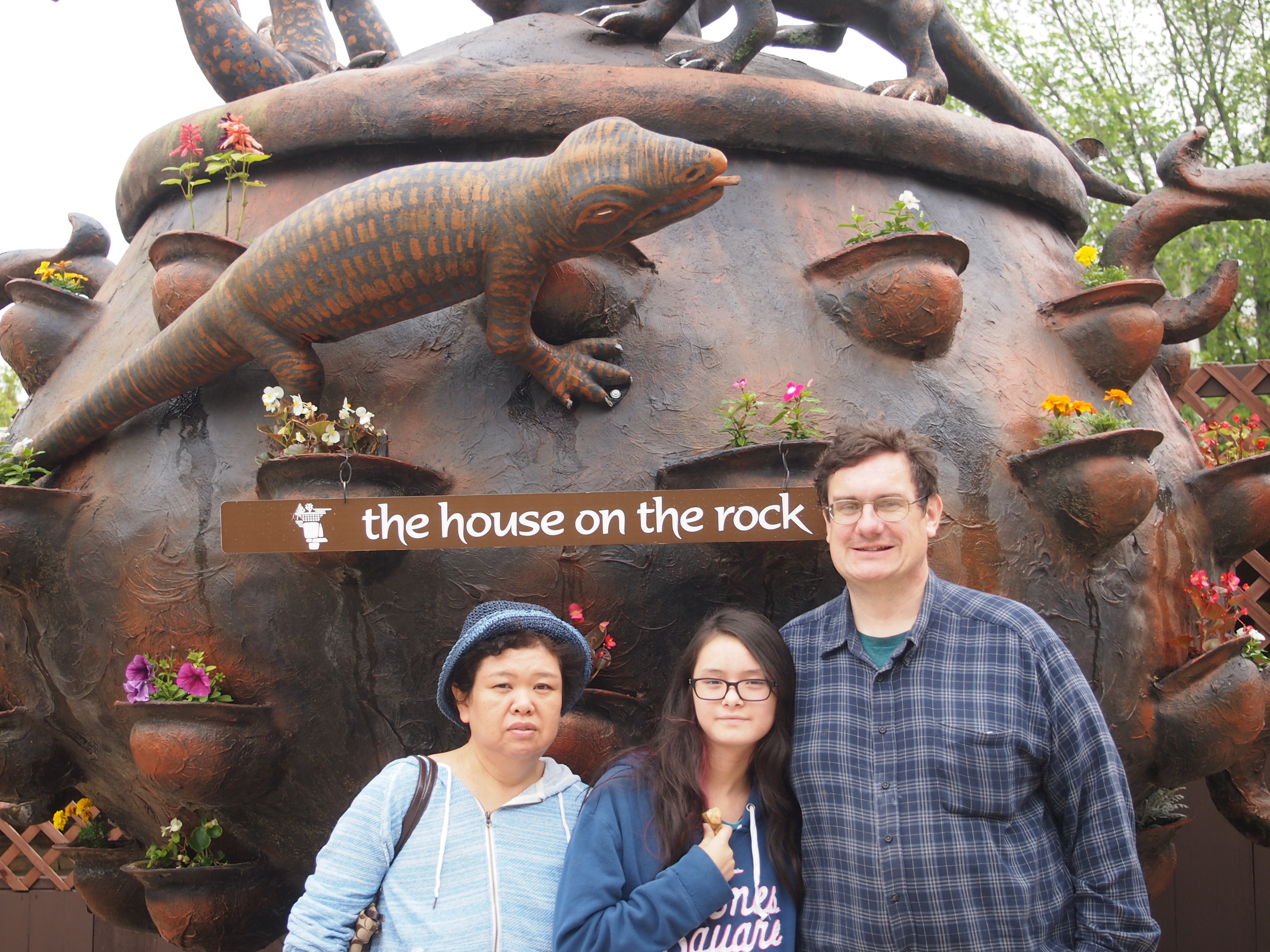
Back on August 4, 2007, when we visited Taliesin, which is a few miles away, we talked about a return trip to The House on the Rock someday. That day turned out to be May 30, 2015. Yuriko, Yuika, Ann and I set out by car for Madison on the afternoon of the day before. We spent the night in a motel there, and the next morning drove the 50 or so miles to Spring Green, Wis., and then the few more miles to The House.

On the 29th, we arrived in Madison in time for dinner. I picked La Taguara on Washington Ave., a Venezuelan restaurant I discovered via online search. I’ve been to many kinds of restaurants, but this was a first for me, and everyone else. I can report that it satisfied our need for a good dinner, as well as my periodic urge for food novelty. I had the Pabellon a caballo, which the menu called the Venezuelan “national dish”: black beans, white cheese, shredded beef, rice, deep-fried sweet plantain pieces, and an arepa — flatbread made of ground maize dough — along with a fried egg. We had fried yucca for an appetizer, and I had passion fruit juice to drink.

Since it was still light after dinner, we made our way to downtown Madison by car, and eventually on foot to Monona Terrace, a meeting and convention facility that happens to have a rooftop terrace with a fine view of Lake Monona. The last time I was there, ice covered part of the lake. A late May view is a lot more pleasant. The opposite direction from the lake included an equally fine view of the capitol catching the day’s dying light.

After leaving The House on the Rock in mid-afternoon on the 30th, I drove a slightly out-of-the-way route back home, by way of Mount Horeb, New Glarus, Monroe, and Beloit (everyone else was napping). I did a driveby look at New Glarus, a town founded by Swiss settlers, and which includes the Swiss Historical Village, an open-air museum and something else in Wisconsin to see someday.

But on this trip, everything besides The House on the Rock was just a bonus. That was the focus of the 27-hour, 400-mile trip. It didn’t disappoint.

“Agora”

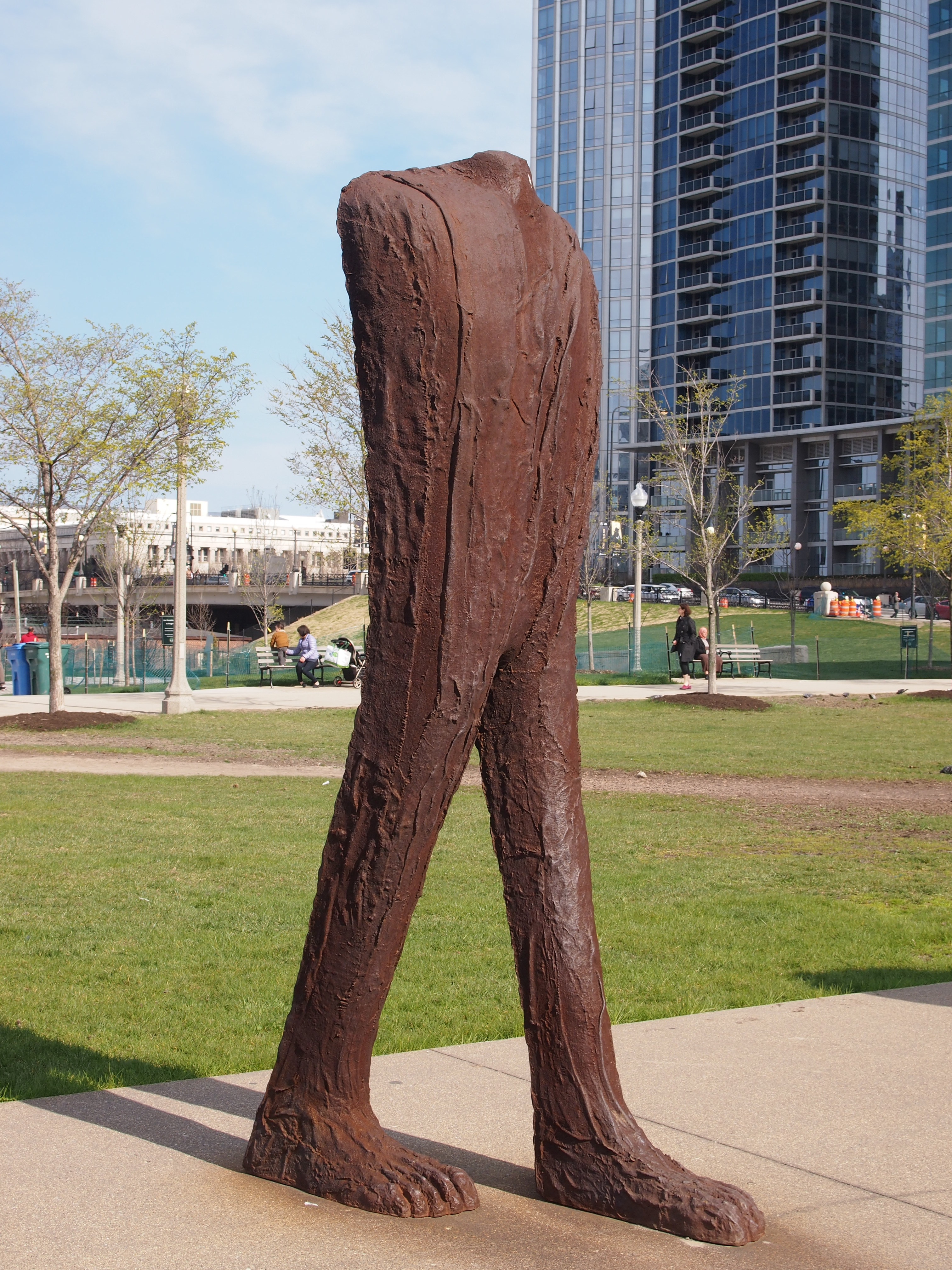
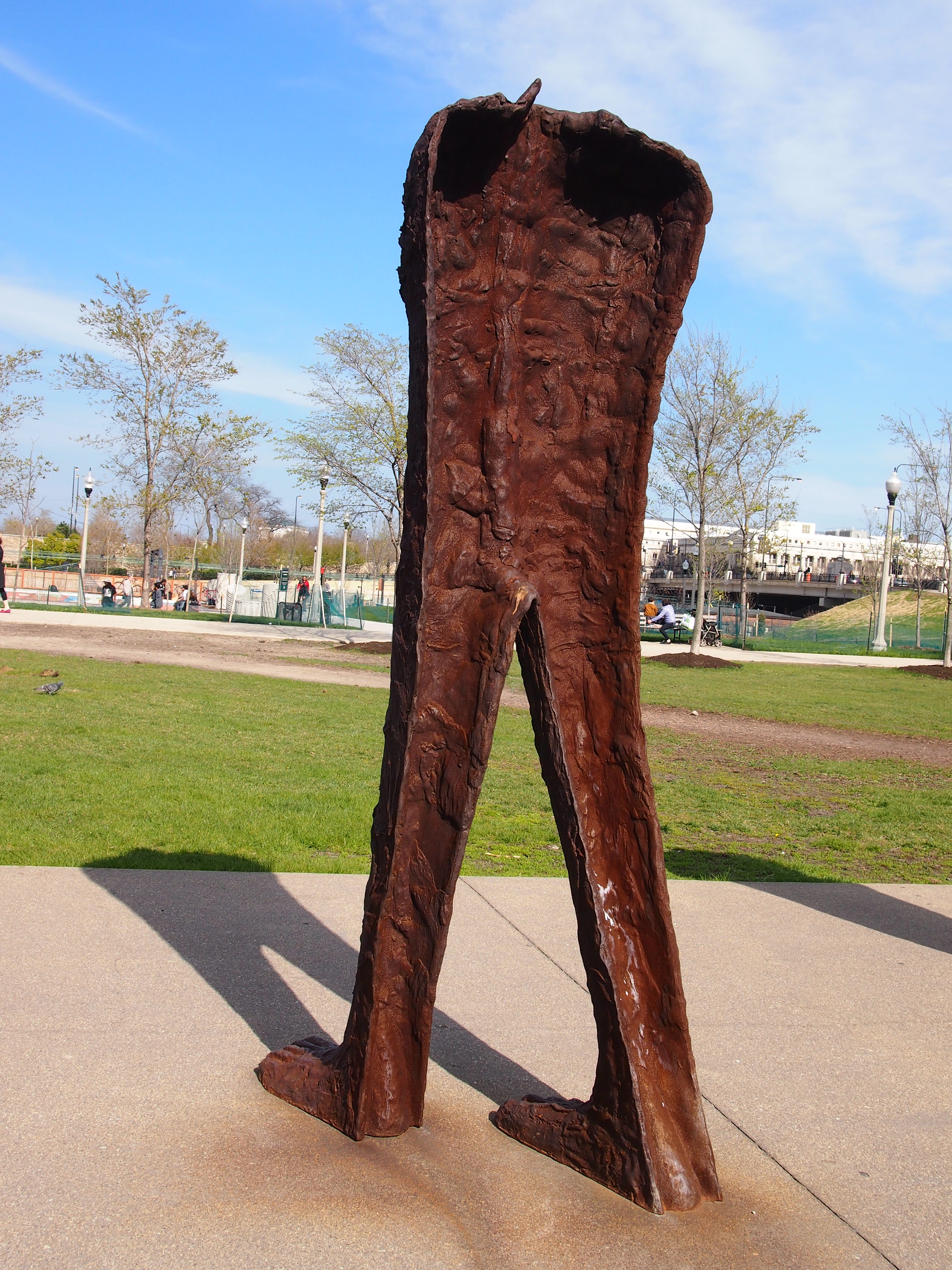
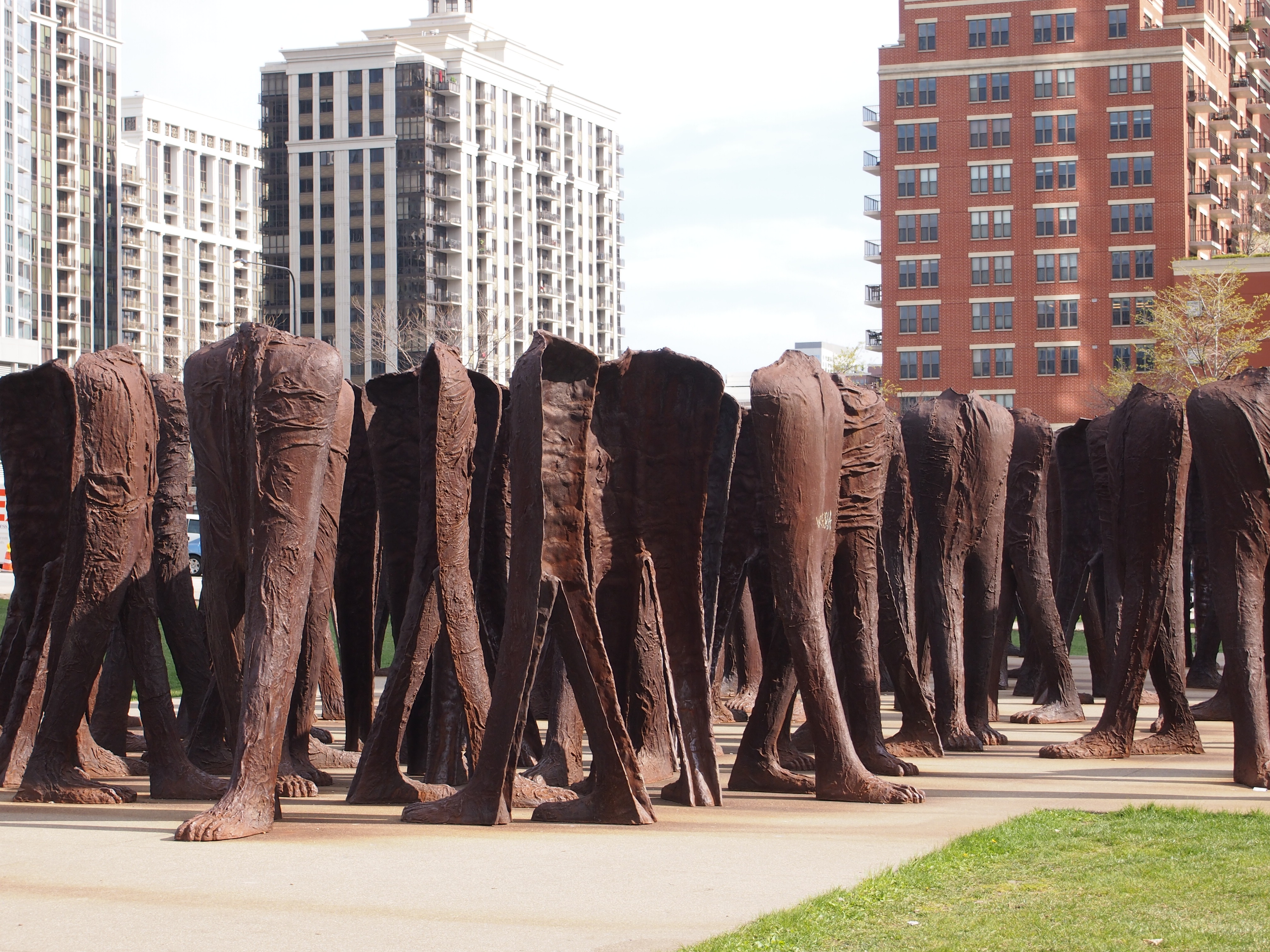
As far south as you can go in Grant Park, near the corner of Michigan Ave. and Roosevelt Rd., there’s a permanent sculpture installation called “Agora,” by the Polish sculptor Magdalena Abakanowicz.

“Agora” includes iron figures that look like this from one angle.

Agora, May 1, 2015And like this from another.

Agora, May 1, 2015They look alike at first glance, but actually the texture of the iron is different on each one. There are 106 of them.

Yeah, it's a little creepyThey’re roughly in two groups, but some of them are at a distance from the rest. Abakanowicz cast them at the Srem Foundry in Poland from 2003 to ’06.
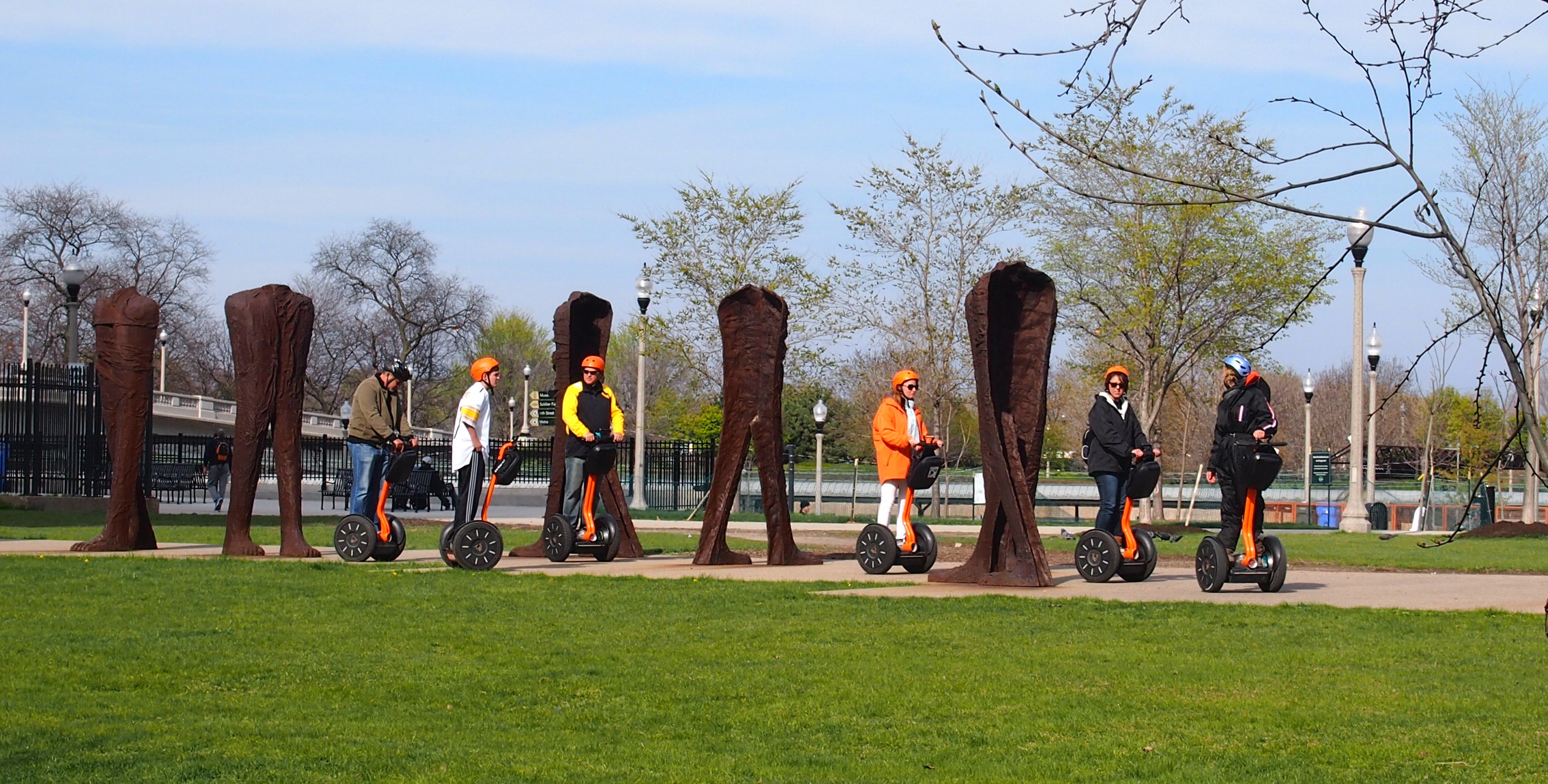
The work also seems to attract the attention of roving bands of Segwayers.

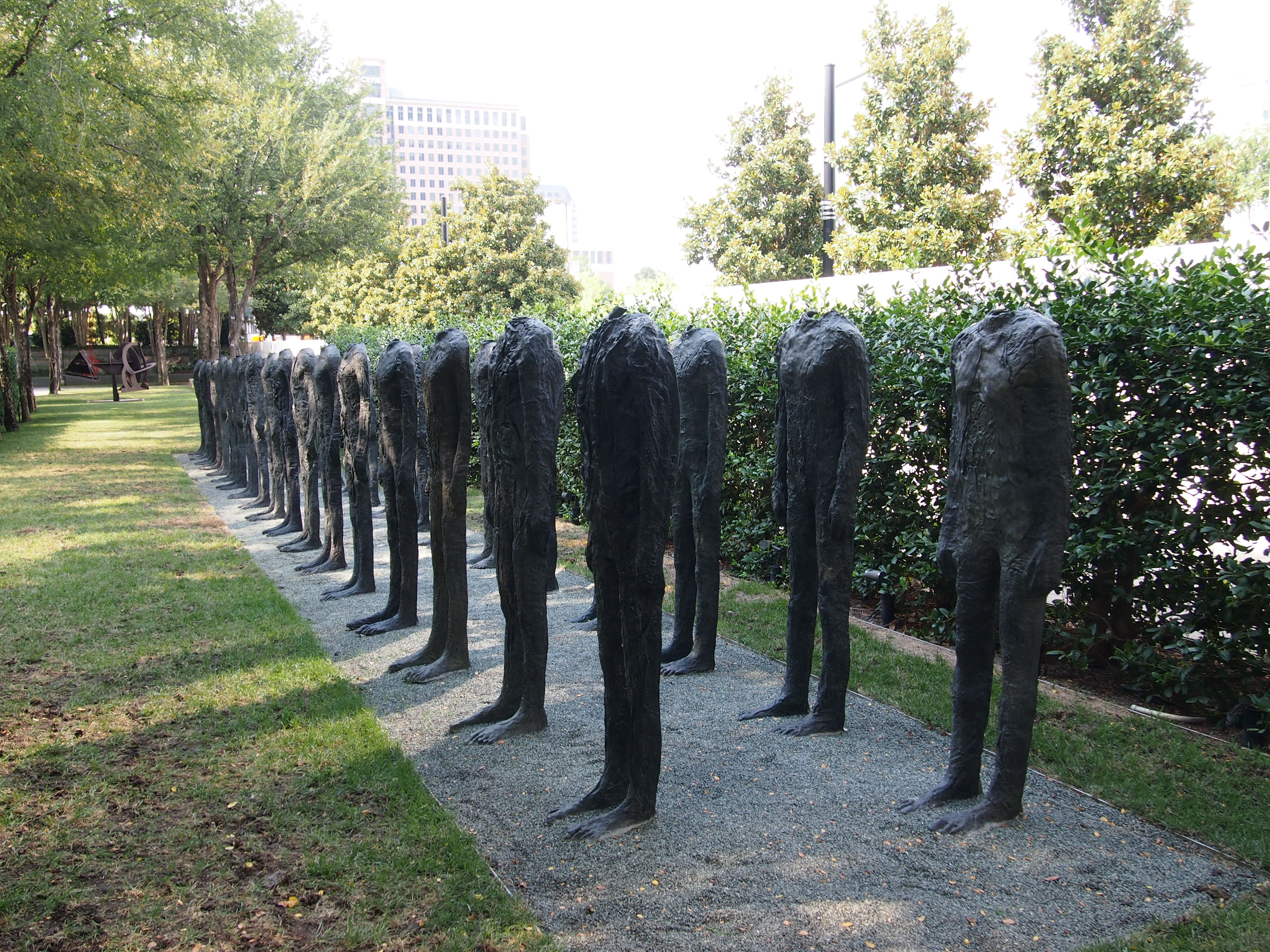
Grant Park, May 1, 2015As I looked at the half-figures, I thought, they seem really familiar. Where have I seen them before, or at least something similar?

Nasher Museum, 2013The Nasher Sculpture Center in Dallas in ’13, that’s where, which has another grouping of cast-iron figures by Abakanowicz. The headless halves were in long lines instead of milling around like at an agora.

Quad Cities-Iowa City ’15

Or, back to visit Herbert Hoover. Not that President Hoover’s a particular favorite, but we were out that way. It started late Thursday afternoon, when all of us got in the car and headed westward, eventually putting up for the night in Moline, Illinois, one of the Quad Cities, our first of two nights there.

On Friday morning, we made our way to Iowa City — not following the most direct route, exactly, but getting there in the early afternoon for a look-see around the University of Iowa. It’s among the places Lilly is considering for her continued education. Late March being unpredictable, the air wasn’t very warm, but the sun was out and it wasn’t cold enough to discourage a walkabout on campus, or the nearby college-town business district, or a visit to the former state capitol. A re-visit for most of us, though it’s been quite a few years.

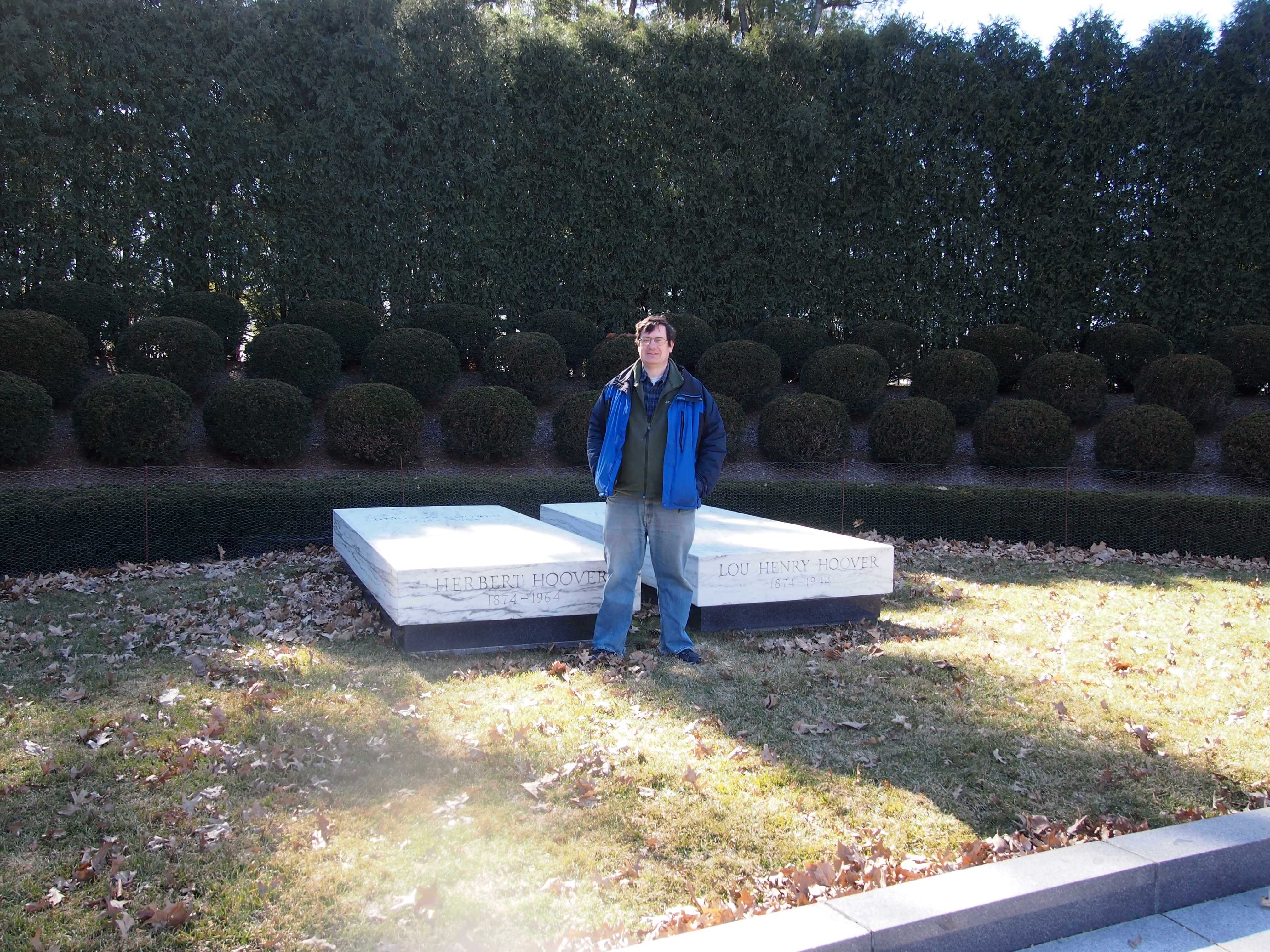
On our way back to Moline that afternoon, we stopped in West Branch, Iowa, birthplace and burial site of the 31st President of the United States. This time I insisted that everyone get out of the car and take a look. Lilly took my picture, so now I have a Manus Hand-style photo with a dead president. It’s the only one of that kind that I have.

Hoover gravesite March 27, 2015On Saturday morning, I was up earlier than the rest of my family, taking the opportunity to visit the Rock Island National Cemetery, along with the nearby Confederate Cemetery, burial ground for CSA POWs on Rock Island. On the way back, I toyed with the idea of wandering through the John Deere Pavilion, but left it for another time.

In the late morning, we visited the Figge Art Museum in Davenport, Iowa, the successor entity to the Davenport Museum of Art that’s been open about 10 years. Interesting collection, not overwhelmingly large, and including something I’d never seen before: a section devoted to Haitian art.

That was it for this 48-hour quickie. Except for a few minutes’ drive through Le Claire, Iowa, where we stopped for gas. Notable as the birthplace of Buffalo Bill Cody, and home to a museum devoted to the showman. We left that for another time as well.

Goya at the Meadows Museum

Last Saturday, Jay and I visited the Meadows Museum on the SMU campus. We got in for free because it was homecoming weekend. Even though Jay had no interest in attending any official reunion events – he’s SMU Class of ’74 – he got one of the benefits of being an alum on this occasion: two free admissions to his particular museum.

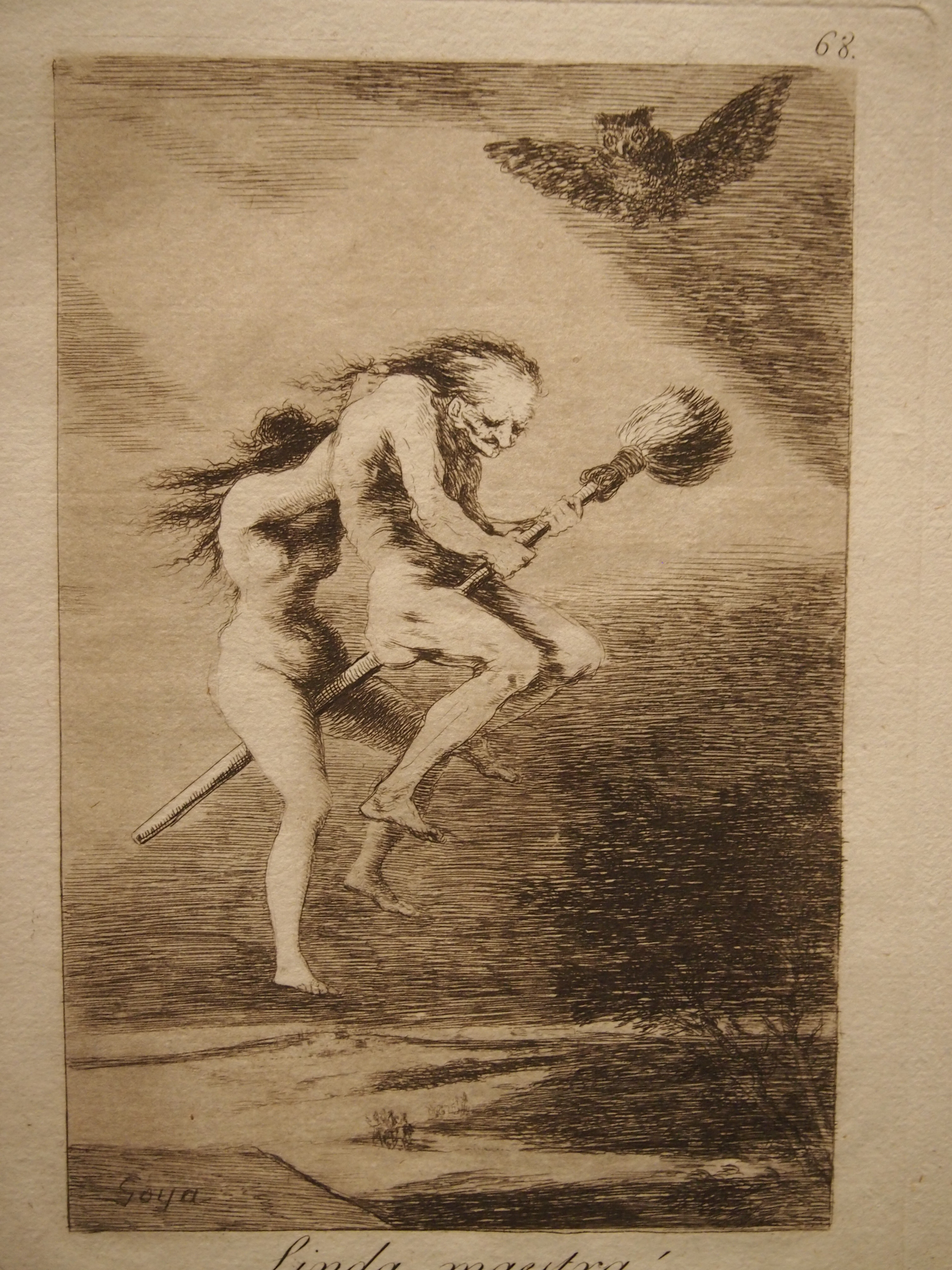
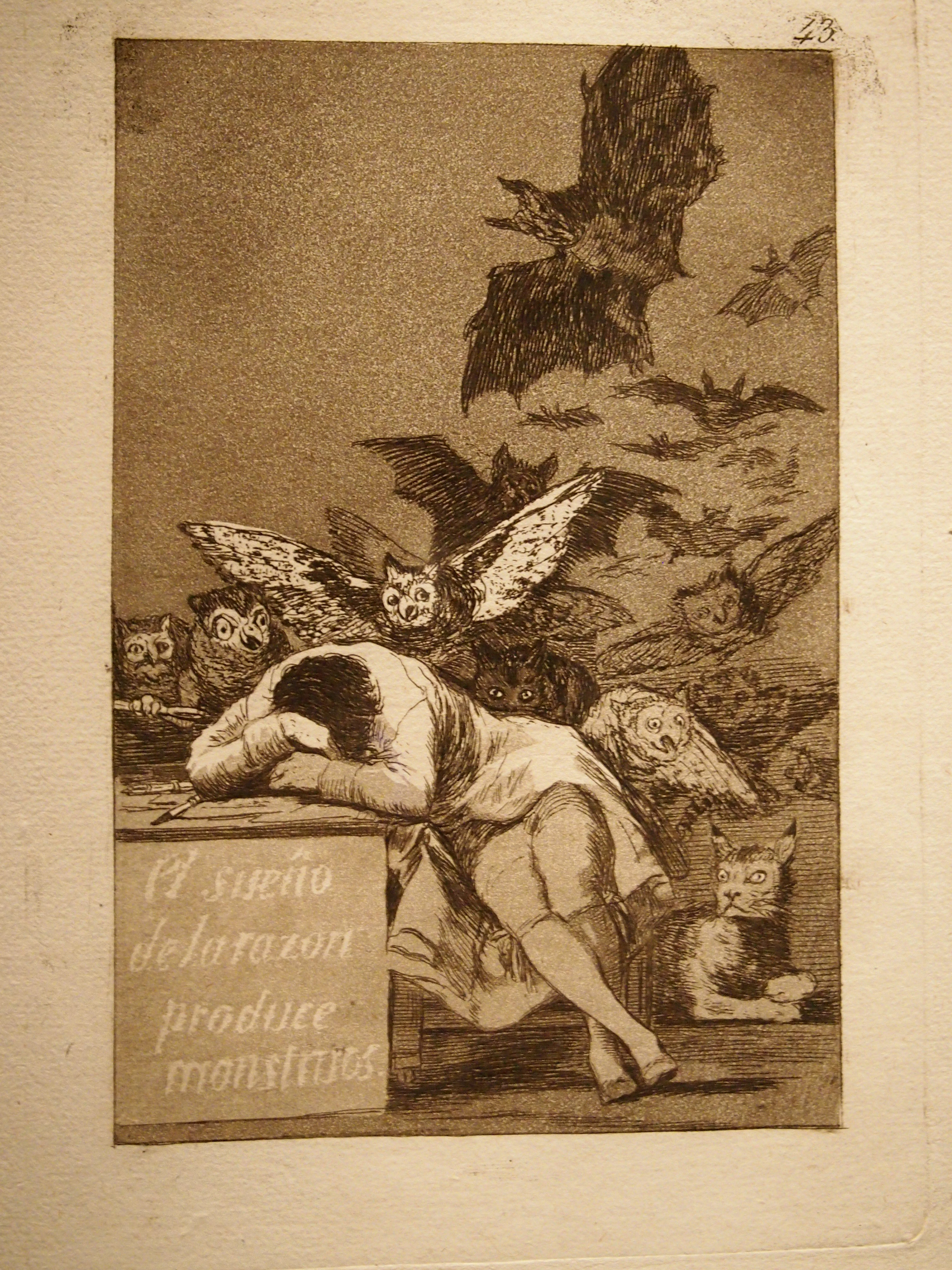
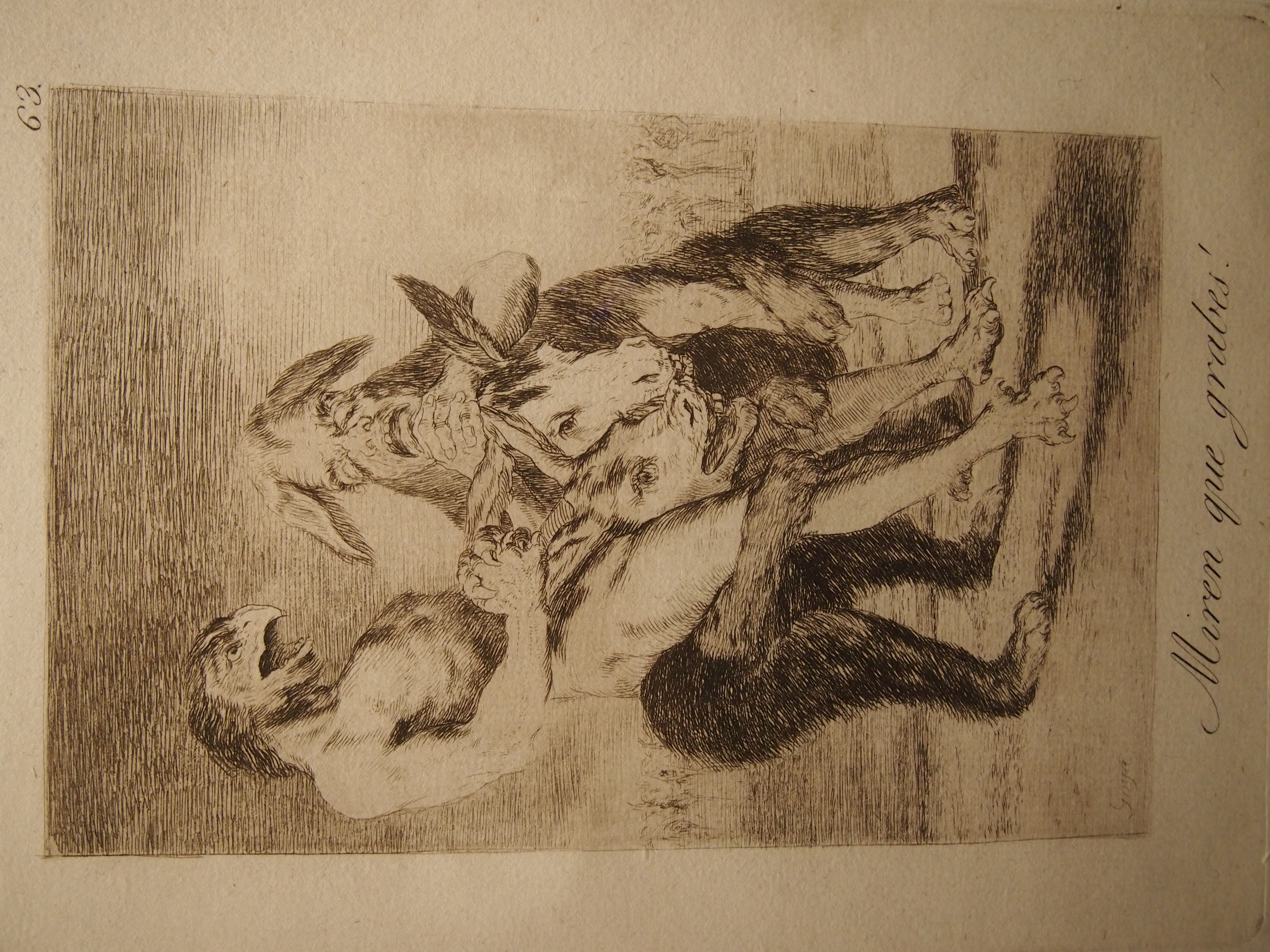
Meadows specializes in Spanish art. I borrow from Wiki because I’m lazy: “[The museum] houses one of the largest and most comprehensive collections of Spanish art outside of Spain, with works dating from the 10th to the 20th century. It includes masterpieces by El Greco, Velazquez, Ribera, Murillo, Goya, Miro, Sorolla, and Picasso. Highlights of the Meadows Collection include Renaissance altarpieces, monumental Baroque canvases, rococo oil sketches, polychrome wood sculptures, Impressionist landscapes, modernist abstractions, a comprehensive collection of the graphic works of Goya, and a select group of sculptures by major twentieth-century masters…”

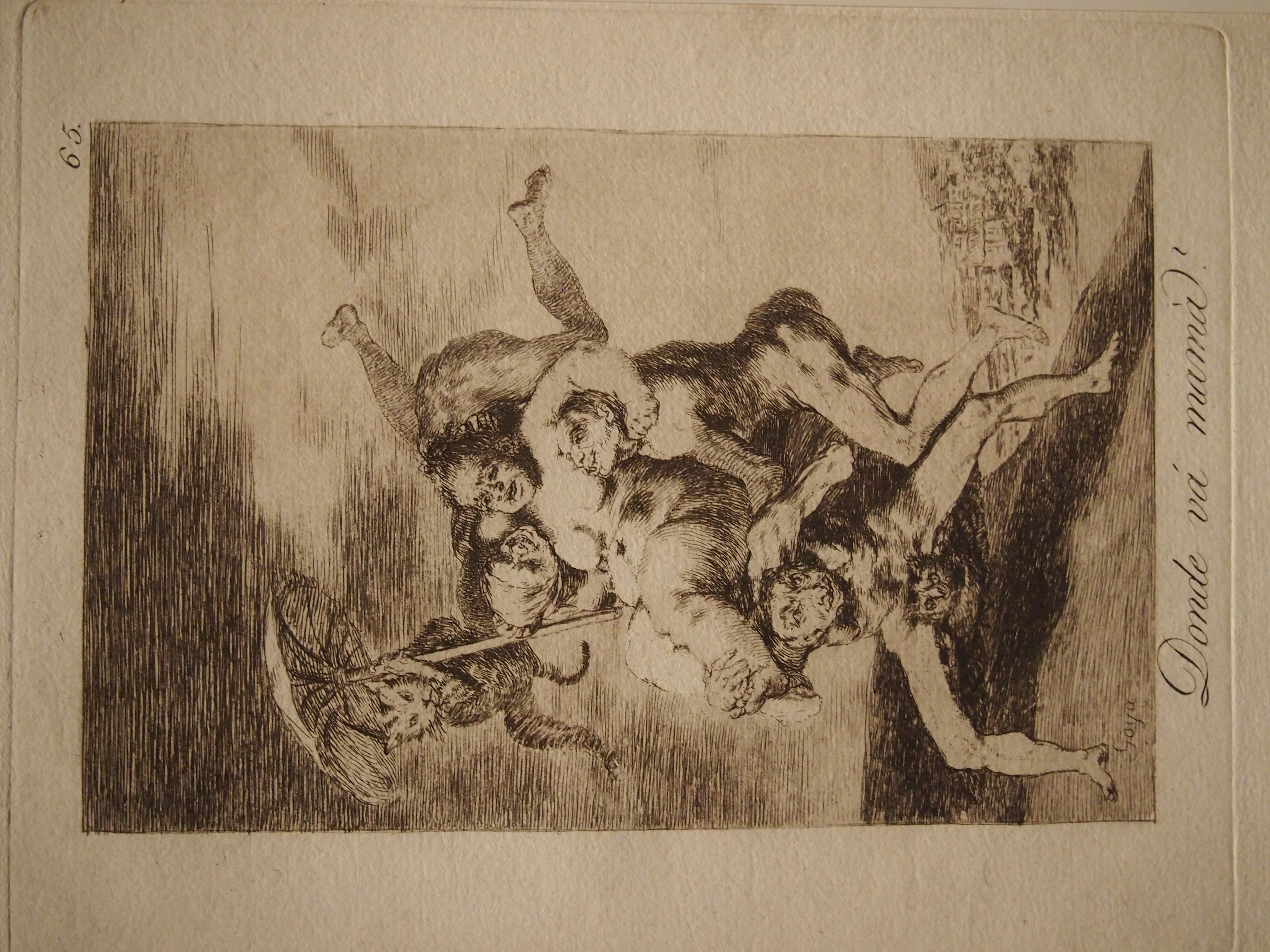
The graphic works of Goya. Such as the famed “The Sleep of Reason Brings Monsters.”

Meadows Museum, Nov 2014

Along with some truly weird images as well.

Meadows Museum, Nov 2014Meadows Museum, Nov 2014Meadows Museum, Nov 2014

I was glad to see them. Austin shouldn’t have all the weird. Dallas needs a little too.

The National September 11 Memorial Museum

I didn’t realize it until later, but the National September 11 Memorial Museum, which is mostly underneath the former site of the World Trade Center Towers, only opened in May of this year, as opposed to the memorial, which opened in 2011. You access the museum through timed tickets. I thought it was worth visiting, but I’ll also say this: $24 is too much for any museum, regardless of subject or newness. If I hadn’t been traveling alone, and had to spend nearly $100 just to get my family in, I wouldn’t have gone, though I might have sent my children, who aren’t old enough to remember that day.

I was in the 2:30 pm line on October 10. A lot of other people entered at the same time. From the daylight at ground level, it’s something like entering a cave by walking down a wide ramp. That seemed a little odd at first, but I came around to the idea later, when I noticed signs in various parts of the museum telling me where I stood in relation to the towers, both in vertical and horizontal terms, such as Where You Are Standing Now was in the SE Corner of the North Tower, Third Basement Level (I’m making that up to illustrate the point). There would also be a graphic illustration to help you understand your position. Somehow it seemed important to know that. The space created for the museum used to be the foundation level of those behemoths.

The exhibits cover the building of the towers, their few decades of existence, their destruction, rescue efforts, the excavation, and the rebuilding, among other things. There are tributes to the first responders and the other victims, and displays about the attack on the Pentagon, and Flight 93, and the 1993 attack on the towers (the six victims of that incident are memorialized here, too, as they are at the above-ground memorial).

Much of the material was familiar, but a lot wasn’t. I was interested to learn, for instance, about Radio Row, the nickname of the Manhattan commercial district bulldozed in the 1960s to make way for the World Trade Center redevelopment (local property owners fought the eminent domain taking but lost). Some of images were arresting. Someone, for instance, made a video of the towers early in the morning of September 11, 2001, just after sunrise from the look of it, and it plays on one of the museum walls. Late summer Lower Manhattan was just minding its own business that morning.

Like any good history museum, the National September 11 Memorial Museum sports artifacts. An entire wall is an artifact: the Slurry Wall, built originally to keep the Hudson River from leaking into the lower levels of the tower, and the focus of much concern after the attacks. Namely, would it hold, or would an inundation add to the woes? It held. Part of it forms one of the walls of the museum, rising a few stories.

National September 11 MuseumThere’s also a staircase remnant, the Vesey Street Stairs. A lot of people escaped using those stairs, which survived the collapse, but were damaged during the excavation. They were installed between another staircase and an escalator that lead down into the main exhibit floor.

National September 11 MuseumTwisted girders speak of extreme violence. These are from above the 90th floor of the North Tower, near the area that absorbed the impact.

National September 11 MuseumI wasn’t sure what this was until I read the sign. It was once a section of the antenna on the North Tower.

National September 11 MuseumOne of the fire engines destroyed by falling debris.National September 11 MuseumThis artifact wasn’t moved into location. It is what’s left of one of the box columns that used to support the buildings, so in a real sense the museum was built around it and the others like it. The North Tower had 84 of them, the South Tower 73.

National September 11 MuseumThe museum wasn’t just about the history of the event or the wreckage. An interior room (“In Memoriam”) had four walls covered with faces of the dead, arrayed in rows, with their names. Computer consoles allow you to look up a biographical sketch for any name on the wall. I looked up a few at random, and picked the most unusual name I found on the wall and made a note of it. I have a fondness for unusual names, after all.

I picked Ricknauth Jaggernauth. A fellow originally from Guyana, as it happened. The following is the entirety of his profile in the NYT in October 2001.

“Every day when he came home to Brooklyn from his construction job, Ricknauth Jaggernauth would grab a beer and sit in his front yard, and play with his grandchildren and other neighborhood children until it was time for dinner. ‘My father was a happy, loving, giving man,’ said his daughter Anita, 31. ‘He loved to talk to young people about their lives and about how important it was to get a good education.’

“He would have only one or two beers, but his wife, Joyce, teased him and called him ‘drunkie grandpa,’ a nickname the children used for him. He came here from Guyana 19 years ago, and worked for a company that was renovating offices in the World Trade Center. The day it was attacked, they were working on the 104th floor of the first tower.

“Mr. Jaggernauth, 58, planned to retire in two years and wanted to visit his homeland. He had five children and three grandchildren, and all lived together in the family’s two-story house on Pennsylvania Avenue. His daughter said that if his body is recovered, the family will have a traditional Hindu funeral for him. ‘It’s what he did for his own mother,’ she said.”

The National September 11 Memorial

I knew that the centerpieces of the National September 11 Memorial were the footprints of the World Trade Center towers, and that some kind of pools had been built there. But I hadn’t followed the design or construction very closely.

So I wasn’t prepared for the square black pools with water cascading far down all four sides, down to another, smaller square into which the water seemed to vanish. Or the rows of trees canopying the grounds. Or the people on all sides, looking down into this metaphoric void. Or the names of the dead, etched in black on the parapets around the waterfalls. It was a place to stand and look.

The National September 11 Memorial

The National September 11 MemorialAnd take photographs.

The National September 11 MemorialThe National September 11 MemorialThe National September 11 MemorialThe National September 11 MemorialI understand that an organization puts flowers on the names of victims on their birthdays. So October 10 was James Andrew Giberson’s birthday. He was a fireman who lived on Staten Island, belonging to Ladder 35 in Manhattan, and last seen entering Tower 2.

The Brooklyn Museum

The Brooklyn Museum looks like it could have been at the 1893 Columbian Exposition, and there’s a good reason for that. It’s a Beaux-Arts building from about that period – bright white, domed, columned in front, complete with a pedimental triangle filled with statuary  — designed by McKim, Mead and White, who also did one of the important buildings at the fair (the Agricultural Building), though not one that survived. Anyway, it looks like an art palace. And that’s what it is, coming in at 560,000 square feet and holding a collection of 1.5 million works.

In a lot of other places, it would be a top-dog art museum in town. As it is, the Brooklyn Museum competes for attention with the likes of the Met and MoMA. For casual visitors, that’s an advantage. The museum wasn’t nearly as crowded as those big boxes in Manhattan and, for that matter, not as expensive to get in. The art’s also just as interesting.

I’m not very methodical when it comes to large museums. Or small ones either. I go in, wander around, maybe consult a map, or recall what I’ve heard about the place, and look at whatever strikes me as worth looking at. That’s usually a lot of things. So I took a two-and-a-half-hour whack at the Brooklyn Museum on October 11.

Of course all you’ll get that way is a small sample. The museum has collections of American, European, African, Islamic, Pacific Island, Asian, contemporary, and decorative art; a large collection of Egyptian, Classical, and Near Eastern works; photography; the Elizabeth A. Sackler Center for Feminist Art; The Steinberg Family Sculpture Garden; and special exhibits, such as the one when I visited on the art of the high-heel shoe (I missed it). I spent the bulk of my time in the European collection and the Egyptian rooms, though I passed through a fair number of other galleries.

It’s good to wander a sizable museum sometimes, just to be reminded that the human urge to create art is strong, and just about universal. Besides, even a small sample – if the museum is any good – offers a lot.

Such as two enormous, arresting canvasses by Vasily Vereshchagrin (1842-1904), “Resting Place of Prisoners” and “Road of the War Prisoners,” which hang on a third floor wall within sight of that floor’s elegant dome room, along with other Russian works. One depicts prisoners grouped together in the middle of a blizzard; the other, a road littered with the frozen dead.

The museum describes the latter this way: “In the winter of 1877, while working as a war correspondent, [Vereshchagrin] witnessed thousands of Turkish prisoners freezing to death while being marched to Russian war camps…The openly antiwar “The Road of the War Prisoners” was rejected for the czar’s collection, but Vereshchagin finally sold both canvases displayed here in 1891 to collectors in New York still reeling from the horrors of the American Civil War.”

Not far away, and less grim, was a fine portrait, “Old Trombola” by Boris Gregoriev (1886-1939). “In Old Trombola, Grigoriev heightens his sitter’s emotional state by emphasizing his intense gaze and exaggerating the sculptural qualities of his weathered hands and face,” the museum notes. “Grigoriev later wrote, ‘I have been watching and studying the Russian people for many years … and these paintings are the fruits of my observations.’ ”

Besides the Russians, the European collection had plenty else, such as a self-portrait by Gerrit Dou (1613-1675) that, according to the museum, has only recently been identified as genuinely his. In storage since 1945, it was returned to display in 2014.

Naturally, I spent a good chunk of the visit in the mostly Egyptian wing. Not my favorite part of Antiquity, but always worth a look. It’s billed as one of the largest collections of ancient Egyptian art in the U.S., and I believe it: room after room of statues and other sculptures, friezes, papyri, pots, jewelry, tools, and of course sarcophagi and mummies. My favorite name among the items I saw – so delightful I wrote it down – was the Cartonnage of Nespanetjerenpere, which besides having a good name, was a handsome work.

The museum’s been at Egyptology for more than a century now. “The Brooklyn Museum’s collection of ancient Egyptian art, one of the largest and finest in the United States, is renowned throughout the world,” it asserts. “The Museum began acquiring Egyptian antiquities at the beginning of the twentieth century, both through purchases—such as a group of Egyptian objects collected by Armand de Potter in the 1880s—and through archaeological excavation. [Back when the getting was good, in other words.] Between 1906 and 1908, the Museum sponsored an expedition that dug at very early sites in southern Egypt and brought back numerous objects of historical and artistic value.

“Between 1916 and 1947, the Brooklyn Museum acquired the important collection formed by the pioneer American Egyptologist Charles Edwin Wilbour (1833–1896), which included many types of Egyptian antiquities, from fine works of statuary and relief to unique documents written on papyrus. In addition to his collection of objects, Wilbour’s heirs also donated his professional library to the Museum and established a financial endowment in his memory. The Charles Edwin Wilbour Fund made possible the establishment of both the Wilbour Library of Egyptology, one of the finest Egyptological libraries of its kind anywhere in the world, and a curatorial department for ancient Egyptian art.”

Wow, an Egyptological library right here in the USA. Egypt might not be my favorite, but how cool is that?

Everywhere a Sign

A question to ponder: How can Crème Caramel Chicago’s product be so good? Ingredients: milk, eggs, sugar, cream, caramel, vanilla. That’s it. Yet in the words of Shakespeare, it’s a wow.

It’s also a product of EU Foods, though it has nothing to do with that supranational entity, I think, since it was made in Bensenville, Illinois.

Another thing to ponder: a thematic men’s room sign.

Samurai bathroom attendantI saw it about a year ago in Dallas at the Ann & Gabriel Barbier-Mueller Museum. As I write this, the wires – quaint, that term – are burning up with news of the first U.S. Ebola case, and the honor goes to Dallas. Well, why not? Texas excels at so much else.

I doubt that we’ll get an epidemic, though. What we will get is excessive news coverage. Just another reason to avoid cable news, out in that vast wasteland. Vaster now than when I was born; a regular Sahara.

Newton MinowI didn’t know that Newton Minow had an honorary street sign in Chicago, but I saw it downtown last month. I’m happy to report that at 88, Mr. Minow is still alive and kicking.

The Crystal Bridges Museum of American Art

I forget which rest stop it was now, but somewhere in Iowa we stopped for the usual reasons, and Ann asked for a cold drink from one of the machines. I fed it my dollar and then some coins, which it returned. But not the dollar. And no drink. There were blank slips to fill out in case of machine failures and a slot to drop them in. My experience with such things is hit or miss – Lighthouse Place Premium Outlets, or at least its vending concession, still owes me a dollar from the mid-00s – but I duly filled it out.

DESCRIBE PROBLEM: Took dollar. Won’t take coins. No refund of dollar.

While looking through my pile of mail when I got home, I noticed a little envelope from Pop Top Vending of Grinnell, Iowa. My slip was inside. So was one Yankee dollar. Good for you, Pop Top. Good customer service isn’t the baseline in this country (as Yuriko often points out), so it needs to be recognized.

The shortest route from metro Dallas to metro Chicago is north on US 75 into Oklahoma, which turns into US 69 – both are divided most of the way – and eventually that runs into I-44. Take that road east to St. Louis, where you catch I-55 northbound for the run up to Chicago. I’ve done it many times over the last 25 years. I used to overnight at Zeno’s Motel in Rolla, Mo., but in more recent years I’ve spent the night at the Munger Moss Motel in Lebanon, Mo. I knew Zeno’s had closed, and the lot seems to be vacant now.

Munger Moss is a solid independent motel. A tourist court. The kind of place where Clark Gable and Claudette Colbert might show up for the night. I was going to take a picture of the neon motel sign, but the co-proprietor – Ramona Lehman, who greeted me at the desk when we arrived at about 9 – turned it off for the night before I got around to it. So I settled for an interior pic of Room 70.

Munger Moss Motel, July 2014Lilly saw the picture and said, “That’s retro.” The pictures on the wall depicted bygone US 66 sites, so yes. Retro. But not completely. Note the TV and the AC. We didn’t turn on TV. Didn’t seem like the thing to do. We did use the air conditioner and access the property’s wifi, though. I had a column to file, and Ann wanted her entertainment. Nostalgia’s fine, but we have to live in our own time.

We arrived latish in Lebanon because I detoured slightly off the most direct route. In northeastern Oklahoma, I turned on US 412 and took it east to I-49 in Arkansas, and then north to Bentonville (I-49 was still called I-540 on my maps, but apparently the name changed recently). Bentonville is known as the hometown of Always Low Prices. Always. It’s the site of the Ur-Walmart and still the location of the behemoth’s HQ.

That isn’t why I came. I wanted to see the Crystal Bridges Museum of American Art. One of the things to do if you happen to be a billionaire is found a museum and stock it with the fine art you’ve been collecting for years. Alice Walton, daughter of Sam Walton, did exactly that. Not another institution on either coast or any of the major cities of the interior, but in the northwest corner of Arkansas.  It’s been open only since late 2011.

You’d think most of the museum’s paintings — and it is heavy on paintings, though there’s a sculpture garden we didn’t have time to see — would already have been locked away in major museum collections, so high is the quality. Shows you what I know about the fine art trade.

From a NYT article published shortly after the museum opened:It was only in May 2005 that Ms. Walton announced the selection of the Israeli-born Boston architect Moshe Safdie to design the museum and ruffled feathers along the Eastern Seaboard by buying a landmark of Hudson River School landscape painting, ‘Kindred Spirits,’ by Asher B. Durand, from the New York Public Library for around $35 million. The purchase came early in an extended shopping spree that rattled nerves, aroused skepticism and stimulated the art market.”

Ruffled feathers and rattled nerves, eh? But I bet when it comes to bidding for art, “riche” always trumps “nouveau.” The museum’s rooms are mostly chronological, from Colonial America to very recent items. A handful of works are astonishingly familiar, such as one of the Gilbert Stuart portraits of President Washington. Many more fall under the category of, You know, I’ve seen that somewhere — it’s here?  Such as “Cupid and Psyche” by Benjamin West, or “Winter Scene in Brooklyn” by Francis Guy, or the delightful “War News from Mexico” by Richard Caton Woodville and the completely charming “The Lantern Bearers” by Maxfield Parrish. (All of those paintings are reproduced under “Selected Works.”)

A few of my pics came out decent, such as “Boy Eating Berries” by Joseph Decker, no date (but the artist lived from 1853 to 1924).

Boy Eating Cherries Did a few detail shots, too. This is RLS from “Robert Louis Stevenson and His Wife” by John Singer Sargent (1885).

OLYMPUS DIGITAL CAMERAFrom “The Lantern Bearers,” which was a Collier’s cover in 1910.

Lantern BearersA few of my sculpture pics turned out passable as well. Here’s an antebellum example, “Atala and Chactas,” by Randolph Rogers (1854). You don’t hear much about that story any more.

Next, a video-killed-the-radio-star example, “John Cage Robot II,” by Nam June Paik (1995). Eleven wood TV cabinets, 10 Panasonic color TVs, one Samsung, two DVD players and mixed media elements that include piano keys and piano hammers, books, chessmen, and wood mushrooms. You can’t tell from this still, but all the of TVs were playing video loops.

I'm a Television Man, Watching EverythingThe museum also happened to be showing an exhibit about architect Moshe Safdie, including a lot of models of his building designs in such places as Ottawa (how did I miss that?), Jerusalem, Salt Lake City and others. I don’t think I’ve seen anything of his besides Crystal Bridges, which is an interesting work.

“Nestled between two hills in the Ozark… [the museum] traverses a stream within the wild landscape,” notes designboom.com, which annoyingly doesn’t believe in capital letters, so I’ve added them. “Covering 120 acres, the grounds are crossed with an extensive trail network which leads through mature forests of dogwoods, oaks and white pines and eventually leading into the nearby downtown area. The environment fuses art with nature, allowing visitors to descend from the site’s entrance and immerse themselves into the center’s recessed setting, encountering a cluster of pavilions wrapped around a focal pond.”

A billion here, a billion therepretty soon you're talking real moneyWe arrived at about 4:30, ahead of closing at 6, so we didn’t have the time to walk around some of the wooded areas. Or to visit downtown Bentonville or the not-far-away Walmart Museum which, no doubt without a hint of irony, celebrates the five-and-dime that Sam Walton founded in Bentonville more than 60 years ago. Also no time for Pea Ridge National Military Park, which is in this part of Arkansas. I’m told I visited when I was small, but I don’t remember it. Ah, well. I might pass this way again sometime.