Niagara Falls State Park

Something I didn’t know until I visited there on Saturday: Niagara Falls State Park in New York is considered the oldest state park in the nation, established in 1885 as the Niagara Reservation. Creation of the park was an early success for Progressivism, spearheaded by Frederick Law Olmsted. Him again. The wonder is that he isn’t more widely known for his terrific landscape artistry, which anyone can see.Niagara Falls State Park
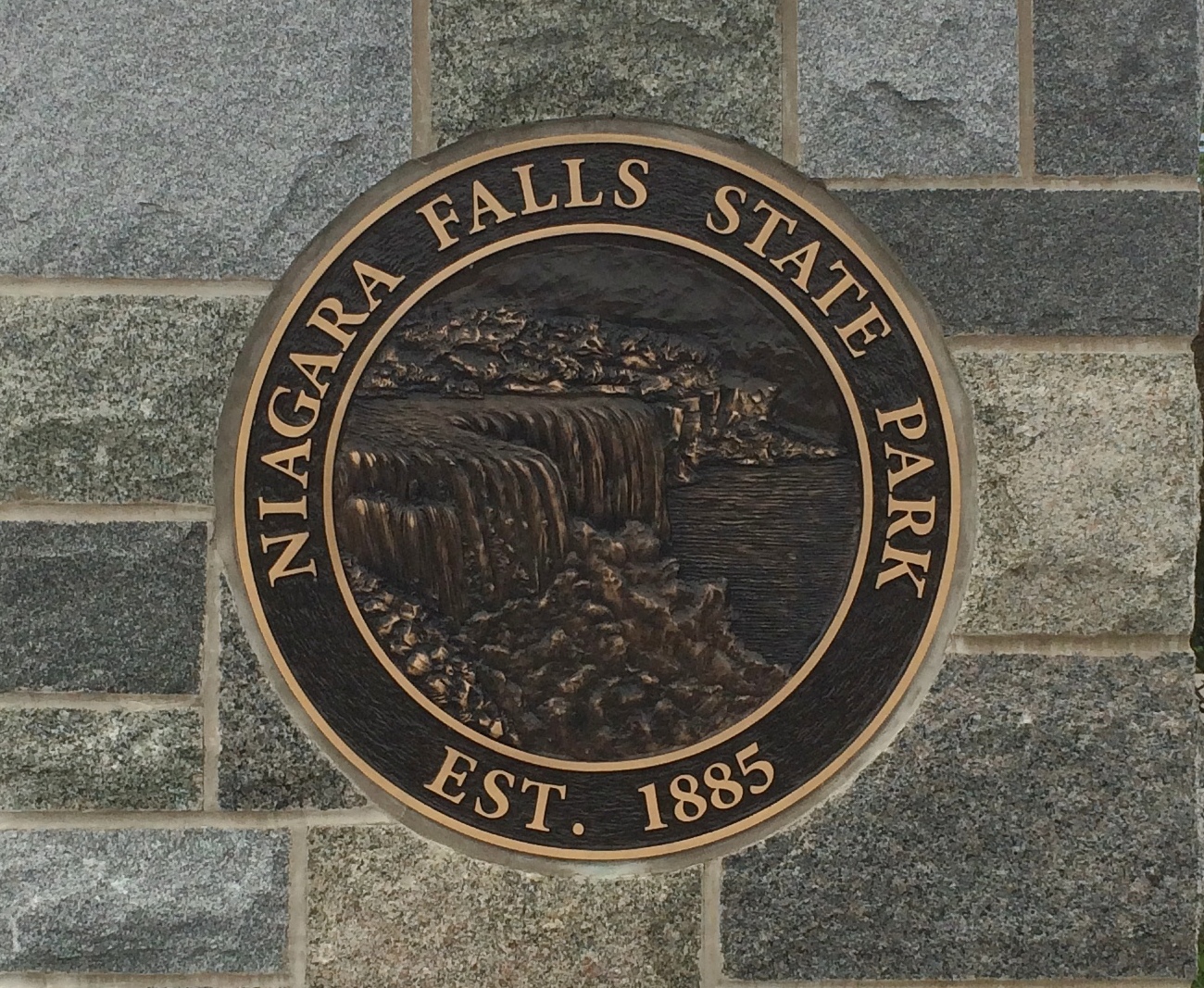
A victory for the Progressive movement because, as I’ve read, before that private landowners around the falls monopolized access. You’d think that wouldn’t be much of an issue in the 19th century, but the falls have been a tourist attraction for a long time. In the park we saw a sign that noted that on his grand tour of the U.S. in 1825, Lafayette came to see the falls. But the real tourism boom began after the falls became a public place with easy access.

We arrived on Saturday around 9 a.m. and found a place to park right away in lot no. 1. Good thing, too, since later in the day we noticed a long line of cars waiting to park. Even that early there were a fair number of people in the park, but by early afternoon the place was mobbed.

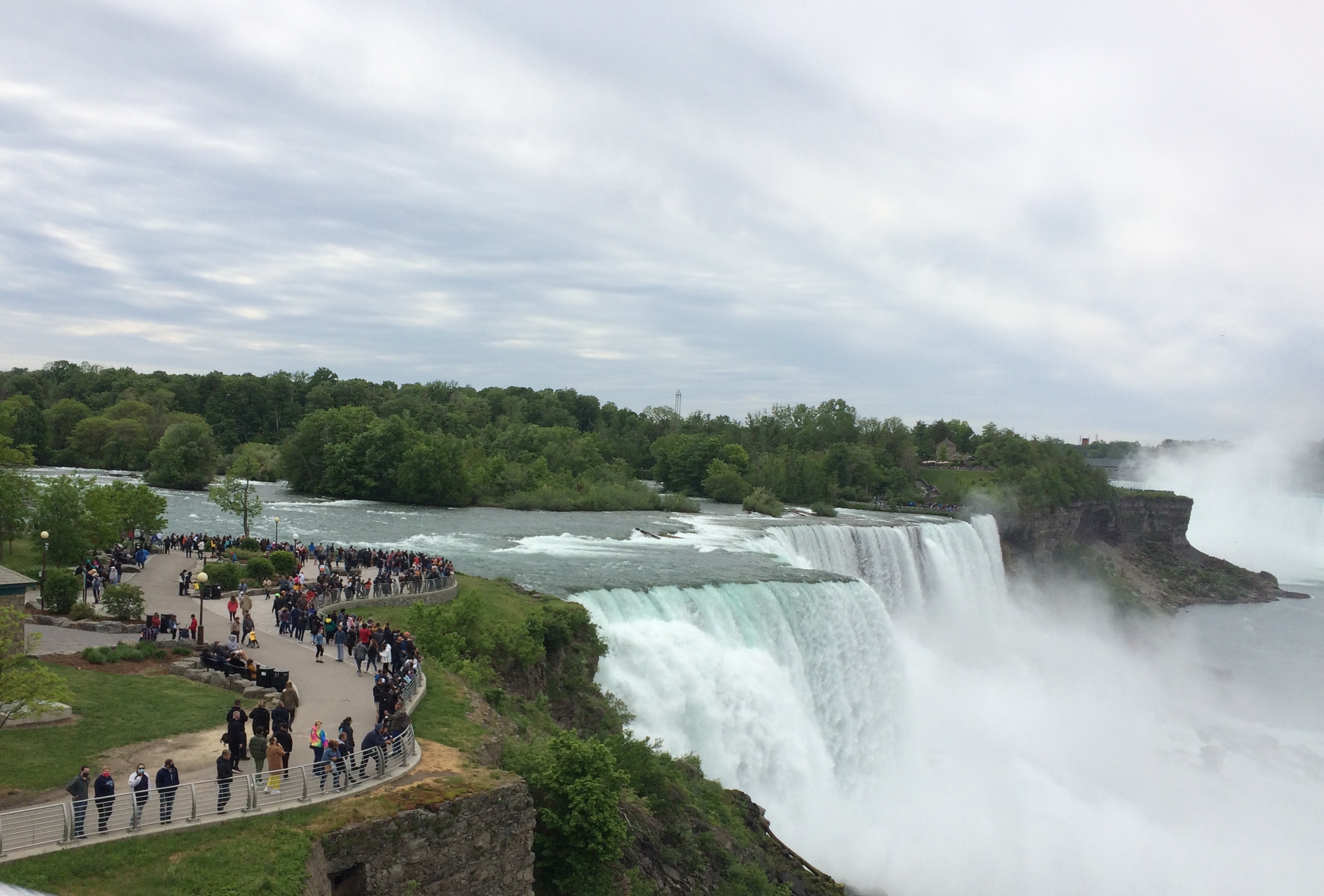
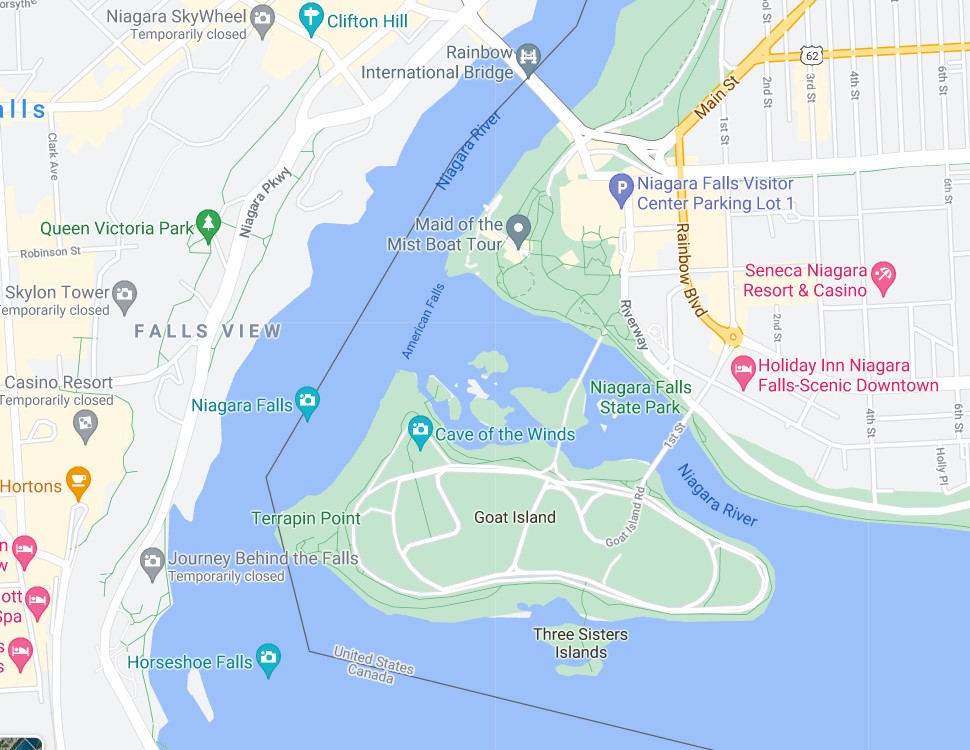
It didn’t matter once you’d ditched your car. The park holds crowds well because it’s large, encompassing a long stretch of shore along the Niagara River upriver and downriver from the falls, and the islands that divide the falls into three: the relatively small Bridal Falls, the mid-sized American Falls, and the mighty Horseshoe Falls, most of which is Canadian.Niagara Falls
Created at the end of the last ice age 12,000 years ago or so, the falls have an estimated existence span of another 50,000 years. So we’re witnessing a geological blip. How many countless mighty cataracts of this kind have come into being only to erode away over the billions of years of liquid water on Earth? And what about crashing falls on other worlds?

From the U.S. side, your first view is of the American falls, looking to the south. The buildings in the background are part of the town of Niagara Falls, Ontario. This is a shot with the tourist infrastructure edited out.Niagara Falls State Park
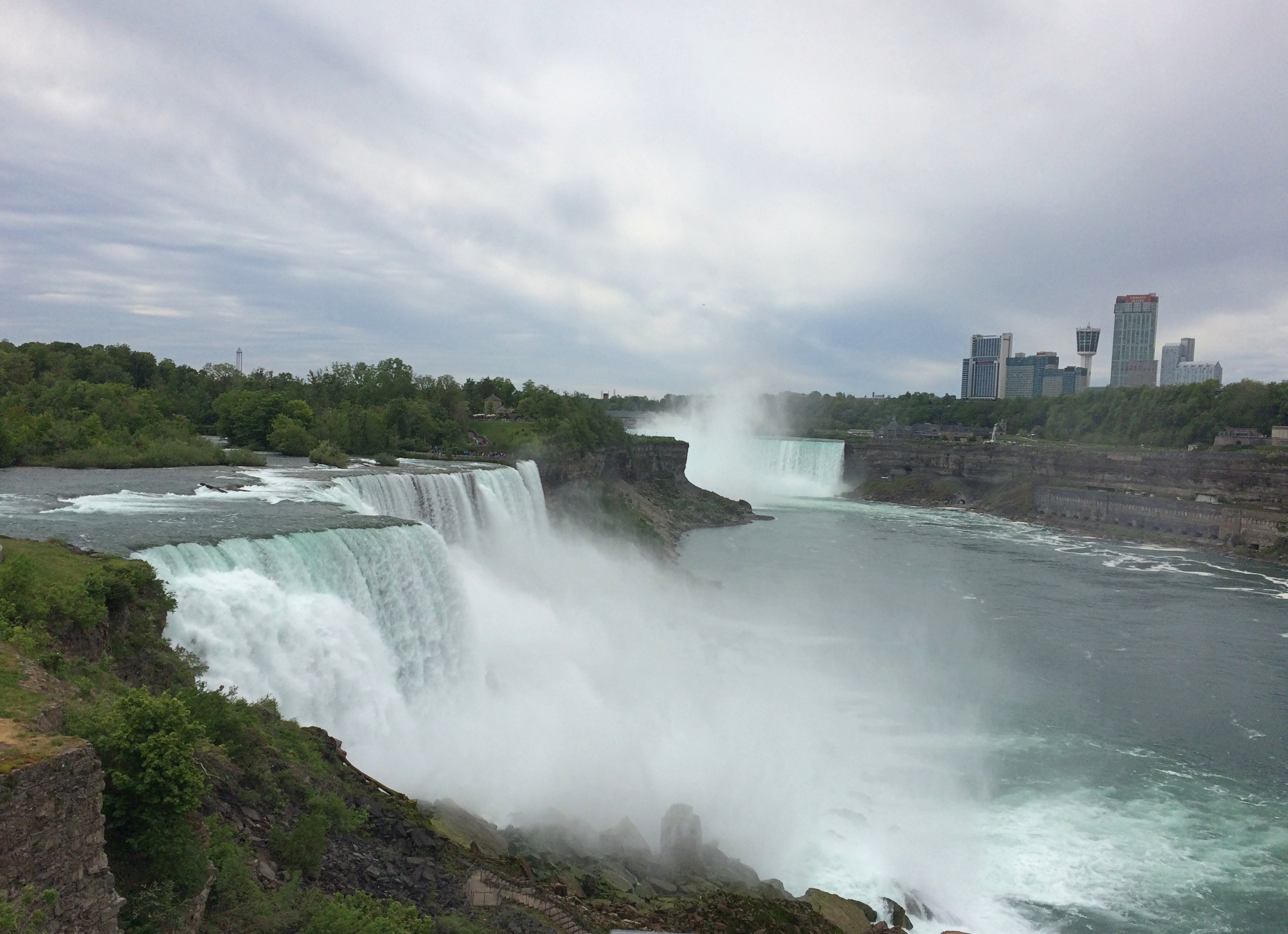
Left in.
Niagara Falls State Park

Bridges cross from the shore upriver a bit to Goat Island, the main island in the channel. For a few moments, you can forget you’re surrounded by the intensity of the Niagara River.
Niagara Falls State Park Goat Island

But not for long. More views of the American Falls are easily found. Looking north over the drop, with the Rainbow International Bridge in the background, seeming not nearly as high as it is.Niagara Falls State Park Goat Island
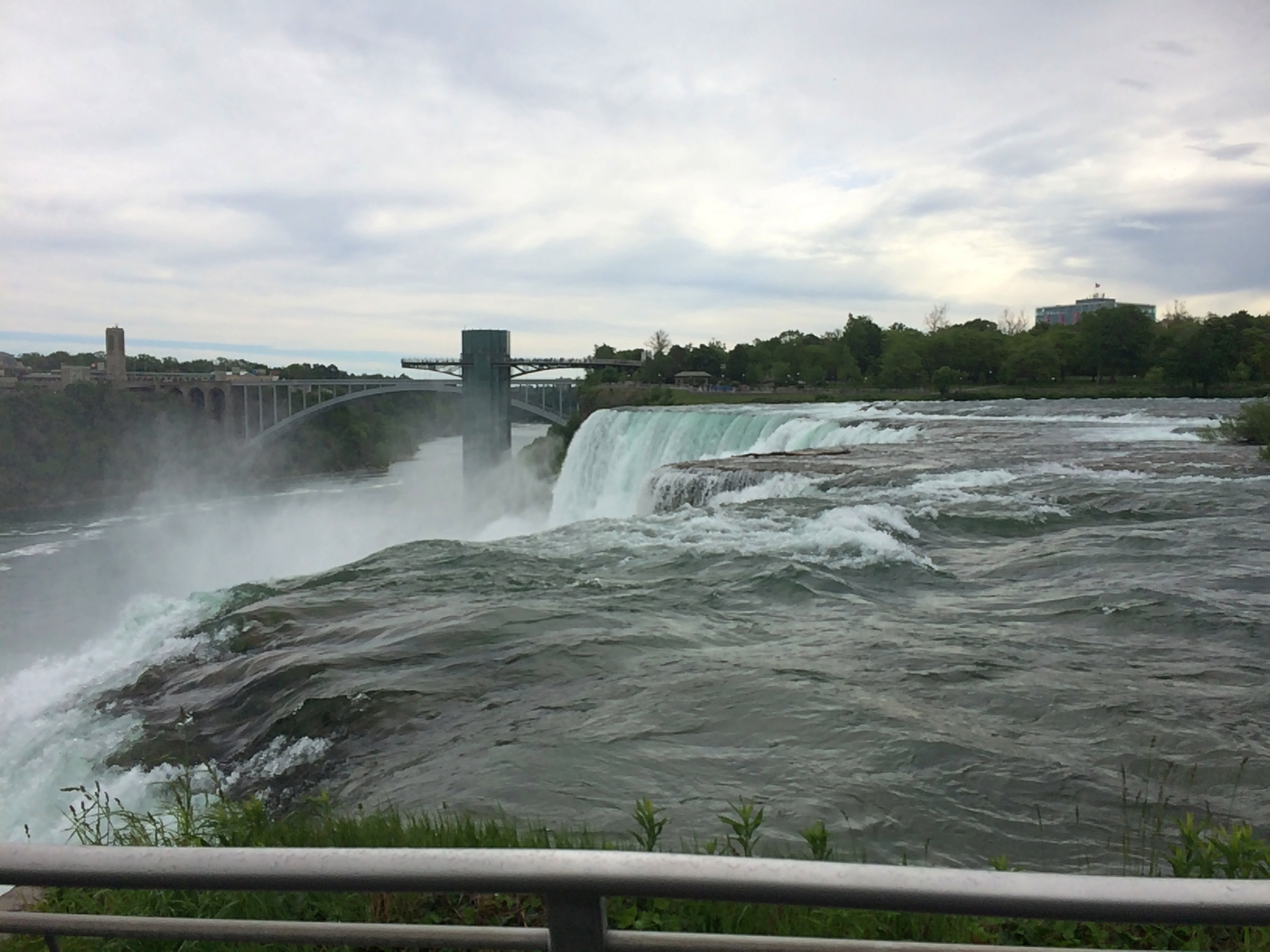
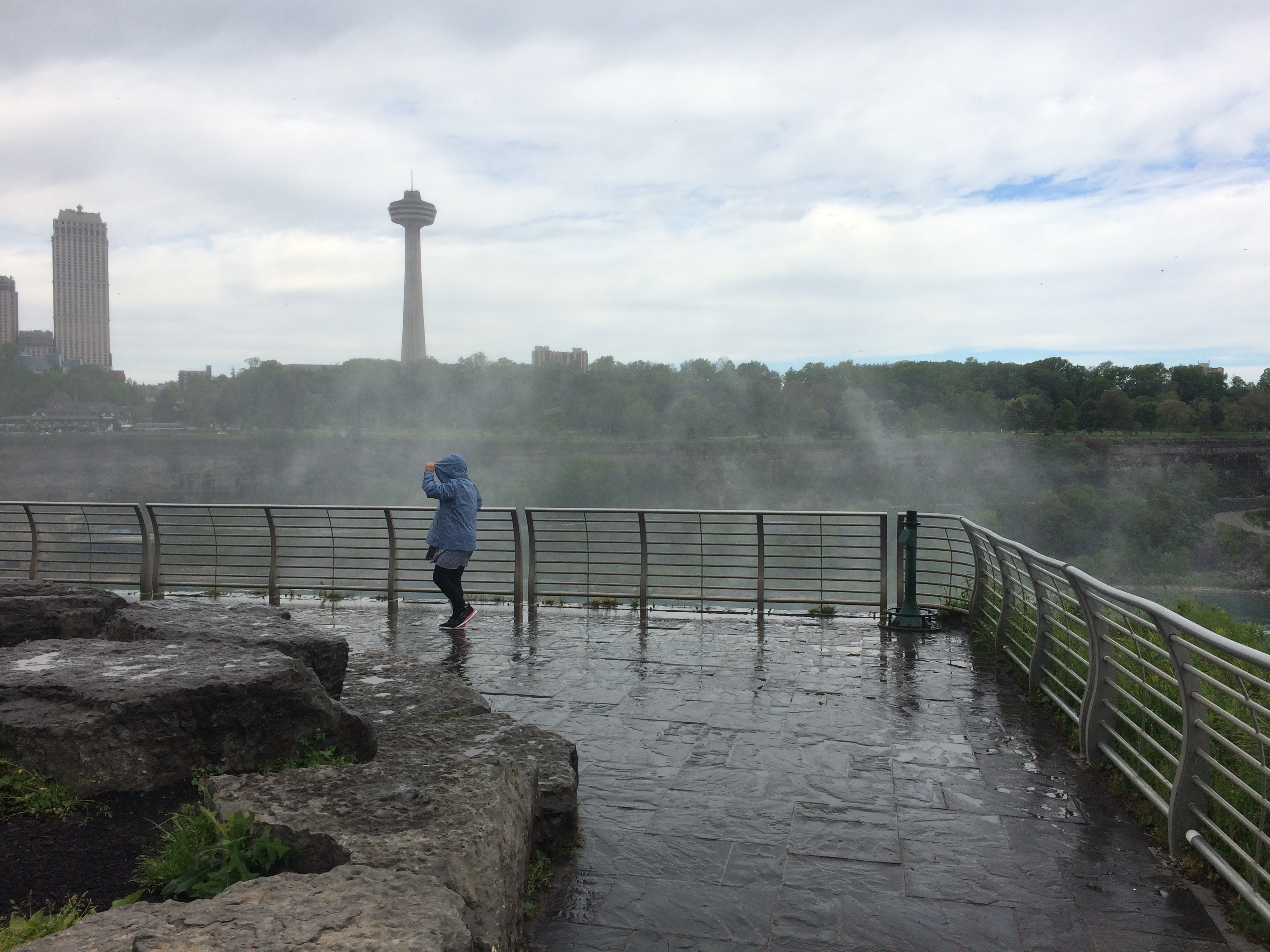
Spray. It wouldn’t be the last time.
Niagara Falls State Park Goat Island

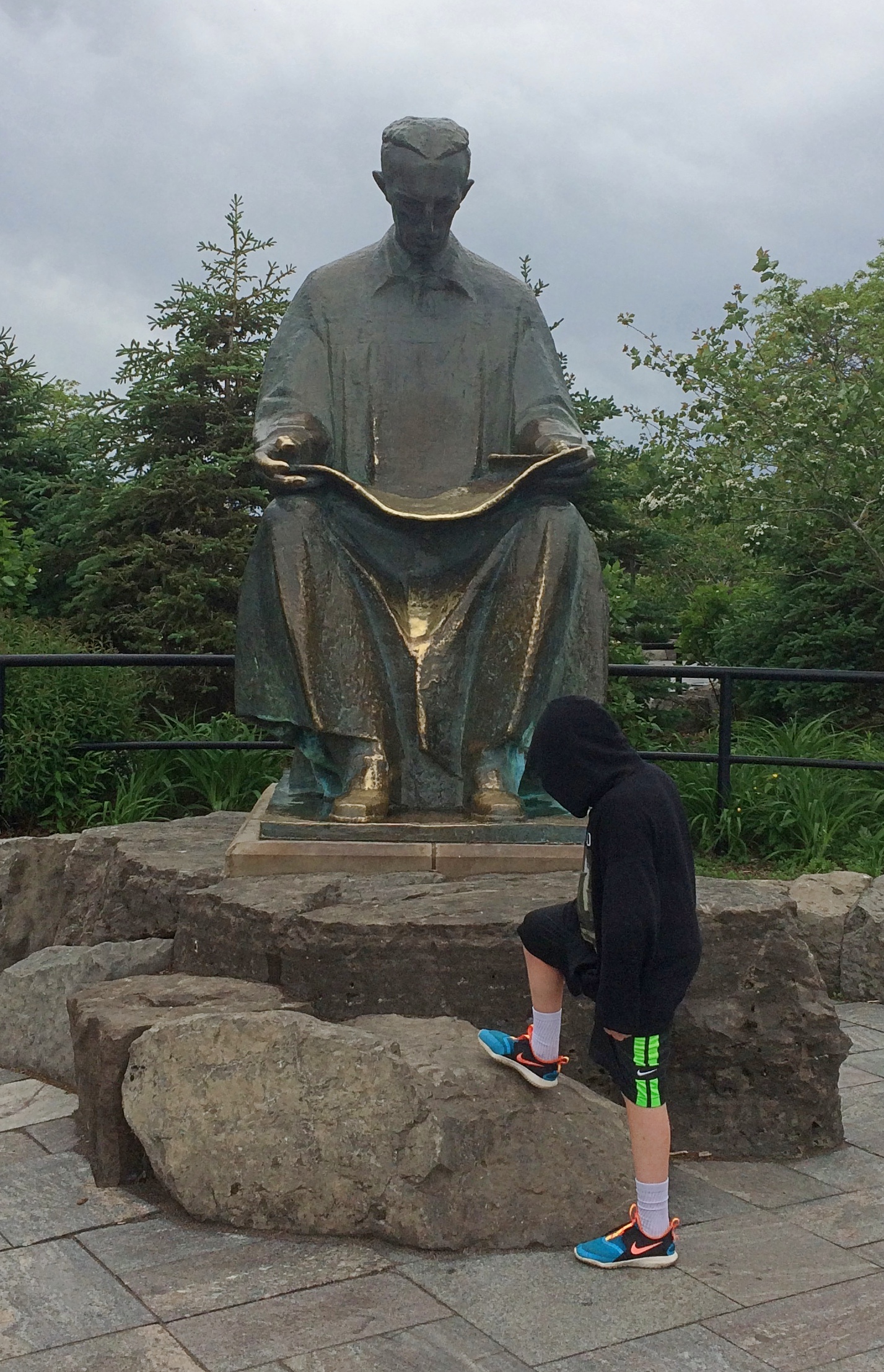
A curiosity on Goat Island: a statue of Tesla.
Niagara Falls State Park Goat Island

“Gift of Yugoslavia to the United States, 1976,” the Tesla Memorial Society of New York says. “Nikola Tesla designed the first hydroelectric power plant in Niagara Falls. This was the final victory of Tesla’s Alternating Current over Edison’s Direct Current. The monument was the work of Croatian sculptor Frane Krsinic.”

A standing Tesla was installed on the Canadian side more recently, in 2006, according to the society. More about Tesla and Niagara is here.

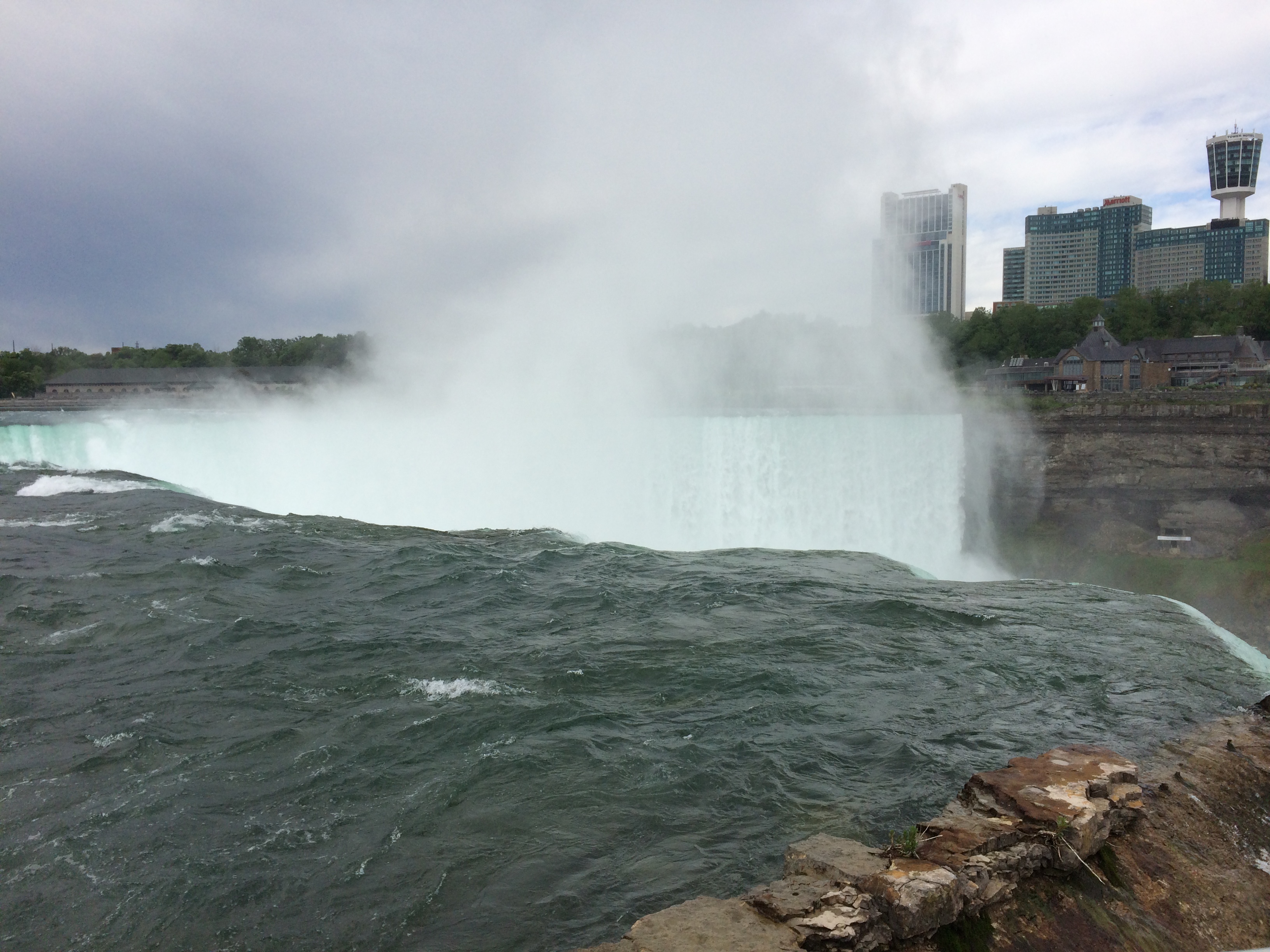
Go far enough on Goat Island and you’ll reach Terrapin Point, which offers a view of Horseshoe Falls, which is what most people think of when they think of Niagara Falls. It’s wider than the other falls combined, and drops more water, as much as 90% of the 100,000 or so cubic feet of water per second that flows over the three falls during the summer. The rate is controlled by engineering, and is lessened at night and during the spring and fall, when fewer tourists are around, so that more of the flow can be used to generate electricity at those times.
Niagara Falls State Park Goat Island

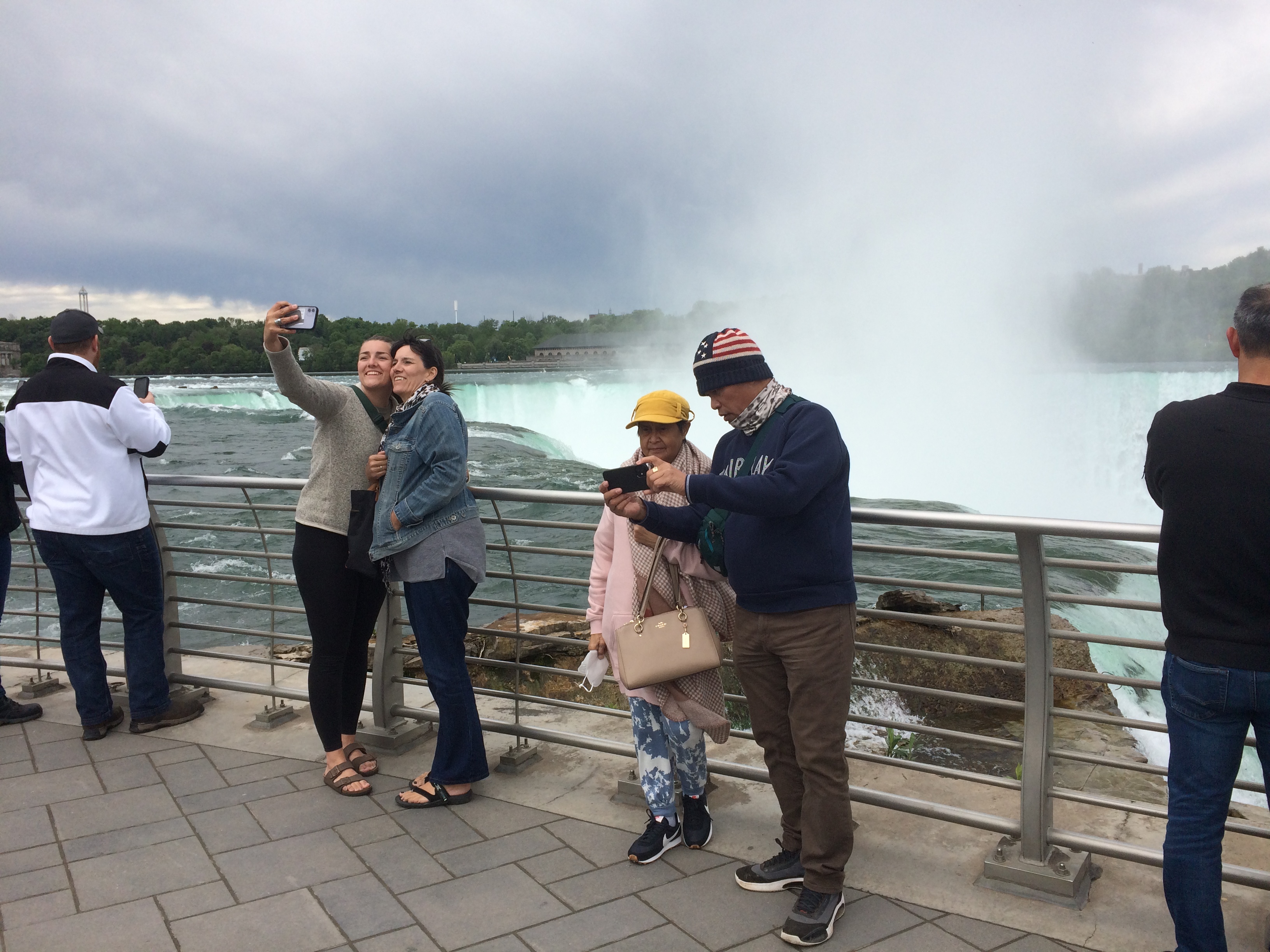
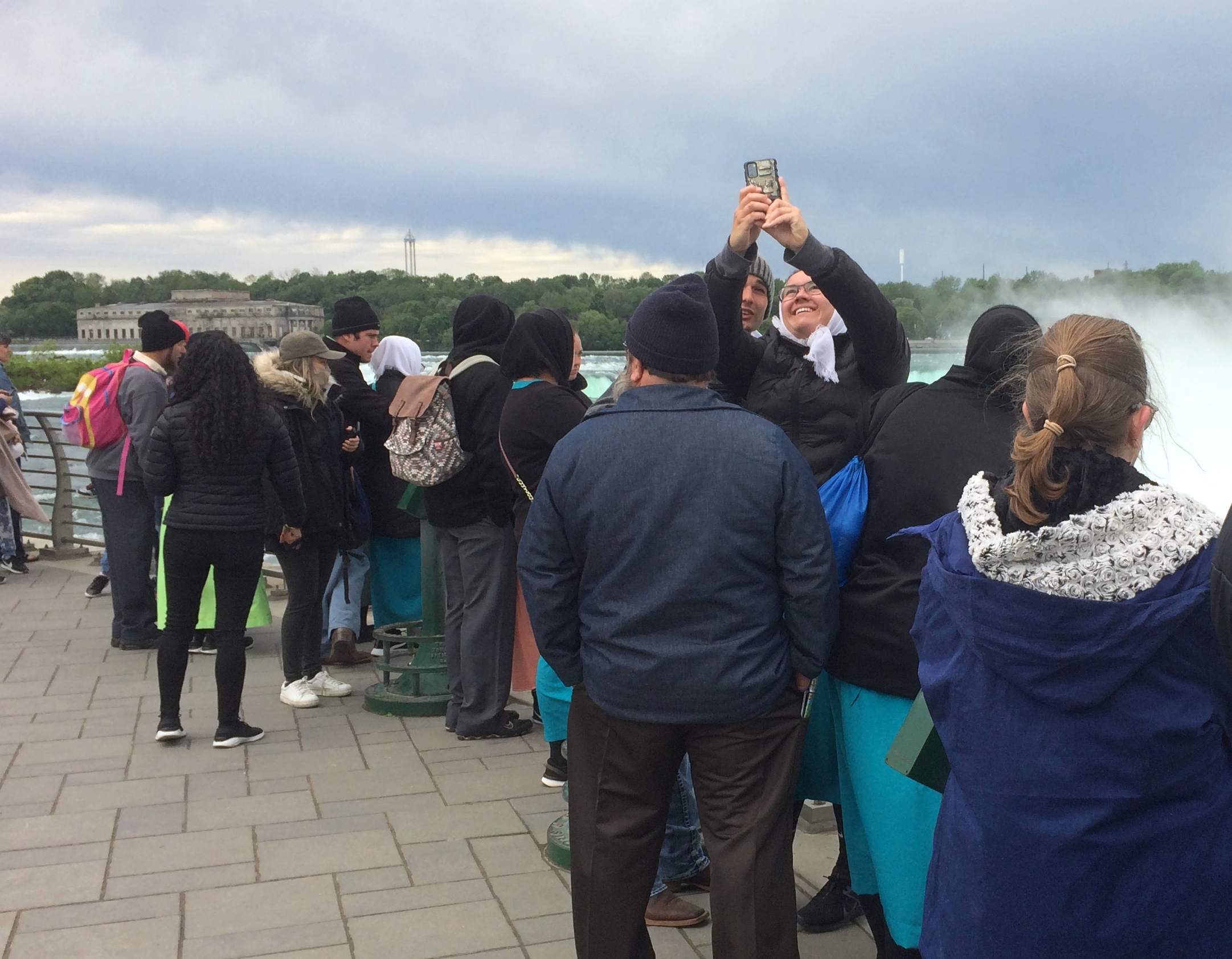
Naturally, lots of people were gathered to take a look. And pictures.Niagara Falls State Park Goat Island Niagara Falls State Park Goat Island Niagara Falls State Park Goat Island
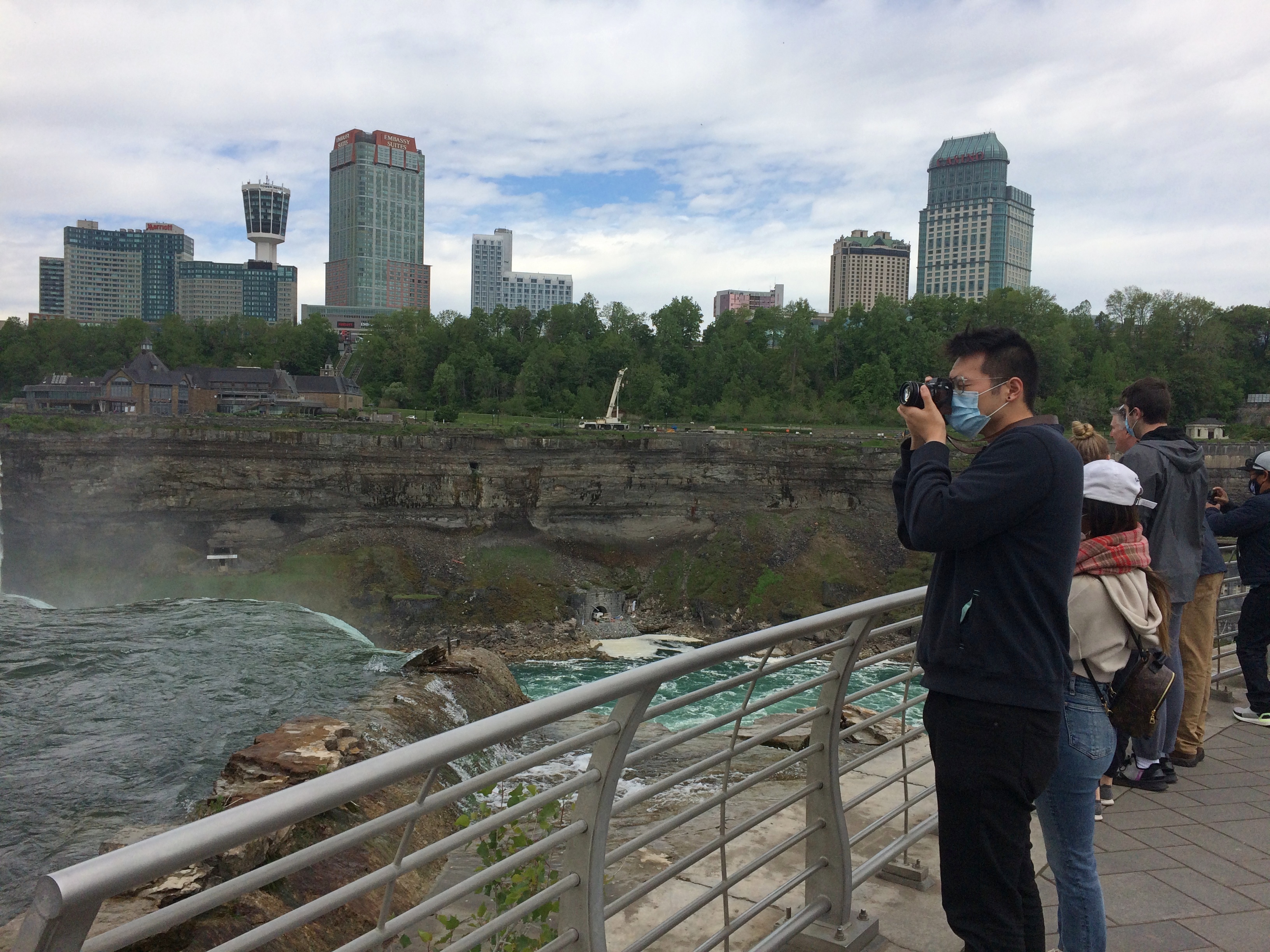
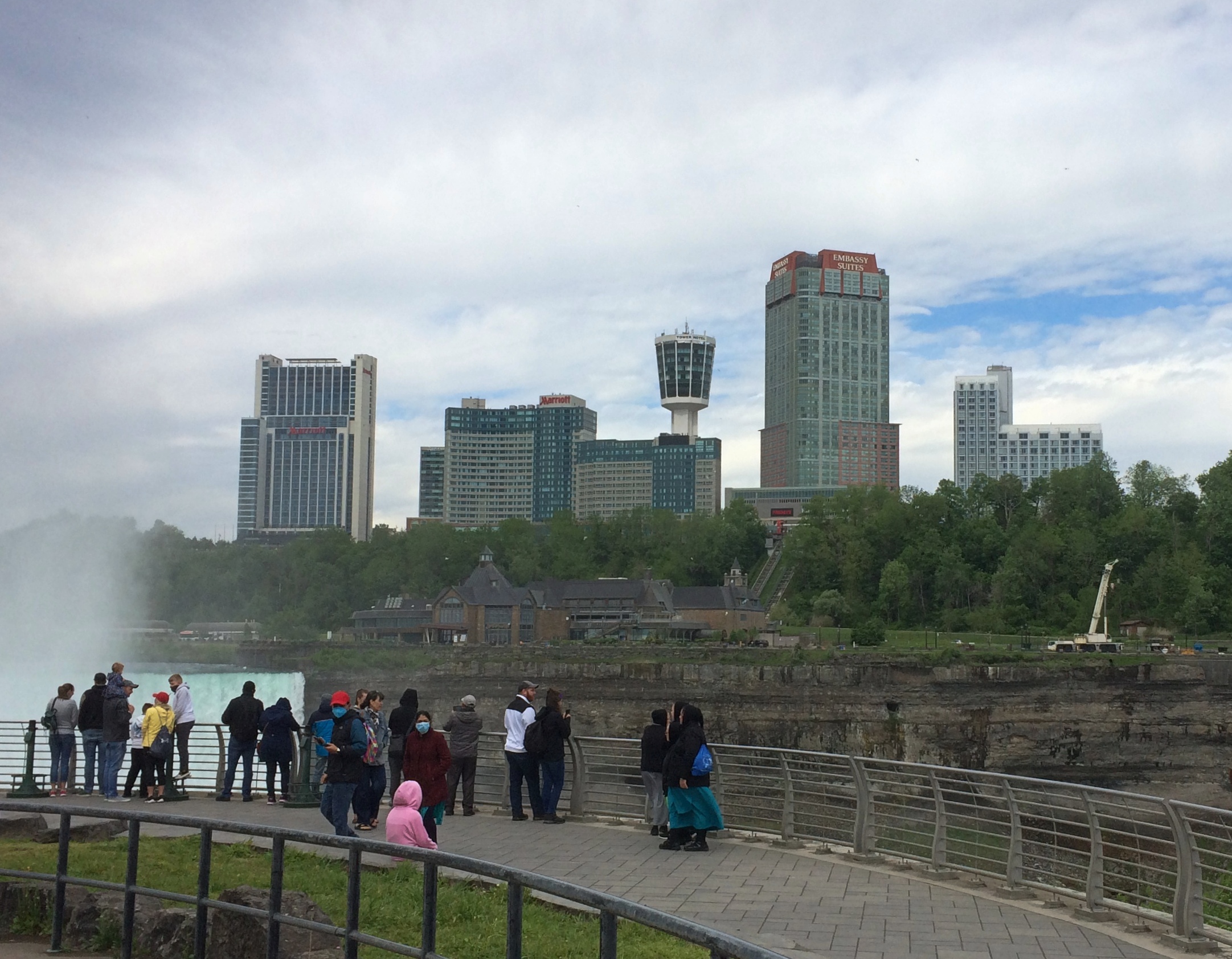
There’s a good view of the Canadian side from there as well, when the mist doesn’t obscure it. Looks like there’s reconstruction going on over there, near the edge. I remember standing next to the Horseshoe Falls at that point 30 years ago, and it looks like that observation deck is missing for now.

The Canadian town looks more prosperous than the U.S. town from that vantage, and indeed it is for various reasons. Sad to say, beyond the tourist enclave, Niagara Falls, New York is another one of the small cities of the industrial North that has seen better times.
Niagara Falls State Park Goat Island

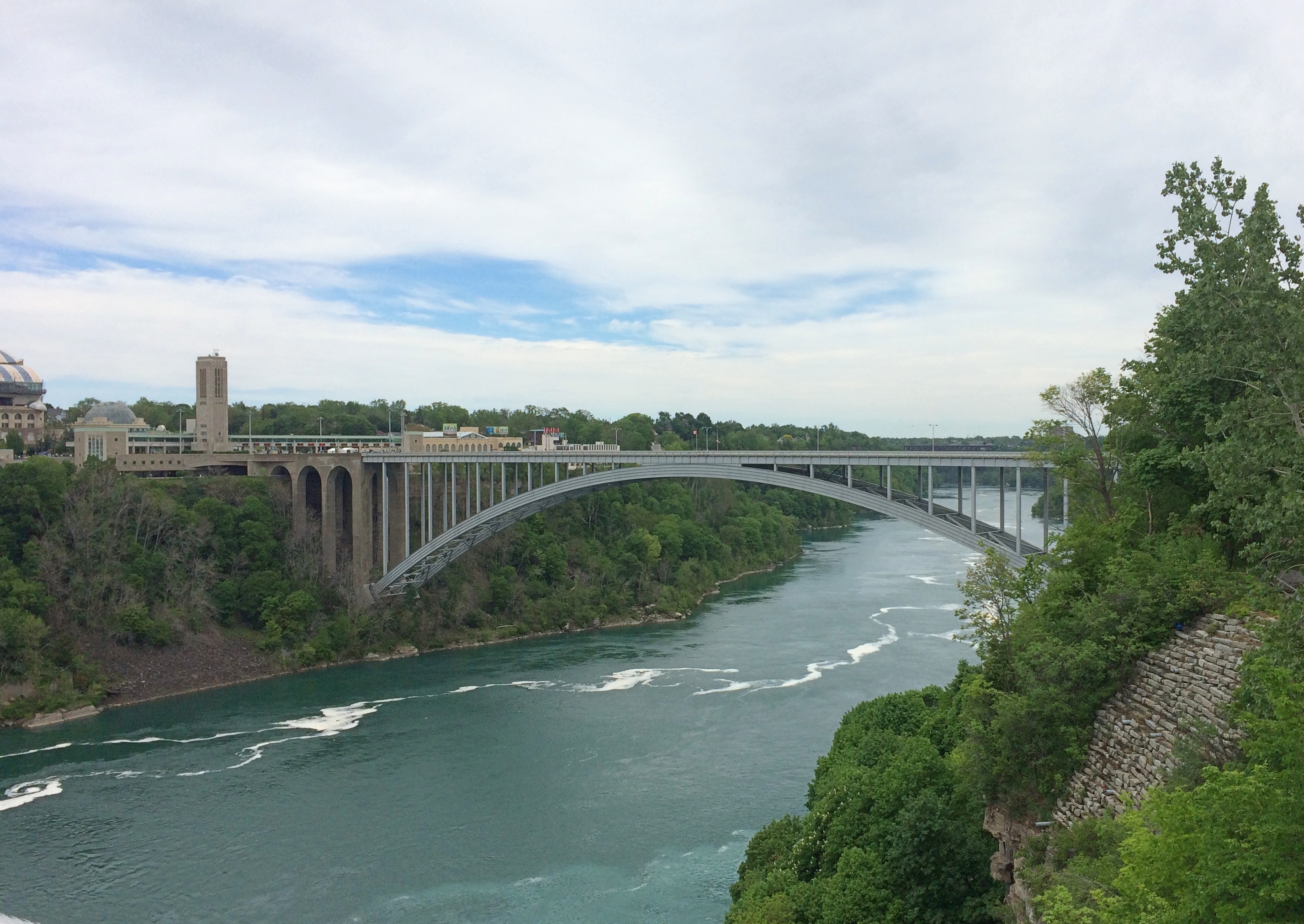
Canada, as it happens, was still mostly closed to visitors over Memorial Day weekend, which would be an ordinary weekend there. Later in the day, we saw the entrance to the Rainbow Bridge on the U.S. side, and only one lane for traffic was open, and no one was in it.

The bridge is visible from Terrapin Point, since it isn’t far downriver from the falls. A striking bit of work across a gorge.
Rainbow Bridge

After our Goat Island wander, we wanted to do the Maid of the Mist boat ride. That was something I skipped in ’91, and wasn’t expecting much more than a ride along the river with a nice view of the bottom of the falls, to complement the views of the tops. We waited in line about half an hour to get on one of the two boats, which made me think of waiting around for a ride at Disneyland. A thing that you do as a tourist. I grumbled a little about the price. I didn’t realize what was ahead.

This is one of the boats, the James V. Glynn. We rode on the other one, the Nikola Tesla. Him again. Mr. Glynn is a long-time Maid of the Mist chairman.Maid of the Mist 2021
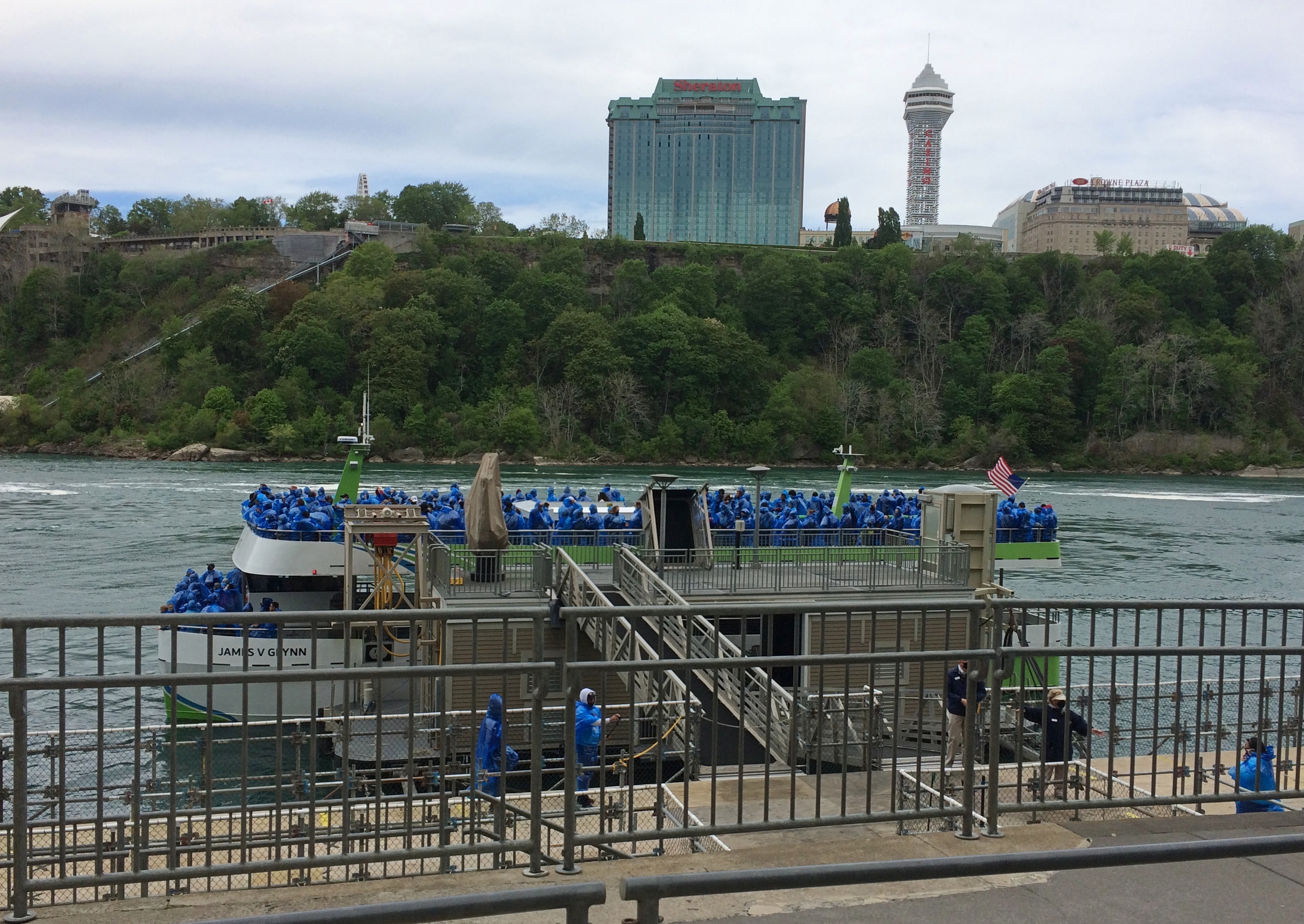
Tourists have been riding Maid of the Mist boats since 1845, another indication of how long tourists have been coming to Niagara Falls, though intermittently until 1885 and every year since then. The boats were steam and then diesel powered and now, as the company is eager to point out, all-electric with no emissions, launched into service only last year. As people get on and off, the boats are recharged at the dock.

The company gives you bright blue thin plastic ponchos and off you go, for a 20 minute or so trip. It isn’t the quantity of the time aboard that counts, but the quality. First you pass by the American and Bridal Falls, which are impressive in their flow and in the huge boulders piled at the bottom.Maid of the Mist 2021
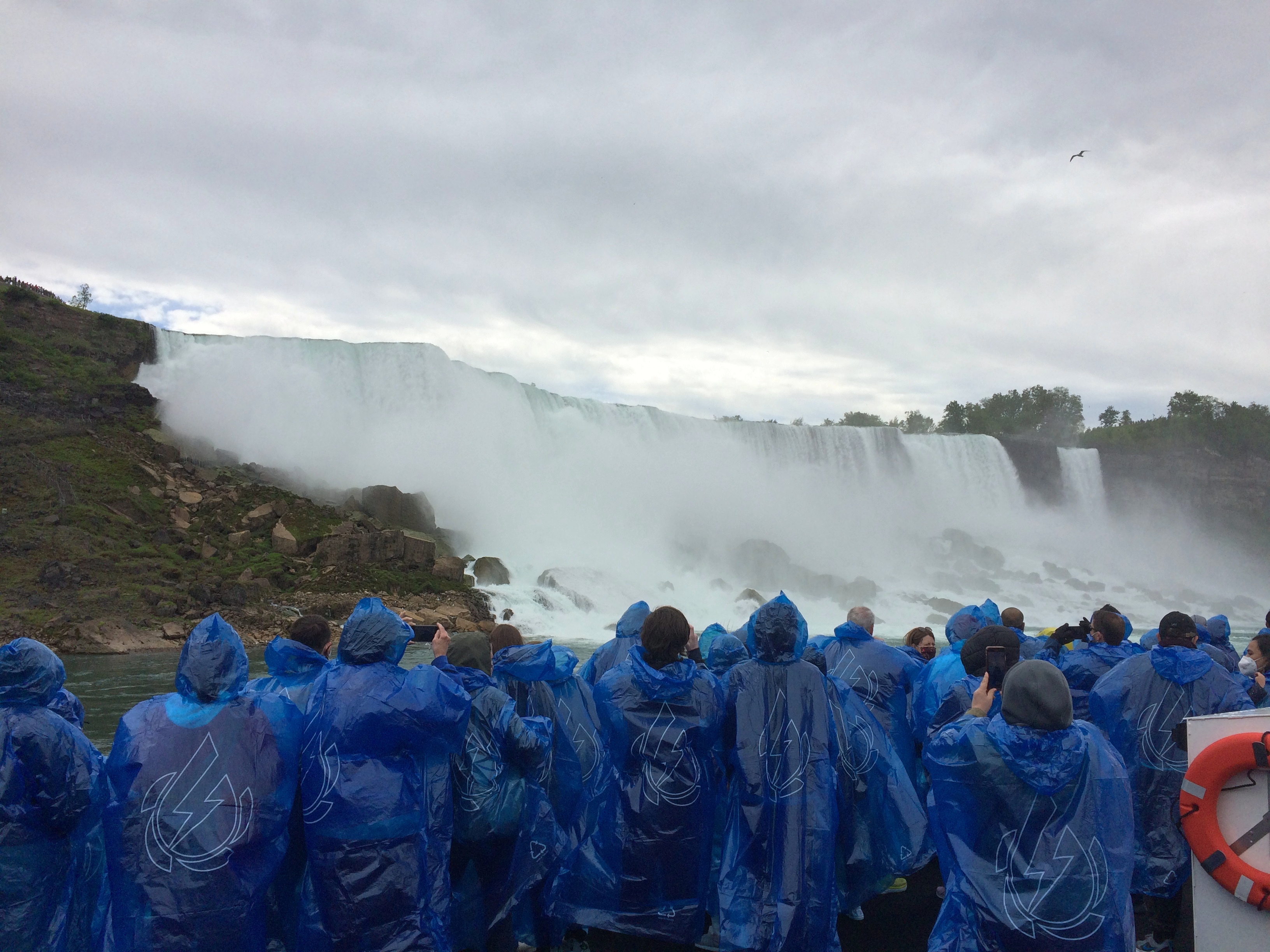
The ship then passes into the curve under Horseshoe Falls. I didn’t think it would get as close at it did. The roar is enormous. The spray is continuous. The curving walls of water, taller than walls of water should be, fill your senses. The place is enthralling. I haven’t been as captivated by a natural phenomenon (well, partly engineered) since I saw the total eclipse a few years ago.

No wonder people have been paying for over a century and a half for this little boat ride. It was worth the effort to get to Niagara Falls, all by itself, and all of the $25.25 each to be escorted under the spectacular cataract.

I wasn’t in the mood to take pictures during most intense moments, like during the eclipse. Except one.
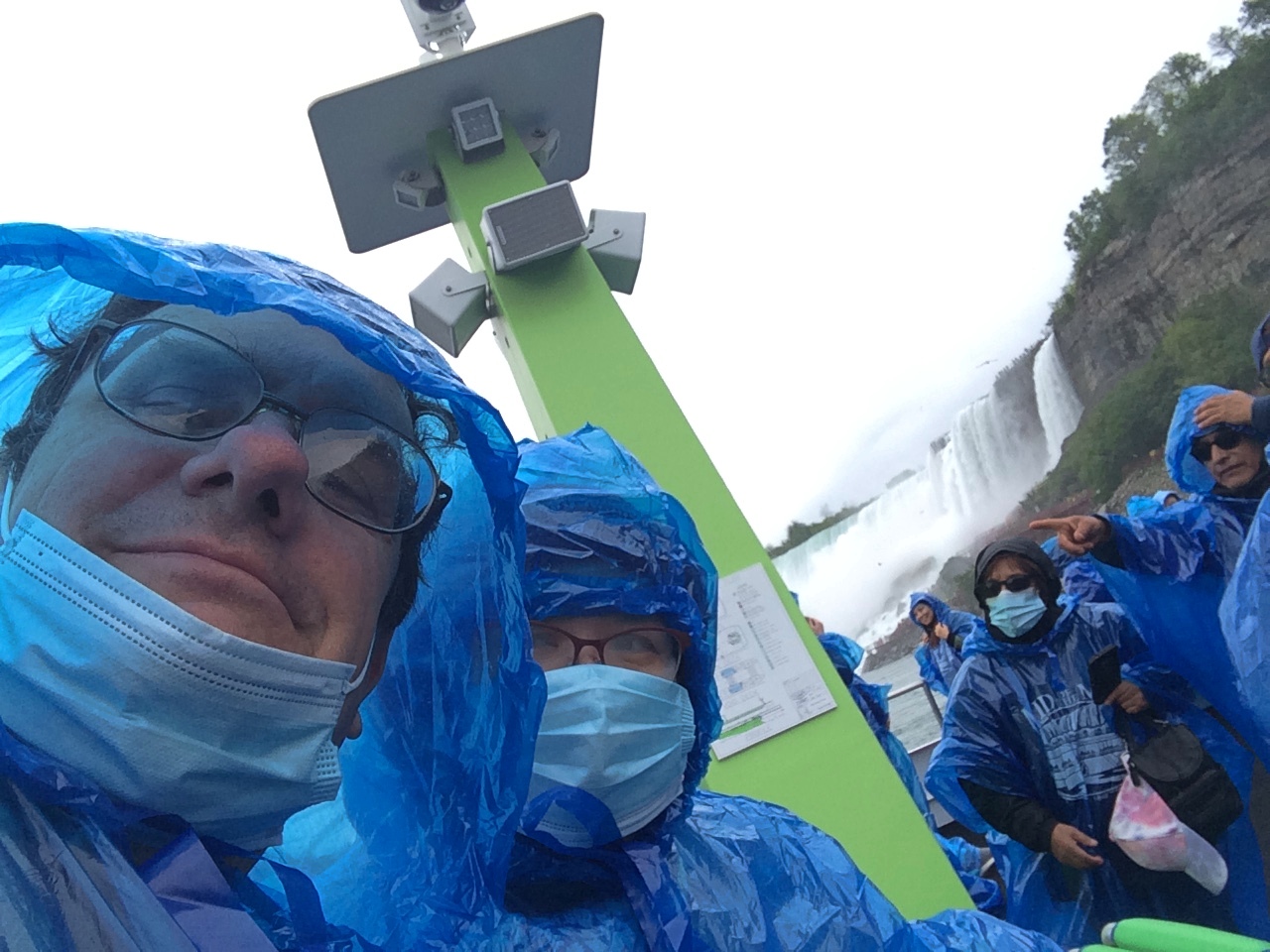
Maid of the Mist 2021One of three or four selfies I’ve taken since that concept was popularized. Hit the nail on the head with that one.
Shuffle Off To Buffalo

Just back yesterday evening from 72 hours in Buffalo. Roughly. Not quite 72 hours over Memorial Day weekend and not quite all in Buffalo, though we were in the Buffalo-Niagara Falls MSA the whole time.

Three days isn’t enough to drive to Buffalo from northern Illinois and spend a worthwhile amount of time. Like Pittsburgh, that would be a four-day venture. So we flew. First time since early 2020. Except for mandatory masking at the airports and on the planes, everything was about the same as it used to be, including holiday-weekend crowds. One of our flights was on a Boeing 737 MAX-8, and clearly we lived to tell the tale.

We, as in Yuriko and I, arrived late Friday night and made our way to Amherst, New York, a Buffalo suburb, where we stayed. We were up early the next morning to spend most of the day at Niagara Falls State Park. I was fulfilling a promise I made in 1996, when we arrived at the falls in March to find the American Falls still frozen. I told her we’d come someday when the liquid was moving again, and so we did.

That wasn’t the whole first day. I discovered that nowhere is very far away from anywhere else in this corner of New York state by driving north along the Niagara Gorge, stopping at Lewiston and Fort Niagara, and then returning to Amherst.

On Sunday, we weren’t up quite as early, but we made it to downtown Buffalo in the morning for a walkabout. As promised by various sources, the city has some first-rate architecture, most especially Buffalo City Hall. Late in the morning, after a brief stop at Tim Horton’s — they’re everywhere in metro Buffalo — we toured the Theodore Roosevelt Inaugural National Historic Site, formerly the Ansley and Mary Wilcox home.

Lunch that day was on Main Street at the Anchor Bar, which specializes in Buffalo wings and claims their invention, but in any case the joint didn’t disappoint. Afterward, Yuriko napped in the car while I spent time looking around Main Street, which includes Buffalo’s theater district and Saint Louis Roman Catholic Church.

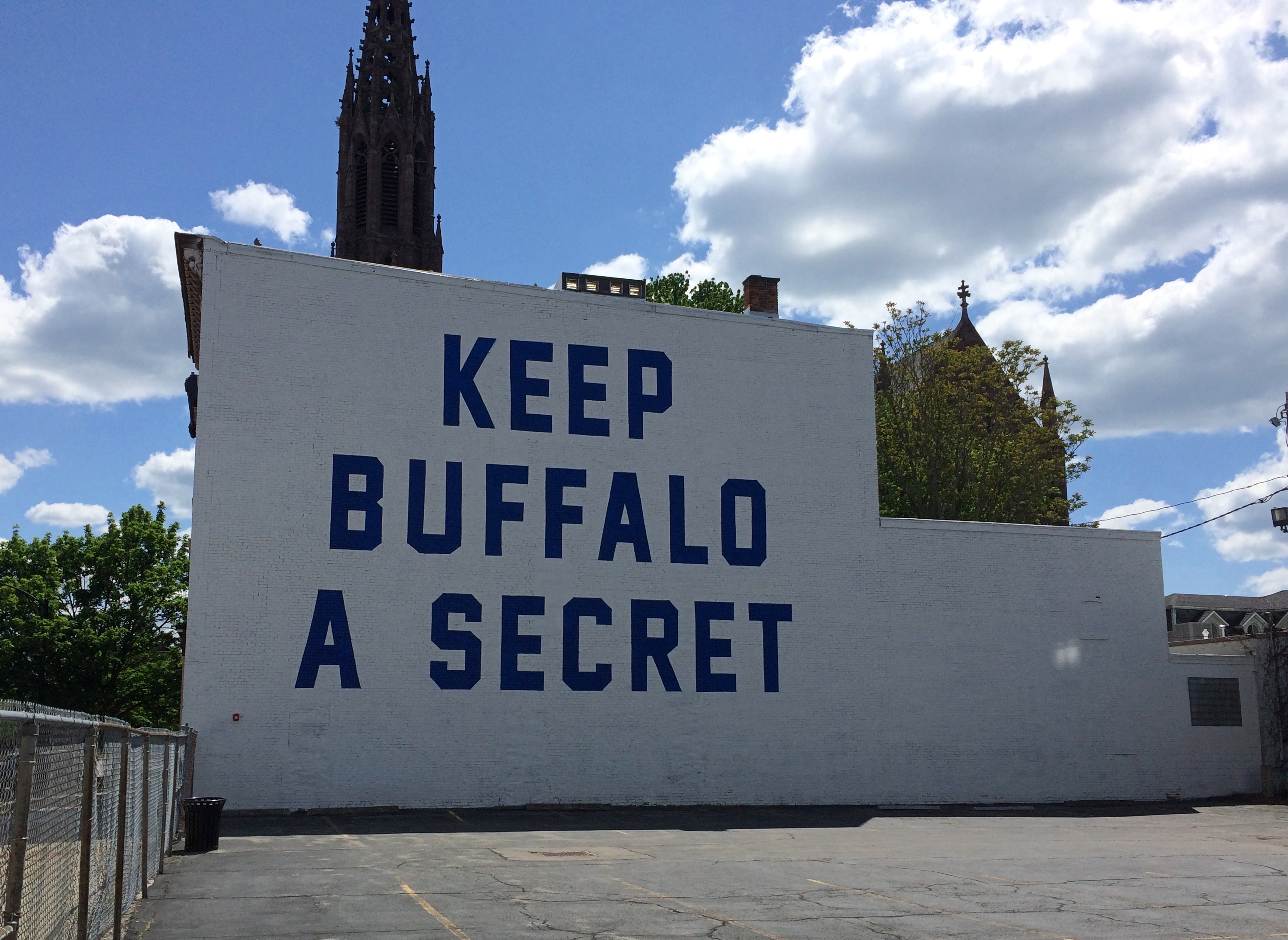
Also, this mural.Keep Buffalo A Secret
Created by local t-shirt designer David Horesh and painter Ian de Veer, it’s highly visible when you’re traveling southbound on Main.

Could it be that current Buffalonians might not want millennials, or more importantly, tech-industry millennials with high incomes, to show up in droves to drive up prices for everyone else? Maybe. Not sure Buffalo has the tech ecosystem, as they say in the biz, to support such an influx. Then again, in the vicinity of the mural are places probably supported by people with at least some disposable income, such as Just Vino, the House of Masters Grooming Lounge, Hair to Go Natural, and Fattey Beer Co. Buffalo.

I had a mind to visit Delaware Park afterwards, since a Frederick Law Omstead park is always worth seeing, but we ended up sampling it merely by driving around it. Looks like a nice place to while away a warm afternoon.

By that time, Sunday afternoon, it was fairly warm in greater Buffalo. Rain had clearly fallen the day before we arrived, and cool air arrived afterward, taking temps down into the low 50s early Saturday, when we got to Niagara Falls. Did that matter? No. It wasn’t cold enough to freeze anything.

On Monday I got up early and visited the splendid Forest Lawn Cemetery, permanent home of President Fillmore and Rick James, among many others. Later, we drove to Lockport, New York and spent some time along the Erie Canal. As long ago as elementary school, I heard about the Erie Canal, but had never seen it. We also took a tour of one of the manmade caves near the canal, where rapid water flows formerly powered local industry.

Back in Buffalo for a satisfying lunch at Lake Effect Diner, housed in a chrome-and-neon diner car dating to 1952. Then we drove south via surface streets to Lackawanna, where you can see the Basilica of Our Lady of Victory, our last destination for the trip.

Why Buffalo? There was that promise to visit the falls, of course. But I also wanted to see Buffalo. My single previous experience there had been a quick drive-through in 1991 after I saw Niagara Falls for the first time, from the Canadian side. Every city of any size has something interesting. A lot of smaller places do as well. So we shuffled off to Buffalo.

Thursday Chaff

It’s been a warm week for March so far, even warm enough last night before bed to crack the window a bit and listen to the strong winds and occasional rain showers. Did that account for the occurrence of one of my semiannual phantasmagoria dreams early this morning? Maybe.

Great Fortune, subtitled “The Epic of Rockefeller Center,” by Daniel Okrent (2003) is a delightful book so far, and I’m only a chapter in. Certainly the most delightful thing I’ve ever read about a major urban mixed-use redevelopment project.

The first chapter sets up the story nicely, telling a short history of the Manhattan land that would be Rockefeller Center up until the time that John D. Rockefeller Jr. got involved in the project in the late 1920s. I didn’t know that the parcel had belonged to Columbia University for many years, and the scheme to redevelop the land (known as the Upper Estate) was ultimately driven by the university’s need to pay for its stately campus in Morningside Heights.

“… this meant that expansion on the grand scale of McKim, Mead & White’s Olympian campus on Morningside Heights had somehow to be financed, and the Upper Estate was the only cash cow in sight,” Okrent writes. “The milking commenced in 1904…”

An important person at the beginning of the story is Otto Kahn, multimillionaire financier and patron of the arts (an American Maecenas, back when educated people would have known that reference), who was president and chairman of the board of directors of the Metropolitan Opera. I didn’t know that he was well enough known that the Marx Brothers parodied him as Roscoe W. Chandler in Animal Crackers.

A digression. Apparently, for $200, one can own an original Otto Kahn letter. Then again, they aren’t rare. Okrent called his correspondence “oceanic.”

Okrent also writes some good standalone lines: “His [architect Ben Morris] neo-Georgian Union League Club on 37th and Park is probably as close as one can get to the architectural equivalent of a stuffed shirt.”

The other day, I was driving along with Ann and playing with the radio dial as we went. On came “Copacabana.” Hadn’t heard that song a good while, but as I mentioned to Ann, it seemed to be on the radio all the time in 1978.

I thought a bit about it, and it seems remarkable that such a downer of a song was so popular. As a ballad, the entire story is, a woman’s boyfriend is killed in front of her, and psychologically she never recovers.

“Yeah,” Ann said. “But the music is so peppy.”

True enough. There’s also a derivative short story in there somewhere. Maybe the incident and the aftermath from the point of view of Rico. Maybe he was the playboy son of a Fulgencio Batista crony. In his highly publicized murder trial in New York in 1949, his lawyers argued self-defense and he was acquitted.

While walking the dog at Fabbrini Park this week, I noticed a memorial plaque on a bench honoring a man named William “Mr. Bill” X (I forget the last name). Nicknamed Mr. Bill, eh? And what were his last words? Oh Noooooooooooooo!

Of course, like Wile E. Coyote, Mr. Bill couldn’t actually die, just suffer endlessly, which seems a lot more hellish. Still, we celebrate the likes of Mr. Bill. I used to have a Mr. Bill t-shirt, and have photographic evidence to prove it, in as much as photographs prove anything anymore. It’s among the t-shirts I’ve lost over the years, which also includes the Kill ‘Em All, Let God Sort It Out shirt that sported a black beret-wearing skull.

Dinosaurs of New York

Back in the days of paper letters and postcards, not every correspondence I started ended up in the mail. I have an entire file of letters and a few postcards that I didn’t finish and didn’t mail.

Usually that was for ordinary reasons, such as forgetting to complete it for months, by which time the news was stale. Only on rare occasions did I write a letter and think better of sending it because of its content, though I have a few insolent work memos of that kind.

I wrote a large postcard to a friend of mine in Illinois on August 27, 1983, while I was still in New York City. I think it got lost among the papers I had with me a few days later when I went to Nashville, and all these years later, I still have it.

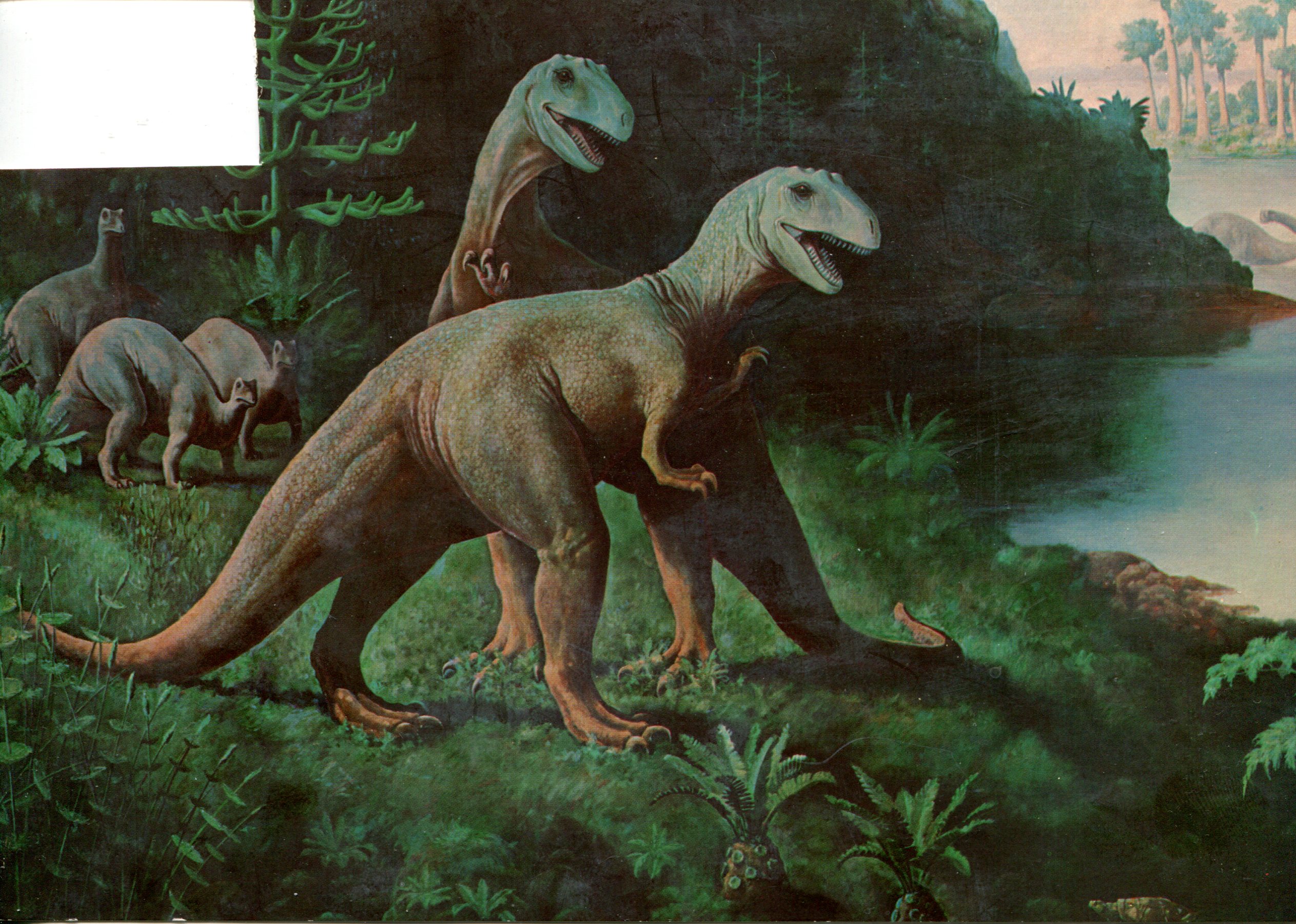
Note the missing piece. I got as far as stamping the thing, but later removed it for re-use.

The printed text of the card says:

ALLOSAURUS (foreground) was a large, meateating dinosaur that lived during the Jurassic period of earth history, about 140 million years ago. This aggressive reptile, which preyed upon other dinosaurs, was about 30 feet long and probably weighed several tons when it was alive. Several individuals of CAMPTOSAURUS, a small, inoffensive, plant-eating dinosaur, are shown in the background.

Painting on Display
THE AMERICAN MUSEUM OF NATURAL HISTORY
NEW YORK, U.S.A.

I wrote, in part:

Dear R—

I have come to New York to learn such oddities as “August is Bondage Month,” which a simple advertisement in the window of the Pink Pussycat Boutique told me. [Remarkably, the shop is still there; give the people what they want, I guess.]

Since the long line to pass through customs at JFK [returning from Europe], I’ve shuffled first to the P’s house in New Rochelle, then S’s house in Stamford, Conn. Since last Friday (the 19th), I have been at D’s apartment while she is on the Jersey shore with her parents. This is a good arrangement. I’ve become acquainted with the Village and various other parts of the city.

This card, for instance, is an accurate portrait of Brooklyn, by the East River.

The Grim Fate of the Ace of Diamonds, Who Surely Had It Coming

Back in the spring of 2003, while visiting Manhattan with a coworker, we came across a street vendor selling most-wanted Iraqi playing cards. Officially “personality identification playing cards,” according to Wiki. I’m a little surprised the U.S. Army didn’t refer to them as PIPCs (pronounced PIE-picks). “Sergeant, distribute two PIPCs to each man before 1800 hours.” “Yes, sir.”

I bought a pack from the vendor and it’s still kicking around the house somewhere, along with other souvenir playing cards that I’ve acquired over the years. Such as a pack depicting Elvis — every card a King? — and another one from Mexico City with the Aztec Sun Stone on each card.

That purchase seems like a long time ago. Maybe because it was, though more psychologically than chronologically.

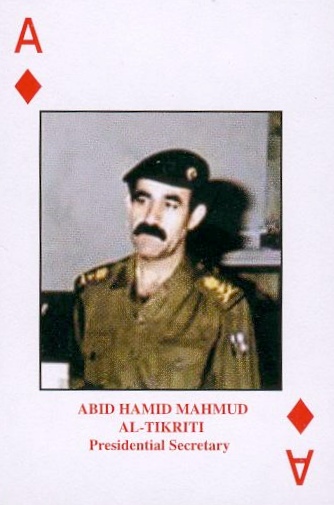
As for the Ace of Diamonds, Abid Al-Hamid Mahmud al-Tikriti, certainly a man with much blood on his hands, a later Iraqi government (2012) showed him the business end of a rope, though that was some years after his boss met the same end.

Everything You Need: Really Strong Coffee, Rhizomes & Pork Ears

I avoid major retail properties this time of the year if I can. To borrow a phrase my mother used to use, it’s mob city at those places. But I still go to smaller shops and grocery stores. Business as usual there. Such as at the place selling this coffee.

Promises to be the “world’s strongest coffee,” a marketing slogan that’s the right blend of boasting and meaninglessness, so I’ll give them that. I looked up the company, which means that their ads will certainly follow me across the web for a while. Didn’t learn that much, except that its HQ is in upstate New York. More novel than Seattle or Brooklyn or the like, and that part of the state probably does need the jobs.

Moving along: food from Thailand. Calling it “rhizome” is curious, since a lot of plants have rhizomes, including “Thuggish Landscape Plants That Spread via Rhizomes,” which conjures up quite an image.

In this case, ginger rhizomes. I didn’t buy that either. Or this.

But I can’t say I wasn’t intrigued.

Greenwood Cemetery ’14

Has it been five years since I first visited Green-Wood Cemetery in Brooklyn for the first time? So it has. Green-Wood Cemetery remains one of the prettiest I’ve been to, even in drizzly early spring. No doubt the fall colors, as I saw them five years ago, are returning now.

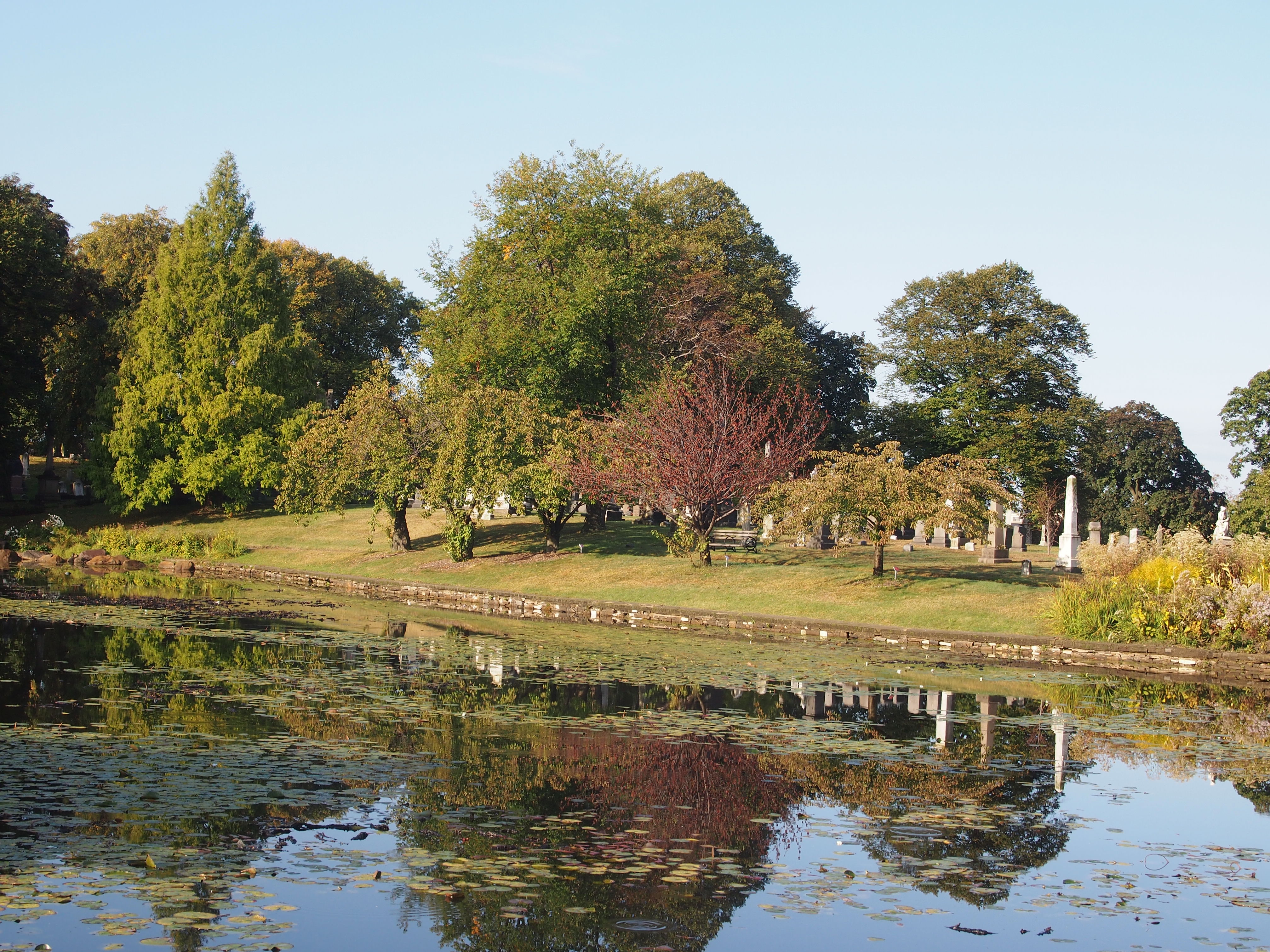
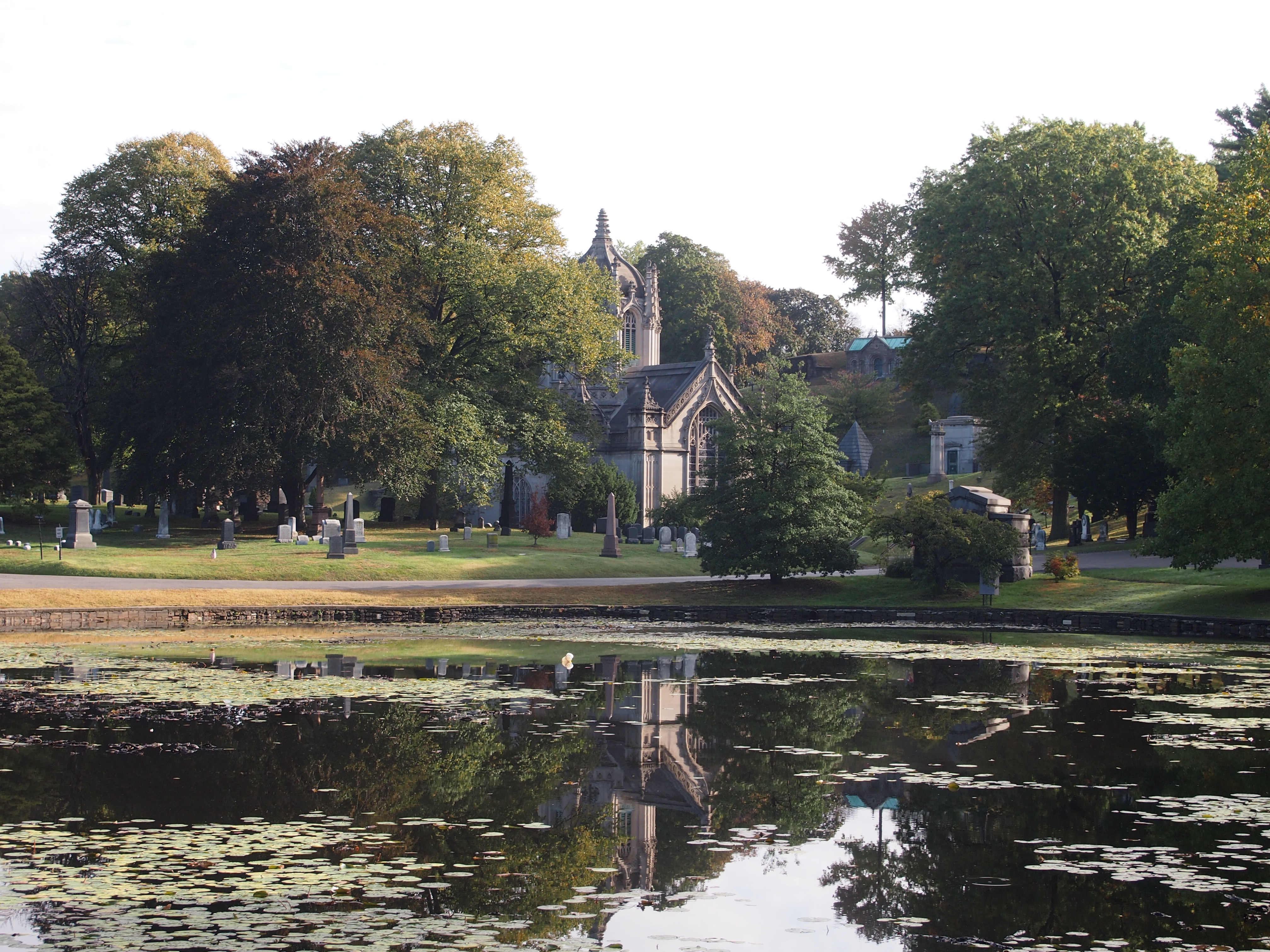
Greenwood CemeteryThe main pond was a particularly lovely spot. This is the cemetery’s chapel, a 1911 Warren & Wetmore design; that firm also did Grand Central Terminal, among other things.
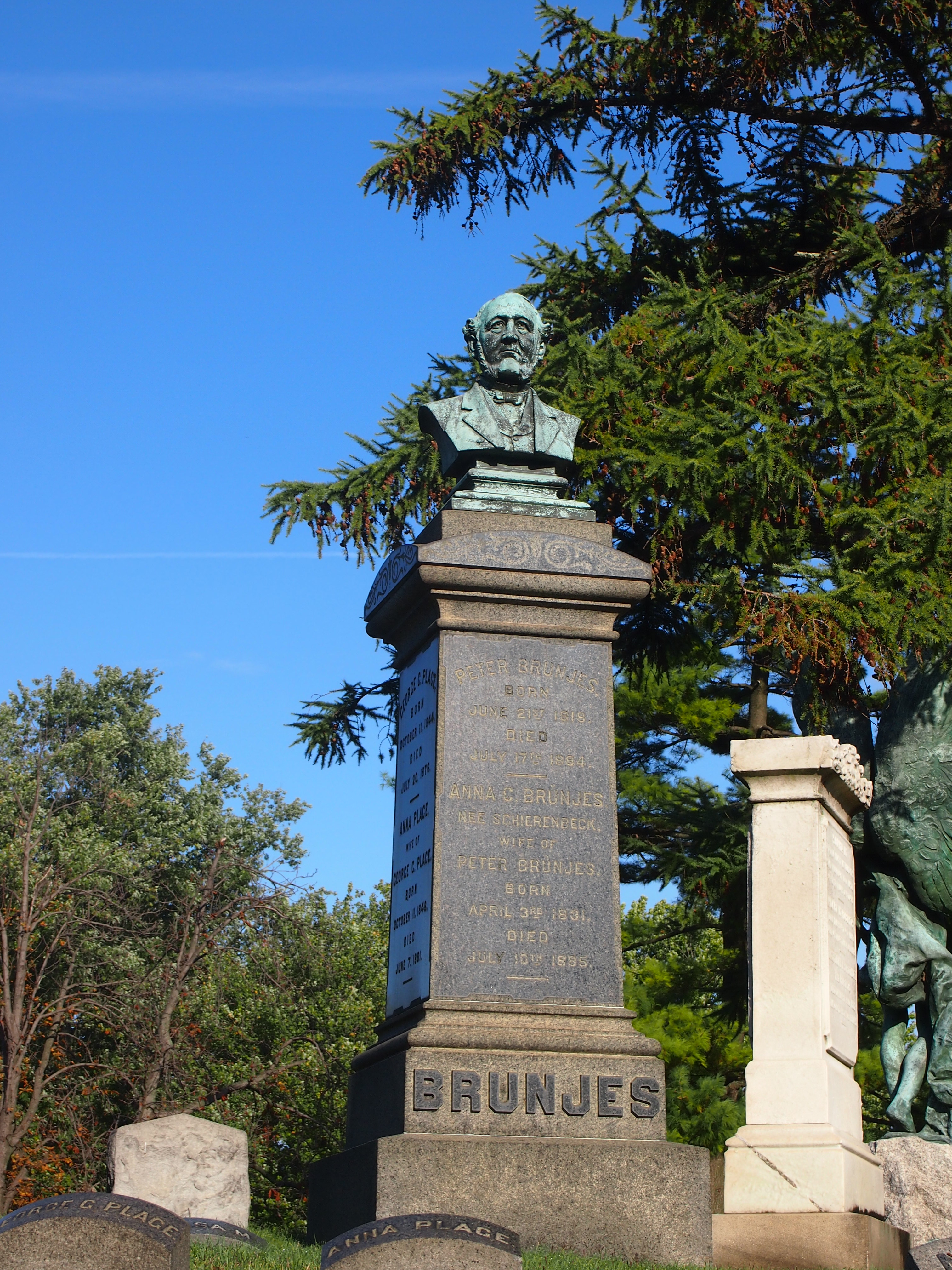
Greenwood CemeteryThis is Peter Brunjes, looking quite 19th century.

Greenwood CemeteryA casual search — “Peter Brunjes,” “Peter Brunjes New York,” “Peter Brunjes Green-Wood” — reveals nothing. Looks like he was a respectable citizen, even locally prominent, just to judge by his stone, which is probably the effect his family wanted. Sic transit gloria mundi, dude. Think you will be remembered? You will not. But so what?

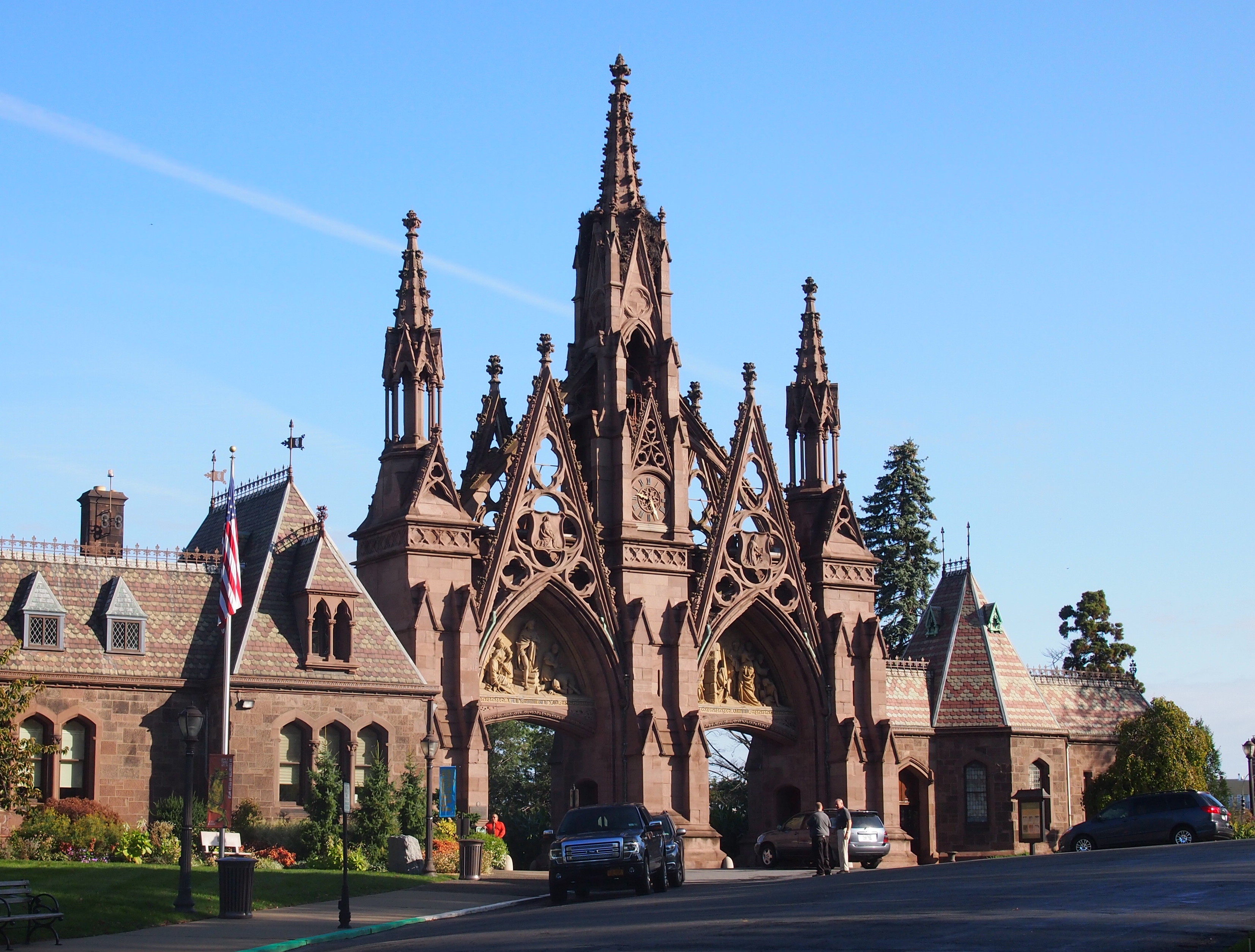
The main entrance, dating from the 1860s, seen in a different light than last year.

Greenwood CemeteryIt’s a design by Richard Upjohn, who’s known for his Gothic churches.

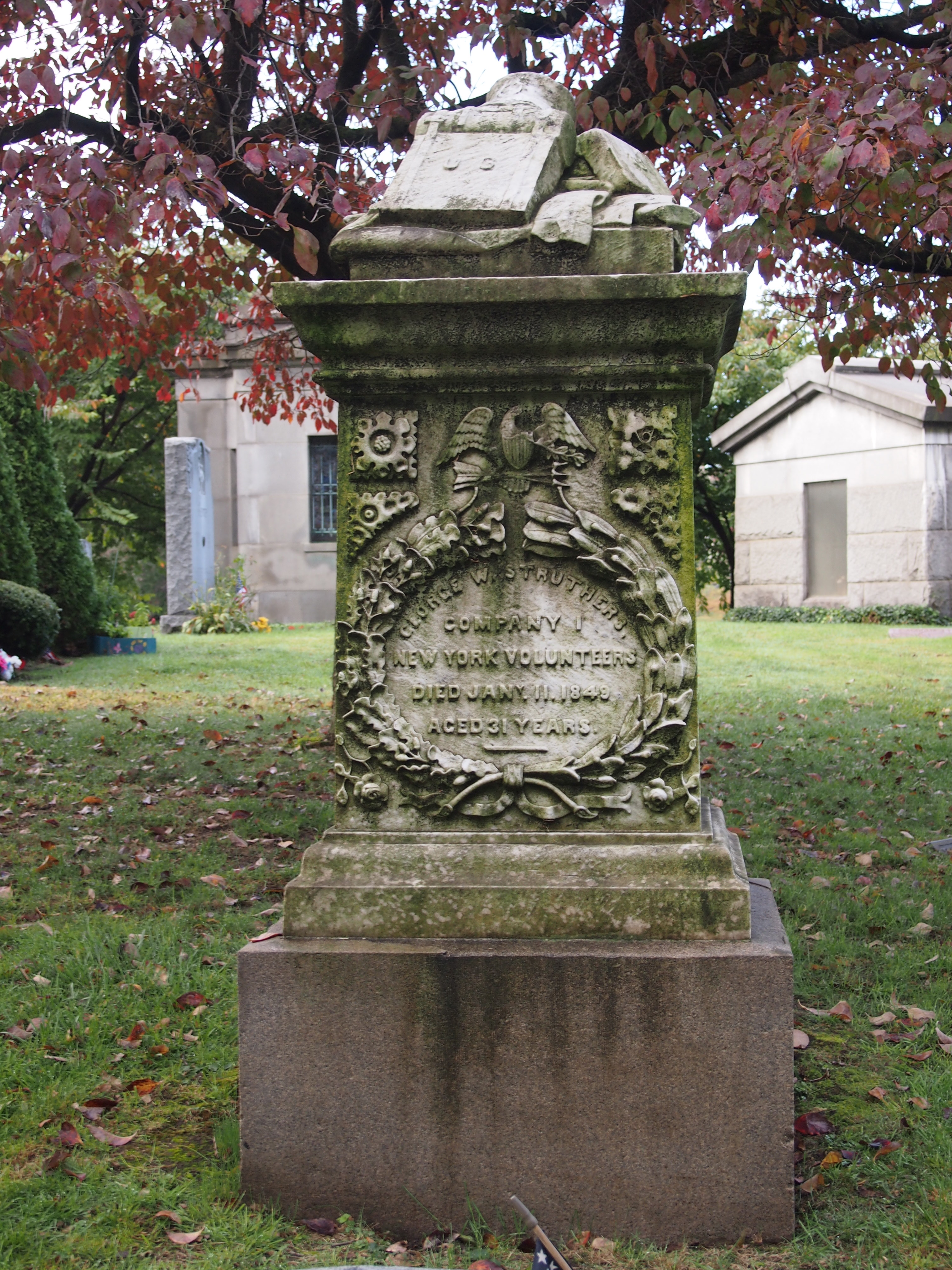
The stone of one George Struthers, died 1849, aged 31 years.

Greenwood Cemetery

From Our Firemen, The History of the NY Fire Departments [all sic]: The “Harrington Guard” was a volunteer organization from Union Engine Company No. 18, and Henry Wilson was its captain. This volunteer company was in existence for a number of years, and one act while Mr. Wilson was in command should not go unrecorded. We allude to their noble conduct toward the first of the New York Volunteers who died after that regiment returned from the Mexican War.

“The late Sherman Brownell was called upon to deliver the address at the dedication of a monument placed in Greenwood by the Harrington Guard. That gallant fellow George Struthers was one of the first to enroll his name in Company 1 of the first regiment of New York State Volunteers.

“With them he went to Mexico, and remained among them until disbanded. He was one of the comparatively small number of the originals of the regiment that returned, and, although he escaped the ravages of the battlefield and returned to his friends, he was, like most of his companions, prostrated with the climate and exposure.

“He found, by disease contracted in Mexico, that he was fast failing. He went to the hospital, where his friends gave him all the attention that could be paid him. After remaining in the hospital for some time, he was called from his sufferings on earth.”

These Vagabond Shoes Are Longing to Stray Right Through the Very Heart of It

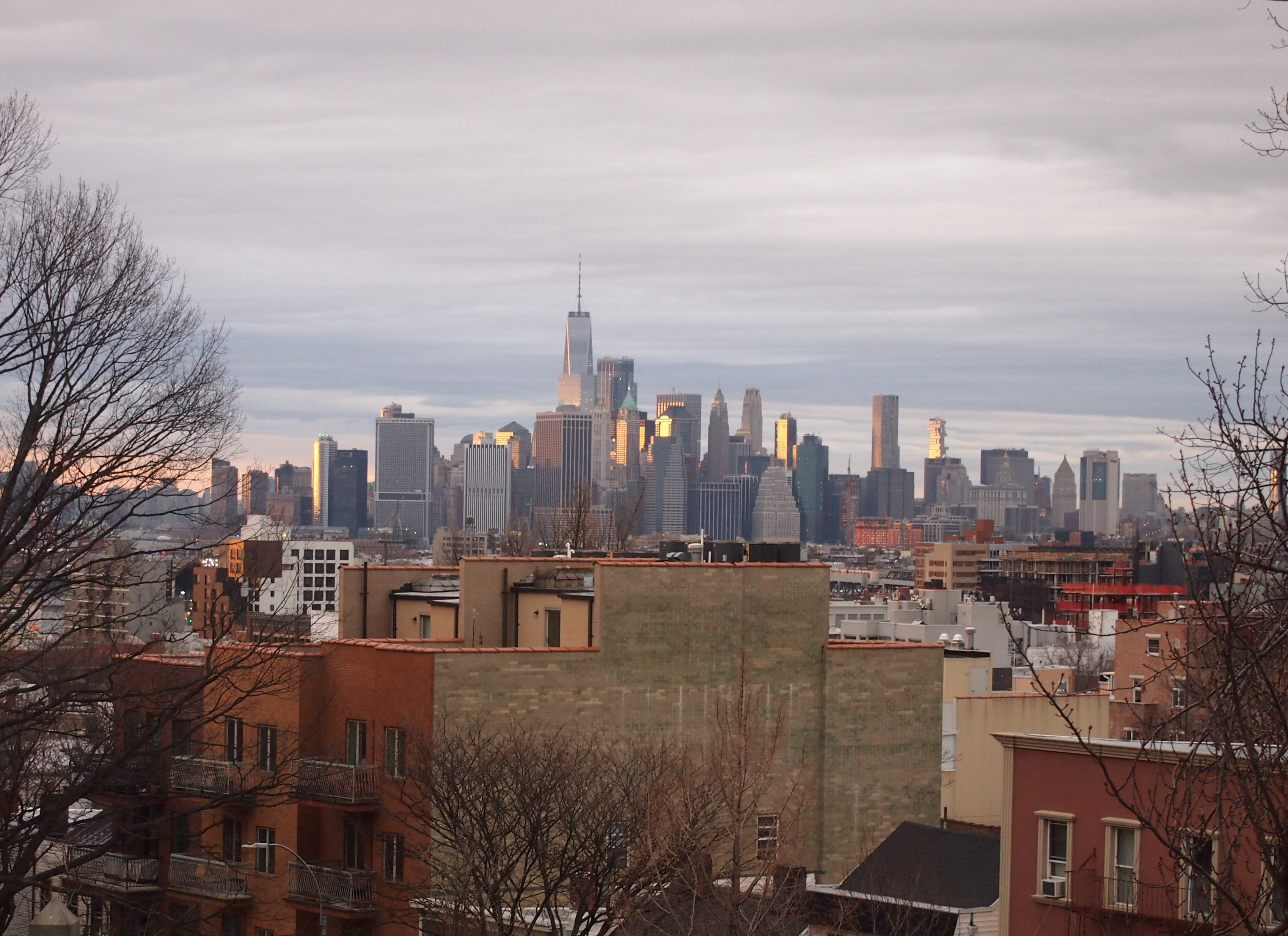
I try to take skyline pictures when I can, such as the modest skylines of Birmingham or Little Rock. I had the good luck of being near the highest point in Brooklyn when I was able to take a shot of Manhattan.

Actually, Brooklyn in the foreground, Manhattan in the background.

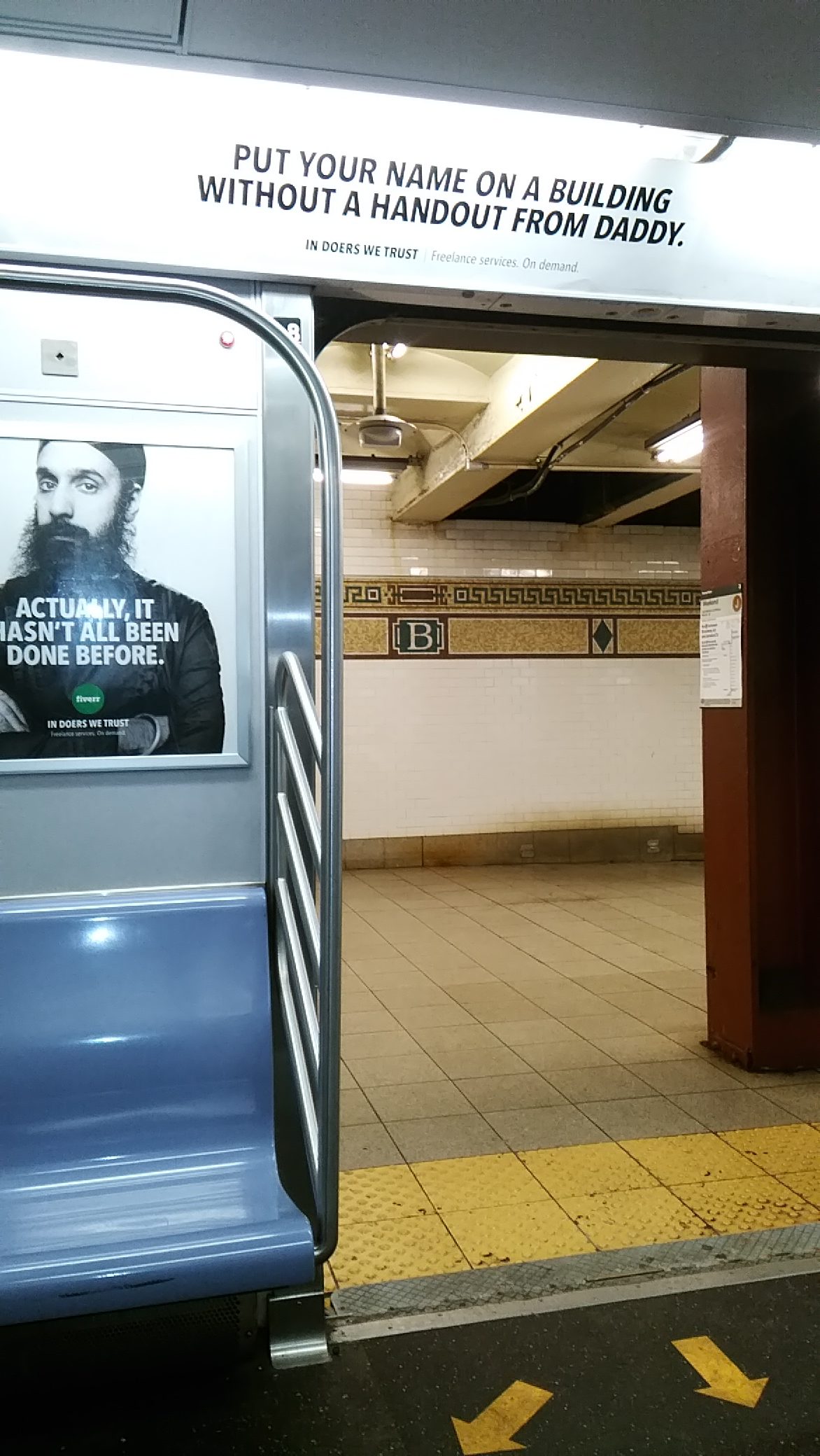
Topical humor, spotted on the subway.

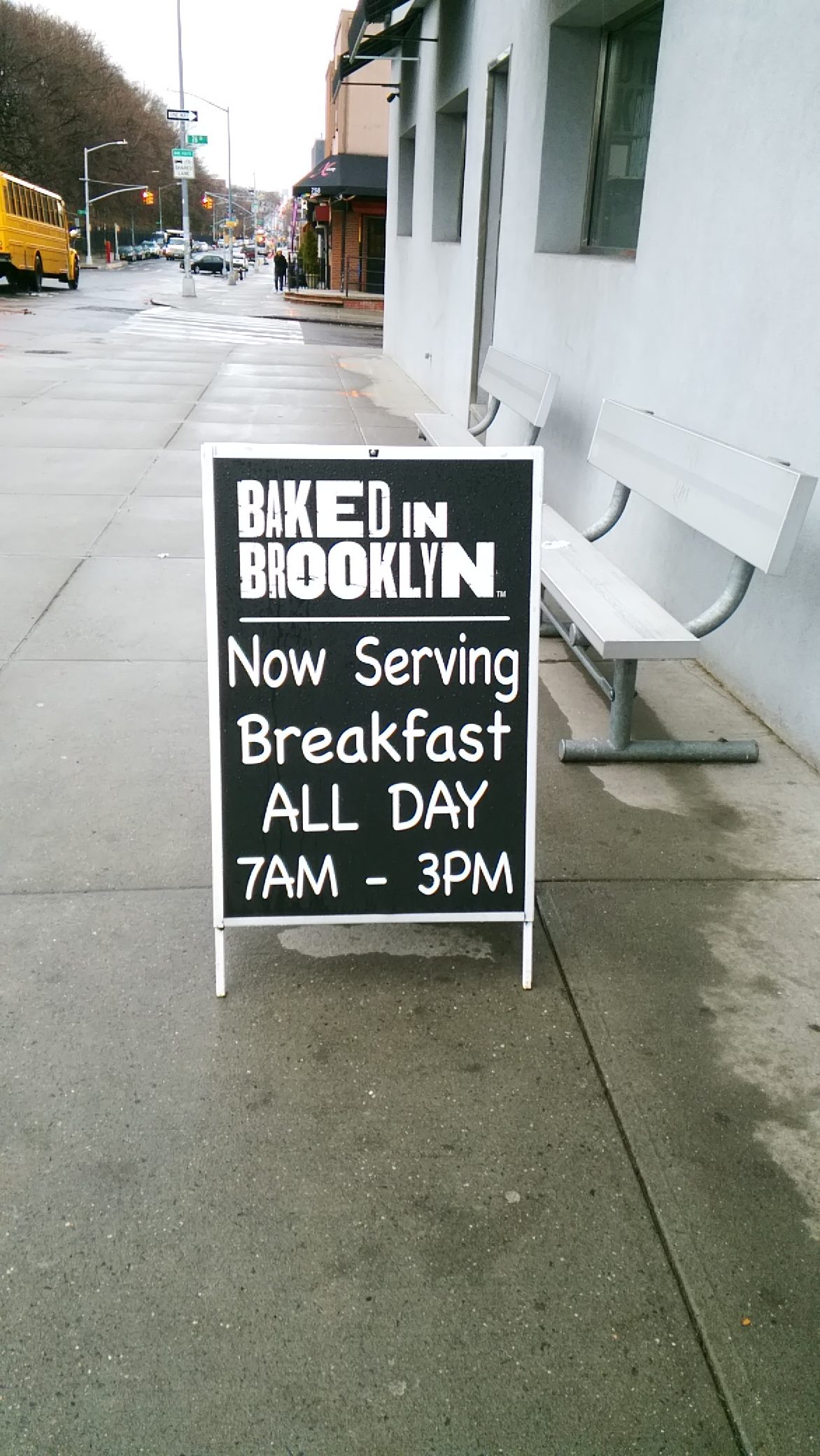
A sign in Brooklyn offering a novel interpretation of “all day.”

I had an idea of taking pictures of construction sites in New York during this visit, as I managed to do in Denver last year. Pretty soon I got tired of it. The air was chilly, for one thing, but more importantly, construction sites seem to be everywhere. If nothing else, New York is a city always reinventing itself.

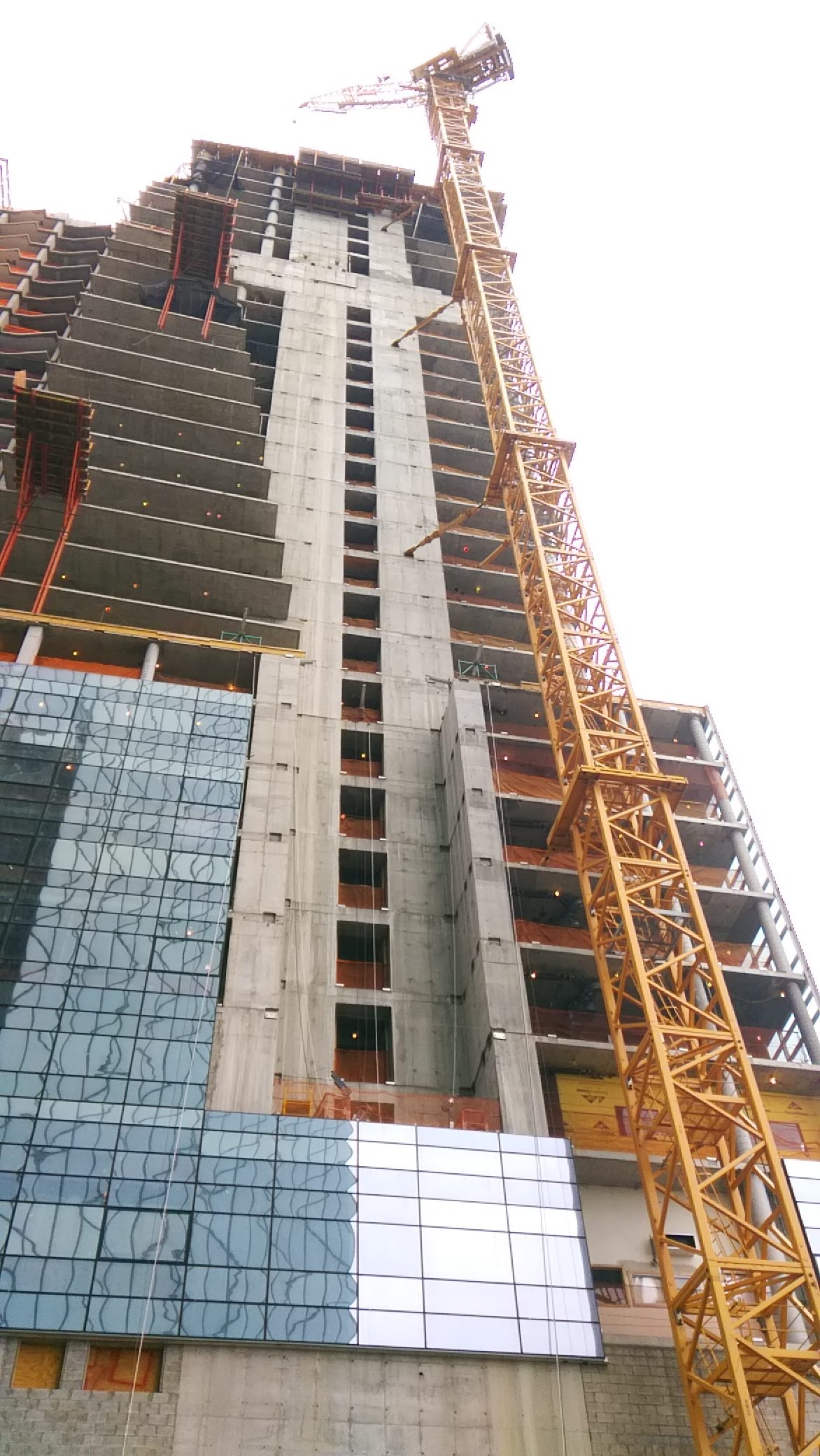
I took a few. Such as a high-rise underway at 161 Maiden Lane in Lower Manhattan.

It will be a residential tower. More deluxe apartments in the sky. Not all has gone smoothly.

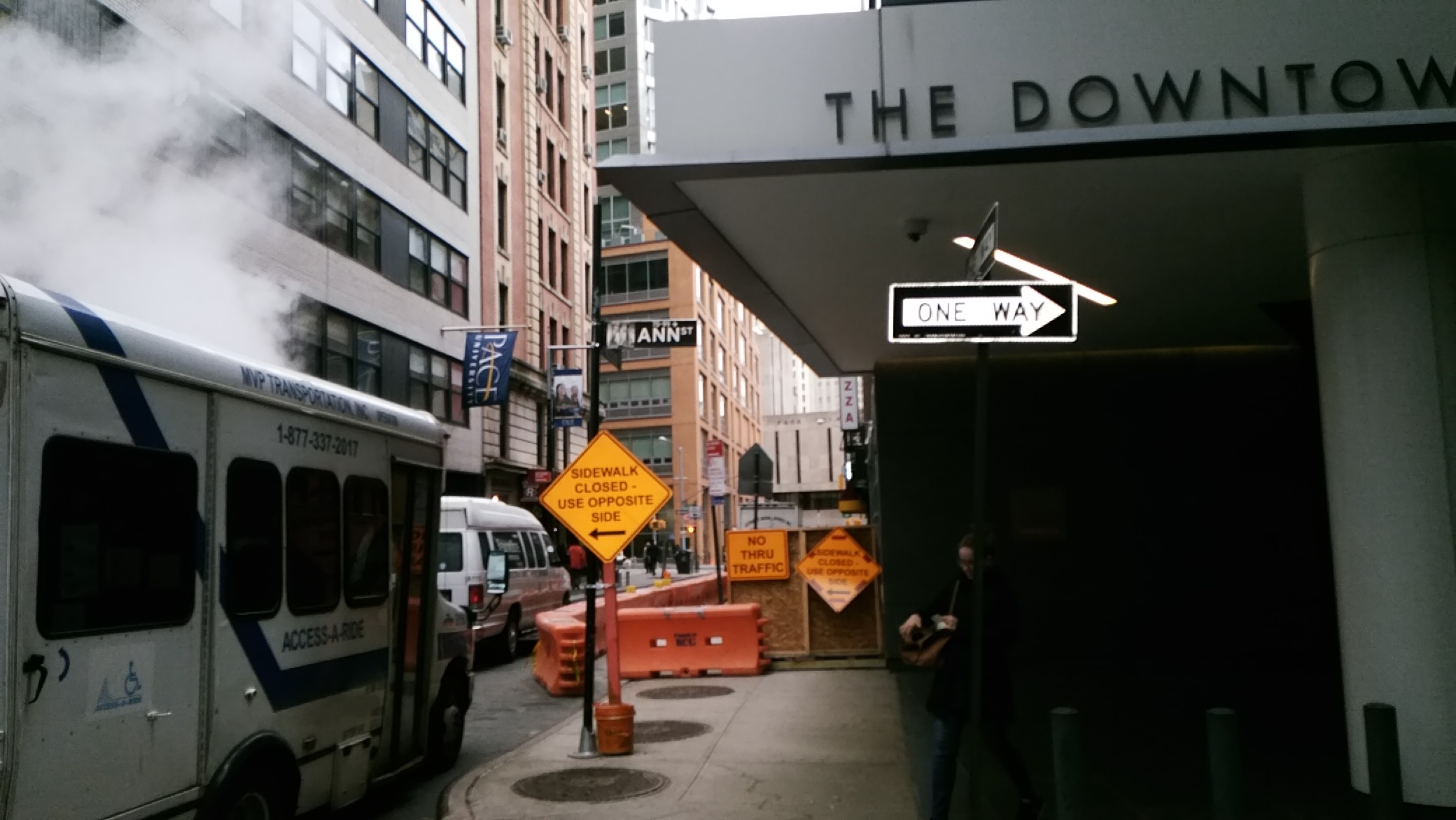
I was also able to get a shot of the Ann St. sign, which I sent to Ann for her amusement.

As part of my walk in Lower Manhattan, I got a look at the South Street Seaport district, which I’d read about, probably even written about (it’s hard to keep track), but never seen.

From Wiki: “It features some of the oldest architecture in downtown Manhattan, and includes the largest concentration of restored early 19th-century commercial buildings in the city. This includes renovated original mercantile buildings, renovated sailing ships, the former Fulton Fish Market, and modern tourist malls featuring food, shopping, and nightlife.”

The drizzle made my walk-through a little less pleasant than it could have been, but I did enjoy seeing the restored buildings. I can imagine that on a pleasant summer weekend, the place is probably pretty busy.

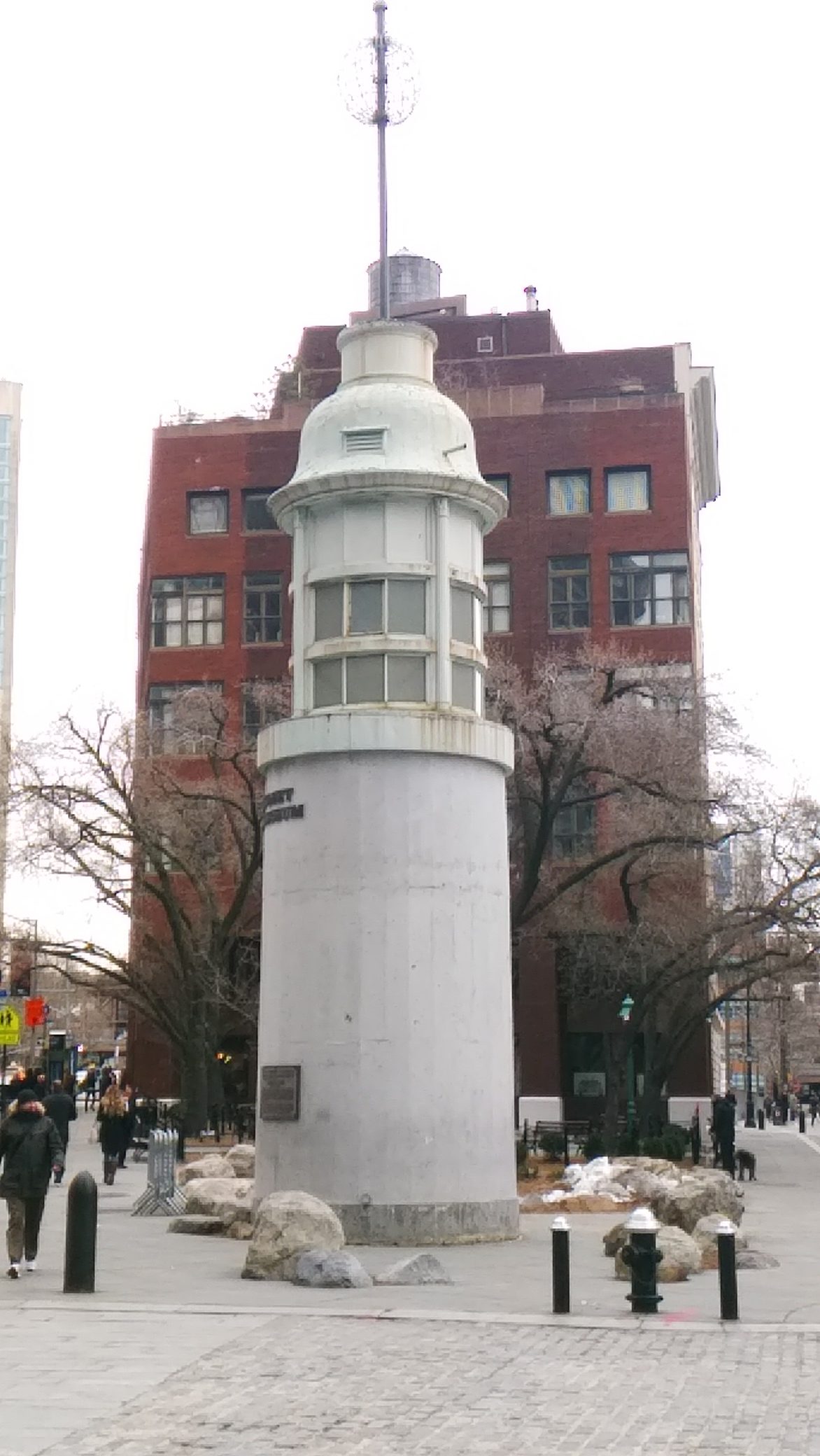
At the edge of the district is South Street Seaport Museum, which I didn’t have time for. I did get a look at the nearby Titanic memorial, which is in the form of a lighthouse.

The plaque on the lighthouse says: “The lighthouse was originally erected by public subscription in 1913. It stood above the East River on the roof of the old Seamen’s Church Institute of New York and New Jersey at the corner of South Street and Coenties Slip. From 1913 to 1967 the time ball at the top of the lighthouse would drop down the pole to signal twelve noon to the ships in the harbor. This time ball mechanism was activated by a telegraphic signal, from the Naval Observatory in Washington D.C.

“In July 1968 the Seamen’s Church Institute moved to 15 State Street. That year, the Titanic Memorial Lighthouse was donated by the Kaiser-Nelson Steel & Salvage Corporation to the South Street Seaport Museum. It was erected at the entrance to the museum complex, on the corner of Fulton and Pearl streets, in May 1976, with funds provided by the Exxon Corporation.”

I got a look at, but did not board, the Wavertree, which is docked permanently at one of the piers, and which is part of the museum. It was built in 1885.

Wiki again: “The ship was launched in Southampton. It is 325 feet (99 m) long including spars and 263 feet (80 m) on deck. The ship is the largest remaining wrought iron vessel. Initially it was used for transporting jute from east India to Scotland, and then was involved in the tramp trade. In 1947 it was converted into a sand barge, and in 1968 it was acquired by the South Street Seaport Museum.”

One more image, also from Lower Manhattan, though at some distance from South Street Seaport. I just happened to walk by.

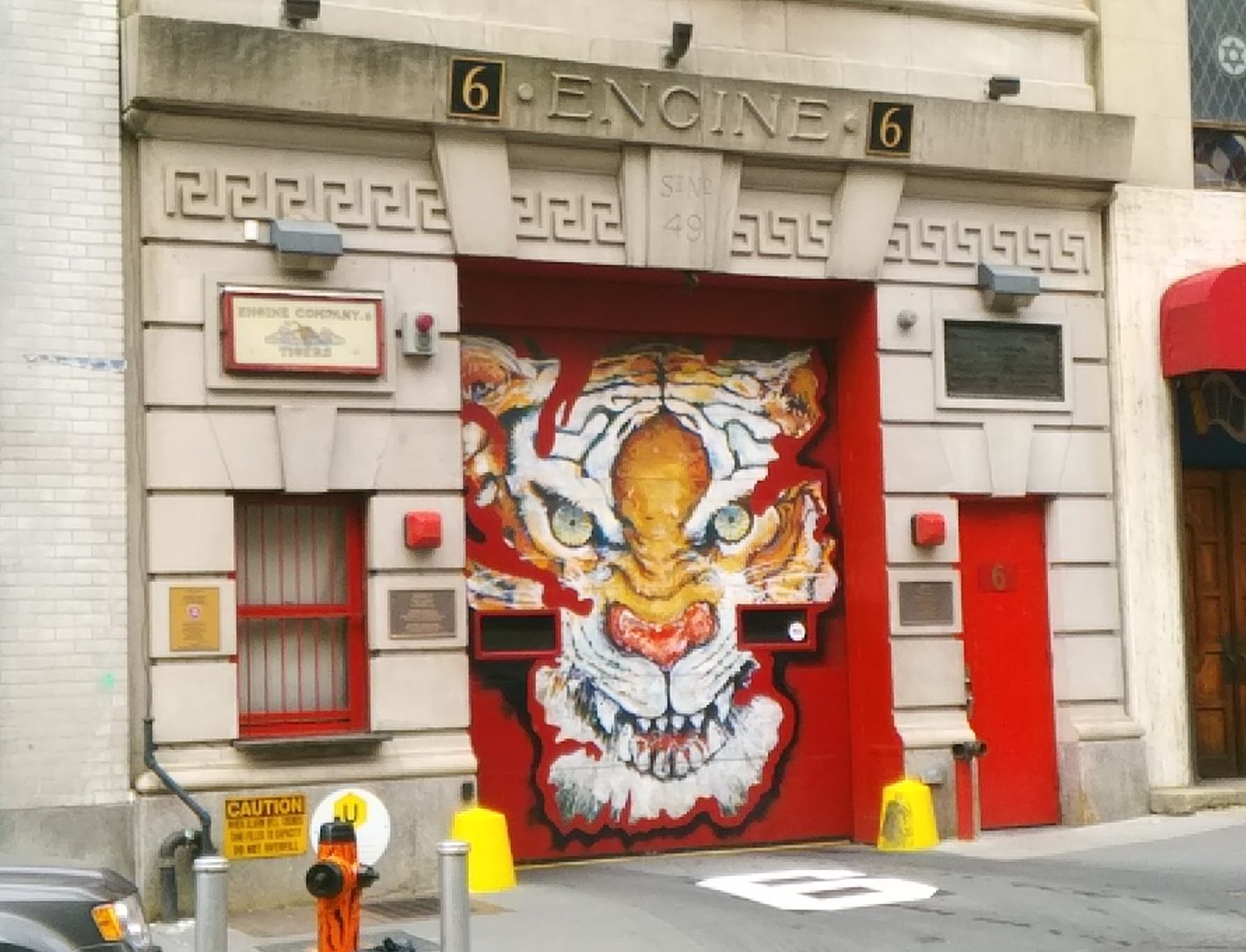
Engine 6 of the FDNY. The Tigers.

The New York State Museum says, showing a picture from before the tiger was added to the door: “On September 11, 2001, six firefighters from the FDNY Engine 6 Company were dispatched to the World Trade Center where they hooked the Engine 6 Pumper into a Trade Center standpipe on West Street. Four men from the Company — Lieutenant Thomas O’Hagan, Firefighter Paul Beyer, Firefighter William Johnson, and Firefighter Thomas Holohan — were killed in the tower’s collapse. Firefighters Billy Green and Jack Butler survived.”

The Mitzvah Tank

Some New York subway platforms have electronic signs advising you how many minutes it will be until the next train. Sometimes I would notice x minutes to the next train, and then a few minutes later, it would still be x minutes. Gives new and opposite meaning to the term New York minute.

While wandering around Lower Manhattan during my recent visit, I had a New York experience — or at least one associated with the city. One of a small group of young Hasidim, who must have been no older than his late teens, approached me and asked if I were Jewish. I said I wasn’t, and on the group went.

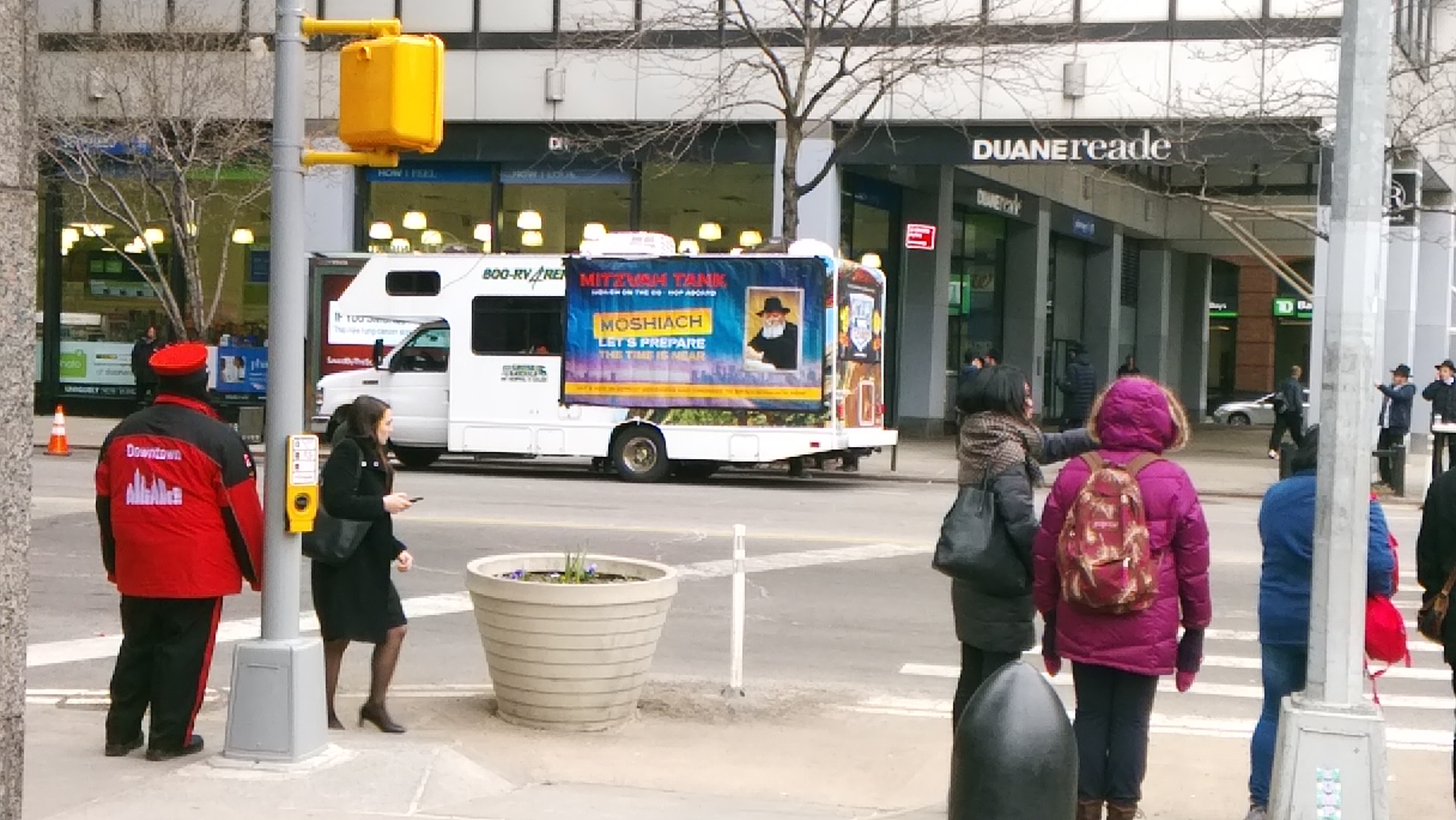
They weren’t far from this RV.

It’s a Chabad Lubavitch “mitzvah tank.” Further investigation — the tank has its own web site — tells me that they first appeared in 1974.
“The Rebbe, Rabbi Menachem Mendel Schneerson, of righteous memory, had sent his tanks into the battle for the soul of the American Jew,” explains the web site.

“If a large part of American Jewry had ceased to come to shul each morning to don tefilIin and pray, the Rebbe was going to bring the tefillin to them. He was going to send one of his students to stop the American Jew on a city sidewalk. ‘Excuse me, sir,’ the lad would say. ‘Are you Jewish?’

“If the answer is affirmative, the young man would continue: ‘Would you like to put on tefillin today? It’s a mitzvah.’ The American Jew will be invited to step up onto the truck, roll up his left sleeve, bind the tefillin to his arm and head and recite a short prayer.

“If the American Jew is a she, she would be offered a free kit containing a small tin candlestick, a candle, and a brochure with all the information necessary to light Shabbat Candles that Friday evening — the proper time (18 minutes before sunset), the blessings in Hebrew and English, and a short message on the importance of ushering Shabbat into her home. He or she would also be offered literature on the Rebbe’s other ‘mitzvah campaigns’ or assistance in anything from having a mezuzah checked to finding Jewish school for their child.”

Apparently mitzvah tanks are on the move the eve of major Jewish holidays and Fridays before Shabbat. Passover was coming up when I saw the tank, actually a rental truck, so that fit. Also, though the trucks first rolled out in New York, they can be found anywhere Chabad is active.

I was asked the same question while wandering around Lower Manhattan during our short visit in 1995, though I didn’t see a truck at that time. Which reminds me of something else. Lower Manhattan seems to be a lot more busy these days on the weekend, especially with pedestrians. It has, in the 20-odd years since I spent much time there, become more of a residential neighborhood.

Back to the Bronx

Early in the afternoon of Easter Saturday, I boarded a 4 train at Atlantic Ave.-Barclays Ctr. in Brooklyn and rode it all the way to the Woodlawn station in the Bronx, which is the end of the line and nearly as far as you can go in New York City in that direction. It was a local train. As far as I could tell, there were no expresses to be had on that line that day, though I might have been wrong.

It was a long ride: the better part of two hours. But it was a ride I wanted to take, watching a shifting array of passengers get on and off, and when the train got to the Bronx, watching the borough go by, since the train is elevated up that way.

Some time ago, I wrote about my passage through the South Bronx in 1983: “Before long I was on the #5 IRT, which after leaving Manhattan becomes an elevated train and gave me a full look at the wasteland that is the south Bronx. Blocks of rundown buildings are one thing, but what’s astonishing is how few buildings stand on many blocks, and how much rubble there is. I’ve never seen the aftermath of a city shelled by an enemy, but I’d think it would look like this place.”

That impression of the South Bronx never quite left me. Of course things were different this time, because of the passage of 35 years, and the fact that the 4 takes a very different course than the 5 (which, note, I called the IRT 5 in those days). The 4 train took me past block after block of large apartment buildings, as you’d expect in much of New York, as well as by Yankee Stadium. A casual look at the route of the 5 on Google shows that much redevelopment has been done in that part of the borough, which I’ve also read about.

My goal for the day wasn’t riding the train, but walking through Woodlawn Cemetery. After I first visited Green-Wood Cemetery, I became intrigued with the prospect of seeing Woodlawn, which is an equivalent historic, park-like cemetery in the Bronx, founded in 1863 and so part of the rural cemetery movement. More than 300,000 people are interred there. When Saturday turned out to be clear and almost warm, that tipped my decision toward taking the trip up to Woodlawn.

The cemetery’s web site says: “Our 400-acre cemetery has become an outdoor museum to more than 100,000 visitors who tour our grounds each year. Our celebrated lot owners comprise artists and writers, business moguls, civic leaders, entertainers, jazz musicians, suffragists, and more, including Herman Melville, Joseph Pulitzer, Fiorello LaGuardia, Celia Cruz, Duke Ellington, Irving Berlin, and Elizabeth Cady Stanton, just to name a few.

“The cemetery’s collection of monuments — including over 1300 mausoleums — were designed by American architects, landscape designers, and sculptors. The work of McKim, Mead & White, Carrere & Hastings, Beatrix Farrand, Louis Comfort Tiffany, and Daniel Chester French graces Woodlawn’s grounds.”

I entered at the Jerome Ave. entrance and walked across the cemetery, generally heading northeast along the main road toward the main entrance. The cemetery isn’t kidding about its many mausoleums. A lot of really large ones seem to be concentrated close to the Jerome Ave. entrance. The result of lots of wealthy people imagining they would be remembered when, of course, they are not.

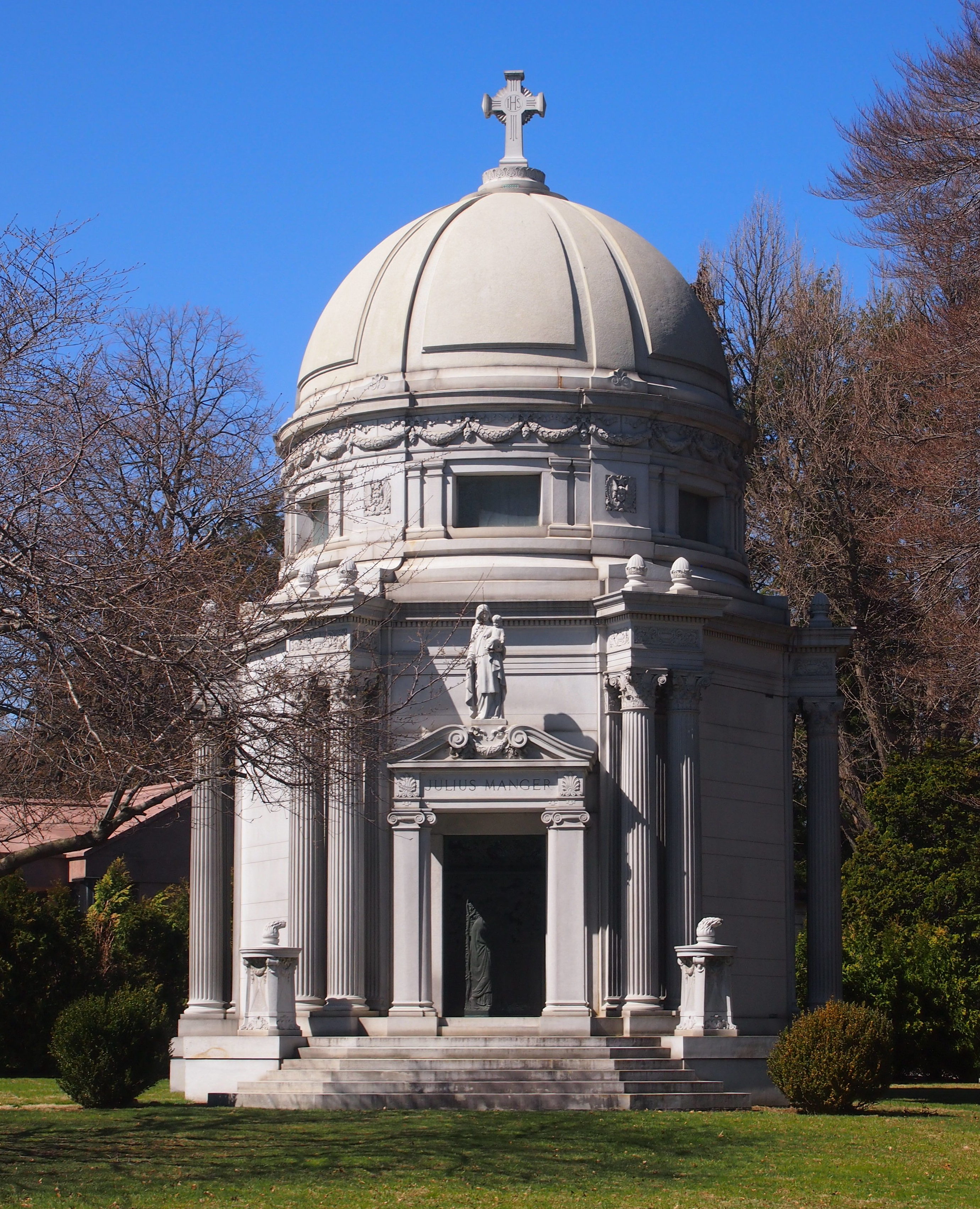
Still, they’re wonderful to look at. Here’s the stately mausoleum of Julius Manger, early 20th century hotel mogul.

A Greek temple of a mausoleum for Francis Patrick Garvan, lawyer and long-time president of the Chemical Foundation.

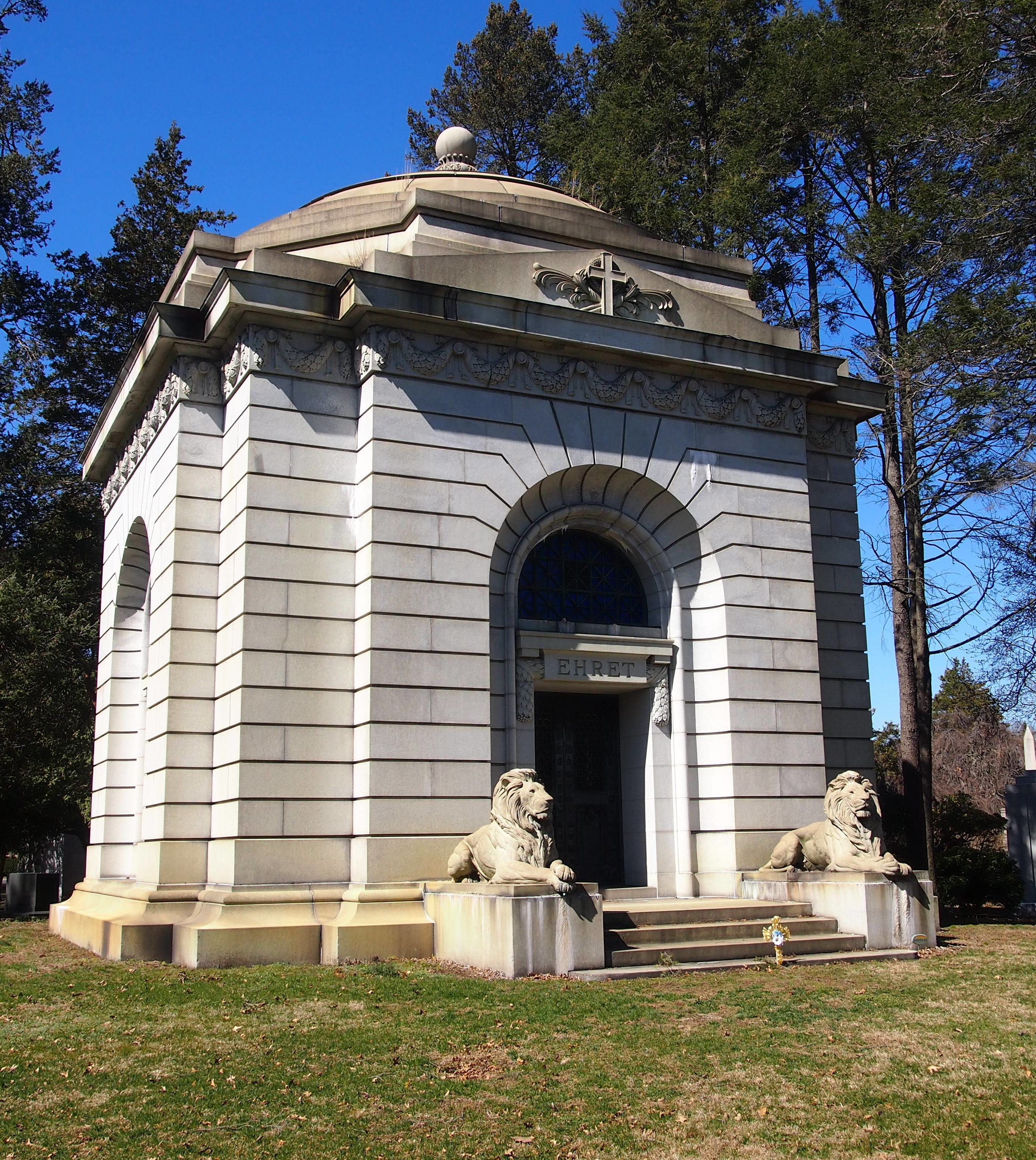
The resting place of George Ehret, early 20th century beer baron. I was hoping it was the food faddist Arnold Ehret, but no.

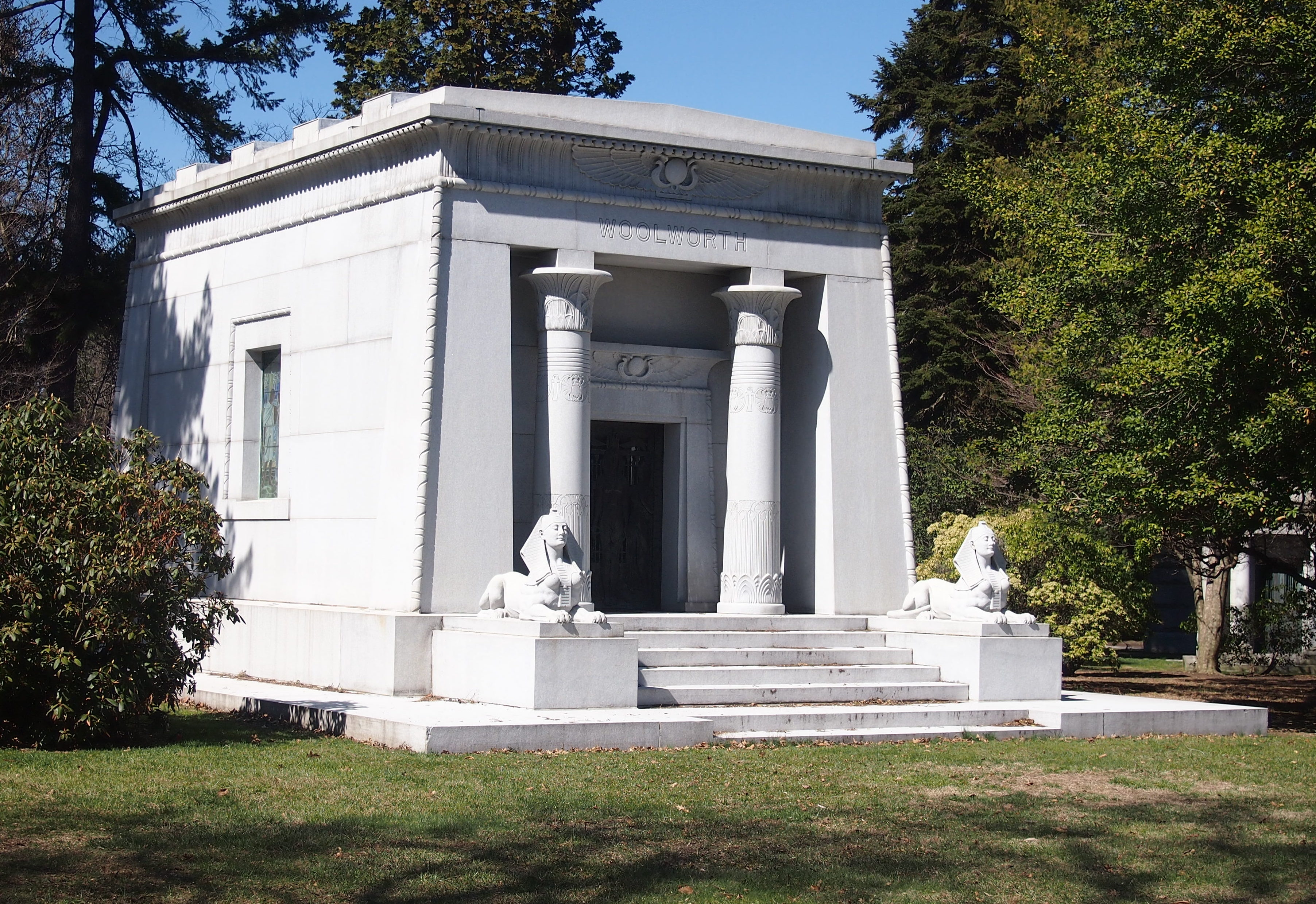
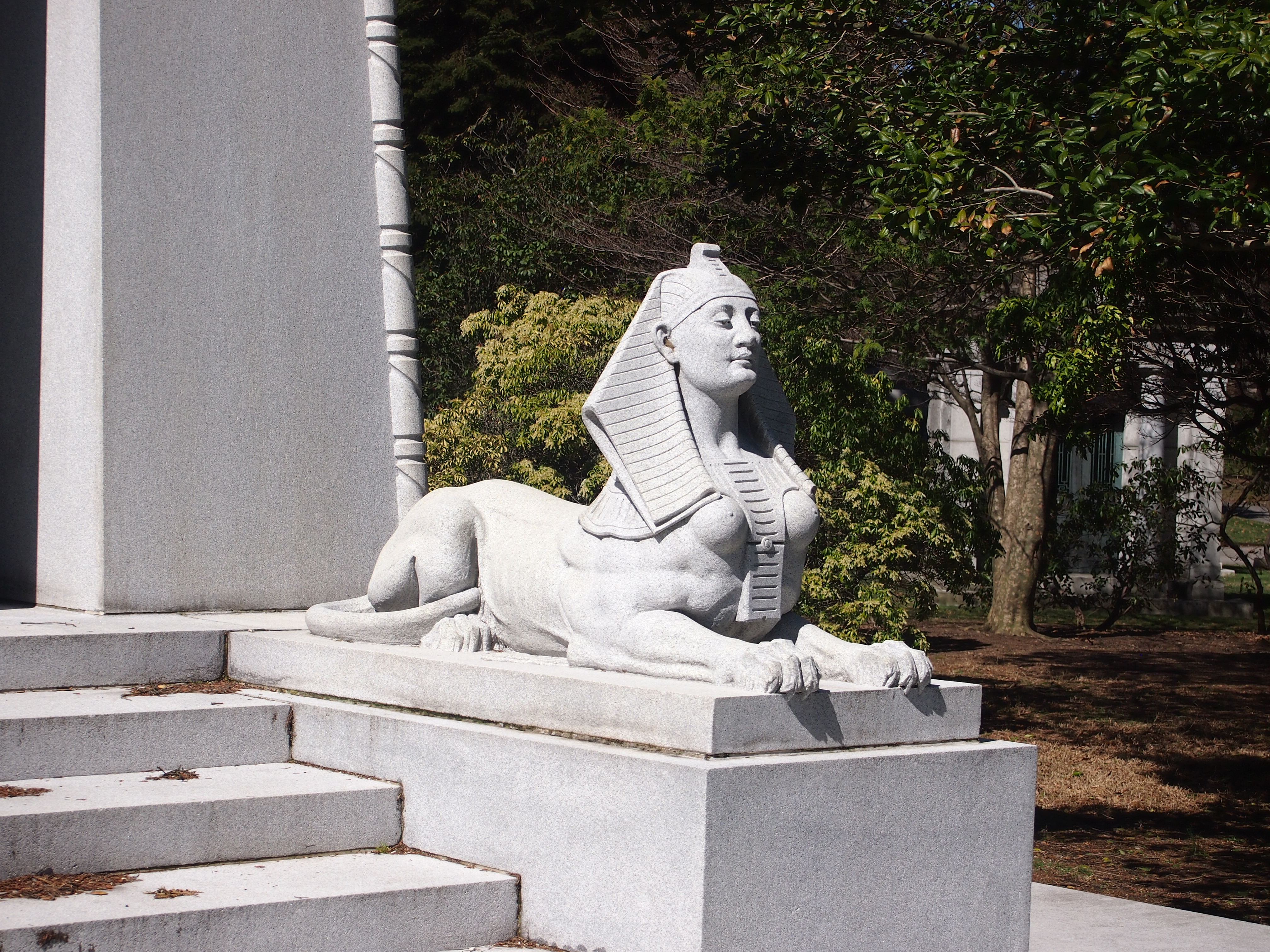
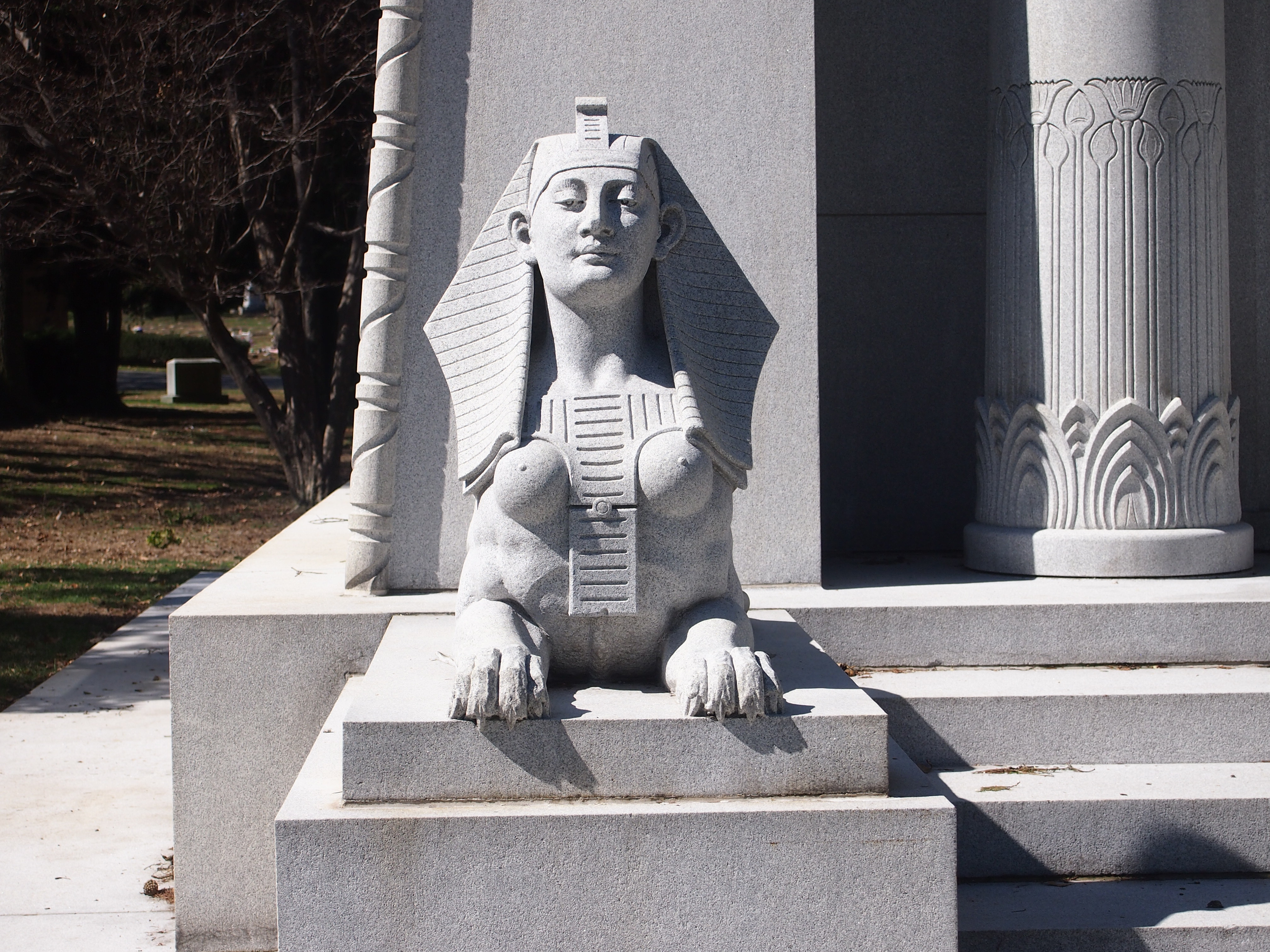
Here’s more Egyptian revival. Always makes my day to run across an example of it.
Woolworth? That Woolworth? Yes, indeed. F.W. Woolworth, the king of the dime store, who died in 1919.

Among these major mausoleums, Woolworth was the only one I’d heard of before looking them up. I wasn’t out to look for famous graves, though I knew Woodlawn has plenty. I had no guide or map. I was just walking to see what I could see.

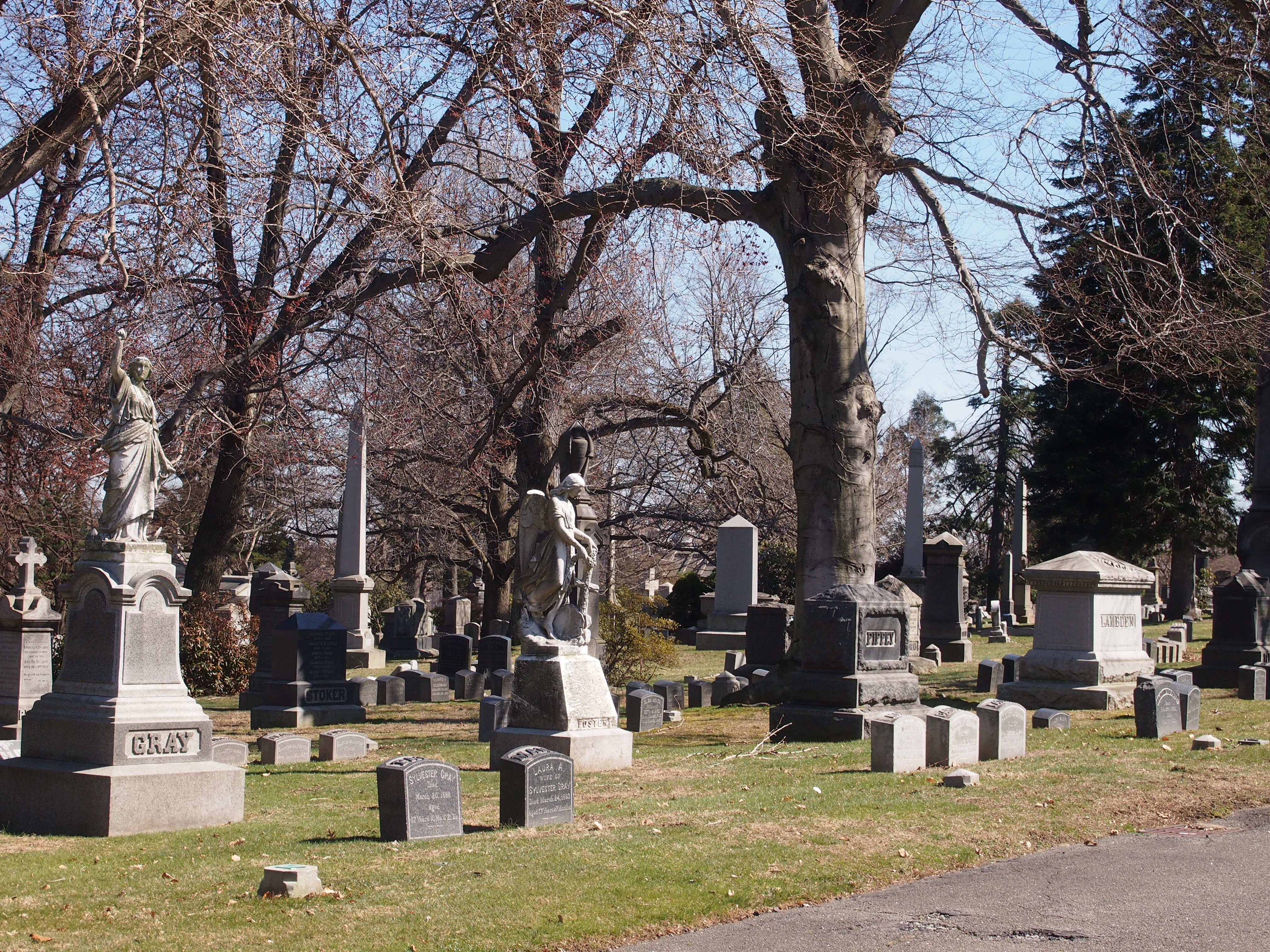
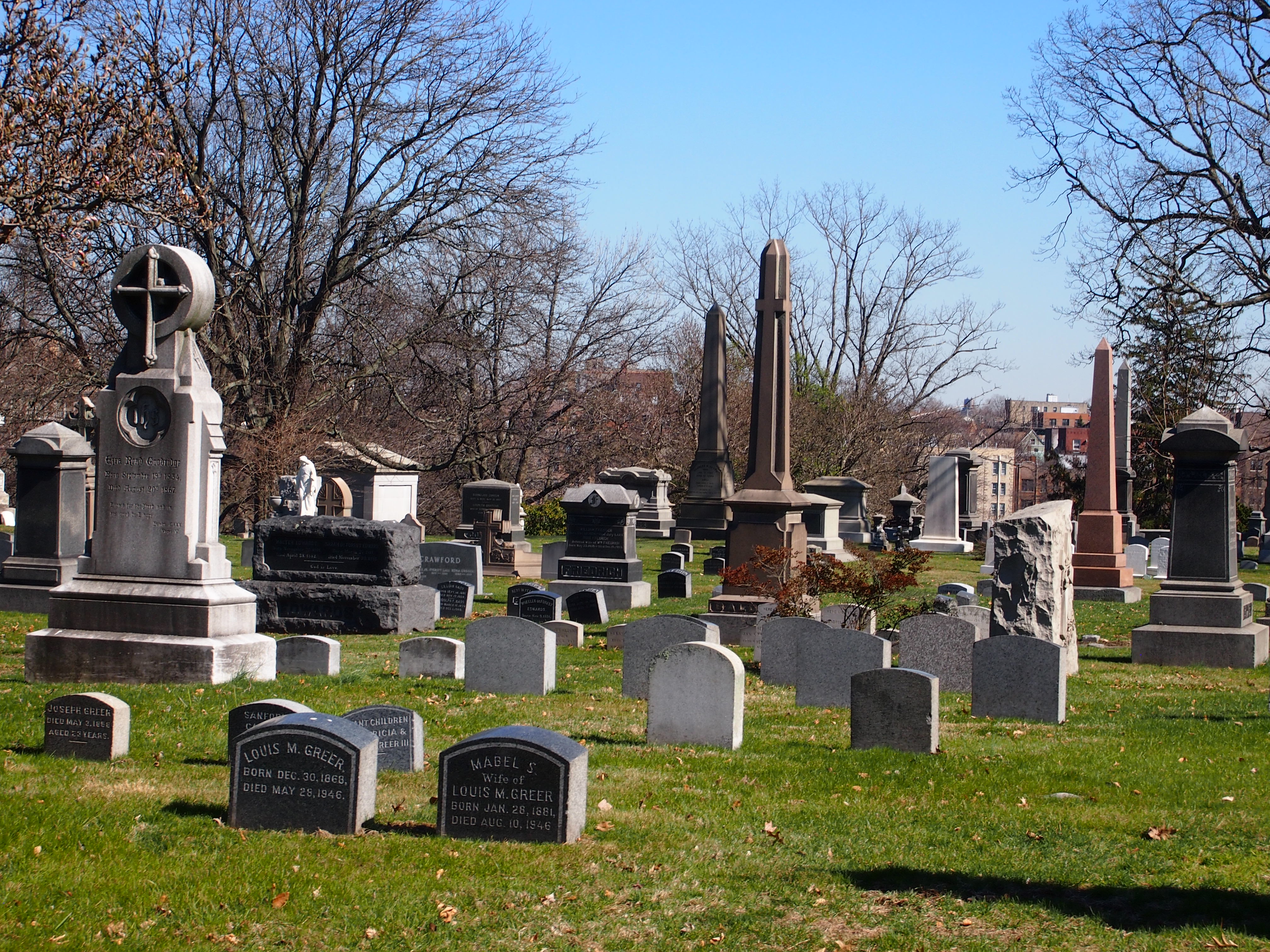
Mausoleums weren’t the entire scope of the cemetery. I saw many more modest markers, or not so modest, some very elegant.

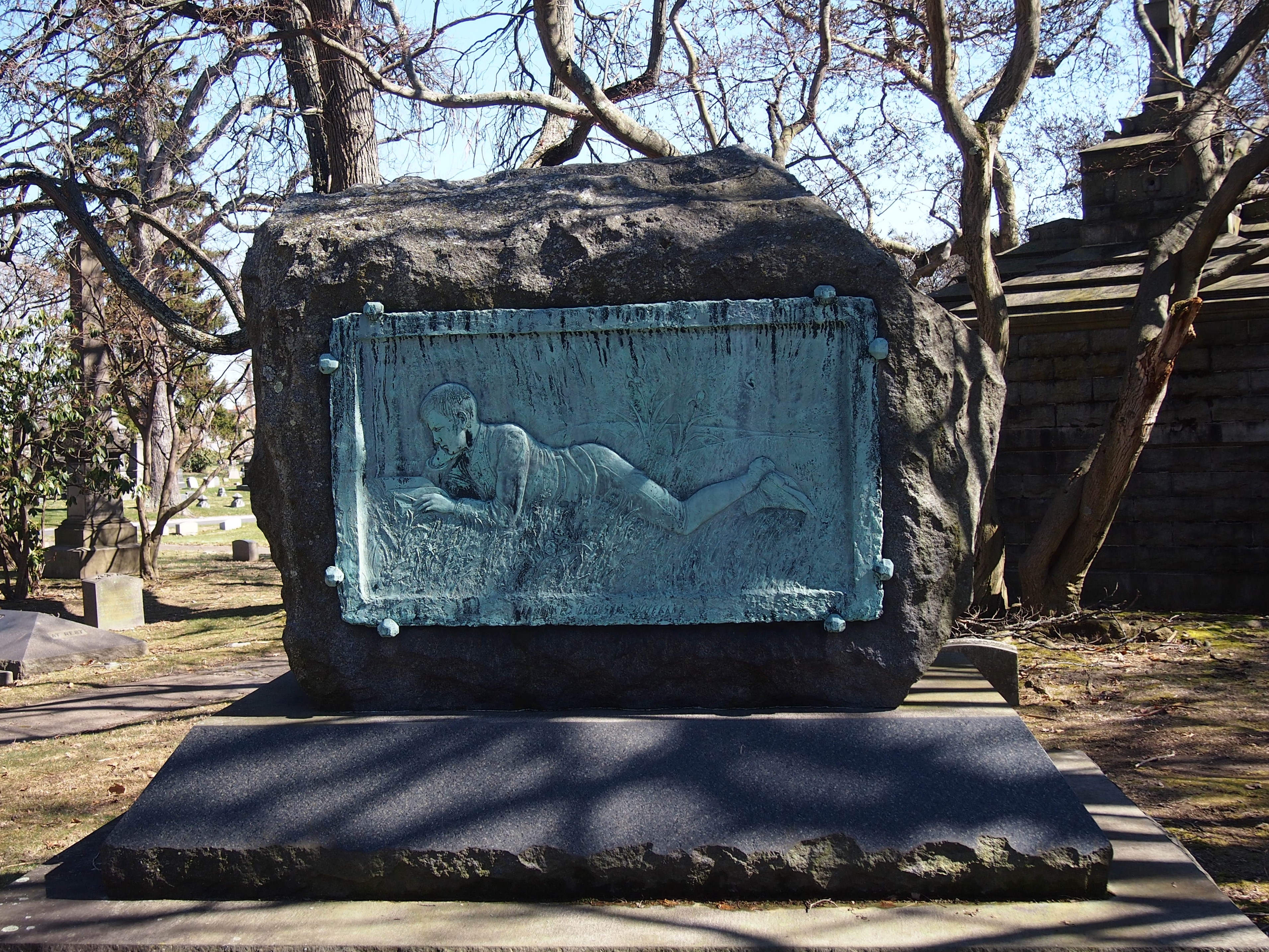
This one was unusual: Jerome Byron Wheeler (1842-1918). Seems like he wanted to be remembered as a man of refined literary tastes. Or at least as a lover of books.

Wiki, at least, claims his mother was a second cousin of Ralph Waldo Emerson. That didn’t pay for the stone and the relief, however: Wheeler owned mines in Colorado.

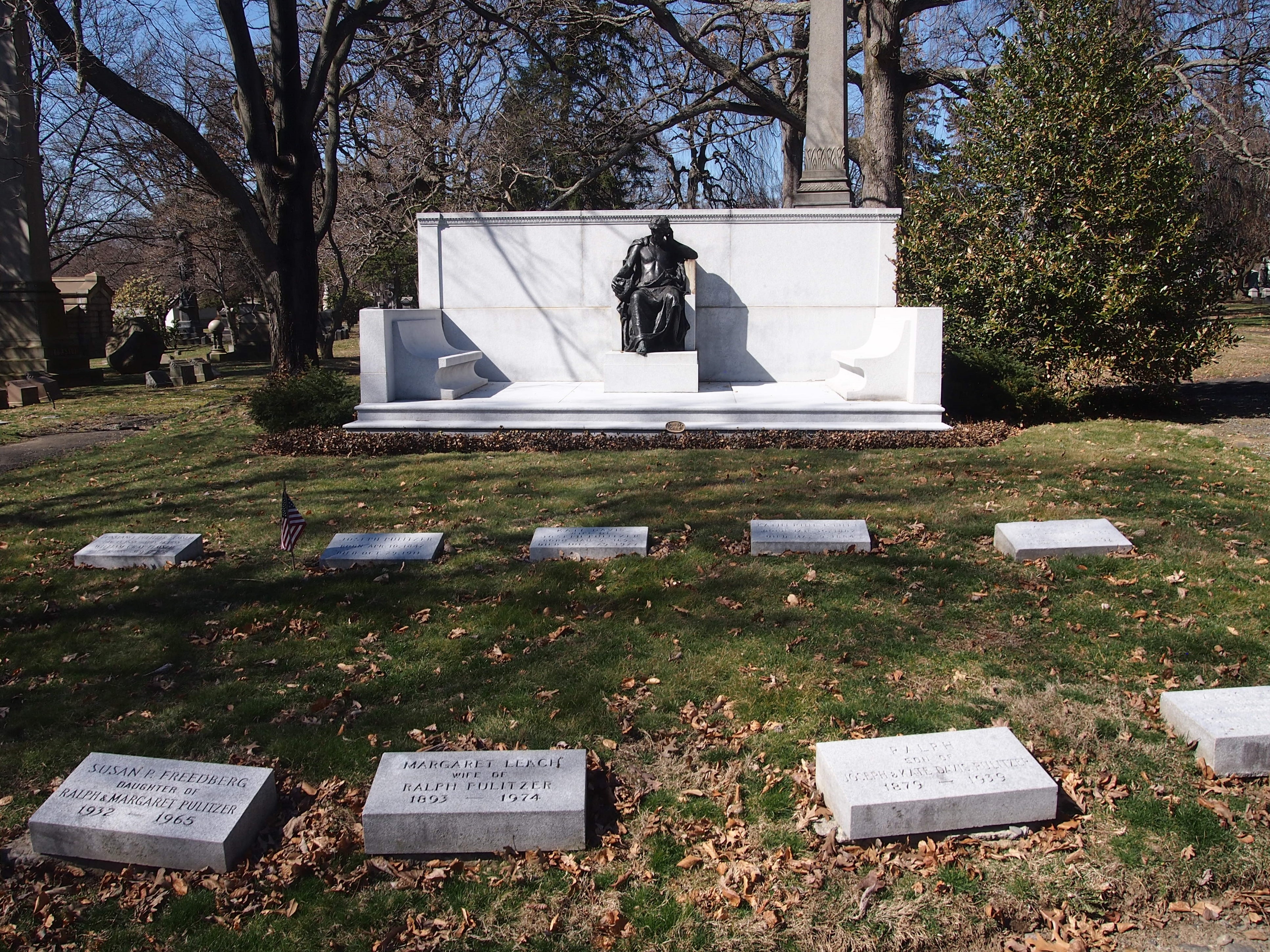
One more grave of a noted person: Joseph Pulitzer and other family members, which I found by chance.

Near the main entrance, I saw this wood carving.
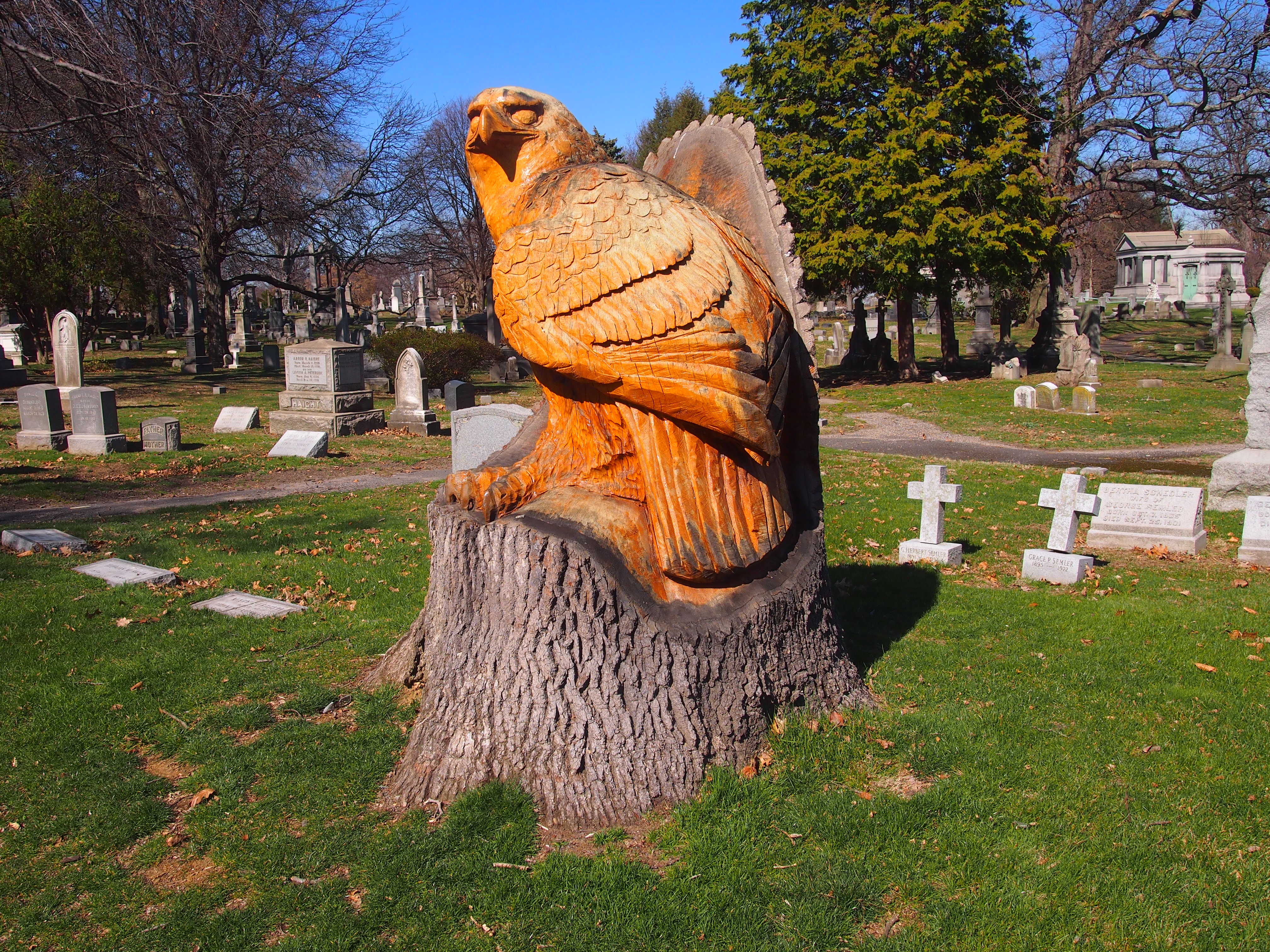
Glad to see that the cemetery didn’t simply rip the stump out. Like all the best rural cemeteries, Woodlawn is an arboretum too. This is a kind of memorial to the tree.