Voice Mail in the Digital Age

Here’s how not to set up your answering machine, if you’re a business that wants contact with the outside world. This is more-or-less what happened when I dialed a nunber recently in pursuit of my work.

Machine Voice: You have reached Three Initial Corp. If you know your party’s extension, please dial it now. To search by last name, please dial 1.

Silence.

As it happened, I didn’t know the name of the person who could help me. That was one of my questions.

Continued silence.

I thought about dialing 1, just to see what would happen. Or picking a name like Smith, just to see what would happen. But I had some business to conduct, so I didn’t want to go off on a whimsical tangent, as much as I like those.

Click. Click.

Machine Voice: You have reached the voice mailbox of Random Name. Please…

I had no idea if that was the person whom I needed to talk to or not. I left a message. I’ve yet to hear back.

Atatürk at the Stoplight

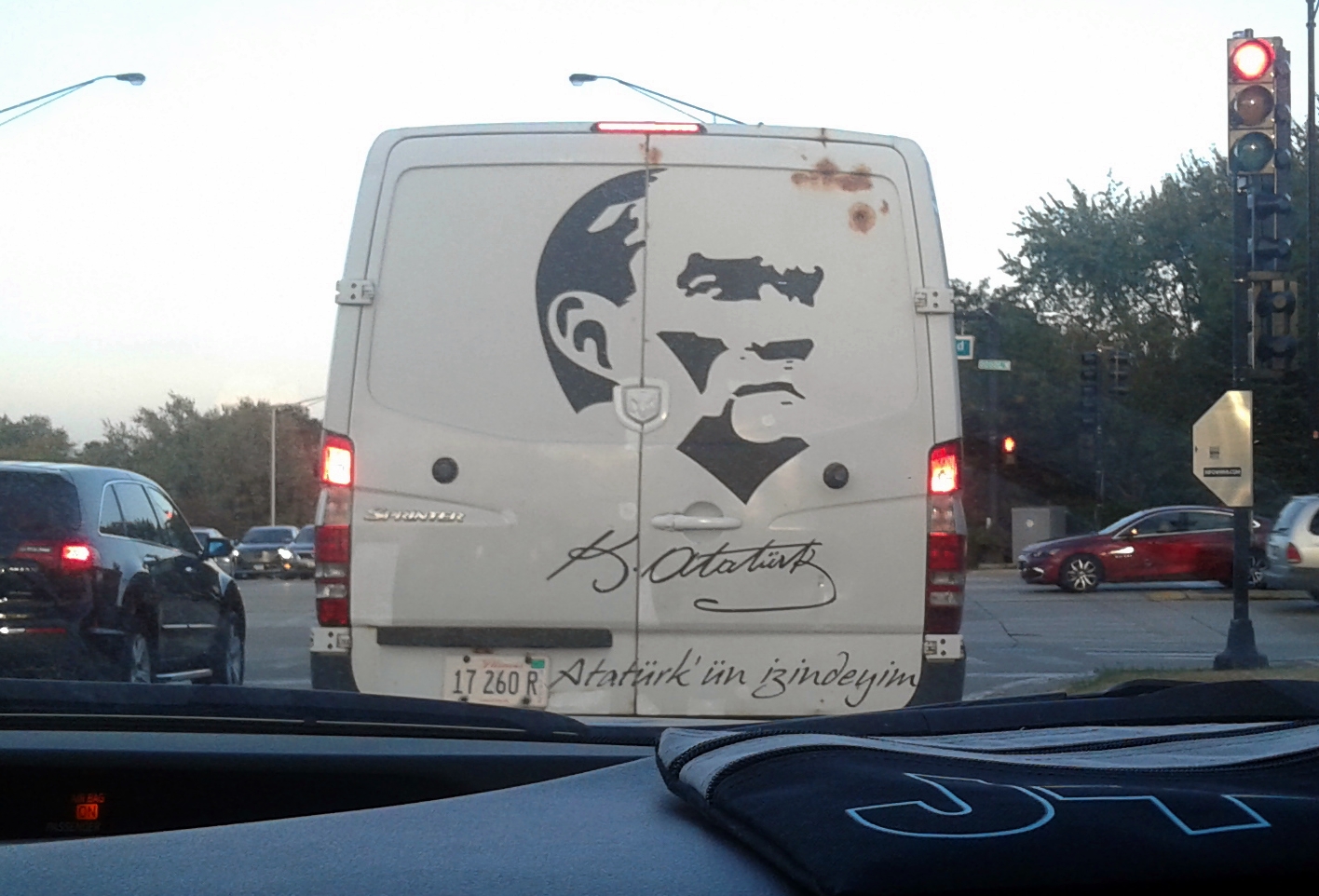
Sometimes you’re driving along and you see something odd. Not long ago I was driving with Ann in the front seat, and we stopped at a light behind a white truck — unadorned except for one thing.

Ataturk 2017I had her take a picture, since I didn’t have a camera with me. I told her that the face was that of Atatürk, father of modern Turkey. She hadn’t heard of him. Now she has. What he’s doing on a truck in the northwest suburbs of Chicago is another question, one for which I don’t have an answer.

As far as I’ve been able to determine — and I’m not at all knowledgeable about Turkish — the words at the bottom mean, “We follow in the footsteps of Atatürk.” Well, why not? Still, it’s a little like a truck with the face of George Washington plying the streets of suburban Istanbul. Maybe that happens, but it would be odd, wouldn’t it?

Harvest Moon 2017 & “Harvest Moon” 1992

This year’s Harvest Moon, which I read was a little later than usual, was obscured by clouds last week here in northeast Illinois. The near-full moon was nice and clear the day before, however.

Not long ago I found “Harvest Moon” by Neil Young and its slightly surreal video. I must have missed the song when it came out in the early ’90s. It’s a pleasant tune, practically a lullaby for adults. For middle-aged adults, to be more specific.

And who’s the guy always sweeping as the song goes along? Father Time would be my guess. Everything is swept away by time, after all.

I’ve written about named moons before. A fair long time ago, in fact. I suspect that most of the links at this posting about the Hunter’s Moon, the more obscure relative of the Harvest Moon, are long gone. Ten years is geologic time for YouTube.

Denver Debris

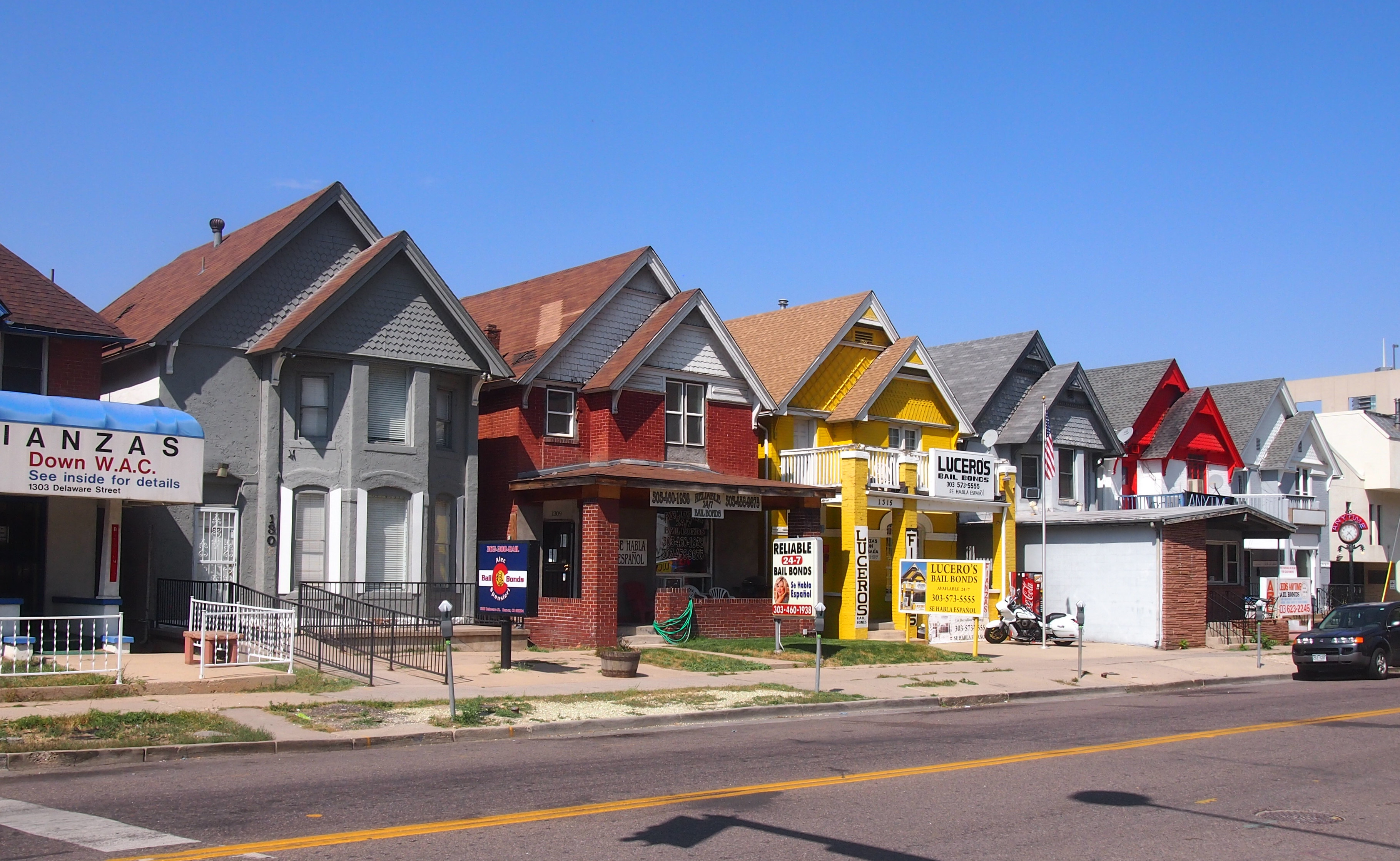
No matter how much you prepare to visit a city you don’t know well — and I try not to overdo it — surprises will turn up. Details you’ll only encounter in person. Such as Denver’s Rainbow Row.

Bail Bond Row Denver

That’s just my name for it, borrowed from the genteel Rainbow Row of Charleston. Denver’s version is not genteel. For one thing, it’s across the street from the 488,000-square-foot Denver Justice Center. That is, the city/county jail.

The colorful buildings all house bail bondsmen. It’s only speculation, but I’d guess that one of them painted its building a bright color to stand out, then the others did.

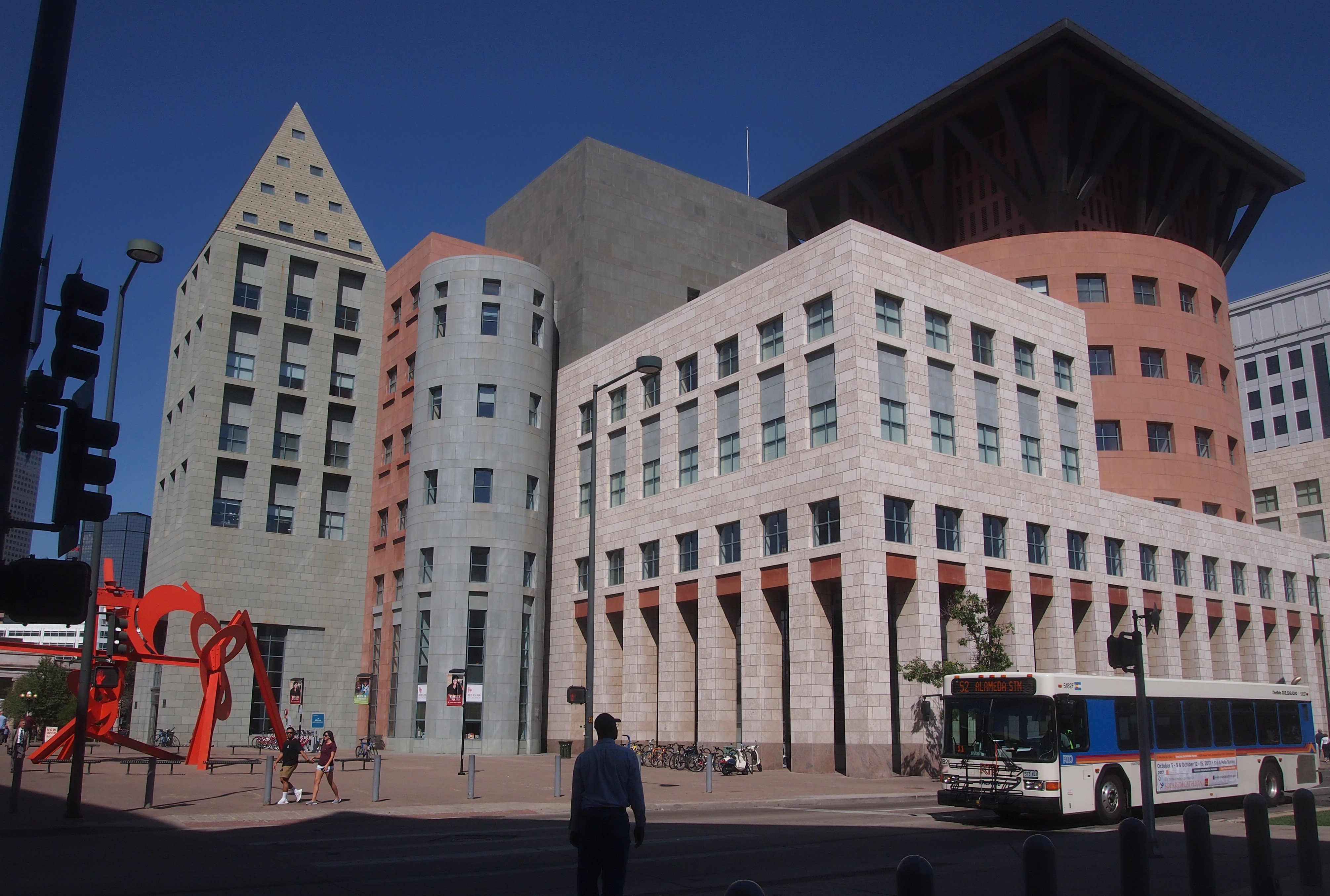
Speaking of colorful structures, not far away is the Denver Central Library.
Denver Public LibraryMore of a pastel effect. Though maybe “pastel” is too banal a term when you’re aiming to challenge assumptions about public spaces and discourse, or fracture public library paradigms, or something.

Anyway, Michael Grave Architecture & Design, which designed a major expansion of the library in the 1990s, notes: “This project, won through a design competition, included the preservation and renovation of the 1956 147,000 SF modernist library by Burnham Hoyt, and a 390,000 SF expansion. The expansion is composed as a series of elements to allow the existing building to read as one part of a larger composition.”

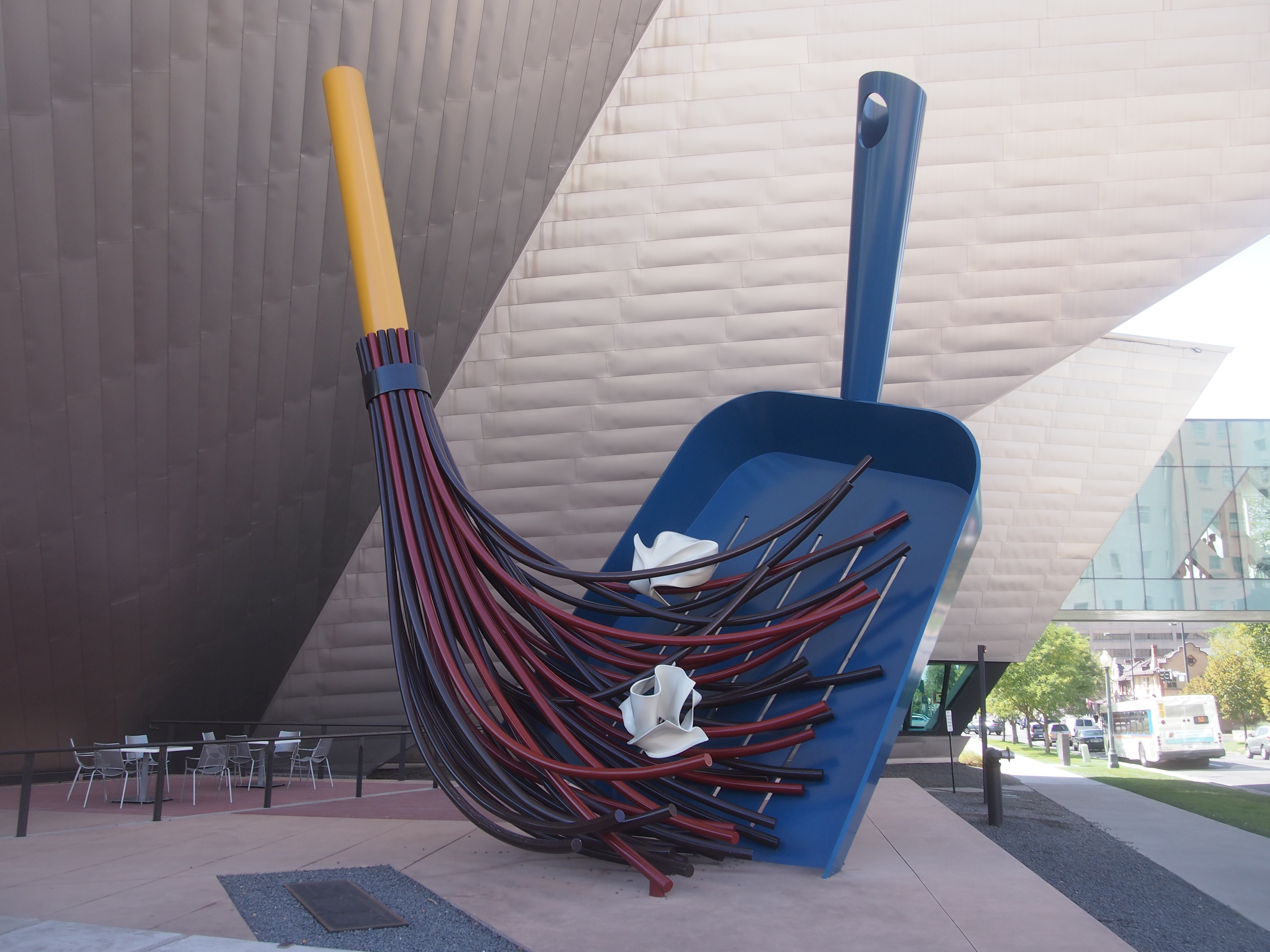
The library is across the street from the Denver Art Museum. Outside the museum is this sculpture.
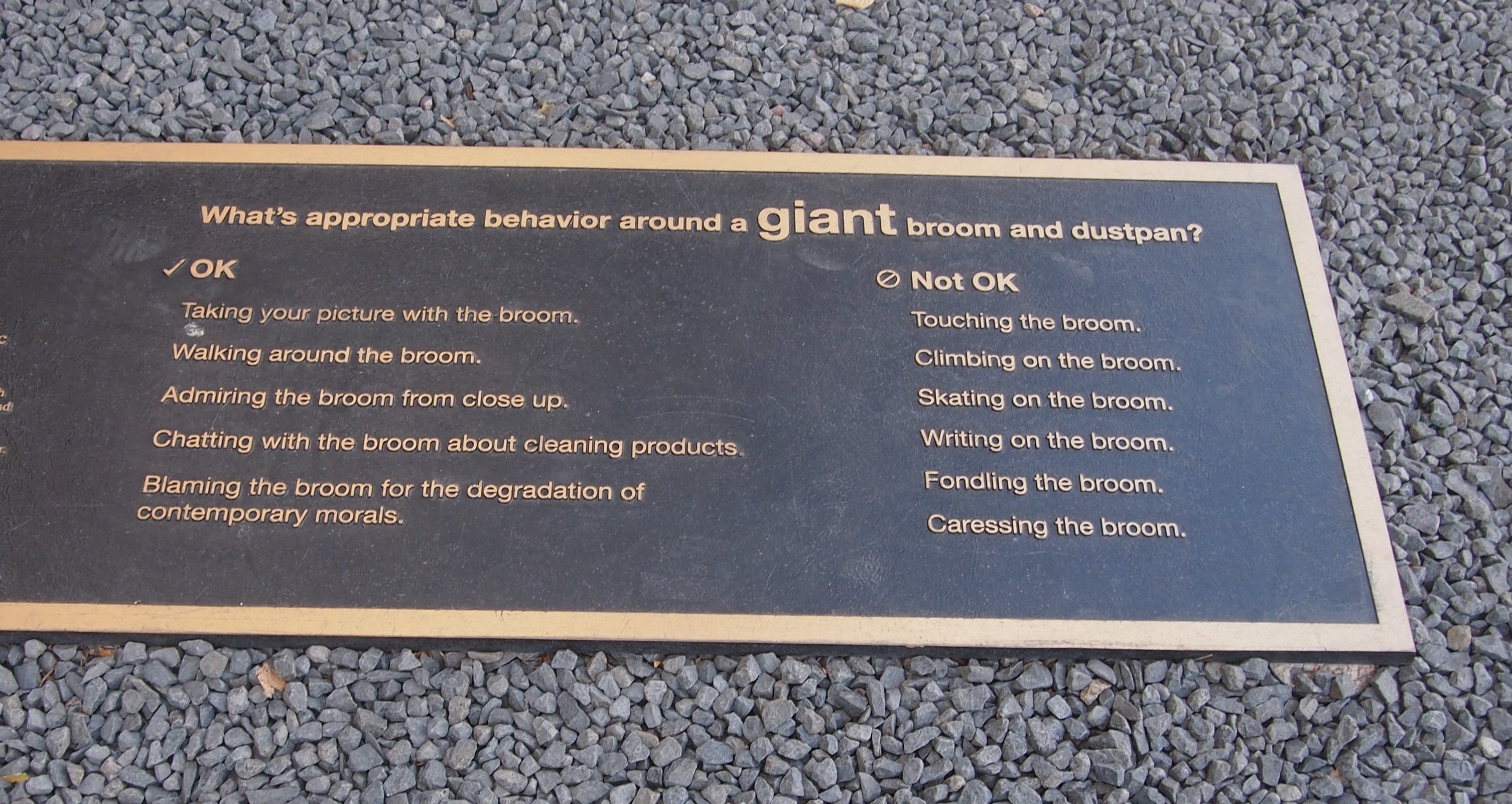
The Big SweepLooks familar. Yes indeed, it’s a Claes Oldenburg and Coosje van Bruggen work, “Big Sweep” (2006). (What, that wasn’t the name of one of Raymond Chandler’s best books?)

Art etiquette is right there in bronze, next to the work.
The Big SweepAfter visiting the museum, I spent a while at the Friendship Powwow and American Indian Cultural Celebration just outside on the plaza. Featuring dancers.
Denver PowwowAnd drummers. Cool.
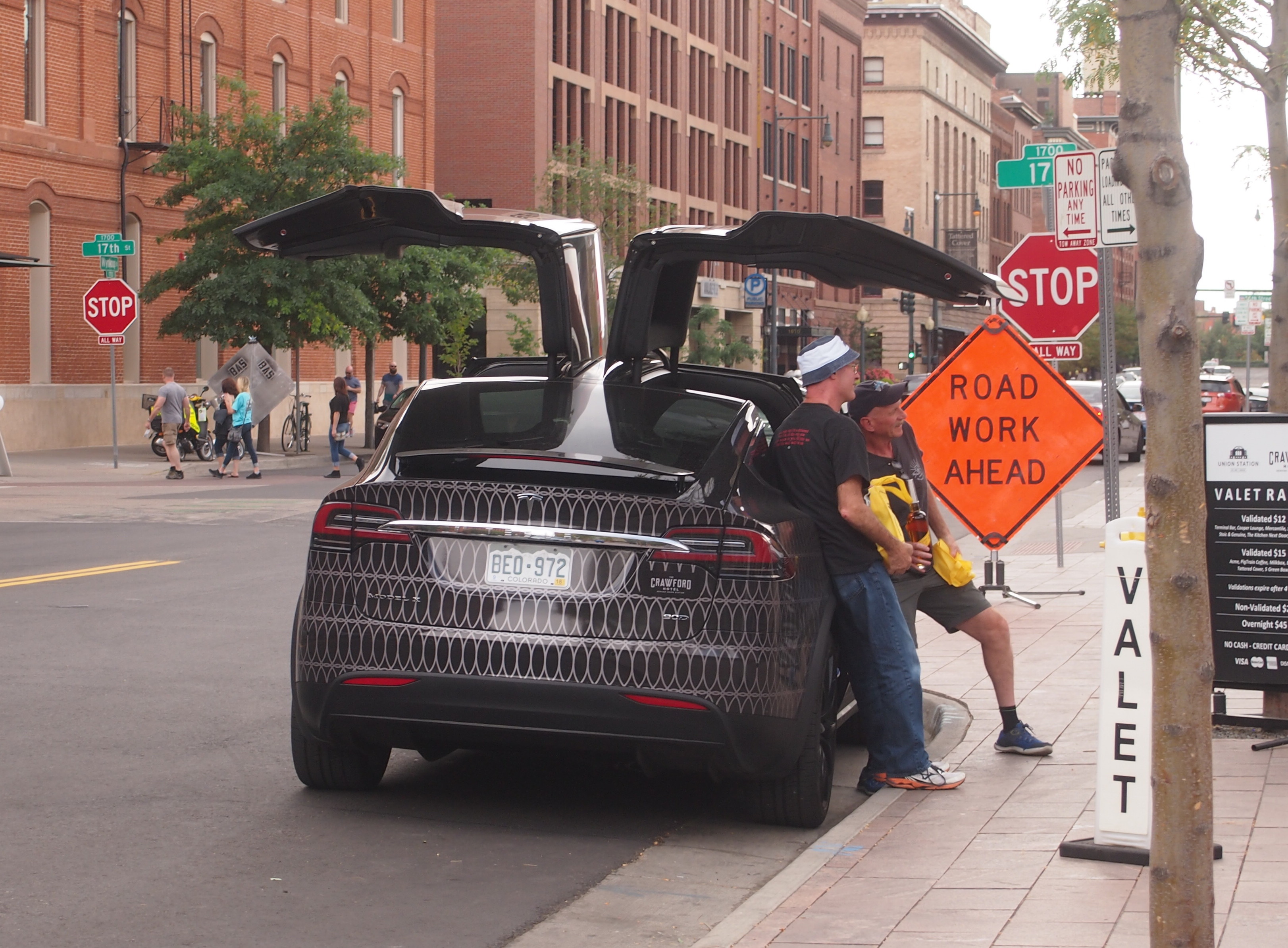
Denver PowwowOutside of Union Station, I saw a Tesla Model X. Haven’t seen those very often. Ever, actually.
Tesla X, Denver Union StationClose inspection shows that it belongs to the Crawford Hotel, which is part of Union Station. An upper-crust guest shuttle, no doubt.

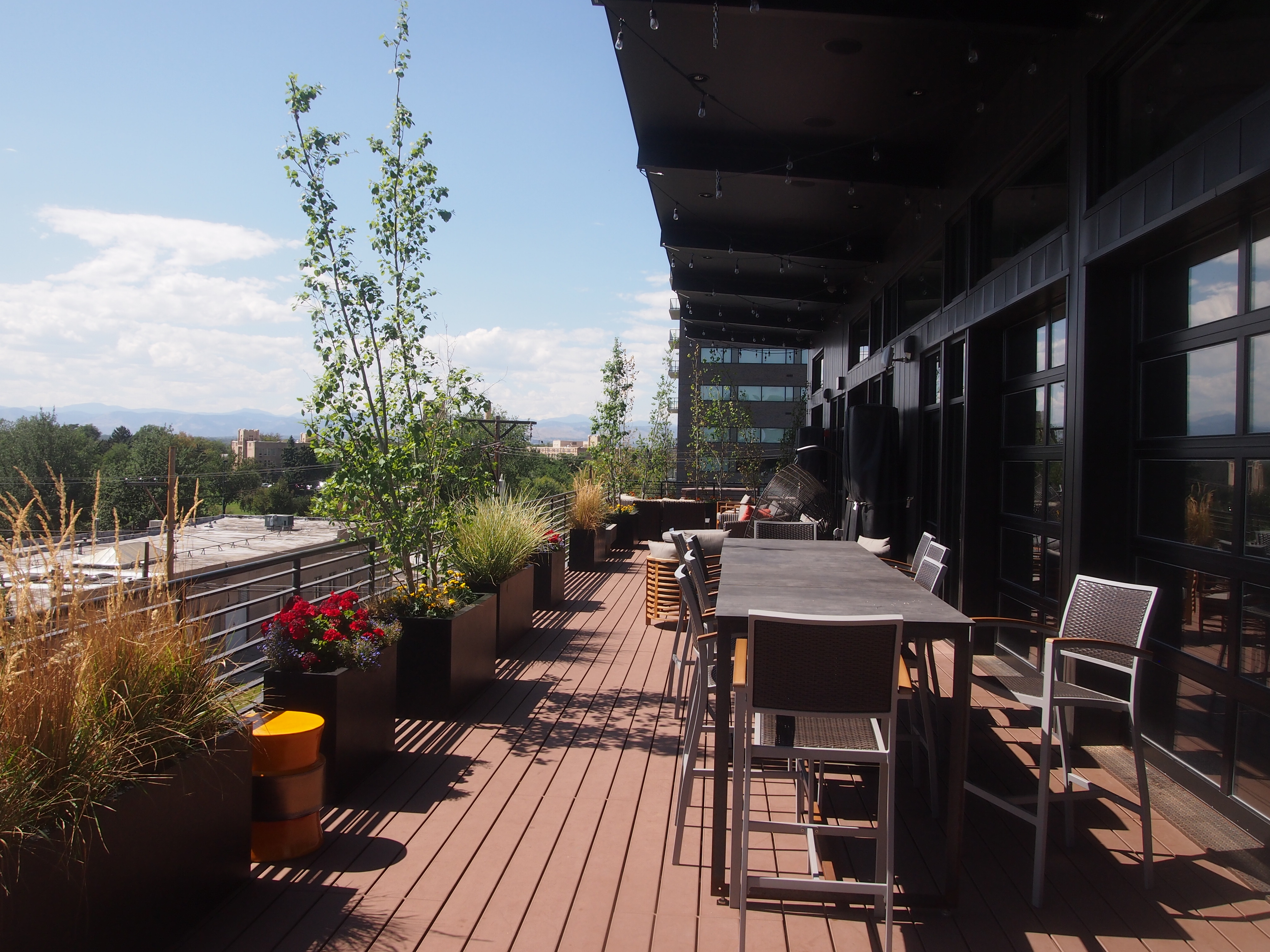
On my last day in town, I worked in some shared office space — all the rage right now. I prefer my own office most of the time, but it was pleasant space. I didn’t mind working there for a few hours. Had a nice outdoor component, for one thing, with the Front Range off in the distance.
Shared office space, DenverI worked at this counter. People came and went, preparing light eats for themselves.
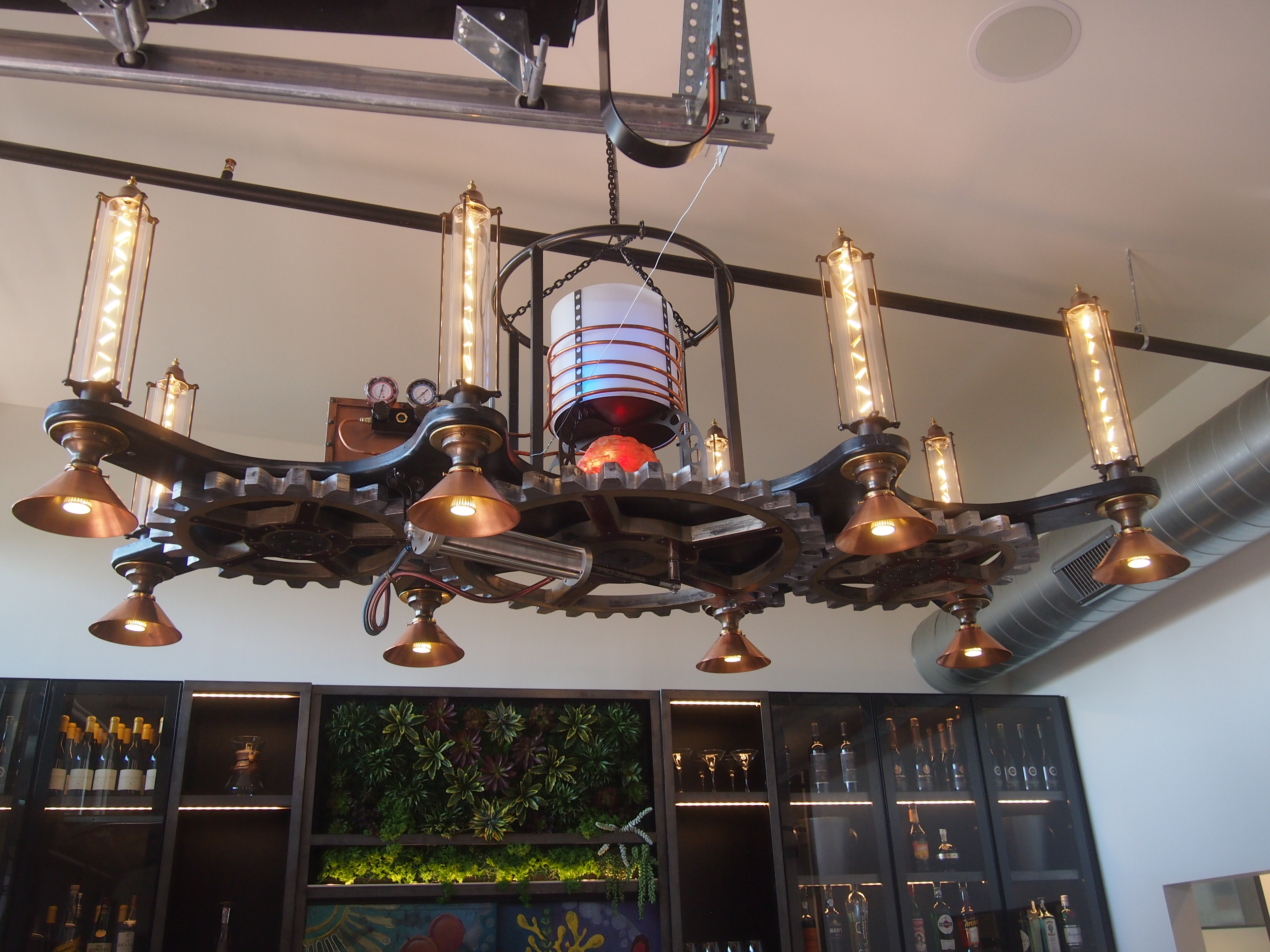
Shared office space, DenverAbove the counter was this. A hell of a light fixture, I’d say. Machine Age chic for Millennials.
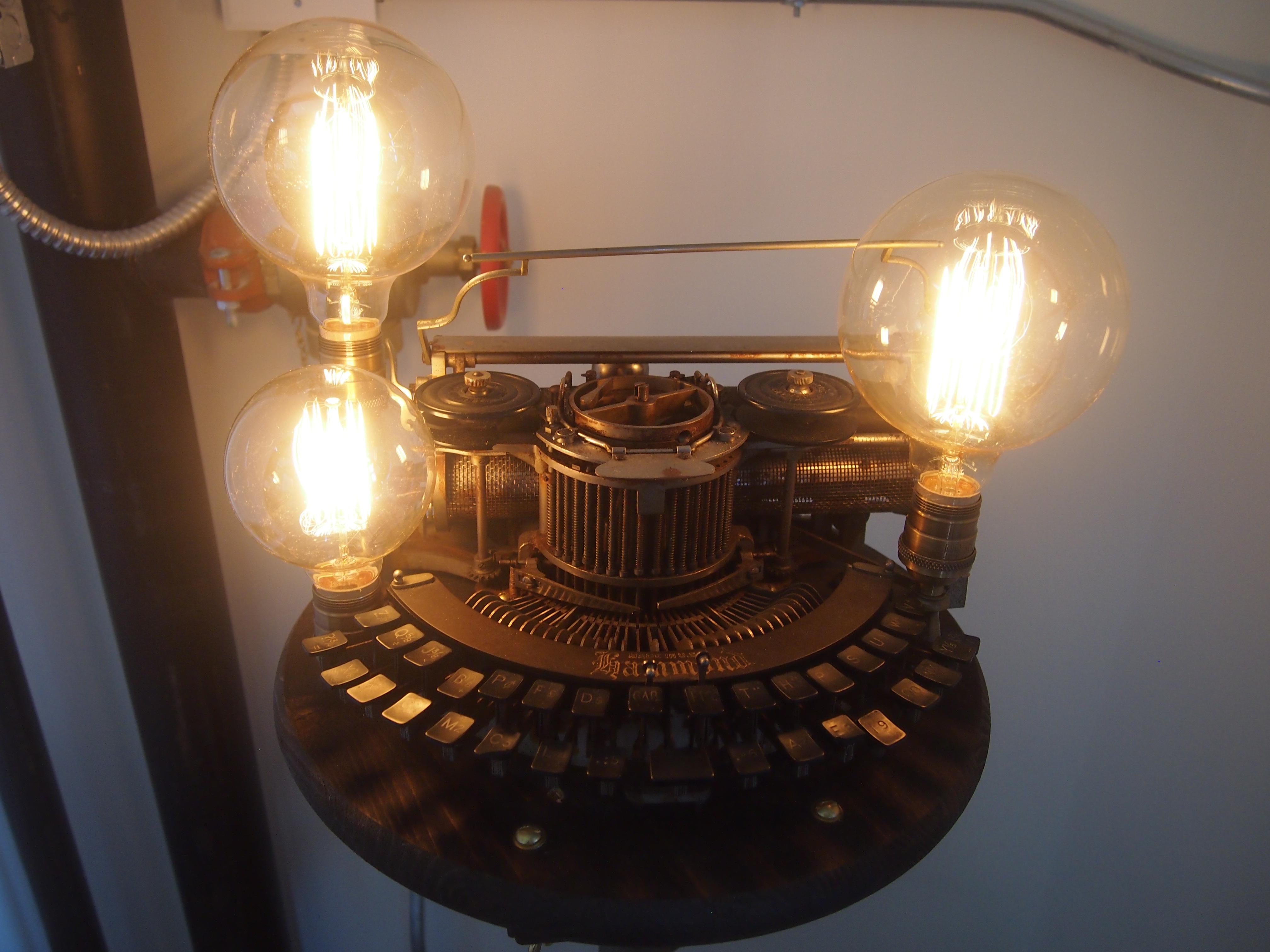
Shared office space, DenverIn the same room were old machines made into illuminated works of art. Such as this typewriter + light bulbs, the likes of which I’d never seen before.
Shared office space, DenverA semi-circular, very old (late 19th century) Hammond machine. Looks like a 1b. Non-qwerty. Light bulbs added for effect, presumably.

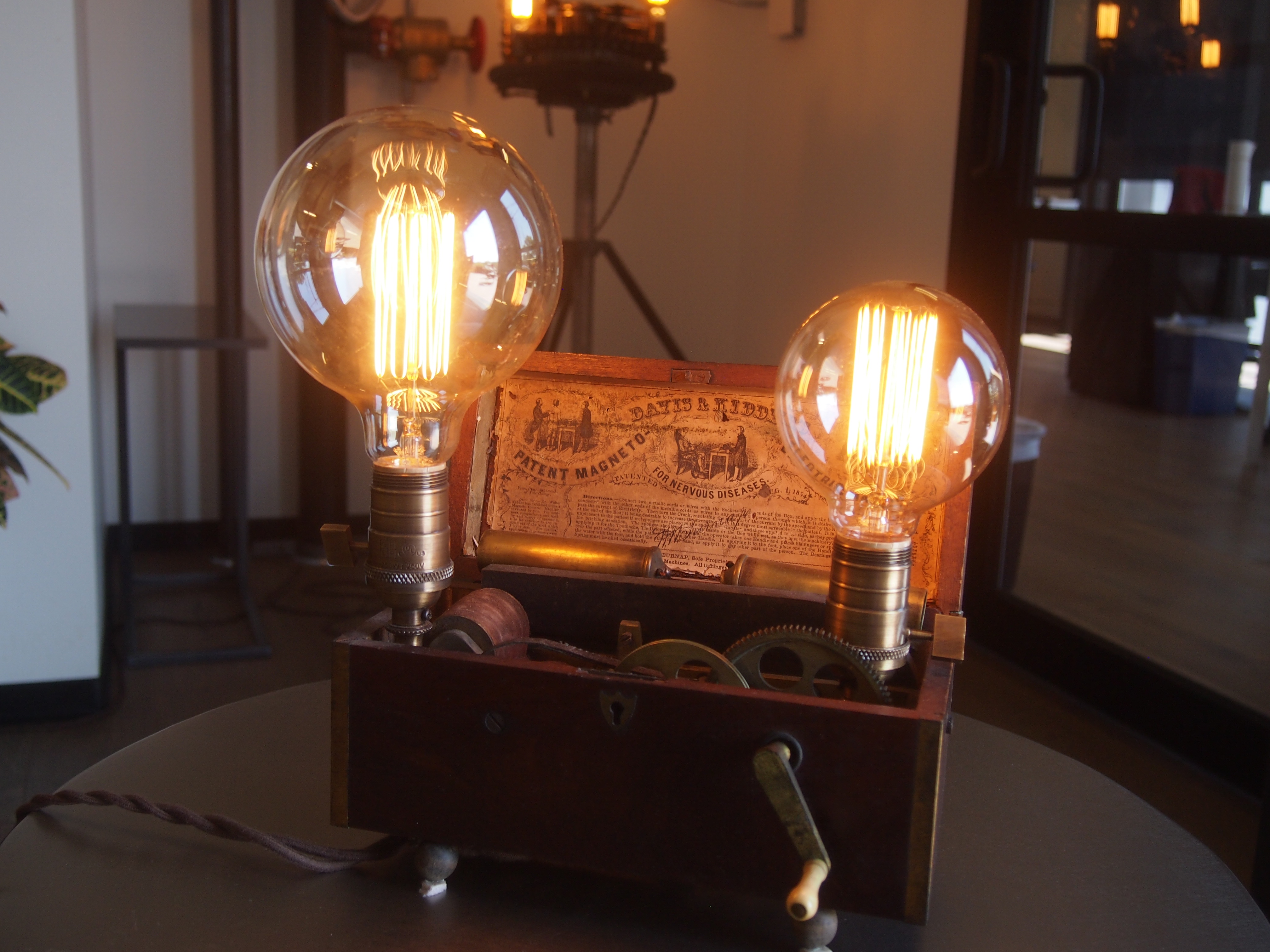
Then there’s this curiousity. Again, light bulbs added.
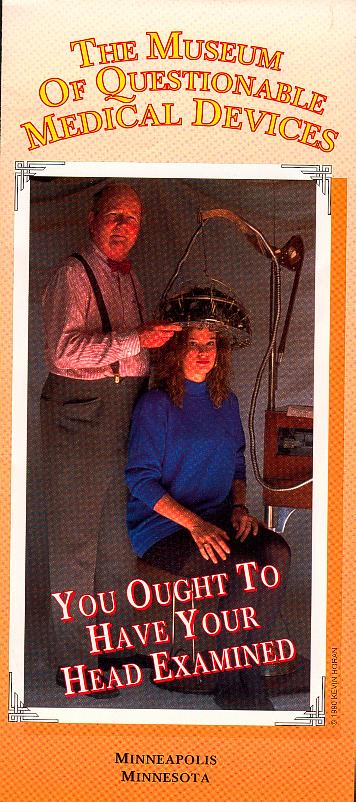
The Davis & Kidder Patent Magneto-Electric Machine for Nervous DiseasesQuestionable Medical DevicesA 19th-century medical device. Reminds me of the Museum of Questionable Medical Devices in Minneapolis, now unfortunately closed.

I had the good fortune to visit that museum in 1998, and retain a pamphlet from it to this day.

The machine I saw in Denver is a specific device. The Wood Library Museum says: “In 1854, manufacturer W.H. Burnap produced a well-known electrotherapy device that was purchased by the general consumer as well as some physicians and hospitals: The Davis & Kidder Patent Magneto-Electric Machine for Nervous Diseases.

“The operator of this electromagnetic generator would place handles in the patient’s hands or elsewhere on the patient’s body and then turn a crank to deliver a ‘mild’ alternating current to the patient. The force of the current depended upon the speed with which the crank was turned.

“The makers claimed that it could relieve pain, as well as cure numerous diseases, including cancer, consumption (tuberculosis), diabetes, gangrene, heart disease, lockjaw (tetanus), and spinal deformities.”

One more thing. No Double Turn? What’s that supposed to mean? I saw several of these signs downtown.

NO DOUBLE TURN! What?

I think I figured it out. No left turns except from the left lane. Denver is the only place I’ve ever seen such a sign.

Missed Perseids, a Satellite Flare and Saturn on a Saturday Night

Over the years, we’ve sporadically attended celestial viewings at the Spring Valley Nature Reserve, which isn’t exactly dark, but it’s darker than the surrounding suburbs. We went again on Saturday.

This time, the event was more popular than I remember it ever being, since besides viewing through a telescope set up on one of the reserve’s paths, a marshmallow roast was held near one of its buildings. Volunteers gave away marshmallows on prongs for a fire that had already been built. Such family-friendliness is going to attract people will kids. We had a few marshmallows ourselves.

There was a short line to see through the telescope — an expensive-looking piece of equipment, though I didn’t get the brand or model — and while we waited, we naturally did some naked-eye observations. While I was looking one way I heard, “Look, a shooting star!”

I was looking the wrong way. Of course. A few minutes later, the same thing happened. So I spent some time looking to where I thought the Perseids would be. Last weekend was the peak for this year, I’d read. I saw none. That has happened before. A few times.

So it goes. I did see a satellite flare, which was a first. I’ve seen a number of objects before that I’ve been sure were satellites, but this was different. This object was moving across the sky at the pace of a satellite, not a high airplane, and it was flashing for a few seconds at a regular interval. I’d read, years ago, that this can happen when the satellite reflects sunlight as it rolls — or pitches or yaws or whatever — in its orbit.

It might have been a Iridium satellite. Wiki, at least, has this to say: “Occasionally, an [Iridium] antenna reflects sunlight directly down at Earth, creating a predictable and quickly moving illuminated spot on the surface below of about 10 km (6.2 mi) diameter. To an observer this looks like a bright flash, or flare in the sky, with a duration of a few seconds.”

That’s exactly what I saw. Maybe they account for some number of UFO sightings, too. (If Venus can, why not an Iridium satellite? Unless Venus is where the UFOs are coming from.)

A few people in line had iPads with stargazing apps. I guess they’re called that (there are many, it turns out). I’d never seen one in use. You hold the iPad up toward any direction of the sky and the app will draw a not-overly-bright rendering of the constellations in the area. I didn’t get a close look, but it looked like a fair amount of information, including standard constellation patterns, star names and even fanciful illustrations.

I ought to think that’s cheating. Learn your constellations the old-fashioned way, dammit, from Chaldean herdsmen. But how different is an iPad app that from taking your paper star charts out and reading them by red light, and then looking up to see what you can see? Maybe the app should display red to help keep your night vision intact, but other than that it’s really no different, except easier to use.

After about 15 minutes in line, we arrived at the telescope, whose owner was enthusiastic about sharing with the public. Good for him. He had enormous spotting binoculars, too.

Jupiter was already beginning to set, so he turned it to Saturn, about midway up in the southern sky, and away from the clouds covering some of the sky that night. Yuriko, Ann, Ann’s friend and I all took a turn. Always nice to see Saturn.

My Spanking New 90-Gallon Trash Cans

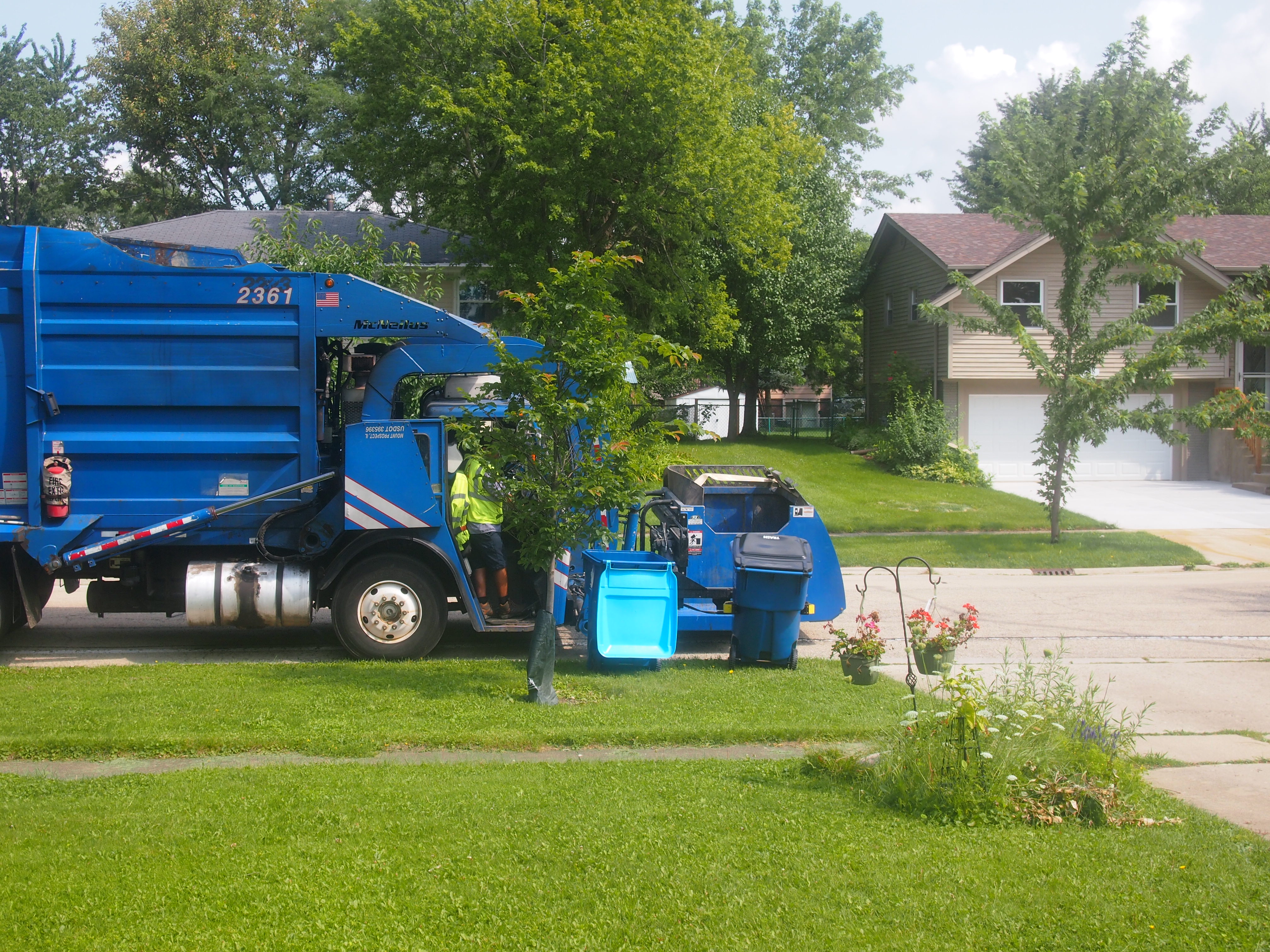
Got new trash and recycling cans recently, delivered by the local trash hauler at no extra charge. The recycle bin has a baby blue lid, the trash bin a black one.
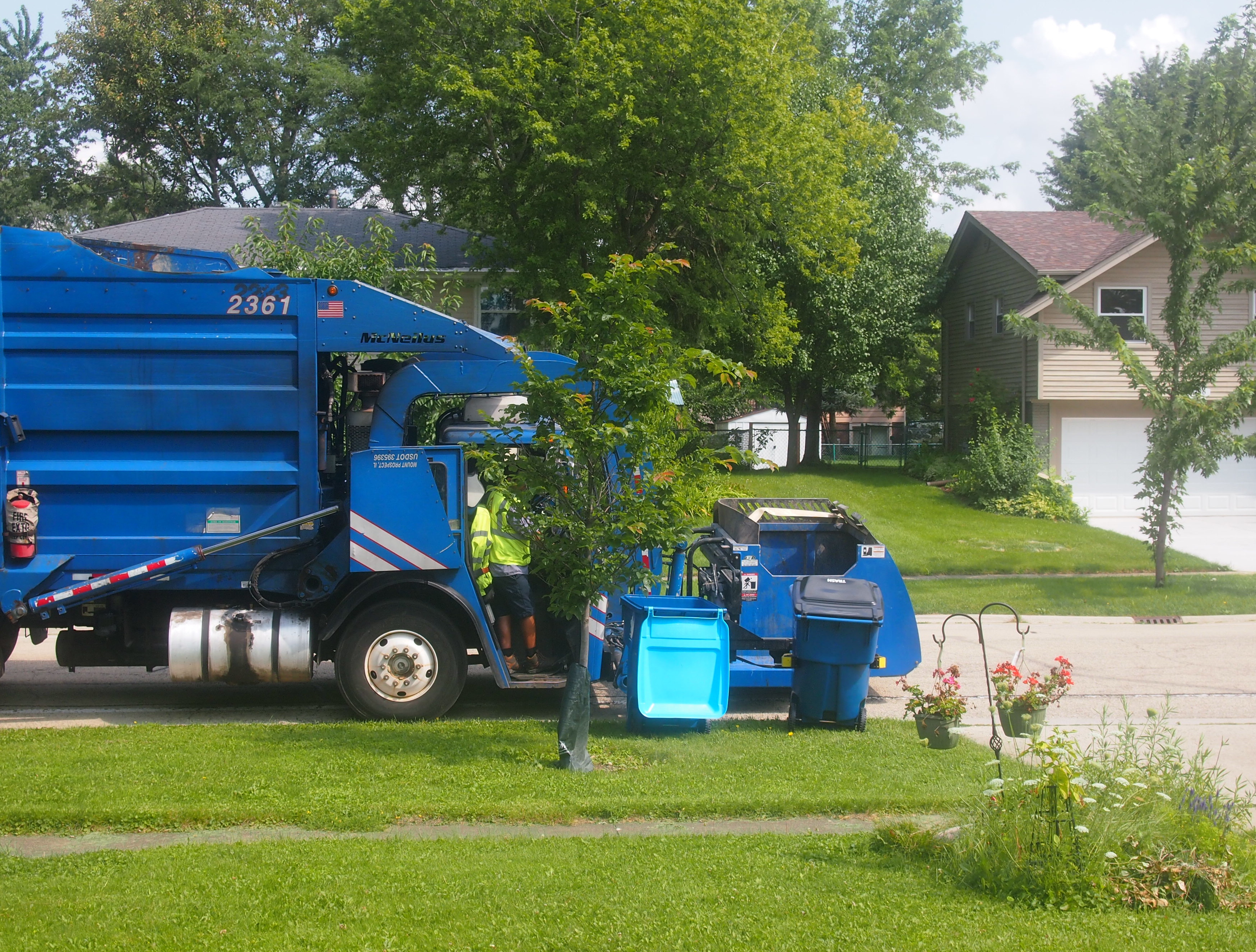
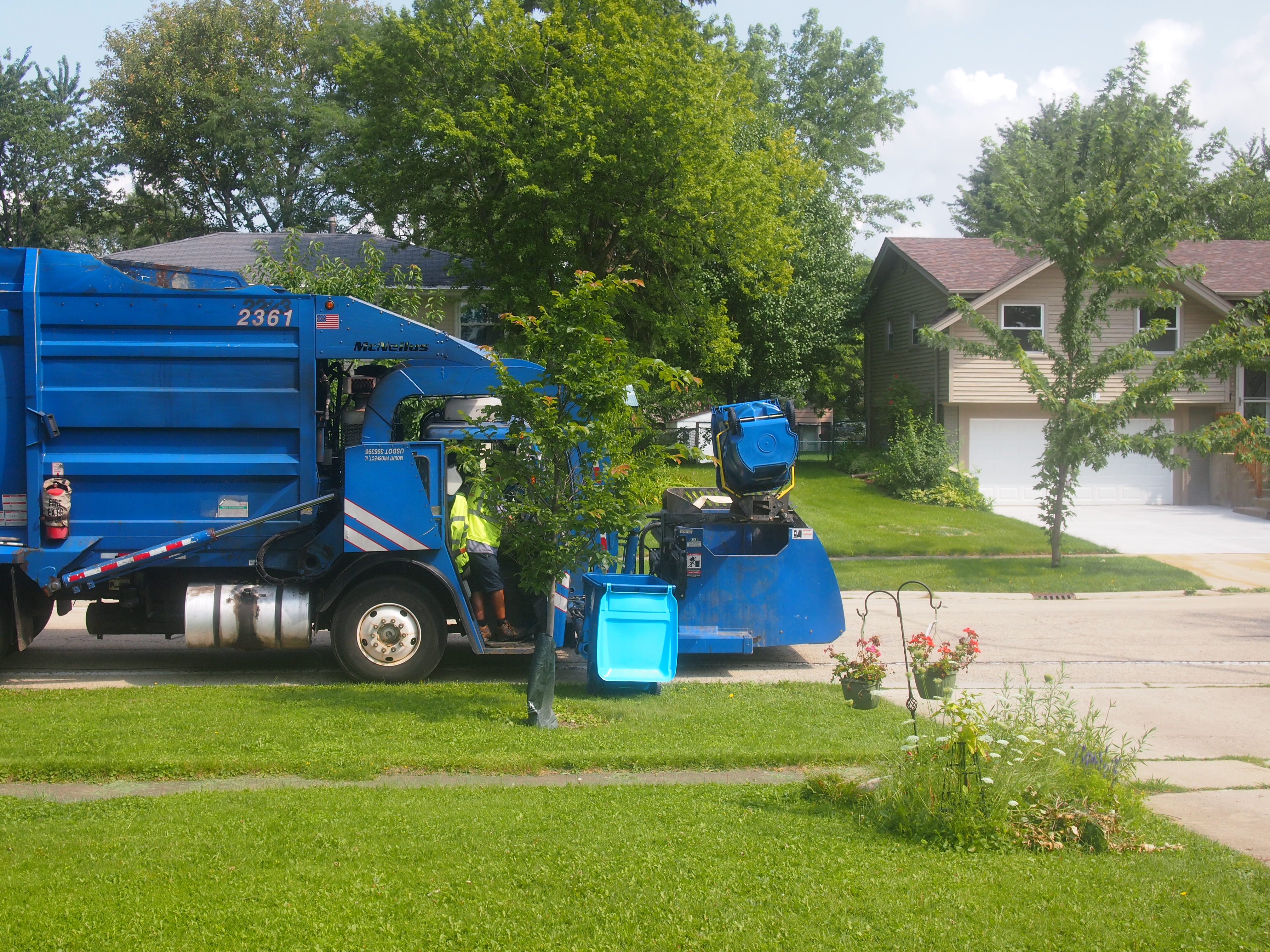
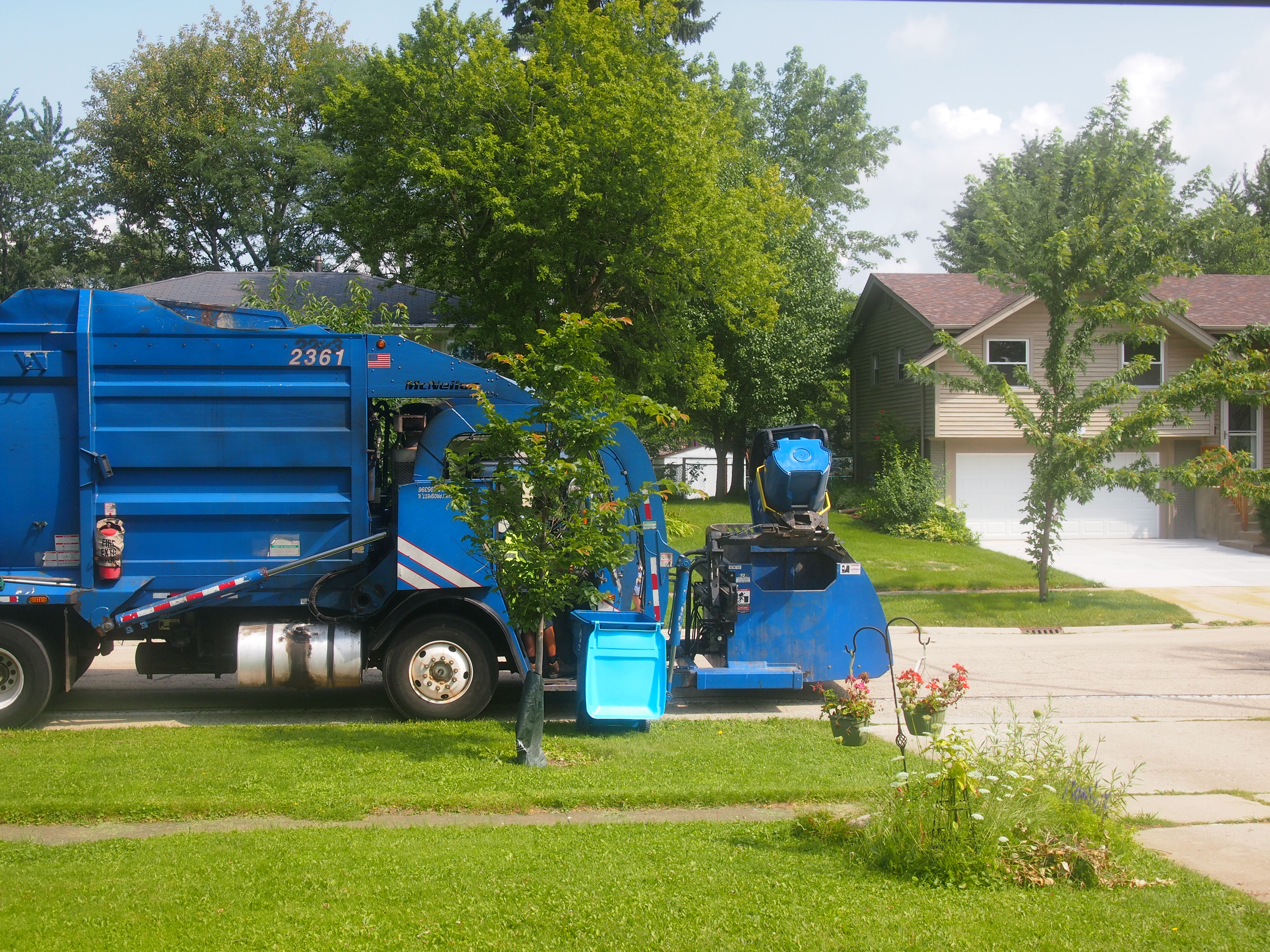
trash cansThe reason the company provided them is so that their trucks can pick them up using mechanical claws, rather than have the driver get out of the truck and hoist them himself. Here’s the pick up device in action just today. The mechanical claws are painted bright yellow.

When there’s enough trash in the compartment ahead of the garbage truck’s cab, mechanical arms hoist it toward the back of the truck, and the garbage falls into the main bin in back. An interesting thing to see, but he didn’t do it in front of my house today.

For me, the new cans are better because they’re easy to roll out to the the street, even though their capacity is large, 90 gallons each. This is progress. Don’t let the Luddites tell you differently.

The Last Gasp of the Federal Works Agency

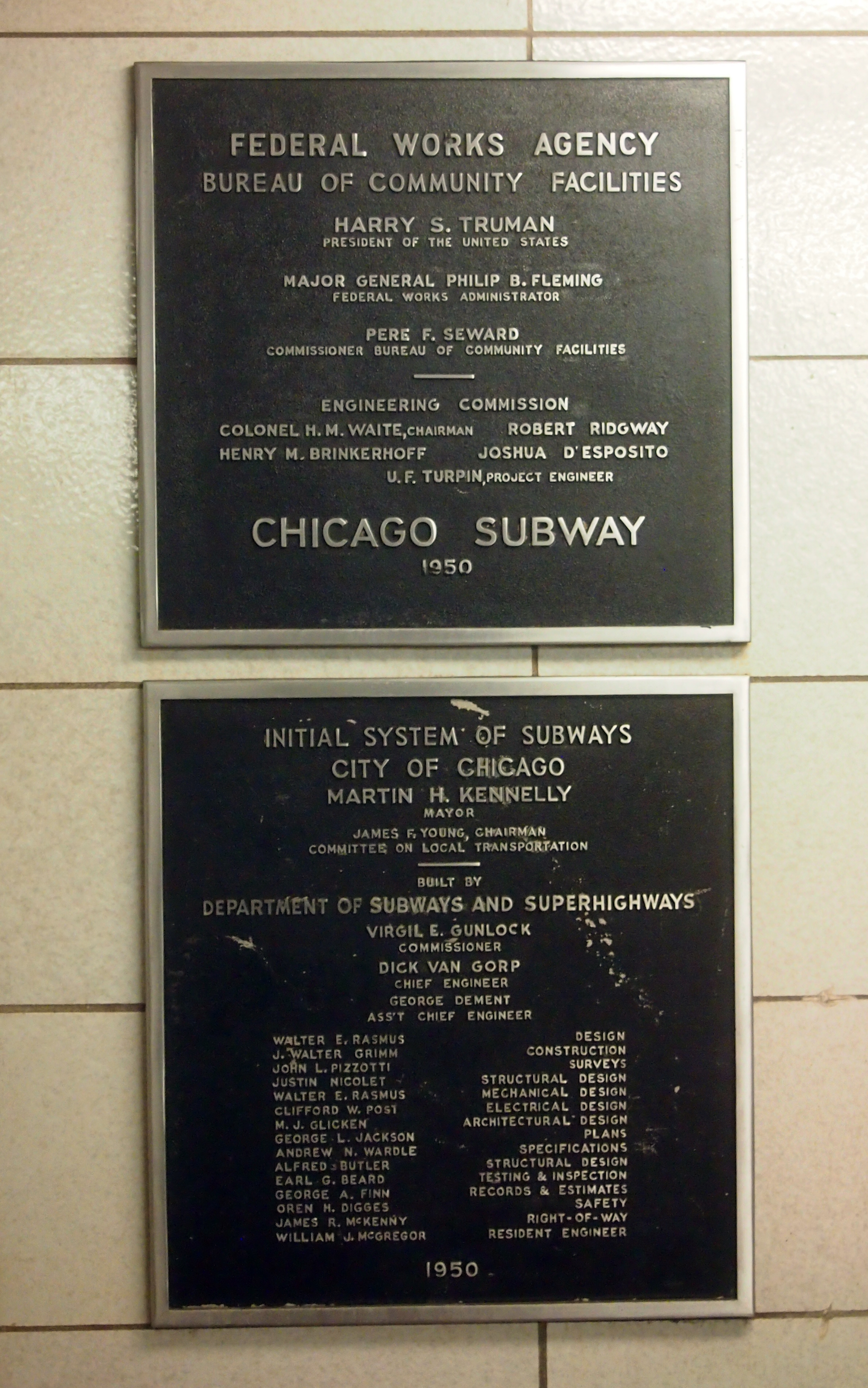
Not something you see everyday: a plaque marking a project by the Federal Works Agency. But there it was last weekend for me to see, at the Chicago subway station of the CTA Blue Line (O’Hare-Forest Park).

Federal Works Agency plaque, Chicago StationThe Federal Works Agency only lasted until 1949, but it’s a safe assumption that the subway construction project started under its aegis in the late ’40s, so it was thought fitting to use the name even in 1950. The agency had been created as a part of a major federal government reorganization in 1939, authorized by Congress and overseen by the executive branch.

To quote President Roosevelt, in his message to Congress on the Reorganization Act of 1939: “[The FWA will include] the Bureau of Public Roads, now in the Department of Agriculture; the Public Buildings Branch of the Procurement Division, now in the Treasury Department, and the Branch of Buildings Management of the National Park Service… now in the Department of the Interior; the United States Housing Authority, now in the Department of the Interior; the Federal Emergency Administration of Public Works; and the Works Progress Administration, except the functions of the National Youth Administration.”

Various additions and subtractions were made to that list until 1949, when the FWA’s remaining functions were parceled out to other agencies, as well as the newly created General Services Administration. As federal bureaucracies go, the FWA had a fruit-fly lifespan.

With a 10-year run, there couldn’t be that many FWA plaques. Certainly not as many as the GSA — nearly 70 years now — or even the WPA or the CCC, which also had short runs, but were really busy in their heydays. So maybe in the hobby of plaque-spotting the FWA is a nice find.

If there is such a hobby. Surely someone looks for plaques in a more enthusiastic or systematic way than I do. And is Blue Plaque-spotting a thing in the UK, or does this Spectator article merely refer to casually walking by them?

Wicker Park, The Neighborhood & Wicker Park, The Park

Juneteenth has come around again. We need more holidays in the summer, and that would be a good one, celebrating human freedom.

We went to the city on Sunday, giving me an opportunity to wander around Wicker Park on a warm but not too hot day. I visited both places of that name. Wicker Park’s both a fashionable area — which it was not 30 years ago, when I first lived in Chicago — and the name of a smallish triangular park within the neighborhood.

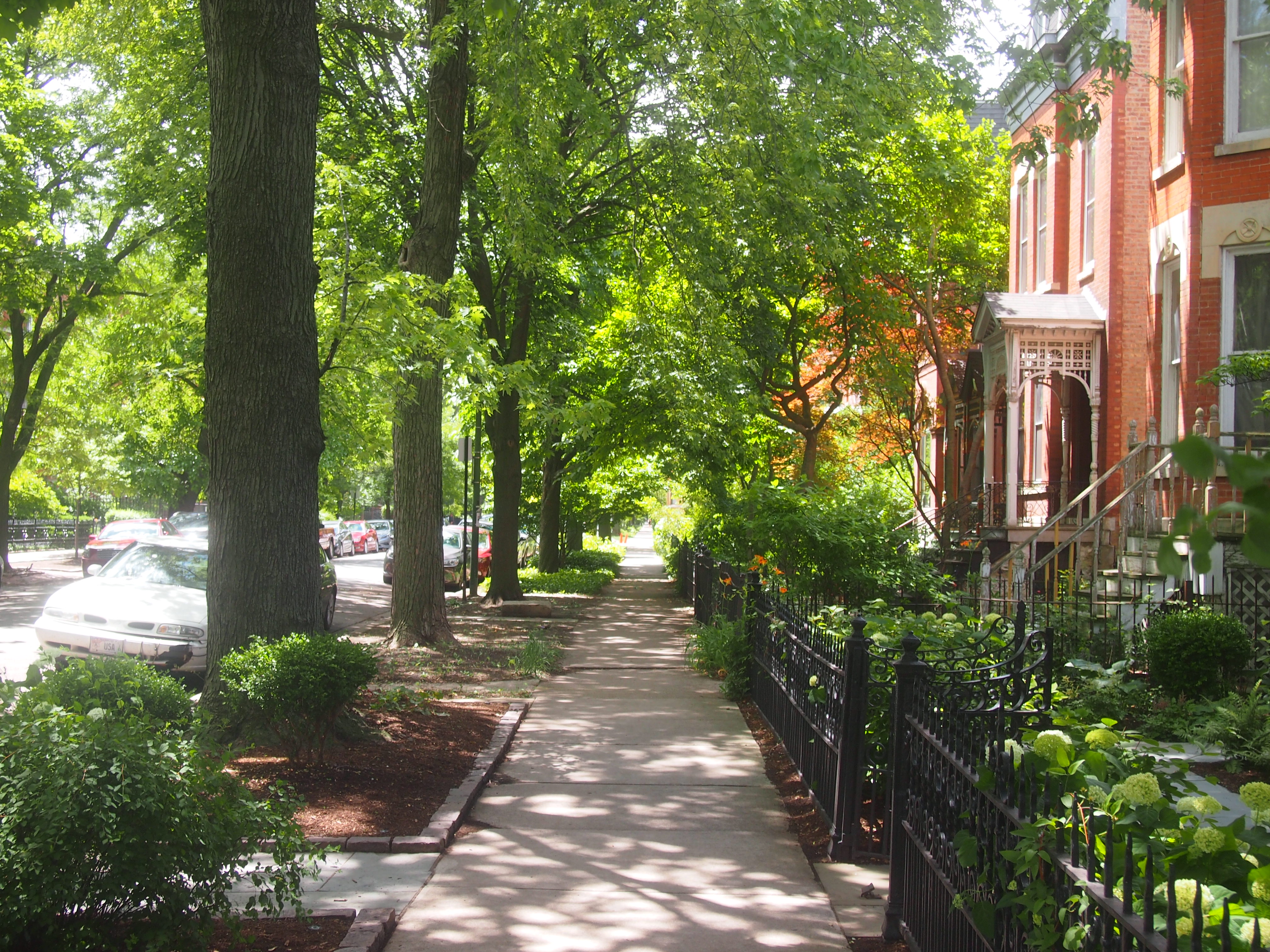
The intersection of North, Damen and Milwaukee is part of the neighborhood, but I didn’t hang around there much this time. Instead, I walked along some of the side streets. Much of the residential North Side of Chicago looks like this in June.
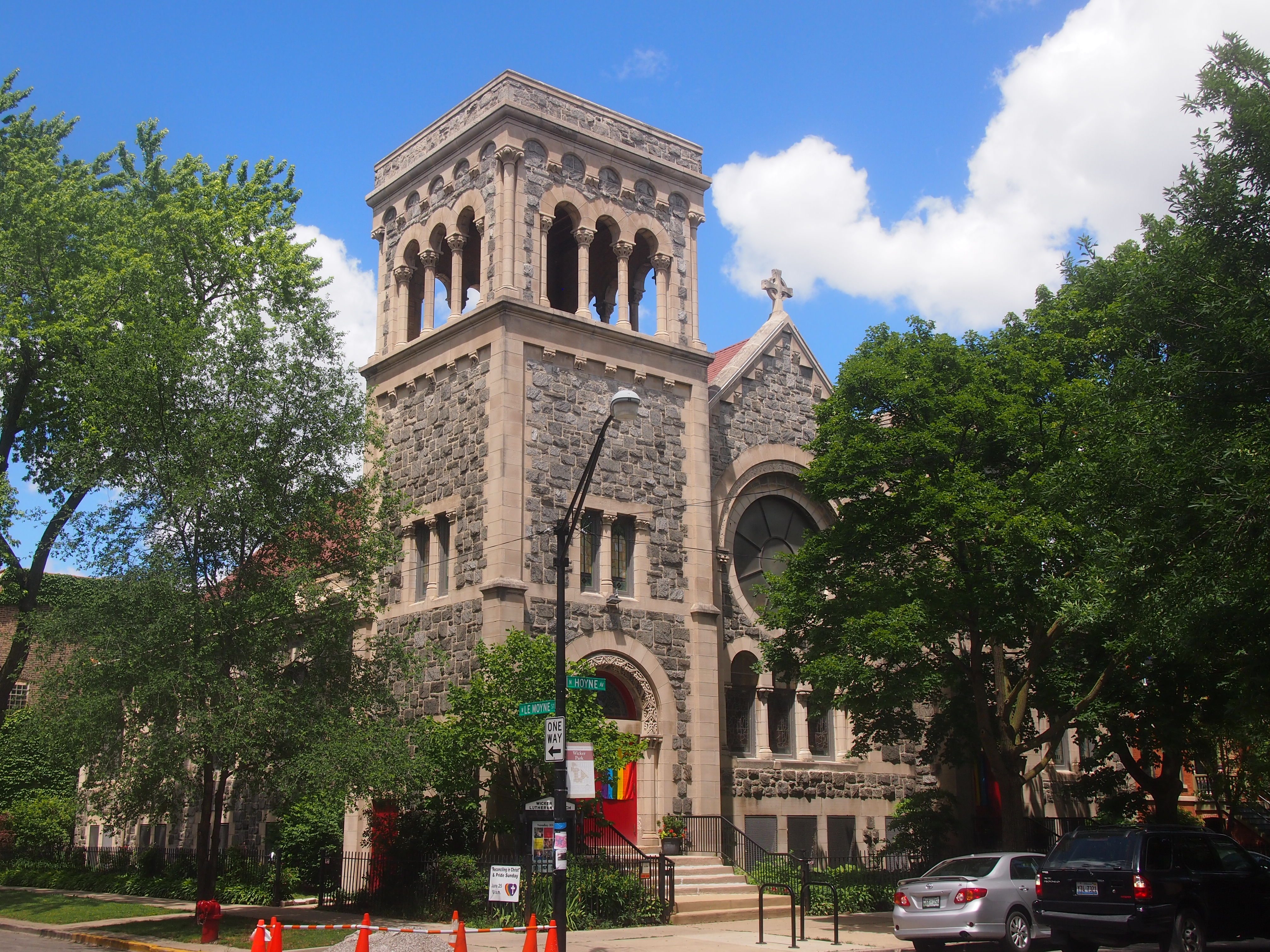
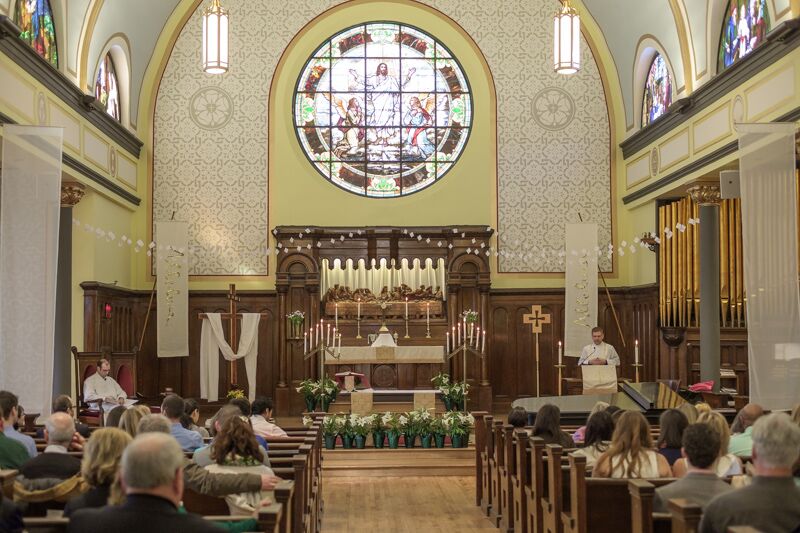
Wicker Park June 2017The handsome Wicker Park Lutheran Church is at 1502 N. Hoyne Ave.
Wicker Park Lutheran ChurchIt was already closed by the time I got there, but the interior looks like this.

The building dates from 1906, though the congregation goes back to 1879. “It boasts a basilica design, with double colonnades and an apse, a style used in ancient Rome for courts of law or places of public assembly,” notes the church web site. “The two towers are based on those of Abbey of Sainte-Trinité (the Holy Trinity), also known as Abbaye aux Dames, in Caen, France, which was built in the 11th century.”

A few blocks to the east is Wicker Park, the park. It isn’t one of Chicago’s great parks, but it is pleasant on a warm summer Sunday, well stocked with people and their dogs enjoying the warm summer Sunday. The park has some trees, a lush garden sporting flowers and bushes, a field house, a modest water fountain, and some open lawn.

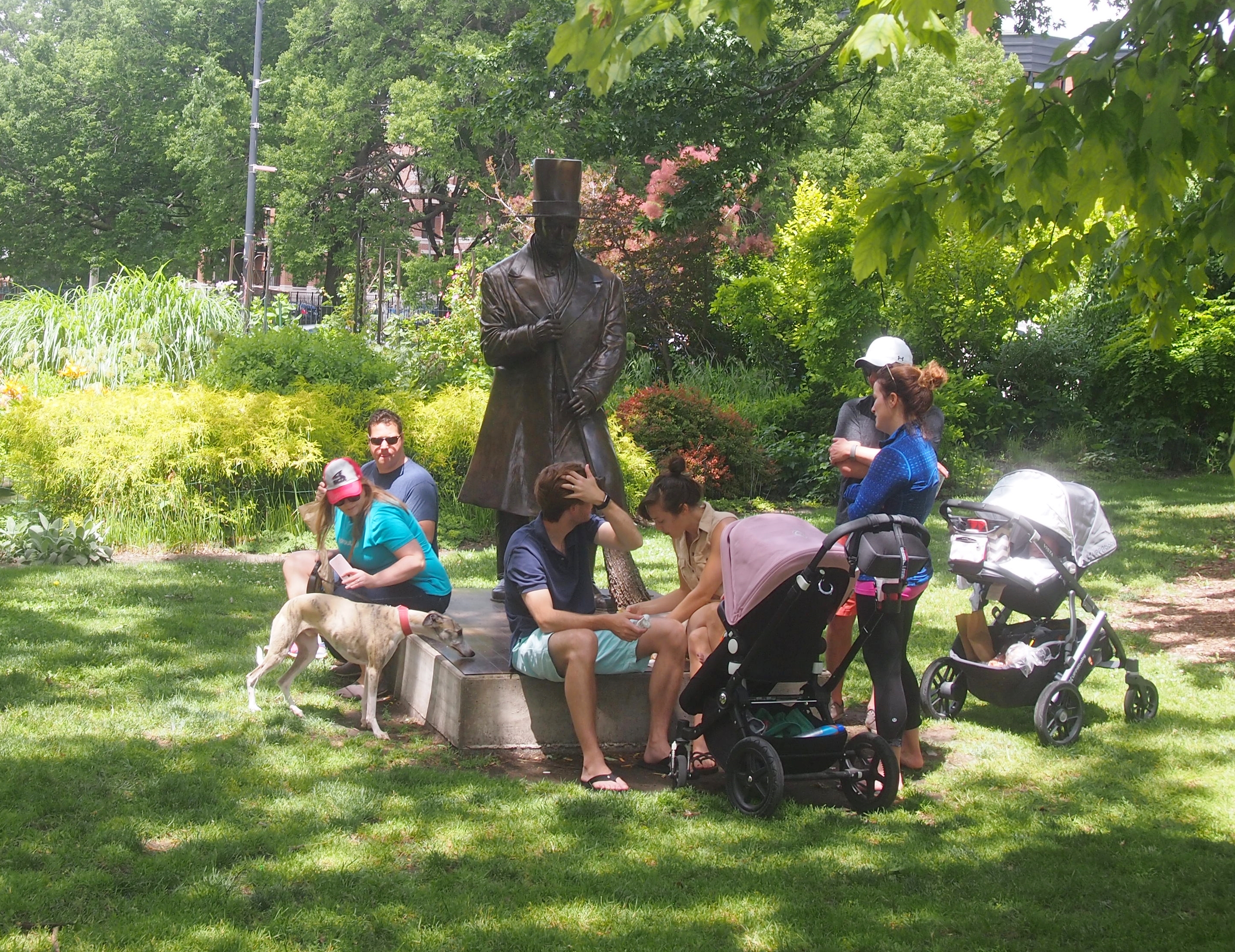
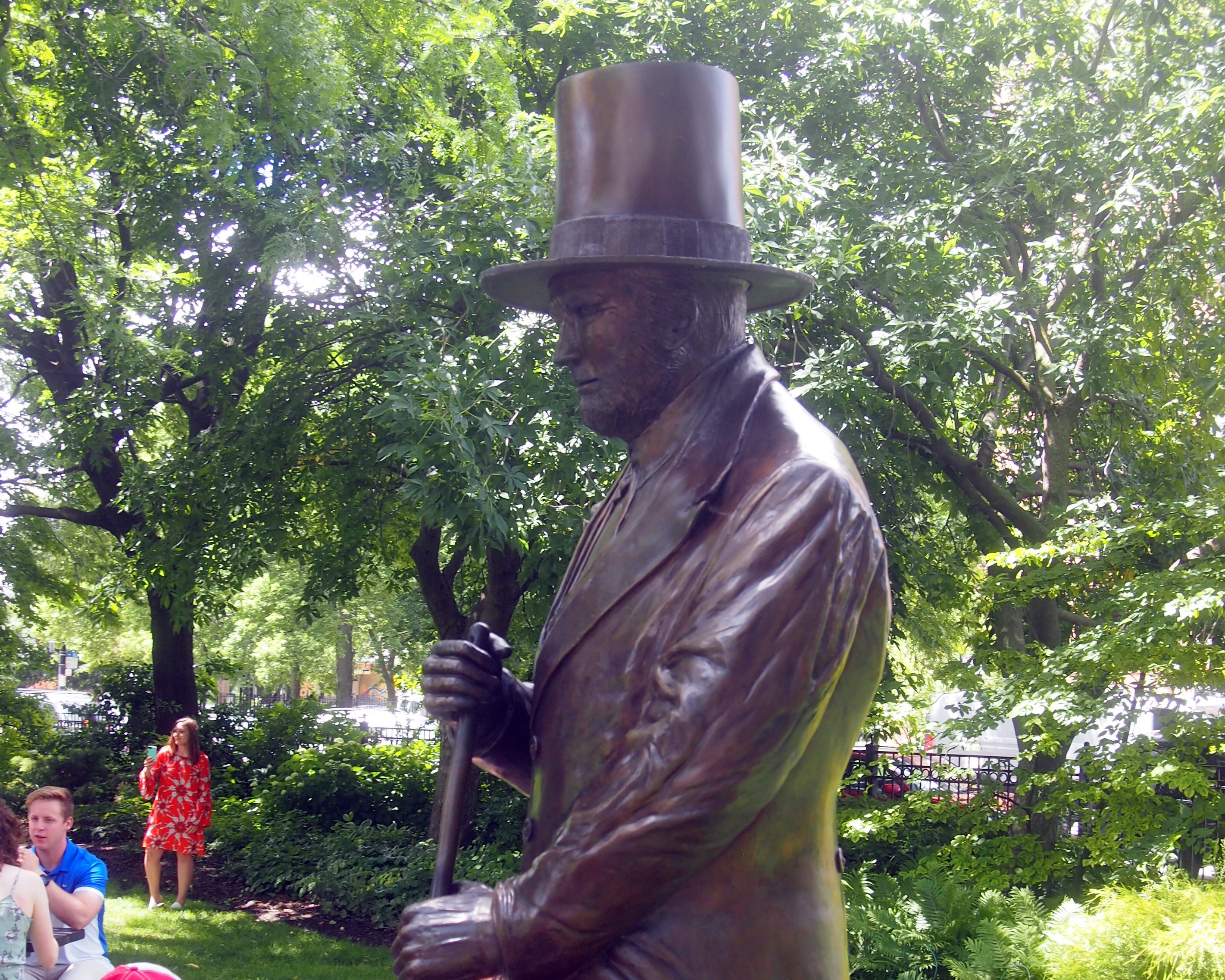
There’s also a statue of Charles Gustavus Wicker (1820-1889), complete with stovepipe hat, heavy coat and broom. It’s been in the park since 2006.
Charles G. Wicker Statue, ChicagoCharles G. Wicker Statue, ChicagoThere’s a plaque at the feet of Wicker that asserts that he was an important figure in the development of this part of Chicago. In fact, it’s a lot like a press release in bronze, this plaque. A sample: “The broom symbolizes his initiative and readiness to take personal responsibility. He, and people like him, established Chicago, where all who truly do their best will continue to make this unique community a place of opportunity with justice, freedom, and equality for everyone.”

About Charles and his brother Joel Wicker, the Chicago Park District says: “In 1870, when businessmen and developers Charles G. and Joel H. Wicker began constructing drainage ditches and laying out streets in their subdivision, they donated a four-acre parcel of land to the city to be used as a public park.

“Fencing the triangular site to keep cows out, the city created an artificial lake in the center of the park, surrounding it with lawn and trees. As the Wickers had hoped, the area developed into a fashionable middle- and upper-class neighborhood.”

Further discussion of Wicker and his brother is at the Chicagoist. A few years ago, the statue fell down — was knocked down — tumbled down somehow, and there’s a story about that as well. The statue was restored, of course. Oddly enough, the sculptor who created the statue of Wicker, and pushed for it to be in the park, was a great-granddaughter of his, one Nancy Wicker, who died just last year at over 90.

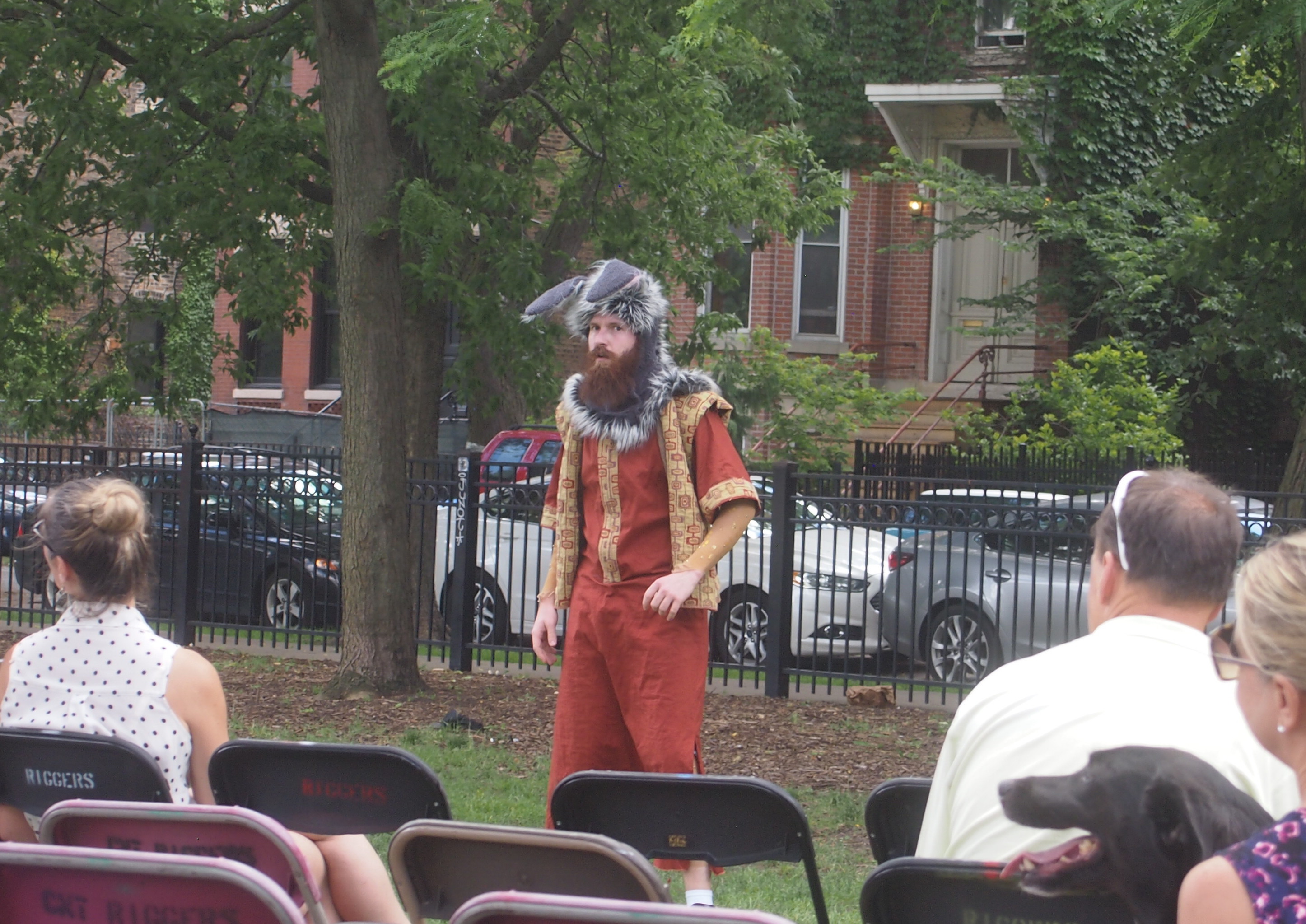
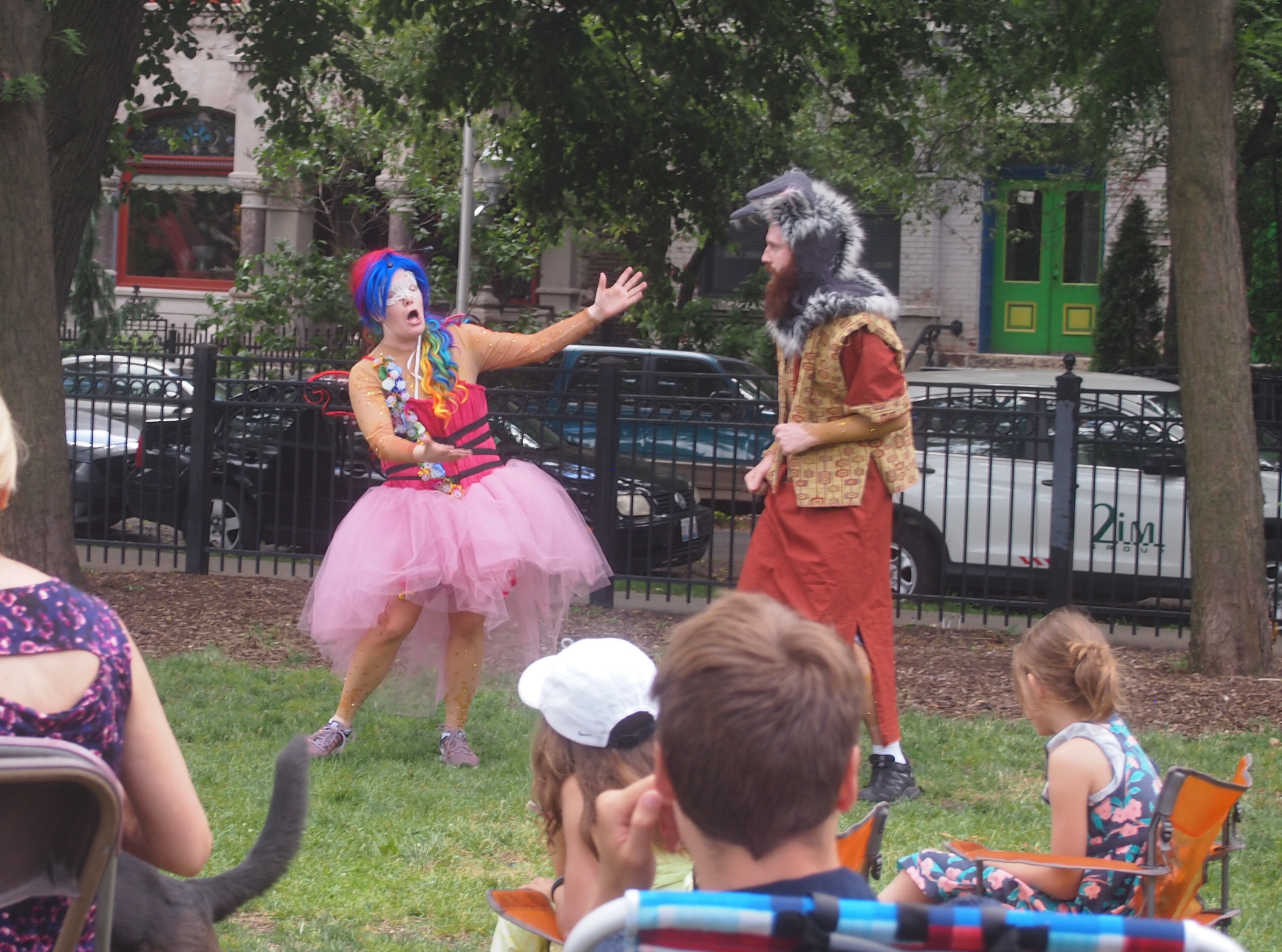
In one corner of the park, a troupe called Theatre-Hikes was doing a low-budget version of A Midsummer Night’s Dream. No sets, just costumes. I sat down for a few minutes to watch. I’m no expert on the play — in fact, this is the only live performance I’ve seen of any of it — but I was able (later) to pin down that I’d arrived during Act 3, Scene 1.

Here’s Bottom.

Theatre-Hikes, Wicker Park

Titania and Bottom. Both actors were good, and able to ham it up when the play called for it, to the amusement of all.

Theatre-Hikes, Wicker Park 2017

Titania:
Be kind and courteous to this gentleman.
Hop in his walks and gambol in his eyes.
Feed him with apricoks and dewberries,
With purple grapes, green figs, and mulberries.
The honey bags steal from the humble-bees,
And for night tapers crop their waxen thighs
And light them at the fiery glowworms’ eyes
To have my love to bed and to arise.

First, Fire All the Copy Editors

The following is a genuine headline from yesterday’s paper edition of the Chicago Tribune, featured with an article in the travel section.

img466 adjusted

Where is this place, Brazel? I wondered. A small place with a name unfortunately similar to the major tropical nation in South America? That might account for tourists sadly overlooking the place.

But no. The article is clearly about the vast South American nation.

Maundy Thursday Misc.

A good Easter to all. Back on Easter Monday, which is a holiday in a fair number of countries, so why not here? Or at least something like in Buffalo, which seems to celebrate a thing called Dyngus Day.

The other day I noticed that I’ve nearly made 1,000 postings here. Not quite, but getting there. WordPress helpfully tells me the Top 10 Categories (out of 15, not counting Uncategorized) among all those posts.

Been There (526)
History (227)
Entertainment (160)
Over the Transom (152)
Public Art (105)
Food & Beverage (102)
Weather (100)
Family (83)
Holidays (66)
News (65)

I guess it’s fitting that Been There is first. It’s in the title, after all. Over the Transom is a little tricky: that’s any fool thing that comes my way without any plan, so it covers a lot of ground. Otherwise, I won’t put much stock in the ranking. For instance, I’ve posted more about weather than my family, but that hardly means I care more about the weather than them.

This made me laugh. Jonah Goldberg on the Trump administration: “I feel like I’m watching a Fellini movie without subtitles: I have no idea what’s going on.”

Here are some things young women get up to in Brooklyn. Or did in 2011.

Something to see in Denver. For the colorful art work, of course.

And maybe there is something new under the sun.