One Nakfa Note

Among the autocratic nations of world, Eritrea has managed an astonishing achievement. According to Reporters With Borders, which ranks which countries abuse their journalists most and least, Eritrea comes in dead last — 180 out of 180, even worse than North Korea.

That’s just the tip of the iceberg. Human Rights Watch reports that “the United Nations High Commission for Refugees reported at the end of 2014 that 416,857 Eritreans have lodged asylum claims or are registered as refugees, over 9 percent of the country’s population. UNHCR released no comprehensive figures for 2015, but reported about 39,000 Eritreans had applied for asylum by October in 44 industrialized countries alone. In October, 10 members of Eritrea’s national soccer team sought asylum in Botswana.

“The commission of inquiry concluded that grave human rights violations ‘incite an ever-increasing number of Eritreans to leave their country.’ Based on over 500 interviews, the UN commission found that the Eritrean government engages in ‘systemic, widespread and gross human rights violations,’ and that the abuses occur in the ‘context of a total lack of rule of law’ with the result that it ‘is not the law that rules Eritreans, but fear.’ ”

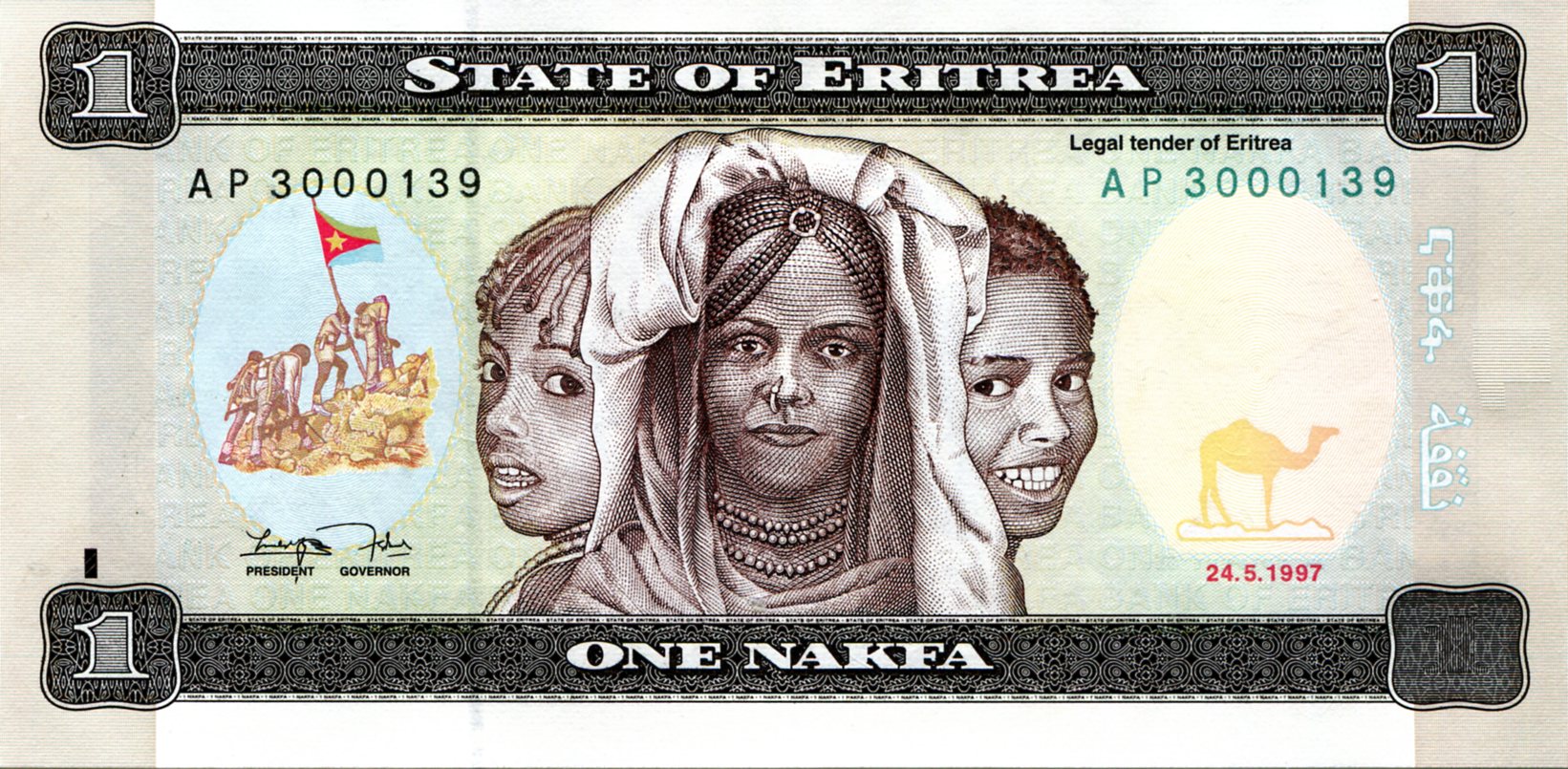
But at least the faces are happy on its money, the nakfa. Interestingly, the currency is named after the city of Nakfa, which was an important nexus of resistance during the Eritrean War of Independence.
One NakfaWere anyone interested in exchanging a 1 nakfa note, in theory it’s worth about 6.5 U.S. cents, but only because it’s pegged to the dollar. And in fact, the note I have isn’t even money in Eritrea any more, having been replaced by newer notes.
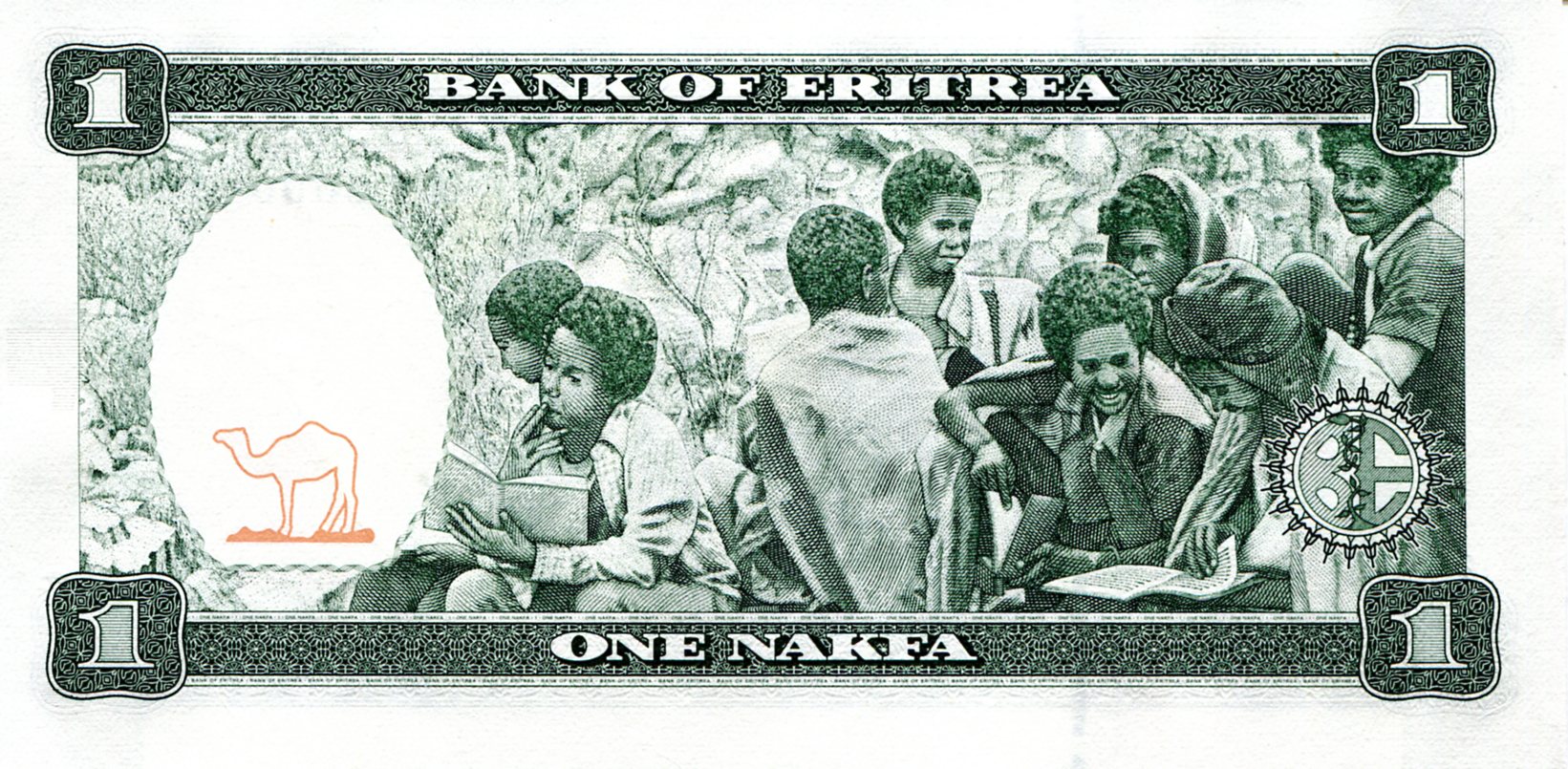
1 Nakfa Note reverseI also wonder why the despots of Eritrea kept that name for the country. I understand it’s derived from the ancient Greek name for the Red Sea, and it’s something the Italians dreamed up as part of their jerry-built imperial ventures during the Scramble for Africa. Why not something harking back even further (as woeful Zimbabwe did)? Such as Axum.

One Ngultrum Note

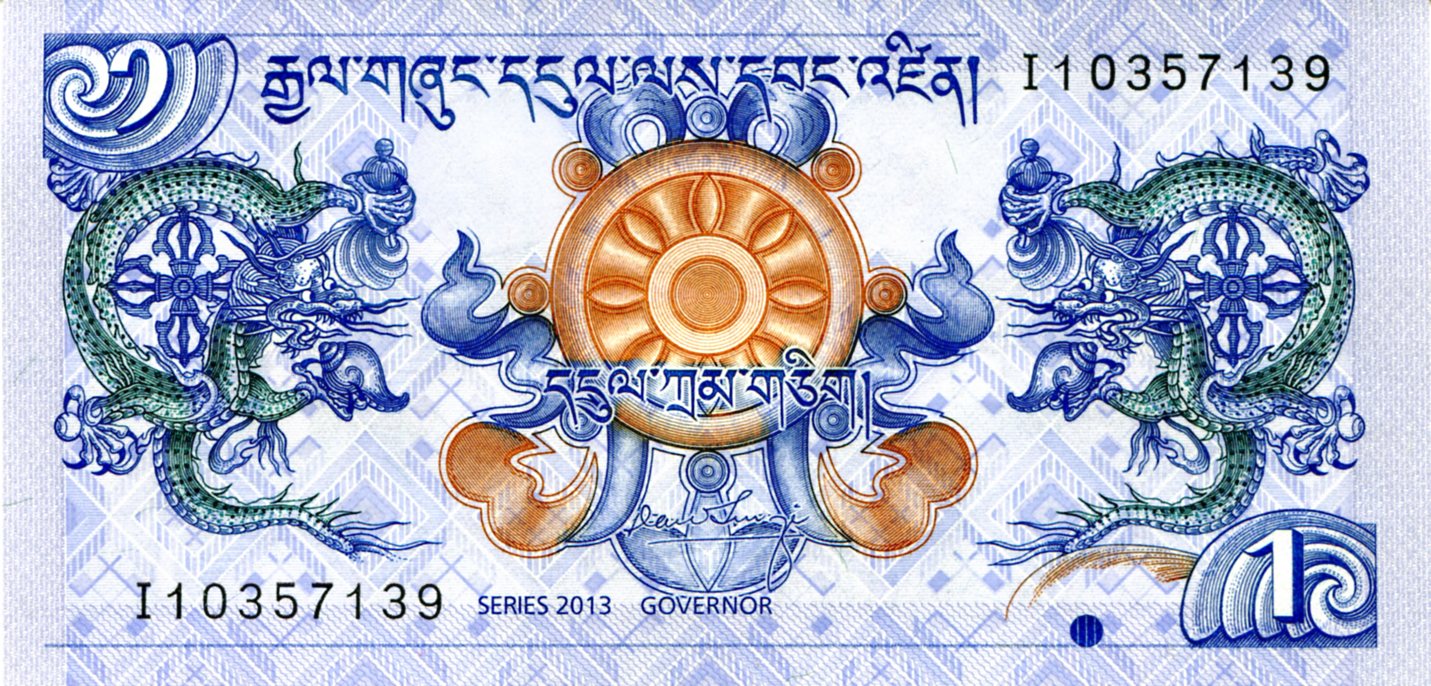
This colorful banknote is a 1 ngultrum note issued by the Royal Monetary Authority of Bhutan, Series 2013.

1 ngultrum note

If I ever knew it, and maybe I did, I’d forgotten that the ngultrum — དངུལ་ཀྲམ — is the basic currency of that insular Himalayan state. It divides into 100 chhertum. The ngultrum is pegged at par to the Indian rupee, so these days my note is theoretically worth about 1.5 U.S. cents.

1 ngultrum note

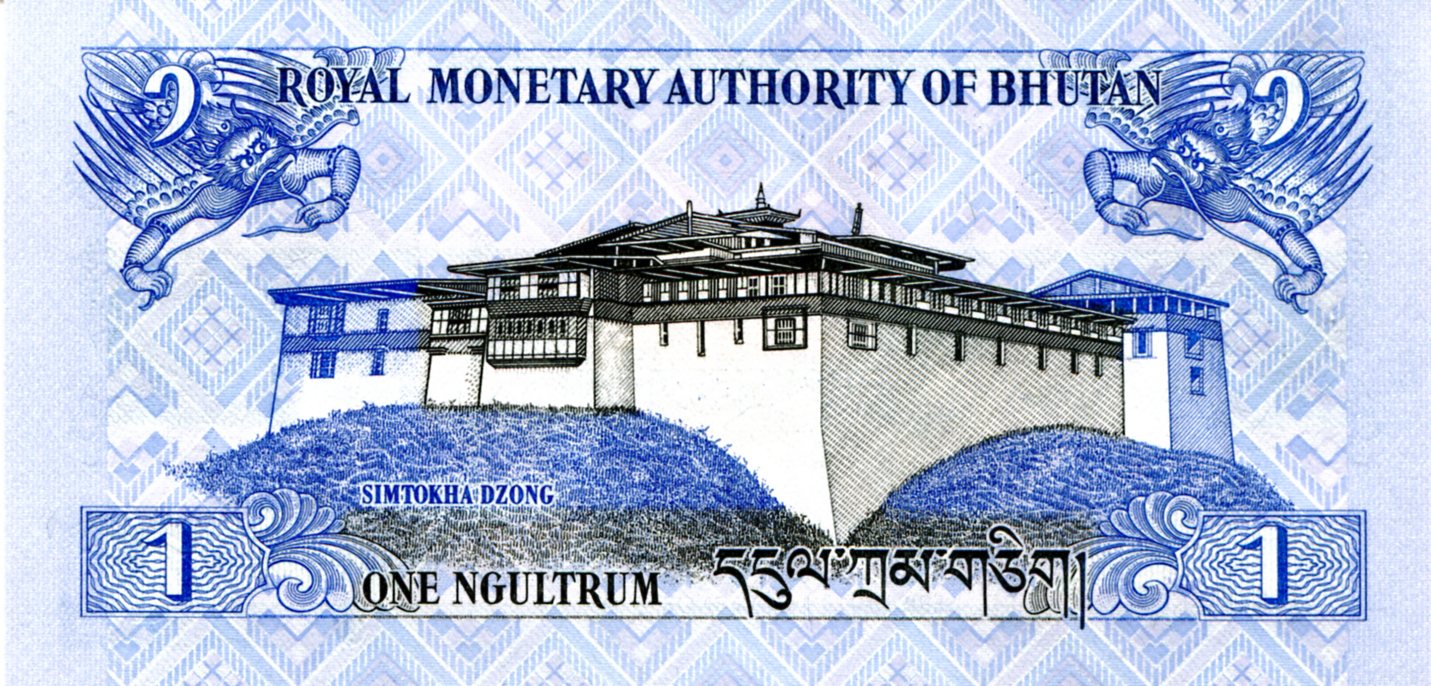
That’s Simtokha Dzong. Wiki tells us that “Simtokha Dzong (‘dzong’ means ‘castle-monastery’), also known as Sangak Zabdhon Phodrang (‘Palace of the Profound Meaning of Secret Mantras’), is a small dzong. It was built in 1629 by Zhabdrung Ngawang Namgyal, who unified Bhutan… An important historical monument and former Buddhist monastery, today it houses one of the premier Dzongkha language learning institutes.”

I didn’t pick up the note in Bhutan. Mostly what I remember hearing about visiting Bhutan in the 1990s was that visas were inordinately expensive. These days, I’ve read, the approach is to require foreigners to spend a certain per diem in country — high for the developing world — and hew pretty closely to their organized tours. Nepal, it ain’t.

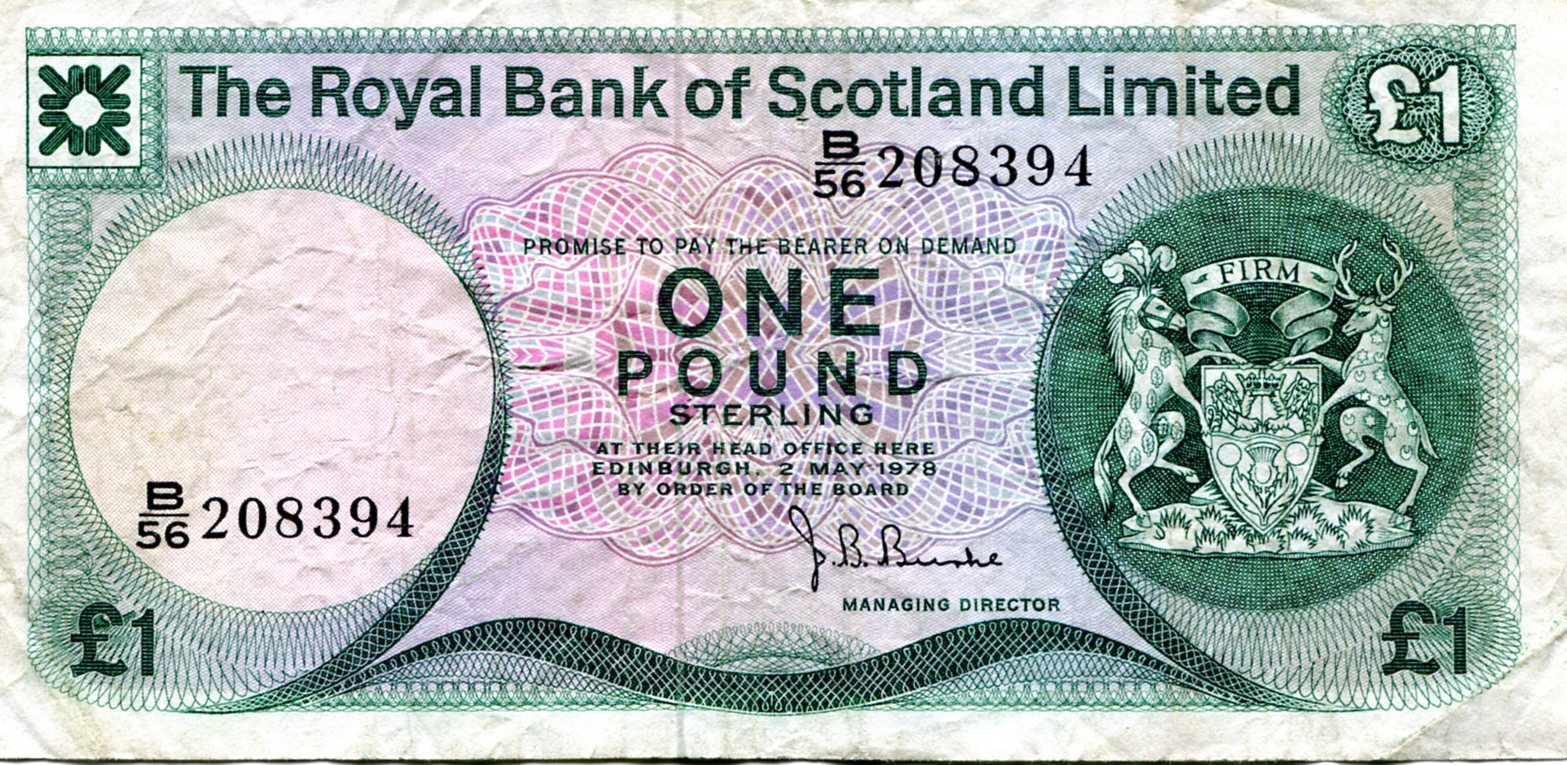
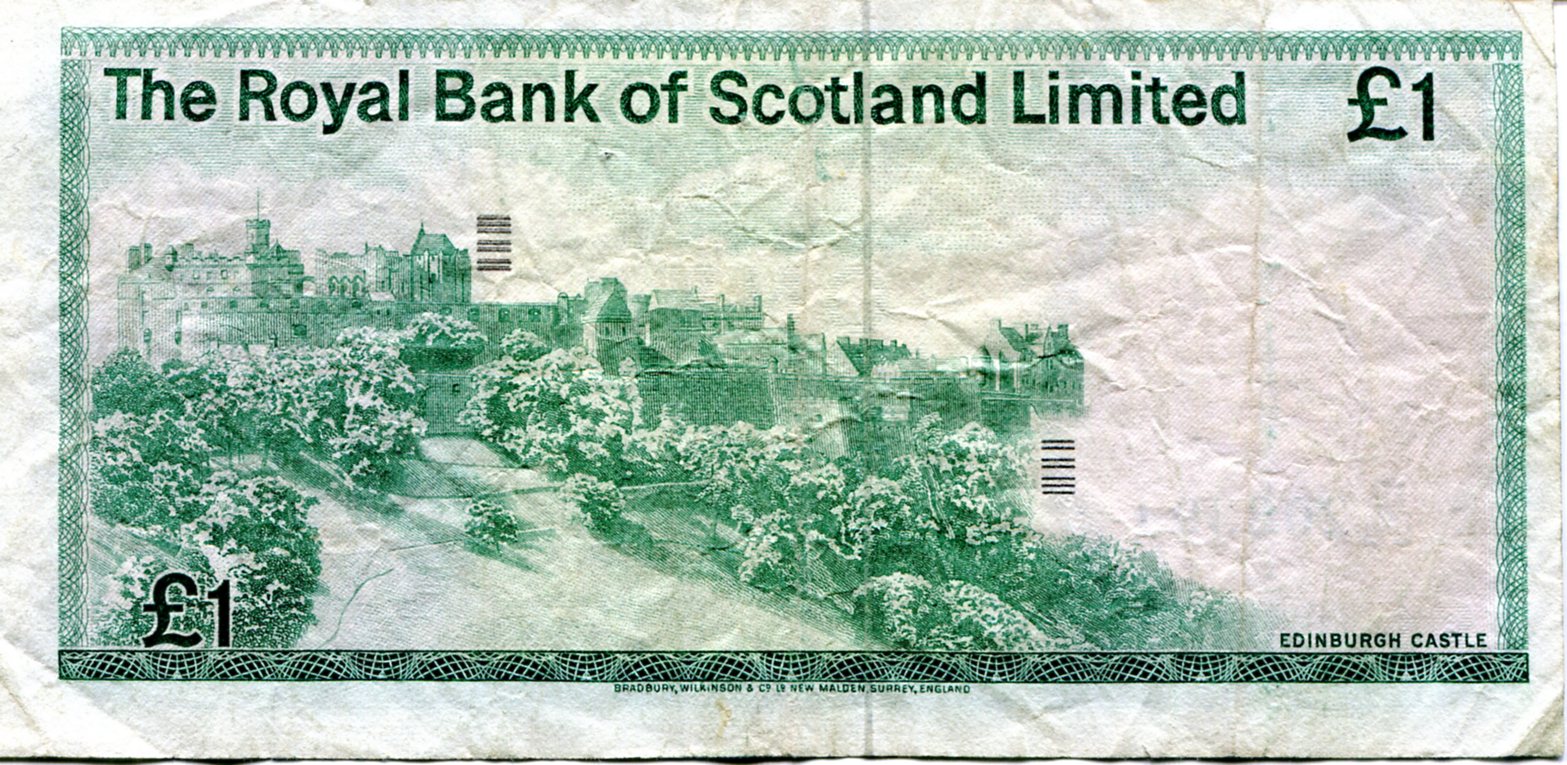
RBS One Pound Note

What to do here in the pit of winter, with its cold — though not quite as cold this year as usual — and daylight that passes so quickly? Take a close look at your collection of colorful but essentially worthless banknotes from far-flung nations. Or in one case, a subnational banknote. This one, dated 1978:
Royal Bank of Scotland One Pound Note 1978Not too many subnational territories get their own banknotes, but Scotland does. I might have gotten this in change during my ’83 visit to the UK, which took me close to Scotland compared to where I am most of the time, but not really that close. Or maybe I picked it up in ’88. I suspect that by ’94, most cashiers in England weren’t bothering with £1 notes of any kind.

Royal Bank of Scotland One Pound Note 1983

Scottish notes circulate in the rest of the UK, and will until that day when the Scots, peeved about Brexit, pull the trigger on independence. At which point they might go ahead and use the euro, and wind up like Greece. But that’s all mere conjecture.

For now, three Scottish banks are authorized to issue banknotes: the Bank of Scotland, the Royal Bank of Scotland, and Clydesdale Bank. According to the RBS, it’s been issuing banknotes since 1727 and has an average of £1.5 billion worth of notes in circulation on any given day. It’s also the only one of the three to keep issuing £1 notes.

In October, the RBS issued its first polymer banknote, which was a £5 note. Next will be a £10 note. The one pound probably isn’t worth the trouble.

Divers Content on a Freezing Cold Thursday

Inspired by yesterday’s natterings, I stopped at the library and checked out River of Doubt (2006) by Candice Millard. Subtitled “Theodore Roosevelt’s Darkest Journey,” it’s about TR’s expedition into darkest Amazonia in 1913-14. As the book makes clear from the get-go, the journey nearly killed him. Even he-man action presidents have their limits, after all.

I didn’t know until today that Andrew Sachs died not long ago. There are many clips available of him in fine form as Manuel, such as this one or this one or this one.

I’ve had these glasses for a few years now. Bought them at a garage sale for (I think) a quarter each.

Coke Cans Make of Glass

They were clearly some kind of promotional item from Coca-cola but also McDonald’s, because three of them have McDonald’s arches on the bottom. The interesting thing to me is that they’re precisely the same size and shape as a 12 oz. soft drink can.

While writing about a hotel today, I encountered something in the hotel biz known as a “spiritual menu.” The concept isn’t exactly new, but I’d never heard of it. The following is from the Christian Post in 2008.

“A hotel in Nashville will be the first known in the nation to remove the standard Holy Bible from its rooms and replace it with a ‘spiritual menu’ that includes other religious books… Hotel Preston, a boutique owned by Oregon-based Provenance Hotels, will require guests to call room service to order their religious book of choice…

“The religious book list includes the Book of Mormon, the Qur’an, the Torah, the Tao Te Ching, The Four Noble Truths of Buddhism, Bhagavad Gita (a Hindu text), books on Scientology, as well as the King James and New American Bible versions.” @#$%&! Scientology?

Hm. The Gideons can’t be too happy about being replaced. And the following lyric just doesn’t have the same ring: Rocky Raccoon/Checked into his room/Only to find a spiritual menu.

Twelve Pictures ’16

Back to posting around January 2, 2017, after I’ve said good riddance to this regrettable year in which a family member and two old friends departed.

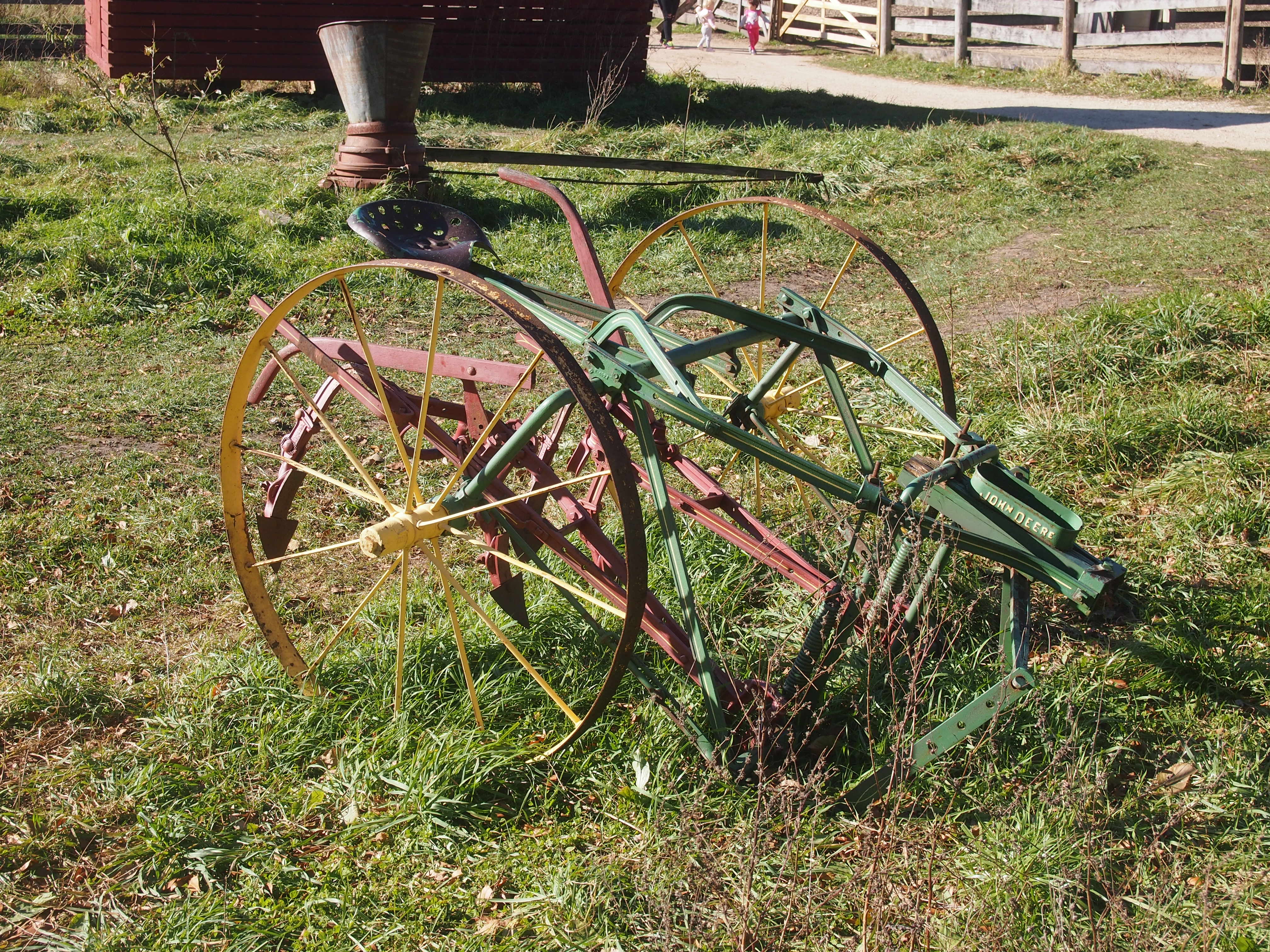
I ought to publish pictures at a site for pictures, since I take a lot more than I ever use here, a few of them tolerably good. The following are photos from each month of 2016. No overriding theme, just pictures.

Schaumburg, January 2016

Schaumburg Jan 2016

Libertyville, Ill. February 2016

Libertyville

San Antonio, March 2016

San Antonio March 2016Rockford, Ill. April 2016

Rockford April 2016Dayton, May 2016

Dayton May 2016Nashville, June 2016

Nashville June 2016Austin, July 2016

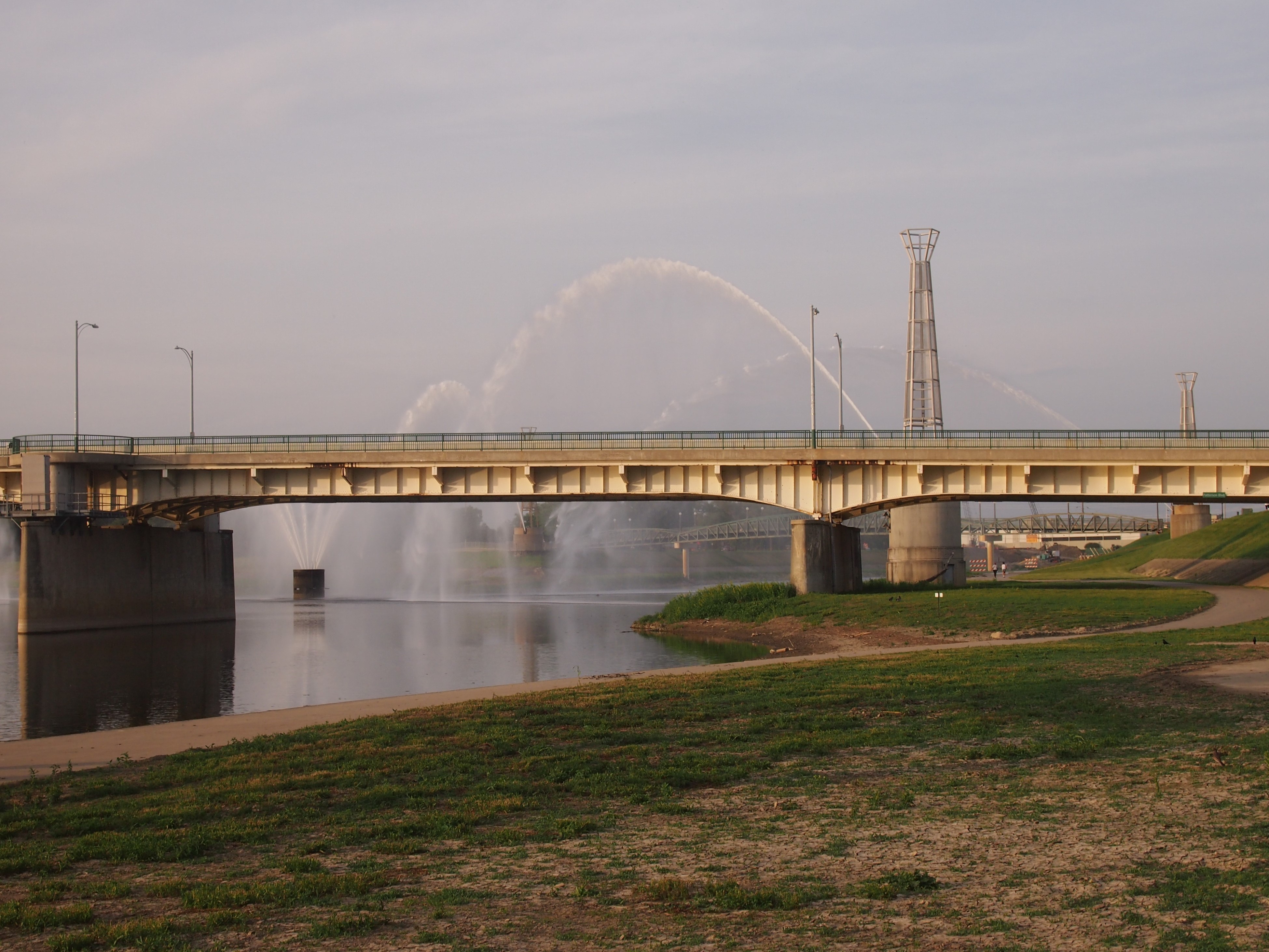
Austin July 2016Chicago, August 2016

Glencoe, Ill., September 2016

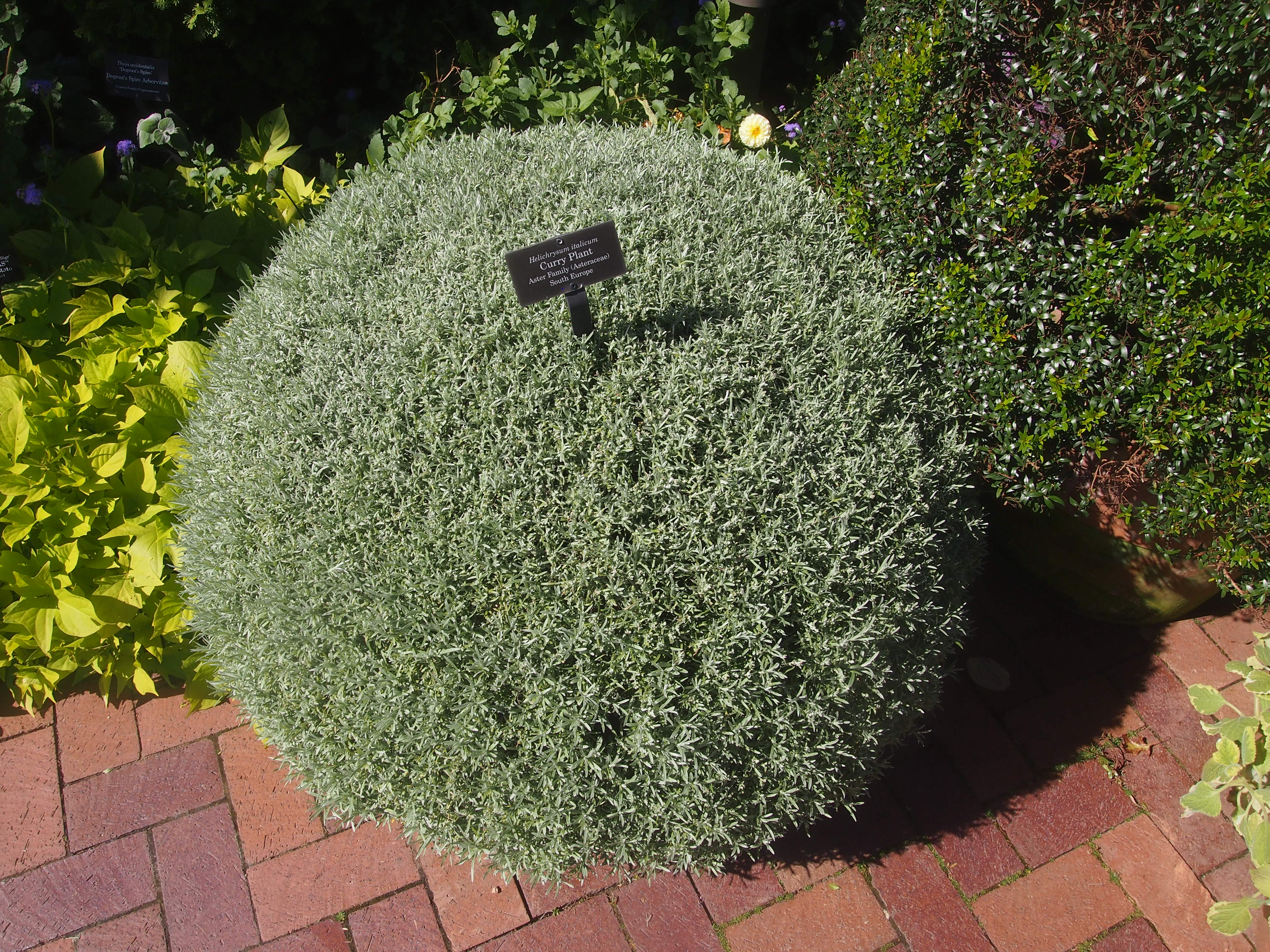
Chicago Botanic GardensPhiladelphia, October 2016

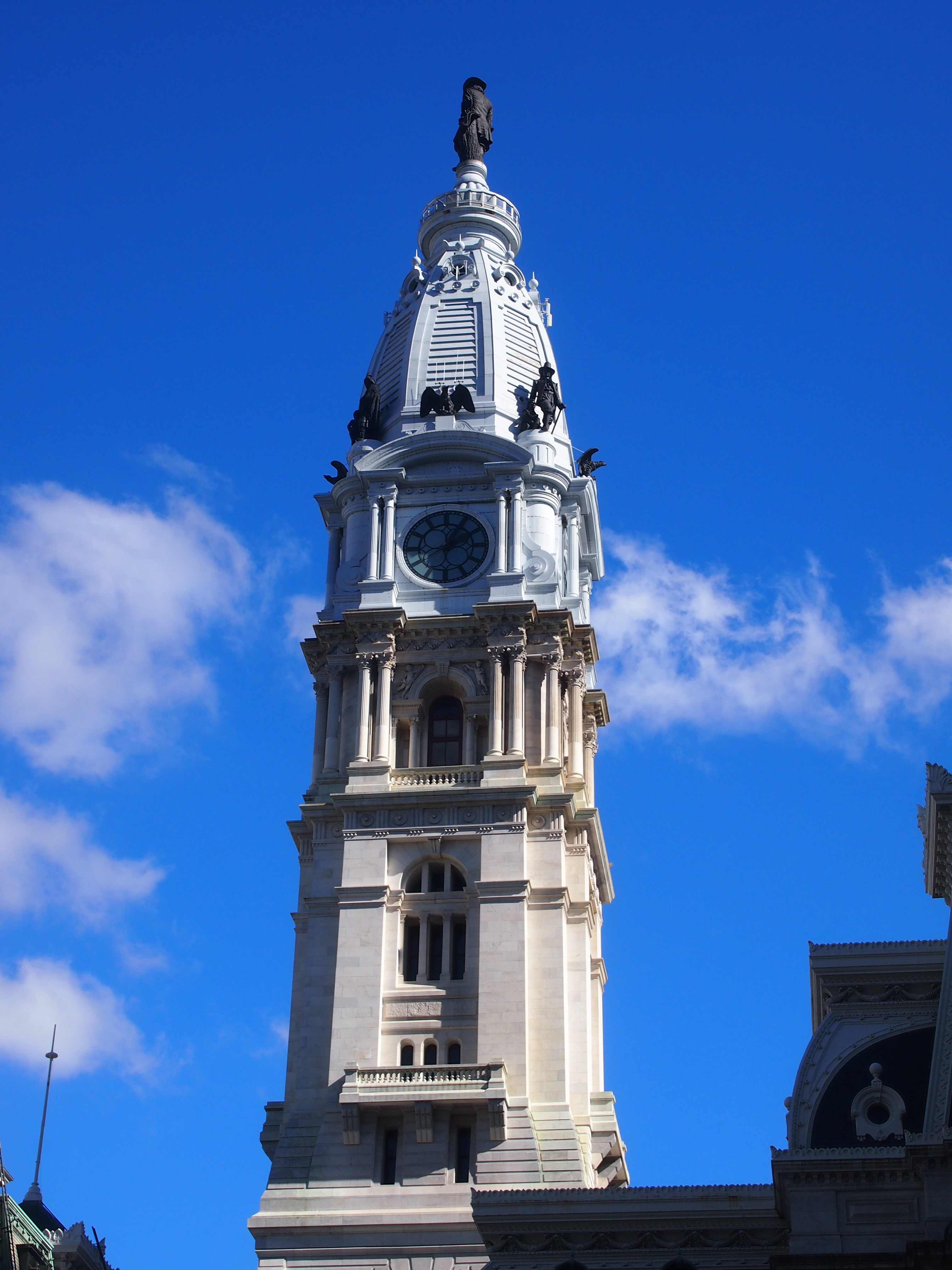
Philadelphia 2016

Schaumburg, November 2016

Westmont, Ill., December 2016

Merry Christmas to all.

Nata de Coco Thursday

Picked up Lilly last night where the bus from UIUC dropped her off, near a northwest suburban mall. Fortunately I was there more-or-less on time, so she didn’t have to spend much time out in the bitter wind, because the drop-off point is simply a parking lot. Not a good night to be outside.

Driving home, we did have the pleasure of hearing “Grandma Got Run Over by a Reindeer” by chance on the radio. I like to hear that exactly once every Christmas season. No more than that.

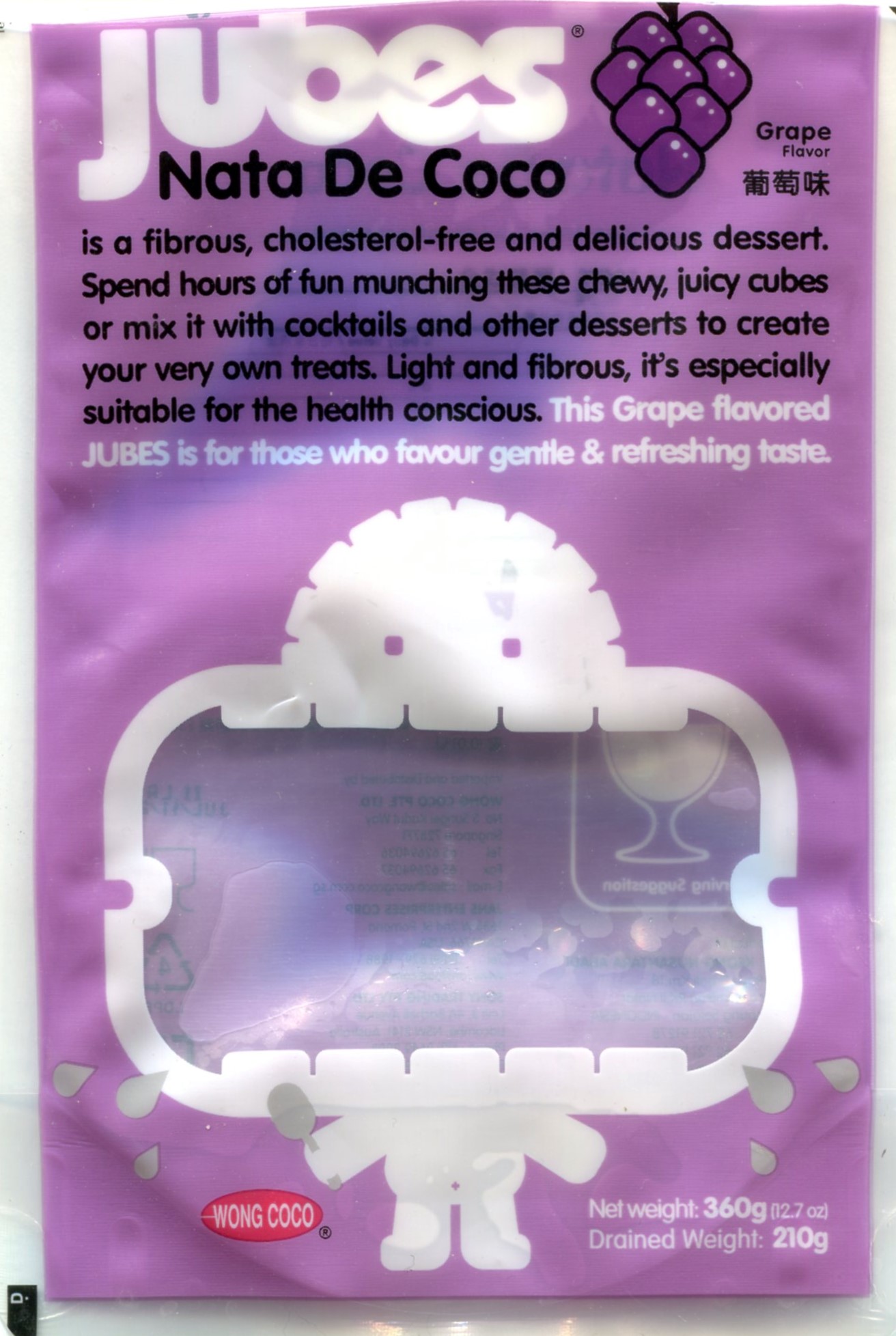
Here’s the packaging from Jubes brand nata de coco. Jubes, we figure, is a portmanteau of “juicy cubes.”

jubes

To save a trip to Wiki: “Nata de coco is a chewy, translucent, jelly-like food produced by the fermentation of coconut water, which gels through the production of microbial cellulose by Acetobacter xylinum. Originating in the Philippines, nata de coco is most commonly sweetened as a candy or dessert, and can accompany a variety of foods, including pickles, drinks, ice cream, puddings, and fruit mixes.”

It’s a product of Pt. Keong Nusantara Abadi, located in Lampung Selatan, Indonesia. I had to look that up. It’s on the southern end of Sumatra. I can’t think of anything else imported from Sumatra, at least in my house.

The marketing text, especially the last line, has a Japlish flavor. This Grape flavored JUBES is for those who favour gentle & refreshing taste. But for all I know, that’s Bahasa-lish as well.

Nata de coco is popular in Japan. Some years ago, Yuriko was eating some and Ann wanted to try it. Then she wanted the whole bowl. She’s been fond of it since. At some point I tried it too. It isn’t bad, but it’s probably one of those foods best discovered as a child for a deep appreciation.

Now I Know Who Verne Troyer Is

Ah, Wikipedia. Your charms are endless. I really should give you that $3. Today I was looking at the entry on Seaport Boston Hotel & World Trade Center, a property in the Seaport District of Boston. Among other things, it lists “notable stays,” which looked like a list on a standardized test question — which of these is not like the others?

President Barack Obama
President Bill Clinton
Secretary of State Hillary Clinton
President George H. W. Bush
President George W. Bush
Vern Troyer

I didn’t know “Vern Troyer,” so naturally I looked him up. Must be this fellow, Verne Troyer. An actor of diminutive stature, he’s best known for playing Mini-Me in the Austin Powers movies, which I’ve managed to avoid since the very first one nearly 20 years ago. And yet I’ve heard of Mini-Me. Some things just burrow their way into the wider culture.

The Global Fastener News Calendar (Or, More Calendar Oddities)

Strangely enough, this morning another calendar crossed my desk, but not a cheapo publication. Rather, it’s the four-color, glossy-paper Global Fastener News Calendar for 2017. Published by Global Fastener News, or to be exact, Global Fastener News.com, based in Portland, Ore. If you want to know nuts and bolts, that’s your place.

Not to mock such a trade publication, as people sometimes do. I remember, for example, seeing clueless amusement in print that fire chiefs had their own magazine, as if managing a fire service operation weren’t a complicated task best done by informed management. Besides, I’ve made my living largely among trade publications. If there’s a trade, there’s a publication, because there are people who care deeply about their trade.

As for fasteners, you could almost say, literally, that the world would fall apart without them.

The Global Fastener News Calendar is an excellent calendar. It includes many standard religious and secular holidays — and not just American ones — as well as dates for fastener industry events, major sporting events, and dates you might not otherwise expect.

For instance: Save the Eagles Day (Jan. 10), National Freedom Day (Feb. 1), Candlemas (Feb. 2), World Cancer Day (Feb. 4), Pi Day (March 14), National Health Care Decision Day (April 16), Earth Day (April 22), World Press Freedom Day (May 3), National Day of Prayer (May 4), National Defense Transportation Day and then Armed Forces Day (May 19 and 20), National Donut Day (June 2), World Environment Day (June 5), World Accreditation Day (June 9), Juneteenth (June 19), Take Your Dog to Work Day (June 23), Stonewall Rebellion (June 28), World Population Day (July 11), System Administrators’ Appreciation Day (July 29), Friendship Day (Aug. 6), Left Hander’s Day (Aug. 13), UN International Day of Peace (Sept. 21), World Heart Day (Sept. 29), National Manufacturing Day (Oct.6), World Standards Day (Oct. 14), American Indian Heritage Day (Nov. 24), AIDS Awareness Day (Dec. 1), and Pan American Aviation Day and Wright Brothers Day (Dec. 17).

A few of these I hadn’t heard of and couldn’t quite guess by context. National Health Care Decision Day is for “emphasizing the spotlight on the importance of advance directives,” and World Accreditation Day as a “global initiative, jointly established by the International Accreditation Forum (IAF) and the International Laboratory Accreditation Cooperation (ILAC), to raise awareness of the importance of accreditation,” according to the IAF itself.

National Defense Transportation Day goes back further than you’d think. According to timeanddate.com: “On May 16, 1957, Congress approved for the third Friday of May each year to be designated as National Defense Transportation Day. In 1962 Congress updated their request to include the whole week within which the Friday falls as National Transportation Week.”

So I guess if you want to honor half-tracks or troop carriers or the original jeeps, that would be your day.

You’d think American Indian Heritage Day (aka Native American Heritage Day) would take the place of Columbus Day, but apparently not. That’s Indigenous Peoples’ Day, which isn’t on this particular calendar. To complicate matters, according to Wiki, “[Besides Berkeley], several other California cities, including Richmond, Santa Cruz, and Sebastopol, now celebrate Indigenous Peoples’ Day.

“At least four states do not celebrate Columbus Day (Alaska, Hawaii, Oregon, and South Dakota); South Dakota officially celebrates Native American Day instead. Various tribal governments in Oklahoma designate the day as “Native American Day,” or have renamed the day after their own tribes. In 2013, the California state legislature considered a bill, AB55, to formally replace Columbus Day with Native American Day but did not pass it.” Ah, well. People’s Front of Judea, Judean People’s Front.

I’m also amused by, but not mocking, some of the industry events on the calendar. Such as Comedy Night, North Coast Fastener Association; Hydrogen Embrittlement in Fasteners, FTI, Detroit; Fastener Fair India, Mumbai; Xmas in July, North Coast Fastener Association; ASME B1 Committee on Screw Threads, Scottsdale, AZ; Wire Russia, Moscow; Indo Fastener, Jakarta; Young Fastener Professionals, Las Vegas; and Screw Open, North Coast Fastener Association (sounds like a fun bunch of guys, that North Coast).

Dec. 6 — just missed it — is the anniversary of the implementation of the U.S. Fastener Quality Act of 1999, a fact that’s duly noted on the calendar. A signal achievement of the Clinton administration, no doubt, but I’m not going to do anything more than glance at “10 of the Most Frequently Asked Questions About the Final FQA.”

Such as: Are inch hex socket products really exempt from the FQA?

Answer: Yes. Even though all inch alloy steel socket products are through hardened as required by consensus standards, they are not required by those same standards to be grade marked and are therefore, NOT COVERED.

The next day, a year from today, is called Pearl Harbor Day and not some other formulation. Fitting.

One more thing, a fine detail. Phases of the moon are marked, new and full, as on many calendars, though not halves. But there are also two special symbols for the annular eclipse of Feb. 26, 2017 and the full eclipse of Aug. 21, 2017. Cool.
Calendar Oddities Are Back

A cheap calendar crossed my desk the other day, and I thought, that looks familiar. For a good reason: it’s the 2017 version of a cheap calendar I got four years ago. I don’t remember getting one last year or the year before that. I didn’t keep the ’14 version because, after all, it’s a cheap calendar. I expect I’ll throw away the new one soon enough. Got enough stuff around here without it.

I did check, and the parade of U.S. presidential birthdays is exactly the same oddball procession as on the earlier calendar: McKinley, FDR, Lincoln, Washington, Jackson, Madison, Jefferson, Grant, Kennedy, J.Q. Adams, Hoover, Benjamin Harrison, Eisenhower, TR, and Wilson.

Perhaps the other birthdays are the same, too, but I didn’t take notes on them: Alexander Hamilton, MLK, Ben Franklin, Stonewall Jackson, Henry Wadsworth Longfellow, and Jefferson Davis. Interesting selection, that. The other events noted on the calendar are exactly the same as before.

One thing that might be different this time, besides the normal shifting of dates, is that Memorial Day is marked twice. Once, May 29, is simply marked Memorial Day; May 30 is marked Memorial Day (True). Also, Columbus Day is likewise two different days, one True (Oct. 12) and the other presumably false. Or fake. Or bogus. (Oct. 9 next year, as it happens.)

An aside: the day the President Benjamin Harrison proclaimed to be the 400th anniversary of Columbus’ landing in the Americas was Oct. 21, 1892. He had his reasons. Oct. 12, 1492 was reckoned using the Julian calendar. To correct for the Gregorian, nine days were added. Presumably now we’d need to add 10 — or 11, I’m not sure how the fact that 2000 was a leap year affects things — to be mathematically correct. So arguably, if you really wanted to argue such a ridiculous thing, neither Oct. 9th or 12th would be the true Columbus Day.

Anyway, Memorial Day and Decoration Day might be worth distinguishing, but Columbus Day? The day we barely honor a sea captain from Genoa in the pay of Spain traveling to the Bahamas half a millennium ago. I might not live to see the change, but I suspect that holiday isn’t long for the calendar.

A Bum Pressure Switch

Back again on November 27. A good Thanksgiving to all.

As predicted, the unusual warm days of November came to an end recently, replaced by lower temps. Time, it turned out, for a gizmo known as a pressure switch on our furnace to give up the ghost.

Doityourself.com tells us that “a gas furnace pressure switch closes to allow current to pass through and start the ignition of the furnace. If the pressure switch is stuck, it does not send enough power to the inducer, and therefore, the ignition sequence does not begin.”

Sure enough, there was no ignition, so the heater blew unheated air through the system, which is no good when it’s just above freezing outside the house. The problem started Sunday evening, so we spent the night without heat, since I’m not qualified to doitmyself. Once double-time rates were over, on Monday morning that is, a technician came to install a new pressure switch that cost a little less than $200. Could have been worse, as in more expensive. Has been worse.

The house holds its heat fairly well. Small electric heaters were able to raise the living room temps to about 65 F Sunday night. Since I didn’t want to run those overnight, the house then cooled. Inside temps were just over 50 F by Monday morning.

Sleeping under two thick comforters wasn’t bad at all. Except the inevitable wee-hour moment when my bladder reminded me that I’m thoroughly middle-aged.