Woodstock Walkabout

At noon on Saturday, the sun was high and mighty and toasting northern Illinois well into the 90s F. Later in the afternoon, an unexpected storm blew through. Unexpected because I hadn’t looked at any weather reports. By late afternoon, the storm was over and temps were in the pleasant 70s.

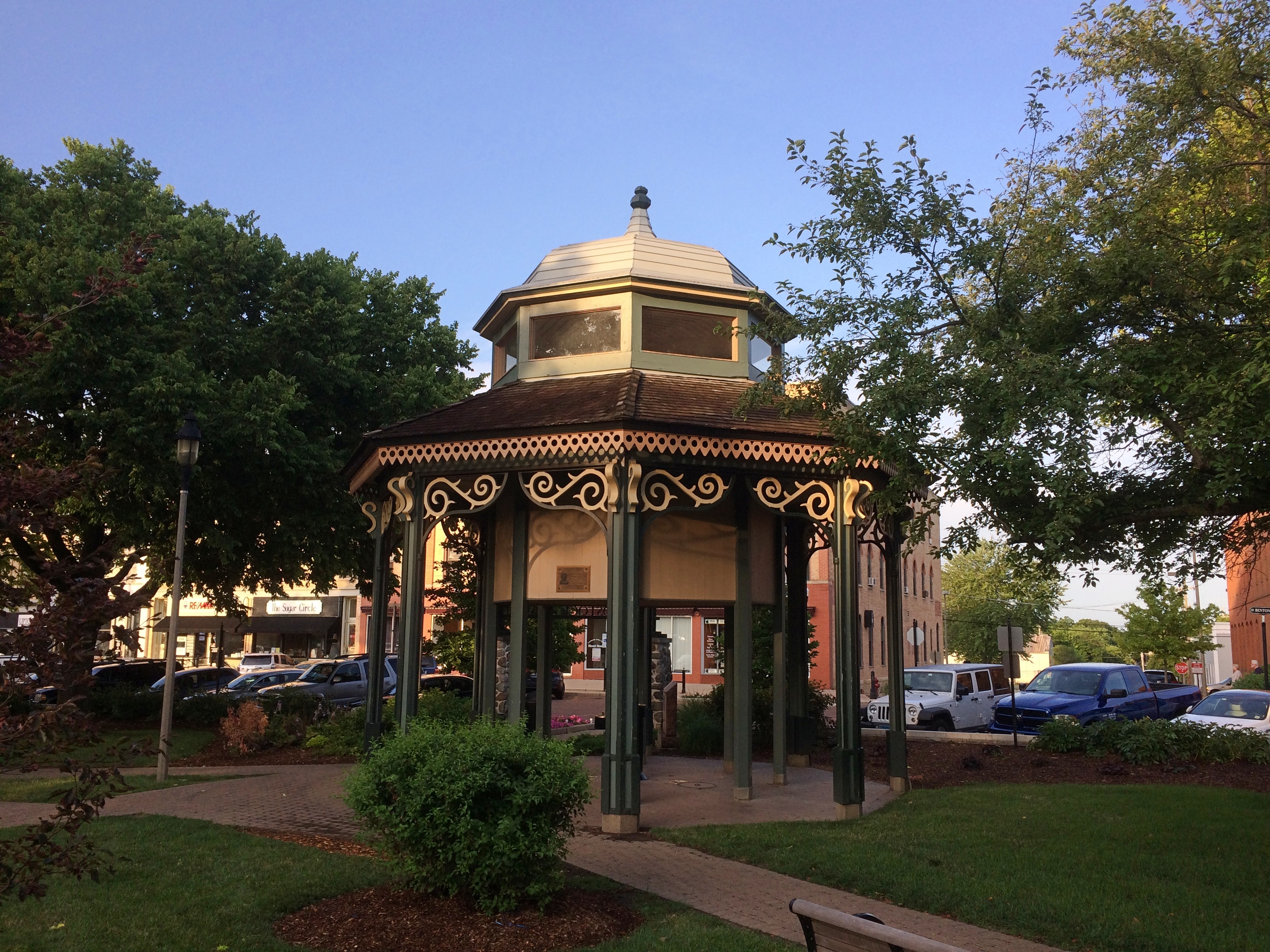
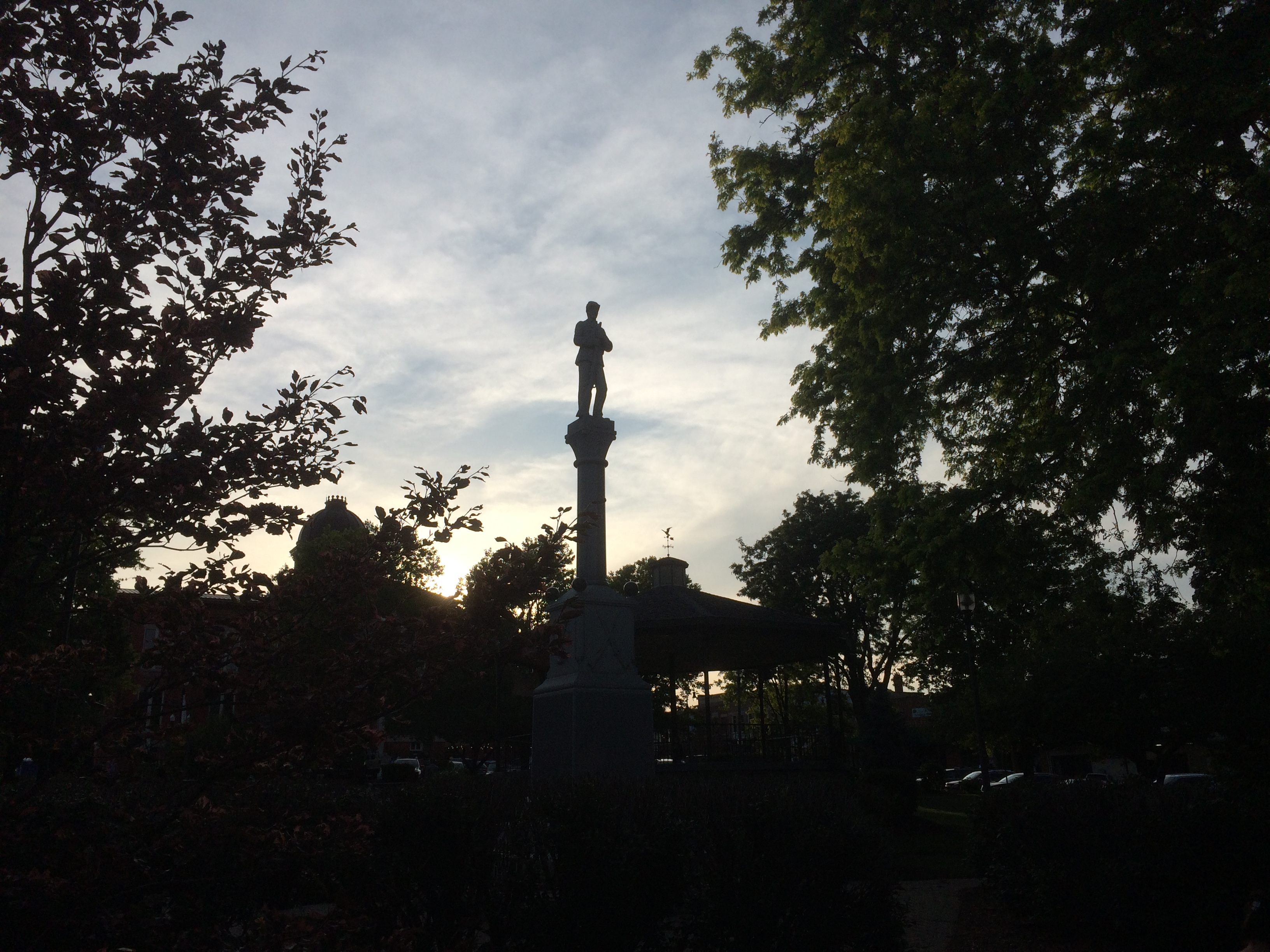
A good time to take a short walk in Woodstock, Illinois, which might be one of the state’s most pleasant towns. A good place to start was Woodstock Square. At the very center of the square is a GAR memorial to Union soldiers and sailors from Woodstock, which was founded in 1852.
What’s a town square without a gazebo?
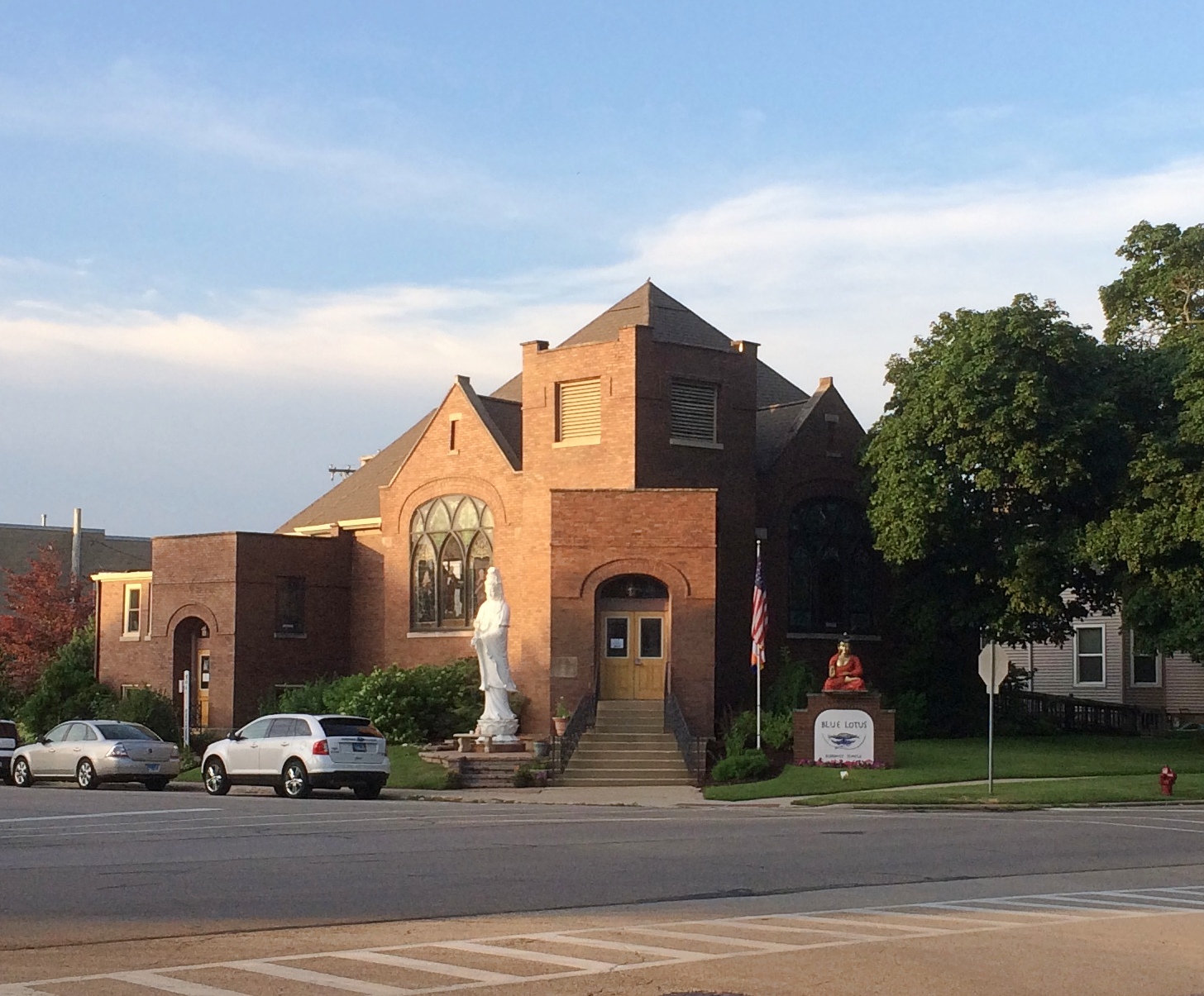
Woodstock Square IllinoisStrolling south from Woodstock Square, I passed by the Blue Lotus Buddhist Temple. I noticed it on a previous visit to Woodstock.

Blue Lotus Temple Woodstock Illinois

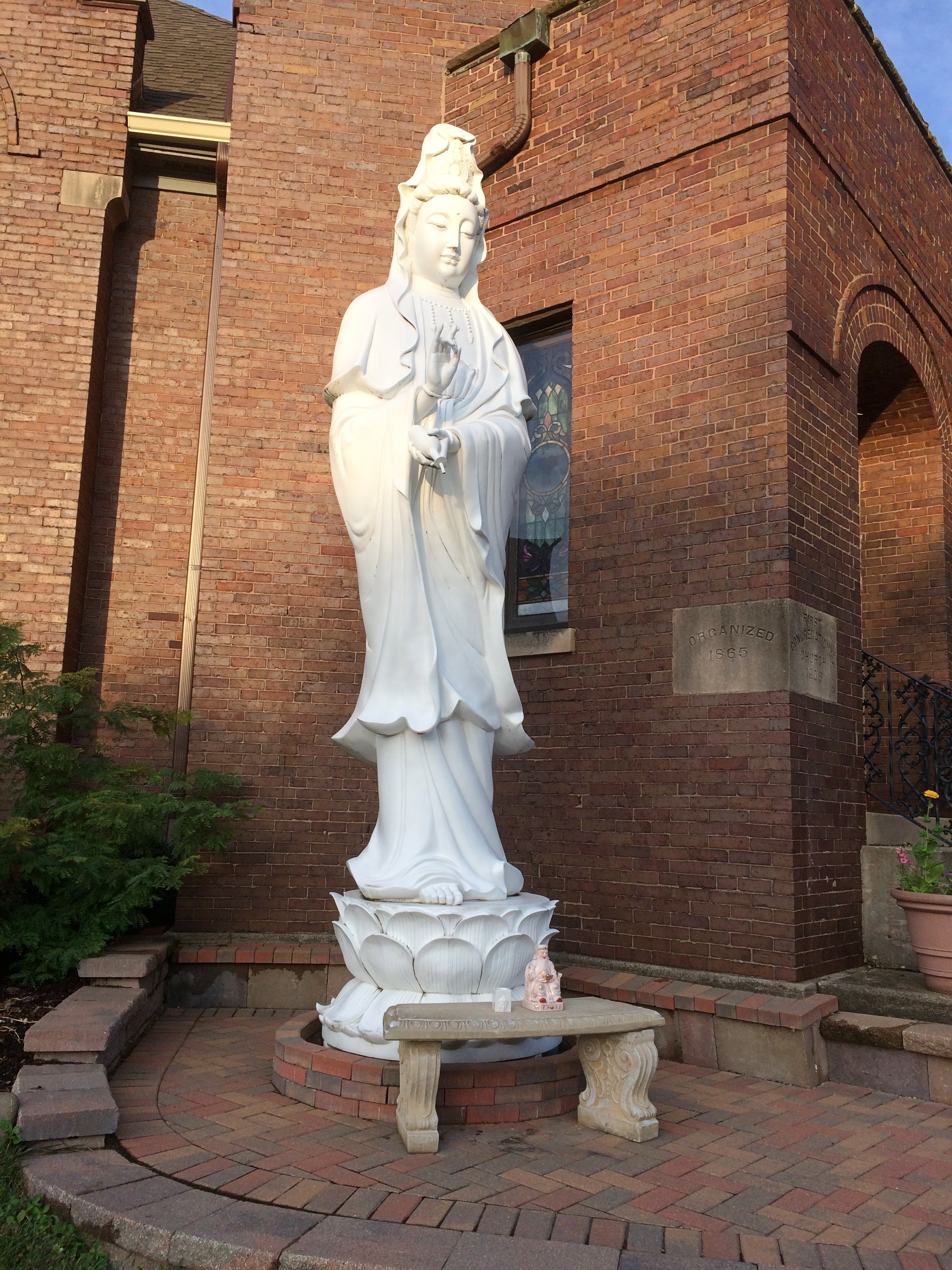
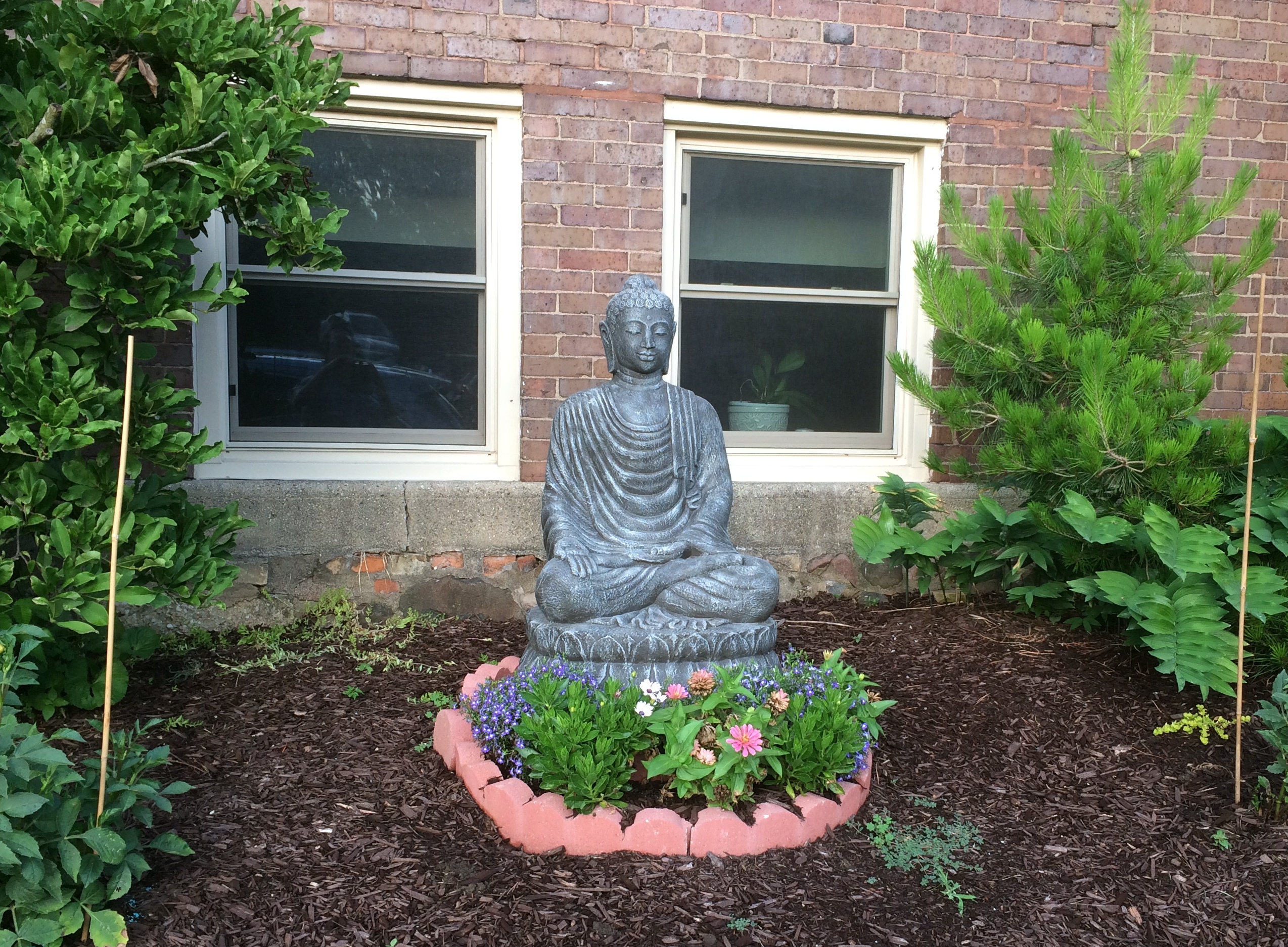
I don’t believe these statues were there the last time. It’s been seven or so years, after all. Plenty of time to add a few depictions of Buddha.
Blue Lotus Temple Woodstock IllinoisBlue Lotus Temple Woodstock IllinoisThe temple isn’t the only religious site in the vicinity. Cater-cornered across the street is Woodstock’s First Church of Christ, Scientist. Not far away are the First United Methodist Church and the Unity Spiritual Center of Woodstock.

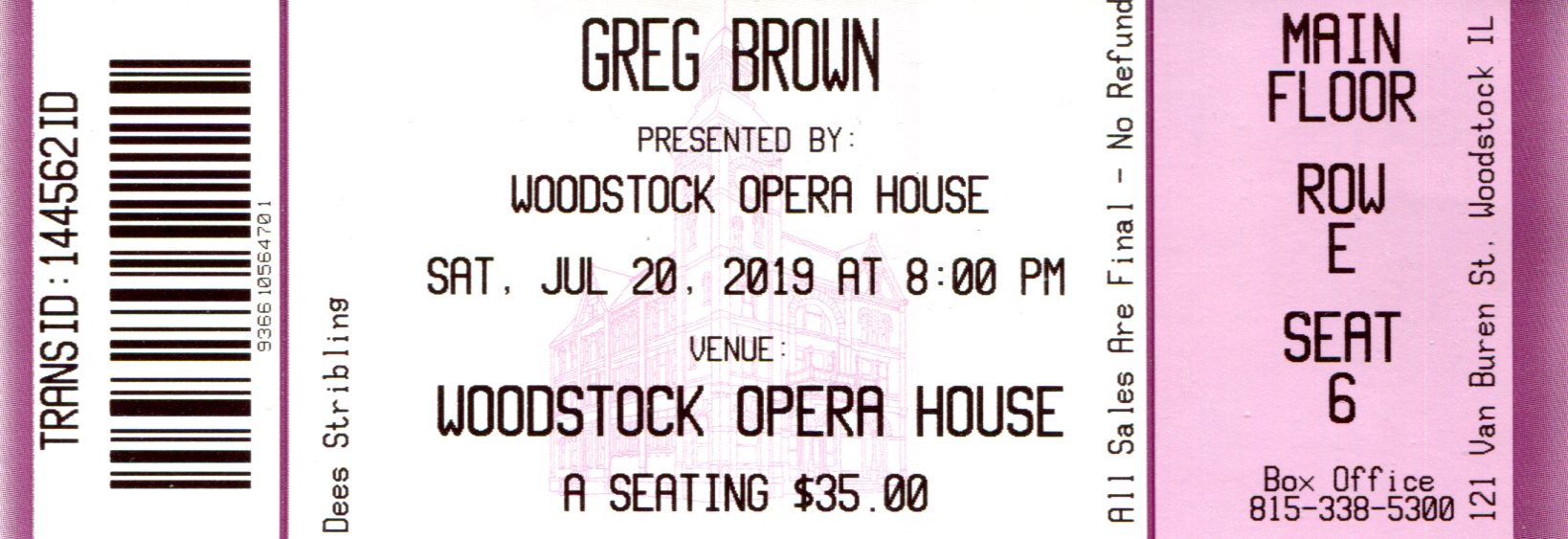
I’d come to Woodstock to see Greg Brown at the handsome Woodstock Opera House. He’s a vastly underappreciated singer-songwriter-story teller from Iowa.

It was dark after the show, but I didn’t want to hurry away from Woodstock. Besides, I’d read that there was a new(ish) mural just north of Woodstock Square. So it is, in an alley — which the town calls a “pedway” — off Main Street next to Classic Cinemas Woodstock Theatre.

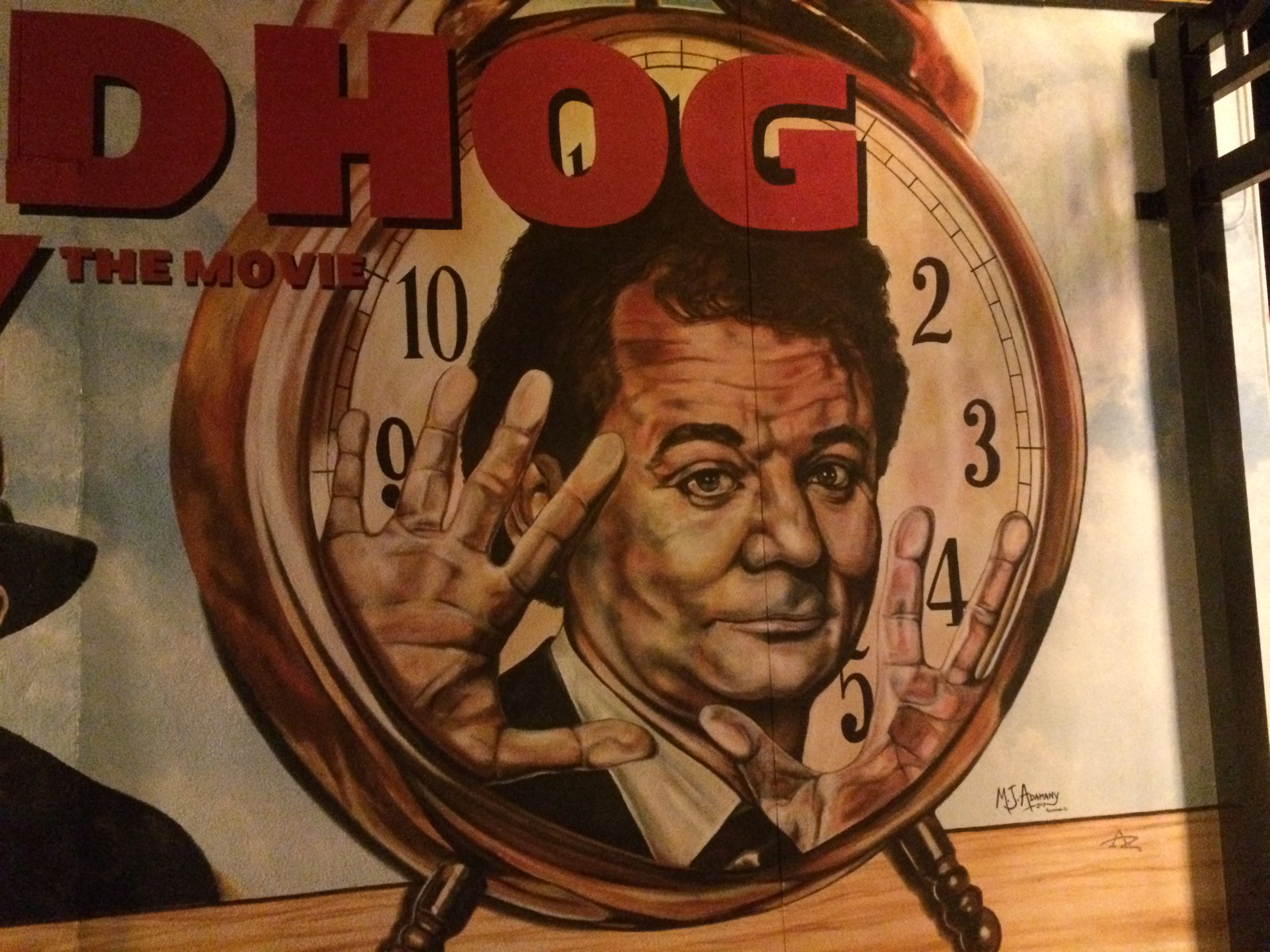
The mural honors the likes of Groundhog Day, filmed locally and remembered elsewhere in town.

Woodstock Illinois Movie and Stage Mural

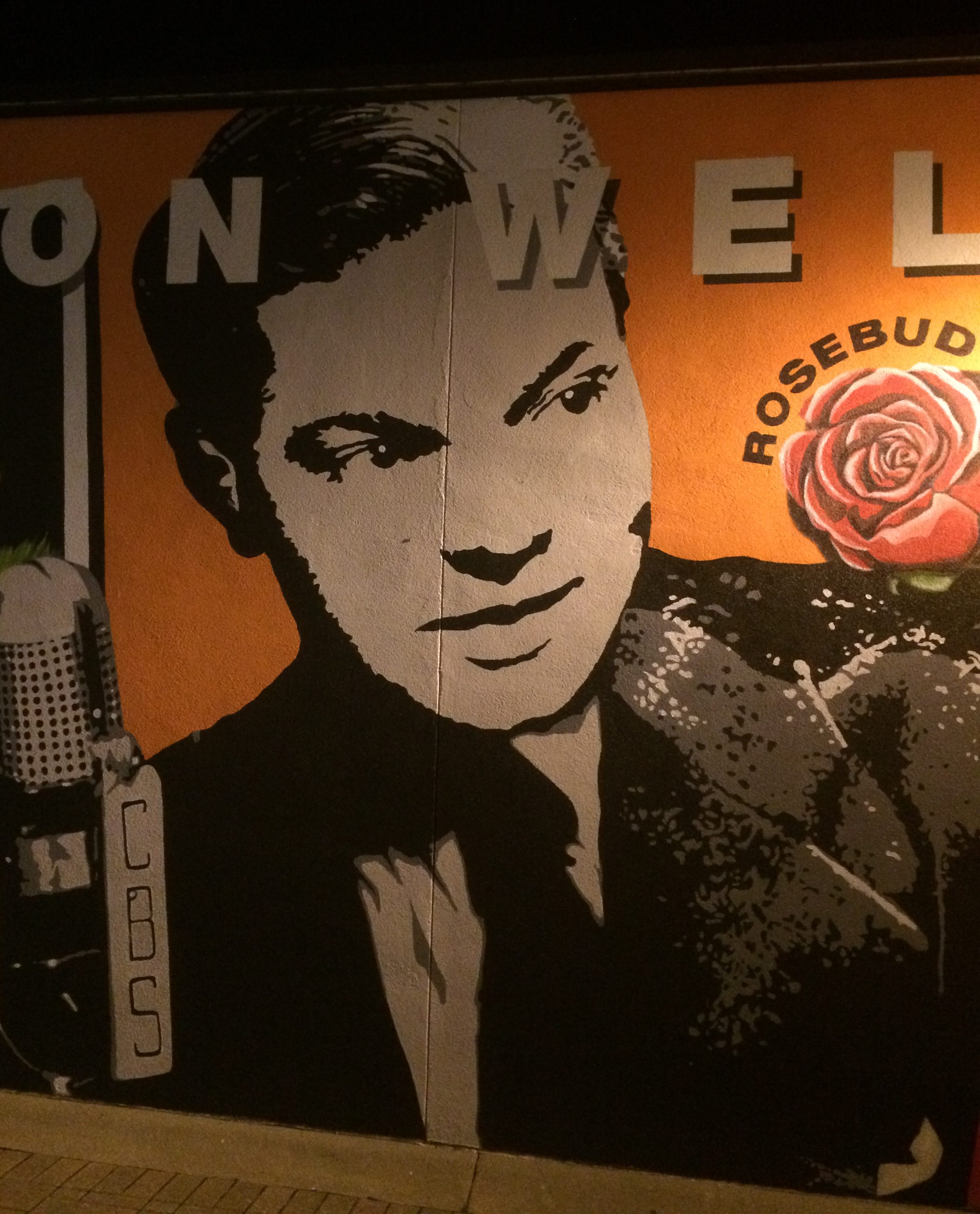
Orson Welles, who spent part of his youth in Woodstock.

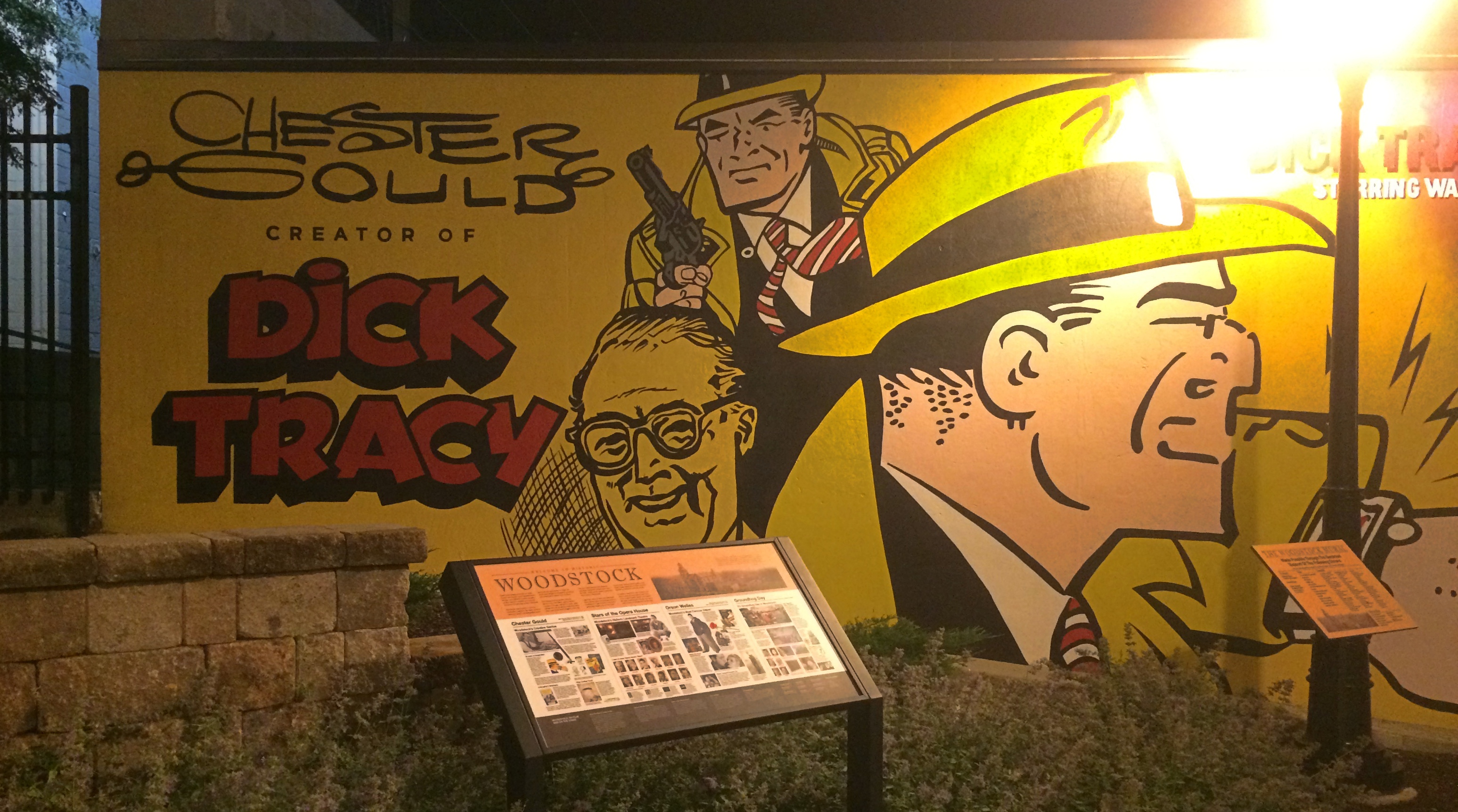
Woodstock Illinois Movie and Stage MuralThe town also remembers Chester Gould, though the Dick Tracy Museum in Woodstock closed a number of years ago.
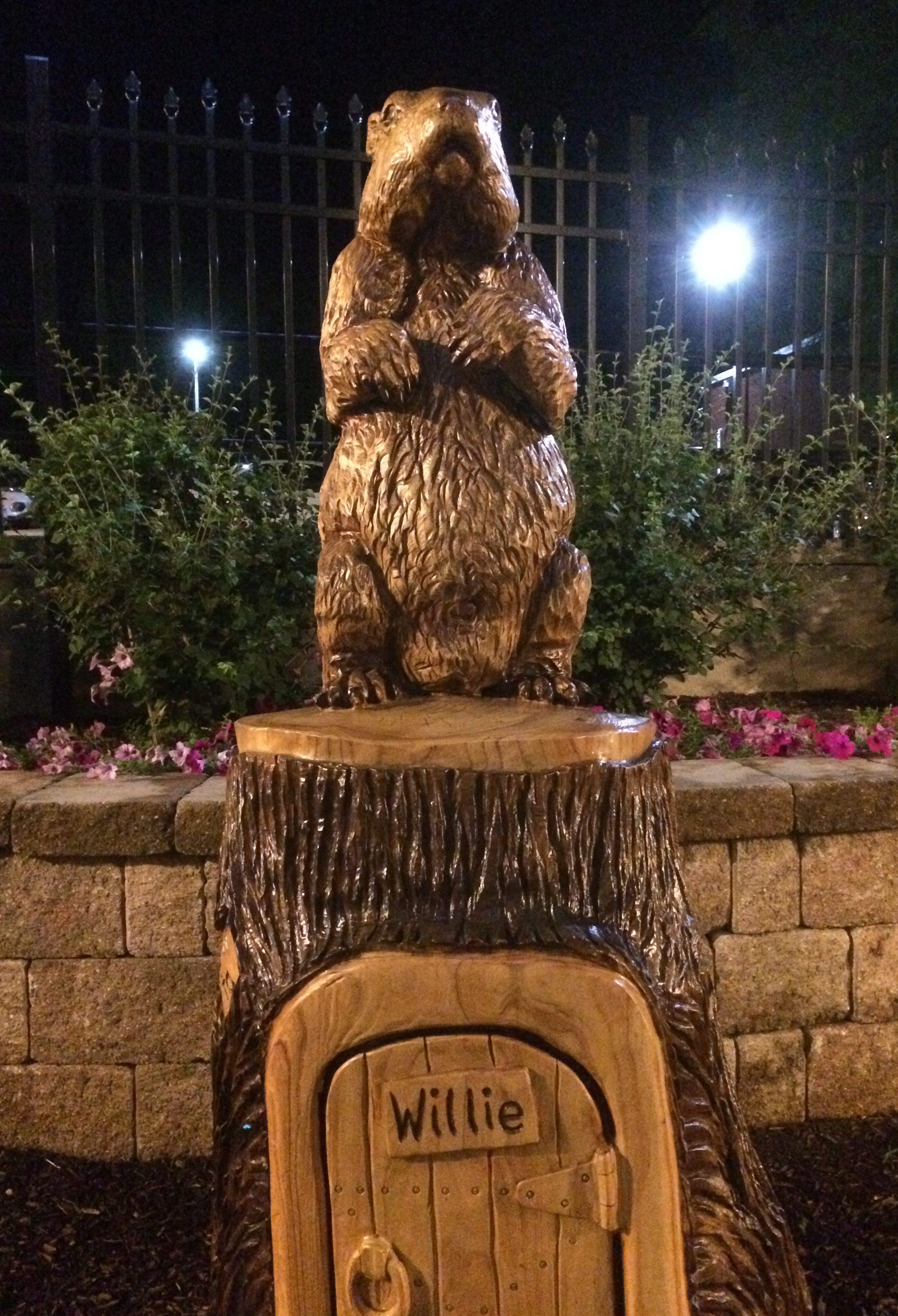
Woodstock Illinois Movie and Stage MuralThe alley features two statues as well. One is a wood carving of Woodstock Willie, presumably the town’s answer to Punxsutawney Phil, created by carver Michael Bihlmaier.
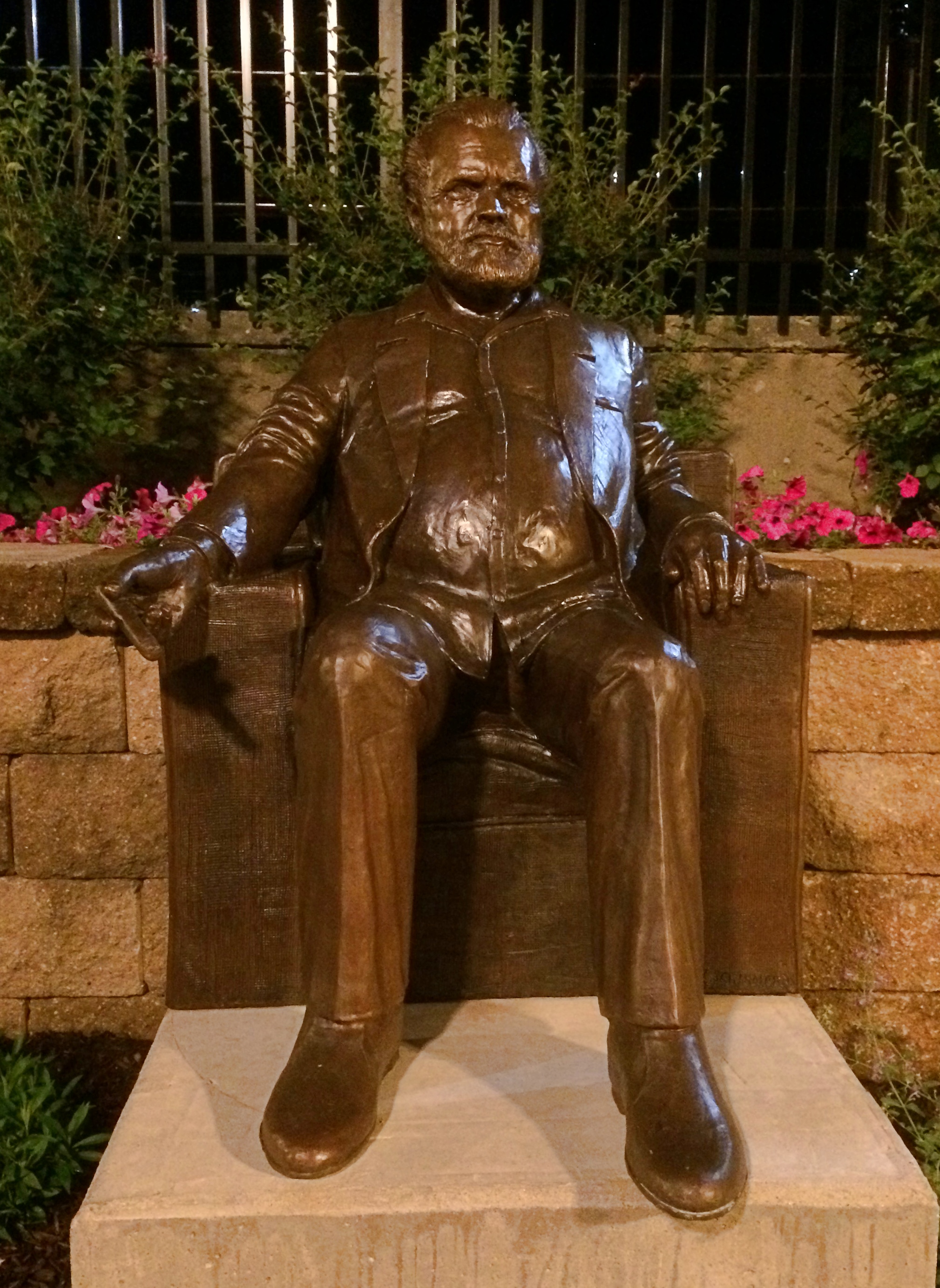
Woodstock WillieOddly enough, also near the mural is a small bronze of Welles by a local artist, Bobby Joe Scribner.
Woodstock Orson Welles statueAccording to the information sign near the work, it’s the only statue of Welles on public display in the United States. Interesting that it depicts an older Welles. His Paul Masson period, you might say.

Randyland

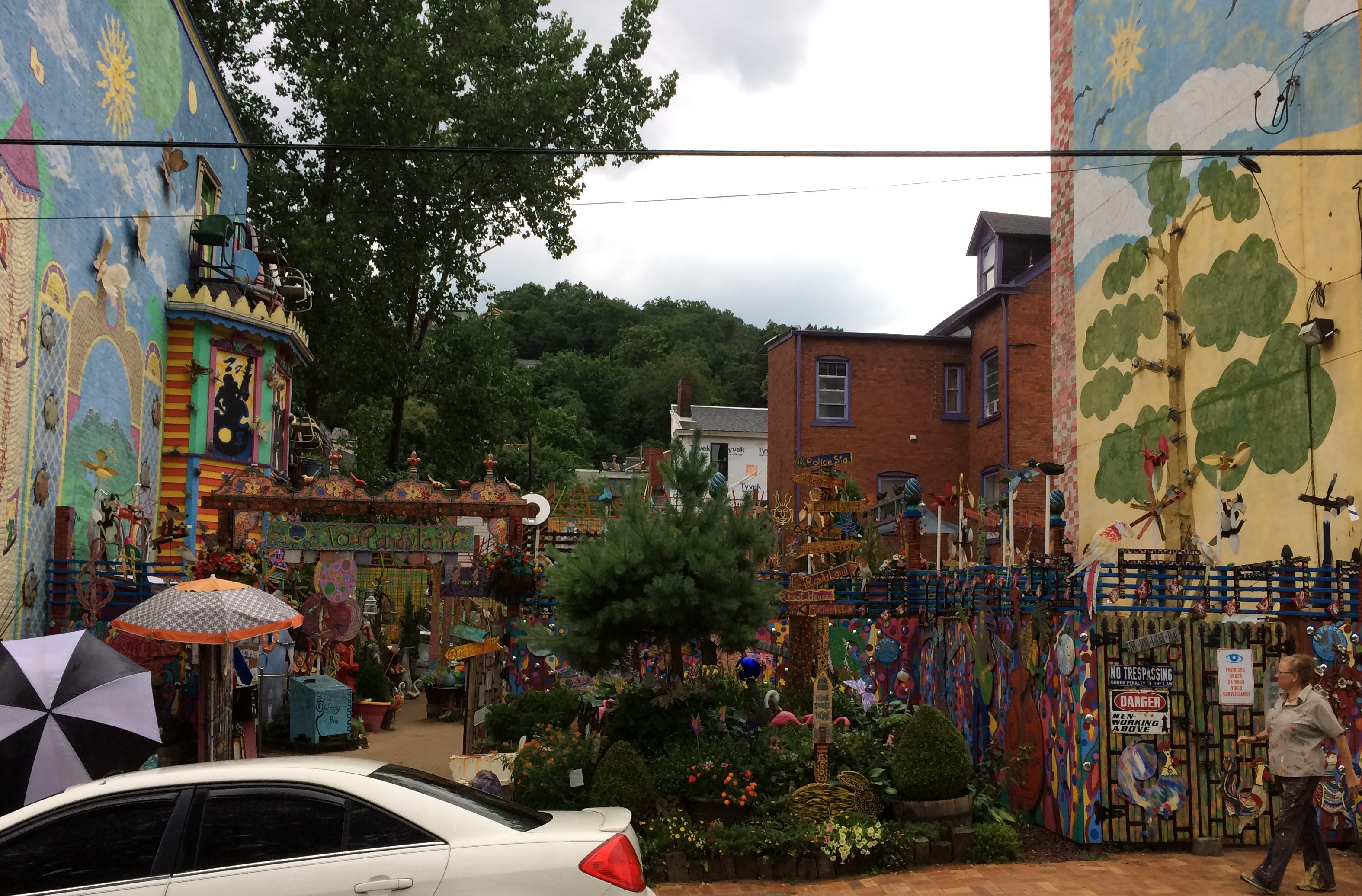
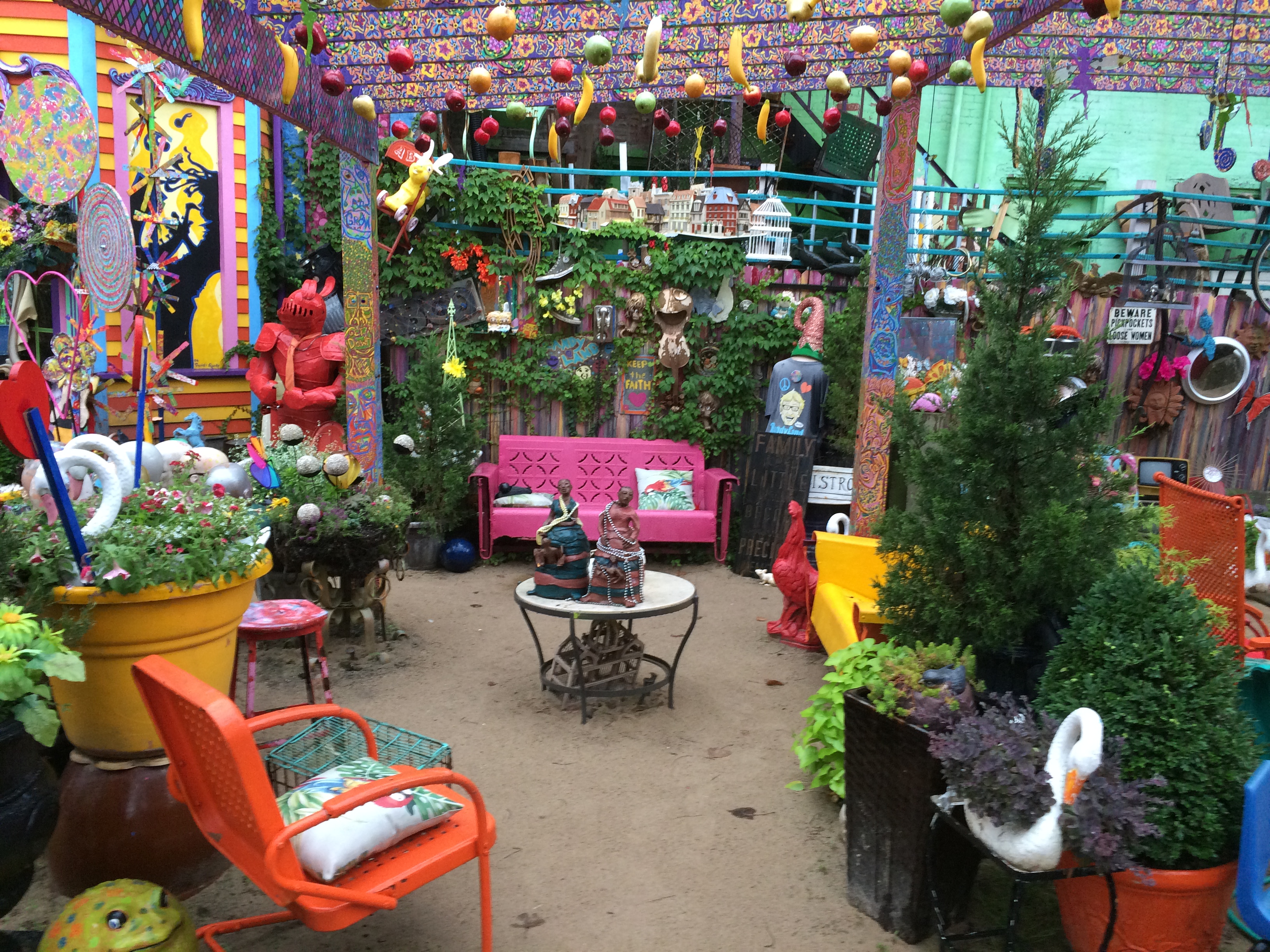
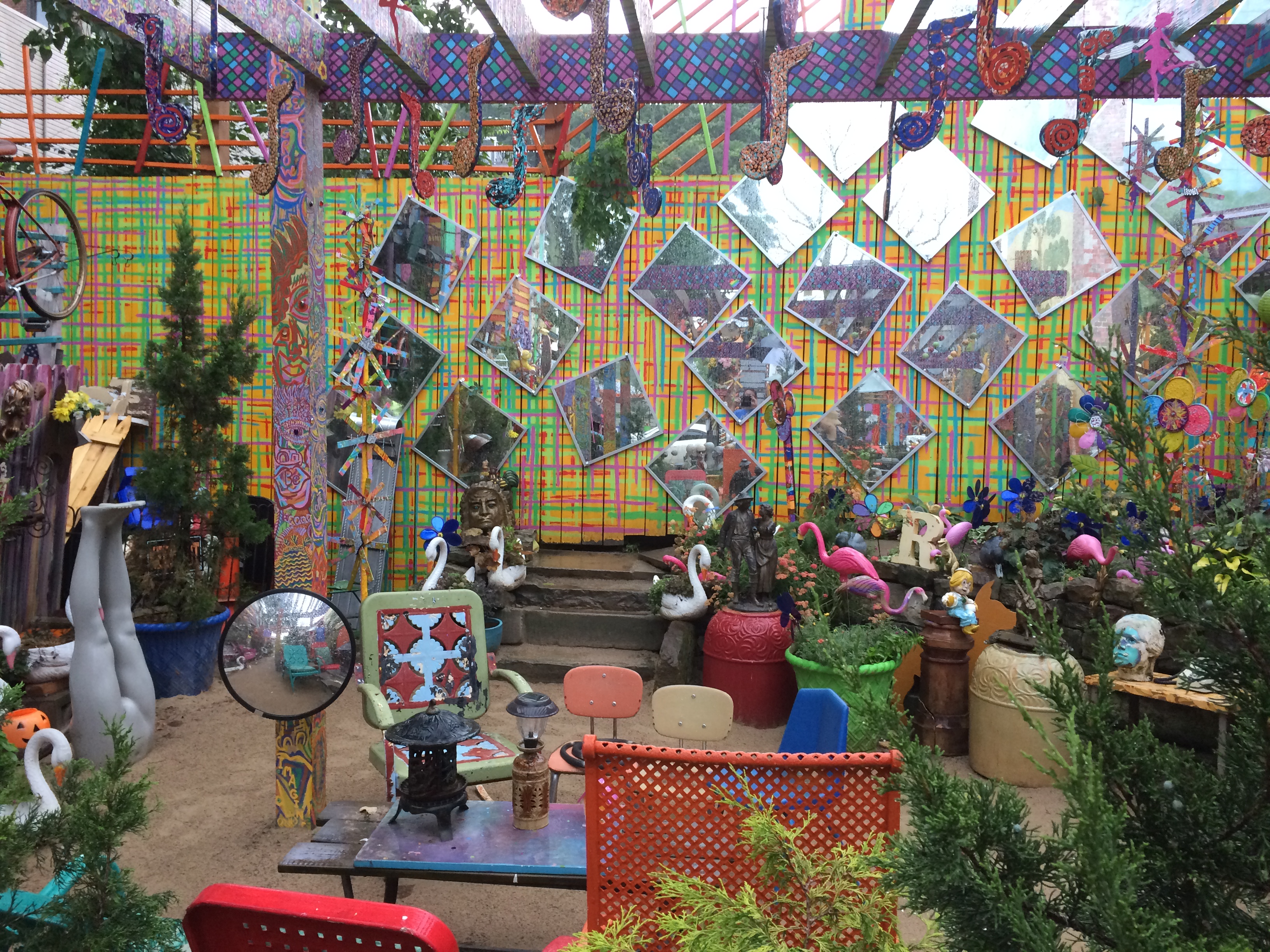
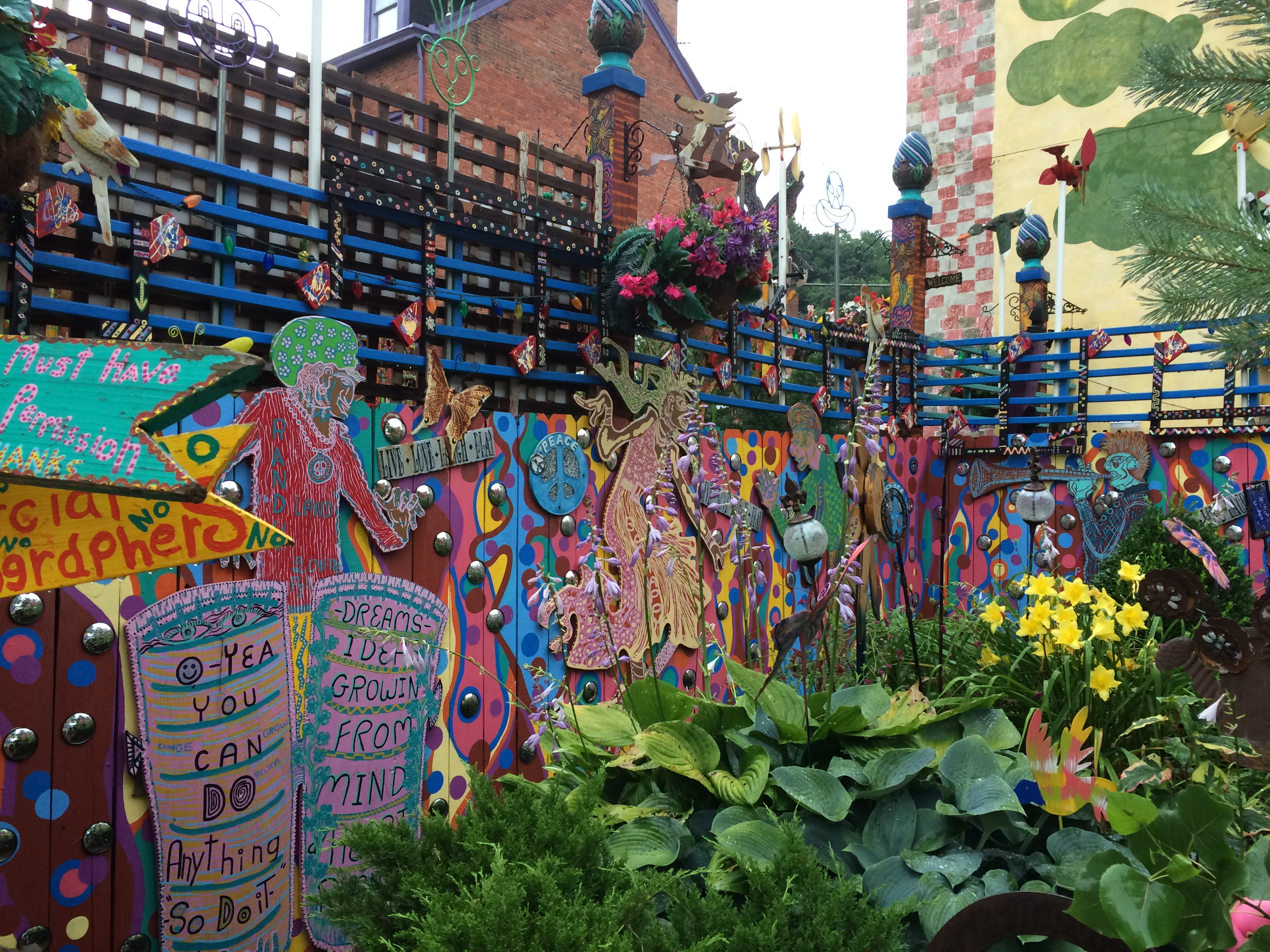
After a heavy downpour cooled down the hot afternoon on July 6 — Pittsburgh seemed awfully tropical this time of the year — we made our way to Randyland. When I was poking around before the trip for Sights To See, I discovered Randyland. Yep, that looks like a sight to see, was my instant conclusion.

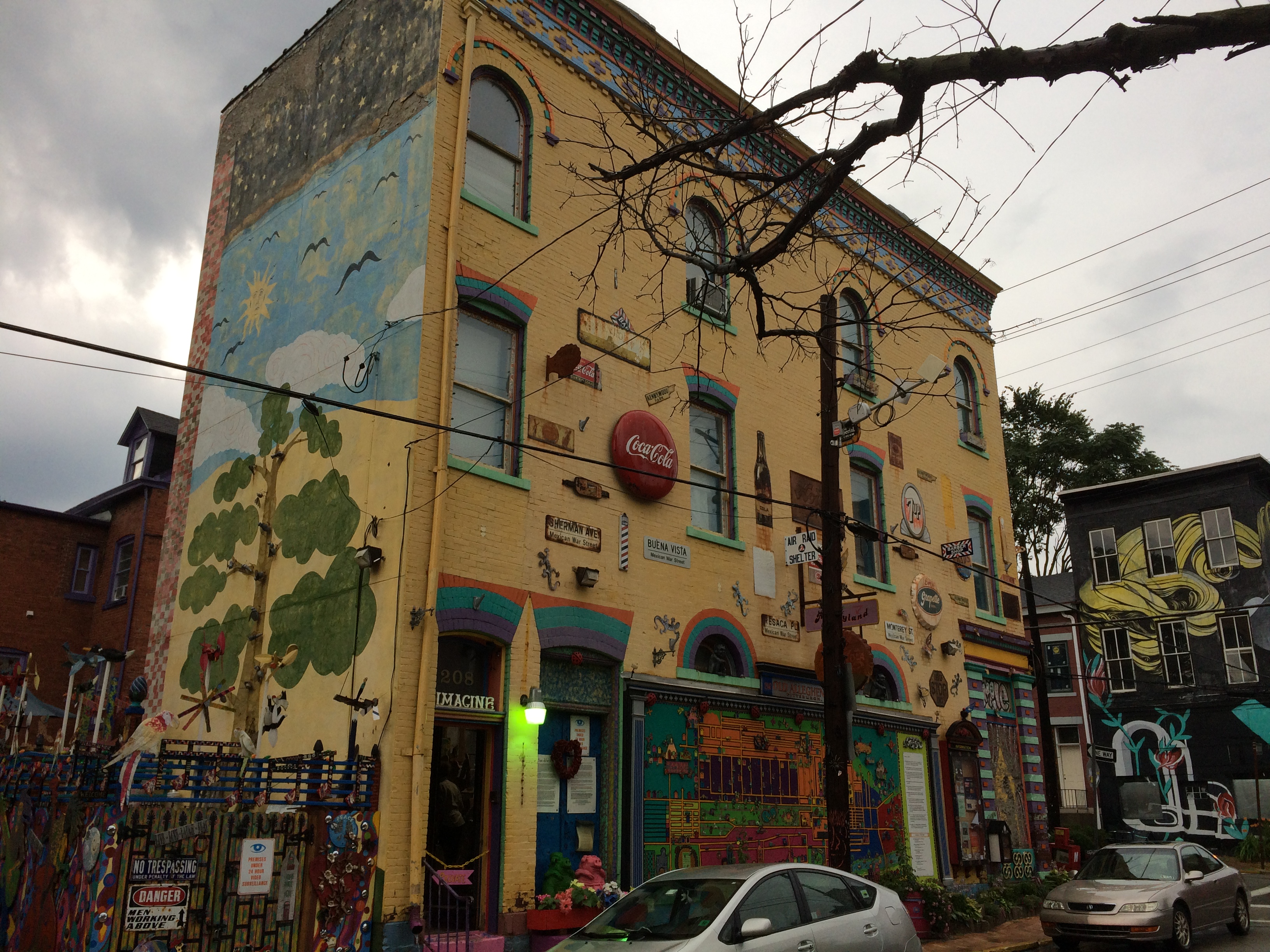
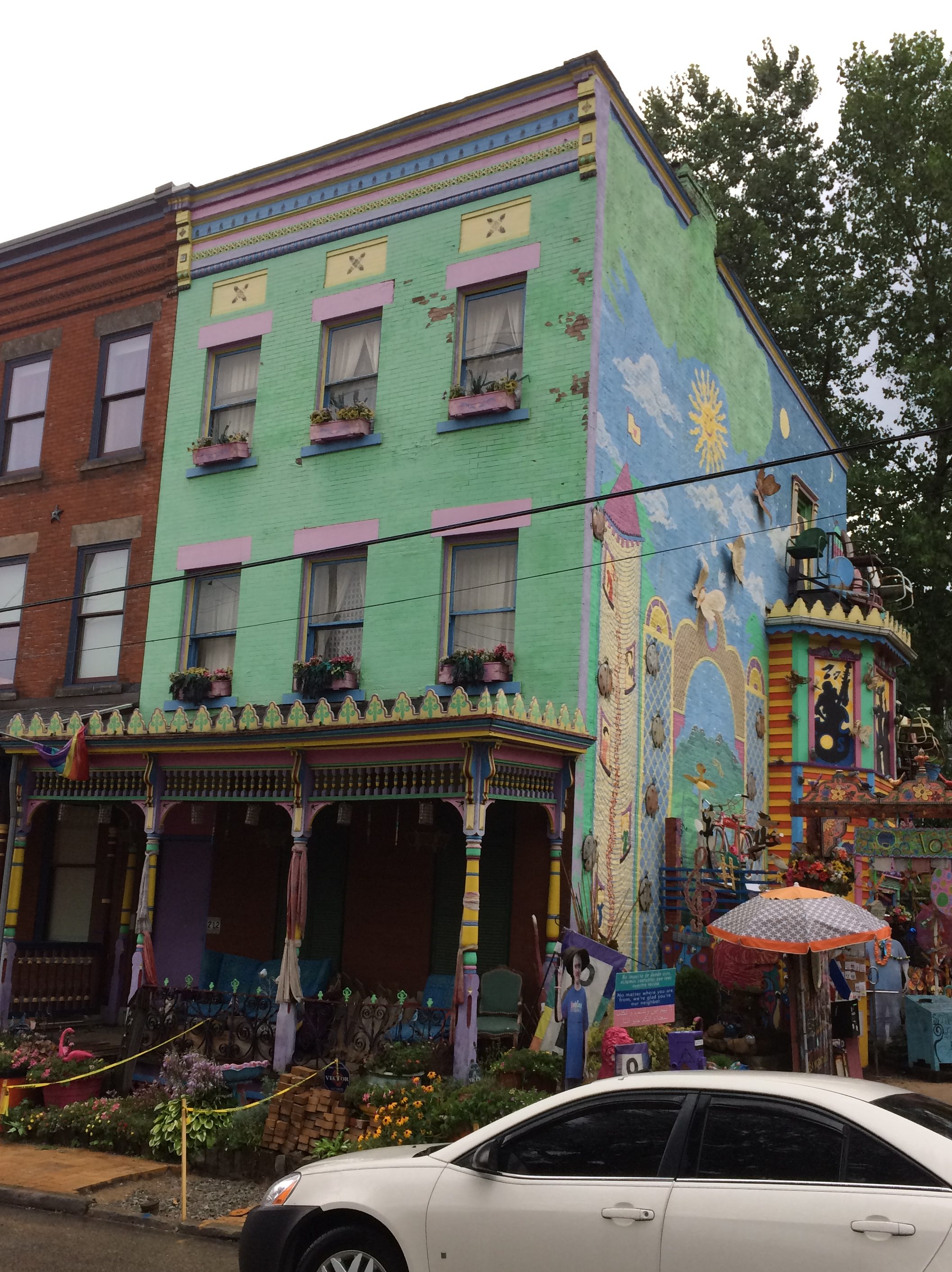
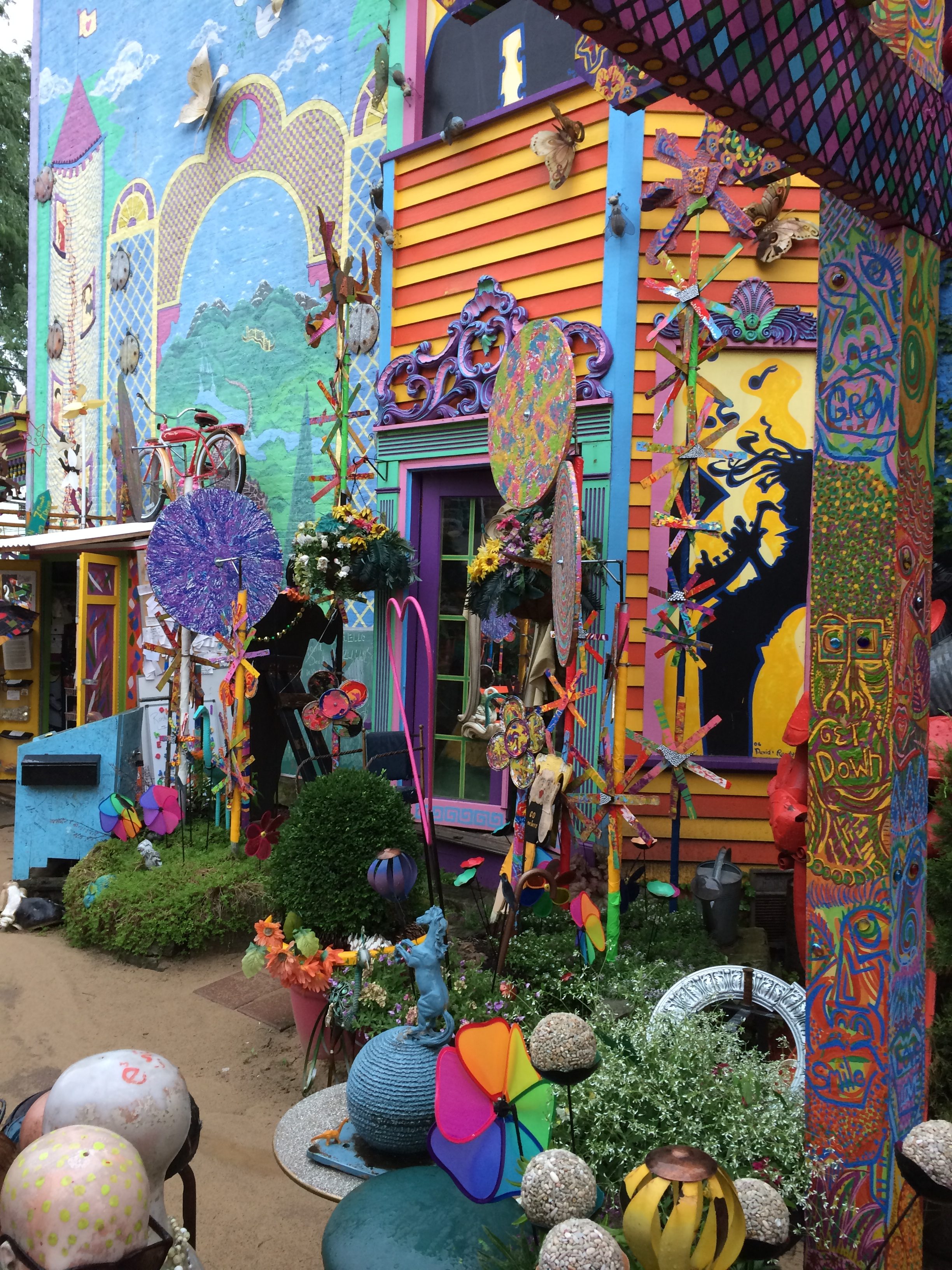
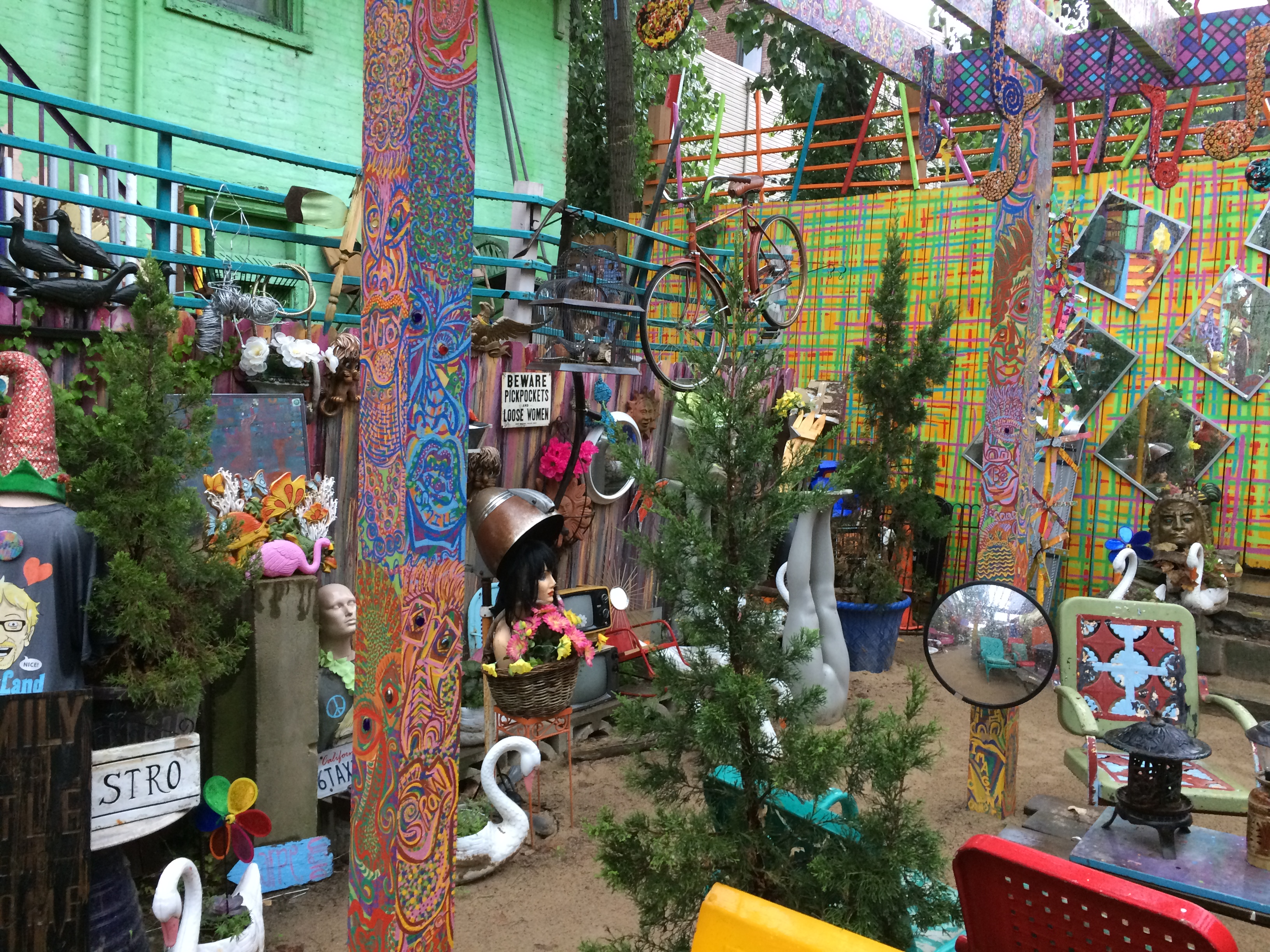
“Randyland is the labor of love of Pittsburgh artist Randy Gilson, a local artist and neighborhood renovator,” Atlas Obscura says. “Over the years Gilson has almost singlehandedly turned a blighted neighborhood corner in Pittsburgh’s Mexican War Streets into one of the most colorful spectacles in the city.”

The exact boundaries of Randyland are a little vague. But I know that it includes this colorful building at the corner of Jacksonia and Arch streets.

Maybe this colorful building on Jacksonia.
And the space in between those buildings. Most definitely that space.
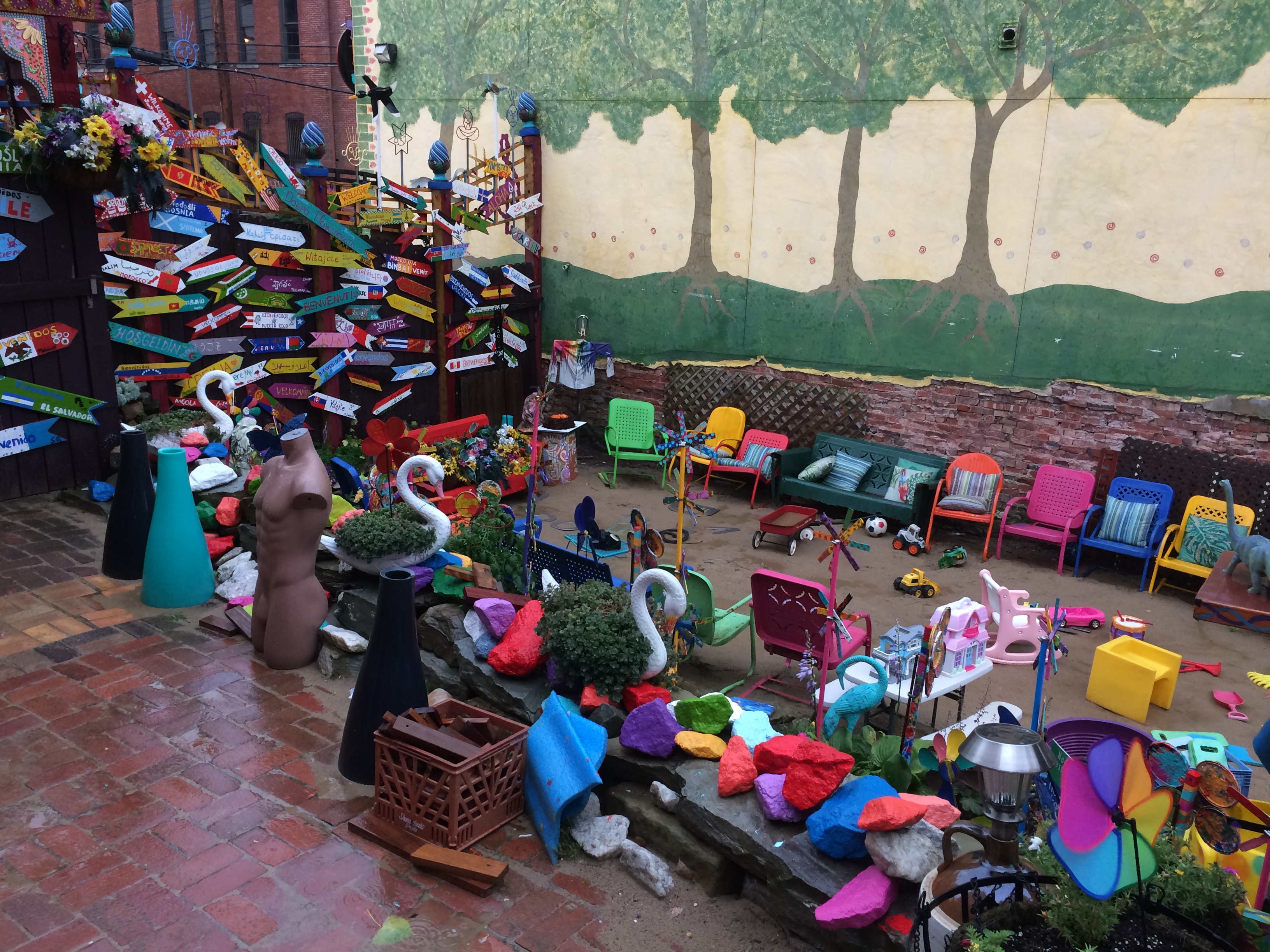
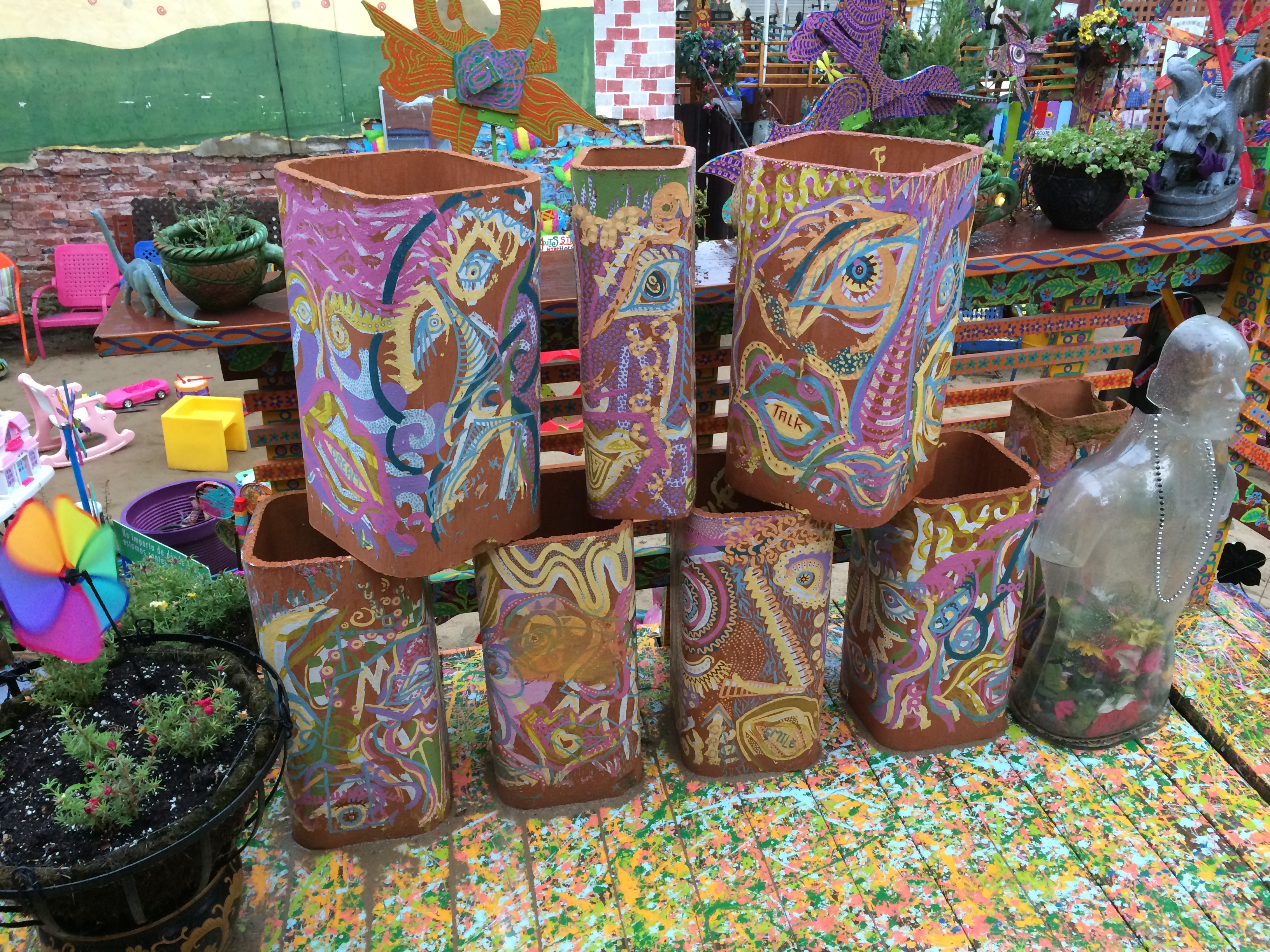
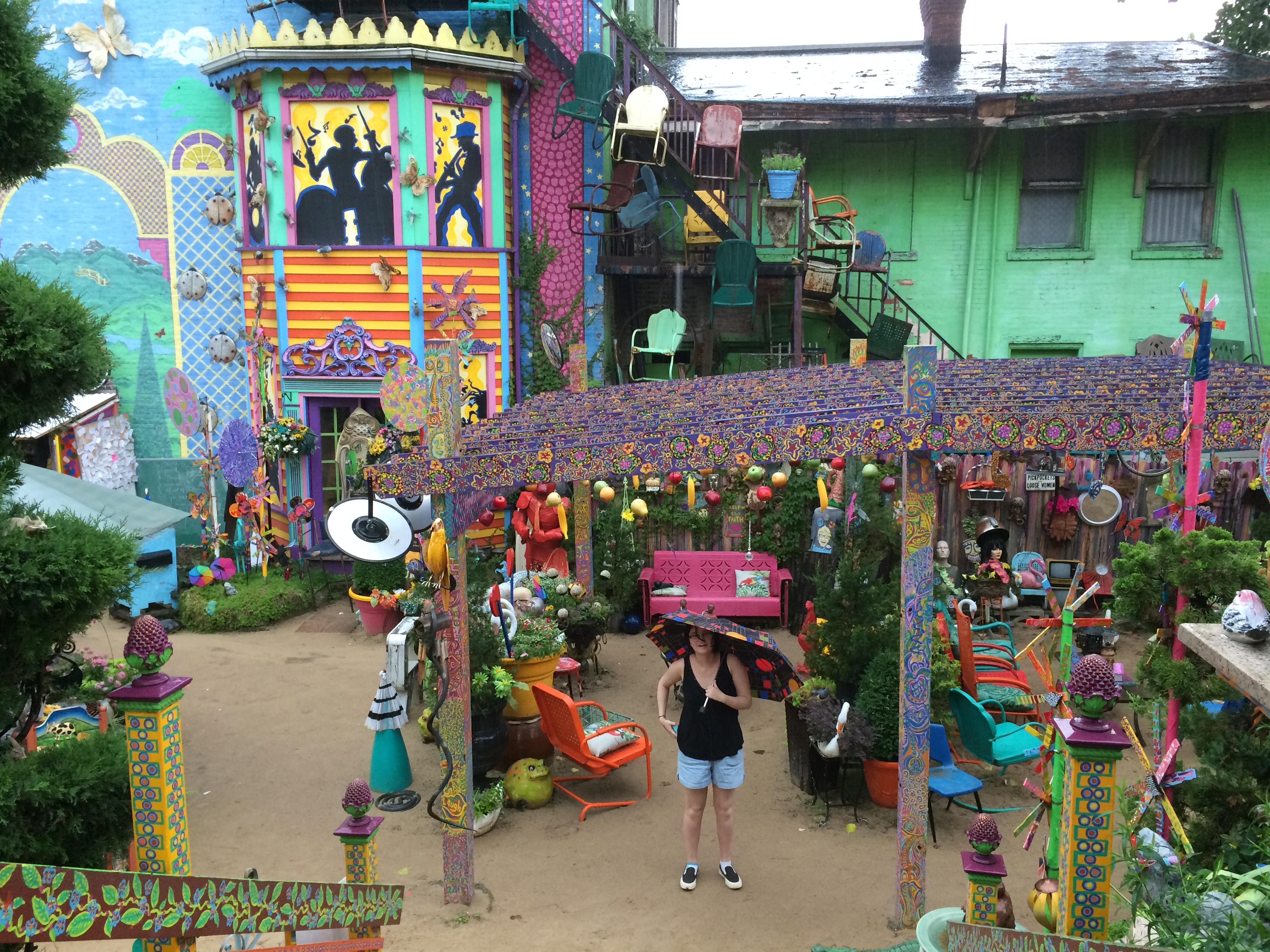
Drizzle was still coming down when we reached Randyland, but that didn’t stop us from entering the space — a sign welcomes all — for a look-see. There’s something colorful everywhere you look.

Randy greeted us and we spent a few minutes talking. Though this video might be scripted, it gives you a pretty good idea about how Randy behaved: he was effusive. He seemed genuinely glad to see us, the nth group to wander into his colorful compound. He asked our names and where we were from. He told us it was important to be ourselves and be happy.

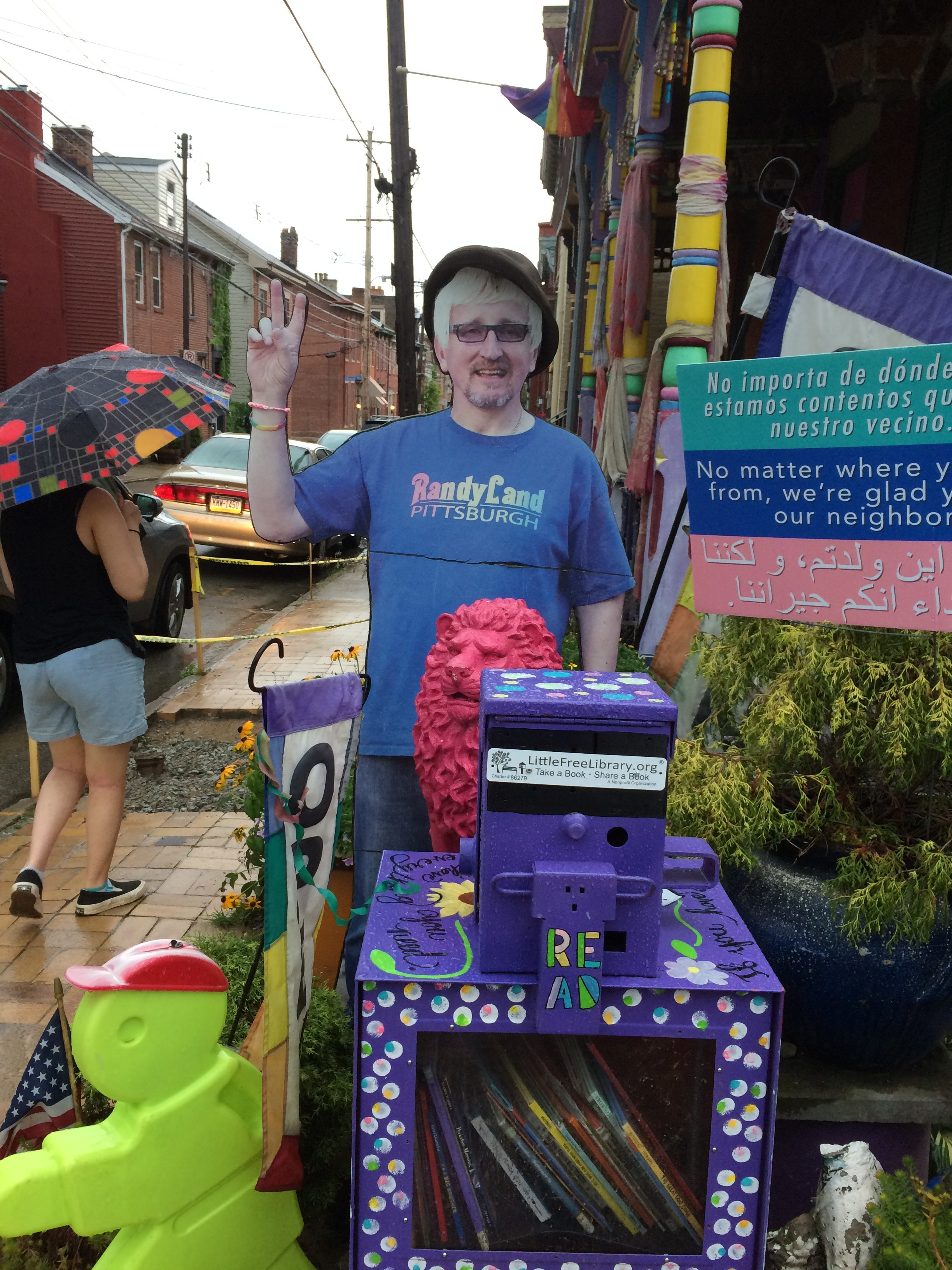
In case the isn’t there, Randy greets you anyway in life-sized cutout form.

Later, he went next door, which he said was his studio, but we did see him again before we left, since we bought a couple of t-shirts and a button from him. They were reasonably priced, especially when compared with the merch at the Andy Warhol Museum gift shop. Besides, Warhol is dead, as opposed to effusive and very much alive Randy Gilson. It’s good to support living artists when you can.

Point State Park & Pittsburgh Walkabout

RIP, Patricia Deany, mother of our dear old friend Kevin Deany, and a kind and gracious lady. She passed last week at age 90.

At the confluence of the Allegheny and Monongahela rivers is Point State Park, a 36-acre triangular patch of land that may well be featured in every bit of tourist literature ever published about Pittsburgh since the park’s creation nearly 50 years ago.

But that’s no excuse not walk over to the park from downtown Pittsburgh and make a circuit around the fountain at the tip of the park, which is what we did after lunch at the Oyster House on July 5.
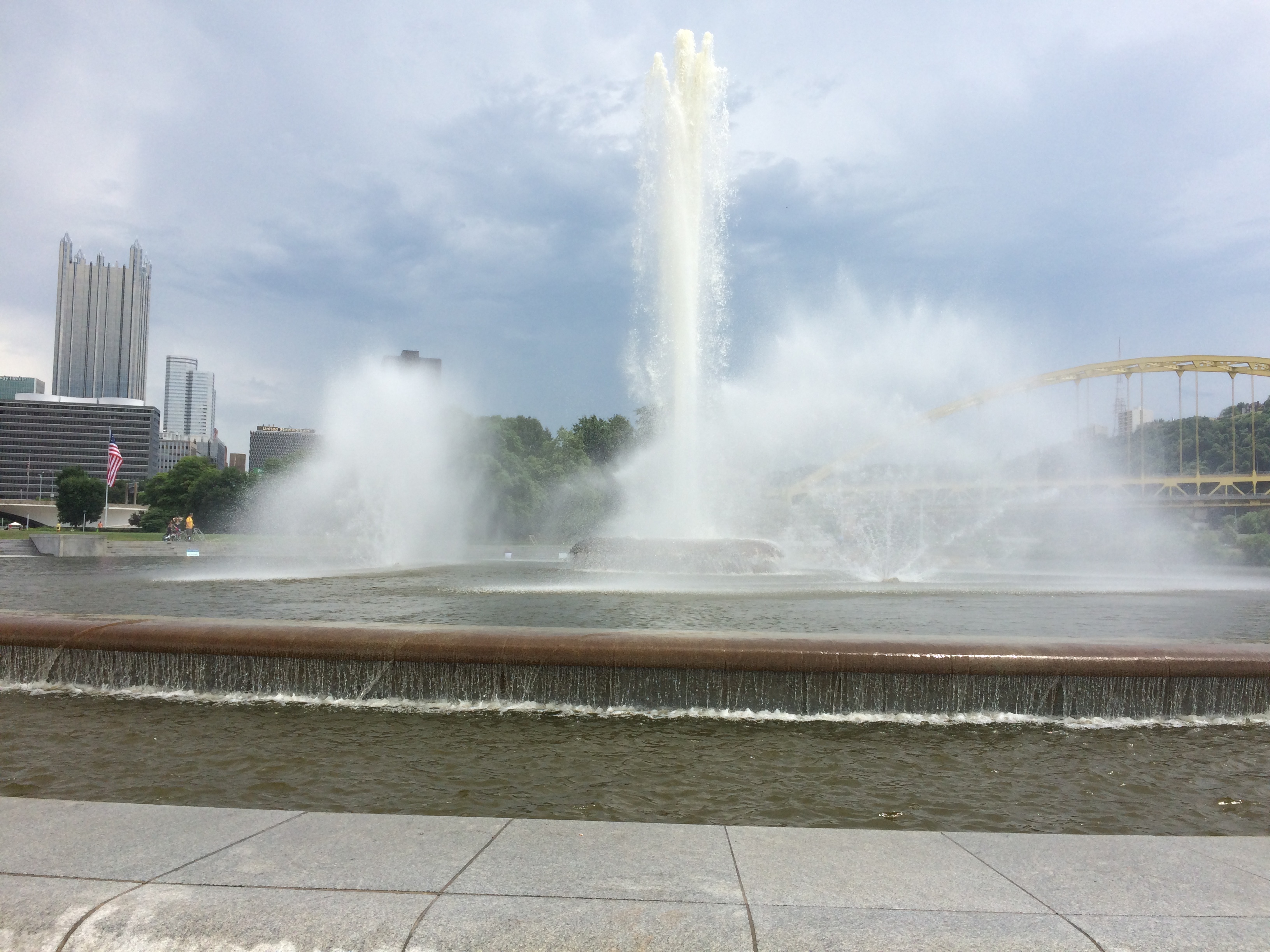
Point State Park, PittsburghThat image makes it look like no one else was there, which wasn’t true at all.
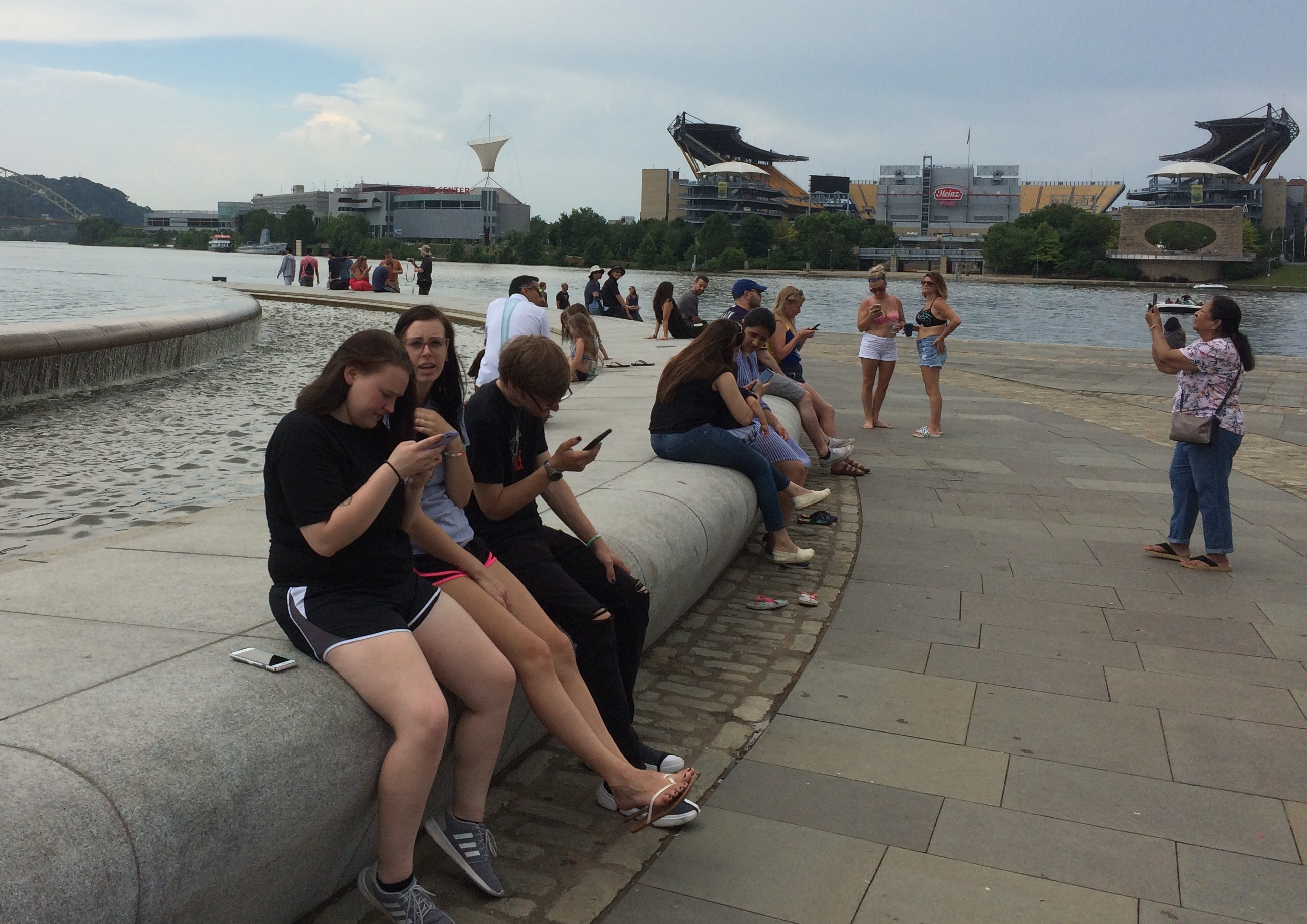
Point State Park, PittsburghThe park offers views of various other parts of Pittsburgh, such as Mt. Washington and the Duquesne Incline.
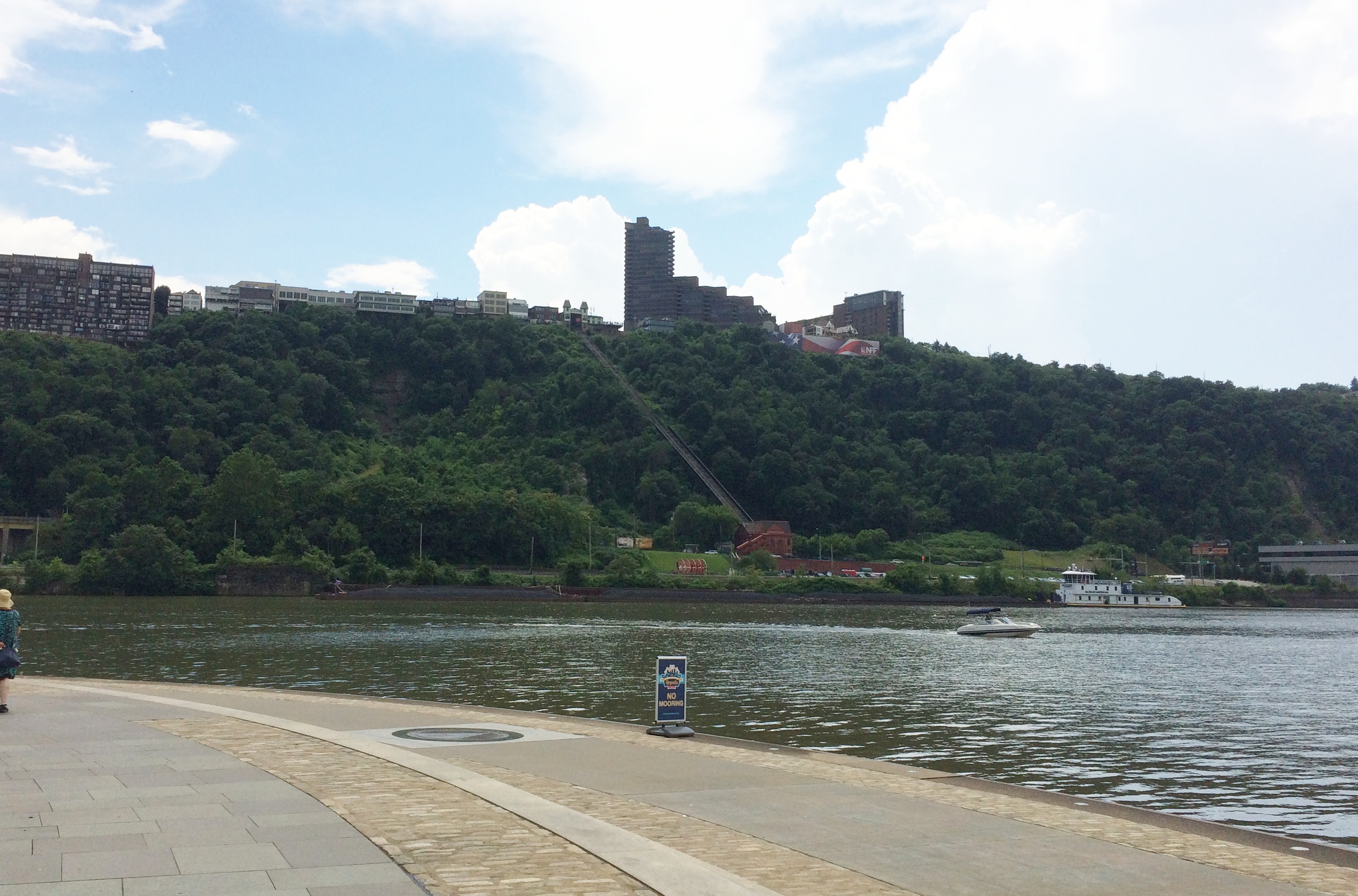
Point State Park, Pittsburgh

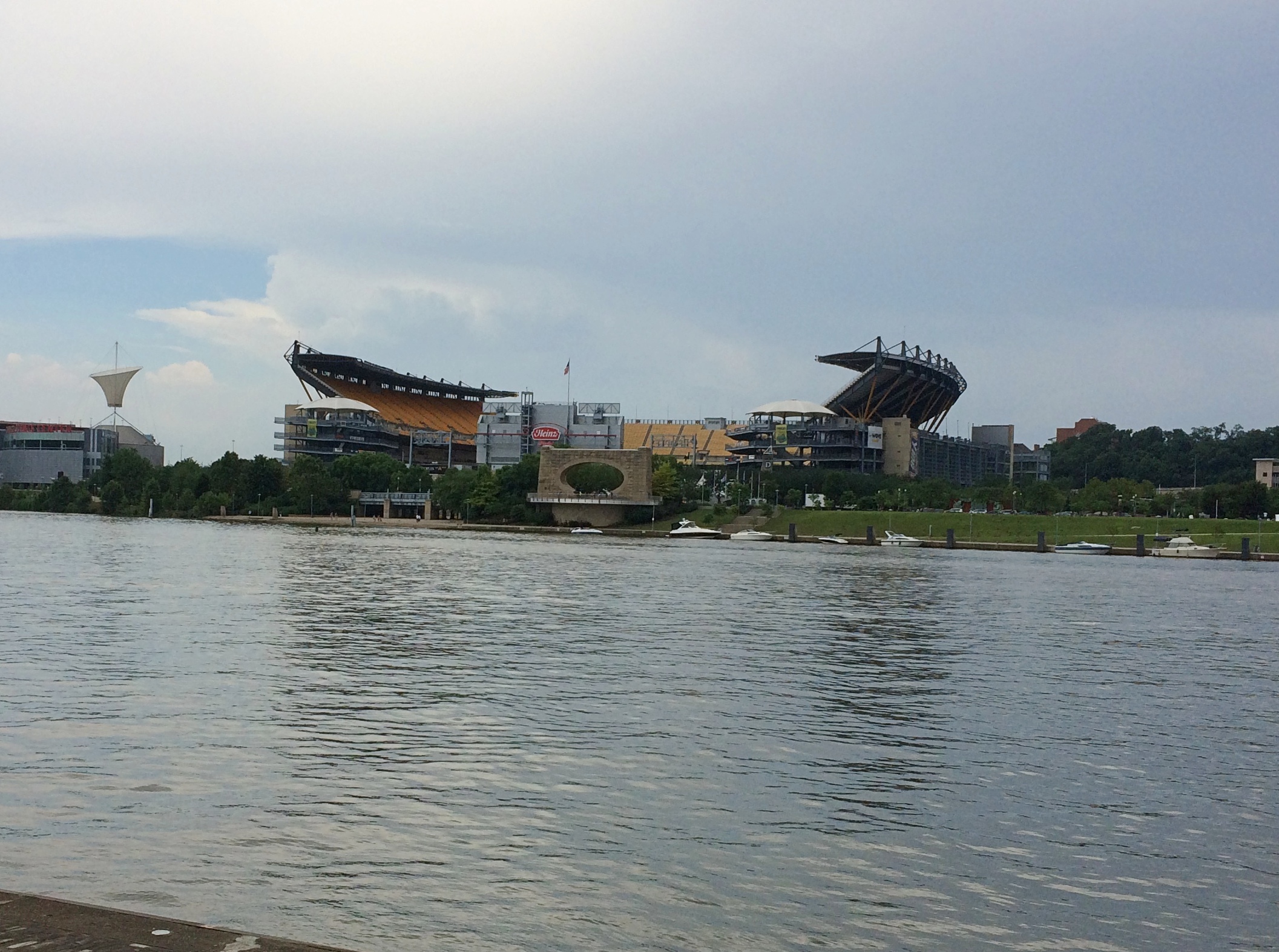
Or Heinz Field, home of the Steelers. There ought to be a giant ketchup bottle in there somewhere.
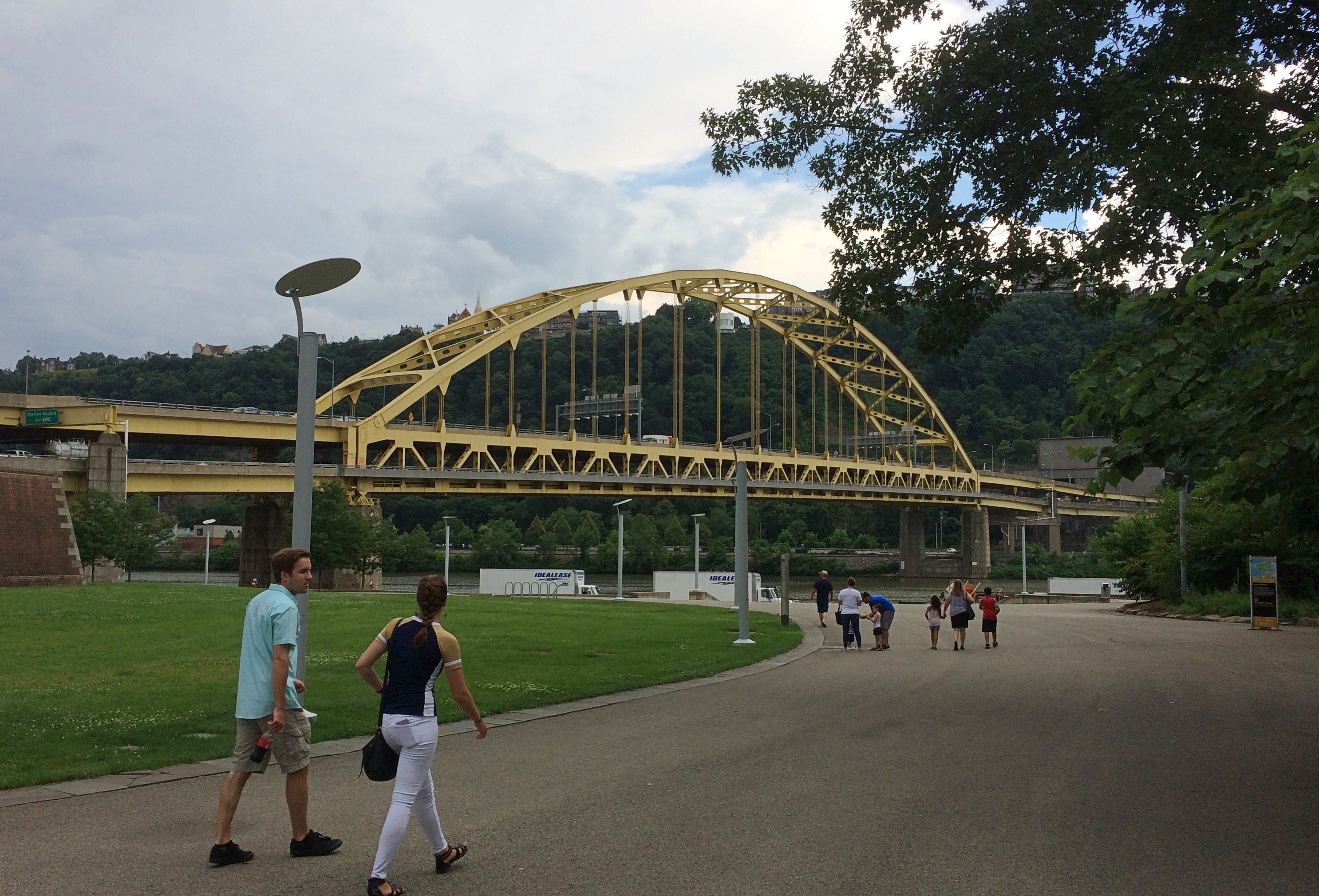
Away from the fountain, there’s a view of the Fort Pitt Bridge, which carries I-376 across the Monongahela. It replaced the Point Bridge, which was destroyed, along with the Manchester Bridge, to make way for the park.
Besides being a pleasant green space with views, the park makes various nods to the early history of Pittsburgh. An irregular path of sidewalk follows the outline of Fort Duquesne, the French outpost. Elsewhere other sidewalks mark the outline of the somewhat larger Fort Pitt, the succeeding British outpost, also in the classic star (Bastion) shape.
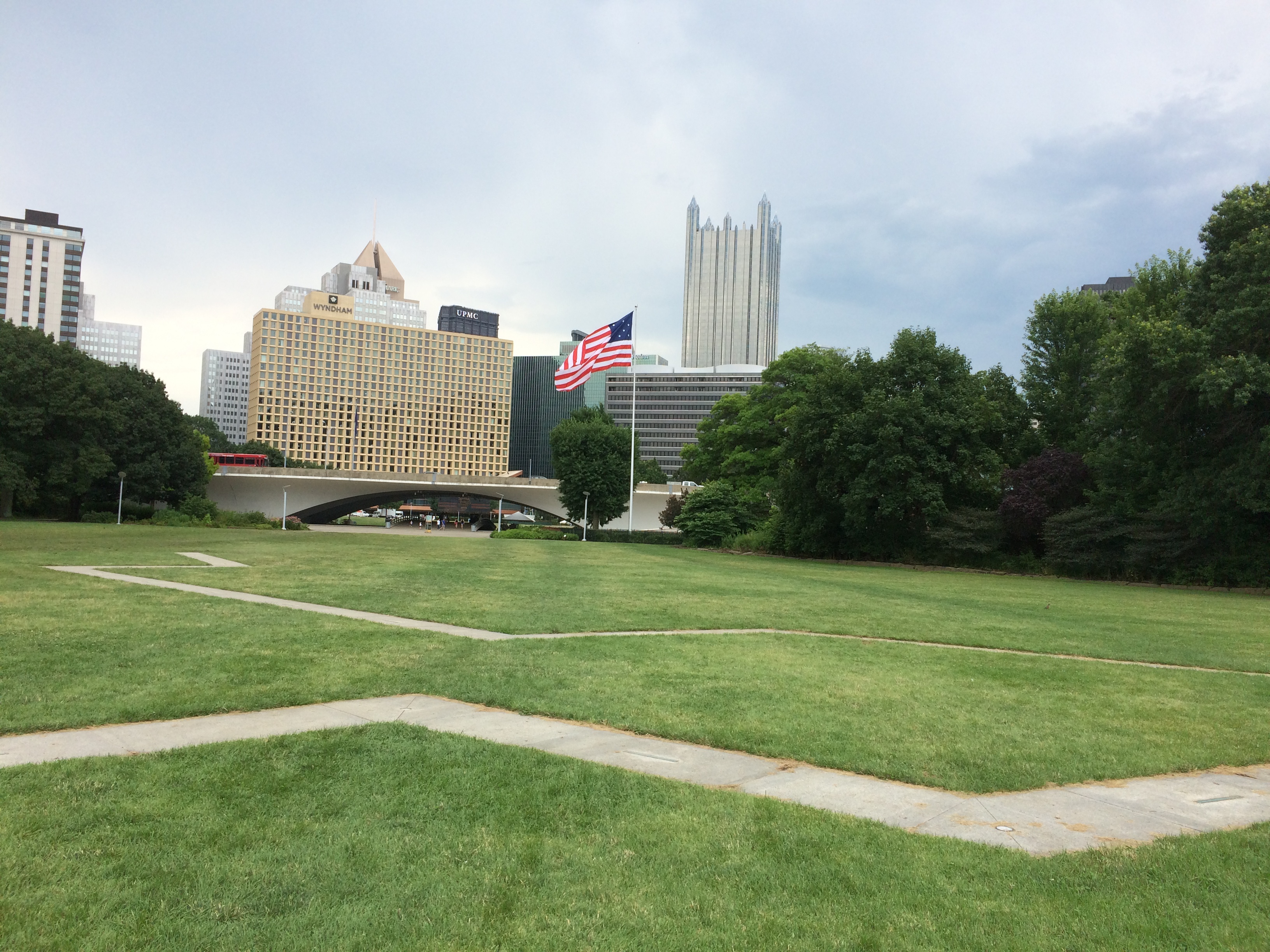
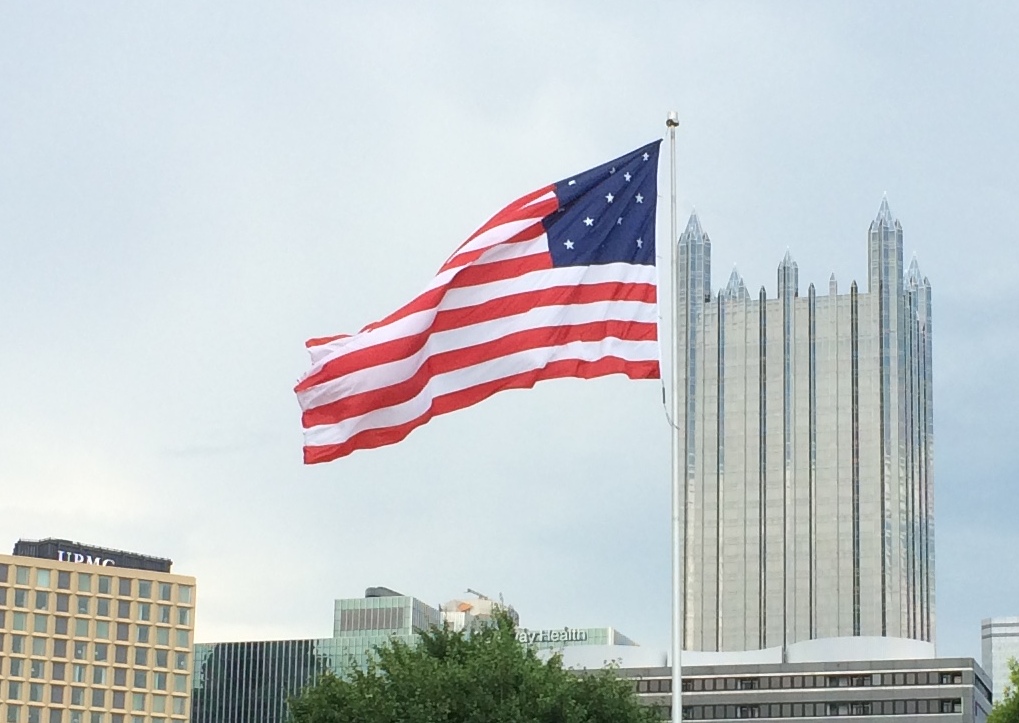
The U.S. flag is a little unusual. Not in having 13 stars, but in that they aren’t the circular arrangement you usually see. Then again, no one specified how the stars in the canton should be arrayed in those days (and maybe we should go back to that).
Point State Park, PittsburghOn one edge of the park is the Fort Pitt Block House, Point State Park’s only surviving structure from colonial times, built in 1764 as a redoubt of Fort Pitt. It has endured since then in its original spot, for many years as a residence, more recently as a relic.
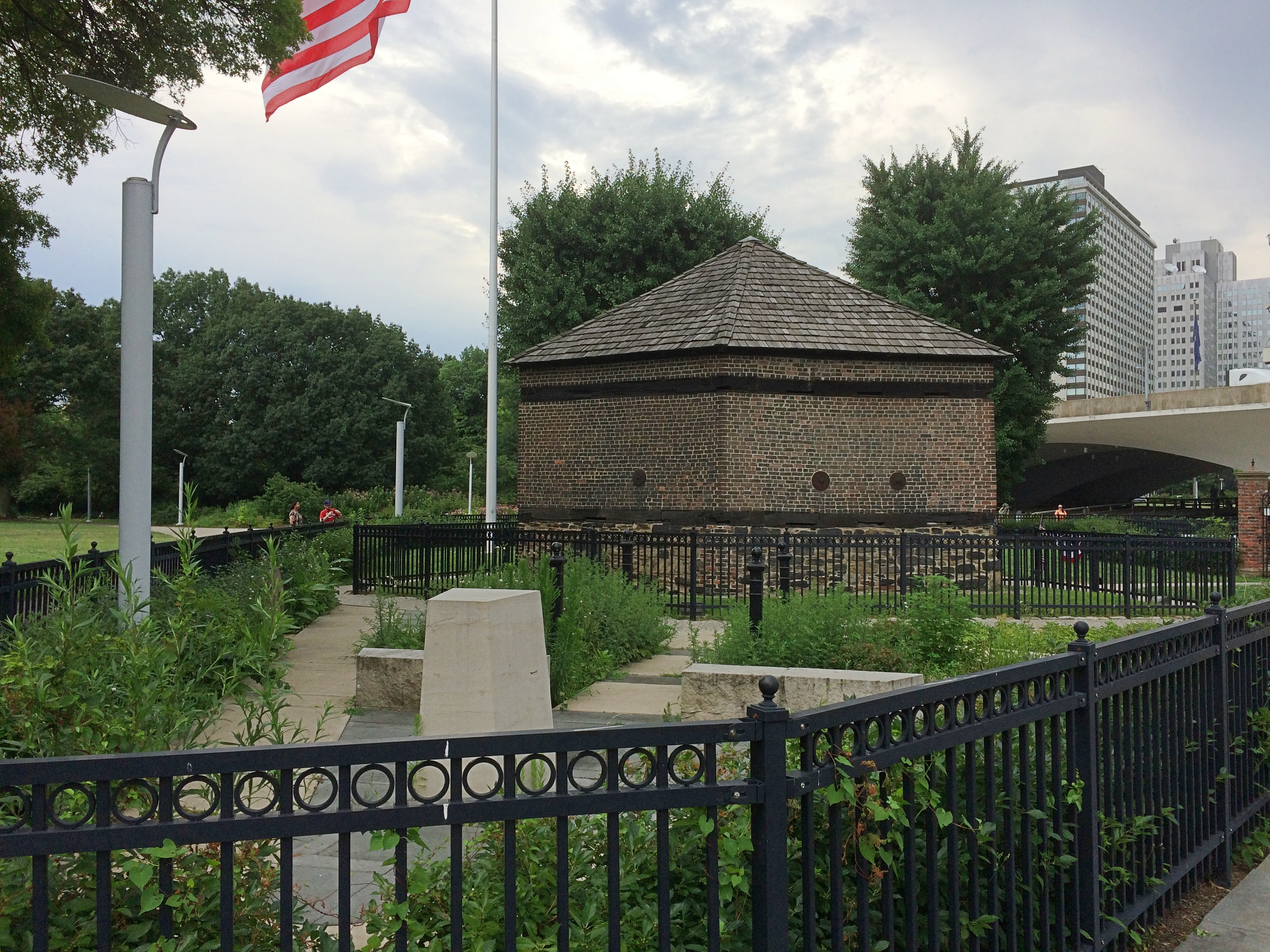
Our walking tour of downtown Pittsburgh started at the Block House, led by an energetic young woman, native to Pittsburgh and eager to talk about various places and buildings, though less about design and more about history.

Naturally, the names of Pittsburgh robberbarons Andrew Carnegie and Henry Clay Frick came up a lot, including the story about a dying Carnegie writing a letter to the estranged Frick asking for a meeting, presumably in the spirit of reconciliation.

Les Standiford tells the story, via NPR. A man named Bridge, who delivered the letter, was Carnegie’s assistant.

“Frick’s ire was, after all, legendary. He’d gone toe-to-toe with strikers, assassins, and even Carnegie himself, and had rarely met a grudge he could not hold. Long before Frick had constructed the mansion that would dwarf Carnegie’s ‘Highlands’ up the street, he had gone out of his way to purchase a tract of land in downtown Pittsburgh, then built a skyscraper tall enough to cast Carnegie’s own office building next door in perpetual shadow.

” ‘Yes, you can tell Carnegie I’ll meet him,’ Frick said finally, wadding the letter and tossing it back at Bridge. ‘Tell him I’ll see him in Hell, where we both are going.’ ”

Whatever else you can say about the steely-eyed bastard Frick, at least he had no illusions about his benevolence, as Carnegie seemed to have had. Our guide also mentioned the taller Frick building next to Carnegie’s, and in fact pointed them out. They are both now overshadowed by more recent Pittsburgh buildings, of course.

At one point, we passed by a building associated with both Carnegie and Frick, along with a lot of other Gilded Age and later tycoons: the Duquesne Club on Sixth Ave.
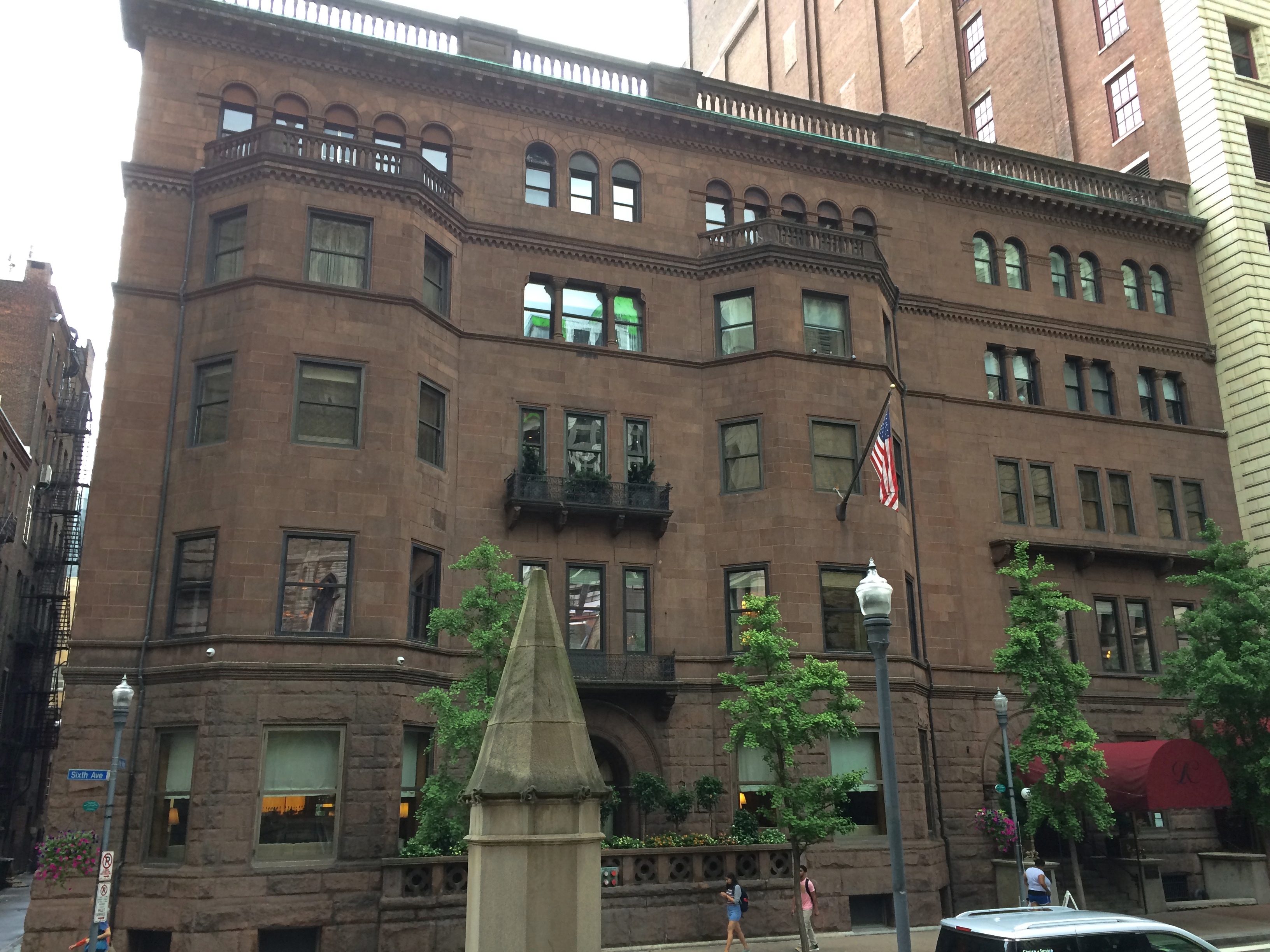
Duquesne Club Founded in 1873 and still a social club for the wealthy, its current home, a Romanesque structure designed by Longfellow, Alden & Harlow, opened in 1890. Just in time for Carnegie and Frick to discuss, possibly over brandy and cigars, the busting of the Amalgamated Association of Iron and Steel Workers.

Speaking of labor history, not far away from the club, I noticed this historic marker.
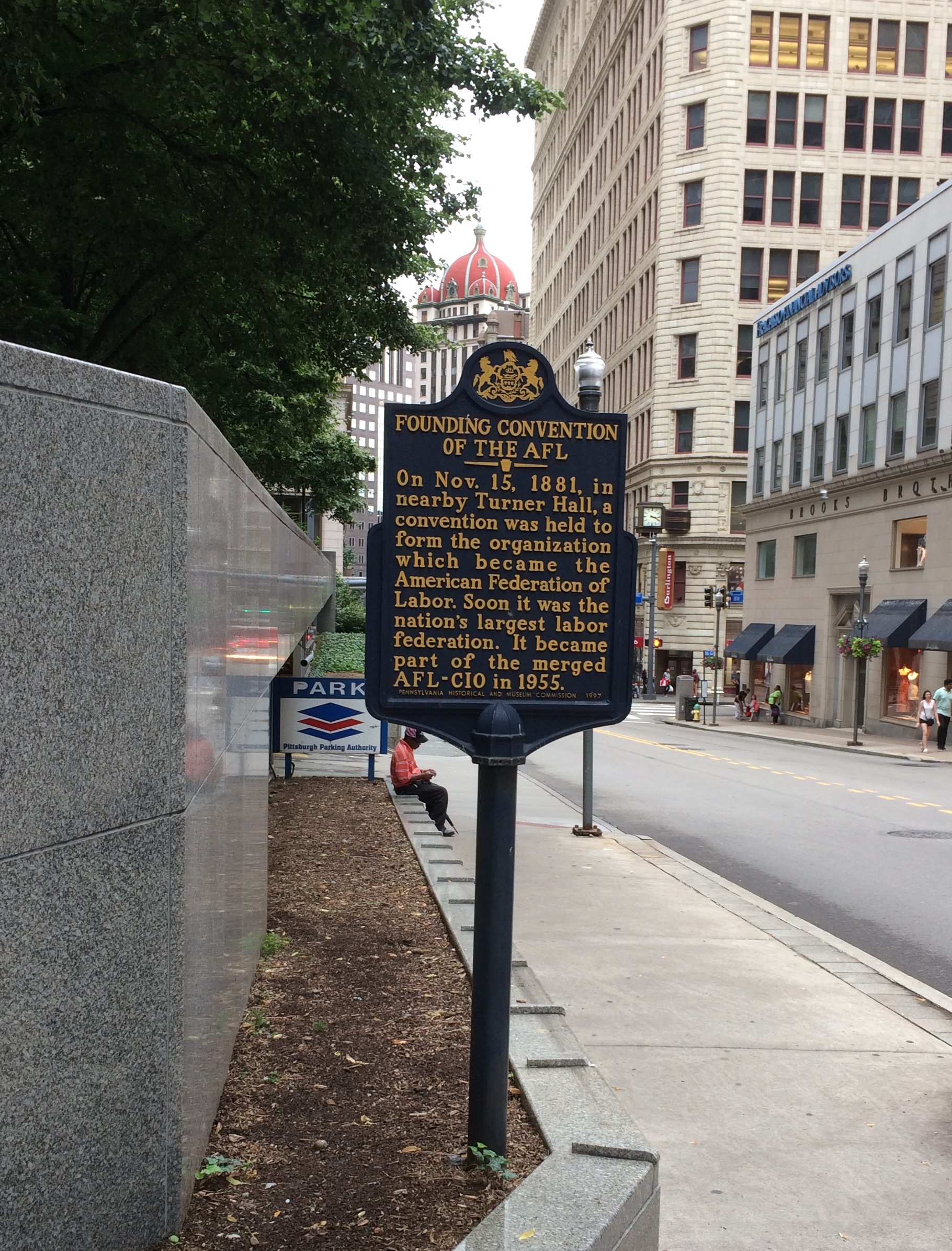
AFL Marker, Pittsburgh - Turner HallThe founding convention of the AFL was in a Turner Hall. Our guide didn’t mention that, and I asked her about the Turner Hall. She hadn’t heard it. To be fair, I’d never heard of Turner Halls until recently either. To be extra fair, I’m not guiding walking tours of a major American city, so I consider that a small lapse on her part.

The Turner Hall in Pittsburgh, unlike that in Milwaukee, is no more. The site is now called Mellon Square, a 1950s park-like creation paid for by the Mellons to go with the development of Alcoa’s new headquarters building at that time.

Alcoa isn’t there any more, and the building is now known as the Regional Enterprise Tower, but it still has its distinctive aluminum skin. The New York modernists Harrison & Abramovitz designed it.
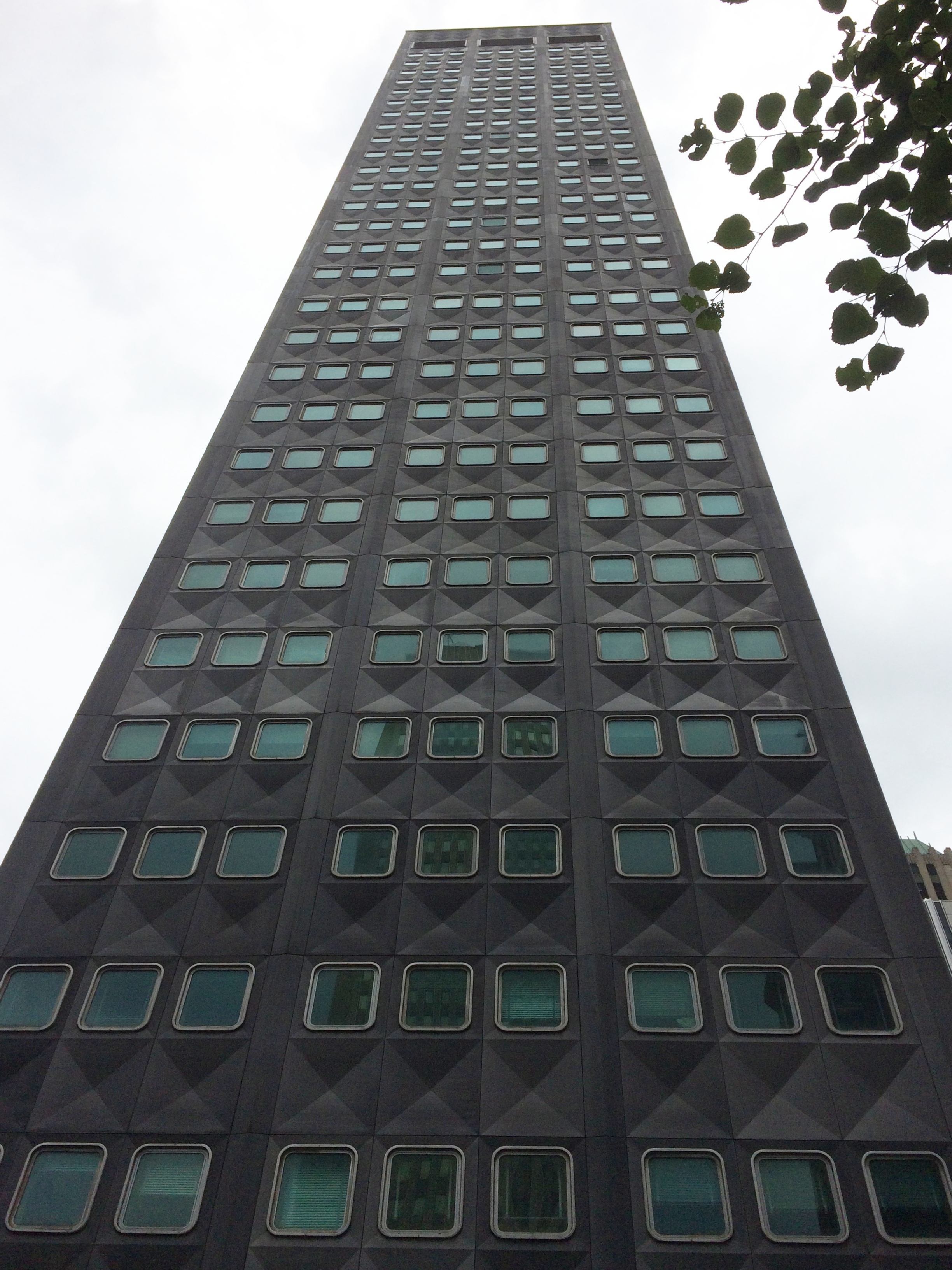
Alcoa Building Pittsburgh

I’ve read that a Beaux-Arts palace of a theater, the Nixon, was destroyed to make way for Alcoa, causing some consternation even in the tear-it-down midcentury.

Another historic marker that I noticed (that also wasn’t on the tour).
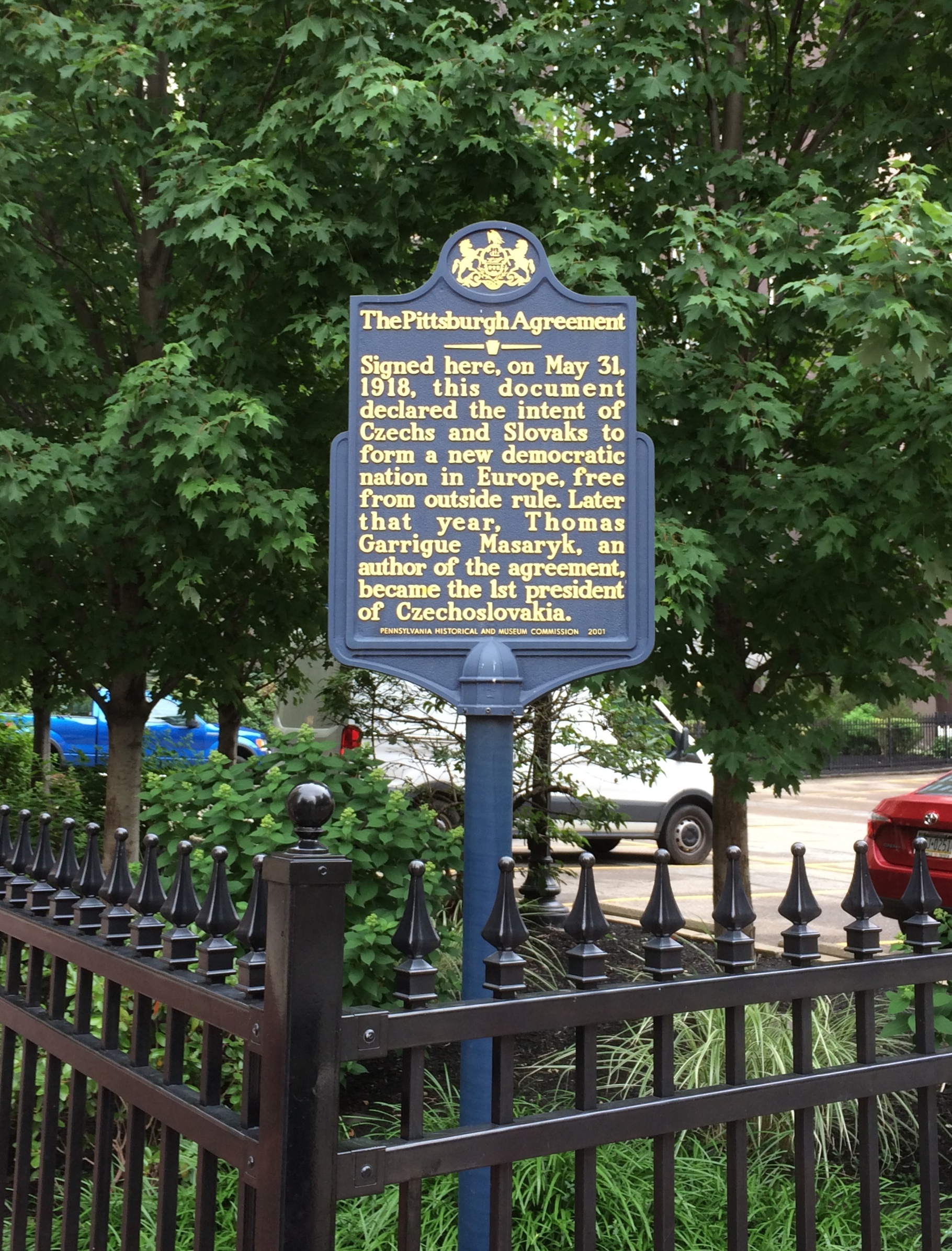
Pittsburgh Agreement MarketWhy Pittsburgh? I wondered. I looked it up later. NPR again: “Slovak culture is everywhere in the Steel City. It’s home to the Honorary Slovak Consulate, a handful of social clubs, cultural centers and annual holiday festivals dedicated to maintaining and celebrating Slovak traditions.

“ ‘Allegheny County has the highest percentage of all of the counties in the United States, not just Pennsylvania, of people who claim Slovak heritage,’ said Martin Votruba, head of Slavic studies at the University of Pittsburgh.

“Slovaks and Czechs formed a group called the Czecho-Slovak National Council of America. Because there were so many Slovak immigrants living in Pittsburgh, Votruba said it seemed like the perfect location to have a big meeting on Memorial Day in 1918.”

Along the way, we looked at a work of public art in Pittsburgh, a 25-foot bronze fountain centerpiece at Agnes R. Katz Plaza by Louise Bourgeois, completed in 1999. The eye-like smaller bronzes are actually benches, though it’s hard to tell from this angle.
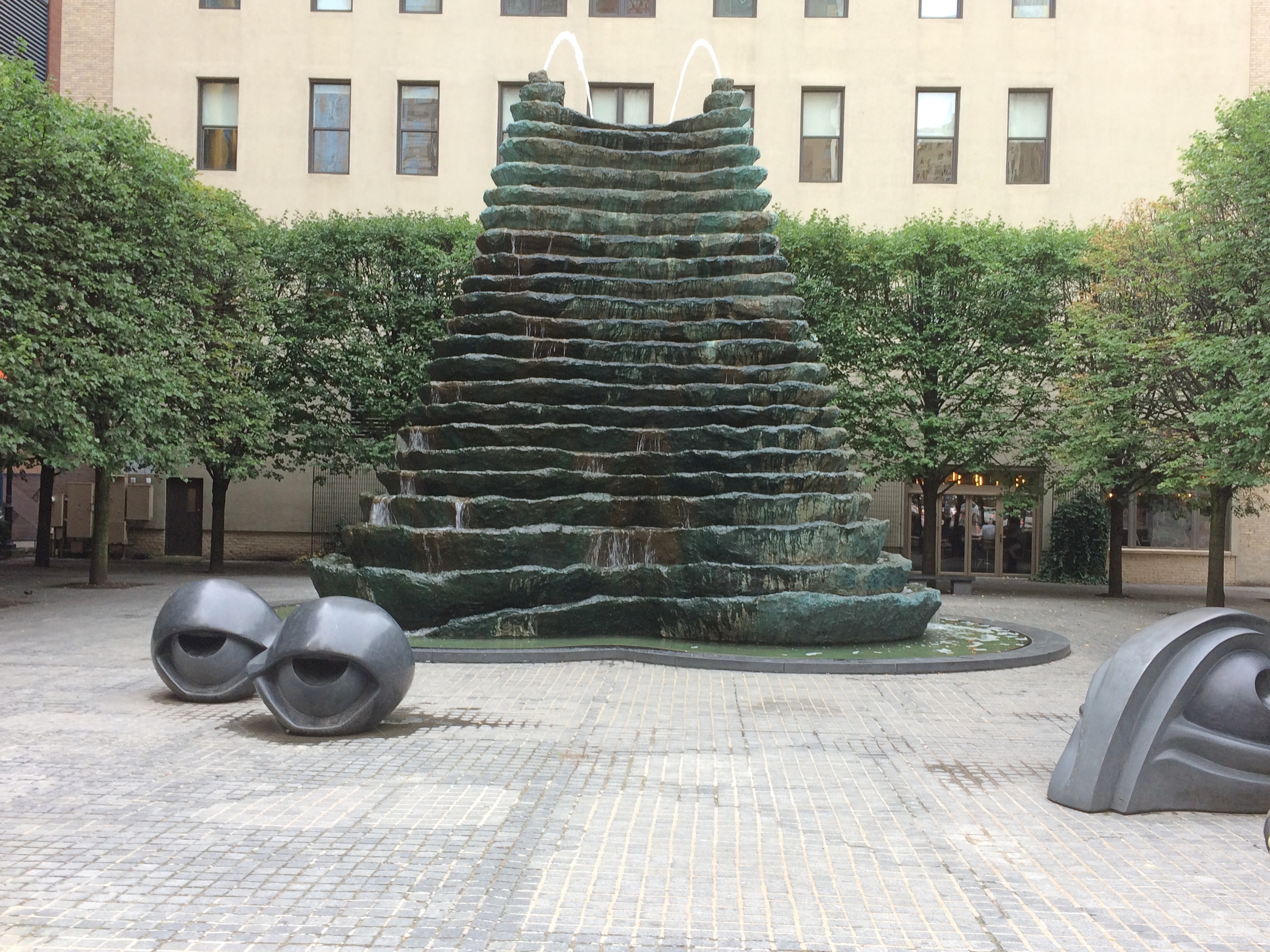
Agnes R. Katz Plaza by Louise Bourgeois,By the time we got to the U.S. Steel Tower, the tallest building in Pittsburgh, a light rain was falling. It would continue at varying strength through the rest of the walk.
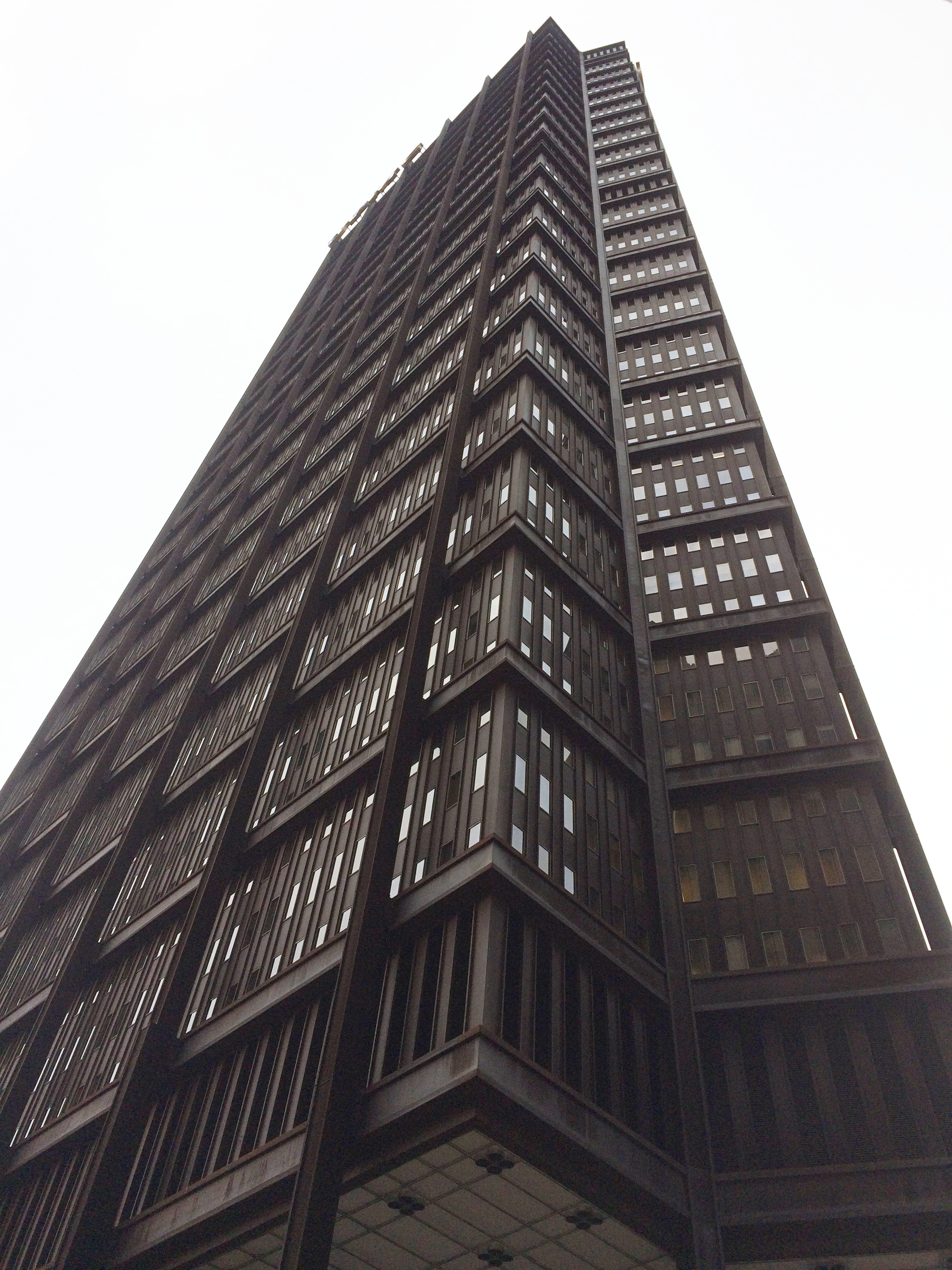
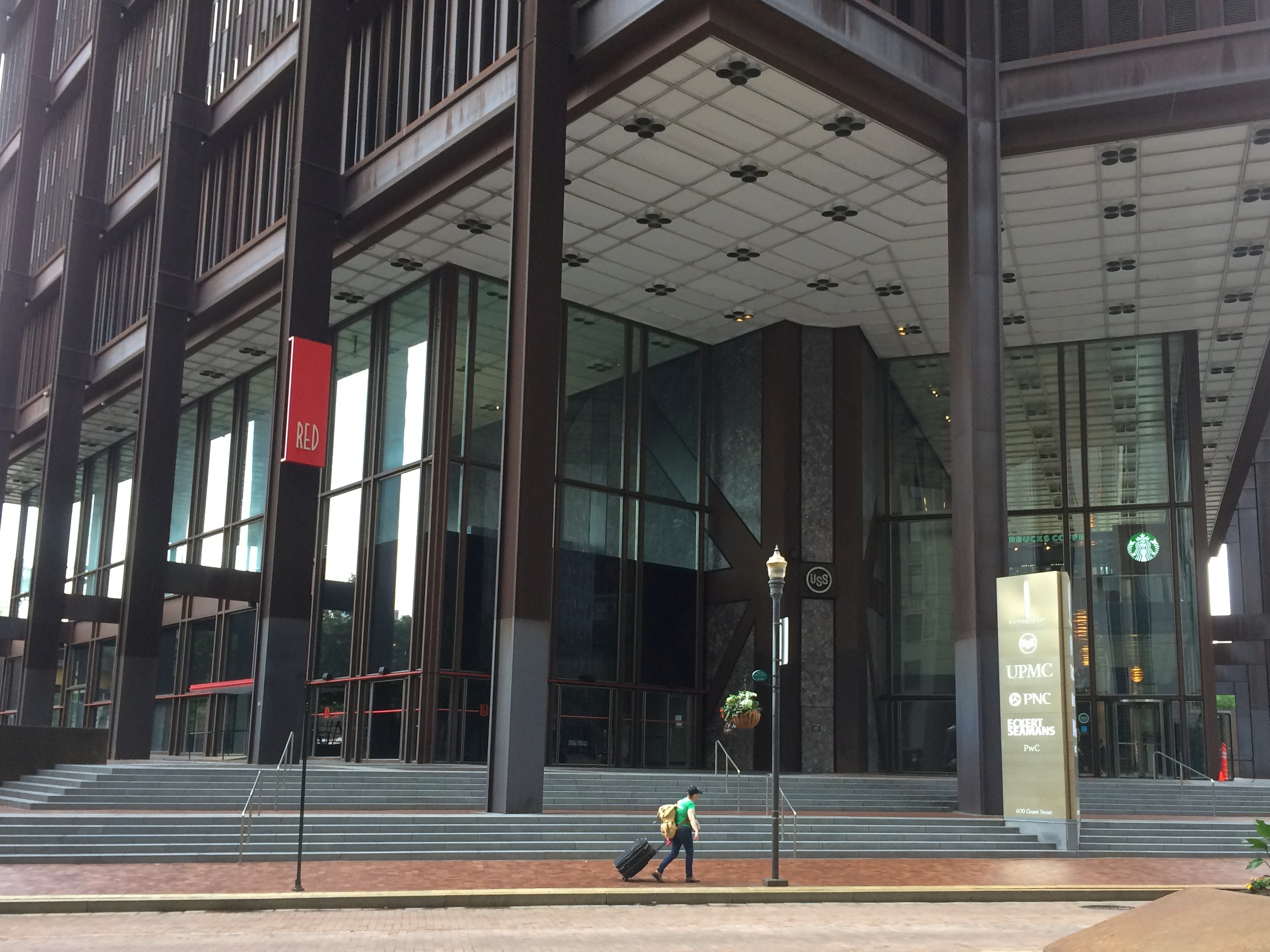
US Steel Tower, Pittsburgh

US Steel Tower, PittsburghNo aluminium for this behemoth, rather steel and lots of it. This too is a Harrison & Abramovitz design. The company made steel for its own building, a newish product at the time, corten or weathering steel, which ends up with a dark brown oxidation over the metal to protect the structure from the elements and obviate the need for paint. (The steel still has many surprising uses.) According to our guide, however, until recently the building skin had an unfortunate habit of spitting granules of this rust onto the sidewalks and people below.

Aluminium, steel and then glass. Fitting for the HQ of PPG, also a stop of the tour. Founded in 1883 as Pittsburgh Plate Glass, these days PPG is a supplier of paints, coatings, optical products and specialty materials.

The complex is actually six buildings, all opening in the early 1980s as part of the effort to revive downtown Pittsburgh. By that time, Johnson/Burgee were the go-to NY architects, so they designed the PPG. Rain prevented me from making a good image, but the tallest of the buildings towers over a plaza that features an ice rink in colder weather. It looks like this on a sunny day.

Toward the end of the tour, we made a stop at a place on Smithfield St. that has no marker of any kind and in fact isn’t distinctive in any way, except for one thing: it was the site of an early nickelodeon, thought to be the first theater anywhere devoted exclusively to movies, as opposed to a live theater with a few machines tucked away to separate patrons from their coins.

“The first exclusive moving pictures theater in Pittsburg and the world was opened in 1905 by Harry Davis and John P. Harris in the Howard Block, west side of Smithfield street, between Diamond and Fifth avenue,” one E. W. Lightner wrote in 1919.

Diamond St. is no longer called that. Oddly enough, the change to Forbes St. was made as late as 1958. I’d imagine that would have been hard to do.

Lightner continues: “Curious to say, the second exclusive picture theater of the world was opened in Warsaw, capital of Poland, by a Pittsburg Polander, who saw the Davis-Harris adventure and recognized the possibilities of presenting so wonderful and profitable a development in his native country.”

“The original and only ‘Nickelodeon’ was opened at 8 o’clock of the morning and the reels were kept continuously revolving until midnight. A human queue was continuously awaiting the ending of a performance and the emptying of chairs. Inside an attendant would announce, ‘show ended,’ and spectators would be hustled gently to the street and new spectators welcomed, seated as quickly as possible, and the picture would again respond to the magic reel.”

As you can see, it was pretty much a nothing site when Google Images came by.

Still looks that way in July 2019. There ought to be a marker there at least, or maybe even a hipster bar with a nickelodeon theme.
The Cathedral of Learning & Its Nationality Rooms

Pittsburgh has some of the most convoluted street patterns I’ve ever driven through. It’s as if a few grids were thrown at random among the hilly terrain, sort of meeting each other in places, with additional streets — some large, some alley-like — crossing the grids at all angles, plus oddball five- and six-way intersections punctuating things. You know, like Boston, only with more hills.

But also more street signs. And fewer lunatics behind the wheel. At least that was my impression, admittedly based on a small sample, as I figured out how to get from place to place. So driving in Pittsburgh wasn’t actually that bad, certainly better than Boston, despite its initial challenges.

Our car has GPS with spoken instructions. I decided to try it on the first morning in town. Pittsburgh managed to flummox the system early in the game. That is, it was unable to give me directions that I could use in a timely manner. Maybe I misunderstood. Doesn’t matter — I found the system annoying, so I quit using it. I went back to consulting maps.

Still, the system’s misdirection, or my misunderstanding, at one point led us through the Liberty Tunnel. Earlier we’d gone through the Fort Pitt Tunnel. Pittsburgh might have some great bridges — more about which later — but it also has some really cool tunnels to drive through.

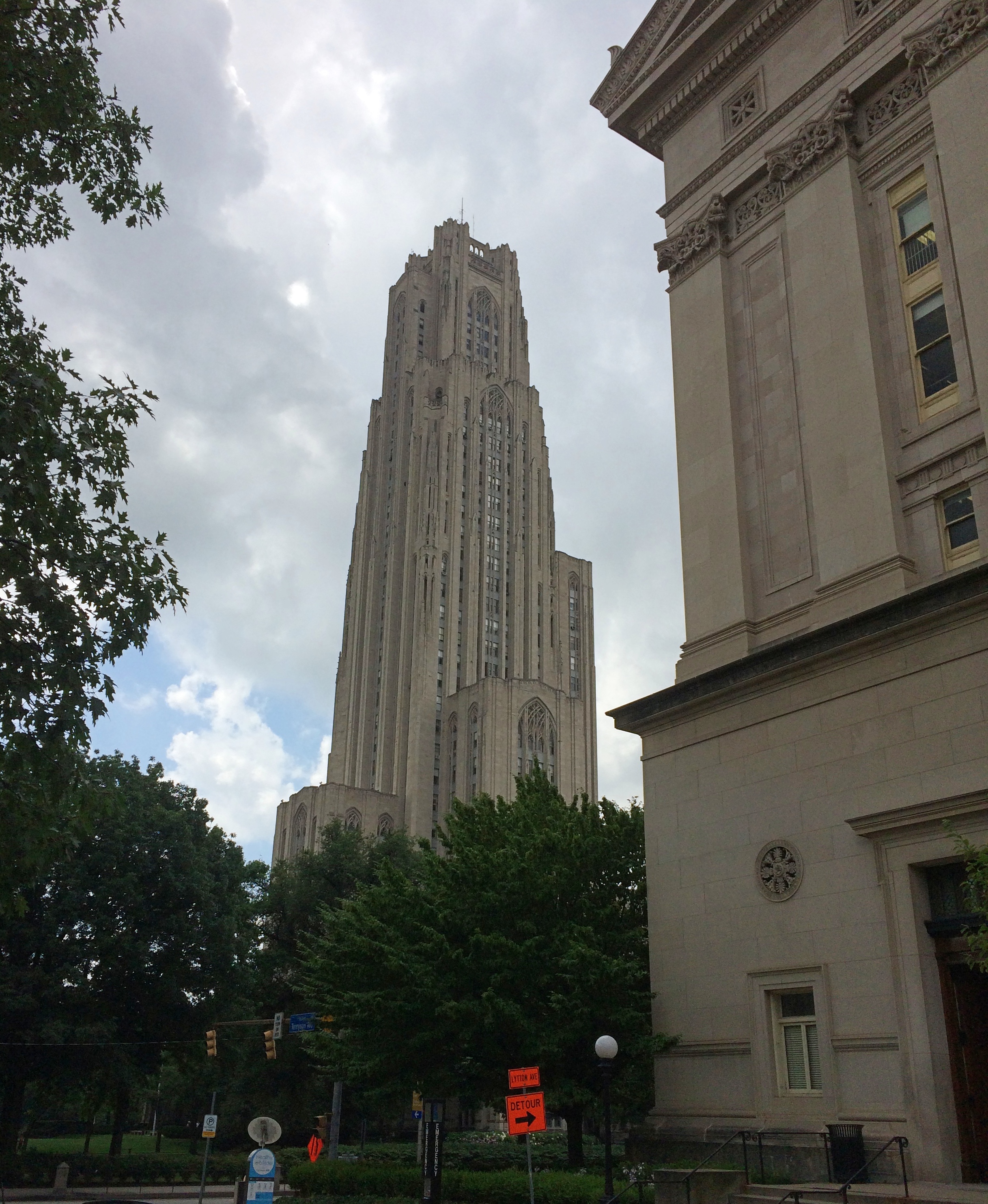
Our second major destination on the first day was the University of Pittsburgh, which is in the city’s Oakland neighborhood. Besides the Heinz Memorial Chapel, we also wanted to go there to see the Cathedral of Learning, which is a 42-story building. Despite the uncertainties of navigating through the Pittsburgh streets — the GPS voice was silenced by then — I knew I was in the right place when I saw a tall neo-Gothic building rising above everything else around it.

Not that Oakland is lacking for other large structures, just nothing else that tall. In fact the district impressed me as practically a city of its own, with its university buildings, healthcare facilities, sizable apartment buildings, a rich array of retail, some green space and a lot of people out and about. We probably could have spent an entire satisfying day in Oakland.

Even a few blocks away, the Cathedral of Learning makes an impression.

Charles Klauder, the same architect who designed the Heinz Memorial Chapel, did the considerably taller Cathedral as well. Both are Indiana limestone edifices.
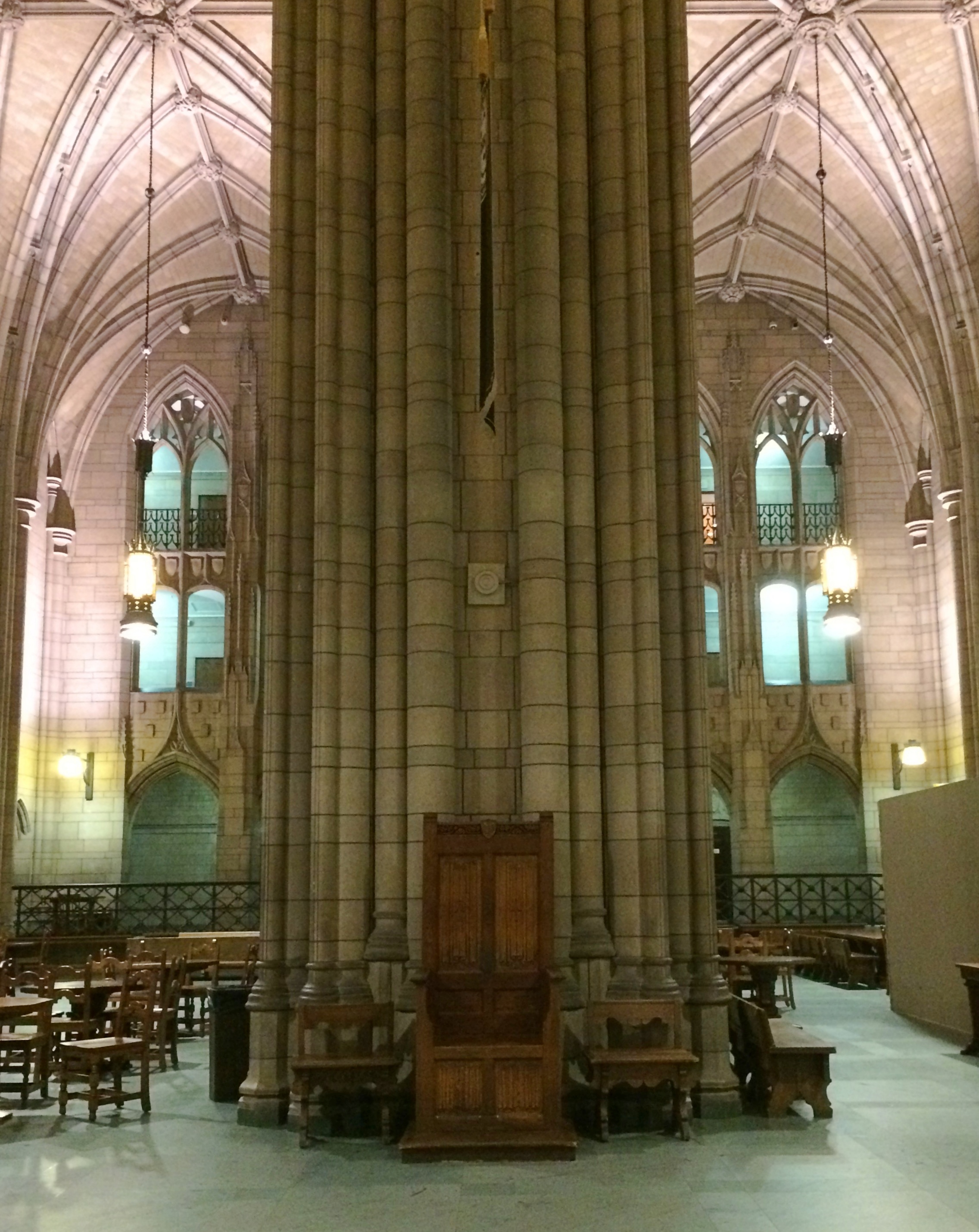
Inside are classrooms and administrative offices, but that hardly describes the place. The soaring, four-story lobby could, if anyone wanted to do it, be decked out as a neo-Gothic church.
Something like the Heinz Memorial Chapel. Since the two structures were built at about the same time and designed by the same architect, that’s not much of a surprise.

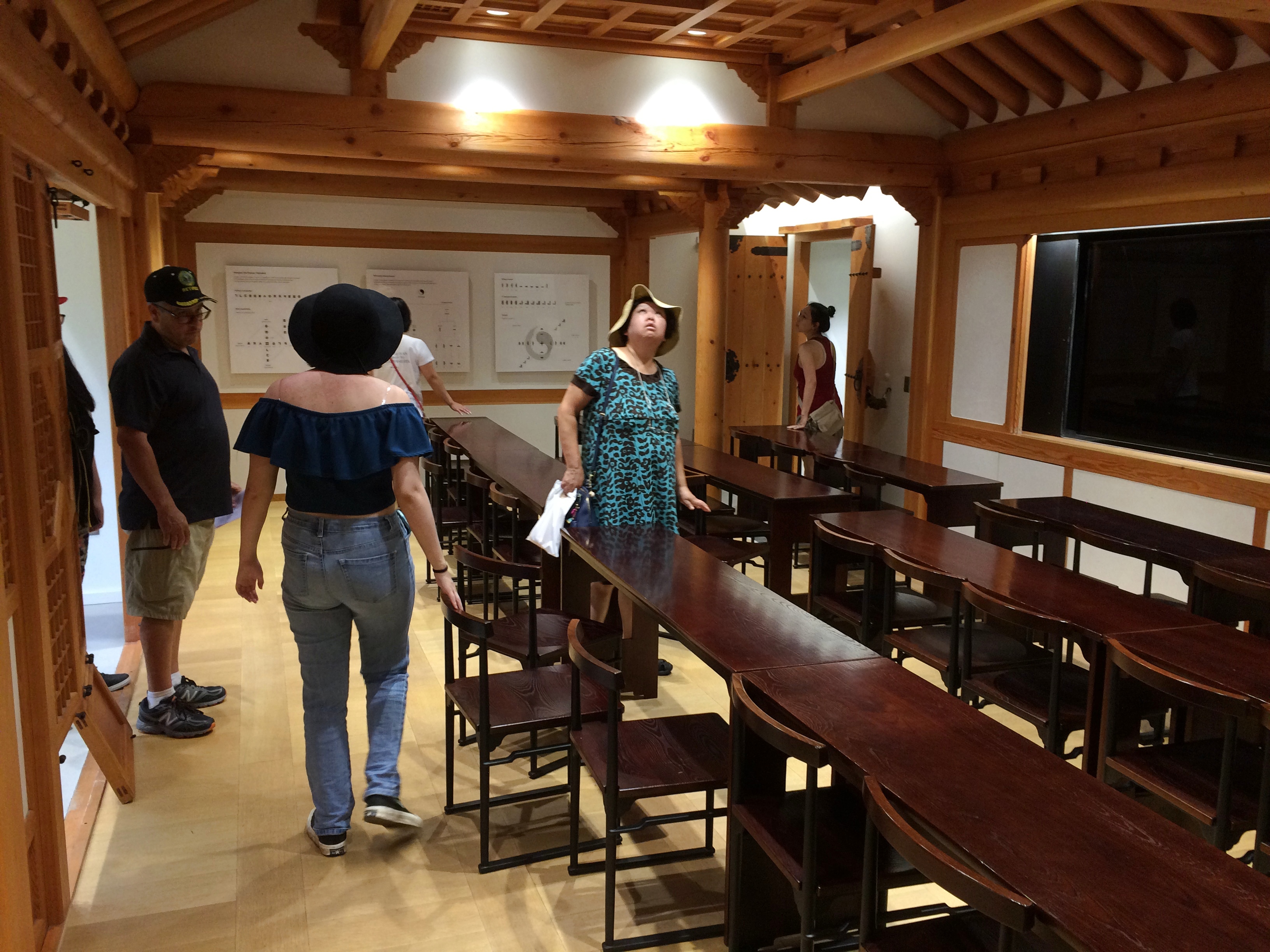
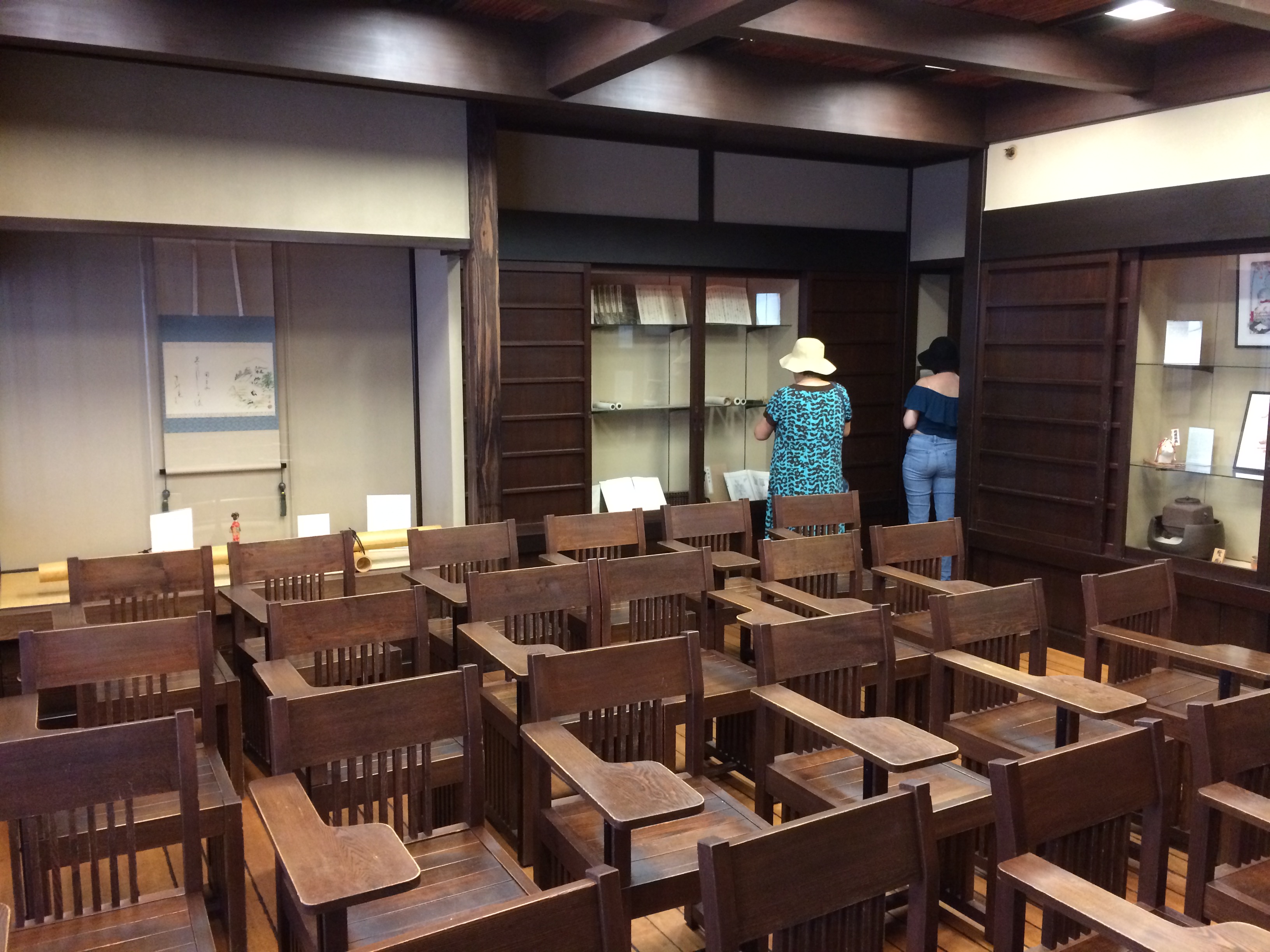
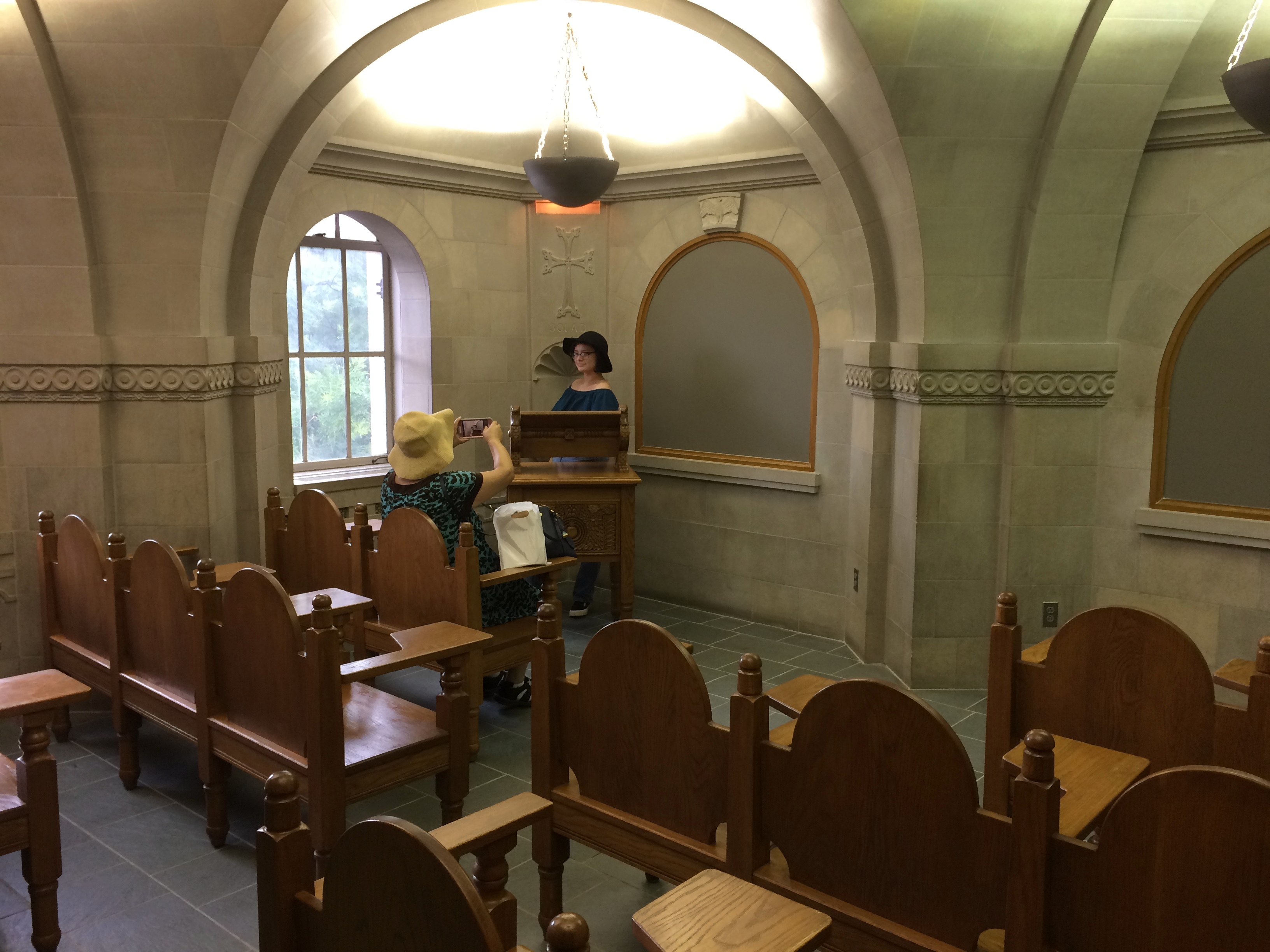
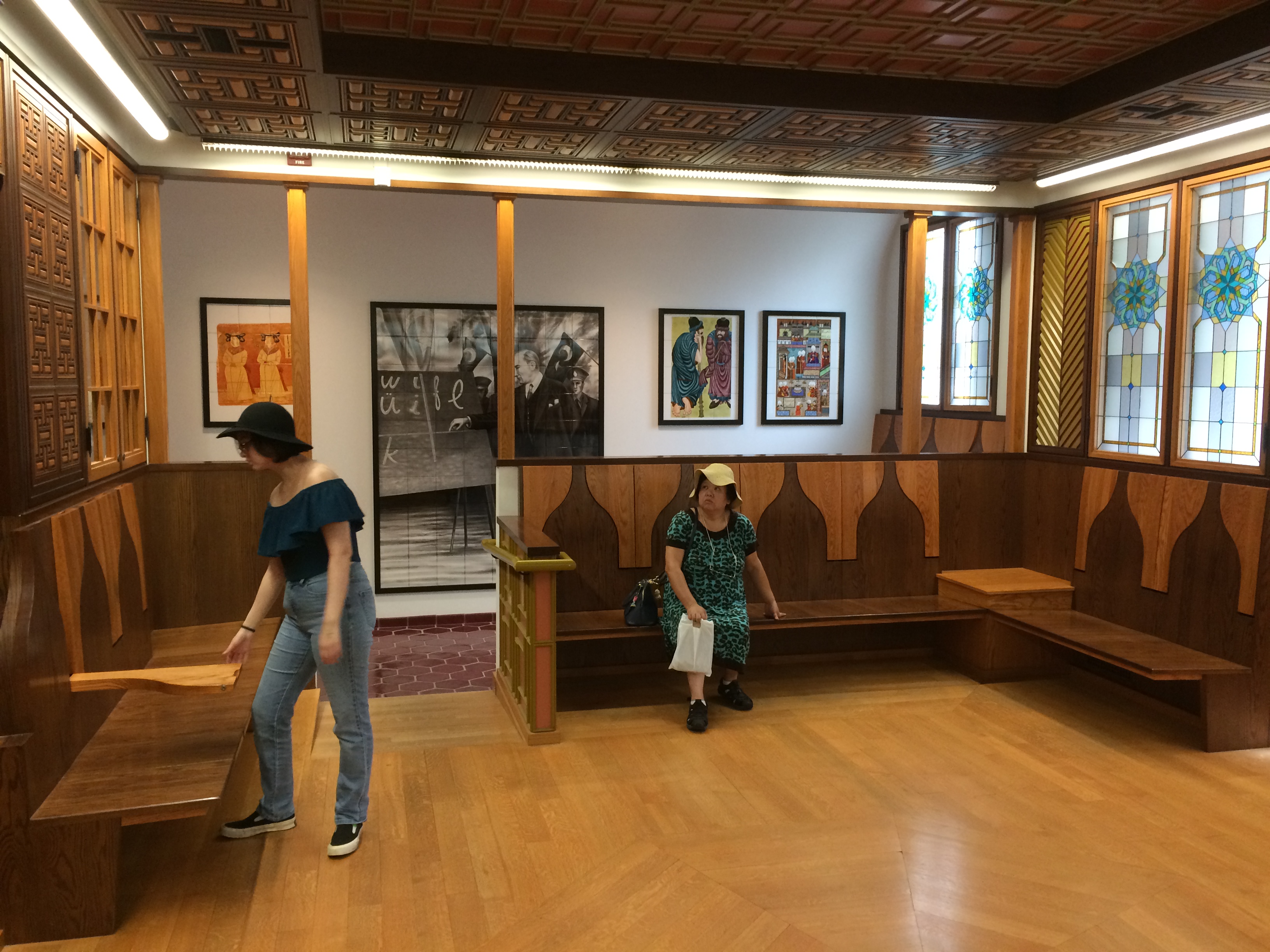
What really makes the Cathedral of Learning distinctive are its 31 Nationality Rooms, most of which are working classrooms, but each designed to reflect a nationality that had an influence on Pittsburgh’s history.

They’re on the first and third floors. We spent time on the third floor looking at such examples as the Korean Room, based on the 14th-century Myeong-nyundang (Hall of Enlightenment), the main building at the Sungkyunkwan in Seoul.
It was completed only in 2015 by Korean carpenters who built it in that country, took it apart and shipped it to the university, where it was reassembled.

The Japanese Room.
Built in 1999 to evoke residence of an important village leader in a farm village in the mid-18th century in the Kinki district.

The Armenian Room, dating from 1988. Most impressive.
Inspired by the 10th- to 12th-century Sanahin Monastery in Aremenia, which I’d never heard of, so I looked it up.

Also impressive, and probably-not-by-accident on the other side of the building from the Armenian Room, is the Turkish Room, completed in 2012.
In the style of a main room of a 14th-century Turkish house, but also sporting a picture of Ataturk near the entrance (he’s teaching the Turkish nation the Latin alphabet).

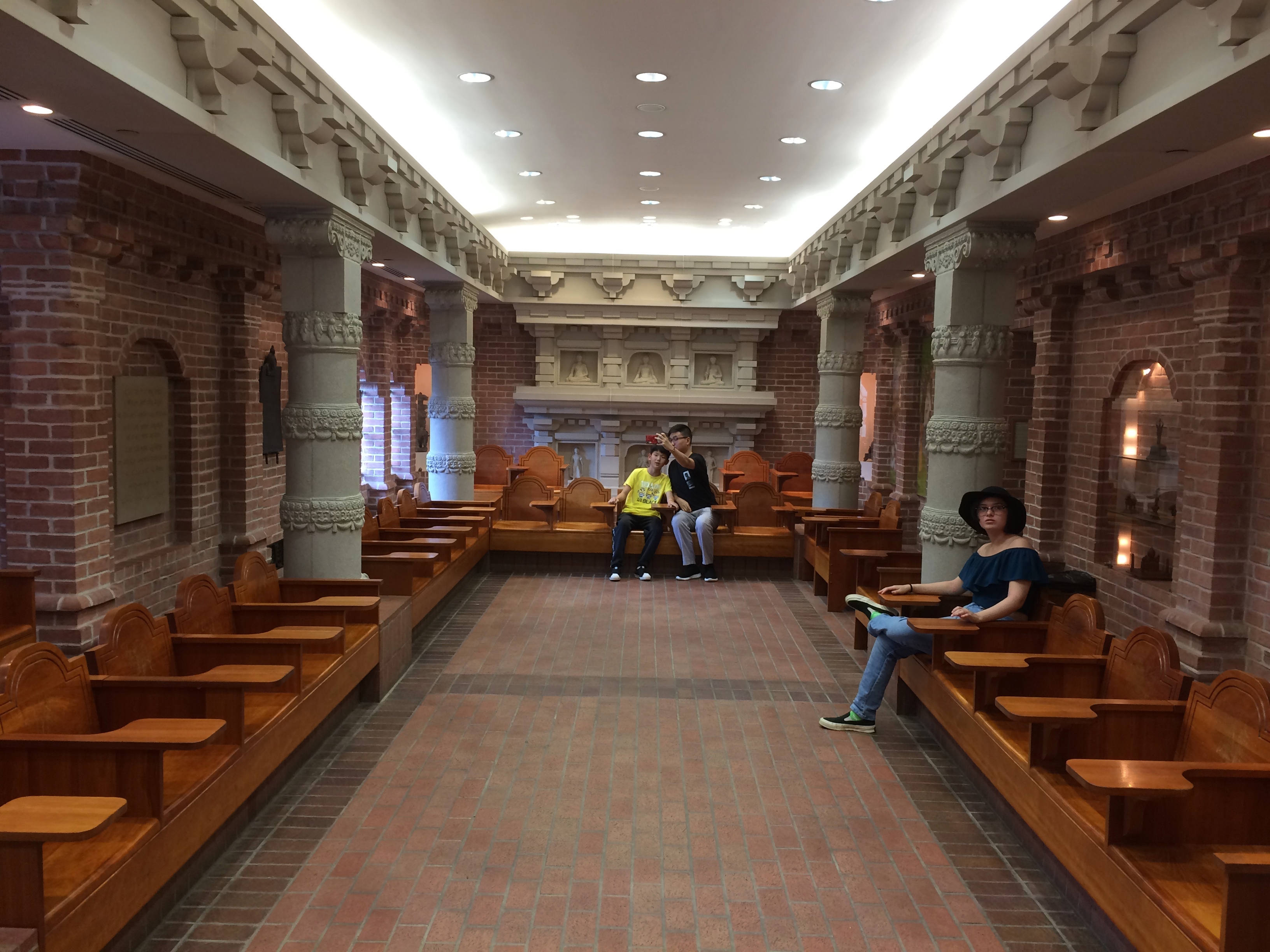
My favorite, I think: the Indian Room, completed in 2000. This is the view from the lectern.
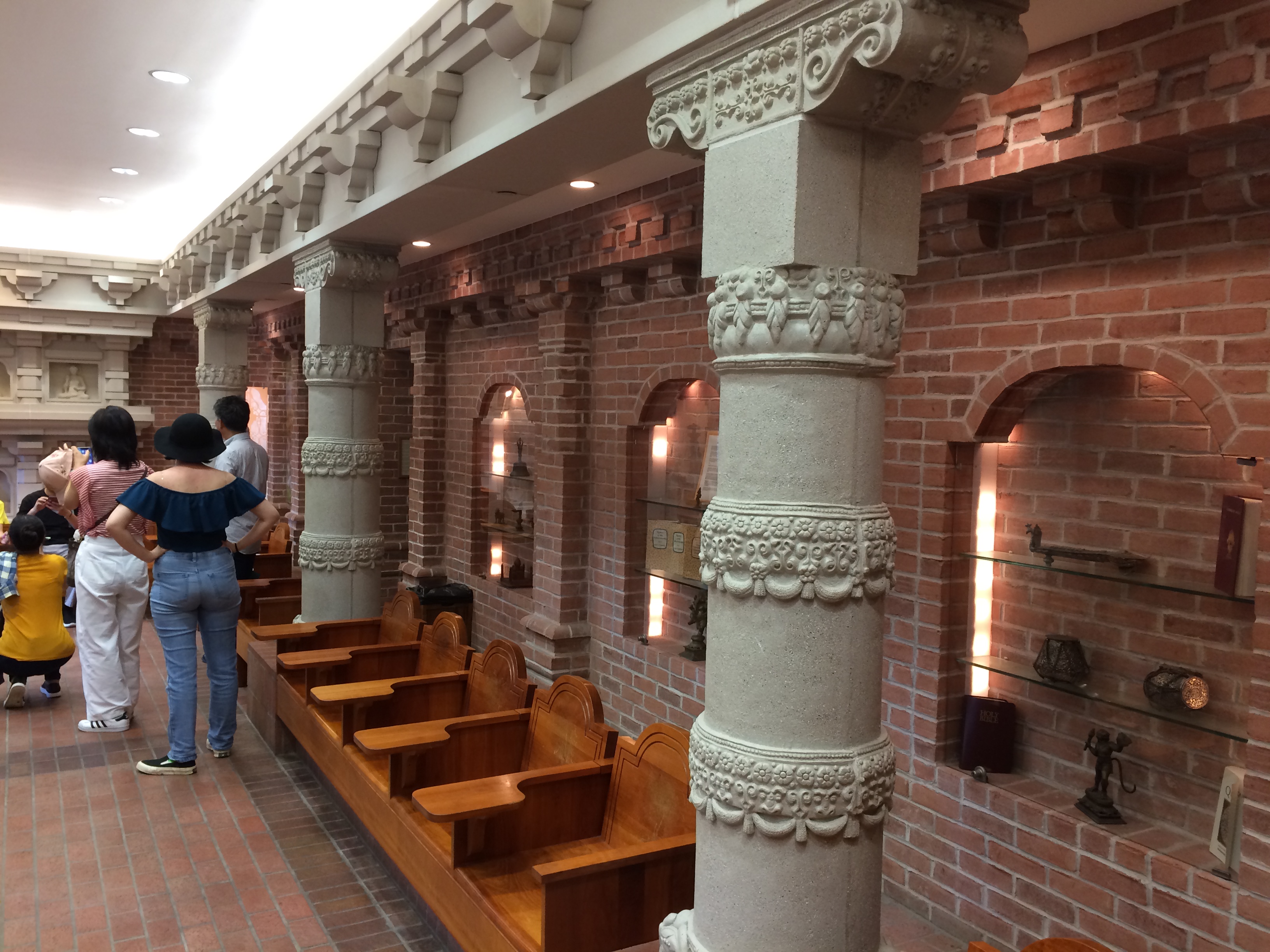
A closeup of the columns, decorated with rosettes, swags, and fruit.
The style is a 4th- to 9th-century courtyard from Nalanda University, a Buddhist monastic university. I had to look that up as well.

There might be a lectern, but I can imagine that professors might not spend much time behind it, but rather pace up and down the rose brick floor to more closely converse with the students, who are facing each other.

The Duquesne Incline

A hundred years ago, hilly Pittsburgh had a lot of operational funiculars: the Castle Shannon Incline, Castle Shannon South Incline, Duquesne Incline, Knoxville Incline, Monongahela Incline, Monongahela Freight Incline, Mount Oliver Incline, Norwood Incline, Penn Incline, and the St. Clair Incline.

Yet others had already come and gone by then: the Bellevue Incline, Clifton Incline, Fort Pitt Incline, H.B. Hays and Brothers Coal Railroad, Nunnery Hill Incline, Pittsburgh and Castle Shannon Plane, Ridgewood Incline and the Troy Hill Incline.

That’s enough for a whole chapter of a coffee table book: Great Funiculars of the World, a sequel to Great Elevators of Europe. The designer of most of them was one man, Samuel Diescher, a Hungarian who came to America in 1866 and did an exceptional number of engineering projects during his career.

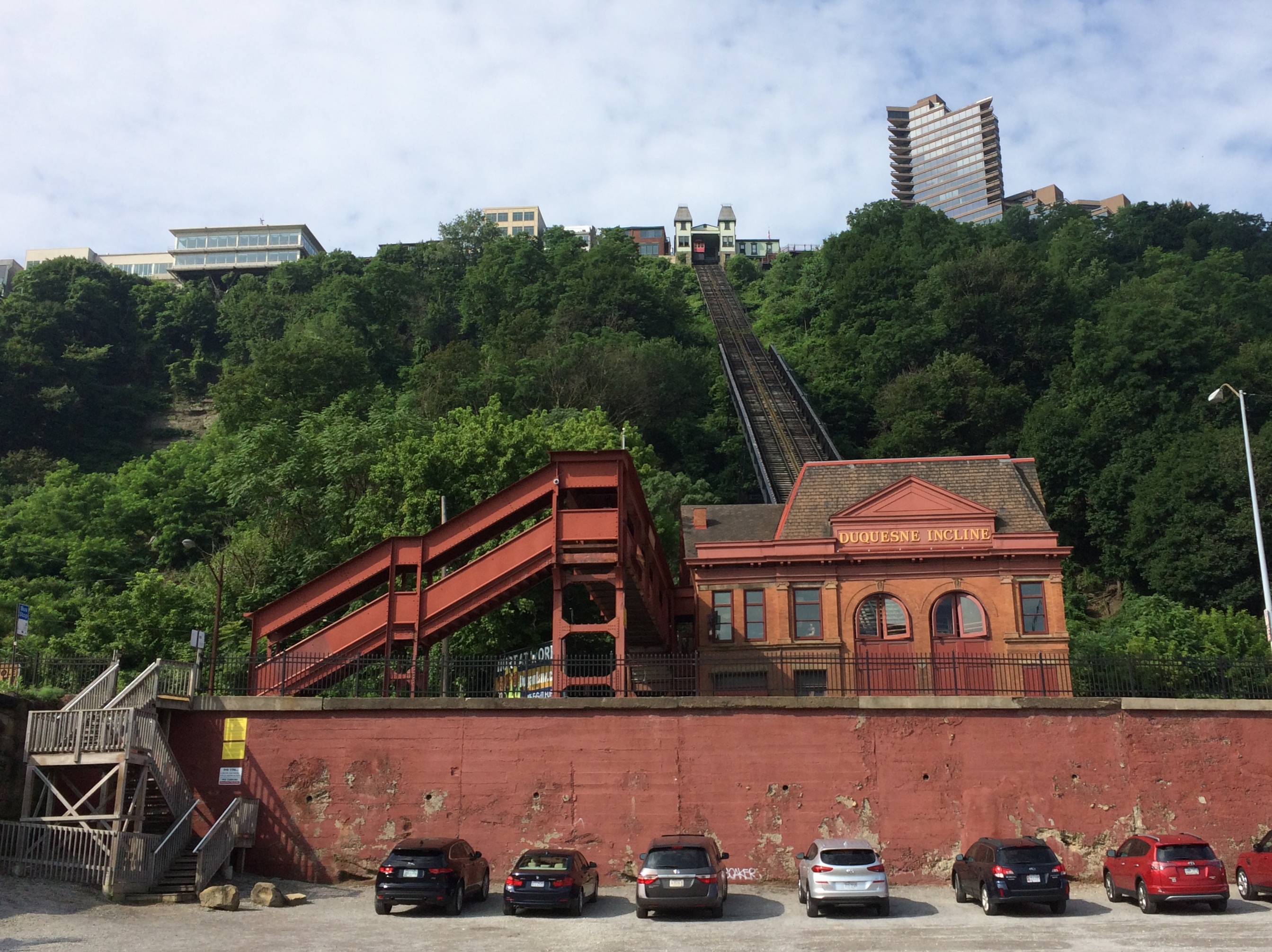
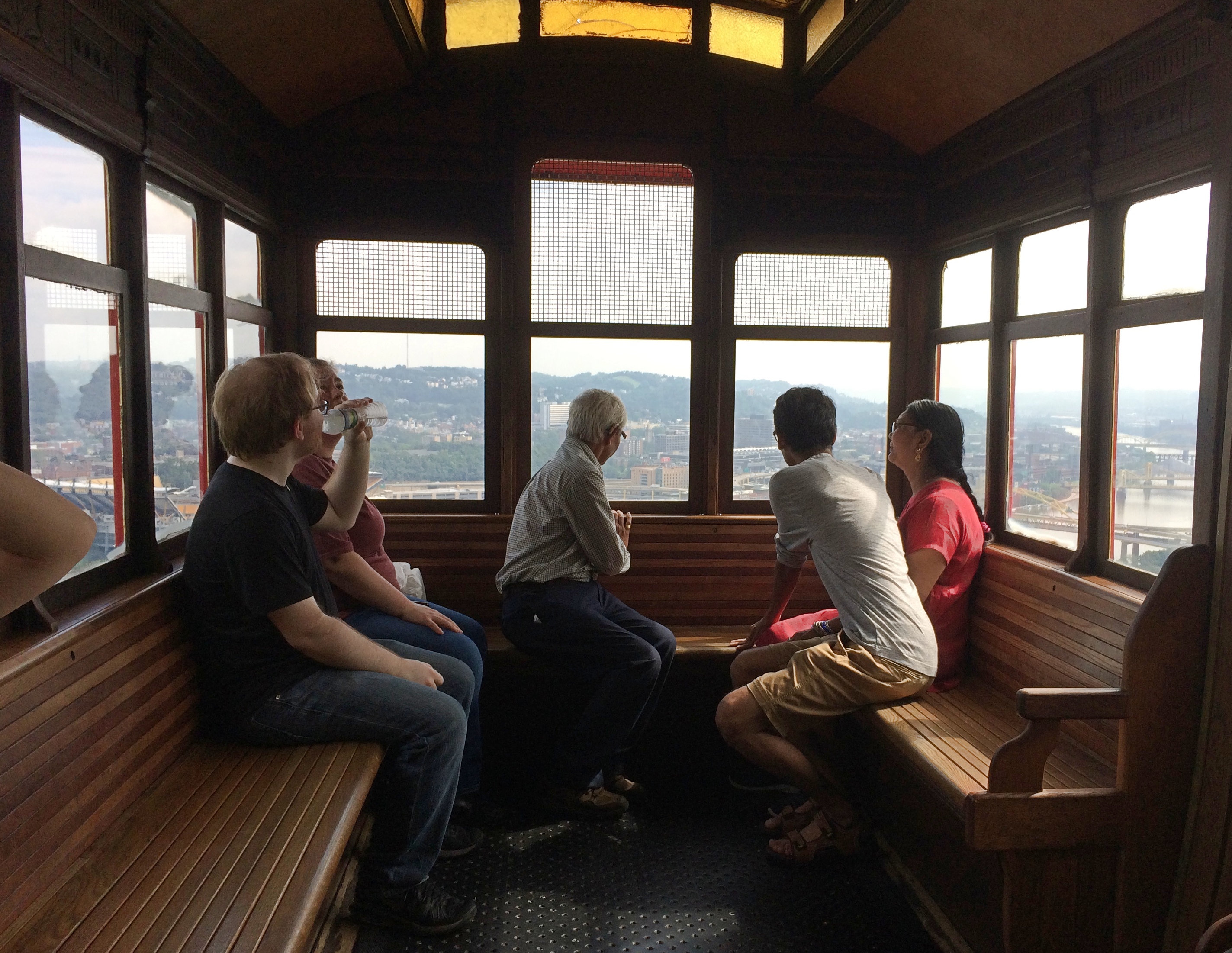
Only two funiculars survive in 21st-century Pittsburgh, the Duquesne Incline and the Monongahela Incline, about a mile apart on the slopes of Mt. Washington, to the south of downtown. We couldn’t come to Pittsburgh and not ride at least one of them, and so on mid-morning of July 5, we drove to the Duquesne’s lower-level parking lot and climbed the stairs on the left for access to the funicular.

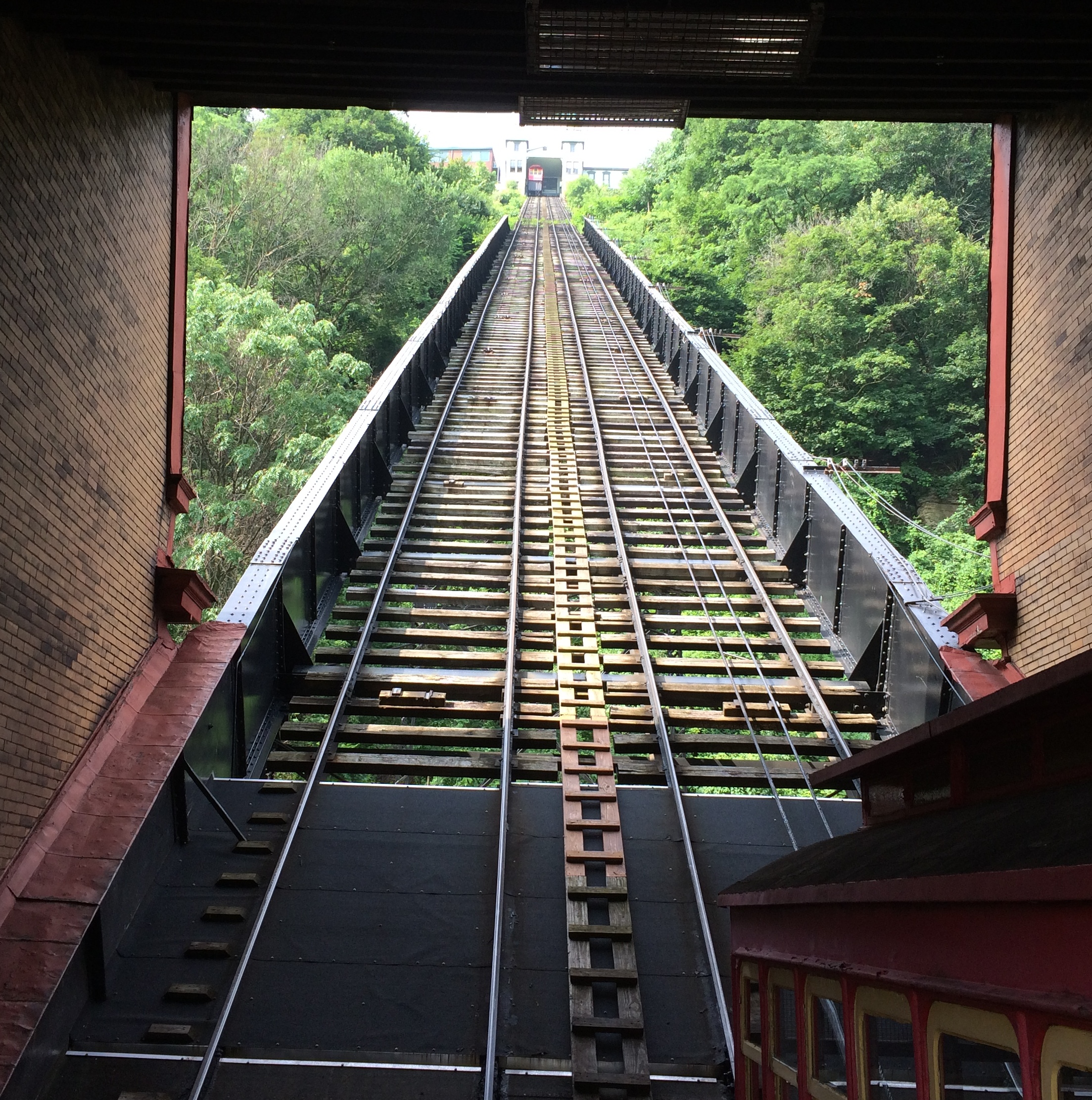
The Duquesne, in operation since 1877 and restored in 1963, rises about 400 feet.
Round-trip for ages 12 to 64 is $5, and completely worth it. Though part of Pittsburgh’s transit system, on a quasi-holiday in summer, tourists seemed to be the main customers.
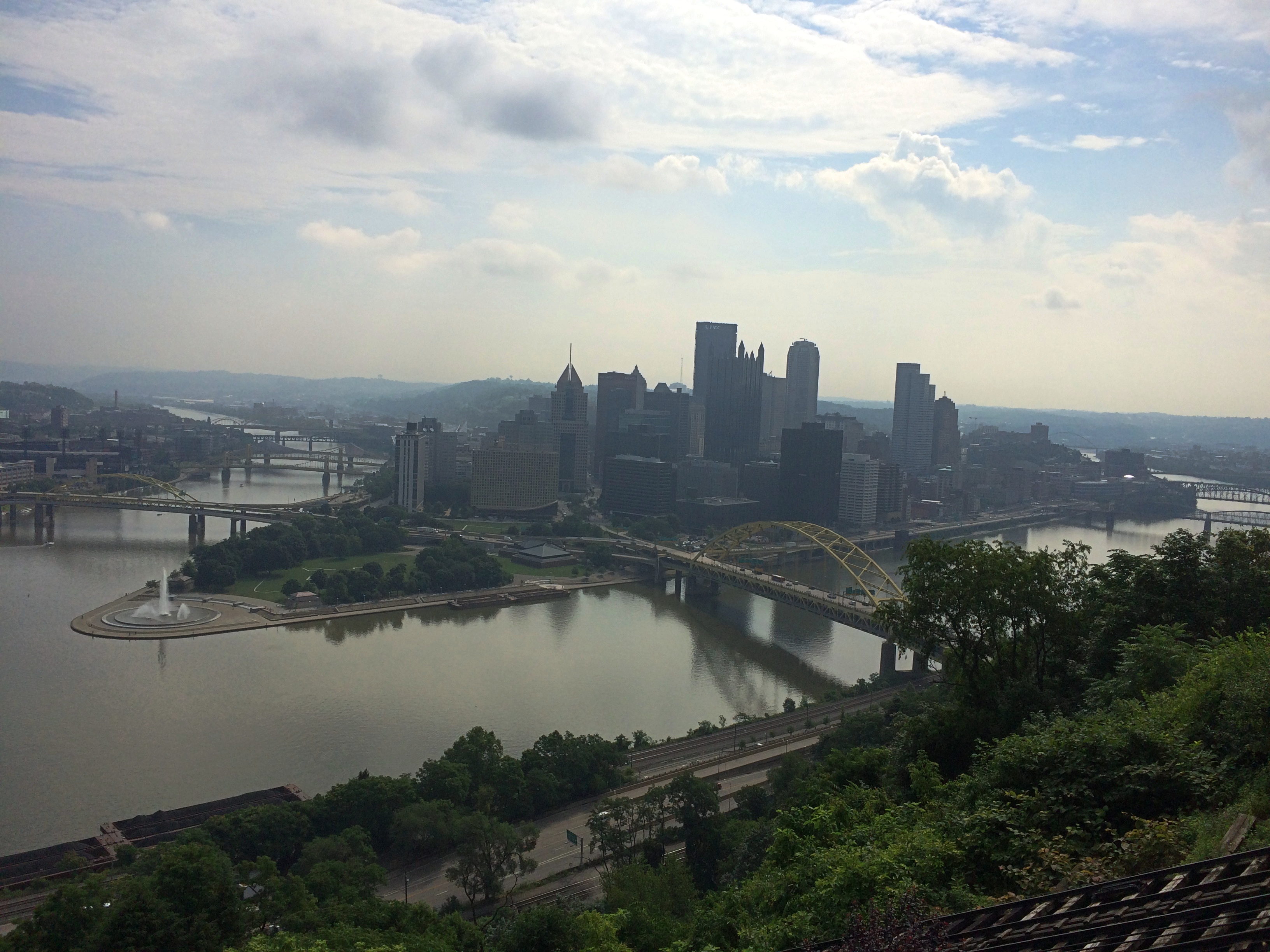
At the top is a splendid view of downtown Pittsburgh and the three rivers and their bridges, though things were a little hazy that morning. No matter.
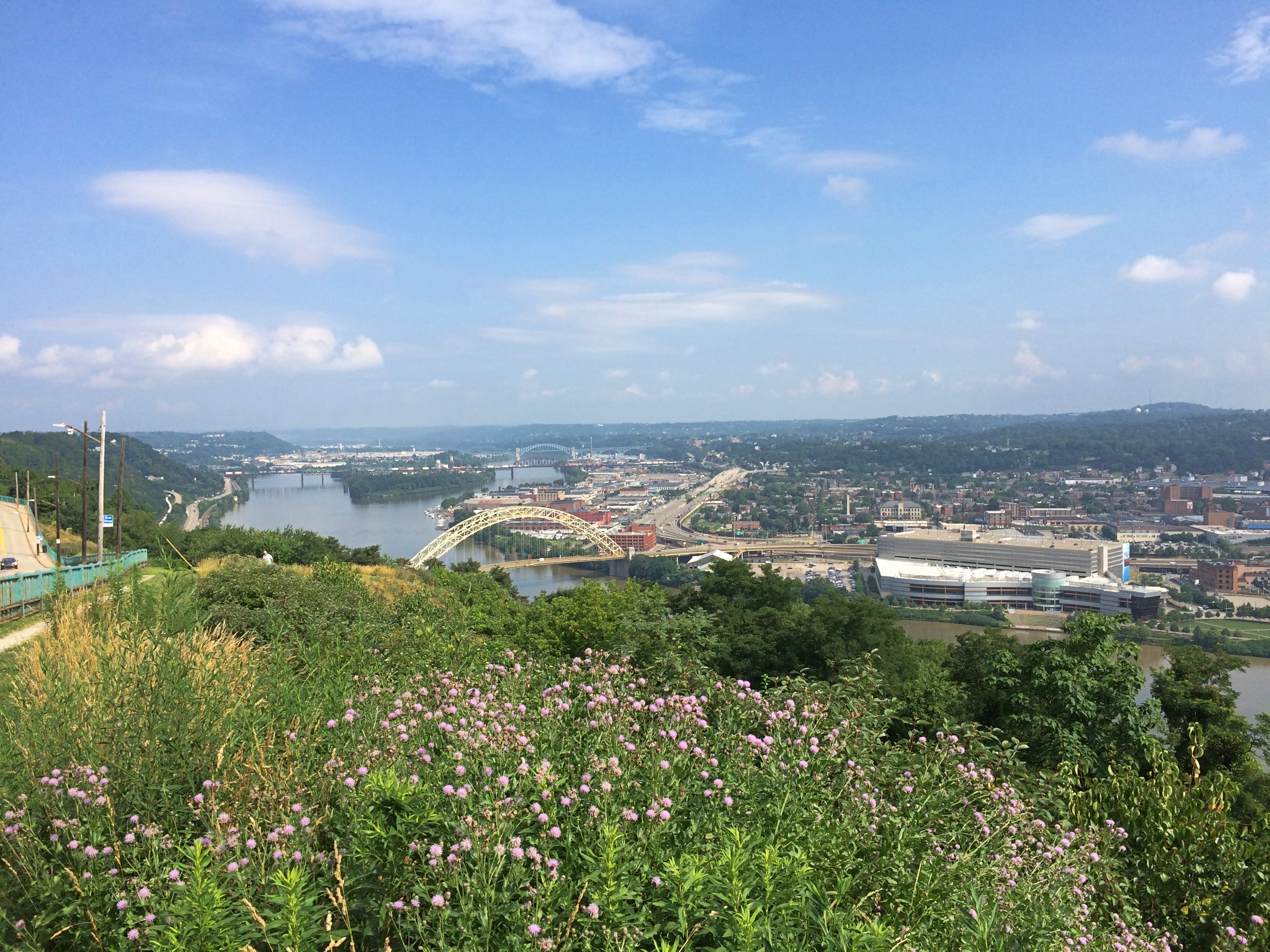
A few minutes’ walk to the west of the top of the Duquesne is the small Point of View Park. Besides offering roughly the same view of downtown, the view from the park down the Ohio is nice.
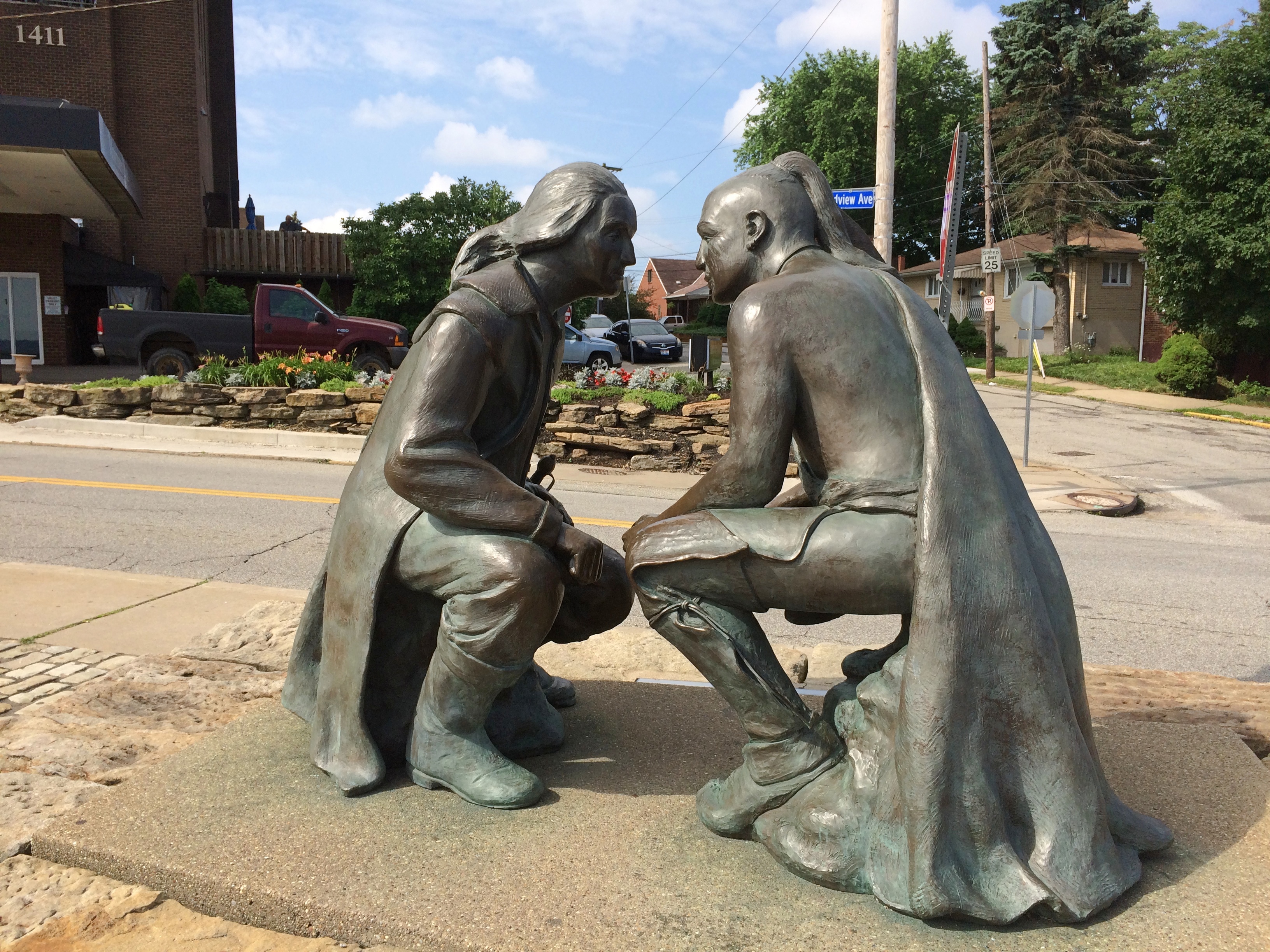
The park also features two bronzes in a curiously intimate pose: George Washington and Seneca leader Guyasuta by local artist James A. West (2006).
A nearby plaque says that “this bronze depicts a meeting in October 1770 between [Washington and Guyasuta]… this work captures a moment in time between two formidable men whose actions had a huge impact on Pittsburgh…”
Looking closely at the Wiki entry on Guyasuta, I see this detail about his name: “The many spelling variations include Guyashuta, Guyasoota, Guy-a-soot-er, Guyasootha, Guyasotha, Guyasutha, Kayashota, Kayasota, Kayasutha, Keyashuta, Kiasota, Kiashuta, Kiasutha, Kiosola, Kiyashuta, and Kyasoota.”

Two East-Central Illinois Memorials As Different As Can Be

Our recent short trip to east-central Illinois and west-central Indiana found us spending two nights in Champaign, last Friday and Saturday. During the day on Saturday, we drove east on U.S. 150 and a short way on I-74 into Indiana. Then we headed south on Indiana 36 to Terra Haute, stopping in Dana.

Returning from Terra Haute, we took U.S. 150 westward — that road jogs oddly to the south from Danville, Illinois — and caught Illinois 133 in Paris, Illinois, a town that sorely needs a replica Eiffel Tower or Arc de Triomphe or some such to distinguish it. That road takes you to Arcola, a town we’re familiar with. From Arcola it’s a straight and not too interesting shot back to Champaign on I-57.

So it was a rectangular driving course (roughly east-south-west-north), good for a day trip, despite the heavy rain at times. It’s been a rainy spring and early summer, which we noticed must be damaging crops, since a lot of corn and soybean fields were covered by large puddles (an item from Ohio about the problem).

The sites associated with Ernie Pyle and Eugene V. Debs, honoring Hoosiers of somewhat different cast, were our main destinations. But I had a couple of minor destinations in mind as well. One was an obscure memorial in the obscure town of Oakland, Illinois, which is Coles County. I had passed that way 12 years earlier. Here’s what I said then about the Oakland town square:

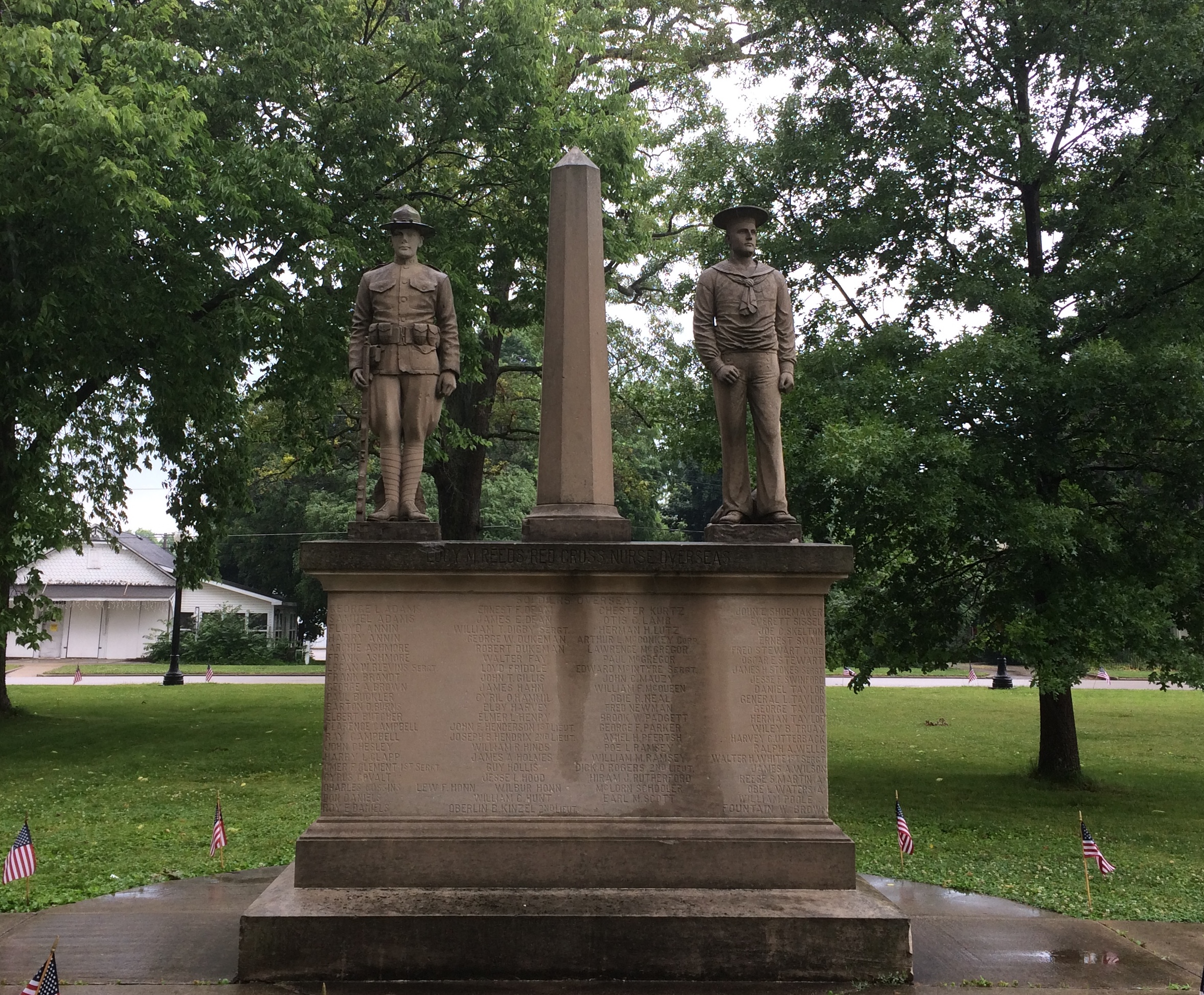
“The place was gloomy. Maybe it was just the overcast skies… Still, I wanted to see the monument in the middle of the square. It was Memorial Day, after all. Someone had decorated the edges of sidewalk leading to the monument with small flags, forming a spot of color in the square, so that was something. The monument consisted of two statues sharing one plinth, one of a soldier and the other sailor, clearly World War I vintage, with the names of locals who had participated in that war carved in the plinth. All of it was weathered and dark.”

I wanted another look. In 2019, the square’s a little better looking (officially it’s the Oakland Centennial Park). The monument, a lot better looking. The darkness this time was from the recent rain.
Oakland Illinois World War I memorialMaybe it was refurbished for the centennial of the war or its own centennial, since carved in stone is the memorial’s dedication date: May 30, 1919 — the first Decoration Day after the Armistice.

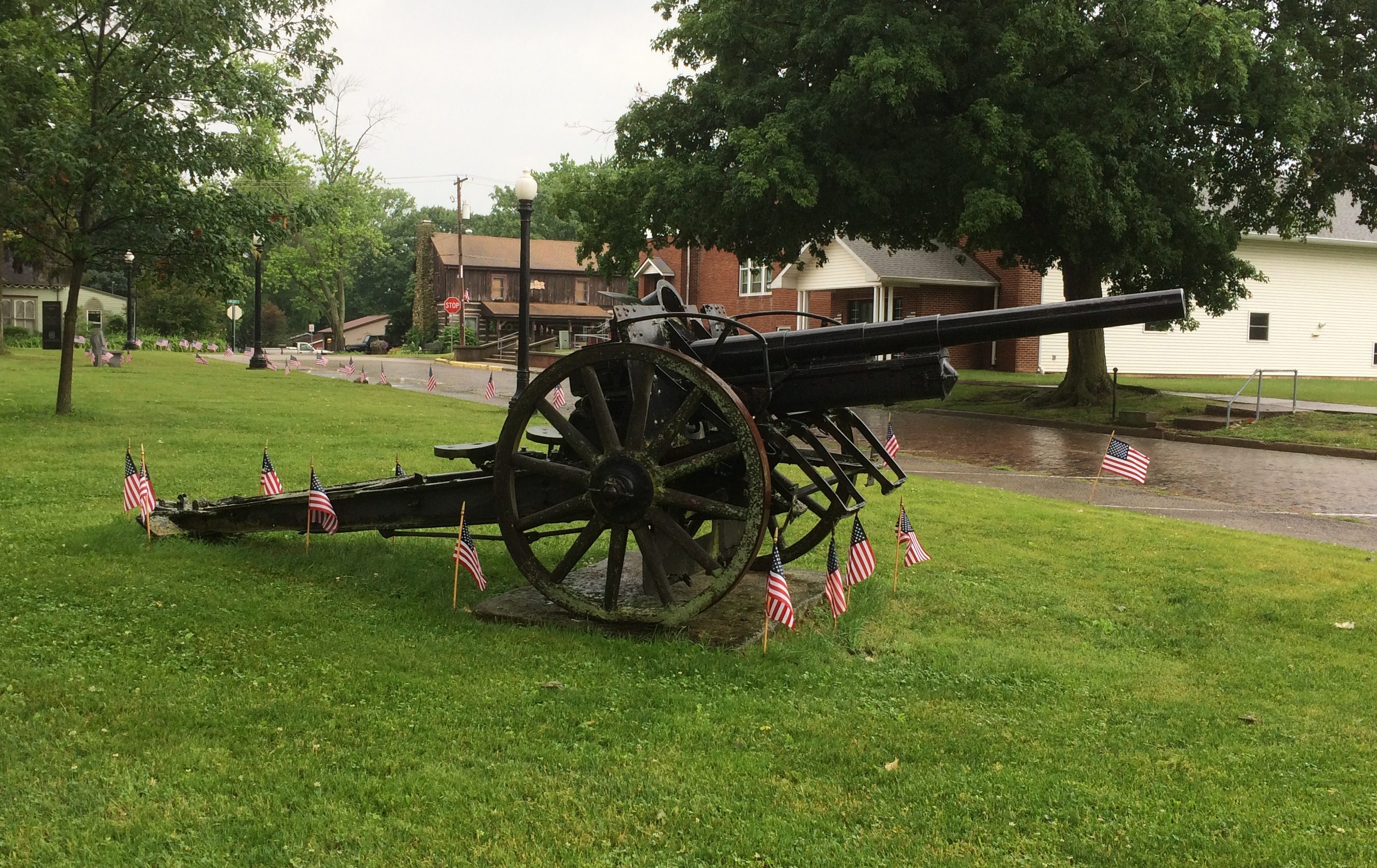
I’d forgotten about this item in the town square, a 77mm Feldkanone 16 German artillary piece. A local prize of war, I guess.

Oakland Illinois World War I memorial

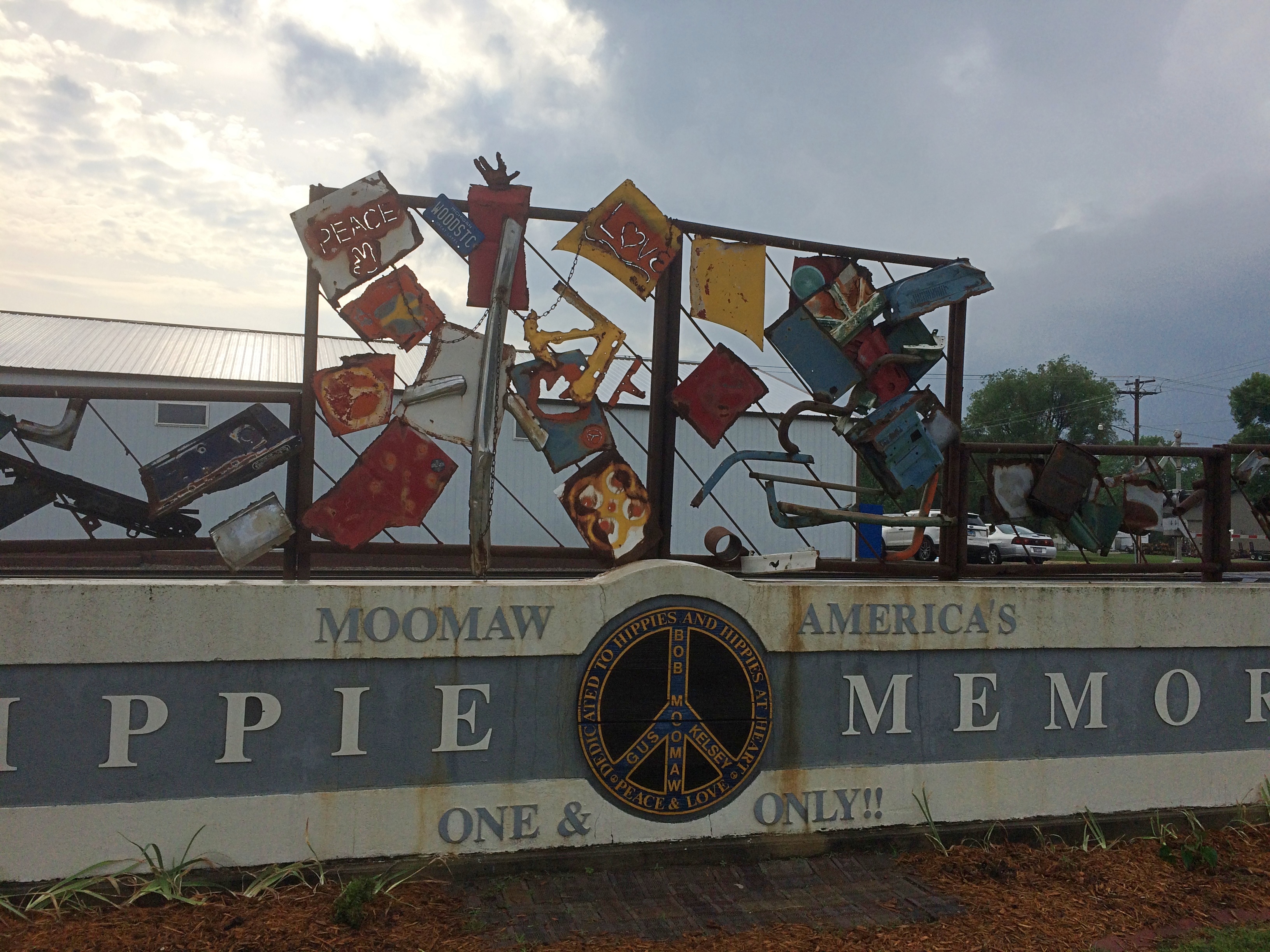
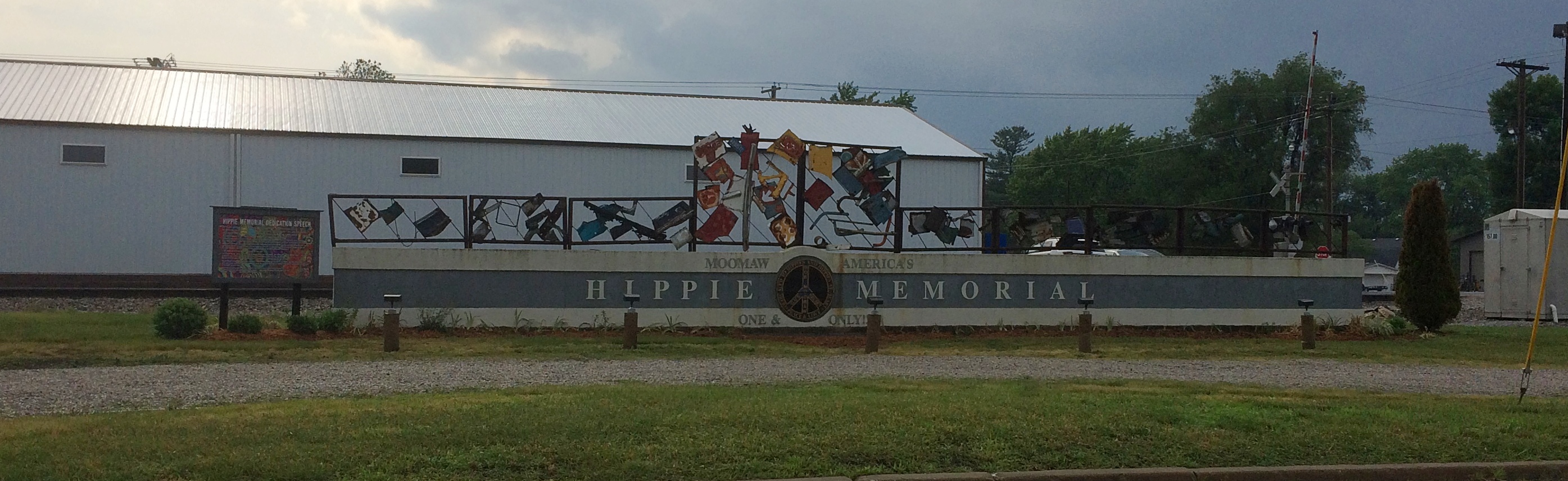
In Arcola, I wanted to see something we’d overlooked last year: the Hippie Memorial. How we missed that, I don’t know, since it’s less than a block away from that town’s Raggedy Ann and Andy sculptures, which we saw.

The Hippie Memorial is a very horizontal structure and an example of vernacular art. Better still, a vernacular memorial, which isn’t that common.

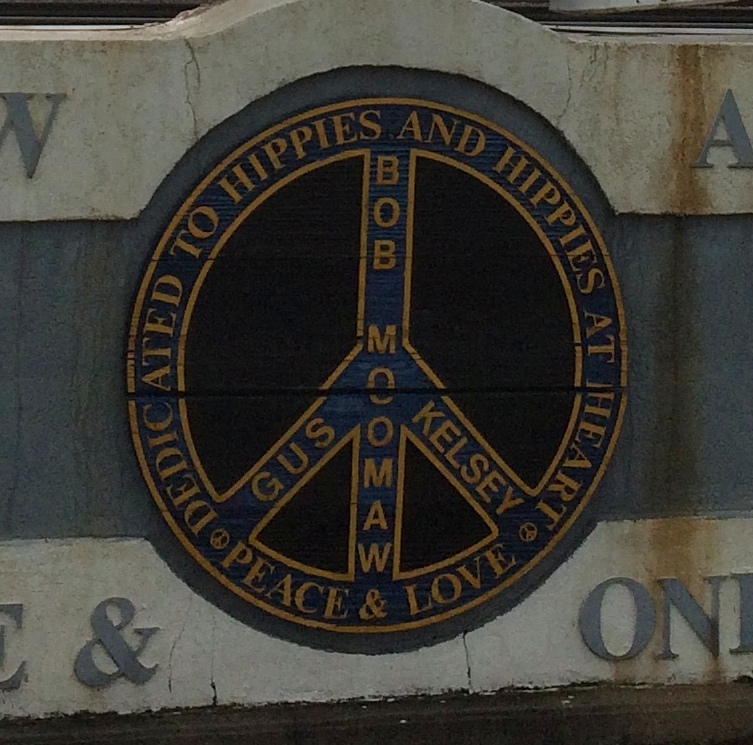
Hippie Memorial Arcola IllinoisHippie Memorial Arcola Illinois

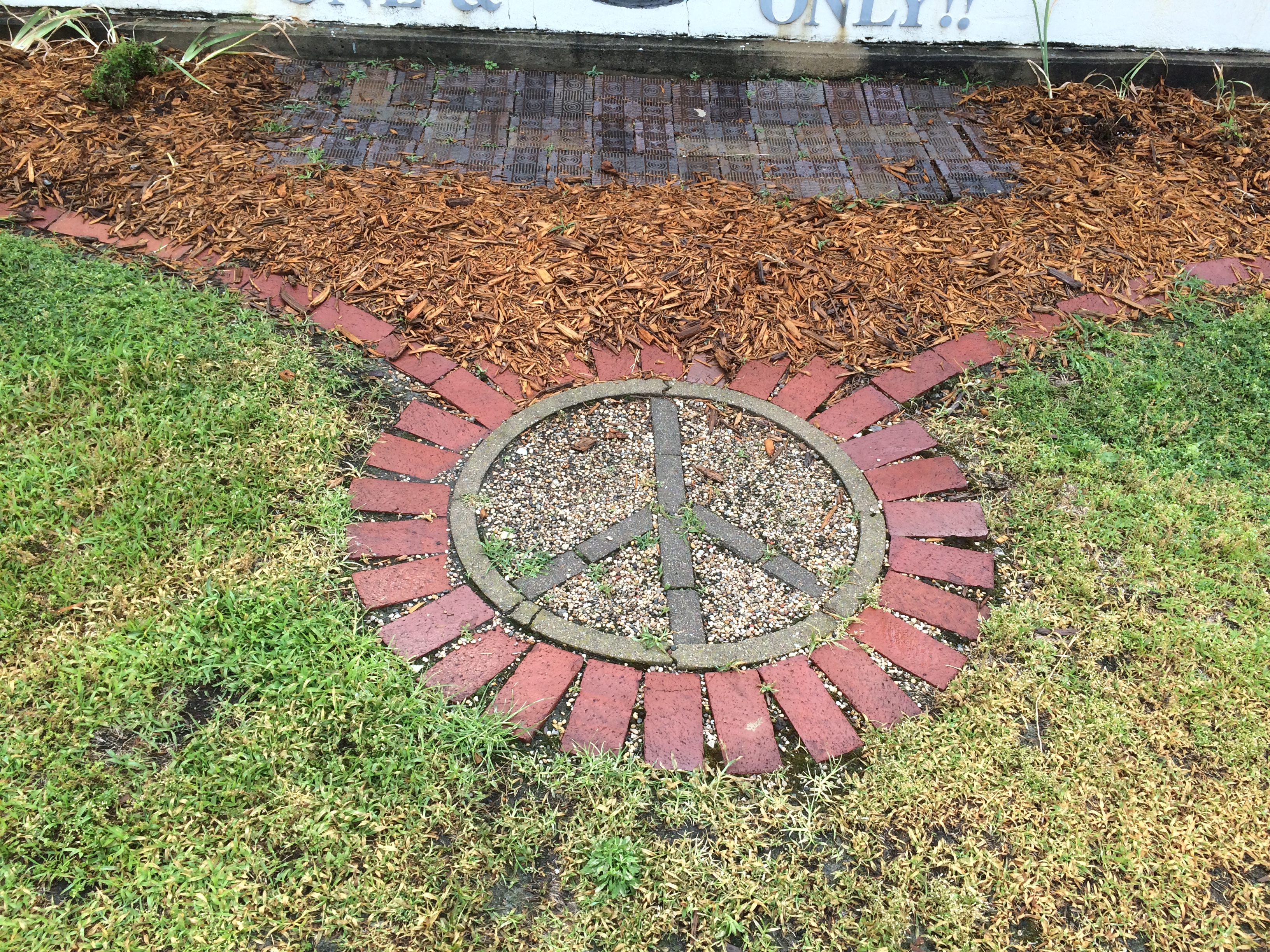
Just how much recognition does ☮ get these days? I wonder.

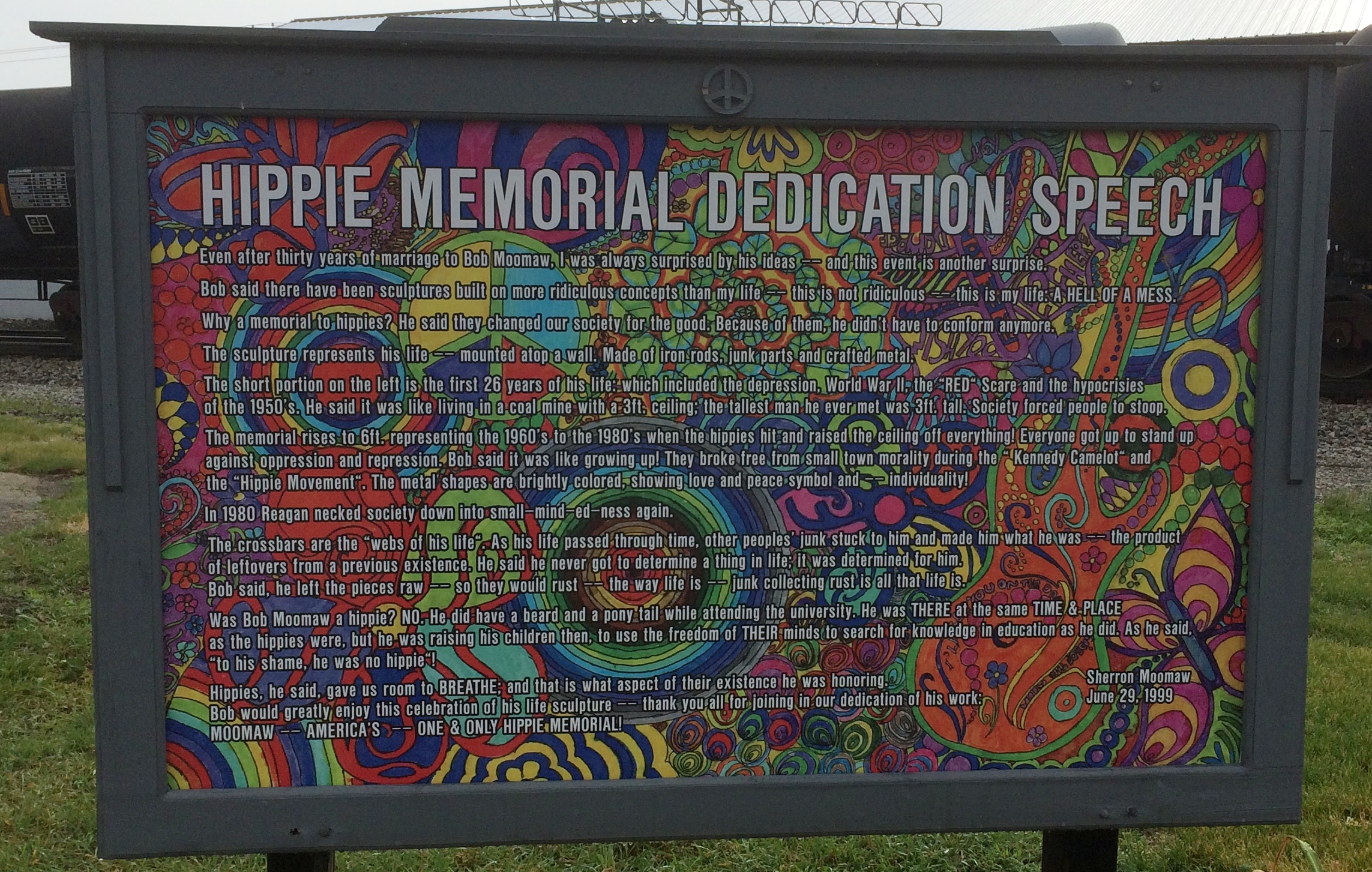
☮ Hippie MemorialHippie Memorial Arcola IllinoisNearby, a sign offers the dedication speech, made by the widow of the creator, local eccentric Bob Moomaw, almost exactly 20 years ago. The text seems the same, but the background is a lot more psychedelic than it used to be.
Hippie Memorial Arcola IllinoisSure, why not honor the hippie movement? It’s been subject to retroactive derision all out of proportion to its risibility. You can argue that hippies were yet another flowering of bohemianism, a periodic occurrence that’s helped keep things interesting since the Romantic movement at least.
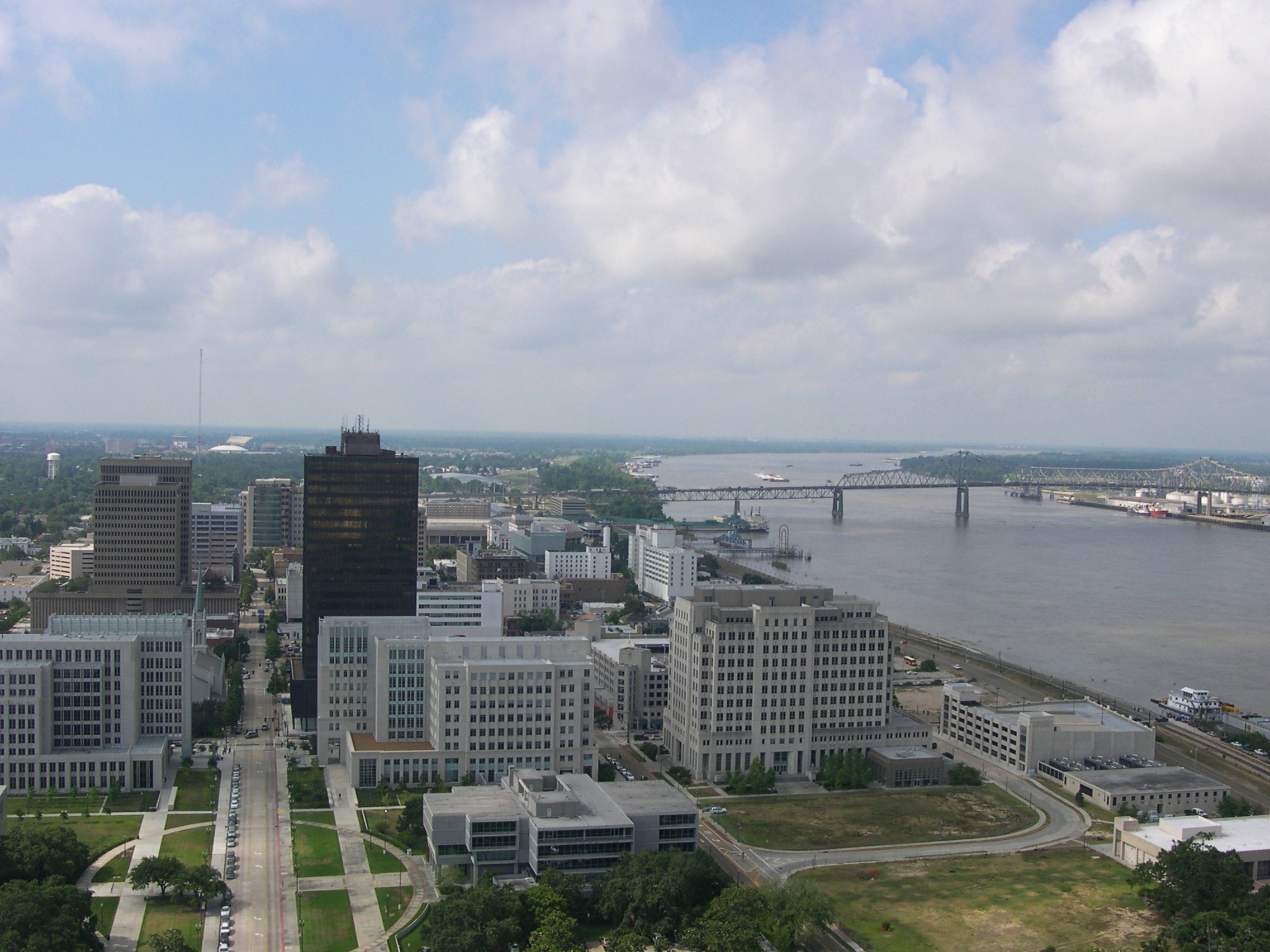
Louisiana Capitol Views 2009

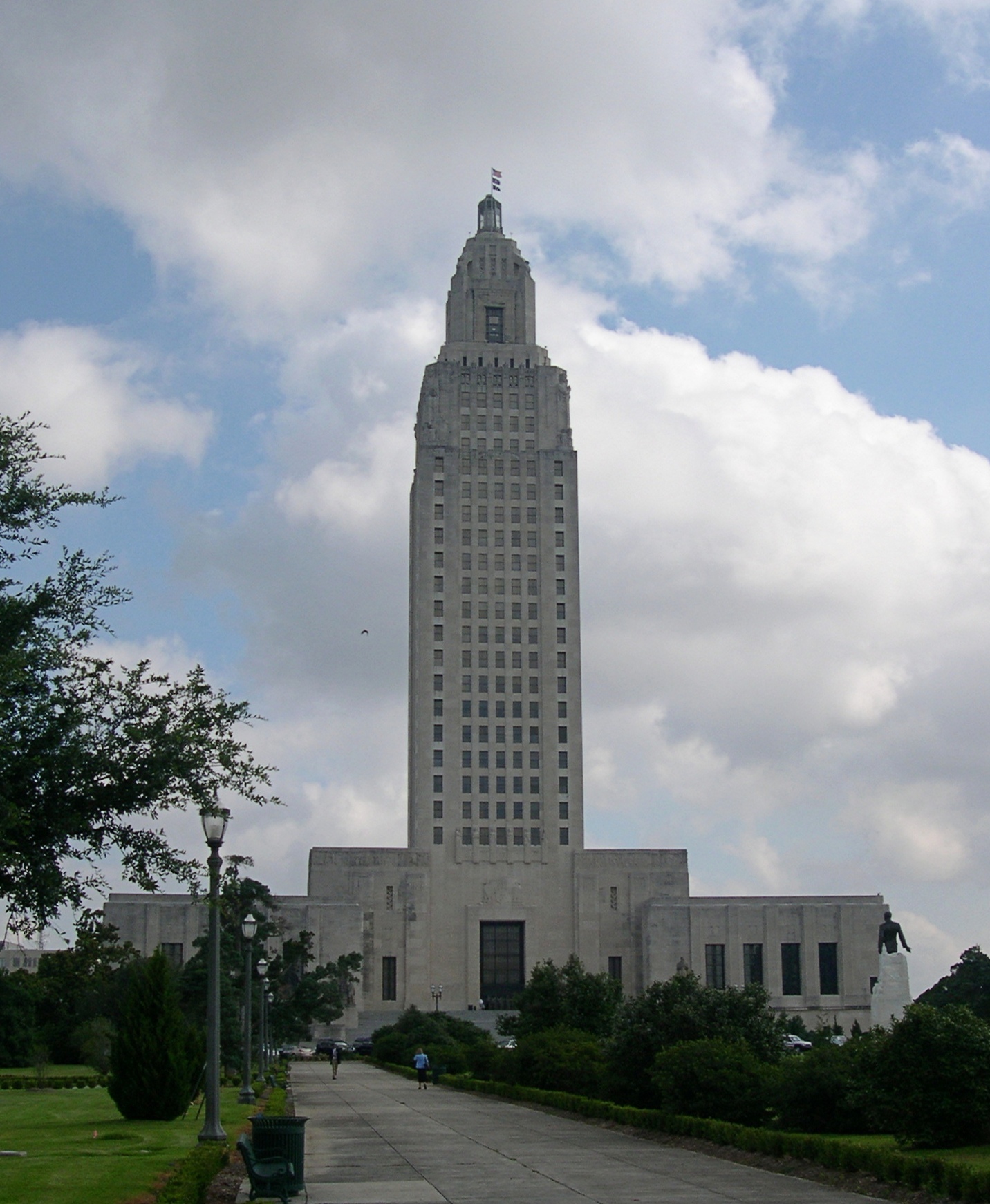
This year’s loop around the South was something like the loop I drove 10 years ago, but with key differences. For instance, I was by myself that time, and bypassed such places as New Orleans and Nashville. Instead I spent time in smaller places, such as Lafayette and Baton Rouge. In the capital, I visited the house — the state house — that Huey Long built, Louisiana’s art deco state capitol.

It’s a handsome building. Long hired a Louisiana architect, Leon C. Weiss, to design the building. No relation to his assassin Weiss, apparently.

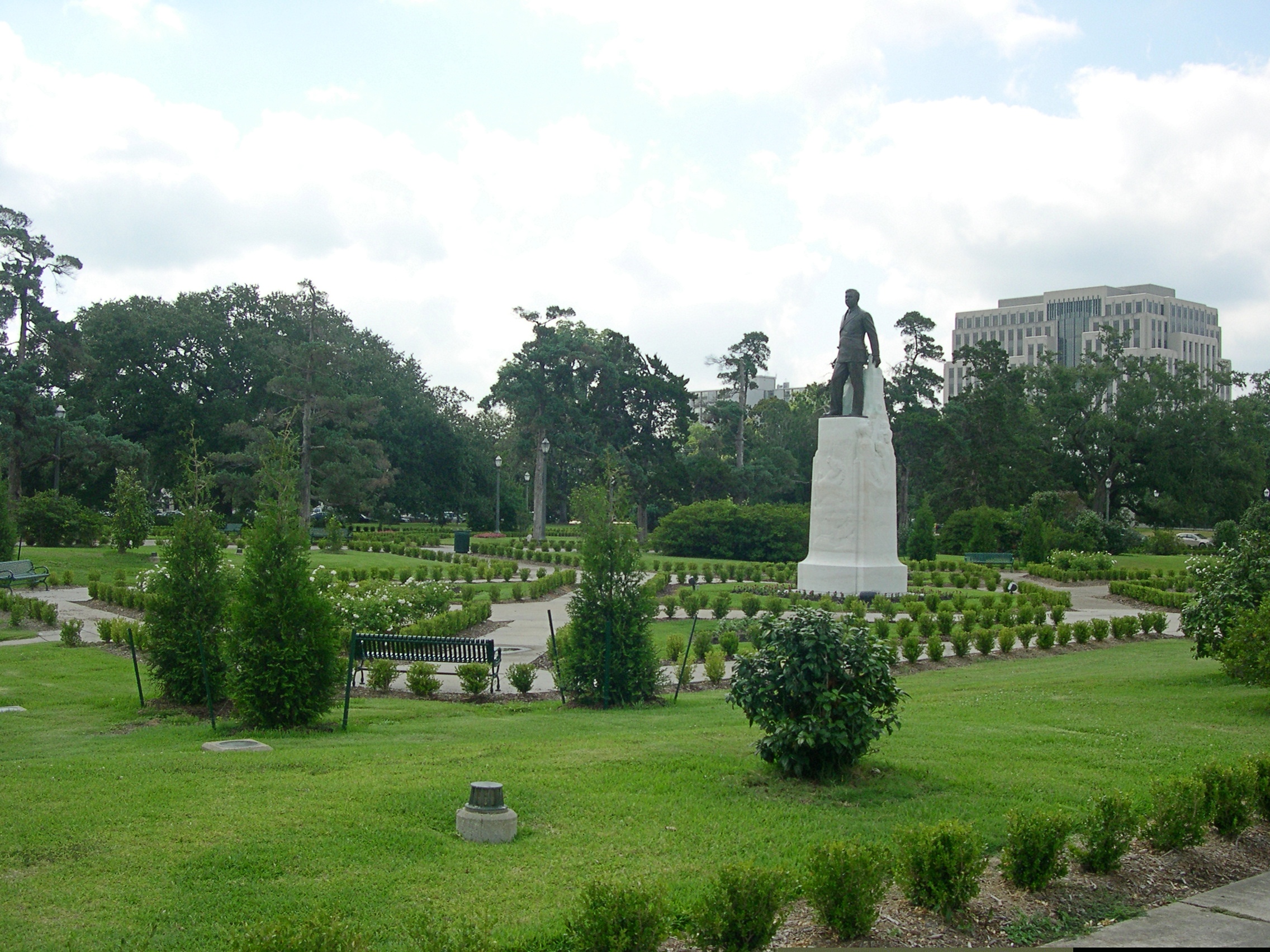
The garden front of the capitol, whose centerpiece is a memorial to the Kingfish, is also a cemetery with one occupant, Huey Long himself.

Louisiana Capitol - Long GraveThe observation deck on the capitol’s 27th floor, which charged no admission when I was there, has some splendid views of the Mississippi and the city.

Looking south toward downtown Baton Rouge.
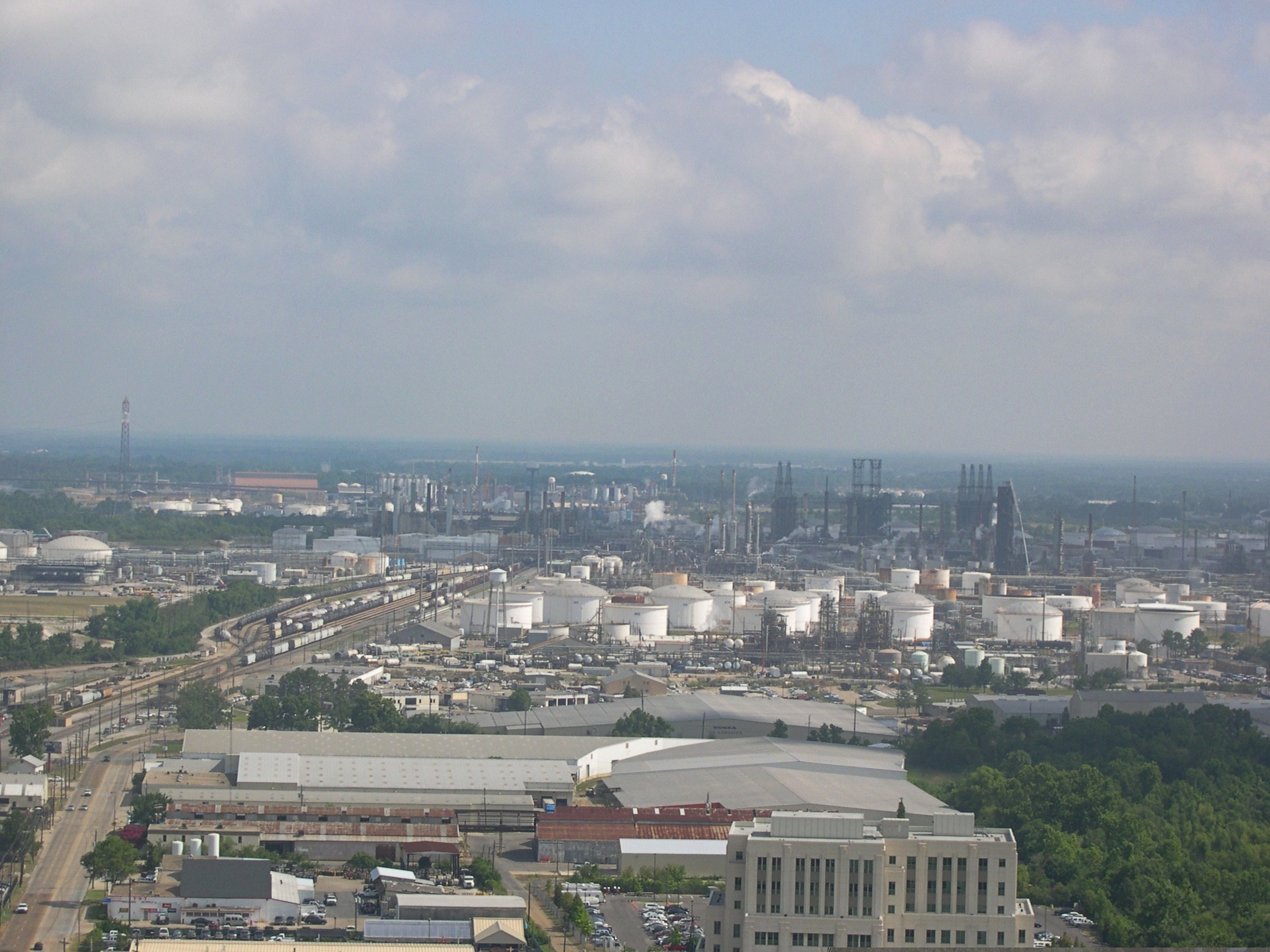
Louisiana Capitol - downtownNorth toward industrial Baton Rouge.
Petrochemicals. In fact, much of the view is taken up by ExxonMobil’s Baton Rouge Refinery, one of the nation’s largest such facilities.

Lake Mills and Its Pyramidal Oddity

In late May, I benefited from a bit of service journalism offered by the Chicago Tribune, which told me that the state of Wisconsin wasn’t charging entry fees to state parks on the first weekend in June.

So on June 2, we sought to take advantage of the situation by driving up to Wisconsin for the day — and probably proving the marketing arm of the state right when it calculated that such an offering would attract some out-of-state visitors, especially from Illinois.

Before we went to any state park, however, we stopped in the pleasant town of Lake Mills, which is in Jefferson County in the southern part of the state, between Madison and Milwaukee. We had a satisfying lunch at a diner called Cafe on the Park, which is on Main St. across the street from Commons Park. Then we took a stroll over to the park.

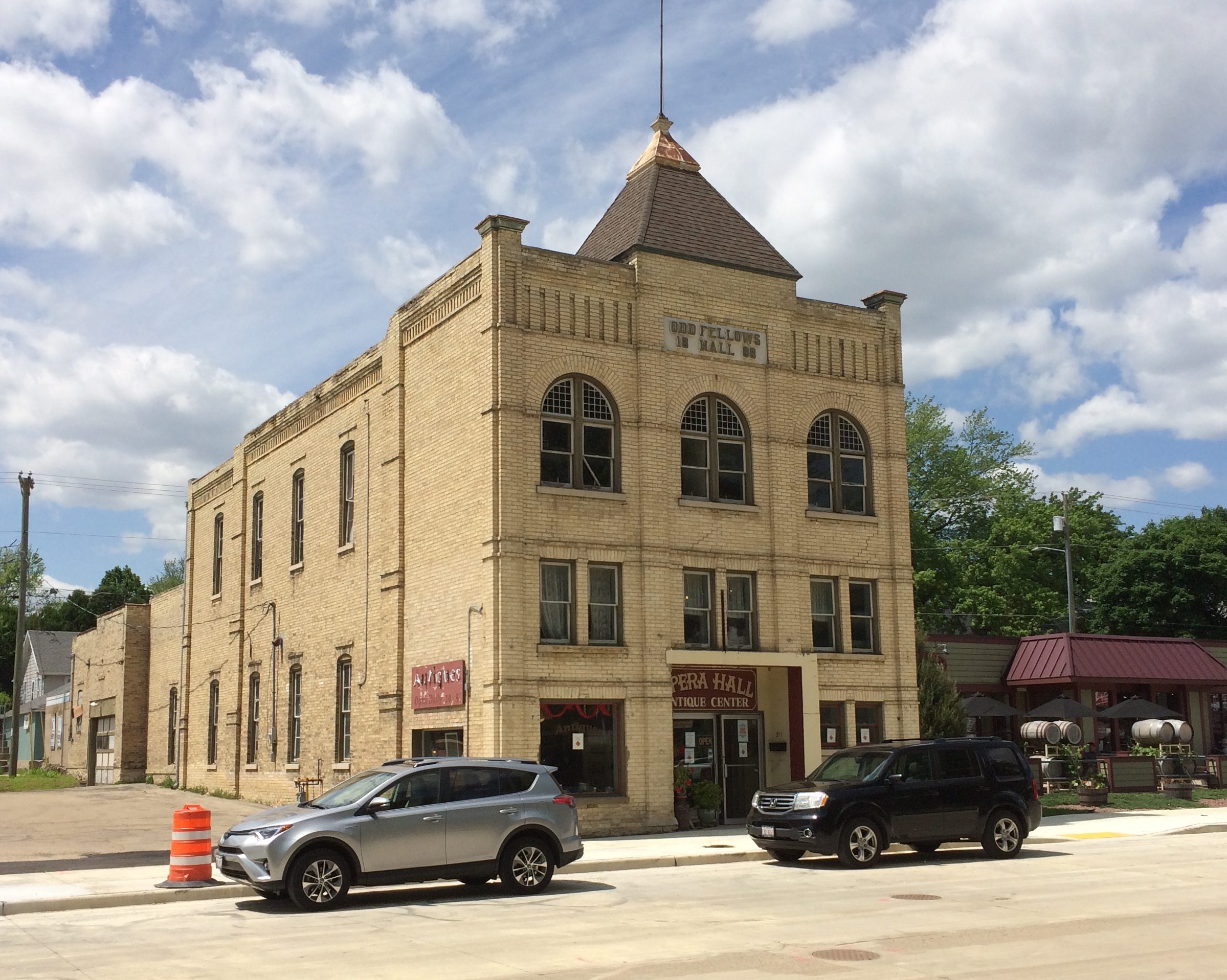
Visible from the park are some interesting buildings, such as the former Odd Fellows Hall and local opera house. Now it’s occupied by an antique mall.

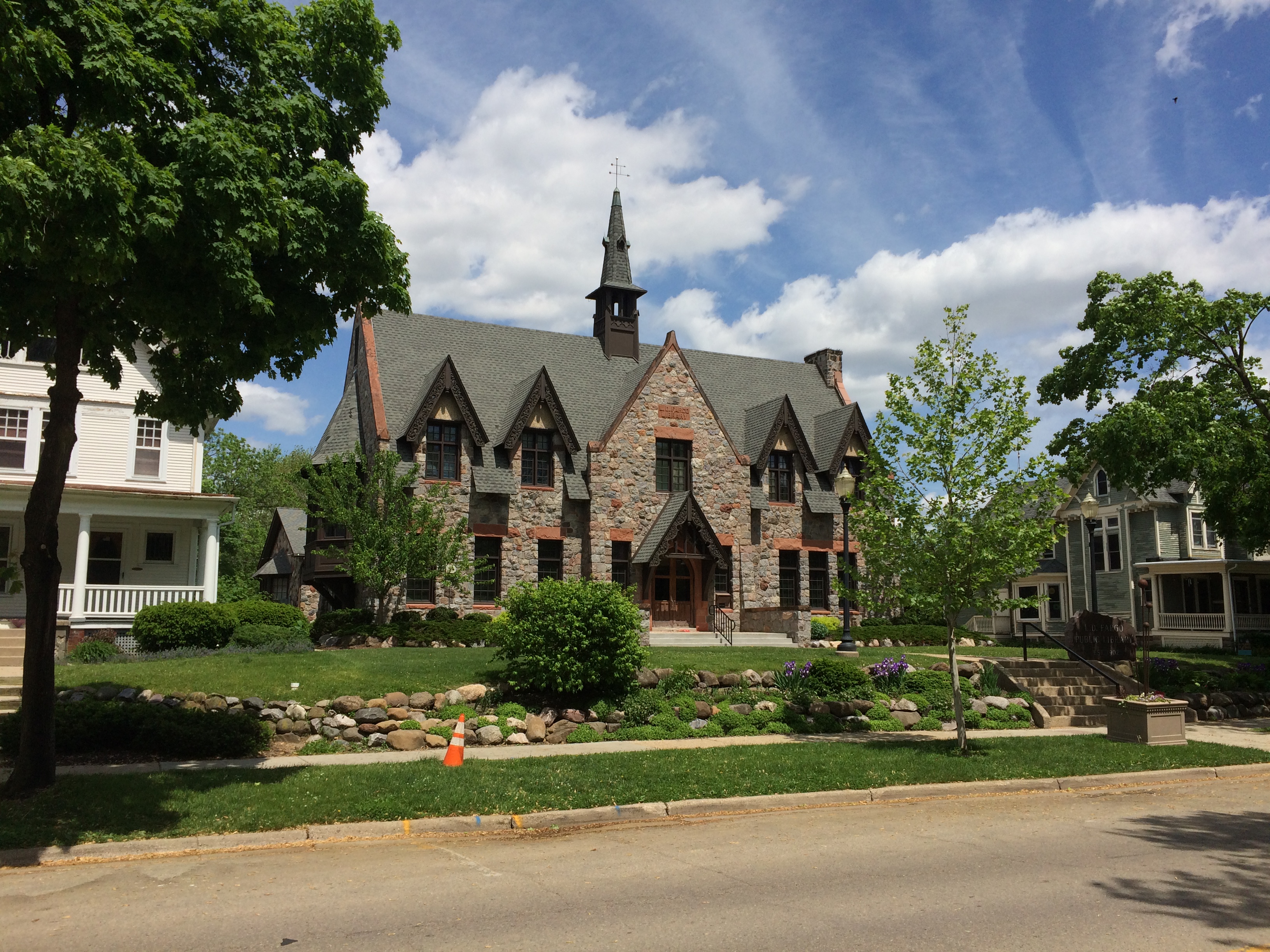
The charming Lake Mills Public Library. Closed on Sunday, or I would have gone in.

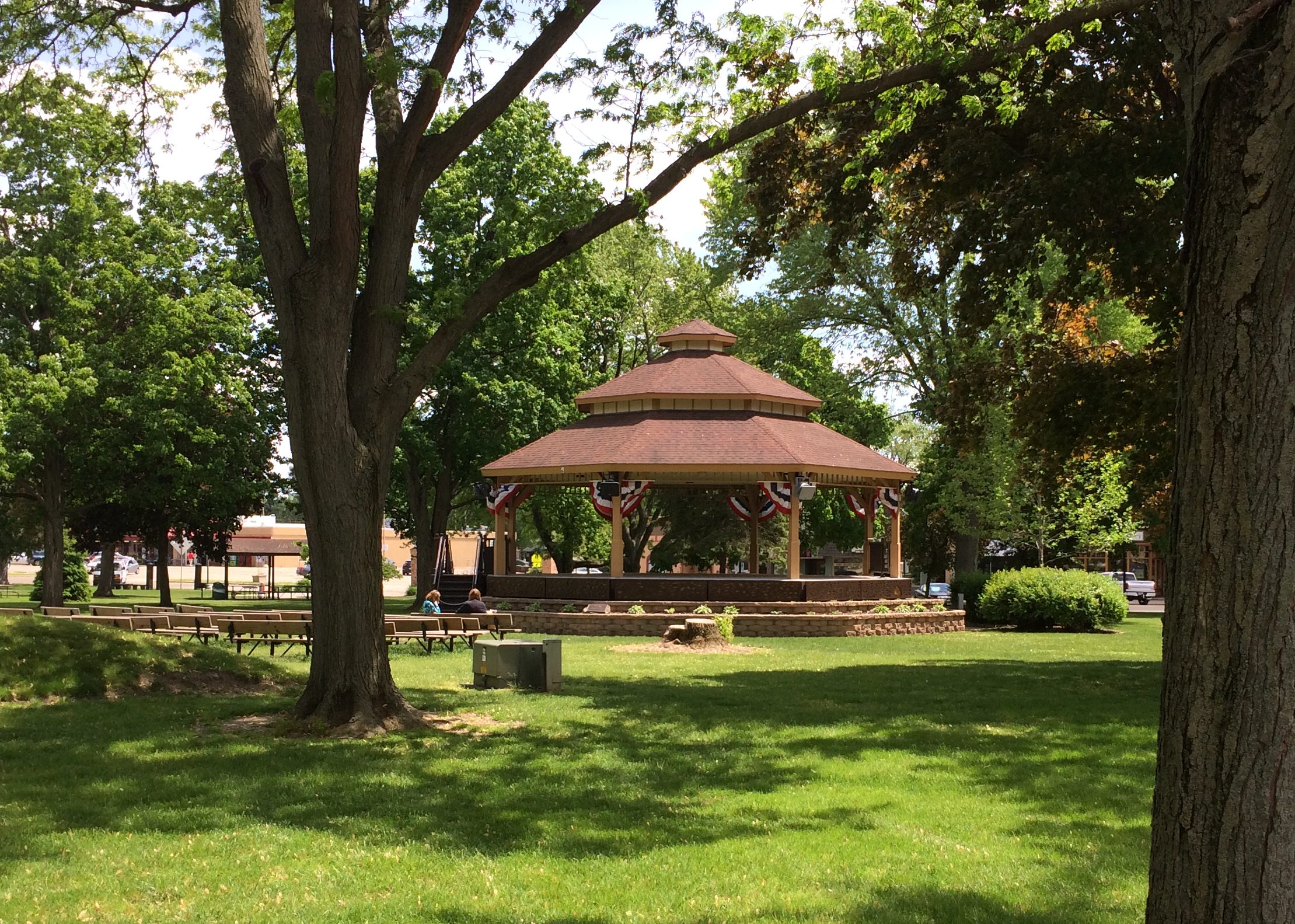
There’s a bandstand in the park. Wouldn’t be a proper small-town park without one. With patriotic bunting. Nice touch. Formally it’s the Franklin Else Memorial Bandstand, though you (I) could argue it’s a large gazebo.

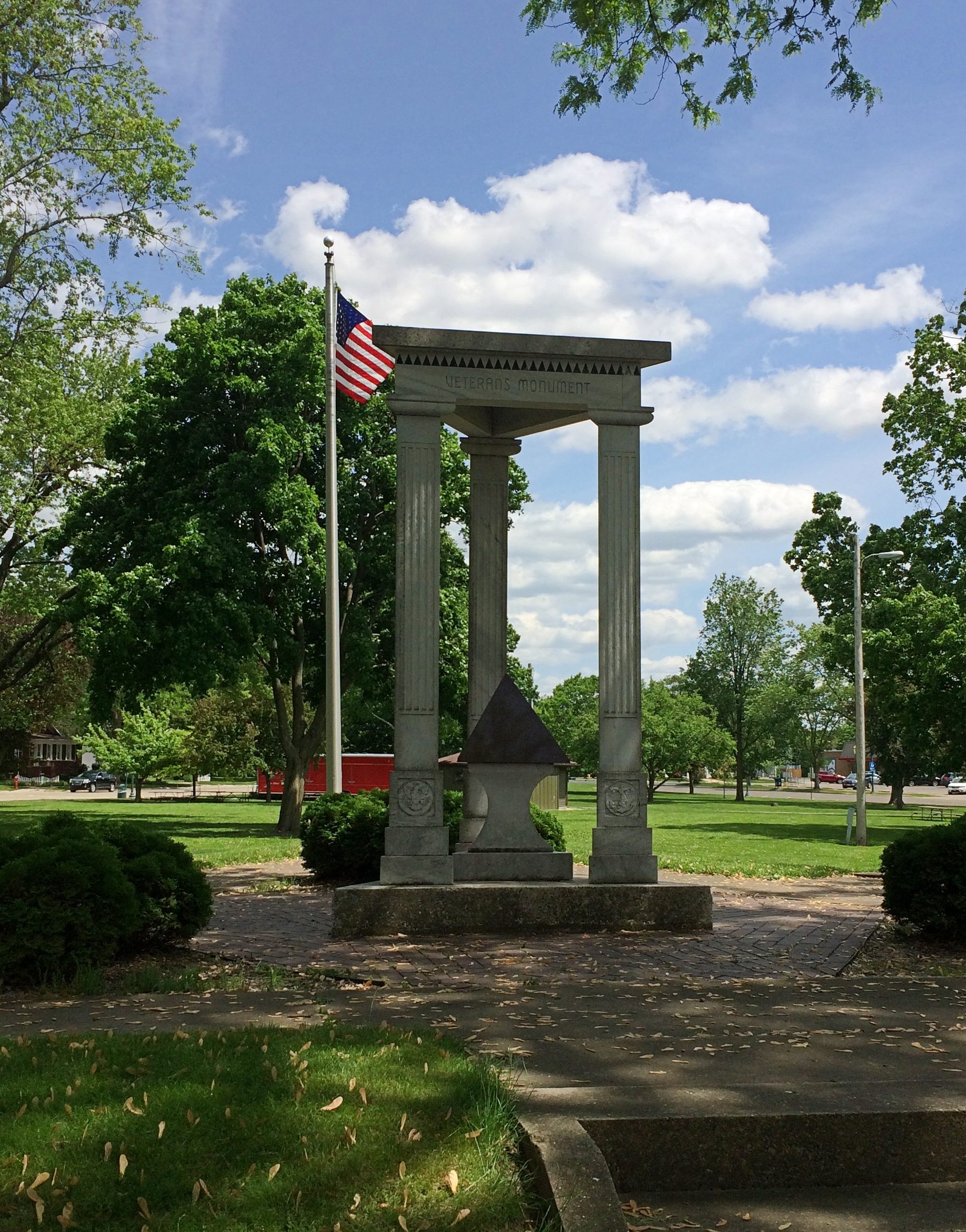
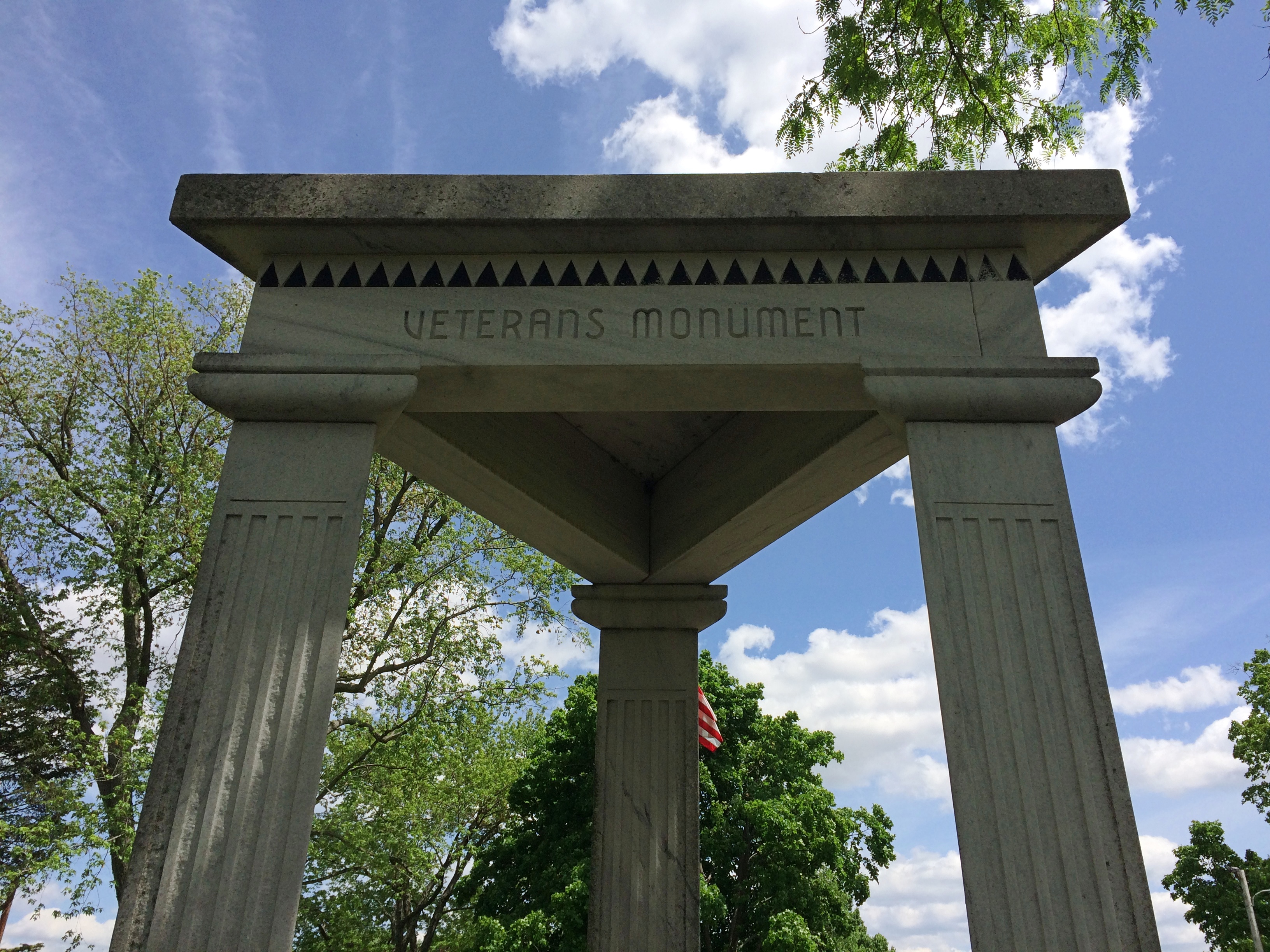
The Veterans Monument in the park is a little odd. It’s respectful and all, but has some unusual design elements.
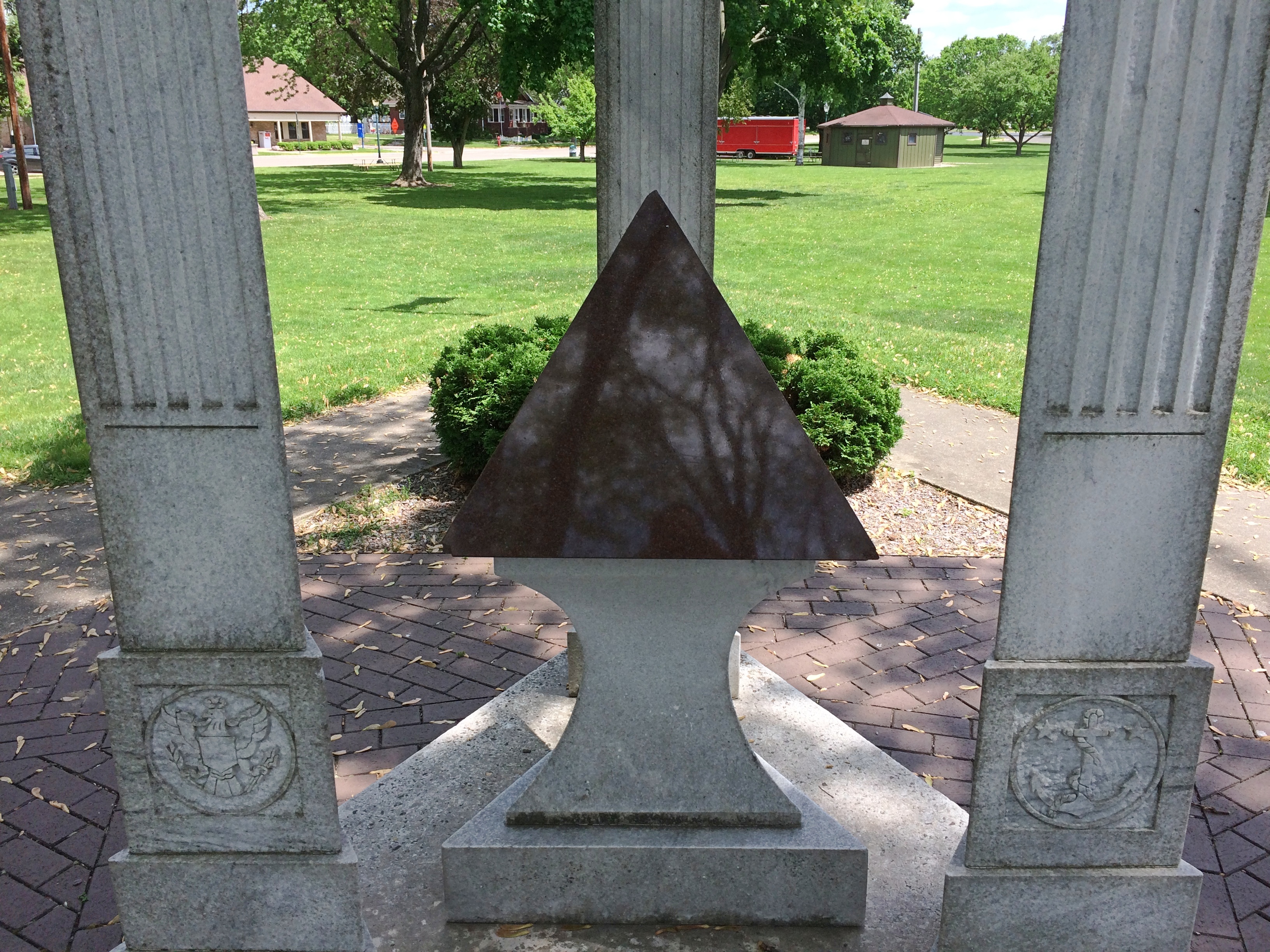
It has a triangular shape, for one thing, with three triangular columns rising from a triangular base to support a triangular top. Triangles are also etched into the design in various places.
Besides all that, a black stone pyramid is the centerpiece of the memorial. Why? Or, if you’re feeling more surprised, WTF?

No marker on or near the monument explains. I didn’t know what to make of that local oddity until I got home and looked around some.

Twenty years ago, the Tribune published an article about Lake Mills and its adjacent body of water, Rock Lake.

“There’s something in Rock Lake.

“What, exactly, lies at the bottom of this placid fishing hole east of Madison is the stuff of local legend, the obsession of scores of divers and the spark of an unlikely controversy that has raged among locals for decades.

“Believers, including many old-timers and diving enthusiasts, say that ancient pyramids, ruins and even a serpent-like, 200-foot-long rock figure lay beneath these algae-filled waters. They say pre-Columbian dwellers built the structures on dry land before the area was flooded by geological upheavals and a dam built in the 1800s.

“Skeptics… say there’s nothing but natural piles of rocks below the 40-foot depths…. the otherwise unremarkable town of Lake Mills, which abuts Rock Lake, [calls] itself ‘City of the Pyramids.’ “

City of Pyramids, eh? Sounds like something a ’30s newspaperman made up and a ’50s chamber of commerce ran with. A little whimsical to incorporate into a veterans memorial, no? Then again, do such memorials need to be somber to the point of sameness, ignoring local lore?

That’s hardly the end of online descriptions of the supposed structures at the bottom of Rock Lake. Grazing through some of them, you come up with lines like:

“You can’t mistake certain things. There’s a city down there. There’s no question about it.”

“There are remarkable, artificial underwater structures beneath the waters of Rock Lake, Wisconsin but unfortunately for many years these prehistoric ruins have been ignored by researchers.”

“Much like Judge Hyer before him, Taylor believed that the three to four pyramids (the number changed with each reporting) was [sic] Aztec in origin and were built during a drought when the lake was completely drained and they were sacrificial altars to the rain god to bring the rains back.”

“Aerial photos, side boat sonar scans, and underwater divers eventually charted a complex of at least nine different stone structures, including: two rectangular pyramids, several stacked-rock walls, two ‘Stone Cone’ areas, a conical pyramid, and a large ‘Delta Triangle’ structure.”

“Former state archaeologist Bob Birmingham told the Wisconsin State Journal in 2015 that the tales were ‘a bunch of baloney.’ ”

Bob Birmingham chalks up the shapes to piles of rock left by receding glaciers, and notes that such piles are found in other Wisconsin lakes. My, that’s boring. Tales of ancient peoples building mysterious structures are awfully romantic.

Somehow, I’m inclined to agree with Bob.

Ave Maria Grotto

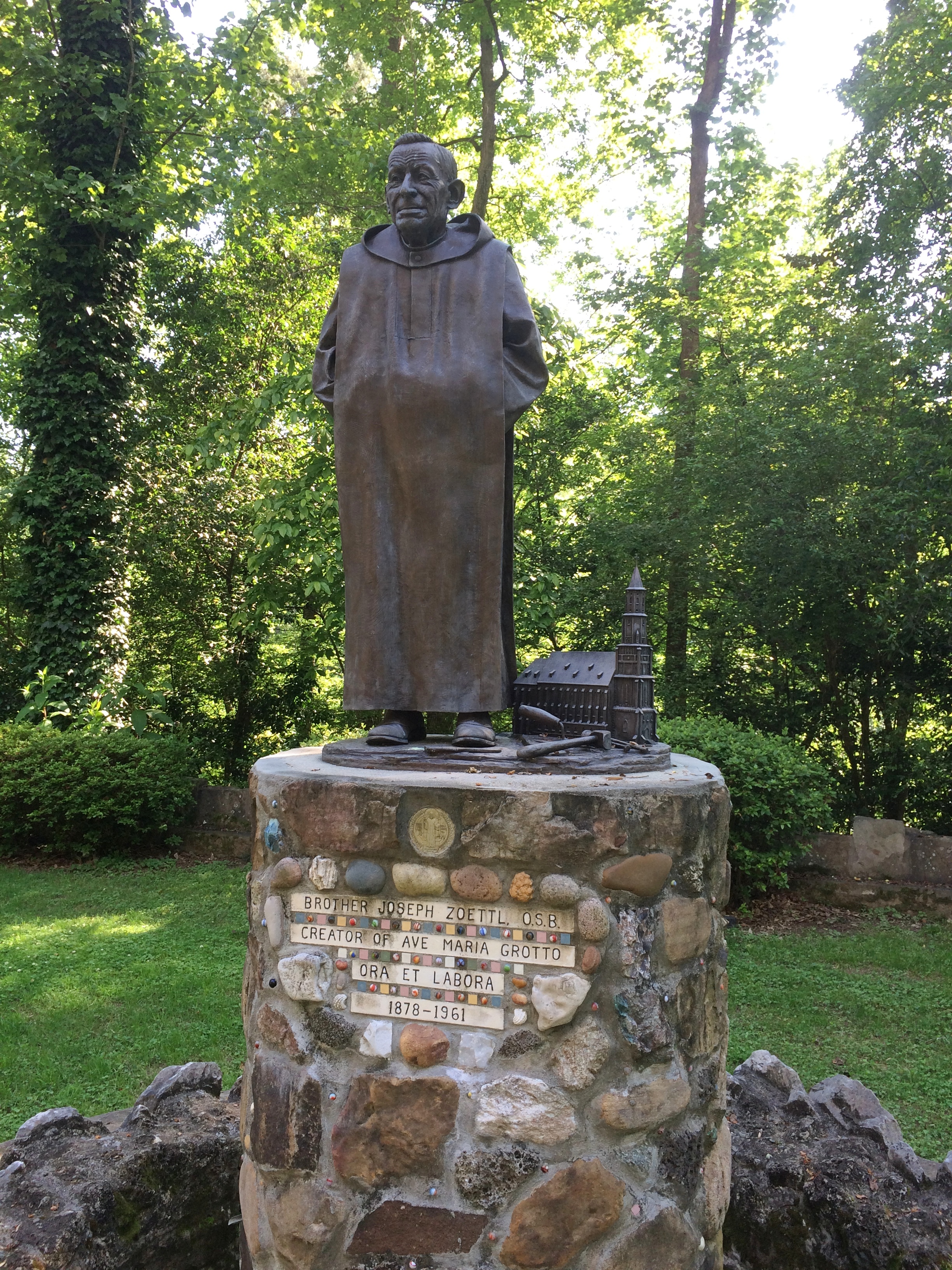
From what I’ve read about Brother Joseph Zoettl, O.S.B. (1878-1961), he wouldn’t have cared whether he was depicted in bronze or not. Be that as it may, many years after his death, Br. Joseph stands facing his creation, the Ave Maria Grotto, on the grounds of St. Bernard Abbey near Cullman, Alabama.

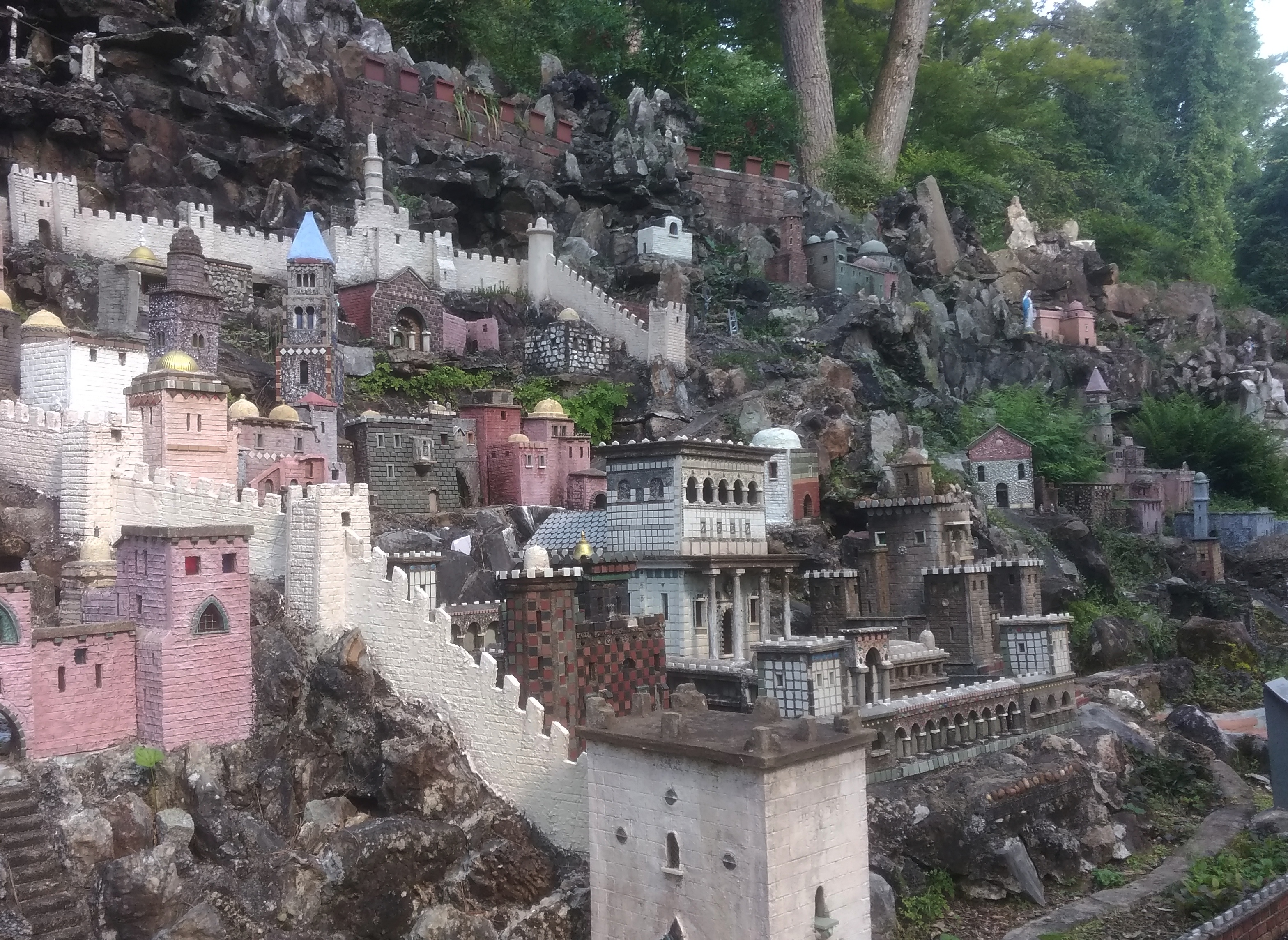
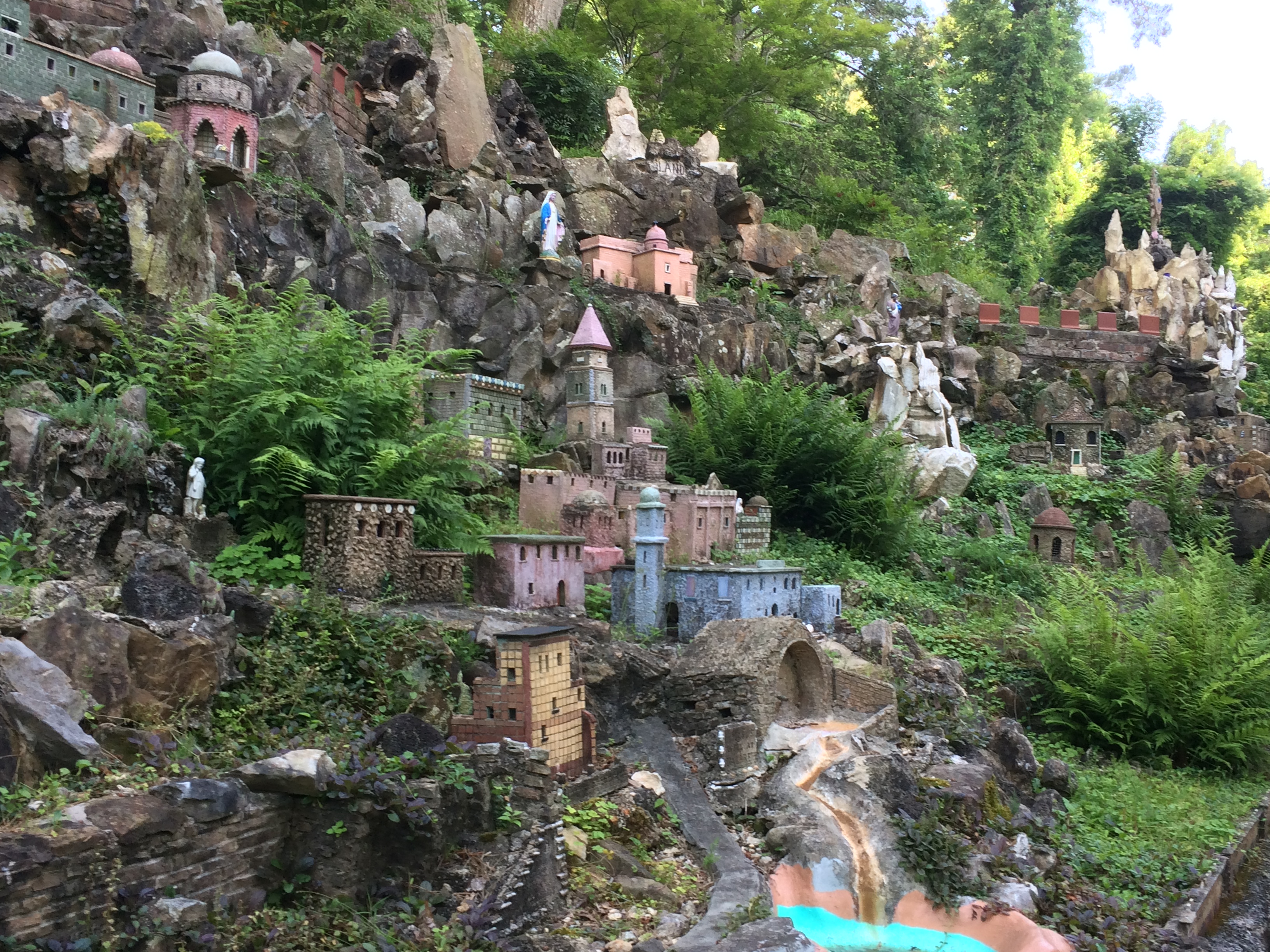
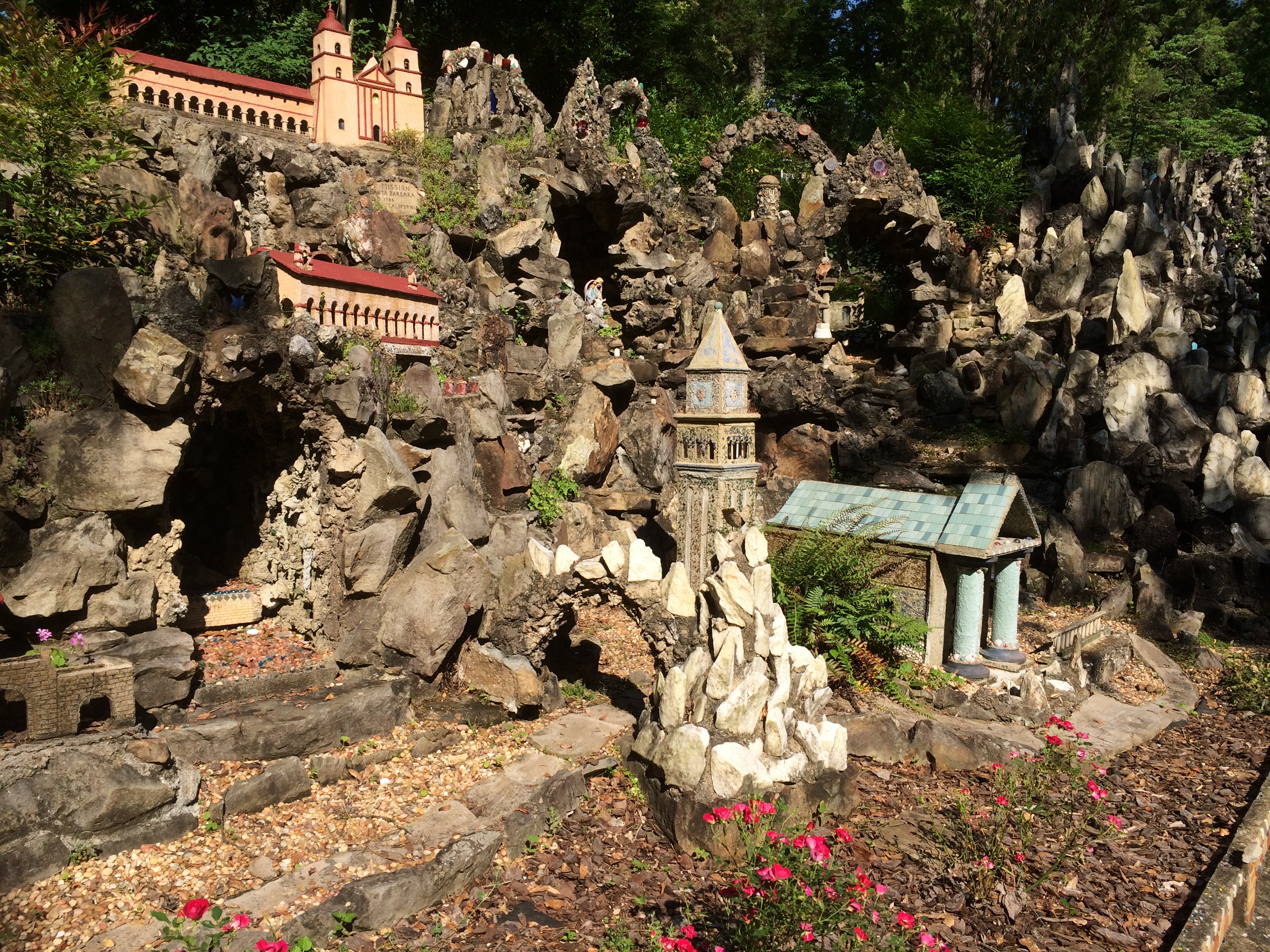
Driving north from Montgomery toward Decatur on the afternoon of May 17, we weren’t about to miss the grotto. It features 150 or so miniature replicas of famous buildings, almost all created by Br. Joseph over three decades, out of found materials.

“Originally from Landschutt, Bavaria-Germany, a young Br. Joseph found himself headed to America to pursue monastic life at Alabama’s only Benedictine Abbey,” the abbey web site says.

“Little did anyone know that this young Bavarian would end up leaving the abbey its greatest legacy and in an incredibly humble way. Since 1934, people from around the world visit the Ave Maria Grotto to see famous parts of the world in miniature. The former abbey quarry is now the four-acre park that the Grotto and surrounding miniatures rest upon.”

Many of the structures are perched on the side of a slope, with a path winding down below for a look at them.

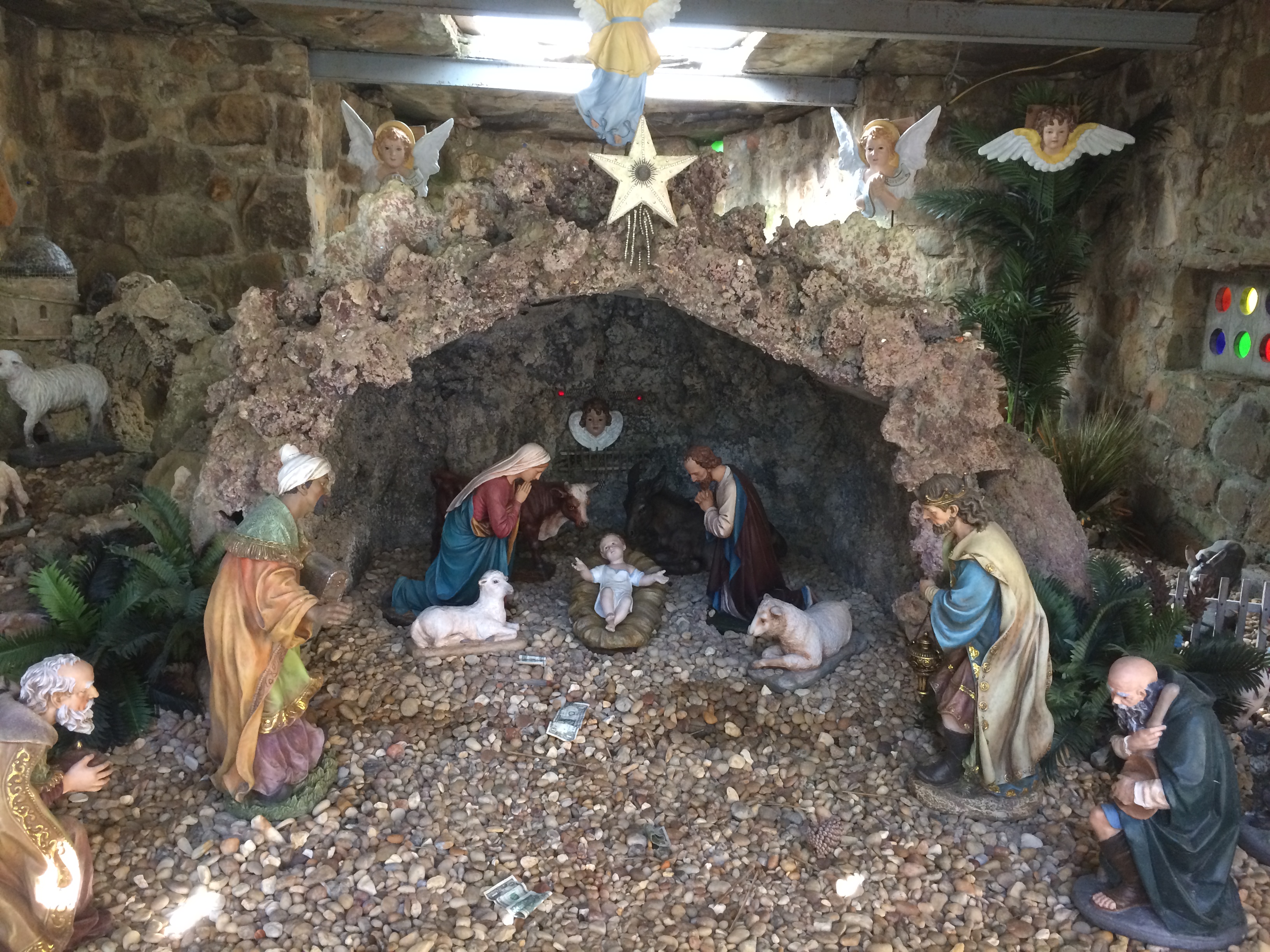
As you’d expect, most of the structures replicate Christian churches or shrines or scenes, such as the First Christmas.
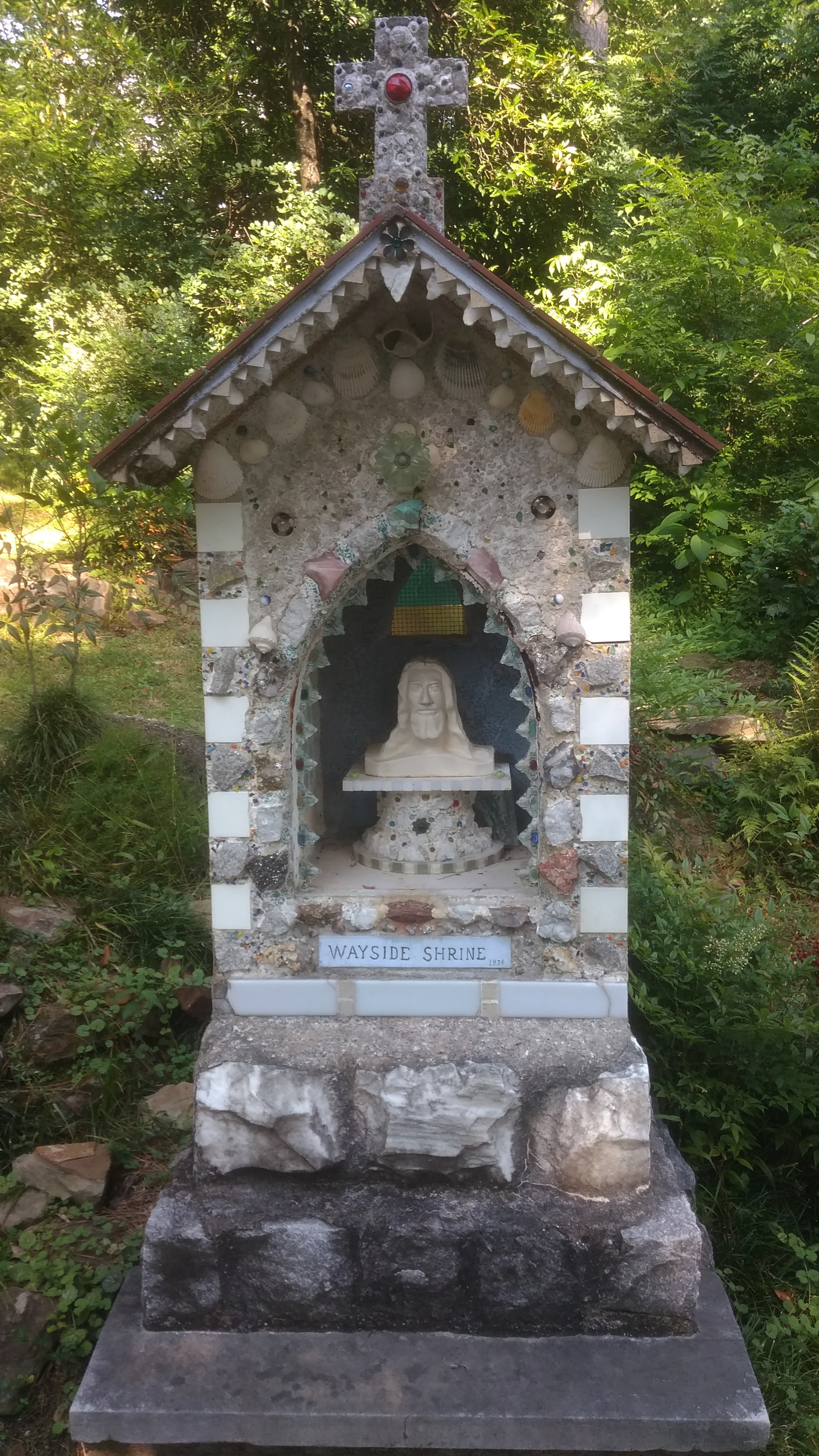
A wayside shrine, modeled after those popular in Latin America.
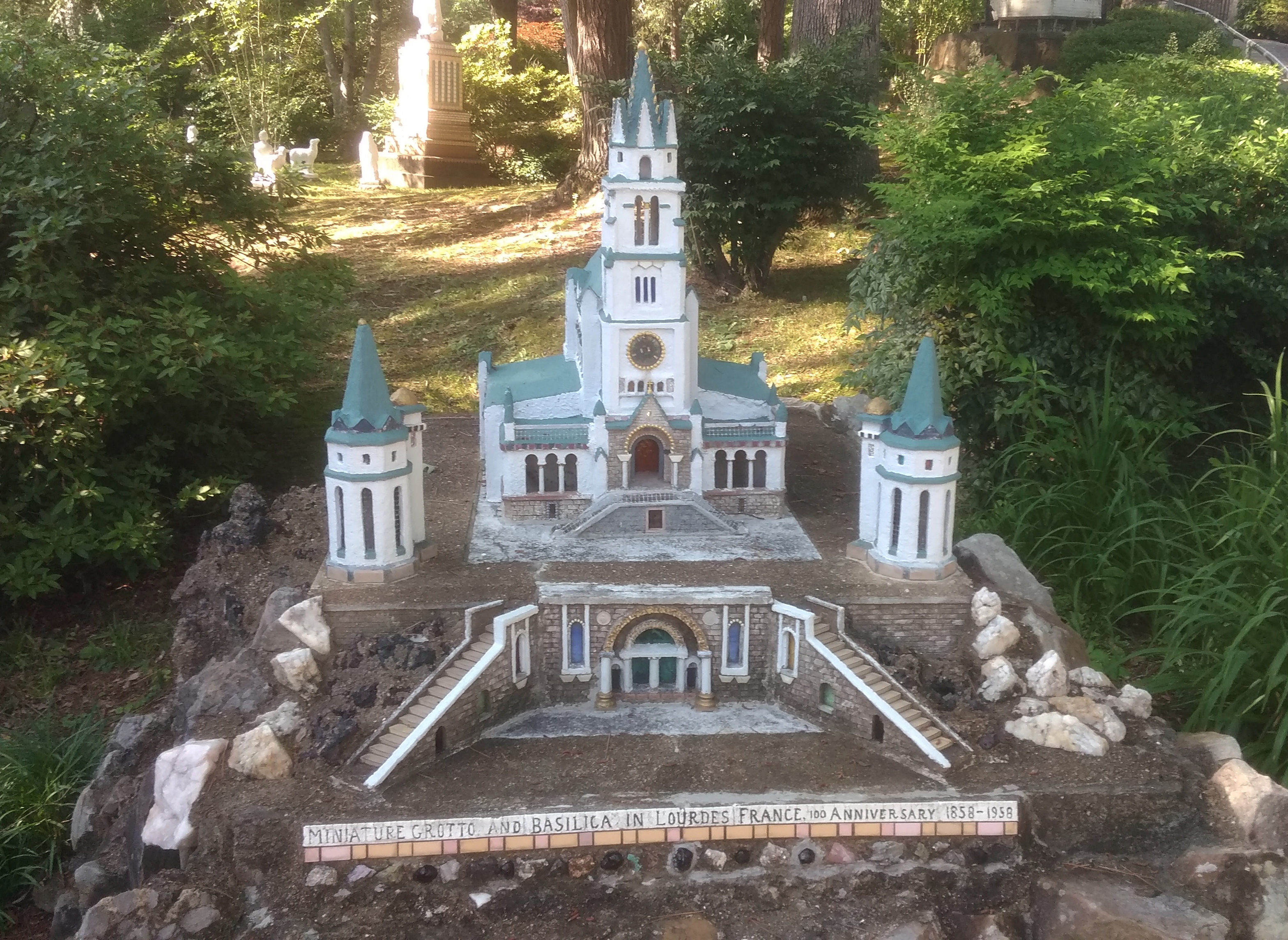
Lourdes Basilica and Grotto.
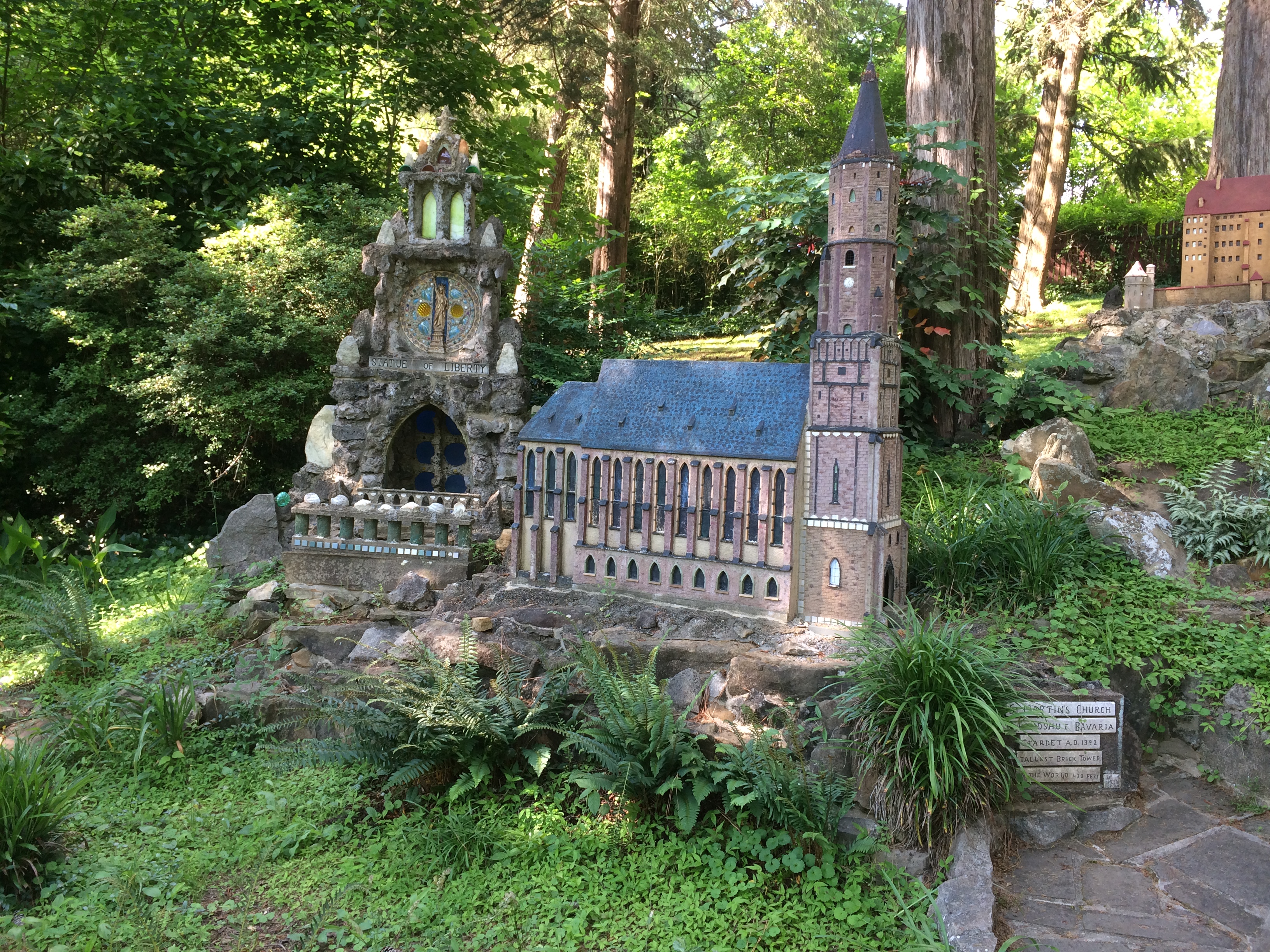
St. Martin’s in Landshut, Bavaria. This was one of the few structures that Br. Joseph had actually seen. The rest he did working off photos — postcards especially.
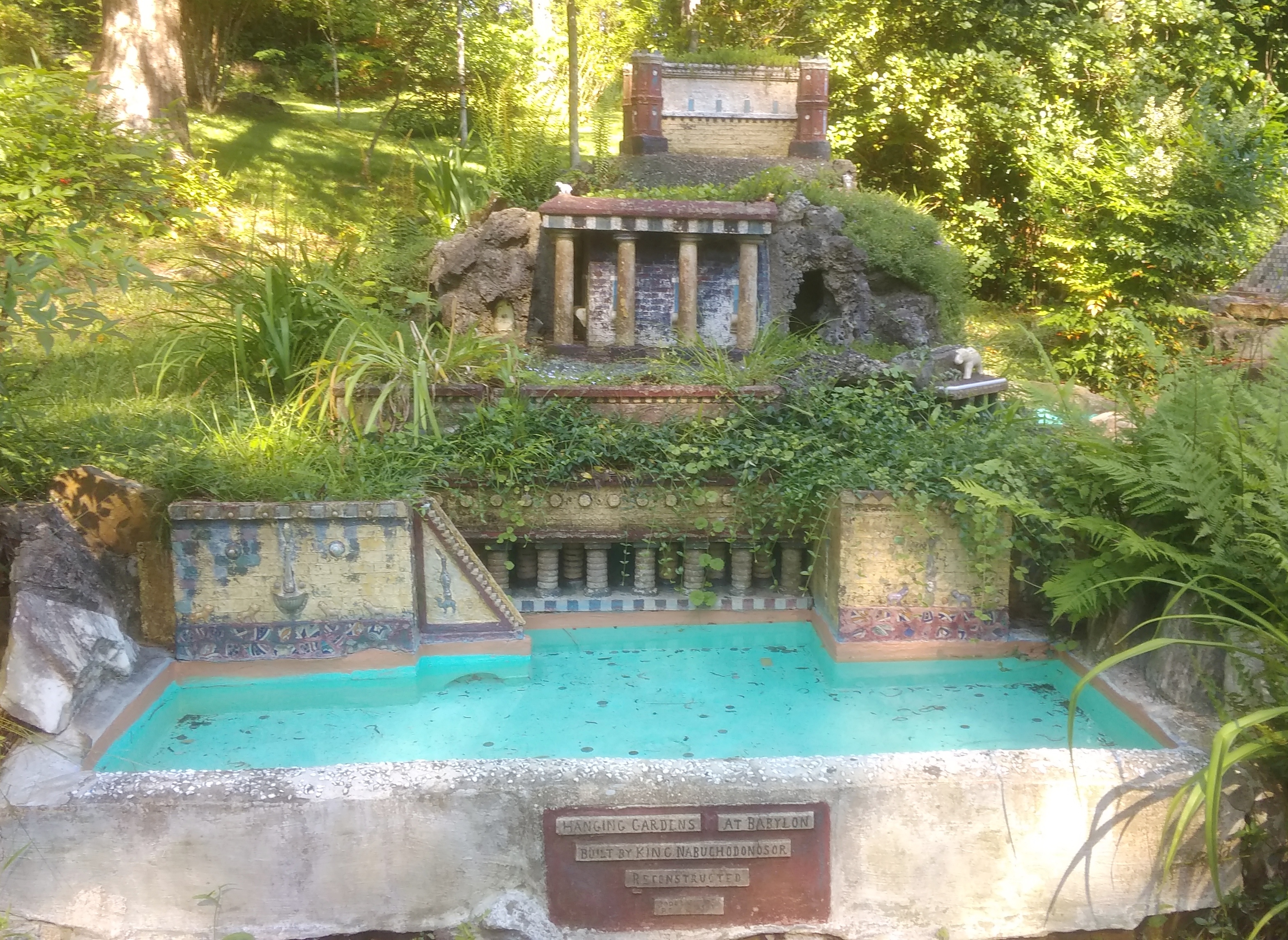
Sometimes, Br. Joseph decided to build something a little less religious. Such as the Hanging Gardens of Babylon.
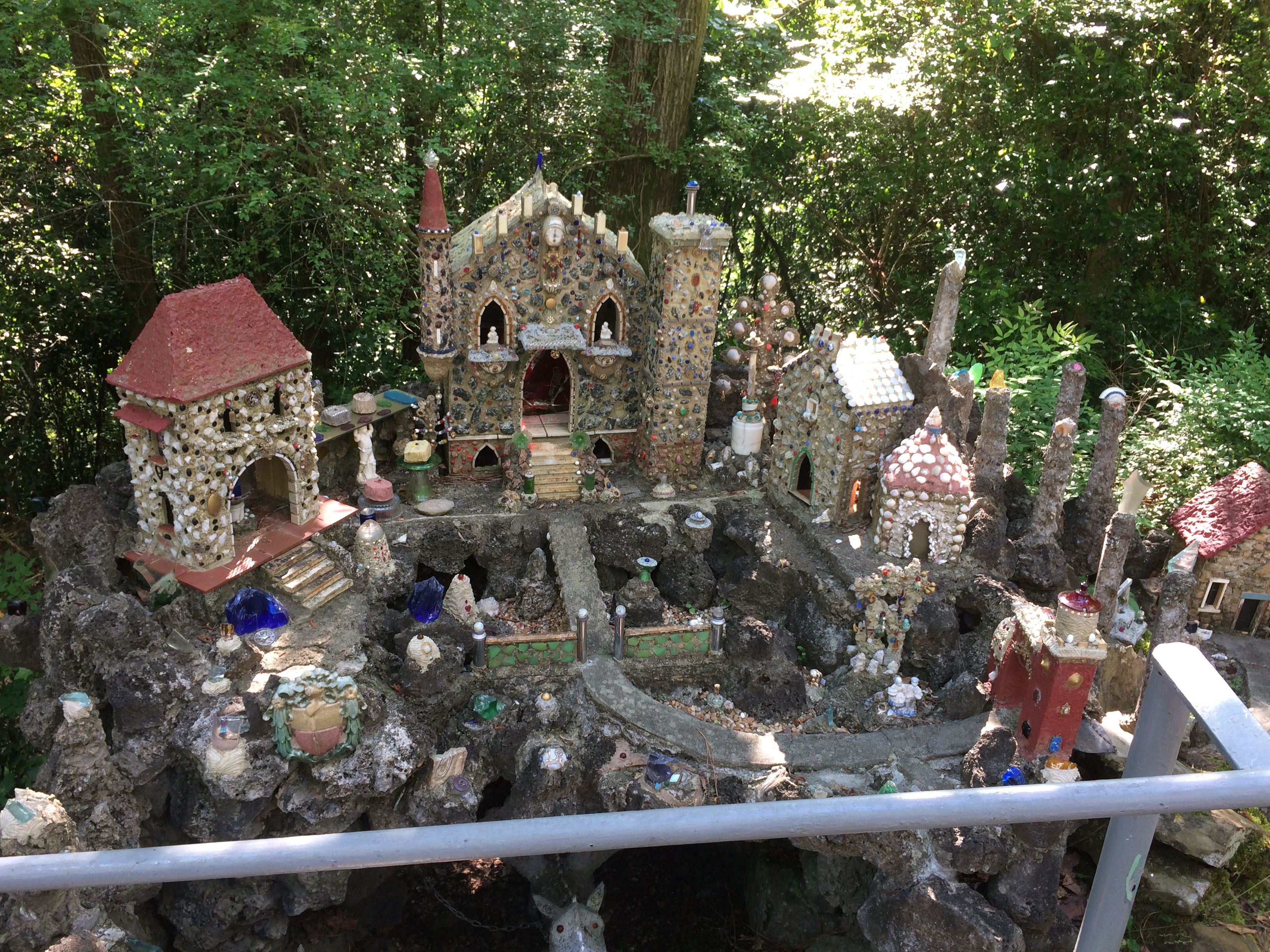
Or “Hansel and Gretel Visit the Castle of the Fairies.” I don’t remember that part of the story. Maybe it was part of the sequel: Hansel and Gretel vs. the Fairies of Doom.
Roadside America: “The Grotto is not some holy shrine that got out of control. From the start, it was conceived as an over-the-top public attraction.

“Using only basic hand tools, Brother Joseph would shape cement into a replica building, then give it some zing with marbles, seashells, cracked dinner plates, or bicycle reflectors. Tiny-but-majestic domes were fashioned from old birdcages and toilet tank floats.”

The abbey includes a good deal more than the grotto.
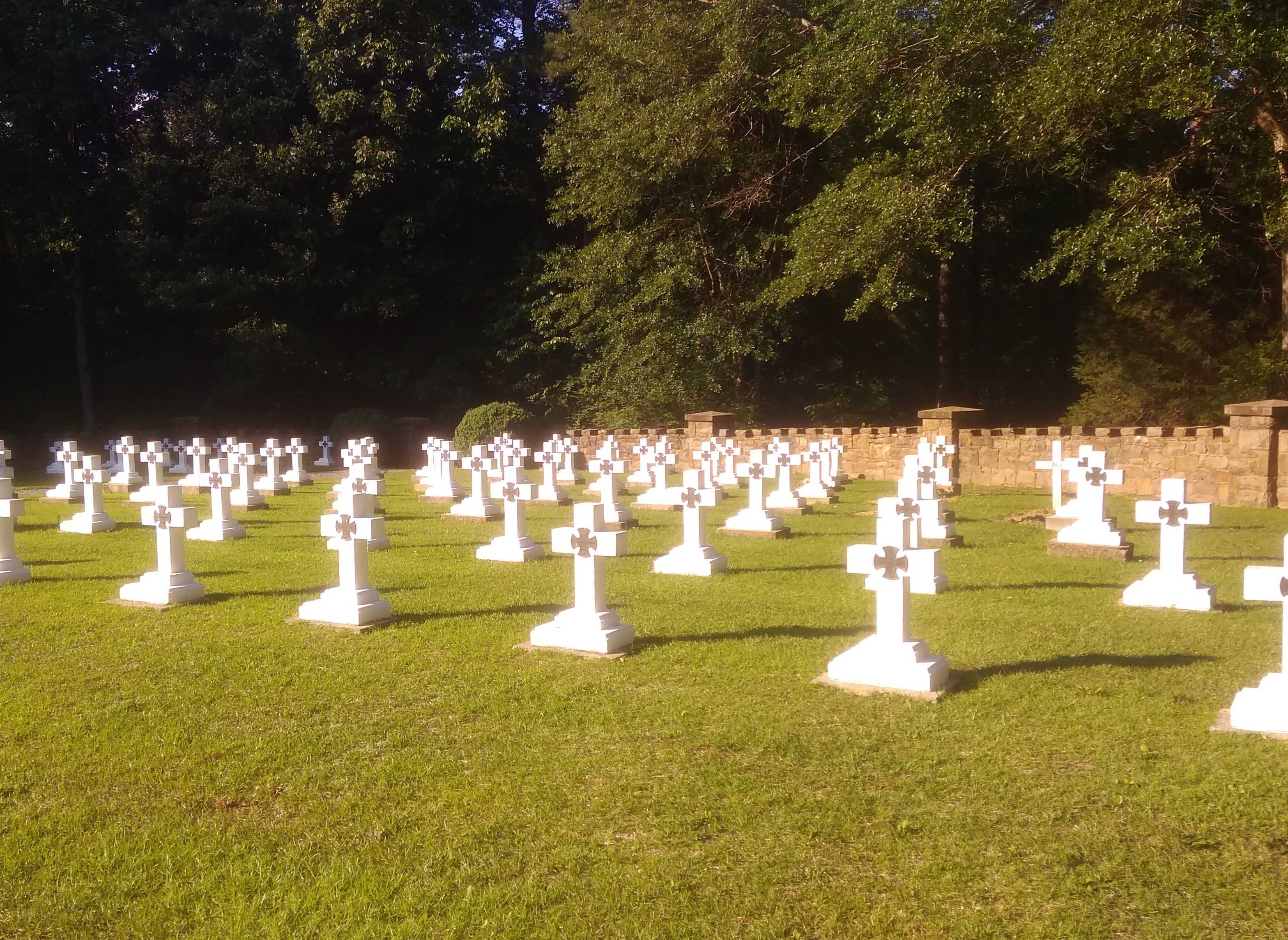
There’s a church and school, and a few minute’s walk from the grotto, a cemetery for the monks. Br. Joe’s cross is in there somewhere.

The National Memorial for Peace and Justice & The Legacy Museum

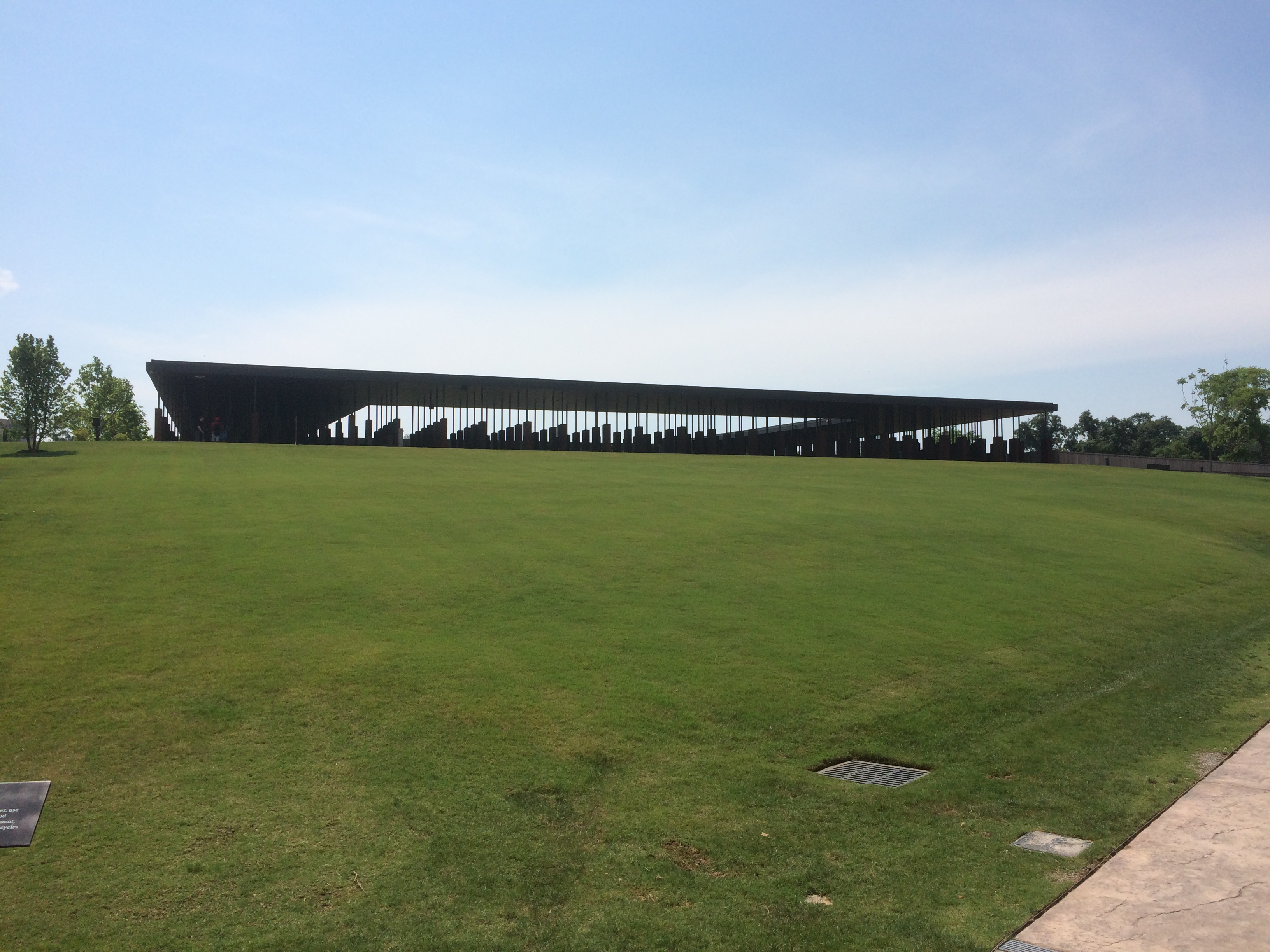
As you enter the National Memorial for Peace and Justice on a hill in downtown Montgomery, Alabama — as we did on May 17 — it’s hard to see what’s ahead.
The path passes “Nkyinkyim Installation” by Ghanaian sculptor Kwame Akoto-Bamfo, erected with the memorial when it opened only last year. The work speaks for itself.

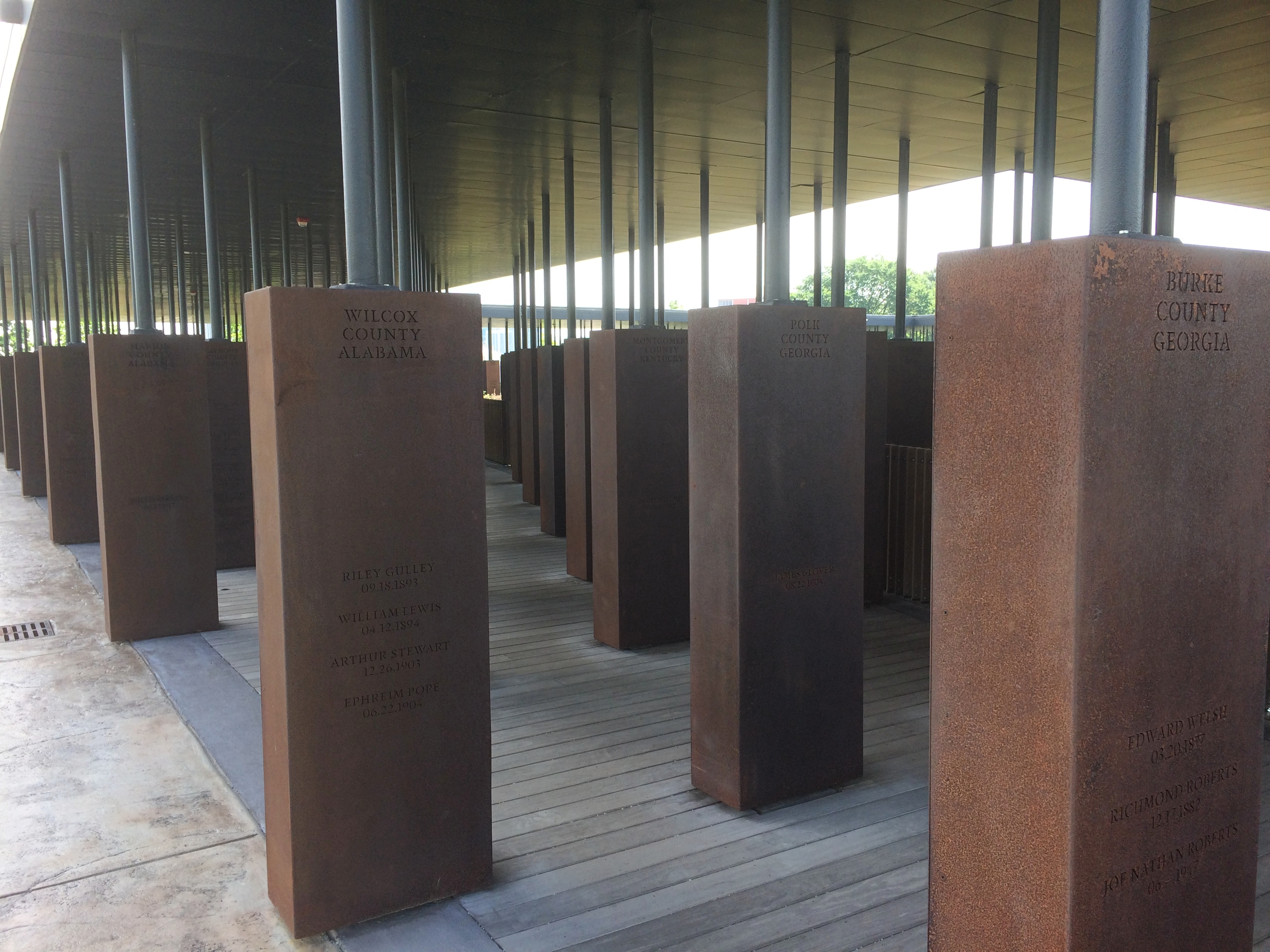
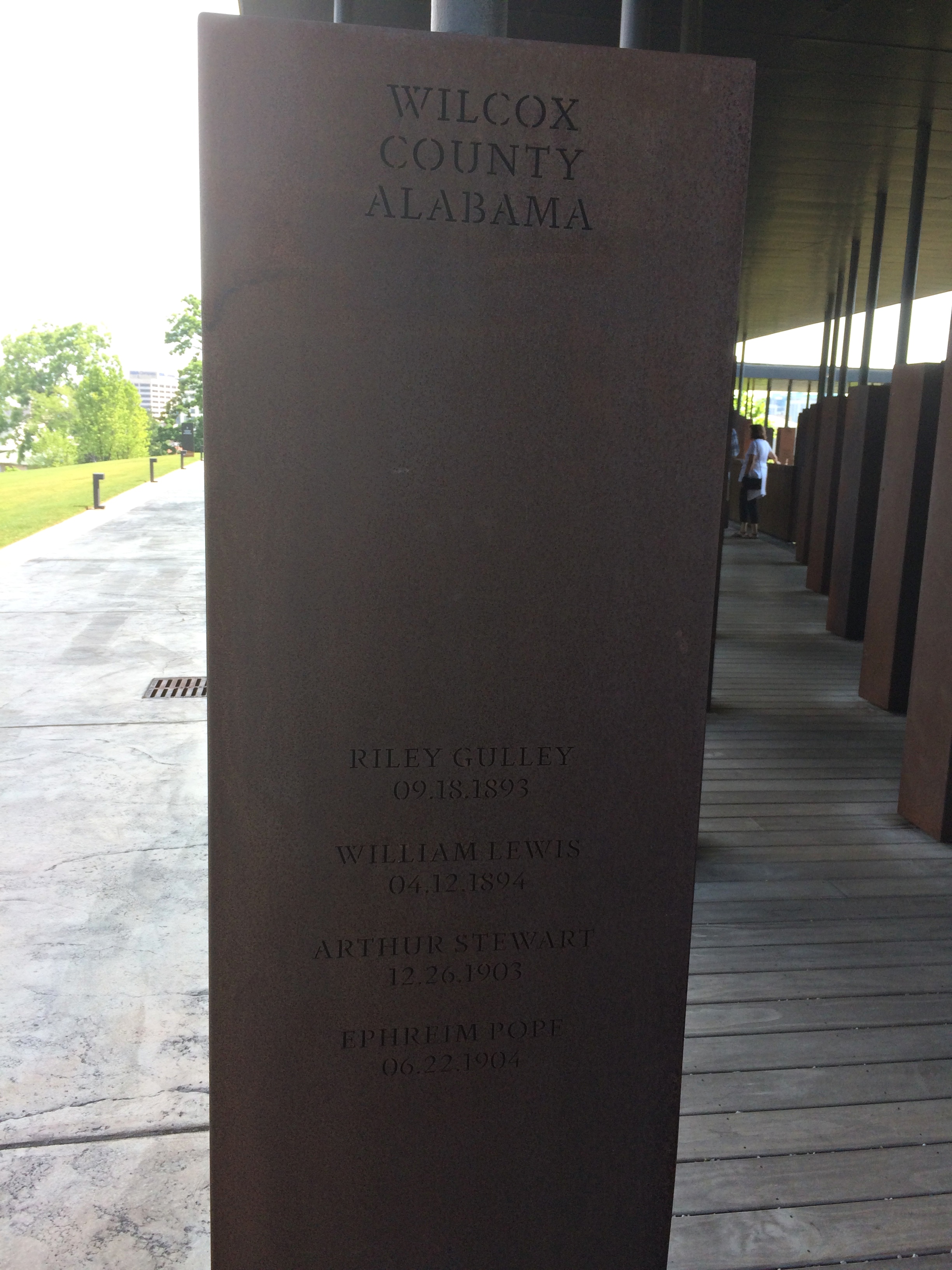
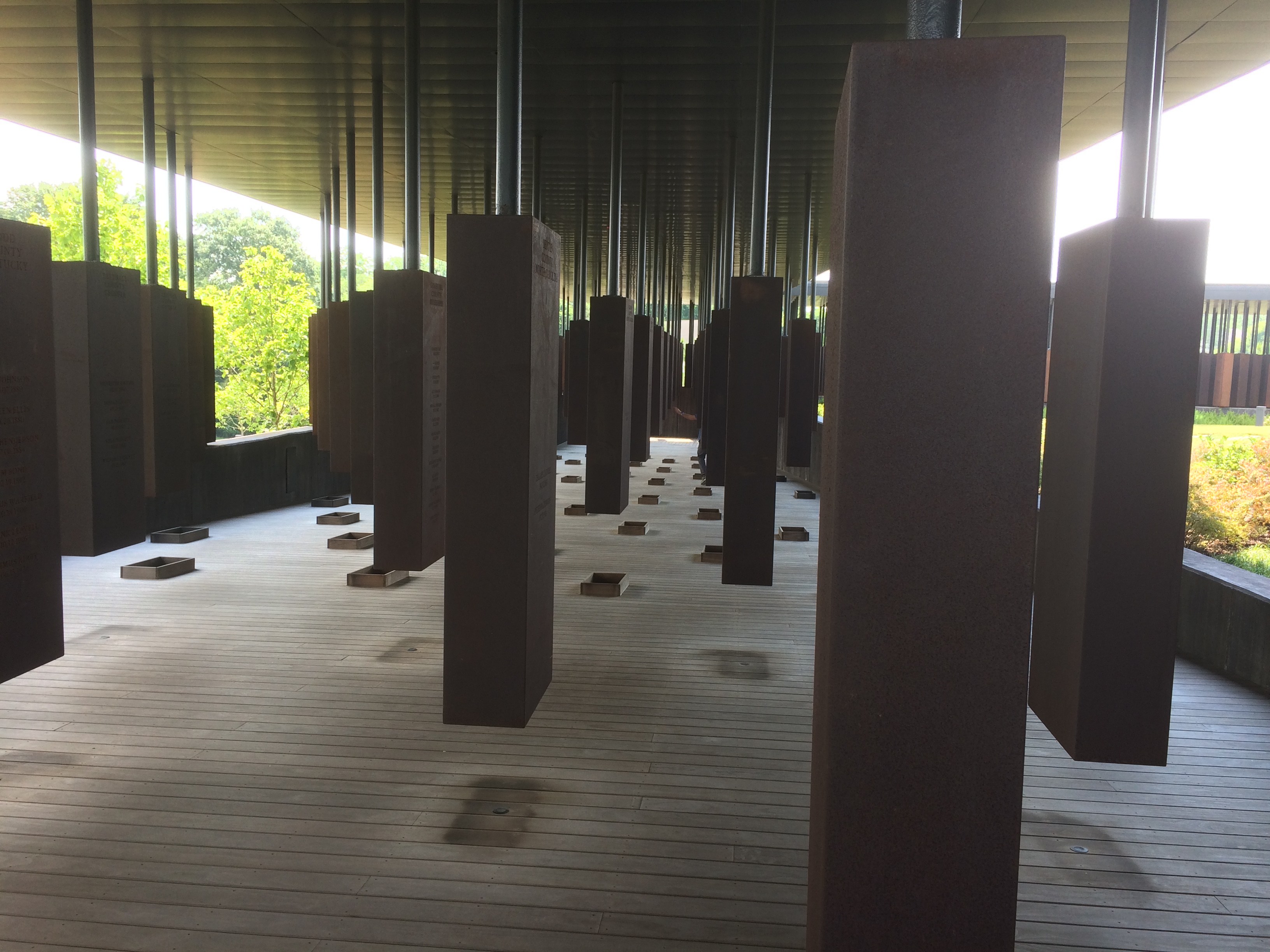
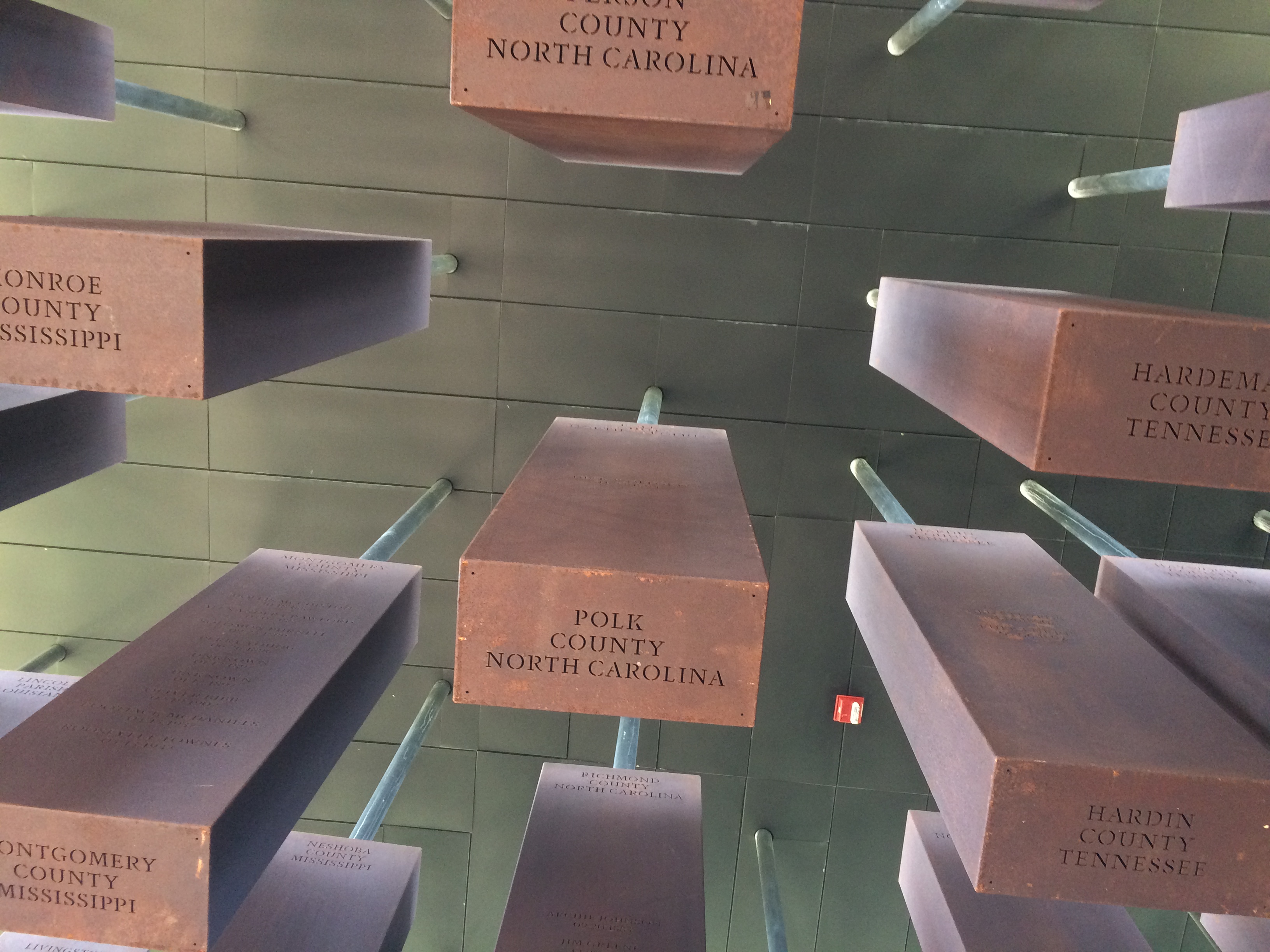
The memorial structure includes over 800 corten steel (weathering steel) monuments, one for each county in the United States where a lynching took place. Engraved on the columns are the names of the lynching victims documented for that county.

Here are the victims in Wilcox County, Alabama, to pick one of the first steel monuments you encounter: Riley Gulley, William Lewis, Arthur Stewart and Ephreim Pope.
Visitors enter the memorial at one corner of the square shape. On the first side of the memorial, the steel monuments are flush with the floor, with the names at eye level or lower.

On the second side of the memorial, the floor begins to slope downward in the direction of travel, but the steel monuments continue to be at the same level.
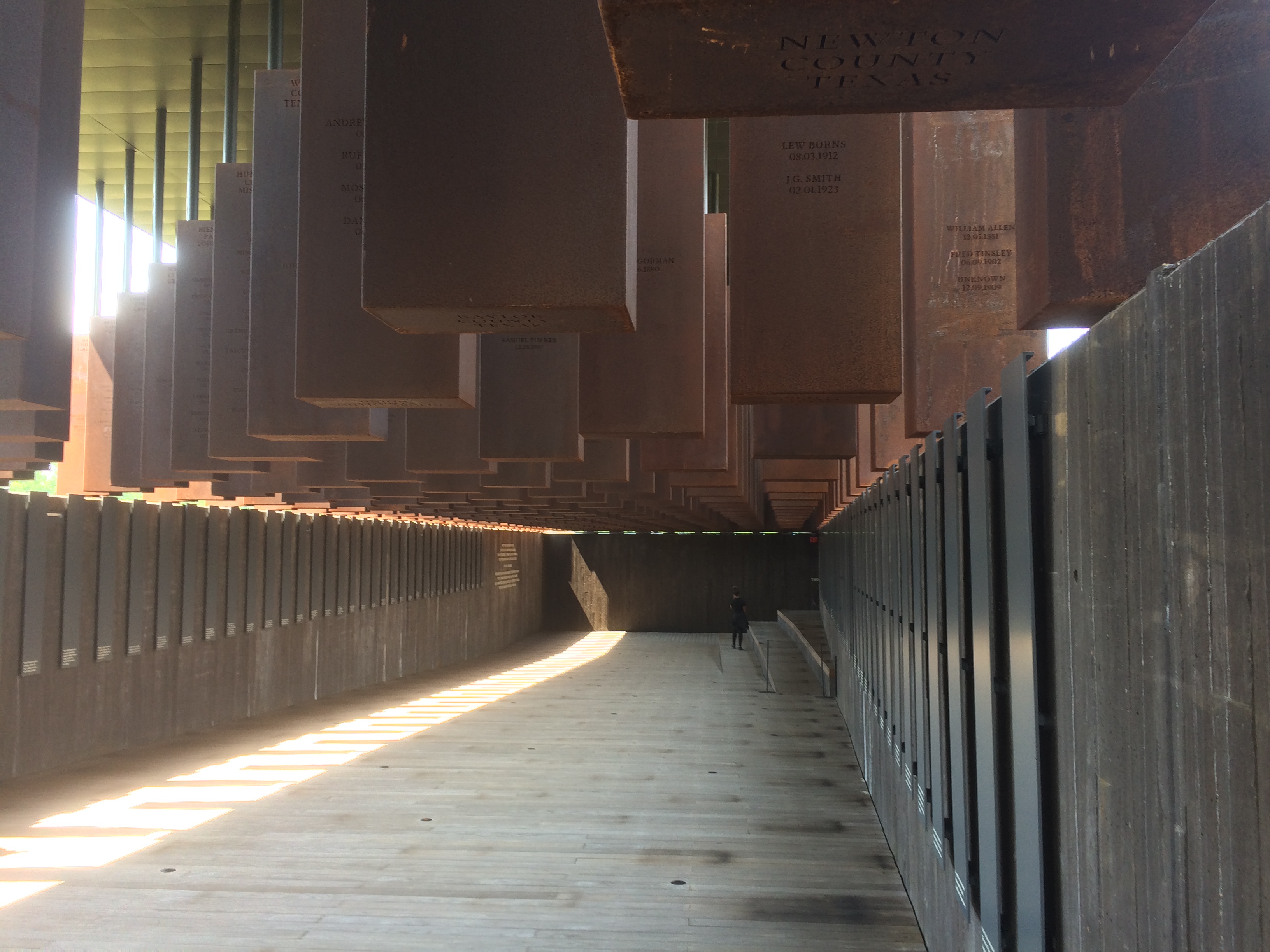
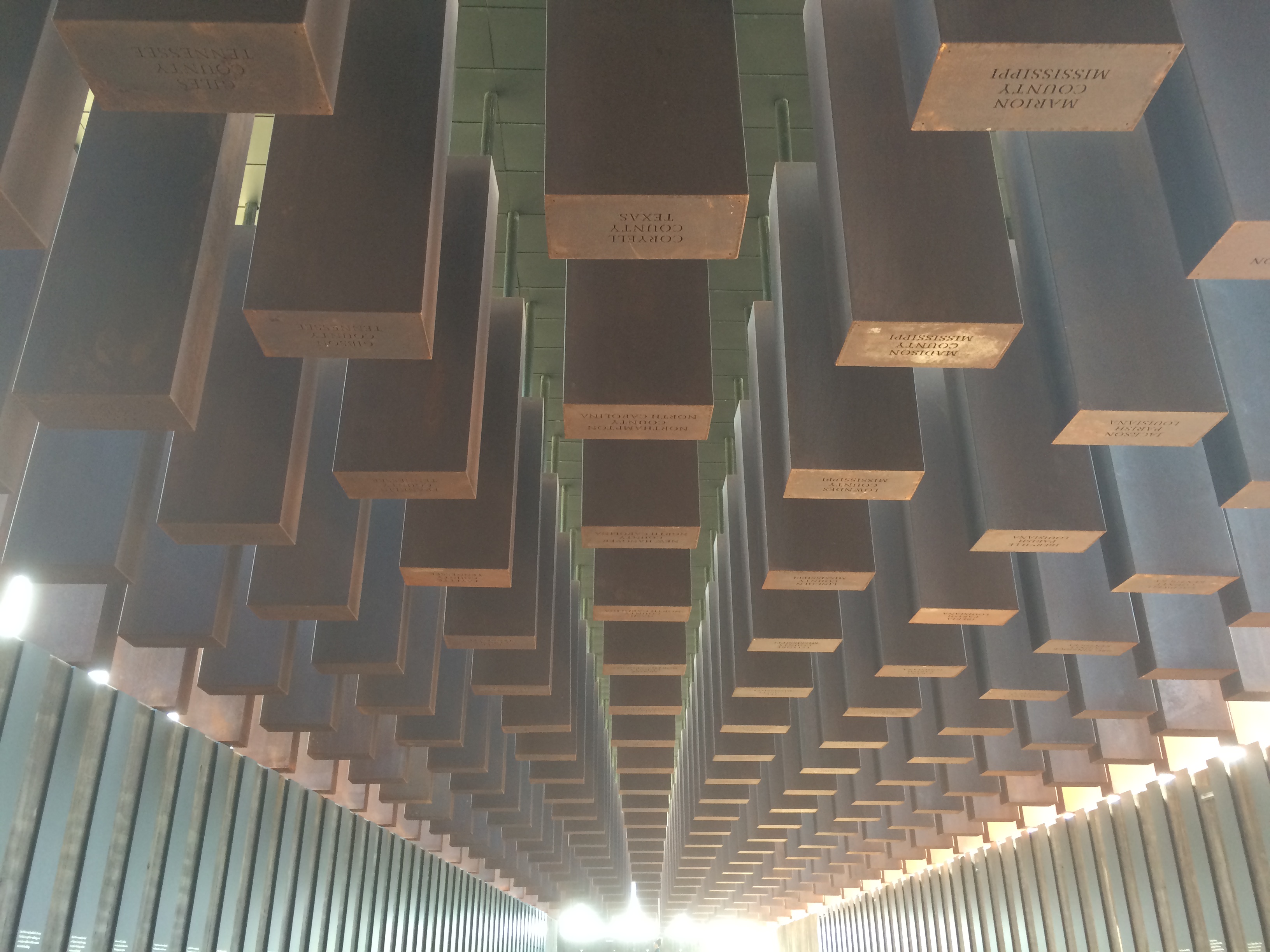
In the third side of the memorial, the floor slopes even more and the effect becomes very noticeable. The steel monuments are hanging.
You need to look up to see the county names.

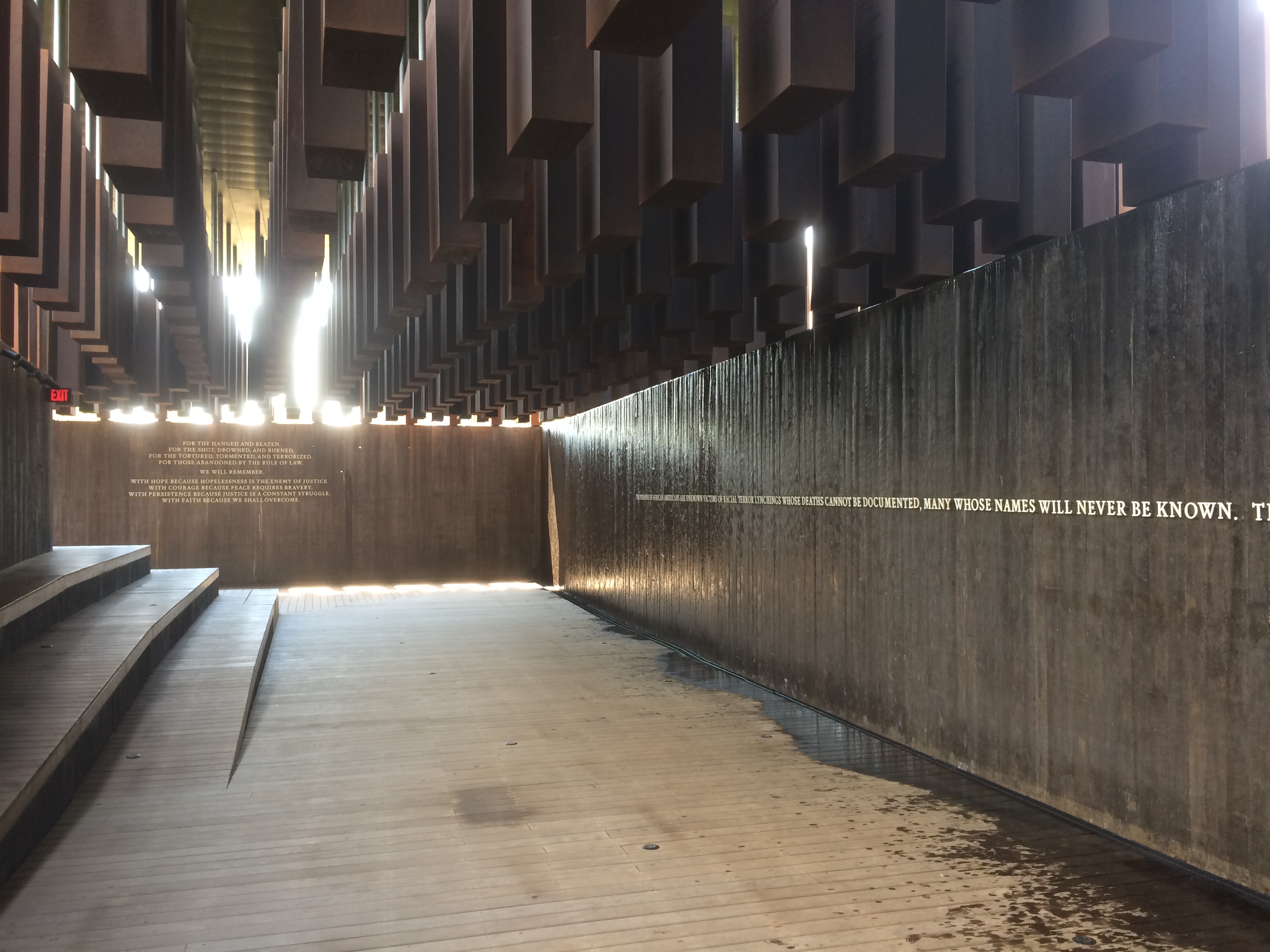
The fourth side. The effect is practically tunnel-like by now.
The writing on one wall says:

For the hanged and beaten, for the shot, drowned, and burned, for the tortured, tormented, and terrorized. For those abandoned by the rule of law.

We will remember.

With hope because hopelessness is the enemy of justice. With courage because peace requires bravery. With persistence because justice is a constant struggle. With faith because we shall overcome.

Water flows down the other wall.

The text:

Thousands of African American are unknown victims of racial terror lynchings whose deaths cannot be documented, many whose names will never been known. They are all honored here.

Outside the memorial structure are smaller versions of the steel monuments arrayed in long lines, lying with their text face up. I understand that if a county named on one of them wants to use it as part of a local memorial to lynching victims, it will be given for that purpose. So far no county has taken any of them.

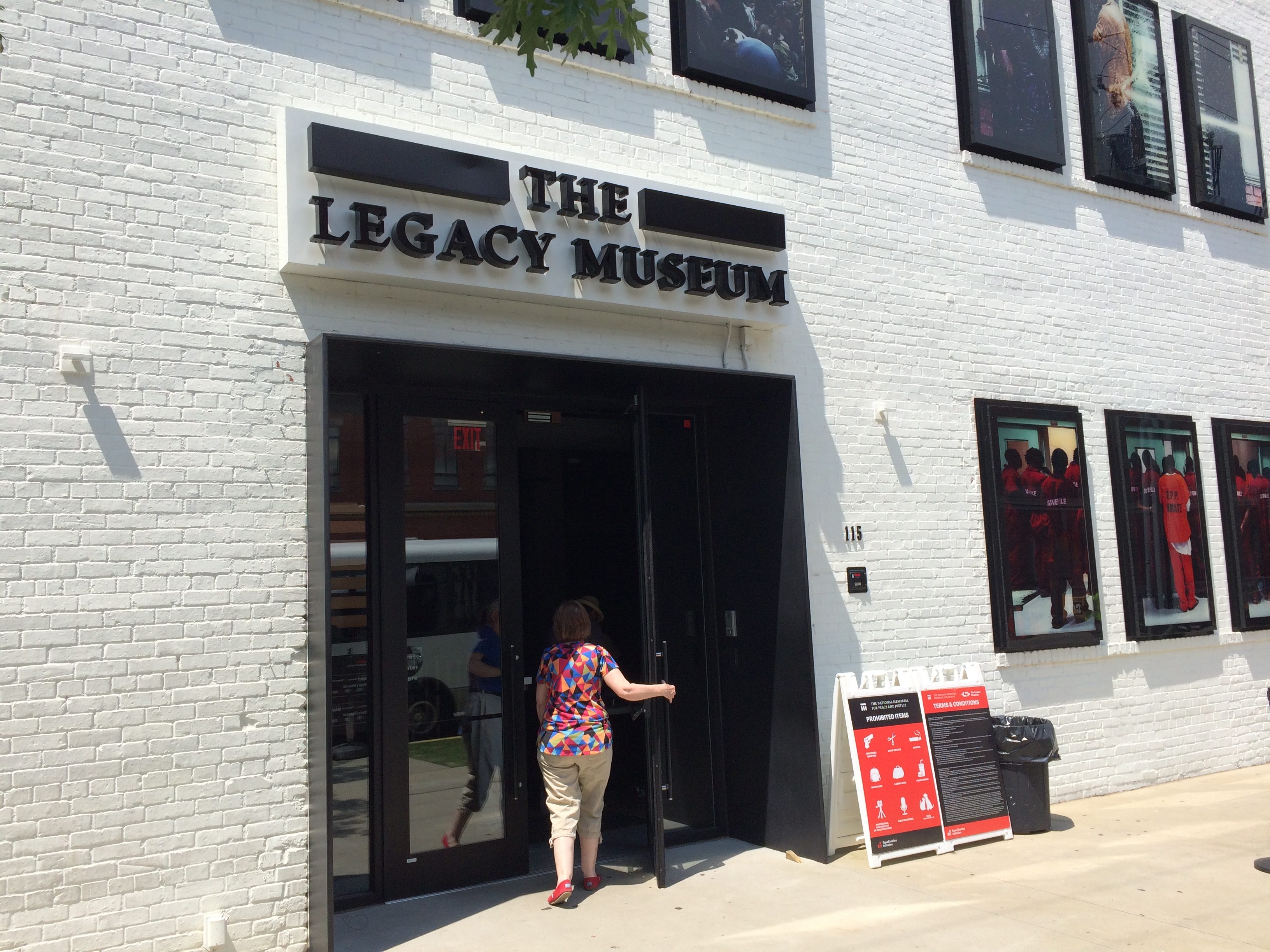
The Legacy Museum, developed by the same organization as the memorial — the Equal Justice Initiative — is also in downtown Montgomery, pointedly in a building where enslaved black people were imprisoned, near the site of the city’s 19th-century slave market. By the mid-1800s, Montgomery was the focus of the slave trade in Alabama.
In full, it is The Legacy Museum: From Enslavement to Mass Incarceration. It’s a small museum, 11,000 square feet, but a powerful one.

The EJI web site for the museum says: “Visitors encounter a powerful sense of place when they enter the museum and confront slave pen replicas, where you can see, hear, and get close to what it was like to be imprisoned awaiting sale at the nearby auction block. First-person accounts from enslaved people narrate the sights and sounds of the domestic slave trade. Extensive research and videography helps visitors understand the racial terrorism of lynching, and the humiliation of the Jim Crow South.”

The museum also illustrates that the more recent (and ongoing) war on drugs, a toxic interplay of political calculation and moral panic, has made black Americans “vulnerable to a new era of racial bias and abuse of power wielded by our contemporary criminal justice system.”

A quote from the all together remarkable EJI Director Bryan Stevenson, who lead the effort to build the memorial and create the museum:

“Our nation’s history of racial injustice casts a shadow across the American landscape. This shadow cannot be lifted until we shine the light of truth on the destructive violence that shaped our nation, traumatized people of color, and compromised our commitment to the rule of law and to equal justice.”