“Ecce Hora”

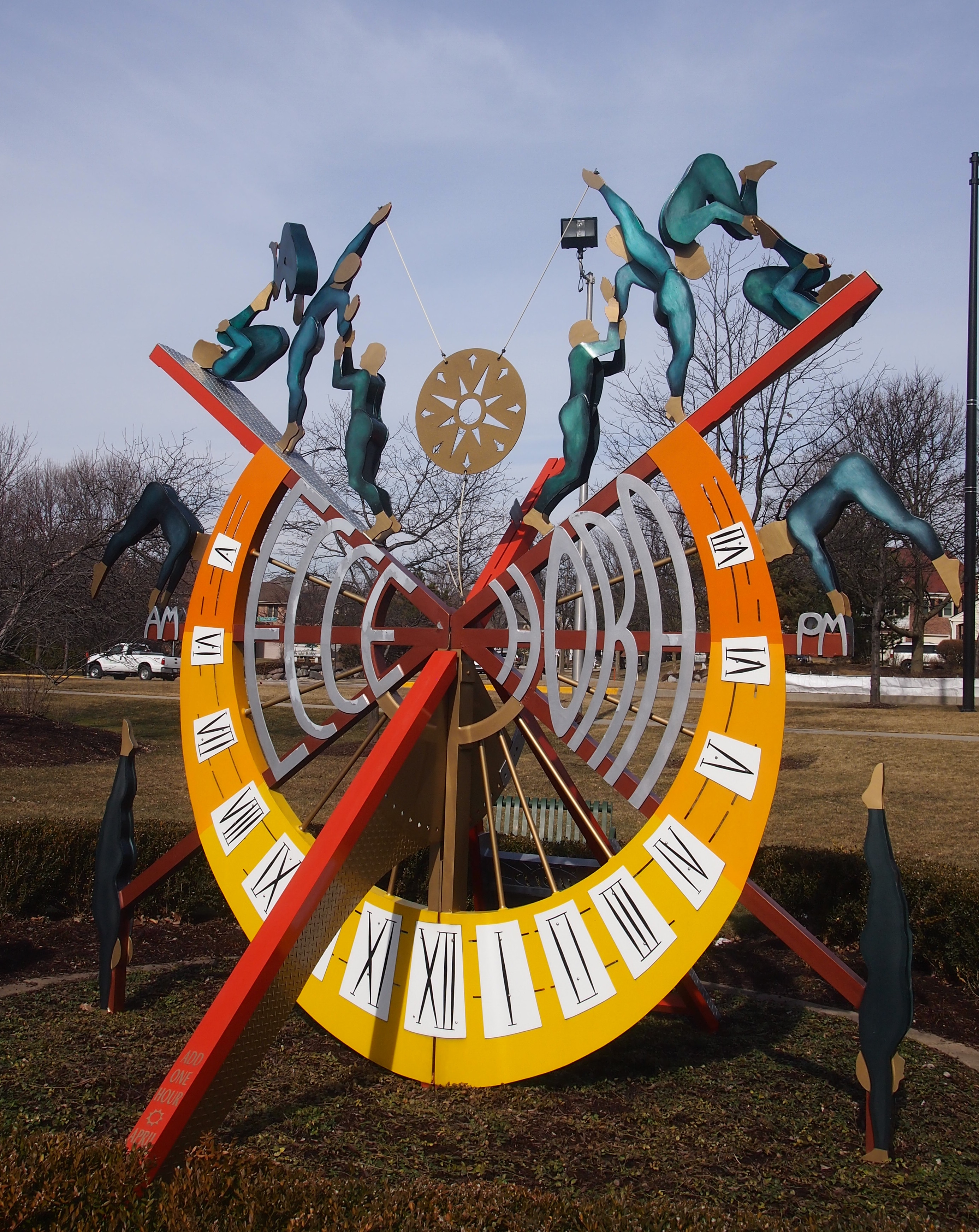
Not far from “Awaking Muse” (see yesterday) on the grounds of the Prairie Center for the Arts and the Village of Schaumburg municipal center is a sculpture doubling as a sundial — or a sundial doubling as a sculpture — called “Ecce Hora.” After visiting the muse, I walked over to the structure.
"Ecce Hora"This vantage shows the south-facing side of the sculpture, which naturally catches more light than the north face, so it has a wide variety of hour lines. You’ll note that it shows the time as a little past 11 am, which was completely accurate. Toward the tip of the gnomon — it’s hard to see in this picture — it advises you to add an hour during most of the year to account for DST, but we’re still on standard time.

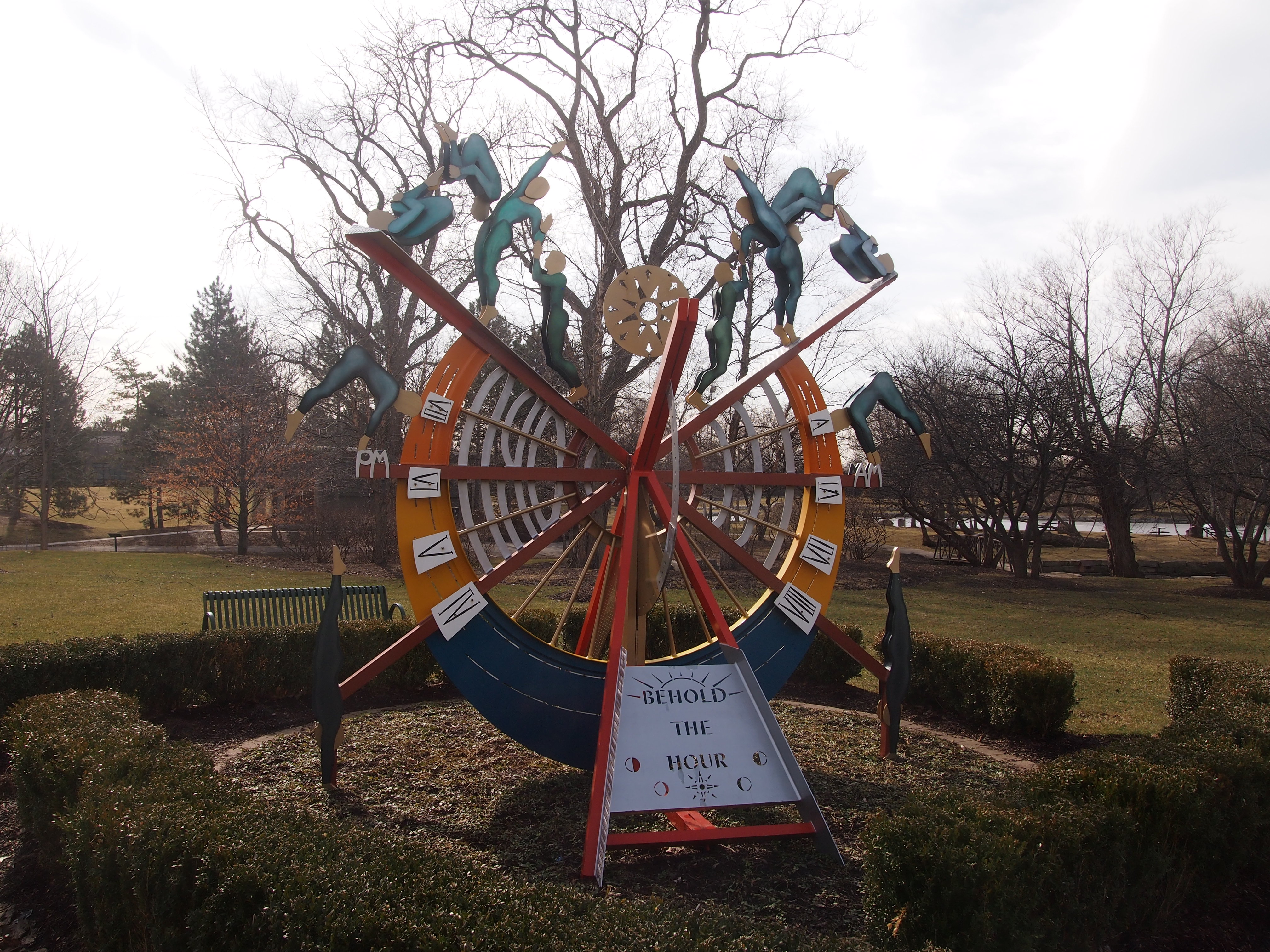
The sign near the work — actually there are two signs, duplicates of each other for some reason — says, “this adjustable sundial was designed and built by Chicago artist Christine Rojek. Ecce Hora (which means “Behold the Hour”) is constructed of painted aluminum and includes fanciful hand-painted figures which twist, dive and somersault. They perform as if to say, ‘If life is just a shadow, make a dance.’ ”

That’s what they’re saying? How about, “Time flies, so do we” ?

The north-face, which has the English name, is destined not to catch as much sunlight. It certainly was in the shadow this time of the year.

"Ecce Hora"But at other times of the year, it will be illuminated, so there are hour lines on that side as well, just not as many. All in all, it’s good to take a look at sundials every now and then.

“Awaking Muse”

Rumor has it that the ground will be covered with snow again tomorrow — which will devolve into slush a few days after that — so I spent a few minutes today out on the brown ground near the Prairie Center for the Arts and the Village of Schaumburg municipal center. The grounds are sizable, and include a large pond that’s usually home to a pair of swans.

“The village purchased Louis and Serena, called Mated Mute Swans, in 1994 in response to the growing Canada Goose population on the municipal center pond and grounds,” the Village of Schaumburg web site says. “Breeding age pairs of Mute Swan will not tolerate Canada Geese in their breeding (nesting) area, which can cover several acres of water.”

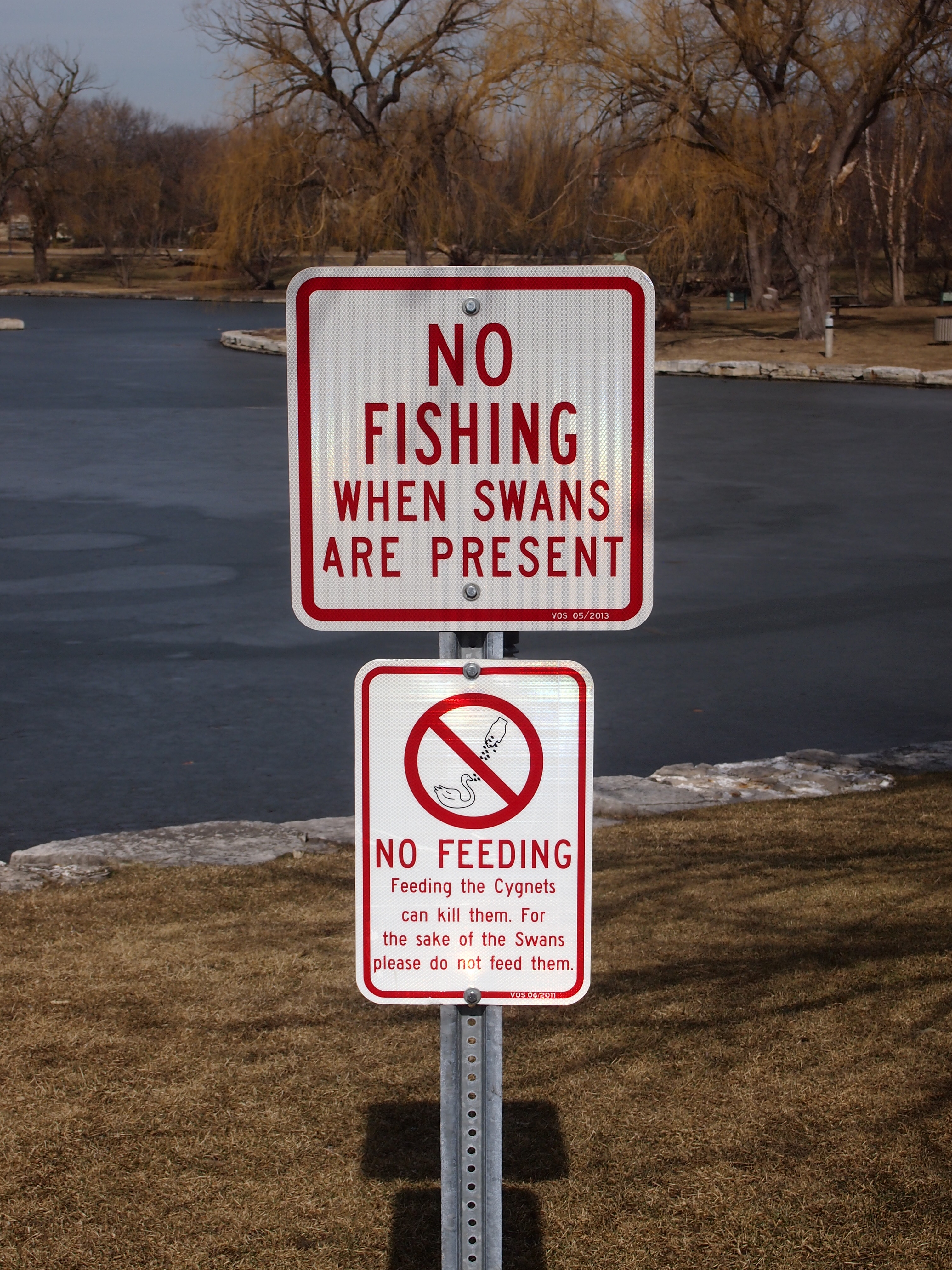
Not sure whether they migrate, but in any case, the swans weren’t around today. A sign near the pond warns would-be fishermen away when the swans are in residence. The other is probably the only public sign I’ve seen that uses the word cygnet.
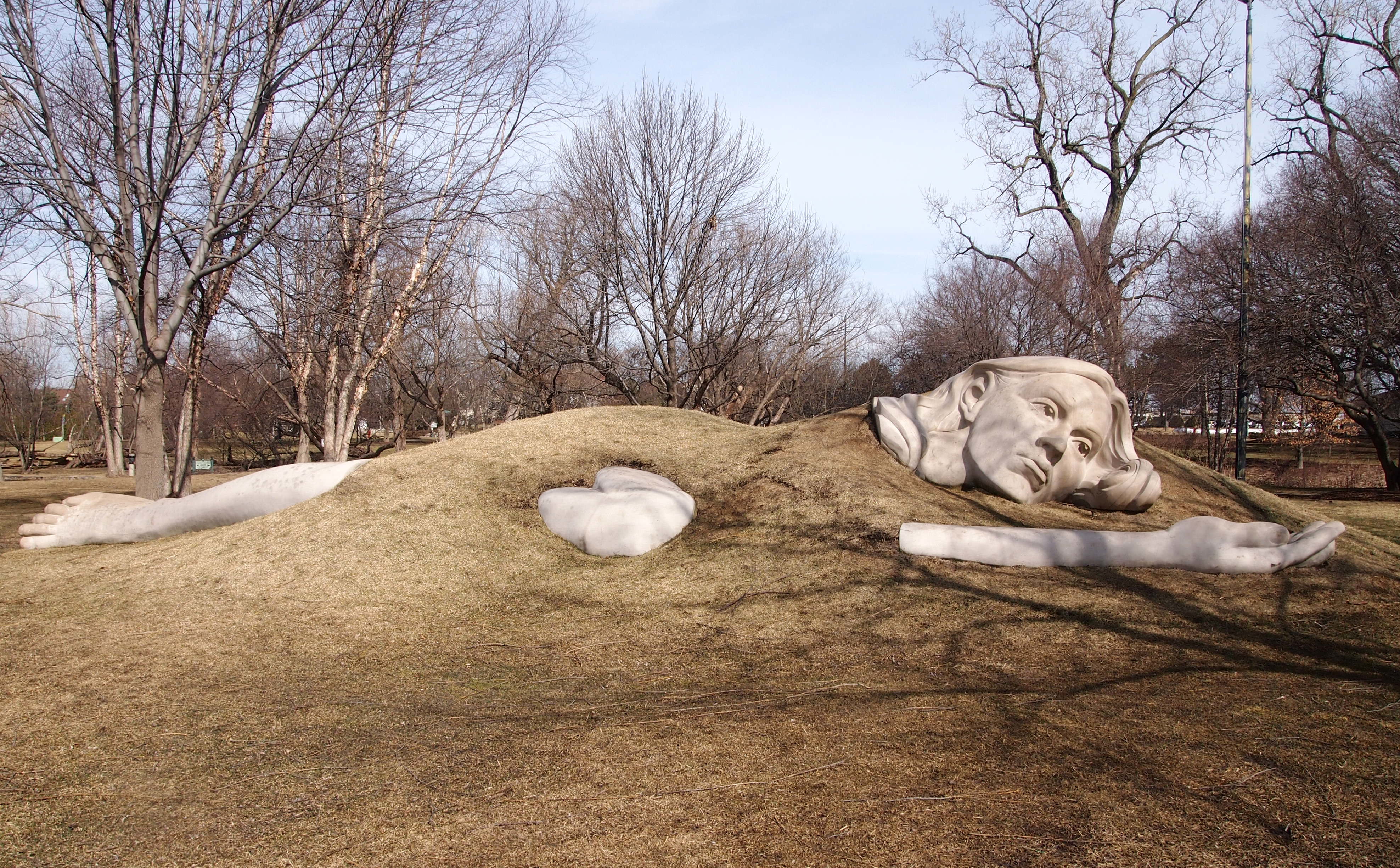
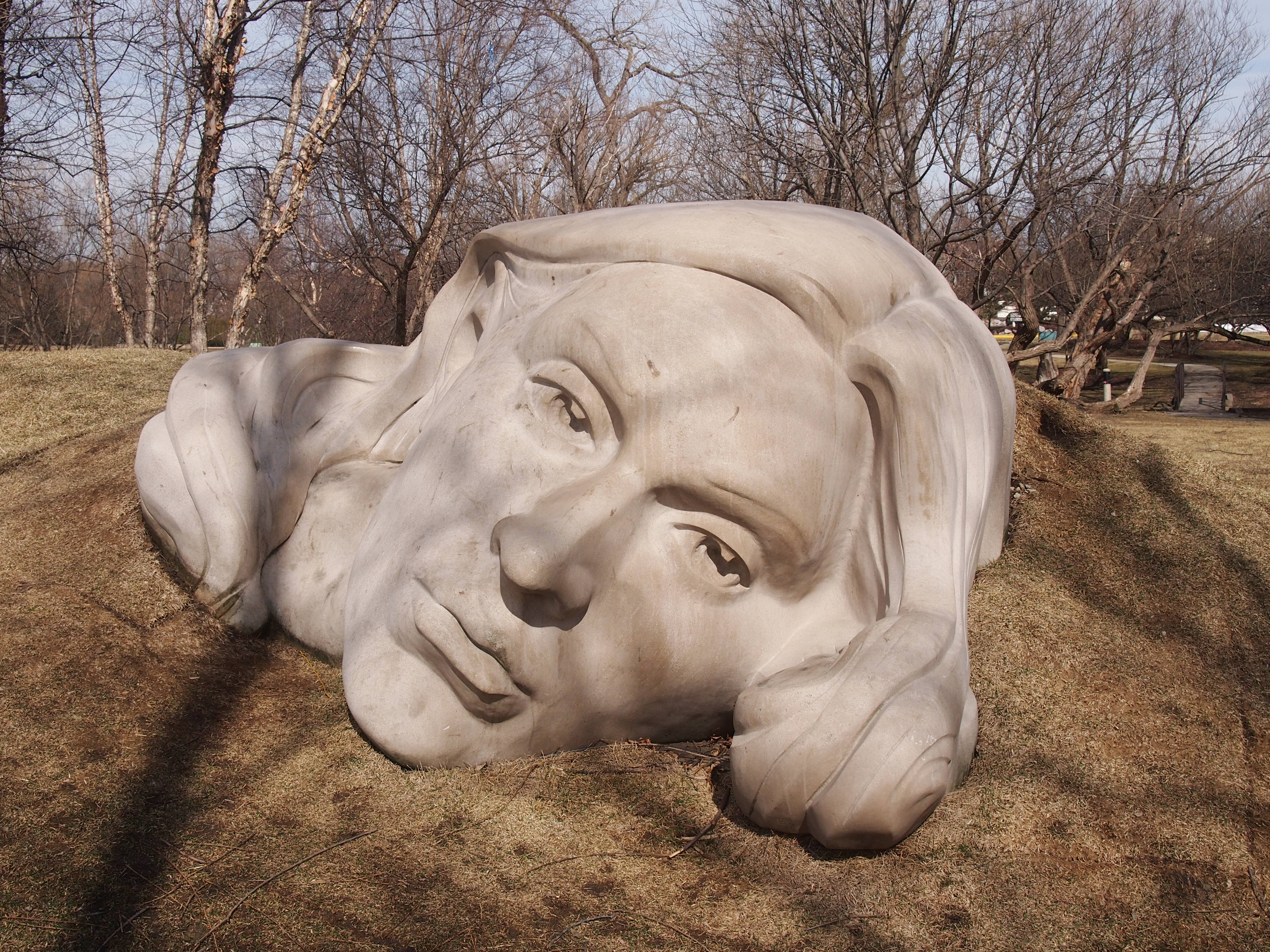
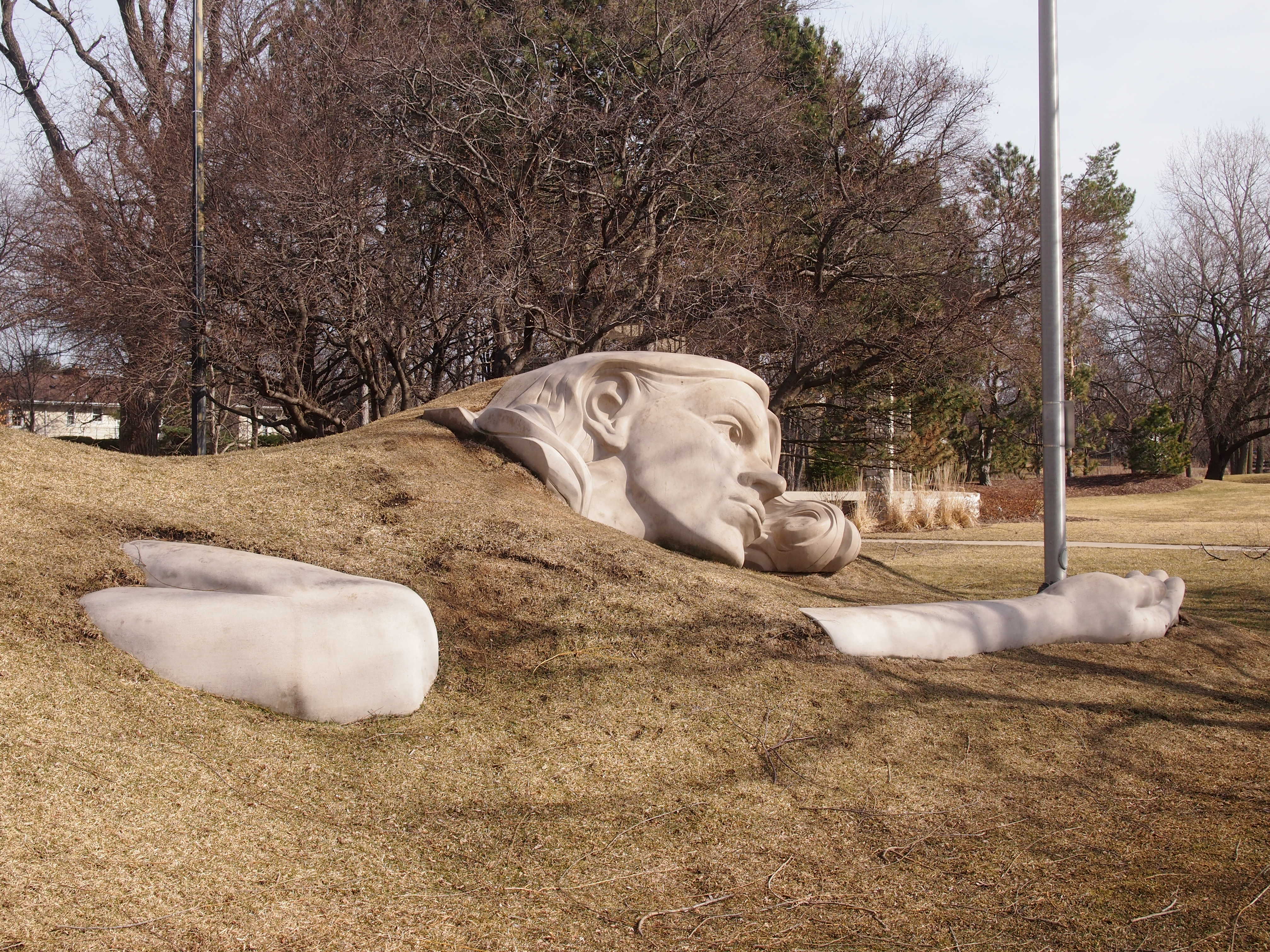
Schaumburg Feb 23, 2016Near the pond is a sculpture — a set of sculptures arrayed together — called “Awaking Muse,” by Don Lawler and Meg White."Awaking Muse" Schaumburg"Awaking Muse" SchaumburgA nearby sign tells us that “this sculpture depicts a female figure stirring from her slumber beneath the earth. Carved from Indiana limestone, the sculpture excites imagination and brings inspiration to its viewers. The ‘Awaking Muse’ references the muses of Greek mythology. The Greek muses were goddess sisters who inspired mortals with great thoughts in the arts and sciences.”
"Awaking Muse" SchaumburgI don’t know that it excites my imagination, but I like it. It’s been there since 2006. Some years ago, we attended a few summertime outdoor concerts on the grounds near “Awaking Muse,” and the sculpture was alive with children playing on it. Including ours.

The only thing missing? A nearby Indiana limestone alarm clock. Even muses have a hard time waking up sometimes.

“Rock”

The Christkindlmarket in Daley Plaza was insanely crowded on Saturday. So we didn’t spend much time there.

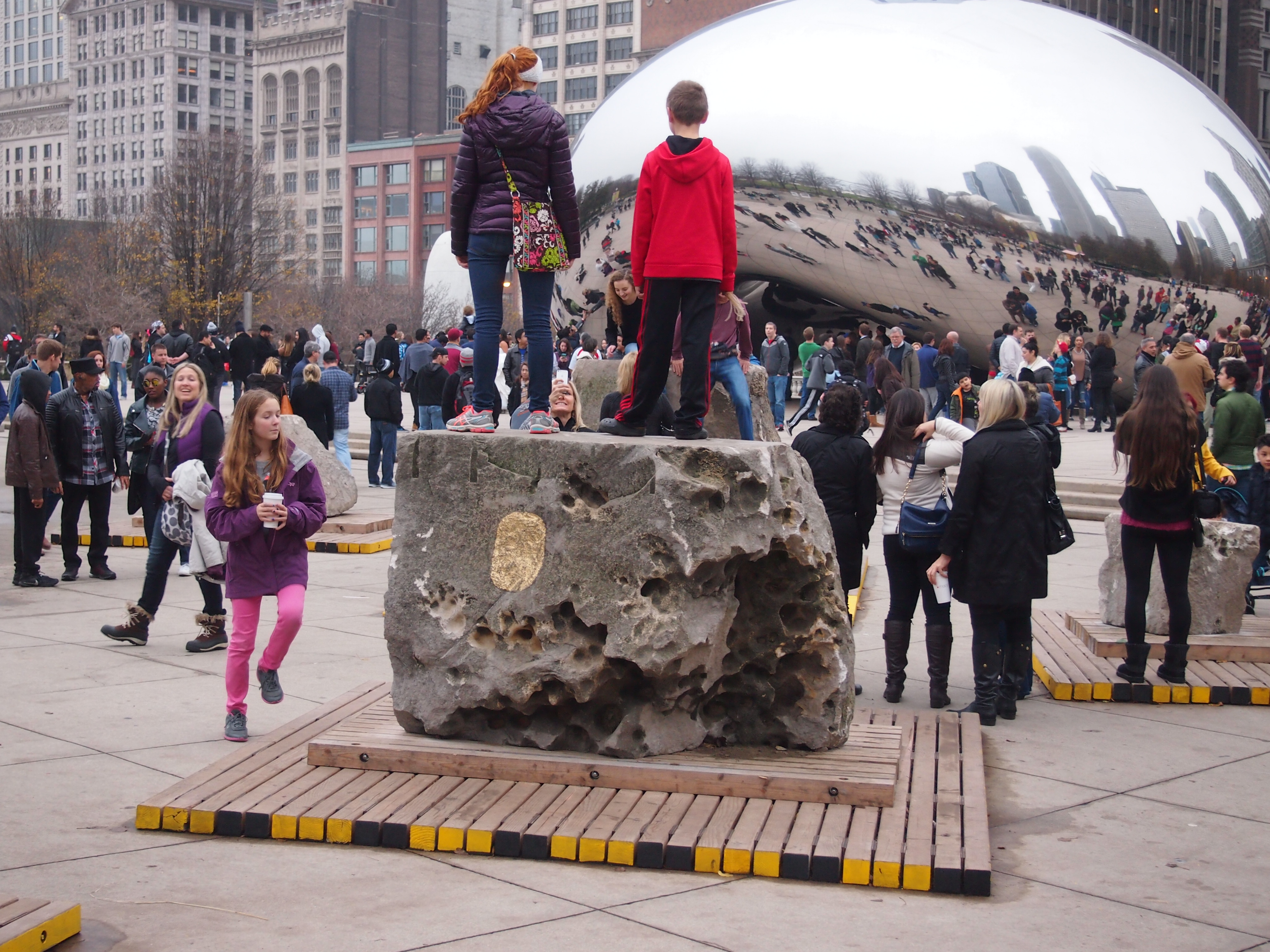
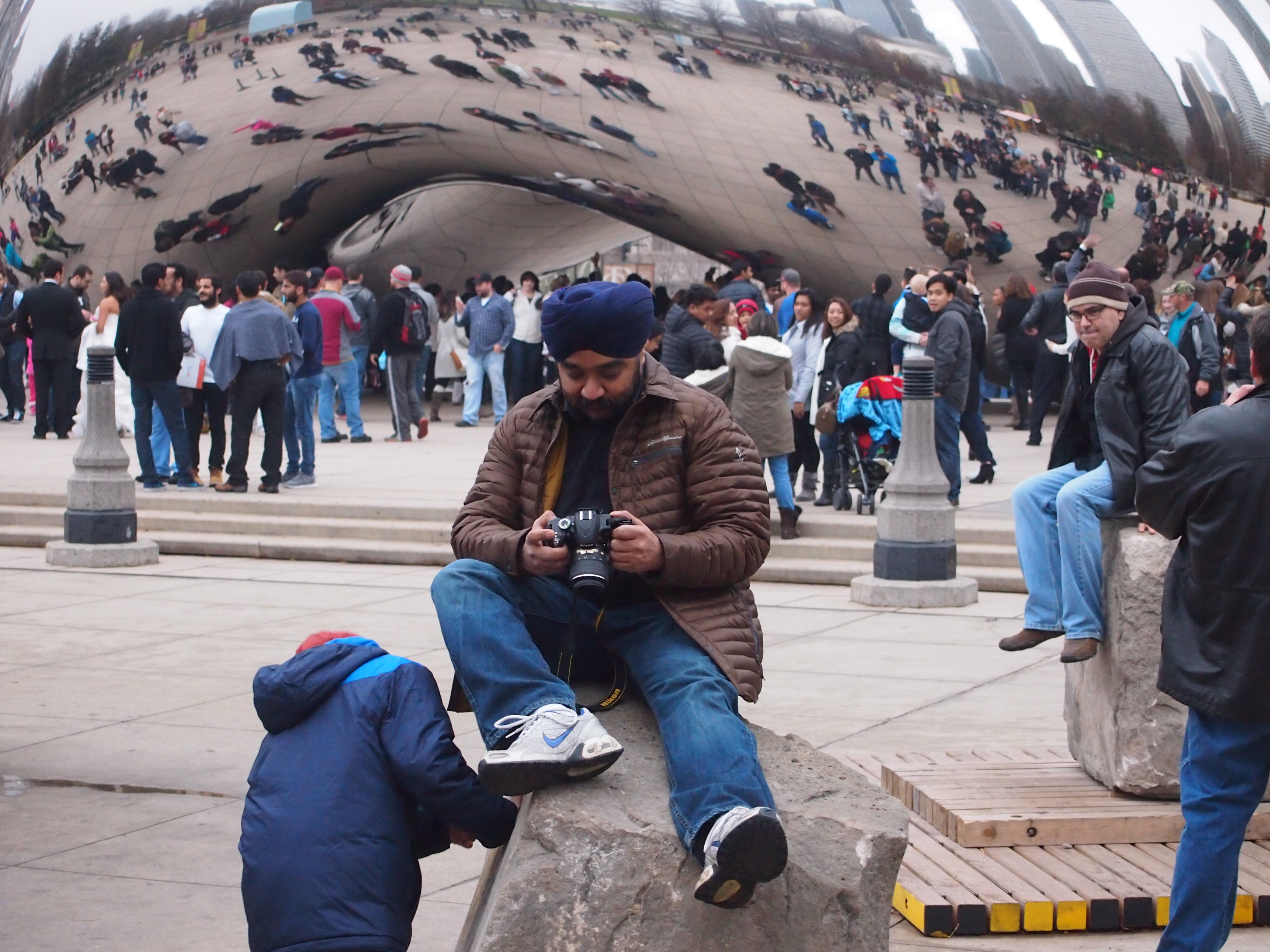
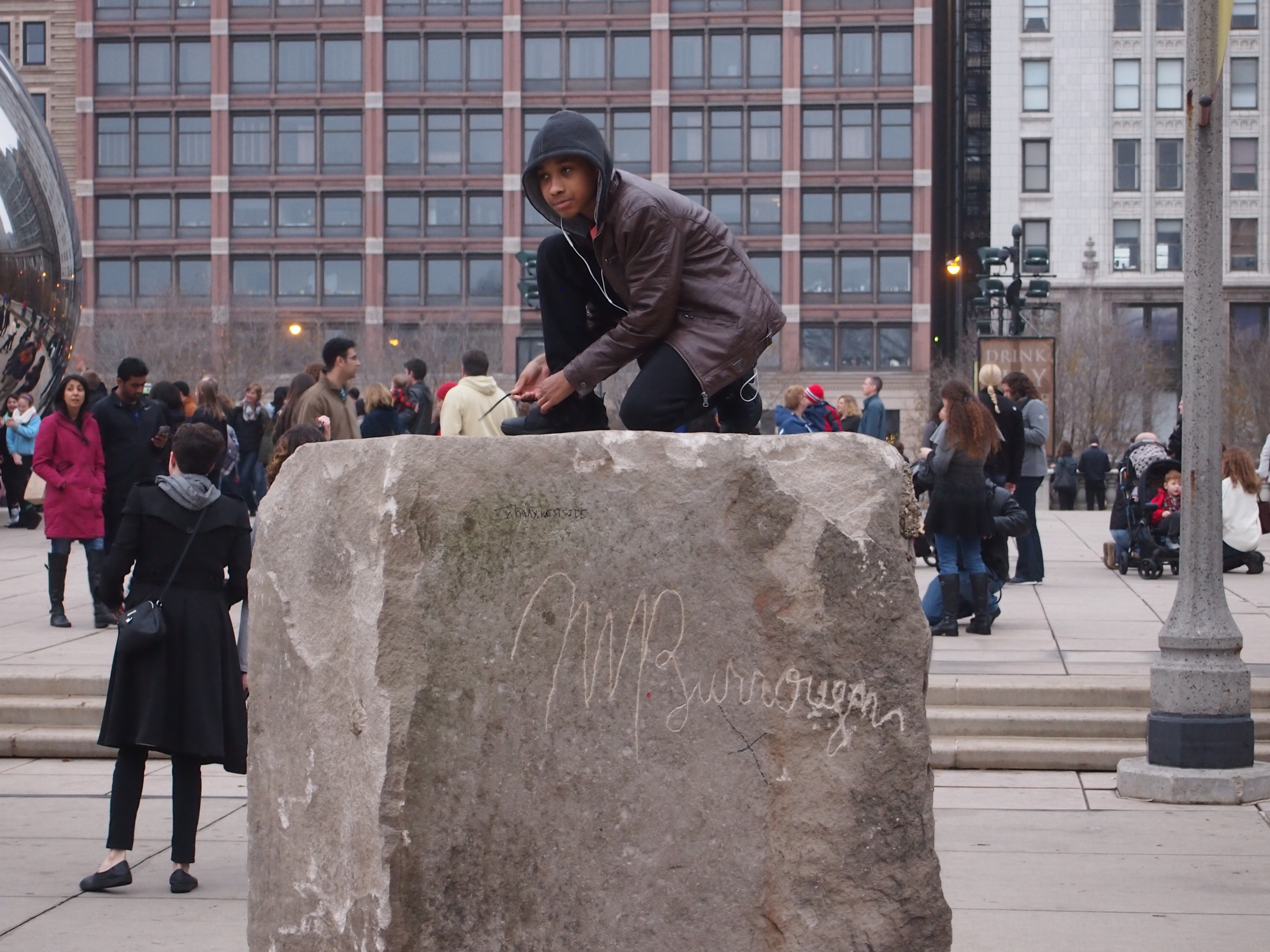
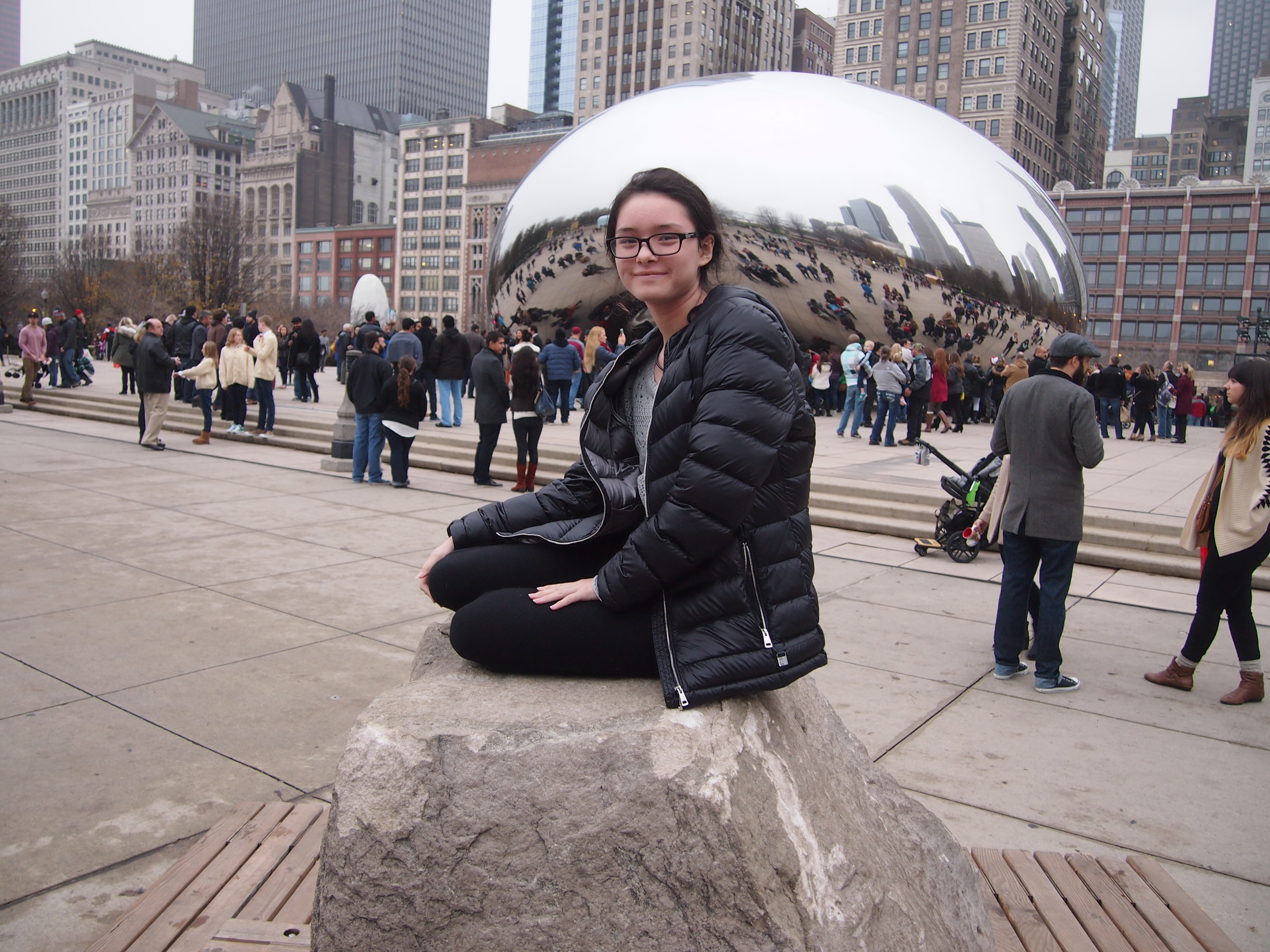
Millennium Park was pretty crowded too, but it’s spacious and holds its crowds better. There’s a new public art installation near the Bean. DNAinfo tells me that it goes by the simple-enough name “Rock,” and it consists of eight limestone rocks — some are borderline boulders — weighing between 3,000 and 9,000 lbs.

“The stones, which were donated by the Chicago Park District out of a Hyde Park storage facility, will be included in an upcoming lakefront kiosk at Montrose Beach as part of this year’s Chicago Architecture Biennial,” writer David Matthews said in September.

“Soon guests will be able to paint and otherwise decorate the stones, which will help support the kiosk when it is built next year…”

The thing to do when encountering “Rock,” at least if you’re limber, is climb on them.
"Rpck" Chicago Dec 2015"Rpck" Chicago Dec 2015"Rock" Chicago Dec 2015That included Ann.
"Rock" Chicago Dec 2015But not me. I never was a limber-American.

Formerly Known as Marshall Field’s Christmas Windows

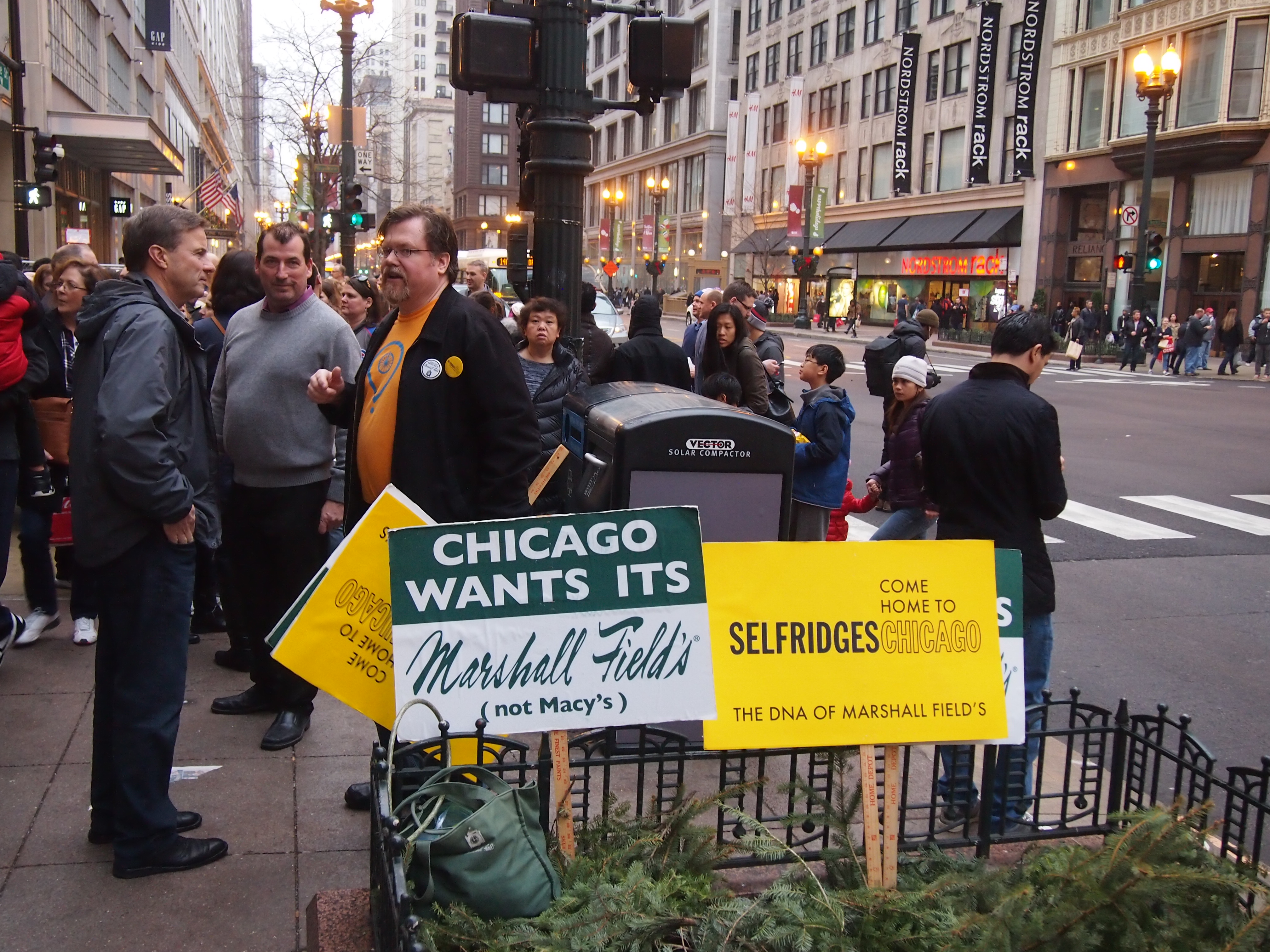
Chicago’s seen a lot of street protests lately, but on Saturday we didn’t see any protesters, even though we passed by City Hall and parts of Michigan Ave., which have been hubs of protest. Except for this guy.

Marshall Field's protester 2015He stood on State St. near its intersection with Washington St., just outside of the Store Formerly Known as Marshall Field’s, as you’d expect. Is the sign advocating that the British retailer Selfridge’s buy the famed old store in Chicago and return it to its original name? Maybe. I didn’t ask him. But after all, Harry Selfridge was an early part owner of Marshall Field’s, and essentially took its techniques to the UK to establish his store.

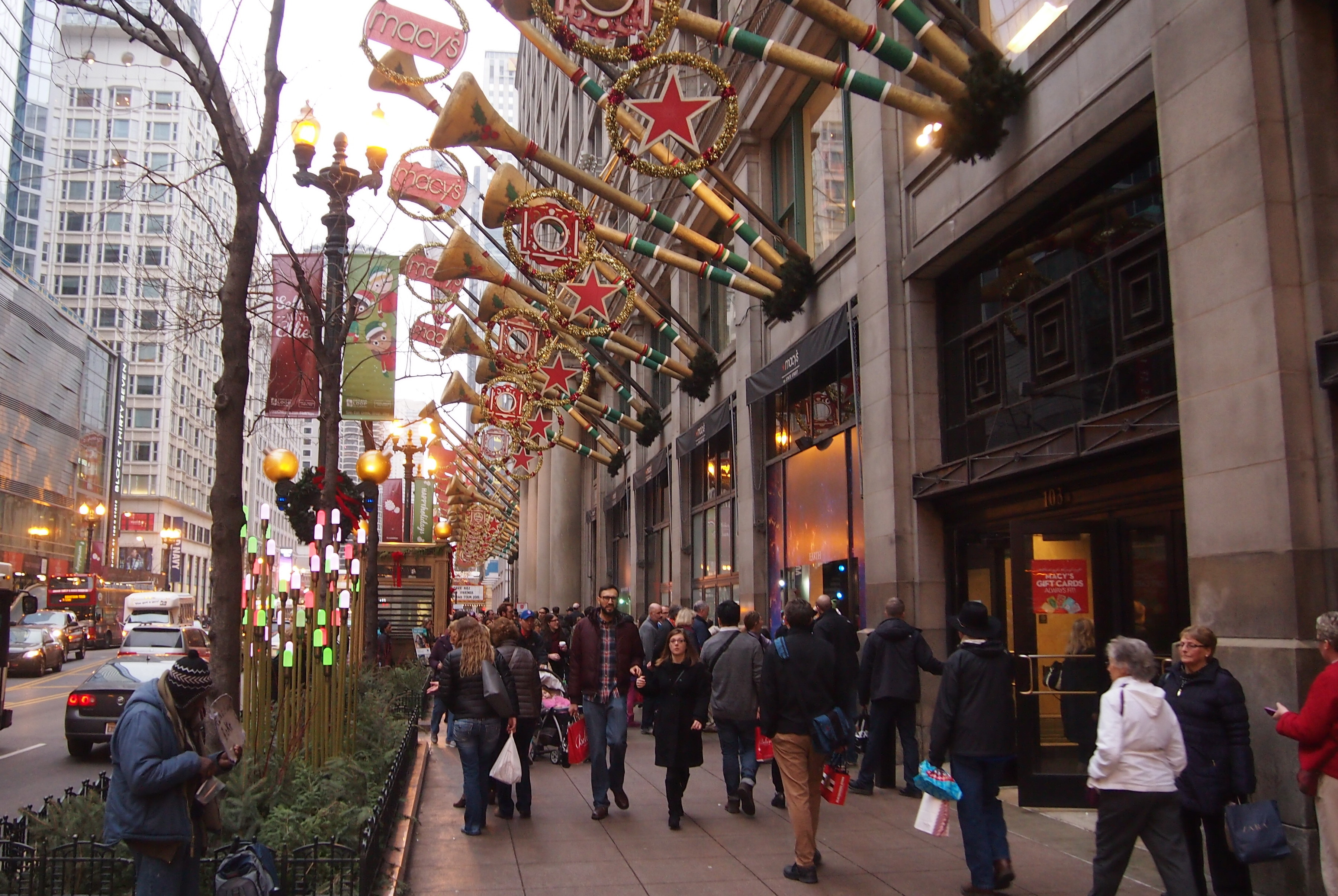
The streets might not have been thronging with protesters, but they were thronging all the same, probably boosted by the fact that it was a Saturday before Christmas, along with the warm temps. Extra helpings of people were in front of the former Marshall Field’s on State St. to see the seasonal windows.
State Street at Macy's Dec 2015Eventually we got a look at the seasonal windows. As usually, they were elaborately creative. Or creatively elaborate, with a Christmas theme. This year it was about a space-flight-enthusiast young boy hitching a ride with Santa to various fantastic versions of the planets (except Pluto), including a return to Earth that seemed to feature a bizarro hybrid of New York and Chicago. Guess that counted as a fantastic version of Earth.

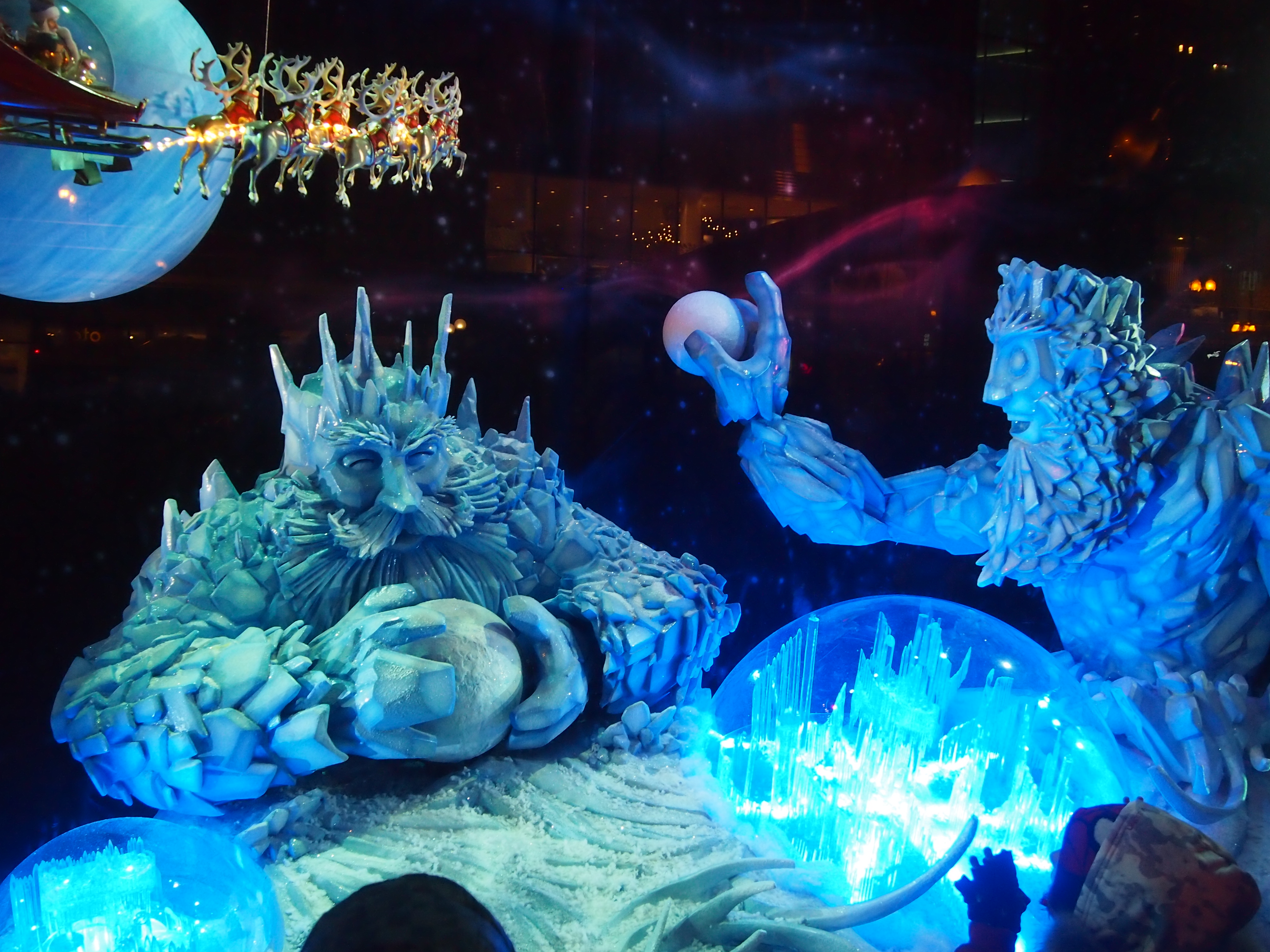
The madding crowd made it hard to look at the windows for very long, or take many pictures, but I did get one of the window I especially liked.
Macy'sChicago Christmas Windows 2015It’s a snowball fight between giant ice creatures inhabiting Uranus and Neptune. Methane snowballs, probably.

Return to Humboldt Park

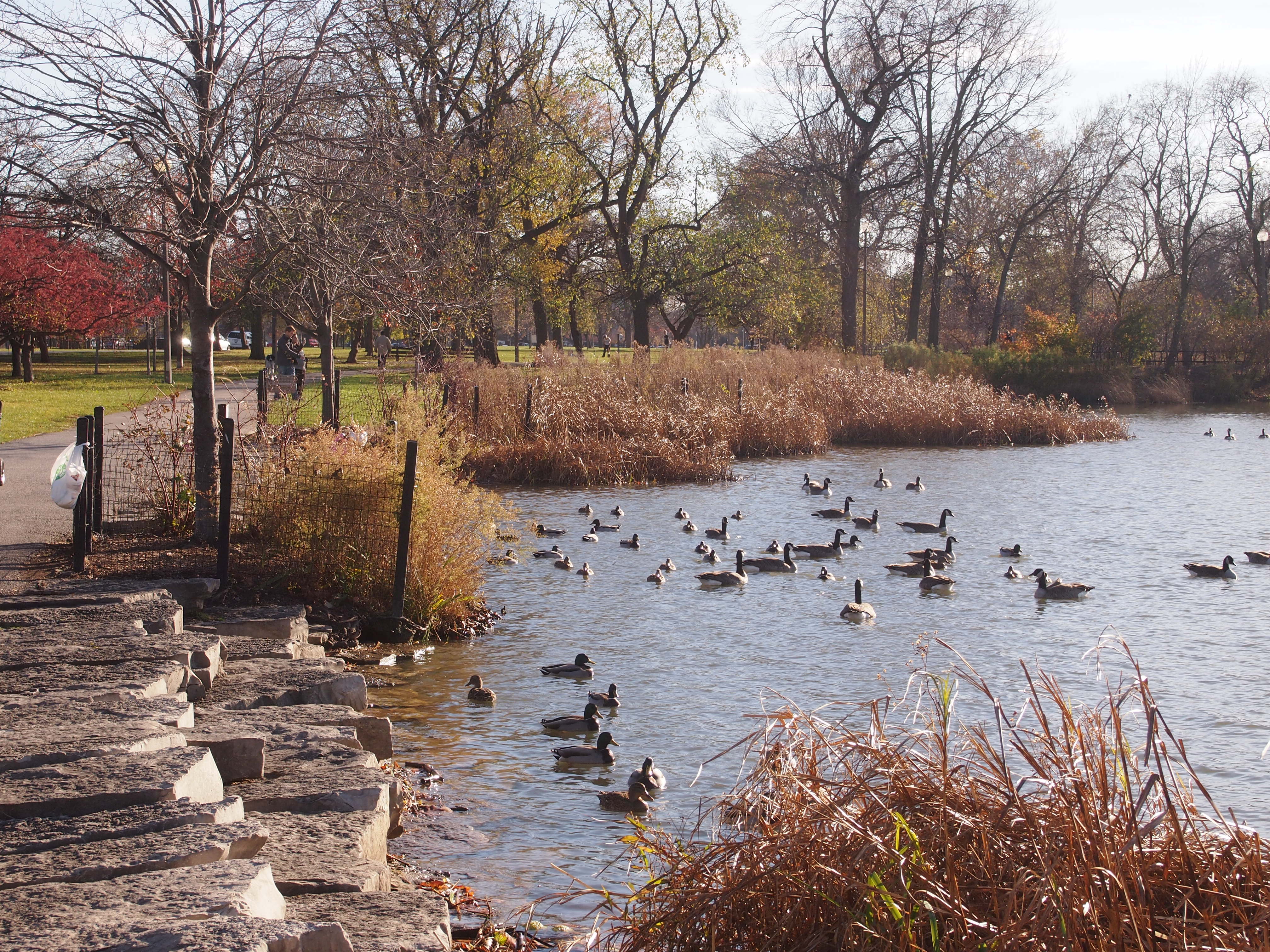
Another place we went on Saturday — which I suspect will be the last warm Saturday of the year — was Humboldt Park, one of Chicago’s major parks. The last time I was there, summer was ending, but it was still summer. In mid-November, the park’s a different place, one of autumnal gray and brown and smidgens of green.

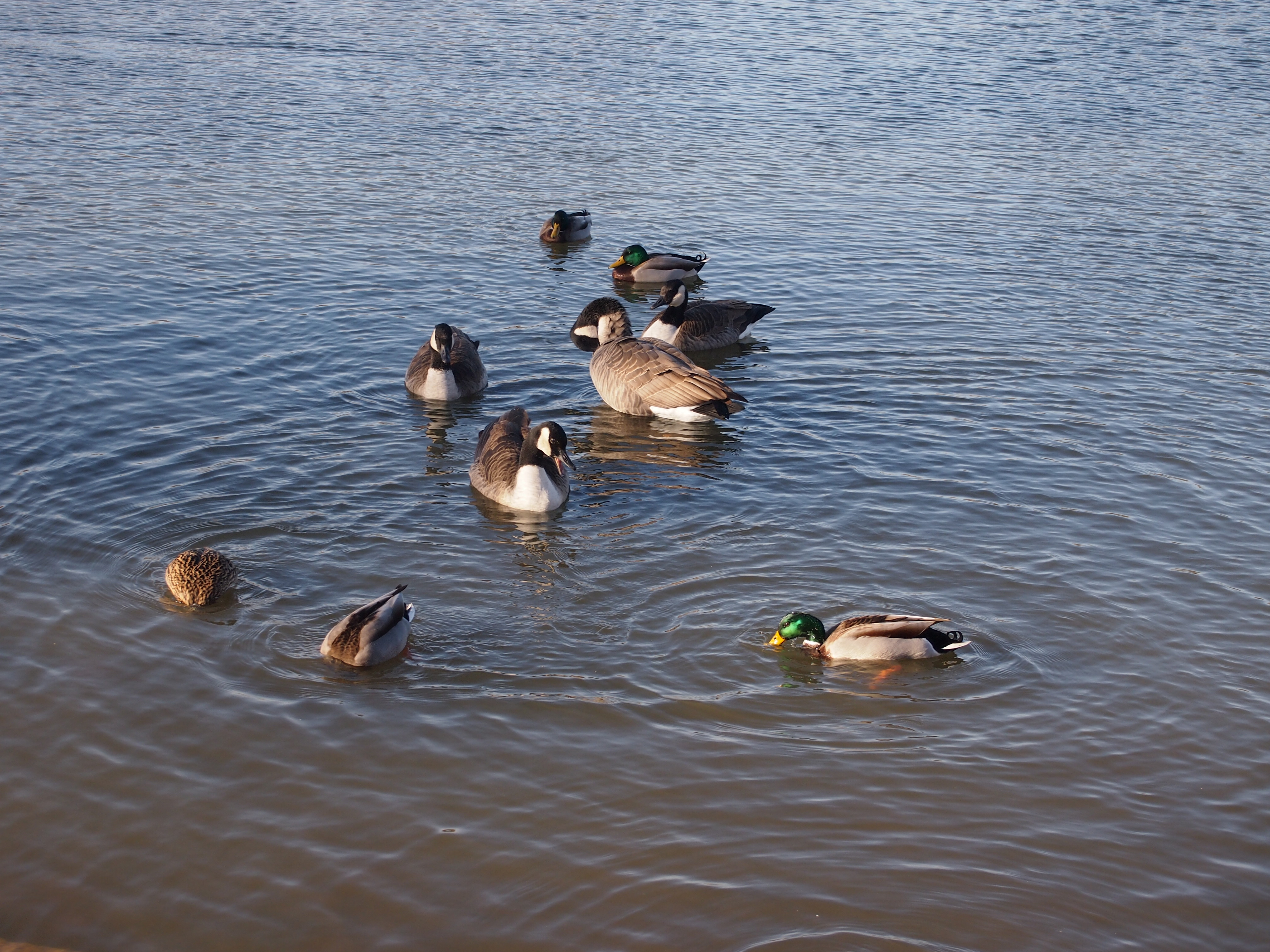
Humboldt Park Nov 14, 2105There are still a lot of birds around. Ducks and geese mostly, still foraging in the unfrozen waters.

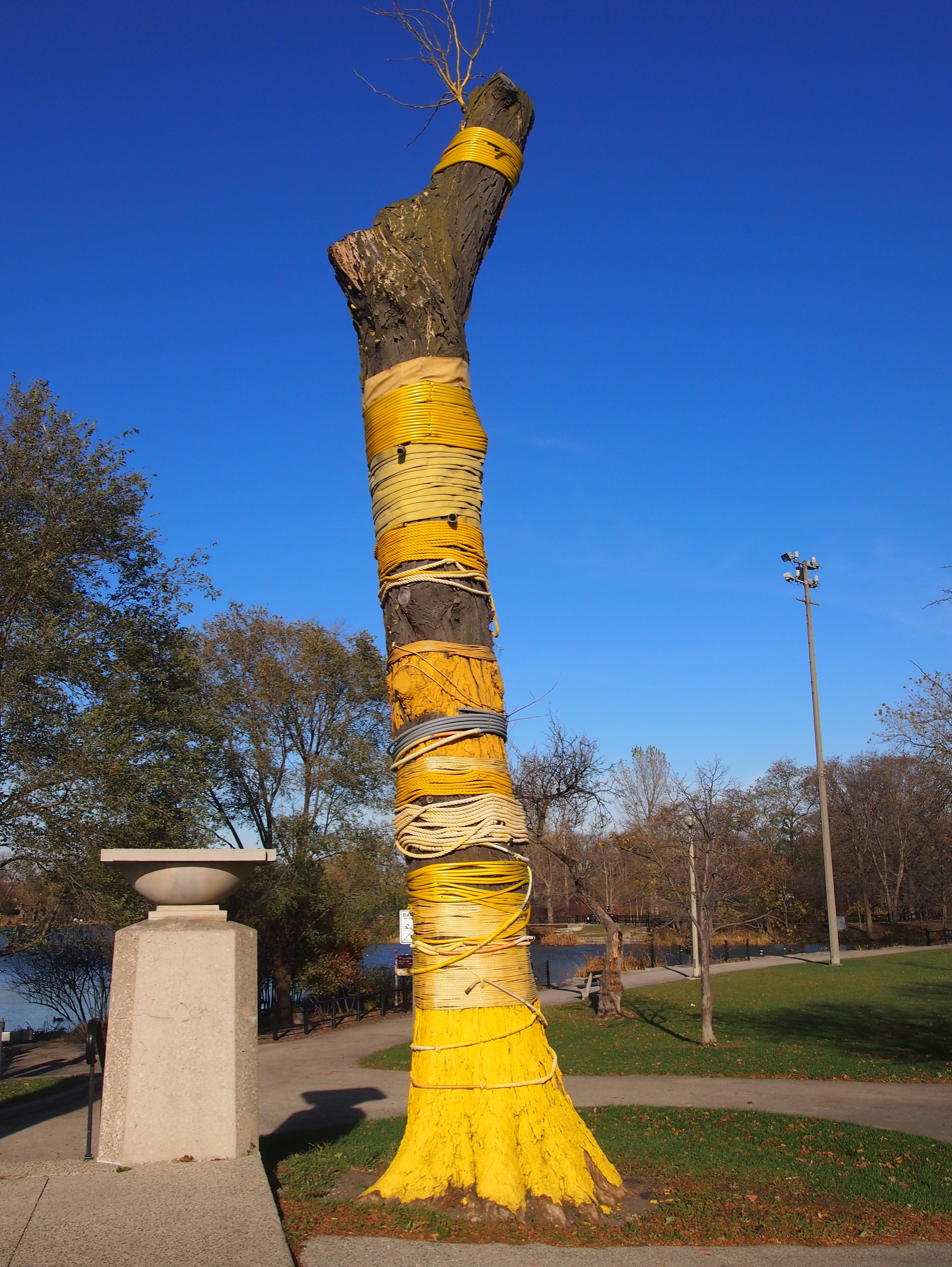
Humboldt Park Nov 14, 2105Near the park’s Boat House is a dead tree refashioned into artwork: “Burst” by Mia Capodilupo (2014). A ex-locust tree plus hose, rope, extension cord, and fabric.

Humboldt Park Nov 14, 2105According to WTTW, it’s one of a number of such transformations citywide: “The Chicago Park District has teamed with a local sculptor’s group to turn trees that were condemned into public art. The stay of execution for the mighty elms, ash and locust trees is also an opportunity for artists to make a very public impression.”

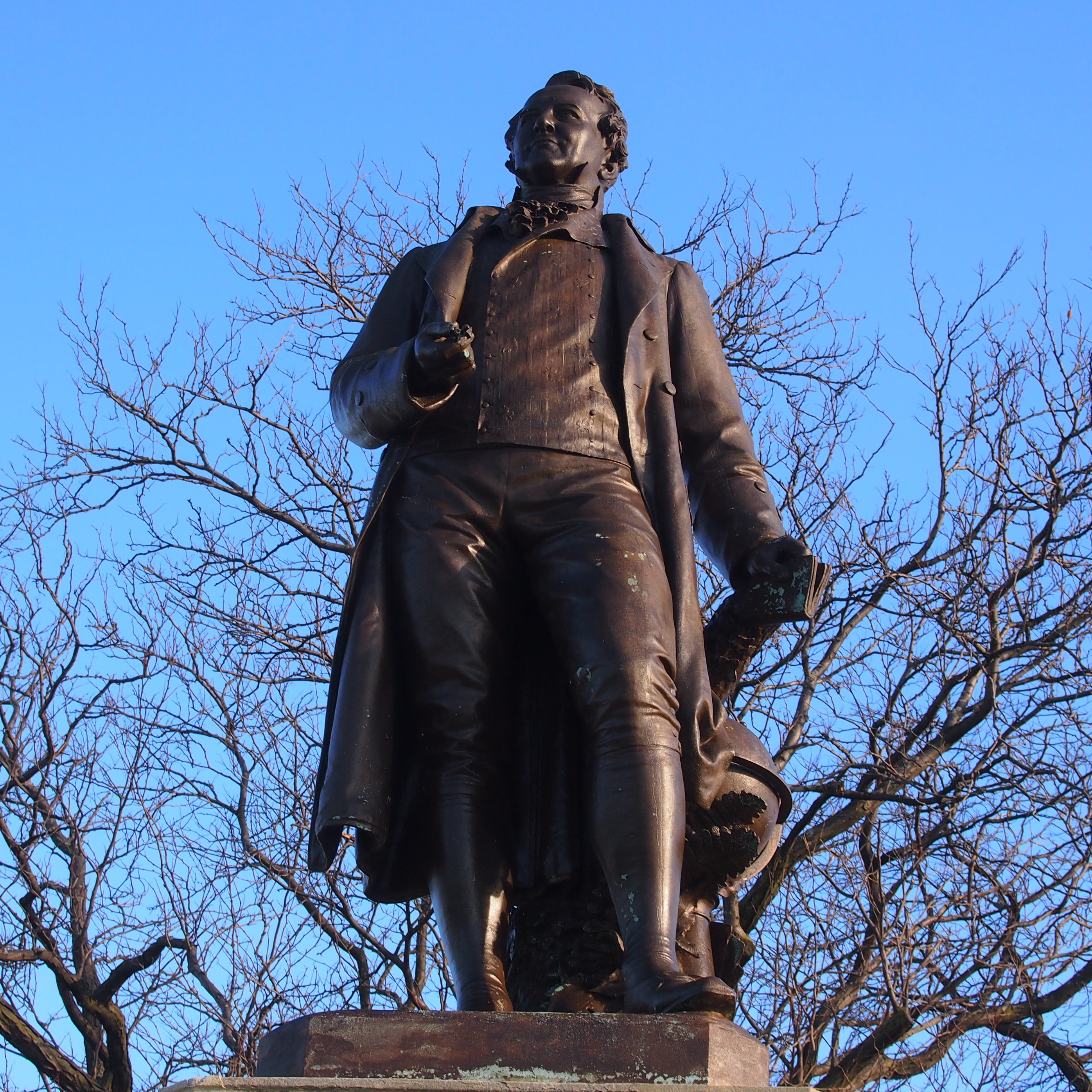
Not far from “Burst” is a more traditional kind of park art, a statue of explorer Friedrich Wilhelm Heinrich Alexander von Humboldt. I saw it last year but couldn’t make an image.

Felix Gorling did thisNote the globe behind him. There’s an iguana back there, too. WBEZ reports: “[Humboldt Park] was laid out in 1869. The statue arrived in 1892, the work of Felix Görling. It was paid for by German-born brewer Francis Dewes, who was also responsible for a flamboyant mansion on Wrightwood Avenue.

“When the statue was erected, the neighborhood around it was heavily German. The Poles later settled in, and for many years Humboldt Park was the site of the Polish Constitution Day Parade. Then the Poles moved on and were succeeded by the Puerto Ricans… One of the park’s roadways is now named for Luis Munoz Marin — the first elected governor of Puerto Rico.”

The 18th Street Station, Pink Line

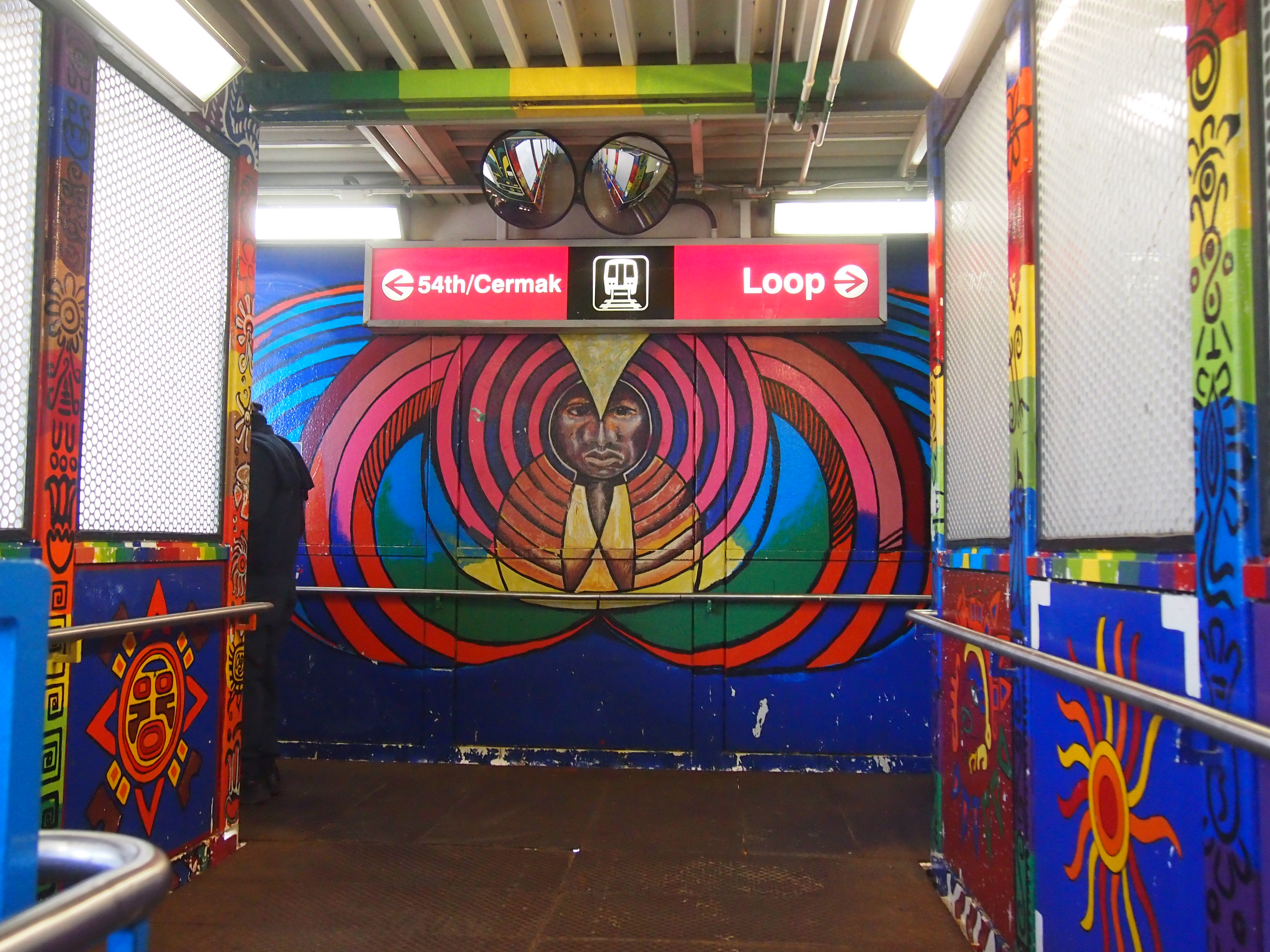
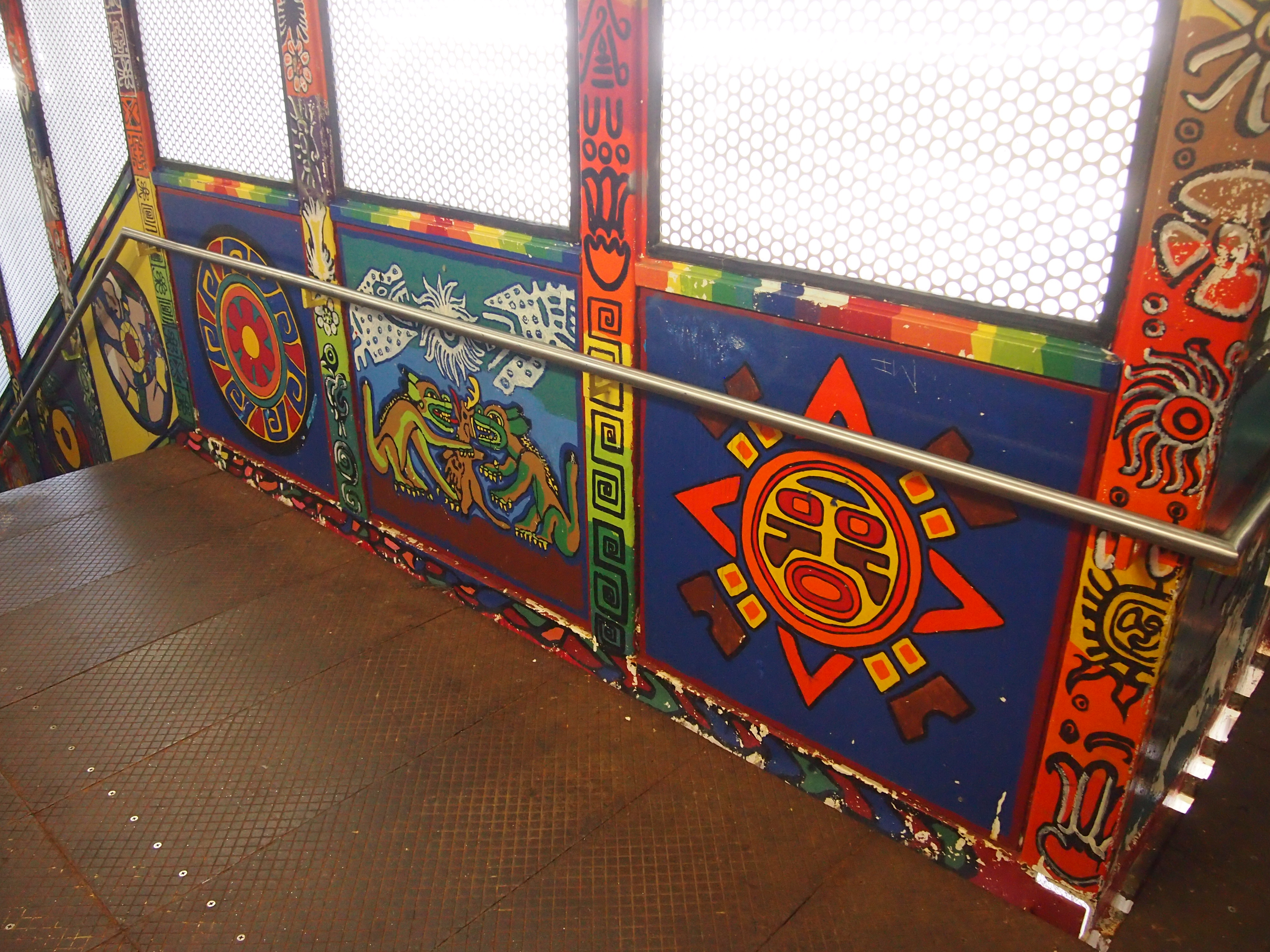
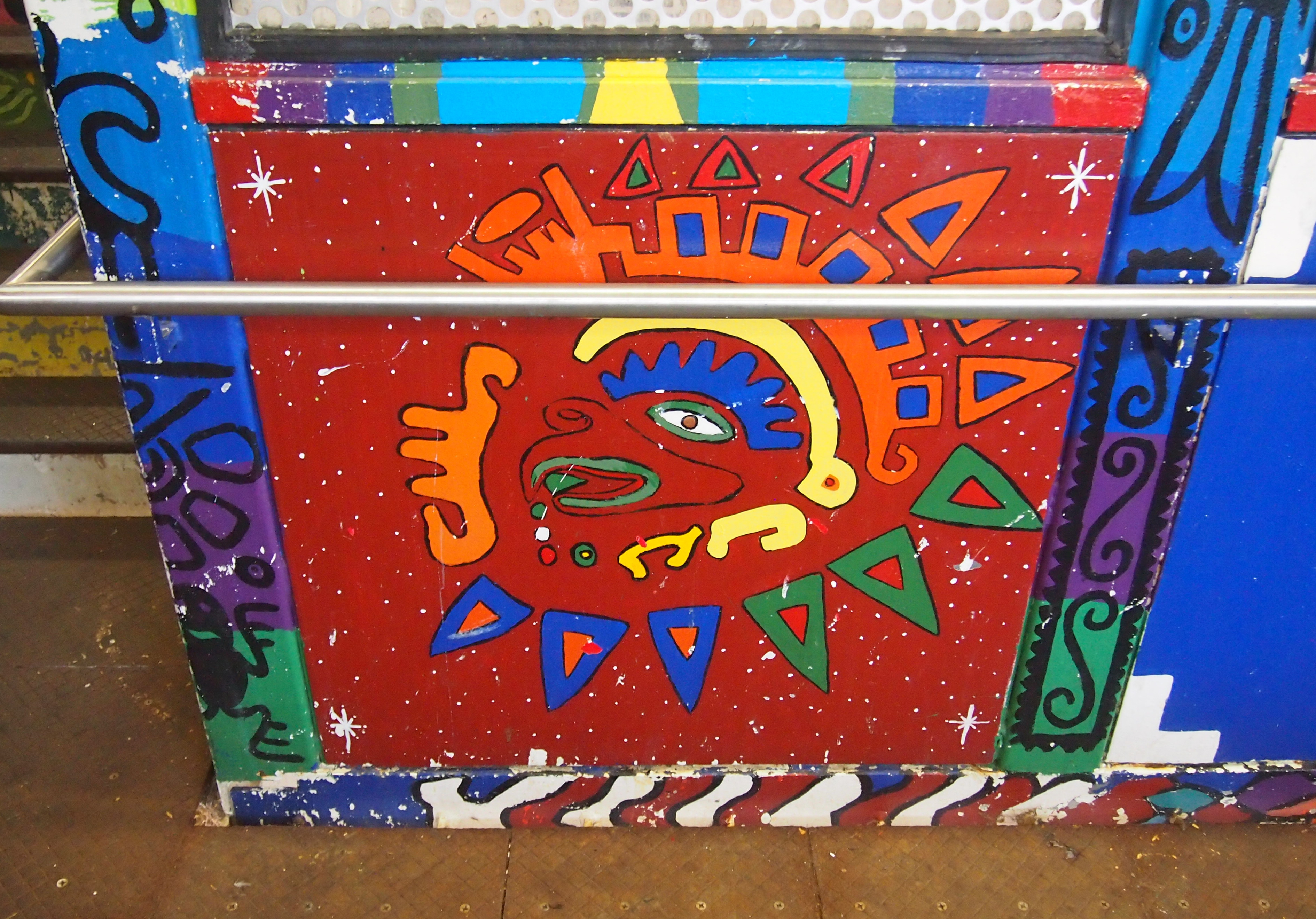
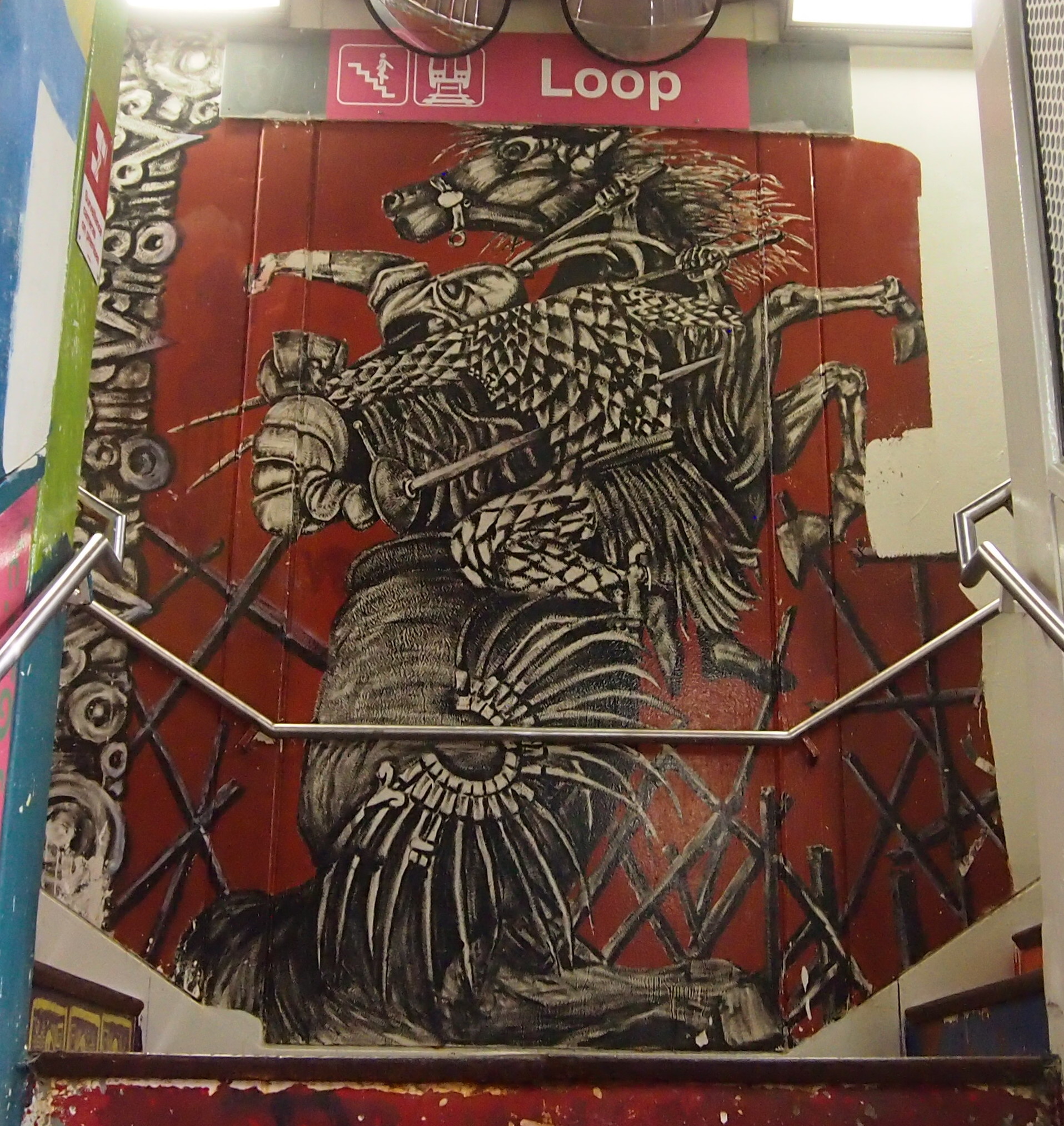
En route to the National Museum of Mexican Art on Saturday, I passed through the 18th Street Station of the CTA’s Pink Line. A number of El stations feature public art, but 18th Street, which serves the Pilsen neighborhood, is lavishly decked out.

18th Street Station18th Street Station18th Street StationAccording to Chicago-l.org, which has detailed information about many aspects of Chicago’s elevated and subway system, the 18th Station “features two art installations contributed by members of the local Hispanic community, both installed under the auspices of the CTA’s Adopt-a-Station Program.”

The first is a mosaic mural on the exterior of the station on the east side of the entrance, installed soon after the station opened in the early 1990s (the current station replaced a earlier one dating from the 1890s). I didn’t see that mural this time, since I headed westward to visit the museum.

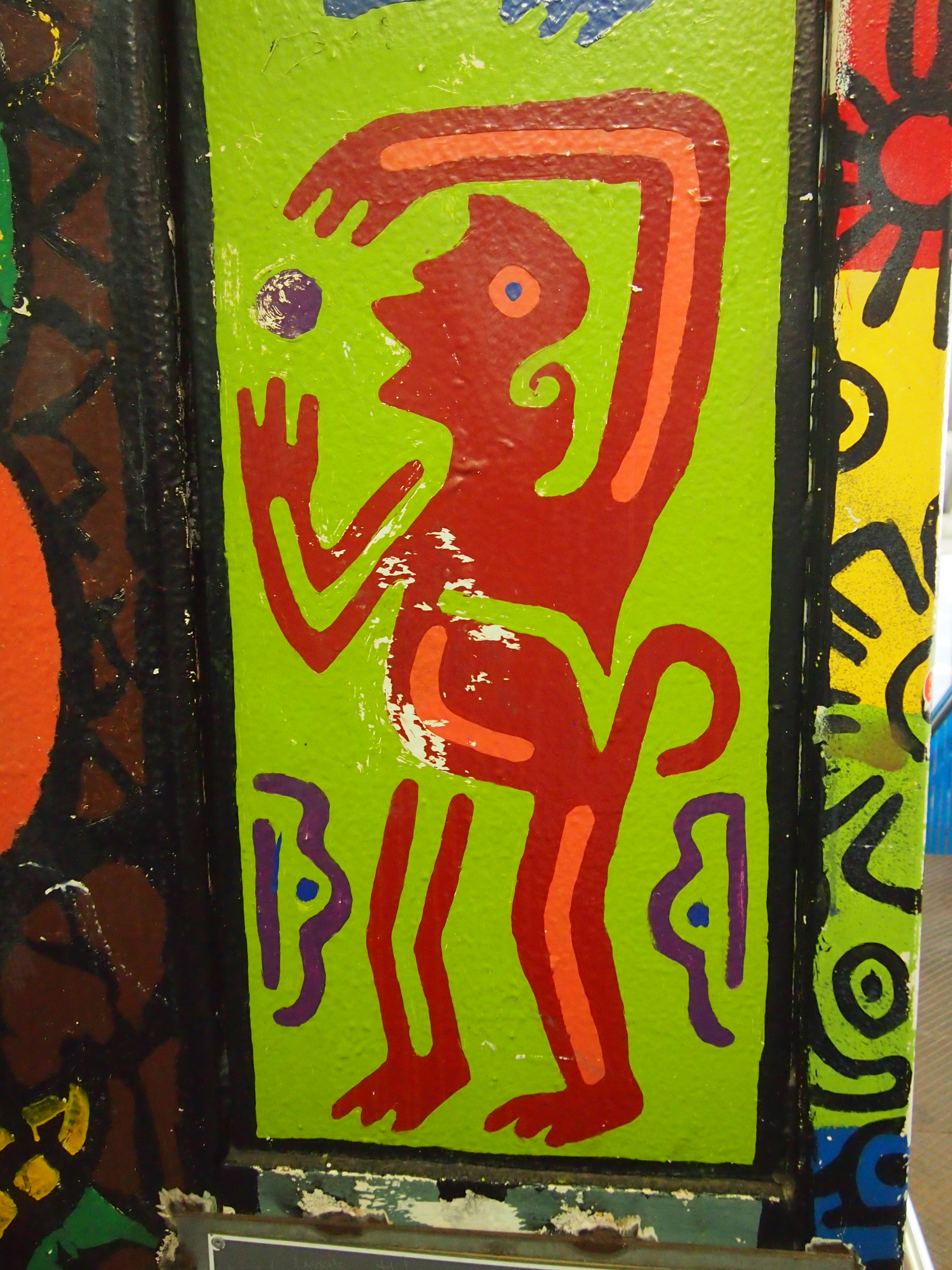
In 1998, local artist Francisco Mendoza and the Mexican Fine Arts Center Museum (now the National Museum of Mexican Art), along with the city-run youth art program Gallery 37, created a second art installation at the station, notes Chicago-l.org. “Art teacher Mendoza enlisted his students at Gallery 18, a satellite program of Gallery 37, along with anyone else in the neighborhood who could paint to create colorful murals throughout the station.”

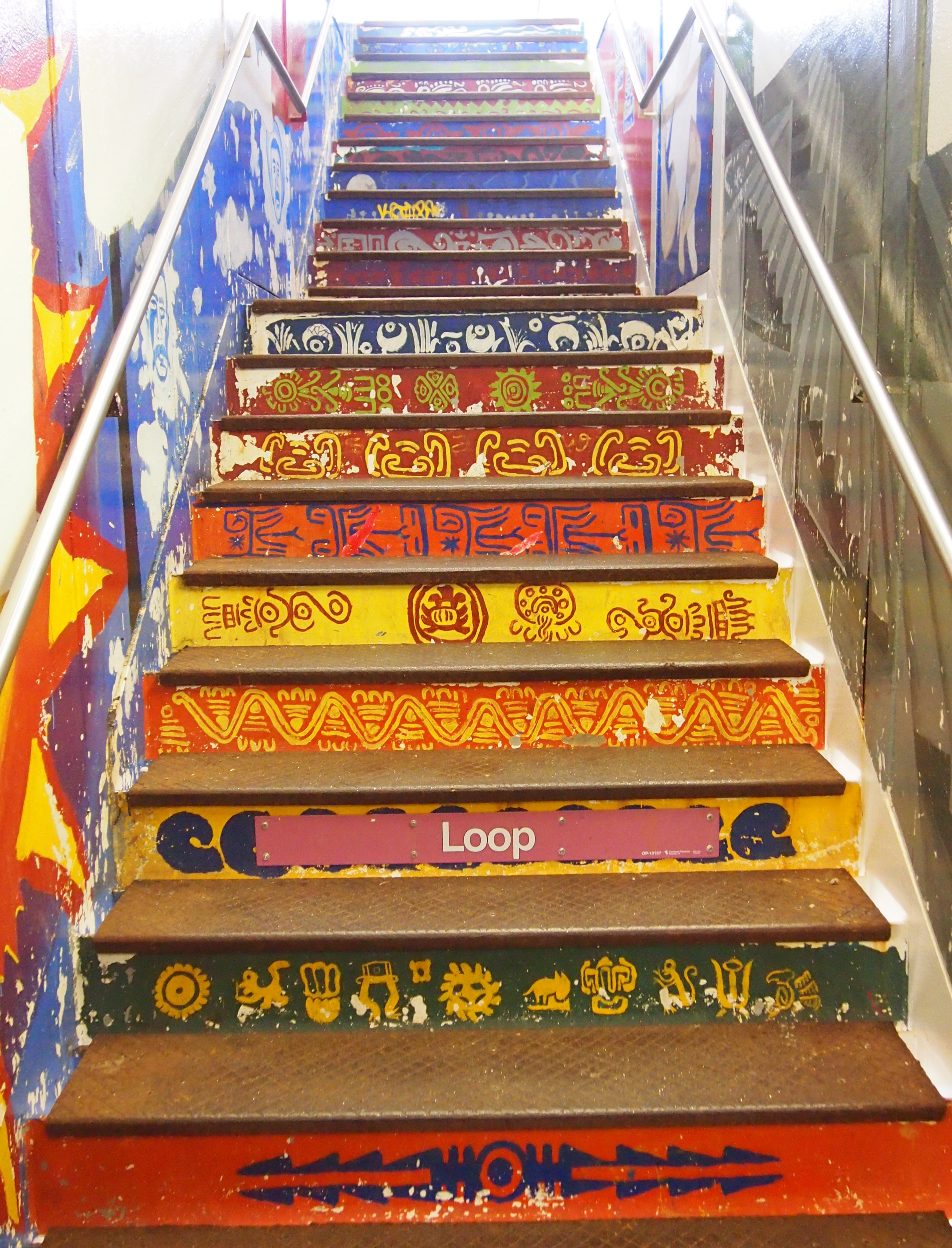
That’s what I saw. Since CTA platforms now feature screens that estimate the arrival time of the next train — a very handy use of information tech, I believe — I had time to wander around the station and take pictures. Such as of the painted stairwells.

Stairs!More stairs!“Concentrated largely on the platforms and in the stairwells between the station house and platforms, the artwork covers any solid surfaces that could be utilized, including the lower panels on the side walls on the west platform and the full-height walls on the east platform under the platform canopy, and the walls, window and wall framing, and risers in the station stairwells.”

The station could look like an ordinary metal-and-concrete facility, but the painting makes it distinctive. It’s a good example of being someplace, rather than just anyplace.

Hall of State, Fair Park

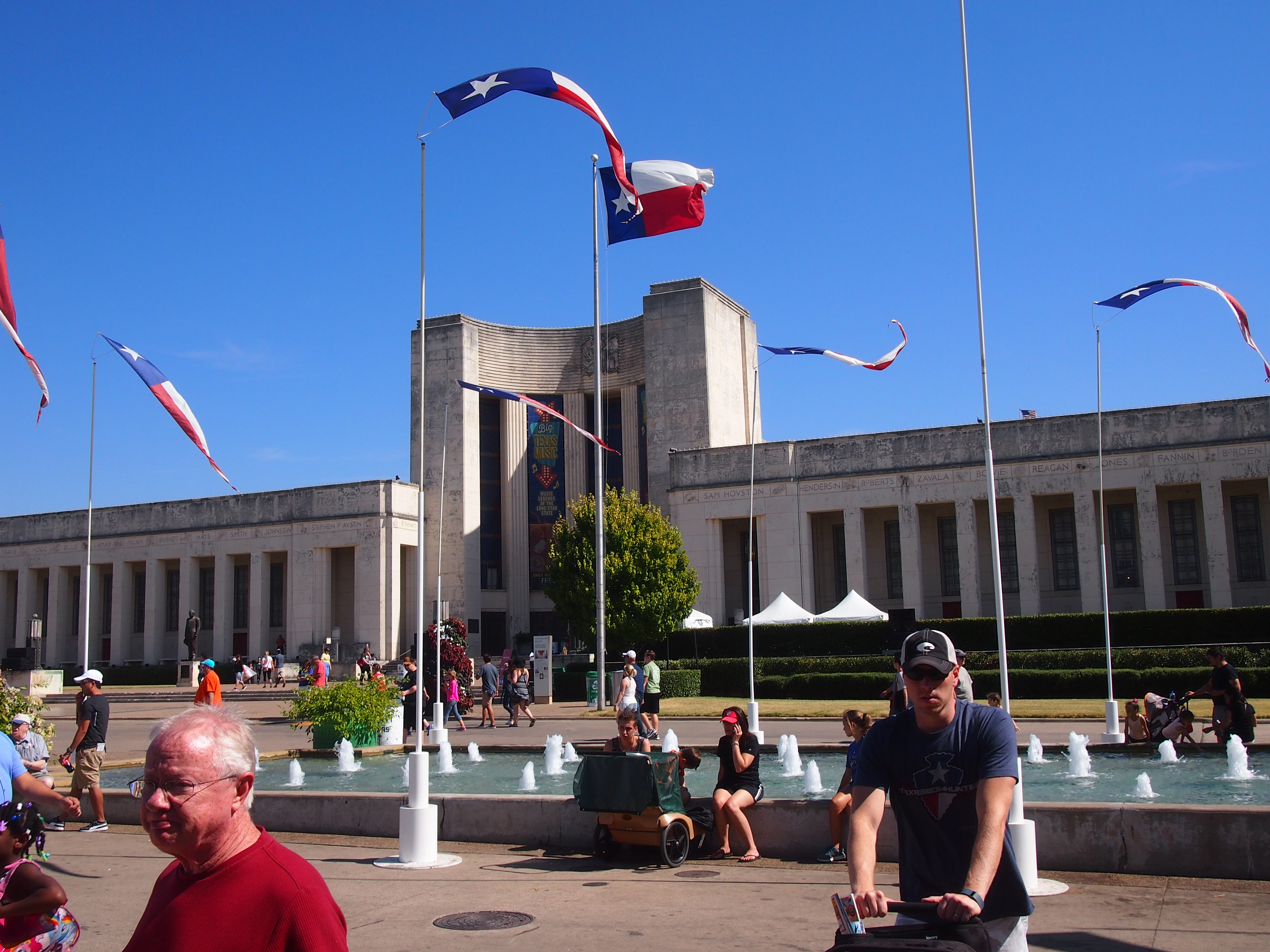
At one end of the Fair Park Esplanade is the Hall of State, a stately hall indeed. “The Hall of State, a museum, archive, and reference library, was erected in 1936 at a cost of about $1.2 million by the state of Texas at Fair Park in Dallas to house the exhibits of the Texas Centennial Exposition and the Greater Texas and Pan-American Exposition of 1937,” explains the Texas State Historical Association.
Hall of State, Fair Park“The structure, designed by eleven Texas architects, is characterized as Art Deco… The front is 360 feet long, and the rear wing extends back 180 feet… The walls are surfaced with Texas limestone. A carved frieze memorializing names of historical importance encircles the building. Carvings on the frieze display Texas flora.”

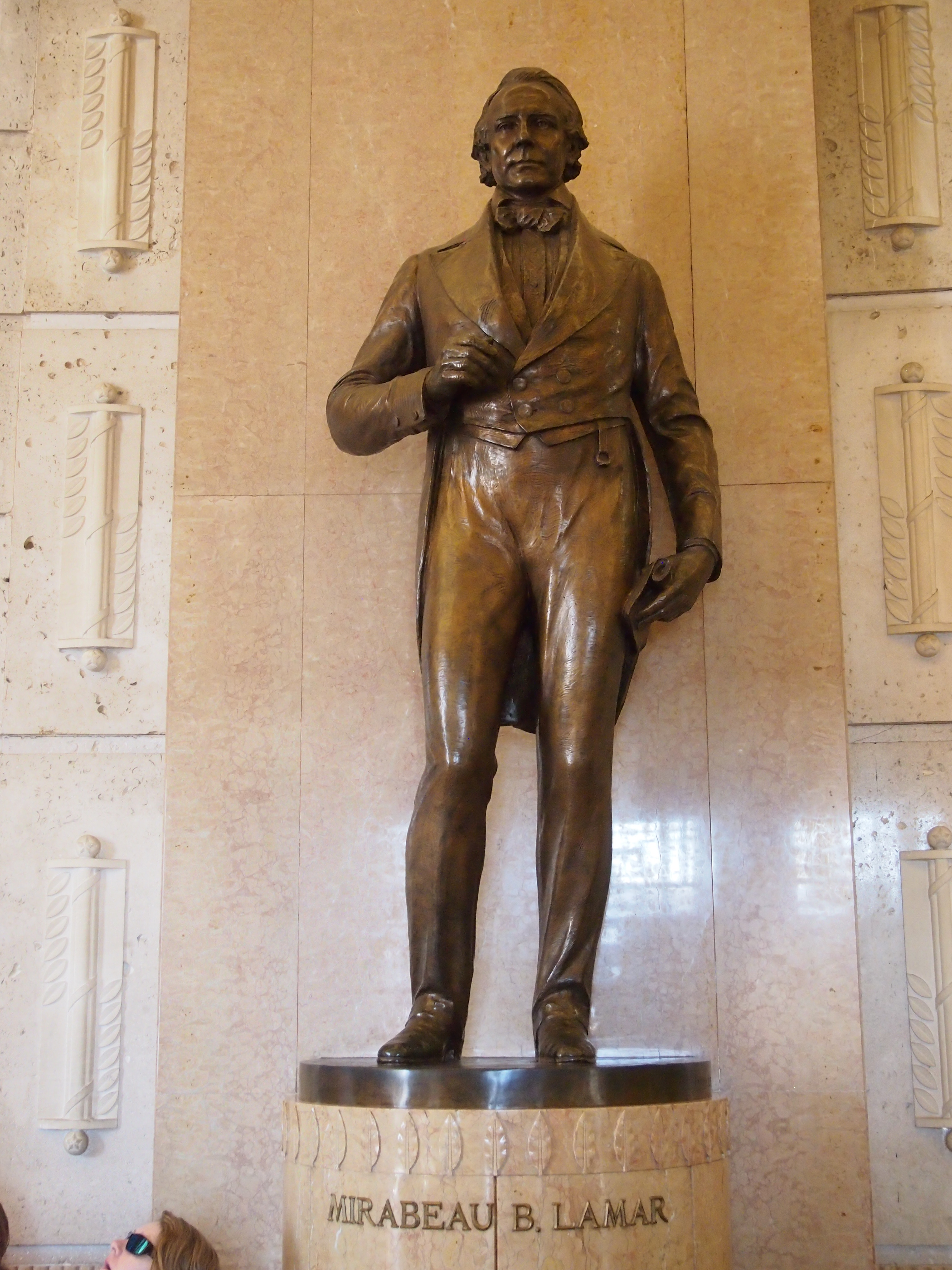
I went inside for a look, and soon was face-to-face — or maybe face-to-plinth — with six statues of early Texas luminaries: Stephen F. Austin, Sam Houston, Mirabeau B. Lamar, James Fannin, Thomas J. Rusk, and William B. Travis. Here’s Lamar (1798-1859), second president of the Republic of Texas, among other things.
MB LamarPompeo Coppini did the sculptures. I’d run across his work before at the Texas State Cemetery in Austin. If it’s a monumental sculpture in Texas done in the early to mid-20th century, odds are he did it.

Then I entered Great Hall.
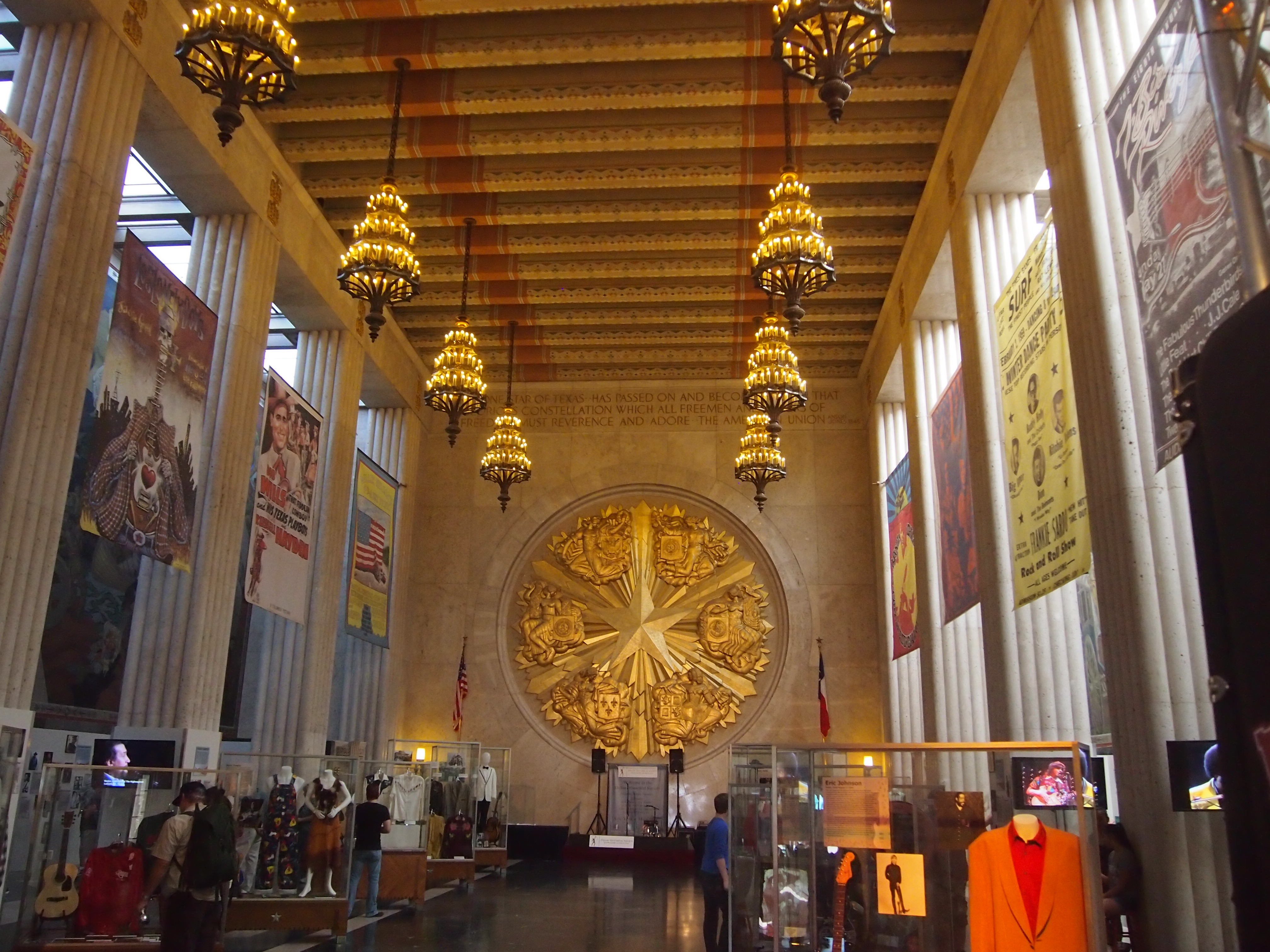
Hall of State, Great HallThe TSHA again: “The Great Hall, or the Hall of the Six Flags, in the central wing, has a forty-six-foot-high ceiling. Murals on the north and south walls depict the history of the state and its industrial, cultural, and agricultural progress. These were painted by Eugene Savage of New York.” I’d run across him before as well.

Great Hall, Hall of StateDuring my visit, the Great Hall happened to be sporting an exhibit about Texas musicians, and I will say that I learned that Meat Loaf was from Dallas, something I didn’t know. Actually I didn’t know much about many of the Texas musicians mentioned in the exhibit, such as various bluesmen and Western swing players and Tejano bands.

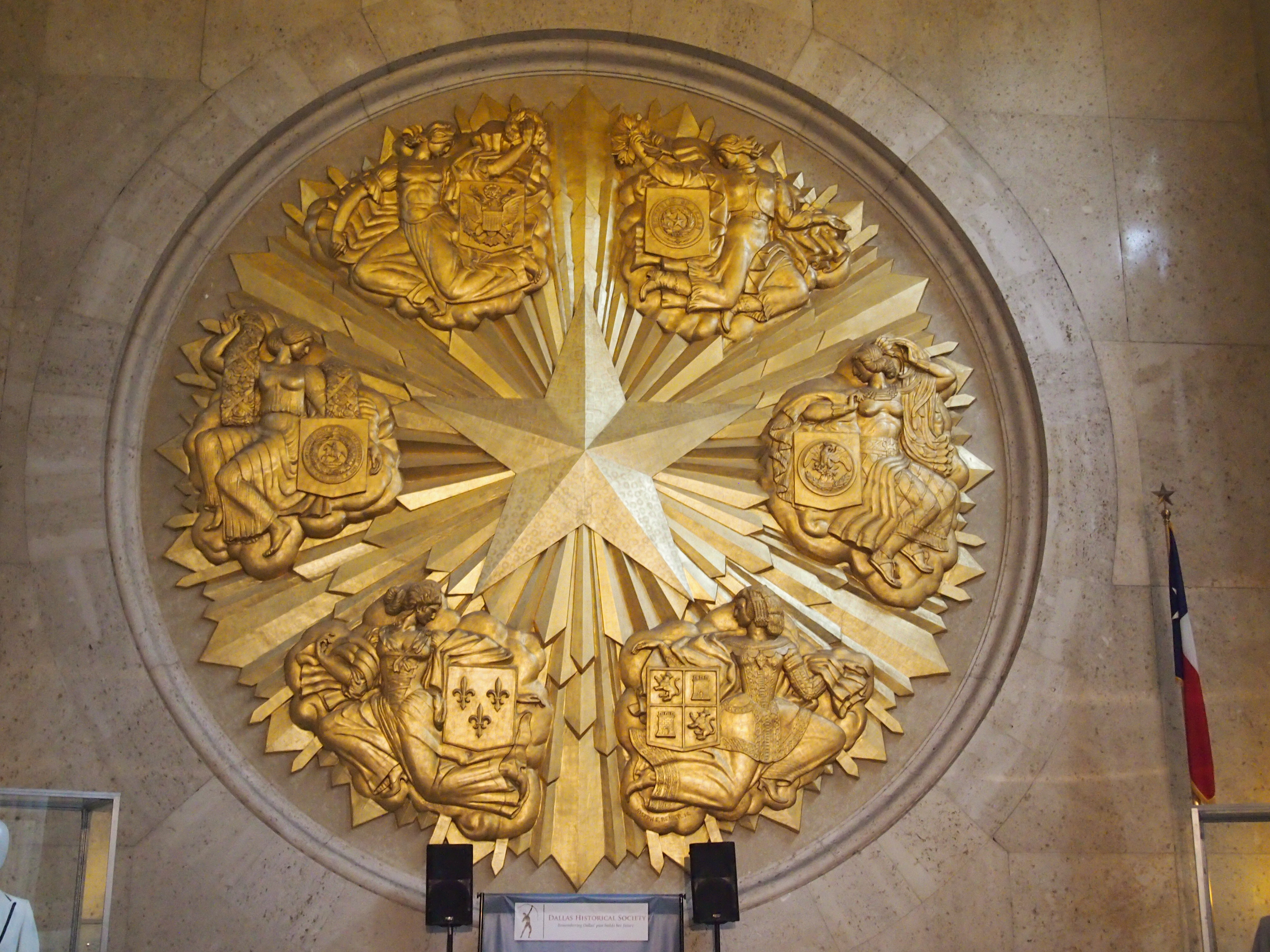
On the back wall of the Great Hall is a gold-leafed medallion with the Lone Star emblem of Texas surrounded by representations of the six nations whose flags have flown over the state.
Gold leaf!The United States and the Republic of Texas are at the top; the Confederacy and Mexico in the middle; and France and Spain on the bottom. The six together are a persistent theme in symbolic representations of modern Texas.

A Stroll Down the Fair Park Esplanade

My afternoon at the State Fair of Texas wasn’t the eat-it-now experience that the Wisconsin State Fair was. I ate two things: a fried chocolate pie like the kind to be found near the Texas-Oklahoma border, and a cheese and jalapeño corn dog, the best corn dog I’ve had in years, maybe ever. It’s the thing to eat at the fair, which is one of the claimants for introducing the food to the world.

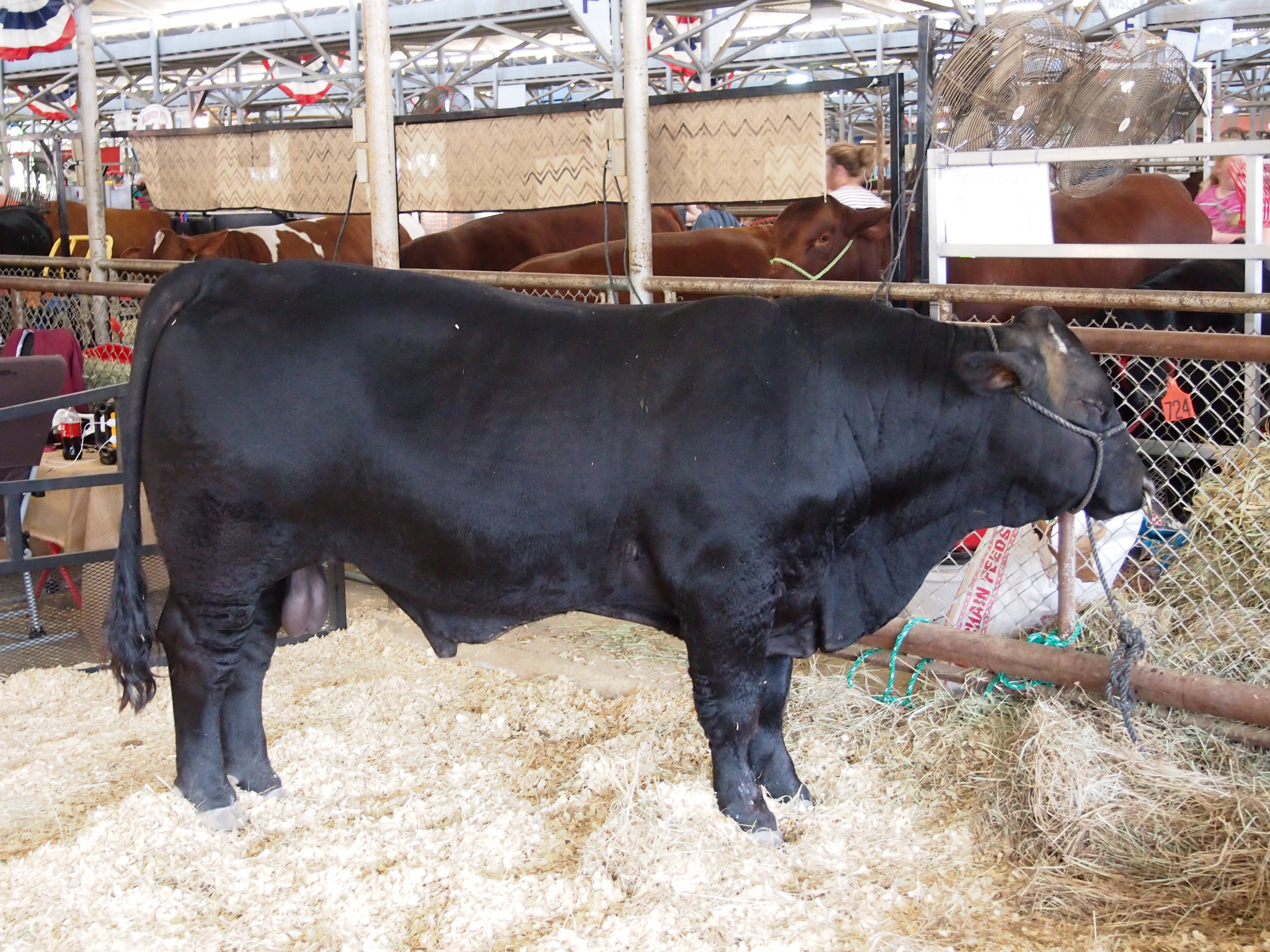
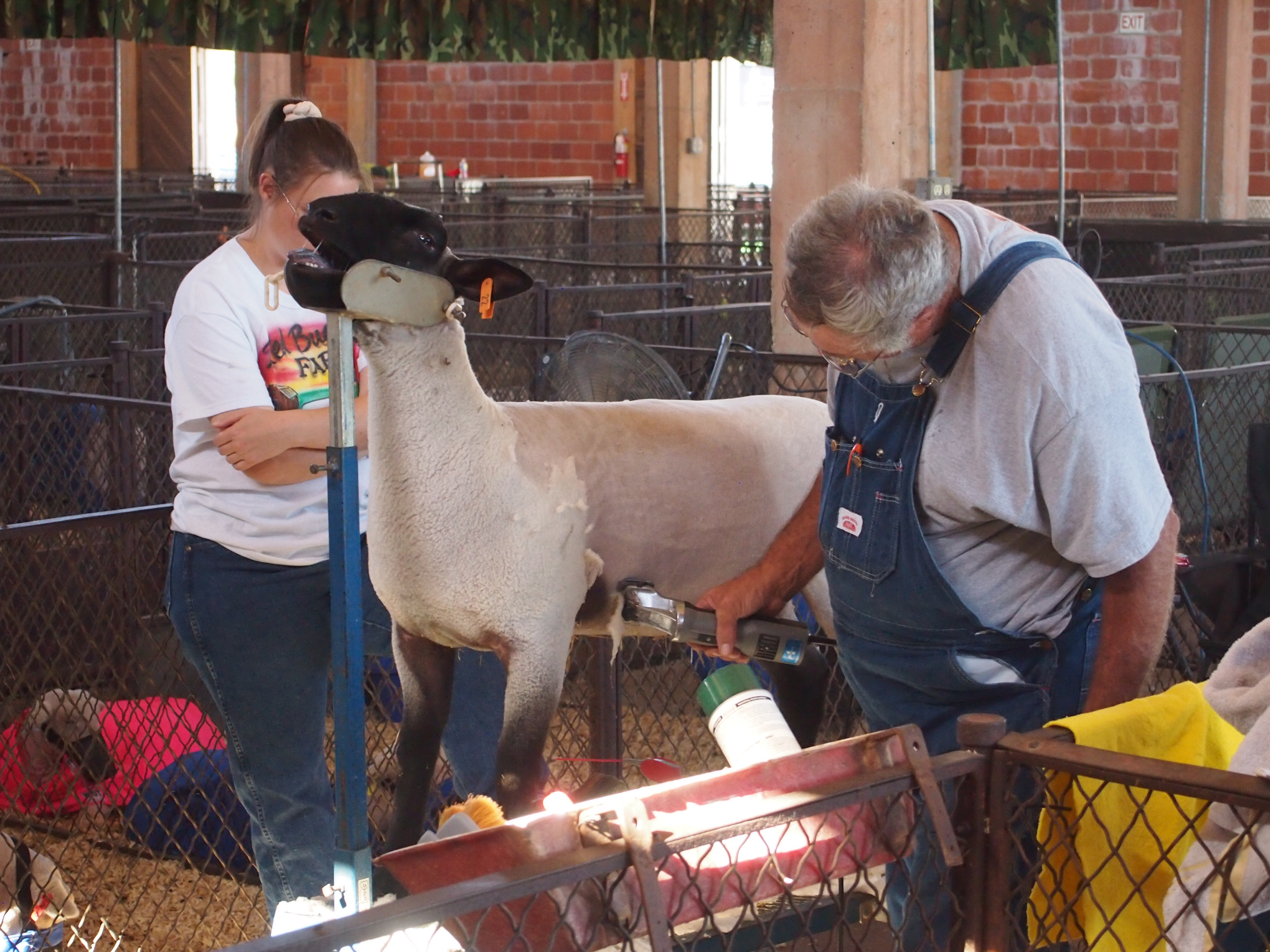
Mostly I looked around. I spent some time in the animal barns, for example.

State Fair of TexasState Fair of TexasI missed the pig races, but I did see some riding acrobatics.

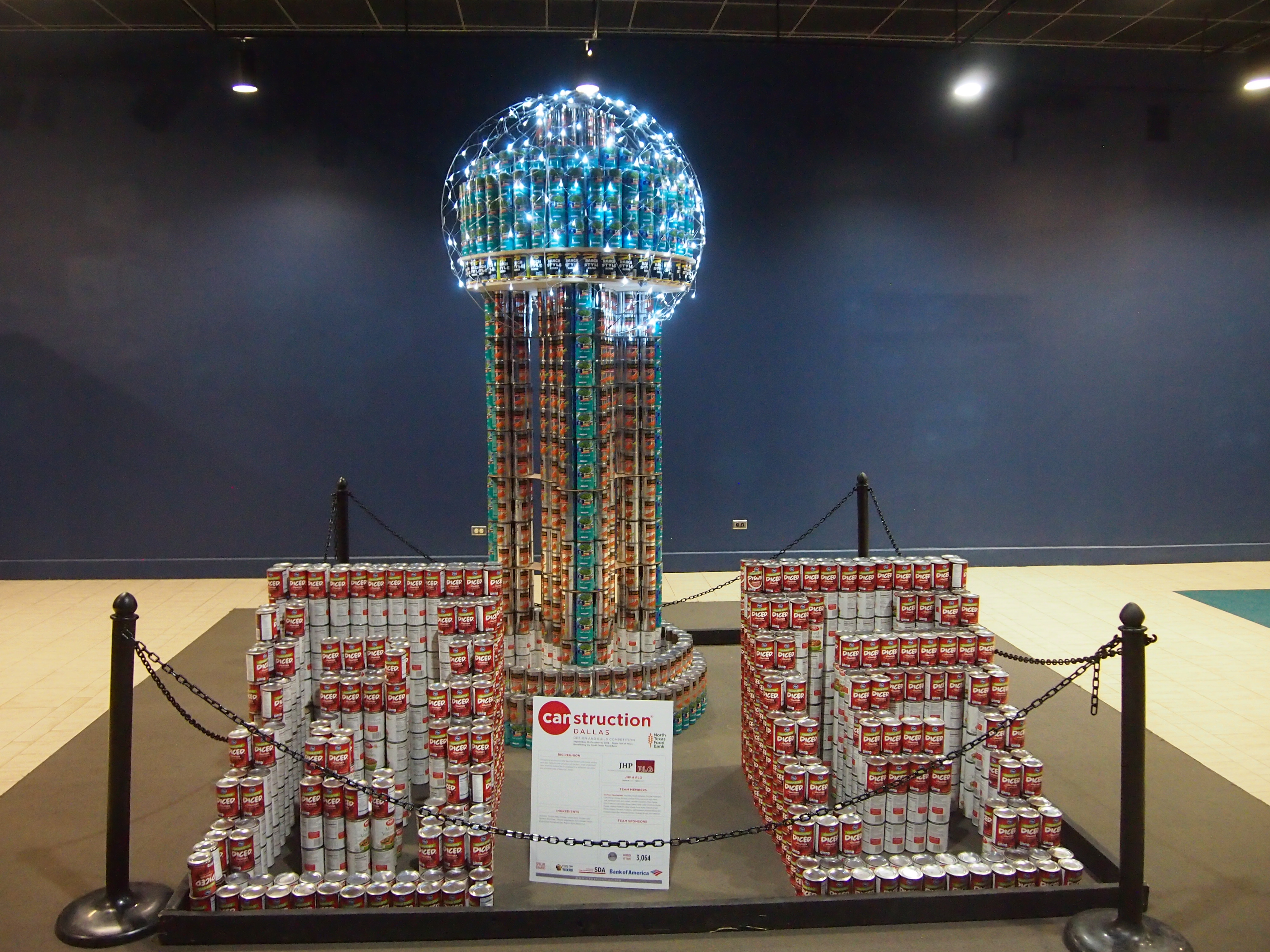
State Fair of TexasI also saw a temporary exhibit at the former Museum of Nature & Science, which left Fair Park a few years ago to become the Perot Museum of Nature and Science. The exhibit was called Canstruction, featuring structures made of cans. Such as “Big Reunion,” a model of Dallas’ Reunion Tower by JHP and RLG, two Dallas architecture firms, made out of 3,064 cans — carrots, spinach, mixed vegetables, tomatoes, and beans — plus wiring and LED lights (all that info is on the sign).
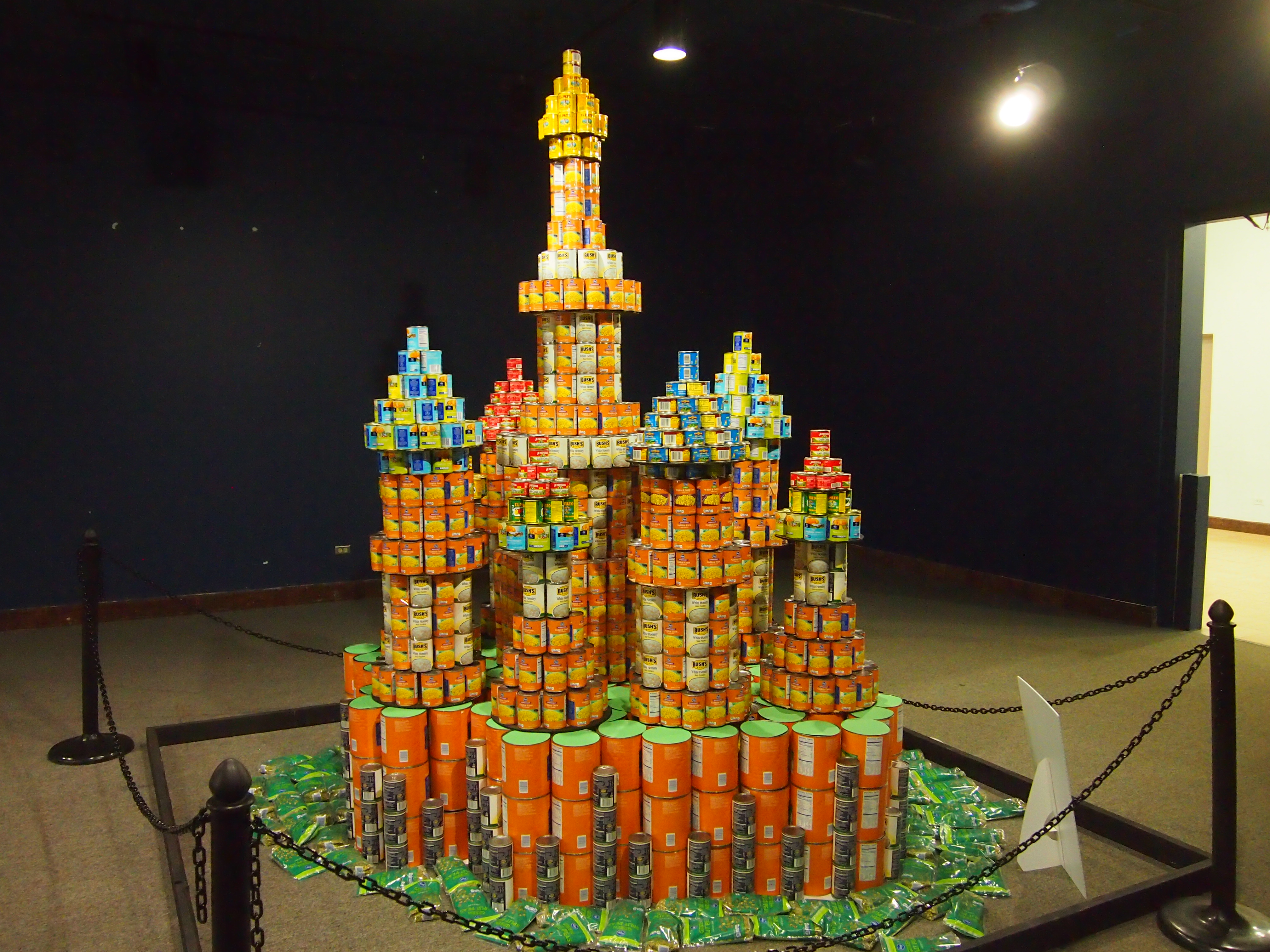
CanstructionI liked this one too.
Canstruction“St. Basil’s Cathedral, Moscow,” by Humphreys & Partners Architects, using 2,090 cans: corn, jalapeños, tomato sauce, chilis, and mandarin oranges, among others.

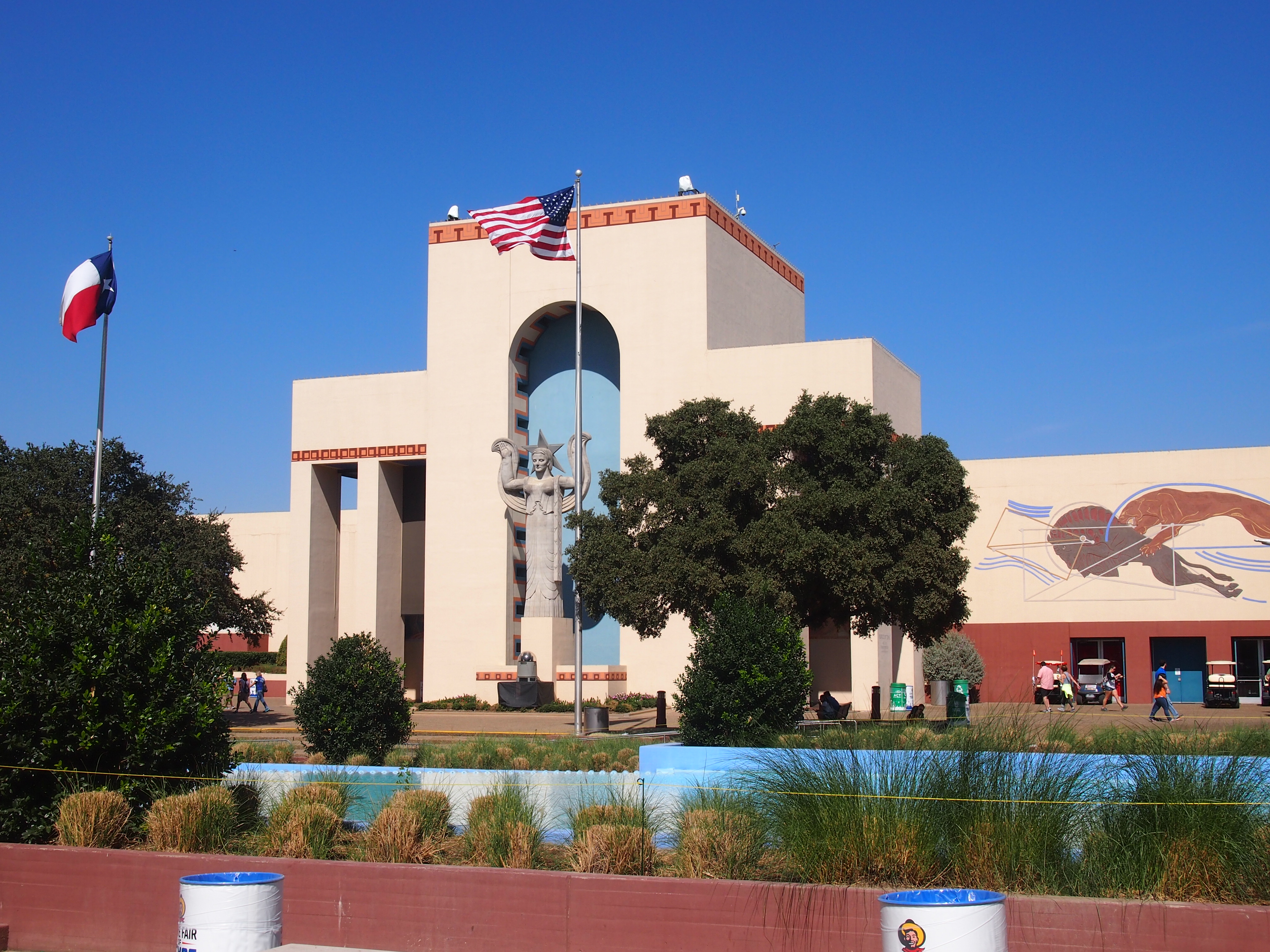
I also got a good look at Fair Park itself, one of the deco marvels of the world. I’d been to the park before, but barely took the opportunity to walk around and gawk at the likes of this.
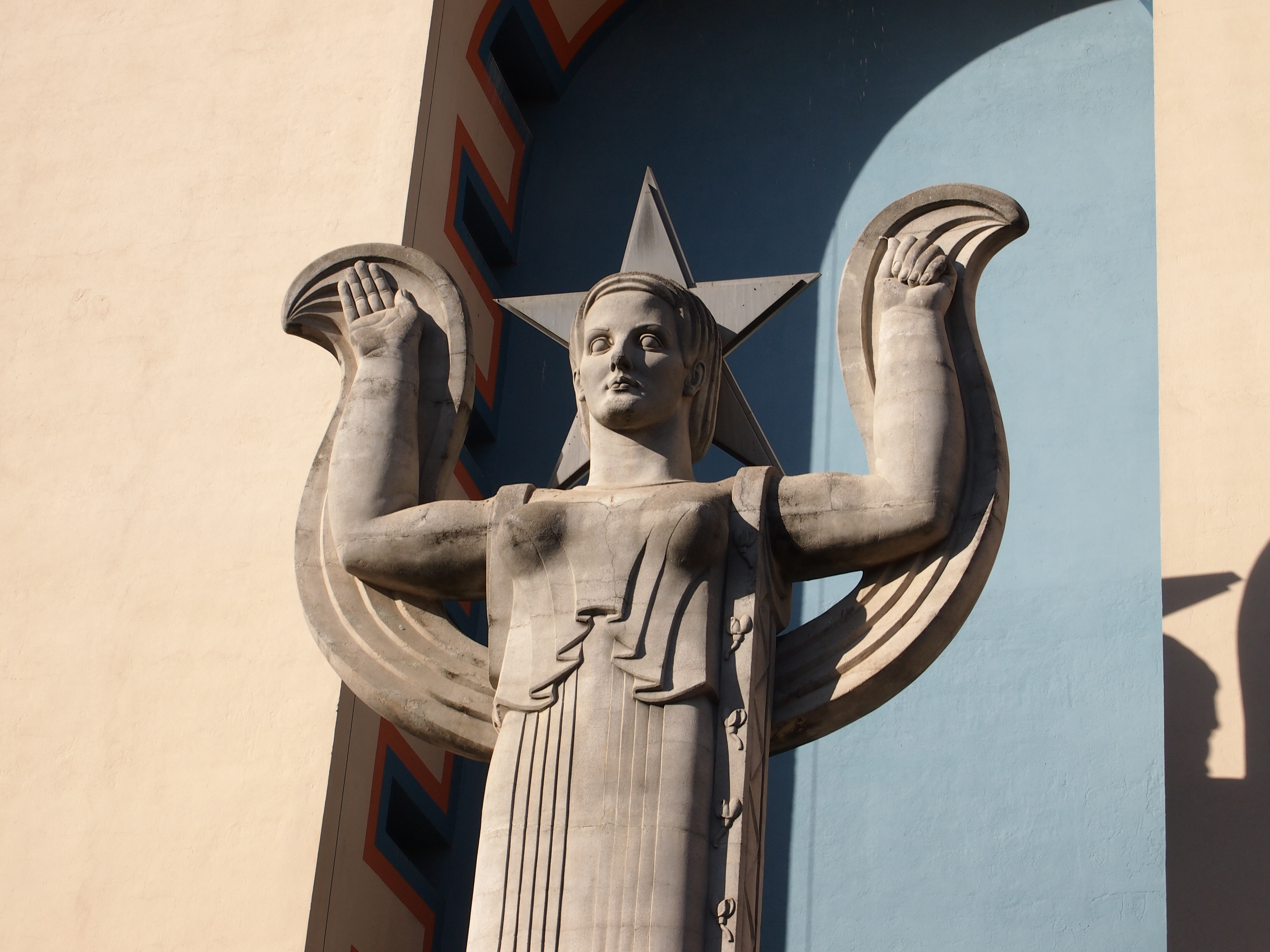
Fair Park 2015That’s the South Entrado of the Centennial Building, featuring a statue of the Republic of Texas, complete with the lone star and cotton flower. It’s part of Fair Park’s grand Esplanade, with buildings and sculpture on either side of a long reflecting pool. There are six monumental statues along the Esplanade.
The Republic of TexasFairpark.org says of the Esplanade that “the principal axis of the Texas Centennial Exposition was developed along the existing layout of the State Fair grounds. [Head architect] George Dahl strengthened the formal axis by adapting existing, unrelated State Fair exhibition halls with new, monumental facades and projecting porticos on each side of a 700-foot-long reflecting pool.

“The porticos establish the visual framework of the Esplanade and accentuate the grand perspective leading up to the Hall of State. Monumental artwork deftly combines with additional site features to complete the visually complex – and dramatic – spectacle.”

Each of the six statues represents the six nations that have asserted sovereignty over Texas or parts of it — what the Six Flags Over Texas refers to — namely Spain, France, Mexico, the Republic of Texas, the Confederacy, and the United States. France, Mexico and the U.S. were by Raoul Josset, a French sculptor (remarkable how many Euro-sculptors were active in Texas), while Spain, the Republic, and the C.S.A. were by Lawrence Tenney Stevens.

The Esplanade also featured a lot of murals, such as this bas relief mural by Pierre Bourdelle. This was one entitled “Man and Angel.” One source tells me it symbolizes air transport. It’s one of many murals along the Esplanade, each about three stories high.

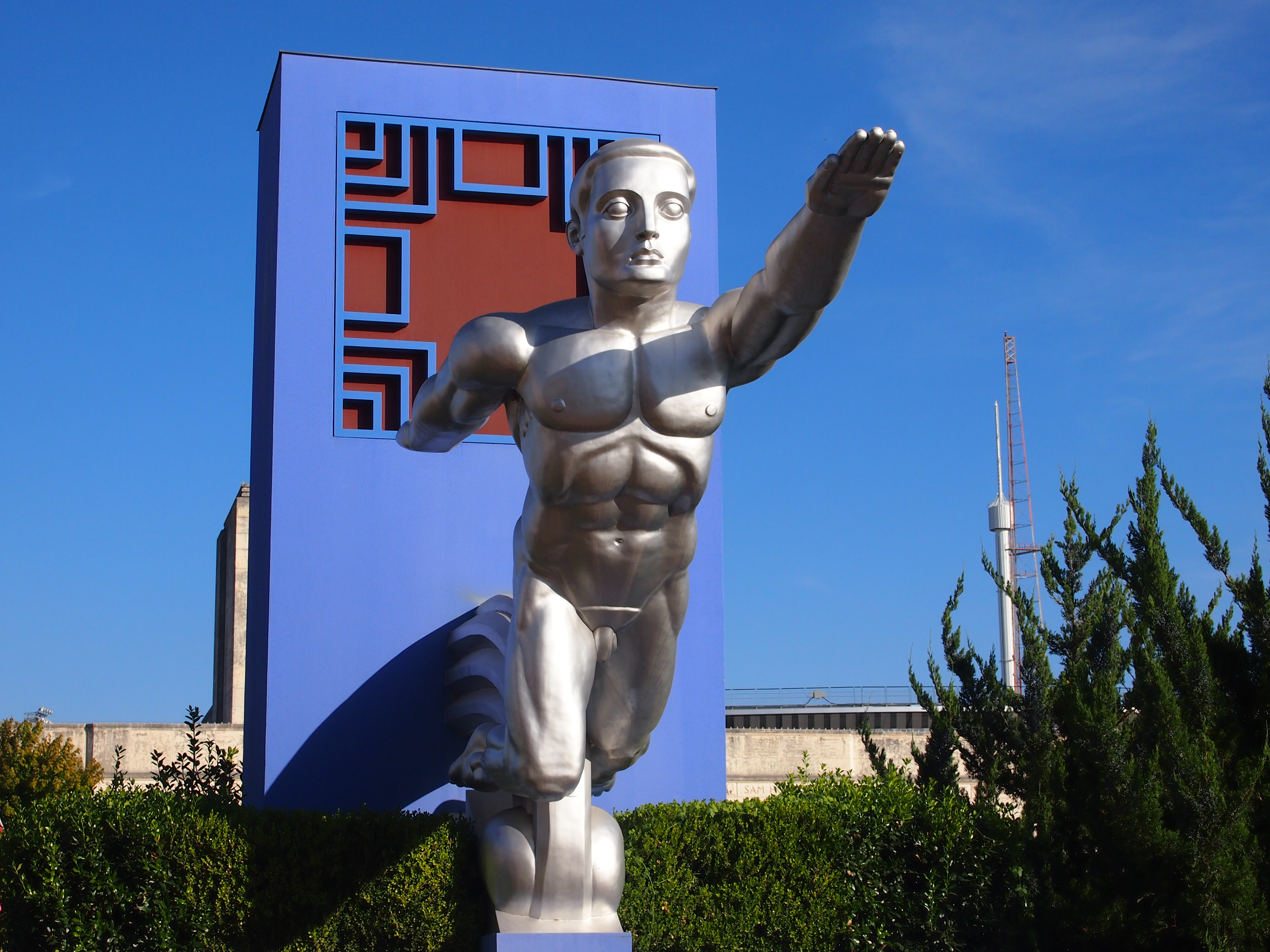
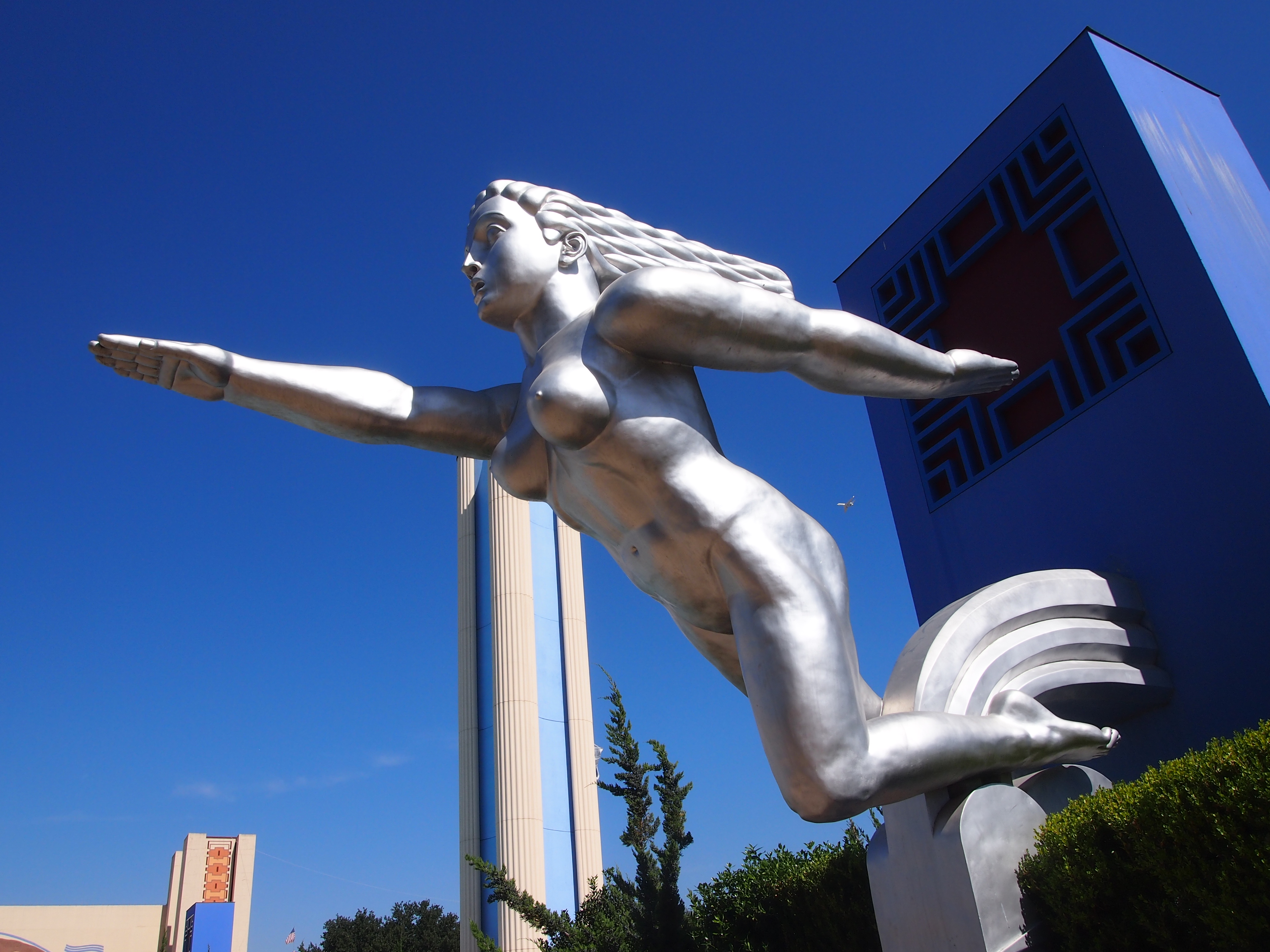
Fair Park 2015At the eastern end of the pool are two large figures, the striking David Newton replicas of Lawrence Tenney Stevens’s 1936 sculptures, “The Tenor” and “The Contralto.” The originals were lost, maybe melted down for their metal during WWII, but exact replicas were created in 2009.
Fair ParkFair Park 2015As I was taking pictures of “The Contralto,” a group of boys came up to the statue. “Hey, is that a chick?” “Yeah, that’s a chick.” Some laughter. Yep, it’s an aluminum deco chick, companion to the aluminum deco dude nearby.

Fremont, Seattle

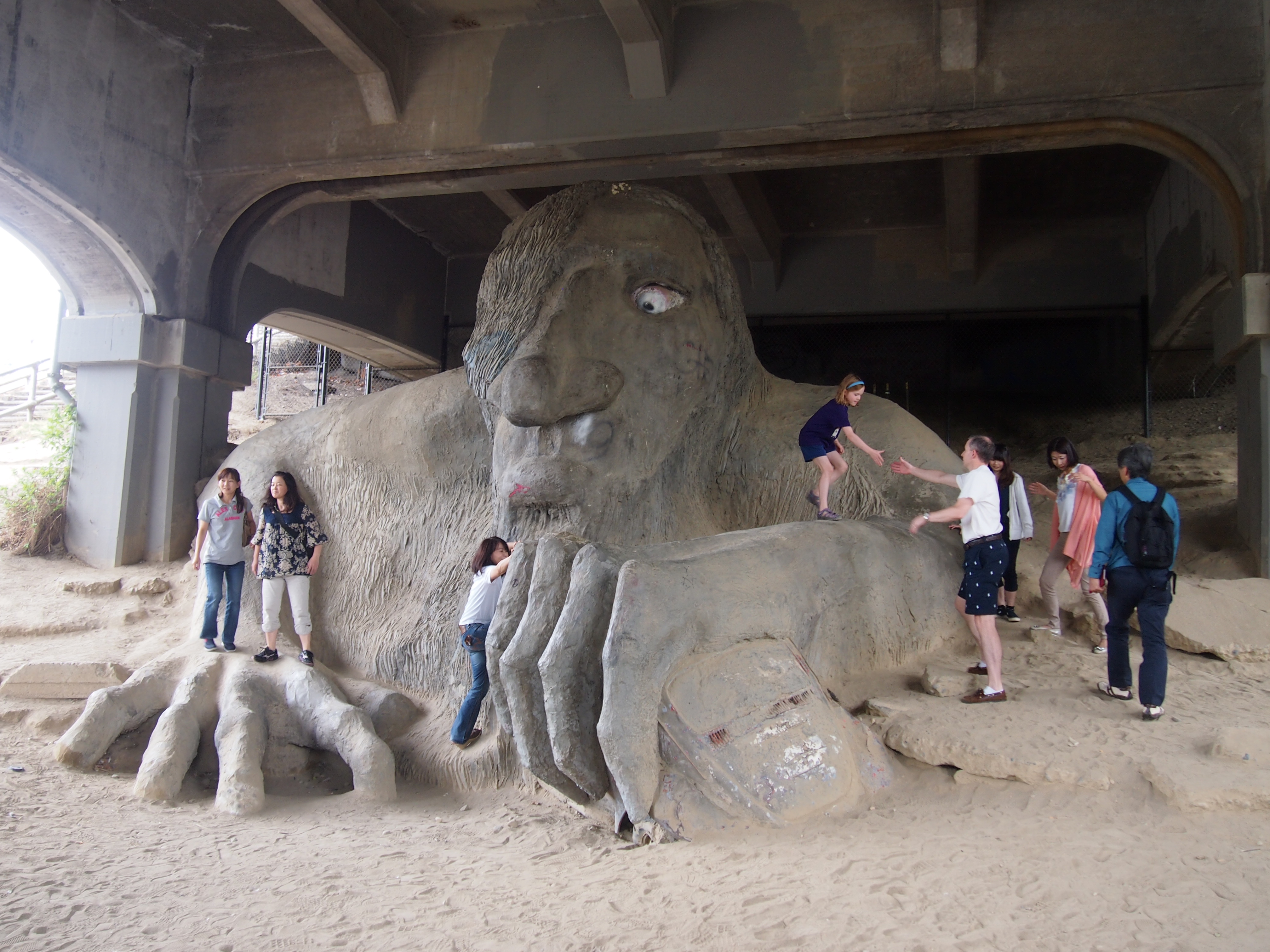
A popular thing to do during a visit to the Fremont neighborhood of Seattle is to pay your respects to the Fremont Troll. I’m not one to ignore a little local color, so naturally I went to see the troll on the morning of August 28, making my way there on foot from the room I’d rented in the “Upper Fremont,” about a 20-minute walk away.

I wasn’t the only one enjoying the troll that morning.
Fremont TrollFittingly, the troll is directly underneath a bridge, one that carries traffic across Lake Union on Aurora Ave. (Washington 99) to and from downtown Seattle (it’s also known as the Aurora Bridge, more about which later). The troll is right where the bridge starts to rise away from the ground, so it has a cozy home.

Roadside America, which of course lauds the troll as “major fun,” reports that, “the Fremont troll — a big, fearsome, car-crushing bruiser — took up residence under the north end of the Aurora bridge on Halloween 1990. He was sculpted by four Seattle area artists — Steve Badanes, Will Martin, Donna Walter and Ross Whitehead — for the Fremont Arts Council. The head-and-shoulders sculpture is 18 feet tall.”

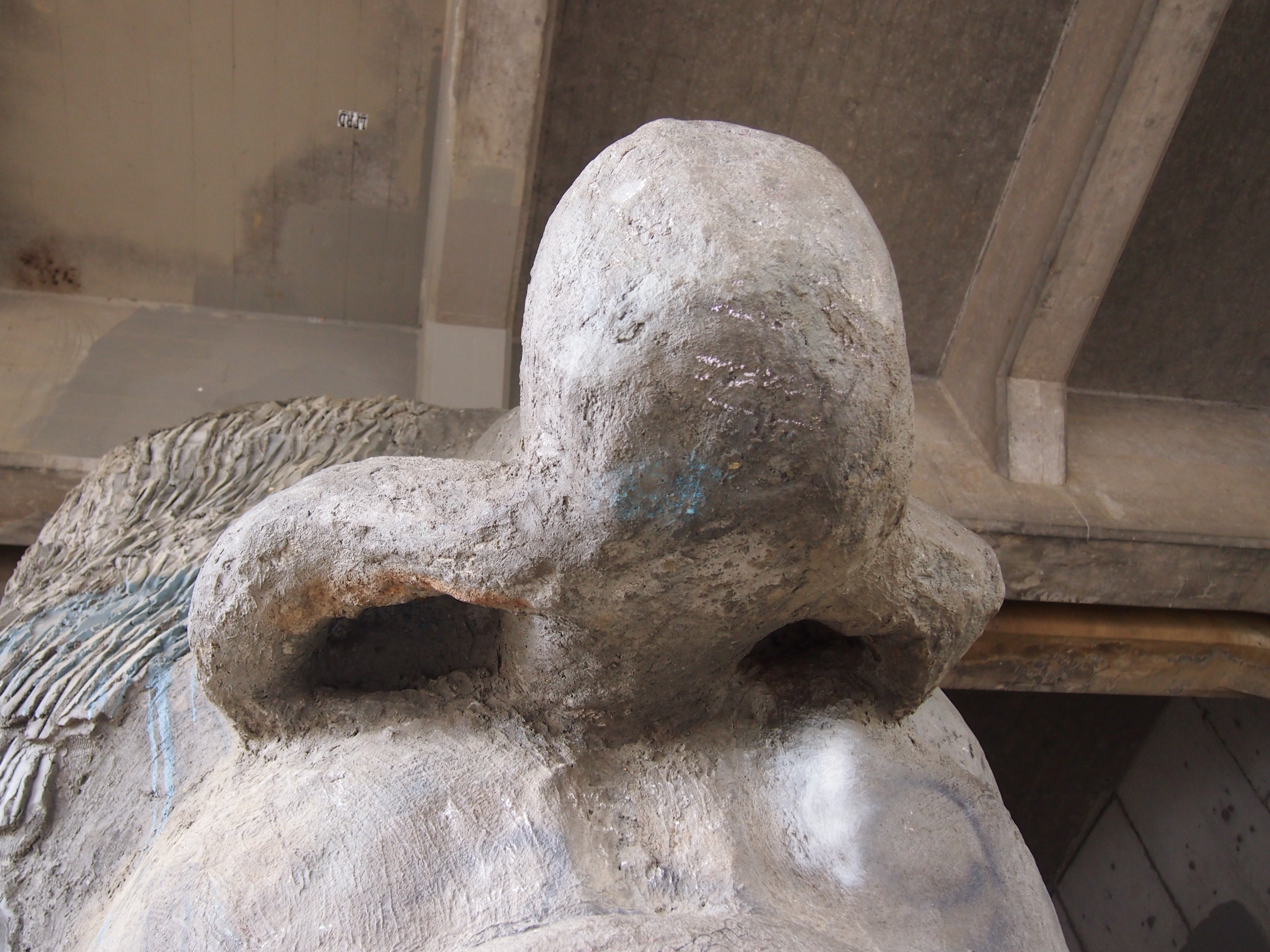
The nose is sizable, too.
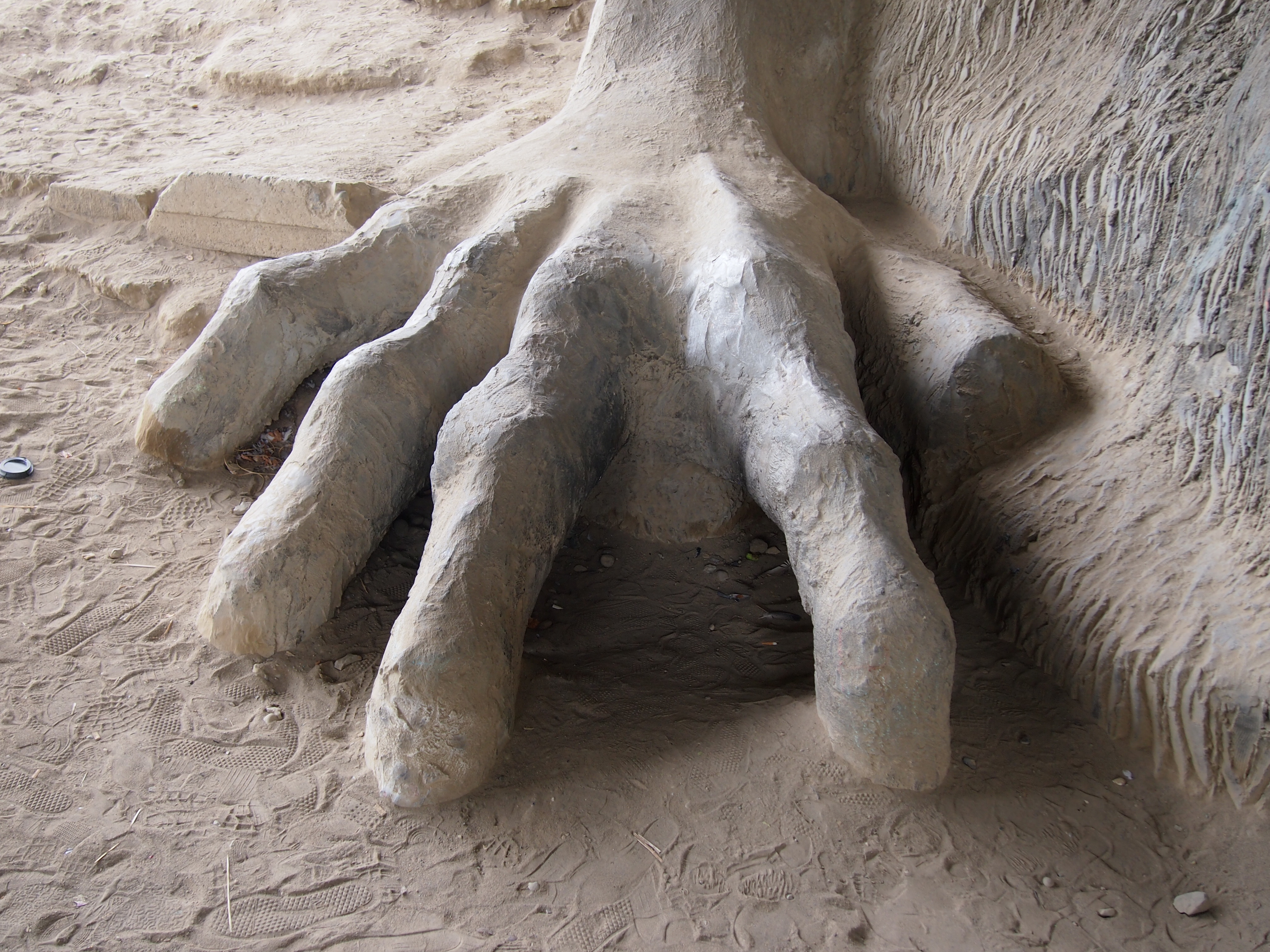
Fremont Troll 2015As are the hands. Paws? What do you call troll extremities?

Fremont TrollRoadside America again: “The shaggy-haired troll glares southward with his shiny metal eye — a hubcap? In his left hand, he crushes an old-style Volkswagen Beetle, which originally contained a time capsule of Elvis memorabilia; it was removed after the car was vandalized and the California license plate was stolen (the crushed car and out-of-state plate were meant as protests against ‘outsider’ development). There are plenty of places to pose, and interaction with the troll is encouraged as long as you’re respectful.” The entire entry is here.

Every year on October 31, the Fremont Arts Council holds an event called a Troll-a-ween. Not sure what that involves besides dressing up the troll.

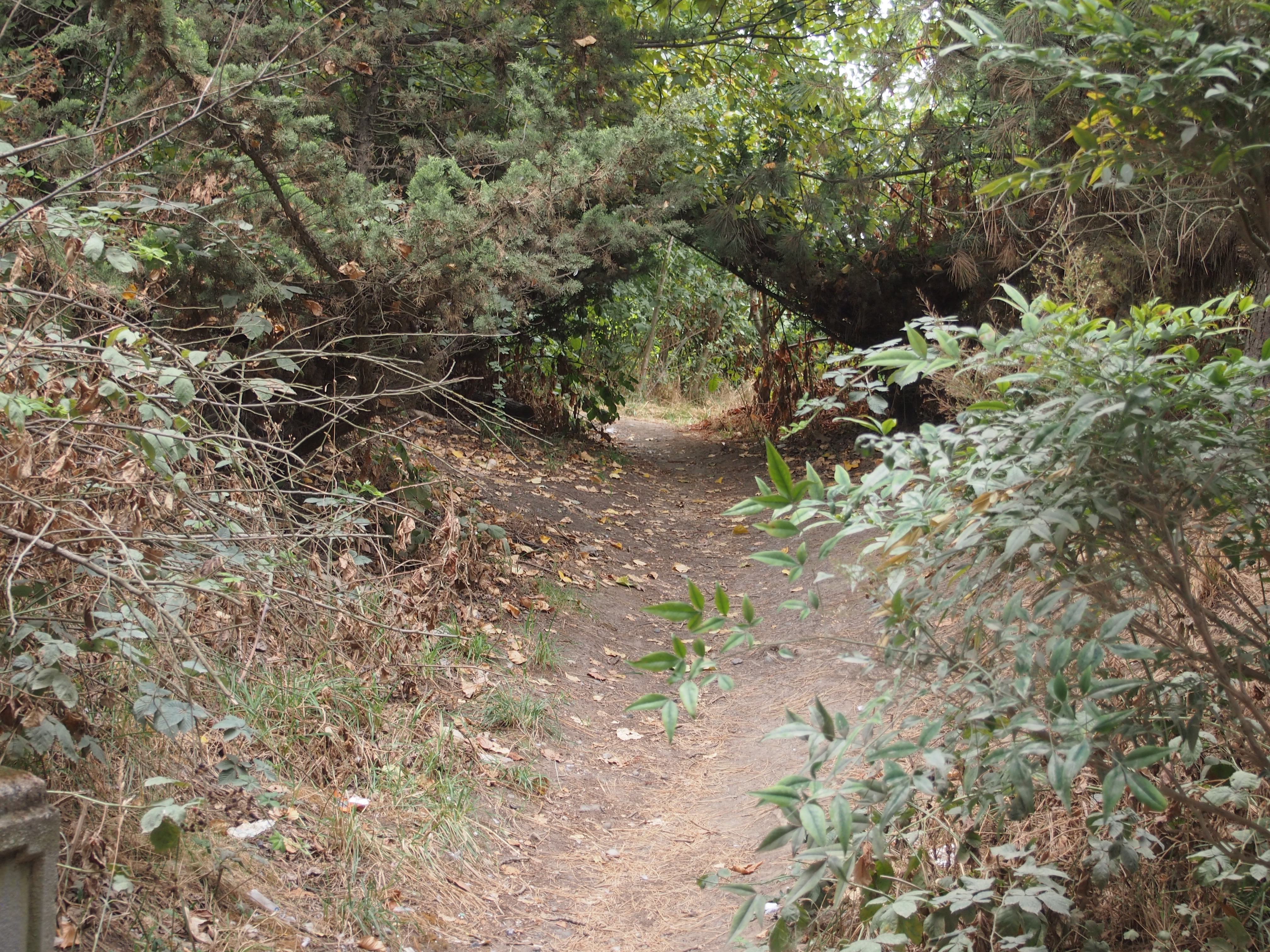
Just to the east of the troll, I noticed a path running parallel to the roadway, through a patch of undeveloped land. No one else had shown any interest in it.
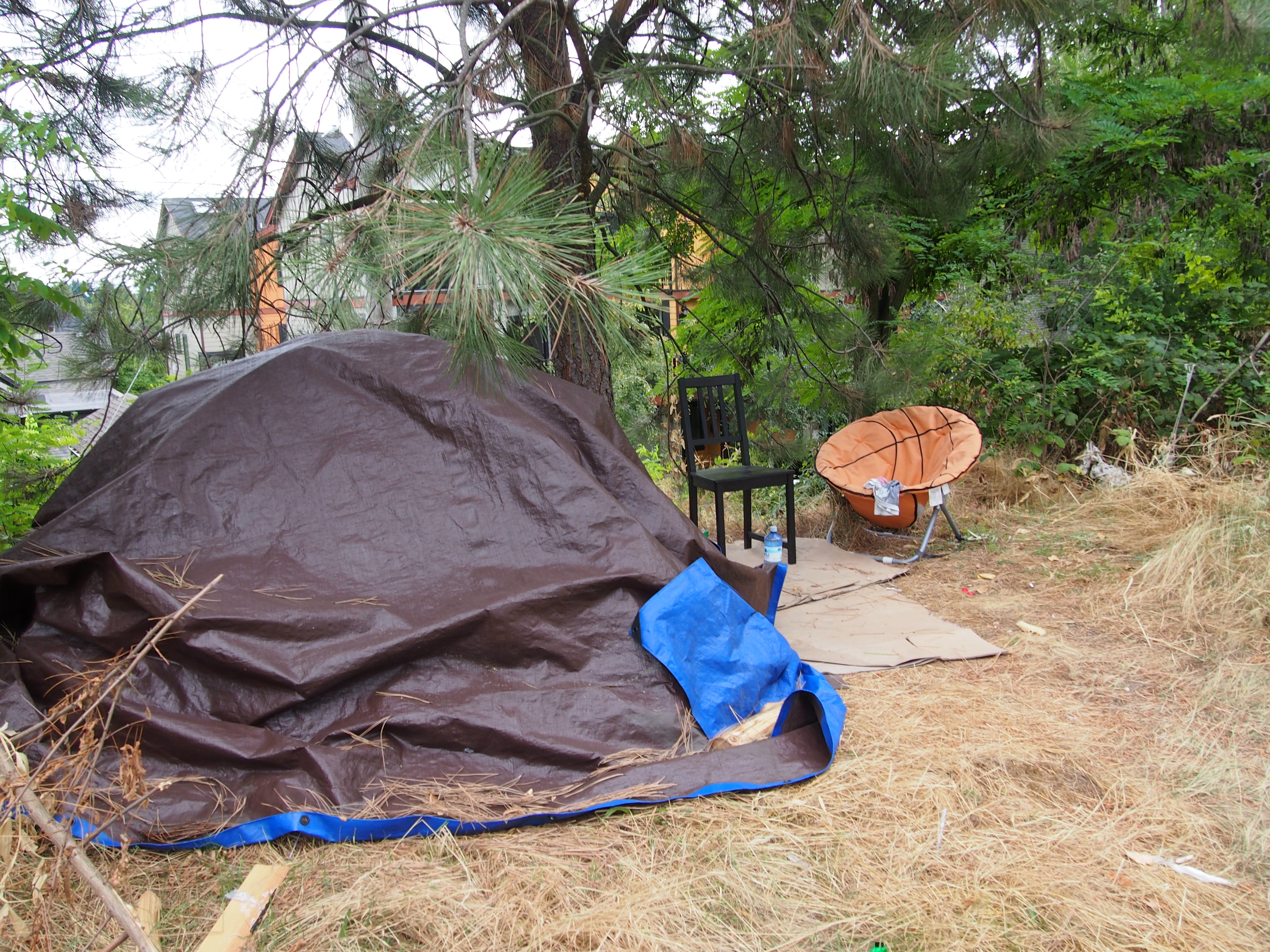
Fremont, 2015I soon discovered that the place was a residential pocket — an informal neighborhood for the homeless tucked in between Aurora Ave. and Winslow Pl. N., a surface street.
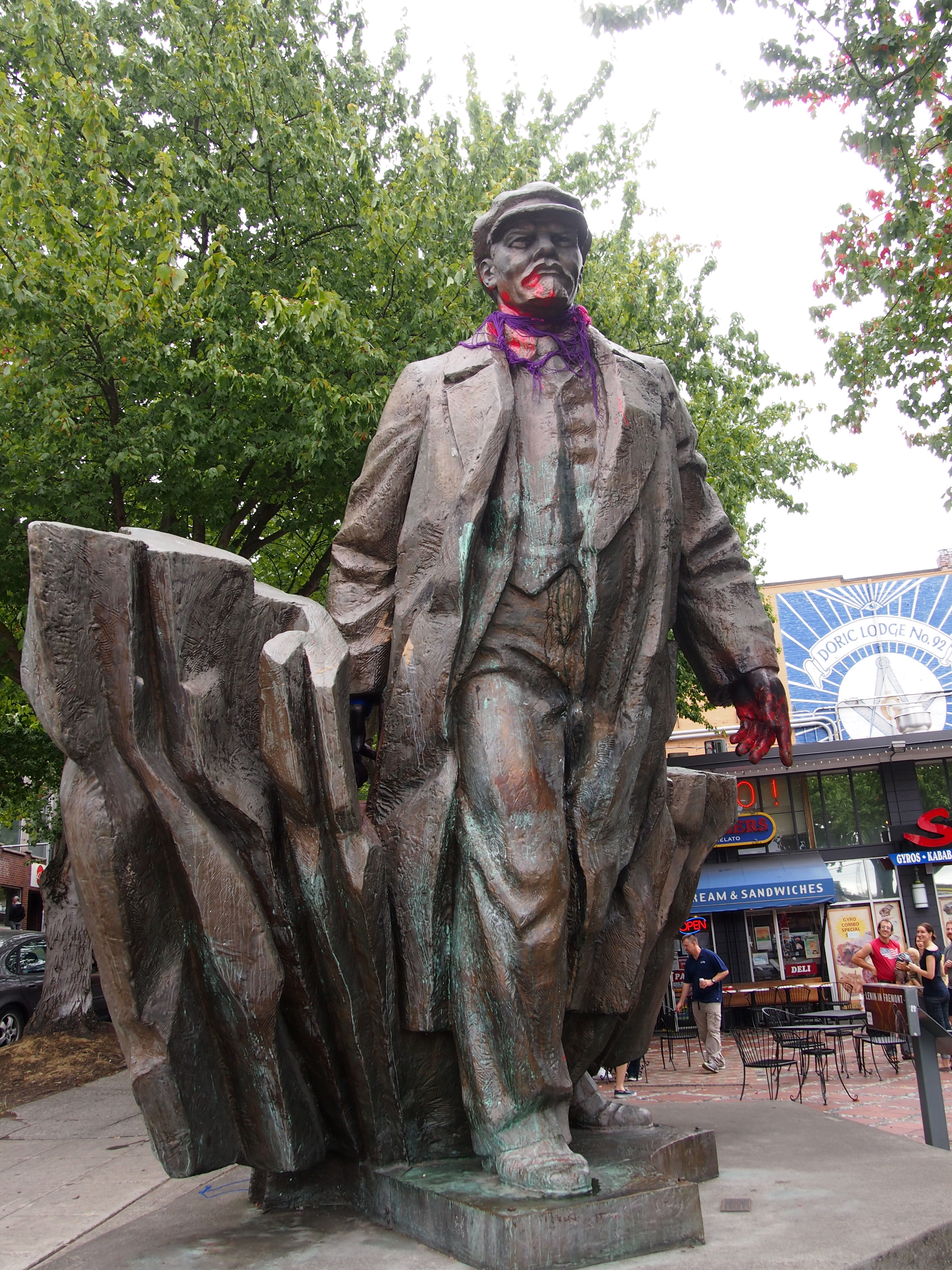
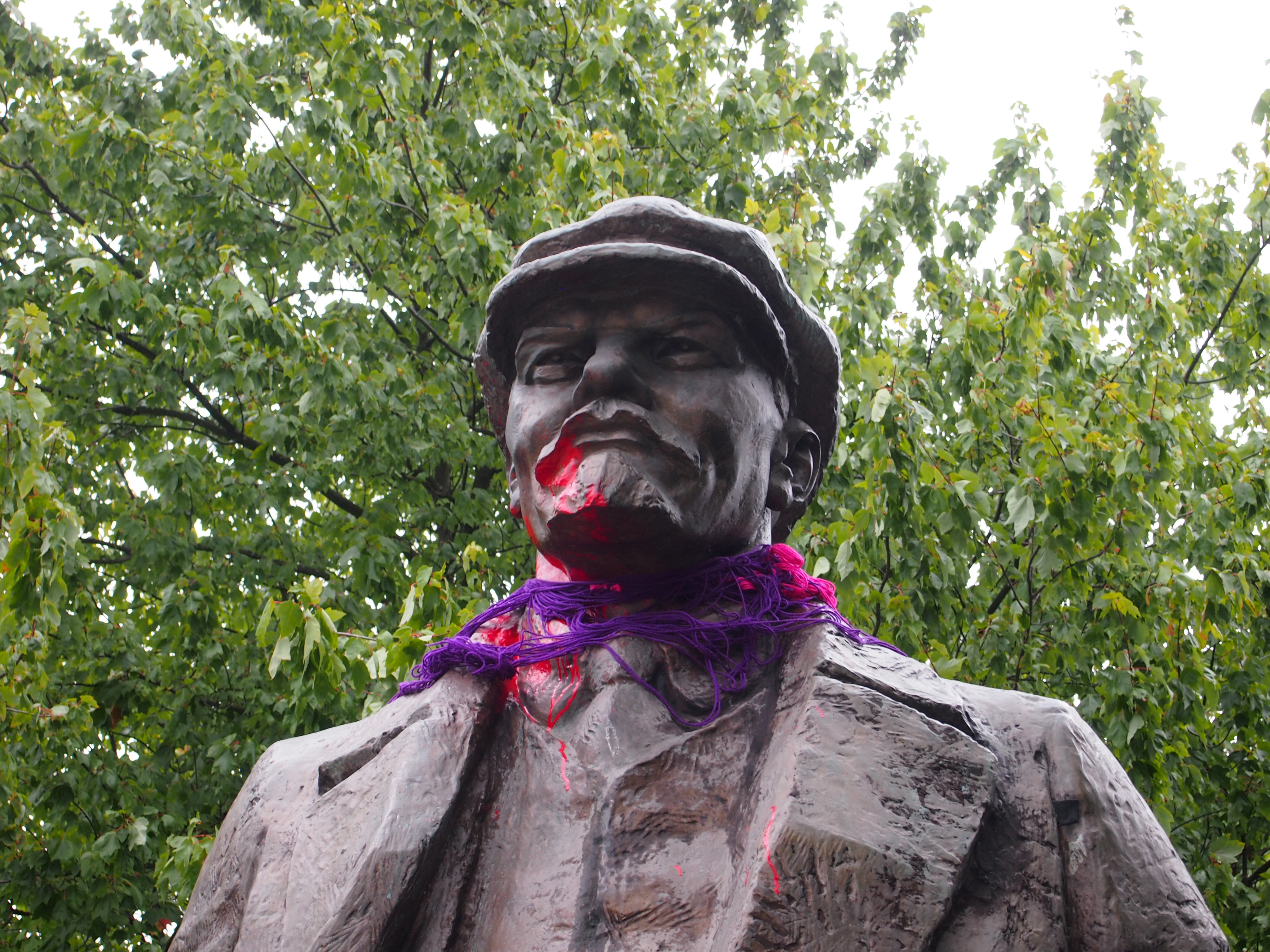
Fremont homeless tentAfterward, I made my way to Fremont Center, if in fact it’s called that, though “Lower Fremont” would be better, since the land slopes down from Upper Fremont toward the water at that point. There were other things to look for there, and I found most of them. Such as the statue of Lenin.
Fremont, 2015Fremont, 2015How did Lenin come to be in Fremont? A long story, apparently. The statue wasn’t on display in Slovakia very long, since it was erected in 1988 by an unpopular government that didn’t know it was on its last legs. After the Velvet Revolution, an American found the statue lying face down in the mud, and connived to bring it to Washington state. Various complications ensued, not all of which are clear, but I can report that as of the summer of 2015, Lenin stands on Fremont Pl. N. near N 36th St. and Evanston Ave. More detail is (again) at Roadside America.

Like the troll, Lenin is the focus of an event, too. Fremont seems fond of events, the best known of which is the Solstice bicycle parade in June, which involves painted bicyclists in various states of undress. In Lenin’s case, at least according to the Fremont C-of-C pamphlet that I picked up, there will be a “Festivus Celebration and Lenin Lighting” in early December.

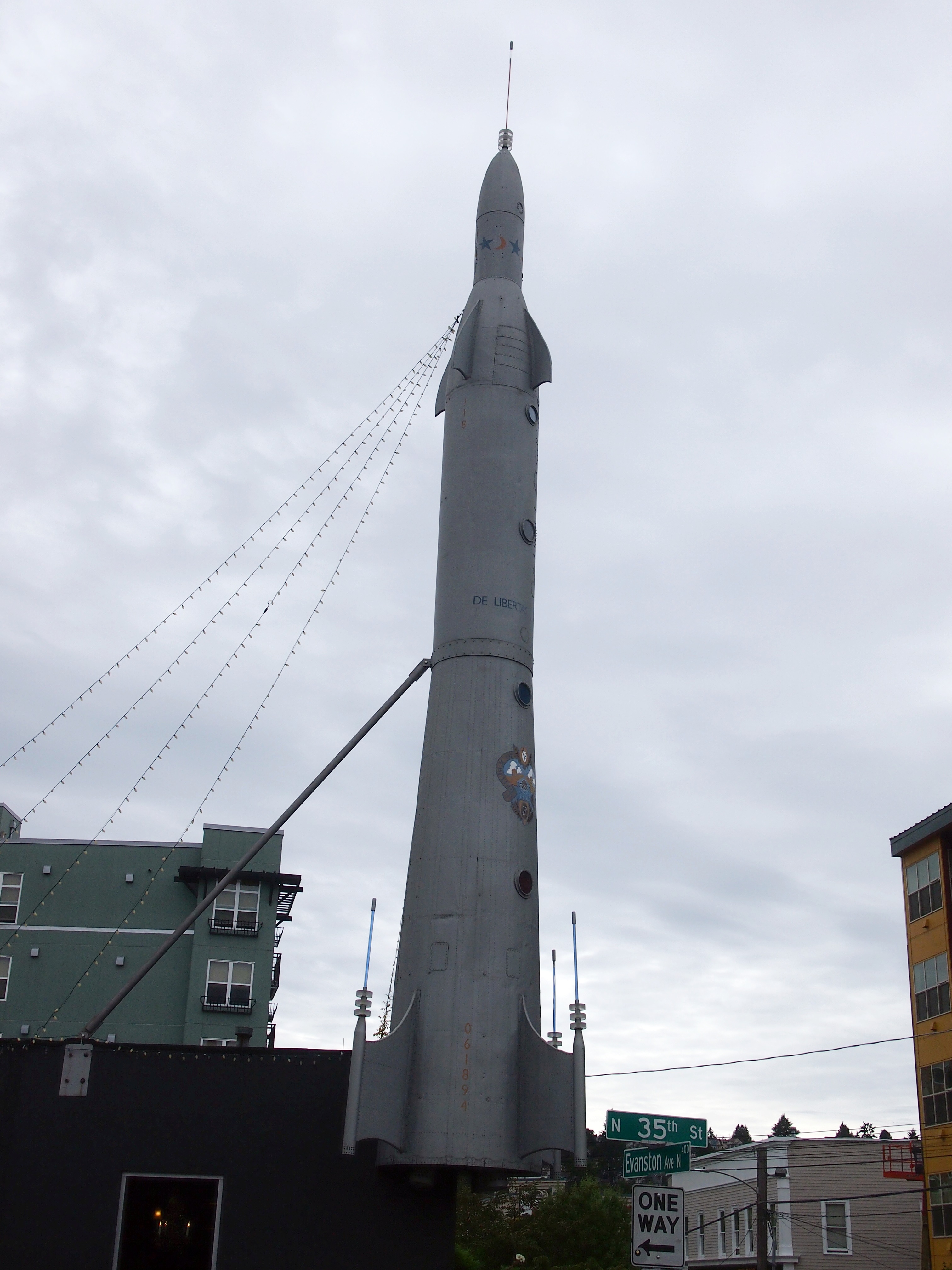
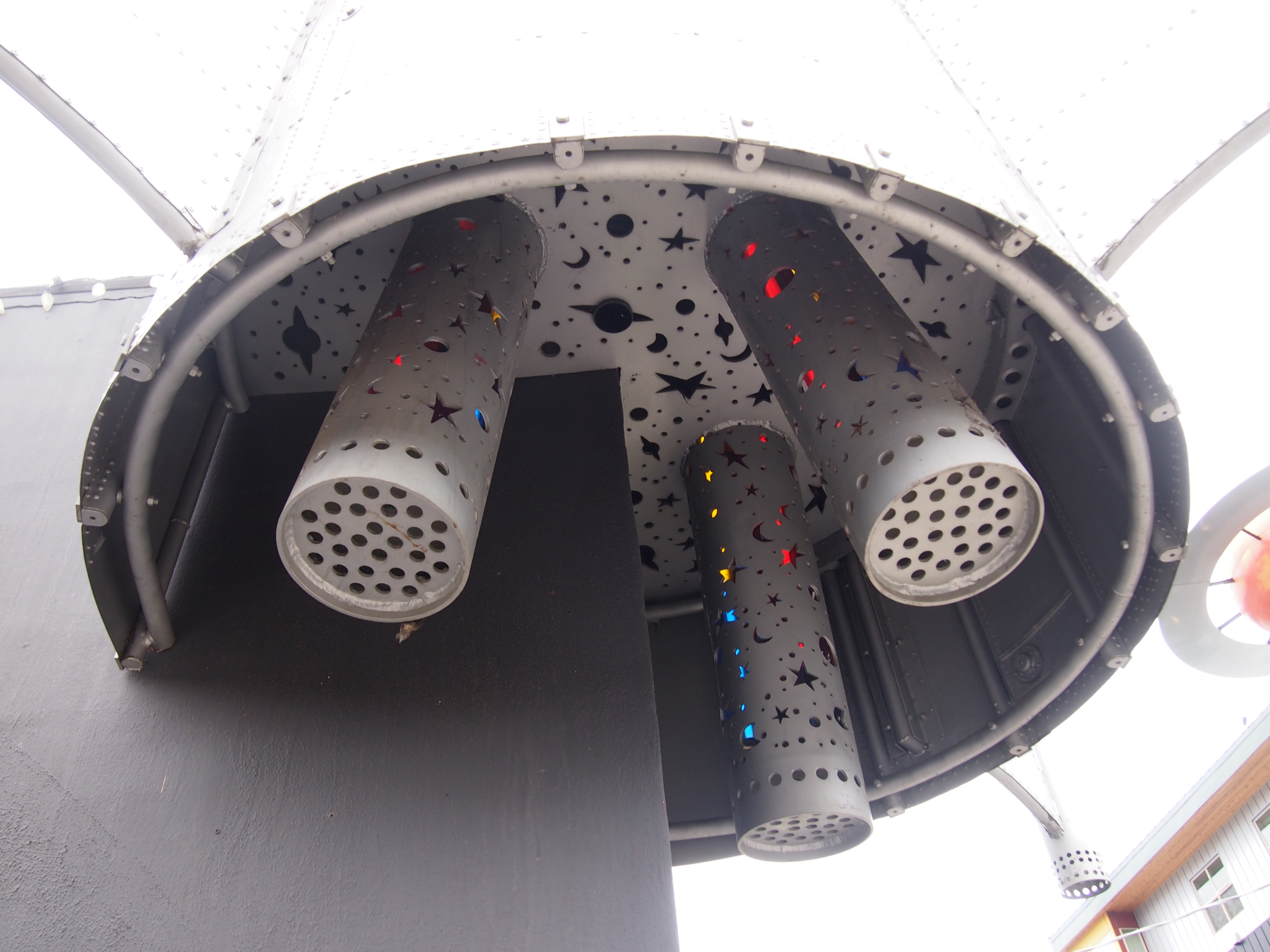
Not far away is the Fremont rocket.
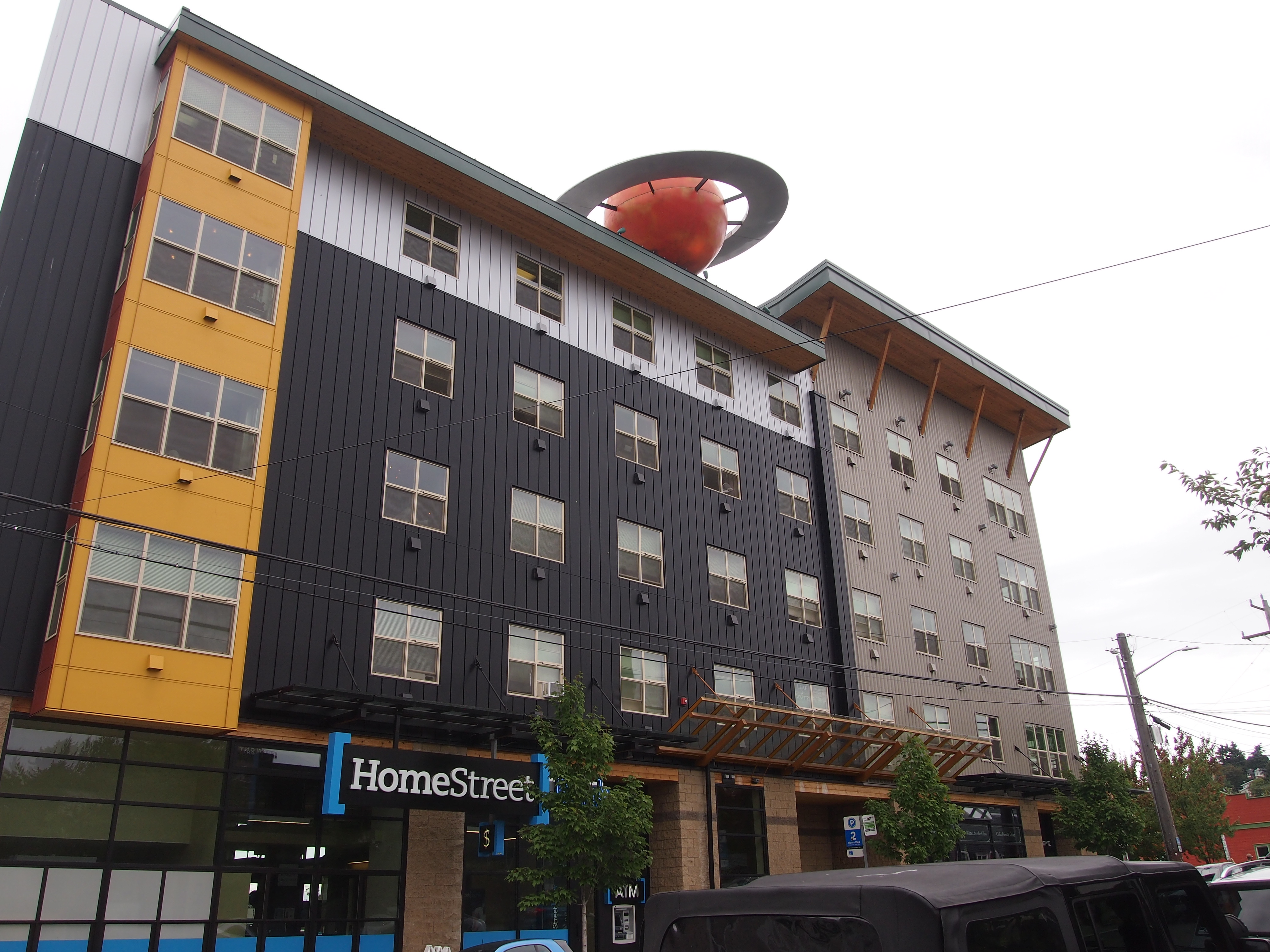
Fremont rocketFremont rocketAcross the street from the rocket is the Saturn Building, which I had a special fondness for even before I came to Seattle this time, having written about it (see No 4). I was happy to see it in person. That’s one thing this country needs: more planet models on more buildings.
Saturn BuildingI also managed to see the Fremont artworks called “Waiting for the Interurban,” along with “Late for the Interurban,” which is just down the street. I’d never heard of The J.P. Patches Show, but I didn’t pass my childhood in Seattle, either. That statue immediately suggested to me that Dallas needs a statue of Icky Twerp.

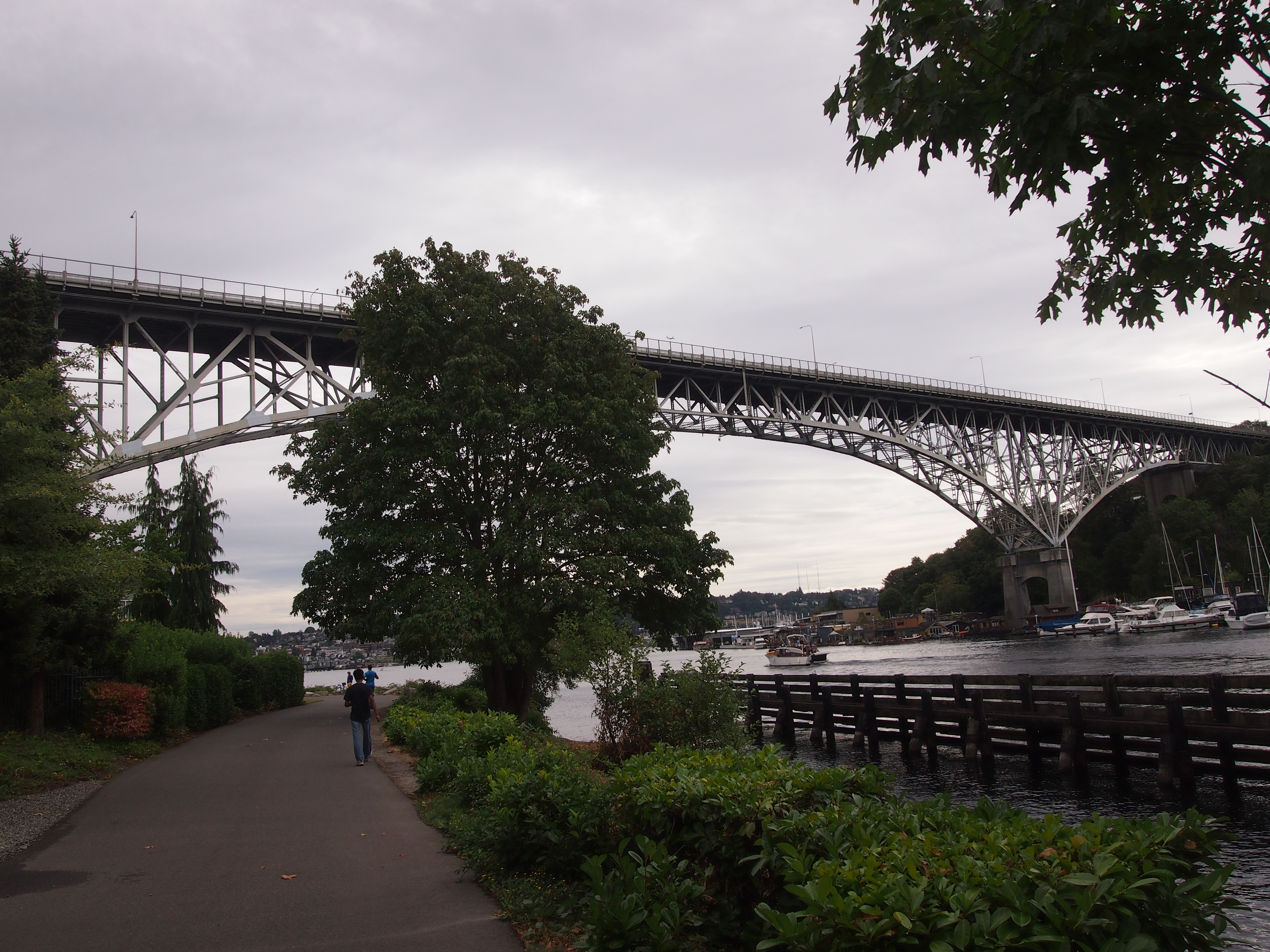
I took a walk along the Ship Canal at the very southern edge of the neighborhood, which connects Salmon Bay with Lake Union, and admired the Aurora Bridge — formally the George Washington Memorial Bridge, the same one under which the troll resides — as it soars more than 160 feet above the water.

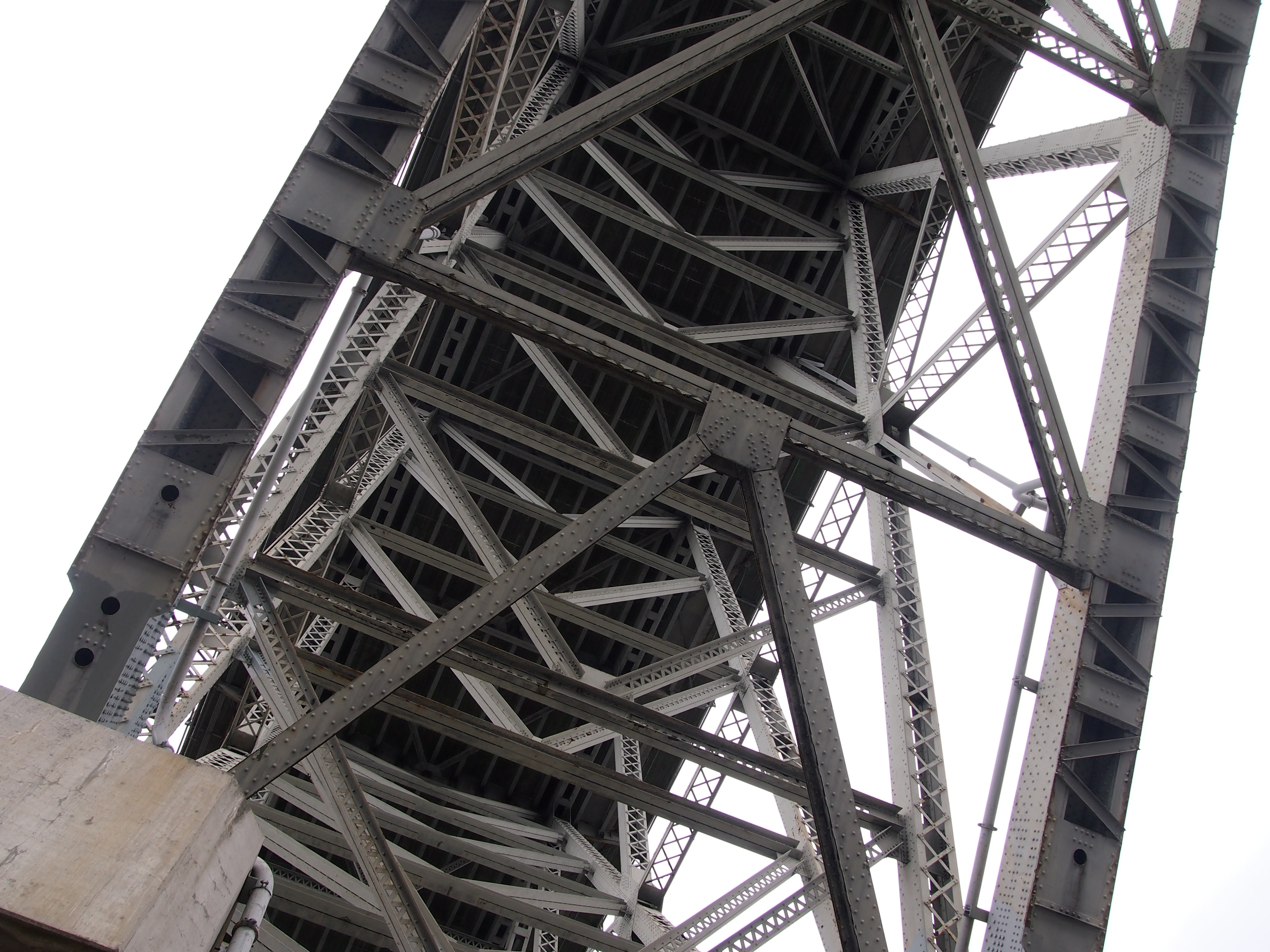
Aurora BridgePeople who live in the area might not appreciate it for the fine bridge that it is. Or maybe they do. I didn’t fully appreciate it just driving across it. The view might be nice, but you can’t pay attention as a driver. Crossing on a bus, as I also did, was better, but even so there’s nothing quite like standing underneath an excellent bridge like this.
Aurora BridgeCrossing the bridge on foot is an option. The bridge is unfortunately notorious for despondent people taking a dive off of it. For non-despondent walkers, the pedestrian walkway looked so narrow and so close to the road, which is very busy, that a walk across would probably be made unpleasant by car noise and exhaust most times of the day.

The Pike Place Market

Labor Day weekend proved to be very warm this year in northern Illinois, with temps in the low 90s F some days, though I understand that a front will blow through soon and cool things off. The beginning of the slide into ice and snow, in other words.

Almost the entire time I was in the Pacific Northwest, the weather was clear and the temps pleasant — 70s and 80s F every day, except for the day I left, August 29, when it rained. Early on that morning, I lay nearly awake and heard the pleasant sound of rainfall. That was the first time I’d experienced rain in Seattle.

I read somewhere or other that the main sign of the Pike Place Market in Seattle — which actually says Public Market Center — is the most photographed spot in the city. I don’t know how you’d determine such a thing, but I’m sure the sign must be the subject of a lot of pictures. I did my little part to make it a famed Seattle image as I arrived at the market just after noon on August 27.
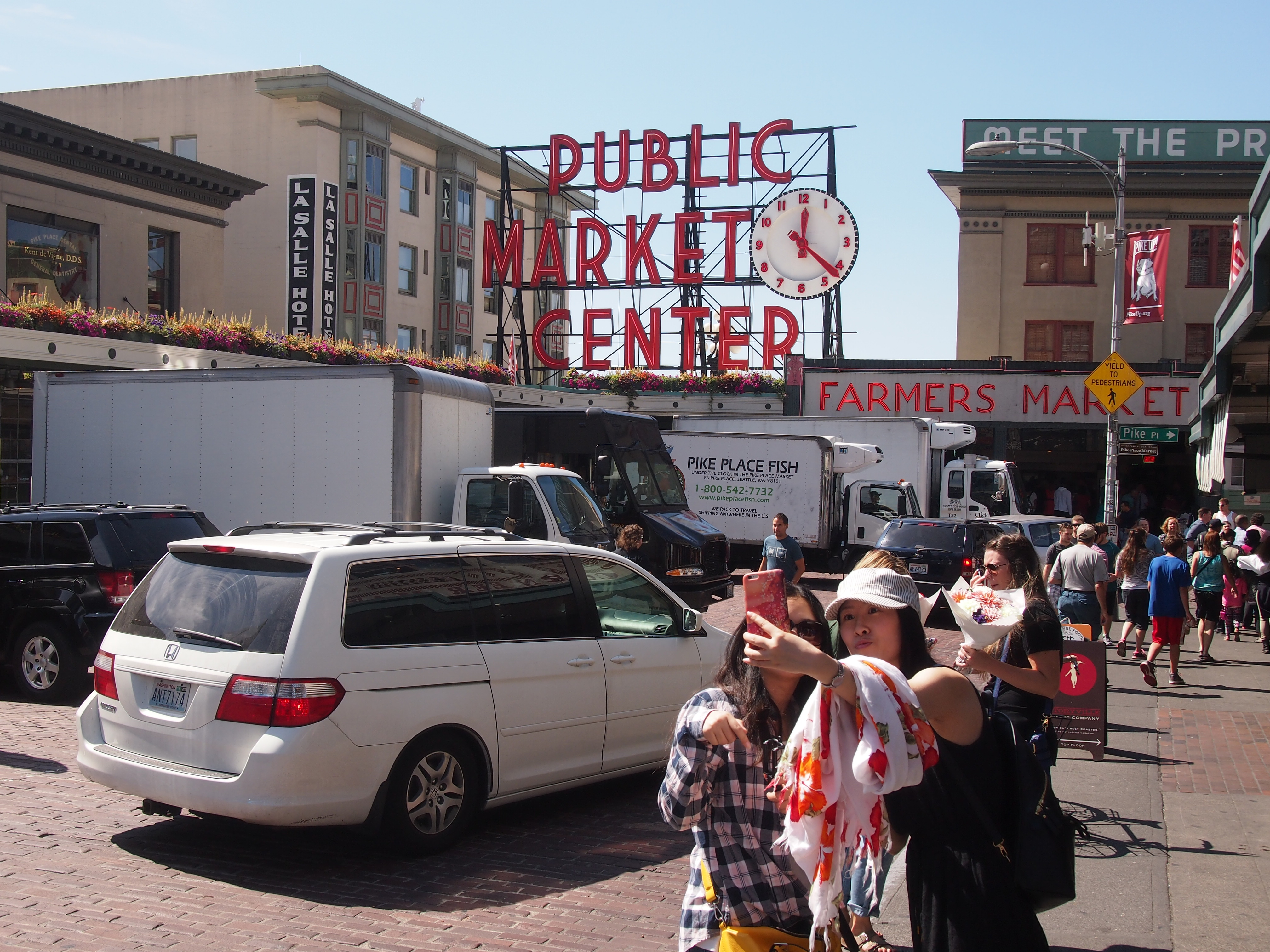
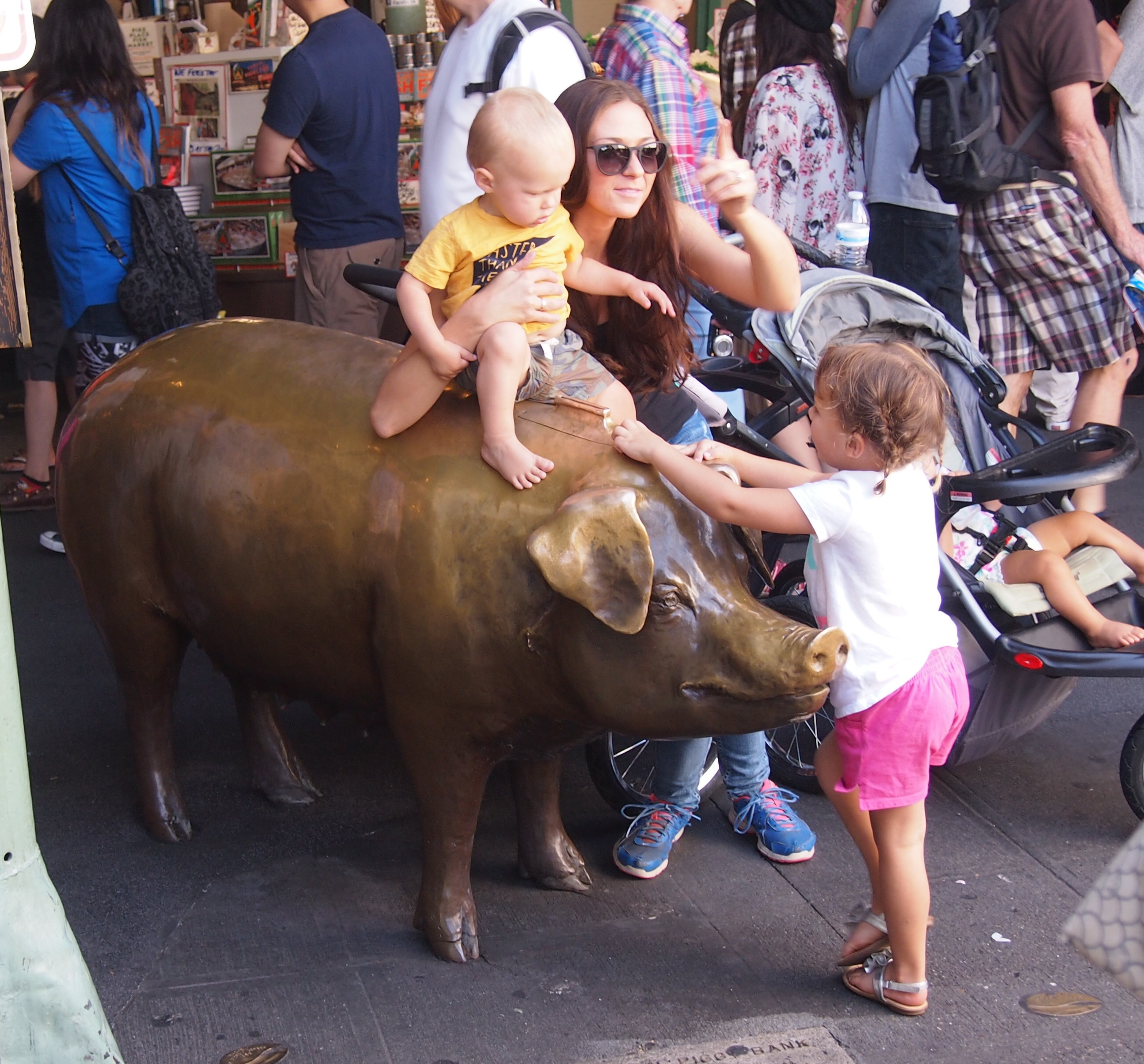
Pike Place MarketThen there’s Rachel the Pig.
Rachel the PigThe market’s web site says: “Rachel arrived at the corner of Pike Place under the iconic ‘Public Market Center’ sign and clock in 1986. She is a bronze cast piggy bank created by Georgia Gerber, a sculptor from Whidbey Island, Washington. Weighing in at 550 pounds (250 kg), Rachel was named after a real 750-pound pig who won the 1985 Island County Fair. Her cousin, Billie the Piggy Bank, arrived in the Market in 2011 and sits on Western Avenue at the bottom of the Hillclimb.

“Rachel was the inspiration behind the ‘Pigs on Parade’ fundraiser throughout downtown Seattle in 2001 and again in 2007 for the Market’s centennial celebration.”

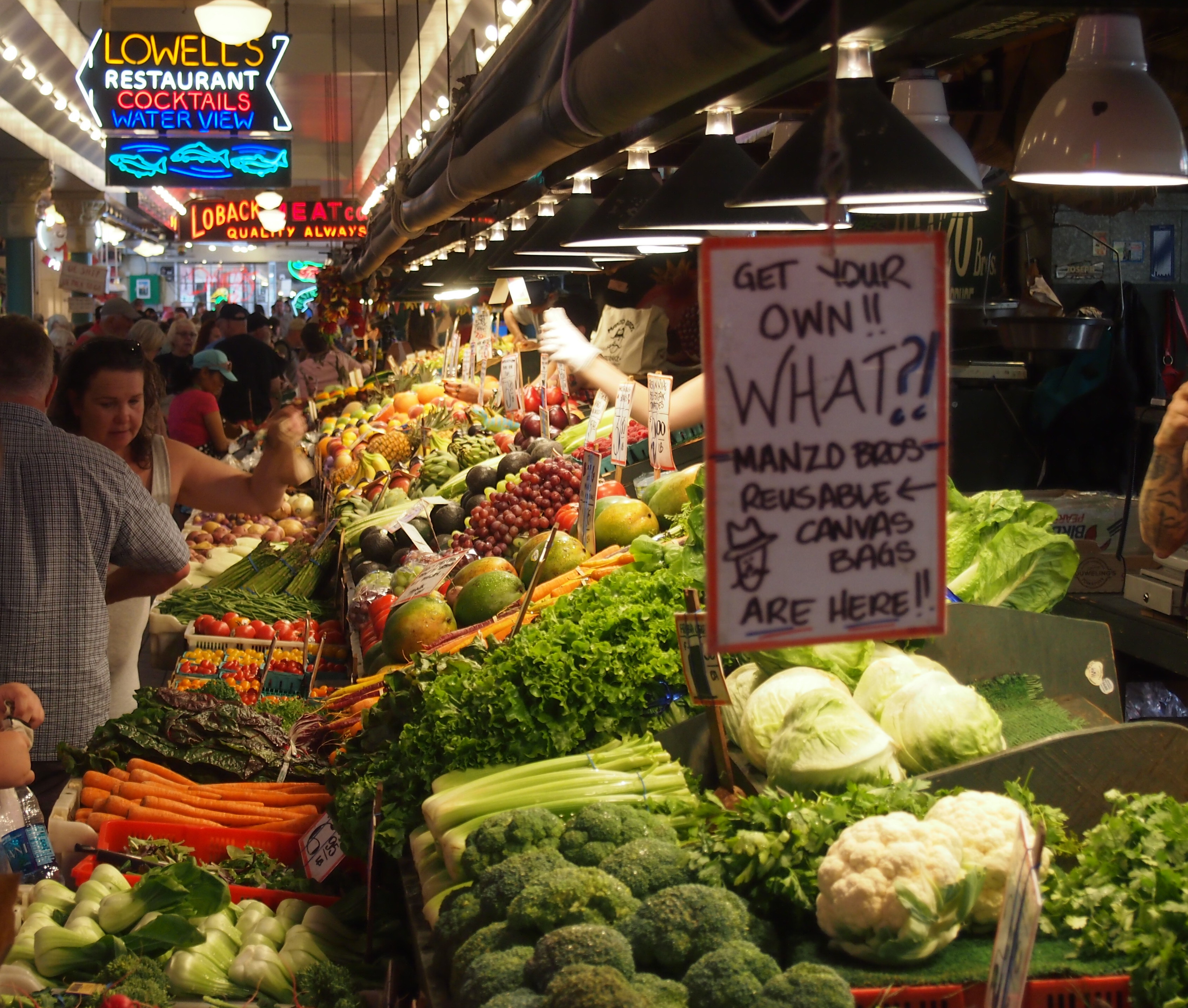
Whatever else it is, the Pike Place Market is popular. This is the Pike Place-level crowd on a Thursday, among the purveyors of flowers and clothes and fish and other things.
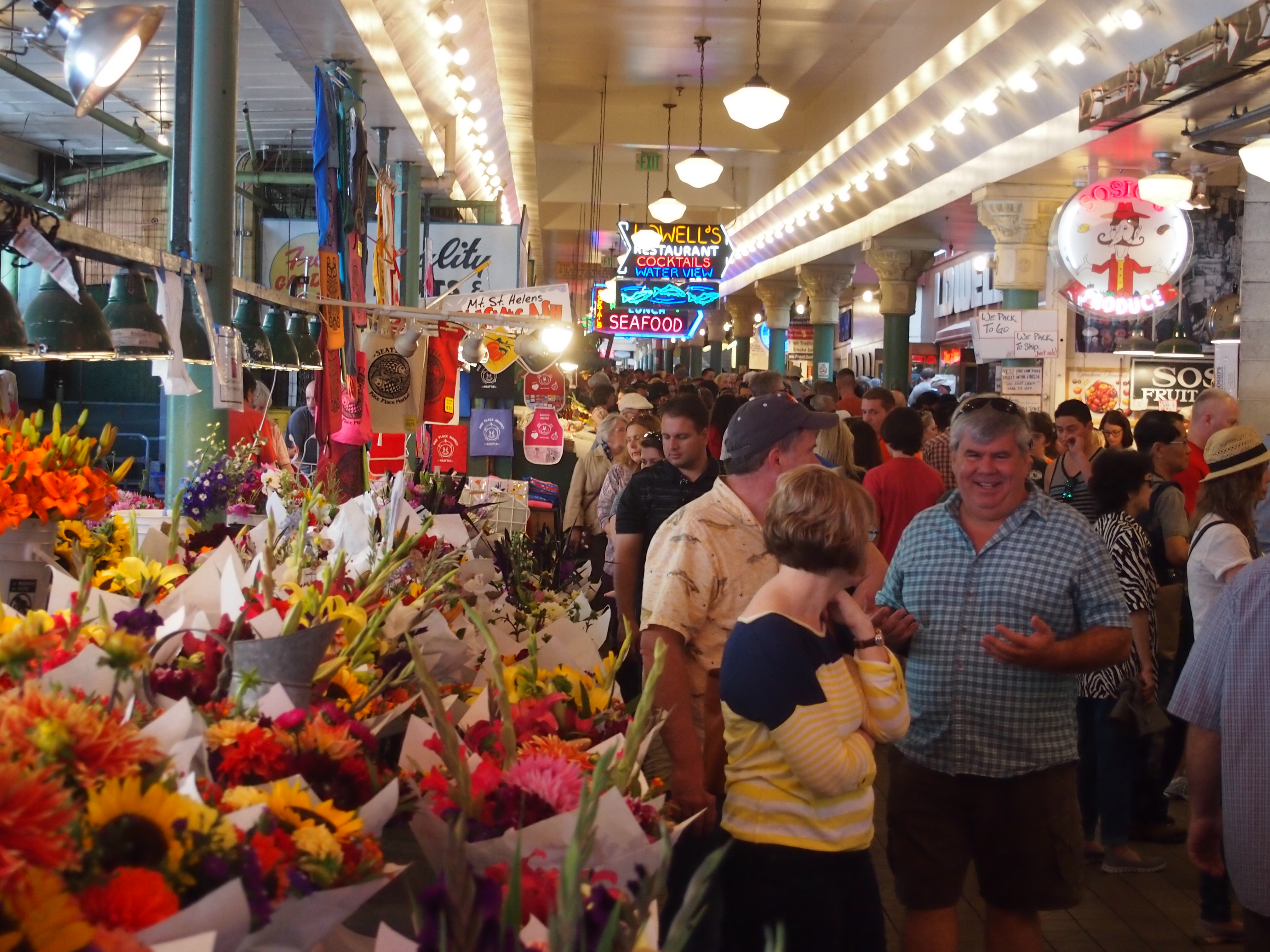
Pike Place Market August 27, 2015The market tells us: “In 1906-1907, the price of produce—onions namely—soared, leaving the farmers none the richer and the citizens angry over the price gouging. The uproar led one local official to try to find a solution. In the summer of 1907, Seattle City Councilman Thomas Revelle proposed the city create a public market place where farmers and consumers could meet directly to sell and buy goods and thereby sidelining the wholesalers.

“On the public market’s first day, August 17, 1907, crowds of shoppers seeking fresh produce and bargains descended upon the new marketplace. The first farmer sold out of produce within minutes. Within a week, 70 wagons were gathering daily to sell along the newly named Pike Place, a wooden roadway that connected First St. to Western Ave.

“Developer Frank Goodwin, who had recently returned with a small fortune from the Klondike Gold Rush, saw an opportunity in the flourishing market and began construction of the permanent arcades that make up the heart of today’s Market. The Market prospered during the 1920s and 1930s, and was home to a lively mix of Japanese and Italian American farmers, struggling artists, political radicals, and eccentrics.”

The market was run down by the 1960s, and true to the spirit of the times, the plan was to tear it down. I shudder to think what would be there now had that happened. Ugly parking garages, maybe. Something that could be anywhere, rather than what it is, something unique to Seattle.

“When the maze of aging buildings was slated for demolition in the 1960s, architect Victor Steinbrueck rallied Seattle to ‘Save the Market,’ ” the market web site continues. “Voters approved a 17-acre historic district on November 2, 1971, and the City of Seattle later established the Pike Place Market Preservation and Development Authority to rehabilitate and manage the Market’s core buildings.”

And so it is in the early 21st century. An expansion’s under way now as well. It’s a major tourist draw, and for all I know Seattleites like it too. The crowds couldn’t all be tourists.

Besides, the seafood looks pretty good.
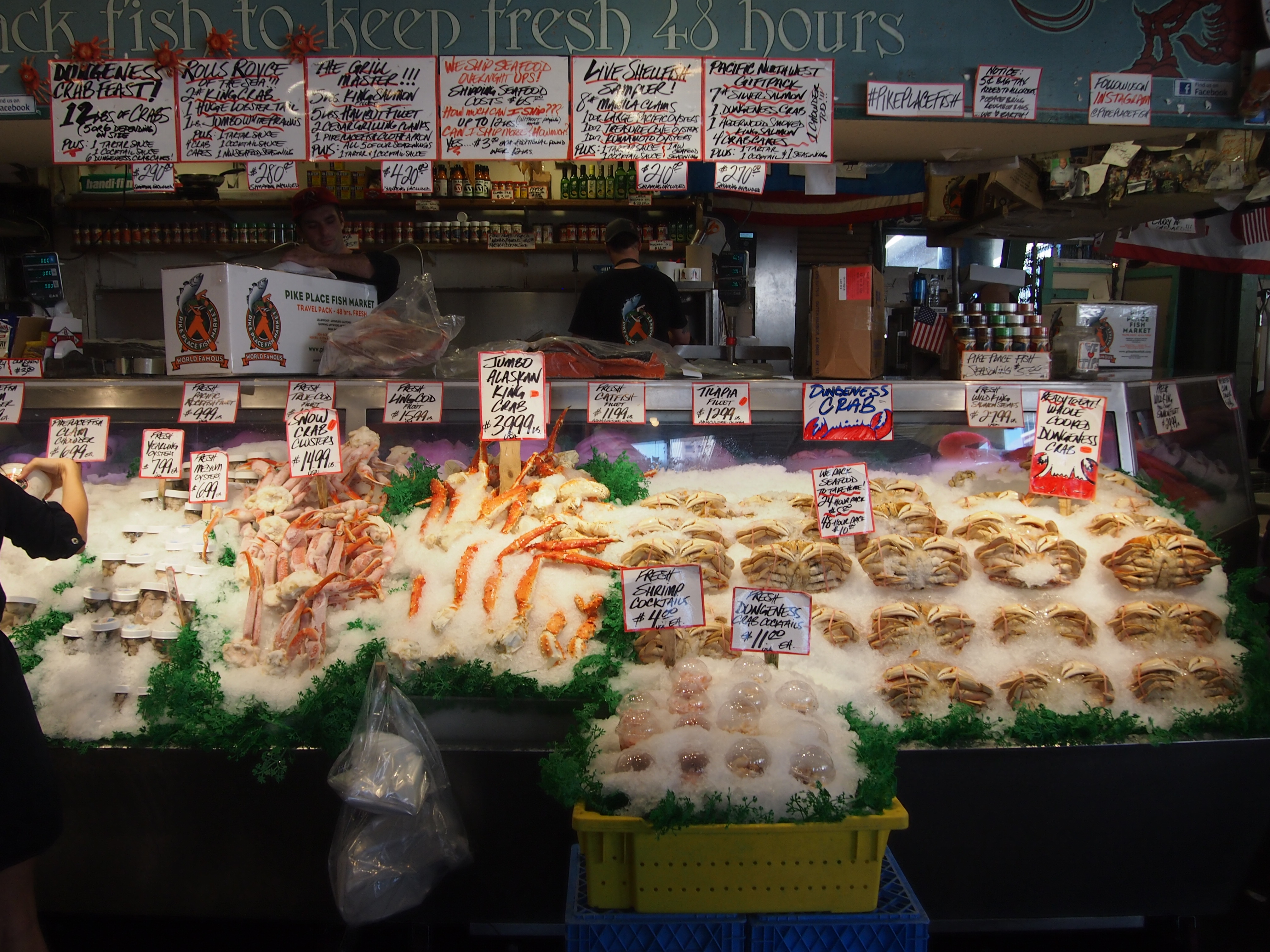
Pike Place MarketSo do the vegetables.
Pike Place MarketThe fishmongers offer expert advice, no doubt.
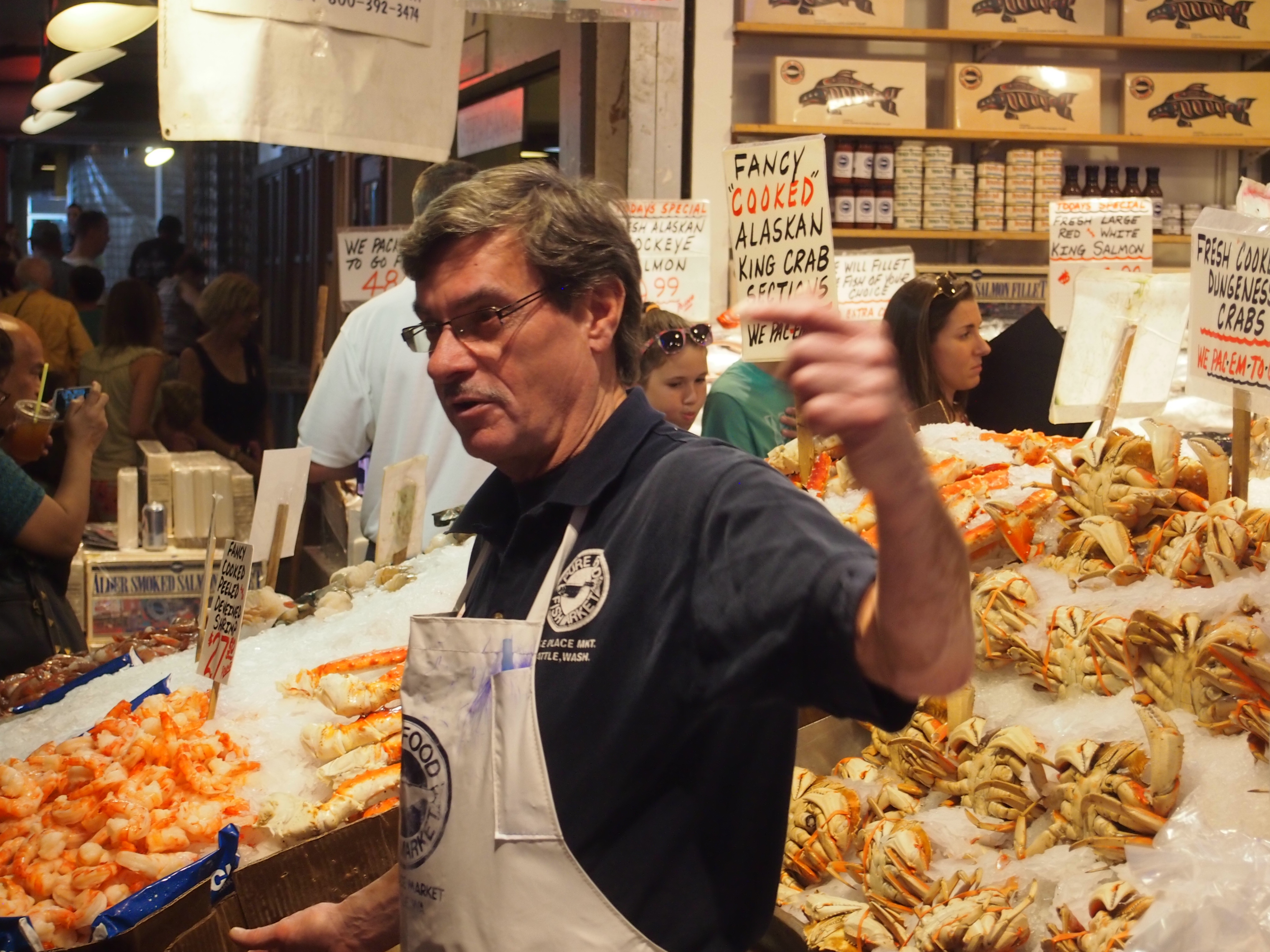
Pike Place MarketThe market’s built on a slope, so it has a number of levels below Pike Place, accessible by stairs and elevator.
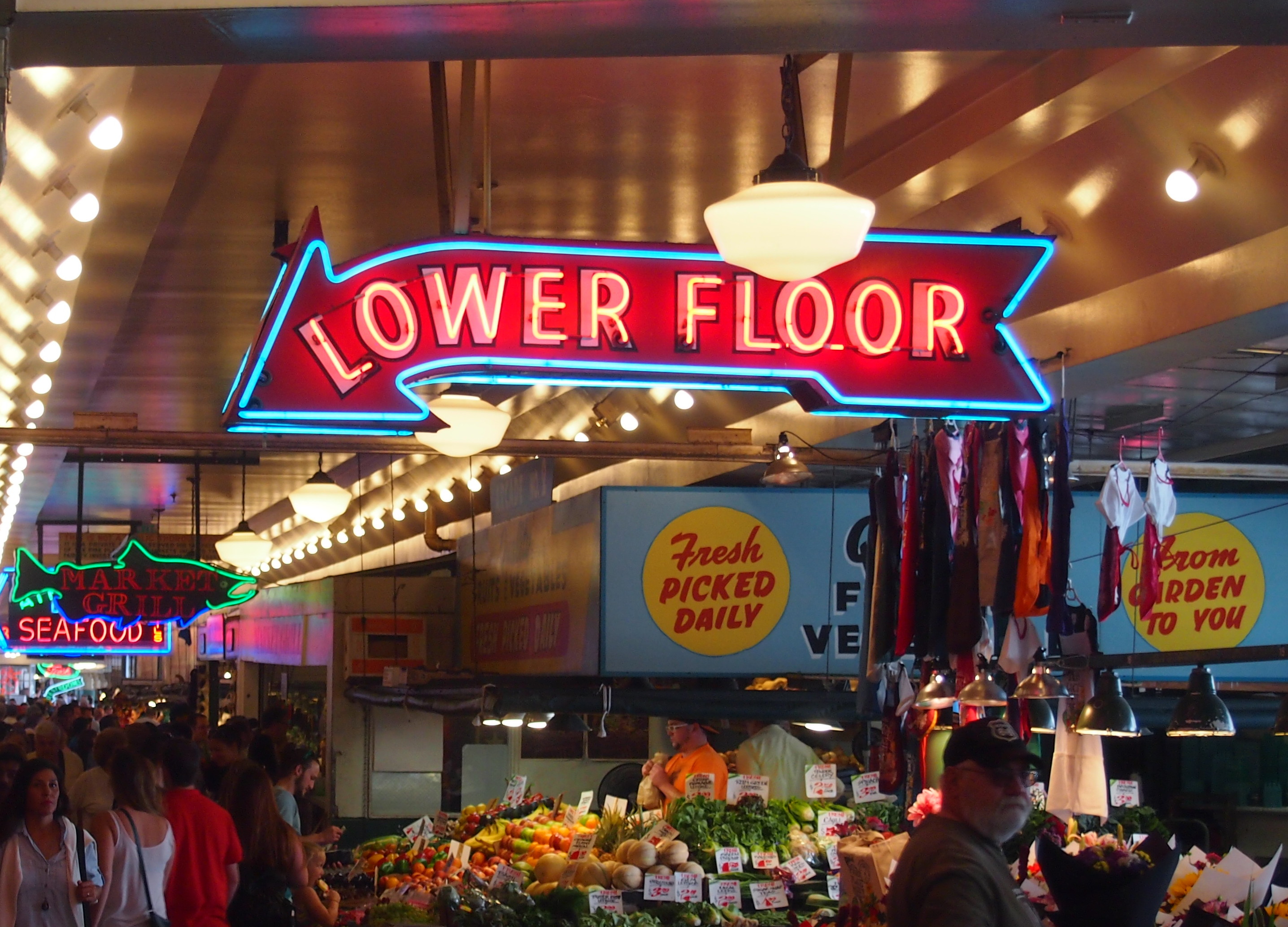
Pike Place MarketThe lower levels are a mix of shops, including sellers of art, books, candy, flowers, gifts, kitchen equipment, imported goods, jewelry, tobacco, and toys, along with some more unusual ones, such the Pike Place Magic Shop.
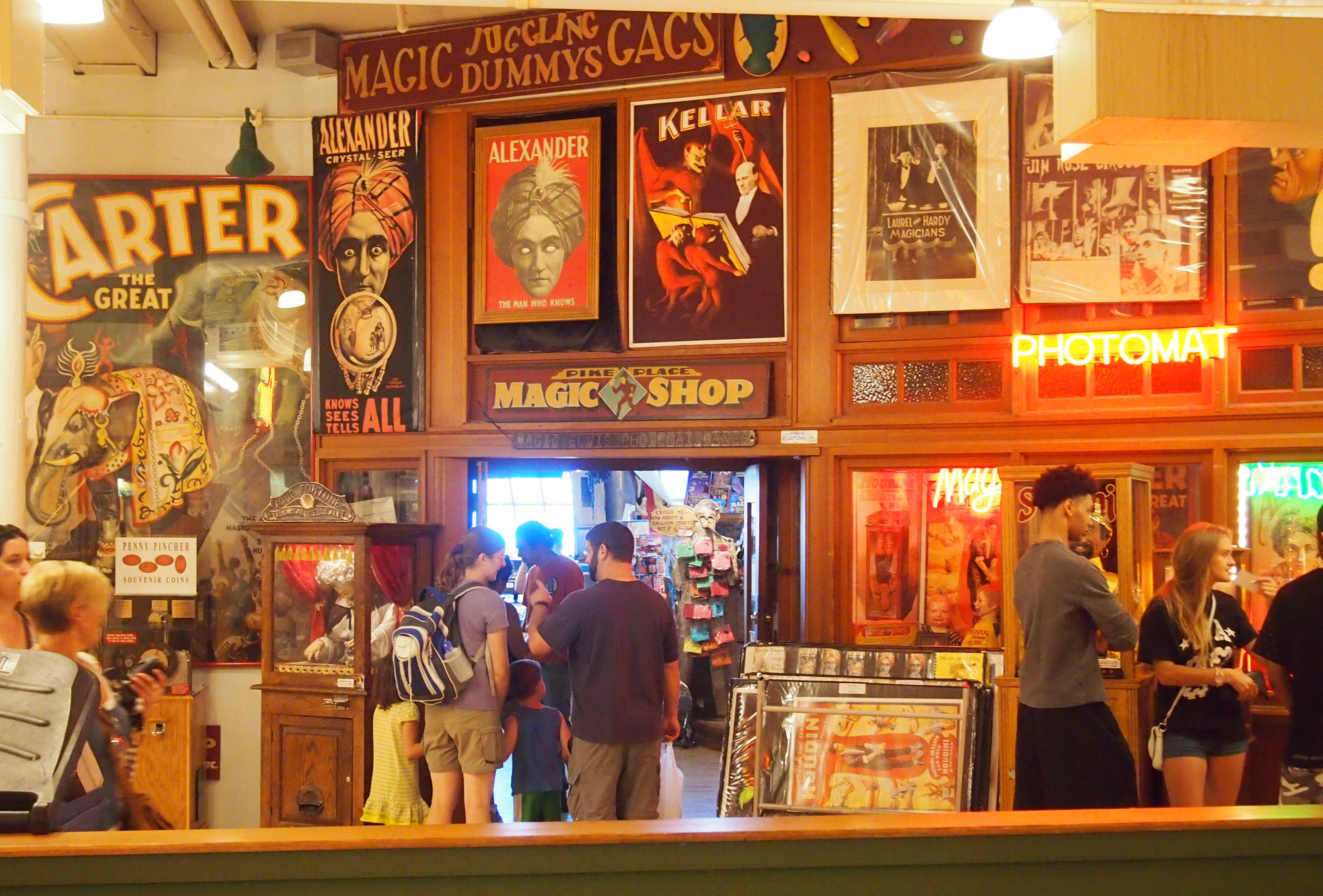
Pike Place MarketOne place I missed at the market was Metskers, a map store. It has a branch at Seatac Airport, and I chanced across it there just before I left Seattle. I had a few minutes. I could have spent an hour looking at all the fine, fine maps. I bought a Chicago Popout Map — which I can use — and some postcards, just to support the place. The clerk told me the main store was at the Pike Place Market. Argh.