This, That and the Other Thursday

Here’s a sign you can see in my neighborhood.

Cave CanemLiterally true, and it might mean a legal quagmire for the property owner, though I’m no expert on the matter.

Driving along today, I spotted the first bumper sticker of next year’s election. Next year being the operative term. Everything at this point is just talk, and citizens are entitled to pay it no mind. The sticker said: Bernie 2016.

Mostly blue, but the letters and numbers were white, with a thin red swoosh underlining the letters. Reminded me of the Obama O design; no accident, I’m sure.

I mentioned it to Ann, who is as nonpolitical as a 12-year-old should be, and she told me the only presidential candidates she’s heard of are Hillary Clinton and Donald Trump.

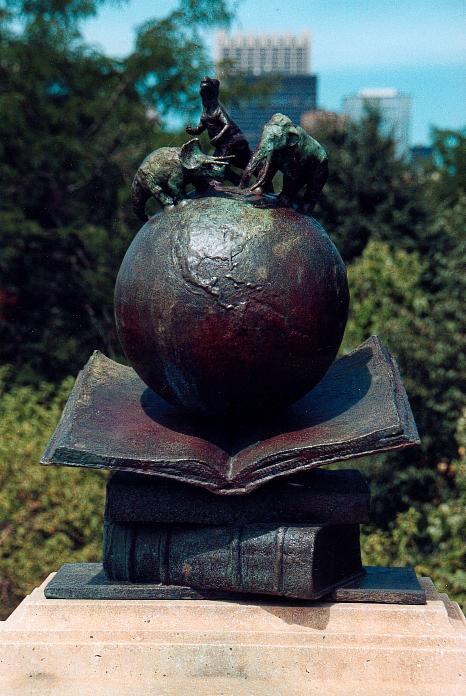
On the Roosevelt Road bridge at the southern edge of downtown Chicago are some nifty bronzes. I only took a picture of one.

WorldBronzeRooseveltRoadThe sculptures are by Miklos P. Simon and include (among other things) likenesses of  dolphins, dinosaurs and celestial navigation instruments, supposedly homages to the Shedd Aquarium, the Field Museum, and the Adler Planetarium, none of which are far away. More about the bridge is here.

The 300 S. Wacker Map

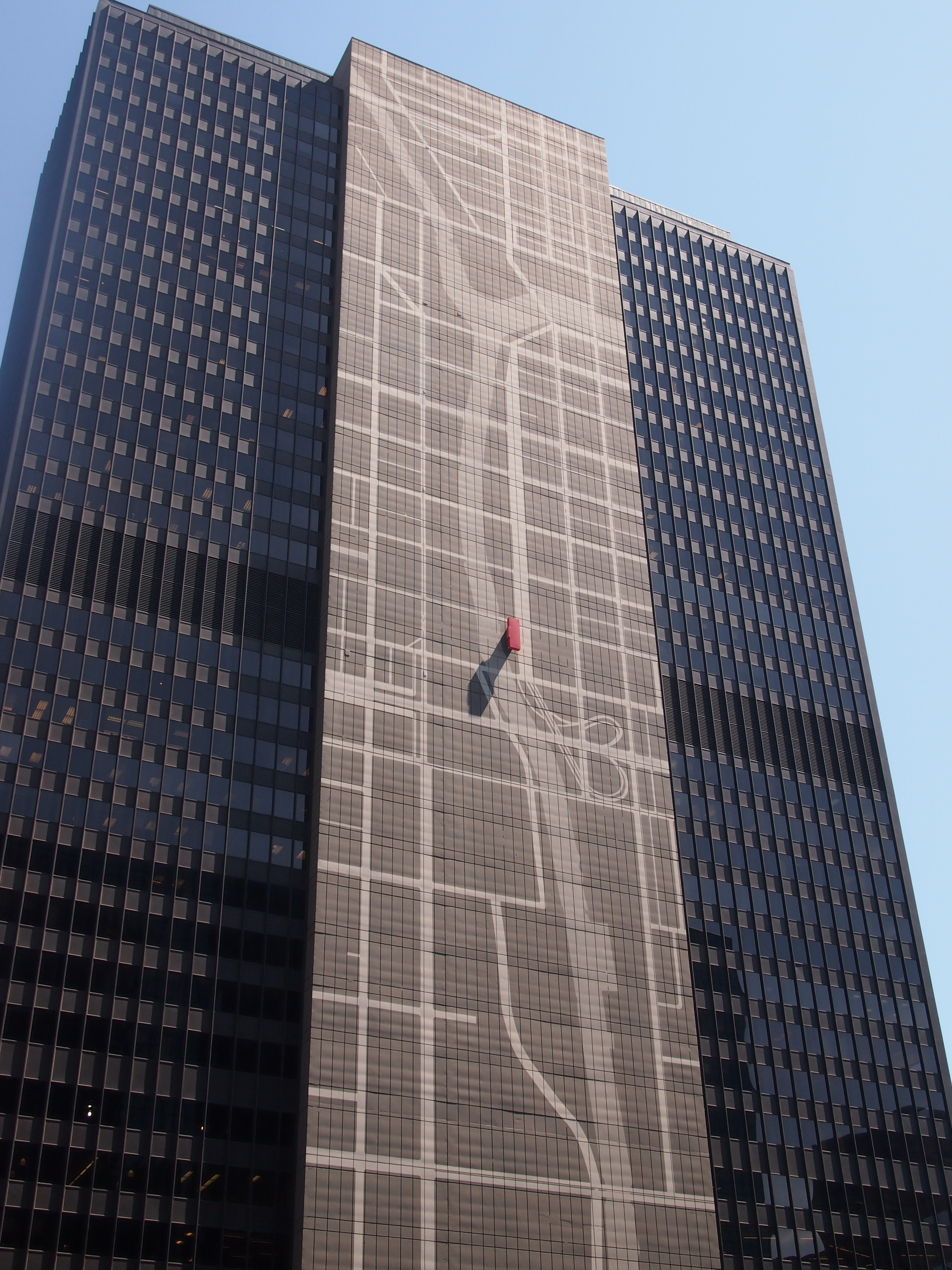
Last week in downtown Chicago, I also got a look at the 300 S. Wacker map, which was unveiled late last year and is easily visible from the west side of the Chicago River near Union Station. That’s because it’s a map as tall as a skyscraper, and who couldn’t like that?
300 S. Wacker 2015A close up.
300 S. Wacker 2015The giant map depicts the Chicago River and nearby streets, from Cermak to Chicago and LaSalle to Jefferson. The 300 S. Wacker building itself appears on the map as a three-dimensional red block.

Previously, 300 S. Wacker had little to distinguish it as a building, and little to catch the eye. Beacon Capital bought it last year and commissioned Elmhurst, Ill.-based South Water Signs to do the work. I’ve read that there are more art maps in the building’s lobby, backlit by LED lights; I’ll have to take a look sometime.

Two Chicago River Bridgehouses

More rain over the weekend and again today. Are we turning into Seattle? Except that Seattle really isn’t the rainiest place in the nation, according to various sources. It turns out most cities in the Southeast U.S. get more rain every year.

But who would understand you if you said, it sure has been rainy lately. Are we turning into Mobile? Information age, my foot. Even easily available data has a hard time killing received notions.

That reminds me of something else I encountered in the Pacific Northwest all those years ago: Slug Death. Or, to be more exactly, Corry’s Slug & Snail Death in the bright yellow box. (It seems to be Corry’s Slug & Snail Killer these days, as if that matters to dying gastropods.) I think we were visiting people on Bainbridge Is., and that’s what they had in their garden. I’d never heard of such a thing. It was one of those ordinary details of a new place that stick with you.

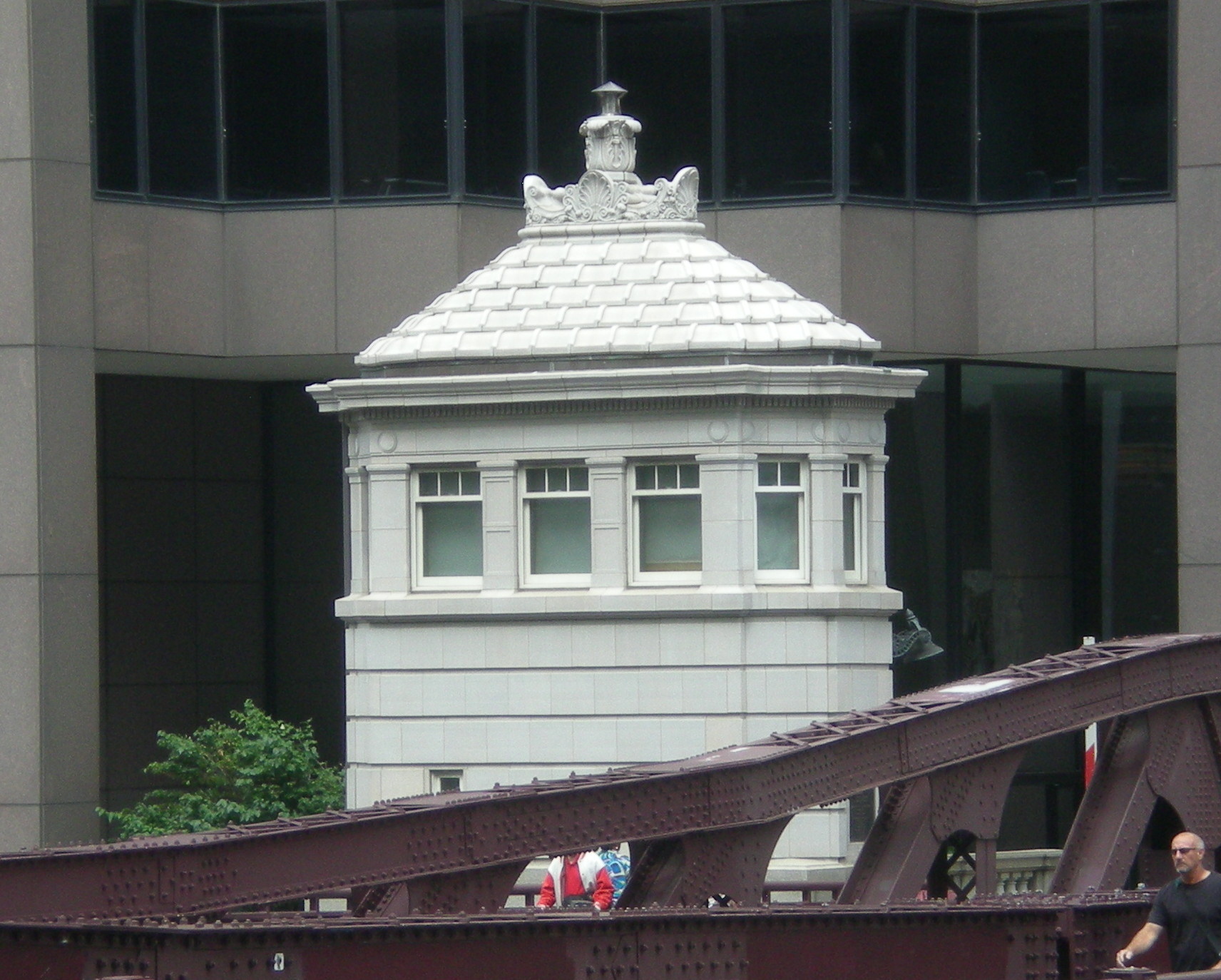
En route to Union Station to catch my train to the suburbs last week, I spent a few minutes looking at some of the bridgehouses on the South Branch of the Chicago River. There’s a museum in one of the bridgehouses of the Michigan Ave. bridge that opened only last month — the McCormick Bridgehouse & Chicago River Museum — but I didn’t have time for that.

Here’s the Monroe St. bridgehouse on the east side of the structure. The bridge dates from 1919 and was built by the Ketler Elliott Co., a name I’ve encountered before.
Monroe St. bridge 2015Looks like it’s been cleaned lately, maybe even since the bridge’s 2000s rehabilitation. The site HistoricBridges.org tells me that “the bridge’s operating and control panels inside the bridgetender buildings were reportedly the first in the United States to have completely enclosed circuitry so that no exposed copper connections were available for bridgetenders to mistakenly electrocute themselves on.”

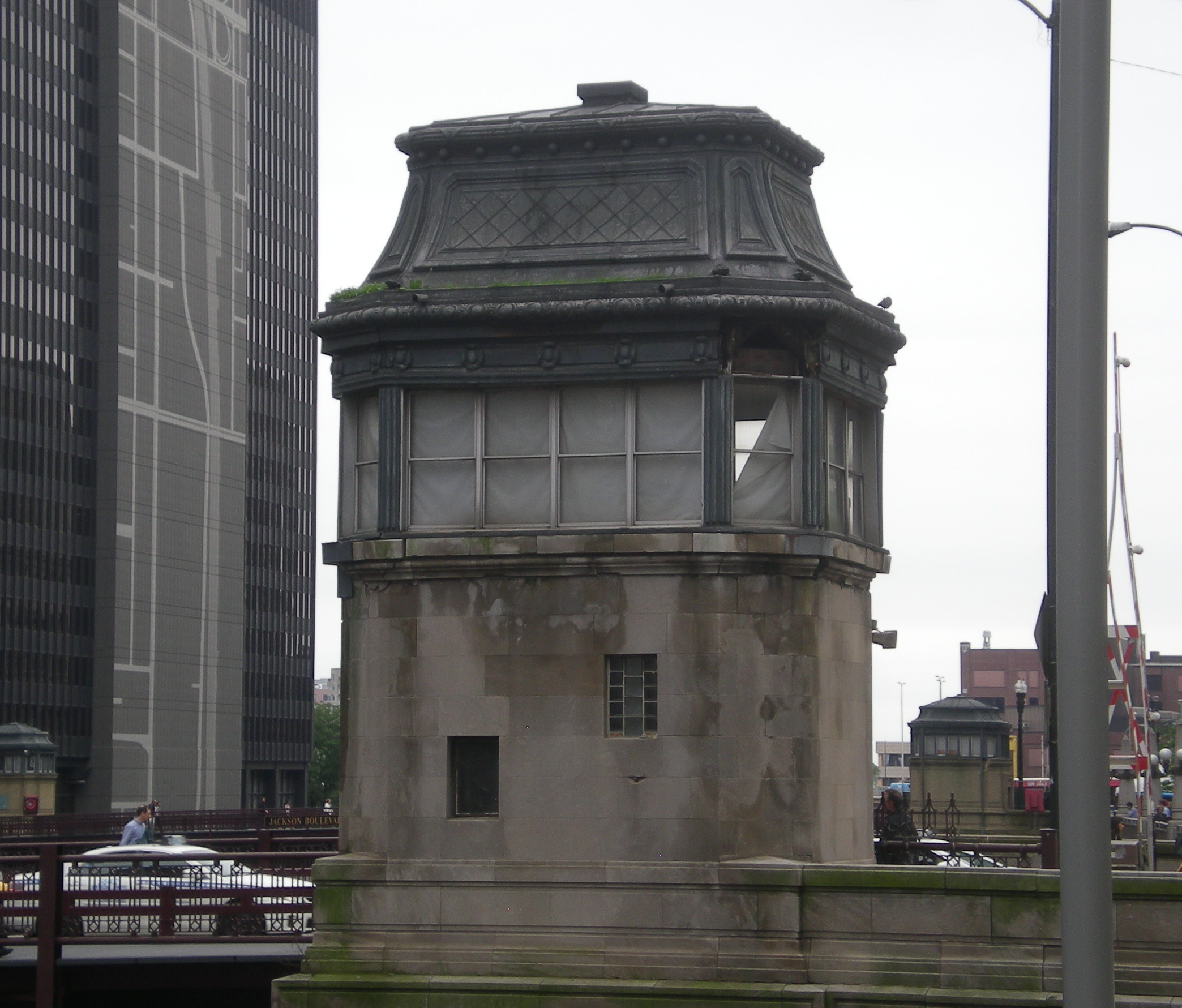
This is the bridgehouse on the west side of the Adams St. bridge, which was built a little later, 1927, but still during a time when aesthetics was a consideration in a public building project (it might be again, but for quite a spell in the last century, the idea seems to have been on hold).
Adams St. bridge house, 2015The bridge was rehabbed in the mid-1990s. The bridgehouse is dingy, so I guess that’s 20 years of urban air at work. More about the Adams St. bridge is here.

People of the Bean

As tourists pro tem in Chicago on Sunday, it seemed inevitable that we’d end up at the Bean, and so we did, just ahead of rain. “Cloud Gate” hasn’t lost its appeal since our last look-see in ’11. A lot of other people were there too.

This was the first time I’d ever seen anyone actually using a selfie stick. DSCN7876
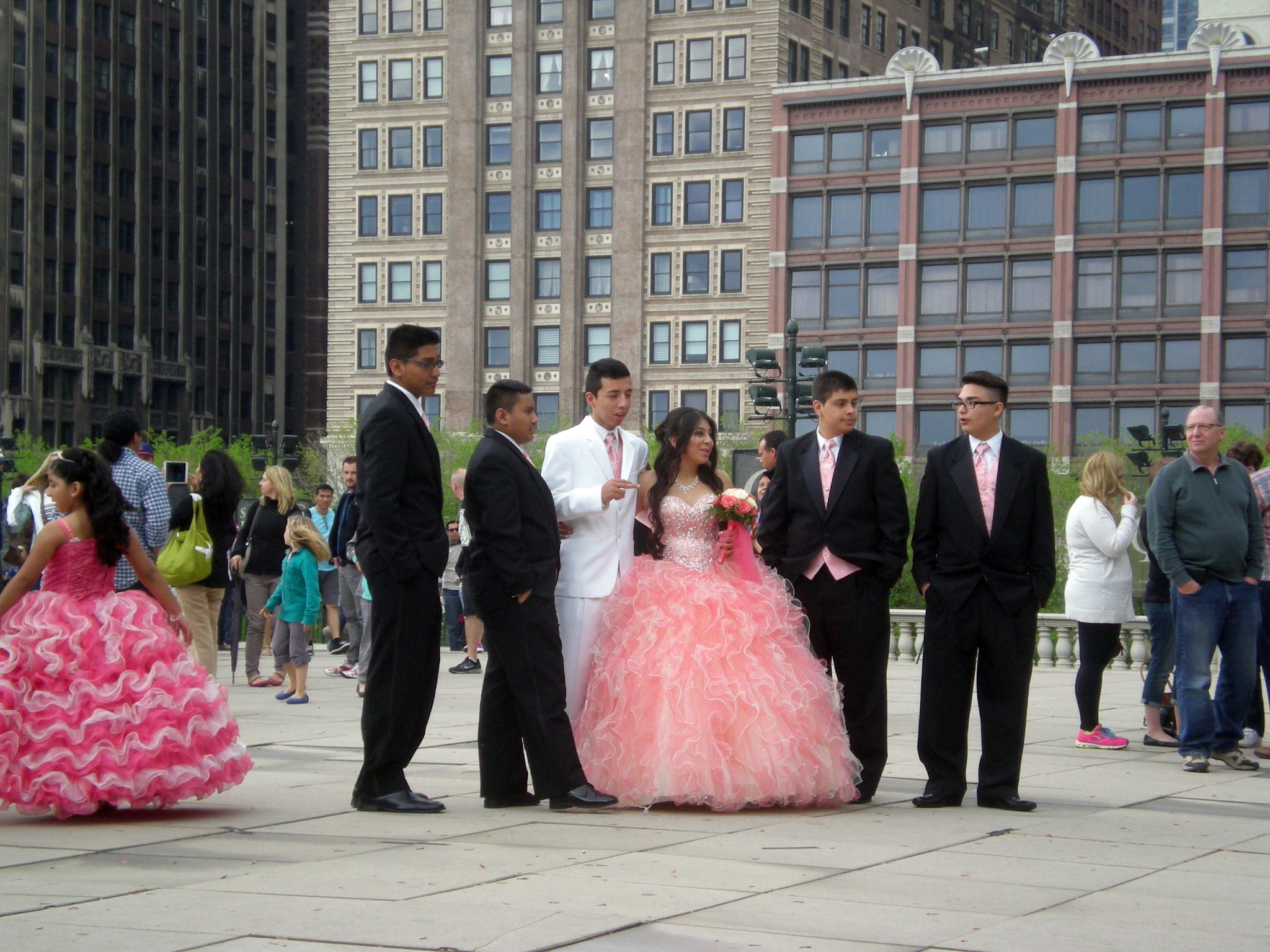
Just a guess, but it looked like members of a quinceañera showed up, probably by limo, to be in the presence of the Bean.
The Bean 2 - May 2015
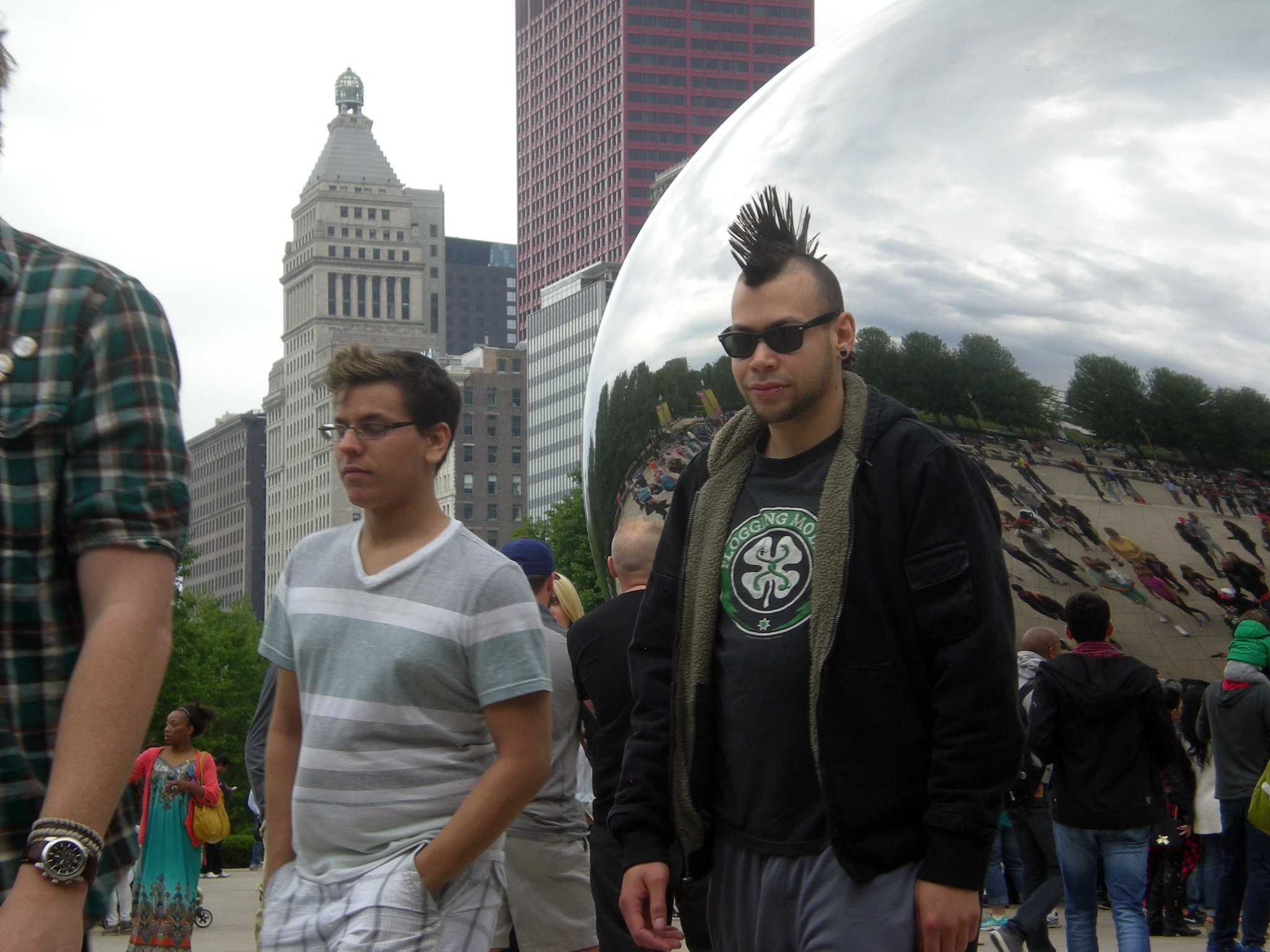
About this fellow: 1981 called, and wants that hairstyle back.
The Bean 3 - May 2015

I wonder about the longevity of the style. I don’t ever remember having the urge to style my hair in a way that was popular a decade or two before I was born. Guess he wanted to express his non-conformity in the same way that so many others have over the years.

“Batcolumn”

Lest we forget, today is the centennial of the sinking of the RMS Lusitania. It’s getting some attention online. The latest book about the subject, Dead Wake: The Last Crossing of the Lusitania, came out recently, and I plan to read it in the near future. It’s by Erik Larson, who wrote The Devil in the White City, which is a strong recommendation, so I’m looking forward to it.

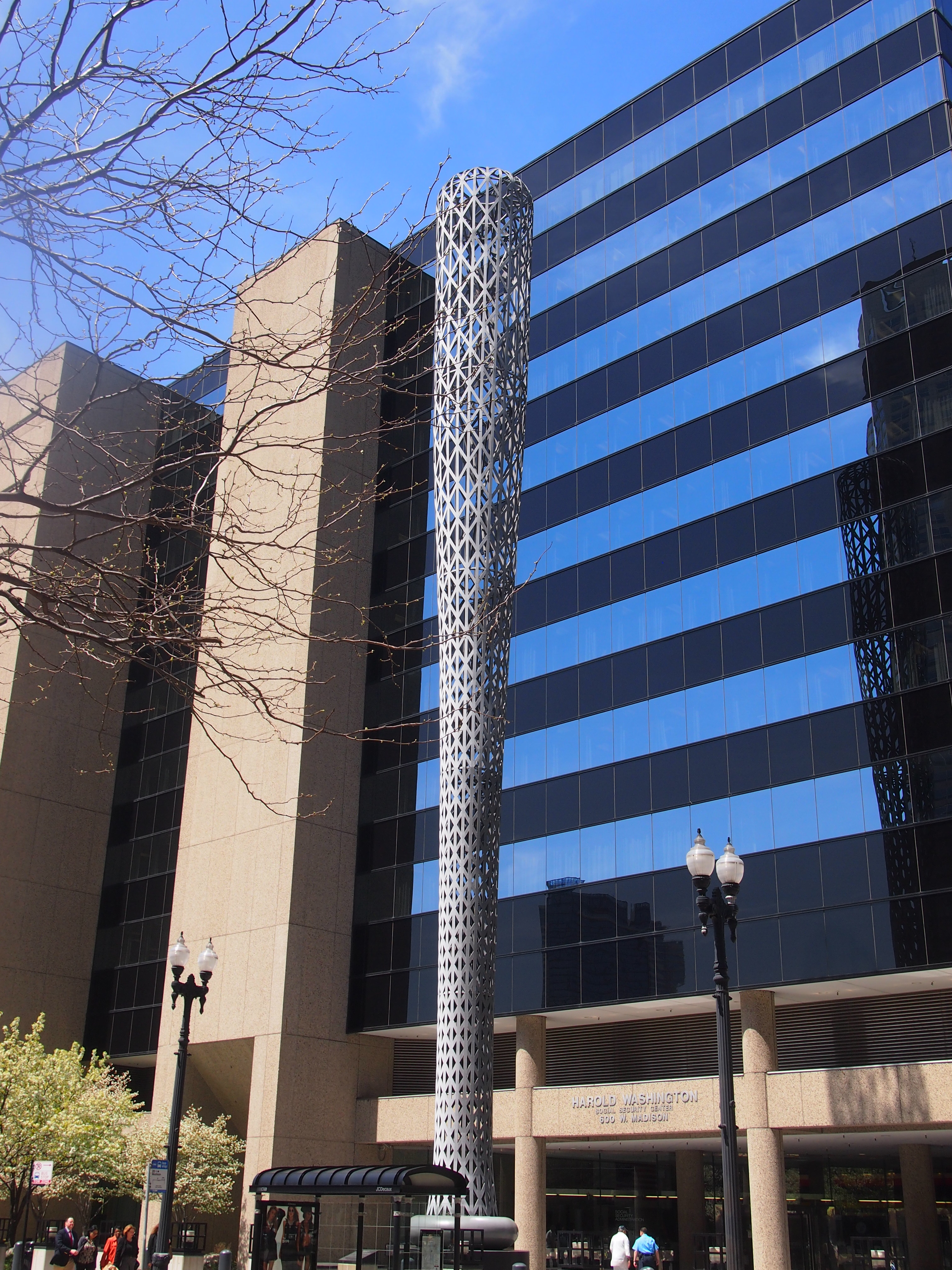
One more item from my May Day foray to downtown Chicago: “Batcolumn,” a very tall (101 feet) statue standing in front of the Harold Washington Social Security Administration building at 600 W. Madison St.

Batcolumn, May 1, 2015The sculpture was erected (and it must have been some job) in 1977, commissioned by the GSA. That reportedly annoyed people who objected to spending public money on making interesting things, but here it is, nearly 40 years later. I don’t know that it’s a favorite bit of public art among Chicagoans — not like the Picasso or the Bean — but everyone’s seen it, and no one seems to object to it any more. I think the government got its money’s worth.

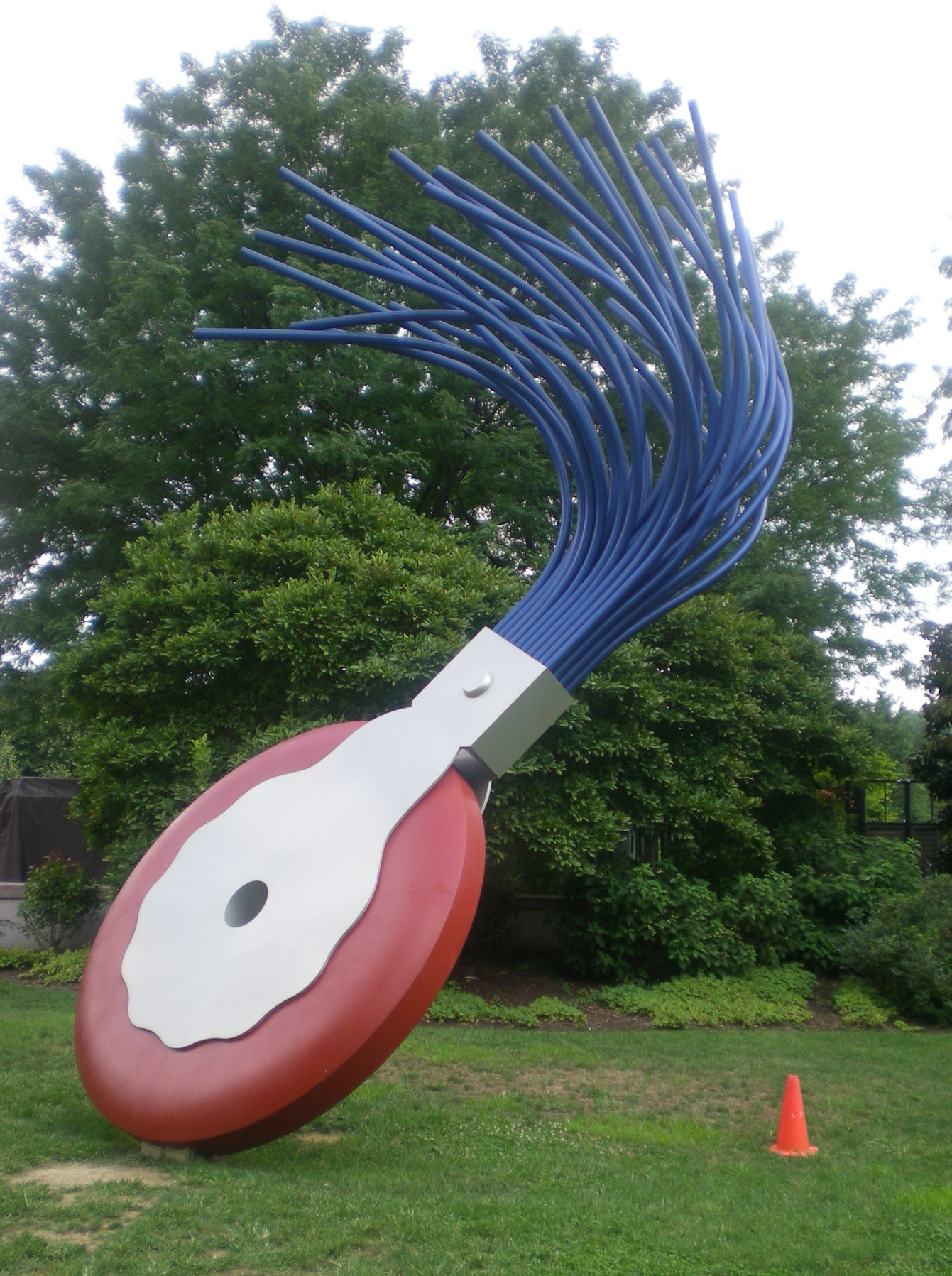
The Swedish-born U.S. sculptor Claes Oldenburg did the work. His specialty: large versions of ordinary objects. While looking at some of his other items on line, one looked familiar right away.

Claes Oldenburg, Typewriter Eraser, ScaleXIt’s “Typewriter Eraser, Scale X,” which we saw at the National Gallery of Art Sculpture Garden in Washington DC in 2011. Back in 1998, I think, I also saw “Spoonbridge and Cherry” at the Walker Art Center in Minneapolis.

“Agora”

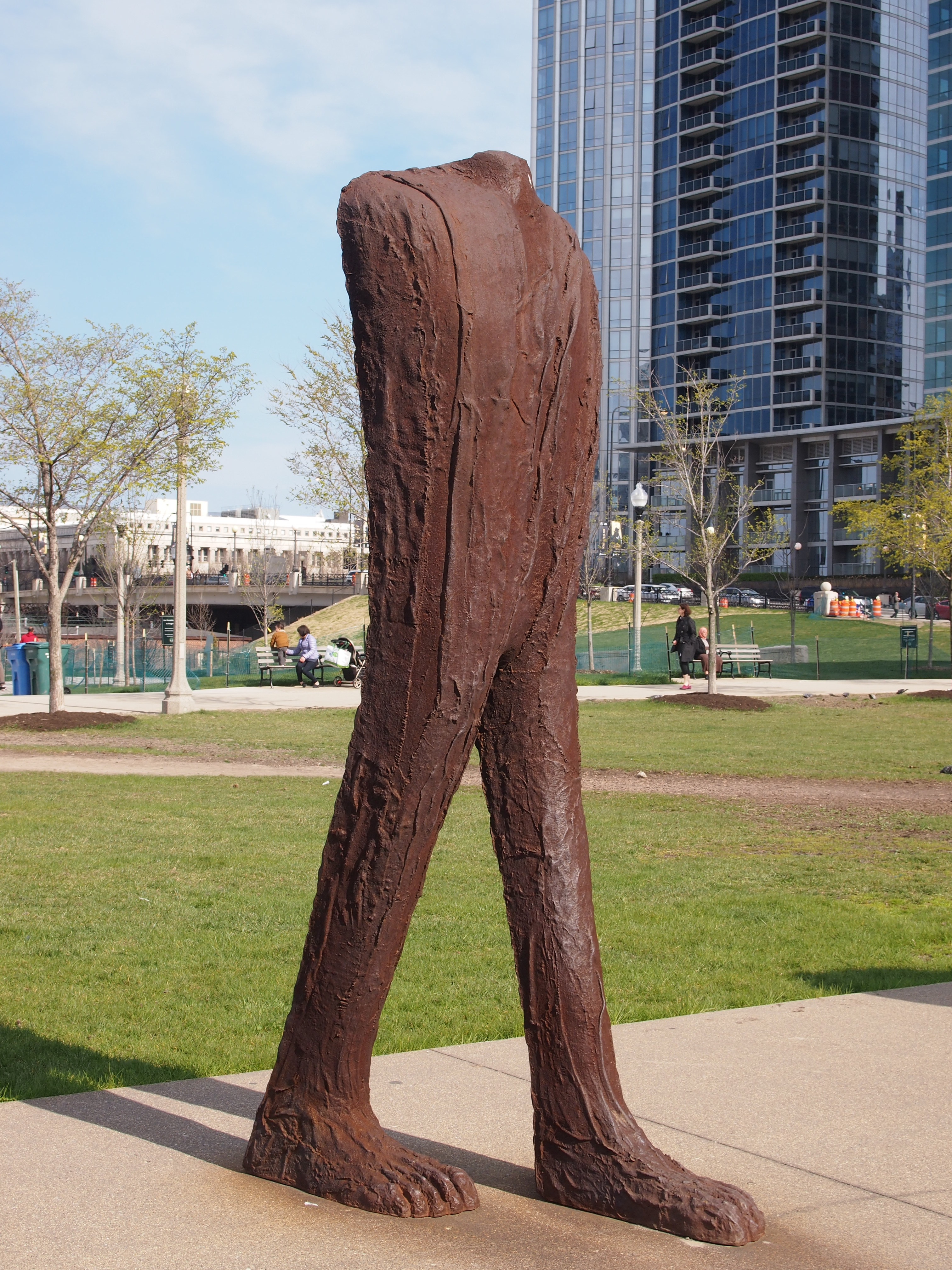
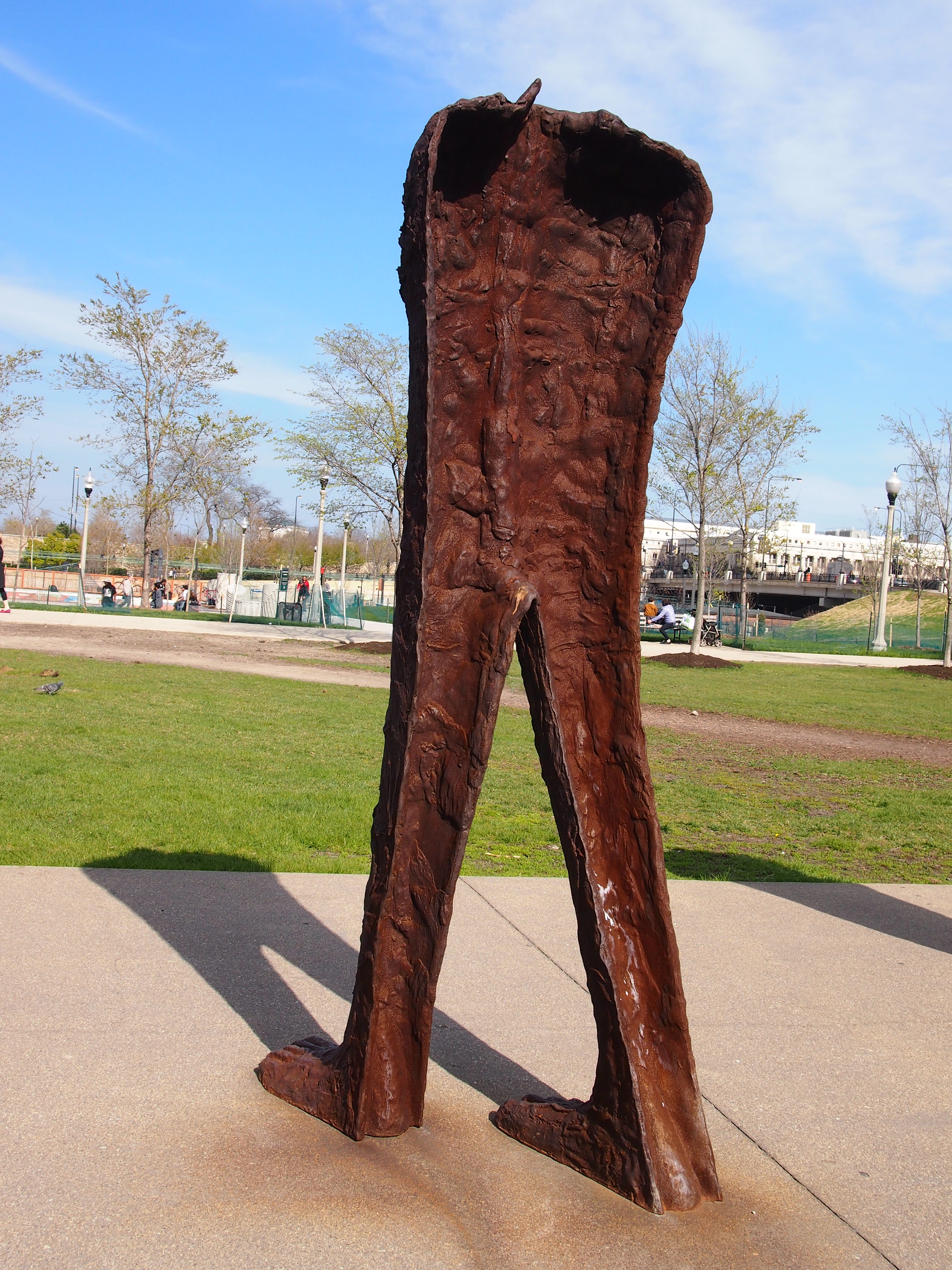
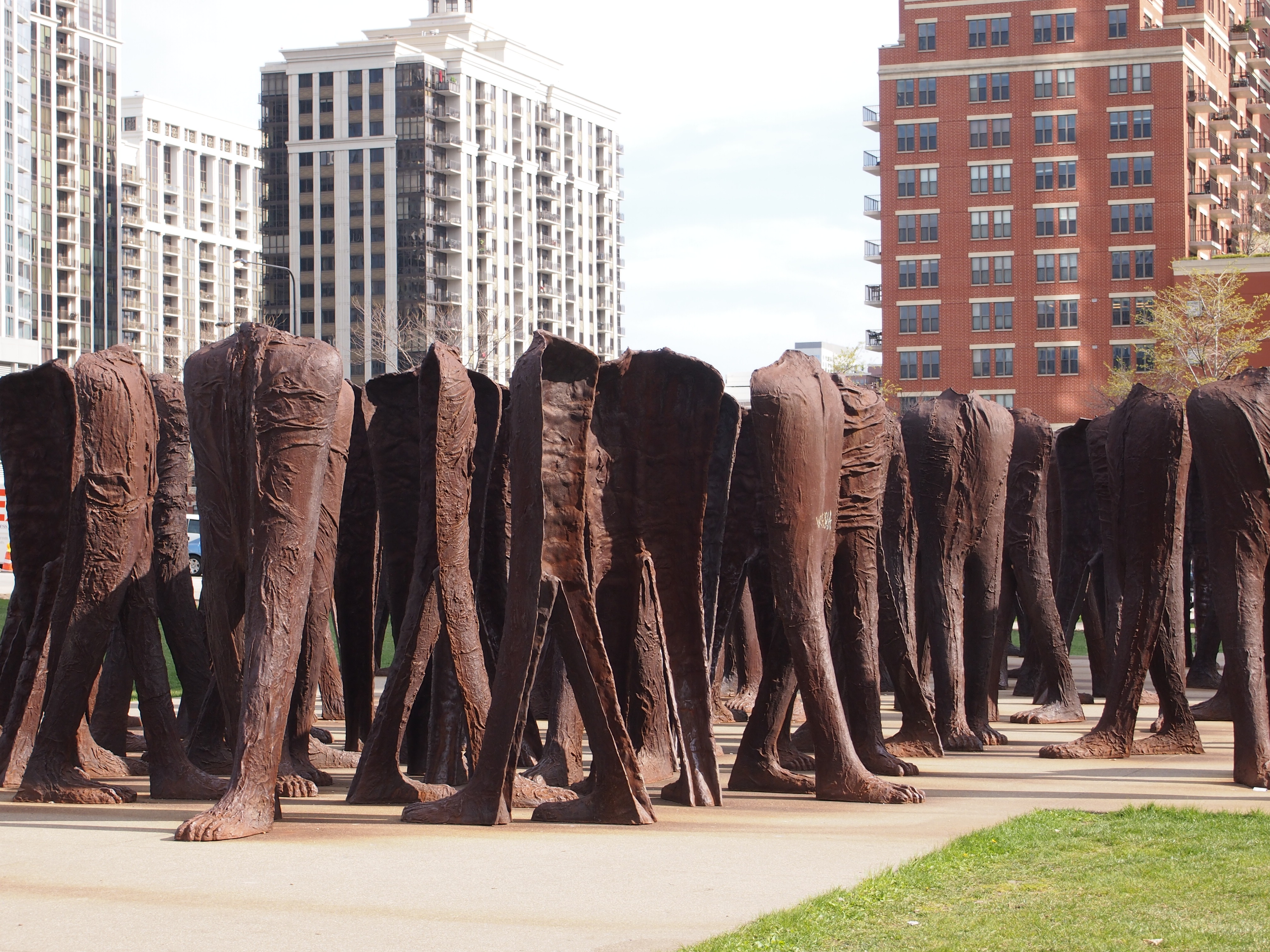
As far south as you can go in Grant Park, near the corner of Michigan Ave. and Roosevelt Rd., there’s a permanent sculpture installation called “Agora,” by the Polish sculptor Magdalena Abakanowicz.

“Agora” includes iron figures that look like this from one angle.

Agora, May 1, 2015And like this from another.

Agora, May 1, 2015They look alike at first glance, but actually the texture of the iron is different on each one. There are 106 of them.

Yeah, it's a little creepyThey’re roughly in two groups, but some of them are at a distance from the rest. Abakanowicz cast them at the Srem Foundry in Poland from 2003 to ’06.
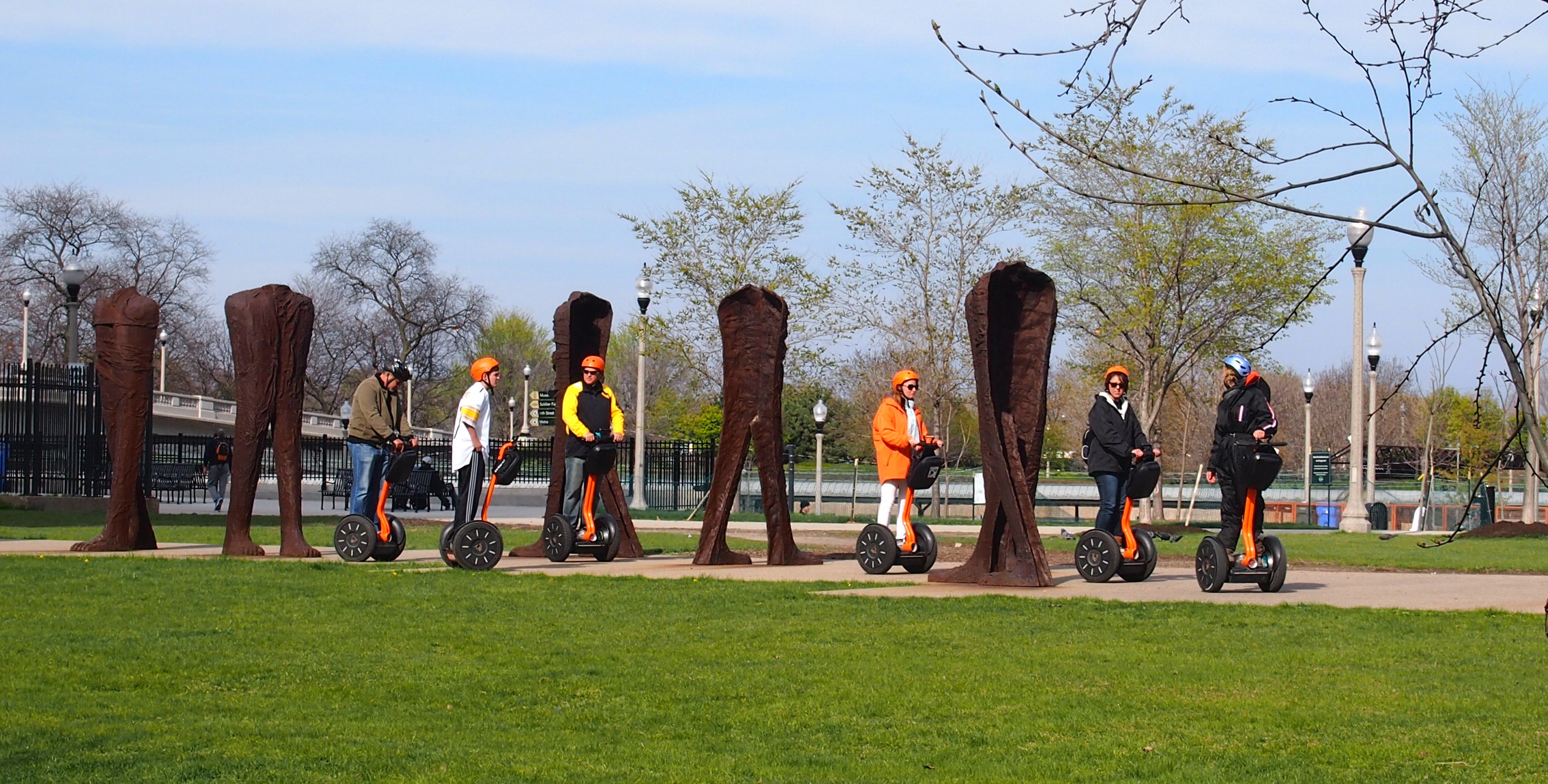
The work also seems to attract the attention of roving bands of Segwayers.

Grant Park, May 1, 2015As I looked at the half-figures, I thought, they seem really familiar. Where have I seen them before, or at least something similar?

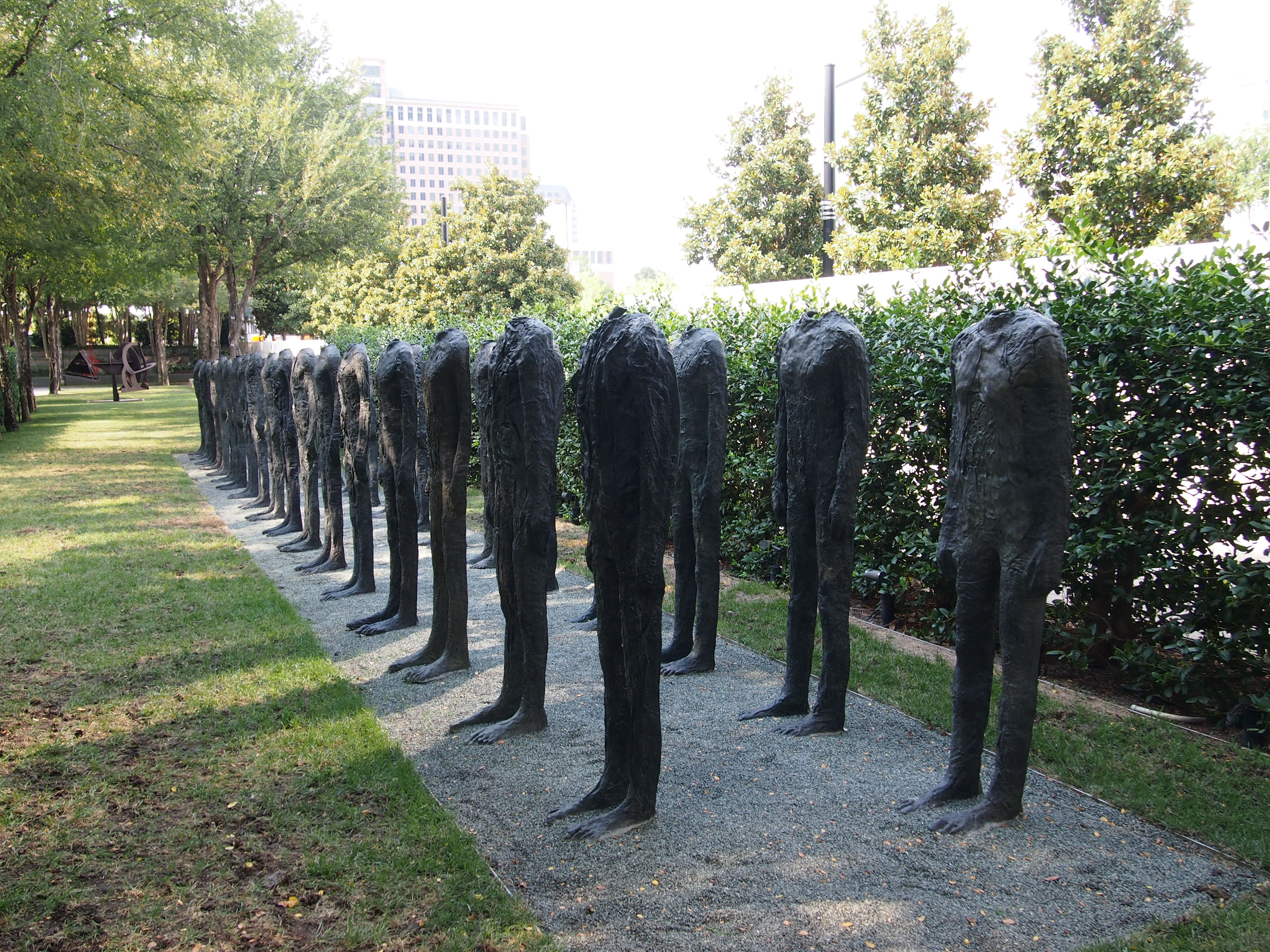
Nasher Museum, 2013The Nasher Sculpture Center in Dallas in ’13, that’s where, which has another grouping of cast-iron figures by Abakanowicz. The headless halves were in long lines instead of milling around like at an agora.

South Grant Park Sculpture &c.

The thing to do when walking to the southern reaches of Grant Park in downtown Chicago on a warm Friday afternoon is take a look at some of the less-famed artworks installed there. That’s what I’d do, anyway.

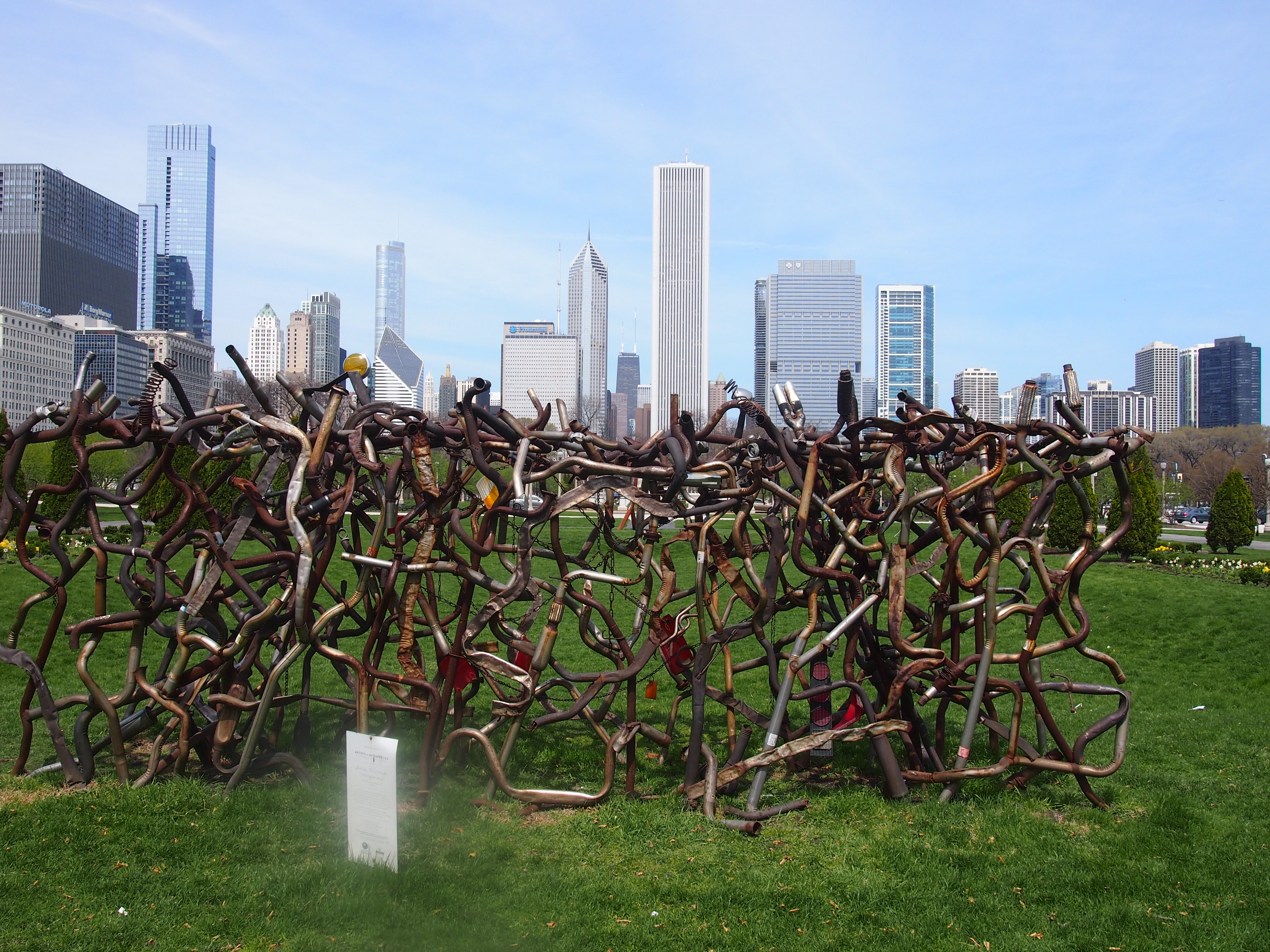
Such as “Hedgerow” by Chicago sculptor Lucy Slivinski, composed of vehicle exhaust pipes and reflectors and other auto oddments.

HedgerowIt was created in 2006, a nearby sign says, as part of an exhibit called Artists + Automobiles, for which the artists were “asked to use salvaged auto parts as the inspiration and primary material.” Yep.
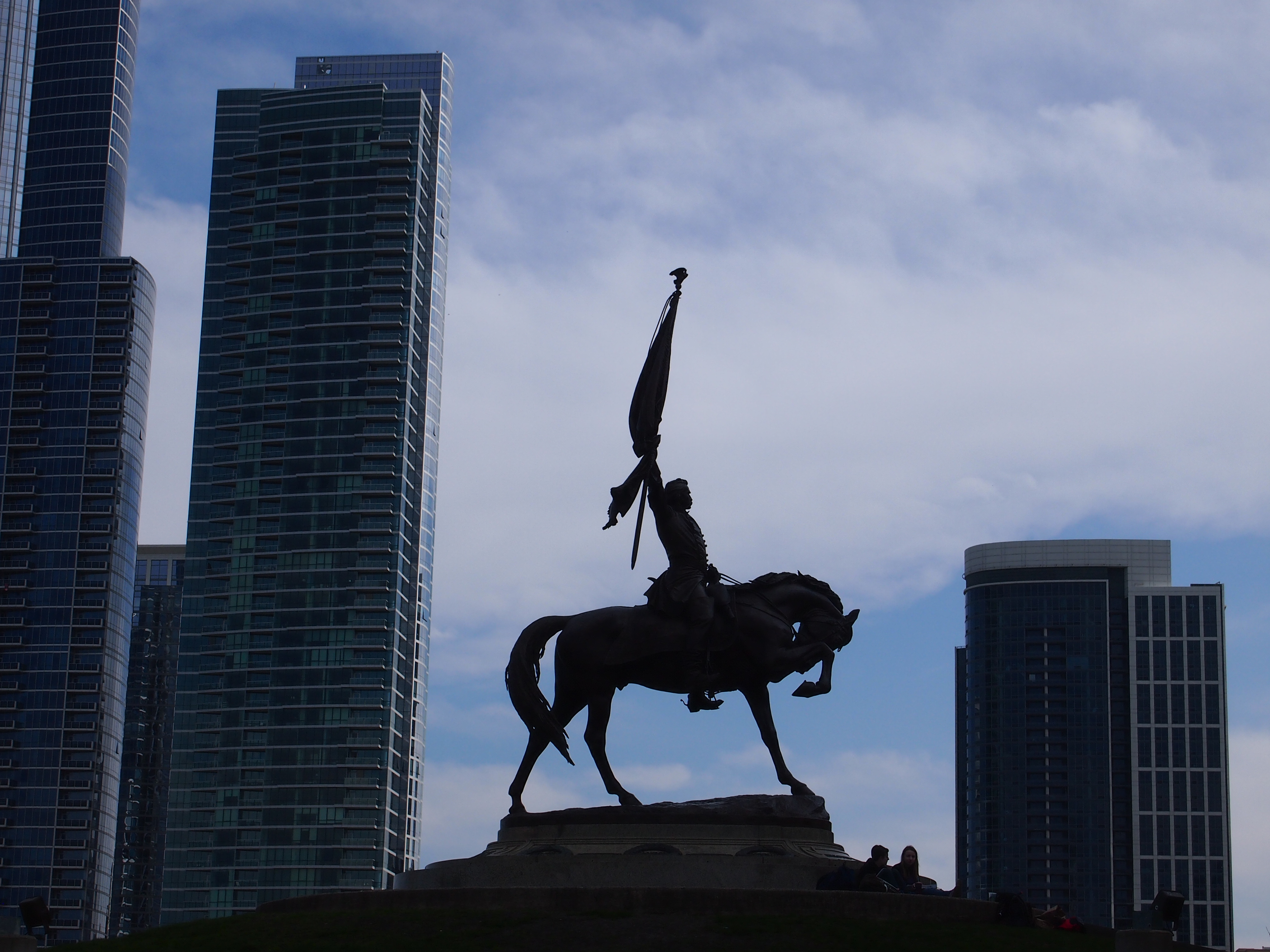
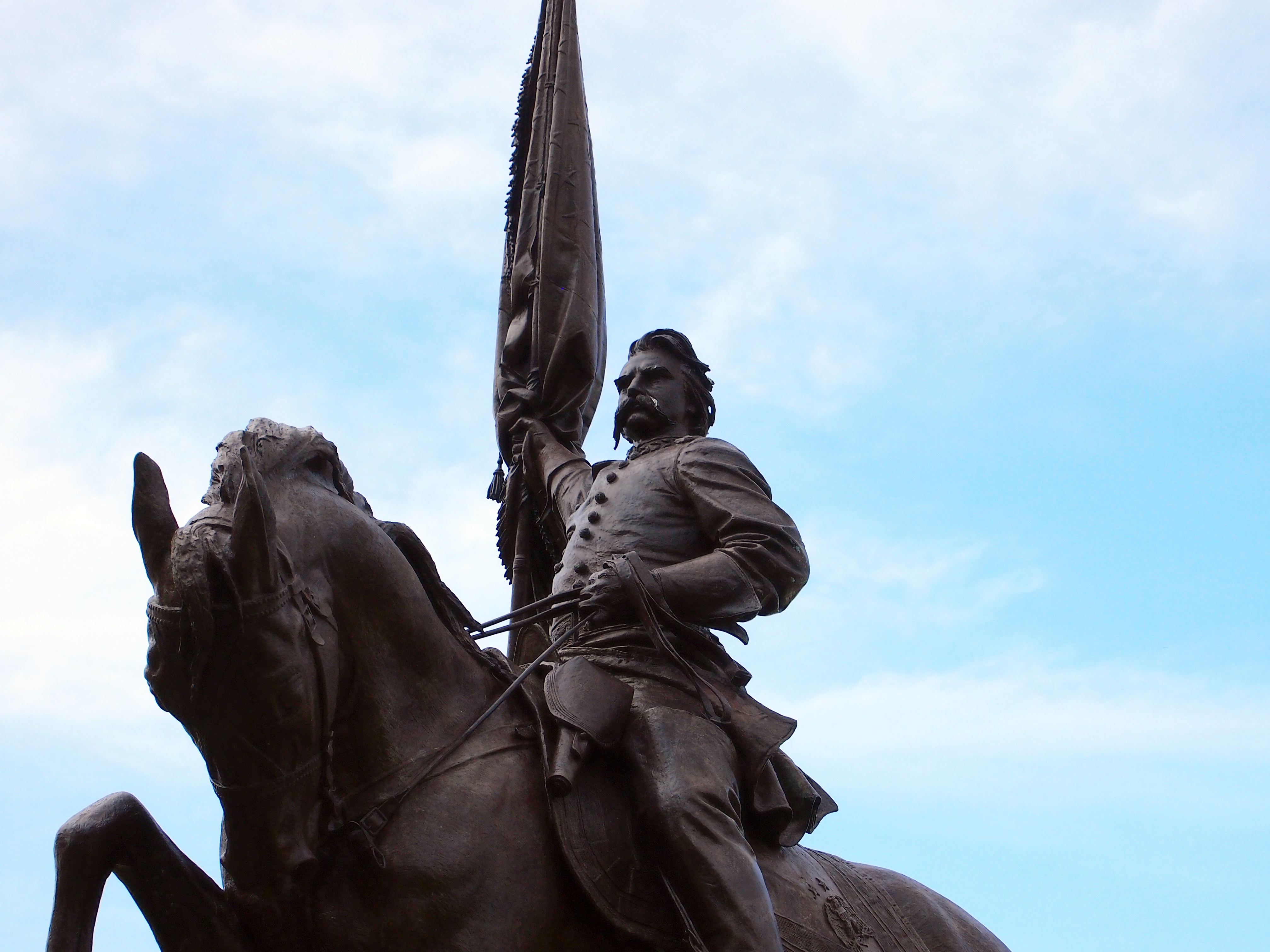
HedgerowFurther south, and closer to Michigan Ave., is the more conventional equestrian statue of Gen. John A. Logan. He’s remembered by Civil War aficionados, but by not many others, I’d say, even in Illinois, despite the part he played in the war or in establishing Decoration Day.
Logan memorial, Chicago, May 1, 2015There’s a John A. Logan Museum in Downstate Illinois. I didn’t know that. Its web site describes him this way: “Who was John A. Logan? General Grant’s favorite officer, one of Illinois’ most powerful Senators, Founder of Memorial Day as a national holiday, and among Mark Twain’s favorite public speakers.

“Or as historian Gary Ecelbarger has said, ‘John A. Logan may be the most noteworthy nineteenth century American to escape notice in the twenty-first century.’ What pushed him from becoming Abraham Lincoln’s bitter rival to campaigning for Lincoln’s re­election? How does an avid racist and author of Illinois’ Black Laws become an advocate for African American Civil Rights and education?

“Visit the General John A. Logan Museum and maybe you will better understand why Frederick Douglas [sic] said, if a man like Black Jack Logan can have a change of heart, then there is hope for everyone.”
Gen. Logan, May 1, 2015His statue is on top of a (probably manmade) hillock. It’s no ordinary equestrian statue, though — it’s a Saint-Gaudens. Any statue by the creator of the Double Eagle is all right by me. Much more about the creation of the statue, which was supposed to be erected at the site of the ’93 World’s Fair but instead came to Grant Park, is at the informative Connecting the Windy City blog. When the statue was originally put there, the site wasn’t an obscure patch of a city park, but very near Central Station, an intercity passenger terminal for the Illinois Central RR, gone now for 40+ years.

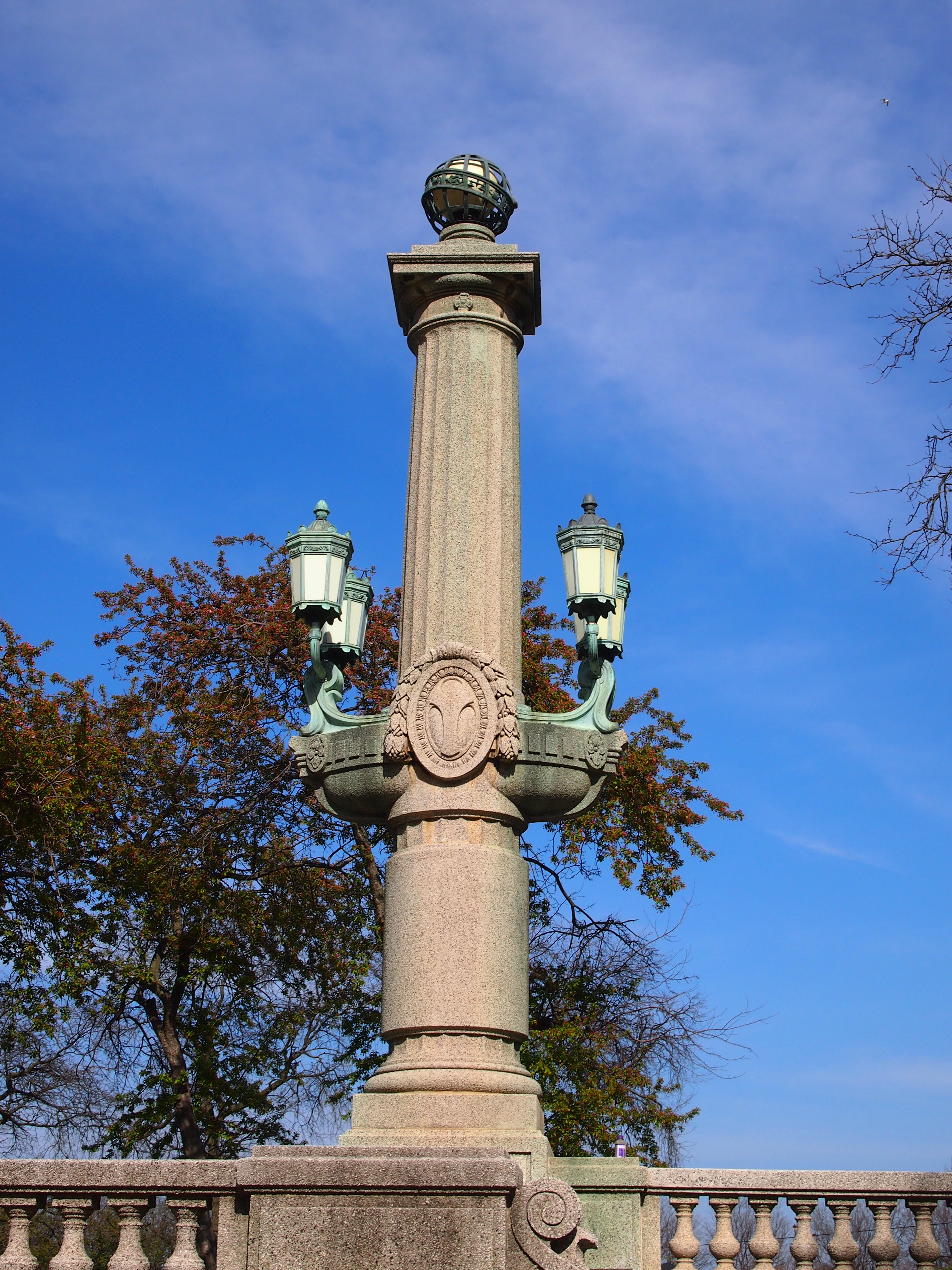
Not far from Gen. Logan, I took a look at some of the concrete lampposts in the park, picking up on some details I’d never noticed before. A fair number of them look like this.

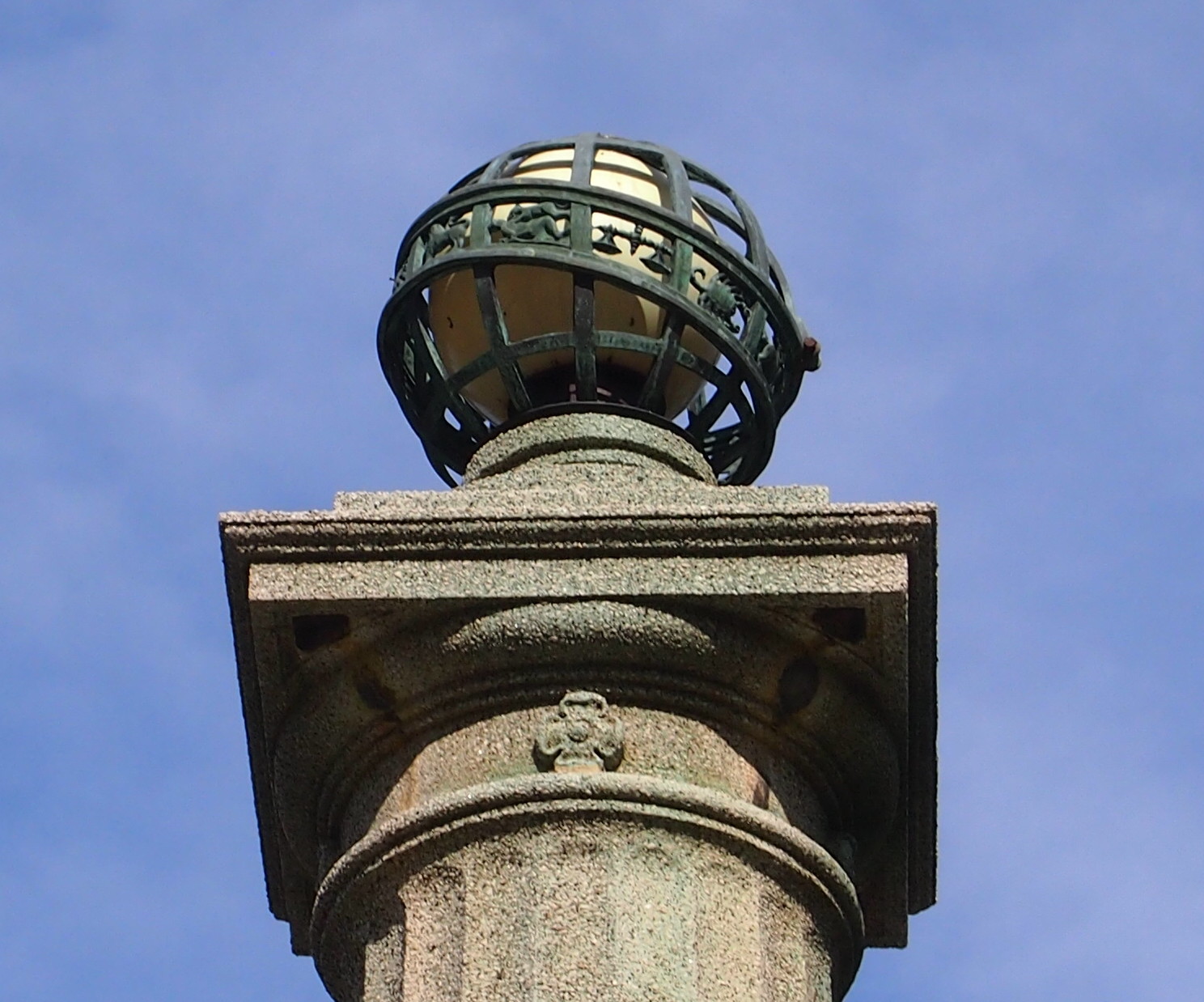
lamppost, Grant Park, May 1, 2015Atop the posts are globes, ringed by the zodiac.

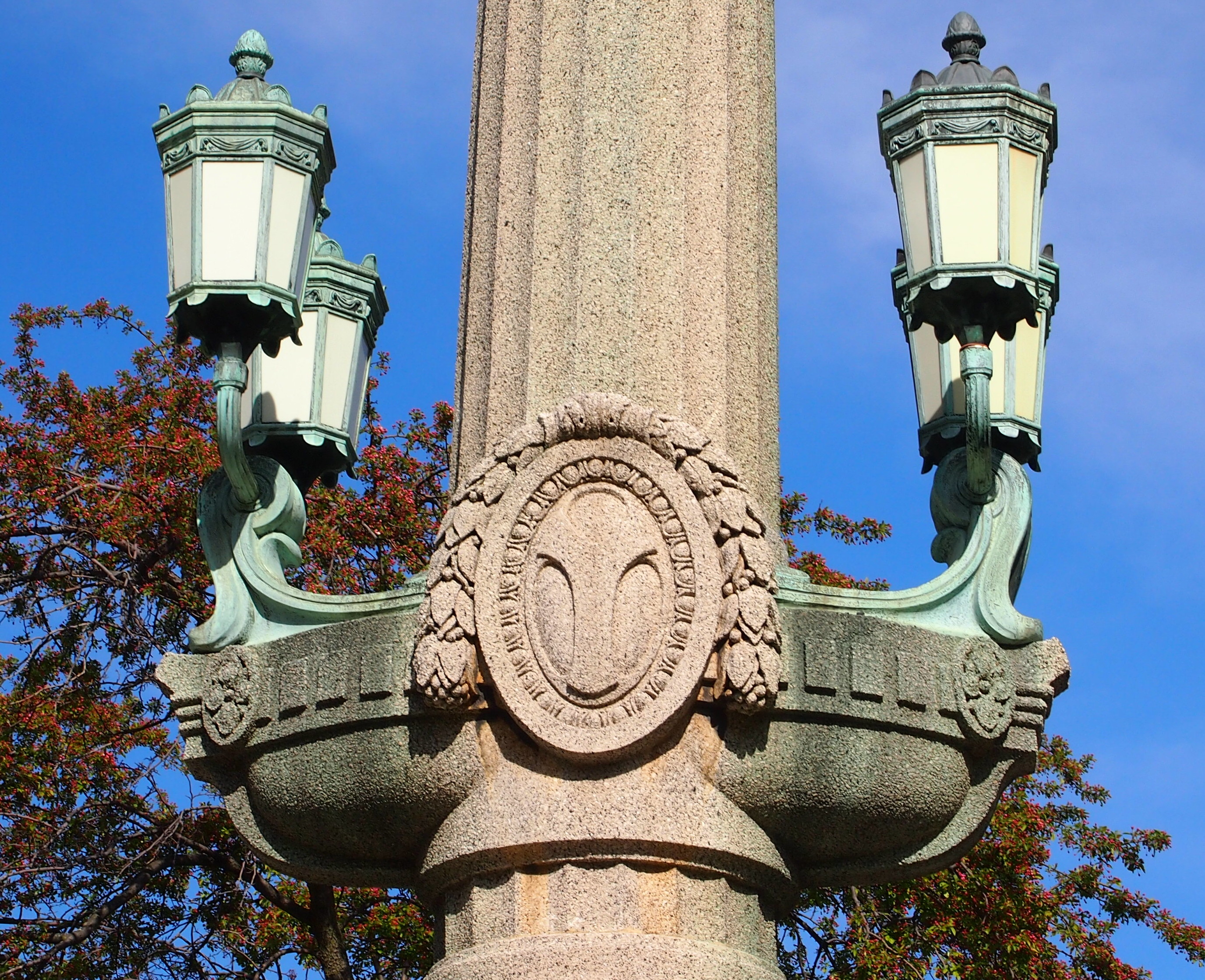
lamppost, Grant Park, May 1, 2015Note the Municipal Device.
lamppost, Grant Park, May 1, 2015Once you learn what it is, you see it everywhere in Chicago.

Black Hawk & John Deere 2003

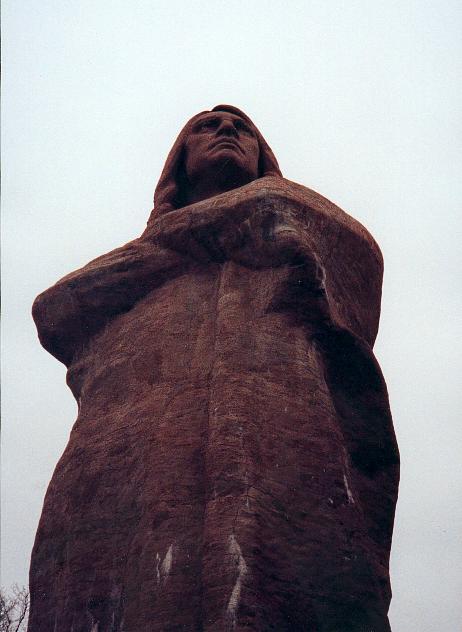
In April 2003, we took a short trip to north-central Illinois. We made a stop at the Black Hawk statue, whose formal name is “The Eternal Indian,” by Lorado Taft in Lowden State Park in Ogle County.

As I wrote then, “the statue, made of concrete, is about 50 feet high and stands on a bluff overlooking the Rock River and some of the town of Oregon. The head and neck represent an Indian, looking pensively off into the distance. His arms are folded in front of his chest, and from there on down the statue is less representational, but is clearly a human form.”

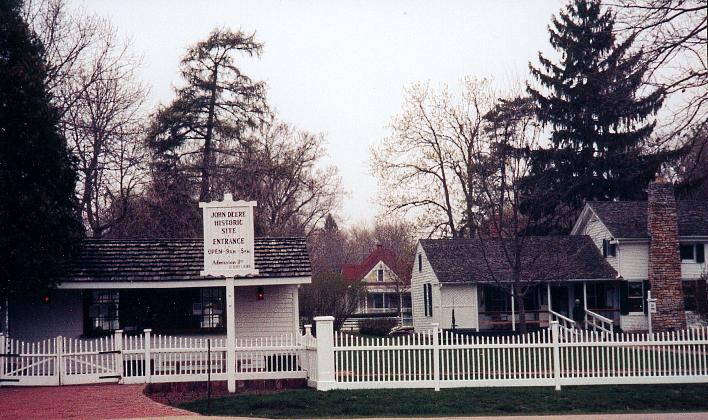
BlackHawkWe also took a look at the John Deere Historic Site in Grand Detour, featuring a blacksmith demonstration.

Deere“The re-created smithy was… the exact size of John Deere’s original Grand Detour shop, not including a latter addition, and presumably the original didn’t devote about a fifth of its space to a railed-in section where tourists stood. Otherwise, it was an evocative re-creation. A lot of iron & steel tools and implements on shelves, hanging on pegs, scattered around on various tables and benches. A bellows and a coal-burning furnace, which was glowing. A real anvil and some mean-looking, anvil-beating tools at hand.”

The Lincoln Park Zoo

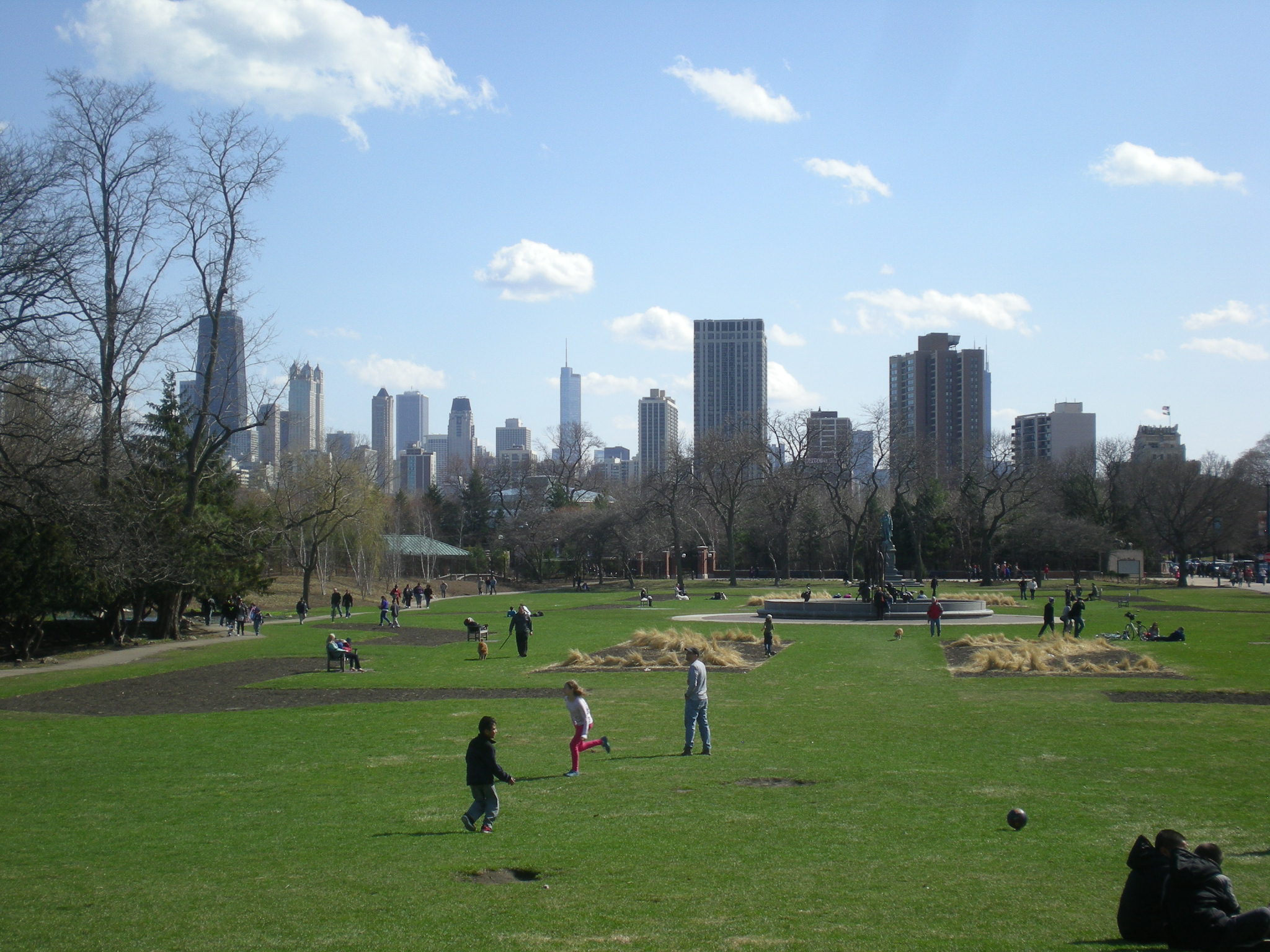
Easter Saturday was a pleasant day in Lincoln Park in Chicago. The view south from the Lincoln Park Conservatory at about 2:30 pm.

Chicago, April 4, 2015This is how old our children are. Us: Want to go to the Lincoln Park Zoo on Saturday? Them: Nah, we’d rather stay home.

So they did, while Yuriko and I went to the city, enjoying lunch at the always delicious Ann Sather Swedish restaurant on Belmont (serving cinnamon buns imbued with ambrosia), a short visit at the DePaul Art Museum — only open since 2011, so we’d never seen it — a walk to Lincoln Park, a stop at its conservatory, and then some time at the zoo. Except for the restaurant, all free attractions.

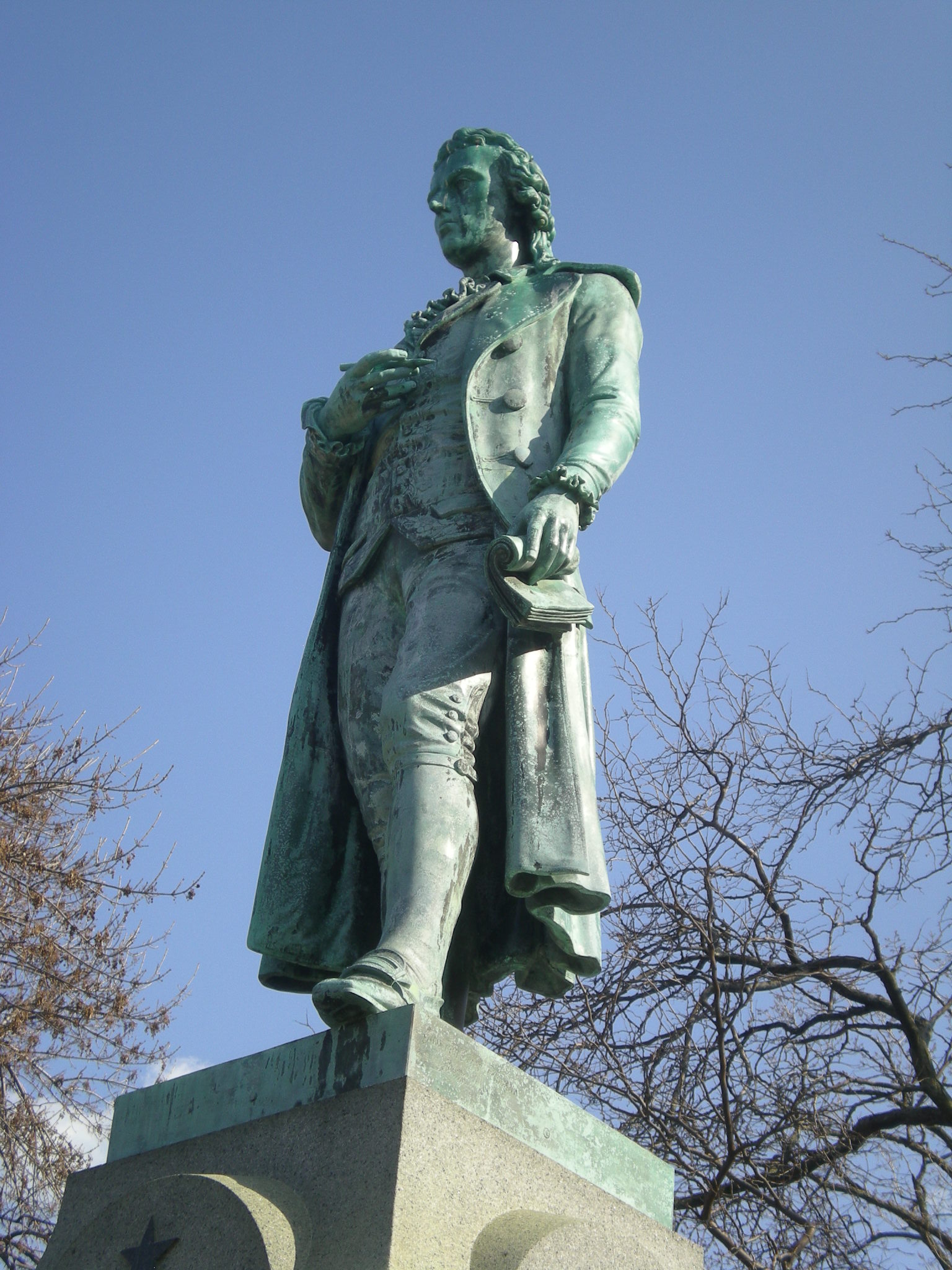
At the other end of the lawn pictured above is a statue. Of course I had to take a picture of that.

Schiller 2015It’s Johann Christoph Friedrich von Schiller. Why is he here? Y asked. There used to be a lot of Germans here. After World War II? No, after 1848. Also a bad time in Germany. They wanted out — and came to places like Chicago, Milwaukee, St. Louis, and… central Texas. The statue is a copy of one near Schiller’s birthplace in Marbach, Germany, by Ernst Bilhauer Rau. It’s been in this spot in Chicago for nearly 130 years.

I’ve been visiting the Lincoln Park Zoo occasionally since 1984, when my friend Rich took me there during my Labor Day weekend flyup to Chicago from Nashville. This time around, many of the animals weren’t outside — still too cool for them, or maybe it was their day off — but we saw some of the primates, the sea lions, and a few felines.

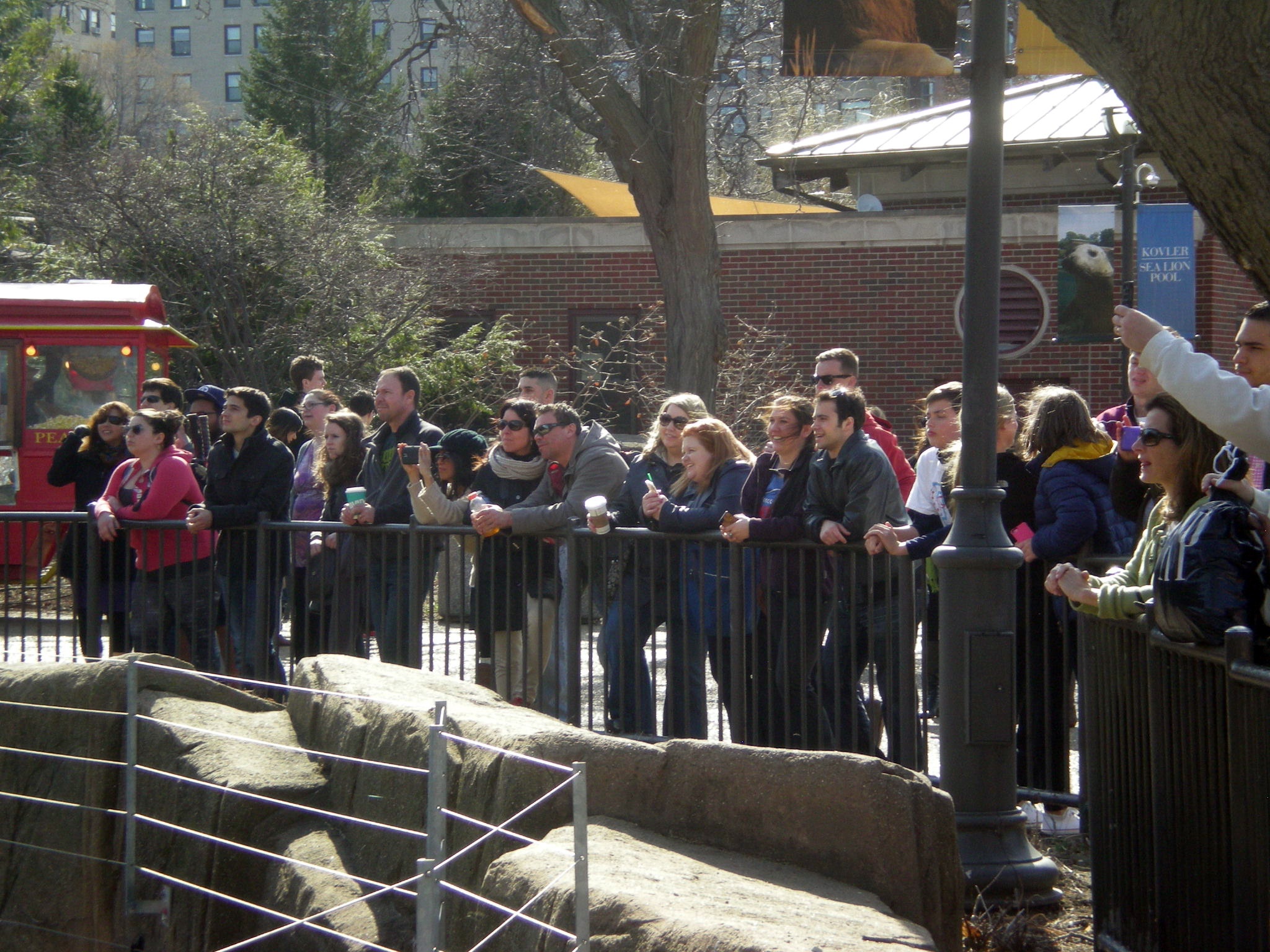
I was astonished then, and I am now, that there’s no admission. That probably adds to the crowds, especially on a pleasant weekend in spring, but the zoo holds its crowds well. It isn’t like Disneyland — you don’t have to wait an hour in line to see a lion.

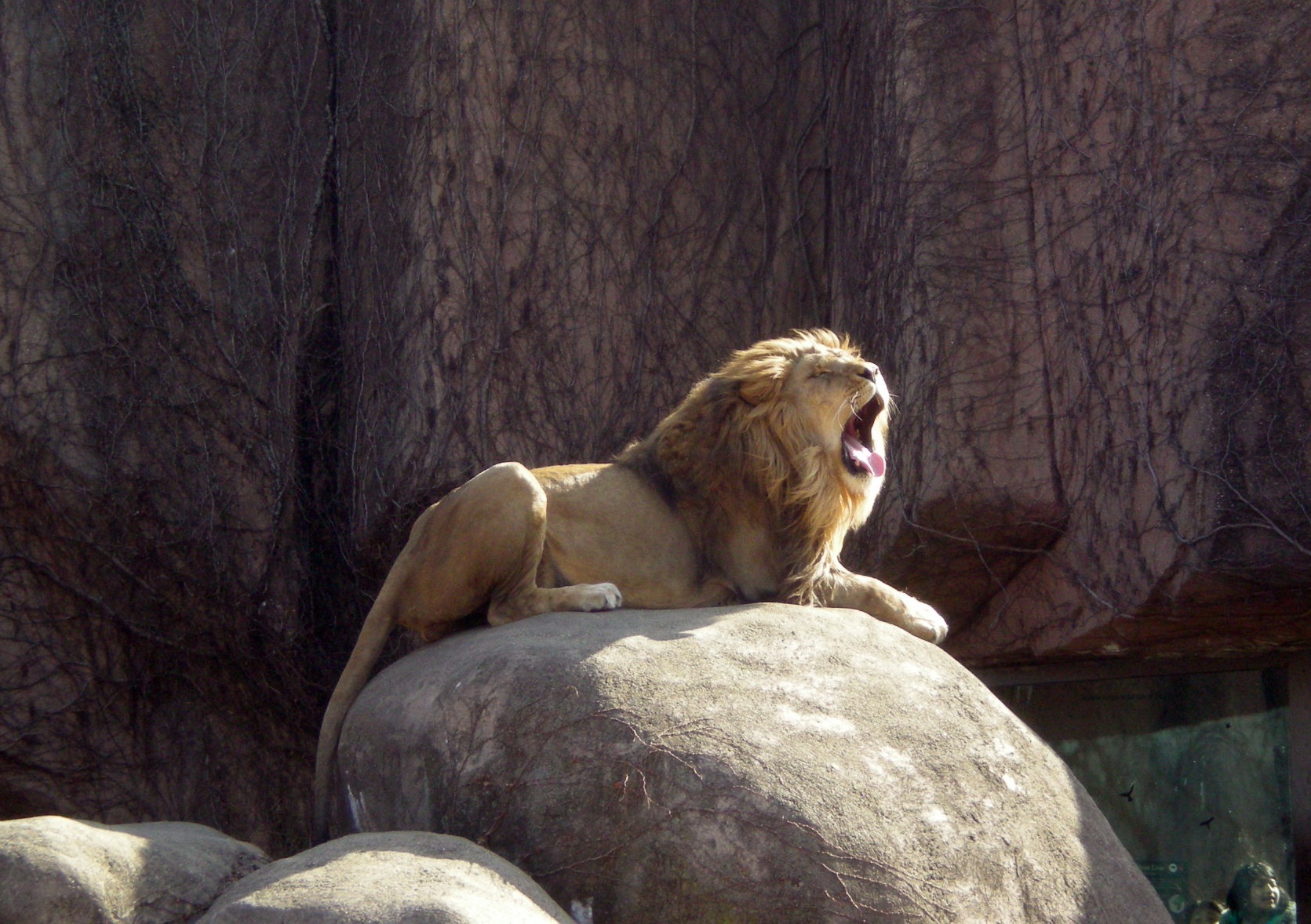
Lincoln Park Zoo Lion, 2015Leo here would periodically park himself on top of this rock. He had an audience.

Lincoln Park Zoo, April 4, 2015Mostly he would lie there (being a cat, after all), but sometimes he’d open his mouth, and he also roared a bit. It didn’t quite sound like the roars you hear in movies.

The Rock Island National Cemetery & Confederate Cemetery

These days, visiting the Rock Island National Cemetery means crossing over to Arsenal Island (formerly Rock Island) in the Mississippi River, which is located smack in between all four of the Quad Cities. The island is occupied by a U.S. Army facility, and has been the site of one kind of military installation or another for about two centuries. You pass through a checkpoint where a soldier looks at your driver’s license and asks your business, and then it’s a short drive the cemetery.

It was a quiet place on the morning of March 28, a Saturday. It’s probably quiet most of the time.

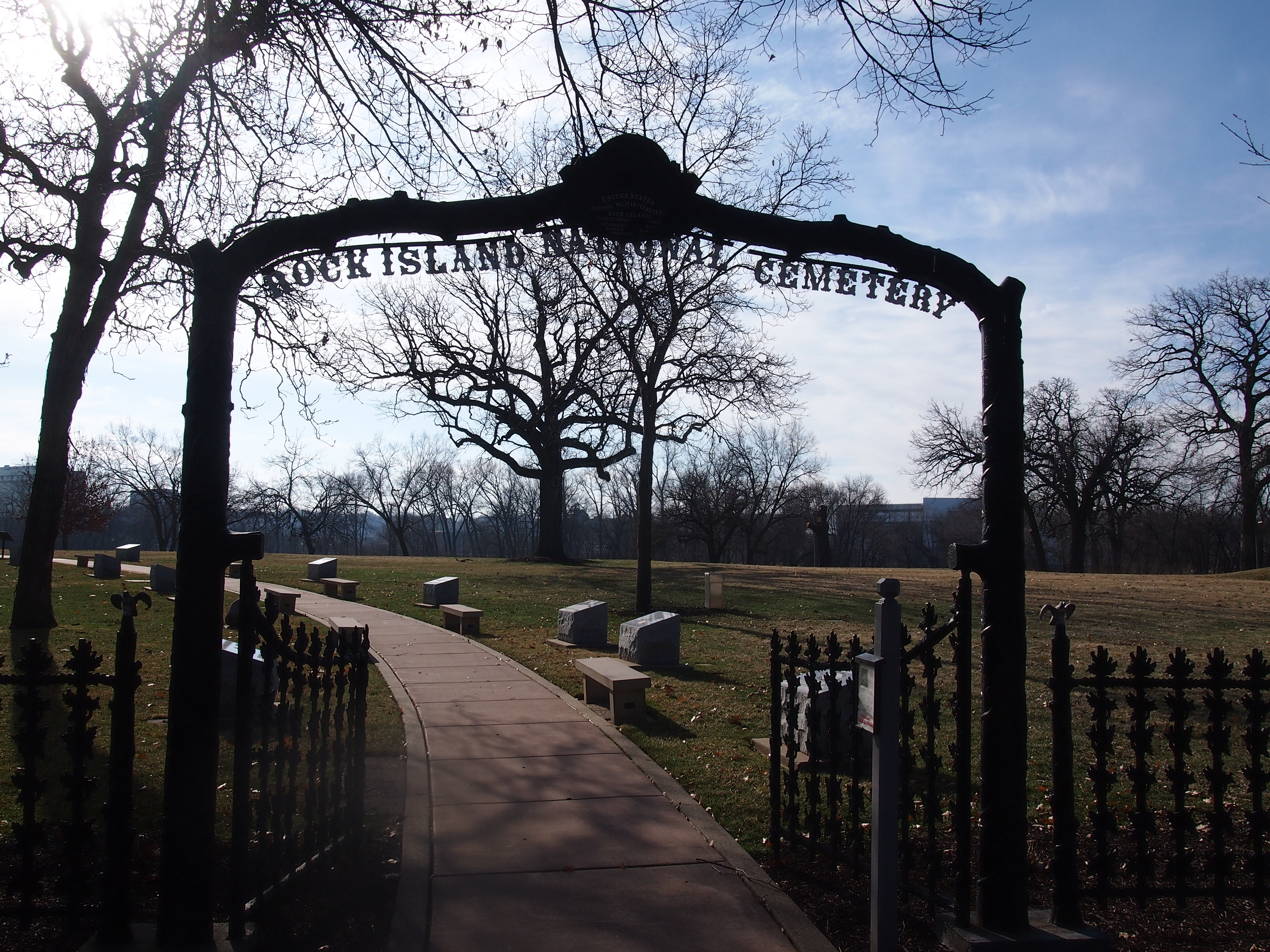
Rock Island Nat'l Cemetery March 2015The entrance to the Rock Island National Cemetery used to be marked by this piece of ironwork.
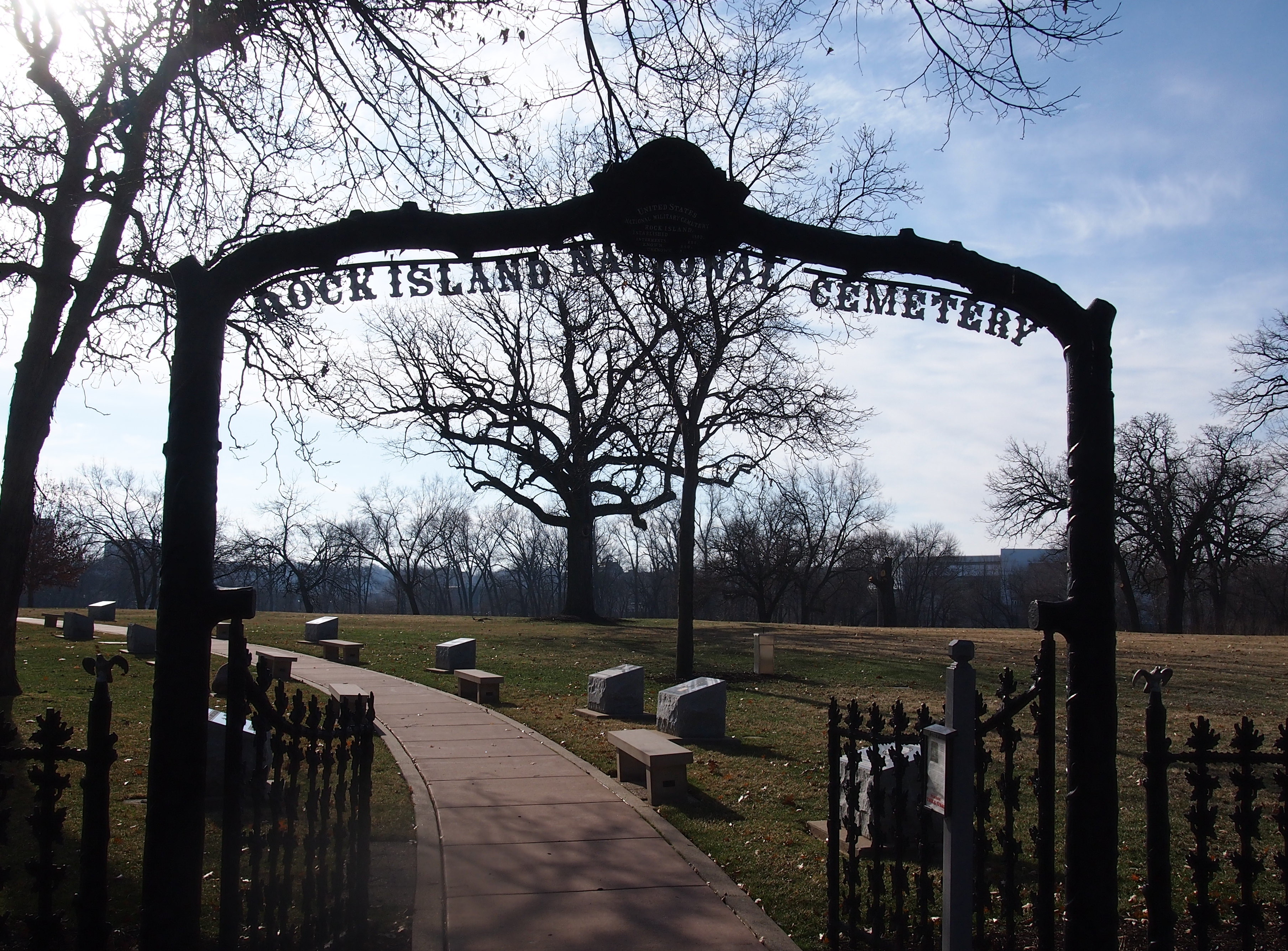
Rock Island Nat'l CemeteryThese days, the historic gate marks the entrance to the cemetery’s Memorial Walkway, which features about 30 memorials to various branches of the armed forces, or groups related to them, such as Pearl Harbor survivors, Mexican War veterans, female veterans, Gold Star Mothers, and local veterans organizations. I was glad to see that the Seabees have a stone there.

Not that I have a special connection to the Seabees, though I used to work with a fellow who said that his brother, who had died in Vietnam, had been a Seabee. It’s nice to see lesser-known battalions get their due.

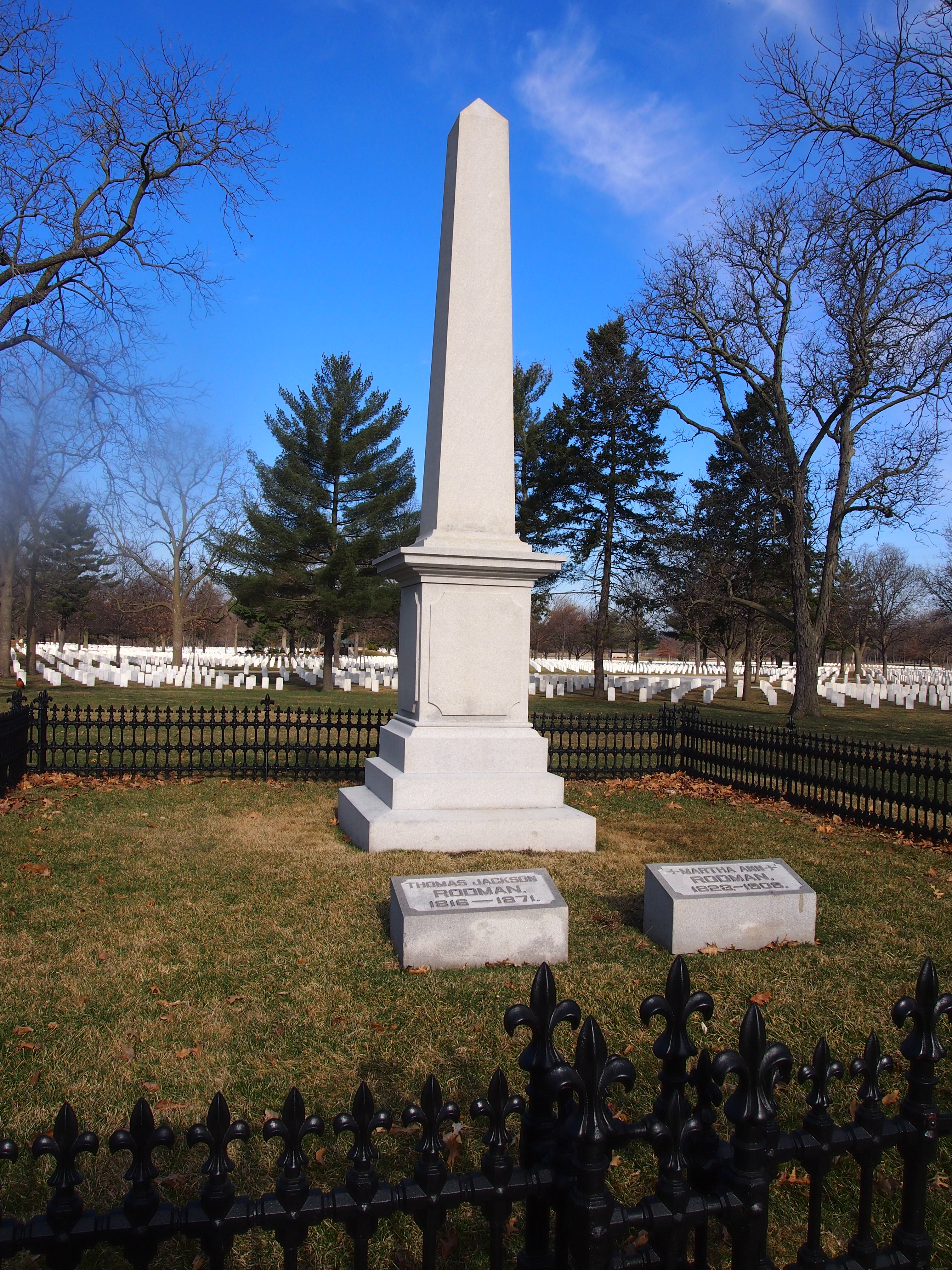
The walkway leads to the grave of Thomas J. Rodman and his wife, Martha Ann. The NPS says that “Brigadier General Rodman, the ‘Father of Rock Island Arsenal,’ was an officer during the Civil War and was the arsenal’s commanding officer from 1865 to 1871…
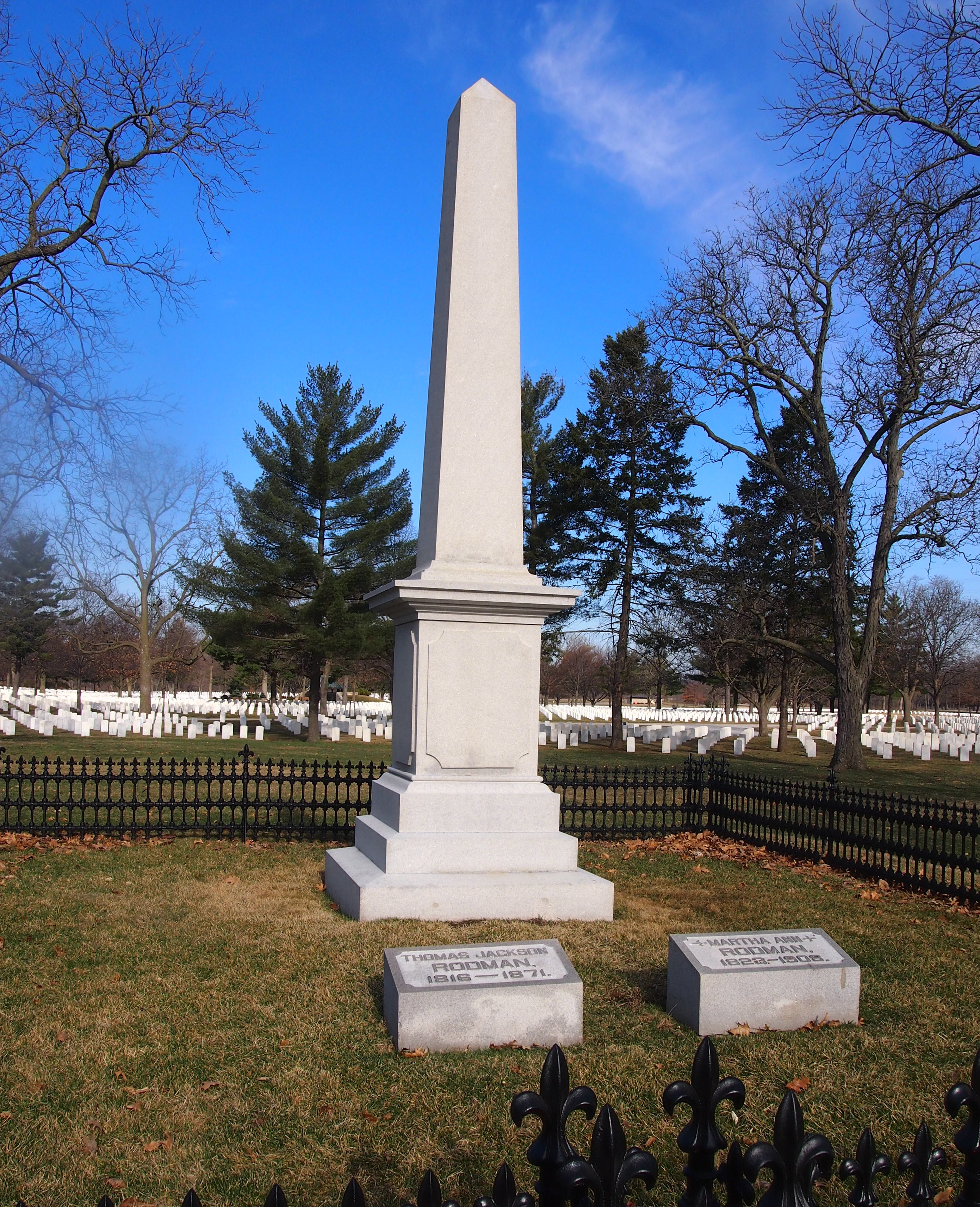
Gen. Rodman's grave“Rodman invented the construction method used in producing [Rodman guns], which involved casting the cannon barrels around an air- or water-cooled core, ensuring that the barrel cooled and hardened first. This allowed the cannon to withstand higher pressures, making them stronger, safer, and more reliable, while also greatly increasing the lifespan of the cannon.”

Not far from the Rock Island National Cemetery is the Rock Island Confederate Cemetery, “final resting place for nearly 2,000 prisoners of war who died in captivity from disease and the poor living conditions of the camp,” the NPS says.

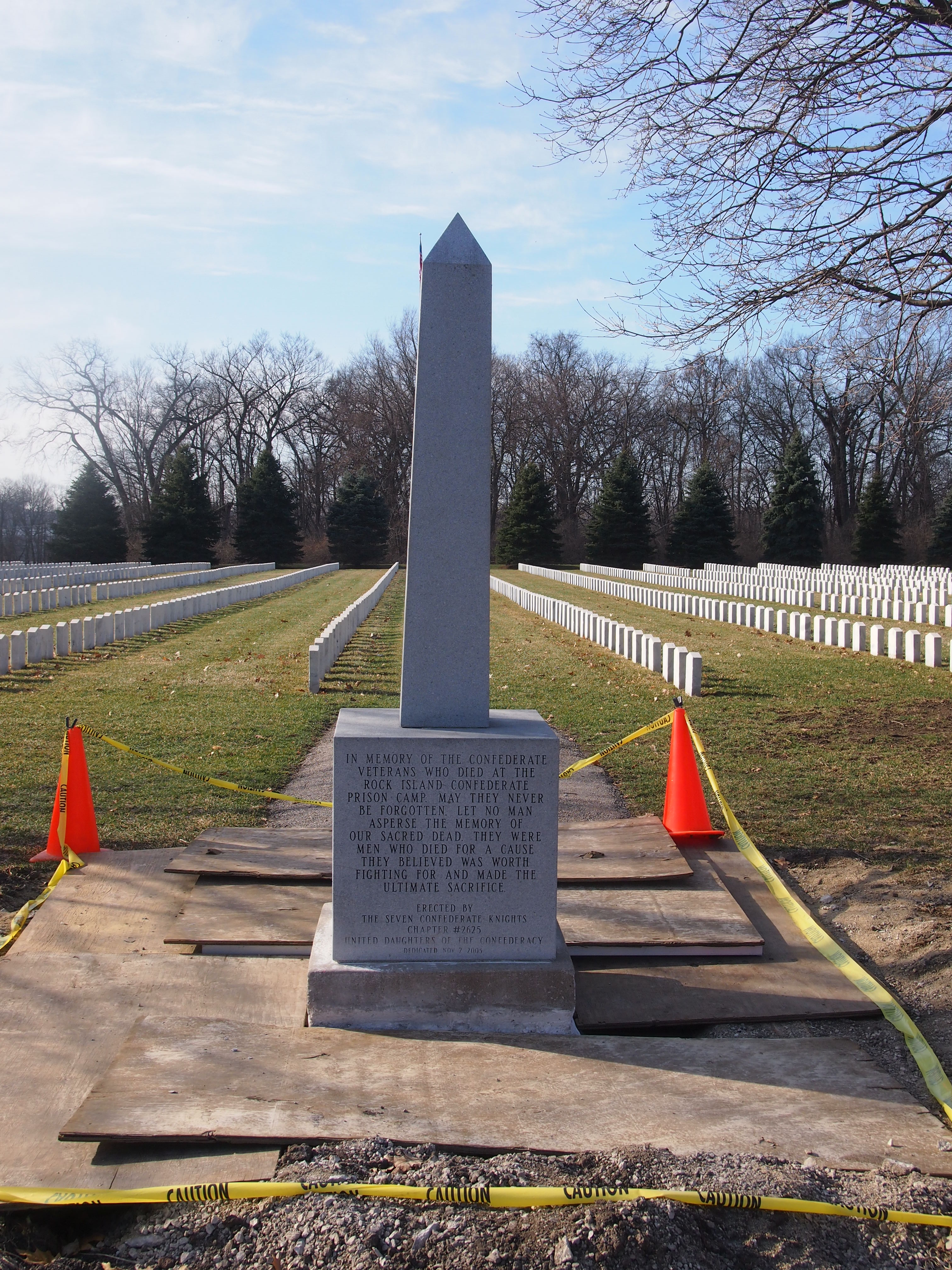
Confederate Cemetery, Rock Island, Ill.It’s a much simpler cemetery, with only one memorial besides the gravestones, a six-foot obelisk erected only in 2003. (Some work around it seems to be under way now.) It says:
Confederate memorialIn memory of the Confederate veterans who died at the Rock Island Confederate Prison Camp. May they never be forgotten. Let no man asperse the memory of our sacred dead. They were men who died for a cause they believed was worth fighting for, and made the ultimate sacrifice.

Erected by the Seven Confederate Knights Chapter #2625 and the Daughters of the Confederacy.

The Rock Island prison camp, incidentally, is where Margaret Mitchell put character Ashley Wilkes after his capture in the service of the CSA. So by a peculiar circumstance, he’s better known for being there than any of the actual prisoners.