St. Procopius Catholic Church

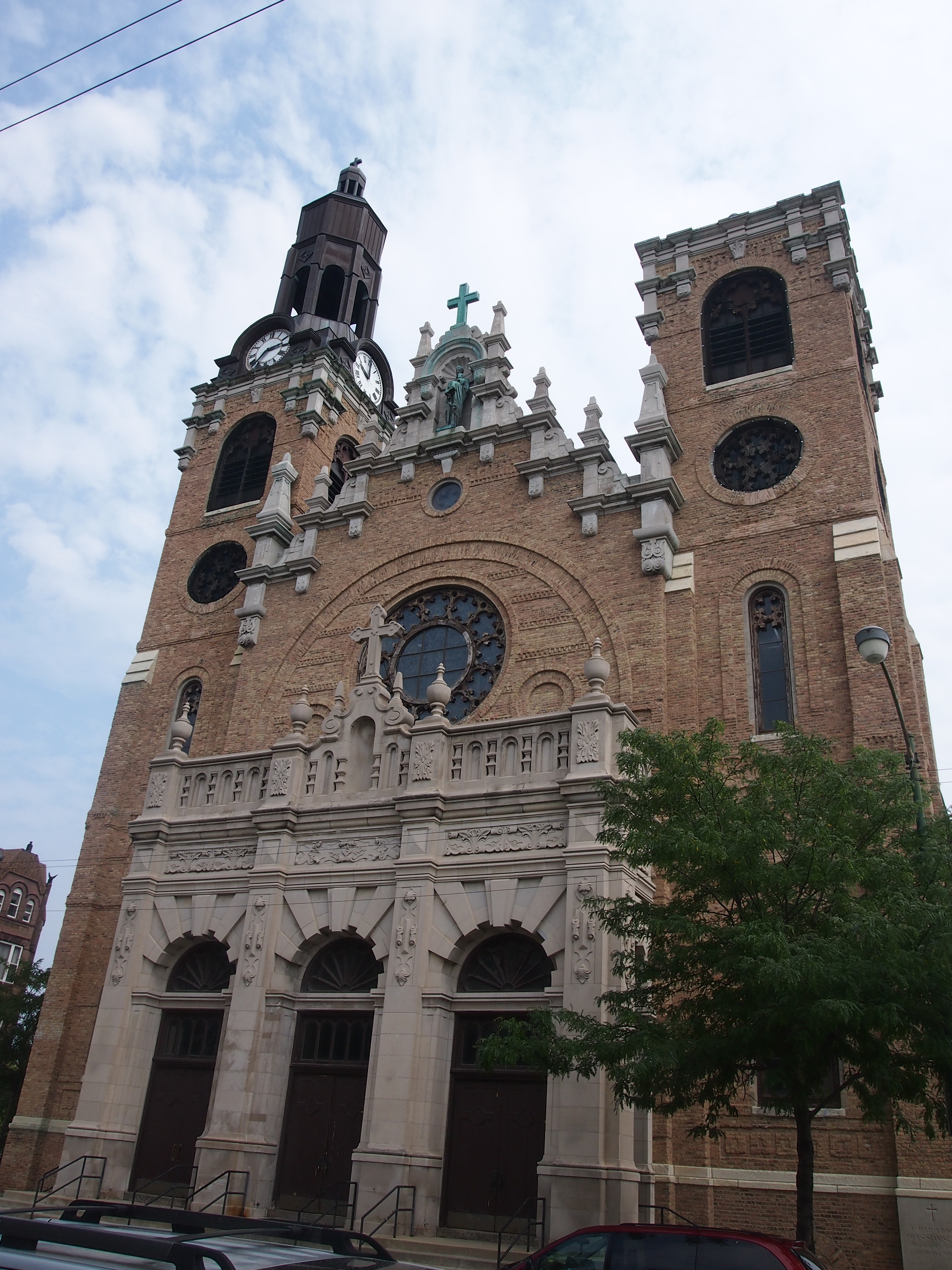
During the Churches by Bus tour on Saturday, I became acquainted with a few new saints. That’s one of the things about saints, there are always more. The second church for bus #4 was St. Procopius Catholic Church at 1641 S. Allport St. in the Pilsen neighborhood.
St. Procopius Catholic Church, Sept 2014

Procopius? The Secret History Procopius? He was a saint?

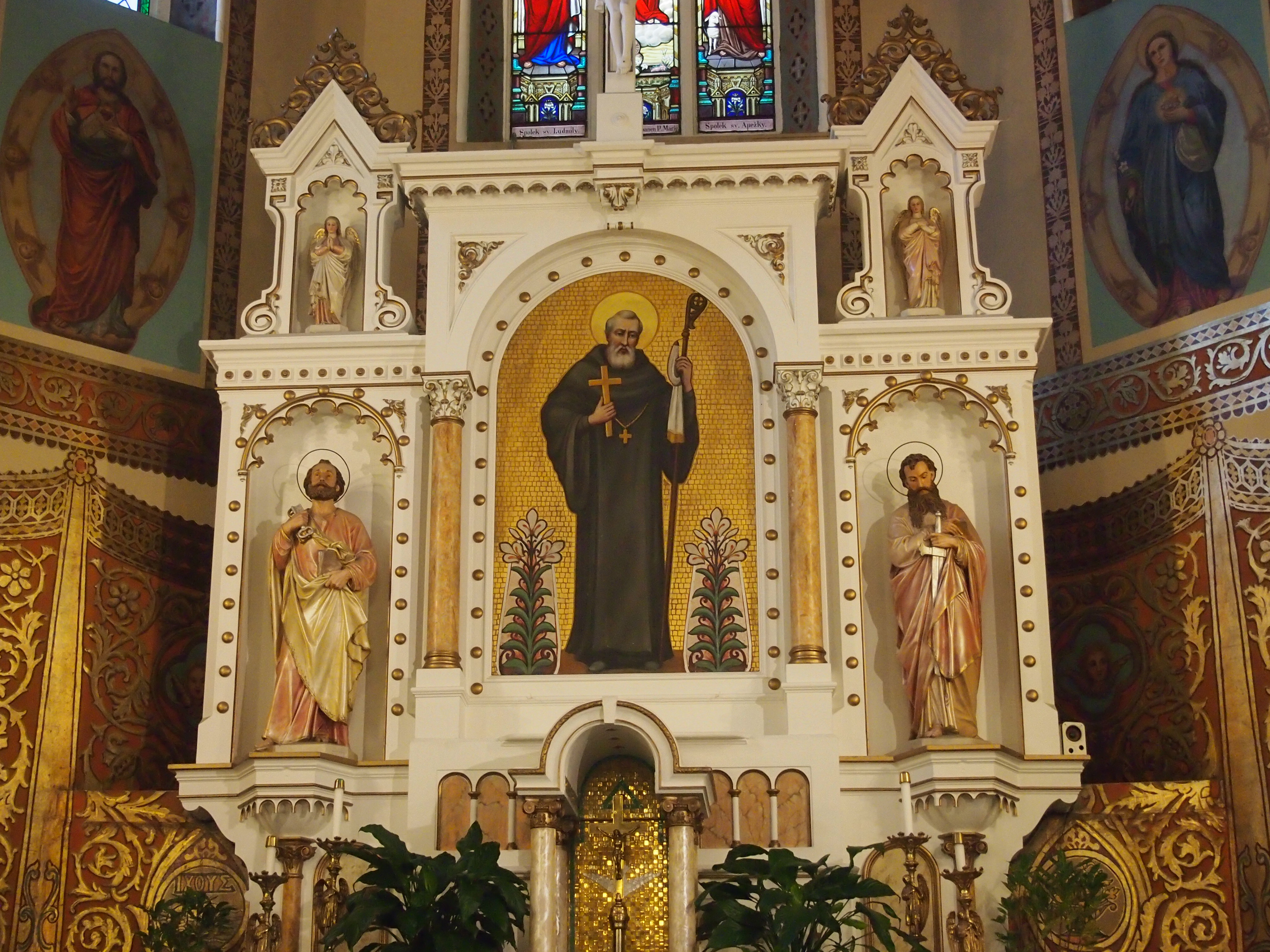
No. Different fellow, separated by 500 years or so and some geography. From the web site of St. Patrick’s Church in Washington, DC: “Born in Bohemia; died March 25, 1053; canonized by Pope Innocent III in 1204; feast day formerly July 4. Procopius studied in Prague, where he was also ordained. He became a canon, was a hermit for a time, and then was founding abbot of the Basilian abbey of Sazaba in Prague.

“Procopius is one of the patrons of Czechoslovakia (Benedictines, Delaney). In art, Saint Procopius lets the devil plough for him. He may be portrayed (1) as an abbot with a book and discipline, devil at his feet; (2) with a stag (or hind) near him; (3) with SS Adelbert, Ludmilla, and Vitus (patrons of Prague); or (4) as a hermit with a skull and a girdle of leaves (Roeder).”

Pilsen, as the name strongly suggests, used to be a Bohemian neighborhood, in the ethnic sense of that term, not the hipster sense. In 1875, St. Procopius was established as the third parish for the Bohemians of Chicago, and the parish built this handsome church in the early 1880s. According to some sources, Paul Huber was the architect. Other sources say it Julius Huber. The father and son sometimes worked together, so maybe they both did, to create the Romanesque Revival structure.

Back then, the Benedictines administered the church. There was even a monastery on site that later moved to suburban Lilse and became the Abbey of St. Procopius. Now the Jesuits operate the church.
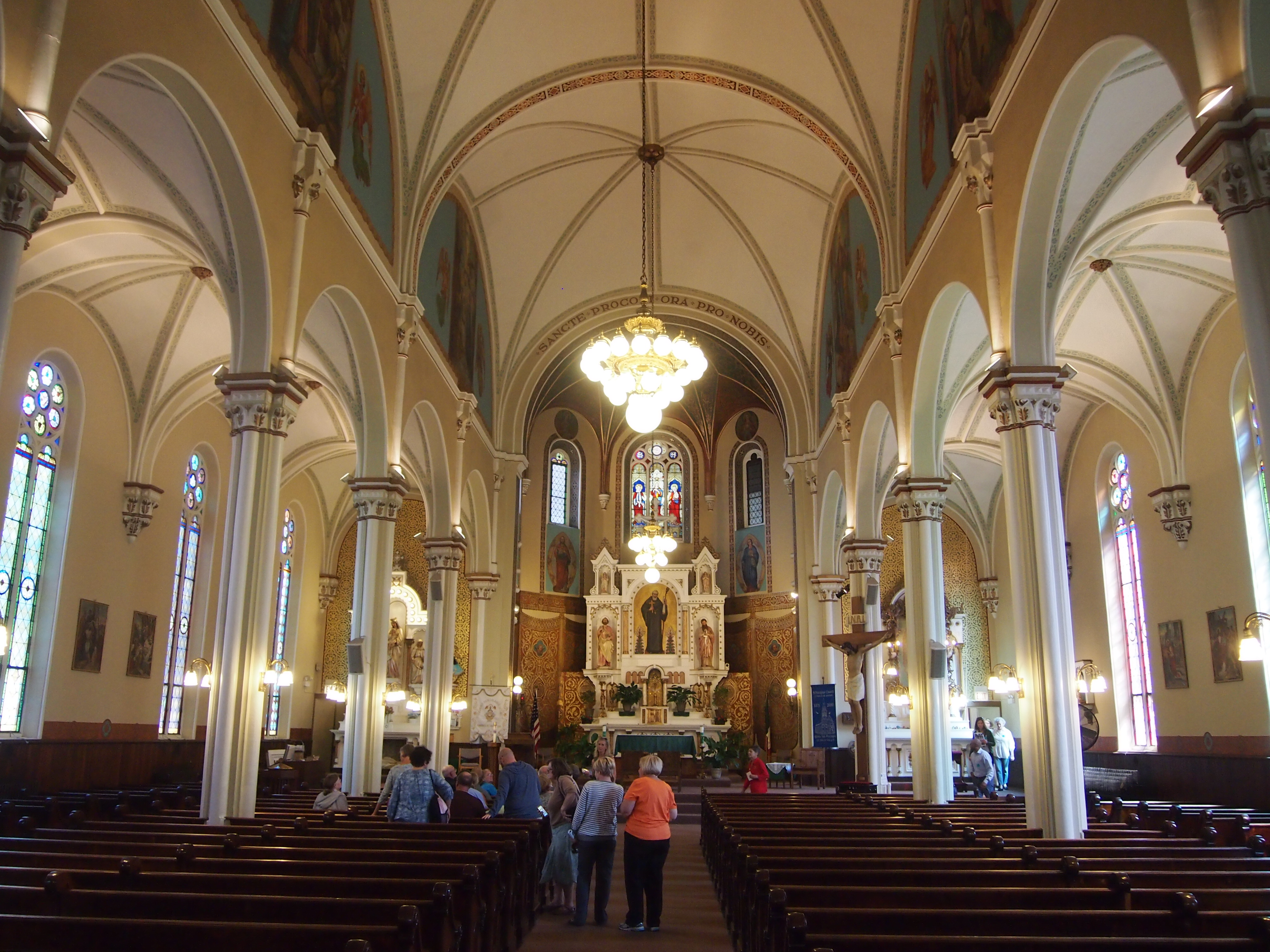
St. Procopius Catholic Church, Sept 2014In our time, Pilsen is a large Mexican-American neighborhood, with some bohemians in that other sense – those who can’t afford Bucktown or Wicker Park any more – filtering into the neighborhood. Or so I’ve read. My visits to the neighborhood have been scant few in recent years.

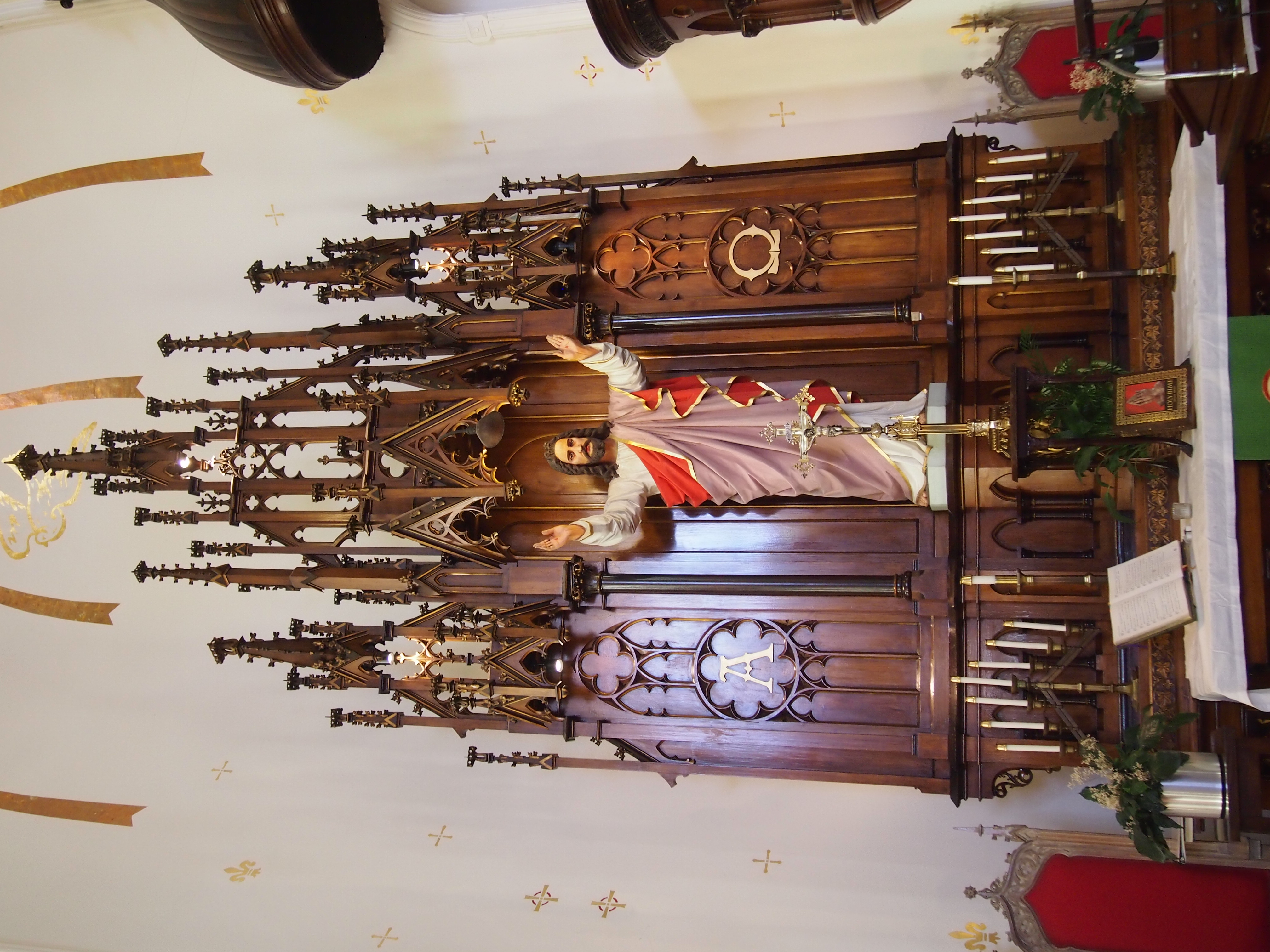
Here’s Procopius, center stage. No stag or skull or leaves or even a devil, but artistic interpretations vary.
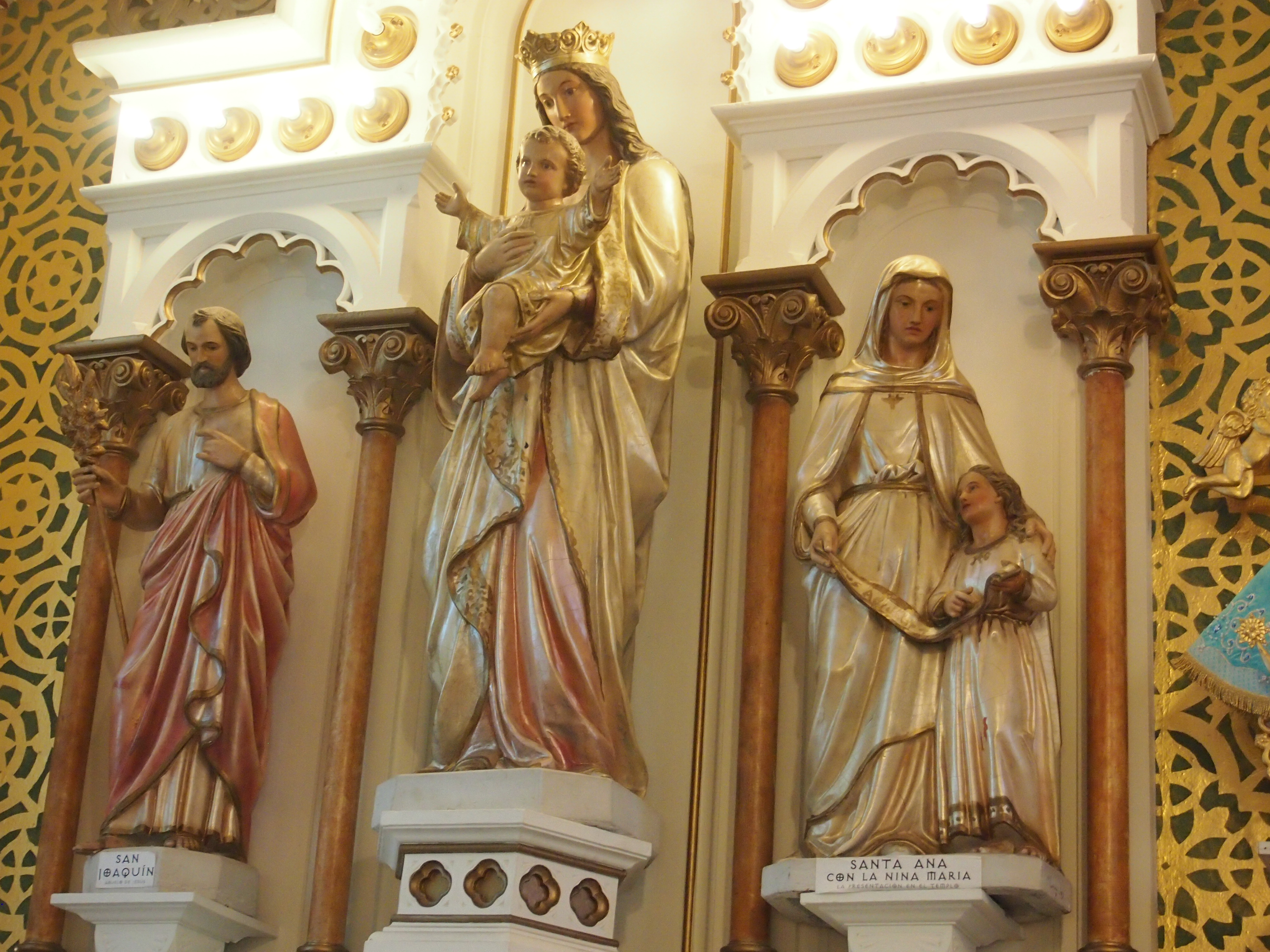
St. Procopius Catholic Church, Sept 2014Not far away are Mary and the infant Jesus, flanked by Joachim and Anne, with Mary as a girl. I don’t ever remember seeing this particular array before, but I don’t spend a lot of time studying religious art.
St. Procopius Catholic Church, Sept 2014

In a back corner of the church stands a statue of Miguel Agustin Pro, S.J.
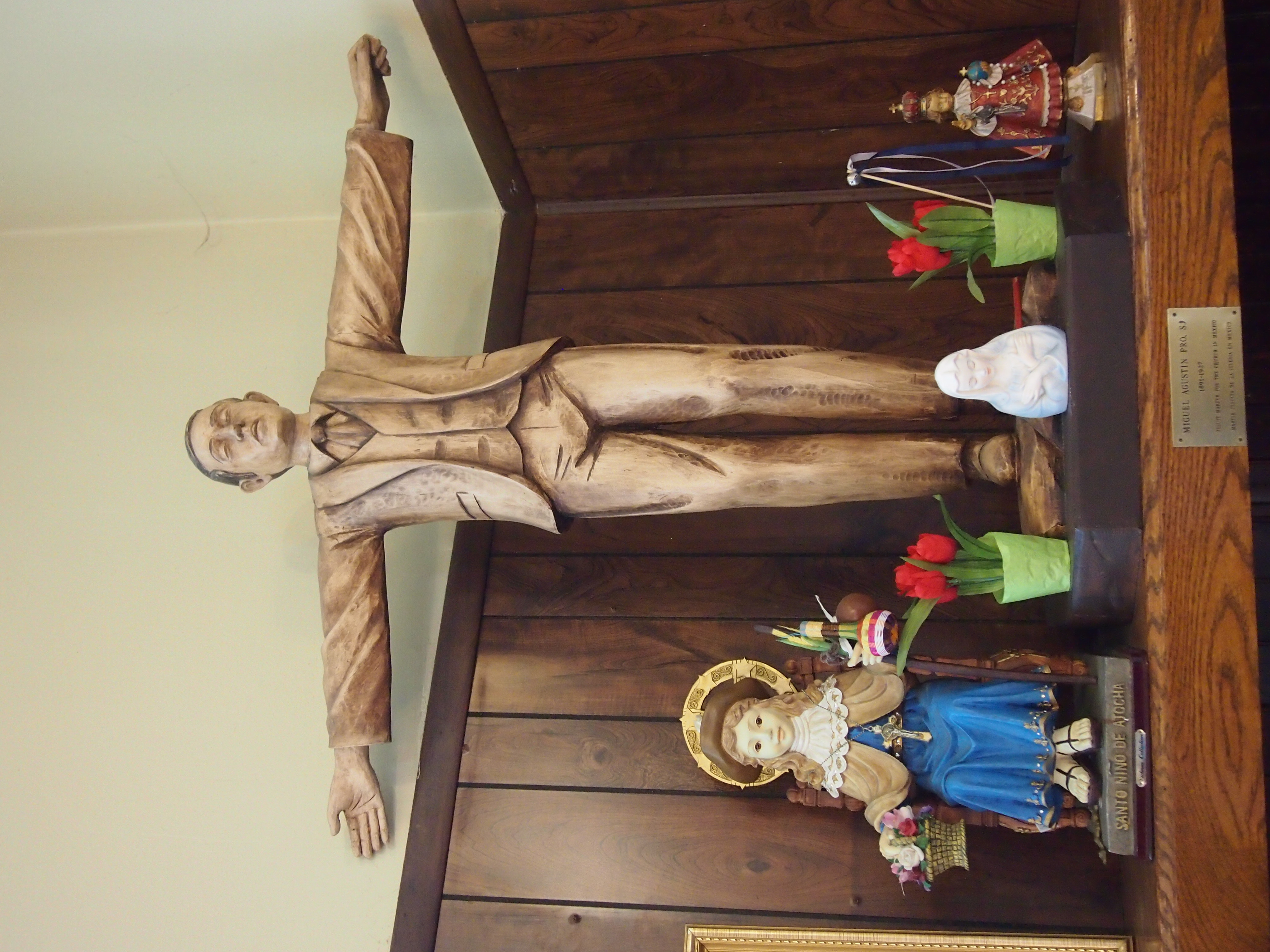
St. Procopius Catholic Church, Sept 2014The Jesuits are honoring one of their own, martyred by the anti-clerical government of Mexican President Plutarco Elias Calles in 1927. Before being executed by firing squad, Pro put his arms up and cried out, “Viva Cristo Rey!” Newspapers published a picture of him in that position, and so he stands in a church far to the north.

The church is also a shrine of the Virgin of San Juan de los Lagos. A sign in Spanish and English on the outside of the building, near the entrance, says so. (The nearby cornerstone says: “AD SANCTUM PROCOPIUM C Missio Haec Fundata Est A.D. 1875 Hic Lapis Angularis Positus Est 23 Julii 1882.”) If you can’t make it to the shrine of that name in central Mexico, coming here counts, and apparently people do in droves.
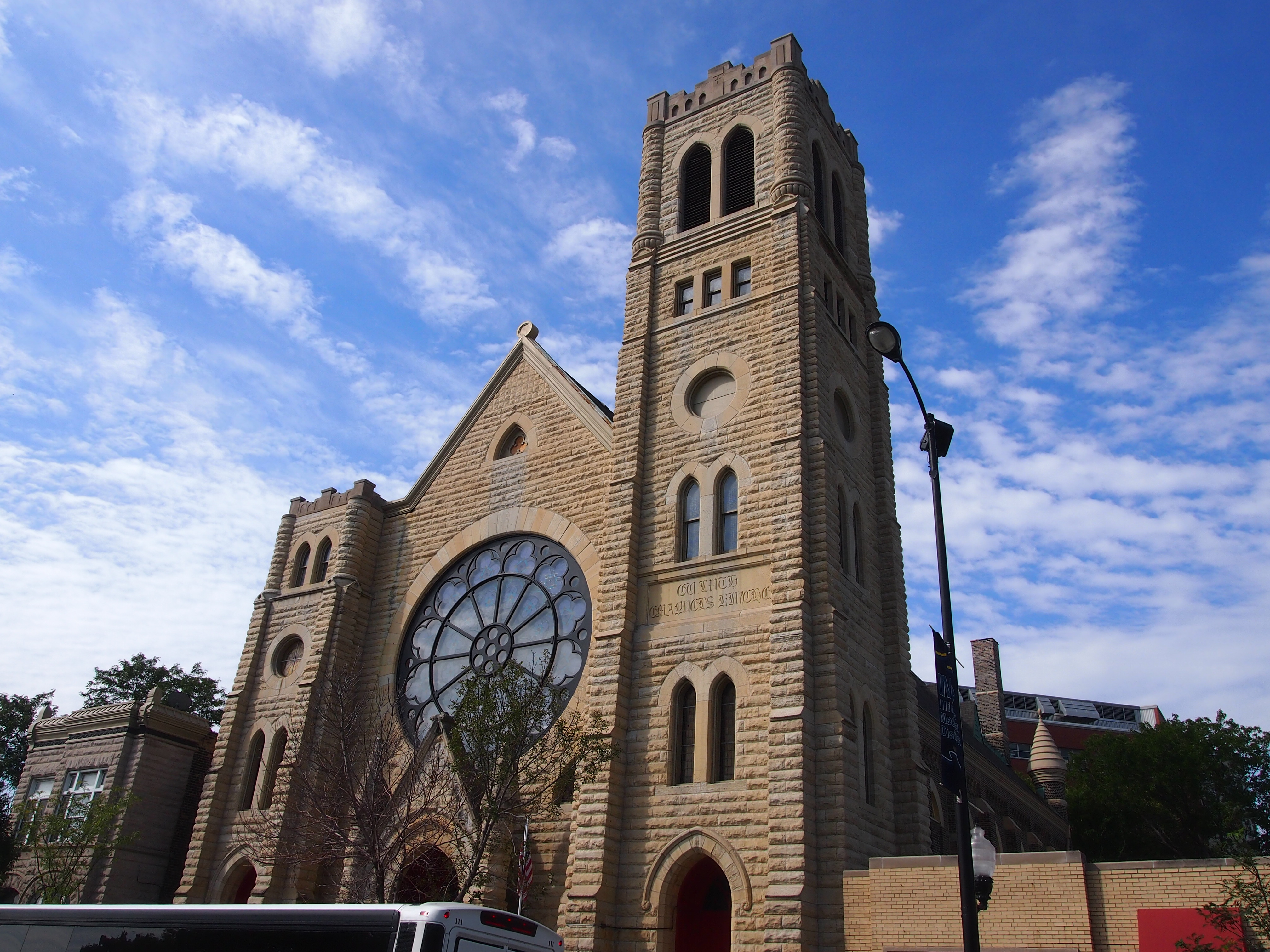
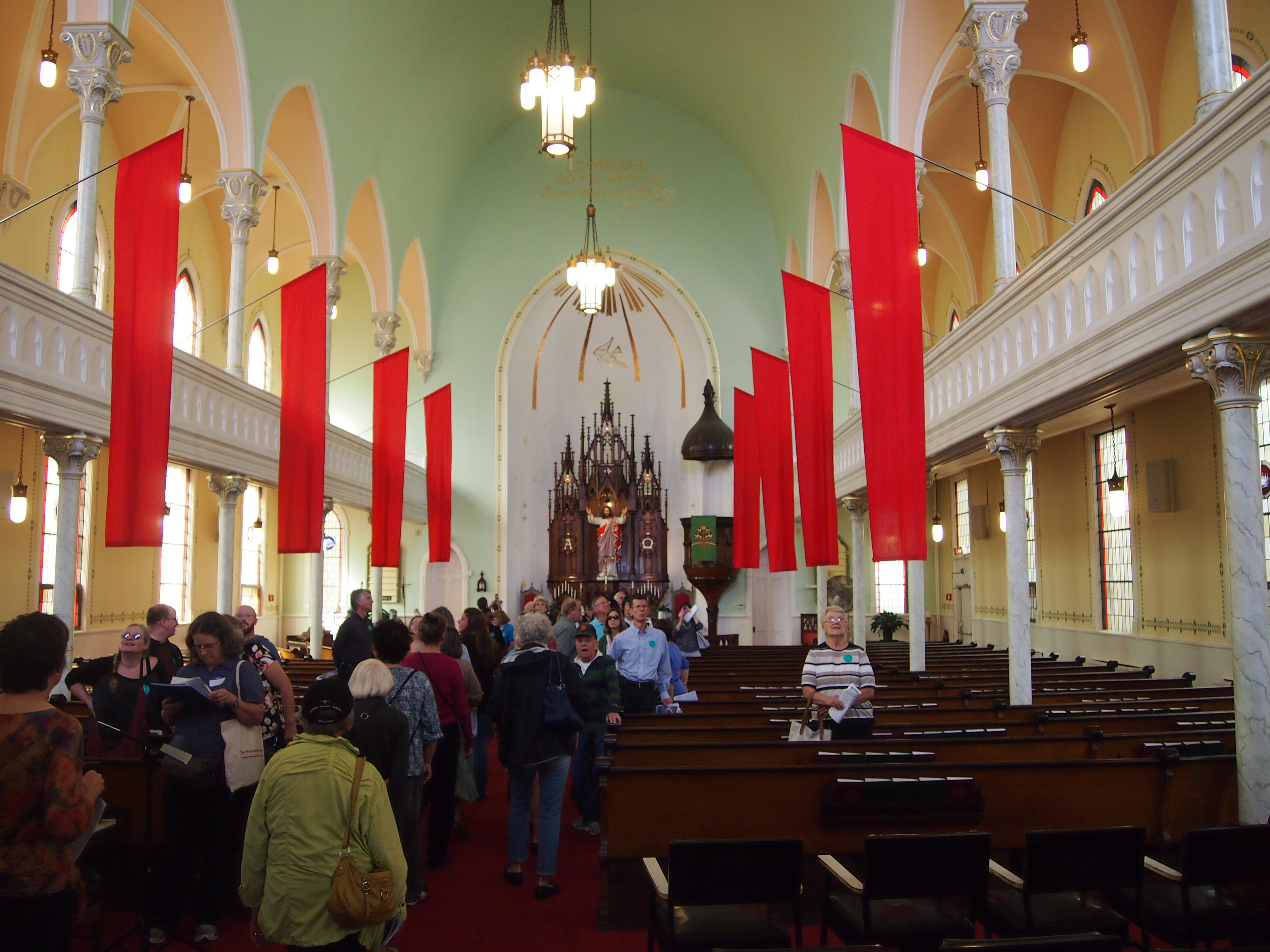
First Immanuel Lutheran Church

On Saturday just after 10 a.m., Yuriko and I found ourselves at First Immanuel Lutheran Church, 1124 S. Ashland Ave. in Chicago. The predicted rain hadn’t happened yet, and the morning was warming up, unlike most of the fall-like days last week.

First Immanuel Lutheran Church, Sept 2014Note the top sliver of bus in front of the church. We’d come by bus, as participants in the Chicago Architecture Foundation Churches by Bus tour. Five busloads of people spent part of Saturday morning and afternoon, in an tour organized by the foundation, at five different churches on the West Side and in the Pilsen neighborhood. Each bus had a different route, so that only one at a time was at any given church. Our bus, #4, went to First Immanuel first. All of the churches were worth a look, and most had some extraordinary features.

These days First Immanuel is near the sprawling Illinois Medical District, anchored by enormous hospitals — Rush, UIC, Cook County Stroger, and Jesse Brown VA — and including a lot of other healthcare facilities. All that was in future when construction started on the church in 1888. The congregation dates back to 1854, as a daughter church of a Lutheran church in the city. The area was suburban in the 1850s, and a lot of Germans were settling there. An architect with a suitably German-sounding name of Frederick Ahlschlager did the Gothic Revival design.

In the church’s early days, it wasn’t far from West Side Park, where the pre-Wrigley Cubs played. The church’s web site asserts that parishioners were able to watch the Cubs from the tower on their way to winning the World Series in 1909, but maybe they simply got the date wrong, since the last time the Cubs won the championship was 1908. By the 1930s, the docent pointed out, the church was ahead of its time in making a conscious effort to include all races, and officially integrated in the 1950s. In 1966, Martin Luther King Jr. spoke at the church.

The interior’s not overly ornate, but it’s decidedly churchly.

First Immanuel Lutheran Church, Chicago, Sept 2014

First Immanuel Lutheran Church, Chicago, Sept 2014The church’s organist happened to be present, and he treated us with a few minutes’ playing. The organ is new, only installed a few years ago. It’s got 4,000 pipes and a powerful sound. We got a close look at it after the organist finished, which isn’t something you often get to do. Seemed like a forest of pipes in there.

Old Holy Resurrection Serbian Orthodox Church

The Logan Square Preservation House & Garden Walk on Saturday didn’t start at a house or a garden, but at Old Holy Resurrection Serbian Orthodox Church on Palmer Square. I’d never been in a Serbian Orthodox church before. Russian, yes, Greek, certainly (in Chicago), even a Japanese Orthodox church, Nikolai-do in Tokyo.

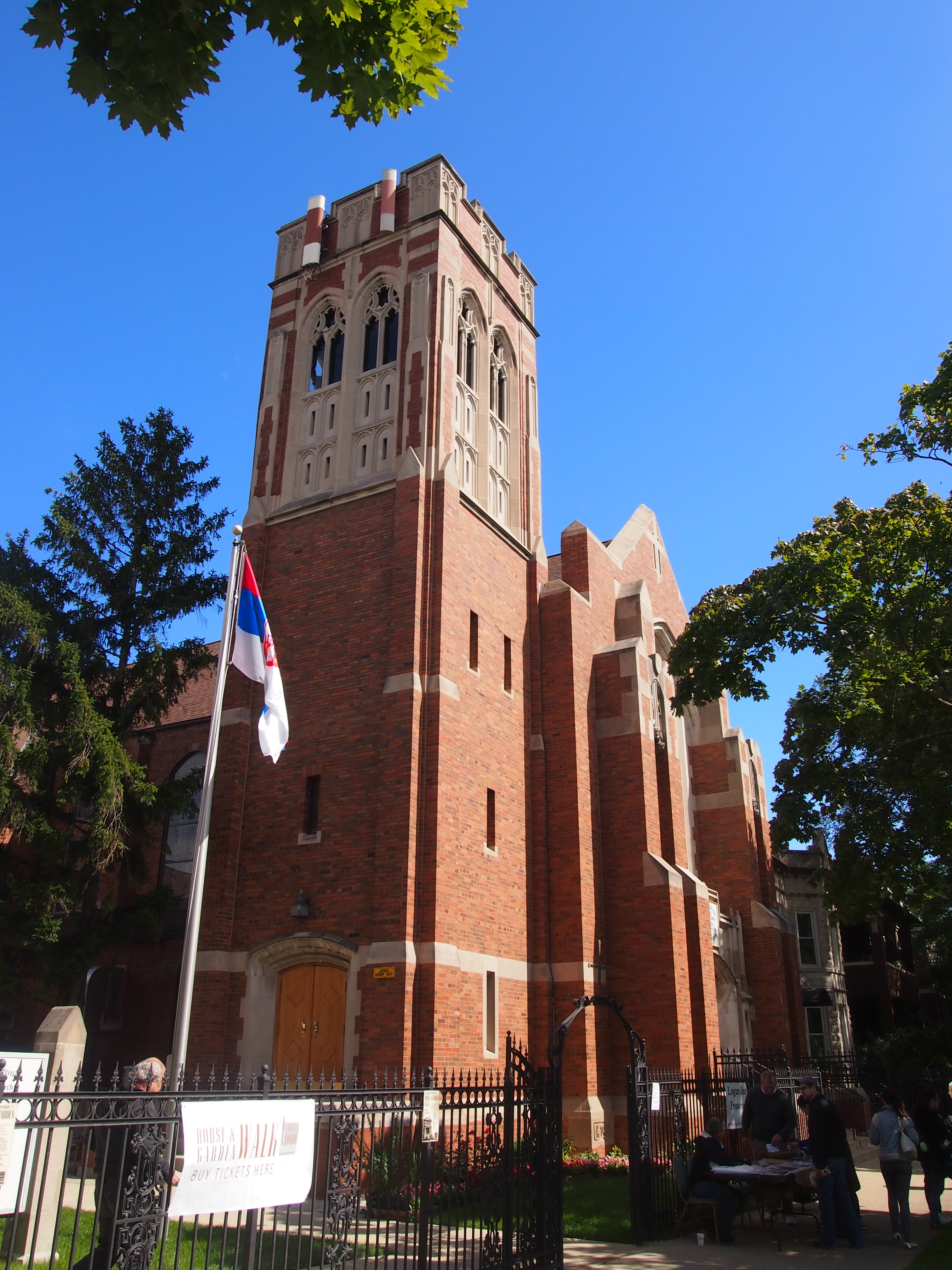
Looking at the outside, it’s a little hard to discern anything Serbian, except for the flag, or even anything in a traditional Orthodox style.

Old Holy Resurrection Serbian Orthodox ChurchIt’s a handsome Gothic building with Arts and Crafts overtones, I’ve read, though my eye isn’t keen enough to pick out the overtones. Like much of the neighborhood, the property dates from the 1910s – 1910, in fact – and it was designed by Lowe and Bollenbacher, a firm active in Chicago and Bloomington, Ind., a century ago. Apparently they did a lot of work in both places.

It wasn’t built for a Serbian congregation, but an Anglican one. So it remained until a fire destroyed almost all of the interior in 1968. By then, the number of Episcopalians in Chicago was falling, but the number of Orthodox Serbs was on the rise, so the old congregation sold the ruin to the Serbs. They’ve been remodeling the interior in Orthodox style ever since, complete with an ornate iconostasis, bright frescoes on a still partly-white wall, a brilliant chandelier (not sure if it counts as a polyeleos), and a lot of standing room. This isn’t a particularly sharp image, but it gives some idea of the interior. One Filip Subotic did a lot of the frescoes.

I have no Serbian Cyrillic, and my understanding of saint symbolism isn’t all it could be, so I didn’t recognize a lot of the saints floating up on the white wall, in their blues and reds and gold-leaf nimbi. But I did know St. George. Who else is going to slay that dragon from atop his steed?

St. Stanislaus Kostka

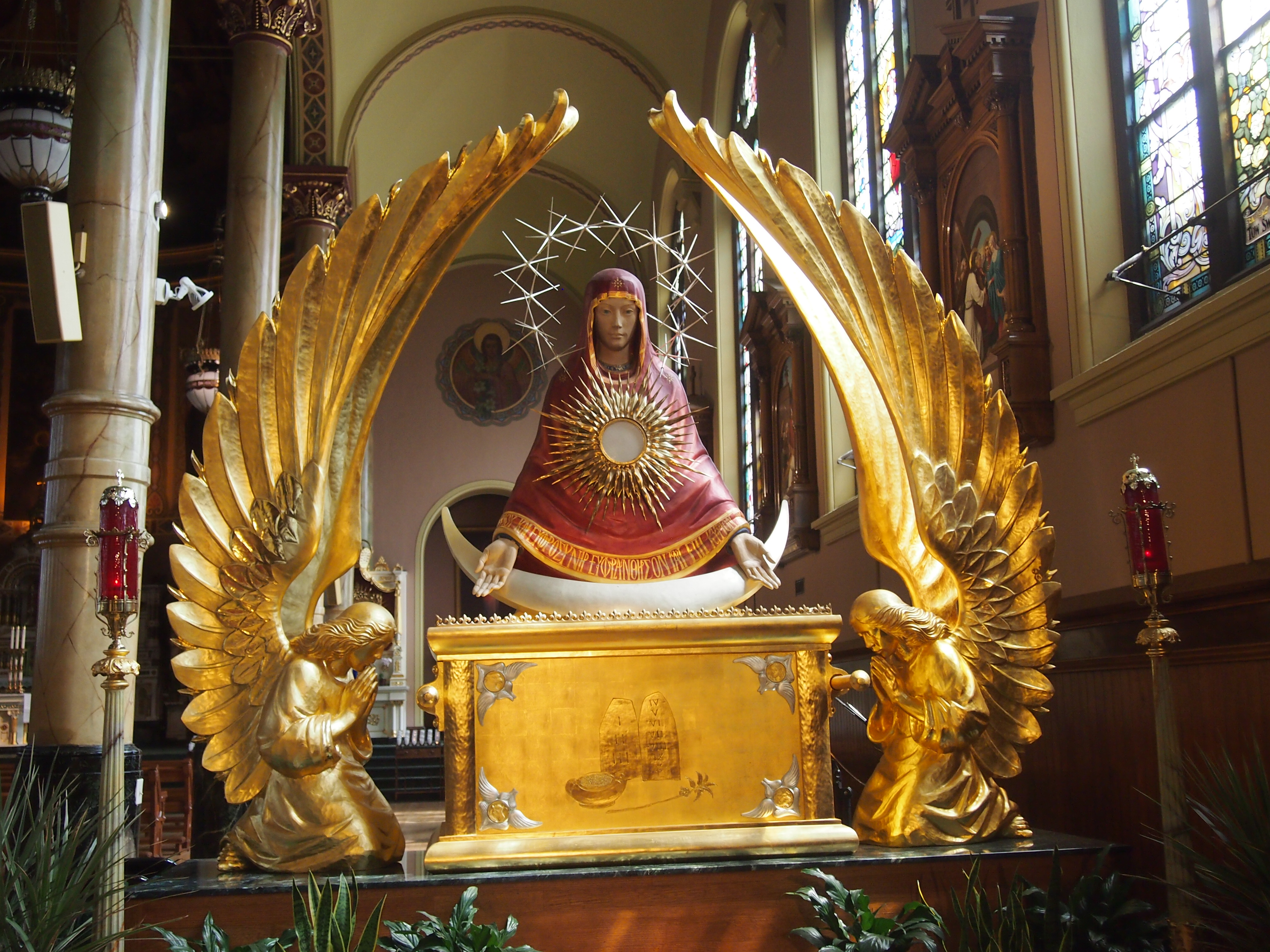
One reason I wanted to peek inside St. Stanislaus Kostka Catholic Church not long ago when I was in Chicago – it’s not far east of Humboldt Park – was that I knew it would be open. I knew that it would be open because the iconic monstrance inside is the focus of 24-hour Eucharistic adoration. Here it is.

St. Stanislaus Kostka, ChicagoI found a press release, of all things, that describes the monstrance on the occasion of its unveiling in 2008: “The gilded receptacle has taken sculptor Stefan Niedorezo two years to carve from linden wood using Renaissance methods. The iconic monstrance is nine feet tall and weighs 700 pounds. Malgorzata Sawczuk applied the gilding and serves as project conservator.

“The monstrance depicts the Blessed Mother as the link between the old and new covenants. She stands over the Ark of the Covenant, a sacred container that held the stone tablets inscribed with the 10 Commandments. Mary is ‘clothed with the sun, with the moon under her feet, and on her head a crown of twelve stars,’ as depicted in the Book of Revelation (Rev 11:19 and 12:1-2).”

St. Stanislaus Kostka, ChicagoSt. Stanislaus Kostka is largely a Polish parish (masses in Polish, English and Spanish these days), and the 1870s structure is near the Kennedy Expressway. So near, in fact, that it was slated for demolition to build the highway back in the 1950s, when the Robert Moses school of road building was still in style (whatever’s in the way, knock it down). Ultimately the road was shifted to avoid the church, in a feature known as the Rostenkowski Curve, though apparently that politico (U.S. Rep. Dan Rostenkowski, who died a few years ago) wasn’t instrumental in saving the church. A lesser-known local politician, Bernard Prusinski, was.

Whoever kept it from being bulldozed, I’m glad. Your don’t have to be Polish or Catholic to appreciate such a handsome brick church, which I understand recalls major Polish churches of earlier centuries, though in fact designed by an Irish architect, Patrick Charles Keely. He also did Holy Name Cathedral on the near North Side, as well as a lot of other Catholic churches in a lot of places. The man was riding the wave of Catholic immigration to the U.S. in the latter decades of the 19th century, which spurred the demand for more churches.

Note that it only has one belfry. Lightning took another one down 50 or so years ago, but I like the asymmetry.

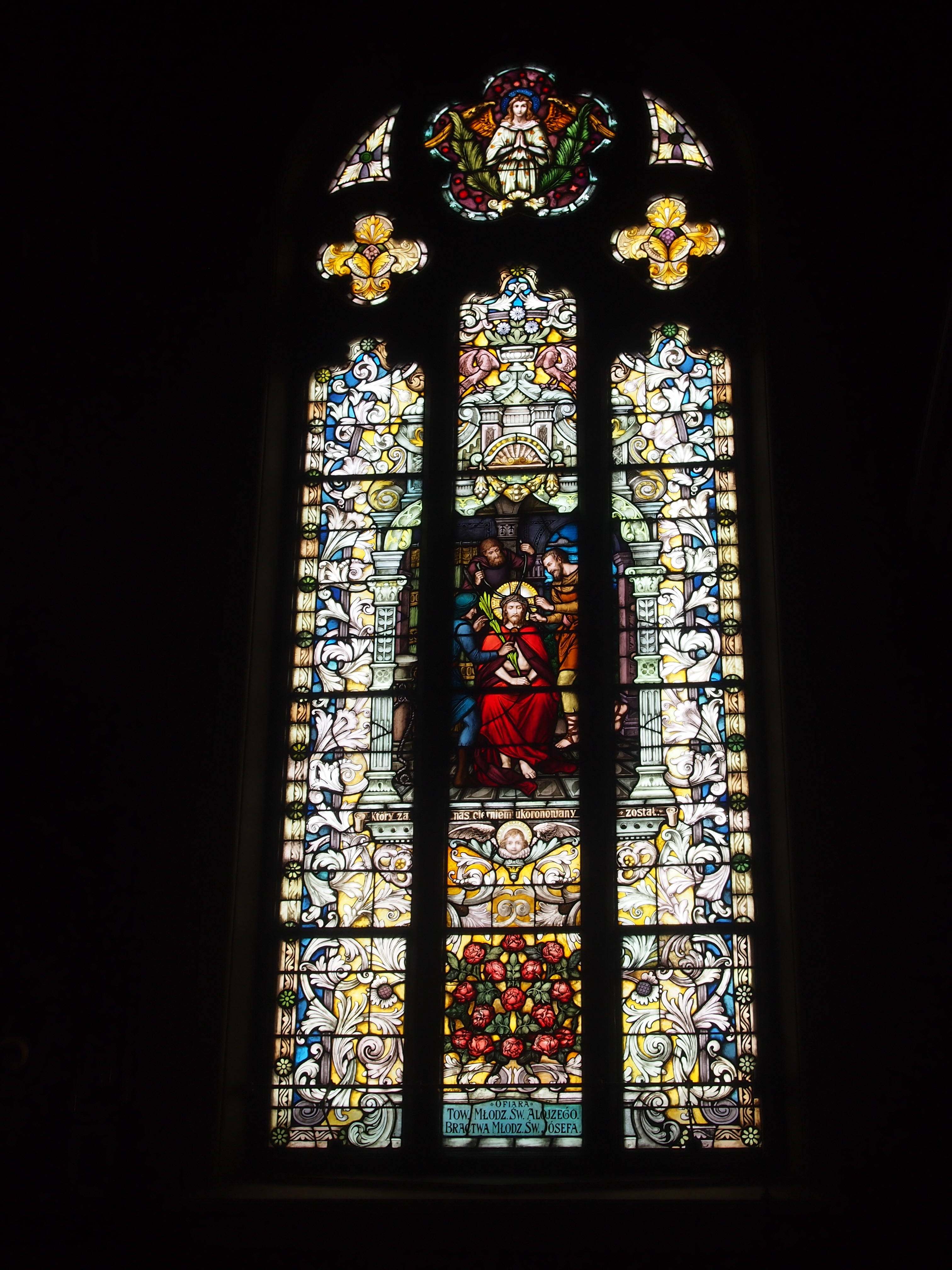
St Stanislaus Kostka, August 2014The church also has some superb glass in its ornate interior.

The University of the Incarnate Word

When I lived in San Antonio, we often drove by Incarnate Word College. I don’t ever remember visiting except (I think) one of its auditoriums for a high school mock UN one Saturday in 1978. (I was an Iraqi delegate, and eventually the Arab nations got together and walked out in protest over something or other.) These days the school is the University of the Incarnate Word, and it’s bigger than I realized: nearly 9,200 students, which makes it the largest Catholic university in Texas and the fourth-largest private university in the state.

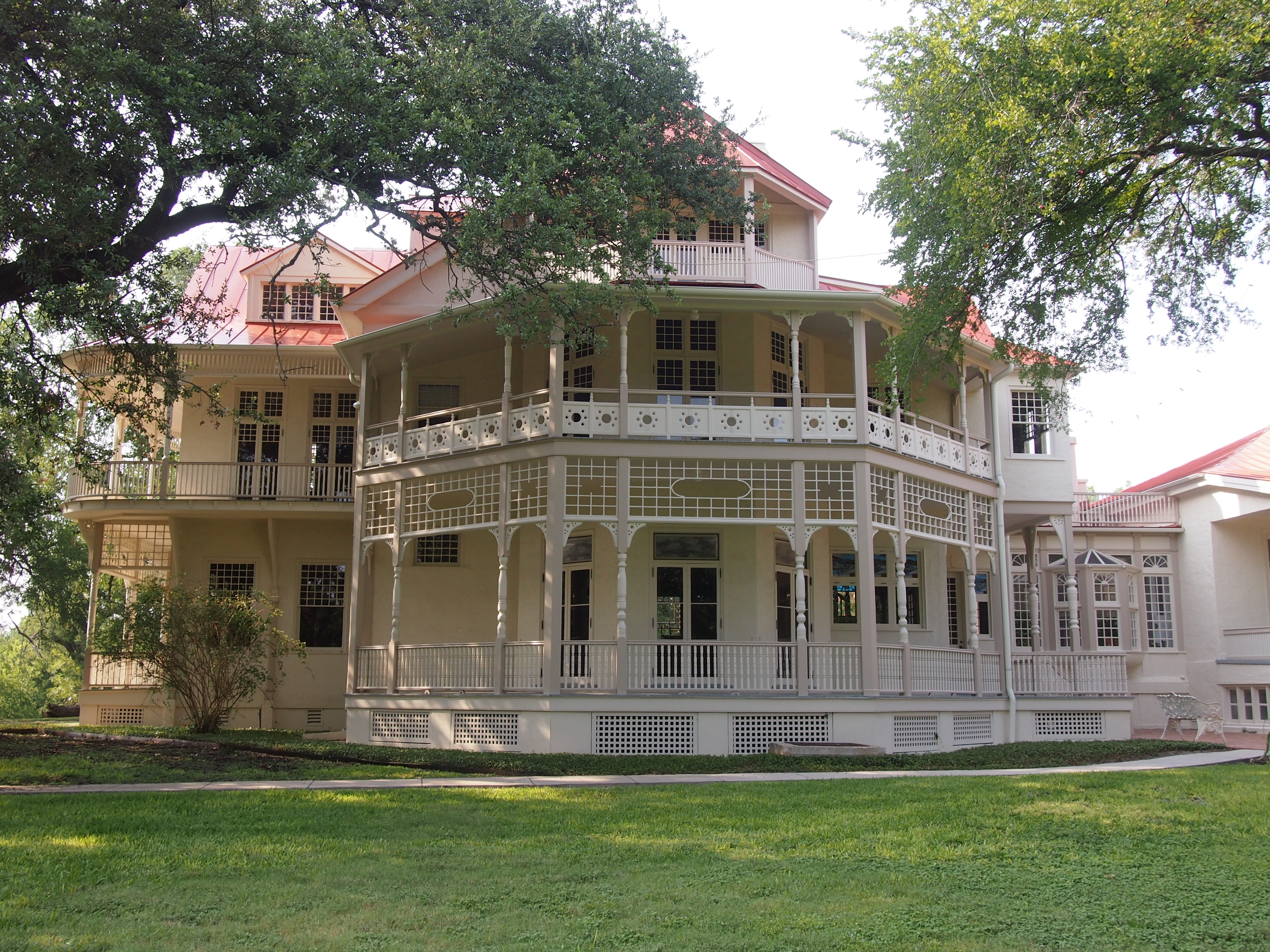
The main campus measures 154 acres, and includes the previously mentioned Blue Hole, mainspring of the headwaters of the San Antonio River. On the way to the Blue Hole, we passed the mansion of George Brackenridge, which he called Fernridge. Brackenridge, a late 19th-century San Antonio business magnate, eventually sold the house and some land to the Sisters of Charity of the Incarnate Word to found their school. (He also called the nearby area Alamo Heights, which he owned for a while, and donated the land for Brackenridge Park.) I assume the university uses it for events now.

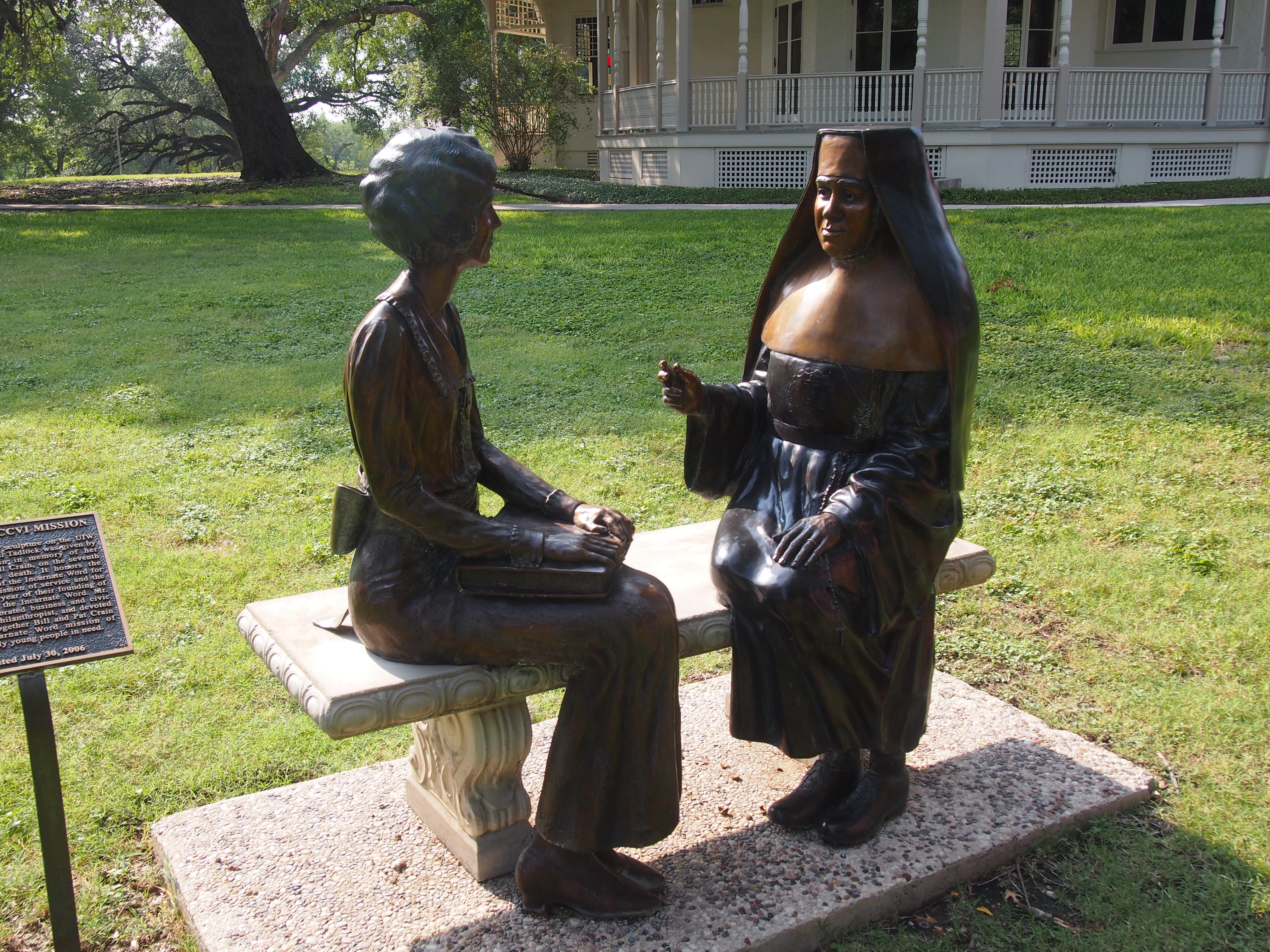
Brackenridge Villa, July 2014Not far away is a bronze nun. Not something you see every day. She seems to be in teaching mode, for the benefit of the young lady bronze. According to the plaque, the work is called “Living the CCVI Mission” and is by Paul Tadlock of New Braunfels. It was dedicated in 2006.

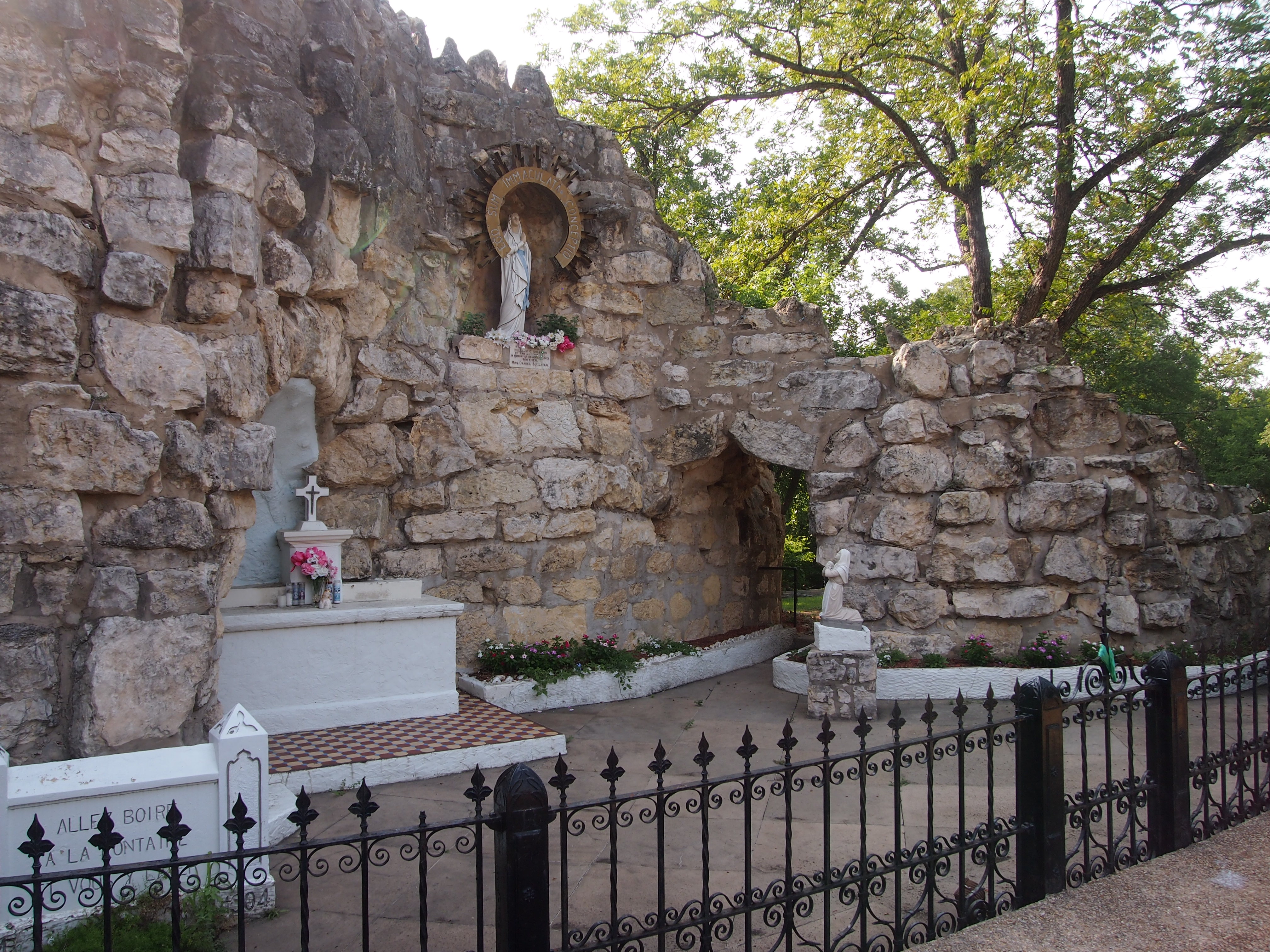
Bronze NunA little further into campus is a grotto. I seem to be running across a fair number of grottos lately. The Incarnate Word grotto is a Lourdes-class grotto, built in 1904 by Fr. J.G. Bednarek, a priest from Chicago, to mark the 50th anniversary of the promulgation of the dogma of the Immaculate Conception of the Virgin Mary. Apparently Fr. Bednarek taught at the school, but why he took an interest in building a replica of Lourdes there, I haven’t uncovered yet.

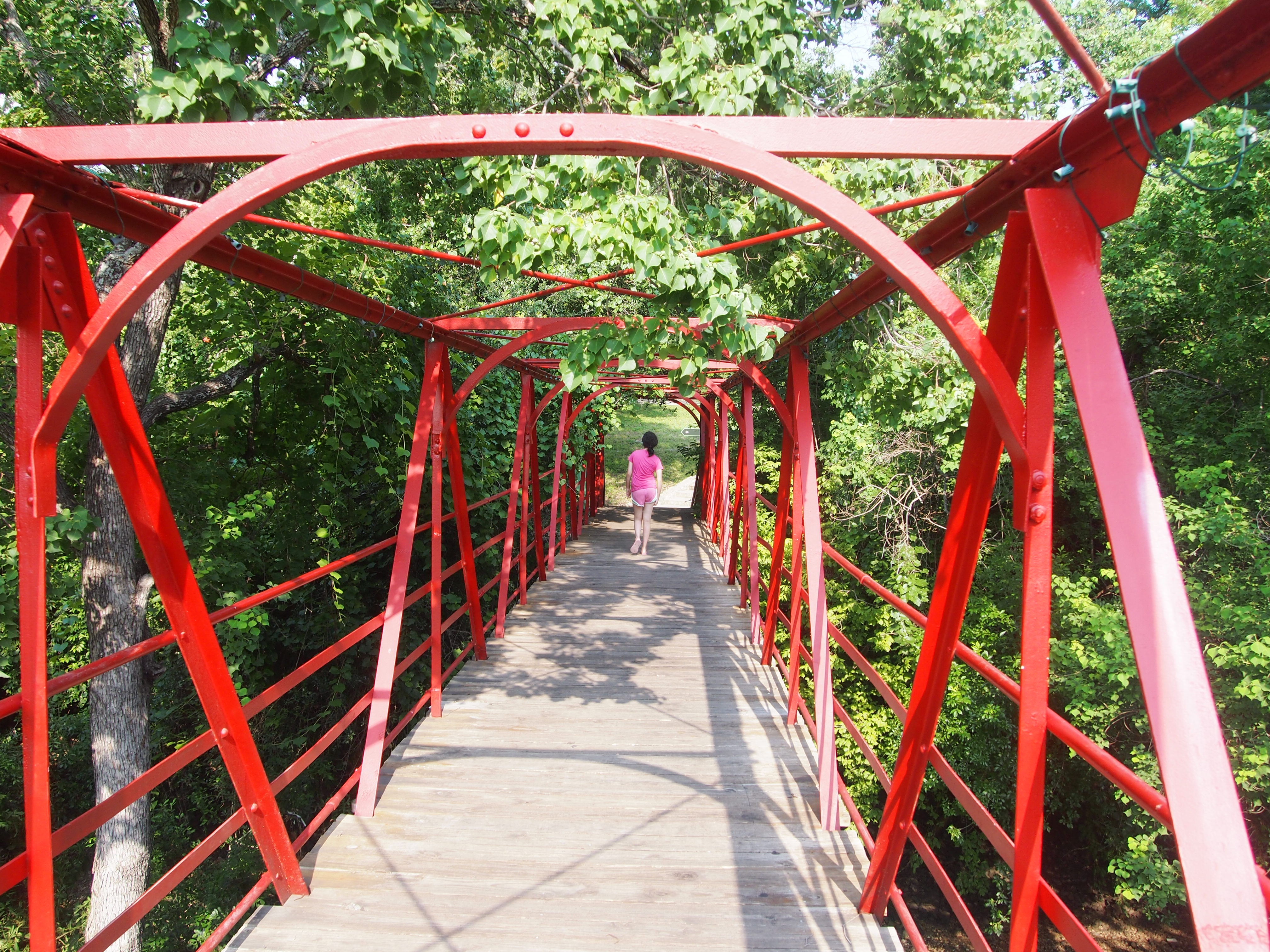
Incarnate Work grotto, July 2014Finally, there’s the first bridge over the San Antonio River, which is just south of the Blue Hole. The river’s pretty small at that point, where Olmos Creek joins the outflow from the Blue Hole. A rivulet in a ditch, really, but nice and leafy this time of year. Nearby is the 53-acre Headwaters Sanctuary. The sanctuary is the last remaining undeveloped property from the original 283-acres the sisters bought from George Brackenridge.

Incarnate Word campus, July 2014We decided it was too hot to walk on the sanctuary, which was still further. But since we’d come to the bridge, the thing to do was cross it.

The Dickeyville Grotto

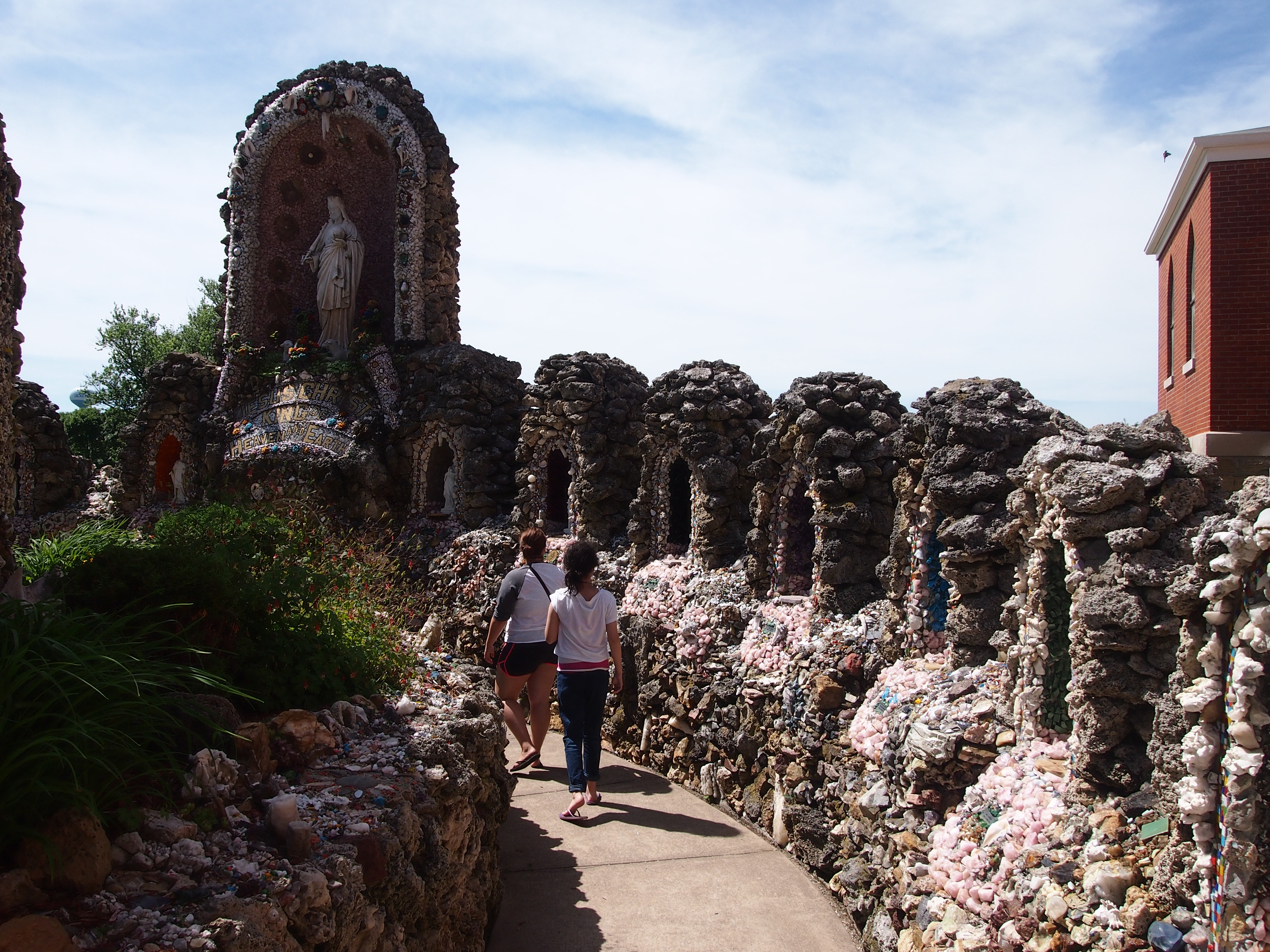
Writing for PBS, cultural anthropologist Anne Pryor says that, “In Dickeyville [Wis.], one of the area’s small towns, is Holy Ghost parish, the home of a remarkable piece of folk architecture. Situated between the rectory, church, and cemetery is the Dickeyville Grotto, a structure so amazing that I have seen unsuspecting drivers come to a full halt in the middle of the road to gape. What stops them short is a 15-foot-tall false cave, decoratively covered with colored stone and glass, dedicated to Mary the mother of Jesus, to God and country.

“Although the name implies a singular structure, the Dickeyville Grotto is actually a series of grottos and shrines. It includes the grotto dedicated to the Blessed Mother, the structure seen from Highway 61; a shrine dedicated to Christ the King; a shrine to the Sacred Heart of Jesus; and a Eucharistic Altar in the parish cemetery, formerly used for annual outdoor Corpus Christi processions. The large Patriotic Shrine depicts the history and love of country represented by Columbus, Washington, and Lincoln.

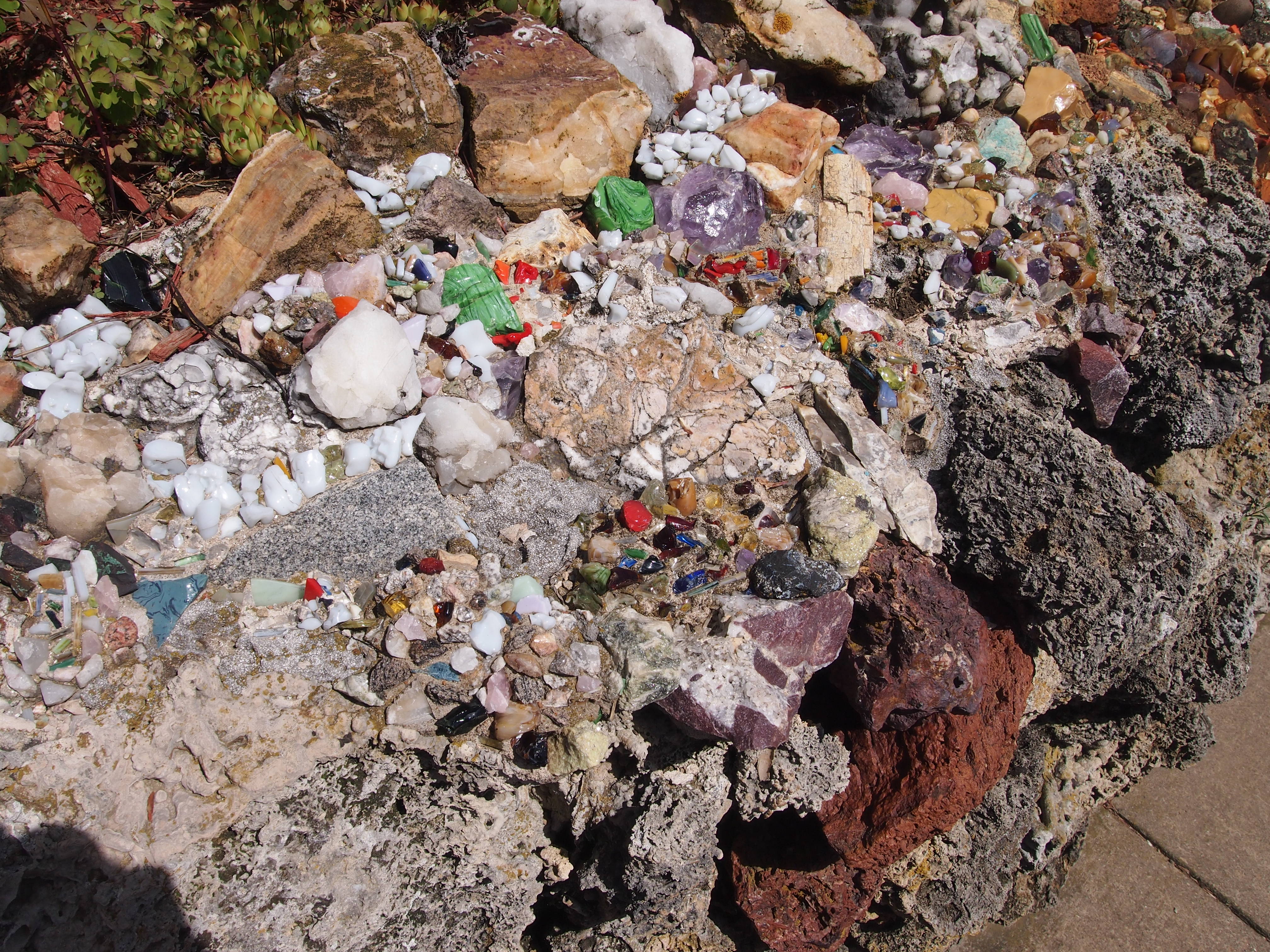
“All of these creations display decorative embellished cement ornamentation achieved by placing patterns of colorful materials in the concrete when it is still damp: shells, stones, tiles, glass, petrified moss or wood, geodes and gems. Iron railings with the same distinctive decorations border the walkways between the different shrines and grottos, unifying these separate structures.”

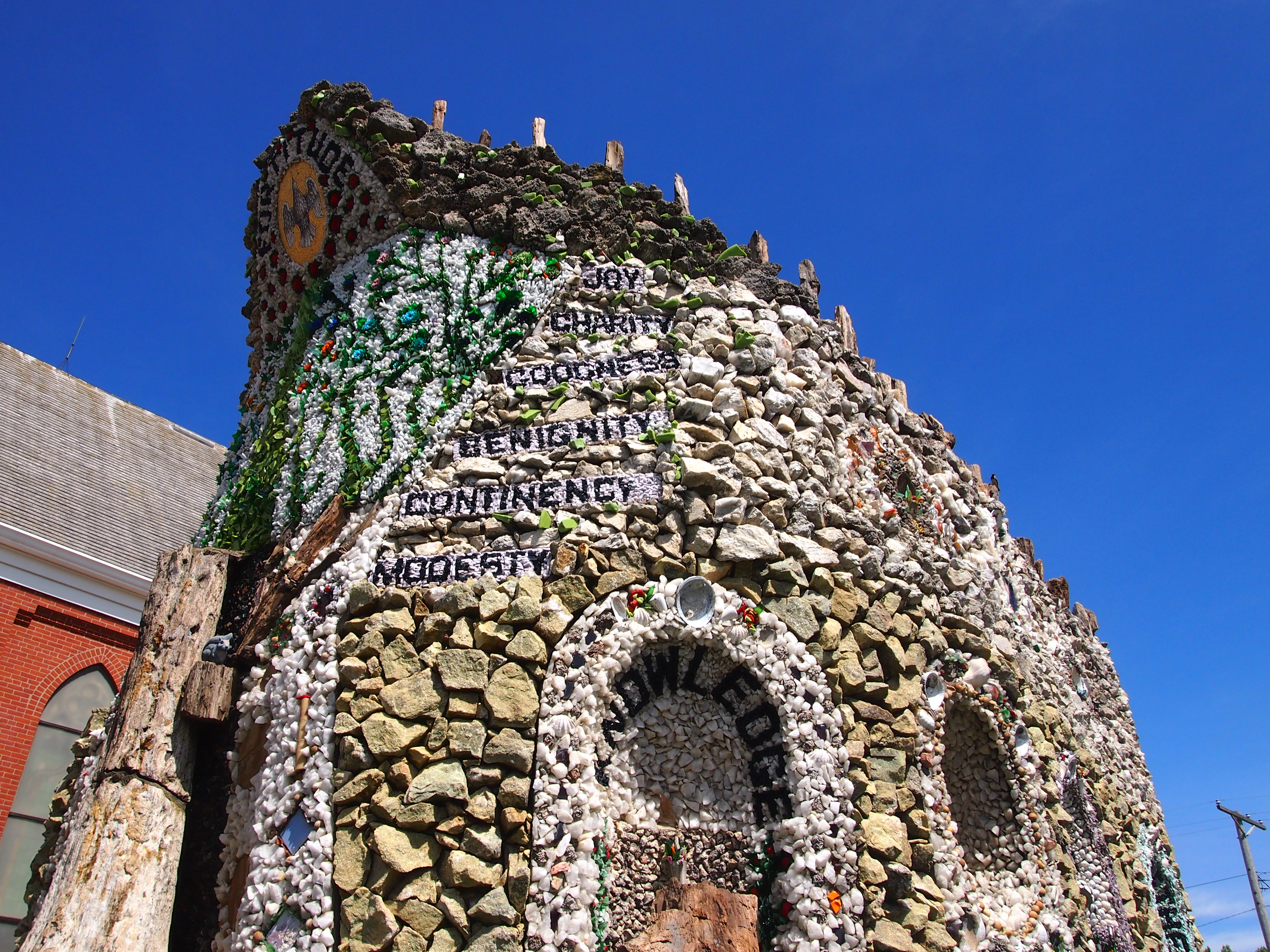
We arrived at the Dickeyville Grotto late in the morning on Sunday, when it was already sunny and very warm. The Blessed Mother grotto is striking indeed, and in case there’s any doubt, the site proclaims itself to be about RELIGION and PATRIOTISM. (And another sign mentions the gift shop.)Dickeyville Grotto, June 2014Dickeyville Grotto, June 22, 2014Here’s the back of the Marian grotto. Virtues are literally written in stone.

OLYMPUS DIGITAL CAMERAMost of the surfaces are as colorful as can be. Under strong sunlight’s a good way to see it.

Dickeyville Grotto, June 2014Father Mathius Wernerus, priest at Dickeyville’s Holy Ghost Parish, and his parishioners built the grotto during the late 1920s. It was renovated in the late 1990s. The timing of its origin must account for the aforementioned and odd (to us) Patriotism Shrine, with Columbus, Washington, and Lincoln. The patriotism of U.S. Catholics was widely and openly questioned at the time, so it makes sense.

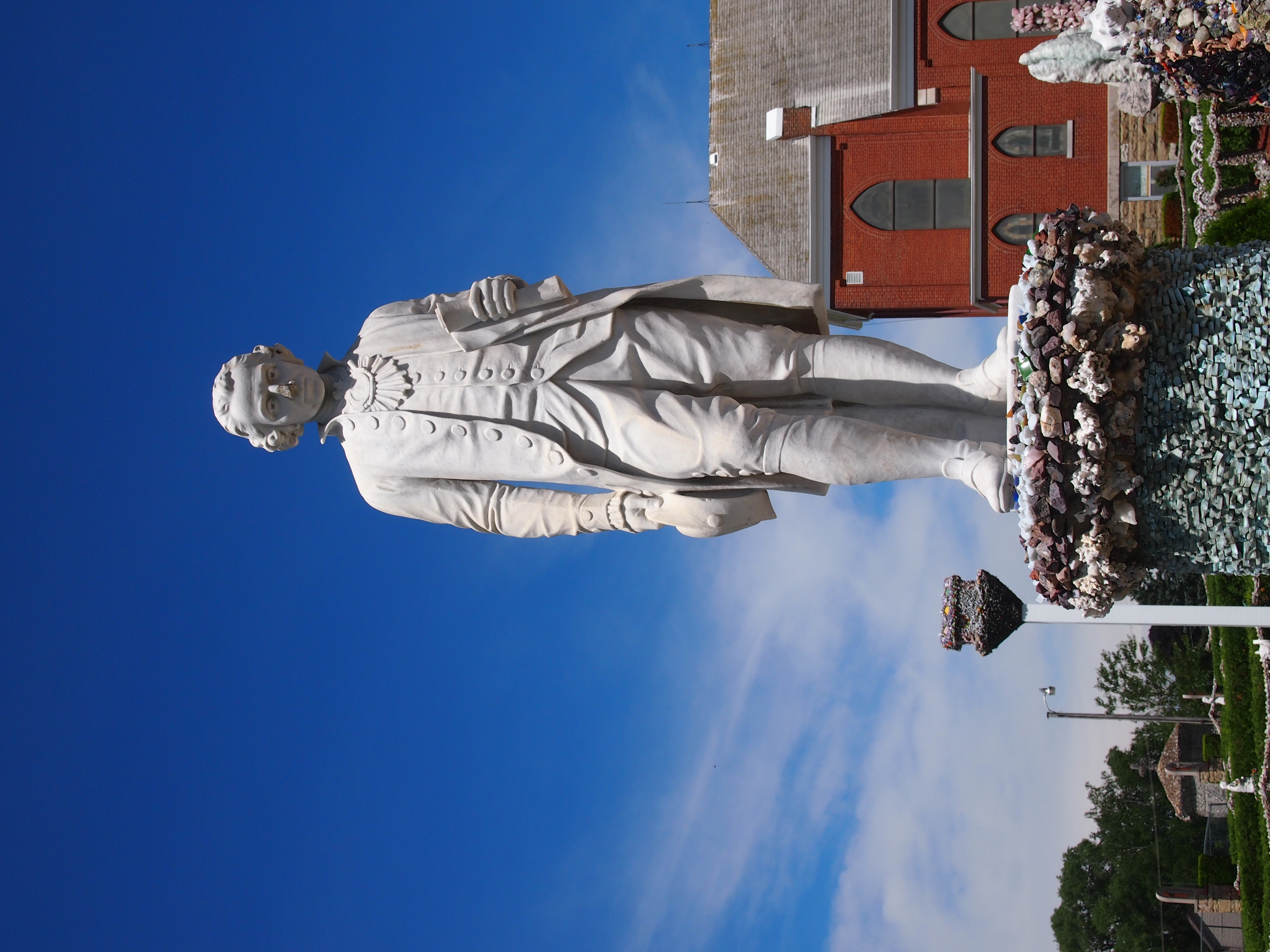
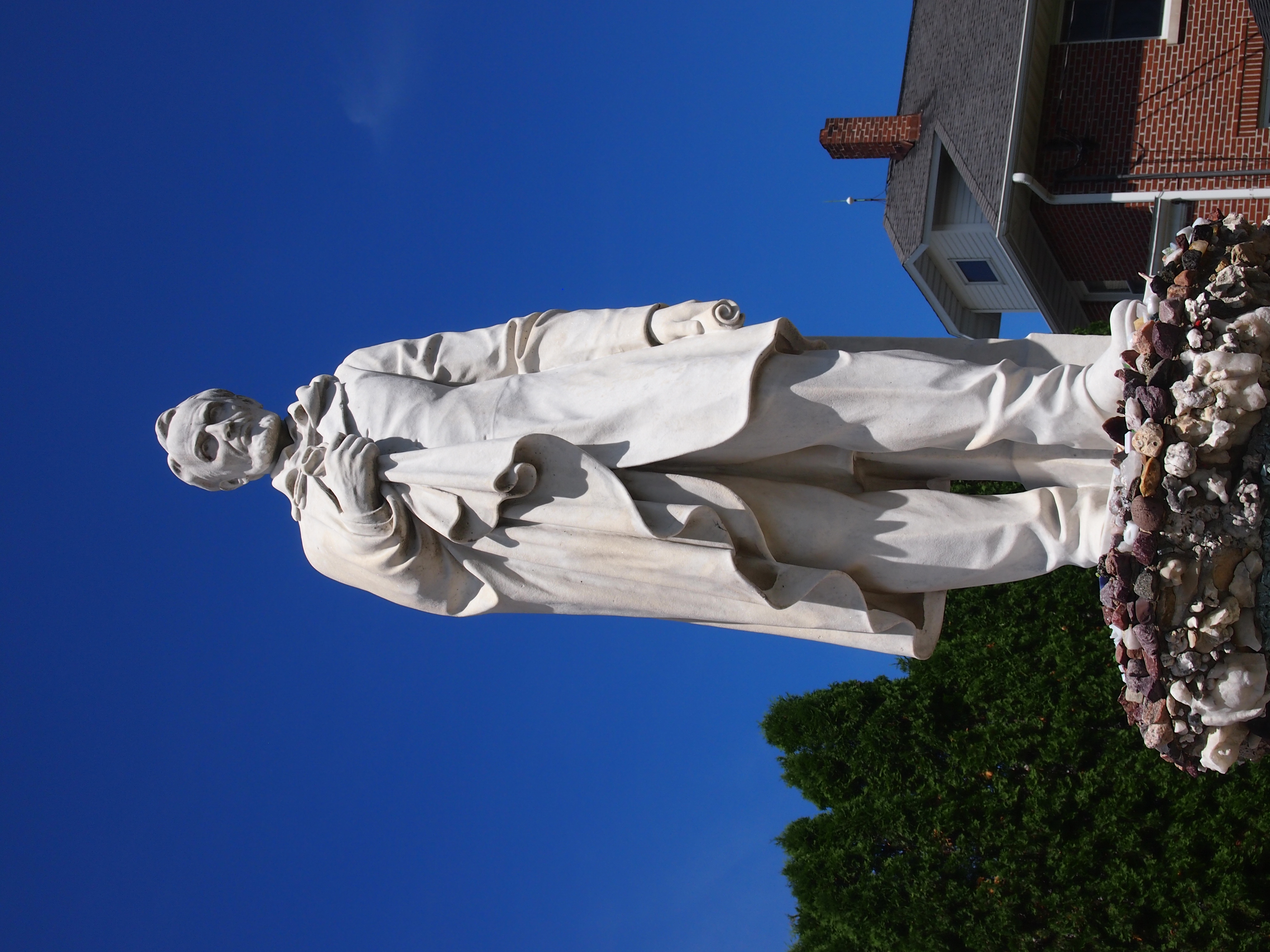
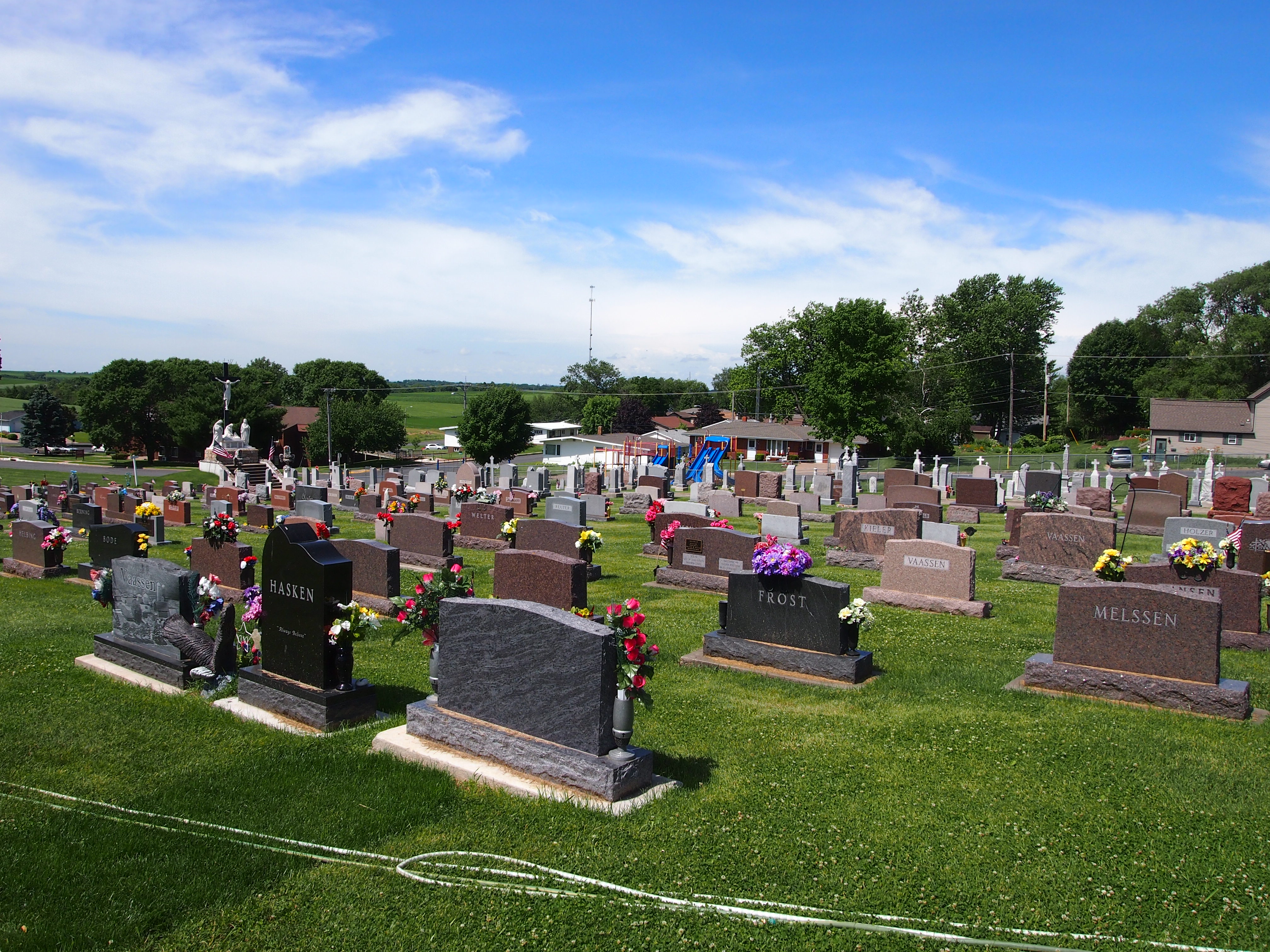
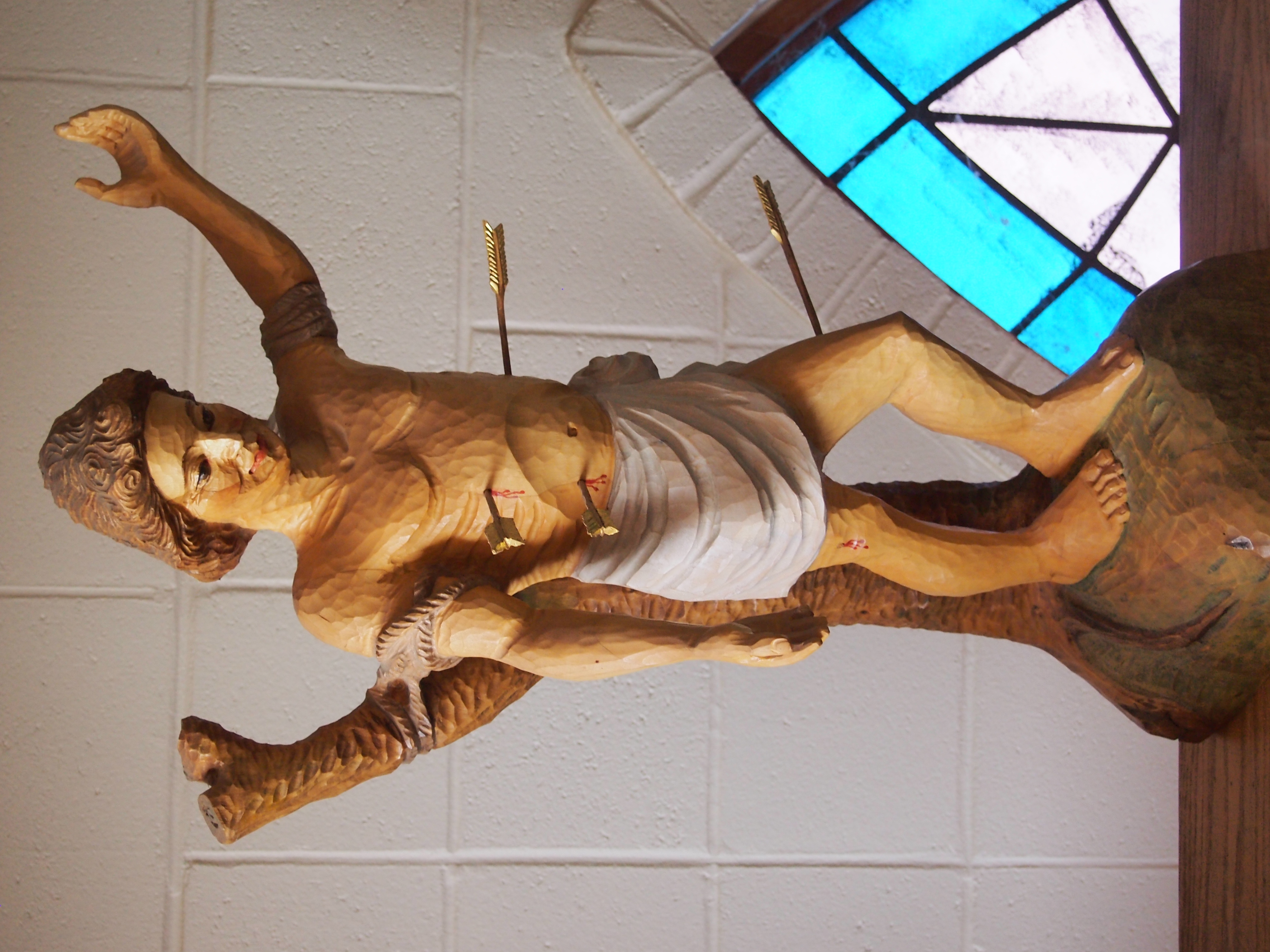
Dickeyville Grotto, June 2014Dickeyville Grotto, June 2014Also worth seeing at Holy Ghost Parish is the cemetery, which fulfilled my informal requirement of at least one cemetery visit per trip. While my family poked around the gift shop, I strolled through the cemetery. Not a lot of fancy funerary art, but still a handsome array of gravestones in a bright Midwestern setting. The most interesting stone I saw was a large one depicting a large farm, which presumably the deceased had owned and operated.Holy Ghost Parish, Dickeyville, Wisc., June 2014Also worth seeing, and not just for the air conditioning, was the church building. Its stained glass is nice, and tucked away in the landing of the stairway that connects the basement and the nave are a couple of statues with themes you don’t see that often (at least I don’t), such as St. Sebastian, whom I’ve seen depicted more often in paintings.

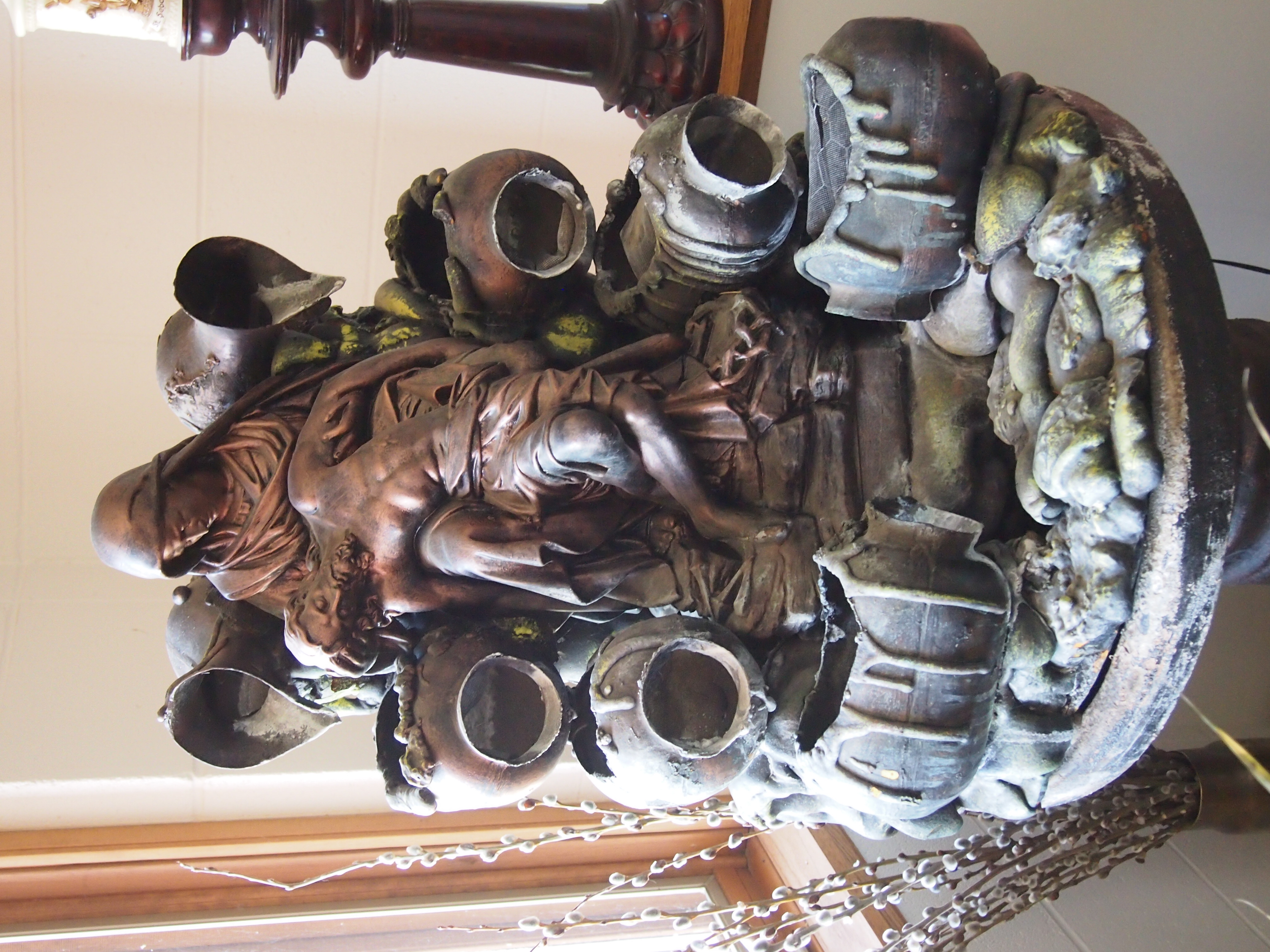
Holy Ghost Parish, Dickeyville, Wisc., June 2014 And this pietà. Maybe I’m not up on my Christian symbolism, though I have heard of broken vessels standing in for us sinners. But I’ve never seen a statue quite like this.

Holy Ghost Parish, Dickeyville, Wisc., June 2014I didn’t see anything to identify the work or the artist, so I’ll have to leave it at that. Enough to say that Holy Ghost Parish and its vernacular grotto were well worth detouring a few miles into extreme southwestern Wisconsin to see.

Tri-State Summer Solstice Weekend ’14

Late on Friday morning we drove west for a few hours – and enjoyed a remarkably long in-car conversation among ourselves, no radio or other electronics playing – and by mid-afternoon arrived at Mississippi Palisades State Park, which overlooks the Mississippi River just north of Savanna, Ill. The plan included bits of three states in three days. My plan, really, since my family humors me in such matters, and lets me think up the details of little trips like these.

Friday was Illinois. We camped at Mississippi Palisades, which is an Illinois State park and incredibly lush this year, and we spent time in Savanna, a little river town on the Great River Road, mostly to find a late lunch. Toward the end of the day, we made our way to Mount Carroll, Ill., which is the county seat of Carroll County and home to a good many handsome historic structures.

On Saturday, we ventured into Iowa – it really isn’t far – and first saw Crystal Lake Cave, just south of Dubuque. In Dubuque, lunch was our next priority, followed by a visit to the Fenelon Place Elevator. Which is a funicular. When you have a chance to ride a funicular, do it. The last time we were in Dubuque, I remember the Fenelon Place Elevator being closed for the season (uncharacteristically, I don’t remember when that was — the late ’90s?). Anyway, this time I was determined to ride it.

Afterward, we headed west a short distance to the town of Dyersville, Iowa, home to the Basilica of St. Francis Xavier, but better known for The Field of Dreams movie set, which still draws visitors. We saw both.

Today was mostly about getting home at a reasonable hour, but I had to add a slice of Wisconsin by navigating a number of small roads until we came to Dickeyville. It would be just another rural Wisconsin burg but for one thing: the Dickeyville Grotto, which actually includes a main grotto, smaller grottos, shrines, a church and a cemetery (and a gift shop, for that matter). Like funiculars, grottos demand our attention, especially such as striking bit of folk architecture as the Dickeyville Grotto.

Big Buddhas ’94

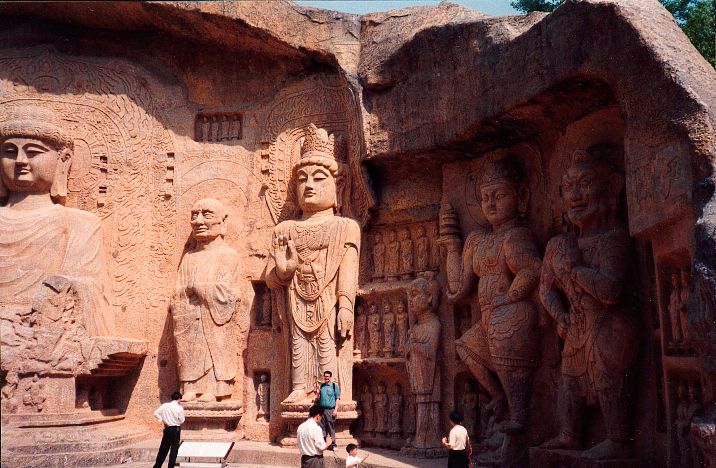
Go to Asia, see Buddhas, big and small. Or, to be more exact, Buddharūpa of various physical sizes. In early May 1994, we were in Hangzhou, China, and took a bus out to see Lingyin Temple, which I called “Lurgyin Temple” the last time I wrote about it (clearly a transcription error).

“The grounds featured a multitude of buddhas, most looking Indian in inspiration, some remarkably large, with huge feet and hands, carved into the side of a bluff,” I noted. “The place was nearly as popular as the West Lake, so the translation of the temple’s name, the Temple of Inspired Seclusion, didn’t apply any more, or at least on warm spring weekends.”

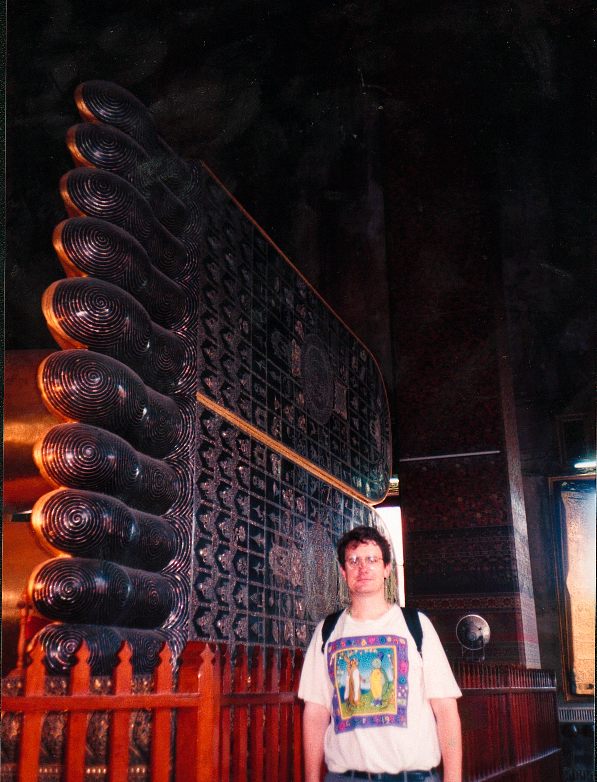
HangzhouBy early June, we were in Bangkok, where we saw more big Buddhas. Including a favorite of mine, the famed Reclining Buddha of Wat Pho. The image is about 16 feet high and 140 feet long, with the right arm supporting the head. Down at the other end, you get a good look at the enlightened one’s feet.

BuddhaToesThese are the feet and toes of Buddha. The bottom of the feet are inlaid with mother-of-pearl, as can be seen here, and supposedly there are 108 designs, though I didn’t count them. One-hundred and eight is an important number in Buddhism, but I’m a little fuzzy on the details, and explanations I’ve read and heard haven’t helped that much.

On New Year’s in Japan, Buddhist temples chime their bells 108 times; there are supposedly 108 earthly temptations to overcome to before achieving nirvana, one of which must surely be an obsession with pachinko.

Corsicana, Texas

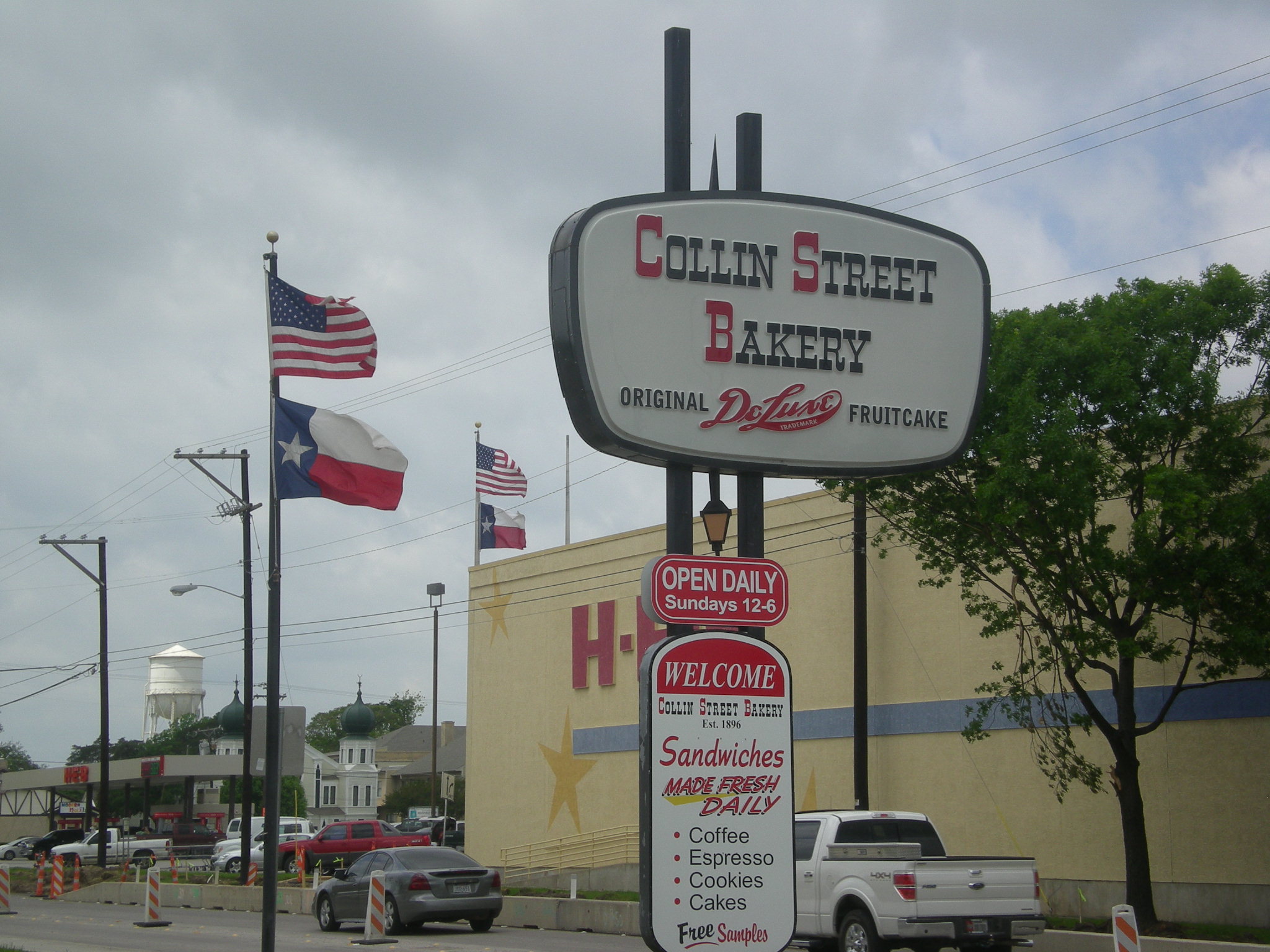
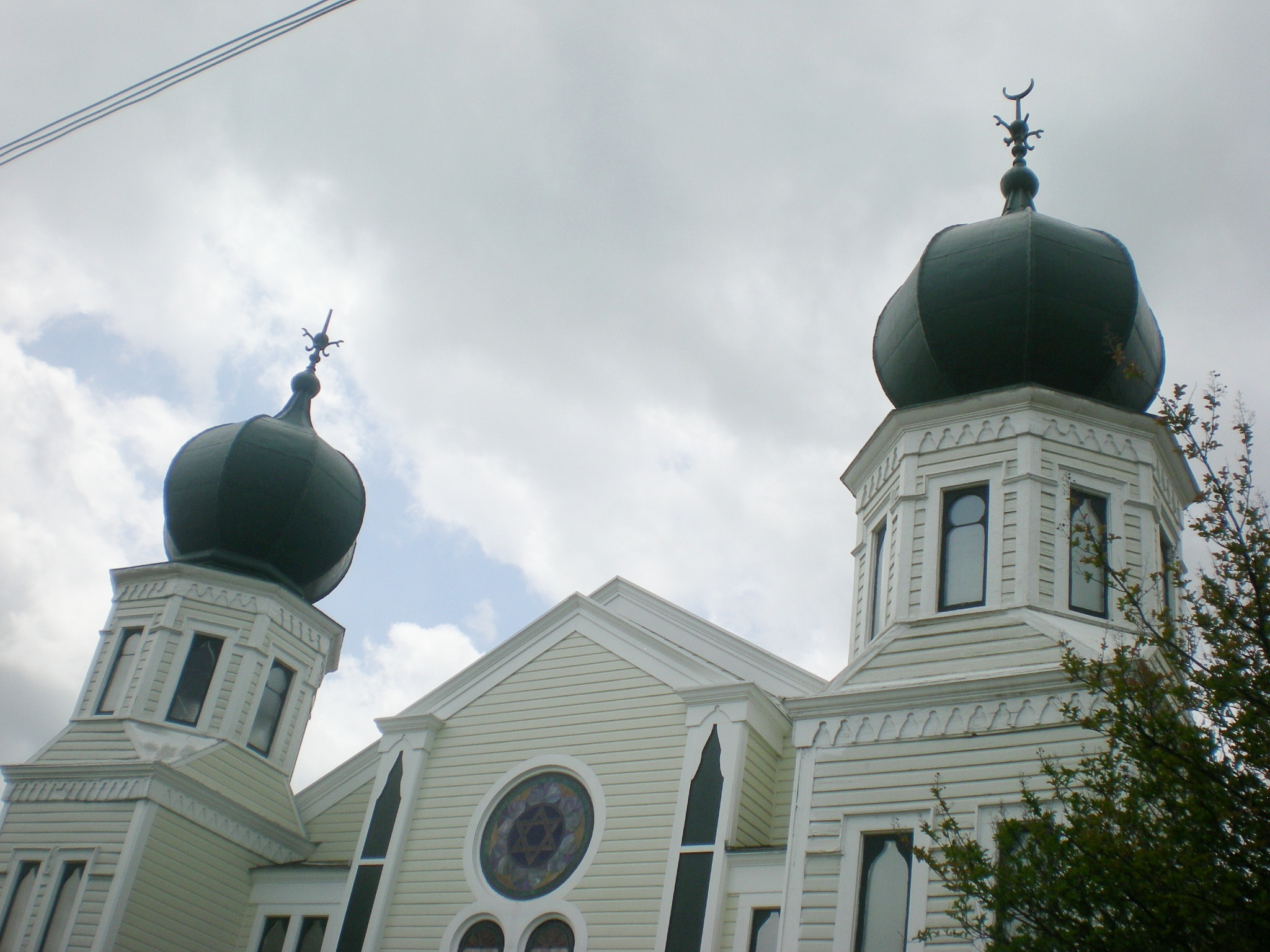
Everything about this picture says Texas: the Collin Street Bakery sign, marking a famed Texas bakery; the Texas flags; the HEB grocery store; the pickup truck driving by; the onion domes off in the distance. Onion domes?

Texas4.25.14 001First a little background. On April 24, 2014, Jay and I drove south on I-45, the main road from Dallas to Houston. About 50 miles south of Dallas is Corsicana, seat of Navarro County, and home of the Collin Street Bakery. I’ve been eating its fruitcakes on and off for years, mostly by mail order, but in 1996 (I think) I passed through town and visited the bakery store.

As the web site notes: “The DeLuxe Texas Fruitcake or Pecan Cake you order today is still baked true to the old-world recipe brought to Corsicana, Texas from Wiesbaden, Germany in 1896 by master baker Gus Weidmann. He and his partner, Tom McElwee, built a lively business in turn-of-the-century Corsicana which included an elegant hotel on the top floor of the bakery.”

The hotel is gone, but you can still buy baked goods at the bakery store, including the signature fruitcake. We bought one to take to our mother, plus some smaller items for more immediate snacking. From the parking lot, we noticed those nearby onion domes, and being curious about onion domes in small-town Texas, we went over for a look. After all, how often do you see Moorish Revival buildings in small-town Texas? Probably more often than I’d think, but anywhere there one was.

It’s the Temple Beth-El, a former synagogue on 15th St. in Corsicana.  A shot from across the street is here; it’s a handsome building.

Like the Collin Street Bakery, Temple Beth-El too dates from the late 19th century. The Jewish community of Corsicana isn’t what it used to be – they probably went to Dallas, like everyone else – so in more recent years, the building’s been a community center overseen by the Navarro County Historical Society.

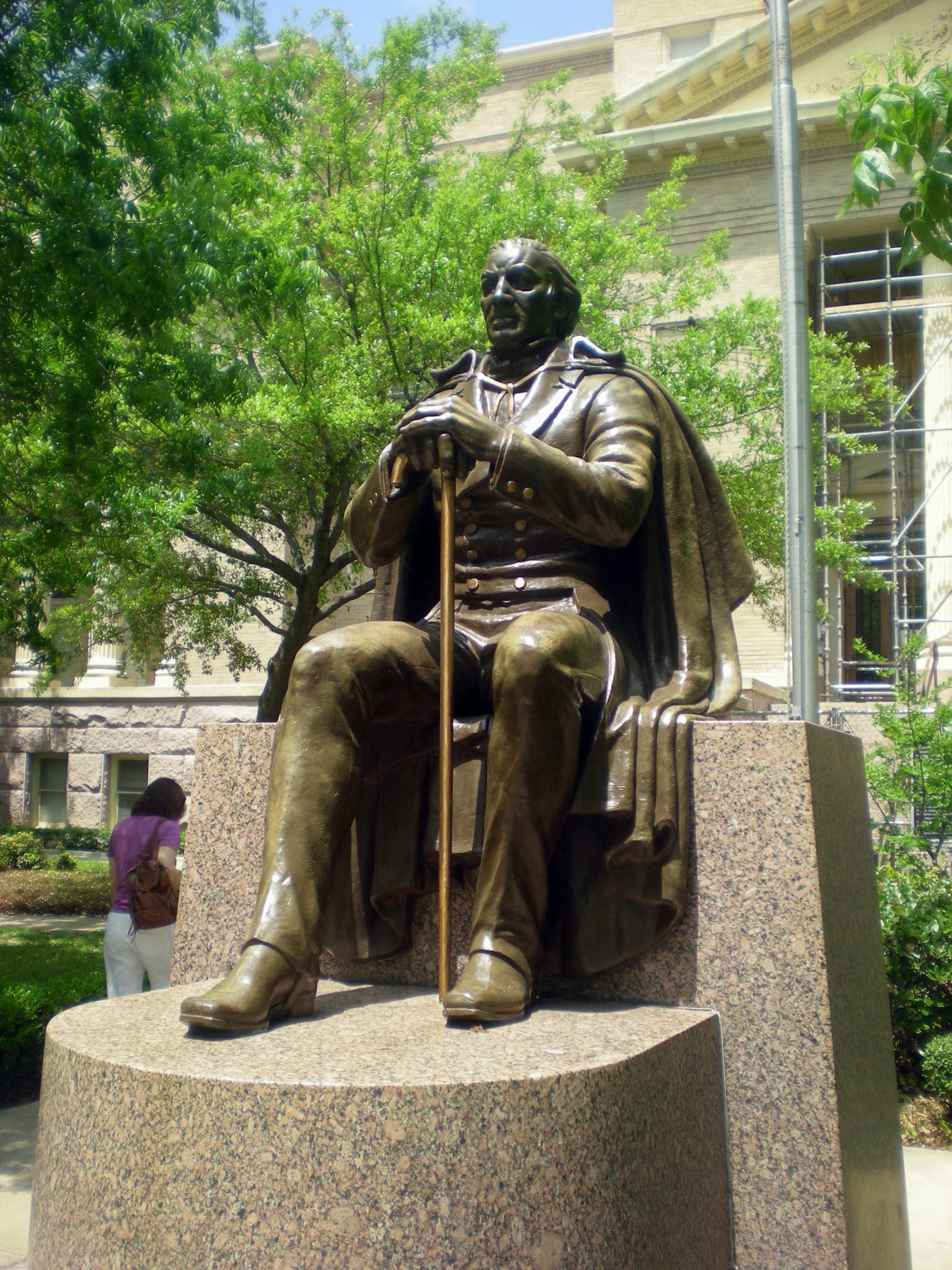
Now fully in a look-see mood, Jay and I went over to the Navarro County Courthouse grounds. Navarro himself was there. A statue of Jose Antonio Navarro, that is.

The Smithsonian tells us that “the sculpture was commissioned by the Texas Centennial Commission to honor Jose Antonio Navarro (1795-1871), a native Texan lawyer, merchant, and rancher who founded Navarro County and co-created the Republic of Texas. Navarro named the County seat Corsicana after his father’s birthplace, Corsica. While on an expedition to Sante Fe, Navarro was captured by Mexican soldiers and given a life sentence for treason. He escaped in 1845 and upon his return to Texas was elected as a delegate to the Convention which approved the annexation of Texas and drafted the Constitution.”

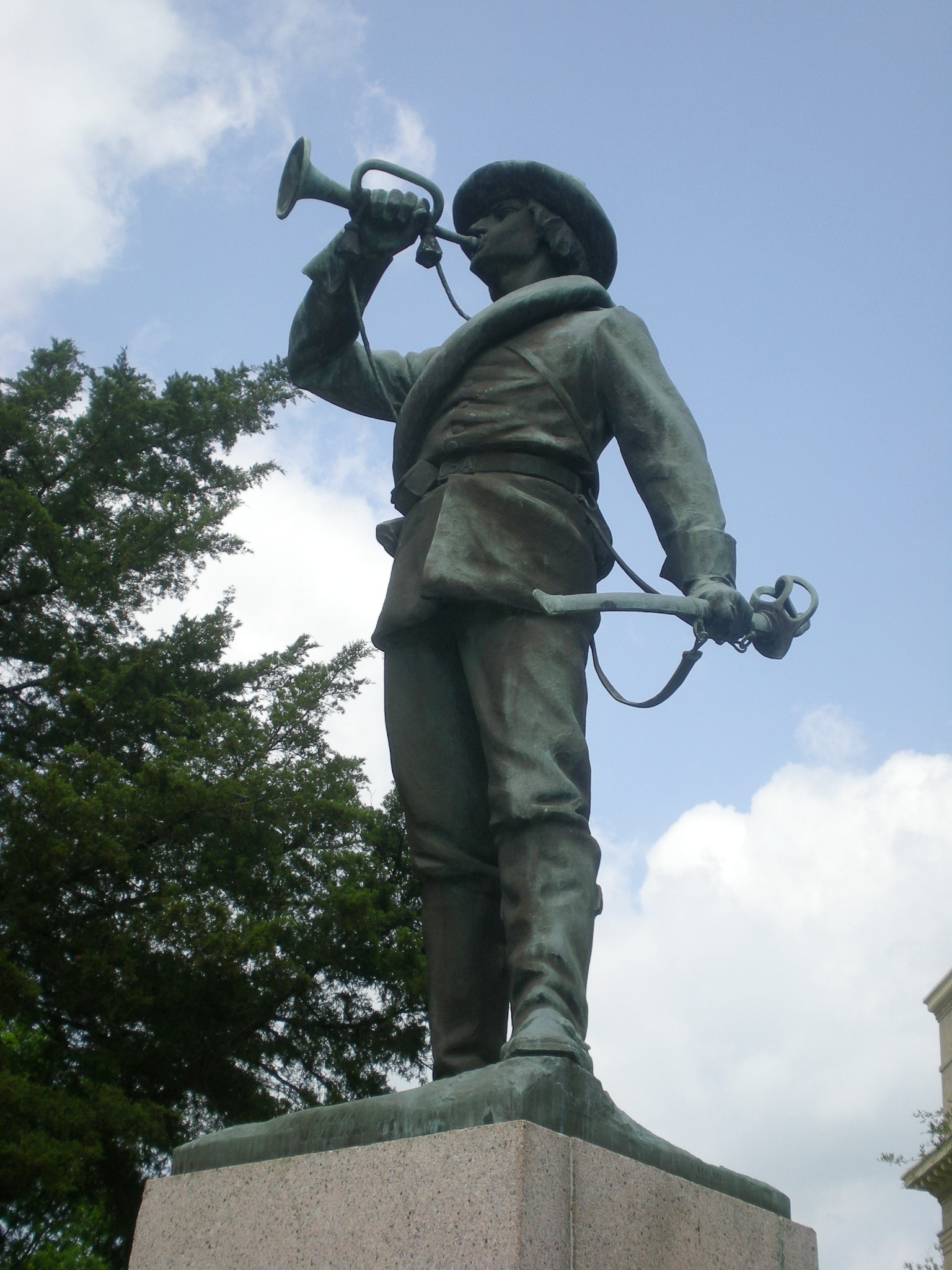
Nearby Navarro stands “The Call to Arms,” a Confederate memorial. It’s a little unusual, not being a soldier standing at attention or the like.

The statue’s plaque says that it was erected in 1907 by the Navarro Chapter of the United Daughters of the Confederacy “to commemorate the valor and heroism of our Confederate soldiers. It is not in the power of mortals to command success. The Confederate soldier did more – he deserved it.”

History’s written by the victors, indeed.

Maundy Thursday ’14

Back to posting again around May 4. A pleasant Easter to all.

It’s my spring break time, now that it’s actually more-or-less spring. Not that I won’t be working during the next two weeks. It isn’t that kind of spring break. No one older than about 22 gets that kind of spring break.

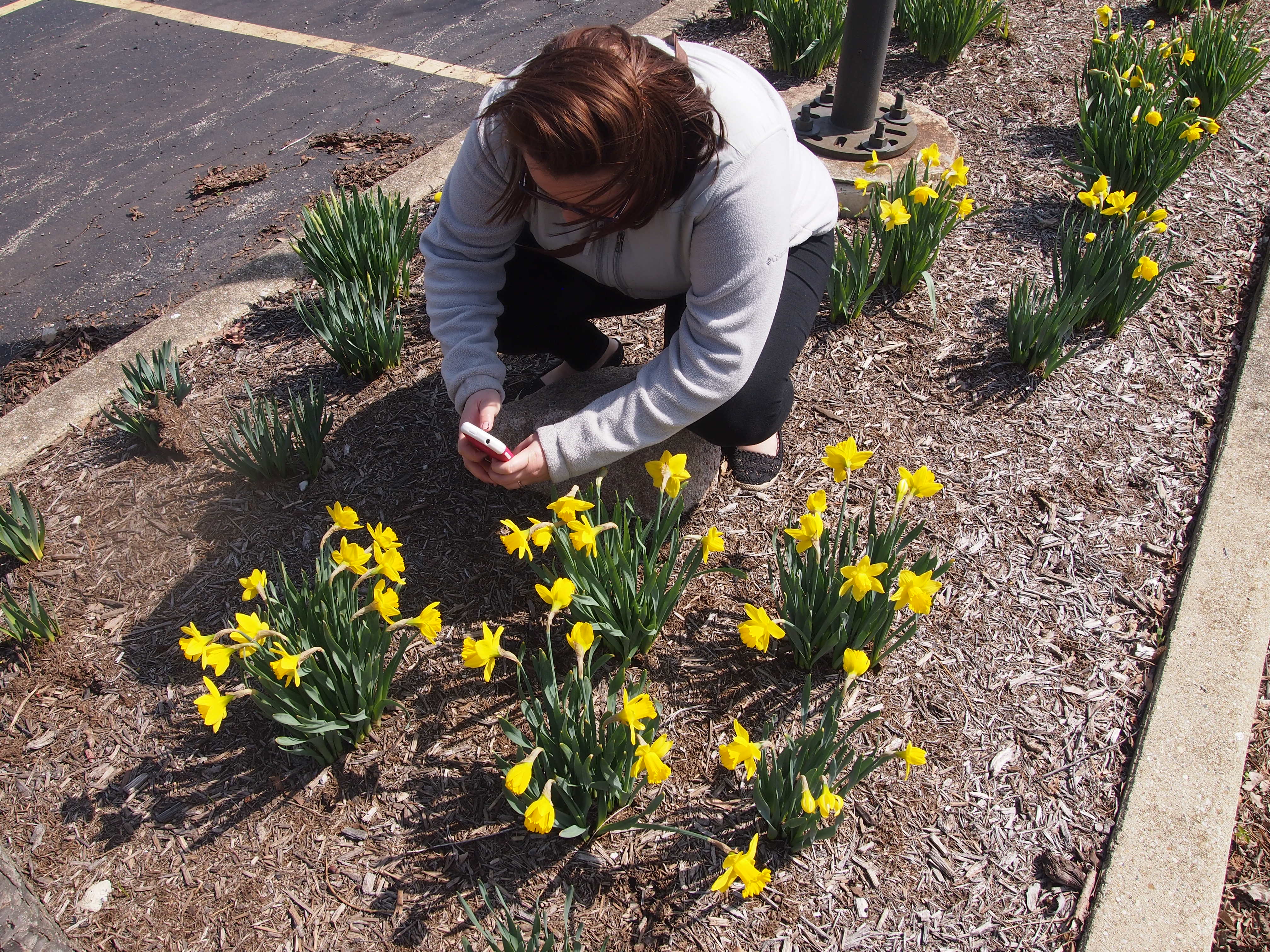
Today Lilly and I were out before noon and she wanted to take some pictures of the flowers that bloom in the spring (tra la). So I took a picture of her taking a picture. I think she sent some of her images immediately to friends, as youth does.

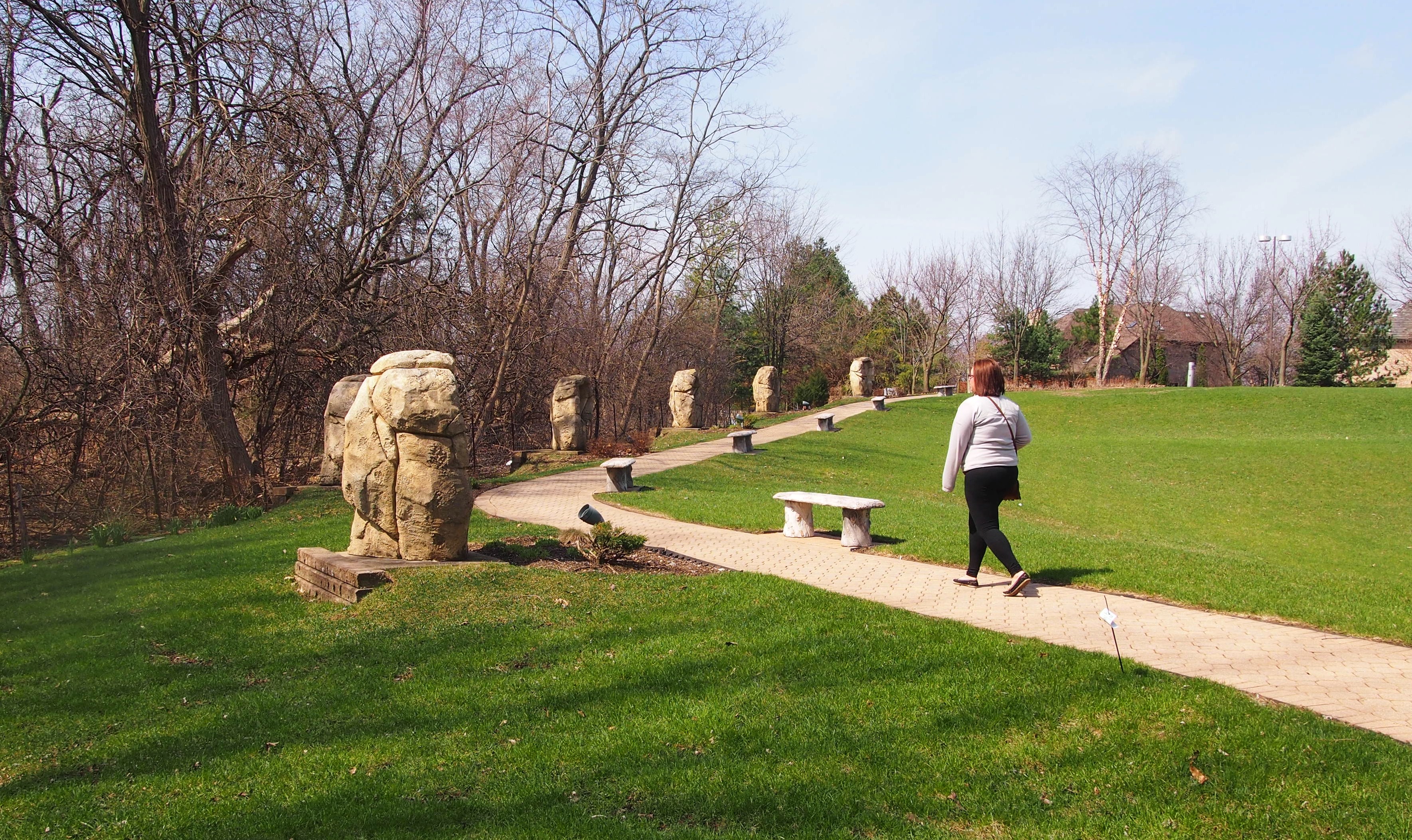
Lilly 4.17.2014They bloomed on a small island in the large parking lot at St. Matthew Parish, a Catholic church on Schaumburg Rd. in Schaumburg, Illinois. We didn’t go there to see flowers, though that was nice. Instead, I wanted to take a look at the Stations of the Cross on the grounds. Seemed like a good thing to do on Maundy Thursday, especially when it was almost warm again.

The stations form a semi-circle around a catchment, and are backed by the woods of the Spring Valley Nature Preserve.

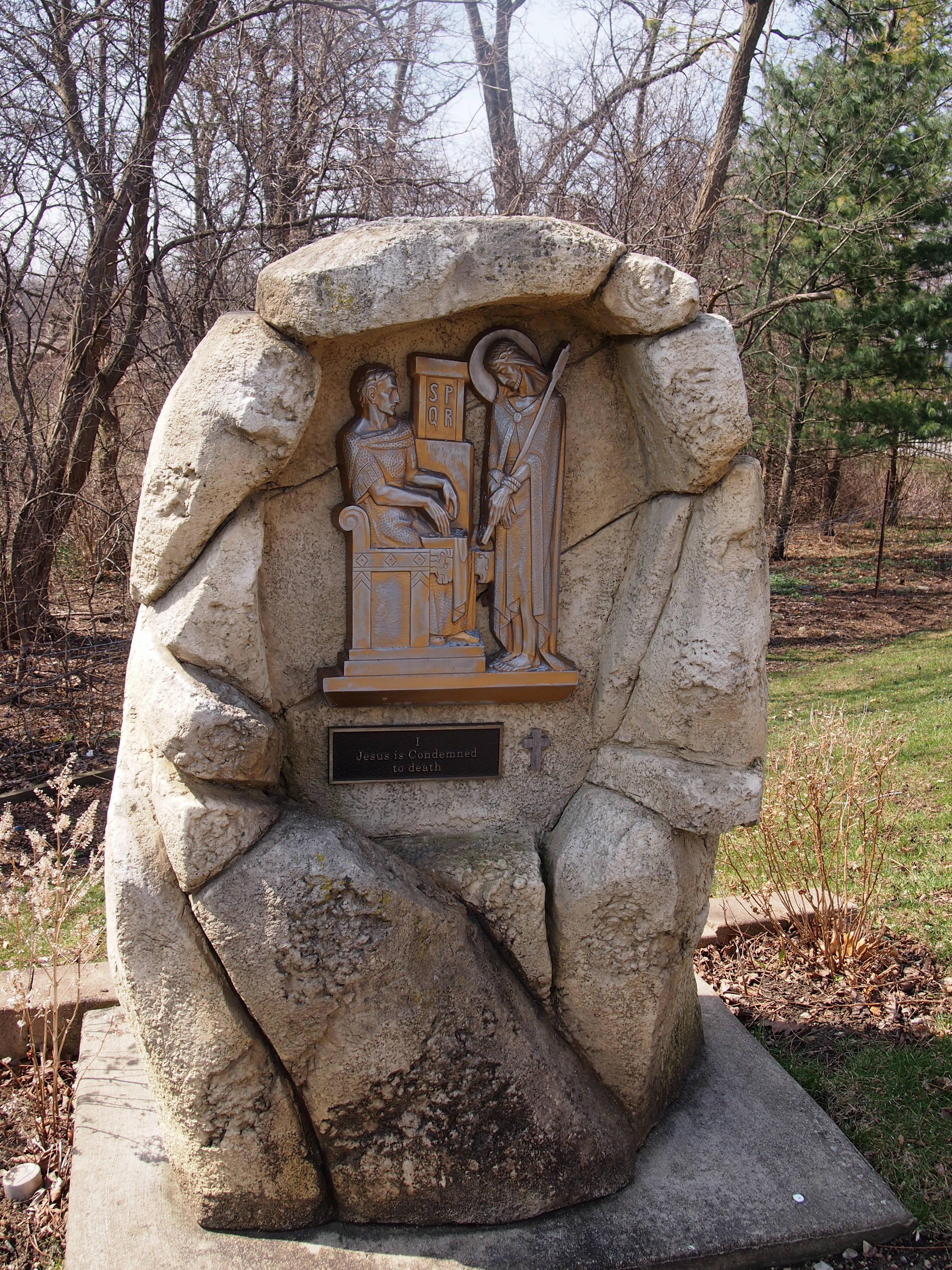
St Matthew, Schaumburg 4.17.14 - 1Plaques fixed to a short agglomeration of stones illustrate each station. This is the first one, with Jesus and Pilate.

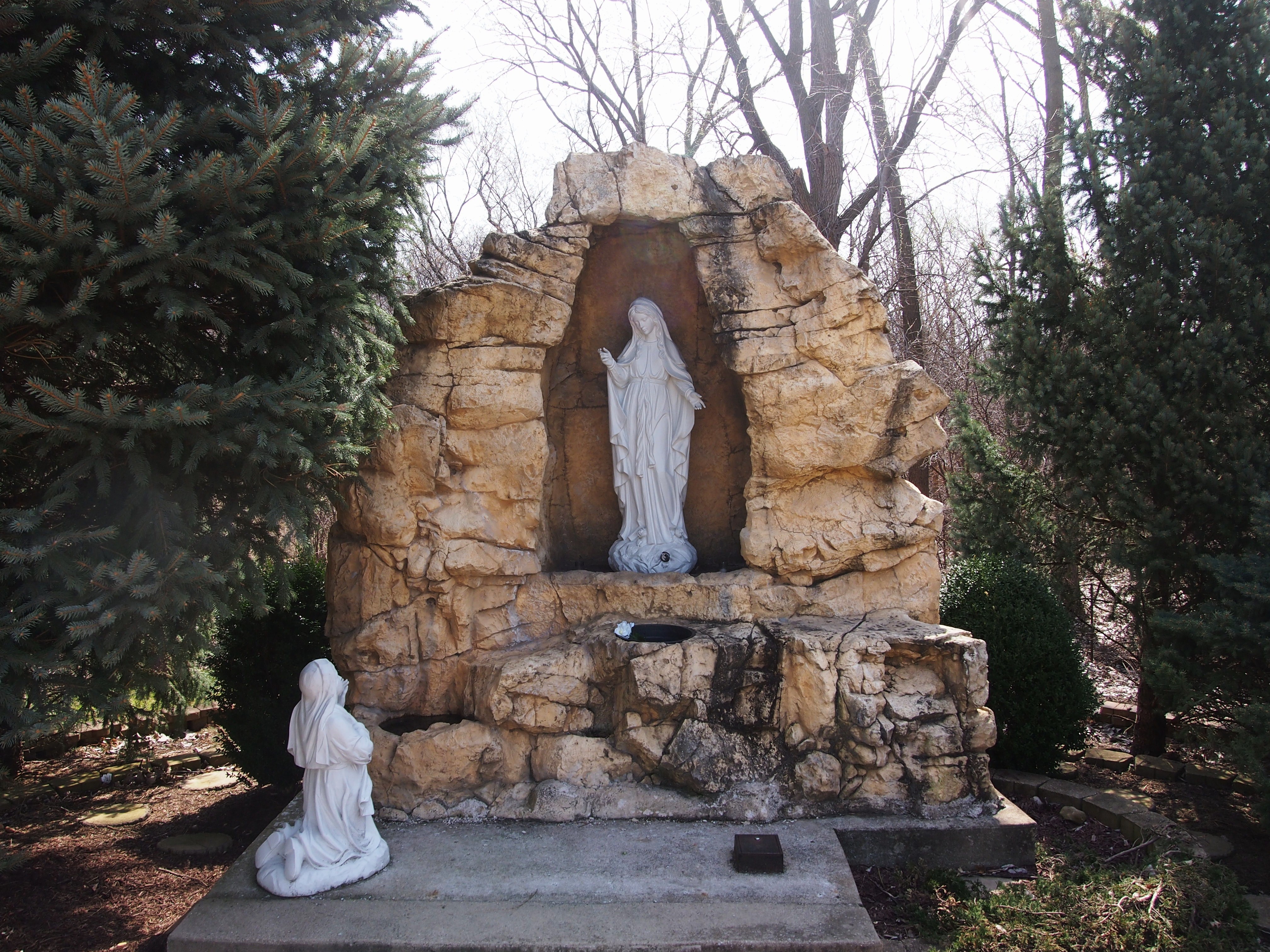
St. Matthew Schaumburg 4.17.14 - 2There isn’t much information about this particular Stations of the Cross on the St. Matthew wed site, so I don’t know if they were custom made for the parish, or you can get them ready made. Along the way, there’s also a grotto.

St Matthew Grotto, April 17, 2014Like I’ve said before, if you find a grotto, no matter how humble, take a picture. And then pause for a moment.