Tri-State Summer Solstice Weekend ’14

Late on Friday morning we drove west for a few hours – and enjoyed a remarkably long in-car conversation among ourselves, no radio or other electronics playing – and by mid-afternoon arrived at Mississippi Palisades State Park, which overlooks the Mississippi River just north of Savanna, Ill. The plan included bits of three states in three days. My plan, really, since my family humors me in such matters, and lets me think up the details of little trips like these.

Friday was Illinois. We camped at Mississippi Palisades, which is an Illinois State park and incredibly lush this year, and we spent time in Savanna, a little river town on the Great River Road, mostly to find a late lunch. Toward the end of the day, we made our way to Mount Carroll, Ill., which is the county seat of Carroll County and home to a good many handsome historic structures.

On Saturday, we ventured into Iowa – it really isn’t far – and first saw Crystal Lake Cave, just south of Dubuque. In Dubuque, lunch was our next priority, followed by a visit to the Fenelon Place Elevator. Which is a funicular. When you have a chance to ride a funicular, do it. The last time we were in Dubuque, I remember the Fenelon Place Elevator being closed for the season (uncharacteristically, I don’t remember when that was — the late ’90s?). Anyway, this time I was determined to ride it.

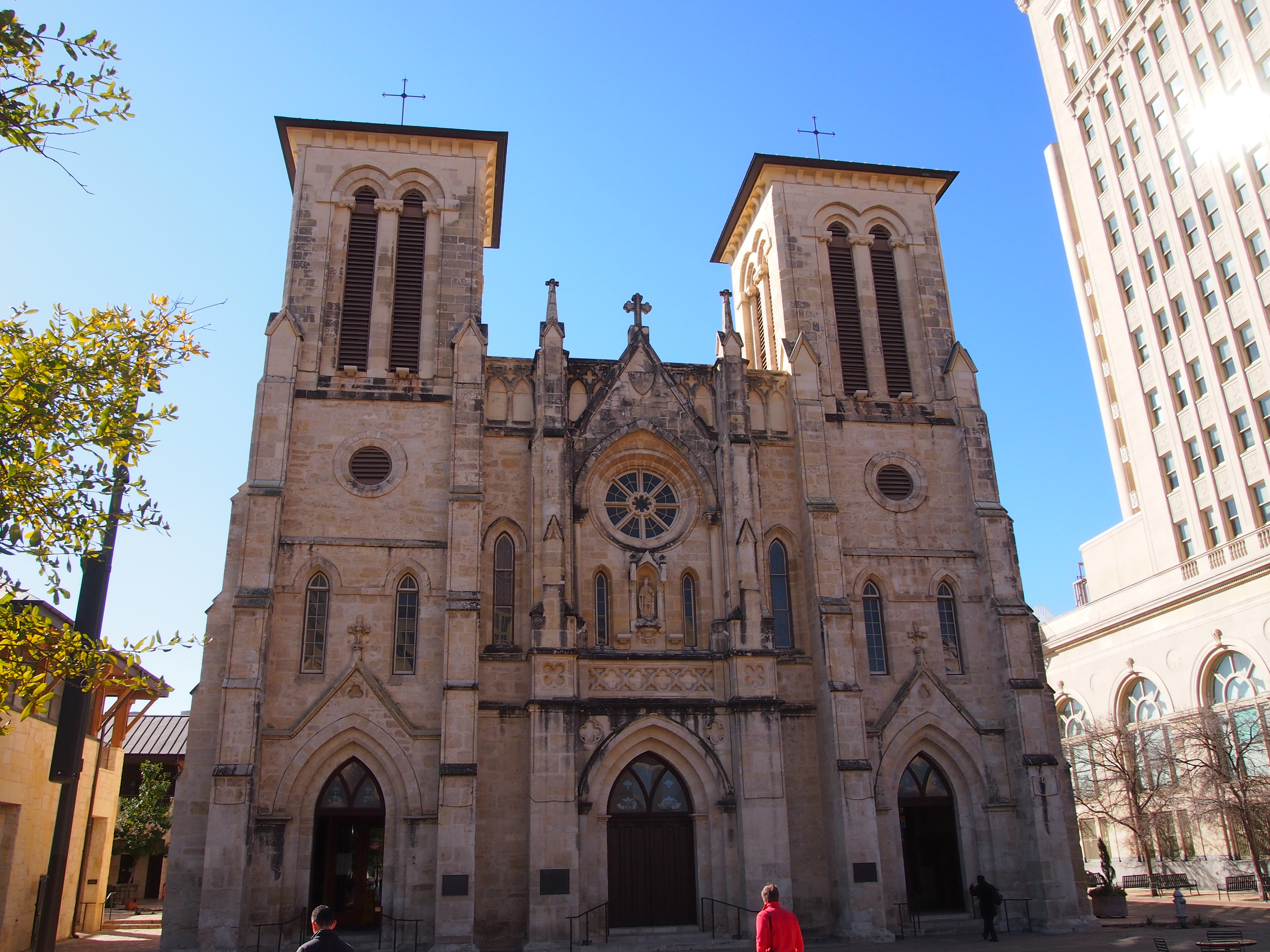
Afterward, we headed west a short distance to the town of Dyersville, Iowa, home to the Basilica of St. Francis Xavier, but better known for The Field of Dreams movie set, which still draws visitors. We saw both.

Today was mostly about getting home at a reasonable hour, but I had to add a slice of Wisconsin by navigating a number of small roads until we came to Dickeyville. It would be just another rural Wisconsin burg but for one thing: the Dickeyville Grotto, which actually includes a main grotto, smaller grottos, shrines, a church and a cemetery (and a gift shop, for that matter). Like funiculars, grottos demand our attention, especially such as striking bit of folk architecture as the Dickeyville Grotto.

Big Buddhas ’94

Go to Asia, see Buddhas, big and small. Or, to be more exact, Buddharūpa of various physical sizes. In early May 1994, we were in Hangzhou, China, and took a bus out to see Lingyin Temple, which I called “Lurgyin Temple” the last time I wrote about it (clearly a transcription error).

“The grounds featured a multitude of buddhas, most looking Indian in inspiration, some remarkably large, with huge feet and hands, carved into the side of a bluff,” I noted. “The place was nearly as popular as the West Lake, so the translation of the temple’s name, the Temple of Inspired Seclusion, didn’t apply any more, or at least on warm spring weekends.”

HangzhouBy early June, we were in Bangkok, where we saw more big Buddhas. Including a favorite of mine, the famed Reclining Buddha of Wat Pho. The image is about 16 feet high and 140 feet long, with the right arm supporting the head. Down at the other end, you get a good look at the enlightened one’s feet.

BuddhaToesThese are the feet and toes of Buddha. The bottom of the feet are inlaid with mother-of-pearl, as can be seen here, and supposedly there are 108 designs, though I didn’t count them. One-hundred and eight is an important number in Buddhism, but I’m a little fuzzy on the details, and explanations I’ve read and heard haven’t helped that much.

On New Year’s in Japan, Buddhist temples chime their bells 108 times; there are supposedly 108 earthly temptations to overcome to before achieving nirvana, one of which must surely be an obsession with pachinko.

Corsicana, Texas

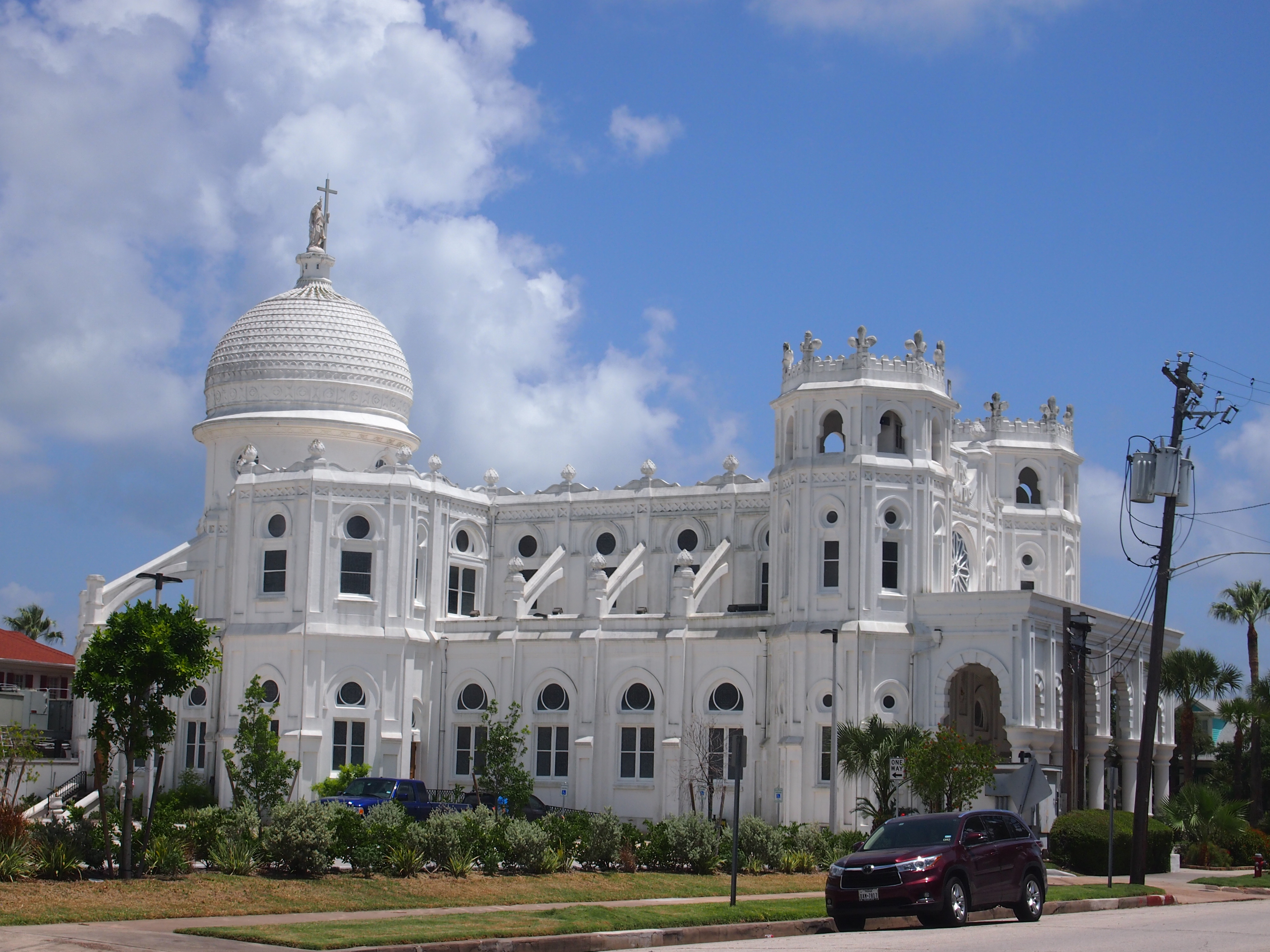
Everything about this picture says Texas: the Collin Street Bakery sign, marking a famed Texas bakery; the Texas flags; the HEB grocery store; the pickup truck driving by; the onion domes off in the distance. Onion domes?

Texas4.25.14 001First a little background. On April 24, 2014, Jay and I drove south on I-45, the main road from Dallas to Houston. About 50 miles south of Dallas is Corsicana, seat of Navarro County, and home of the Collin Street Bakery. I’ve been eating its fruitcakes on and off for years, mostly by mail order, but in 1996 (I think) I passed through town and visited the bakery store.

As the web site notes: “The DeLuxe Texas Fruitcake or Pecan Cake you order today is still baked true to the old-world recipe brought to Corsicana, Texas from Wiesbaden, Germany in 1896 by master baker Gus Weidmann. He and his partner, Tom McElwee, built a lively business in turn-of-the-century Corsicana which included an elegant hotel on the top floor of the bakery.”

The hotel is gone, but you can still buy baked goods at the bakery store, including the signature fruitcake. We bought one to take to our mother, plus some smaller items for more immediate snacking. From the parking lot, we noticed those nearby onion domes, and being curious about onion domes in small-town Texas, we went over for a look. After all, how often do you see Moorish Revival buildings in small-town Texas? Probably more often than I’d think, but anywhere there one was.

It’s the Temple Beth-El, a former synagogue on 15th St. in Corsicana.  A shot from across the street is here; it’s a handsome building.

Like the Collin Street Bakery, Temple Beth-El too dates from the late 19th century. The Jewish community of Corsicana isn’t what it used to be – they probably went to Dallas, like everyone else – so in more recent years, the building’s been a community center overseen by the Navarro County Historical Society.

Now fully in a look-see mood, Jay and I went over to the Navarro County Courthouse grounds. Navarro himself was there. A statue of Jose Antonio Navarro, that is.

The Smithsonian tells us that “the sculpture was commissioned by the Texas Centennial Commission to honor Jose Antonio Navarro (1795-1871), a native Texan lawyer, merchant, and rancher who founded Navarro County and co-created the Republic of Texas. Navarro named the County seat Corsicana after his father’s birthplace, Corsica. While on an expedition to Sante Fe, Navarro was captured by Mexican soldiers and given a life sentence for treason. He escaped in 1845 and upon his return to Texas was elected as a delegate to the Convention which approved the annexation of Texas and drafted the Constitution.”

Nearby Navarro stands “The Call to Arms,” a Confederate memorial. It’s a little unusual, not being a soldier standing at attention or the like.

The statue’s plaque says that it was erected in 1907 by the Navarro Chapter of the United Daughters of the Confederacy “to commemorate the valor and heroism of our Confederate soldiers. It is not in the power of mortals to command success. The Confederate soldier did more – he deserved it.”

History’s written by the victors, indeed.

Maundy Thursday ’14

Back to posting again around May 4. A pleasant Easter to all.

It’s my spring break time, now that it’s actually more-or-less spring. Not that I won’t be working during the next two weeks. It isn’t that kind of spring break. No one older than about 22 gets that kind of spring break.

Today Lilly and I were out before noon and she wanted to take some pictures of the flowers that bloom in the spring (tra la). So I took a picture of her taking a picture. I think she sent some of her images immediately to friends, as youth does.

Lilly 4.17.2014They bloomed on a small island in the large parking lot at St. Matthew Parish, a Catholic church on Schaumburg Rd. in Schaumburg, Illinois. We didn’t go there to see flowers, though that was nice. Instead, I wanted to take a look at the Stations of the Cross on the grounds. Seemed like a good thing to do on Maundy Thursday, especially when it was almost warm again.
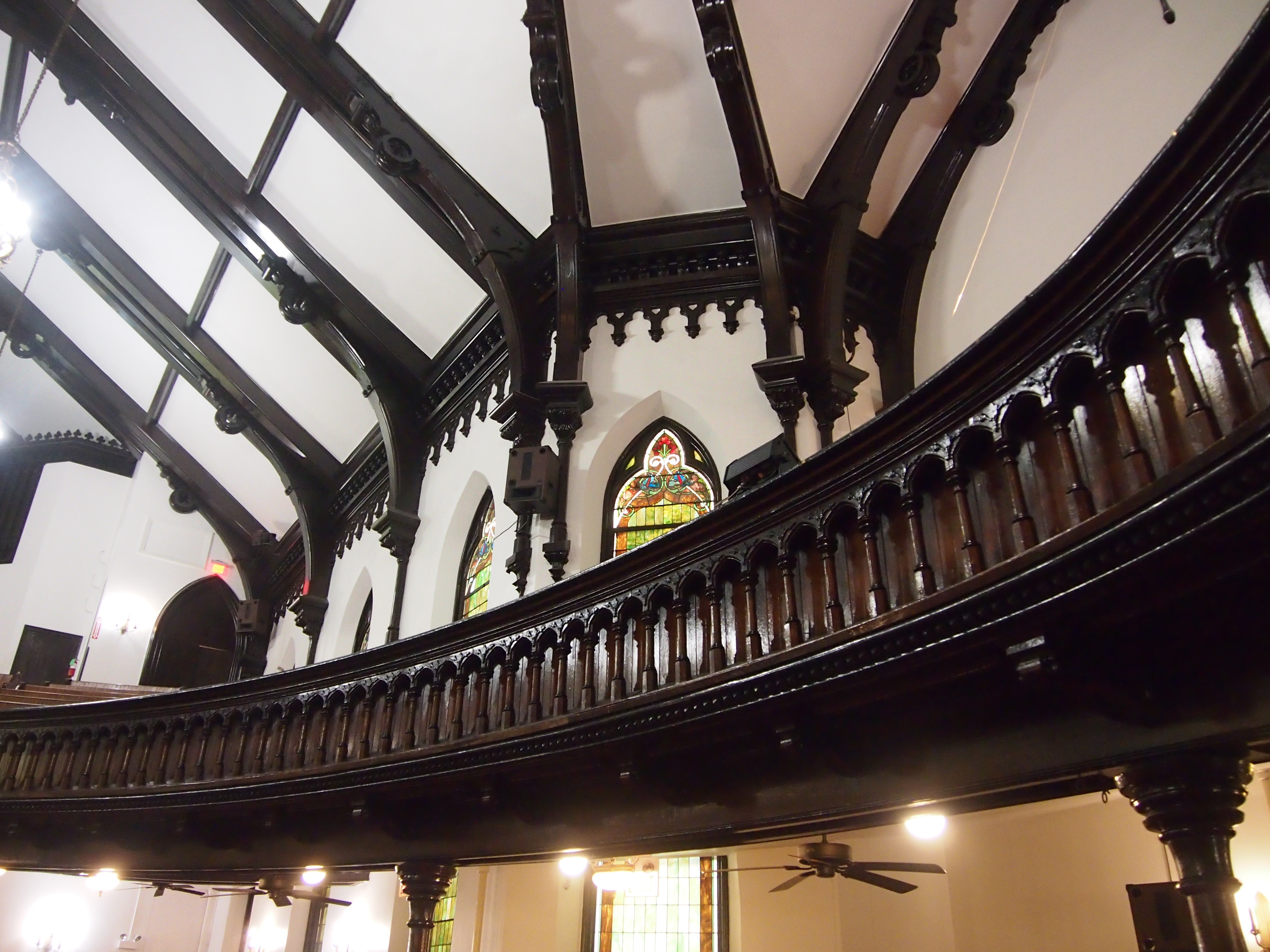
The stations form a semi-circle around a catchment, and are backed by the woods of the Spring Valley Nature Preserve.

St Matthew, Schaumburg 4.17.14 - 1Plaques fixed to a short agglomeration of stones illustrate each station. This is the first one, with Jesus and Pilate.

St. Matthew Schaumburg 4.17.14 - 2There isn’t much information about this particular Stations of the Cross on the St. Matthew wed site, so I don’t know if they were custom made for the parish, or you can get them ready made. Along the way, there’s also a grotto.

St Matthew Grotto, April 17, 2014Like I’ve said before, if you find a grotto, no matter how humble, take a picture. And then pause for a moment.

The Rockefeller Memorial Chapel

Nearly 11 years ago, I wrote, regarding the Rockefeller Memorial Chapel at the University of Chicago and clearly impressed by its size, “John Rockefeller thought big. The structure is huge. A big Gothic thing. I knew that, of course, having passed by it a number of times over the years, but it hit home when I wandered inside. I was the only one there. The glass is mostly clear, so the angled summer sun lighted the place. Several doors were open, so there was a breeze — unusual in such a large church. For large it was, as large as many cathedrals I’ve seen.”
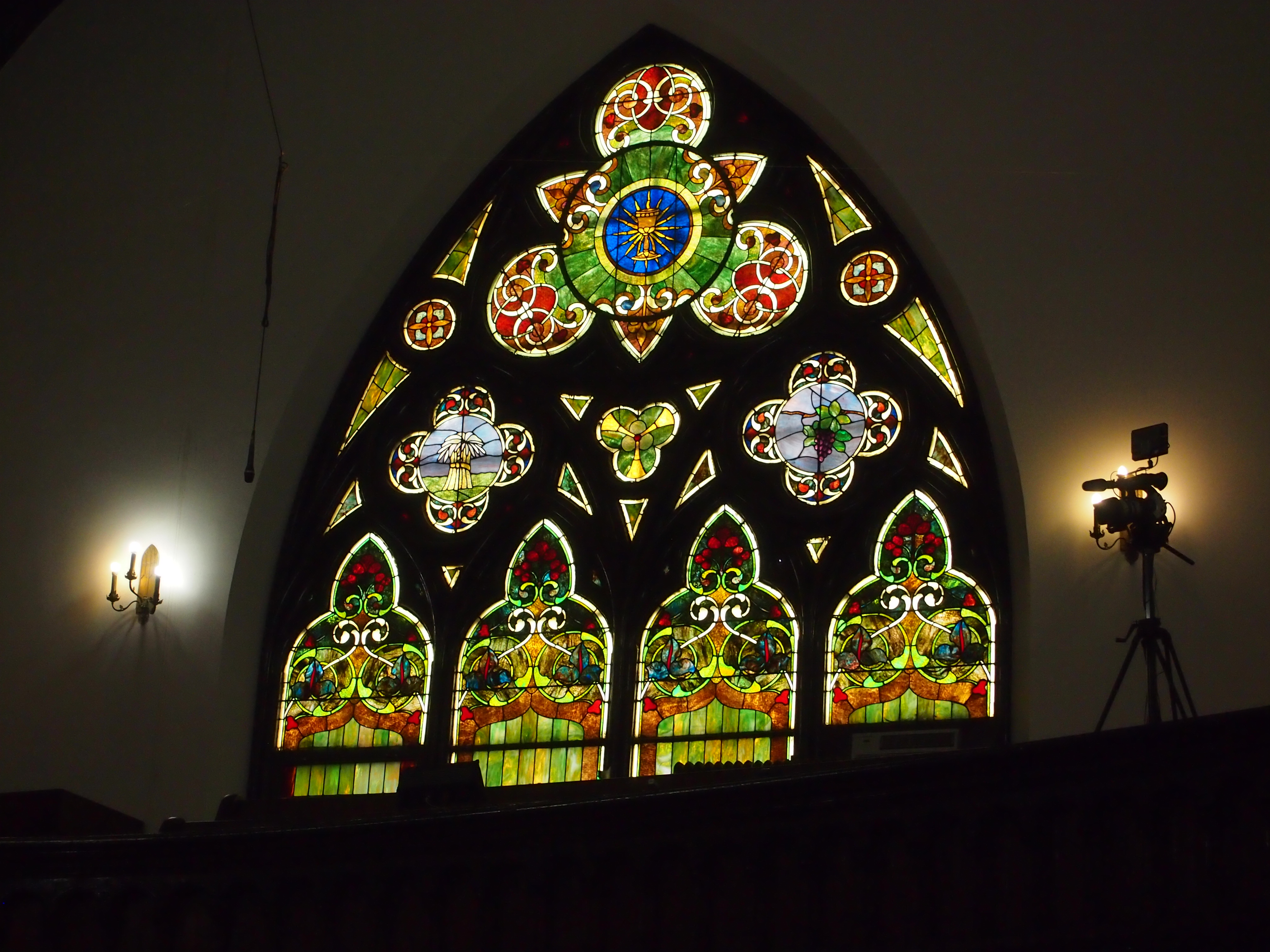
None of that has changed in 11 years, except there was no summer sun or warm breeze last Friday.

Some vital stats, to save a Google search: The chapel is 265 feet long and 102 feet wide at its widest point. The tower, towards the northeast corner, is 207 feet high and can be ascended via a spiral stone staircase of 271 steps. The chapel weighs 32,000 tons, and 56 concrete piers carry the foundations down to bedrock 80 feet below the floor. Its design includes no structural steel.

This is the chapel from the front.

Rockefeller Chapel 1 March 2014From the back, which shows the 72-bell carillon.

OLYMPUS DIGITAL CAMERAAnd inside.
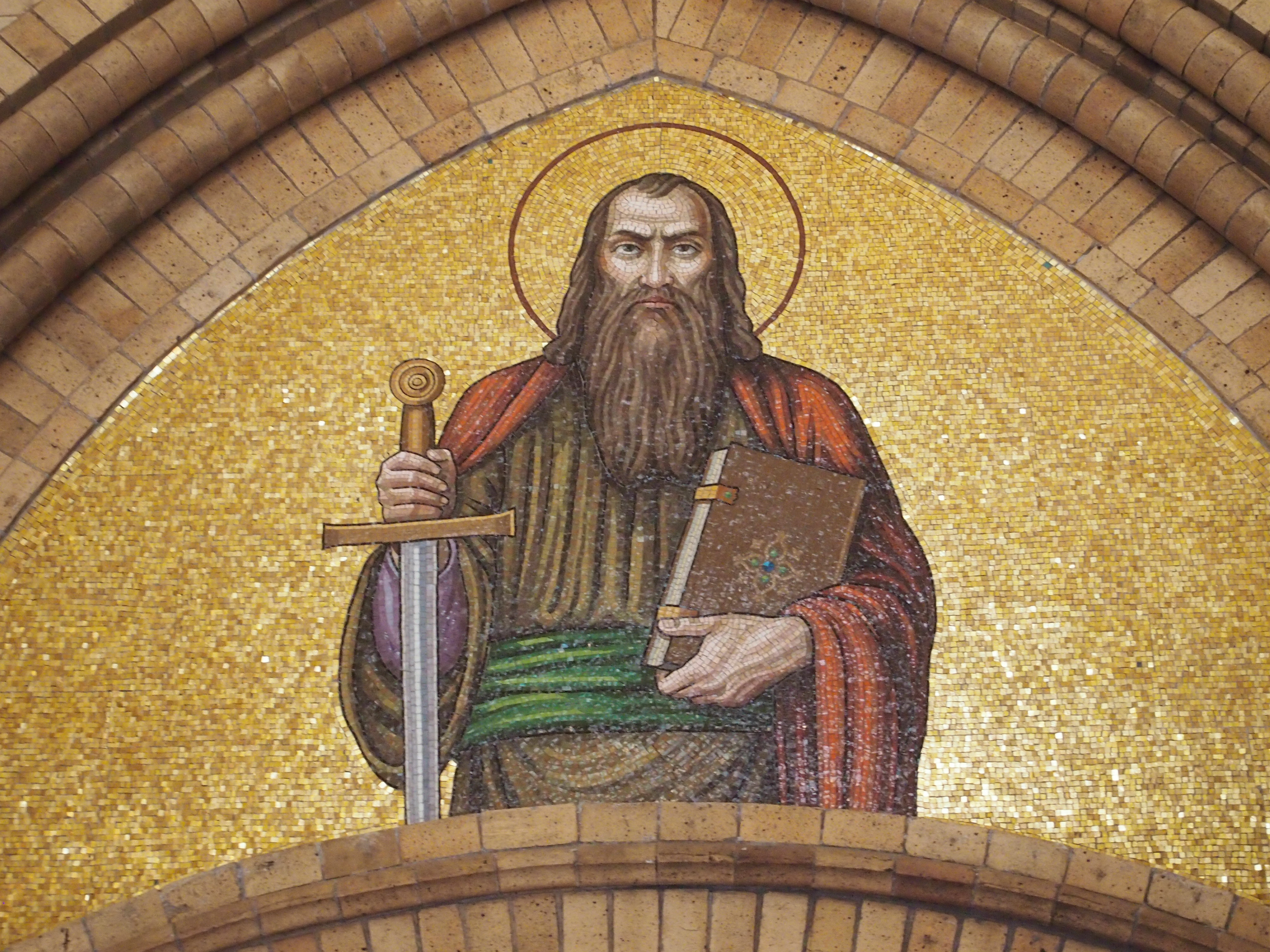
Rockefeller Chapel-2 March 2014The organ is sizable, too. According to the chapel’s web site, it’s an E.M. Skinner creation, vintage 1928, that originally “included four manuals, and had 6,610 organ pipes in 108 ranks; since its 2008 restoration, it now has 8,565 pipes in 132 ranks.” It was quiet when we saw it, but it can make a mighty sound.
Rockefeller Chapel OrganStill fairly light inside for a cloudy day in late March. We spent time looking around and resting on the pews. I took note of the handful of plaques along the walls. Two of them told me that a fair number of U of C men died for their country in both WWI and WWII.

I also noticed a plaque dedicated to U of C academic Ernest DeWitt Burton (1856-1925), a professor of New Testament, director of the University Libraries, and ultimately president of the university. The plaque lauds him highly: His scholarship enlightened religion; his energy completed this chapel; his vision led the university forward.

Naturally I had to look him up. No doubt the professor would have disdained an open-source encyclopedia, but never mind. I can’t help feeling that the groves of academe don’t produce scholars like that anymore.

Hyde Park ’14

On the northeast corner of S. Woodlawn Ave. and E. 58th St. in Hyde Park, on the South Side of Chicago, is the Frederick C. Robie House, on that site for more than 100 years and best known as an exemplar of the Prairie School of Design. Next door to its north, at 5751 S. Woodlawn, is the Seminary Co-op Bookstore, one of my favorite bookstores anywhere, though new to the site. One block west of the intersection is the Oriental Institute Museum, repository of Near Eastern treasures, most of which they’ve dug up themselves. The Rockefeller Memorial Chapel rises to the southwest of the intersection, an ornate, soaring structure. That’s a lot within a short walk.

Last week was spring break for Lilly and Ann. Last year I took them to Texas for the occasion, but for various reasons this year, the idea of going anywhere never really took root. Still, I wanted to go somewhere – even if only a few miles away and for a few hours – and see something new if possible. In the summer of 2003, I wrote, “I walked by the Robie House, a creation of Frank Lloyd Wright. Him again. One of these days, I will take the tour, but not today.”

I didn’t know at the time that renovation of the Robie House had barely started, and hasn’t been completed even now, though mostly it has. The main goal last Friday was to tour the Robie House, which we did. Afterward we walked over to Rockefeller Chapel, and then spent an hour or so in the Oriental Institute Museum.

It was still fairly cold, but at least the sidewalks were clear of ice, and we didn’t have far to walk. Street parking always seems to be available next to the Midway Plaisance, just south of our destinations. In 1893, the Midway was briefly the focus of the world’s attention as part of the world’s fair, but now it’s a little-known urban green space, at least outside Chicago. That’s too bad, because it’s certainly interesting, if you know what was there.

We didn’t go into the Seminary Co-op Bookstore. I was astonished to see its new location, which I hadn’t heard about. Until a year and a half ago, the store was snugly located in the basement of the Chicago Theological Seminary, at 5757 S. University Ave. Turns out the seminary has moved, too, and now the building is home to the U of C’s Dept. of Economics, so famed in free market song and story.

Wiki, for what it’s worth, says: “The seminary move was controversial: it involved the disinterring of multiple graves.” I didn’t know anyone was buried there. Who was buried there? I’ll have to look into that sometime. Once upon a time, I did enjoy the Thorndike Hilton Memorial Chapel and the collection of rocks embedded in the seminary wall. I assume those are part of the Chicago School of Economics now.

Currently the streetscape between the Robie House and where the Seminary Co-op Bookstore used to be – which is across the street from the Oriental Institute Museum — is under construction.

OLYMPUS DIGITAL CAMERAI was surprised to see the bookstore’s new location, which even seems to include a café, like you might see in a Barnes & Noble. It didn’t seem right. At the basement location, there was no room for anything but books and more books. This video, at least, assures us that the new location still has a “maze aspect” and that Stanley Tigerman did the design (himself or Tigerman McCurry Architects staff?), which I guess counts for something.

But how could the new site have the book-cave charm of the old? Next time I’m in Hyde Park, I’ll take a look, to see if the new can hold a candle to the old.

Subtropical March ’13

Slowly warming over the weekend, but not enough to call spring. It’s this time of year especially when I miss the springs of South Texas and Middle Tennessee, or even the Kansai, which are already under way. This time last year, San Antonio was greening up nicely.

Such as at the Sunken Gardens, officially the Japanese Tea Gardens, when we visited last year. I expect it looks this way again about now, complete with greenery along with edge of expansive koi ponds.

OLYMPUS DIGITAL CAMERAWe discovered that the garden also sports some plant graffiti. Floroffiti, maybe?

OLYMPUS DIGITAL CAMERAOLYMPUS DIGITAL CAMERAOther places were greening, too. But not that green. At Mission San Juan, the grass was still its usual winter brown.

OLYMPUS DIGITAL CAMERAGrass also gets brown under the heat of summer, which can last a long time. So it’s better to say that the predominant color of South Texas grass is brown, with interludes of green at certain times of the year.

This was the San Jose Burial Park, which isn’t far from Mission San Juan.

San Jose Burial ParkWe didn’t spend much time there, but it looked like a peaceful burial ground, not much known expect by people who live nearby.

St. John UCC Cemetery, Palatine

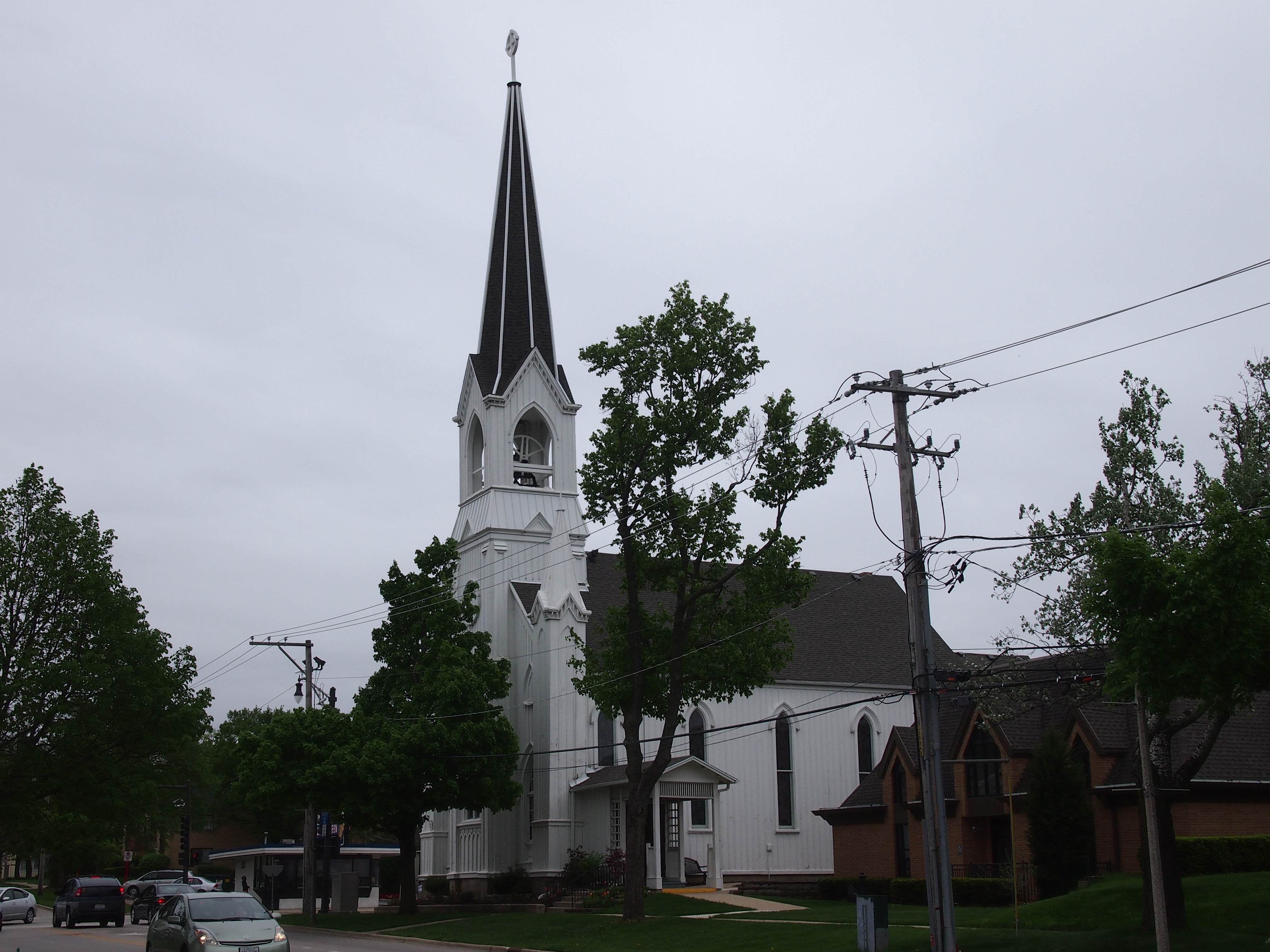
The snow was still pretty deep this weekend — but starting to melt — at St. John United Church of Christ in Palatine, Ill., when I dropped by for a look at the churchyard cemetery. So I didn’t do a lot of wandering around or taking notes about individual stones. Still, it’s a pretty little graveyard, winter or summer.

St John UCC March 14March10.14 223I’d been there before, but not for the better part of a decade, despite how often I pass nearby. Some of the older stones are in German. Fittingly, since much of this part of Cook County was originally settled by German famers.

The church is the third building on the site, dating from 1885.

March10.14 230According the church web site: “August 21 [1885] the church was destroyed by fire after the steeple was struck by lightning. September 14, the cornerstone for the new church identical to the old was laid. The bell in today’s belfry holds the original bell cast in 1885… The new church was built by [contractor] Christian Brinkman for $2,700.

“The pipe organ was built by Emil Witzmann around 1885. It has a balanced mechanical stop-action and is registered in the Organ Historical Society Registry. The center aisle lights were originally candle lights. The fourth Sunday in Advent of the same year, a new church (our present building) was dedicated.”

March10.14 232There are other little suburban cemeteries and churches I need to make a point of visiting this year, ones that aren’t that far away. Since they’re so close, I get lackadaisical about making the time to drop by.

Canterbury, 1994

I took lousy notes during our four weeks in London in December 1994, so I can’t remember exactly when it was we took a day trip to Canterbury. It wasn’t December 1, because that day I saw a revival of The Prime of Miss Jean Brodie somewhere in the West End, and after the show the lead actress made an appeal for donations to fund AIDS research, since it was World AIDS Day.

We went to Canterbury sometime early in the month, and we had a pleasant walk around the town and a long look at the cathedral, which is off in the distance in this picture — one of the few I took there.

I think the closer ruins are what’s left of St. Augustine’s Abbey, which Henry VIII put on the road to ruin. The grass looks strangely green for December, but I remember that December in southern England wasn’t very cold at all, to the wonder of people who lived there year-round.

Better pictures of the cathedral and the ruins and other places nearby can be found at the fine Saints and Stones web site.

The National Shrine of St. Francis Xavier Cabrini

I expected to see interesting architecture on last week’s Openhousechicago. I didn’t expect to run across the humerus of a saint. But the relic arm bone’s behind glass and under the altar of the National Shrine of Saint Frances Xavier Cabrini, which is just west of Lincoln Park.

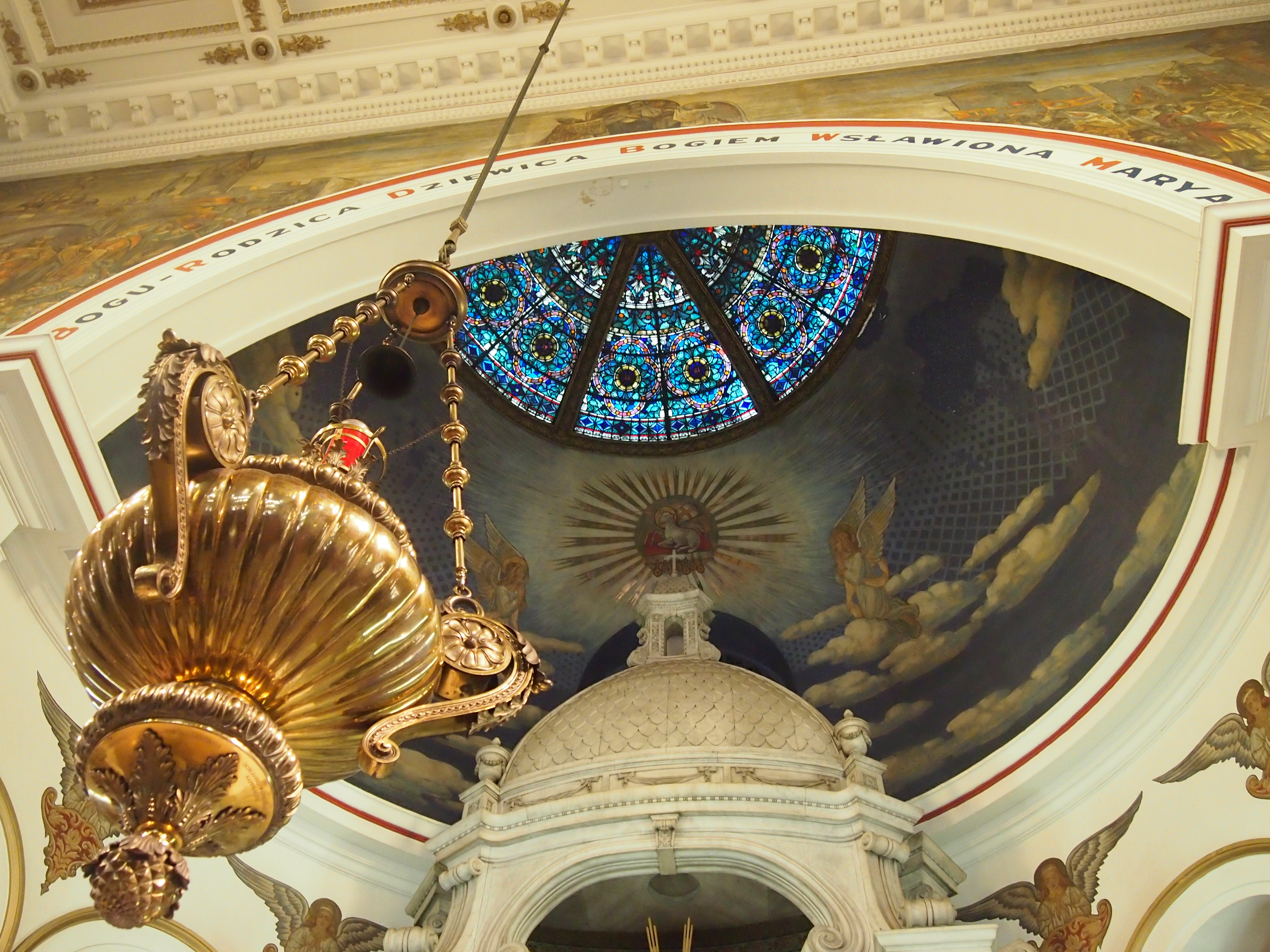
The shrine itself is magnificently ornate, done in a “modern Romanesque” style. Mosaics and frescoes on the dome overhead illustrate the life of the saint; the stained glass all around tell of the Resurrection, the Virgin Mary, the Holy Spirit, the Apostles, and more, even including the seal of the Missionary Sisters of the Sacred Heart of Jesus, which was founded by Mother Cabrini; there are four side chapels and four side altars; and the shrine has a Tamburini Pipe Organ, an Italian variety that I’ve read is rare in North America.

This is the view of the dome from the front pews, and a part of the baldachino (canopy) over the altar.

I’ve been in a fair number of ornate churches, but what struck me about this place was how new it feels. Not just new by the standards of European sacred spaces – which might be 100 years or less – but new by American standards. This iteration of the shrine was only opened last year.

A predecessor shrine was part of Columbus Hospital, an institution founded by Mother Cabrini (d. 1917) at this location in 1905. All together she founded 67 hospitals, schools, and orphanages in the Americas and Europe. I’m pretty sure I knew about the Columbus Hospital before it closed in 2002, but never ventured into it or the original shrine.

A condo tower was eventually developed on the site of the hospital – an extremely valuable piece of land, with its immediate access to Lincoln Park and views of Lake Michigan – but part of the deal was that the shrine had to be redeveloped on the site as well. So the floors over the shrine, which is a separate entity within the structure, are residential condos. An unusual arrangement.

The shrine also includes offices and a small museum about the saint. Among other things, the room in the hospital in which Mother Cabrini lived until her death is re-created, and on display are a habit she wore, her bed, an address book, and a to-do list (“continue work on that fourth miracle this week”).