Bardstown Walkabout

For those who dreamed of a pink Christmas this year, there was this shop window in Bardstown, Kentucky.Bardstown, Kentucky

Not only pink trees, but an entrance with a Fanny Brice sort of greeting.Bardstown, Kentucky
Bardstown, Kentucky

For many years, the building on North Third Street housed Spalding & Sons, a dry goods store founded in the 1850s which later morphed into a small-town department store that finally closed for good only in 2013. A woman’s boutique, Peacock on Third, now occupies the space (the dark building on the right in the picture below).Bardstown, Kentucky

These days a boutique of that kind fits right in on Third, which is Bardstown’s main street. Other nearby specialty shops include At Mary’s gift shop, the Tea Cozy, Shaq & Coco (furniture), Kaden Lake and Cactus Annie’s (both women’s clothes), and Pink Fine Consignments & Boutique and Gnarly Gnick Gnacks; eateries in the vicinity include Bardstown Burger, Cafe Primo, Pat’s Place and the Old Talbott Tavern.

We were out and about in Bardstown on December 29, the second day of our trip, an overcast and moderately chilly day, having driven the 30 miles or so from Louisville that morning. This part of Bardstown caters mostly to visitors, who were few that day, but the street wasn’t completely deserted.

The town has managed to preserve a nice collection of century-and-older buildings that are mostly still in use.Bardstown, Kentucky Bardstown, Kentucky Bardstown, Kentucky

A few ghost signs.Bardstown, Kentucky

A selection of pre-FDIC bank buildings.Bardstown, Kentucky Bardstown, Kentucky

The five-and-dime is also gone.Bardstown, Kentucky

At the junction of Third and another major street, Stephen Foster Avenue – more about him later – is a roundabout, and in the roundabout is the imposing former courthouse, which these days houses the Bardstown Tourist & Convention Commission, the Nelson County Economic Development Agency and the Bardstown Nelson County C-of-C.Bardstown, Kentucky Bardstown, Kentucky

Another relic of the great age of courthouse building in the United States, designed by Mason Maury and completed in 1892. Most of Maury’s work was in Louisville, and in fact he designed Kentucky’s first skyscraper in that city, the Kenyon Building. Sadly, that structure didn’t survive the mid-century purge of old buildings.

At one corner Third and Stephen Foster is a building whose first floor is occupied by a drugstore: Hurst Discount Drugs.Bardstown, Kentucky Bardstown, Kentucky

We happened to be looking for lunch at that moment, and happened to notice that Hurst also includes a lunch counter. How many drugstores have lunch counters any more? How many did even 30 or 40 years ago? We instantly decided to eat there. I did, anyway, since I’m not sure Yuriko appreciated what a rara avis we’d found, but she was game.Bardstown, Kentucky Bardstown, Kentucky

We weren’t the only customers, though everyone else left before we did.Bardstown, Kentucky Bardstown, Kentucky

Speaking of rare birds: only one thing on the menu was more than $10, the double bacon cheese burger deluxe at $10.19. Order deluxe and you get mayo, ketchup, mustard, tomato, lettuce, pickle and grilled onions.

Besides burgers, other options included sandwiches and a few breakfast items. Even better, the flip side of the menu offered an array of ice cream products: scoops, shakes, malts, ice cream sodas, banana splits and sundaes, and floats — black cow (Coke), brown cow (root beer), and orange cow (orange sherbet and Sprite).

I had the more modest cheeseburger deluxe at $7.49, plus a chocolate shake for $6.29. Elevated compared to only a few years ago, certainly, but still reasonable, especially considering that the burger was good and the shake was really good.

A Different Christkindlmarket, But Pretty Similar

Above freezing temps on Friday encouraged us to pay a visit to the Aurora Christkindlmaket, my second such market this year, which is vastly more than most years’ total of zero.

Lights. Artisans. Dark-wood booths evoking Germany. Walking around food. Hot drinks. High prices. Pretty much everything you’d see and experience at the market at Daley Plaza, except you’re in RiverEdge Park along the Fox River.

Adjacent to Hollywood Casino on the Fox is an enormous complex of parking lots, from which a pedestrian bridge crosses the river, opened only a little more than two years ago. A walk across takes you to RiverEdge.Aurora Kriskindlmarket Aurora Kriskindlmarket

Ornaments of the giants mark the way to the market.Aurora Kriskindlmarket

Merchants.Aurora Kriskindlmarket Aurora Kriskindlmarket Aurora Kriskindlmarket

Merchandise.

Swedish joy juice to help get through those near-Arctic Circle wintertime blues?Aurora Kriskindlmarket

Called glögg, but the fine print says non-alcoholic, so I’m not sure that counts. The glögg I got at Ikea some years ago had some kick to it. I didn’t check these bottles too closely, so I’m not even sure it’s Swedish, though a Chicago-area company called Lars Own offers imported goods from Scandinavia – yet its web site is a little vague on its Grandpa Lundquist brand glögg.

Wasn’t Grandpa Lundquist a supporting character on Phyllis? The hard-of-hearing hoot-and-a-half curmudgeon played by a wizened character actor whose career was pretty much simultaneous with talkies? No, I made that up, AI-style.

I didn’t buy any 0.0 glögg anyway. I did buy some praline-filled Ritter Sport, a variety I hadn’t sampled before. It’s good. Of course it is. Yuriko acquired a few ornaments – a few per year, that’s how a mass of Christmas decorations grows. We ate pretzels from a Milwaukee-based bakery, and Ann got hot chocolate in a 0.2-liter mug with scenes of the downtown Christkindlmarket painted on it. Designed in Germany, Made in China, it says.

The similarities between the downtown and Aurora markets are no accident. It’s a seasonally oriented cottage industry.

“The Christkindlmarket Chicago was first conceptualized in 1995 when the German American Chamber of Commerce of the Midwest Inc. (GACC Midwest) was seeking alternative ways to promote bilateral trade between the USA and Germany,” the event web site explains. “Companies from Germany and the Chicago area [participated] in the first Christkindlmarket Chicago in 1996. The market was an instant success and continues to flourish through the work of GACC Midwest’s subsidiary, German American Events LLC.”

Not everything – in fact not a lot of it – is German, or even European. You might call it an international market with North European holiday trappings. It works.

In summer, RiverEdge Park is the setting for concerts and plays. The John C. Dunham Pavilion was familiar, though the last time I was there, temps were high and the entertainment was free Shakespeare.Aurora Kriskindlmarket

The stage control tower, decked out for this time of the year.Aurora Kriskindlmarket

Heard as we were leaving, passing by two people entering:

“So that’s what it’s called? All this time I thought it was the Kris Kringle Market.” (laughs)

South Texas ’23: Kerrville & Bandera

Last Tuesday, my brother Jay and I drove from San Antonio to Kerrville, Texas (pop. 24,200) to visit an old friend of his, who has a separate small building in his back yard to house an extensive model train that he’s building. We got a detailed tour. Cool.

That was part of a larger trip that took me to Austin and San Antonio to visit friends and family. I flew to Austin on October 18 and returned from San Antonio today.

Rather than take I-10 west from San Antonio to Kerrville (though we returned that way), we drove Texas 16, which is mostly a two-lane highway that winds from exurban San Antonio and then into the Hill Country. Always good to drive the Hill Country, even on a rainy day. It was a rainy week in South Texas on the whole, but still quite warm for October. Had a few sweaty walks in San Antonio last week as well, more about which later.

Besides visiting Bob and his wife Nancy and his HO model train construction, we also stopped by the Glen Rest Cemetery in Kerrville (my idea). The recent rains had made it a muddy cemetery. Ashes to ashes and dust to dust, but also mud to muddy?Kerrville, Texas Kerrville, Texas Kerrville, Texas

A curious figure. At least for a cemetery.Kerrville, Texas Kerrville, Texas

Glen Rest – which is incorrectly noted as Glen Rose on Google Maps – dates from 1892, according to the Texas Historical Commission plaque on site. “Glen Rest Cemetery is the final resting place for many pioneer and historic families of Kerrville and the surrounding Hill Country,” it says.

En route to Kerrville on highway Texas 16 is the much smaller burg of Bandera, pop. 829 and seat of Bandera County. That means a courthouse, and we stopped to take a look.Bandera, Texas

The courthouse itself isn’t unusual, but it is positioned unusually. Instead of being the focus of a square, it’s simply facing the highway. So are a handful of memorials. This one honors “All Cowboys” because Bandera is “Cowboy Capital of the World.”Bandera, Texas

This stone oddity honors a Bandera pioneer named Amasa Clark, giving his birth and death dates as 1825-1927.Bandera, Texas Bandera, Texas

More about him is at Frontier Times magazine, which annoyingly doesn’t say when the text was written, who wrote it or where it was published. Internal evidence, along with the style of writing, puts it in the early 1920s, probably in a local newspaper. Clark came to the site of Bandera in 1852, not long after serving in the war with Mexico, and stayed until his death in 1927 as a very old man.

Also along the highway in Bandera is a strip center including a store the likes of which I’d never seen before. Neither had Jay.Bandera, Texas Bandera, Texas

We had to take a look inside.Bandera, Texas Bandera, Texas

I should have asked to woman behind the counter how long the store has been in business, or whether the man himself gets a cut, or some other questions, but I was in vacation mode, not interview mode. So all I know is what I saw, which was enough. For the record, and this is no surprise, Trump overwhelmingly carried Bandera County — 79.1% to 19.7% for Biden — in the 2020 election.

Pumpkin Everywhere All at Once

A rainy day today, first one in a while, after a pleasantly warm but dry weekend. We can use the rain.

On Sunday I visited a popular grocery store chain, one – and there’s more than one such chain – controlled by shadowy German billionaires. Pumpkin merch is already front and center, including actual pumpkins. A pretty array.pumpkins 2023

Inside the store, I was inspired to look for pumpkin-adjacent products. They weren’t hard to find.pumpkin stuff 2023 pumpkin stuff 2023 pumpkin stuff 2023

Does all this mean the pumpkin crop is larger than it used to be, to satisfy the lust for pumpkin-flavored this and that? I decided to look it up when I got home. In the meantime, the pumpkin parade continued. Even though it’s still September.pumpkin stuff 2023 pumpkin stuff 2023 pumpkin stuff 2023

Pumpkin-flavored sandwich creme cookies.pumpkin stuff 2023

That sounded pretty good, so I bought a box. They are good. Not great, but sweet and pumpkin flavored all right, though not overwhelmingly so.

As for the pumpkin crop, the USDA tells me that all states produce some pumpkins, but six states produce most of them.

This was a surprise: “In 2021, Illinois maintained its leading position in pumpkin acreage, harvesting more than twice as many pumpkin acres as any of the other top states, at 15,900 acres,” the agency says. “In the same year — California, Indiana, Michigan, Texas, and Virginia — each harvested between 4,500 and 7,400 acres.”

That’s a distinction that I never knew about Illinois, as long as I’ve lived here.

“Annual U.S. per capita availability of fresh pumpkins averaged about 5 pounds over 2019 to 2021, similar to levels during the past two decades,” which might mean the impact of those various products is relatively small. On the other hand, 2021 is at the high end of that average, so maybe all that pumpkin in all that bread, breakfast foods, cookies, alcoholic beverages and personal care products is starting to add up.

Ollie & Whitman

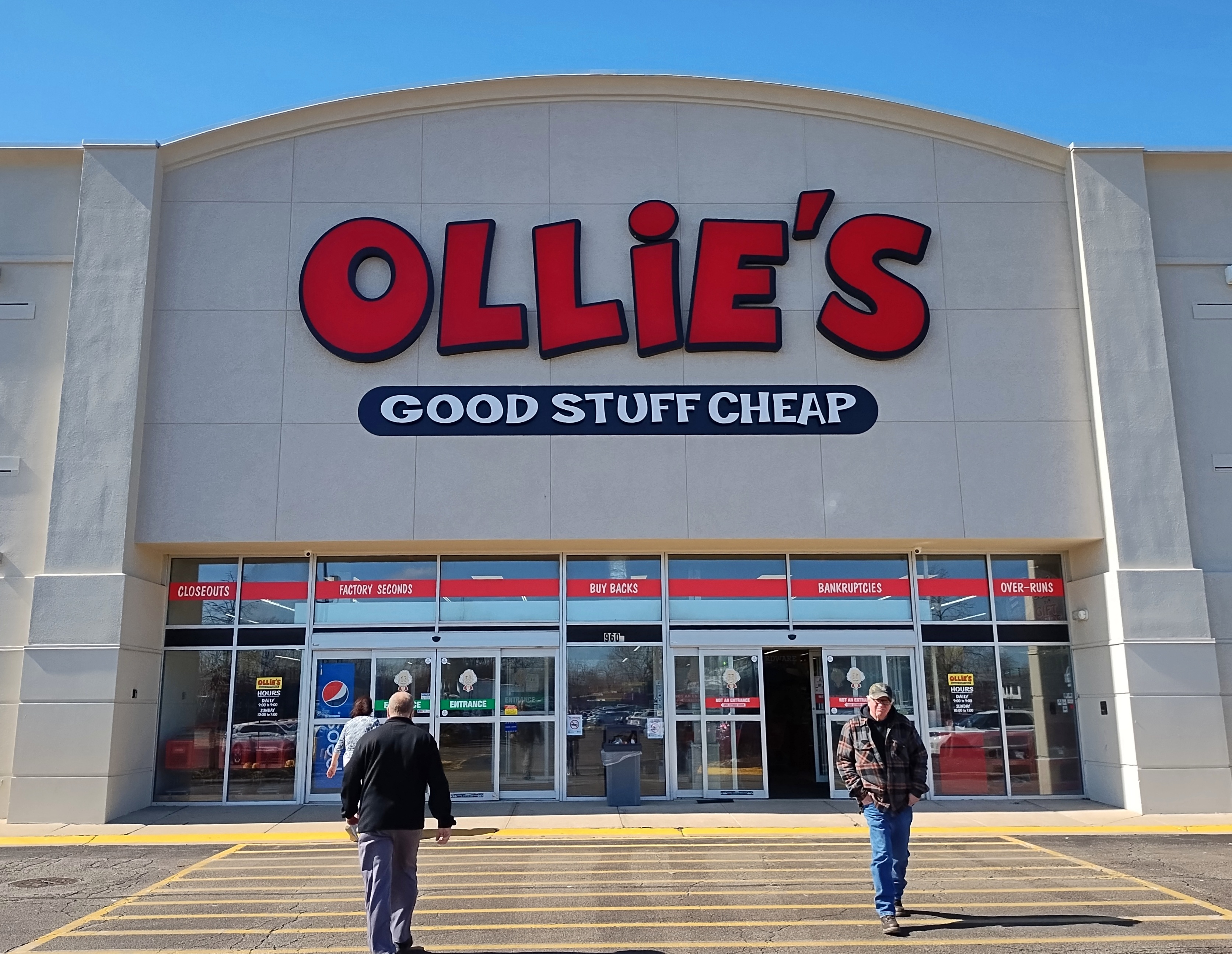
Just ahead of Labor Day weekend, an ad for Ollie’s popped into my YouTube feed. Ollie’s? Then on Sunday, as I was driving along near home, I spotted an Ollie’s where vacant retail had been until recently. Coincidence? No, not at all.

“Ollie’s is now America’s largest retailer of closeout merchandise and excess inventory,” the retailer’s web site says. “The chain currently operates 492 stores in 29 states.”

I stopped by for a look. “How long has the store been open?” I asked an employee. Four days was the answer. A new Ollie’s for Labor Day weekend, it seems.

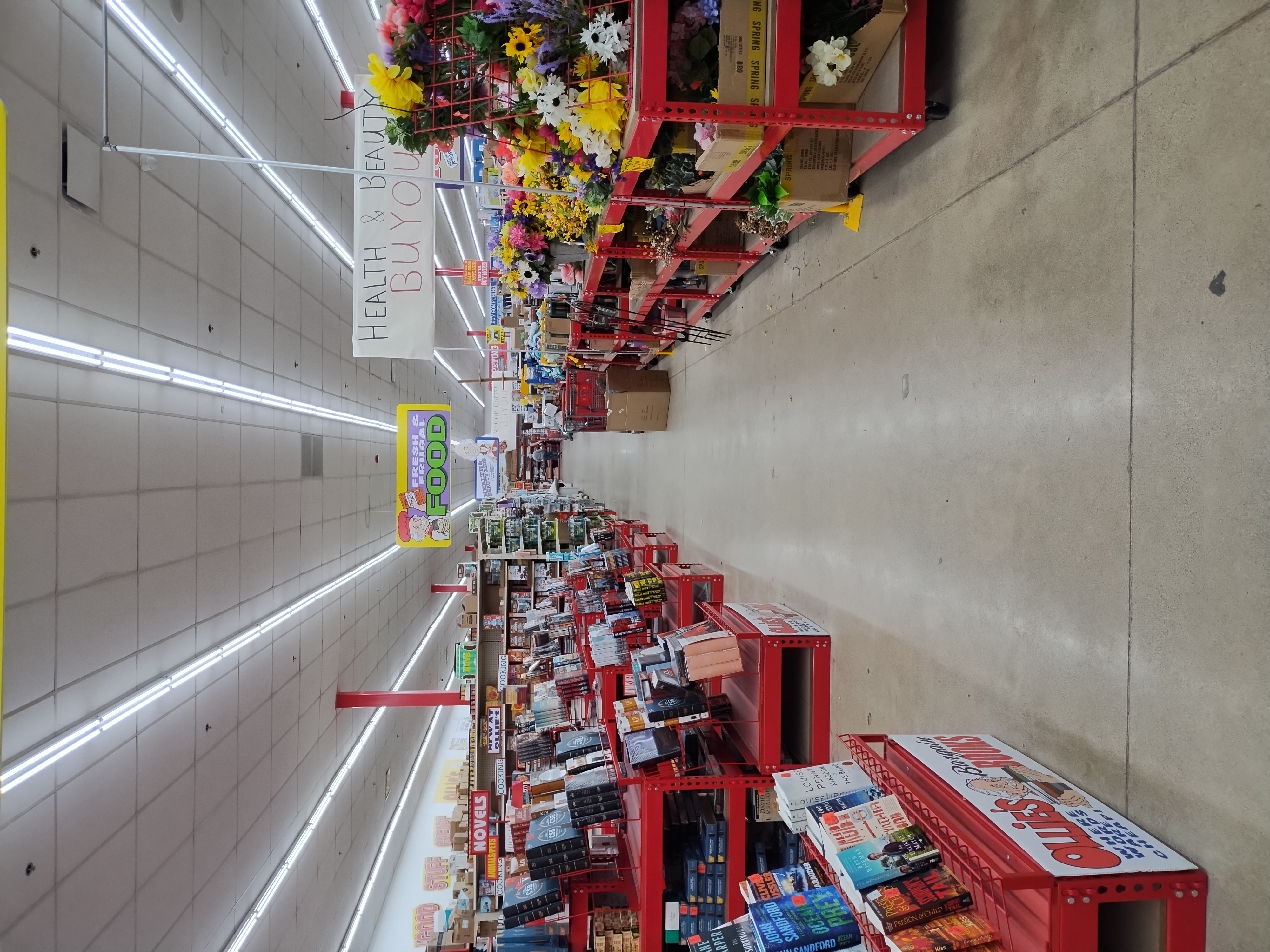
As you’d expect from that description, it’s a hodgepodge of a place: canned and boxed food, books, personal care products, cheap furniture, clothes, toys, pet supplies, mattresses and on and on. I found a few items to buy, mostly food, but also a book: the 2023 edition of A Guide Book of United States Coins, the Red Book published for a long time (since 1946) by Whitman. Remaindered: the 2024 edition is out now.

Still, ’23 is mostly current, and it’s packed with information. The Red Book an almanac for U.S. coinage. Moreover, it’s a sturdy volume, with strong binding, meant to be opened an closed a lot. List price: $19.95. Ollie’s price: $2.99. Nice, Ollie, nice.

The recto-verso of a real book makes it easier to thumb through, I believe, than a similarly informative web site, and chance on interesting things. Or look them up. I already had the vague idea that I’m unlikely ever to own a Brasher Doubloon, for instance. Whitman quantifies that for me. One sold for about $9.36 million at auction in 2021. Other examples have sold in the millions as well, and one version is so rare that the Smithsonian has the only one.

The doubloon counts as a post-colonial issue, but before the U.S. mint was established in 1792. Since I bought the book, I’ve been thumbing through the entries on colonial and post-colonial coins. A fascinating array I didn’t know much about: Willow Tree and Oak Tree and Pine Tree coinage, Lord Baltimore coinage, American Plantation coins, Rosa Americana coins, Carolina Elephant tokens, Gloucester tokens, Higley coppers, Nova Constellatio coppers and the mysterious Bar coppers, among many others.

“The Bar copper is undated and of uncertain origin,” the Red Book says.

Along the Rock River, Janesville

On the first two days of July, we spent some time in southern Wisconsin, staying the night at a hotel near the Rock River in Janesville, a burg of about 65,000 and seat of Rock County.

Late on the afternoon of the 1st, I took a stroll along the river in downtown Janesville. As urban riversides go, it’s drab, an echo of a time when cities generally ignored their rivers, except for purposes of commerce.Janesville, Wisconsin Janesville, Wisconsin Janesville, Wisconsin

Even Rockford, Illinois, downriver from Janesville on the Rock, has a more pleasant downtown riverside, so small industrial-decline Midwestern cities can refurbish their riverwalks. So can the likes of Waco, Texas. The Rock, incidentally, is a direct tributary of the Mississippi, meeting that river at Rock Island, Illinois.

Still, the riverside isn’t completely without its interests. A fairly new pedestrian-bicycle bridge crosses near an equally newish riverside plaza, or at least an open space.Janesville, Wisconsin

The bridge sports a boulder, too. It’s hard to see, but there’s an inscription on it: The Mick & Jane Blain Gilbertson Family Heritage Bridge. Janesville, Wisconsin

Jane Blain Gilbertson is CEO of Blain’s Farm & Fleet, a big box chain with 44 stores in the upper Midwest and headquartered in Janesville. The stores carry, among many other things, agricultural supplies and equipment. I remember visiting the one in Montgomery, Illinois, years ago to see what there was to see inside.

Downtown Janesville was eerily empty that late Saturday afternoon. There were a few kids – and I mean junior high or high school kids – hanging out near the bridge, making giggly noises. A small party of adults was having a cookout in the yard of one of the apartment buildings near the river. A few cars passed through the area, but not many. Then there was me.

Every town has one of these. Oddly, it was tucked away in a cul-de-sac.Janesville, Wisconsin

Why visit Janesville? Why stay there? I’d passed by many times, but not spent any time in the town. I guess when it comes to Wisconsin, I’m something of a completist.

Janesville has some handsome older buildings within a few blocks of the river, most still occupied, but some not, such as a one-time First National Bank.Janesville, Wisconsin

The McVicar Bros. and Helms buildings. Part of a larger block.Janesville, Wisconsin Janesville, Wisconsin

Other buildings.Janesville, Wisconsin Janesville, Wisconsin Janesville, Wisconsin

Evidence of a more robust downtown life in the past: an old Kresge building. Kresge, of course, was the ancestor of Kmart, and a mighty retail chain. Once upon a time.Janesville, Wisconsin
Janesville, Wisconsin

I had to check: As of more than a year ago, there were only three U.S. Kmarts still open.

That means that this 1987 reference in Calvin & Hobbes will be lost to time. Is already lost to time. I’m sure if I mentioned “blue light special” to either of my daughters, it wouldn’t register.

Calvin: Dad, how do people make babies?

Calvin’s Dad: Most people just go to Sears, buy the kit, and follow the assembly instructions.

Calvin: I came from Sears??

Calvin’s Dad: No, you were a blue light special at Kmart. Almost as good, and a lot cheaper.

I never went to Kmart much, but I did go occasionally, and I remember being in one once, probably in Nashville in the mid-80s, during a blue light special. I heard “Attention, Kmart shoppers!” They did say that. I didn’t buy whatever it was.

That’s the kind of thing that came to mind wandering the empty streets of Janesville.

Thursday Nodules

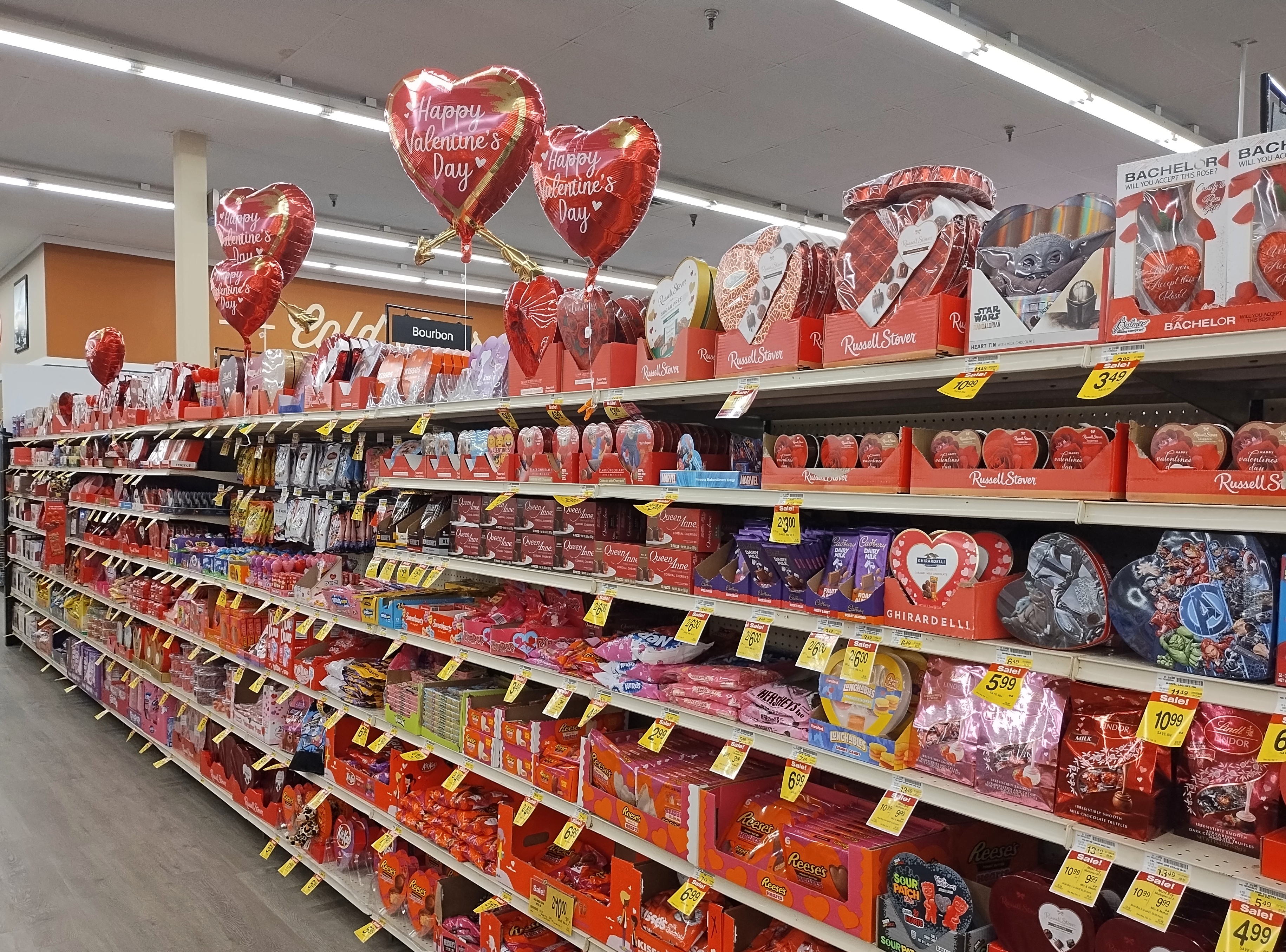
Did a little shopping at a local grocery store (part of a grocery conglomerate) and saw this display.

The Fourth of July? Really?

The Kingston Trio did a version of “Seasons in the Sun,” in 1964, a song recorded 10 years later to vast popularity by Terry Jacks, one remembered for being as saccharine as a Shirley Temple. One that was on the radio all the time.

The Kingston Trio version has a bitter twist to dilute the sentimentality, which I suspect is closer to the French-language source material. Just another thing I happened across in the YouTube treasure cave.

Not long ago, Yuriko bought an article of clothing at a local store (part of a retail conglomerate), and the clerk forgot to take off the bulky security tag. In trying to avoid a trip back to the store to have it removed, I looked up the matter on YouTube. Musical selections aren’t the only jewels in the cave. Of course, often enough you find cubic zirconia.

One video suggested a technique using two forks that didn’t look remotely easy; another assumed you had a workshop of tools; and a third – my favorite – suggested you simply smash it with a hammer. Never would have thought of that.

Lots of people post images of their meals, usually while there’s still food on the plate. But what about the debris of a good meal? Evidence that you completed the meal, with the hope that you might have enjoyed it.

Chicken bones, in this case. The last leftovers of the Korean chicken we bought about a week ago, and we did enjoy it.

Brand name: bb.q chicken. It is an enormous chain, with more than 3,500 locations in 57 countries. Not quite sure when the northwest suburban outlet we go to opened, but it hasn’t been that long. We drop by once a month or so.

Former Barrington Banks

It’s an Irish bar now, but it once was the First State Bank of Barrington. Long ago.First State Bank of Barrington building 2022

Spiffy bank building from the pre-FDIC days. I passed by it on my short walk around downtown Barrington. Opened in 1916, closed in 1932, so in the financial world, the bank had a mayfly-brief existence, snuffed out by the Depression. Soon after its banking days were over, a series of popular local restaurants opened in the structure, starting with Last National Bank Tavern, “incorporating the teller cages and vault area into the dining area,” notes an Historic Barrington sign on the building.

Currently it is occupied by McGonigal’s, open only during this century. The mural on the wall – framed by a former window – is signed by one Alex Brubacher.First State Bank building Barrington 2022 mural

Looks like it was painted in anticipation of McGonigal’s, since it features the building; and its place in the neighborhood near a clocktower, commuter rail line and The Catlow, among the many shamrocks; and a date of 2009. According to a sign over the door, the pub opened in 2010, so close enough.

Across the street, another building originally housing a 1910s financial services entity: the First National Bank of Barrington. For those for whom a mere state bank wasn’t good enough. And who knows? Maybe that made the difference, because First National survived the Depression and First State did not.First National Bank of Barrington building 2022

Looks like an upmarket clothier on the first floor these days. First National moved out in 1984. (Odd, if I said “nearly 40 years ago” that somehow sounds longer ago.) It didn’t last much longer as an independent bank; a major regional swallowed it soon after.

Just north of Main St., which puts it in Lake County and not Cook, is a named gazebo.David F. Nelson Community Gazebo

The David F. Nelson Community Gazebo, to be specific, and to gave a name that most passersby probably don’t give a first thought, much less a second. This 2017 article is behind a paywall, but I could read the first paragraph, which tells me that “[Nelson is] known for many years of community volunteerism, as well as serving as the town’s village president.”

Not a bad idea for one’s retirement: become a gazebo

Thursday’s Theme: A Lot of Good Things Get Lost or Kicked Around

March came in like – an emu? Golden retriever? – came in pleasantly, with temps nearly 60 F. That didn’t last, of course, and chilly air is back today, with snow forecast for Friday, which will melt over the weekend.

The other day, I found a Sears bag tucked away in a semi-storage corner of the house under various things. This made me want to look up how many Sears locations survive. As of November, anyway, when Sears Holdings Corp. emerged from Chapter 11, there were 22.

That’s not even a shadow of its former self. That’s dryer lint of its former self.

I don’t know when we got the bag, or what we bought at Sears that needed such a bag. It’s fairly large, though. About as tall as a kitchen trash bag, so I decided to take its picture and then use the bag for trash. Interesting trademarked slogan. One the company maybe didn’t think through. Where else?

There’s a lot of possibilities, Sears.

Last week, as mentioned before, there seemed to be overnight microbursts in the area, to judge by the tree branches on the ground afterward. This was the only tree knocked down that I noticed, a few days later, after it had been chopped up somewhat before being cleared away. Note the crust of soil it took with it.

I suspect it wasn’t just the wind, but also the fact that the tree stood in a low-lying area that usually fills up during a rain and takes days to empty, weakening the soil. Besides, it might have been a sick old tree whose roots didn’t have the grip they used to, so bam! Down it came.

But even healthier trees can take a beating if the wind is aggressive enough.

Speaking of fallen things, I learned today that the Hotel Pennsylvania is being demolished. That isn’t news, just that I don’t keep up with everything happening in Manhattan. I stayed there a couple of times in the early 2000s, where the company I worked for at the time put me up. I thought it more solid than grand, but I’m still sorry to see it go.

What else to say but, Pennsylvania Six Five Oh Oh Oh

One more thing about time passage, destruction and decay. Something I found unexpectedly. An algorithm suggested it. Might as well be by chance, then.

A poignant song from the point of view of an abandoned house, included on an album called The Rat Plague of ’66. The kind of thing that happens in Australia. Don Morrison seems to be a singer-songwriter from Adelaide, South Australia.

Thursday Collection: Claw Machines, Ramen & Dreams Odder Than Usual

Spotted recently at the mini-mall attached to Mitsuwa, the largest Japanese grocery store here in the northwest suburbs, which is in Arlington Heights.

Banks of Japanese claw machines where a travel agency used to be. Not quite sure what this one is.

The arcade, if you can call it that, is under the brand name Kiddleton Kiosk. Turns out there are quite a few of them, mostly associated with Japanese grocery stores in the U.S.

I never had much use for claw machines. Probably because they seemed like a good way to feed quarters, or tokens, into a machine, and watch it give you nothing. Maybe Kiddleton has a different business model involving a low cost of prizes, which do deliver sometimes, compared with a higher input of tokens. I didn’t feel like testing out that idea.

Not long ago, we went to Hokkaido Ramen House in Hoffman Estates. Hit the spot. Hot steamy ramen, mine with thin slices of pork, egg and some vegetables. Just the kind of thing to enjoy on a raw winter evening.

I didn’t realize it was part of a chain until after we were there. When I found out, I looked at the chain’s web site to see where the others were. California, I figured, and maybe in the Northeast and Texas. You know, the usual chain restaurant suspects.

Turns out there’s only one in California (Santa Cruz). Guess the Asian restaurant competition’s a little stiff in that state. There are indeed a few in the Northeast and Texas as well, including one in Waco, which is a little surprising. But the real surprise is five in Montana and three in Idaho. Then again, maybe not a surprise. It’s cold a lot in those places, and ramen warms you up.

Two old friends of mine met for the first time recently, in a dream of mine. One a lanky bald fellow I’ve known 40 years, the other sporting long gray hair and a thick beard for that Old Testament prophet look, whom I’ve know nearly as long. They were sitting at a table, with me, eating a meal, despite the fact that we were weightless in a space station. They seemed to be getting on well, and one of them, or me, or someone, explained that the company that built the space station had done so well renting cars that it was able to send people to the station at a low cost.

An even odder dream, later the same night: I climbed a ladder to rescue – kidnap? – a group of sentient pens and pencils. Semi-sentient, at least. I couldn’t carry them in a pocket, so I put the group of pens and pencils, who knew what I was doing, under my arms to carry them down the ladder. It all felt a little precarious.