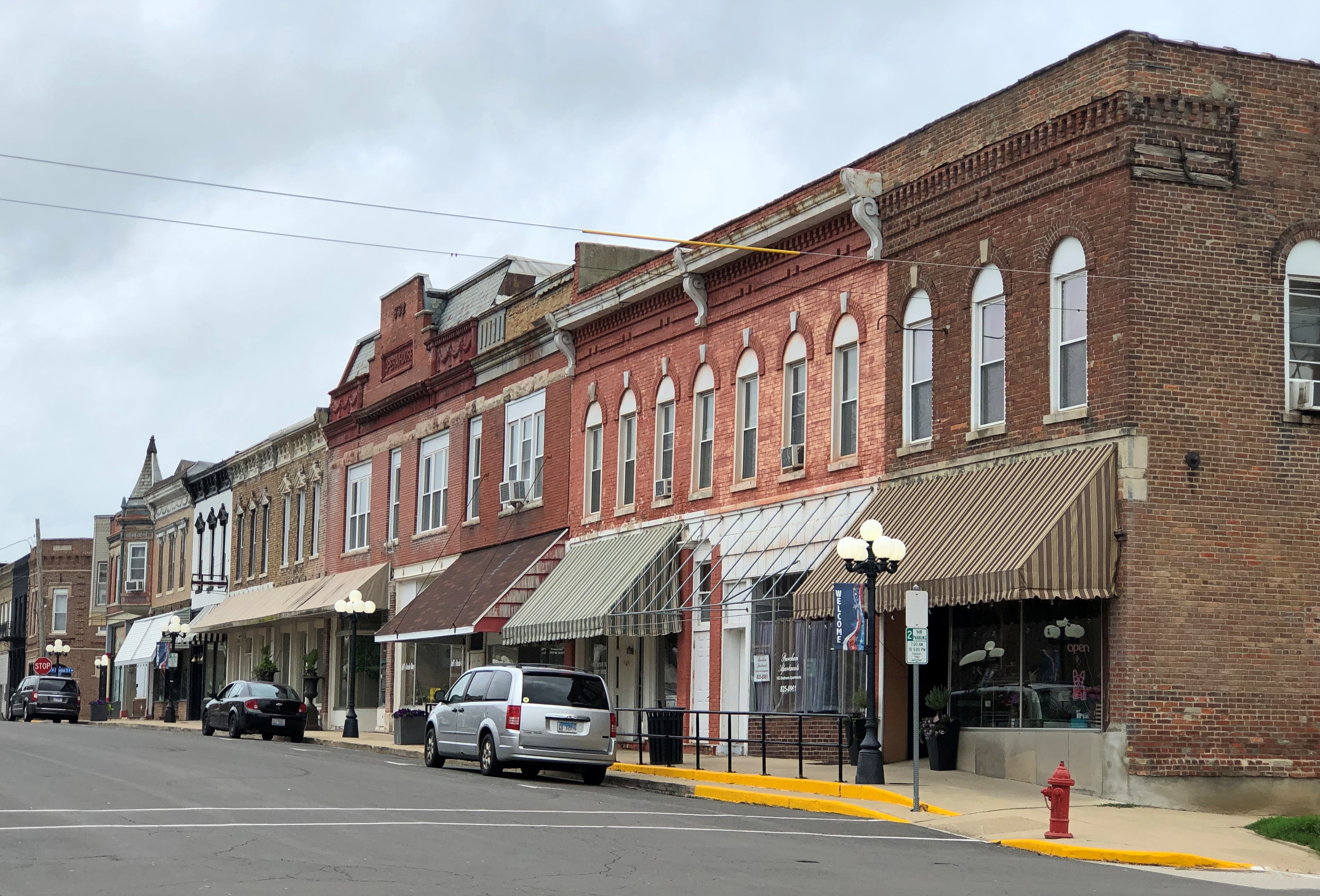
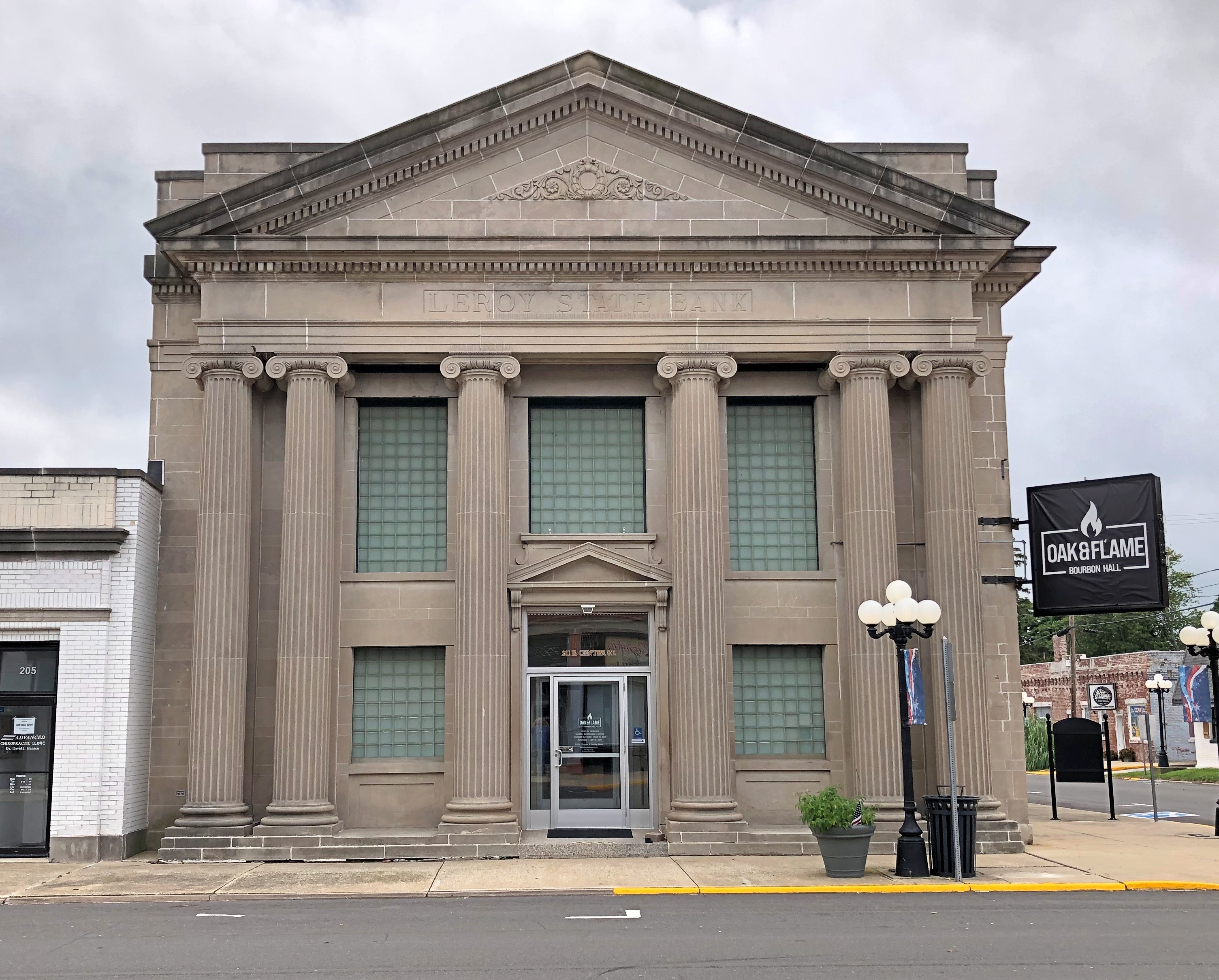
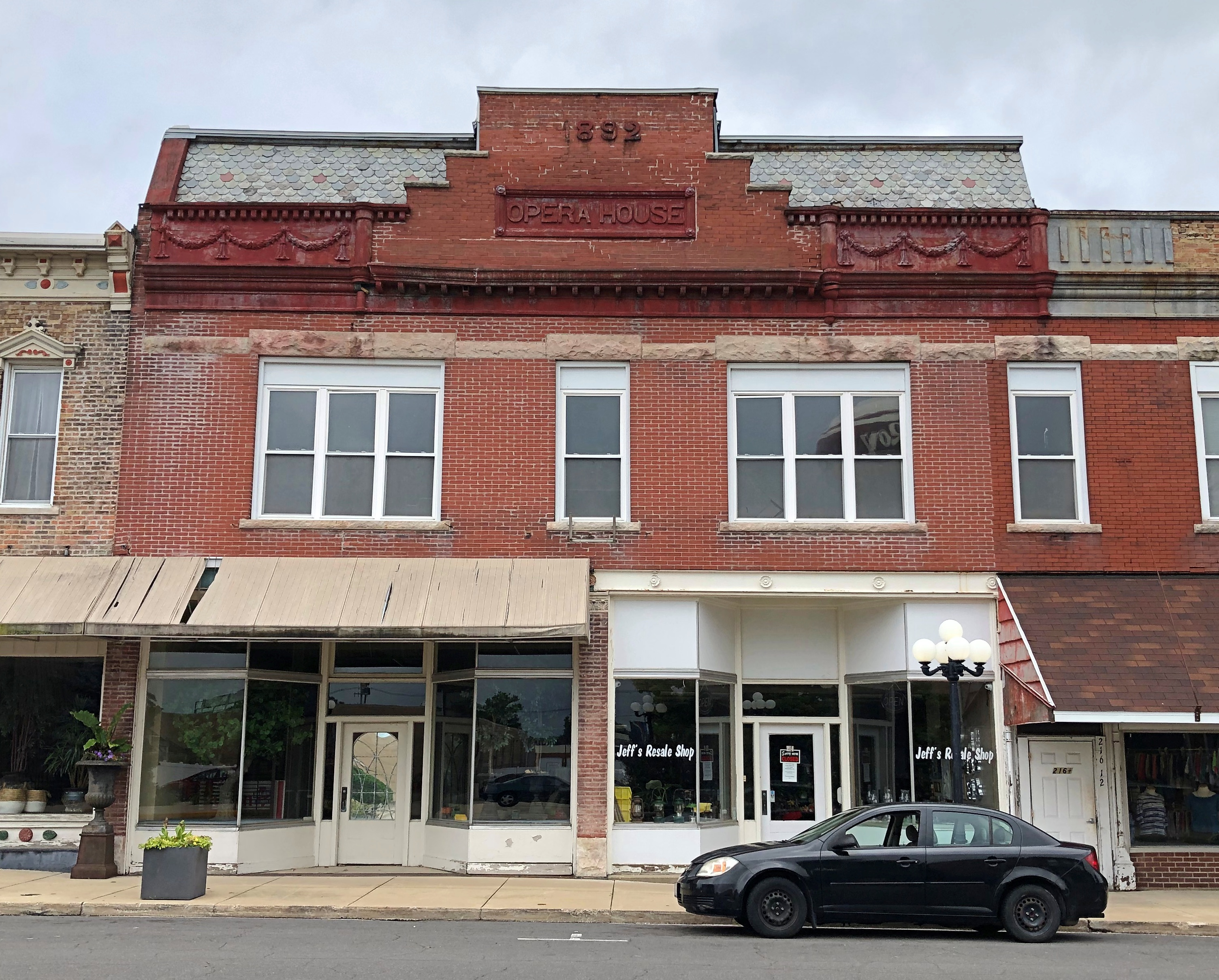
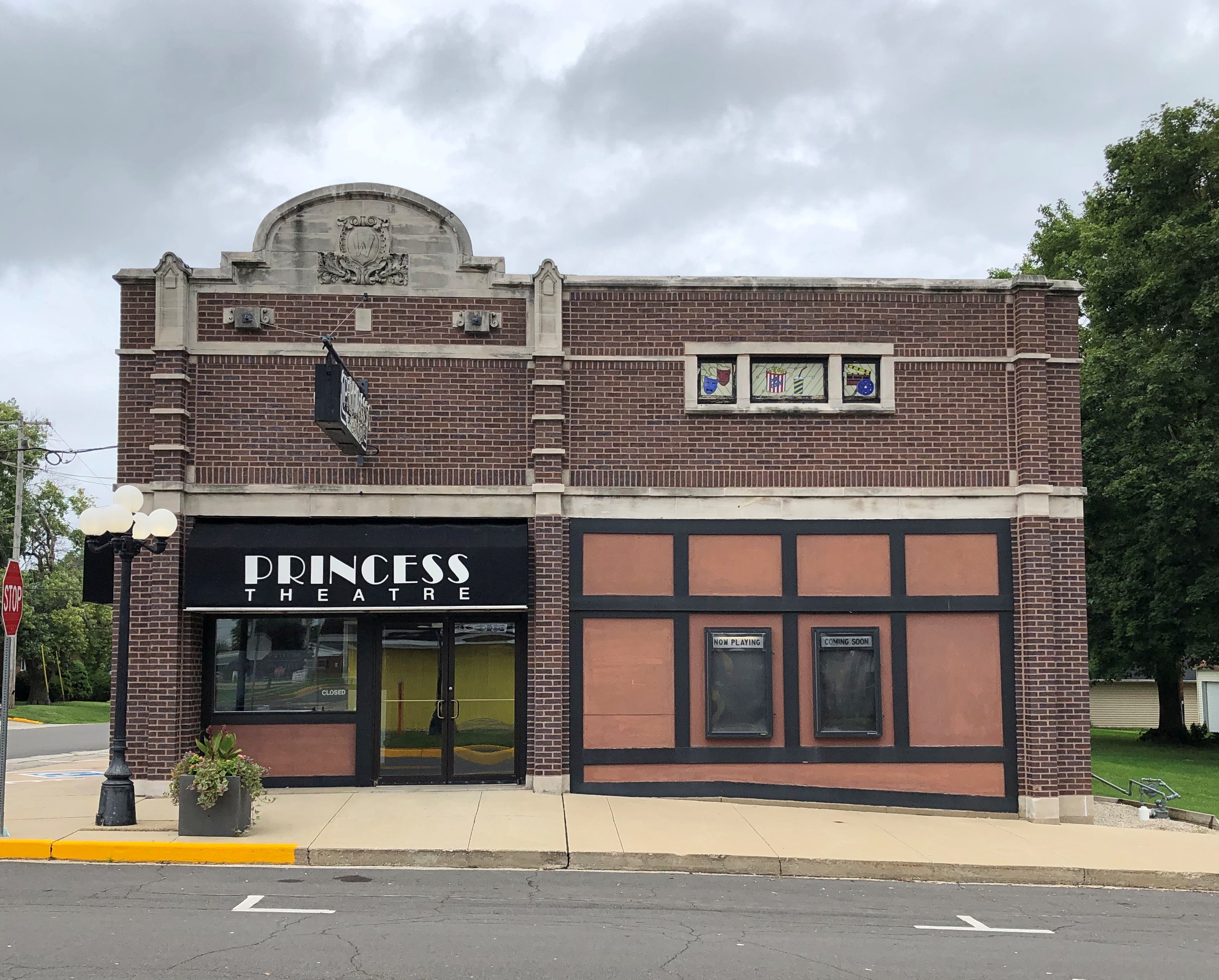
Burlington, Wisconsin: Liar Liar

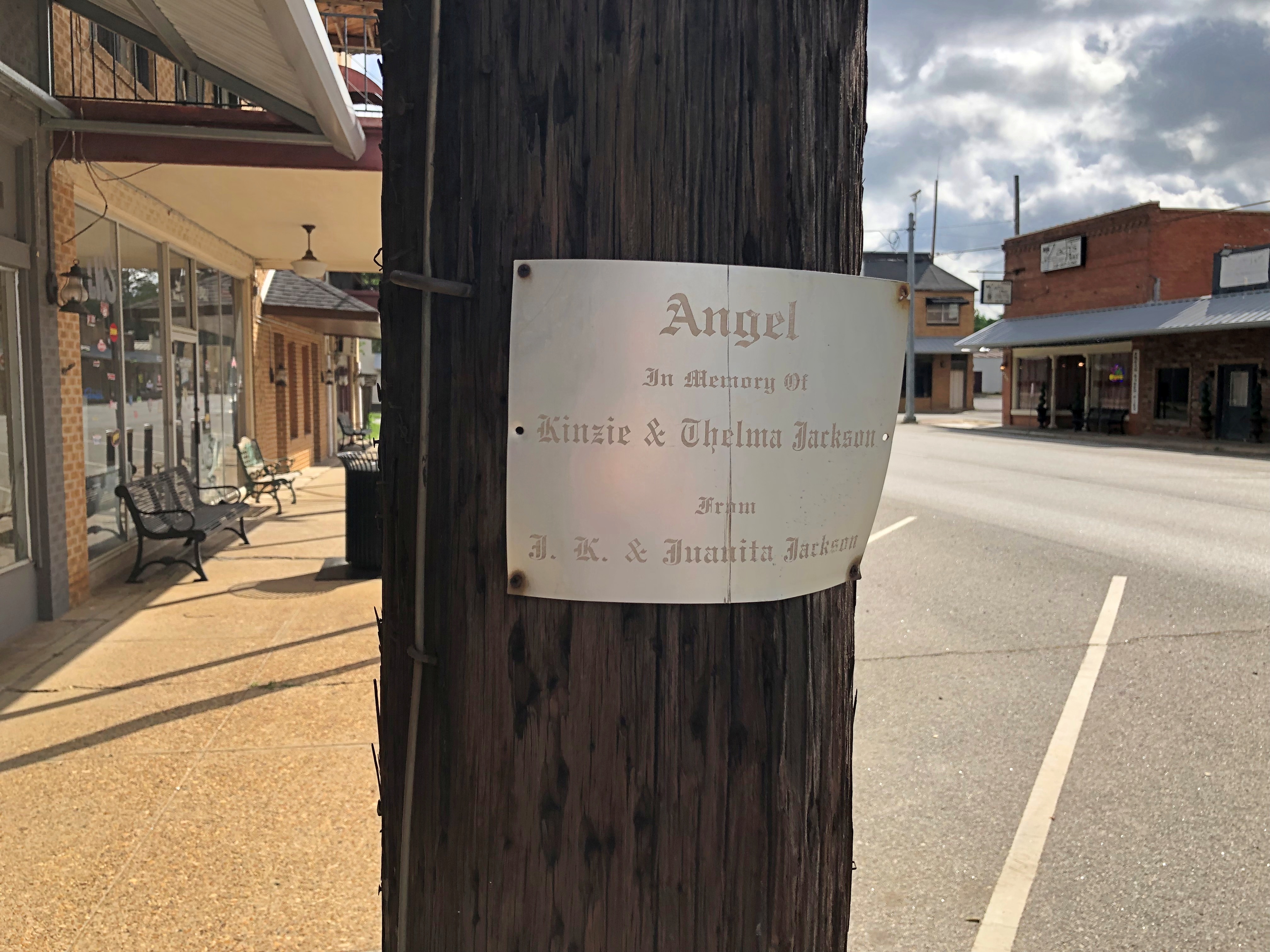
If, in downtown Burlington, Wisconsin – not a very large place, since the entire town’s population is about 11,000 – you pay attention to your surroundings, you’ll start noticing plaques.Burlington, Wis Liar's Club Plaque Burlington, Wis Liar's Club Plaque Burlington, Wis Liar's Club Plaque

They honor winners of a contest put on at the end of every year by the Burlington Liar’s Club. I’ve read that the contest is for tellers of tall tales, submitted by entrants nationwide, but looking at this list of winners, I’d say only some of them count as “tall tales,” along the lines of a watermelon vine dragging a boy in its wake.

The rest are jokes. In the 1978 example, pretty much like one Johnny Carson would have told.

Newspapermen of nearly 100 years ago made up the Burlington Liar’s Club, but the thing achieved a life of its own, quickly evolving into the overseer of a not-very-serious contest with entrants from around the nation. No doubt the contest is unique in the nation, like the Nenana Ice Classic or the Sopchoppy Worm Gruntin’ Festival.

“The club started in 1929 as a joke,” the club website says. “A Burlington newspaper reporter wrote a story to the effect that these ‘old timers’ got together each New Year’s day at the police station, and lied for the championship of the city…

“… city editors, with an eye for interesting features, ‘put it on the wire,’ and the following December the Associated Press and other news agencies began phoning Burlington to find out if the city’s annual contest would be repeated…

“Letters began to trickle in from the four corners of the country commenting on the ‘contest.’ They furnished the inspiration for a real contest instead of a phony one, national in scope, and the Burlington Liar’s Club was formed to carry it on.”

Just the kind of thing to notice during a small-town walkabout. I was delighted. Who isn’t fond of the oddities in Wisconsin? The fiberglass fields and pyramids and Forevertrons.

One Sunday late in June, I took Ann to the southern Wisconsin camp she where is working as a counselor for the summer, and after I dropped her off, spent a little time looking around Burlington and environs.

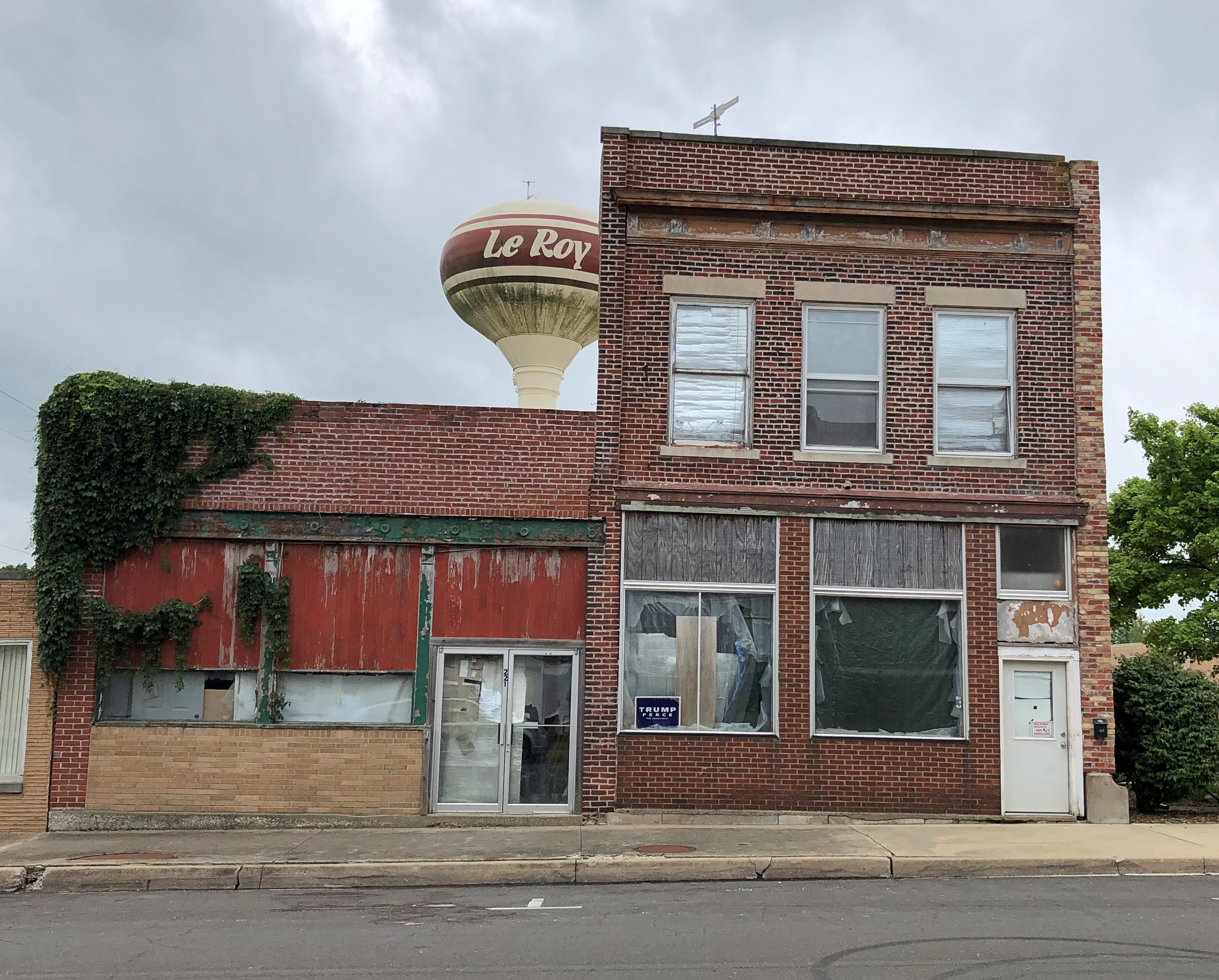
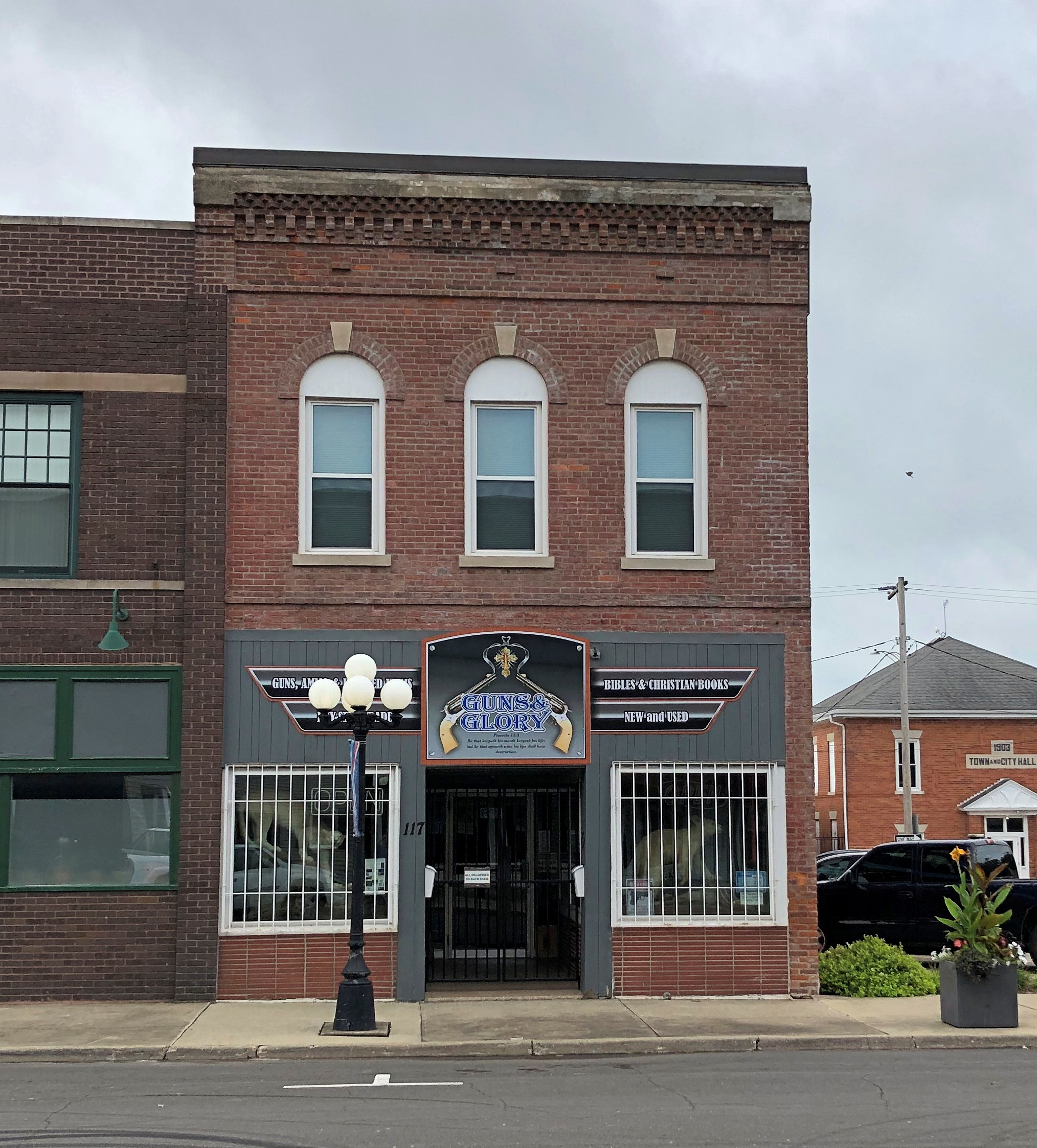
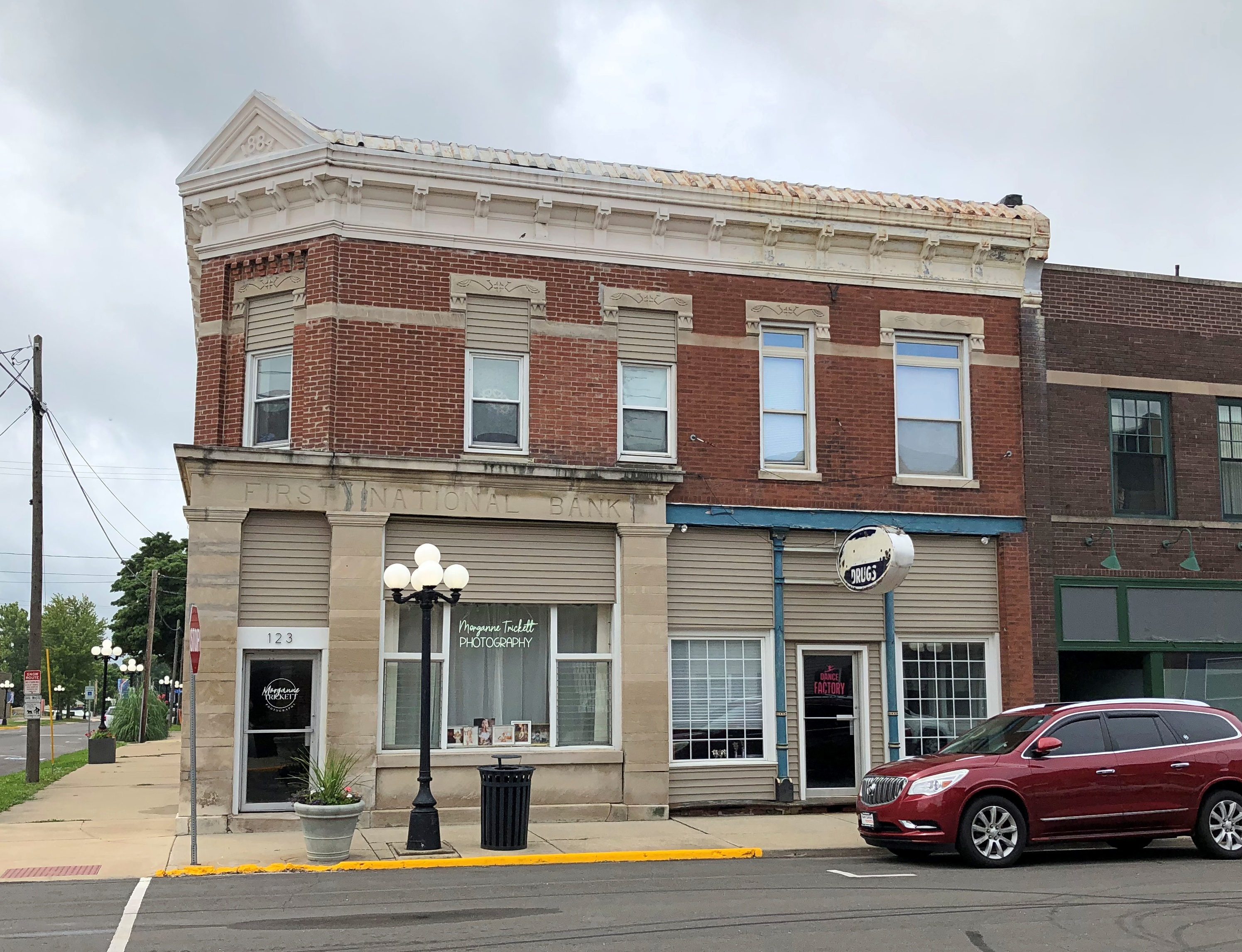
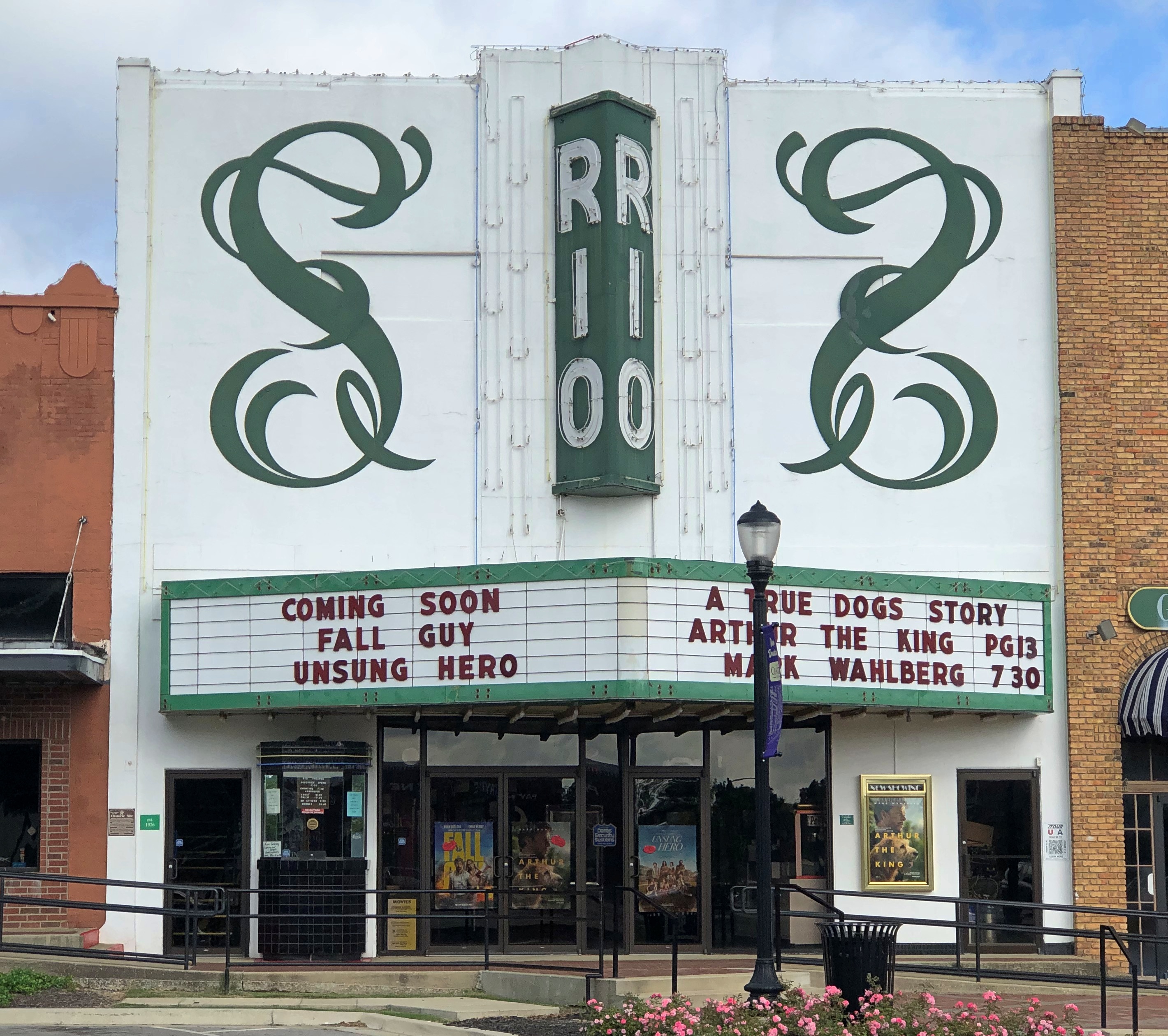
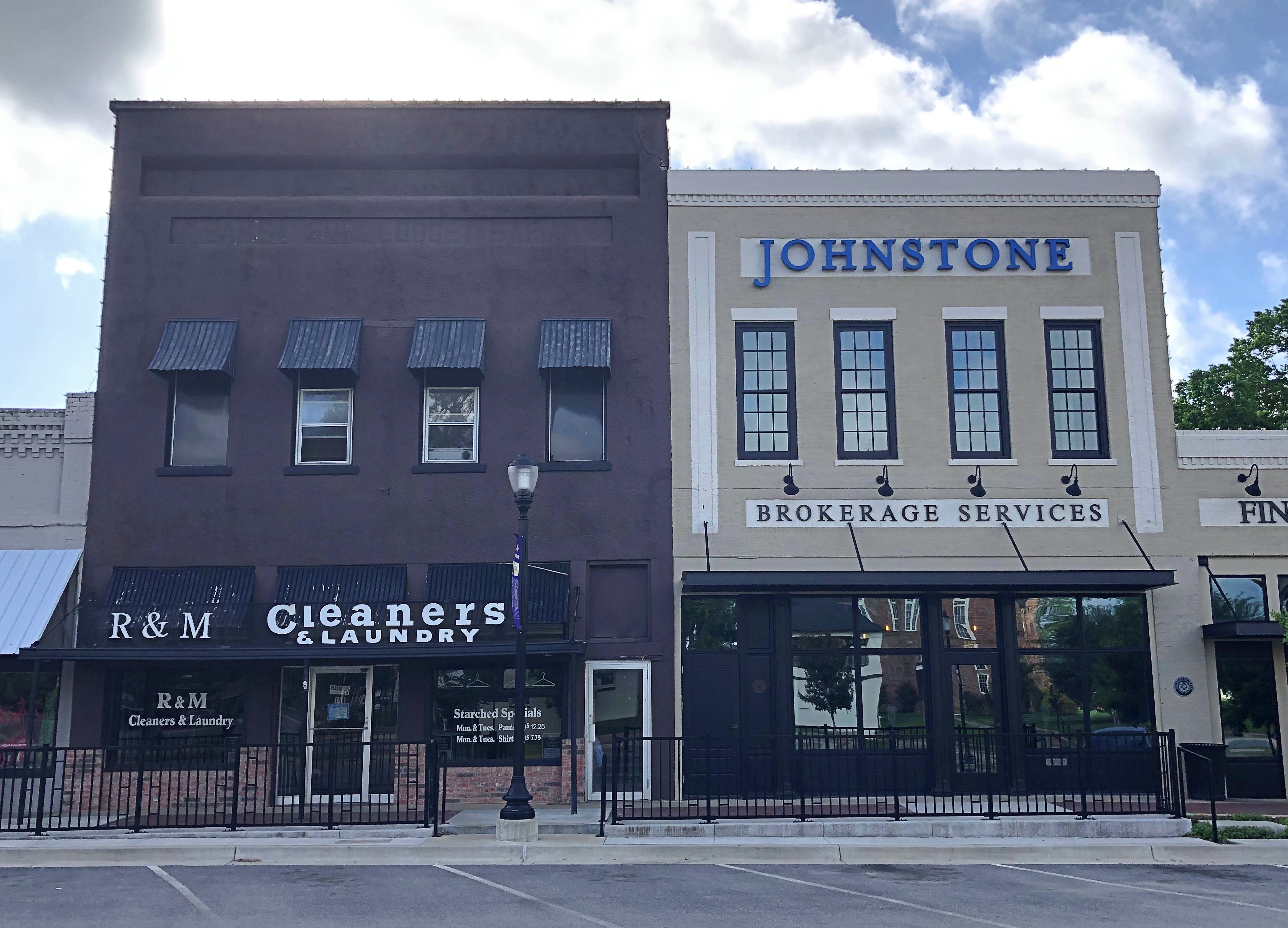
The small downtown of Burlington, which at this point in history counts as exurban Milwaukee, is a handsome place, with most of its storefronts occupied.Burlington, Wis Burlington, Wis

That is, some handsome old buildings with modern tenants.Burlington, Wis Burlington, Wis

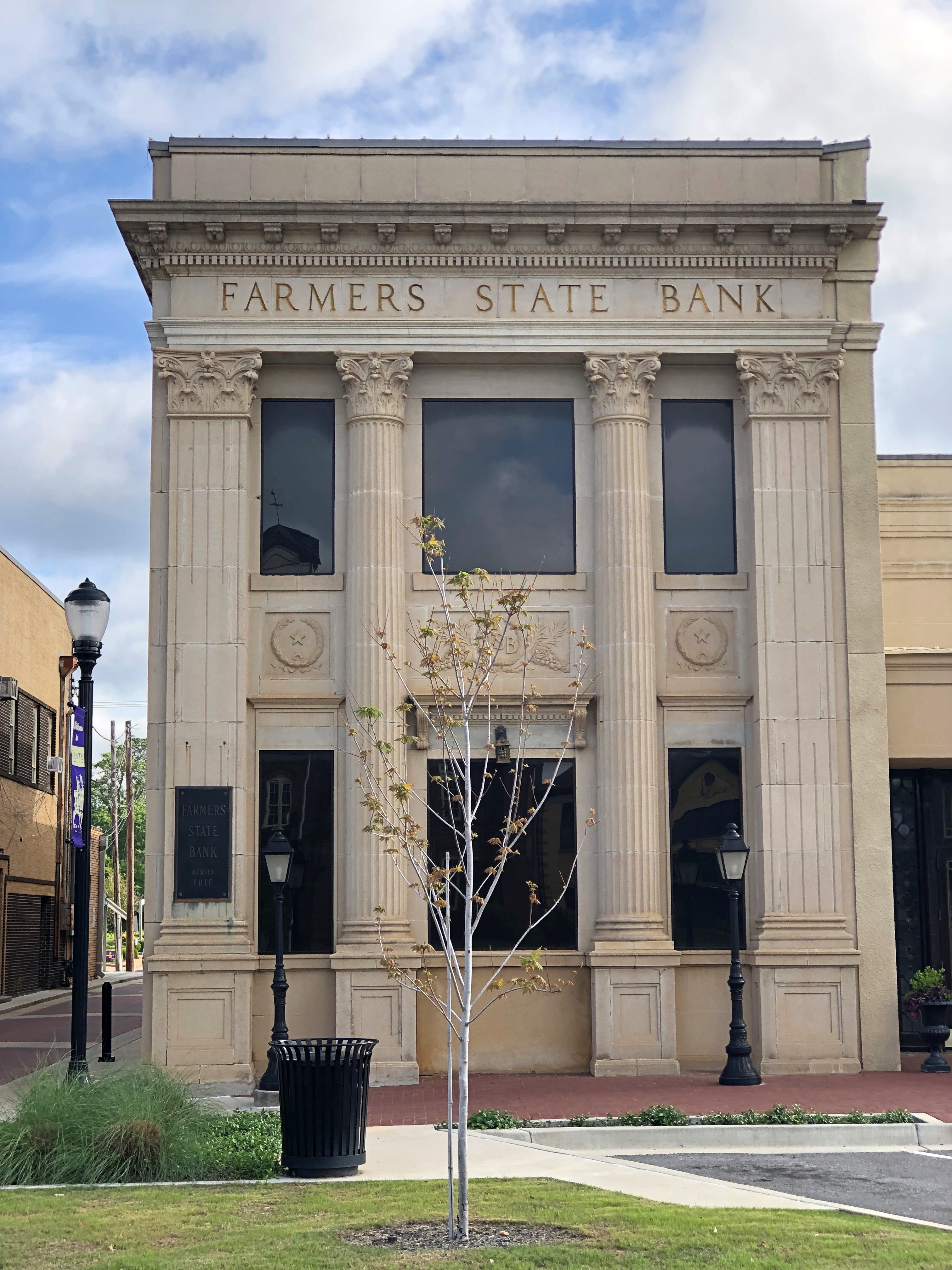
Nothing like a sturdy pre-FDIC bank building. Completed in 1909; that makes it pre-Fed as well.Bank of Burlington, Wis Bank of Burlington, Wis Bank of Burlington, Wis

I couldn’t not look it up. The Bank of Burlington in Wisconsin existed in various forms since the mid-19th century; it was prospering in 1916, according to this article from that year, posted by AccessGeneaolgy. A bank in some form or other was in the building until 2021, which Chase closed its office there. That hints that Chase was the last of a string of banks swallowing other banks in the 20th and 21st centuries.

Also: C.B. McCanna. That would be Charles B. McCanna (d. 1913), who organized the McCanna Cheese and Butter Manufacturing Co., and operated about 20 factories in the area. He was also president of the Bank of Burlington in his later years.

“In 1893, the company was reorganized as McCanna and Fraser, with McCanna serving as president until his death,” says the Wisconsin Historical Society. “In 1898 he founded the Wisconsin Condensed Milk Co., which soon became one of the largest producers of condensed milk in Wisconsin and operated branch factories in Pecatonica and Grayslake, Ill.”

You’ve heard of Wisconsin beer barons. Here we have a cheese baron.

I enjoy the old-fashioned approach of a 1916 article about McCanna, another article accessible via Access Genealogy. Of course, it wasn’t old-fashioned at the time, just standard practice in lauding business men:

“Dairying and the industries which are allied thereto have ever constituted an important source of the wealth and prosperity of Racine County, and among the most enterprising and progressive business men of the district are those who have turned to that line of labor as a source of their business development. One of the well known, successful and highly respected representatives of the business in Racine County was Charles B. McCanna, who became an influential citizen of Burlington and one whose activities constituted not only a source of individual success but also constituted one of the strong elements in the advancement of public prosperity.”

(Former) Dead Man’s Curve

Time for a genuine spring break, now that genuine spring has arrived. Back to posted content around May 24.

Returning from Normal on Sunday, I took another short detour fairly close by, in the wonderfully named town of Towanda, pop. 430 or so, originally a central Illinois project of the busy 19th-century businessman Jesse Fell. I’d seen signs for Towanda on the Interstate for years, but never stopped.Towanda, Illinois

Towanda is the home of a massive grain elevator, owned by Evergreen FS of Bloomington.Towanda, Illinois

For a more ordinary tourist, a stretch of the former U.S. 66 passes through town, and has a walking path next to the road. I took a stroll.Route 66 Towanda

Also part of the former highway: Dead Man’s Curve.Dead Man's Curve Route 66 Towanda Dead Man's Curve Route 66 Towanda

The nickname isn’t too hard to figure out, but a sign offers details.Dead Man's Curve Route 66 Towanda

It doesn’t offer a death toll, which may not be known, but does say that from 1927 until a bypass was built in 1954, the curve was the site of “many disastrous accidents,” especially involving drivers from Chicago, “unfamiliar with the road and accustomed to higher speeds.” Oops. Once a hazard, now a minor tourist attraction.

Note the Burma Shave signs. They look fairly new, so I take them to be modern homages, in this case noting the dangers of Dead Man’s Curve.Dead Man's Curve Route 66 Towanda

There’s a rhyme for each direction of travel on the road.

Northbound: Car In Ditch/Driver In Tree/The Moon Was Full/And So Was He/Burma Shave.

Southbound: Around The Curve/Lickety-Split/Beautiful Car/Wasn’t It?/Burma Shave.

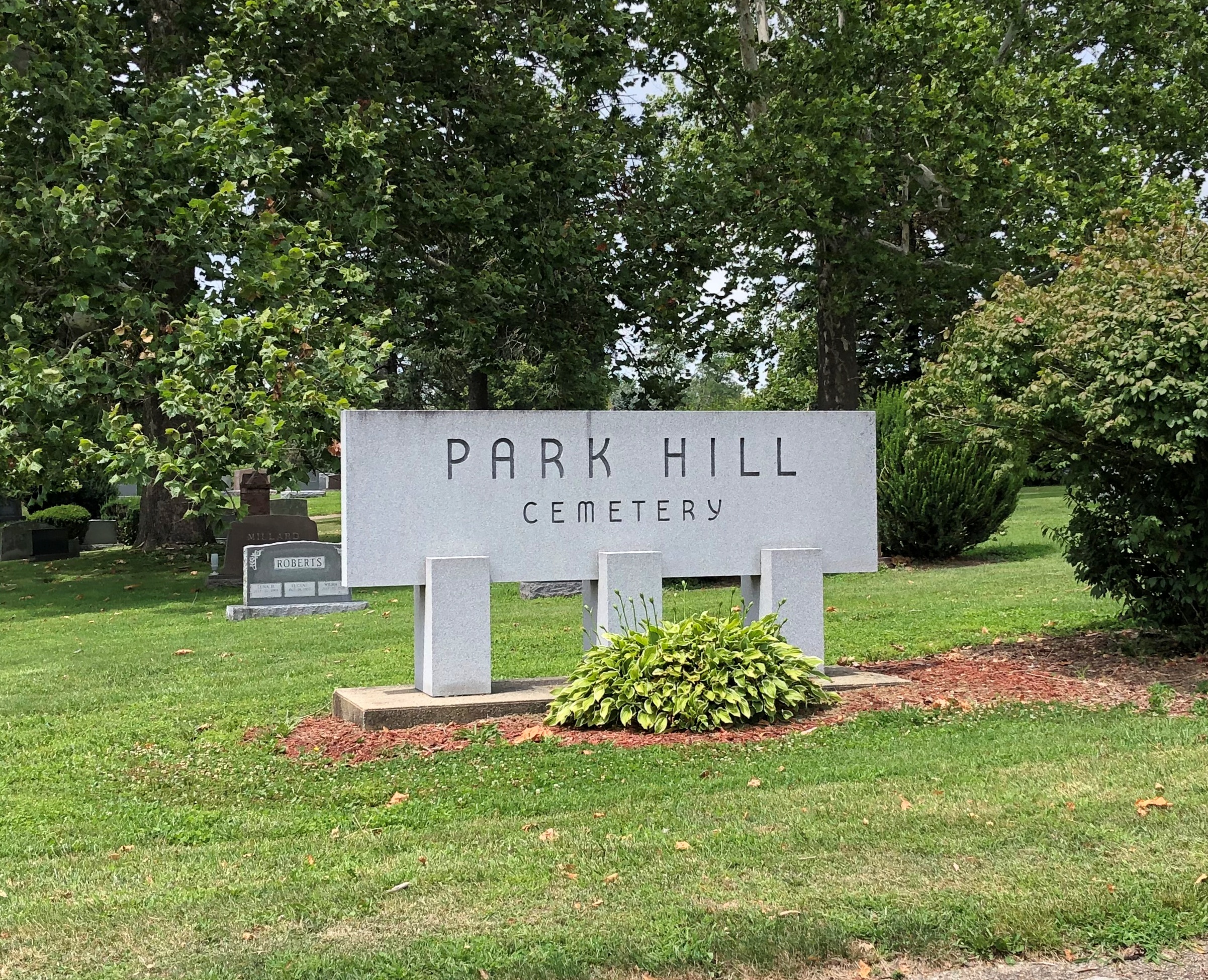
South Side Cemetery, Pontiac, Illinois

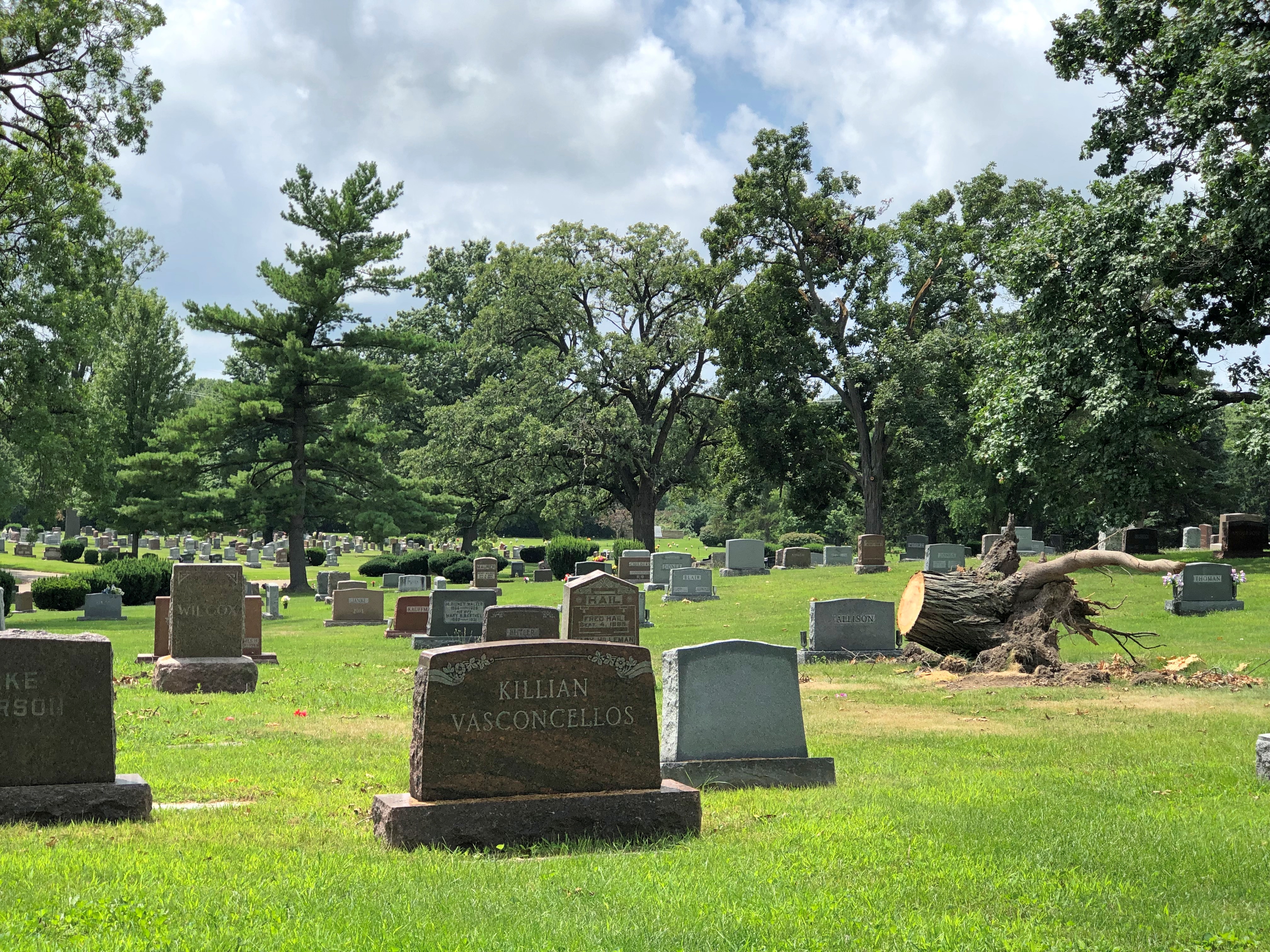
Across the Vermilion River from Chautauqua Park in Pontiac, Illinois, is South Side Cemetery, which predates the town’s Chautauqua activity by some decades, since its first burials were in 1856. At 24 acres, it’s still an active municipal burial ground. I saw at least two memorials with death dates in 2023.

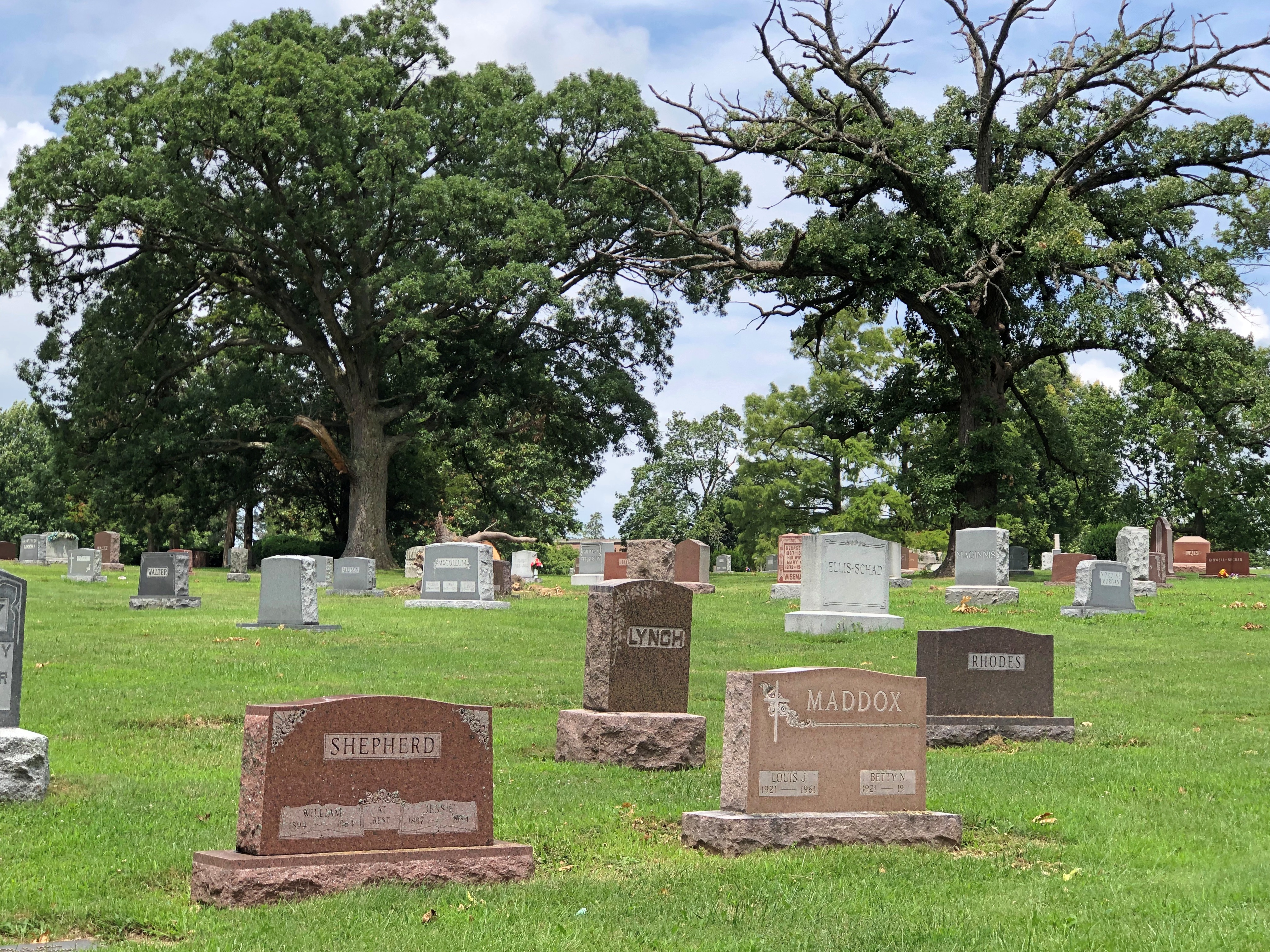
Overall, a nice place for a stroll on a warm day in May, if you don’t mind being in a cemetery. I can’t say I ever have been.South Side Cemetery, Pontiac, Illinois South Side Cemetery, Pontiac, Illinois South Side Cemetery, Pontiac, Illinois

Some older stones, including a scattering of Civil War veterans.South Side Cemetery, Pontiac, Illinois South Side Cemetery, Pontiac, Illinois

As usual with small towns, not many mausoleums or large monuments, but there are a few.South Side Cemetery, Pontiac, Illinois

Lemuel G. Cairns fought for the Union, too, but has no ordinary soldier’s stone. According to Find a Grave, he achieved the rank of sergeant and after the war dealt in cattle in Texas, before moving to Illinois. I suspect he did well in that business in Texas, but maybe got tired of the heat.

The only sizable mausoleum I spotted.South Side Cemetery, Pontiac, Illinois

A number of Gaylords reside there, including this fellow, it seems, a doctor and Union veteran.

This is a surname you don’t see much: Hercules. Also, an unusual design for a stone.South Side Cemetery, Pontiac, Illinois South Side Cemetery, Pontiac, Illinois

Rare, but not unknown.

“Early examples of the surname recording taken from surviving church registers include those of William Hercules (also recorded as Herculus) at the church of St Margaret’s Westminster, on January 16th 1603, and in the Shetlands, William Herculason who married Christian Harryson at Delting, on January 24th 1752,” says the Internet Surname Database.

A prominent Pontiac family, no doubt. With a name like that, they’d better be. One of them – J.W. Hercules – is mentioned as the designer of the Pontiac Chautauqua pavilion.

Chautauqua Park, Pontiac

A total of four hours behind the wheel there and back from the northwest suburbs of Chicago to Normal, Illinois, could be considered a chore, but not if you have time to stop a handful of places along the way. That isn’t always possible – weather or scheduling might prevent it – but when it is, you might happen across things to see. Maybe even things you won’t see anywhere else.
Such as in Pontiac, Illinois, pop. 11,150. It’s been a surprisingly good source of stopover sights since I started driving to Normal on a regular basis, and so it was on Sunday, when I headed down to Normal to load up the car with some of Ann’s possessions. She’ll be done with school for the semester later this week, so the goal was to not be overloaded when she finally returns.

Plunge into the small streets of Pontiac – that might not be the right verb, since its grid is pretty small – and soon you’ll be at Chautauqua Park.Chautauqua Park, Pontiac

Spring green and on Sunday at least, warm enough to inspire a little sweat.Chautauqua Park, Pontiac

A good place to walk around, but also to read, with a good many signs like this.Chautauqua Park, Pontiac

I read at least a half-dozen. Most of them told me about the history of the park as the setting for the Pontiac Chautauqua, as the park name suggests.

A few quotes from the various signs:

A.C. Folsom

“Under the leadership of A.C. Folsom, a group of civic-minded citizens organized to bring a Chautauqua to Pontiac. Between the years 1898 and 1929, the Pontiac Chautauqua Assembles developed into one of the Midwest’s most popular and successful summer festivals.”

“As the Pontiac Chautauqua grew, dramatic presentations became particular favorites of the crowd. Shakespeare, melodramas, domestic comedies, mysteries, and tragedies graced the stage of the pavilion. Troupes of actors from New York, Chicago and elsewhere traveled the Chautauqua circuit, playing a repertory of four or five plays.”

The Chautauqua pavilion as it appears now.Chautauqua Park, Pontiac

Theatrical presentations still occur there. According to a non-historic sign, the next one will be the Broadway musical version of Beauty and the Beast, June 14-18, 2023, by the Vermillion Players.

More Chautauqua Park history-sign verbiage:

“Specialty acts from all over the world brought exotic sounds which floated over the park on warm summer evenings. Here are just a few of the individuals and groups which graced the Pontiac Chautauqua: Mme. Schumann-Heink, opera star; The Weber Male Quartette; Colangelos Band; The Honolulu Students; Mr. & Mrs. Tony Godetz, Alpine Singers & Yodelers.”

“Each year of the Pontiac Chautauqua Assembly, noted lecturers, politicians and educators came to edify the event’s patrons… some of the most notable speakers include: Booker T. Washington; William Jennings Bryan; Samuel Gompers; Rev. Dr. Thomas DeWitt Talmage; Carrie Nation.”

Yep, there’s Carrie Nation at the Pontiac Chautauqua.

No visible hatchet. It’s clear she didn’t wear a corset. She considered them harmful.

As fascinating as the park’s Chautauqua history is – and there’s the basis of another limited costume series on prestige streaming, namely the story of a plucky, slightly anachronistic woman entertainer on the Chautauqua circuit, ca. 1900 – that isn’t all the park has to offer.

Namely, it sports two of the town’s three swinging bridges. Dating roughly from the time of the Chautauqua. Original iron work, with wooden planks that have been replaced many times.

Naturally, I had to cross them. One of them:Chautauqua Park, Pontiac Chautauqua Park, Pontiac

And the other.Chautauqua Park, Pontiac Chautauqua Park, Pontiac Chautauqua Park, Pontiac

They don’t swing, exactly, at least when you walk normally, but they do wobble, and it takes a moment to get used to the motion. Nice views of the Vermilion River along with way.Chautauqua Park, Pontiac Chautauqua Park, Pontiac

Bigger than I would have thought. At this point, the waters are on their way to the Illinois River, then of course Old Man River.

One more item in the park: a plaque-on-rock memorial.Chautauqua Park, Pontiac

Not just any memorial, but a fairly unusual one.Chautauqua Park, Pontiac

But not unknown. Naturally, I had to look up Fred Bennitt. I’m cursed that way.

Thurmond, West Virginia

I was thinking ghost town, but the data says otherwise. Someone lives in Thurmond, West Virginia — five people as of the 2020 Census. They must be in the few houses perched on the enormous slope over the historic core of the town, which is formed by a string of commercial buildings and railroad structures at a flat place next to the New River.Thurmond, West Virginia

Thurmond was a small railroad town at a waystation, back when that meant coal-burning giants among locomotives, which came to pick up shipments of coal, or acquire coal, water and sand for their own use. Maybe the shades of long-gone people wander Thurmond, if you believe that sort of thing, and if so, the rattle of pouring coal, the venting of steam, the screech of metal on metal, are echoing on as well.

What does every railroad town need?Thurmond, West Virginia Thurmond, West Virginia

The National Bank of Thurmond failed in 1931, but there were successor banking entities of some kind in the building into in the 1950s, when the town essentially shut down. The fact that the last bank paid 3 percent reminds me of a shorthand for the way mid-century savings and loans did their business: 3-5-3. Pay 3 percent to depositors, charge borrowers 5 percent interest, and close up to go play golf at 3 pm.

Other commercial buildings fronting the tracks, with the river just a little beyond them.Thurmond, West Virginia Thurmond, West Virginia

The mostly hidden ruins of a grand hotel on the slope. Burned down.Thurmond, West Virginia

The bridge that brings trains and motor vehicles to Thurmond over the New River. One track, one lane.Thurmond, West Virginia Thurmond, West Virginia

The station. I thought it was merely for tourist use now, but no: it’s an active Amtrak station, reportedly the second-least used, after one in West Texas. So not that active.Thurmond, West Virginia

The steam went out of Thurmond pretty much when the steam went out of Thurmond. That is, coal-fired steam locomotives disappeared, replaced by diesel, and the contracting coal industry as natural gas gained a foothold nationally probably didn’t help either.

Trains still transit Thurmond, but the land around — most of it, anyway, as boundaries are invisible — belongs to the national park. The star of modern Thurmond, I believe, is the ruin of the coaling tower.Thurmond, West Virginia Thurmond, West Virginia

Near the coaling tower. Maybe where the crew boss stayed, and members of the crew when no trains were in town.Thurmond, West Virginia

Both are full of the ravages of time, but still standing. Barely? I’m not engineer enough to make an assessment, but my layman’s opinion is that chunks of stone drop off the tower now and then, so watch out.

A selection of graffiti.Thurmond, West Virginia Thurmond, West Virginia

Bleak, O.G. Bleak.

Tri-State Appalachian Equinox Road Trip

Old Chinese proverb, I’ve heard: even a journey of 1,000 leagues begins by backing out of the driveway. That we did on Friday, March 17. We pulled back into the driveway on Saturday, March 25. In between we traveled 2,219 miles, using the ragged marvel that is the system of roads in the United States.

My fanciful name for the trip refers to three states that were the focus: Ohio, Pennsylvania and West Virginia. We actually passed through seven states, also including Illinois, Indiana, Michigan, and very briefly, Maryland.

We saw a lot of places, but two in particular motivated the trip as a whole. One was Fallingwater, the Frank Lloyd Wright sculpture – I mean, house – perched over an irregular drop on Bear Run, a creek in rural Pennsylvania. Visiting Fallingwater had long been an ambition of Yuriko’s, maybe since before she lived in this country, since FLW is known far and wide; but I needed no persuasion to go myself.

The other was New River Gorge National Park and Preserve in eastern-ish West Virginia. This was my suggestion, since I keep up on national parks. But I’ve wanted to go there a good while, long before Congress promoted it to national park, which only happened in 2020. Besides, it was high time I spent a little more than a few minutes in West Virginia which, for whatever else it has, is known for its surpassing scenery. This reputation, I can confirm, is deserved.
Weather-wise, spring travel is a crap shoot. The day we left a cold, unpleasant wind blew in Illinois, Indiana and Michigan, and it followed us under the same gray skies and at temps barely above freezing the next day, into central Ohio.

By last Monday, in southwest Pennsylvania, temps had moderated with the appearance of the sun, and each day was more pleasant than the last as we headed south into West Virginia, where the grass had greened and some bushes had too, though most trees were at the barely budding stage. Thursday, March 23 proved best of all, with sunny skies and temps in the 70s, allowing us to enjoy the best meal of our trip — ricebowl meals — at a picnic table in Fayetteville, W.Va.

A cold rain came calling on Friday as we headed from West Virginia back to Ohio. On Saturday, again in central Ohio, it wasn’t bitterly cold, but the wind was so strong at times that it jostled my car as I drove and my body as I walked. Rain squalls came and went, with a spell of sleet I actually enjoyed, sitting in our parked car listening, knowing that the ice was too small to do any damage. Returning home yesterday, Illinois was pretty much as we’d left it, chilly and not-quite-spring.

The upshot of it all is to pack for the weather variety you’re going to encounter, and I was more than glad – as I returned to the car in a stiff wind, crossing a green field in small-town Ohio, feeling wind chill that must have been around zero (and I mean Fahrenheit) – that I’d brought the coat I use most of the winter.

We brought the dog. We don’t want to leave her at a kennel any more, and no one was at home to mind her. Having your dog along is something like traveling with a small child you can’t take into restaurants or a lot of other places, but we don’t regret a bit of it. Long drives in the car don’t faze her at all, since after the first few minutes, that’s like lying around the house and, as the comedian said, a dog’s job is lying around the house.

She had her energetic moments too, more than you’d think for an ancient dog, such as walking the trail to Diamond Point overlooking the New River Gorge, with its smooth straightaways through forests giving way to patches of mud, large rocks or tightly packed tree roots underfoot, sometimes all of those in a single stretch. Our reward for the sometime-slog was a vista of rare beauty. Her reward? I don’t think it was anything so visual. Maybe following the pack is its own reward for her.
Companion dogs also mean you acquaint yourself with the look and feel of the front office and main entrance of limited-service hotels during the empty early a.m. hours, well lit as a Broadway stage but without any players. Except maybe for the night clerk, just outside the door, who is peering into his phone, cigarette in other hand. Probably our dog, as any dog, could be trained to pee on a disposable rug in the room during the small hours, but somehow we’ve never wanted to do that. There’s something appealing somehow about the ritual of dressing as simply as possible a few minutes after waking at 2:30 or 3, or 25 or 6 to 4, hitching a leash to the dog’s collar and repairing to the first patch of green, or pebbles ringed by a curb, outside the hotel door

Take me home, country roads. I’ll say this for West Virginia, it’s got some crazy-ass serpentine roads through its ancient and forested mountains. The Laurel Highlands in southwest Pennsylvania was no piker in that regard, either. You need to keep an intense focus on the road as it winds this way and that, rises and falls, and passes ever so close to boulder walls, massive trees and wicked ditches. If you don’t mind thinking about your mortality every now and then, that’s some good driving.

Mostly good driving. There are moments when a red sedan, or a black pickup truck, decides that tailgating you at roughly the speed limit as you wind around and navigate switchbacks, is a good idea, and blasts around you at the first marginal opportunity, double solid stripes be damned.

Yet I only got the smallest sampling of the twisty roads. No roads without pavement this trip, though plenty enough didn’t bother with details such as guardrails. Another, entirely unpaved and mostly unregulated network of roads and tracks, many perhaps pre-New Deal, must exist in West Virginia. Out away from the nearest town, while we were parked a national park site on a small paved road, three ATVs buzzed past, each with two people. They were headed toward town after emerging from the woods, their vehicles streaked with mud. I was just close enough to see in their faces they’d had a fine time out in the unpaved network.

Also, if you really wanted to get home to West Virginia, wouldn’t you take the Interstate?

We made stops in Ohio going and coming.

On Saturday, March 18 we made our way south from Ann Arbor, where we’d spent the first night, to Columbus, Ohio, to spend the second. On the way is the Basilica and National Shrine of Our Lady of Consolation, a Byzantine edifice rising in a small town, which we visited, but also sites associated with Warren G. Harding: his memorial and burial site, and also his home, in the large town of Marion, Ohio.

Our return home, beginning on Friday, March 24, took us back through Ohio, to Columbus for the last night of the trip. Saturday morning, after takeout breakfast at Tim Horton’s – for that part of Ohio is in the Tim Horton’s orb, we were glad to learn – we visited downtown Columbus and the Ohio Statehouse in a howling cool wind. Ate lunch, Korean-style chicken and salad, sitting in the car in a clearly gentrified neighborhood, the bricked-streeted German Village. We spent the rest of Saturday driving back, via Indianapolis.

On the morning of Sunday, March 19, we left Columbus and made our way east through the remarkable town of Newark, Ohio, then Wheeling and Moundsville, West Virginia  and from there to Uniontown, Pennsylvania, a mid-sized far outer suburb of Pittsburgh. Or at least it will be in a few years.

On Monday, we paid our visit to Fallingwater, taking turns on tours, after which we had lunch in a low-season tourist town and took an impediment-rich hike in Ohiopyle State Park, along the rocky shore of the Youghiogheny River, at that point boasting a highly picturesque waterfall. That was enough for one day for Yuriko, who napped in the car (along with the dog) as I walked the much shorter and smoother path to Fort Necessity National Battlefield late that afternoon.

On Tuesday, we made our way back west a short distance, to visit the Palace of Gold in rural West Virginia, in the peculiar north panhandle of the state (which I’ve long thought of as a conning tower). We returned that day to Uniontown by way of Moundsville, W. Va., home of an ancient mound of remarkable height, a former penitentiary of remarkable solidity, and a bridge across the Ohio River of remarkable elegance. Those things, and some tasty if not remarkable barbecue.

The next day, we left for West Virginia, but not by the most direct route, because I wanted to see the Flight 93 National Memorial in deep rural Pennsylvania. Progressively smaller roads lead there, including – as we traveled it, which I figured would be the quickest route – a short stretch of I-68 through the oddity that is the Maryland panhandle. Late that day, Wednesday, we arrived in Beckley, W. Va. 

We spent almost all of Thursday at the national park, at one sight or another, driving and hiking and pondering historic and sometimes crumbled structures. But that wasn’t quite enough. On Friday morning, before we left for Ohio, we went back to the park. Around noon, we headed west, passing through Charleston long enough to visit the West Virginia State Capitol and eat Chinese takeout, though not at the same time. A little north of Charleston, we crossed back into Ohio after gassing up near the small town of Ripley, West Virginia. Believe it or not.

One other thing: this was a vacation from the news, which following is part of my job. Except for the briefest snippets on the radio, when sometimes I didn’t change stations out of habit for some seconds, I ignored the news of the world, or even smaller parts of it. I think that’s a good thing to do.

But of course, a few things got through. I heard the opening bars of The Dick Van Dyke Show theme on a news program one day, and I jumped to the conclusion that he had died. That isn’t a big jump, since he’s 97. But no, merely a one-car accident.

Image being that well regarded, that your minor auto accident as a nonagenarian is national news. Anyway, glad not to say, RIP, Dick Van Dyke.

American Standard, Lexington, Illinois

As points of interest go on a map, I’d say this one’s pretty intriguing. 

Crazy Presidential Elephant. Considering that we were going to pass by the exit to Lexington, Illinois on our drive from Normal to the Chicago area on Saturday, I had to take a look at that. For that extra thrill of discovery, before visiting I barely skimmed the two reviews on Google Maps, one of which didn’t say much anyway.

Lexington is a burg of just over 2,000 souls, known for not much, as far as I can tell. On the other hand, Teddy Roosevelt visited as president, and in an example of how the Internet still amazes, with a minimum of research you can read the remarks he gave from the train that day.

The Crazy Presidential Elephant doesn’t have anything to do with TR. Or at least, I don’t think I saw him mentioned on the elephant.American Standard, Lexington, Illinois American Standard, Lexington, Illinois American Standard, Lexington, Illinois American Standard, Lexington, Illinois

Lexington doesn’t have much as a U.S. 66 destination, but it has this elephant shape conjured into existence with thousands — it must be thousands — of agglomerated manufactured metal objects of varying elements and forms and colors. Countless car parts: a fuel tank, hubcaps, bumpers, door handles, tail pipes; but not all car parts. Long chrome and short iron. Wheel shapes and rods and chains, painted or rusted or neither.  The glue holding the multitude of parts must be industrial strength. Or is it? Already the elephant is beginning to lose bits and pieces as the Illinois seasons bake and freeze in turn.

The formal name of the sculpture is “American Standard.”American Standard, Lexington, Illinois

The agglomeration is one thing, but spicing up the elephant is the writing on many surfaces.American Standard, Lexington, Illinois American Standard, Lexington, Illinois

What is this thing? Why is it here?

“This is not your typical roadside attraction — it’s the political platform of artist Kasey Wells, who ran for president as a write-in candidate in 2020. Wells created the piece with Chicago artist Kyle Riley and carted it thousands of miles on a trailer during his campaign,” explains public radio station WGLT.

“The elephant wears a gold crown with ‘Standard Oil’ painted in red, white and blue. Wells ran as a left-leaning independent interested in divesting from the oil and gas industry, transforming the Federal Reserve and putting an end to war, among other things.”American Standard, Lexington, Illinois

It’s a good place to soak in the details. Endless details.American Standard, Lexington, Illinois American Standard, Lexington, Illinois American Standard, Lexington, Illinois

Look closely enough, and you can meditate on impermanence, and not just in the philosophical sense.

“ ‘American Standard’ sits across the street from a Freedom gas station, adjacent to a historical marker pointing out Standard Oil subsidiary filling stations during Route 66’s heyday,” the station says. (How did I miss that? Never mind.)

“The spot is rife with symbolism, but Wells still owns the piece and can move it or sell it at any point.”

A Normal Parade

I found out by chance on Saturday that Normal, Illinois, was holding its St. Patrick’s Day parade this year on that very Saturday, when I happened to be in town to pick up Ann for her spring break ride back home.St Patrick's Day parade Normal Illinois 2023

Compare with the downtown Chicago St. Patrick’s Day parade, a few years pre-pandemic.

Not that the pandemic made the difference. Many more million people in the area to draw from made the difference.

Still, the spirit of celebrating Ireland is there, and maybe the urge to feel alcoholic mirth as the day unfolds. Stereotype has these to be one and the same, but I won’t sully the good name of Ireland by suggesting such a thing, though Eire did come in at number seven highest in liters of alcohol per capita consumed among the nations of the Earth in 2016 and is forecast to be number four in 2025. Erin go Bragh.

Though it was a little cold, I enjoyed the more mellow Normal Irish parade. A few people standing around, a few more were in the parade, mostly in vehicles representing local organizations and businesses, and that was about it.St Patrick's Day parade Normal Illinois 2023 St Patrick's Day parade Normal Illinois 2023 St Patrick's Day parade Normal Illinois 2023

No high school bands or collegiate floats. The parade could have used a few of each, but maybe the Illinois State University administration worried about the possibility of civil disorder.

A few parade-goers were out and about in costume.St Patrick's Day parade Normal Illinois 2023 St Patrick's Day parade Normal Illinois 2023 St Patrick's Day parade Normal Illinois 2023

One more car in the parade.St Patrick's Day parade Normal Illinois 2023

The Space Force is recruiting. The slogan: “The Sky is Not the Limit.”

Two Bloomington Churches

Before leaving Bloomington on Sunday, I took a quick look at a couple of churches. Holy Trinity is an imposing brick edifice at Main and Chestnut not far from downtown. Walkable distance, in fact, except on a cold day, so I drove from near the former courthouse and parked across the street for my look.Holy Trinity Church Bloomington Ill.

Closed on Sunday afternoon, so I didn’t see the inside.Holy Trinity Church Bloomington Ill.

It’s a 1930s art deco replacement for a 19th-century structure that burned down early on the morning of March 8, 1932. I found a digitized book, History of Holy Trinity Parish by the Rt. Rev. Msgr. S.N. Moore (1952), that describes the event.

“It would be hard to say how the fire started, but there were suspicious circumstances,” he wrote, then mentioning other fires in town all within a few days of the burning of the church, including ones at a dance pavilion and another at a grade school.

“At this time, because of the depression, the Communists were very active in Bloomington. The fires in Bloomington did follow a certain pattern – the church, the school, both of which of necessity be soon replaced.”

Reds, huh? Well, maybe. Insurance paid for the current building, designed by A.F. Moratz, a busy local architect, according to the always informative Pantagraph.

Less than a mile to the west is Historic Saint Patrick’s, dating from the late 19th century and not the site of a fire that I know of, communist-set or otherwise. I assume the church was originally built for the area’s Irish population.Historic St. Patrick's Bloomington Ill. Historic St. Patrick's Bloomington Ill.

I went inside. A mass was in progress, so I didn’t take pictures. A fellow named Kevin did, and it’s a nice collection.

Not the First Street Paved With Bricks

One more thing caught my attention near the former McLean County Courthouse on Sunday: a plaque set in bricks.Napoleon B. Heafer plaque, Bloomington

Napoleon B. Heafer plaque, Bloomington

Center Street

Site

First brick pavement in the United States

Innovation to modern highways

Installed 1877 by Napoleon B. Heafer

This plaque set in original paving brick and

presented to the city of Bloomington May 11, 1968

By Bloomington Junior High School students

Their participation in Illinois

sesquicentennial observance.

A small thing of note, if true. A small amount of investigation reveals, however, that it isn’t true, at least according to Bill Kemp of the McLean County Museum of History, and I’m inclined to believe him rather than a class of junior high kids from 50+ years ago (and I’ve cited Kemp before).

“This stubborn, well-worn myth has been around for nearly a century, if not longer, though as often is the case with local legends and lore, there is some truth to the story,” the Pentagraph reported in 2012 in an article by Kemp. “The plaque correctly states that Napoleon B. Heafer ‘installed’ a stretch of brick pavement in 1877, and it’s mostly correct in that this represented an ‘innovation to modern highways’ (though ‘streets’ would be a more appropriate word choice than ‘highways’).

“The first U.S. patent for brick paving dates to 1868, and some claim Charleston, W. Va., laid the nation’s first brick street in 1873.”

Just another example of origination folklore, looks like. In the same category as the first hamburger or the invention of baseball. I’d say the story of Napoleon B. Heafer himself is much more interesting than the assertion that he did the first brick paving of a street (he’s pictured to the right, image borrowed from the museum).

A failed prospector out west, Heafer’s one of those 19th-century businessmen that came out of nowhere and by dint of imagination and his own hard work – or luck and the toil of his employees, take your pick – made a fortune supplying something urgently needed right then by the growing nation.

“In 1861, Heafer and James McGregor established a brick yard at the corner of Hannah Street and Croxton Avenue [in Bloomington],” the museum explains. “Over the next 23 years, N.B. Heafer and Co. expanded to include seven acres of ground and multiple brick yards as well as a large pond that was often used for swimming parties. By 1883 Heafer claimed that it was the largest clay tile factory in the United States.

“In the late 1880s, the brick and tile industry peaked due to an incredibly high demand from farmers needing a way to drain their swampy fields… after much experimentation, Heafer made his first brick tile pipe in 1879. It was a round tile with a diameter of about 3 inches. Later he made them as large as 24-30 inches in diameter, which was more effective. Eventually nearly every farm in the county was drained to some extent, employing clay tiles.”