Mackinac Island Ramble, Part 2

Open up the Fibber McGee’s closet of Mackinac Island, and countless turtles come tumbling out.

By “open up,” I mean Google the term “Mackinac Island turtle” and the references come fast and thick: Lore of the Great Turtle, a book published by Mackinac State Historic Parks; Great Turtle Park; Great Turtle Kayak Tours; Great Turtle Toys of Mackinac Island; the Great Turtle Drop, which happens on New Year’s Eve; the Great Turtle Half Marathon & 5.7 Run/Walk; Great Turtle Brewery & Distillery; Great Turtle Creations of Mackinac Island; Heart of the Great Turtle Island – Gchi Mshiikenh Deh Minising Project; Turtle Fudge; the Great Turtle Sunset Voyage; and Great Turtle Lodge.

The association with turtles goes a long ways back, long before the appearance of Europeans in this part of the world.

“Mackinac Island is a shortened version of the Native American name pronounced Michilimackinac,” says the island’s web site. “The Anishinaabek people named this area and Mackinac Island Michilimackinac, meaning place of the great turtle.

“Why great turtle? They thought that Mackinac Island, with its limestone bluffs, looked like a giant turtle rising out of the water.”

Dig around a little more, and more emerges.

Writing in 1896 in a book called Mackinac, formerly Michilimackinac (isn’t the Internet Archive a fine thing?), one John R. Bailey had this to say:

“Michilimackinac is claimed to be derived from the Indian words Michi, ‘great,’ and Mackinac, ‘turtle,’ from a fancied resemblance to a large mud turtle; also from the Chippewa Mi-chi-ne Mau-ki-nouk, the two meaning ‘the place of giant fairies.’ [Henry] Schoolcraft says there is another meaning besides ‘great turtle.’ It also means ‘spirits,’ or ‘fairy spirits.’ The spirits were want to take the form of a turtle and become ‘turtle spirits.’ ”

All that goes to explain this sight, at the Gate House restaurant on Cadotte Ave. on the island.Mackinac Island

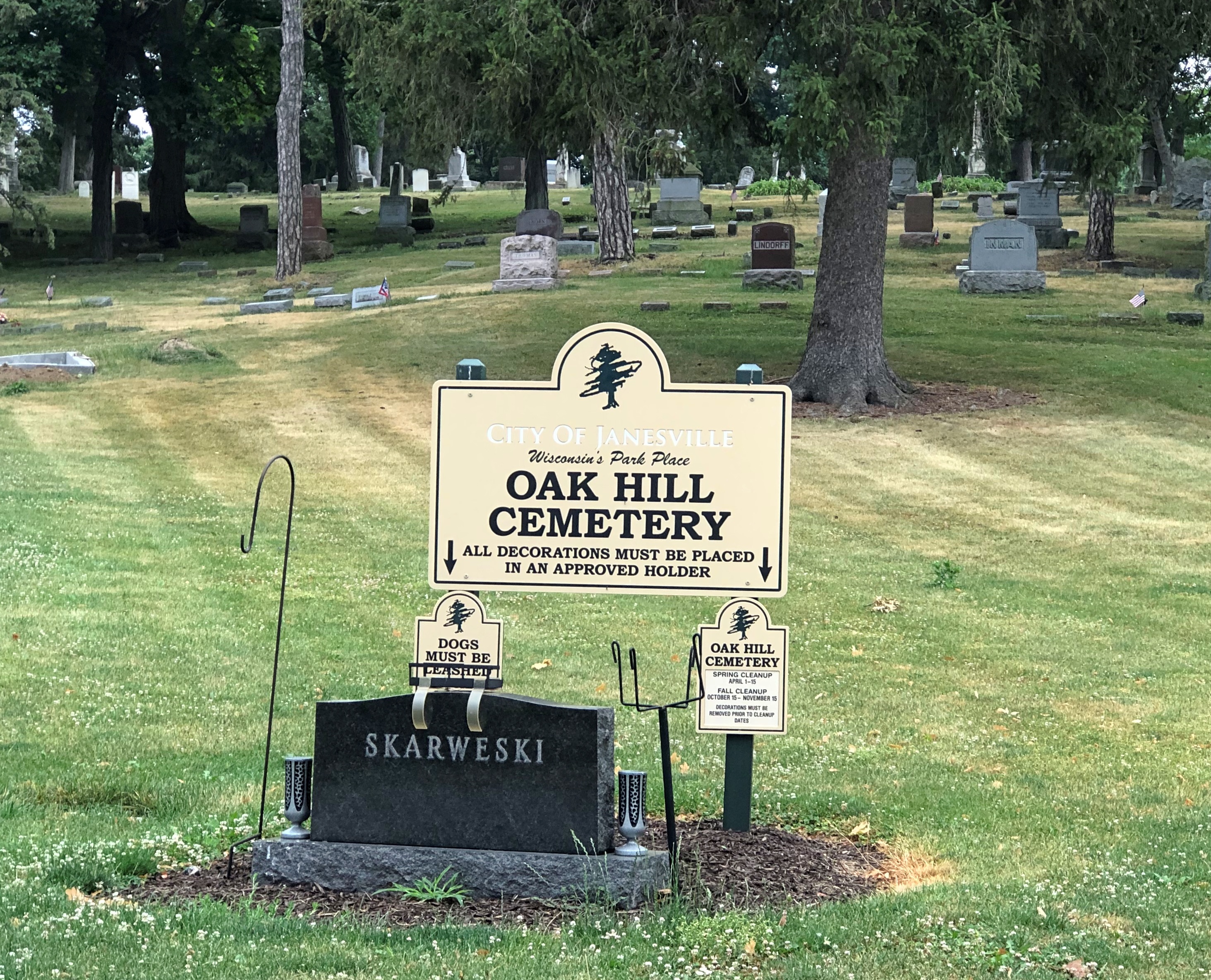
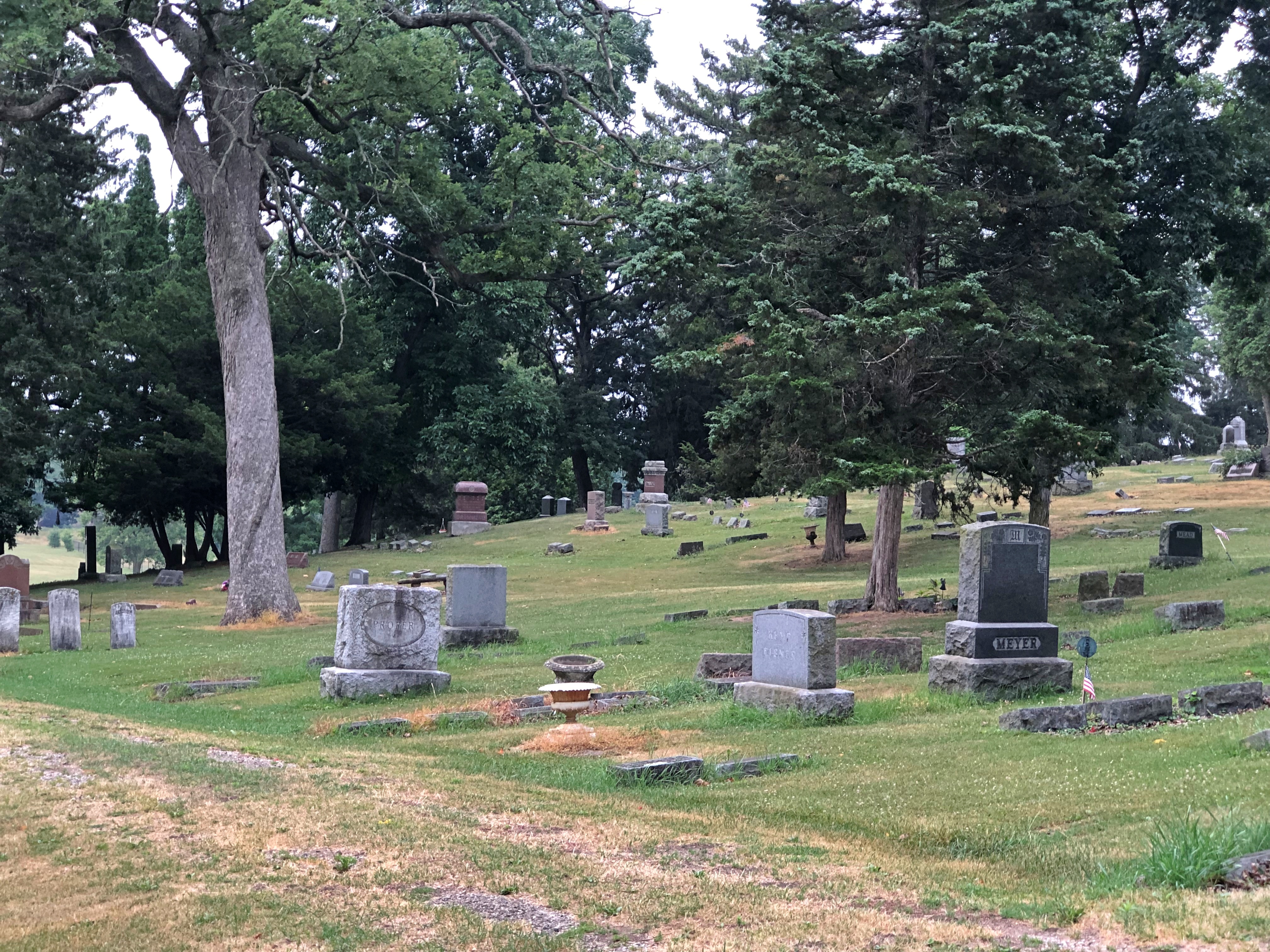
While wandering around on the hilly territory of central Mackinac Island, we contacted Gate House by phone for reservations. They offered us a slot for an hour later, or about enough time for us to walk there after a detour through one of the historic cemeteries. Such is scheduling in non-motorized Mackinac.

We wanted to avoid Main Street, so after descending from the highlands, we walked along Market Street instead, just a block inland from Main. A lot of people were on that street, but not as many as the mob on Main.Market Street Mackinac Island

The street is lined with many fine structures, originating during the great age of private development on the island in the late 19th and early 20th centuries.Market Street Mackinac Island Market Street Mackinac Island Market Street Mackinac Island

Traffic wandered along. Pedestrians and bicyclists, of course, but also no small number of horse-drawn carriages. Including something none of us had ever seen before: a horse-drawn UPS wagon.
Market Street Mackinac Island

As we had our lunch — really an early dinner — al fresco at Gate House, I couldn’t help but notice the difference in aural texture of a busy non-motorized road compared with what we are used to, here in the lingering age of the gasoline-powered internal combustion engine. The intermittent clop-clop-clop was actually pleasant, though of course the horses sometimes leave less pleasant mementos of their passing by.Market Street Mackinac Island

Late lunch-early dinner was pleasant as well, though at island prices. I had the walleye.

Almost across the street from Gate House is the Little Stone Church. We took a look after our meal was done. It isn’t that big, definitely made of stone, and looks like a church (as it is; Congregational). Unfortunately, it was closed.
Little Stone Church Mackinac Island

Within sight of the church is the much more famous Grand Hotel. We took a stroll in that direction.Grand Hotel Mackinac Island

Grand indeed.Grand Hotel Mackinac Island

And trolling for social media mentions.
Grand Hotel Mackinac Island

The porch is said to be the world’s longest, and a special enough place that it charges admission. We would have paid, but as it turned out we’d arrived just as a dress code went into force on the porch, and none of us were dressed for it. So we went for ice cream at the shop under one end of the porch. A good treat, at island prices.

A sign memorializing a lesser-known conference that happened here. It wasn’t Bretton Woods, but the hotel will take what it can get, historically speaking.Grand Hotel Mackinac Island

The hotel dates from 1887, back when railroads built hotels. In this case, a joint development Grand Rapids and Indiana and the Michigan Central RRs, as well as the Detroit & Cleveland Navigation Co., a Great Lakes steamship company of yore. These days, the Grand Hotel is owned by KSL Capital Partners, a private equity investor.

Though the porch was off limits, we hoi polloi could take a walk on the street below. Up close, one notices that the hotel paint is peeling, and in places needed more than a little touch up. Could be that, like the Golden Gate Bridge, the structure is always being painted, at least in the warmer months.Grand Hotel Mackinac Island

From the hotel, we followed a street lined with fine old houses — the summer “cottages” of the wealthy of 100-plus years ago. Of course, if you owned one now, you’d be wealthy, at least on paper. Mackinac Island  Mackinac Island  Mackinac Island

Soon the street changes into a bluff-side path, with good views. We followed it a while. Mackinac Island
 Mackinac Island

Eventually, wooden stairs led down to the road that circles the island, and we walked back to Main Street via that road to catch the ferry back to the mainland. We made occasional stops on the rocky shore of Lake Huron. Mackinac Island

If there’s a next time, maybe I’ll rent a bicycle. But Mackinac Island is a perfectly fine walking destination.

Fort Mackinac

In 1780, the British commander at Fort Michilimackinac, which had been a French post on the mainland south shore of the Straits of Mackinac until the British had won it in the Seven Years’ War, decided to build a more defensible fort on Mackinac Island (and perhaps, one with a shorter name). He picked a bluff overlooking the lakeshore.

Fort Mackinac, Michigan by Seth Eastman

“Fort Mackinac, Michigan” by Seth Eastman (1872)

The fort stands there to this day, though in somewhat different form: a tourist attraction. As a tourist, I was duly attracted.Fort Mackinac

Note the Boy Scout. Turns out in visiting Mackinac Island, we were visiting a presidential site. It’s a slightly convoluted story, but well relayed by the island’s web site.

These days, a group of Boy and Girl Scouts raises and lowers about two dozen American flags across Mackinac Island each day during the summer. They also act as guides at the fort. The fellow at the entrance wasn’t the only one we saw.

He was the only one I talked to, however. Tried to, that is. I asked him why Boy Scouts were at the fort, and perhaps a career involving public interaction isn’t in his future, because he sputtered a few unintelligible words and looked at me as if I’d tried to talk to the guards at Buckingham Palace.

So I had to learn later that the flag-raising and other duties started “in 1929 when then-Michigan Gov. Fred Green commissioned eight Eagle Scouts from around the state as honor guardsman on Mackinac Island,” the island’s web site says.

The governor’s summer residence, by the way, is on Mackinac Island, very near the fort, though the house didn’t begin that function until 1944. We walked past it on the way to the fort.

Its formal name is the Lawrence A. Young Cottage, dating from 1902. Young was a successful Chicago attorney who had it built as his summer home.

The presidential connection? In 1929, one of the charter group of scouts tapped by Gov. Green was none other than Gerald R. Ford.

The scout barracks aren’t far from the fort, either. We passed those after we left the fort.

Inside the fort.Fort Mackinac Fort Mackinac

Besides the scouts, there were a handful of somewhat older folk in costume. I told this fellow he was wearing a capital uniform.Fort Mackinac

Unlike the scout, he was talkative, and able to tell us in some detail about the uniform, though I think he was a little confused about my use of the term “capital” to mean “fine” or “excellent.” An apt term for a spiffy 19th-century uniform, if you asked me.

There are some terrific views from the fort, as a pre-modern fort would have.Fort Mackinac Fort Mackinac Fort Mackinac

The historic buildings include the post HQ, bathhouse, soldiers barracks, officers quarters, post hospital, a storehouse, guardhouse and more. The rooms were stocked with artifacts and expository signage. More modern spaces included a light-meal restaurant taking advantage of those terrific views, a gift shop and bathrooms (authentic 19th-century Army latrines wouldn’t go down well with the museum-going public, I figure).

The fort is, I’ve read, one of the few surviving more-or-less intact from the Revolution and War of 1812, when it saw action. Later, as British Canada receded as any kind of threat, Mackinac’s usefulness as a military post did as well, but it lingered as U.S. Army property until 1895.

By that time, much of Mackinac Island had been designated as Mackinac National Park. Astute NPS observers might object that no such park exists, and they’d be right. Created in 1875 as the second national park, Congress dissolved it in 1895 and turned it over to the state of Michigan, which created its first state park that same year out of the same territory, including the now-decommissioned fort.

After I saw the fort, I read the story of its U.S. commander in 1812, one Porter Hanks. Lt. Hanks surrendered the fort without a fight, as he was hopelessly outnumbered. He and his men were paroled by the British forces. Wiki, which seems to be reasonably sourced, picks up the story:

“Lieutenant Hanks made his way to Detroit and the American military post there. Upon his arrival, superiors charged him with cowardice in the surrender of Fort Mackinac. Before the court martial of Lieutenant Hanks could begin, British forces attacked Fort Detroit. A British cannonball ripped through the room where Hanks was standing, cutting him in half and killing the officer next to him as well.”

That’s one way to get out of a court martial, but surely not how Lt. Hanks would have wanted.

Mackinac Island Ramble, Part 1

Things to know about Mackinac Island, Michigan.

  • It really is an island, about 4.3 square miles in Lake Huron, and not far from both the Lower and Upper Peninsulas of Michigan.
  • Most of the island is Mackinac Island State Park, but there is a town, and 470 or so people live there full time.
  • Mackinac is famed for allowing no motorized vehicles on its streets, except for a handful of emergency vehicles.
  • Regular passenger ferry services connect the island with the mainland; the ride takes about 20 minutes. The view of the Mackinac Bridge from the ferry is terrific.

Mackinaw Bridge

The ferries from the mainland dock at the aptly named Main Street. The closer you are to Main Street on Mackinac Island, the more people there are. Even on a weekday. We arrived early in the afternoon of Tuesday, August 2. The day was sunny and warm.Mackinac Bridge Mackinac Bridge

Restaurants, retailers and hotels line Main Street, packing ’em in. No cars, but plenty of bicycles and some horse-drawn wagons ply the street, so best to walk on the sometimes shaded sidewalk.

Mackinac Island is a major tourist draw in our time, but that’s hardly new. People have been visiting for pleasure since the late 19th century. Just another thing Victorians started, among many.

At one end of the commercial strip is an entrance to Mackinac Island State Park. Atop the hill at that point is Fort Mackinac, relic of the moment in the late 18th century when sovereignty over the island wasn’t a settled matter.Mackinac Island State Park

Immediately under the fort is a grassy slope.Mackinac Island State Park Mackinac Island State Park

Popular, but not as crowded as Main Street. The view toward the water.Mackinac Island State Park

A bronze Marquette overlooks the slope.Mackinac Island State Park Mackinac Island State Park

So does Trinity Episcopal Church, built in 1882.Trinity Episcopal Church Mackinac Island Trinity Episcopal Church Mackinac Island

We’d toyed with the idea of renting bicycles to get around the island, but the climb up the hill toward the fort, a fairly steep bit of hoofing, put that idea to rest.

Much later in the day, we came to realize that the thing to do with a bicycle is to ride the eight miles or so of Michigan 185, the only road in the state system without motorized transport, and which runs around the edge of the island. Something to do if I ever come back, and am healthy enough for it.

Or you could walk your bike up to the top of the hill, and ride around up there on some flat paths. By the time you get to this part of Mackinac — not really that far from Main Street — the crowds have thinned out.Mackinac Island State Park

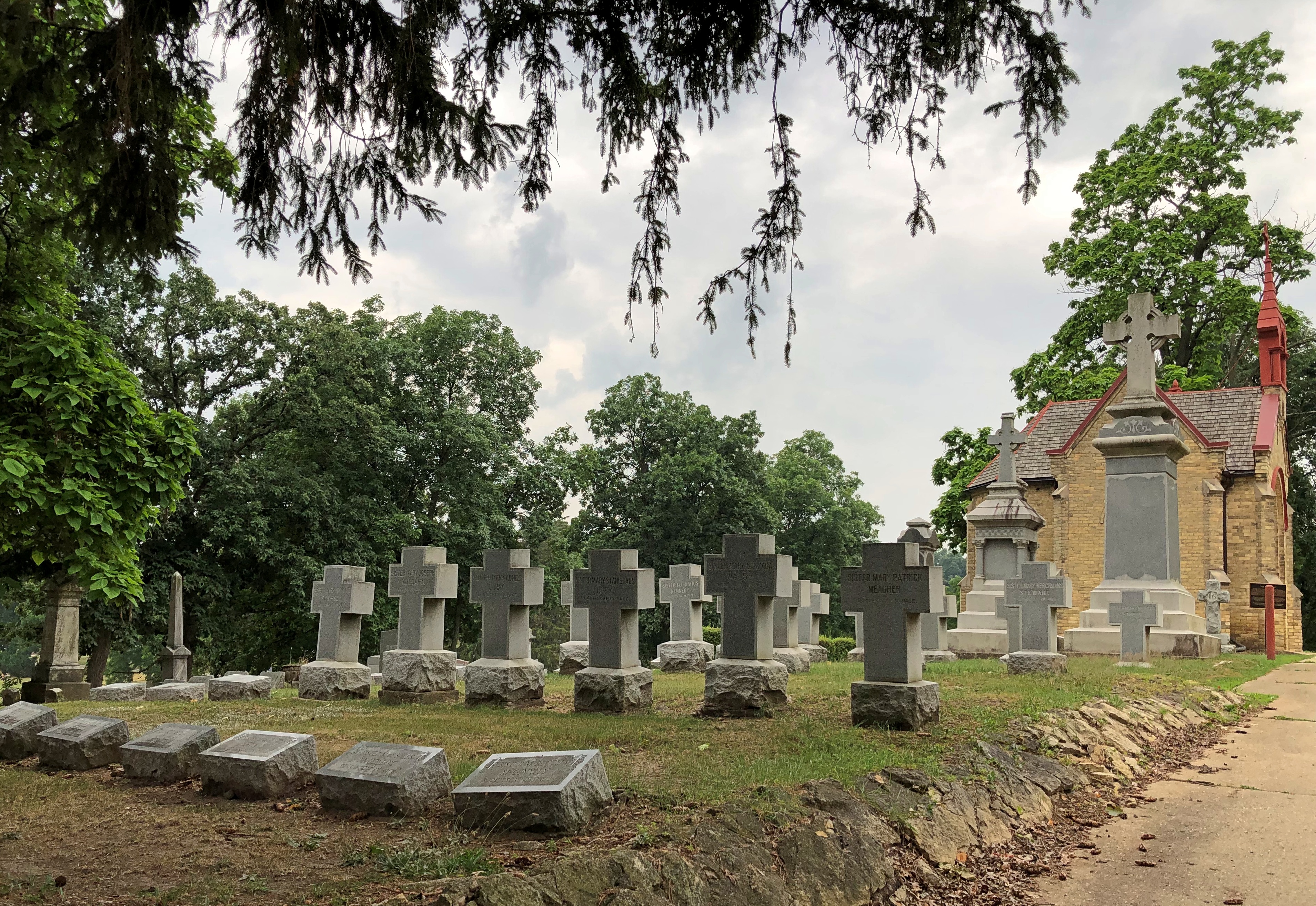
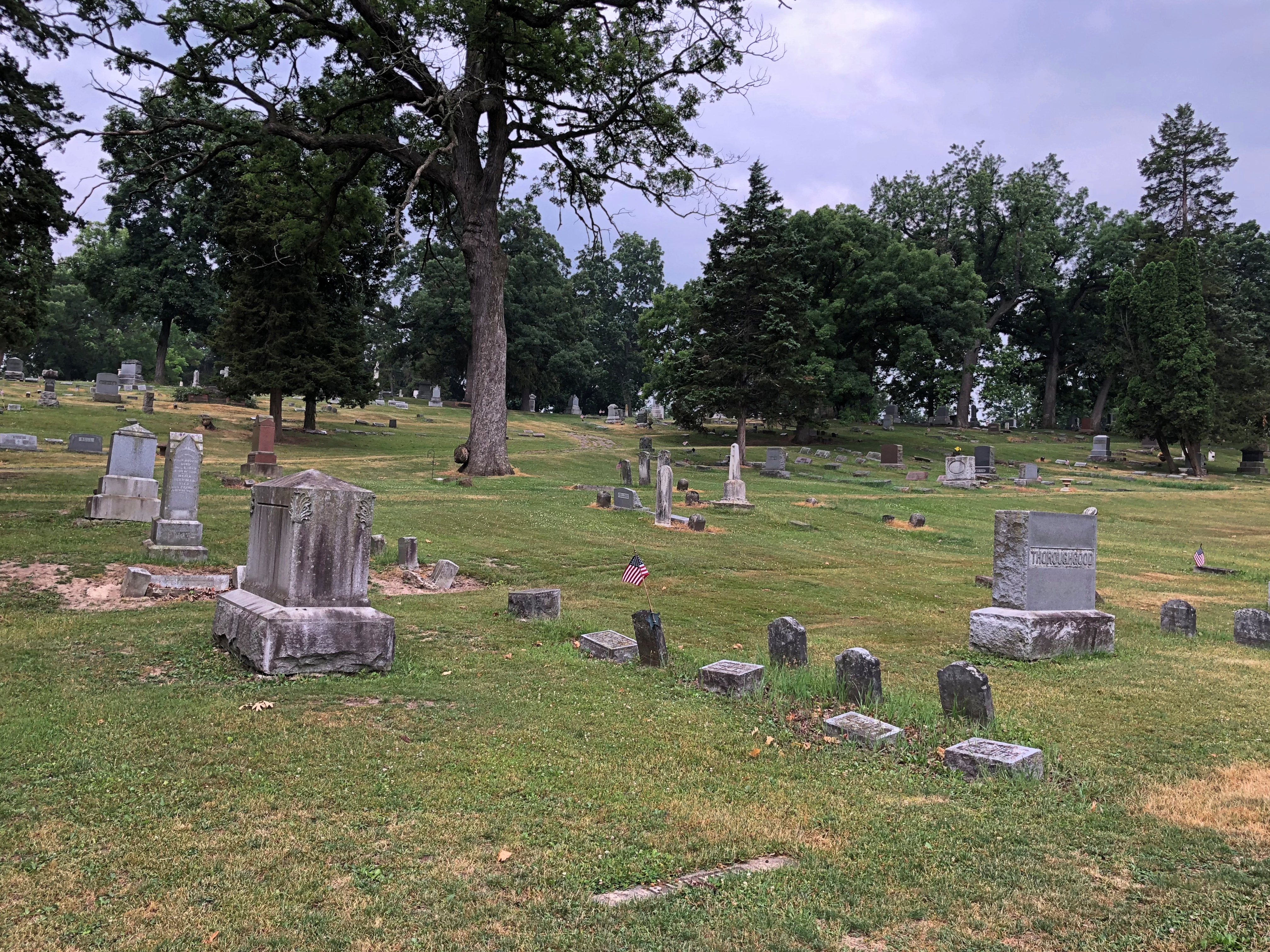
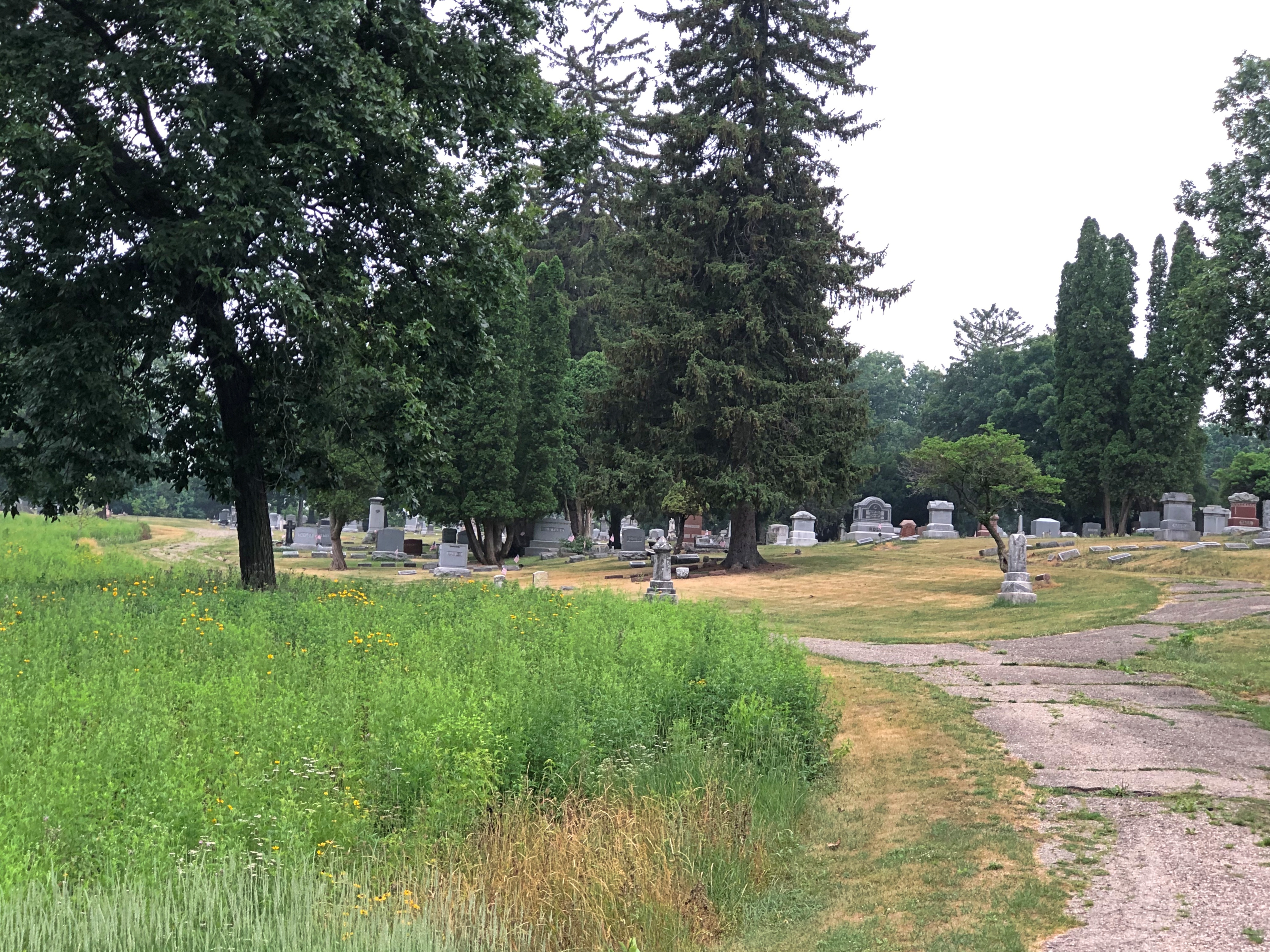
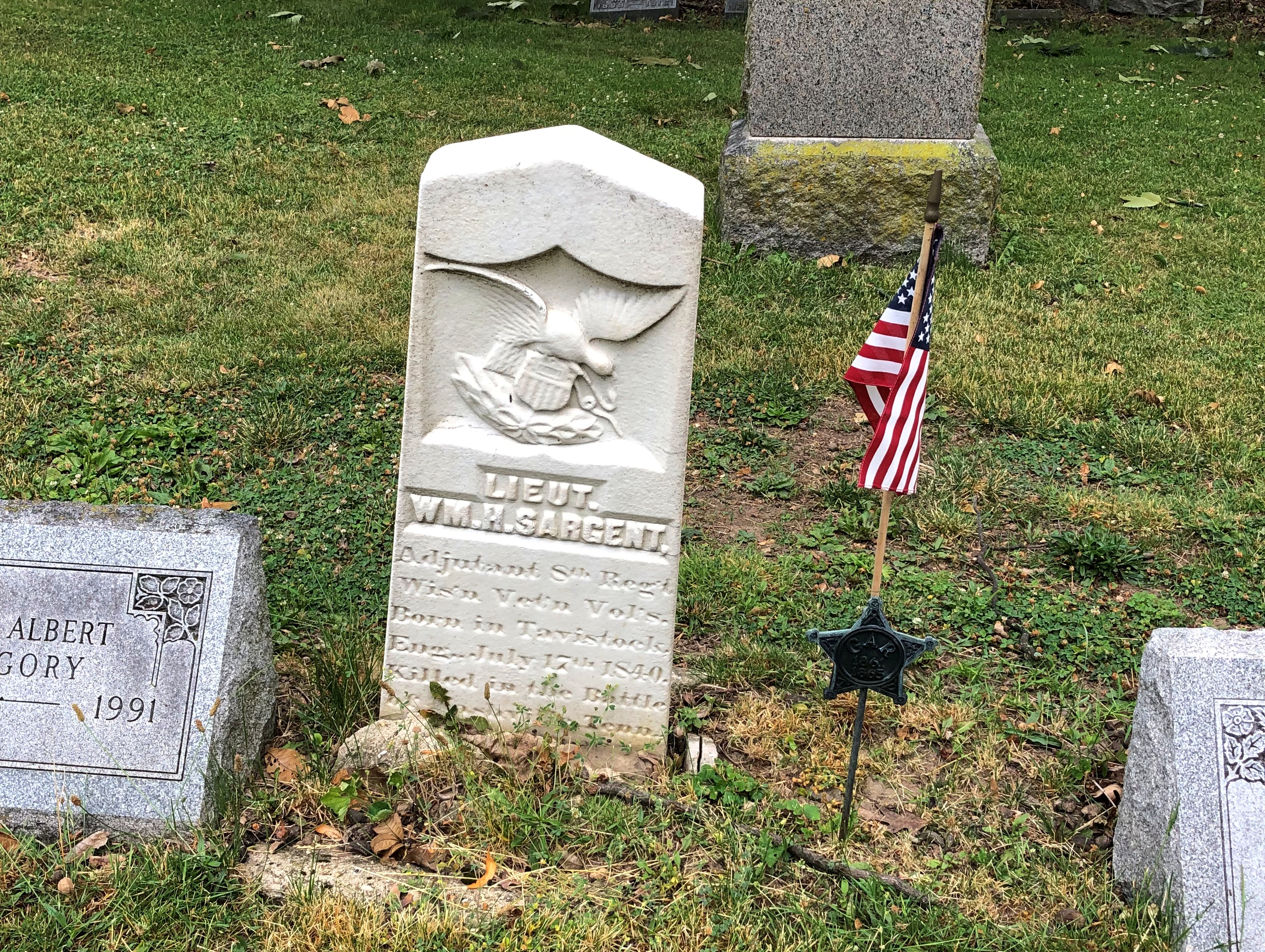
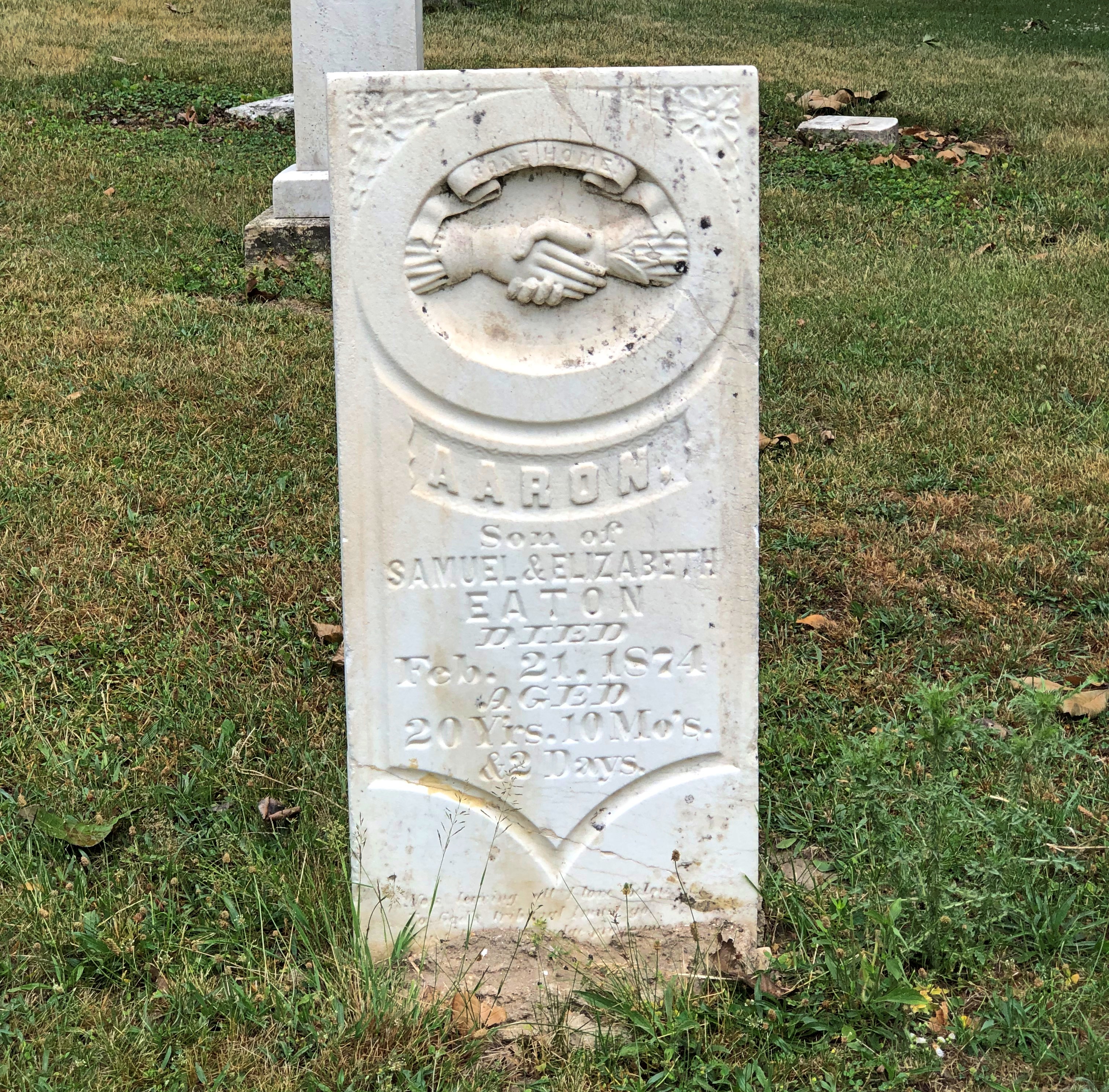
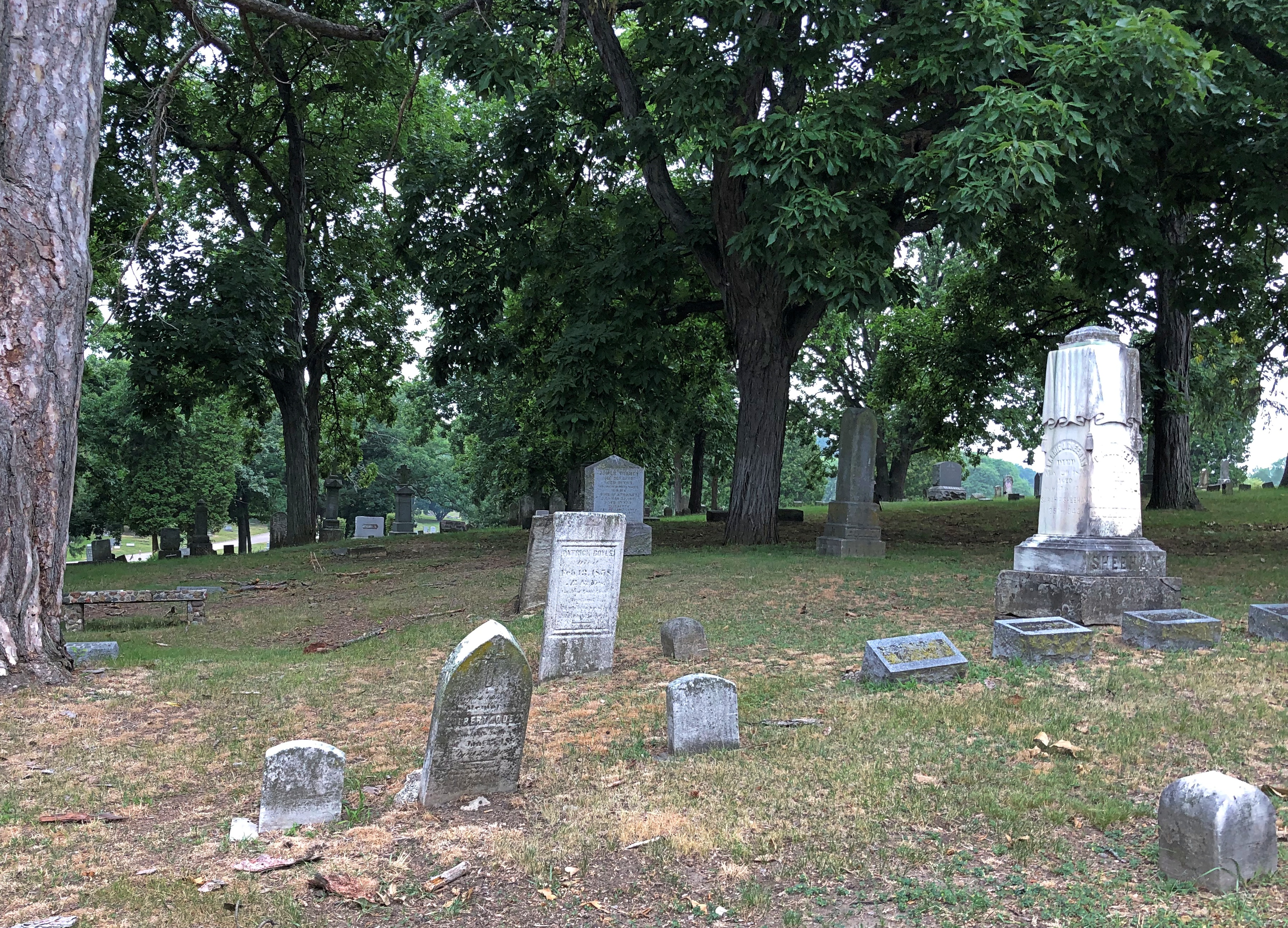
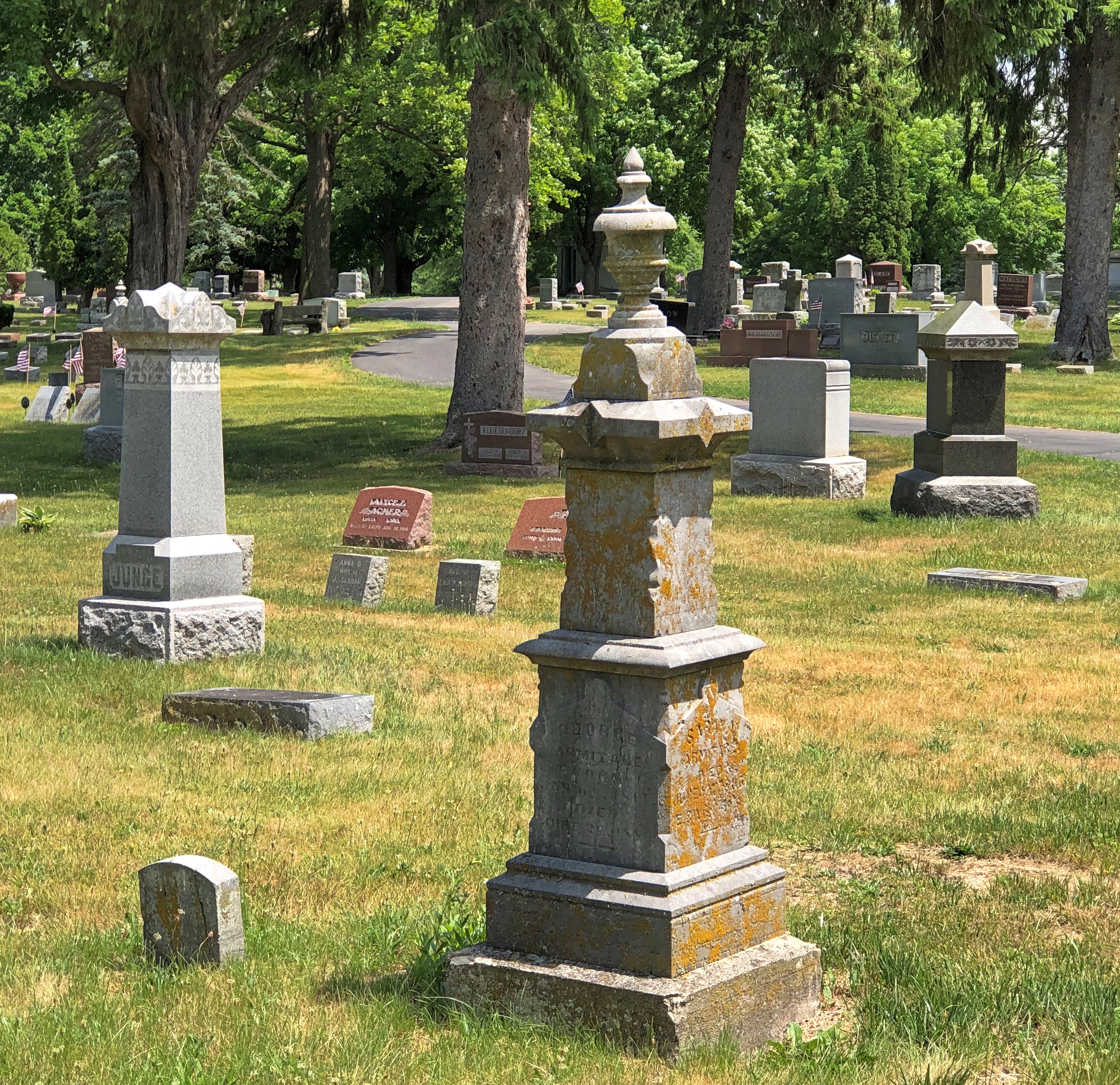
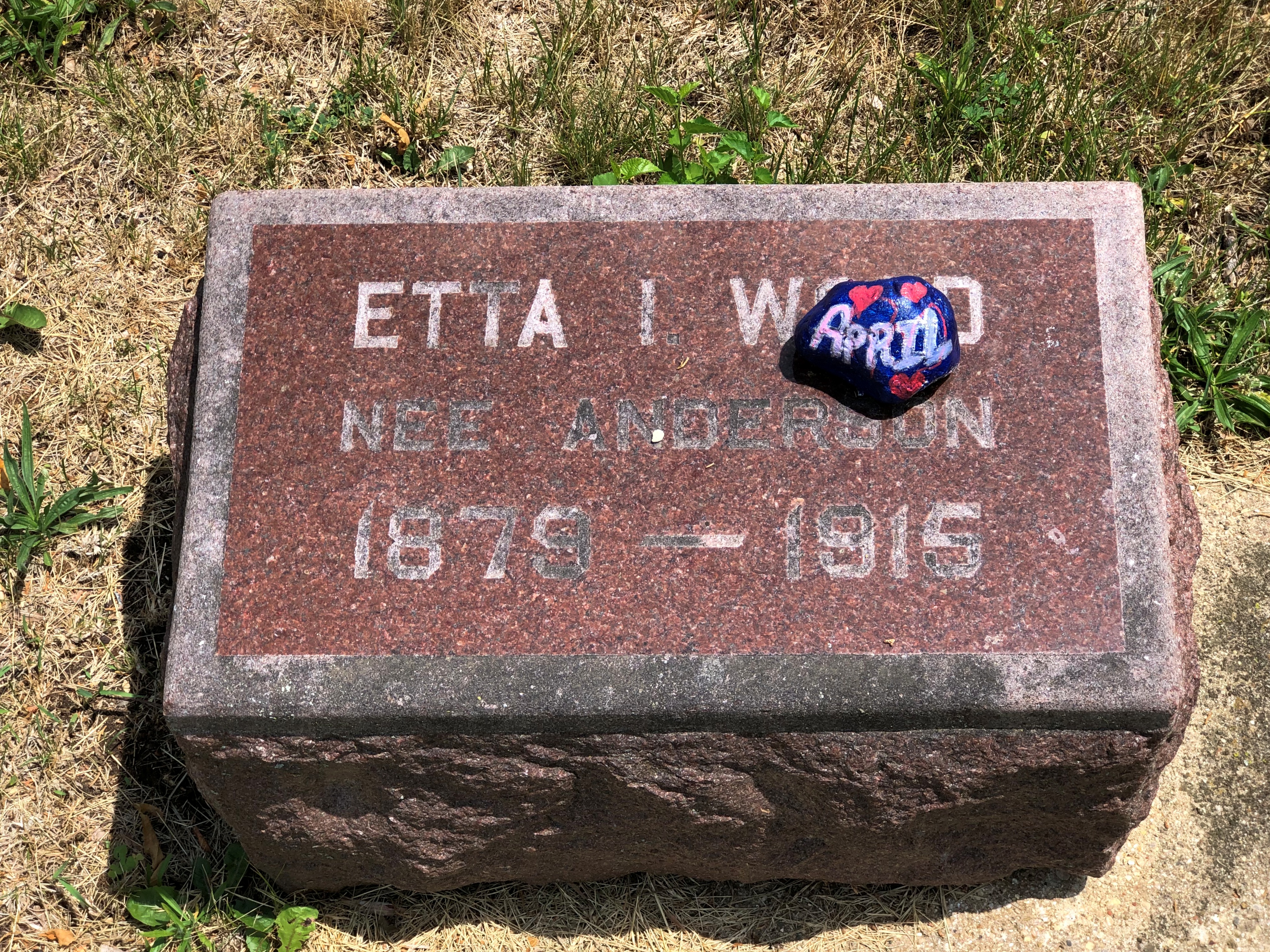
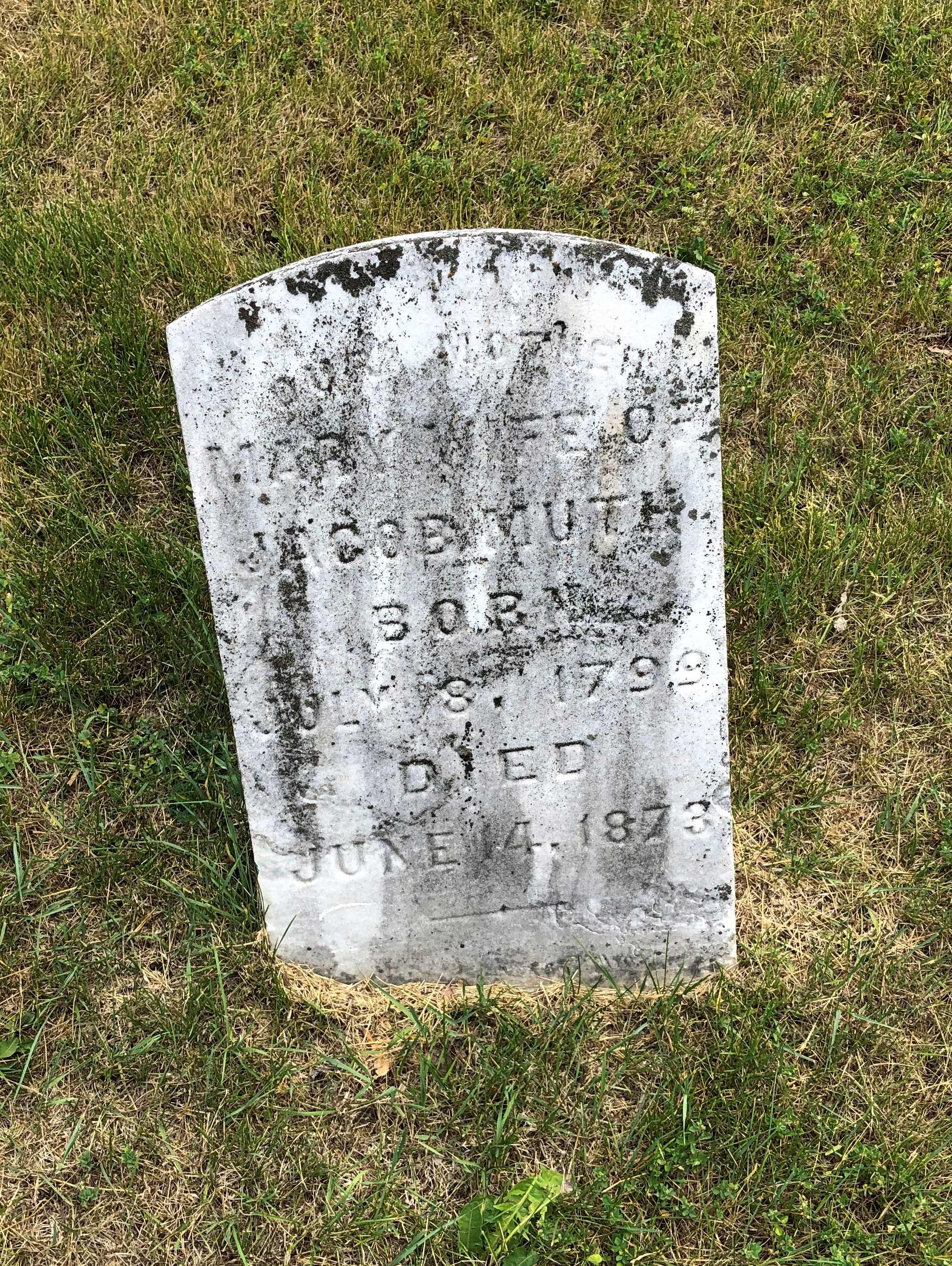
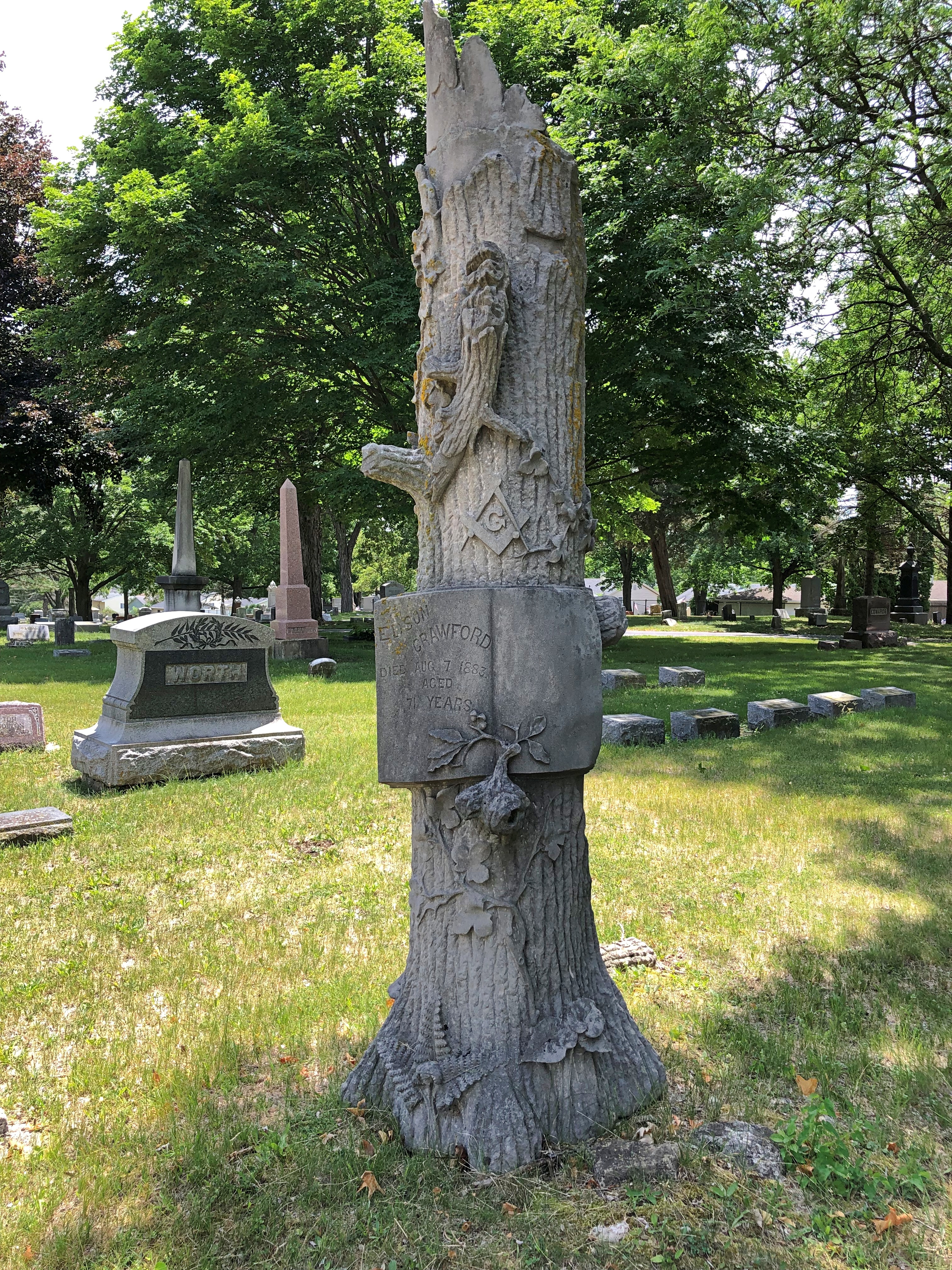
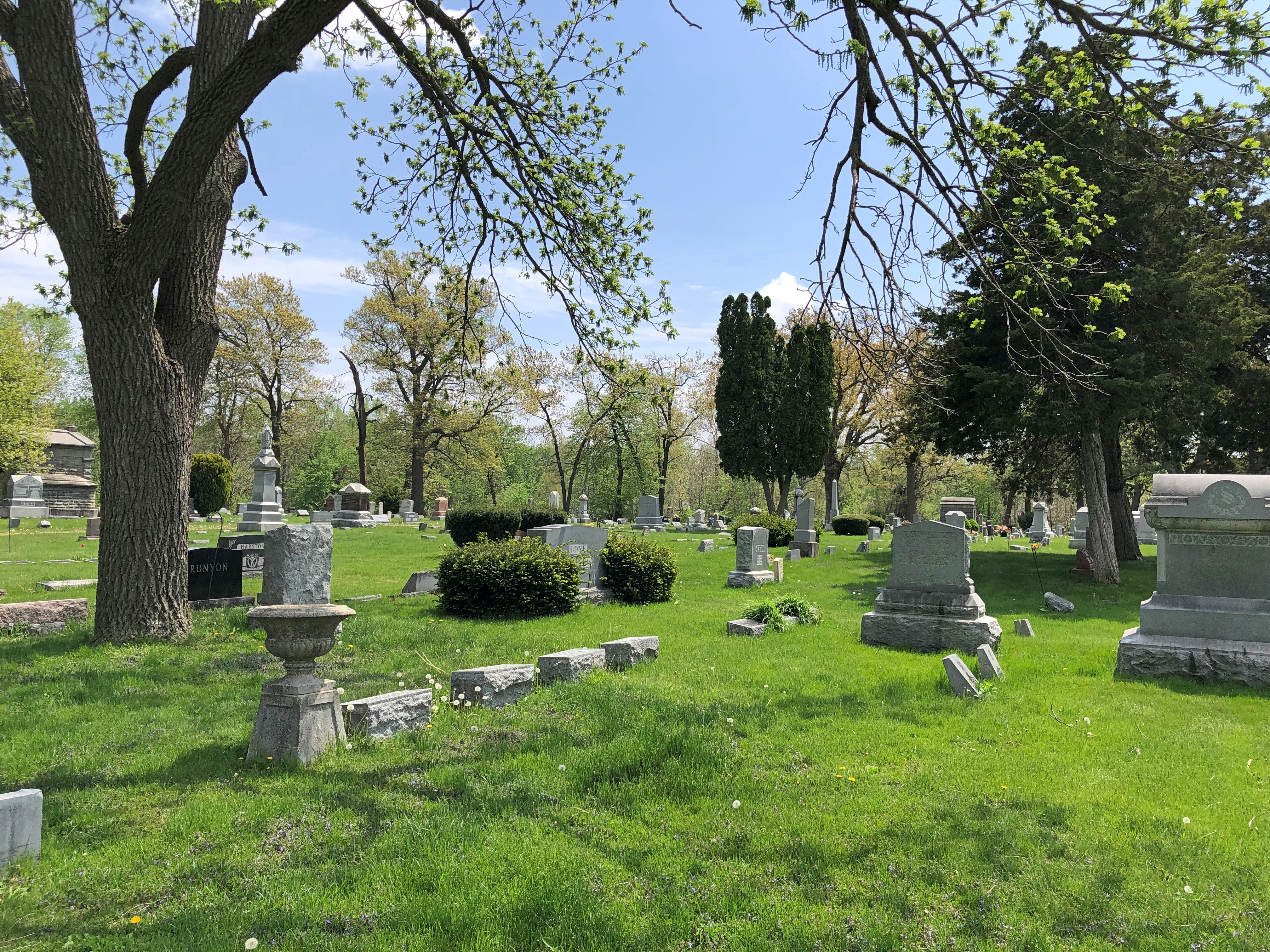
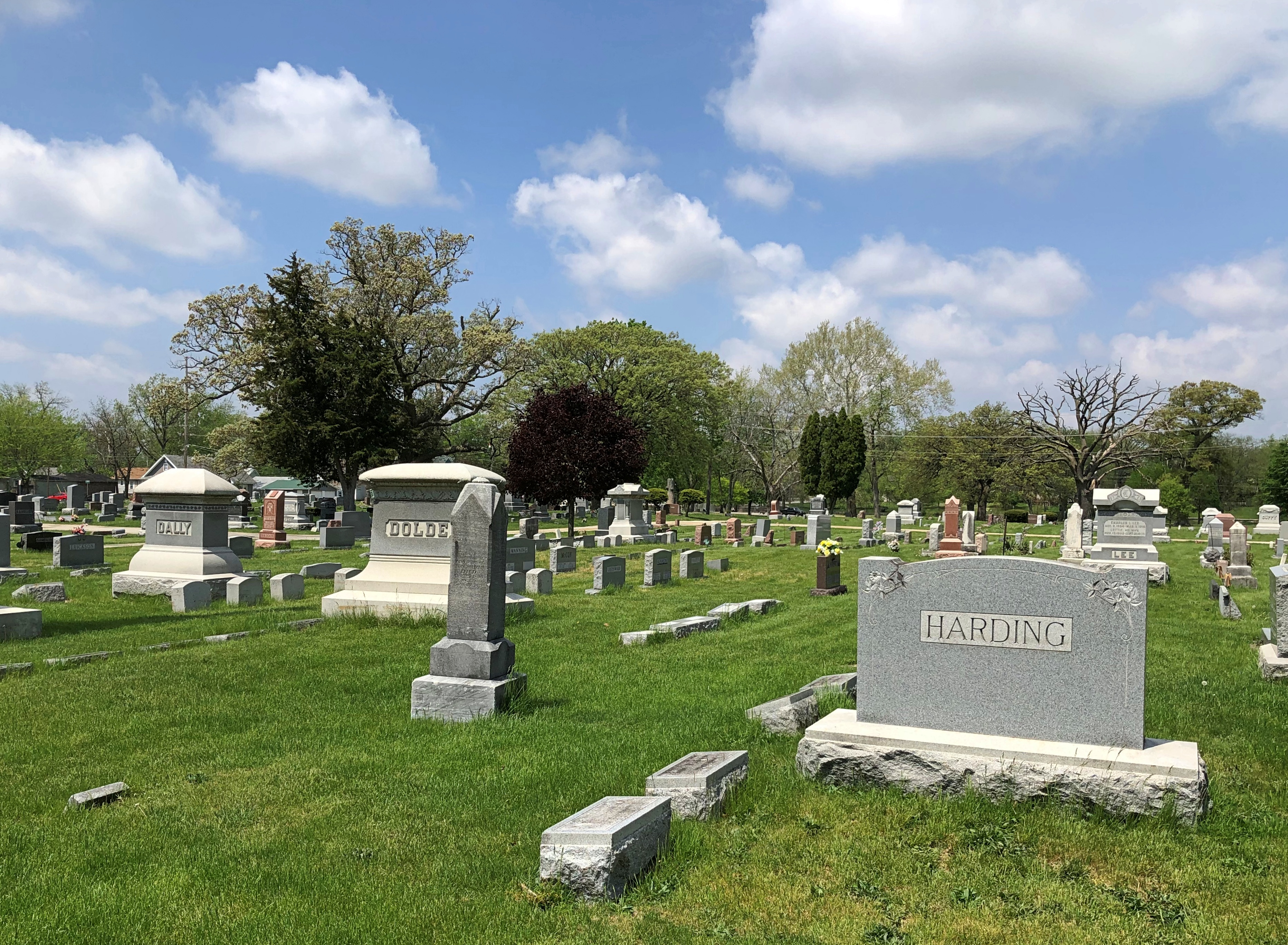
We walked a few of the paths, including one that our map said would take us to “historic cemeteries.” Right up my alley. We passed through one of them, St. Ann’s Cemetery. Burials have taken place there since the mid-19th century, as a Catholic cemetery that replaced one closer to the shore.Mackinac Island State Park - St Ann's Cemetery Mackinac Island State Park - St Ann's Cemetery Mackinac Island State Park - St Ann's Cemetery Mackinac Island State Park - St Ann's Cemetery

By this time, we were the only (living) people around. Cemeteries seem to have that effect, even near popular tourist destinations.

Around Lake Michigan ’22

A little more than a week ago, I took a pretty good picture of three dear friends, two of whom I’ve known for over 45 years. From left to right, Tom, Catherine and Jae.

We were on the second day of our drive around Lake Michigan, counterclockwise, which took us from metro Chicago through northern Indiana, Grand Rapids and parts of western Michigan, Petoskey and environs, Mackinac Island, both Sault Ste. Maries, parts of the eastern Upper Peninsula, greater Green Bay and other parts of eastern Wisconsin, and back to metro Chicago.

Leaving on July 30 from our starting point at my house, we drove my car on crowded and less crowded Interstates, state and county highways, and a host of smaller roads, including National Forest roads cutting through lush boreal territory. Returning yesterday to my house, my friends flew back to Austin today; they had arrived from Austin two days ahead of the trip.

We’d planned the trip via email and Zoom, beginning back in early spring. I was the informal guide, making suggestions and offering bits of information I knew from previous visits to Michigan, upper and lower. But my friends were hardly passive in the course of our travels, digging up information via cell and making their own suggestions based on their own familiarity with some of the territory. Catherine had overseen arranging our accommodations, and everybody drove at one time or another.

We stayed in five different peer-to-peer rental accommodations along way, all entire houses that could provide us enough bedrooms, bathrooms, food prep and dining areas, and, in most cases, space to sit outdoors, once with a view of the waters of Green Bay.

Enjoying the outdoors was one of the main goals of the trip. For me, certainly, but especially for them, escaping the high heat of central Texas. They often remarked on the cool air and reveled in it, checking periodically to learn the temps at home. Three digits in Austin wasn’t usual. I don’t think got higher than 85 F. where we were. Standard night temps in both Michigans generally came in the 60s F.

Two meals a day was the norm: a mid- to late-morning breakfast and a late afternoon dinner, or a very late breakfast and a late dinner, at least as these things are reckoned in North America. So on many days, our meal schedule was more like that of Mexico City.

Food variety has trickled down to the lakeside and inland burgs of the upper Upper Midwest, though perhaps not quite as much as in large metros. Whitefish, the star of a lot of UP menus, had top billing in some of our meals, but we also enjoyed hamburgers and other meat — including one tasty UP pasty — pizza, pasta, breakfast fare, bar food, Italian and Asian, plus chocolates and fruit, such as Michigan cherries and UP jam. We prepared our own meals sometimes, did takeout a few times.

Coffee by morning, wine by night, though I only participated in the latter. Familiar wines were available in every grocery store we visited, and my friends sought out coffee ground as locally as possible: one bag from Sault Ste. Marie, for instance.

Meals and wine drinking were a source of convivial times, but hardly the only one. We talked and conversed and bantered at the table, as we headed along roads and as we walked trails. Shared personal histories were revisited, stories of our long periods apart were relayed, and opinions shared. Odd facts were floated. There was punnery, especially on the part of Tom, a born punster.

We visited one city of any size, Grand Rapids, and many smaller places, a few museums, a sculpture garden, some riverfronts, shopping streets and resort areas, a grand hotel, an historic fort, churches, a Hindu temple, a wooded cemetery, two lighthouses, forests, clearings and beaches, a massive sand dune, waterfalls, rapids and the clearest pond I’ve ever seen. The three Great Lakes we saw stretched to empty horizons — except when Canada or the opposite shore of Green Bay were visible. We crossed the Mackinac Bridge once and the international bridge between the Sault Ste Maries twice.

We walked near the shores of Lakes Superior, Huron and Michigan. The northern woods and the beach ecosystems were fully flush here in late summer. Jae, who knows a good deal about flora, shared some knowledge about the flowers, trees and fungi we saw in profusion.

Though we caught a few showers in daytime, and the last day was mostly rainy, most of the storms rumbled through at night, adding to the restfulness of whatever sleep we each had. None of the storms were lightning-and-thunder dramas, but some were impressive in their downpour. My friends expressed their satisfaction with the cool light winds that often blow in corners of the UP.

There were a number of travel firsts, mostly for my friends. This was the first time any of them had been to the UP, and the first time they had seen Lake Superior, whose aspect I’m so fond of, and their first visit to the northern part of the Lower Peninsula. The trip included Tom’s first known visit to a national park, though later we determined that it was probably his second park. Also, it was the first time two of them had ever been to Canada, since we popped across the border for one night in Sault Ste. Marie, Ontario.

For me, a mix of new and places I saw long enough ago that they were almost like new.

When I dropped off my friends at O’Hare earlier today, we agreed that they trip had met expectations. And more.

The Dixie

We arrived in North Webster, Indiana, not long after 11 a.m. on July 3. We stopped there because the night before, I read the Atlas Obscura item about the Dixie.

“Steamboats first began sailing on the Webster Lake as early as 1902,” the item explains. “In 1914, Captain Joseph Breeck began operating a 65-foot, wooden-hulled sternwheeler named the Dixie, which today is the oldest of its kind still in operation.

“The original Dixie was later replaced by Captain Breeck with the current 76-foot steel-hulled Dixie in 1929, and he continued to operate the ship until his retirement in 1939.”Dixie Sternwheeler, North Webster, Indiana

Eventually, in the early 21st century, a nonprofit acquired the vessel, renovating and updating it, paid for in large part through local donations. Now it makes tourist runs on Webster Lake in the summer months. We caught the 1 p.m. sailing.

The day was clear and very warm, perfect for a lake outing. Dixie wasn’t packed, but a fair number of people rode on both lower and upper decks. Tickets were a bargain: $7 for adults. Good for the nonprofit — it isn’t out to gouge tourists.Dixie Sternwheeler, North Webster, Indiana

Dixie is a sternwheeler, and here’s the wheel. At the stern.Dixie Sternwheeler, North Webster, Indiana

A moment before I took that picture, a boy of about six was standing at the rail, looking down at the wheel. His mother encouraged him to leave, though I hadn’t said anything to her. I was ready to wait my turn.

“He’s fascinated by the wheel,” she said.

“I bet he is,” I said approvingly, but I don’t think she heard me. Managing a small child can be distracting. But if that was his first ride on a sternwheeler, I hope she made note of it on his ticket, and that the family is packratish enough so that he finds it sometime in the 2070s.

As tour boat patter went, Dixie’s taped program was well crafted — a voice talking about the ship, the lake and the surrounding land, with some interludes of peppy but not overwhelming banjo and guitar instrumentals. More actual history than you get on some tours, but not an overload. No intentionally bad jokes, either, but some good detail, especially describing the earlier days of the Dixie.

Capt. Breeck wasn’t a tour operator. He was master of a small working ship, crossing the lake in clement weather to deliver cargo and packages, as well as passengers, such as womenfolk visiting the stores in the town of North Webster. Dixie also carried groceries that it sold, and for a while the captain — clearly a jack of some trades, anyway — operated a small smithy at the back of the vessel.

His successors eventually evolved into tour operators as the surrounding farms gave way to postwar pockets of resort-like development. By now at least three generations have taken rides, including first dates of later married couples, and people taken by their grandparents who are now taking their grandchilden.

Got some views from both decks.Dixie Sternwheeler, North Webster, Indiana
Dixie Sternwheeler, North Webster, Indiana

The presentation’s detail about the shoreline is a bit of a blur — the boat docked here or there sometimes, the captain had his house at this other place, that island in the middle of the lake is owned by some notable Indiana family. The names came and went: Fisherman Cove, Miller’s Landing, Stumpy Flats, Weimer’s Landing.

But my ears perked up during the talk about the two sizable hotels that used to be on the lake. One was the Yellow Banks Hotel.

“A very grand hotel, built in 1902,” says the Dixie web site. “The original hotel and its wooden rowboats were painted yellow… This was a scheduled stop for the Dixie until the early 1960s. In the late 1960s the hotel changed owners and fell into disrepair. It briefly became an Italian restaurant (Novelli’s) in the late 1970s, but was dismantled in 1980. Dillinger and his gang stayed at the Yellow Banks Hotel, probably in October 1933 or April 1934.”

The Epworth Forest Hotel (from the web site).

The Epworth had an outdoor amphitheater. “The Dixie would pickup passengers in this protected cove on windy days,” the web site continues. “In 1955 the Dixie began hosting Epworth Forest’s production of Showboat. Once per year the Dixie became the stage for this off-Broadway play.

“By 1964 the cast and production became too large for the boat. From 1964 through 1980, the Dixie would simply deliver the cast of Showboat to this amphitheater for their annual performance. By 1981 the new owners of the Dixie had cancelled this tradition.”

Both of these hotels were cancelled, too, in the way things are usually canceled, not as the result of some moral outrage, but rather by the course of business. By the late 20th century, the economics of even a small resort area like Webster Lake meant that single-family homes, short-term rentals and condos became the norm along the shore.

Plenty of other watercraft were in the lake on that second day of the Independence Day long weekend. We got a lot of waves from passersby, and most everyone on the Dixie waved back. Us too.Dixie Sternwheeler, North Webster, Indiana Dixie Sternwheeler, North Webster, Indiana

I was out and about throughout the hour and a half or so the tour lasted, though I spent most of my time on the lower deck. My deck companions across the way didn’t, as far as I noticed, get up and move about.Dixie Sternwheeler, North Webster, Indiana Dixie Sternwheeler, North Webster, Indiana

They did shift a few times, though.

Northern Indiana Dash

Ah, high summer.

That’s in Dallas. I’m not there. Today’s high here was 79 F., a dip from a hot and muggy 90s-day on Tuesday. Several degrees of latitude will make that difference.

One of these days, the times might catch up with Gen. “Mad” Anthony Wayne, leader in the Revolution and scourge of the Northwest Territory Indians, but for now, you can find him on horseback in bronze at Freimann Square in downtown Fort Wayne, Indiana, in a work by Chicagoan George Etienne Ganiere (1865-1935).Gen. Mad Anthony Wayne statue, Fort Wayne

We gazed a Mad Anthony for a few moments as part of our trip through northern Indiana. I wanted to take a short trip over the long Independence Day weekend, but I didn’t want it to consume the entire three days.

So on Saturday, we left in mid-morning and made our way to Fort Wayne, where we stayed overnight. On Sunday, we returned across northern Indiana to get home, which took up most of the day.

We arrived in Nappanee, Indiana, for lunch on Saturday. I’m glad to report that Main Street Roasters (not so new anymore, it seems) makes a fine pulled pork sandwich. Yuriko said the ingredients in her Cobb salad tasted very fresh, and I sampled some, and agreed. The place was doing a brisk business.Main Street Roasters

We figured the main source for both fresh pork and fresh greens was the Amish farms in the area. Nappanee is considered the focus of one of the country’s larger Amish populations, though that’s a little hard to tell in a casual look around downtown, which isn’t so different from other Indiana towns its size (pop. nearly 7,000). Out away from town, though, you can see from the road farm houses and other buildings, clustered closer than in other rural areas, which is characteristic of Amish settlements.

In town, Plain People in carriages rolled by now and then. Some female store clerks wore the small head coverings common among Mennonites. The Amish tourist attraction in Nappanee known as Amish Acres closed in late 2019, and a more upmarket property re-opened the next year — in an example of bad timing, though it seems to have survived — as The Barns at Nappanee, Home of Amish Acres. Maybe all those extra words are going to cost you more.

Across the street from Main Street Roasters (and not Amish Acres).Nappanee, Indiana

On Sunday, our first brief stop was at Magic Wand, home of the Magicburger, which can be found in Churubusco, Indiana.Magic Wand, Churubusco

We didn’t have a magic burger, but rather shared a strawberry milkshake to go. Among strawberry milkshakes, it was the real deal. The real tasty deal, straw-quaffed as we speed along U.S. 33.

Churubusco was a name I took an instant liking to. The town fathers apparently read in their newspapers about the battle of that name, and wanted the town to borrow a bit of its martial glory. According to some sources, it gets shortened in our time, and maybe for a long time, to Busco. I also noticed references to the place, on signs and the like, as Turtletown. Really? What was that about? I wondered.

The Beast of Busco, that’s what. Quite a story. A giant among turtles that the townsfolk never could quite capture. I haven’t had this much fun reading hyperlocal history — lore — since I chanced across a small lake in Wisconsin that is supposedly home to an underwater pyramid. Turtle Days was last month.

Another spot for a short visit on Sunday: Warsaw, Indiana. It’s the seat of Kosciusko County, with a handsome Second Empire courthouse rising in the town square.Kosciusko County Courthouse

Designed in the 1880s by Thomas J. Tolan, who died during construction, the Indiana Historical Society says. The project was completed by his son, Brentwood S. Tolan.Kosciusko County Courthouse

The square sports some other handsome buildings, too.Warsaw, Indiana Warsaw, Indiana Warsaw, Indiana

Warsaw is also home to a garden the likes of which I’d never imagined, and the reason I stopped in town, days after spotting it on Google Maps and then looking it up: the Warsaw Biblical Gardens.Warsaw Biblical Gardens Warsaw Biblical Gardens Warsaw Biblical Gardens

The brainchild of a local woman back in the 1980s with access to the land. “It would be no ordinary garden — not a rock garden, nor a rose garden, nor a perennial garden — it would be a truly unique and beautiful Biblical Garden,” the garden’s web site says.

“Actually, we say ‘gardens’ because the Warsaw Biblical Gardens has a variety of areas: the Forest, Brook, Meadow, Desert, Crop and Herb gardens; the Grape Arbor; and the Gathering site. Warsaw Biblical Gardens is ¾-acre in size, and there are very few gardens like this in the United States.

“The term ‘biblical’ refers mainly to the fact that the plants, trees, flowers, herbs, etc., are mentioned in the Old and/or New Testaments of the Bible. These have been carefully researched to preserve the integrity of the Gardens’ uniqueness.

“The Warsaw/Winona Lake area of Indiana has a long religious history. That history begins perhaps with the Chatauqua times of Winona Lake, now being revived. [Really?] Many other famous historical religious figures made their home’s here, from Homer Rodeheaver to Fanny Crosby to Billy Sunday.”

I won’t pretend I didn’t have to look up the first two of those three. Regardless, it’s a stunning little place.Warsaw Biblical Gardens Warsaw Biblical Gardens Warsaw Biblical Gardens

Go far — always good if you can manage it. But also go near.

The Grundy County Historical Society & Museum

I did a quick look, and it seems that the Rockwell Inn, a restaurant in Morris, Illinois, closed for good sometime in 2013. I ate there in 1987, returning from Springfield from the first business trip I’d ever taken, and remember the dark interior, the very long and ornate wooden bar that had supposedly been at the 1893 world’s fair, and the fish — some kind of fish — cooked in a bag with almonds and spices, superbly done.

That was the only time I ever ate there. I gave it a moment’s thought after I’d visited the Grundy County Historical Society & Museum on Friday, which is in Morris.Grundy County Historical Society & Museum

If I’d thought of it while I was at the museum, I could have asked the woman at the desk, the only other person there, whether she remembered the restaurant. She might well have, or even pointed out a Rockwell artifact, though I’m pretty sure that the museum didn’t get the bar. I hope someone got it.

The museum has a lot of other things, though. That’s part of the charm of local, volunteer-run museums. Stuff. Such as items to remind us that Prince Albert is, or was, in a can.Grundy County Historical Society & Museum

Business machines of yore.Grundy County Historical Society & Museum Grundy County Historical Society & Museum

Clothes.Grundy County Historical Society & Museum Grundy County Historical Society & Museum

Things that used to be found in middle-class homes.Grundy County Historical Society & Museum Grundy County Historical Society & Museum

Farm equipment.Grundy County Historical Society & Museum

And some items specific to Grundy County industry. Coal has been mined there for a long time, leaving behind tools.
Grundy County Historical Society & Museum

Lots to look at on a rainy, cold spring day, when you have a museum all to yourself.

Mishawaka Walks

Worth noting: U.S. Grant was born 200 years ago today in Point Pleasant, Ohio. There hasn’t been a presidential birth bicentennial since Lincoln’s in early 2009, which came on the heels of Andrew Johnson’s in late 2008.

Later this year, there will be another one: Rutherford B. Hayes, born in Delaware, Ohio on October 4, 1822. One cold day in the mid-1990s, I dropped by the Hayes home museum in Fremont, Ohio, sparking an interest in presidential sites that hasn’t abated. Good old RBH. President most likely to be mistaken for Benjamin Harrison in a lineup. After his bicentennial, it won’t happen again till Chet Arthur has his day in 2029.

The St. Joseph River flows mostly westward through Michigan and into Lake Michigan, but it bends into Indiana at South Bend and its twin town, Mishawaka. Until recently I gave little thought to Mishawaka as a destination, but then I learned about its riverwalks. We arrived late in the morning on Sunday to sample one of them, the walk along the budding-verdant Kamm Island Park.

Downtown Mishawaka seemed fairly pleasant as well. It reminded me of some of the towns along the Fox River in Illinois — Aurora, say, or St. Charles, both of which hug a mid-sized river and consider it an amenity.

As well they should. Some views of Kamm Island Park.Kamm Island Park Kamm Island Park
Kamm Island Park

New development has come to the area. Not sure I’d want to live there, but I’d probably get a kick out of renting one of the units for a few days.Kamm Island Park

One curiosity on Kamm Island that I didn’t think to take pictures of: the fact that small, colorful figurines and other items, plastic and ceramic, stand at the base of many of its trees. No group is the same. A planned art project or spontaneous whimsy? Homage to elves or the work of elves?

Across the river at Kamm Island is Battell Park, the city’s oldest park, which has its own trail and some features not found elsewhere, namely a rock garden built by the WPA. This is the view of the lower level of the rock structure.Battell Park

After lunch, which consisted of takeout Chinese from a storefront near UI South Bend eaten at the picnic shelter of a windy park near the Potawatomi Zoo, we stopped at Battell Park for a look at the upper level of the rock garden. Water must flow through its channels some of the year, down to the river, but looks like it hasn’t started for the season quite yet. Still, it’s an impressive work.Battell Park

As much as I laud the CCC — whose works I keep encountering, some stunning — I have to put in a word for the WPA and its wide legacy too. I grew up with one of its finest projects — the San Antonio Riverwalk — as well as our high school stadium, which once upon a time had a plaque denoting it as a WPA project. This is an excellent site for browsing its projects, along with the rest of the visible New Deal.

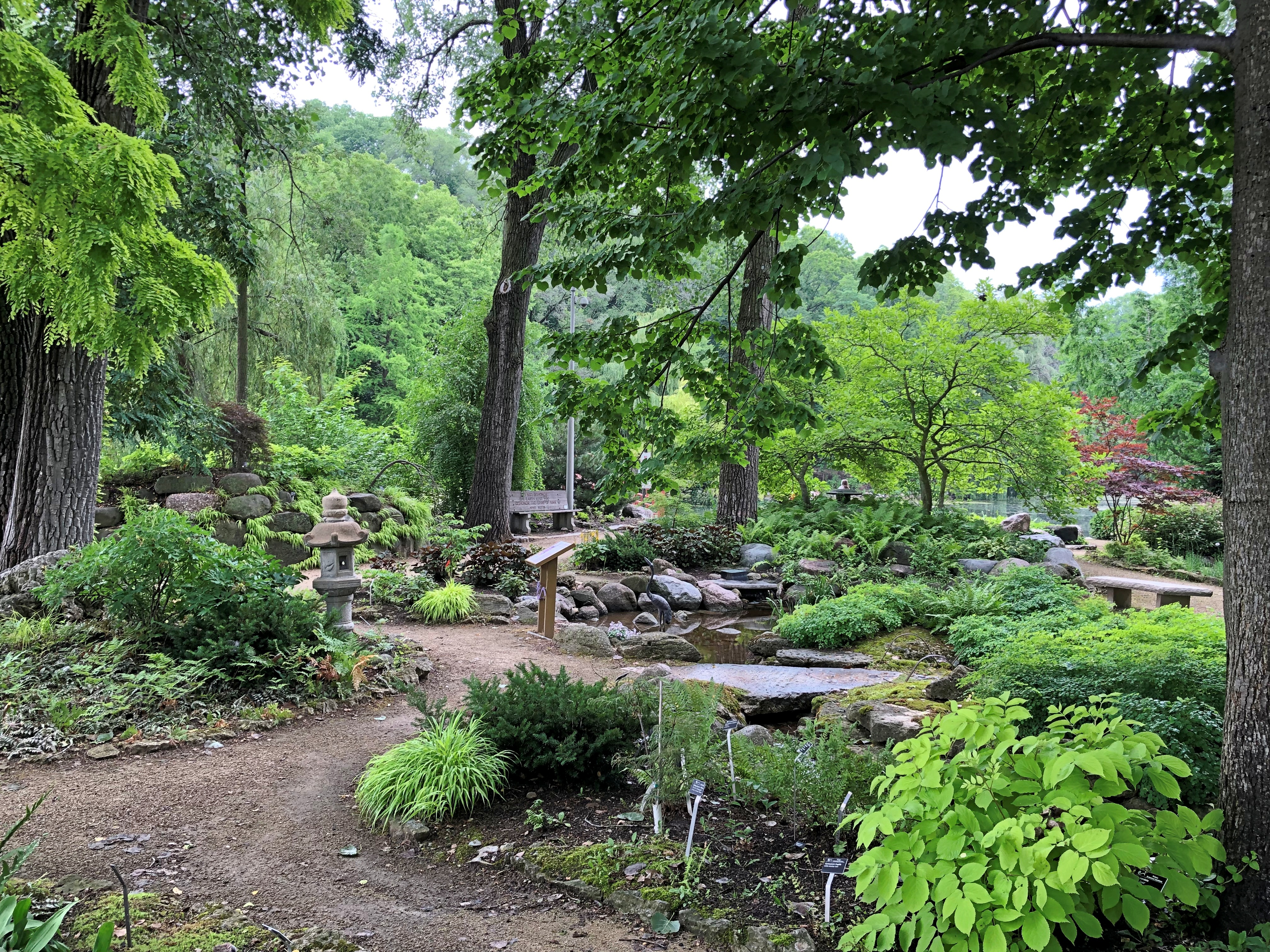
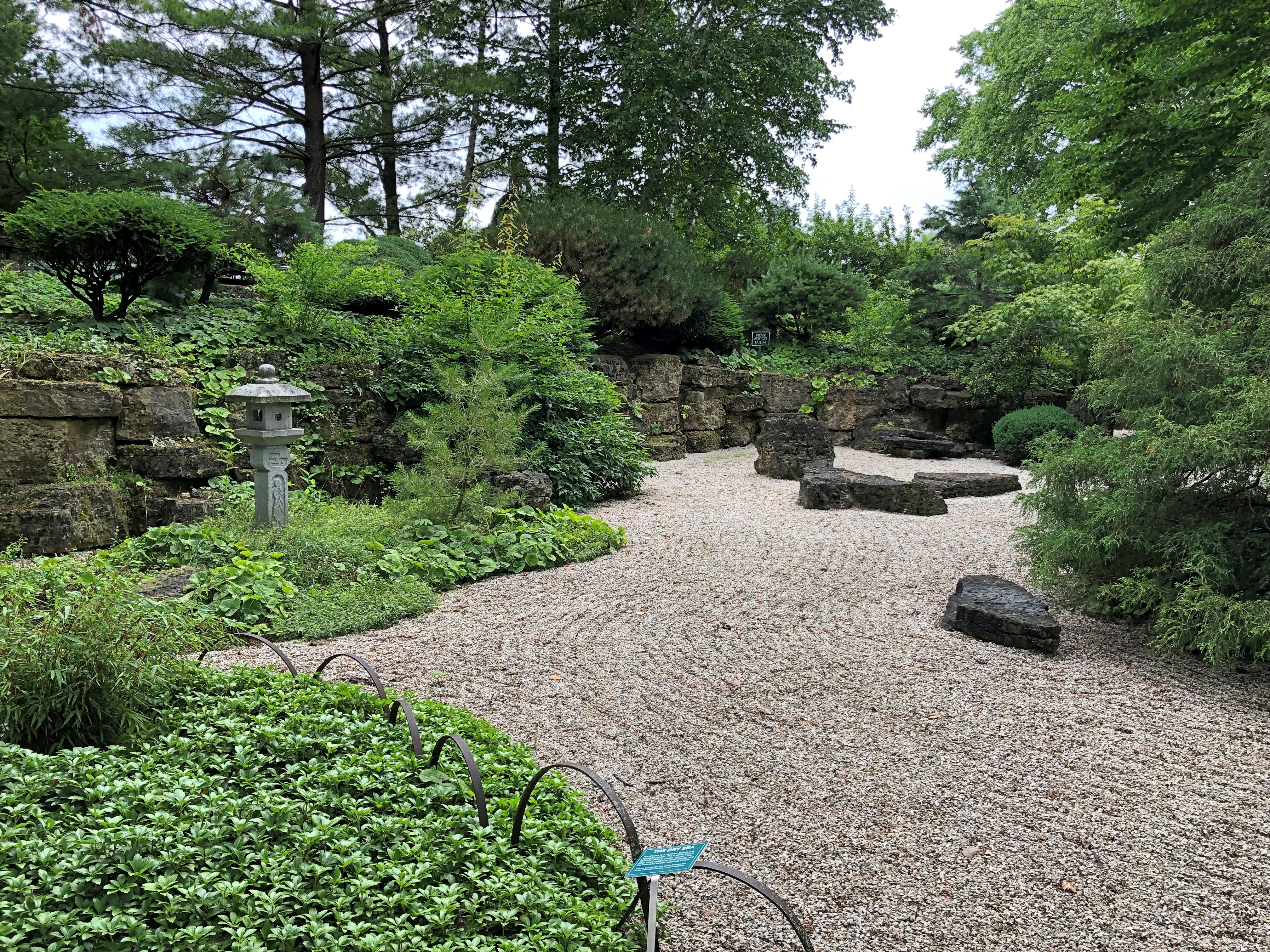
Upstream a mile or so from Battell is Merrifield Park, also in Mishawaka. That was the last place we visited in town before heading home, because we wanted to see one of the park’s smaller features, Shiojiri Garden (Shiojiri Niwa), dedicated in 1987. Small but enchanting.

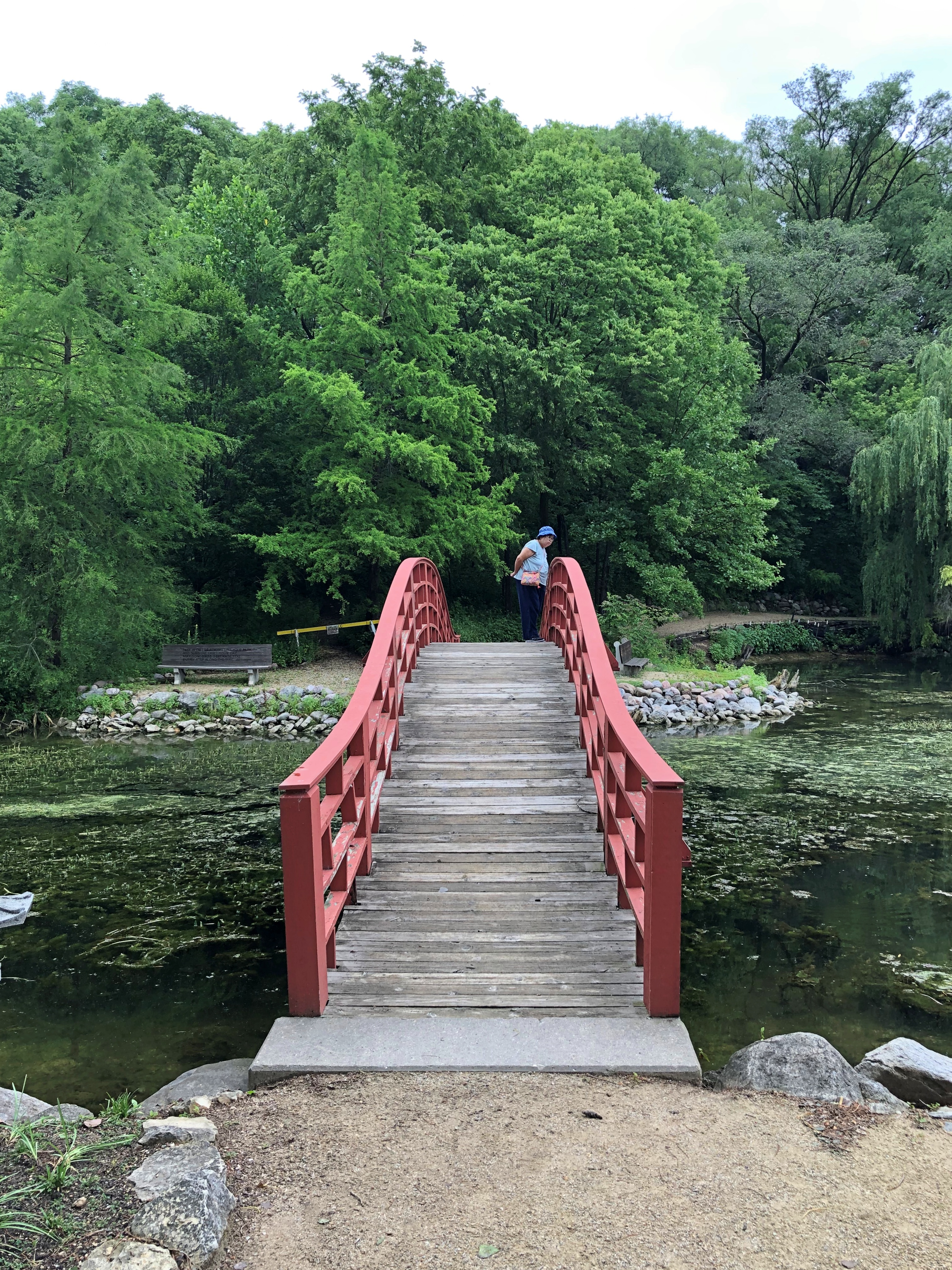
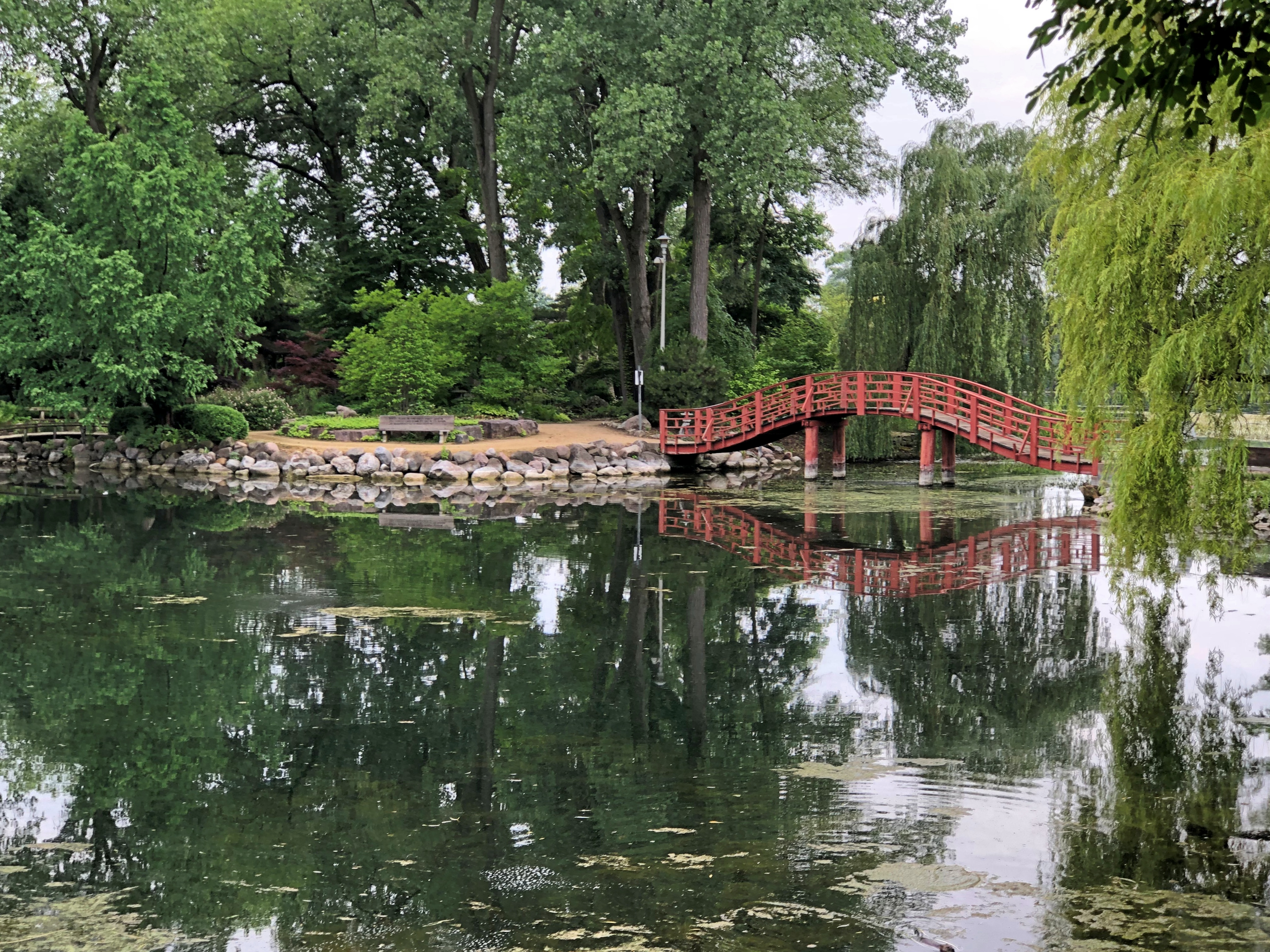
“This garden was a gift to the city of Mishawaka from its sister city, Shiojiri (Nagano Prefecture, Japan),” Atlas Obscura notes. “The designer was Shoji Kanaoka, the same man who planned the Japanese gardens at the Epcot Center in Florida. It features a multitude of trees and flowers, including a grove of cherry trees. There are also two snow lanterns, four bridges, and a teahouse pavilion built in the traditional Japanese style.”Shiojiri Niwa Shiojiri Niwa Shiojiri Niwa

Nice. You might call it a pocket Japanese garden, and Mishawaka — and the world — are better for it.

A Short Stop in Pontiac

We took Ann back to school Sunday before last, the first day of Daylight Saving Time, and since the day was tolerably warm, I insisted on a short stop in Pontiac, Illinois.

Despite Pontiac being on I-55 between Chicago and St. Louis, a route I’ve driven countless times, I’d never stopped there before, unlike such places as Coal City, Dwight, Lincoln, Atlanta, Litchfield and Mount Olive, just to name some of the smaller burgs along the way.

We didn’t spend that much time there. But time enough for us to walk all the way around the Livingston County Courthouse, which is impressive indeed.Livingston County Courthouse Illinois Livingston County Courthouse Illinois

It’s the county’s third courthouse; the first was a small wood-frame structure replaced by the second, which burned down in 1874 (pics of the two are here). Architect John C. Cochrane of Chicago, who also designed the Illinois and Iowa state capitols, designed the current Second Empire structure, which was finished in 1875 and restored recently. Technically, it isn’t a courthouse anymore, since the county’s judicial operations relocated to a new building nearby in 2011, but the county still has offices in the older building.

It wouldn’t be an Illinois town of any size without Lincoln acknowledged somewhere, and in the case of Pontiac, it’s a bronze resting on a bronze split-rail fence. It depicts young lawyer Lincoln, who visited the second courthouse periodically.Pontiac Illinois Lincoln bronze

An Illinois sculptor named Rick Harney completed the work in 2006. Looking at his portfolio, I wonder if it’s easy to access his bronze of Adlai Stevenson in the Central Illinois Regional Airport. Lincoln is fine, but there aren’t that many Stevensons around, even in Illinois.

Looking around the courthouse square, there’s also a less conventional Lincoln.Pontiac Illinois

The inevitable Route 66 mural.Pontiac Illinois mural

Some handsome buildings from a time when handsome buildings were built in small towns. Before the Depression at the latest, and more likely before WWI.Pontiac Illinois Pontiac Illinois

And a time capsule underfoot.Pontiac Illinois time capsule

Looking a little further into that today, I learned that the International Time Capsule Society is a real thing. I knew I got out of bed for a reason.

Main Street, Bloomington

Seems like the pit of winter has arrived. That’s not necessarily a time of blizzards or ice storms, though it can be. Mainly the pit is unrelenting cold, and some years the pit is deeper than others — more unrelenting, that is.

So far this year, winter has been bleak-midwinter-ish enough, but not viciously so in my neck of North America. There’s still time enough for northern Illinois winter to turn more vicious, of course.

Ann returned to ISU on Sunday, facilitated by me driving her there. It’s a task I don’t mind at all. We had a good conversation en route and listened to music we both like. I won’t go into the details of that right now, but there is a Venn diagram that includes some intersection. Larger than one might think.
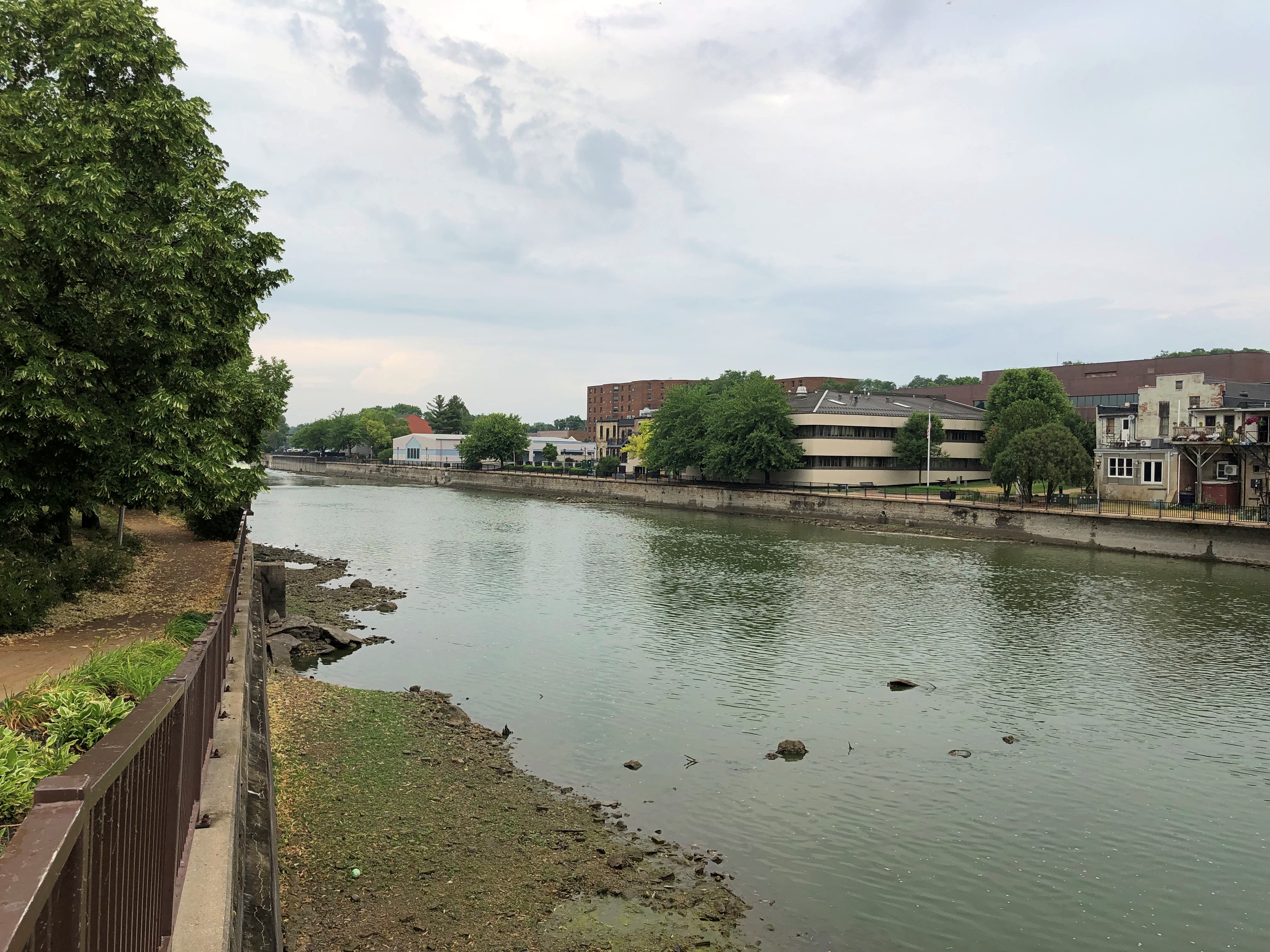
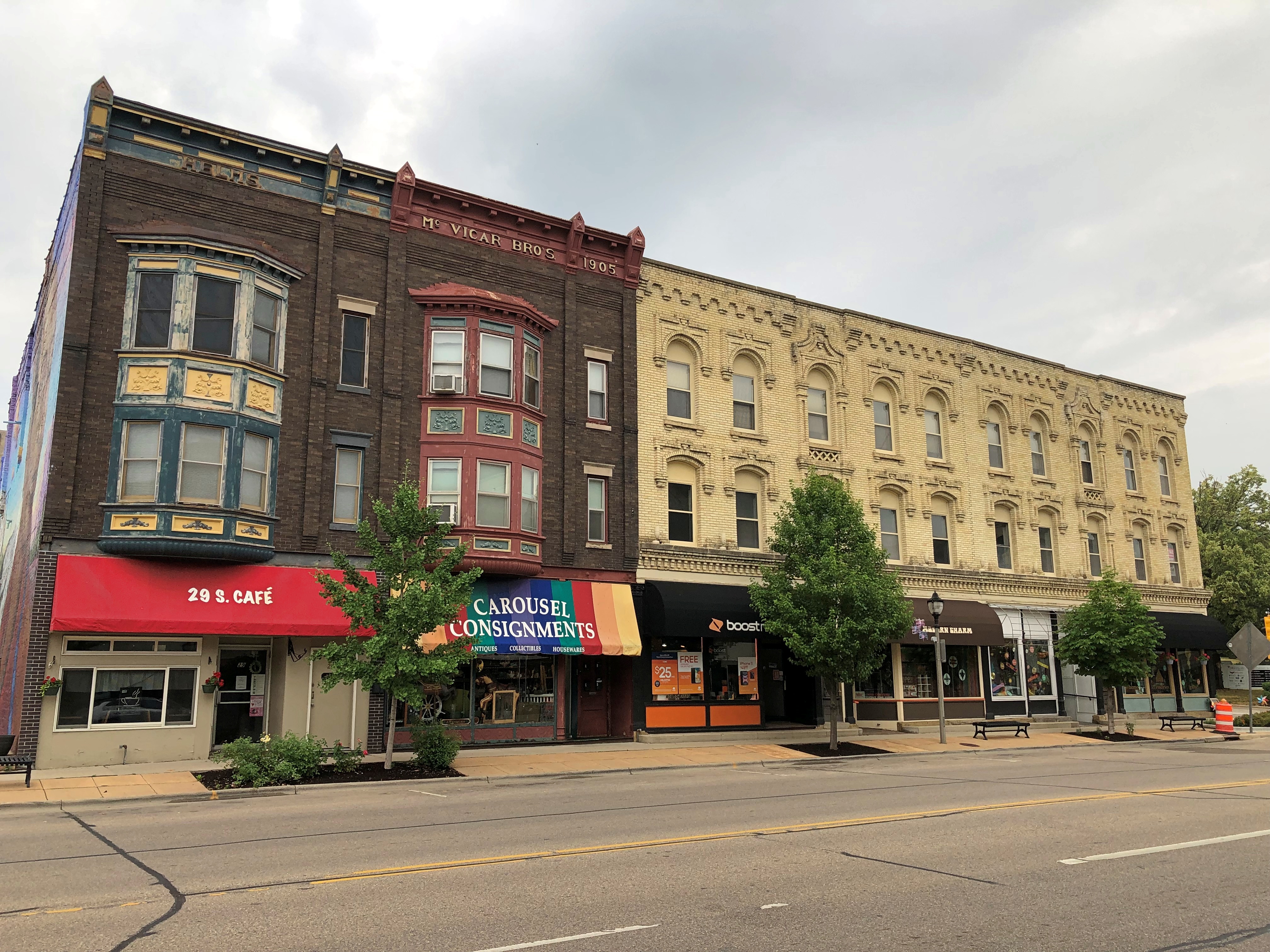

Just before I returned her to her dorm and drove home, we visited part of Main Street in Bloomington. It’s an impressive block. Bloomington should be glad it has survived down to the present.Main Street, Bloomington Ill Main Street, Bloomington Ill Main Street, Bloomington Ill

Not only survived, but the buildings are home to one kind of shop or another, mostly nonchain specialty retailers. In fact, all nonchain as far as I could see.Main Street, Bloomington Ill Main Street, Bloomington Ill Main Street, Bloomington Ill

The 400 block of Main between Market and Monroe Sts. has the strongest concentration of late 19th-century commercial structures, with facades looking well-maintained in our time.Main Street, Bloomington Ill Main Street, Bloomington Ill

Featuring artwork from our time as well.Main Street, Bloomington Ill Main Street, Bloomington Ill Main Street, Bloomington Ill

Not a lot of plaques that I saw, but I did spot one.
Main Street, Bloomington Ill

An organization that’s still very much around, but these days, the Harber Building is home to Illinois Tattoo. Ralph Smedley lived quite a long time (1878-1965), mostly in California, where the organization really took off.

Over a storefront occupied by Ayurveda for Healing, which promises a “holistic path for wellness and optimal health,” there’s a remarkable set of metal figures.Main Street, Bloomington Ill

Detail.Main Street, Bloomington Ill

Ayurveda for Healing, which I assume takes its inspiration from South Asian practices, has three locations, including this one in Bloomington, along with Chicago and Kalamazoo, Michigan.

Just a block over, the 500 block of Main isn’t what it used to be. This is what it used to be, in an image borrowed from the McLean County Museum of History.Bloomington IL Main Street ca 1930

This is what I saw, let’s say roughly 90-odd years later.Main Street, Bloomington Ill Main Street, Bloomington Ill

To take that image of the mural, I was standing in a parking lot where a Montgomery Ward store used to be. Too bad for what has been lost, but fragments are mostly what we have of the past anyway, and it’s good to spot them.