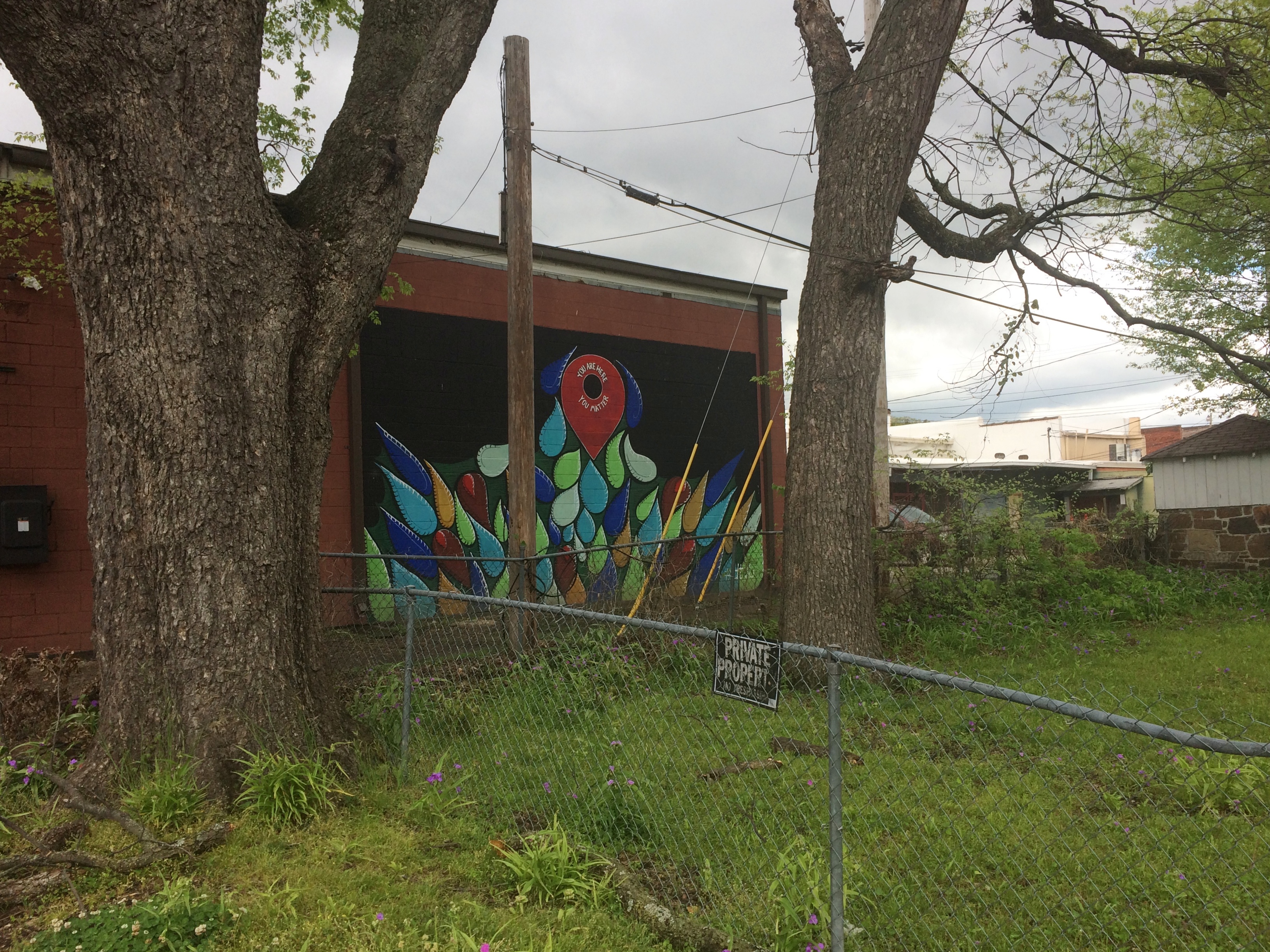
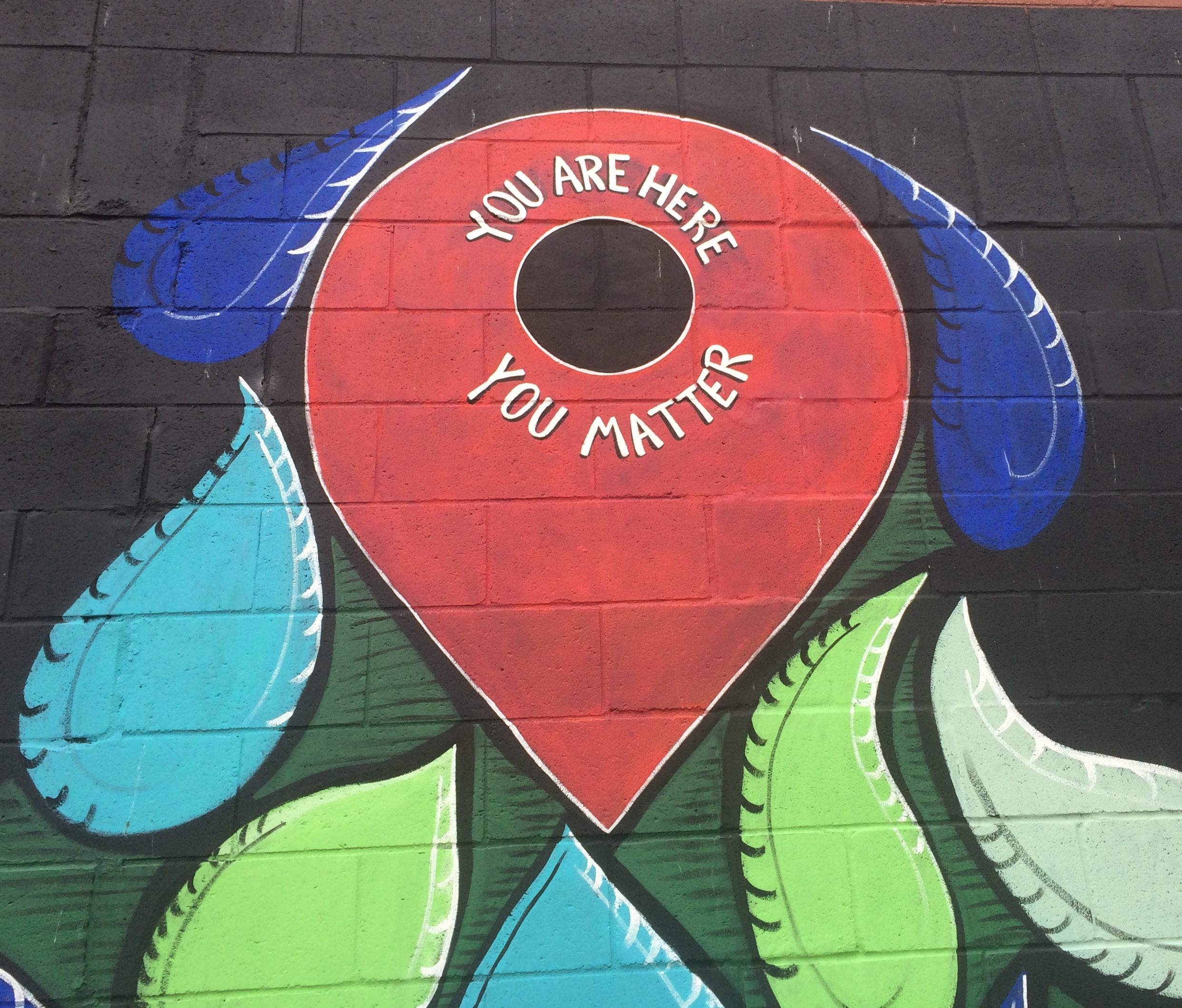
Sparta, Wisconsin

After leaving La Crosse on September 6, we spent time driving some picturesque Driftless Area roads, but soon we were feeling the pull of lunch. That is, we wanted to find a place to eat. We arrived in Sparta, Wisconsin, and started looking around. Doing it the old fashioned way — not with a search engine or an electronic map, but by keeping our eyes peeled as we drove.

Sometimes you get lucky. Right in the middle of town, on W. Wisconsin St., we found Ruby’s. We stopped right away.Ruby's Sparta Wisconsin

Ruby’s has a most traditional drive-in menu, with one exception.
Ruby's Sparta WisconsinBetween the three of us, we ate a satisfying drive-in lunch: a chili cheese & onion dog, a grilled cheese sandwich, onion rings, cheese curds (this is Wisconsin, after all) and the unusual item: a walnut burger.

As the menu explains, it’s “seasoned walnut & cheese patty with lettuce, tomato, pickle & honey mustard on a whole wheat kaiser bun.” I had a bite. It was tasty. The menu also notes “the Historic Trempealeau Hotel” above the Walnut Burger description, presumably as its provenance. Naturally, I looked it up. The boutique hotel, dating from the late 19th century, is still around, on the Mississippi upriver some distance from La Crosse in a burg called Trempealeau.

Rudy’s also sports a fiberglass statue. A bear on roller skates.
Ruby's Sparta WisconsinUnlike Gambrinus, I suspect the bear is holding a mug of root beer. Rudy’s has a special section for that on the menu, including a root beer float, but not beer.

While we ate, I noticed another statue, much larger — or at least taller — than the bear. It was across the street catercorner from Ruby’s, in a park.

Of course I had to go see that, after we ate. The Sparta Downtown River Trail runs through the park.
river trail Sparta WisconsinAt this point, a footbridge crosses the small La Crosse River, which eventually empties into the Mississippi in the city of that name.
river trail Sparta WisconsinOn the other side of the bridge is the statue I saw from across the street.Ben Bikin' Sparta Wisconsin

Ben Bikin' Sparta WisconsinIt has a name: Ben Bikin’. Sparta, pop. just shy of 10,000, is the self-proclaimed Bicycling Capital of America. A nice local distinction. I imagined that Sparta might have been a bicycle manufacturing town at one time, maybe as long ago as the bicycle craze of the ’90s that popularized the modern bike. The 1890s, that is.

But no. “Sparta’s claim as the ‘Bicycling Capital of America’ is based upon the first rail bed in Wisconsin to be converted to bike trails between Sparta and Elroy,” says the city’s web site. That trail was completed in 1967, so fanciful penny-farthing statues aside, the town sobriquet isn’t that old.

In fact, I don’t remember seeing any more bicycles in Sparta, or dedicated bike lanes, than in any other small town. That is to say, not many. There is, however, a bicycle museum in town.

More than that: the Deke Slayton Memorial Space and Bicycle Museum. I knew it was closed, but we drove by before leaving town anyway.
Deke Slayton, Sparta WisconsinSlayton, the only Mercury astronaut who never flew in a Mercury capsule, grew up on a farm near Sparta. So he’s the town’s other attenuated claim to fame. The thinking must have been, best to combine the two into one (slightly) larger museum. Well, why not?

More La Crosse, Including Gambrinus

After everyone was awake last Sunday, we packed up to leave La Crosse. But there were a few more places to see on the way out, such as Riverside Park.Riverside Park La Crosse

As the name says, it’s along the Mississippi.
Riverside Park La CrosseLooking toward the bridge where U.S. 14 crosses between Wisconsin and Minnesota.
Riverside Park La CrosseA hyperpartisan had set up his table in the park, complete with flags and literature and, I expect, a willingness to talk about his candidate till the heat death of the universe. I didn’t talk to him any more than I would any other religious fanatic.
Riverside Park La CrosseNear the park is a pedestrian path into downtown, lined with heron statues.La Crosse heron statues

The birds were originally displayed in 2008, during the vogue for public displays of animal statues. Apparently the statue herons were returned to public display in La Crosse two years ago, a task overseen the Pump House Regional Arts Center, a local nonprofit.

A selection of da birds.
La Crosse heron statuesThe La Crosse Loggers are a team in the Northwoods League, a summer collegiate league.La Crosse heron statuesLa Crosse heron statues La Crosse heron statuesThere was one more place in La Crosse that I knew about that Sunday morning and didn’t want to miss. Namely, the World’s Largest Six Pack, which stands above 3rd Street S.
World's Largest Six Pack La CrosseRoadside America recalls its early years painted to resemble cans of Heileman’s Old Style Lager. These days, the six pack advertises La Crosse Lager, but apparently the effect wasn’t created by paint, but wallpaper.Namely, the World's Largest Six Pack, which stands above 3rd Street S.

A sight to see, but a little drab, though the morning light doesn’t bring out whatever color it has. Still, other paint jobs looked brighter. A place like this can’t hide from Google Images comparisons.

Across from the six pack, which are in fact for storing beer, with a capacity of 22,000 barrels (688,200 gallons), are other buildings in the brewery complex. Most notable is an earlier brew house, or at least its facade, which is easily more than a century old.
La Crosse Lager BreweryTo the left of the old facade (from my POV).
La Crosse Lager BreweryTo the right.
La Crosse Lager BreweryUnder that big brick wall, standing with his goblet held high, is Gambrinus.
La Crosse Lager Brewery GambrinusGood old Gambrinus. I didn’t know about that particular bit of Euro-lore growing up. I first saw him in Chicago, looking somewhat different but crowned and holding a vessel all the same.

La Crosse Walkabouts

Last Sunday I woke fairly early, because there are only a few good reasons for doing such a thing, such as catching a plane or looking around somewhere new while other members of your family sleep.

I drove to historic downtown La Crosse for a closer look. The first place I stopped was on 3rd Street S., across from The Library.
Downtown La CrosseThat was worth a chuckle. As far as I can tell from The Library’s web site, it isn’t a book bar — there are such things, I’ve heard — but an ordinary student bar, though the site is a little vague on that point.

From there I walked around a square block of La Crosse’s handsome historic core, full of late 19th- and early 20th-century buildings that have found 21st-century uses. Besides bars — a fair number of those — there are restaurants, coffee shops, specialty shops, music venues and professional offices.

Such as along the east side streetscape on 3rd, between Main and Pearl.
Downtown La CrosseThe Rodolf Building the west side of 3rd., dating from the late 1860s and early ’70s.
Downtown La CrosseThe State Bank of La Crosse on Main St., dating from 1885. It’s an impressive pile.
Downtown La CrosseThe streetscape along 4th St.
Downtown La CrosseAnd along Pearl St.
Downtown La CrosseThere are a variety of shops in the old buildings, including some unexpected ones. Such as a saddlery on 3rd.
Downtown La Crosse saddle shopThere’s a book store on Pearl that didn’t used to be a book store. According to the mosaic at the entrance, you could buy shoes there once upon a time.

Downtown La Crosse Arenz ShoesArenz Shoes had eight locations in the region as recently as the 1970s, but the last one, in Sparta, Wisconsin, is closing even now. The Pearl St. location was a shoe store from 1903 to 1992.
This promise of sustenance made me smile.

Downtown La Crosse FOODThat’s just a small sample of the charms of historic downtown La Crosse. Much more about the buildings is here, though unfortunately without any pictures.

Next I drove east on Market St. until I came to St. Rose Convent and Viterbo University, which are adjacent. I stopped on Market and took another walk around a city block, through the university campus as well as near the convent.
St. Rose Convent The entrance to the convent, looking like an academic building.
St. Rose Convent On a street called Franciscan Way — Viterbo is run by Franciscans — is San Damiano Chapel, which, as part of the university, I assume takes some inspiration from the church of that name near Assisi. It was closed.

Viterbo University

Down the block to the east is Mary of the Angels Chapel, which is part of the convent. The view from the west.
Viterbo UniversityThe view from the south.
Viterbo UniversityAbove one of the entrances, maybe the main one. It too was closed.
Viterbo UniversityThe campus features a number of statues, including “Dancing Francis,” by Paul Granlun.Viterbo University Dancing Francis

Viterbo University Dancing Francis

A work that’s still yet exudes motion. Francis inspires poses in motion. I didn’t realize until I read about this statue that Francis is depicted standing on a crescent moon.

Two Wisconsin Vistas: Granddad Bluff Park & Tower Hill SP

On Tuesday night late, a storm blew threw, bringing rain and fall-like temps, and leaving Wednesday wet and cool and gray. Today wasn’t quite so cool, but still not summer-like. It will be warm again, but this is our first taste of fall.

Late Saturday afternoon, we made our way to Granddad Bluff Park in La Crosse. Unlike some of the other vistas we’ve taken in recently, you can drive most of the way to the overlook at Granddad Bluff. From the parking lot, it’s a short walk to the edge of the bluff.

Granddad's Bluff

Granddad's Bluff

Not sure about that L. I suppose it stands for La Crosse. I didn’t see any other letters to spell out the name, Hollywood Sign-style.Granddad's BluffGranddad's BluffGranddad's BluffNice views. La Crosse spreads out to the west of the bluff. The city, pop. 51,000 or so, mostly hugs the Mississippi just south of where the Black River joins it.

I’d have guessed that roving Frenchmen founded the place, but apparently not. Lt. Zebulon Pike passed this way in 1805 and called the area Prairie La Crosse, but the town wasn’t founded until 1841 when a New Yorker named Nathan Myrick showed up.

“Myrick found a partner [and] in Nov. 1841, borrowed an army keelboat and a stock of trader’s goods, and poled up the Mississippi River to Prairie la Crosse (now La Crosse, Wis.),” explains the Clark County History Buffs. “There they built a cabin, the first in La Crosse, and became successful in the Indian trade…”

I have my own tenuous connection to La Crosse, even though last weekend was the first time I’d more than passed through the town. La Crosse is the first place I ever saw in Wisconsin, back in 1978 as our bus rolled through, probably on I-90 at the northern edge of town. I remember being impressed by the rolling hills after traveling through so much Midwestern flatland.

We buzzed through in 2005 on the way to Yellowstone, and I thought then it would be good to visit La Crosse someday. The day happened to be September 5, 2020, first with a look from Granddad Bluff.

The bluff was a source of quarried rock in the 19th century, but as a lookout and prominent local feature, La Crosse residents have reportedly always been fond of the place. So much so that more than 100 years ago, when they believed a new owner was doing to destroy it for stone, a wealthy local resident arranged for the city to acquire it for a park.

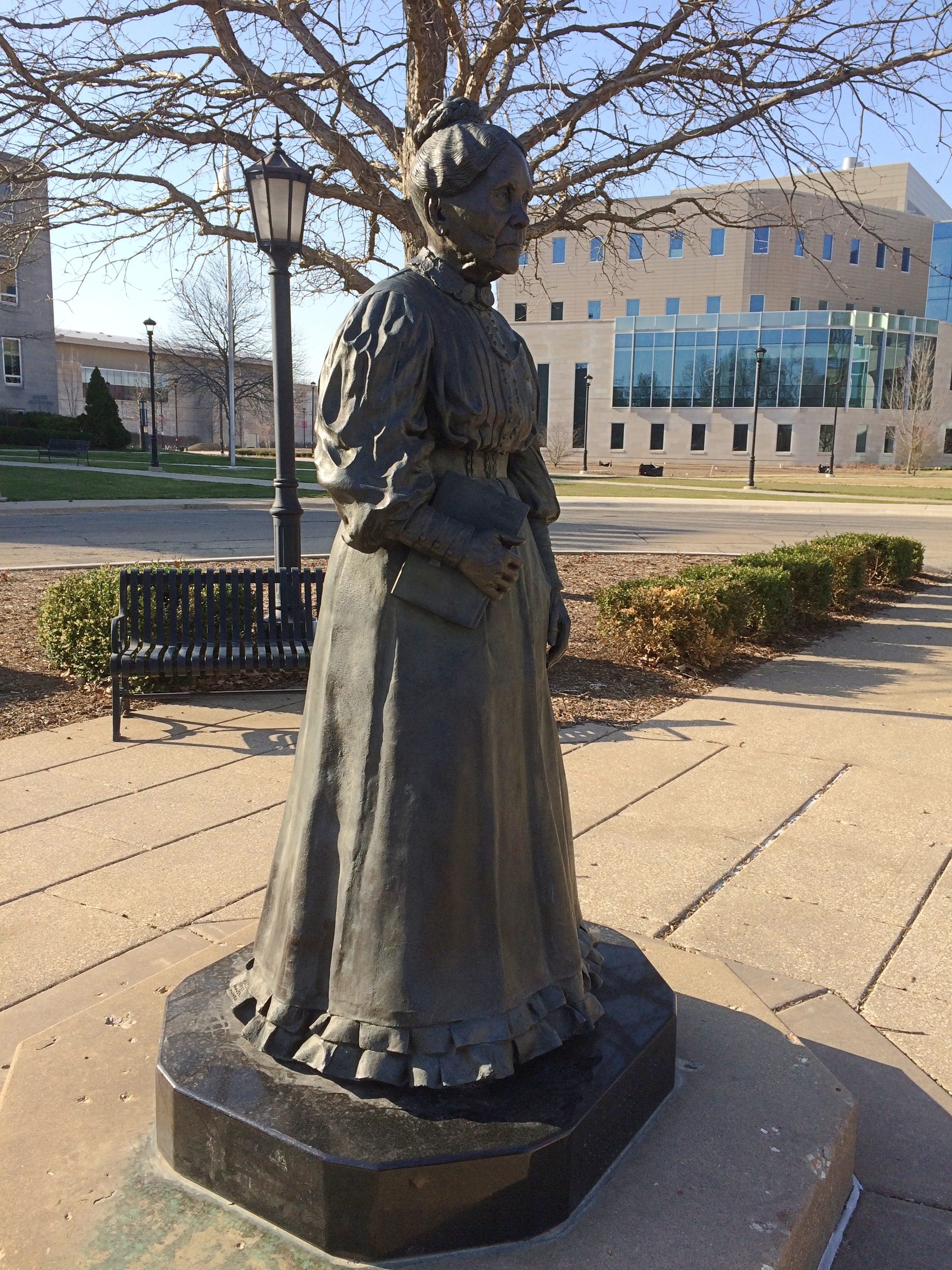
Here she is in the park: Ellen Hixon, depicted in a bronze by Wisconsin artist Mike Martino.Granddad's Bluff Ellen Hixon statue“A subscription was organized and Ellen P. Hixon, encouraged by two of her sons, Frank and Joseph, donated $12,000 to start the fund,” a sign near the bronze says. In current money, that’s more than $310,000. She was the widow of a local lumber baron, Gideon Hixon. Their house is now a museum, which is only open in a limited way now.
“About twenty other local benefactors and companies then contributed another $3,000 to purchase adjacent lands and to fund roads and other improvements. By 1912 the Hixon family was able to transfer title for the property to the city for use as a public park, and the bluff was saved.”

Good for her. As legacies go, Granddad Bluff’s a pretty good one.

Earlier in the day, we stopped briefly at Tower Hill State Park near Spring Green, Wisconsin, which is better known for Taliesin.Tower Hill State Park

It too offers a good vista, but you have to climb a hill to see it.
Tower Hill State ParkAt the top of the bluff is a reconstruction of the Helena Shot Tower. It’s closed for now.
Tower Hill State ParkTower Hill State ParkIn the early 1830s, a Green Bay businessman named Daniel Whitney had the shot tower built for the manufacture of lead shot. Molten lead dropped from a height forms into globes on the way down, which harden when hitting a pool of water below.
You’d think such an operation would do serious business during the Civil War, but it was closed by then. Later Jenkin Lloyd Jones, who was Frank Lloyd Wright’s uncle, developed a retreat on the site. His widow gave it to the state of Wisconsin, which created the park in the 20th century and had the shot tower rebuilt.

The view from near the shot tower is toward the Wisconsin River.
Tower Hill State ParkWorth the climb, which wasn’t nearly as exhausting as Devil’s Lake SP or Starved Rock SP or Wyalusing SP or Effigy Mounds NM. Been quite a summer for climbing hills, now that I think about it.

Shrine of Our Lady of Guadalupe, La Crosse

Turn off of U.S. 14 as you approach La Crosse, Wisconsin, from the east, and a small road goes a short way to the Shrine of Our Lady of Guadalupe. The shrine is no small affair, but rather a complex of buildings and sites, including a large shrine church, chapels, statues, memorials, devotion areas, the Stations of the Cross, a rosary walk, and a visitors center plus cafe and gift shop, mostly along a winding walking path through hilly, wooded territory.

Roughly 100 acres, I’ve read, and while it looks like a rural setting, according to Google Maps, the boundaries of the city of La Crosse reach down to the south like a dogleg to include the area around the shrine. Maybe the Diocese persuaded the City to annex the land, to facilitate city services.

Why La Crosse? As far as I can tell, because the former Bishop of La Crosse, lately Cardinal Raymond Leo Burke, really wanted a shrine. He asked permission of the Holy See, which agreed, though I like to think that at the bottom of one communique or another, the Vatican also said, you figure out how to pay for it.

Whatever the case, funds were obtained and construction began in 2004, with the shrine dedicated in 2008. So in the long history of Catholicism, the place is spanking new.
We arrived mid-afternoon on Saturday. Almost at once the curving path offers a nice view of the surrounding Driftless Area (and the parking lot).
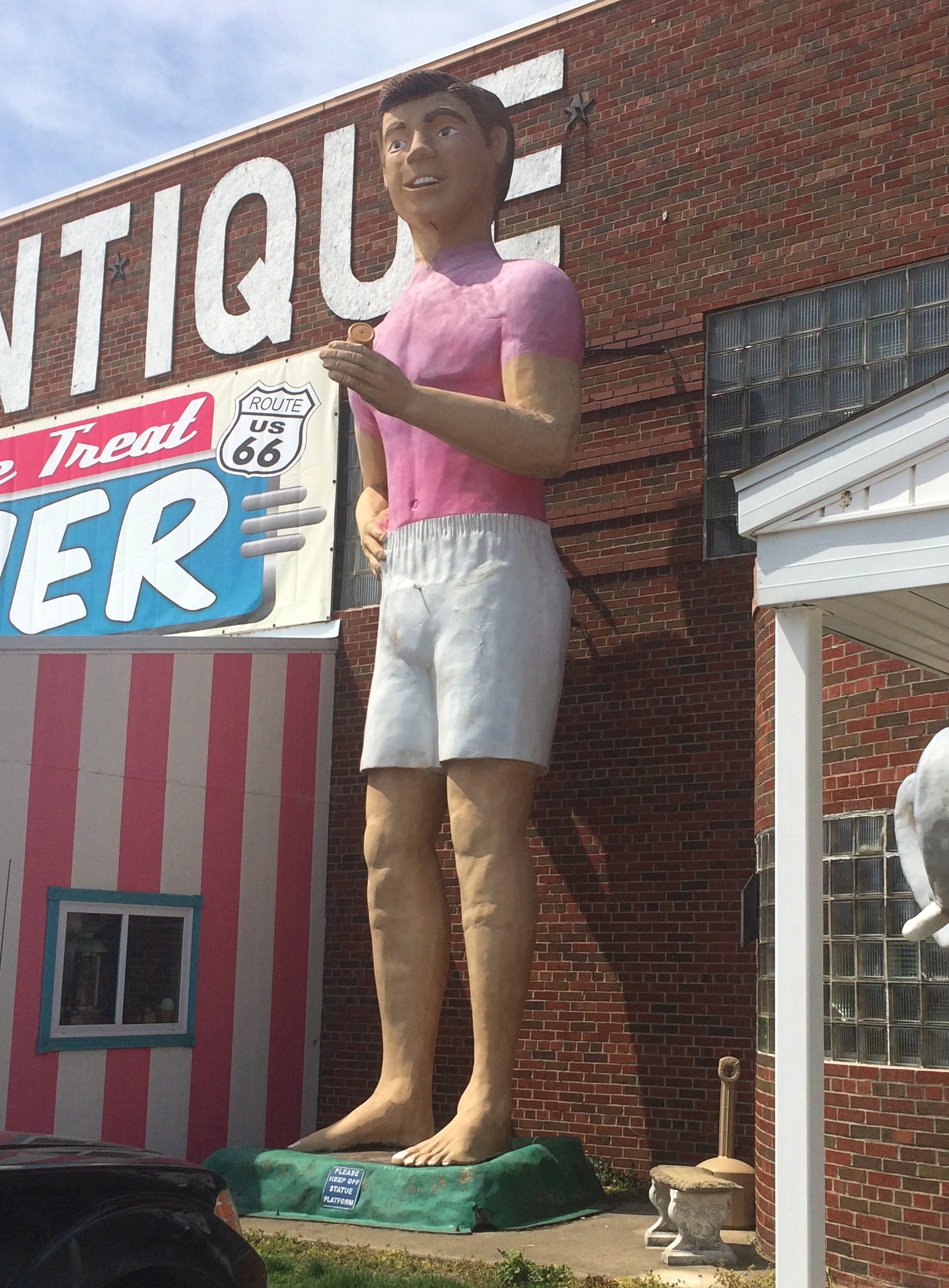
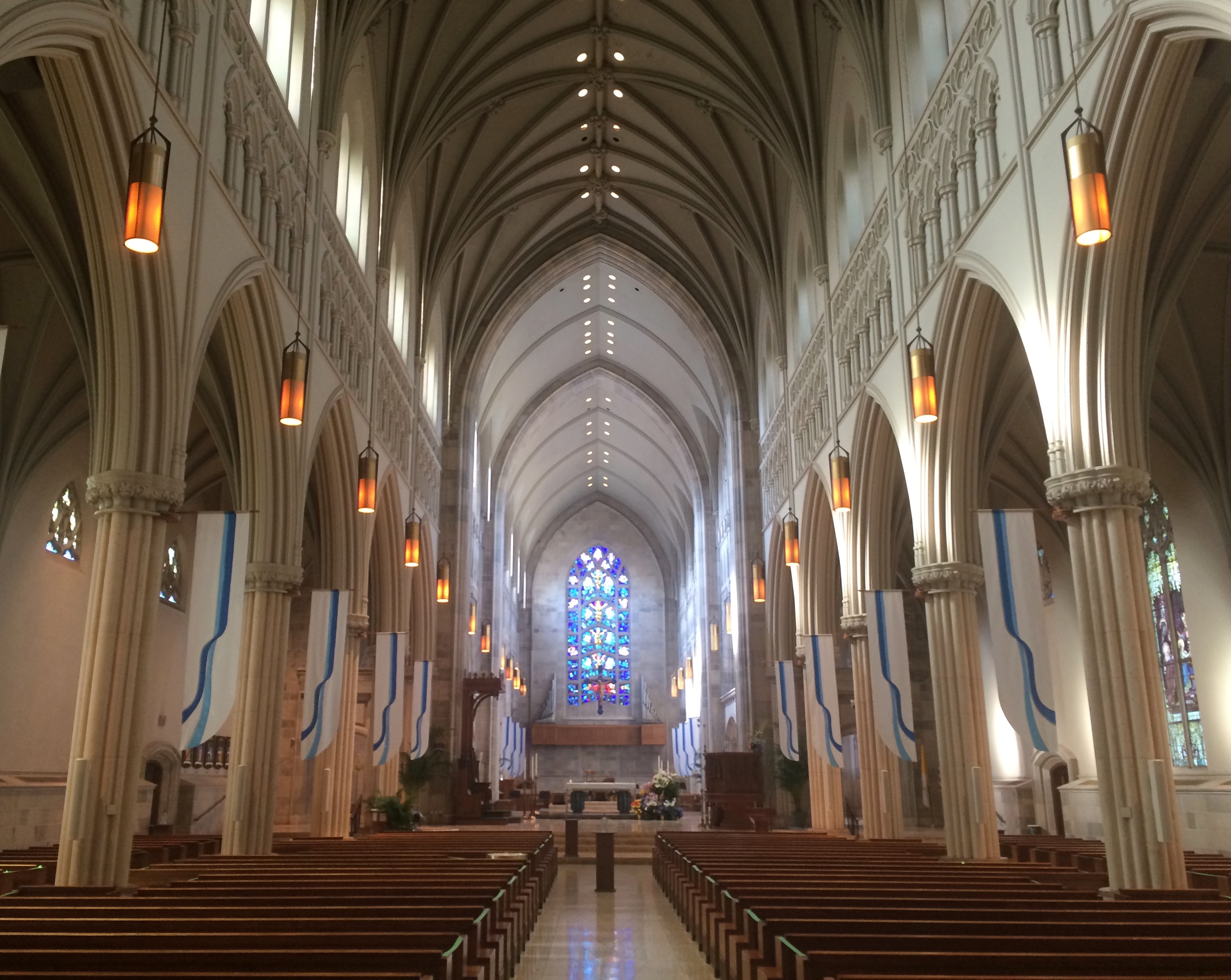
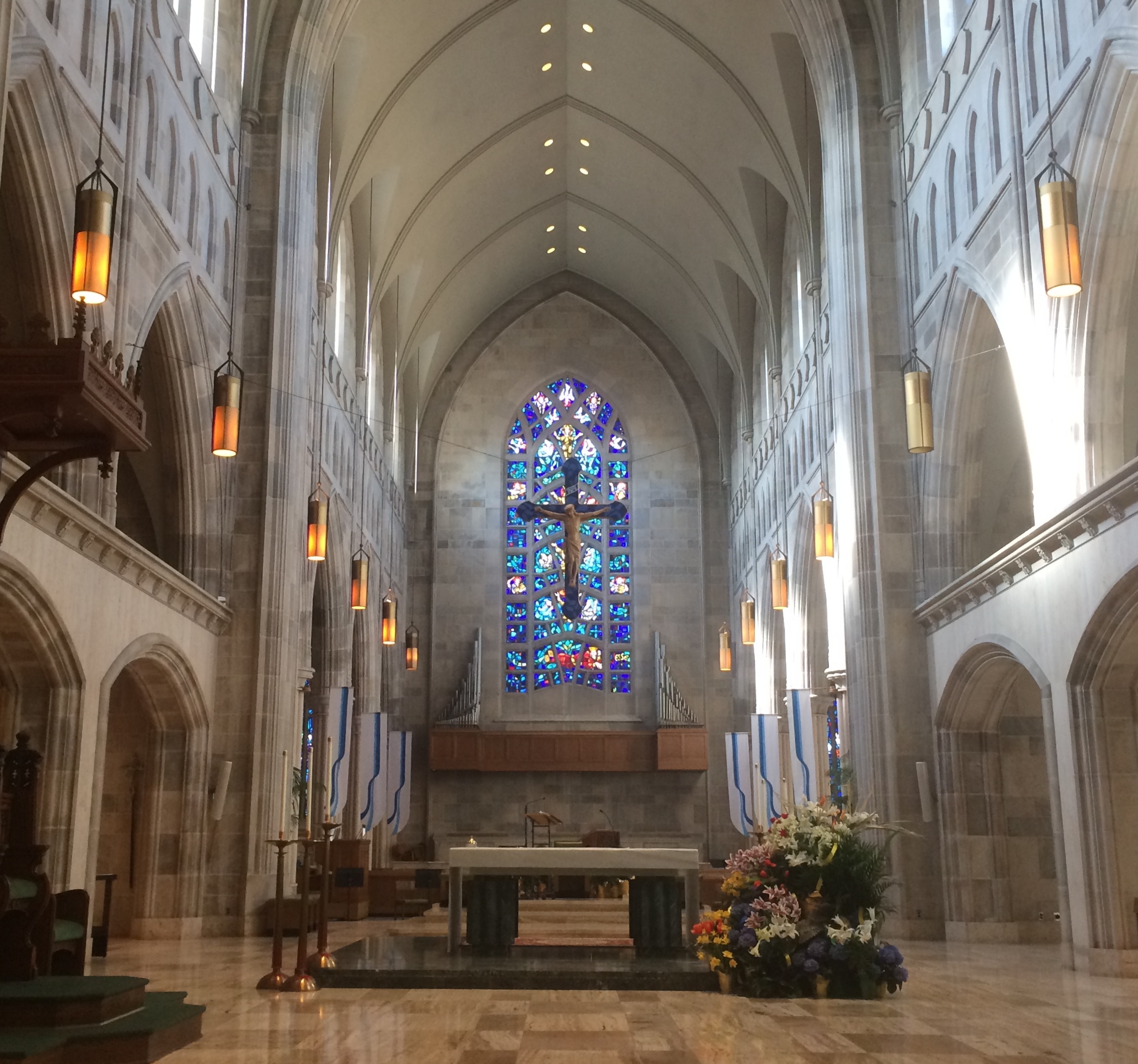
Shrine of Our Lady of GuadalupeThe first structure on the path is the Mother of Good Counsel Votive Candle Chapel, designed by the locally based River Architects, who have done a number of religious structures.
Shrine of Our Lady of GuadalupeI didn’t count them, but I’ve read there are 576 votive candles inside the chapel.
Shrine of Our Lady of Guadalupe votive chapelFurther along the path are devotional areas, including one featuring Saint Kateri Tekakwitha, Lily of the Mohawks, with a bronze by artist Cynthia Hitschler.
Shrine of Our Lady of Guadalupe Saint Kateri Tekakwitha, Lily of the MohawksAround a bend is the Memorial to the Unborn, also by River Architects.Shrine of Our Lady of Guadalupe Memorial to the UnbornShrine of Our Lady of Guadalupe Memorial to the UnbornShrine of Our Lady of Guadalupe Memorial to the UnbornShrine of Our Lady of Guadalupe Memorial to the UnbornNearby is a plaza fronting the Shrine Church, a design using stone from Minnesota and Wisconsin by Duncan Stroik, another specialist in sacred spaces. The interior takes inspiration from St. Mary Major in Rome.Shrine of Our Lady of Guadalupe Shrine ChurchShrine of Our Lady of Guadalupe Shrine ChurchShrine of Our Lady of Guadalupe Shrine ChurchShrine of Our Lady of Guadalupe Shrine ChurchOn the side walls are paintings, mostly of saints, along with reliquaries in glass cases under the paintings. I encountered one of Bl. Miguel Agustin Pro, S.J., with a reliquary containing one of his first-class relics, though the sign didn’t say what.
Shrine of Our Lady of Guadalupe Shrine ChurchI’d encountered him before, in wood, but without any relics.

La Crosse ’20

Last year for the Labor Day weekend, we headed east to the shores of Lake Huron. This year, we headed west to La Crosse, Wisconsin, which has its own water feature, the various channels of the Mississippi River.

The trip was structured like our visit to Prairie du Chien in July: Friday night in Madison, a slowish drive on U.S. 14 to La Crosse the next day, where we spent Saturday night, and then a somewhat faster return on Sunday afternoon, mostly on I-90. La Crosse was the destination, but we also stopped at various places along the way there and back.

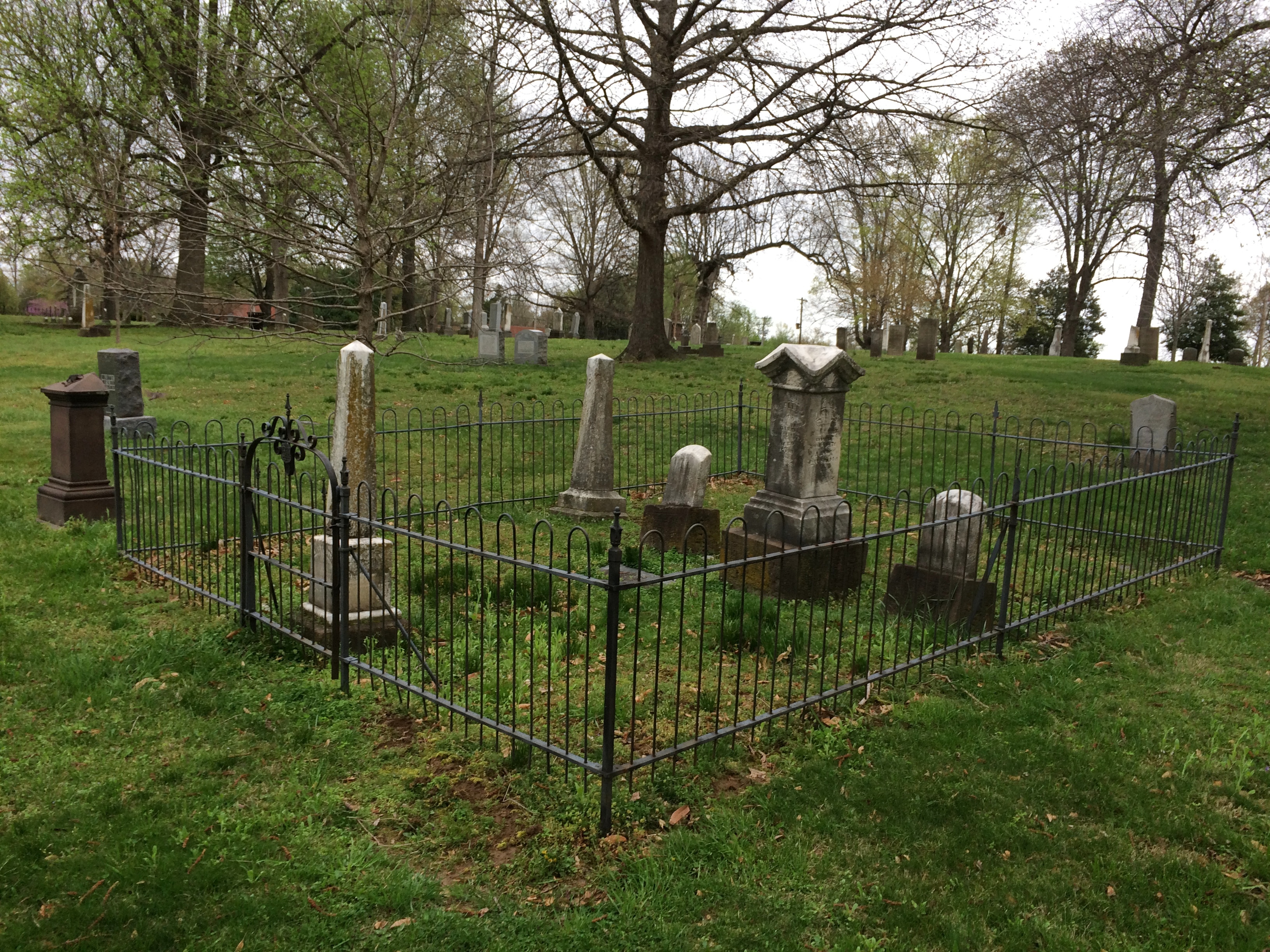
We visited a major Catholic shrine, looked down on La Crosse from a tall bluff, looked down on the Wisconsin River from another bluff, ate food obtained from drive-thrus more than once, swam in a hotel pool for the first time in ages, stopped at a large farm stand, slept on an island as a thunderstorm moved through the area, walked along the Mississippi, came very close to the border with Minnesota without entering that state, walked around downtown and a university campus, drove along an astonishingly beautiful Wisconsin Rustic Road northeast of La Crosse, spent time in the Bicycling Capital of America, and saw a couple of rural cemeteries, an installation of outsider art and the back lot of fiberglass statue manufacturer.

A good little trip. That’s what we can do these days.

I can report a number of changes in Wisconsin since July. Masks are now more emphasized, especially by businesses at their entrances, some citing local directives. More people seemed to be wearing them. Also, political yard signs have sprouted. It’s my impression that, simply in terms of signs, Trump has a slight edge in rural Wisconsin. But I also have to say there was no shortage of Biden signs in those rural stretches.

We stopped by whim a few places along U.S. 14. Such as at a historic marker just west of Mazomanie. The marker told us that a town had once prospered on the site.

VILLAGE OF DOVER
Beginning in 1844, nearly 700 settlers were brought into this area by the British Temperance & Emigration Society, organized the previous year in Liverpool, England. By 1850 Dover boasted a hotel, post office, cooper, blacksmith, shoemaker, wagon shop and stores. When the railroad chose Mazomanie for a depot site and made no stop in Dover, Doverites moved their houses into Mazomanie and Dover faded away to become a ghost town.

The site does look fairly undeveloped in our time, except for a small fence.
Dover, Wisconsin ghost townBehind the fence is something that the living residents of Dover probably never considered moving: a small slip of a cemetery.
Dover, Wisconsin ghost town cemeteryDover, Wisconsin ghost town cemeteryIn Richland Center, seat of Richland County, we stopped for a few moments to take a look at the A.D. German Warehouse. It is an unusual-looking warehouse. The front:
AD German Warehouse Richland CenterAD German Warehouse Richland CenterThe back, including a building with a sign that says it is an older A.D. German Warehouse.
AD German Warehouse Richland CenterUnusual or not, the “new” A.D. German is known for one thing: being designed by Frank Lloyd Wright, and apparently his only warehouse.

“The A.D. German Warehouse is an impressive brick structure topped by a magnificent concrete frieze,” says Wright in Wisconsin. “Generally considered to resemble a Mayan temple, this avant-garde warehouse and attached music room was built for A. D. German’s wholesale grocery business.”

A Mayan temple. The thought amuses me no end. It also makes me re-imagine modern warehouse/distribution buildings, those absolutely utilitarian linchpins of the modern economy. What if some of them had splashes of ornament taken from different times and places? Some friezes from the Parthenon. A touch of a Babylon ziggurat. Or some Mayan elements.

But no. That isn’t the sort of society we live in. You want to spend money on what? Just build the damn thing.

Speaking of which: “Construction was stopped with the building unfinished in 1921, after spending $125,000, which exceeded the original cost estimate of $30,000,” Wright in Wisconsin continues. “It is the only remaining commercial structure designed by Wright that still exists from this time period.”

No wonder he didn’t do any other warehouse commissions. Yet I’m glad to say that an effort is under way to restore the thing. Never mind that it’s a Wright. The world is just a little better place for having a Mayan-flavored warehouse somewhere outside the homeland of the Maya.

On the outskirts of Richland Center, there is a field flying more than 300 flags.
merican Legion Veterans Memorial Park, Bayard de Hart Post 13It’s part of the American Legion Veterans Memorial Park, Bayard de Hart Post 13. Must be quite a sight when the wind is up. At the base of each flag is a stone plaque with the name and service details of a local veteran, living or dead.

There’s also a tank.
merican Legion Veterans Memorial Park, Bayard de Hart Post 13An M60 A3, a sign said, a kind of tank that last saw use in action (for the U.S.) during the first Gulf War.

Oglesby Sights

Sizable towns cluster around the Illinois River in north-central Illinois like so many stones on a necklace: Morris, Ottawa, LaSalle, Peru, Spring Valley, Princeton. Then there’s Oglesby, which isn’t so sizable, at about 3,500 people. The place is named after the long-ago Illinois governor, whom I’ve encountered before in Decatur and Chicago.

We became acquainted with Oglesby last weekend because we stayed overnight in a motel in the town, to take advantage of its proximity to Starved Rock SP and Matthiessen SP, though we decided not to visit the latter.

To become acquainted with the town, you can drive down the east-west Walnut St. for about two miles. On Sunday morning, I went out for gas early, which also meant looking around. Lilly joined me.

The town post office on Walnut looked about as WPA as can be. Being Sunday, we couldn’t go in and look at the 1942 mural, “The Illini and Pottawatomies Struggle at Starved Rock” by Fay E. Davis, which is said to be quite something.

Soon we arrived at this structure, which would loom over Walnut St., except that it’s set back a few hundred feet and behind a fence. The fence is pretty new.
Lehigh Portland Cement Co Oglesby IllinoisAn old enough ruin to sport fully grown trees in its midst. An interesting enough ruin to be fenced, though I figure local teens have no problem getting in when the mood strikes.
The blackened sign is just barely legible.

LEHIGH PORTLAND CEMENT COMPANY OGLESBY

That’s all I needed to find out more about this industrial ruin. For decades, Oglesby lived by the extraction and processing of minerals, especially the manufacture of cement and concrete.

The Chicago Cement Co. started operations on the site in 1898. Lehigh, a Pennsylvania company, acquired Chicago in 1916 and ran the plant until 1963. Apparently Lehigh decided at that time that modernization of the plant wouldn’t be worth the expense, and so closed it.

I have to report that cement and concrete production in the area isn’t dead yet. Illinois Cement Co., which is across the river in LaSalle, still seems to be in that business, and related hard-stone entities dot the map: the Mertel Gravel Co., Ladzinski Concrete Finishing Co., Lafarge Aggregates, Wenzel Concrete Works and Ruppert Concrete, to name a few (and those last two are in Oglesby).

The above image is only a part of the ruin.
Lehigh Portland Cement Co Oglesby IllinoisEven that doesn’t depict the whole of it. Note how far it goes back when you look on Google Maps. We were looking at the property from about where I’ve put a blue dot.
Lehigh Portland Cement Co Oglesby Illinois“This looks like the most interesting thing in Oglesby,” I told Lilly. Too expensive to tear down, I figure, so there it stands, letting the decades take their toll.

Down Walnut to the east was something almost as interesting, and cement related, too.Safety Follows Wisdom Oglesby IllinoisAn intriguing bit of work in a small public park — Lehigh Park — donated by the company to the town in 1945 (the side plaque says that). Turns out the work is one of a genre of memorials, awarded by the Portland Cement Association, with examples wherever cement is or was made. They’re made of cement, of course.

“Cement ‘Safety Follows Wisdom’ monuments, first presented in 1924, for perfect safety records at cement plants,” says the Historical Marker Database. “The winning design came from an Art Institute of Chicago team directed by sculptor Albin Polasek.” (I’ve happened across his work before.)

Safety Follows Wisdom Oglesby illinoisDo a casual search and you’ll find Safety Follows Wisdom stones all over the country. It’s something I had no inkling of until I drove down a main street in a small town and — more importantly — got out of the car and looked around. The devil might be in the details, but I find that the joy of traveling is in the details.

Ottawa Sights (Not the One in Canada)

We arrived in Ottawa, Illinois, on Saturday in time for lunch. We decided on carry-out from Thai Cafe on Columbus St., which seems to be the only Thai joint in town. At a population of 18,000 or so, maybe that’s all Ottawa can support.

We took our food to Allen Park, a municipal park on the south bank of the Illinois, and found a picnic shelter. The river’s large and on a weekend in July, home to a lot of pleasure craft.
Ottawa Illinois 2020Sometimes, the river must be angry, such as on April 19, 2013. Got a lot of rain in northern Illinois about then, so I believe it.

Ottawa Illinois High Water MarkDownstream a bit is the Ottawa Rail Bridge, which rates a page in Wikipedia. The current bridge dates from 1898, though it was modified in 1932.

Ottawa Illinois Rail Bridge

Two large metal sculptures rise in the park, both by Mary Meinz Fanning. The red one is “Bending.”
Ottawa Illinois BendingThe yellow one is “Reclining.”
Ottawa Illinois Reclining“Fanning was the driving force behind the creation of the red and yellow steel sculptures at Allen Park by the Illinois River in Ottawa,” says a 2010 article in The Times, which seems to be a local paper.

“The 40-foot-tall sculptures, which weigh 17 tons each, were erected in 1982 and 1983 from parts of the 1933-built steel girder Hilliard Bridge that was demolished in 1982 to make way for the present-day Veterans Memorial Bridge. Fanning died of illness Nov. 4, 1995, in Ottawa at age 48.”

Just as you enter the park, you also see a wooden sculpture: one of artist Peter Toth’s “Whispering Giants,” which I’d forgotten I’d heard of till I looked him up again. The one in Allen Park is Ho-Ma-Sjah-Nah-Zhee-Ga or, more ordinarily, No. 61.

Looked familiar. I realized I’ve seen one before —
Nee-Gaw-Nee-Gaw-Bow That one is Nee-Gaw-Nee-Gaw-Bow or No. 59, and we saw it by chance in Wakefield, Mich. about three years ago. Apparently the artist has put up at least one in each state.

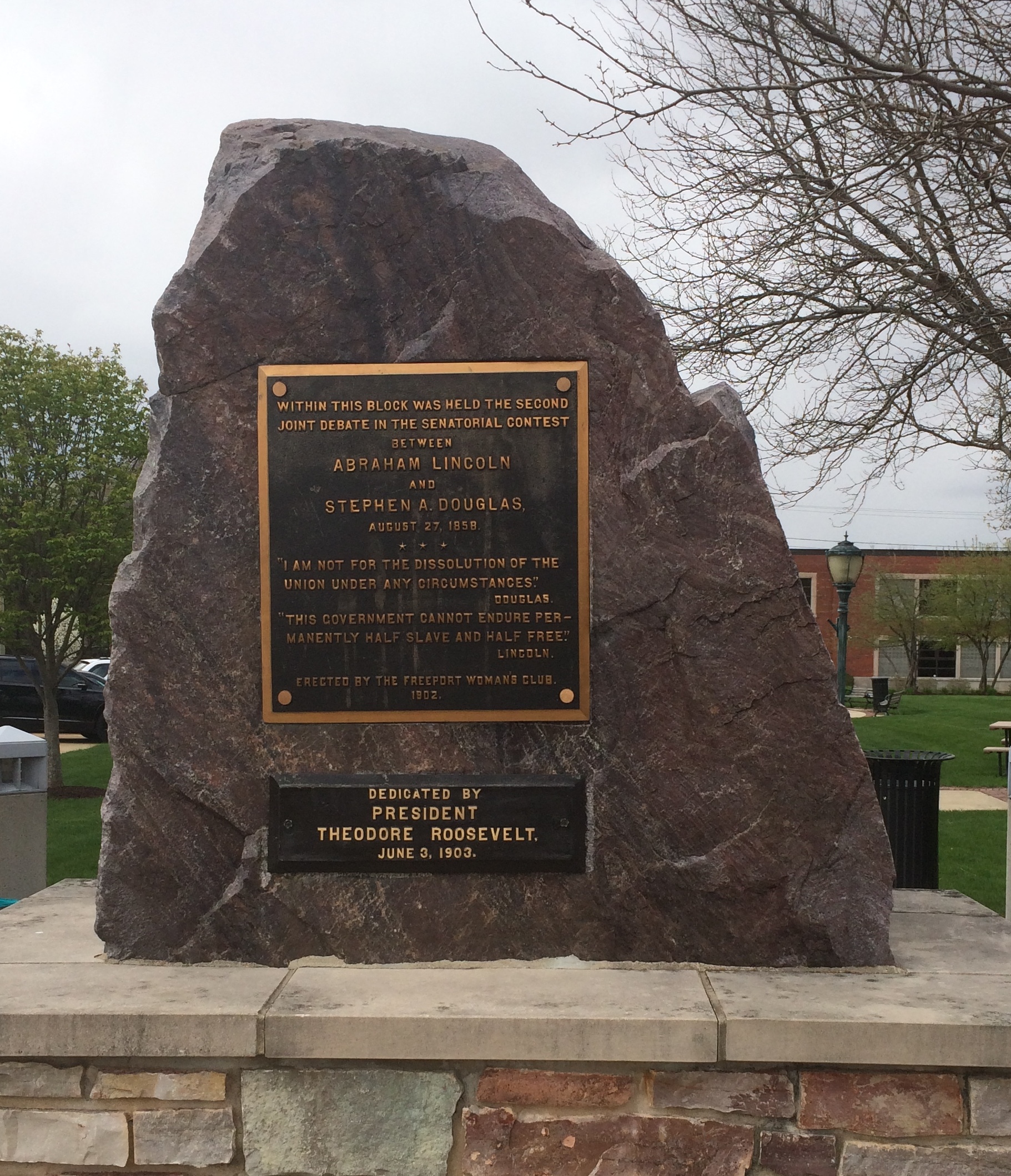
Ottawa has a place in U.S. history mainly for two things. One that the town is happy to celebrate: the first Lincoln-Douglas debate in 1858. The other is the awful story of the Radium Girls, poisoned by luminous paint at a clock factory in Ottawa in the early 20th century. For a long time, there was no public acknowledgment of that incident. Now there is. But I didn’t know the Radium Girls have a statue in town (since 2011), so we missed that.

We didn’t miss the site of the Lincoln-Douglas debate, which is in the shady, square-block Washington Park.
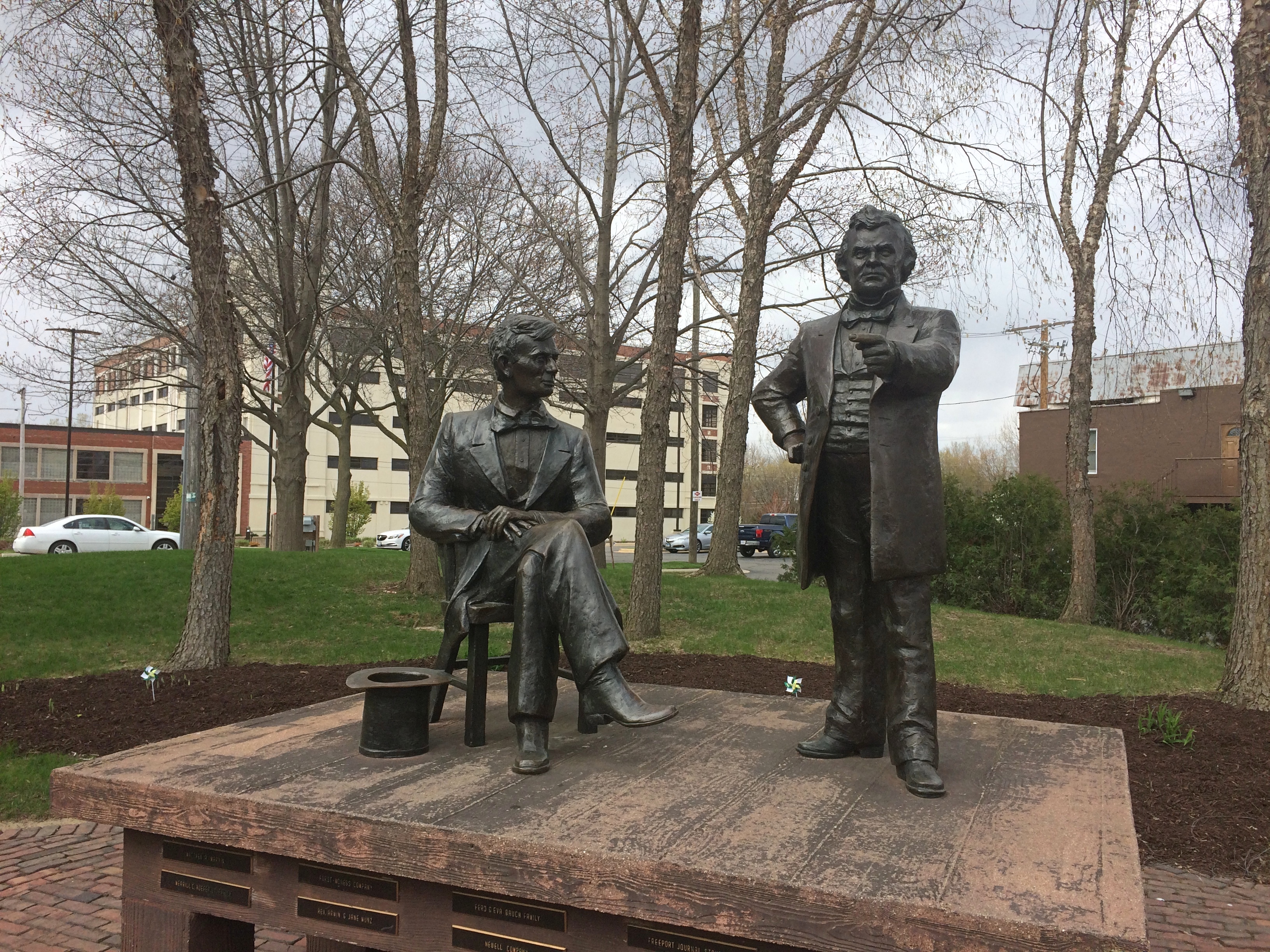
Ottawa Illinois Washington ParkLincoln and Douglas are there as part of a fountain to memorialize the event. They were cast in bronze in 2002 by Rebecca Childers Caleel.
Ottawa Illinois Washington ParkOttawa Illinois Washington ParkIt would have been more pleasant if the fountain were on, but maybe it was dry for public health reasons in our time. The noontime heat was oppressive, so we didn’t have a leisurely look-around the area as much as we might have otherwise. There are other memorials in the park, and plenty of historic structures nearby, forming the Washington Park Historic District.

Those buildings include the Third District Appellate Court Building (1850s), the Reddick Mansion (1850s), the Ottawa First Congregational Church (1870), Christ Episcopal Church (1871), and a Masonic Temple (1910). A few blocks away, the LaSalle County Courthouse looked interesting, too, but we only drove by.

I managed to take a close look only at the former Congregational Church building.
Ottawa Illinois Washington Park Open Table Church

Ottawa Illinois Open Table Church of Christ

Gothic Revival in brick. These days, the church is part of the Open Table United Church of Christ.

Boscobel & Fennimore

Road trips aren’t just about the destination, but sights and oddities along the way. Recently in southwestern Wisconsin, for instance, we stopped in Boscobel, looking for takeout. We found it at Udder Brothers Creamery. How could we pass up a place with a giant cow? Also, a giant wild turkey?

Note that the turkey not only proclaims Boscobel as Wisconsin’s Turkey Hunting Capital, but as Birthplace of the Gideon Bible as well. We wanted to be on our way, so we didn’t investigate that further at the time.

But now I know: “The birthplace of the Gideons was the Central House Hotel on September 14, 1898, in Boscobel, Wisconsin,” says Wisconsin Historical Markers. “Traveling salesmen John H. Nicholson of Janesville, Wisconsin, and Samuel E. Hill of Beloit, Wisconsin, shared a room in the crowded hotel because of a lumberman’s convention.

“In Room 19, the men discovered that they were both Christians; they talked about starting a Christian traveling men’s association. The following May the two salesmen, joined by a third, William J. Knights, rekindled that idea, and on July 1, 1899, founded the Gideons.”

Dang. I should have at least found the plaque. Down the road from Boscobel is Fennimore, another Badger State burg we passed through. Hunger wasn’t the main consideration there, so we spent a little more time, especially at a small park featuring The Dinky.
Fennimore, Wisconsin train
It’s a narrow-gauge (3-ft.) locomotive in operation from 1878 to 1926. “Trains ran daily between Fennimore and Woodman by way of Werley, Anderson Mills and Conley Cut, meandering 16 miles through the Green River Valley,” its historical marker says.
Fennimore, Wisconsin train
“At the peak of narrow gauge operations, the state had 150 miles, some used in logging operations in northern Wisconsin, now all abandoned.”
Fennimore, Wisconsin train
Narrow gauge, for sure.

Prairie du Chien: Fort Crawford Military Cemetery, Trail of Presidents &c.

Not all road trips include visits to cemeteries or presidential sites, but I’m glad when they do. Our recent visit to the Driftless Area included both. On Saturday morning, I got up a little early to put gas in the car by myself. Yuriko knows what this means: I visit a local cemetery, too, if I can. She dozed on in the room while I drove a short distance to the Fort Crawford Military Cemetery, also known as the Fort Crawford Cemetery Soldiers’ Lot.

The entrance to the cemetery is a narrow patch of land in the residential section of mainland Prairie du Chien, with the burial ground at some distance behind an iron fence. Or maybe soldiers are buried in patch of ground, but I didn’t see any indication of it.
Fort Crawford Military Cemetery
“Fort Crawford Cemetery is located on the former site of the Fort Crawford Military Reservation in Prairie du Chien, Wisconsin,” says the National Cemetery Administration, which is part of the VA.

“There were two subsequent Fort Crawfords in Prairie du Chien during the 1800s. The original Fort Crawford, built in 1816, was situated adjacent to the Mississippi River. Repeated flooding led to its abandonment in 1826. Rebuilt on higher ground in 1830, the second incarnation of Fort Crawford operated until 1856.

“The first burials here were of the members of the 1st and 5th Infantry regiments stationed at the fort. The soldiers’ lot includes eight above-ground box-tombs that were likely erected by the regiments. The United States received the title for the lot in 1866. There are approximately 64 interments in the 0.59-acre soldiers’ lot…”Fort Crawford Military Cemetery

It’s sparsely populated.
Fort Crawford Military Cemetery
With some of the inscriptions practically illegible.
Fort Crawford Military Cemetery
Others were legible, but conveyed only anonymity. This looks like a latter-day stone, dedicated to an unknown. There were a sprinkling of these in the cemetery.Fort Crawford Military Cemetery

As I left, I spotted this near the entrance, attached to a boulder.
Fort Crawford Military Cemetery
Just goes to show you how thorough the Daughters were. A memorial so obscure that no one has called for its removal? Not so.

On St. Feriole Island, I happened across a presidential site of sorts: Trail of Presidents. Trees in honor of presidents, arrayed in two rows to form a path, and originally planted in 2014.Trail of Presidents
I expected a tree planted for every U.S. president, which would have been the standard approach. But in fact the trees only honor presidents who visited Prairie du Chien either in or out of office, and includes two presidents of other entities besides the United States. I was surprised.

The full and semi-literate text of the sign at Trail of Presidents is here.

The honored U.S. presidents include: Andrew Jackson, William Henry Harrison, Zachary Taylor, Millard Fillmore, James Buchanan, Abraham Lincoln, Ulysses Grant, James Garfield, Grover Cleveland, Benjamin Harrison, William McKinley, Woodrow Wilson, Calvin Coolidge, Herbert Hoover, Harry Truman, Dwight Eisenhower, John Kennedy, Richard Nixon, Jimmy Carter, George H.W. Bush, Bill Clinton and George W. Bush.

For instance, President Fillmore has a white oak.
Trail of PresidentsHis plaque explains that he passed through Prairie du Chien when he was vice president in 1849. I haven’t ever seen anything about the travels of Vice President Fillmore — and out to the spanking-new state of Wisconsin that year would have been far afield — but I assume there’s some source for this buried in Fillmore’s papers, or maybe local news accounts.

The non-U.S. presidents? One was him again. He was stationed here, after all.
Trail of Presidents

Also, curiously, Vicente Fox also has a tree, a red oak. “Vicente Fox attended Campion High School in Prairie du Chien in the 1960s,” the plaque says. “He then returned to Mexico.”

The last tree has been reserved for the next president to visit, so it isn’t too late for the most recent living officeholders.

One more Prairie du Chien sight I came across was overlooking the Mississippi, but not on St. Feriole Island. Rather, a statue of Marquette stands atop a tall column near the local chamber of commerce, and also not far from the bridge connecting Prairie du Chien with the town of Marquette, Iowa.
Prairie du Chien Marquette statue

Rev. James Marquette, S.J.
Who discovered the
Mississippi River
at
Prairie du Chien, Wisconsin
June 17, 1673
This monument was erected
with
The solicited contributions
of generous citizens
by
The Business Men’s Association
Of Prairie du Chien, Wisconsin
A.D. 1910
Fred Herber & Son Architects

Unusual to see him called “James,” which doesn’t sound very French. We’ve seen him honored elsewhere around the Great Lakes; Pere Marquette got around, back when muscle power (yours or an animal’s) was the only way to do it.