Riverside

I’ve known about Riverside, Illinois, for years, and used to pass through it every weekday in the late ’90s and early ’00s when I took the Burlington Northern Santa Fe Metra line to work downtown. One thing I could see from the train window was the fine brick station.

As well as the town’s former water tower, not far from the station. The building underneath the tower is now the town’s park and recreation department.
Riverside is a special place beyond what you can see from the train. But I never got around to a longer visit than a train stop, so on Saturday morning, inspired by the fact that some of its buildings were part of Doors Open Illinois — not to be confused with Open House Chicago, or Doors Open Milwaukee — we drove to Riverside for a look around.

“Starting [in 1869] with a blank canvas of 1,600 acres of purchased farmland, the Riverside Improvement Company arranged for a complete utility infrastructure — water, sewer, and gas for lighting,” WTTW says. “They called their brand-new community ‘Riverside’ for the Des Plaines River that flows through the site.
“To design and plan the village, they hired Frederick Law Olmsted and his partner Calvert Vaux, whose Central Park success a decade before had made them superstars of design.

“Olmsted’s signature approach was to create a picturesque, landscaped topography. Inspired by the winding Des Plaines River, he eschewed a standard city grid, instead creating a series of curvilinear streets that wound across each other — a pattern that resulted in dozens of tiny triangular mini-parks.”

These days, Riverside is still a prosperous suburb, as it was intended to be from day one. We parked near the station and first got a better look at the station’s handsome interior.

As well as a closer look at the former water tower.
Unfortunately, it isn’t open to the public for a climb. Too bad. Even local vistas are usually worth the effort. A view of Riverside from that perch would probably be a fine thing.

A nearby former pumping station is now a small museum devoted to Riverside. Mostly it sports photographs on the wall of earlier times in the town.
The three volunteers inside, local ladies all, seemed really glad to see us. I expect that word never really got out about Open Door Illinois, and the little museum doesn’t get that many visitors anyway.

They told us a bit about the town and the structures we’d been looking at. For example: parking is usually possible near the train station, even on weekdays, which is unusual among suburban Metra stations. Most commuters walk or ride bicycles to the station, one of the volunteers said. Probably just as Olmstead wanted it.

More from WTTW about Riverside: “In 1871, when the Great Fire decimated Chicago and before Olmsted’s plan was fully executed, the developers went bankrupt. But before long, Riverside picked up momentum again, with community resident and notable architect William LeBaron Jenney stepping in to complete the town plan, and other notable architects of the day such as Frank Lloyd Wright and Louis Sullivan designing homes.”

One of the aforementioned mini-parks is next to the train station: Guthrie Park.
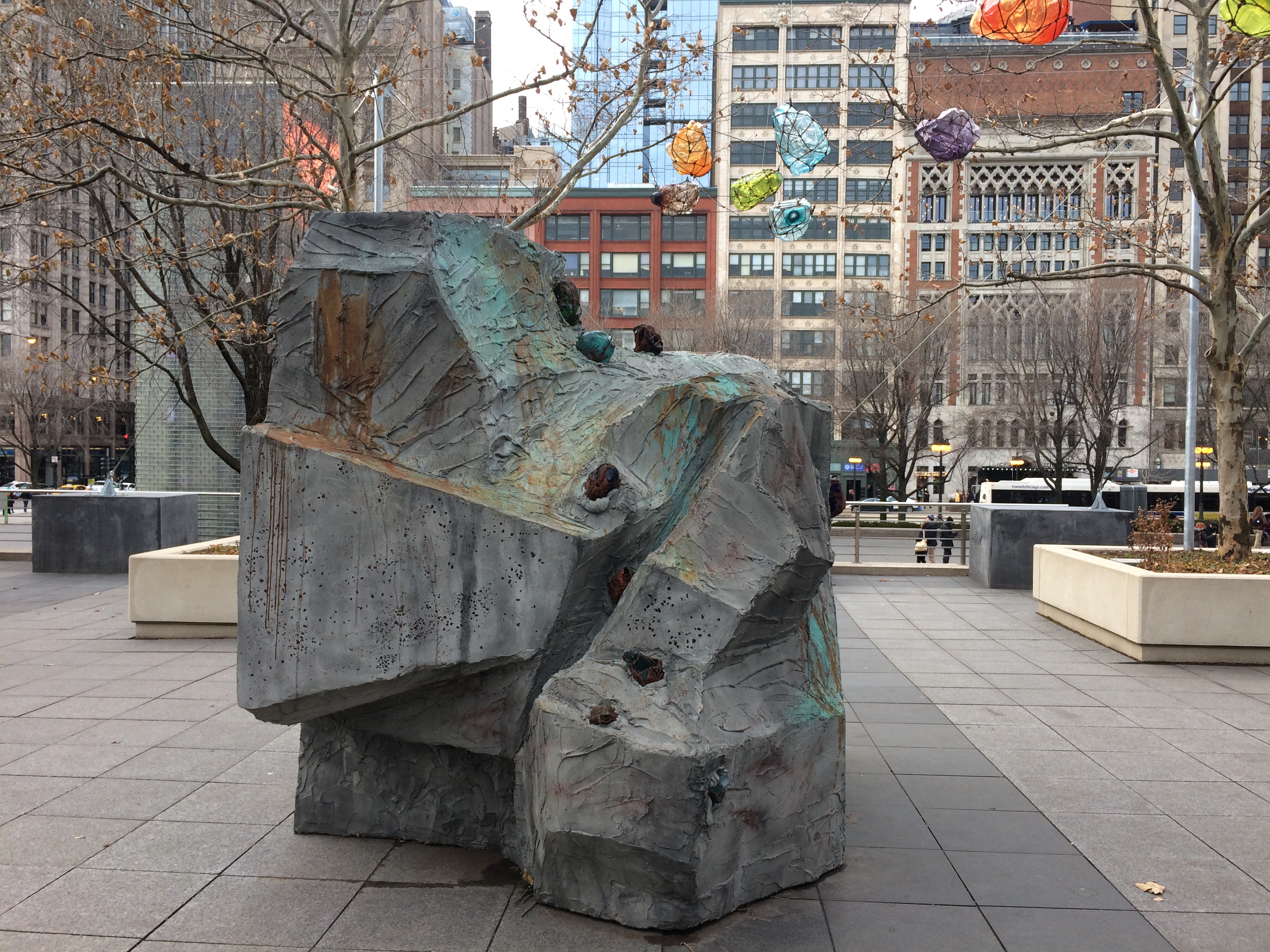
Named after a local luminary, not the folk singer. There are an assortment of commemorative plaques attached to rocks ringing the flag pole in Guthrie Park. Some of them honor men, presumably locals, who were killed in the Great War.

Rev. Hedley Heber Cooper, d. May 26, 1918. War was dangerous for chaplains, too.

Private Albert Edward Moore, d. July 19, 1918.

There’s also a plaque for a soldier who died not long after the Armistice, but here at home. A little late for the flu, but still possible. Accident, maybe.

Sgt. James P. Quinn, d. February 4, 1919, Camp Logan.

Near Guthrie Park is the Riverside Public Library, completed in 1931, which looks like a church. The architect is given as Connor & O’Connor, or simply “Mr. Connor” in this timeline.
On the inside it looks even more like a church. A certain kind of church, anyway.

The library is the only one I’ve ever seen with an Olmsted collection.

The collection takes up a number of shelves in its own special niche.

RIP, Amando Chavez

I didn’t know Amando Chavez. I only heard about him after he died a week ago Wednesday in a traffic accident on a road near where I live. A road I drive on frequently.

A small, informal memorial is at the site. I stopped by there this afternoon.

To give a little more context to that image, here’s a wider shot.
An ordinary suburban road. “Accident” isn’t quite the word, though, since by all appearances, a DUI driver was completely at fault. That road isn’t particularly busy at that time of the evening, so there’s even less excuse for what happened.

Looks like the driver at fault was one of those young fools who darts around other cars as fast as his engine will take him. Everyone’s seen that kind of ass, in a hurry to get to the next red light, as he weaves around you or around the cars ahead, with scant room for error — and error’s all too likely when DUI.

It’s the kind of accident that sets my teeth on edge. It didn’t have to be Mr. Chavez. It could have been me or anyone in my family. All the same, I’m not going to avoid that road.

Graue Mill & Fullersburg Woods Forest Preserve

Not long ago I was passing through the western suburbs, not too far from where I lived — and it feels a little strange to put it this way — around the turn of the century. Since I had a little extra time, I decided on a whim to visit the Graue Mill and Museum.

Re-visit it. The last time I was there, I remember pushing one of my daughters in a stroller. I don’t remember which one. In either case, that was a while ago. Around the turn of the century.

Graue Mill is a water-powered grist mill on Salt Creek in DuPage County, dating from the 1850s. The machinery inside is elaborate, restored to operation, and still grinding small quantities of grain that the museum sells. I didn’t go inside this time, but pondered the handsome exterior of the mill.

As well as its large water wheel.
“Frederick Graue was born in Germany, came to the United States and settled in Fullersburg, Illinois, in 1842,” the museum’s web site says. In 1849, he purchased the site of a sawmill that had burned down, along with his partner William Asche, and constructed a gristmill there. Asche later sold his share to Graue.

“Limestone for the basement walls was quarried near Lemont; bricks for the rest of the walls were made from clay from the Graue farm and fired in kilns near the mill site; flooring, beams, and posts were from white oak timbers cut along the I&M canal. The four one-ton buhrstones used for grinding were imported from France. After the gristmill opened in April 1852, it ground wheat, corn and other grains produced by local farmers.

“The mill was a major center of economic life during the 19th century and was also used by Fred Graue to hide runaway slaves on their journey to freedom in Canada.”

In the 20th century, the now-obsolete mill fell into ruin, but it was restored in the 1930s by none other than the CCC. Specifically, Troop V-1668, made up of veterans. These days, the mill is part of the Fullersburg Woods Forest Preserve, which is a unit of the DuPage County Forest Preserve District. The village of Fullersburg, for its part, was never incorporated and doesn’t exist as a modern entity.

This is Salt Creek next to the mill, which gives it its power.
Salt Creek, despite its name, is really more of a river in this part of DuPage County, but never mind. It joins the Des Plaines River in Cook County, which later joins the Illinois and then of course the Mississippi.

I had time enough to take a stroll on one of the paths through Fullersburg Woods Forest Preserve, not too far from the mill.

Along the way, the path takes you past other views of Salt Creek, slightly upstream from the mill.
Past summer fields. The years do go by like so many summer fields.
And a handful of well-maintained CCC structures.
Though I didn’t capture any of the activity with my camera, the paths of Fullersburg Woods are very popular with dog walkers and their dogs.

The Warrenville Garden, 1987

About once a month during the warm months of 1987, and maybe a few times the year after that, I drove from Chicago to southwest suburban Warrenville — it seemed pretty far away — to visit a friend of mine who had just bought a house in that suburb. He lives in Texas these days, and I’ve since lost touch with him, except for a nominal link on Facebook.

He cultivated a large garden in his large back yard and I helped him out because it was a novelty and because he gave me some of the produce. There was a lot of produce.
“We aren’t gardening for food,” he once said. “We’re gardening for virtue.”

He was a conscientious gardener, and I took home so many vegetables and melons that I further took some to my office and gave them to anyone who wanted them. They were a hit. A woman in the office who’d grown up on a downstate farm complimented the squash in particular.

I’d forgotten that my friend had made pictures of the garden. Also that I had a few of them tucked away.

Corn, tomatoes, melons, carrots, peas, green beans, cucumbers, squash and much else I’ve probably forgotten.

Not a bad thing to do for part of a summer. But I also found I had no natural passion for gardening. Later attempts in my own back yards were indifferent and lackluster. One problem in particular, aside from hating to weed: when the plants I wanted to grow were just sprouting, I couldn’t always tell them apart from weeds.

The pictures of the plants on the seed packages were no use in making that determination, either. They always showed idealized, fully grown examples.

San Antonio Riverwalk Views

Summer’s pretty pleasant here in the not-so-hot reaches of Illinois. Up in the sky.
And down toward the ground, where strange critters lurk.
So pleasant that I’m taking a week off from work and posting. Back on August 5.

Both of the places I visited in San Antonio recently were near the San Antonio River and thus the Riverwalk. So I took a few minutes each time to go down to the river.

Near the King William District, the walk was almost deserted.
Temps were in the 90s, of course, which might have contributed to it, but I suspect not many people come this way anyway.

A few do. Here’s a view of the Arsenal Street Bridge.

A view from the Arsenal Street Bridge, looking north toward downtown San Antonio.
The building poking over the trees, with the flag, is the Tower Life Building, though I’ll always think of it has the Smith-Young Tower, completed in 1929. One of the city’s finest office buildings. I understand that once upon a time, my civil engineer grandfather had an office there.

After visiting the Briscoe Museum, I walked over to the Riverwalk — it’s only a short distance away — at one of its more touristed spots.

This is the Arneson River Theatre.
The stage is on the north side of the river, while 13 rows of grass are on the south side for seating. Just another idea of the Father of the Riverwalk, H.H. Hugman, finally realized as the WPA built the Riverwalk in the late ’30s. Arneson was the WPA engineer who was to have been in charge of building the Riverwalk, but he died before the project really got under way.

High Summer Misc.

Time for a high summer break. Back to posting around July 22.

Last night around midnight I spent a few pleasant minutes on my deck. Temps were neither hot nor cold, the noise from traffic was subdued, and Mars hung above the garage, a pretty orange point of light. The suburban haze dimmed it some, of course, but not enough to obscure the planet as a object of contemplation.

We, as in human beings, could go to Mars if we really wanted to. So far we don’t. The people who will go there might not be born yet, but I think they will go.

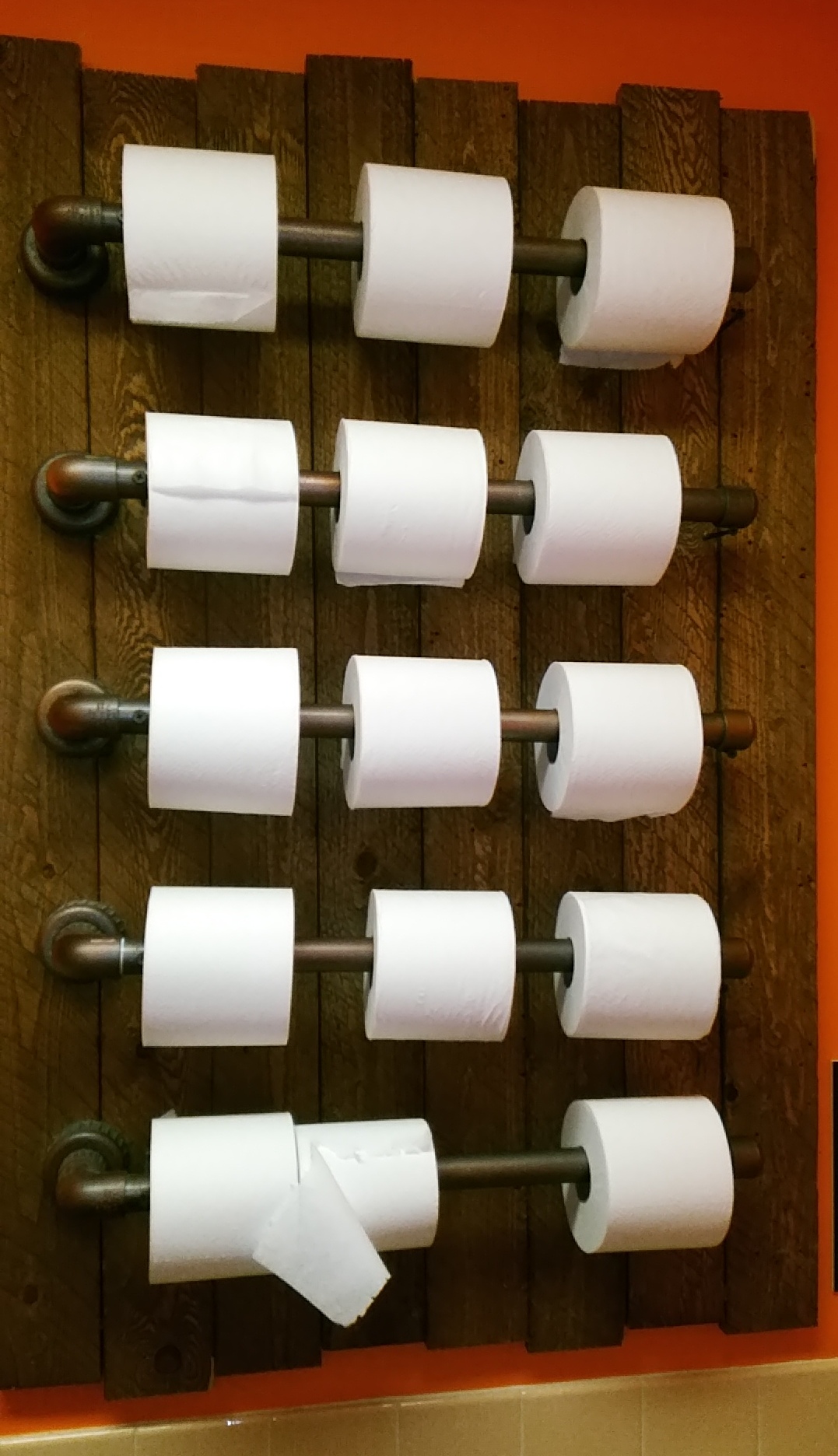
Closer to home, I visited a mall recently and decided to document something that might not be around much longer.

The same retailer has a location in Chicago — a neighborhood store, smaller than the suburban locations, that I drive by sometimes — that’s closing. Or maybe it has already. I wouldn’t mind documenting it either, but it would be a pain in the butt to find parking, and then a vantage to get a good shot.

In another store, an actual bookstore that sells other things, I saw these recently.

I know there are a lot of variations on Monopoly, but Deadpool Monopoly? Walking Dead Monopoly? Golden Girls Monopoly?

Somewhere out there is a collector of Monopoly editions. Must be hard to keep up. Or maybe the Smithsonian, or the Library of Congress, has tasked itself to preserve a copy of every edition. Maybe not. Maybe Golden Girls Monopoly will be highly prized for its rarity by collectors during the Monopoly craze of the 2160s.

Finally, a picture of Independence Day fireworks here in suburban Chicago.

Not a great picture. But not bad for a phone camera.

Last Thursday in June Olla Podrida

A few days ago, when it was cloudy and cool, I happened to be at the Schaumburg Town Center. The place has an underappreciated garden. Underappreciated by me, anyway.Since then, genuine summer has returned in the form of warmer temps. High 90s are forecast for the weekend. It’s been a rainy summer so far, though.

One detail I forgot to mention about the Lincoln Museum. Ann said she was most amused by learning that in his youth, the president was a talented ax-thrower. I was amused too. They took entertainment where they could get it in the 19th century.

One more picture from the Lincoln Museum. Don’t recognize them? On Jeopardy, the clue would be “Maj. Henry Rathbone and Clara Harris.”

The question: Which couple was in the presidential box with the Lincolns at Ford’s Theatre?

Their story is as sad as that of the Lincolns, or even worse. Rathbone later married Harris, but his mental health deteriorated in the following years, and he eventually murdered her. He died in 1911 in an insane asylum.

Saw this not long ago in Chicago, on Irving Park Blvd.
A bust of Jose P. Rizal, ophthalmologist and martyred Philippine nationalist. How many ophthalmologists get to be national heroes as well? I can’t think of any others.

New Robins in the Front Yard

May is ending, and June is beginning, as they should: warm. With periodic rain — which we had a lot of yesterday — to keep things growing for a while.

The robin eggs in the front yard nest hatched not long ago, and the hatchlings are eager for food. There seem to be three.

The female and the male robins oblige them. This I can see with my own eyes, though I read a bit about robin behavior to confirm that both parents feed the young.

As “The Story of Robin Eggs” puts it, “Now it becomes a full time job for both parents to protect the nest, find food, and feed the clamoring babies during the 9-16 days they spend in the nest.”

More About Infrastructure

At last, a warm day, as days in May should be. The soggy ground is drying up, too. Enough that I could mow the front yard and cut down the standing dandelions. Then sit on the deck with a soft drink. Bzzz. What’s that? The first mosquito of the season. There will be more.

Another item I picked up at the water reclamation plant last weekend: a Metropolitan Water Reclamation District of Greater Chicago calendar.

Each month has a different picture from the 1890s to the 1920s, presumably from the archives of the district, since all of the images are of water-related structures or workers busy building such structures: the Chicago Sanitary and Ship Canal, bridges across the Chicago River, and Cal-Sag Channel and the North Shore Channel.

So I was inspired to made a list of the various kinds of infrastructure that I’ve seen over the years, besides the recent visit to a water reclamation (sewage treatment) plant. It isn’t very long; I need to see more infrastructure, clearly.

The list includes a UPS distribution hub, a control room for an electric substation, an intermodal container facility, a railroad switching yard, a recently completed warehouse, an unfinished airport, a space port, a deep-space relay dish, a drinking water treatment plant, a solvent recycling facility, and a geothermal energy plant. The basement of the greenest building in the country might count, too, as well as green roofs.

I suppose bridges, tunnels and dams count as infrastructure, though if you’re getting that general any road one has been on would be so too, and that’s not particularly distinctive. Still, it’s hard to deny Hoover Dam’s place in the world of infrastructure, even if it’s also a tourist attraction.

If you count factories — and in some sense, they count as the infrastructure of the modern world — that would include seeing places where beer, wine, cars, steel, coins, paper money, chocolate, cheese, refrigerators, bread, jelly beans, and Tabasco Sauce are made.

Back to BAPS

About a year ago, I visited BAPS Shri Swaminarayan Mandir Chicago in Bartlett, Ill., and among the things I thought — besides, wow, look at that — was that the rest of my family would enjoy seeing it too. So on Saturday, ahead of the rain and unseasonably, annoyingly cold weather that gripped the area starting Sunday morning, we went. Yuriko and Ann and I, since Lilly had another commitment.

I’d hoped the extensive fountains would be active this time, but no. Still, the place is as impressive as ever.

This time, I got a better look at the ceremonial gate, which is just as ornate as the mandir, a panoply of intricate white stonework. I took pictures of gate iconography that I’m not familiar with, but liked looking at anyway.

Toward the rear of the grounds, we happened across a small muster of peafowl in a small fenced area. They weren’t out and about the last time I was here.

An important bird in Hinduism. Some details are here.

We also discovered a small cafe toward the back of the haveli, which I didn’t remember seeing before. Just the place for samosa and mango lassi.